Operator
Good morning, and welcome to Weight Watchers International's third quarter 2025 results conference call. All participants will be in listen-only mode. Should you need assistance, please signal a conference specialist by pressing the star key followed by zero. After today's presentation, there will be an opportunity to ask questions. To ask a question, you may press star, then 1, on your touchtone phone. To withdraw your question, please press star, then 2. Please note, this event is being recorded. I would now like to turn the conference over to David Helderman, Director of Investor Relations. Please go ahead.
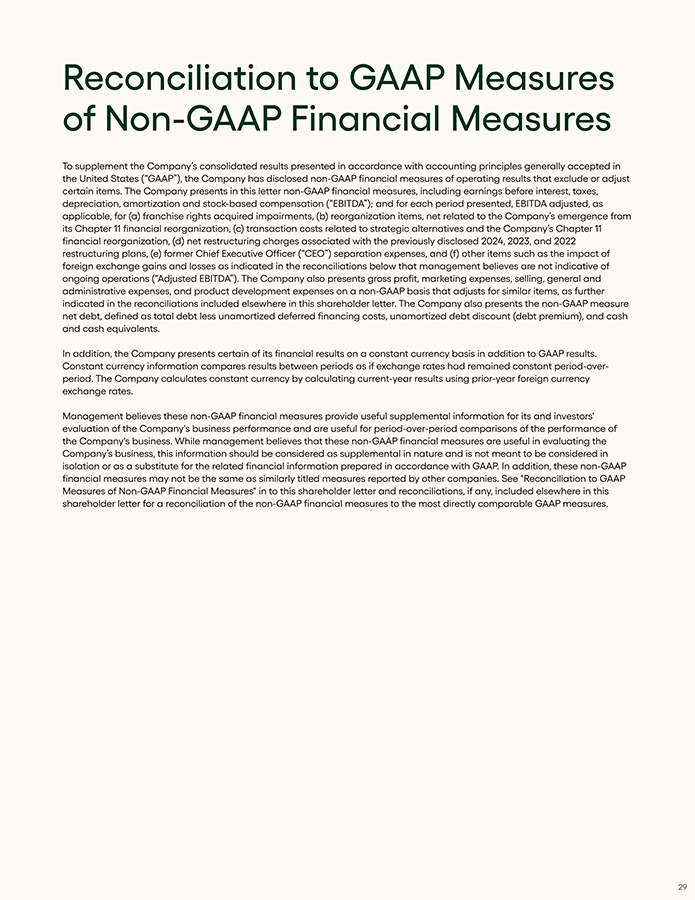
Thank you for joining us today for the Weight Watchers third quarter earnings conference call. Earlier this morning, we released a shareholder letter and press release with our third quarter 2025 results, which are available on the company's corporate website located at corporate.ww.com. The purpose of this call is to provide investors with some further details regarding the company's financial results, as well as to provide a general update on the company's progress. Reconciliations of non-GAAP measures disclosed on this conference call to the most directly comparable GAAP financial measures are also available as part of the shareholder letter and press release. Before we begin, let me remind everyone that this call will contain forward-looking statements. Investors should be aware that any forward-looking statements are subject to various risks and uncertainties that could cause actual results to differ materially from those discussed here today. These risk factors are explained in detail in the company's latest annual report on Form 10-K, quarterly report on Form 10-Q, the earnings release, the shareholder letter, and as updated by the company's other filings with the Securities and Exchange Commission. Please refer to these filings for a more detailed discussion of forward-looking statements and the risks and uncertainties of such statements. All forward-looking statements are made as of today and accept as required by law. The company undertakes no obligation to publicly update or revise any forward-looking statements, whether as a result of new information, future events, or otherwise. Joining today's call are Tara Comant, President and CEO, and Felicia De La Fortuna, CFO. John Valtman, Chief Operations Officer, will also join for the Q&A.
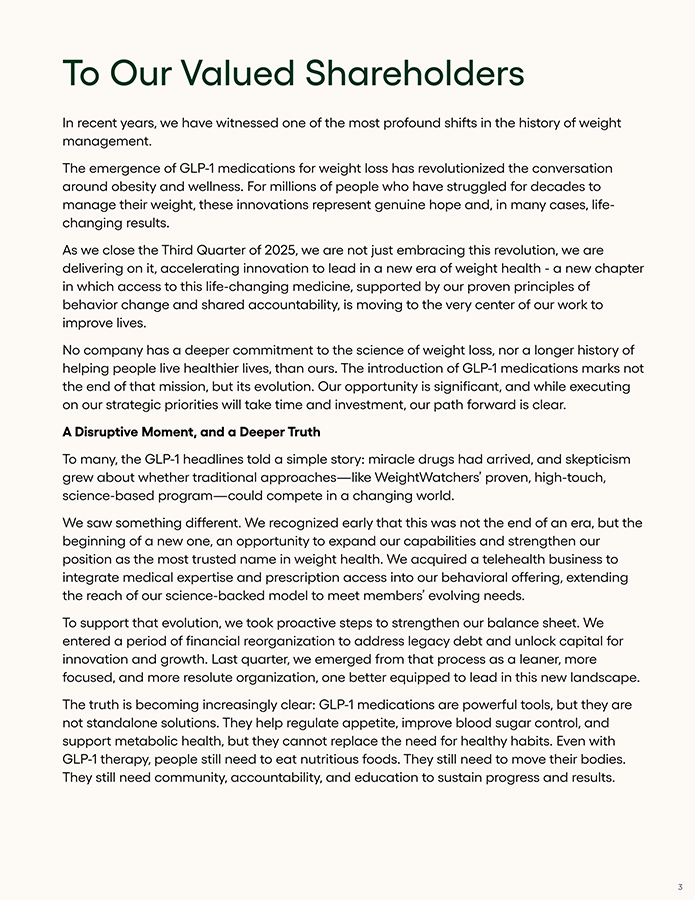
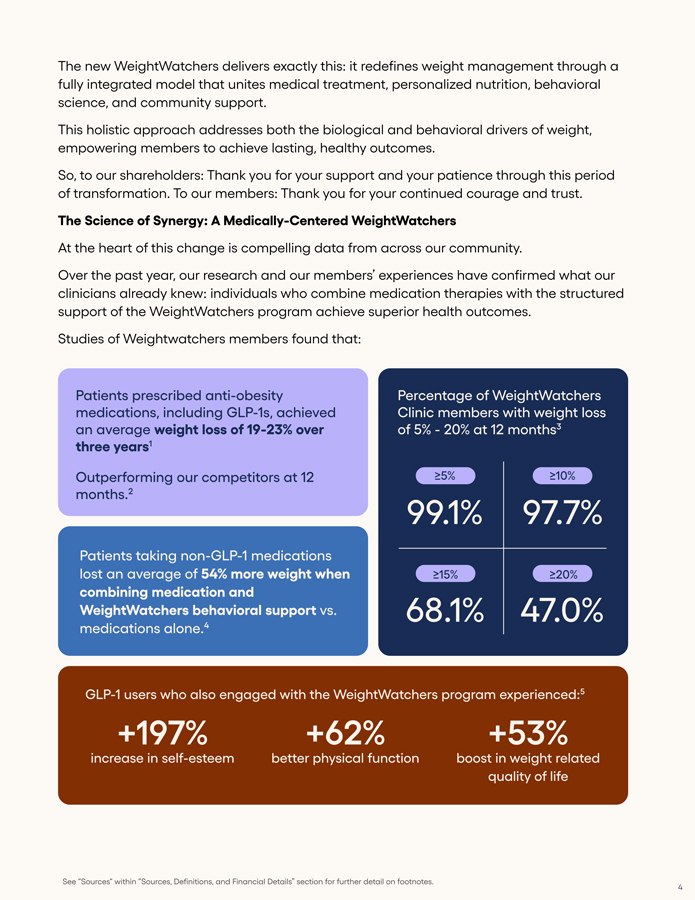
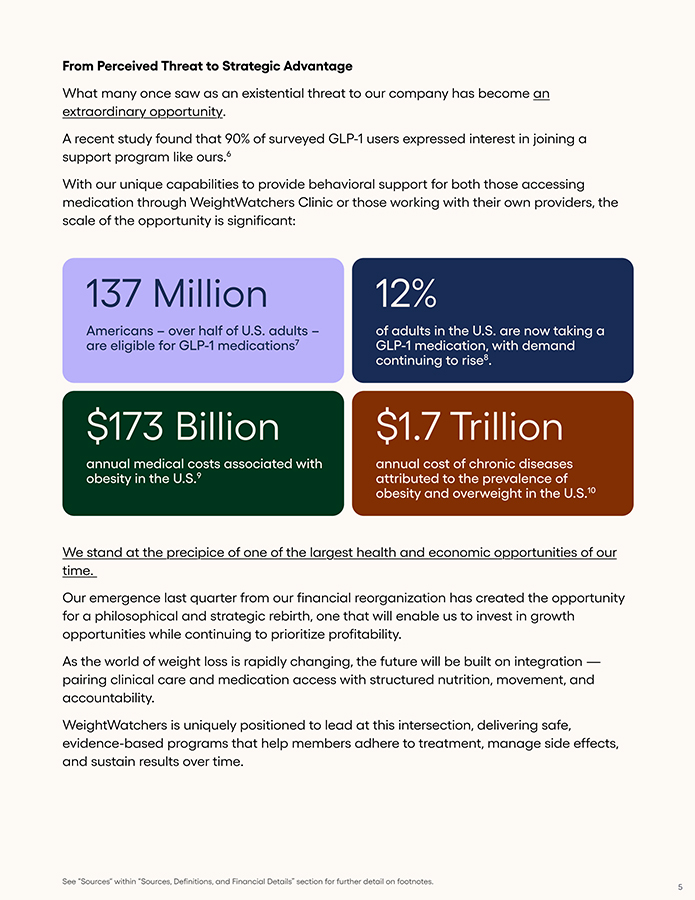
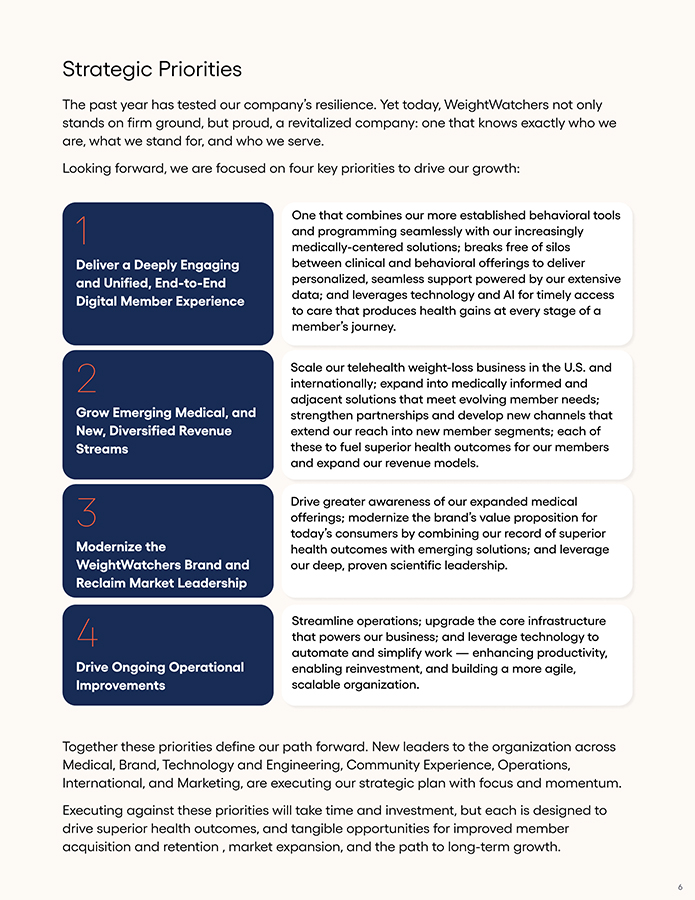
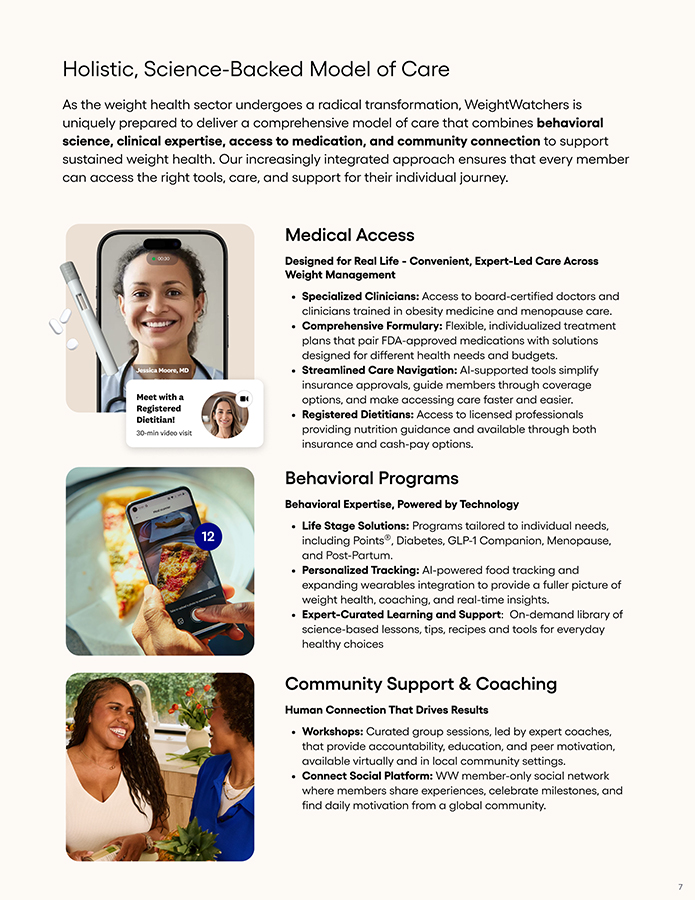
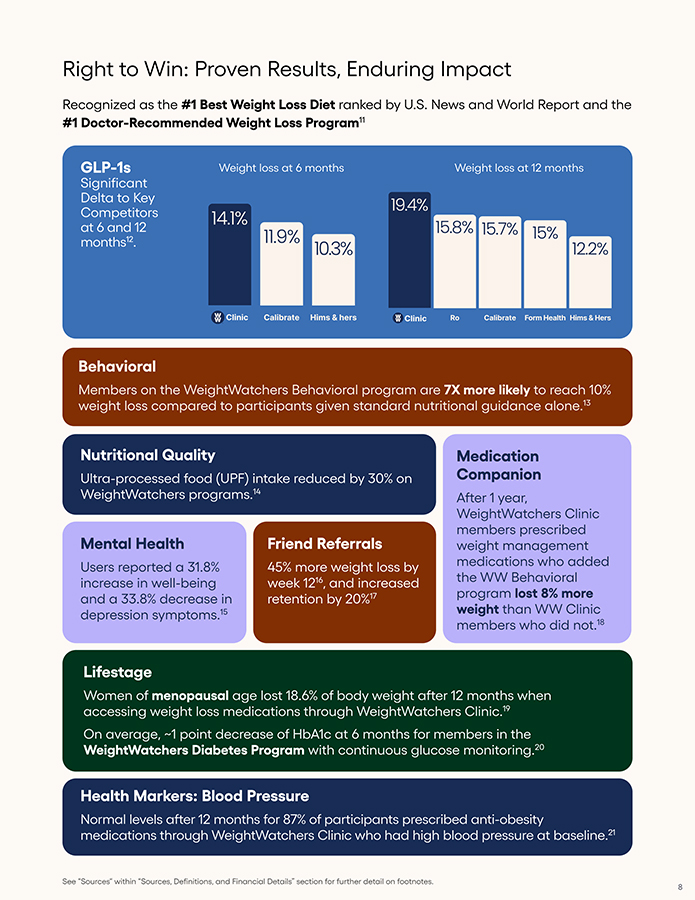
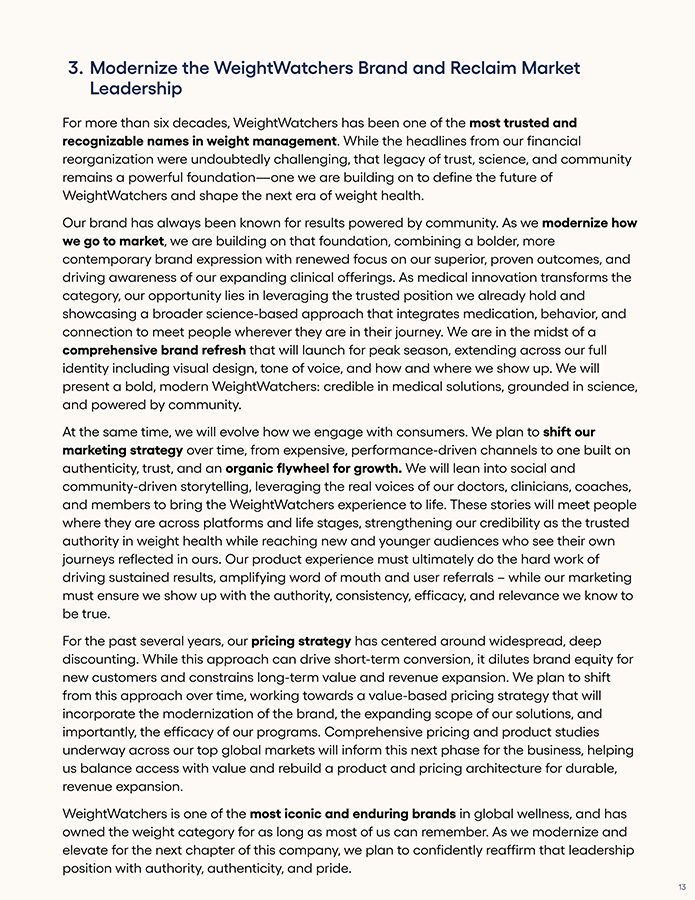
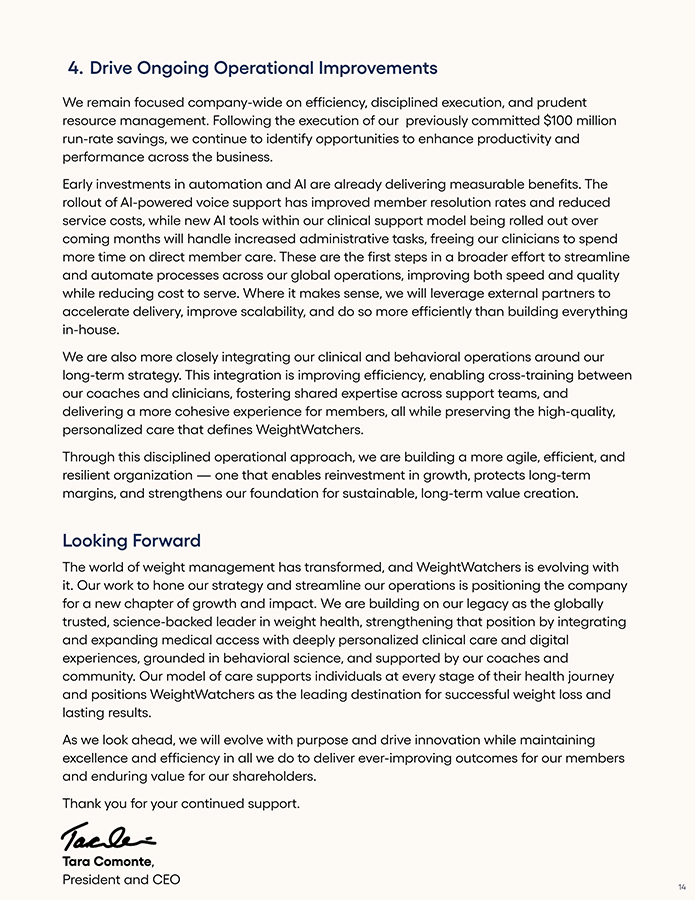
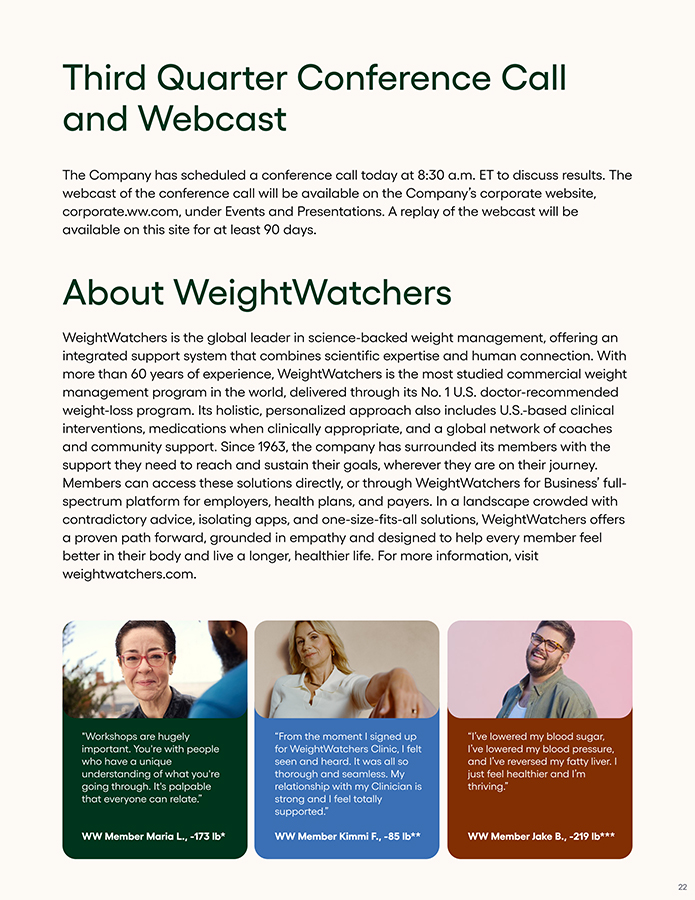
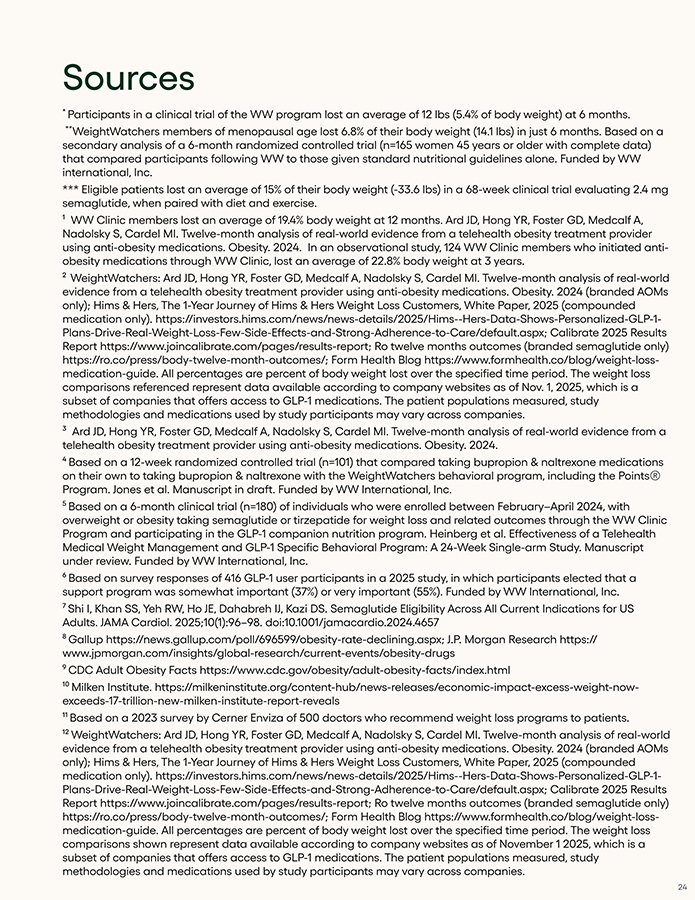
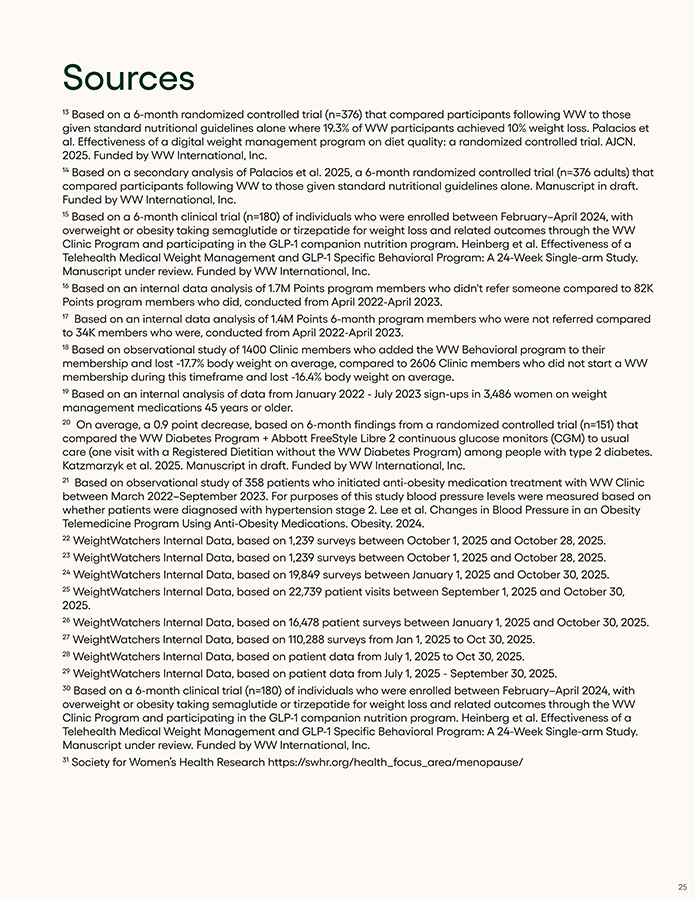
Thanks, David. As we close the third quarter of 2025, Weight Watchers is laying the foundation for renewed growth and leadership in the rapidly evolving weight management sector. I encourage everyone to read our shareholder letter, which we distributed earlier this morning and is posted on our investor relations site. it details our key strategic priorities competitive differentiators and what you can expect to see from us over the near and longer term as we build on work already underway to drive growth and long-term value but first let me start with some context in recent years we've witnessed one of the most profound shifts in the history of health and wellness the emergence of glp1 medications for weight loss has revolutionized the conversation around obesity bringing hope and in many cases results to millions who have long struggled to manage their weight to many the story was simple miracle drugs had arrived and traditional approaches like weight watchers proven high-touch science-based program could no longer compete in a changing world. However, we recognized early that this was not the end of an era, but the beginning of a new one. The future of weight management will be built on an integrated approach that pairs clinical care and medication access with structured nutrition, movement, and accountability. That's why we acquired Weekend Health, a telehealth business now rebranded to Weight Watchers Clinic that allowed us to integrate medical expertise and prescription access into our program, broadening our proven science-backed model to include clinical care. We're now evolving and tailoring our behavioral offerings to provide the important support needed by members using these life-changing medications, helping them adhere to treatment, manage side effects, and achieve lasting results over time. This evolution is not a rejection of our past, but an extension of our legacy as the world's leading evidence-based weight management partner. For 62 years, we've led with science, and as GLP-1s redefine what's possible, we're leading with the science again. I want to be clear on this. No company has a deeper commitment to the science of weight loss, nor a longer history of helping people manage their weight than ours. Our industry-leading behavioral program serves as an essential foundation for the differentiated weight loss outcomes and significant non-scale results achieved through Weight Watchers Clinic. As you can see in our shareholder letter, the data proves the efficacy of this model. Studies found that Weight Watchers Clinic members who were prescribed anti-obesity medications, including GLP-1s, achieve an average weight loss of 19% to 23% over three years, significantly outperforming our competitors at 12 months. And what's more, 98% of Weight Watchers clinic members prescribed a weight management medication reached more than 10% weight loss after 12 months, and nearly half of them reaching 20% weight loss. Beyond the scale, GLP-1 users who also engaged with Weight Watchers program experienced 197% increase in self-esteem, a 78% increase in intimacy, 62% better physical function, a 53% boost in quality of life, and 34% reduction in symptoms of depression. The data is clear. In a GLP-1 world, behavioral programs and community support in tandem with medical solutions are forced multipliers for effective, sustainable weight loss and superior health outcomes. What skeptics once saw as an existential threat to our company has instead become an extraordinary opportunity for us to deliver lasting results for our members and capture a greater share of the growing market we serve. 137 million Americans, Over half of U.S. adults are eligible for GLP-1 medications. 12% of adults in the U.S. are now taking a GLP-1 medication, with demand continuing to rise. $173 billion in annual medical costs are associated with obesity in the United States. And $1.7 trillion in chronic disease costs are linked to overweight and obesity. This isn't just one of the largest health and economic opportunities of our time. It's a chance to help tens of millions around the world live happier, healthier lives. And it's a moment that Weight Watchers is uniquely positioned to lead. This is particularly true after last quarter's emergence from our financial reorganization. This proactive process aimed at strengthening our balance sheets and freeing up capital to invest in growth also provided the opportunity for a philosophical and strategic rebirth, opening the door for renewed and accelerated innovation looking forward we're focused on four key priorities to drive our growth first we will deliver an engaging unified end-to-end member experience weight watchers has long been the most trusted weight loss platform but as the world changes our digital ecosystem and experience must evolve to match both the scale of our ambition and the expectations of today's consumer. Under the leadership of Hélène Kaus, who is our new Chief Technology Officer, joining us from FIS, Snap, and Amazon, we've begun modernizing the two most critical digital touch points for our members, our app and our website. The Weight Watchers app has been completely replatformed to remove legacy barriers between our clinical and behavioral offerings, ensuring that members can move seamlessly across the full spectrum of our programs while also discovering new tools and solutions that can help them on their journey over time the app will become a personalized companion that leverages ai and behavioral insights to deliver individualized recommendations and curated programs this will be fueled in part by the vast and constantly growing data set we've collected over more than six decades by modernizing our systems we can maximize the potential of this information to offer new personalized solutions that meet members where they are whether that's on or off medication managing menopause diabetes or postpartum or in other life stages that deeply affect weight health the Weight Watchers website is also being rebuilt on a mobile first infrastructure designed to guide prospective members to the right starting point for their journey it will be informative and easy to navigate serving as both an educational resource and a more effective marketing and crm engine this new website will enhance our brand improve conversion and create a clearer more connected path from interest to acquisition together these upgrades form the foundation of a full digital transformation it will create a faster more intuitive data enriched and integrated experience while also improving member outcomes and deepening engagement the first iterations of our new app and website are expected for peak season early in the new year with ongoing releases throughout 2026 last but certainly not least we're reinvigorating the beating heart of weight watchers our community experiences Under the leadership of Julie Rice, our new Chief Experience Officer who co-founded SoulCycle, we're revitalizing the community offerings that remain central to Weight Watchers. We're expanding our team of highly skilled coaches and introducing new virtual communities around shared interests such as GLP-1s, menopause, cooking, and more. We'll also be upgrading the actual meeting platform that we use for our workshops to provide a more personal immersive experience for our members and in addition in-person workshops will also be refreshed with renewed focus on connection consistency and brand experience to be strategically aligned with member demand and needs together and over time all these initiatives will deliver a unified modern Weight Watchers experience they'll remove friction between programs connect digital and human support produce better outcomes for members, and generate expanded opportunities for profitable growth for our business. Second, we're growing our emerging medical business and investing in new diversified revenue streams. The widespread adoption of GLP-1s for weight loss has transformed the weight management landscape and created substantial opportunity for Weight Watchers. Our immediate priority is to scale what's working that includes weight watchers clinic which offers medical access and clinical care it includes our glp1 companion program which provides a behavioral framework to support glp1 weight loss regardless of whether you get your prescription from weight watchers clinic or your own care provider and it includes our cash paid or reimbursable registered dietitian network which connects members with experts who can help them make curated nutritional choices based on their personal needs moving forward we plan to invest in expand and elevate these programs for existing and new prospective members as innovation in the weight health market continues to advance rapidly we're positioning ourselves to benefit from strong tailwinds that will boost our telehealth business. New oral medications that will expand treatment options are expected in early 2026. Price points are likely to come down for medication over time, and long-term trends point towards broader insurance coverage for medical weight management. Each of these factors will ultimately contribute to expanded medication access and provide significant potential for growth. We're encouraged by the strong member interest in GLP-1 medication options through direct cash pay channels, including our integrations with NovoCare and LilyDirect. Our ongoing collaboration with Novo Nordisk is particularly meaningful as we work together to expand access to injectable Wagovi and support the upcoming launch of the Wagovi pill, while exploring new and innovative ways to bring additional convenience and value to our members. As we continue to expand our medical solutions and capabilities, I will reiterate that patient safety, patient outcomes, and regulatory compliance continue to guide our clinical approach. As we expand our GLP-1 medical weight loss program, we're also extending our reach into adjacent areas of weight health. This started with the launch of Weight Watchers for Menopause, a new offering launched at the end of the third quarter that offers evidence-based support and medication access to the 1.3 million women in the United States who reach menopause each year many of whom are managing weight hormonal and metabolic changes simultaneously the phase rollout throughout october has been well received driving encouraging engagement among existing members and strengthening brand awareness around our evolving position in weight health we also expect our long-term growth to extend beyond the united states building on more than 50 years of presence in key international markets under the leadership of alejandro bethlen Executive Vice President of International, who joined us in September, we will accelerate efforts to strengthen our position abroad, advancing new clinical capabilities, while also recommitting to international growth more broadly across our business. Our partnership with UK-based telehealth provider Checkup that we launched in May is exceeding expectations, and we will evaluate additional opportunities to extend our integrated model to other priority markets. We're also expanding our relationships with employers, payers and health systems, seeking cost-effective, outcome-driven solutions. One recent example is our Weight Watchers RxFlex Fund. It launched in October and offers an innovative, flexible approach for organisations looking to support employee access to GLP-1s while managing overall costs, underscoring the value of our integrated medical and behavioural care model. Looking ahead, we see meaningful opportunities to thoughtfully extend the Weight Watchers ecosystem into areas that complement our expertise in weight health. Through select partnerships, integrations, and service innovations, our focus remains clear. Improving member outcomes, expanding solutions, and building a more diversified foundation for long-term growth and shareholder value. Third, modernizing the Weight Watchers brand and reclaiming our market leadership. Weight Watchers has been one of the most trusted and effective names in weight management for more than six decades. As the world's understanding of weight health is being rewritten, Weight Watchers is uniquely positioned to lead the future of our industry. As a company that is grounded in trust, powered by science and committed to expanding clinical access to deliver meaningful lasting results. This is a forward-looking vision we are eager to communicate. That's why we're executing a comprehensive brand refresh that combines a more contemporary and engaging brand expression with a renewed focus on superior proven outcomes, including our growing medication offerings. The effort will launch for peak early in the new year and extend across our visual design, tone of voice, and how and where we show up, presenting a bold, modern Weight Watchers. In addition, and over time, we'll evolve our marketing strategy, from expensive, performance-driven channels dominating spend, to a go-to-market strategy built on proven results and real people, while leveraging our role as the trusted authority in this space and ultimately creating an organic flywheel for growth. We'll lean into social and community-driven storytelling, leveraging the real voices of our doctors, clinicians, coaches and members to expand reach and bring the Weight Watchers experience to life. We're also dealing with the reality of many years of prolonged deep discounting, a tactic that takes time to wean off. Rather, we will shift towards more of a value-based pricing approach that will complement our brand modernization work, the expanding scope of our solutions, and importantly, the success of our programs. Comprehensive pricing and product studies underway across our top global markets will inform this next phase for the business, helping us balance access with value and rebuild our product and pricing architecture for durable revenue expansion this work will all lead into our peak season objectives that includes breaking through preconceived notions of the weight watchers brand and re-establishing ourselves as modern and relevant for an expanding set of target customer segments it means driving widespread awareness of weight watchers role as a growing provider of GLP-1 medications. And it includes acquiring both net new customers and lapsed rejoiners through compelling product innovation and marketing. Finally, as a business with a strong EBITDA margin profile, we remain committed to driving ongoing operational improvements as we also invest for growth. At every level of our organization, we're focused on efficiency, disciplined execution, and prudent resource management. Following the execution of our previously committed $100 million in run rate savings, we continue to identify new opportunities to enhance productivity and performance across the business. Part of this effort is rooted in new technologies. The implementation of AI-powered voice support has improved member resolution rates and reduced service costs, while new AI tools within our clinical support model being rolled out over coming months will handle increased administrative tasks. These are the first steps in a broader effort to streamline and automate processes across our global operations, improving both speed and quality while reducing cost to serve. We're also more closely integrating our clinical and behavioral operations, which is vital to our long-term strategy. This integration is improving efficiency facilitating cross training of our teams fostering shared expertise and delivering a more cohesive experience for our members these efficiencies make our work faster and more cost effective while preserving the high quality personalized care that defines weight watchers through this disciplined operational approach we're building a more agile efficient and resilient organization, one that enables reinvestment in growth, protects margins and strengthens our foundation for sustainable long-term value creation. In closing, our work to hone our strategy and streamline our operations has positioned the company for a new chapter of growth and impact during a historic moment. We're leveraging decades of expertise and name recognition with cutting-edge tools to write the next chapter of Weight Watchers. A new story which redefines the meaning of weight health and positions us for long-term growth and leadership in the industry we created. Much work remains but as our members know well hard work can create new beginnings. Our direction is clear and the possibilities are exciting. With that I'll it over to Felicia to cover the financials.
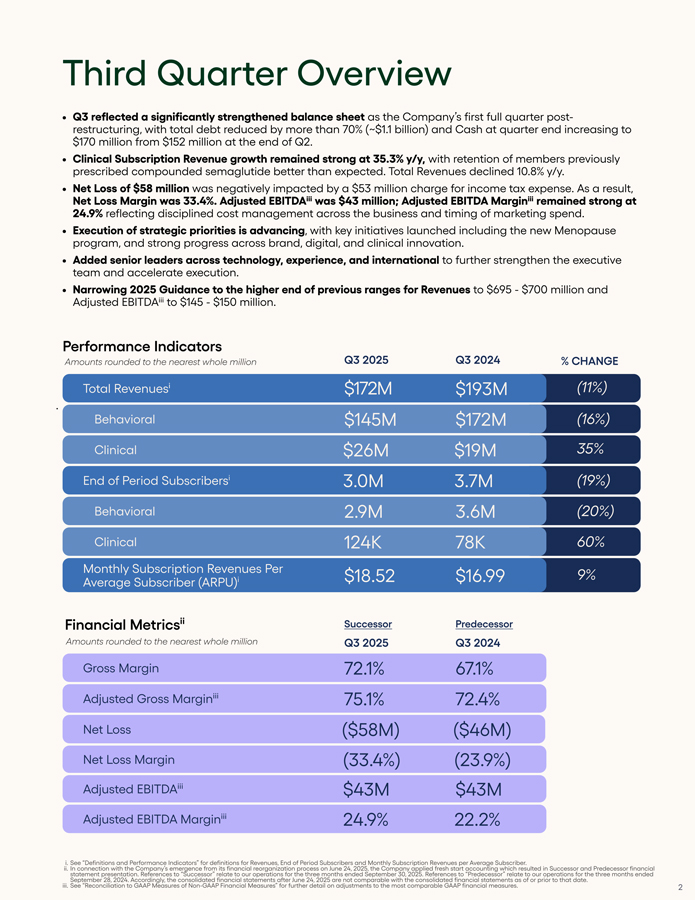
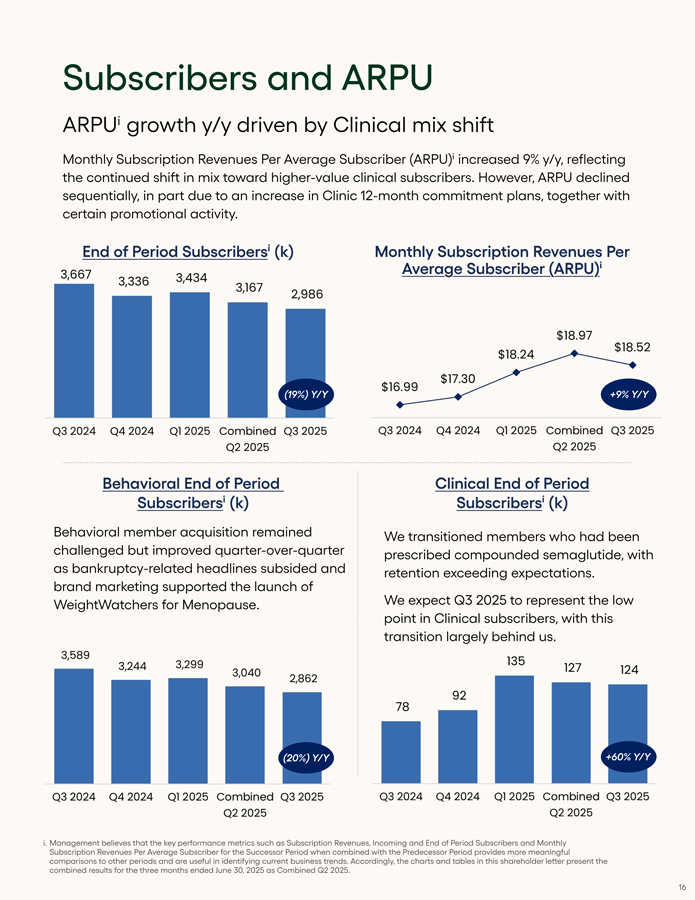
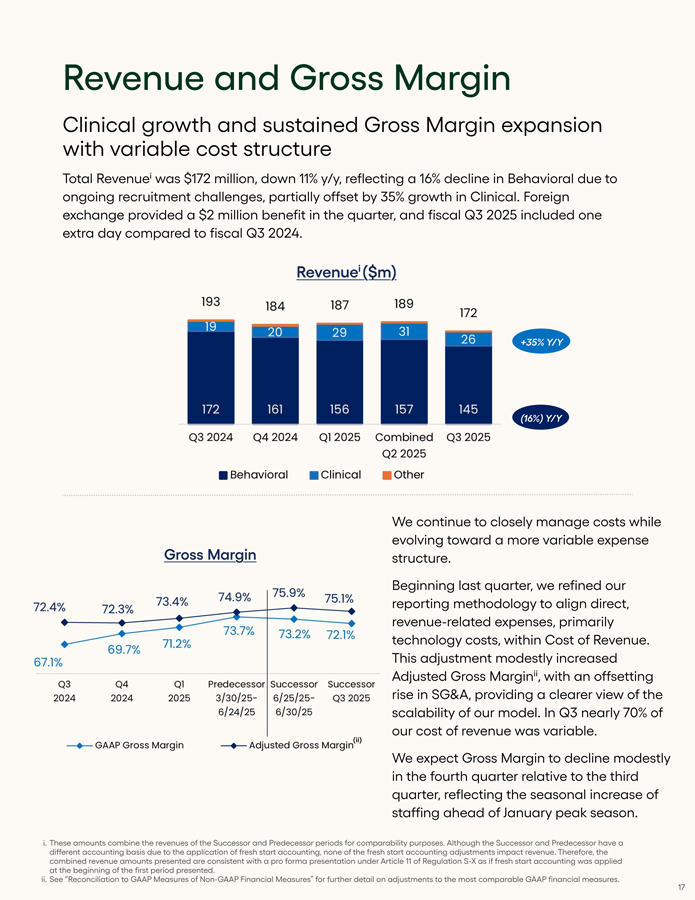
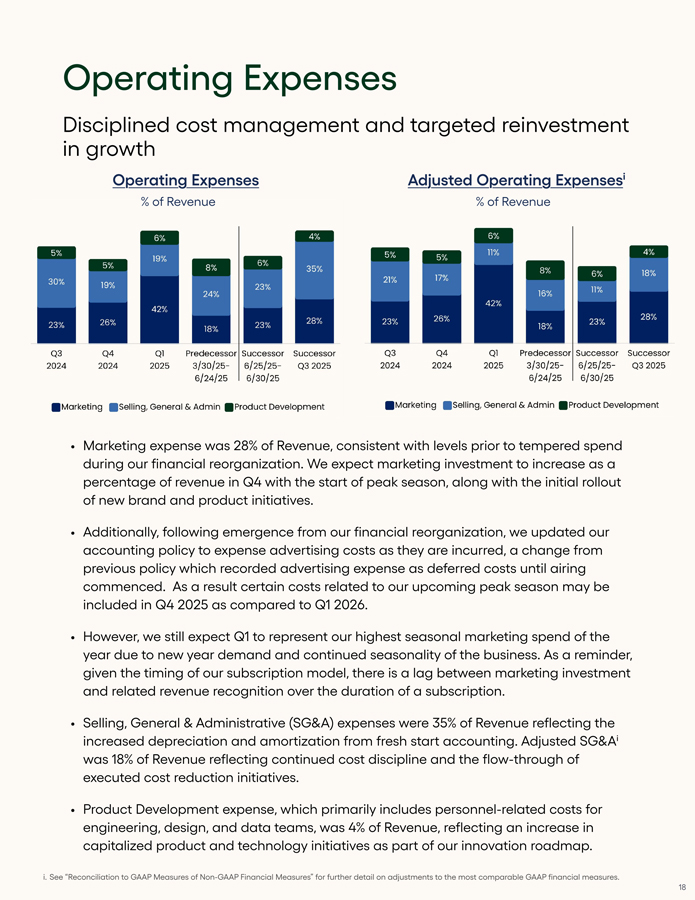
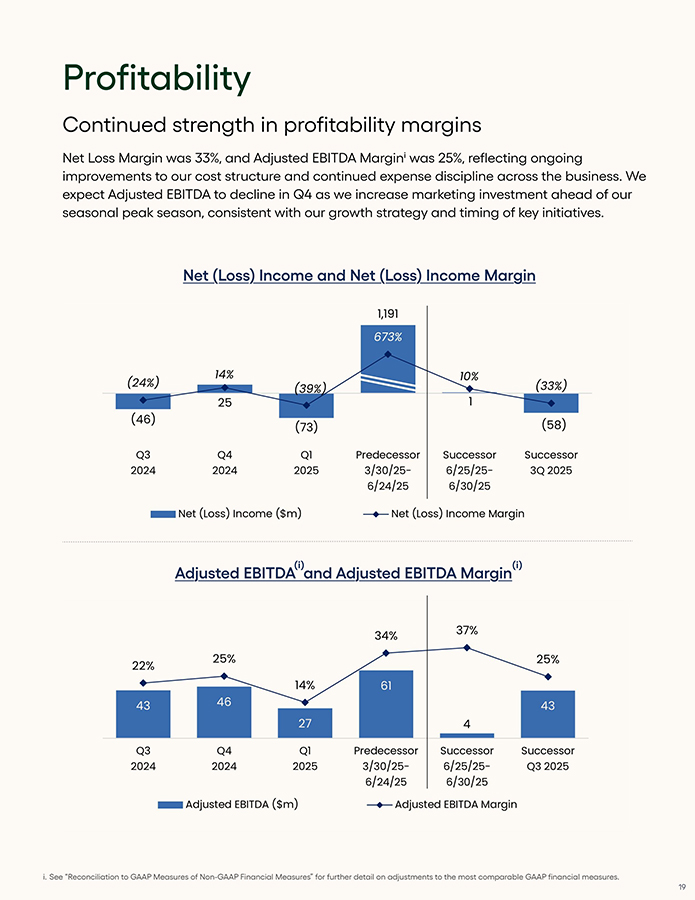
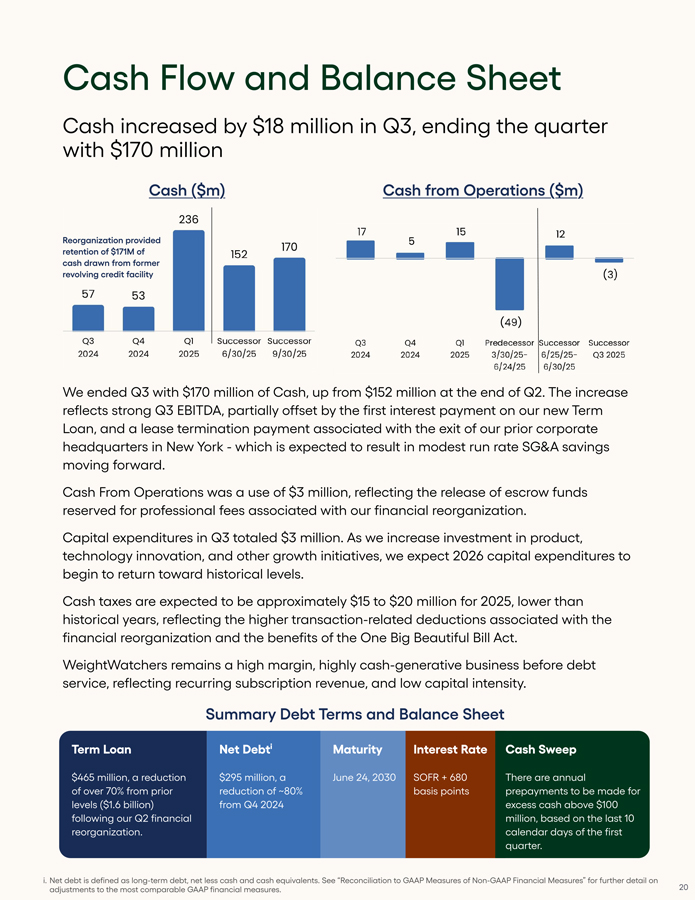
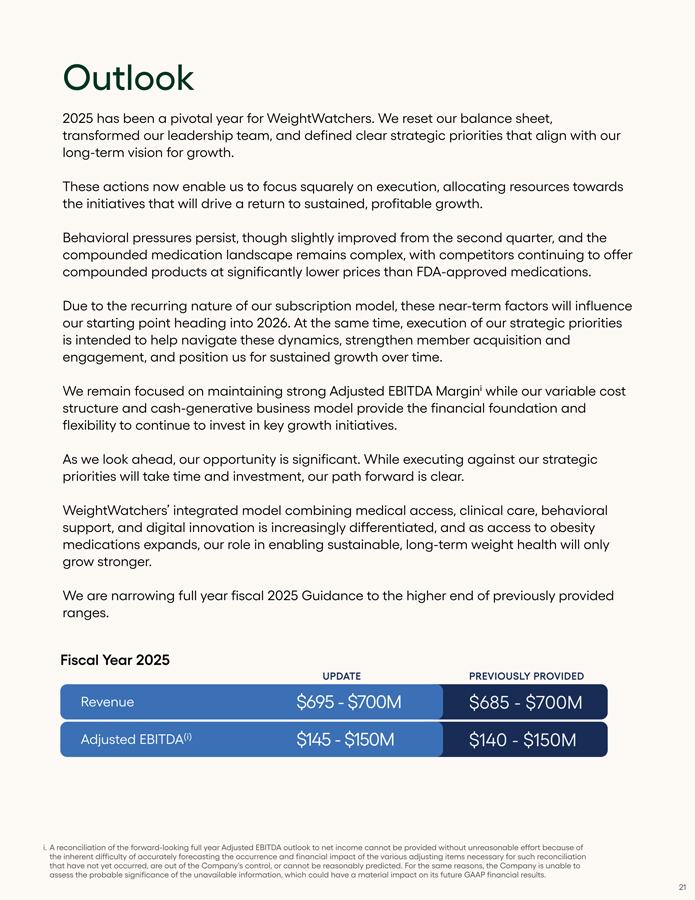
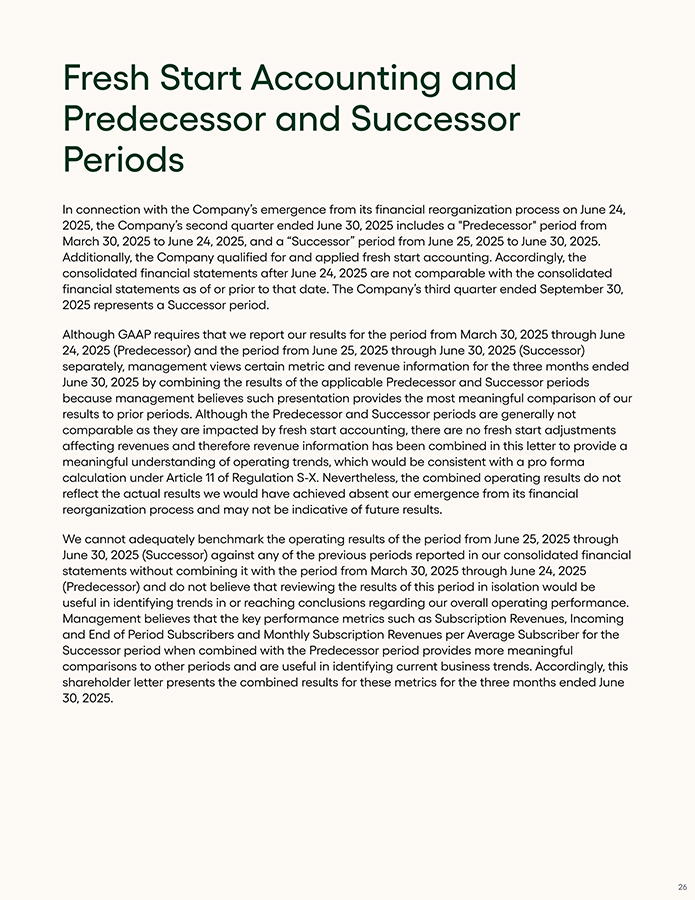
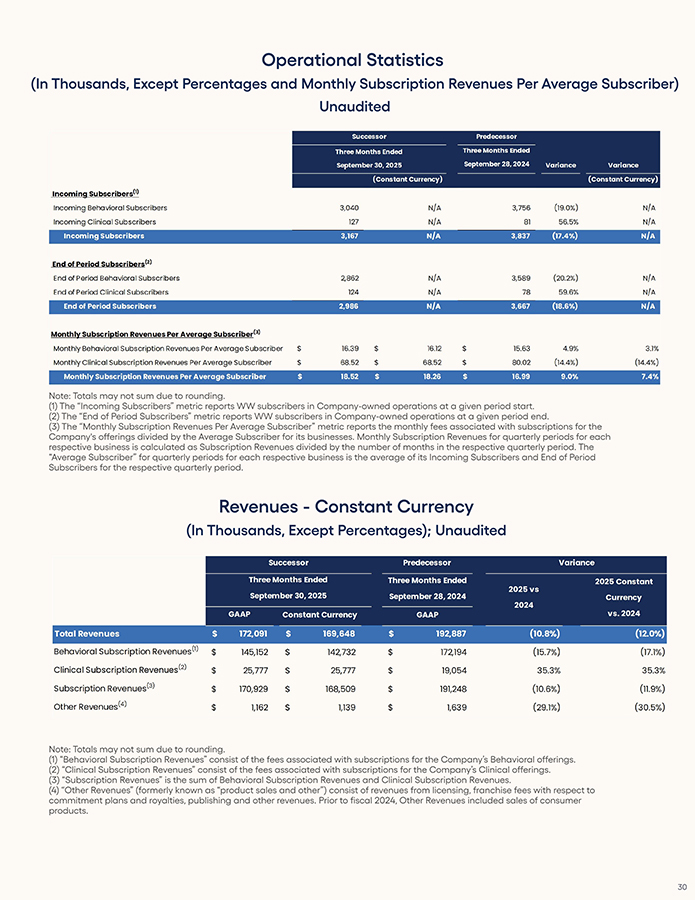
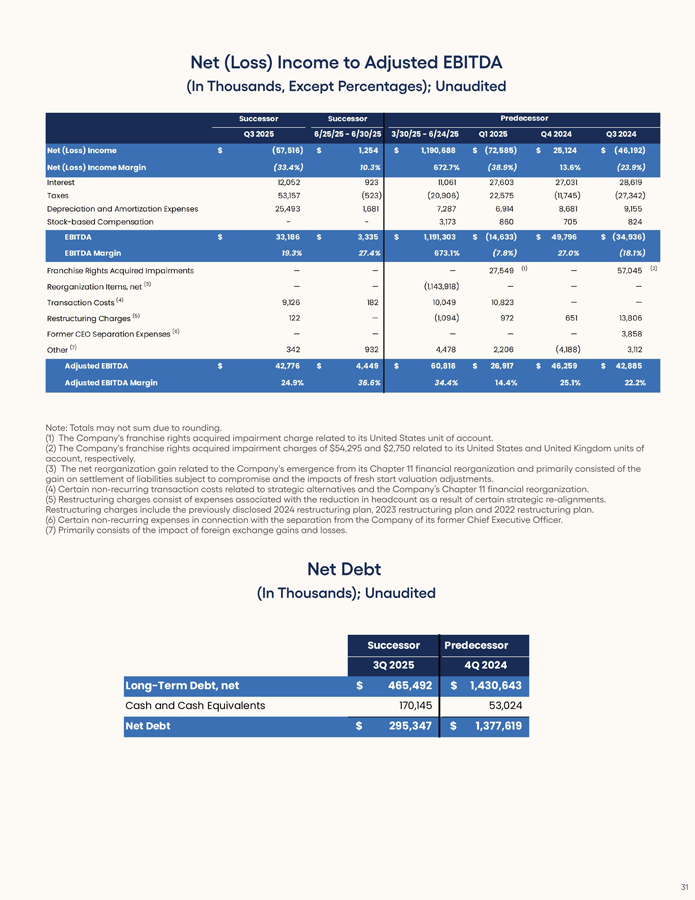
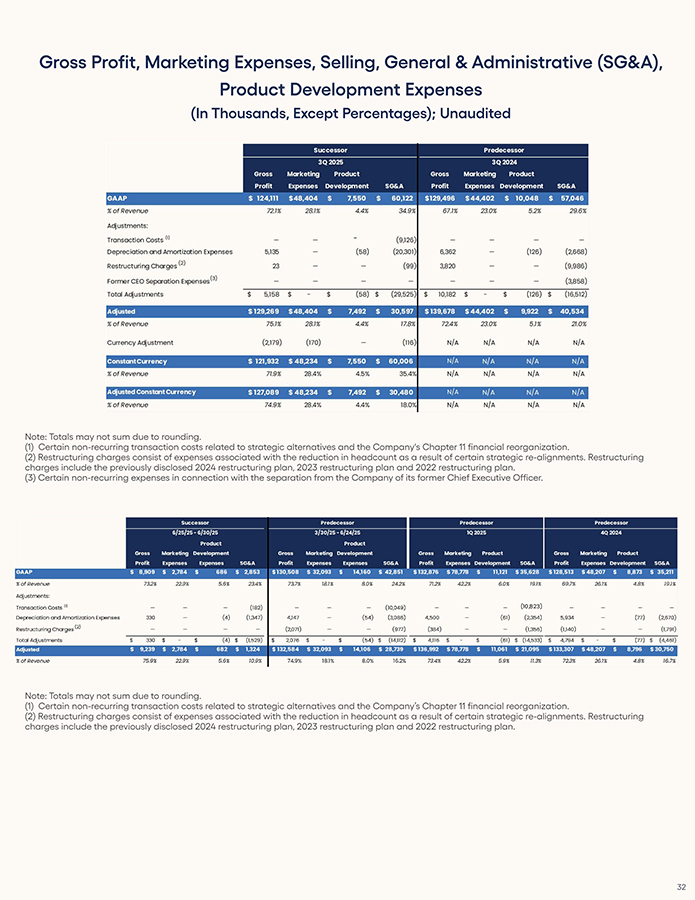
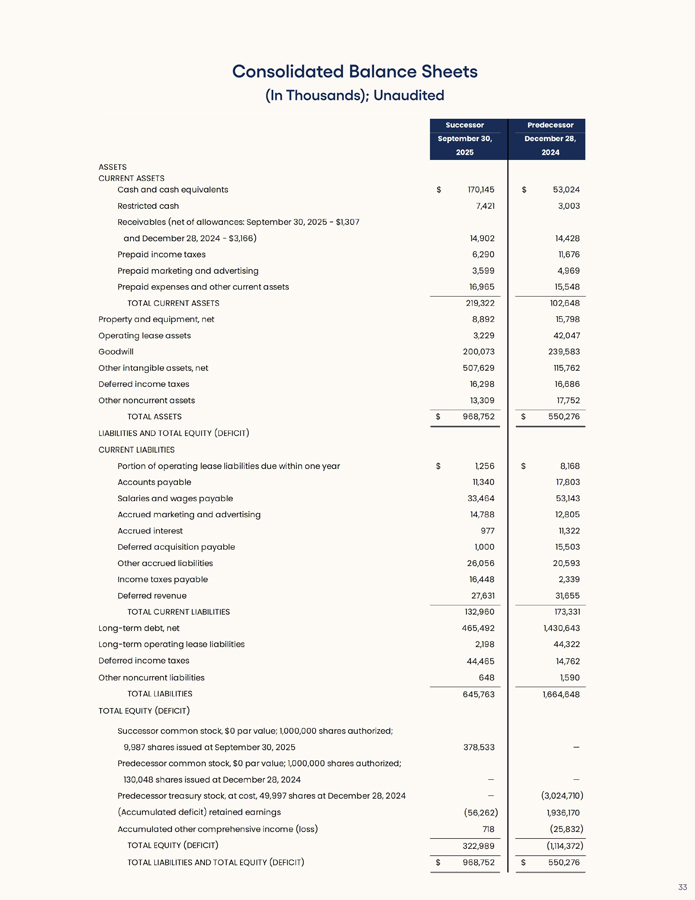
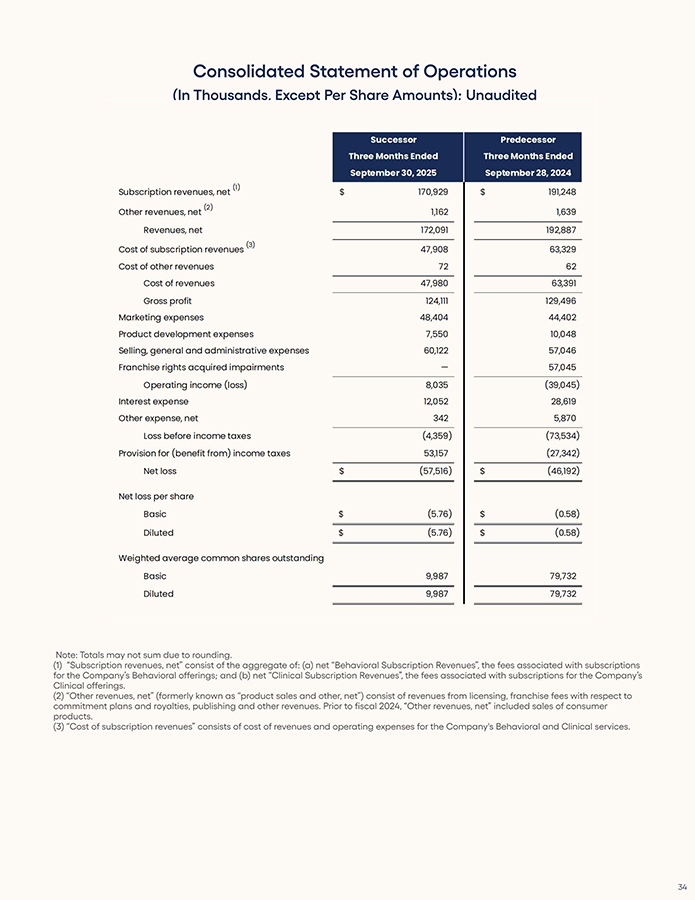
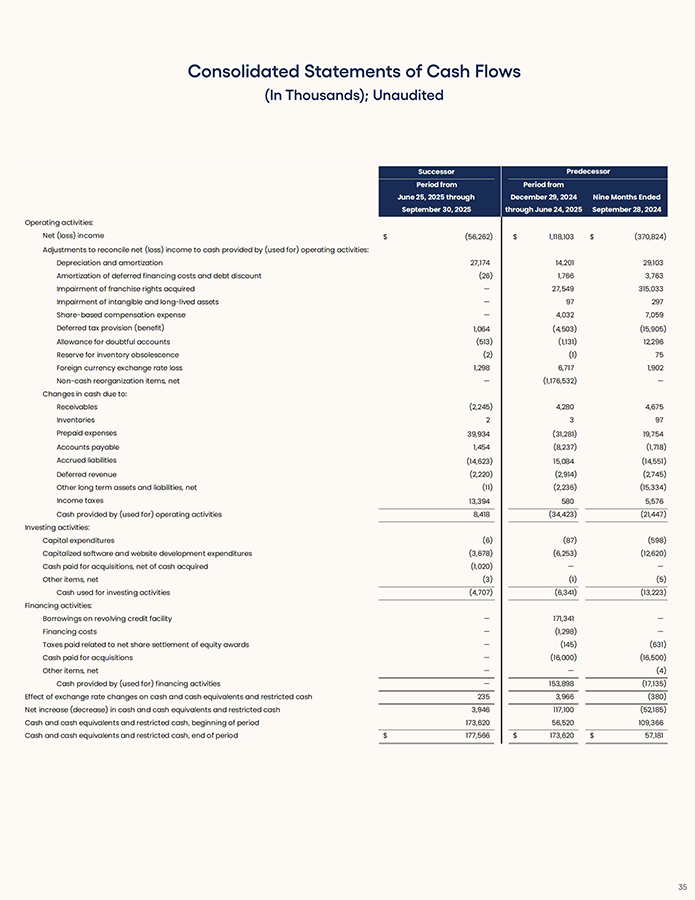
Thanks, Tara. We are pleased with the results for the quarter with continued strong adjusted EBITDA margins of nearly 25%, reflecting our focus on cost discipline and timing of spend while investing in future growth initiatives. Acquisition challenges continue to persist in our behavioral business, although slightly improved from last quarter's bankruptcy period, and in part supported by brand marketing associated with the launch of our new menopause program. We ended Q3 with 2.9 million end-of-period behavioral subscribers, a decline of 20% year-over-year as this sector remains challenged. Conversely, we were pleased with the clinic performance in the quarter with clinical end-of-period subscribers of 124,000, an increase of 60% compared to the same quarter last year. As a reminder, we added compounded semaglutide to our prescription formulary in October last year, and we'll start to face more challenging comps over the next couple of quarters. Revenue was $172 million, which declined 11% year-over-year. Clinical revenue grew 35% year-over-year, and behavioral revenue declined 16% year-over-year. Foreign exchange provided a $2 million benefit to the quarter, and fiscal Q3 2025 included one extra day compared to fiscal Q3 2024. In the clinic business, we were encouraged by our retention of a greater than expected number of members who had been previously prescribed compounded semaglutide, transitioning approximately 20% of those members to branded or oral medications. We expect Q3 2025 to represent the low point in clinical subscribers, with this transition largely behind us. Monthly subscription revenues per average subscriber, or ARPU, was $18.52 in the quarter, increasing 9% compared to the prior year quarter, reflecting the continued shift in mix towards higher value clinical subscribers. However, ARPU declined sequentially in part due to an increase in clinic 12-month commitment plans together with certain promotional activity. Adjusted gross margin was 75.1%. We continued closely managed costs while evolving toward a more variable expense structure, with nearly 70% of our cost of revenue variable in Q3. Beginning last quarter, we refined our reporting methodology to align direct revenue-related expenses, primarily technology costs, within cost of revenue. This adjustment modestly increased gross margin with an offsetting increase in SG&A, providing a clearer view of the scalability of our model. We expect gross margin to decline modestly in the fourth quarter relative to the third quarter, reflecting the seasonal increase of staffing ahead of January peak season. Marketing expense was 28% of revenue, more consistent with levels prior to last quarter's financial reorganization period. We expect marketing investment to increase as a percentage of revenue in Q4 at the start of peak season, along with the initial rollout of new brand and product initiatives Tara mentioned. Additionally, following emergence, we updated our accounting policy to expense advertising costs as they are incurred, a change from previous policy which recorded advertising expense as deferred costs until airing commenced. As a result, certain costs related to peak may be included in the fourth quarter versus the first quarter of next year. however we still expect q1 to represent our highest seasonal marketing spend of the year due to new year demand and continued seasonality of the business as a reminder given the timing of our subscription model there is a lag between marketing investment and related revenue recognition over the duration of a subscription adjusted product development expense which primarily includes personnel related costs for engineering design and data teams with four percent of revenue, reflecting an increase in capitalized products and technology initiatives as part of our products roadmap. Adjusted SG&A was 18 percent of revenue, reflecting continued cost discipline and the flow through of executed cost reduction initiatives. Adjusted EBITDA was 43 million and adjusted EBITDA margin was 24.9 percent. We expect adjusted EBITDA to decline in Q4 compared to Q3, reflecting the increase in marketing mentioned earlier, while still maintaining a strong margin profile. Shifting to cash and the balance sheet. We ended Q3 with $170 million of cash and cash equivalents, up from $152 million at the end of Q2. The increase reflects strong Q3 EBITDA, partially offset by the first interest payment on our new term loan and the lease termination payment associated with the exit of our prior corporate headquarters in new york which is expected to result in modest run rate sgna savings moving forward cash flow from operations with the use of 3 million reflecting the release of escrow funds reserved for professional fees associated with our financial reorganization capital expenditures in q3 totals 3 million as we increase investment in product technology innovation and other growth initiatives we expect 2026 capital expenditures to begin to return towards historical levels cash taxes are expected to be approximately 15 to 20 million for 2025 lower than historical years reflecting the higher transaction related deductions associated with the financial reorganization and the benefits of the one big beautiful bill act weight watchers remains a high margin, highly cash generative business before debt service, reflecting recurring subscription revenue and low capital intensity. Shifting to our new debt profile, a term loan of $465 million represents a reduction of over 70% following our financial reorganization. The interest rate on the term loan is so far plus 680 basis points. It has a maturity of June 24, As part of the term loan agreement, there are annual prepayments to be made for excess cash above $100 million based on the last 10 calendar days of the first quarter. Now shifting to our outlook. 2025 has been a pivotal year for Weight Watchers. We reset our balance sheet, transformed our leadership team, and defined clear strategic priorities that align with our long-term vision for growth. These actions now enable us to focus squarely on execution, allocating resources towards the initiatives that will drive a return to sustained profitable growth. Behavioral pressures persist, though slightly improved from the second quarter, and the compounded medication landscape remains complex with competitors continuing to offer compounded products at significantly lower prices than FDA-approved medication. Due to the recurring nature of our subscription model, However, these near-term factors will influence our starting point headed into 2026. At the same time, execution of our strategic plans throughout the year will target a strengthening of member acquisition and engagement and position us for sustained growth over time. We remain focused on maintaining strong adjusted EBITDA margins, while our variable cost structure and cash-generative business model provide the financial foundation and flexibility to continue to invest in key growth initiatives. We are narrowing full year fiscal 2025 guidance to the higher end of previously provided ranges and expect revenue of $695 to $700 million and adjusted EBITDA of $145 to $150 million. I'll now turn back over to Tara.
Thanks, Felicia. The world of weight management has transformed and Weight Watchers with it. We stand on the precipice of a massive opportunity to build significant value for our business while helping millions of people around the world to live healthier, happier lives, reasserting ourselves as the leading destination for successful weight loss and lasting results. I'll now turn it over to the operator to open it up for Q&A.
Operator
Thank you. We will now begin the question and answer session. To ask a question, you may press star, then 1 on your touchtone phone. To withdraw your question, please press star, then 2. At this time, we will pause momentarily to assemble our roster. And the first question will be from Alex Furman from Lucid Capital Markets. Please go ahead.
Thanks very much for taking my question, and congratulations on what looks like a really strong quarter here. You know, very interesting that you're going to be removing all of the barriers between the two programs in the app. I think that, you know, makes sense as kind of a natural evolution of the program. I'm curious, when do you think that that redesigned app is going to be available to members?
Oh, hey, Alex. It's Tara. So, first of all, thanks for the question. So, there's a lot more detail. I don't know if you've had a chance to go through our shareholder letter yet, but would direct you there for a bit more color around certainly this topic and others. But the first version of the new app we are targeting to launch by early next year in time for peak. So the team is heads down working really hard on that and then you know that will be the first release. There will be a number of subsequent releases of the app and our digital platforms over the course of next year um and it's really you know the app the new app experience or the new digital experience for members is it goes beyond just integrating and removing barriers it will look and feel very modern very different much more intuitive than our existing legacy app um that we've had for many many years with sort of you know code on code on code um it will be much better suited to highlight different features, different tools, different programs that may be appropriate to you on your weight loss journey that are today really hard to find at best in our app. Things like our registered dietitian offering, things like our GLP One companion program that's currently buried within the core program as a setting that you've sort of got to figure out where to find it. This new experience will allow us to better showcase the full breadth of the offering and then also as as we get to know you and as this experience becomes more personalized and more data informed it will allow us to better drive our members to solutions for them and meet them where they are on their journey so we're really excited the team is doing a huge huge amount of work to get the first version of this out the door um by peak but for that yeah That should look and feel like a most definitely a different chapter for Weight Watchers for our members around the world.
That's exciting. Yeah, it'll be great to see when that comes out shortly. Can you talk about some of the partnerships that you've been doing lately? You mentioned the partnerships you have with Novo, and it seems like you've been striking a number of these kind of deals. It was announced recently. You have a partnership with Amazon. for drug delivery. Can you talk a little bit more about some of these partnerships? Is that what's driving your growth? And in the case of Amazon, can you tell us a little bit more about what your members are getting as a result of this partnership?
Yeah, of course. Listen, I think strategic partnerships are a great lever for us across many different angles as we move forward, and certainly that can include partners with pharmaceutical players like Lily and Novo that we have um or or it can include uh you know some on the back end like amazon and way beyond that you know i think that there are strategic partnerships opportunities for the business that can extend our services that can help us expand internationally and so um while i would not say strategic partnerships are where our growth is going to come from i do think they are a part of our growth strategy um but i'll flip to john to talk more specifically maybe about Amazon.
Yeah, thanks, John Volkman here. So obviously, you know, we're very excited about our partnerships with NovoCare and Lily Direct and very pleased to announce our new collaboration with Amazon Pharmacy. Overall, the theme of all of these is that it's really just another step in making medication access faster, simpler, and more affordable for our members. And, you know, specifically to the Amazon partnership, by integrating directly with their infrastructure, our members now get access to real-time medication availability from their specific fulfillment center. They also get automatic coupon savings, apply to checkout with no code needed, and then obviously the Amazon network for free two-day shipping for Prime members. So again, all of these partnerships are with the theme of just reducing friction in the healthcare process, And, you know, for these specifically allowing patients to focus less on pharmacy logistics and more on their health. And then looking at NovoCare, you know, looking ahead to the Orals launch here, you know, we are working very closely with them to help support this launch. And it is fast approaching. And so, you know, like we've done in the past, we'll be looking for new and really innovative ways to bring both convenience and value to our members on that front.
That's really interesting. Thank you for that. And then if I could just kind of squeeze in one more here, Weight Watchers for Menopause, you just launched it. I imagine it's too early to talk about how that's going, but who are you initially targeting for this offering? Is this something that you think is a big opportunity within your current membership, or is this an opportunity to re-engage with former members that you haven't seen in a few years?
I think it's both of the above and new members. So, yeah, we are really excited to have launched the menopause program, which is really two programs, one with a clinical offering and one without, with the clinical offering only being available in the U.S. with women's health trained clinicians. So, we think this is an exciting market moving into women's health, but with a very clear you know overlap in terms of weight health we think it's a global need there's a lot of demand it is fast being destigmatized uh it's a very nice overlap with our existing customer base and has been much requested uh from from our existing member base for a long time so it feels like a really nice fit for the company and and somewhat of a blueprint in terms of how we think about programming moving forward with it leveraging each of our core pillars the most recent pillar being medication access and clinical expertise but curated community offering coaching nutritional guidance movement but tailored to women in their perimenopausal and menopausal years also really we'll be leveraging new technology moving forward and again in the same way as we talked about the app that app infrastructure and that new intuitive modern connected experience the first version of that actually really is in menopause albeit it's not yet on uh fully on the new tech stack but you'll notice that the barriers that exist in the in some of the other programmings are removed in the menopause program so it was um you're right it's too early to sort of be conclusive uh about it in any way other than than we're excited and we think it's an important growth lever moving forward. But it was good to get back out in the market, be loud, be proud. You saw we launched it with Queen Latifah, which was great and provided a much-needed sort of positive brand moment coming out of those fairly painful extended bankruptcy headings. So exciting about it moving forward.
Absolutely. That's great to hear. Thank you very much for your responses.
Operator
Welcome. And our next question will be from Justin Ages from CJS Securities. Please go ahead.
Hi, morning, all. I wanted to ask a question on retention, which was better than expected. Can we just drill down on that and some of the returns that you're seeing in some of the programs? You know, given the headlines around the compounded GLP-1s, I think myself and everyone else thought that clinical subscribers would be down a little more. So that was impressive to see. So I wanted to get some more information on that.
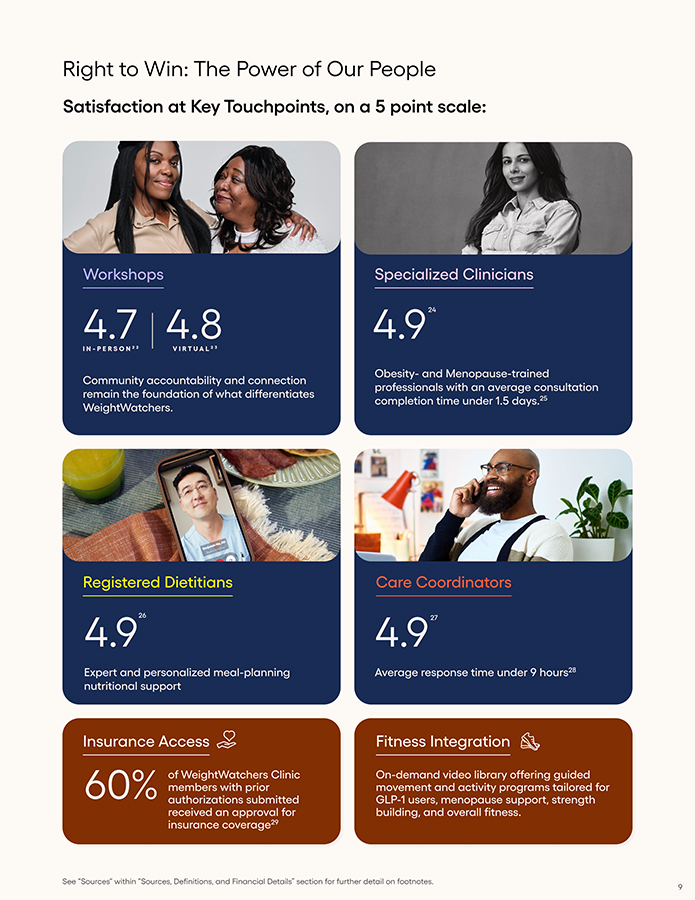
Yeah, sure. So the transition from compounded medications is largely complete. And we're pleased to announce that those results have exceeded our expectations. So we successfully converted approximately 20% of our compounding members directly into our ongoing clinical program. And within that cohort, we saw members transition to really three main treatment areas. So insurance covered GLP-1s, and for these members, we were able to successfully help them obtain coverage. And as previously stated, our ability to do so here really remains a key competitive advantage for us. We also saw members transition to cash-paid GLP-1s, many of whom are using our direct integrations with NovoCare and LilyDirect, and then finally to our oral medication kits.
We also strategically moved member subscribers towards 12-month LTCs in a very strong effort to retain clients for longer to keep with a more beneficial LTV for us long term. And so while we did see an ARPU decline in Q3, we were very optimistic and positive about that ARPU decline because it did mean better retention for our clinic subscribers. then on behavioral we do see that our overall retention is still trending around 11 months and an area of opportunity for us as well all right that's very helpful appreciate yeah i was just i was just gonna add on to to the to the retention point as it being an area of opportunity another perfect example of why a a different member experience on the digital platforms particularly the app is so needed because again some of these silos in the existing journey
prohibit us from executing against some valuable tools to drive increased share of wallet, but upsell into different programs, particularly the clinic program, but also to drive retention through stickier, more personalized programming for our members. So all tools sort of pointing to the same set of objectives.
Great. Thanks for that. And then one more, if I could. And I know relatively in terms of kind of the reorganization and the rebrand, but there's been some new influencer campaigns at the company. Just wanted to know early returns on broadening the subscriber base. Have you seen any changes in the demographics of the company?
Well, I'm glad you're seeing our new influencer campaigns. That will make our marketing team extremely happy. Nothing specific to comment on right now. I mean, hopefully you got from the prepared remarks. And again, there's a little more color in the shareholder letter, but we're really looking to reassert and reposition and sort of re-enter this brand into the weight management market. We've got some pretty dated preconceptions of the brand. We've obviously come off the back of some prolonged bankruptcy headings, headlines that were very challenging for the business over many months this year. And what you're seeing in the influence of strategy is a shift in how we show up, who we engage with, as well as the types of channels that we're going to be leveraging to really execute against that strategy. Over many years, the company has really become quite dependent on, as I mentioned in the prepared remarks, a discounting strategy, heavy bottom of funnel performance marketing. And we have a high level of conviction that as an iconic global brand of more than six decades, that we should be deploying a much more of a full funnel strategy, leaning into the strength of that brand and rebuilding that organic flywheel through multiple different channels, but certainly social, telling real life member stories, showcasing our clinicians or coaches and leveraging appropriate influences helps us do that as well as reach new target audiences.
Thanks for the color there.
Operator
Again, if you'd like to ask a question, please press star then one. The next question will be from Nathan Feather from Morgan Stanley. Please go ahead.
Good morning, everyone, and thanks for taking the question. So, compounding has certainly driven a lot of volatility in the clinic subscriber growth over the past year i guess if we strip that out how should we think about the underlying growth here and given that what's kind of the right run rate of clinic growth um now that we're past the the shirt off there thank you um listen you can't really strip it out unfortunately so this is a a pretty complex landscape right now as you know moving moving very fast um the business prescribed compounded medications from October last year to the end of May.
As John mentioned, we have a very robust insurance PA approval engine on the back end. We have non-GLP1 oral medications, and we are partnering with Novo to bring this new oral WGOV to market early next year. So there are a lot of moving parts in the clinic business. We have a very high level of conviction in the strength of this integrated, holistic, medically centered, but broader care model nonetheless over the long term. We think it drives superior outcomes, it drives a better member experience, it drives more sustainability in results, and really is quite differentiated from just pure play telehealth. So outside of compounding noise over the course of the year, this is a really important growth engine for us that is only going to receive, I think, more and more demand and adoption of members, particularly as pricing comes down and these medications become more accessible.
Yeah. And to that end, obviously, we're monitoring the situation closely, as I'm sure you all are with the recent headlines that appear to be putting a lot of downward pressure on medication prices. And I think important to call out that we view that downward pressure really as a net positive and a significant tailwind for our business. You know, as access expands, we believe that the market is going to increasingly value quality of care, and that plays directly to our strengths. Our model has always been built on really high touch and holistic clinical support. So, you know, our members have access 24-7 to their care teams, and, you know, as you saw in our shareholder letter, our customer satisfaction and our patient outcomes are really best in class. So, you know, like looking more long-term and looking ahead as this market matures, you know, we're really confident that the key stakeholders in this industry, from regulators to pharma partners, will increasingly value providers who ensure, you know, patient safety, manage outcomes, and drive long-term adherence. And when we think about, you know, where we are long-term, that's the business that we're in.
Last thing I would mention is that we also stated that we do anticipate Q3 2025 being the trough. on end of period subscriber for clinic great great that's very helpful and then you know heading into peak season you know shortly there was a little bit of commentary in the letter but interested to hear a touch more about your plans across both product and marketing as you work to improve the resonance especially within the core behavioral business thank you um yeah happy to to take that then you guys can jump in if i miss anything um there's hopefully it is uh clear the extent of work that is going on across the company right now uh from from a full top to bottom digital uh
rebuild a an extensive brand refresh um a relaunching of our virtual community offerings a showcasing of uh programs and solutions that have been somewhat buried up until this point and really a rallying around the need for significant increases in awareness in the market that Weight Watchers is in the medication space and provides medication access and clinical expertise as part of this more holistic offering with the force multipliers, if you like, that the behavioral solutions can also play. So a pretty important re-entry, an important peak for us, and we're obviously targeting, you know, an uptick in subscribers Q1 from Q4 as a result. It's early to tell, you know, what that's going to look like, but we're really excited. There is a vast amount going on, and it is bold and impactful. And outside of the tactics, everything we're doing, first, second, and third, is to continue to drive superior results for our members. people are looking to achieve results they're coming to us to to to on a to achieve their weight loss and do it in a healthy and sustainable manner um and really making sure that we turn up at peak showing how we are how we are very different um with some with some very impressive data to back that up it is key um and then supported by the product so um yeah yeah we're it's an important couple of months as we as we run up until that point and then beyond right so the difference with this peak versus others is really peak is just the beginning of the launch of many of these things that we're talking about. It's chapter one, right, of the brands coming back in. It's chapter one of the, it's the first version of the new app. It's the first version of the new website. So I'm sure we will have a lot to learn, but we have a lot of exciting things planned post-peak as we continue to roll out various growth initiatives across the ecosystem. So hopefully that's helpful.
I would also just mention that we do anticipate, as Tara mentioned, the step up from Q4 to Q1, but we do still have the acquisition challenges on behavioral that, albeit has improved relative to the bankruptcy headlines of Q2, it is creating an opening active tailwind on our subscriber models for 2026 and so and a headwind um in 2026 and so a lot of um our strategic priorities are to offset that uh opening active headwind yeah i think just lastly to jump in here from a clinical standpoint um you know a really interesting you know factor with peak this year is that
it happens to coincide with with one of the most anticipated things that we've seen you know in quite a while in the space and that's the the launch of an oral uh you know of an oral glt1 which as Nobunortis has stated, is expected to come to market in very early 2026 and then expected with a fast follow from Lilly. And we really view that as a significant market catalyst that's going to open up a new top funnel for a large portion of people who are interested in GLP-1s but resistant to injectables. So in addition to everything that we have planned with our normal peak activities, this also just presents a very interesting and exciting dynamic that we view as an opportunity for our clinical business as well.
Operator
And ladies and gentlemen, this concludes today's question and answer session. I'd like to turn the conference back over to Tara Comant for any closing remarks.
Thank you, everyone. Really just appreciate you joining the call, appreciate your interest in the business and support of the business. This is an exciting time for Weight Watchers. We are running hard to fully leverage all the growth opportunities ahead of us. So look forward to following up in one-on-ones, and if there's something that you wanted to cover that we didn't get to, please just get in touch directly. Thank you.
Operator
The conference has now concluded. Thank you for attending today's presentation. You may now disconnect.