Operator
Good day ladies and gentlemen and welcome to the Ziff Davis second quarter 2025 earnings conference call. My name is Tom and I will be the operator assisting you today. At this time, all participants are in a listen-only mode. A question and answer session will follow the formal presentation. If anyone should require operator assistance during the conference, please press star zero on your telephone keypad. On this call will be Vivek Shah, CEO of Zip Davis, and Brett Richter, Chief Financial Officer of Zip Davis. I will now turn the call over to Brett Richter, Chief Financial Officer of Zip Davis. Thank you. You may begin.
Thank you. Good morning, everyone, and welcome to the Zip Davis Investor Conference Call for Q2 2025. As the operator mentioned, I am Brett Richter, Chief Financial Officer of Zip Davis, and I am joined by our Chief Executive Officer, Vivek Shah. A presentation is available for today's call. A copy of this presentation is available on our website. When you launch the webcast, there is a button on the viewer on the right-hand side, which will allow you to expand the slides. If you have not received a copy of the press release, you may access it through our corporate website at www.ziffdavis.com. In addition, you'll be able to access the webcast from this site. After completing the formal presentation, we'll be conducting a Q&A. The operator will instruct you at that time regarding the procedures for asking questions. In addition, you can email questions to investor at ziffdavis.com. Before we begin our prepared remarks, allow me to read the safe harbor language. As you know, this call and the webcast will include forward-looking statements. Such statements may involve risks and uncertainties that would cause actual results to differ materially from the anticipated results. Some of those risks and uncertainties include, but are not limited to, the risk factors that we have disclosed in our SEC filings, including our 10K filings, recent 10Q filings, various proxy statements and 8K filings, as well as additional risk factors that we have included as part of the slideshow for the webcast. We refer you to discussions in those documents regarding safe harbor language, as well as forward-looking statements. In addition, following our business outlook slides are our supplemental materials, including reconciliation statements for non-GAAP measures to the nearest GAAP equivalent. Now, let me turn the call over to Vivek for his remarks. Thank you, Brett, and good morning, everyone.
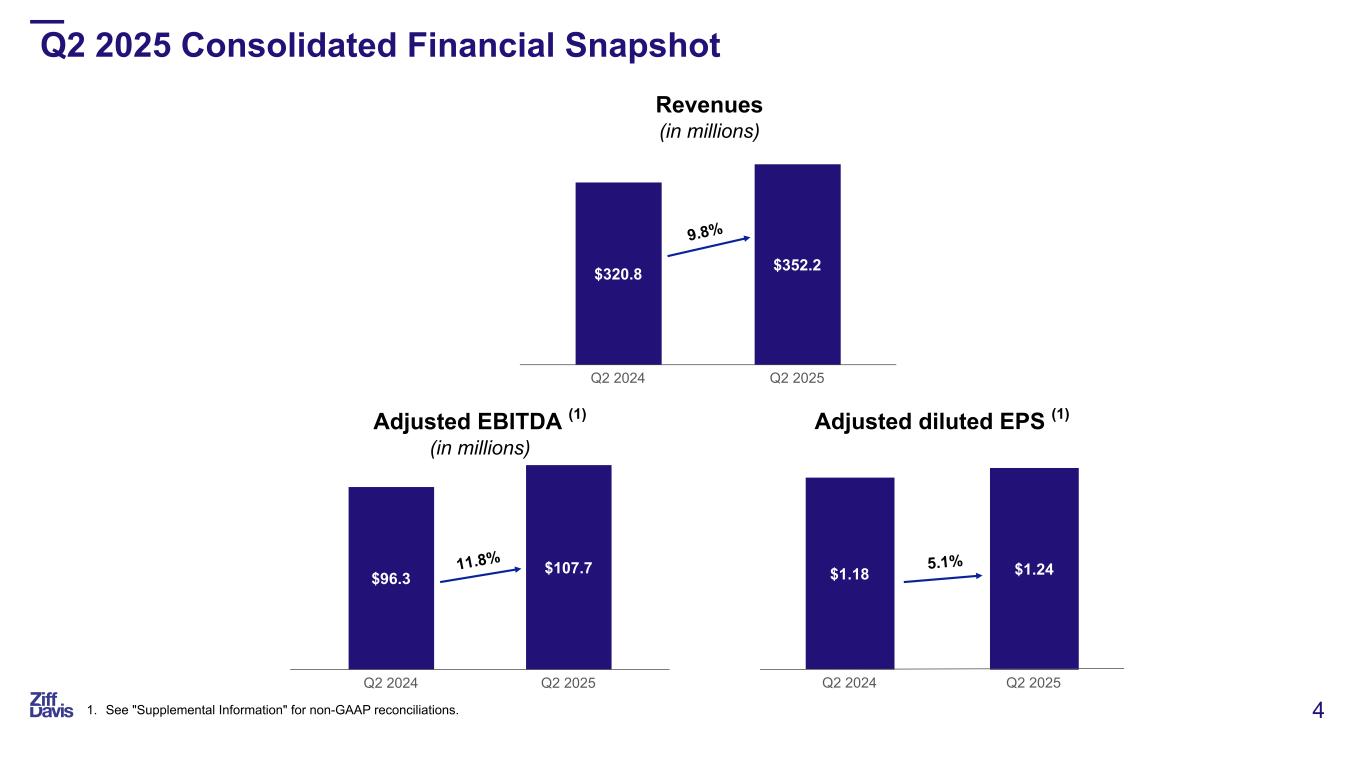
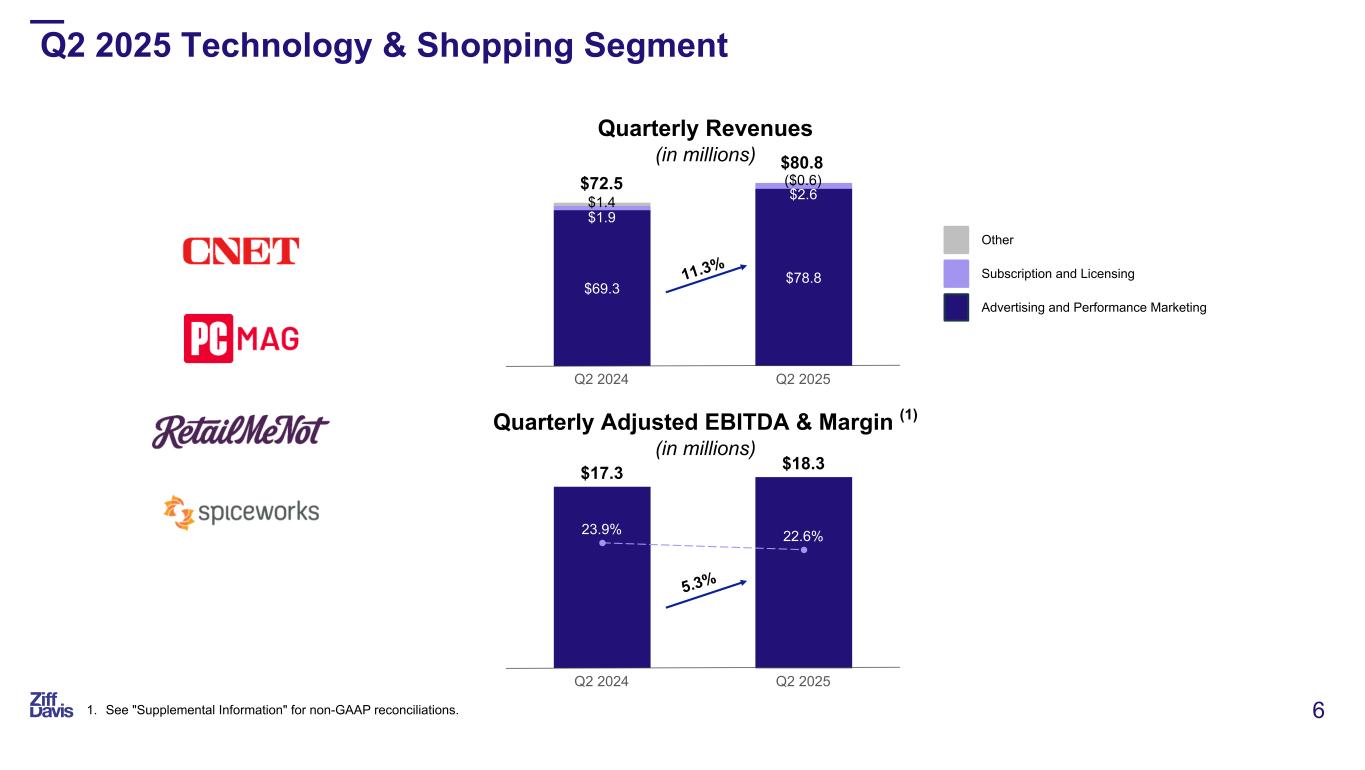
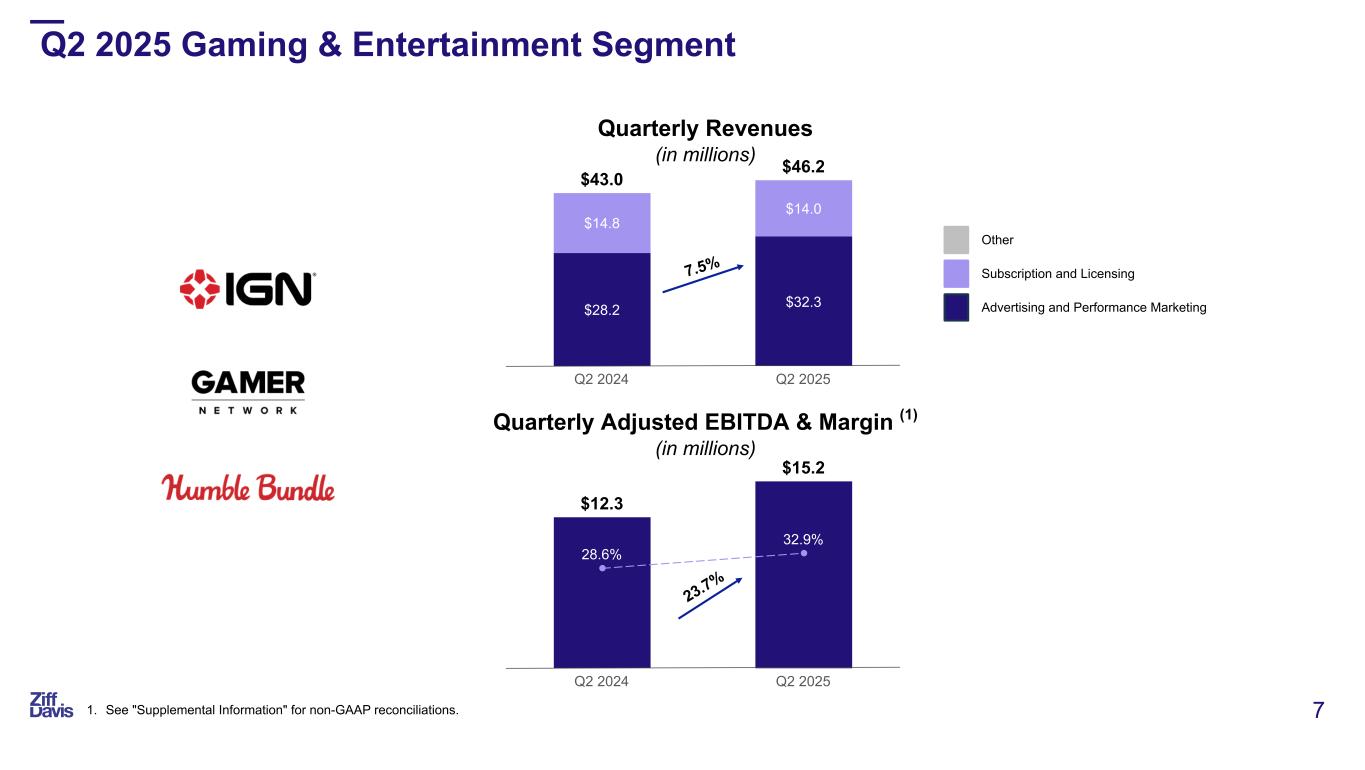
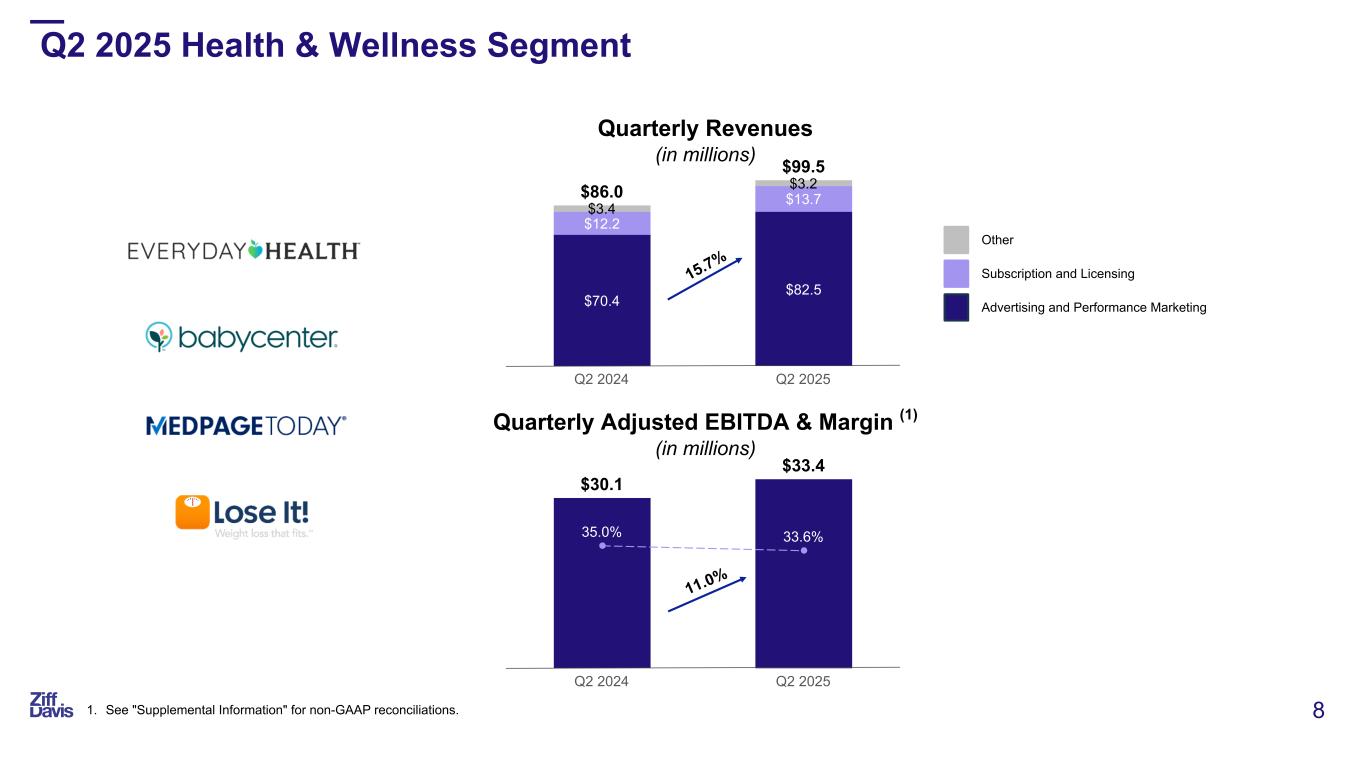
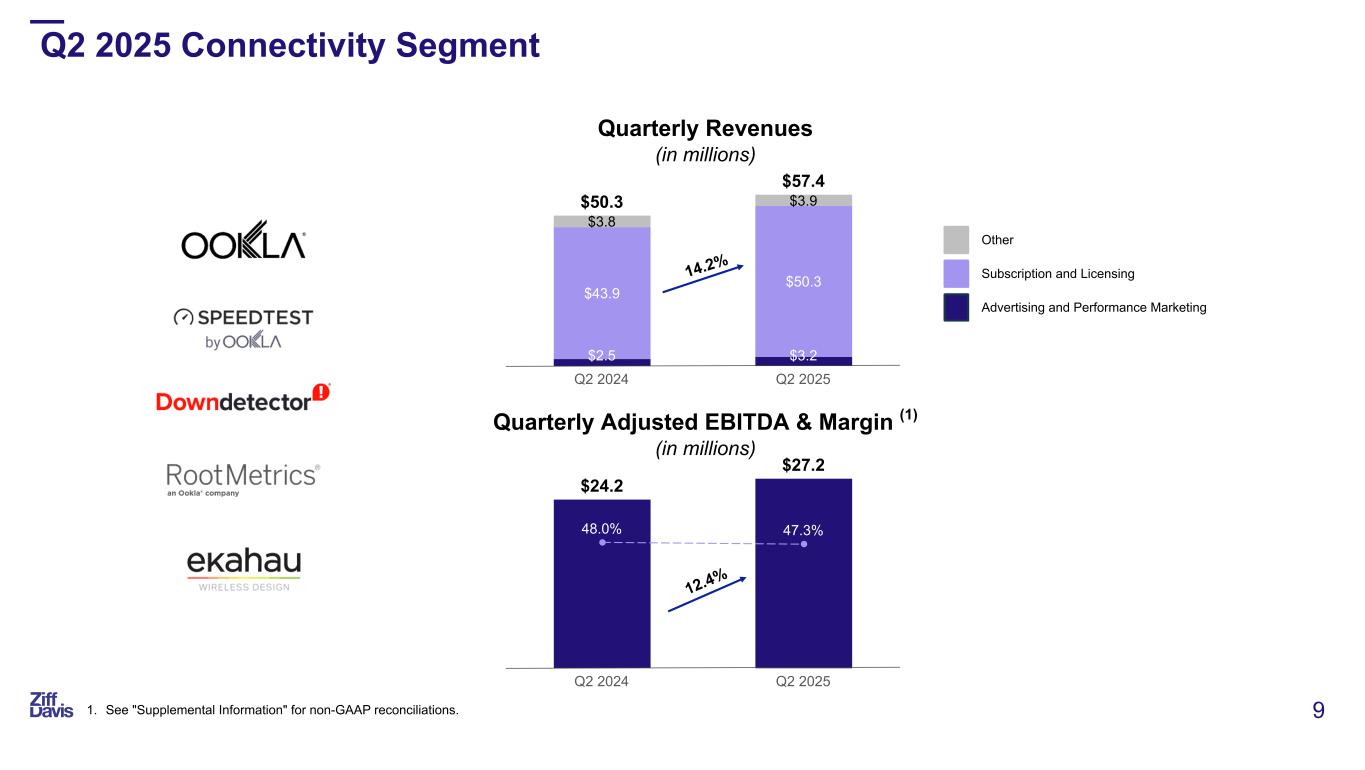
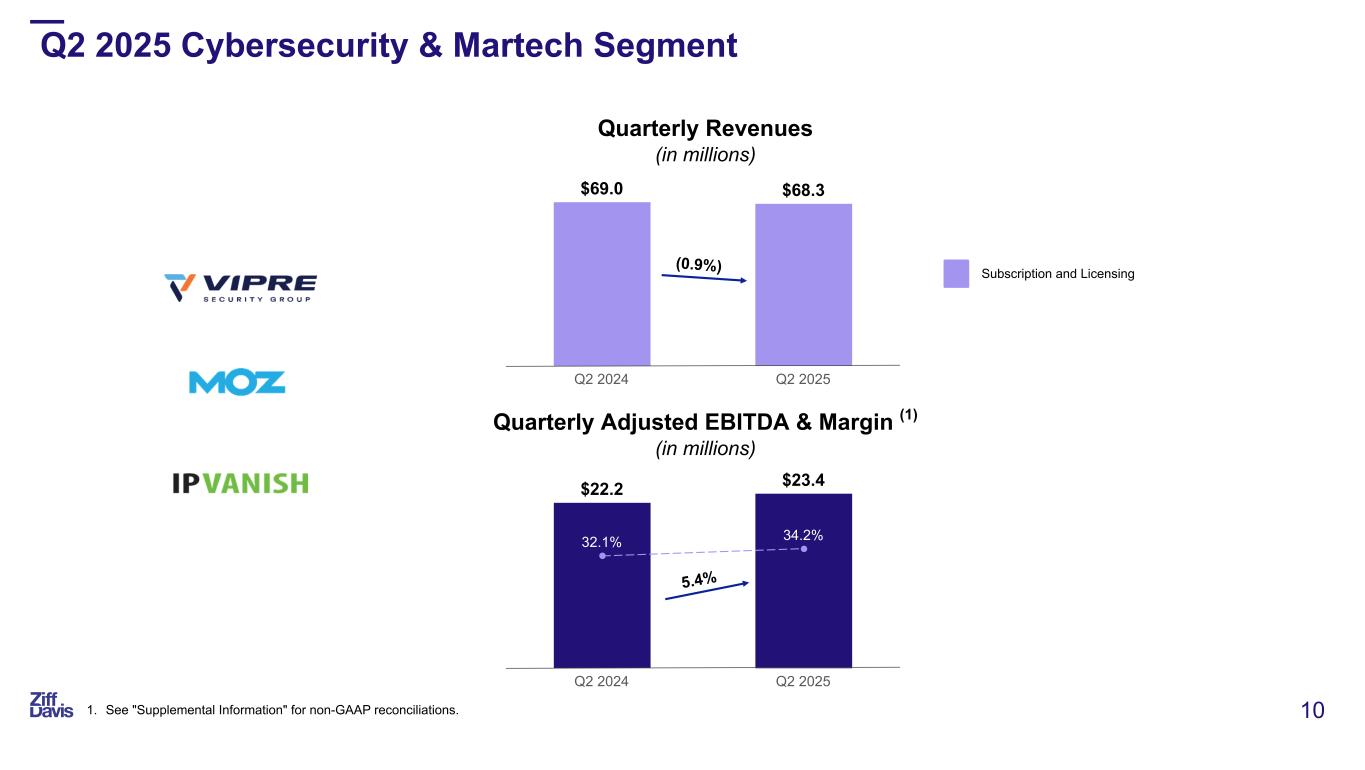
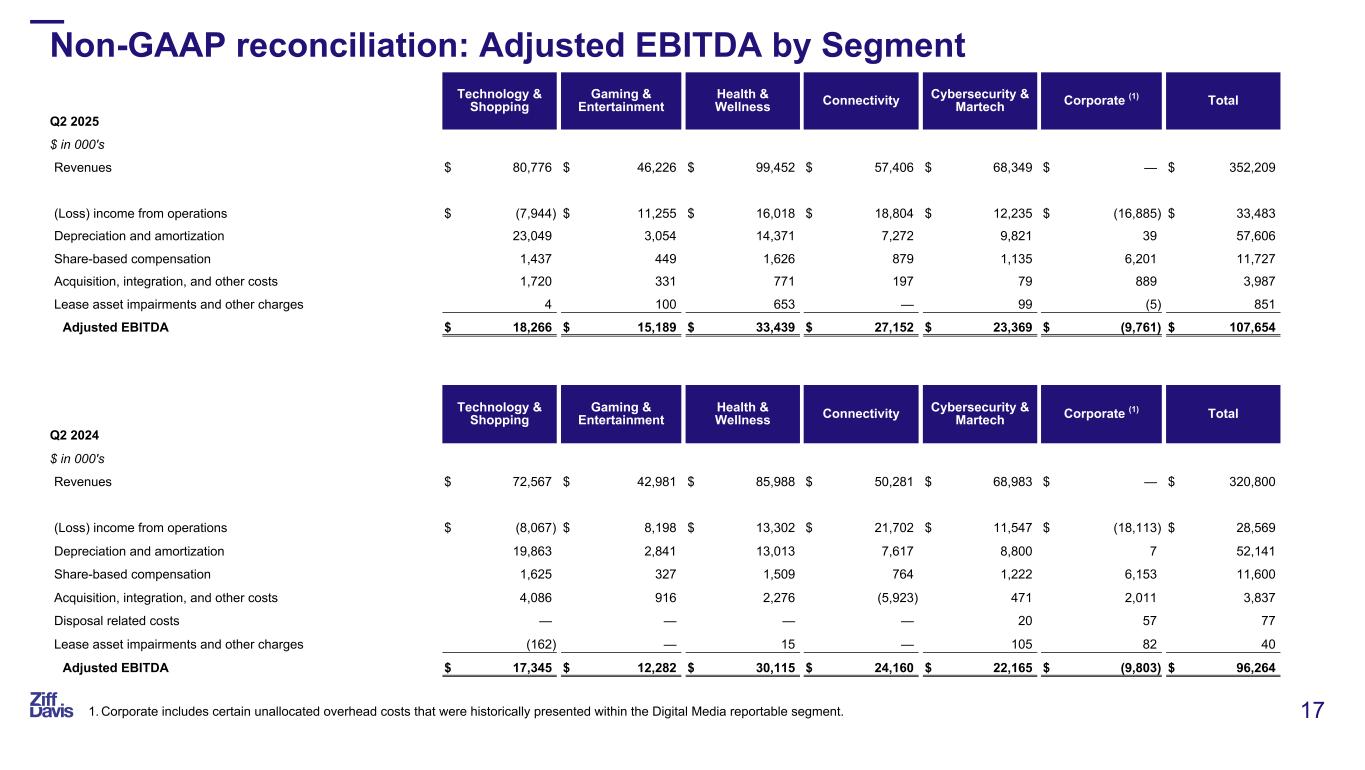
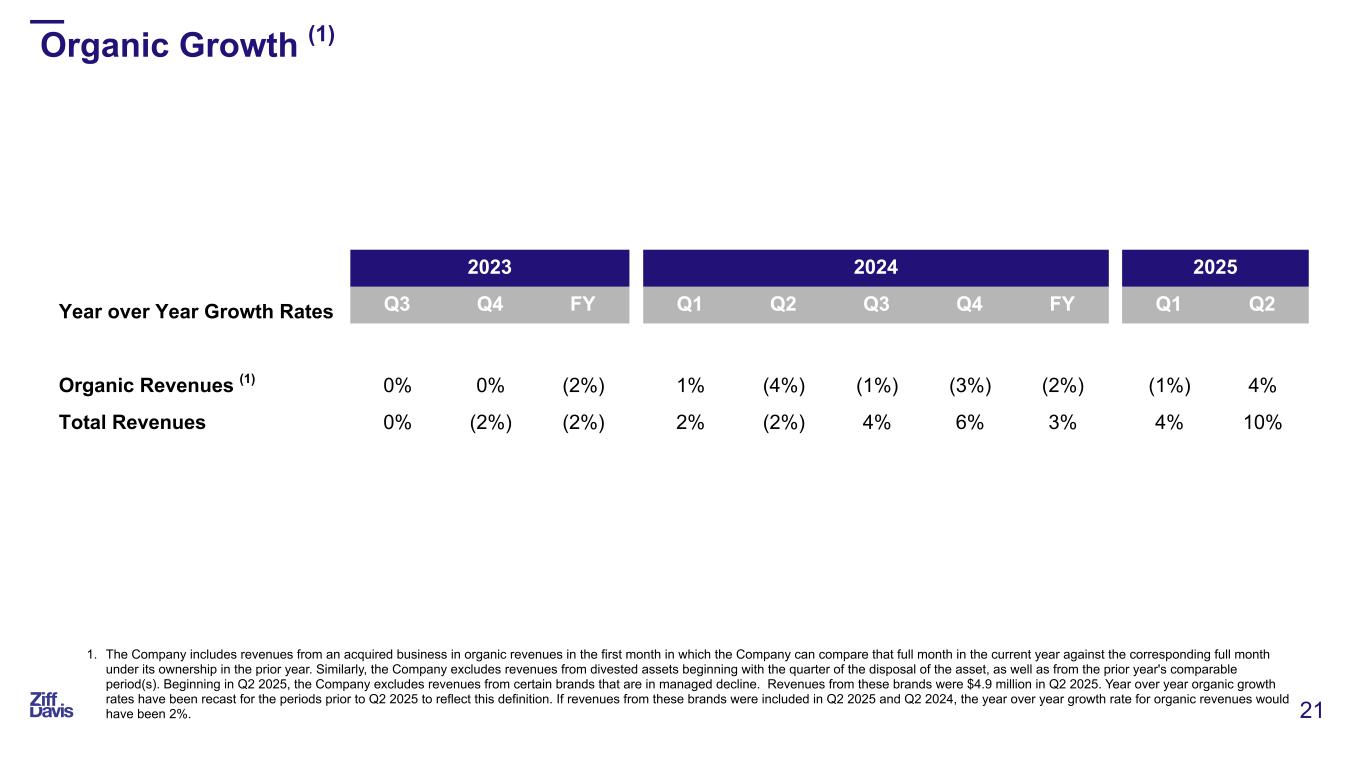
We're very pleased with our second quarter results, which exceeded expectations, with revenues growing nearly 10% and adjusted EBITDA growing nearly 12% year over year. This was our strongest quarter of revenue growth since 2021. And in that sense, we deliver truly breakthrough results and also represents the fourth consecutive quarter of revenue growth for Ziff Davis. While we continue to execute on our operating plans, we remain committed to repurchasing our shares and have successfully completed five tuck-in acquisitions in the first half of the year. Our healthy balance sheet continues to support ample opportunities for capital allocation. As was the case last quarter, four of our five reportable segments grew in revenues in Q2. These four segments, which historically were combined into the digital media segment, grew nearly 13 percent. As importantly, our fifth segment, cybersecurity and MarTech, declined less than one percent in the quarter and is poised to return to growth in Q3. Having the cybersecurity and MarTech segment contributing to overall growth would be an important milestone for the company. Let me share some observations about each of our five segments. As a reminder, this new reporting structure was implemented earlier in the year to provide greater transparency and a clearer appreciation of the intrinsic value of our key businesses. Tech and shopping's revenues grew by over 11%, with adjusted EBITDA growth of over 5%, supported by the CNET acquisition and some improving trends in our B2B business. In fact, in Q2, Spiceworks launched a successful paid subscription version of its cloud help desk software, which helps IT administrators manage help requests from employees. SaaS offering already has over 20,000 paying business customers. CNET Group also renewed its partnership with Best Buy, which allows both Best Buy and CNET Group sales teams to sell media inventory across each other's properties, while CNET content is also featured in Best Buy's retail touchpoints. Gaming and entertainment grew nearly 8% in revenues, with adjusted EBITDA growth of almost 24 percent. IGN hosted its second annual fan-facing event, IGN Live, in Los Angeles in June, which has now ostensibly replaced the long-standing E3 conference. We had over 8,000 attendees in person, with over 27 hours of live programming and over 200 partners in games, film, TV, streaming, toys, comics, consumer packaged goods, and more. In addition to the in-person event, content was streamed on over 35 platforms over the course of IGN's two-week Summer of Gaming June programming. The event reached over 300 million fans around the world, up 91% year-over-year, and video views were 202 million, up 26% year-over-year. Social impressions were up 42% year-over-year at 367 million, while Instagram views were up 191%, and TikTok views were up 300% year-over-year. The diversity of engagement and significant growth highlights the reach and depth of the global IGN community. Health and wellness had a blockbuster quarter, with revenues up nearly 16% and adjusted EBITDA up 11%. Both first and second quarters set records for the segment, as our pharma commercialization services and health and wellness offerings both continue to be very strong. Our ability to deliver positive, tangible results for pharma with both patients and providers continues to place us in a competitively strong position. Our continuing medical education business, Prime Education, had a record quarter led by its quality improvement offering which helps health systems address key challenges in healthcare delivery and generates real world data to demonstrate roi to pharma customers and in our pregnancy and parenting business we are reaping the benefit of the investment we made to build out our clinical studies business clinical studies include both pregnancy exposure registries and clinical trials which play a crucial role in providing safety information for researchers and health care providers to understand the potential effects of drugs on pregnancies. With our unique market reach, we have been successful in supporting enrollment which can be particularly challenging in this cohort. At the same time, our consumer health and wellness businesses, especially Luzit, have strong momentum. And we have seized the opportunity to sell Luzit subscriptions directly to consumers via the web instead of exclusively through the app store, which is expected to have positive implications for the margin profile of the business. Connectivity also posted a tremendous quarter with revenues up over 14% and adjusted EBITDA up over 12%. It's fantastic to see this segment returning to double-digit organic growth, which, when combined with its nearly 50% adjusted EBITDA margins, qualifies it as a rule of 60 business. Connectivity's growth reflects strong demand for a number of its key products and services. Speed test revenue in Q2 reflects demand from service providers who are seeking greater visibility and competitive network insights by using quality of service and network performance benchmarking data to differentiate their services from their competitors. Another key driver of Q2 revenue was expansion in emerging markets, particularly in EMEA and APAC regions, and demand from new customers who licensed the Speedtest Award to support their marketing efforts. In addition, RootMetrics benefited from service growth from existing clients who purchased more comprehensive testing packages to validate new 5G network upgrades and better understand their network performance against competitors. DownDetector also received strong interest from large enterprise clients and service providers to improve real-time observability of online services as an early warning system to improve their responsiveness to outages and customer service degradation. All of this, coupled with revenue growth for MeccaHow, resulted in a terrific quarter for the business. Cybersecurity and MarTech was close to delivering flat revenues in the quarter and posted over 5% adjusted EBITDA growth. And as I mentioned earlier, we are optimistic about the segment returning to revenue growth starting in Q3. Momentum in our VPN business accelerated in Q2, driven by a combination of direct customer acquisition, new partnerships, and product enhancements that support customer retention and ARPA growth. In Q2, we launched Viper Integrated Email Security, a significant leap forward in our enterprise-grade, cloud-based email security designed for small and medium businesses. Viper IES was designed to integrate seamlessly with Microsoft 365 and is powered by an AI engine leveraging natural language processing, semantic analysis, and machine learning to identify and block threats that often bypass traditional email filters. It's one of several examples as to how we're leveraging AI to deliver both product innovations and operational efficiencies across our portfolio. At RetailMeNot, we've deployed an AI customer service chat bot that has achieved a roughly 50% case deflection rate for inbound chats. This means that half of the customers who initiate a chat with our customer support bot are able to get their issue resolved without needing to be transferred to a live human agent. This is a great example of using AI to automate and scale our support while enhancing the customer experience. In our health and wellness segment, the Luzit app has harnessed AI in an effort to deliver real, measurable health outcomes for its consumers. By introducing AI-powered voice and photo meal logging, the team has not only made tracking meals easier and more intuitive, but has directly helped users achieve their goals. Members are logging meals three and a half times faster and tracking twice as many foods, making the habit of daily food journaling stick. This increased engagement translates directly to success, with users achieving 6% more weight loss on average. We're also leveraging AI to refine how we serve our advertisers. For instance, we've created an AI platform that creates precise audience segments. This platform is powered by hundreds of millions of data signals we collect real-time from across our diverse portfolio of properties and translate this proprietary, privacy-protected data into what we call moment-of-influence solutions. These audience segments can be seamlessly activated across individual Ziff Davis properties, the broader Ziff Davis network, and the open web and social media. The initial response from ad clients has been very favorable. Our healthy balance sheet with substantial cash and leverage capacity serves as the foundation for our capital allocation strategy. We continue to adhere to a patient and disciplined approach to identifying and integrating durable, high-quality assets while consistently buying back our stock. Of the three acquisitions we consummated in Q2, I was particularly pleased to see two tuck-in acquisitions in our cybersecurity and MarTech segment. one that strengthens our email deliverability services, and the other enhances our email archiving offering. The third was an acquisition of the Well and Good brand and content library for our health and wellness segment, which we've already migrated onto the SKIM platform, which itself was acquired earlier in the year and is performing ahead of expectations. Our acquisition program continues to focus on strong and enduring brands and high-value verticals, businesses in which we can unlock value through platforms, people, and know-how, and transacting at reasonable valuations and generating attractive cash-on-cash returns. With that, let me hand the call back to Brett.
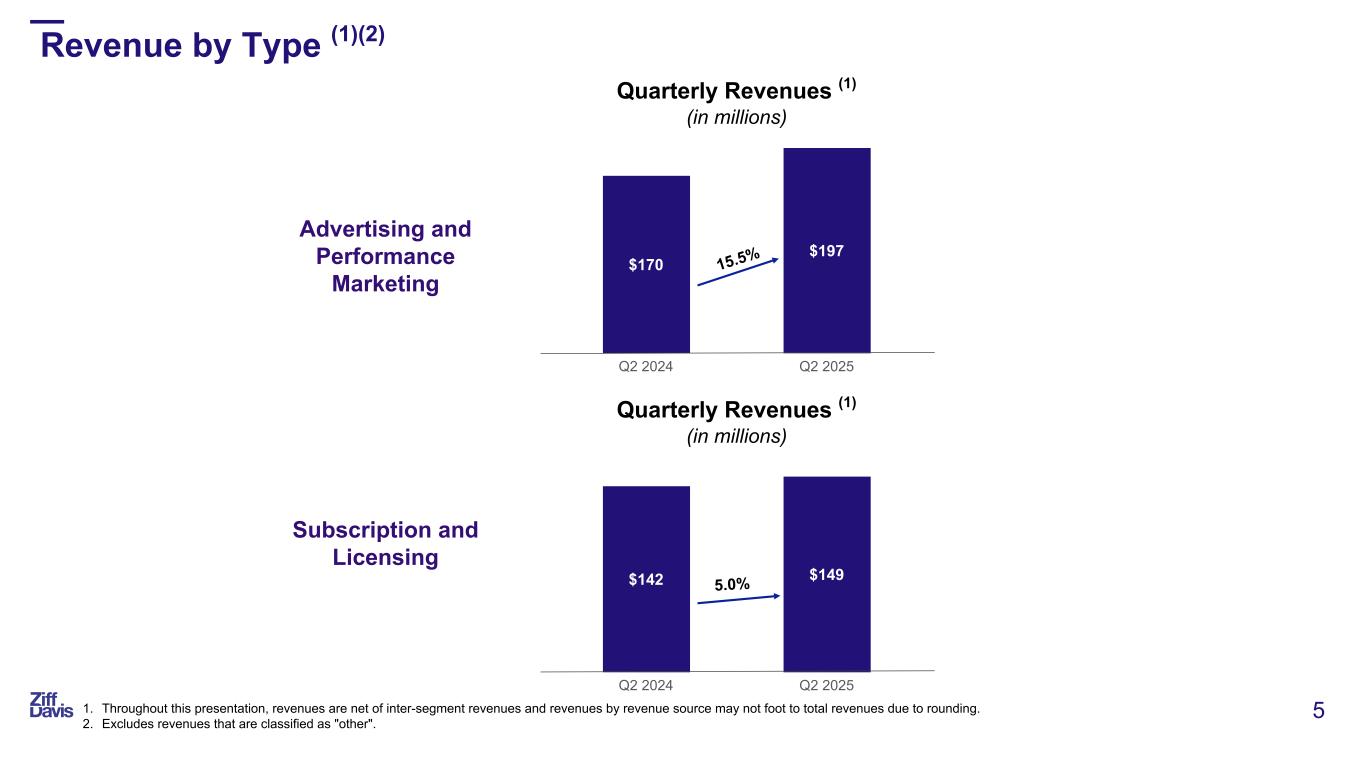
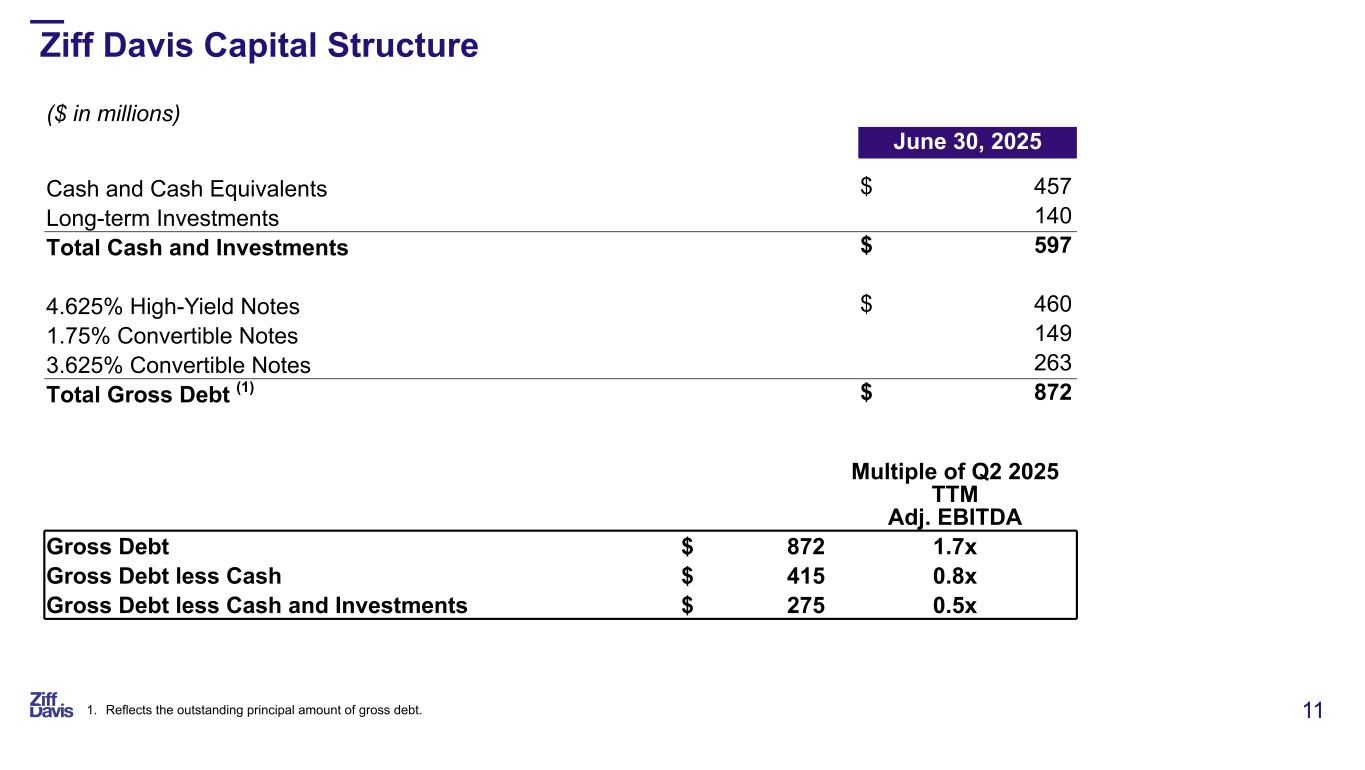
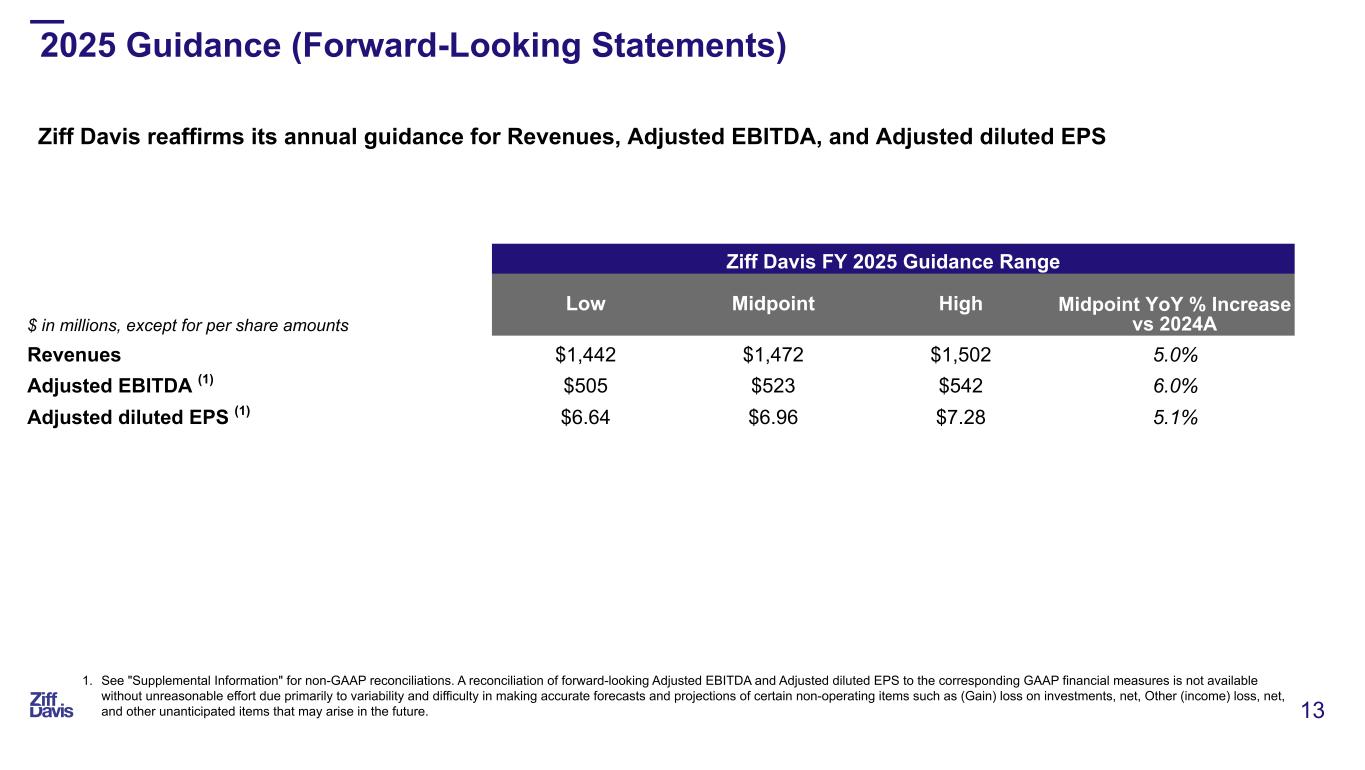
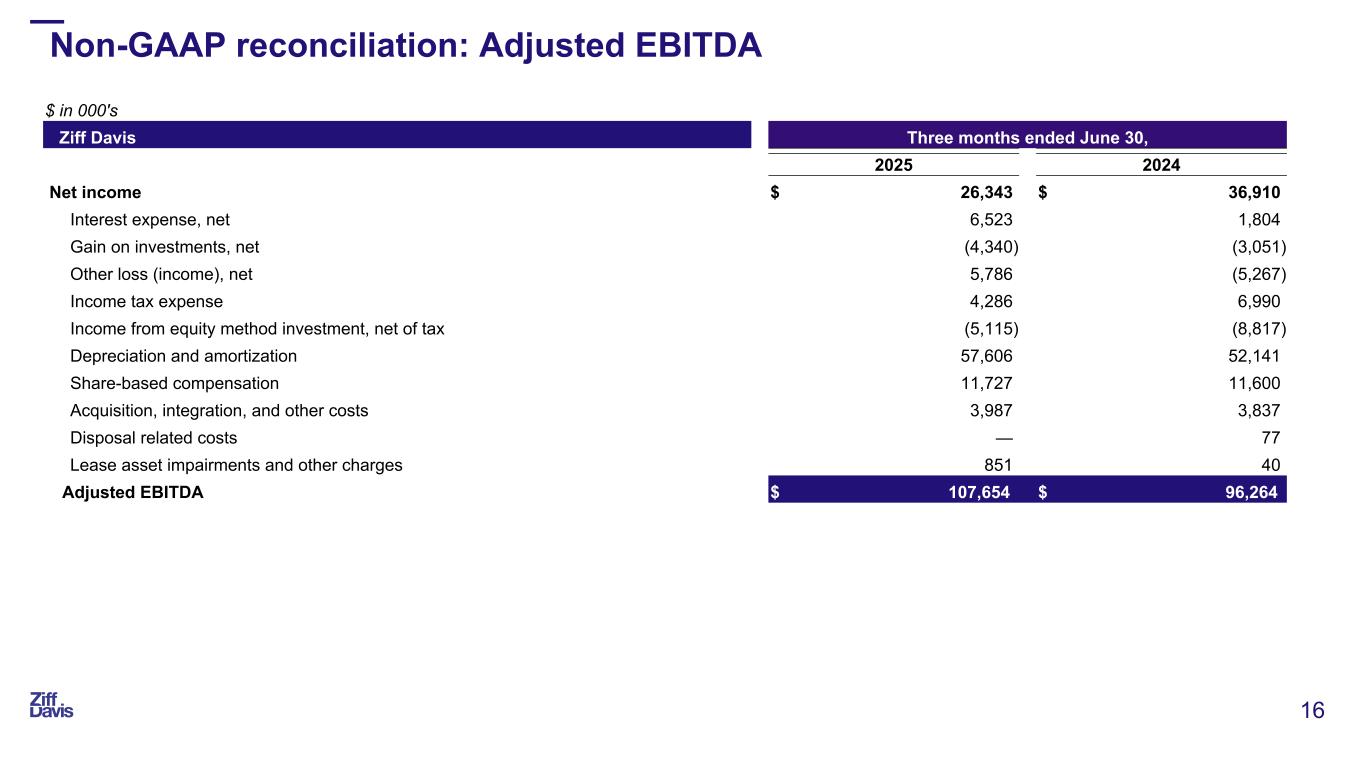
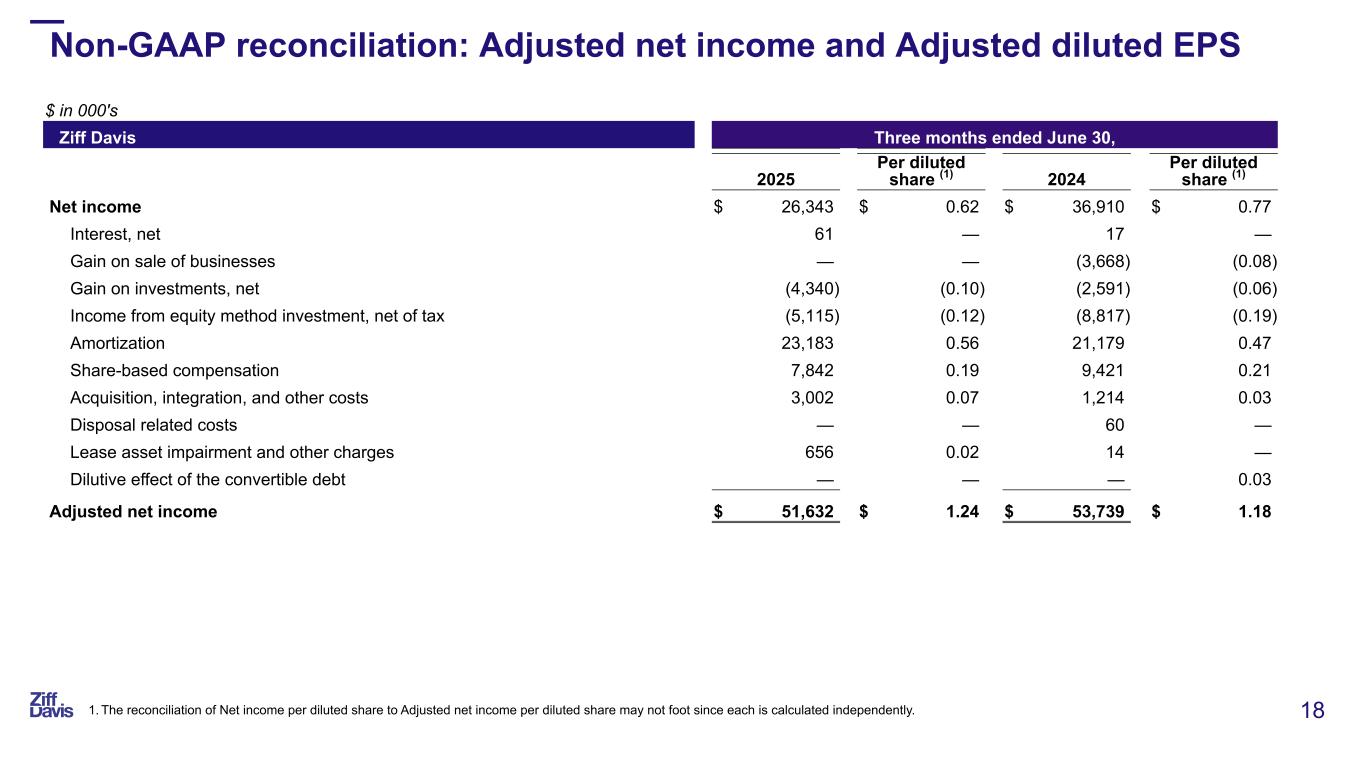
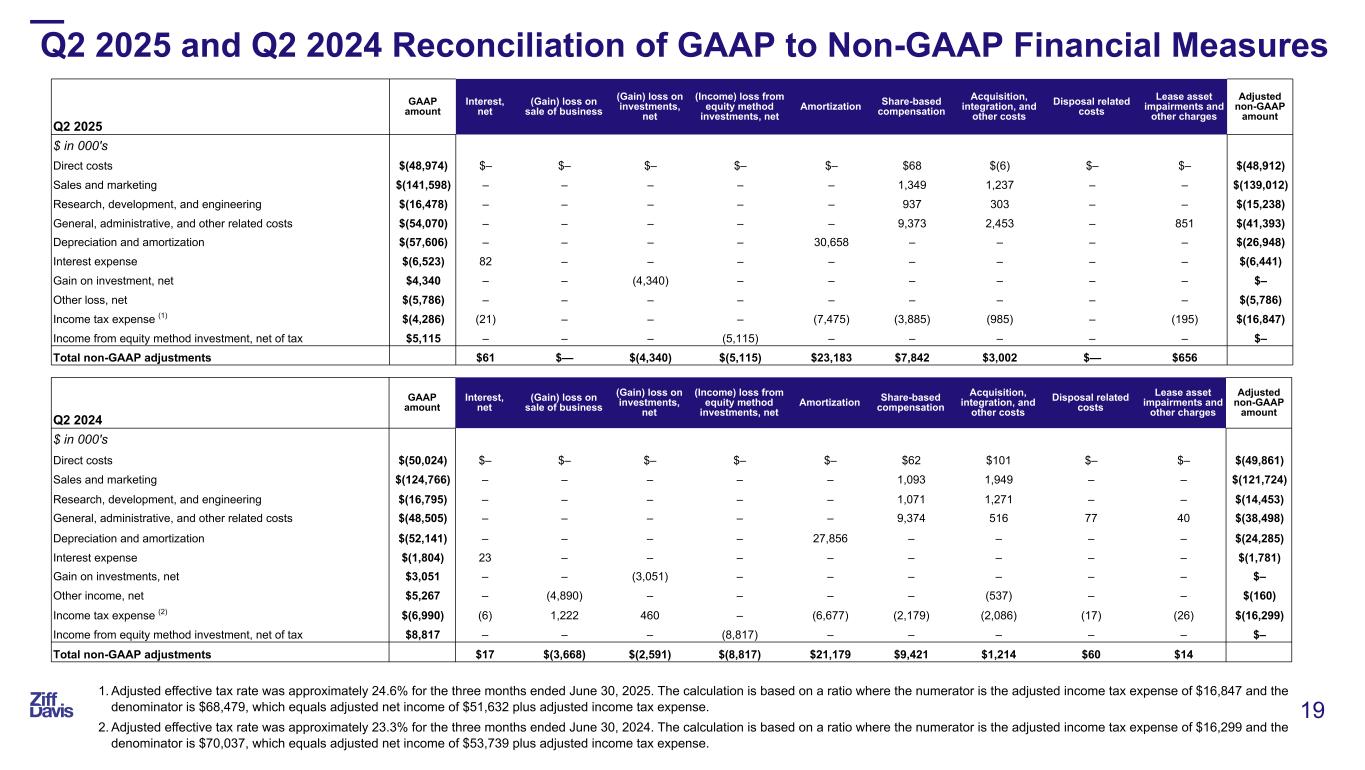
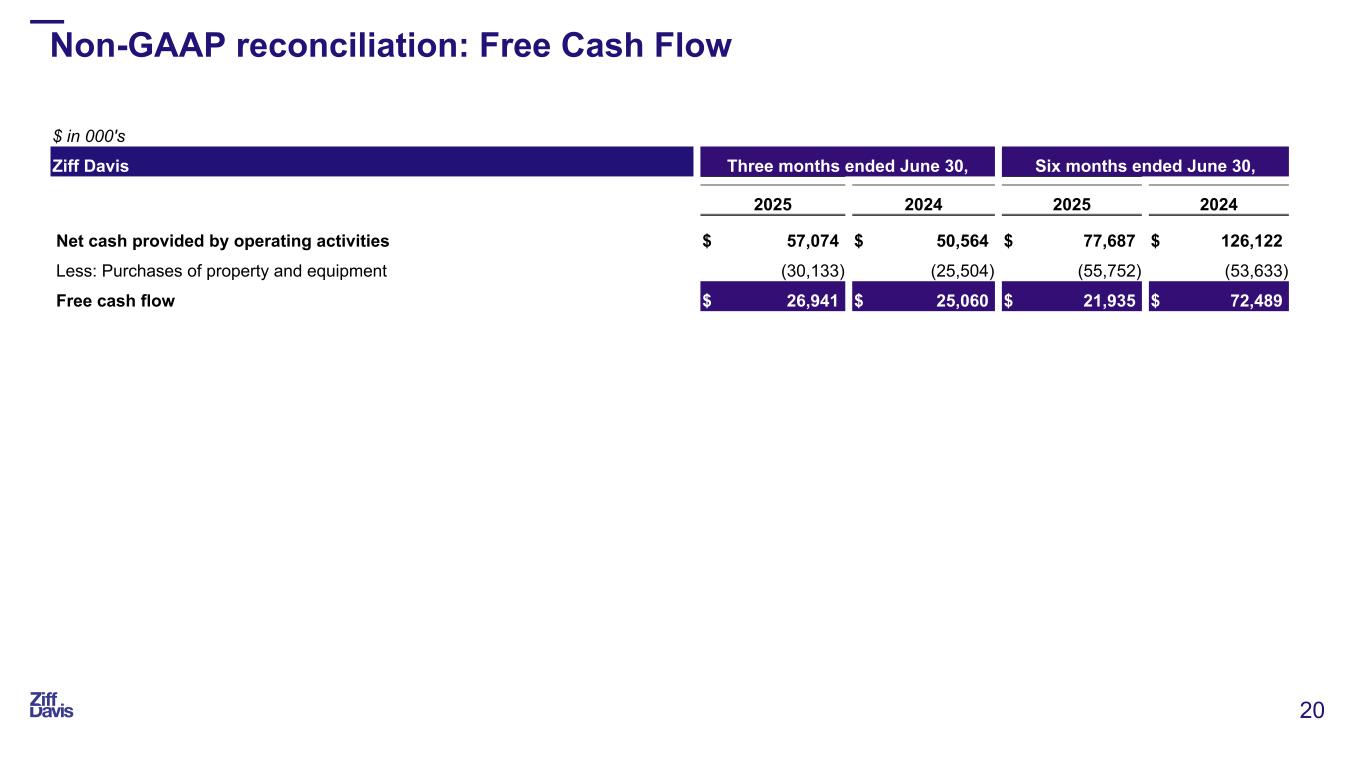
Thank you, Vivek. Let's discuss our financial results. Our earnings release reflects both our GAAP and adjusted non-GAAP financial results for Q2 2025. My commentary will primarily relate to our Q2 2025 adjusted financial results and the comparison to prior periods. Please see slide 4 for the summary of our financial results. Q2 2025 revenues were $352.2 million, as compared with revenues of $320.8 million for the prior year period, reflecting growth of nearly 10%. Q2 2025 adjusted EBITDA was $107.7 million, as compared with $96.3 million for the prior year period, reflecting growth of nearly 12%. Our adjusted EBITDA margin for the quarter was 30.6%. We reported second quarter adjusted diluted EPS of $1.24, as compared with $1.18 in Q2 of 2024, reflecting growth of more than 5%. This increase reflects higher adjusted EBITDA and lower fully diluted shares outstanding. This was partially offset by a number of factors, the largest of which related to changes in certain foreign exchange rates, which drove an increase in other loss net for the quarter that reduced our Q2 2025 EPS by approximately 10 cents per diluted share. Our second quarter financial results reflect significant growth, and it's worth repeating Vivek's observation that this quarter reflects the company's highest level of quarterly total revenue growth since 2021. And while a portion of this growth was contributed by recently acquired businesses. The quarter also reflects positive total organic growth, including organic growth from contributions from our gaming and entertainment, health and wellness, and connectivity segments. Certain brands within technology and shopping and cybersecurity and MarTech contributed to organic revenue growth as well. We are very pleased with these results and the progress we have made through the first half of 2025. We believe that these results reflect the diversity and resiliency of our revenue streams and highlight the ability of our businesses to navigate the demands of their respective business environments and collectively grow revenues while continuing to meet our overall profitability goals. Slide five reflects performance summaries for our two primary sources of revenue, advertising and performance marketing and subscription and licensing. Both of these revenue sources grew significantly in the second quarter of 2025. Q2 2025 advertising and performance marketing grew 15.5% as compared with the prior year period, while subscription and licensing revenues grew by 5%. Q2 2025 other revenues declined by $2.2 million year-over-year, primarily reflecting a decline in the contribution from our humble games publishing business. slide 6 through 10 reflect the q2 financial results of each of our reportable segments which vivek discussed in some detail already but again four of our five segments grew revenue in q2 2025 while cyber security and martex revenue declined by less than one percent as compared with the prior year period all five of our segments delivered significant adjusted EBITDA growth during the second quarter please refer to slide 11 to discuss our balance sheet As of the end of Q2 2025, we had $457 million of cash and cash equivalents and $140 million of long-term investments. We also have significant leverage capacity on both a gross and net leverage basis. As of June 30, 2025, gross leverage was 1.7 times trailing 12 months adjusted EBITDA, And our net leverage was 0.8 times and 0.5 times, including the value of our financial investments. During the second quarter, we closed three small acquisitions to expand the product portfolios of our health and wellness and cybersecurity and MarTech businesses. We anticipate that during the balance of 2025, we will continue to be an active and disciplined acquirer of companies and assets that we believe will enhance the ability of our existing businesses to serve their respective markets. overall during the first half of 2025 we deployed more than 50 million dollars of cash for acquisitions and during the third quarter we have already closed the transaction to further diversify the product offering of our martech business during the first quarter call we noted our intent to continue to repurchase our common stock and since the beginning of the second quarter we have repurchased nearly 1.4 million ziff davis shares and since june 30th 2024 we deployed more than $170 million and repurchased more than 4 million Ziff Davis shares, or approximately 10% of our shares outstanding. We have more than 4 million shares remaining under our stock repurchase authorization, and we continue to believe that the current trading level of our stock does not at all reflect the intrinsic value of our underlying businesses. As a result, while we will continue to ensure that we have ample capital to support our M&A program we plan to continue to repurchase shares of our common stock turning to slide 13 we are reaffirming the fiscal year 2025 guidance range that we presented in february 2025 we have had a solid first half of 2025 and as we discussed significant second quarter growth our guidance range is broad and has a top end that reflects fiscal year 2025 projected results that imply more than 7 percent revenue growth, nearly 10 percent adjusted EBITDA growth, and 10 percent adjusted EPS growth as compared with fiscal year 2024. The breadth of our guidance range reflects a range of different positive outcomes, and because of this, we are not altering the range at this time. With regards to the balance of the year, we currently anticipate at least mid-single-digit revenue growth for both Q3 and Q4 2025, with Q4 potentially being a bit stronger than Q3. With regard to adjusted EBITDA, we expect similar margins in each of our third and fourth quarter as compared with 2024, implying stronger adjusted EBITDA growth in Q4 as compared with Q3. Adjusted diluted EPS is expected to reflect the implied growth in adjusted EBITDA and may continue to be impacted by changes in the value of certain foreign currencies amongst other factors. We expect our health and wellness and connectivity businesses to be the largest contributors to second-half growth. And note, fourth quarter is typically our seasonally largest revenue quarter. Slide 20 includes a reconciliation of free cash flow. Q2 2025 free cash flow was $26.9 million, 7.5% higher than the prior year period. As of the end of Q2 2025, trailing 12 months free cash flow was $233 million, nearly 27% higher than the prior trailing 12-month period. Our Q2 2025 financial results were robust. They reflect the highly diverse mix of revenue that the company's products and services generate, as well as the company's ability to maintain significant adjusted EBITDA margins during a period of total growth. We believe our Q2 results and the incremental insight into the performance of each of our five divisions, which we now provide through our expanded reportable segment disclosures, should allow investors to more fully appreciate the diversity of our revenues, the strength of our margins, and the scale of each of our businesses. Overall, we believe that our second quarter results strengthened our overall outlook for 2025. As we move into the second half of 2025, we plan to use our balance sheet to continue to support our M&A program, and we expect to continue to purchase our stock at its current depressed trading level. Importantly, we remain committed to identifying and pursuing all opportunities that we believe offer strong prospects to enhance shareholder value. With that, I will now ask the operator to rejoin us to instruct you on how to queue for questions.
Operator
Thank you. We will now be conducting a question and answer session. In the interest of time, we ask that you please limit yourself to one question. If you would like to ask a question, please press star one on your telephone keypad, a confirmation tone will indicate your line is in the question queue. You may press star 2 if you would like to remove yourself from queue. For participants using speaker equipment, it may be necessary to pick up your handset before pressing the star keys. One moment while we begin. And the first question today is coming from Sean Patel from Susquehanna. If your line is live, please go ahead.
Hey guys, nice quarter. I had one question, I guess, for Vivek. With the increased segment-level disclosures that you guys are providing, what are you guys hoping to communicate to the market, especially regarding the intrinsic value versus the current public market valuation? Thank you.
Yeah, no, look, thanks for the question. And, look, I think we're absolutely hoping that investors take the time to assess each of the five segments. You know, so, as I noted, four of them collectively grew 13 percent. But unpacking that, you know, we've got three of the segments growing double digits, one high single digit, and the one that didn't grow, Cyber and Martech, we believe will grow. So I think just, you know, there are differing levels of growth and margin profiles. The adjusted EBITDA similarly collectively grew 12%, but the segments grew from a range of 5% to 24%. So, you know, each of these is worth spending time on. And I think more broadly, as investors kind of peel the onion and study the company, we hope they appreciate a few things. that we have a pharma commercialization and consumer health platform that's growing double digits. That's the health and wellness segment. We've got a data-as-a-service business with all kinds of AI tailwinds also growing double digits, and that's the connectivity business. We've got a platform at the center of the fastest-growing entertainment category, which is video games, and that's the gaming and entertainment segment. And then finally, we have a software unit that pointed to growth with a cybersecurity business of scale with great margins and organic growth now. And, you know, we've got an intent driven tech and shopping portfolio, which is, you know, got great EBITDA growth as well. And so I know at times it can feel like a lot, but I do think that if investors spend time studying the various elements, I think you come to a pretty compelling investment opportunity. And I'd also say to our sell-side and buy-side analysts, I think if you go through some of the parts valuation exercise, I think that would be revealing. So look, I know it's been relatively new. We're only a couple of quarters into the new segment reporting. It takes a while, I think, for this kind of information to get digested. And, by the way, being very responsive to the market. This is something that shareholders have been asking for for some time. And so we're pleased to be able to provide it, and we hope that it brings more insight into, as you say, the intrinsic value of the company.
Operator
Thank you. Your next question is coming from Corey Carpenter from J.P. Morgan. Corey, your line is live. Please go ahead. Thanks.
Thanks for the questions. I had two, I think both for you, Vivek. Maybe just to start, if you could update us on trends you're seeing broadly in the ad market. Last time we talked three months ago, of course, there was a lot of disruption going on around Liberation Day. And then secondly, good to see you back in double-digit growth. Just maybe how are you thinking about sustainability of the trends you saw this quarter? And Vivek, could you just remind this is how you think about the right long-term growth and margin framework for the company.
Thank you. Yeah, thanks. Thanks, Corey. So the ad business grew a little over 15%. With the new segment disclosure, you can kind of see the composition by category. So health and wellness is 42% of the ad business. The shopping and tech is kind of another 40%, but shopping is about 21%. Tech's about 19% to get a sense of where that break is and then gaming is about 16% so in order I guess of importance what I would say is health is very strong great great drug pipeline high teens growth we feel very good about this category near term long term shopping was down a touch but that's mostly the offers brand so I wouldn't say that's a reflection of necessarily market and the offers brand is a brand that we put into the managed decline category. So we feel reasonably good about where retail sits. Tech was strong and yes CNET was obviously a major contributor in our equation but consumer tech generally outside of CNET is strong and B2B is improving. It's still declining just to be very clear but it's declining less than we thought which is really good. And then gaming is kind of up mid-team. So as I like to do when I talk about the advertising market, I do like to break it down by category because I think it does operate categorically versus in aggregate, but generally feeling really, really good about that. With respect to your, you know, thoughts, you know, question around long-term growth, look, I think our mindset hasn't changed, which is we expect to be a double-digit, you know, total growth company from a revenue point of view, roughly half organic, roughly half inorganic. those delineations are always funny because of the way in which we do organic and inorganic calculations. You can have a business that you've acquired that is growing significantly organically and that we put into our inorganic category. So put aside, I'd say roughly 50-50 double-digit growth and then mid-30s margin. So I don't think that's changed. I think that has been, you know, that's been the way we've been thinking about the business for some time. As you know, that hasn't been what we accomplished, you know, over the last little bit, but we're glad to be back there. And that's where we expect to be long term. Awesome.
Thanks for the answers. Thank you.
Operator
Thank you. Your next question is coming from Ross Sandler from Barclays. Ross, your line is live. Please go ahead.
Great. Yeah, just had a question on the incremental EBITDA margin. So specifically, it looks like given the new segment breakdown, Thank you very much for that. Looks like tech and health, your two biggest ad revenue pools, both growing solid but had margin contraction and 2Q. So could you just unpack, you know, some of that's probably one time kind of acquisition related costs or are there other things dragging that down? And then more broadly, how do you view, you know, now that we're growing organically across the board, how do you view the incremental margin and how that might flow through in the future? Thank you very much.
Yeah, no, Ross, I would say that I can't point to anything specifically around any changes in the cost structure of the business. And so a lot of this is when you divide our company, which is relatively small into five pieces, I think you can see some lumpiness because similarly, gaming and entertainments, EBITDA grew 24%, right? So I often say, like, it's better to look at these things on a multiple quarter basis to really get a sense of what the true kind of, you know, EBITDA margin is for these segments. So I wouldn't say that there's anything in specific in any of these businesses that I would point to that speaks to kind of a structural change in the margin profile of the business.
No, I think that's right. I think we do get to sort of the math of relatively small numbers when you take 1% of the revenue item in a single quarter. you know in any given quarter you have you know mixed dynamics you have campaign dynamics you have one-off dynamics you have investment dynamics you know they could be for people they could be you know in in you know with vendors so I think it's more important as Vivek said to keep that lens pretty wide and compare it to our overall expectations of achieving sort of mid-30s adjusted EBITDA margins and in any given three-month period you're going to see some variability M&A is also a factor as we you know in different divisions and
you know as we mentioned tech and shopping CNET whatnot so and then some up and then just overall as a company obviously on a year-over-year basis we have seen some margin expansion in the quarter there was one thing as I was I I was thinking about this, in tech and shopping, we have this PC game investment business where we've been investing in games. That is a business that we are essentially sunsetting. That has actually been a drag. So that might be something there, but that's being sunset. And so that might be one small piece on the tech and shopping. But again, small.
Small piece in dollars can move, you know, you could be within about a point of margin.
Operator
Thank you. Your next question is coming from Yigal Arunian from Citi. Yigal, your line is live. Please go ahead.
Hey, good morning, guys. I guess, sorry, I may have missed that there was commentary on this on-because I just jumped on a little bit late. I think there's been a lot more talk this quarter than we've heard even over the past few. So it feels like there's an acceleration of the trends around agentic AI or sorry not agentic AI but AI overviews and search and the distribution of traffic across the open web and I know you guys talked before about you know how your position there and a lot of your traffic coming coming directly to you guys and maybe just an update on what you're seeing there and how you're feeling and then I guess at the same time I would just talk about your approach with LLMs and if that's changed at all, how are you thinking about that?
Yeah, no, no, thank you. So look, I'll reiterate, Agal, what I shared last quarter, which is 35% of the company's total revenues are ads on our O&O web traffic. And about 40% of that comes from search. So that gives everyone kind of an understanding of kind of order of magnitude. And I think when you multiply those numbers together, you come to the conclusion in that we are different than a lot of other businesses that one might compare them, you know, compare us to. I mean, look, there's no doubt we're experiencing a bunch of search engine result page volatility, but we've been talking about zero-click search probably for a decade, which is why we're not leveraged to SEO. We generate a ton of non-web engagement, and frankly, so much of our revenues are not actually traffic-based. And I think this is the most important aspect to understand. We are not a programmatic ads business. I mean, that is, you know, less than $50 million of our annual revenue of programmatic ads. And so that's just something I think to reiterate. And look, you know, I listed a number of examples of how we monetize our brands, right? IGN Live, the parenting and pregnancy clinical studies business, key partnerships like Best Buy, Spicework Software. That's just a few. I could go on and on. But it's a far more dynamic and diversified business model that, again, I think as investors dig into the company with our new segment reporting, we'll recognize that, you know, I think we've given a little bit too much oxygen to this topic when we're talking about our business. And by the way, a significant portion of our adjusted EBITDA connectivity and cyber and MarTech is not part of this AI search narrative at all. With respect to your question on licensing and relationships with large language model owners and operators, obviously, we continue our lawsuit against open AI. We feel it's important that we protect our IP and ensure that we get fair compensation. We think our content is valuable. We know it's valuable. It's been scraped an awful lot. And we should get compensated for that by AI systems. And so, but at the same time, I mean, look, we want to partner with AI companies going forward. We are continuing many dialogues around arrangements and partnerships so that we can get a fair value exchange. The other thing we did, as you might have seen, is as of the 1st of July, we commenced blocking of known AI bots at the CDN level with partners like Cloudflare to prevent unauthorized access. And the reason we did that was up until this point, up until that point, we were using robots.txt. And the problem with robots.txt, as we've come to see, is that it's a directive that bots can and have chosen to ignore. So blocking these bots at the CDN level is certainly more effective. And we think that's important, too. So I think through the combination of activities, we think we can move the dialogue into a more constructive and productive place.
Okay, great. And then I want to follow up on the moments of influence product. That sounds new and interesting. And maybe talk about the go-to-market approach there a little bit more, what that opportunity is, and expand a little bit more on what you're seeing so far from advertisers.
Yeah, no. So we have built, and it's a proprietary AI-based, essentially data management platform. We're ingesting all sorts of signals across all of our touch points. It goes into a system that, based on what a marketer's targets and goals are, then spits out essentially the who. Who should you be targeting when and then where? and executing campaigns that run on our properties, on our properties, content on social platforms, video platforms, and then more broadly on the open web. And so in many ways, it's limitless inventory against a fairly large signal capture. Our go-to-market, however, is not a product that would be sold at a corporate level. Zip Davis does not sell advertising at a corporate level. We do it within each of our verticals. And so within each of our selling verticals, so say health and wellness, the everyday health group, or IGN Entertainment, or the CNET group, or the RetailMeNot group as sort of the key selling organizations, each of those organizations will have their own branded version of this technology to go to market to supplement the existing ad products. And so the first one being rolled out is called Halo, and it is within the Everyday Health group, and that has received a fair amount of traction, but there are those versions in each selling group that will roll out over the course of the next quarter or two. We're very excited about it because I think we've gotten to the point where the data sets we have leveraging AI gets us to a level of addressability and targetability that we think can be really, really compelling. And remember, this is all first-party data. This is all privacy protected, which is very important, particularly in a lot of the categories in which we operate. So we're excited.
Operator
Thank you. Your next question is coming from Robert Kulberth from Evercore ISI. Robert, your line is live. Please go ahead.
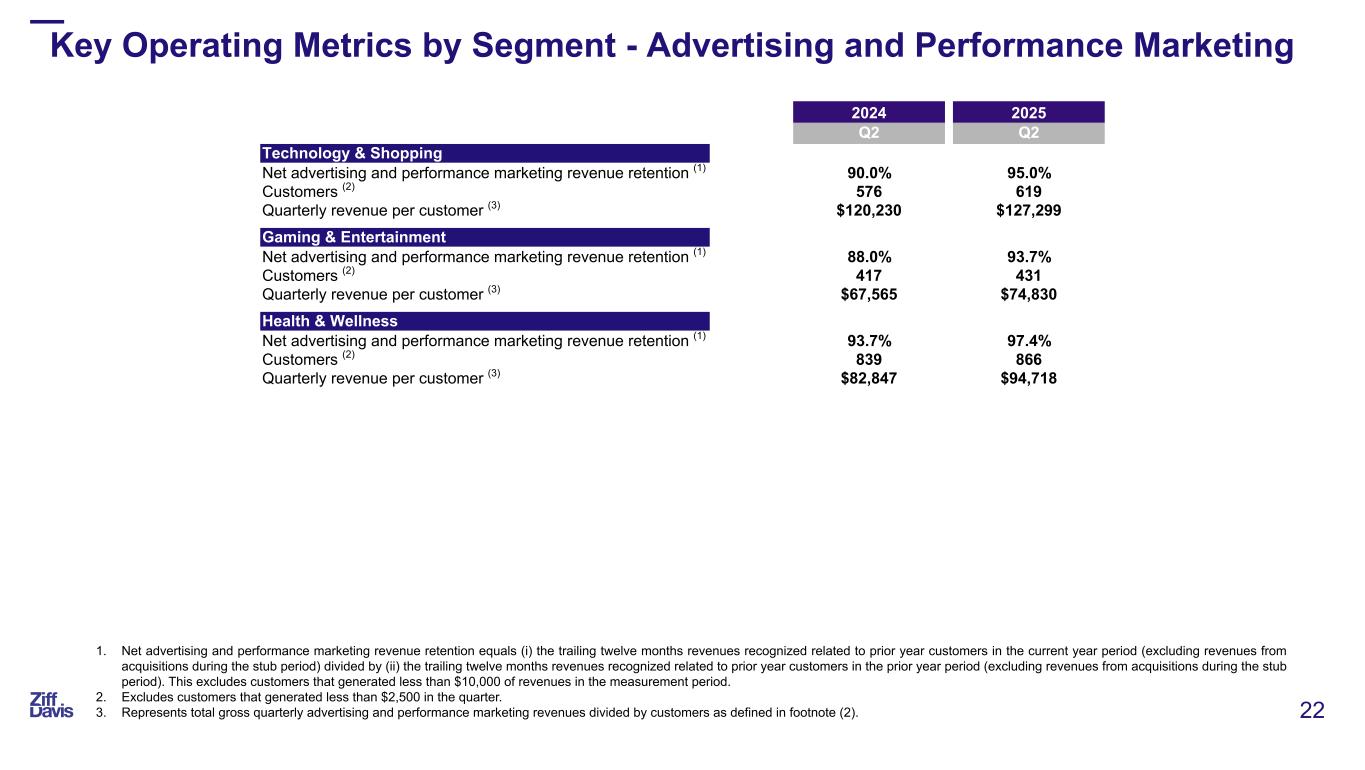
I just wanted to ask, within health and wellness, it seemed like you had a pretty notable sort of uptick in not so much spend per advertising customer, but the participation of advertising So just wondering if there's anything you can talk through in terms of the trends and what we should maybe expect over the next couple quarters, just given that we don't have a ton of historical data. But just anything on the trend there that really sort of lifted advertiser participation, I think that your growth in advertising customers is maybe up, I want to say, 14% year over year. So notable acceleration there.
Yeah, no, thank you for the question. And I think, look, I think part of why we're seeing a larger advertiser count is that while pharma is the core of what health and wellness really does do and pharma commercialization and the market is very strong we have been looking to expand more broadly to more health and wellness brands or brands that have a health or wellness marketing component or target and so I think we've had success doing that and brands like the skim have been really helpful in helping us expand our base. And so that, you know, part of what that business is looking to do is to diversify. Look, the pharma category is fantastic. I think it's a real competitive advantage and it's one that we like a lot. It doesn't mean we couldn't, we shouldn't participate in other related and adjacent categories. And as you know, overall, just societally, the focus on health and wellness and longevity, that's another big driver. There are just so many longevity brands and solutions out there. So I think demographically, we're kind of well aligned. I think with brands like the Skim, I think we do really well in those categories. So I think it's really, there's a bunch here to like. The other thing is, I'll point out that our Lose It property, which is a subscription-based property, has started to accept advertising for the free customers that we have that are pretty substantial. Again, a pretty good market, right? These are people who are interested in calorie tracking and meal logging and weight loss and fitness. And so that opens up a lot of other interesting advertising opportunities.
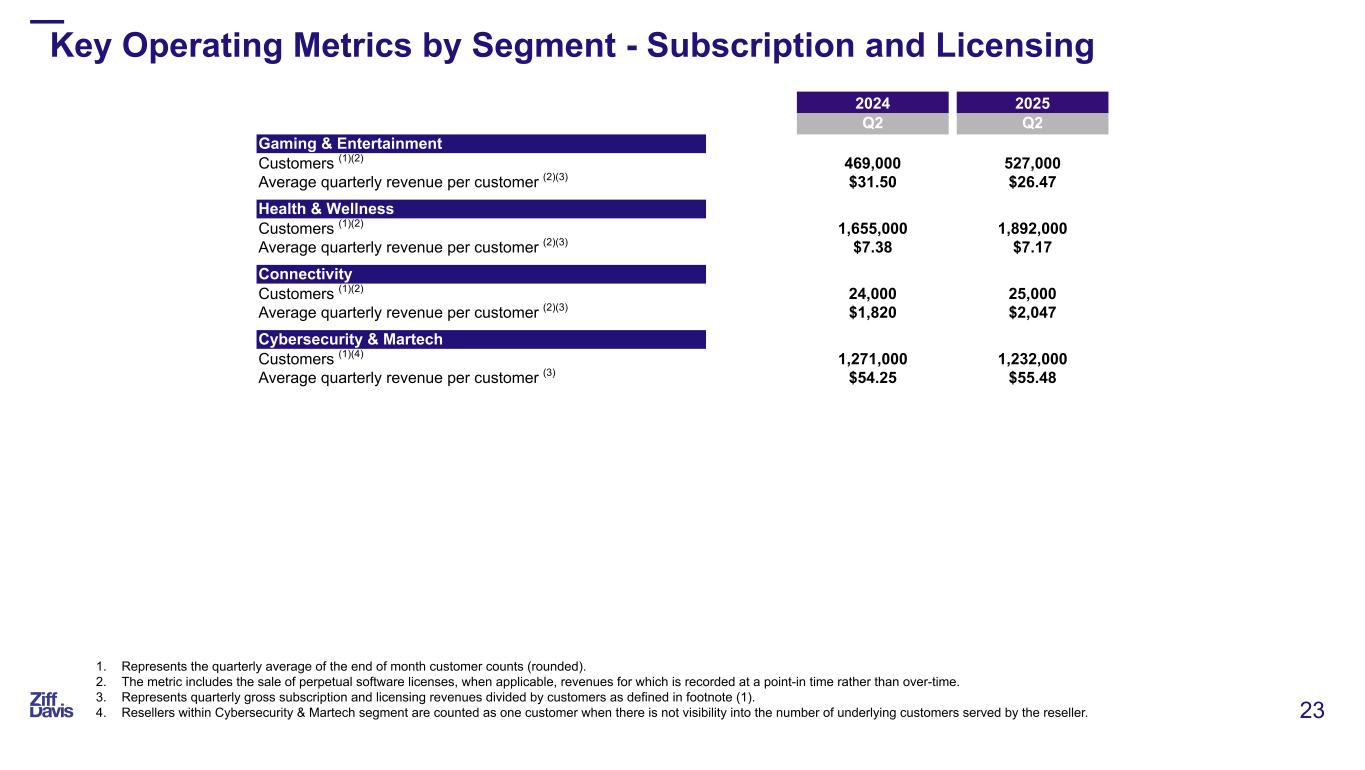
Great. Thanks. Just a follow-up also on connectivity. Almost the reverse dynamic, I think you had an inflection in your quarterly revenue per customer there. That was fairly pronounced. If you could just talk through some of the trends there as well. Thank you.
Yeah, you know, that's a funny one. I'll tell you what, this is an example of creating a set of common metrics across five divisions that aren't always common, as we just pointed out. And so, you know, this is a little bit of a different animal where you have a combination of high price point customers on the speed test intelligence side, matched with lower price point customers on the ECHAO side. And so sometimes that has a little bit to do with mix, and it's a computed metric more than a managed metric, even to be honest with you. So it's not something I've even looked at. It would be something that I'd have to probably go in and, you know, do a little bit of a gathering, which we can do and look at. But overall, you know, I think what it probably points to is we're seeing a lot more growth out of speed test intelligence and root metrics and the businesses that are at a higher price point. Ekahau is growing, but it's not growing yet at the rate that we'd like it to grow. And that, you know, is that I'm excited for. It's not showing up yet. It's probably more of a 2026 event, but the Wi-Fi 7 router refresh will be a really interesting tailwind for this business, but it's not playing out yet.
Operator
Thank you. There are no other questions in queue at this time. I would now like to hand the call back to Brett Richter for any closing remarks.
Thank you very much, Tom. and thank you everyone for participating in today's call we look forward to our ongoing dialogue with you and the balance of the year thank you this does conclude today's conference call you may disconnect your lines at this time and have a wonderful day thank you once again