

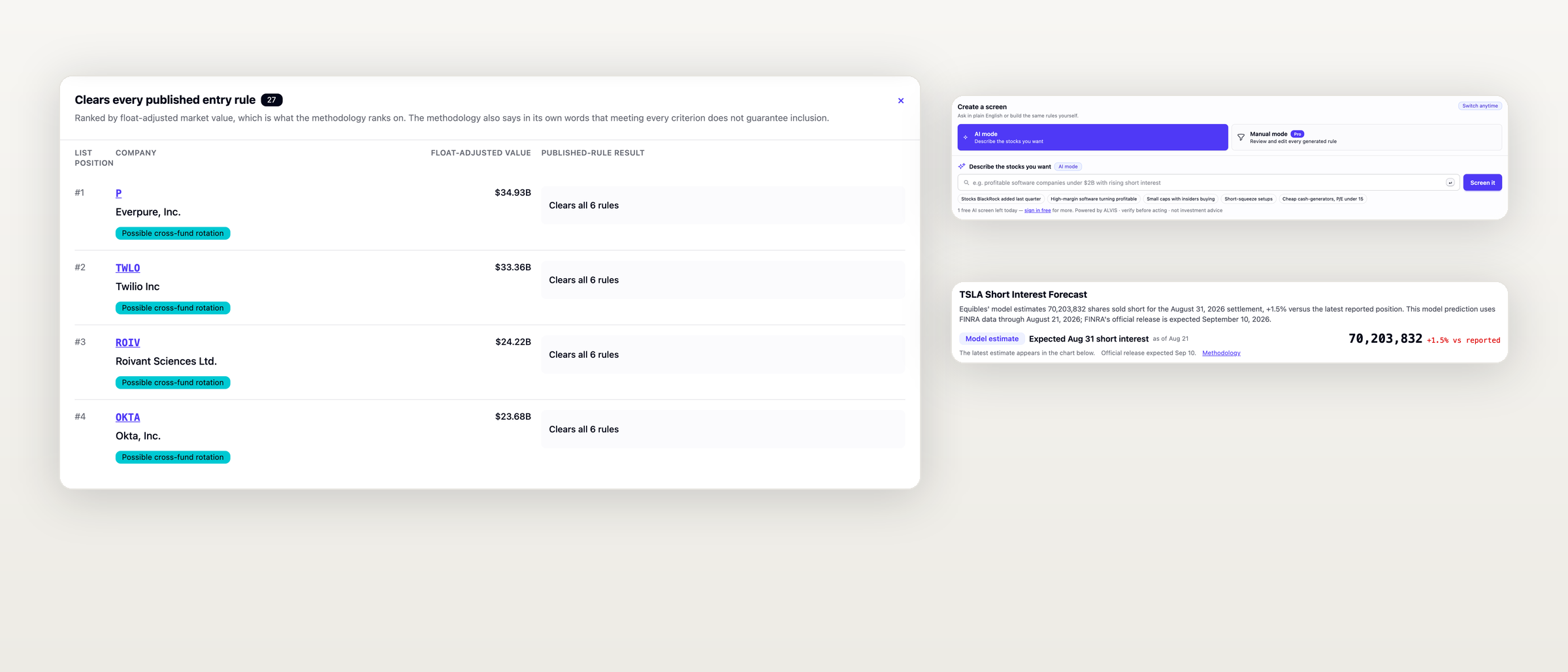
The last time we wrote, live stock prices and options data had just gone live. In the month since, Equibles has added index rebalance outlooks, a much richer screener, a forecast for the next short-interest settlement, a searchable earnings calendar and portfolios that authenticated AI agents can update through the Equibles MCP connection.
That is a lot for one note. Here is the useful version.
Seven indexes, read from the funds that track them
The new Indexes hub covers the S&P 500, S&P MidCap 400, S&P SmallCap 600, Russell 1000, Russell 2000, Nasdaq-100 and Dow Jones Industrial Average. Each page shows the current constituents, their latest prices, the observed additions and removals, and exactly which filing or fund holdings file the list came from.
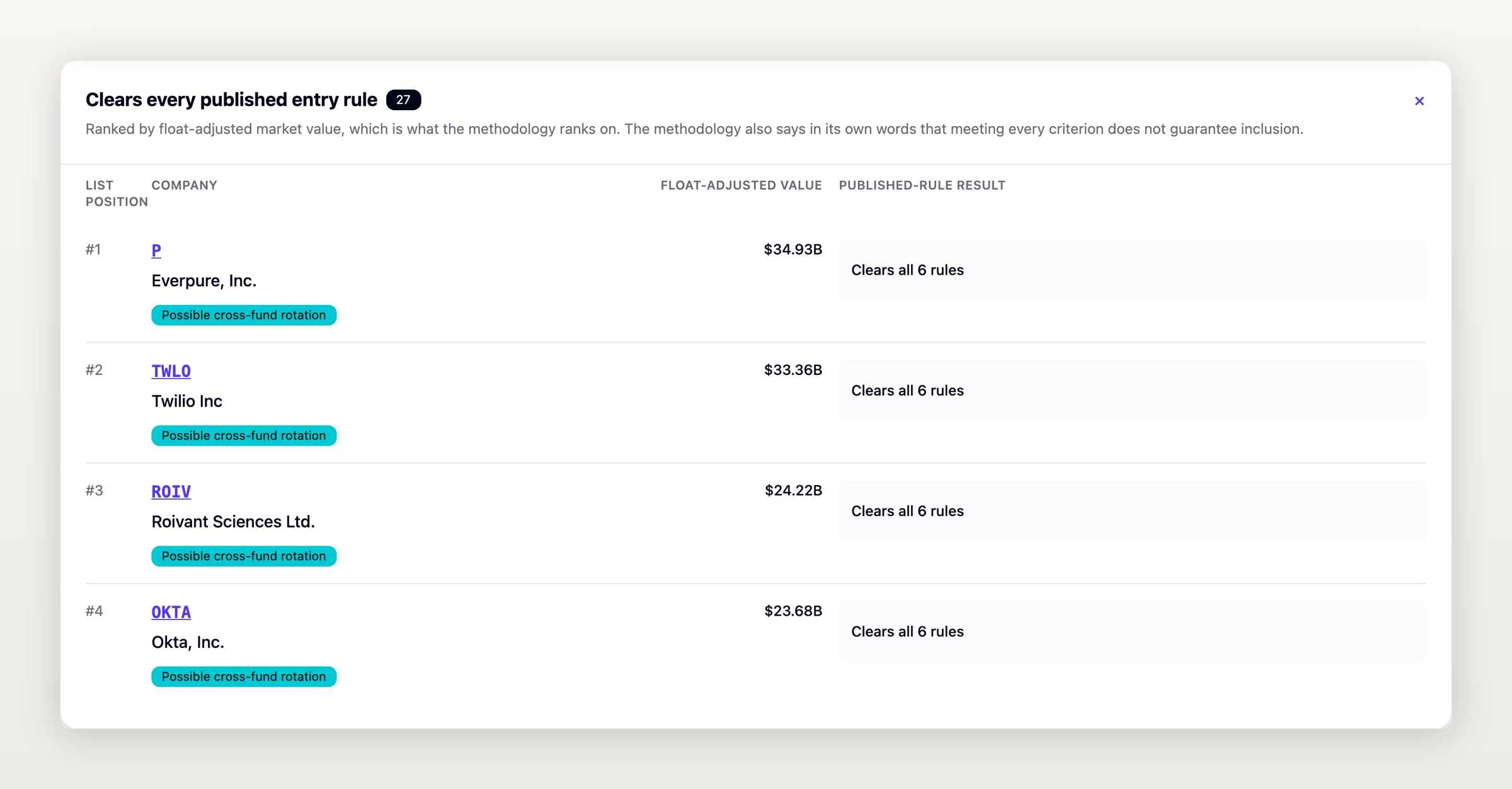
Six of those indexes also have a rebalance outlook. We apply each index's published rules company by company and show the result of every rule rather than reducing it to a mystery score. The wording matters: the S&P 500 outlook is a screen of companies that clear the published entry bars, because the committee still decides; Russell and Nasdaq-100 outlooks are rank-based projections where the published methodology permits one.
Index composition, changes and outlooks are available in ALVIS, the MCP server and the REST API. The stock screener can filter by index membership too, so “profitable S&P 500 companies with rising institutional ownership” is now one query instead of two lists and a spreadsheet.
The screener grew up
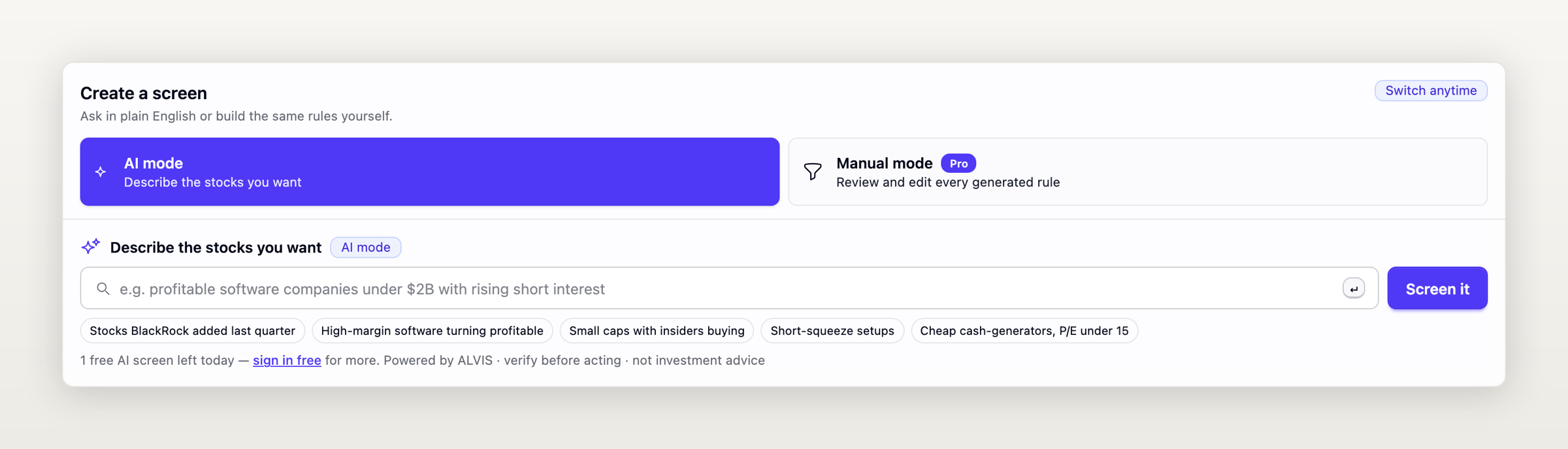
The Stock Screener (SCREENER) still accepts a plain-English request, and every visitor gets one AI-built screen before signup. It now turns that request into the same rule set you can inspect and edit manually.
The manual builder goes well beyond a row of min/max fields. You can mix company metrics, classifications, index membership and institution activity; join conditions with nested AND/OR groups; and compare one metric with an expression built from others, such as P / E > EV / EBITDA × 1.2. Columns can be dragged into the order you want, and the metric catalog now reaches more valuation, growth, balance-sheet and international-fundamental fields.
The useful distinction is that AI and manual screening are no longer two separate products. Start with a sentence, inspect what ALVIS understood, change one rule, and keep going without rebuilding the screen.
Earnings calls now have a front door
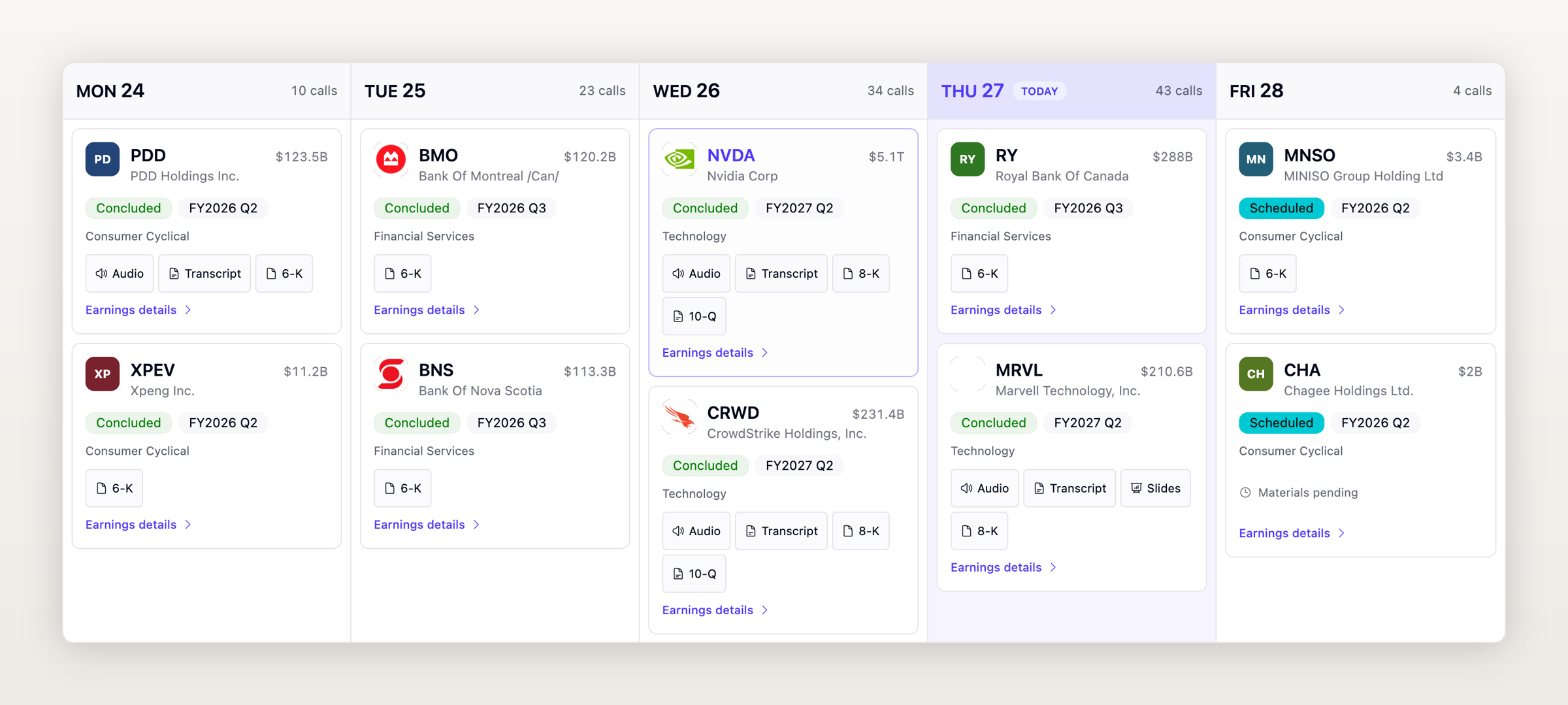
The new Earnings Calendar lays out the week by trading day, with search, sector, status and market-cap filters. Each company card links straight to the material already on file: audio, transcript, slides and the call-announcement filing where available.
The call page itself was rebuilt for reading. Desktop opens on the transcript, mobile has its own compact reader, and previous/next controls move through a company's calls without sending you back to an index. Earnings briefs now call out what changed from the prior quarter and place management's current guidance beside its previous update and the filed actual when the accounting basis really is comparable.
A look at the next short-interest settlement
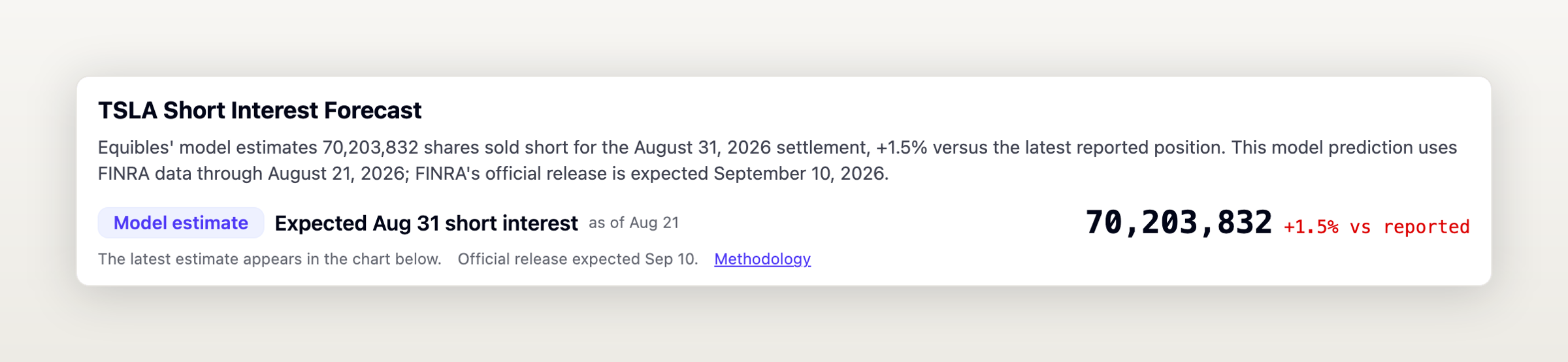
FINRA's official short-interest figures arrive twice a month, which leaves a blind interval between the market moving and the next settlement appearing. We built a validated nowcast for that gap.
On a stock's short-interest page, in ALVIS and in GetShortInterest, the estimate is labelled for the pending settlement and kept separate from the last figure FINRA actually reported. The Most Shorted (MOST-SHORTED) table adds the next-settlement estimate for paid plans, and the history chart shows how the estimate changed as new daily evidence arrived. There is also a public FINRA reporting calendar, so the estimate never blurs into the date the official number is due.
It is a model estimate, not a substitute for the settlement. That distinction stays visible everywhere it appears.
Portfolios your AI agents can manage
You can now track stock and option positions in Portfolios, including long shares, short shares, bought options and written options. Add each acquisition as a lot and Equibles keeps the cost basis, open and realized profit or loss, and the date of every price used in the valuation.
The old watch lists live there too. Watching an instrument adds no pretend position and changes no portfolio total; it simply keeps the company close and can subscribe the portfolio to filing and earnings alerts. A company you hold is eligible for those alerts even if you never starred it separately.
The same portfolio is available in the portal, over the REST API, and through the MCP server. An authenticated AI agent connected through MCP or the API can answer “how is my portfolio doing?”, record a trade after you confirm it, close part of a lot, or watch the option contract you are following. The account always comes from your authenticated connection, never from an argument the model can invent.
ALVIS is easier to try, and its sources are easier to follow
A signed-out visitor can now ask ALVIS one real question and see a grounded answer before creating an account. It is not a canned demo: the run can resolve a company, read prices and financials, and search and quote filings. Signup comes before the follow-up, after there is something concrete to judge.
Signed-in users can choose Fast or Deep Thinking from the first composer. The mobile chat, reasoning controls, run panels and source reader all received the same pass, and sourced answers now use one clear provenance footer instead of repeating it around the turn.
When a filing search result comes back through the MCP server or the API, its link now opens the filing at the cited passage and highlights it. ALVIS keeps the same evidence close in its source reader. The answer is still the convenient layer; the source is one click away.
Smaller releases that add up
- 13F pages now preserve exact share classes and secondary listings, expand combination filers into the managers they report for, and let you search, sort and filter holder tables in the browser.
- Congressional member pages now lead with the itemised asset and liability schedules behind the net-worth range, including the asset class, income and represented House seat when the disclosure states them.
- Person profiles now include filed executive compensation, while SEC coverage expanded for foreign-company and insider filing types.
- Valuation-history charts now include EV/EBITDA and, for REITs, point-in-time P/FFO and P/AFFO derived from each company's own SEC reconciliation. Missing periods stay as gaps rather than drawing a false bridge; the MCP and REST history responses also state why a ratio is absent.
- Latest-price surfaces show a 52-week range and keep secondary listings distinct instead of folding them into the primary ticker.
- Research can publish scientific studies, while the Blog now carries illustrated, worked guides. We also added source-checked product comparisons for readers choosing between research tools.
- Dark mode now reaches the whole portal, including the earnings-call and filing-reading surfaces.
- Plus gives lighter paid usage between Free and Pro, and Pro includes distribution rights with Equibles attribution.
- The new affiliate program pays 30% of eligible subscription revenue for as long as the referred subscription and affiliate account remain active and eligible, with campaign links, a performance dashboard and a ready-to-use media kit.
What should we build next?
This month's work came from the same place as options did: repeated questions, missing-data reports and workflows people were trying to finish anyway.
If one of these releases almost solves something but leaves an awkward last step, tell us. That last step is usually the most useful part of the request.