Thank you, Razia. Welcome, everyone, to our first Quarter 2026 Earnings Call. On this call, we have our President and Chief Executive Officer, Mikael Bratt; our Chief Financial Officer, Monika Grama; and I am Anders Trapp VP, Investor Relations. During today's earnings call, we will highlight several key areas. Our strong performance in a challenging market environment, our full year guidance and the potential impact of ongoing and new geopolitical challenges, an update on the latest market development, and finally, an overview of our continued strong shareholder returns. Following the presentation, we will be available to answer your questions. As usual, the slides are available on autoliv.com. Turning to the next slide. We have the safe harbor statement, which is an integrated part of this presentation and includes the Q&A that follows. During the presentation, we will reference non-U.S. GAAP measures. The reconciliations of historical U.S. GAAP to non-use GAAP measures are disclosed in our quarterly earnings release available on autoliv.com and in the 10-Q that will be filed with the SEC and at the end of this presentation. Lastly, I should mention that this call is intended to conclude at 3:00 p.m. Central European Time. So please follow a limit of two questions per person. I now hand over to our CEO, Mikael Bratt.
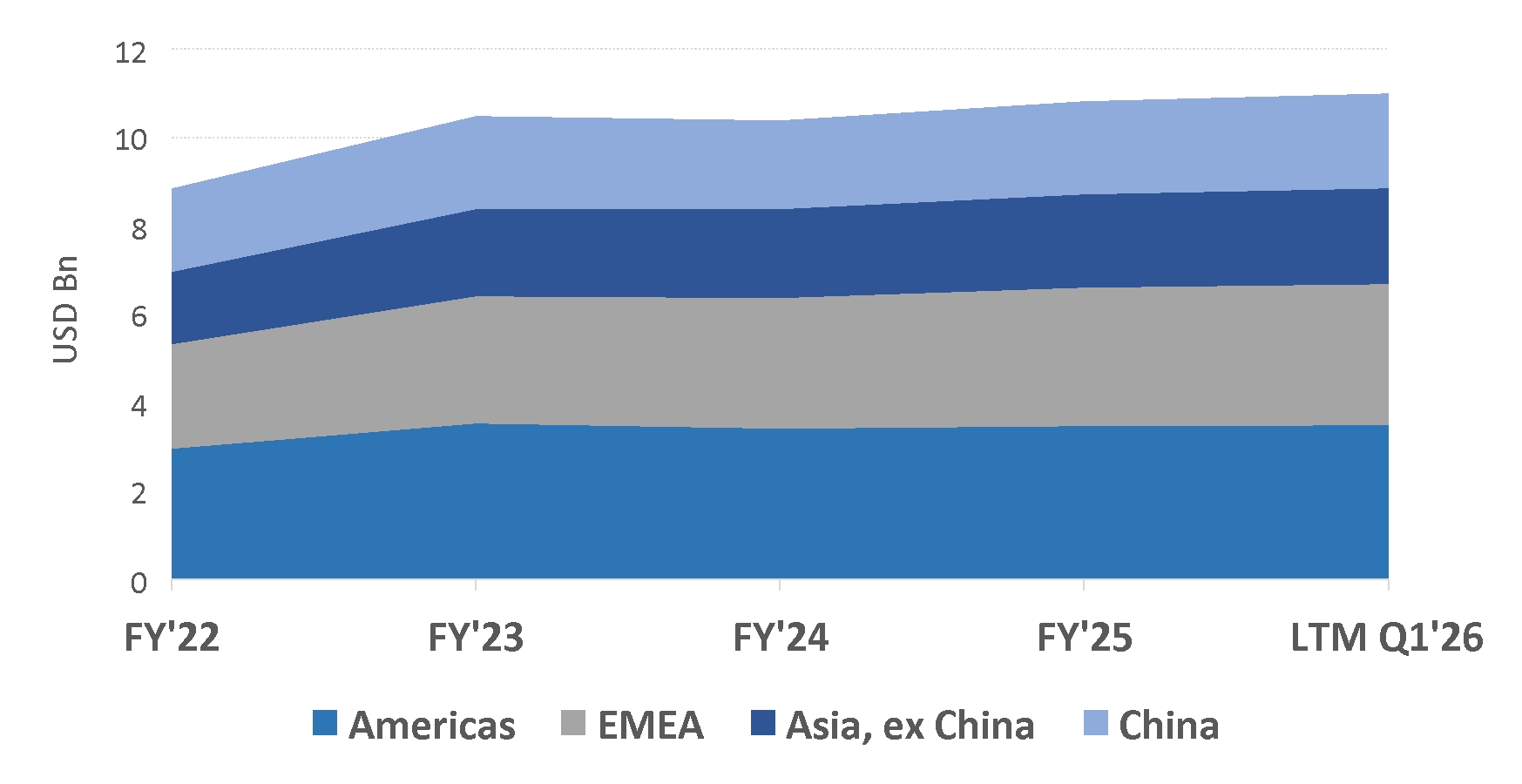
Thank you, Anders. Looking on the next slide. The first quarter exceeded our expectations, driven by strong sales in March. Operational performance was also ahead of plan, supported by solid productivity improvements, partly reflecting reduced call-off volatility. Our positive trend in Asia continued with strong growth in India, South Korea and China. In China, we continued to grow faster than light vehicle production especially with the Chinese OEMs, outperforming by more than 40 percentage points. In India, we grew sales by 38% organically, reflecting mainly the trend of increased safety content in vehicles in India, but also the continued high level of light vehicle production growth. Underlying profitability improved with gross profit increasing by 10%, although adjusted operating income was slightly lower due to temporary lower R&D reimbursements and a one-time income in Q1 last year. In the quarter, we paid a dividend of $0.87 per share, representing a total payout of USD 65 million. Buybacks were paused as the company was in a restricted period following multiple filings and the announcement of a new CFO. Our USD 2.5 billion share repurchase authorization through 2029 remains unchanged, with the ambition for an annual share repurchase between USD 300 million and USD 500 million. Hostilities in the Persian Gulf had a limited impact this quarter, and we are continuously monitoring any potential wide-reaching impact on the industry. Based on what we know today, we reiterate our full year 2026 guidance of flat organic sales with continued significant outperformance of light vehicle production in both China and India. We continue to expect an adjusted operating margin of around 10.5% to 11%. This is based on the assumption that light vehicle production will decline by around 1% and that the gross headwind from raw materials is around USD 90 million. I am also pleased to say that we introduced our first airbag for motorcycles as well as our first complete wearable airbag solution promoted by motorcycle riders, building on our long-term strategy of growing outside our traditional core business. Looking now on the next slide. First quarter sales increased by approximately 7% year-over-year, driven by strong outperformance relative to light vehicle production, along with favorable currency effects and tariff-related compensations. The adjusted operating income for Q1 decreased by 4% to USD 245 million compared to a strong first quarter last year. The adjusted operating margin was 8.9%, 1 percentage point lower than in the same quarter last year. Operating cash flow was a negative USD 76 million, a decrease of USD 153 million compared to last year. The lower cash flow was mainly driven by a temporary negative working capital impact from stronger sales towards the end of the quarter as well as other temporary effects that are expected to reverse later in the year and the normalization of payables from year-end. Looking now on the next slide. We continue to deliver broad-based improvements with particularly strong progress in direct costs. Our positive direct labor productivity trend continues. This is supported by the implementation of our strategic initiatives, including optimization and digitalization. Gross profit increased by USD 48 million, and the gross margin improved by almost 60 basis points year-over-year. R&D net cost rose year-over-year, primarily on negative currency translation effects and lower engineering income due to the timing of specific customer development projects. SG&A costs increased by USD 16 million, mainly due to negative currency translation effects, higher costs for personnel and nonrecurring costs of USD 4 million. Looking now on the market development in the first quarter on the next slide. According to S&P Global data from April, global light vehicle production declined by 3.4% in the first quarter, slightly better than earlier expectations. The modestly stronger-than-expected outcome was mainly supported by Europe in March and the rest of Asia. The decline in global light vehicle production was primarily driven by China. India contributed positively to global light vehicle production performance, benefiting from substantially lower taxes on new vehicle purchases. As an effect of the declining light vehicle production in China in the quarter, the global regional light vehicle production mix was approximately 1.5 percentage points favorable. During the quarter, volatility improved despite higher-than-expected call-offs in March. We will talk about the market development more in detail later in the presentation. Looking now on our sales growth in more detail on the next slide. Our consolidated net sales were almost USD 2.8 billion, the highest for a first quarter yet. This was around USD 175 million higher than last year, mainly driven by a USD 154 million positive currency translation effect and USD 14 million from higher tariff-related compensation. Excluding currencies, our organic sales grew USD 21 million or by 80 basis points, including tariff cost compensation. Based on the latest light vehicle production data from S&P Global, we outperformed the market by over 4 percentage points globally. Our outperformance was significant in China and the rest of Asia. In the rest of Asia, we outperformed the market by 7 percentage points driven by continued strong sales growth in India, where we outperformed by close to 30 percentage points. South Korea and the Asian subregion also contributed to the outperformance, partly offset by Japan. In China, we outperformed overall by 15 percentage points, mainly driven by sales to Chinese OEMs that outperformed light vehicle production by over 40 percentage points. Despite the light vehicle production decline in China, China increased its share of our sales to 18% versus 17% a year ago. Asia, excluding China, accounted for 20%, Americas for 31%, and Europe for 30%. On the next slide, we will look more at our growing business in India. Autoliv is rapidly expanding its business in India, securing its market leadership. India now represents almost 6% of Autoliv's global sales, which is almost triple what it was just 3 years ago, fueled by a regulatory focus and rising consumer demand for safety content in vehicles that has increased by around 20% annually for the past 2 years. In India, Autoliv operates five manufacturing plants, a technical center, and a global support engineering center with more than 6,000 associates in total. To further strengthen our footprint, Autoliv recently opened a new inflator plant to meet growing demand for airbags from both India and other Asian markets. Autoliv's largest customers in India include Maruti Suzuki, Hyundai, Mahindra, and others, reflecting the company's strong position among leading vehicle manufacturers in the country. Looking now on the next slide. The first quarter of 2026 saw a relatively high number of new launches, primarily in China with both Chinese and other OEMs. These new China launches reflect strong momentum for Autoliv in this important market. Higher content per vehicle is driven by front center airbags on many of these new vehicles. In terms of Autoliv’s sales potential, the Nissan Versa is the most significant in the quarter. Here, you also see the Yamaha Tricity 300 commuter scooter. For the rest of 2026, we expect a high number of new product launches, mainly driven by Chinese OEMs, offsetting fewer launches in America and Europe. Let's continue with the next slide. Before I'm moving on, I'd like to introduce our new CFO, Monika Grama. Monika joined Autoliv in 2009 and has been instrumental in strengthening the EMEA division during a particularly challenging period for the automotive industry. I am very pleased to welcome her to the executive management team and look forward to her continued contributions in her new role. I will now hand it over to Monika.
Speaker 2
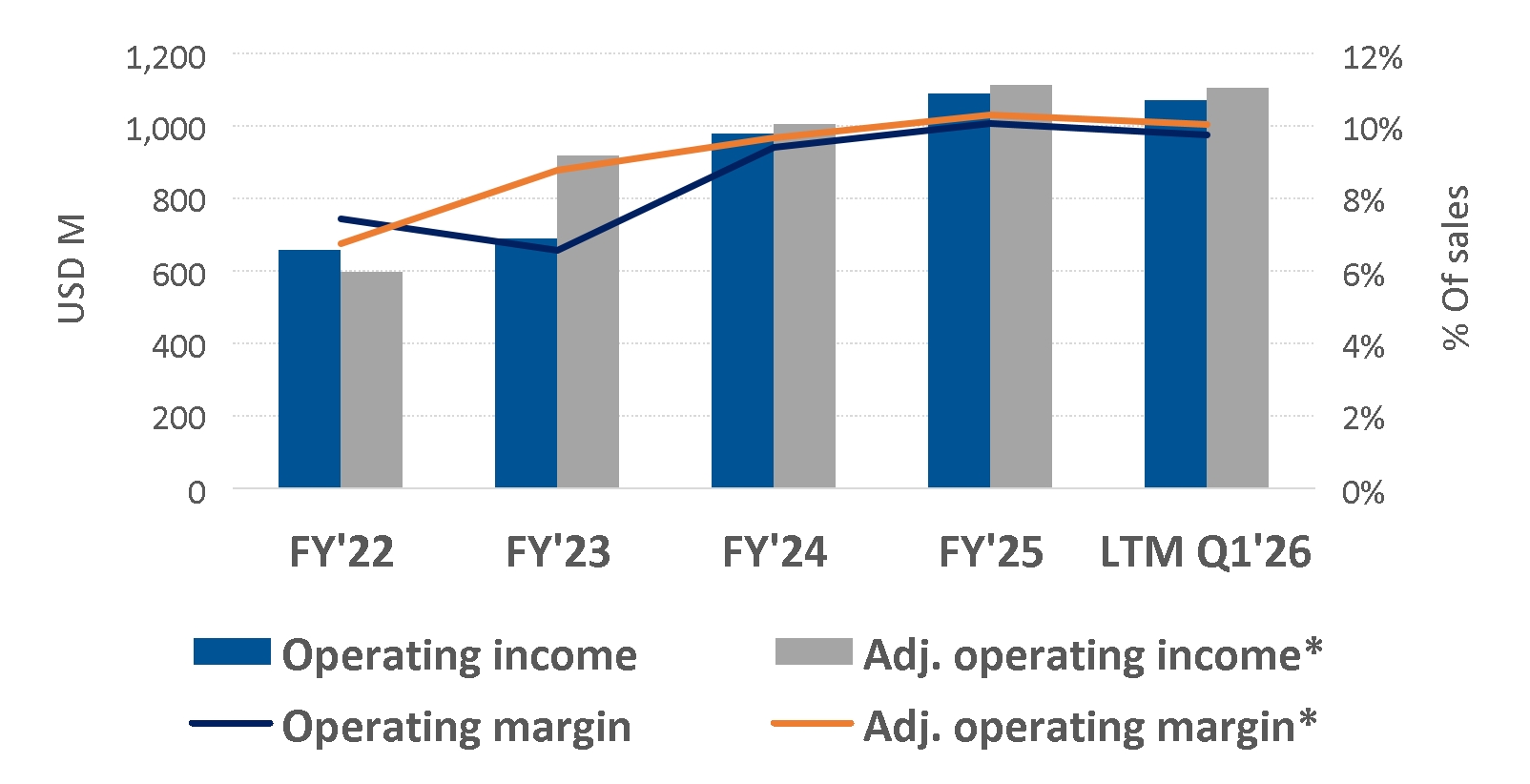
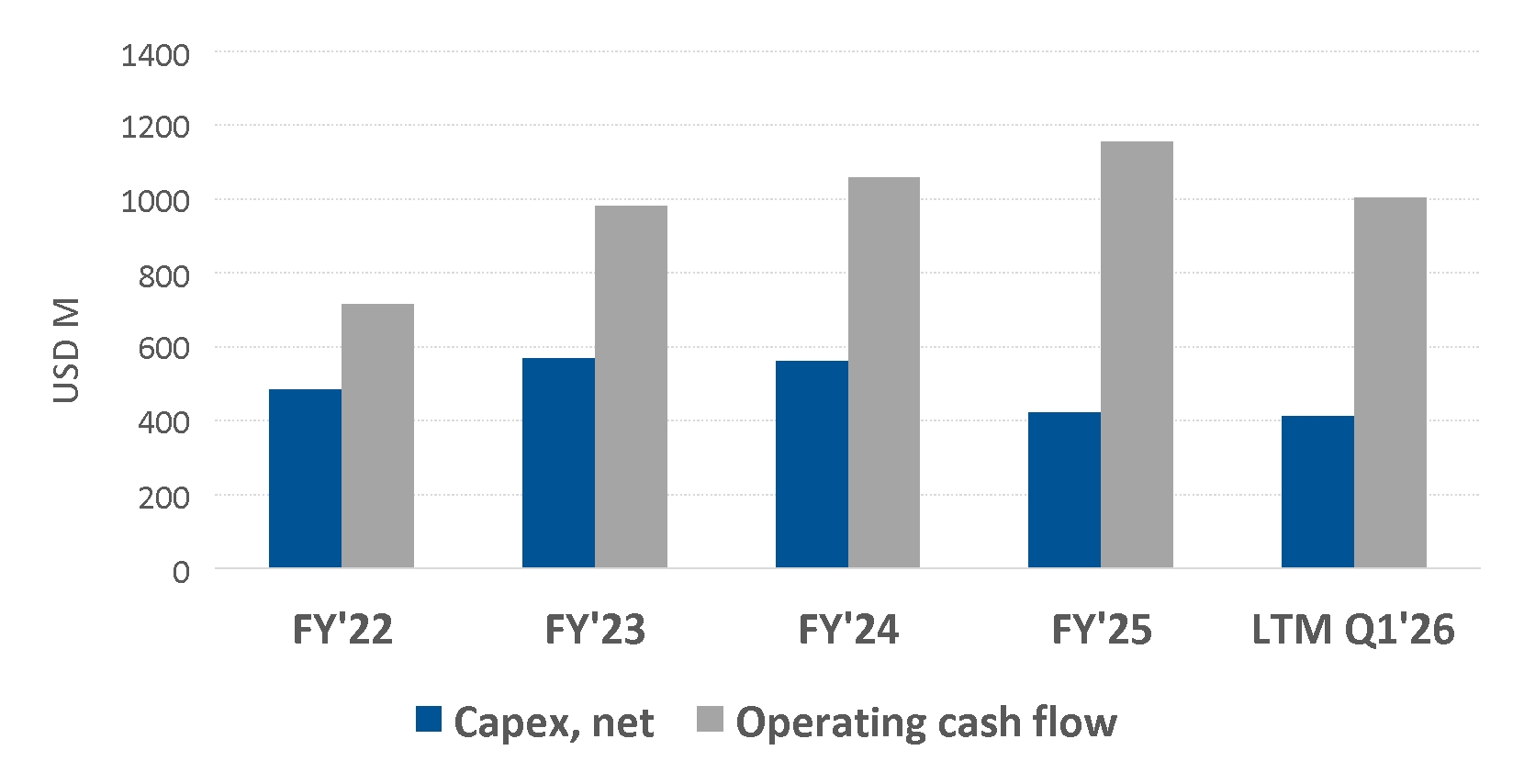
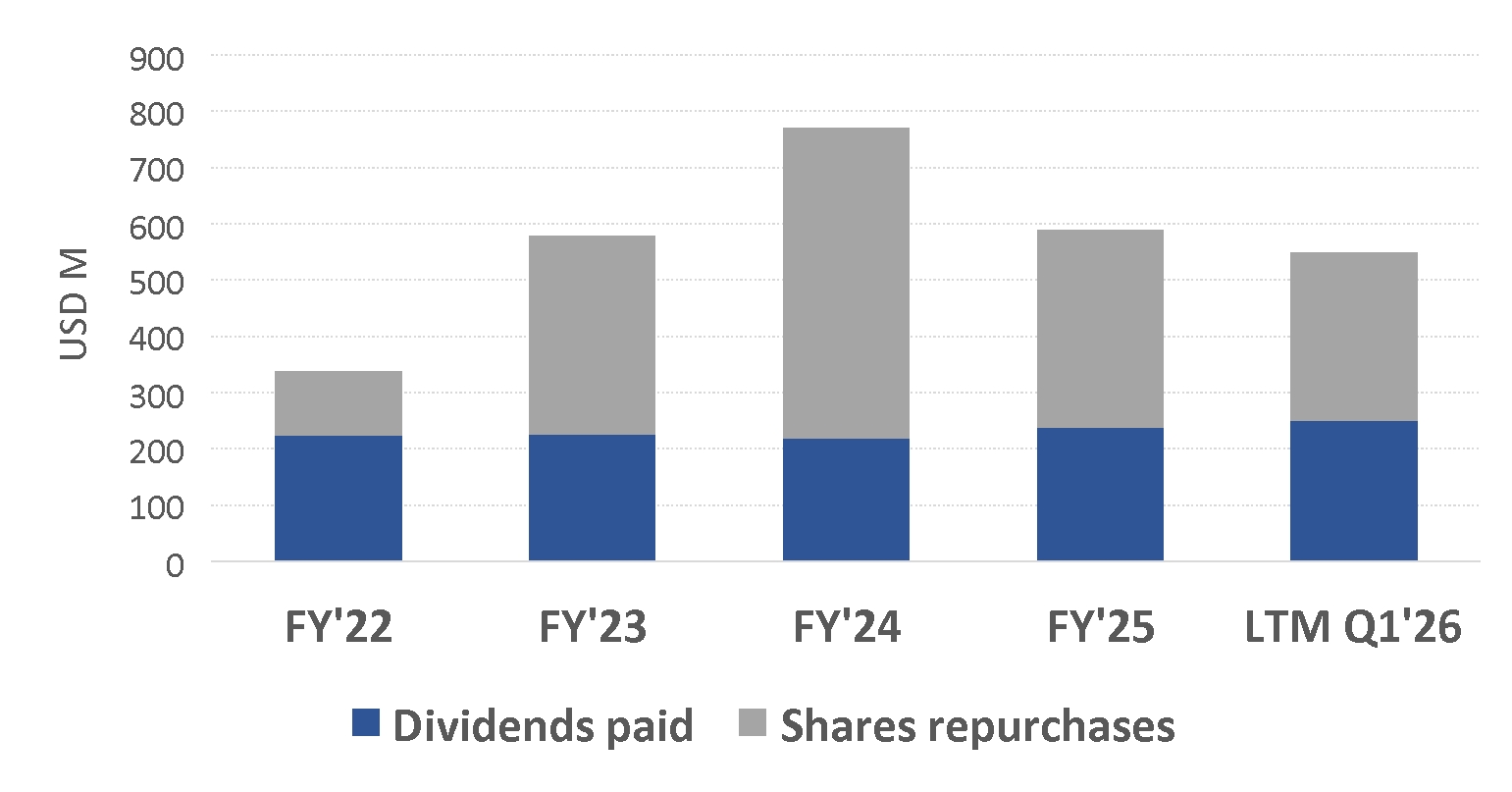
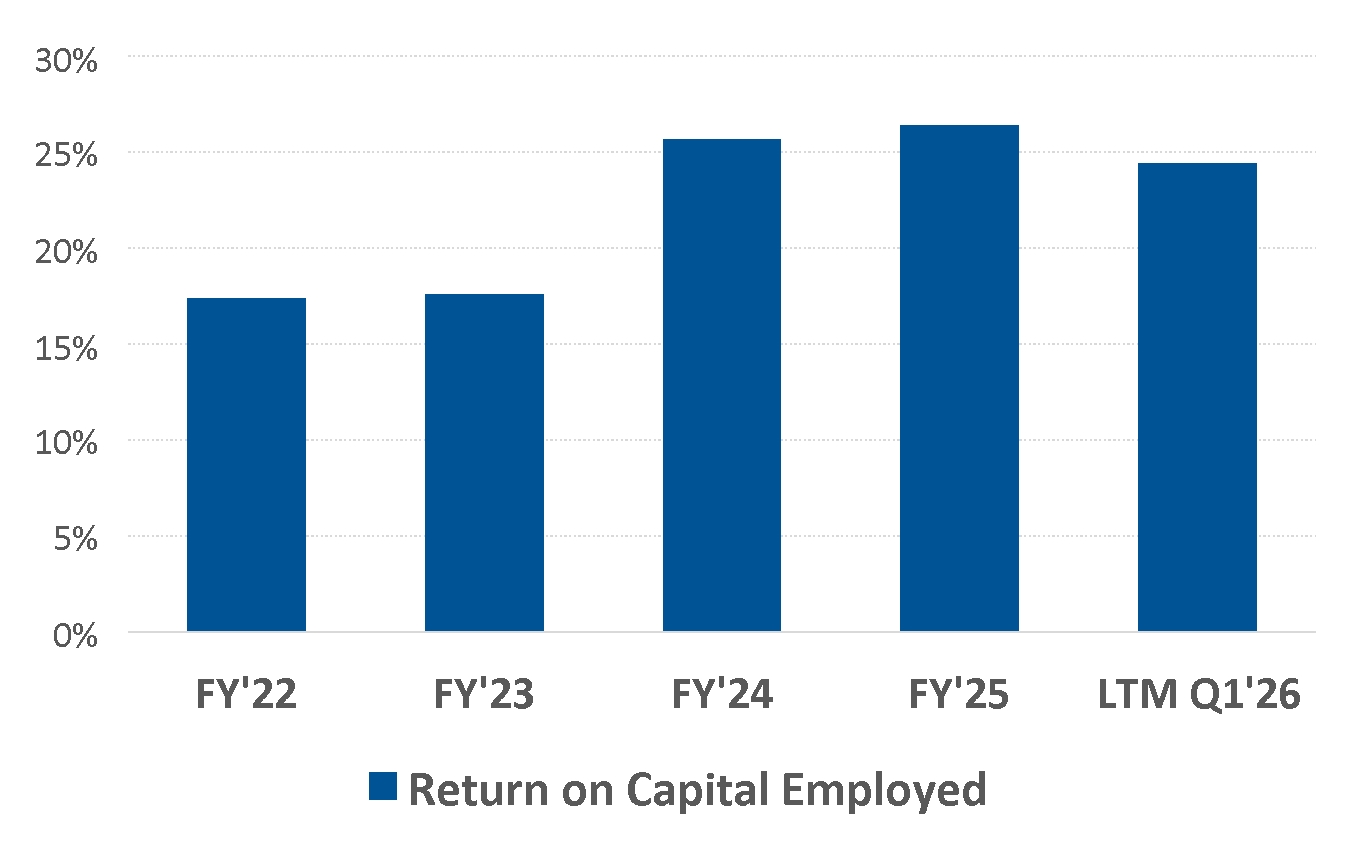
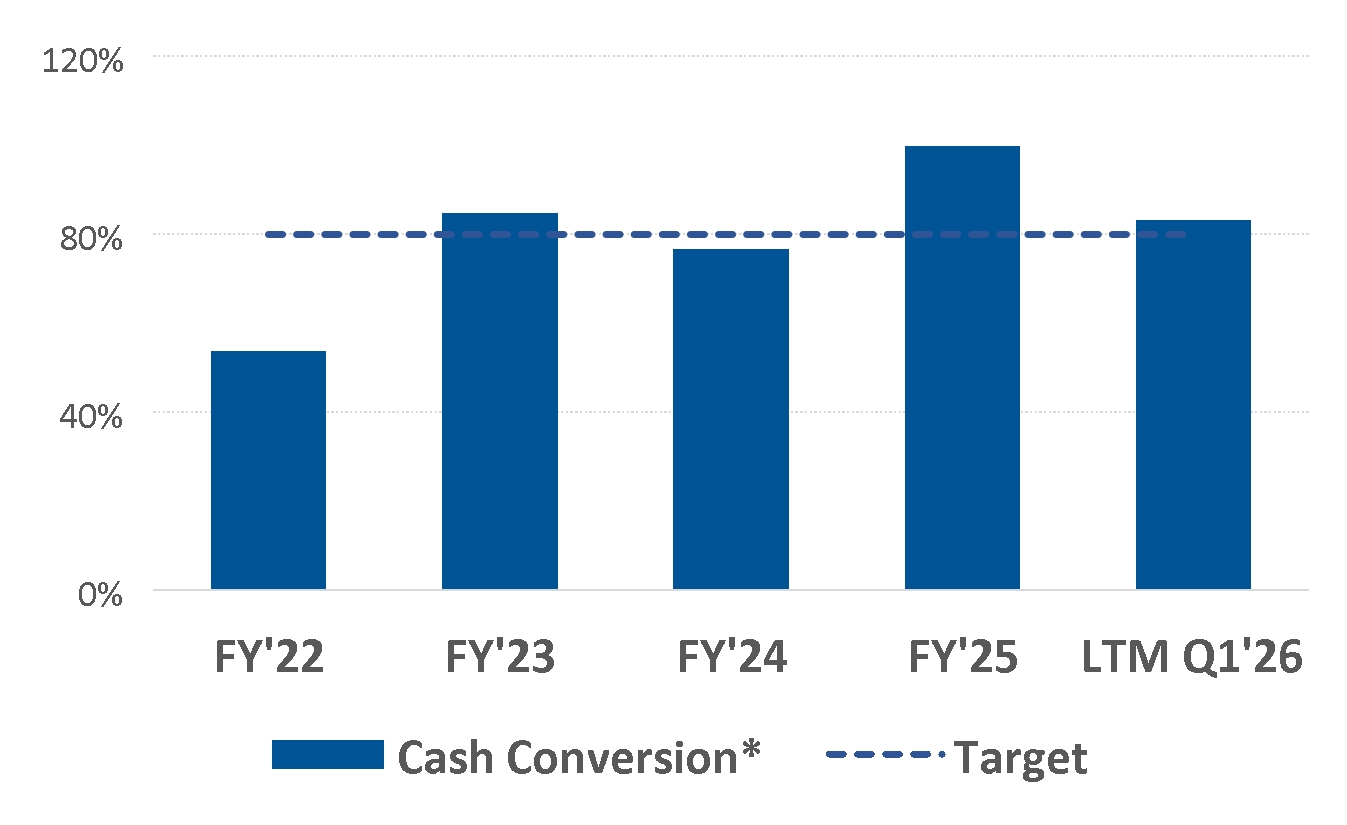
Thank you, Mikael. I will talk about the financials more in detail on the next slide. Turning to the next slide. This slide highlights our key figures for the first quarter of 2026 compared to the first quarter of 2025. Our net sales were almost $2.8 billion, representing a 7% increase. Gross profit increased by USD 40 million, and gross margin increased by almost 60 basis points compared to the prior year. The drivers behind the gross profit improvement were mainly positive FX translation effects, improved operational efficiency with lower labor costs as well as positive effects from higher sales. This was partly offset by increased tariff costs. The adjusted operating income decreased from USD 255 million to USD 245 million, and the adjusted operating margin decreased from 9.9% to 8.9%. The reported operating income of USD 237 million was $8 million lower mainly due to capacity alignment activities. The adjusted earnings per share diluted decreased by $0.10. The main drivers were $0.09 from lower operating income, $0.04 from financial and nonoperating items, and $0.04 from taxes, partly offset by $0.07 from a lower number of outstanding shares diluted. Our adjusted return on capital employed was a solid 23%, and our adjusted return on equity was 24%. We paid a dividend of $0.87 per share in the quarter. Looking now on the adjusted operating income bridge on the next slide. In the first quarter of 2026, our adjusted operating income decreased by USD 10 million. Operations contributed USD 28 million positively, primarily driven by higher organic sales and the successful execution of operational improvement initiatives supported by better call-off stability. Excluding the $13 million from FX translation effects, costs for R&D net and SG&A increased by $28 million driven by lower R&D reimbursements of $9 million due to timing and nonrecurring costs of $4 million. During the quarter, we recovered approximately 70% of our U.S. tariff costs. This recovery rate was lower than last year due to delays in the implementation of the new U.S. administration's import adjustment offset program. We expect most of the outstanding tariffs to be recovered later in the year. The combination of unrecovered tariffs and the dilutive effect of the recovered portion resulted in a negative impact of around 40 basis points on our operating margin in the quarter. Looking now at cash flow on the next slide. Operating cash flow for the first quarter was negative $76 million, a decrease of $153 million year-over-year. This change was primarily due to a negative working effect of $349 million compared with a negative impact of $179 million in the prior year. The working capital effect was largely driven by higher end-of-quarter sales, which is the good reason, other temporary effects that are expected to reverse later in the year, and the normalization of payables from the year-end 2025. Capital expenditures net for the quarter decreased by $9 million. Capital expenditures net in relation to sales were 3% compared to 3.6% a year earlier. The lower level of capital expenditure net is mainly related to lower footprint optimization, less capacity expansion and timing effects. The operating cash flow for the quarter was negative $159 million compared to negative $16 million in the same period in the prior year due to lower operating cash flow, partly offset by lower CapEx net. The cash conversion for the last 12 months defined as free operating cash flow in relation to net income was 83%, exceeding our target of at least 80%. Now looking on our cash flow and shareholder returns on the next slide. Our cash flow generation has proven resilient across economic cycles. As shown on this slide, we have consistently delivered positive operating and free operating cash flow through major disruptions such as the financial crisis, the COVID-19 pandemic and periods of structural change. Cash generation has strengthened in recent years, reaching record levels. This resilience reflects disciplined working capital management, a flexible cost base and limited capital intensity of our operations, supporting higher asset return, durable long-term growth, and shareholder value creation. Over time, we have delivered strong shareholder returns. What is not reflected in the graph is the spin-off of Vianeer in 2018 to shareholders which valued Vianeer at approximately $3 billion at the time. Our capital allocation strategy aimed at annual share repurchase of $300 million to $500 million through 2029 and supported by an attractive and growing quarterly dividend. Since initiating the previous stock repurchase program in 2022, we have reduced the number of outstanding shares by almost 15%. And when executing the program, we consider several factors, including our balance sheet, cash flow outlook, credit rating, and general business conditions as well as the debt leverage ratio. We always try to balance what is best for our shareholders in both the short and the long term. Now looking at the results of our efficient capital utilization on the next slide. Over the years, Autoliv has demonstrated its ability to consistently deliver strong returns on capital employed, also in periods of challenging market environments, reflecting disciplined capital management. The high and stable return on capital employed is further supported by scale advantages and the limited exposure to capital-intensive investments such as powertrains. Returns have improved since the COVID period, driven by margin expansion and tight control of working capital and CapEx. Now looking on our debt leverage ratio development on the next slide. Autoliv's balance leverage strategy reflects our prudent financial management, enabling resilience, innovation, and sustained stakeholder value over time. Our leverage ratio increased from 1.1% to 1.3% during the quarter. Our net debt increased by around $200 million in the quarter, while the 12-month trailing adjusted EBITDA was virtually unchanged. On to the next slide. I will now hand it back to Mikael.
Thank you, Monika. I will talk about the outlook for 2026 in more detail on the next few slides. Turning to the next slide. Overall, S&P Global expects global light vehicle production in 2026 to decline by 2% versus 2025, a 1.5 percentage point downward revision from January. The downgrade is largely attributable to production cuts in the Middle East as well as in other regions impacted by the hostilities. European light vehicle production is expected to decline by almost 2%, driven by affordability challenges and rising imports from China. In North America, S&P forecasts light vehicle production to decline by 2% in 2026, despite relatively healthy dealer inventory levels. In China, light vehicle production is expected to decline by 3% due to weaker domestic demand despite continued export strengths. Japan and South Korea's light vehicle production are expected to decline by 2% and 3%, respectively, reflecting softer domestic demand and a more challenging export environment. India, light vehicle production is expected to increase by 6% and driven by a reduction in purchase taxes on new vehicles, which disproportionately benefits smaller and lower-priced models. However, heightened geopolitical uncertainty from the hostilities around the Persian Gulf adds risk to energy markets, consumer confidence, and overall industry volumes. Now looking on raw materials, development on the next slide. We are closely monitoring the potential industry-wide impact of geopolitical developments in and around the Persian Gulf on supply chains, raw material prices, and overall demand for new vehicles. The situation may lead to a more challenging raw material environment, and we are evaluating multiple scenarios based on our current assessment. We primarily purchase components rather than raw materials, which inherently reduces our direct exposure to commodity price volatility. That said, geopolitical developments in the Persian Gulf can still affect certain input categories, most notably textiles and plastics, but also indirectly aluminum, helium, and steel. For materials, such as nylon resin and plastics, pricing generally follows oil prices over time. Historically, we see a lag of approximately 3 to 6 months between movements in spot oil prices and the impact on the purchase prices. For the full year 2026, our current assessment is for around USD 90 million gross impact from higher raw material pricing compared to the previous assessment of around $30 million a quarter ago. From a mitigation standpoint, we continue to execute on productivity and cost reduction initiatives to offset these costs. Additionally, customer compensation mechanisms are in place and are expected to offset a meaningful portion of the cost impact, although there is typically a timing delay between cost increases and recovery. Now looking on the updated full-year guidance on the next slide. This slide shows our full-year guidance, which excludes effects from capacity alignment and antitrust-related matters. It is based on no material changes to tariffs or trade restrictions that are in effect as of April 10, 2026, as well as no significant changes in the macroeconomic environment or changes in customer call-off volatility or significant supply chain disruption. We expect to outperform light vehicle production by around 1 percentage point as our organic sales are expected to be flat while global light vehicle production is expected to decline by 1%. The net currency translation effects on sales are expected to be around 3% positive. The guidance for adjusted operating margin is around 10.5% to 11%. Operating cash flow is expected to be around USD 1.2 billion. We expect CapEx to be below 5% of sales. Our positive cash flow and strong balance sheet supports our continued commitment to a high level of shareholder returns, and we expect a tax rate of around 28%. Looking on the next slide. This concludes our formal comments for today's earnings call, and we would like to open the line for questions from analysts and investors. I now hand it back to Razia.
Operator
And the questions come from the line of Tom Narayan from RBC.
Speaker 4
Tom Narayan from RBC, welcome Monika. My first question is about the strength in China. You mentioned an increase in the penetration of domestic OEMs. I assume you also saw benefits from the better performance of nondomestic units, which likely have higher margins for you. Is that correct? Additionally, did your overall penetration in China increase year-over-year, and did that boost your margins? How sustainable do you think this is as the year goes on? I have a follow-up as well.
As you know, we don't disclose a breakdown of our earnings profile for customers or regions or countries or anything like that? I mean we have a total portfolio of a large number of programs, and that's the combined result of that, that we are presenting here. But it's not a secret that we have focused on our Chinese OEMs as they are growing in their share of the total market. Our focus here is to have a market share of around 45% of the global light vehicle production, and that's what we are happy to report that we continue to build on that strategy here, and it served us well in the quarter here. And, of course, we are working hard to improve our earnings profile across the board here in general.
Speaker 4
Okay. For my follow-up, it seems like the tariff policy is effective from April 10 according to your guidance, and I know there was a rule change on the metals side on April 6. Regarding that Section 232 rule change, I wanted to know if you still have the current USMCA exemption. I believe this only affects the metal side, where the OEMs have that MSRP offset. Is that your understanding that it doesn't have a significant impact?
In general, when it comes to the tariffs, I think there's a lot of moving pieces there. But I think for us, as automotive here, it's largely unchanged. I mean for us, it's mainly the USMCA structure that is relevant, and that we have no changes at this point. So that is what we are looking at, the rule changes that you saw lately here; it's a minor part of our total exposure and not meaningful in this context. But of course, we follow that as well, here. But for us, it's all about the USMCA, I would say. That's the key thing here. No changes in that.
Operator
The questions come from the line of Colin Langan from Wells Fargo.
Speaker 5
Great. I just want to clarify because I might have misunderstood. The S&P is down 2%, but your guidance is down 1%. Is that due to reduced production, a mix issue, or is there another reason it's not aligned with the S&P? Many are concerned that if the S&P does not recover, there may be further declines. Could you remind us about how production trends are continuing to decline?
Yes, as we provided our full-year guidance during the Q4 earnings release, we projected a decrease of 1%, while the S&P was at a decrease of 0.5%. At that time, we were taking a cautious approach. The recent change is within the margin of error in this volatile environment. We are keenly aware of the situation in the Strait of Hormuz around the Persian Gulf, as highlighted in our presentation. However, we currently have no indications or signals suggesting anything contrary to our outlook. It's also possible for the situation to improve. There are various scenarios to consider, but we feel confident in our outlook.
Speaker 5
And if it gets worse, what are the decrementals that we should...
Yes, of course, I mean, as I said, we follow this and are ready to take any measures that are necessary. So I mean, if we will see a dramatic change to this outlook. We are, of course, ready to make necessary adjustments. And I think we have proven that in the past that we have a high degree of flexibility in our system and a strong team to execute on those changes. So I think it's all about staying close to the development, as we always do here.
Speaker 5
Okay. Can you provide insight into the factors contributing to the rise in raw material costs? Also, are there any concerns about potential shortages, especially regarding nylon due to the current limited supply from some Butadiene plants, which are essential for nylon production? Is there a risk that we might not be able to secure certain raw materials like nylon, and do we have alternatives if shortages occur?
No, I think to your first question about the main driver, it's really the oil price. That is the key factor for us right now as it influences various products. This is what we're monitoring, and it's the reason we have revised our estimate to $90 million from the initial $30 million at the start of the year. However, we are focused on ensuring that this figure is lower than what we have projected to manage the situation effectively. We will assess this further, and we have offsetting activities in place, which I mentioned earlier. Regarding availability, we currently do not have significant concerns. Our supply chain team is actively working to secure supply, and as of now, everything seems stable. However, we understand that if there are genuine shortages of oil, we have plans to address that. I believe we have the situation under control. Returning to your question about sensitivity, if there’s a drop in demand beyond our expectations at this time, I want to remind you about our typical decrementals, which is generally between 20% and 30% leverage should there be a substantial decline in sales moving forward.
Operator
And the questions come from the line of Mattias Holmberg from DNB Carnegie.
Speaker 6
I'm interested in the outperformance, given that you have a 4% here in Q1 and still guide for just 1% for the full year. Am I off by thinking that you are aiming is perhaps not the right word, but you see no outperformance for the balance of the year? Or what are the moving parts? And what would sort of result in this lost momentum? Is it a pull forward from the strength you saw in March that is going to reverse? Or I'm just trying to understand the dynamics here, please?
No, I think when we provide the full-year guidance, we take into account the mix development throughout the year. In some quarters, it works to your advantage, while in others, it's the opposite. In the first quarter, we experienced a positive mix effect of roughly 1.5 percentage points. We still believe that, based on our knowledge of the developments across different regions, we should end up where we have indicated.
Speaker 6
And a quick follow-up on the raw materials. With the $90 million gross headwind, is it roughly evenly phased do you think over the next three quarters? Or is there any quarter in particular that will be more severely impacted? And also, have you made any assumptions on what the net impact will be after mitigations sort of embedded in your margin guidance?
No, I think the net effect is included in our guidance here. So what we're saying here is that the gross exposure we have here should be mitigated either by price increases and internal, let's say, self-help through other activities here, but majority is price increases here. And it fits within the guidance there. And when it comes to the sequential development here, I don't know, Monika, if there is anything you would like to add there. But still, we're not guiding per quarter, as you know.
Operator
The questions come from the line of Hampus Engellau from Handelsbanken.
Speaker 7
Two questions from me. First one is on customer call-offs. If I heard you right, you said that customer call-offs were more stable during the quarter. I'm just thinking, is this some one-off here? Or should we expect this trend to continue moving into the second quarter? I'll take the question one by one.
Okay. Thank you, Anders. No, I think, I mean, as we said here, the call-off stability was around 95%, which is what it was during last year at the good times. We had some deterioration towards the end of Q4, where we saw some customers pulling the brakes to reduce inventory at the year-end. And then it normalized again at the beginning of the quarter here. And, of course, with the increased sales in March here, that also helps to stabilize the situation when you have a little bit of an upward trend there. And we still believe that it should continue to improve under normal circumstances. I think it all depends now on what happens with the supply chains, if we have a positive scenario, meaning that we come to some kind of resolutions around the Middle East situation and the value chains are connected to that or not because it's the disturbances in the value chain here that creates a lot of the volatility, I would say, at this point in time. But long term, it's definitely expectations that it should continue to improve. And with the two weeks into the first quarter, I would say it still holds, and we have a stable situation here. And yes, we will, of course, follow it closely. But so far, so good.
Speaker 7
Fair enough. When you finished Q4, one of the main observations was that there were many fewer new product model launches, particularly in the used market and somewhat in Europe as well. However, it appears that China has seen more new model launches than anticipated. Given the short lead times we have for introducing new models in China, can you provide some insight on this? Are you surprised by this situation? Additionally, we've heard that Volkswagen is significantly increasing its focus on electric vehicles, planning to introduce a new model every two weeks for the rest of this year. Could you shed some light on this?
Speaker 2
Yes, I wouldn't say we have any surprises regarding new launches. These require thorough preparation and alignment. Overall, we have good visibility in this area. Last year, we experienced some disconnection with China due to the global situation, which led to a lot of changes in the rollout of new platforms, particularly with electric vehicles in the U.S. and Europe. However, I believe this does not significantly affect the short term, especially in China. So, in short, there are no real surprises on that front.
Operator
We are now going to proceed with our next question. And the questions come from the line of Emmanuel Rosner from Wolfe Research.
Speaker 8
My first question is around the outperformance versus the industry, which was solid in the first quarter. But I wanted to follow up a little bit about what you're assuming for the rest of the year because it would be basically some sort of deceleration versus this Q1 performance. And you flagged the mix was 1.5 points positive in Q1. What are you expecting for mix on the full year over the rest of the year? And what would be the drivers of minimal growth of the market compared to what we've seen in Q1?
No, as I said before here, I mean, the mix in each quarter has, of course, a meaningful impact on it. And this first quarter, we had 1.5 percentage points coming from positive mix. When we look at the full year here, and basically, we have guided then for a 1% outperformance considering flat organic and negative 1% light vehicle production. It's based on a neutral mix compared to 2025. So we have no tailwind or headwind coming from mix in that assumption. And that's, of course, the best estimate we have now. Then you don't know the mix for 100% until you have gone through here. But we still believe that, that's the most likely scenario with what we see here in the light vehicle production per regions, et cetera, looking ahead.
Speaker 8
Okay. And then with a lot of moving pieces around raw materials and tariffs, etc., I was hoping you could just refresh for us the main drivers of margin expansion for this year. So if we're thinking about 2025 as a starting point and then your reiterated margin guidance for 2026, what are some of the big buckets of margin improvement now basically mark-to-market with the similar limited organic growth?
Speaker 9
So I will start with the negative that you could already observe in our messages. We have a negative impact from raw materials and from inflationary impact on SG&A and R&D. That we more than plan to offset with operations and raw material mitigations. Now we are tapping in again in structural cost savings, and our known resilience in challenging times. We are going to tap in as well into customer compensations to partly offset or to meaningfully offset the raw material headwinds that we mentioned. And in addition to that, we benefit from positive FX impact across the board that was already visible to some extent in our Q1 results.
Speaker 8
You're planning for a decent amount of margin expansion despite some headwinds that will be largely offset along with some foreign exchange impacts. What are some of the key positives?
The main positive is focused on the structural cost savings that are coming through. It is in the operational productivity efforts where we talk about automation and digitalization to drive efficiency through the value chain. These continue to be the main drivers for our margin expansion going forward. As Monika mentioned, we have short-term expectations regarding some headwinds around raw materials, which we plan to offset through price compensation and additional cost reductions, along with some positive impacts from foreign exchange.
Operator
And the questions come from the line of José Asumendi from JPMorgan.
Speaker 10
I have a couple of questions. Mikael, can you talk about Chinese OEMs in both China and Europe and how you expect to benefit from upcoming product launches in the next quarters? Additionally, can you provide insights on which customers we should watch regarding the acceleration in China from Q2 to Q4 or over the next year? Also, in Europe, could you elaborate on how you plan to benefit from the observed trend of Chinese OEMs gaining double-digit market share? How will this impact the utilization of your plants? Now for Monika, could you comment on working capital and the assumptions for working capital for the remainder of the year?
Very good. Thank you. Maybe I'll start on the sales side and then Monika takes the working capital there. So as you know, we work broadly with the Chinese OEMs. And I would say we are on all the different platforms, OEMs that you see exporting out of China in different shape and forms. There are two exceptions, which have their own captive solution, and that's SIC and BYD, but BYD is still a very important customer for us, which we are working with. So when you look at the development of Chinese OEMs, I would say we are present in a broad base there. And I think the outperformance numbers in the quarter here speak for themselves, where we had a 40 percentage points outperformance with the Chinese OEMs. So I think that's really, really strong and a good number there. And when we see them coming to Europe, they are normally, I would say, a very high level of content per vehicle in those vehicles. And yes, it mirrors the position we have in China there, I would say. We have seen not so much local production yet of the Chinese OEMs. But what I can say, and I think we said also in connection with the Q4 that we won the first tender that was issued in Europe by a Chinese OEM. So I would say that we are very happy about that and proud that we were able to meet the OEMs expectations here in Europe. So I think we are in a good position there to utilize our European footprint here as well for our Chinese customers.
Speaker 2
And continuing then with the working capital, we mentioned that the cash flow in Q1 was negatively impacted by $349 million increase in operating working capital, mainly due to temporary impact. The increase in the receivables, other one-timers that have as well temporary effects, and then the payables that are more normalized compared to the year-end. Our full-year cash flow expectations are unchanged, with the operating cash flow expected at around $1.2 billion and CapEx below 5%. That implies our expectations that we are normalizing the working capital assumptions, and we are continuing to execute on our working capital improvement program. There are still some actions outstanding that will deliver results through the year.
Operator
And the questions come from the line of Jairam Nathan from Daiwa Capital Markets.
Speaker 11
Going back to your long-term revenue compound annual growth rate of 4% to 6%, with 1% to 2% expected from new markets. I understand you mentioned this is not anticipated in the short term. However, with the introduction of the motorcycle product, could you discuss how this might alter those expectations?
Going back to your long-term revenue compound annual growth rate of 4% to 6%, which includes 1% to 2% from new markets, I understand you mentioned this is not expected in the short term. However, with the introduction of the motorcycle product, could you clarify if this changes the expectation? No, it doesn't really change the expectation. I would say this aligns with what we have previously stated regarding the 4% to 6% and the 1% to 2% from low-value products and 1% to 2% from Mobility Safety Solutions, which should start to materialize by the end of this period, specifically around 2030, when it becomes significant. There will be a gradual buildup, as we’ve discussed before, with MSS contributing incrementally over time. This marks the first step in our bike product offering and the wearables. This information should be viewed as a data point indicating that the last 1% to 2% of our 4% to 6% target is progressing well. This does not change the overall expectations.
Speaker 11
And my follow-up is for Monika. Just as you kind of take a fresh look at shareholder returns, your initial thoughts on a share buyback of $300 million to $500 million given net debt-to-EBITDA target being below the 1.5x.
I think maybe on the buyback, as we stated here, I mean, we are committed to our program. We are also indicating here that it should be between $300 million to $500 million year by year. And that's like a guidance. Then, of course, we take into consideration the balance sheet. We take into consideration, okay, are we heading into more positive territory when it comes to overall business cycle or not, etc. So I mean, we have plenty of room in our program that was launched last year here. And yes, we are on our way here. So we take all those pieces into consideration. We remain committed.
Operator
We are now going to take one last question. And our last questions come from the line of Björn Enarson from Danske Bank.
Speaker 12
Try to be quick. But you base your guidance on unchanged regional mix. I guess, it sounds fair. I would most likely have done it myself. But I mean, your regional mix last year, I mean, Q1, Q2, you talked about a significant negative regional mix, and in Q3, Q4, I believe it was 100 to 200 basis points negative as well. Is that a fair assumption on the comps kind of that we are talking about when you say that your mix is going to be unchanged for the year?
Yes. Yes. No, I think, I mean, as you rightly said here, I mean, we had some headwind last year. We are not expecting that to be reversed this year here. And of course, it's much connected to overall business sentiment that are around the world. So we are not considering any changes to that. So that's a right assumption. I would say it's quite limited. First of all, the region as a whole represents a small portion of light vehicle production. Additionally, the indirect impact is also manageable at this point, so it’s not significant.
Operator
So this concludes the question-and-answer session. I will now hand back to Mr. Mikael Bratt for closing remarks.
Thank you, Razia. Before we conclude today's call, I would like to reiterate my confidence in our strong market position and our growth momentum in Asia, particularly in China and India, which position us well for continued success. At the same time, we remain mindful of the heightened macroeconomic and geopolitical uncertainties. Despite these uncertainties, our proven ability to strengthen profitability even in a low growth environment provides a solid foundation for delivering attractive shareholder returns and a clear path towards achieving our 12% adjusted operating margin target. Our second quarter call is scheduled for Friday, July 17, 2026. Thank you for your attention. Until next time, stay safe.
Operator
This concludes today's conference call. Thank you all for participating. You may now disconnect your lines. Thank you.