Operator
Thank you for standing by. My name is Tina, and I will be your conference operator today. At this time, I would like to welcome everyone to the Q2 2026 Amoresco Incorporated Earnings Conference Call. All lines have been placed on mute to prevent any background noise. After the speaker's remarks, there will be a question and answer session. To ask a question, press star 1 on your telephone keypad. To withdraw your question, press star 1 again. Please limit questions to 1 and 1 follow-up. And we do ask that you limit questions to one-on-one follow-up and then rejoin the queue. It is now my pleasure to turn the call over to Lila Dillon, Chief Marketing Officer. Please go ahead.
Thank you, Tina. And good afternoon, everyone. We appreciate you joining us for today's call. Our speakers on the call today will be George Saccolaris, Amoresco's Chairman and Chief executive officer, Nicole Bulgarino, co-president of Amoresco, and Mark Chiplock, chief financial officer. In addition, Josh Barabow, our chief investment officer, will also be available during Q&A to help answer questions. Before I turn the call over to George, I would like to make a brief statement regarding forward-looking remarks. Today's earnings materials contain forward-looking statements, including statements regarding our expectations. All forward-looking statements are subject to risks and uncertainties. Please refer to today's earnings materials, the safe harbor language on slide two of our supplemental information, and our SEC filings for a discussion of the major risk factors that could cause our actual results to differ from those in our forward-looking statements. In addition, we use several non-GAAP measures when presenting our financial results. We have included the reconciliations of these measures and additional information in our supplemental slides that were posted to our website. Please note that all comparisons that we will be discussing today are on a year-over-year basis unless otherwise noted. I will now turn the call over to George. George?
Thank you, Lila, and good afternoon, everyone. Q2 was a transformational quarter for Amaresco, highlighted by exceptional execution and strong financial performance. First, we had a record of $1.8 billion of new awards, driven by $1.2 billion for data centers and $600 million for our other key markets. Second, we closed our Neogenics joint venture with HACI, providing us with significant external capital to accelerate growth in all of our business lines. And we announced our first successful delivery of R&G into the European compliance markets. Third, we repositioned Ameresco into two core market pillars. And we are releasing a new rebranded corporate identity to reflect the updated position. And finally, we successfully brought online the 250-megawatt NAPONI battery energy storage system, one of the largest energy storage projects in Canada. And we energized the 560-megawatt solar project in Greece, one of the largest projects in Europe. Many of you have been anticipating updates on our involvement in the data center market. There is a growing demand for reliable power infrastructure and increasingly favorable policy for on-site power infrastructure, encouraging hyperscale customers to secure dedicated on-site power solutions. Combined with Amoresco's integrated capabilities, we are well positioned to deliver solutions that provide speed, reliability, and the energy independence that these customers need. During the Cora, several opportunities advanced to the point where they met our criteria for inclusion in our awarded backlog. Importantly, the projects we added to our backlog represent only a portion of our broader pipeline. As we continue to advance additional data center opportunities, we will remain highly selective in our partnerships and disciplined in our approach. We expect the amount of backlog added from these opportunities to increase. As development progresses, project scopes are finalized, and they convert to contracted backlog. As you will see in our updated corporate presentation, the company is well positioned to flourish in the current market environment. With our recent promotions of Nicole Polgarino and Lou Maltesos to co-presidents, which have positioned the company to address two core market pillars, power infrastructure and building and public infrastructure. This strategic positioning reinforces MRS standing as one of the world's leading energy infrastructure companies, focused on delivering integrated solutions to provide reliable power and modernized infrastructure. With a powerful combination of market catalysts and a robust pipeline of opportunities, we are confident in our ability to drive exceptional long-term profitable growth. With that, I would like to turn the call over to Nicole to provide some additional details about the exciting data center activities, as well as other notable project wins and business opportunities. Nicole?
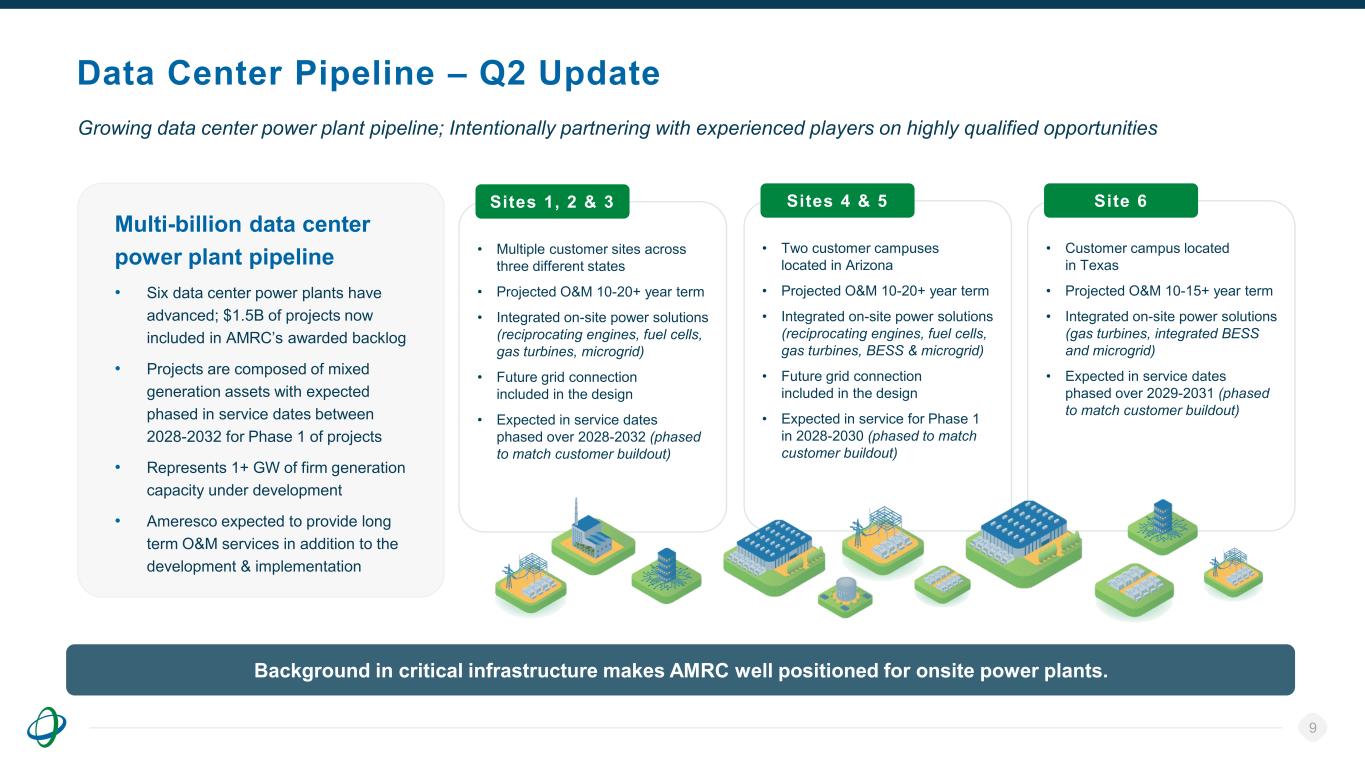
Thank you, George, and good afternoon, everyone. As George highlighted, Amoresco made significant progress with our power infrastructure business during the quarter. The backlog additions we announced today are the result of months of working to secure, develop, and advance opportunities with leading partners across the data center ecosystem. Our strategy remains highly focused and selective, partnering with experienced developers, operators, hyperscalers, and capital providers, while concentrating exclusively on onsite power data solutions. This landscape is dynamic and often requires persistence and flexibility with solutions due to permitting, gas supply, and specific tenant needs. This is where Amoresco's decades of experience developing, delivering, owning, and operating critical energy infrastructure provides us with a clear competitive advantage. During this quarter, we added three new data center projects to our awarded backlog, bringing our total to five data center projects, in addition to the Lelore data center in our energy assets portfolio. These projects further expand our presence in the nation's most active data center markets, adding both Texas and Arizona to our existing footprint of data center projects. Collectively, they will represent more than one gigawatt of power generation and showcase the breadth of Amoresco's capabilities. The solutions we are providing include a combination of reciprocating engines, gas turbines, fuel cells, battery energy storage systems, and integrated microgrids designed to deliver the reliability required by today's most demanding data center customers. These awarded projects also only represent a portion of the opportunities we are actively developing. We continue to see exceptional demand for on-site power solutions and are encouraged by both the scale and the quality of our growing pipeline. We are engaged with many of the industry's leading data center partners, and we believe our differentiated capabilities position us extremely well to capitalize on the significant opportunities ahead. We look forward to sharing additional developments as we continue to convert this momentum into backlog and long-term profitable growth. While the data center activity was certainly a highlight of the quarter, it is also important to note that our momentum extends well beyond this market. We also secured a significant amount of new project awards across a broad range of geographies, customers, and in-markets, underscoring the strength and diversity of our business. These wins reflect continued demand for Amoresco's comprehensive energy infrastructure solutions and demonstrate our ability to capitalize on the opportunities across multiple verticals while maintaining a balanced and resilient growth profile. I'll now turn the call over to Mark to cover our strong Q2 financial performance. Mark?
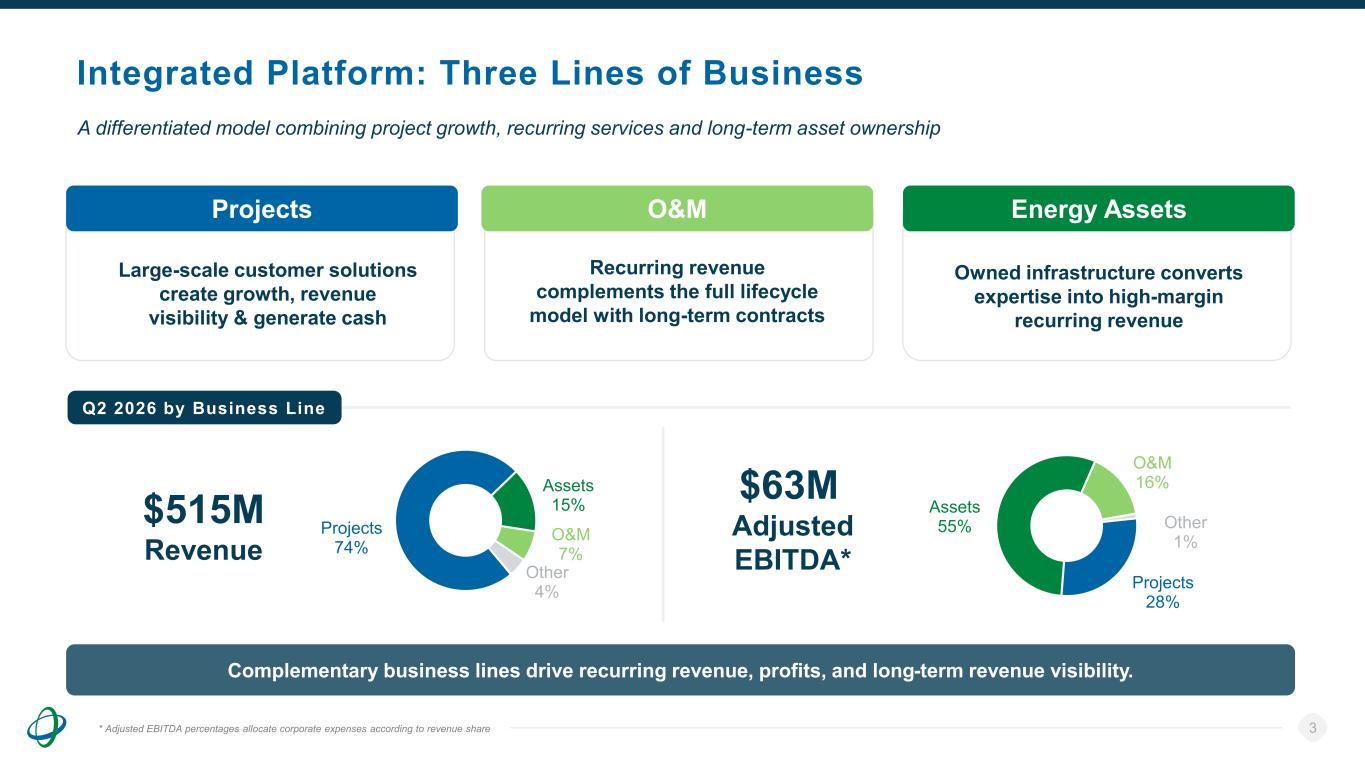
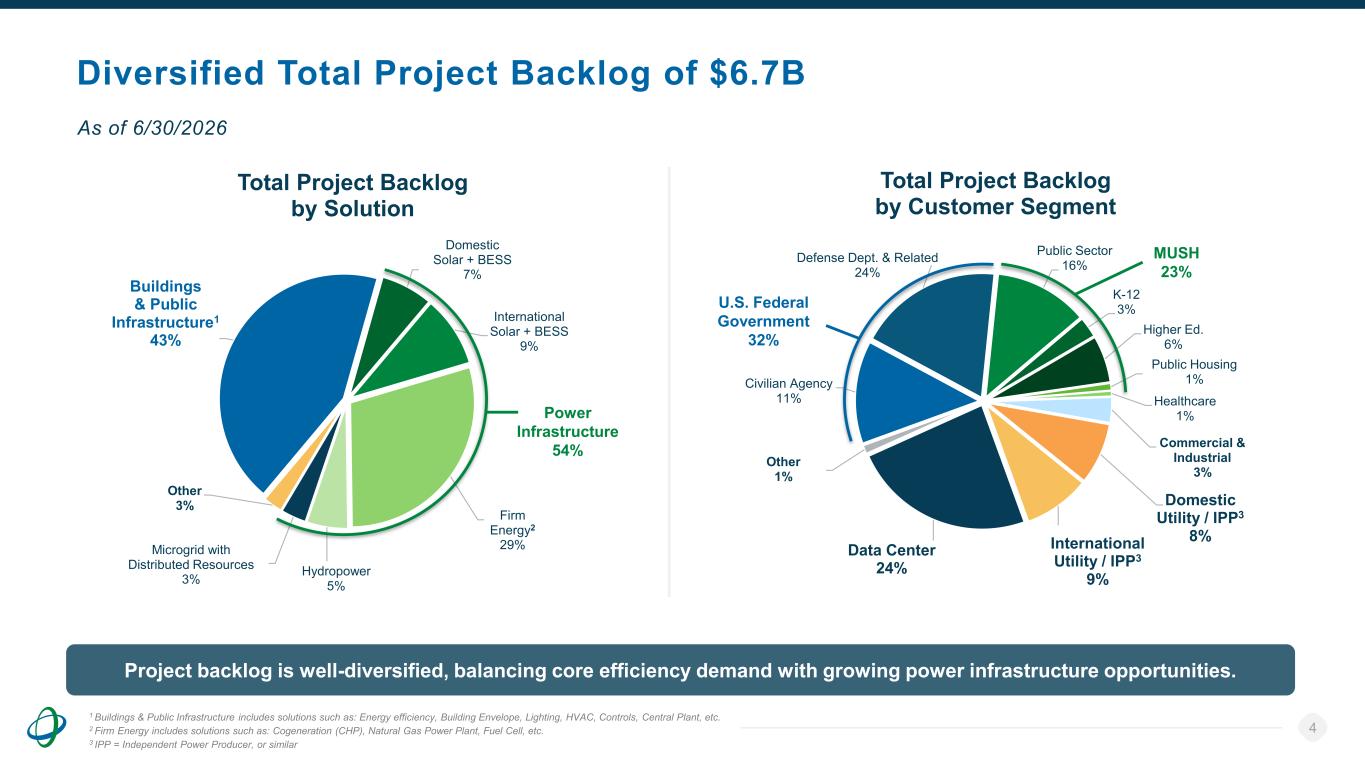
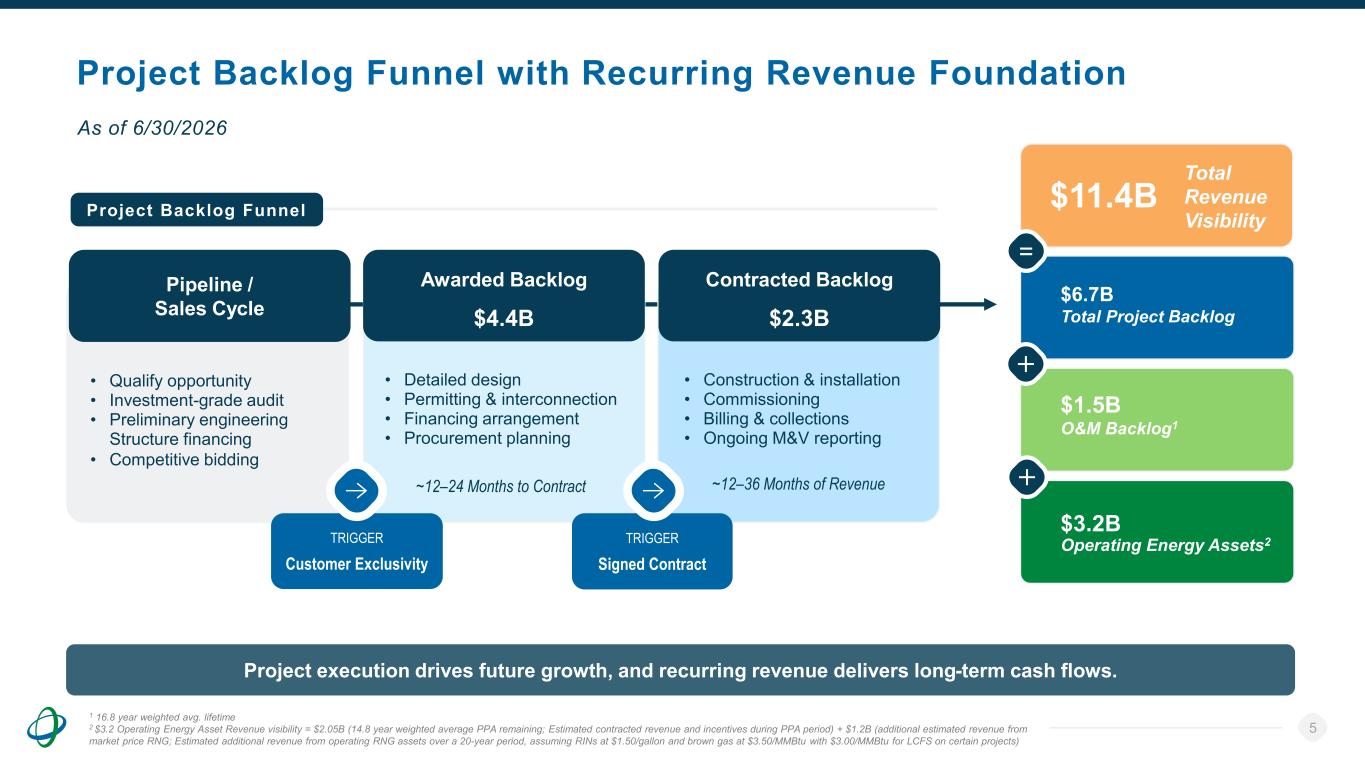
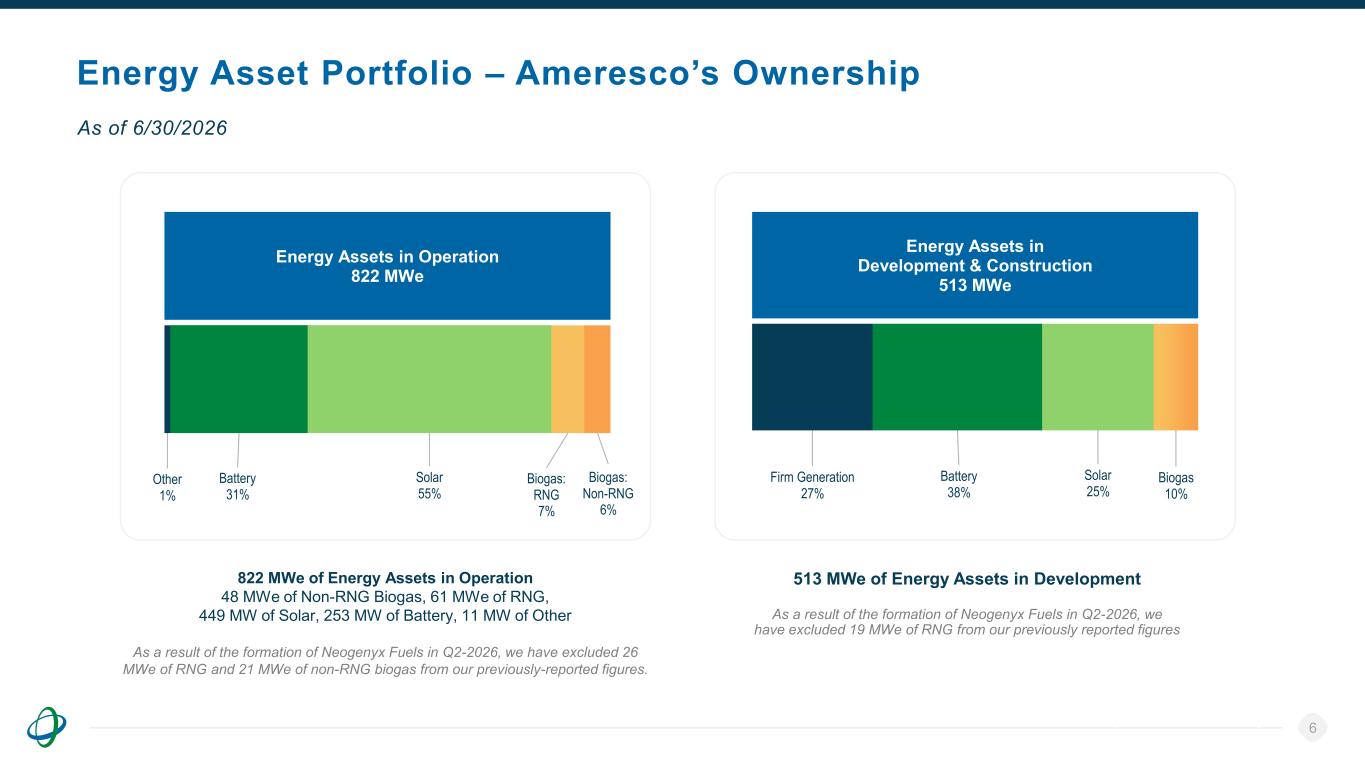
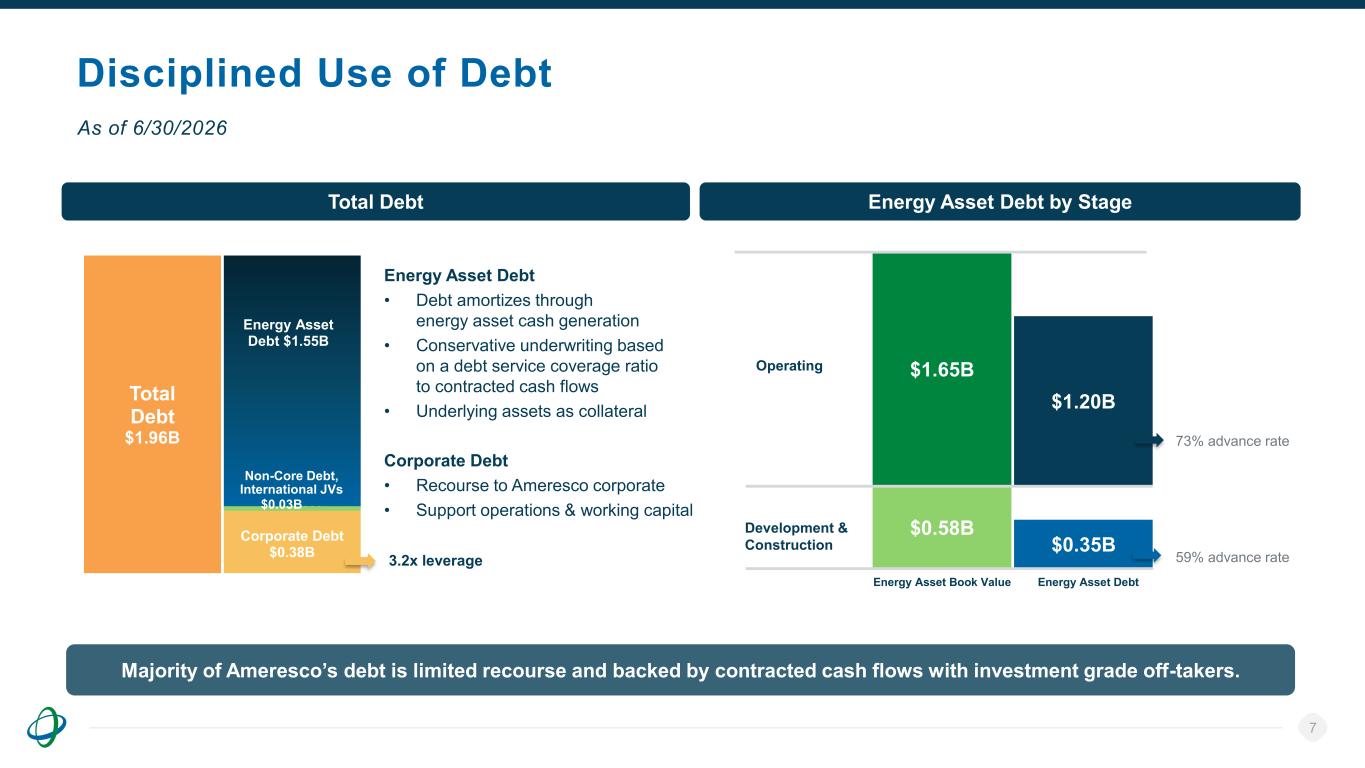
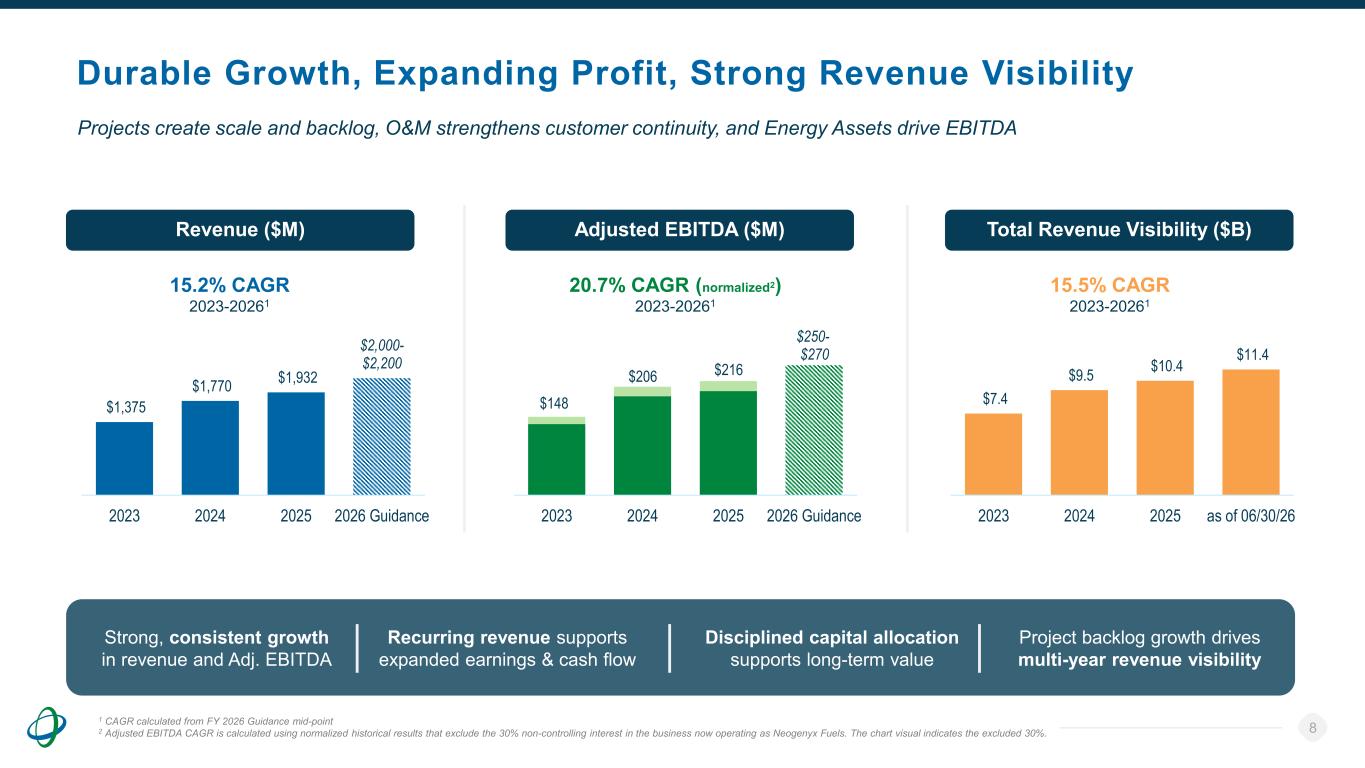
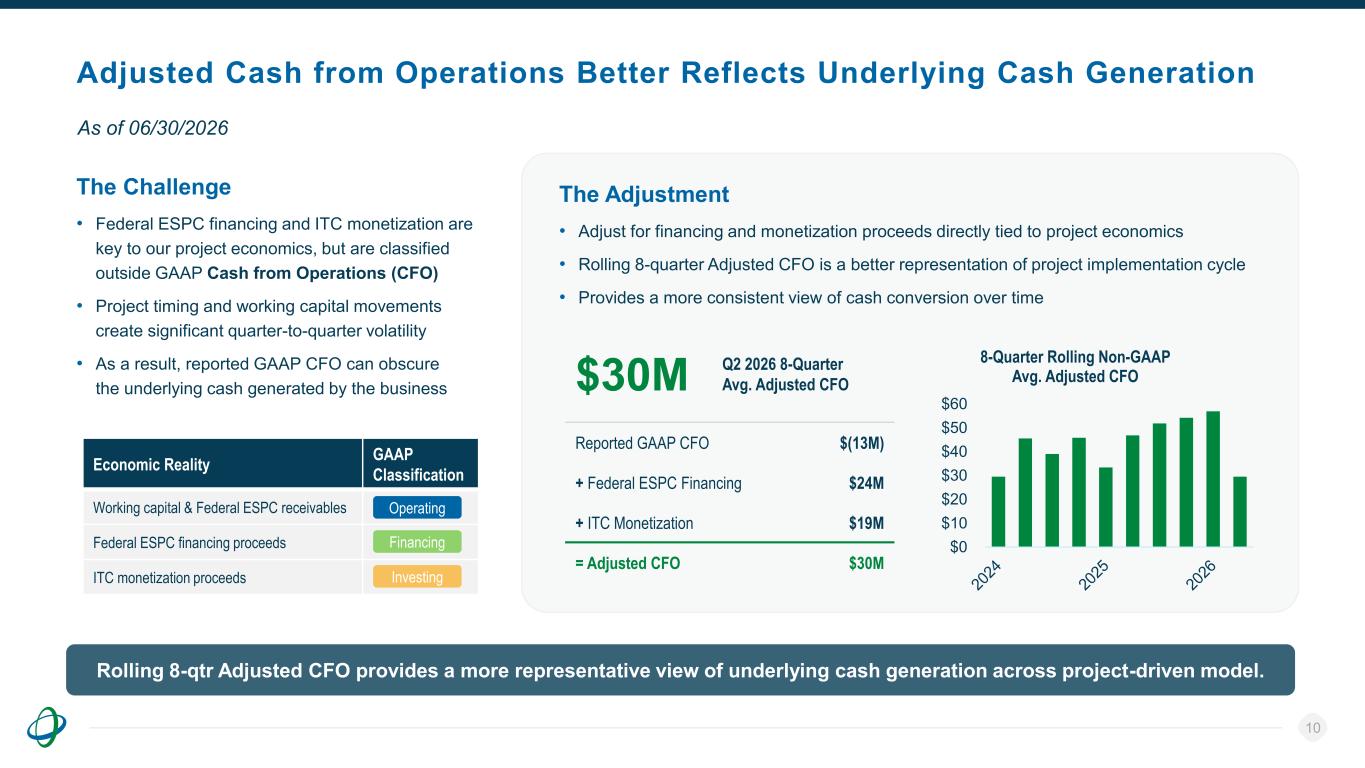
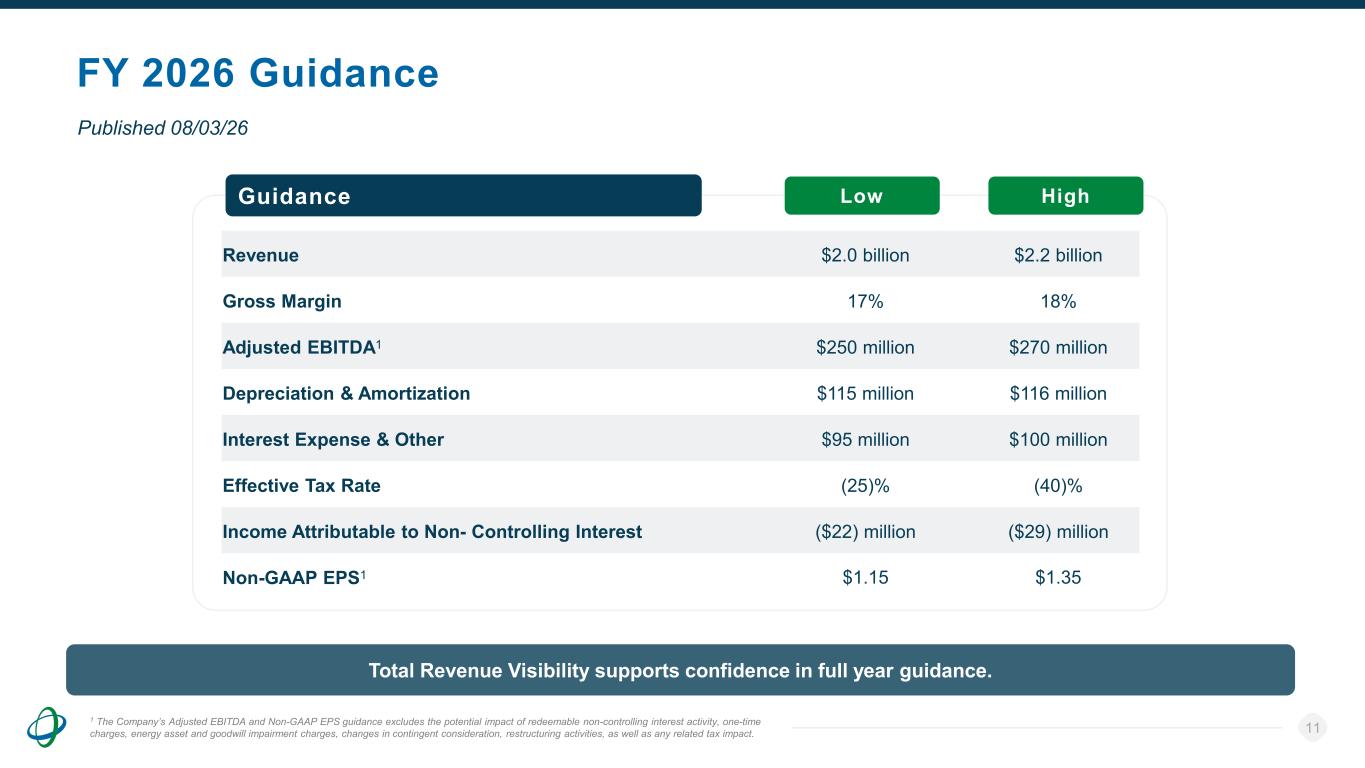
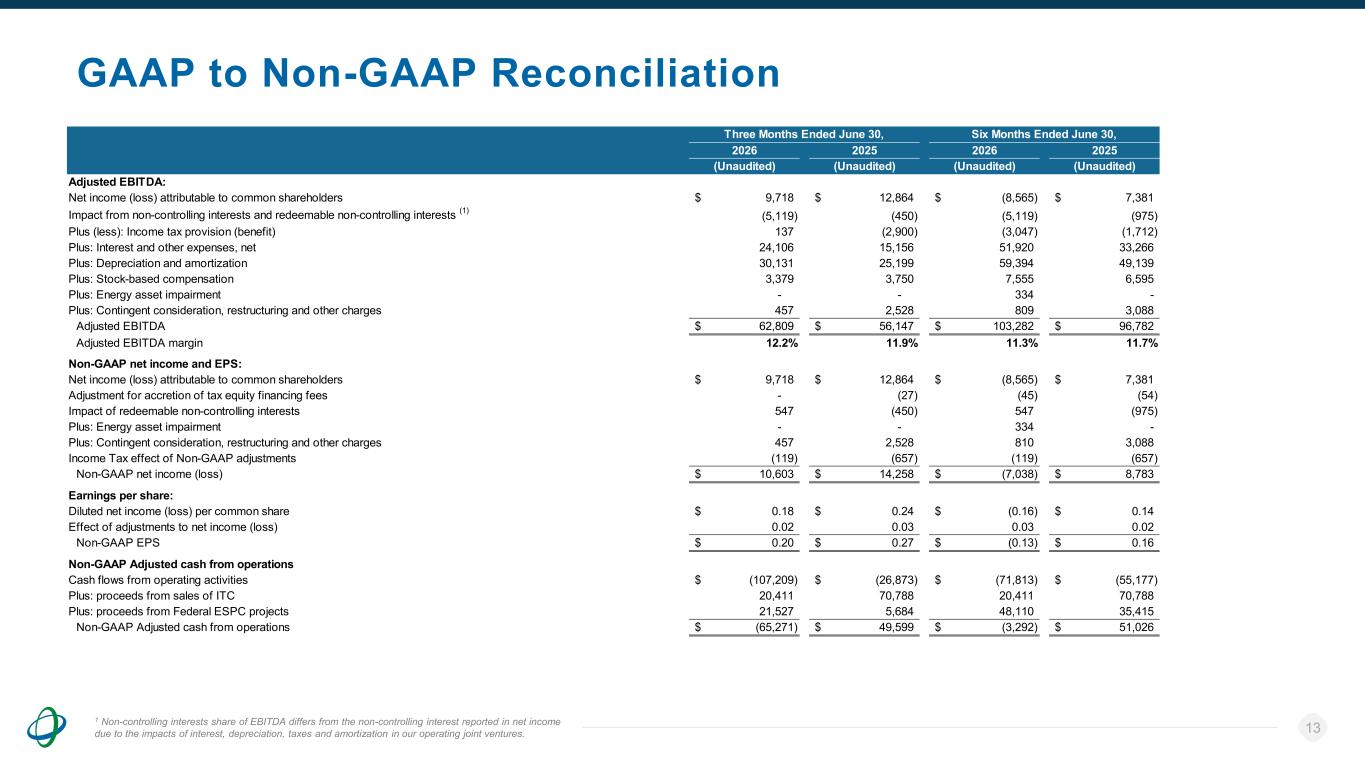
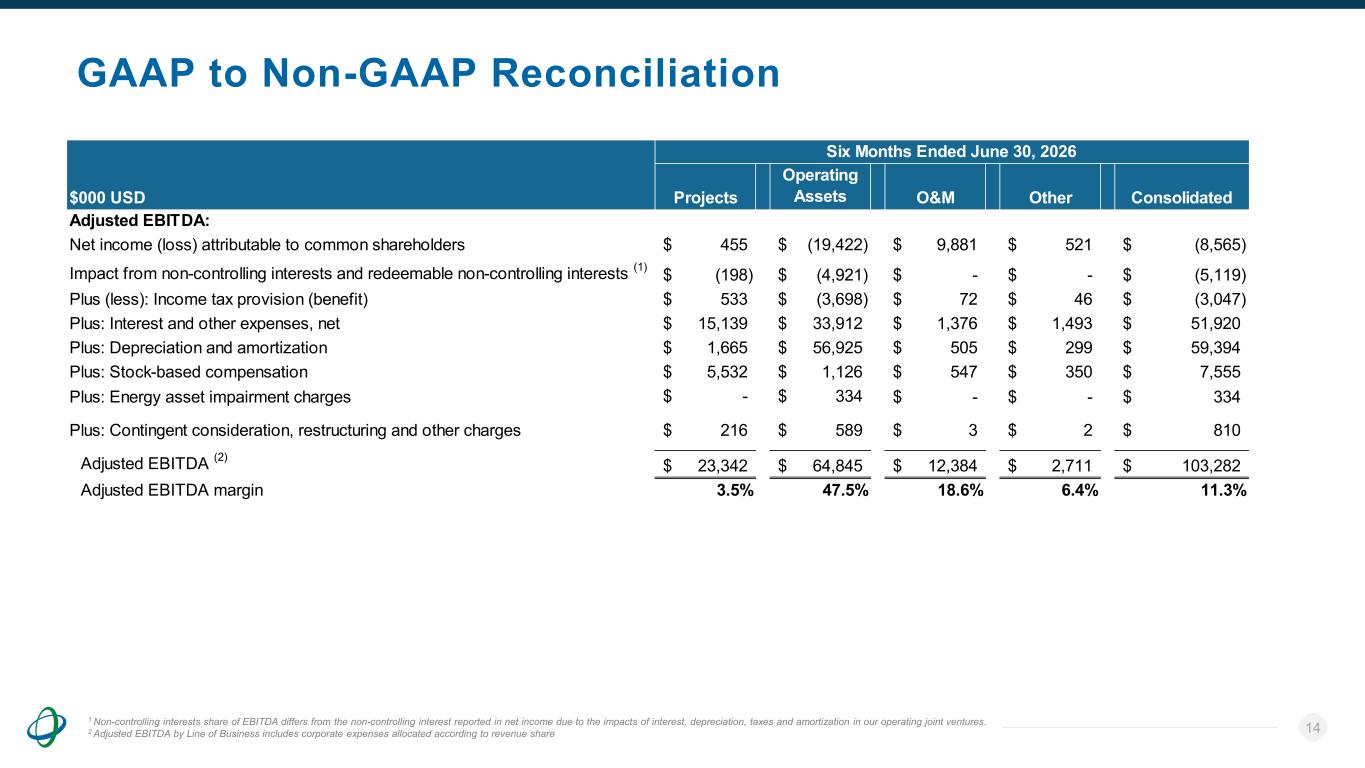
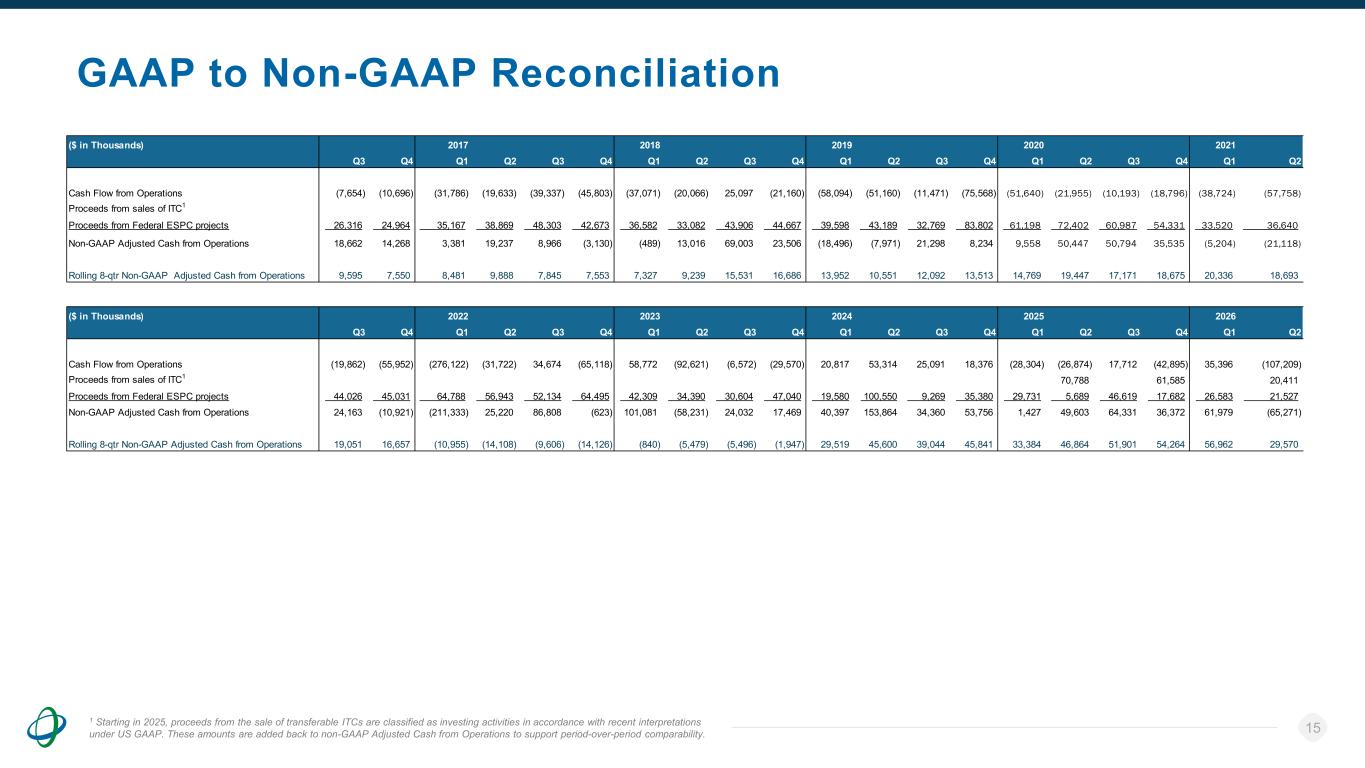
Thank you, Nicole, and good afternoon, everyone. Q2 was a strong quarter across the board. We delivered revenue of $515 million and made meaningful progress on the priorities that matter most, executing well, expanding our growth visibility through record awards, and strengthening our capital position to support the opportunities ahead q2 demonstrated the strength of our current operating model and the increasing visibility we are building as we work to execute the next phase of our growth strategy our total revenues grew by nine percent while project revenue increased six percent to 381 million dollars this reflects solid execution across our core project business with strength in federal and north america and continued strong performance from our European JV. This was not just a strong quarter financially. It was also an outstanding business development quarter. As George highlighted, awarded project backlog increased 65% to a record level of $4.4 billion, increasing our total project backlog by 32% to $6.7 billion. As always, the timing and extent of conversion of our backlog will depend on commercial permitting procurement financing and execution milestones this backlog provides tremendous long-term visibility as we expect to convert over the next three to four years q2 energy asset revenue was a clear highlight increasing 21 to 76 million dollars as we continue to expand the operating portfolio during the quarter we placed an additional 32 megawatts into operation our operating energy asset base now stands at 822 megawatts with another 513 megawatts in development or construction these figures reflect amoresco's 70 ownership interest in the neogenics jv o&m also had a very strong quarter with revenue up 29 this remains an important part of the model for us because it builds naturally from successful project execution and creates long-term recurring revenue. We continue to see solid growth in our third-party O&M business, which expands the opportunity set beyond just Amoresco-executed projects. We now provide service for over 2.5 gigawatts of third-party solar and battery storage. With long-term O&M backlog now exceeding $1.5 billion, this business continues to provide strong visibility, recurring revenue, and durability across cycles. Gross margin was 17.7%, a meaningful improvement both sequentially and year-over-year, reflecting a favorable business mix and strong execution. Net income attributable to common shareholders was $9.7 million, or $0.18 per diluted share, while non-GAAP EPS was $0.20. cents. Adjusted EBITDA increased 12% to $62.8 million, outpacing revenue growth and reflecting strong operating execution, improved business mix, and the continued expansion of our higher margin recurring businesses. EPS reflected higher depreciation and interest expense associated with the continued growth in our energy asset portfolio, along with a lower tax benefit and the non-controlling interest impact from the Neogenics transaction. Turning to our balance sheet, unrestricted cash increased to $138 million with total corporate debt of $385 million. Our corporate leverage was 3.2 times, comfortably below our 3.5 times covenant. We also strengthened our capital position in Q2, securing $471 million of new financing commitments, including the $400 million dollars related to the Neogenics transaction. That capital gives us added flexibility to fund growth, support our working capital needs, and continue scaling the energy assets portfolio in a disciplined way. Adjusted cash from operations was impacted in Q2 by the timing of project execution, billings, and collections. The strong revenue quarter included significant work performed ahead of contractual billing milestones, resulting in more cash being temporarily absorbed in working capital. Cash conversion remains a key priority for the second half. Given our strong first-half performance, the visibility provided by our backlog, and the financing progress achieved in Q2, we remain confident in our 2026 outlook. As a result, we are reaffirming our full-year guidance across all metrics and increasing our non-GAAP EPS guidance. We are increasing our non-GAAP EPS guidance range to be $1.15 to $1.35 as we now expect a tax benefit rate in the range of 25% to 40%. The additional expected tax benefit is supported by our planned transition to a new accounting policy for transferable tax credits in the second half of the year. This methodology better aligns earnings recognition with the period in which the investment tax credits are generated rather than allocating the benefit over the life of the related assets. Prior period results will be recast to enhance comparability once we make this change. Looking ahead, we expect the second half to follow our normal seasonal cadence with activity weighted somewhat more towards Q4, supported by continued project execution, backlog conversion, and disciplined cost management. Now I'd like to turn the call back to George for closing comments. Thank you, Mark.
This is a transformative time for Ameresco as we continue to execute our growth strategy, positioning ourselves in some of the fastest-growing and most attractive energy infrastructure markets. Our twin market pillars of power infrastructure and built-in and public infrastructure not only continue to drive our growth, but also provide greater diversification of the company's customers and solutions. And our decades of experience delivering reliable on-site power solutions uniquely positioned us to capitalize on the significant opportunities ahead. We look forward to connecting with many of you at upcoming meetings and conferences. In closing, I want to once again thank our employees, customers, and staff holders for their continued support and confidence in MRSCO. Operator, we would like to open the call to questions now.
Operator
Once again, to ask a question, simply press star 1 on your telephone keypad. As a reminder, we do ask that you limit questions to one and one follow-up, then return to the queue if you have further questions. Our first question is from the line of George Generegas with Canaccord Genuity. Please go ahead.
Hi, everyone. Thank you for taking my questions, and congratulations on the data center wins. Thank you. But regarding those wins, how are project delivery commitments structured from a risk-sharing perspective? Like specifically, you know, what's the financial exposure or liquidated, liquidated, liquidated, liquidated, excuse me, does Amoresco bear of completion timeline slip, you know, due to equipment supply chain bottlenecks or deconation queues or local permitting delays?
So that's a great question, George. And we won't get into any project specifics because all of that, as you can imagine, is very sensitive to our customers and to the agreements that we're in. But be assured, AMARESCO and all of our projects would be very mindful and diligent about what commitments we're being signed up to, or that we're signing up to.
Thank you. And maybe a question for Mike. Any update on what's happening with Neogenics, project updates, et cetera?
My question is not here, but, you know, since we did the partially sale or the partnership with HACI, the relationship is going very, very, very good. So the development opportunities are increasing and we're actually seeing more opportunities now, not only organic, but maybe some project acquisitions that are coming to us. So the relationship is very, very good, and it gives us a lot of flexibility, great capital contribution into the company, and, of course, we can use the capital to grow not only that unit, but as well as the other lines of our business.
I appreciate it. Thank you.
Operator
Thanks, Mark. Your next question comes from the line of Stephen Gingaro with Stiefel. Please go ahead.
Thanks. Good afternoon, everybody. Hi, Steve. So I think maybe following up on George's question a little bit, when you think about the data center awards and, you know, what it means for backlog, is sort of the cadence of backlog conversion to revenue, How should we think about that with awards of this size, and is it any different than kind of what we've become accustomed to?
No, it's a great question. It's not different than the other projects that we have in the backlog, especially the federal government projects. You will say that, A, by putting these projects into the award, we have done a great, great diligence to make sure they meet the criteria that we put a particular project into the award category, and they've been some kind of a customer's RFP, so there's some kind of exclusivity agreement between us and that base, and they have achieved certain milestones in their development process. So that's, and then if you look at it, how we move from the award to the contracts, in the data centers we've probably seen between six to 24 months. These awards will move to contract it. And then, of course, once they move to contracted, you're talking to after three years, we'll actually implement the implementation schedule. But the awards are solid, and sooner or later, the time schedule, they will move into the contracted category, then, of course, in implementation.
Great. Thank you. And just as a quick follow-up to that is, if I assume the margin profile is similar to a legacy activity, is that a fair place to start?
Excellent questions. And the margin of this particular project is basically what we get for the EPC project for the federal government, which is in the high teens. Okay, great. Thank you.
Operator
Your next question is from Eric Stein with Craig Hallam. Please go ahead.
Everyone, thanks for taking the questions. Hey, so obviously a big highlight on the awards, the $1.2 billion, but it sounds like pretty optimistic in terms of the pipeline. So, you know, wondering if, you know, maybe not specifics, but just talk in more detail of the size of that pipeline versus the awards that you have now pulled in, that 1.2. And, you know, if there's a way to think about where those are in their various life cycle in terms of getting to the point where you could think about pulling those into awarded background.
Look, and Nicole basically said it that what we put on the award category right now is part of what the ultimate size of those particular awards will be. So we'll see if that will probably increase. I wouldn't be surprised that we would get up to $2 billion associated with these particular awards that we have right now. Do you want to add any more?
And we're continuing. I mean, we're in this business hourly, daily, and continuing to vet opportunities every day and being very strategic and diligent about how we are partnering with new opportunities. So, we've looked at hopefully adding additional projects as we continue to develop in this market.
And a little bit more clarity, as Nicole pointed out in her script, there are five opportunities in excluding the LEMO, which is an asset base. And we're looking at at least that many more.
Got it. And then maybe for my follow-up, just obviously Neogenics, a very successful setup and structure there. And maybe not exact, but as you think about these data center opportunities and that they are very sizable, Is there some structure, you know, kind of more along those lines that could help maybe speed up or, you know, just increase the amount that you can handle, you know, from a financing perspective?
You're right on track. We were very successful with Neogenics, and we learned a lot, too, in the process of doing them. And the data center opportunity is very, very large. and it will require a substantial amount of capital and we will be looking into the opportunity and if the multiples are right, the right part time comes along and so on, we will do it. There is nothing specific to announce at this point in time, but it could be a great, great opportunity for us to win another vehicle like Clemogenics.
Operator
Thank you. Your next question is from the line of Noah K. with Oppenheimer and Company. Please go ahead.
Noah K.
Analyst — Oppenheimer & Company Inc.
Hi, folks. Good afternoon. George, and all this transformational, and I just need to take a step back for a bit and recognize that I believe this quarterly award is almost double any of your previous quarters in your history. It's remarkable. So congratulations. Thank you. And I want to kind of ask a high-level question, which is obviously behind the meter, you know, in time, the power becoming a key consideration for a lot of developers. I can see that's really the solution that you're architecting here. But can you just take us through how you won these awards, who the customers are? Obviously, we're not expecting you to name them, but are they hypers, are they neos, are they government? you know, and with the understanding that as you build these critical relationships, there's opportunity for a lot of future.
Nicole worked very hard in order to get people, so I will let Nicole.
No, I mean, thanks. And as we shared in the previous earnings calls, I mean, our reputation with the federal government has served as well as a great entry point into this market because we've been basically serving as the utility in the federal government space for decades now. And now getting in there and we're working with, you know, not only data center operators, but also hyperscalers, neoclouds, and also just getting in through commercial real estate developers that had played in this market before, just now having the added power side to this, which was different than what maybe they had done before. So we like what our delivery model is and that we are bringing integrated energy solutions to it. So we're integrating different types of assets together and being able to have the ability to microgrid these. And that's been a unique offering for us. So that's a little bit more into what we're doing. And I just think that the opportunity with our experience and our flexibility in what we're offering has served us well with the different players in this ecosystem.
Noah K.
Analyst — Oppenheimer & Company Inc.
Thanks, Nicole. And so just to confirm that I heard you correctly, so that the customers for these data center projects, they now include hypers and neoclouds, is that correct?
They are part of the deals, yes.
Noah K.
Analyst — Oppenheimer & Company Inc.
All right. And just last follow-up, you know, I guess maybe help us understand where you're at in the process of securing supply for some of those long lead items. And have you already placed orders for the recips and some of the key equipment?
We have not been placing orders yet for these projects because they're still in our awarded pipeline, and that's not been the model that we've chosen to do for this market, but we are working in finalizing the equipment selection with our partners, and that's just where we are. So they're at different phases in that development, but far enough along that we moved them into the awarded pipeline, and then we'll continue to develop these to convert them into the contracts and then placing equipment.
Noah K.
Analyst — Oppenheimer & Company Inc.
Yeah, that timing makes a lot of sense. Thanks, Noah.
Operator
Your next question is from Ryan Spinks with B. Riley Securities. Please go ahead.
Noah K.
Analyst — Oppenheimer & Company Inc.
Hey, guys. Thanks for taking my questions, and congratulations on progress here.
George, you touched on it a little earlier, but could you talk more about the potential revenue cadence for Amaresco for a project that comes online in, you know, 2028, 29, or 2030? yeah let's say a typical project even a federal government project uh once we get the award some selection by the federal government then we do the detail engineering and orates and so on and negotiate the scope with the government it usually takes about 24 months i mean eight 12 to 24 months to get the award to uh contracts and once it gets contract contracted Some of the projects, they have one-year timeline, but if it's a turbine or a reciprocation engine power plant, very complex, it might take up to two years. And that's, so it's, it moves along, if I add anything to that.
No, I think you've got it. I mean, that's, it really just depends on which project it is and what we're doing.
Yeah, and on the data centers, where I did say they indicated six months to 24 four months to move the award because we know what the development is on some of them and the milestones that they have achieved. And the hyperscalers and the developers, they move a little bit faster than the federal government. Plus, they need this stuff. You know, there is a sense of urgency that they get this power up as soon as possible.
Noah K.
Analyst — Oppenheimer & Company Inc.
I appreciate that. And then somewhat related, can you just remind us where the Cyrus One project fits in you know with regards to awarded or contracted backlog for for you guys and is there anything to share on how that's progressing uh at the naval air station sure lemore is still in our awarded backlog and it's like any of the projects we've been talking about it has you know the development timeline of 12 to 24 months so we're just moving along in that development right now great i appreciate it guys i'll turn it back okay and once again as a reminder press star one to ask a question.
Operator
Again, that is star one. Your next question comes from Joseph Usia with Guggenheim Partners. Please go ahead.
Thank you, and congratulations, everyone, on such a strong result. I have two related questions. First, and these came up once already, but how should we think about this six-project pipeline? Is most of this ultimately just going to show up as gain on sale, or could some of this end up being at least partially capitalized to your own balance sheet? And then the second question, Nicole, this is kind of a geeky one for you. Are you seeing on the storage side, are most of the deployments you're seeing kind of short duration power quality types of deployments, or are you seeing longer kind of multi-hour deployments focused on more resilience? Thank you.
Joe, this is Josh. I'll answer your first question. The data center opportunities are expected to be our normal EPC revenue recognition, percent complete in accordance with our spend. It's not an asset sale or there's no different balance sheet treatment than any of our other project business. Nicole, on the iteration and whatnot?
This will be straight EPC revenue. Correct.
Yeah, and that's a great question. Not too geeky on the other one, because it's an important one. And the battery storage in the space for these will probably, I mean, it really depends on the site, but for both. One is for the resiliency for when you're doing maintenance or upsets. The other side of that is really just to stabilize the load shift from the varying, especially with the AI load profile. And so the combination.
So, can you just, with that in mind, as a follow-up, what's the typical duration that you're seeing on storage? Is it an hour, two hours, four hours? Two hours. Two hours. Two hours. Got it. Got it. Thank you very much, Nicole.
Operator
And your next question comes from the line of Craig Shear with Thuy Brothers. Please go ahead.
Good afternoon. So congratulations on the expanding awarded pipeline. In response to Eric's question, the comment was made, George, that you had maybe another five potential counterparties projects on top of the five that are already in the awarded backlog. Are all of these roughly about the same size in terms of, you know, revenue and the size of the projects on average, or are you seeing them increase over time? How would you look at the pipeline outside of the awarded projects so far? I let Nicole answer them.
I think they're all, I mean, we're seeing similar. I mean, some are, depending on which ones we're looking at, but some are like smaller phases. Others are phased out campuses and we're maybe playing a part of one of those phases or we may be playing all of the phases. So it really depends on the project. But I'd say that there would all be similar technologies that we mentioned before, a combination of reciprocating engines, fuel cells for some of the earlier deployment ones just for speed to power. and then some of the longer out there phases using combined cycle gas turbines and just simple cycle gas turbines.
One other thing that I want to add, so it gives you a little bit better perspective, guys, the opportunity with these data centers. These five ones that we are talking about does not include the federal government basis that they are going out and we have the enhanced list uses. And we have five of them. And here on that five, though, it's Limor, which announced before, and the other one is Pearl Harbor. So there's considerable potential. And the fact is, because people are beginning to realize that in order for them to be successful and win the AI race, they have to develop their own power plants, own site generation. And that's why we came into the picture, and our track record with the federal government building these resiliency power plants with microgrids and so on, it's helping us a lot, and we're getting great traction in the marketplace.
Gotcha. And last clarification, I believe both Stephen and Ryan asked about the timeline of awards. And I think, George, you mentioned the time, you know, maybe to lock into whether it's six, 24-plus months to firm contracts. And then you said it could take three years for bulky projects to be completed thereafter.
After three years, let's say we have to build 500 megawatts, one gigawatt power plan on a particular data center that might have three or four phases. And that's what's happening. Some of them, and that's why we said we think that the ones that we have, they will become larger because they have several phases. So phase one might take six months to a year, phase two another year or so, and so on. That's why I gave the perspective up to three years. And the other one, I think it's important to give you a little bit more color, guys. We said six months to 24 months. So most likely we will not see a big impact coming from the data centers until 28 and beyond, between 28 to 30. You might see a small impact next year, but the major impact will be 28 to 30. And why we feel so excited, though, about it, because the awarded projects give you the early indication where we're going to be two to three years down the road.
Yeah, gotcha. And when we're in the 2028 and beyond and you've got these mega projects that are lasting two to three years, several phases, is it reasonable to think that they're kind of evenly distributed in terms of revenue and margin across the years that they're live?
Yeah, it's probably a little too soon, especially – I mean, the shape of any construction project tends to be a little bit front-end loaded as we're placing equipment orders and doing some of the heavy mobilization. But since we now have six of these projects going on, there could be – you sort of get maybe a potential smoothing, but it's a little early for that to give you an exact rule of thumb of what the revenue would look like.
Noah K.
Analyst — Oppenheimer & Company Inc.
All right. Fair enough.
Thank you very much. I was just going to add, you're also excited that after the construction with all of these, there's a significant operation and maintenance stream associated with it. So as Mark pointed out in our earnings script, that's one place that we've always been focused on building that recurring revenue, which these would certainly present that opportunity.
Operator
And our next question comes from Swetha Ritcha with Cantor Fitzgerald. Please go ahead.
Shweta
Analyst — Cantor Fitzgerald
Hi, Shweta here on behalf of Manish. Congrats to you, Nicole, and the entire team on the new auto win. A couple of more follow-ups on BP wins. I guess you'll be getting a few of those. First, are there three new wins affiliated to the two that were already booked? Nicole, I know you also walked us through the process of winning these bids earlier, but to the extent possible, can you help us qualify if these underlying customers are hyperscalers, co-location operators, or non-hyperscale users. And I think one more question on DC, which is kind of very topical and it will also really help us understand is how you're thinking about risk when it comes to project delays, especially when you think about local data center bands, zoning restrictions, or like any, what are you guys thinking about that? I think that'd be really helpful for us.
Sure. And those are good questions. And as I mentioned before, the customer types, I mean, with all of these projects, there are multiple customers in there. I mean, there's the landowner, there's the data center operator, and certainly the Indies tenants, but hyperscalers, Neocloud tenants as well. So we're working with a large set of those that are all playing in this market. As far as the risk, I would say, I mean, we've been working for federal government and for utilities for quite so many years. So similar risk for any time when you're taking on building and developing these large infrastructure projects, it's a similar risk type of profile. And what we're trying to do to mitigate some of the risk in development is making sure that we've been strategic about who we're partnering with up front and the work that they've done already, picking partners that have had local strong relations in that community, customers that have been in this market before, and certainly, you know, our strategy by working on federal government lands where it has a lot less of that outside community risk as well. So, those are all things that we've been doing, you know, and why we've been working on this for the past, for the past months almost to make sure that we're, have qualified Thank you.
Shweta
Analyst — Cantor Fitzgerald
That's certainly very helpful. And second, if I may, given the jobless pipeline, how should you think about guidance, as in what would it take for us to now raise the guidance from here?
Yeah, so for 2026, you know, what we have visibility to from the data centers, we've already baked in and obviously we've reaffirmed that so we're we're feeling pretty good about that we don't expect it to have too significant an impact but what we do feel comfortable with we've already baked into guidance for 2026. thank you guys that's awesome thanks and with no further questions in queue this does conclude today's conference call thank you very much for joining us today.
Operator
You may now disconnect.