Operator
Good morning. My name is Audra, and I will be your conference operator today. At this time, I would like to welcome everyone to the Ardent Health Partners fourth quarter 2024 earnings conference call. Today's conference is being recorded. All lines have been placed on mute to prevent any background noise. After the speaker's remarks, there will be a question and answer session. If you would like to ask a question during this time, simply press the star key followed by the number one on your telephone keypad. If you would like to withdraw your question, press star 1 again. At this time, I would like to turn the conference over to Dave Cyblo, Senior Vice President of Investor Relations.
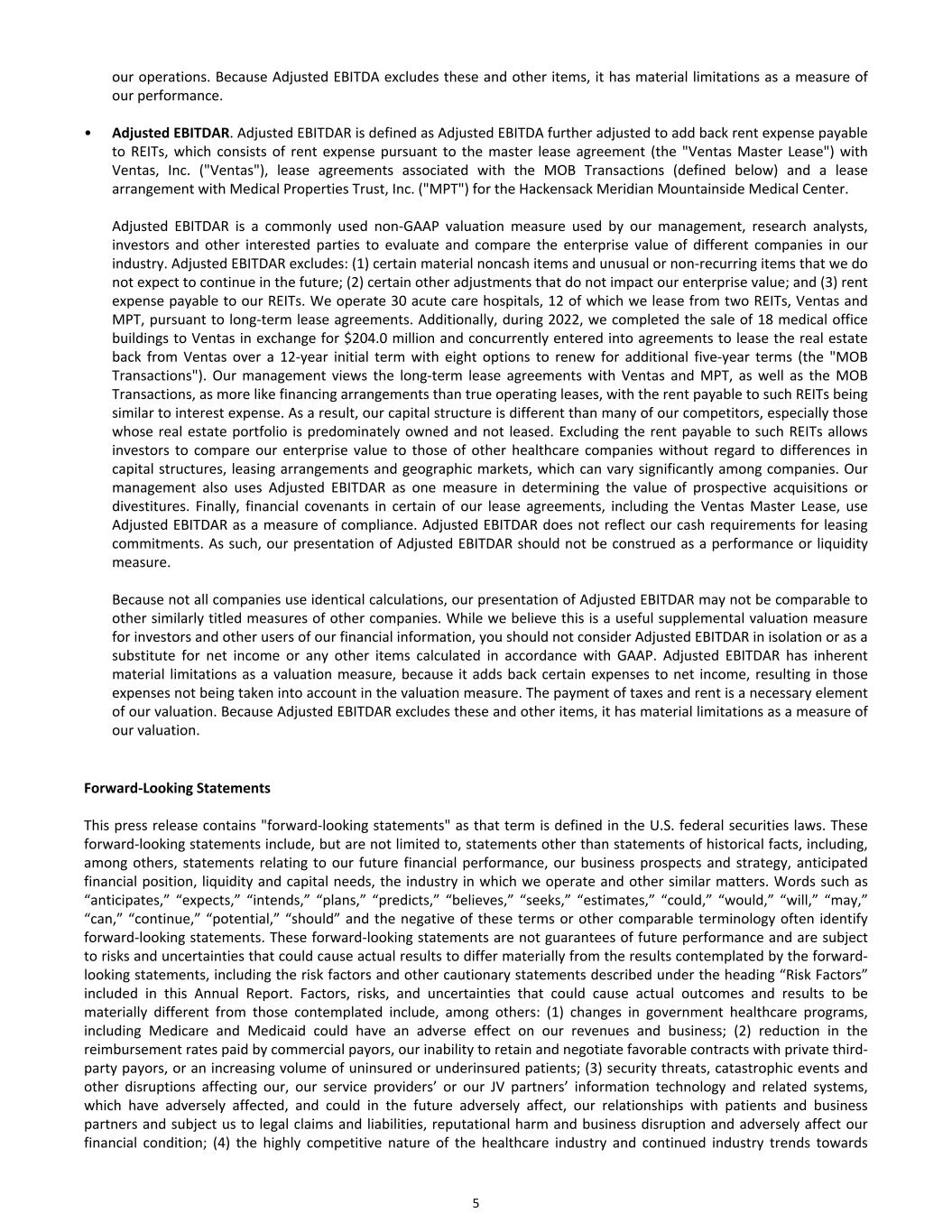
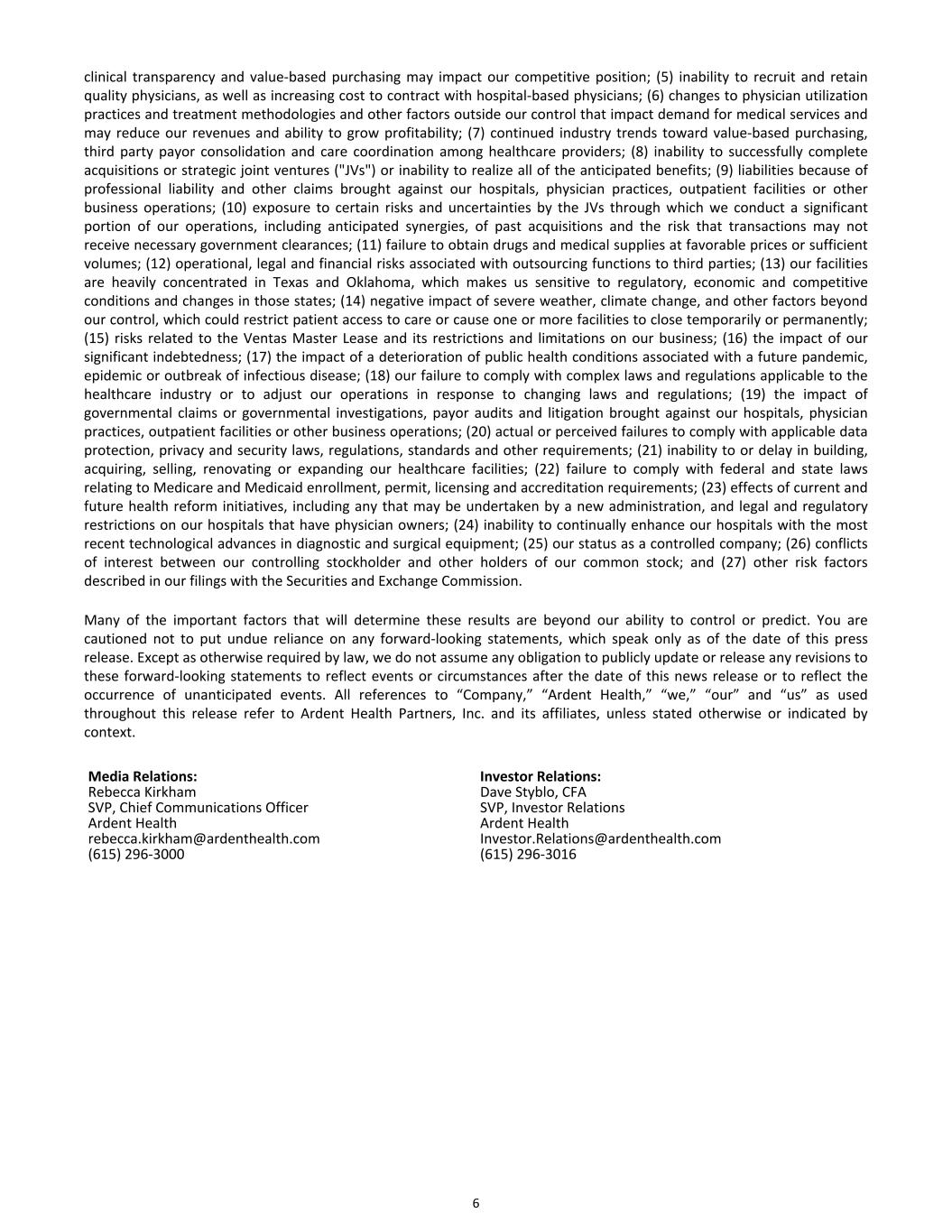
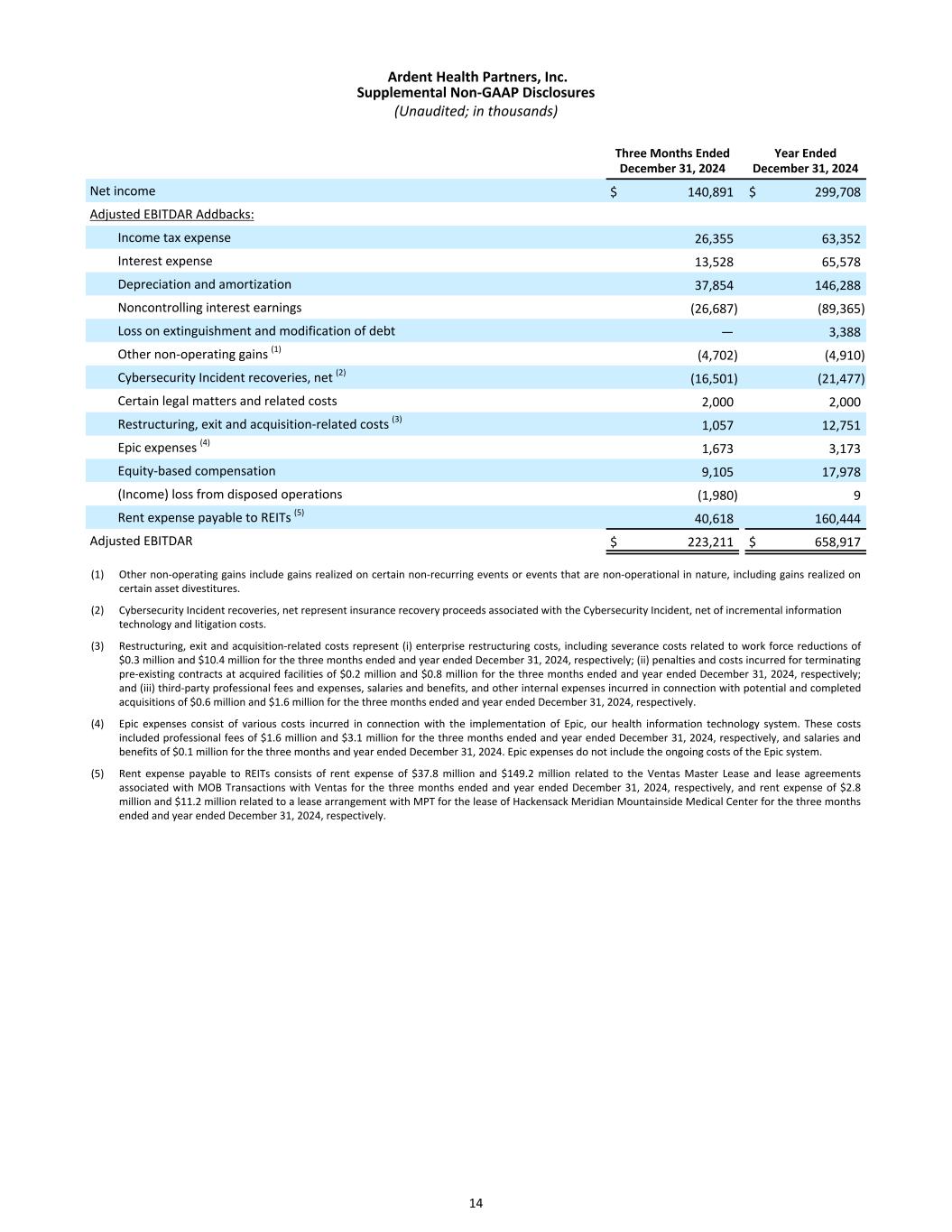
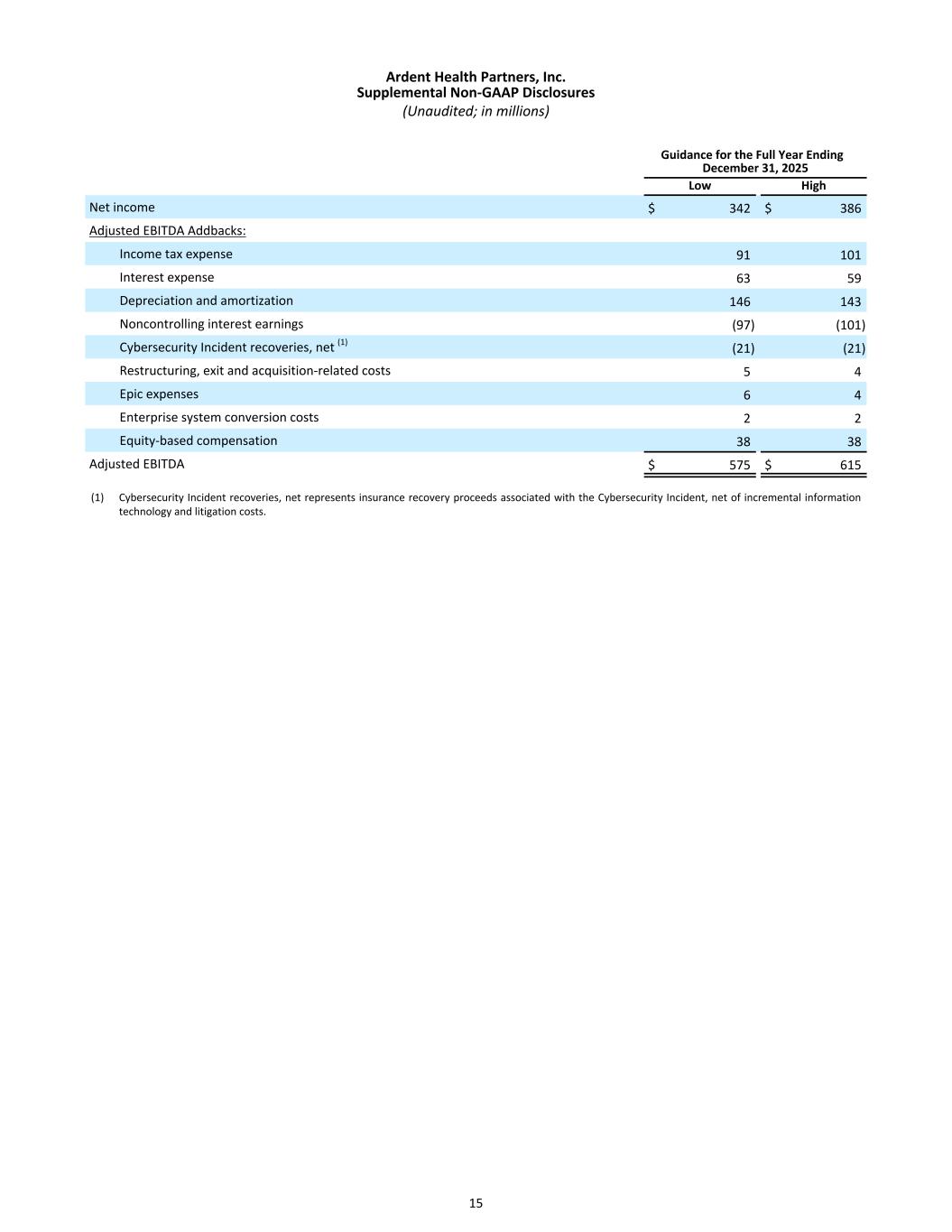
Thank you, Operator, and welcome to Ardent Health's fourth quarter 2024 results conference call. Joining me today is Ardent's President and Chief Executive Officer, Marty Bonick, and Chief Financial Officer, Alfred Lumsbane. Marty and Alfred will provide prepared remarks, and then we will open the line to questions. Before I turn the call over to Marty, I want to remind everyone that today's discussion contains forward-looking statements about future business and financial expectations. Actual results may differ significantly from those projected in today's forward-looking statements due to various risks and uncertainties, including the risks described in our periodic reports filed with the SEC. Except as required by law, we undertake no obligation to update our forward-looking statements. Further, this call will include the discussion of certain non-GAAP financial measures, including adjusted EBITDA and adjusted EBIT-DAR. Reconciliation of these measures to the closest GAAP financial measure is included in our quarterly earnings press release, which was issued yesterday evening after the market closed and is available at ardenthealth.com. With that, I'll turn the call over to Marty.
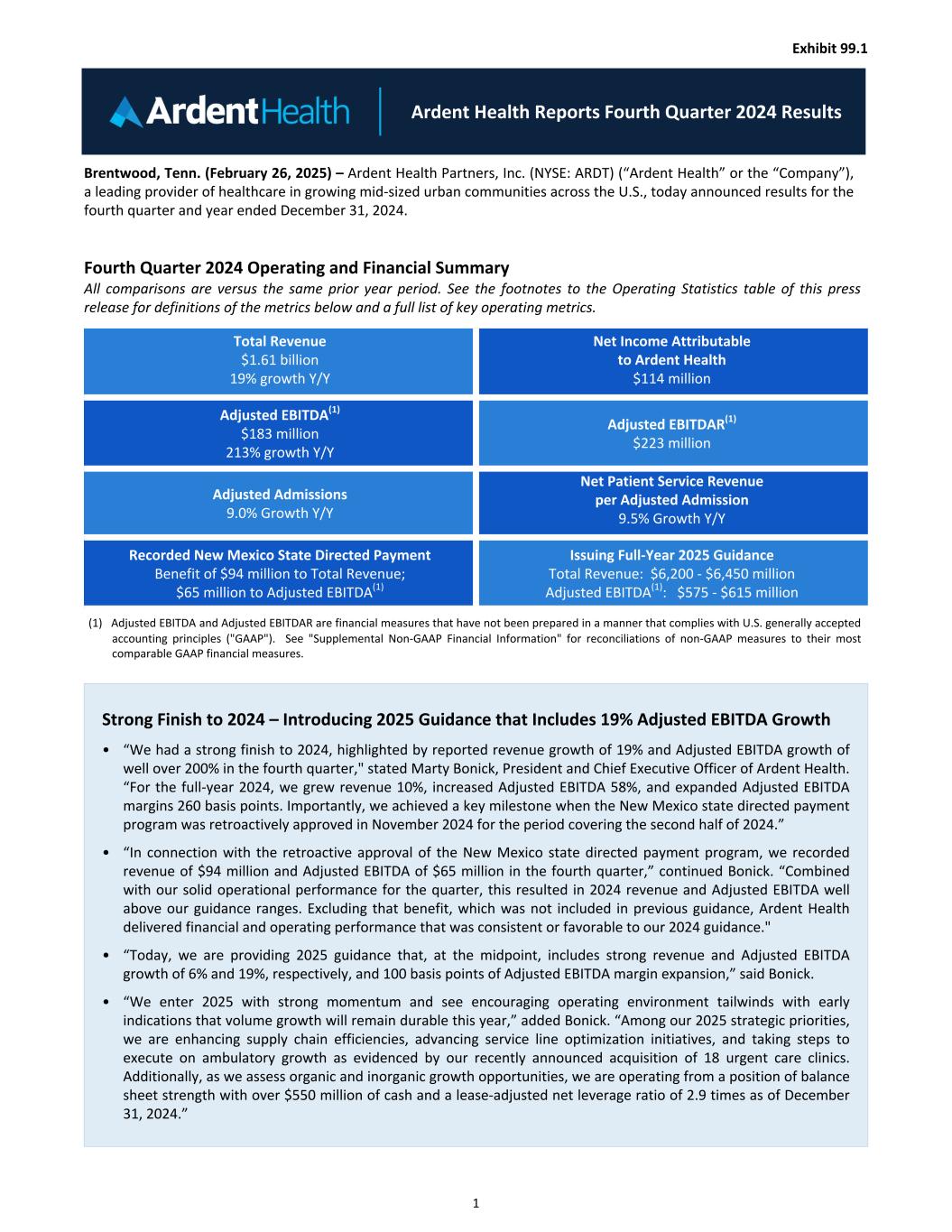
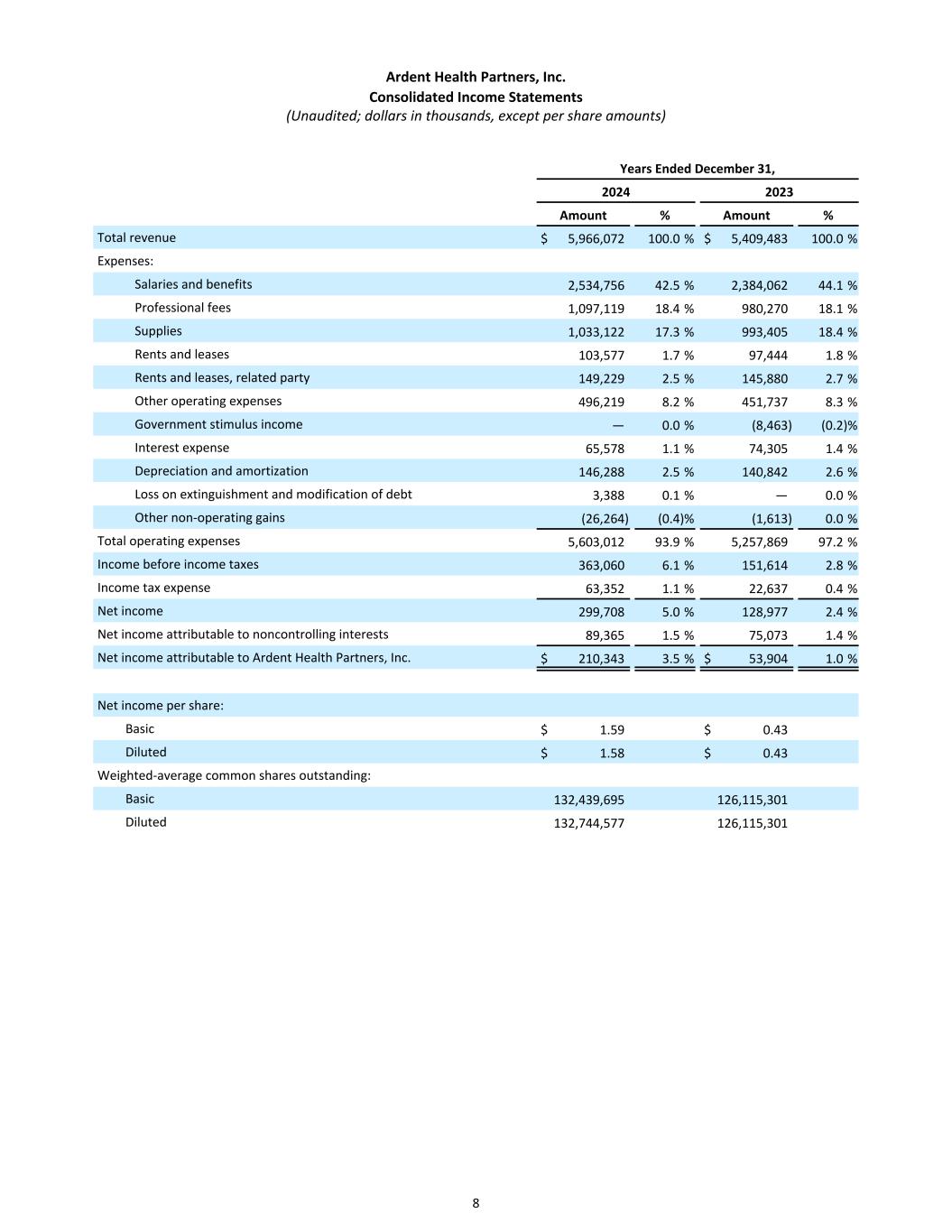
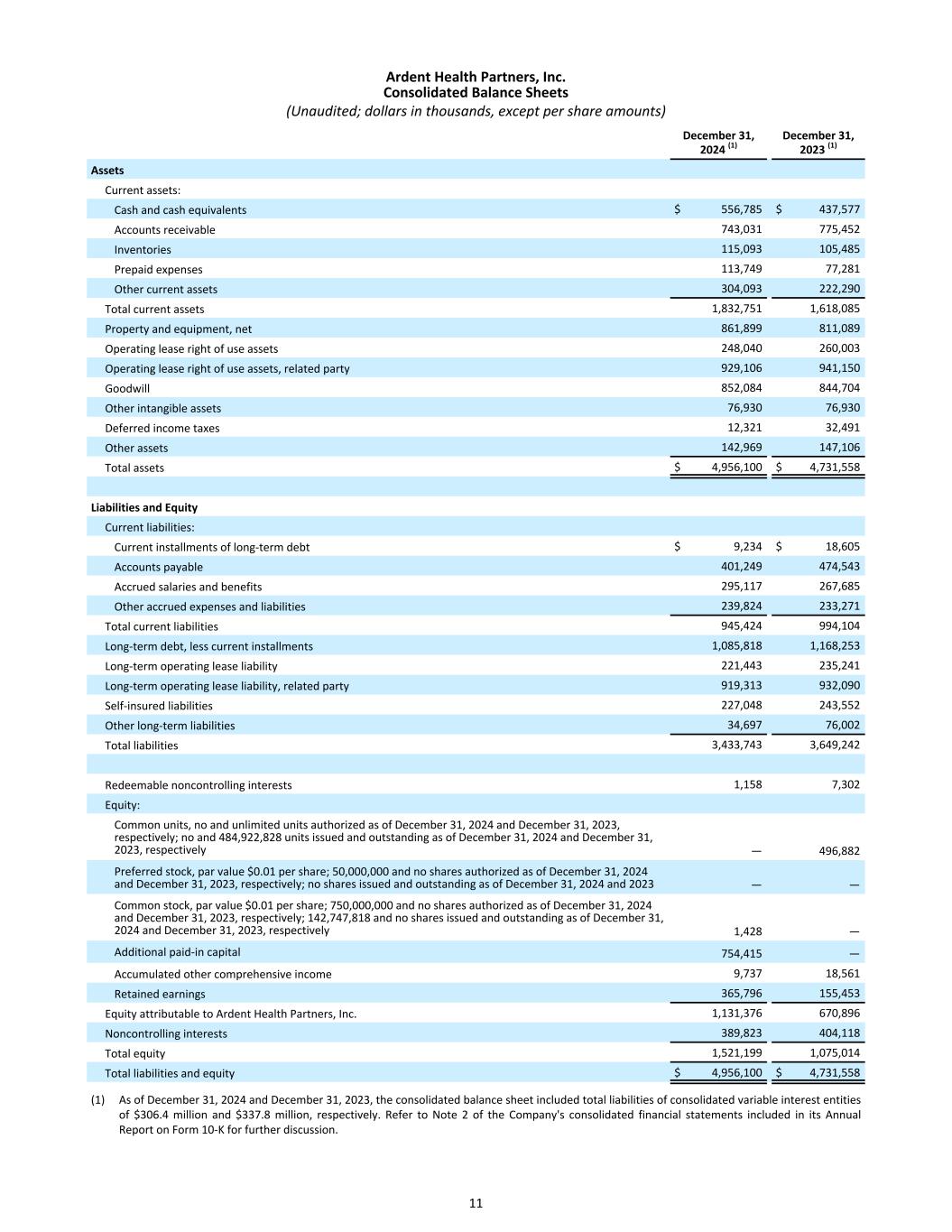
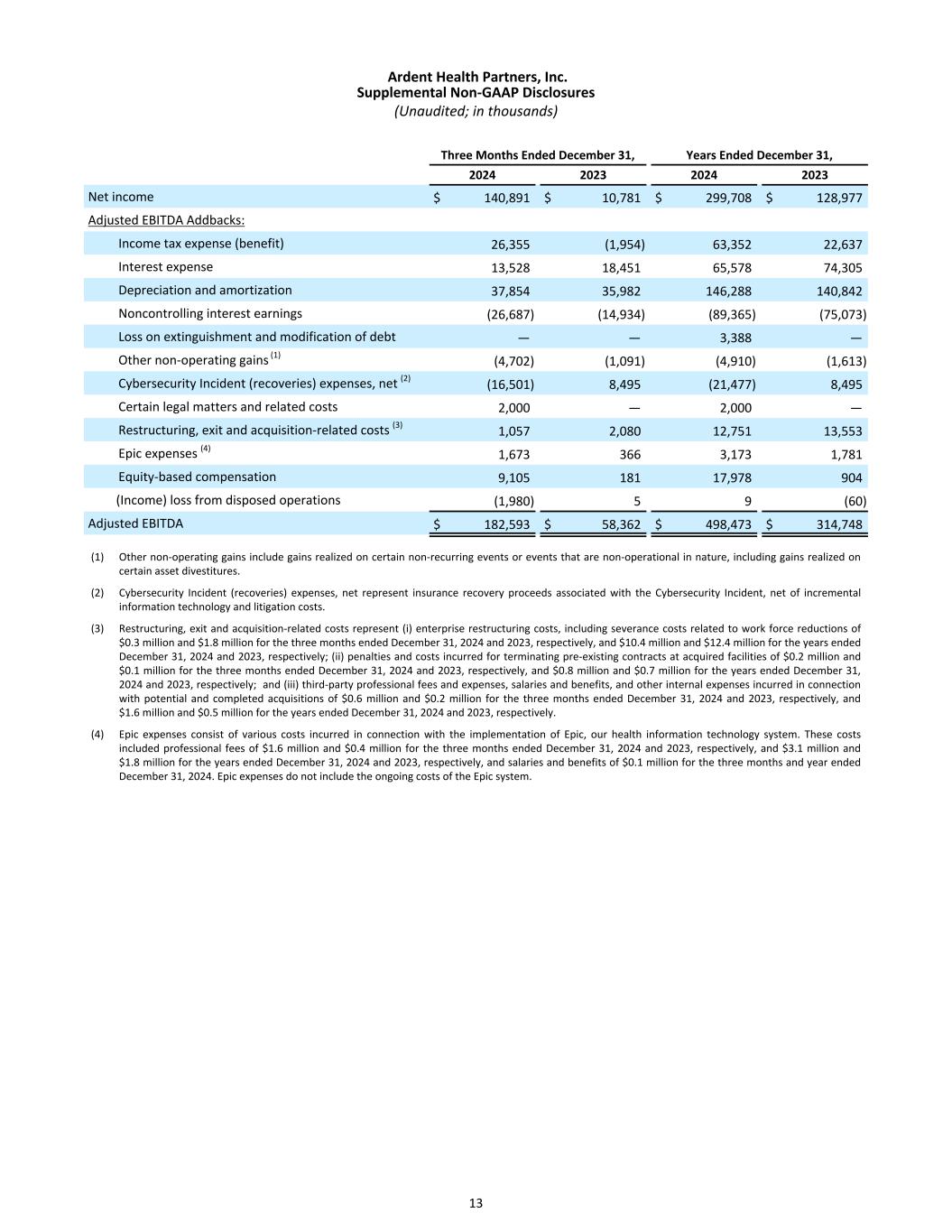
Thank you, Dave, and good morning. We appreciate everyone joining on the call and webcast. 2024 was a transformational year for Ardent as we demonstrated strong growth and agility in advancing our strategic objectives while executing upon a number of important milestones along the way. Our mission of caring for people resulted in Arden serving over 1.2 million unique individuals across our eight markets, adding services and facilities to make healthcare easier for patients to access and receive care. Last July, we also completed our IPO, strengthening our financial position to drive continued growth and innovation. Today, I'm excited to share several positive updates about the company and its performance. i will provide a comprehensive summary of our fourth quarter and full year financial results highlight key strategic updates and discuss our outlook for 2025. as we embark in a new year i want to emphasize that ardent remains steadfast in its commitment to delivering exceptional quality and service to our patients while ensuring sustainable long-term value for our shareholders our strategic framework of market share growth in both inpatient and outpatient services margin expansion, and disciplined capital deployment. Delivering against our financial goals and building a track record of performance is paramount to the Ardent management team. To that end, we had a very strong finish to 2024 and have several positive financial and operating items to discuss. To start at a high level, we reported robust fourth quarter results punctuated by year-over-year revenue growth of 19% and adjusted EBITDA growth of over 200%. For the full year 2024, we grew revenue 10%, increased adjusted EBITDA 58%, and expanded EBITDA margins 240 basis points to 12.5%. This marks a great year and is testament to the hard work the ARDEN team has put in to execute on our strategic priorities. During 2024, we made considerable progress on our service line optimization initiatives, which expanded capacity to engage in higher acuity procedures. We meaningfully enhanced supply chain efficiencies. We used AI to improve clinical performance with virtual nursing and advanced bedside monitoring technology, reducing mortality and improving length of stay, as well as operationally and optimizing operating room schedules to drive strategic surgical growth. And we advanced our ambulatory growth strategy, highlighted by the recent acquisition of NexCare Urgent Cares in Oklahoma and New Mexico. This brings a total of 27 new urgent care centers into the ARDENT network in the last year, which should lead to increased volumes over time. We are also pleased that CMS retroactively approved the New Mexico State Directed Payment Program in November for the period covering the second half of 2024. This approval was a key milestone for the state as it will greatly support the broader provider community's ability to serve Medicaid patients in New Mexico with access to high-quality care. And I'm proud of the work our team did in collaborating with and supporting the state to help bring the DPP program to fruition. In connection with the New Mexico DPP approval, we reported revenues of $94 million and EBITDA of $65 million in the fourth quarter of 2024 to reflect the retroactive financial impact for both the third and fourth quarters. This retroactive benefit was not in our 2024 guidance, and accordingly, the company significantly exceeded revenue and EBITDA guidance for 2024. When we exclude these amounts from the reported results, the company delivered financial and operating performance that was either consistent with or favorable to our 2024 guidance, which we raised in November in conjunction with the third quarter results. More specifically, excluding the impact of the New Mexico DPP program, 2024 revenue finished near the top end of guidance, while net patient service revenue per adjusted admission growth was above the top end of the guidance range. Meanwhile, adjusted admission growth and adjusted EBITDA were both modestly above the 2024 guidance midpoints. These are all signs of the underlying strength of our business, and the results demonstrate our ability to deliver on our financial projections. Arden's balance sheet also continues to strengthen. During the last quarter's earnings call, we indicated that a lease-adjusted net leverage ratio would approach three times at the year-end compared to the 3.5 times we reported in the third quarter. We delivered on that and finished the year at 2.9 times at December 31. We have over $550 million of cash on hand and available liquidity of $845 million. Collectively, this allows Arden to operate from a position of strength, particularly as we assess both inorganic and inorganic growth opportunities. On that front, we're pleased to announce that in early January, the acquisition of 18 urgent care clinics crossed New Mexico and Oklahoma from NexCare Urgent Care. This acquisition significantly expands Arden's ambulatory operations in both markets and complements our existing health service access points beyond the main urban area. Prior to the transaction, we had only one urgent care facility across Tulsa and Albuquerque. Post-acquisition, we will have meaningful share of the urgent care market in each of those geographies. These are attractive assets with adjusted EBITDA margins in the mid-teens. This acquisition fits squarely within our strategic growth initiatives, which includes the build-out of our ambulatory footprint, either via M&A or de novo development, around our existing hospitals. Patients are increasingly using urgent care as an access point when there is a backlog at their local primary care office or when they do not have primary care providers. It is becoming our first interaction with many patients, thereby bringing new patients into our system. Importantly, we see strategic value in owning urgent care facilities in two ways. First, we reap the economic benefit of owning these higher margin assets on a standalone basis. And second, it creates a downstream benefit and incrementally increases volumes at our existing hospitals and clinics. As a proof point to the downstream volume benefit, we saw that 45% of the 2024 patient visits in the six urgent care centers we acquired in East Texas were new to the Arden system. Furthermore, of those new visits, approximately 15% resulted in additional care within 30 days. Going forward, we are looking to replicate this type of success as we integrate the NextCare assets. The broader M&A pipeline remains active, and we will continue to evaluate outpatient as well as inpatient opportunities. We will remain financially disciplined, both in terms of purchase price and our overall leverage. And we will seek assets where we can deliver synergies and demonstrate accretion over a two- to three-year horizon. We will also explore joint venture opportunities as part of our inpatient M&A growth strategy, as that model has provided ardent differentiated value. As we turn to 2025, we are optimistic and expect to deliver another strong year of financial performance. As you saw in yesterday's press release, we issued 2025 financial guidance, including revenues of $6.2 billion to $6.45 billion and adjusted EBITDA of $575 million to $615 million. At the guidance midpoints, that represents 2025 revenue growth of 6% and adjusted EBITDA growth of 19%. Embedded in our 2025 outlook is an adjusted EBITDA midpoint of 13.6%, which implies 110 basis points of margin expansion, driven largely by the expected annualization of new state DPP programs that begin in 2024. We are targeting an additional 100 to 200 basis points of margin improvement over the next three to four years. That would put us solidly in our target mid-teens adjusted EBITDA margin range. As we begin 2025, we are encouraged by early volume trends. All signs continue to point to demand remaining durable, although we continue to face some industry headwinds, including ongoing subsidy pressure for hospital-based physician services and elevated payer denials. However, more than offsetting these headwinds are the tailwinds of underlying volume growth, above historical average commercial rate increases, incremental DPP contributions, and core operating initiatives that will drive margin expansion and set Arden up for strong EBITDA growth of 19% at our guidance midpoint. We certainly recognize there continues to be a level of legislative uncertainty for the broader healthcare industry, including providers. As everyone knows, a number of potential changes are being discussed in the headlines, but we continue to believe that changes will ultimately be incremental in nature, and we believe we are relatively insulated against many of these risks on several fronts. First, our 2024 exchange payer base contributed only 3.6% of total revenues in 2024, and we believe only a fraction of this volume would be at risk if the enhanced subsidies were not extended in 2026. Second, broadly speaking, we would likely have more limited exposure to site neutrality proposals given our relatively smaller ambulatory footprint. And third, we naturally don't have exposure to 340B drug pricing if there were changes on that front. We, of course, continue to monitor potential regulatory changes and advocate with our elected officials to continue to support policies that protect access to coverage and care. In the meantime, our team remains dedicated to executing day in and day out on our strategic plans and financial objectives. To augment that mission, we are currently recruiting for and plan to hire a chief operating officer later in this year. This addition to our executive management team will further complement our existing executive team and help drive our operational excellence initiatives and deliver on our commitments, including our M&A initiatives. We believe that augmenting the executive team with another key hire will support our efforts to help Arden maximize its potential. With that, I will now hand the call over to Alfred.
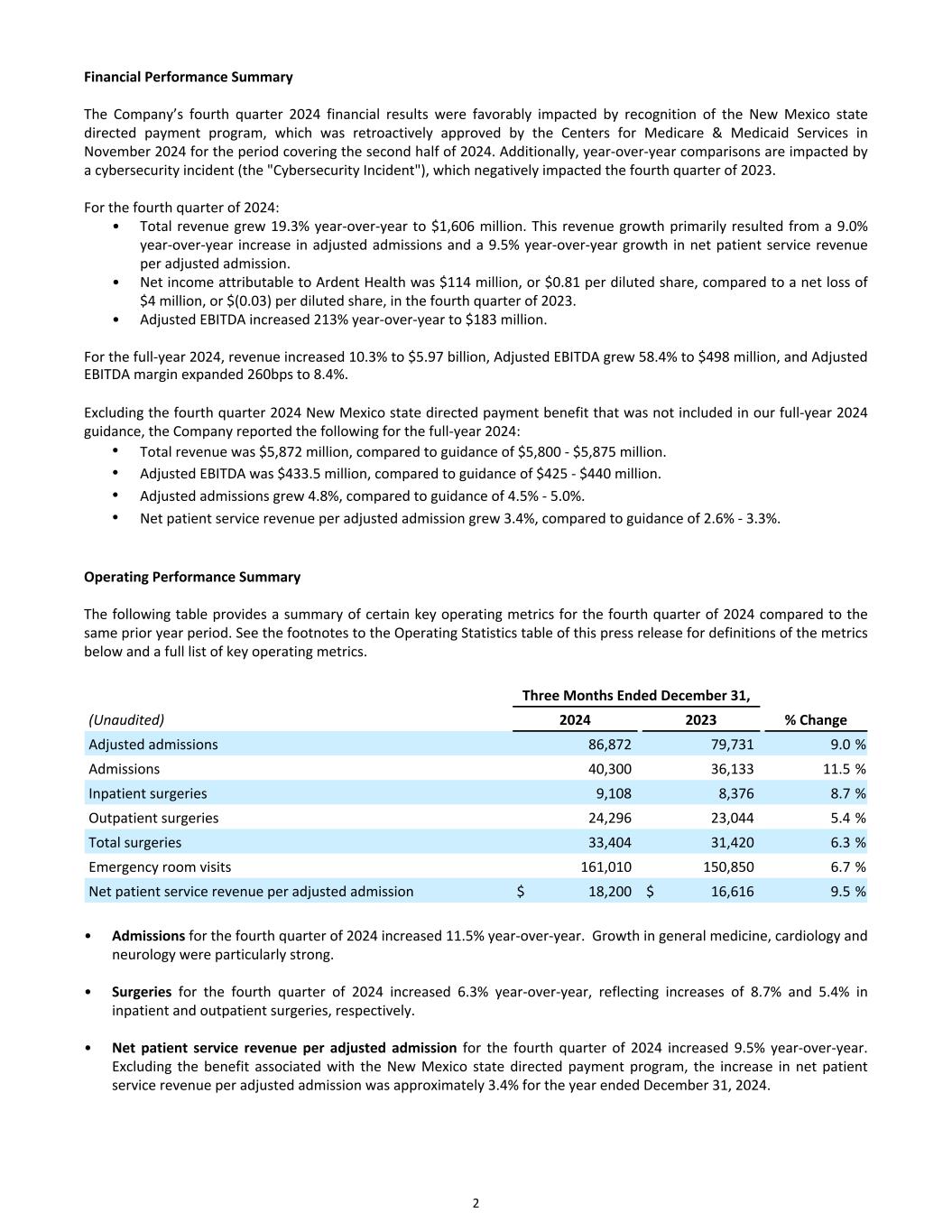
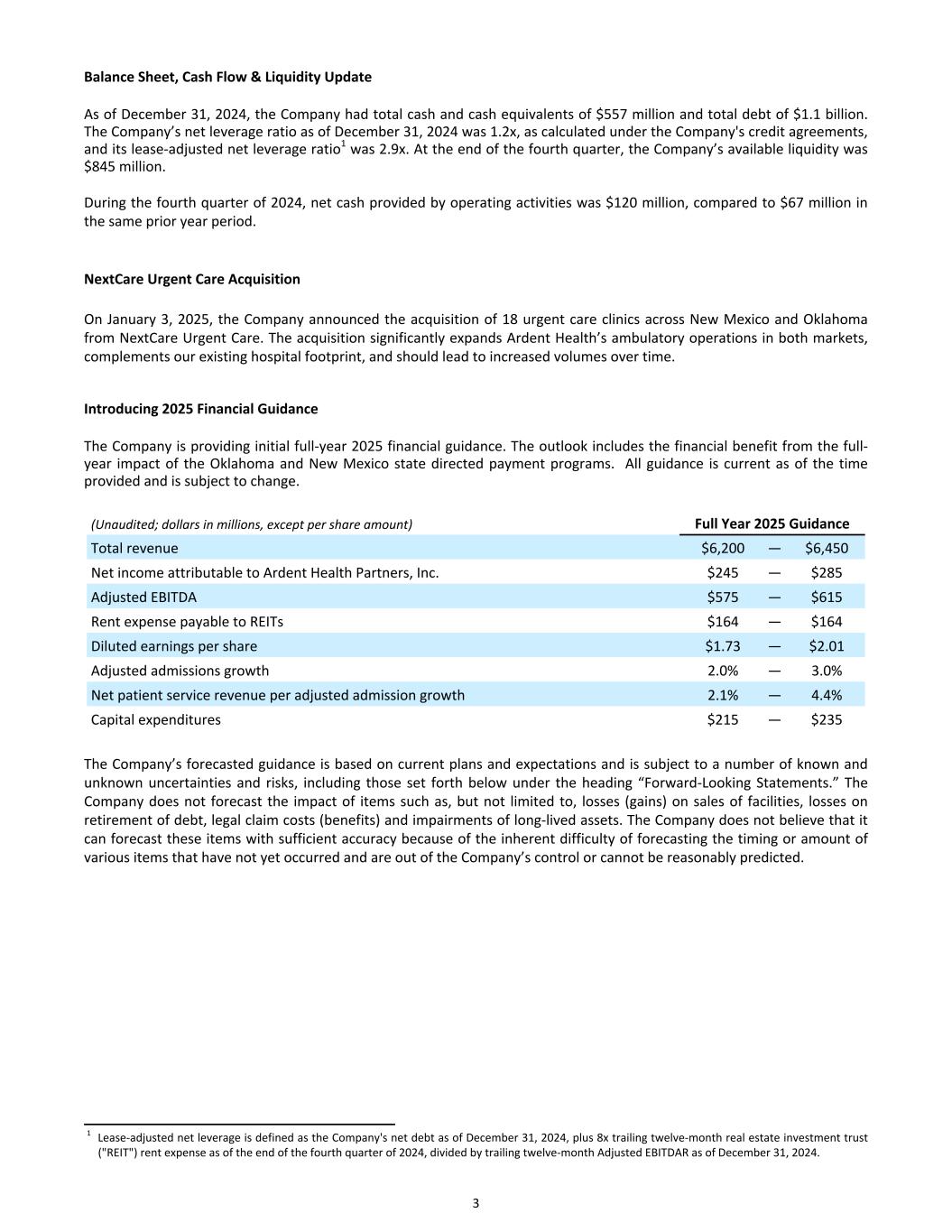
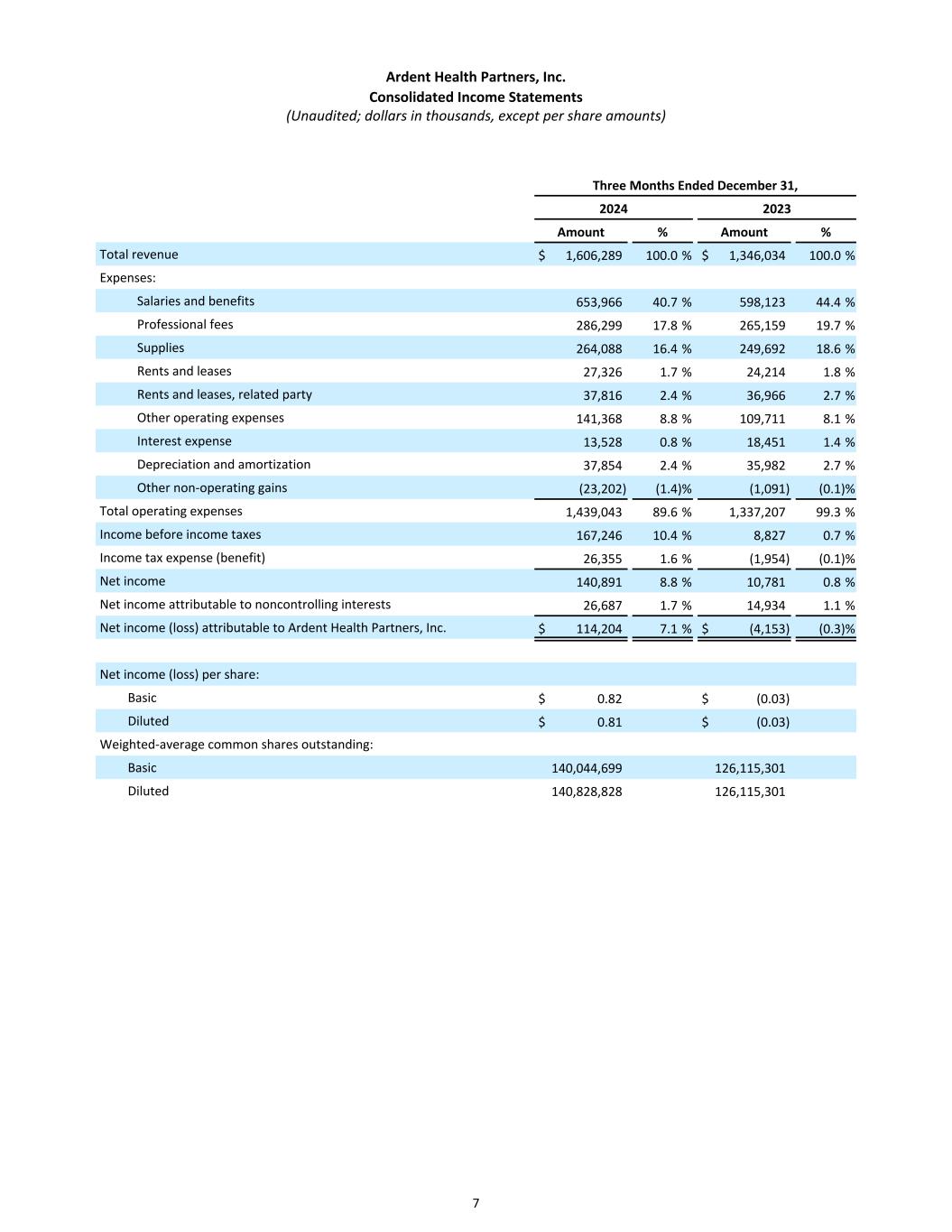
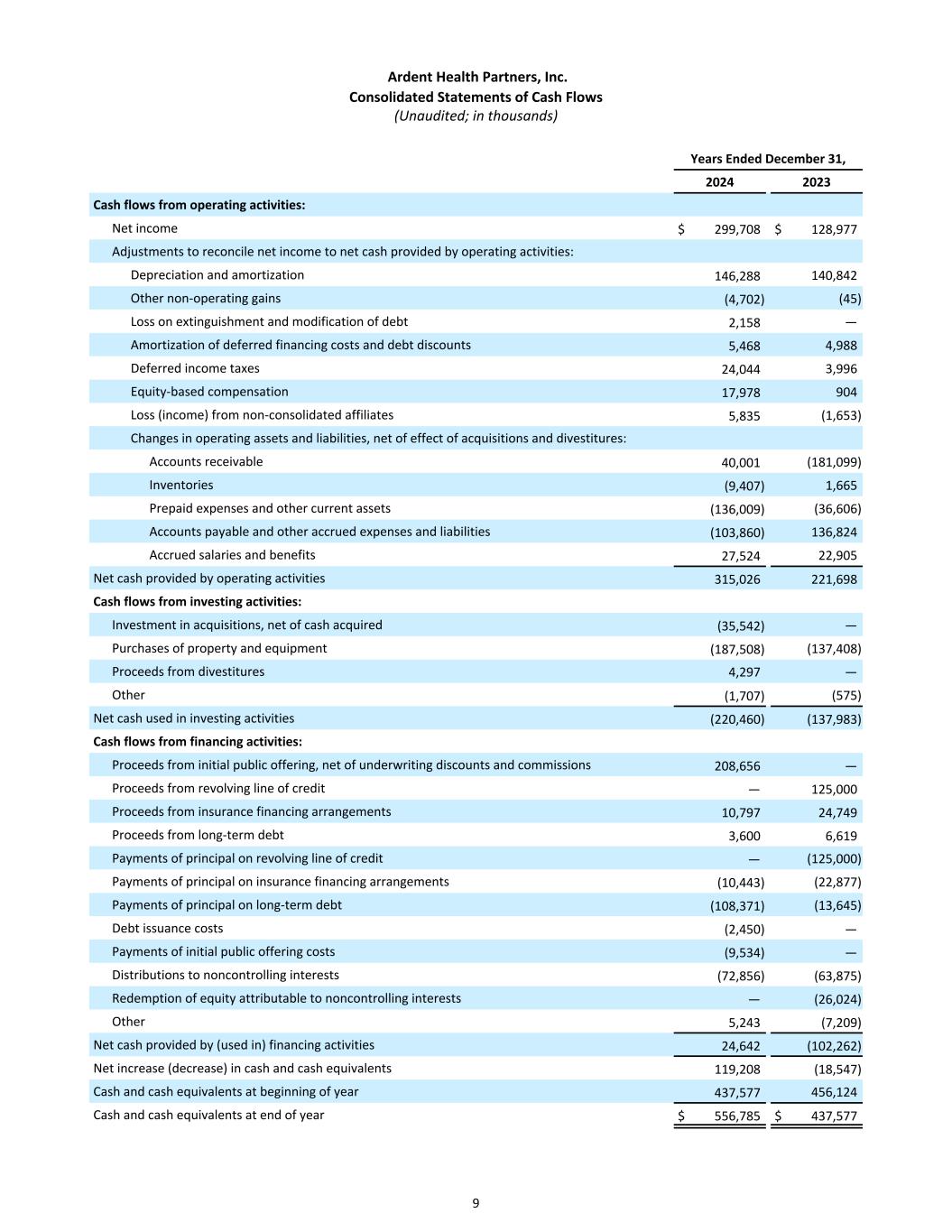
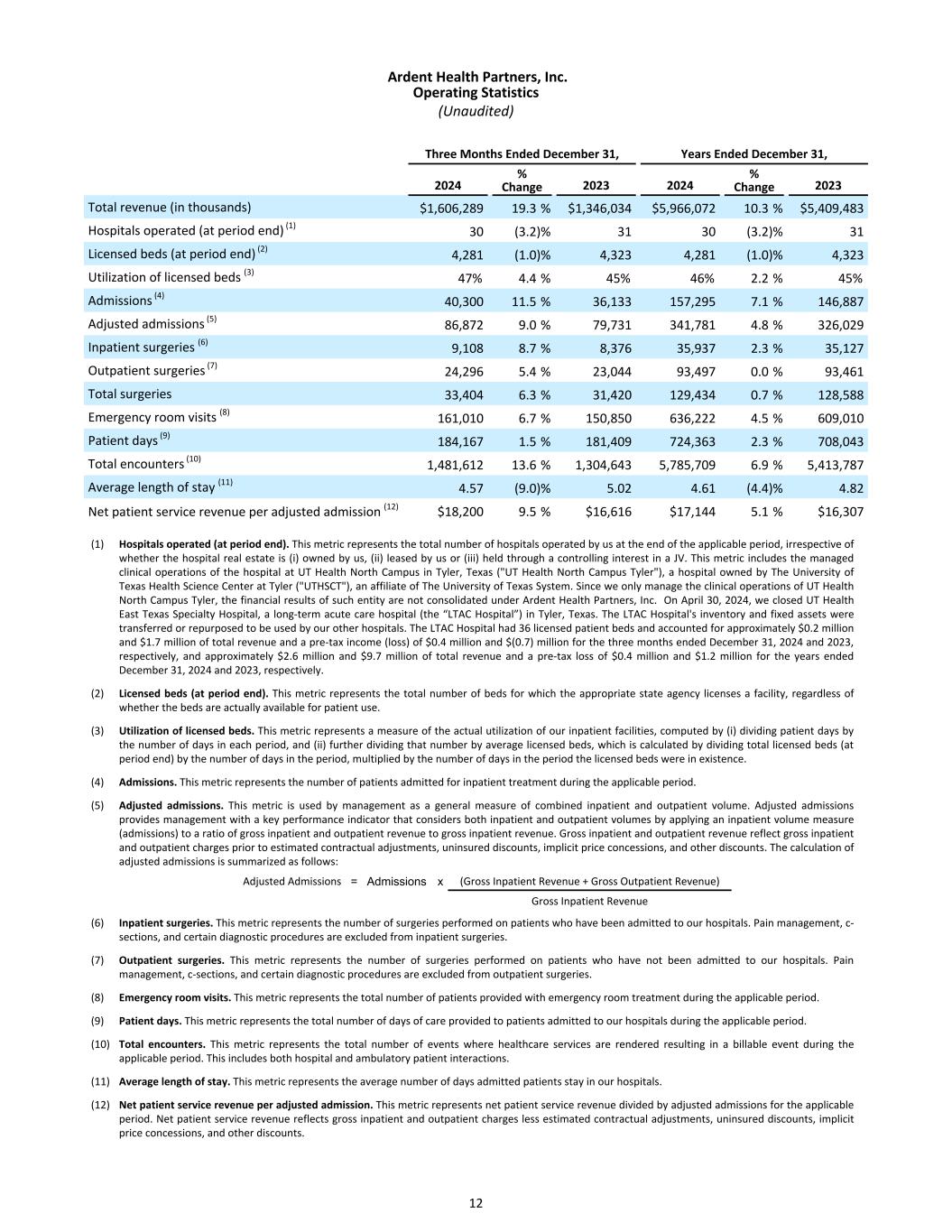
Thanks, Marty, and good morning to everyone on the call with us today. As Marty indicated, we had a very strong finish to the year and are looking to sustain our operating momentum into 2025. Our significant growth in 2024 is a reflection of strong underlying operating performance, execution of our core margin improvement initiatives, and Medicaid DPP programs beginning in Oklahoma and New Mexico. CMS's retroactive approval of the New Mexico DPP program in November for the period covering July 1, 2024 through December 31, 2021-2024 was an important milestone for the state and is the culmination of hard work from the legislature and the healthcare community. As a reminder, the $94 million revenue and $65 million EBITDA benefit Marty mentioned earlier are associated with the financial impact for the full second half of 2024. On a reported basis, we delivered financial results well above our full-year guidance. 2024 revenue of $5.97 billion was roughly $90 million above the top end of our guidance, and adjusted EBITDA of $498 million was nearly $60 million above the top end of our range. Even when we exclude the New Mexico DPP benefit that wasn't in our 2024 guidance, Ardent delivered strong results to finish the year. Excluding the New Mexico DPP impact, full-year 2024 revenue was $5.87 billion, near the top end of our $5.8 billion to $5.875 billion guidance range. 2024, adjusted EBITDA was $433.5 million, or $1 million above our guidance midpoint. 2024, net patient service revenue per adjusted admission grew 3.4%, slightly above the top end of our 2.6% to 3.3% guidance range. and 2024 adjusted admissions grew 4.8 percent, again above the midpoint of our guidance range of 4.5 to 5 percent. In terms of the fourth quarter of 2024, year-over-year growth rates are higher due to the New Mexico DPP benefit as well as the cybersecurity incident that took place in the fourth quarter of 2023. That said, on a reported basis, total revenue for the quarter was $1.6 billion, an increase of 19% compared to the fourth quarter of 2023. Adjusted EBITDA for the quarter grew 213% compared to the prior year, to $183 million. For the full year 2024, reported revenue increased 10% year-over-year, and adjusted EBITDA grew 58%. Our adjusted EBITDA margin for 2024 expanded 240 basis points from 10.1% in 2023 to 12.5%, advancing materially towards our long-term target of mid-teens adjusted EBITDA margins. In terms of revenue mix, 2024 Medicaid declined 90 basis points year over year to 10.3%. This decline largely reflects the impact of Medicaid redeterminations. On the flip side, our commercial mix increased 100 basis points year over year to 43.6 percent, driven primarily by growth in exchange volumes. As Marty mentioned earlier, our exchange revenue contribution is still a modest 3.6 percent of total 2024 revenue. In terms of reported volumes, fourth quarter admissions of approximately 40,000 represented an increase of 11.5 percent over the prior year. Growth in general medicine, cardiology, and neurology were particularly strong. For the fourth quarter of 2024, adjusted admissions grew 9 percent year-over-year. Total surgeries increased 6.3 percent year-over-year, reflecting inpatient and outpatient surgery growth of 8.7 and 5.4 percent, respectively. And ER visits in the fourth quarter grew 6.7% year-over-year. Contract labor expense represented 3.6% of total salaries and benefits for the fourth quarter of 2024 compared to 4.3% to the comparable quarter a year ago. We continue to see contract labor utilization and rates normalized across our markets as well as improvements in our nursing retention rates. Moving on to cash flow and liquidity, we ended the fourth quarter with total cash of $557 million and total debt outstanding of $1.1 billion. Our total cash and available liquidity at the end of the fourth quarter was $845 million. Cash provided by operating activities during the fourth quarter was $120 million compared to $67 million dollars for the fourth quarter of 2023. Capital expenditures during the fourth quarter were 81 million dollars, up from a quarterly average of 35 million dollars for the first three quarters of 2024. This step up in capital spending was largely anticipated in our 2024 guidance. We finished the year with 188 million dollars of CapEx spend just above the top end of our guidance range as we opportunistically took advantage of buying out some surgical robot leases. At year end, our total net leverage, as calculated under our credit agreement, was 1.2 times, and our lease-adjusted net leverage was 2.9 times, down from 3.5 times at the end of the third quarter. So as we turn to 2025, we remain focused on delivering value to our patients and shareholders. While it's early in the year, we're encouraged by our volume trends, and that gives us increased confidence in the durability of the demand we're seeing. In yesterday's earnings release, we provided initial 2025 guidance that at the midpoint implies revenue and adjusted EBITDA growth of 6% and 19% respectively. Additionally, the midpoint of our guidance implies 2025 EBITDA margin expansion of 110 basis points to 13.6 percent. Embedded in our 2025 outlook is a year-over-year increase of approximately $75 million in EBITDA from DPP programs. This increase primarily reflects the expected full-year impact from the New Mexico and Oklahoma DPP programs. This is consistent with our previously communicated expectations for growth in DPP programs in 2025 over 2024. The only mechanical nuance is the $65 million we recorded in 2024 from the retroactive approval of the New Mexico DPP program was not in our 2024 guidance. So now the 2025 year-over-year EBITDA increase attributable to DPP programs is expected to be $75 million dollars versus the 140 million dollars that we've previously discussed. A complete list of our guidance metrics is provided in our earnings release, but some key highlights include total revenue of between 6.2 and 6.45 billion dollars, net income attributable to Arden Health of 245 to $285 million, implying full-year diluted EPS of between $1.73 and $2.01. Adjusted EBITDA of $575 to $615 million. Total adjusted admissions growth of between 2 and 3 percent. Net patient service revenue per adjusted admission growth of 2.1% to 4.4%, and we expect capital expenditures of between $215 to $235 million, or 3.6% of revenue at the midpoint. As a reminder, this increase is consistent with our previous comments that CapEx would likely approach 4% of revenue over time. While we aren't going to be providing specific quarterly guidance, we did want to comment on earnings seasonality. At a high level, we would typically expect the second and fourth quarters to be our highest EBITDA contributors to our full year results, and the first and third quarters to be our lowest. This year, the timing of CMS approval of the 2025 New Mexico DPP program renewal could potentially alter quarterly earnings recognition. New Mexico submitted a renewal application in December 2024. Given the ongoing transition to the new administration, it's possible the 2025 program won't be renewed by the end of the first quarter. In that scenario, we would not record any New Mexico DPP revenue in the first quarter and instead would have cumulative revenue recognition of 2025 program amounts in the quarter that CMS approval is received. This would not affect the annual contribution, but is a factor to consider in quarterly modeling. So with that, I'd like to turn the call back to Marty for a few final comments on the quarter before we open the call to questions. Marty? Thank you, Alfred.
In summary, we continue to make substantial progress as we execute on our key strategic initiatives and leverage the consumer-focused platform we have built to create long-term shareholder value. We are pleased with our strong finish to 2024, delivering attractive financial and operating performance for the year. We continue to advance our focus on market share growth, taking a disciplined approach to evaluating opportunities in both the ambulatory space as well as acute care hospitals. Our NextCare acquisition squarely fits into this. And with leverage below three times in ample cash, we will continue to assess opportunities to execute on this strategy. Finally, we are encouraged by volume trends to start the year and are focused on sustainable growth in 2025 and beyond. I want to close by thanking our 24,000 team members and more than 1,800 employed and affiliated providers who continue to deliver exceptional care to patients across the communities we Together, we are focused on making healthcare better and fulfilling our purpose of caring for our patients, our communities, and one another. With that, operator, please open the line for questions.
Operator
Thank you. We will now begin the question and answer session. If you have dialed in and would like to ask a question, please press star 1 on your telephone keypad to raise your hand and join the queue. If you would like to withdraw your question, simply press star 1 again. We'll take our first question from Whit Mayo at Larynx Partners.
Hey, maybe just to follow Alfred on that last point on New Mexico, just to make sure I get this correct. So you need approval from CMS. So we should, do we just take the 65, divide that by four and say, take that out at the first quarter and apply it? to a different quarter? Is that basically the math to do?
Hey, Wes, this is Alfred. Yeah, you've got to generally correct. Now, you know, the 65 is the year-over-year increase attributable to New Mexico. And of course, we booked, you know, the 65 and representing the last half of the year. So when you think about quarterly amounts, yeah, it's not wrong to think about that total quantum divided by four.
Okay. And then my follow-up is just, I mean, the volume certainly stand out as being fairly robust versus what we've seen reported from the peer group. I was just hoping maybe you could unpack this just a little bit more, just how broad-based it was across the portfolio, any one market materially outperforming others. And then you referenced in your prepared comments that the demand or volume environment continues to remain strong. Guidance this year is 2% to 3% on adjusted emissions, which feels more normal. Maybe this is just some conservatism here. But maybe just to put some of that into context, thanks.
This is Marty. I'll start and then turn it back to Alfred. But, yes, to the question about volumes and durability, you know, we continue to believe in the strength of positions we have in our markets, and our markets are continuing to grow. This is not a one-off in one market or another. We see it's pretty consistent across the portfolio. And we're encouraged by, again, as Alfred said, the early signs of volume demand in the first part of this year as well. So, nothing to call out specifically, just to, again, continue to strengthen strong positions in our markets and growing markets and continuing to operationalize through our transfer centers and through our internal efficiencies how we'll be able to take more transfers into the system and service more demand for our patients.
Yeah, just tailgating on Marty's comments with, you know, as you saw in our release, you know, year over year, adjusted admissions increased, you know, for 2024, you know, almost 5% at 4.8%. Now, clearly, 2024 benefited from two midnight rule. You know, we put that year, full year increase in the, you know, kind of think of that as maybe 140, 150 basis points of that increase. So stripping that out, you know, we were just north of 3%, you know, call it 3.2, 3.3%. And as you saw in our guidance today, you know, we have a range of 2% to 3%. And, yeah, so maybe perhaps a tad bit of conservatism in that range. And to Marty's point, you know, we think, you know, we've all heard the kind of the strength of the respiratory season. And, yeah, we feel, you know, we feel very good about, you know, continuing the same trend, given the strong markets we're in, that we'll continue to see growth. Thanks.
Operator
We'll move to our next question from Anne Hines at Mizuho Securities.
Great. Good morning. I know at a recent conference you highlighted physician expense was a little bit more pressure than you expected. Can you just provide an update on how that is trending? and then your prepared remarks you talked about over the next three to four years, X the DPP program, you have a path to 100 to 200 basis point of baseline margin improvement. Can you remind us what the drivers of that margin improvement is and within that, what do you expect like an annual growth rate is for this physician expense? Thanks.
Good morning. This is Marty. I'll start and then let Alfred take the second part of your question. On the physician expenses. We did see the hospital-based physician subsidies moderate from 23 to 24, and from 24 to 25, we expect it to be somewhere in that similar range. It has come down from, you know, the peak in 23, but it's still running slightly above inflation from what we would have otherwise expected. We are seeing good movement with our renegotiations. We substantially renegotiated our er and anesthesia contracts during that 23 and early 24 period we've seen some modest pressure from radiology but radiology is also a smaller portion of those total subsidies so we're continuing to monitor that our operational teams are working diligently with our different vendor partners in each of our markets and some of our local providers to offset some of those headwinds um and uh you know we expect this to continue to moderate as we go through the year yeah i'll uh and this is alfred i'll touch on uh the second part of your question which is the margin improvement initiatives you know over the next three to four years you know attributing
to the uh improvement in our overall margins you know we would put that into you know a number of different buckets. And as you can imagine, just given the profile of our E&L, a healthy dose of that comes in the form of both labor initiatives as well as supply chain initiatives. And that can include, you know, a number of overhead initiatives continuing to get leverage off of our G&A expense and continuing to focus on our service line optimization as well as improvements from technology enhancements. So, you know, I would say it's a whole litany of efforts and initiatives that we have plans over the, you know, near and intermediate term.
Operator
Great. Thank you. We'll take our next question from Scott Fidel at Stevens.
Hi, thanks. Good morning. First question, just would appreciate if you can give us an update into just how the JV pipeline and conversations are developing or sort of, you know, in flight here early in 2025. And then I would be curious just around how you think about the effects on the JV discussions just from the legislative, you know, funding reform talks in Washington. You know, curious whether that's something you would see as a potential accelerant to that as potential partners, you know, may be looking to another partner to help optimize performance against the backdrop of maybe some more funding pressure? Or is it just, you know, sort of providing a near-term chilling effect just as partners may want to see how ultimately, you know, I guess the legislative sausage making ends up sort of, you know, playing out in Washington.
Hey, Scott. Thanks for the question. This is Marty. Our JV pipeline, or I'd say our acquisition pipeline in general, both on the outpatient and the inpatient, continues to build. We're encouraged by the progress they're seeing and the conversations that we're having. While we don't have anything to report right now, we are continuing to be encouraged about our growth trajectory that we've previously spoken about, and we see that JV partnership is an important part of that strategy as we go forward the effects from you know potential changes in washington on jv partners i would say that there's definitely concern particularly those academic institutions that are more heavily dependent upon nih funding and research you know i think that that will put pressure on their plans and i think that that will ultimately benefit us as we look towards new expansion opportunities um you know certainly the conversations as I said have been robust and continuing to build but not not seeing any direct impact yet is what you alluded to I think people are still trying to understand the magnitude of what these changes might be and there's still a lot of uncertainty out there there's been a lot of a lot of discussion but but not a lot of details coming out of some of those so you know in summary you know we continue to be optimistic about the pipeline that we have for growth and think that some of these changes will ultimately provide a modest tailwind to our growth initiatives.
Okay. And then just my follow-up question. If maybe you can sort of give us your projections for operating cash flow for 2025, and then relative to, I guess, both cash flows and then the CapEx guidance you provided, any call-outs you'd want to give around sort of from a modeling perspective, any seasonal considerations that we should be thinking about separate from, you know, the New Mexico DPP, just anything else offered, you know, seasonally, you know, from either cash flow or the timing of the CapEx that you think we should be considering when we model that? Thank you.
Yeah. Thanks, Scott. Yeah. In terms of seasonal considerations on CapEx, I wouldn't, you know, this year we had a pretty significant skew towards Q4, as you saw in our Q4 numbers. Now, some of that was, as I mentioned, we had a real good opportunity to buy out some CapEx leases, so that skewed it even more. I think there still is a tendency for our CapEx to be a little bit back half-loaded, so I wouldn't hesitate to skew it, but certainly not to the extent that we saw from a back end in 2024. And you are, of course, seeing a step up in our CapEx spend as consistent with our expectations for ambulatory investments that we're making, and that's embedded. In terms of, you know, we haven't provided formal guidance for operating cash flow for the year. You know, we could see that being in the upper $400 million range, you know, in terms of a very broad. Okay, thank you.
Operator
We'll move next to Ben Hendricks at RBC Capital Markets. Great.
Thank you very much. I wanted to follow up on the professional fee and subsidy commentary. I was wondering if you could quantify how much more professional fee expense you're including in 2025 guidance versus levels you may have been contemplating like two quarters ago, late 2024 timeframe.
Yeah, this is Alfred, Ben. I would say I, you know, our perspective, obviously, and our commentary that we made at JPMorgan in January, you know, is consistent with our expectations, you know, that it will continue to be a headwind. It will continue to grow as a percent of revenue on a year-over-year basis. We think 25, that growth in 25, is actually going to look a lot like the growth in 24. Certainly nothing like we saw in 23, where we consumed over 100 basis points of margins from that step up. But, you know, we're seeing a sustained headwind in 25 that will look similar to what we saw in 25.
Great. And then just separately, you know, appreciate all the commentary about the acquisitions, the 18 urgent care clinics. could you just maybe talk about what you're seeing in terms of the pipeline across your markets in terms of both urgent care and ambulatory tuck-in? Thanks.
Hey, Ben. It's Marty. Yeah, we see, you know, continued opportunities for expansion in our markets. Again, we've had historically, you know, a lesser percentage of outpatient services, maybe relative to our peer group. And we know in our markets, given the growth in those markets, that there's opportunities to expand both in the hospital and beyond the hospital and so urgent cares was that early focus that we set set out when we went public last year and we've made good progress on those commitments we see you know continued opportunities for expansion of urgent cares both perhaps from an M&A perspective but also from a de novo as we continue to round out pockets of geographies where we don't have representation but we're also going to be turning our focus this year into other ambulatory assets, looking at ambulatory surgery centers, perhaps imaging centers, freestanding EDs and the like. So, you know, this is just a continued expansion of what we set out to do, and we still see good demand for the services growth across our markets. Thank you.
Operator
We'll go next to Joanna Gadjuk at Bank of America.
Hi, good morning. Thanks so much for taking the question. So, I guess, first, a couple of clarifications. So Q4 volumes, right? These metrics are essentially skewed because there was easy comp a year ago, right? There was the cyber security event, right?
That's correct, Dan. That's Marty. Yeah.
Okay. And then because the... I'm sorry. Go ahead.
No, you're exactly right. This is Alfred. The cyber security incident started on Thanksgiving last year and, you know, certainly had an impact through the end of the year from an overall volume perspective. So we would say it was an easy comp, but clearly, you know, our volumes were.
And what would you say, is there a way to think about a full year benefit that you saw in 24 because of that easy comp? I mean, I guess on the flip side, there's probably some headwind that you had in early Q1 24, right? Because it was continuing a lot of it there.
Just thinking about you know your your volume up also for 25 so yeah there's a too midnight room that the benefit will not repeat and i'm trying to think you know the two two three versus three like is there also a reason um you know because of this dynamic year over year 24 maybe had an easier comp yeah this is alfred um you know i would say you know we we've been pretty clear that the cyber uh event was largely behind us as we turned uh the calendar into january so i don't think um from a 24 to 25 it's really embedded in the uh in the volumes you know we have said uh from a two midnight rule you know again for my full year basis that was maybe 140 basis points of our adjusted admin growth um you know which again for full year 24 was 4.8 so you know with without the two midnight we think it would you know ballpark been in the you know mid threes you know, call it 3.3, 3.4. So, but again, I would say, you know, when you think about the cyber event, the 24 to 25 comparisons are going to be really clean.
Right. And you had mentioned a Q1 trend so far, where you're seeing an uplift. So, is this really the full season on the respiratory cases kind of higher year over year?
Yeah, clearly, you know, as Marty indicated, you know, we feel good about how the year started from a volume up. We've all heard about the strength of the flu season. Now, you know, again, those certainly provide volume admissions, but of course, those are much lower acuity overall. And, you know, again, it goes to, you know, our overall strategy in terms of growing our ambulatory footprint, being able to see the right patient in the right setting. But yeah, So clearly, from an admissions perspective, we would expect that flu will have some modest impact to 25, because this does appear to be, from a multiyear standpoint, a stronger, not just flu, but other respiratory illnesses. But again, I would consider those to be generally much lower acuity and not driving a material financial benefit.
And if I may last follow up on a comment, I appreciate when, you know, your comments around these potential, I guess, proposals that have been discussed in Congress that you don't think would be material for the company. And it's really a comment about site neutral forms. So I just want to follow up on that because I guess there's a bunch of things, right, that's being considered when we say site neutral, you know, there's other physician administered drugs. So that would be, you know, not that material. But I guess the other end of the spectrum is, you know, kind of changing the reimbursement for some of the surgeries, right, and paying them at the lower level, at ASC level. So, if that was to happen, like, how would you think about trying to kind of, you know, quantify the impact of that type of federal reform for your company?
Yeah, Joanna, this is Marty. you know again to your point there's not been any clear communication on if or what changes might occur related to site neutral there's certainly been a lot of chatter you know as we stated before our exposure to the freestanding site neutral services are much more limited given our smaller footprint it's an area we're growing into but it's not an area that we have a big exposure on today So, you know, as we look at that, we expect that that's impact. There's a report of 66 APCs that, you know, has been floated out there. You know, if that were to come to pass, you know, I think that that's a stretch to say that it would all happen. You know, our quantification is somewhere less than $10 million impact.
Operator
Great. Thank you. Our next question comes from Craig Hettenbach at Morgan Stanley.
Yes, thank you. And nice to see the New Mexico DPP come through. Can you just talk about just the visibility and durability of those programs as you see it for this year and beyond?
Yeah, Craig, this is Marty. Thanks for the question. We were excited to see that. Our teams did a lot of work to help make sure that that happened and we can get additional reimbursement for caring for that population across New Mexico. It's helpful for us and all providers across the state. Given that this program was approved, if we look back historically, these programs started back in 2016 and there's not been a program that we're aware of that once it's been approved it's not been re-approved and so we consider this in the approved category and while we understand that CMS has been sort of on a restricted communications protocol waiting for the confirmation of a CMS administrator we do expect that these programs will continue to move forward they are important not only to companies like us but again providers all across the state and And, you know, this is really just helping to defray some of the costs that have not been historically covered by Medicaid in providing for those patient populations. And so we still see these as very durable, very necessary and important to the safety net of states across the country. And as recently as yesterday, President Trump in his first cabinet meeting, again, reaffirmed that he was not going after Medicare, Medicaid programs, but they'd be targeting fraud and abuse. And so, you know, all of that is, you know, continued indications that we expect these programs to remain durable into the future.
Got it. And then just to follow up on commentary around acuity, outside of just kind of flu season, anything else you would call out in terms of just underlying trends you're seeing across the business from an acuity perspective?
This is Marty, and I'll let Alfred chime in here. But acuity continues to be strong. Again, we think that that's largely part because of our focus around our service line optimization initiatives, capacity initiatives, and our transfer center initiatives is just making sure that we can care for those acute cases that have need and services while caring for lower acuity patients in our outpatient settings or clinics. And so Alfred could talk a little bit more about the specifics.
Yeah, the only thing I would add, Greg, is, you know, clearly the two midnight rule in 2024 did have an acuity impact because, you know, you did see these lower acuity admissions move from OBS. And so, overall, you know, our CMI nudged down a little bit. Of course, you know, we lapped that in 25. So, yeah, we would continue to expect to see, you know, acuity consistent with 2024. And, again, going to our expectations for growing our ambulatory footprint, continuing to focus on seeing the right patient in the right setting, we think.
Operator
We'll go next to Matthew Gilmore at KeyBank.
Hey, thanks for the question. I wanted to ask about the length of stay metric. You've done a good job driving that lower in 2024. Maybe there's some, you know, influence with the two midnight dynamic that Alfred just mentioned. Marty had talked about the device you've been rolling out to collect vitals and improve nurse rounding.
I was curious how that rollout has been progressing. is it having a discernible impact on like the stay at this point hey matt this is marty thanks for that question yes um you know i think you're right in the beginning the length of stay with the the impact of the tube midnight that the alfred had quantified before certainly had some portion but but again our efficiency metrics and our focus around efficiency across the platform has been additional to that the device that you mentioned the bio button we have continued to see roll out I don't have the exact statistic in front of me in terms of the number of facilities and beds that it's in right now, but we continue to see good progress, both from a clinical outcomes perspective and reduction of mortality rates for patients that have that device, as well as a length of stay impact that has been additive to the other operational efficiencies that we've been focusing on. And so it's difficult to segment out how much is attributable to the device versus other things. But collectively, it has been an impact that we expect to continue to expand throughout the system.
That's great. And then just a quick follow-up, probably for Alfred, just on the mechanics of the accounting for the New Mexico DPP, the 25 portion. Does that need to get approved by March 31st for you to pull it into the first quarter? Or even if the approval comes, say, in mid-April, you'd still be able to recognize that for the first quarter?
Thanks, Matt. No, appreciate that clarification. Yes, we would expect that the accounting would follow the approval date so that if the approval came after the end of March, that recognition cumulatively to whatever quarter. Got it.
Operator
And next, I'll move to Benjamin Rossi at JPMorgan.
Hey, thanks for the question. So just following up on acuity here, I'm seeing a pretty sizable delta for your 2025 net patient service revenue per adjusted admissions growth range. Could you just walk us through puts and takes being contemplated across your pricing mix and maybe what brings you closer to the upper end or lower end here?
Yeah, sure. I'll start. obviously the range is influenced you know it's mostly uh kind of a back-end calculation based off of the range of of revenue and adjusted admins you know i'll comment on our uh what we're saying from a commercial rate perspective you know we've continued to see renewals above what i would call historical ranges uh in the three percent kind of range you know we've been well over 4% from our most recent renewals. And so, yeah, we continue to expect, you know, and push for as a consequence of the types of inflation. You know, we've talked ad nauseum about the impact of professional fees on our business. And so, you know, I would say, you know, we're continuing to, you know, it's not an easy payer environment, as you might guess, but we've continued to be successful into getting the type of reimbursement increases that we need, given the underlyings. That's really what I would, that range is kind of necessarily why just given the dynamics of it.
That makes sense. So this is a follow-up then on the ACA signups. I know you mentioned that exchanges are about 3.6% of revenue, but just looking at the initial signups and like low double-digit range in a market like Texas. How are you thinking about contribution from the exchanges to your 2025 volume growth expectations? Yeah, this is Alfred.
You know, again, while those growth rates are impressive, and I think our markets are probably slightly north of the averages overall, given, you know, our relatively small compared to our peer set exposure to those exchange volumes, it's still a relatively small, you know, even though it's a large increase on a small base, it's still a small number overall. So it's, it's, I would say it's not meaningful to call out from an, and as we think about, you know, obviously there's been a lot of speculation around, you know, HICS exposure post 2025 with the expiration of the subsidies. It is still our perspective that those lives will go somewhere. Again, assuming I'll say the worst happens and those subsidies and nothing comes in place of those subsidies, we still feel strongly that it would likely track to maybe not a dissimilar experience to Medicaid redeterminations where those lives end up going somewhere and that it's not necessarily a bad scenario. But again, And just given our overall small exposure, again, I would say we're not, we don't, as you look at our overall growth, that's still a very small component of it.
Yeah, I'll just add on to that, Ben, that, you know, coverage is good. And, you know, I think that that is what is going to be necessary. And I think as Congress weighs, you know, how it deals with healthcare issues, you know, know, the strength of the ACA, even though it's a smaller percentage for us, is very necessary part of, again, the healthcare fabric. And so we continue to advocate for those programs to be there so that patients don't lose coverage, you know, across our footprint or anywhere else across the country.
And this is out, but the last thing I would add is that the overall revenue contribution and margin contribution from those HICS lives is going to be closer to a Medicare rate than it is actually a traditional commercial right.
Got it. Thanks for that clarification. Is it fair to say then that there's maybe a 10 to 15 percent kind of discount then from like your Medicare traditional commercial just to kind of bridge that ACA sort of reimbursement dynamic? I want to be sure I follow your question. I'm not sure I captured it. Just trying to think of a discount. You mentioned that the ACA exchange plans kind of come in line more with your Medicare. Just curious on how that kind of compares to your broader commercial book.
Yeah, I guess I might answer the question this way. When I think about a Hicks life from a reimbursement perspective and a Medicare life and a true commercial life, I would, you know, if I was just going to give broad justice, I would say the reimbursement is, you know, But if I took that quantum of difference between Medicare and commercial, it's maybe about a third of the way towards that commercial.
Thanks for the call, Mayor. Appreciate it.
Operator
And with that, today's conference call is concluded. Thank you for your participation. You may now disconnect.