Operator
thank you for standing by my name is jordan and i'll be your conference operator today at this time i'd like to welcome everyone to the banner corporation second quarter 2026 conference call and webcast all lines have been placed on mute to prevent any background noise after the speaker's remarks there'll be a question and answer session if you'd like to ask a question during this time simply press star followed by the number one on your telephone keypad. If you'd like to withdraw your question, press star one again. Thank you. I would now like to turn the call over to Mark Greskovich, President and CEO of Banner Corporation.
Thank you, Jordan, and good morning, everyone. I would also like to welcome you to the second quarter 2026 earnings call for Banner Corporation. Joining me on the call today is Rob Butterfield, Banner Corporation's Chief Financial Officer, Joe Rice, our Chief Credit Officer, and Rich Arnold, our Head of Investor Relations. Rich, would you please read our forward-looking safe harbor statement?
Sure, Mark. Good morning. Our presentation today discusses Banner's business outlook and will include forward-looking statements. Statements include descriptions of management's plans, objectives, or goals for future operations, products, or services, forecast about financial or other performance measures, and statements about Banner's general outlook for economic and other conditions. We also may make other forward-looking statements in the question-and-answer period following management's discussion. These forward-looking statements are subject to a number of risks and uncertainties, and actual results may differ materially from those discussed today. Information on the risk factors that could cause actual results to differ are available from the earnings press release that was released yesterday, and a recently filed Form 10-2 for the quarter ended March 31, 2026. Forward-looking statements are effective only as of the day they are made, and Banner assumes no obligation to update information concerning its expectations. Mark?
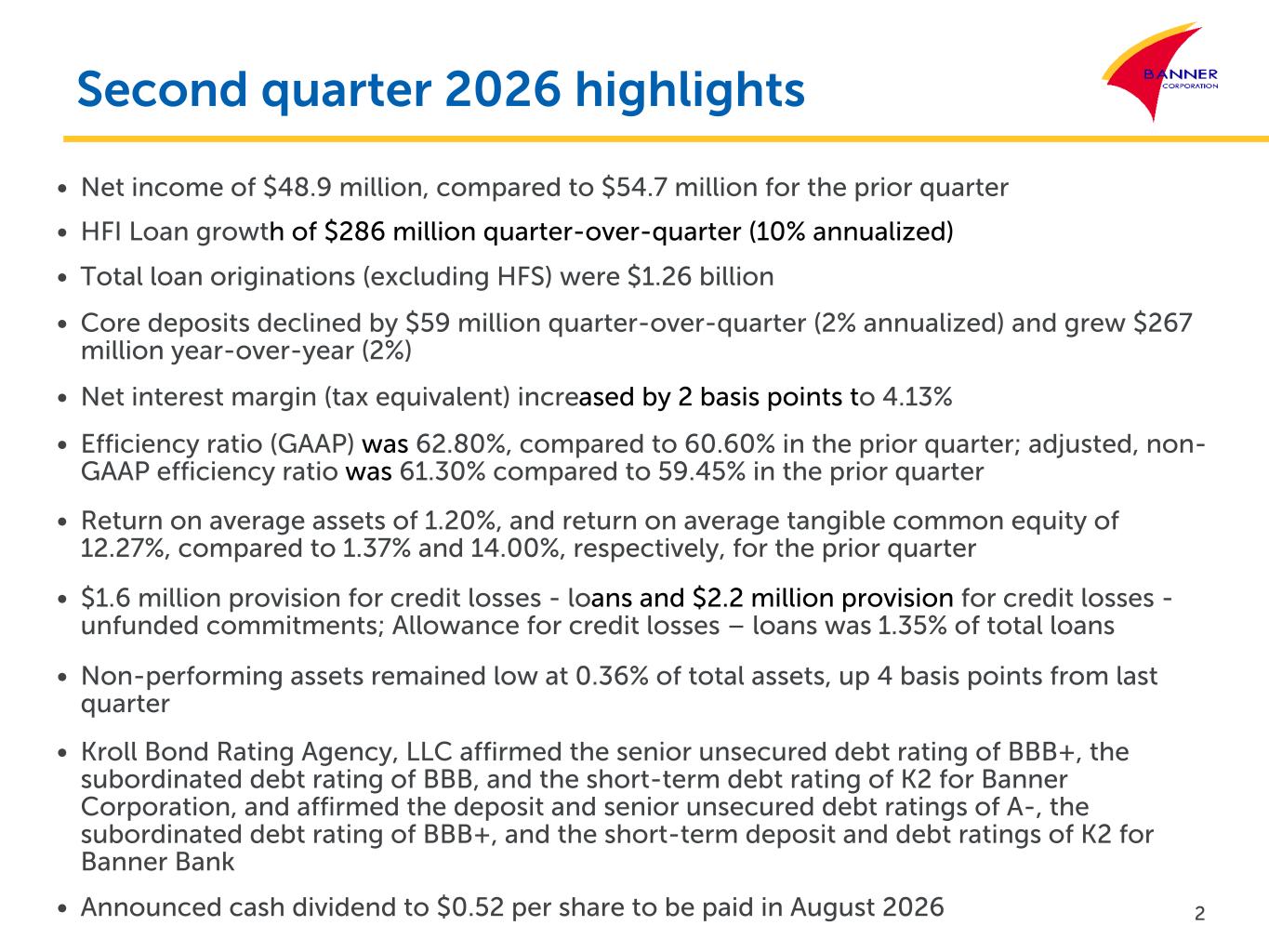
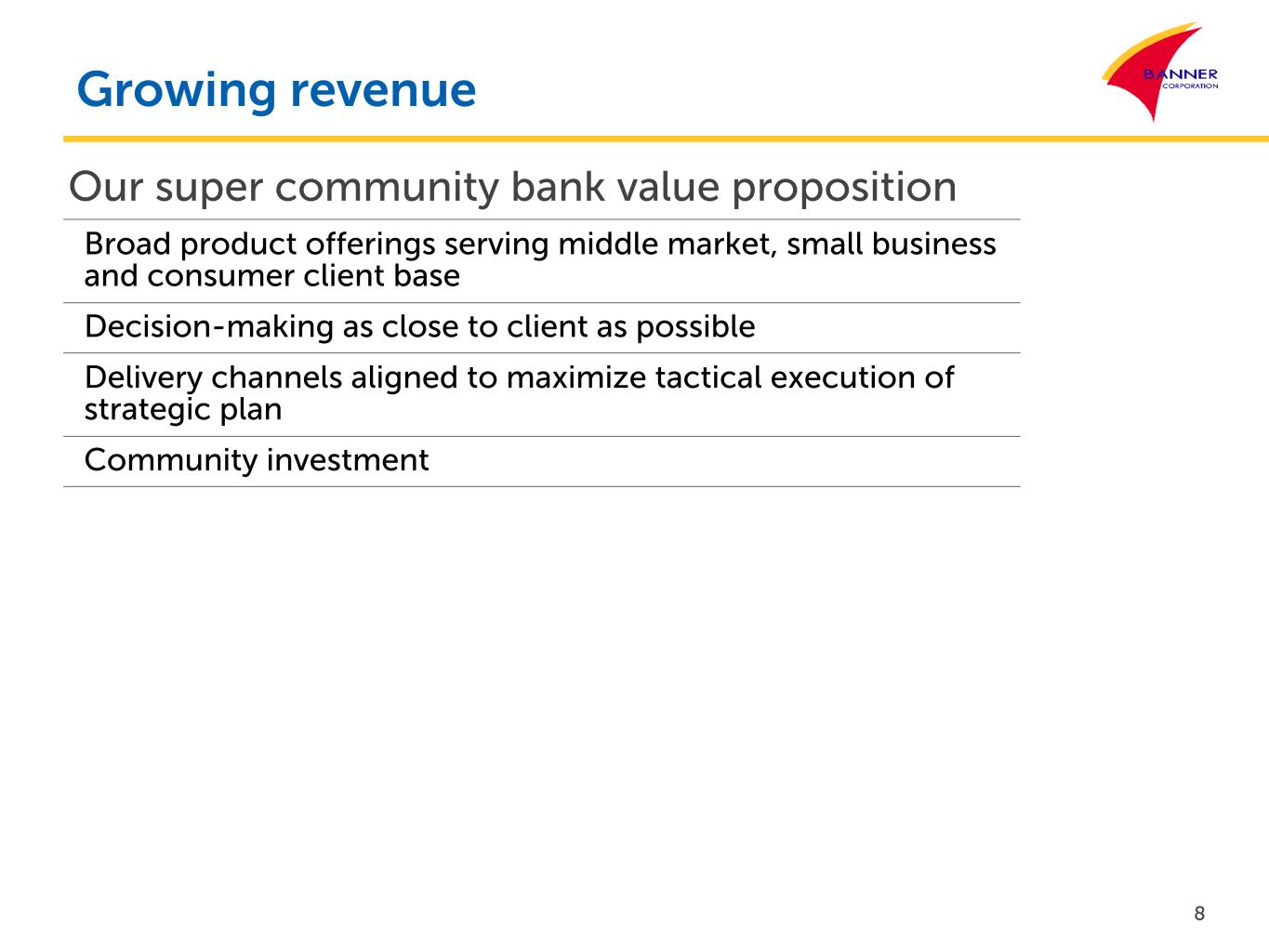
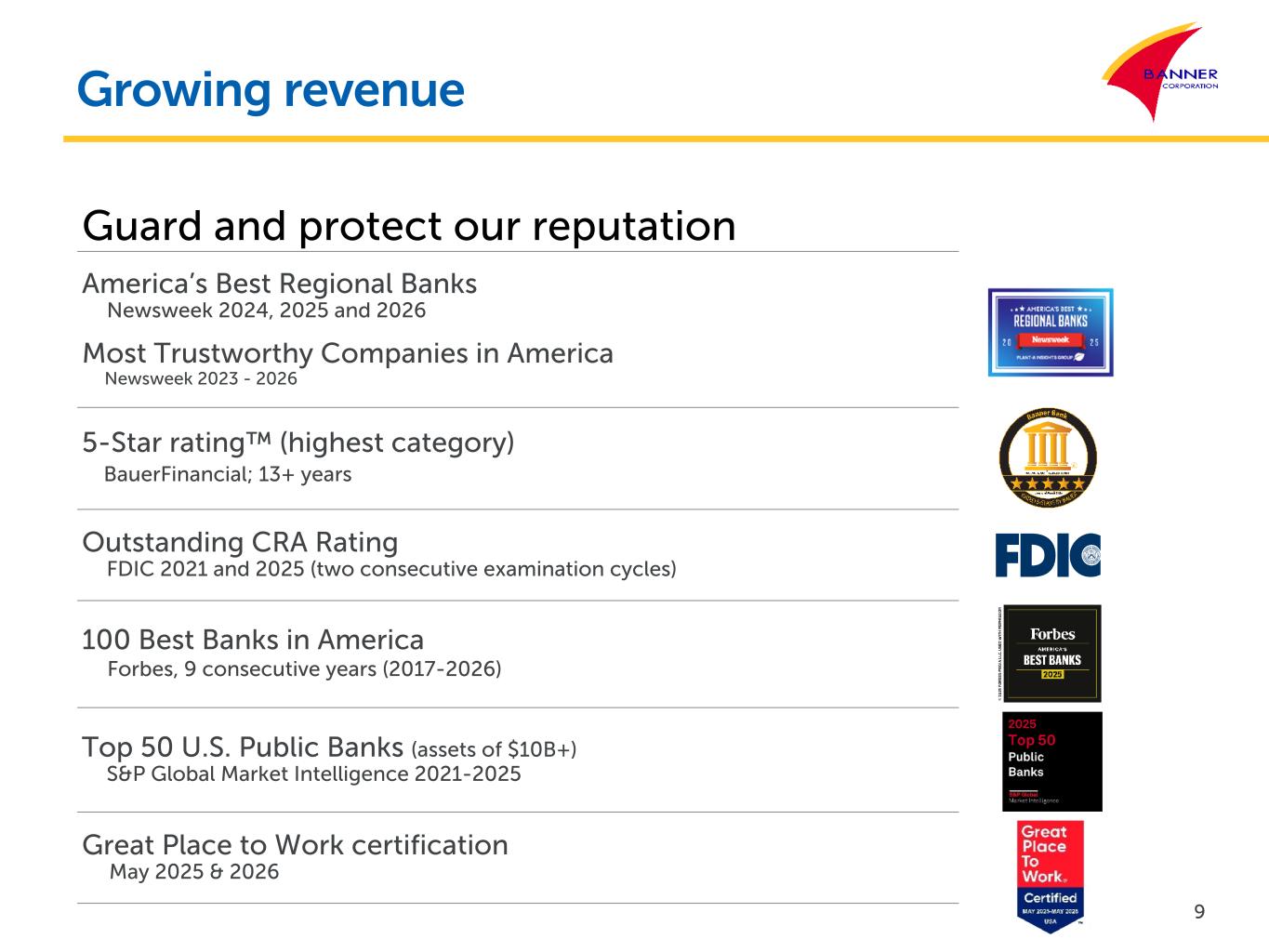
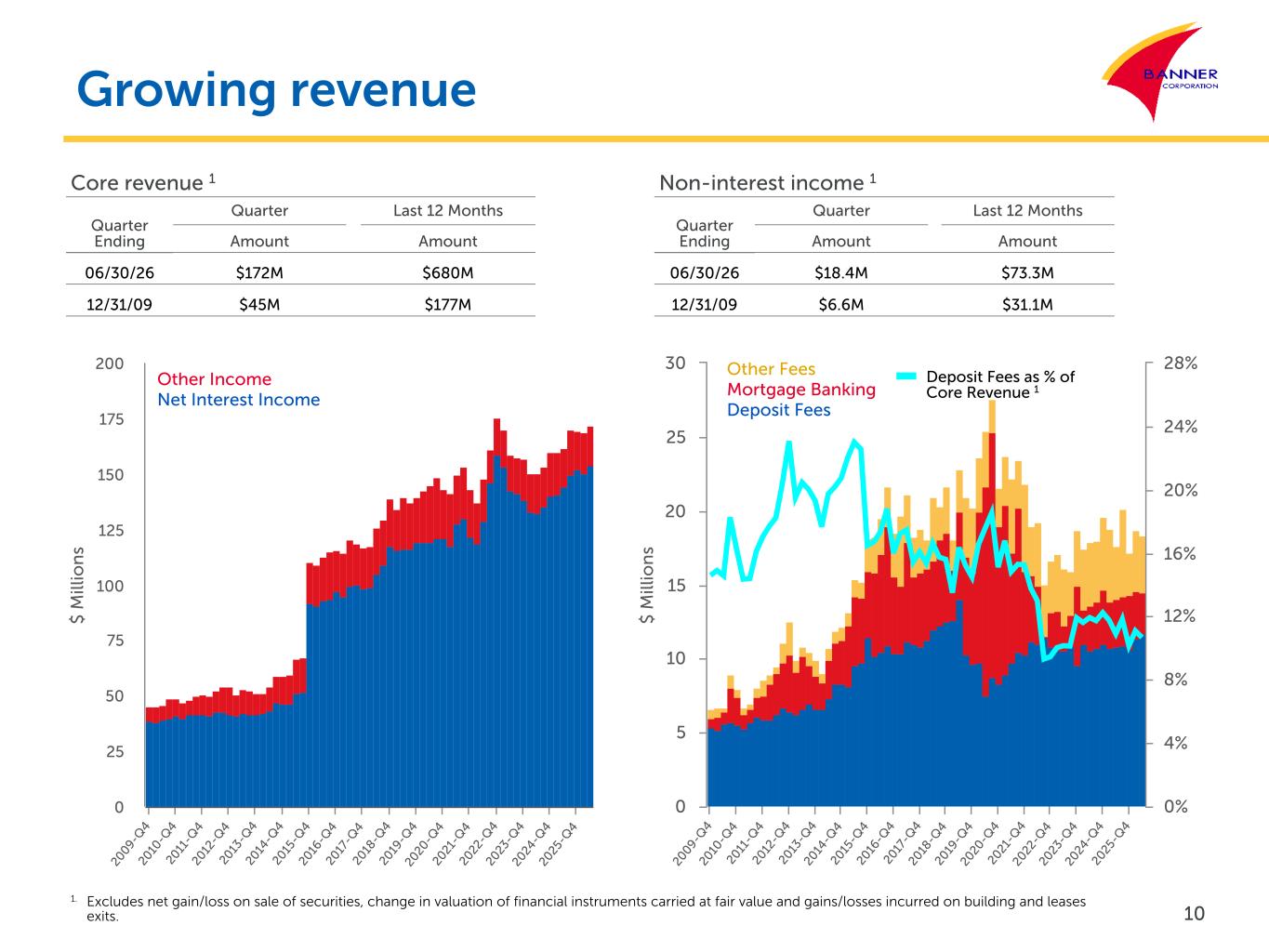
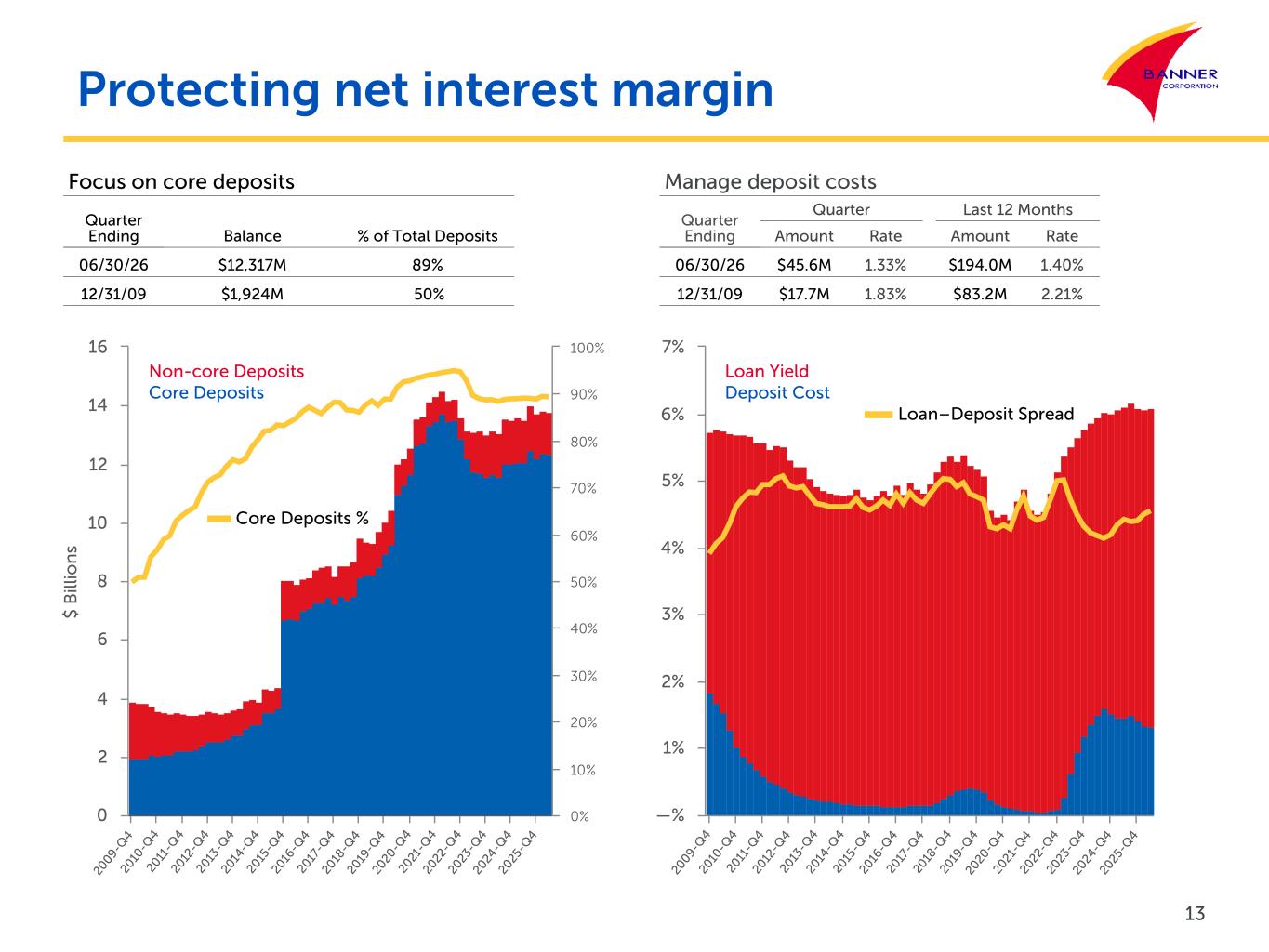
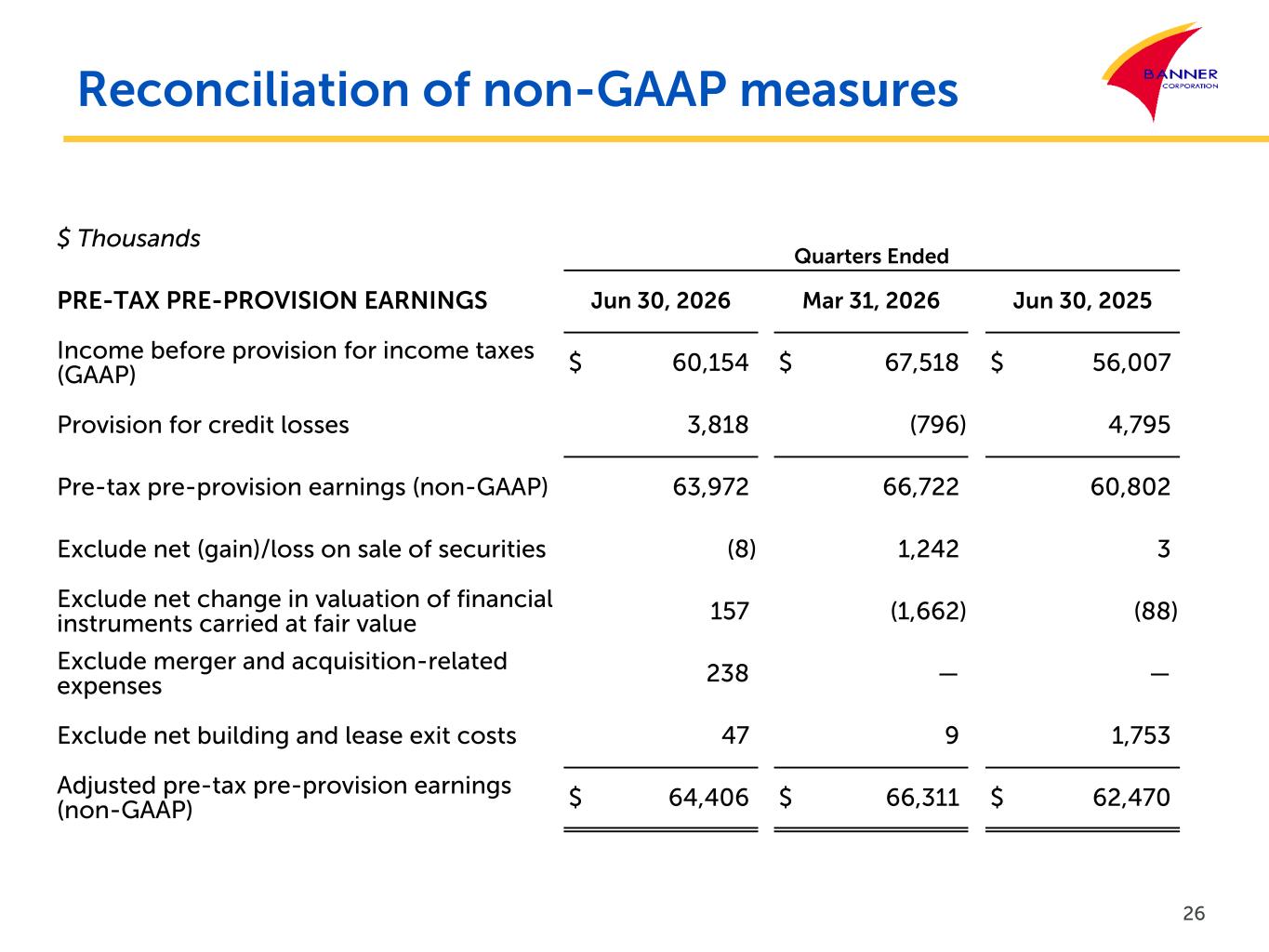
Thank you, Rich. As is customary, today we will cover four primary items with you. First, I will provide you high-level comments on Banner's second quarter 2026 performance. Second, the actions Banner continues to take to support all of our stakeholders, including our Banner team, our clients, our communities, and our shareholders. Third, Jill Rice will provide comments on the current status of our loan portfolio. And finally, Rob Butterfield will provide more detail on our operating performance for the quarter, as well as comments on our balance sheet. Before I get started, I want to thank all of my 2,000 colleagues in our company who are working extremely hard to assist our clients and our communities. Banner has lived our core values, summed up as doing the right thing, for the past 135 years. Our overarching goal continues to be to do the right thing for our clients, our communities, our colleagues, our company, and our shareholders, and to provide a consistent and reliable source of commerce and capital through all economic cycles and change events. I am pleased to report again to you that is exactly what we continue to do. I am very proud of the entire Banner team that are living our core values. Now, let me turn to an overview of our performance. Banner Corporation reported a net profit available to common shareholders of $48.9 million, or $1.43 per diluted share for the quarter ended June 30, 2026. This compares to a net profit to common shareholders of $1.31 per share for the second quarter of 2025. To maintain a moderate risk profile and the investments we have made and continue to make in order to improve our operating performance have positioned the company well for the future. Rob will discuss these items in more detail shortly. The strength of our balance sheet coupled with a strong reputation we maintain in our markets will allow us to manage through the current market uncertainty. To illustrate the core earnings power of Banner, I would direct your attention to pre-tax, pre-provision earnings, excluding gains and losses on the sale of securities, changes in fair value of financial instruments, merger and acquisition-related expenses, and building and lease exit costs. Our second quarter 2026 core earnings were $64.4 million compared to $62.5 million for the second quarter of 2025. Banner's second quarter 2026 revenue from core operations was $172 million compared to $163 million for the second quarter of 2025, an increase of nearly 6%. We continue to benefit from a strong core deposit base that has proved to be resilient and loyal to Banner, a very good net interest margin, and core expense control. Overall, this resulted in a return on average assets of 1.2% for the second quarter of 2026. Once again, our core performance reflects continued execution on our super community bank strategy. That is, growing new client relationships, maintaining our core funding position, promoting client loyalty and advocacy through our responsive service model, and demonstrating our safety and soundness through all economic cycles and change events. To that point, our core deposits continue to represent 89% of total deposits. Reflective of this performance, coupled with our strong regulatory capital ratios and the fact we increased our tangible common equity per share by 11% from the same period last year, we announced a core dividend of $0.52 per common share. Earlier this month, we released our 2025 Corporate Responsibility Report. Banner has always been committed to do the right thing in support of our clients, the many communities that we serve, and our colleagues. The accomplishments highlighted in this report are meant to reflect the deep connection we have with all of our stakeholders and our commitment to creating positive change in the communities we serve. Finally, I'm pleased to say that we continue to receive marketplace recognition and validation of our business model and our value proposition. Banner was again named one of America's 100 best banks as well as one of the best banks in the world by Forbes. And Newsweek named Banner one of the most trustworthy companies both in America and the world again this year. and just recently named Banner one of the best regional banks in the country. Additionally, our company was certified by Great Place to Work, and S&P Global Market Intelligence ranked Banner's financial performance among the top 50 public banks with more than $10 billion in assets. Also, the Kroll Bond Rating Agency affirmed all of Banner's investment-grade debt and deposit ratings. And as we have noted previously, Banner Bank again received an outstanding CRA rating. Let me now turn the call over to Jill to discuss trends in our loan portfolio and her comments on Banner's credit quality. Jill.
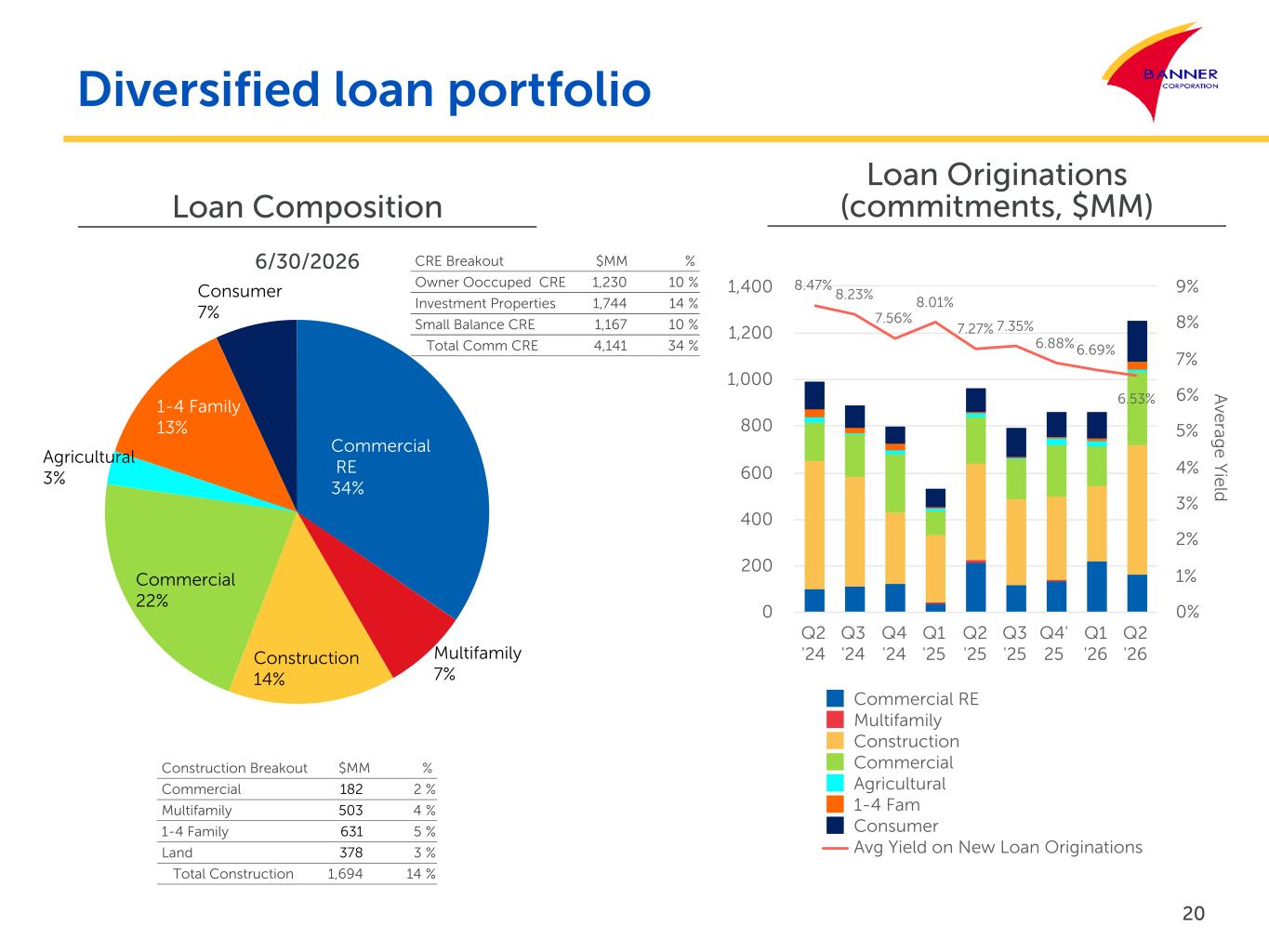
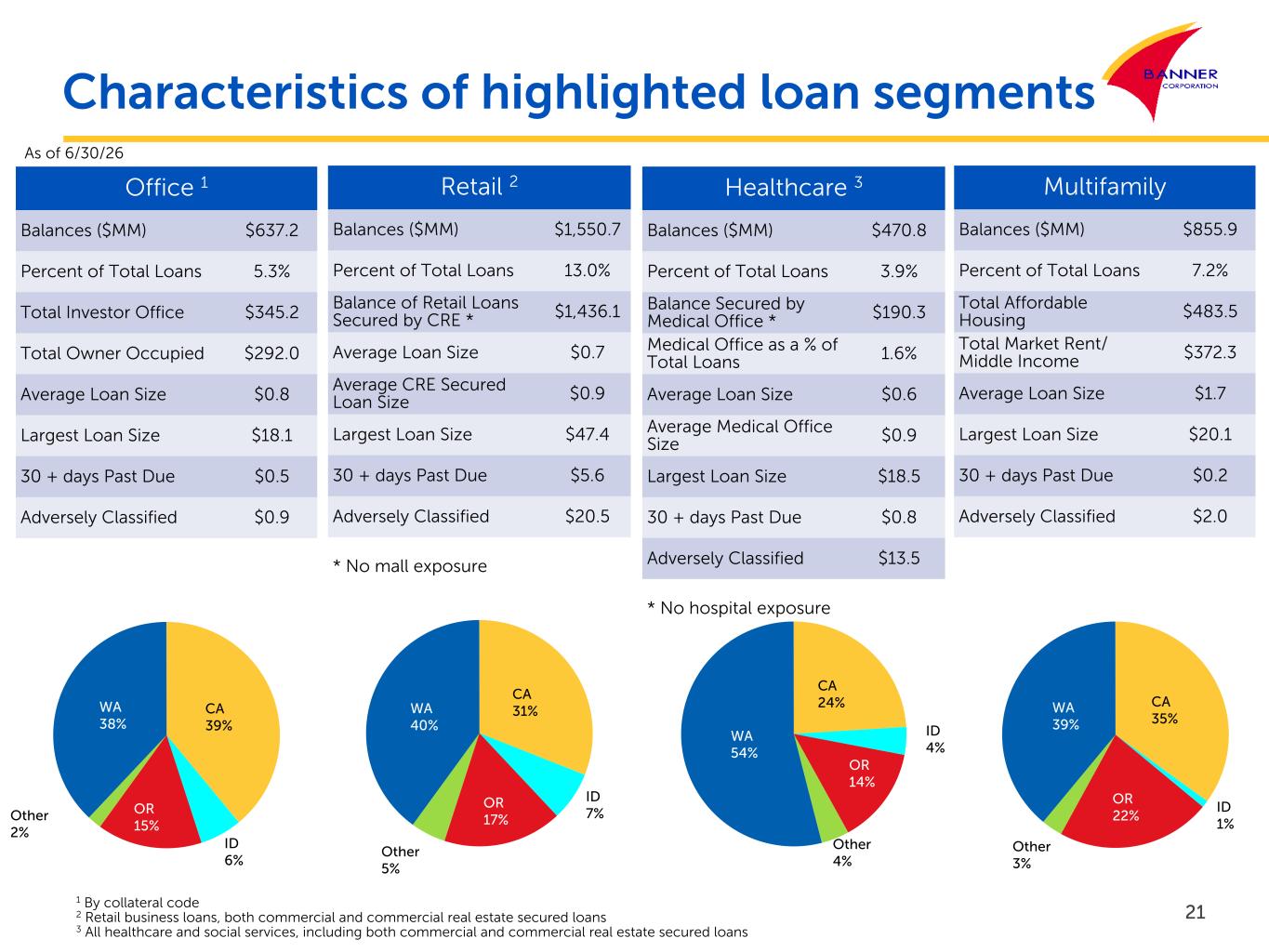
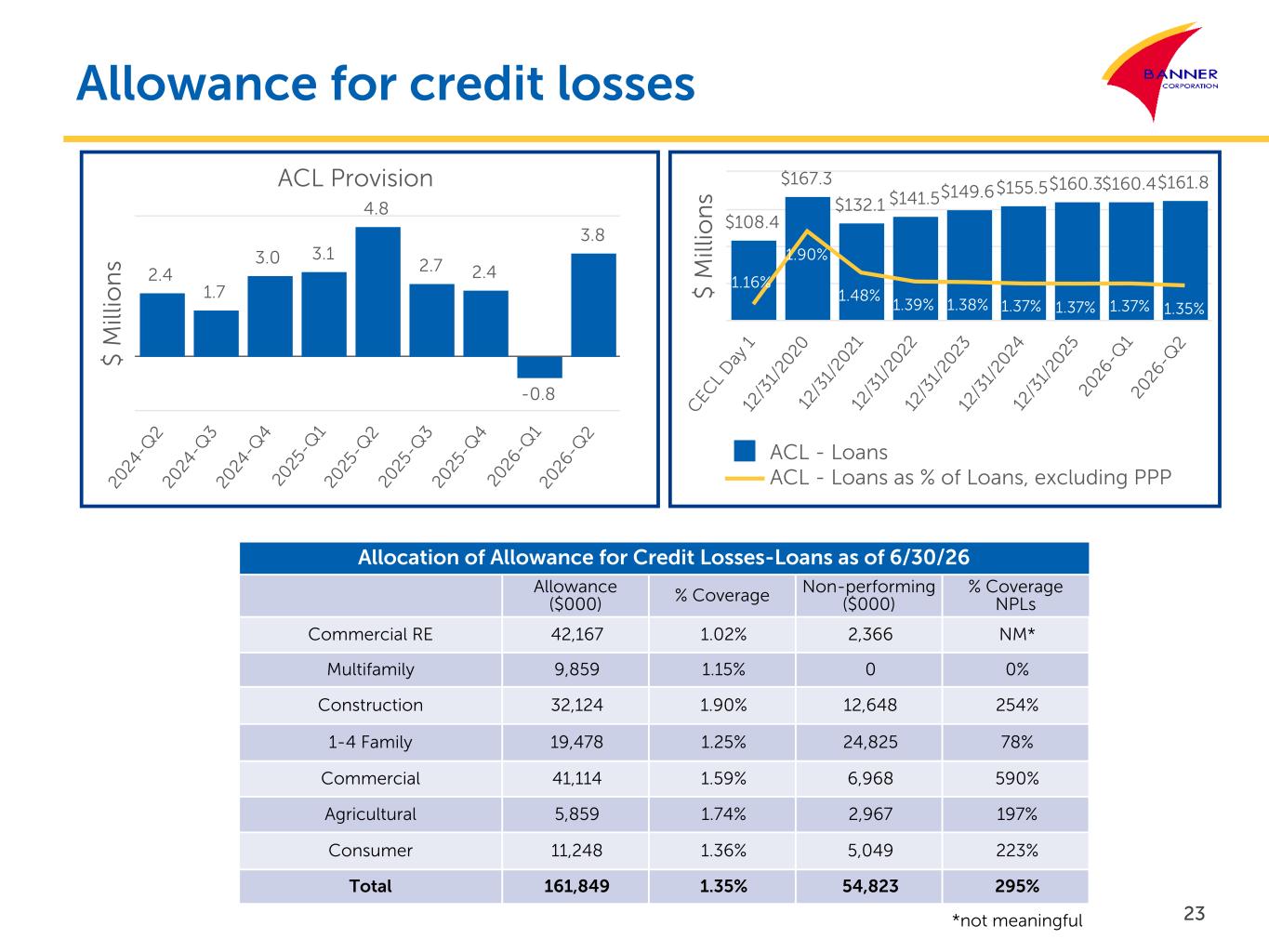
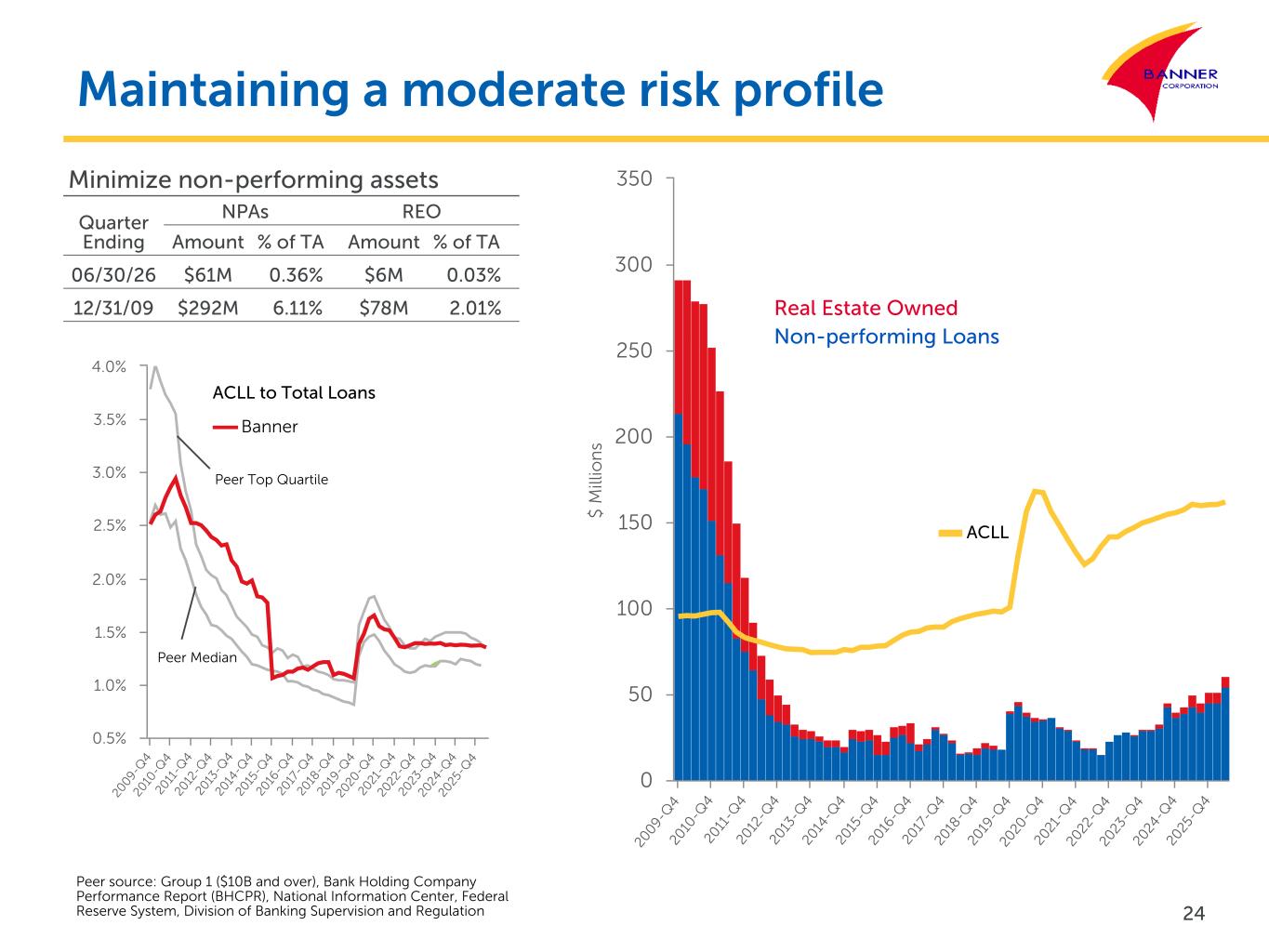
Thank you, Mark, and good morning everyone. As detailed in our press release, loan originations were strong again this quarter. We reported solid loan growth across multiple product lines and Banner's credit metrics remain stable. Delinquent loans declined 5 basis points to 0.51% of total loans when compared to the linked quarter and compared to 0.41% as of June 30, 2025. Adversely classified assets also declined quarter over quarter, down 16.5 million and represent 1.82% of total loans, a 19 basis point decrease when compared to March 31st. Non-performing assets increased by $8.9 million, the result of a single condo construction project moving to non-accrual. In spite of this increase, total non-performing assets represent a modest 0.36% of total assets. Non-performing loans total $54.8 million, the majority of which are 1-4 family or other consumer-related credits that often involved protracted resolution timelines. REO balances declined by $500,000 quarter over quarter and total $5.7 million. The net provision for credit losses in the quarter was $3.8 million, including a $1.6 million provision for credit losses and a $2.2 million provision for unfunded loan commitments. Loan losses in the quarter were modest, totaling 577,000 and were offset in part by recoveries totaling 476,000. The provision was largely driven by loan growth and was partially offset by changes in portfolio mix and positive risk rating migration. The loan loss reserve remained strong providing coverage of 1.35% of total loans which compares to 1.37% as of both the linked quarter and as of June 30, 2025. Loan originations increased 45% when compared to the length quarter, with commercial originations up 85%, construction up 73%, and consumer up 55% respectively, and both commercial and commercial real estate pipelines continue to be strong. loan. Loan outstanding grew by $287 million in the quarter, or nearly 10% on an annualized basis, in spite of continued commercial real estate and, to a lesser extent, CNI loan payoffs experienced in the quarter. The primary drivers of loan growth in the quarter were CNI up $152 million, consumer loans up $62 million, and owner-occupied real estate up $54 million. The growth in both CNI lending and owner-occupied real estate was a mix of both new and expanded small business relationships as well as several new middle market commercial relationships spread across the footprint the growth in the consumer portfolio was driven largely by the generation of new home equity lines of credit resulting from a successful marketing campaign with a smaller contribution from utilization of existing facilities consistent with owner occupied commercial real estate growth in the non-owner occupied balances reflects our success in developing new middle market relationships while deepening existing client relationships. Notably, this quarter's growth was materially tempered by multiple loan payoffs associated with real estate sales and refinancing activity into the secondary market. The increase in multifamily real estate loan balances was driven primarily by the conversion of several affordable housing projects upon completion of construction. residential construction loans continue to represent approximately 5 percent of the total loan portfolio across all business lines the overall construction portfolio remains well balanced at 14 percent of total loans reflecting our measured approach to managing construction related exposure the completed for the completed for sale one to four family construction projects average days on market again increased modestly this quarter given the current elevated interest rate environment however completed and unsold inventory levels remain within historical norms and are considered manageable we continue to closely monitor sales velocity particularly within the higher end product segment given ongoing economic uncertainty last quarter i noted the economic uncertainty resulting from persistent inflation a higher for longer interest rate environment and heightened geopolitical tensions while these headwinds continue banners super community bank delivery model and disciplined credit culture have enabled us to strengthen existing relationships grow new business and maintain our moderate risk profile supported by a strong balance sheet robust capital levels and a solid allowance for credit losses we remain well positioned to navigate the current environment and capitalize on future
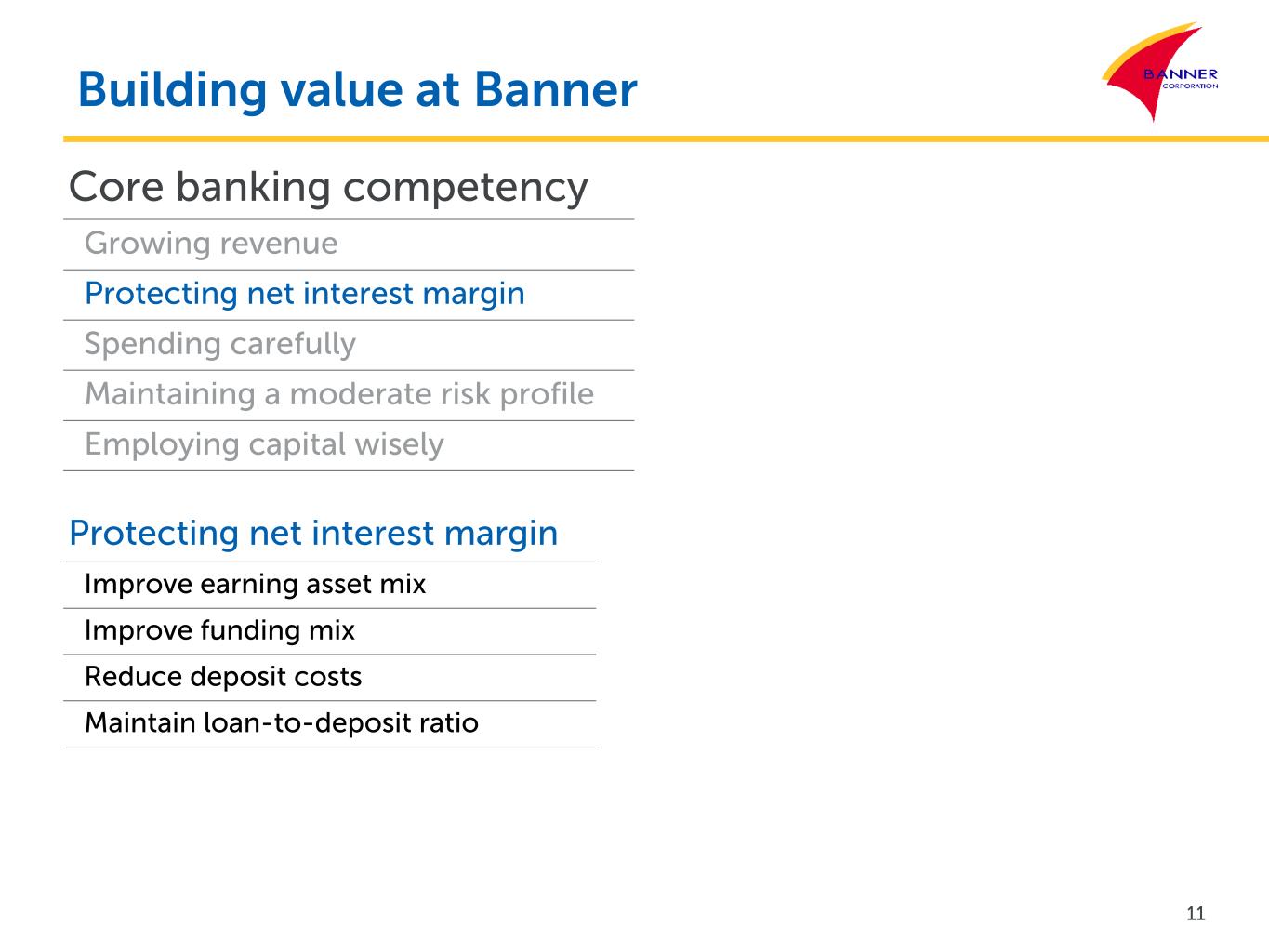
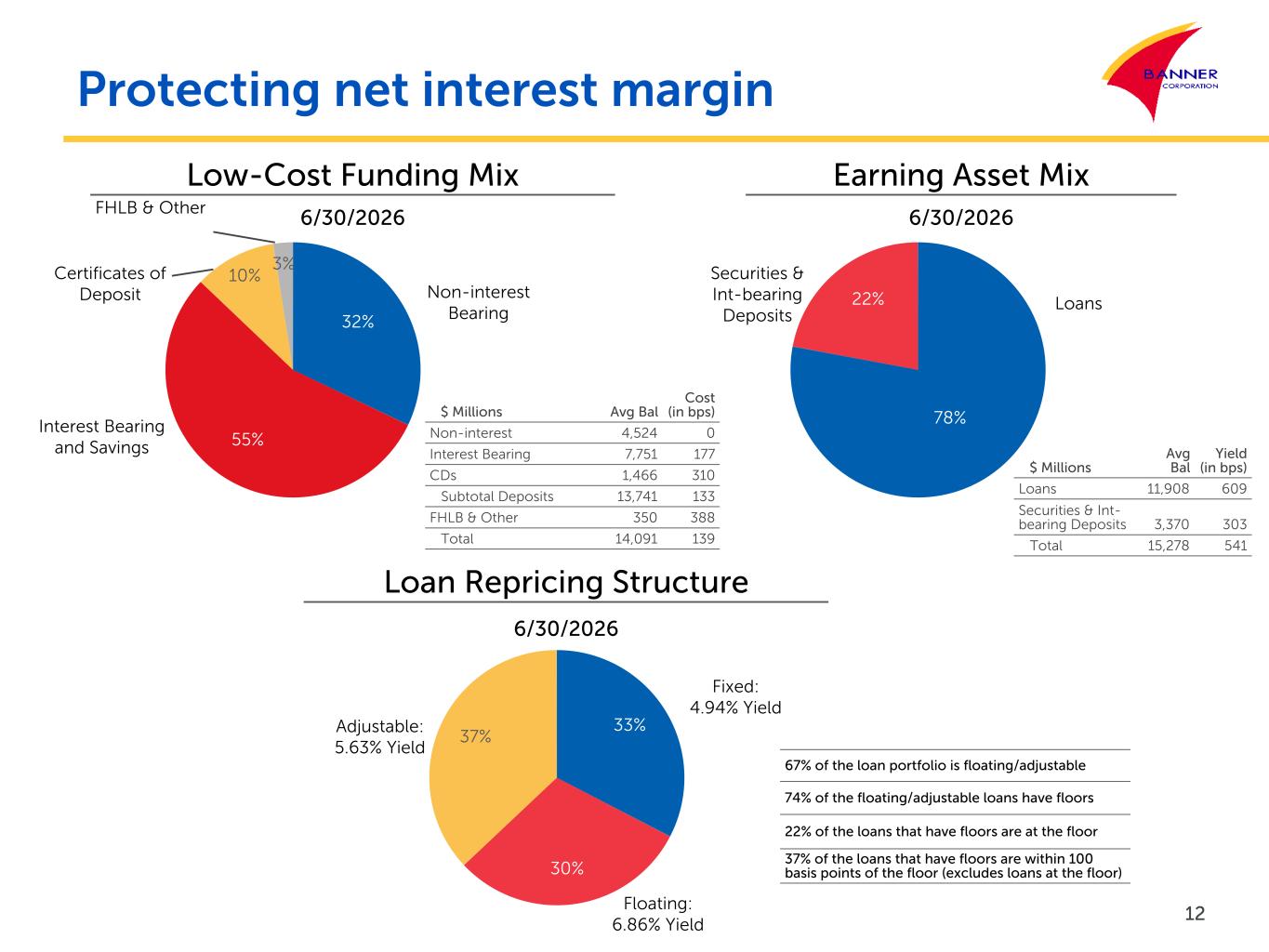
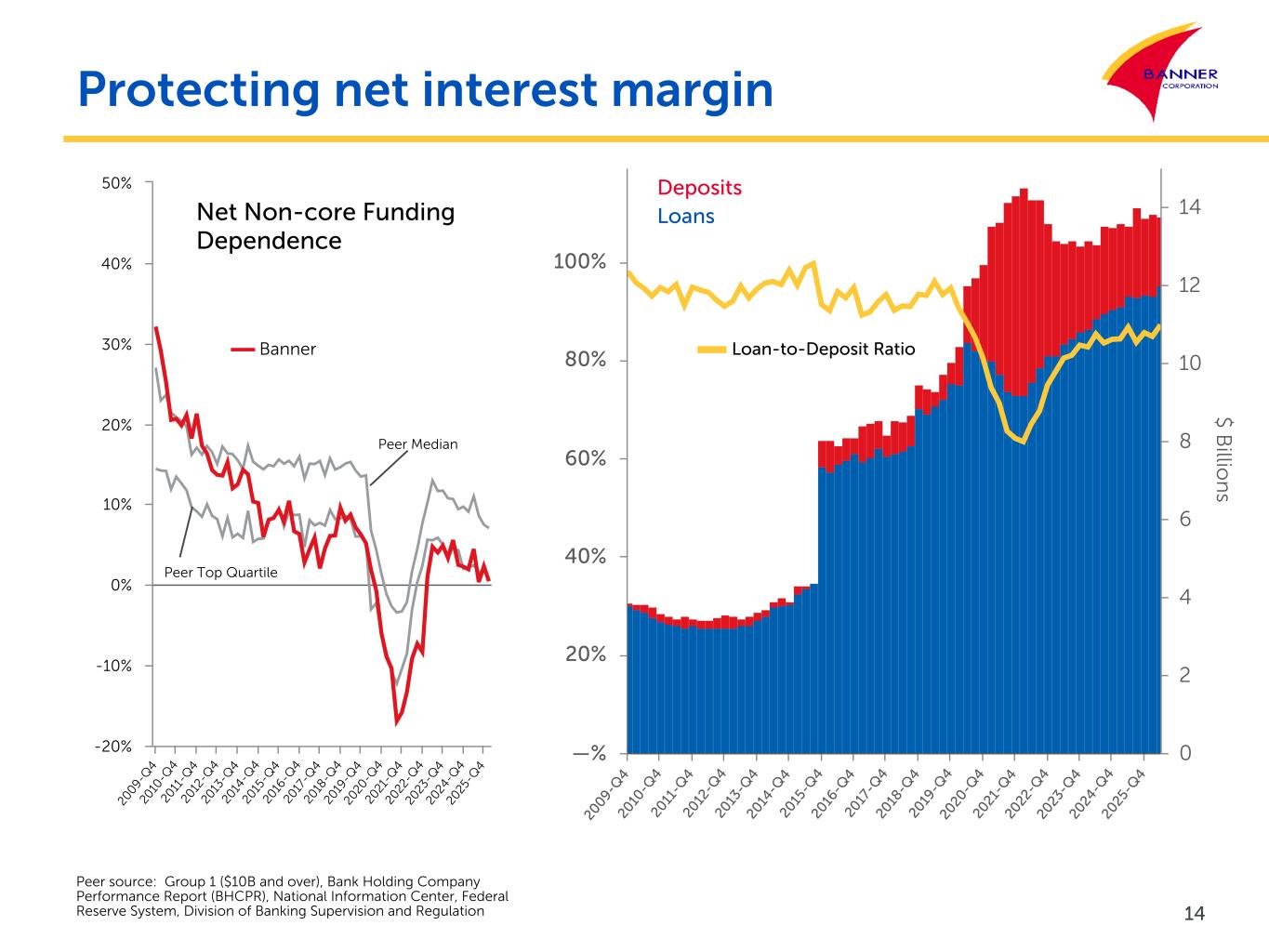
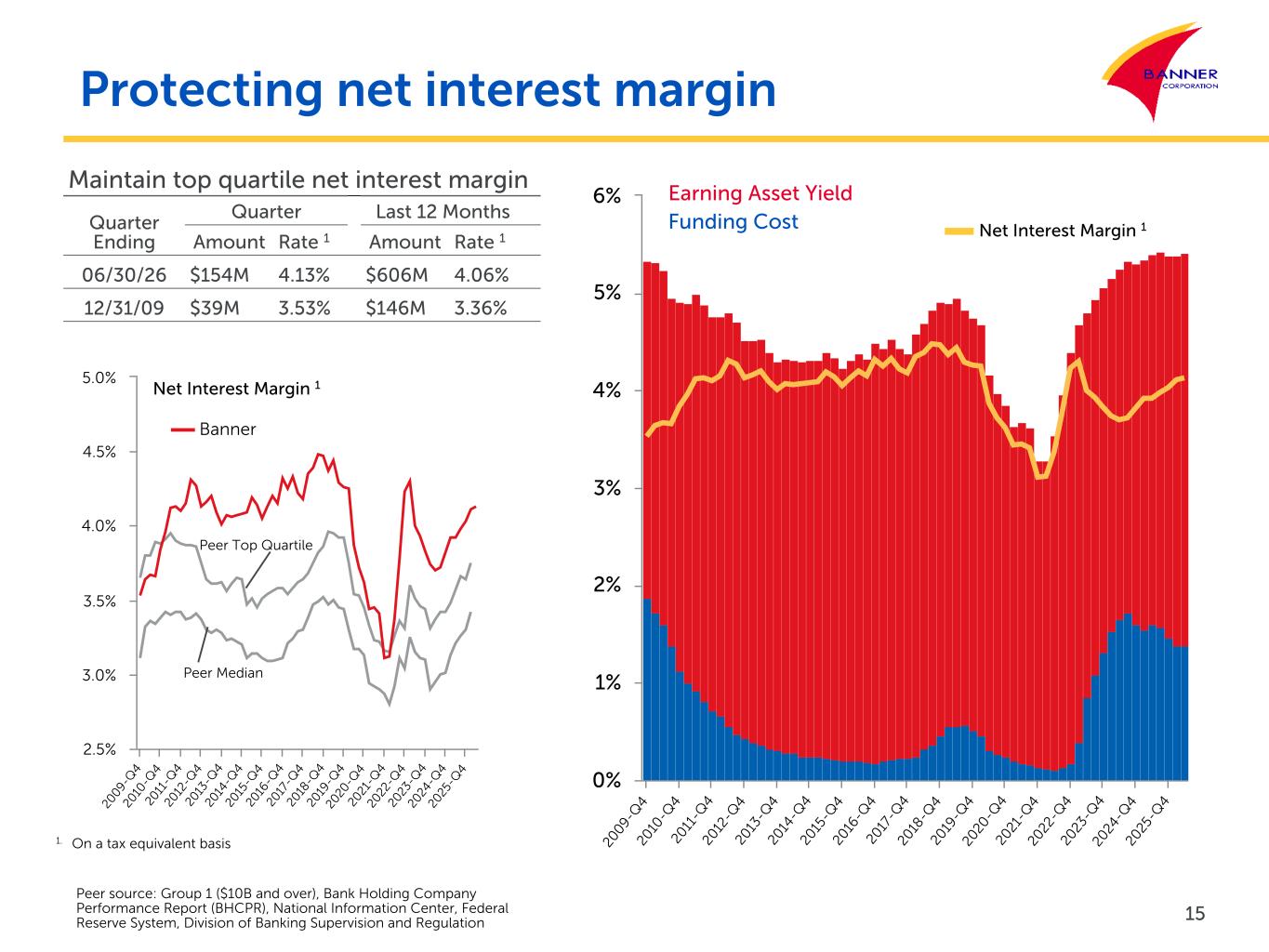
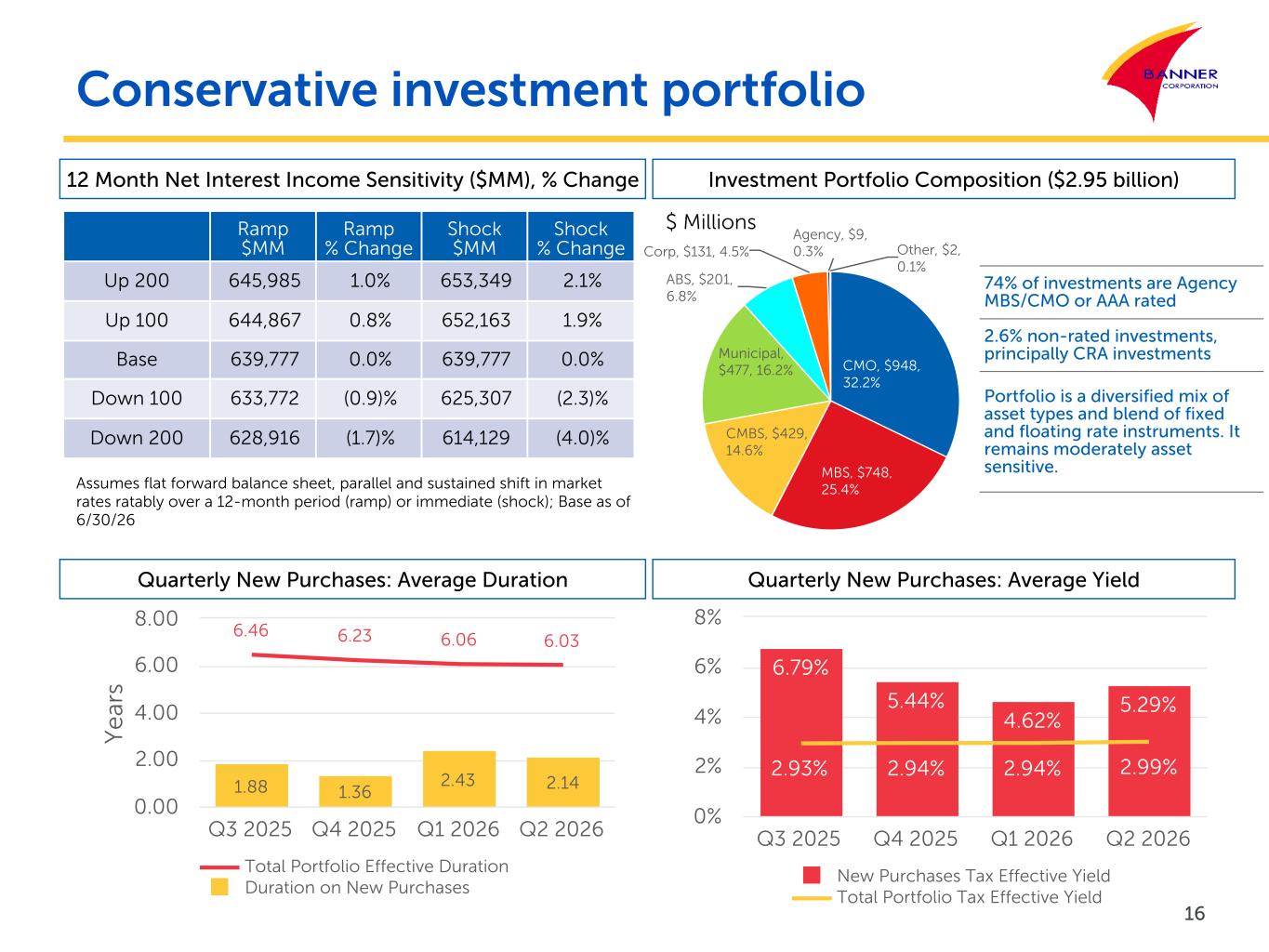
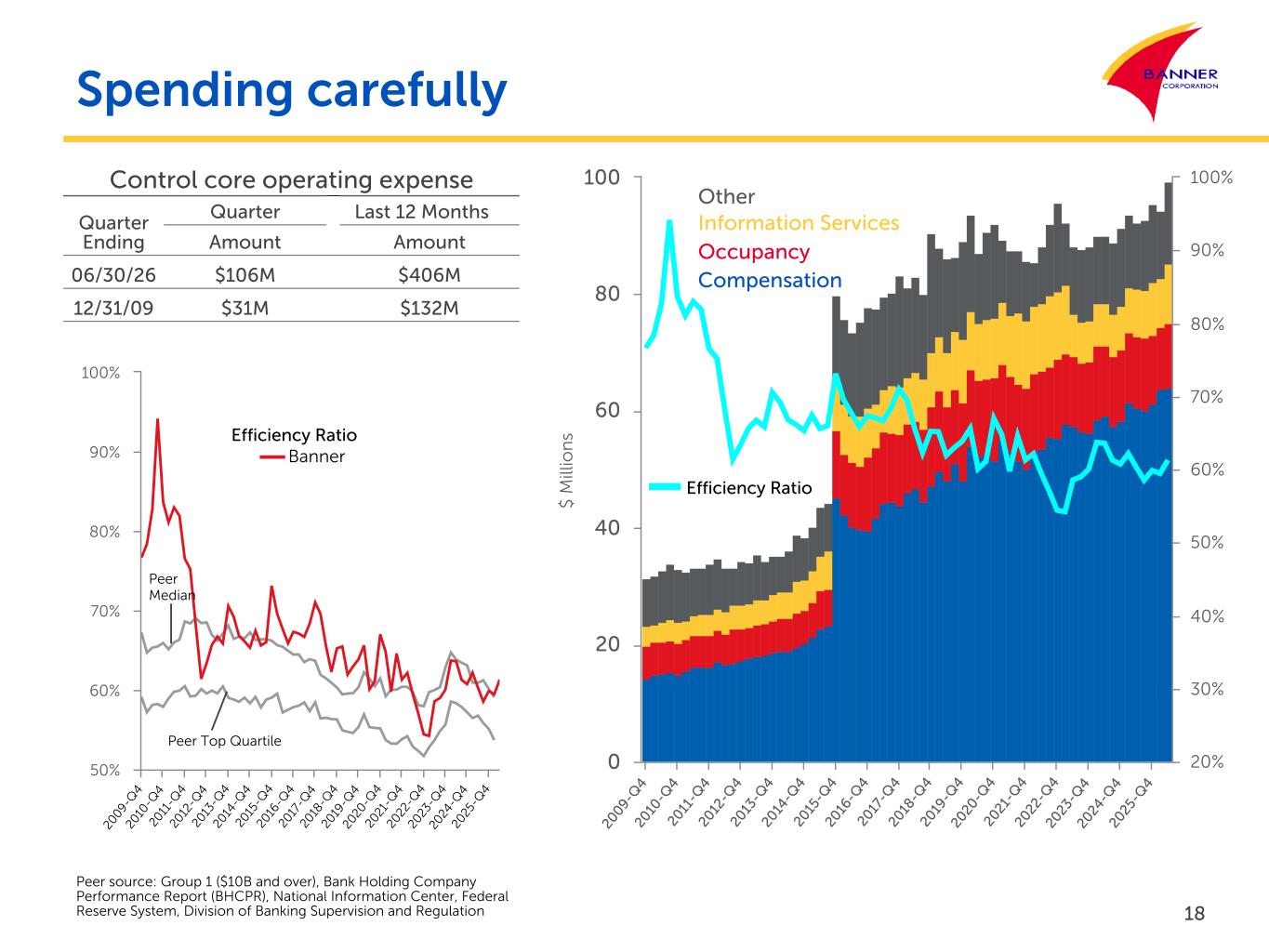
opportunities with that i will hand the microphone over to rob for his comments rob thank you jill We reported $1.43 per diluted share for the second quarter, compared to $1.60 per diluted share for the prior quarter. The decrease in earnings per share compared to the prior quarter was primarily driven by a higher provision for credit losses, lower non-interest income, and higher non-interest expense, partially offset by stronger net interest income. Core pre-tax pre-provision income increased $1.9 million, or 3%, compared to the second quarter of last year. Our performance metrics remain solid as we reported a return on average tangible common equity of 12.27 percent and a return on average assets of 1.20 percent for the current quarter. As Jill previously mentioned, loan balances increased $287 million during the quarter for nearly 10 percent on an annualized basis, reflecting continued client demand across our markets. The loan-to-deposit ratio into the quarter at 87 percent, which provides us with strong liquidity and funding flexibility. Total security balances decreased $34 million during the quarter due to a slight decline in fair value, partially offset by purchases exceeding portfolio cash flows. Deposits decreased $51 million during the quarter due to normal seasonal activities as clients use deposit balances to make tax payments. Core deposits decreased $59 million and into the quarter at 89% of total deposits. Certificates of deposits increased $8 million during the quarter. Total borrowings increased $319 million during the quarter as FHLV advances were temporarily used to fund loan growth and the seasonal deposit outflows the tangible common equity to asset ratio increased to 10.02 percent total shareholders equity increased 33 million during the quarter to approximately 2 billion net interest income increased 3.6 million from the prior quarter due to a combination of a two basis point increase in the tax equivalent net interest margin and average earning assets increasing 129 million The increase in average earning assets was driven by average loan balances increase in $158 million, partially offset by a decline in interest-bearing cash. The tax quota net interest margin was 4.13% compared to 4.11% in the prior quarter. The increase in net interest margin was due to an increase in the yield on earning assets due to loan yields increasing to basis points and the continued improvement in the earning asset mix. The average rate on new loan production for the current quarter was 6.53% compared to 6.69% for the prior quarter. The increase in the earning asset yield was partially offset by an increase in funding costs as FHLB advances were used to temporarily fund loan growth and seasonal deposit outflows. Deposit costs decreased two basis points from the prior quarter due to further repricing in the CD book. non-interest bearing deposits into the quarter at 33 percent of total deposits same as the previous quarter total non-interest income decreased 939 000 from the prior quarter that decrease was primarily due to the prior quarter having a 1.7 million increase in the valuation of financial instruments carried a fair value and the current quarter having lower gain on loan sale income These decreases were partially offset by the prior quarter having a loss on the sale of securities and the current quarter having higher service fee income. Total non-interest expense increased $5.4 million from the prior quarter. As I noted last quarter, the expenses in the first quarter were lower than typical as some expenses expected to be incurred in the first quarter were delayed until the second quarter. Software expense was $1.8 million higher, which included $924,000 of non-reoccurring expense related to the write-off of the previous commercial loan origination system, which was recently replaced. Marketing expense was $1.3 million higher due to the timing of advertising campaigns. Salary expense was $800,000 higher due to normal annual salary increases being completed at the end of the first quarter, and legal expenses were $764,000 higher due to various legal matters. In addition, the current quarter included $238,000 of M&A expense acquisition. Our capital and liquidity positions remain strong and continue to support our clients, communities, and future growth opportunities. This concludes my prepared comments. Now I will turn it back to Mark.
Thank you, Jill and Rob, for your comments. That concludes our prepared remarks today. And Jordan, we will now open the call and welcome.
Operator
Your first question comes from the line of Matthew Clark from Piper Sandler. Your line is now live.
Hey, good morning, everyone.
Just on the loan yields, wondered what the weighty leverage rate was on new loans. I may have missed it in your prepared comments. And then what's your outlook on loan yields in general, knowing that you still have some back book repricing, but also wanted to consider the competitive pricing and rate environment.
Yeah, thanks for that question, Matthew. This is Rob. So the average yield on new loan production for the quarter was 6.53 percent. And, you know, we've been seeing some back book repricing there. We've been seeing new loans coming on at higher yields, but we've also seen that slowing over time. increase. The pace of that increase is slowing at this time. Going forward, I would expect probably through the end of the year, we might see one to two paces points.
Okay, thank you. And then similar question on the deposit side. If you had the spot rate on deposits at the end of the quarter on June 30, maybe the monthly margin in the month of June, and your thoughts on deposit costs going forward, assuming the Fed's on hold.
Yeah, so deposit costs were relatively flat throughout the quarter, so the 133 basis points was pretty close to what we saw throughout the quarter, and NIM was fairly flat as well, so NIM was a bit lower, and then it did increase a bit as we moved through. And then just as far as what we're looking at from a go-forward standpoint, We've been benefiting from the CD book repricing, and that's the benefit that you saw the two basis points decline in deposit costs was the CD book repricing. The CD book has pretty much fully repriced at this at this point, and I wouldn't expect any further repricing in the CD book until we start to see some Fed action, which really isn't forecasted for the foreseeable future. So I'm expecting deposit costs to remain relatively flat. The only other thing I will add is we have started to see CD specials in our marketplaces. We have started to see those increase. And this most recent quarter, we did increase the advertised rate that we were advertising as well. If anything, I would say it's holding deposit costs flat.
Okay. And then last one for me, just on expenses, a little heavier than expected, even if you strip out the software right off. the merger costs um maybe um speak to your thoughts on the run rate going forward whether or not we might see some relief and and you know what you're doing on the technology side you know what did you get rid of what are you investing in that would be helpful thank you yeah you know as i mentioned last quarter the q1 expenses were to the timing of certain expenses that were expected to incur in the first quarter got delayed into the second quarter and then
we're also seeing additional modules and loan origination system continue to go live so we're seeing some expense increase there and then just some of the marketing campaigns that we had we didn't have anything that went really live in the first quarter so really the second quarter was basically two quarters worth of marketing expense that you saw there and I think if you're looking for kind of a run rate at this point you know if you if you back out the loan origination system right off the old one that's going to get you pretty close timing type items so i think you you probably saw q1 was a bit low q2 was a bit high just we continue to see the loan and deposit origination system we continue to see the benefits of that and the benefits aren't only from an efficiency expense standpoint but i think what you saw also is you saw an increase in loan originations see the the timing on how quickly we can get loans through the pipeline we're benefiting from that standpoint because of that investment great thanks again thank you Matthew the next
question comes from the line of Jeff Rulis from DA Davidson your line is now live good morning this is ryan pain on for jeff ruleis uh starting off uh hey uh strong strong loan growth this quarter uh last quarter we saw elevated payoffs uh just wanted to gauge those dynamics this quarter and uh the pace of expected net loan growth through the remainder of the year yeah ryan this This is Jill.
So this quarter, as I alluded to in my comments, we did still have the commercial real estate payoffs and more, a little bit unexpected, increased elevated C&I payoff due to business sales and other transactions, asset sales. But what I would say is that in spite of that, we continue to have meaningful unfunded construction projects underway, the pipelines continue to rebuild and are strong, and even looking at history as the driver, third quarter will probably come down a little bit in originations and loan growth, yet we still expect to end the year, the full year, at that mid-single digit growth rate. CRE payoffs are slowing, but they're not done.
Now on the deposit side, how would you characterize the competition there? Are customers looking for higher rates with maybe some rate hike anticipations?
And I wouldn't necessarily make sure there, but I would say just we haven't seen that at this stamp of things always, but we haven't necessarily the level of exception price.
Last for me, with a California peer takeout announced recently, how do you view that in terms of any potential market share gains or competition for deals in that area?
Ryan, this is Mark. Look, I think it was a great transaction. Obviously, that is a very good and well-run bank. It has a great reputation. So anytime there's some type of system conversion, there's opportunity for us. Maybe they'll be distracted with integration. It's a well-run bank, and we're just going to continue along with our organic model. And I think you can see by the numbers that we're doing pretty well in California.
Operator
The next question comes from the line of Kelly Mata from KBW. you. Your line is now live.
Hi, this is Megan Lynch on for Kelly Mata. Thanks for taking my question. So just good morning. Thinking about capital return and your priorities here, sort of how are you thinking about doing this alongside the Pacific deal and what are your priorities? going forward, sort of near-term, and then what about buybacks, any more color on timing of that?
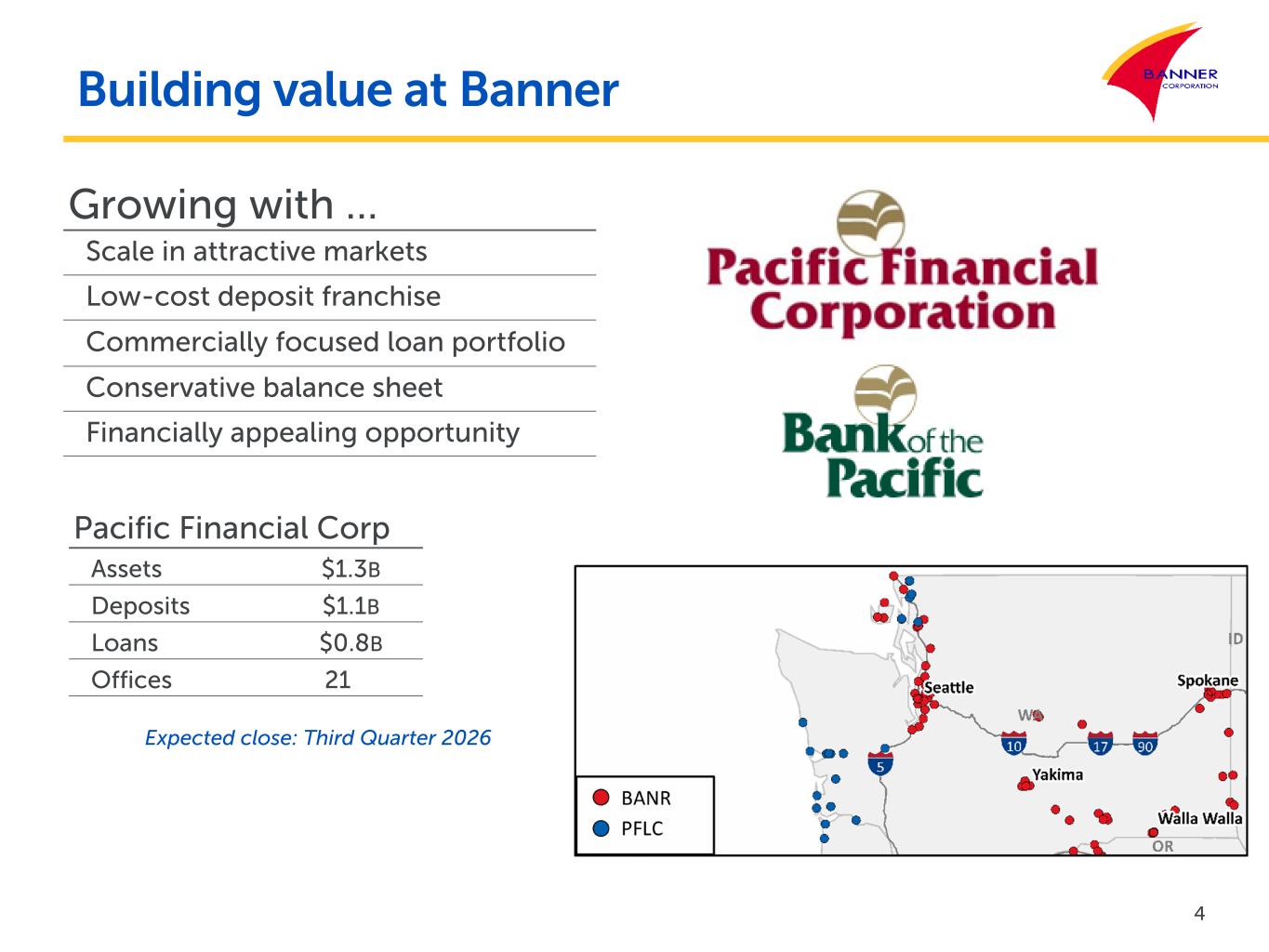
Yeah, this is Rob. Thanks for the question. So, yeah, we put any alternative capital actions outside of the core dividend on Holden until we get the Bank of the Pacific deal closed uh if you assuming the right market conditions are exist it doesn't necessarily change the total number of shares that we're going to repurchase for the year it just kind of pushes out the timing of those at this time so we're really waiting for the bank specific transaction to close before we do anything okay got it and then on the pacific deal is timing still for third quarter close and how is it going in general in terms of the progress of the acquisition yeah the the timing hasn't changed we expect it to close here in the third quarter i would say getting all the requests so nothing's changed since we announced the the Awesome.
All right. Thank you, Megan.
Operator
Your next question comes from the line of Andrew Leisha from Stone X Group. Your line is live.
Hey, good morning, everyone. Morning, Andrew. Morning. Just a question on the one last point on the margin. DFHLB balances. Have you seen the deposit growth kind of rebuild here this quarter? I guess how should we look at the balance sheet makeup on the funding side here for this quarter?
Yeah, I think as we as we move through the second quarter, we saw the FHLBO balances grow as we moved through the first half of the quarter, and then we started to see the deposit balances come back in as we move through the end of it. So I would say at this point it's just normal seasonality, and assuming we see that normal deposit growth that we would expect in the third quarter, which is typically our strongest quarter from a deposit growth standpoint, we'd expect those FHLB advances to continue to come down as we move through the quarter.
Got it. So from what I'm hearing on the go to deposit side, maybe not too much benefit like you've seen going forward, but maybe you get some benefit here with the wholesale funding blowing up. So maybe we see a couple of basis points of margin expansion.
Yeah, I think that's right. if you if you think about you know if we i still think we're going to get a little bit on the on the loan repricing call it a basis point or two and then in the third quarter we should we should see funding costs come down just because of the mixed change there with additional deposits coming in lower fhlb advances so a couple basis points of margin expansion in the third quarter uh beyond that it's going to be tougher as you move just because i'm thinking funding costs are going to level out and you might see a little bit on the loan side but again that that pace is continuing to slow got it um and then just you know on the new software and the old software that you wrote off uh wrote down what does the new system do that you didn't have before i think primarily it just creates a lot of efficiencies uh in the sense that there was a lot of back office processes that continue to be fairly manual so it really automates a lot of the processes and allows the time it takes a deal to get through the system from start to finish, it slows or increases that timing.
This is Mark. Let me just add, I think it was two separate systems, right? Some small business and a commercial. So it helps refine all of that into one. So it does streamline the operation.
Got it. So it sounds like this was something you've been wanting to do for quite some time, but now you felt the timing was right and you had the good, great technology?
I think that's correct. I think, you know, we've been wanting to do it for a while, but as you know, we had a few bank acquisitions that we were combining, and we didn't want to disrupt our market performance and our organic growth during those integrations. So the timing was perfect for us to do this.
Got it. Makes sense. All right, thanks. I'll step back. Thank you, Andrew.
Operator
Your next question comes from the line of David Feaster from Raymond James. Your line is live.
Evan
Analyst — Raymond James
Hey, good morning, guys. This is actually Evan on for David Feaster.
Evan
Analyst — Raymond James
Morin, just wanted to maybe switch back to the growth side. Origination trends were really encouraging, and loan growth was seemingly pretty broad-based. You also touched on the resiliency of customers in your marketplace. So I'm just curious whether you believe this was a function of improving demand as customers get more used to the operating environment? Or is it rather just getting more out of your producers? Then maybe more broadly, where are you seeing the most opportunities to drive loan growth today, rather geographically or by industry?
So as to the first part of the question, it really was both. I mean, it's new client acquisition. It's our new relationship managers, you know, really hitting the street and bringing in business. um and just expansion of existing relationships so you know i'd say we're hitting on all cylinders this quarter and i would expect that to continue given the way the pipelines are you know continuing to build if you look back over the last three quarters originations have been you know pretty healthy in each of those quarters they take time to actually end up being funded loan balances So, you know, I feel really good about it. And as to the geographies, it really, it was broad-based. I mean, I went looking for the pockets of where we were finding these loans, and it was up and down the West Coast, across the mountains into eastern Washington. So we don't have an industry or a particular geography that is, you know, doing all of the work for us.
Evan
Analyst — Raymond James
That's really helpful. And then maybe just sticking on growth and, you know, with the Pacific deal, it's good to hear that's going well. I was just I know it brings a very strong core deposit base and it's very complimentary on the funding side.
But I'm just curious if you're also seeing opportunities on the lending side side in terms of their bankers being able to bank larger credits or if there's any verticals that they had that you're excited to be able to expand on. thanks no new verticals but certainly their bankers will have a much greater upside in terms of growing their relationships with their existing clients and actually bringing on new clients in their markets that they couldn't bank given their much smaller hold limits at that institution so i i don't want to speak for them but i think they're pretty excited about their opportunities as they come into Banner. And we're excited as well, I should say. I mean, it's great for both of us.
Evan
Analyst — Raymond James
That's great to hear. And then last one from me, just on the credit side, you know, I saw the increase in non-performing, but there was also positive migration and substandard. Just curious what you're seeing in terms of broad credit trends, then maybe if you have any more detail on that condo loan that migrated and expectations for resolution or recovery on that? Thanks.
Yeah, so it was a small condo project in the California market. Ultimately, I don't expect it to, you know, be sitting in non-performing for very long. It experienced significant delays from the outset. And, you know, I see a medium-term resolution to that. But the biggest area of, you know, non-performing assets it they're they're one to four family residential their home equity lines of credit it's an average loan size of under 500 000 in that you know that specific segment um so what am i watching most closely it's the consumer segment mortgage home equity all of that that is has been impacted by this higher rate environment for uh you know this elongated time period and the strain that their experience that's really helpful i'll step back and congratulations on the quarter.
Evan
Analyst — Raymond James
Thank you, Evan.
Operator
Your next question comes from the line of Andrew Terrell from Stevens, Inc. Your line is now live.
Hey, I was hoping maybe to start just with Jill and apologies if I missed it. It sounds like, you know, after a strong second quarter on loan growth, it sounds like the pipeline and, you know, So the kind of underlying trends going into the back half of the year are still pretty strong. I was hoping you could just maybe quantify to the extent you can just where the pipeline sits, whether year on year, quarter on quarter, kind of the sequential changes, just to give us a sense for, you know, how it's trending into the back half of the year.
You know, I don't have those numbers off the top of my head, Andrew. I just know that as we've pulled them through into fundings, you know, things are coming in behind them. so you know i can't compare this quarter to last quarter what's sitting in the pipeline i just know that they remain full and continue to end up being closings originations and then ultimately funded balances okay fair enough um i mean so we're you know tracking towards that mid singles on the loan growth for this year um i know it sounds like deposits should pick up seasonally here in the third quarter, but just do you think core deposit growth can kind of keep pace with that mid-singles loan growth and any early indications on how deposits are tracking here
Hey, Andrew, it's Rob. Yeah, our expectation is that deposit growth would keep up with the pace of loan growth. You know, we're a core funded bank. That's what we are. That's what we expect to maintain. And I'd just say, I mean, we're just seeing normal seasonality Add, Andrew, again, let me add to that.
Recall the very well-run bank.
Yep, certainly. If I could just sneak one more in, Mark, the, you know, it feels like the environment for deals has really started picking up some. You guys are obviously working through Pacific now, and as you referenced, great deposit forward acquisition for you guys. A little bit on the smaller side, I'm curious if that, you know, changes kind of your opinion and on interest in further M&A, you know, potentially more near-term, just maybe characterize kind of your interest going forward.
Yes, I don't look. I think the bank-specific transaction, that combination is going to be fantastic. They're a great company to work with. The integration, I expect to go very smoothly and, you know, according to schedule. so I don't that would that transaction would not preclude and we're going to continue to be opportunistic obviously with our strong capital levels and good core earnings power I think we will continue to be a great partner and as you know there's a bit of scarcity on on the West Coast now so non-organic that
Operator
concludes the question and answer session I would like to turn the call I'll back over to Mark Grascovich for closing my mic.
Thank you, Jordan. As I stated, we're very proud of the Banner team in our second quarter of 2026 solid operating performance. Thank you for your interest in Banner and for joining our call today. We look forward to reporting our results to you again in the future. Thank you very much for your attention and everyone have a wonderful day.
Operator
This meeting, you may not disconnect.