Operator
Good afternoon. Thank you for attending the Babcock & Wilcox Enterprises' second quarter 2026 conference call. All lines will be muted during the presentation portion for the call, with an opportunity for questions and answers at the end. I would now like to turn the conference over to your host, Sharon Brooks, B&W's Director of Communications. Thank you. You may proceed, Ms. Brooks.
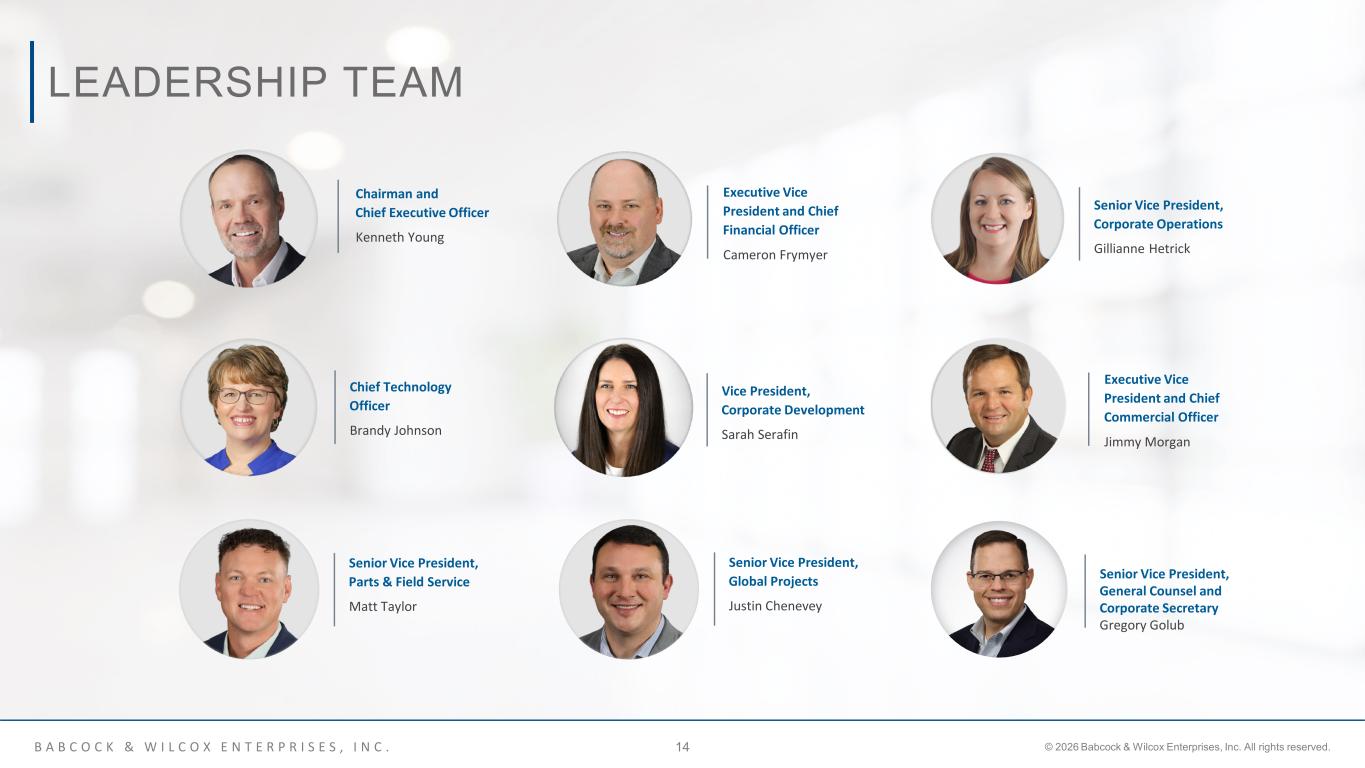
Thank you, Chrysalin, and thanks to everyone for joining us on Babcock & Wilcox Enterprises' second quarter 2026 earnings conference call. I'm Sharon Brooks, Director of Communications. Joining the call today are Kenny Young, B&W's Chairman and Chief Executive Officer, and Cameron Freymeyer, Chief Financial Officer, to discuss our second quarter results. During this call, certain statements we make will be forward-looking. These statements are subject to risks and uncertainties, including those set forth in our safe harbor provision for forward-looking statements that can be found at the end of our earnings press release and in our quarterly report on Form 10-Q that was filed with the SEC earlier today. Additionally, except as required by law, we undertake no obligation to update any forward-looking statement. We also provide non-GAAP information regarding certain historical and targeted results to supplement the results provided in accordance with GAAP. This information, which includes a discussion of adjusted EBITDA and adjusted net income, should not be considered superior to or a substitute for the comparable gap measures. A reconciliation of historical non-gap measures can be found in our second quarter 2026 earnings release published earlier today and in our company overview presentation filed on Form 8K, which is posted on the Investor Relations section of our website at babcock.com. Please also see our second quarter 2026 earnings release published on August 10th, 2026 for further information regarding our bookings and backlog. I will now turn the call over to Kenny.
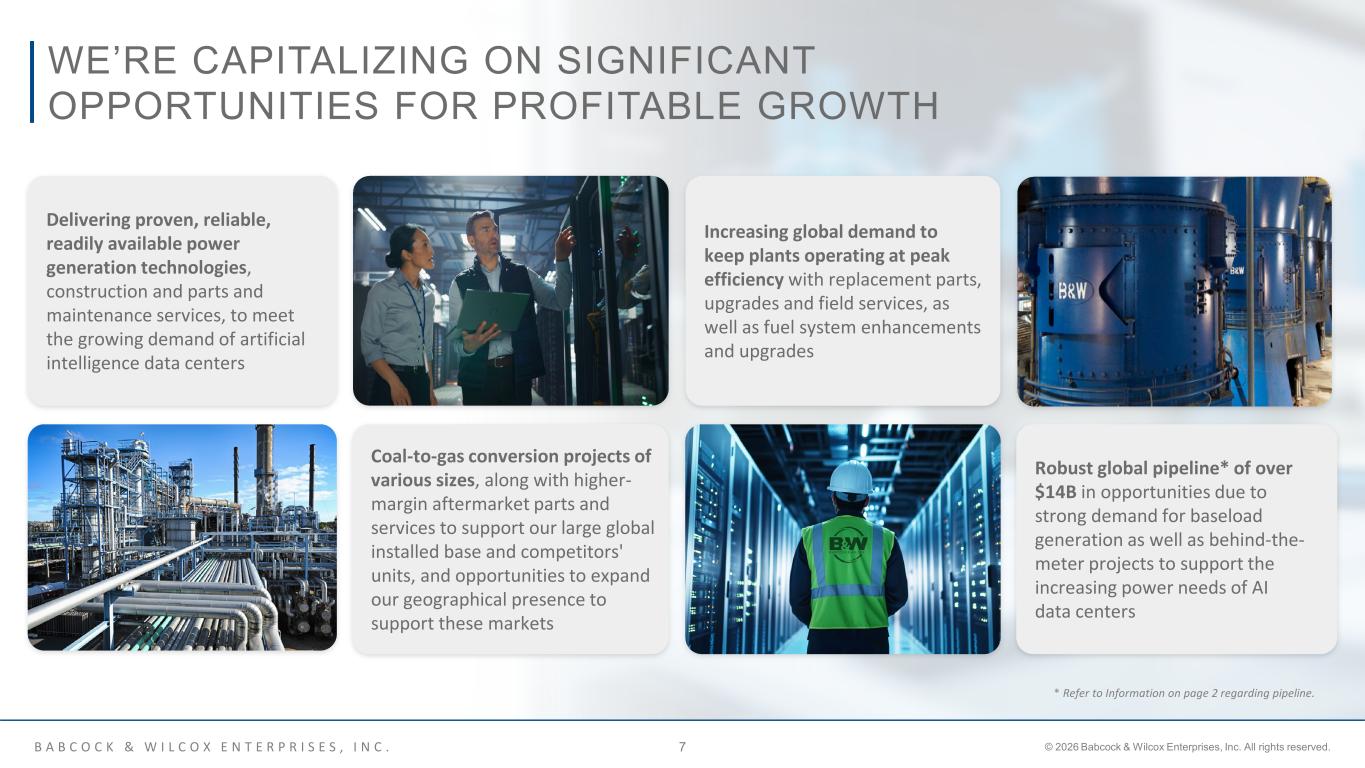
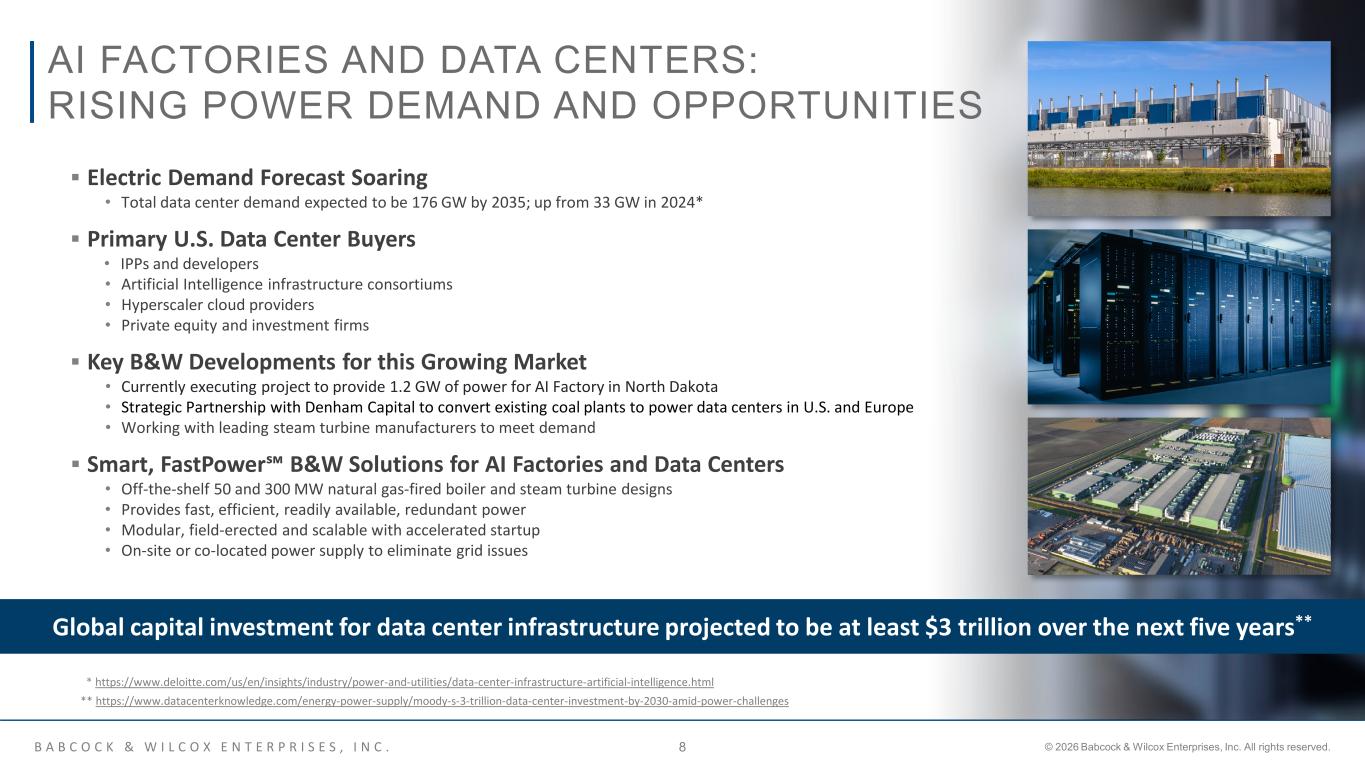
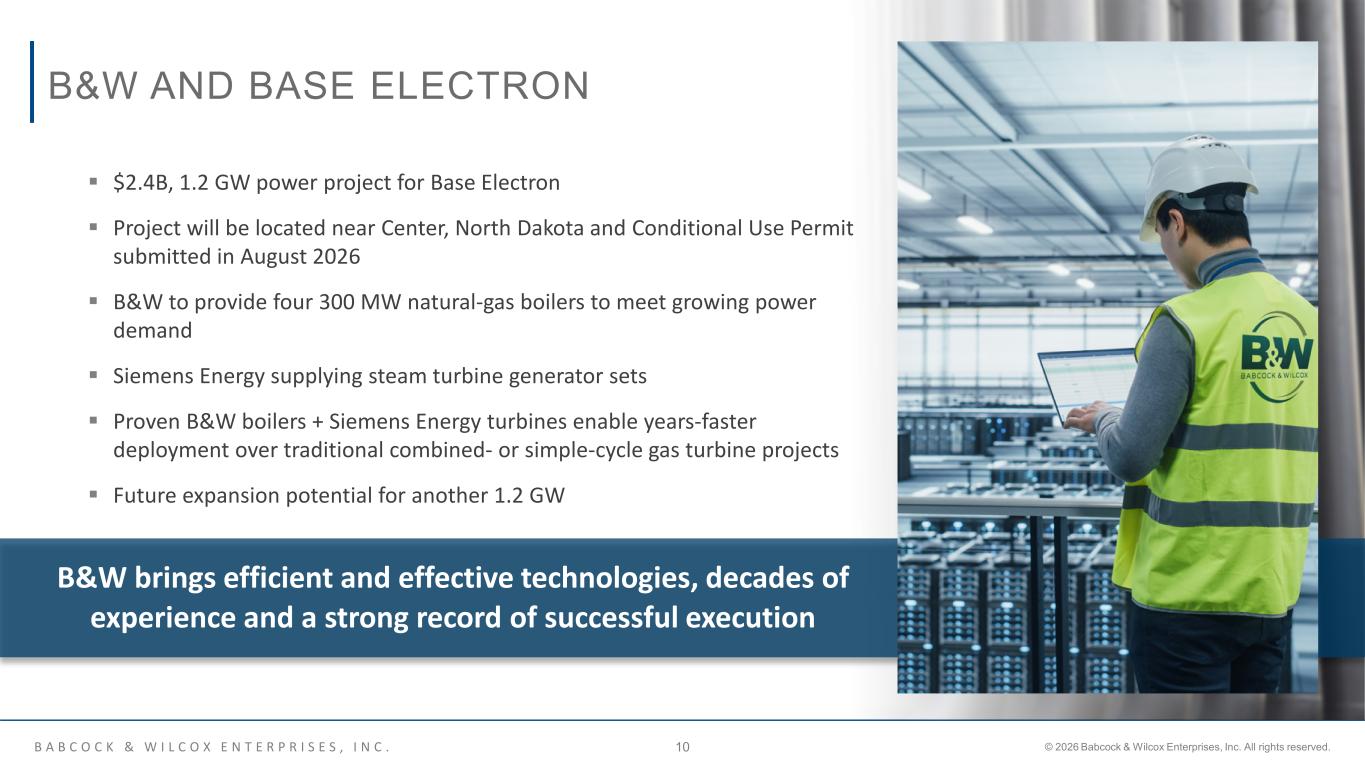
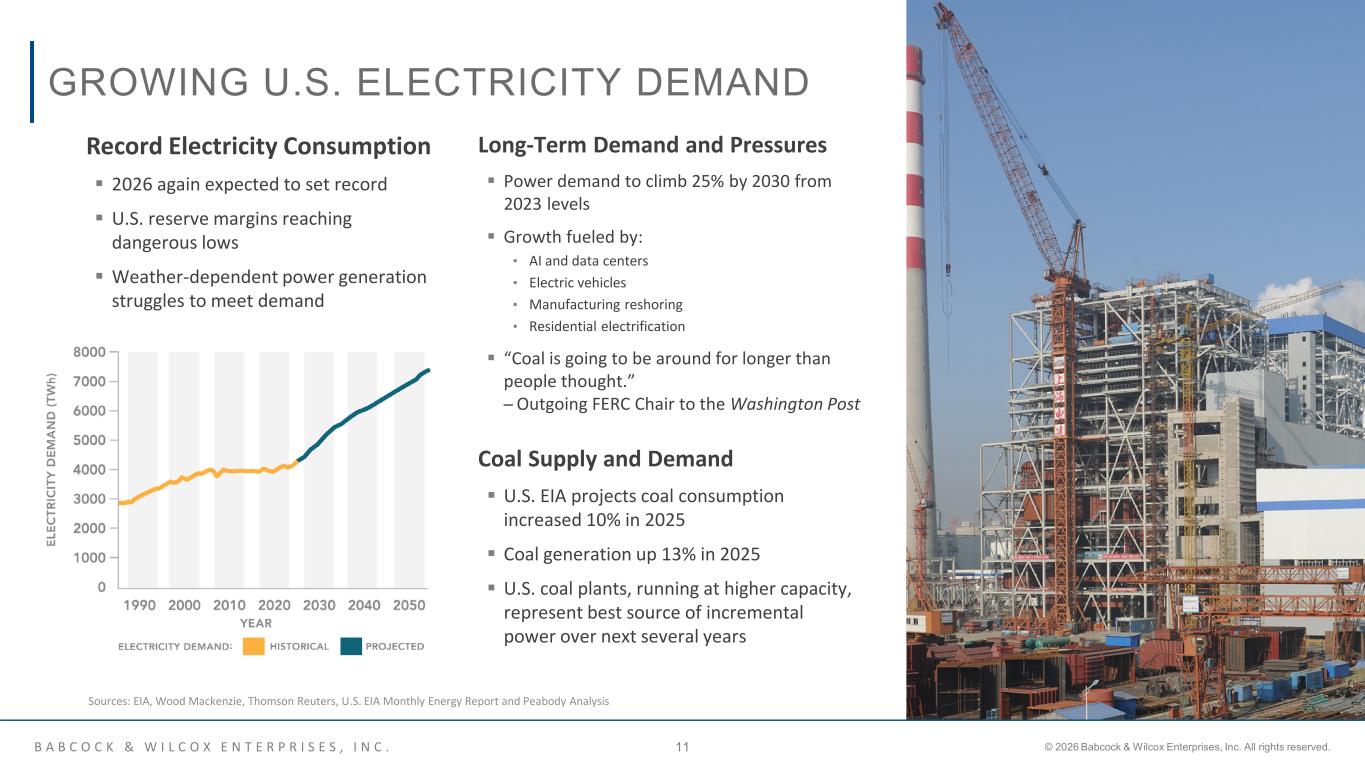
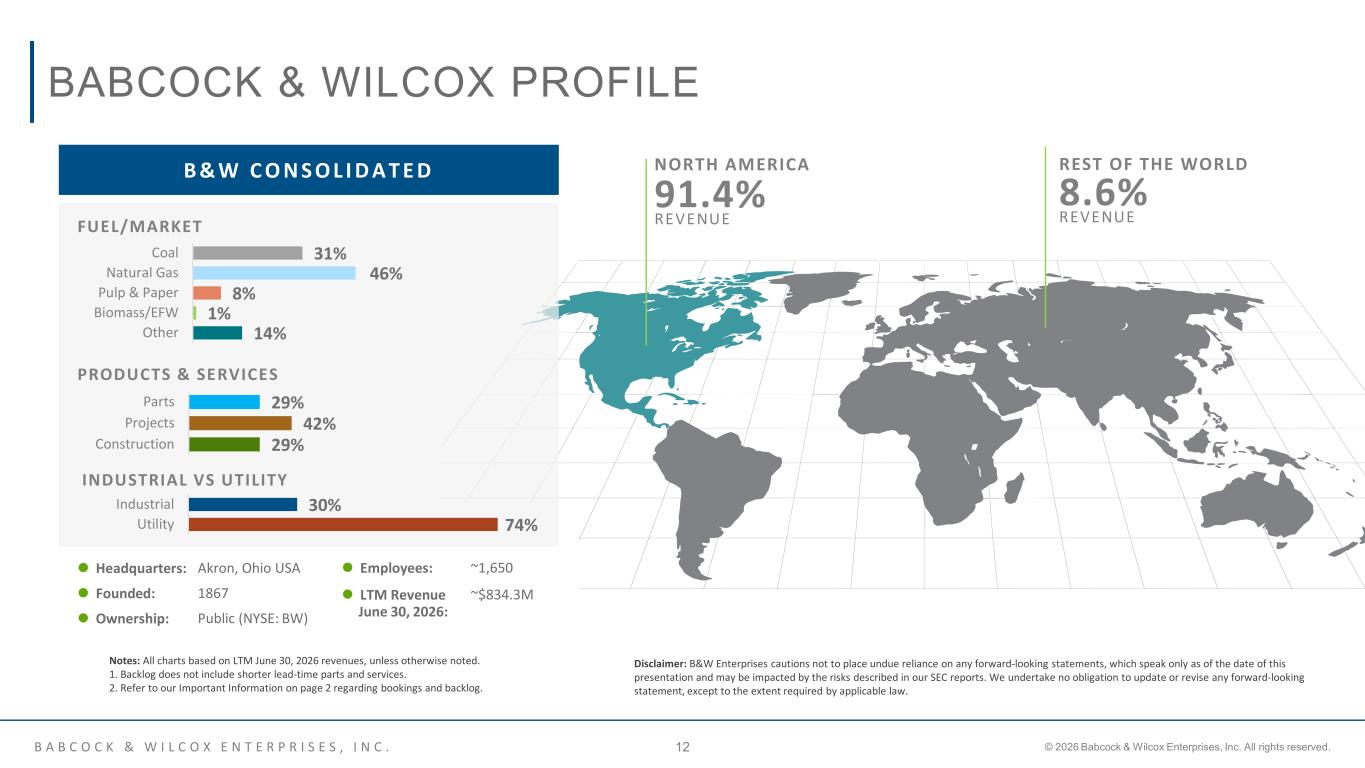
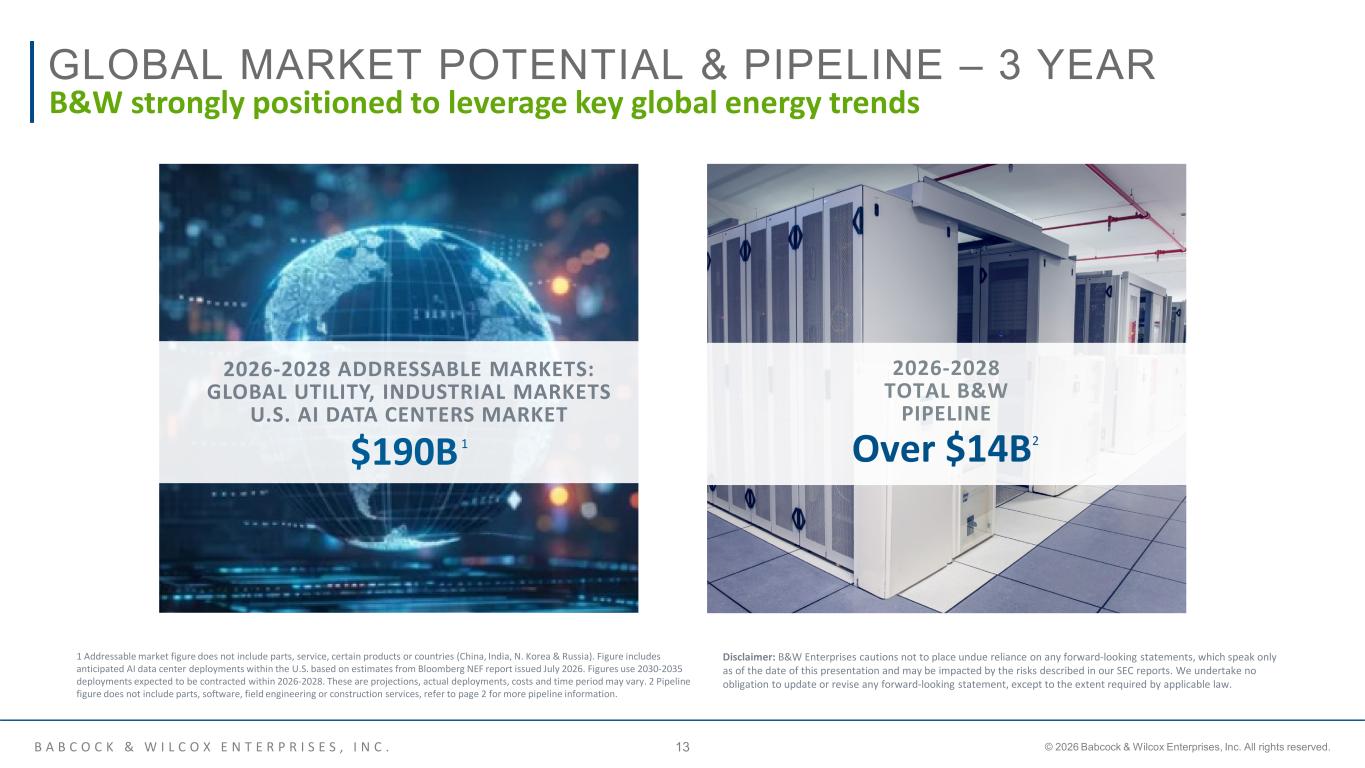
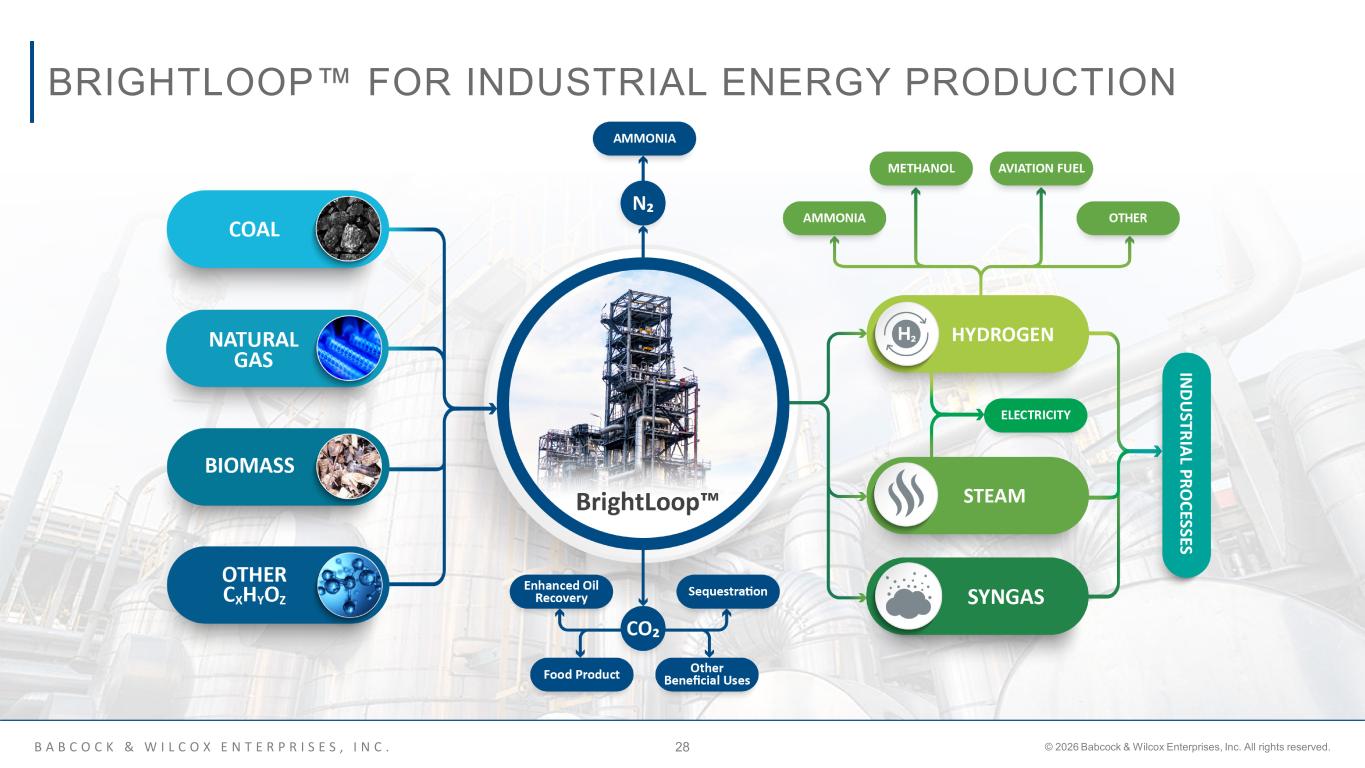
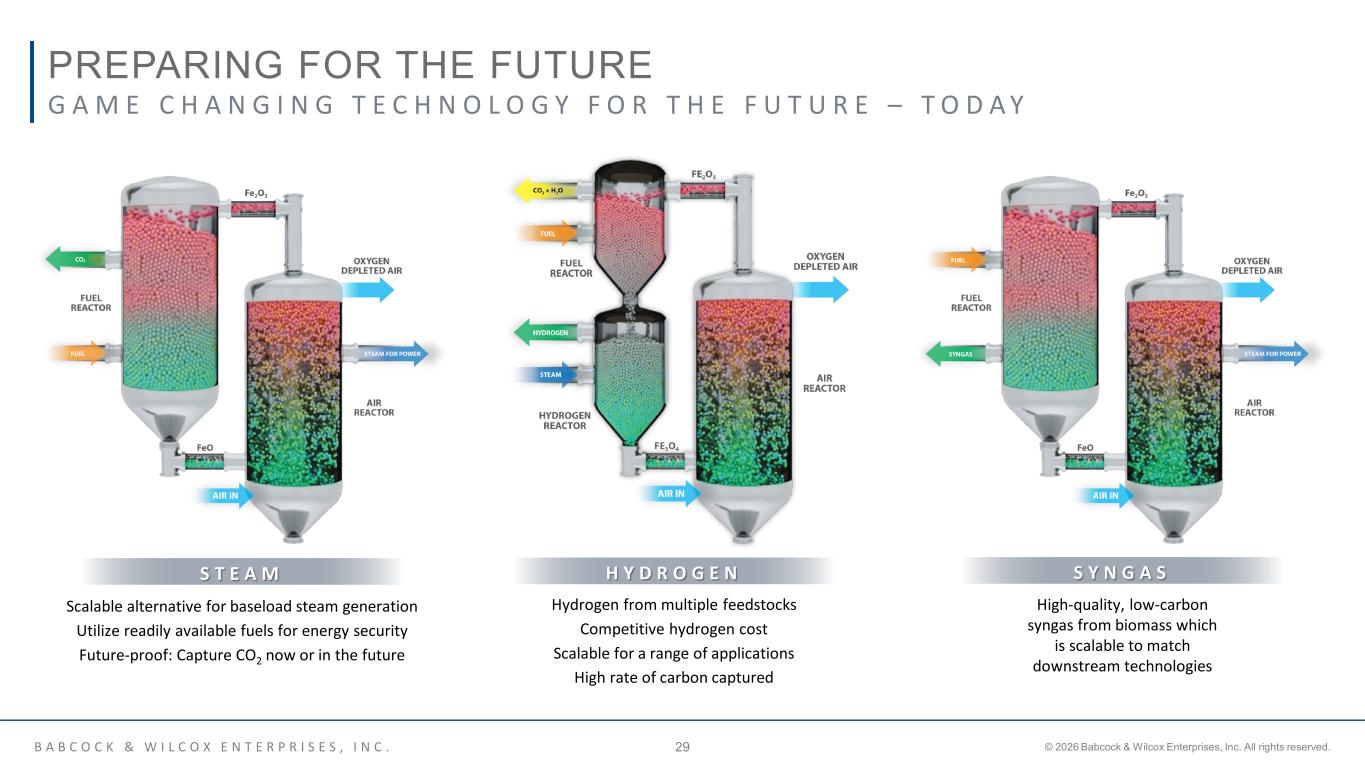
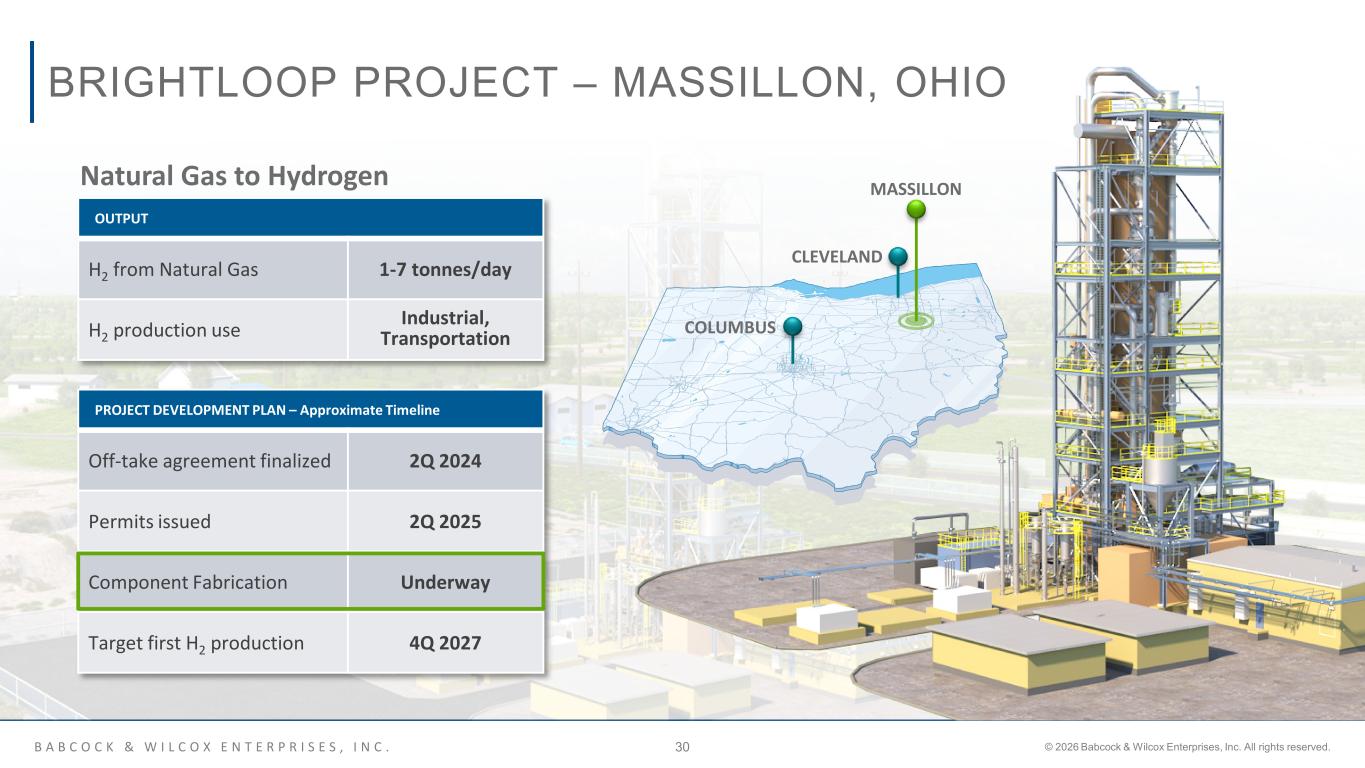
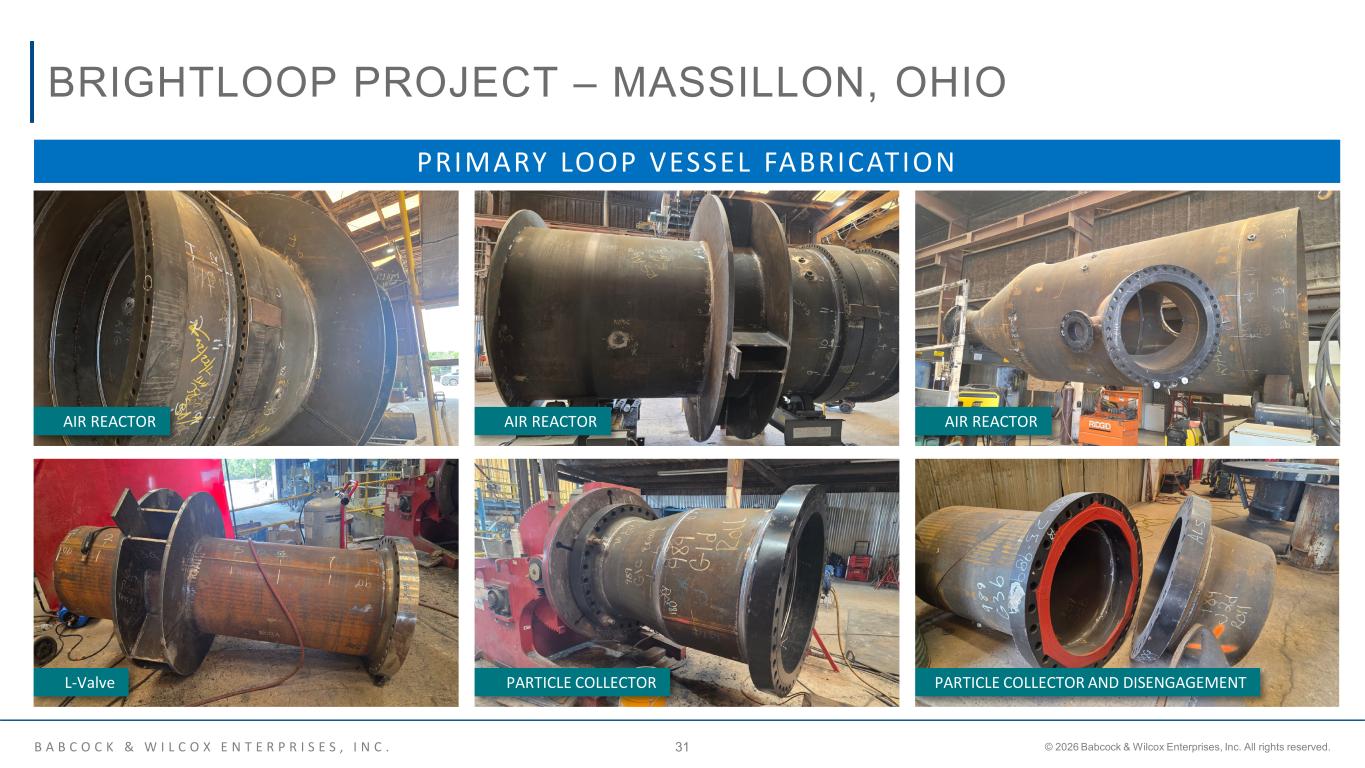
Thanks, Sharon. Well, good afternoon, everyone, and thanks for joining us on our second quarter 2026 earnings call. We are pleased to report another strong quarter highlighted by robust financial results and active project development and continued operational momentum in our core business and further strategic debt reduction and stock repurchase. During the second quarter, Babcock and Wilcox continued to benefit from the growing need for reliable electrical generation from all sources of power consumption, including utilities, industrial, and data center customers. These tailwinds drove strong operating results during the quarter and led us to raise our full year 2026 adjusted EBITDA target range from 80 to 105 million. As excited as we are about the increasing opportunities in utility, industrial, and AI and data center power generation project opportunities, we're equally excited about the strong results in our core projects as well as our parts and services businesses. These businesses have and continue to be strong cash generators for the company and continue to deliver significant growth each quarter due to the increased demand from coal and natural gas utilization, especially in the United States. Our quarterly financial results were highlighted by revenue, net income, and adjusted EBITDA, all of which exceeded both company and consensus expectations. In the second quarter of 2026, our pipeline, bookings, and backlog saw significant development as well. Our total pipeline is now over $14 billion, including four to six gigawatts worth of power generation opportunities. Our bookings and backlogs surged year over year, fueled by our core business growth and continued development of our base electron project in North Dakota. In the first half of 2026, we had bookings of $2.7 billion, which was an increase of more than 1,058% compared to the first half of 2025. Additionally, our backlog was $2.6 billion in the second quarter of 2026, which was a 533% increase compared to the second quarter of 2025. Strong global demand for B&W's technologies, together with increasing investment in power generation, continues to reinforce our positive outlook. We are focused on executing our strategic priorities, delivering on our current pipeline, and maintaining the operational and financial flexibility needed to capitalize on future growth opportunities. Turning to our core business, our parts and services continue to excel, with demand for reliable baseload power growing across North America and global markets as well. This accelerating demand is encouraging utilities to invest in the refurbishment, recommissioning, and continued operation of existing coal-fired generation assets to support grid reliability and meet future low growth. This development serves as a catalyst for B&W's continued growth, positioning us to play a critical role in supporting AI data center expansion and meeting increased baseload generation needs in the years ahead. Our initial data center project with Base Electron is progressing ahead of expectations and on budget. Manufacturing of the boilers, steam turbines, and other long lead time components continues to advance quickly and efficiently, helping to deliver reliable, high-capacity energy generation on the fast-track timeline required by AI data center customers. Base Electron has submitted its conditional use permit application, and we are planning for most of the on-site construction, including civil and mechanical, to start in the first part of 2027, and turbines and boiler components delivered after construction begins. The growth of AI-driven data centers is creating significant opportunities for BW with more than 4 to 6 gigawatts in new opportunities added from hyperscalers, developers, and utility customers in our pipeline. We remain in active discussions with multiple AI data center customers utilizing coal and natural gas, and we expect a second data center project to move in full notice to proceed this year. In anticipation of this next data center project, B&W has secured the manufacturing reservation rights for an additional one gigawatt of steam turbines from Siemens Energy. A total of 20 50 megawatt steam turbines will be produced with the first generator sets being delivered within 12 to 14 months thereafter and additional deliveries to follow on a regular basis. This will help accelerate deployments for future B&W data center projects. As B&W continues to expand, we are increasing our workforce to support the growth in our hiring and our engineering projects and business development organizations while increasing the availability of qualified, skilled welders and electricians. As the global power demand continues its climb, availability of highly skilled labor, especially in the United States, is in short supply. Specifically, this negatively impacted efficiencies and resulted in higher direct costs on a specific construction project for B&W during the second quarter. We took immediate action in working with the unions to immediately increase qualified labor availability through incentives, rehires, and delayed retirements to ensure qualified skilled labor is available going forward. Despite these U.S. industry-wide issues, we successfully navigated these labor impacts while still delivering robust top-line results and strong EBITDA growth as well. We don't expect labor shortages to be persistent issues as our near-term focus within our construction business has shifted towards variable-priced construction projects, and we are increasing our recruiting and training efforts across many disciplines as well. Our BrightLoop initiatives continue to move forward as we advance the commercialization of our technology to enable cost-effective energy production. The commercial scale demonstration of BrightLoop at our Massillon, Ohio project site remains a strategic priority. We are continuing fabrication of major components for the facility while we prepare the site for major construction activities to begin yet this year. We have included a few photos of the various Brightloop reactors in the fabrication process in our company overview presentation on our website. The operation of Maslin in late 2027 will position Brightloop as a commercially available option for energy production as the demand for new generation assets continues to grow. We believe these efforts will strengthen B&W's leadership in low-carbon energy solutions and support our long-term growth. I'll now turn the call over to Cameron to discuss the financial details of the second quarter for 2026.
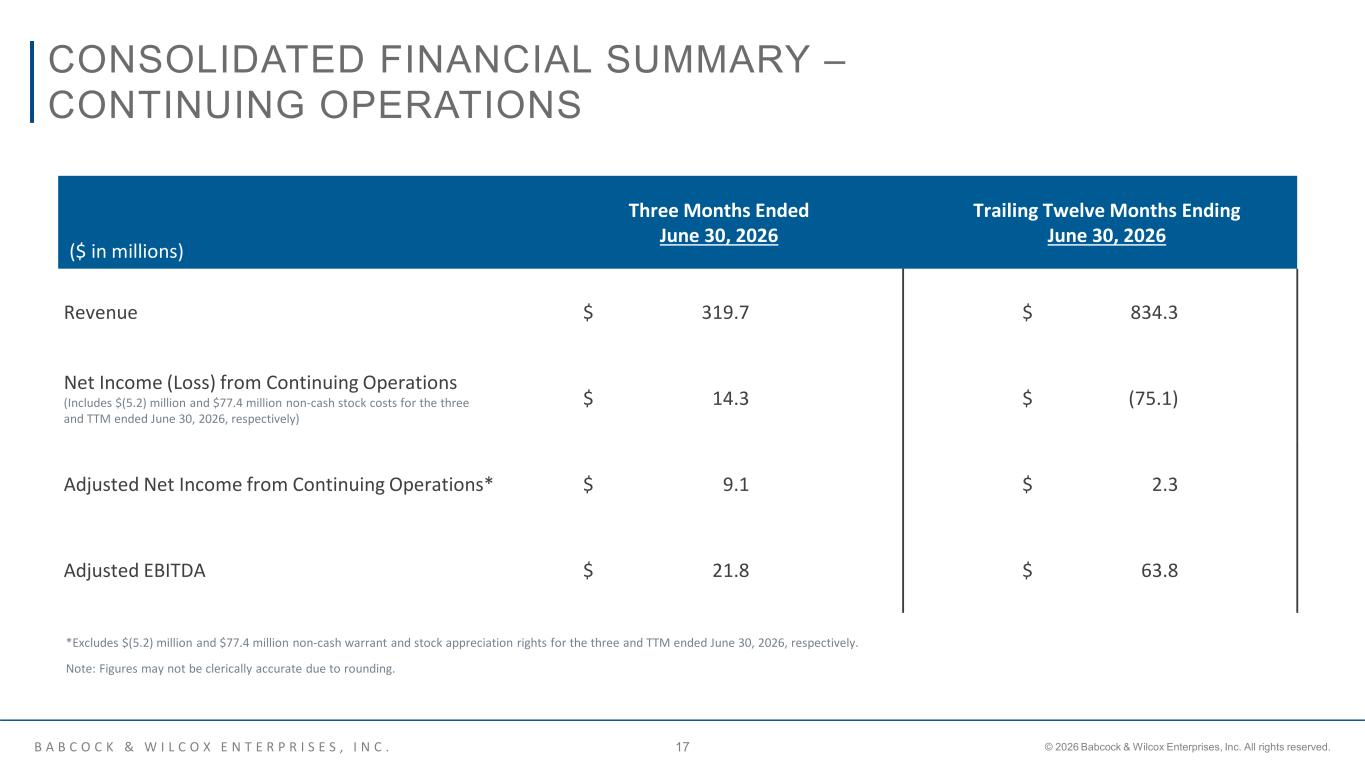
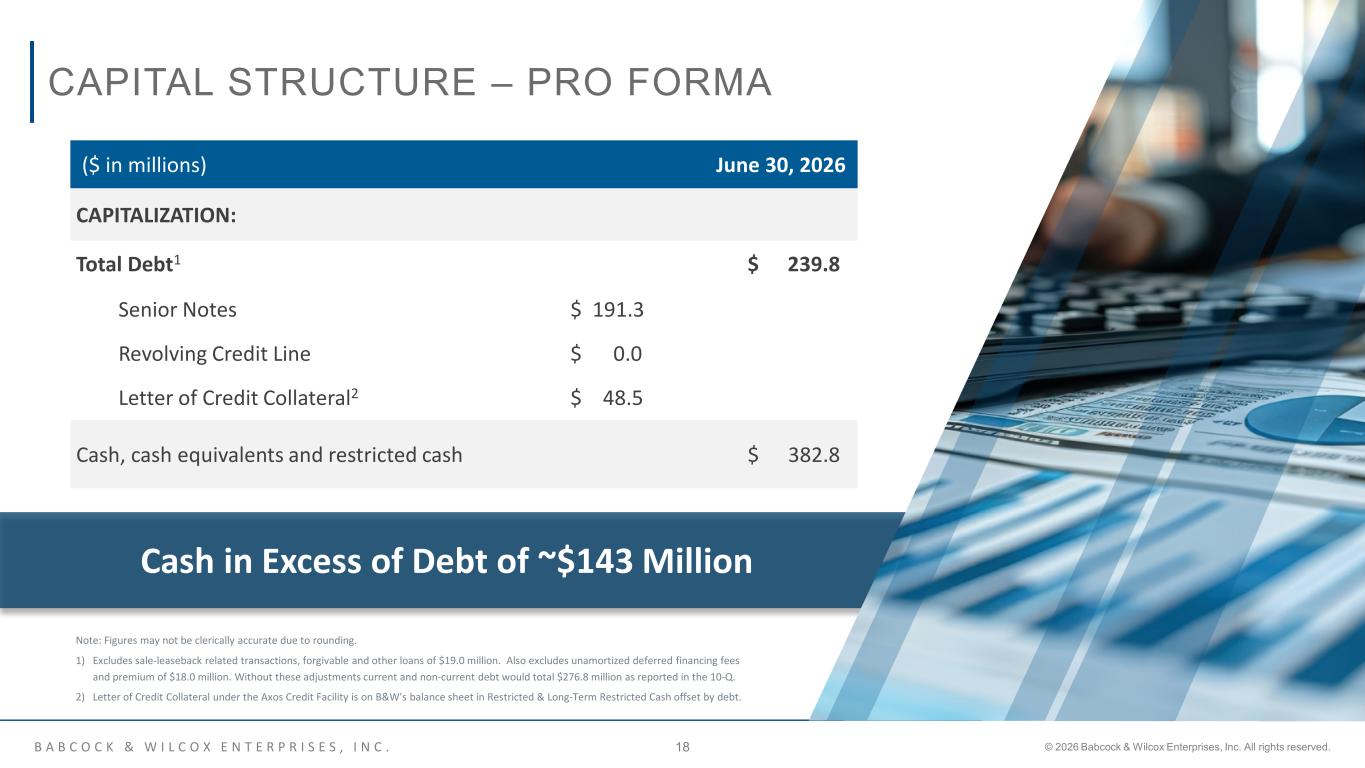
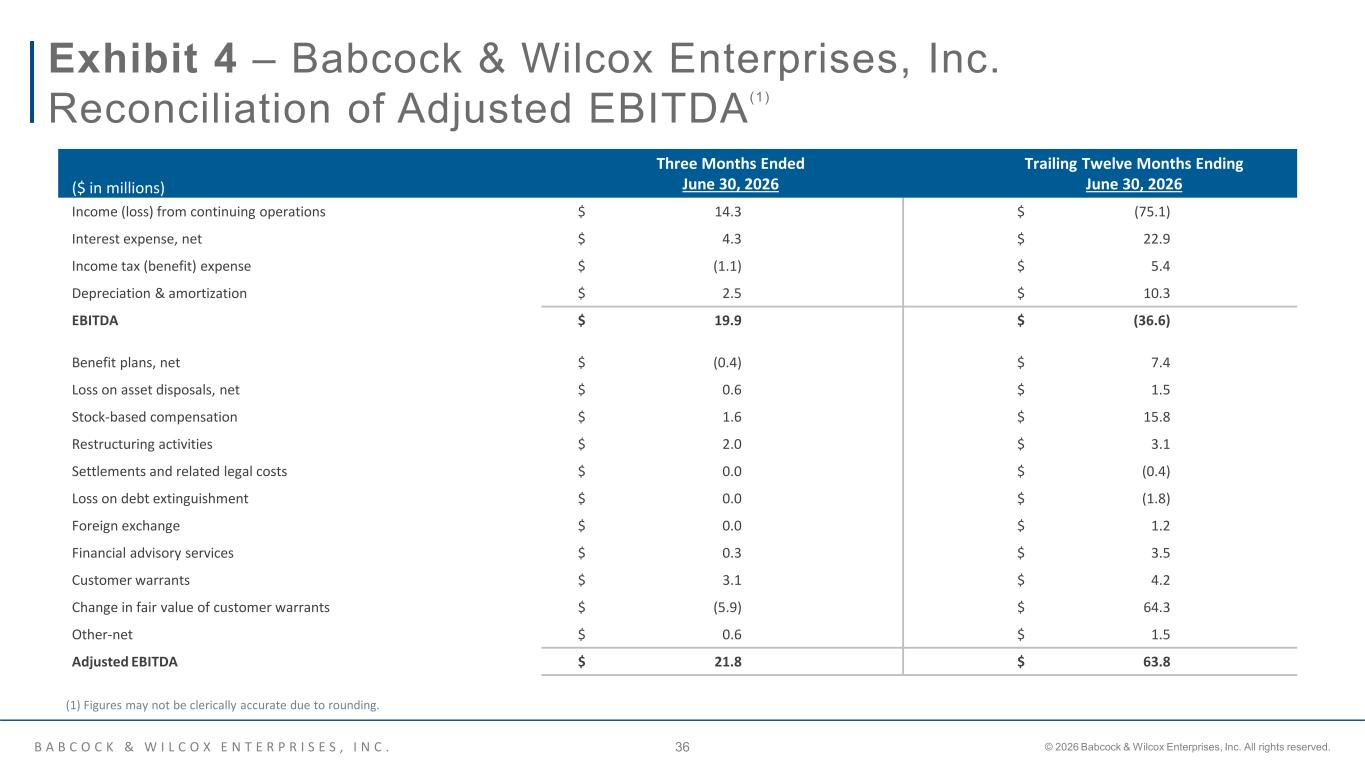
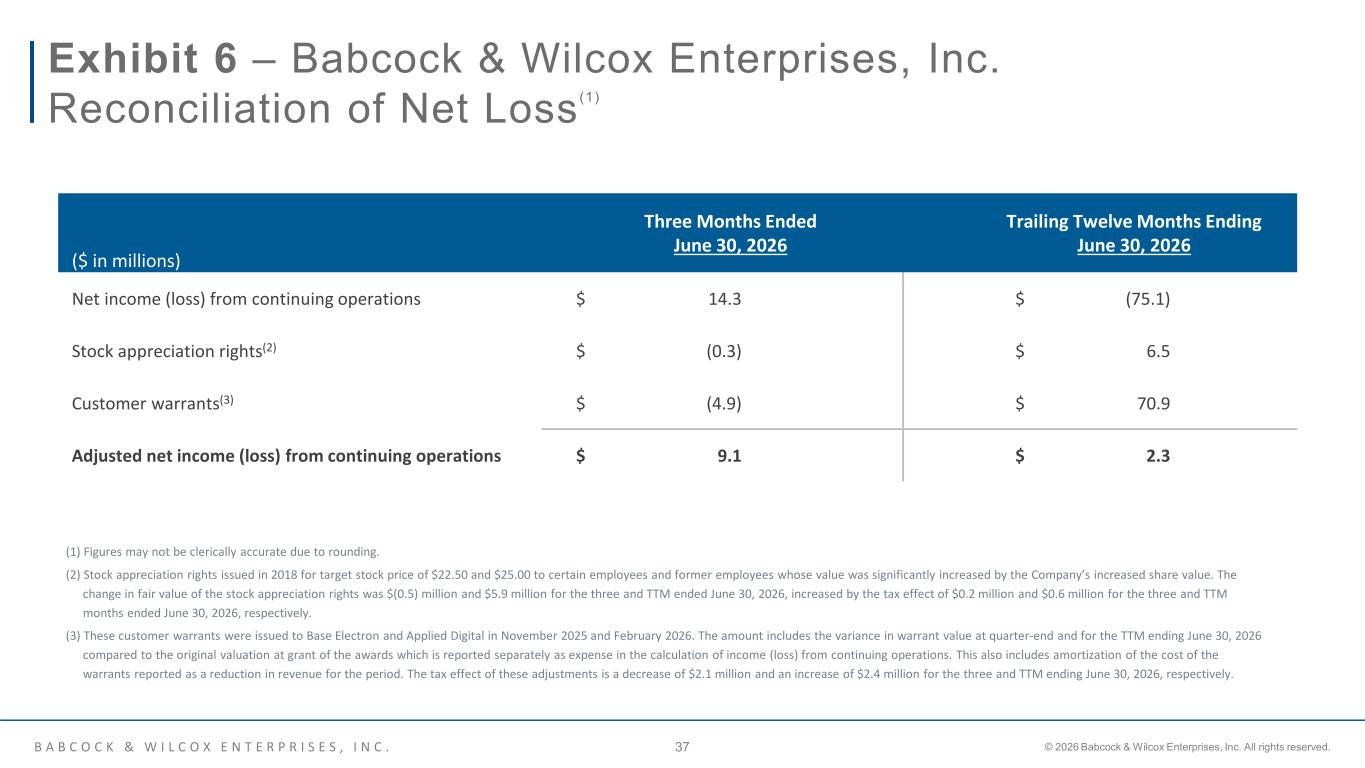
Cameron? Thanks, Kenny. I am pleased to review our second quarter of 2026 financial results, further details of which can be found in the 10-Q that was filed with the SEC this afternoon. Our second quarter of 2026 consolidated revenues were $319.7 million, which is a 130% increase compared to the second quarter of 2025. Net income was $14.3 million for the second quarter, a $72.8 million increase compared to the second quarter of 2025. Finally, adjusted EBITDA was $21.8 million for the second quarter, a $7.9 million increase compared to the second quarter of 2025. These top-line metrics capture the recent growth we've seen across our businesses and illustrate B&W's positive trajectory moving forward. In the first half of 2026, revenues were $534.1 million, which is a significant increase compared to the revenue of $287.5 million in the first half of 2025. This is primarily driven by an increase in large project volume, including $131.7 million from base electron, and the growing need for electricity from fossil fuels driven by demand from AI, data centers, and expanding economies. Our core parts and services continue to perform well during the first half of the year. Net loss in the first half of 2026 was $62.7 million, compared to a net loss of $80.5 million in the first half of 2025. Net loss in the first half of 2026 is attributed to $77.4 million of non-cash warrants and other stock-related costs that were recorded this year due to the increase in our stock performance. Excluding the impact of these specific warrants and other stock-related costs, B&W reported adjusted net income of $14.7 million in the first half of 2026. Adjusted EBITDA was $37.8 million in the first half of 2026, compared to $17.9 million in the first half of 2025. I'll now turn to the balance sheet cash loan liquidity. Total debt at June 30th 2026 was $276.8 million, which includes unamortized fees and unamortized gains from our bond swap in 2025. The company had a cash, cash equivalents, and restricted cash balance of $382.8 million. In the second quarter of 2026, we announced the repurchase of the remaining $61.8 million in outstanding December 2026 bonds. In addition, BMW's board of directors in July of 2026 authorized a share repurchase program for up to 50 million dollars the combination of our bond payments and the launch of the share repurchase program illustrates bmw's disciplined approach to debt repayment while reflecting the confidence in our balance sheet and strategic approach to building shareholder value with that i'll now turn the call back over to kenny Thanks, Cameron.
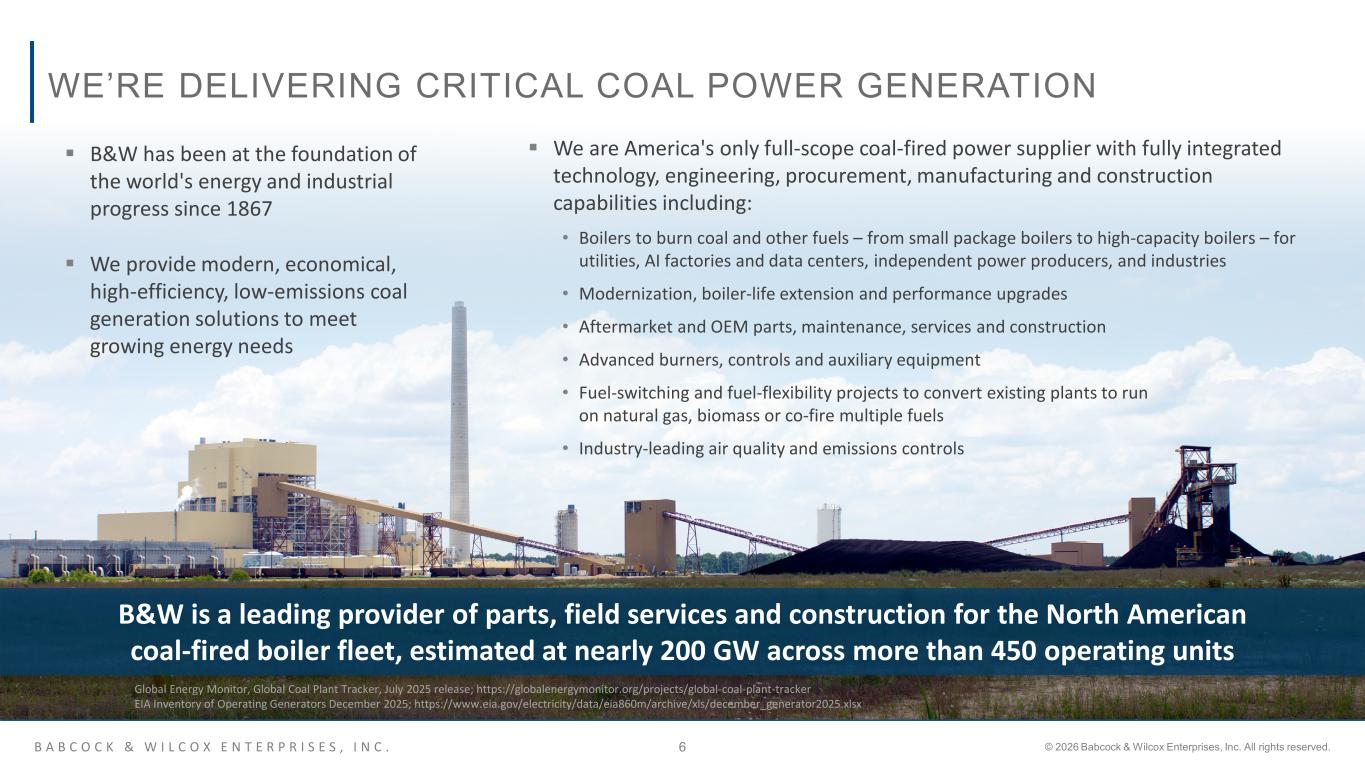
Well, in closing, we are encouraged by the progress that we have seen across the first half of 2026, which along with our visibility for continued strong demand in the second half helped drive our improved 2026 full year adjusted EBITDA target range. Our core business continues to see sustained opportunities fueled by growing demand for reliable baseload power and a continued focus on energy security, and we believe B&W is uniquely positioned to capitalize on these trends. We continue to move forward with base electron projects and see additional data center opportunities emerging, and our pipeline now exceeds well over $14 billion in project opportunities, and our bookings and backlog continue to convert at a strong pace. We are encouraged by momentum. We are seeing across our core markets and the opportunities to not only support the growing need for reliable baseload generation, but also to play a key role in advancing energy security and supporting the global energy transition. I will close by recognizing our talented and dedicated employees worldwide whose commitment and expertise continue to drive B&W success. We are grateful for their ongoing contributions as well as their continued support of our customers, suppliers, and partners around the world. We are optimistic about the opportunities ahead and look forward to further demonstrating B&W's role as a leader and innovator in delivering advanced power generation and environmental solutions that support reliable power and strengthen energy security and shape the future of the global energy landscape. With that, I'll turn it back over to Chrislyn, and we have time for just one or two questions. So, Chrislyn, I'll turn it over to you.
Operator
We will now begin the question and answer session. If you would like to ask a question, please press star 1 to raise your hand. To withdraw your question, press star 1 again. We ask that you pick up your handset when asking a question to allow for optimum sound quality. If you are muted locally, please remember to unmute your device. Please stand by while we compile the Q&A roster. Your first question comes from the line of Rob Brown with Lake Street Capital Markets. Your line is open. Please go ahead.
Rob Brown
Analyst — Lake Street Capital Markets
Congratulations on all the progress. First question on the Base Electron project. You recognized a fair amount of revenue in the quarter. Could you give us kind of a layout of how that project's developing and flowing through the income statement, really how the project kind of steps forward over the next few quarters?
Yeah, so we were able to recognize a little bit more revenue in the first part than we anticipated, obviously from the production aspect and manufacturing aspect of various milestones that have been reached, which is exciting for us because we're ahead of expectations right now on that project. and on budget um on that standpoint i think the where the the real bulk of the revenues pick up is um as we move into the construction phase and we begin shipping materials on site which will have significant milestones obviously that'll begin that'll start early next year um on the particular site location and as mentioned uh you know bases filed their initial permit application for the site and putting them heavily on that and we're excited about to getting to the construction phase which which again will start next year so the we'll talk we can actually we'll keep an eye out on the revenue aspect and if we think we can pull in more revenue and even obviously we'll we'll take a look at that in the coming quarters and make any adjustments accordingly on that standpoint but and that's you know one of the reasons amongst others that we decided to increase the even arrangements well too so we'll we'll see how the milestones shake gap, but I think we'll see significantly more revenue going into early part of next year.
Rob Brown
Analyst — Lake Street Capital Markets
Okay, great. And then on the pipeline, I think you talked about four to six gigawatts of potential pipeline there. Could you kind of elaborate on how you see those projects developing and maybe how they compare to the base electron kind of project in terms of the numbers of projects that you're going after?
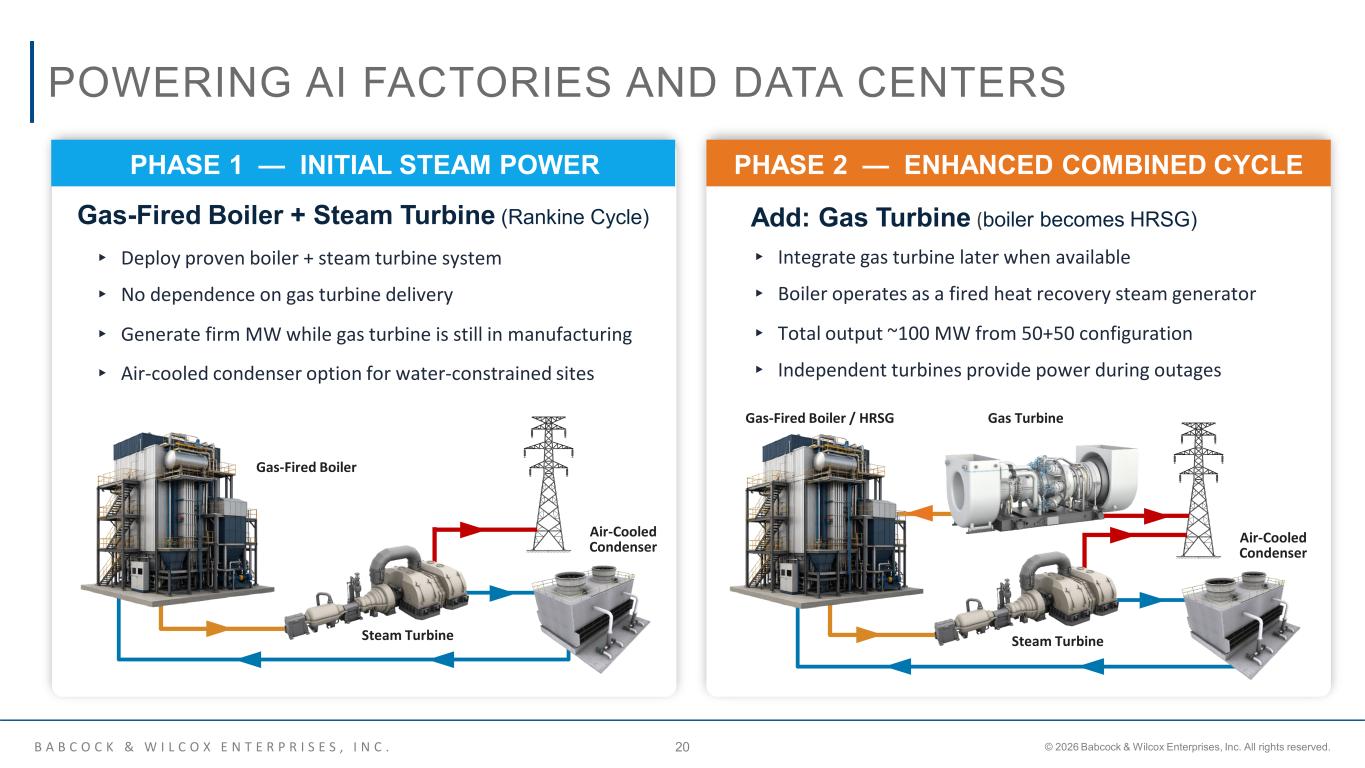
Yeah, no, happy to. So, you know, We're involved in a number of them now in discussions and obviously negotiations on a few. I think these will evolve, as we've stated publicly before, these will evolve with some sort of an initial LNTP, a various size set and place reservation rights for the cement turbines associated with that. But in this particular case, instead of the larger boiler, in an enhanced combined cycle fashion, where we can actually install the boiler and the turbine ahead of the combustion turbine, and we're able to add a combustion turbine at a later date. But the customer can realize the full power of the 50 megawatt units that will provide initially one. When the combustion turbine is available, it will basically, on the same plot of land, double the output from one gigawatt to two gigawatt. So it's a real nice advantage for one or two of our customers, and we're in discussions, you know, getting discussions with them. We're also, and I think this is unique in discussions around potential other large project opportunities. Some of those are coal-related, which I realize many people will have a difficult time believing, but even outside the Terrace Park project that we announced, and we're working on the feed study associated with that project, We're in discussions on other potential coal-related projects, you know, obviously backed by the current immediate grid connection associated to a data center at a particular site. And these are, you know, larger projects as well, too. So there are, you know, several that we're involved in, you know, outside of the coal opportunities. But, you know, I want to reference that because we think those are unique, and it's also uniquely positioned as B&W is probably one of the only SKU companies that actually support those projects today.
Rob Brown
Analyst — Lake Street Capital Markets
Okay, great. And then last question is on sort of the customer response to, I think you have a quicker time to market with your product and an overall kind of comparable cost structure for your system versus others. But, you know, what's sort of the need in the marketplace for time to market and how is that resonating with the customer base?
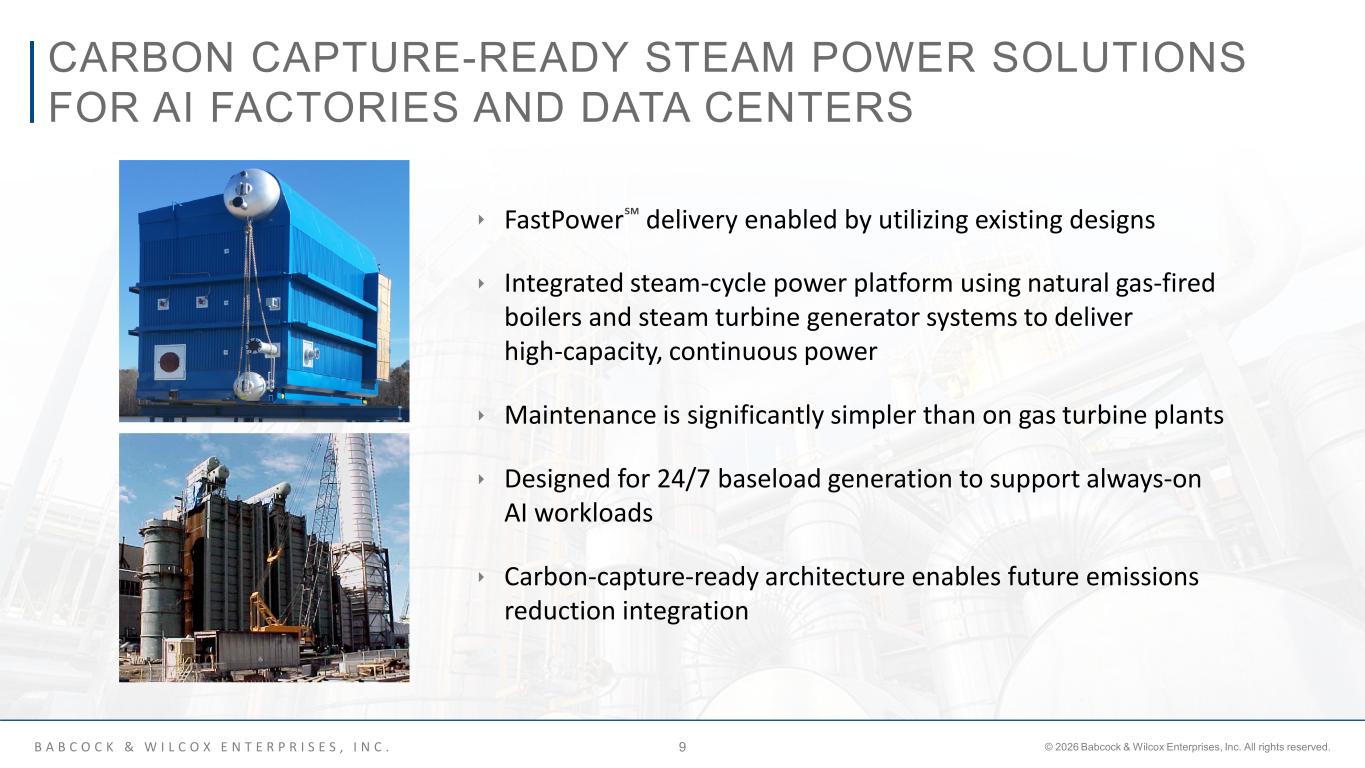
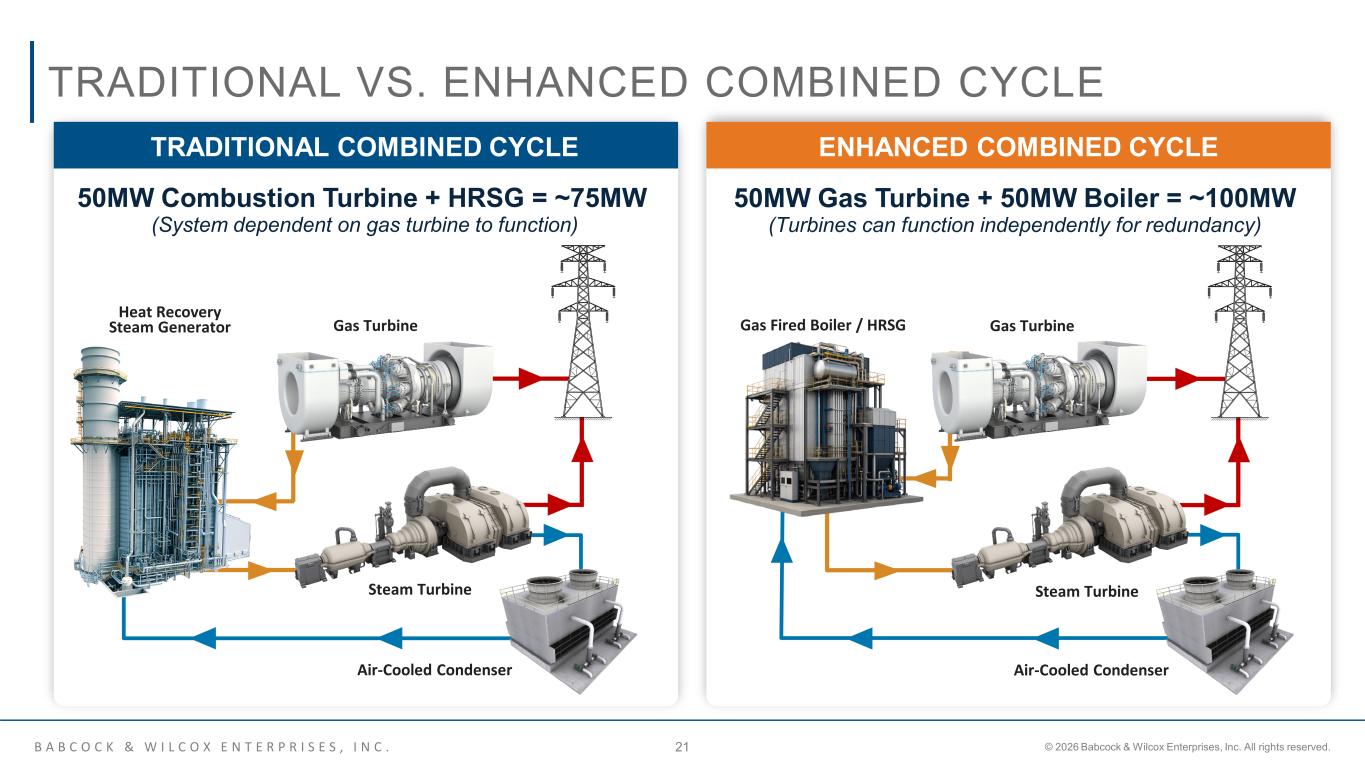
Well, customers always want to go faster and faster, for sure, right? We understand that pressure and we're working, you know, to respond to that. that's one of the reasons we're moving quicker on these Siemens turbines to be ready in a 12 to 14 month period to get initial shipments on that to match with the boiler opportunity out there overall but from a capital you know our focus has always been on the total cost of levelized or the levelized cost of electricity so looking at total cost of ownership but the levelized cost of electricity when you look at that category or if you want to look at heat rate when you when you leverage the enhanced combined cycle plant structure that we're doing where we're taking the boiler and the turbine and matching that up with the combustion turbine at a later date the combination of all three of those puts us on a heat rate that's not much combined cycle plant so when you look at the overall efficiency aspect of those mine were pretty close but we're three to five years on those sites then i think the other Another key factor is, and we don't talk about this enough, but if it's just a standard combustion turbine with a HERSIG and a steam turbine under a combined cycle concept, the reliability of that is a little bit less. One, it's well-known. Combustion turbines are not quite as reliable as steam. The second aspect of it is if the combustion turbine goes out of service, that entire amount of units operating. So combined, they'll be producing, let's say, in this case, 100 megawatts. So a 50 megawatt combustion turbine and a 50 megawatt steam and boiler slash HERSIG would be creating 100 megawatts. When one goes out, you still have 50 operating. In a normal combined cycle world, when that combustion turbine goes down for maintenance, you block the entire amount of electricity being produced. So you gain much more reliability. You gain three to five years faster to market on a speed standpoint from a power standpoint. And like I said, the efficiency and heat rate from a levelized cost of electricity is pretty close. So a lot of advantages there on that. You know, having said that, our customers continue to put pressure on us to go faster and faster. And, you know, we continually annualize or, you know, we're excited about where we are and obviously, you know, getting a few of these projects and we continue to work on those.
Rob Brown
Analyst — Lake Street Capital Markets
All right. Thank you. I'll turn it over.
Operator
Your next question comes from the line of Aaron Spichala with Craig Hallam Capital Group. Your line is open. Please go ahead.
Yeah. Hi, Kenny and Cameron. Thanks for taking the questions. Maybe first for us, just on supply chain, can you just kind of speak to confidence in your ability to meet the growth that you're seeing from this first project and kind of additional project? you talked a little bit about labor and obviously kind of ordering some of these these turbines um can you just kind of talk about you know any investments uh needed there and just confidence in that growth yeah so we we do continue to work as we you know mentioned um previously when we look at the various opportunities we have different manufacturing on i'll just talk about the builder for a second we have different manufacturers um and manufacturing processes that we rely
on both some of that's internal to ourselves some of that is third party related as well where we can um shift you know different boiler sizes into different manufacturing facilities so it gives us the ability to take on more and more project work that's bw has been doing that for quite some time and that's not any different as it relates to these opportunities um so we're you know we feel like that we have that kind of flexibility and capacity on these and and um you we'll continue working with the output and also the not only the volume speed to getting this on site is really really important um you know on on base electrons case as you know mentioned we're we're ahead of where we planned and um all of our manufacturing on the large long lead time items are are producing on schedule and um you know so that that project's on track uh overall with them As we mentioned, the biggest component is making sure that we have access to, besides the boiler, is the steam turbine, especially for where the combustion turbine would be added at a later date. And we obviously have a very close relationship with Siemens and continue to do so. We wanted to move ahead and invest in these next steam turbines, and so that reservation has been secured on that and ready to ship in the next 12 to 14 months on those turbine units. And the relationship there is good not only from a supply chain standpoint, but from payment terms standpoint on the financial side as well. So it's very positive in that relationship. And we continue to work with them on the evolution of the turbine and other aspects where we might improve overall efficiencies from an output standpoint, but also efficiencies from a time to market standpoint. So those are two characteristics that we're focused on. That's on those two major areas. When you look at the other aspect you mentioned is on labor, and that's an area that we would continually keep a very close eye on, on the availability of, I would say, highly skilled It's one, to have a workforce. too, that workforce has to be highly skilled, especially in these high-pressure wells in those particular areas. And we're working very close with the various unions on that front, as well as our customers on that front, to make sure that we're aligned and have the availability that we need when we need it. You know, in particular, on base as we move into construction next year, we have been working very close with the unions to be ready to have projects and a ramp rate of supply of quality welders and moving them through a training program ready focus there in training efforts and i will say that you know the unions have been extremely cooperative and supportive right so it's anytime you have this massive amount of growth so that we're planning on those resources
equally as well as the manufacturing side as well too so we're we're staying on top of it um and i feel like we've accomplished a lot over the last quarter and and uh have put us in a good direction going into next year got it thanks for the color and then you you kind of referenced a feed study at a coal um plant announcement here this past quarter can you just give a little bit more detail on on what that uh pipeline you know what that opportunity what the kind of pipeline looks like any thoughts on on kind of timing and next steps there yeah we're working we're working close on the feast obviously the feed is going through the whole you know front-end engineering
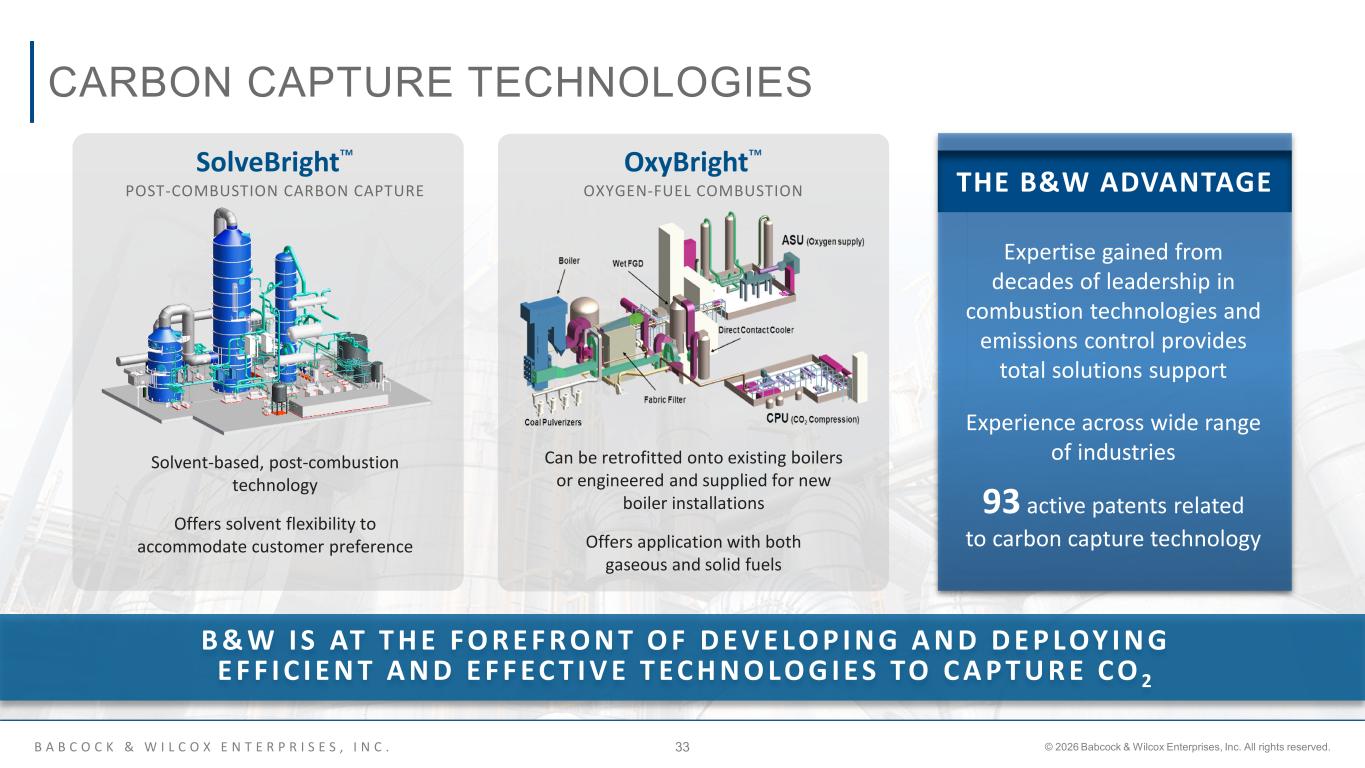
design aspect of the plant uh flows project you know um power flows everything else associated with that you know normal course um on that particular with the doe on that particular project and uh you know we're working very close with them as well too so um it's it's going through its process and the you know terrace park is working to approach on the process and you know looking at different options on on how to structure the goals on that piece but we're we're excited to be a part of that as I can tell you from an employee perspective we've got a lot of employees that never thought they would see the light of day of building a coal plant here in the US so a lot of our engineers that have been around these you know critical got beat on this but discussions with them and working with them on on getting this done so I you know it's too soon to anticipate quite yet like how we forecast out revenues associated with that project and when past the the feed study but um it's you know actively involved and engaged and we'll just have to see how it goes from here okay thanks for that and then maybe one last one for me just on um climate bright you kind of mentioned um i think 2027 you know can you just kind of talk about next steps there maybe what that pipeline um looks like as we think about growth and getting that project up and running yeah so well i'm first on the on the masculine project um and i haven't had i assume our presentation's up by now but on the project you'll see some pictures of fabrication of the the fuel reactors on bright loop that'll be going in that location uh on the commercial aspect of that there's um we've got a lot of you know interest from hyperscalers and others you know even oil companies as it relates to BrightLoop and that commercial demonstration of that particular project. So, you know, we've obviously accomplished, I think, for the most part, all of the funding necessary to get that in the ground. And so we'll begin to construct that. You know, BrightLoop is, as we've talked about, the concept of that, I think still, you know, our opinion is still has the high growth capabilities. And if we had, you know, honestly, I'll just make the statement, if we had Maslin in the ground, you know, two, three years ago, But, you know, if we had that commercial project done and moving on to larger projects, I think there's a lot of hyperscalers today that would be in discussions about utilizing BrightLoop for power generation because of its captured CO2 and other enhanced purposes, but they've been in the law, some sort of carbon data centers and AI infrastructure. So, you know, we're obviously still in a good position. You know, we don't see an end to the power generation demands coming from AI and data centers, despite what the public markets have been stating. The demand continues not only here, but worldwide. And I think we're, you know, we'll be with our oxygen combustion or post-combustion technologies as well.
Seems like it. Thanks for taking the questions. I'll turn it over.
Operator
We have reached the end of the Q&A session. I will now turn the call back to Sharon Brooks for closing remarks.
Thank you for joining us. This concludes our conference call. A replay will be available for a limited time on our website later today.
Operator
This concludes today's call. Thank you for attending. You may now disconnect.