Operator
Good morning, ladies and gentlemen, and welcome to the Consolation Energy Corporation's second quarter earnings conference call. At this time, all participants are in a listen-only mode. Later, we will conduct a question-and-answer session, and instructions will follow at that time. As a reminder, this call is being recorded. I would like to introduce your host for today's call. Tim Flottenmesh, Vice President of Investor Relations, you may begin.
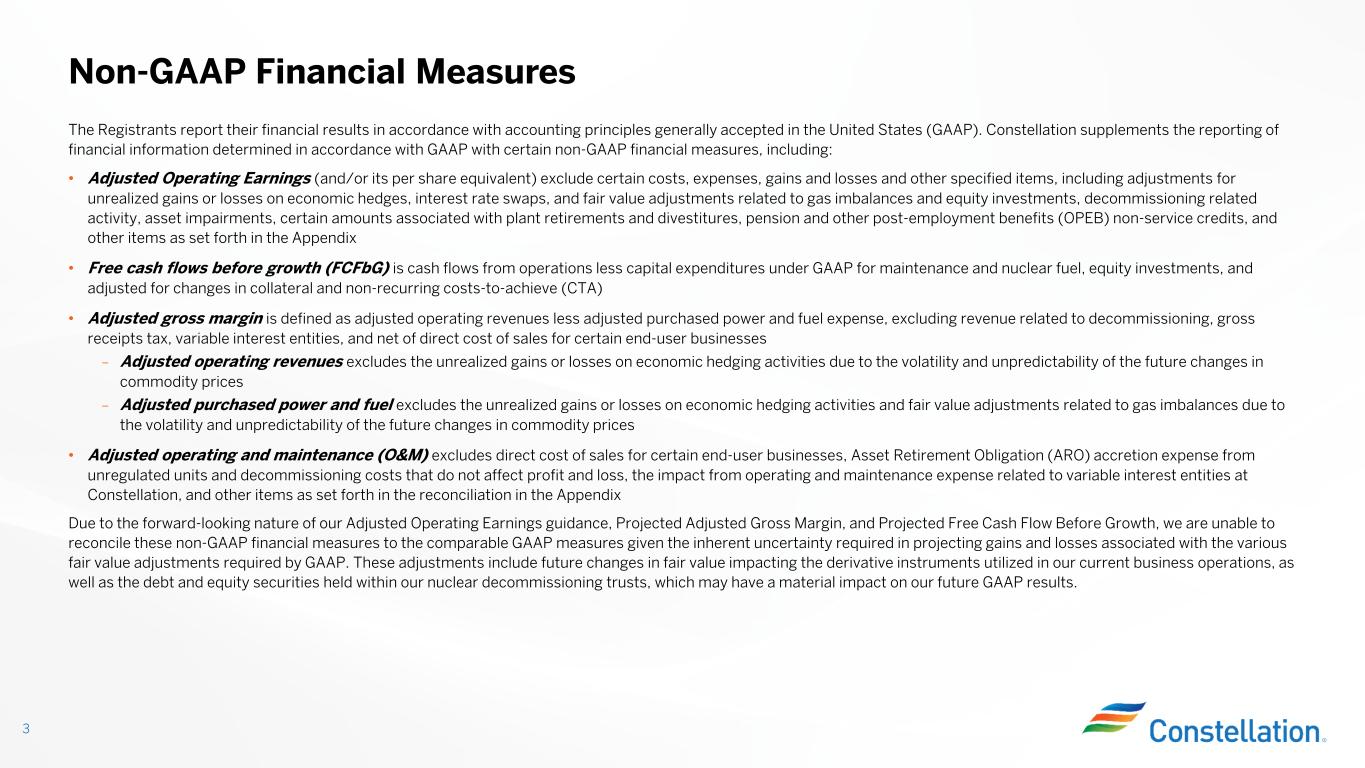
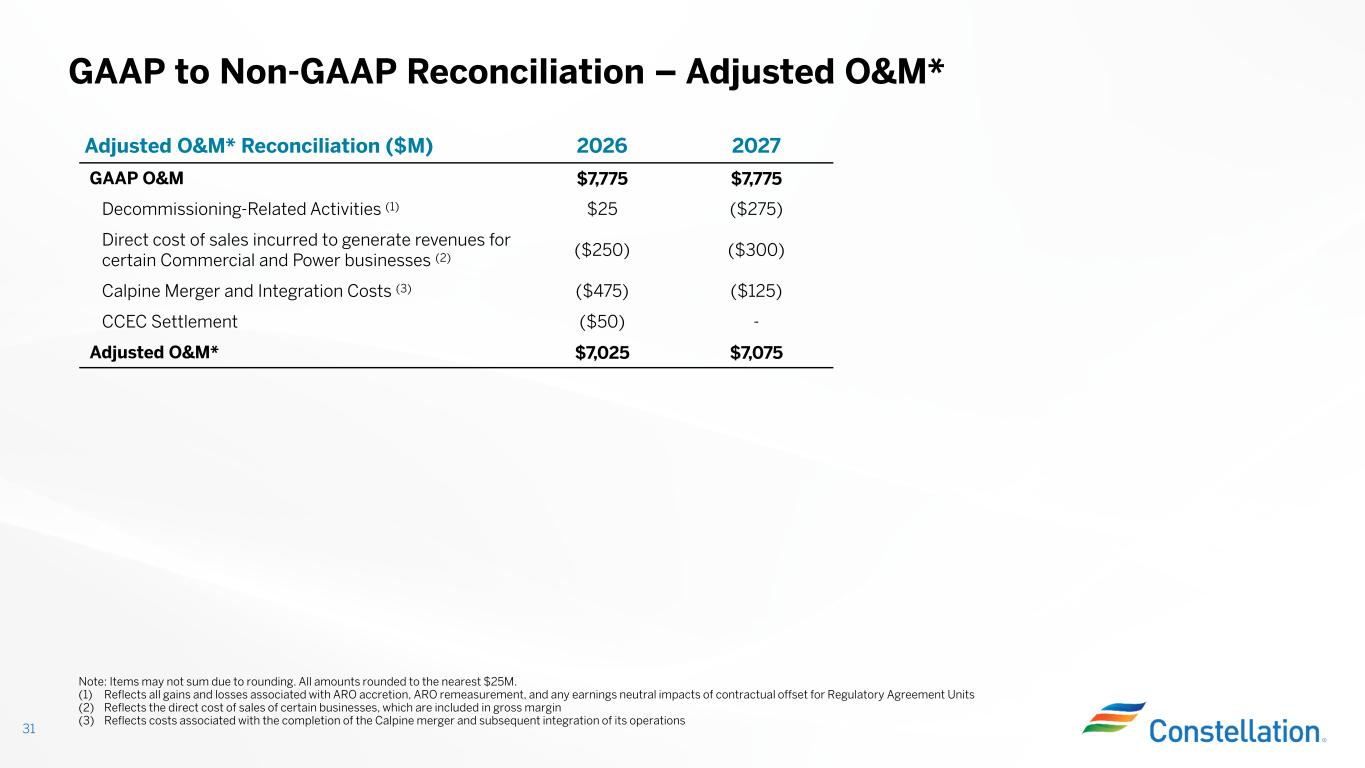
Thank you, Kevin. Good morning, everyone, and thank you for joining Consolation Energy Corporation's second quarter earnings conference call. Leading the call today are Joe Dominguez, Constellation's Chairman, President, and Chief Executive Officer, and Shane Smith, Constellation's Chief Financial Officer. They are joined by other members of Constellation's Senior Management Team who will be available to answer your questions following our prepared remarks. We issued our earnings release this morning, along with the presentation, all of which can be found on the Investor Relations section of Constellation's website. The earnings release and other matters which were discussed during today's call contain forward-looking statements and estimates regarding Constellation and subsidiaries that are subject to various risks and uncertainties. Actual results could differ from our forward-looking statements based on factors and assumptions discussed in today's material and comments made on the call. Please refer to today's 8K and Constellation's other SEC filings for discussions of risk factors and other circumstances and conditions that may cause results to differ from management's projections, forecasts, and expectations. Today's presentation also includes references to adjusted operating earnings and other non-GAAP measures. Please refer to the information contained in the appendix of our presentation and our earnings release for reconciliations between non-GAAP measures and the nearest equivalent GAAP measures. I'll now turn the call over to Joe.
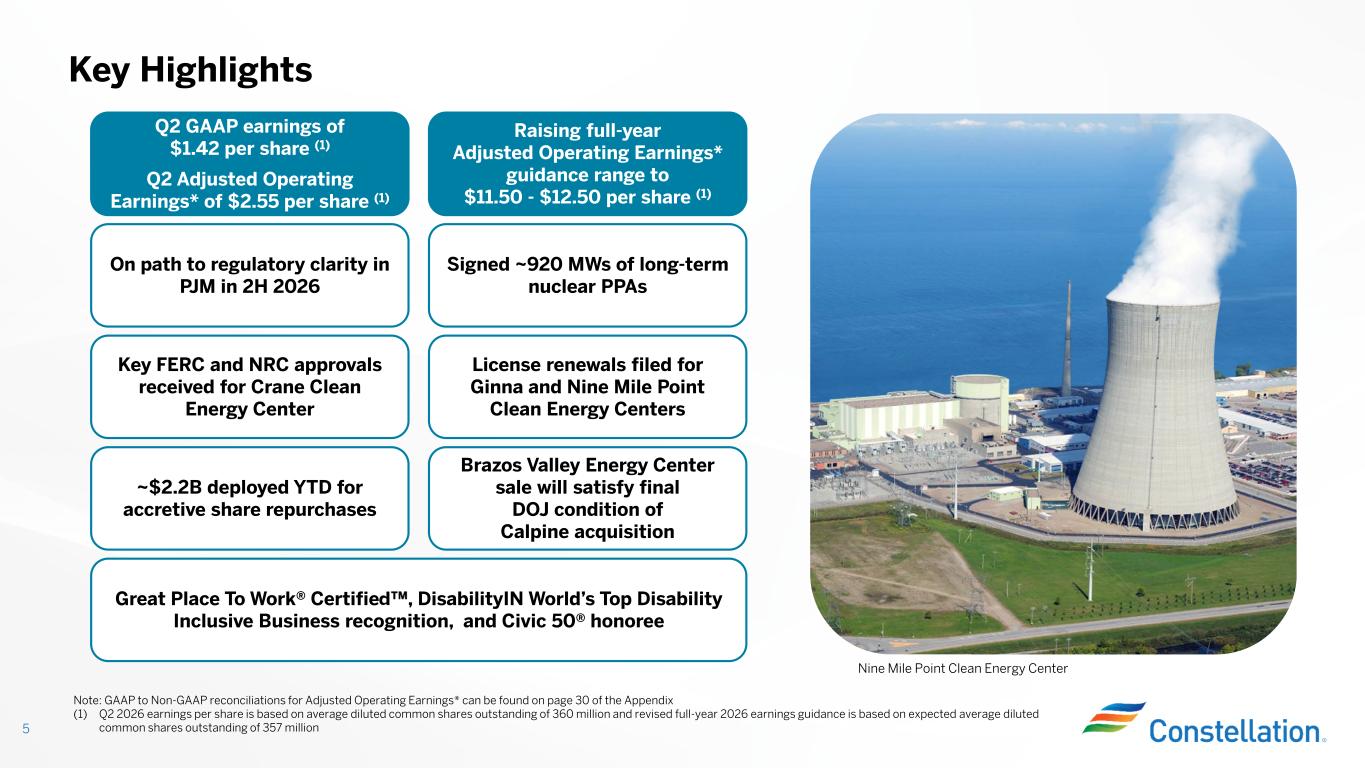
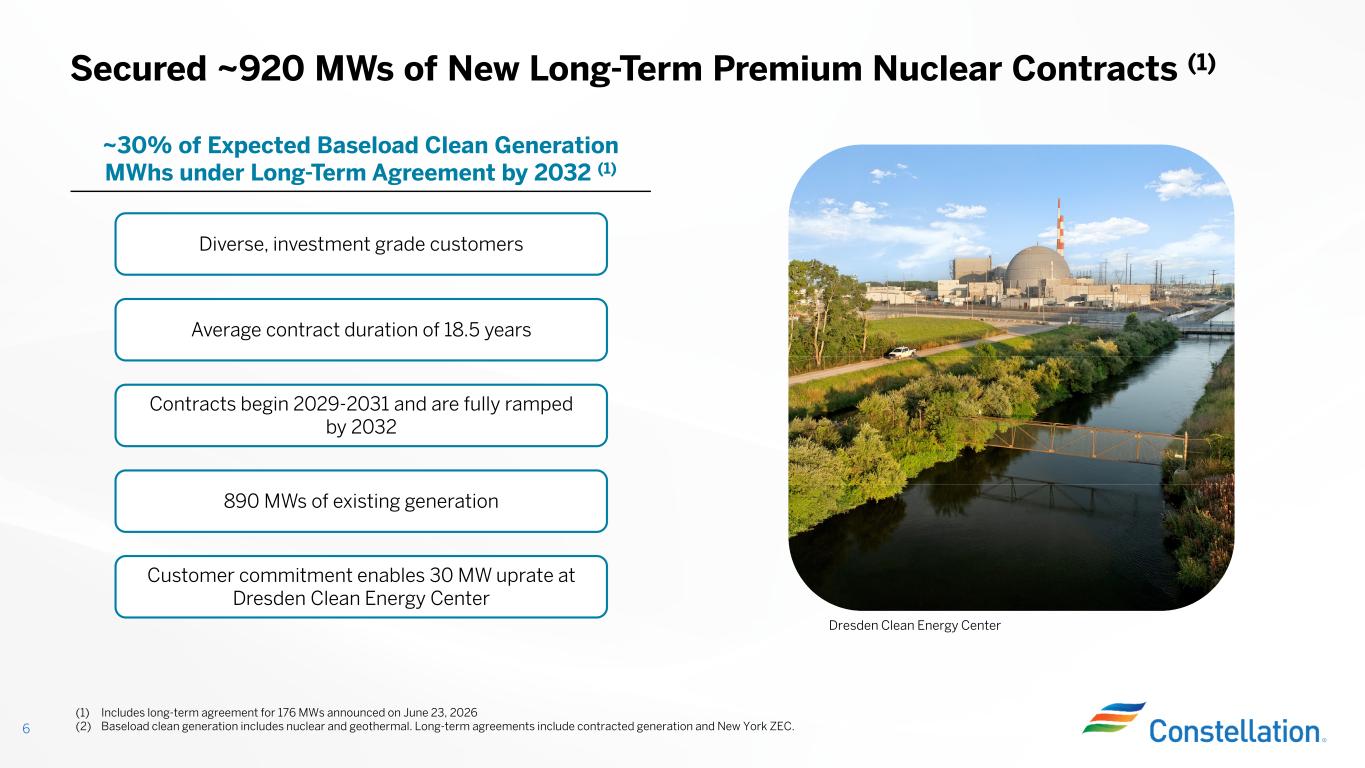
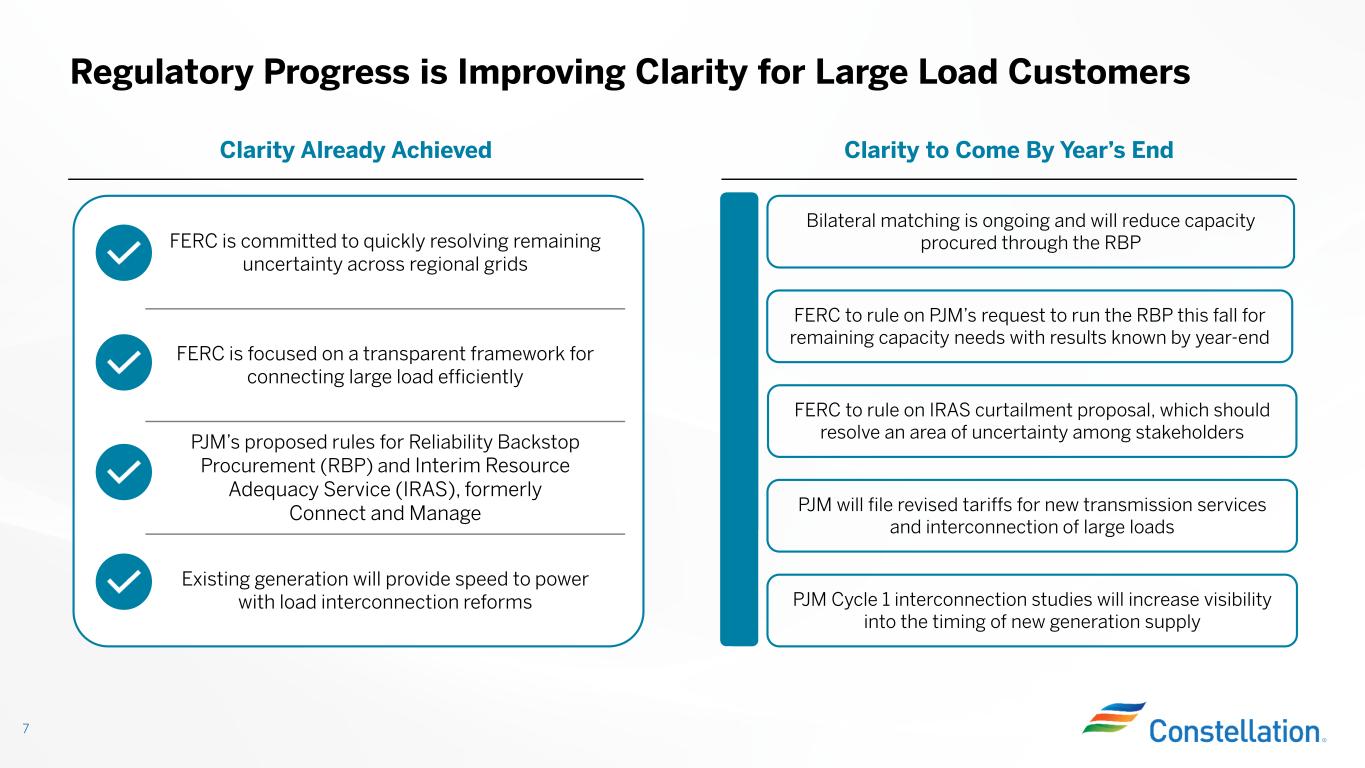
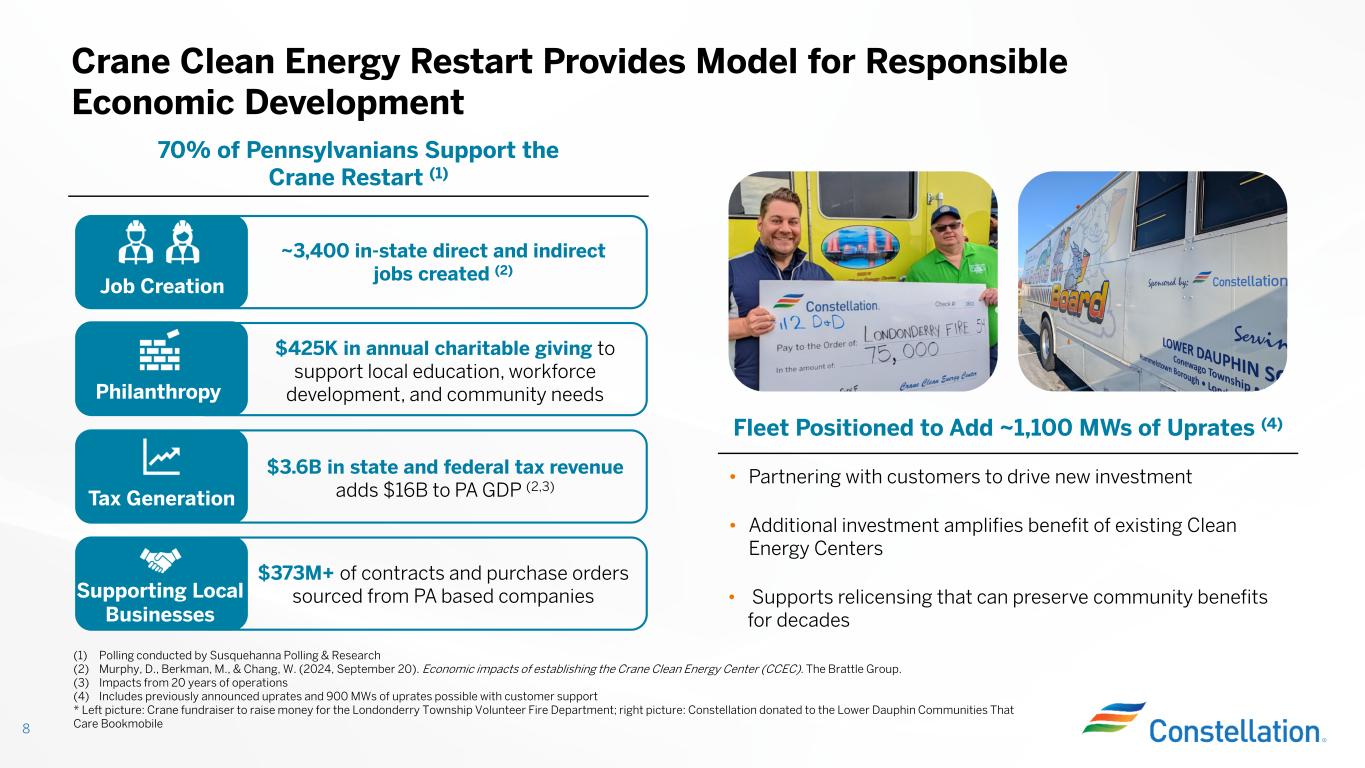
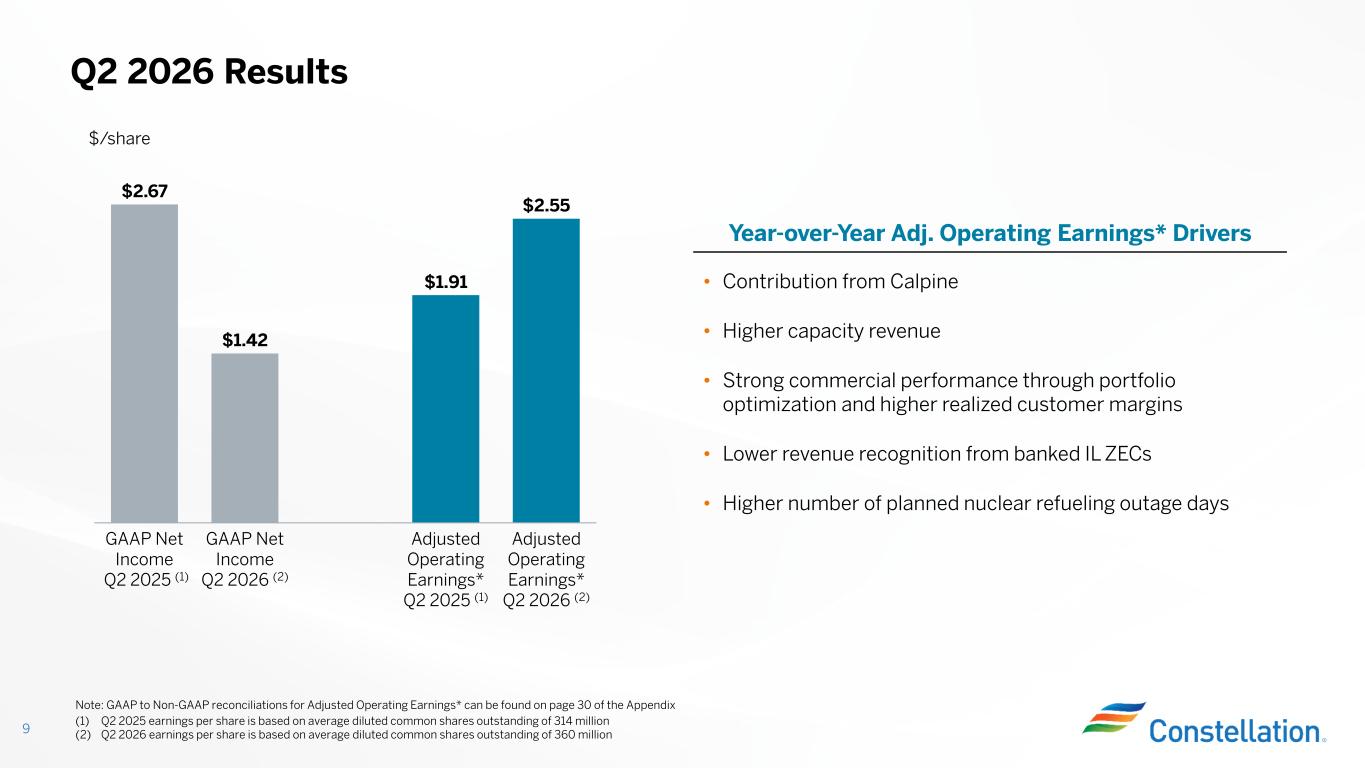
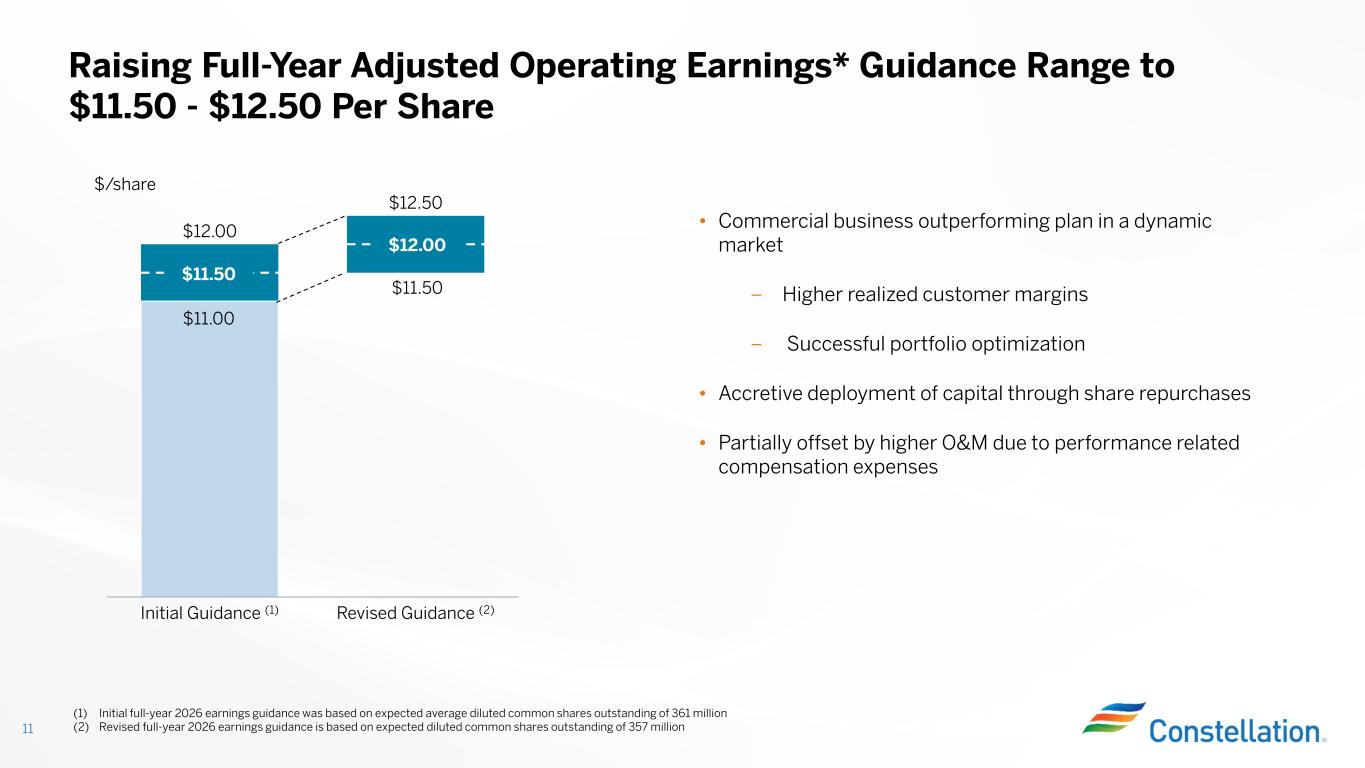
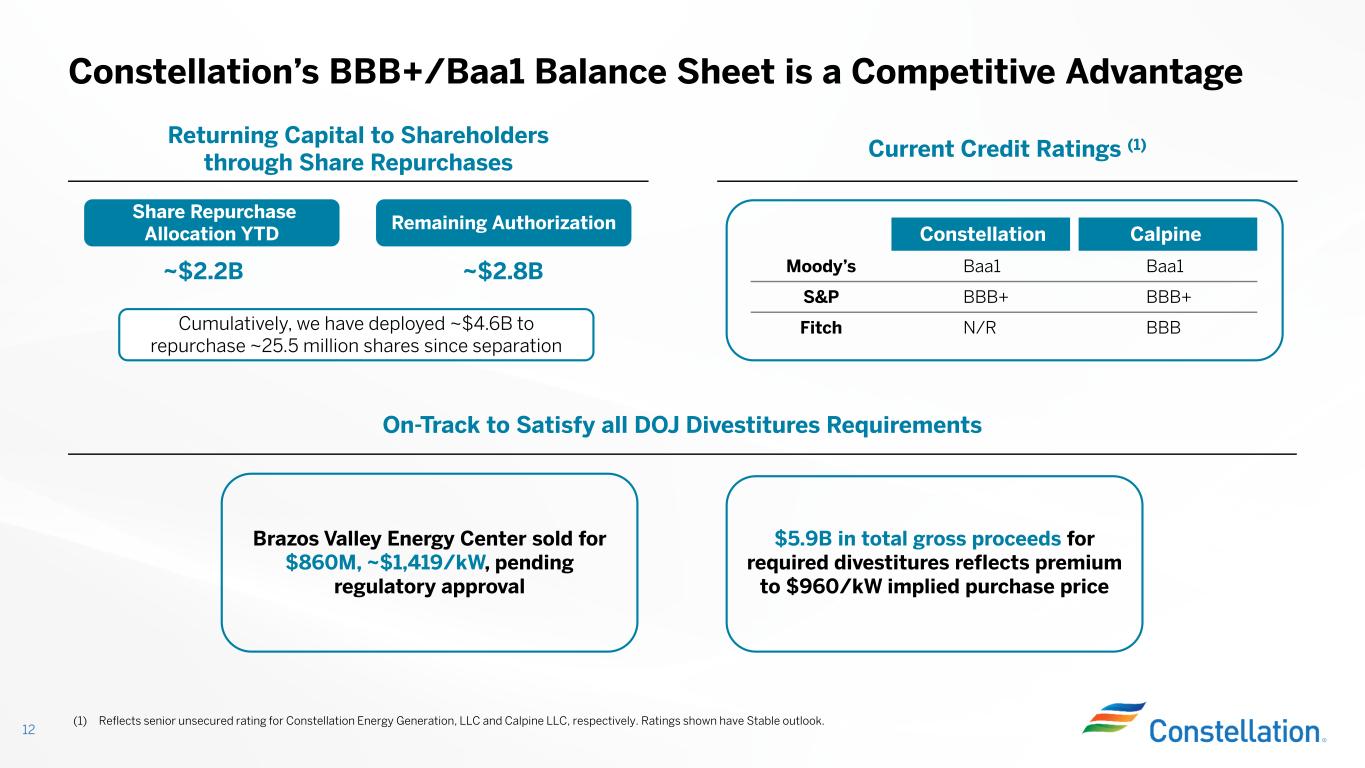
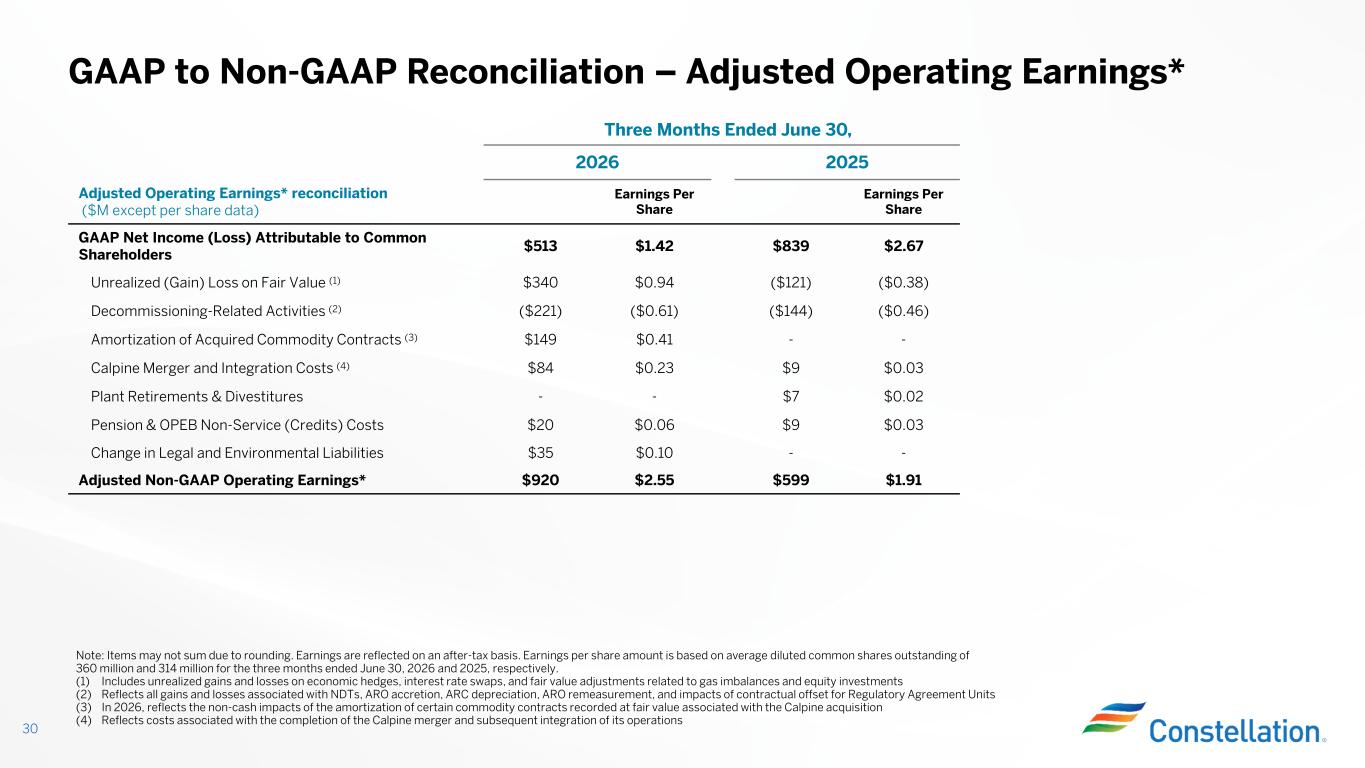
Thanks, Tim. Good morning, everyone. Thanks for joining our call and for your continued interest in Constellation. We've got a terrific update for you today. Strong results, an increase in guidance, positive regulatory developments, and good progress on strategic transactions. But as always, we want to start off with the most important part of our business, our people. First, let me begin by recognizing Bob Lawless, who this week retired from Constellation's board after more than 25 years of spectacular service to Constellation and its predecessors as a board member. From Constellation's early years as a standalone company, through our time as part of Exelon, and in the years since our separation, Bob has played a critical role in helping to position the company for the long-term success we enjoyed today. He is one of a kind. On behalf of all of us at Constellation, I want to thank Bob for his leadership, his guidance, his friendship, and his dedicated service. We wish him all the best in retirement. Godspeed, Bob. Next, I want to thank the women and men of Constellation for delivering another strong quarter operationally and financially. During the mid-Atlantic heat wave ahead of the 4th of July holiday, our employees delivered, achieving a nuclear capacity factor above 99% while safely managing our dispatchable generation fleet through challenging operating conditions as the new organization came together effectively. Their dedication and execution helped sustain grid reliability when our customers and communities needed it most. Constellation is a special company, and we pride ourselves in making our company a place where people want to spend a career doing important work for America. So we're especially gratified that Constellation has been named a great place to work for the fourth year in a row. As you know, this certification is meaningful because the recognition can only be earned through the direct input of our people. I'm also pleased to report to you that for the first time Constellation has been recognized as a world's top business for people with disabilities. And finally we were extraordinarily pleased to receive the points of light honor as one of the nation's 50 most community-minded companies based upon the positive impact we make every day through volunteerism and investment in our communities. Now, I know that some may think that these awards and recognitions are nice, but maybe not quite as important as the financial and operational results that we'll talk about in just a moment. We don't see it that way. We think our values are the most important things. And when I talk in a few minutes about what it takes to restart Crane and get the overwhelming public support which we have and do it in a place known for the worst moment in U.S. nuclear history, then I think you will come to understand why we believe our durable community values matter so much to our business. Now turning to the quarter and our financial results, we delivered second quarter gap earnings of $1.42 per share and adjusted operating earnings of $2.55 per share. Given our team's strong commercial and operational performance year-to-date, we are increasing our operational earnings guidance range by $0.50 to $11.50 to $12.50 per share. Our midpoint is now what used to be the top end of the guide, and we still have many opportunities to deliver more value this year. Shane will talk through the details in his remarks. Since our business and earnings outlook in March, we have made meaningful progress across several key focus areas, reinforcing our confidence in delivering long-term value for our owners. In March, I candidly shared that we were behind our targeted timeline for completing long-term agreements due to new uncertainty in the regulatory environment. I told you that we were hopeful that PJM, under FERC's oversight, would move quickly to provide needed clarity so that work critical to our nation's future might proceed forward. I know that many were skeptical that reforms could be accomplished quickly and feared that the PJM process would drag on for years something we have unfortunately seen in the past but those concerns have not materialized instead we are seeing PJM prompted by FERC move at the necessary speed and while additional work remains for PJM to get the details right I am pleased to report that the progress is giving customers greater confidence to evaluate long-term solutions and move forward with planning and contracting activities. Since the last call, we have signed approximately 920 megawatts of long-term nuclear deals that are consistent with our view of long-term value. These contracts have an average duration of 18 and a half years and are with investment grade customers. Now, as we talked about and as I explained to you last quarter, we will continue to follow our customers' lead on how and when their agreements are disclosed so that they may protect their procurement strategies. Turning to Crane, important progress has also been made on the restart. During the quarter, the NRC approved the Crane New Fuel Licensing Amendment request, clearing the path for the receipt of new fuel and representing another significant milestone towards returning the facility to service in the second half of 2027. In addition, FERC granted the waiver request to transfer the capacity injection rights from our Eddystone facility, which is stated slated to close, to Crane. We expect that this transfer will help clear many of the transmission contingencies identified in PJM's initial deliverability review and will pave the way for Crane to deliver full value to the grid. Further strengthening the value and unique long-term durability of our nuclear fleet, we continue to extend the lives of our clean energy centers. During the quarter, we filed subsequent license renewal applications for both the Ghanaian and 9 Mile.1 clean energy centers. These extensions were made possible by Governor Hochul and the New York Service Commission, recognizing the value of clean, reliable nuclear energy and extending the ZEC program, advancing our strategy to preserve these critical assets for New York and for America. As a reminder, these programs and license extensions mean that Constellation is truly in a unique space with the vast majority of our power generation secured through 2050 and beyond. Integration with Calpine is progressing well and we are seeing strong collaboration across the combined organization as teams identify opportunities to create additional value for you in addition we're pleased to have reached an agreement with LS power to sell the Brazos Valley Energy Center following regulatory approvals and closing the sale will satisfy the final DOJ requirement tied to the Calpine acquisition the fact that smart private equity buyers with long track records in competitive power markets are willing to pay over $1,400 a KW for Texas assets in a soft ERCOT market should tell you everything you need to know about the value of the efficient gas fleet that we now own. Finally we continue to execute on our capital allocation strategy. Year to date we have deployed approximately 2.2 billion toward opportunistic and accretive share repurchases. Shane will talk about it, but we already are seeing upside to our earnings from these buybacks. Turning to slide six, as I mentioned at the outset, we executed this quarter on 920 megawatts of long-term contracts for nuclear power. While I can't disclose pricing, what I can say is that the deals recognize the value of existing clean and reliable nuclear energy as a premium product. After a successful quarter in signing deals, we have now contracted roughly 30% of our clean base load output under long-term agreements, and our transactional pipeline for future deals is both robust and active. Taking an additional moment on the deal that was announced this quarter with our partner Walmart, I wanted to mention that Walmart has a long history of supporting clean energy development. But this agreement represents their first nuclear power purchase agreement and the first transaction of its kind for a major retailer. Walmart is helping to define how corporate customers think about nuclear energy, reflecting a growing recognition that achieving ambitious decarbonization goals requires access to around the clock carbon-free generation. This transaction is only the beginning of a wonderful partnership with this iconic American company. A Walmart deal taken together with the others this quarter reinforces the broad appeal of our products and capabilities to customers of all kinds. Moving to slide seven, I want to provide some additional context on regulatory developments that are improving the backdrop. In June, we received strong validation from FERC, which made clear its desire to move more quickly in establishing new pathways for serving large loads. FERC ordered every RTO to justify how their existing tariffs provide for the just and reasonable interconnection of large loads to the grid or propose revisions to their tariffs. FERC also called balls and strikes on the rules for new transmission services for co-located loads and directed PJM to explain why it cannot make those services available more quickly. Beyond its support for exploring co-located solutions and pushing for speed in resolution, FERC has has also demonstrated a willingness to consider innovative approaches that remove barriers to economic growth, including studying generation and load together at a common point of interconnection, something that Constellation has. Initiatives like these could create a meaningful pathway for customers to access affordable solutions more quickly while maintaining reliability and supporting broader economic development objectives. As these frameworks develop, the value of existing generation and infrastructure will become increasingly apparent. Our fleet is uniquely positioned to help meet these objectives by leveraging assets that are already operating, connected to the grid, and capable of supporting growing customer demand more efficiently than many other alternatives, even as we bring on new capacity to meet the growing demand. Last week, PJM released proposals for the Reliability Backstop Procurement, or RBP, and the Interim Resource Adequacy Service, or IRAS. While aspects of PJM's proposals need clarification and further consideration, we are now on the path for resolution and certainty, which will allow customers and suppliers to make investment decisions with greater visibility and confidence in the market rules. PJM has also established a clear target of 6.8 gigawatts for the RBP, and we are currently in the bilateral matchmaking process, which is intended to pair customers with new supply and reduce the amount of capacity ultimately required through certain central procurement. PJM has proposed conducting the procurement auction this fall, with results expected by year-end. Overall, we are pleased by the pace of progress. As those who have followed PJM for years understand, the speed at which FERC is requiring PJM to move is unprecedented, and many of the concerns we raised earlier this year on that front are being addressed. On a parallel path with the PJM and FERC processes, Constellation and other stakeholders are urging EPA to make clear that any curtailments ultimately directed by FERC tariffs should be excluded from the 50-hour annual limit for the use of backup generators at data centers. This could unlock meaningful optionality for our data economy customers while preserving reliability and reducing energy costs for all customers. Remember what we've discussed before. We have plenty of unused capacity in generation and in the wires grid over 99% of the hours of the year. We have a peak capacity concern, not an energy concern. The secret sauce here is to deal with a handful of peak hours that present reliability concerns and at the same time to harvest the stranded capacity that exists every other hour of the year. If we do this right then we can actually bring on these critical technologies and lower energy costs for everyday families and businesses. In conclusion we still have some wood to chop here but the The direction and the speed are very promising. We urge PJM to keep it up. Turning to slide eight, I'm going to conclude my remarks on this slide and return back to the point that I made at the top about business values and our focus on communities. This slide talks about the fantastic progress we've made at Crane by creating a win-win-win for Pennsylvanians, the local communities, and our customer. I'm not going to drain the slide. You could read the words yourself. Instead, I want to draw a parallel between what it takes to build, operate, and start nuclear plants with what it takes to build, operate, and start data centers. And the basic point that I want you to consider is this. Like in the case of nuclear, the public reaction we are seeing to data centers in terms of moratoriums or opposition in places can be strong at times. No one can deny that. But as the Crane example shows, the concerns underlying the opposition to data centers are far from unsolvable. Indeed, I would suggest to you that if we can restart Crane at Three Mile Island and earn overwhelming political and public support, then we can certainly earn the public support to build a 21st century data economy in our communities. It comes down to the trust we earn with the right business values focused on making our communities better and stronger. it's all about the things on this slide jobs tax base and community contribution when it's done right it works with that I'll turn it over to Shane thanks Joe good morning everyone turning to slide 9 we earned $1.42 in gap earnings per share and $2.55 in adjusted operating earnings per share in the second quarter which is 64 cents higher than the second quarter last year higher year-over-year quarterly
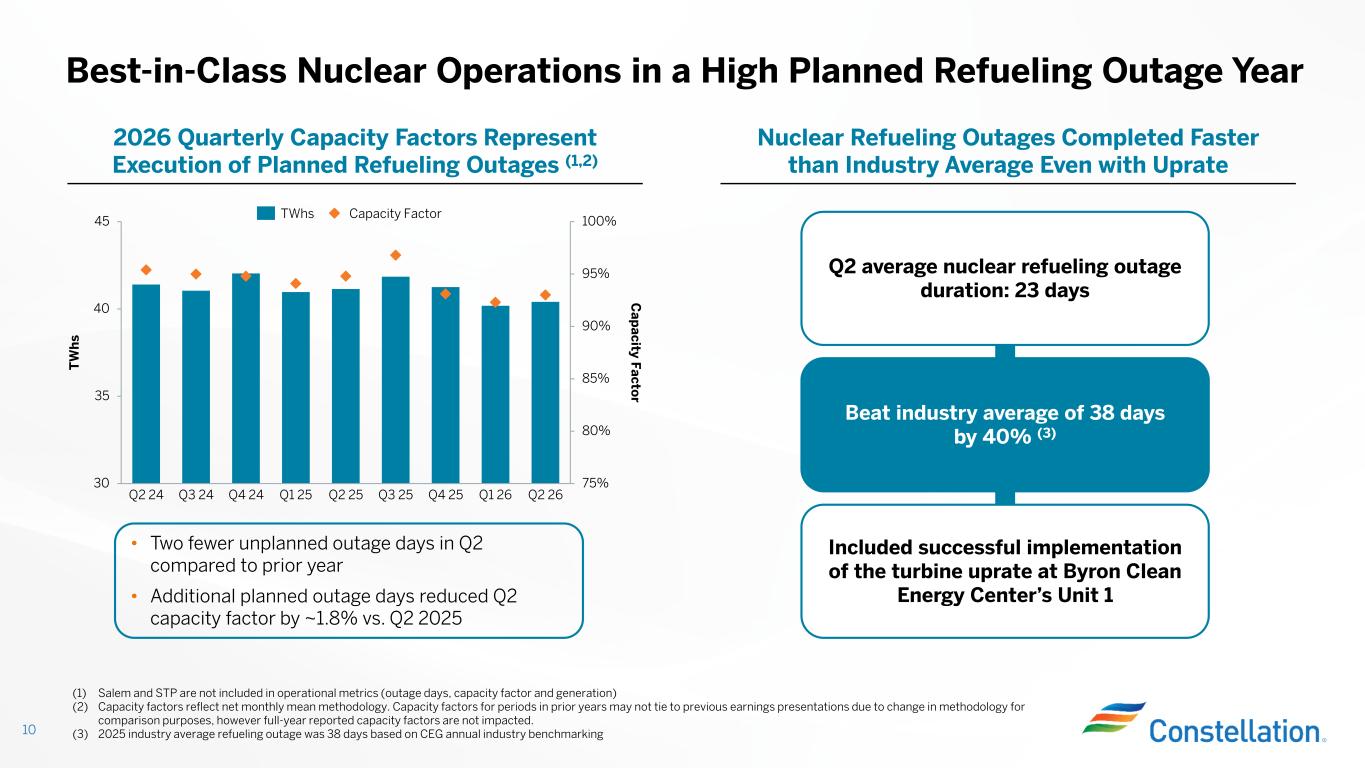
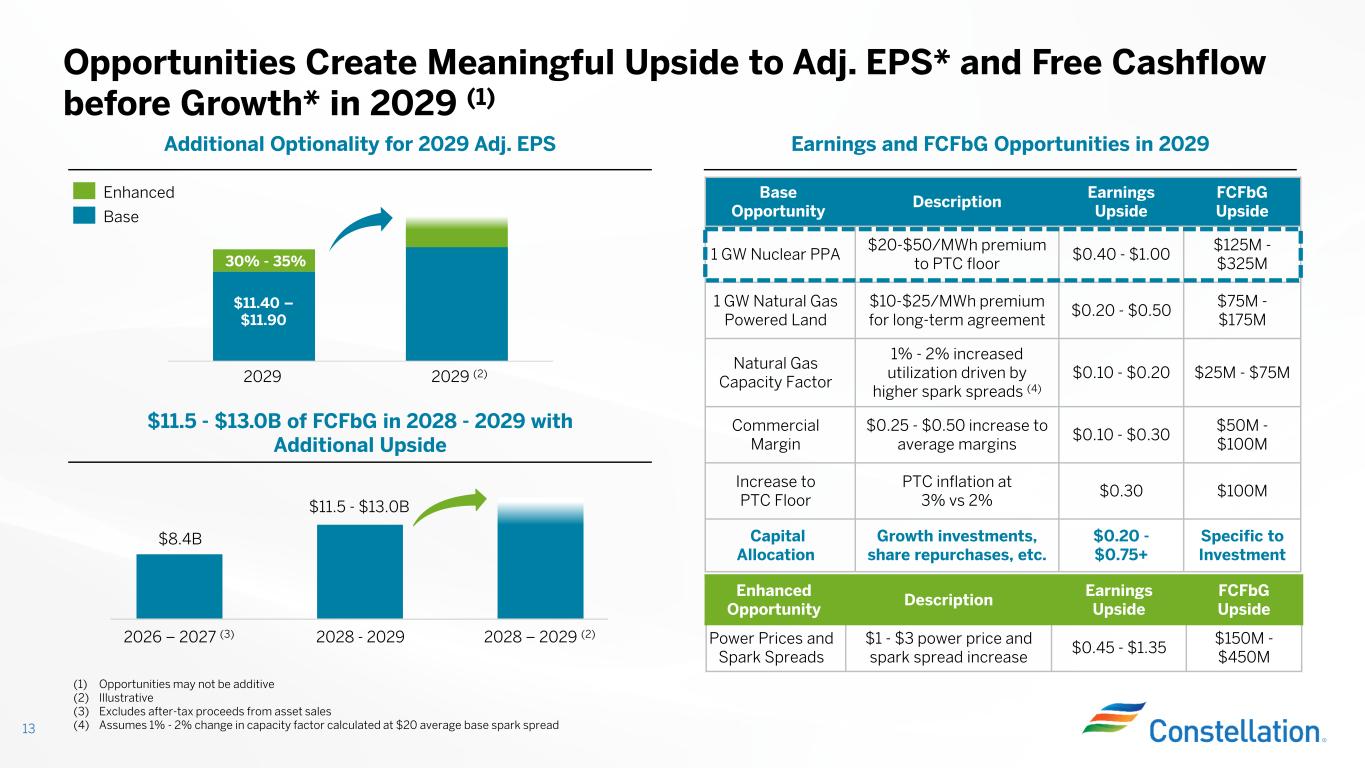
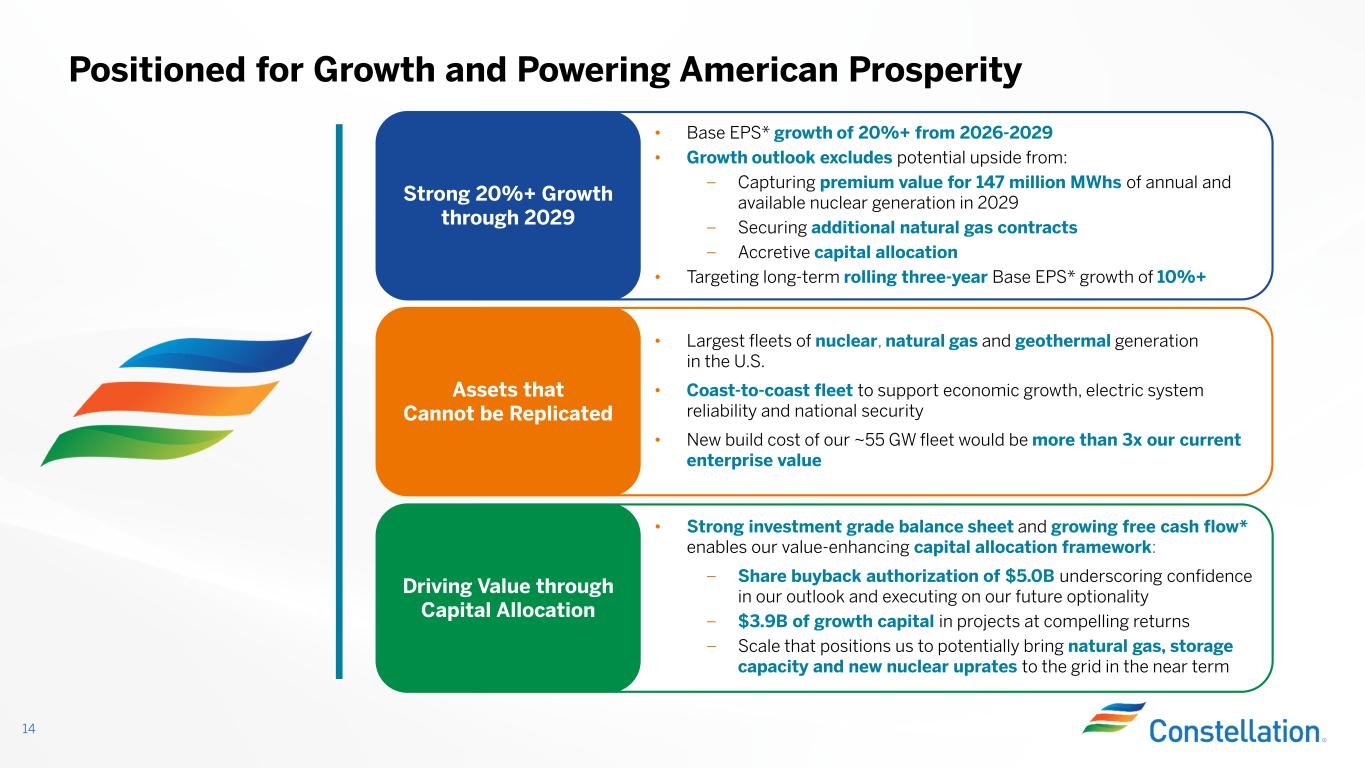
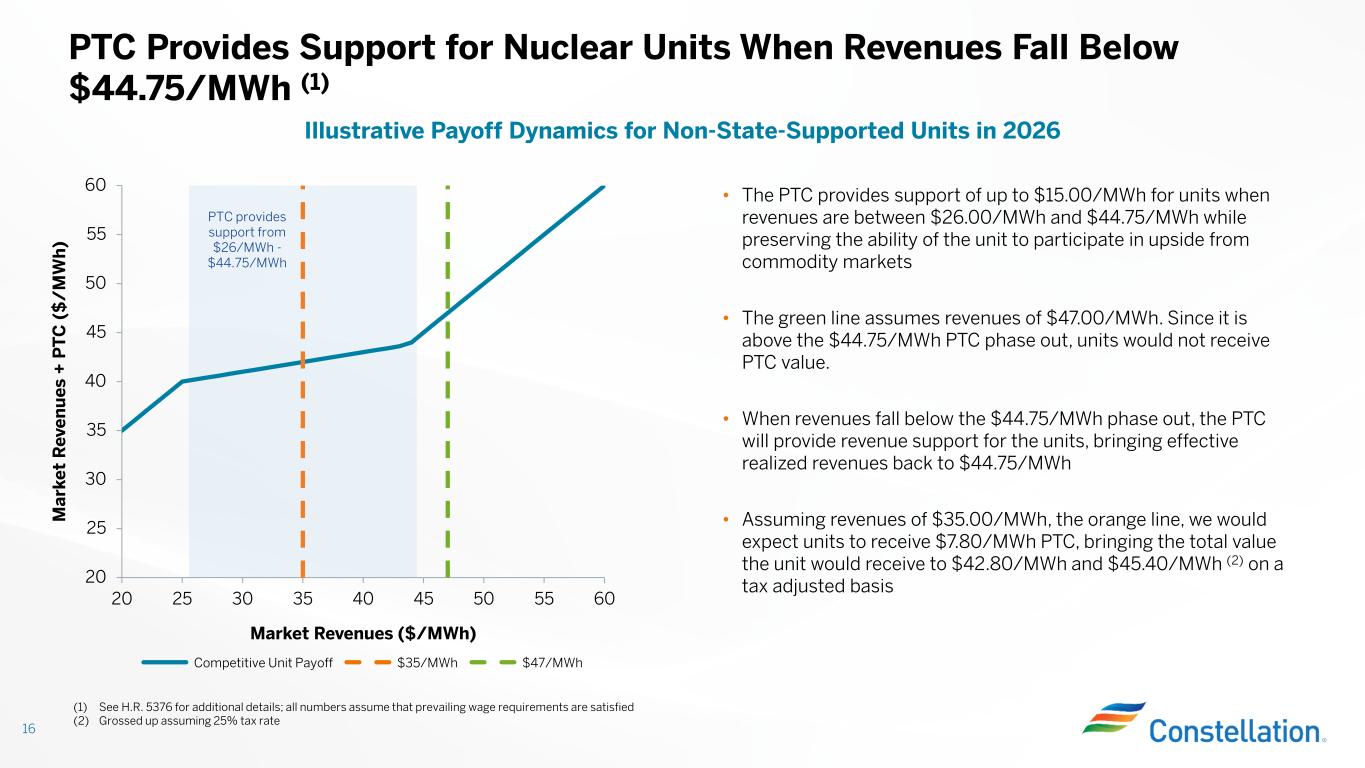
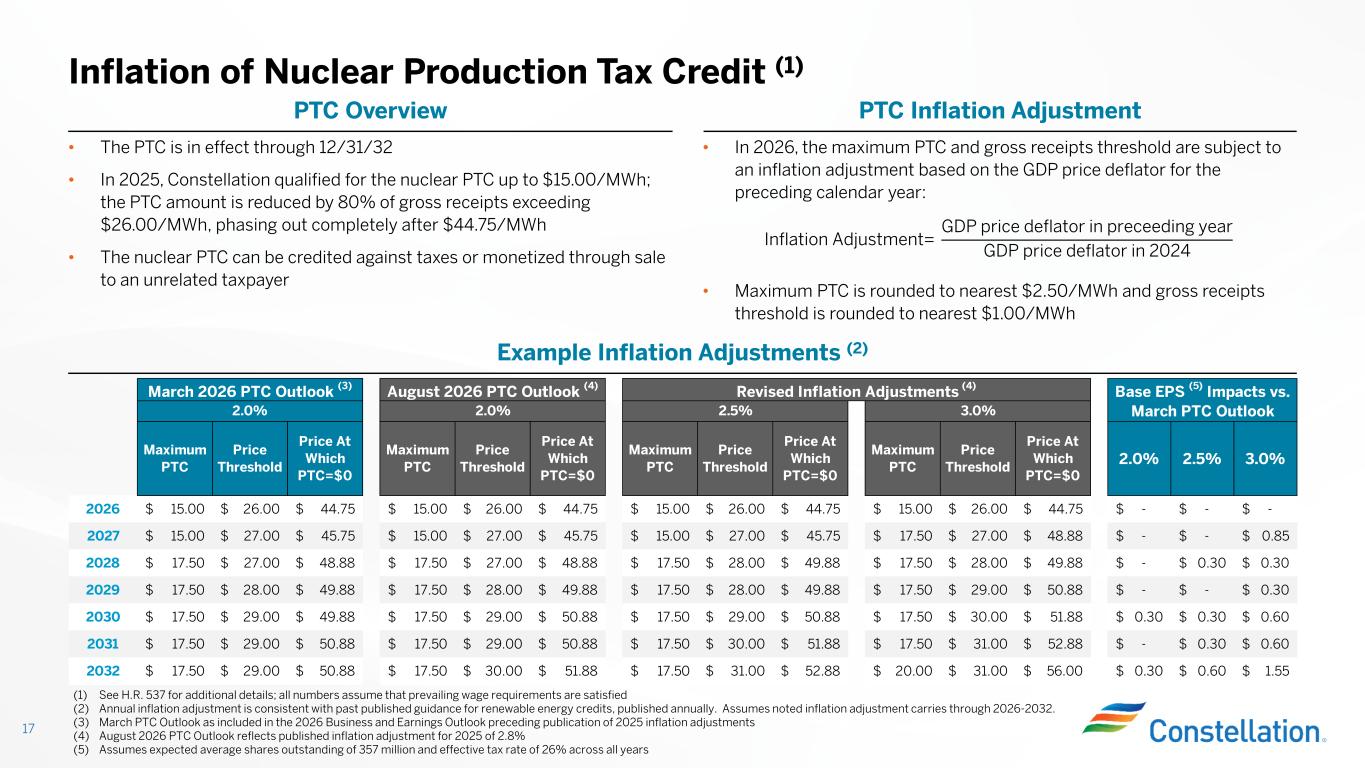
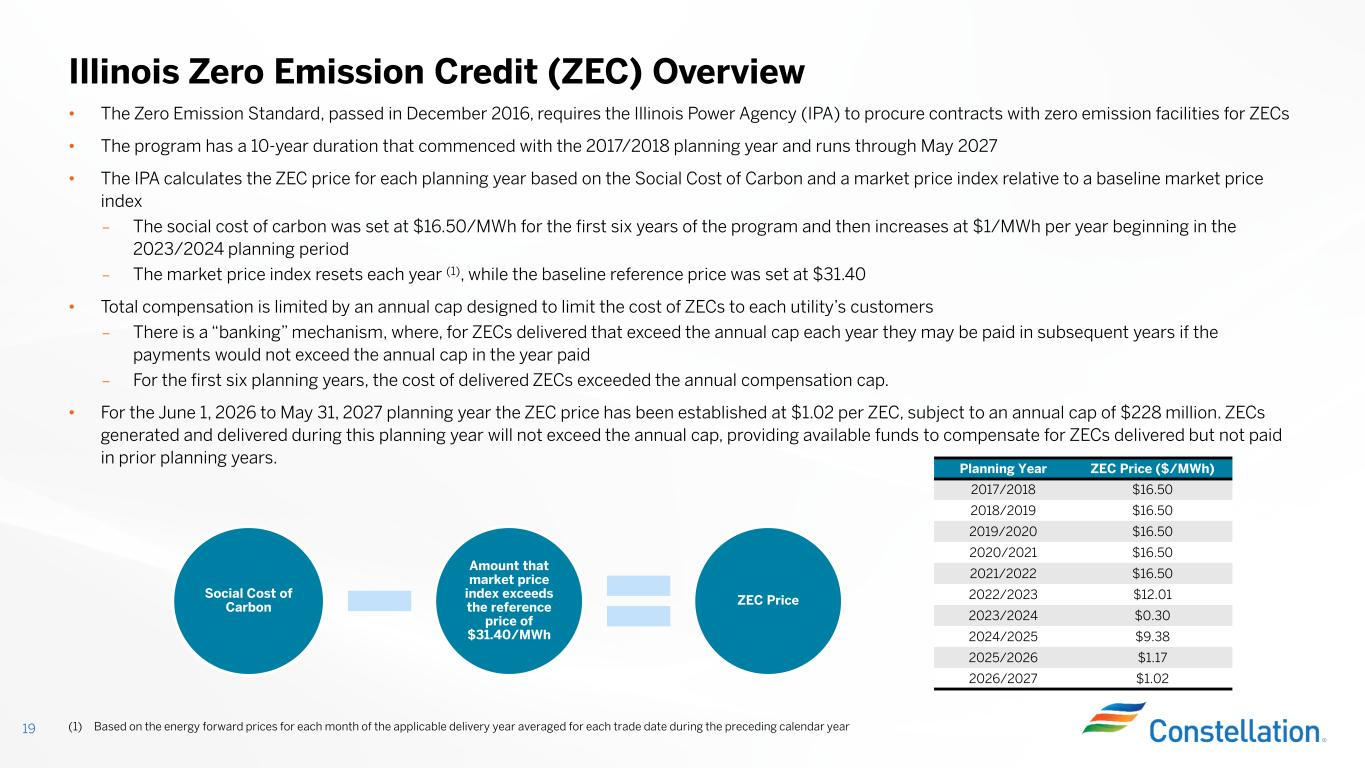
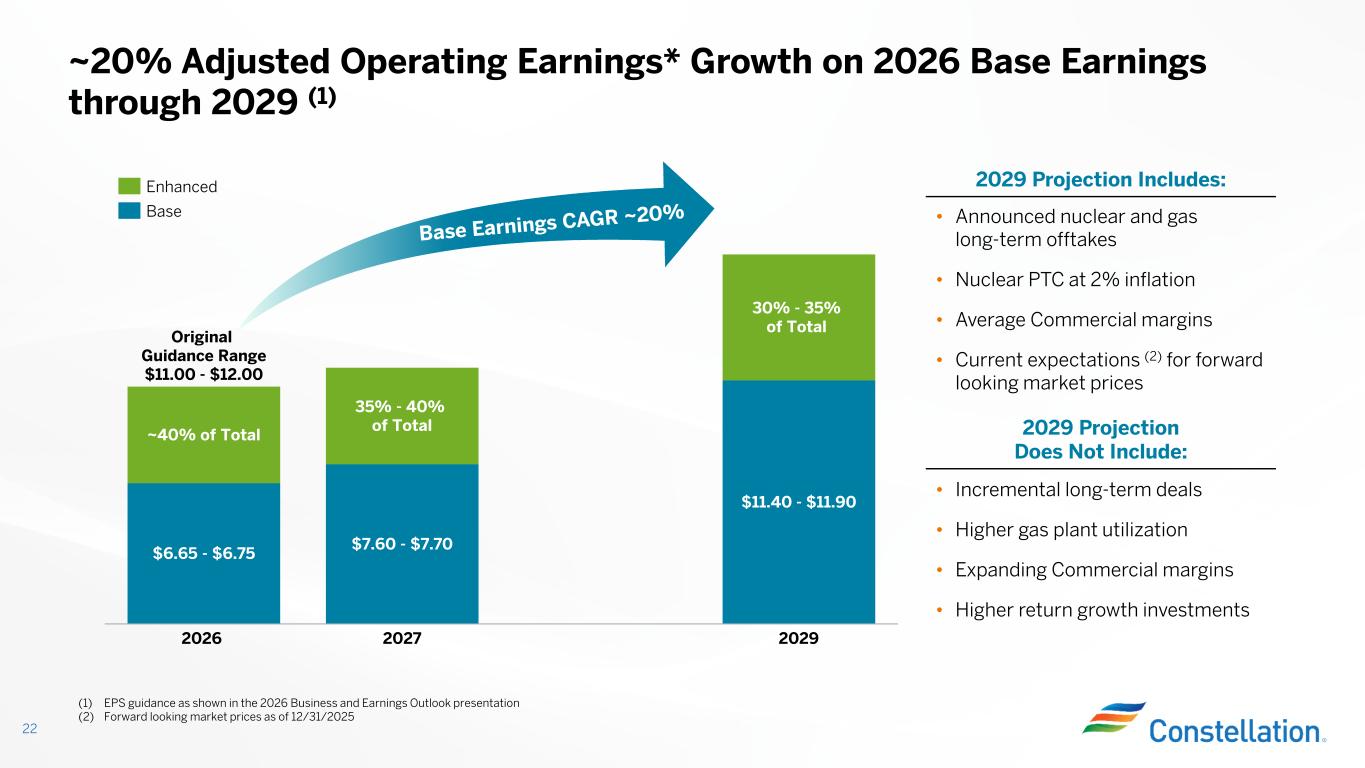
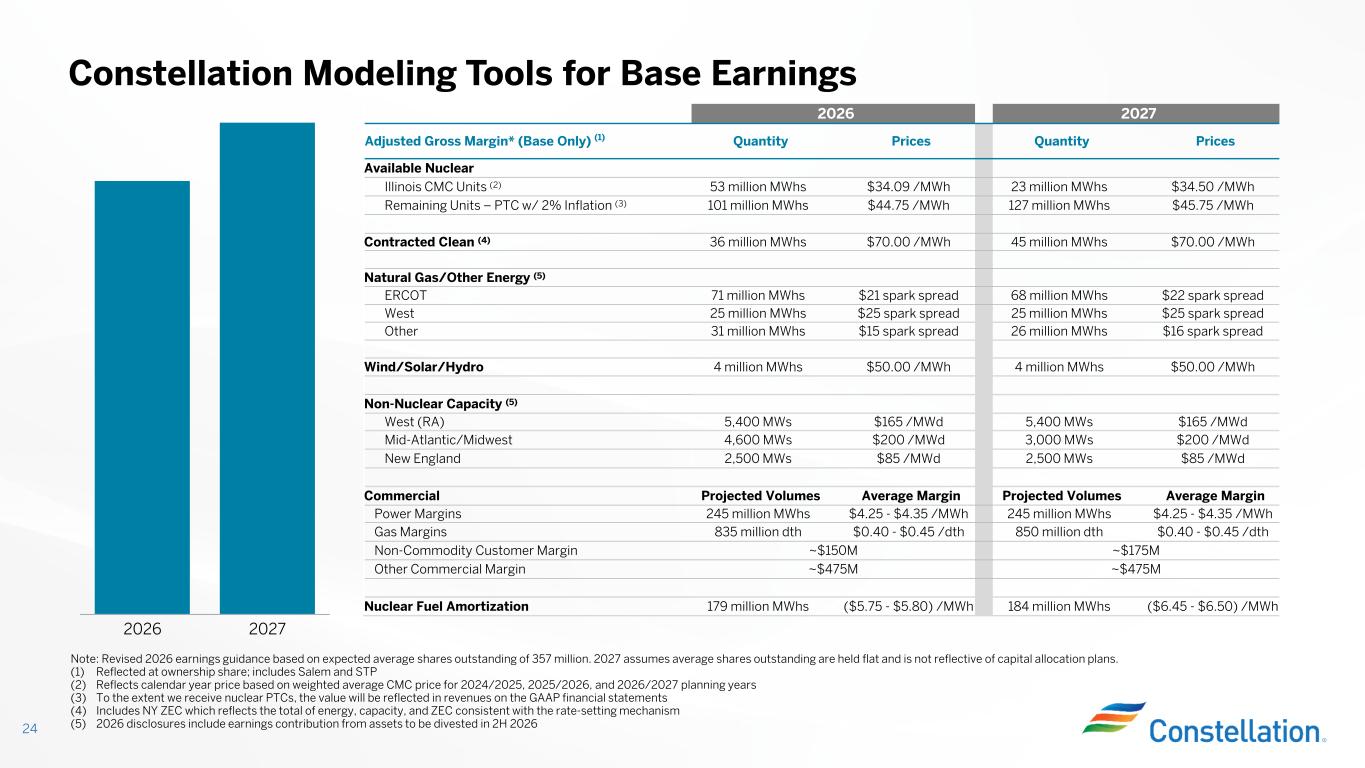
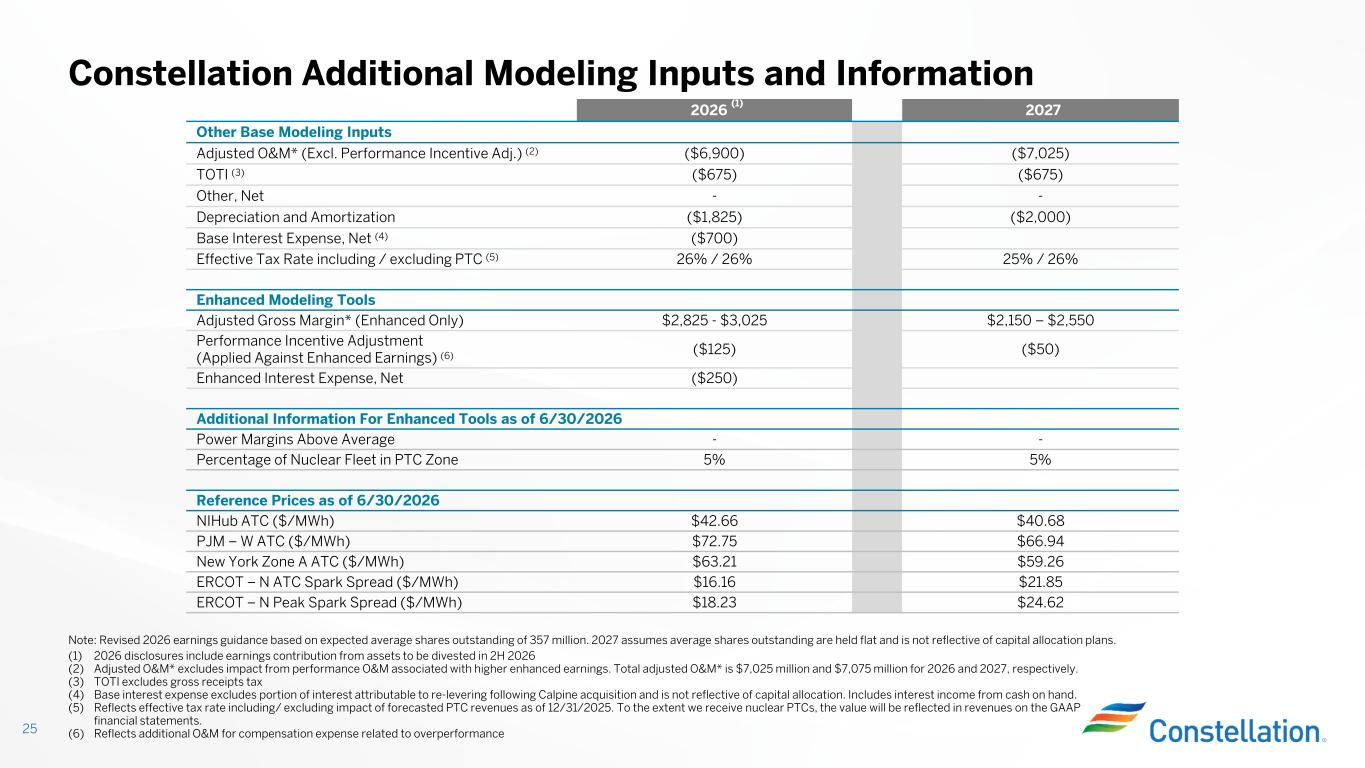
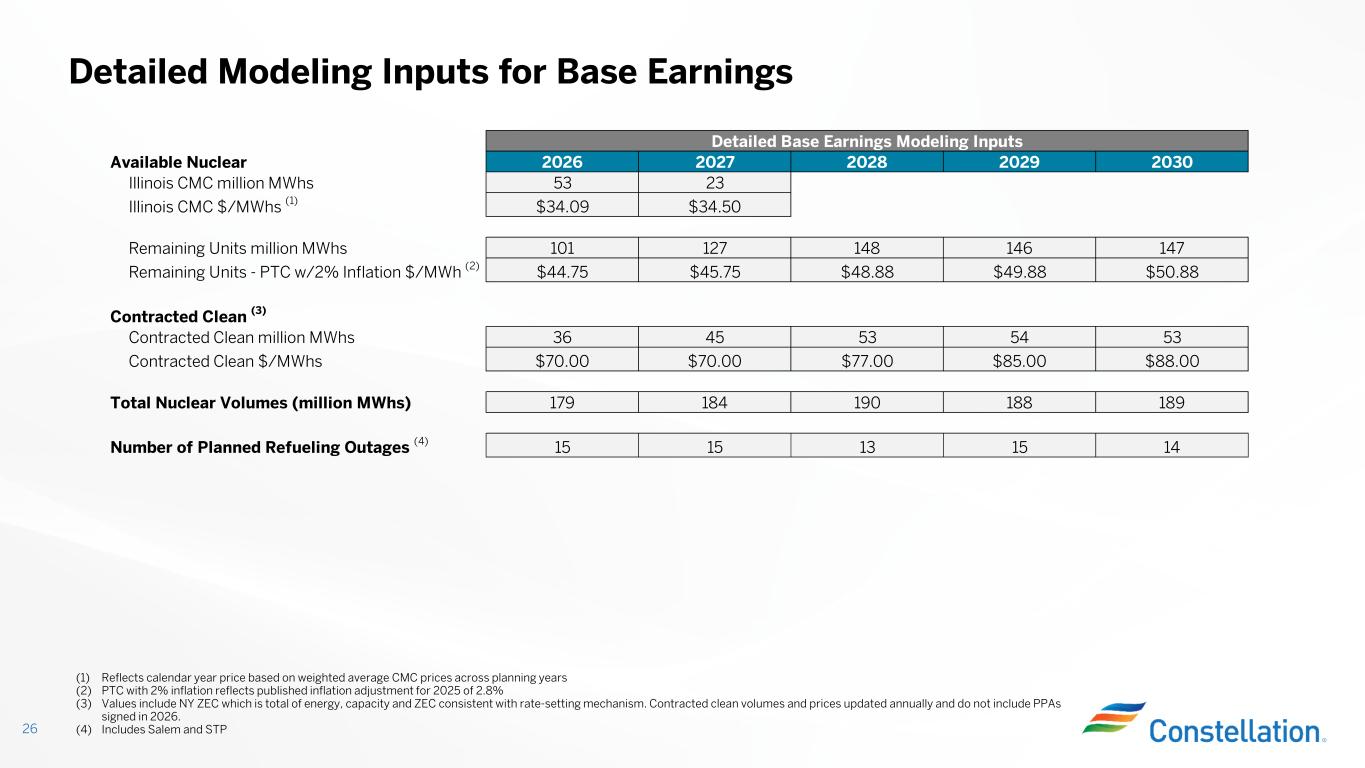
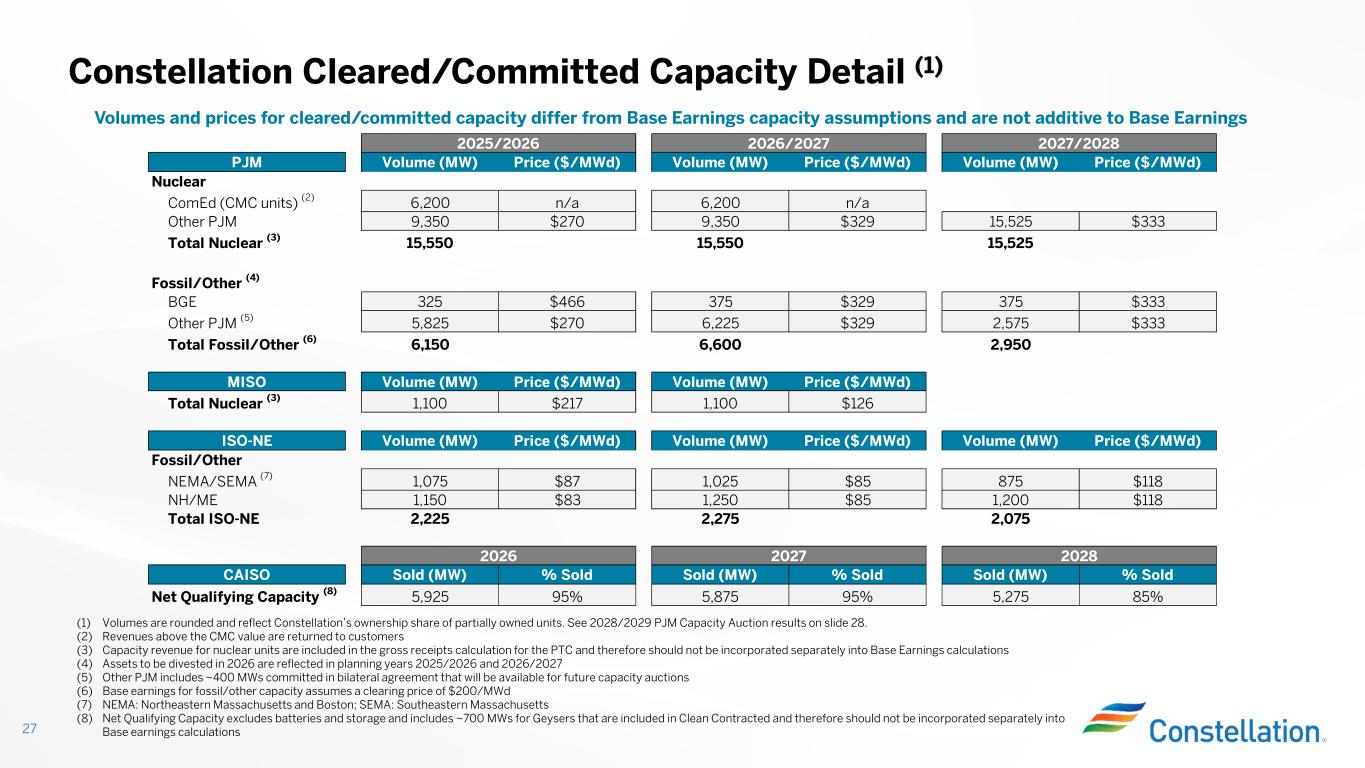
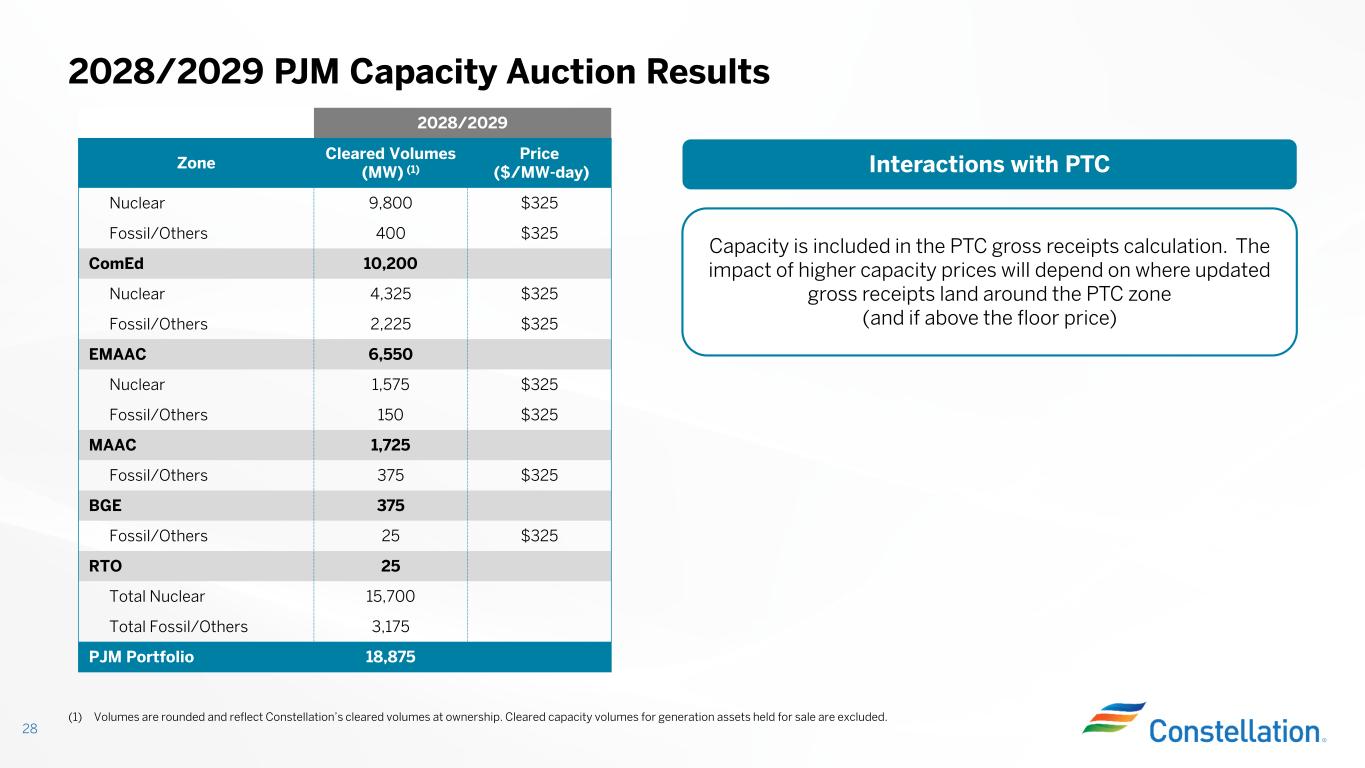
results are primarily attributable to accretion from calpine higher capacity prices in pjm and strong performance from our commercial business that has once again delivered value through higher realized customer margins and from portfolio optimization during periods of volatility this strong performance has contributed to our improved full year outlook which i will cover shortly. Our favorable quarterly drivers were partially offset by higher planned nuclear refueling outage days and the timing of revenue recognition from the Illinois ZEC program. As we've discussed on prior second quarter calls, Illinois ZEC revenue timing can vary year to year. This quarter, we recognized $85 million of banked credits compared with $200 million last year. This timing item was already reflected in our 2026 guidance and has no impact the full-year results. This true-up also reflects the final planning year adjustment before the Illinois ZEC program ends in May of 2027. Slide 19 of the appendix provides additional details on the program. Moving to slide 10. Our nuclear fleet delivered a 93% capacity factor and generated 40 terawatt-hours of reliable, low-carbon electricity while completing six planned refueling outages. As expected, the quarter included additional planned outage days, which reduced our capacity factor by 1.8% compared to the second quarter of 2025. Our 23-day average refueling outage duration in the quarter included the successful implementation of our turbine upgrade at Byron Unit 1, and even with that longer outage, the team still outperformed the industry average duration by 40%. This outstanding result in a quarter with elevated planned refueling activity speaks to the consistency, discipline, and expertise of our nuclear operations team that performs this work efficiently and most importantly safely. Turning to slide 11, we are raising our full year adjusted operating earnings guidance range to $11.50 per share to $12.50 per share up from our prior range of $11 to $12 per share. Strong commercial execution combined with the benefits of our disciplined capital allocation gives us the confidence to raise the midpoint of our full year guidance by 50 cents per share just halfway through the year. We will revisit our full year outlook in the Q3 call as we put the summer behind us. We have reflected these updates in the modeling appendix on slide 25. Turning to slide 12, we continue to operate from a position of financial strength supported by our strong investment grade credit ratings. That financial strength gives us flexibility to best serve our customers, invest in our business, and also return capital to shareholders in a disciplined way. Since the first quarter call, we returned just under $2 billion of capital to our owners through share repurchases. Together, with the $335 million we shared on the Q1 call, we have allocated about $2.2 billion to accretive share repurchase in the four months since our business and earnings outlook at the end of March. We will continue to be opportunistic as we deploy the remaining $2.8 billion of available authorization. Very competitive process. We announced an agreement with LS Power to sell the Brazos Valley Energy Center for $860 million, or about $1420 per kilowatt. It was great to see such a high level of interest for the asset in spite of recent ERCOT weakness. It was clear from a very competitive process that buyers recognized the long-term value of gas-fired assets with the potential for even higher utilization rates. Once approved, this divestiture will satisfy the remaining DOJ settlement obligations for the Calpine acquisition. In total, the assets that were required to be divested by the DOJ are expected to generate approximately $5.9 billion in gross proceeds, which at a nearly $1,200 per KW basis reflects a healthy premium to the implied 960 per kilowatt purchase price of the Calpine assets moving to slide 13 as discussed in March we see meaningful opportunities to grow our earnings and free cash flow over time we have already started translating a few of those growth levers into tangible contributions the sensitivities provided in March were informed by active discussions across a diverse set of customers now that we have executed nearly one gigawatt of nuclear PPAs within the range contemplated by this view, we thought it was worth revisiting this table. While the agreements announced today have later start dates and are not expected to materially impact 2029 earnings, they provide additional visibility into sustained growth in our base earnings over time. Separately, we are also updating our 2029 capital allocation sensitivity range to reflect the share repurchases we have completed to date. The updated range now includes a floor of $0.20 per share, with potential of upside of greater than $0.75 per share. The low end reflects the benefit of the repurchases already completed, while the high end reflects the meaningful optionality we still have under our buyback authorization and our ability to continue deploying capital when we see attractive growth opportunities. Last, I would also like to highlight an update to the Nuclear Production Tax Credit as shown on Slide 17 in the Appendix. Following the IRS publication of the 2025 Inflation Adjustment, we updated our forward PTC strike price assumptions. Incorporating the 2.8% adjustment for 2025 and continuing to assume 2% inflation annually in 2026 and beyond, the projected 2030 PTC strike price will increase from $49.88 to $50.88 per megawatt hour. This change will increase our view of 2030 base earnings by approximately 30 cents per share. More broadly, the PTC's inflation linkage continues to provide upside to our base earnings outlook should inflation exceed our 2% long-term assumption and is another factor supporting our goal of sustaining double-digit base earnings growth into the 2030s. With that, I'll turn the call back to Joe.
Thanks, Shane. To close out today, in practical terms, we're seeing the benefits of speed in the regulatory process. Our customers are gaining more certainty every day, and we're hopeful that PJM and FERC could remain on track and deliver regulatory clarity by year-end. Our team also is actively engaged with customers and policymakers to explore different options for connecting new large load to the grid, and our conversations are strong. We're focused on what we do best, operating our assets at world-class levels, helping our customers achieve their energy and sustainability objectives, and creating long-term value for our owners, customers, and the communities where we live and work. Thanks for your time today, and the team is now ready for your questions.
Operator
Thank you, ladies and gentlemen. If you have a question or a comment at this time, please press star 1-1 on your telephone. If your question has been answered, you wish to move yourself from the queue, please press star 1-1 again. We'll pause for a moment while we compile our Q&A roster. Our first question comes from Nick Campanella with Barclays. Your line is open.
Hey, good morning. Thanks for taking my questions. um hey so it's great to see the um the new long-term nuclear deal i guess just can you can you kind of talk about if it's acceptable in your terms of long-term value just price and term um i guess how do we think about the customer uh it it sounds like it's a hyperscaler but is this just more of a traditional cni and um is it is it one deal that's incremental to walmart just how to think about that. Thanks.
Yeah, look, I'm not going to, as I said, I'm going to adhere to the rule that, you know, we're going to let the customers explain their deals and announce them to the extent that they choose to. But Nick, it is consistent with our view of long-term value for the nuclear fleet. And I think, you know, this is one of many opportunities we're continuing in the market.
Okay, great. And then, you know, you mentioned being engaged in the bilateral process in PJM. Can you just give detail, obviously, that'd be new capacity that would net against the 6-gigawatt figure, but could hybrid deals be in play if you could, you know, work to address, you know, the non-peak issues and maybe talk about the 5-gigawatts of new capacity that could be eligible that you highlighted on the last call?
Yeah, I'm going to – Dan Eggers is kind of overseeing a bit of that, so I'm going to ask him to chime in here. But, look, the process, the bilateral process is confidential, and we'll keep it that way. But you should assume that all of the opportunities we have to add megawatts are being talked to with customers, you know, in combination with our existing capabilities. Think about it. I mentioned this on the call. The best outcome for America is to take advantage of the stranded capacity that exists in the U.S. grid. That's wires and generation capacity. That's fastest and it also reduces costs. How does it reduce costs? We know on the wire side, all the fixed cost elements of the system get spread out over more hours of usage. That brings the per hour usage rate down. So that's how it works on the wire side. On the energy side in competitive markets, what it means is it puts downward pressure on capacity prices over time. Remember, the capacity price that generators seek in the PJM market or the so-called missing money is the difference between what it costs them to build and operate and what they're receiving in energy markets. So the more the existing generators fully utilize efficiently, are fully utilized by customers, the less dependent they are on a big capacity payment. We've seen that over the years. As energy and ancillary services go up, capacity prices go down. So all of the incentives here for everyday families and businesses are aligned with tapping into this stranded capacity. Our customers know that. At the same time, we do have to manage the peaks. That could be managed with batteries, with demand response, with peaking resources. Other forms of generation could be a part of that, but they still have to figure out, not just the peak, but what they're doing every other hour of the year. That's where our fleet becomes extraordinarily valuable because it's a fixed price, clean energy resource that they could count on for decades, and that's what they want. So this kind of idea where we're trying to, you know, or this notion that existing and new are completely bifurcated and don't come together is just not the reality of the way customers look at their procurement strategies. The backstop auction is a part of that, but it's also part of what we're doing every single day in our conversations with customers.
Dan, I said I was going to hand it over to you, and then I went out and talked about it for two minutes.
Nick, I'll add to what Joe said, right, is that when we put forward the megawatts and the interconnect queue, it was a full range, anywhere from up rates on the baseload side to batteries to peakers. Our motivation here is consistently to provide our customers with what they need, right? So solutions are important. The bilateral market is clearly a place where we can get those things done. We'll see how that works out and what's left to address in the RBP when we get there.
Yeah, Nick, I'll just come back, Dan. Thank you for that. And I'll just come back, Nick, to another big piece of this. I think what EPA ends up doing here in its clarification process of its rules for the backup generation at sites is really going to matter because, you know, as resources have to be curtailed to address these few peak hours, the utilization of those backup generators may be the most effective way for us to kind of address the peak demand and do the things we're talking about in terms of really, you know, taking advantage of the stranded capacity in the system and lowering prices for customers.
Thanks for all your thoughts.
Operator
One moment for our next question. Our next question comes from Steve Fleischman with Wolf Research. Your line is open.
Hey, Steve. Good morning.
Hey, good morning. So a couple questions on the new contracts. So it's from nuclear. So most of your nuclear is in PJM. So should we assume these are in PJM?
Steve, we're not really going to pinpoint the origin, but yeah, you're right. Most of our stuff is in PJM.
Okay. And just, you know, I think there have been some concern that, you know, with a connected manager, IRS, like whether customers can contract for existing? Like whatever contracts you have, have they kind of incorporated, you know, kind of whatever outcomes could come out of that?
Yeah, Steve, I think I probably droned on about it a bit long just a moment ago, but just let me give you a specific example. Let's suppose that in the context of connect and manage, a customer is deciding to use batteries or further rely on backup generation, they could do that and comply with what we see as the proposed rules going forward. But they'll still need to buy power. They'll still need to buy energy really for all of the other hours they're not managing, the other 99%. And so that's where the existing resources are going to be able to provide quick solution sets. Otherwise, we'd be waiting for every data center to wait for every, you know, for every megawatt to be in there connected and built. And if that's the case, we might as well hand over the keys to China. We're never going to build this economy if the outcome is going to be we got to wait for new power plants to be built before we can connect any data center. It's clearly not what FERC is thinking about. It's clearly not what Secretary Wright is thinking about. What we're trying to do is manage the peaks, A lot of devices to do that. But the bedrock of building out at least this early phase of the data economy is going to rely heavily, in my view, on existing generation as it has.
Okay. Then one more question. Just your range of the potential value of contracts. I mean, I think it's $20 to $50 a megawatt hour. It's pretty wide. Can you give us any sense of how things are trending within that range?
Hey, Steve, it's Shane. I mean, again, to the point of trying to protect customer sensitivity around the exact pricing, we're going to keep that range as it is. I mean, I think it is important to note that when we provided that disclosure in March, we were obviously talking with a number of different counterparties, and the transactions all fit that profile. So I think we're comfortable with keeping that sensitivity as it is.
Operator
Thanks, Steve. One moment for our next question. Our next question comes from David Arcaro with Morgan Stanley. Your line is open.
I was wondering if you could, maybe shifting over to the ERCOT market, wondering if you could give your view on the batch zero process. Do you have projects that you're partnering with in that program? And curious how you see that evolving from here.
Yeah, let me turn it over to Dave Dardis for comments on that. The answer is yes. we also have uh by virtue of the acquisition of calpine some projects that were really early first movers i think in texas where we've gotten through uh you know through necessary approvals and we're proceeding with clients on it but some of our some of our sites are in the batch zero process and so we're evaluating uh you know what it means to answer the questions presented by the governor's letter, and we're hoping to see activity here from ERCOT and the Texas P-U-C-T to clarify those things soon. David, anything to add?
I guess all I'd add is, I mean, Governor Abbott has been very clear that he's a champion for responsible data center development in the state of Texas. He understands for Texas competitiveness and ultimately American competitiveness, so I don't think anything has changed there where he's said, you know, Texas should be the epicenter of AI. I don't think his view has changed on that, but like, you know, Like all these folks, particularly coming into the midterm elections, they want to be responsive to their constituents, and Governor Abbott has asked for some pretty reasonable information to be included as part of Batch Zero. We think all that information can be provided quickly, and we don't think it should be a meaningful delay in ultimately moving through that process and getting answers quickly. So we see this as a temporary measure here that we think is manageable by the industry, and we look forward to working with the governor and the PUC team. Right.
And David, I think some of the answers here are going to be pretty darn good. You know, there's some fanciful kind of numbers out there about the use of, for example, water and things. Some of the solutions that we're seeing for water usage from some of our clients are, you know, put water consumption on the level of, you know, a restaurant or a large store for data centers. So I think it's going to be an eye opener to people. I think they're the right questions to be asked. Not all data centers are the same. So maybe this is intended to ferret out those that have been less efficient with water resources. But I think there's a lot of good answers out there.
Absolutely. Yeah, it's really helpful. Thanks. And curious if you could also maybe give your view on the outlook for just on the power market side of things for ERCOT outlook for power prices and spark spreads from here. The market's been under pressure, and I'm curious your view on that, and maybe also just the battery storage, how that's impacting the market from here too.
Yeah, thanks for the question, David. This was one that came up last quarter, and I think Jim and Andrew talked a bit about it. What we're seeing in Texas is what we fully anticipated. The battery storage and other things you're talking about started earlier, and they're arriving on the grid earlier than the load is. And so we talk a lot about data centers in Texas, but if you really take a look at where the construction of that build-out lies, you'd find that the vast majority of the data centers that are anticipated are still at some stage of construction and not on the grid. So Andrew, I think, was the one that mentioned we would expect to see, dependent on weather, and if you don't have the right weather, you're not going to see a lot of price action in Texas, and that's what we've seen this year. It was completely, completely expected by us at Constellation, completely expected by Calpine, and we positioned ourselves in the market accordingly. I think the market will start to tighten up as the data centers get built, and you start to see the market come into more or less equilibrium.
Operator
One moment for our next question. Our next question comes from Jeremy Totenett with JPMorgan Securities. Your line is open.
Hi, good morning. Hi, Jeremy. Good morning.
Hi, thanks. Good morning to you. I just want to turn to slide 13, if I could, and looking at the earnings in pre-cash global forward growth opportunities in 29, and I see the capital allocation is bolded on the table. I think that might be new this quarter.
I saw, you know, the share repurchases there but just wondering on the growth investment side is there anything kind of new to think about you know with regards to this table here hey Jeremy it's Shane so in the initial disclosure back in March we gave we didn't give a floor we kind of gave a 50 cent plus as an upside and so what the 20 cent as a floor is meant to represent is the progress we've made in the last four months from those accretive 2.2 billion dollars of buyback so wanted to establish that for naturally that raises kind of our view of the higher end and we'll see what's beyond from a growth angle obviously we continue to explore
but there's nothing that we've disclosed that would directly inform that range at this time got it that's helpful thank you for that and then you know just wondering about customer conversations in general how the tone or might have changed over time here PJM you know you're seeing some kind of improvements in you know energy prices capacity prices later dated here and wondering how that's influenced conversations even with like existing large load and the interest in de-risking you know their their power exposure price exposure over time just curious how you know conversations might have changed over time yeah Jeremy I feel like I've been talking about it for 20 years but it's
probably more like two years, the worst thing for deal execution is ambiguity and uncertainty. I think I've said, and for those of you who've been on our calls for a while, I remember we were talking about, oh, which components of the transmission service should large load pay and be excused from. And I think I offered, you know, just, you got to just tell these people what it is and then they could plan around it. I think what we'll see is very shortly the entirety of the data economy investing what could be upwards of a trillion dollars in infrastructure annually when you put all the pieces together. People want to get this stuff going. You've read the Morgan Stanley report the other day. The returns for the investments they're making in data economy and these AI models are proving out. What our customers want is to understand the rules of the road, and then they'll manage around that. Some things need to be done better. PJM's Connect and Management Program needs a lot of improvement. But the reality is, at the end of the day, the rules and rule clarity are going to be the thing that are going to encourage deal flow for us and completion of these nation-critical projects for these large customers. So just over the course of this year, when we started the year, we really started from a position where the executive order that the president signed with the hyperscalers and the pledges they signed, people were trying to figure out what that would look like in actual practice. this, a lot of really good work has been done. And although we don't agree with everything that PJM has proposed, we applaud them for providing clarity that is needed here. And quite naturally, you know, that is fueling kind of a resumption of contracting activity. And I believe that once we do get clarity, we're going to see here in PJM what we've seen in many places where deal flow will, you know, kick off with a bit of a bang.
Got it. That's helpful. I'll leave it there. Thank you.
Operator
One moment for our next question. Our next question comes from Sophie Karp with KBCM. Your line is open.
Hi. Good morning. Congratulations on a good quarter and announcements here, and thank you for taking my question. I was wondering, what do you guys see as the next step in the collocation process in the PGM? Will there be like a definitive document coming out of the PGM that will be the final and authoritative, I guess, document in this process that will establish the final clarity for everyone? And when will that be?
Yeah, Sophie, and as you know, Constellation's been turning up the heat to get that moving more quickly. We've seen some extensions of time to answer that. In short, we think that we're going to see rural clarity in the first to second quarter of 27 in terms of co-location, far ahead of where PJM might have been before where they were targeting 2029. So this is an area where FERC has put some good pressure on PJM and the RTOs to provide some clarity. We have some ideas is one of those things I mentioned in my prepared remarks was this notion of modeling load and generation at the same point of interconnection. So there really what I'm talking about is adding batteries, adding other generation resources, add existing operating generating facilities, and then co-locating a load there. So you might have a data center next to an existing power plant, but that power plant has supplemental capacity capability capability through the incorporation of batteries and other devices. We think those hybrid solutions of mixing new capacity resources existing generation and Colocating that with load. That's the promise we see going forward. We still you know That's moving a little bit slower still than we wanted but a lot faster than was anticipated at the beginning of the year But in answer to your question And I think with the 90-day extensions, we're expecting response from PJM here in about the November timeframe. I'm looking at David. Does that sound right, David? And then an order from FERC in the first to second quarter of next year.
Thank you. Great. And then just a higher-level question. You've been allocating capital to share buybacks quite a bit, and that makes sense given the valuation and the opportunistic nature of that. How do you think about jumpstarting the cycle of, you know, investing organically into maybe new builds in addition to the nuclear start you're working on? Is there a place in the U.S. that you think is where the economics work for that right now?
You know, we're having some good conversations in New York about the future of nuclear, but there's nothing right now that I would describe as imminently on the horizon for investment in new nuclear. What you're seeing us do and what you'll see us continue to do here is to prepare our sites for new nuclear development because that work's got to get done anyway, the permitting, the early site permits that are needed. So we want to, when we've been able to figure out the construction schedule and pricing and the customers on the other side of that, we want to have a bunch of different locations where customers could come. New York is a very exciting opportunity for us, and that's something we're pursuing with Governor Hochul and her administration. But it's not yet going to show up on financial disclosures for capital. It's not that imminent.
Got it. Thank you. That's all for me.
Operator
One moment for our next question. Our next question comes from James West with Mellis Research.
Hey, good morning, Joe. Joe, you've been kind of somewhat of a lone but kind of clarient voice here in the market about some of the stranded generation assets or underutilized assets while a lot of people have been beating the drum on new generation. And I think you've laid out your reasons why already. But I'm curious, from the customer standpoint, as you're talking to them about this latent capacity, what's their view on that? Are they willing to say, hey, that's here, it's ready to go, we'll build infrastructure next to it or near it? And then are they also talking about, hey, are you willing to build a little more capacity, but we'll start with the existing capacity? How is that conversation evolving with the customers?
Hey, definitely all of the above. You know, one of the things that really has just been remarkable is the level of sophistication that our clients now possess about the grid is, you know, as good as, you know, the energy companies themselves. That, quite honestly, not to insult anybody, it wasn't true two years ago. And so this kind of combination of resources and what batteries could do, what demand response could do, all of our sophisticated customers understand that. And, you know, I appreciate you give me a bit of a shout out for being a clear voice. But I think the most powerful voice on this subject has actually been Department of Energy Secretary Chris Wright, who's been saying exactly what I've said on these calls now for three years. and that's been now backed up by study after study from Duke and Brattle and many others who have talked about the same thing. So sometimes when we talk about capacity, it is for the layperson easy to confuse that with energy and it gets really complicated pretty quickly in our business, but our clients understand it and what they seek from us is all of the above, really. I think, you know, you're seeing that basically in our contracting where we're relicensing facilities that are adding life. We're talking about up rates with clients. That's exciting. You saw that in the Walmart deal. But it doesn't operate to the exclusion of recognizing that the existing megawatts have an important role to play in this ecosystem.
And then you mentioned batteries as well. Is the battery technology evolved to the point now where real significant long-duration storage is available to help backstop the grid?
I think batteries are already doing that. We're talking a bit of that about the effect we're seeing in Texas of batteries. Now, when we talk long-duration, you've got to get pretty into the weeds here, but I'm talking about it just to be clear about four-hour batteries. And we continue to think that four-hour batteries have a very big role. And as you know, Calpine has been one of the U.S. leaders in terms of the development and integration of those batteries. And now at Constellation, we're drawing on that substantial expertise.
Operator
Got it. Thanks, Jeff.
Operator
One moment for our next question. Our next question comes from Julian Dillon-Smith with Jeffries. Your line is open.
Operator
Hey, good morning, team.
Speaker 7
Hey, thanks for taking the time, Joe, team. Hey, look, a couple of clarifications here. Starting with bilaterals, if you can, I know you said it was confidential, but can you speak a little bit to the timing, right, inasmuch as obviously the RBP is somewhat specific on when it goes down, how do you think about the timeline here inasmuch as where are you in those negotiations vis-a-vis this potential RBP coming up in the next couple months? Is it lagged by a couple months here, thereafter, or is it even prior? How do you think about that and the considerations that may be playing out there?
Yeah, Julian, and I'm sorry I had intended to be clear earlier, but I think the RBP is one avenue, but it is not the exclusive avenue for customer conversations. And indeed, I think customers will consider whether they want to participate in that or do something completely separate, bilaterally separate, as they've done now for a couple of years before this PJM process was even dreamed up. So I think kind of all of that is playing out. What customers want to understand is, is what I'm doing in contracting space going to meet the requirements in a future PJM rule such that I could be assured that I'm compliant, right? and and and I understand what my backup and curtailment responsibilities might be so as we get to some clarity here in terms of what PJM is proposing they're able to do that they're able to say yeah I don't know exactly yet it's not been rubber-stamped by FERC not that's rubber stamp is a bad phrase here but it hasn't been approved by FERC, but I understand what PJM's proposing, and now I could start crafting a strategy to meet any requirements that come out of that. The backstop is a piece of that, but it may not be that each client is going to depend on the backstop. It's just one other avenue for meeting the requirements.
Hey, Julian, if I would add.
Speaker 7
Totally understand. contracts today those are signed contracts so if if the question was are we dependent upon something on on the FERC decisions or PJM decisions these deals are not dependent upon those outcomes yeah sorry I didn't know if that part was clear no no no no that that wasn't but I appreciate you confirming it regardless and I appreciate it I'm actually if I if I can pivot real quickly to the other side of the equation obviously Illinois is a lot of interest they've kicked off a process on nuclear procurement here this year you all are an obvious counterparty here and i suspect you don't want to negotiate this on the call per se but can you speak to the timeline around what the state's looking to do on procurement here in as much as from what i understand that includes up rates as well as new nuclear how would that timeline play out in tandem with anything else you have going on and obviously you have a cmc expiration here next year. Any considerations therein you'd care to share given where we stand today alongside the state's wider new nuclear emissions?
Well, you know, I think the state has a process here where they're going to do an IRP and then ultimately a procurement plan. And we'll have a voice in those things. We don't have anything separately, you know, that we're negotiating with the state of Illinois to be absolutely clear. We'll see what they come up with with the IRP. we think New York is a wonderful template for what Illinois should be looking to do.
Speaker 7
Yeah, no, that makes tons of sense. Looking forward to it.
Operator
All right, guys, thanks for the time. Good luck.
Thank you, Julian. Thanks, Julian.
Operator
Ladies and gentlemen, that's concluded the Q&A portion of today's conference. I'd like to turn the call back to Joe for any further remarks.
Well, again, thanks for your continued interest in Constellation. Our people had really a spectacular quarter. We look to finish off and have a spectacular year. the rest of the way. I want to wish you all a safe rest of the summer and look forward to getting together at the end of the third quarter. Thanks again.
Operator
Ladies and gentlemen, thank you for your participating in today's call. This concludes the program. You may now disconnect. Everyone have a great day.