Operator
Good morning all and thank you for joining us for the CNO Financial Group 4 quarter 2024 earnings call. My name is Carly and I'll be coordinating your call today. If you'd like to register a question during today's call, you can do so by pressing star followed by 1 on your cell phone keypad and to remove your cell phone line of questioning will be star followed by 2. And then I'll hand over to your host, Adam Orville. The floor is yours.
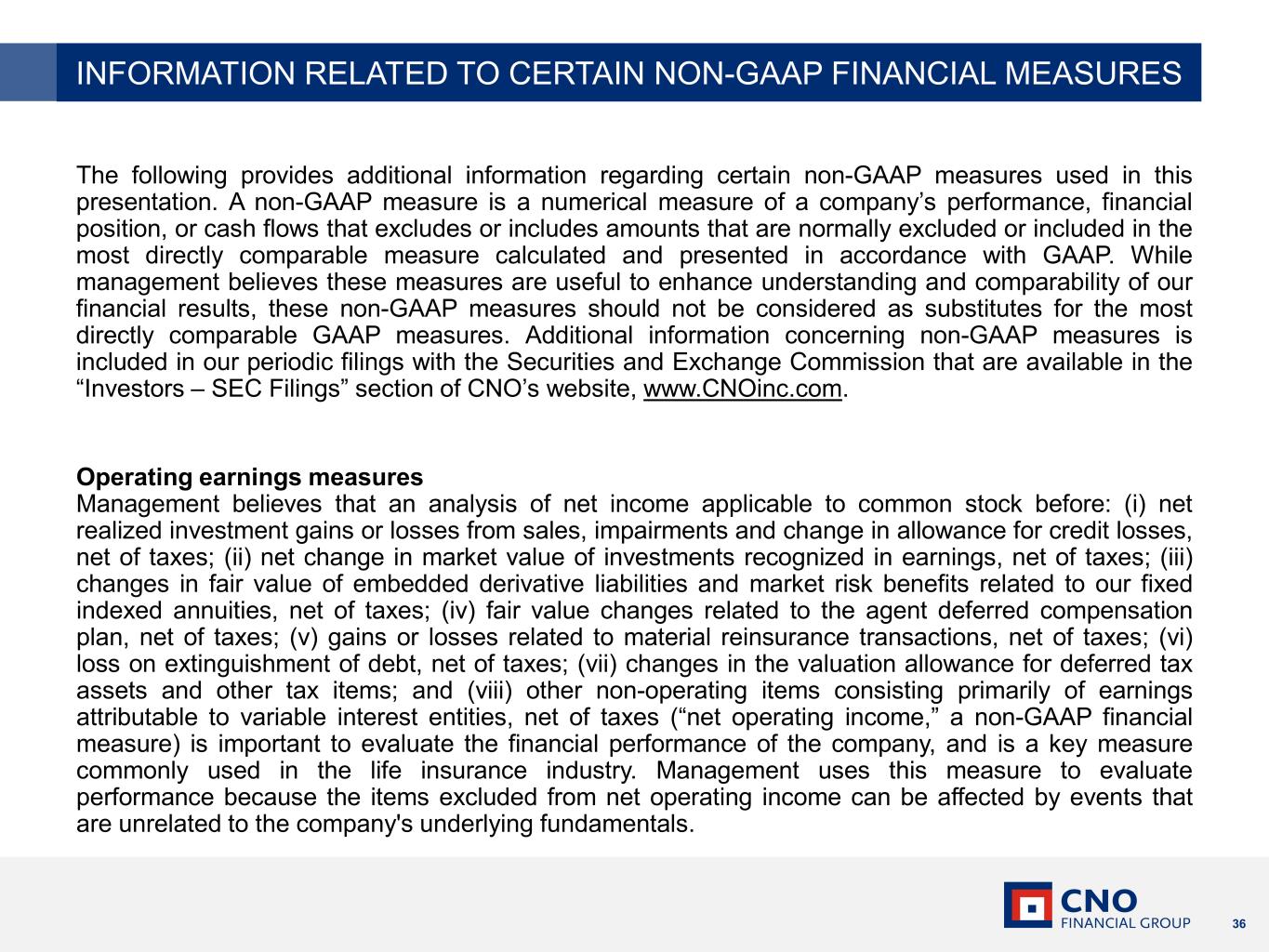
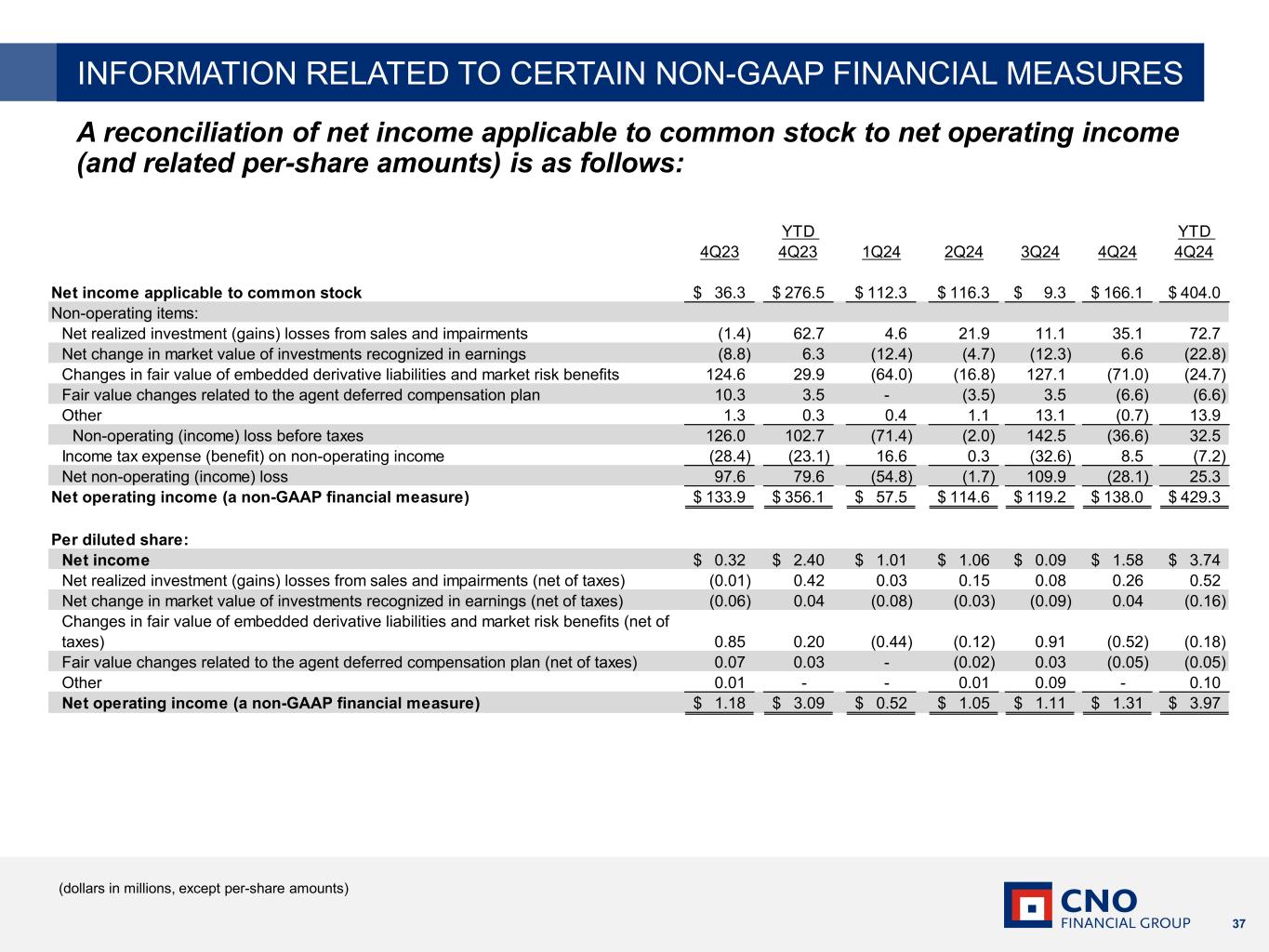
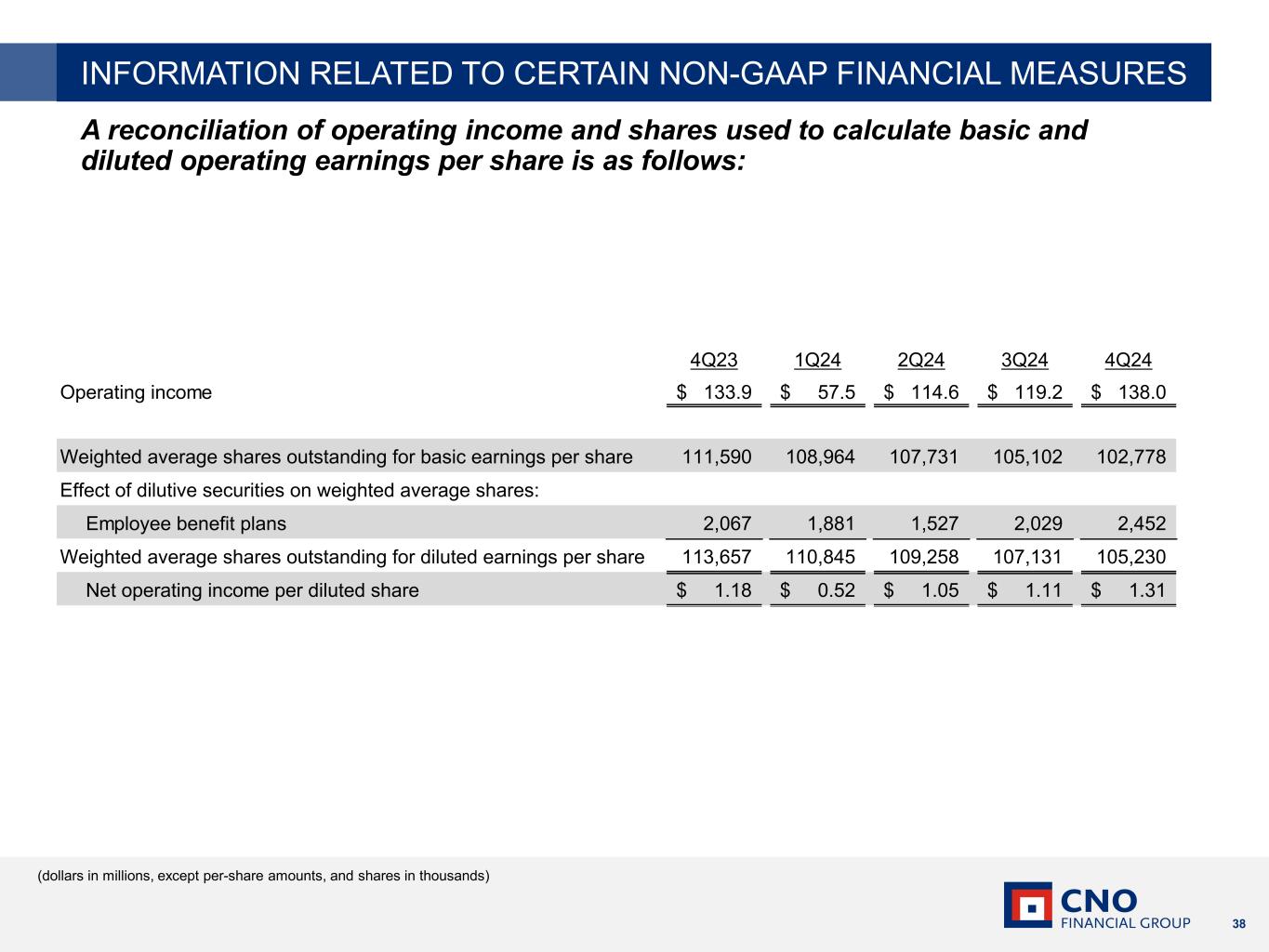
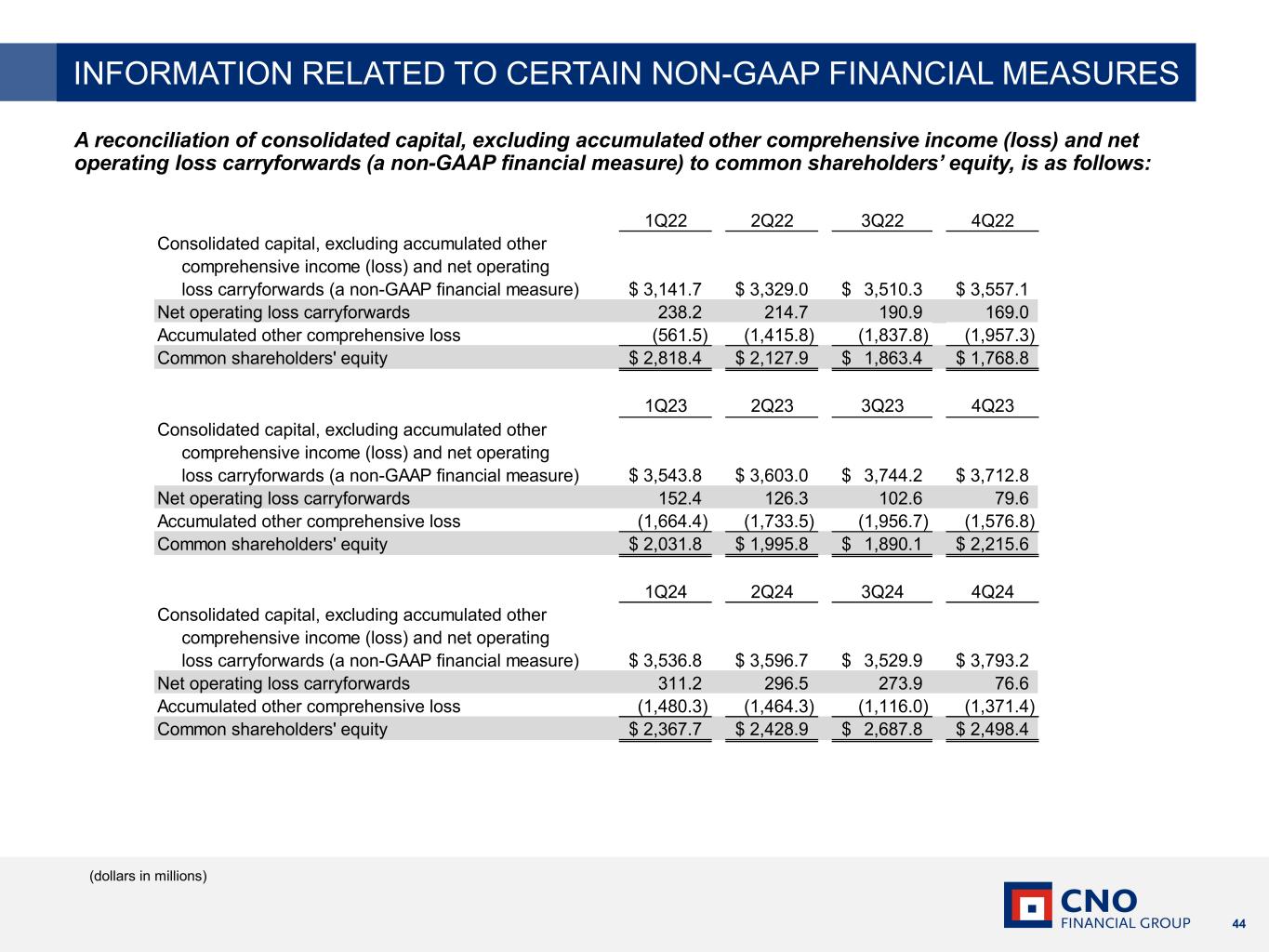
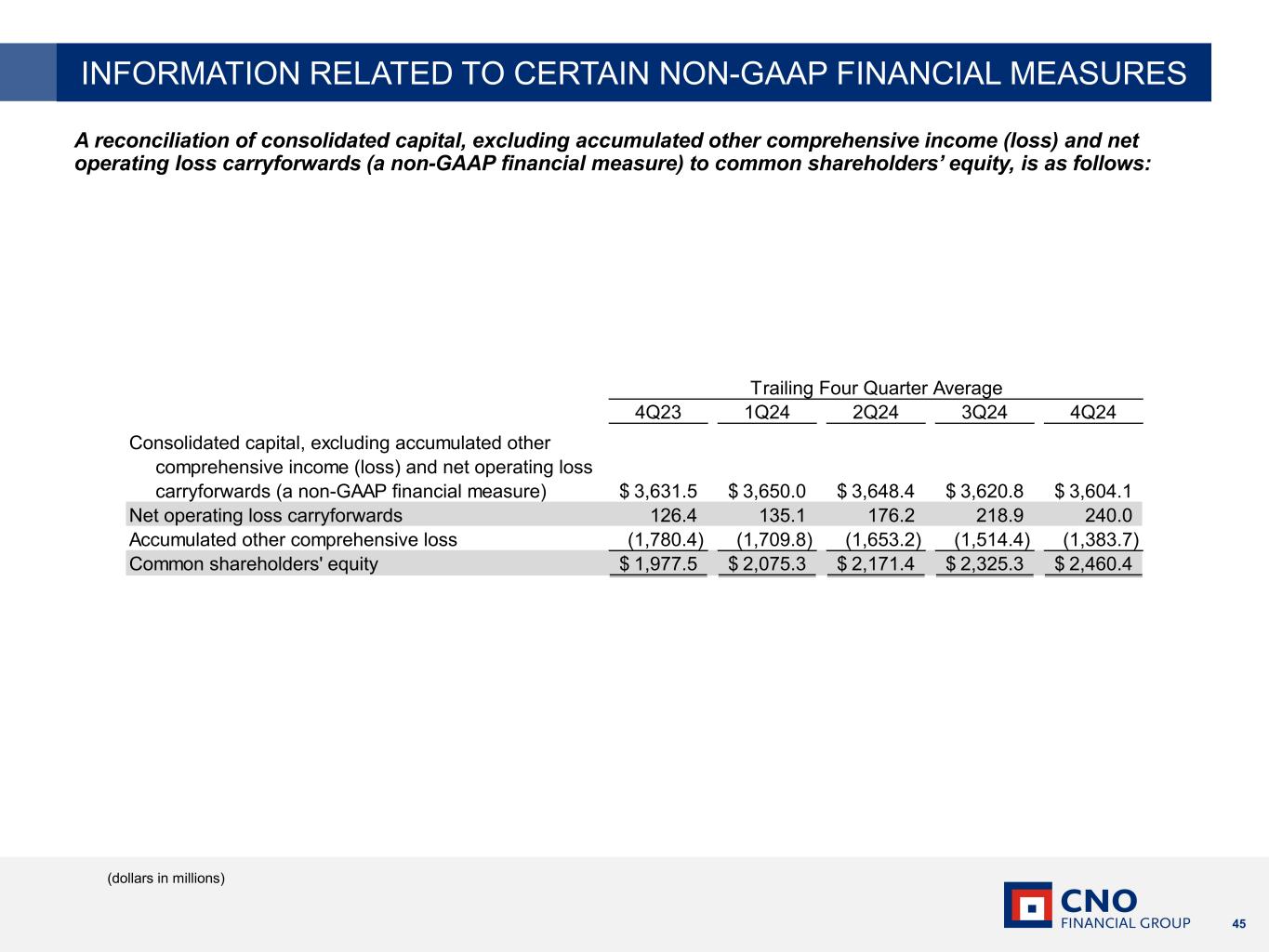
Good morning and thank you for joining us on CNO Financial Group's 4th quarter 2024 earnings conference call. Today's presentation will include remarks from Gary Bojwani, Chief Executive Officer, and Paul McDonough, Chief Financial Officer. Following the presentation, we will also have other business leaders during this conference containing yesterday's press release. You can obtain the release by visiting the media section of our website at cnoinc.com. This morning's presentation is also available in the Investor 8K yesterday. Let me remind you that any forward looking statements we make today are subject to a number of factors which may cause actual results to be materially different than those contemplated by the forward-looking statements. Today's presentation contains a number of non-GAAP measures, which should not be considered as substitutes for the most directly comparable GAAP measures. You'll find a reconciliation of the non-GAAP measures to the corresponding GAAP measures in the appendix. Throughout the presentation, we'll be making performance comparisons, and unless otherwise, any comparisons made will be referring to changes between full year 2024 and full year 2023.
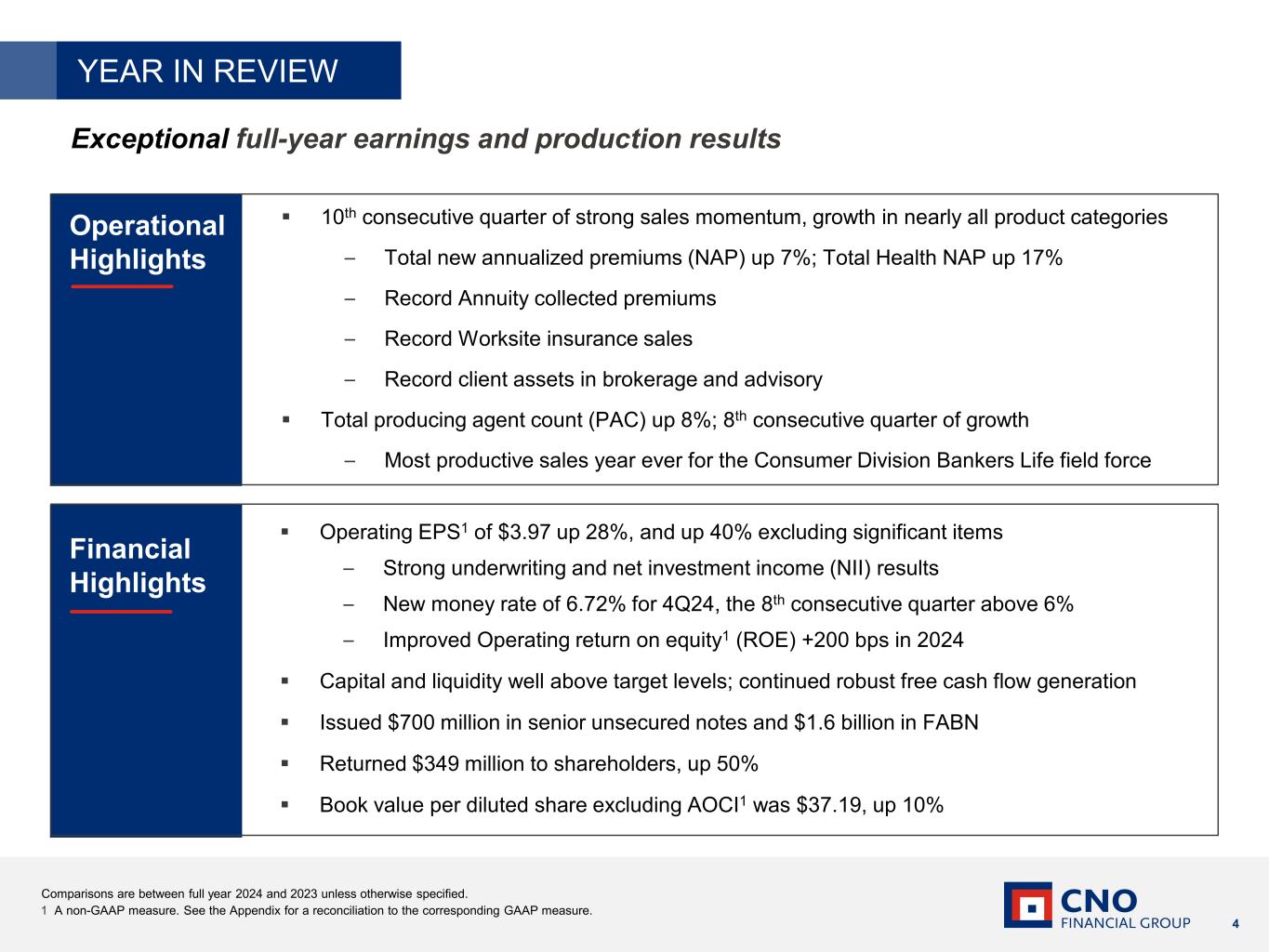
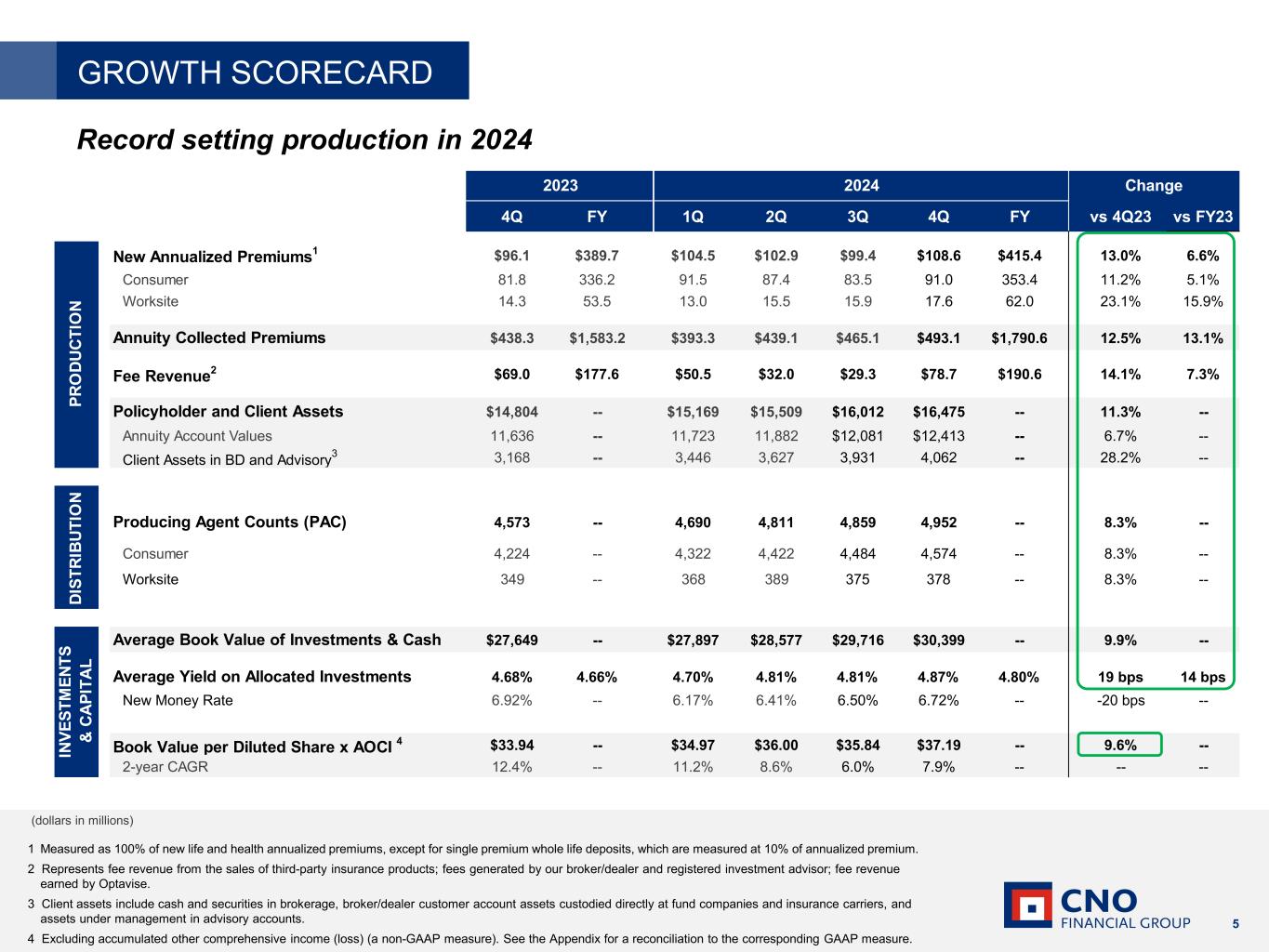
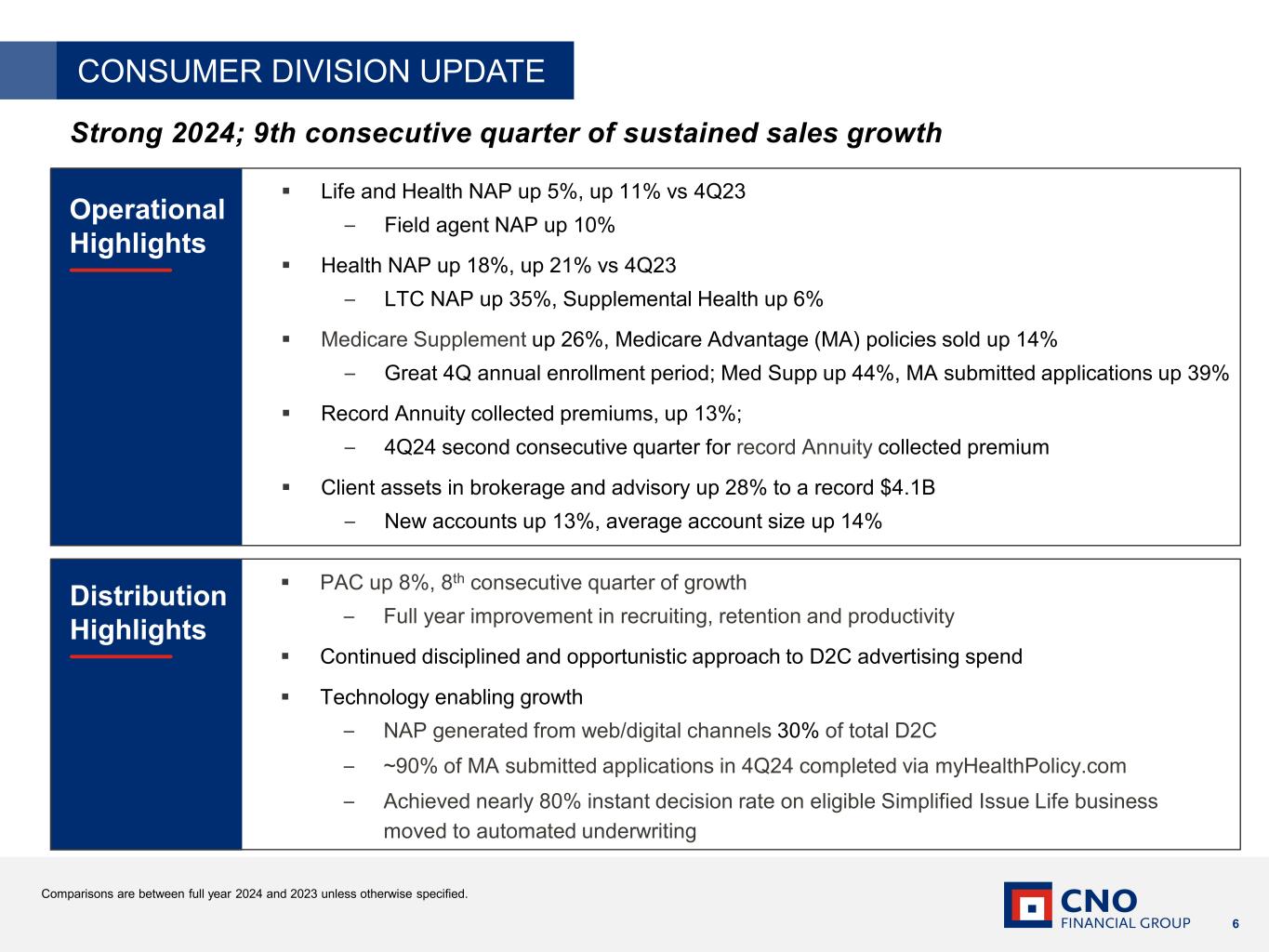
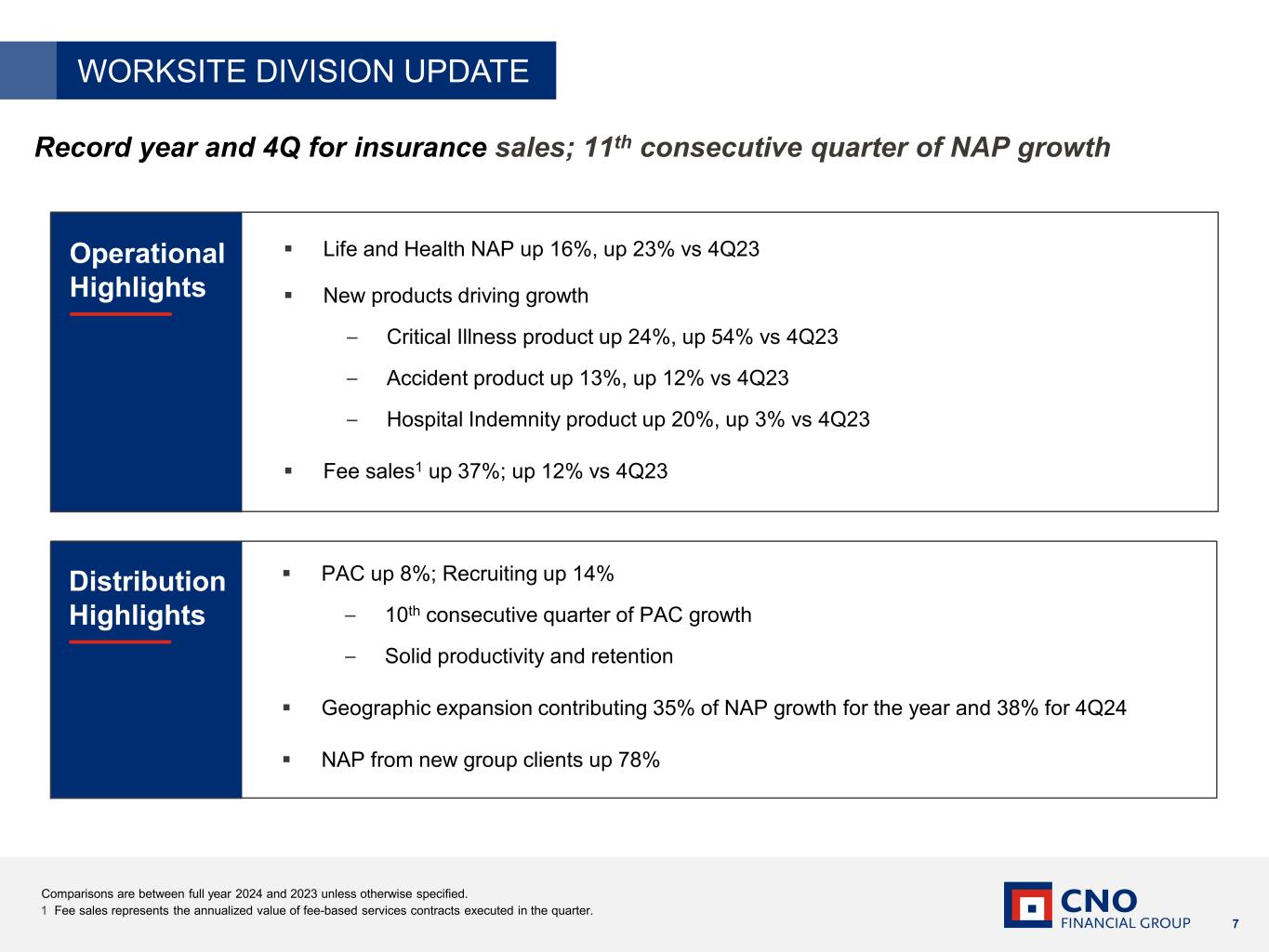
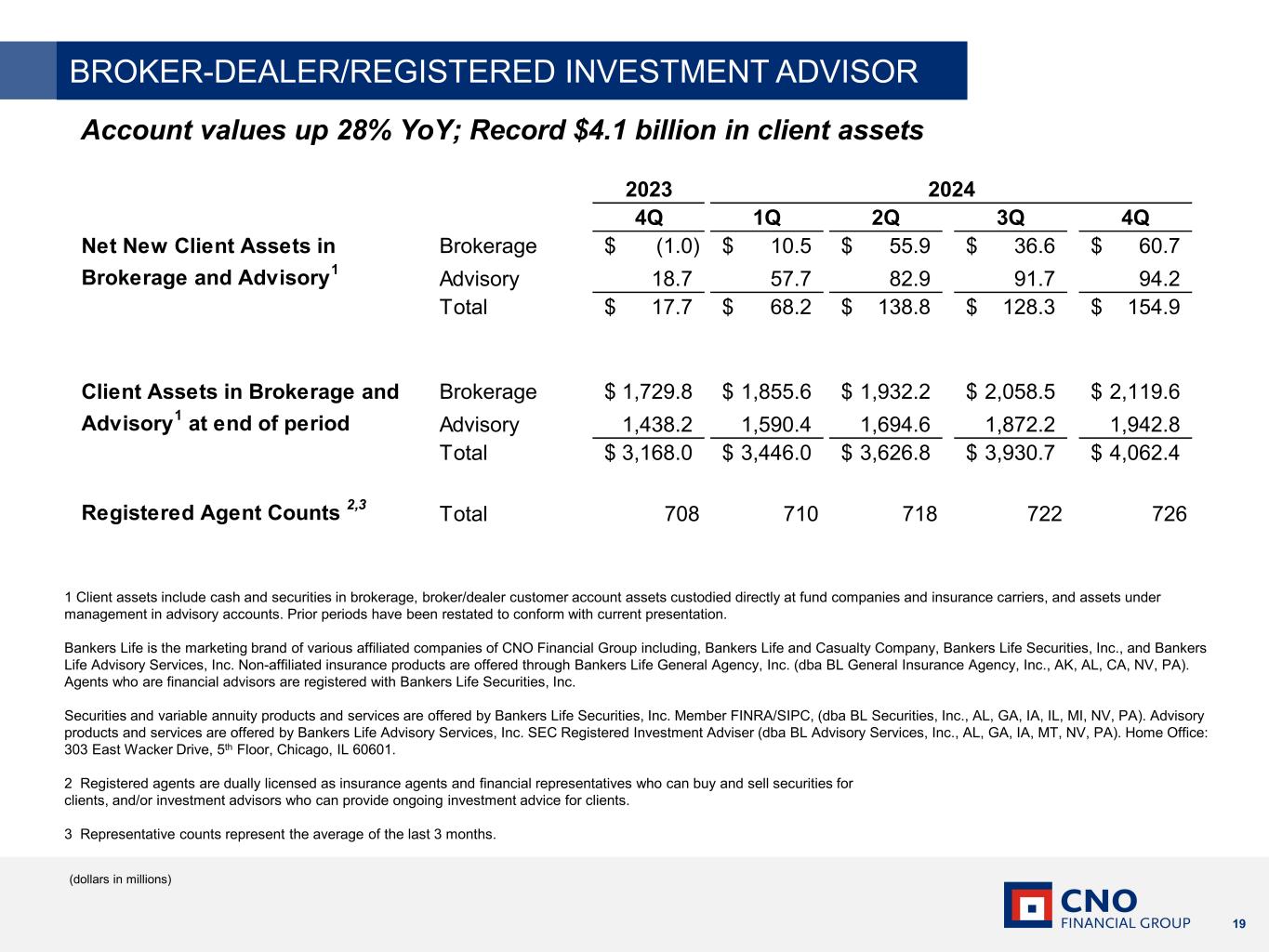
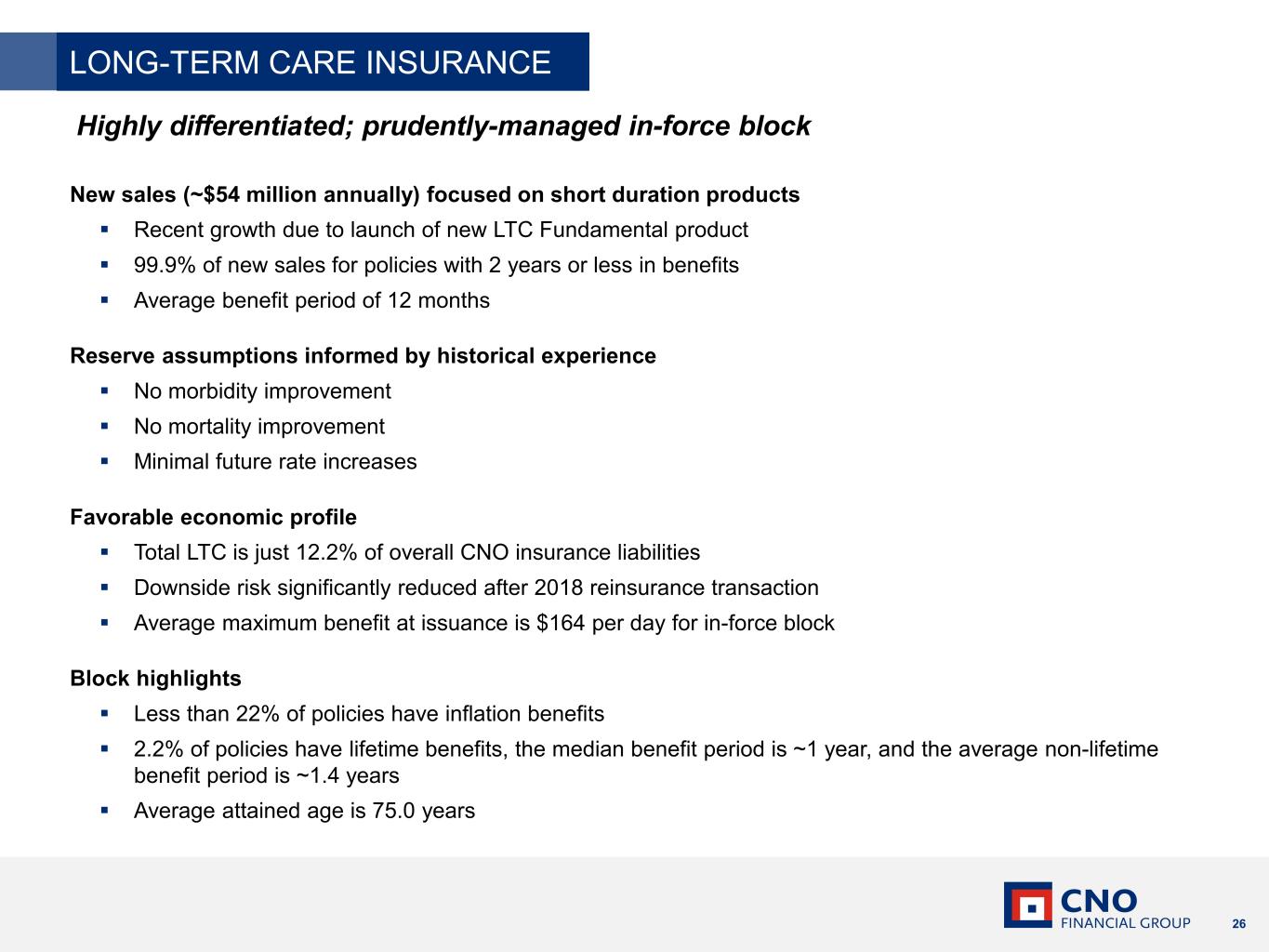
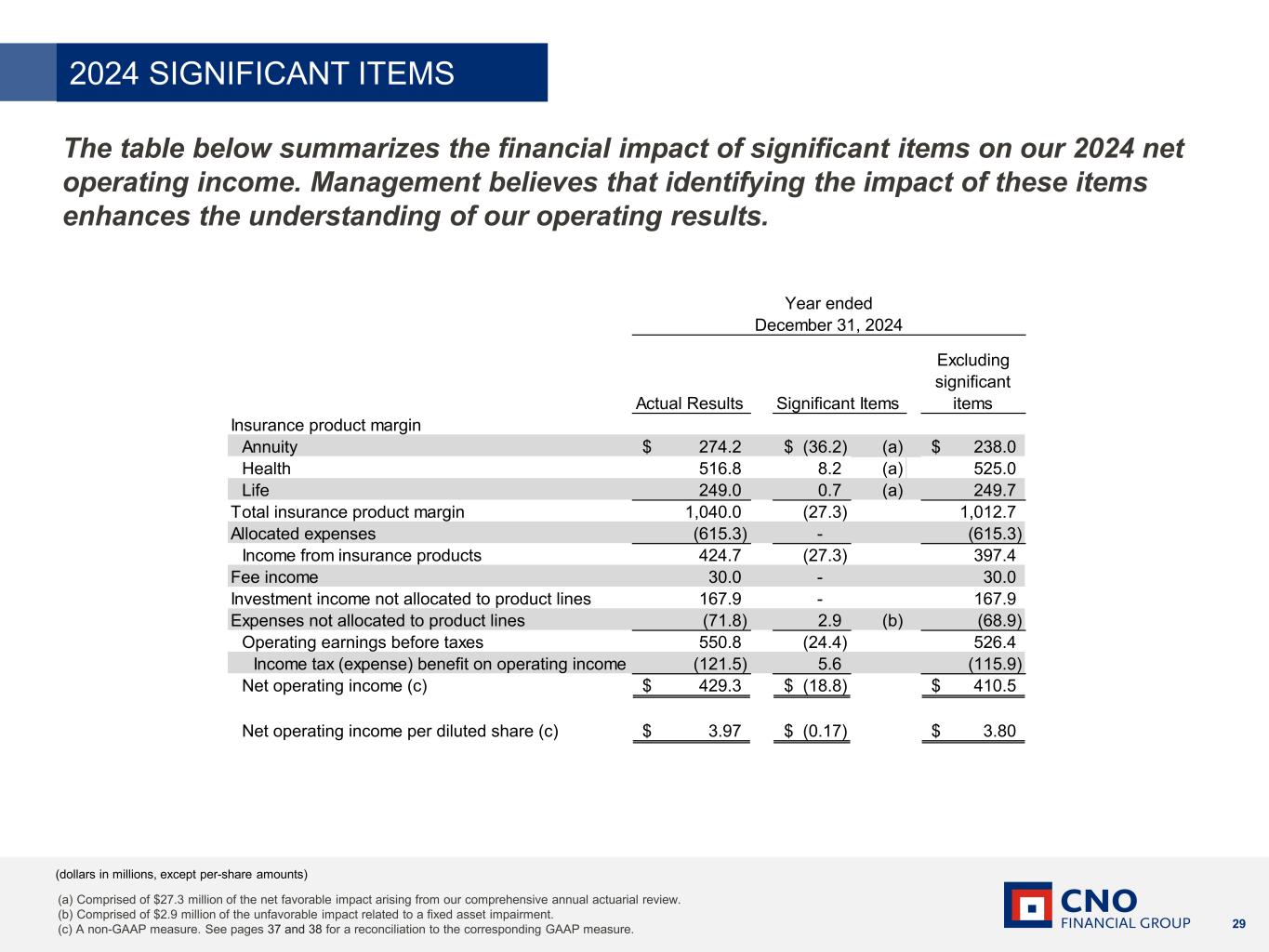
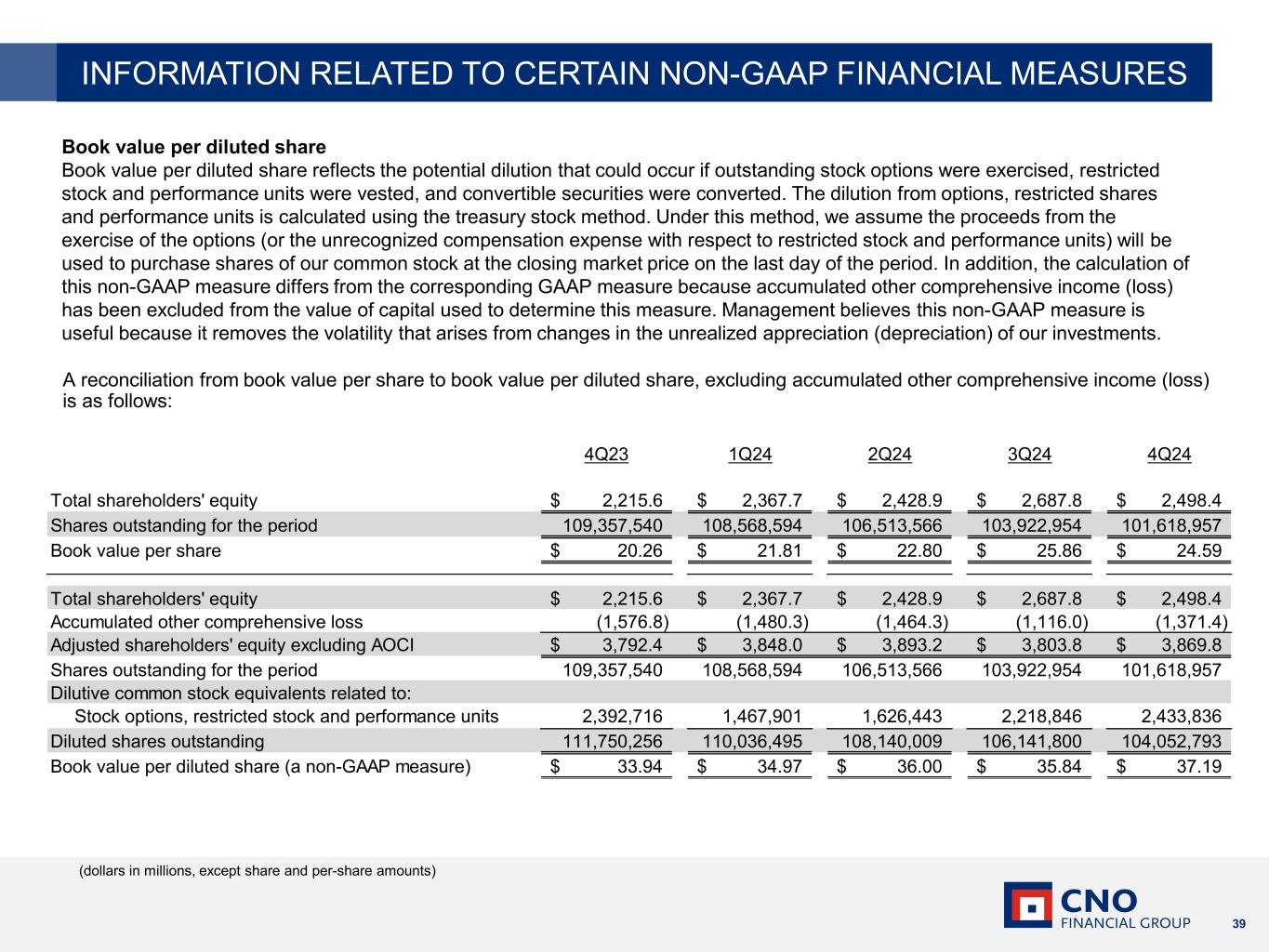
And with that, I'll turn the call over to gary thanks adam good morning everyone and thank you for joining us cno delivered an exceptional quarter and full year financial performance showcasing our ability to grow the franchise while also growing earnings and improving profitability at the same time 2024 was one of our best operating performances of the past several years highlighted by sales records in both the consumer and worksite divisions this year's performance demonstrated our proven commitment to leverage our business model to enable sustained profitable growth, execute on our strategic priorities, and drive ROE expansion. Our strong results were broad-based across earnings, production, investment results, and capital. We delivered our 10th consecutive quarter of sales growth, our 8th consecutive quarter in producing agent count, and our most productive year ever for the bankers live field force for the full year total new annualized premium was up seven percent across the enterprise production records were set in both divisions and in multiple product lines which demonstrates the strength of our model to serve the varied needs of our middle income consumers i'll cover these results in more detail in each division's comments. Our sustained sales momentum continued to translate into earnings growth. Operating earnings per diluted share was $3.97, an increase of 28%. Excluding significant items, the increase was 40%. Earnings results were further supported by strong underwriting margins, favorable net investment income, and expense discipline. New money rates have exceeded 6% for eight consecutive quarters now. Paul will go into greater detail on our financial performance. Capital and liquidity were well above target levels while we returned $349 million to shareholders this year, a 50% increase over 2023. And for the 12th year in a row, we raised our quarterly common stock dividend. Book value per diluted share excluding AOCI was $37.19, up 10%. Additional highlights of our full-year performance include growth in nearly all product categories, continued strong capital position and free cash flow generation, and an all-time high share price. Turning to slide five and our growth scorecard. All but one of our growth scorecard metrics were up for the quarter and for the full year. As a reminder, our growth scorecard focuses on three key drivers of our performance, production, distribution, and investments and capital. I'll discuss each division in the next two slides. Paul will cover investments and capital during his remarks. Beginning with the consumer division on slide six, our consumer division delivered an outstanding year capped off by our ninth consecutive quarter of sales growth we executed well and delivered record sales across multiple product categories consumer division total nap was up five percent for the full year led by ten percent sales growth in field agent nap health nap was up 18 for the year on the continued strength of our new and enhanced products Medicare Supplement NAP was up 26% for the year, and Medicare Advantage policies sold were up 14%. Our field delivered another strong Medicare Annual Enrollment period. We submitted a record number of MA policies in the quarter, up 39%. MA Certified Agents were up 8%, and we added seven new MA carriers, bringing our total plan sponsors to 21. As a reminder, Medicare Advantage sales are not reflected in NAP. Persistency in both MedSup and MA has consistently improved over the last few years, due in large part to the lasting relationships that our exclusive agents build with their clients. Medicare products serve as a meaningful introduction point for customers to meet local agents who can help address additional retirement planning needs. Long-term care NAP was up 35% for the year. We continue to see a growing need for this product within our target market. As a reminder, our LTC products are designed for the middle market consumer. 99% of the policies sold have benefit periods of two years or less, and more than 90% have benefit periods of one year or less. These plans cover essential costs for one to two years and offer a balanced, affordable approach to funding care. Life production was down for the year, driven by direct-to-consumer television advertising. In line with previous election years, when lead costs were high, we remained disciplined and opportunistic in our approach to managing our D2C marketing spend. Annuity collective premiums were up 13% for the year, capping off two consecutive quarters of record sales. The long-term relationships our exclusive agents establish with their clients also add stability to our annuity block. The fourth quarter represented our seventh consecutive quarter of brokerage and advisory growth. For the full year, client assets in brokerage and advisory were up 28% to a record $4.1 billion, and new accounts were up 13%. When combined with our annuity account values, our clients now entrust us with more than $16 billion of their assets, up 11% from 2023. The strength of our agent distribution fueled our sales momentum in 2024. Producing agent count was up 8% for the year with meaningful gains in recruiting, productivity, and retention. The fourth quarter of 2024 marked our eighth consecutive quarter of producing agent growth for the consumer division. Technology investments continued to enable sales growth and operational efficiency in the division. Highlights included web and digital channels generated 30% of our full-year direct-to-consumer NAP. MyHealthPolicy.com, our Medicare health insurance technology platform, processed almost 90% of all MA policies we sold during the AEP. An accelerated underwriting on a portion of our simplified life products delivered a nearly 80% instant decision rate on submitted policies. The Consumer Division delivered an outstanding year, and I'm very pleased with the results. Our unique capability to marry a virtual connection with our established in-person agent force who complete the critical last mile of sales and service delivery remains an attractive and valuable differentiator. We expect our differentiated offerings to continue to generate sustained sales and agent force growth in 2025. Next, slide seven and the worksite division performance. Our worksite division finished the year very strong with record full-year insurance sales up 16% and record fourth-quarter insurance sales up 23%. This represents our 11th consecutive quarter of insurance growth. New products and strategic growth initiatives contributed significantly to our strong worksite NAP performance. I'll share year-end results on three programs in particular. First, new insurance products generated double-digit sales growth in 2024. Critical illness was up 24%, accident was up 13%, and hospital indemnity was up 20%. Second, our geographic expansion initiative contributed 35% of the total worksite NAP growth for the year and 38% of NAP growth in the quarter. As a reminder, this initiative targets areas where we've identified strategic opportunities to grow our market share and footprint. This is the fifth consecutive quarter of growth generated by this program. Lastly, NAP from new group clients was up 78%. This initiative helped agents cultivate and acquire new employer groups for insurance sales. We remain bullish on all three programs and expect their momentum to continue into 2025. Fee sales were up 37% for the year and up 12% for the quarter off of a small base. As a reminder, this metric reflects the annual contract value of benefit services sold and is a leading indicator of fee revenue growth. Producing agent count was up 8% for the year, capping off 10 consecutive quarters of growth. Recruiting was up 14% for the year, and retention remains strong. As I mentioned previously, onboarding new agents while simultaneously maintaining agent productivity is not easy. Our results highlight both the caliber of our worksite field force and the career opportunity we offer. I am pleased with worksite's steady growth, record sales, and recruiting momentum over the past year. The division's solid performance illustrates the value that employers recognize in our integrated insurance and benefit solutions. Opportunities still exist to maximize the fee business and drive cross-sales. We remain confident in our strategic plan for worksite and our ability to execute on it.
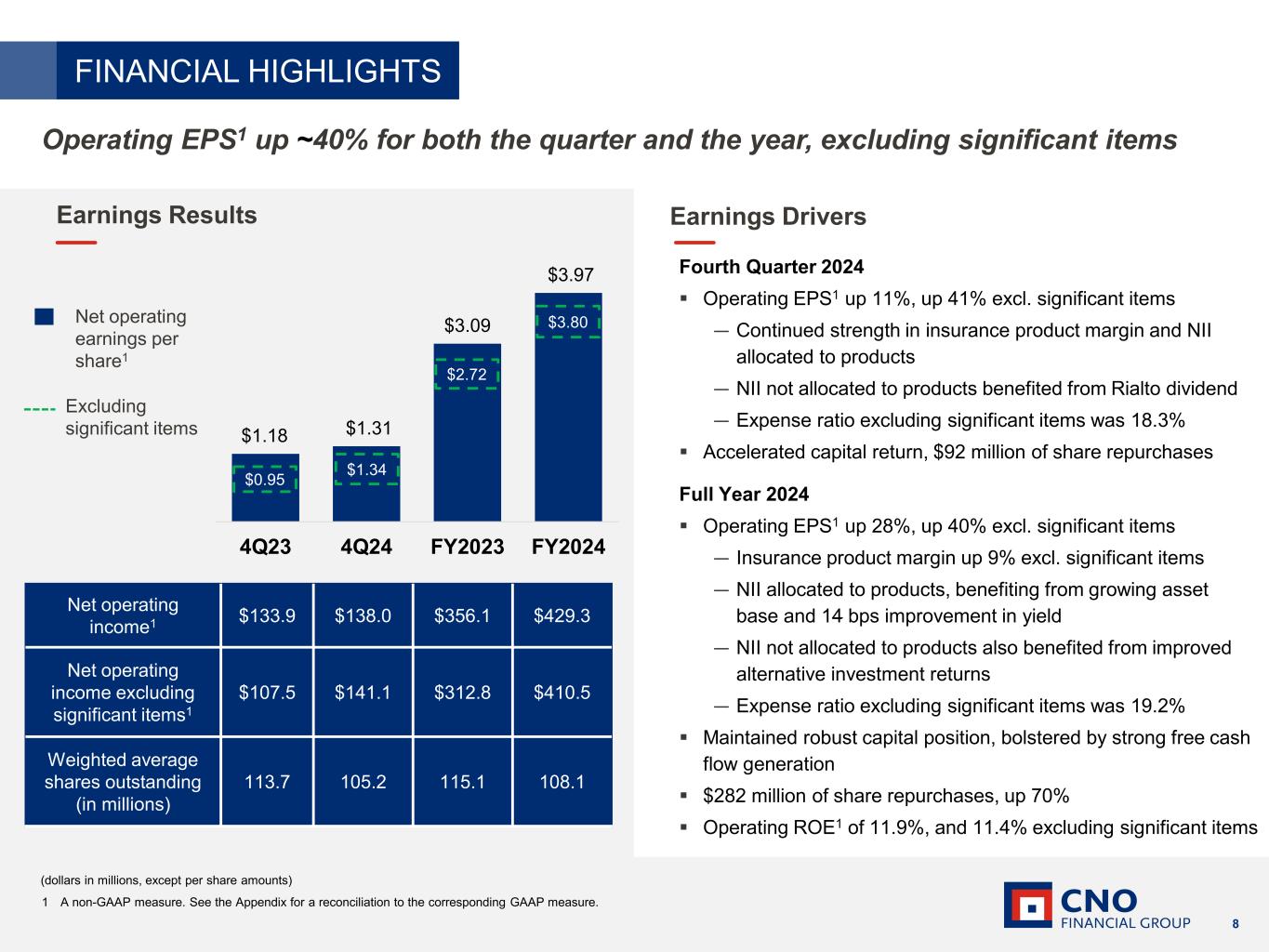
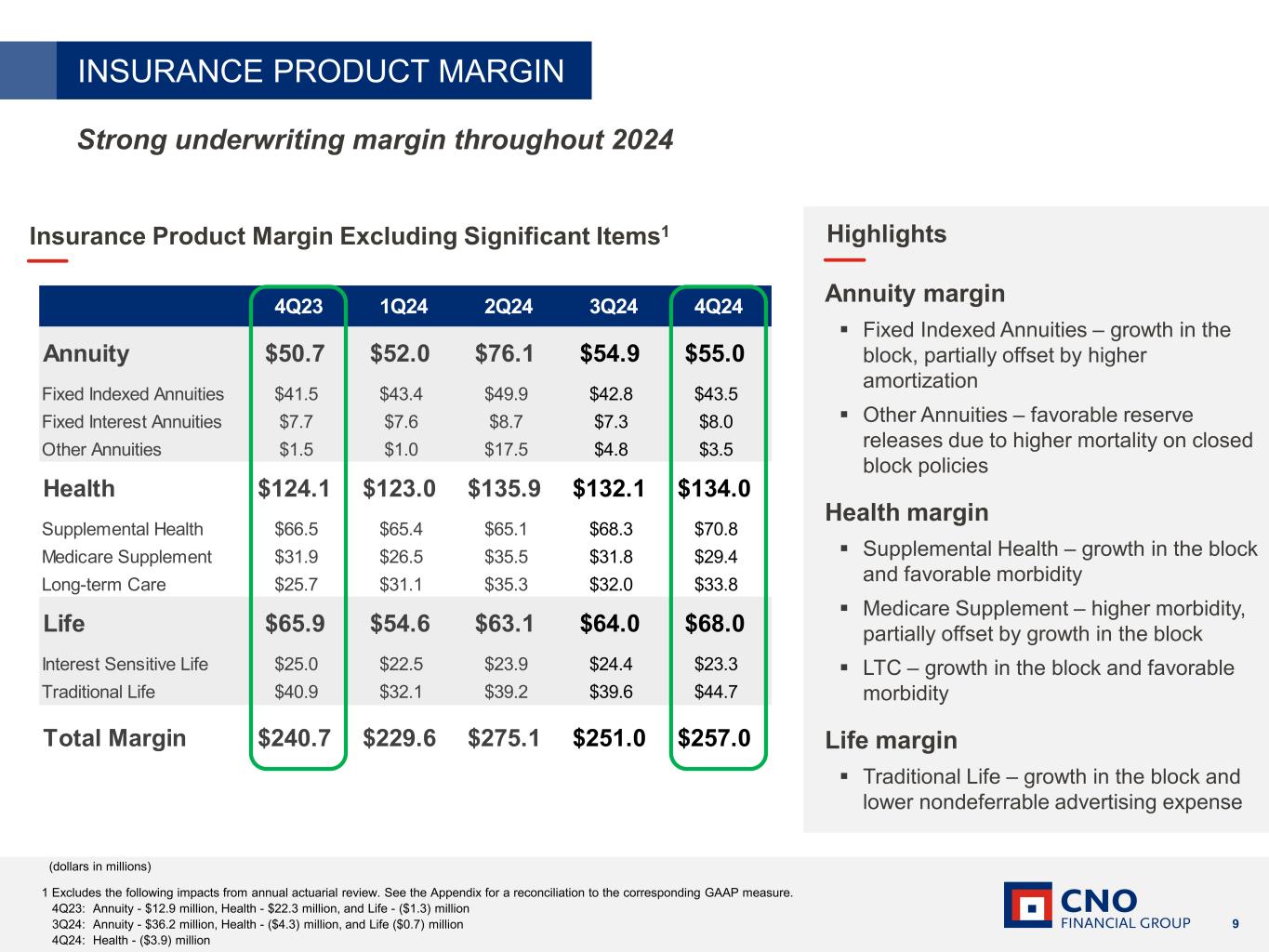
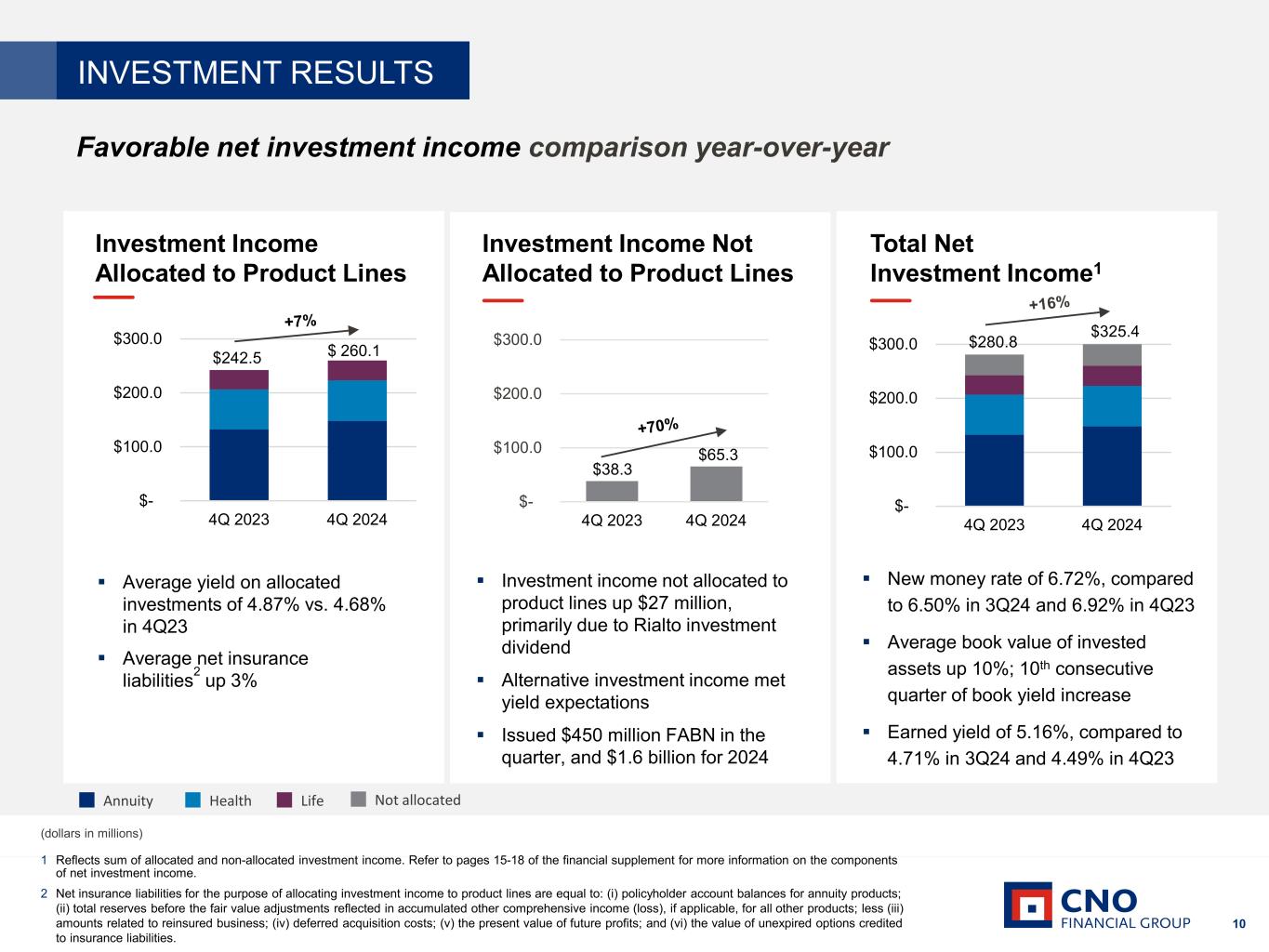
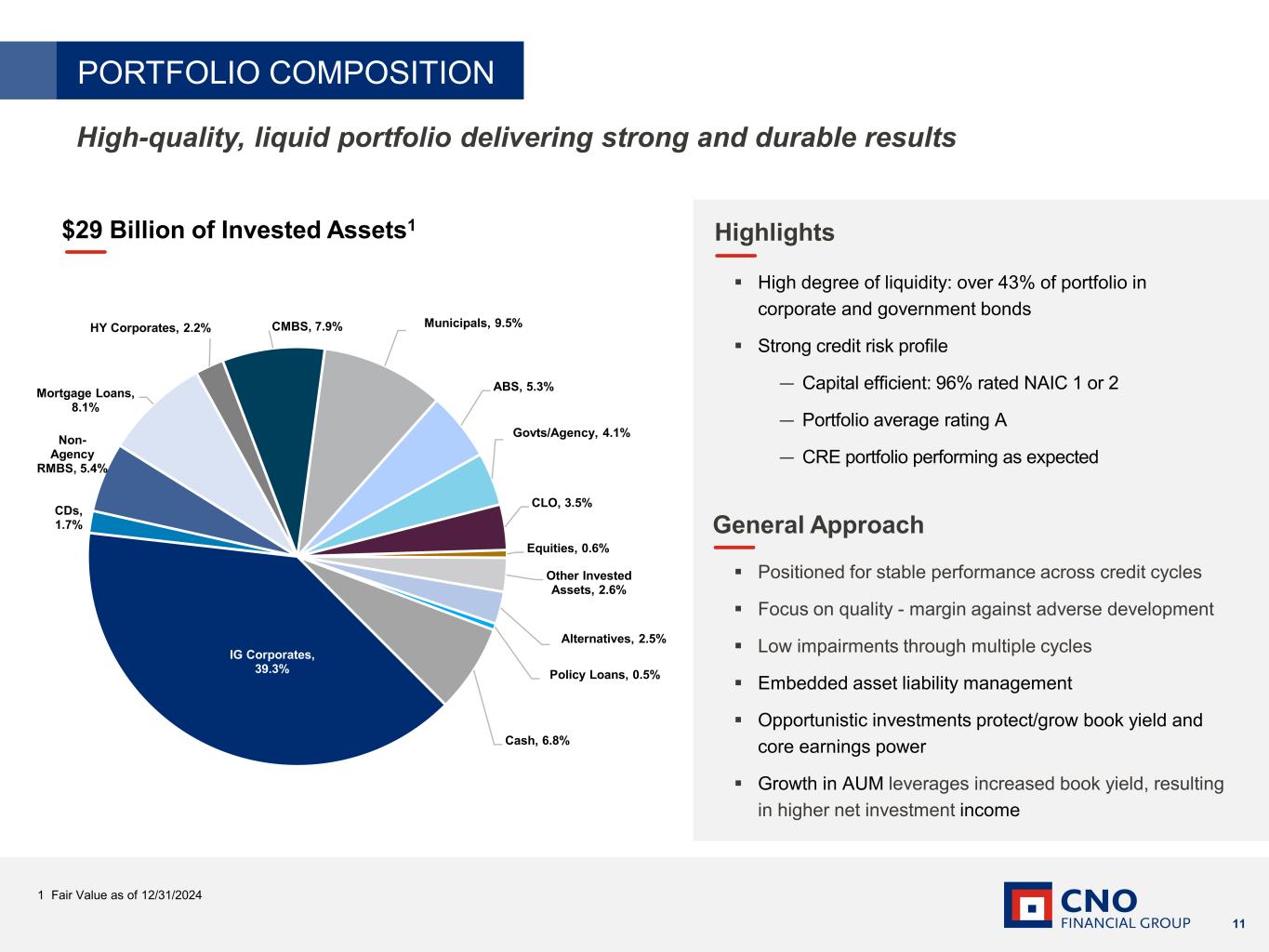
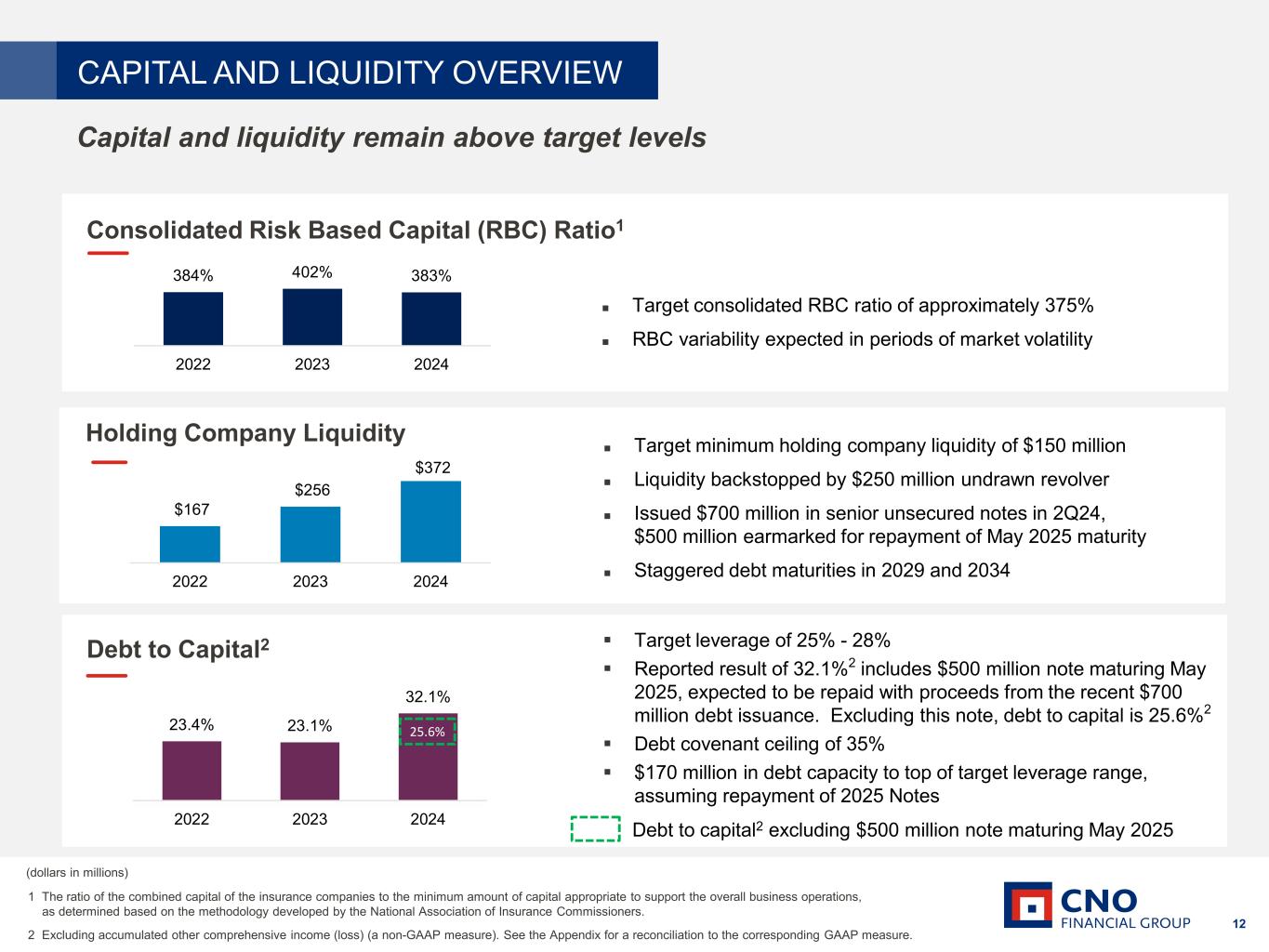
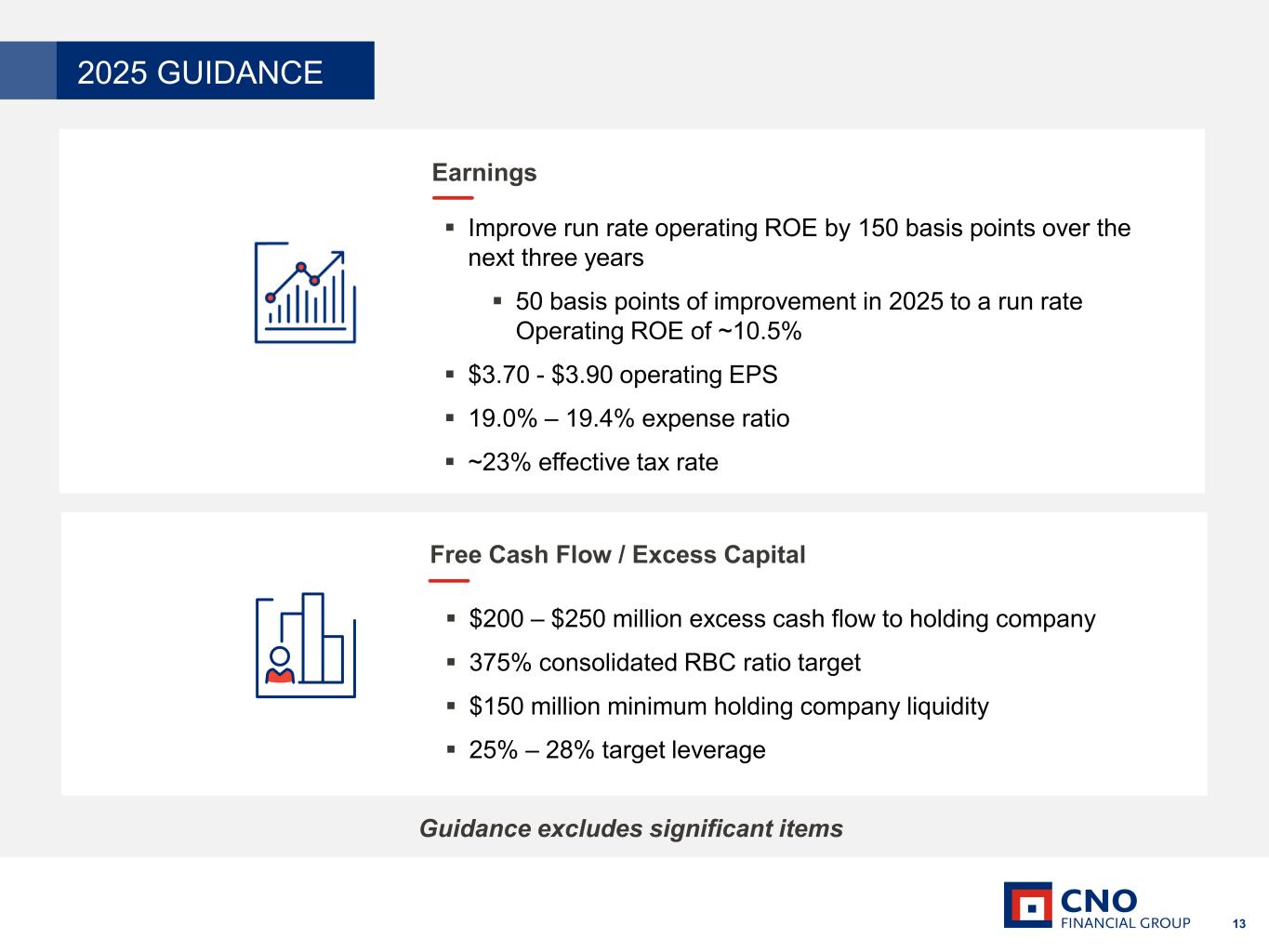
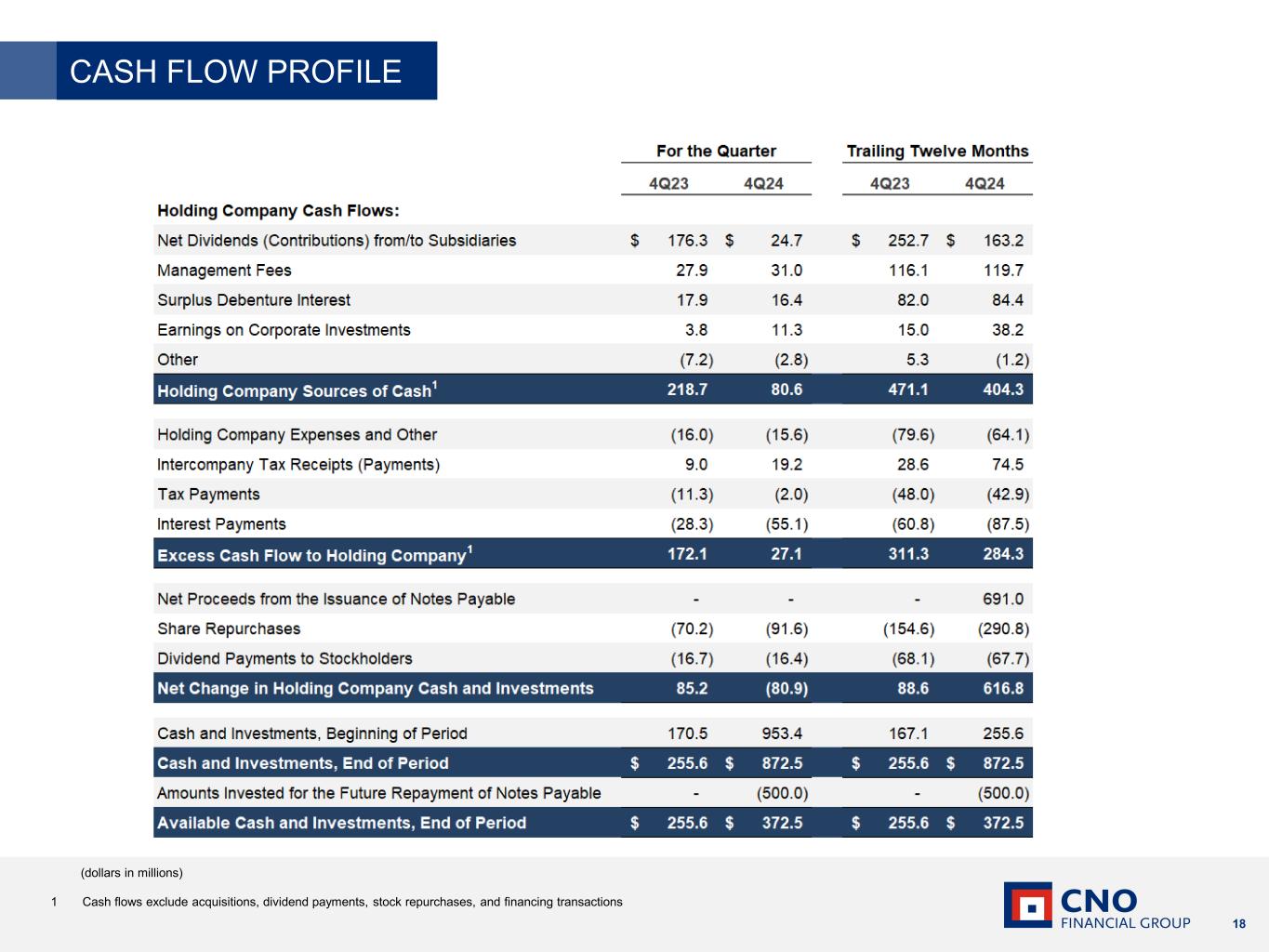
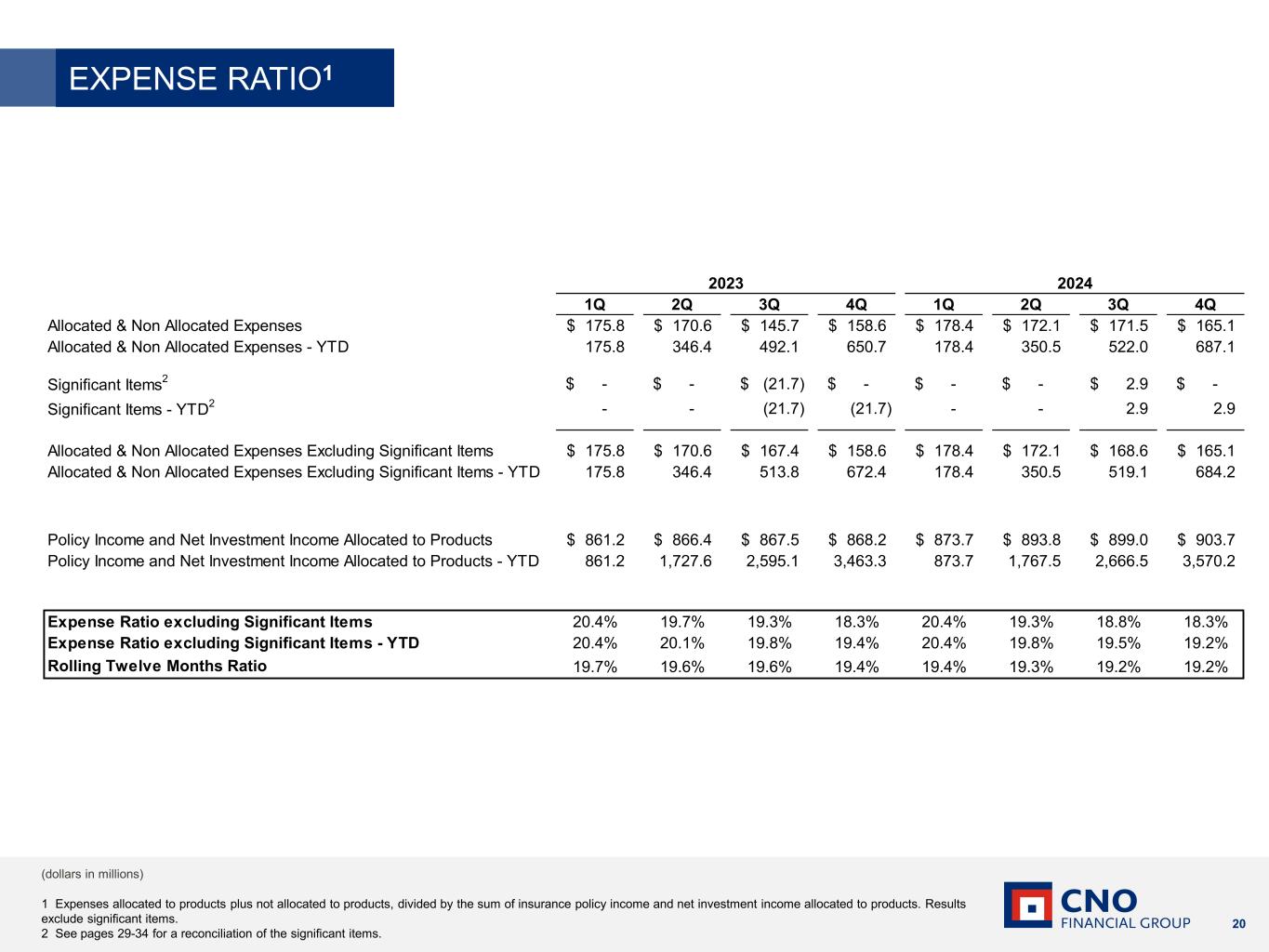
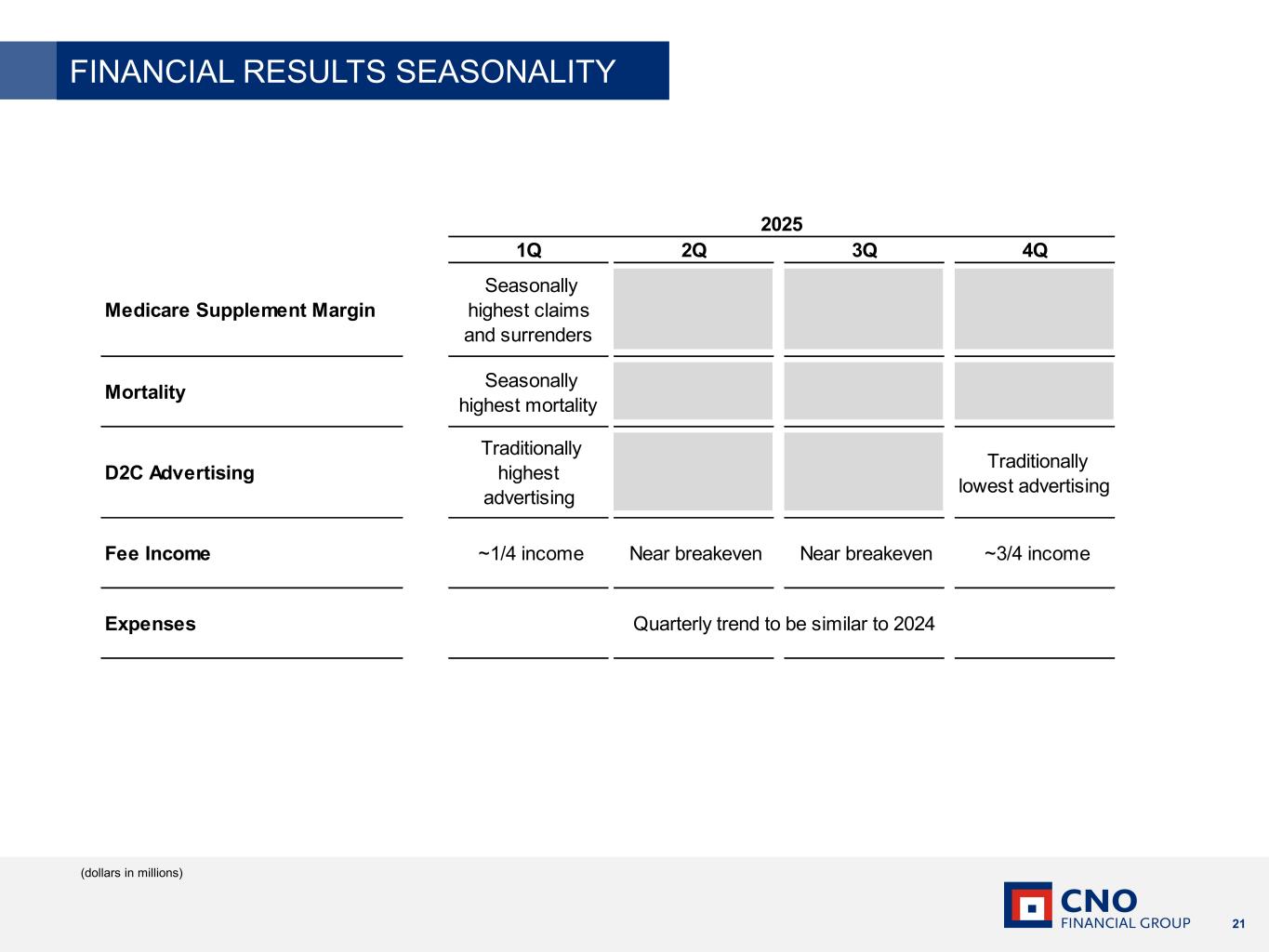
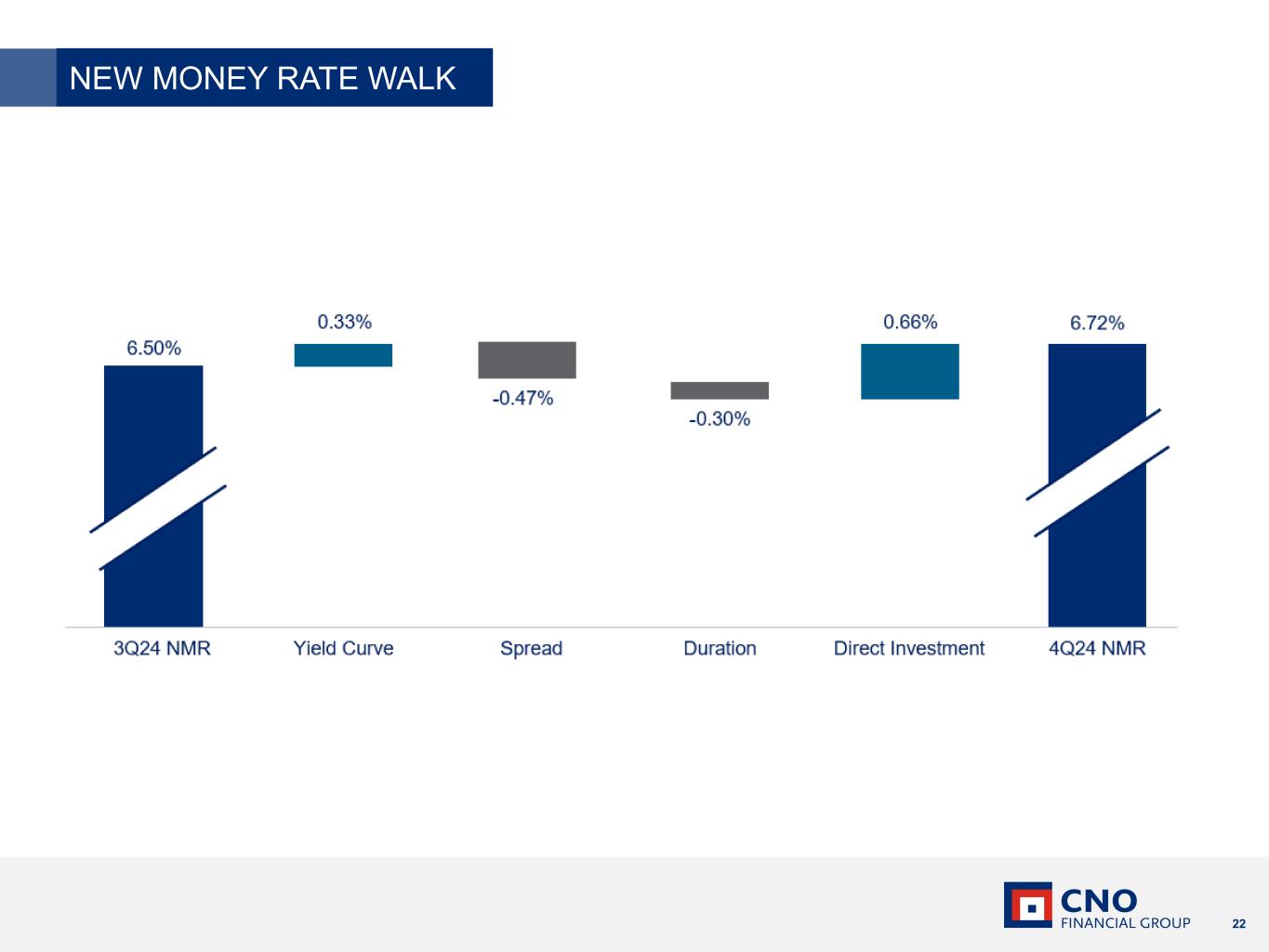
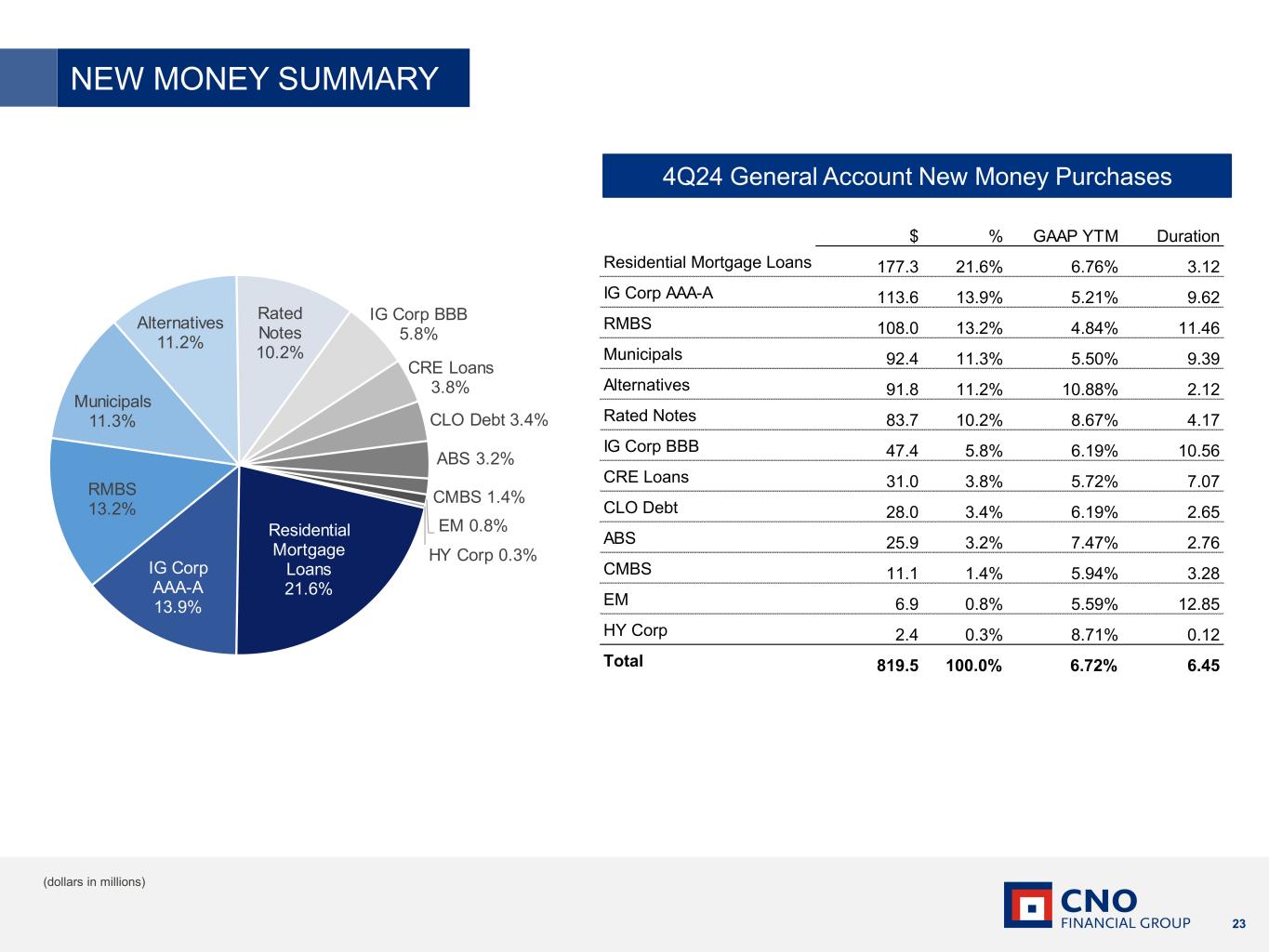
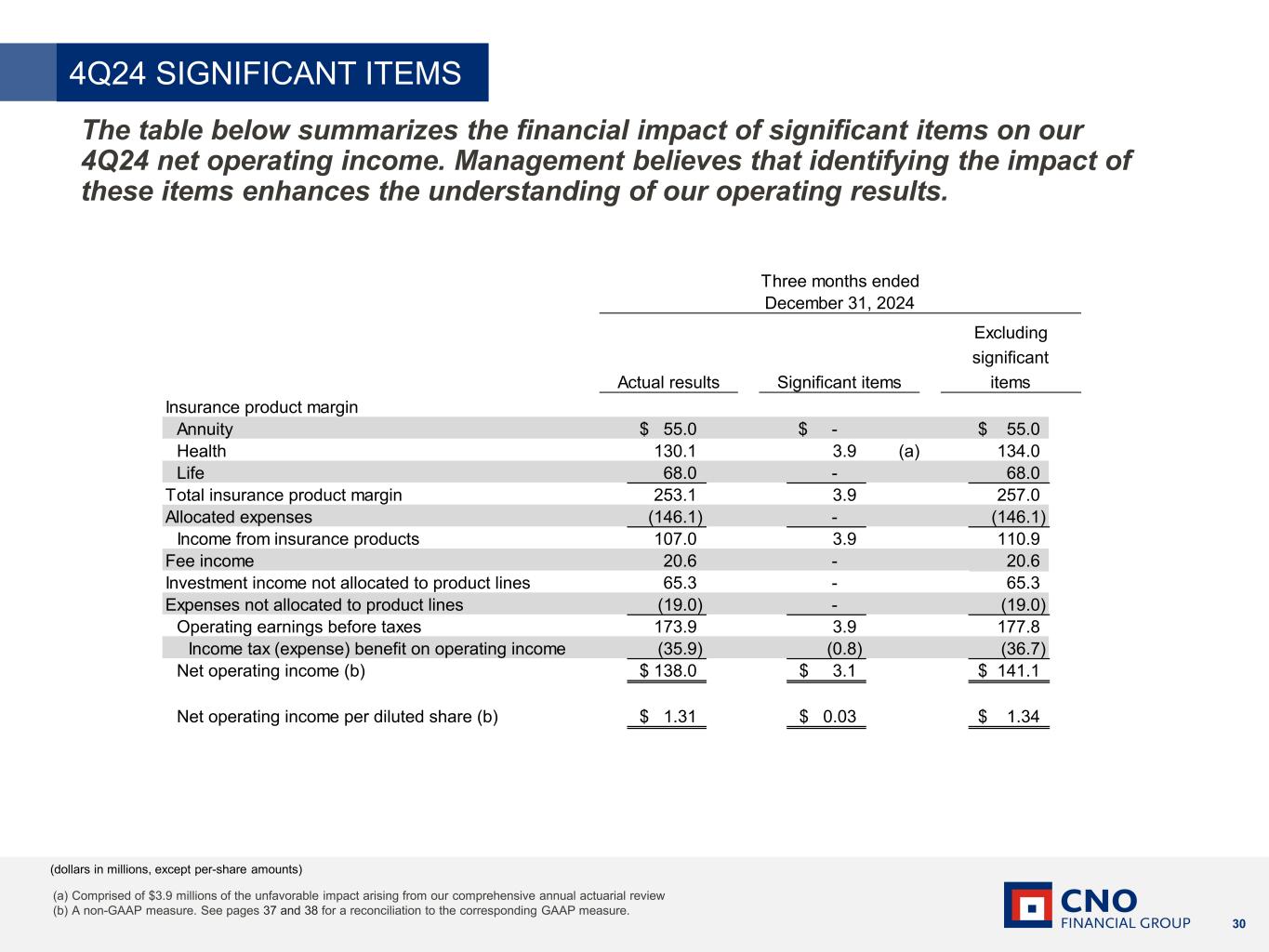
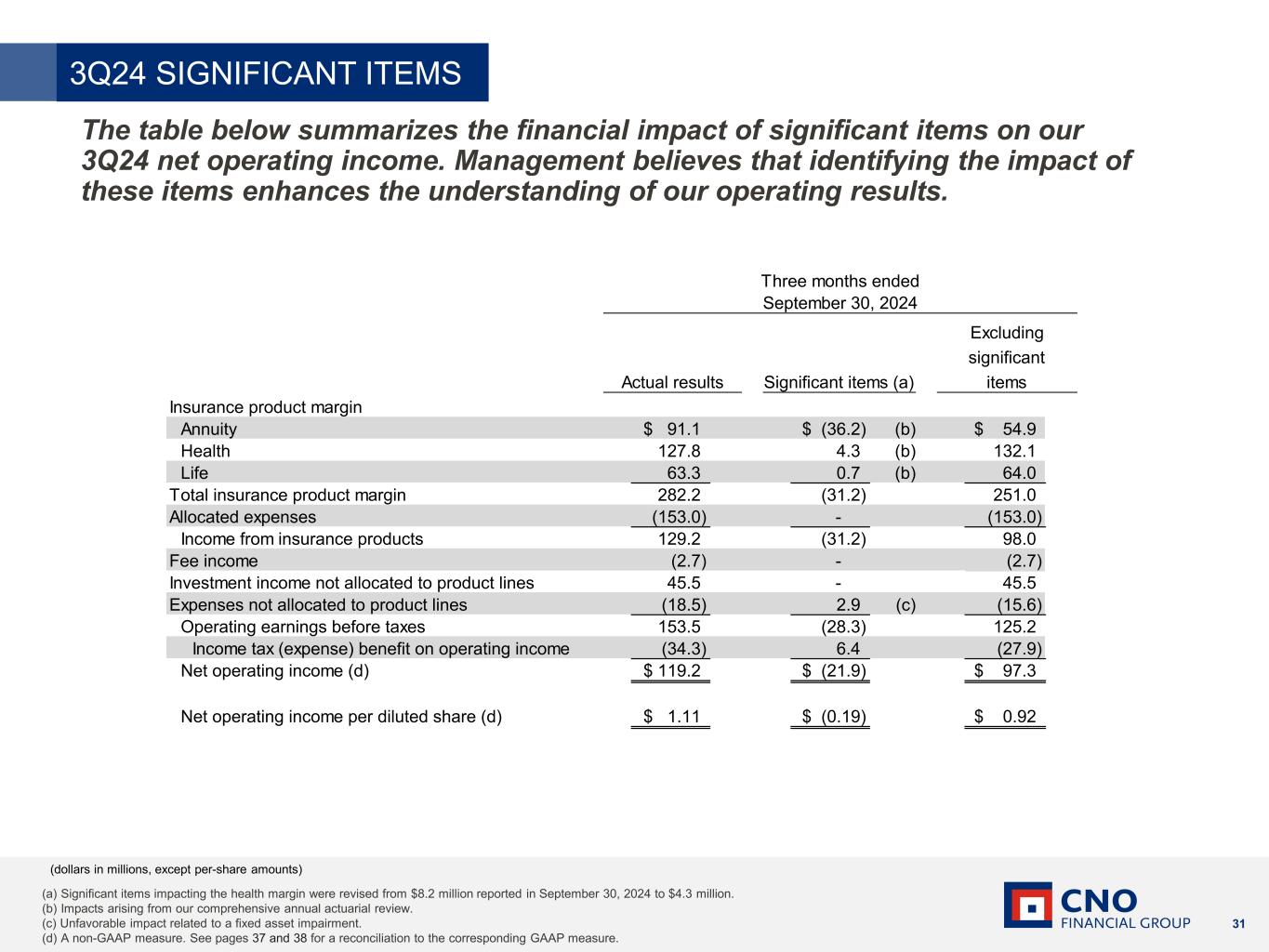
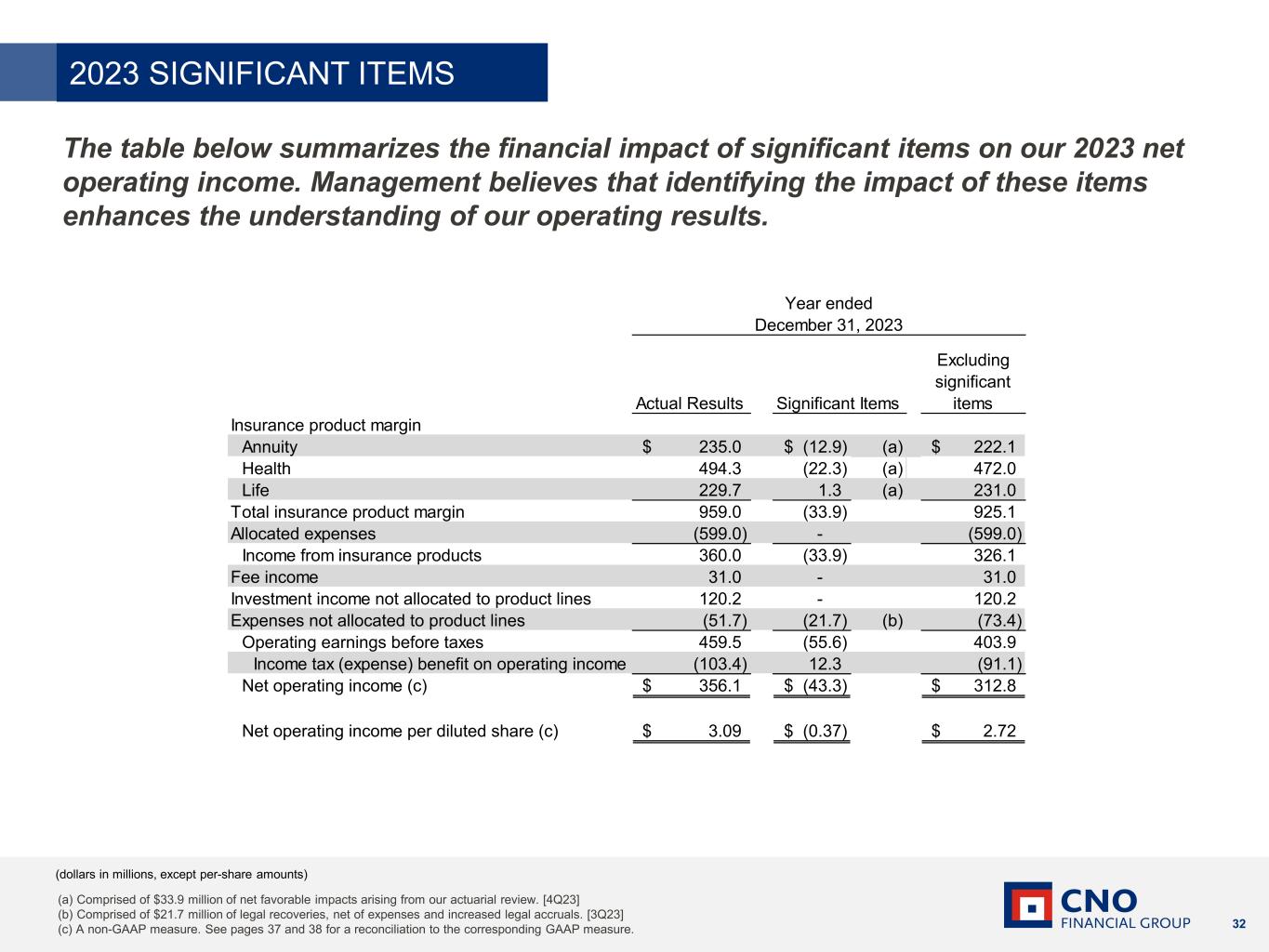
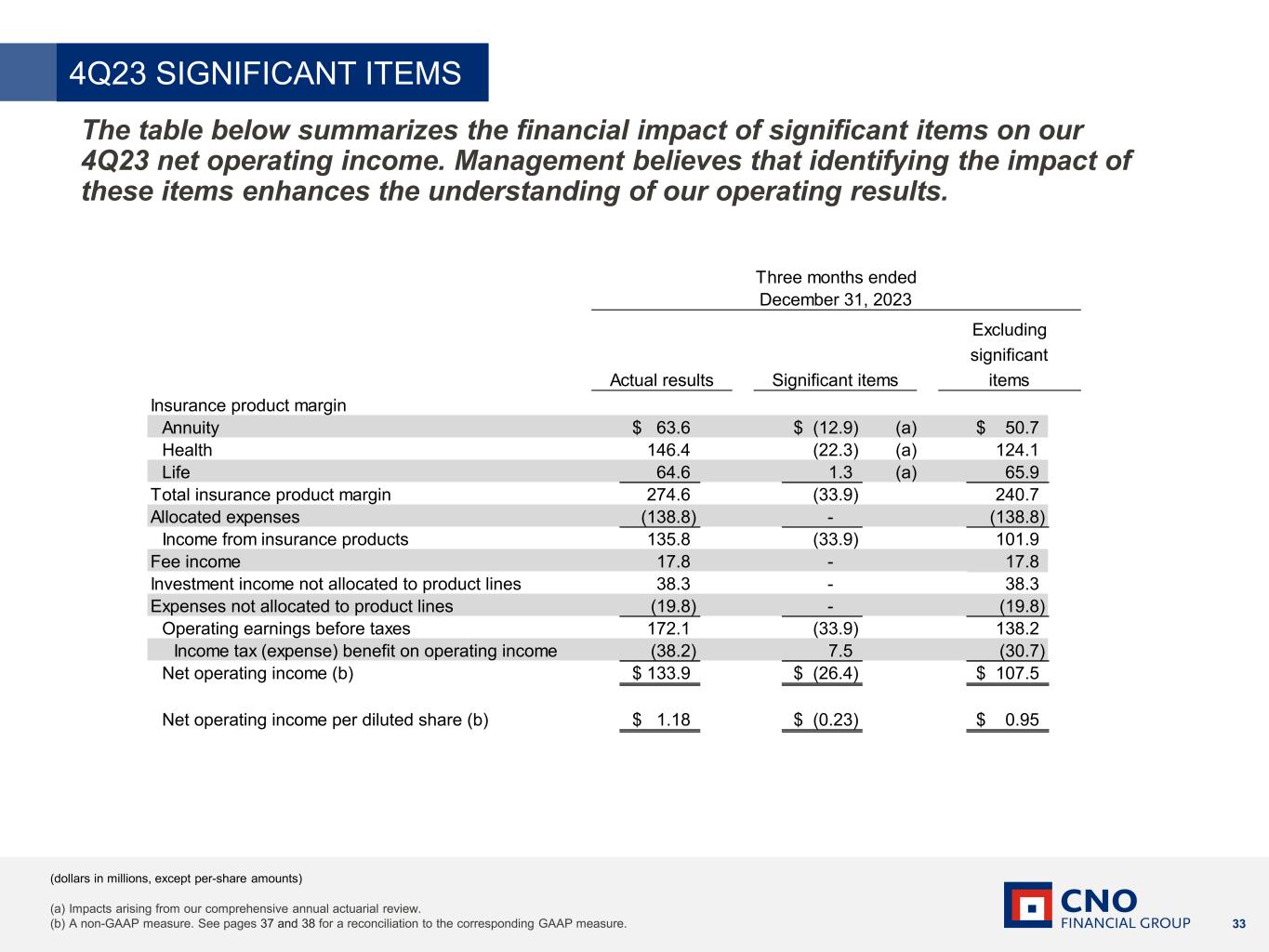
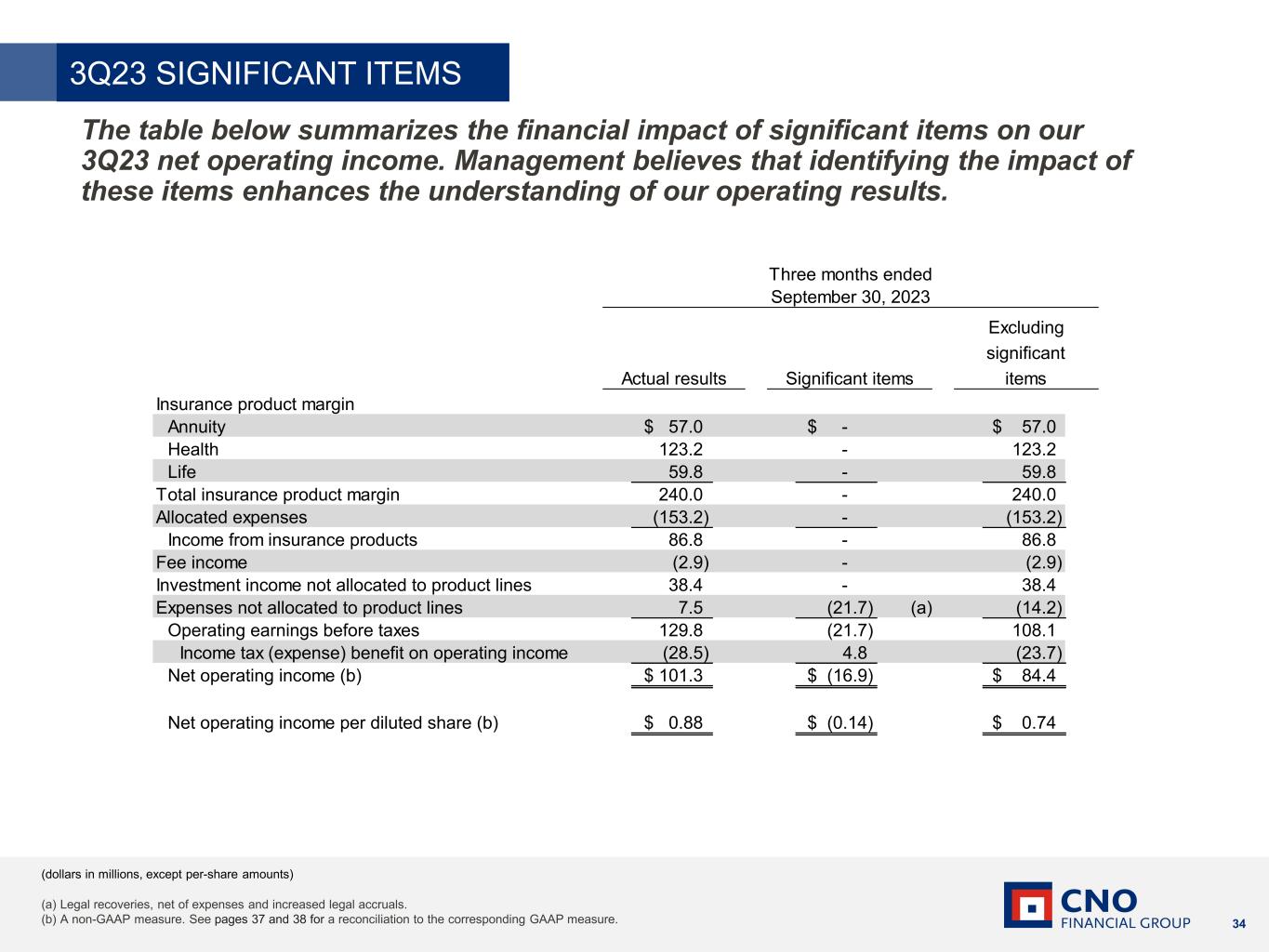
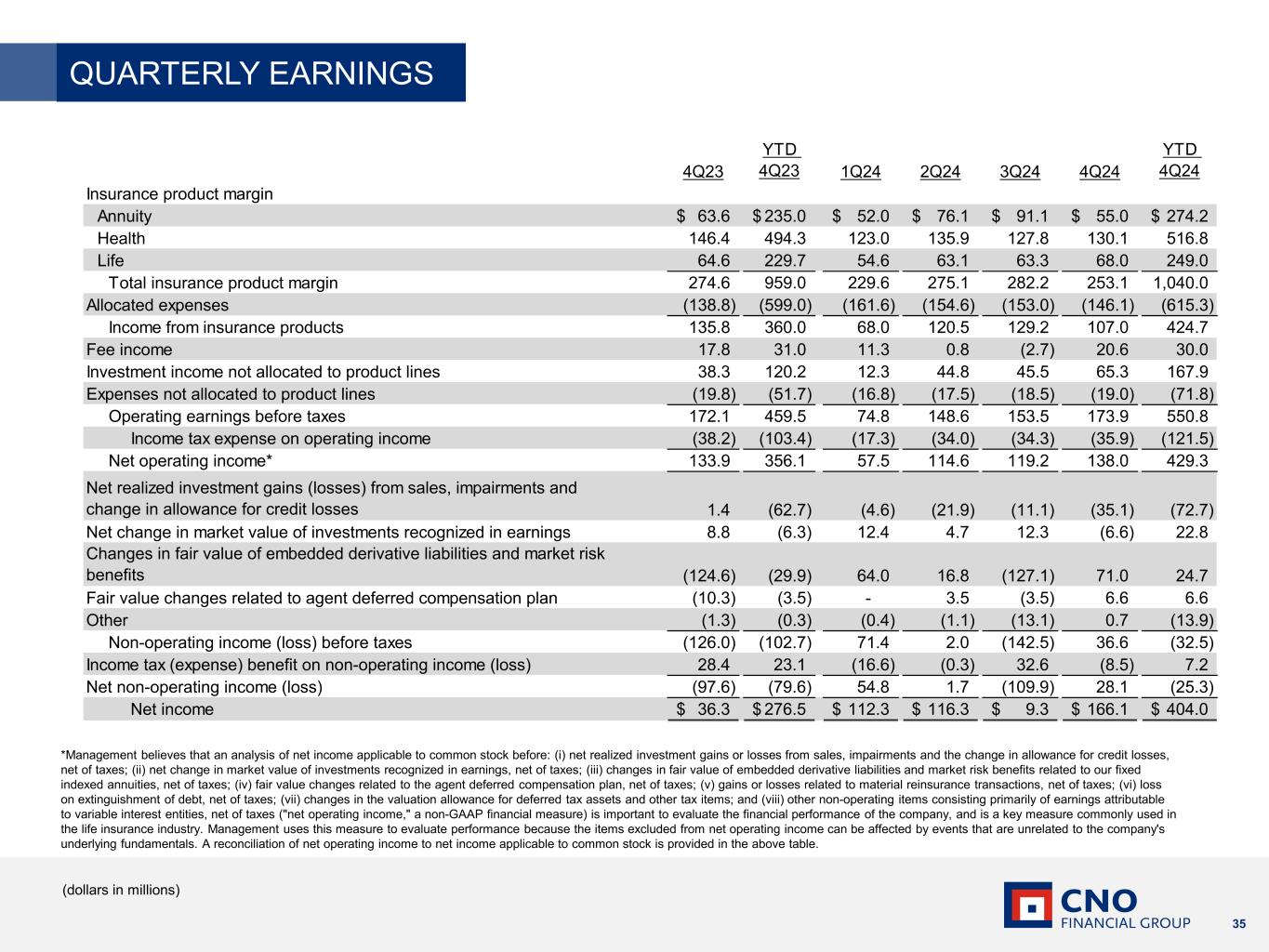
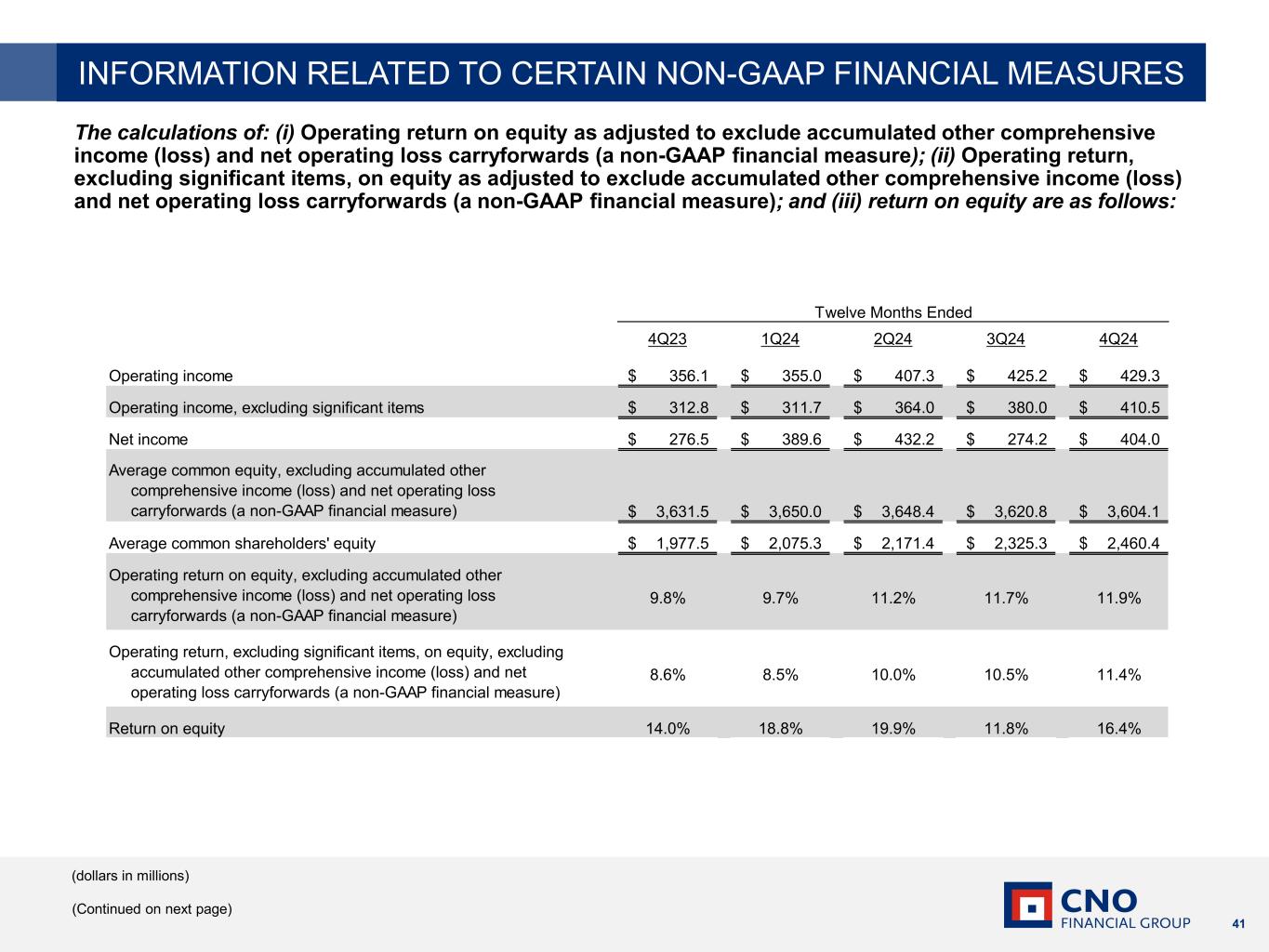
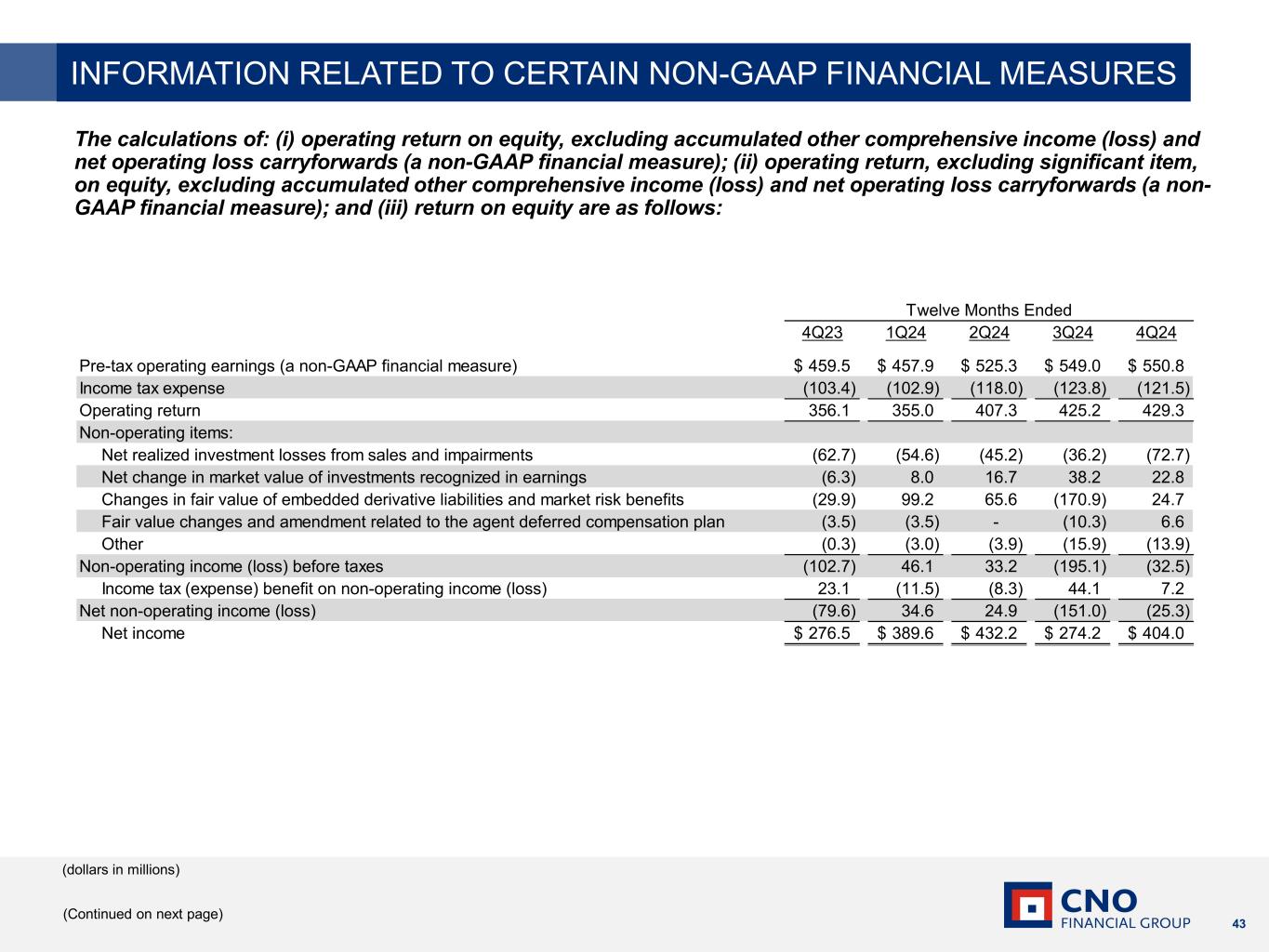
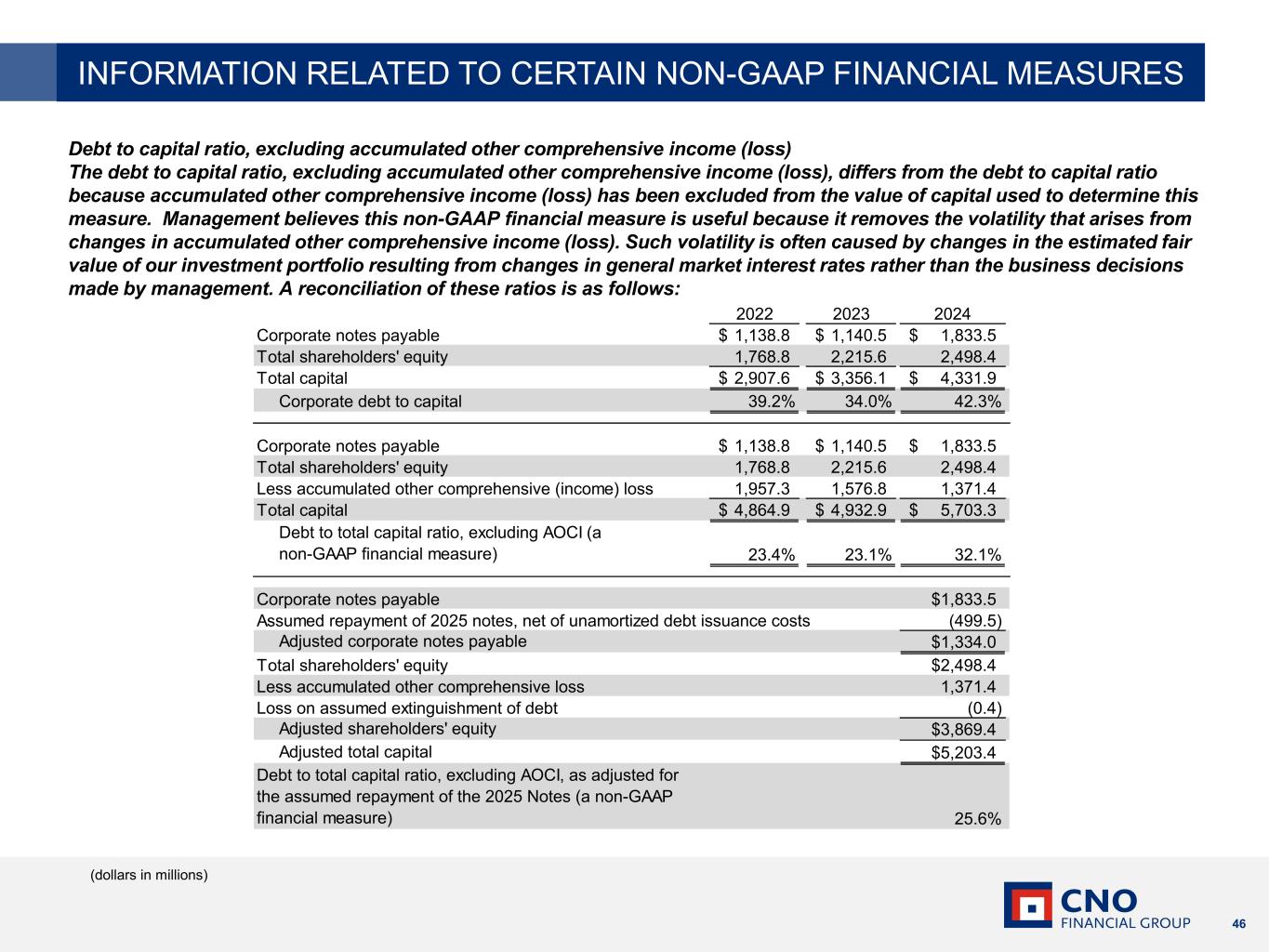
And with that, I'll turn it over to Paul. Thank you, Gary, and good morning, everyone. Turning to the financial highlights on slide eight. We certainly finished the year strong with operating earnings per share excluding significant items of 41% in the quarter and 40% for the year. The operating return on equity ex-significant items improved by 280 basis points. The results reflect growth in the business, higher interest rates and investment returns, and strong insurance product margins coupled with disciplined expense and capital management. Admittedly, the results also reflect a year of mostly puts and very few takes in our insurance product margin. On a run rate basis, we estimate the full year operating return on equity at about 10%. Our expenses were in line with expectations, with the incentive comp accrual pushing the expense ratio to the high end of our guided range we deployed 282 million dollars of excess capital on share repurchases in the year accelerating our capital return in the wake of the debt issuance back in may this represents a 70 percent increase from the prior year and contributed to a six percent reduction in weighted average diluted shares outstanding it also reflects the strong underlying free cash flow dynamics of the business. Turning to slide nine, in general, sales growth together with higher interest rates are translating to growth and insurance product margin across all three of our product categories. Drilling down a bit, our supplemental health and long-term care margins both continue to benefit from favorable morbidity in the quarter as they have for much of the year, reflecting claims trends that are within our expected range of outcomes but favorable to what we would consider a sustainable run rate in addition for a third consecutive quarter though to a lesser degree other annuity margins benefited from reserve releases due to higher mortality on larger closed block policies we do not expect this favorable in impact to continue our estimated run rate operating return on equity of about 10% in 2024 adjusts for the insurance product margin outperformance in 2024 in these three product lines. Turning to slide 10, the new money rate was 6.72%, setting the high watermark for the year and the eighth consecutive quarter above 6%. The average yield on allocated investments was 4.87%, up 19 basis points year over year. The increase in yield, along with growth in the business, drove a 7% increase in net investment income allocated to products for the quarter. Investment income not allocated to products was up 70%, primarily due to a $28.1 million dividend from our investment in Rialto capital. Alternative investment results met yield expectations in the quarter. We completed a $450 million three-year FABN offering in the quarter, the third FABN offering this year, bringing total 2024 issuance to $1.6 billion. Total investment income was up 16% for the quarter and 9% for the year. Our new investments in the quarter comprised approximately $820 million of assets with an average rating of single A and an average duration of just under 6.5 years. Our new investments are summarized in more detail on slides 22 and 23 of the presentation. Turning to slide 11, the market value of invested assets grew 12 percent from the prior year, with roughly half of the growth the result of recent FABN issuances and the other half due to growth in the business. Approximately 96% of our fixed maturity portfolio at quarter end was investment grade rated with an average rating of single A, reflecting our up in quality bias over the last several years. Turning to slide 12, our capital position remained strong. At quarter end, our consolidated risk base capital ratio was 383%. Available holdco liquidity was $372 million, well above our target minimum, reflecting the debt issuance completed in May, as well as continued strong free cash flow to the holdco. We generated $284 million in excess cash flow to the holding company for the year, exceeding the high end of the guidance range provided on the third quarter call and well above the original guidance provided last February. This result demonstrates the enterprise's significant ability to generate free cash flow. Leverage at quarter end was 32.1% as reported. Adjusting for the senior notes that will be paid off at maturity in May of this year, leverage at quarter end was 25.6%. Turning to slide 13 in our 2025 guidance. As I mentioned, we estimate our run rate operating return on equity at about 10% in 2024. From that baseline, we expect to improve run rate operating ROE by 150 basis points over the next three years, including 50 basis points in 2025. In other words, we expect to generate an operating return on equity of about 10.5% in 2025 and about 11.5 percent by 2027. We expect 2025 operating earnings per share between $3.70 and $3.90. We expect the 2025 expense ratio to be between 19.0 and 19.4 percent with the midpoint in line with 2024 and inclusive of some pressure from expenses related to exploring a second reinsurance treaty with our Bermuda company and by an IT initiative that I'll touch on further in a moment. We expect the seasonality of the expense ratio to follow a quarterly trend similar to the last two years, starting at the high end in the first quarter and then grading down through the year. We expect improved results in net investment income not allocated, driven by our standard assumption that our alternative investments will generate return in line with our long-term run rate assumption of between 9 and 10 percent. And we expect a modest decrease in fee income, notwithstanding continued growth in Medicare Advantage sales, driven by a sales mix shift to smaller Medicare Advantage providers, which puts pressure on fee income in the near term. In addition, we are making investments in the service side of our worksite business, which is also putting pressure on fee income in the near term. We again expect roughly a quarter of the full-year fee income in the first quarter and the balance in the fourth quarter, with the second and third quarters roughly break even. We expect 2025 excess cash flow to the holding company to be between $200 and $250 million. Consistent with prior years, we expect the 2025 effective tax rate to be 23 percent, and we will continue to manage to a consolidated risk-based capital ratio of 375 percent in our U.S.-based insurance companies, minimum hold co-liquidity of $150 million, and target leverage between 25 and 28 percent. In addition to these high-level metrics for 2025 and our projected return on equity improvement over the next three years we want to preview an initiative that will be starting in 2q of this year it is a three-year project to modernize certain elements of our technology enabling continued growth of the business over the long term it will result in a more stable and agile technology stack leveraging ai and cloud which would position us to more effectively leverage new technologies in order to speed up product development enhance the agent's experience and improve customer service. The initiative is expected to cost approximately $170 million over three years, including approximately $60 million in 2025. That $60 million in 2025 is reflected in our excess cash flow to the hold code guidance for 2025. In terms of the accounting for this initiative, a small portion will be capitalized and amortized through operating income over time. A small portion will be expensed as incurred through operating income. As mentioned, this is putting some pressure on our expense ratio in 2025. The majority of the costs will be expensed as incurred but excluded from operating income and included as a component of non-operating income. The expenses excluded from operating income are discrete expenses one time in nature related to the three-year initiative largely paid to third parties as well as some asset write-offs they are clearly above run rate expenses during the project period and do not continue beyond the project period in closing i would emphasize that all of the 2025 guidance metrics and the three-year return on equity improvement metrics are inclusive of this technology investment. In other words, we expect to improve sales and earnings and expand return on equity over the next three years while also investing for the long-term benefit of the company. And with that, Gary, I'll turn it back to you.
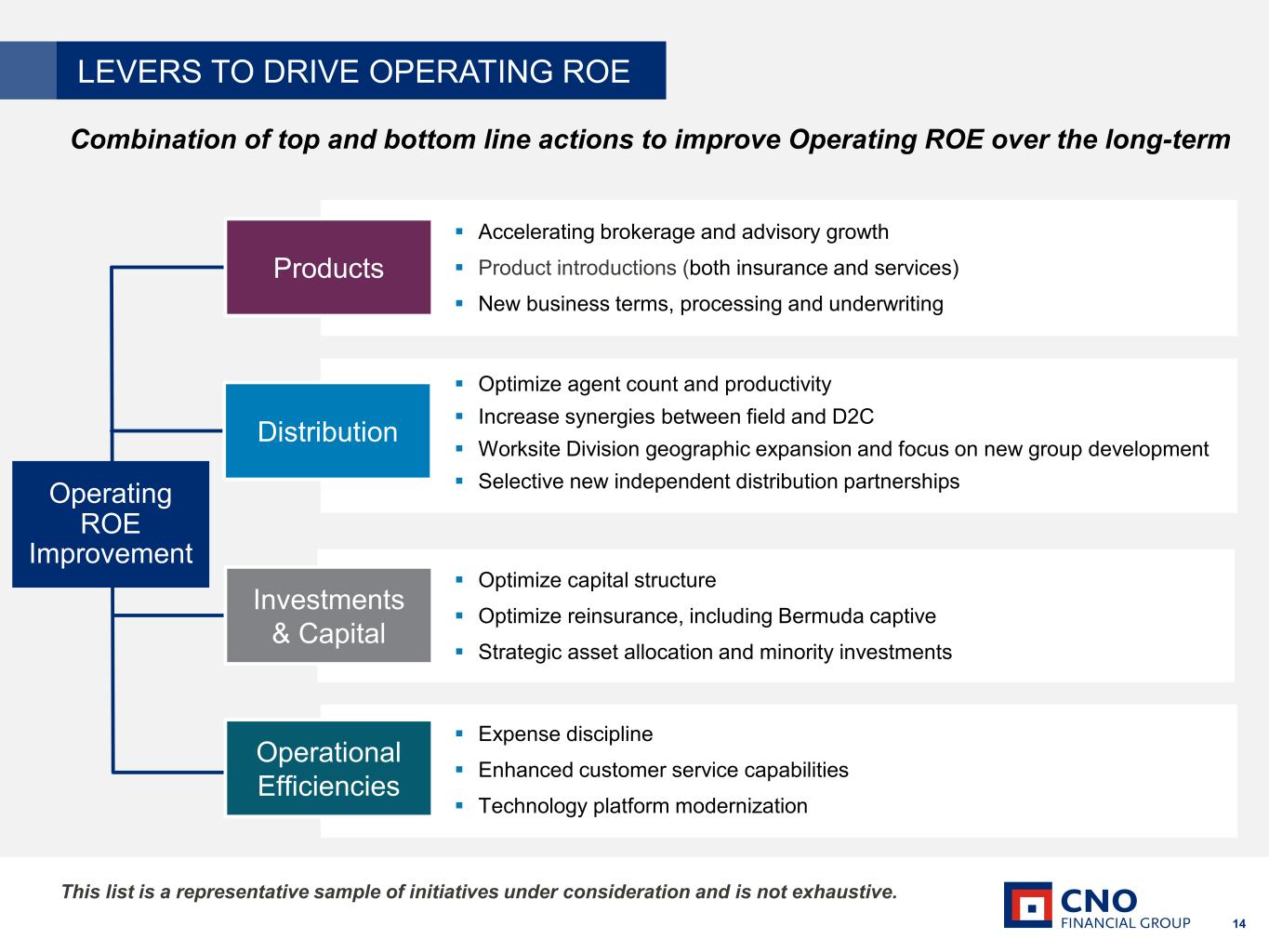
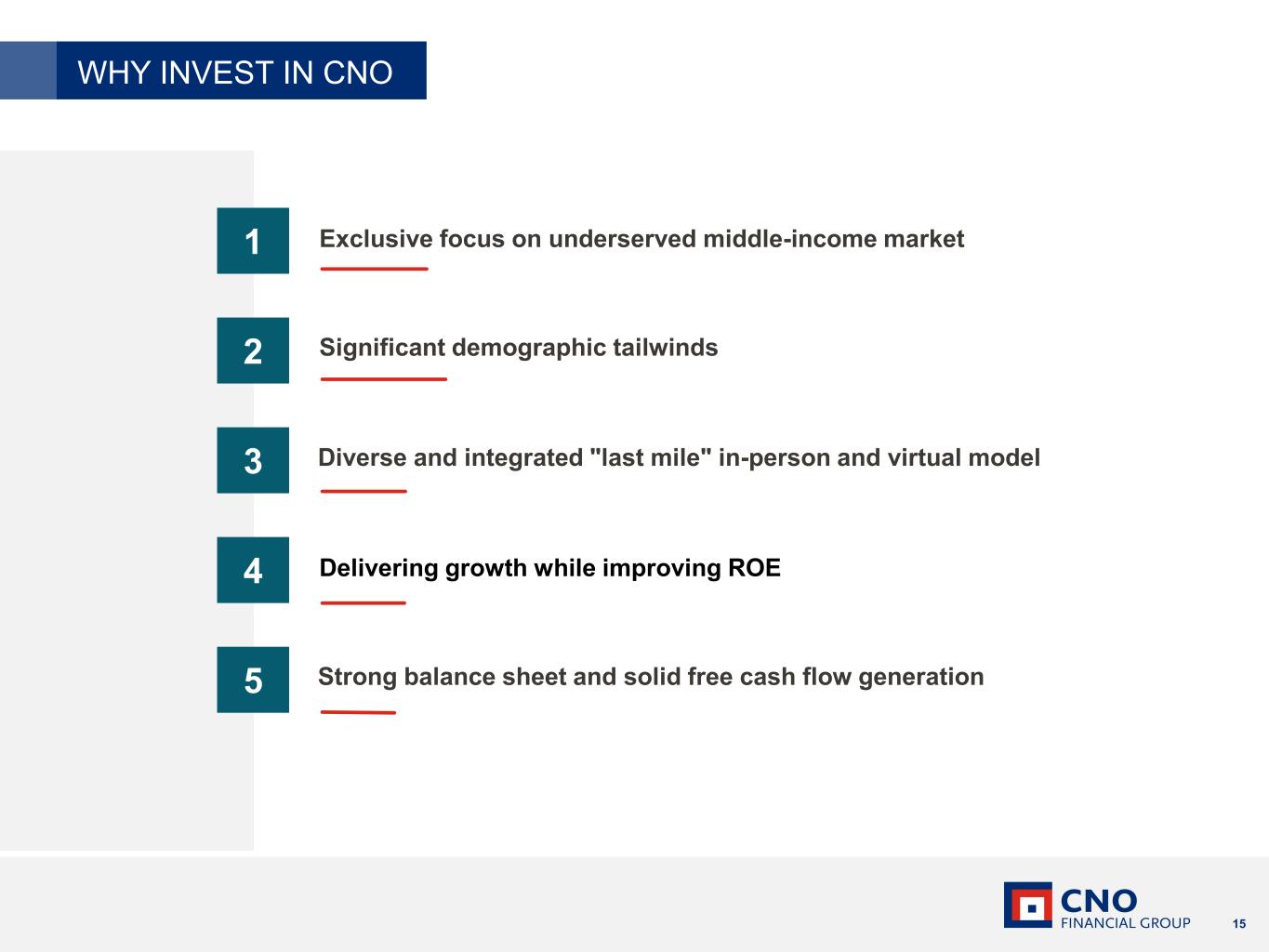
Thanks, Paul. Turning to slide 14, as you have heard us discuss over the last several earnings calls, expanding ROE is the next step in the strategic evolution of C&O. Before 2019, our fix and focus strategy was aimed at strengthening and fortifying our balance sheet. That phase culminated in our successful long-term care reinsurance transaction and an upgrade to investment-grade ratings. Around 2020, we turned our attention to restarting our sales engine. We completed a strategic transformation of our business units to realign our operating model with changing consumer behaviors. Our consumer and worksite divisions were the result of these efforts. With 10 consecutive quarters of growth, our sales momentum is strong. These building blocks create the strong financial foundation C&O enjoys today. From 2024 onward, we have been positioning C&O for growth and optimizing the results. As Paul shared in our 2025 guidance, we expect to generate 150 basis points of operating ROE improvements over the next three years. It's critical to note that we expect to deliver this improvement while continuing our sales momentum and investing back into the business to enable long-term growth. We're using multiple levers from across the enterprise to deliver these results. This slide highlights a representative sample of initiatives already in flight. I won't address them all, but we'll share thoughts on a handful. Number one, brokerage and advisory. Generating retirement income is a critical need for our market. We expect the demand for these services to accelerate. Number two, new products. Consumers have embraced our new and refreshed product offerings. significant additional opportunities remain to leverage our product portfolio number three cno bermudary we are pleased with our initial treaty and remain committed to working with regulators on future opportunities to do additional business in bermuda number four modernizing our technology as paul referenced we're investing in our technology to enable growth now and in the future upgrading systems will bring enhanced stability and efficiency to our tech Foundation. We're positioning C&O for long-term growth, and none of this would be possible without the outstanding team we have at C&O. How our team executes and the capabilities of our leadership and associates drive our success. We also recognize that our ROE target for the next three years is a mile marker on the path and not our final destination. As our track record has demonstrated we fully intend to keep leveling up as we advance C&O's growth story. Turning to slide 15, C&O had exceptional full-year financial performance in 2024. We demonstrated our ability to grow the franchise while also growing earnings and improving profitability. We once again enter a new year with considerable sales momentum and a growing agent force. Our capital position, liquidity, and cash flow generation remain strong. C&O is well positioned to continue profitable growth and drive ROE expansion in 2025 and beyond. We thank you for your support of and interest in C&O Financial Group. We will now open it up for questions. Operator?
Operator
Thank you. We're now at open lines for Q&A. If you'd like to ask a question, please press star followed by one on your telephone keypad now. If you'd like to remove yourself at the end of questioning, will be star followed by two. Our first question comes from John Barnridge of Piper Sandler. John, your line is now open.
Good morning. Thank you for the opportunity. How should we be thinking about buybacks assumed in guidance? You offered excess free cash flow guidance as well. Some further call on that would be helpful. Thanks.
Good morning, John. It's Paul. So, I think you should consider the free cash flow guidance together with the excess cash position relative to our minimum hold co-liquidity at the end of 24. I think that gives you a sense for share repurchase capacity in 2024, absent more compelling uses of that capital. I think I'd leave it there.
Thank you. My follow-up question, distribution has been good. Geographic expansion, it looks like it contributed 38% of NAP growth in 4Q, 35% in the full year. How much additional geographic expansion opportunity is there? Thank you.
The short answer, John, is a lot. We think we're at the front end of this. We're very pleased with what our results have been so far. And we're always just trying to balance this against expense discipline. So we see tremendous potential, particularly in our worksite business. Our consumer division has a very well-developed national footprint. Our worksite division is considerably smaller. If you think about the dedicated agents we have, our worksite division literally has one-tenth the number of agents. So that gives you a sense. Now, do I believe that the worksite division has the potential to have all of the same footprint? No, I think that's neither wise nor necessary, but I think there's a lot more upside left.
I'm very encouraged by what the geographic expansion has yielded and i think there's lots more upside thank you thank you very much our next question comes from ryan kruger of keith bruit and woods ryan your line is not open good morning um first just wanted uh to ask paul i think you you mentioned you were valuing additional bermuda opportunities can you give us any more sense of what you're considering there sure good morning ryan so i don't want to get ahead of the process um so i won't provide any specifics but uh yes we are you know very closely evaluating what the opportunities are prioritizing uh those opportunities um our focus over the last year or so has been to just establish the team in bermuda um you know develop the the uh relationships on island including with uh with the bermuda monetary authority um we're in a good place there we've got an established team um you know they're hitting their stride and uh you know so now our primary focus is to um you know look for opportunities to uh leverage that platform you know beyond the initial treaty thanks and um on in fixed uh annuities particularly fixed index
annuities you saw surrender rates moderate in the fourth quarter back towards historical levels and also pretty strong sales activity can you give us some color around what you're seeing there and if you think um this will kind of continue into 2025.
Ryan I'll comment on the surrenders and then and then uh Gary can comment on more broadly on sales activity so the surrenders um are down a little bit from sort of the the high water mark um last year I wouldn't say they got back to where they were a couple of years ago but they've come down a little bit and seem to have stabilized at uh at the current level um and then gary i'll i'll turn it over to you on the sales going forward front yeah thanks paul and ryan thanks for the question um we feel very bullish about the opportunity have we have with annuity sales um we think that the demographics are with us meaning the number of
people that are retiring or turning 65 every day continues to be growing. We're hitting near the peak of that, so we expect that to continue. There are fewer and fewer alternatives offered, meaning pensions and other things that offer lifetime income are virtually non-existent anymore. So we think when you take those things together, particularly for middle-income America, specifically the population we service, we think that there's going to be a continued demand. Now, we've had a really good run. And in my experience, the real world doesn't move in a straight line. The comps are getting tougher for us. So those will certainly present headwinds. But I think if you look at a longer term trend, let's call it three to five years, I think you're going to continue to see very robust growth. Will a given quarter here or there not match up to a previous year's quarter? I'm sure that's going to happen just because our comps are getting tougher. But in the aggregate, demand will be strong. Our clients need these products. Our agents love using them because they're such a useful tool. So we see a really bright future for annuities for middle-income America.
Operator
Thank you. Thank you very much. As a reminder, if you would like to raise a question, please press star followed by one on your telephone keypad now. And to remove yourself, that line of questioning will be staff followed by two. Our next question comes from Wilma Berdes of Raymond James. Wilma, your line is now open.
Hey, good morning. Could you give us a bit of a breakdown on the tech investments? Is it kind of platforms, consultants, implementing systems, other items? And then just can you talk about a few of the use cases for the tech and AI investments?
Good morning, Wilma. I'll start off, and then I'm sure Gary will want to provide some color. All right. The primary focus of this investment, this initiative, is converting various legacy policy admin platforms and select foundational systems from mainframe systems to cloud-based SaaS solutions. And, you know, with the new platform, we'll be able to evolve with the quickly changing Gen AI landscape. And in general, it will allow us to adopt and leverage new technologies more fully in the future.
Yeah, maybe I can just supplement that. I think the way to really think about this is exactly what Paul touched on, getting away from historical. And in some cases, these were things that have been built at home, so to speak, getting away from these mainframe platforms. We really need to position ourselves to where we can offer consumers and agents the new kinds of technology and flexibility that they expect, and we just can't keep building them on these old systems. We have to have newer systems that are cloud-based, that are software-as-a-service-based, and so on to give us that flexibility. So really, the way it's been explained to me as a non-tech guy, this is us building a new foundation that we can put other new features on top of. We can't keep putting these new features, these new bells and whistles on top of an old foundation. It just doesn't work anymore. As a side note, I would just add that as a 30-year insurance executive, I think virtually all insurers have some version of this challenge that they have dealt with or need to deal with. This is not a unique thing to C&O. Technology has changed so much in recent years, and it's just imperative that we get on that new foundation so that we can add these new features and benefits. Willma, does that clarify what you were looking for?
Willma Ruffin Yeah, that did. That definitely helped. And then it's great to see the three-year guides with the ROE improvement. I realize there's a lot of pieces, small moving pieces, and you've talked about many of them. But maybe just help us think through what gives you the confidence. Are there some of those small pieces that you can identify? And it certainly sounds like this platform investment will probably help streamline things So, maybe if you could talk about all that.
Wilma, maybe I can start with kind of – well, I'm sorry. Did you want to start?
I think I'm just going to start maybe with some general comments about how we think about guidance, kind of a little bit maybe more philosophical, and then I'll let Paul fill in some specifics. I think that one of the things that we're particularly mindful of within CNO is we're really careful about the commitments we make, particularly when we make them in a public setting. And I know that sounds obvious, but if you look over the last five years, I think what you'll see is we've been very cautious about when we've provided guidance and the types of things we've provided guidance about. So we've been very disciplined about making sure that we were committing to things that we really had a strong belief in. And I think if you take a look at our track record, I think we've got a pretty good track record of when we say we will do it, actually delivering it. But we're really careful about that. I think on the ROE in particular, because that's the biggest thing that we've gotten feedback from our shareholders about was providing more visibility into that. This is something we've been working on for quite some time. As you know, ROE is one of our incentive comp metrics, so we've always had attention on it. But really being able to get to a point where we've got good line of sight and we feel like we've got the ability to execute against it, we feel like this is the natural point in our evolution. In other words, I'm saying all that to make the point that it was very intentional that we didn't provide guidance prior. We feel like we're in a place now where we've got good line of sight, good credibility, the right people, and so on. So we feel good about our ability to do those things. There are a number of things. If you take a look at that slide that I spoke to in terms of levers we're pulling to get there, whether it's re-exploring our reinsurance, whether it's thinking about how we'll handle our capital, whether it's the expense discipline, there are a number of different things we're looking at to make sure that we can perform against that commitment or that guidance. Paul, do you want to add any more specifics to that?
I guess I'd add a couple comments. So, Wilma, we're not going to give, you know, specific guidance beyond 25 in terms of what drives that additional improvement, but I would emphasize that, you know, the sales growth over the last couple of years and the sales growth that we expect will continue over the next, you know, foreseeable future, together with sort of higher for longer interest rates. You know, let's imagine the 10-year settles in here at about four and a half and stays there, maybe goes higher, who knows. I don't imagine goes a bunch lower. That's a compounding tailwind. So that's part of it. There are things that we're doing in 25 that don't really begin to show up until 26 in terms of driving ROE expansion. There are additional things that we have line of sight on that we'll do in 26 that will help a little bit in 26 and more in 27. So it's, you know, it's all the things that are referenced or alluded to in the last slide of our deck. All the things that Gary just talked about in aggregate give us a lot of confidence in hitting this three-year ROE metric that we put out.
Operator
Thank you very much. Our next question comes from Sonny Kamath of Jefferies. Sonny, your line is now open.
Great, thanks. so first on the on the tech investments um we got the 170 million over three years but i don't recall i don't know if you quantified what savings element associated with that would be and sort of over what time frame and then paul it sounds like a lot of this will be excluded from operating results but then i thought you'd said it's all embedded in the roe so i just wanted to understand um what's going on there yeah uh good morning sunit so first of all this isn't really a cosplay we don't we don't expect this to translate to significant cost savings but it's also not you know the the run rate of of of our technology will will be no better or worse
for this for this investment but it creates a more stable platform that allows us to leverage current technology as as gary was talking about um so so that's really the play it's not a cost play it's a it's an investment that enables long-term growth of the business right we're at a point in our evolution as a company where we need to make these kinds of investments and And as Gary said, by the way, many of our peers, you know, will will also, you know, as an industry, we've got some sort of aging systems that are mainframe based and don't really allow you to leverage some of the newer technology. We're making this investment to enable long term growth. So that's that's really good. And in terms of how it will flow through, yes, the majority of it, we will characterize as not operating. will give it a lot of visibility um as a component of non-operating um and all the guidance in 25 is inclusive of the impact on operating income the impact on uh on equity the impact on free cash for the hold co so that you know 225 at the midpoint free cash flow to the hold code after investing 60 million dollars in tech mod in 2025 got it okay and then just on bermuda um just at a high level it does seem like a lot of life insurance companies are using this um opportunity and i
guess i worry when i see so many companies doing it at some point you know just bermuda kind of raise its hand and say kind of enough is enough or just getting these treaties approved just takes longer. I'm just curious if that's a concern that you have or how we should think about it. Thanks.
I don't foresee that being an issue in Bermuda. I mean, it's a market that operates, I think, very effectively, very efficiently, and a regulatory regime that works well also, that i think has you know lots of capacity for growth so i i don't see that as an issue i think you know that's why uh so many companies have uh moved business there and i think i expect that trend will continue okay thanks thank you very much as a reminder if you would like to raise a question please press star followed by one on your telephone keypad now and to remove yourself that
line of questioning is star followed by two our next question comes from jack man of bemo jack your line is not open all right good morning um just a question on the the excess cash flow outlook and understanding you're coming off a very strong 2024 baseline um if i think about the 200 to 250 million range um can you just discuss some of the drivers there i know you mentioned that some of the it investments are flowing through um any other moving pieces that might cause you to reach the higher end versus the lower end of that range sure morning jack um you know it's it's just a reflection of the dynamics of the business.
There are obviously lots of moving pieces that determine our estimate of free cash flow. I think it reflects a balance of commitment to organic growth at healthy slash reasonable pace, investments that we're making in the business like TechMod. And you put all that together and this 200 to 250 is what you get. In terms of what causes you to be at the low end of the high end, it's primarily the pace of organic growth, the economic climate. If you tip into a recession, that causes some credit migration down, which results in higher capital charges. And then the third primary element is the degree to which we take more or less risk inside of our investment portfolio.
That makes sense. Thank you. And just to follow up on the IT initiative, and I heard the commentary about it not being a pure kind of expense-saving program. There's more to it. But I guess given kind of the operating leverage you might expect to get over time? Is there maybe like a longer term expense ratio that we should think about relative to the 19 to 19.4 for this year? We should expect that ratio to keep coming down over time and just any other color on the benefits of the program that you might expect?
So in the long run, expenses broadly, not just this IT initiative, I would expect our expense ratio to come down. As we grow, as we develop more operating leverage, you would expect that you know that's a lever that that uh that would help um and and you'd see that move down no it's it's not moving down uh 24 to midpoint of our guided 25 largely because of you know on the margin some pressure on operating income and this operating expense ratio from tech mod some pressure on the margin um you know from expenses related to exploring uh additional uh sessions to the bermuda company um right that that takes some time and and money before you can actually get to something that you're proposing uh to the uh brigade of monetary authority so it it you know in my mind it reflects the balance you know that we're trying to get to between growing the business, investing in the business, but also, you know, growing earnings and improving profitability. You know, so I think probably, you know, maybe flat for a while in the context of that balance, but at some point, certainly moving down. Thank you.
Operator
Thank you very much. Our next question comes from Wes Carmichael of Autonomous. Wes, your line is now open.
Hey, thanks. Good morning. On long-term care, Paul, I think in your commentary on getting to the run rate ROE, the 10% here. LTC has been pretty favorable relative to run rate levels. You had margin of $133 million in 2024. Any help with how you're thinking about, you know, what core earnings power would be? And I'm not really looking for a guide, but maybe in terms of how much uplift that had on ROE versus the 10% would be helpful.
Right. So, you know, the three adjustments that we're making are two annuities, you know, which, or sorry, other annuities, you know, which we really expect kind of one or two million per quarter. And we got a lot more than that in 2024. So that's the one adjustment. And then the other is to margin in LTC and subhealth. So you can kind of do the math and, you know, the adjustments we're making there to get to something around 10% in 2024. And what's happening there is, you know, our experience has been, you know, quite favorable, really, at the sort of the high end of the range of expectations. And, you know, we don't expect that to always happen or continue forever. You know, we expect some reversion to the mean. And that's what we're assuming will happen in 2025. That's part of the basis for the 2025 guidance.
Got it. Thanks. And Gary, I think you mentioned in your prepared remarks and new and refreshed product offerings? What are you seeing in the near term? What do you see consumer demand and maybe attractive margins for C&O from your perspective?
Yeah, thanks for the question. We've had really good fortune in the products we have refreshed. We've seen good demand on the annuity side. We launched some new features. On the worksite side, we launched a number of new products, and we've seen good reception to all those. As we move forward here with our tech mod, we'll continue to look at products. But to be honest, for the next two or three years, I don't envision us doing major product launches because we need to keep the organization focused on effectively executing against this technology modernization initiative. So I would expect for the next two to three years, any product enhancements we make to be more tweaks than full-on, you know, new launches. I think there's opportunity to do that. I think there's bandwidth within the organization to handle those types of modifications, but I don't see us doing major launches while we're in the thick of this technology modernization initiative.
Operator
Thank you very much. We currently have no further questions. I'd like to hand back to Adam Orva for any closing remarks.
Thank you, Operator, and thank you all for participating in today's call. Please reach out to the investor relations team if you have any further questions.
Operator
We conclude today's call. We'd like to thank everyone for joining. Even now disconnect your lines.