Operator
Hello, and thank you for standing by. My name is Lacey, and I will be your conference operator today. At this time, I would like to welcome everyone to the DTE Energy Second Quarter 2026 Earnings Conference Call. All lines have been placed on mute to prevent any background noise. After the speaker's remarks, there will be a question and answer session. If you would like to ask a question during this time, simply press star, followed by the number one on your telephone keypad.
If you would like to withdraw your question, press star one again thank you i would now like to turn the call over to matt krepinski director of investor relations please go ahead thank you and good morning everyone before we get started i'd like to remind you to read the safe harbor statement on page two of the presentation including the reference to forward-looking statements our presentation also includes references to operating earnings which is a non-gap financial measure please refer to the reconciliation of GAAP earnings to operating earnings provided in the appendix. With us this morning are Joy Harris, President and CEO, and Dave Rood, CFO. And now I'll turn it over to Joy to start our call this morning.
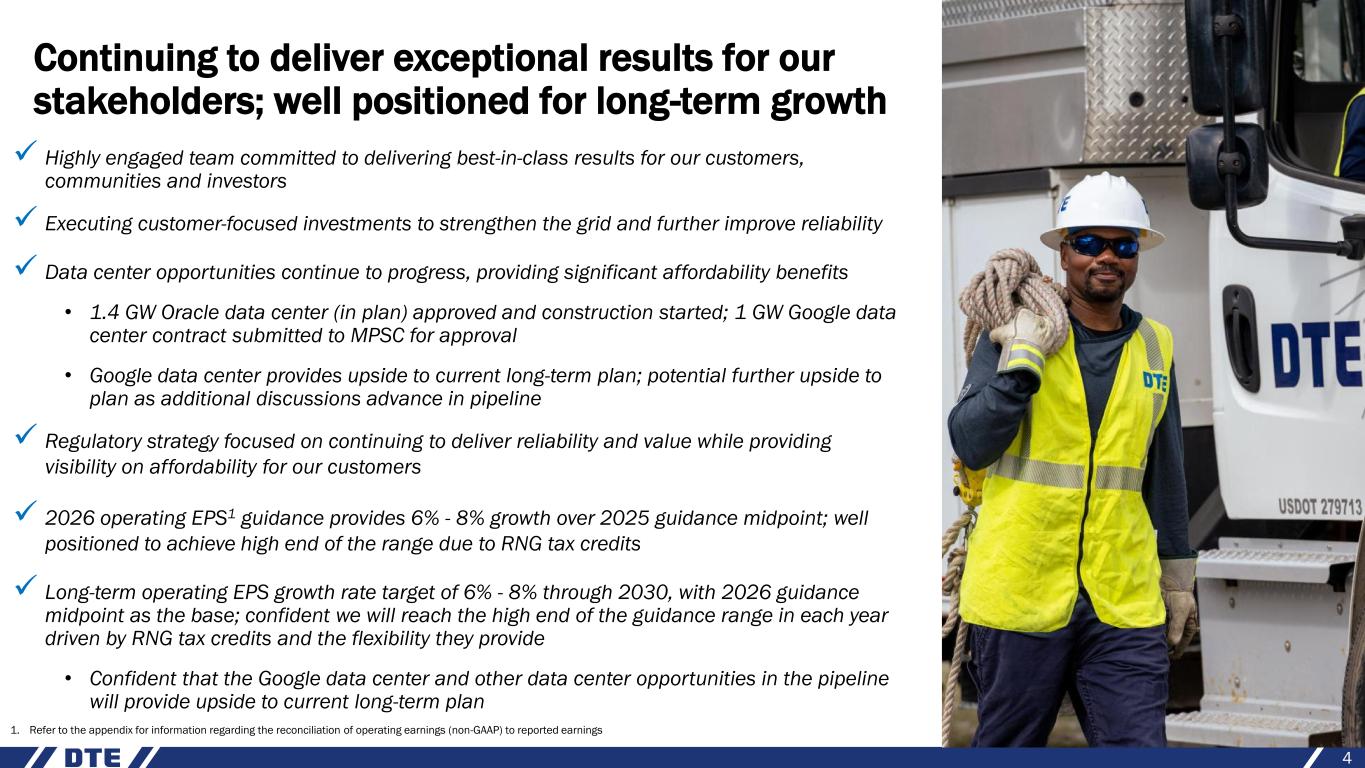
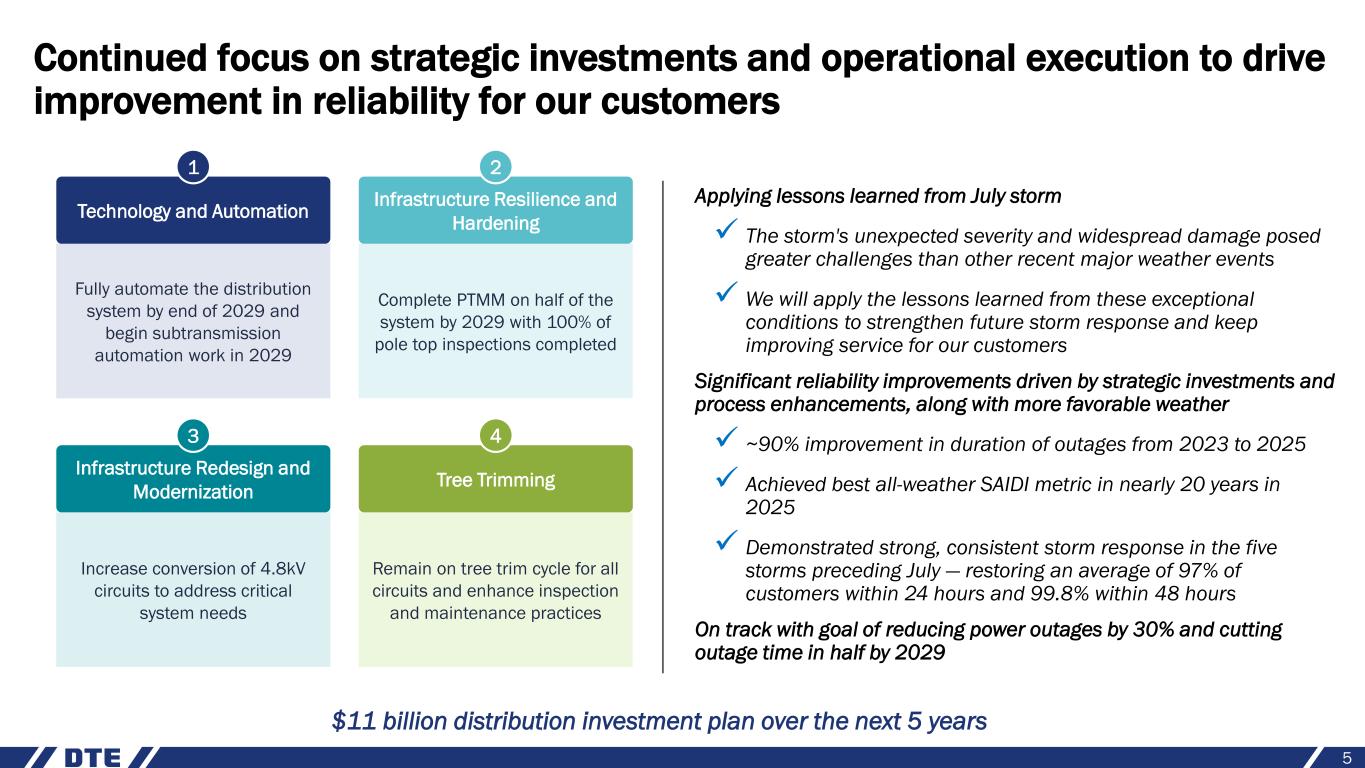
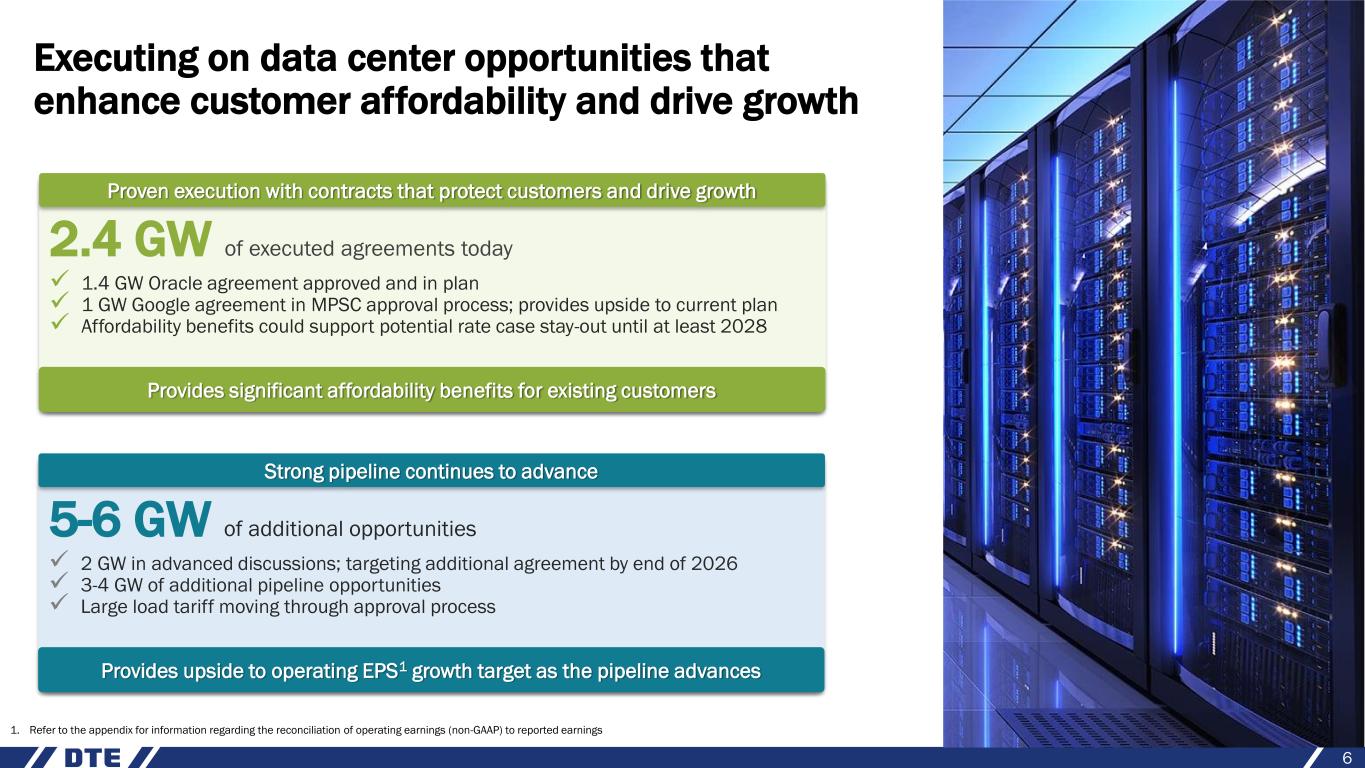
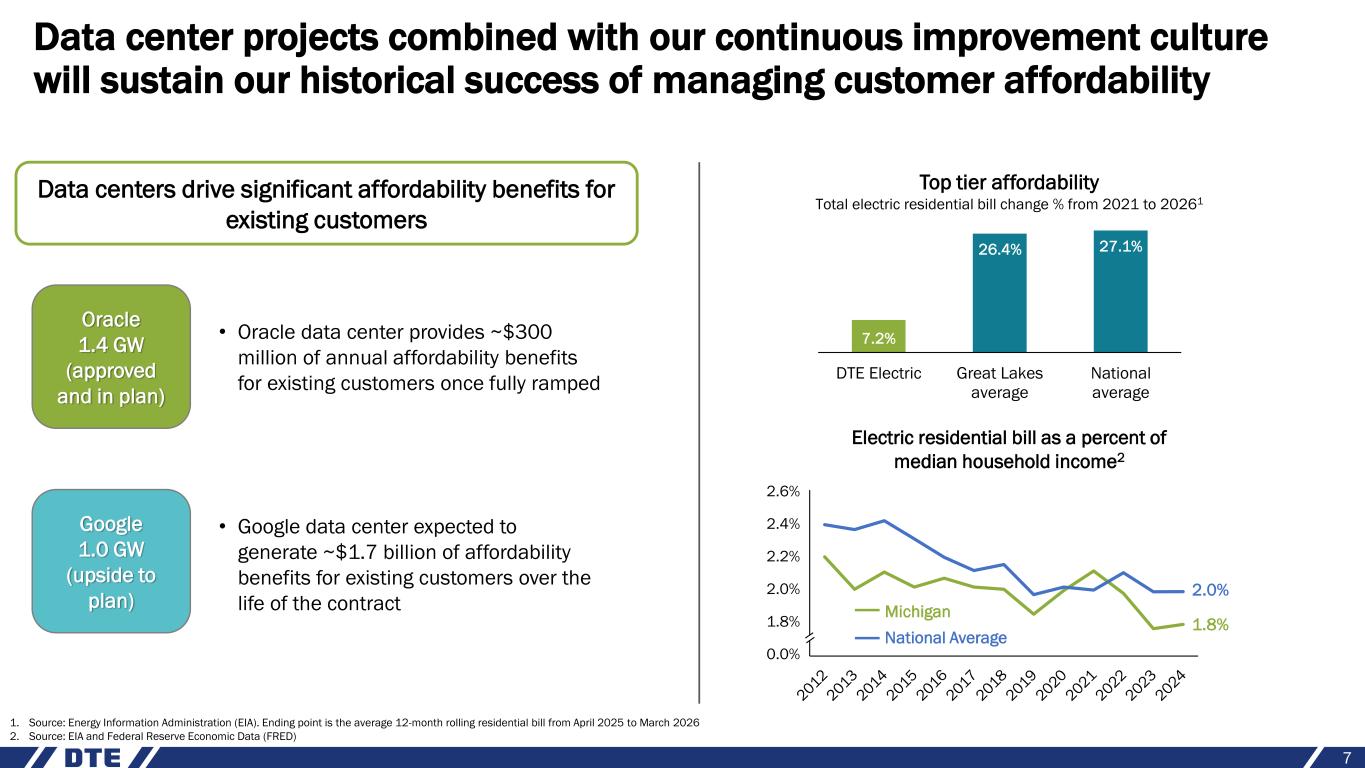
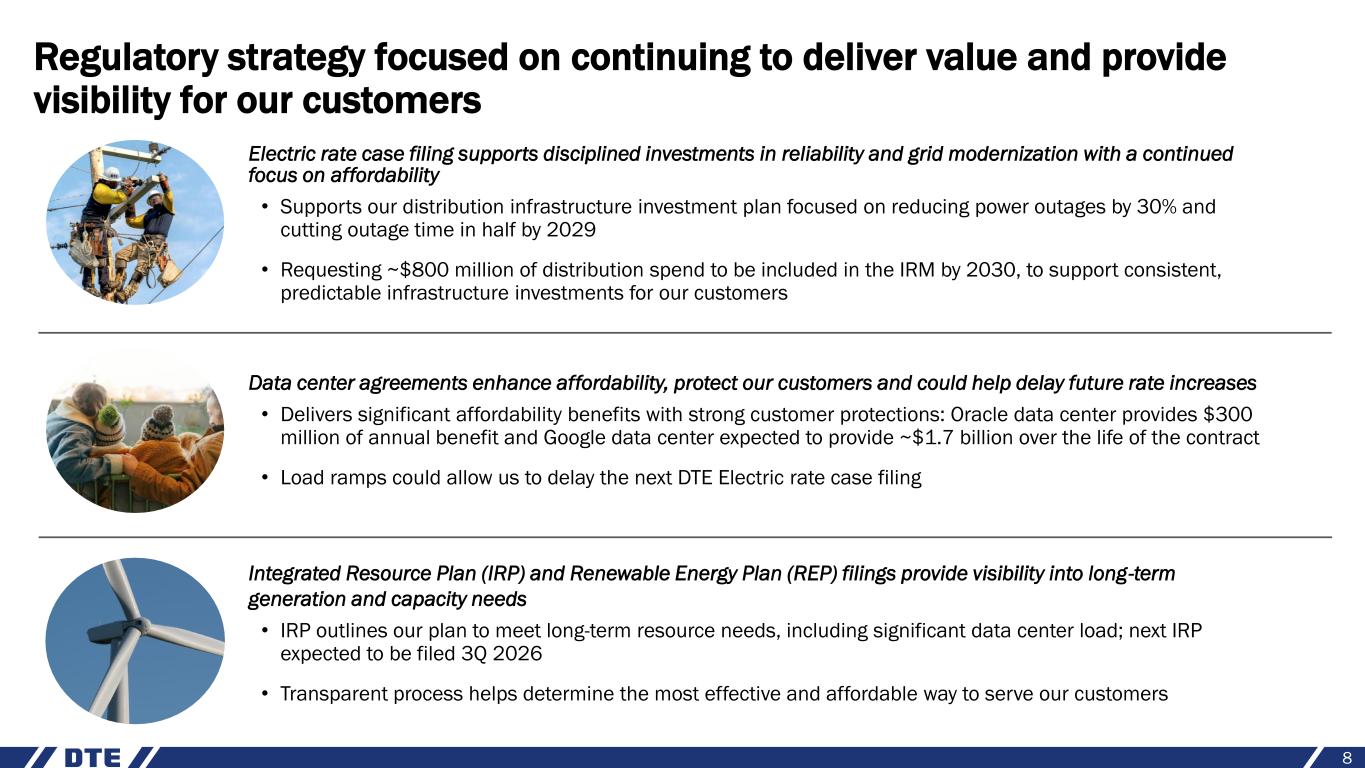
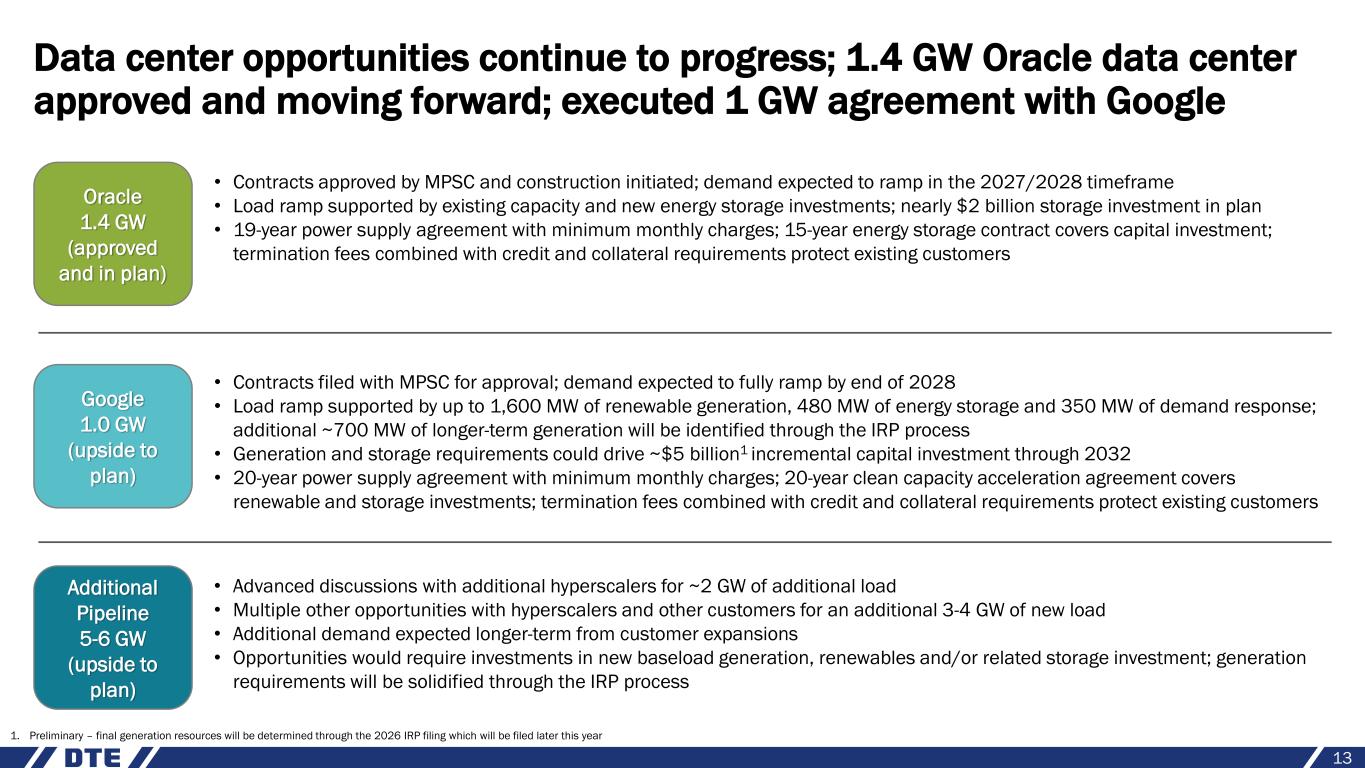
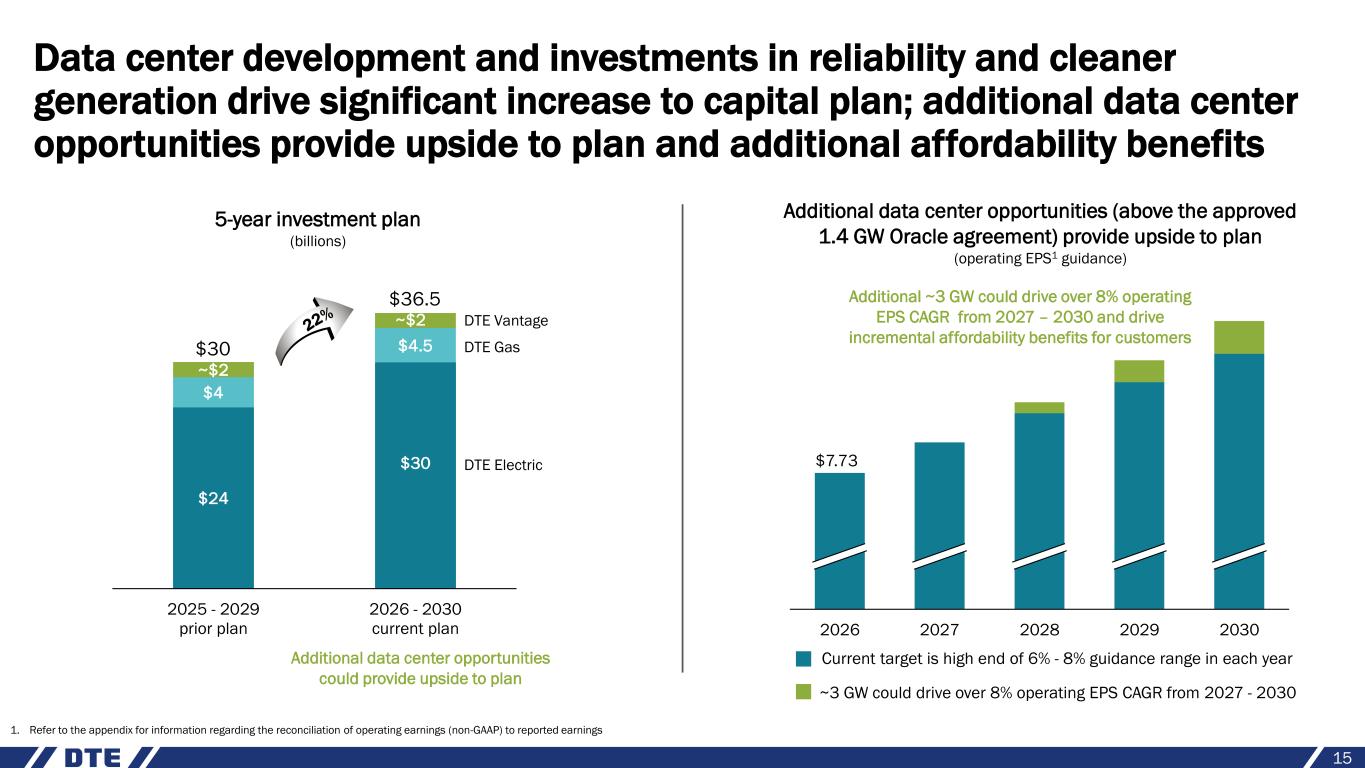
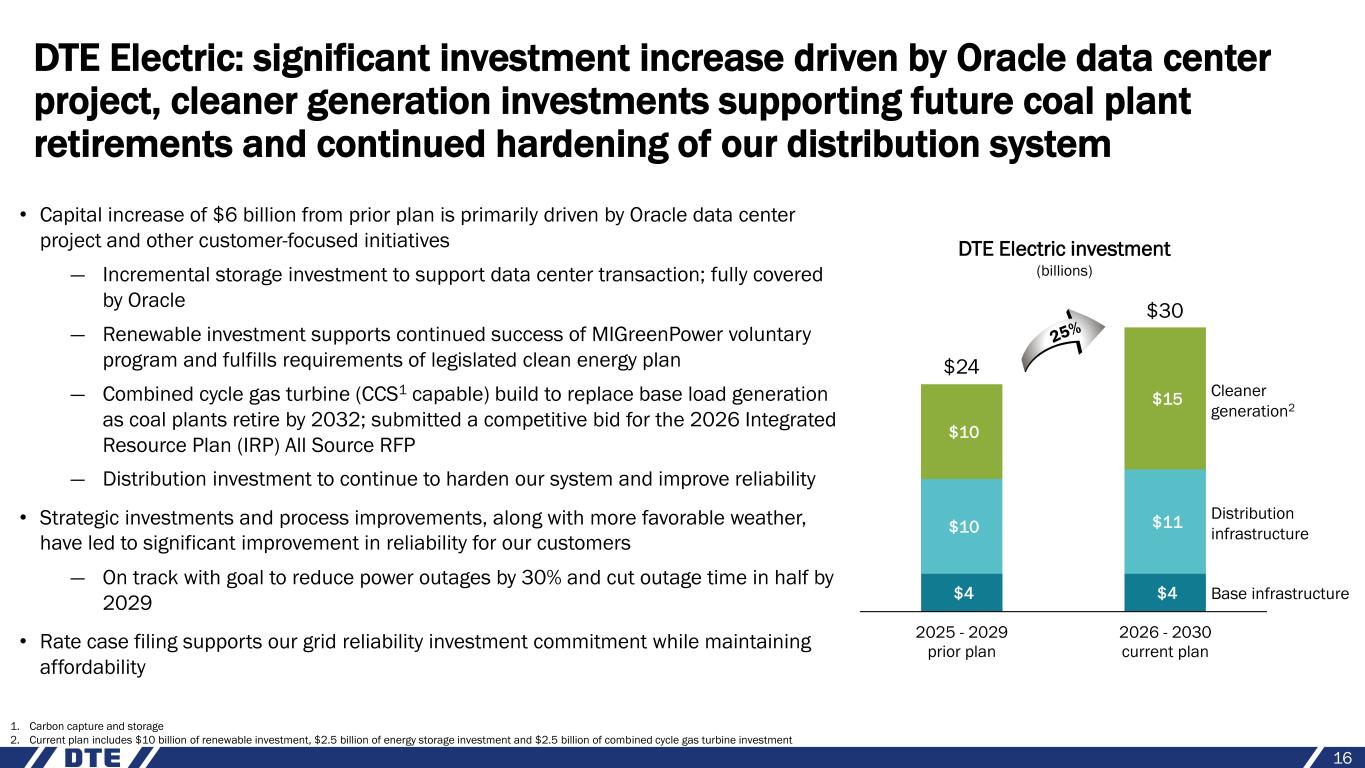
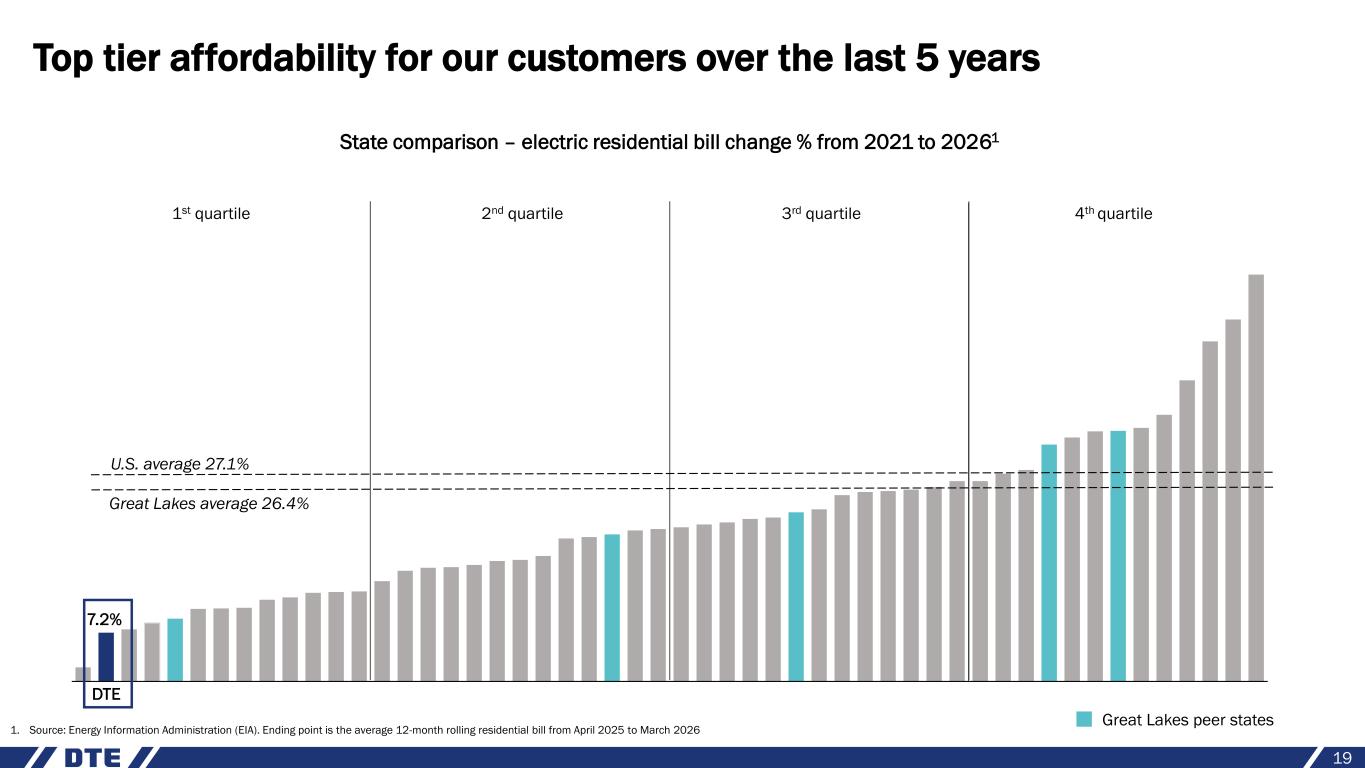
Thanks, Matt, and good morning, everyone. And thank you for joining us. I'm happy to be with you today. As we move through the year, our team continues to execute at a high level, delivering strong results for our customers, communities, and investors. Our performance reflects a highly engaged organization with a clear focus on operational excellence and doing what's right for our customers i'm extremely proud that our team was recognized by the gallup organization for the 14th consecutive year with a great workplace award and our employee engagement ranks in the 94th percentile globally among thousands of organizations we are continuing to advance our customer-focused capital plan with targeted investments that are strengthening the grid and improving reliability. Importantly, we remain disciplined in how we deploy capital, ensuring that these investments deliver the greatest benefit while maintaining affordability for our customers. I'm sure you are aware, at the start of July, a severe, fast-moving storm impacted nearly 400,000 customers. Despite extensive storm forecasting and preparedness efforts, weather models did not anticipate the storm severity and it developed rapidly with little advance warning, causing significant and widespread damage across the service territory, including more than 600 broken poles and substantial damage driven by trees outside of the utility maintained right-of-way. With storms impacting much of the Midwest, we brought in crews from as far as Oklahoma and Texas to support restoration efforts. And I'd like to take a moment to express my immense gratitude to those crews, the contractors, and our employees across DTE who stepped up and worked long hours away from their families over the holiday weekend. Given the storm's unexpected severity and widespread damage across the Midwest, our restoration times extended beyond what we would typically target. However, our crews adjusted quickly and executed our restoration plan to support customers as safely and as quickly as possible. Importantly, areas where we have completed substantial reliability investments perform significantly better, reinforcing the value of continued grid investment and operational excellence while our investments are delivering measurable results we recognize there is more work to do after every major storm we review our performance to identify lessons learned and strengthen preparedness and restoration capabilities and customer communication to ensure we continue to build a stronger more resilient grid for our customers. Turning to data centers, momentum remains strong as we continue to execute across our development pipeline. The 1.4 gigawatt Oracle data center remains on track, fully approved and under construction. As we highlighted last quarter, we executed an agreement with Google to serve a one gigawatt data center, which provides upside to our current long-term plan. The contract has been submitted to the NPSC and is progressing through the approval process. Beyond these two projects, our pipeline continues to advance with ongoing discussions that position us well for future growth. As these projects move forward, they will deliver meaningful affordability benefits for our existing customers, absorbing a significant portion of fixed system costs. Our regulatory strategy is focused on delivering value while providing clear visibility for customers. We have several filings underway or planned. In addition to the Google Data Center contract pending approval, we are advancing both electric and gas rate cases to support critical customer-focused investments. We filed our distribution system plan in April, outlining our five-year roadmap to reliability and grid modernization. We also plan to file our next IRP later this quarter, which will provide a clear path to meet long-term generation and capacity needs. Our year-to-date earnings performance keeps us on track to reach the high end of our operating EPS guidance this year, and we are confident in our long-term operating EPS growth rate target of 6% to 8% through 2030. We continue to see a clear path to achieving the high end of our guidance range each year driven by RNG tax credits and the flexibility they provide. As we have mentioned, the Google data center project and other data center opportunities provide upside to this plan. Let me move to slide five to highlight our continued commitment to improve reliability for our customers. We remain highly committed to our efforts to improve reliability for our customers. As I mentioned, the July storm highlighted both the value of our reliability investments and the work that remains. During the event, we found that upgraded portions of the system proved more resilient, reinforcing the importance of continued investment and identifying opportunities to further strengthen our response. Let me move through how we're approaching reliability improvements across the system. As you can see from this slide, our strategy is grounded in four core pillars, each focused on reducing outage frequency and duration, as well as improving overall performance. First, on technology and innovation, we're continuing to expand automation across the system. In 2025, we installed over 700 automated devices, which was about 20% over plan, and we are planning to deploy more than 500 additional devices in 2026. This work is foundational to fully automating the distribution system by the end of the decade. second is infrastructure resilience and hardening we're strengthening the physical system to make it more resilient to everyday wear and increasingly extreme weather in 2025 we completed over 200 miles of targeted hardening work along with nearly 1 000 miles of pole top maintenance we're ramping up this effort with plans to reach roughly 1700 miles of maintenance work in 2026 Third is infrastructure redesign and modernization, where we're upgrading legacy portions of the grid to improve overall system performance. In 2025, we converted over 70 miles of 4.8 kV circuits to higher voltage and rebuilt more than 20 miles of sub-transmission infrastructure. We expect 2026 to represent our highest level of conversion activity yet. The fourth focus is tree trimming. We've completed our surge effort and are now focused on sustaining that progress. We're also piloting enhancements to our approach, including expanded clearing practices and new program options to further reduce outage risk. Supporting all of these efforts, we plan to invest approximately $11 billion over the next five years, driving continued reliability improvements while maintaining a strong focus on customer affordability. Importantly, we're already seeing meaningful results from this strategy. While the challenging circumstances of the July storm impacted our restoration time, we have seen significant improvement in recent years. From 2023 to 2025, our outage duration improved by 90% and we achieved our best all-weather SADI performance in nearly two decades. Across the prior five storms preceding July, we restored an average of 97% of customers within 24 hours and nearly 100% within 48 hours. The progress we're seeing is the result of sustained targeted investment combined with improved processes and strong execution by our team. As a result, we are experiencing fewer outages and faster restoration for customers on average, which reinforces that when we invest, it works. I'll move to slide 6 to provide an update on data center development. We continue to execute on opportunities that support both customer affordability and long-term We have 2.4 gigawatts of executed agreements supported by contracts that are designed to protect existing customers while driving significant growth. The 1.4 gigawatt Oracle Agreement is approved and included in our plan, and construction is underway. way. The one gigawatt Google agreement is also advancing through the NPSC approval process and represents upside to our current long-term plan. These first two projects demonstrate our ability to successfully attract and serve large customers while structuring agreements in a way that protects existing customers. Importantly, these agreements are expected to provide meaningful affordability benefits for our existing customers and with a constructive outcome in the current rate case could support a potential rate case stay out until at least 2028. Beyond Oracle and Google, our pipeline remains strong and continues to advance. We currently see 5 to 6 gigawatts of additional opportunities, including roughly 2 gigawatts in advanced discussions, with a target of reaching an additional agreement by the end of 2026. We also have another 3 to 4 gigawatts of pipeline opportunities that could develop over time. The large load tariff we filed earlier this year is moving through the approval process, which is another important step in ensuring future large load growth is managed in a disciplined It includes appropriate protections for existing customers that are similar to those in the Oracle and Google contracts. These opportunities provide a clear path for additional growth while reinforcing our focus on affordability reliability and customer protection as the pipeline advances we see potential upside to our long-term operating eps growth target and additional affordability benefits for our existing customers let me move to slide 7 to describe the benefits that data centers provide and discuss our continued commitment to customer affordability these data center projects bring large steady load onto the system these very large load customers absorb of a significant portion of the fixed cost, which creates meaningful affordability benefits for existing customers. Once fully ramped, Oracle is expected to provide about $300 million of annual benefits for existing customers, while the Google Data Center is expected to generate roughly $1.7 billion of benefits over the life of the contract. These benefits strengthen our overall affordability position and build on our strong, continuous improvement mindset we've developed across the company continuous improvement remains an important part of how we operate every day it supports our ability to deliver better reliability improved efficiency and manage customer bills as we continue investing in the system we continue to execute our investment plan with discipline while staying highly focused on affordability for our customers. As the chart shows, our average annual bill increases over the past five years have remained well below both the national average and the Great Lakes region. Technology continues to be one of the most important tools we have to create customer value. We're using advanced analytics to drive efficiencies across the business, including lowering costs, improving maintenance planning and strengthening storm response delivering customer focused efficiency through technology remains a priority and is helping us offset cost pressures while improving service for our customers at the same time our generation transition continues to support affordability moving from coal to natural gas and renewables is helping reduce o m costs over time In addition, tax credits available under the Inflation Reduction Act are helping make clean energy investments more affordable for customers while supporting our broader clean energy transition. This focus and commitment to customer affordability continues to be reflected in our customer bills. The typical Michigan residential electric bill represents less than 2% of the median household income, and our residential bills are 17% below the national average. We also continue to support our most vulnerable customers through expanded energy assistance, including millions of dollars of direct assistance and continued support of nonprofit organizations across Michigan. Overall, we remain well positioned to continue our track record of managing affordability while making the investments needed to improve reliability, support growth, and serve our customers over the long term. Let's turn to the next slide and walk through our regulatory strategy and the benefits we are delivering to our customers. Our electric rate case supports targeted investments in reliability and grid modernization while maintaining a strong focus on affordability. The filing is primarily driven by our distribution plan aligned with the 2024 audit and focused on reducing outage frequency by 30% and cutting duration in half by 2029. We're requesting nearly $800 million of capital to be included in the IRM by 2030, supporting our most consistent infrastructure spend and reducing the need for more frequent rate As I said earlier, our data center agreements are structured to enhance affordability and protect customers. As these projects ramp, they create an opportunity to extend timing before filing our next rate case while continuing to invest in reliability. Should the Oracle load ramp faster than we have included in the electric rate case, we have proposed a regulatory mechanism to capture any excess margin and flow that benefit back to customers. Provided this regulatory mechanism is approved as filed, we would not expect to file another electric rate case until at least 2028. Looking ahead, our IRP is expected to be filed in the third quarter this year. it will provide clear visibility into how we plan to serve growing demand including data centers in a transparent and cost-effective manner altogether we are managing a disciplined approach to growth combining regulatory strategy structured large load agreements and long-term planning to deliver reliability affordability and visibility for our customers so to wrap up we continue to execute on our plan making critical infrastructure investments, staying focused on affordability for our customers, delivering high-quality service to the communities we serve, and driving continued strong financial performance for our investors. With that, I'll hand it over to Dave. Dave, over to you.
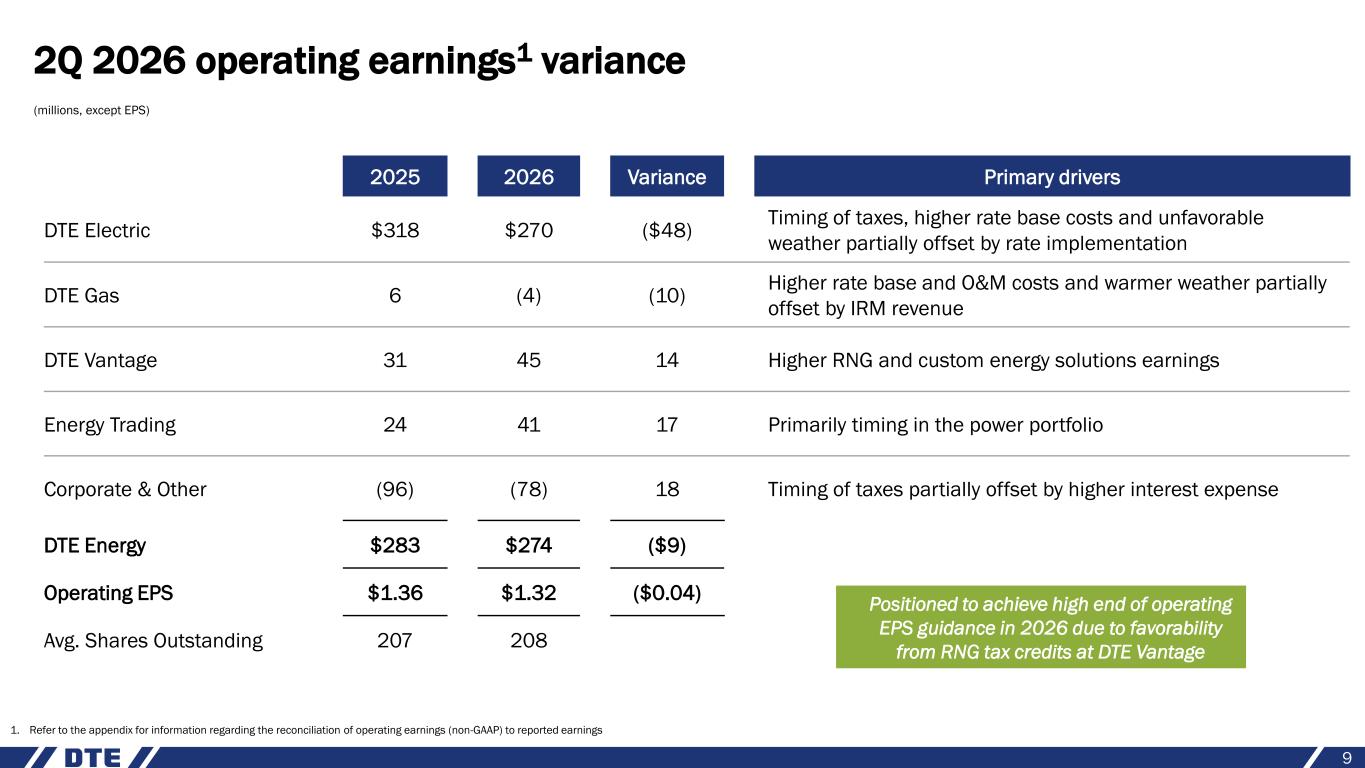
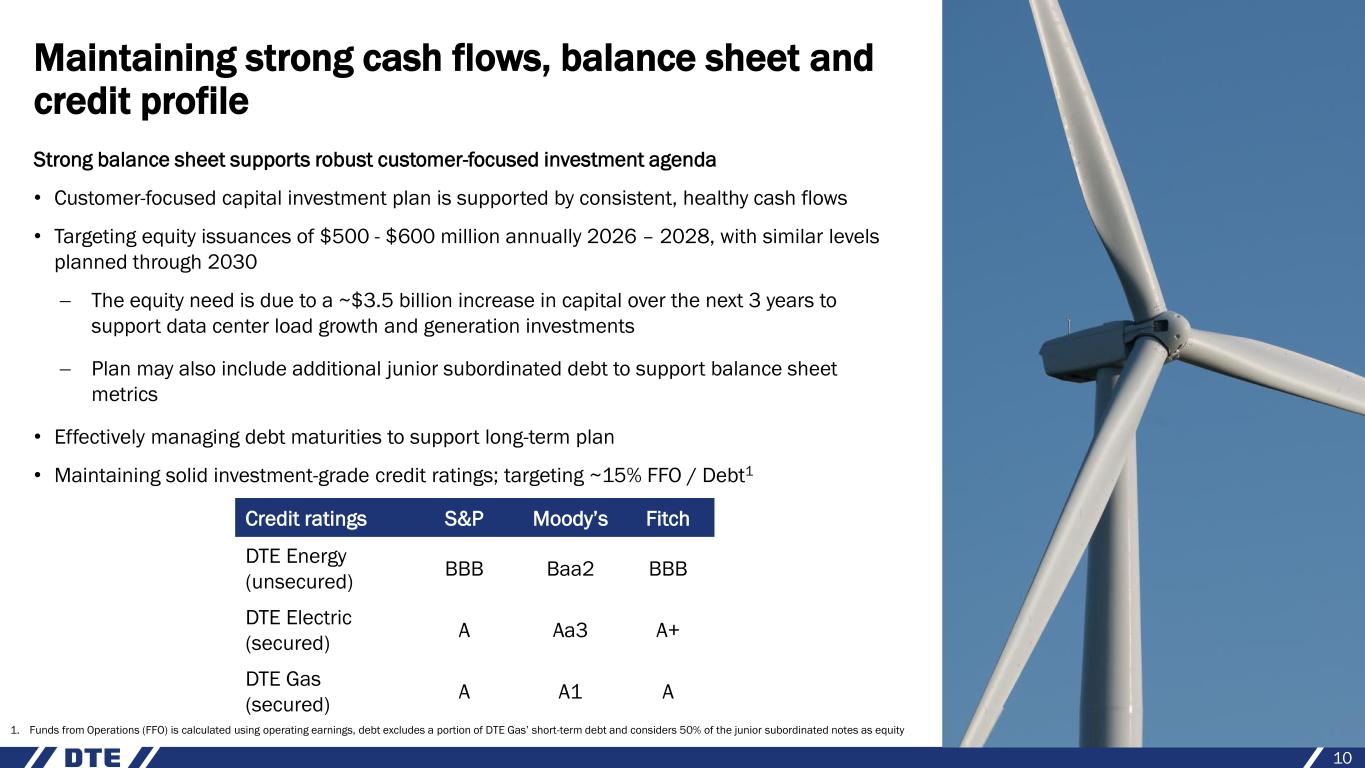
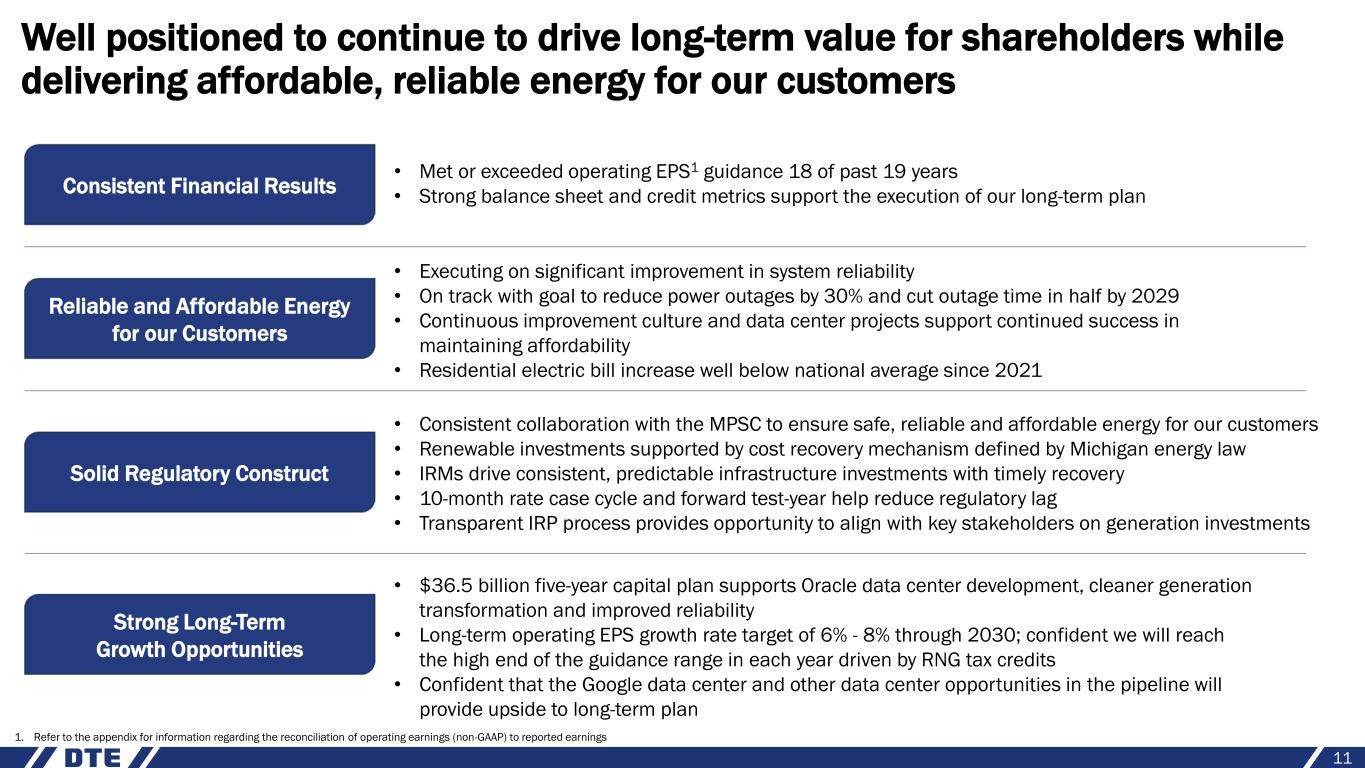
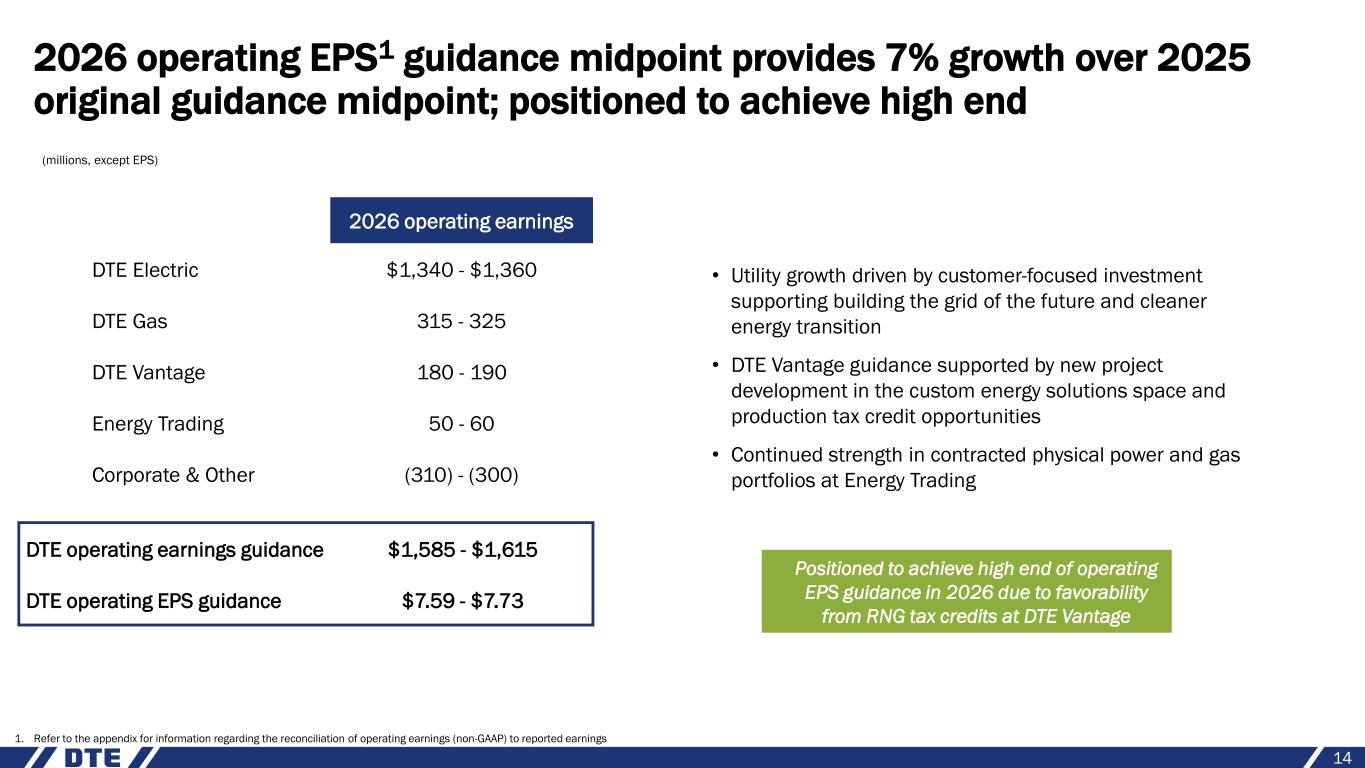
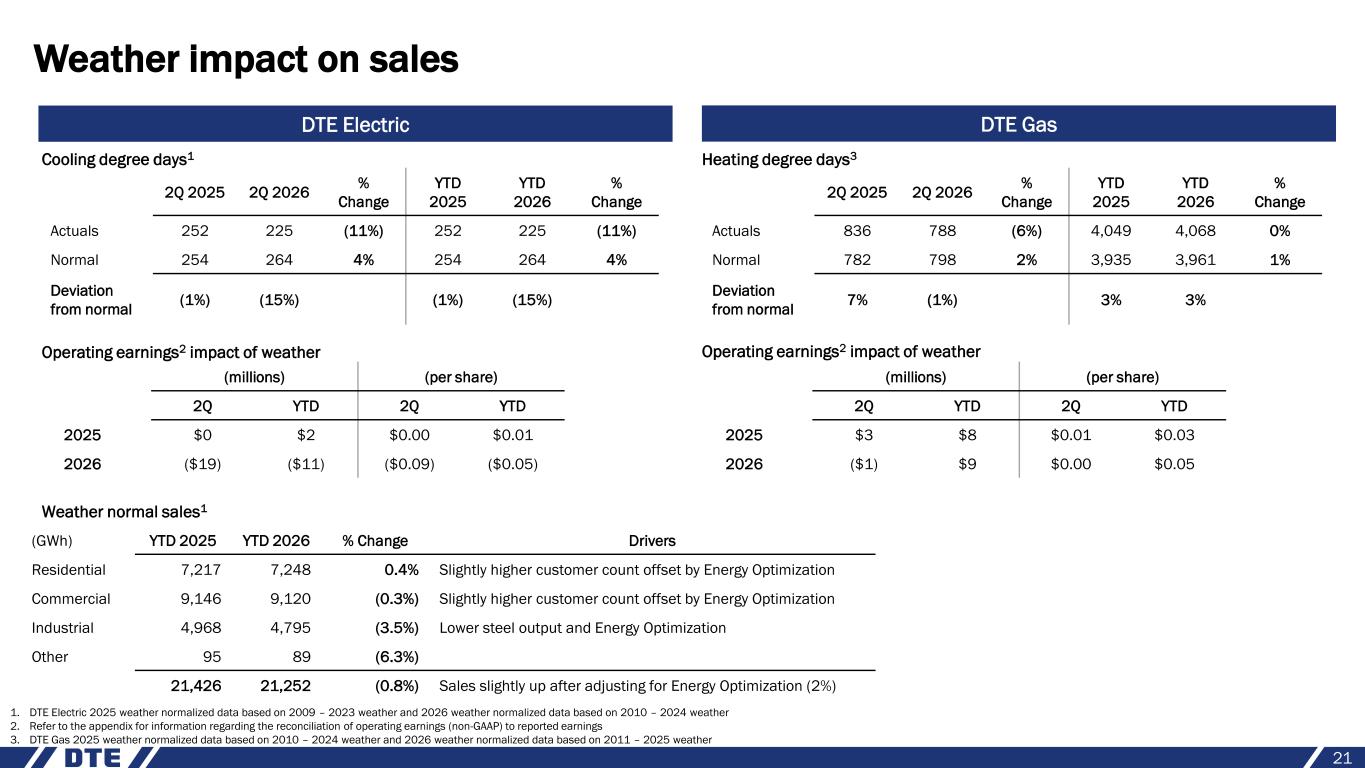
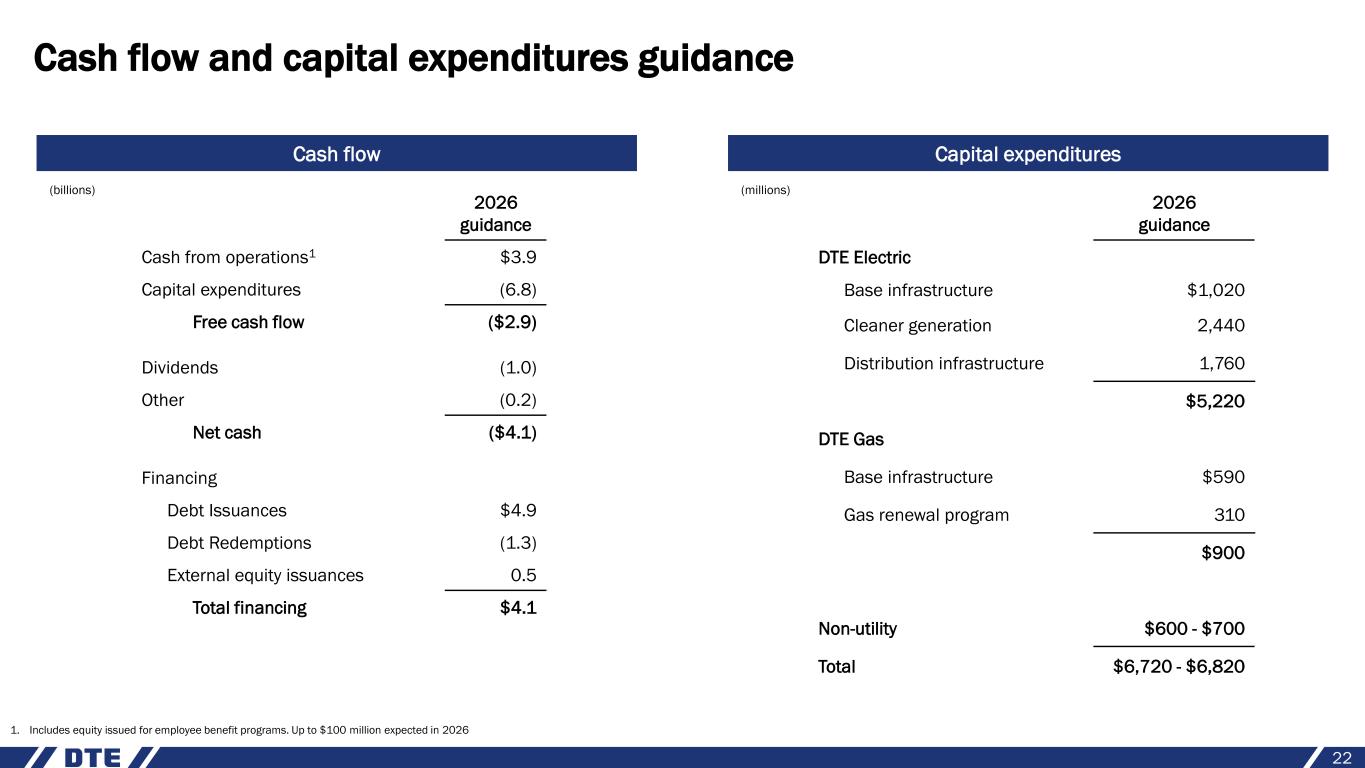
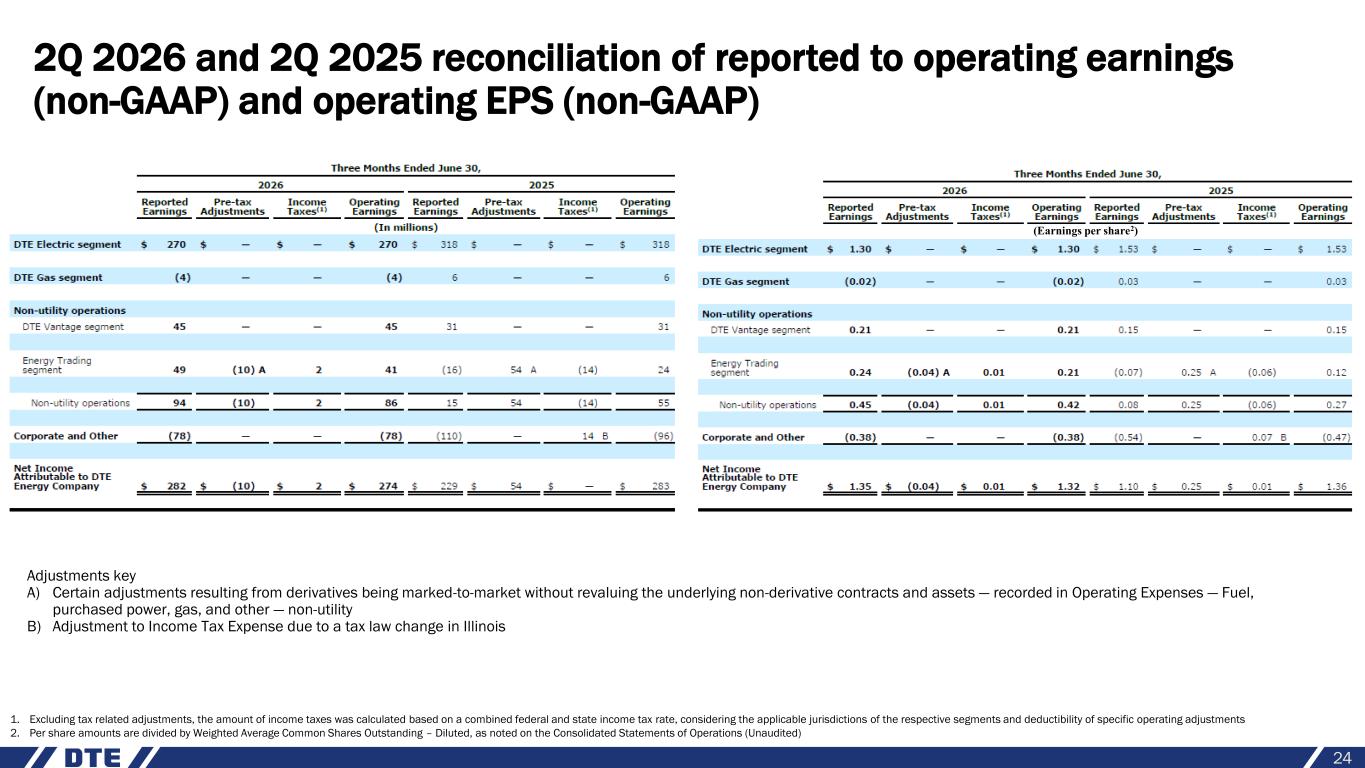
Thanks, Joy. Good morning, everyone. Let me start on slide 9 to review our second quarter financial results. Operating earnings for the quarter were $274 million. This translates into $1.32 per share. You'll find a detailed breakdown of EPS by segment, including our reconciliation to GAAP reported earnings in the appendix. I'll start the review at the top of the page with our utilities. DT electric earnings were $270 million for the quarter. Earnings were $48 million lower than the second quarter of 2025. The main drivers of the variance were timing of taxes, higher rate-based costs, and colder weather, partially offset by rate implementation. On the timing of taxes, we experienced a large positive timing variance of 62 million dollars in the second quarter of last year due to the timing of when a renewables project was placed in service. This positive timing variance in Q2 2025 was an offset to a negative tax timing variance in the first quarter of 2025. Starting in 2026, the impact of investment tax credits on renewal projects at DT Electric will be recognized evenly during the year, reducing quarterly volatility and making the underlying earnings trends easier to see going forward. Moving on to DT Gas, operating earnings were $10 million lower than the second quarter of 2025. The earnings variance was driven by higher rate base and O&M costs and warmer weather, partially offset by IRM revenue. Let's move to DT Vantage on the third row. Operating earnings were $45 million for the second quarter of 2026. This is a $14 million increase from 2025, driven by higher earnings in both the custom energy solutions and RNG platforms. On the next row, you can see energy trading earnings were $41 million in the second quarter of 2026. This is $17 million higher than the second quarter of 2025, primarily driven by timing in the power portfolio, including a partial reversal of the timing experience in the first quarter of this year. We remain highly confident in achieving the high end of the full-year guidance range of energy trading. Finally, corporate and other was favorable $18 million relative to the second quarter of 2025, primarily due to the timing of taxes, which will reverse by end of year, partially offset by higher interest expense. Overall, DT earned $1.32 per share in the second quarter of 2026, which positions us well to achieve the high end of our guidance range in 2026. Let me move to slide 10 to discuss our balance sheet and equity issuance plan. we continue to focus on maintaining solid balance sheet metrics to support the significant increase to our capital investment plan that we need to execute for our customers we are still targeting annual equity issuances of 500 to 600 million dollars in 2026 through 2028 with similar levels expected through 2030. we will continue to maximize the use of internal mechanisms planning to issue up to $100 million internally. For our remaining equity issuances, we are utilizing our equity ATM program to efficiently execute our funding plan. After pricing about $350 million of equity through forward sale agreements in the first quarter, we price an additional $150 million in the second quarter, effectively fulfilling our equity needs for the year. The new shares won't be issued until we settle the forward sales, which is planned for the fourth quarter. Our five-year plan fully incorporates the equity needs and continues to deliver 6-8% operating EPS growth and positions us to be at the high end of our guidance range each year through 2030. Importantly, we remain focused on maintaining our strong investment-grade credit rating and solid balance sheet metrics as we target an FFO-to-debt ratio of approximately 15%. Let me wrap up on slide 11, then we'll open the line for questions. DTE continues to deliver strong, consistent results for all stakeholders. Our 2026 guidance range reflects 6% to 8% operating EPS growth off the 2025 guidance midpoint, but we are on track to reach the high end of our operating EPS guidance this year. Our five-year plan supports high-quality 6% to 8% long-term operating EPS growth, driven by customer-focused utility investment, with utility earnings comprising 93% of total earnings by 2030. We are positioned to reach the high end of our guidance range each year, supported by R&G tax credits and the flexibility they provide. The Google contract, along with additional data center opportunities, represent further upside to the plan, which will be incorporated following MPSC approval expected in September of this year. Overall, we are well positioned to execute on our plan, enhancing reliability and building a stronger distribution system to reduce outage frequency and duration for our customers. We are doing so with a disciplined focus on affordability, supported by multiple levers to manage customer rates, including the significant benefits driven by data center growth. We remain on track to deliver premium total shareholder returns supported by a strong balance sheet and disciplined execution of our capital investment plan with that i thank you for joining us today and we can open the line for questions at this time i would like to remind everyone in order to ask a question please press star one on your telephone keypad your first question comes from the line of shar parisa with wells Fargo, you may go ahead.
Morning, morning. Joy, I know obviously you guys reaffirmed targeting an additional agreement by 26, by the end, with two gigs in sort of advanced discussions.
I guess first, is that two customers and hyperscalers, and where does that next deal stand today in terms of what's really left to accomplish is it commercial agreements or just zoning and permitting etc thanks yeah thanks for the question char and yeah we still continue to manage a pretty healthy pipeline we've got the two gigawatts there are several customers in that mix we have a combination of hyperscalers and co-locators in the mix and as i've mentioned before the way you advance in the pipeline is you have solid land positions you either have to have zoning or path to zoning and we have a combination of hyperscalers and colocators that have a path to zoning or a half zoning in place where we are right now is the commercial discussions are continuing we are completing additional modeling with those customers to understand their load ramp and where they are also working on site plan approval and in some instances working on zoning. So I'd say that things are moving in the right direction and we feel confident in our ability to secure another agreement by the end of the year.
Got it. And that obviously you've been pretty open about that gets you above the 8%. I guess how should we be thinking about the timing of a guidance update and how you're thinking about messaging around that guide, is sort of that plus the way to go? So eight plus or a step change in the range with the understanding this is obviously an election year. It's a bit of a sensitive year.
Yes. So we have always said that, you know, three gigawatts gets us eight plus, let's call it. So that will get us above eight. We now have the one gigawatt in place with Google, and that gets us solidly to eight. The way we think about giving guidance is really not getting ahead of the regulatory process. We let that play out, and then we would update our plans accordingly in either Q3 or at EEI. And then should we secure another contract before the end of the year, we would likely refresh our plan with a fourth quarter call at that point. So that's kind of how we're thinking about it. Once we have, you know, a clear line of sight and we understand we're going to get the approval of the contract, that's when we would update our guidance.
I guess, Joy, the question is, are you more open-ended in how you want to guide? So, you know, a plus after the, like, let's just say 8% and leave it open for interpretation on the top end, or would you see a step change in the range?
No, we would leave it at the plus, Char, as we've discussed previously. We're not changing our position on that.
Perfect. Appreciate it, guys. Thank you so much. Have a good morning.
Operator
Your next question comes from the line of Richard Sunderland with Truett Security. You may go ahead.
Hey, good morning. Thank you for the time today.
Hey, Richard. Good morning.
Thank you. And turning to the regulatory efforts, I realize still a few weeks ago before staff and intervener testimony in the electric rate case, but you've given all the attention on data centers and the potential benefits from there you're proposing in the electric stayout. How are you thinking about positions there? Any expectations into what may come out in testimony? And I guess how are you thinking about sort of the balance of the case thereafter?
Yeah, testimony in the electric rate case, we'll start to see it next month. You know, as we had proposed and pre-viewed our case with interveners and staff, the stay-out mechanism was viewed very positively. Obviously, they had to review the case in its totality, but certainly any efforts on our part to keep rates flat is something that is of interest and we look forward to hearing how that's being received in formal testimony. The data centers themselves, we've said all along that data center load broke done right puts downward pressure on rates and this is just another proof point. And so we see that that is, again, something that was viewed very favorably pre-filing and we anticipate that the staff and interveners will examine the uncertainties related to oracle and then the mechanism that we've we've established in the case as a way for us to deal with those uncertainties and flow back the benefits to customers over time so looking forward to seeing that testimony it's due on august i believe it's August 3rd or 4th, and that will give us a clear indication as to, you know, what we need to rebut or any additional information we need to provide.
Understood. That's very helpful. And then, sticking with the regulatory front, the IRP filing coming later this quarter, how might we see the load scenarios play out in there relative to the two gigawatts in advanced discussions and then three to four gigawatts of additional pipeline opportunities that you've you know, speaking to before and had outlined on slide six. I guess I'm curious on that. And then also versus the third data center customer talked about earlier, do you see the, you know, high-end scenario incorporating all of that or any other color you can offer before that?
Sure, yes, we do anticipate, and we're going to file our IRP in Q3 of this year. And in terms of how we're managing the data centers in the IRP. The base case will be the two contracts that we have already signed, and then the high end will take into account our full pipeline, and then we'll have something in between. And so that's how we're looking at, you know, shaping the data center load in the IRP.
Great. Thanks for the time. I'll leave it there.
Operator
Your next question comes from the line of Jeremy Tone with jp morgan you may go ahead hi good morning this is diana niles on the call for jeremy thank you for taking our questions today um so as it relates sorry good morning as it relates to um to the data center pipeline and future opportunities could you speak a bit to um sort of conversations on the ground and conversations with local and state stakeholders as it pertains to economic development?
Yes. Well, obviously, the data centers that we have signed up are sizable, huge economic development opportunities for the state. In fact, the Oracle deal is the largest in the state's history, and Google is not far behind. We see this as a great opportunity for job growth. These are hundreds of construction jobs. In addition, the tax base benefits that that local communities can stand to realize with these types of customers in their jurisdictions. Twenty plus million dollars worth of additional tax benefits for the city of Saline and essentially Van Buren is doubling its tax base with the Google facility in its jurisdiction. The other indicators that we're getting is just the solid community benefits that are coming by way of these agreements. And so both Van Buren and Saline have signed on to their community benefits packages. And so that all flows to the community to address things that are important to them. We also see that as hyperscalers and co-locators land in a particular community, they continue to expand. So you also see a build out of adjacent industries. Think of HVAC companies having more demand, electricians, other kind of supporting industries that will grow as a result of these data centers being in our backyard. So this is a great economic story for Michigan with the potential to be even bigger once we sign an additional agreement.
Operator
Got it, thank you. And then looking to the Vantage data center opportunity. Could you provide the latest on progress and expectations there and any timeline considerations we should keep in mind?
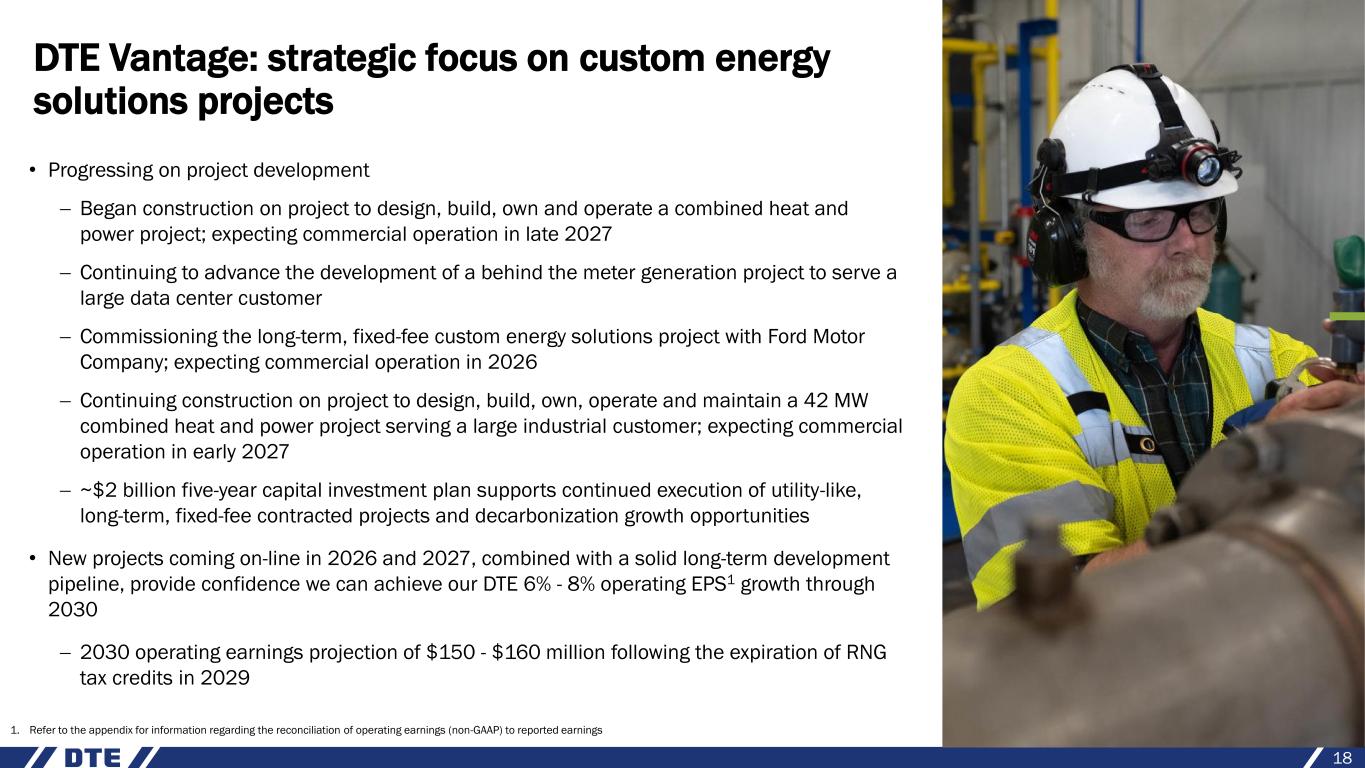
Sure. You know, the development agreement that we have in place with a large data center developer in a state outside of Michigan continues to progress. Again, this is a behind the meter design and it's hundreds of megawatts. So don't think of it as a gigawatt facility. This is hundreds of megawatts. We are continuing to advance those discussions. As I mentioned previously, the counterparty has run into some permitting challenges on the ground that they're continuing to work. They also have other locations that we're in conversations with them the equipment is already on order so suffice it to say it's going in one location or the other but we feel really good about our relationship and the progress that we've made commercially and we look forward to executing this progress uh project sorry once the permitting issue is resolved or that we have a firm and solid pathway way to another location. But, surprise to say, it's still moving in a positive direction.
Operator
Thank you very much. Your next question comes from the line of Julian DeMoulin-Smith with Jeffries. You may go ahead.
Hey, good morning, Joy and team. Nicely done again. What a great update here. Just to follow up on the Vantage focus here real quickly, if I can, just with respect to Oracle, I mean, obviously, there's been more focused on their credit here of late and some of the peer states. Can you talk about just, you know, the postings, you know, waterfall, if you will, just credit protections, just both in terms of any potential updates therein and just actually just what are the postings that you think about any changes here, particularly of late? Just obviously you're probably cognizant of some of the other changes in the other states.
Yeah, thanks, Julian. This is Dave. You know, as you said, one of the rating agencies, which is S&P, downgraded Oracle's credit still within the investment grade level. And I'll start by saying we don't expect it to have any impact on the completion or timing of the Oracle project, which is already in construction. But as you're referring, you know, we did have as precaution, our contract has protections that will have additional collateral requirements at various downgrade triggers that continues to provide the ultimate protections for our customers and for us. We haven't disclosed the specifics of the agreement at their request, but, you know, we remain confident that the protections are there regardless of how this plays out.
Right. Got it. So, factually, you did get more postings. The quantum is not necessarily disclosed here. And more to the point, you would prospectively if there's any further changes.
Right. Perspectively, we would for further changes. Yeah, we have we have good protections in there that give us the full protection from stranded asset risk for us and for our customers.
Awesome. And just to clarify earlier, I know there was some back and forth. I mean, you're very confident about the two gigawatts in advance negotiations here. Is that a further, I mean, speaking of counterparties, a new hyperscaler or is that an expansion of an existing arrangement here? And just to nitpick a little bit here about what you're looking at within those two.
There's combinations, Joanne. Listen, suffice it to say, we are continuing discussions with Oracle and Google, and that's always been our plan. The hyperscalers and co-locators that are in that two gigawatts are continuing to make advancements on the ground. So think of it as two new customers. But again, should Google and Oracle come to us with an expansion that they want to pursue, we would entertain that as well.
Right. So different permutations, but principally two new customers contemplated in that two gigawatts upside, just to make the point.
I wouldn't say it's two. I'd say it's multiple customers in that two gigawatts.
Even better. Even better. All right. Awesome. I appreciate that. And lastly, any comments about legislative reforms or ballot efforts here, if you care?
Yeah, you know, given where we are with divided government and an election underway, it's not likely that there will be any legislative changes in this calendar year. We are using the time to ensure that we're educating all the candidates on our performance, where we stand in terms of bill growth, the data centers and what that does to affordability in a positive way, and our work to improve reliability and the progress we've made and the work that is left to do.
Awesome. Thank you so much. I appreciate it.
Operator
Your next question comes from the line of Michael Lonegan with Barclays.
You may go ahead. hi thanks for taking my question um so beyond the two gigawatts of data centers in late stage negotiation you spoke again to the three to four in early gigawatts in earlier stage negotiations just wondering if you could share progress on those and you know how they've advanced and do they have potential to add incremental investment within the five-year plan um the three to four behind it are typically a combination of co-locator some large some small and uh the the gating item for those entities is they have to have a customer and so many of them are working to secure a customer typically it would be a hyperscaler
they're also working to secure zoning and essentially site plans and so as they advance They secure the customer, and they secure zoning and site plans. They advance in our pipeline. And we are in the process of really just understanding their initial shape of the load based on, you know, their projections for the type of facility that they want to build and its location. And so that's where we sit with many of those entities.
Thank you. That's helpful. And then, you know, just wondering if you could talk about the opportunity to further extend the electric rate pause beyond 28, like in terms of what you would need to see, you know, maybe like an IRM increase, an expansion, Google ramp up, another data center, you know, one of these or a combination. Anything you could share there would be helpful.
Certainly. We said that an expansion of the IRM, if you get to close to a billion dollars, that gives you another six months. and then any incremental load on top of the oracle load can add further distance between the next filing and so this will all play out once the contract with google is approved and this of course we understand uh the staff and also the commission's position along with intervening position on the irm growth we proposed great thank you very much your next question comes from the line of Andrew Wiesel with Scotiabank.
Operator
You may go ahead.
Speaker 3
Hey, thanks. Good morning, everybody. Good morning. Hi, Andrew. Just a couple follow-ups, actually. First, following up on the question about Oracle and collateral postings, appreciate the detail on the contract. I guess the question is, looking forward, based on how quickly things went south for that counterparty, are you making any changes to your counterparty approach around protections going forward, or do you feel confident that you've been fully protected?
The way we've structured these contracts, and even in the large load tariff that is going through approval, we feel like we have the right protections that we need to protect both our customers and us of anything that could happen on the downside. So, it has provisions in there, like a contracted load ramp with minimum monthly charges, 80% of the minimum billing demand, And that would be for a 10-year period or longer in some of these instances that, you know, make sure that we pay back all of the invested capital, make sure there's no stranded asset risk. So we're comfortable with the contracts we have and with the way we're laying out the future provisions, too.
Speaker 3
Okay, great. Then this might just be a nuanced thing, but the pipeline of additional data center opportunities, you've talked a lot about the 2 gigawatts and then the additional 3 to 4 gigawatts, but it looked like you changed the wording in the slides. The total now is 5 to 6 rather than 5. Maybe I'm just looking too far into it, but was that meant to be a message that the opportunity in aggregate is getting bigger, or is that just a change in the math?
It's just a change. It's the same pipeline, essentially. You have people moving up and down in the pipeline, but there's been no change.
Speaker 3
Okay, great. Thank you for clarifying. Then lastly, a short-term earnings number. You continue to point to the high end of the range for 2026 EPS, but you've had some challenges related to mild first-half weather, then the July storm. Can you maybe explain what are some of the offsets to those headwinds, or is it just a matter of conservatism when you first set the budget, as you typically do?
Andrew, we do remain highly confident that we're going to get to the high end. the full year guidance this year we do have incremental rate relief that came in at electric in march and then we have an order at gas in september um in addition there is some timing that we'll see reverse over the remainder of the year at the utilities and then we see our non-utilities also continue to perform well and we we see that continuing through the year too so it gives us confidence in the full year guidance okay great that's very helpful thank you Thanks, Andrew.
Operator
Your next question comes from the line of Michael Sullivan with Wolf Research. You may go ahead.
Hey, good morning. Good morning. Hey, I wanted to just ask on the Oracle load ramp just how you're feeling on timing there. And I think that's kind of the main driver to the stay out, getting that kind of mostly ramped next year.
Yeah, thank you for the question. The construction is proceeding as planned. We are getting all positive indicators that Oracle and related companies are on track for the fast ramp at this point. We are starting to take deliveries of our equipment that will be used to serve them. So everything is moving in the right direction. We are getting aerial shots. We are seeing, you know, visuals.
And then obviously our team is active on the ground with the construction team. so all systems are go at this point okay okay that's great to hear um and then i i know like every every deal can obviously be different but just in terms of how to think about the next one is um is the google deal like a good template and if you know you keep size apples to apples just in terms of like affordability benefits supply mix or is it really those things can can vary a lot depending on the specific deal that struck.
Yeah, they can vary. It just depends on the ramp itself. Suffice it to say, what we see is largely an opportunity to do more renewables, more battery storage in the near term. And then toward the back end of the plan, we would leverage the results of the IRP, obviously, to dictate what the ultimate resource would be.
But again, a dispatchable resource that would come in toward the tail end okay very helpful thank you thank you very much your next question comes from the line of Anthony Crowdale with Mizzouho you may go ahead hey good morning Dave good morning joy just one follow-up Mike earlier talked about we as large load reaches advanced stages and you're identified you know zoning site plans permitting you know finding a customer i just want to give us some insight into what what's the bottleneck yeah what's the more challenging part for these larger customers um before they move to advanced
discussions yeah it's the zoning first and foremost they've got to get the site zoned and then they can move towards site plan so that's typically one of the the gating items that the hyperscalers and co-locators have to deal with.
So it's not finding a customer, it's zoning?
Yeah, you've got to get zoning. I mean, for co-locators, I mean, they can find a customer, right? If they can, it's speed to power. So if they have a facility, they have a site, they have it zoned, and it's pretty much ready to go, they'll get the customer they need. It's getting that zoning. That really becomes the challenge that they've got to overcome.
Great. That's all I had. Thanks so much for the clarity. Thanks, Anthony.
Operator
Your final question comes from the line of Travis Miller with Morningstar. You may go ahead.
Thank you. Good morning. Good morning, Travis. On the IRP, aside from the data centers, renewable energy plan, any other variables that we should to watch for relative to what you've been talking about for the last several quarters?
No, I think those are the big things. The data center, the IRP will be filed, the data center load will get incorporated in there. The RPS will be a part of it too. We've got to do some updates and mod updates to the RPS with that filing. But that's pretty much it, Travis.
Okay, great. Right. And then one other one on Vantage. If there are delays in that project, is that going to have an impact on either 26 or 27 earnings? I think you've noted that that could be upside potentially. I'm just wondering how that relative to earnings, that project.
No, it has no impact on 26. And again, the equipment is already ordered. We are expecting the deliveries to happen so it's going somewhere it's either at the original location or at an alternative okay great perfect thanks so much thank you that concludes our question and answer session i would now like to turn the call back over to joy harris for closing remarks all right well thank you everyone thank you all for joining us today um i'll just close by saying we continue to execute in 2026 and we're well positioned to achieve our goals for the year i'm very excited about our long-term plan and the opportunities ahead and i look forward to seeing many of you on the road during the rest of the year have a great morning stay safe and stay healthy we'll talk soon ladies and gentlemen that concludes today's call thank you all for joining.
Operator
You may now disconnect.