Operator
Good day, and thank you for standing by. Welcome to the DICOM Industries, Inc. First Quarter 2027 Results Conference Call. At this time, all participants are in a listen-only mode. After the speaker's presentation, there will be a question and answer session. To ask a question during the session, you will need to press star 11 on your telephone. You will then hear an automated message advising your hand is raised. To withdraw your question, please press star 11 again. Please be advised that today's conference is being recorded. I would now like to hand the conference over to Ms. Callie Tommaso, DICOM's Vice President of Investor Relations and Corporate Communications. Please go ahead.
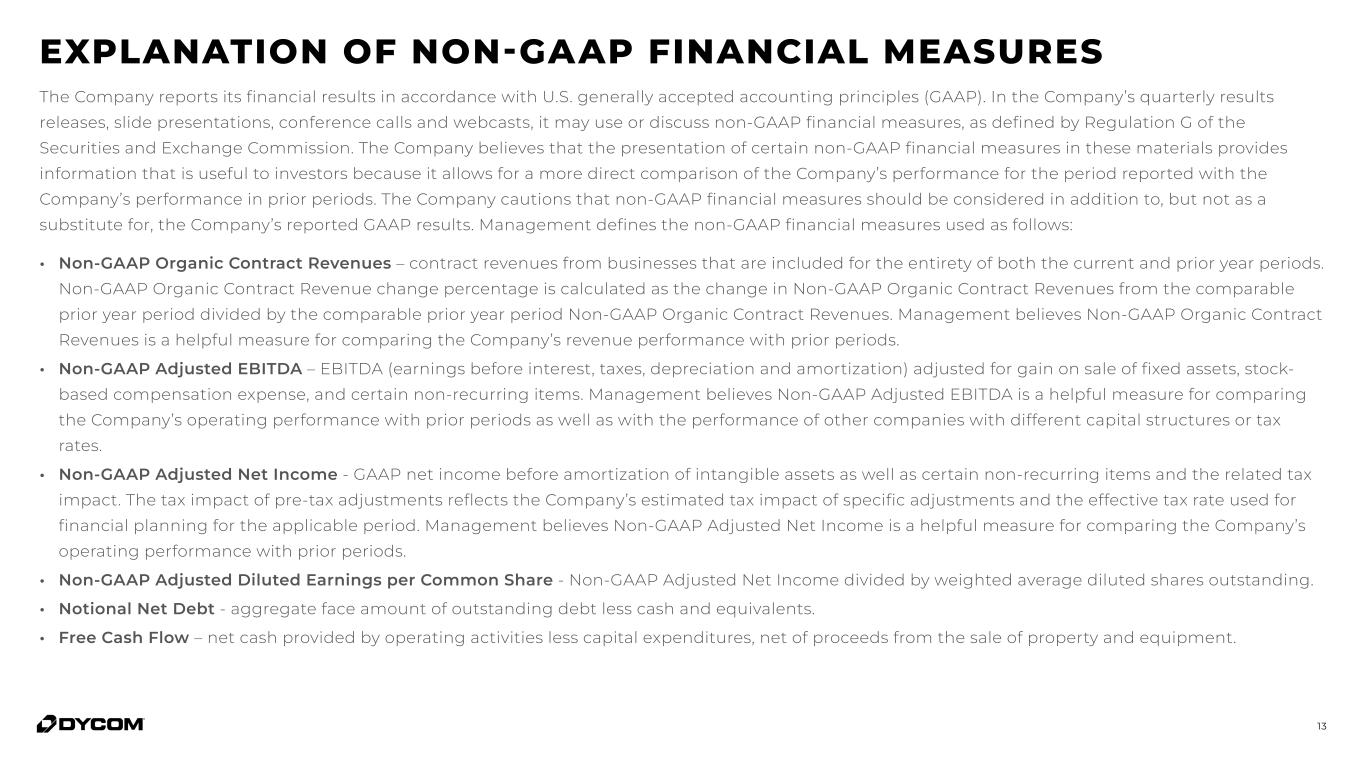
Thank you, Operator, and good morning, everyone. Welcome to DICOM's Fiscal 2027 First Quarter Results Conference Call. Joining me today are Dan Penovich, our President and Chief Executive Officer, and Drew DeFerrari, our Chief Financial Officer. Earlier this morning, we released our fiscal 2027 first quarter results along with certain outlook information. We also announced a definitive agreement to acquire National Technology Integrators, a low-voltage engineering and construction firm based in Maryland. The press release and accompanying materials are available in the Investor Relations section of our website, including the Outlook Expectations Summary Document, which provides additional outlook metrics beyond what will be discussed on today's call these materials which we will discuss during today's call include forward-looking statements made pursuant to the safe harbor provisions of the private securities litigation reform act of 1995 our discussion and these statements reflect our expectations assumptions and beliefs regarding future events and are subject to risks and uncertainties that could cause actual results to differ materially A detailed discussion of these risks and uncertainties is included in our filings with the SEC. Forward-looking statements are made as of today's date and we undertake no obligation to update them. Additionally, we will reference certain non-GAAP financial measures during today's call. Explanations of these measures and reconciliations to the most directly comparable GAAP measures can be found in our press release and accompanying materials. With that, I will turn the call over to Dan Pajovic.
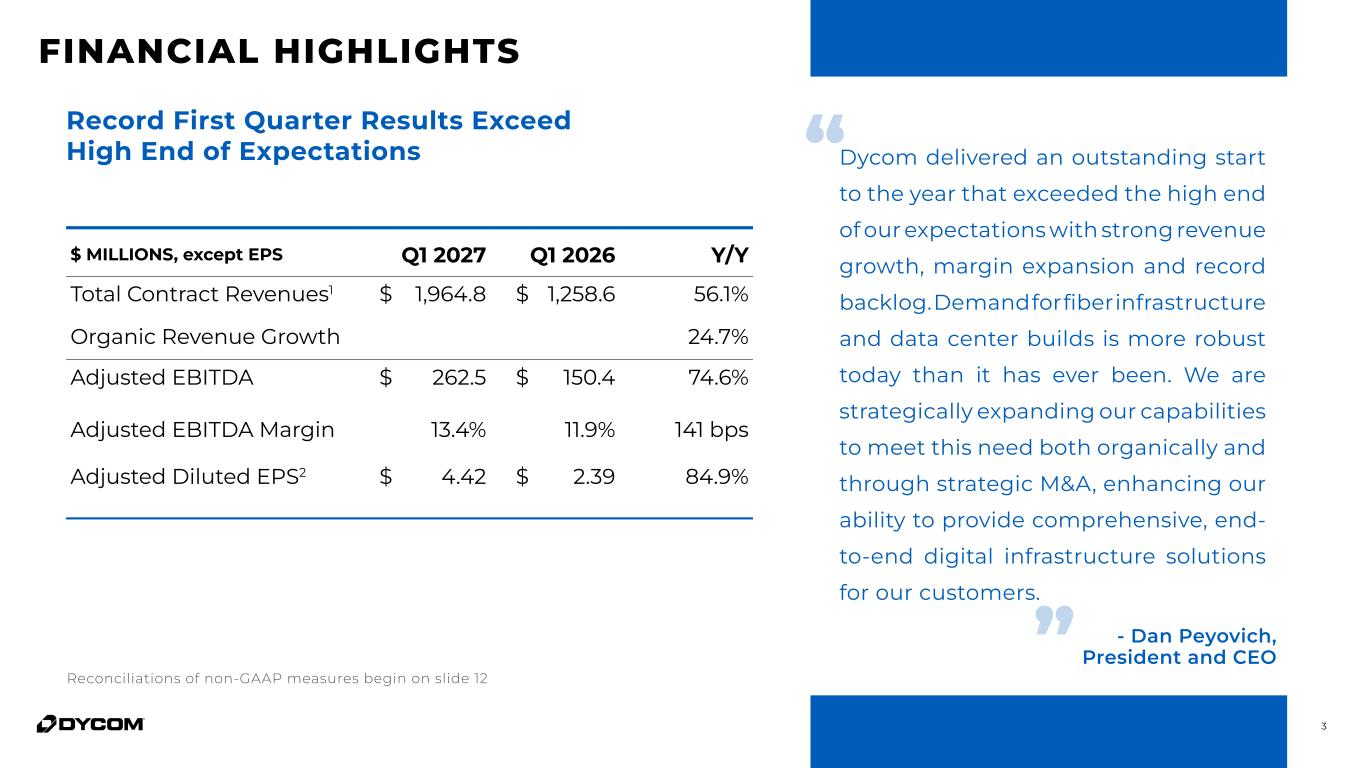
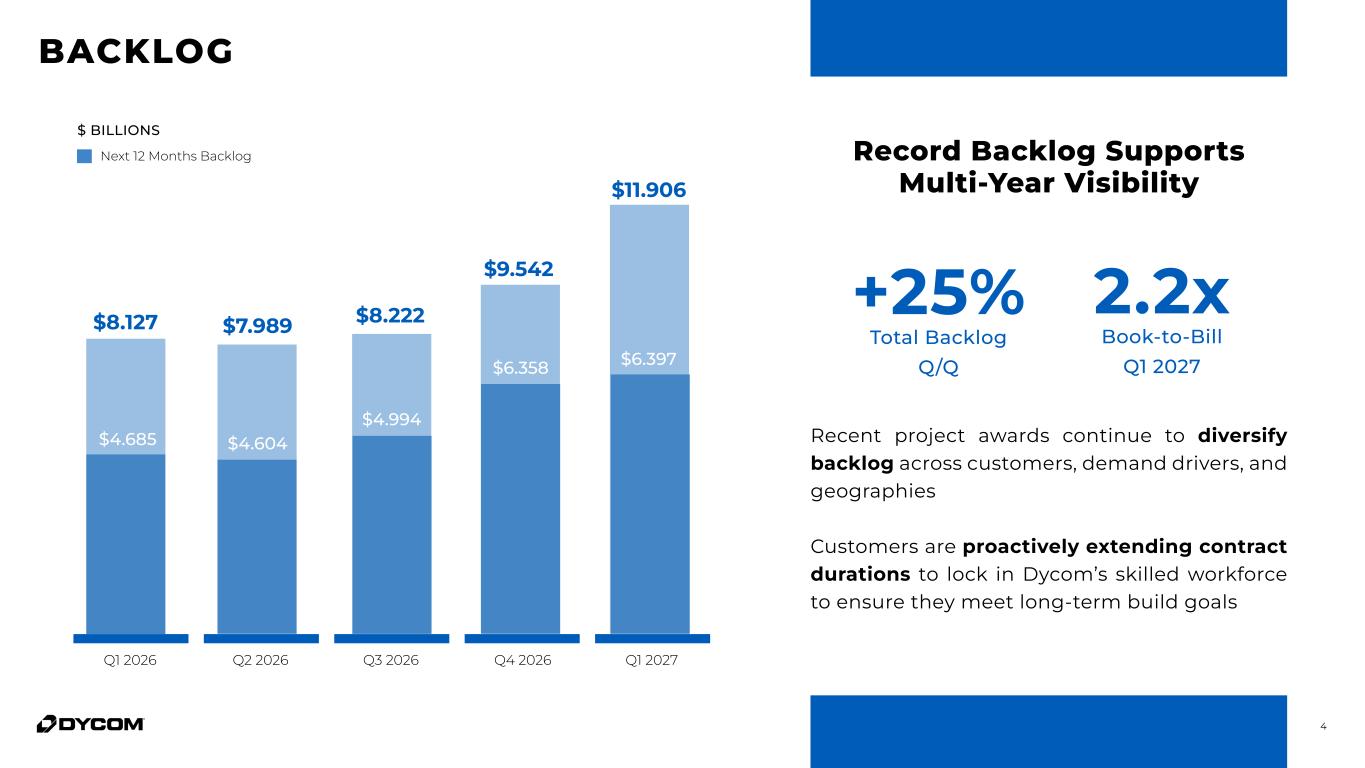
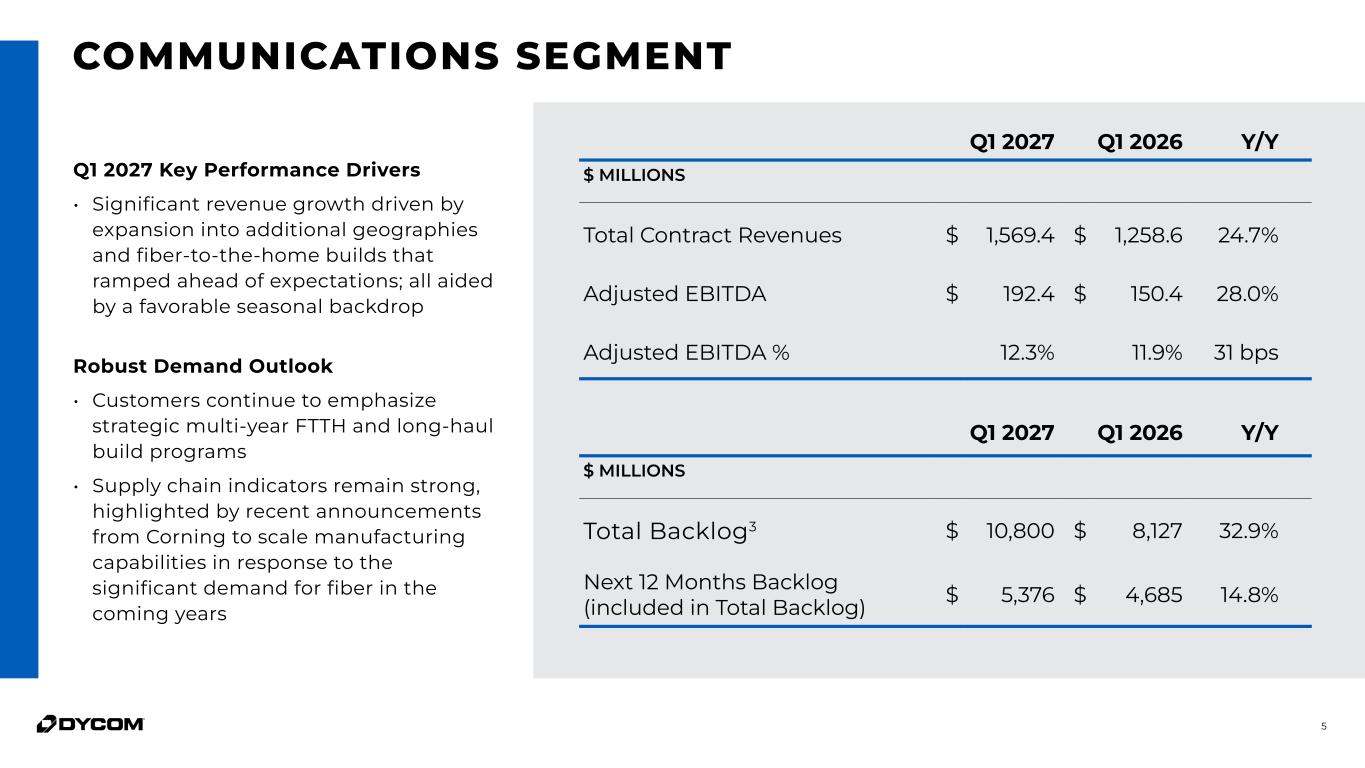
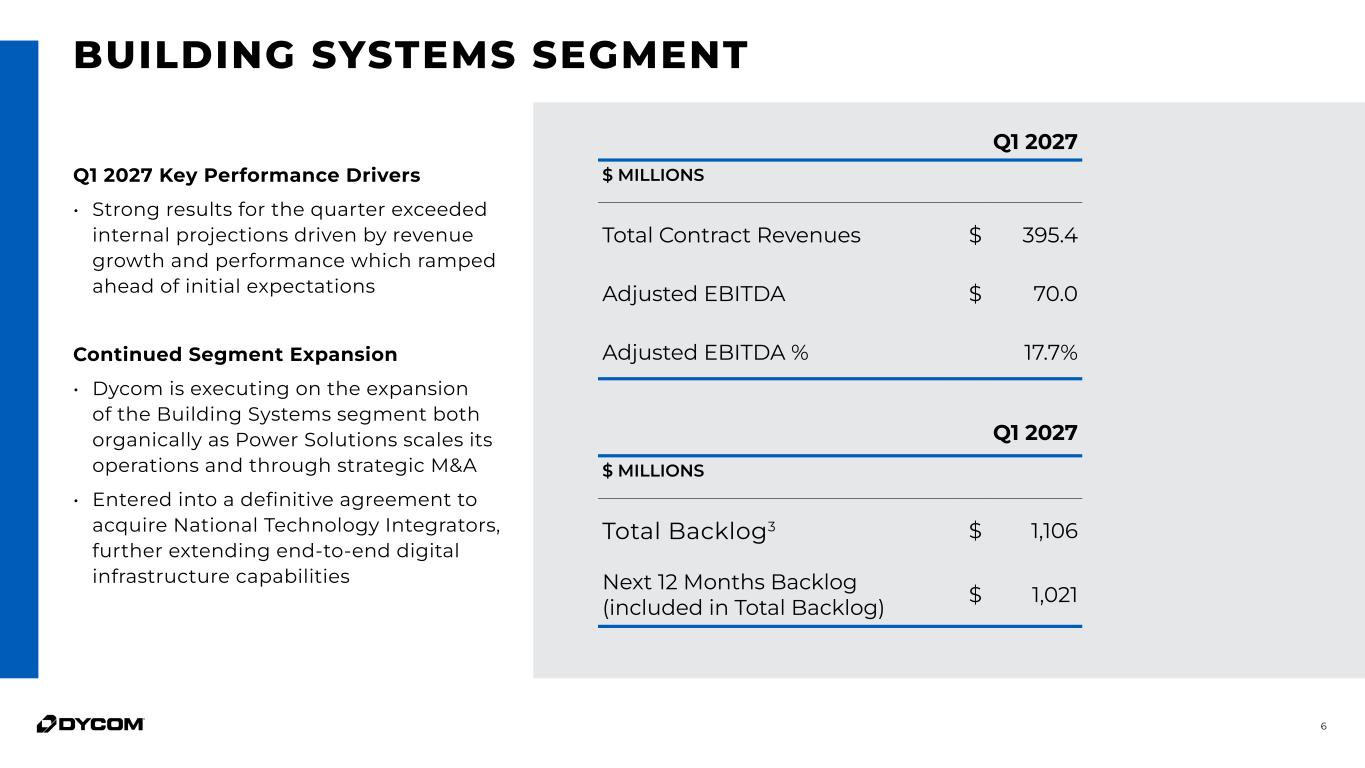
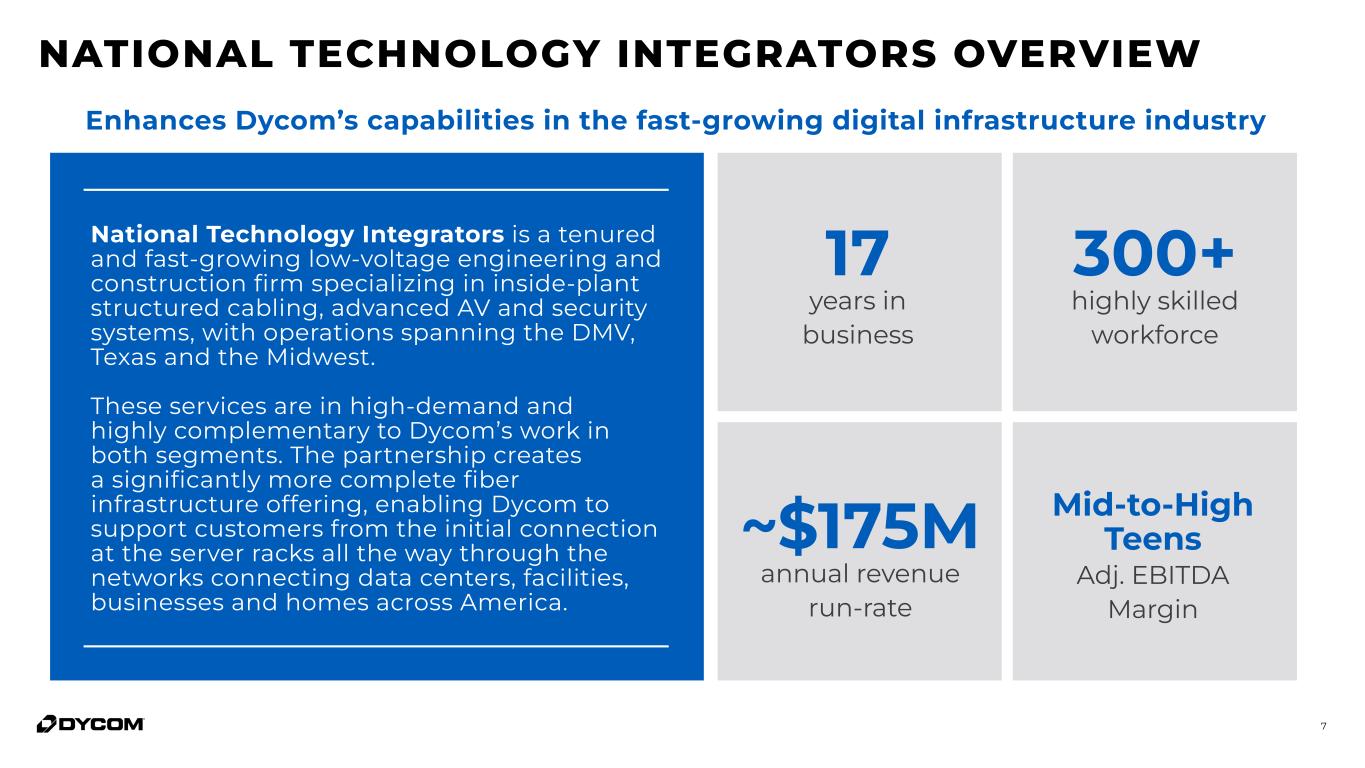
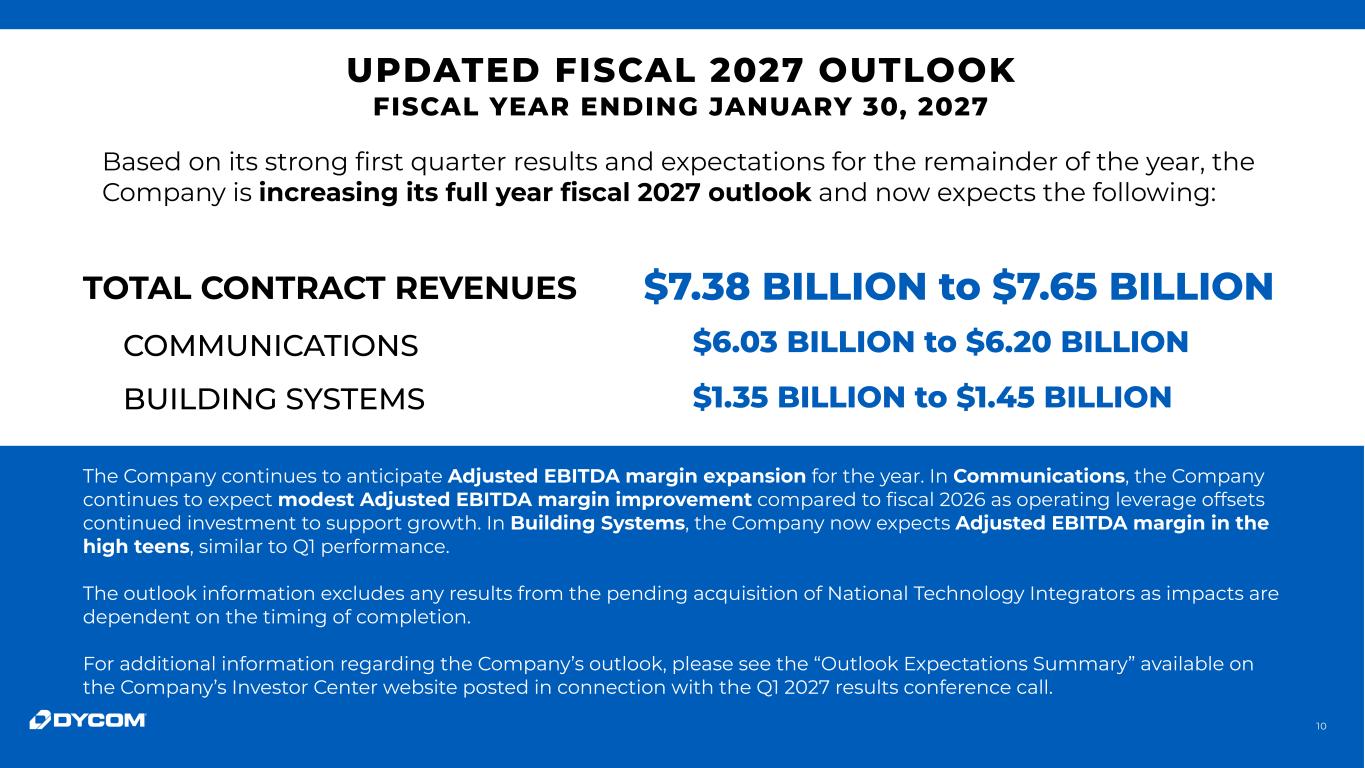
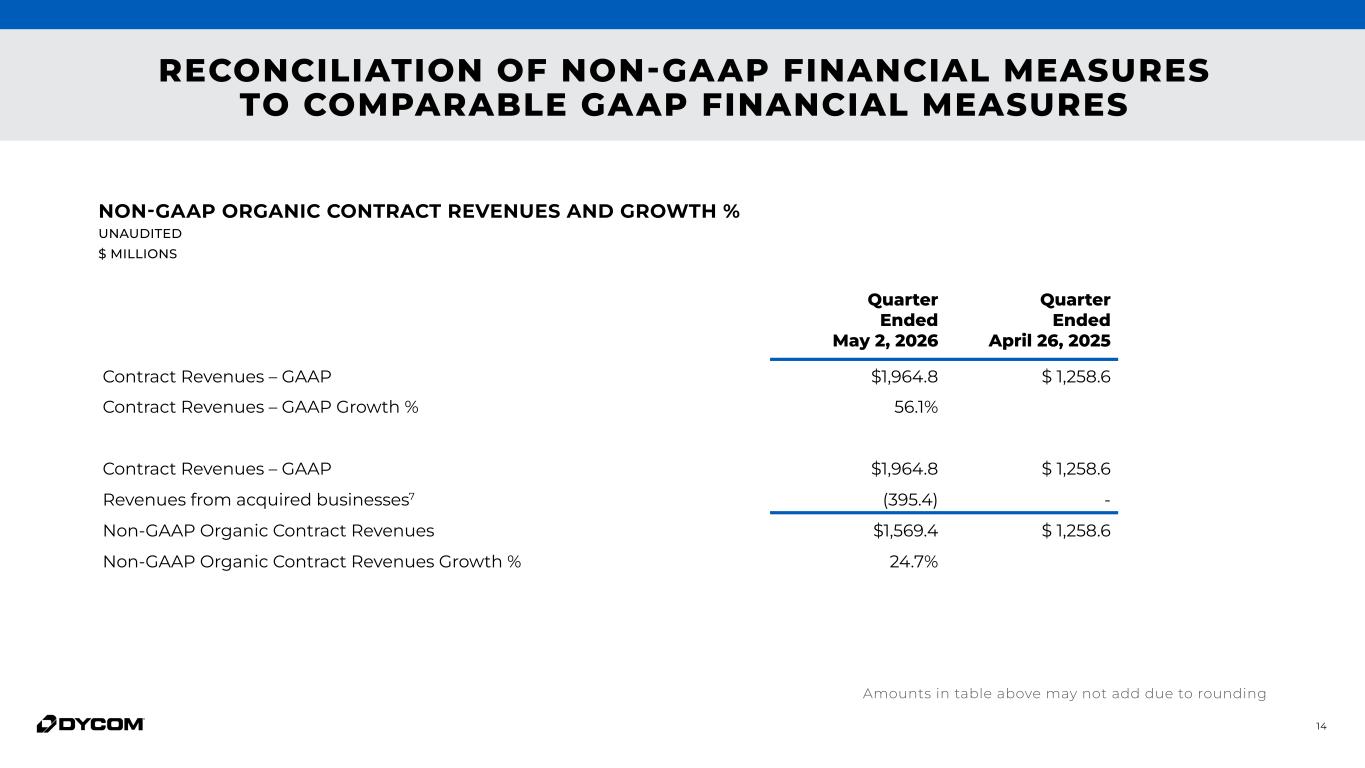
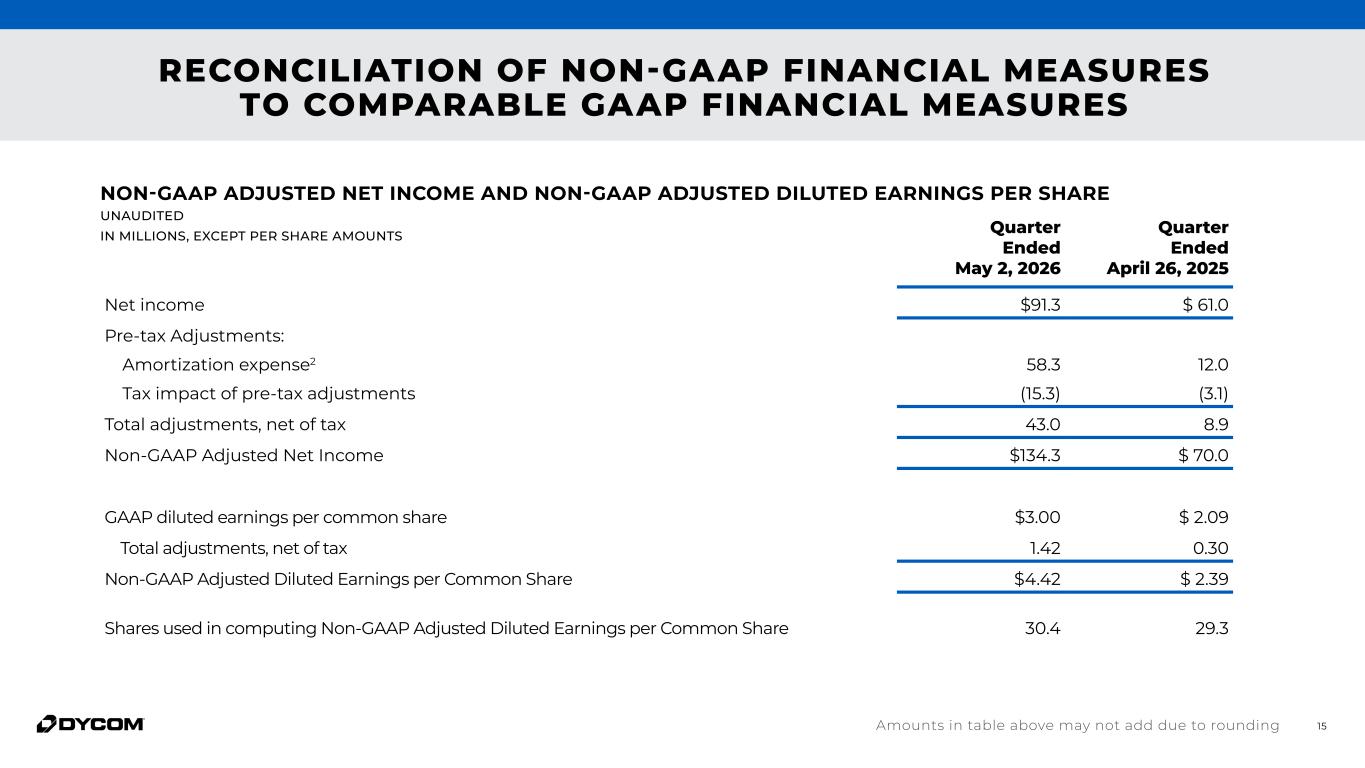
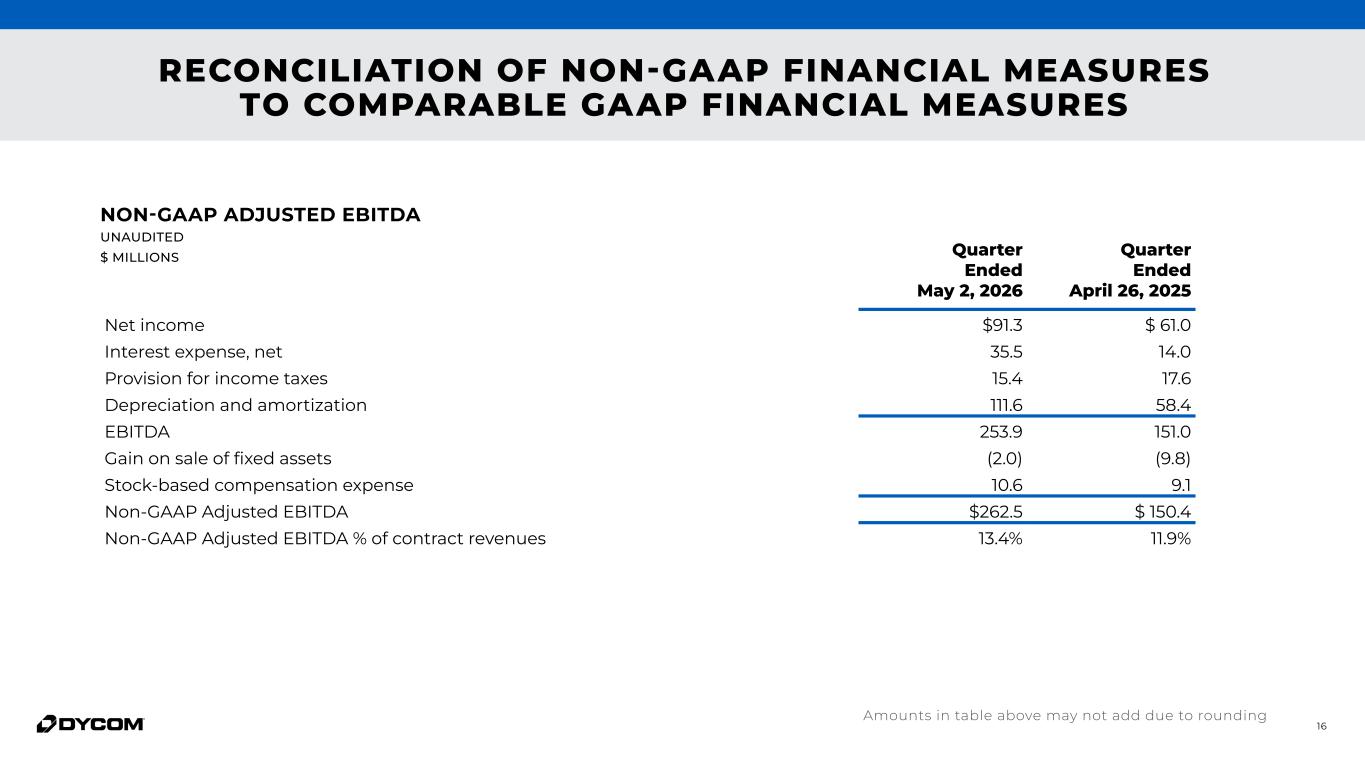
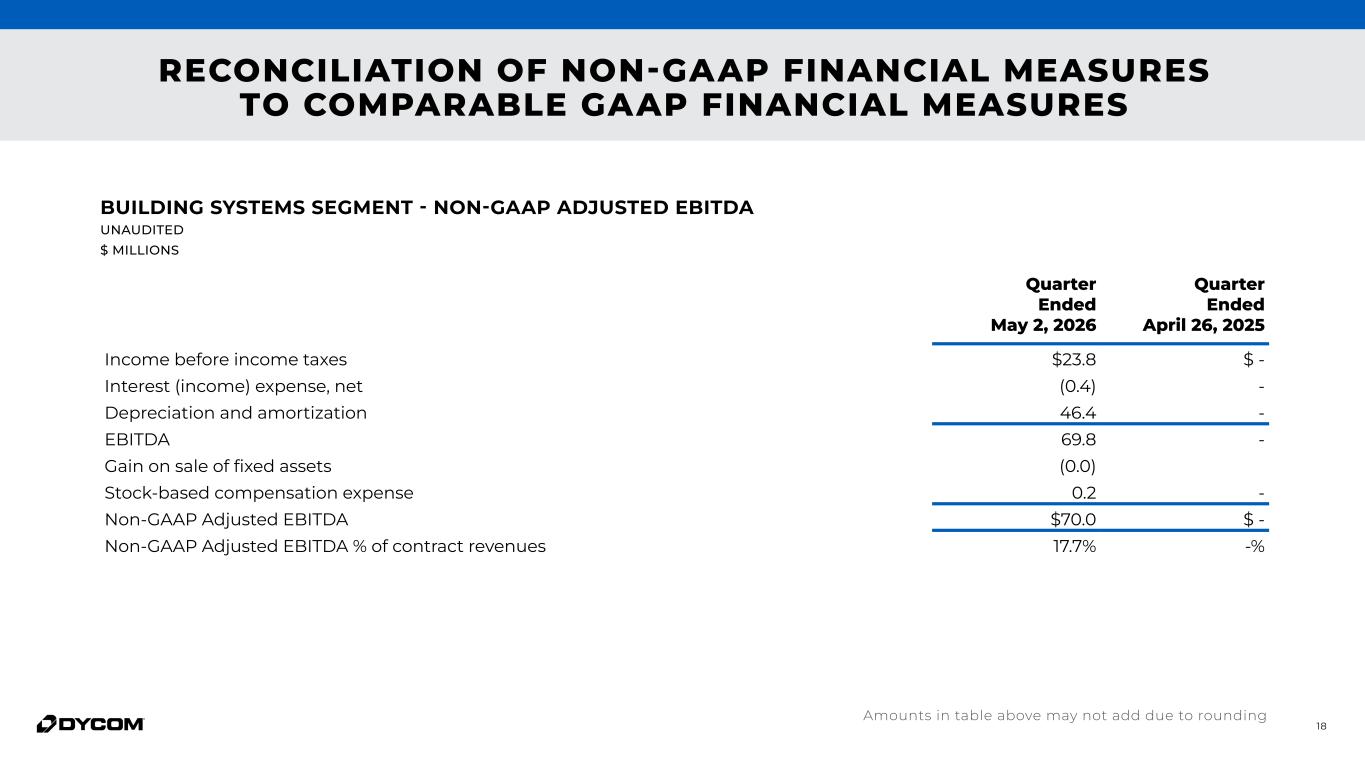
Thank you, Sally, and good morning, everyone. We delivered an outstanding start to the year, continuing to execute our strategy and capitalize on a generational set of opportunities across our business. Total revenues of $1.965 billion exceeded the high end of our expectations, increasing 56% compared to Q1 FY2026, including organic growth of 25%. With robust and intensifying demand drivers, we remain disciplined in our awards, high grading the pipeline and intently focusing on execution. The results of this discipline are reflected in our earnings for the quarter, which also exceeded the high end of our expectations. Adjusted EBITDA of $262.5 million and adjusted EBITDA margin of 13.4% increased 75% and 141 basis points respectively. And non-GAAP adjusted diluted DPS was $4.42, an 85% increase compared to Q1 that sold 2026. We ended the quarter with record total backlog of $11.9 billion, growing 25% sequentially and representing a book-to-bill of 2.2 times. Notably, awards this quarter continue to diversify our backlog across customers, demand drivers, and, in some cases, we are also seeing customers extend durations to ensure they have the skilled workforce to meet their goals. These awards provide certainty and visibility that allows ICOM to plan and invest for work far in the future and positions us for multi-year growth. With strong results in Q1 and intensifying demand across our business, we are increasing our full-year fiscal 2027 outlook to a range of $7.38 billion to $7.65 billion. At the midpoint and excluding the extra weight from last year, our new outlook represents total revenue growth of 38%, including 14% organic compared to last year. I'll ship now to our segments, which delivered excellent performance to start the year. Our communications segment generated significant revenue growth of 25% compared to Q1 FY2026 with adjusted EBITDA margins that increased 31 basis points year over year. Growth during the period was driven by expansion into additional geographies and fiber-to-home builds that ramped ahead of expectations, all aided by a favorable seasonal backdrop. Demand for fiber infrastructure remains as strong as ever, as evidenced by our customers' bullish commentary about their multi-year fiber-to-home and long-haul build programs, as well as recent announcements from Corning to scale manufacturing capabilities in response to the demand for fiber in the coming years. Our building system segment is off to a fantastic start, performing exceptionally well this DICOM's integration engine is firing on all cylinders, and I am immensely proud of the team for outpacing our internal projections in a very short period of time. Power Solutions eclipse expectations right out of the gate, delivering $395.4 million in revenue and an adjusted EBITDA margin of $17.7 million. Importantly, looking ahead, we expect their fiscal 2027 margin to be in a similar range. With Power Solutions, we have added an incredible team that has earned tremendous respect across all stakeholders for nearly three decades. As a result, we are positioned for significant long-term growth as we continue to scale our digital infrastructure platform with strategic priorities for the year, and we delivered on every one of them in our first quarter. First, talent and workforce development. Our investments in our training and our people are yielding great results. We added 730 employees in the quarter as we continue to invest on the expansion of our building system segments, both organically as our solutions scaled its operations. Today, we announced a definitive agreement to acquire National Technology Innovators, a tenured and fast-growing low-voltage space in Maryland. Enhancing our position and further extending our capabilities in the high-growth of National Technology Innovators, specializes in inside plant structured cabling including within data centers as well as audio visual and security systems this is a critical step we will be able to offer our customers in connecting data centers across america ultimately bringing fiber connectivity to businesses their work marries incredibly well with our inside the plant electrical work as these trades are highly coordinated and importantly this private founder-led business is another outstanding cultural fit with a team that is highly respected and with much of their revenue in the dmb they also have operations spanning texas and the midwest brought there by their general contractor and hyper scale of customers because of their proven this creates enormous opportunities for dicom to continue to grow our building system segment this cross-selling is already occurring power solutions and national technology innovators have been strategic partners for years and are currently working on projects together in addition we are already working together on inside the fence fiber work in our communication segment in short the synergies are incredibly strong and this is a perfect fit to further increase they consistently deliver superb results and the transaction is expected to be immediately creative across key enterprise financial metrics we are excited to welcome national technology innovators to the dicom family when the transaction closes expected looking ahead we will continue to pursue additional high-quality M&A, while also maintaining our commitment to long-term net leverage discipline and investing in organic growth-operative strategic priority margin expansion. We delivered year-over-year improvement of 141 basis points in adjusted EBITDA margin for the quarter. Looking towards the full fiscal year, we continue to expect our communication segment to modestly increase adjusted EBITDA margin over the prior year, and we now expect our bill to be a fourth. Tax flow enhancement continues to be a priority and our combined DSOs were 96 days for the quarter, a significant improvement of 15 days year-over-year. Over the past five quarters, we've laid out a clear picture of the intensifying demand across with Nikon's ability to step up and capitalize on it. We're doing that through clear strategy, consistent execution, organic investments, and disciplined M&A. Looking ahead, the momentum behind fiber deployments and data center builds is stronger today than we have ever seen. We are moving quickly to capture this opportunity, expanding our presence of Bookprint across our business, while continuing to anchor ourselves with steady services. On top of that, feed is progressing through state level and subgrantee pipelines, which points to upside for both our backlog and, in closing, DICOM scale and positioning, combined with our local expertise, is unmatched in digital infrastructure. We are focused on delivering value to our frontline employees and our customers, and believe that this goes hand-in-hand with delivering value to our shareholders. I would like to thank my 20,000 teammates for raising the bar every day for our customers and in our communities. I am incredibly proud of what we've accomplished together, and confident we will continue to deliver value for our shareholders and long-term opportunities for our teams as we pursue our vision to be the people connecting America. I'll turn the call over to Drew now for a deeper dive into our Q1 performance and further details on our acquisition.
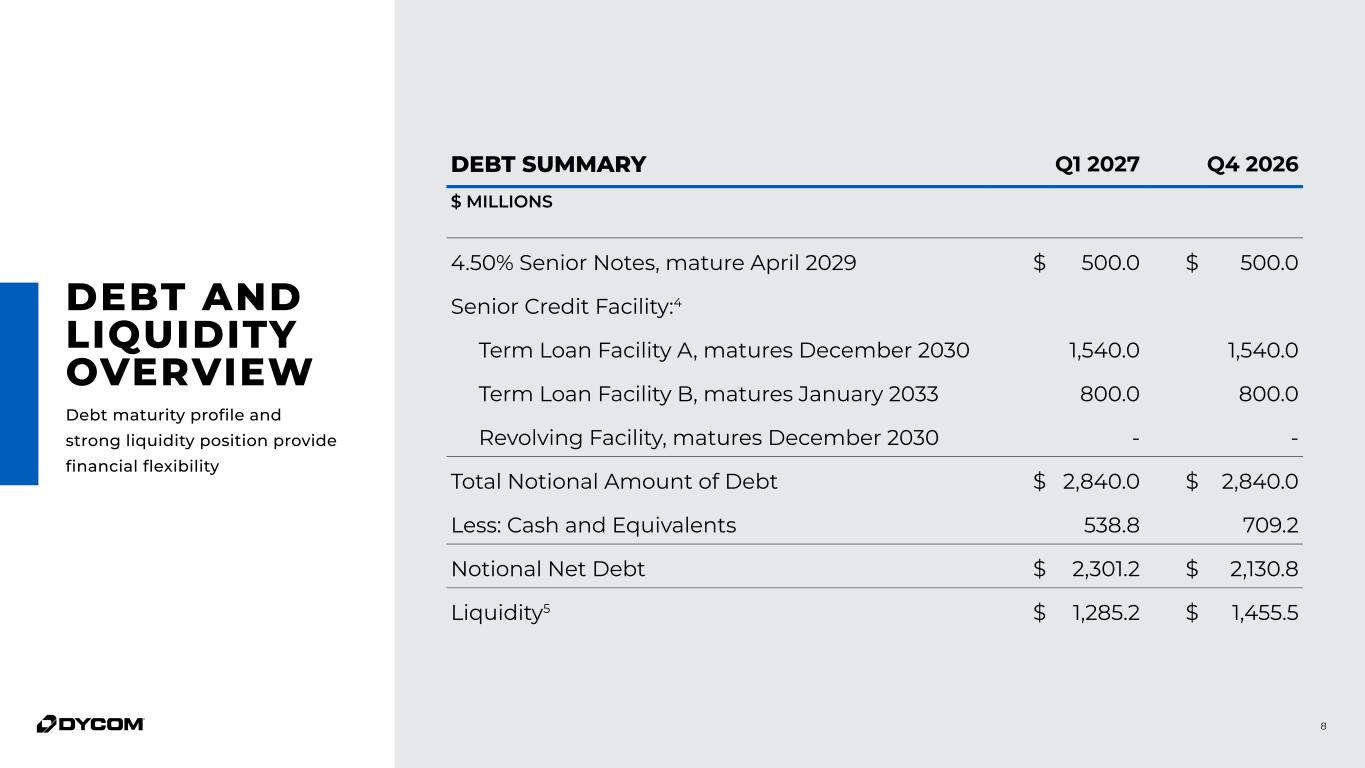
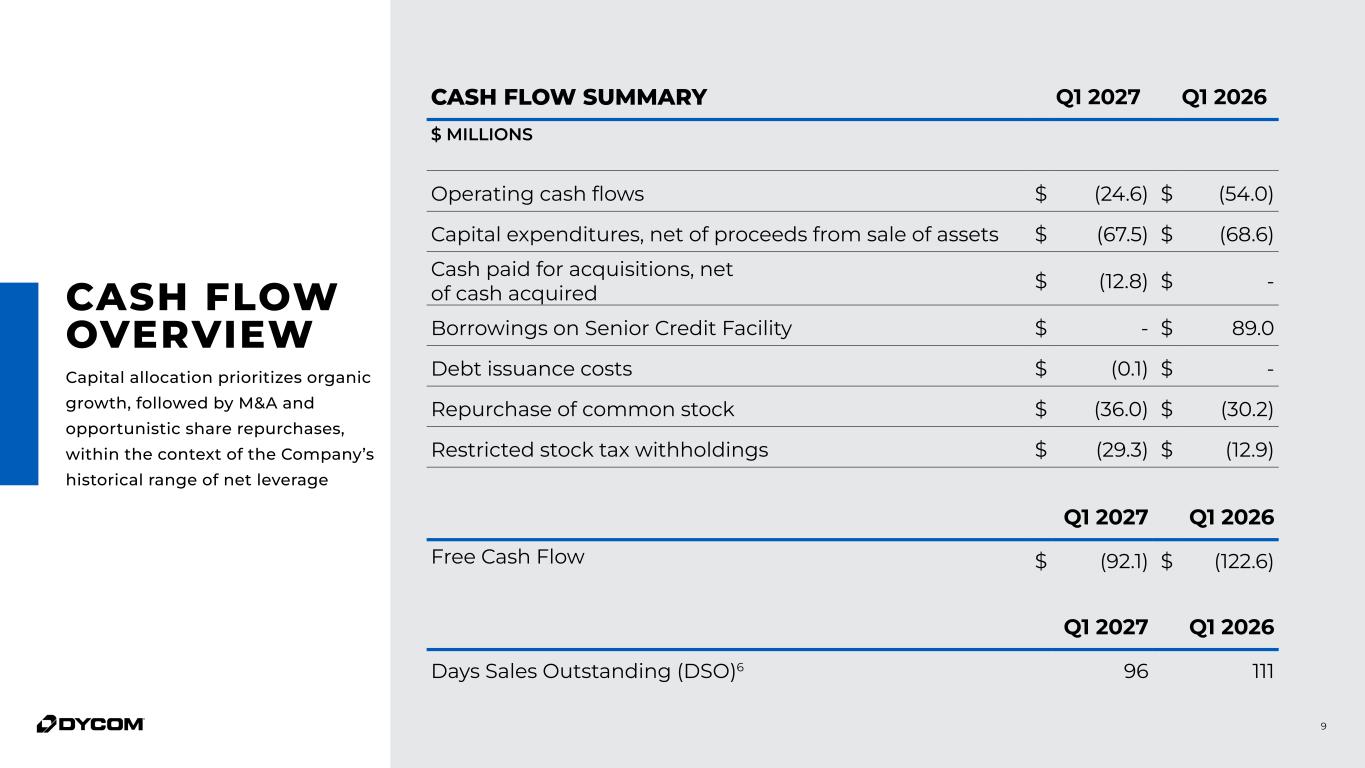
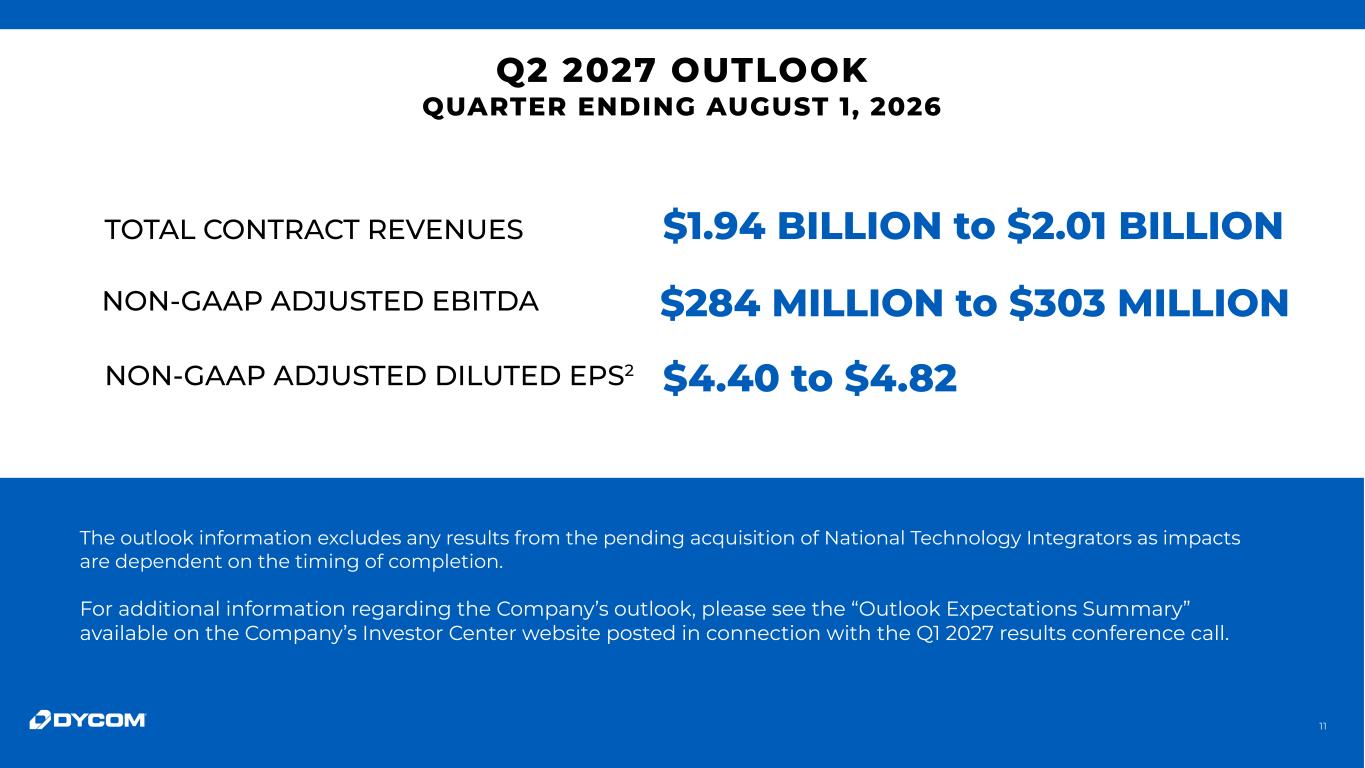
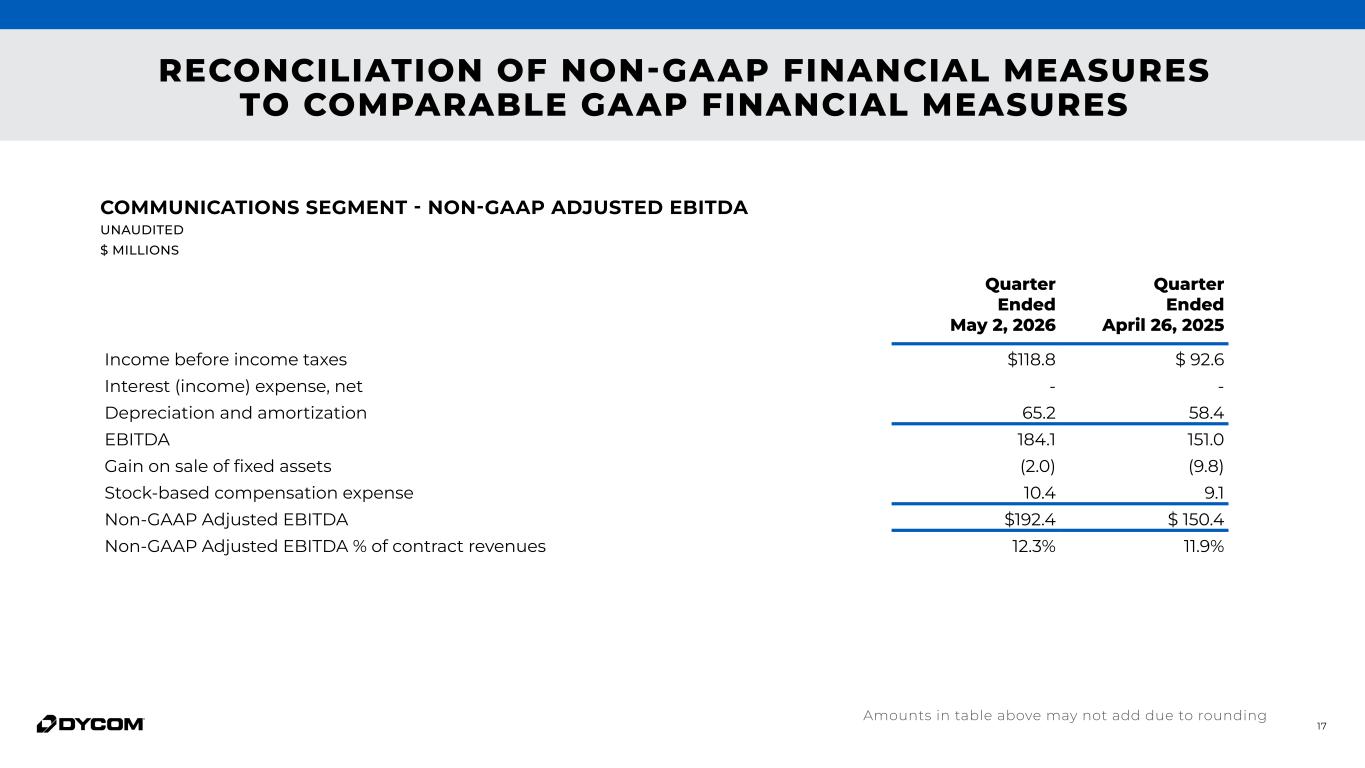
Thanks, Dan. Good morning, everyone. In Q1, we outperformed the high end of our expectations, delivering strong top-line and adjusted EBITDA growth and margin expansion, while also investing in our future growth and returning capital to our shareholders through share repurchase. Q1 total contract revenues of $1.965 billion grew 56.1% over Q1 of last year. This reflects the strength of relationships and continued diversification across organic revenue of the communications segment grew 24.7%, and building systems grew significantly compared to the prior year quarter. Building systems represented approximately 20. Consolidated adjusted EBITDA of $262.5 million increased 75% over Q126, reflecting strong performance in both our business segments. Consolidated adjusted net income was $134.3 million, and adjusted diluted EPS was $4.42 per share, an increase of 85% over Q126. These results are adjusted to exclude the amortization of intangible assets. for the quarter included income tax benefits resulting from the vesting and exercise of share-based awards of 12.5 compared to $2.2 million or $0.08 per share in Q1 last year. Moving to the results of our business segments, each of which performed well in the quarter and exceeded our expectations. Communications revenue was $1.57 billion and grew 24.7 percent organically, driven by ramping fiber-to-the-home programs, increased long-haul and middle-mile fiber infrastructure bills, and growing maintenance and operations. The dividend for communications increased 28% to $192.4 million, or 12.3% of segment revenue, reflecting operating leverage and continued investment to scale our footprint and increase headcount, further strengthening our position to execute a multi-year build program. Systems revenue was $395.4 million, and adjusted EBITDA was $70 million, or 17.7%. Of our initial expectation was $11.9. Communications backlog and $1.1 billion of building systems. Backlog expected to be completed in the next 12 months was $6.4 billion, including $5.4 billion of communications and $1 billion for building systems. Cash flow remains a primary focus. We delivered solid results supporting the growth in revenue and normal seasonal uses of cash during the combined DSOs of accounts receivable and contract assets net for 96 days, a reduction of five days sequentially from Q426 and 15 days year-over-year. During Q1, we repurchased 100,000 shares of our common stock for approximately $36 million, or $360 per share. We ended the quarter with cash an equivalence of $538.8 million and total liquidity of over $1.28 billion. Proforma net leverage at the end of the quarter was approximately 2.3 times adjusted EBITDA, providing us with financial flexibility for continued strategic growth and investing. Building on our strong favorable demand outlook, we are increasing our full-year fiscal 2027 expected range. We now expect for the communications segment, we expect contract revenues ranging from $6.03 billion to $6.2 billion, increasing approximately 12.6% to 15.8% organically from last year. For the building system segment, we expect contract revenues range 1.45. We also anticipate adjusted EBITDA margin expansion. For communications, we continue to expect modest adjusted EBITDA margin improvement. For building systems, we now expect an adjusted EBITDA margin in the high teams, similar to our Q1 performance. As we capitalize on the strong, on a consolidated basis for Q2, we expect total contract revenues of $1.94 billion to $2.01 billion, adjusted EBITDA of $284 million to $303 million, and adjusted diluted EPS of glamorization. This outlook for Fiscal 2027 and Q2 of Fiscal 2027 excludes any results from the pending acquisition of national technology integrators. The acquisition in our Fiscal Q2 impacts our dependent on the timing of completion. Now for more details on the pending acquisition. This acquired business will be included in our building system segment, and we anticipate an initial annual revenue run rate of approximately $175 million. Historically, the business achieved adjusted EBITDA margins in the mid-to-high teens, and we expect that to continue. The purchase price is $275 million on a cash-free, debt-free basis, and the consideration is approximately $234 million payable in cash, $41 million of DICOM. Consolidated Proforma net leverage is expected to be below 2.5 times adjusted EBITDA, and we remain committed to our long-term net leverage discipline. The transaction is subject to customary closing and post-closing adjustments, and we expect it to close before the end of our July fiscal This acquisition presents key revenue synergy opportunities as we expand our capabilities across the digital infrastructure space. With a strong start to the year and clear momentum across Confident in our ability to execute our strategy as we pursue the significant and growing opportunity. Operator, this concludes our prepared remarks. You may now open the call for questions or questions.
Operator
Thank you. As a reminder, to ask a question, please press star 11 on your telephone and wait for your name to be announced. To withdraw your question, please press star 11 again. Please stand by while we can power the Q&A roster. Our first question comes from the line of Manish Samaya with Cantor Fitzgerald. Your line is now open.
Thank you, and congratulations on an exceptionally strong quarter to the team. A couple of questions, Dan. maybe on the NTI acquisition to begin with if you could just help us understand the customer overlap between NTI power solutions and the legacy communications business and how do you see immediate cross-selling opportunities that's the beauty of this transaction that you still need so thank you for asking the question to start this is a partnership with power solutions that goes back a number of years between them and NTI that's how we were connected to NTI to begin with.
And we started talking to them about opportunities on the communication side. The work we're doing inside the fence, we started to see some really good efficiencies there and began conversations on how we can make them part of the fence. What you see ultimately is the potential for campuses to have not only power solutions doing the electrical inside, but NCI also doing the structured cabling while our communications business crossed all that work. So a lot of their work, just like power solutions, goes to the general contractors to have conversations on really both those fronts. And we're We're already seeing, again, before the acquisition, just in conversations to try and sell that as a partnership, seeing really good connection there, and we think that's going to even go exponential.
That's helpful. And then just going to the guidance for the full year, clearly Q1 was exceptionally strong. Outlook for 2Q is strong. But when I look at the full year guidance range, it still looks a bit conservative. So I'm just trying to figure out if there's anything in the second half that I'm missing. You know, specifically, when I look at the total increase in revenues versus the prior guidance that you gave for the full year, I think it's about 7%, 7.5%. So maybe if you can just help us reconcile as to what's happening in the first half versus the second half. Thank you.
Incredibly pleased with the start of the year, and I'll talk really about the collective munition in each of the segments, if I could. So first, significant growth. You know, we're looking at 56% year-over-year revenue growth. That takes a lot of investment. We were fortunate with the weather, right? Q1 really behaves more like Q2. What's important, though, is the demand has to be there. And what it shows is this demand that we've been talking about. We've been talking about fiber-to-the-home for a long time, and we've been sending the message that, listen, this is really only currently in several years where the passings are going to continue to increase to set up our strategy. I would believe that's going to continue. But like a lot of things, that doesn't mean it's perfectly linear. when you start out with a very strong seasonal quarter and you're running into Q2 in our outlook for Q2, that that does become a little more, you don't see the same. On both sides of the business, of course, we build these from the bottoms up. And so, you know, it's not going to be perfect linear, but we're incredibly pleased. The system segment, I'm talking about now for the full year, them doubling the CAGR that they've had over the last four or five. A couple more comments. One is, if you look at their backlog, it is very different in how it behaves. Those projects get contracted What we do have behind that, though, be awarded but not contracted, and then further behind that shadow backlog. And what I can tell you is even though we don't publish those numbers, there are multiples of what you see in that immediate backlog. So that gives us the confidence, Manish, gives us confidence in the margin profile because we can see. Just like I'm a communication side, that doesn't mean that they all start at the exact same time and finish at the same time. So we do shape that out over the years. So all told, what you see is significant growth. We're incredibly pleased with that. We see continued opportunities to invest in the business, and we're just incredibly proud.
Operator
Thank you. Our next question comes from the line of Eric Lubko with Wells Fargo. Your line is now open.
Great. Thanks for taking the question. You know, Dan, I think you said and you alluded to it in your last comment about fiber to the home project ramping a little faster than you expected, and maybe just a little more color on that. Do you think there's a little bit of a pull forward of demand you saw in the first quarter, or do you think there's times you're actually gaining market share of some of these larger programs as they ramp this year and next?
That's exactly right, Eric. We are continuing to expand our market presence. We are getting additional awards in additional spaces. We continue to deliver at an exceptional level. We're not perfect. Trust me, we're not perfect. But our teams are absolutely committed to making our customers successful. From a timing perspective, you know, we've been talking about how these builds themselves are building and growing and ramping and how that happens at different phases. What you're seeing this year is many coming online and really starting to increase in volume and velocity at the same time. And, again, if you look at our overall outlook of the year, you see that that's continuing. This isn't something we publish, but if you just look sequentially quarter over quarter, our fiber to the home works through 33% in one quarter's time. So it just shows our ability to capitalize there. continue to grow against that. And I think if you listen to other commentary in the industry, it's not always the same message, which really, from our perspective, just shows our ability to, one, execute on the work, but, two, you know, have our customers.
All right, great. Thanks for that, Dan. And just one follow-up. So you alluded to the fact you're signing some longer-duration contracts with your customers, you know, to lock in their labor supply. And I guess, how are you thinking about structuring those contracts to make sure you have cost inflation protection? I know we've seen some costs like fuel in particular rise pretty rapidly in the last couple months, and just wondering how you think about projecting that future cost curve. Thank you.
Yeah, so fuel has obviously been an impact for anybody that's doing our line of work. You know, what we've done, and what I talked about last quarter, we made intentional moves last year around an end of the building system. But to your point, yeah, it's mostly like everybody else. We do have that model in based on everything that we can all know today. And this is a really good point to make. We've been talking about the skilled workforce. We've been talking about building ahead of our customers and making sure that we can be there to meet their needs. We've talked about our relationships. We're spending time with customers, not just talking about the work that we're going to do this year or even next year, but out through the end of the decade. And what all of our customers recognize is that the skilled workforce is really what's going on. As part of those conversations, how do we make sure that we have your teams locked up to deliver on our plans? all the way through the end of the decade. Of course, Eric, as you would think, we are very thoughtful in how we would contract that work. We were very thoughtful in how we would think about the different parts and pieces, and our customers understand that because contracting three or four years out, you've got to be smart about how you set that up. So we feel really good about how contracts are structured. We feel really good about the relationships. We feel really good about, one, our ability to continue to deliver and our ability to continue to grow. But as you can see in our outlook to the communication segment, also our ability to invest.
Thanks, Dan. Congrats on the quarter.
Operator
Thank you. Our next question comes from the line of Joseph Osha with Guggenheim Partners. Your line is now open.
Hi. Thanks very much for taking the question. Two questions, actually. First, your comment would have been in terms of the outcome. But as I think about the improved outlook on the communication side for the rest of the year, is most of that coming from FDTH, or is there some long haul and middle mile in there? And then the second question I'll just ask now, is there an upper limit to leverage that you have that you're thinking about? I'm just trying to understand how far you might take that as you continue to explore other acquisition opportunities.
Absolutely. On the communications outlook, it is largely fiber-to-home. And, again, Joseph, this is a message that we've been sending. Fiber-to-home is still earlier on in the overall cycle from our perspective, and we see significant continued growth, and that's really what gives us confidence in that raise for the year on the communications side and the overall performance there. And it also goes back to our confidence to continue to contact track that further out. The long-haul middle mile is still an early innings in the 2027 calendar coming online, but 2028 really kind of being that fast and furious here. Now, that said, we've been doing it for some time now. These projects, you know, we still think we were first on the field. We continue to get more and more work there. We continue to grow that revenue. But if you look at it compared to Fiber to Home, Fiber to Home is just much more robust today, and we like that. We like how those will blend. On the leverage question, again, we're, one, very excited about the opportunities. We do have a strategy, what kind of companies we're looking for. The culture has to fit first and foremost. It's got to fit our strategy for growth and how it actually augments our current. From a leverage point itself, again, we're going to be very responsible, just like we've always been. We're going to have that discipline to make sure any time we bring leverage up, we're going to have a clear path. We do not want to be elevated over long periods of time. That said, there's a lot of attractive opportunities out there, and we talked about in our prepared remarks that we're still actively looking and having those conversations. But, again, we are going to be prudent in how we think.
Operator
Thank you. Our next question comes from the line of Frank Laufen with Raymond James and Associates. Your line is now open.
Great. On the DSOs, how sustainable is that? Is this sort of a new normal or is there something in the quarter that kind of impacted that? And how should we think about that going forward? And then when we look at NTI, how should we think about its overall exposure if you kind of break it down between data centers and then more of the AV and DAS type opportunities?
Thanks for noticing the DSOs, Frank, because we've put a lot of work into that. We talked about it being a priority going back to last year. We talked about it being part of four strategic priorities for this year. What I want to make clear is that's improvement on both segments of the business. That's not just an industry. We've been working hard on the communications side as well and saw significant improvement in the DSOs there. So when you combine it together, very pleased to be below 100 coming in at 96 days. We do think that's a sustainable range. On that, NTI exposure, the raw number is about two-thirds data center exposure and about Thank you.
Operator
As a reminder, to ask a question at this time, please press star 1-1 on your touchstone telephone. Our next question comes from the line of Richard Cho with J.P.
Morgan. your line is now open i just wanted to follow up um with the i guess um long haul middle mile type of build has that opportunities that changed at all um as things have developed and when should we expect that revenue to maybe start ramping just wanted to get an update there it's grown significantly richard we talked about i'm trying to think probably five quarters ago this 20 billion and $20 billion opportunity set related to long-haul middle mile, that is certainly growth.
You know, we've updated numbers internally. We haven't published that. What you've seen more and more is our customers being very vocal about it. One of my favorite commentaries, one of our customers talks about how they're having conversations with hyperscalers about up to 7,500 to 10,000 fiber strands per route. And that is a huge number beyond even what we're talking about today when we're bringing in 864 or 1728 CalFiber. If you think about getting to 7,500 or 10,000 over time, it goes back to what we said. This is a decade-plus long build to get the architecture that they need out there to support the continued development and the continued consumption of data. We continue to do more work, and we are absolutely ramping up there. We are winning more. We're seeing more opportunities set. we're capitalizing on that, they just take a long time to get started. And so that runway, you know, typically a year-ish from when you kind of start hearing about these programs to when they get going, and then you have to ramp to get it on plane. So really start thinking about next year, calendar 27, and especially calendar.
Yeah, those ramp caps are pretty amazing. One follow-up on the fiber to the home, was it multiple companies ramping, and do you expect more to ramp from your entire base through the year, just any color on the breadth?
Exactly. So you're seeing more and more of these programs that are getting to accelerated levels of execution that are consistent. And it is important to remember, when you hear our customers talk about it, it doesn't mean all markets that they have are ramping at the same time. It doesn't mean that we have every single market that they have. So we're looking at it from a very micro level, and yes, to your point, you're talking about ramping work across many customers, across many markets, which, again, just goes back to that indication that, you know, the homes in America are going to get passed. The $60 million as yet that our customers have talked about are going to get passed. It's just going to take some time, and we're excited to be there to support them.
Operator
Thank you. Our next question comes from the line of Stephen Fisher with UBS. Your line is now open.
Thanks. Good morning and congrats on the quarter.
I'm curious on the building segment margins, what changed in the outlook for the rest of the year? I understand the first quarter had some good execution, weather perhaps, but you're also raising the rest of the year to be consistent with the first quarter. I assume you're still making some of the scaling investments and the back office. So I guess I'm curious, you know, what happened with the rest of the outlook, and does that imply that there's still potentially some upside beyond this year if you're still making those investments and achieving the higher margins there?
Yeah, I really could not be more pleased, one, with our team's ability to integrate power solutions, and, two, with just the strength of their operation and their customer relationships. So, you know, last quarter we talked a lot about making investments. Every time we do an acquisition, this one was unique because it was in a segment of its own, so everybody could see it. But every time we make an acquisition, we're going to invest in that. When we close with NTI, we will make investments there because what we're trying to do is bring together two things to make something that's different than when they were a part. And that does take investment. It does take clear strategy. We're typically adding resources and staff to help make that happen. And that's what we were doing a quarter ago with Power Solutions. What you can see is we were able to get traction on that incredibly quickly. You know, when you talk about doubling a four- or five-year trailing TAGRA rate, I don't think it surprised anybody that that takes a lot of investment and a whole lot of discipline. So we couldn't be more pleased with how that's come through the business, and that gives us confidence as we look out for the rest of the year. But to your question, absolutely, we continue to make investments. Continue to make those investments.
Okay, thanks. And then just a follow-up as you relate to NTI and a similar topic. Can you just maybe talk about some of the investments that you need to make there? and maybe just some of the differences in the skill sets that you're bringing along in terms of the type of labor and how easy or hard it is to go out and grow that skill set relative to what you brought in with Power Solutions in terms of electricians, et cetera.
Let me take the skill set one first, Stephen. This is, again, great synergy for our business. This is an opportunity for us to have a fungible workforce. So some of the work that National Technology Integrators does is union. Some of the work that they do in other markets is non-union. And in those non-union markets, that is very fungible for what we're doing inside the best work. So we do have an ability to cross train to augment staffing there. You know, I don't want to get too far ahead of all the investments that we'll make, because, you know, right now we're working to close and bring them formally into the family. but similar to what we've done in other places, right? How do we augment that to really create a new collection in the growth opportunity, to give a different balance sheet, to give some different resources? And what we love about that, not only are they, but they're in these other markets, which are in critical markets. That just gives us another ability to flex off of that and to continue to grow and think about how do we continue to increase the building segments.
Operator
Thank you. Our next question comes from the line of Michael Dudas with Vertical Research Partners. Your line is now open.
Good morning, Callie, Drew, Dan. Dan, maybe you could share a little bit more of your thoughts. You mentioned your prepared marks about BED, the progress overall, and how it's looking relative to when we could see some of that conversion into maybe backlog it into revenues, maybe second half this year into.
So Bede continues to make progress and, you know, this is something that we've had a strategy going back, I think it's over four years now, and we've been partnering with the different We've had numerous conversations and tons of relationships. We still believe that we will see revenue in Q2 of thinking about Bede for this year.
Operator
Thank you. Our next question comes from the line of Liam Burke with B Reilly Securities. Your line is now open.
Thank you. Dan, you mentioned in earlier comments that you're working more and more with your customers on longer-term projects and multi-year planning. Does that change the composition of the business to multi-year projects versus MSA?
So still mostly under MSAs or long-term agreements, Liam. I think if you look at our backlog, you know, our next 12 months, we had a significant backlog increase. Our next 12 months went up, but really what you see, again, we're adding firepower into the out years, which, again, is a big positive for us. It allows us to plan to be proactive, to continue to invest in the business, to have really good foresight into what some of those bills are going to look like. So, you know, it's a big positive in our space to be talking about work and actually contracting work.
And on the data center volumes, are you seeing more activity? Liam, you talked about fiber to the home, but is there more activity over and above fiber to the home on data center activity on the local loop?
If you're talking about inside the fence and all the other fiber that's connected to that kind of middle mile, absolutely. It continues to grow. The conversations, and I feel like I say this every quarter, the conversations only continue to grow, and that really is true. And then specifically on the data center side, again, in fact, it's only increasing. And you can see that in the confidence in us raising for the year. Thank you, Dan.
Operator
Thank you. Our next question is a follow-up from the line of Manish Somaya with Cantor Fitzgerald. Your line is now open. Manish, your line is open. Please check your mute button.
Hi, I'm sorry. Can you hear me?
Okay, awesome. I appreciate that. Dan, I just have two follow-ups for you. One is on the building systems backlog. Should we assume sort of high-teens margin in line with the 27 margin expectations, or is that different based on NICs or customers, et cetera?
Yes, that backlog is consistent. As you can see, their next 12 months, and we believe this will continue to be the case, their next 12 months and their total backlog are very close numerically to each other. So, yeah, the margin profile is very similar to what we thought.
And then secondly, obviously you talked about strong in markets, but I was wondering if there are any projects or work that you are essentially passing on, and if so, what are the big reasons for it? Is it execution? Is it pricing? Is it not meeting your hurdles? If you can just kind of give us a sense as to what's happening on the ground.
Yeah, we're very pleased that we have strong partnerships with our customer set, and that's really what we're looking for, Manish. We want customers that understand the value of the skilled workforce, to understand the value of all the investments that DICOM has made, to help deliver at a higher level for them. There are still people out there that are looking for low bid numbers, and that's just not where we play. We want to play in those longer-term agreements where we can really have input in how they think about their bills, how they think about their programs, how we can support that, have really good dialogue that allows us both, quite frankly, to raise the bar together. So that's where we play. So, yes, there is work that we pass up. What I would tell you, we feel really good, again, not what we've done from a skilled workforce, but really good about the growth that we saw in our headcount for the quarter and our continued growth of the year and the investments we're working there. So we don't believe that we're, you know, leaving any of these important bills behind. But at the same time, we are going to be selected.
Operator
Thank you. And I'm showing no further questions from our phone lines. I'd now like to turn the conference back to Mr. Dan Pajovic for closing remarks.
I want to thank everybody for joining us today, and I want to thank our 20,000 teammates for their fantastic execution this quarter. Look forward to seeing you all in about three months. Thanks so much.
Operator
This concludes today's conference. Thank you for your participation. You may now disconnect.