Operator
webinar application. If you have joined by phone, please dial star nine on your keypad to raise your hand. At this time, I would like to turn the call over to Lynn Antipas Tyson, Chief Investor Relations Officer.
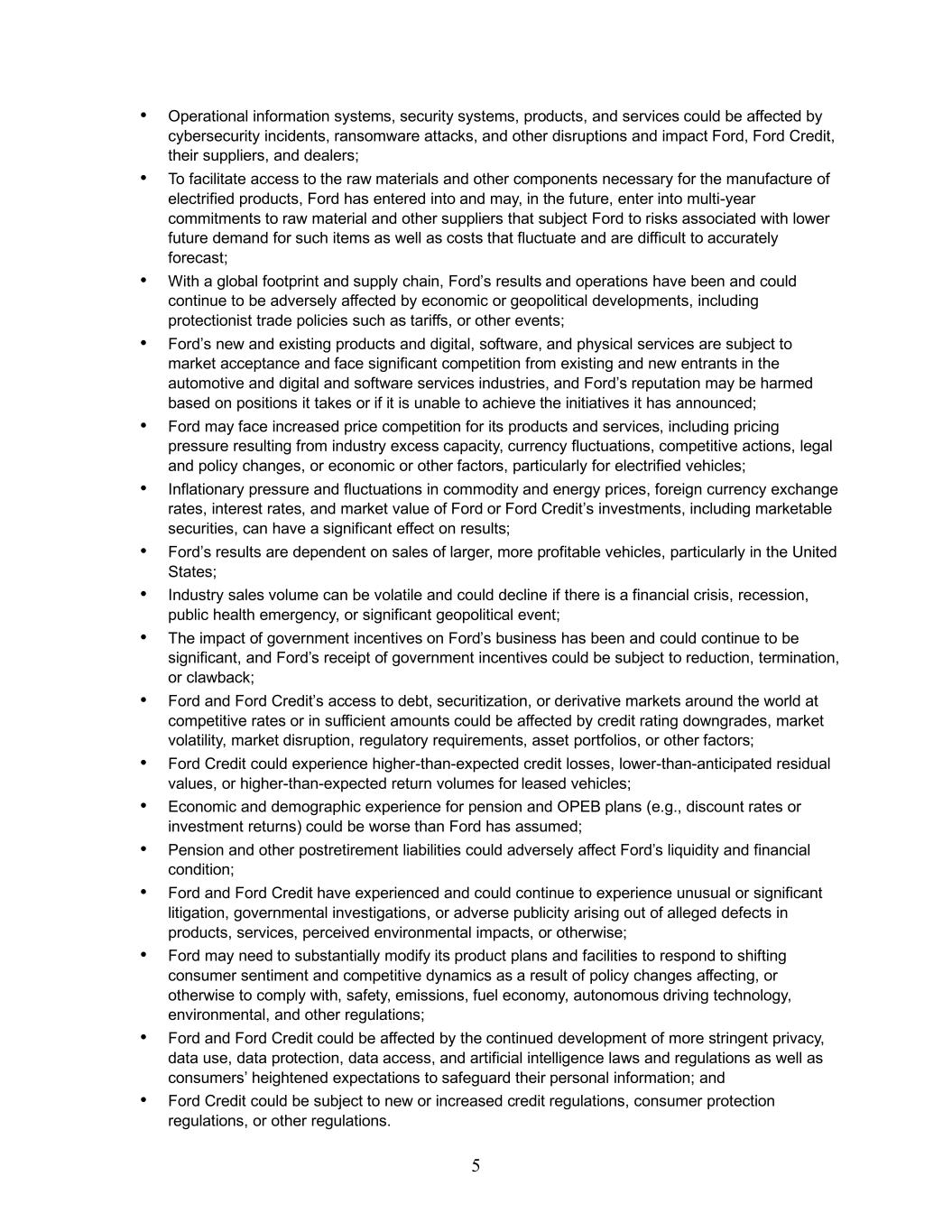
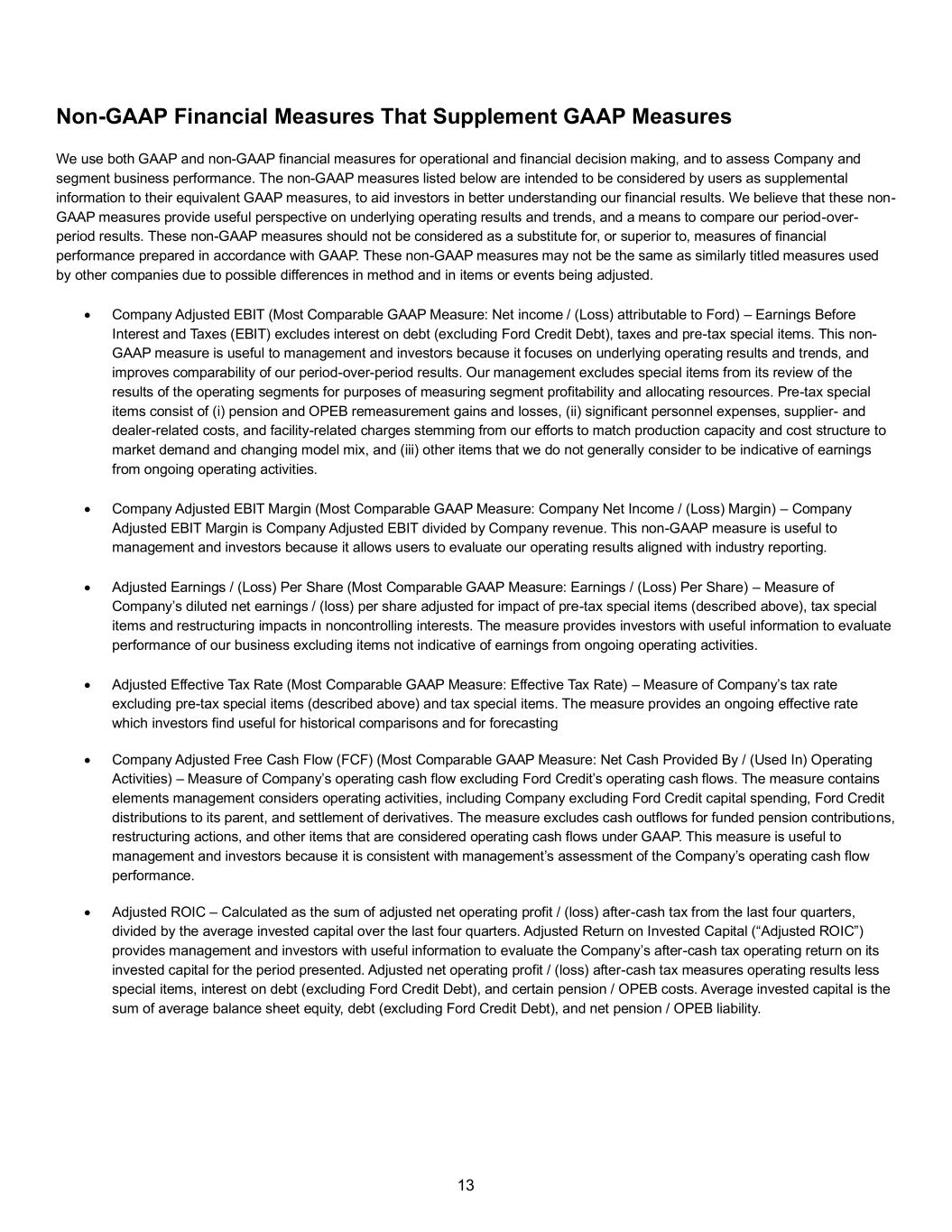
Thank you, Leila, and welcome to Ford Motor Company's fourth quarter 2025 earnings call. With me today are Jim Farley, President and CEO, and Sherry Howe, CFO. Joining us for Q&A is Andrew Frick, President of Ford Blue and Model E, Alicia Bowler-Davis, President of Ford Pro, Kumar Gahotra, Chief Operating Officer, and Kathy O'Callaghan, CEO of Ford Credit. Jim will give a high-level overview of the business, and Sherry will provide added texture on the financials and our guidance for 2026. We'll be referencing non-GAAP measures today. These are reconciled to the most comparable U.S. GAAP measures in the appendix of our earnings deck. You can find the deck at shareholder.ford.com. Our discussion also includes forward-looking statements. Our actual results may differ. The most significant risk factors are included on page 21 of our deck. Unless otherwise noted, all comparisons are year-over-year. Company EBIT, EPS, and free cash flow are on an adjusted basis. Upcoming IR engagements include Sherry House at the Wolf Research Auto Tech and Semiconductor Conference in New York City tomorrow, February 11th. Now, I'll turn the call over to Jen.
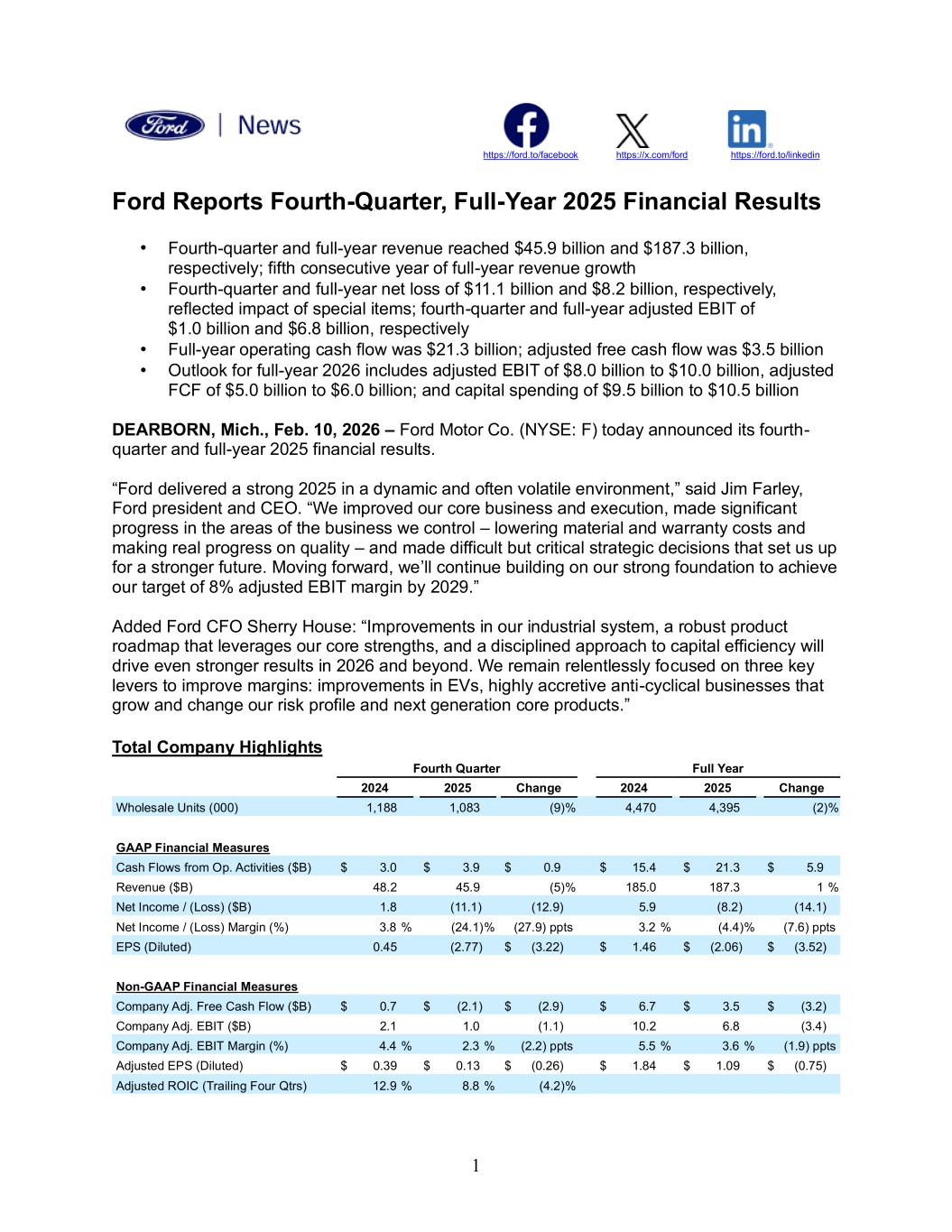
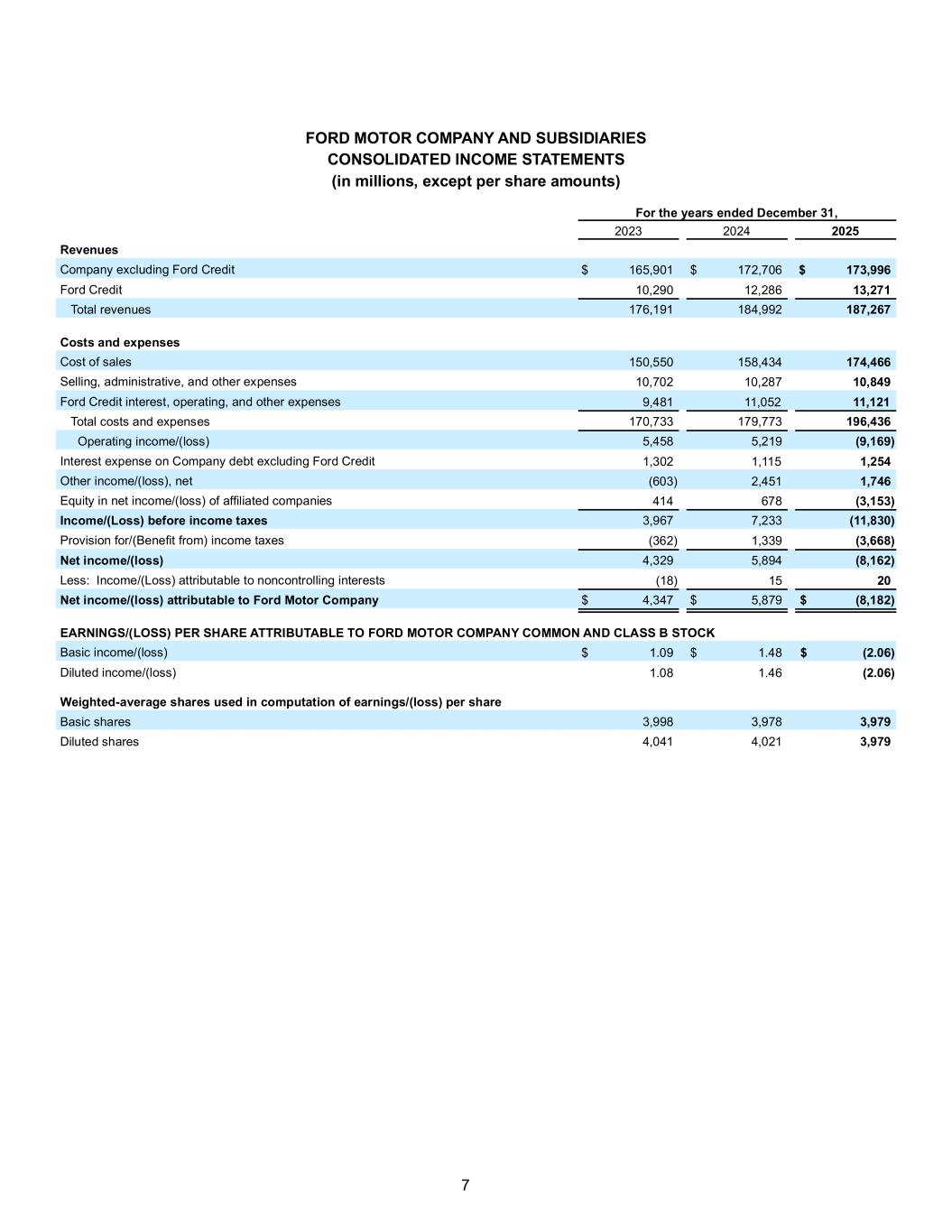
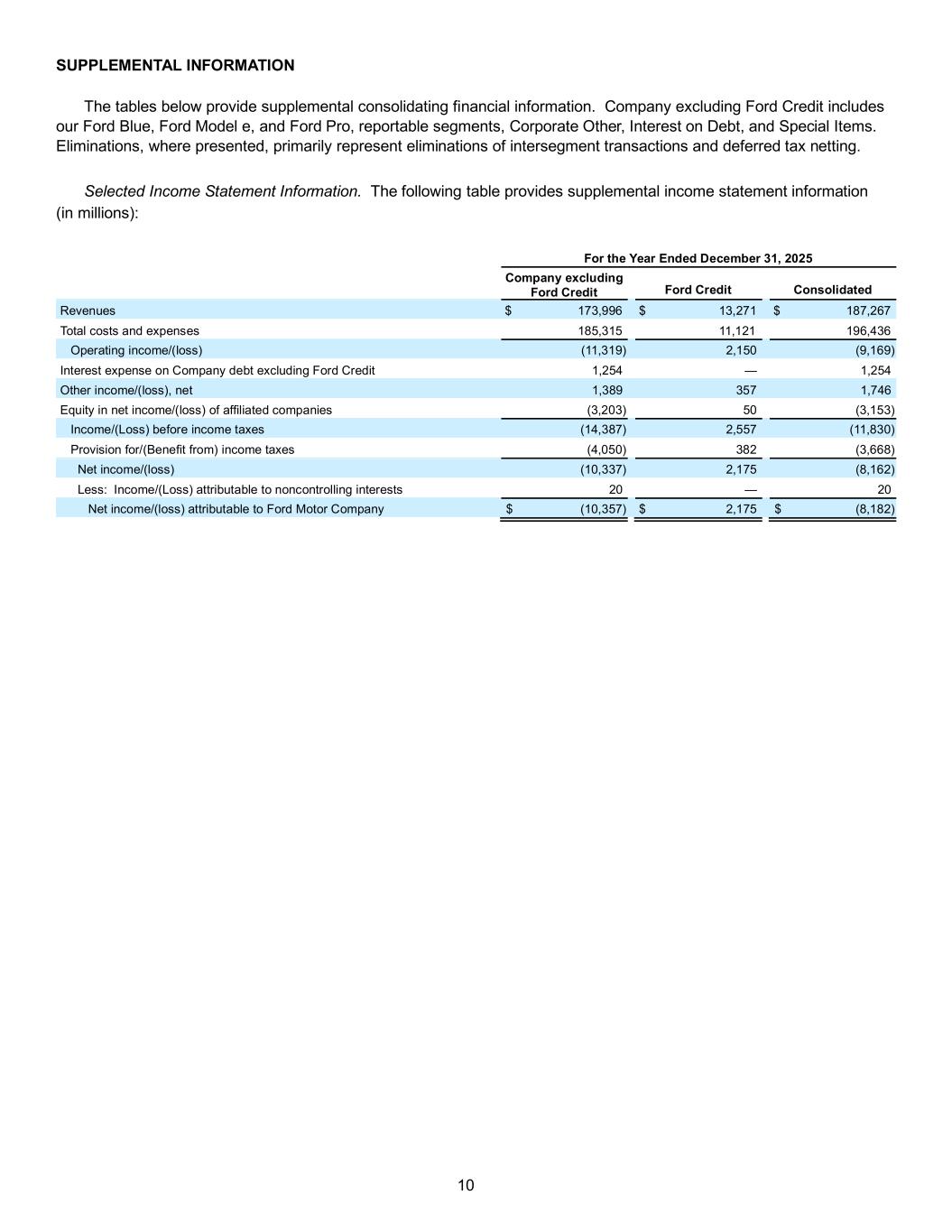
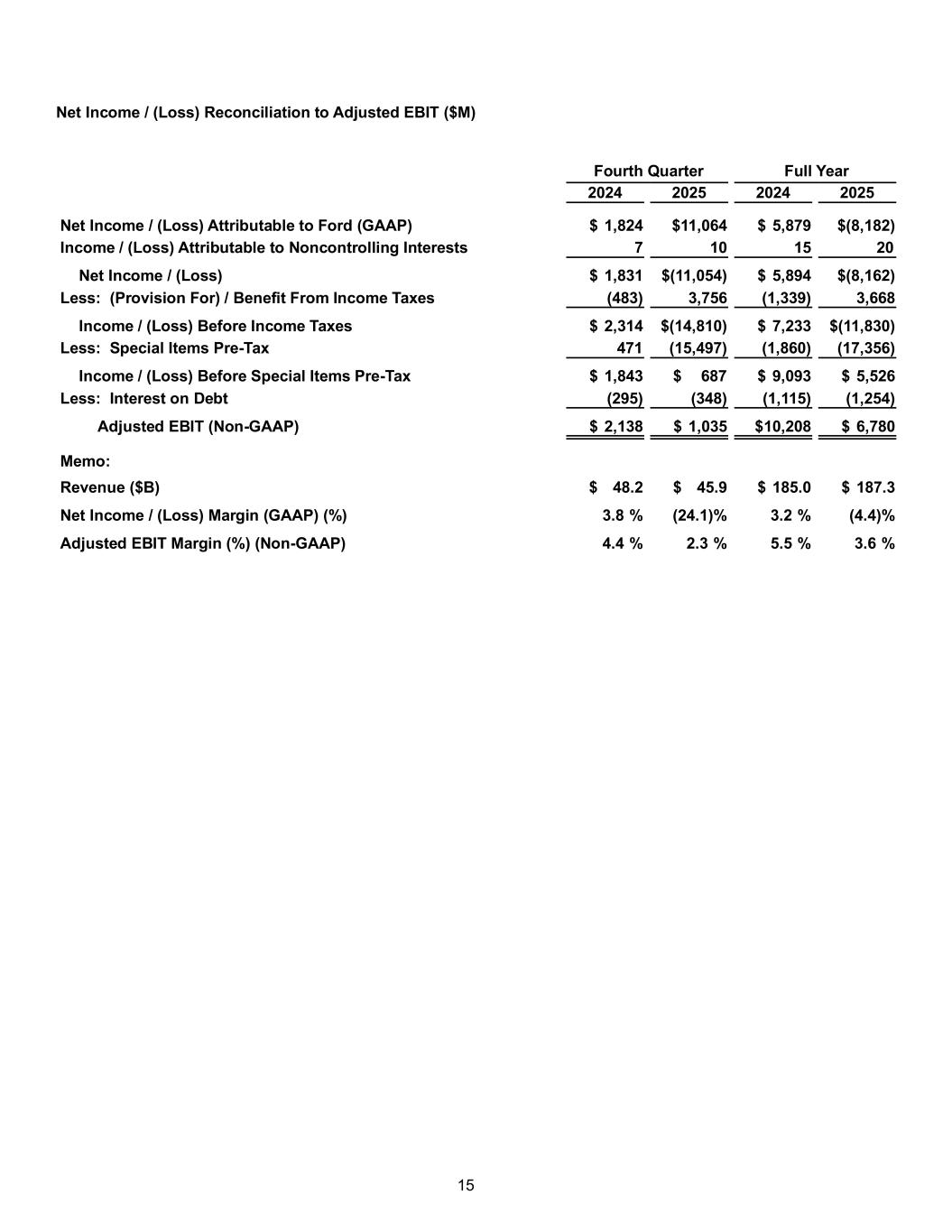
Thank you, Lynn. Thank you to the Ford team, to all of our dealers to our suppliers and all of our partners we executed very well last year we managed through numerous challenges that came our way from multiple tariffs to supply chain disruptions and delivered good results in all areas within our control afford we continue to grow 187 billion dollars of revenue we also lowered material and warranty costs and made significant progress in quality our u.s market share climbed to 13.2 percent our best performance in six years i'm pleased to say we delivered tsr of 42 percent on bottom on the bottom line we generated 6.8 billion dollars of adjusted ebit for the full year this includes two billion dollar headwind for novellas fires and the net tariff impact of two billion that's a one billion dollar higher tariff impact than we communicated just in october due to the unexpected and late year change in tariff credits for auto parts without that a full year ebit on that one timer without that one-timer would have been $7.7 billion of EBIT. The takeaway from my perspective is we closed last year a much stronger business with a solid foundation to achieve our target of 8% adjusted EBIT target by 2029. Let's talk about that foundation. We dealt decisively with the reality of the market and shifted our focus of our EB business to a high volume, affordable end of the market. You'll hear more in a second. We made big strides in cost and quality. And yes, that means we recalled many of our old vehicles to take care of our customers. We quietly, but very thoughtfully, modernized the company, upgrading our talent, all of our IT tools and enterprise tools, the culture of the company, and the facilities to unleash the performance and efficiency of our team we've looked we're now locked in a more vibrant and profitable product and technology roadmap no boring products is what we like to say and boy we can't wait to see wait for you to see our next generation we have another wave of sophisticated and passionate vehicles for work adventure fun and off-road with the tech suite that will change the experience of owning and drive our is business bottom line the earnings power of our business is accelerating and our ford plus strategy distinguishes us from the competition in clear ways first is the revenue power ford pro it's a durable commercial business our competitors cannot match global demand for super duty and transit franchise is extremely healthy In the U.S., Ford Pro's Class 1 through 7 market share is over 42%, roughly the size of our two largest competitors combined, in Europe with the number one commercial brand for the 11th straight year. but crucially we're diversifying that revenue software and physical services through 10% and now contributes 19% for Ford's pros EBIT rapidly approaching our 20% Tara target and we continue to deepen our competitive mode thanks to our dealers who are specializing and investing in more informing new partnerships like service Titan to broaden our reach and integrate directly with the trades second is our strength of our diverse truck and off-road lineup in ford blue we have a powerful position in pickup trucks from the affordable maverick all the way through the f-series including globally the ranger and ford just won the north america truck of the year for the sixth year in a row an unprecedented industry feat we also have the highest share of revenue in the U.S. pickup market, growing almost two full share points of revenue last year. Furthermore, we are translating our off-road dominance directly into the profitability of the company. Raptor, and importantly, our off-road performance trims now account for more than 20% of the U.S. sales mix. This gives us massive earning power, and with pending epa changes puts us in a strong position to satisfy those unfulfilled demands in the market you see this all coming to life in improving customer loyalty and advocacy as evidenced by our net higher net promoter scores our corporate reputation is also getting stronger important to our dealing with policy makers our partners and of course our communities in fact time magazine named for the most iconic company in america based on its very large survey base of its readers we also expect to achieve the seventh straight year as america's number one auto producer and we produce more than five vehicles in america for every one that we import this year we anticipate a more stable policy environment for our partnership with the administration this year especially given a reset in the emission standards. We also expect year-over-year profit improvements driven by richer Ford Blue Mix, Ford Pro Growth, and reduced Model E losses. We are also targeting another $1 billion of industrial cost improvements. And to drive strong execution, the management's compensation is directly tied to hitting key milestones for cost and quality and software for the vehicles that will come out in the next few years. Our Ford Plus plan is now focused, it is not just focused on near-term, short-term profitability. Let me be specific about some of the most important drivers for our long-term value creation. First, affordable EVs. We aren't just building compliance vehicles at Ford. we're launching a cost-efficient universal EV platform that will drive profitable growth in the lower-priced segments where the EVs have continued to thrive in America. We will launch multiple vehicles off that same platform, starting with a mid-sized pickup, bringing younger and more diverse customers into our brand. The universal platform also gives us a scalable hedge against a potential regulation snapback in the future second is ford energy this is very strategic business our startup with a short payback period that uses our manufacturing muscle and cost advantage with our lfp batteries to diversify our revenue and de-risk the core automotive business third we're controlling the electrical architecture at board by bringing this in-house we lower cost cut our supply chain risk and build the brain needed to enhance the user experience to differentiate and expand our integrated services profit pool fourth smart partnerships we continue to build on our partnership platform we're looking for ways to help us move faster to get access to ip that will eventually become commoditized and to lower our capital expenditures and improve our scale our recent agreements with catl and renault are different but good examples and finally our product roadmap we're doubling down on our icons making the next generation f-150 and super duty absolutely breakthroughs in terms of cost technology powertrain choice and functional features we're also expanding our off-road and performance lineups across our most important and popular franchises at the same time we also plan to expand our market coverage with more affordable trucks and suvs and we'll do it with a broad mix of powertrains gas different kinds of hybrids and fully electric customers want choice overall we enter this year with the right portfolio the right strategy and the discipline to execute sherry thank you jim looking back at 2025 our performance clearly demonstrated two things capital discipline and improved cost performance our top line remains healthy revenue grew for
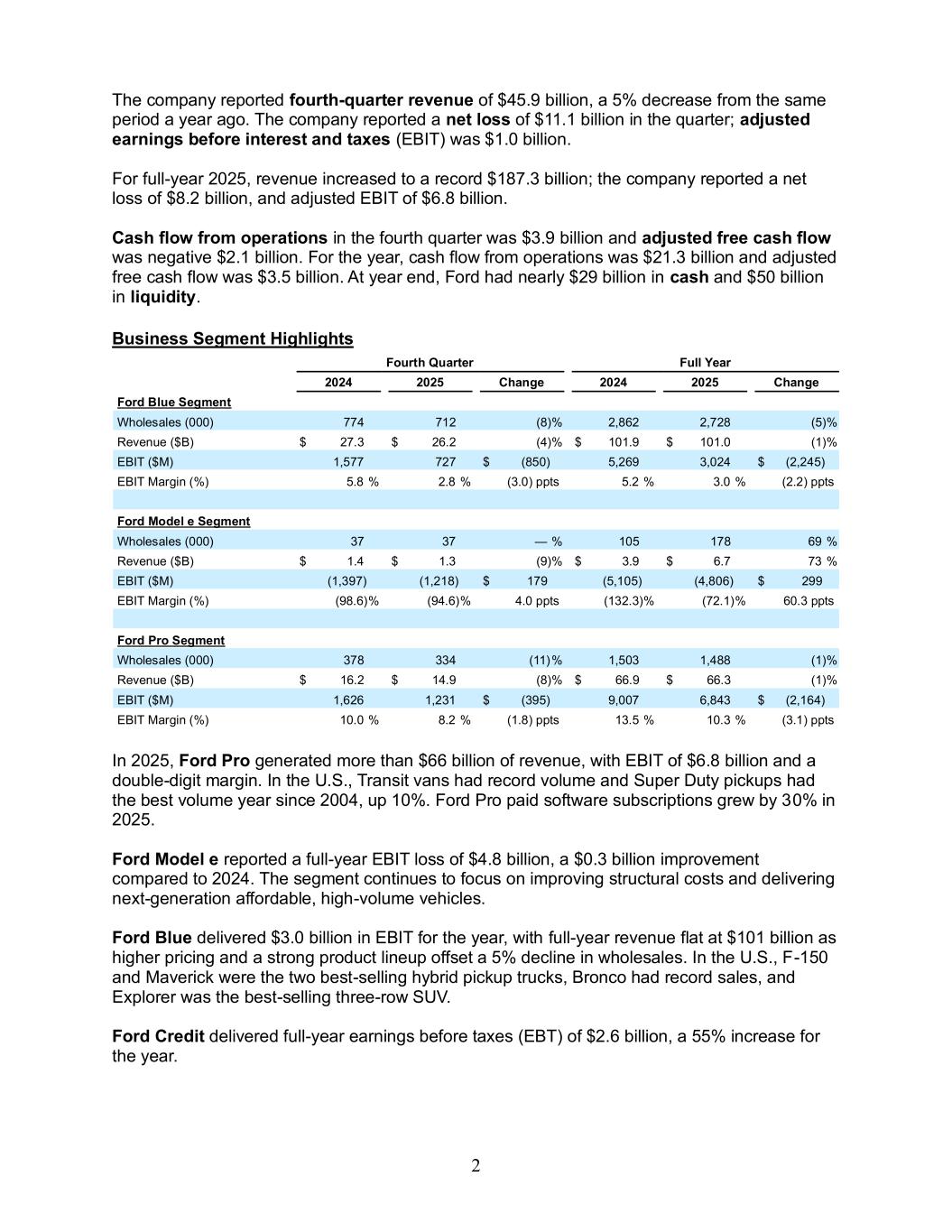
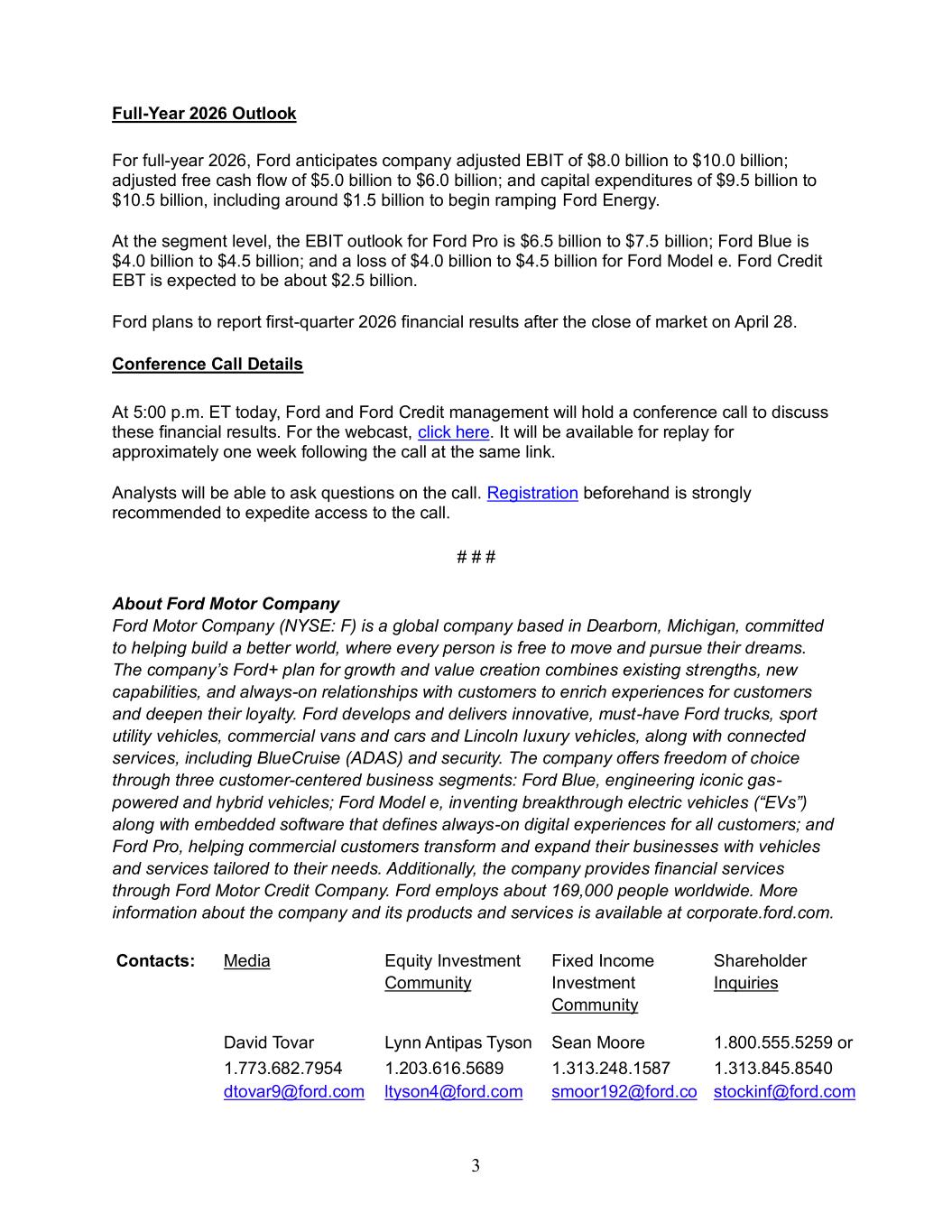
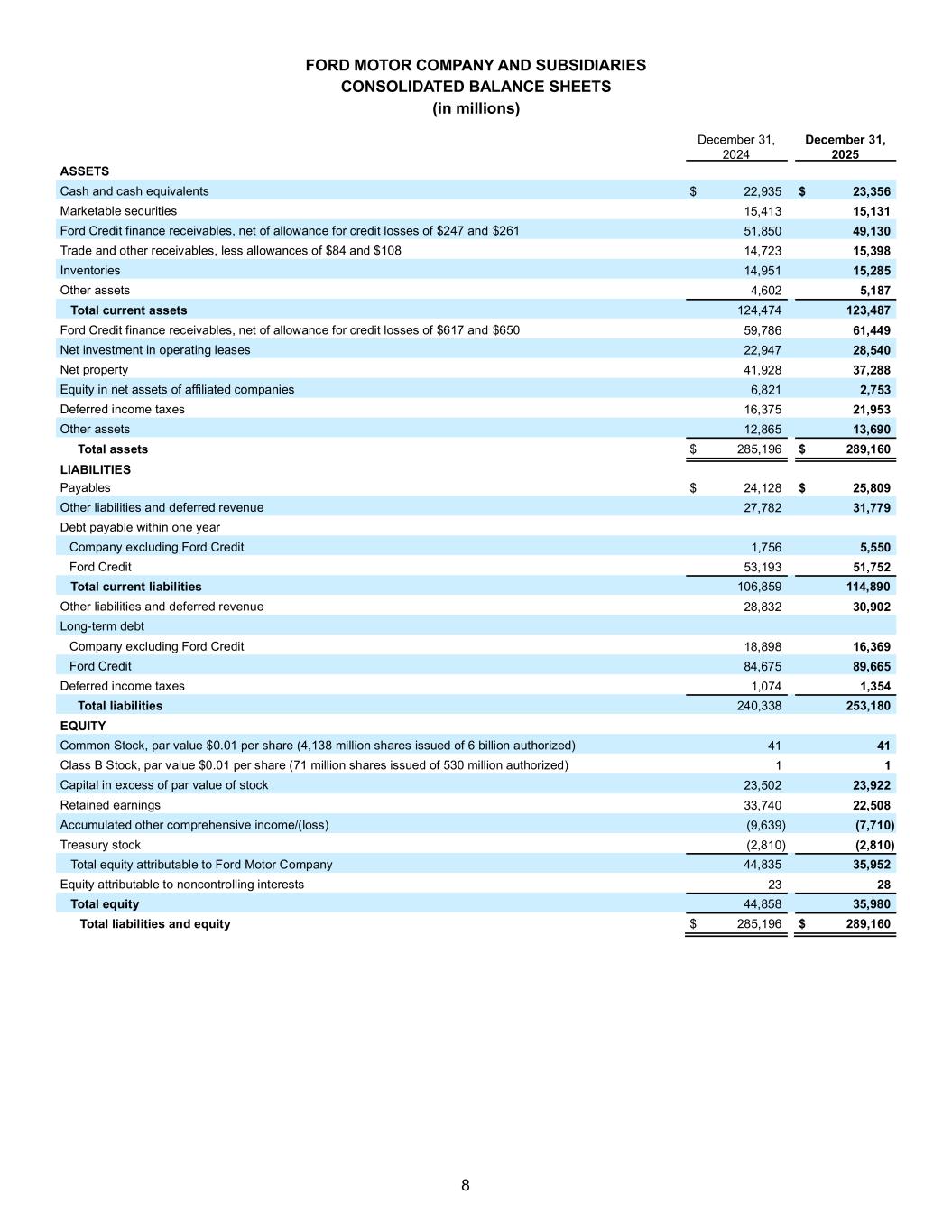
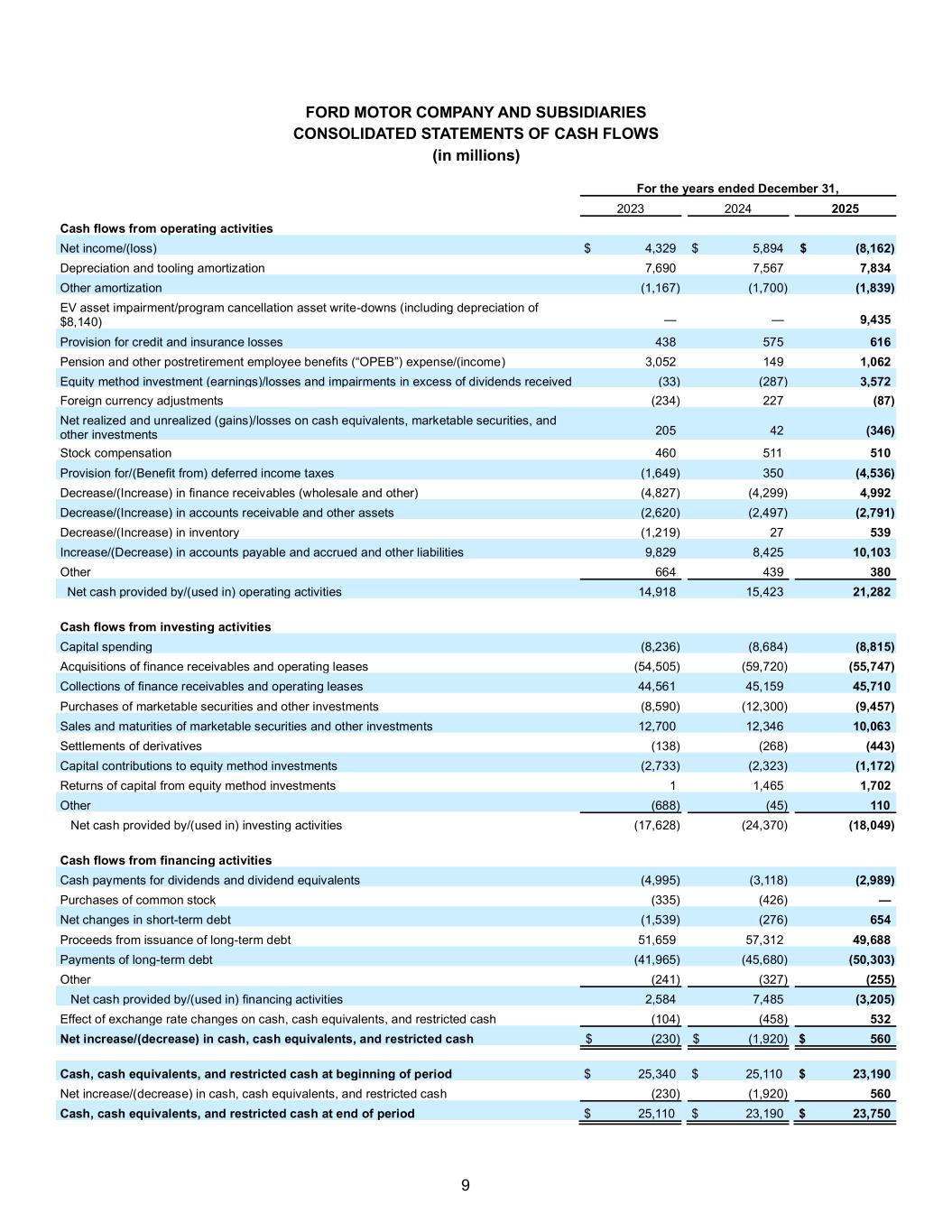
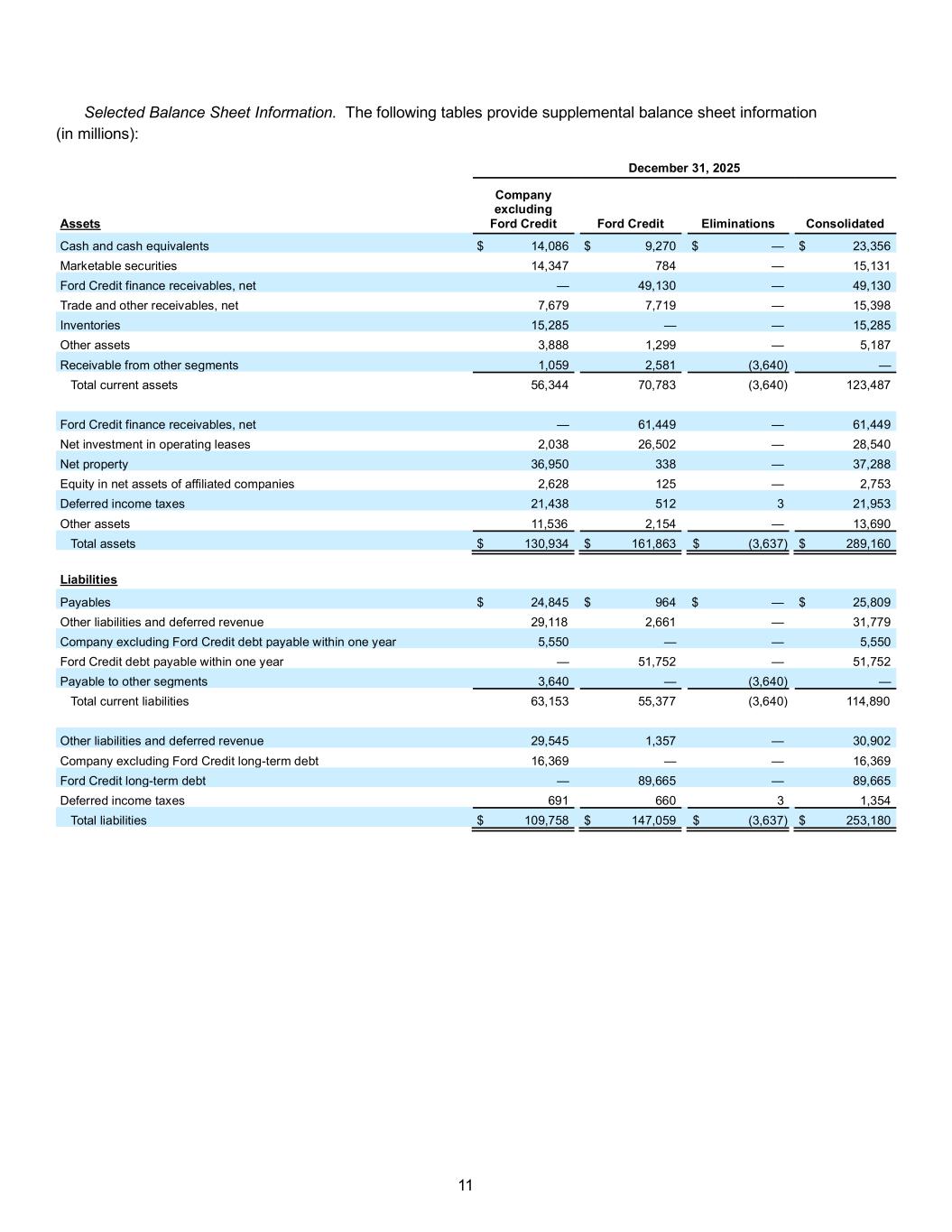
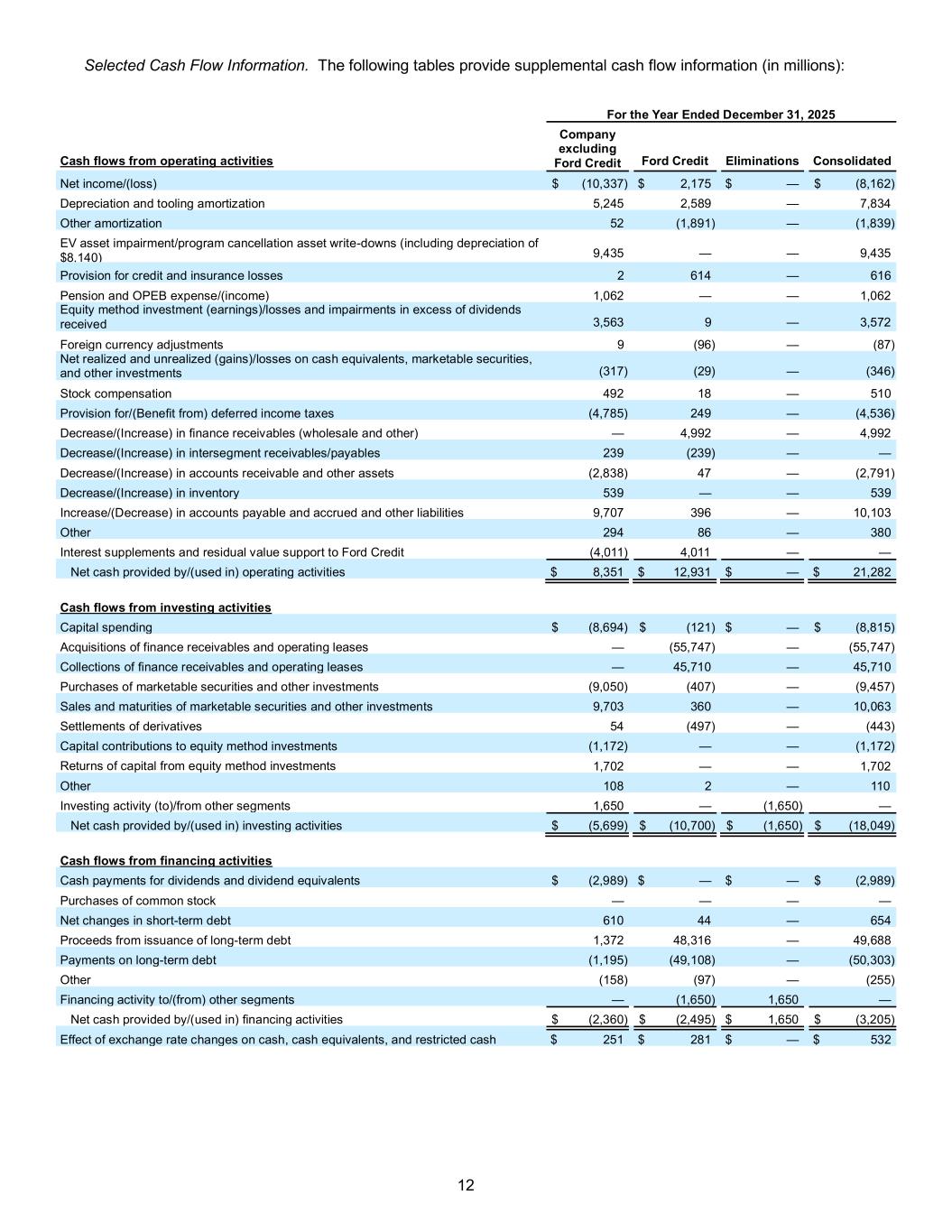
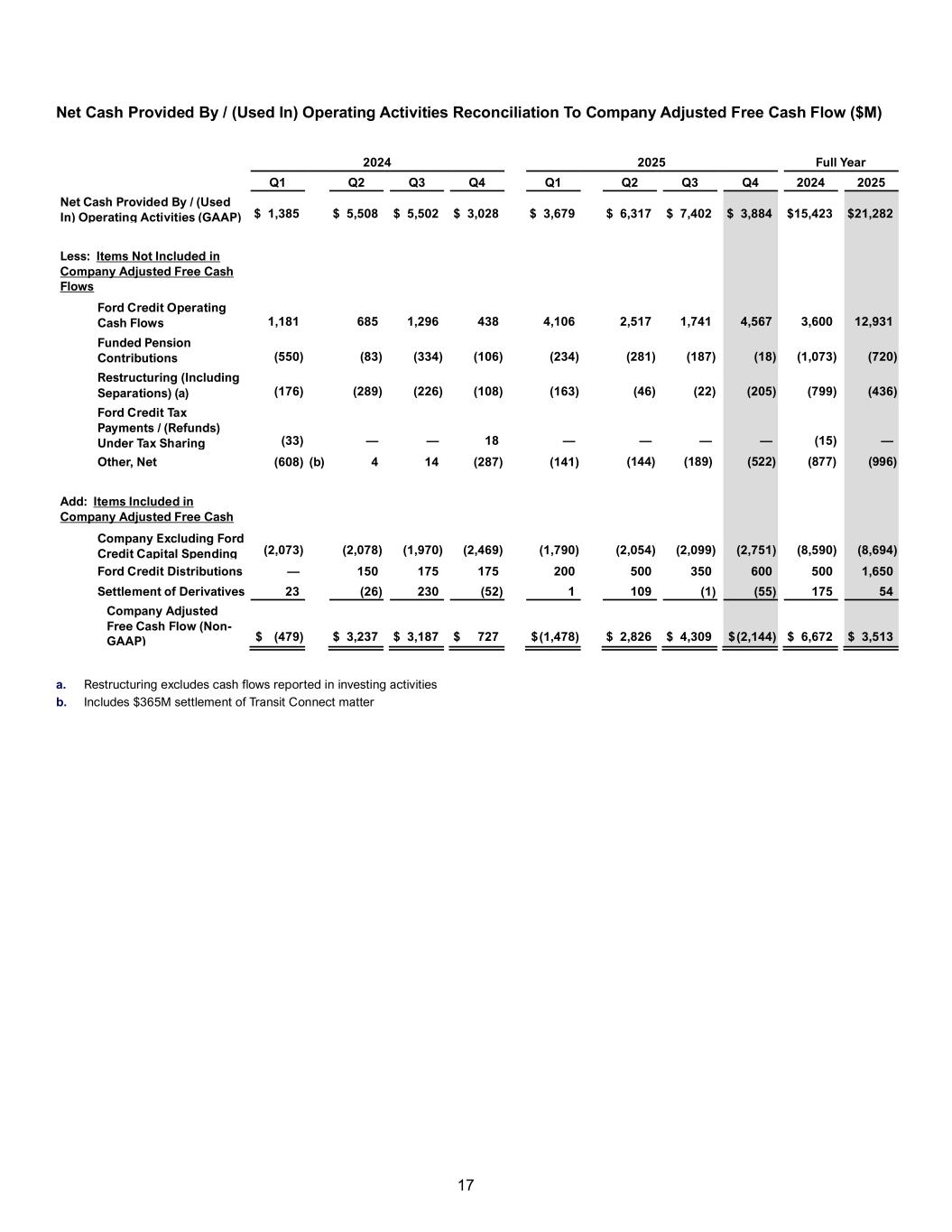
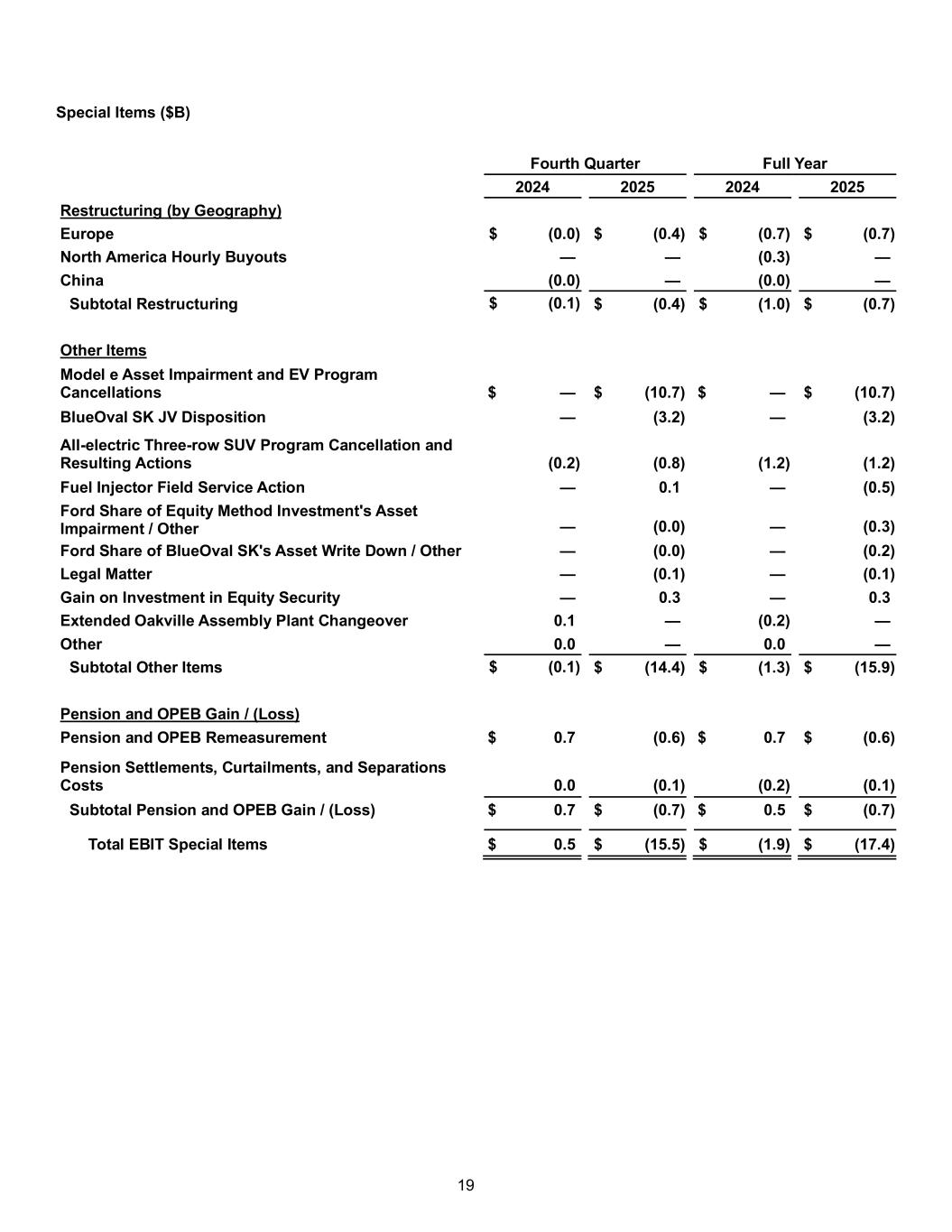
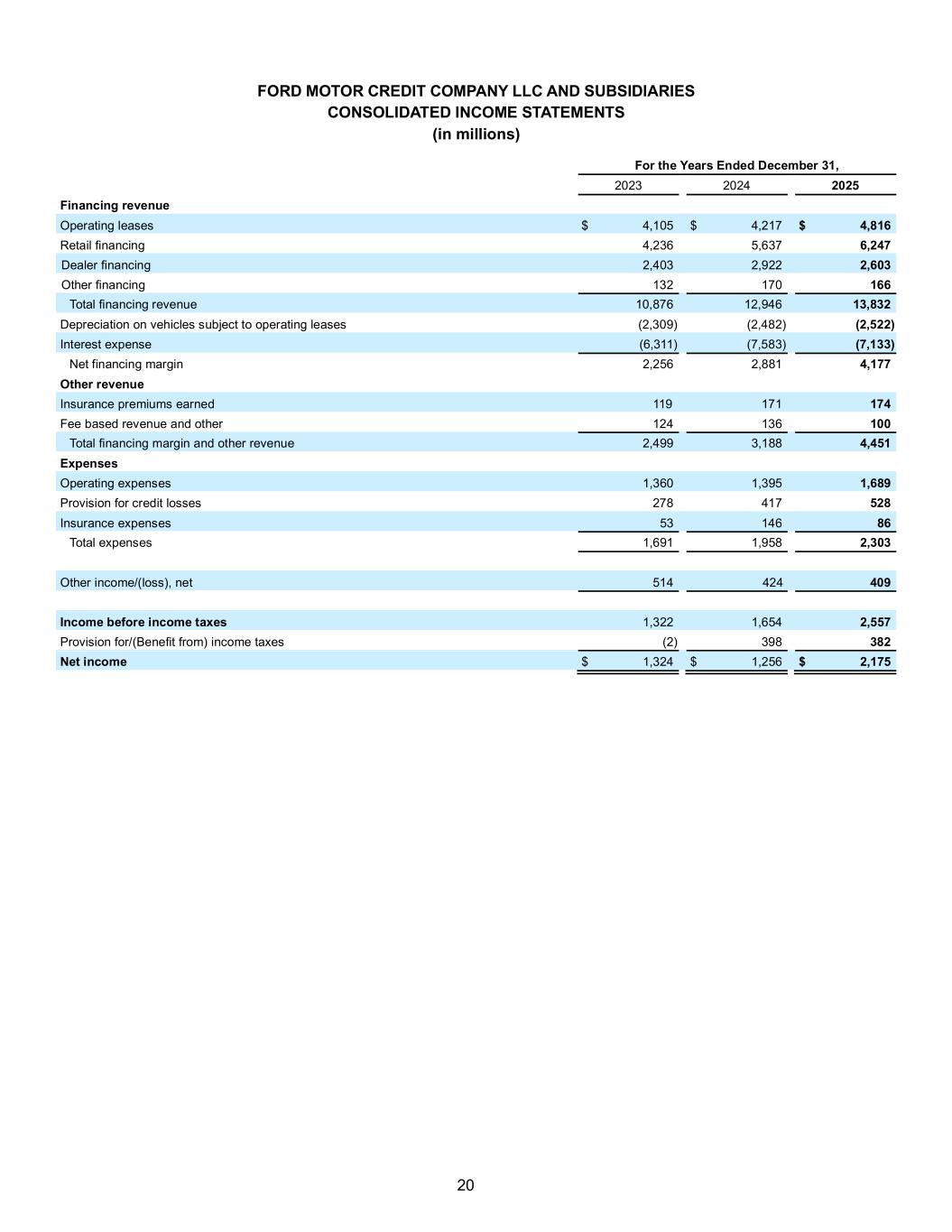
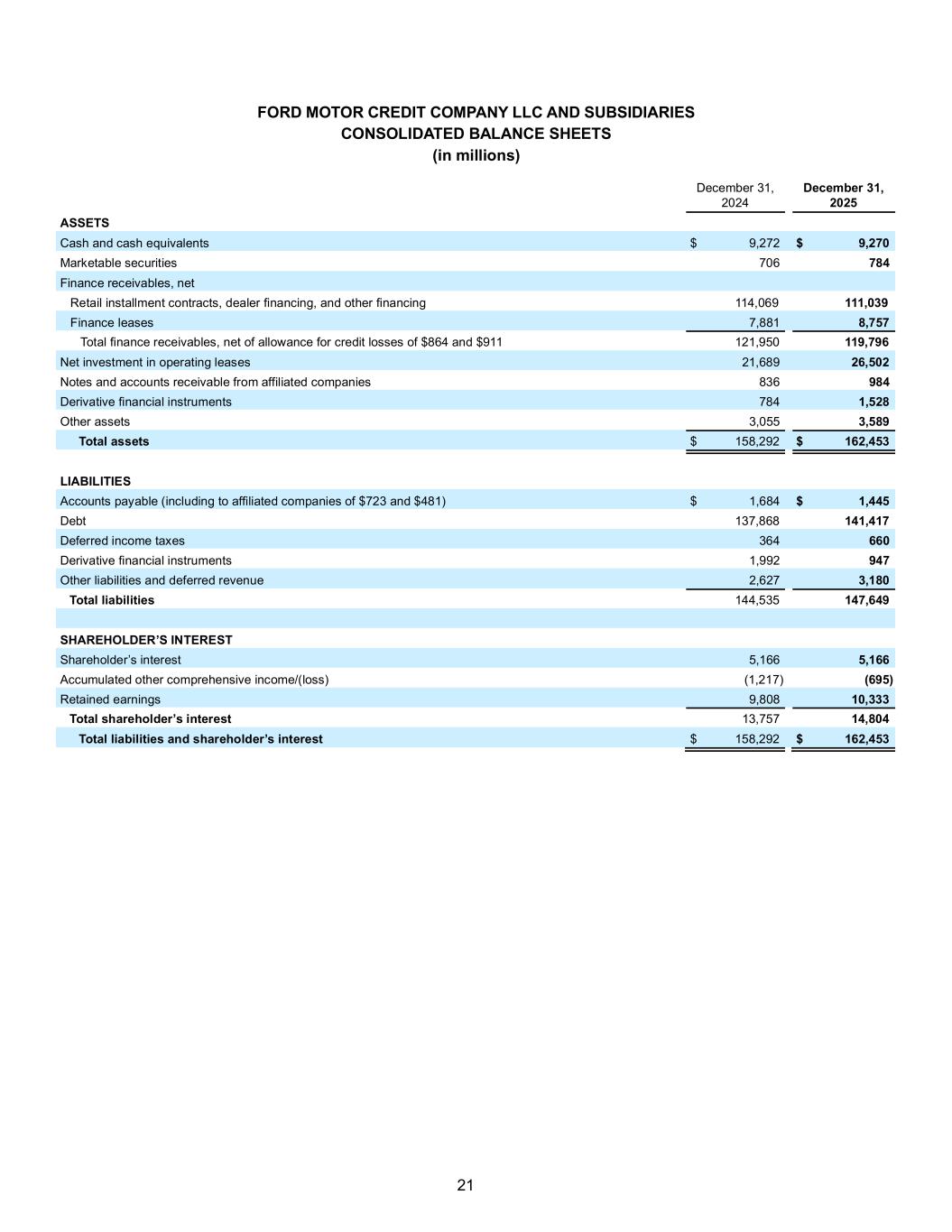
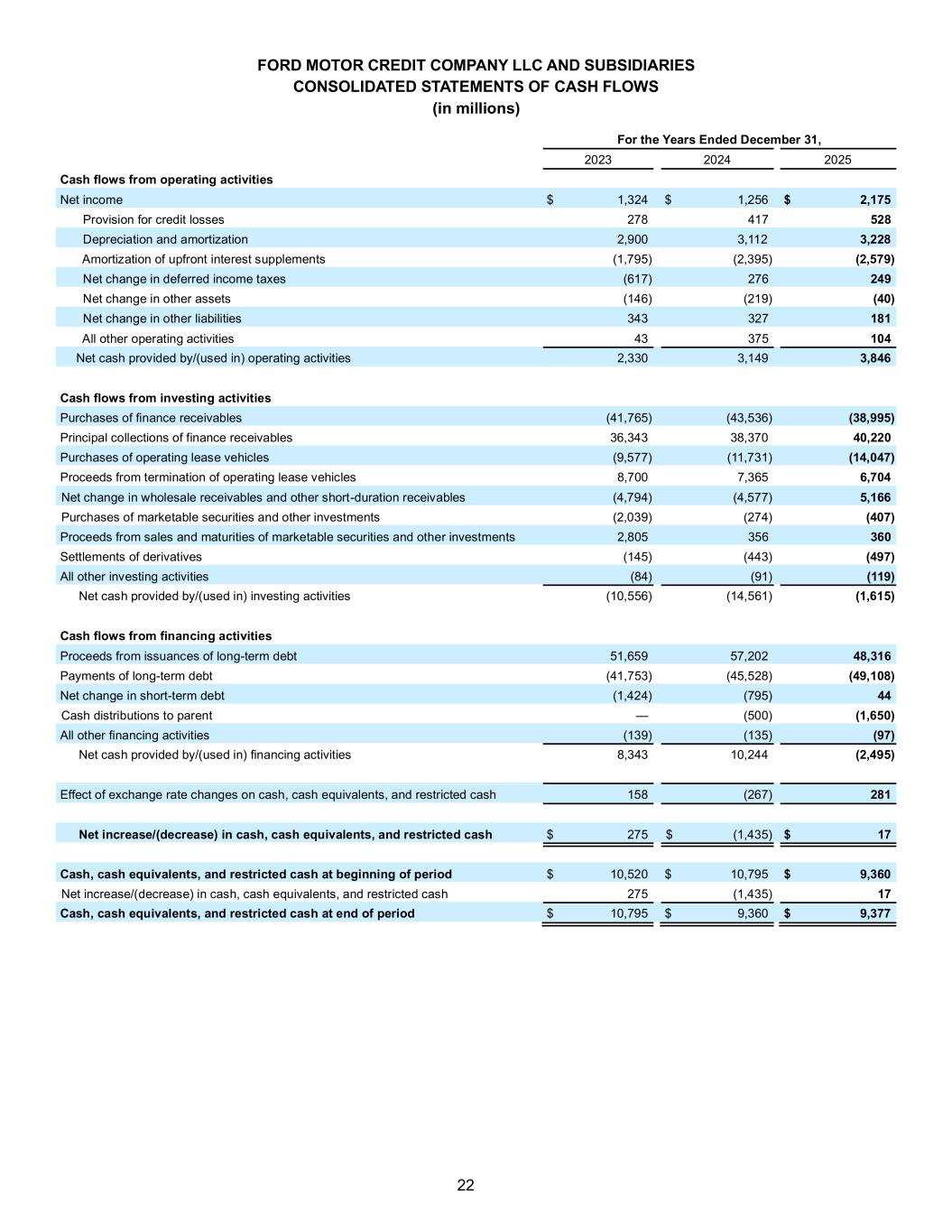
the fifth consecutive year as we continue to expand our share of revenue including non-traditional segments like hybrid trucks while accelerating the growth of our higher margin-paid software subscriptions. We also stayed disciplined on inventory, cutting U.S. growth stocks by 16% and ending the year at 56 retail days supply, the low end of our target range. We generated $3.5 billion of free cash flow and ended the year with close to $29 billion in cash and nearly $50 billion in liquidity. We continue to prioritize our balance sheet, a significant competitive advantage that provides flexibility to accelerate investments into accretive opportunities like Ford Energy and both software and physical services. These are high margin, high growth opportunities grounded in disciplined capital allocation that will drive a higher returning, more resilient business model over time. We remain committed to our investment grade rating while also delivering top quartile shareholder returns through both share price appreciation and dividends including the declaration of our first quarter regular dividend of 15 cents per share last week now turning to segment highlights ford pro once again demonstrated its importance and persistence is a key profit pillar for ford by delivering more than 66 billion of revenue and EBIT to 6.8 billion with a double-digit margin. Pro achieved this in the face of tariffs, production losses due to novellas, normalization in U.S. industry pricing and more commoditized areas like government and delivery vans, and the challenging macroeconomic and regulatory landscape in Europe where we achieved market share growth. In the U.S., transit had record sales up 6% and Super Duty had its best sales in over 20 years up 10%. Pro continues to evolve its business by diversifying revenue streams and building out its high margin service infrastructure. Paid software subscriptions grew by 30% last year. In 2025, we made meaningful progress in Ford Model E, improving structural costs, our mix of higher margin products, and driving adoption of affordable, high-volume vehicles. Model E delivered revenue and volume growth of 73% and 69% respectively, driven by new product introductions in Europe. EBIT losses for the year improved to $4.8 billion loss, reflecting fewer losses on Gen1 products partially offset by increased investment in our gen 2 products as we prepare for the launch of our ueb platform in 2027. the lower gen 1 losses were driven by cost reductions in higher volume in europe where margins are stronger lastly in december we rationalized the role of pure evs in our near-term product portfolio based on changing market realities in the u.s Our disciplined approach to capital allocation will significantly improve the run rate of the business going forward. Our performance in Ford Blue was supported by our industry-leading power of choice and strength of our truck and SUV franchises. Revenue was roughly flat as higher net pricing in the strength of our product lineup offset most of the 5% decline in wholesales, which includes disruption from Novellis. In the U.S., Blue had the two best-selling hybrid trucks, Bronco had record sales, and Explorer was the number one three-row SUV. Our higher-margin Raptor franchise also had record sales. Blue delivered $3 billion in EBIT as lower warranty, other cost improvements, and growth in software and physical services were more than offset by planned and unplanned lost production and adverse exchange. Ford Credit delivered full-year EBT of $2.6 billion and distributions of $1.7 billion. EBT was up 55% for the year, reflecting improved financing margin. Ford Credit continues to originate a high-quality book with US retail and lease FICO scores exceeding 750. We are excited about the recent approval of our industrial bank application. This long-term initiative will expand our capabilities, enabling us to offer additional savings options to customers, further diversify, and lower our cost of funding over time. So let me turn to our 2026 outlook. For the full year, we expect company adjusted EBIT of $8 billion to $10 billion, adjusted free cash flow of $5 billion to $6 billion, and capital expenditures of $9.5 billion to $10.5 billion as we shift capital to higher return growth opportunities across our portfolio, including roughly $1.5 billion for Ford Energy. Our full-year outlook for the industry assumes a U.S. SAR of $16 million to $16.5 million in flat industry pricing. Excluding novellas, tailwinds and headwinds for Ford include positive market factors, including favorable mix associated with the sunset of low-margin nameplates and benefits from changes in the U.S. regulatory environment. flat cost, which I would like to unpack further. We expect lower tariff costs of about $1 billion, reflecting a full year's worth of credit expansion. We also expect further material and warranty cost reductions, building off our momentum in 2025. These combined savings allow us to absorb about $1 billion of higher commodity prices driven by inflation and pressure on DRAM, as well as incremental investment in support of our UEB platform, the ramp of Ford Energy, and cycle plan actions that will drive higher return growth in 2027 and beyond. Additionally, we expect our high margin software and physical services profit to grow by about 6.5%. Now, let me frame Novellis for you. We expect year-over-year improvement of about $1 billion, which is back half-weighted. This includes $1.5 to $2 billion of temporary costs, including tariffs, to ensure continuity in aluminum supply. These costs are not expected to be repeated in 2027. From a calendarization perspective, we expect our first quarter EBIT to be roughly flat sequentially as we continue to work through the impact of Novellus. We expect to approach a more normalized EBIT in the second quarter with a plan to hit our underlying EBIT run rate level in the second half as volume stabilizes and our portfolio optimization takes hold. To help you better understand this calendarization, we have included a first half, second half bridge for you in our earnings deck. Our segment outlook anticipates another robust year at Ford Pro, with EBIT of $6.5 billion to $7.5 billion. The fundamentals of Pro's business are strong. In North America, we expect continued share growth in an industry that's roughly flat, enabled by Conquest sales in a diversified channel mix, which we believe to be well-balanced at roughly one-third large corporations, one-third SMB, and one-third government and rental fleets. We still see untapped demand for Crew Cab and Diesel Super Duty, and most of our contractual deals for the year have already been agreed to. Ford Pro continues to improve its durability by growing its mix of profitable software and physical services globally through precision customer targeting, demand generation initiatives, and Pro-specific solutions. while pros underlying business continues to strengthen we expect 2026 results to be dampened by the near-term impact in novellas ramping oakville to bolster super duty capacity in canada in a tougher regulatory climate in europe we expect losses of 4 billion to four and a half billion for ford model e this reflects about 1.6 billion of improvement in gen one products driven by lower U.S. volume and cost savings from restructuring the business. These savings will be partially offset by around $600 million in higher Gen 2 costs as we near the launch of LFP batteries in Marshall, Michigan and our UEB platform in Kentucky, along with roughly $400 million in startup costs for Ford Energy. The team is aggressively working on additional Gen 1 cost reductions in ways to further optimize the market equations in the US and Europe. We continue to target Model E reaching breakeven in 2029. For Ford Blue, we expect EBIT of $4 to $4.5 billion, reflecting improvement in the underlying business as we recover from Novellis. Favorable mix as we lean into our revenue and profit pillars and continued progress and cost exciting new products like bronco rtr and mustang dark horse sc will help us expand our off-road leadership and grow our performance business furthermore like pro we expect continued growth in our software and physical service offerings for retail customers through increased convenience and engagement lastly ford credits dbt will be about $2.5 billion. Relative to special items for 2026, in December, we announced actions to rebalance our EV portfolio and assets and launch more multi-energy platforms. In 2026 and 2027, we expect to record about $7 billion in charges related to our updated EV strategy and in the expected disposition of our boss investment. Cash expenditures are expected to be up to about 5.5 billion with most of this weighted in 2026. As I mentioned at the beginning, our 2025 performance demonstrated progress against our Ford Plus plan, not just in growth and profitability, but also quality, capital discipline, the right product portfolio and consistent cash generation. Our underlying business is strong and we are relentlessly working to strengthen it further as we continue to focus on improving both quality and cost as well as returns and cash flow. I'll now turn it over to the operator so we can start Q&A.
Operator
We will now move to our question and answer session. If you have joined via the webinar, please use the raise hand icon which can be found at the bottom of your webinar application. If you have joined by phone, please dial star 9 on your keypad. When you are called on, please unmute your line and ask your question. Please limit to one question and one follow-up today. We will now pause a moment to assemble the queue. Our first question will come from Dan Levy with Barclays. Your line is now open. Please go ahead.
Hi. Good evening, and thank you for taking the questions. I want to first start with a question on slide 19 and some of the assumptions you have for 2026. And maybe you can help us unpack the pieces on the market factors, which seem to be quite positive and what's driving the year-over-year increase. Now, I know you said that there's a billion dollars of novellas, but maybe you can help unpacked you know the magnitude of other benefit you're getting on the mixed side um and how that all of this can on powertrain and how all this can offset maybe some of the declines on volume from escape corsair um you know and also the more competitive environment and maybe you could just a a word on on tariff assumptions as well thank you yeah sure thank you so much dan for the question So let me just start with the novellus improvement of $1 billion year over year, and I'll unpack that slightly for you.
That assumes $2.5 to $3 billion, reflecting the non-reoccurrence of 2025 losses and capacity actions at Dearborn and Kentucky truck plants. So you'll recall that we had about $2 billion of losses last year. The expectation is that would be non-recurring as we enter into 2026. Originally, we thought we would make up about $1 billion of that. now we think we'll make up a half a billion to a billion based on the second fire in November. That's going to be offset by a one and a half to two billion in temporary costs, and that's to ensure supply continuity. There will be tariffs and premium freight associated with that supply continuity of aluminum until we can get the Novellas hot mill back up and running sometime between May and September. With respect to the positive market factors, yes, it does include the sunset of low margin nameplates, namely escape, but there's also benefits that we expect to achieve from changes in the U.S. regulatory environment, and the biggest impact there would be about a half a billion less of credits in the U.S. You'll note that we had about 0.7 billion of credits last year but about a half a billion of that is attributed to the u.s cost roughly flat excluding the novellas impacts we had industrial cost improvements we're expecting maybe around a billion again in material and warranty costs we're expecting tariff costs lower by 1 billion year over year but again that's going to be offset by the novellas temporary costs in 26. We'll have higher commodity prices, we think. And there's also investment in UEB, Ford Energy, and the cycle plan that we spoke about. We also expect there to be continued growth in the high margin software and physical services businesses that we talked about in pro, but across all the retail, including blue.
Other factors, you know, are largely balance exchange compliance etc great that's and then did you have a further question on tariffs or did you know you you covered the the tariff question um thank you um as a follow-up jim i'd like to just ask conceptually how you're looking at the investment in you know uh ev and and avian and really it's just in the context of if we look at the arc of investment you had the past five years we know that you and others went through this very heavy push on ev ev software sort of had mixed results and you know you you took a big impairment a lot of companies took big impairments on the back of uh what happened with the regs but it seems like you're resetting strategy now there's a fresh push on ev with uev you're making more investments on adas and software so help us understand in light of the experience the last few years and how maybe capital inefficient it was for the industry as a whole, how you're making sure that this new round of investments is being done in a more capital efficient manner.
Thank you for your question. So I think the customer has spoken. That's the punchline. The customers in their duty cycle have spoken. There's enough choice around the world on electrification for us to cherry pick customers' choices around the world and come up with the right strategy, not only in the U.S., but around the world. In the U.S., you hit it. Our bet is on the UEV. We believe this platform localized in LAP will hit the majority of profitable EVs sold in the U.S., which are 30, $35,000 EVs, high volume. Tesla's shown that we can make money in that market even without subsidy from the government at the right cost level. But that's only part of our strategy. In addition to that, we're betting on hybrid across our lineup and E-Rev, where it makes sense for our duty cycle, like a large trucks, where towing is a real important application. and both FHEV and Pure Electric will definitely not work. So we're looking to make CO2 reductions across our lineup, but we're doing it in a very efficient way. Overseas, the story's a bit different. Overseas, we're looking to piggyback, like in Europe, with Renault and Volkswagen on capital-efficient, high-scale, lower-cost solutions like B-Car EVs in Renault. We think that is a market, depending on how the EU and the UK incentivize them, but that can be profitable. Elsewhere will be opportunistic between PHEVs and hybrids for Ranger, our body on frame, and our growing export business from china will be opportunistic based on that customer in australia or south africa or brazil um exactly what they want um i think the real question that i ask myself is how would the chinese change the game with all of these in terms of pricing power given the overly competitive subsidized reality and for example in January the Chinese market being down 25% year over year if that persists you know we will have to future proof our costs around that pricing reality that in the regulatory environment I think are the wild cards in this strategy but that's the same wildcard every OEM has and but I do believe this is the right allocation of capital it's a combination of partnerships where it makes sense efficient partial electrification investments where we have revenue power and really hitting the EV market in the core of the market in our home market where there's not a lot of competition right thank you your next
Operator
question will come from Joseph's back with UBS you may now unmute and ask your question.
Thanks. Good afternoon, everyone. Sorry to go back to this so quickly, Shari, but just to make sure I got this novellus impact right in my head here. So it was a $2 billion impact in 25. You're talking about that's lower by a billion in 26, so a billion, but that's still inclusive of a billion and a half to 2 billion of temporary costs. So the delta to get you back higher, I guess, is the volume portion of it. So I guess, you know, put another way, if all that temporary sourcing costs and logistics and higher tariffs is really temporary, you're basically saying that $9 billion a bid is, you know, more like 10 and a half or a little bit above that is that is that the right way you're thinking about that it is a fair way to think about it yeah so basically we'd have non-recurrence of the two billion from last year right so that that would start your 2026 better and then we had planned on being able to make up about a billion of that now we think it's probably a half a billion two billion so that's how i said top line
two and a half to three but we have temporary costs and those are going to be one and a half to too so when you take that off that gets you with the net positive 1 billion for the year and i do agree that you would have some tailwinds on that going into 2027. given novellas is so important kumar do you want to say anything about the variability of those costs uh and and how reliable is our aluminum supply now okay so two facts there jim we expect the uh the mill to start back up somewhere in the middle of the year the range between somewhere may and september we have a team working closely with novellas on the ground there so we know exactly where things stand but the more important part is the second part of your question we have contingency plans to secure sufficient supply for various scenarios no matter where we we end up with the start date between between May and September.
Okay. Thank you for that. And then just the second question, another one, I guess, on on on market factors, I want to focus, I guess, specifically on on on two areas. You know, one is you've got some competitors out there that are sort of trying to to to regain share and North American trucks and European LCVs. So how you think about the market impact there? I know I know you mentioned in your remarks some you know affordable trucks and pro and then even beyond that like is there any more granularity or color you give us this is sort of what gets you comfortable with the you know Ford specific market mix factors that can sort of aid profitability to help offset some of these some of these costs.
Yeah, Joe, it's Andrew Frick. First of all, let me comment on the first part around full-size pickup. That is always a competitive segment, so this is nothing new for us. And as the leader, we have to be ready for challenges at all times. We have a great pickup lineup right now, a great F-Series lineup. We cover the breadth of the entire segment, and we've actually been growing. in fact last year as jim mentioned we grew two points of revenue share and one and a half points of volume share in 2025 and we've actually expanded our truck leadership position over our key competitors each of the last two years and and by a sizable margin but as we enter this year in 26 we of course always approach it humbly our dealer network is really set up and is a real strength for us they continue to invest in the truck business our stock positions are on the low end of our of our day supply range right now and our overall market approach is to remain disciplined in our market equation balancing the stock share and our incentive spending um and we're going to continue to maximize series and and powertrain mix as we as we approach that segment um and really on the second part around broader market in our in our portfolio you know we're We're looking to improve our mix based on customer demand across the whole portfolio, and Sherry mentioned some of the product mix impacts. We started making some of those in the second half of last year based on the changing conditions. For example, we're increasing hybrids on Maverick to address demand, while F-150, we're increasing V8s, Lariats, Raptors, both again tied to customer demand.
So part of our ongoing efforts to optimize the market equation, our approach is to balance our mix while also increasing our revenue um and that was evident last year as we increased our our share revenue again on pickups and four by four vehicles alicia any comment from you on pro for our assumptions this year for market equations what you're seeing given that we're competitively quoting for several months now started off uh we've been a leader in europe from a fleet perspective for the past 11 years and it was a very competitive market last year we expected to continue to be right now we're seeing a strong demand from an orders perspective on a light commercial vehicle side we absolutely have a very competitive environment but we have very competitive products and we also have services that we're continuing to invest in and grow where we're offering our fleet customers solution for uptime and productivity so we're seeing strong demand for orders coming through the quarter and we've also seen just solid pricing right and so our initial assumption was that we'd see a small decline in pricing to start the year and we actually have not seen that yet but we're very tied in to what's happening in the market and making sure that we're responding there for customers thank you your next question will
come from emmanuel rosner with wolf research great thank you so much um my first question on capital expenditure, so you're making these investments into higher return products and technology going forward, but I think at the income statement level, it's roughly offset by ongoing cost savings, so you're investing, if I get the numbers right, maybe an extra billion dollars, but then you have a billion dollars in savings. At a capex level, it seems like you're actually taking it up, and I was a bit surprised by this, so how should we think about the capex needs you know for these investments over the next few years is this sort of like a new a new run rate or is there sort of like an initial boost needed because of the energy storage investment yeah thank you for the question Emmanuel so guidance reflects an increase in capital spending of a little more than 1 billion as you noted so nine and a half to ten and a half billion in.
That increase is driven by our investment in Ford Energy, which is the largest portion of it is expected to be in 2026. We had talked about a $2 billion investment in Ford Energy and 1.5 billion of it is like six. The mix of our capital spending continues to shift. We have a new capital allocation process. It's changed. It's really pushing our capital into more creative areas of the business. And we've consistently stayed nimble, you know, adjusting to customer demand and a changing regulatory environment as well. So what I would say is that roughly 75% of our capital over the plan period is going into our higher return, larger truck and multi-energy portfolio.
And in that balance, 25% is your Ford Energy and continued modeling investments like in UEV, b reb and things of that nature and the the goal for that capital allocation is very clear it's to get to eight percent event margin for our company we are investing more in blue as well hybrid and new products that will be very profitable and we are decelerating the investment in model even though it's still at high levels as sherry said we are descaling that investment So the goal is to set up the company over the next couple of years to be that 8% margin company, and that's the kind of capital we need to invest.
Thank you. And then as a follow-up still on the Model E then, I guess to get to this ultimate target, you probably also have to execute on bringing back Model E to profitability. Can you talk maybe about, you know, some of the levers and cadence between now and 2029? It seems like you're doing, you're having a lot of savings this year on Gen 1, but investments on, you know, the new generation, is the improvement towards breakeven, is that going to be back and loaded towards 2029, or can you expect some steady improvement throughout the time period?
Yeah, thank you. i think you can expect steady improvement throughout the time period as the uev products come on board 27 and then get even more profitable in 28 and beyond with additional variants that's going to improve the profit margin as will the introduction of b vehicles in europe that also will be coming on board as well and all that's going to be happening as some of the gen one you know becomes lower volume thank you your next question will come from ryan brinkman with jp morgan your line is now open please feel free to unmute hi thanks for taking my question i was
intrigued by jim's comment that full year 2025 tariff cost tracked 2 billion versus the 1 billion that was communicated at the time of the 3q earnings due to a late year change in tariff credits on auto parts such that full year ebit pro forma for this would have been 7.7 billion which is substantially better than the 6.0 to 6.5 billion that was guided to on the 3Q call. Firstly, can you help on what exactly was the regulatory change? I'm aware of the change to tariff on the non-USMCA compliant parts. I thought that was a positive though, allowing for a longer phase out to the offsets there. And then secondly, the fact that for your EBIT pro forma for the unexpected headwind track, $1.2 to $1.7 billion better than expected. Can you talk about what is it that tracked so materially better than at the time of 3Q earnings? And then finally, as we head into 2026, you characterized the headwind as maybe one time. Is there any headwind relative to the tariff credit change that continues with you, or did it only impact the fourth quarter? Thanks.
Go ahead, Steve. I think we had a great question and a very important question for Ford, because we're the most American company. We have a very different footprint than our competitors. It's largely related to parts recovery and the timing.
Go ahead, Steve. Sure, thanks. Yes, the short explanation is a credit that we have against tariff liabilities on parts became effective on November 1st, and we had understood it would become effective instead on May 3rd. And so that delta is about the $1,900,000,000 that Sherry referenced. It will mean to your last question that going forward, we can use this credit and this is a one-time hit, but that was the hiccup that we experienced in December and accounts for about a billion of the difference. Okay.
And then you would add a follow-up question about just Q4 must have been coming in stronger given that we would have been at 7.7 billion.
You're absolutely right. it was crossed a lot of that was cost and you might have noted that we said that we ended up with one and a half billion of cost improvements in a year-over-year basis versus what we originally were targeting at one and it's multiple elements of cost a little bit of pricing in there too okay very helpful thank you and then just lastly well i know you don't report even by region could you speak to the performance um in europe including how you would rate the strength and profitability of both your passenger vehicle and commercial vehicle businesses there, and how the outlook for the two businesses could be impacted by either the EV portfolio changes announced on December 15, or the agreement that was signed with Renault on December 9 regarding the two incremental Ford-branded EVs and cooperation on light commercial vehicles. Thanks.
Thank you. Well, we've always been very consistent. The core of our European business is our pro-strategy continues to be very profitable and in fact this is kind of the first year we've seen the benefits of the vw scale with our one-ton band where it's worth a lot of money uh to combine our scale uh your question uh obviously points to the growing uh concern around the profit pool for profitable passenger cars in europe and and and that's exactly where the conversation should go when it comes to europe we obviously are taking steps to address our profitability of our passenger car business as we have for many years uh jim bombeck and the team are very focused on using renault's platform especially their b-sized ev to dramatically reduce uh our costs and improve the profitability of our ev business in europe and we see that as a very critical moment for us. We also have plans, exciting plans for Europe on our passenger cars, but we will play very carefully in specific segments to our strengths to make sure that not only we build a profitable passenger car business, but we also support our dealers profitability so they can invest even more in growth in pro now the real rub is going to be how the uk and european uh the eu handle the choice between co2 reduction and jobs and this is a place where ford is quite um outspoken because we're not a national champion we can really speak on behalf of the customers on what the right balance is between co2 reduction and where customers really stand as well as job risk and i will tell you that most of the variability of that profitable passenger car market is going to come down to the policies with the eu and the uk governments thank you your next question will come from Andrew Prococo with Morgan Stanley.
Great. Can you hear me? Yes, we can. Okay, great. Thanks for taking the question. Awesome. Thanks for taking the question. I just wanted to come back to energy storage and hoping you can just provide a little bit more context around your capital allocation decision there. And along with that, I know you're two years away or so from really ramping up that production but this is a much longer lead time market than your traditional auto market so i'm just curious if you can share any feedback or context around what customers you might be speaking to and maybe the feedback that you've been receiving and maybe where you see yourselves really fitting into that market thank you sure it's early days um but at the strategy level there is no doubt that the growth for battery storage for both data center build out and grid stability places like california texas and florida is exploding
both for consumers and business users like data centers we have been deeply engaged with customers as we develop this business plan and we continue to engage them in specific contracts for our 20 gigawatt hour capacity in 27 and beyond. I would say this is not at the pace of auto industry. We can build the factories faster than auto and we can scale our revenue much faster. we also have a significant advantage technology-wise we have access working with catl and licensing their technology but in our own plants we have a significant advantage with the lfp technology compared to our competitors who are either importing with high tariffs lfp or trying to run this business with lithium batteries and much higher costs locally made um we believe that ford has the manufacturing expertise to scale this business we have great partners that can help us and we're really excited to be a customer facing business we don't want to be a contract manufacturer of batteries we want to have end-to-end solutions for customers where ford energy people will be calling fulfilling not just the sales contracts but servicing those customers over the long term. We believe this is a great adjacency for our pro business, fits right in the wheelhouse of our expertise, and given our advantage technologically, maybe for a period of time before battery costs commoditized, we feel like the customers are very excited. When we come calling to large grid suppliers, energy companies, they're really excited about Ford being in this business. We're a trusted company. They've been buying our vehicles for a long time, and we've done our homework on this business.
Great. Yeah, that makes a lot of sense. And maybe just to follow up with another question on capital allocation. I mean, Jim, I think you've been a pretty big advocate of partnerships in the past where it makes sense.
So when it comes to your autonomy strategy, it sounds like you're trying to do a lot of that yourselves in in-house can you maybe just elaborate on why that's the right decision why a partnership doesn't make sense in this context thank you good good question you know blue cruise is largely some higher based system that ford basically perfected uh the customer experience the level three is quite different it's a it's a very important safety critical system where people are traveling in high speed on the highways with their eyes off And we had real expertise coming from Argo. The people that we got out of the Argo team that are now in Latitude are very experienced people. And we don't think the technology is exclusive. We think why we want to bring this in-house is two reasons. Affordability. These are very expensive hardware solutions and software. By bringing them inside the company, we can save thousands of dollars per vehicle in cost that's why we're launching l3 with the uev many of our competitors are launching level three with their luxury brands we're going to be doing it with our 30 to 35 000 vehicles that's a big strategy um choice by ford we can do that because we did this inside the company and we had control over the hardware and it wasn't supplier based space so it was more affordable the second thing is experience when you're driving down the highway with your eyes off the road it's very important to have safety critical systems when the vehicle re-engages the customer how that whole process works and all the content sharing and all the other activities the customers can be doing and not driving the car so it's it's very important for us to control and curate the experience on level three level four strategy could be quite different. I'm not going to go into that today, but I think we look at Level 3 quite differently, Level 4 quite differently than Level 3 upcoming.
That's super helpful. Thanks so much.
Operator
Your next question will come from Mark Delaney with Goldman Sachs.
Mark Delaney Yes. Good afternoon. Thank you very much for taking the questions. I just wanted to talk first on costs. You talked about one and a half billion of progress this past year, excluding tariffs and expecting another billion in 2026. So if we go back to the 23 investor day, you talked about a 7 billion relative cost gap with peers. And I'm curious with the progress Ford has seen, where do you think you are on that journey? And is 7 billion still the right number for investors to have in mind over time?
So you're absolutely right.
A billion and a half last year, another billion this year, most of it from material as well as warranty and uh obviously we refresh the uh the cost gap scenarios as all the earnings come out we will redo that but firmly believe that we're closing that gap quite rapidly i just want to highlight the important work that kumar and doug are doing on the next generation product we're launching high volume very meaningful products in the next couple years and embedded in those products is much lower cost so not only are we doing it kind of year to year through bomb adjustments negotiation with their suppliers lower freight duty lower labor content in our plants we're also embedding that all that thinking into our next generation of products and to me that is the ultimate work together because that will change the culture of the company helpful uh thank you for those comments um another question was around inventory, you mentioned exiting 25 at the low end of your inventory target, obviously facing some challenges around supply chain.
But as you think about what's assumed in your 26 guidance and making up for a degree of the lost volume from this past year, are you assuming you restock dealers as part of your outlook for this year? Or are you planning to ship to demand?
And I ask in part to try and understand around the extra shift of F-Series production, is that something that might be sustainable uh into uh 2027 thanks yeah good question um we ended the year on the low end of our range uh you know we we reduced our stocks um dramatically year to year leaving 25 so we were down 16 we had about a 66 gross day supply we expect in 26 to remain within our targeted levels of the 55 to 65 retail based supply for the year we will be on the lower end of our F-150s for the first half of the year as we rebuild in the second half of the year, but we'll stay within our overall range, and we have, you know, combined with that is the demand side of the business, so that will allow us to do that, especially in our truck business.
Operator
Your final question will come from Colin Langan with Wells Fargo.
Oh, great. Thanks for taking my questions. Just to clarify on about this, I think you originally said, you know, you lost 90,000, you were going to add capacity of 50. Sounds like, is that still the case that we should see about 140,000-ish increase? Or I think your comments seem to imply that maybe it's a little lower than that. Any color there on the actual volume recovery we should expect?
Yes. So, we had lost around 100,000 units last year. We're planning to increase So about 50 to 60 this year is the plan.
OK, because I thought you originally said you expected a billion and now it's a 500 to a billion. And so is that just the added cost to get the that's what's worse than you originally thought in Q3 is the added cost to get that aluminum over?
Well, the added cost is is definitely a factor in that came after the second fire in November. So the added cost is different than when we had reported after the first fire.
Okay. And then if I look at the free cash flow guide, it's up $2 billion at the midpoint. Adjusted EBIT is up $2 billion, but CapEx is up over $1 billion.
What's the additional billion sort of help to free cash flow to kind of keep the adjusted up $2 billion without the CapEx being higher? yes so we had um you're talking about the cash flow from three and a half this year to to the midpoint which would be at five and a half in 2026 right so that's going to be driven by higher automotive ebit that's going to be driving with your free cash flow conversion we also had a receivable from the u.s government for a billion dollars in tariffs And we do have, as you said, higher capital spending in 26 as we moved into these higher growth opportunities.
Got it. Okay. So the receivable from the government. Okay. All right. Thank you very much for taking my questions.
Operator
You're welcome. This concludes the Ford Motor Company fourth quarter 2025 earnings conference call. Thank you for your participation. You may now disconnect.