Operator
Ladies and gentlemen, thank you for standing by and welcome to the First Citizens Bank Share's second quarter 2026 earnings conference call. At this time, all participants are in a listen-only mode. After the speaker's presentation, there will be a question and answer session. To ask a question during the session, please press star 1 to raise your hand. To withdraw your question, press star 1 again. If you require operator assistance during the program, please press star zero. As a reminder, today's conference is being recorded. I would now like to introduce the host of this conference call, Ms. Deanna Hart, head of Investor Relations. You may begin.
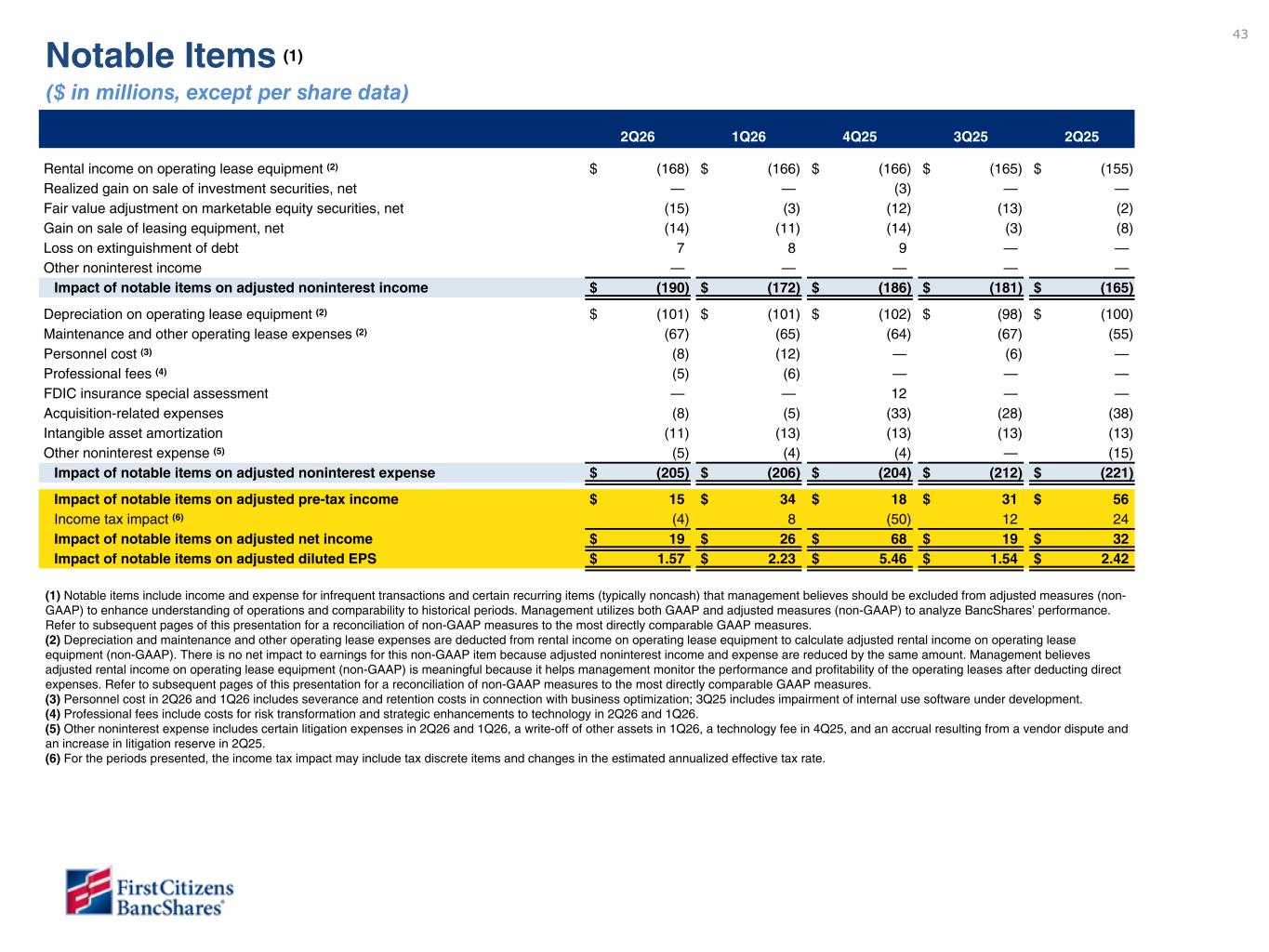
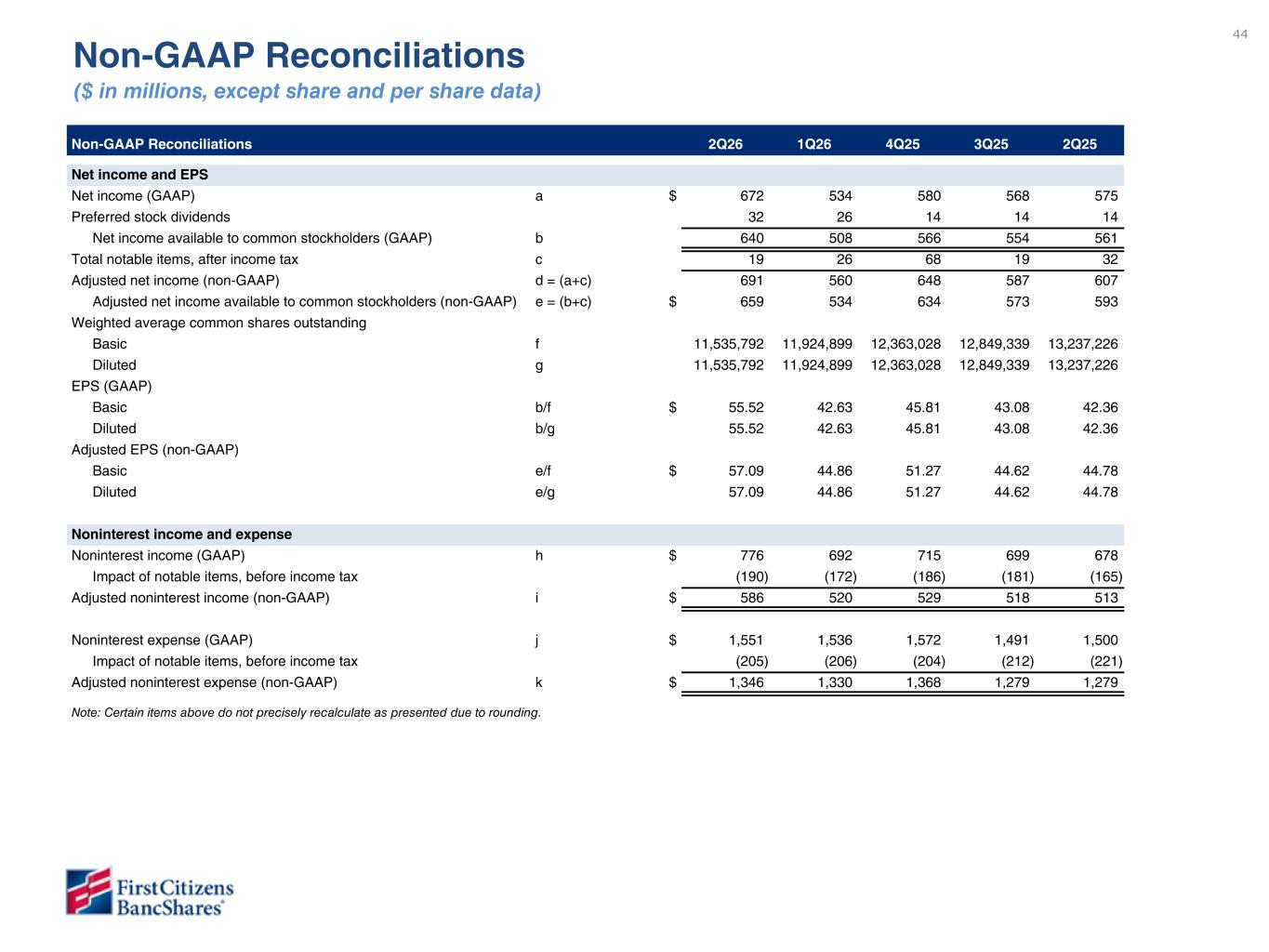
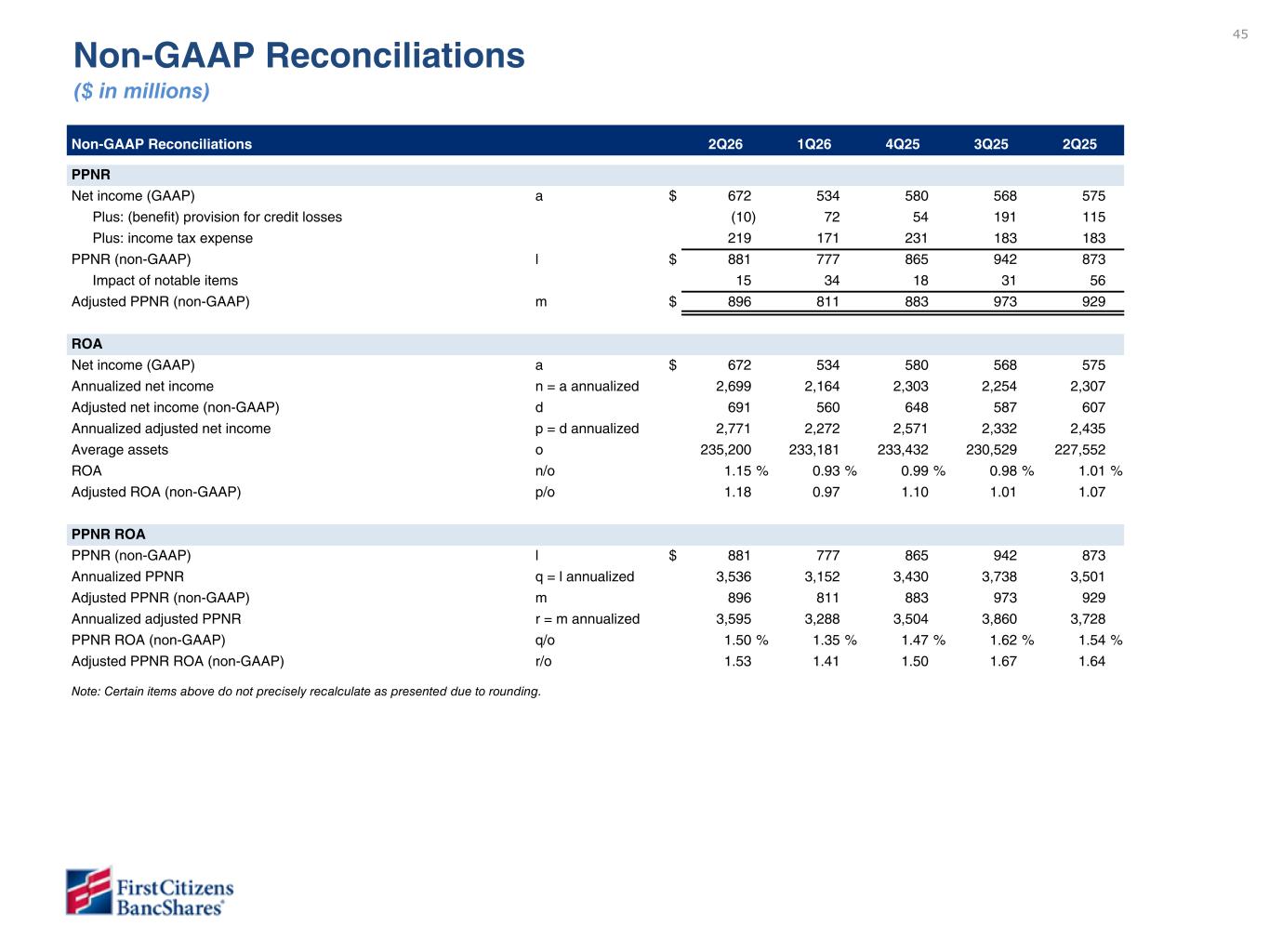
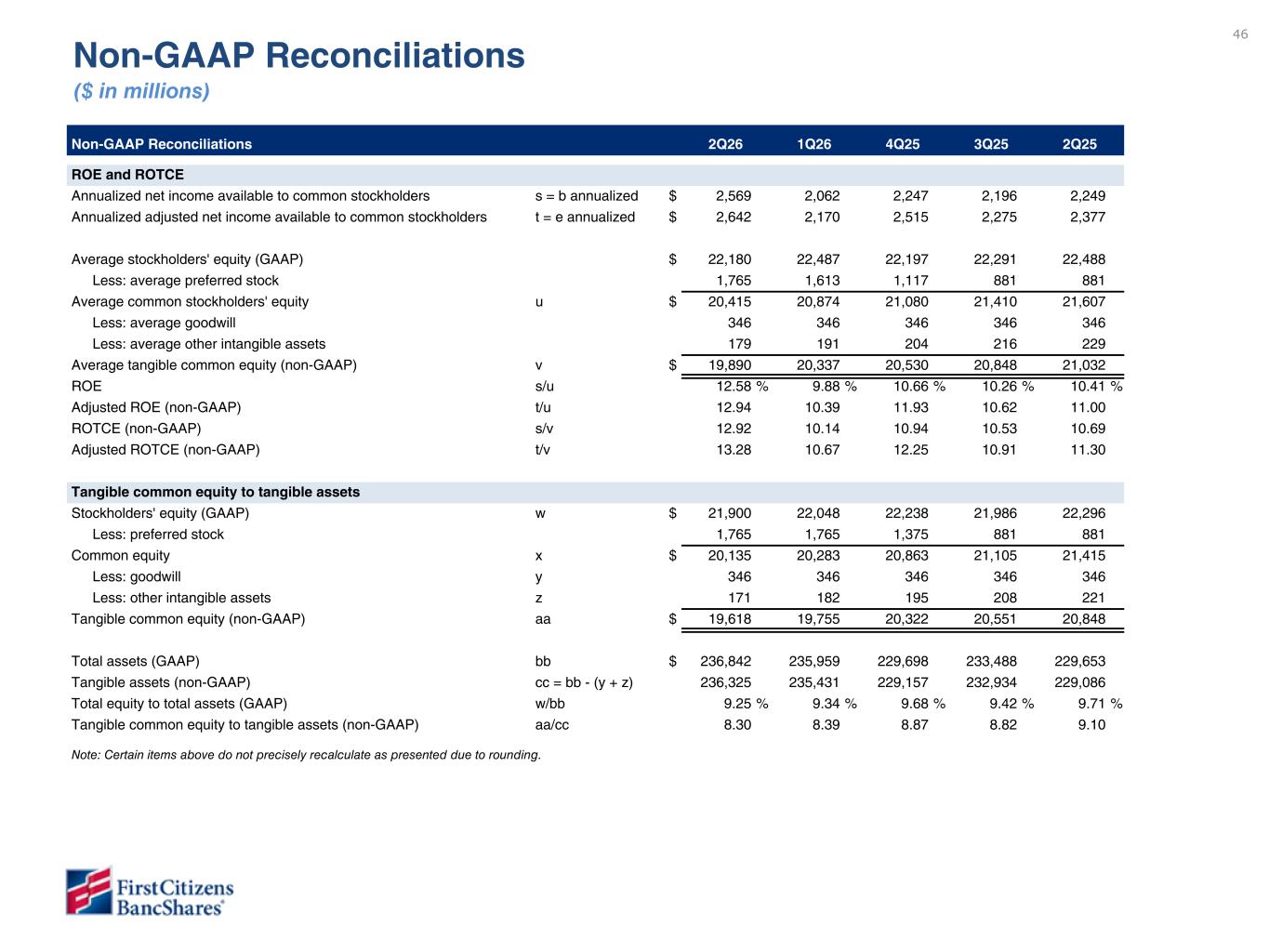
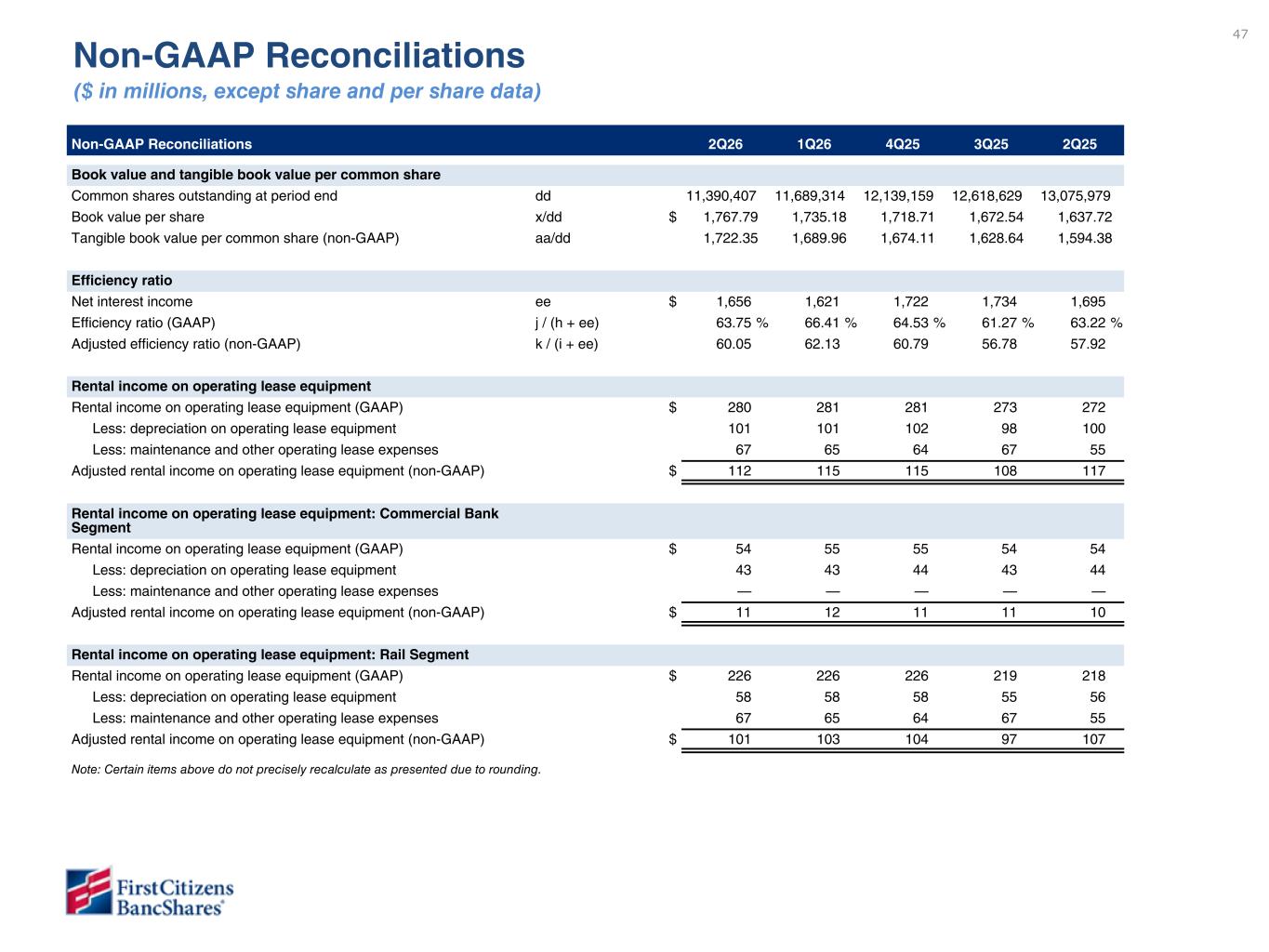
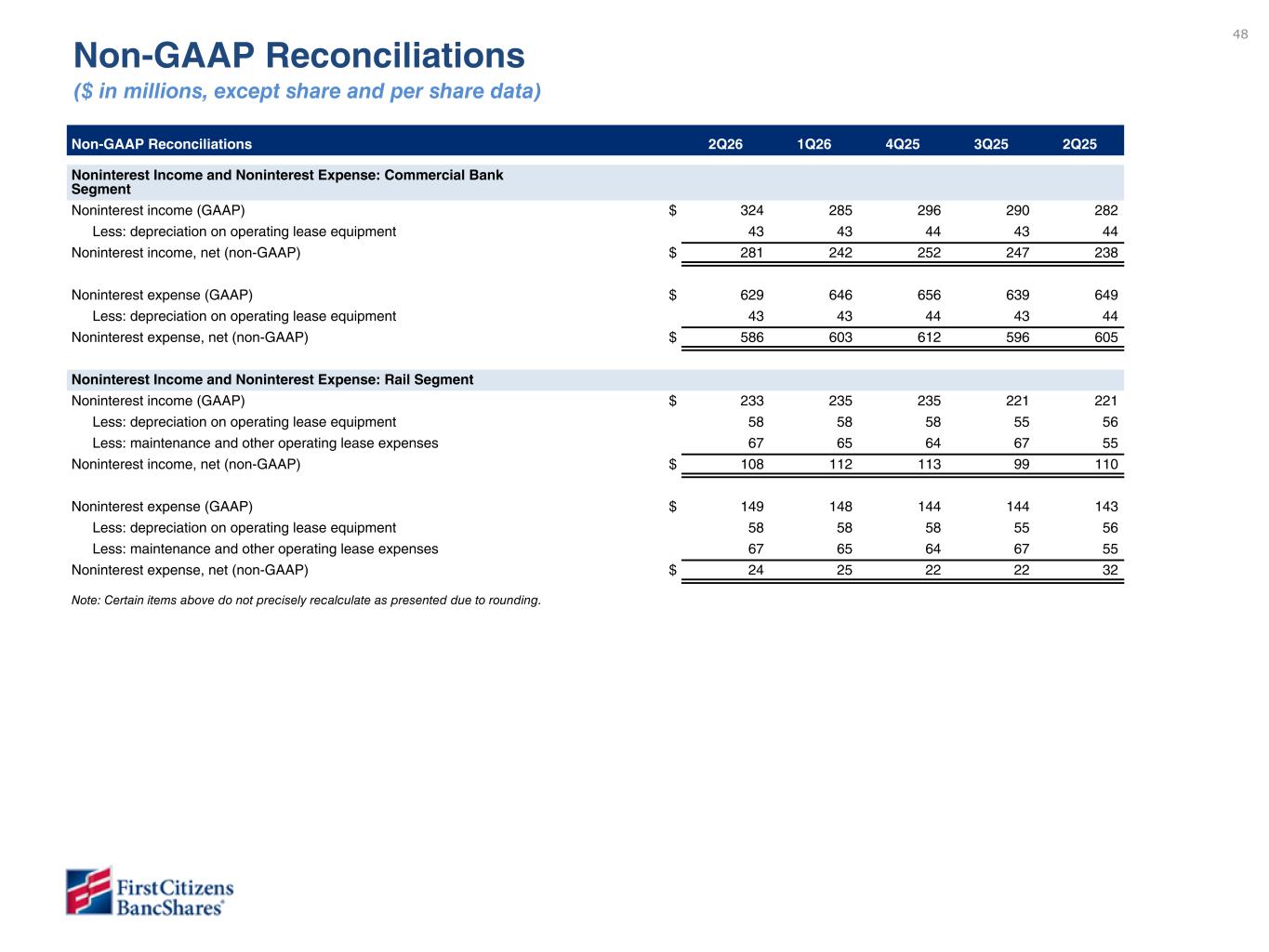
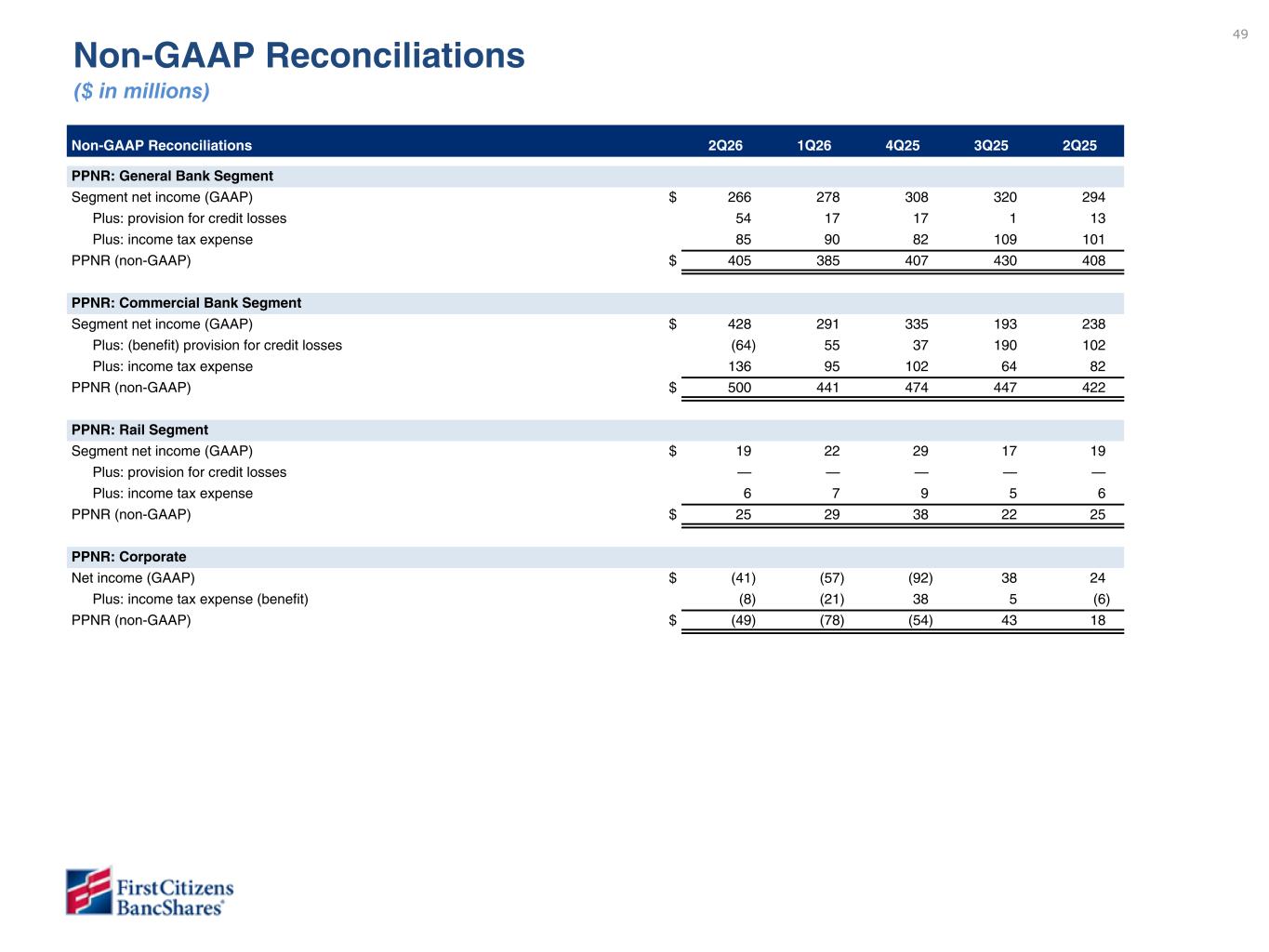
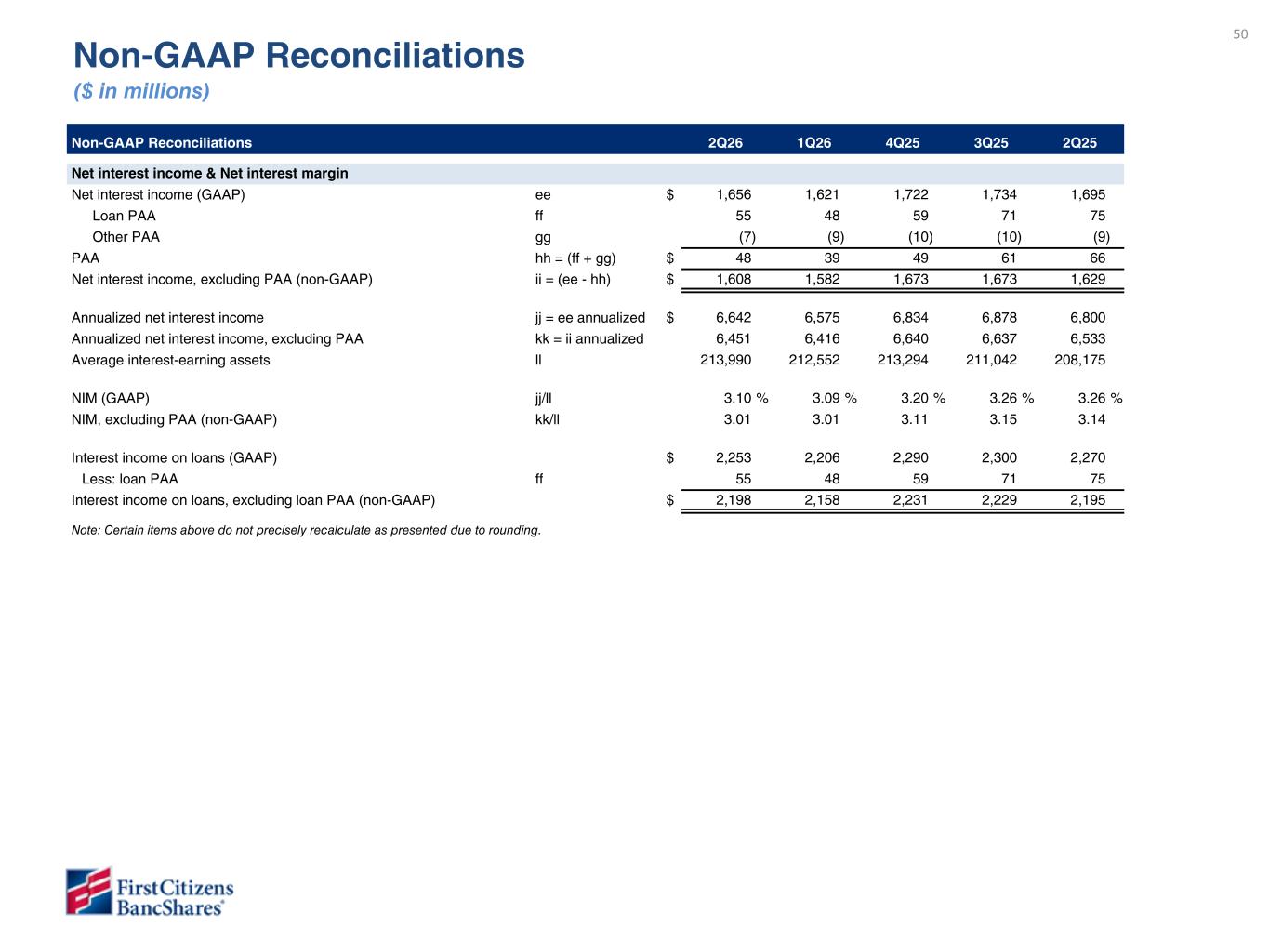
Good morning and welcome to First Citizen's second quarter 2026 earnings call. Joining me on the call are Chairman and Chief Executive Officer Frank Holding and Chief Financial Officer Craig Nix. They will provide second quarter business and financial updates referencing our earnings call presentation, which you can find on our Investor Relations website. Before we begin, please note that our comments will include forward-looking statements, which are subject to risks and uncertainties that may cause actual results to differ materially from expectations. We assume no obligation to update such statements. These risks are outlined on page 3 of the presentation. We will also reference non-GAAP financial measures. Reconciliations of these measures against the most directly comparable GAAP measures can be found in Section 5 of the presentation. Finally, for citizens is not responsible for and does not guarantee the accuracy of earnings transcripts provided by third parties. With that, I'll now turn it over to Frank.
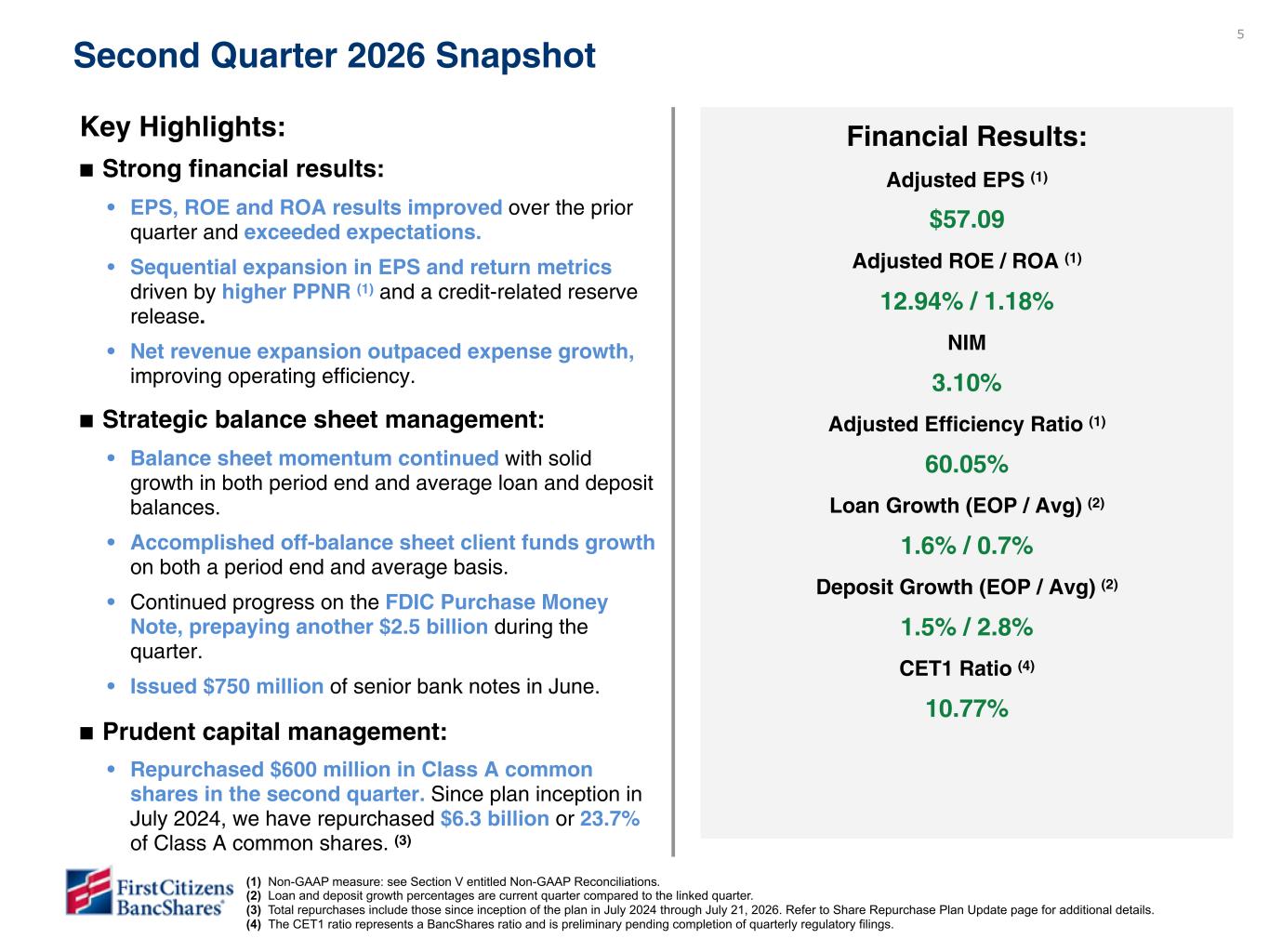
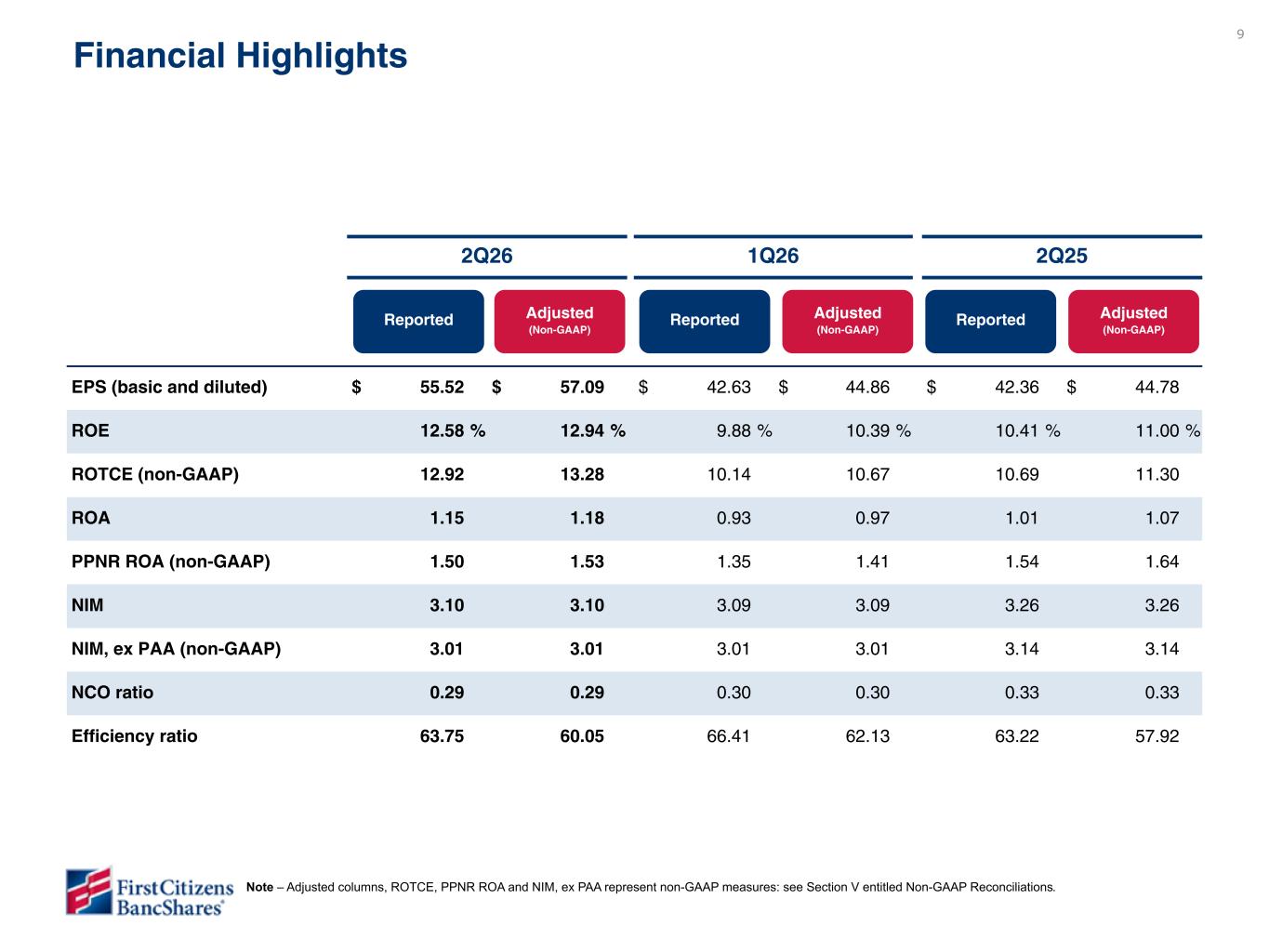
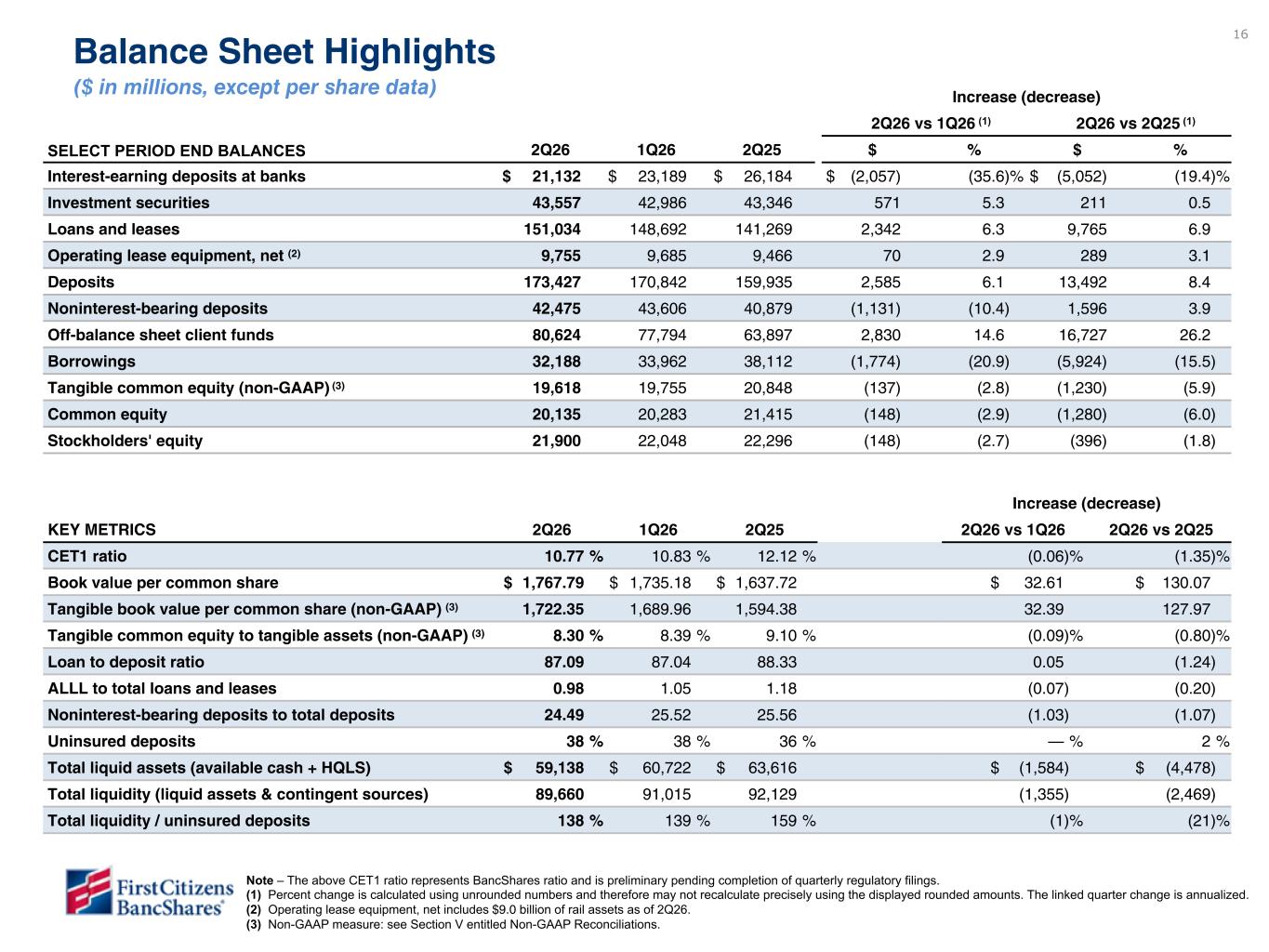
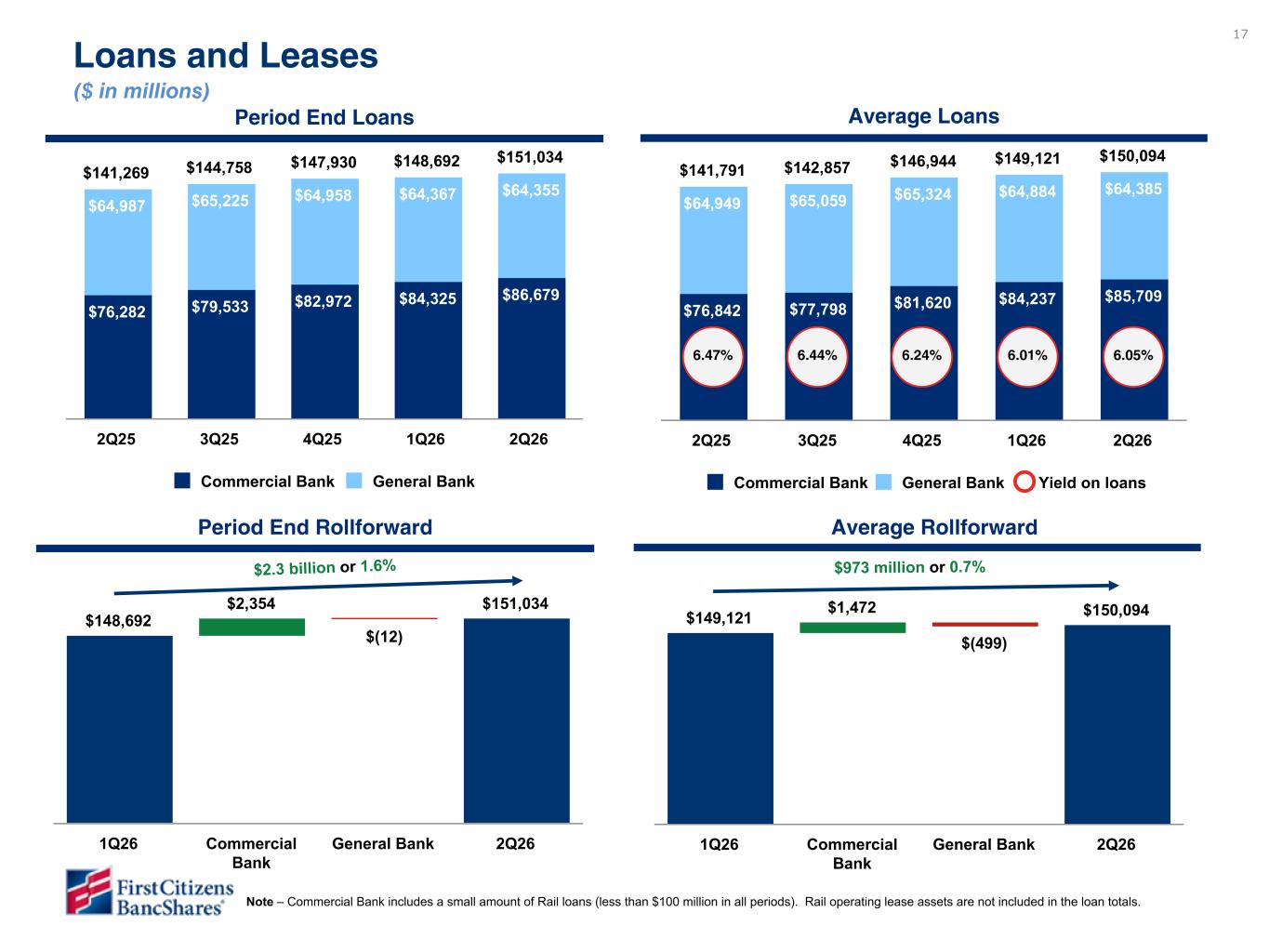
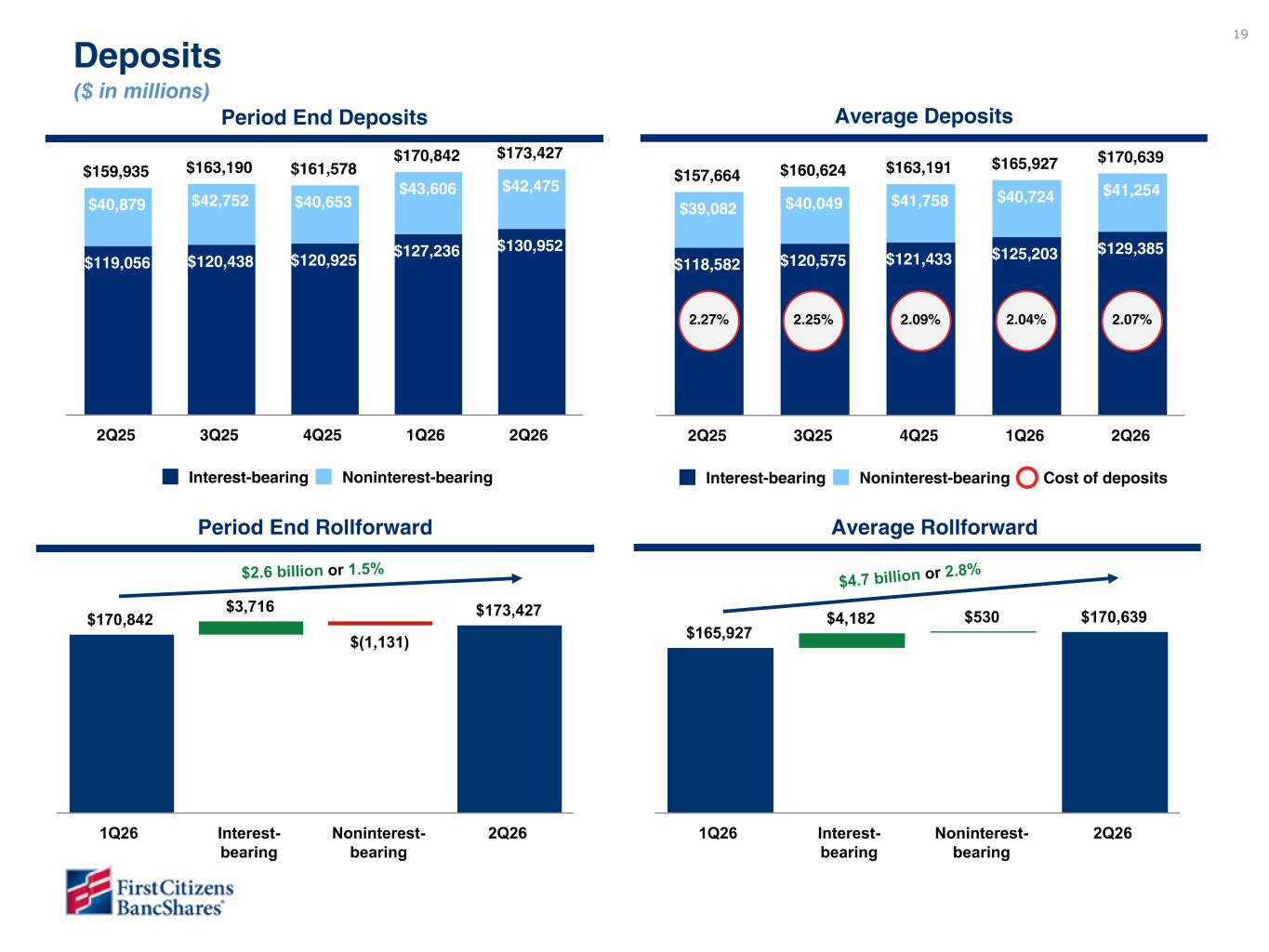
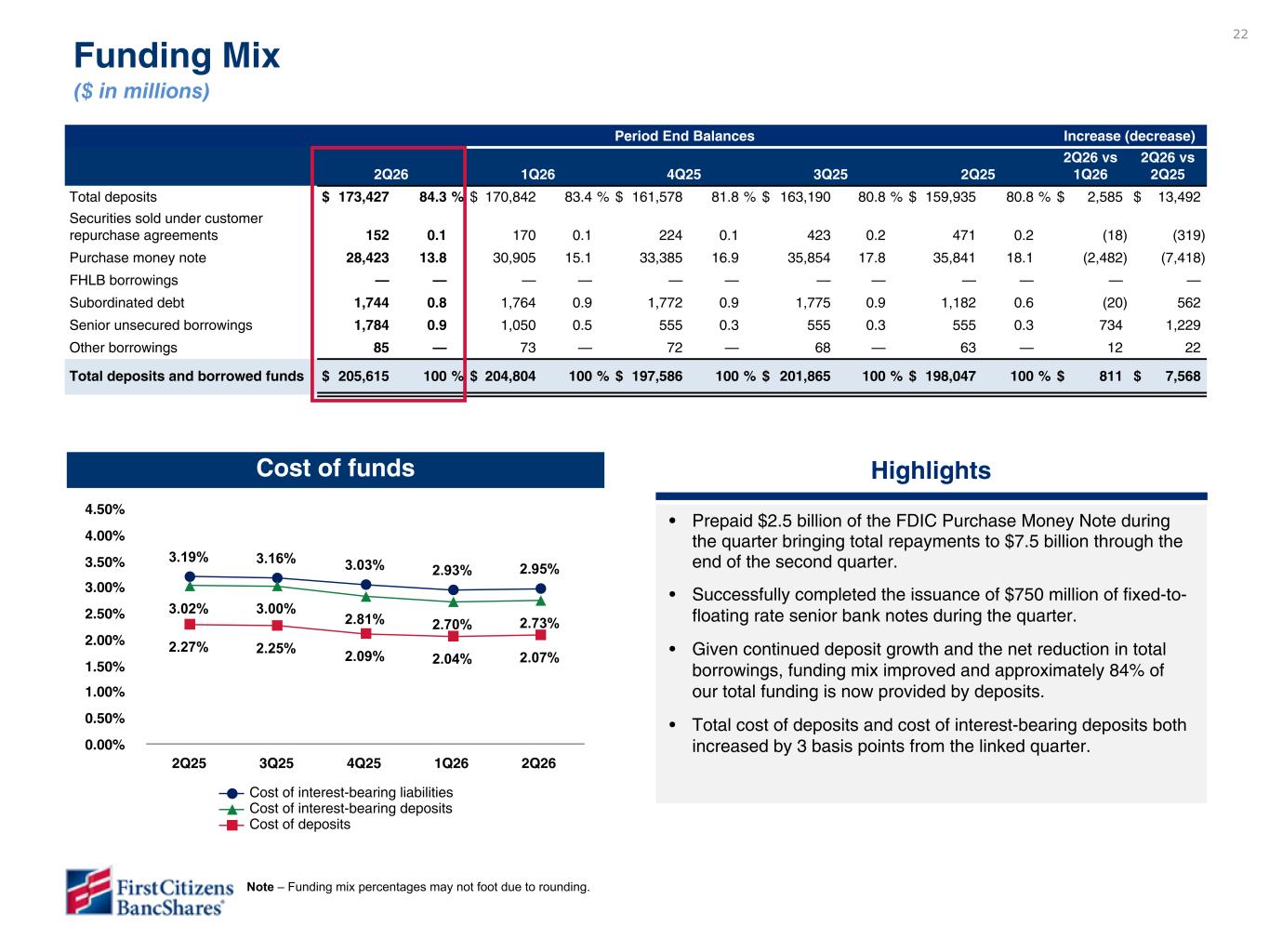
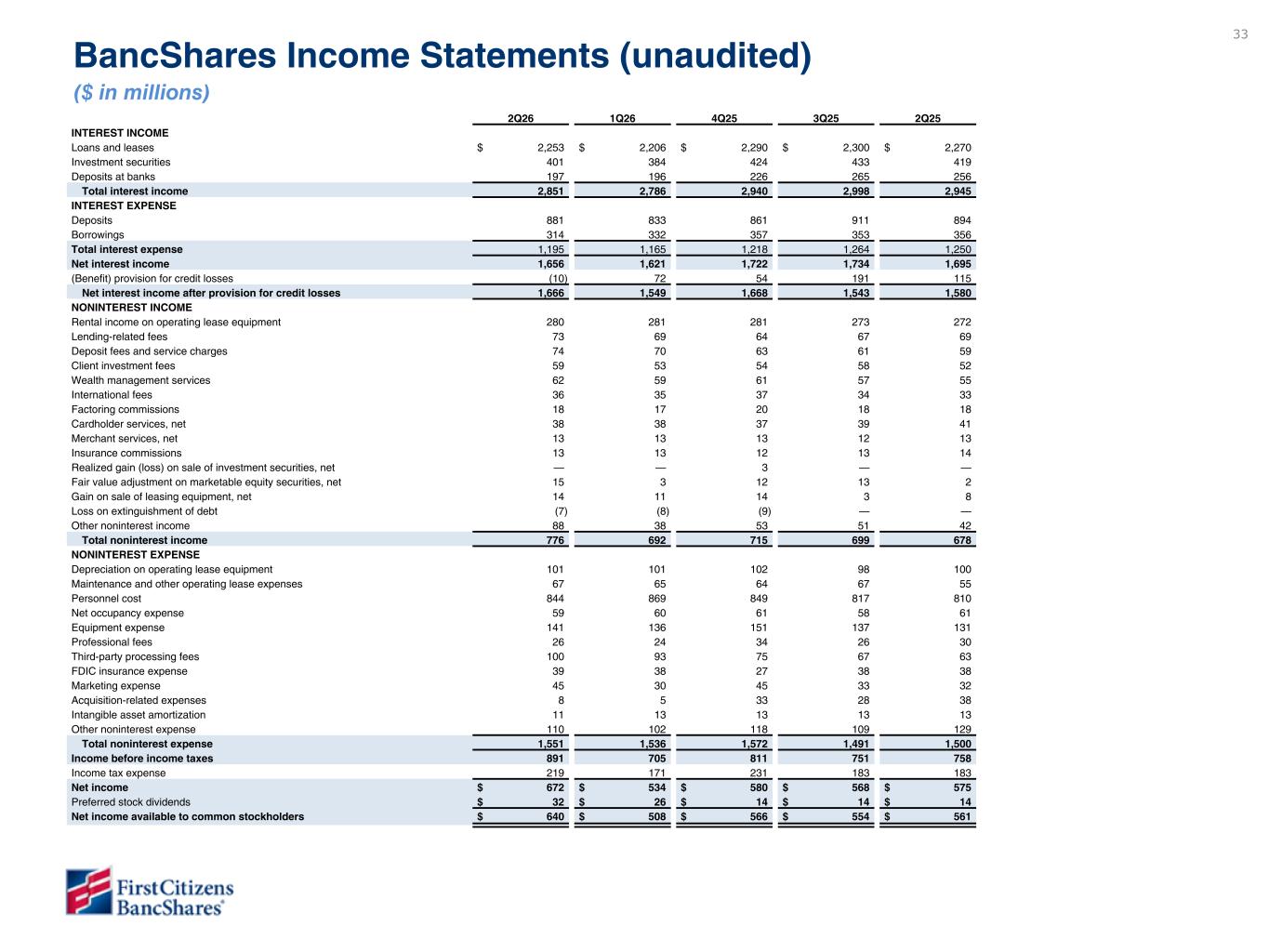
Thank you, Deanna. And good morning and welcome, everyone. Thank you for joining us today. I'll begin with a summary of our second quarter performance before turning it over to Craig Nix to review our financial results and our 2026 outlook in more detail. We delivered strong second-quarter performance, characterized by sequential top-line growth that exceeded our guidance and consensus estimates. These results reflect the continued successful execution of a strategy built to drive long-term, sustainable shareholder value and the strength of our diversified franchise. This morning, we reported adjusted net income of $691 million and adjusted earnings per share of $57.09, driving an adjusted ROE of 12.94% and an adjusted ROA of 1.18%. These results reflect robust sequential growth and significant year-over-year expansion. Both key metrics increased by more than 20 percent compared to the prior quarter. This strong profitability was powered by top-line net revenue expansion, disciplined expense and balance sheet management, and resilient credit quality. On the balance sheet, we delivered 1.6% sequential loan growth with increases in both period-end and average loans. This momentum was anchored by our global fund banking business, fueled by strong production and heightened capital call line utilization. Additionally, we achieved broad-based growth within our tech and healthcare banking and middle market banking verticals. We delivered a 1.5% sequential increase in period-end deposits and a 2.8% expansion in average deposits. These results validate the structural resilience of our operating model and the effectiveness of our targeted deposit-gathering initiatives within a highly competitive industry environment. beyond core balance sheet growth, client engagement in our tech and healthcare and global fund banking businesses drove solid increases in both period end and average off balance sheet client funds. Simultaneously, we continued to execute on capital efficiency, returning an initial $600 million to shareholders through share repurchases. Backed by a strong liquidity position, we prepaid another $2.5 billion of the FDIC purchase money note during the quarter, followed by an additional $1 billion in July. This brings our total cumulative prepayments to $8.5 billion. To wrap up my comments, credit performance remains strong, exceeding our expectations. These durable credit trends combined with disciplined expense management and healthy client activity demonstrated this quarter position us well to drive positive operating leverage and long-term shareholder value moving forward. I would like now to turn it over to Craig to take us through our second quarter financial results and our outlook for the remainder of the year. Craig?
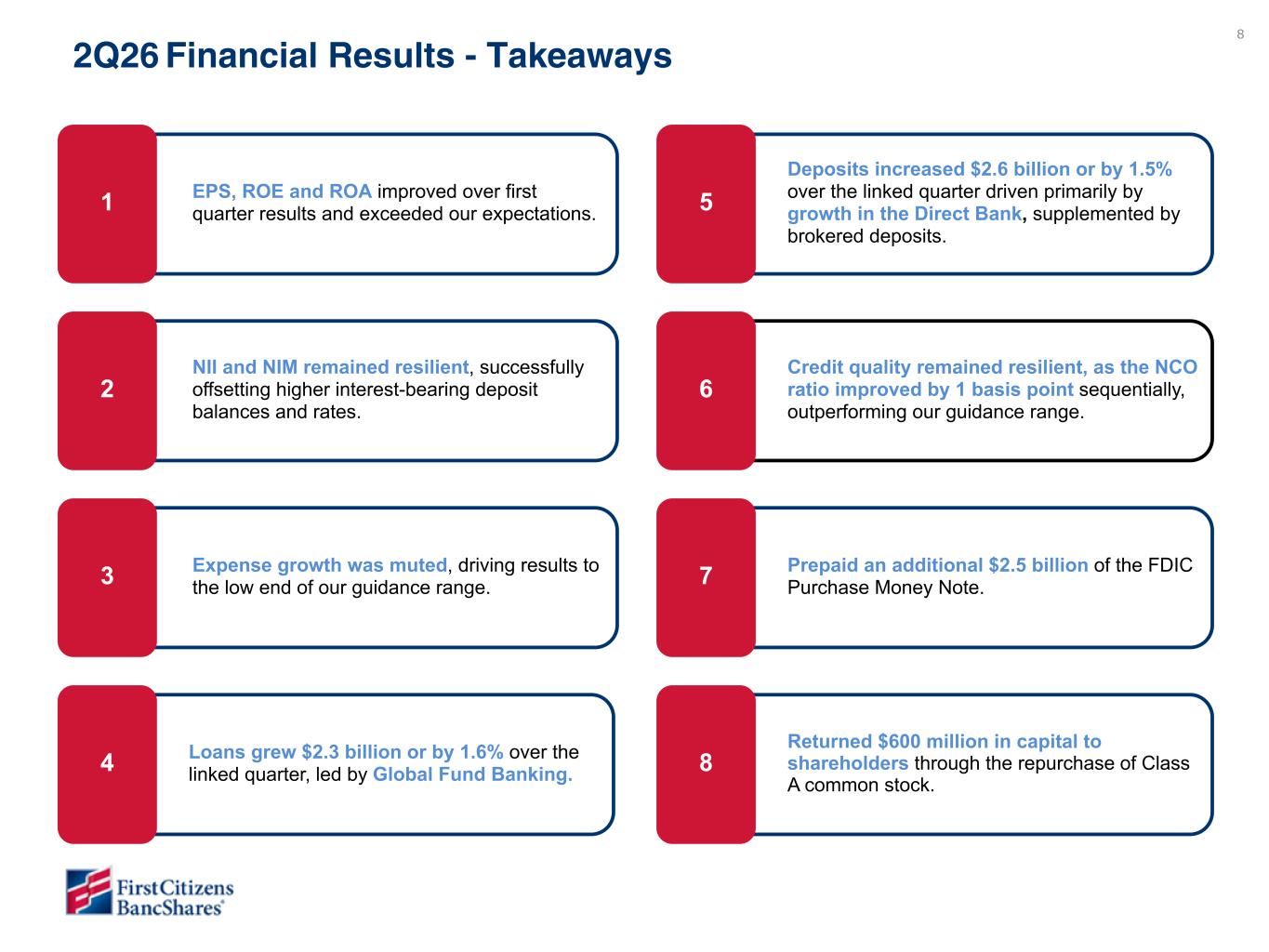
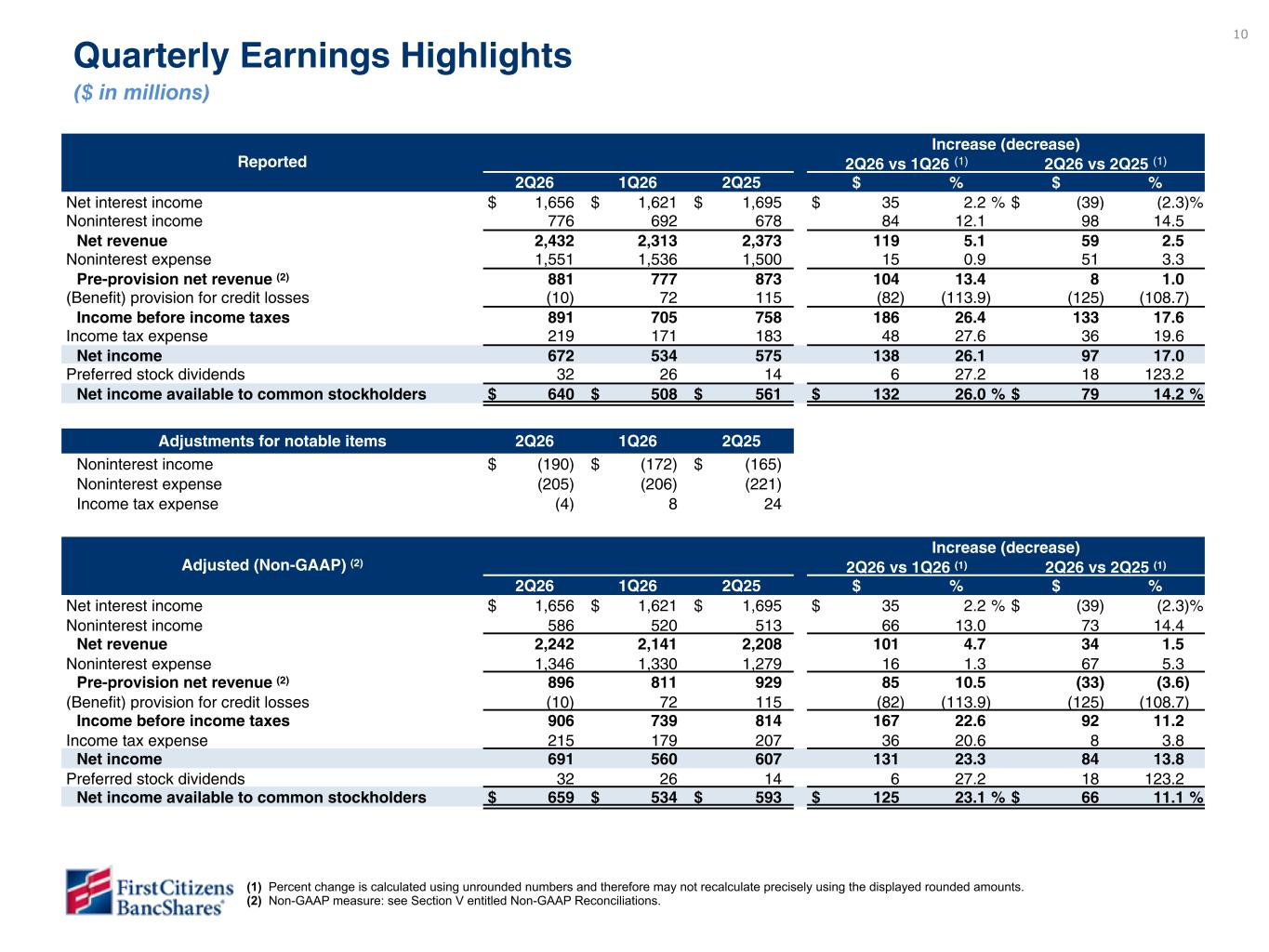
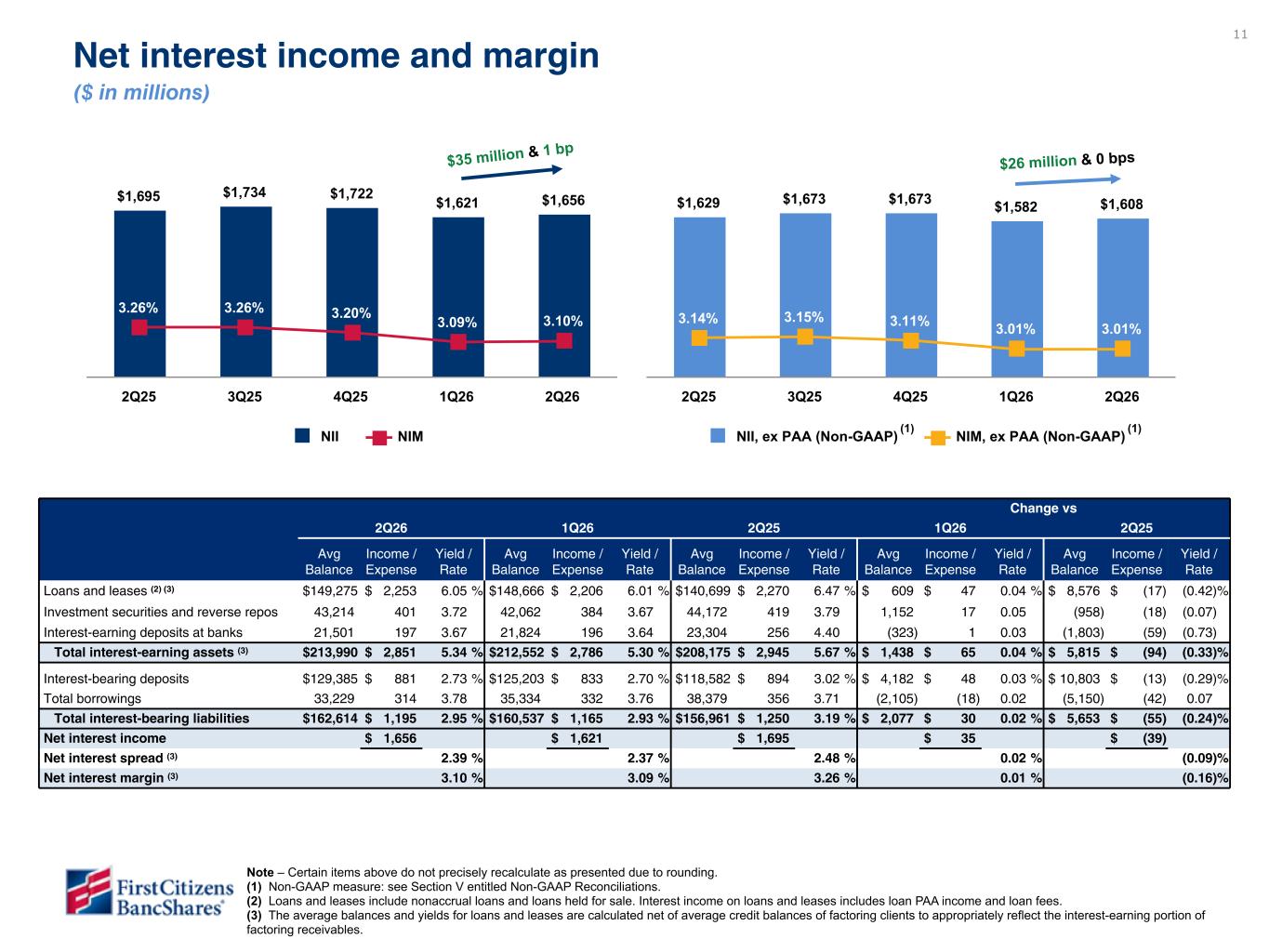
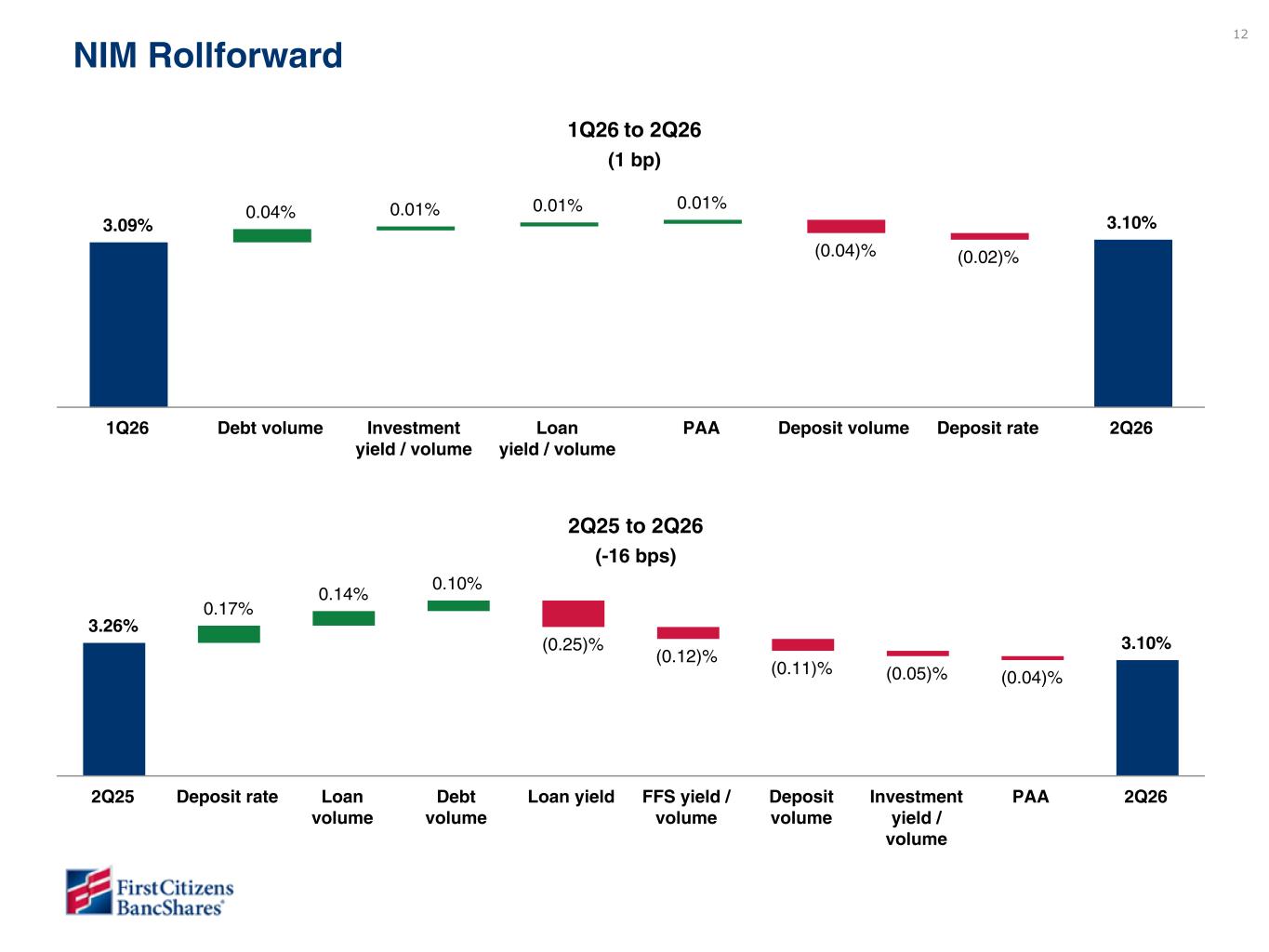
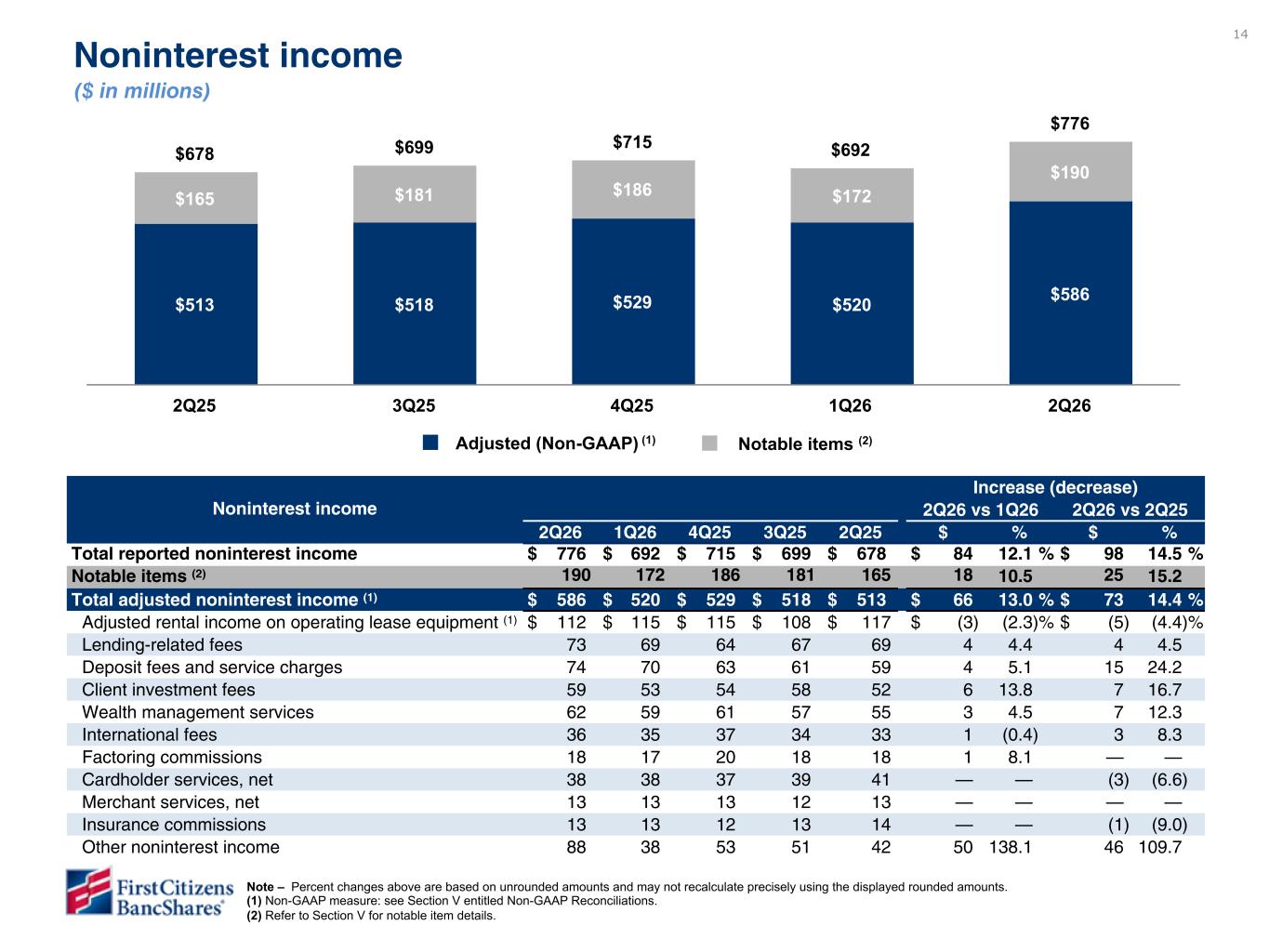
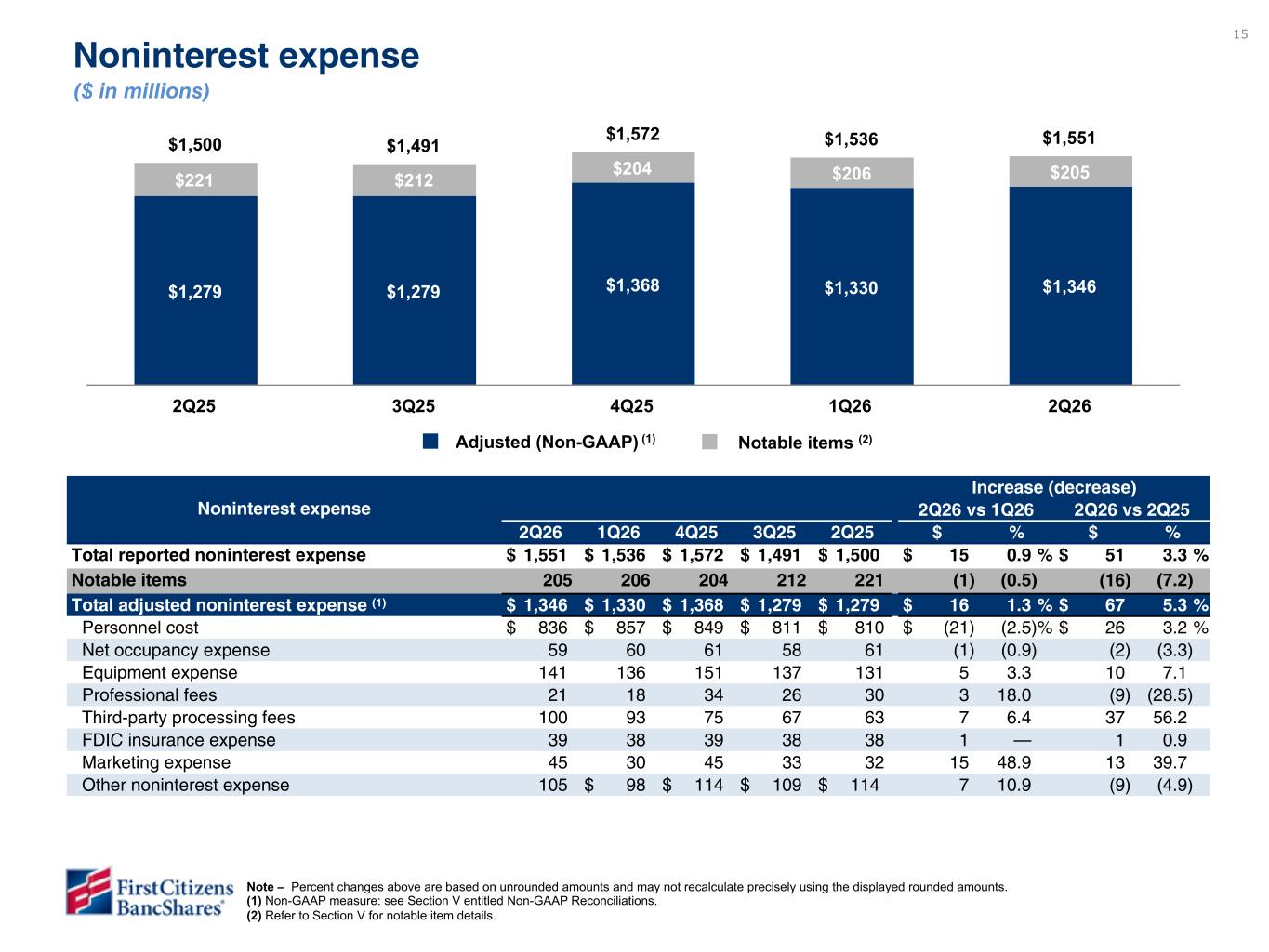
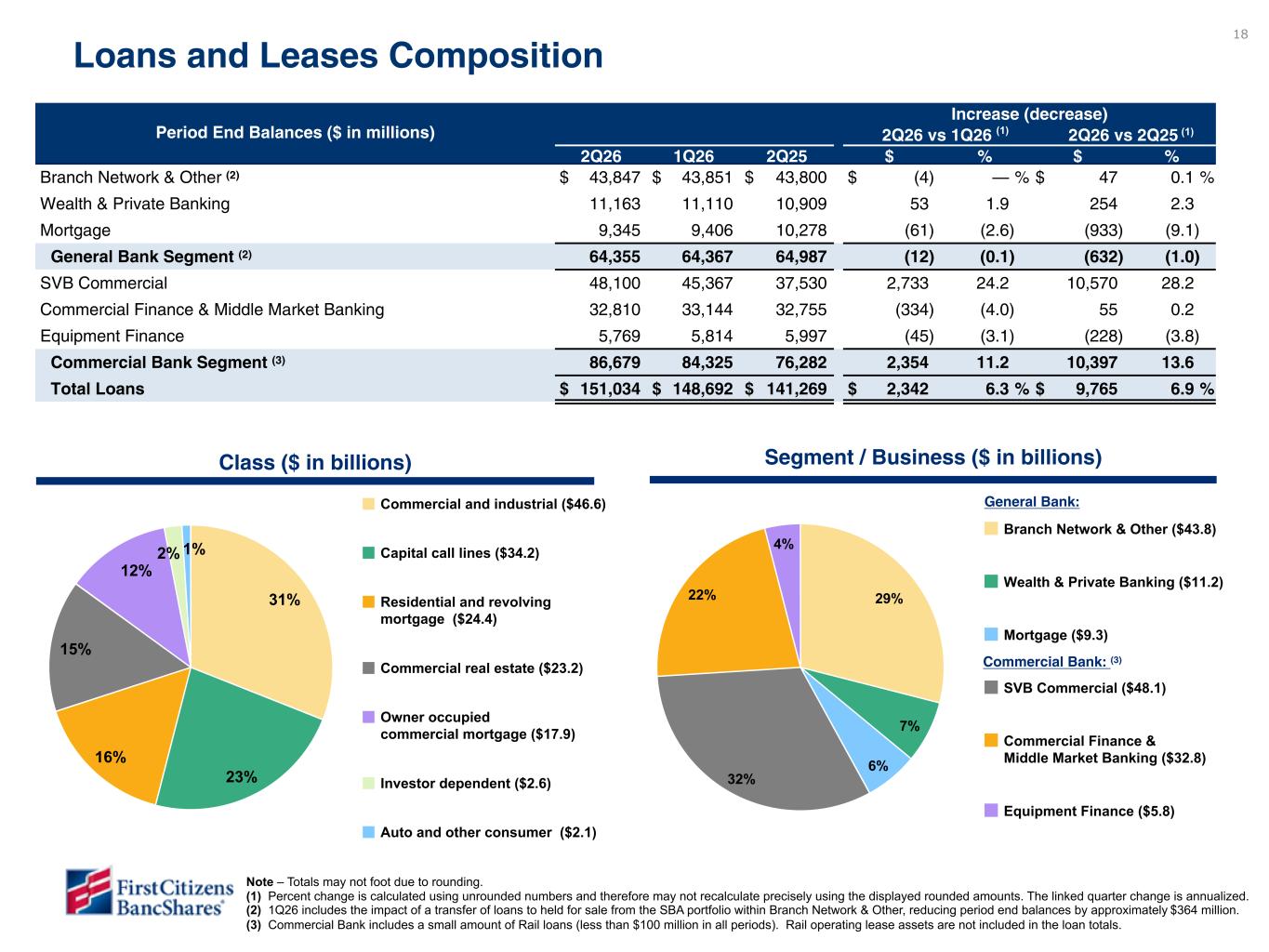
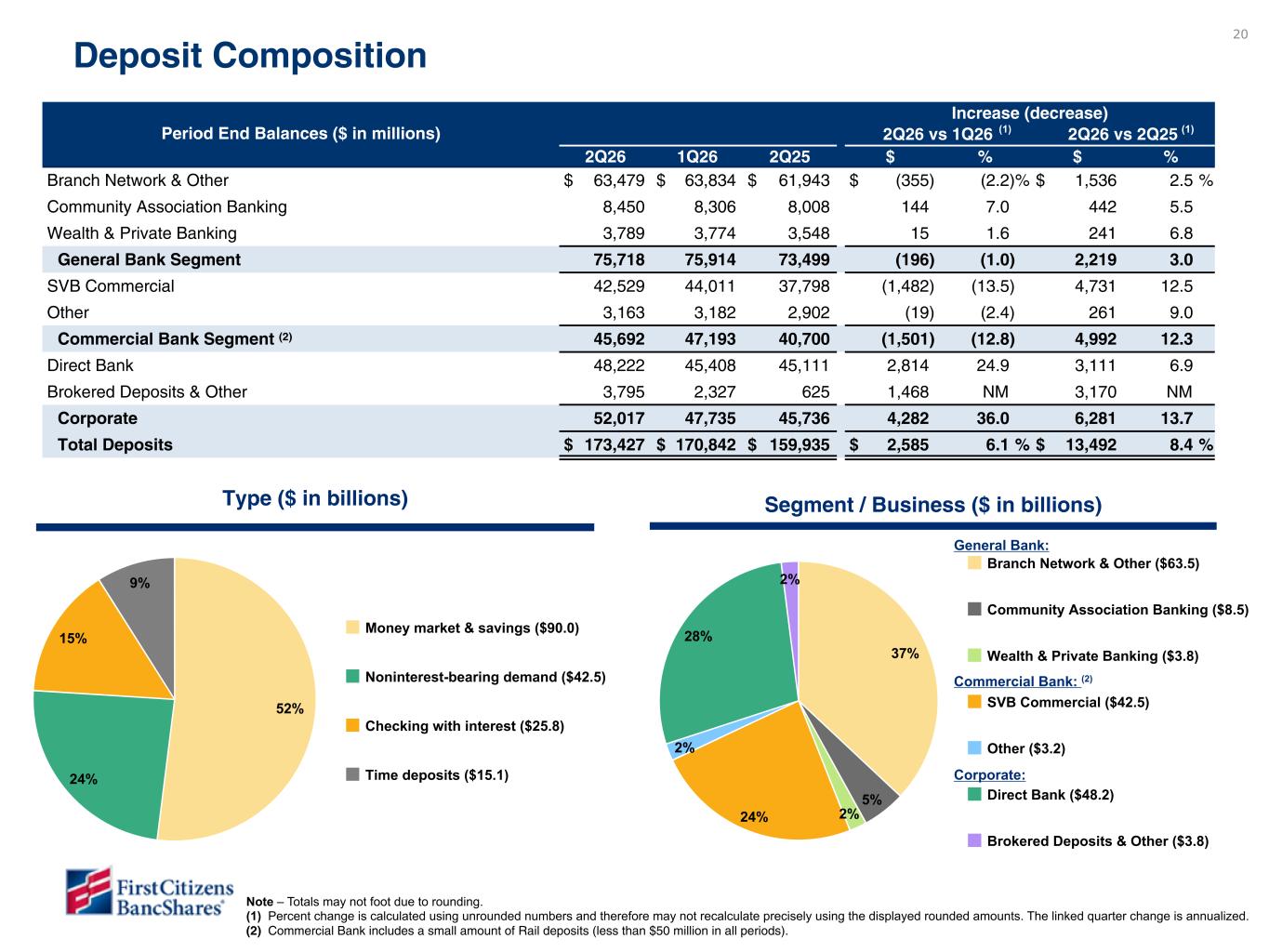
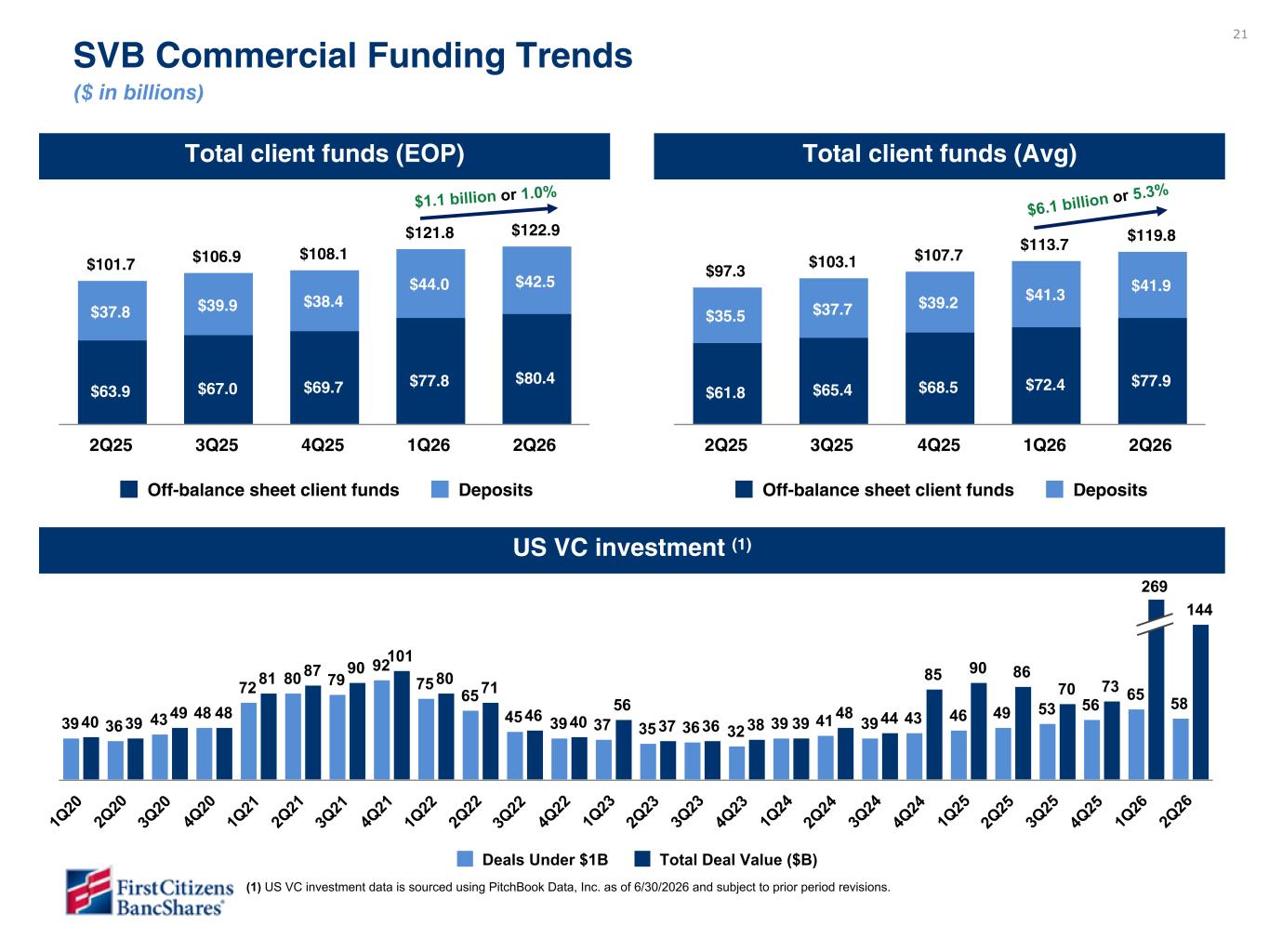
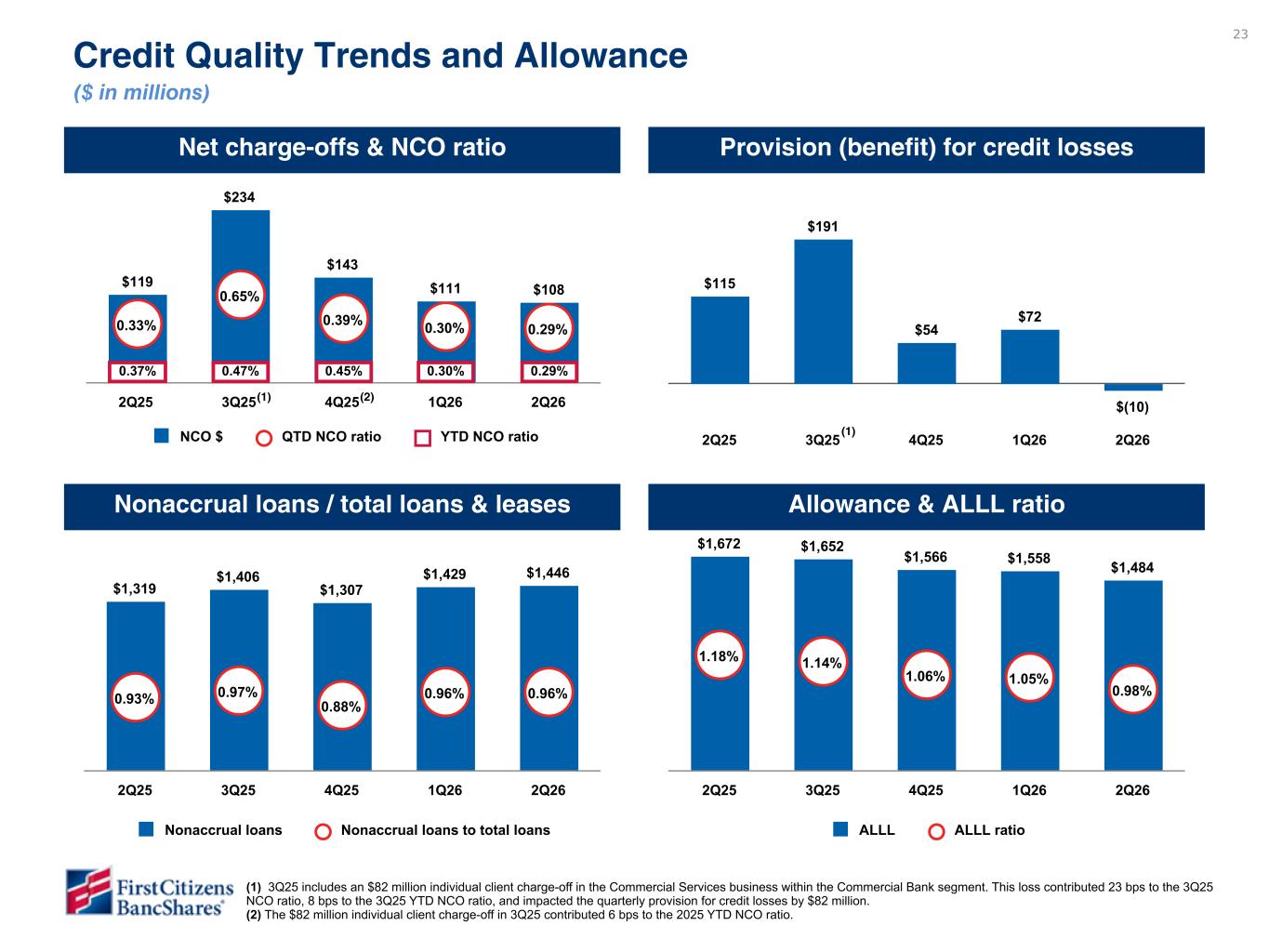
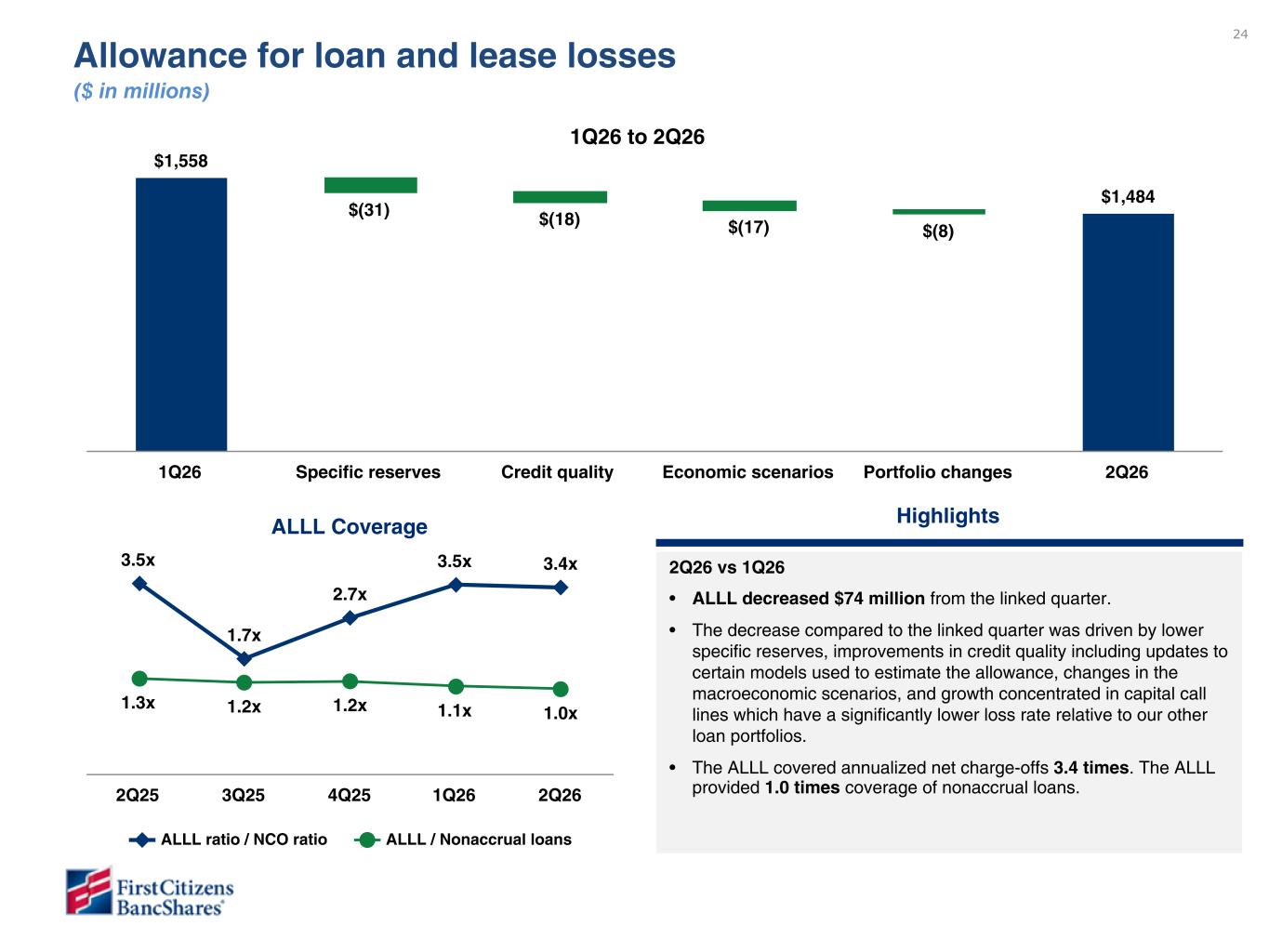
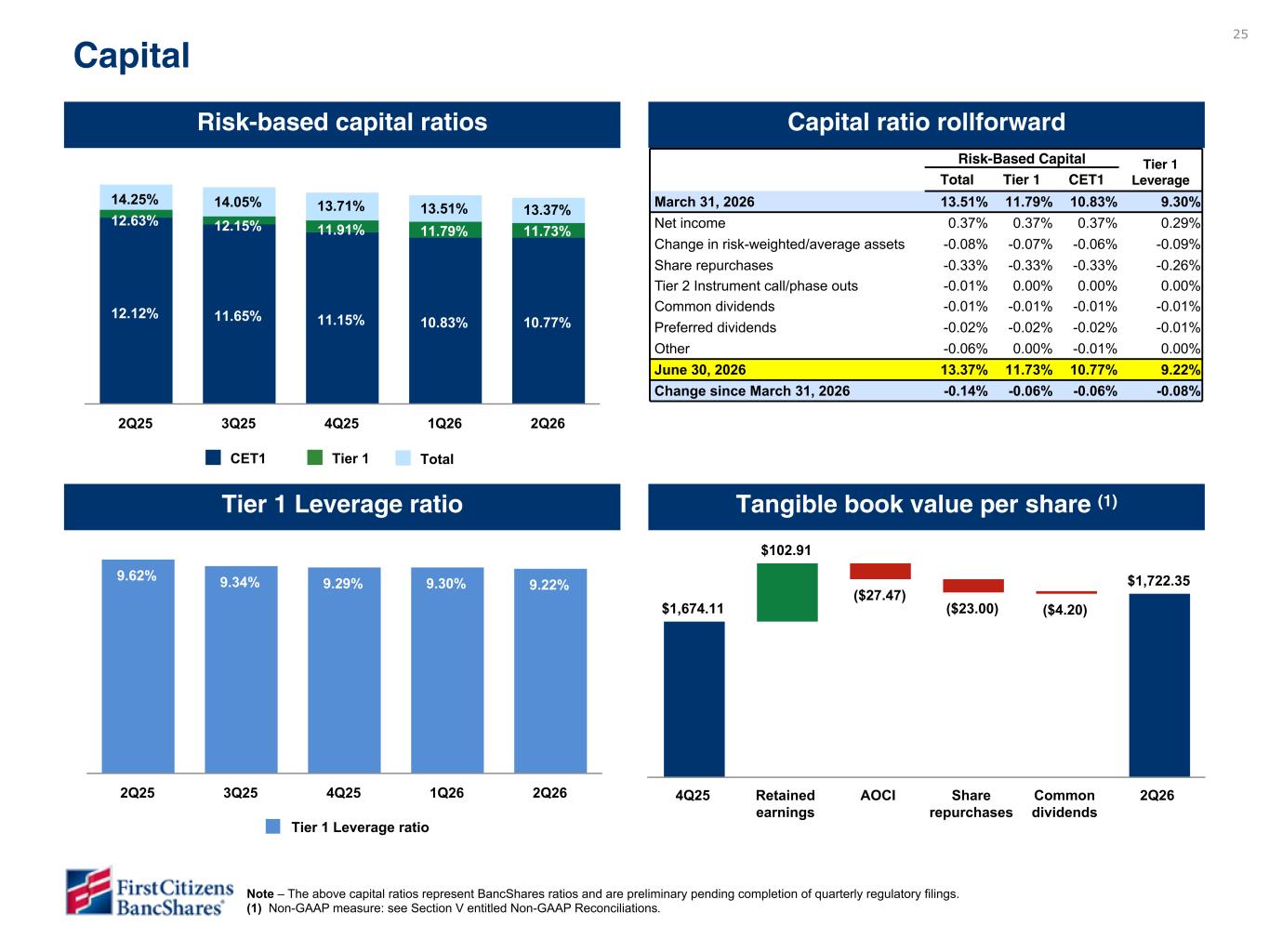
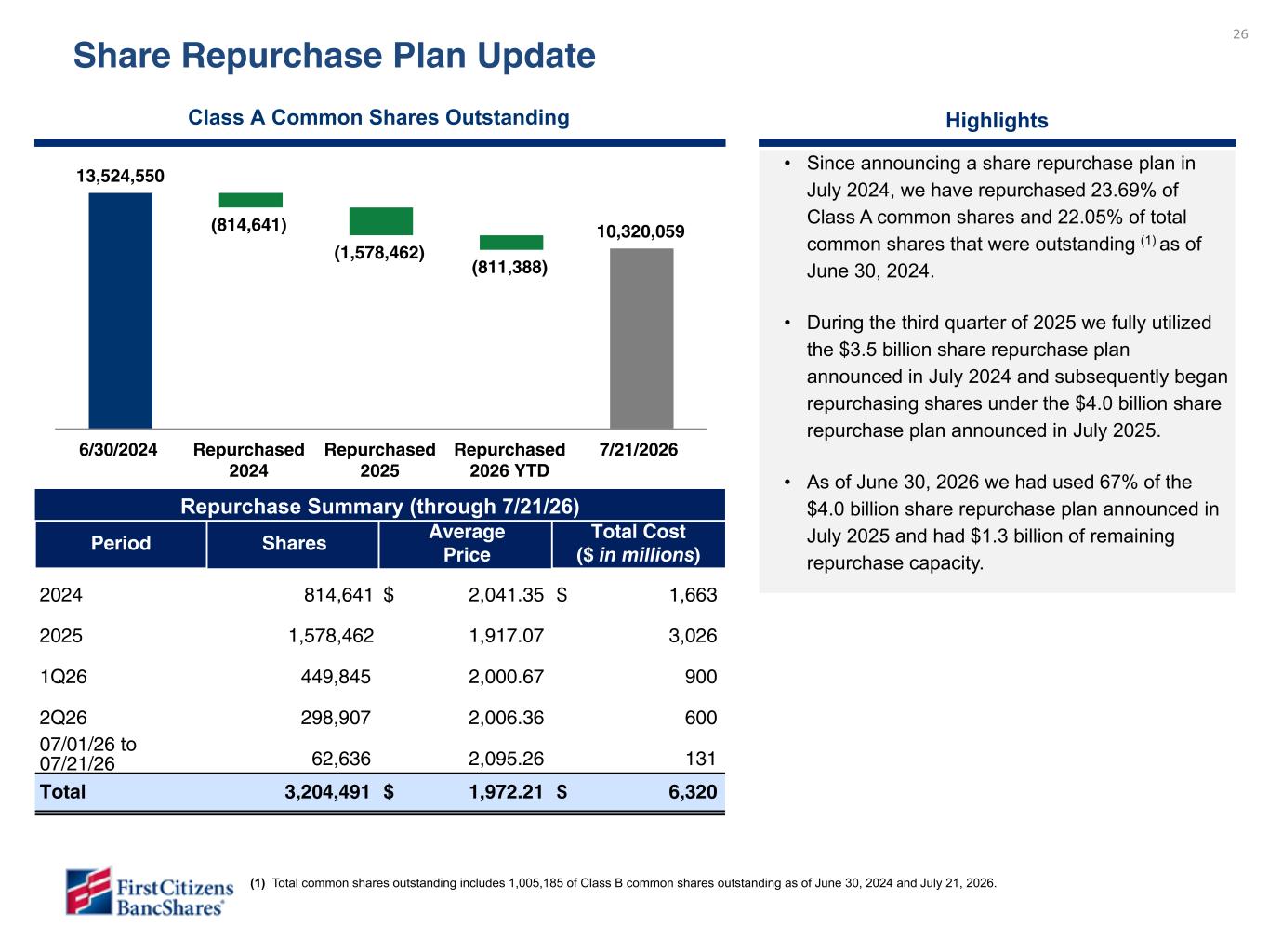
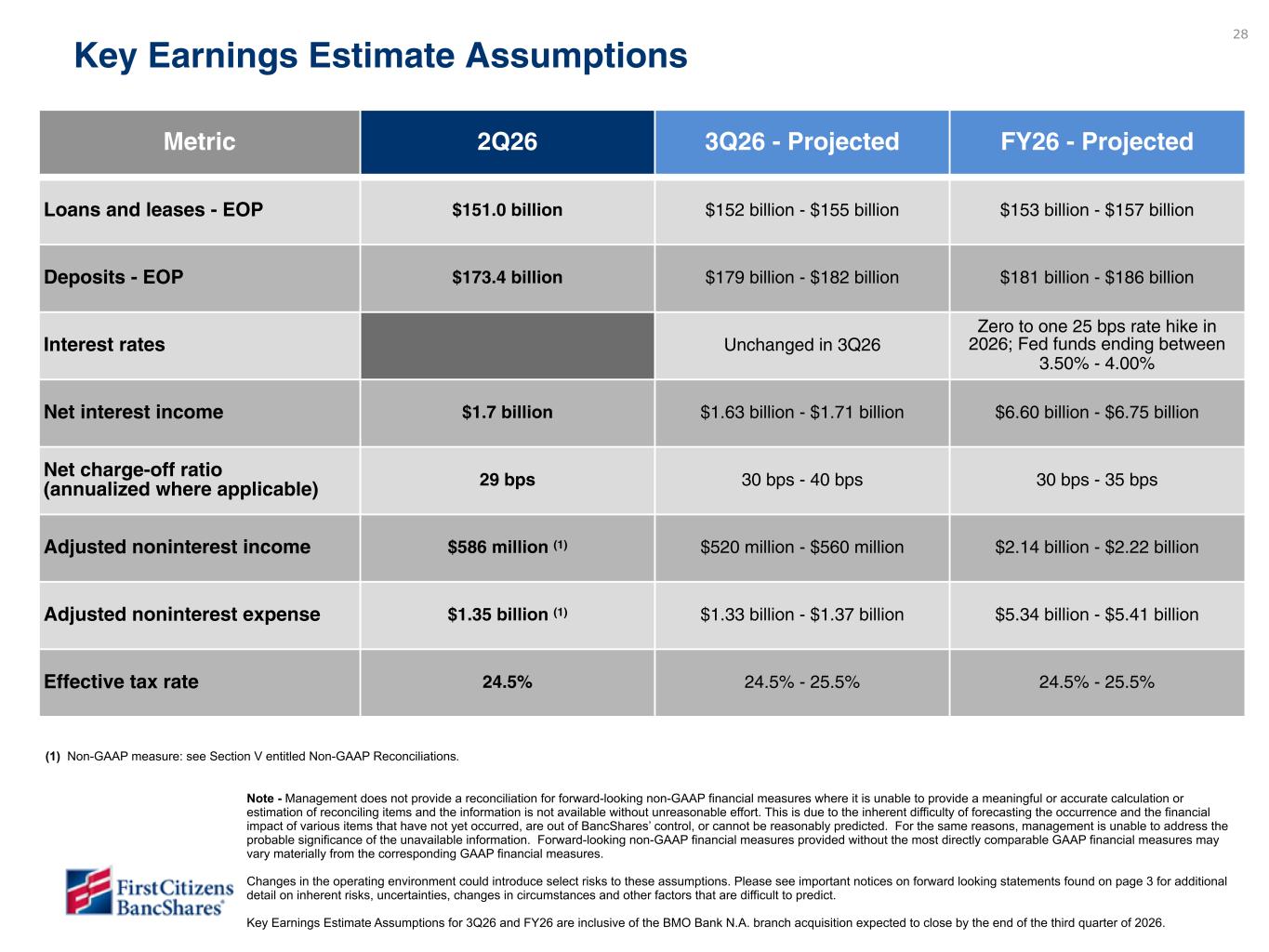
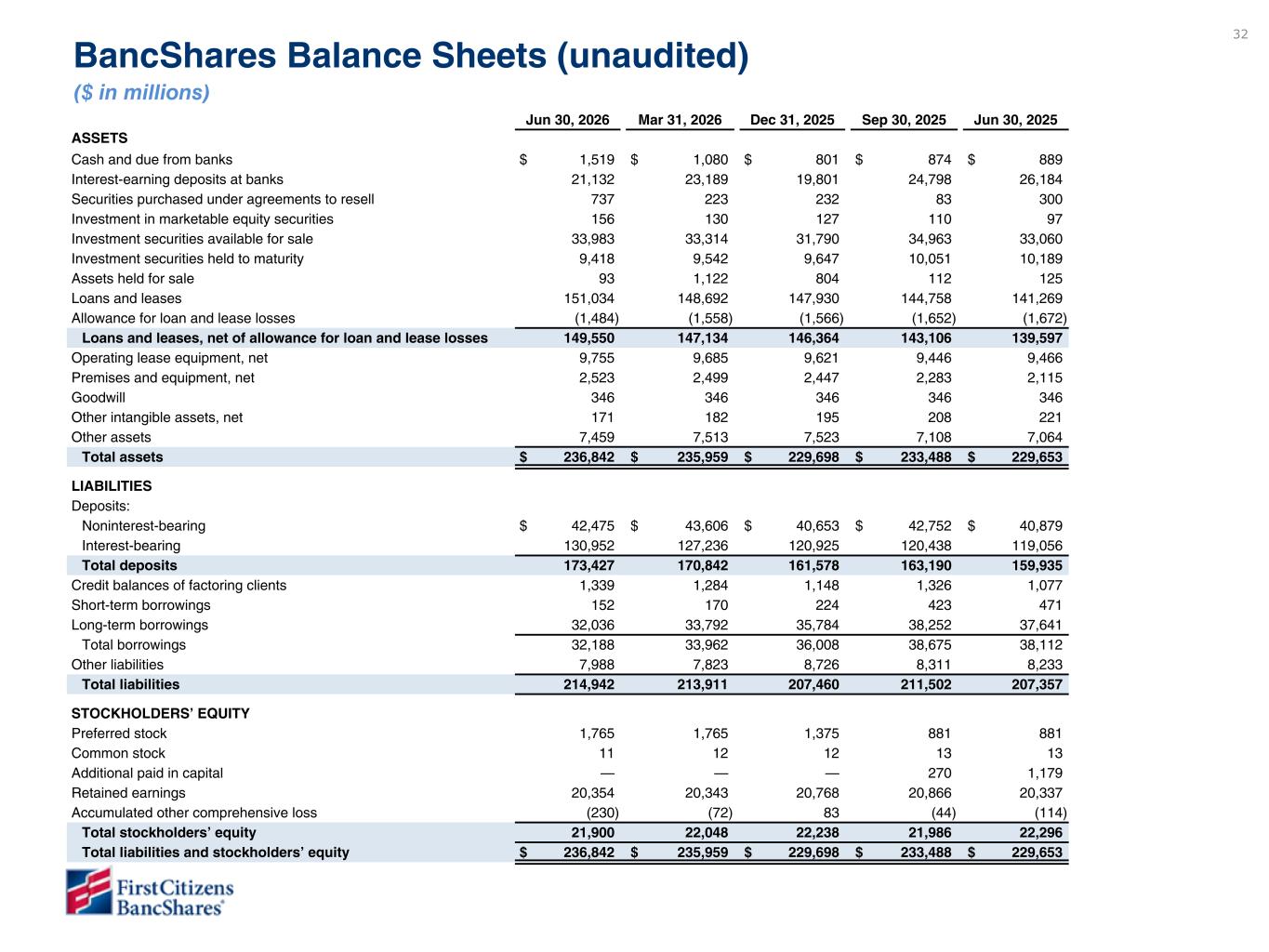
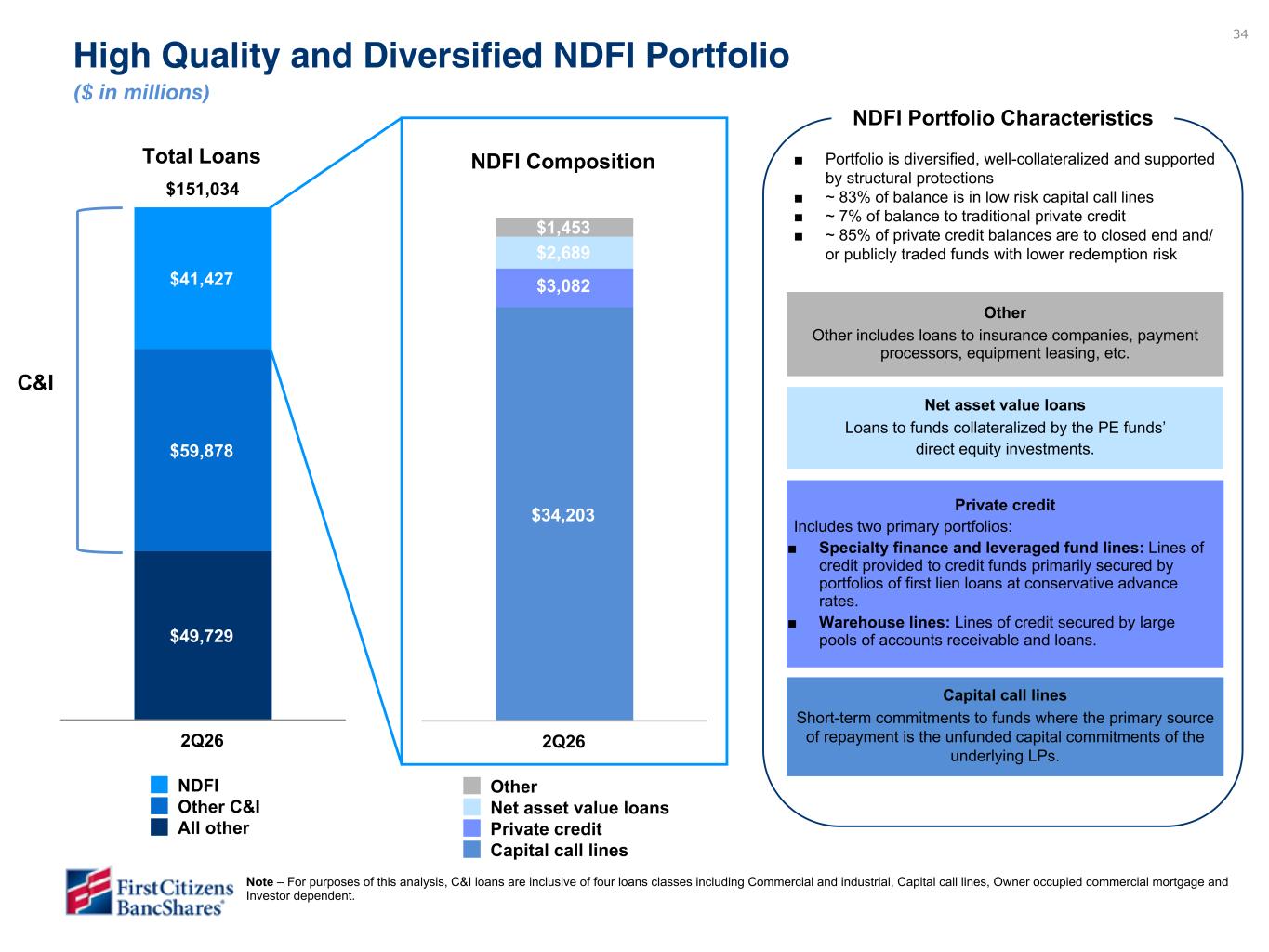
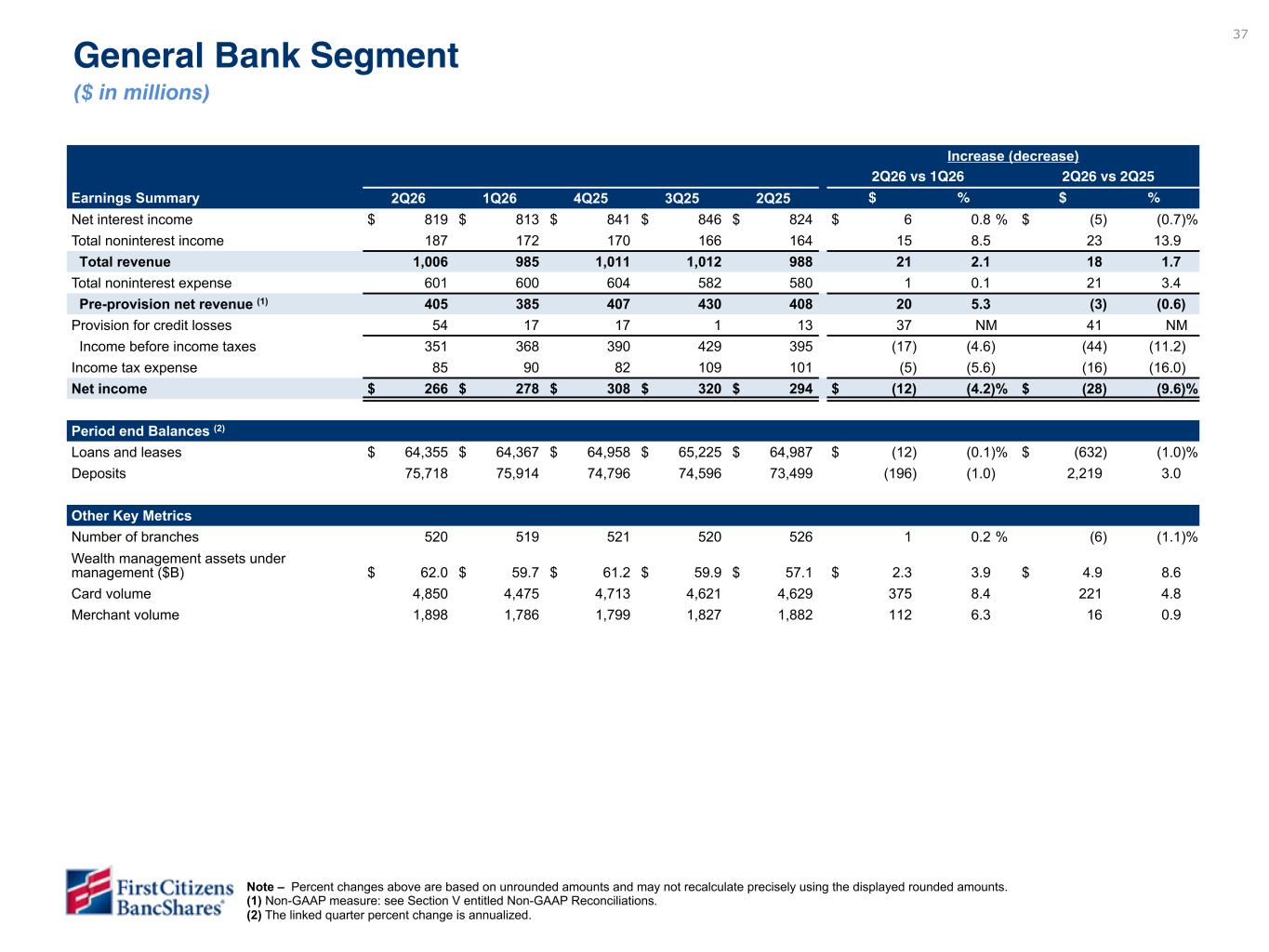
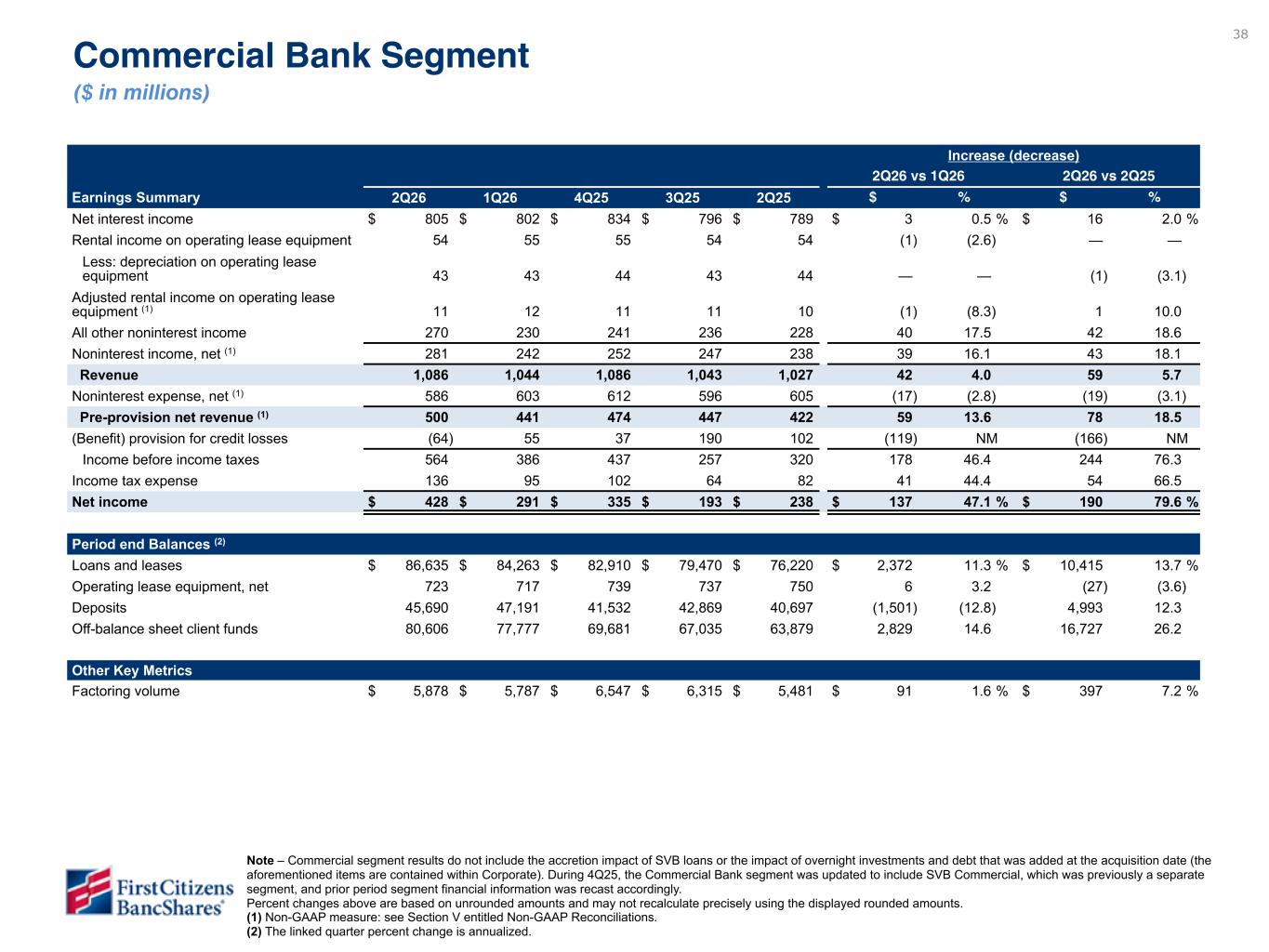
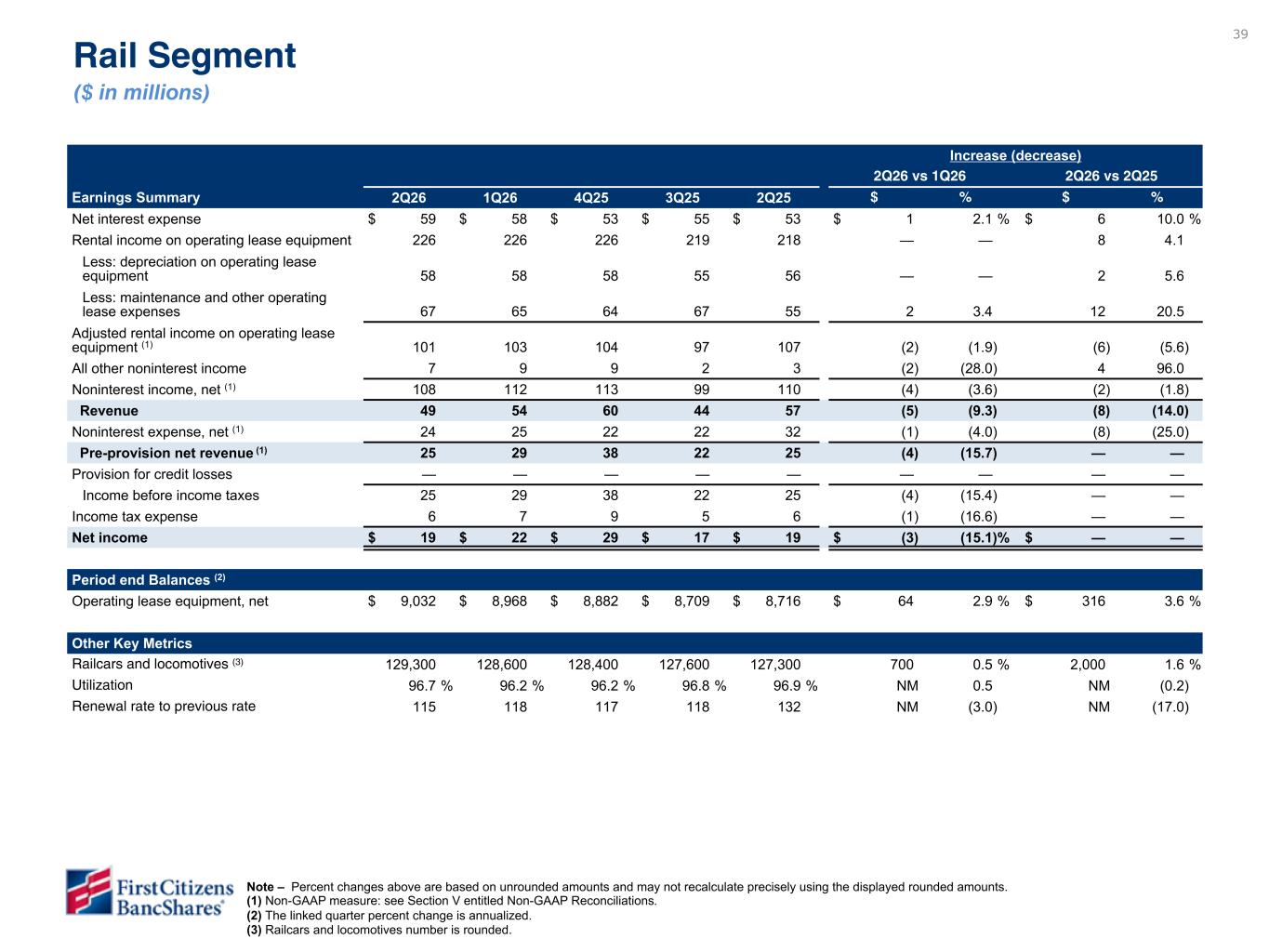
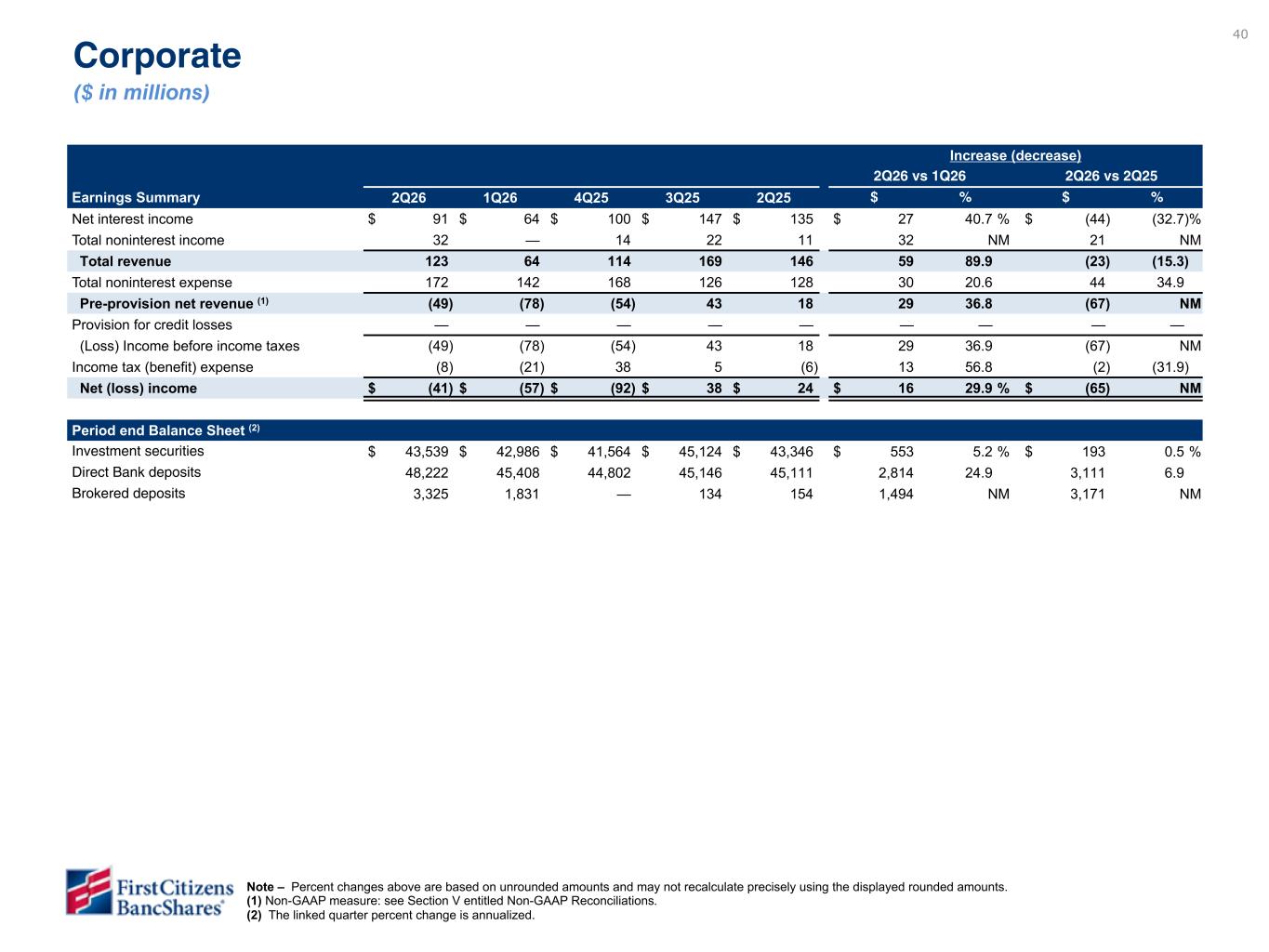
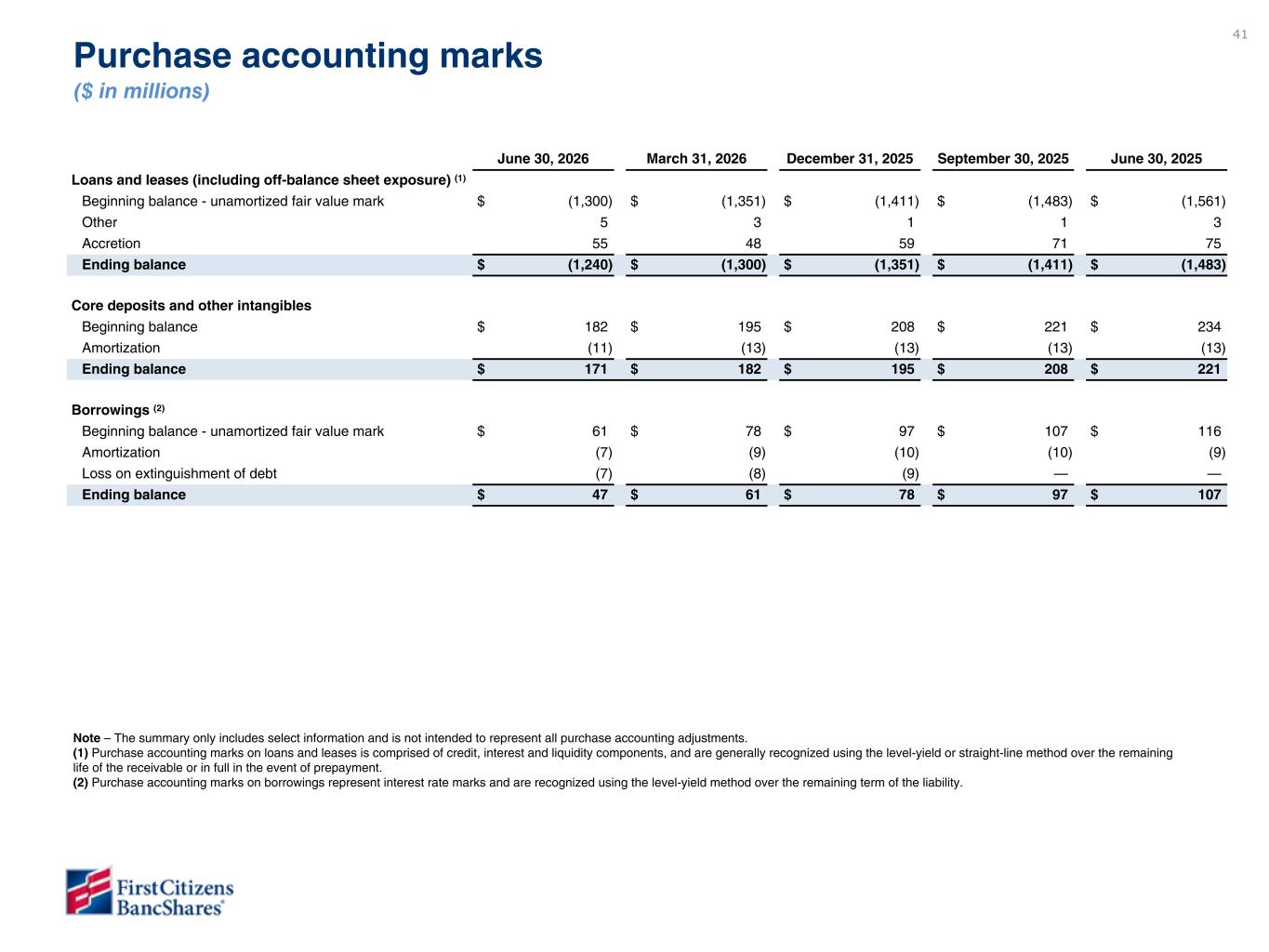
Thanks, Frank, and good morning, everyone. I'll begin with a review of our financial performance for the quarter, followed by an update on our balance sheet, credit, capital trends, and outlook. I will anchor my comments to page 8 of the presentation. Pages 9 through 26 provide details underlying our second quarter results. As Frank mentioned, we are pleased that in the second quarter, adjusted earnings were up by over 20 percent sequentially, exceeding internal and consensus expectations. Slightly over half of the increase was generated by higher pre-provision net revenue, supported by resilient net interest income, fee-based non-interest income expansion, and disciplined expense management. The remainder was driven by net benefit for credit losses, underscoring strong credit performance. In line with our guidance, net interest income increased by $35 million over the linked quarter, driven by favorable earning asset volumes and yields, higher purchase accounting accretion, reduced borrowings, as well as a higher day count. These positive factors successfully offset higher funding costs and interest-bearing deposit balances. On a margin basis, headline NIM improved by one basis point due to the same factors, while our core NIM remained unchanged. Adjusted non-interest income rose by $66 million sequentially, exceeding our guidance. While $50 million of the growth was in other non-interest income driven by asset monetization and portfolio revaluation, we did see increases across our fee-generating businesses. Favorable public and private market valuation adjustments and realized gains generated a $27 million gain within our equity warrant portfolio, which has grown since the SVB acquisition and serves as a structural driver of long-term upside via lending and financing relationships. Additionally, we successfully realized a $17 million gain through the opportunistic sale of a tax credit investment. Independent of other non-interest income growth, momentum continued in our core fee categories, demonstrating strong execution by our commercial and general banking teams. Client investment fees benefited from a rising transaction volumes within tech and healthcare and improved margins from a higher yielding product mix. In wealth management, driven by deliberate ongoing investments in team capacity and service breadth, second quarter fee income increased by 12% year over year. This expansion deepens client wallet share and establishes a highly predictable recurring revenue stream. Deposit and lending-related fees also posted steady sequential gains, reinforcing the stability of our core banking operations. Adjusted non-interest expense increased by $16 million sequentially, landing at the favorable end of our guidance range and reflecting a disciplined balance between strategic reinvestment and cost management. The sequential increase was primarily driven by a $15 million targeted increase in marketing expense to maintain and attract new deposit balances in the direct bank. Simultaneously, we advanced our long-term digital transformation through higher third-party processing fees and equipment expenses dedicated to data center modernization and enhanced client-facing capabilities. The uptick in other non-interest expense was driven by increased charitable contributions after a seasonally low first quarter. These increases were partially mitigated by a decline in personnel costs due to lower incentive compensation and seasonal declines as employees reach annual benefit limits, partially offset by the impact of merit increases, one additional payroll day, and higher health insurance claims. Ultimately, top-line net revenue expansion outpaced a modest increase in expenses during the quarter, delivering positive operating leverage and reinforcing our commitment to strategic cost management. Period-end loans grew by $2.3 billion or 1.6% sequentially, driven by global fund banking production and robust growth in the tech and healthcare and middle market banking businesses. Global fund banking grew by $2.6 billion thanks to favorable financing costs, catch-up investments due to prior tariff pauses, and a healthy rebound in secondary market valuation, accelerating exit activity. The pipeline remains highly robust with strong line utilization. Middle market banking achieved $205 million in growth, supported by solid production and utilization rates. Tech and health care delivered strong momentum with a 3.7% sequential increase, anchored by strong performance in the fintech and sponsor segments. In the general bank, production numbers remained strong. However, loans were relatively flat as paydowns and payoffs outpaced new loan production. We are focused on new prospecting opportunities as well as new referral opportunities to drive lending and overall relationship growth. The period-end total deposits increased by $2.6 billion, or 1.5 percent sequentially, driven by the direct bank, which added $2.8 billion during the quarter. These highly insured granular retail deposits continued to strengthen our liquidity profile and significantly reduced large institutional concentration. The commercial bank segment declined by $1.5 billion stemming from anticipated early quarter corporate outflows. This reflects the historically lumpy nature of commercial fund flows and remains well within our modeled expectations, and we remain encouraged by the performance of these underlying businesses. The general bank experienced a modest decline, but we expect a medium-term recovery. We are actively focused on driving core deposit growth by enhancing our deposit strategy, broadening digital outreach, strengthening client engagement, and refining our attention and relationship-based pricing strategies. We continue to supplement organic growth with strategic use of broker deposits, bolstering liquidity to prepay the FDIC note. We actively monitor pricing and tenor to ensure a resilient, cost-effective funding mix. Period-end and average total client funds in the SVB commercial business rose by $1.1 billion and $6.1 billion, respectively. Off-balance sheet growth was driven by tech and healthcare and global fund banking, reflecting strong cash and new money inflows from public entities. Our credit profile remains strong, driven by resilient asset quality trends. The net charge-off ratio improved by one basis point sequentially to 29 basis points, outperforming our guidance. Our performance was driven by accelerated resolutions in the general office portfolio and reduced investor-dependent losses. While the current operating environment has been impacted by geopolitical factors, the broader economy has remained resilient. This backdrop, combined with continued improvement in criticized and classified asset levels and a migration to higher credit quality portfolios, has resulted in lower net charge-offs and a reduction in our allowance for loan losses. Non-accrual loans held steady quarter over quarter at 96 basis points of total loans. The slightly elevated level reflects timing in resolving a few large loans originally slated for the second quarter. We expect non-accrual loans to decline throughout the second half of 2026. As of July 21st, we had repurchased over 20% of our common shares outstanding for a total of $6.3 billion, roughly 84% of our total authorization. Share repurchases were $600 million during the quarter, and our CET1 ratio was 10.77 at quarter end. As we approach our CET1 target range of 10% to 10.5%, we are proactively moderating the pace of share repurchases. We anticipate repurchases of approximately $600 million in the third quarter and $300 million in the fourth quarter as the capital distribution strategy pivots from deploying excess capital towards sustainable capital maintenance. Our capital position remains comfortably above regulatory requirements. This provides us with meaningful optionality to support client needs, fund strategic growth initiatives, and deliver consistent long-term results to our shareholders. Turning to page 28, I'll conclude with our outlook for the remainder of 2026. We are projecting third-quarter loan balances in the range of $152 to $155 billion, driven by growth in the commercial bank and general bank segments. We reiterate our full-year guidance of $153 to $157 billion, underpinned by sustained client activity and the upcoming BMO branch acquisition. In the commercial bank, we expect loan growth to be anchored in the commercial finance industry verticals and the seasonably robust factoring business. Global fund banking is supported by a healthy $11 billion pipeline, though we anticipate balanced growth will moderate following record production and high utilization in the first half of the year. In the general bank, growth is expected to accelerate in the second half of the year, fueled by the business and commercial portfolios within the branch network. We also anticipate that the BMO branch acquisition, expected to be completed in the third quarter, will add approximately $700 million to the loan portfolio. We project third quarter deposits between $179 and $182 billion, driven by our BMO branch acquisition adding approximately $5.3 billion in deposits. We expect this to be bolstered by growth in the direct bank and branch network where our digital marketing strategies and pricing enhancements continue to help us capture share. We expect this growth will more than offset normal outflows in tech and healthcare banking as our clients deploy cash into operations or off-balance sheet investment alternatives. We have made significant headway on the FDIC Purchase Money Note, prepaying $8.5 billion through July. We remain committed to a steady pay-down pace of $500 million to $1 billion per month and will also leverage other positive liquidity events to accelerate the pay-down, reinforcing balance sheet optimization. Driven by recent wholesale funding activities and the anticipated positive liquidity event created by the BMO branch acquisition, we expect an acceleration in the pace of paydown in the third quarter, totaling between $6 to $8 billion. We reaffirm our full-year guidance of $181 to $186 billion, accounting for the BMO branch acquisition and targeted deposit growth. On net interest income, we are maintaining our midpoint while marginally narrowing our full-year range to 6.6 to 6.75 billion dollars. We are guiding to a range of 1.63 to 1.71 billion dollars in the third quarter. Our guidance factors in zero to 125 basis points rate hike, potentially moving the Fed funds rate to four percent by year end. Headline and ex-accretion net interest income troughed in the first quarter due to interest rate shifts and changes in accretion levels. We expect continued strength and earning asset growth will successfully mitigate modest increases in funding costs as we work to grow deposits across all channels and prepay the FDIC note. While we remain asset sensitive, the anticipated timing of the rate hikes means the bulk of the net interest margin benefits will be realized in 2027 rather than late 2026 as we expect deposits to reprice more quickly than variable rate loans, which often take up to a quarter to reprice. We expect third quarter net charge-offs in the 30 to 40 basis points range. We are actively managing the commercial general office and innovation portfolios where we expect charge-offs to continue in the medium term. Reflecting our 2026 performance through the first half of the year, we are moving our full-year net charge-off guidance to 30 to 35 basis points. We are not observing any systemic trends signaling credit quality deterioration across the broader portfolio and believe we are well-reserved. We remain encouraged by our credit results year-to-date and are optimistic the good performance will continue. We expect non-interest income between $520 and $560 million in the third quarter. Overall, we continue to see strength in many of our business lines, such as rail, card and merchant, client investment fees, and wealth. For the full year, we are raising our guidance to $2.14 billion to $2.22 billion, driven in part by client investment fees benefiting from off-balance sheet volume growth and favorable asset yields in a flat to increasing rate environment. In the commercial bank more broadly, we expect continued strength in international fees and seasonal volume lifts and factoring commissions. We also expect continued momentum and wealth via regional talent acquisition and deeper connectivity with general and commercial bank relationship managers. We anticipate sustained stability in deposit fees, and we remain encouraged by the performance of our lending-related businesses as we continue to benefit from strong loan growth and capital markets activity. Finally, we expect high asset utilization and strong lease rate repricing in our rail business through year-end 2026. We project third quarter expenses to remain relatively stable in the $1.33 to $1.37 billion range and full year in the $5.34 to $5.41 billion range, both improvements from our previous guidance. For the third quarter, we expect expansion in various categories, given the expected completion of the BMO branch acquisition, as well as work on our SVB brand transition. We will continue to utilize the direct bank to support deposit growth in the third quarter, but do expect marginally lower marketing expenses as the team has improved efficiency around client acquisition and retention. The shift in four-year expenses reflects our ability to continue to find efficiencies in how we operate, which is helping offset the year-over-year impact of the BMO branch acquisition, merit-based increases, direct bank marketing costs, and IT spend as we continue to invest in solutions that simplify our processes and improve our customer experience. We expect that our adjusted efficiency ratio will be in the low 60% range in 2026, as strong revenue performance is partially offset by funding pressures and continued investments in our franchise. To wrap up on expenses, we are highly encouraged by our current trajectory and the discipline we are seeing across the organization, which reflects deliberate actions to streamline our cost of doing business. Our strategic focus on operating efficiency and expense management is successfully bending the cost curve as evidenced by our second quarter performance. We recognize that our efficiency ratio is higher than our ultimate baseline, and we are fully committed to driving this metric down into our mid-50s target range over time. We will continue to focus on cost efficiencies and revenue enhancements to optimize operating leverage and maximize long-term shareholder value. For both the second quarter and full year 26, we expect our tax rate to be in the range of 24.5% to 25.5%, which is exclusive of any discrete items. This concludes our prepared remarks. I will now turn it over to the operator to open the line for questions.
Operator
Ladies and gentlemen, if you have a question or comment at this time, please press star 1 on your touchtone telephone. as a courtesy to others on the call we ask that you limit yourself to one question and one follow up if your question has been answered and you wish to remove yourself from the queue please press the pound key we'll pause for one moment to compile our q a roster our first question comes from the line of casey hair with autonomous research casey your line is now open.
Yeah, great. Thanks. Good morning, everyone. I wanted to touch, Craig, on the NAM came in a little bit stronger than I think what you guys were talking about last quarter. Just some updated thoughts on what the outlook is and maybe where spot deposit costs are versus that 273 IBD level in the second quarter. Thanks.
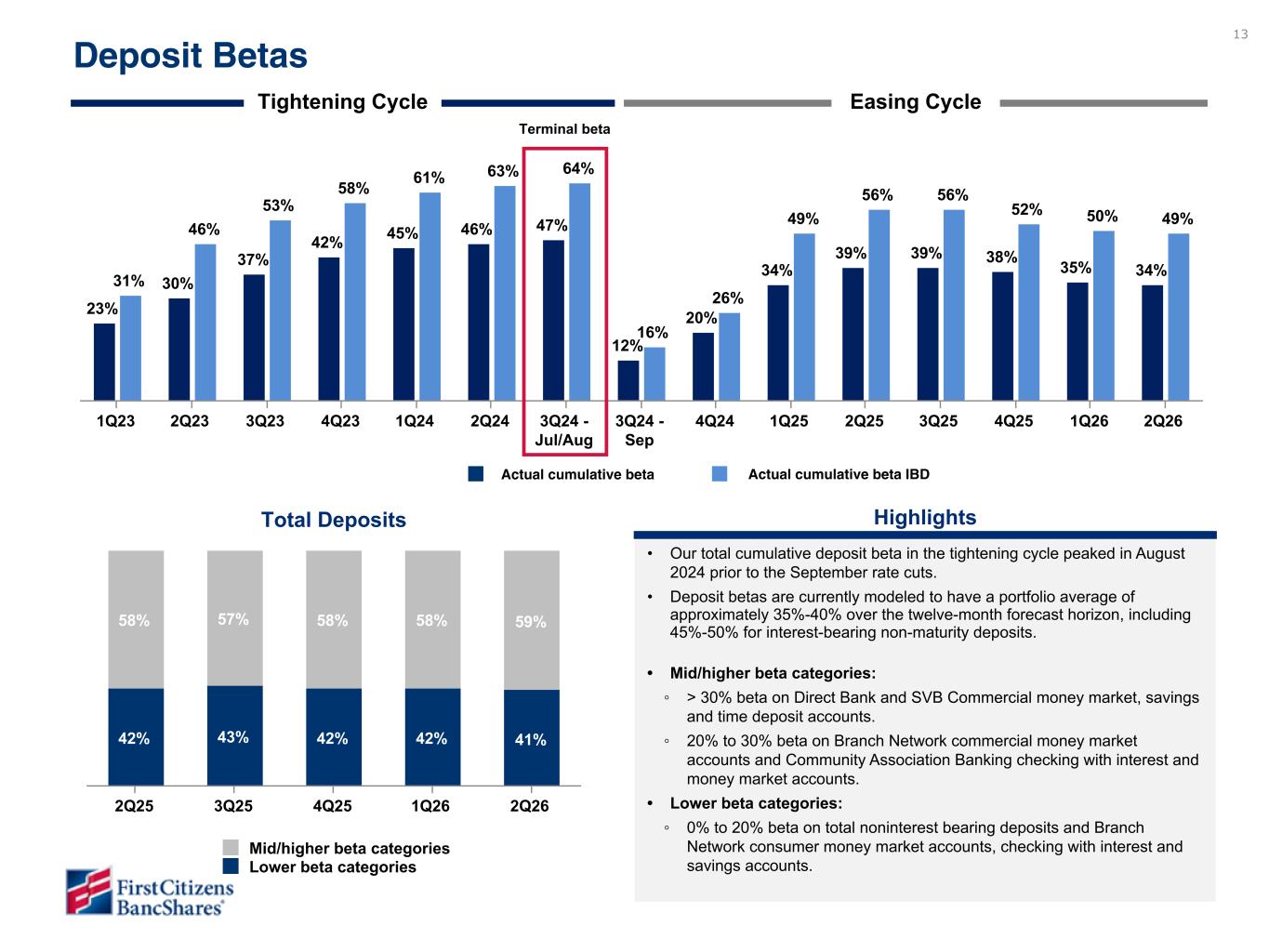
Okay, thank you. For the third quarter, And this is anchored to one rate hike in October. So for the third quarter, we're expecting both baseline and execretion net interest income to be flat with the second quarter. We expect both baseline and execretion NIM to also be flat with the second quarter. In terms of the fourth quarter exit, we're expecting headline net interest income to be up low single digits percentage points and net and execretion to be up low to mid single digit basis points, percentage points. We expect headline NIM and execretion NIM to be flat with the second quarter. So that's the trajectory through the second half of the year. In terms of spot rates, Howard, on total deposits, compared to our 2.07% cost of deposits in the quarter, our spot rate was 1.99%.
Okay, very good. And then on the capital front, so if I layer in the $900 million that you're expecting the back half of the year on buyback, and then the BMO branch deal, that CET1 ends the year at around 10%. So just looking at thinking about buyback appetite in 2027, would you guys – I mean, you guys would be at your floor, but would you lean into that Basel III proposal, just trying to get a feel for what buyback would be next year?
Okay. First of all, and I'll let Arch expand on this. We expect that our CET1 ratio will be towards the higher end of our target range of 10 to 10.5 at the end of this year. And that assumes the $900 million of repurchases in the second half. Arch, why don't you touch a little bit on the Basel III and our plans there?
Speaker 12
Sure, Casey. To echo Craig's point, at least on the exit for Q4 this year, we do expect to kind of be at that midpoint of our target range as we exit the year and as we normalize the share repurchase pace, as Craig had mentioned in his prepared remarks. As we're thinking about the Basel refresh and the final rule becoming effective, we've clearly done a lot of work in the back end here to prepare for it. We are not getting too many ducks in a row here until we have that final rule fully in front of us to really start implementing how that might influence the forward capital plan and capital strategy for us internally. But I think as we think about that, we'll certainly have more to share as we think about 2027 and PACE. That rule really kind of firms up and becomes a reality. Gotcha. Thank you.
Operator
Our next question comes from the line of Chris McGrady with KBW. Chris, your line is now open.
Oh, Greg, good morning. Greg, just following up on the NII and the margin conversation, which is helpful, how would those numbers change if you don't get a hike, if rates stay flat?
I guess the fourth quarter. If rates stay flat, looking at the third quarter, we would still project flat net interest income, headline, and execretion. We would also anticipate that our NIM, headline, and execretion have sort of flattened out as well. So we might bump up and down a couple of basis points, but we would expect those to be fairly stable as well. So not much impact on 26. Moving into 27 with a flat environment, and I'm talking – or moving into the second half of the year, fourth quarter, we would expect low single-digit growth in both core and execration now and our margins to remain fairly consistent with where they are now. So not much change.
No, no big change. Okay. And then, I guess broader competitive, a lot of your peers have talked about just a broader competitive dynamic for fundraising and deposits. Your spot rates would suggest that you're holding the line there, but any incremental color on the funding outlook? Thanks.
Yeah, I think we observe that competition is very fierce for deposits, putting a lot of pressure. And frankly, a lot of banks are putting out deposits that are really unprofitable. So the pressure is intense. And I think that's really, if you think about our asset sensitivity, we would expect to have much more improvement in margin and net interest income. And I think the funding costs are sort of blunting that muting sort of our position to neutral to where it is now. Elliot, any more comments on deposit competition, funding costs, et cetera?
No, I think that's right. I mean, I think we're very pleased with Moran and Sir, you know, kind of marginal cost in that channel, more than 4%. So I do think, you know, not just in DirectBank, but others, we're seeing, you know, good competition out there that's, you know, pushing rates a little bit higher. So really, Greg, would echo your comments there.
Awesome. Thank you so much.
Operator
Our next question comes from the line of Bernard Von Gitsky with Deutsche Bank. Bernard, your line is now open.
Hey, guys. Good morning. Just on the FGIC note, just wanted to get an updated sense of where you think the remainder proceeds come from. I know you're down to $27 billion with the $1 billion paid in July. You know, Craig, you mentioned the $6 billion to $8 billion paid down using the BMO branch acquisition and 3Q. Just kind of curious, is the remaining after that, so 4Q on until it's paid off, just the $500 million to a billion, sorry, a month? Like you said, just wanted to get some updates.
No, the $1.5 billion to $3 billion a quarter is sort of a natural run rate. But beyond that, we would repay – to date, we've repaid through excess liquidity on our balance sheet. We'd expect to continue to prepay from that. We have good capacity at the Federal Home Loan Bank, so we might draw on that. We are planning on doing some more long-term debt issuance, so that would be a source, and then broker deposits if needed. Arch, anything you'd like to add to that?
Speaker 12
The only thing I'll echo there is just continued execution through the deposit channels. Obviously, branch and commercial, we're still looking at growth there over the long run. But to Craig's point, echoing there, we do have a diverse menu of funding opportunities ahead of us, I think, to really kind of measure the purchase money note down over time ahead of that 2028 maturity.
Yeah, and just with respect to our projection of $6 to $8 billion in prepayments for the third quarter, that'll come from a combination of that normal billion and a half to $3 billion run rate plus the net liquidity provided from the BMO branch acquisition.
Great and just as a follow-up just giving all those moving parts you know when we think about your asset sensitivity obviously it's an outlier versus peers the FDSE note's been a big part of it and Greg you know you mentioned that, you know, the bulk of, you know, rate hikes that they occur, the men will benefit next year. Just wondering, you know, if you were to replace the note, obviously, you know, there's different factors that you kind of mentioned. How would that impact your rate as a sensitivity?
I lost you on the last part of that question. How would it impact what?
Why don't you get rid of the note? I got you.
Speaker 12
This is our chair responding to that one as well. On the note itself, just as a tool or as a line on there, it is a fixed rate note on the balance sheet. So for us, it does accentuate from a mixed perspective the sensitivity on the balance sheet for us. So as we go into replacement funding, whether those coming through deposit channels or whether those are coming through wholesale funding channels it permits us more flexibility to manage the sensitivity off the liability side of the balance sheet than we have today so i think as we look at gradual replacement of that funding it'll it'll just provide us more flexibility as we manage the sensitivity position on the balance sheet inherently there okay thanks for taking my question our next question comes from the line of david kia Varini with Jefferies.
Operator
David, your line is now open.
Hi, thanks for taking the questions. I wanted to touch on loan growth, strong SVB commercial and capital call line utilization. Can you talk about the outlook from here, how sustainable it can be? And also, it sounds like tech healthcare middle market is also performing well. Can you talk about the outlook?
Yeah, I think on both of those uh you know we're very positive right now i think uh global fund banking i mean we've had a lot of really strong production and utilization um yeah over the past few quarters i think we would expect utilization to moderate but we would expel even with that expect balances to grow you know we have very healthy pipelines right now i think we've seen good activity um and then tech and health care uh certainly had a great quarter it was our highest quarter of growth really since 2023 i think there's some very strong fundamentals just kind of industry-wide there um in middle market, I think middle market's really kind of a build of that line of business, right? We put a lot of effort as we're kind of translating some of the legacy SVB products over to that line of business. I think we've seen strong growth and that's really kind of extended to the loan side as well. So, you know, really kind of positive, I think, across kind of those three lines of business right now. Mark Kadger, I'm not sure if you want to add anything.
Elliot, I think you covered it very well. Thank you. Nothing to add.
And as my, thanks for that. And as my follow-up, loan pricing, can you talk about how spreads are trending in the competitive environment?
I think the competitive environment is strong. I mean, I think we've seen spreads come in, even in areas like global fund banking. I would say we've started to see some moderation in some of that spread tightening. So we might have a little bit more to go, but we think kind of the worst is probably behind us. But, you know, I think overall in regional banking, I think competitors are out there. I think they're lending. And so competition is, you know, strong out there, but, you know, we feel like we're competing very well, even, you know, against that backdrop.
Operator
Our next question comes from the line of Anthony Ellion with JP Morgan. Anthony, your line is now open.
Hi, everyone. Just on the other side of SAB's balance sheet. The deposit trends on and off flowed a little bit from the prior quarter. Mark, maybe what are you seeing there? Has sentiment changed now that the four curve has a hike in it? Anything there would be great. Thank you.
Sure. So our clients continue to like that there are interest rates and an ability to get a return these days. But having said that, based on the really focusing on the average numbers, we continue to be pleased with the continued execution, our ability to attract new client balances. And as I think already referenced, very pleased with the strong execution through the first half.
Thank you. And then on credit, the large reserve release you saw this quarter driven by lower specific reserves, improvements in credit quality. It looks like you had some model updates. Would you categorize that as being one time in nature or there are more model refinements and fine tunings to come in the second half that could drive additional releases? Thank you.
No, those are largely behind this model enhancements.
Operator
Our next question comes from the line of Janet Lee with TD Cohen. Janet, your line is now open. Good morning.
On deposits and the pay down of the FDIC purchase note, if and when SVB deposits increase meaningfully, at what point would you be inclined to use some SVB deposits to potentially pay down on the purchase note?
Speaker 12
Or is that out of the question? hey jana this is arch here on the svb deposit specifically we do have some of those on balance sheet we are circling those from a conservative nature to bring and retain those on balance sheet that provide us with the liquidity factors and quality that are preferred to us as we manage the balance sheet and liquidity position as you can see with the off balance sheet build that we've had we continue to manage those relationships very dynamically and very well with the growth both in that business and in those client relationships. There's certainly questions around how we think about that off balance sheet deposit quality over time, as we continue to get our hands around the deposit franchise. But for where we're sitting right now, as we look at the purchase money note path, we are not bringing in any sort of that off balance sheet product as it's positioned today to kind of support how we are looking at the forecast path for the purchase money note.
Could you give us a little more color around where the deposit at what price or at what rate the deposits are coming in from the direct bank channel today? And is it largely still neutral to NII as you're using those to pay out the purchase note?
The spot rate right now in the direct bank is 3.71. The highest offer grade is 4.1. Okay. And the 371 compares to the cost of 370 during the second quarter, so fairly fairly neutral.
Okay. And should we assume that that is going to be the primary avenue to pay down alongside brokered? Or are you, I mean, is that a fair assumption?
Well, our assumption is it'll come from excess liquidity, which will be deposit growth and excess loan growth. About a third of that for the remainder of the year, we expect to come from the direct bank. And then again, FHLBs out there, long-term debt issuance is an option and further broker deposit issuance if needed. But we feel very confident in our ability to prepay the purchase money note.
Operator
Got it. Thank you. Thank you. Our last question comes from the line of Christopher Maranek with Breen Capital. Christopher, your line is now open.
Hey, thank you for hosting us this morning. I wanted to ask about additional deposit acquisitions beyond the BMO transaction. Is BMO unique or are there others out there that you could do?
We have no other current ones in the queue. We're very pleased with the BMO acquisition though.
Sounds good. Thank you again for hosting this morning.
Yep, you're welcome. Thank you.
Operator
There will be no further questions at this time. I'd like to turn the call back over to our host, Ms. Deanna Hart, for closing remarks.
Thank you. And thank you, everyone, for joining our call this morning. We appreciate your ongoing interest in our company. And if you have further questions or need additional information, please feel free to reach out to the administration team. We hope you have a great rest of your day.
Operator
Ladies and gentlemen, this concludes today's conference call. You may now disconnect. Have a wonderful day.