Operator
Good afternoon ladies and gentlemen. Welcome to Fly Exclusive's second quarter 2026 earnings conference call. All participants are in a listen-only mode. If you should require operator assistance during the conference, please key in star and in zero on your telephone keypad. Please note that this event is being recorded. I will now hand the conference over to Hannah Rose. Please go ahead ma'am.
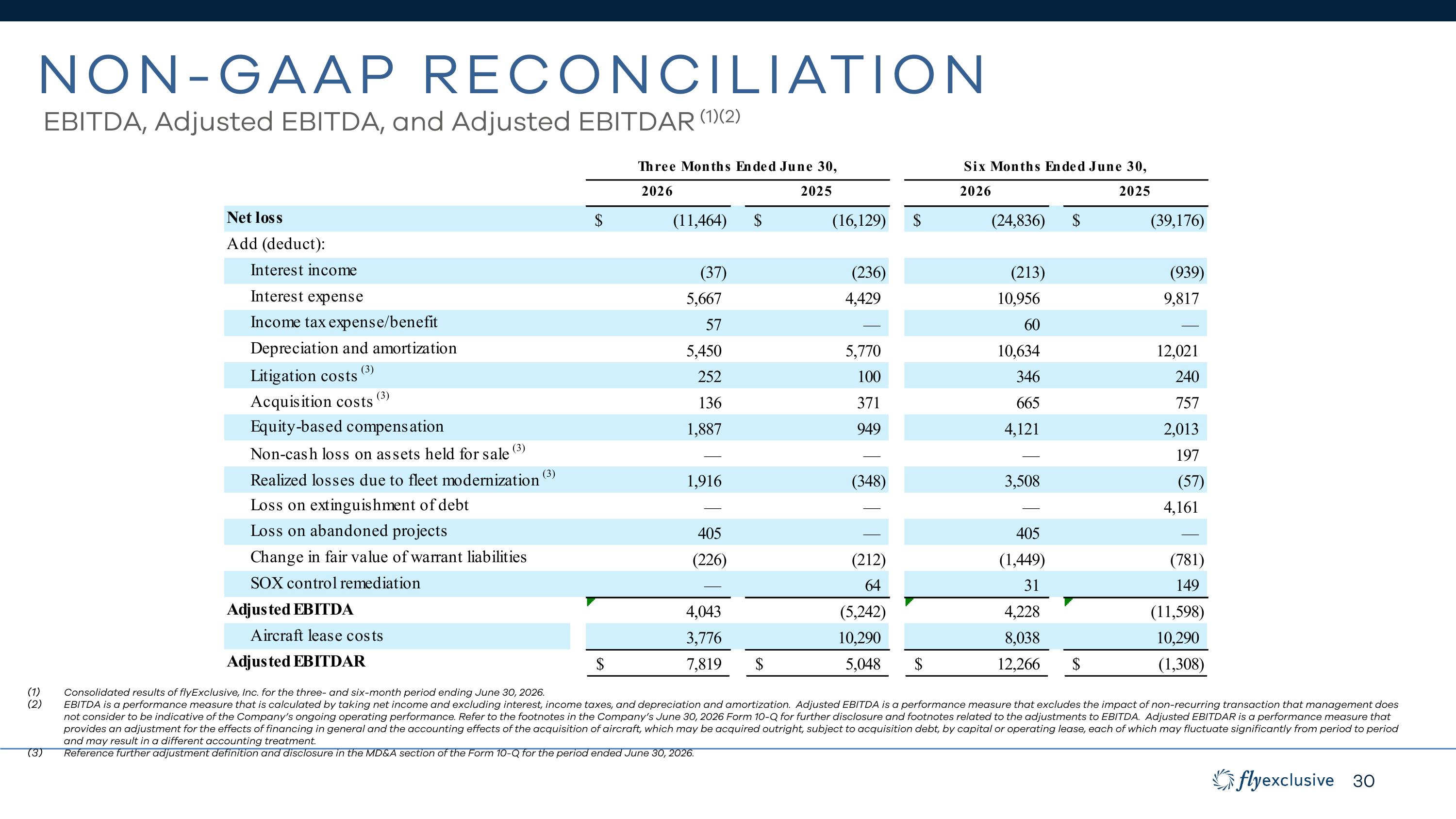
Thank you, operator. Good afternoon, and thank you all for joining Fly Exclusive's second quarter 2026 earnings conference call. Joining me on the call today is Jim Seagrave, Fly Exclusive's founder and chief executive officer, and Brad Garner, our chief financial officer. We announced second quarter financial results this morning before market open, along with the filing of our Form 10-Q for the three and six months ended June 30, 2026. We'll be providing certain non-GAAP information during today's discussion. Important disclosures about this information and a reconciliation of the non-GAAP information to comparable GAAP information is included in our Form 10-Q filed with the SEC and is available on our Investor Relations website. In addition, this discussion might include forward-looking statements. Actual results might differ materially for any number of reasons, including risk factors described in our annual report on Form 10-K, in our quarterly reports on Form 10-Q, and in the press release covering forward-looking statements. Rather than rereading this information, we're going to incorporate it by reference in our prepared remarks. And with that, let me turn the call over to Jim.
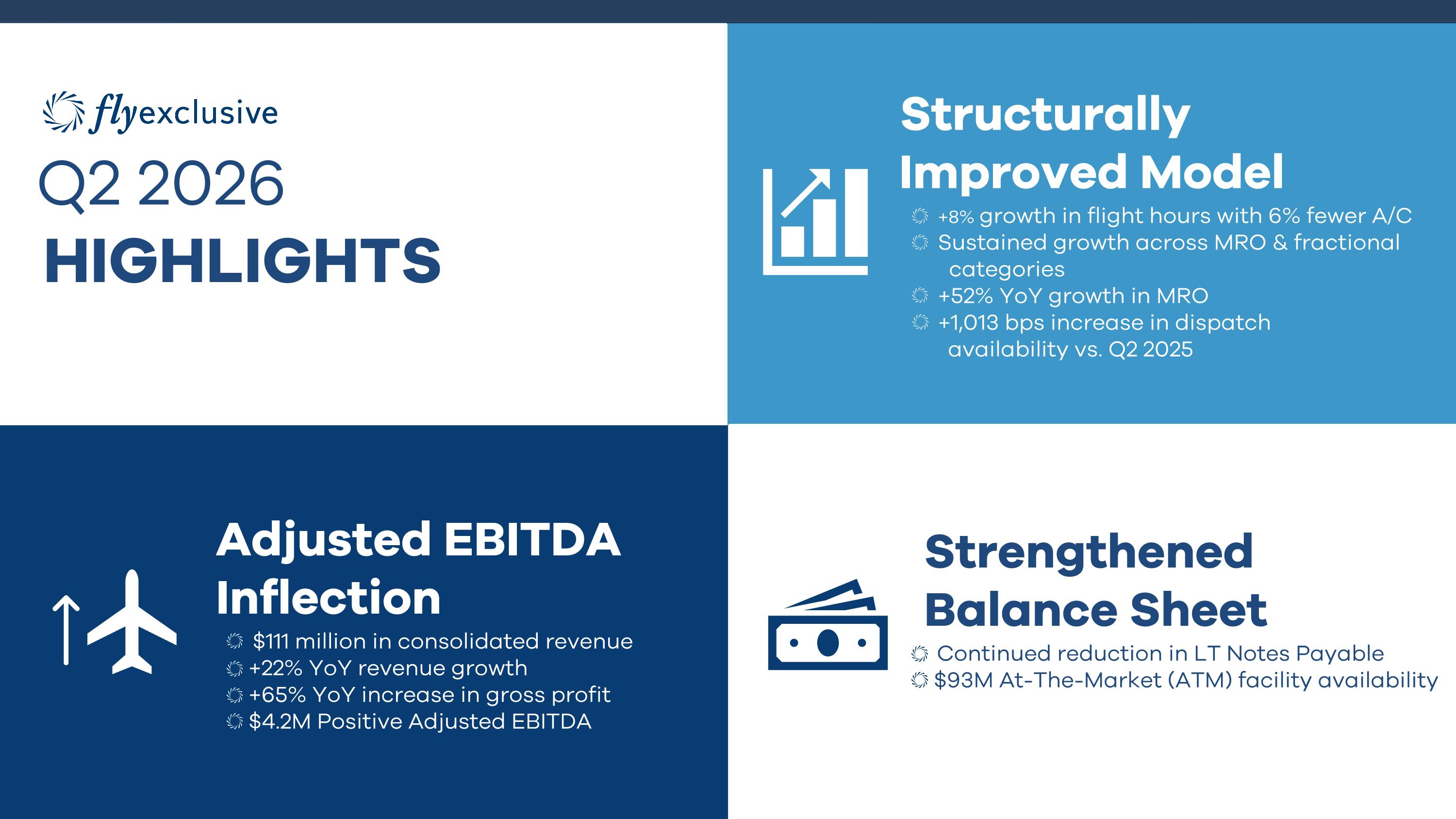
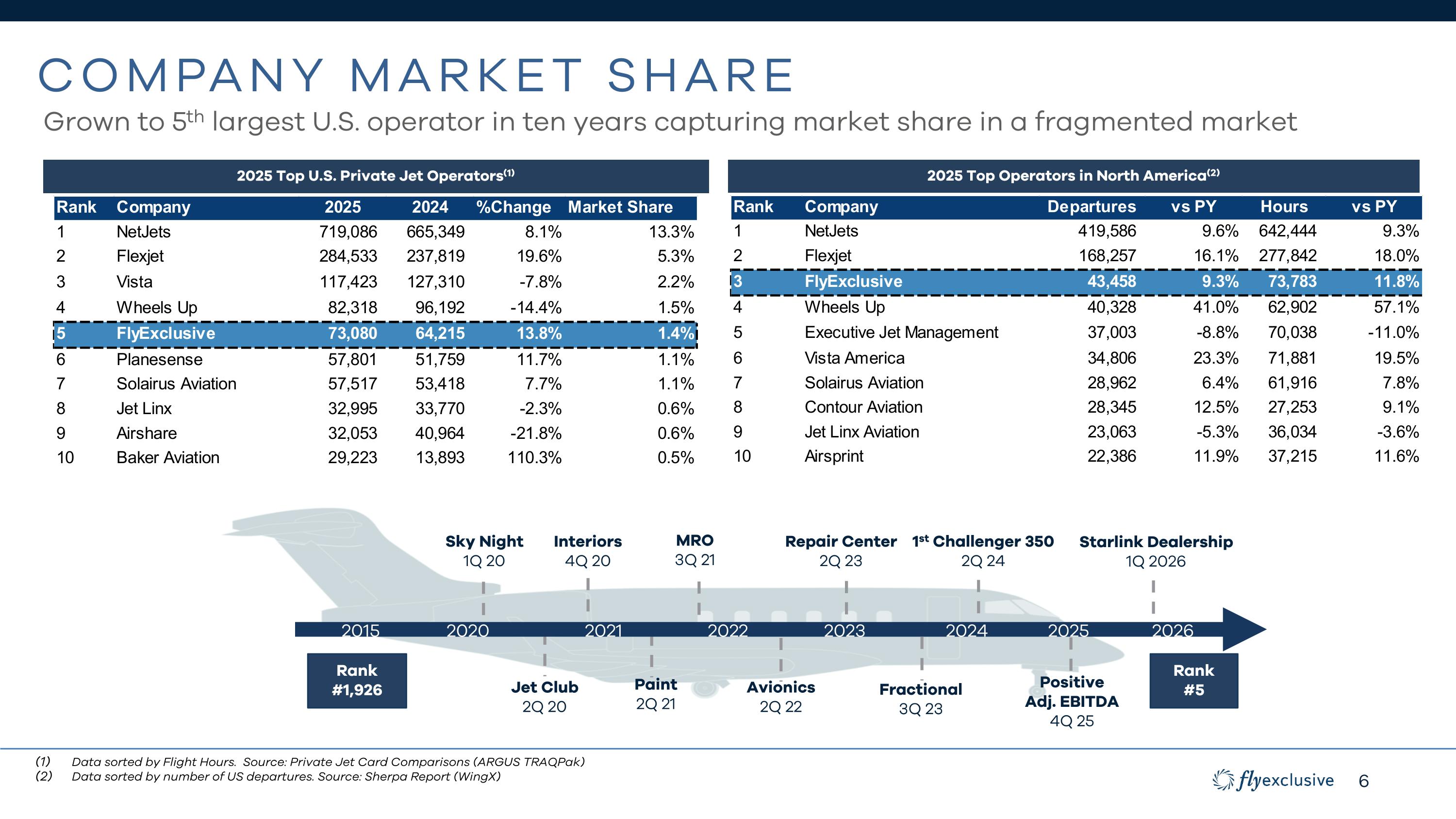
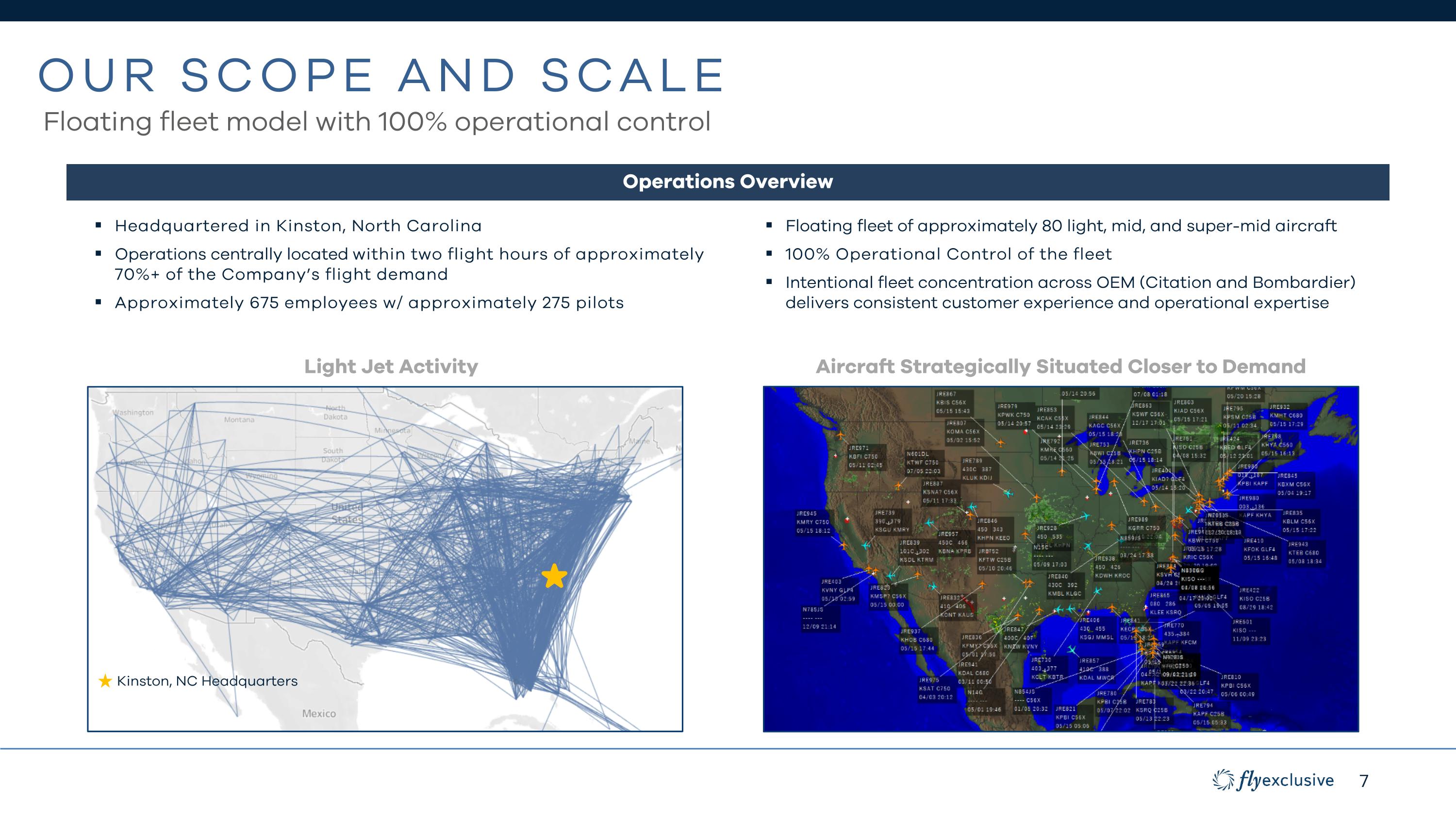
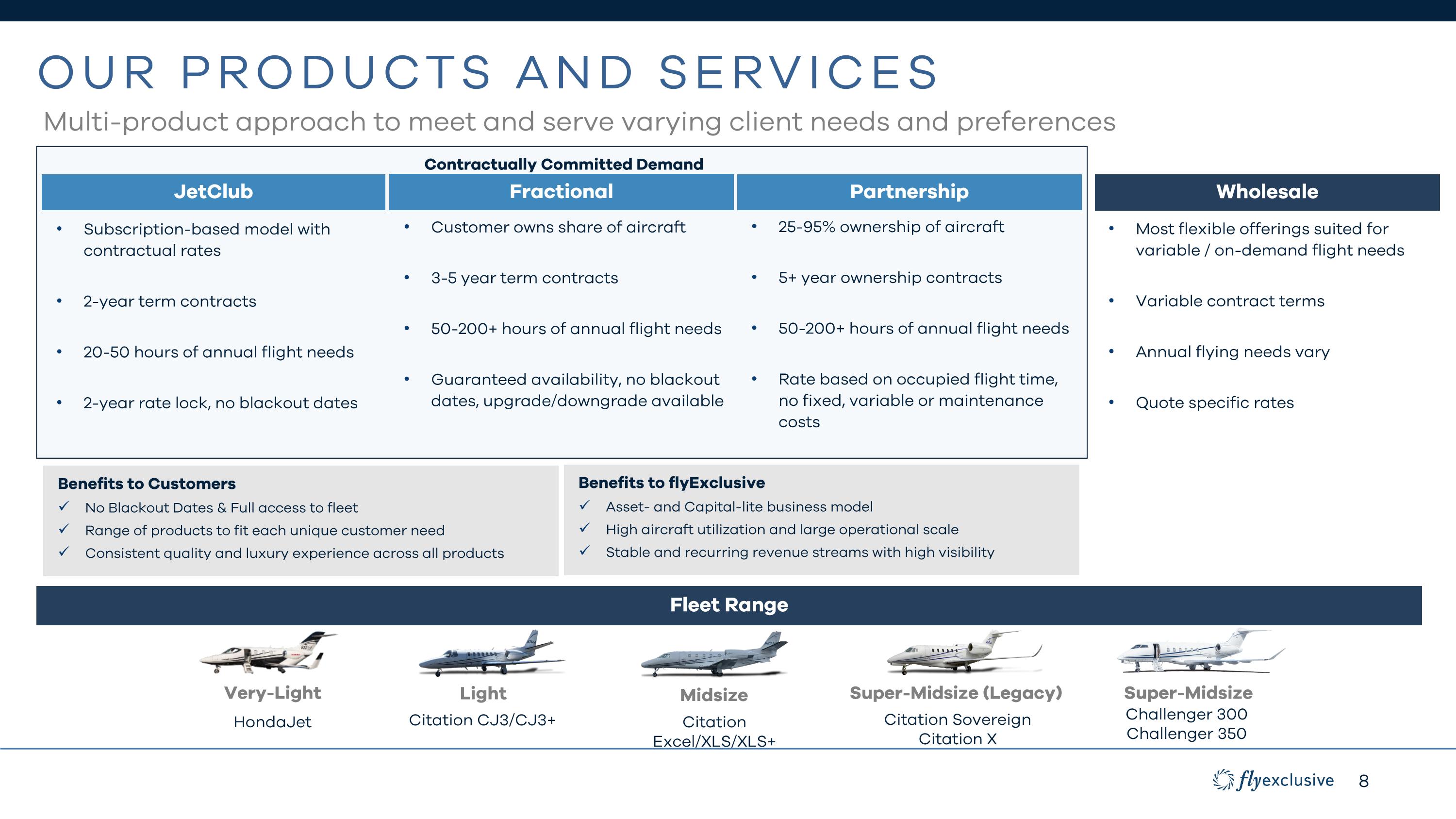
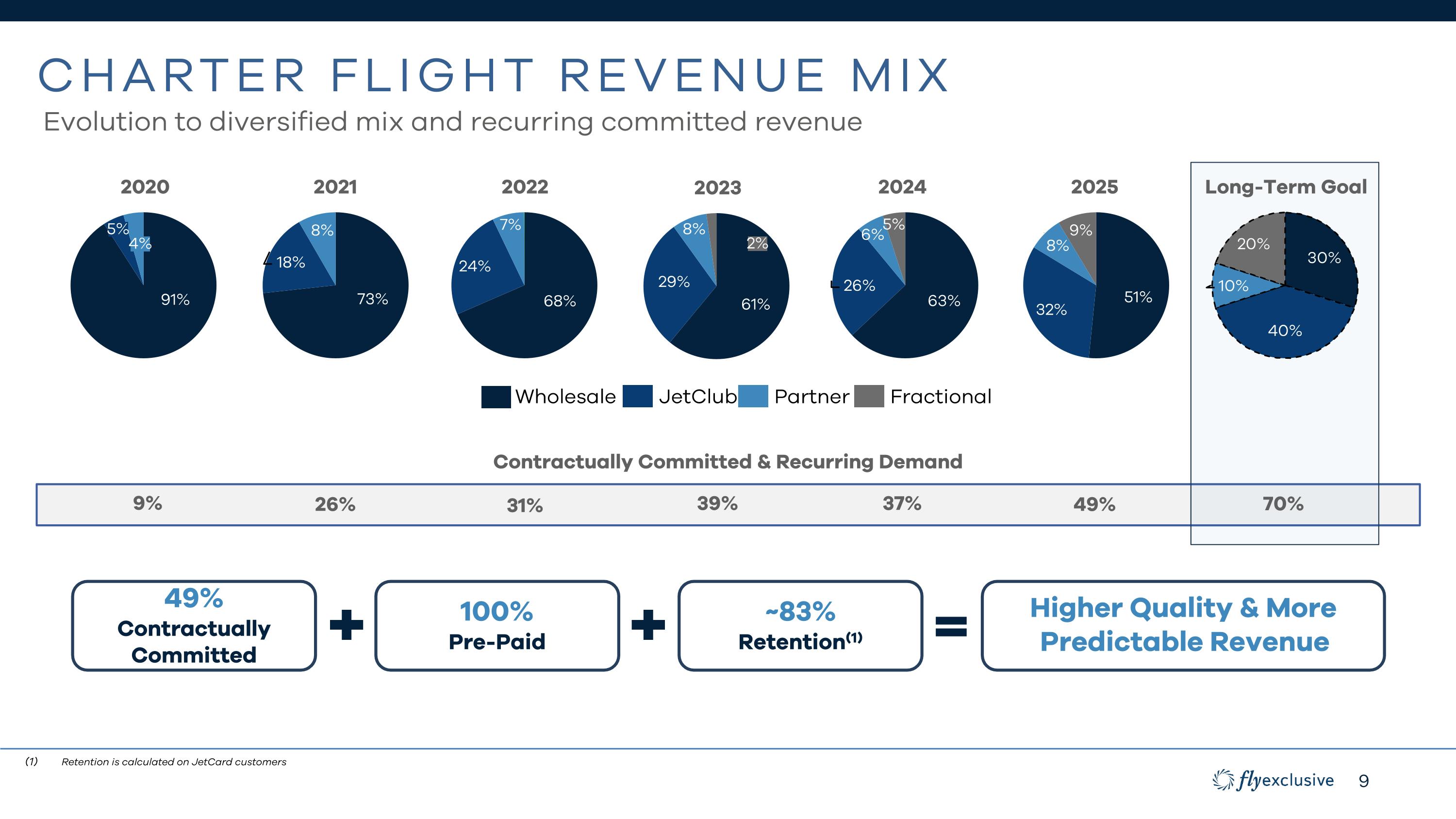
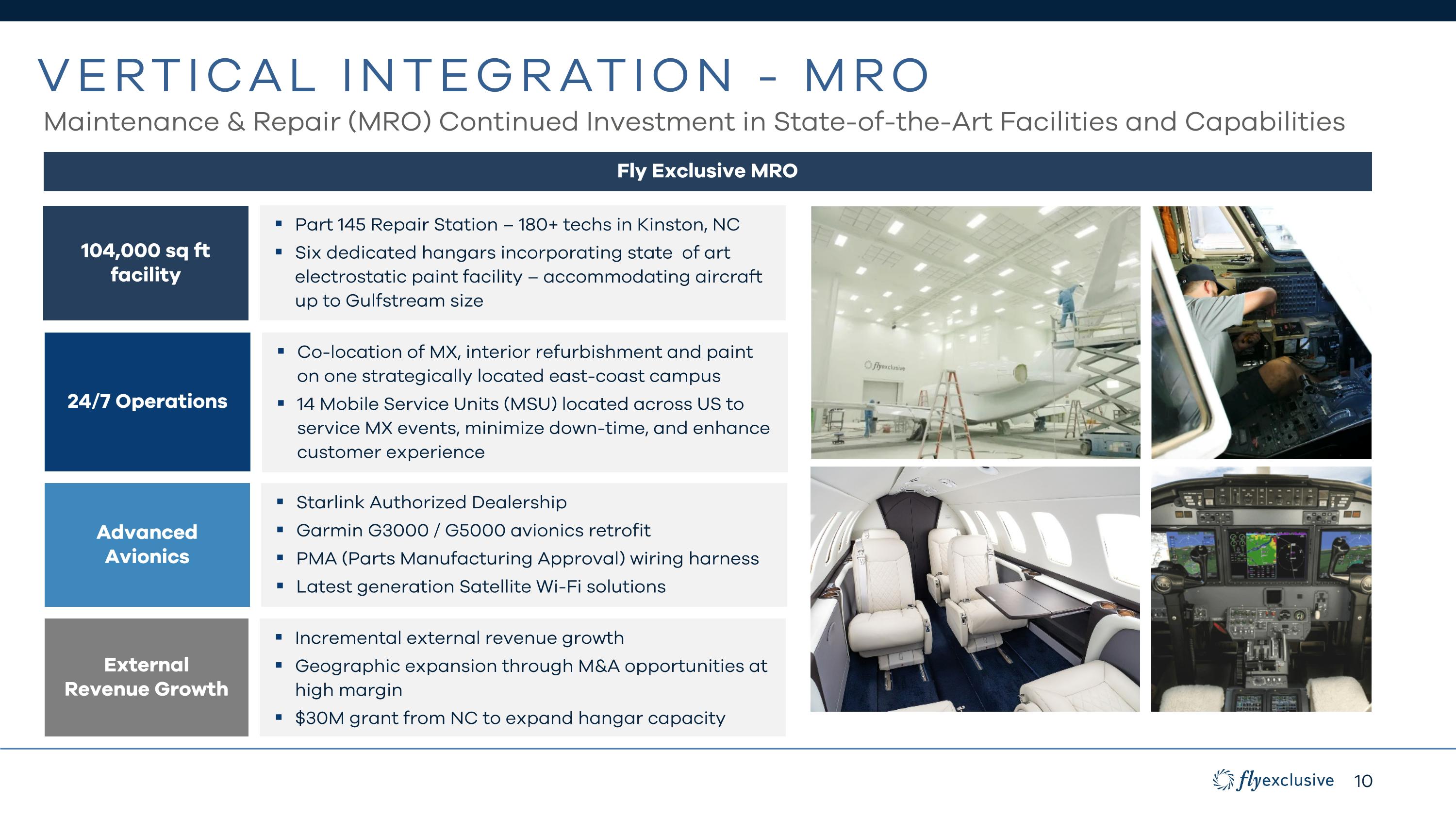
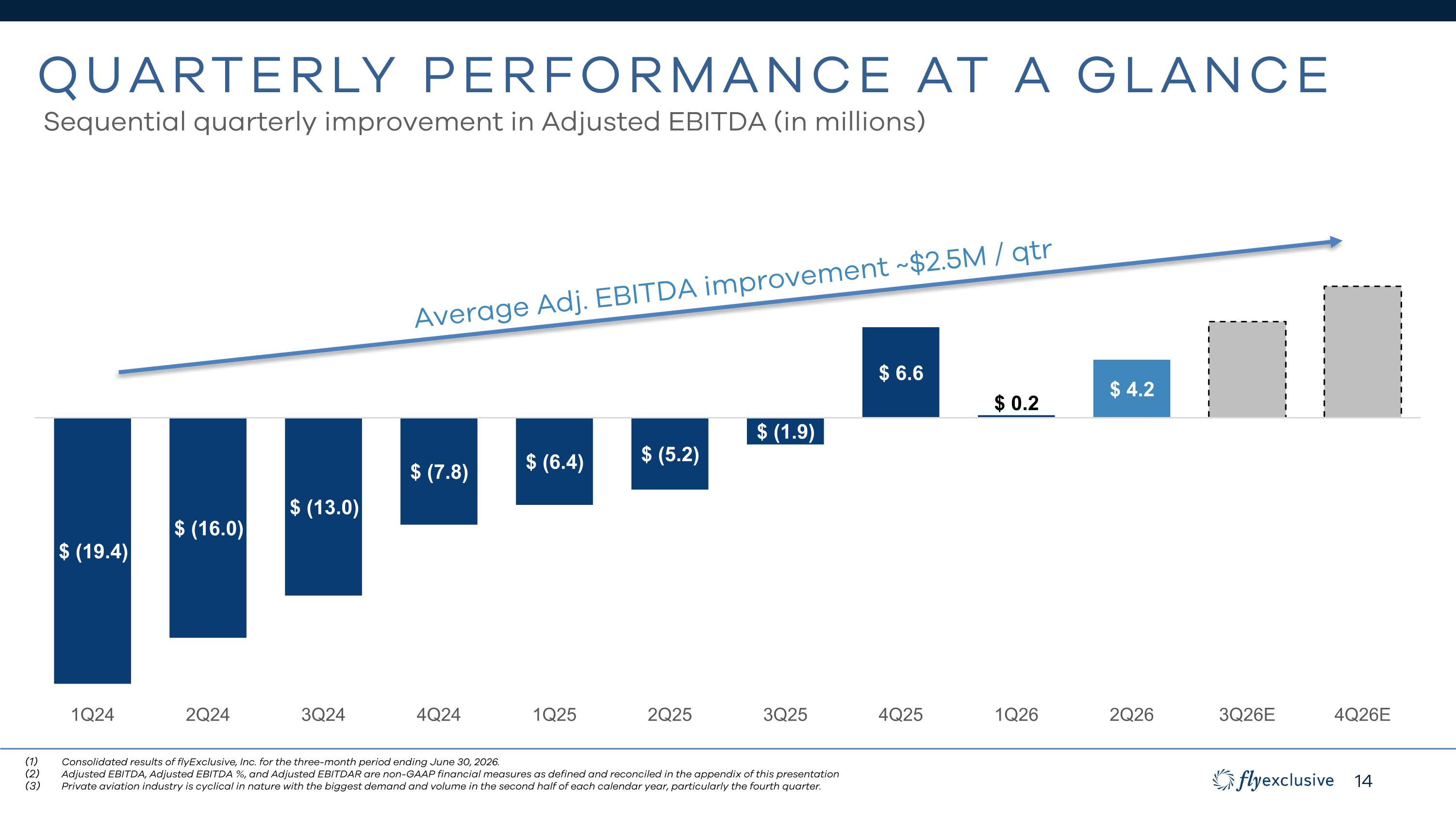
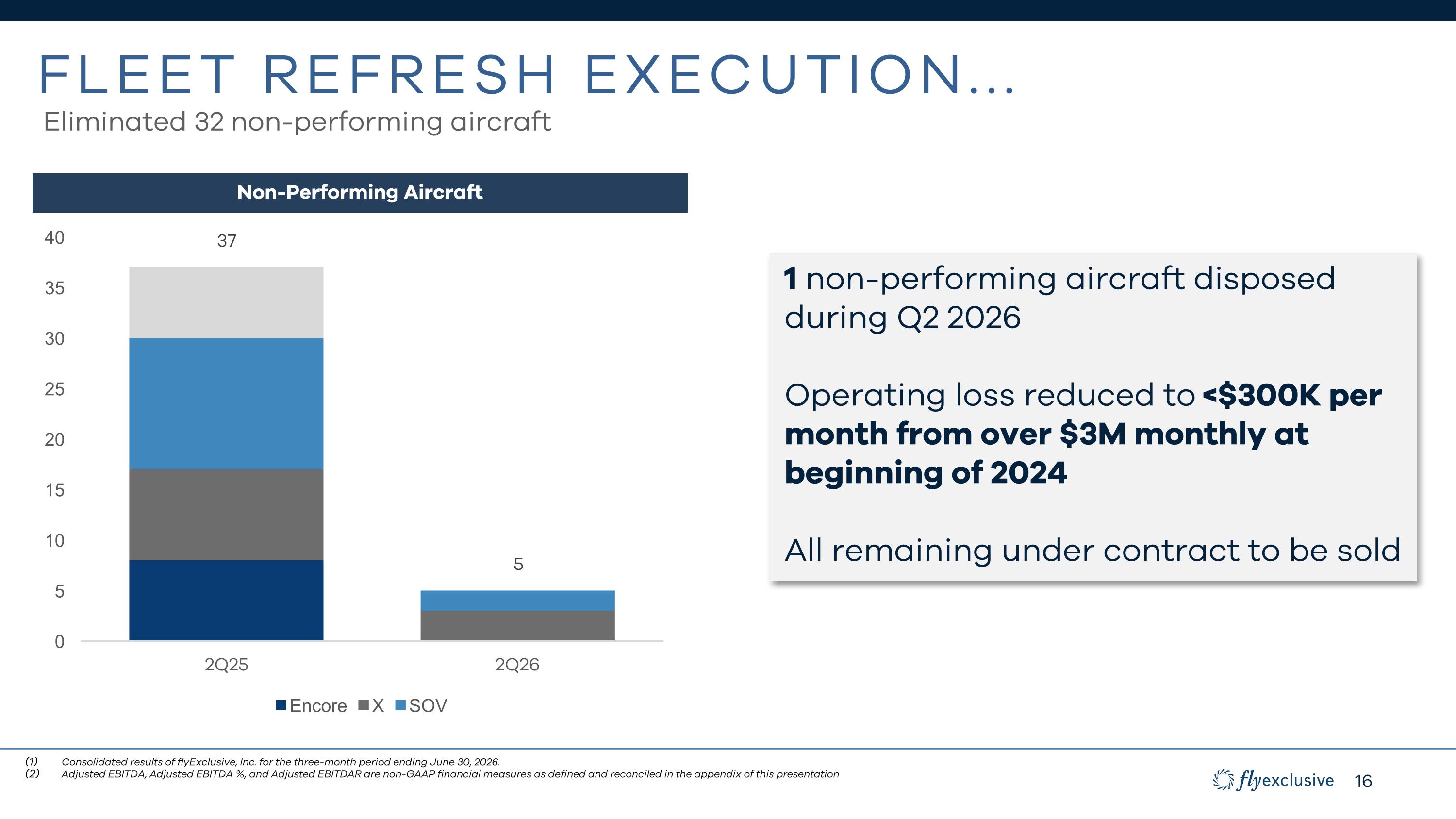
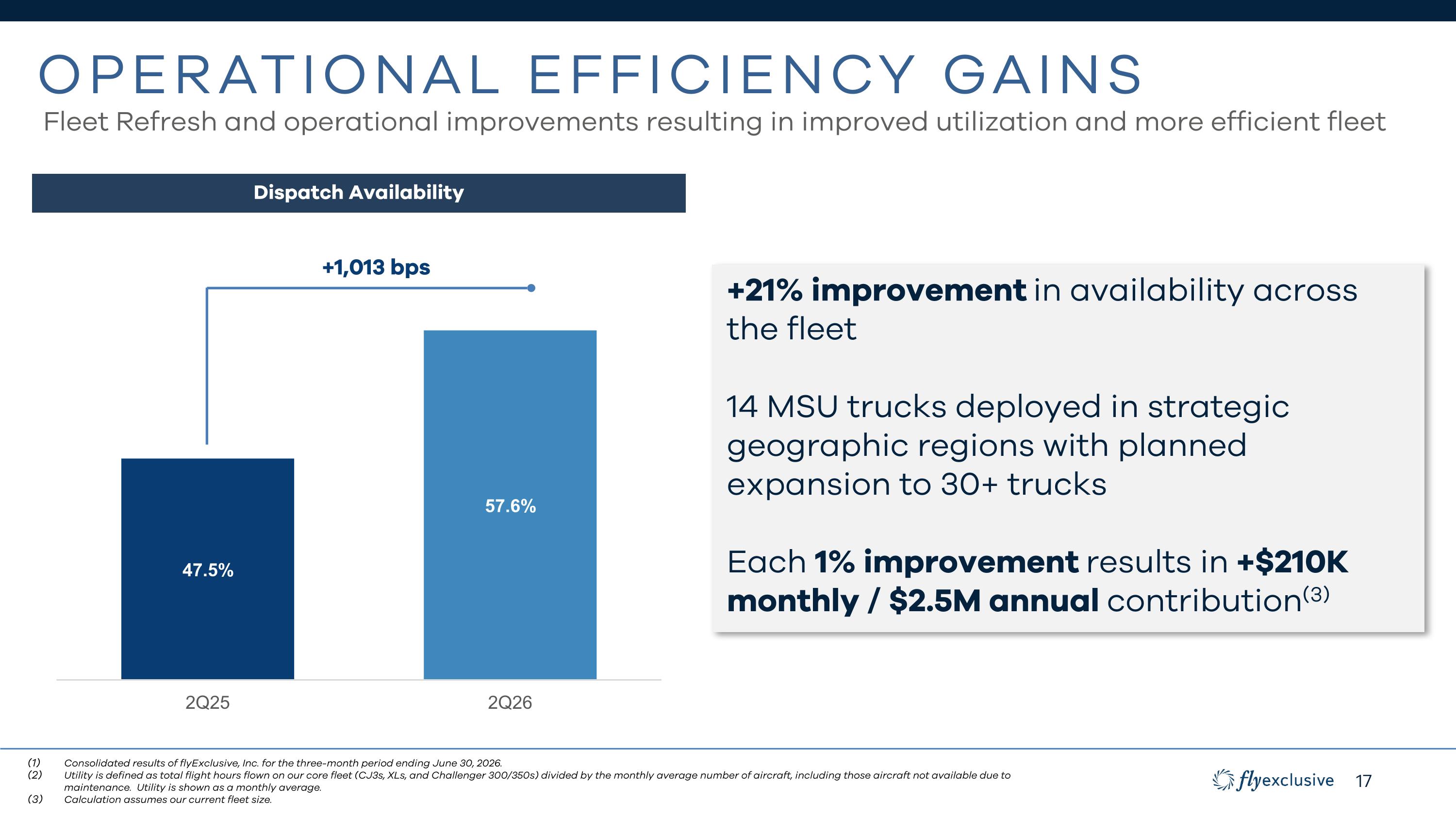
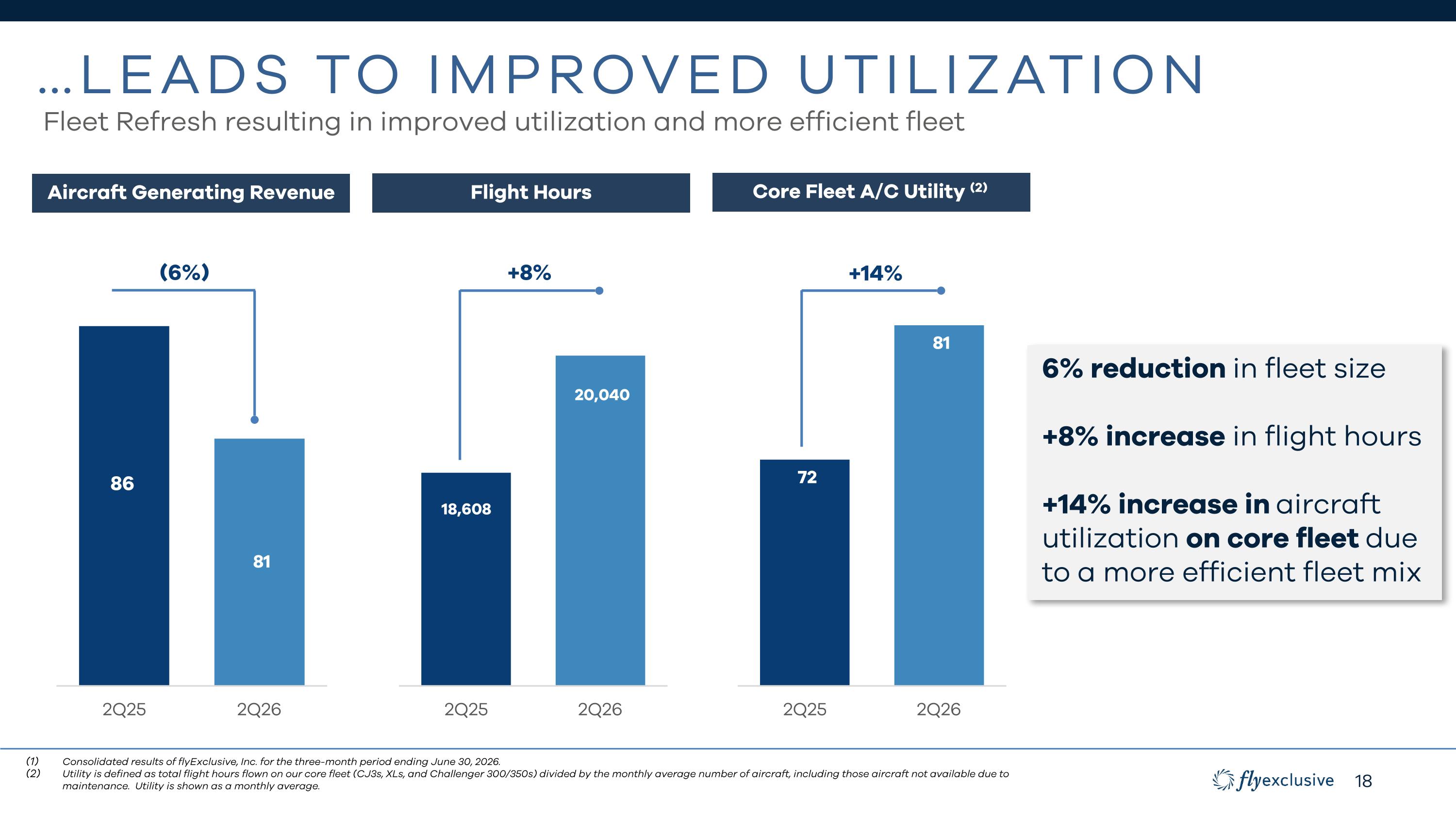
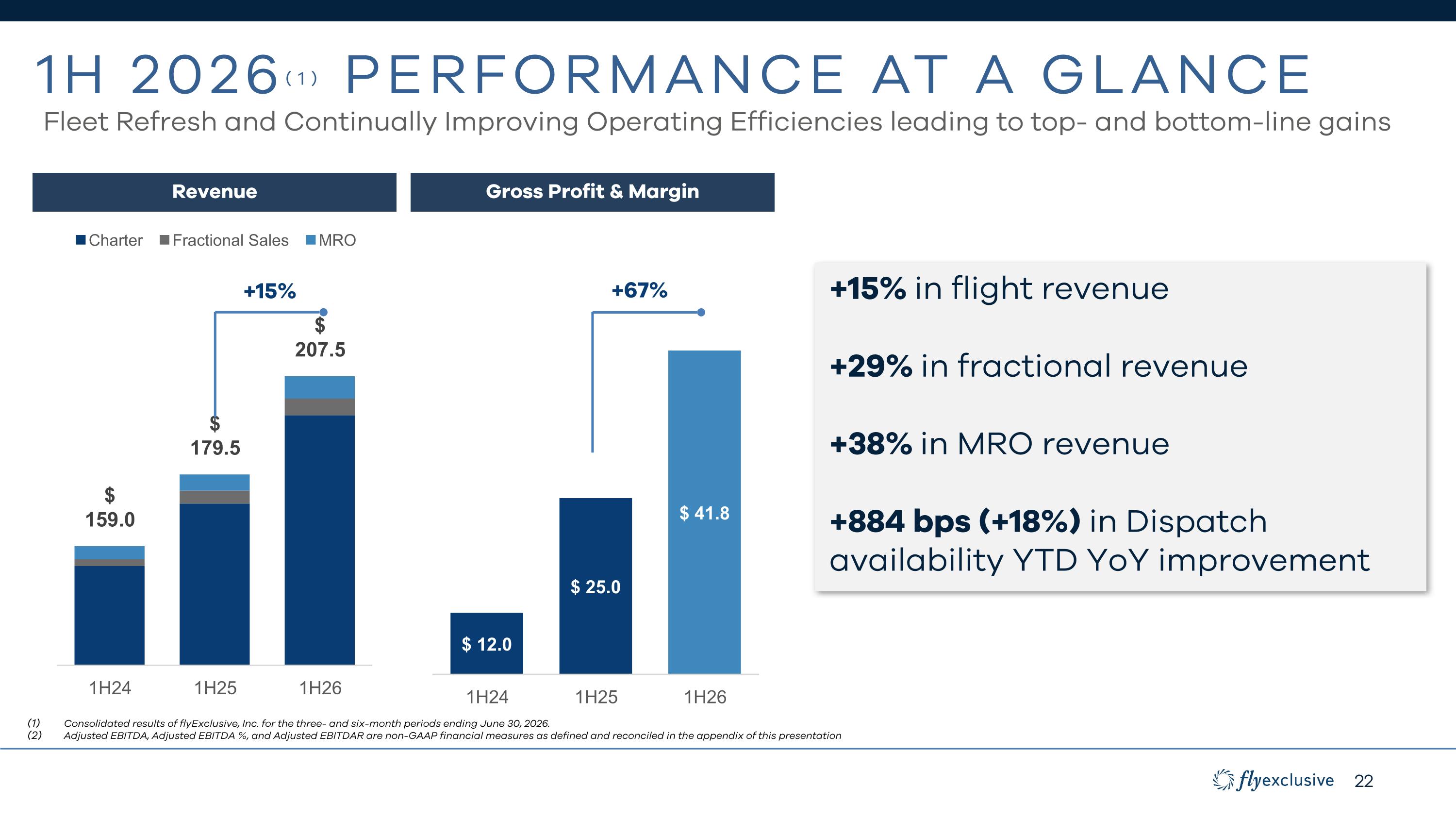
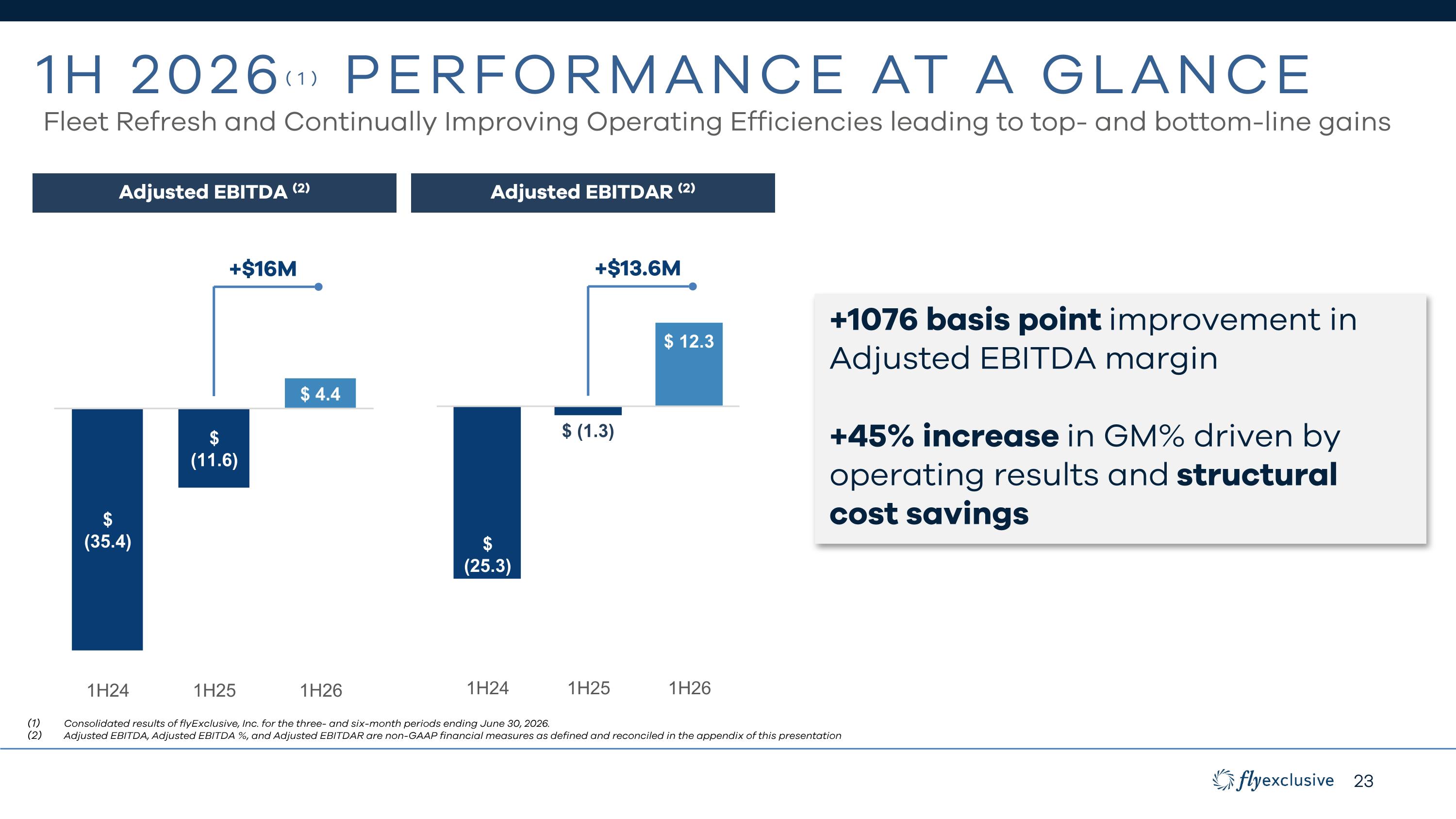
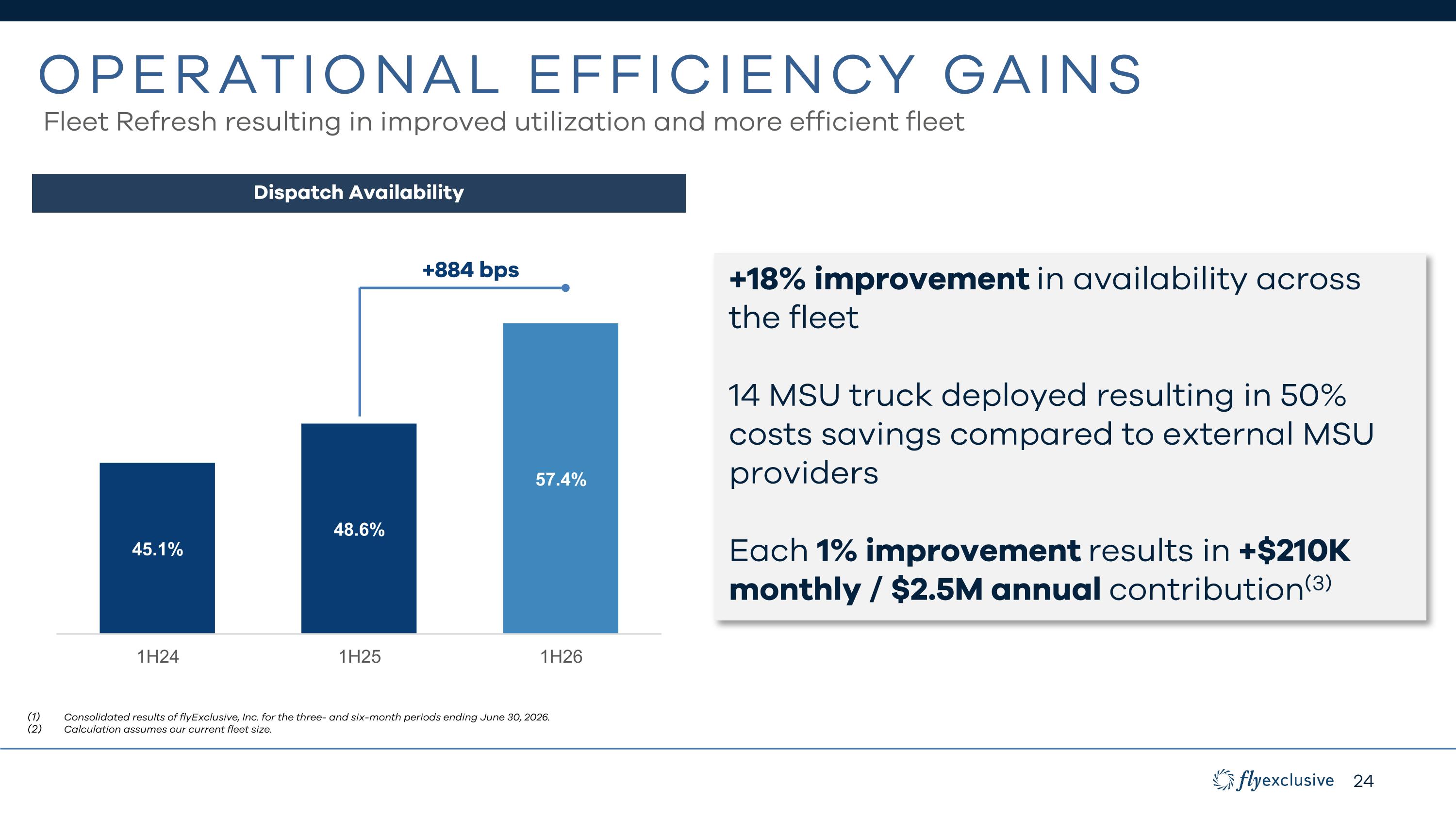
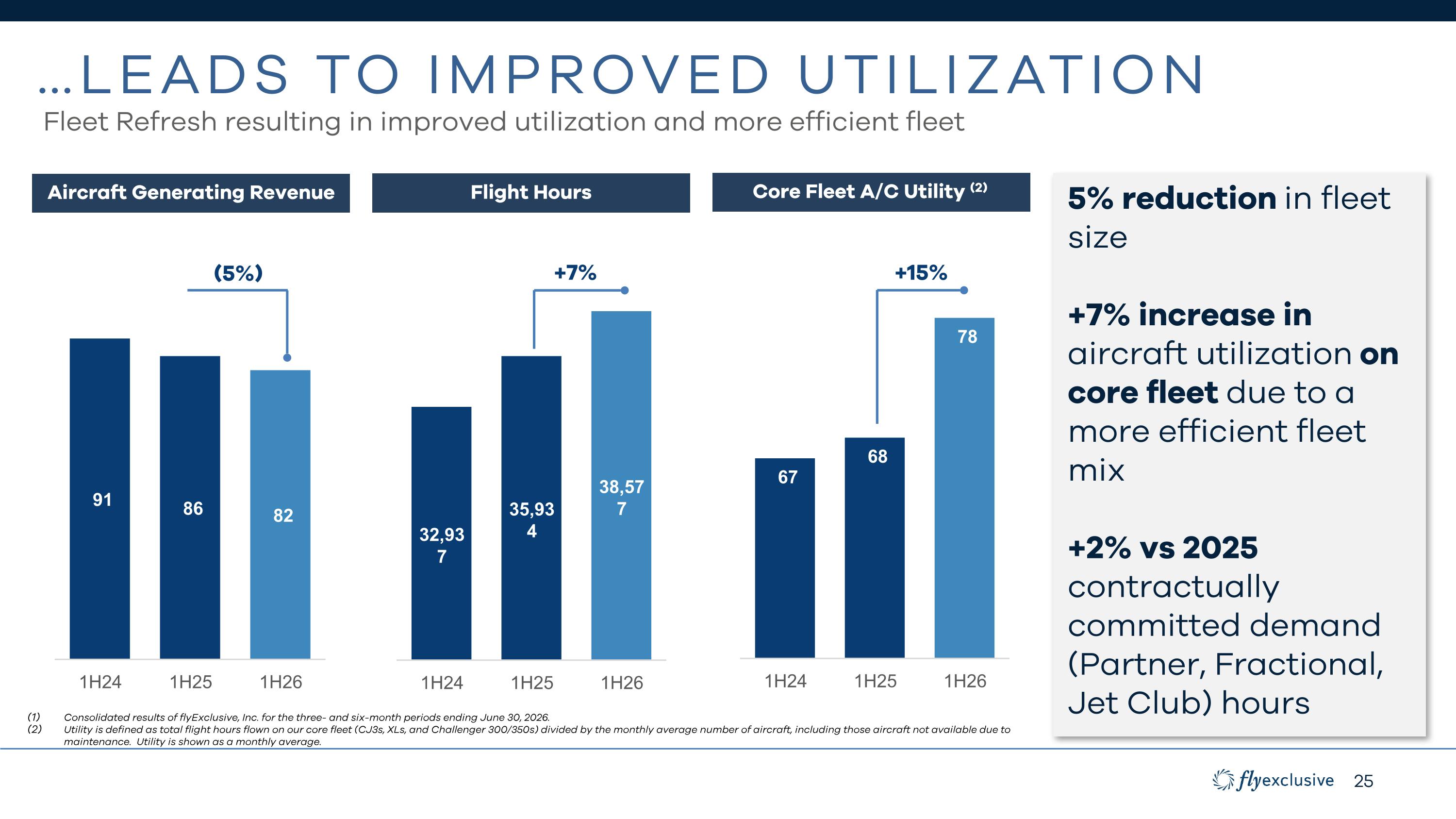
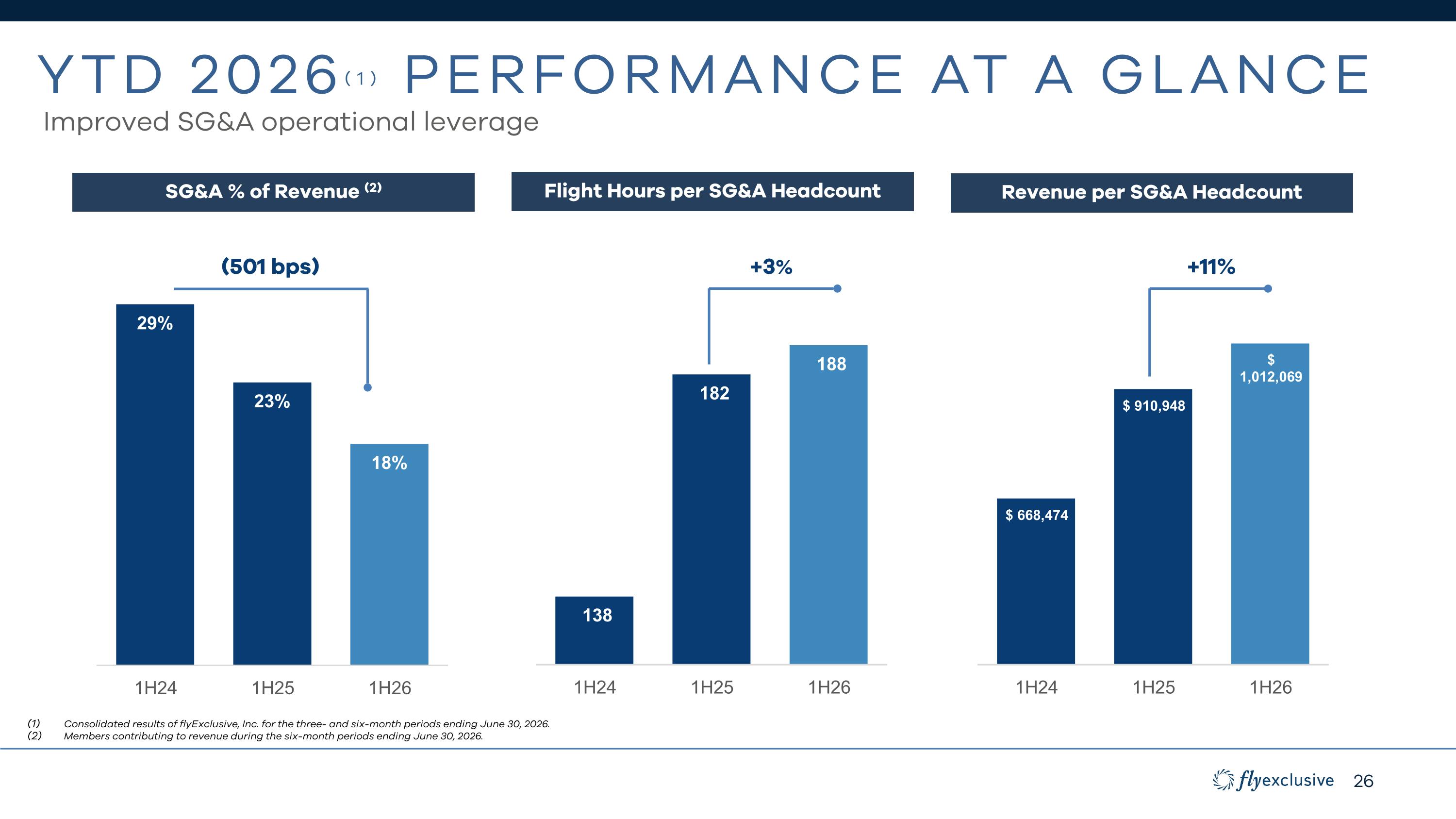
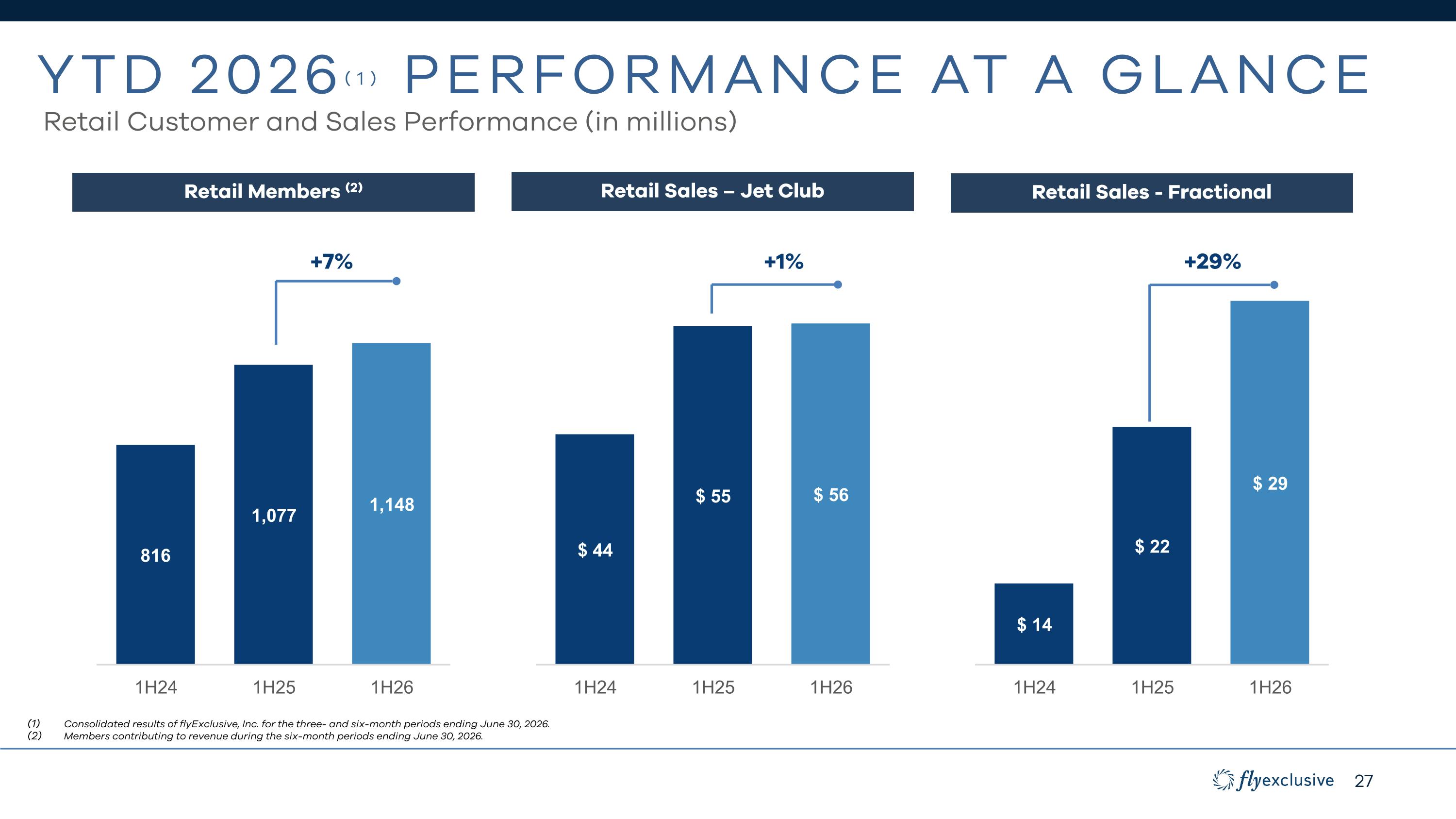
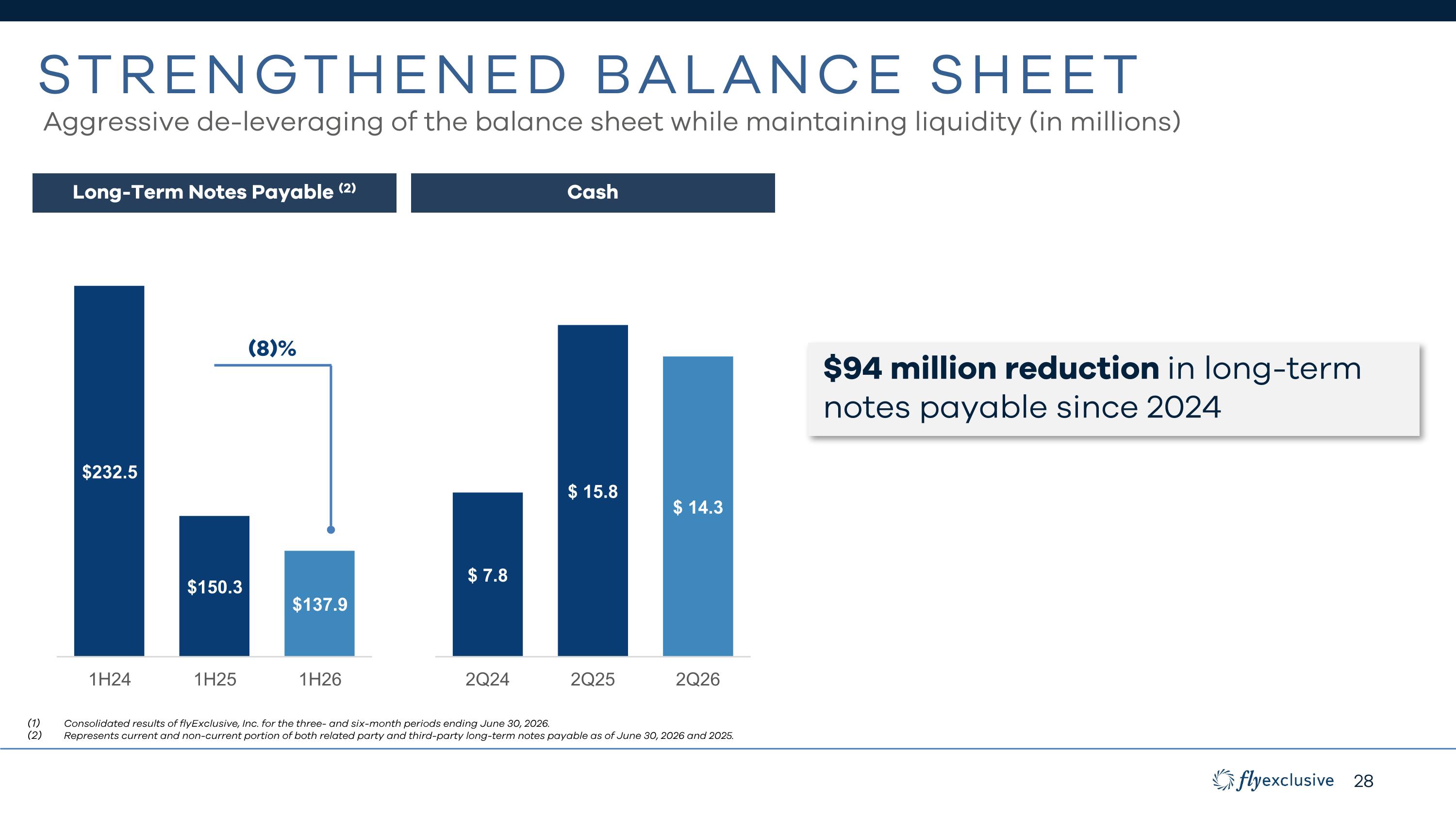
Thank you, Hannah, and thank you to everyone joining us this afternoon. The second quarter represents another important milestone for Ply Exclusive and, I believe, provides clear evidence of how fundamentally this business has changed over the last two years. We generated approximately $111 million of revenue during the quarter, an increase of 22% year-over-year. Gross profit increased 65% to approximately $23 million, with gross margin expanding more than 500 basis points to approximately 20%. And more importantly, most importantly, we generated $4.2 million of positive adjusted EBITDA. That represents a $9.4 million improvement from the second quarter of last year and marks our third consecutive quarter of positive adjusted EBITDA. For the last two years, we have been very clear about what needed to change at Fly Exclusive. We needed to remove unproductive aircraft, modernize the fleet, dramatically improve dispatch availability and aircraft utilization, reduce our corporate cost structure, and create operating leverage. Quarter by quarter, we have executed against that plan, and I believe the results now demonstrate that Ply Exclusive is no longer a turnaround story. One of the clearest ways to see that transformation is to compare the number of aircraft we operate with the revenue we generate. In the second quarter of 2024, we generated approximately $79 million of revenue, with 96 revenue-producing aircraft. In the second quarter of 2025, revenue increased to approximately $91 million, while the number of aircraft declined to 86. In this quarter, we generated more than $111 million with only 81 revenue-producing aircraft. In two years, we have increased second quarter revenue by more than 40%, while reducing the number of aircraft required to produce that revenue by approximately 15%. That is what the transformation of Fly Exclusive looks like in numbers. The first half comparison is equally compelling. Revenue increased from approximately $159 million in the first half of 2024 to more than $207 million this year. Over that same period, revenue-producing aircraft declined from 96 to 81, and total flight hours increased from 33,000 to more than 38,000. We are simply getting significantly more productivity from every aircraft in the fleet. A major driver has been the transformation of the fleet itself. At the beginning of 2024, we had 37 non-performing aircraft. These aircraft consumed maintenance resources, pilot resources, and working capital while producing unacceptable financial returns. Today, only three non-performing aircraft remain, and all three of these are now under contract to be sold. The operating losses associated with these 37 non-performing aircraft have declined from more than $3 million per month at the beginning of 2024 to less than $300,000 per month today. We are very close to completing one of the largest and most difficult pieces of the transformation we began two years ago. At the same time, we have substantially upgraded the productive portion of the fleet. We entered this transformation with no Challenger aircraft. Today, we operate 10 Challengers, and we expect that number to continue growing. These aircraft are significantly more reliable, generate substantially more revenue, and produce better economics than any of the legacy aircraft they replaced. That transformation is showing up clearly in dispatch availability. Dispatch availability improved by more than 1,000 basis points year over year, increasing from 48% to 58%. And we believe that through continued fleet modernization and the efficiencies of our vertically integrated platform, we can ultimately produce dispatch availability well above 70%. The economics of that improvement are significant. At our current fleet size, every one percentage point of additional dispatch availability represents over $200,000 of monthly contribution, or approximately $2.5 million annually. Utilization is improving as well. Despite operating 6% fewer revenue-producing aircraft than a year ago, flight hours topped 20,000, an increase of 8%. Core fleet utilization increased approximately 14%. Again, we are producing more with less. The scale of our operation is also increasingly significant. According to Argus, during the second quarter, Fly Exclusive was the largest North American Part 135 charter operator by both number of flights and flight hours. The same transformation is occurring in our corporate infrastructure. Revenue per SG&A employee increased from approximately $668,000 during the first half of 2024 to more than $1 million during the first half of this year, a 50% improvement. At the same time, SG&A declined from approximately 29% of revenue down to approximately 18% today. So we are not simply cutting costs to create profitability. We are growing revenue while becoming significantly more productive across both the fleet and our corporate infrastructure. That operating leverage is showing up directly in our financial performance. Gross profit increased from approximately $12 million in the first half of 2024 to almost $42 million so far this year. The EBITDA progression is even more significant. First-half adjusted EBITDA improved from a loss of approximately $35 million in 2024 to a loss of approximately $12 million in 2025 to a positive $4.4 million in the first half of this year. That is nearly $40 million of first-half EBITDA improvements in two years. Since the first quarter of 2024, we have increased our adjusted EBITDA by an average of approximately $2.5 million per quarter. In the fourth quarter of 2025, we delivered positive adjusted EBITDA and remained positive during the first quarter of 2026, despite that quarter historically being our most difficult seasonal quarter, and we generated another $4.2 million this quarter. That gives us three consecutive quarters of positive adjusted EBITDA. This is no longer the occasional good quarter. However, we are demonstrating sustained performance and profitability. I also think it's important to put our gap results in the context of the underlying economics of our aircraft assets. We currently record approximately $5.5 million of depreciation each quarter, most of it associated with aircraft assets. That is a legitimate gap expense, but gap depreciation is an allocation of historical costs over an estimated useful life. It is not a mark-to-market adjustment reflecting the actual value of our aircraft each quarter. Over the last several years, the market values of the aircraft we operate have generally remained stable and in many cases have actually increased. So while approximately $5.5 million of depreciation reduces our reported GAF earnings each quarter, the actual economic depreciation we have experienced on our aircraft has been substantially less. I think that distinction is important when evaluating both our reported results and the underlying economics of the business. Based on the operating trends we are seeing today, we expect our positive EBITDA progression to continue. For the third quarter, we expect adjusted EBITDA of approximately $5 to $7 million. If we achieve that result as expected, Q3 would represent our fourth consecutive quarter of positive adjusted EBITDA. We are now approximately 45 days away from potentially completing a full year of sustained quarterly adjusted EBITDA profitability, and immediately following Q3, we enter what historically has always been our strongest quarter of the year. We're not providing fourth quarter guidance, but based on the direction of the business, we fully expect the second half of 2026 to continue the consistent trend of year-over-year improvement we have demonstrated every quarter over the last two years. That brings me to what I believe is the most important change in the fly-exclusive story. Investors should no longer view fly-exclusive as a company in transition. By the fourth quarter, we expect to have removed all of the non-performing aircraft. We have materially improved dispatch availability and utilization. We have dramatically increased the productivity of our corporate infrastructure, and we are now producing sustained positive adjusted EBITDA. The question is no longer whether fly-exclusive can become profitable. The question is how much earnings power this platform can generate as we continue growing. One of our largest opportunities is fractional ownership. Fractional retail sales increased approximately 34% year-over-year during the second quarter and approximately 29% during the first half. More importantly, fractional aircraft generate substantially better economic supply exclusives than comparable leased aircraft. As fractional becomes a larger percentage of our fleet, we can grow revenue while simultaneously improving the economic profile of the fleet. We are seeing strong demand for the product, and we now have additional aircraft inventory coming into the business to support that growth. There is an important distinction between what we have done over the last two years and what comes next. For two years, we have been removing aircraft while growing revenue. Now we have the opportunity to begin adding aircraft back into a dramatically more efficient operating platform, and we are not adding the same aircraft we removed. We are adding highly productive CJ-3, XLS, and Challenger aircraft with significantly higher dispatch reliability, utilization, and revenue expectations. The CJ-3 and XLS-class aircraft will generate approximately $5 million of annual revenue each. A Challenger can generate approximately $10 million annually. The economics of fleet growth today are therefore fundamentally different than they were several years ago. We already have the pilots, maintenance infrastructure, sales organization, technology, and corporate platform required to operate at scale. Incremental aircraft can generate significant contribution without requiring a corresponding increase in corporate infrastructure. This is where the operating leverage we have spent the last two years creating becomes particularly powerful. Our recently completed jet AI transaction is a good example. We closed the transaction on July 13th. It immediately added three light jet aircraft to our platform that will start contributing to our bottom line in the fourth quarter, and included deposits for three additional new CJ3 Plus aircraft expected to deliver in early 2027. These aircraft will add little to no incremental corporate infrastructure or overhead. The transaction also resources to support the continued expansion of our fractional program. We view JetAI as an opportunity to accelerate growth at precisely the point when the underlying fly-exclusive platform has become significantly more efficient, scalable, and profitable. Our core retail product, JetClub, also continues to perform well. Second quarter JetClub sales increased approximately 13% year over year. and the number of retail members increased approximately 5%. More broadly, approximately half of our revenue is now contractually committed and our long-term objective is approximately 70%. That creates greater visibility, customer retention, and predictability as we grow. Speaking of growth and retention, according to Private Jet Card Comparison's 2026 annual survey, we now rank number two in first-time customers and number one in terms of subscribers who said they had renewed with their current provider. Our share of active users with private jet card comparisons has also increased to 16.2% across the entire space. These stats are a testament to the level of service we are providing. Our maintenance organization is another increasingly important part of both the operating and growth story. External MRO revenue increased approximately 52% year over year during the second quarter and 38% during the first half of 2026. And we continue to see meaningful opportunity to grow external MRO revenue using infrastructure originally built to support our own fleet. But its strategic value extends well beyond external revenue. Controlling maintenance internally is a major reason we have been able to improve dispatch availability, reduce aircraft downtime, reduce maintenance costs, and operate a fleet of our scale efficiently. Our maintenance cost was $876 per flight hour the first half of 2025 and is down to $723 per flight hour in the first half of 2026. This represents more than $150 per flight hour of savings and translates to nearly 3 million of quarterly bottom line improvement based on the approximately 20,000 flight hours per quarter we are flying and we are confident there is significantly more opportunity to continue reducing our maintenance costs going forward we now operate 14 mobile service units strategically present positioned around the country allowing us to perform more maintenance where our aircraft are located rather than repositioning them to kinston that directly increases uptime and dispatch availability we have also made significant process progress strengthening the balance sheet, long-term notes payable declined from approximately $232 million at the end of the first half of 2024 to approximately $150 million a year ago and down to approximately $138 million today. That represents approximately $94 million and 40% of debt reduction in just two years. The Jet AI transaction that closed early in the third quarter also improved our balance sheet, providing approximately $12 million in liquidity. Additionally, we have multiple term sheets in hand that could provide up to $50 million of additional liquidity. That financing would provide substantially more capital than our currently forecasted growth capital requires. Since the end of the second quarter, our cash position has improved materially, and we believe we have the capacity to fund our planned growth so while transforming the fleet and investing in the business we have also been aggressively deleveraging the balance sheet as we enter the next phase of growth we will remain extremely disciplined about our capital allocation and how we finance aircraft i want to close with one thought two years ago our challenge was to fix the operating model. We have spent that time removing unproductive capacity, modernizing the fleet, improving dispatch availability and utilization, increasing the productivity of our people and infrastructure, and dramatically improving our financial performance. The results are now measurable. More revenue, fewer aircraft, higher utilization, lower sgna expanding margins and sustained positive adjusted evita the next phase is different it is about taking this much more productive platform and growing it intelligently adding the right aircraft growing fractional ownership increasing contractually committed revenue continuing to improve dispatch and utilization and allowing incremental revenue to flow through a significantly more efficient cost structure. The question for Fly Exclusive is no longer simply, can we achieve profitability? We are now delivering sustained positive adjusted EBITDA. The opportunity now is demonstrating how much earnings power this platform can produce as we scale. I'm extremely proud of what our team has accomplished, and I believe we are still in the early stages of realizing the value of the business we have built. With that, I'll turn the call over to Brad.
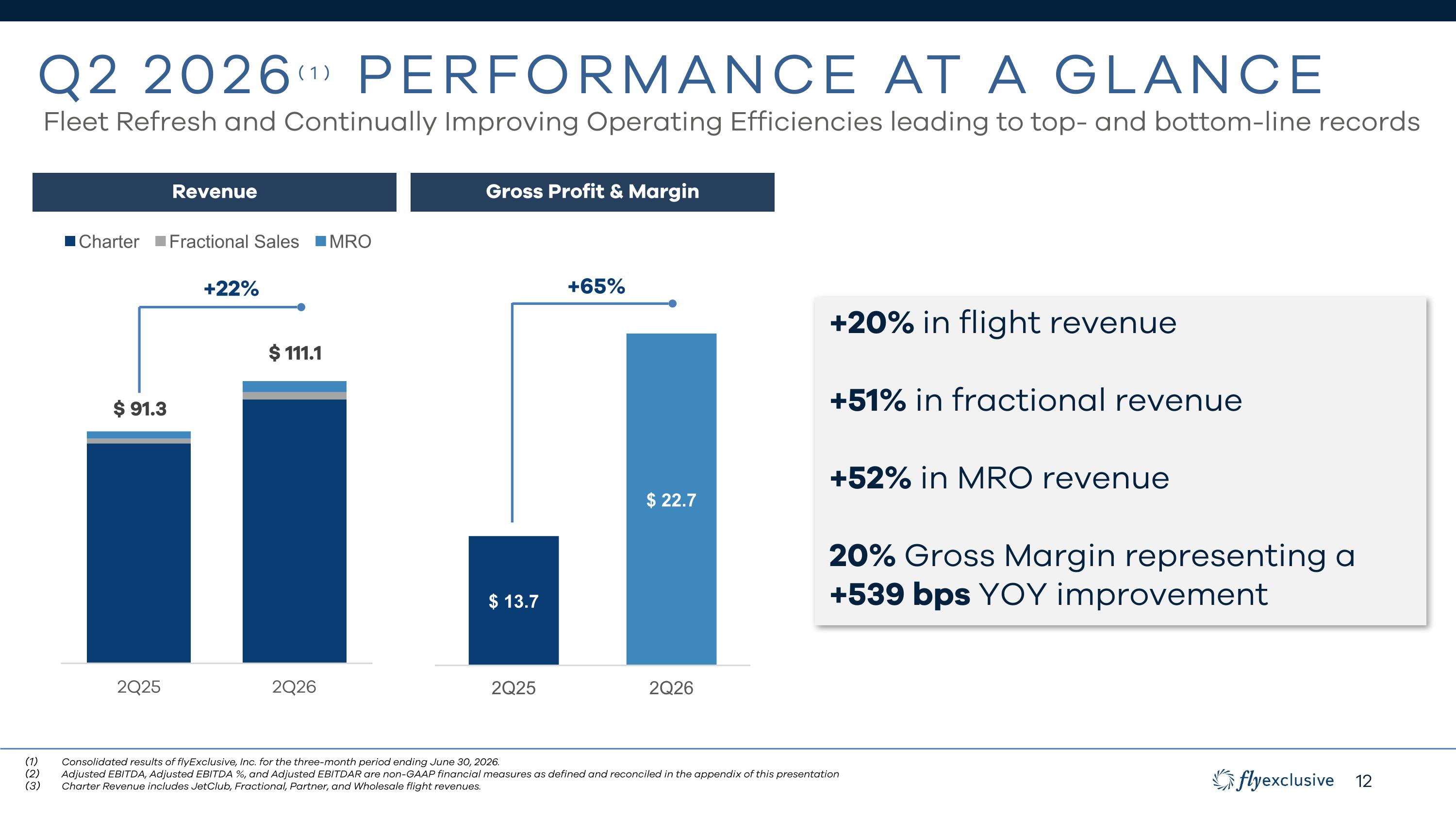
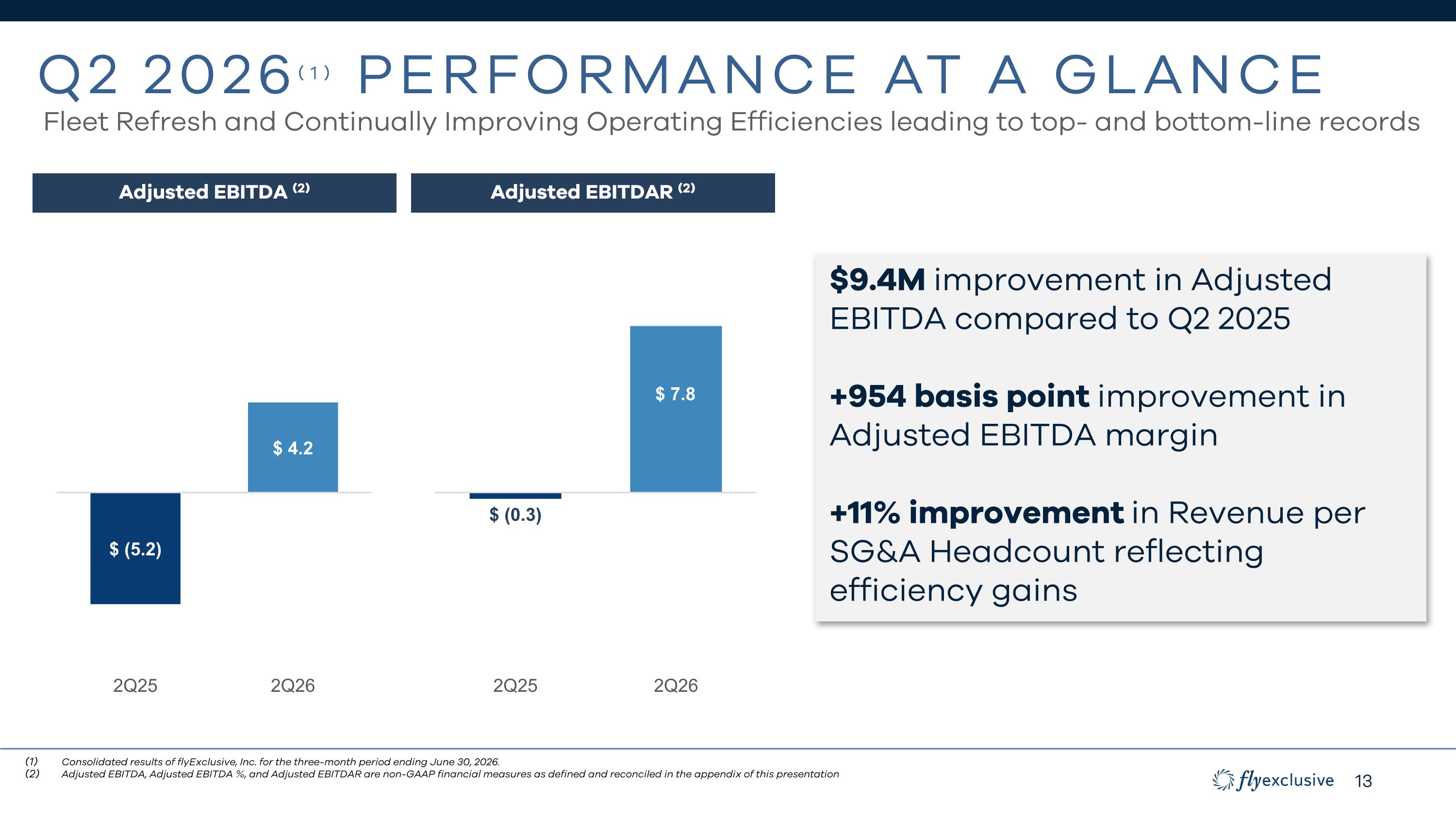
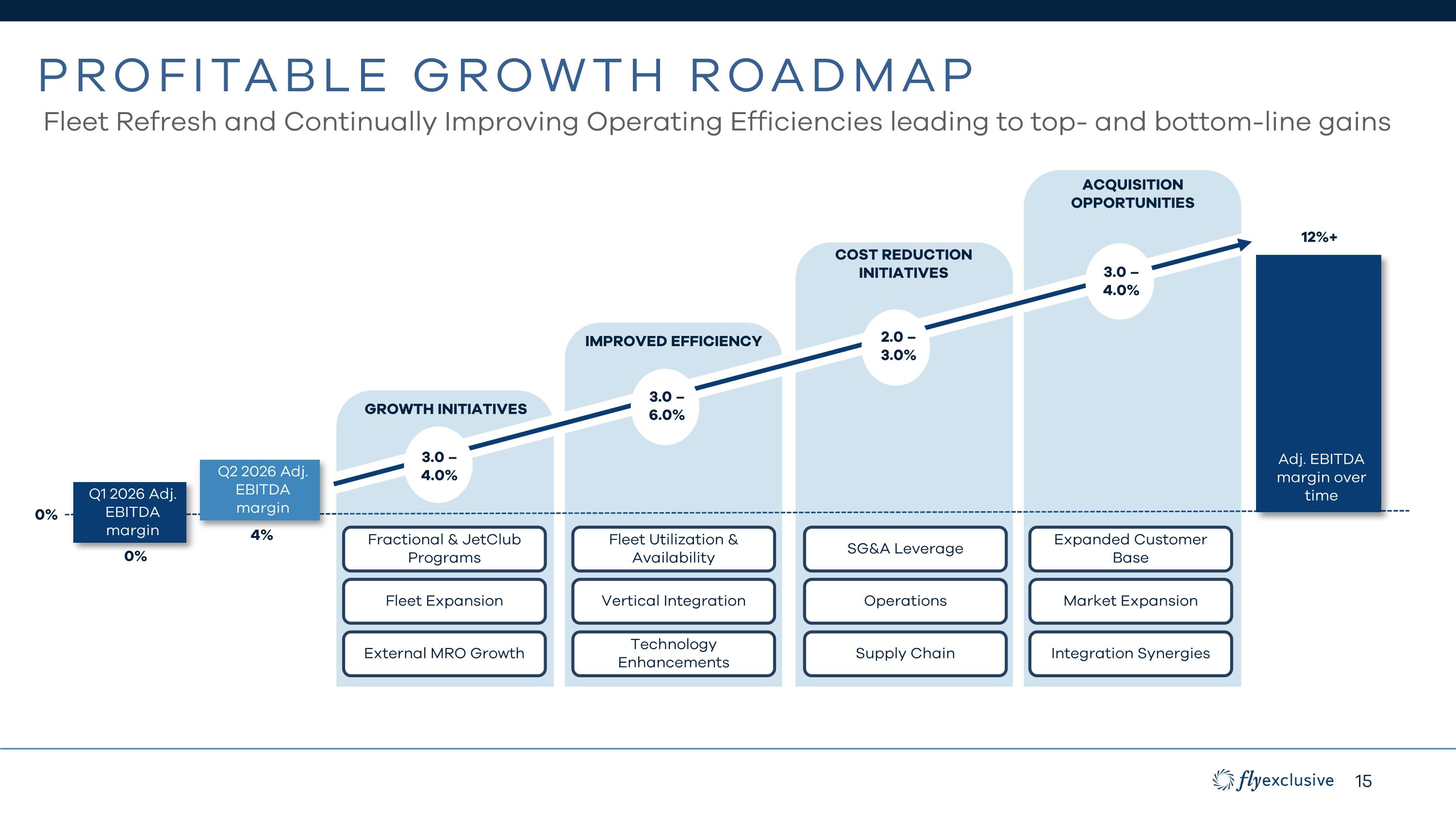
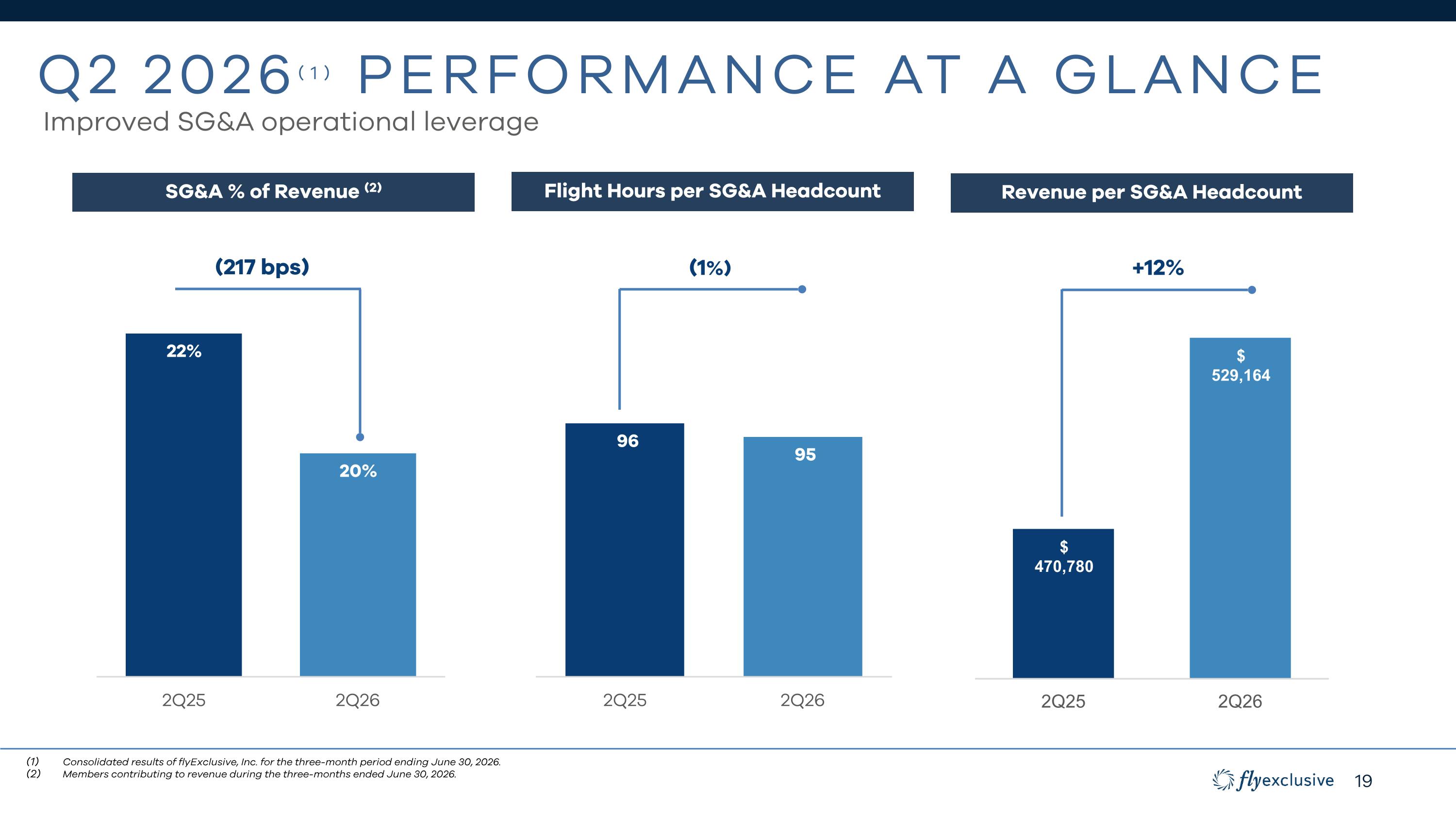
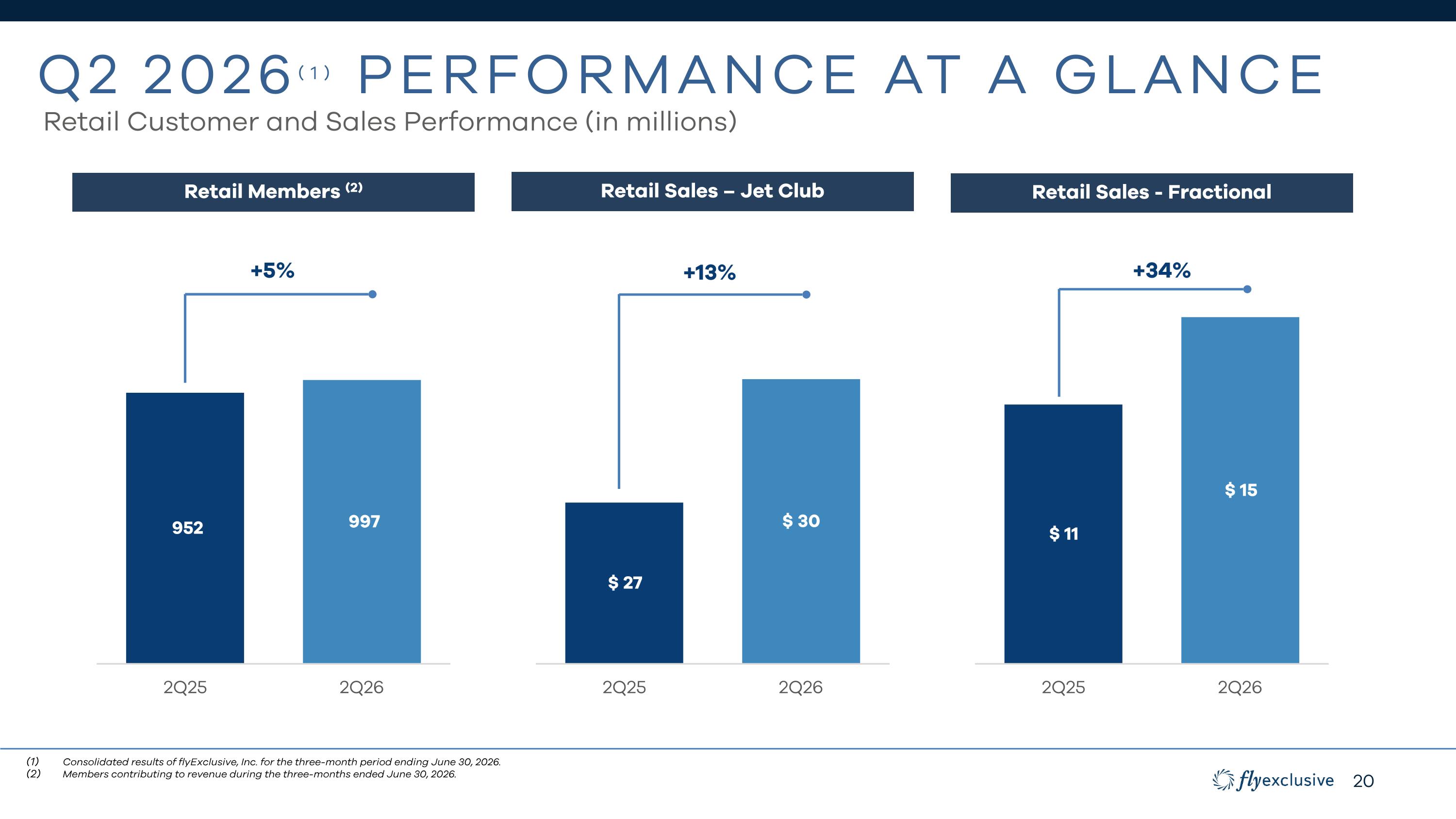
Thank you. As Jim emphasized, the second quarter of 2026 was the result of a platform that's been rebuilt end-to-end and is now beginning to realize efficiency and scale that are driving measurable results on a consistent basis. This is a platform story now, not a turnaround story, and everything I'll walk you through is the financial evidence of that. I'll add some detail behind the structural improvements and the operating leverage we're seeing across our revenue loans, margins, balance sheet, and capital allocation. Flight Exclusive generated consolidated revenue of $111.1 million for the second quarter, representing a 22% increase from $91.3 million in the second quarter of 2025. The top-line growth was broad-based, with each of our revenue lines materially contributing to that growth. Our core business, charter, or flight revenue, which includes our wholesale, jet club, partner, and fractional flying, totaled approximately $103.9 million, up 20% year-over-year. This growth was supported by not only stronger utilization, as Jim highlighted, but a healthier fleet mix and increasing demand across the board in our customer base. Flight hours for the second quarter were up 8% compared to Q2 2025, totaling 20,040 flight hours. This volume represented the second-highest quarters flight activity in company history, narrowing trailing Q4 of 2025. We achieved that volume on a fleet that was 6% smaller than a year ago. Our core fleet utilization, defined as flight hours per aircraft per month, increased to 81 hours, a 14% increase compared to prior year. The continued increase in our utilization underscores the operating leverage in our vertically integrated platform. The second quarter continued to see an improvement in our fleet mix. The Challenger fleet, totaling 10 aircraft at quarter end, drove a $9 million increase in revenue compared to Q2 of 25 and continued delivering accretive unit economics and reinforcing our thesis for our fleet modernization efforts focusing on the Challenger aircraft. Our light jets, the CJ3s, generated revenue during the quarter of $32 million, an increase of 36% compared to prior year. The demand for our light category underscores the strategic value of the assets we acquired in the Jet AI transaction, namely the $4.1 million in deposits, which secures the delivery of three new CJ3 aircraft in the first quarter of 2027. On revenue mix, our contractually committed demand from our fractional jet club and partner programs remains strong. We strategically are focused on continuing shifting to a higher contractually committed revenue, which increases visibility into demand, enhances deployment and allocation of maintenance resources to positively impact dispatch availability, and improves visibility into profitability. Our wholesale business continues to be a critical lever and growth driver. Wholesale is not, however, a substitute for our contractually committed retail demand. It is an important yield management tool that allows us to monetize available aircraft capacity around that demand. During the second quarter, wholesale revenue increased 35 percent compared to Q2 2025 to roughly $63.1 million. Fractional sales revenue on a GAAP basis grew approximately 51% year-over-year to $2.8 billion during the quarter. As we've said previously, GAAP fractional revenue reflects the amortized benefit of activity over a contract period and does not reflect the activity in a given quarter. Retail fractional sales and flight fund deployments represent a clearer picture into the activity during a given quarter fractional share sales and flight funds totaled 14.6 million dollars for the quarter an increase of 34 percent year over year driven by increased demand and velocity of the challenger fractional offerings we believe that the second half of 2026 will continue to outpace 2025 just as we delivered in the first half of this year. In the second quarter, we launched a new Jet Club program, JC26, which is a simplified all-in pricing program that more closely aligns with how customers actually use private aviation. This new offer has driven both an increased demand and pipeline for our cornerstone membership program. Jet Club retail sales in the second quarter totaled approximately $30 million, dollars representing an increase of 13 percent compared to q2 of 2025 jet club members contributing to revenue during the second quarter total 997 up approximately five percent year-over-year finally external mro revenue which jim highlighted was approximately 4.4 million dollars on a gap basis an increase year-over-year of 52 percent we recently announced a 30 million dollar grant in partnership with the state of North Carolina to expand our MRO footprint by adding over 100,000 square feet of hangar space, which will significantly expand the capacity of the MRO business. This significant investment and the resulting capacity expansion, coupled with our growing backlog in our Starlink dealership, state-of-the-art paint shop, and interior operations, positions to the MRO as a significant growth channel with high margins and low capex turning to profitability gross profit for the quarter was approximately 22.7 million up approximately 65 percent year over year and gross margin expanded to 20.4 percent in the second quarter an improvement of roughly 539 basis points compared to Q2 of 25, and 1,250 basis point improvement over Q2 of 24. That expansion reflects the compounding benefit of the same structural improvements Jim described a few moments ago. First, continued gains in dispatch availability, which as we mentioned, each 1% improvement represents $2.5 million of incremental annual contribution that falls directly to the bottom line. Second, our improving fleet mix. Newer CJ3s, XLS, and Challenger aircraft carry meaningfully lower unscheduled maintenance costs than the legacy aircraft they replaced. Third, the ongoing benefit of our vertically integrated MRO and MSU network, which continues to reduce third-party maintenance reliance and lowers our maintenance costs per flight hour. And last, improved core fleet utilization. We're spreading a meaningfully larger revenue over a fixed cost base. I'd also like to address the fuel cost environment directly and its impact to our business, particularly given the elevated pricing tied to the conflict in the Middle East. During the quarter, we saw the price of Jet A fuel peak at $7.33 a gallon, up from an average of around $5 a gallon in Q1 of 2026. We were able to effectively pass those fuel costs increases to both our wholesale and retail channels. While higher fuel prices created some pressure on reported gross margin during the quarter, our ability to pass those costs through meant the impact on profitability was immaterial. Importantly, we saw no discernible impact on customer demand. As fuel costs normalize, we would expect that dynamic to become a modest tailwind to gross margin rather than a headwind. As Jim mentioned, for the third consecutive quarter, we've produced positive adjusted EBITDA. In the second quarter, adjusted EBITDA was approximately $4.2 million compared to a loss of approximately $5.2 million in the second quarter of 2025, marking an improvement of over $9.4 million year over year. Adjusted EBITDA margin was approximately 3.8%, an improvement of roughly 954 basis points year over year. Three consecutive quarters of positive adjusted EBITDA is evidence that Fly Exclusive is no longer a story about reaching positive adjusted EBITDA. It's a story about the earnings power this platform can generate. SG&A expense for the quarter was approximately $22.3 million, or 21.1% of revenue, an improvement of 217 basis points compared to Q2 of 2025. Revenue per SG&A headcount, a measure of effectiveness and efficiency, for the quarter was approximately $529,000, up approximately 12% relative to the second quarter of last We have a leaner overhead, which we believe will continue to produce further operational leverage as we continue to grow. Turning to the balance sheet and liquidity, we ended the second quarter with cash and cash equivalents of approximately $14.3 million, compared to $18.7 million at the end of first quarter and $15.8 million a year ago, a modest year-over-year decline that I want to address directly. The marginal decline in our cash balance reflects three factors, continued debt paydowns, ongoing fleet capital expenditures tied to our modernization initiative, and the timing of the JetAI transaction, which closed just after quarter end. For those reasons, we don't believe the June 30th cash balance by itself provides a complete picture of our current liquidity position. We closed the merger transaction with JetAI shortly after quarter end, which resulted in roughly $15 million of acquired assets, approximately $5.3 million in cash, approximately $5.8 million of an equity position in SpaceX, and $4.1 million in deposits securing future CJ3 Plus deliveries. Our intention is to liquidate the SpaceX shares to continue to provide capital for our growth initiatives. The deposits will provide benefit in the first quarter of 2027 when the CJ3 plus aircraft are delivered. With the additional post-quarter end liquidity generated from the Jet AI closing, combined with the additional capital options Jim referenced, we believe we're positioned to fund our planned growth while remaining disciplined about dilution and our overall cost of capital. More broadly, our capital allocation approach remains disciplined. We prioritize aircraft acquisitions with accretive unit economics that expand free cash flow generation over time, consistent with the returns-focused approach Jim described, rather than holding cash for its own sake. We evaluate all financing and capital alternatives against their impact on shareholder dilution, our overall cost of capital, and the impact of profitability and free cash flow generation, and we intend to act only when terms are accretive. On the liability side of the balance sheet, since 2024, we've reduced long-term notes payable by approximately $94 million, including $12.4 million, an approximate 8% reduction during the first half of this year alone, down to approximately $137.9 million in total. We are focused intently on continuing to delever the balance sheet while balancing continued investment in expanding our fleet. On the forward outlook, Jim covered our expectations for the third quarter a moment ago, and we're confident in our near-term continued growth in the back half of this year. As to the longer-term opportunity, I want to be precise about our posture. Our investor presentation includes a framework laying out the primary levers we believe drive adjusted EBITDA margin from here. Continued SG&A leverage, further gains in fleet utilization and dispatch availability as we continue to modernize the fleet with additional CJ3 Plus and Challenger acquisitions, growth in our fractional and jet club programs, and continued expansion of the MRO capitalizing on our Starlink authorized dealership and $30 million grant from state of North Carolina. That framework points to an adjusted EBITDA margin opportunity in the double digits as those levers play out over time. As evidence from our financial results, we built the foundation to continue creating additional scale and profitability and realize this longer-term opportunity. To close, the financial evidence is increasingly clear. Revenue is growing, margins are expanding, overhead is becoming more efficient, the balance sheet is deleveraging, and adjusted EBITDA continues to improve. Importantly, the operating levers driving those results still have substantial runway. We believe that combination positions Fly Exclusive to continue expanding profitability as we scale. But none of this happens without our people. to our pilots, maintenance technicians, and operations professionals who deliver reliability every single day, to our sales teams converting that reliability into growth, and to our MRO and mobile service unit teams turning what used to be a cost into a profit center, and to our finance, technology, and corporate teams who build the infrastructure to scale all of it. Thank you. What you've built together is now speaking for itself in the numbers. Thank you all again, and now I'll turn it back to the operator.
Operator
Thank you, sir. Ladies and gentlemen, that concludes this event. Thank you for attending. And you may now disconnect your lines.