Operator
Good afternoon. My name is Kathleen and I will be your conference operator today. At this time, I would like to welcome everyone to the Grindr's second quarter 2025 earnings conference call. All lines have been placed on mute to prevent any background noise. After the speaker's remarks, there will be a question and answer session. If you would like to ask a question during this time, simply press star followed by the number one on your telephone keypad. And if you would like to withdraw your question, press the star one again. Thank you. And I would now like to turn the conference over to Tolu Aliove, Grindr's Head of Investor Relations. Please go ahead.
Thank you, moderator. Hello and welcome to the Grindr earnings call for the second quarter of 2025. Today's call will be led by Grindr's CEO, George Erickson, and CFO, Vanna Krant. They will make a few brief remarks, and then we'll open it up for questions. Please note, Grindr released its shareholder letter this afternoon, and this is available on the SEC's website and Grindr's investor page at investors.grinder.com. Before we begin, I will remind everyone that during this call, we may discuss our outlook, look, future performance, and future prospects. We should not rely on forward-looking statements as predictions of future events. These forward-looking statements are subject to risks and uncertainties and our actual results could differ materially from the views expressed today. Some of the risks that could cause our actual results to differ from views expressed in our forward-looking statements have been set forth in our earnings release and our periodic reports filed with SEC, including our annual report on Form 10-K for the year ended December 31, 2024. During today's call, we will also present both GAAP and non-GAAP financial measures. Additional disclosures regarding non-GAAP measures, including a reconciliation of these non-GAAP financial measures to their most closely comparable GAAP financial measure, are included in the earnings release we issued today, which has been posted on the Investors Relations page of Grindr's website and in Grindr's file links with the SEC. With that, I'll turn it
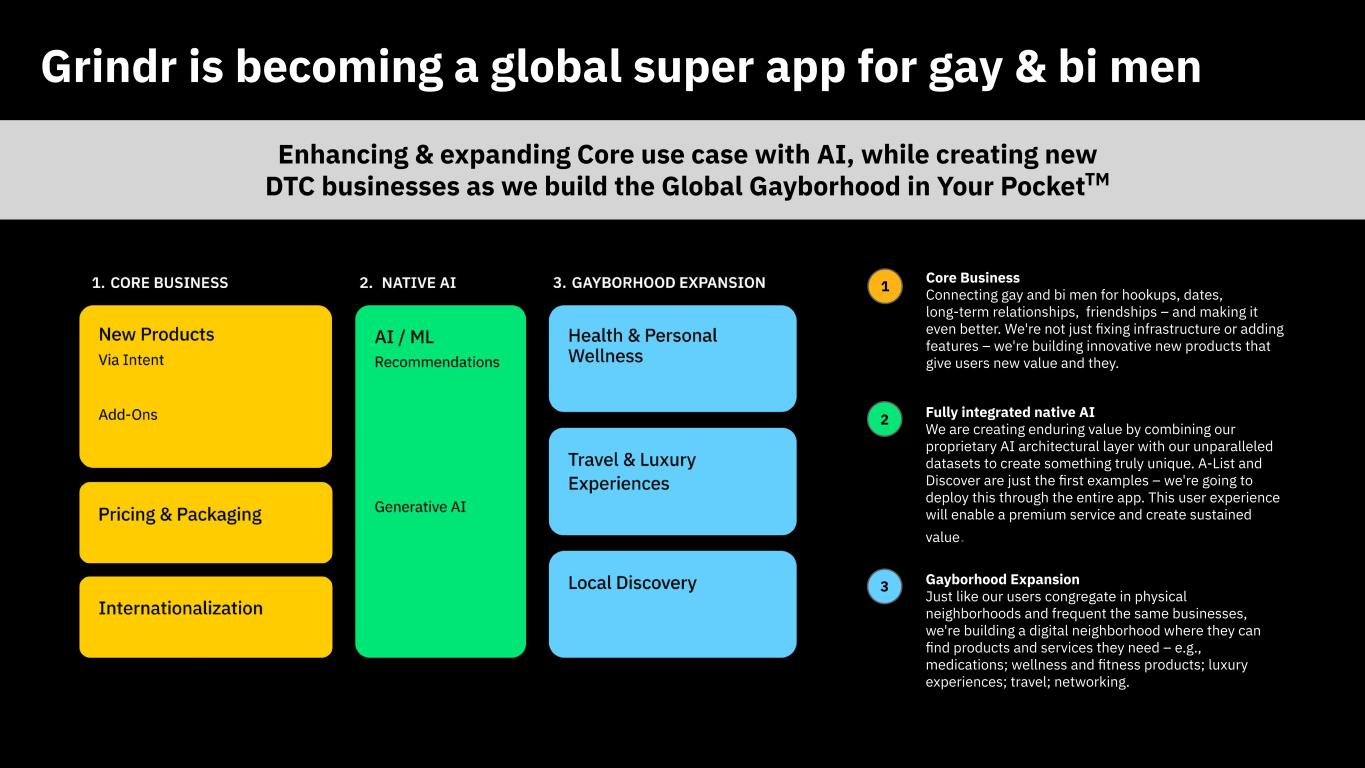
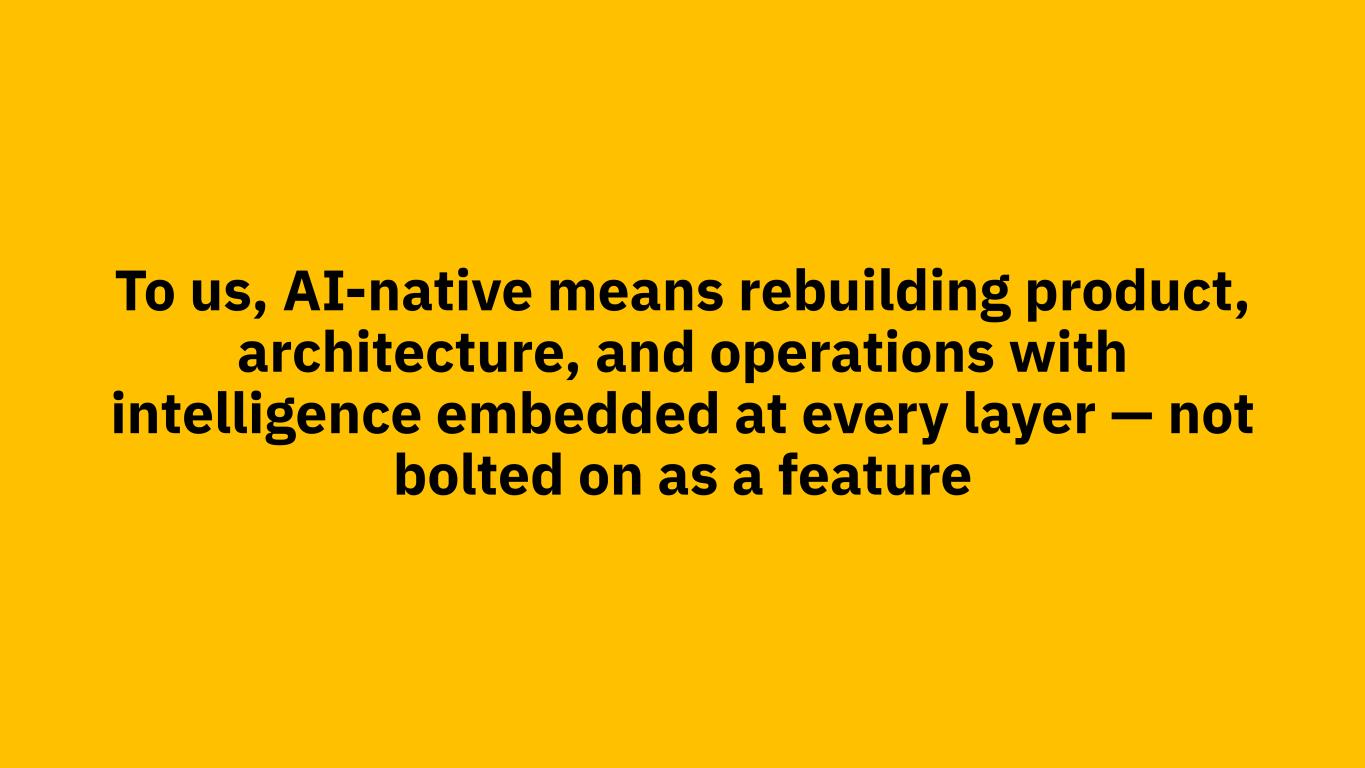
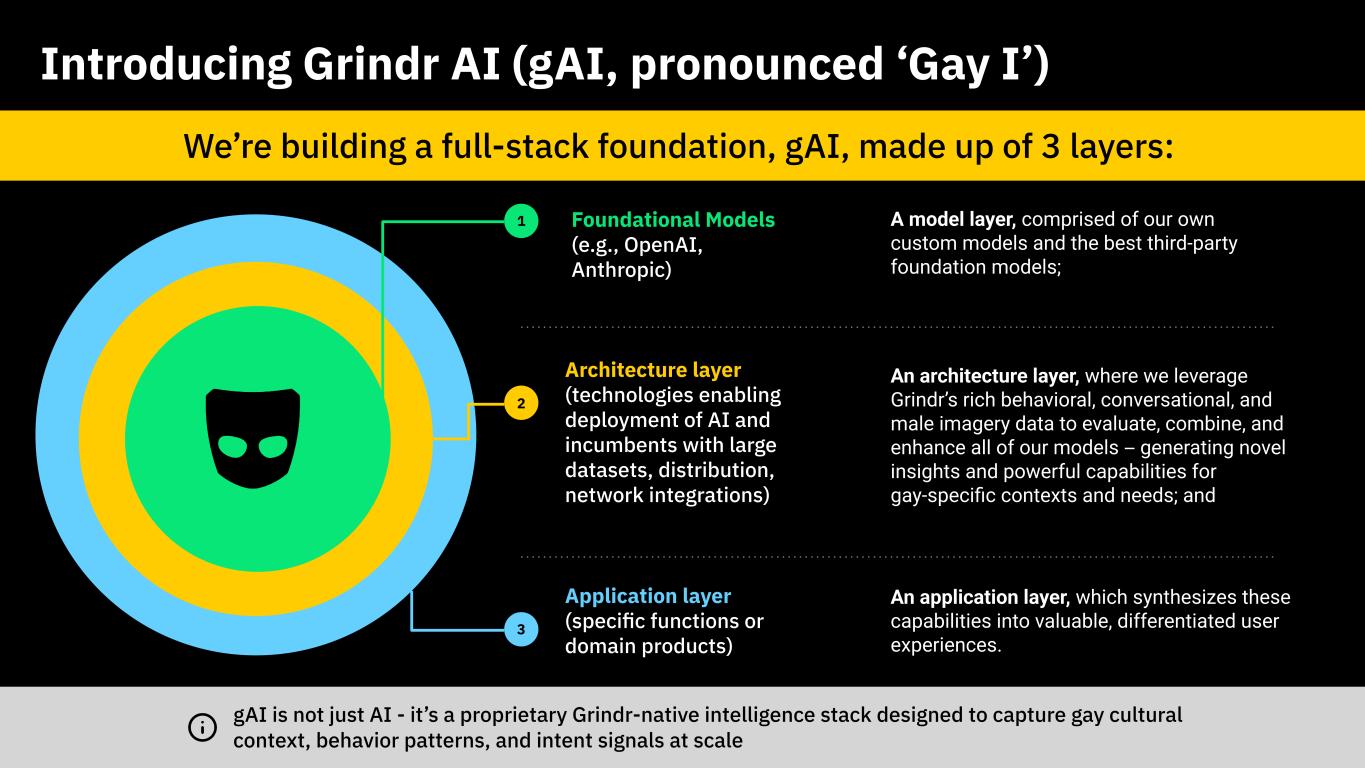
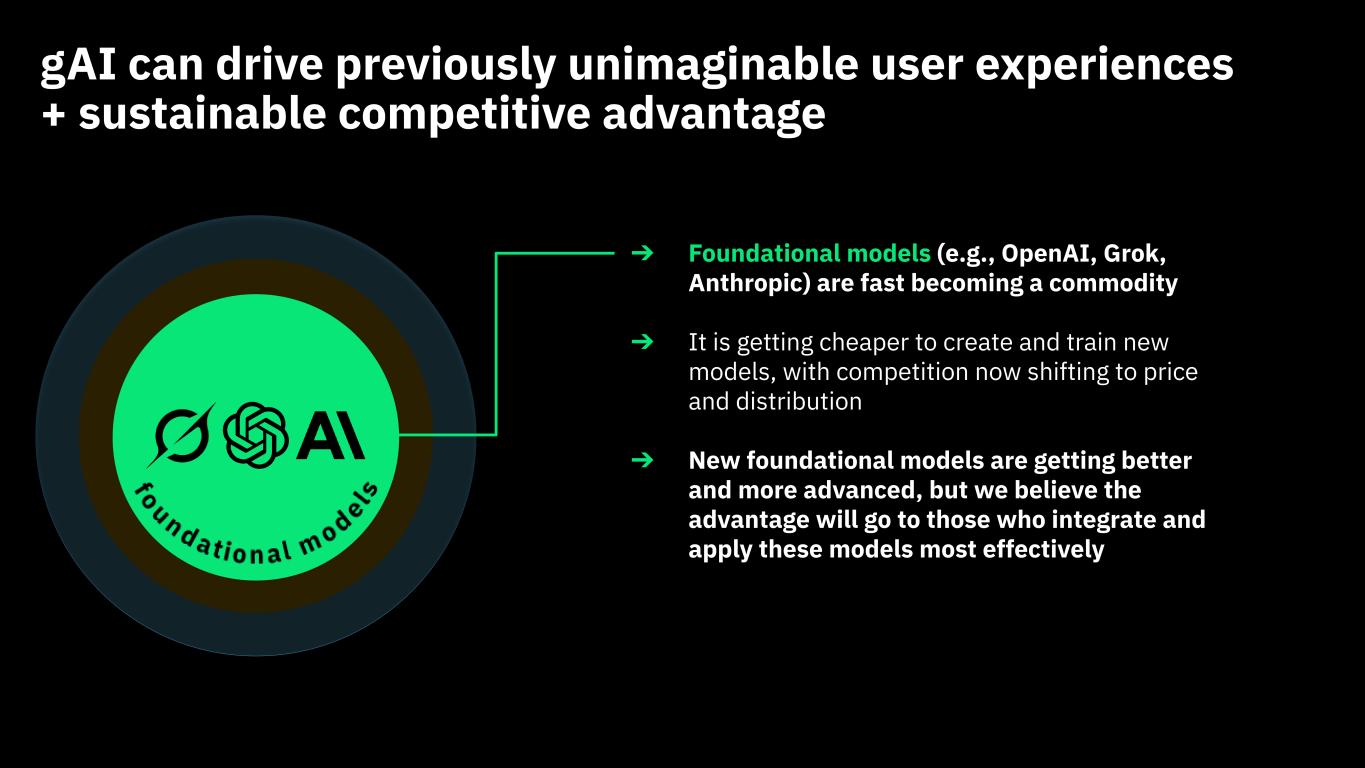
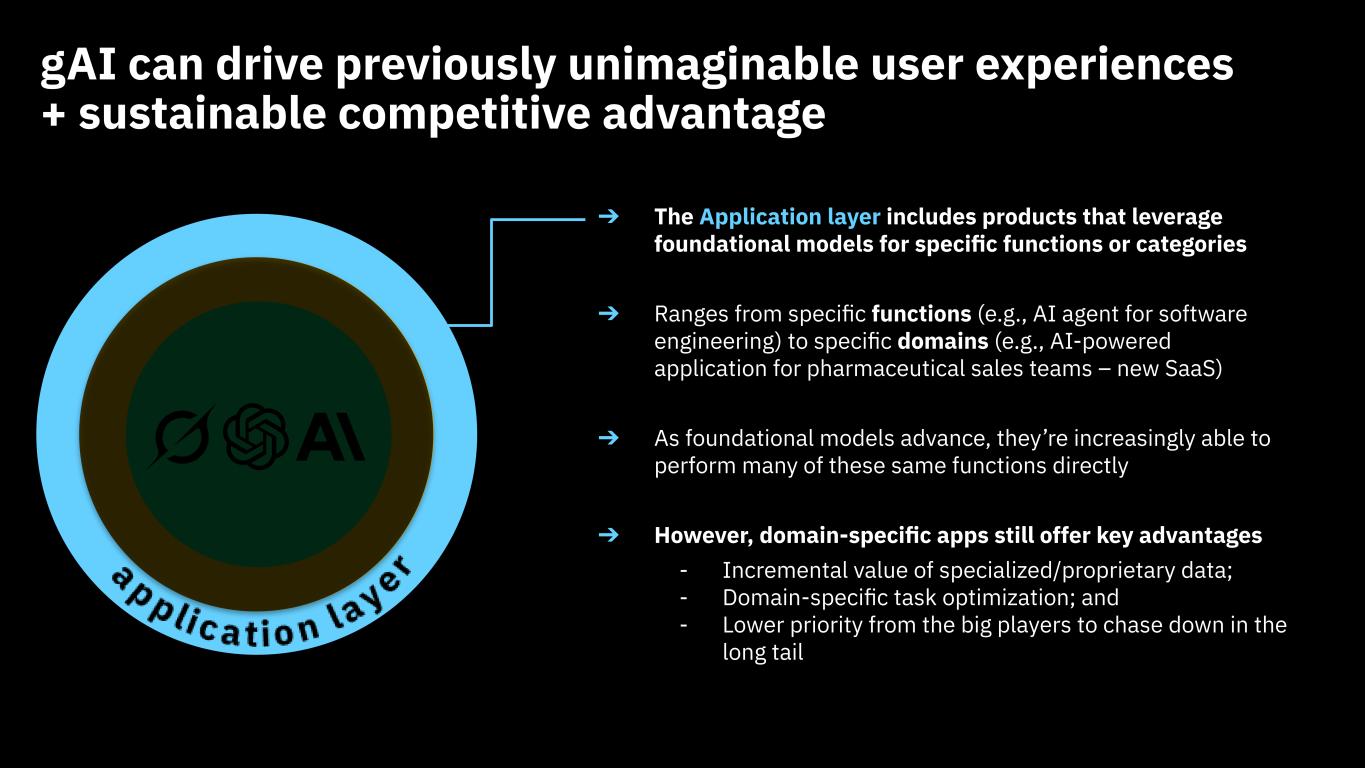
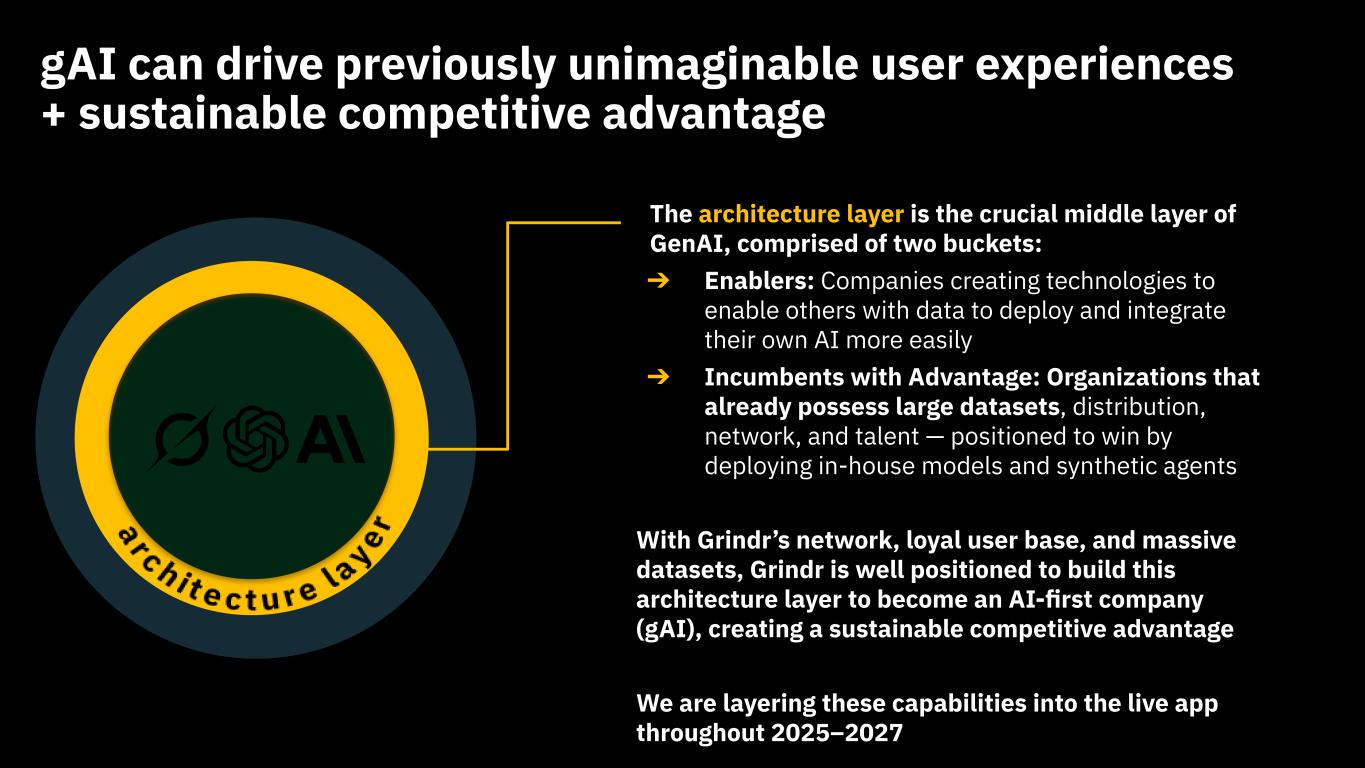
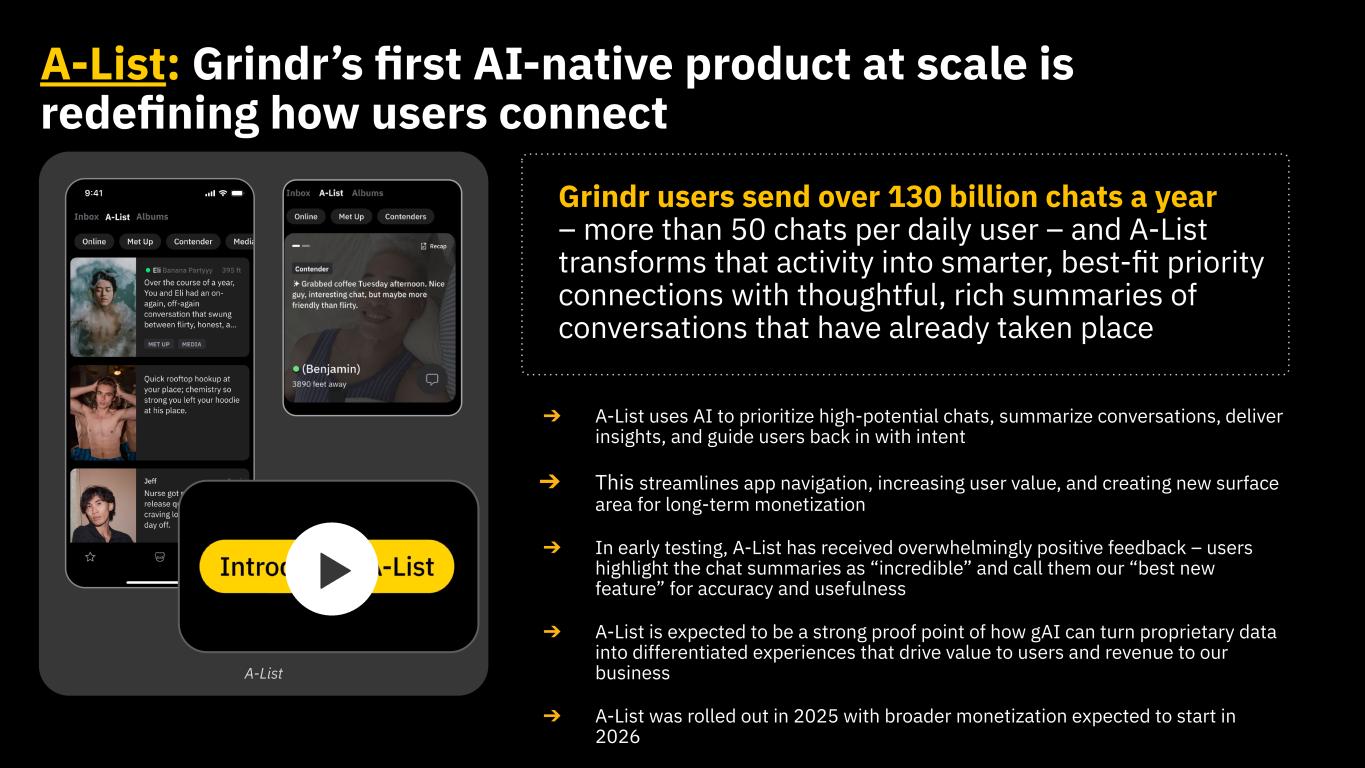
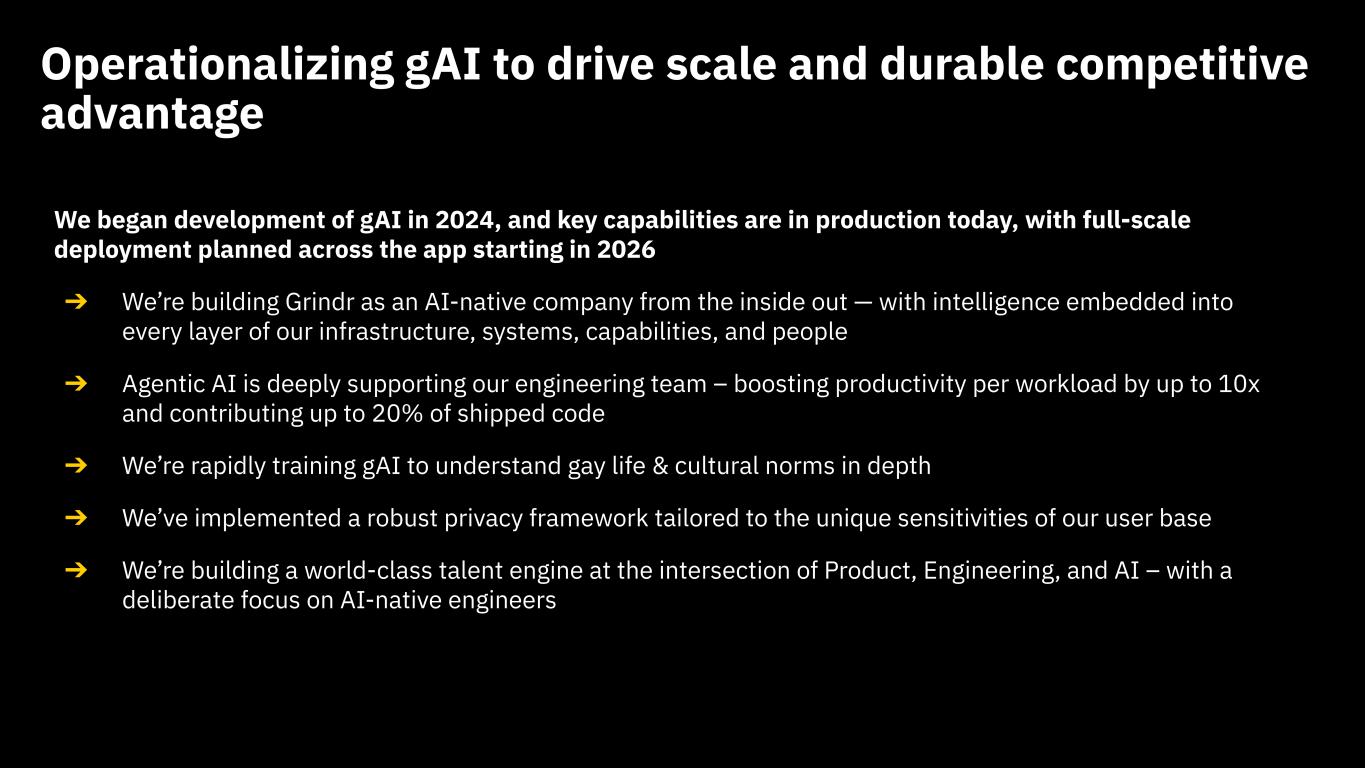
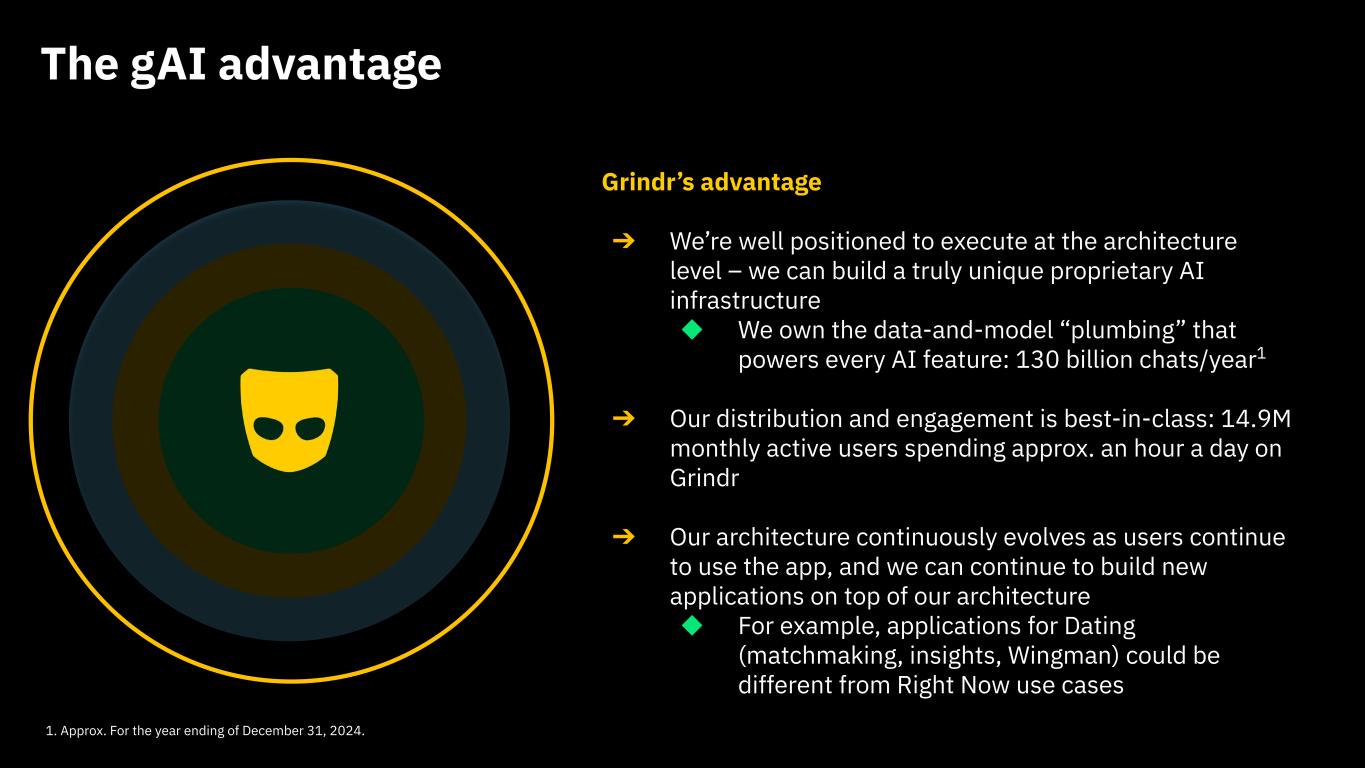
over to George. Thanks, Toto, and hi everyone. Grindr delivered another strong quarter, the results that keep us firmly on track for the year. I've said that 2025 is about accelerating execution towards our long-term vision, including the launch of transformative products within the app which expand how our users engage. This quarter is another proof point that we can deliver on our roadmap while continuing to drive strong financial. For years, users have asked for maps within the Grinder app, but technical and privacy constraints made it hard to do well. This has changed and we launched beta versions of mobile mapping in both RightNow and Explore. Engaging with RightNow continues to be strong and we've already begun to monetize the product faster than expected. We're excited to see adoption built as we enable users to move fluidly between the grid and map views. Explore remains one of our most valuable features, especially for power users and frequent travelers, with over 25% of our model using it monthly. We've now launched Explore Heatmaps, dynamic city-level views showing the most active areas across 21 markets. With a little privacy in mind, events reflect historical, not live activity, to help users search smarter online and in real life. Maps unlock a powerful surface for the neighborhood with products around events, local activity, and if you've been following our shareholder letters, you've seen us articulate a clear ambition to build one of the leading AI-native consumer companies when they create triple shareholder value by using Gen.AI to deliver a high-impact user experiences, differentiating value. To that end, we're building a full-step foundation called GAI, or GAI, comprised of three layers. A model layer using a leading first-party foundation model, An architecture layer, where we are applying run behavioral, conversational, and male imagery data to evaluate, combine, and enhance those models, generating insights and capabilities tailored to gay-specific context and needs, and an application layer that synthesizes those capabilities. The architecture layer is core to a durable advantage. It allows us to run a variety of models to produce custom data sets and structured insights, Trained AI to understand AI life, cultural norms, and male imagery. Establish a robust type of framework. Our goal is to keep shipping features that wouldn't be possible without the stock, like A-list, while developing other products that match its level of ambition. For more detail, I'd encourage you to read the full shareholder letter. We have also posted a short deck on our website to walk you through our approach to AI. I want to acknowledge Vienna for her amazing contributions as our CFO over the past. We in our last week that Viena has initiated a transition. She is gracious and great to continue on in her role. Viena has been a key player on our team in setting us up to deliver the type of results you're seeing today. And he's been a great partner to myself and the Grinder team. We're all committed to business as usual. We'll continue with strong as a team but moving fast, executing well. And thank you all for your continued support. I'm excited about the momentum in the business. and what h2 has to bring i'm grateful to this with that i will comment over to vienna to
update you on the final thank you george i appreciate the kind words as well as the partnership from you and the entire grinder team as we work towards a seamless transition now let's turn to the results grinder delivered another strong quarter in q2 total revenue grew 27 year-over-year to 104 million and the adjusted ebitda margin was 43 percent or 45 million right in line with our raised full-year guidance we provided last quarter, which we are reaffirming. Direct revenue for the quarter was $87 million, up 24% year-over-year, with growth led by the continued strength of our subscription offerings as we further enhanced our recommendations feature and continued to benefit from merchandising and paywall optimizations. Highlighting our key user metrics, average monthly active users in Q2 were 14.9 million, representing 6% growth year-over-year. Average paying users in the quarter reached 1.2 million, up 16% year-over-year. And our average direct revenue per paying user increased 7% over the prior year to $23.65 this quarter. Indirect revenue was $17 million, up 39% year-over-year, driven by the ramping of our new third-party advertising partners and early traction in international markets as we continue to build out our third-party advertising platform. Moving to expenses and profitability, operating expense in Q2, excluding $27 million in cost of revenue, was $53 million, up 43% year-over-year, primarily driven by stock-based compensation. Adjusted EBITDA for the quarter was $45 million, or 43% of revenue, compared to $37 million, or 45% of revenue a year ago. Net income was $17 million for the second quarter, representing 16% of revenue compared to a net loss of $22 million in the same period last year. In Q1, we completed the redemption of all outstanding unexercised warrants, which has eliminated the quarter-to-quarter valuation impact on GAAP net income. Accordingly, we delivered GAAP EPS in Q2 of $0.08 and expect to continue to generate positive EPS going forward. Turning to cash flow and the balance sheet, in the second quarter, Grindr generated free cash flow of $37 million and ended the quarter with approximately $121 million in cash and cash equivalents. Our gross leverage was 1.7 times the last 12 months adjusted EBITDA. Year to date, Grindr has repurchased $325 million in common stock, and as of today, we have a hundred and seventy five million remaining under the share repurchase program based on our performance through the first half of the year we are reaffirming our full year 2025 outlook of 26% or greater revenue growth and adjusted EBITDA margin of at least 43% and with that operator will
Operator
now take questions thank you we will now begin the question and answer session if If you have dialed in and would like to ask a question, please press star 1 on your telephone keypad to raise your hand and join the queue. If you would like to withdraw your question, simply press the star 1 again. If you are called upon to ask your question and listening via loudspeaker on your device, please pick up your handset and ensure that your phone is not on mute when asking your question. Again, please press star 1 to join the queue. And your first question comes from the line of John Blackledge of TD Cowan. Your line is now open.
It's Logan on for John. Thanks for the question. First question may be, MAUs stepped up nicely in the quarter, both sequentially and on a year-over-year basis. Could you just talk about the biggest drivers of top-of-funnel MAU growth in 2Q? and then looking forward could you comment on kind of grinders penetration as you see it right now of the overall TAM and the U.S. and globally at this point and then I just have one follow-up
question as well. Hi Logan, good to talk to you and welcome everybody. On the Mao question I have three things I want to talk about so bear with me as I go through that. First on kind of how MAO is doing overall, second on third-party data, and then thirdly on long-term MAO opportunities, which I think we'll get to all the things you're asking about. With regards to MAO right now, you're correct. MAO grew 6% year over year in Q2. We are very happy with that, and MAO is doing very well this summer as well. We have a very, very healthy MAO situation with our users. We And we saw that we have a very strong presence with the younger cohorts, whether it's 18 to 22 or 23 to 29 cohorts. They're doing really, really well and growing in a very strong way. So the kinds of challenges that people talk about in this space with regards to Gen Z, Grindr does not have. We're doing very well. I think that's partly because we are the place to go to if you want to figure out what it's like to be gay and what your life is like. We are the gaberhood on your phone for people who don't live in gaberhoods in large cities, and that's what people kind of look forward to. So we're really happy with the MAO number as of right now and kind of how it's doing, and I generally don't expect that to change in the future. Number two topic on MAO is regarding third-party data. I know that a lot of you have to rely on these data sources for your analysis, and aligned by you, the analysts and investors, but we also know that in Grindr's case, they regularly are incorrect in what they project. Frankly, probably more incorrect than correct. We've tried to work with them to understand their methodologies to help them correct the methodology, but they don't want to release what the methodology is, and so it's impossible for us to help them along. We count Mao using unique devices. We think that's the most accurate way to do it. after a lot of work having gone into it to figure out what is the best way because our users do have some tendencies that are unique and unusual. People oftentimes create an account and then shut that account down and create a new account, and you don't want that to be counted as two people in a given quarter, so we go down to the level of device. And so while I totally appreciate the reliance on third-party data, I think the reality is that, you know, our numbers speak for themselves, and I think Mao is going very well. And then lastly, with regards to long term, we do think there's a lot of opportunity for what we can do. Grindr, Mao Grove, historically, has never been impacted by things that we do. It's always been kind of organic from the fact that people know us and come to us, but we think there are a lot of things we can do to help that along. And I'll talk about two buckets, one in marketing and one in product. You know, on the marketing side, we believe that presenting ourselves better in different countries in a way that's more appropriate for that country would really help. And by that, I literally mean things like imagery that we show in the App Store, the language that we show in the App Store, and translations in the app itself would really help, especially in places like Asia and Latin America. And that's something we've not done and are working towards putting resources behind. Additionally, the same brand debt that Grindr faced in the United States three years ago, which I think we've done a lot of work to correct, we need to do similar work in other parts of the world, Latin America in particular, and we're starting that in 2025 and we'll continue into next year as well. And then on the product side, part of the concept behind intentions-based products, which we've been talking about for a long time now, is that there are people who might have a Grindr account but not use it as much because Grindr is very general in terms of what it's offering is, whereas they want a more specific intention, whether it's a right now intention, whether it's a relationship intention, or whether it's something else like travel. And so as we build out these intention-based products right now and like relationships, we believe that it's a way to bring users to be more engaged with the app. That mostly applies to users who are older, kind of 40-plus years in age, who have a Grindr account but might not be using it very much. On your second question with regards to TAM, there's two ways to think about TAM. You can think of TAM as just number of people that Grindr could bring on board. And obviously, we think there is a ton of growth opportunity there, less so in the developed world, although still a ton, and more so in developing countries like India and Philippines, et cetera, where people are only now starting to come out and become comfortable with their sexualities. And so growth opportunity there with TAM is huge. But I also think another way to think of TAM is just dollars that we can go after, right, the total amount of revenue we could amass. And our strategy is to both make Grindr the core product really great, but also to build these long-term new businesses like Woodwork and the health vertical, where we can sell more things to our users and offer them more services. And so from that point of view, we think that TAM can expand dramatically since obviously healthcare alone for our users is a huge opportunity to expand TAM. And then there are other areas like travel that we're going to go after next that add more to the TAM. So we think TAM is big and growing. So that's on your first two questions. Happy to answer the third.
Great. Thanks, George. Yeah, on the mapping announcement, it's exciting. Could you just talk more about the potential of mapping and what it could mean for maybe other product initiatives and use cases outside of of like our right now or explore looking forward for
for for mapping i just want to make sure i heard it right um yeah so we released uh in the shareholder we talked about the fact that we released uh map features in the app this is something that users have asked for for for years um and you know we show obviously grinders their location based and And so immediacy around you is very important. And people were always like, can you actually show us on a map how far somebody is? And so we started to do that both in the explore feature as well as in right now. So in right now, you can today, in the places where it's out, look at users not just based on when they posted something, but also how close they are to you. And then in the explore function, we show you heat maps in 21 cities where it's really busy. We use historical data, not live data, to protect users' privacy. And that allows us to basically help users understand, hey, these are the areas where usually people are present. And if I want to search for people or if I want to figure out where to stay, et cetera, I can use that data to do that. So over the long term, we believe mapping can be really helpful in building out what we call local discovering. which is one of our long-term neighborhood growth verticals, things like identifying where to stay, where to eat, what kind of activities might be happening around you to go to. That can be used by people locally, right? Like if you're in San Francisco and you live in San Francisco, you still could use that, or by people who want to travel to a given city for that. So those are the kinds of things that we envision long-term mapping to help with, and we think it'll be um very valuable um it was a in the past historically it was a complicated technology to enable on the app because of the mobile nature of our app and and now technology is in a place where we think we can do it really well and so respect that itself great thank you your next
Operator
question comes from the line of andrew boone citizens please go ahead hi this is brianna
on for andrew thanks so much for taking my questions well can you just unpack what drove the acceleration and indirect revenue in the quarter and then on operating expenses set up this quarter can you walk us through the key drivers behind that increase is this reflective of ongoing investment product marketing or head count and how should we think about investments going forward and then i have one more question sure i'll take the first question on on indirect
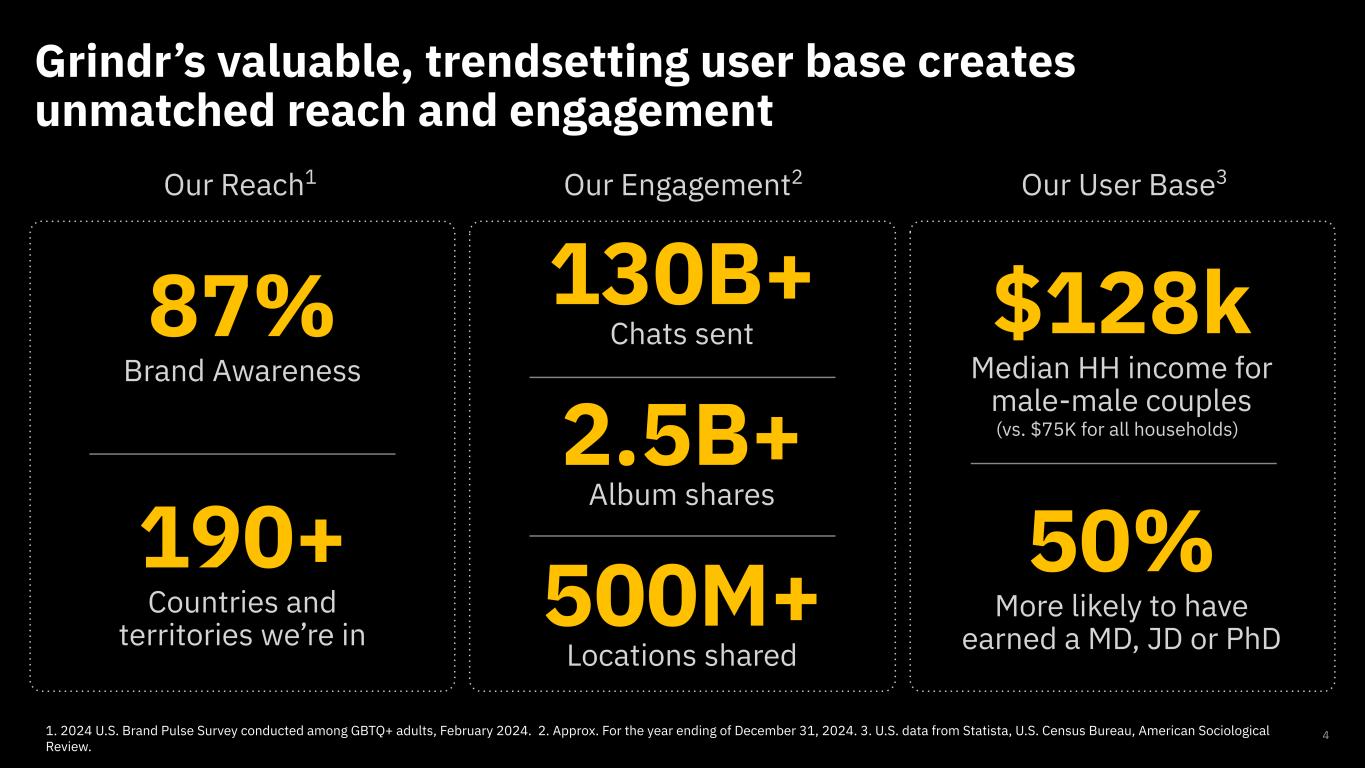
revenue and i'll hand over to vienna to speak about expenses and then happy to do your next question as well. So I think if we talk about indirect revenue, it's worth it to talk about it conceptually from where we were to where we are. When I joined Grindr in 2022, that was an area that was significantly underinvested in for a very long time and was not getting the attention that we believed it needed to kind of take advantage of the full opportunity. We have a very desirable user base, people that are very much trendsetters for the world in general, not just for our community, and their income is higher, their education is higher as well overall, and so a ton of opportunity with them both for advertising, and we were not really taking any advantage of that at all. The growth that we've seen in advertising over the last three years has been primarily driven by third-party advertising, and that part of the business has done exceptionally well. I mean, I frankly don't think you could ask for anything more than what they've delivered. The growth numbers have been stunning with significantly increased the number of ads that we show users because Grindr was showing very few ads to users before while maintaining the CPM where it was in the past. And that's something that we didn't think was possible. We thought that CPM would inevitably go down. That was accomplished in part by adding more third-party providers that Grindr was not working with before who could serve ads in our platform so it's been really successful we've also added new formats um for the types of ads that we show for example rewarded video which also help us um increase the cpm and do well there and you know i would expect rewarded video in particular to be a big growth fever in 2025 as we start in your big growth lever in 2026 like as we think about next year and where we will see some additional opportunity we do not expect to be adding more ads per session that people see we think we're now in a good place versus where we were before although we do think that there is more opportunity for better quality ads and more fill rates of the ads internationally since we're not fully at the same level as we are in the united states um with uh and then lastly I'd say with the one area where, you know, I've had a lot of learnings and people told me when I joined that this would be a lot harder than I thought it would be. And that has to do with direct advertising. So these are ads that we partner with specific brands to do. We have a very good brand business. It's done very well as well and has grown significantly. But the categories of, you know, verticals that we've added to the brand business or specific companies that have come on board is much lower than I think any of us had hoped would be the case today. That's not so much on Grindr anymore. Like, we've done a lot of the work that we needed to do in our product to bring them, to have them come on board, whether it's, you know, getting them data that they need or the types of ad formats that they want. But what happened two years ago with Anheuser-Busch did set us back in a pretty significant way. People are, you know, brands are worried about advertising. And I think there we just need to continue to hammer the point that Grindr has a very desirable audience of trendsetting, you know, higher income, wealthier men who spend a lot of time on the app. And it's a great way to reach them and, you know, do as good of a job in kind of pitching our story to them as I think we've done in other places. And we're not going to give up. We think that there's still a ton of opportunity in the direct business to grow. So I'm very happy with the indirect businesses performance this year and in the past, and we expect them to continue to perform really well. So with that, I'll pass it over to
Van and talk about expenses. Hi there. So yes, you are correct. Our operating expenses are reflecting our investment in our products. As you know, we have a very exhaustive product roadmap, and we're really excited about everything that we have that we're building for our users. So that is bringing along a little higher cost. We also have some accruals that were put into place in Q2. And additionally, I think last year what you might have seen is that we back-ended some of our expenses. As we are now more mature and we have more predictability in our overall financial profile by quarter, I would say that you're just seeing a more flat-ish expense base in every quarter, and the margins are reflecting that at 43%, which is right on where we thought we would be.
Got it. Thank you. And then just you mentioned in the letter that you're experimenting with pricing and existing tiers and testing subscriptions as you guys add more value. I understood that changes aren't expected to materially impact 2025, but are there any early learnings that guys can share on the test so far and how you're evaluating these changes that's it so i do want
to re-emphasize that none of the pricing changes or experiments that we might do will be material to this year and so no one should kind of count on those for 2025 um and i think that's really important uh you know most of our focus for the rest of this year as a as a product team and an engineering team is around uh driving revenue growth next year um you know i think it's really important to go into the year with a very clear plan of what you're going to be doing. And there's a lot of technical and product work to be done on enabling that. And so one of those pieces has to do with experimenting with pricing. Grindr has not raised prices since 2018 for either its extra or unlimited offerings, which today are $19.99 and $39.99. If you just look at inflation from that period of time to me from 2018 to today. That would push our extra price to something like $25.50 and our unlimited price to $49. In no way am I suggesting that that's the levels we're going to reach at right away or right now. So please don't assume that. But that would imply that there is a lot of room just purely on inflation for us to increase prices. And when you couple that with the fact that we've added a ton of new products over the last four years and added a lot of value to the premium tiers. And we think there is some level of opportunity there. And, you know, when I say we've added new products, like we've added a ton of free products or freemium products to the experience like right now, but then you get a lot more of right now if you're a paying user. We've added albums, which are available to everybody, but then you get more album capabilities if you are a paying customer. And then obviously, in addition to that, there are specific products that are just for premium users, such as A-List, which is only available to unlimited users and as of right now to a portion of unlimited users. So, you know, when we released our three-year plan, we talked about the fact that there's two ways we could go about reaching our long-term goals. You know, either one of them could get us there, but obviously we wanted to do both. Number one was to get more users to pay for Grindr. And number two was to get people who do pay for Grindr to pay more for all the value-added services and products that they are getting from us. And so I think we've done very well with getting more users to pay, and we'll continue to do that, obviously. And now there's an opportunity for us to start looking at getting revenue from all the value that we created for users. So far, I don't have any learnings to talk about because we've not done that. This was mostly a kind of message to everybody that we will start doing that. And so, as you see prices change, don't assume anything on that. This is experimentation and a test learning process that we're going to go through over the next many months as we decide what the right place to be on price is.
Operator
Okay. Once again, if you would like to ask a question, please press star 1 to join the queue. We'll pause for just a moment to compile the Q&A roster. And there are no further questions at this time. Ladies and gentlemen, that concludes today's call. Thank you, everyone, for joining. You may now disconnect.