Operator
Good morning and welcome to Hyatt's second quarter 2026 earnings conference call. All lines have been placed on mute to prevent any background noise. After the speaker's remarks, there will be a question and answer session. If you would like to ask a question during this time, simply press star followed by the number one on your telephone keypad. If you would like to withdraw your question, press star one again. As a reminder, this conference call is being recorded. I would now like to turn the call over to Ryan Knuckles, Vice President of Investor Relations and Corporate Strategy. Please go ahead.
Thank you, and welcome to Hyatt's second quarter 2026 earnings conference call. Joining me on today's call are Mark Hopamazian, Hyatt's Chairman, President, and Chief Executive Officer, and Joan Botterini, Hyatt's Chief Financial Officer. Before we start, I'd like to remind everyone that our comments today will include forward-looking statements under federal securities laws. These statements are subject to numerous risks and uncertainties, as described in our annual report on Form 10-K, quarterly reports on Form 10-Q, and other SEC filings. These risks could cause our actual results to be materially different from those expressed in or implied by our comments. Forward-looking statements in the earnings release will be issued today, along with the comments on this call are made only as of today and will not be updated as actual events unfold. In addition, you can find a reconciliation of non-GAAP financial measures referred to in today's remarks under the financial section of our Invest Relations website and in this morning's earnings release. An archive of this call will be available on our website for 90 days. Additionally, we post an investor presentation on our Invest Relations website this morning contain supplemental information. Please note that as otherwise stated, references to occupancy, average daily rate, and Revcar reflect comparable system-wide hotels on a cost and currency basis, and closed hotels in Jamaica are excluded from comparable metrics in 2026. Percentage changes disclosed during the call are on a year-over-year basis on what's otherwise noted. With that, I'll turn the call over to Mark.
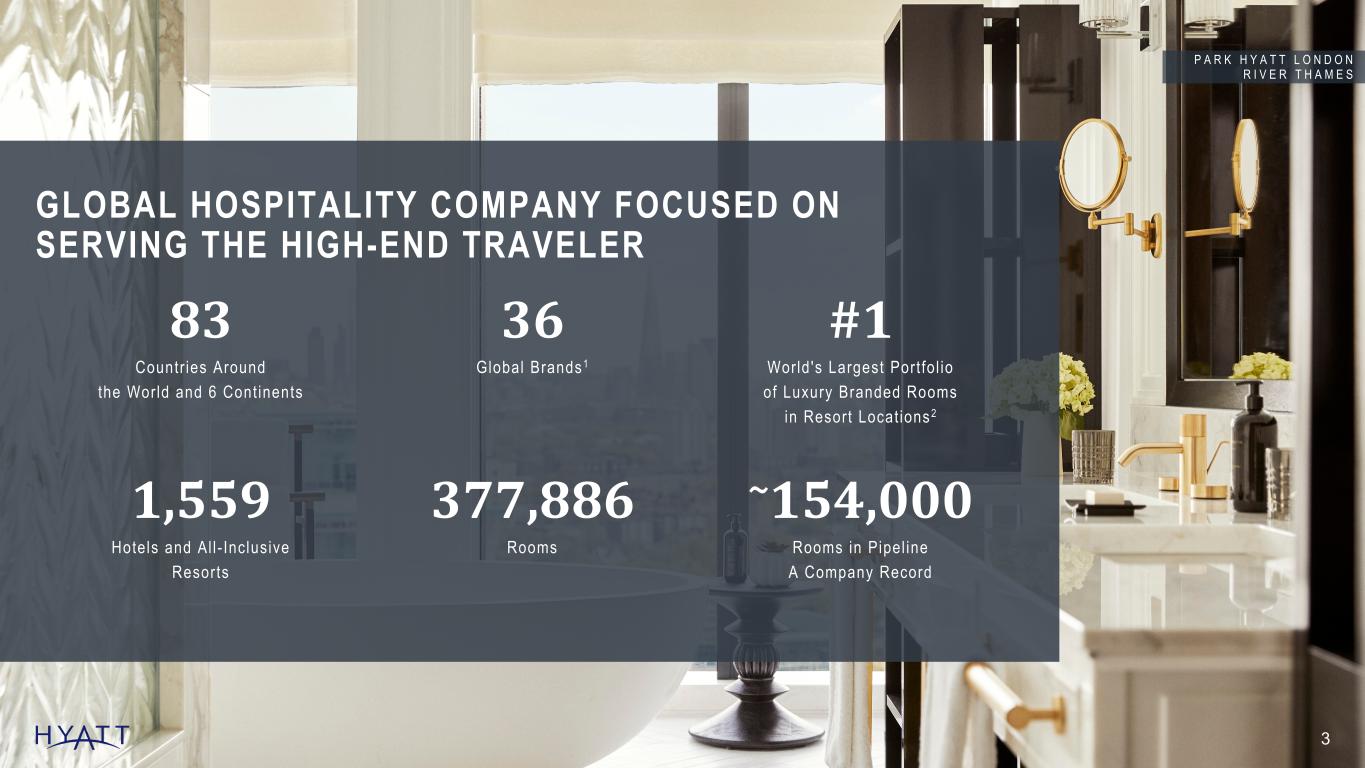
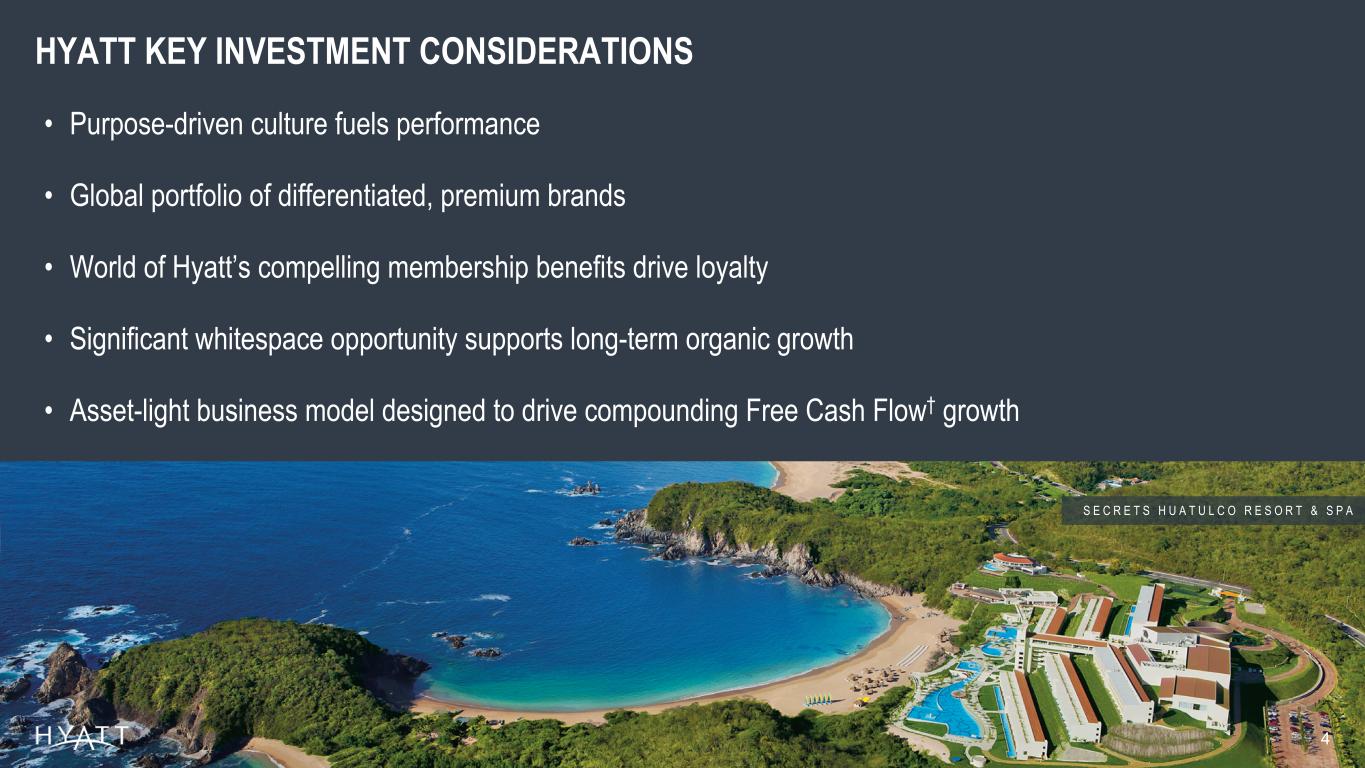
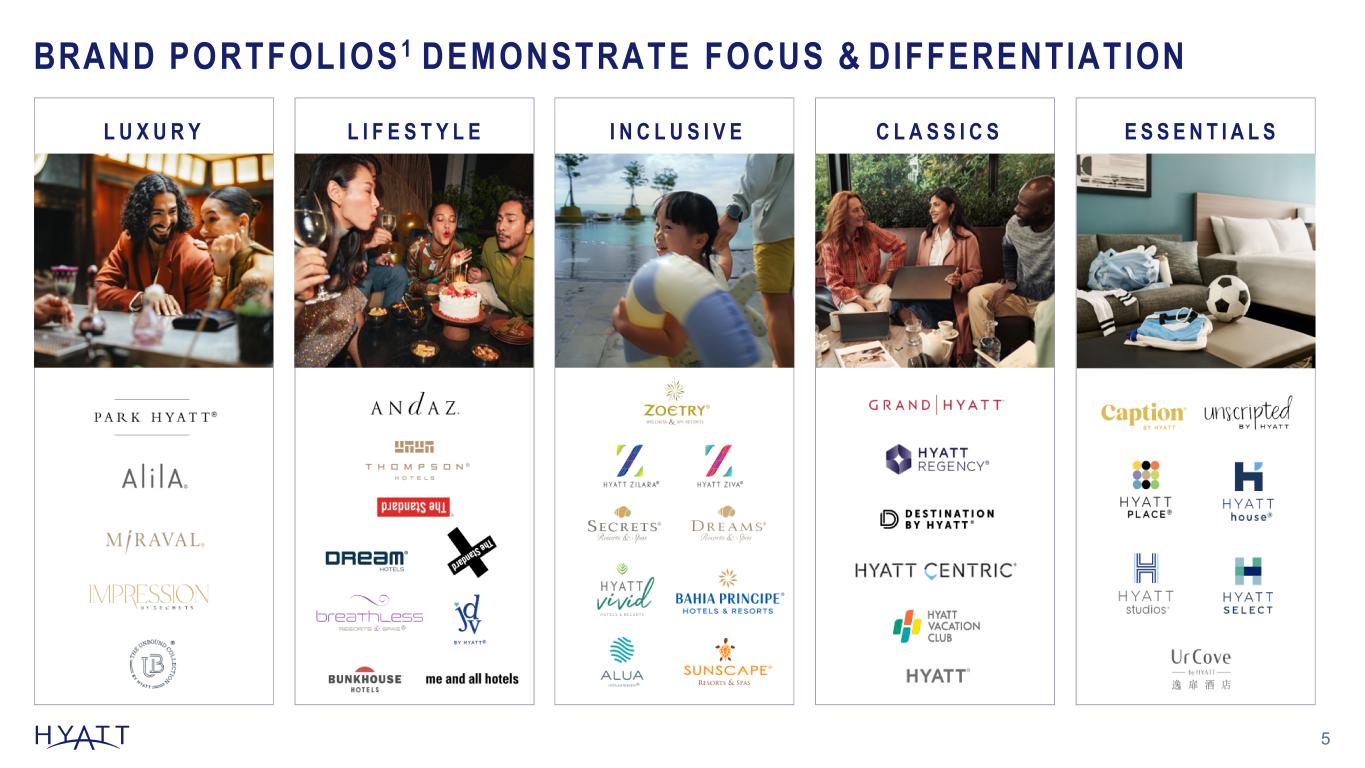
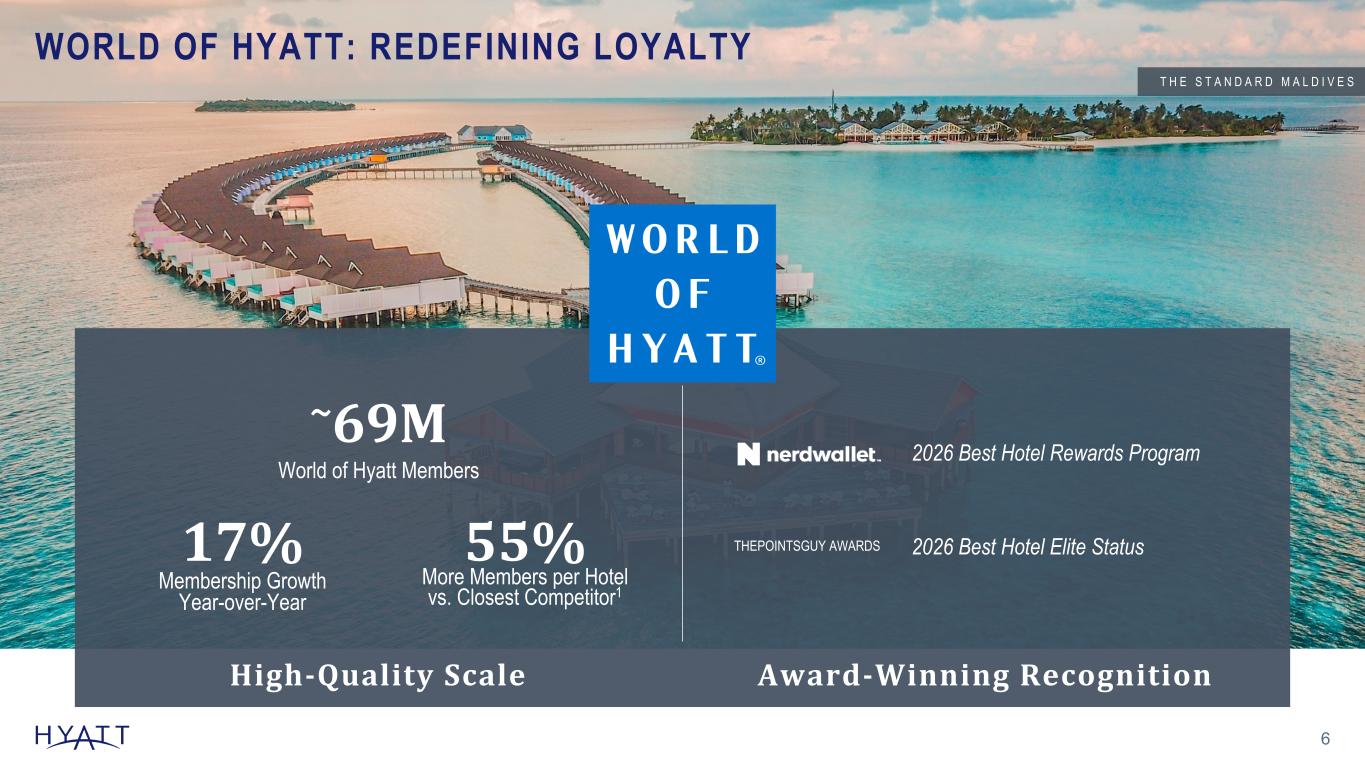
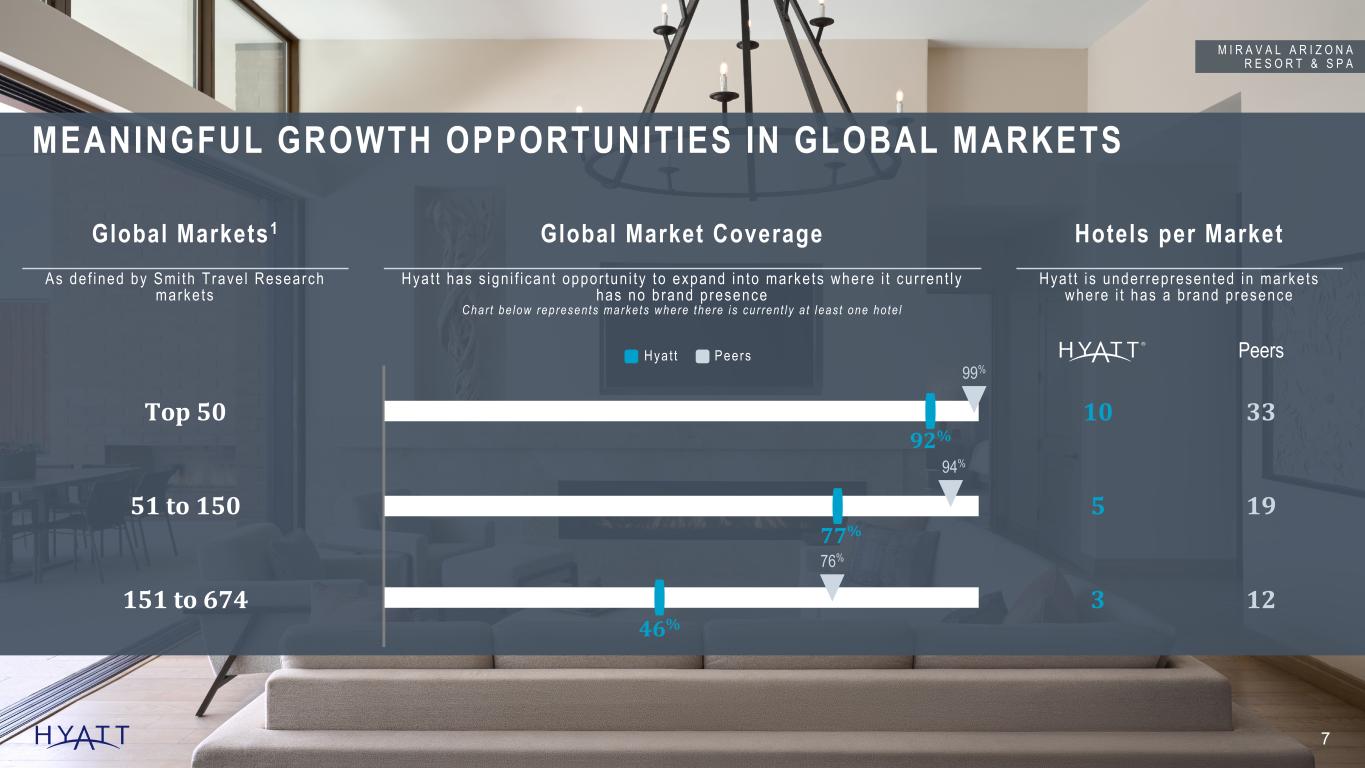
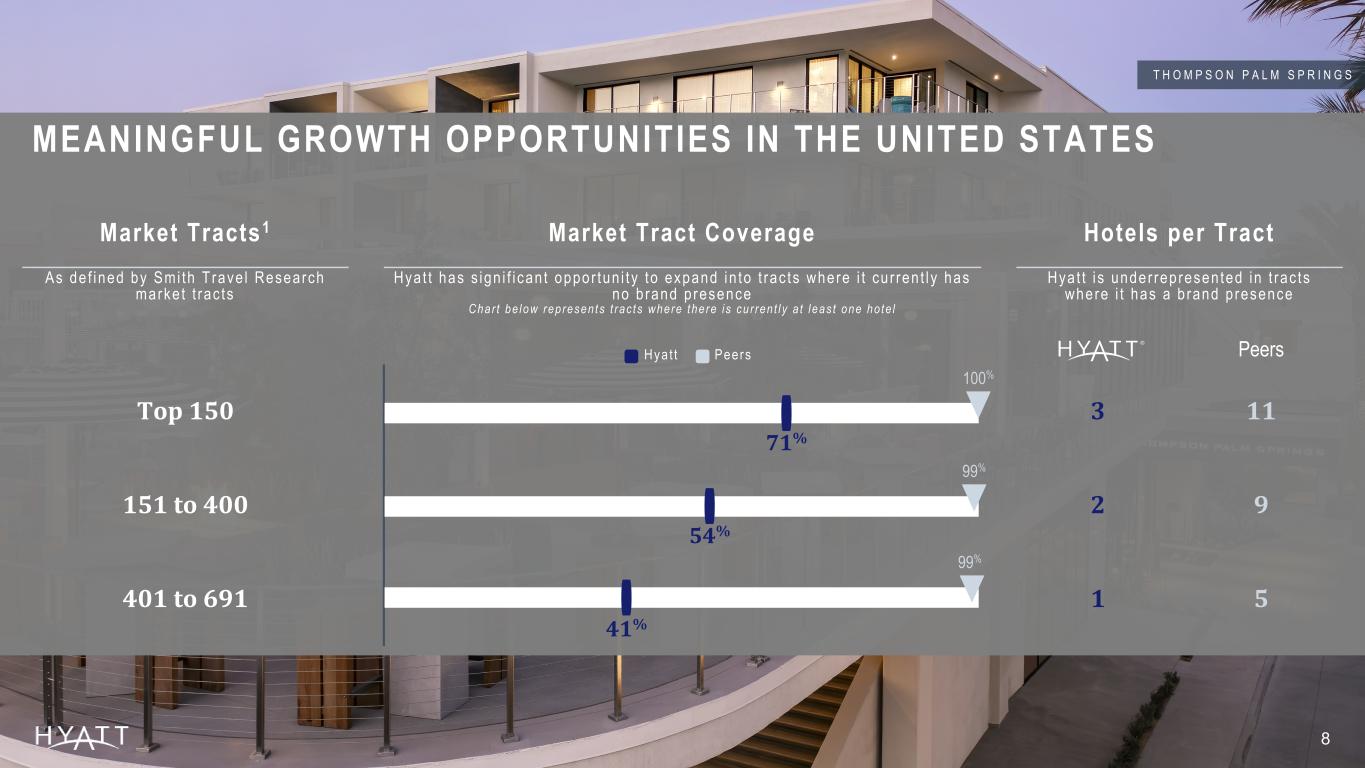
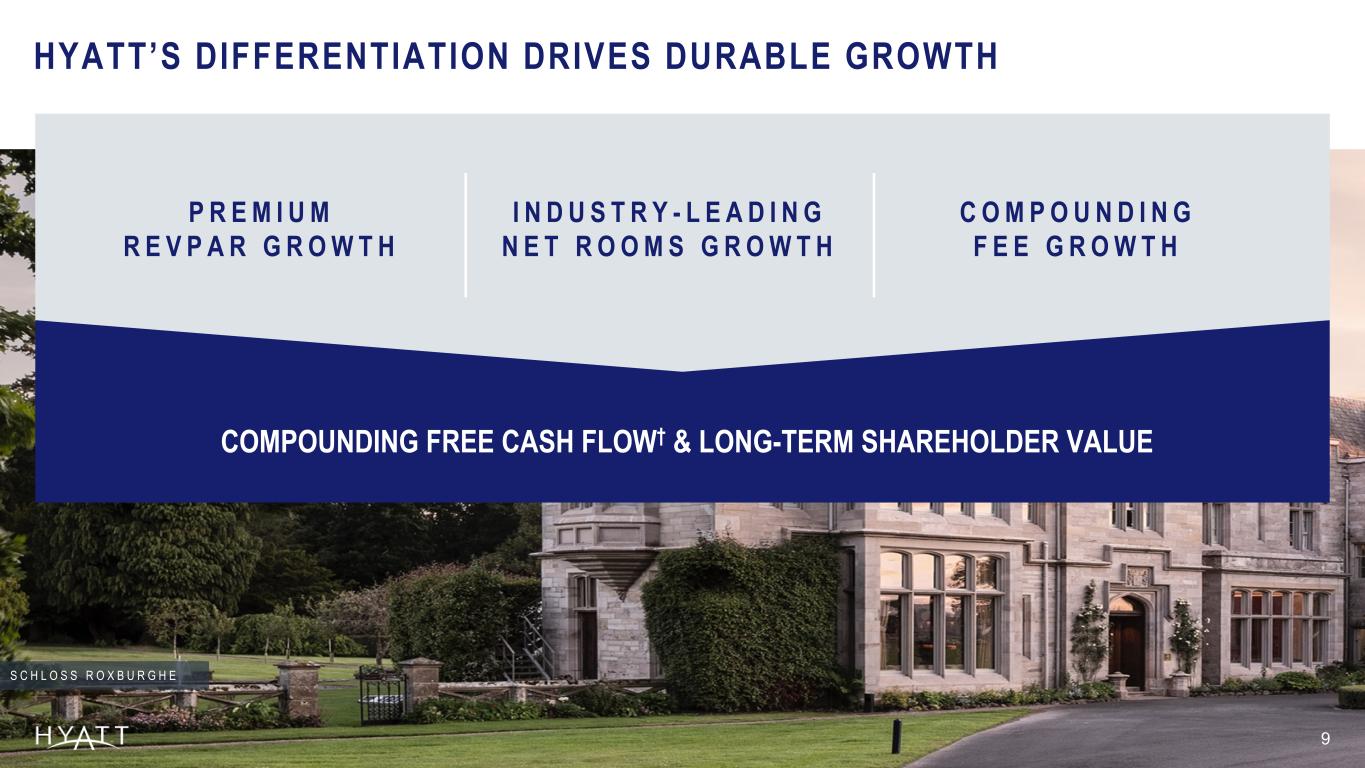
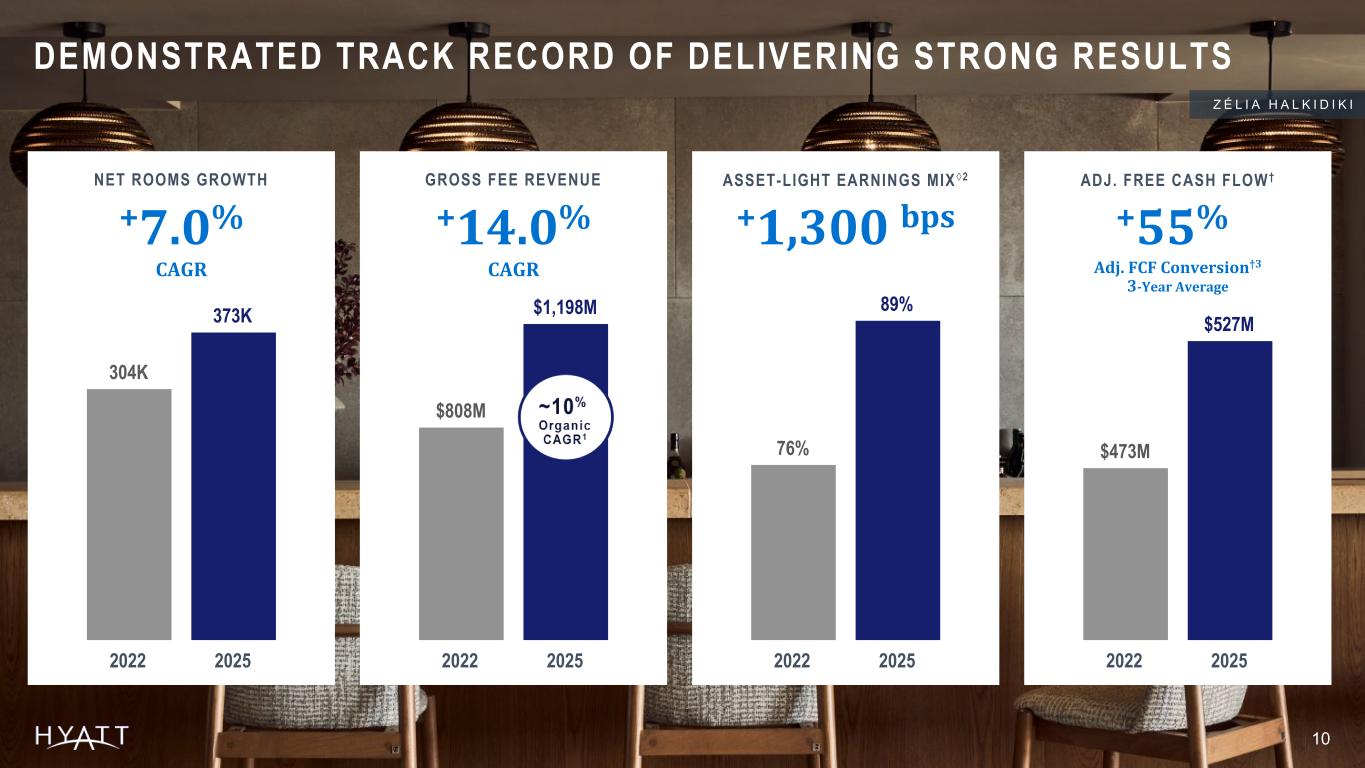
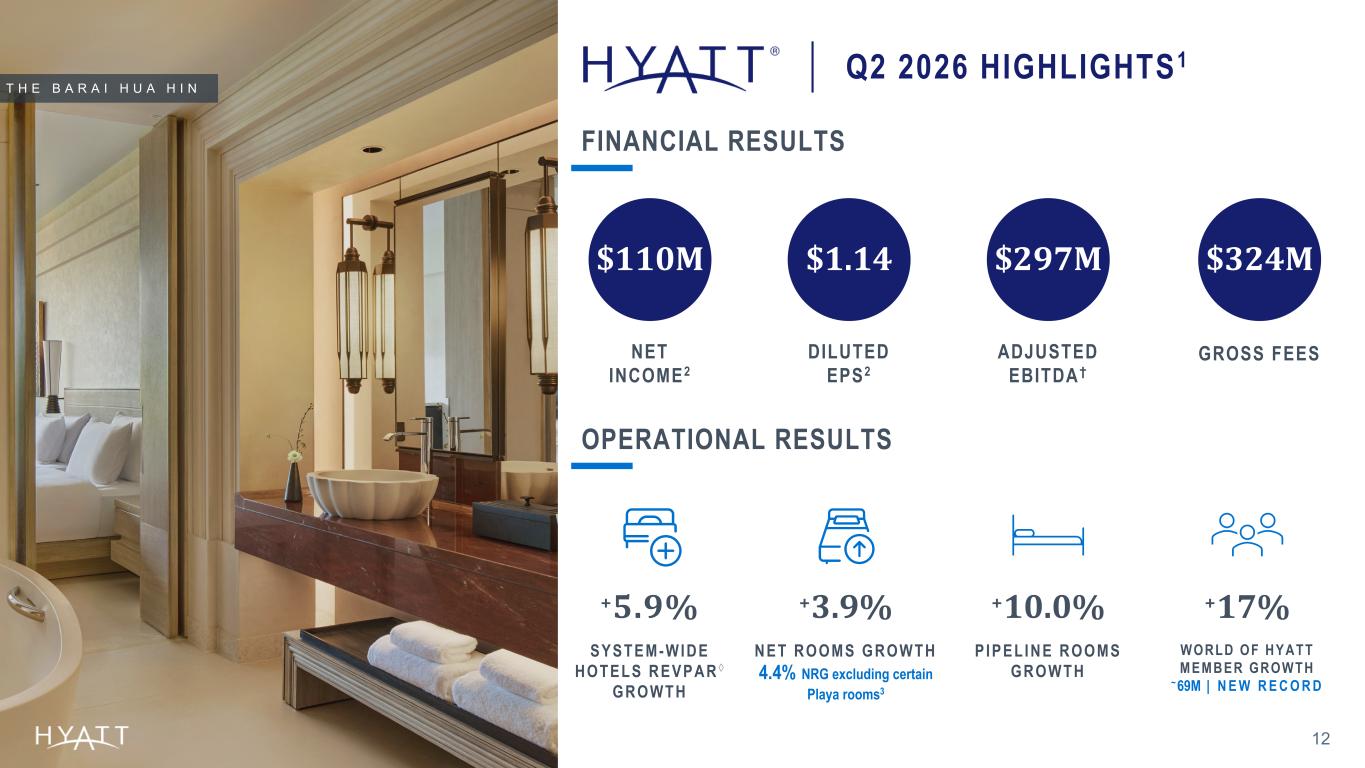
Thank you, Ryan, and good morning, everyone. We appreciate you joining us today. Before I begin, I'd like to once again thank everyone who joined us at our recent Investor Day, both in person and virtually. We appreciated the strong engagement throughout the event and the thoughtful conversations we've had with many of you since then. It's been encouraging to hear the positive feedback on our strategy and the long-term opportunities that we outlined. As we showcased at Investor Day, Hyatt has evolved into a more asset-light company with a differentiated operating model built around premium brands, a growing commercial platform, and disciplined capital allocation. Our objective is clear, to sustain a business model capable of delivering durable fee growth, increasing cash flow, and attractive long-term returns over a wide range of operating environments. Our second quarter results provide another example of that model in action. Despite meaningful regional headwinds in parts of our portfolio, we delivered strong REVPAR, fee, and adjusted EBITDA growth, expanded World of Hyatt membership, and increased our development pipeline to record levels. These results demonstrate the growing strength of Hyatt's commercial platform, the increasing preference for our brands among guests, owners, and developers, and the benefits of a business model where quality growth translates into higher fee earnings and free cash flow. Turning to our operating results, this morning we reported second quarter system-wide REF PAR growth of 5.9%, exceeding our expectations. Performance was driven by durable demand from high-end travelers and continued strength across our luxury portfolio, with some benefit from the FIFA World Cup. REVPAR growth in the United States exceeded our expectations, and we also saw strong growth across most international markets. REVPAR was up in all customer segments. Business and group travel was solid, with business transient REVPAR increasing approximately 2% during the quarter, and group REVPAR increasing more than 7% compared to last year. World Cup host cities delivered group REVPAR growth of more than 13% in June. Leisure demand from premium travelers remained exceptionally strong during the quarter, with Leisure Transient RevPAR increasing approximately 7% compared to last year, once again led by our luxury brands. As one example, World Cup host cities in the United States generated Leisure Transient RevPAR growth of more than 17% in June. Our performance reflects much more than favorable industry trends. Our brand-led strategy continues to differentiate Hyatt, and we are gaining market share across our portfolio. During the first half of the year, our luxury and lifestyle portfolios increased RevPar index by nearly three points, with a large proportion of our hotels gaining share. This reflects growing preference for our brands, the strength of our commercial platform, and the impact of our brand-focused approach. A significant contributor to that growing preference is World of Hyatt, which ended the quarter with approximately 69 million members, an increase of 17% from a year ago. As World of Hyatt membership and engagement grows, we're continuing to enhance the value of the program. One recent example is our collaboration with Air Canada, which brings two highly engaged loyalty programs together and gives members more ways to earn and redeem rewards while expanding the experiences available across both. World of Hyde sits at the center of our network effect, creating more value for guests, owners, and developers as our system grows. Every new hotel we add expands opportunities for our members, while every new member strengthens the value of our commercial platform. The lasting benefits we create by driving quality growth fuels more direct channel demand, stronger owner returns, and durable fee growth. Development activity remained very strong during the quarter. We ended the quarter with a record development pipeline of approximately 154,000 rooms, up 10% from a year ago. The breadth of our pipeline reflects growing owner preference for Hyatt. Our luxury lifestyle and inclusive collection brands continue to generate strong owner interest, while our essentials brands are building momentum and creating meaningful opportunities to expand Hyatt's brand footprint in markets where we have significant white space. The Hyde Select brand is a great example of that momentum. During the quarter, in addition to strong signings in the United States, we signed a master franchise agreement with Dosen Group to bring the Hyde Select brand to the Chinese mainland. This collaboration combines Hyde's global brand recognition with the local market expertise and development capabilities of Dosen Group, one of the region's leading hotel operators, providing a strong platform to thoughtfully scale the Hyatt Select brand in an important long-term growth market. We delivered net rooms growth of 4.4 percent for the second quarter, excluding rooms from the Playa Hotels acquisition that were removed from Hyatt's room count in the second half of 2025. Among our notable openings this past quarter were Miraval the Red Sea, our first Miraval property outside of the United States, and the Barai Hua Hin, our first property in the Undone Collection by Hyatt in Thailand. Both of these openings expand our brand presence in the luxury wellness segment while bringing two distinctive experiences to World of Hyatt members in sought-after destinations. Miraval the Red Sea is the first of a number of important openings planned in Saudi Arabia over the next several years. Our development pipeline remains very healthy and we expect net rooms growth to accelerate significantly over the second half of the year with a large number of our expected openings scheduled for the fourth quarter. We continue to see meaningful opportunities from both conversions and new build openings. We've adjusted our full year outlook range to reflect the large number of fourth quarter openings, some of which could slip into 2027. I want to be clear. Our confidence in delivering on the strong organic growth we outlined in our investor day remains very high. Now, turning to transactions, we continue to make progress on the planned sale of the Hyatt Grand Central New York. However, based on our current expectations, we no longer expect the transaction to close in 2026. We will continue to provide updates on this transaction as we reach key milestones. More broadly, we remain active in the market and are in discussions regarding the sale of certain assets to unlock additional value from our own portfolio. Our disciplined approach remains consistent with our track record of pursuing transactions that achieve attractive values, while ensuring our hotels remain in the Hyde system under long-term management or franchise agreements, supporting continued fee growth and shareholder value. Looking ahead, we remain confident in Hyatt's long-term positioning. As we highlighted during Investor Day, we've transformed Hyatt into a more durable, asset-light business that generates increasing free cash flow as our system grows and cash conversion improves, allowing us to continue to invest in the areas of the business that matter most to our guests, owners, and shareholders. Our strategy is producing tangible results. We've led the industry in net rooms growth for the past nine years, delivered industry-leading REF PAR growth over the past five years, and today generate the highest fees per room among our largest peers. Together, these drivers have created a powerful compounding effect on fee growth. Importantly, achieving that growth requires only modest incremental capital, allowing us to reinvest in our brands, commercial platform, and future growth while continuing to generate increasing levels of free cash flow. We also believe the opportunity ahead remains significant. We've built a differentiated portfolio of brands serving high-end travelers, developed one of the industry's most attractive and fastest-growing loyalty programs, and continue to see substantial opportunities to expand our brands in markets where Hyatt has meaningful white space. Together, we believe these advantages position Hyatt to deliver durable long-term growth and consistently create value for shareholders. I'd like to close my comments by thanking our Hyatt colleagues around the world who bring our purpose of care to life every day. Their commitment to our guests, owners, and one another is what truly differentiates Hyatt and gives me great confidence in our future. I'll now turn the call over to Joan to provide more details on the quarter. Joan, over to you.
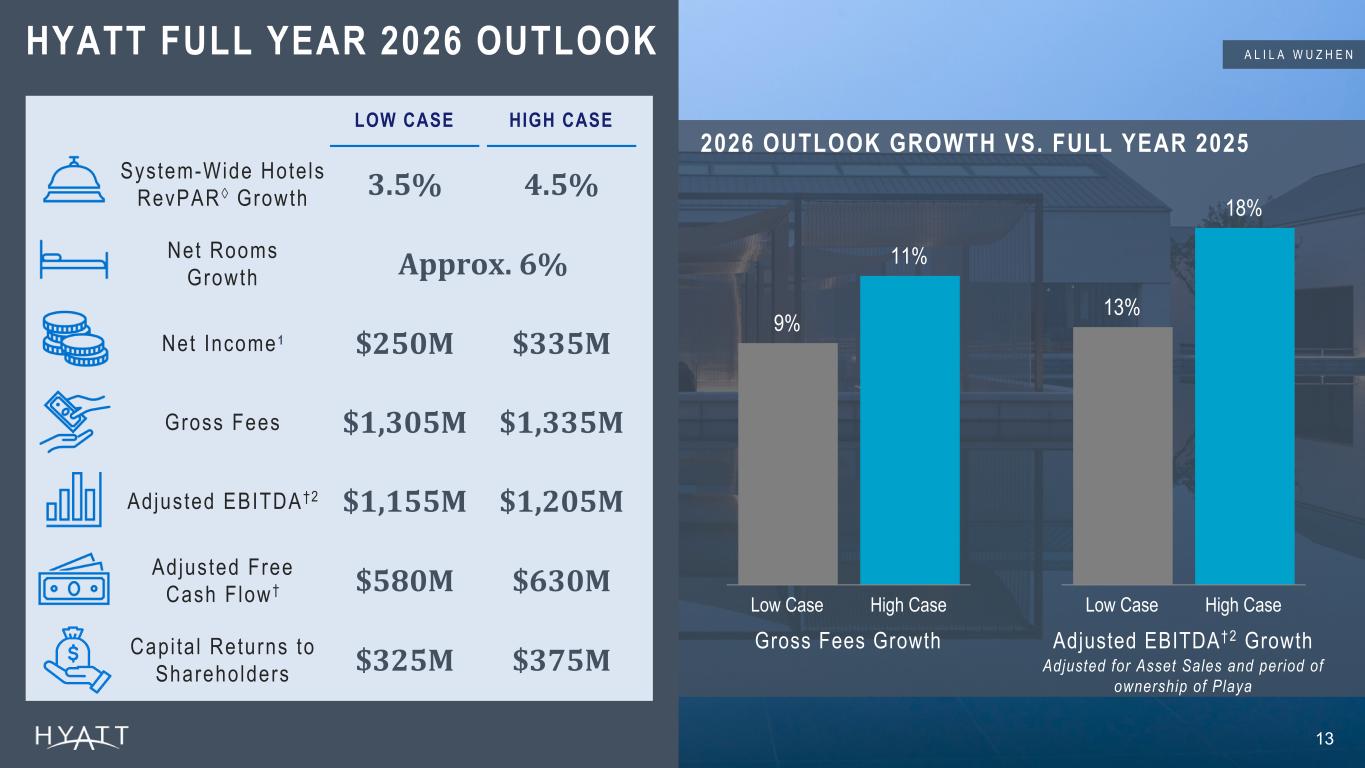
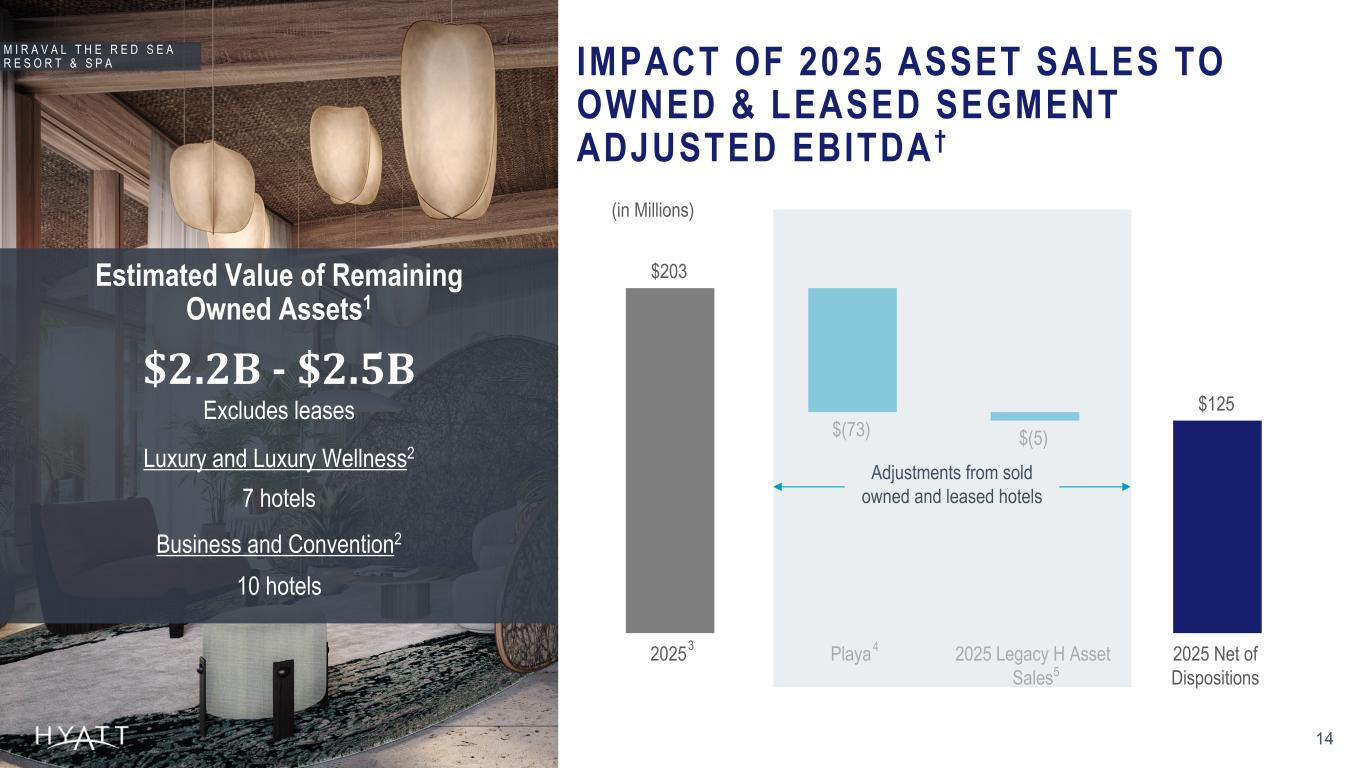
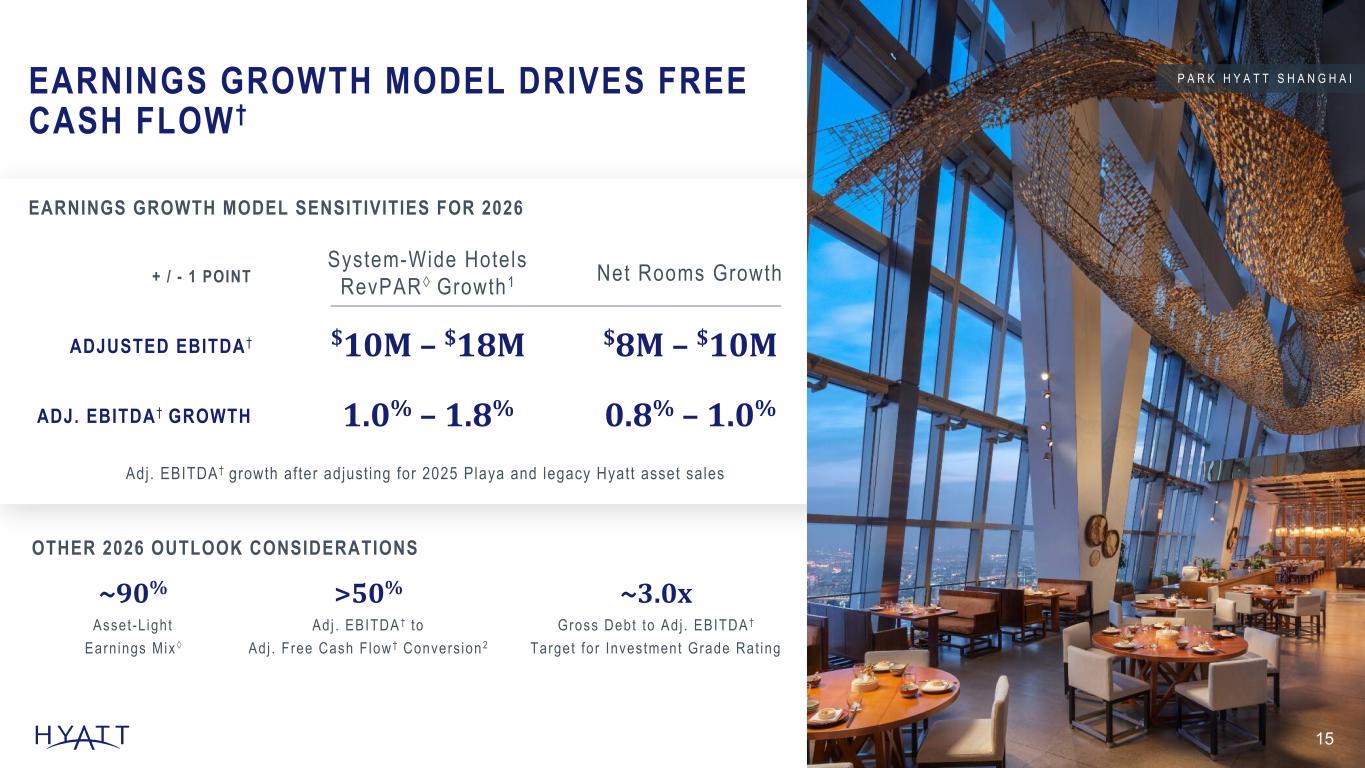
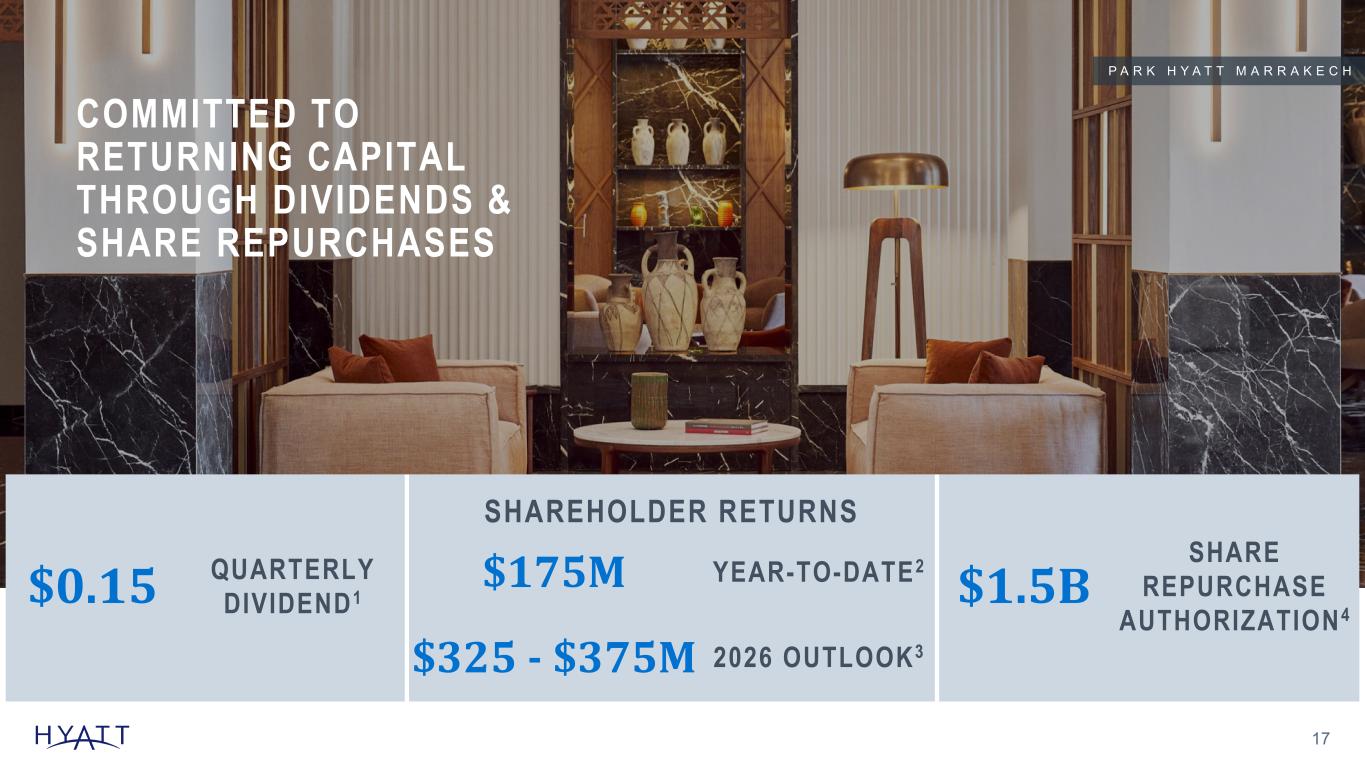
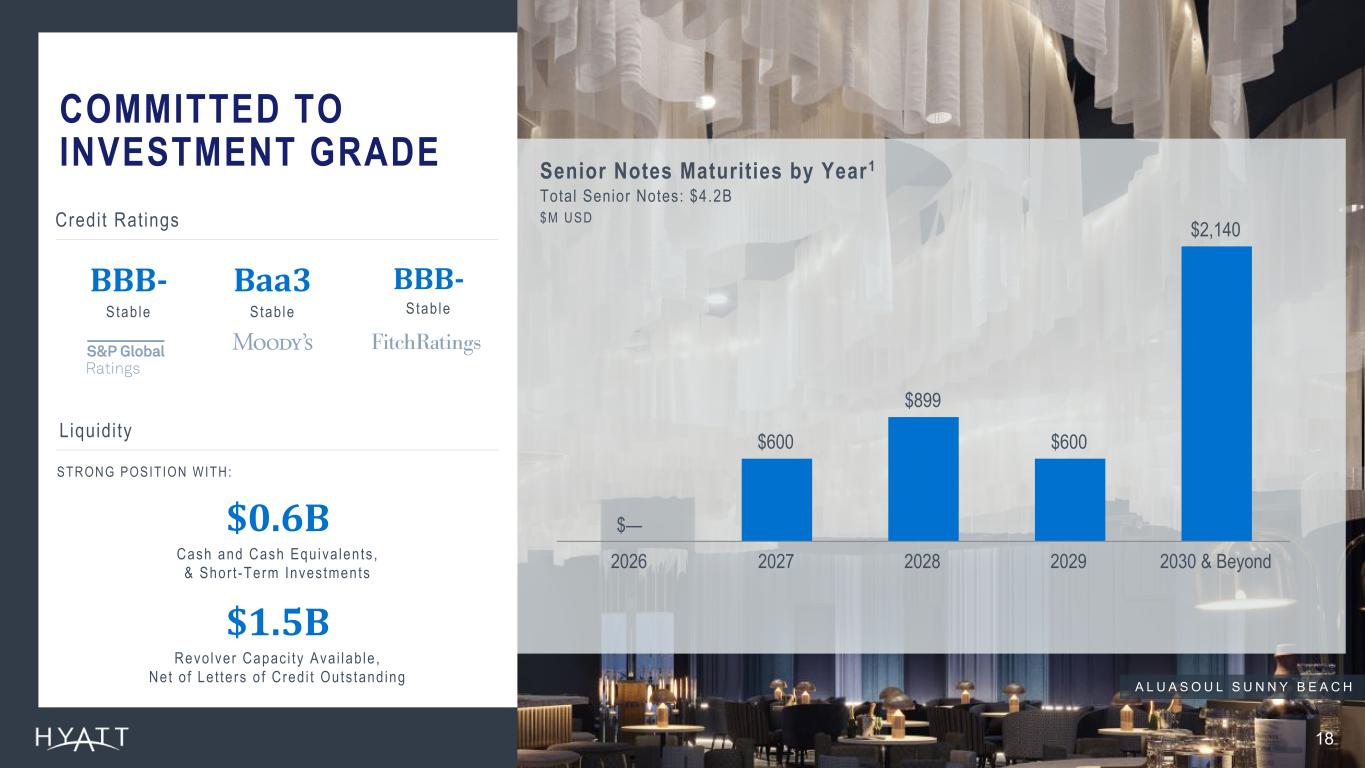
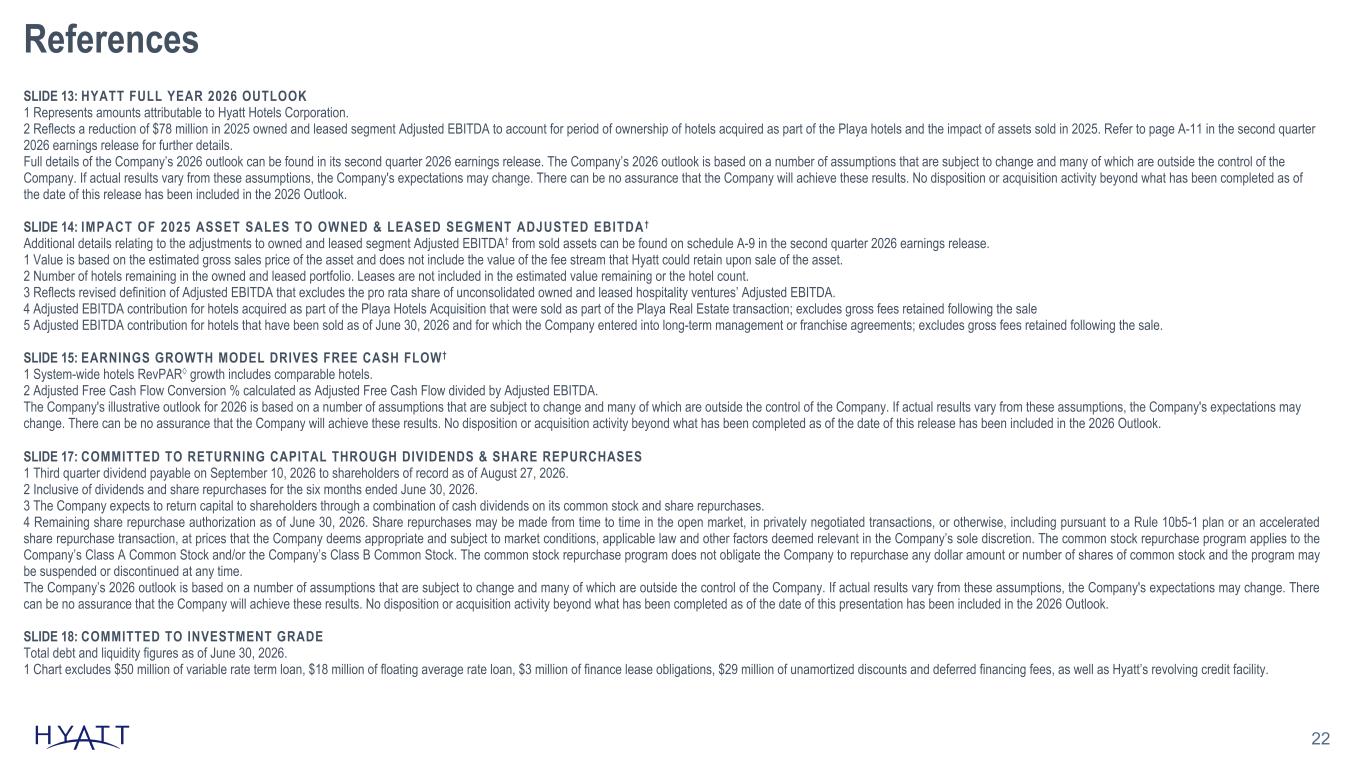
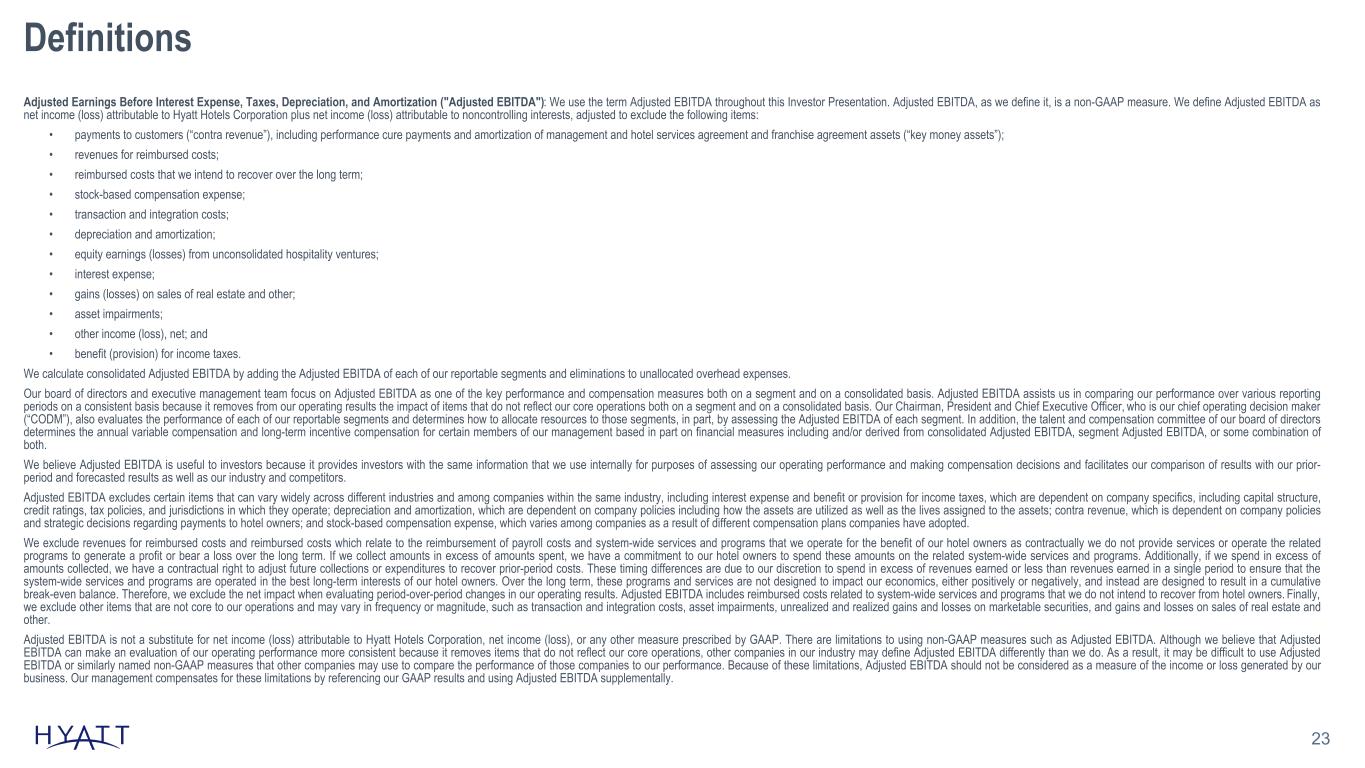
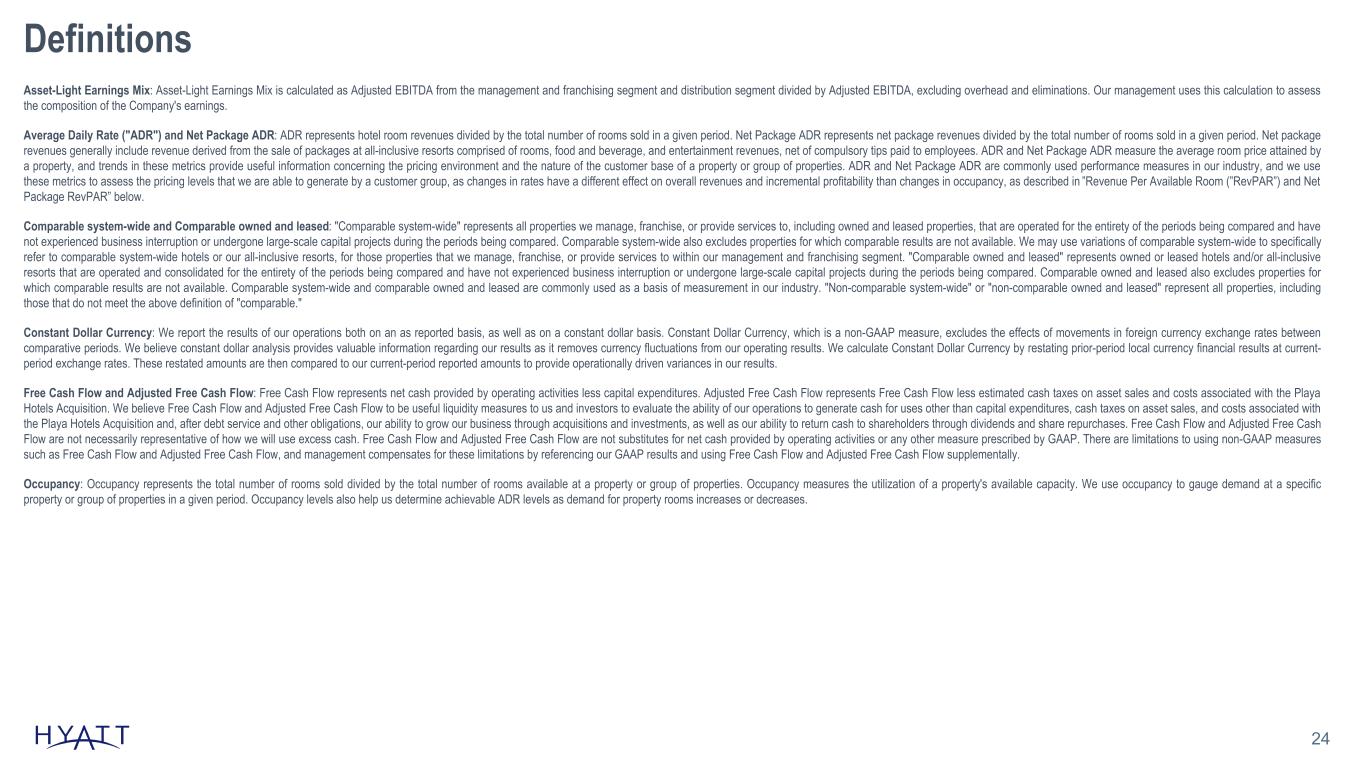
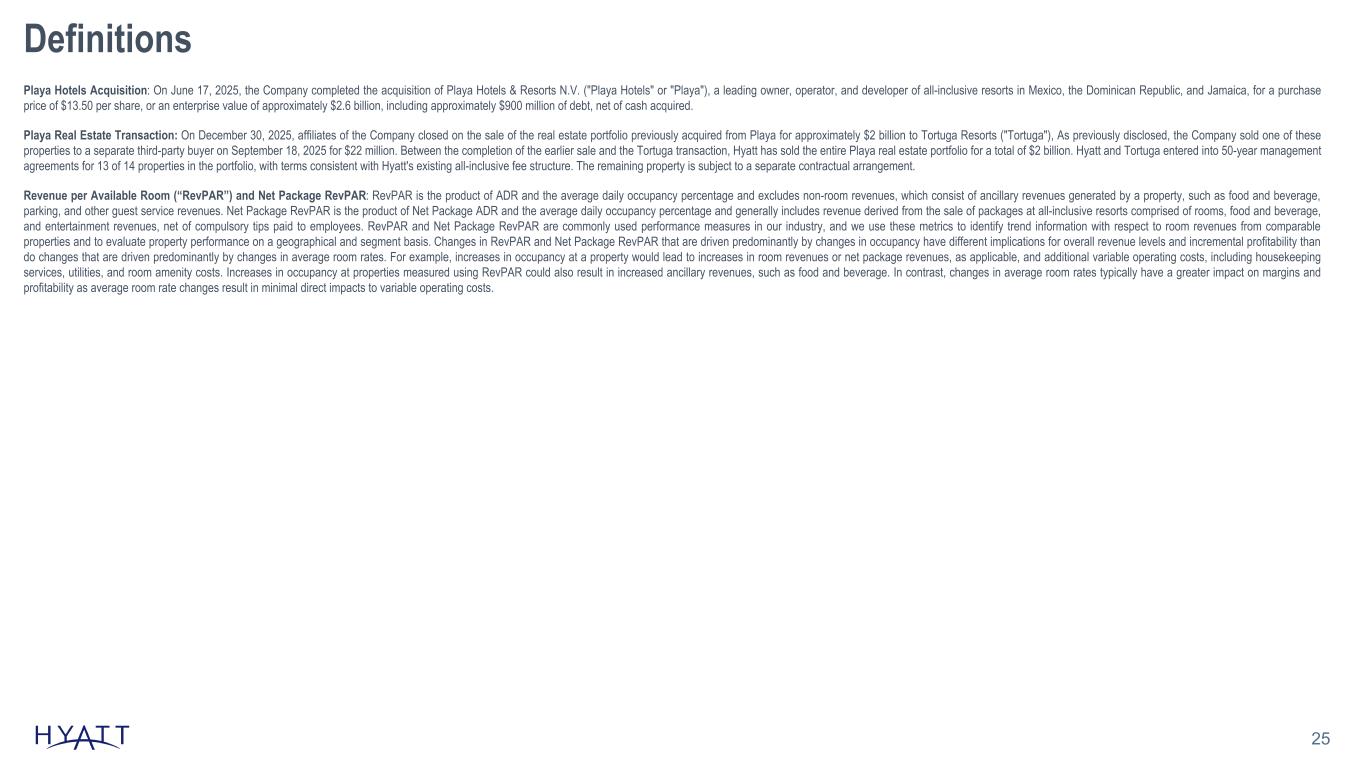
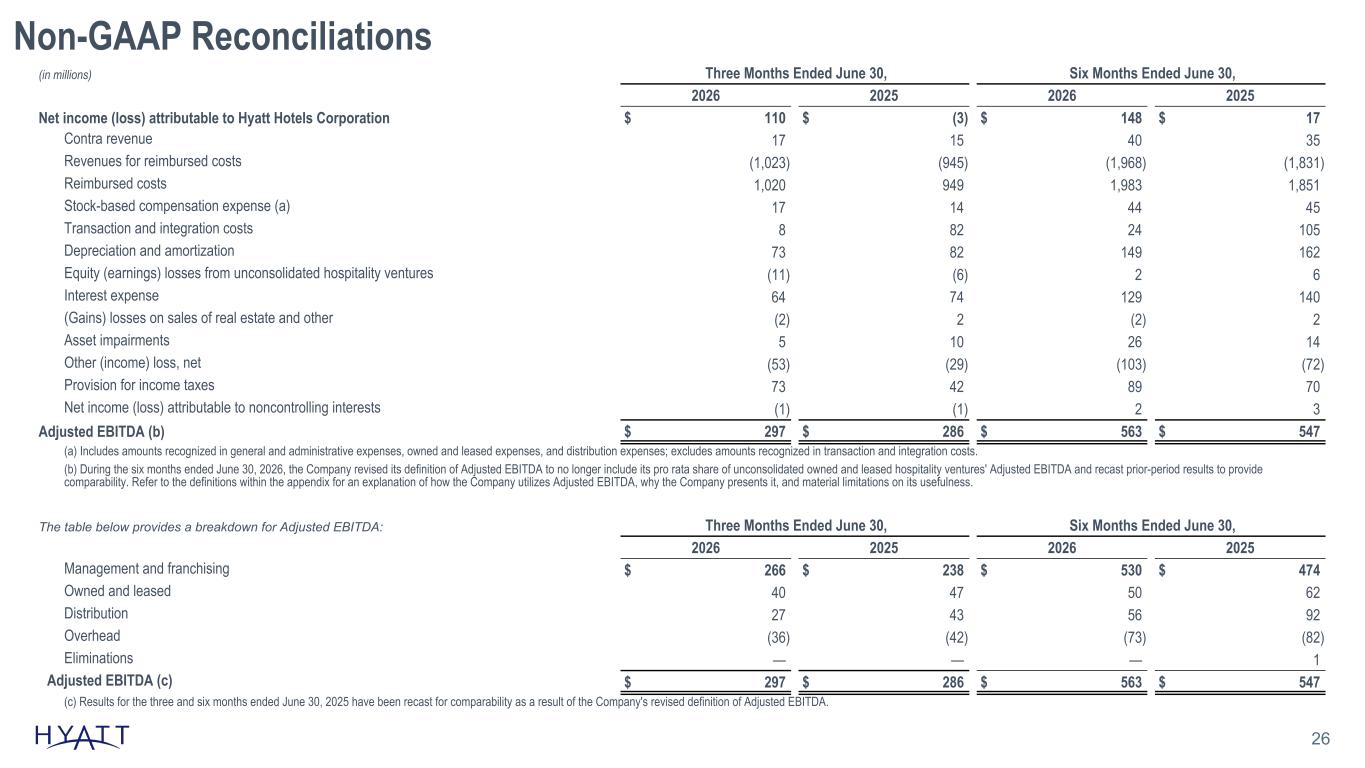
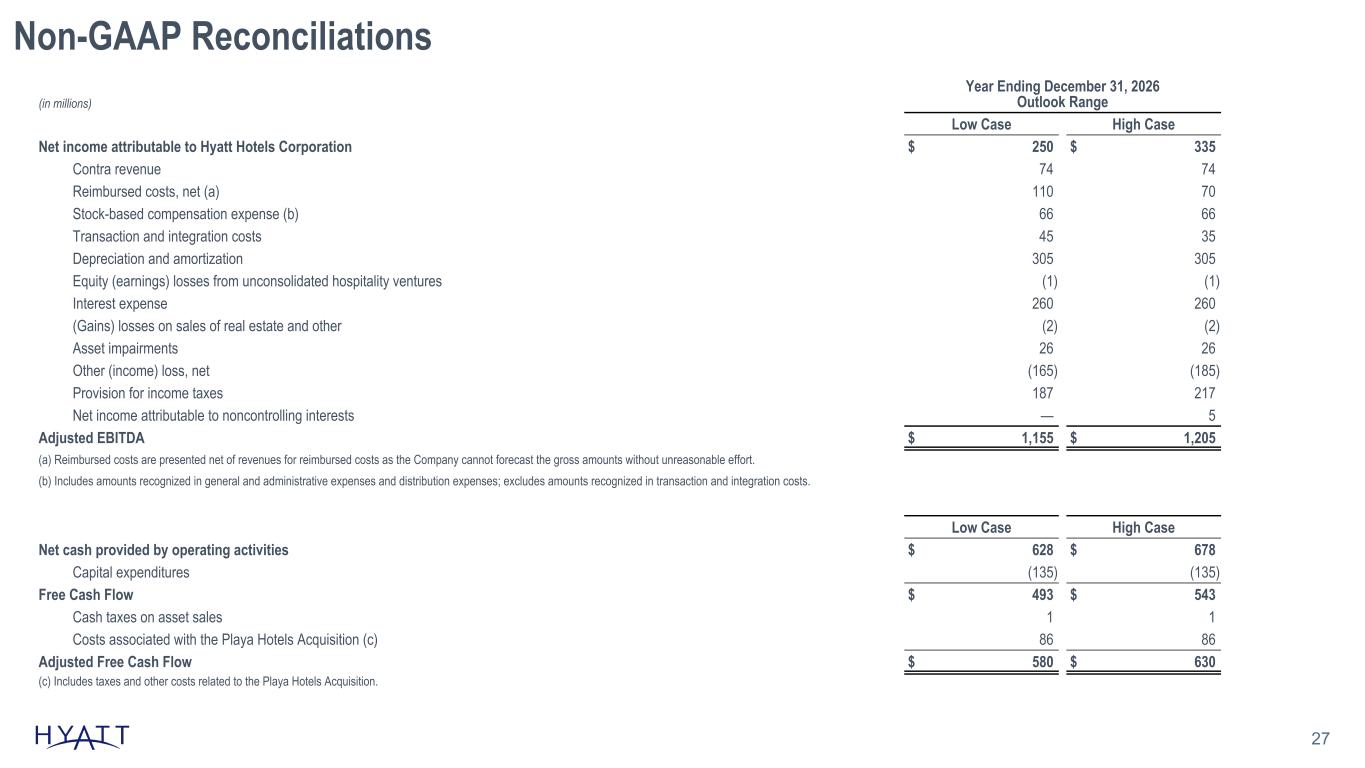
Thanks, Mark, and good morning, everyone. During the second quarter, RevPAR exceeded our expectations, increasing 5.9% compared to last year, driven by resilient travel demand from premium travelers and incremental demand from the FIFA World Cup. In the United States, RevPAR increased a very strong 6.7% compared to last year, driven by robust leisure travel, along with healthy growth demand. The FIFA World Cup contributed approximately 70 basis points of RevPAR growth, with host cities delivering double-digit growth during the second half of June. Our select service hotels also performed well, with RevPAR increasing 3.5%, driven by improving business transient demand and easier comparisons to last year. Outside the United States, RevPAR increased nearly 5%, and 7.5% excluding the Middle East. This strong growth reflects robust international travel demand and continued strength in higher-end travel. RevPAR in the Americas excluding the United States increased 9.5%, benefiting from strong regional performance and international demand from the FECO World Cup. Greater China RevPAR increased an impressive 7.2% compared to last year, supported by leisure transient demand and strong average rate growth across our largest markets. Asia Pacific, excluding Greater China, delivered robust RevPar growth of more than 10%, reflecting strong inbound travel and demand in key markets where we have strong brand representation. Europe generated RevPar growth of 4.5% as healthy domestic leisure demand offset softer inbound travel from the Middle East. RevPAR in the Middle East declined by 36% compared to last year due to the ongoing conflict in the region. Net package RevPAR in our all-inclusive portfolio declined 1.2% compared to last year as the security incident in Mexico earlier this year and lower flight capacity had an impact on second quarter demand. Net package RevPAR for our hotels in the Dominican Republic was up over 8%, underscoring the strength of the high-end leisure guests in a stable operating environment. Our all-inclusive resorts expanded market share, reflecting the strength of our brands and power of our commercial platform. Overall, our second quarter results reflect continued strength in premium leisure travel globally and healthy corporate travel demand. Turning to our financial results, our core fee business continued to perform well, supported by strong top-line performance, healthy hotel-level profitability, increasing scale, and the quality of our portfolio. Gross fees increased 8% to $324 million, driven by strong performance across our managed portfolio, fees from newly opened hotels, the new management agreements from the Playa portfolio, and growth in license fees. In the second quarter, owned and leased segment adjusted EBITDA increased by 16%, adjusted for the impact of asset sales, reflecting the performance from the high-end positioning of our remaining owned and leased hotels. Distribution segment adjusted EBITDA declined compared to the prior year in line with our expectations due to temporary factors including hotel closures in Jamaica following Hurricane Melissa and softer demand in Mexico. results were also impacted by lower demand for four-star properties and we continue to expect it will take time for demand to return to previous levels as slight capacity increases and travel spending improves among this consumer segment travel volumes into the dominican republic were up seven percent for our distribution segment reflecting continued strength and demand for this destination overall our second quarter adjusted EBITDA reflects the strength of our core fee business and was up approximately 9% year over year after adjusting for asset sales. As of June 30th, we had total liquidity of approximately $2.1 billion, including $1.5 billion of available capacity on our revolving credit facility. Year to date, we've returned approximately $175 million to shareholders through share repurchases and dividends, and during the second quarter, returned approximately $26 million. We ended the quarter with approximately $1.5 billion remaining under our share repurchase authorization. We remain committed to our investment grade profile and our balance sheet remains strong. Looking ahead to the second half of 2026, while travel demand continues to vary across regions, we remain confident in our outlook for the year, supported by the strength of our brands. As we shared last quarter, we continue to expect hotel revenues in the Middle East to remain significantly below last year, which we estimate will reduce full-year fees by approximately $10 million. In Mexico, booking trends at our all-inclusive resorts are improving sequentially, but have not yet recovered to the extent we expected, resulting in an approximately $15 million impact to fees compared to our prior outlook. While we continue to expect positive full-year net package REVPAR growth in the Americas, we now expect third-quarter net package REVPAR to be moderately below last year. Despite these temporary regional headwinds, we are increasingly encouraged by the strength of our core fee business. In the United States, the FIFA World Cup provided a meaningful benefit during the second quarter, and forward-looking booking trends remained strong for the balance of 2026. with group pace for our U.S. full-service hotels up in the mid-single digits for the remainder of the year. We're also seeing improving trends in our select service portfolio as we lack easier comparisons. Outside of the United States, we expect performance in Asia Pacific to be strong through the balance of 2026. Reflecting these trends, we are increasing our full-year system-wide REVPAR growth outlook to between 3.5% and 4.5%. We now expect full-year REVPAR growth in the United States of between 3% and 4%. We expect REVPAR growth in international markets, excluding the impact of the conflict in the Middle East, to be slightly higher than the United States for the full year. We expect net rooms growth of approximately 6% for the full year, with momentum them in conversions, including in our new brands, driving another year of strong organic growth. As Mark mentioned earlier, we expect the fourth quarter to account for over half of our openings for the year, and we remain confident in our ability to meet the long-term growth expectations that we laid out at our most recent investor day. We are maintaining our gross fees outlook for the full year and expect fees to grow between 9 to 11 percent in the range of $1.305 to $1.335 billion, reflecting continued growth across our asset light platform, despite temporary hotel closures in Jamaica and softer performance in Mexico and the Middle East. We are maintaining our full-year adjusted EBITDA outlook and continue to expect adjusted EBITDA to grow at a strong rate of 13-18% in the range of $1.155 to $1.205 billion dollars. This outlook reflects an approximately 25 million dollar year-over-year decline in our distribution segment for the full year compared to 2025. We are maintaining our adjusted free cash flow outlook for the full year in the range of 580 to 630 million dollars, representing an increase of between 20 to 30 percent. This reflects a conversion of adjusted EBITDA to adjusted free cash flow of at least 50 percent for the full year. Finally, we expect to return between $325 million and $375 million of capital to shareholders through share repurchases and dividends during 2026. For the third quarter, we expect global REVPAR growth towards the low end of our full-year outlook range. We expect net package REVPAR to be moderately below last year. Growth fees are expected to grow in the high single-digit range compared to the prior year and compared to the third quarter of 2025. As a reminder, this growth is after adjusting for the $30 million from owned assets sold in 2025 and the $13 million of pro rata JV EBITDA removed under our updated definition. These adjustments are outlined on page 8, 9 in this morning's earnings release. In closing, our second quarter results reflect the continued strength of Hyatt's asset-light earnings model. As we highlighted during Investor Day, our strategy is designed to generate high-quality, durable fee growth and increasing cash flow over time, and this quarter's results are another demonstration of the successful execution of our strategy. As our system expands and our brands continue to outperform, we believe we remain well-positioned to generate durable fee growth, strong free cash flow, and long-term value for our shareholders. This concludes our prepared remarks, and we're now happy to answer your question.
Operator
At this time, I would like to remind everyone, in order to ask a question, press star, then the number one on your telephone keypad. The first question comes from Ben Chaykin with Mizuho. Please go ahead.
Hey, good morning. Thanks for taking my questions. I would love to just revisit the NRG adjustment. The prepared remarks were very helpful. Is the idea that some of the, just so I understand perfectly kind of where you're coming from, Mark, is the idea that some of the expected rooms in 26 flipped into 27, or rather, given the magnitude of the openings you see in Q4 and how that could be a swing factor, you're proactively assuming some move to 27 out of conservatism?
Thanks, Ben. Secondly, but when you look at a two-year stack, which is a much, I think, two-year stack in the first quarter and the second quarter of this year, we're 16% growth in net rooms in the year for the year conversion than we initially for the PIP completion has extended. These that need to be, and therefore we're looking at ourselves saying some of these may, so we're taking a conservative shape out. The key from my perspective isn't let's hyper-focus on one quarter to the next because the figure is not what that fee growth. And so the feed growth algorithm can't take net room's growth. What we are set up for is sounding feed growth in the upper single digits. It's actually in that same range. The final thing I'll say about our confidence about the algorithm that we put into place or that we share during investor day is we see in the marketplace with respect to new signings. In addition to that, we've put into place a vehicle, a dozen already signed negotiation process facility for demand that we're seeing for the brands and our pipeline growth and actually trying to address one of the key needs that we see in our owner community, which is financing for construction. We really feel confident that the 6% to 8% range that we gave during the investor day.
Very thorough and helpful answer. Appreciate it.
Operator
Your next question comes from the line of Michael Bellisario with Baird. Please go ahead.
Thanks. Good morning, everyone. Mark, I want to focus on the demand front. Can you talk about booking windows, if you're seeing those expand at all for both group and transient, and then how have maybe your property managers changed their either revenue management or pricing strategies given the recent REVPAR improvement that we've seen in the United Thank you.
Yeah, I'll start, but I'll ask Joan to comment as well. 96% or 97% of the rooms sold this year, somewhere between 55% and 56%, 60% is what I meant to say, which is right on path, is that the quarter is definitely the key driver. It's actually very banqueting in F&B. Mix is actually a leisure, and Joan can talk about this with respect to HIC specifically, because that's the ability in terms of mix. And in our case, Joan, maybe you want to talk about HIC Outlook.
Yeah, I would just say to add on to what Mark mentioned is that those numbers are our first half numbers. And it is true that our booking windows haven't changed much on the BT side. So while we've seen some increasing and encouraging activity, you know, embedded in our outlook for the full year is that those booking windows still remain shorter on the BT side. And for leisure, we have also booking windows that are 30 to 60 days out, except for maybe the HIC business, where it's a flight and a longer booking necessity from our guests to actually make those reservations. And when we look – I mentioned this in my prepared remarks, but when you look at Q3 and Q4, we're slightly negative overall. And we reported negative 1.2% in the second quarter for net package RevPAR, and we're seeing sequential improvements week on week into Cancun in particular, because that is the market that has been the most disrupted post the February security incident. So, improving, but not as much as we hadn't anticipated. So, what is encouraging is when we look out a little bit further, again, back to the booking windows, what we're seeing for the first quarter of 2027, still early days, but it's a very important indicator for us to start looking at now as we go into our planning season in the fall, is that the Q1 pace is up in the high single digits overall for the region. So we're seeing Cancun a bit flat, but other areas, the west coast of Mexico and Dominican Republic are up significantly. The Dominican in particular is up over 20%. So, you know, that core leisure traveler and their demand for travel in those high season periods, we're seeing growing. And that gives us a lot of confidence into how Q1 of 2027 is going to shape up. So, and again, back to the sequential into this year, we think it'll be growing throughout the rest of this year.
Yeah, I would just say, quick, I think that the Secure 2026 is pretty strong for the Cancun So, for us, because a lot of the increase in the revenue pace is coming, will cascade into Cancun. So we expect to see Cancun sequentially improve from here on, from here out, and see Q1 serially improve.
Operator
Your next question comes from the line of Richard Clark with Bernstein. Please go ahead.
Hi, thanks for taking my question. I just wanted to follow up on the net package REVIPAR in Q2. I guess it was quite a big delta from Q1 to Q2. It felt like in Q1 you were able to offset the weakness in Mexico with strong demand elsewhere. So what kind of changed into Q2? Is it Q2 just more naturally a Mexico-heavy quarter than meant that the effect was felt a bit harder? And if I can ask you a quick second one, just wondering why the buyback number was so low in Q2, just $12 million. Was there some reason you couldn't buy back stock in Q2 that we maybe didn't know about previously?
In the second quarter, we had anticipated that an increasing demand reported Q1 results. And so that's what gave us confidence in what we reported at the end of the first quarter. And then it sort of leveled out. So that was the dynamic that we saw. Other regions were very strong. The Dominican was up 8% in the quarter. So people were sort of redirecting some of their bookings. and that's that's the dynamic we saw but as we mentioned it week on week has grown sequentially better so we believe that this is very much temporary and as Mark mentioned that this will accelerate into into the latter half of this year as actually occupancies fill up into these other regions as well with respect to we were locked out for investor day for a period of time in the second quarter so uh that was part of the activity that you saw uh i reaffirmed our guidance with respect to capital returns for this year between 325 and 375. so um that's what you can expect to see the difference between what we've achieved year to date and um and our outlook at this point in the year your next question comes from the line of smeeds road with city please go ahead Oh, hi.
Thank you. Switching gears just for a moment away from operational outlook, I was wondering if you could talk about what you're seeing in the transactions in the market. It seems like somewhat removed, but that the sort of higher end properties are gaining some traction with investors. Is that what you're seeing? Would you expect to be able to execute on that, I guess, going forward?
You took the words right out of my mouth, The fact is that, excuse me, quality properties and hybrid activity is last 20 years. If you've got great properties and high quality, that's been more.
Operator
Your next question comes from the line of Branch Montour with Barclays. Please go ahead.
Good morning, everybody. Thanks for taking my question. I was hoping to drill in a little bit on the U.S. outlook. You know, if you look at the first half, you guys did a mid-single-digit number in the U.S. Obviously, there's some World Cup in there. But if I'm reading your language correctly, Joan, for the full-year U.S., you're looking for three to four. I think that was a revenue number, but I'm assuming that you were speaking to RevPAR. But, you know, it basically implies a pretty steep step down in the second half. I was wondering if you could just sort of give us some sense of how much of that's conservatism and other sort of calendar things to note as we move through the back half.
Sure. You're right about the year to date. It was about 5% growth for the U.S., and it was pretty evenly split growth rates if you look across borders between leisure, business, and group. So that was obviously more heavily weighted into the second quarter with respect to group and the impact of the World Cup, which was significant. So as we look at the second half of the year, group, as I mentioned, is up in the mid-single digits, which is where we have the greatest visibility to demand, and part of what's embedded in our outlook is the lower visibility that we have to leisure and business. You know, given the momentum we've had, there's upside there, some conservatism there, but but we want to make sure that we are sharing what we're seeing and the booking windows that we're seeing. So that's basically what's embedded in the outlook.
I would just add one other thing. Reminder, Liberation Day hit at the very beginning of the second quarter of 2025. So there's some lapping of luxury. It'll lead ISADR growth. Properties were up 11% in T, 24% from Europe. Our inbound mix is about mid-20s right now, 24% or so. The country has been the engine. Gain, market share.
Operator
Your next question comes from the line of Dwayne Fenegworth with Evercore ISI. Please go ahead.
Hey, thank you. Just on the cadence of the second half guide or the implied second half, from an EBITDA growth perspective, It feels like the full year would imply some pretty big acceleration from the low double digits and 3Q into the fourth quarter. You may have touched on some of the drivers, but can you just remind us, is there something in the 4Q comparisons, or what would you view as kind of the key drivers of that growth acceleration from the third quarter into the fourth quarter?
So we have some, Duane, that's right. There is a strong back half EBITDA assumption there. We do have distribution actually has most of the impact that we outlined is in the forecasted in the fourth quarter that we'll have some improvements. And a big factor driving that is the hurricane in the fourth quarter of 2025. So that has results in the fourth quarter of 2025 that will be lapping. So there's some upside there. And the feed growth from core business in the U.S. and internationally was wrong in the fourth quarter. We also have a little bit of G&A because we had a little bit heavier G&A in the first half. so as you as you look across our pickup there and finally i would just mention um playa the playa hotels that uh entered the portfolio um in the fourth quarter is a strong quarter seasonally for those thank you thank you your next question comes from the line of sean kelly with bank of america please go ahead hi good morning everyone thanks for taking my question um mark or joan just Maybe, you know, it's come up a little bit more strategically across the industry a little bit, and I wanted to get your thoughts on just the owner value proposition, maybe at this point in the cycle or at this point, you know, over the last number of years.
Just kind of curious on how Hyatt thinks about sort of this topic or debate. You know, you have a much larger managed concentration, so it may not be, you know, quite as relevant to you. But kind of, you know, thoughts on that mix, maybe how your own owner conversations are going and anything you're doing to sort of help them out or work with them a little bit on the broader fee burdens as it's come up, you know, a little bit sort of elsewhere in the industry.
Yeah, Sean, thank you for the question. As you know, we had the 1960s. the DNA of it's a it's on a lot of comparisons across FDDs that have been followed which I think is counter the industry which is you have to be gargantuan in order to be efficient and that's just not the case undertaken we've removed IT implementation fees for all new openings the technology cost reductions are significant so we have converted completely new the implementation of Opera Cloud currently over the last 18 months, you know, you might rate basis opportunities, not cost. I think we've gotten the ability and we've developed a large group business that we put all of that together. We are seeing, we're seeing really healthy flow throughs as a result of all of these initiatives. It sounds like a lot and it is, we've come through this um i think in a really in a really healthy way by the way geez that must help your committee um maybe two months ago and we went over all of these thank you so much your next question comes
from the line of dan pollitzer with jp morgan please go ahead hey good morning everyone thanks for the question i want to go back to the net bruise growth obviously if mark you mentioned some stuff shifted around this year but going back to kind of that investor that guidance where You put out that 6% to 8% number. Is it fair to say kind of going forward as we think about 2027, you know, you should be at least in the kind of midpoint or above part of the range as you benefit from the stuff that shifted out of 26?
Yeah, I think the answer is yes, but I also give you a historical total of nine. The key pain points in 28 and beyond as we look forward. We have quality.
I would just add at our Investor Day, we commented that our total gross fees per room are in excess of the industry. And when we look at our pipeline, the pipeline is accretive. So even with having some of these new brands being added, we'll be diluted because of the fees per room in that category. We're not modeling that fact that that accretion is going to come. And as we talked at Investor Day, the 9% to 11% compounded rate over the next couple of years is absolutely our expectation at this point.
I mean, I didn't follow my own admonition to you all. Joan just reminded me. It's net fee growth that matters. On the fee side, keys per key embedded in the pipeline remain in place. And I would just continue to remind people to please pay attention to fee growth. That's where you can take money to understand.
Operator
Your next question comes from the line of Trey Bowers with Wells Fargo. Please go ahead.
Hey, guys. Appreciate the question. Just another question for me and more just kind of modeling. As we look to the next couple of years, managed versus franchise, obviously total fees matters the most. But just curious, will the growth across those two look a lot like it already has, or will there be a heavier skew towards managed or franchise? just given, you know, an IMF is a little bit more of a volatile fee stream than a straight franchise fee.
Of the opening of those, which is my expectation, that we don't have access to or are not represented today, we will see, France, you're going to see a material increase. Excuse me, five years from now, you will see a...
Operator
Your next question comes from the line of Stephen Grambling with Morgan Stanley. Please go ahead.
Hey, thank you. I think you mentioned a few things around China, including some turnover in the Yurko portfolio, but you also referenced strength in the market and a new agreement in the release with Boston. Can you just compare and contrast these agreements as we think about target brands and markets, royalty rates, and also if there's any color you can provide on the turnover in the Yurko portfolio specifically, if that's a one-off?
Yeah. Thank you for the question. The key fact that I think you need to understand is the majority of those hotels are primarily offices that are being adaptively redeveloped. We have the entire infrastructure, and we have two expertise and operational expertise. Some of the hotels that became Yerko's were already in the home-ins portfolio. these lease deals tend to be 10 years in length when you get to the end of in adaptive reuse is upscale is to have an easy way to execute against unless he can organization, which frankly isn't a smart idea for us to do in full service and luxury strategies, participating in, in China.
Yeah, that's helpful. Thank you.
Thanks very much. So I want to, I think, I think we're at the top of the hour. So I just want to thank all of you for your time this morning and your interest in 2027 uh is very very high and very strong so um i really uh this concludes today's
Operator
conference call thank you for participating and have a wonderful day you may now disconnect