Operator
Good morning, everyone, and welcome to the Home Bancorp Second Quarter 2025 Earnings Conference Call. Please be aware that this event is being recorded. I will now hand it over to Home Bancorp's Chairman, President and CEO, John Bordelon, and Chief Financial Officer, David Kirkley. Please proceed, Mr. Kirkley.
Thank you, Natasha. Good morning, and welcome to Home Bank's Second Quarter 2025 Earnings Call. Our earnings release and investor presentation are available on our website. I'd ask that everyone please refer to the disclaimer regarding forward-looking statements in the investor presentation and our SEC filings. Now I'll hand it over to John to make a few comments about the second quarter. John?
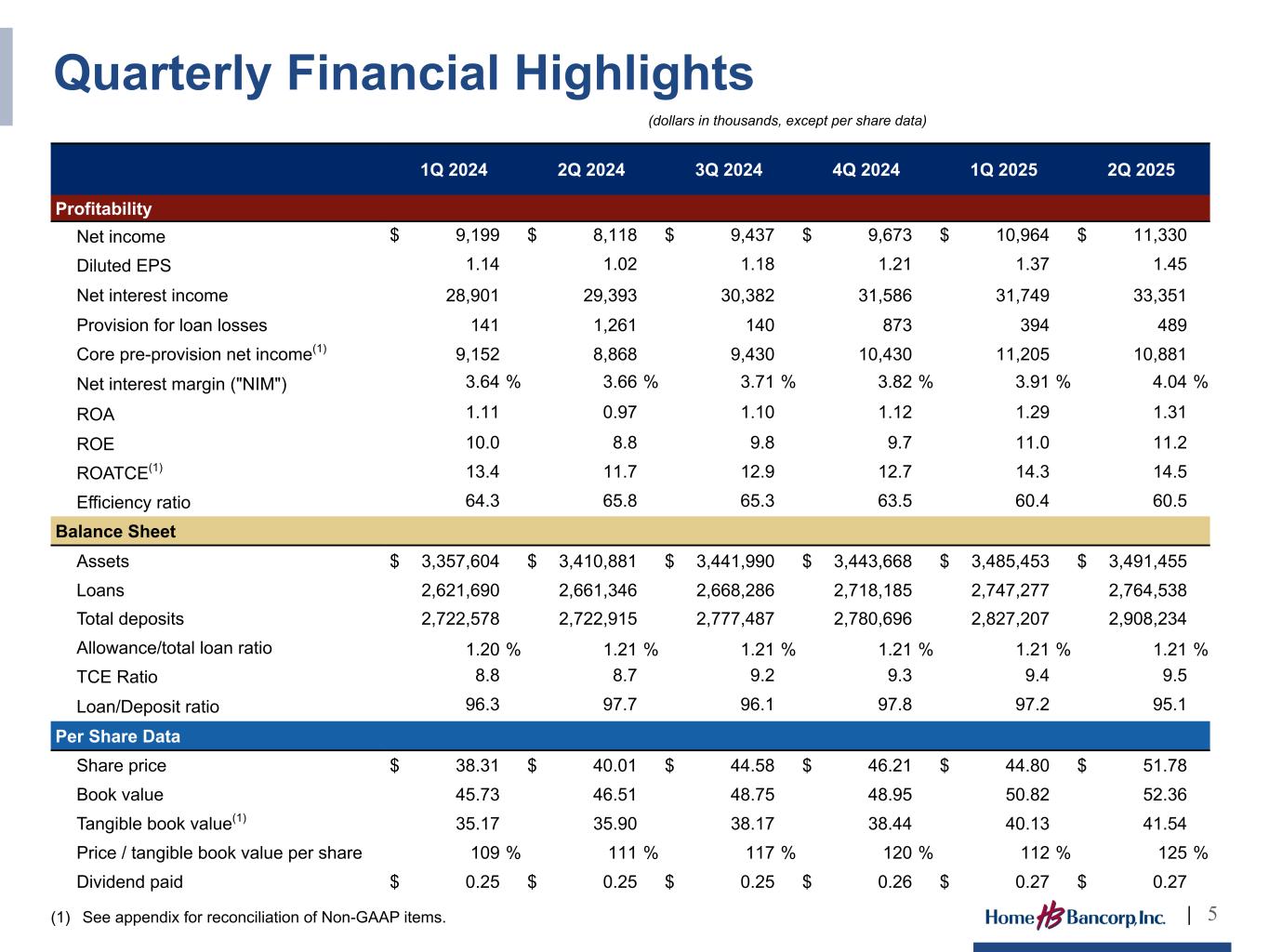
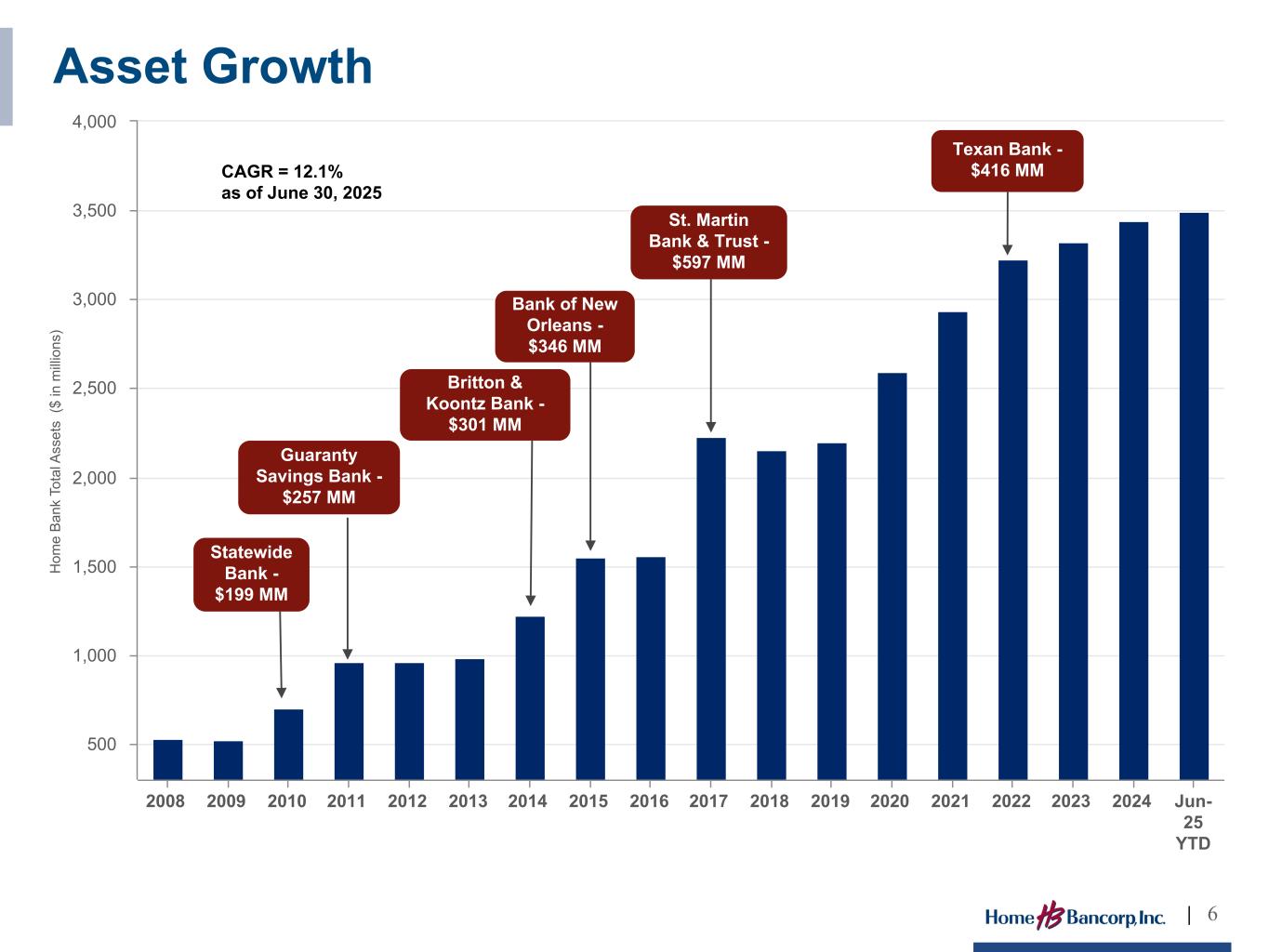
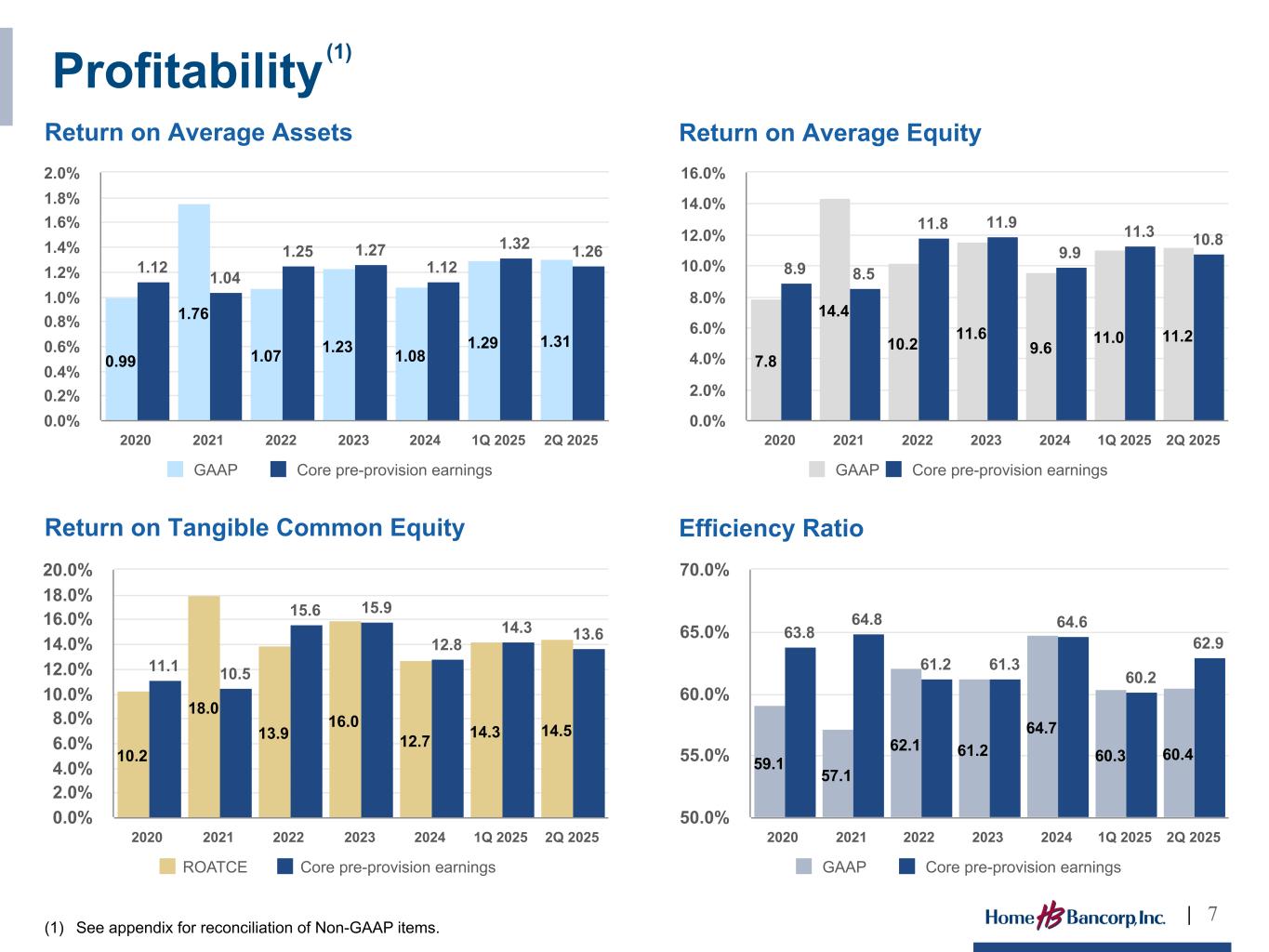
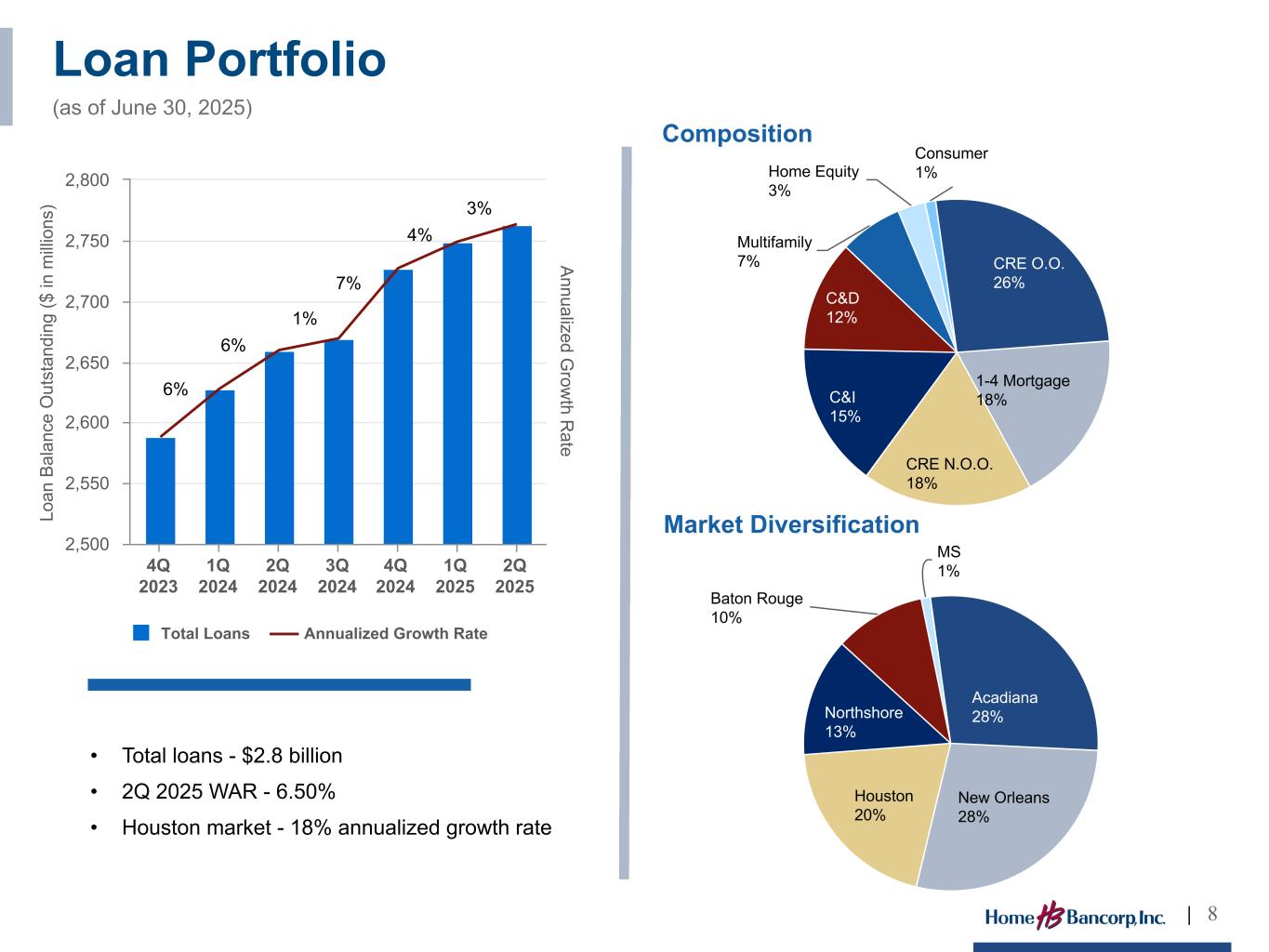
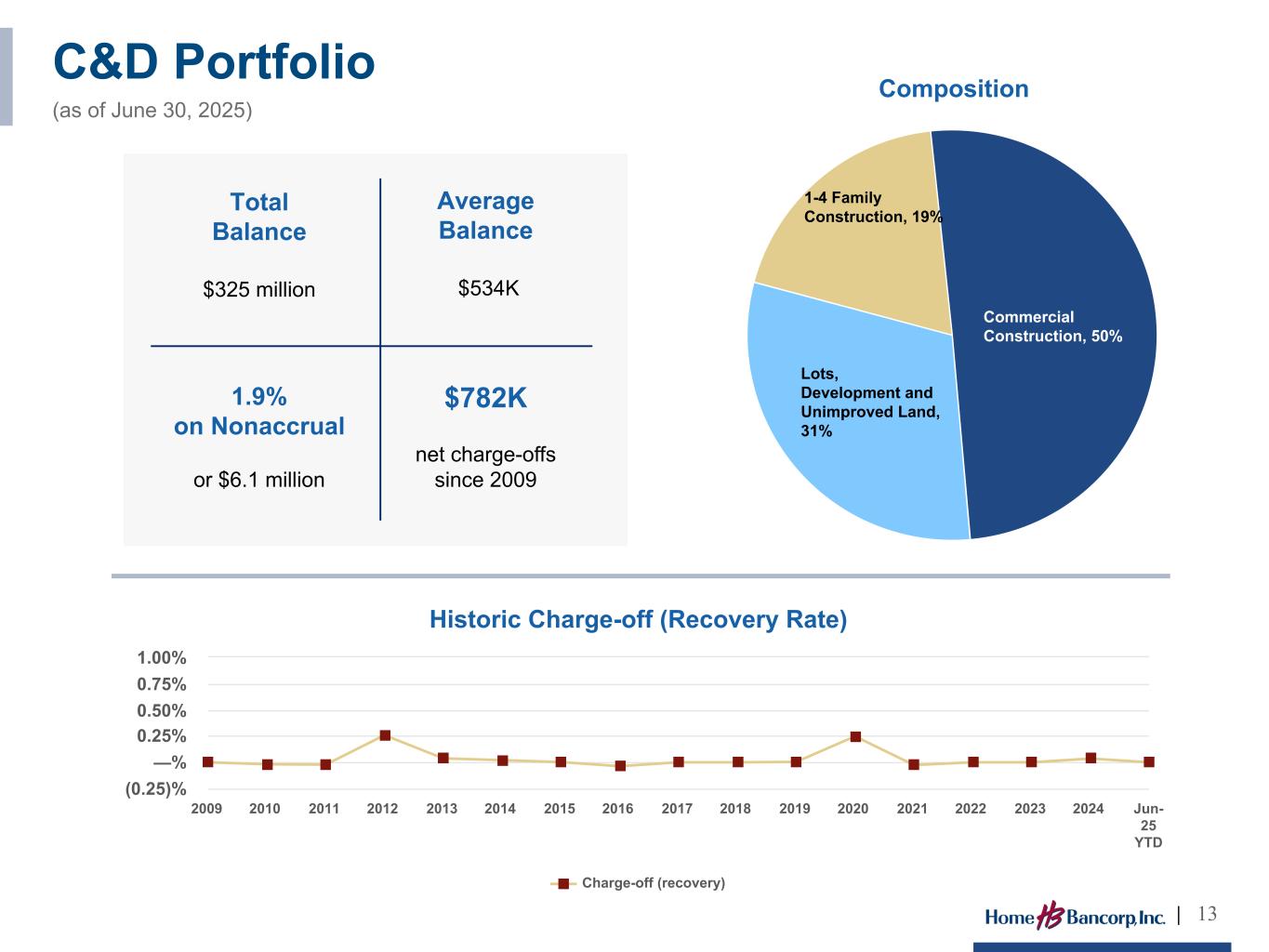
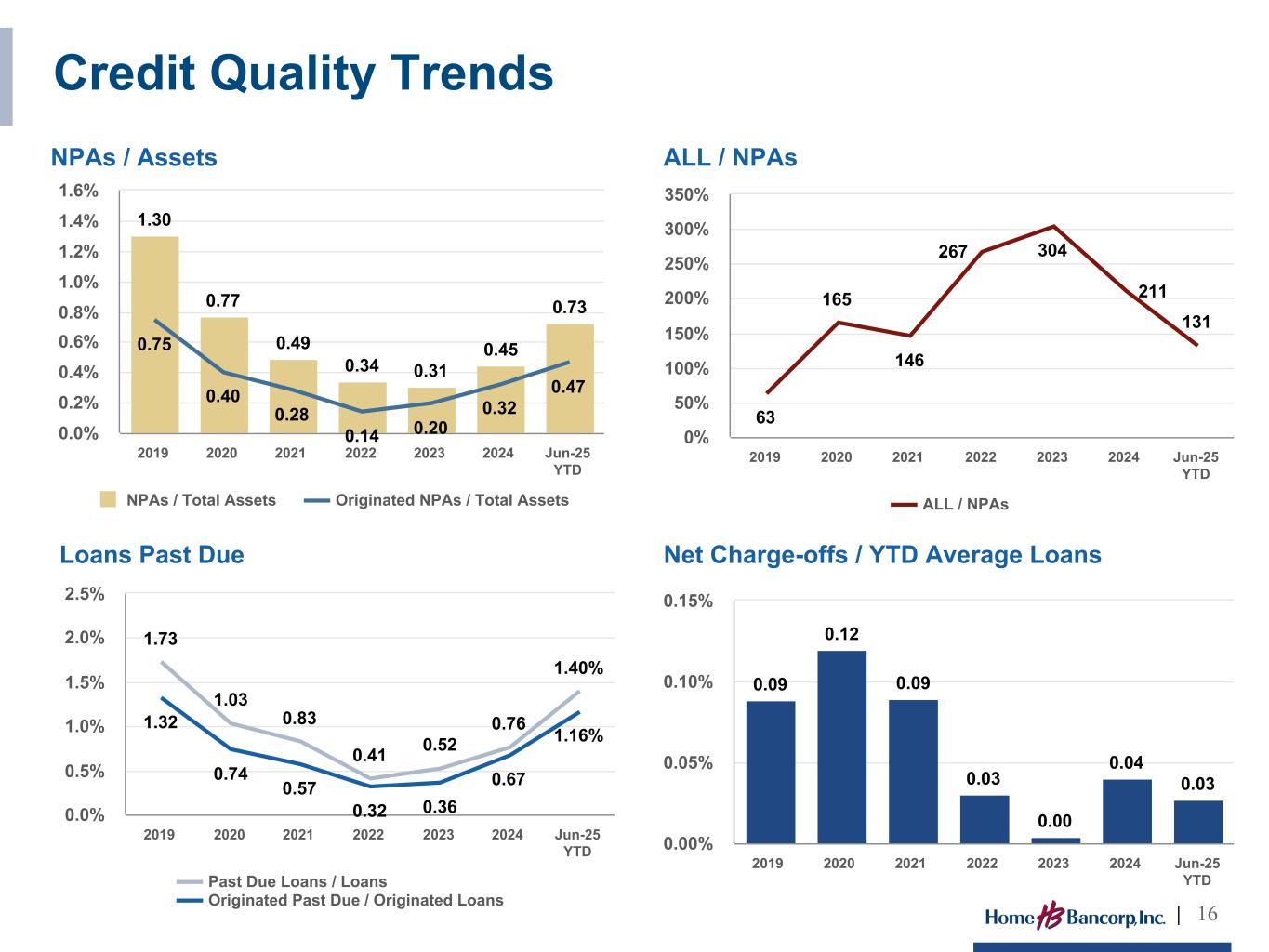
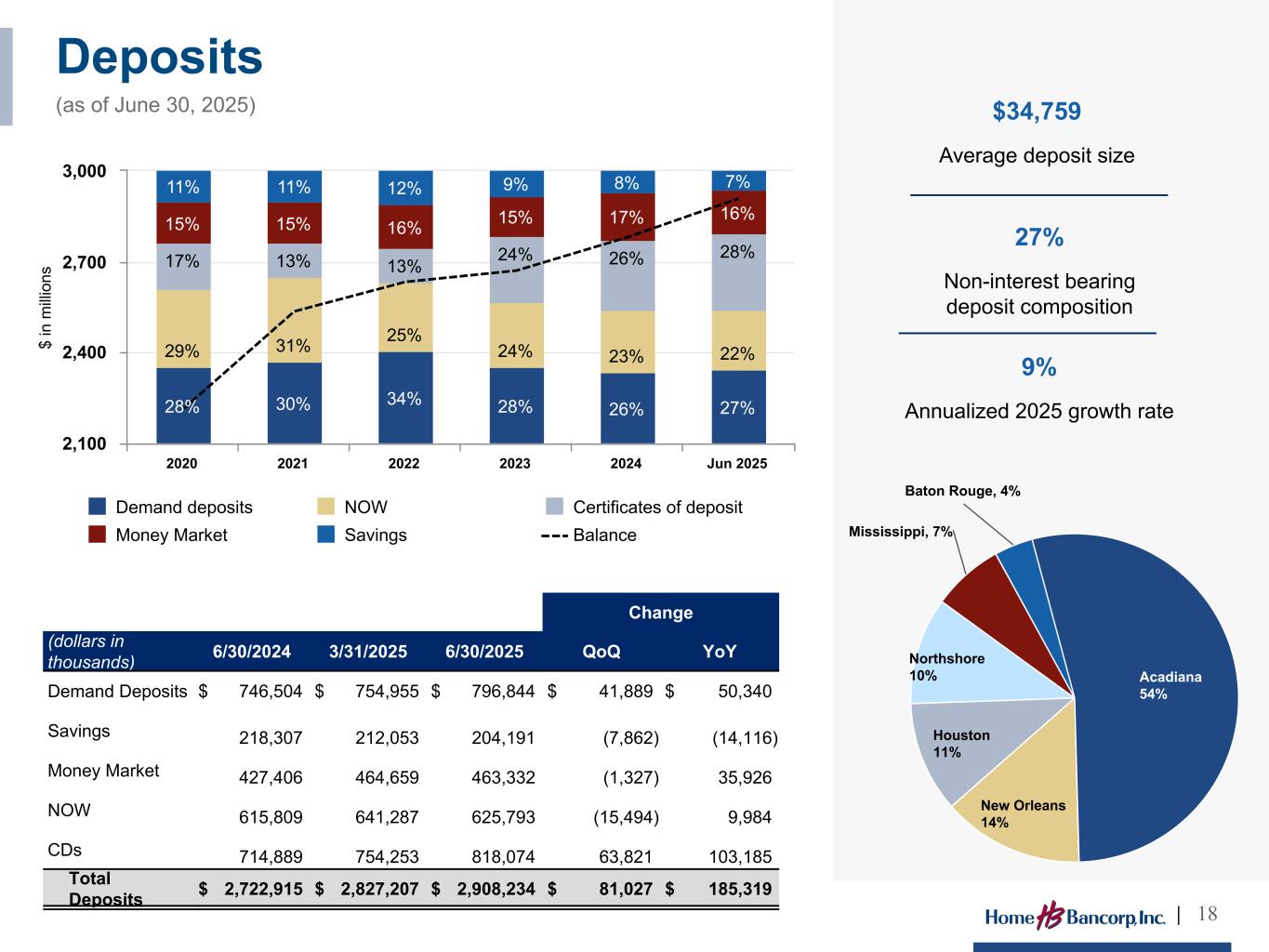
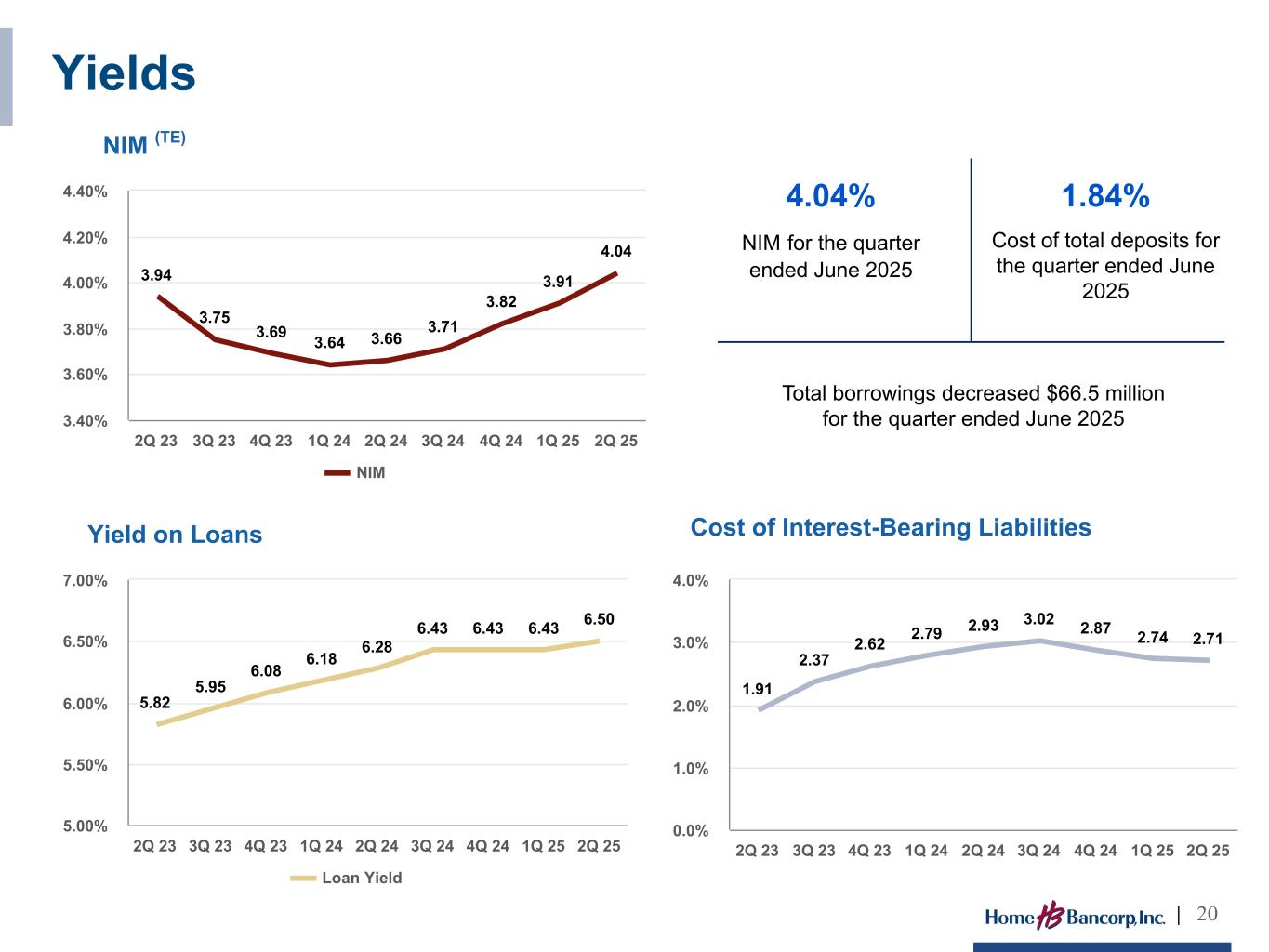
Thanks, David. Good morning, and thank you for joining our earnings call today. We appreciate your interest in Home Bank as we discuss our results, future expectations, and our strategy for creating long-term shareholder value. Yesterday afternoon, we reported a second-quarter net income of $11.3 million or $1.45 per share, which is an increase of $0.08 from the first quarter and $0.43 from a year ago. Our net interest margin expanded for the fifth consecutive quarter to 4.04%, and our return on assets increased by 2 basis points to 1.31%. The expansion in the second quarter's margin was mainly due to an 8 basis point rise in earning asset yields, stable interest-bearing deposit costs, loan growth, and a 6% increase in noninterest-bearing deposits. During the second quarter, loans increased by $17.3 million, or about 3%. However, growth was adversely affected by slower commercial construction activity and paydowns, which amounted to about $20 million in the second quarter. We believe growth will rebound if there are one or two interest rate cuts in the second half of the year. Without those cuts, we anticipate that loan growth will be at the lower end of our guidance of 4% to 6%. We do expect loan yields to continue to rise as new originations are coming in at around 7.4%, replacing maturing loans. We have maintained pricing discipline on new loans to ensure the bank achieves a proper risk-adjusted return, prioritizing this over growth. Deposits increased at an annual rate of 11% in the second quarter as we focus on funding our loan growth with core deposits and reducing our loan-to-deposit ratio to reach our target range of 90% to 92%. Noninterest-bearing deposits rose by $41.9 million and constituted 27% of total deposits at the end of the quarter. Classified and nonperforming loans increased mainly due to four loans that were downgraded during the quarter, totaling $18 million. We do not expect any losses due to the relatively low loan-to-value ratio, our conservative underwriting standards, and proactive credit management. As a reminder, you can see on Slide 16 that our net charge-offs have averaged around 6 basis points over the last six-plus years. M&A activity nationwide has increased over the past couple of months, which is encouraging. While we have not engaged in a transaction since 2022, we have explored multiple opportunities and remain committed to finding partners that are a suitable, long-term fit for Home Bank and its shareholders. Our strong capital levels, improving valuation, excellent relationship with our regulators, and successful record in executing prior acquisitions position us well to capitalize on the right opportunity when it arises. We feel very optimistic about Home Bank's future and our capacity to meet our high expectations. Our leadership team, with decades of experience, has a strong history of outperforming our peers in all economic conditions. With that, I'll turn it back over to David, our Chief Financial Officer.
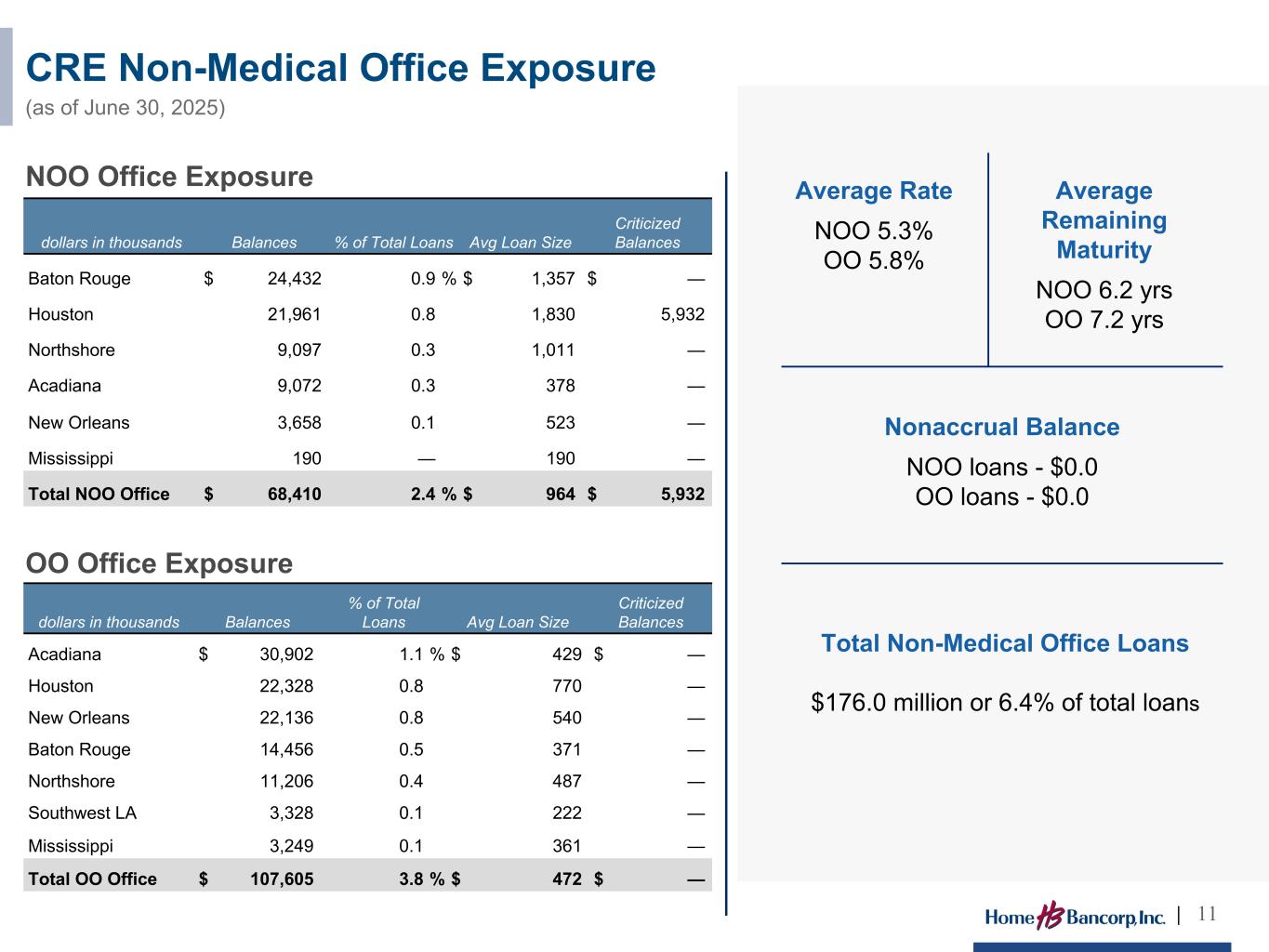
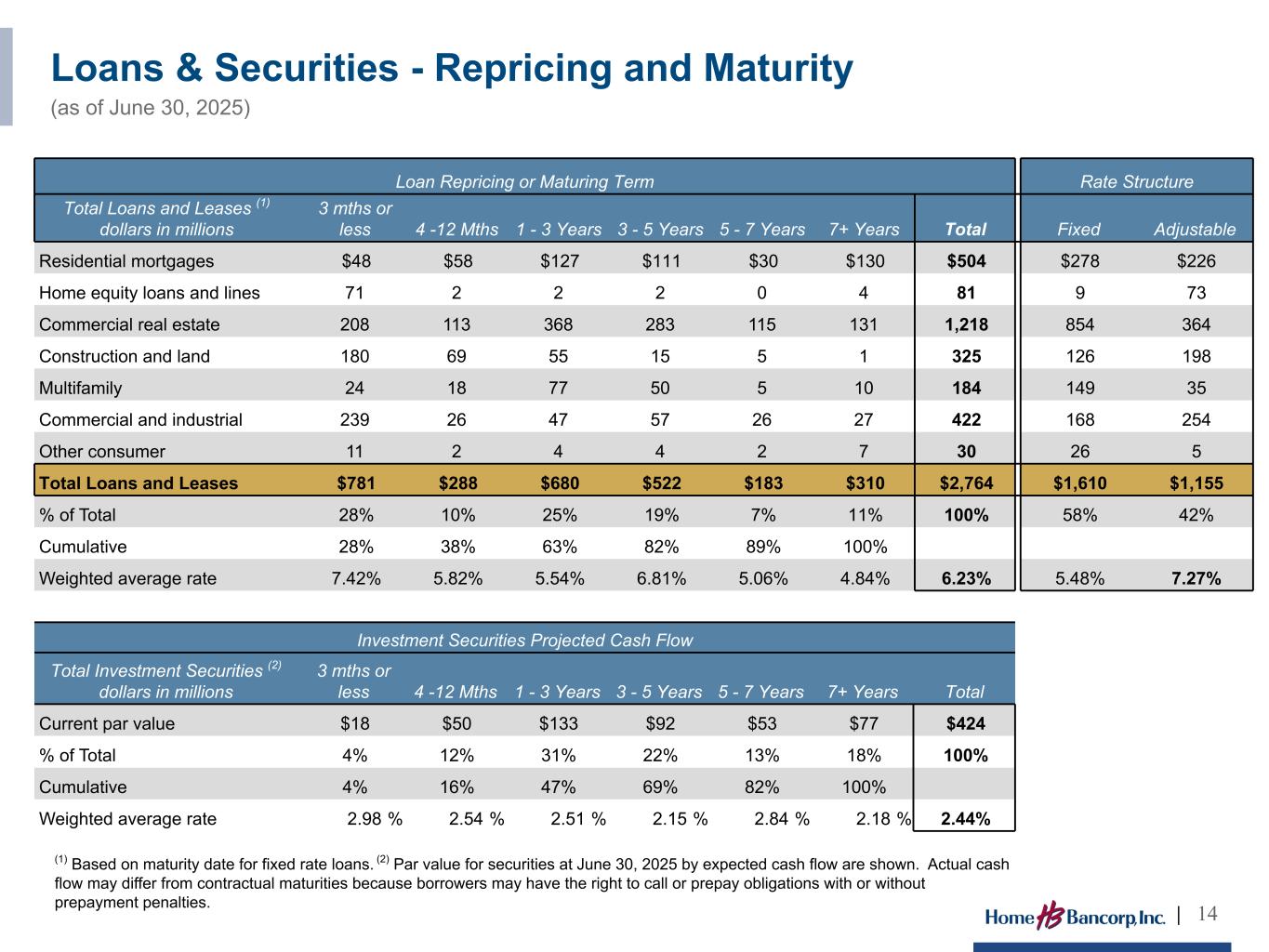
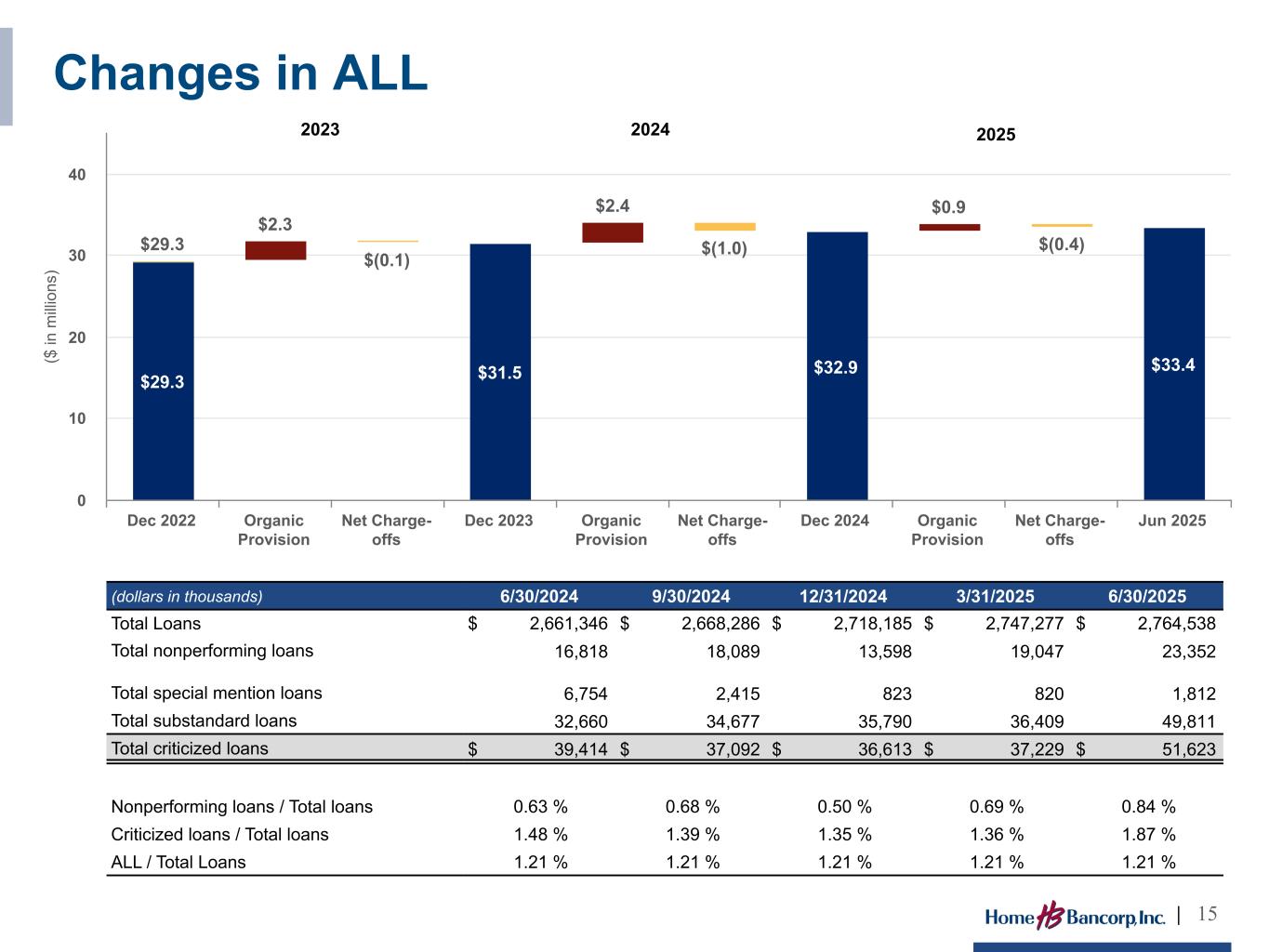
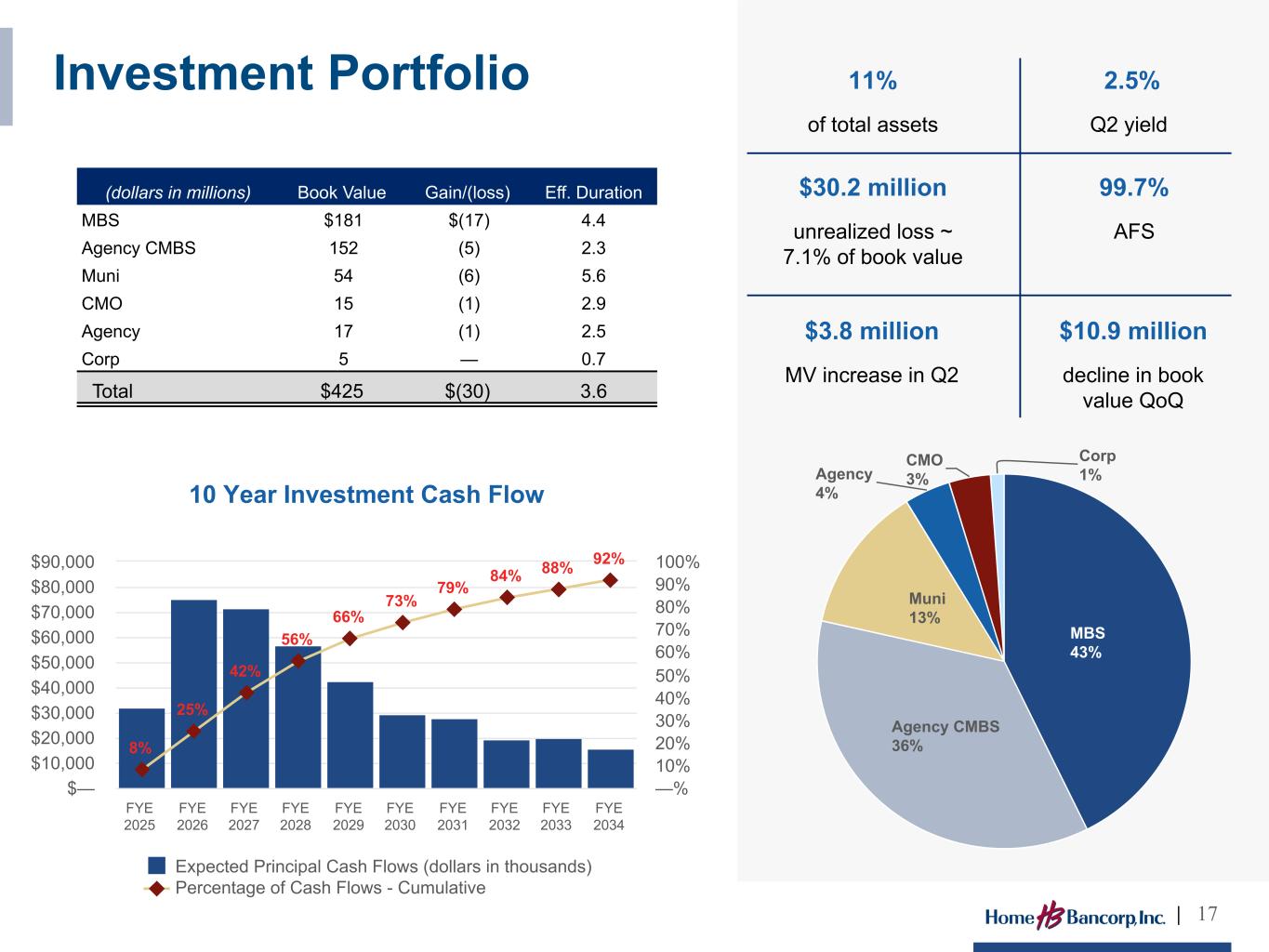
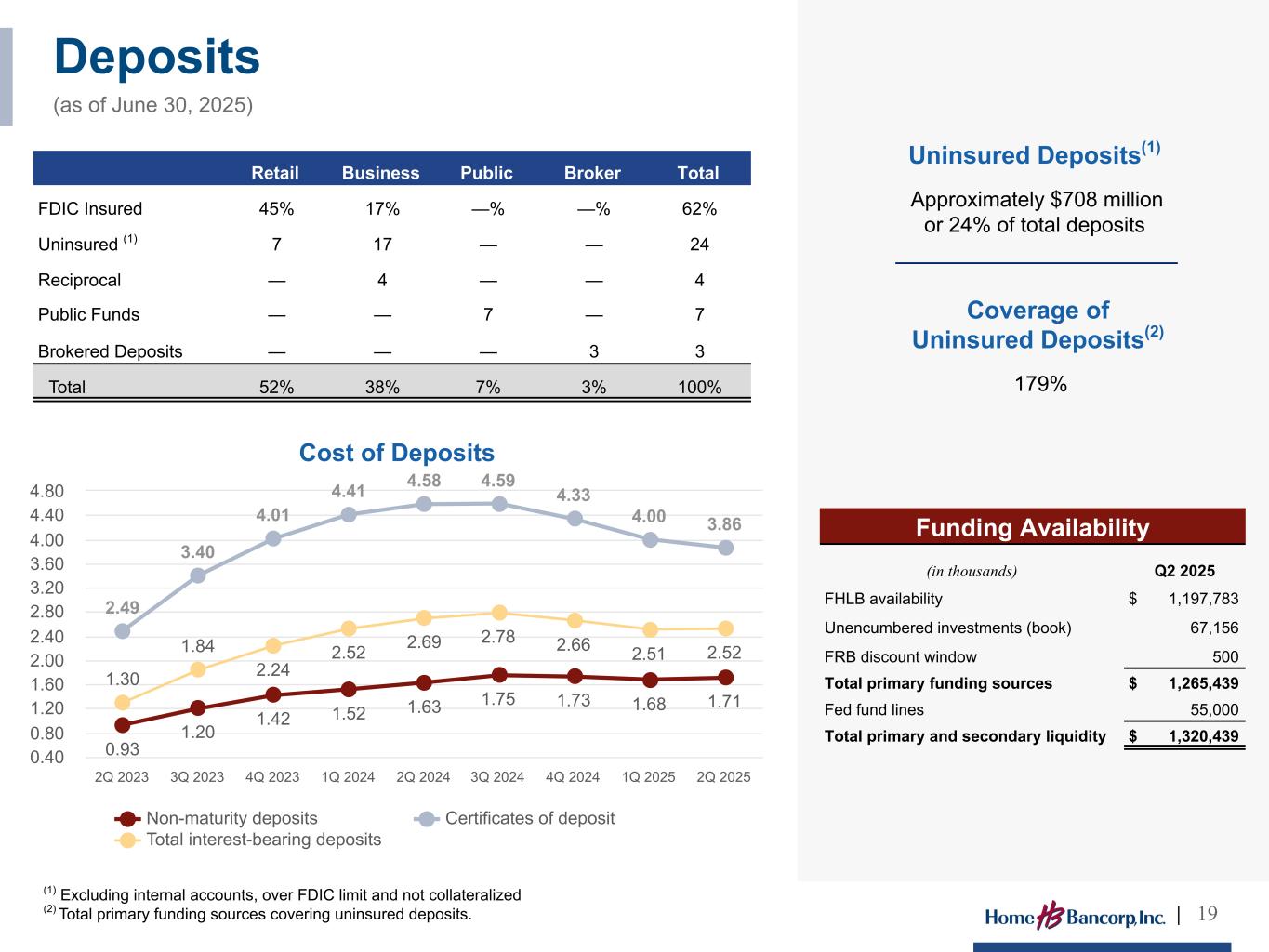
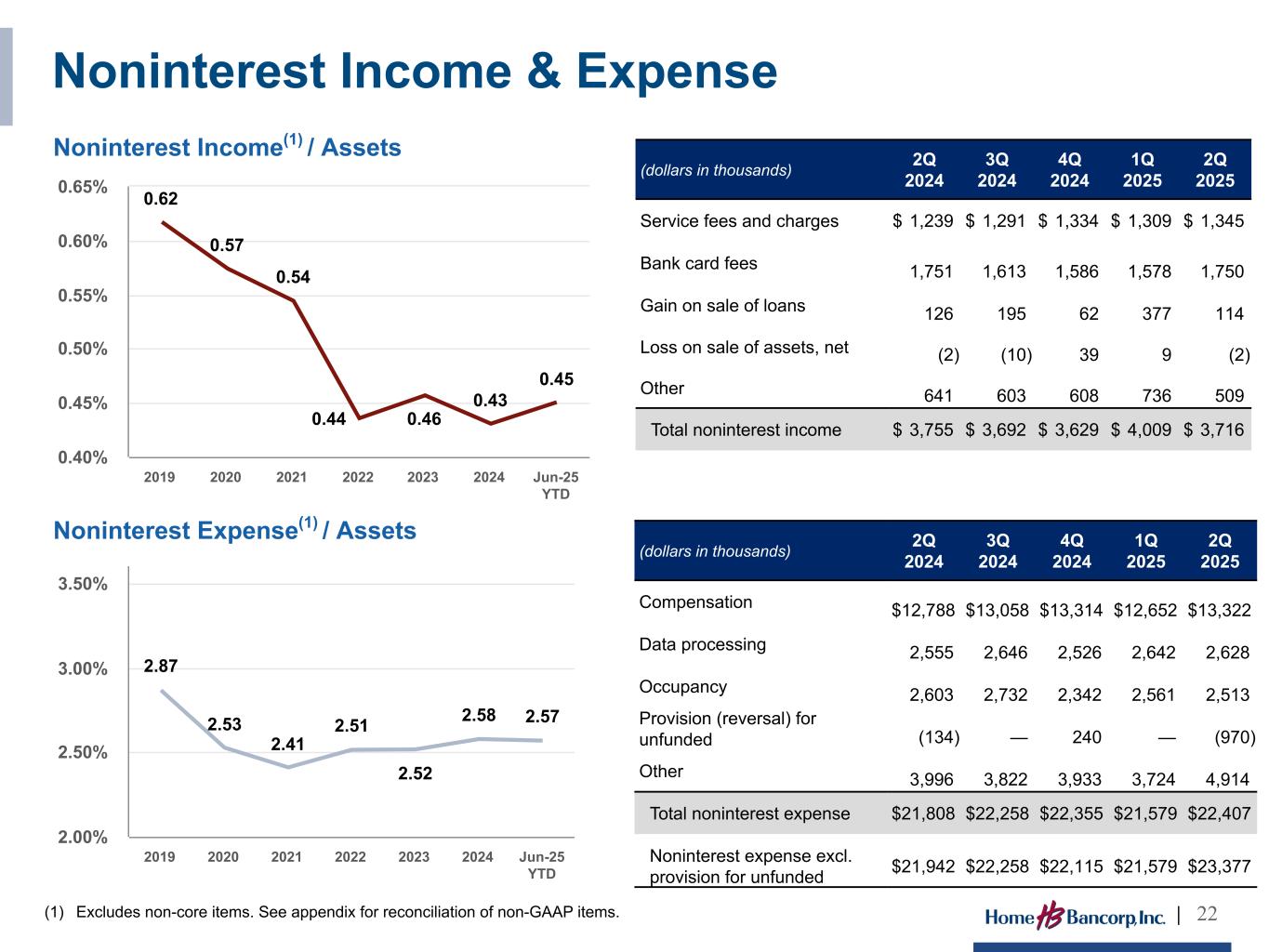
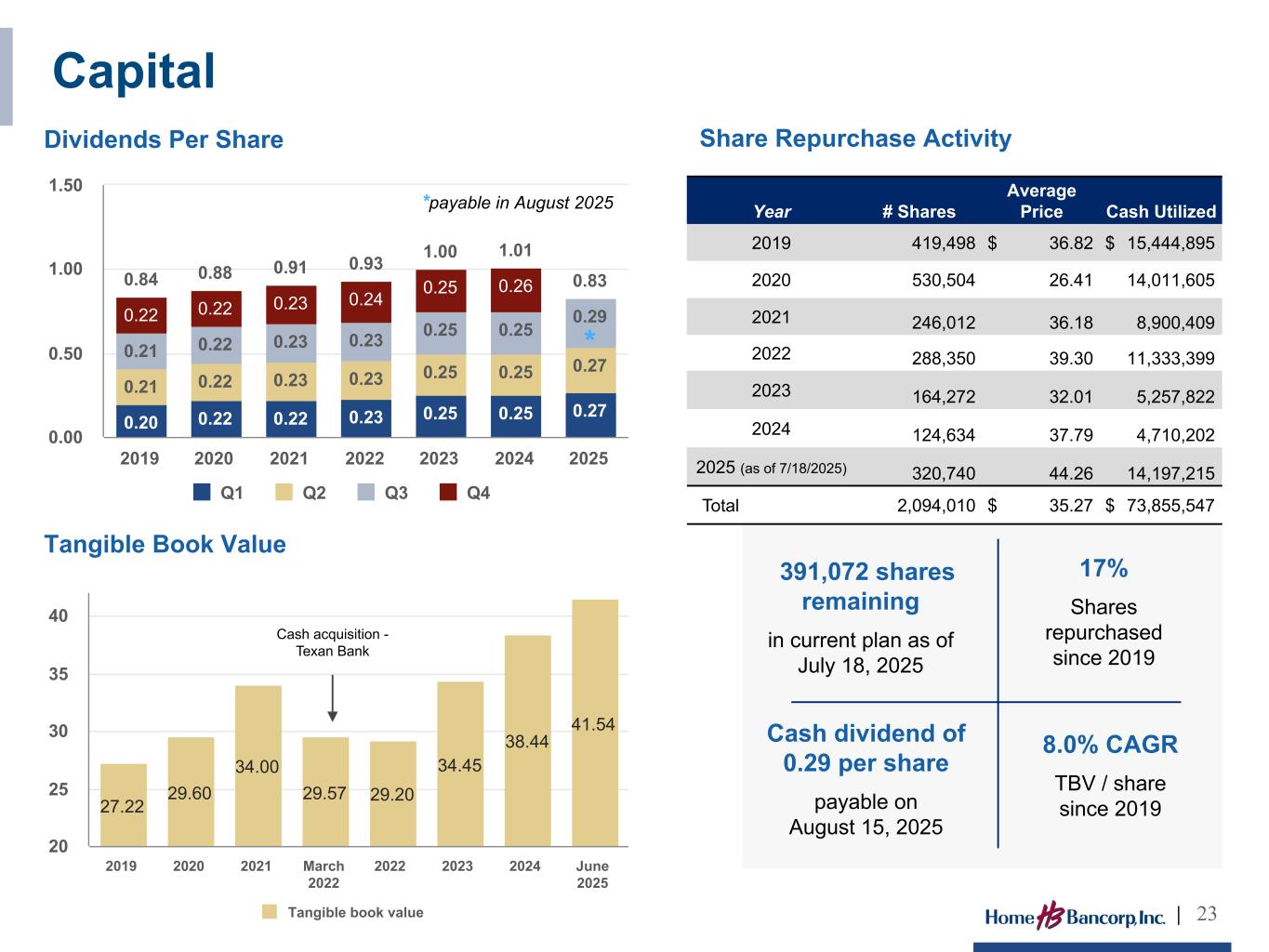
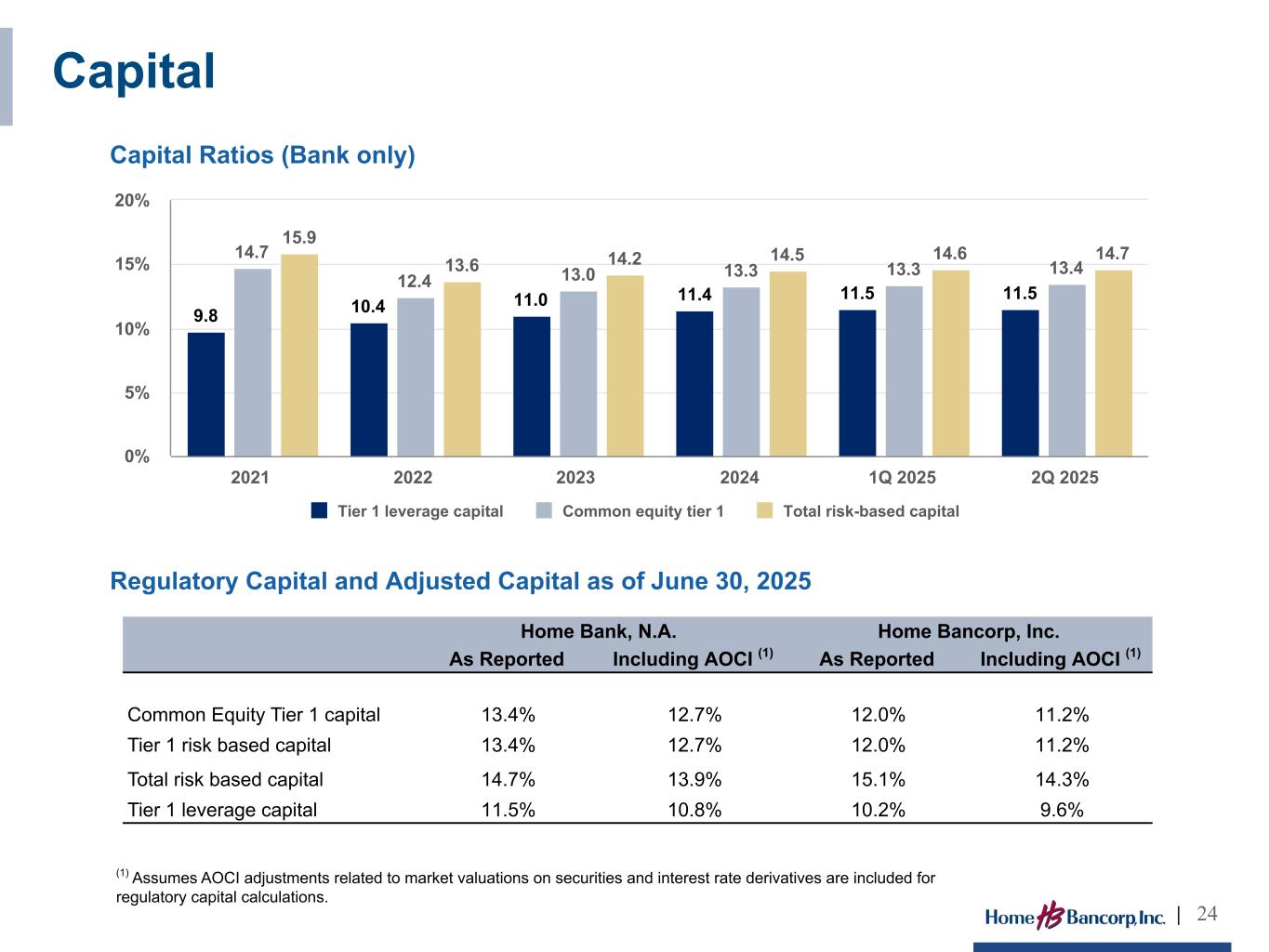
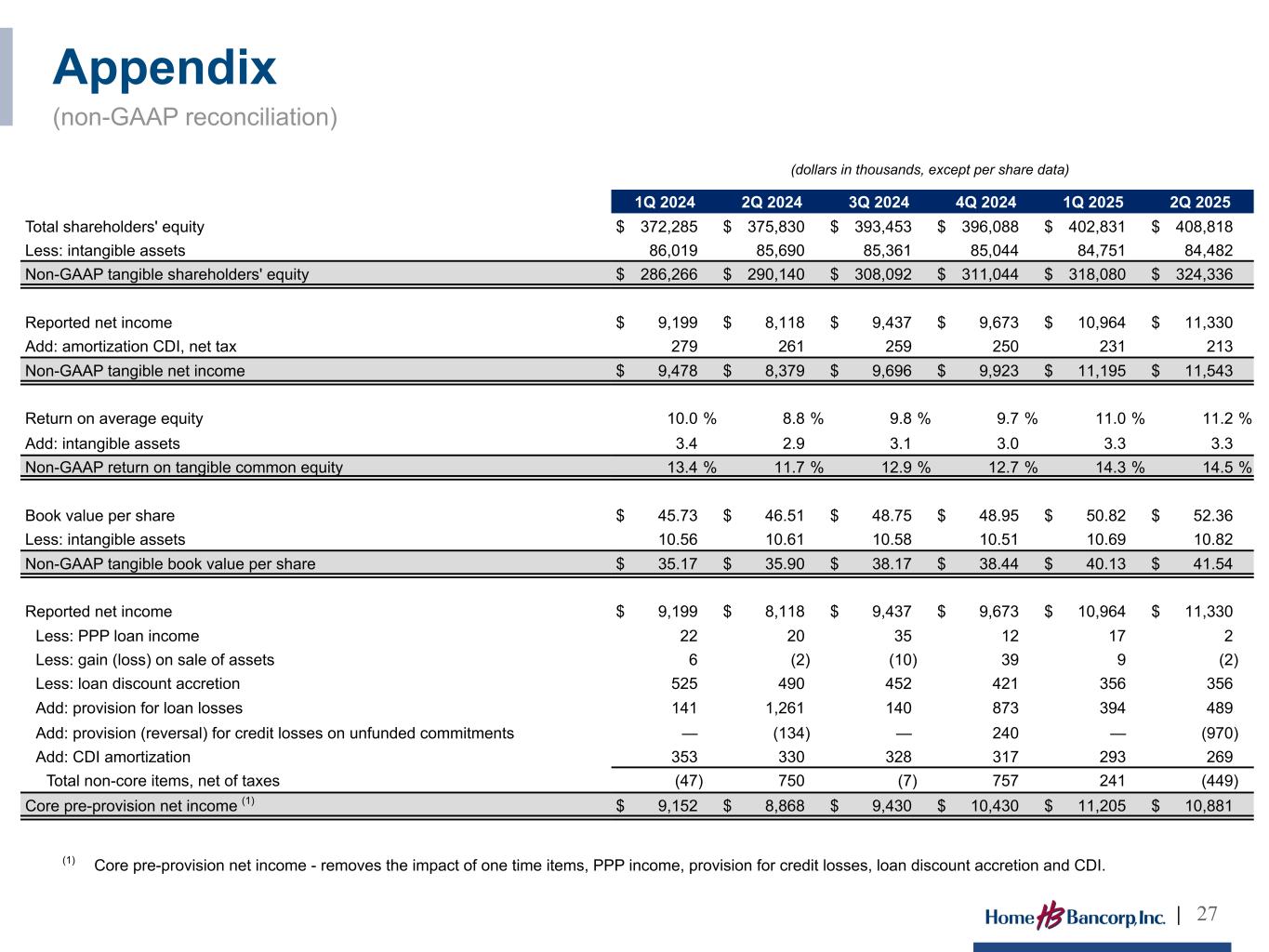
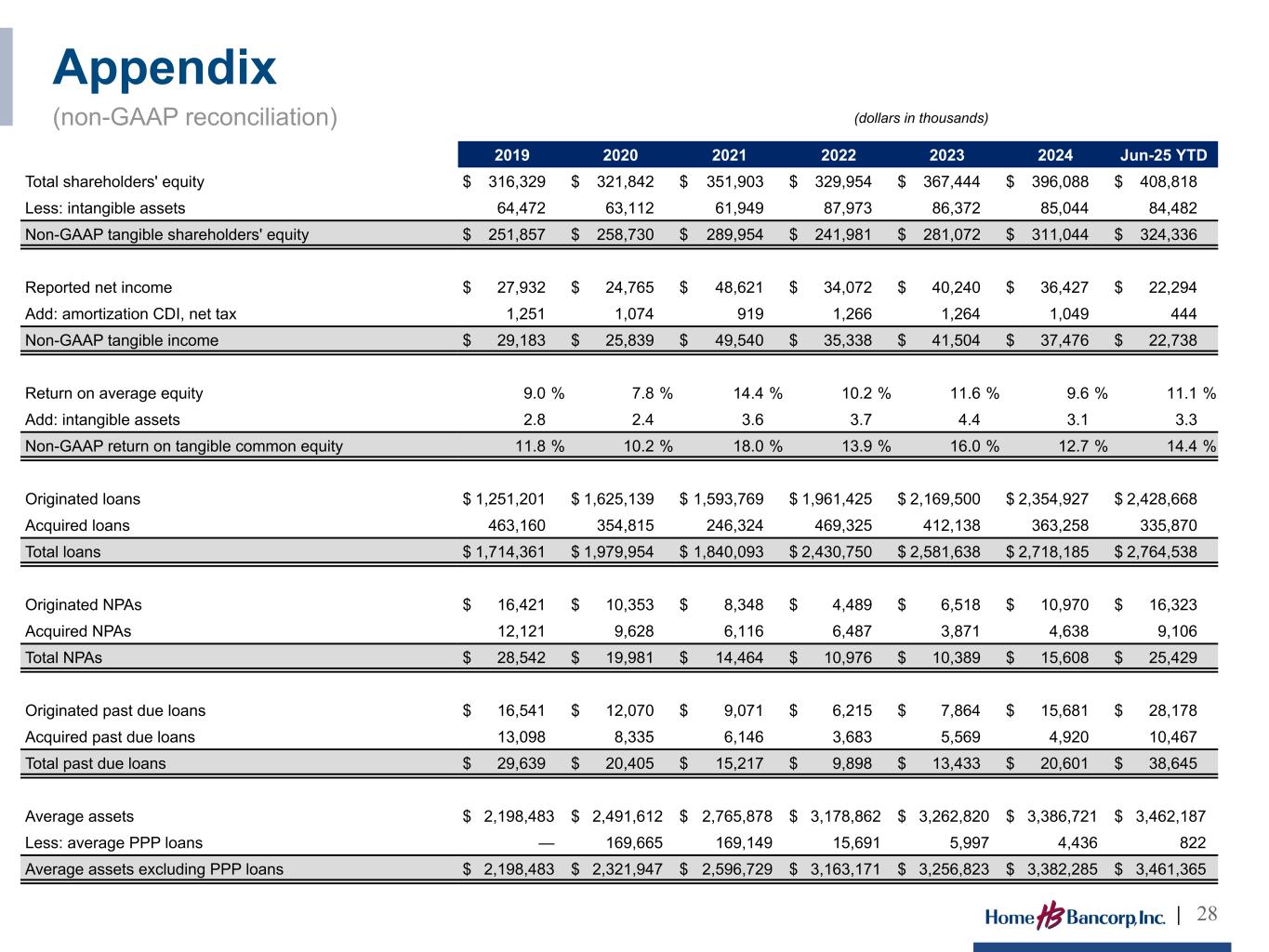
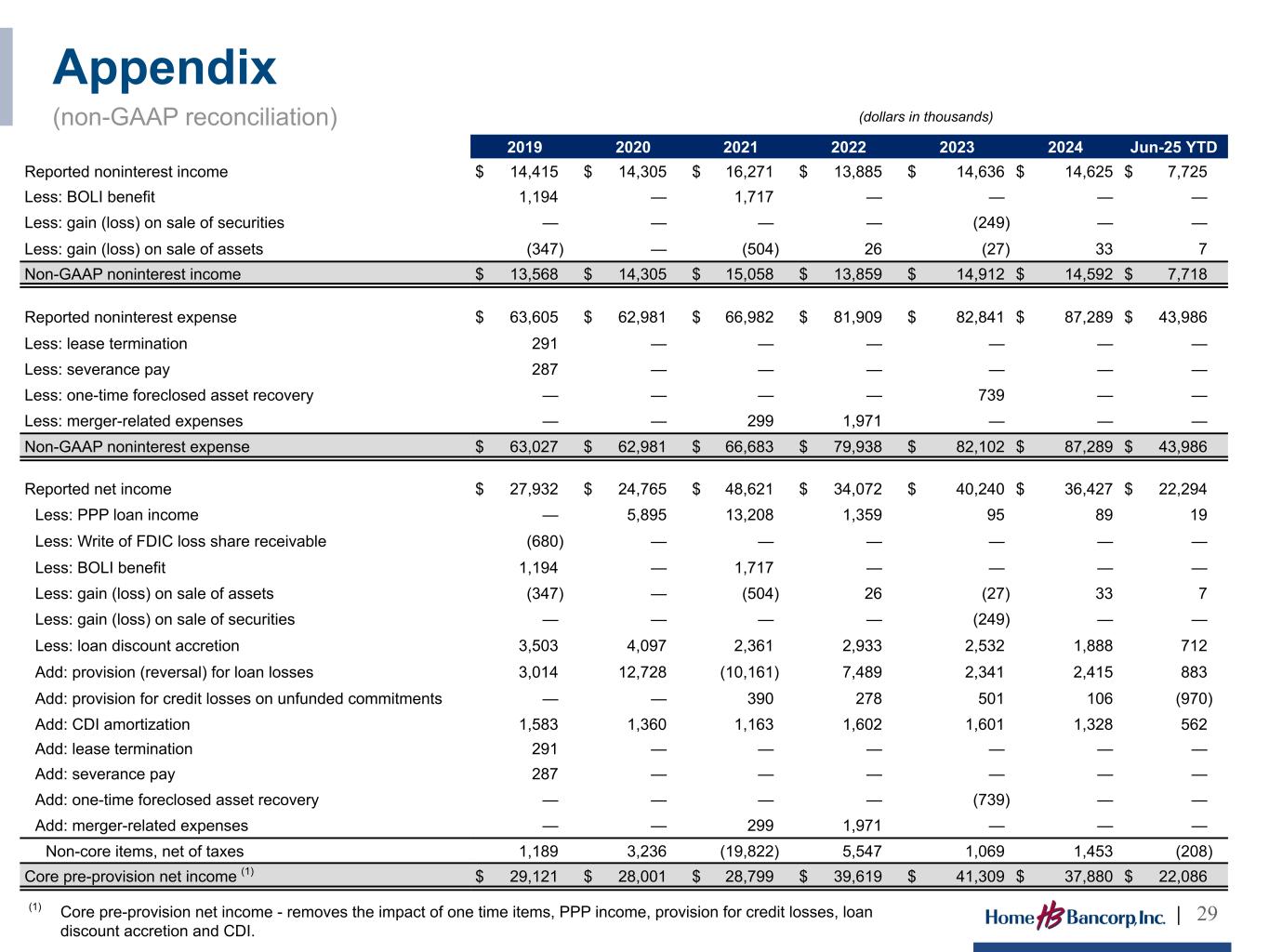
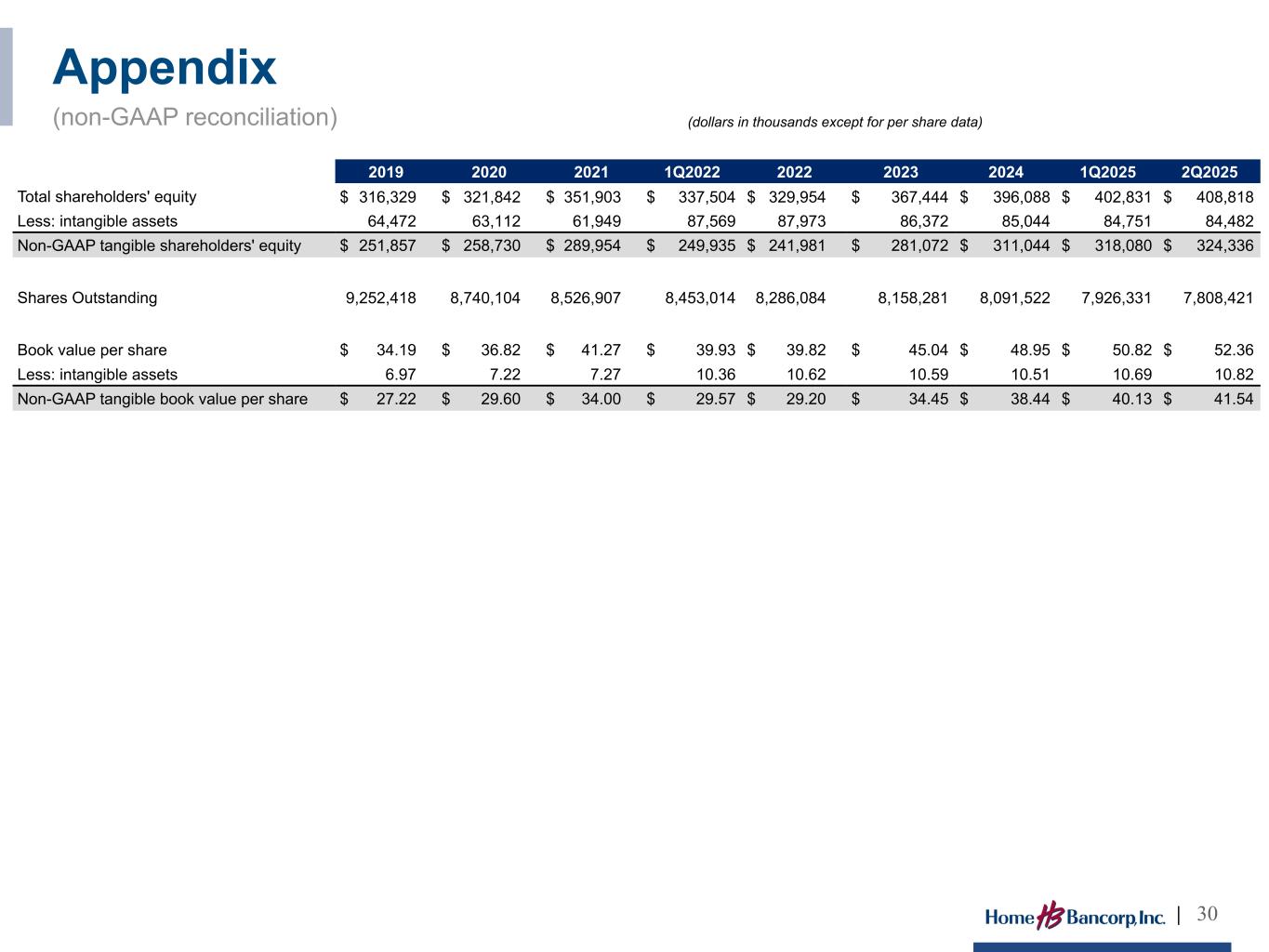
Thanks, John. Slide 5 in our investor presentation has a summary of the last 6 quarters. Net income totaled $11.3 million, a 3% increase from the prior quarter and a 39% increase from a year ago. NIM has continued to increase, and as John mentioned, is now above 4%. We posted a 4.04% NIM in Q2, which is a 13 basis point increase from the prior quarter. As a result of NIM expansion and earning asset growth, net interest income increased to $33.4 million in the second quarter from $31.7 million in Q1. Originations remained solid, but the pace of loan growth declined quarter-over-quarter to 3% annualized due mainly to higher paydowns in the construction and CRE portfolios. As John mentioned earlier, we are seeing less volume in new construction projects. The contractual rate on new loan originations was 7.44% in Q2, which continues to support an expanding NIM as lower-yielding loans reprice. Slides 14 and 17 provide additional details on cash flows from our loan and investment securities portfolio. We expect to see margin and revenue growth here as close to half of our investment portfolio is projected to be paid off over the next 3 years with a roll-off yield of 2.56%. Slides 15 and 16 of our investor presentation provide some additional detail on credit. We had $335,000 in net charge-offs in the quarter related to smaller consumer and C&I loans, with the largest being about $150,000. Year-to-date, our net charge-offs to loans is very low at 3 basis points. Second quarter nonperforming assets increased $4 million to $25.4 million or 0.73% of total assets. This increase was primarily due to the downgrade of 4 relationships, partially offset by paydowns. The largest is a $3.9 million acquired CRE relationship in Houston with an approximate 50% loan-to-value that was previously categorized as substandard. We feel we have sufficient collateral on these loans and do not anticipate any material principal losses as we work to resolve them. Total criticized loans at quarter end were $51.6 million, an increase of $14.4 million or 1.87% of loans, up from 1.36% in the first quarter. Three CRE loans located in New Orleans and Houston made up the majority of these increases. The highest loan-to-value of these 3 credits is 68%. Our allowance for loan loss ratio was stable for the first quarter at 1.21%. The cost of interest-bearing liabilities decreased 3 basis points to 2.71% as strong deposit growth allowed us to pay down more expensive short-term advances. Interest-bearing deposit costs increased 1 basis point in Q2 due to changes in deposit mix, and we think they'll stabilize at this level until we get some Fed rate cuts. The cost of CDs declined 14 basis points to 3.86% even as balances increased $64 million during the quarter. We are keeping CD terms short with 58% of our CD portfolio maturing in the next 6 months and 95% over a 1-year period, so we will have the opportunity to react quickly if and when rates decline. Noninterest-bearing deposits, which comprised 27% of total deposits, increased $42 million in Q2 and $50 million year-to-date. Our overall cost of deposits in Q2 was 1.84%, a decline of 1 basis point quarter-over-quarter. Slide 22 of the presentation has some additional details on noninterest income and expenses. First quarter noninterest income was $3.7 million, which was in line with expectations. We expect noninterest income to be between $3.6 million and $3.8 million over the next 2 quarters. Noninterest expenses increased by $828,000 to $22.4 million, primarily due to compensation-related expenses. Compensation and benefits were up $670,000 in Q2 as annual raises took effect April 1. Other noninterest expense increased $980,000 due to a $987,000 write-down of SBA receivables acquired from Texan Bank. We have been working through the SBA procedures for recovery and are still in the appeals process, but the timing and probability of recovery are unknown at this time. We have no further SBA receivables from acquisitions, and there were no loan charge-offs as the loans associated with these receivables were foreclosed and sold prior to the acquisition. That expense was offset by a $970,000 reversal in the provision for unfunded commitments. This reversal was due primarily to a reduction in construction commitments to several projects paid off or becoming permanent, and a reduction in the average life of our loan portfolio. Noninterest expense is expected to be between $22.5 million and $23 million per quarter for the remainder of the year. We took advantage of share price volatility earlier in the quarter to repurchase 147,000 shares at an average price of $43.72. We have about 391,000 shares remaining on our buyback plan that was approved by the Board in April. Slide 23 and 24 summarize the impact of our capital management strategy on Home Bank. Since 2019, we grew tangible book value per share at an 8% annualized growth rate while growing tangible book value per share adjusted for AOCI at 9.4%. Over the same period, we also increased our annual EPS at a 10.2% growth rate. We have increased our dividend per share by 27% and repurchased 17% of our shares, and we've done this while maintaining robust capital ratios. This positions us to be successful in varying economic environments and to take advantage of any opportunities as they arise. And with that, operator, please open the line for Q&A.
Operator
Taking the first question. The first question comes from Stephen Scouten with Piper Sandler.
Speaker 3
On loan growth trends, can you give a little more color about what you're seeing in terms of existing loan pipelines, kind of how that compares maybe to earlier in the year? And how you're thinking about the need for rate cuts to drive incremental demand? Are there just a lot of projects that are just waiting on the sidelines, waiting for 50 or 100 basis points to cut? Or what kind of gives you the confidence there from a loan demand perspective?
I believe there is some demand waiting for lower interest rates. It's challenging to determine the exact volume. In the first and second quarters, we experienced some loan paydowns, which negatively impacted our growth rate. We had anticipated growth closer to 5% or 6%, but it seems to be around 4% or 3% this quarter instead. While paydowns are beneficial for customers, they aren't the best for the bank. However, it has been a consistent trend throughout the quarter. If there is any potential for growth, it will likely depend on lower interest rates, for sure.
Speaker 3
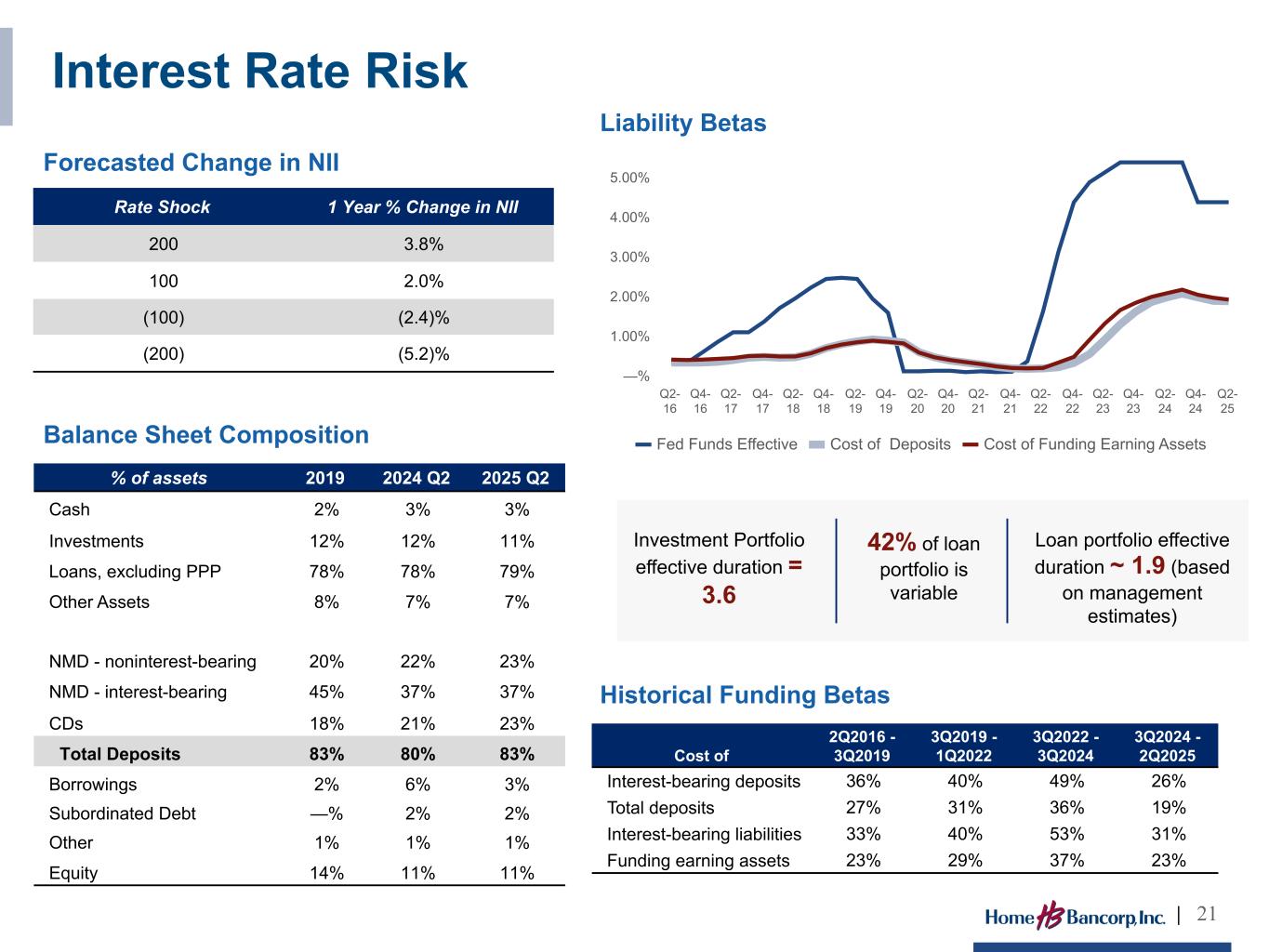
Okay. Got it. And then for you guys, from an NII dollars perspective, how do you think about the best-case scenario from a rate environment perspective? I mean you're still slightly asset sensitive, theoretically NII should tick down a little bit with rate cuts, presuming it happens that way in reality? But potentially, it sounds like better growth. So how do you think about the best-case scenario for you guys from a rate...
So the best case is a little bit more steepness in the rate curve if we get 25, 50 basis points of a rate cut. We're still able to generate a growing NIM in this rate environment. The ability for us to price loans where we're pricing them today and raise funds at where we're raising them today still supports an expanding NIM, albeit at a slower pace than we've been growing the past couple of quarters. But we still see earning asset yields repricing the investment portfolio being able to add some new higher-yielding investments as well as just repricing loans. So I think net interest income will continue to increase a little bit further down the road, and NIM has the opportunity to increase if rates stay where they are today.
A couple of other points to that. We have maintained the bulk of our CD portfolio in very short-term CDs. So the turnover of that and reduction based on rate cuts will come relatively quickly. And then the other side, which David alluded to, is as we have a considerable amount of loans that are repricing from maybe the 4s or 5s, though, even with rate cuts, they'll still be going up in rate. So we should be able to offset the decline in some assets by the increase in the other. So...
Yes, I'd like to add on top of that to John. If you look at Slide 20 of our slide deck. When rates started being cut by the Fed back in Q3 '24, our loan yield was 6.43%. And despite the amount of rate cuts that we had, we were able to offset the reduction in our loan yield that are variable by having new repricings come on. So we had 3 quarters of stable loan yields despite a 100 basis point rate cut. So we still were able to reprice our loan portfolio in a manner that given, albeit a 50 to 75 basis points of rate cuts, we still have the ability to reprice our overall loan portfolio yield higher, which offsets some rate reductions.
Speaker 3
Got it. All really helpful color. And just last thing for me. New CDs versus the CDs as they roll off, what's kind of the spread there between the on/off yields you're...
So the weighted average renewal/new CD rate is around 3.85%. New customer CDs are coming in around 4.1%.
Speaker 3
Okay. What is the balance of what you see? I would assume new CDs represent a much smaller percentage compared to what is renewing each quarter. Is that the correct way to think about it?
Yes. Definitely, the bulk of that is renewals. We're maintaining about 90% of our existing CDs at renewal.
Operator
And the next question comes from Joe Yanchunis with Raymond James.
Speaker 4
So the Houston franchise continues to be a growth driver for the company. And at the same time, you've discussed plans to upgrade your branch footprint. In the aggregate, how much more productive do you think these new branch locations will be?
Well, it's going to be hard to tell on the deposit side. The group that we pulled out of another bank has already been productive. So nothing changes except for the location. I think there'll be considerably productive. But our hope is that with the full-service branch, we're able to attract more deposits, especially for the commercial customers, who right now, it's very difficult because we have to travel halfway across Houston to be able to make the deposits. So it will be very, very convenient for our team to bring in much more on the deposit side while they're also looking out to bring some loan customers.
Speaker 4
I appreciate that. And then just kind of sticking with deposits there. So deposit growth was really strong in the quarter, particularly on the DDA front. Several banks that have reported earnings so far have noted increased competition for deposits. Can you talk about if there's been any change in strategy to growing DDA balance, which may have led to the success in this quarter?
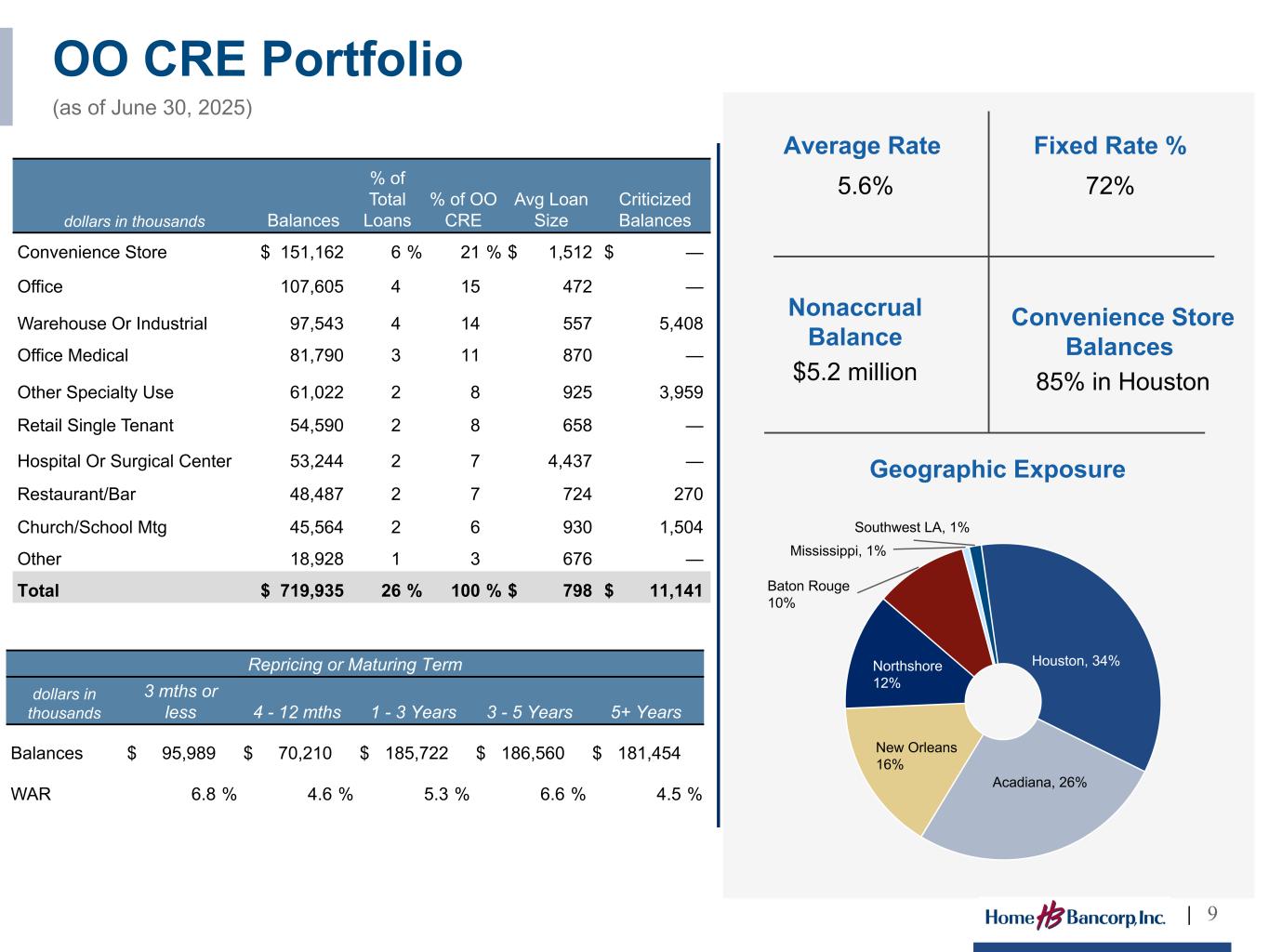
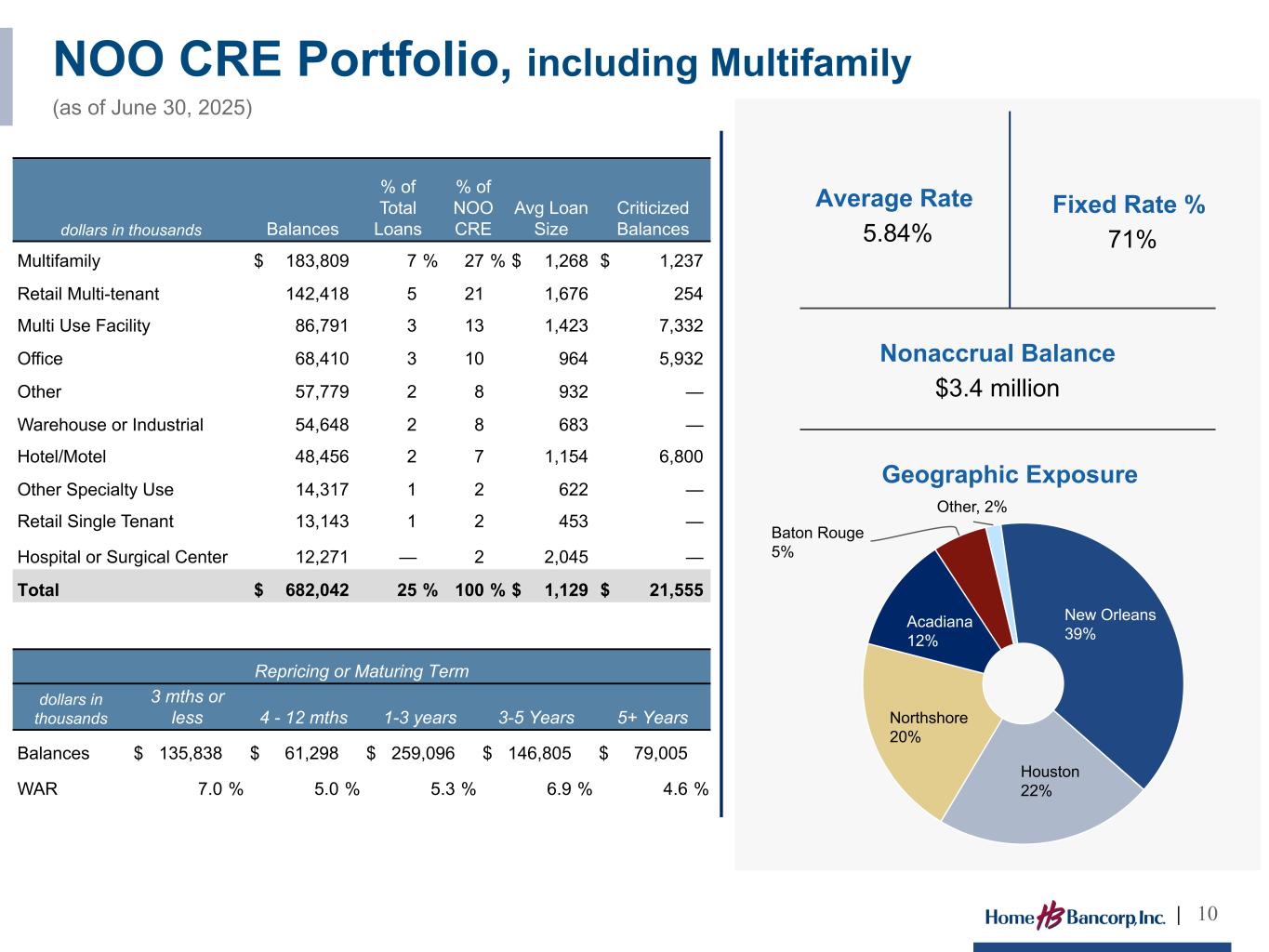
Yes. About 18 months ago in Houston, we informed the group that our priority is core deposit growth, even if it means not bringing in loans. We have shifted our incentive plan over the past three years to reward more for core deposits than for loan growth. Additionally, we are reducing our loan growth in non-owner-occupied commercial real estate, which consists of large transactions with low deposits. This segment has been consuming our deposits, and to achieve our target loan-to-deposit ratio of 90% to 92%, we need to scale back on some of those larger loan relationships that don't contribute much in terms of deposits.
Speaker 4
Appreciate that. And then just kind of last one for me here. Stepping to the NIM. Were there any one-timers that might have accelerated NIM expansion in the quarter? And then do you have a sense of what the NIM was for the month of June?
NIM was around 4 or 5 in June.
Speaker 4
I see that in the deck side.
I'm sorry, the first question was?
Speaker 4
If there was any one-timers that might have accelerated...
No, there was not. When loans moved to nonaccrual, there was a slight reversal. This had a small negative effect on NIM, but there were no one-time adjustments that significantly influenced NIM in a positive way.
Operator
The next question comes from Feddie Strickland with Hovde Group.
Speaker 5
I wanted to discuss the net interest margin a bit more. Is the yield expansion from repricing loans potentially a bit slower next quarter? Looking at your presentation, you have a weighted average rate of 7.42%. I believe you mentioned 7.44% for the current quarter. Does this suggest a possible slowdown in the third quarter, with a potential pickup in the fourth quarter when the weighted average rate is expected to be 5.82%?
I believe I need to revise this slide to distinguish between variable rate loans that are maturing and categorize them separately from fixed rates. We may experience a slight slowdown in repricing. However, in Q4, we anticipate more repricing opportunities to arise. While Q3 might show a bit of a slowdown, Q4 and thereafter should present more opportunities for repricing fixed-rate loans that are maturing.
The way we looked at it, Feddie, is we made a lot of 5-year balloons when rates dropped in '20 and '21. Most of those should be worked through at the lower rates and increasing their rates by the end of '26.
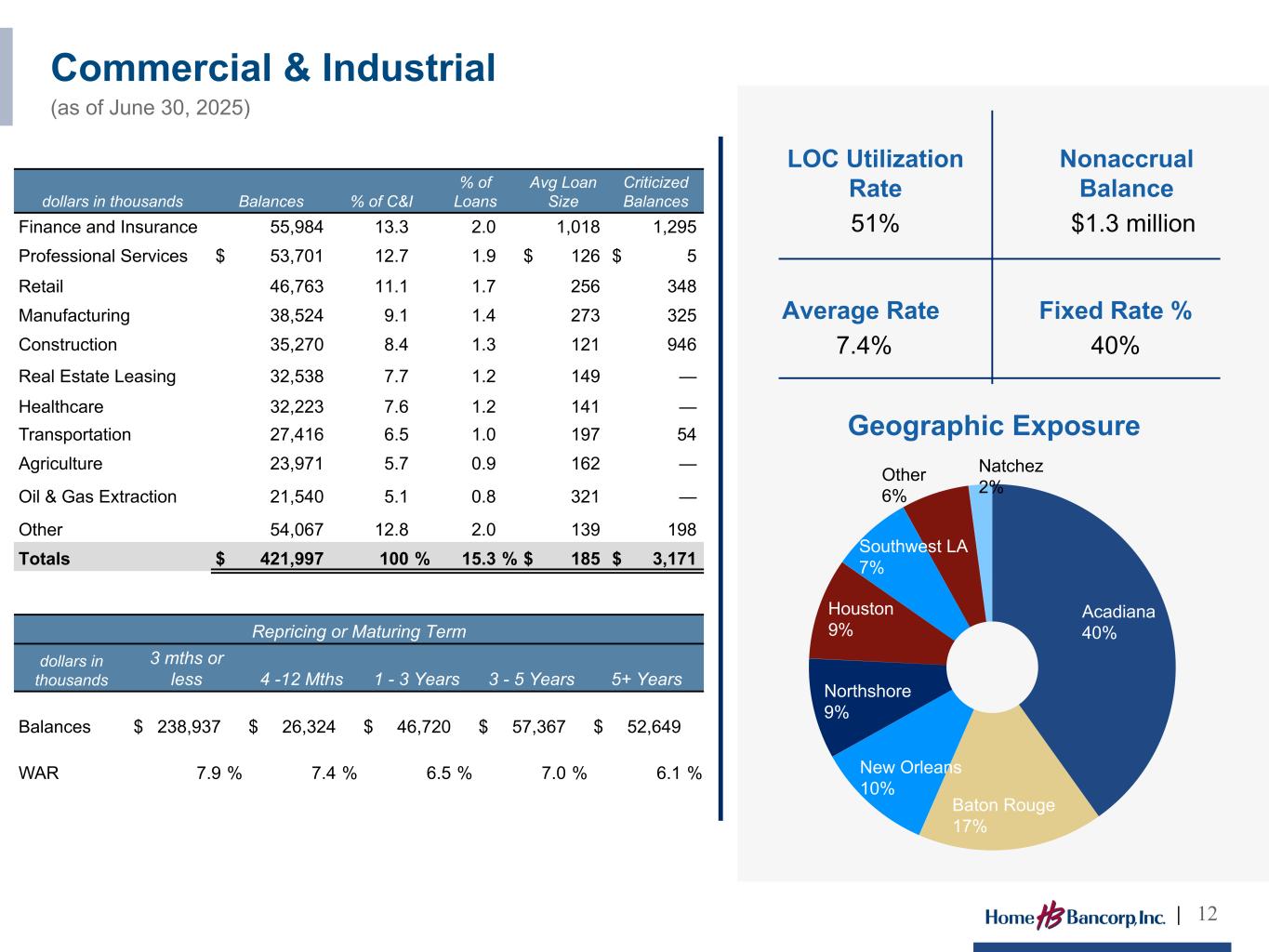
I think if you flip through the slide deck, you could see a little bit more color on the loan segments and you can see the C&I portfolio on Slide 12. A good chunk of that is repricing. And that's once again mostly revolving lines that are just going to renew.
Speaker 5
Understood. And just shifting gears to capital here. You increased the dividend, you executed share repurchases at a pretty good price, particularly considering where the stock is today. It seems like M&A conversations are picking up a little bit here. Can you refresh us on your criteria for M&A? What size you're looking for, geographies, any particular characteristics for a potential partner?
Yes. I think the last couple of years, we've been kind of hamstrung as far as what we could look at pretty small because it was probably going to be a cash deal with our stock trading at 105% of intangible. So now that we're moving up to $140 million, if we can sustain that, I think it opens up the door for us to look at a little bit larger. Our mindset has been pretty much like $350 million to $1 billion, but we've not really looked at a whole lot of banks over $500 million in the last 2 years. So this would open up that door a little bit, maybe get us up to $1 billion or in that area.
Speaker 5
And is it virtually in Texas, John?
Actually, we've had conversations in Louisiana and Texas. I'd say the bulk were in Texas, yes.
Operator
This concludes our question-and-answer session. I would like to turn the conference back over to John for any closing remarks.
Well, thank you all for joining us today. We look forward to speaking to many of you in the coming days and weeks. Hope you have a wonderful week, and thank you for looking into Home Bancorp. Have a good day.
Operator
This conference has now concluded. Thank you for attending today's presentation. You may now disconnect.