Operator
Good morning, ladies and gentlemen, and welcome to the Home Bancorp's Third Quarter 2025 Earnings Conference Call. Please note this call is being recorded. I would now like to turn the conference over to Home Bancorp's Chairman, President and CEO, John Bordelon and Chief Financial Officer, David Kirkley. Please go ahead, Mr. Kirkley.
Thank you, Konstantin. Good morning, and welcome to Home Bank's Third Quarter 2025 Earnings Call. Our earnings release and investor presentation are available on our website. I'd ask that everyone please refer to the disclaimer regarding forward-looking statements in our investor presentation and our SEC filings. Now I'll hand it over to John to make a few comments about the quarter. John?
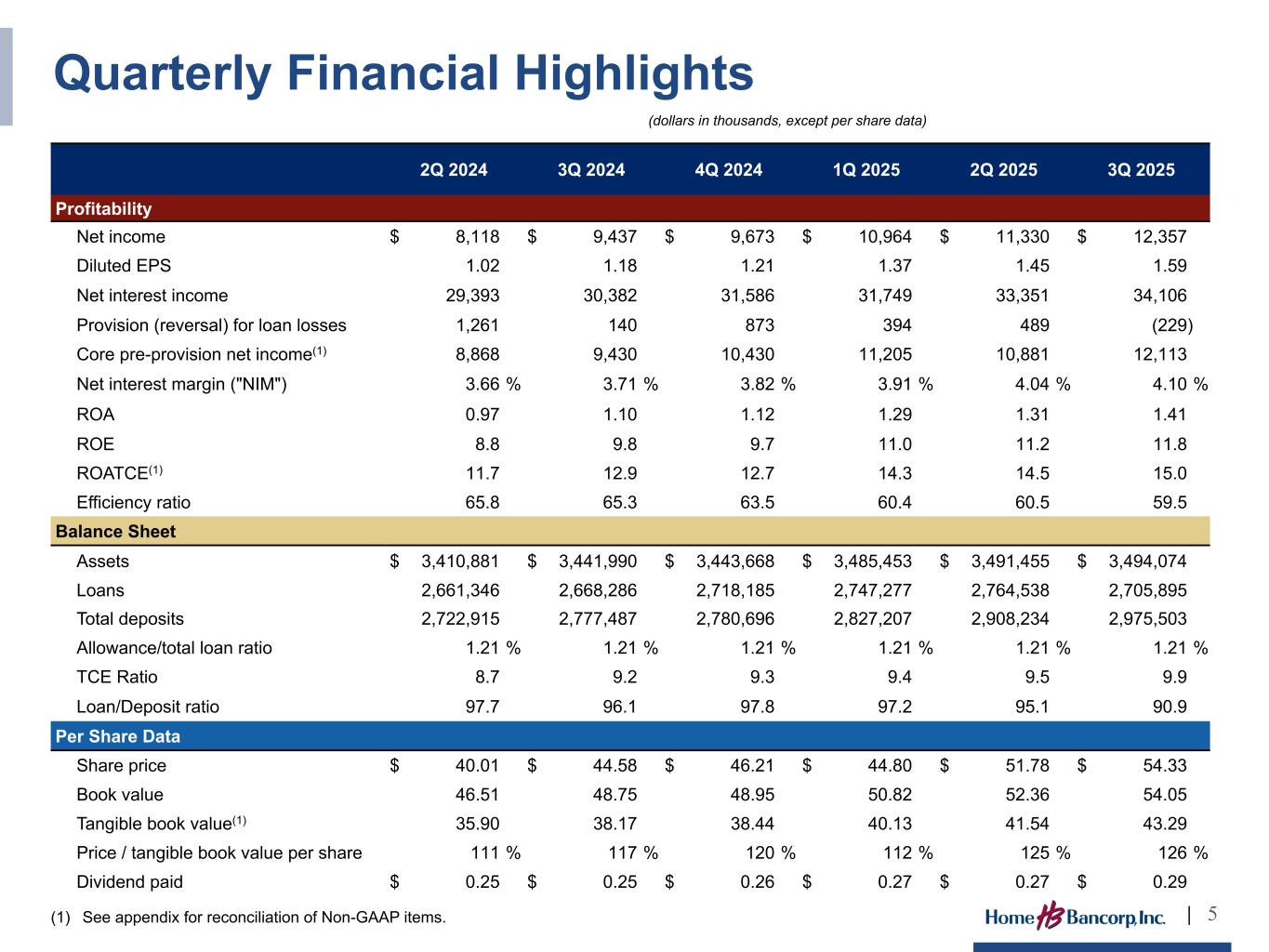
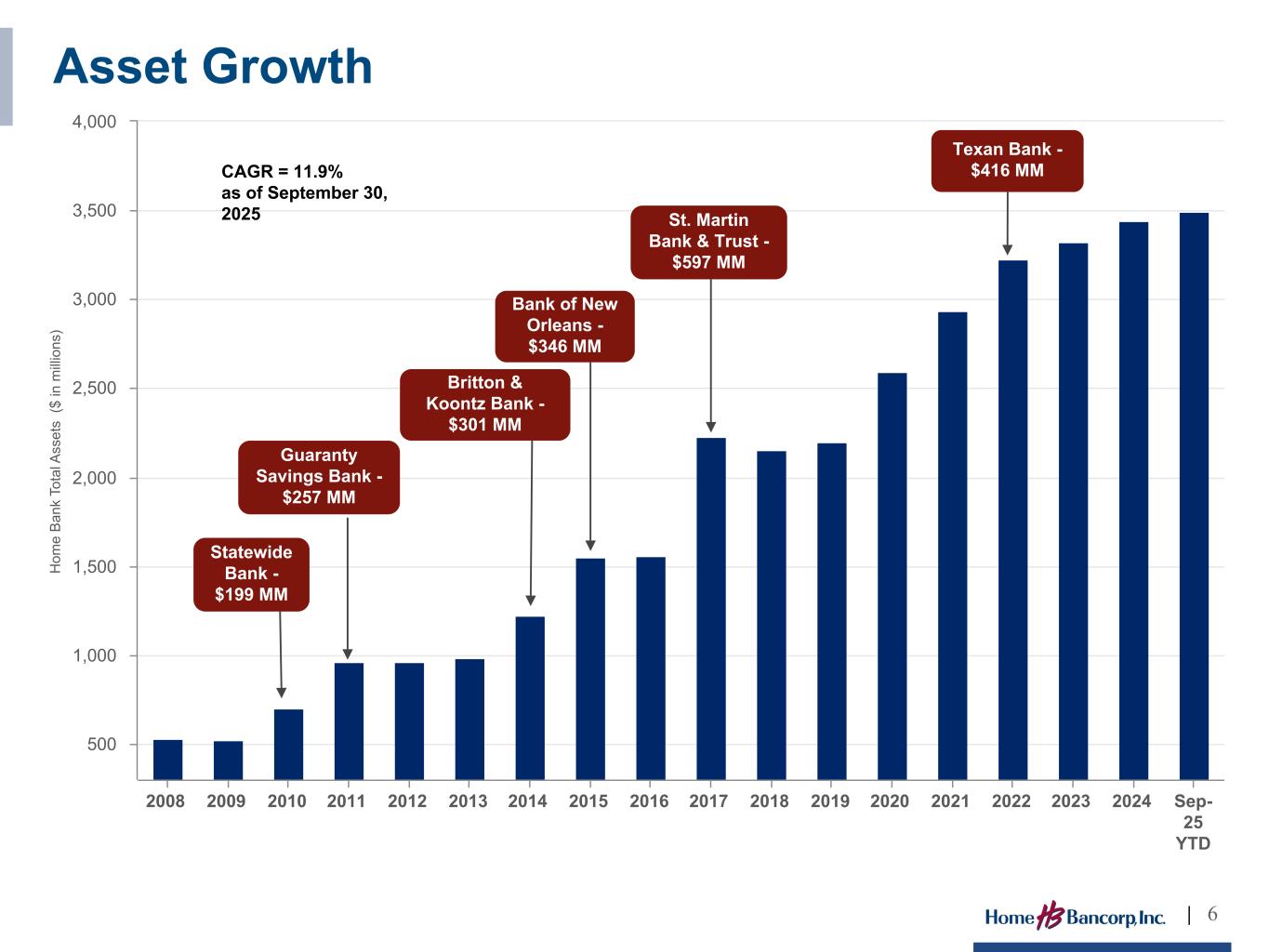
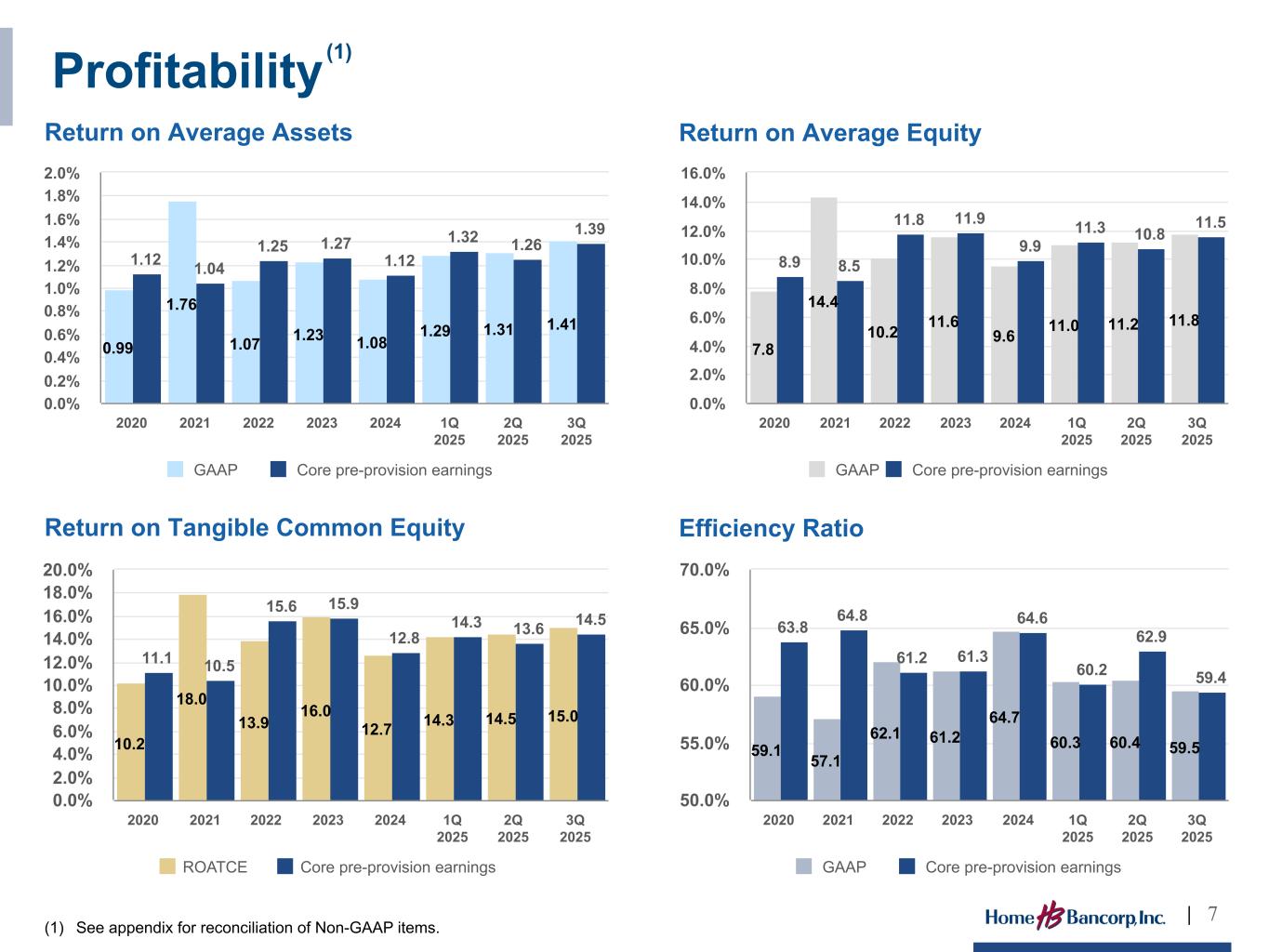
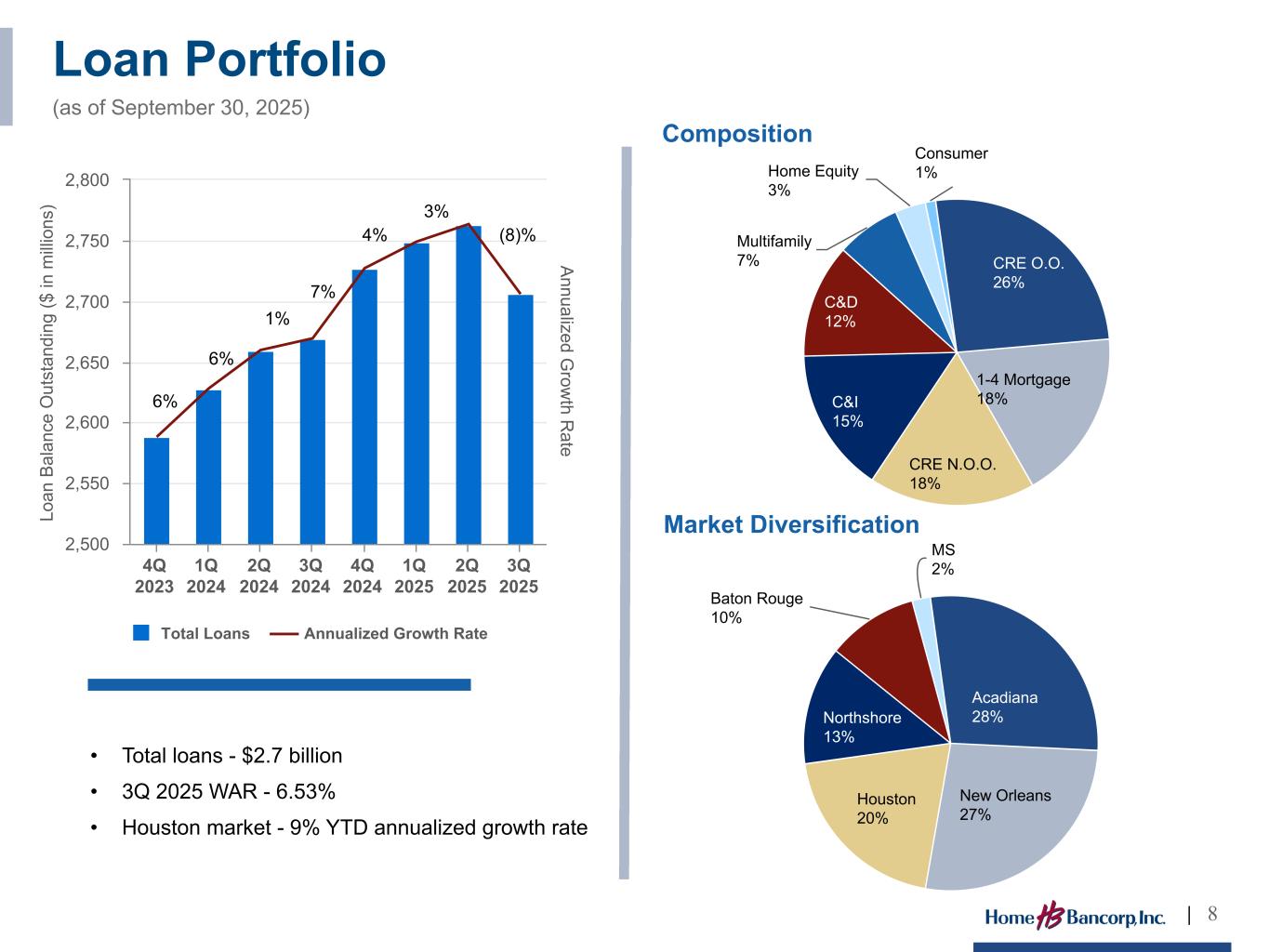
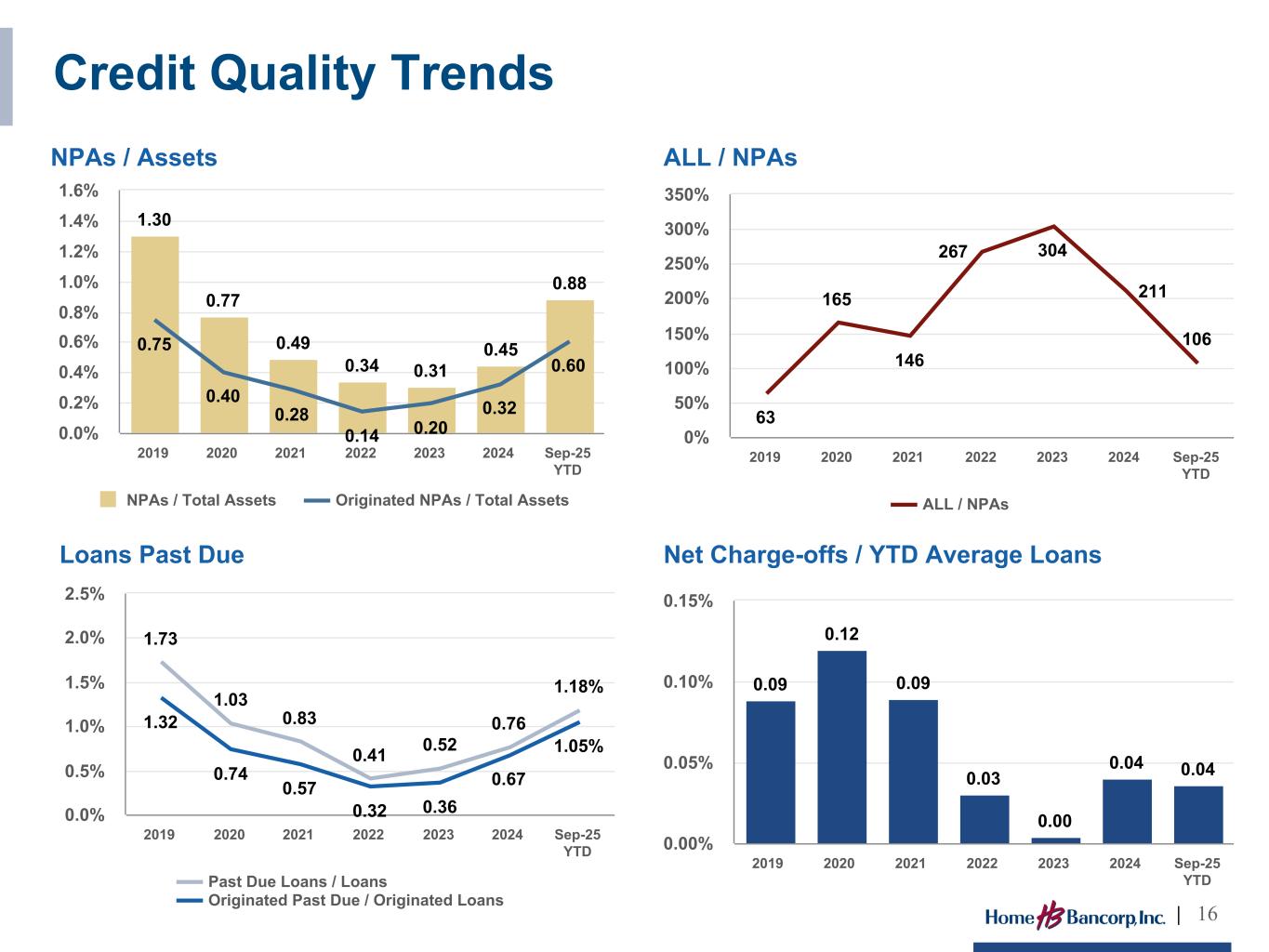
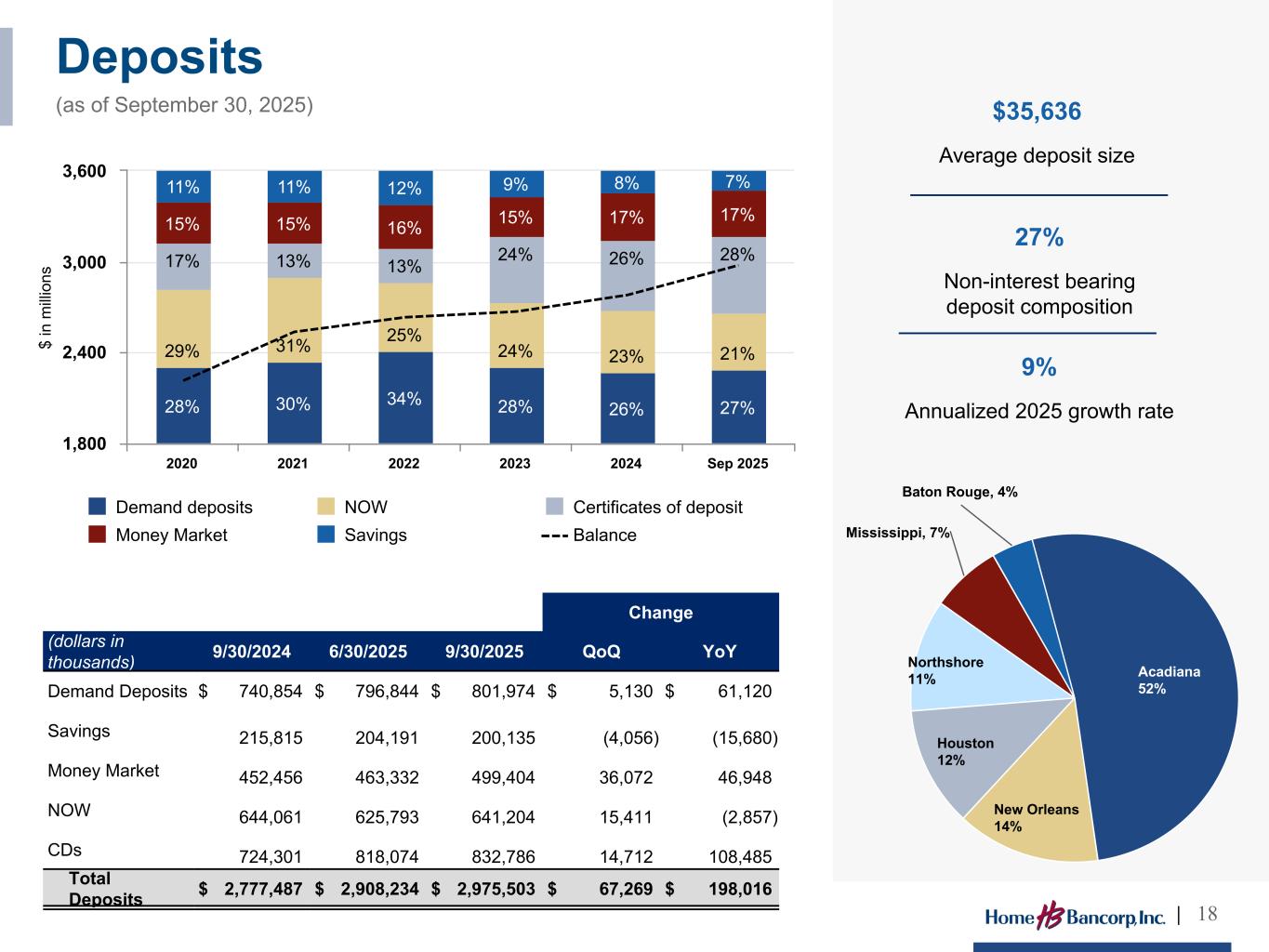
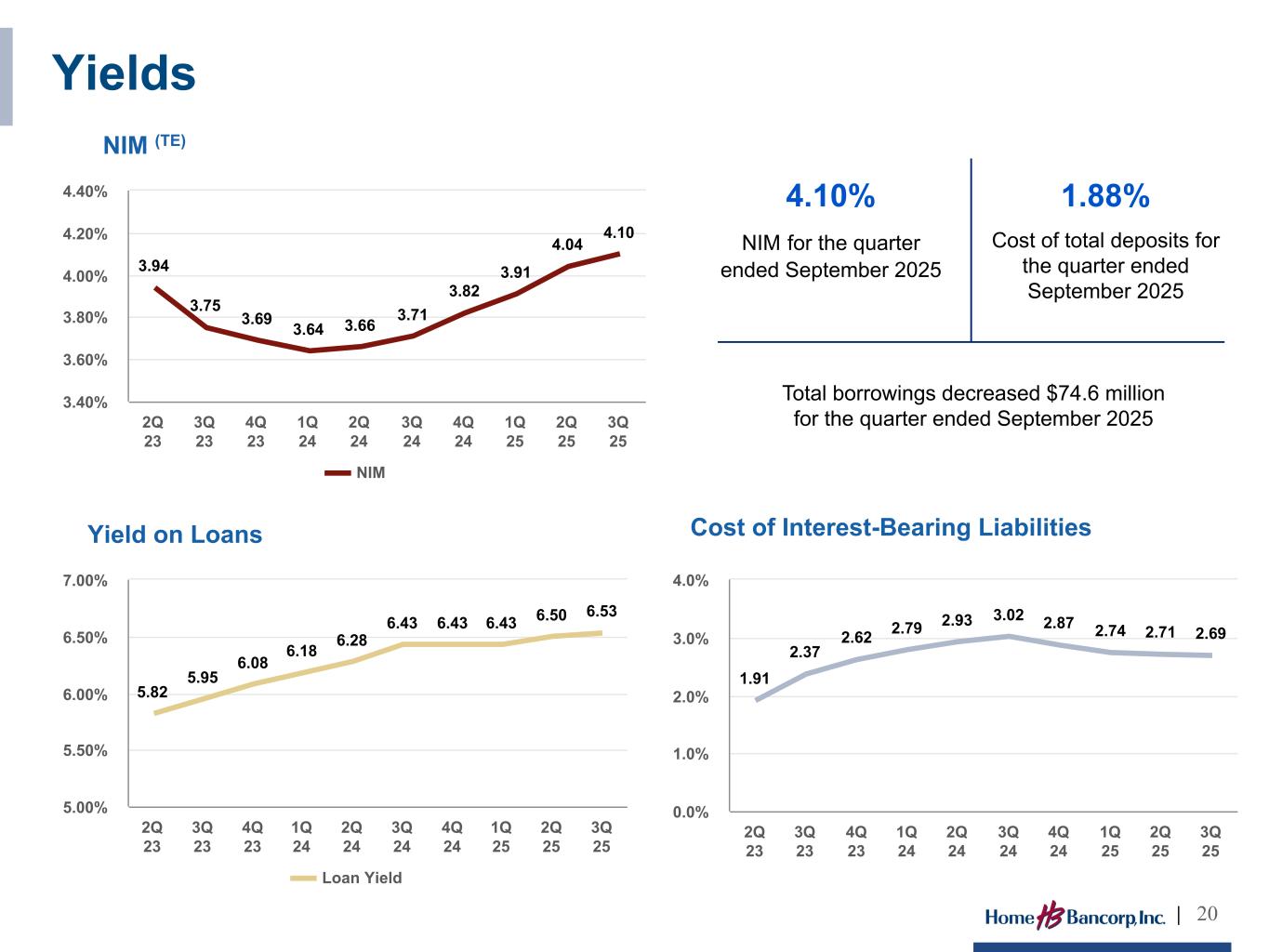
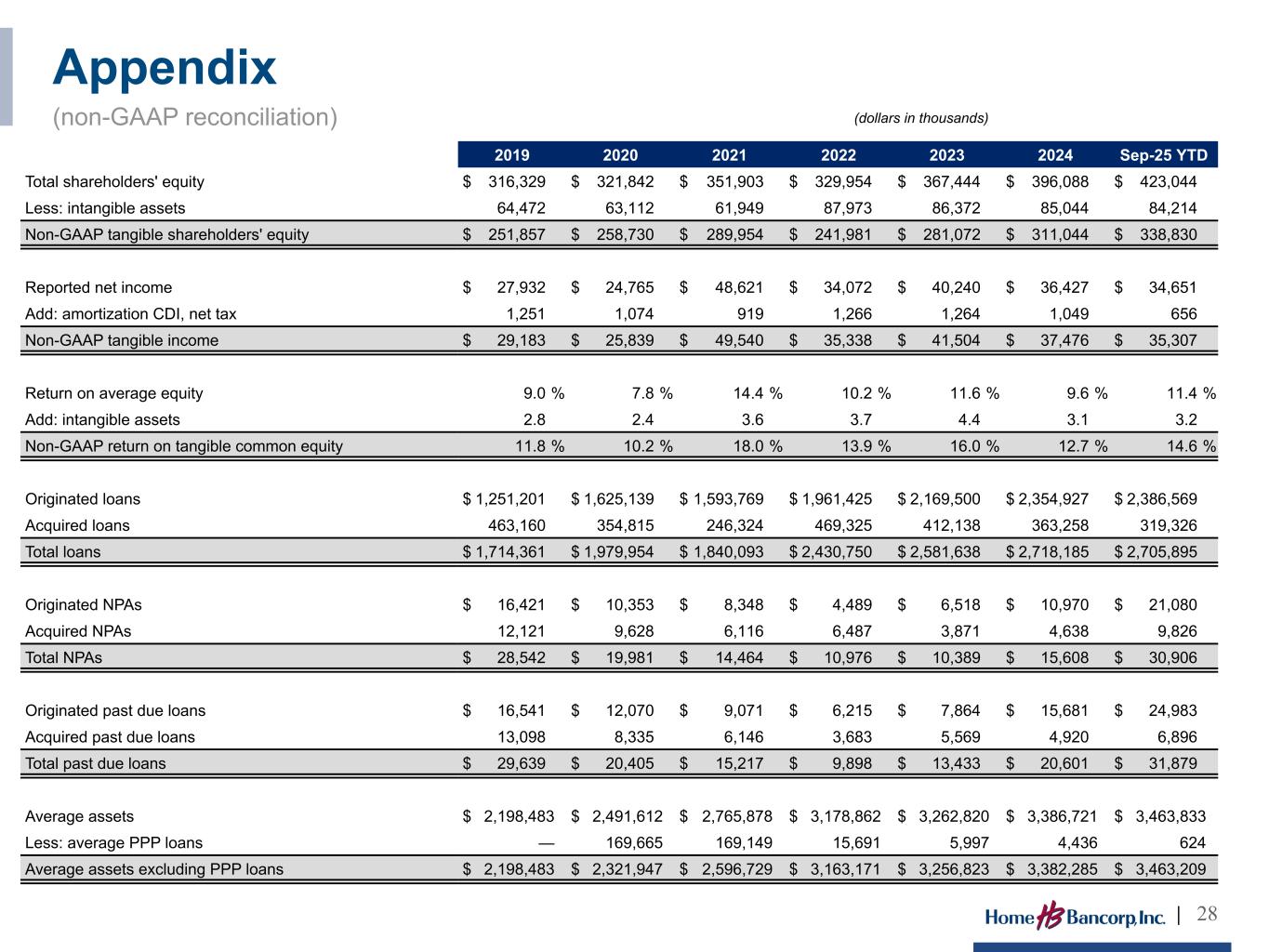
Thanks, David. Good morning, and thank you for joining our earnings call today. We appreciate your interest in Home Bank as we discuss our results, expectations for the future and our approach to creating long-term shareholder value. Yesterday afternoon, we reported third quarter net income of $12.4 million or $1.59 per share, up $0.14 per share from the second quarter and $0.41 from a year ago. Net interest margin expanded for the sixth consecutive quarter to 4.10% and our return on assets increased by 10 basis points to 1.41%. Home Bank's efficiency ratio also improved in the third quarter and is now back down below 60%. We've been able to grow revenue significantly faster than expenses over the last couple of years, with revenues increasing twice as fast as expenses. Loans decreased by $58 million in the third quarter as we saw payoffs and paydowns that were $52 million higher than average paydowns over the last six quarters. This was driven by a number of long-term customers selling their businesses or property. I think it's worth mentioning that we're not losing them to other banks. Eight customers alone that sold their businesses or property in the third quarter made up $45 million of the decline. In almost every case, Home Bank remains these customers' primary banking relationship, which bodes well for the future, but challenges our near-term growth. Customers are always waiting for lower rates before they move ahead with their projects that require financing. We have a lot of great conversations going on, but the media coverage over the last 10 months has convinced many that big rate cuts are coming. So people are choosing to remain on the sidelines until there is more clarity on rates. While we are hopeful that we'd see 4% to 6% loan growth this year, we're now expecting more moderate growth of 1% to 2% in 2025. We've always maintained loan structure discipline and have prioritized risk-adjusted returns over growth, and we don't intend to abandon our principles now. On a high note, deposits increased 9% annualized in the third quarter with good growth and relatively low-cost money market accounts. Thanks to a concerted effort and a focus on building franchise value, we've increased deposits by 17% in the last nine quarters versus loans, which also grew a respectable 8%. Most of this increase has been in core deposits and includes good growth in Texas, which we entered back in 2022. Our loan-to-deposit ratio is now 91%, which positions us well for when loan growth picks up. Nonperforming loans have increased in 2025, but our charge-offs remain very low. We don't expect for that to change due to low loan-to-values, our conservative underwriting standards, and proactive credit management. As a reminder, you can see on Slide 16, our net charge-offs have averaged about 6 basis points over the last six-plus years. M&A activity nationwide has accelerated, and we continue to look for the right opportunity to leverage our acquisition experience. We are confident in Home Bank's future and our ability to meet our high standards. Our senior leadership team has 981 years of cumulative experience for an average of 26.6 years, and we have a track record of outperformance in all economic climates. With that, I will turn it back over to David, our Chief Financial Officer.
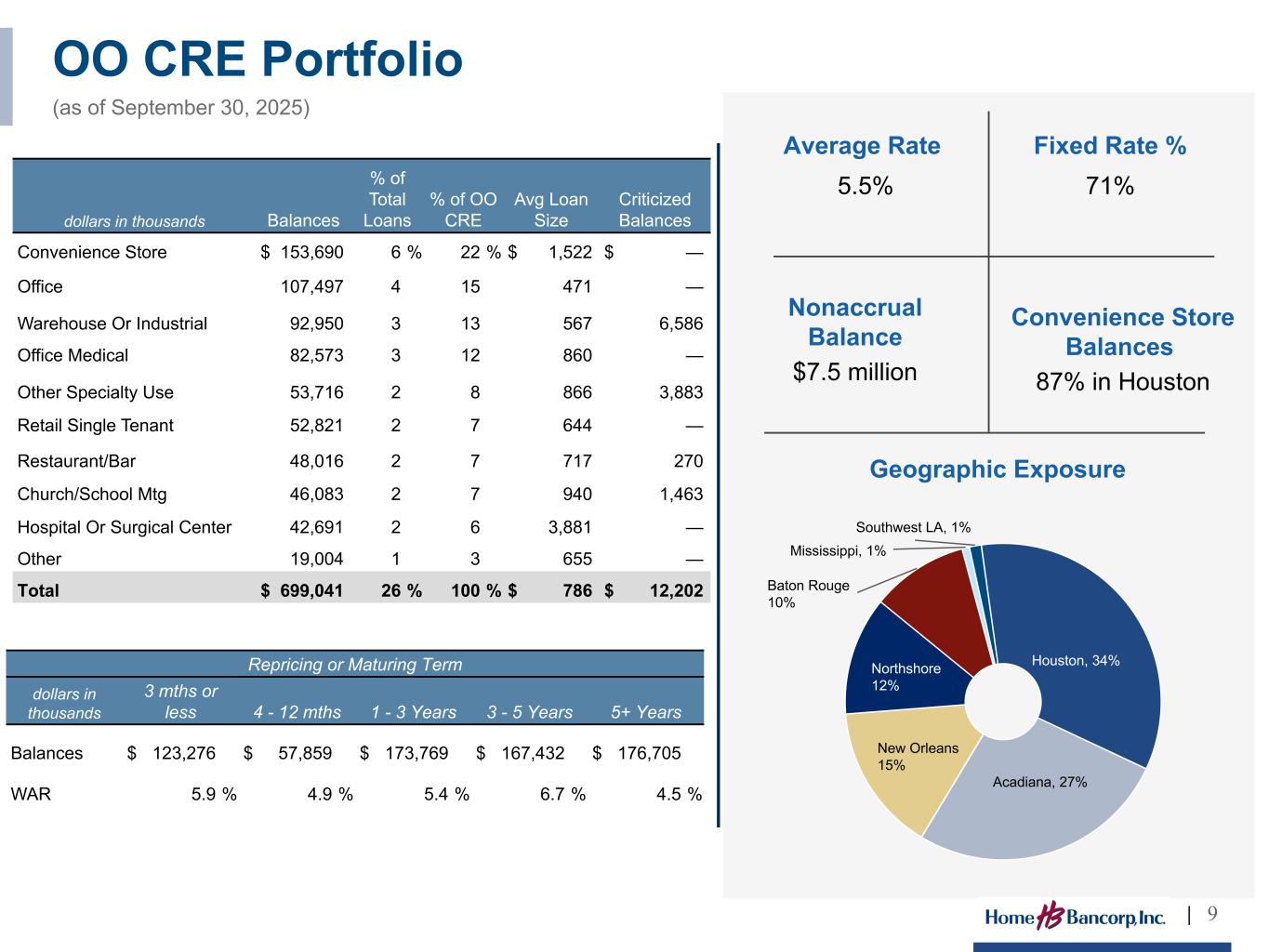
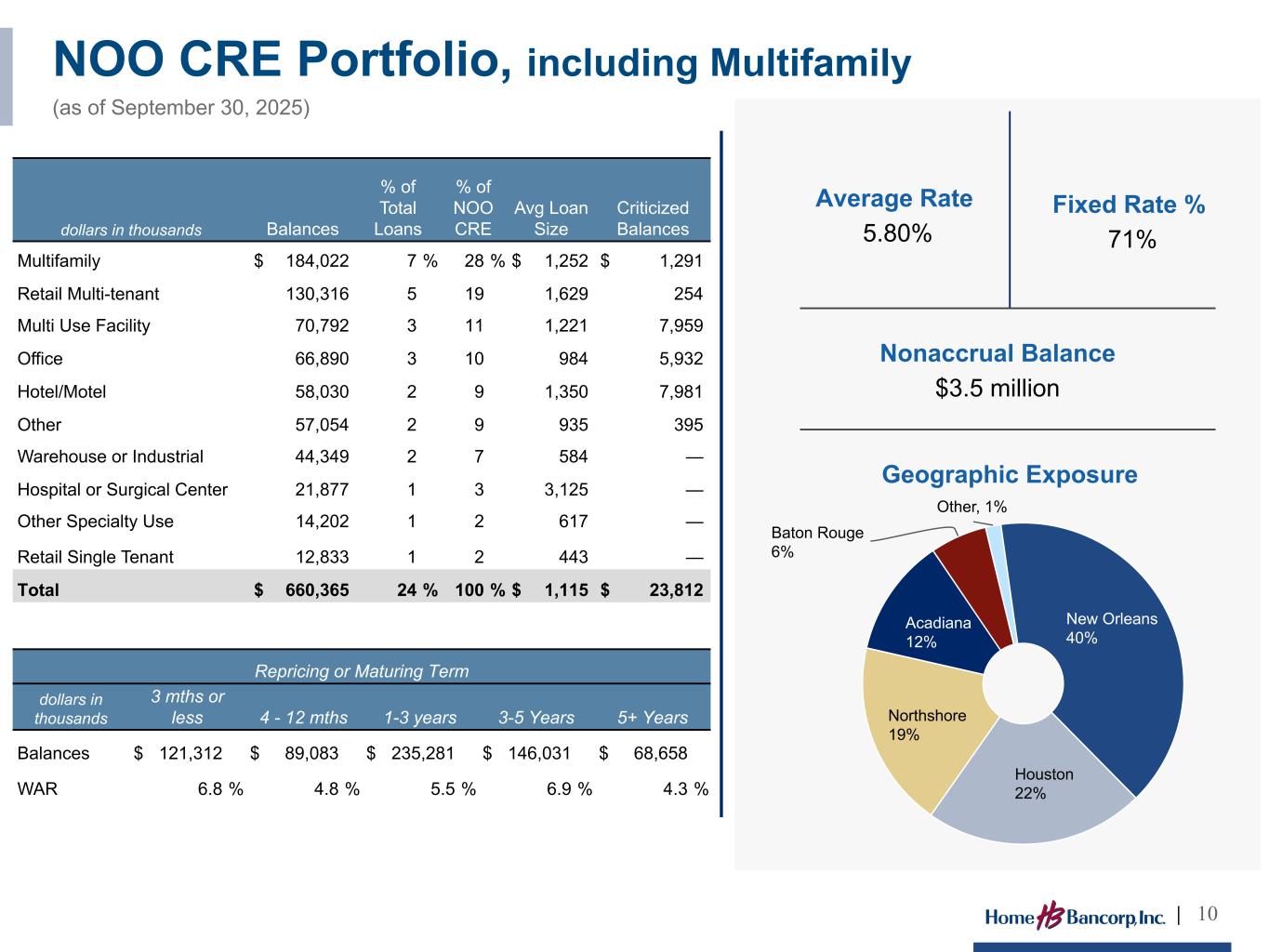
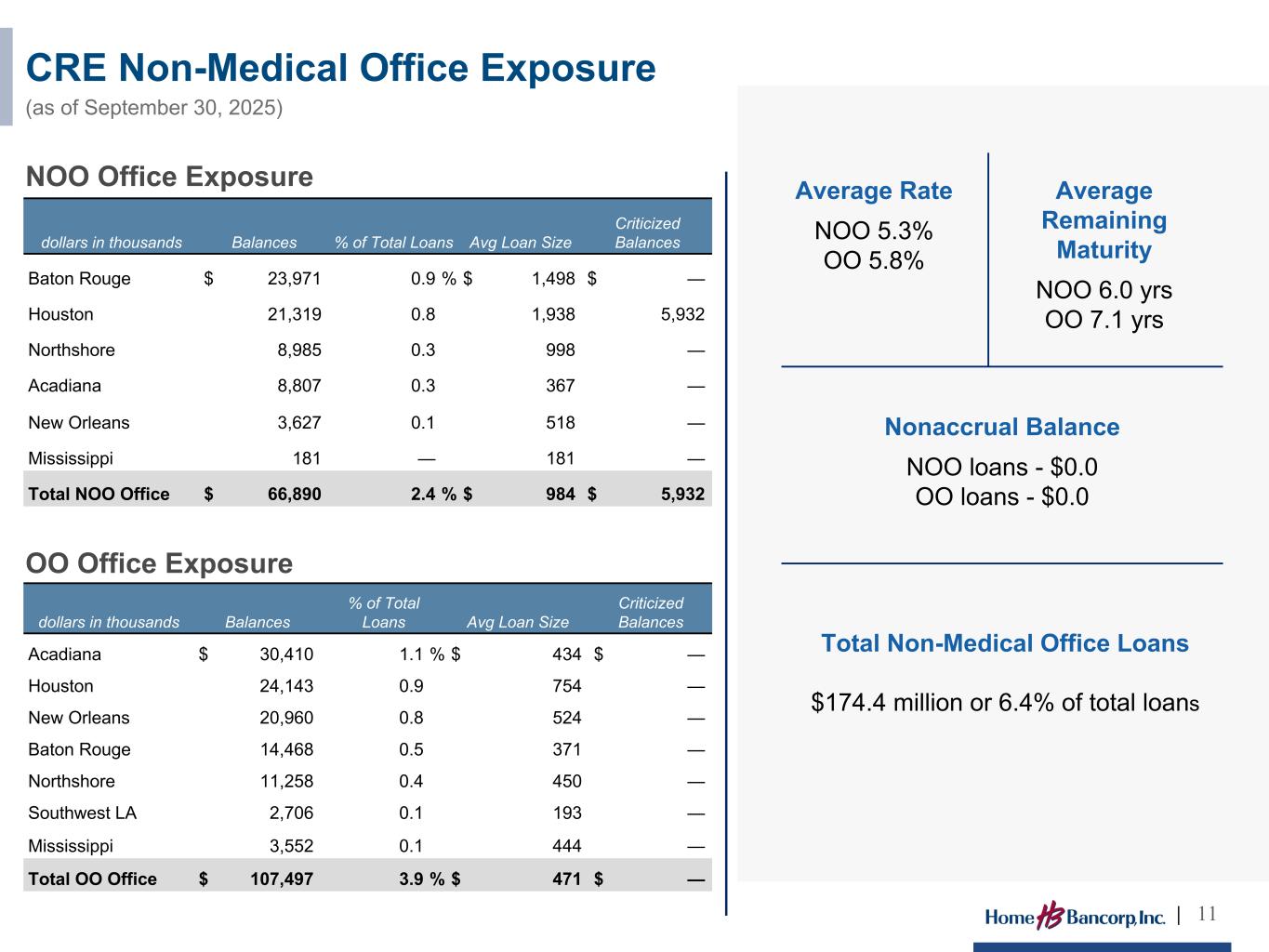
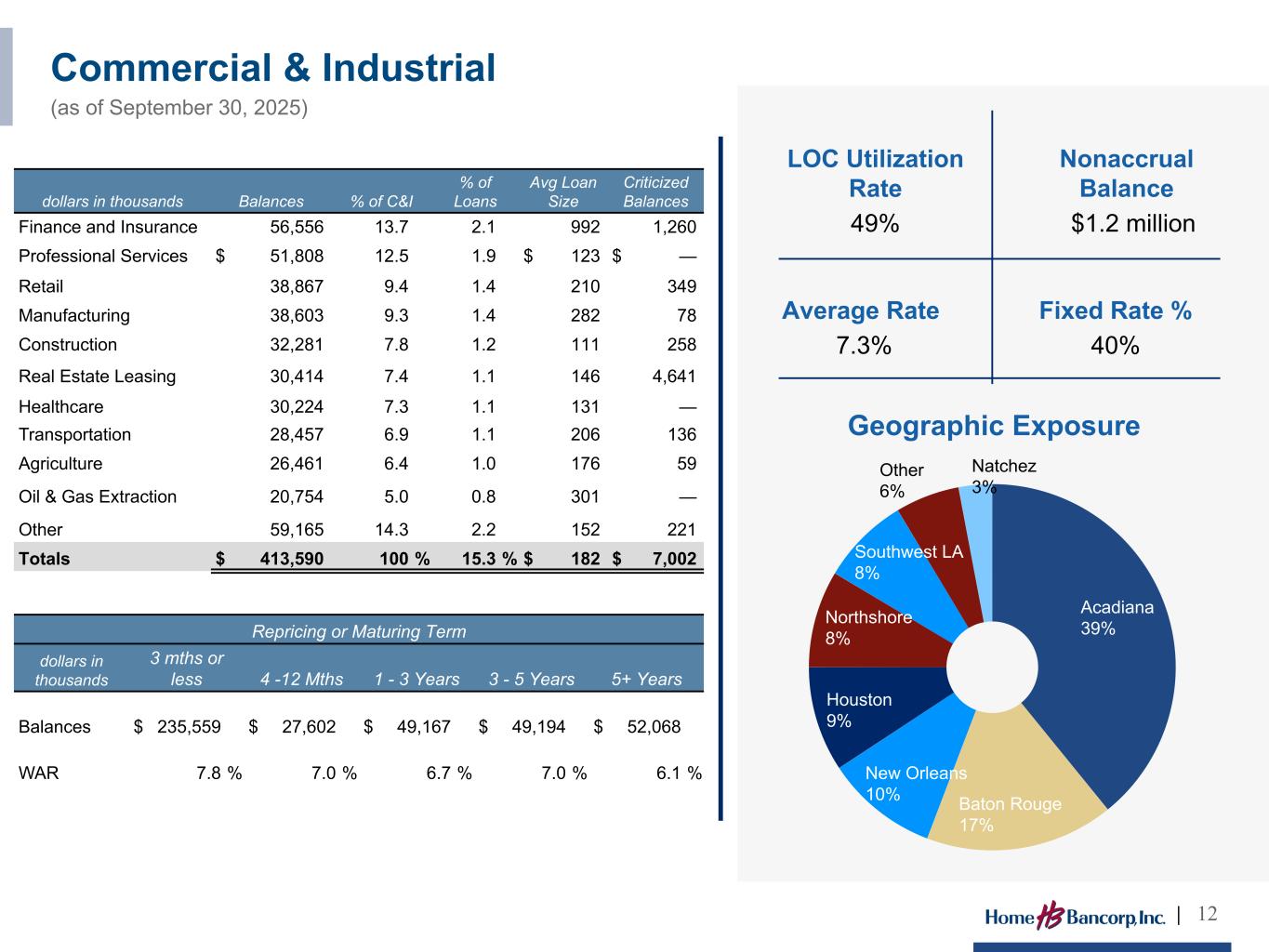
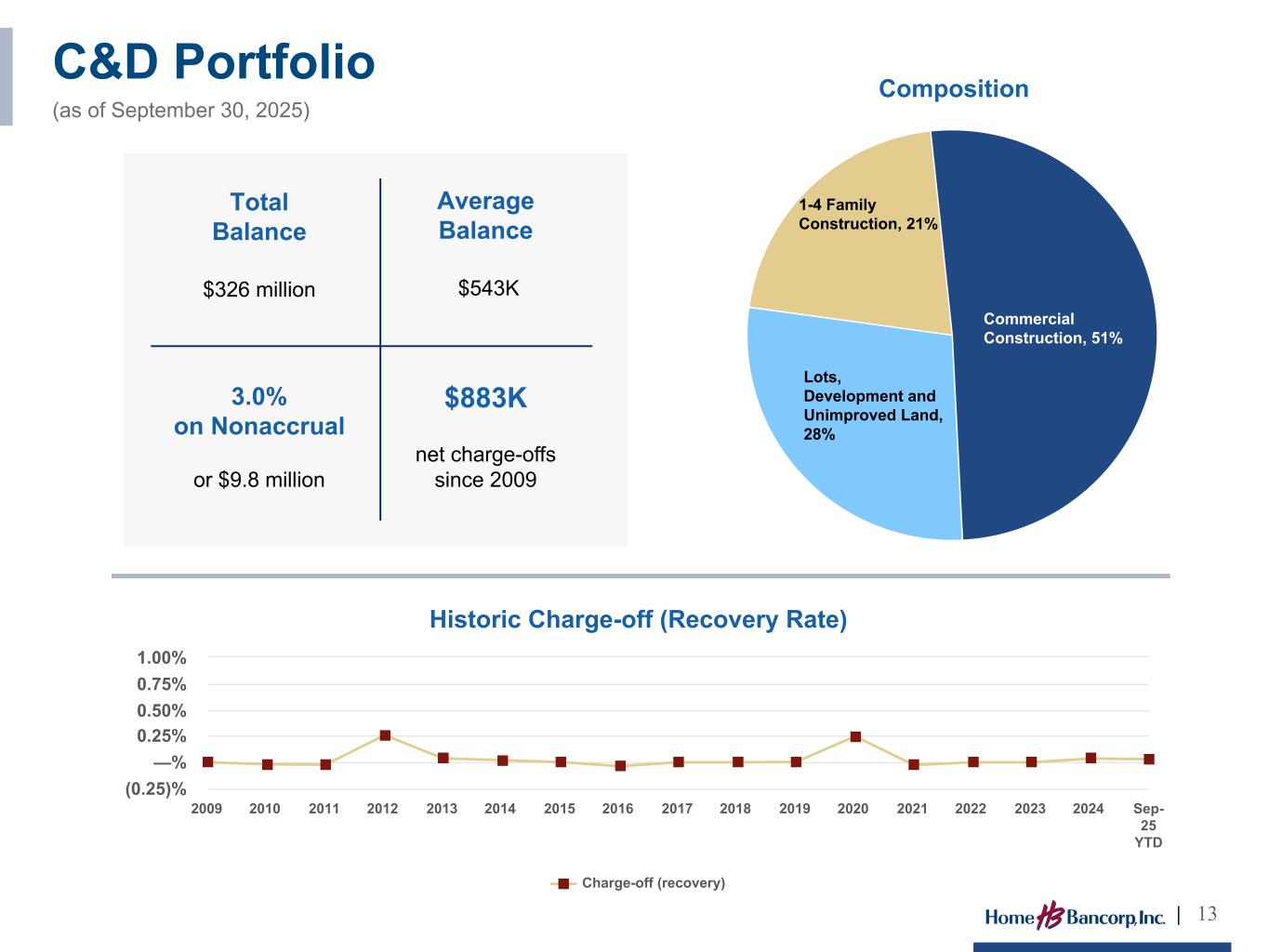
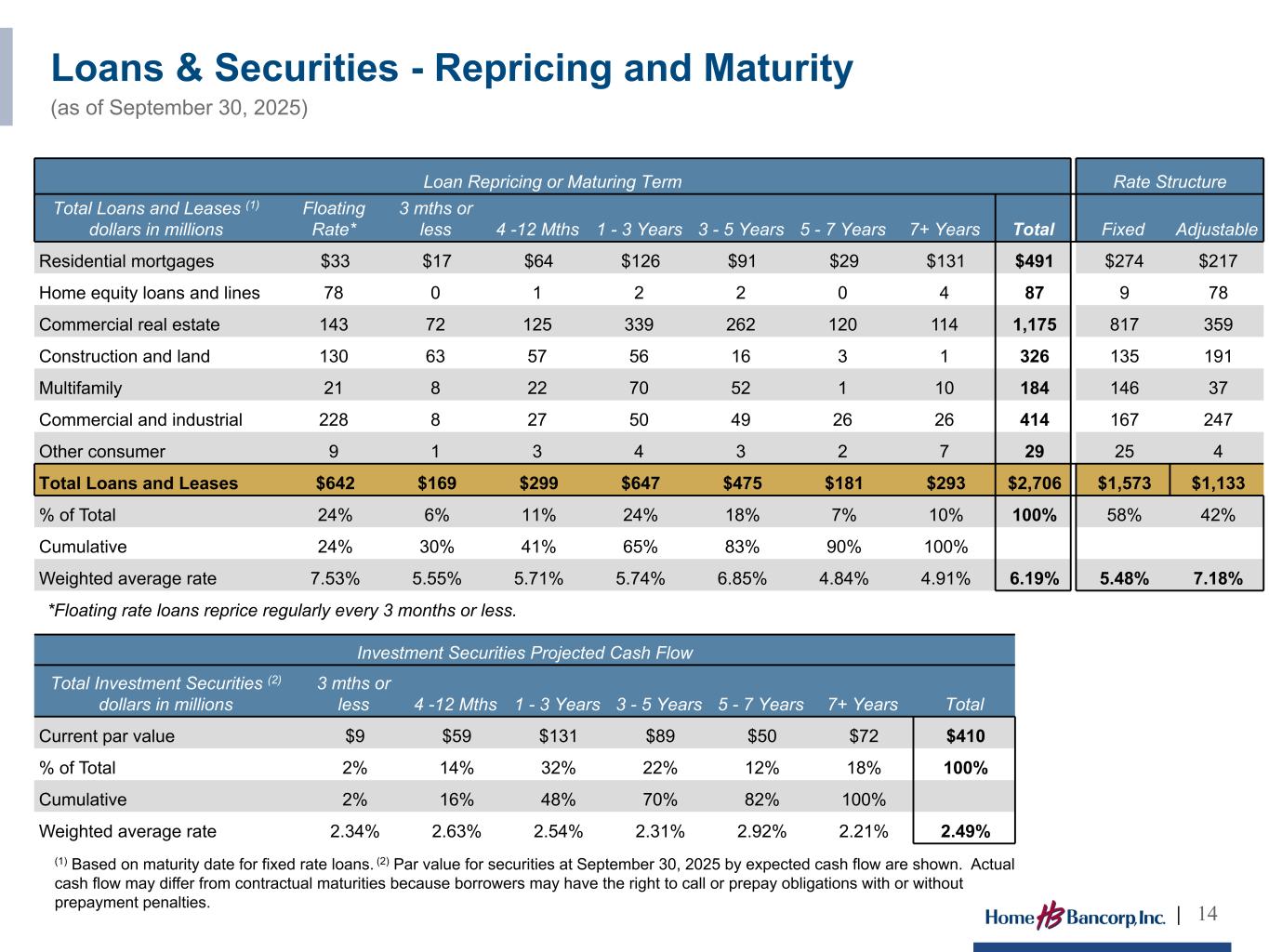
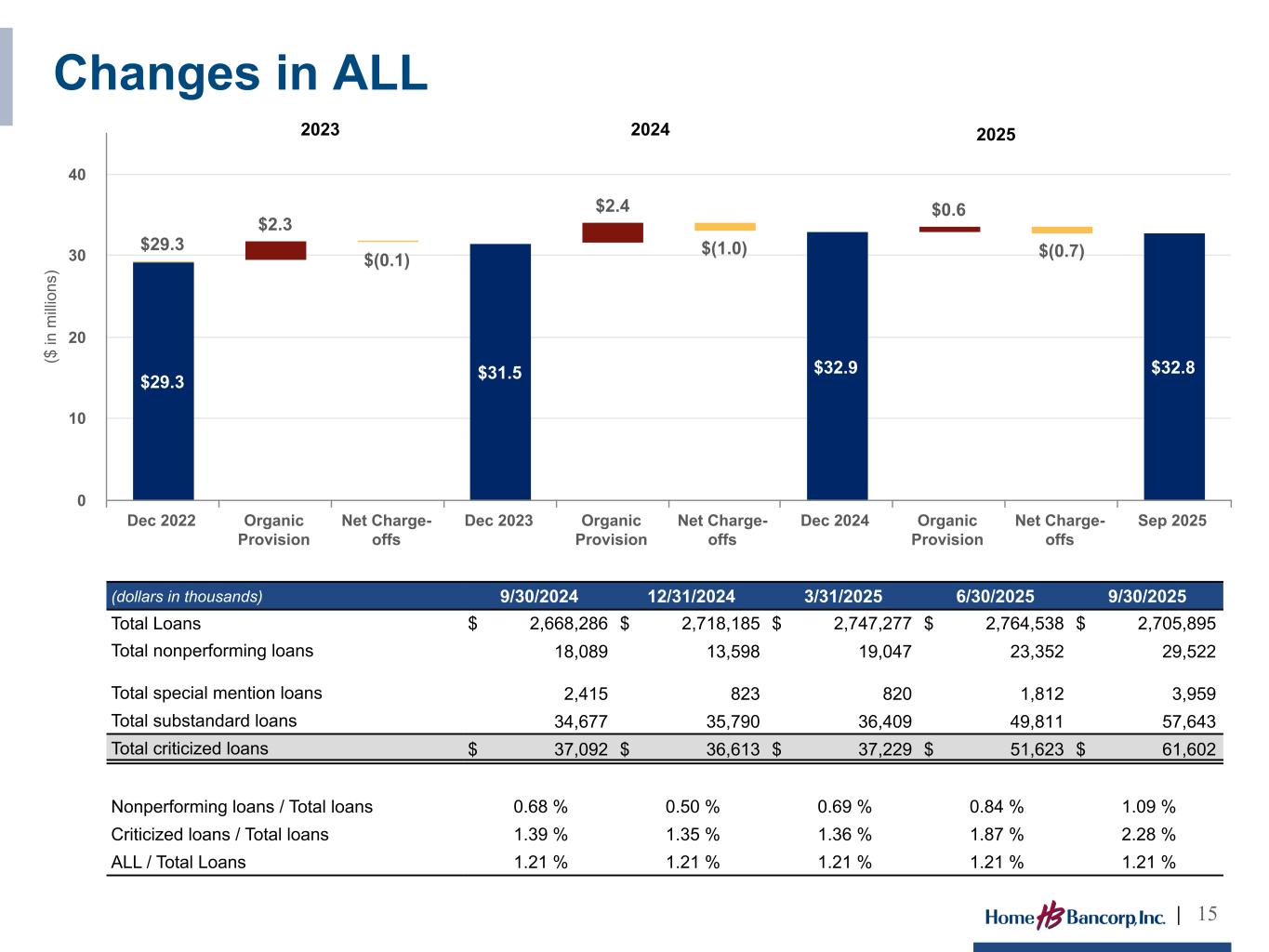
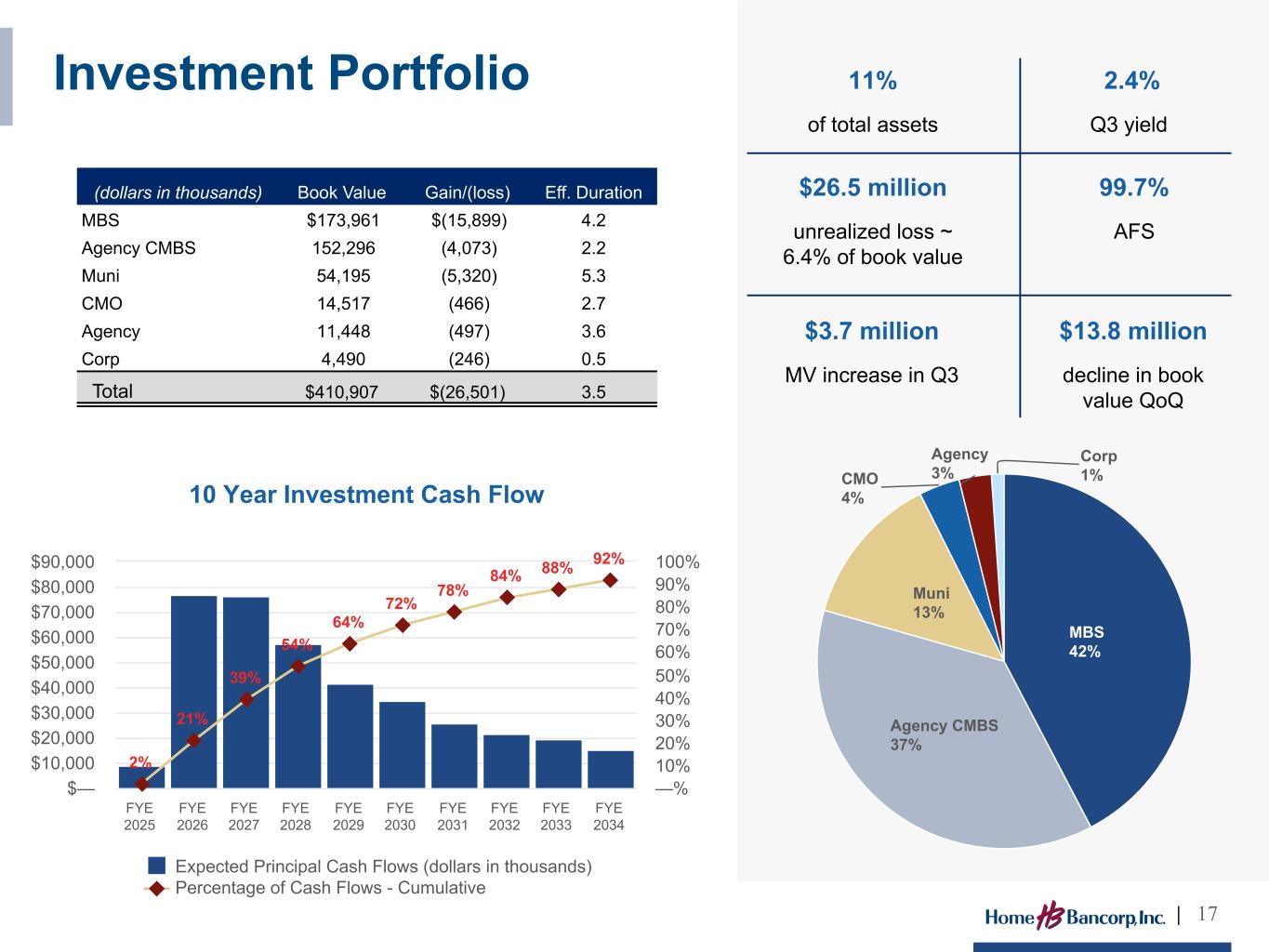
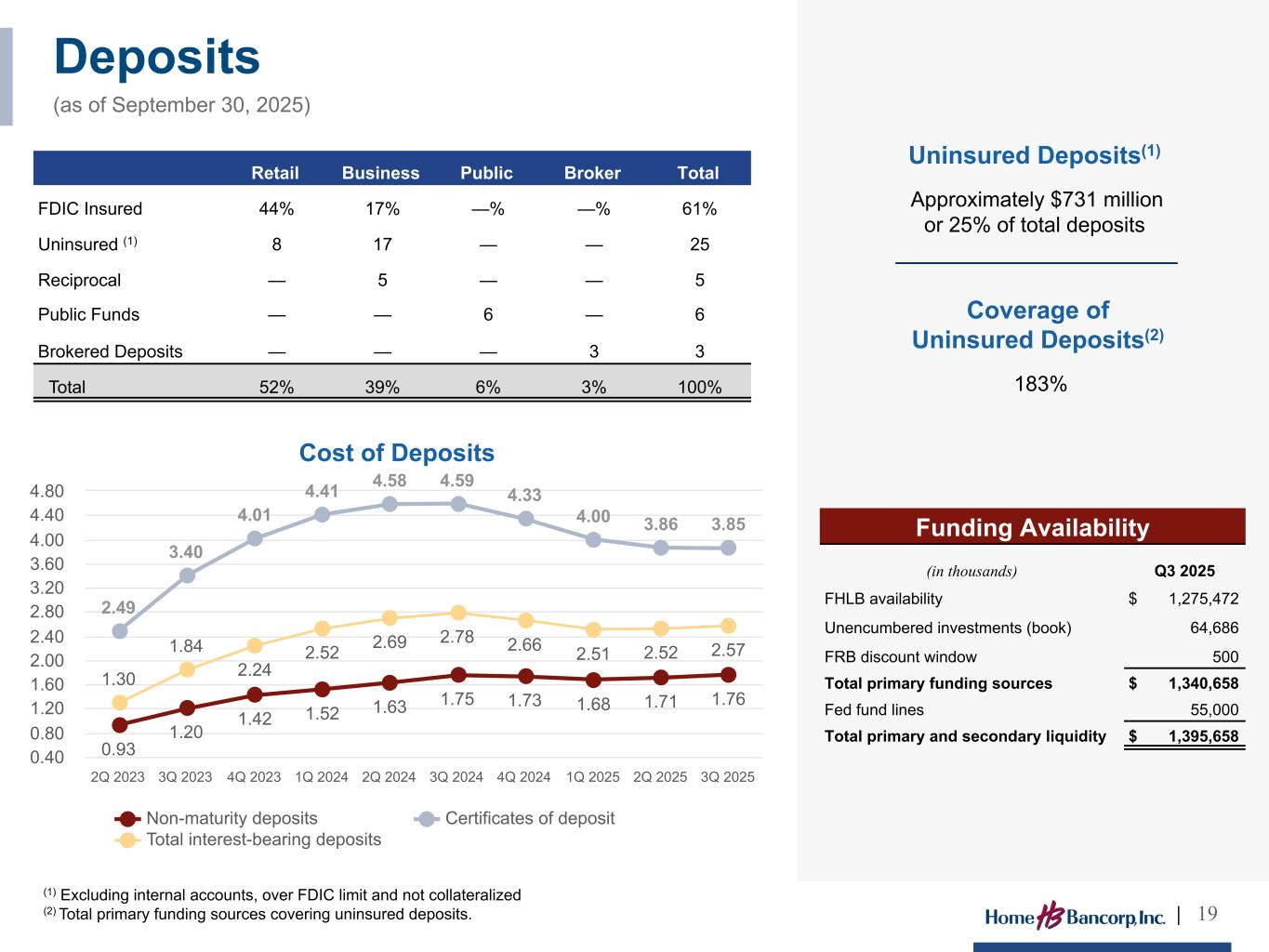
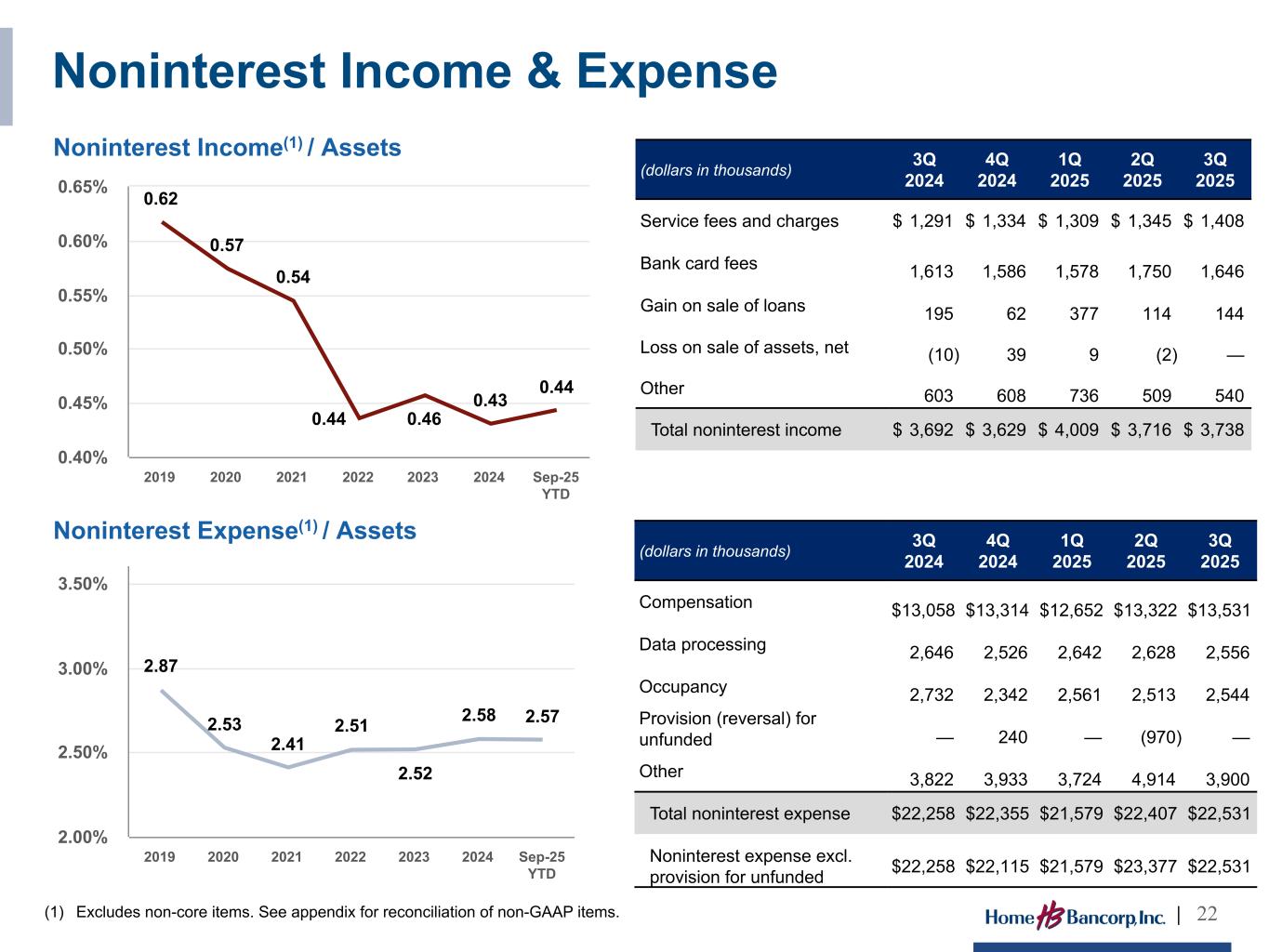
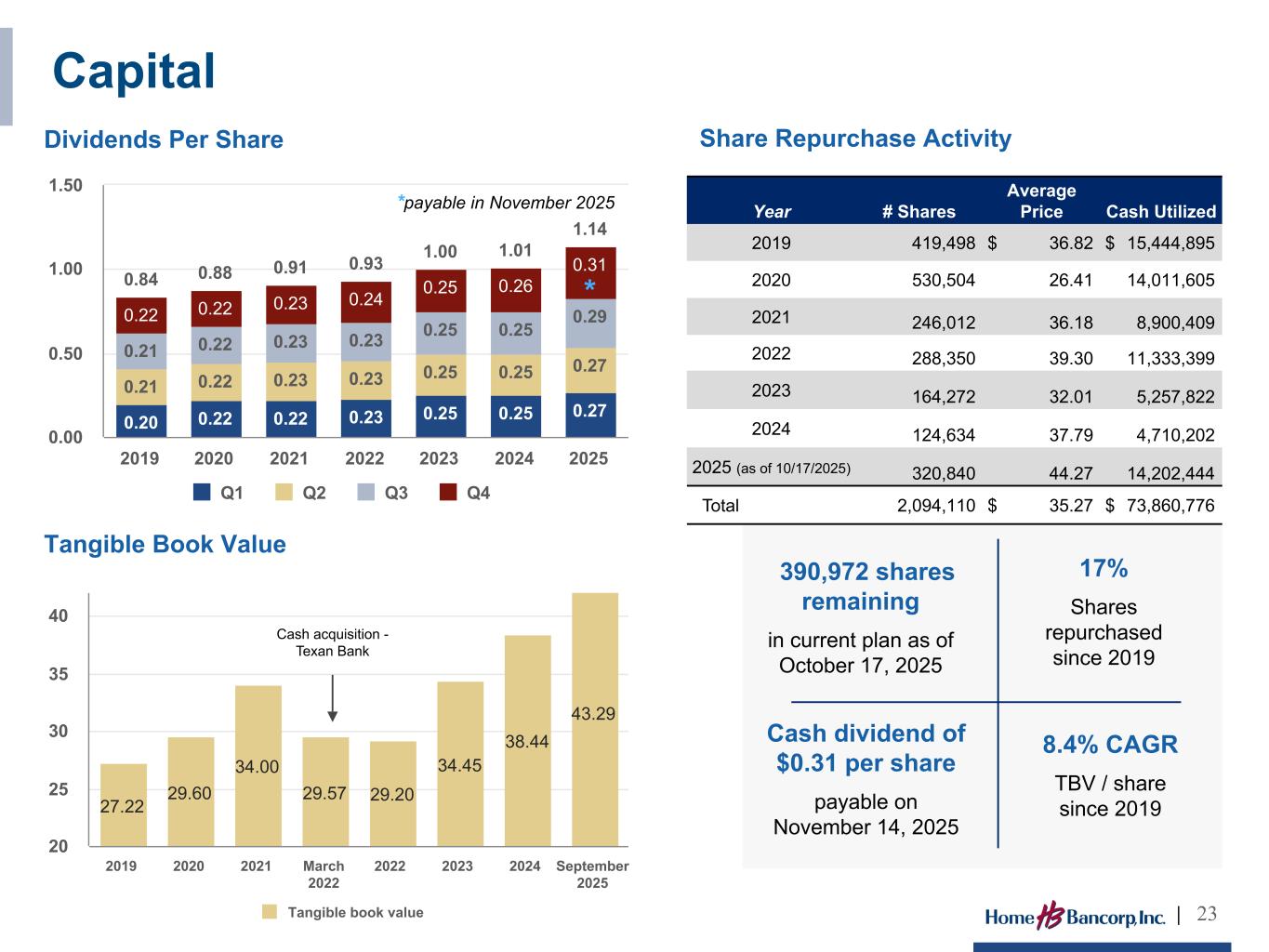
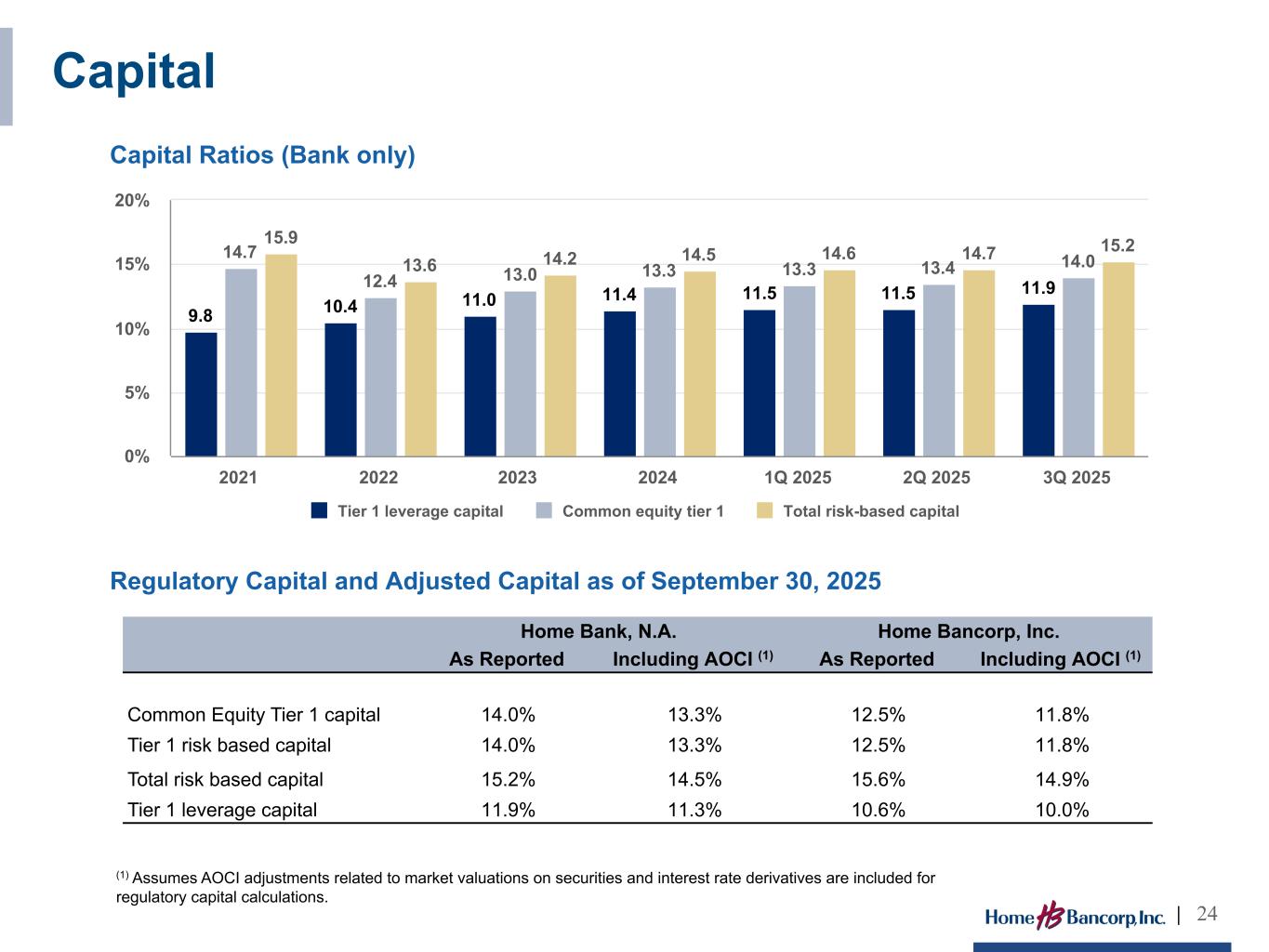
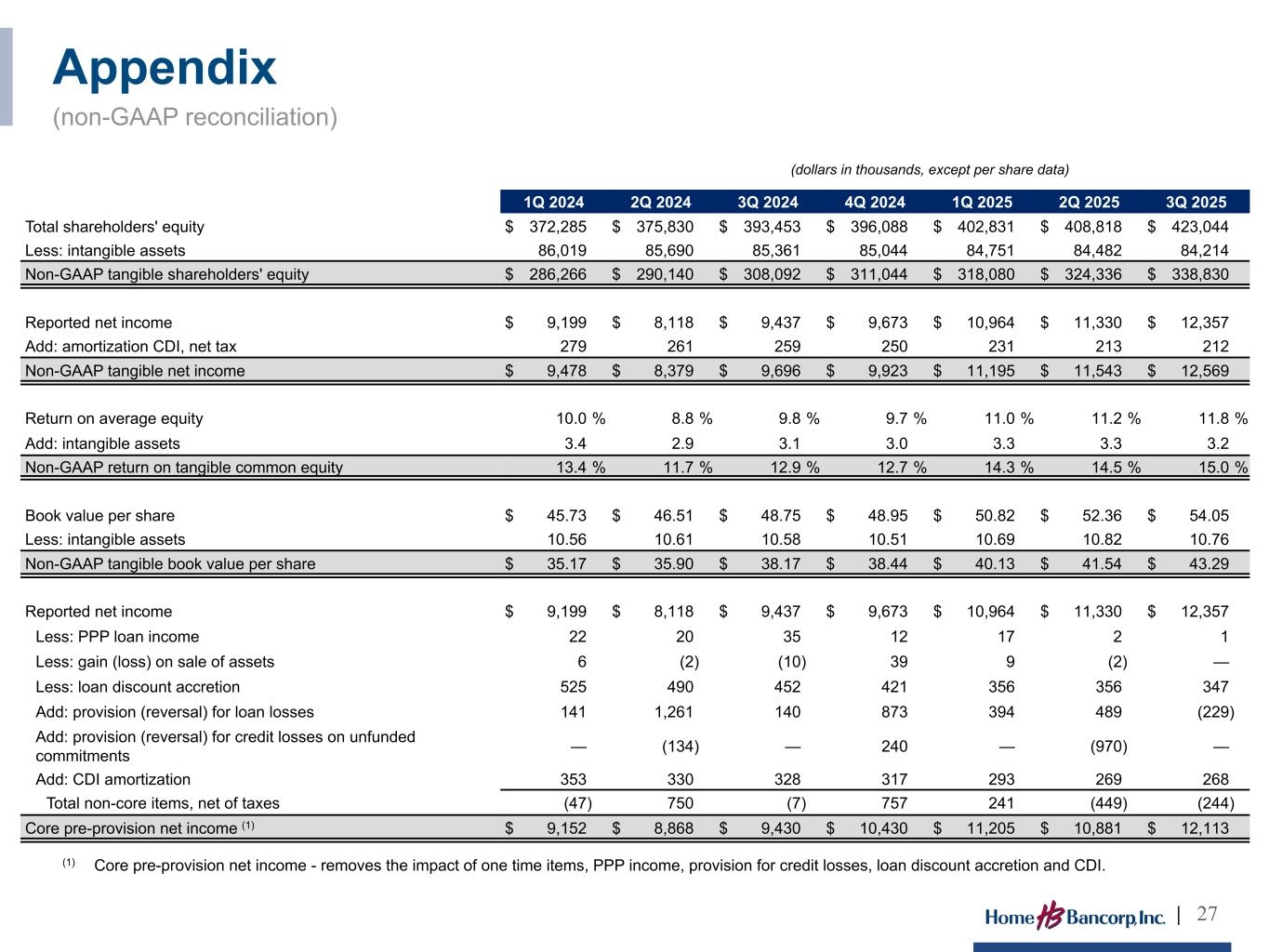
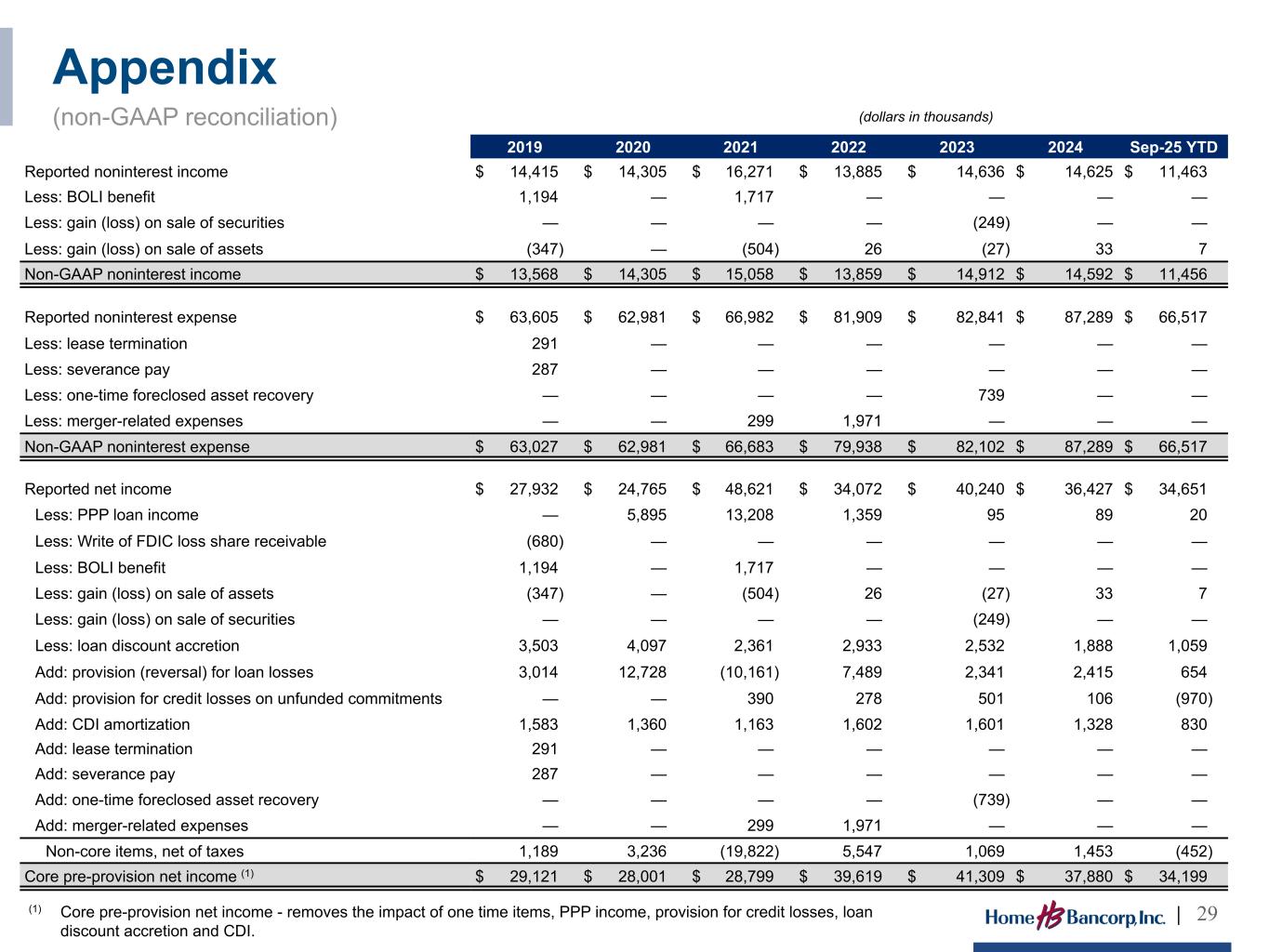
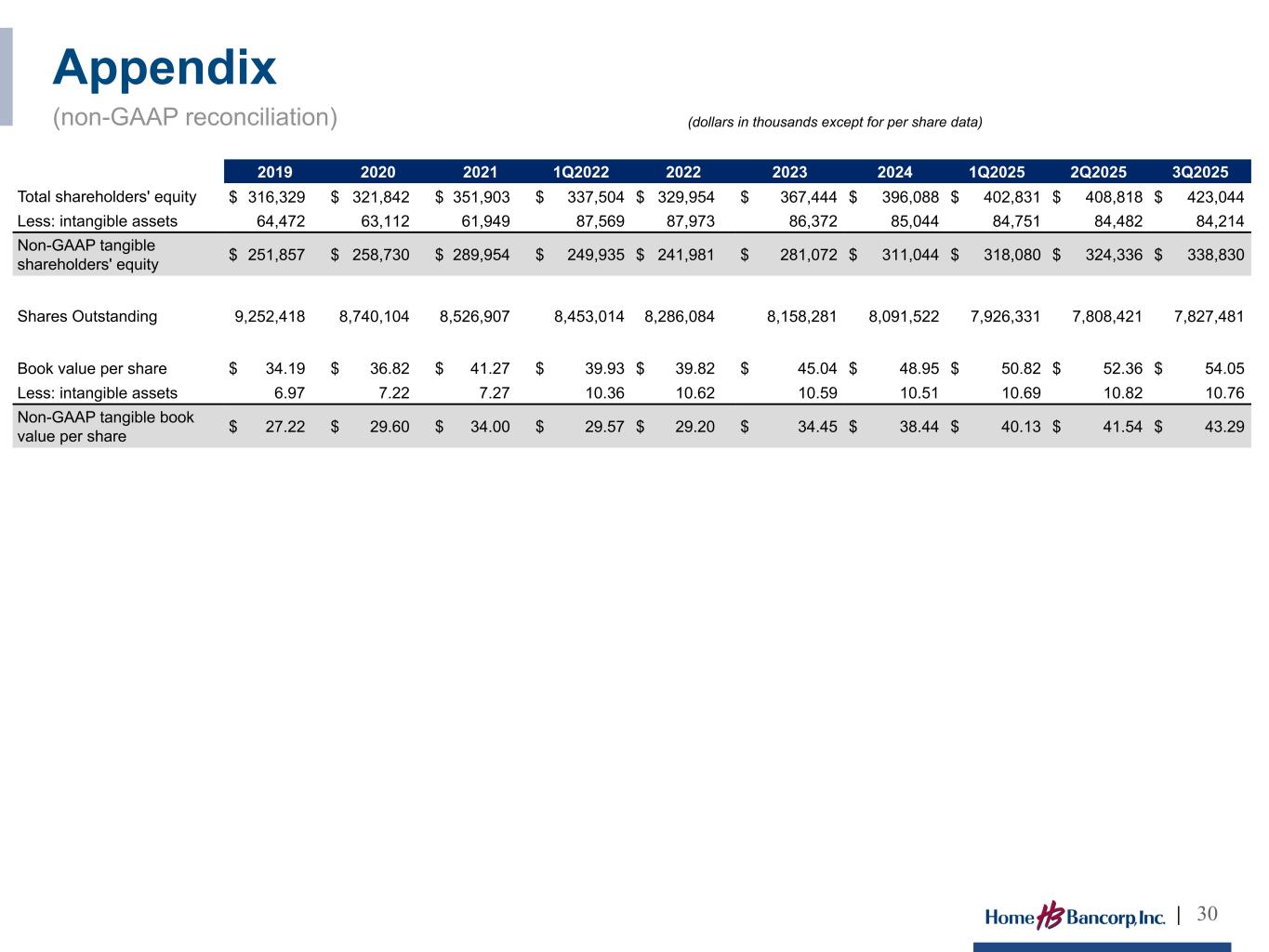
Thanks, John. Slide 5 in our investor presentation has a summary of the last six quarters. Net income totaled $12.4 million, a 9% increase from the prior quarter and a 31% increase from a year ago. Net interest income increased $754,000 quarter-over-quarter as NIM increased 6 basis points to 4.10%. Yield on loans increased 3 basis points quarter-over-quarter as a contractual rate on new loan originations was 7.35%, which continues to support an expanding NIM as lower yielding loans reprice. Slides 14 and 17 provide additional details on cash flows from our loan and investment securities portfolio, and we think we can continue to increase asset yields even if there are rate cuts. Excluding floating rate loans repricing in the next three months, 41% of loans with a blended rate of 5.7% are expected to reprice or refinance over the next three years. Over that same time period, half of our investment portfolio is projected to be paid off with a roll-off yield of 2.56%, which is well below current available yields of approximately 4%. Slides 15 and 16 of our investor presentation provide some additional detail on credit. We had $376,000 in net charge-offs in the quarter related to smaller C&I loans. Year-to-date, our net charge-offs totaled $743,000, which is a very low 4 basis points to total loans and $58,000 less than our prior year. Third quarter nonperforming assets increased $5.5 million to $30.9 million or 88 basis points of total assets. The increase was primarily due to the downgrade of five relationships and partially offset by paydowns. The largest was a $5.1 million relationship with two separate land development loans in Houston. We feel between the loan-to-value on these properties and the guarantor strength that there will be no material losses on this relationship. The second largest was a $1.2 million acquired CRE loan that was placed on nonaccrual status in September that was made current as of 9/30. Once again, we believe we are well collateralized on this loan as well as other loans classified as nonaccrual and/or substandard. We had a negative $229,000 provision expense during the quarter as a result of loan balance declines, which was partially offset by a $376,000 of net charge-offs. We feel very confident in reserves as our allowance for loan loss ratio was stable from the second quarter at 1.21%. The cost of interest-bearing liabilities decreased 2 basis points to 2.69% as continued strong deposit growth allowed us to pay down more expensive short-term advances. Interest-bearing deposit cost increased 5 basis points in Q3 due to changes in the deposit mix, where we will see decreases when we get some additional Fed rate cuts. The cost of CDs declined 1 basis point to 3.85%, even as balances increased $15 million during the quarter. We are keeping CD terms short with 77% of our CD portfolio maturing in the next six months and 97% within a year. So we will have the opportunity to react quickly when rates decline. Noninterest-bearing deposits, which represent 27% of total deposits increased $5 million in Q3 and $69 million or 9.4% year-to-date. Our overall cost of deposits in Q3 was an attractive 1.88%. This was an increase of 4 basis points quarter-over-quarter, but once again, we were able to pay off FHLB advances and reduce our total cost of interest-bearing liabilities by 2 basis points. Short-term advances from the FHLB declined $75 million quarter-to-date and $137 million year-to-date. Slide 22 of the presentation has some additional details on noninterest income and expenses. Third quarter noninterest income was $3.7 million, which was in line with expectations. We expect noninterest income to be between $3.6 million and $3.8 million over the next several quarters. Noninterest expenses increased by $124,000 to $22.5 million and was in line with expectations. Noninterest expense is expected to be between $22.5 million and $23 million per quarter for the next two quarters. Slides 23 and 24 summarize the impact our capital management strategy has had on Home Bank. Since 2019, we grew tangible book value per share adjusted for AOCI at a 9.5% annualized growth rate. Over the same period, we also increased EPS at 11.2% annualized growth rate. We increased our dividends per share by 36% and repurchased 17% of our shares outstanding, and we've done this while maintaining robust capital ratios. This positions us to be successful in varying economic environments and to take advantage of any opportunities as they arise. With that, operator, please open the line for Q&A.
Operator
Your first question comes from the line of Joe Yanchunis from Raymond James.
Speaker 3
So I thought we could start with the NIM here. So how should we think about the NIM trajectory, particularly as we think about the board curve and your increased asset sensitivity? And at what point do you think the NIM peaks?
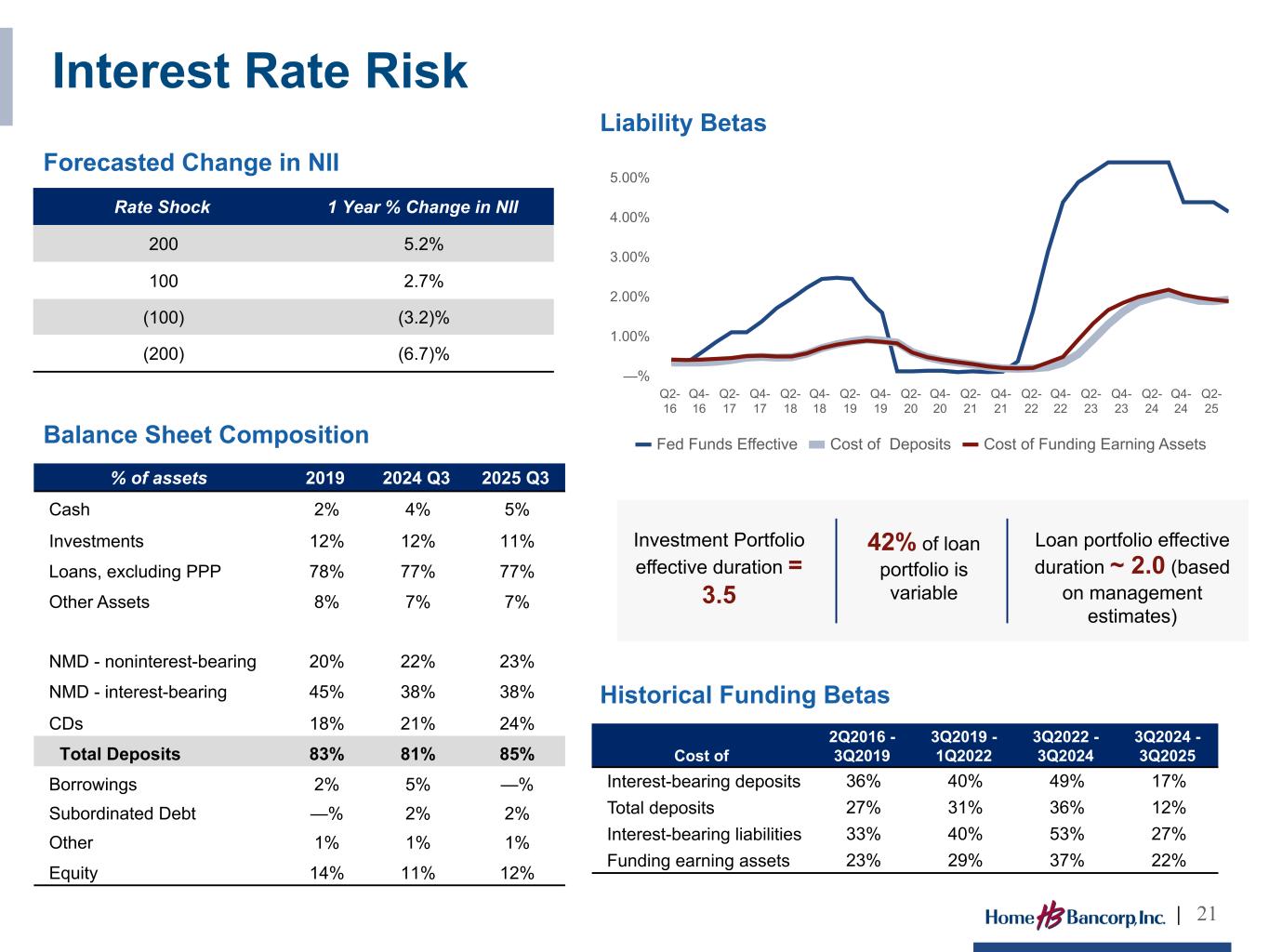
The increased asset sensitivity is largely due to the cash on our balance sheet, which is becoming more sensitive as cash reprices daily. Regarding our net interest margin, I believe we have a strong opportunity to maintain it at least flat and potentially grow a few basis points quarter-over-quarter. We have a significant amount of loans within investment securities that will reprice, and we believe there is still room for upward repricing. Additionally, with the Federal Reserve cutting rates, we have reduced some of our deposit rates, and as the Fed continues this trend, we plan to lower deposit rates even more. This has the potential to counterbalance the decrease in loan yields from the Fed rate cuts, as adjustable-rate loans repricing downward. We are confident that we are in a good position to keep our net interest margin flat or possibly increase it by a few basis points.
Speaker 3
I appreciate that. And your updated 2025 loan growth guide implies a pretty big step-up in 4Q loan growth. What levels of payoffs and paydowns are implied in this guide? And how does the loan pipeline currently compare to recent history? Just to probably get a sense on the jumping-off point as we get into 2026.
Certainly. The third quarter marked the start of a decline in new loan originations. However, we anticipate a somewhat healthier portfolio in the fourth quarter. While not all of this may close in the fourth quarter, it is an improvement over the third quarter's originations. The numbers were down, likely around $30 million compared to previous quarters. We believe there will be an increase, and ideally, we can recover the full $36 million to reach more normalized levels in the fourth quarter. Additionally, if we see a couple more rate cuts, the first quarter should be quite strong.
Operator
Your next question comes from the line of Feddie Strickland from Hovde Group.
Speaker 4
I appreciate the commentary in the release that you don't expect losses on the credits that migrated to nonaccrual this quarter. You gave some more color on the call. So it sounds like we shouldn't necessarily see charge-offs from that. But I'm just curious, as you work through some of these credits, could we start to see the direction of nonperformers reverse and maybe start to see those come down some?
Yes. As we assess the situation, there aren't any significant similarities in the issues arising. These are primarily isolated instances. One of our classified clients contacted us this week and indicated they would settle their payments by the end of the month. While we remain optimistic, the challenge with nonperforming assets is that they sometimes require additional time to resolve. The positive aspect is that we're not witnessing many cases going into bankruptcy, which can vary in resolution time—typically faster in Texas but potentially taking up to a year in Louisiana. We are managing these situations. One of our problem assets from a couple of years ago is finally emerging from bankruptcy, allowing us to reclaim those properties and initiate the selling process. Historically, dealing with bankruptcies can be a lengthy process. Fortunately, the majority of our cases are not facing bankruptcy, so we are hopeful that they can either sell or improve their operations to resume payments as agreed.
Speaker 4
Appreciate that. And just shifting gears to deposits. Can you talk about the level of deposit competition you're seeing today versus maybe a quarter ago? And how are you thinking about deposit betas on the way down if we do get rate cuts?
Our deposit betas are expected to be somewhat lower than our peers. Over time, we anticipate that our deposit betas will rise, although they will remain slightly below those of our competitors. This is mainly because we haven't increased our deposit rates as much as some other banks, resulting in a lower initial cost of funds. Consequently, this leaves us with less room for decline, but we still have the ability to adjust as yields decrease. In terms of competition, there are a few banks, particularly in Texas and one or two in Louisiana, that have pricing that stands out from our typical peer group. However, overall, we are successfully retaining most customers and providing competitive rates, and I don't see the pricing competition being as aggressive as it has been previously. Some of our competitors are quick to reduce their deposit costs and are focused on lowering their liability expenses, which is advantageous for us given our net interest margin position and our intention to enhance our liquidity.
With a loan-to-deposit ratio of 91%, it should be somewhat easier for us to reduce our deposit costs. When we were at 98%, we were leading in terms of CD pricing. So, I believe that some of that pressure will be alleviated.
Operator
This concludes our question-and-answer session. I would like to turn the conference back over to John for closing remarks. Sir, please go ahead.
Thank you. Once again, thank you all today for joining us. We look forward to speaking to you in many days and weeks ahead. Thank you for your interest in Home Bancorp. Have a great day.
Operator
The conference has now concluded. Thank you for attending today's presentation. You may now disconnect.