Operator
Greetings, and welcome to the Hagerty Second Quarter 2025 Earnings Conference Call. At this time, all participants are in a listen-only mode. A brief question-and-answer session will follow the formal presentation. If anyone should require operator assistance during the conference, please press star zero on your telephone keypad. As a reminder, this conference is being recorded. It is now my pleasure to introduce your host, Jay Kazal, Senior Vice President of Investor Relations. Thank you. You may begin.
Thank you, Operator, and good morning, everyone. Thanks for joining us to discuss Hagerty's results for the second quarter of 2025. I'm joined this morning by McKeel Hagerty, Chief Executive Officer and Chairman, and Patrick McClima, Chief Financial Officer. During this morning's conference call, we will refer to an accompanying presentation that is available on Hagerty's Investor Relations section of the company's corporate website at investor.hagerty.com. Our earnings release, slides, and letter to stockholders covering this period are also posted on the IR website, as well as our 8K filing. Today's discussion contains forward-looking statements and non-GAAP financial metrics, as described further on slide two of the earnings presentation. Forward-looking statements include statements about our expected future business and financial performance and are not promises or guarantees of future performance. They are subject to a variety of risks and uncertainties that could cause the actual results to differ materially from our expectations. For discussion of material risks and important factors that could affect our actual results, please refer to those contained in our filings with the SEC, which are also available on our Investor Relations website at scc.gov.
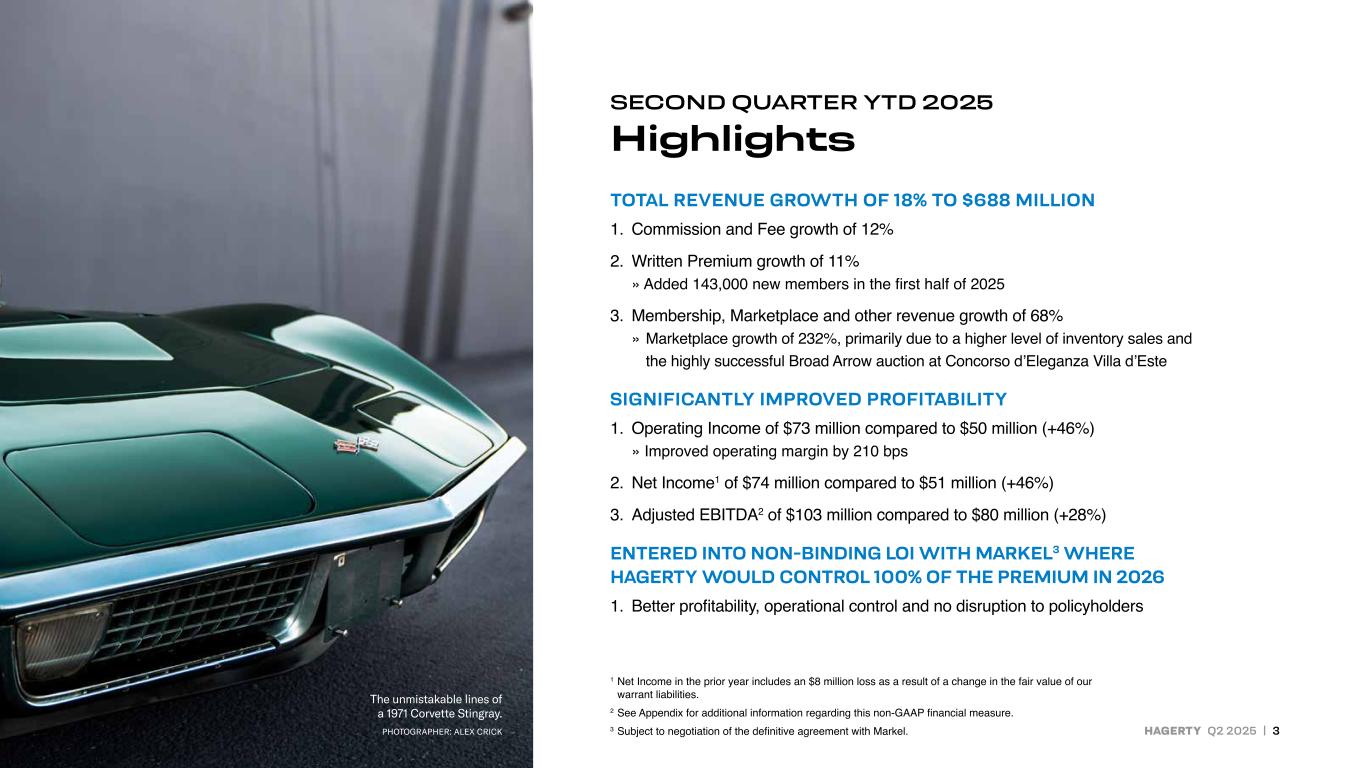
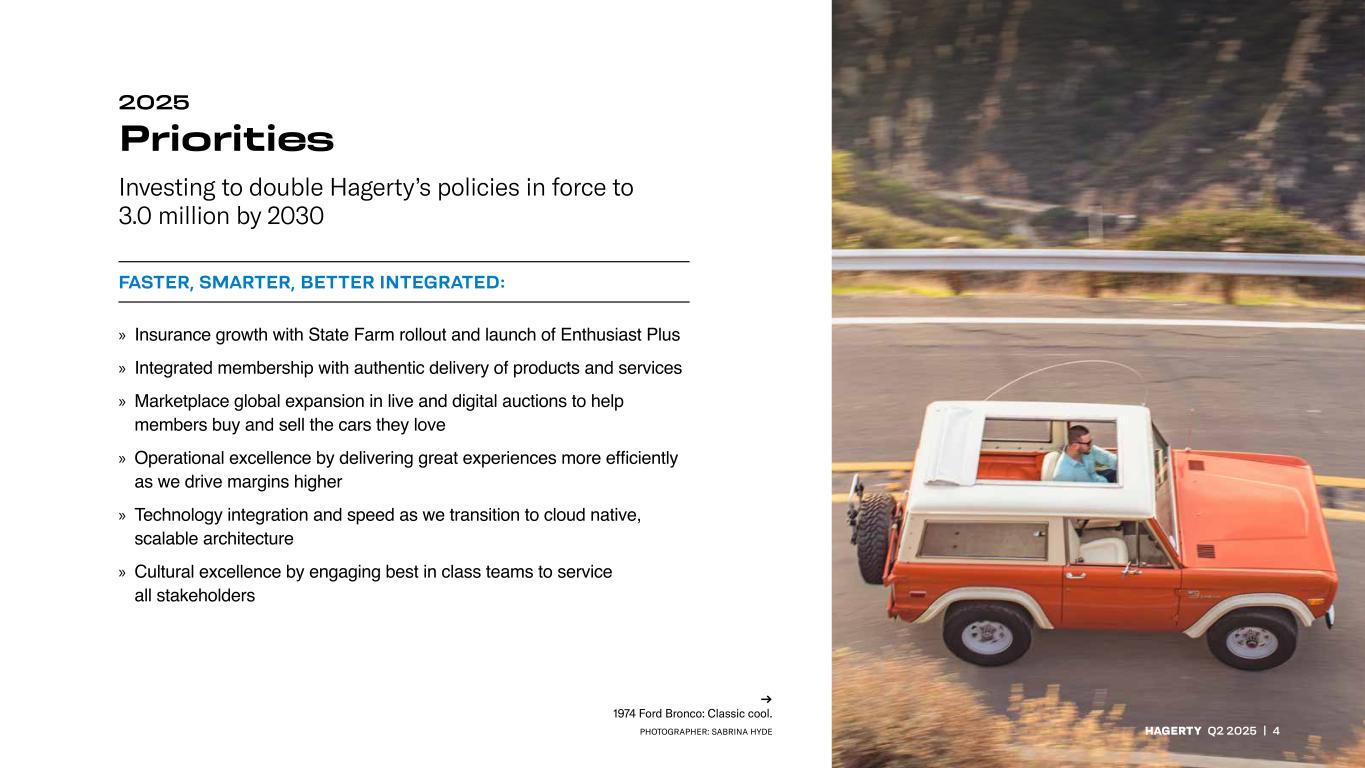
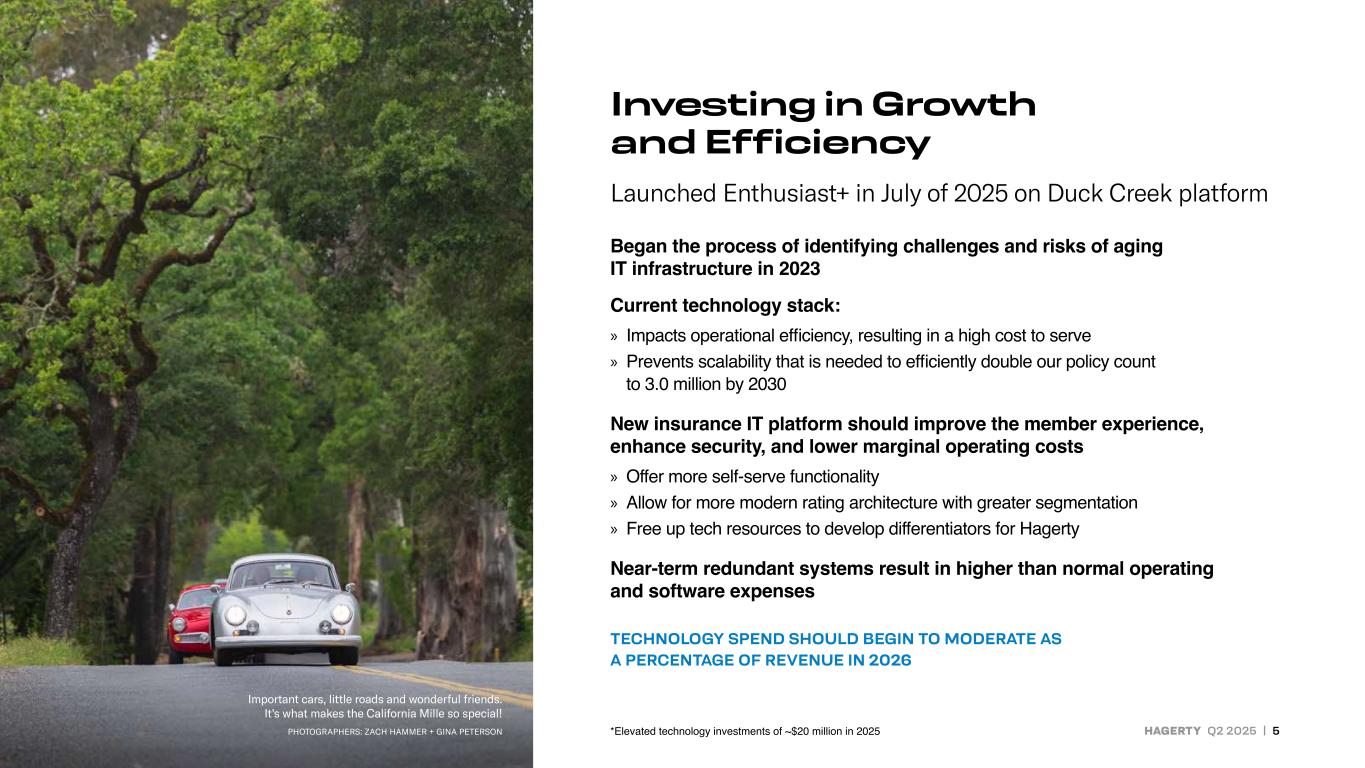
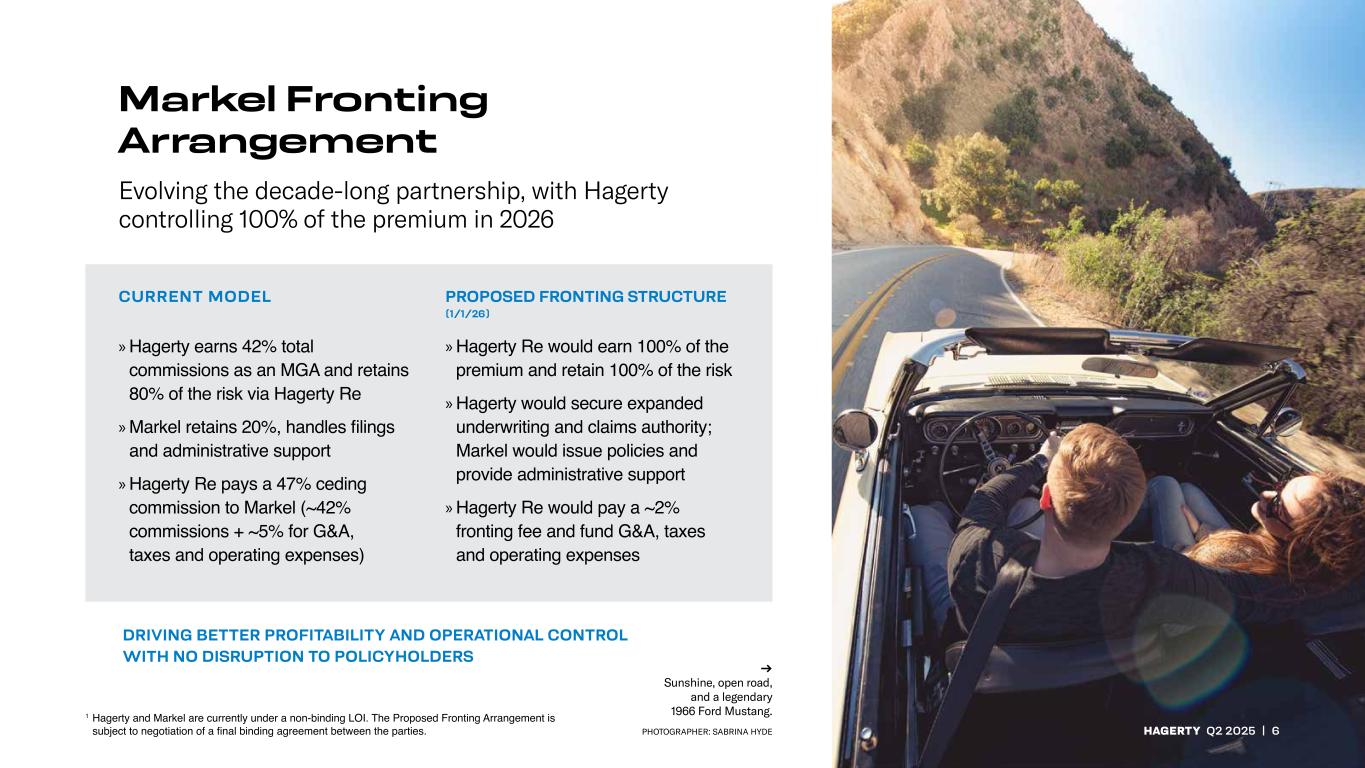
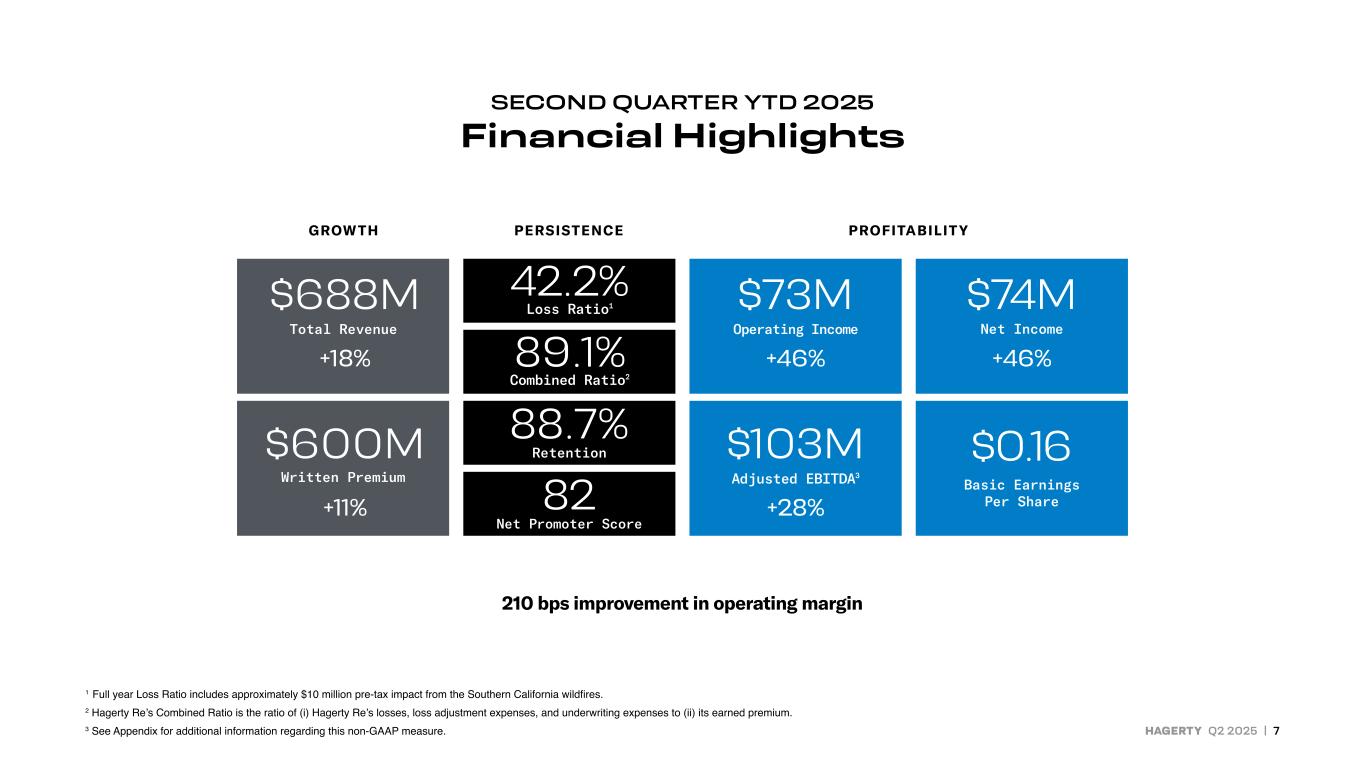
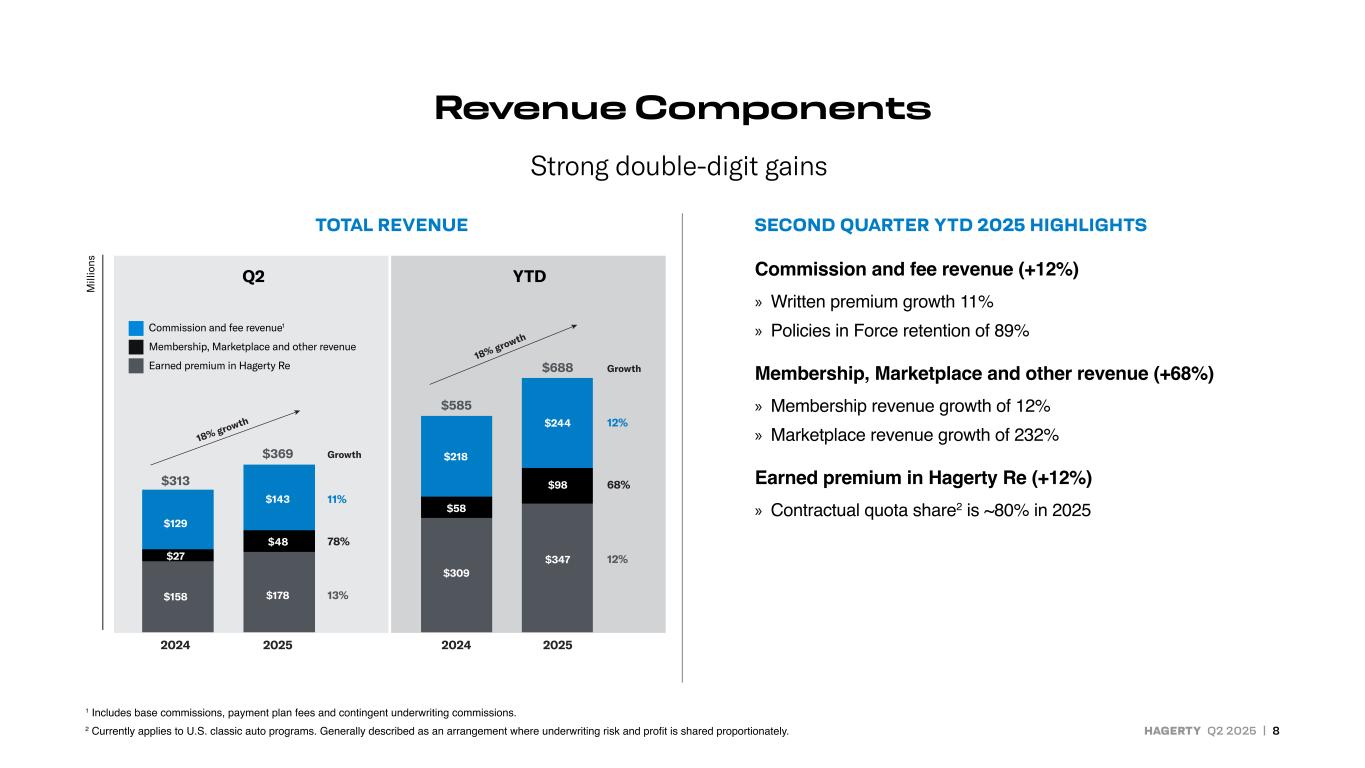
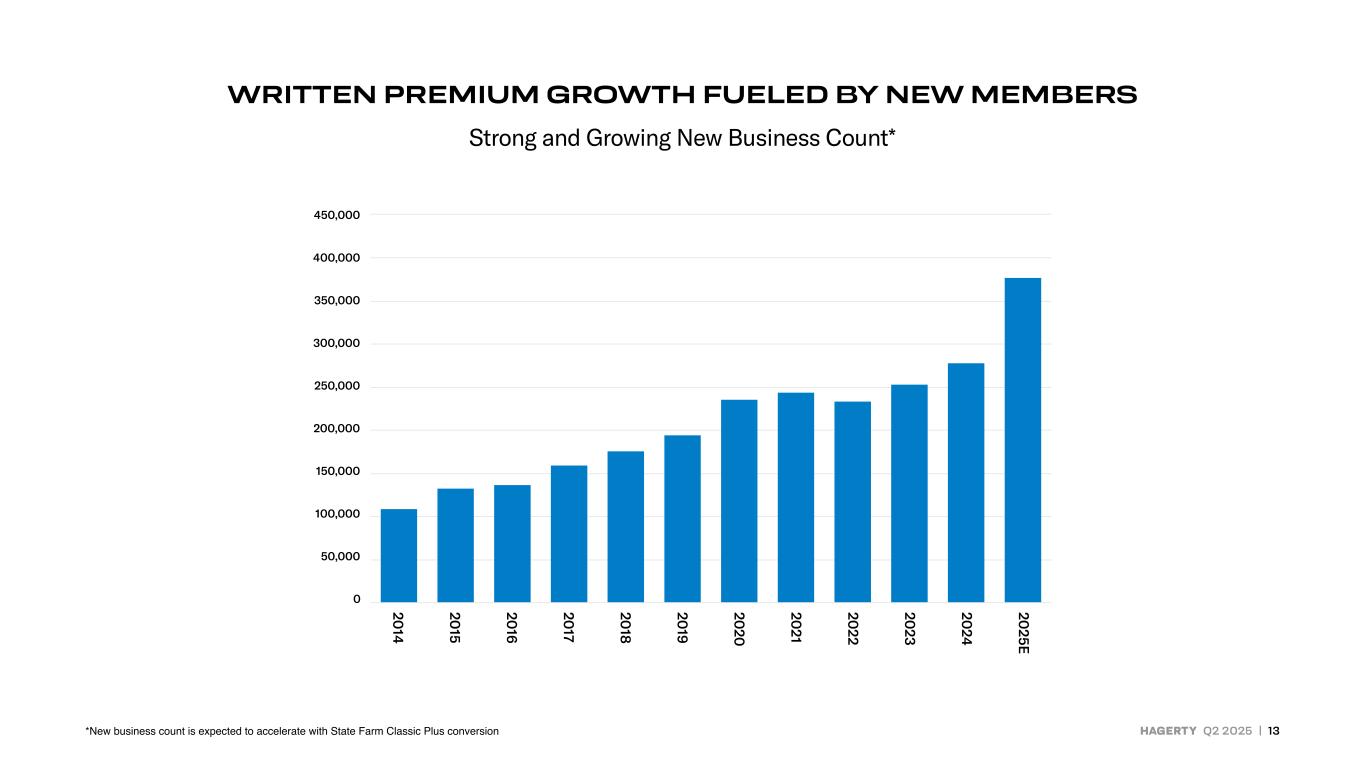
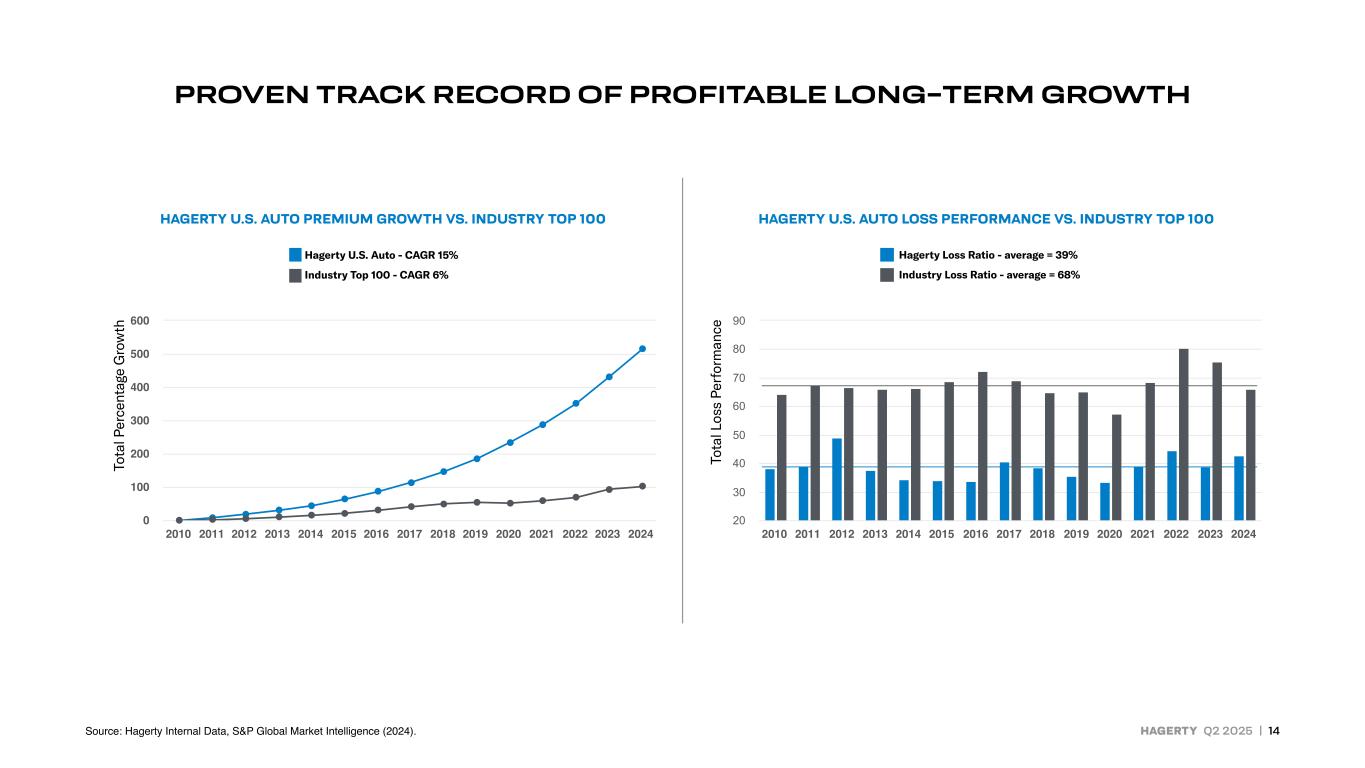
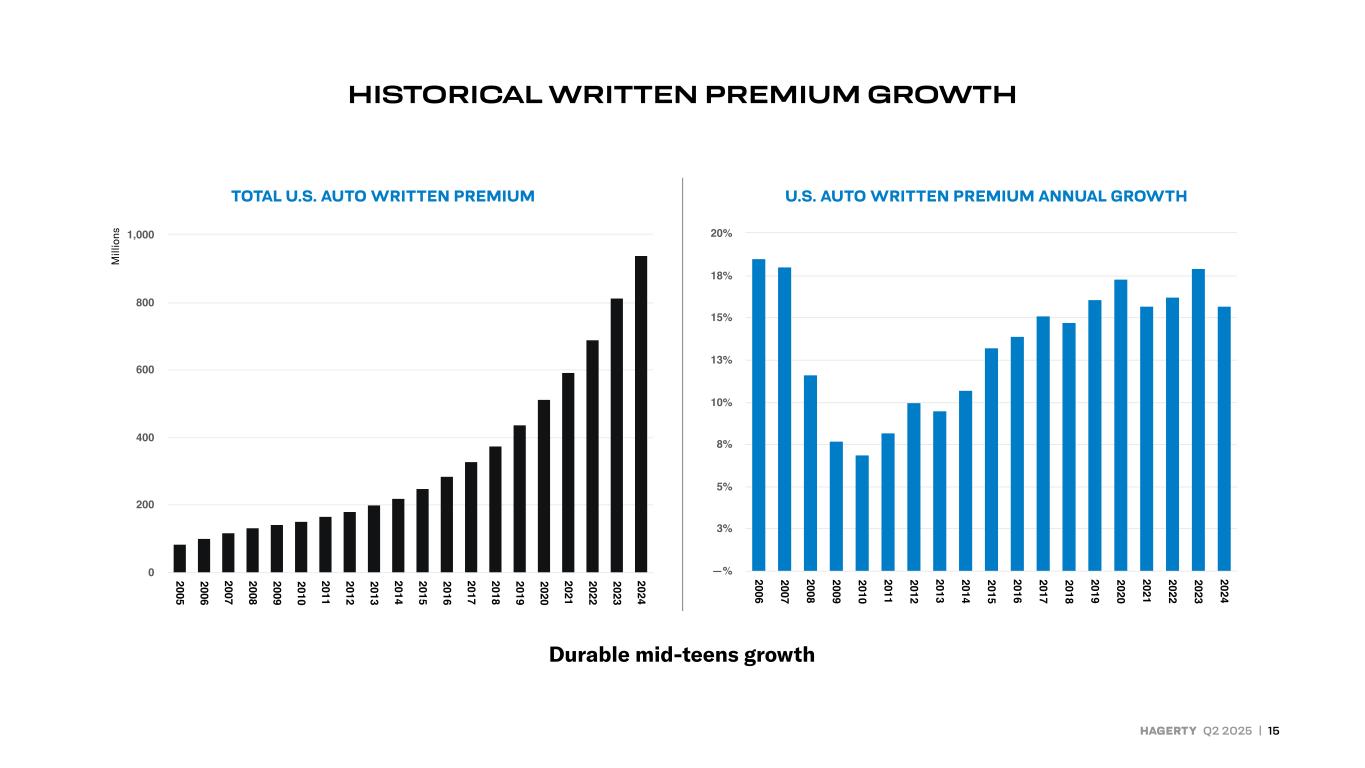
The appendix of the presentation also contains reconciliations of our non-GAAP metrics to the most directly comparable GAAP measures that are further supplemented by this morning's 8k filing and with that i will turn the call over to mckeel thanks jay and good morning everyone we appreciate you taking the time to join hagerty's second quarter 2025 earnings call this summer has been another great driving season as we remain on track to welcome a record number of new members to hagerty in 2025 helping them protect buy sell and enjoy their special cars after four decades in the car world i have learned that everyone has their own car story, ranging from someone who loves brass, horseless carriages to modern-day high-performance vehicles, off-road vehicles to vintage woody wagons, and American-made muscle cars to Japanese K-cars. Regardless of the type of vehicle, we know it's special to that member, leading to an emotional connection that inspires safer driving habits, which in turn leads to lower claims frequency and consistently strong underwriting results. And our team of auto Enthusiast is here to provide the excellent service, guaranteed value coverage, and a suite of Hagerty products and services to help celebrate their vehicle. This passion and love of cars shared by one team, Hagerty, and our members results in sustained high rates of growth. Let me dig into some highlights from the first half of 2025 shown on slide three. Total revenue increased 18%. New business count fueled an 11% increase in written premium and a 12% growth in our commission revenue. Earned premium for our risk-taking entity, Hagerty Reinsurance, increased 12%. And membership, marketplace, and other revenue jumped 68% due to higher inventory sales and the launch of our European auction business. Moving to profitability, during the first six months of the year, our operating margins jumped another 210 basis points, resulting in net income gains of 46% and adjusted EBITDA growth of 28%. Over the last three years, we have expanded first-half operating margins by nearly 14 percentage points, and we expect continued gains as we double our policies in force to $3 million by 2030. Let's move on to slide four, which details our 2025 strategic priorities built around three themes, simpler, faster, and better integrated. First is to expand our specialty insurance offerings to protect more of the collectible market, including modern enthusiast vehicles with the launch of our Enthusiast Plus program in Colorado two weeks ago. Second is to simplify and better integrate the membership experience across our products and services, creating revenue synergies and driving cost efficiencies. This is how we engage with our members in a unique and authentic way. Third is to expand our marketplace business internationally, leveraging the trust that we have built in the United States. We announced two additional European auctions on the heels of the excellent results from our inaugural Villa d'Este auction in May, where we achieved a 78% sell-through rate. These include auctions built around partnerships with the Zoot Concours in Belgium and AutoZurich in Switzerland. We are methodically building Hagerty and Broad Arrow into the most trusted brands to help people around the world buy and sell special vehicles. And finally, we are investing in the technology replatforming that will enable efficiency gains shown on slide five. I would note that we recently launched Enthusiast Plus on Duck Creek, a leading cloud-based insurance platform. Our technology spend should trend down as a percent of revenue as we accelerate the top line in 2026 and 2027 and begin to realize the efficiency benefits from these investments. Before I turn the call over to Patrick to share more details on our results and increased 2025 outlook, I wanted to walk you through the recently announced fronting arrangement with our longstanding partner Markel shown on slide six. As you know, we have had a highly successful partnership with Markel that began in 2013 when they acquired Essentia to underwrite Hagerty's U.S. business. In 2017, we began to assume 25% of the premium and risk associated with our high quality book of business and steadily increased it to the current quota share of 80% with Markel retaining 20%. On July 24th, we announced that we had signed an LOI to move to a new fronting arrangement with Markel, where Hagerty would control 100% of the premium and risk commencing in 2026 while paying a 2% fronting fee to Markel to issue policies and provide administrative support. The evolution of this partnership will result in increased profitability for Hagerty in form of additional underwriting and investment income along with greater operational control. We are excited to continue partnering with Markel and believe the new arrangement will position us to unlock even more value for Hagerty shareholders over the coming years. Patrick?
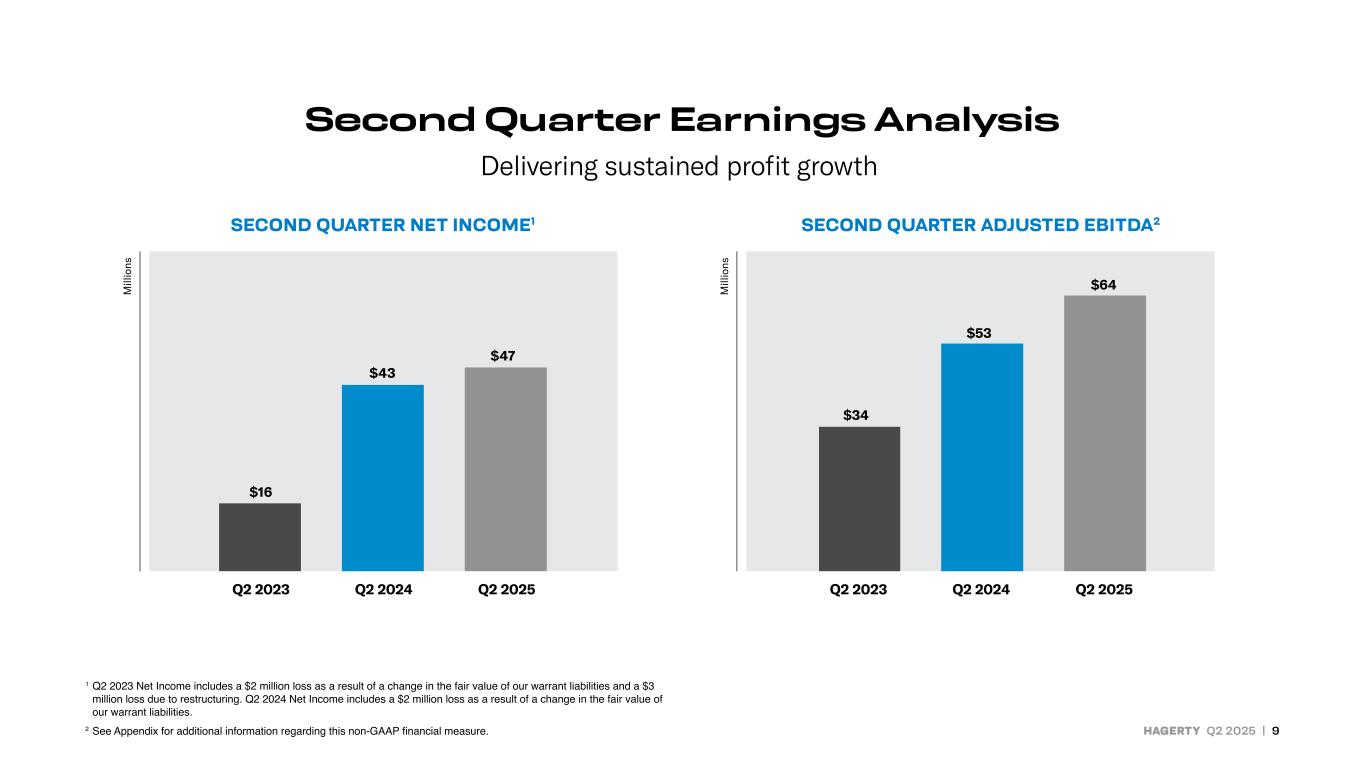
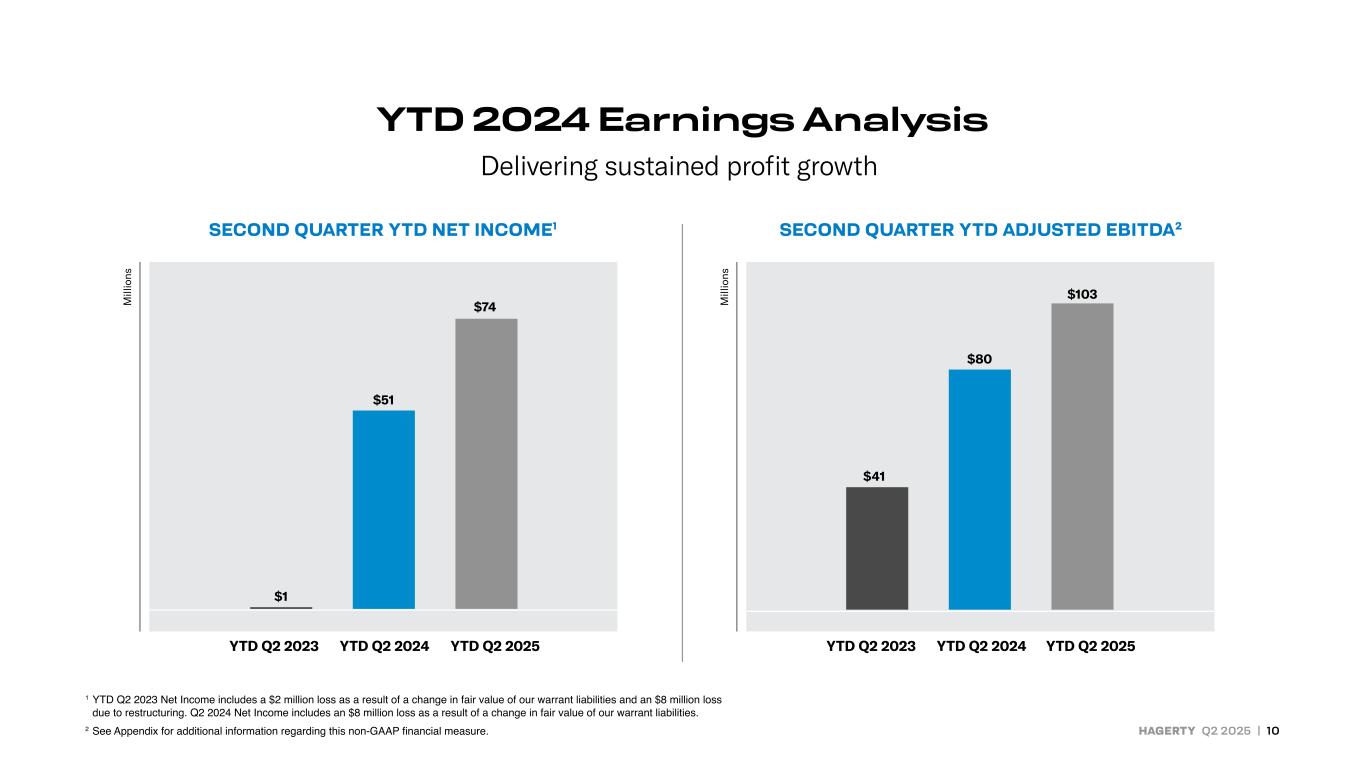
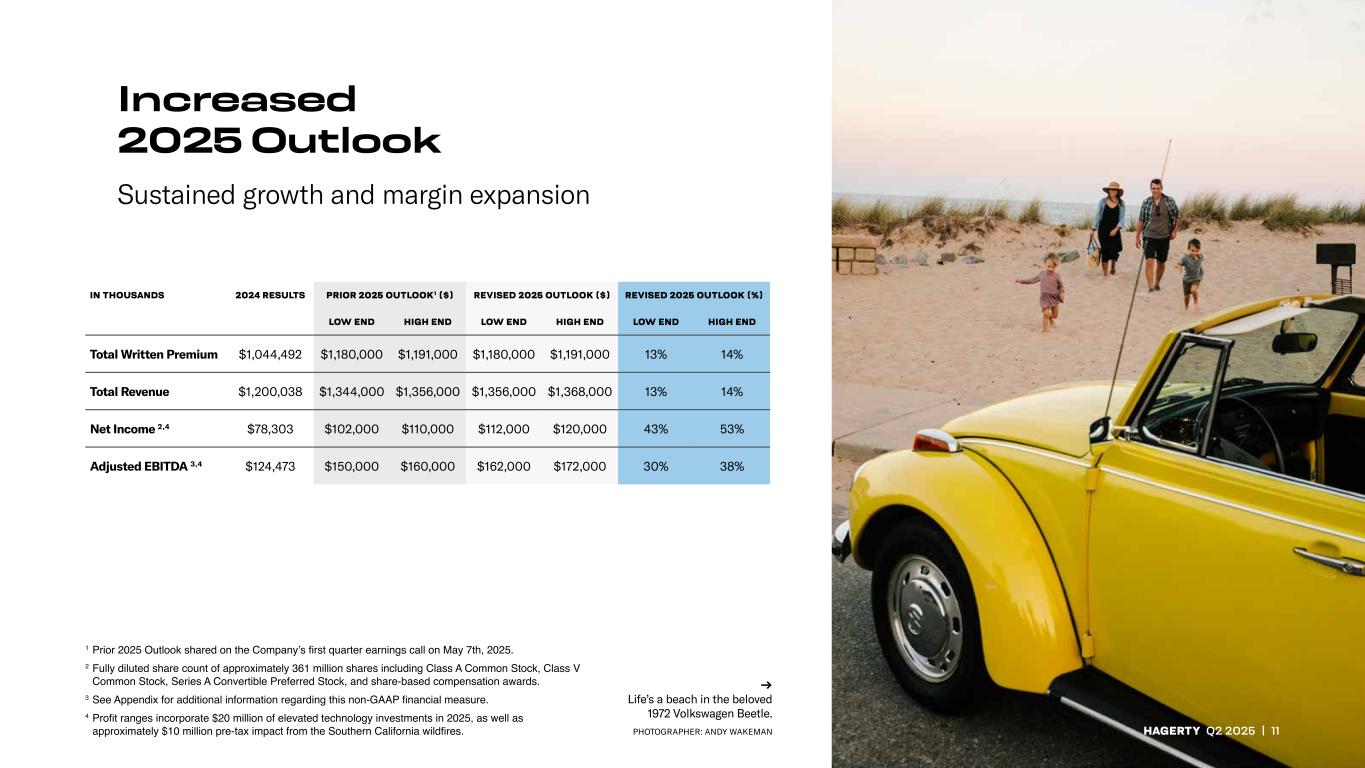
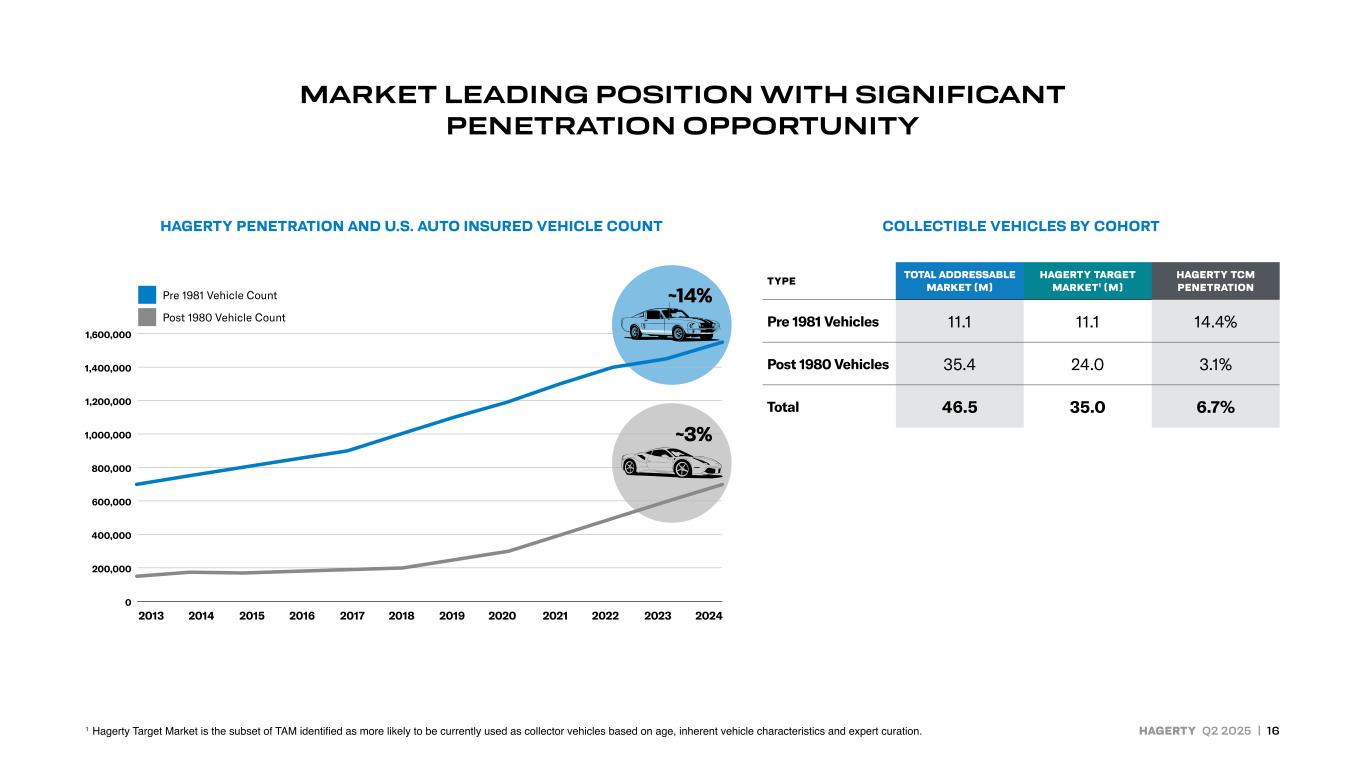
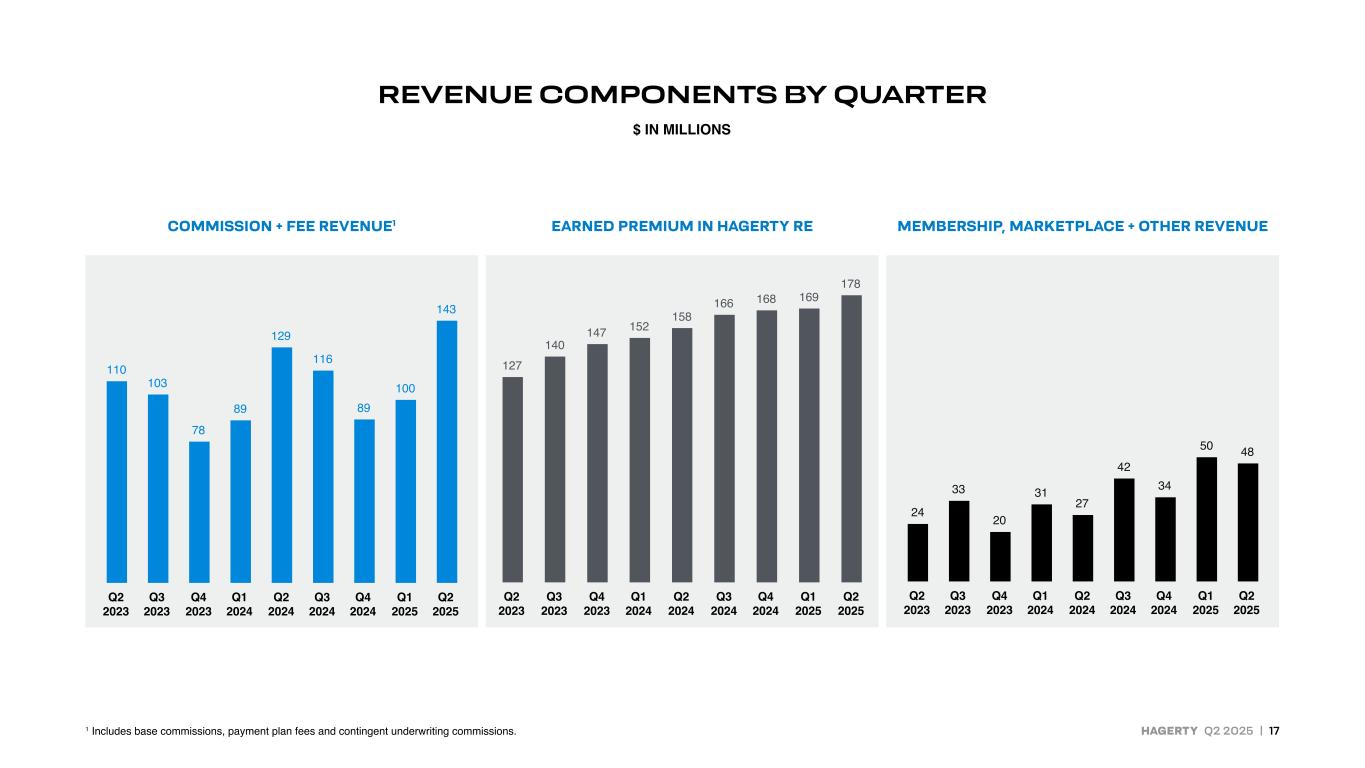
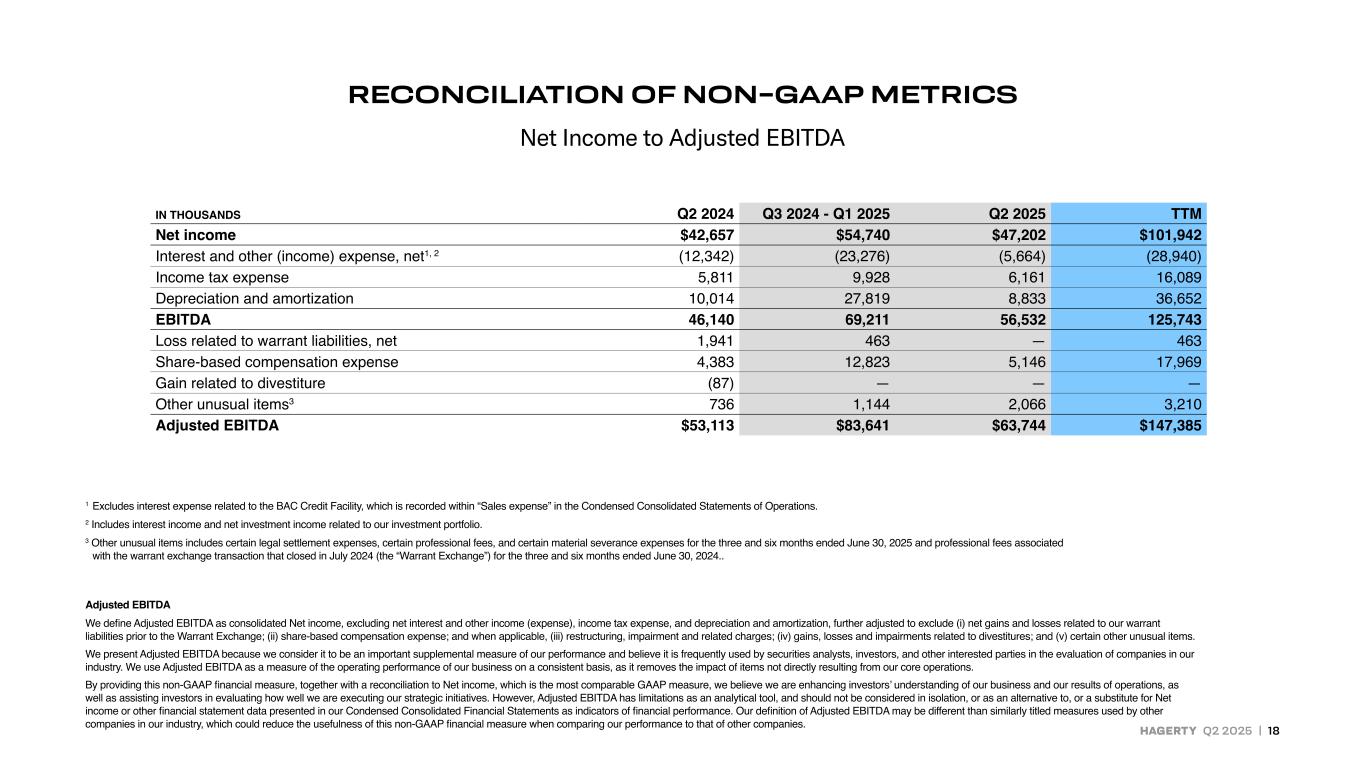
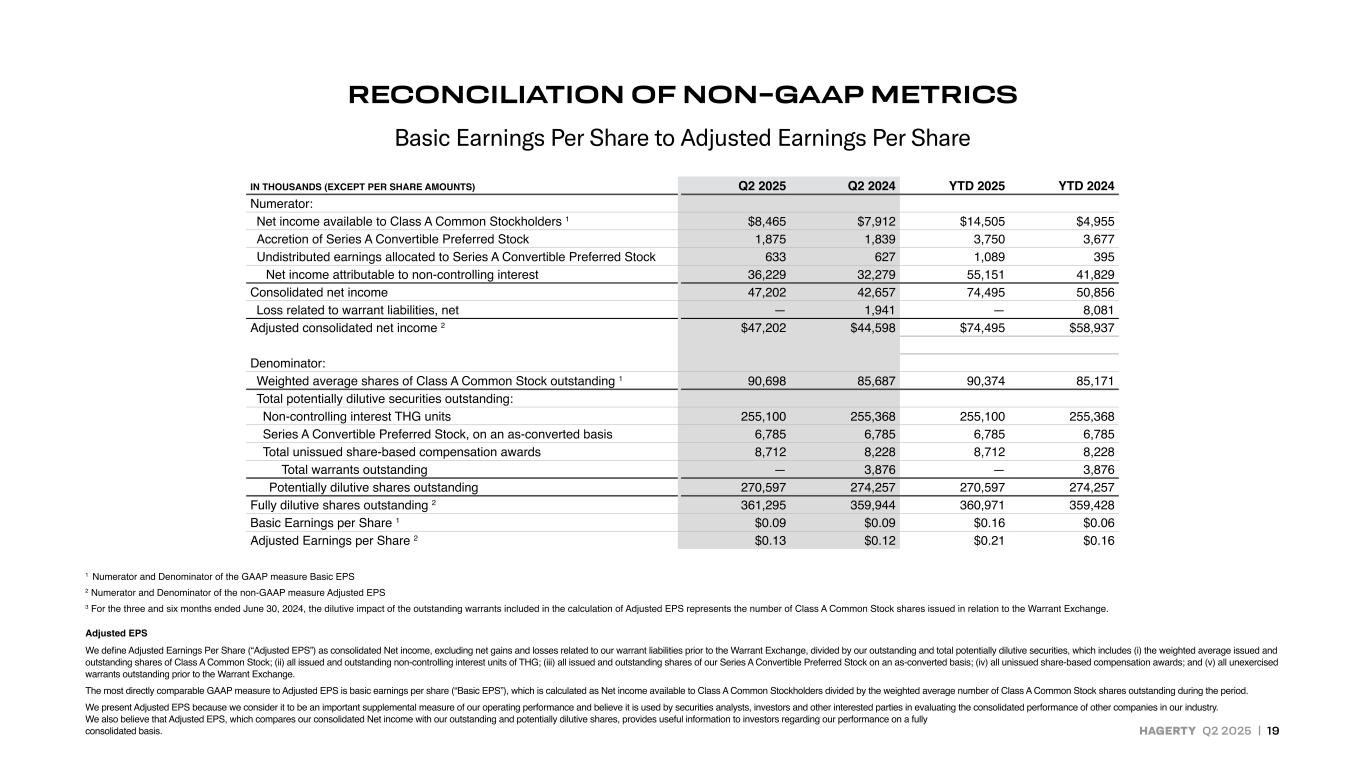
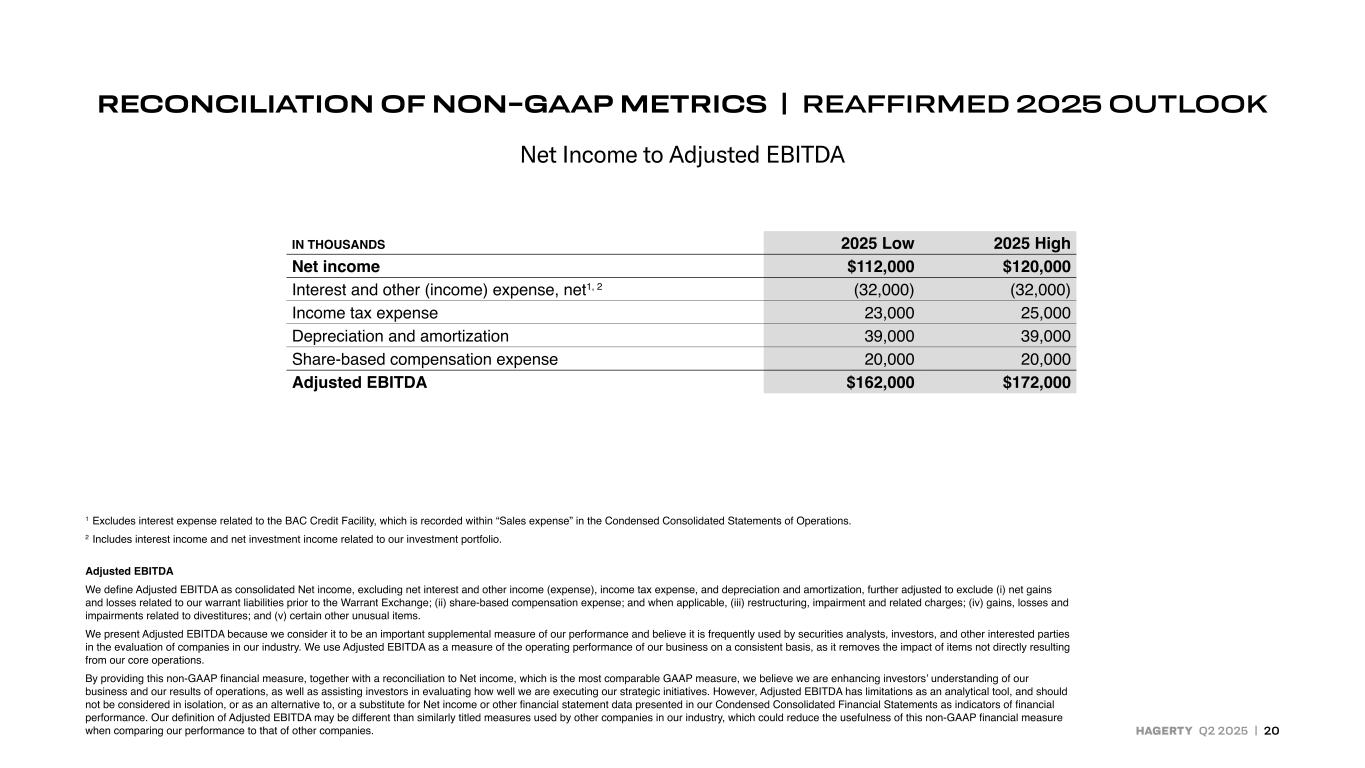
Thank you and good morning everyone. Let me dig into the second quarter results in more detail shown on slides seven and eight. In the quarter we delivered 18 percent growth in total revenue to $369 million. New business count gains, combined with industry-leading retention of 89%, were an 11% increase in written premium. This 11% is below the 13% to 14% growth we expect for the full year, given our expectations for faster growth in the second half as state farm ramps. Our two-year rates of written premium growth during the first half were over 30% and should remain steady at those levels in the second half as growth accelerated back into the mid-teens during July. Mission and fee revenue grew 11% to $143 million. Earned premium increased 13% to $178 million. Our loss ratio remained steady at 42%. And membership, marketplace, and other revenue jumped 78% to $48 million. In just three years, we have quickly established ourselves as a leading auction house with unparalleled automotive expertise across Hagerty's products, focused on cultivating trusted, long-term relationships with our customers. Turning now to profitability, shown on slide 9 and 10, we reported an operating profit of $48 million in the second quarter, with operating margins up 70 basis points to 13%. We are maintaining tight discipline on our costs to translate double-digit commission gains into faster rates of profit growth gna increased six percent due primarily to higher software licensing costs from our technology transformation and salaries and benefits grew 11 due to merit increases and additional head count to support our growth adjusted evita increased 20 to 64 million as we improve the efficiency of our business model our growing capital base at Hagerty-Ree and balanced investment strategy resulted in $11 million in second quarter investment income. Interest and other income of $6 million included $2 million of interest expense and a $3 million non-cash increase in the tax viability related to our partnership structure. In total, we delivered second quarter net income of $47 million compared to $43 million a year earlier, an increase of 11 percent. Net income attributable to Class A common shareholders was $9 million after attribution of earnings to the non-controlling interest and accretion on the preferred stock. Gap basic and diluted earnings per share was nine cents based on 91 million shares of Class A common stock outstanding. We ended the quarter with $140 million in unrestricted cash, and $176 million of total debt, which includes $39 million in back leverage for our portfolio of collateralized loans. Let me wrap up with our updated outlook for 2025, where we increased full-year expectations for revenue and profits, shown on slide 11. Given our first half results and solid business momentum, we are increasing our 2025 revenue expectations with 13 to 14 percent growth powered by similar rates of written premium growth and strong gains from our marketplace business we are also increasing our assumptions for margin expansion and now expect net income of 112 to 120 million dollars up 43 to 53 percent and adjusted EBITDA of $162 to $172 million, up 30% to 38% compared to 2024. In addition to executing on our 2025 strategic priorities, we are well positioned to deliver accelerated growth as we move into 2026, fueled by State Farm's Ramp and Market Share Games. We are excited to welcome their 525,000 current program members and to help them grow their classic business our partnership pipeline is strong and growing as top 50 carriers realize that they could benefit from a partnership with hagerty to help them fuel their own growth and improve retention with our differentiated approach to caring for their members and special cars enthusiast plus should become a material growth driver over the medium term as we target more of the modern enthusiast vehicles with the right product and pricing to service these vehicles As we continue to get smarter at utilizing our data to target members with superior driving characteristics with their special toys, we have more precisely defined our target market for 25- to 40-year-old cars that are more likely to be collectible versus just an older vehicle that might still be used as a daily driver. This includes filtering by vehicle and body type, equipment and powertrain packages, and original MSRP. The 1999 Toyota Camry would be a good example of this. We believe we have a long runway in front of us, given our penetration of this 35 million car target market is only 6.7%. When you combine our top-line momentum and growth levers with our ongoing efficiency initiatives and the proposed Markel fronting arrangement, we believe we are pulling together all the ingredients necessary for strong shareholder value creation over the coming years. With that, let us now open the call to your questions.
Operator
Thank you. We will now be conducting a question and answer session. If you would like to ask a question, please press star 1 on your telephone keypad. A confirmation tone will indicate that your line is in the question queue. You may press star 2 if you would like to remove your question from the queue. For participants using speaker equipment, it may be necessary to pick up your handset before pressing the star key. One moment, please, while we poll for questions. Our first question comes from Mark Hughes with True Securities. Please proceed with your question.
Yeah, thank you. Good morning.
The marketplace revenue is quite strong this quarter. Do you have any thoughts on kind of pacing on Q3, Q4 when you look at the events that you've got in front of you? What's the trajectory of that going to be? And then when we look at your full-year total revenue guide, how much of that is marketplace? I don't know if you can share that detail.
Sure. First, on the second quarter, we had a very strong second quarter in terms of private sales, some of which included inventory sales. I think we've talked about the fact that opportunistically at times we will purchase cars and then resell those either at auction or, in this case, privately. And the way that that works just through the accounting is the full sale price of the car ends up being the revenue, and obviously we're doing it to make the margin on that. And so there was a fair bit of that activity in the second quarter. And then just private sales, even when we're not talking about inventory, so pure agency transactions, also has been quite strong the first half of this year. So I think that's a key driver for the year-to-date revenue. And then second half of the year, the growth really will come. We feel good in a week or so. We've got Monterey coming up, and that auction came together well, and we'll see what happens in the room, as always. But as Mikhail talked about in the comments, we are launching additional auctions this year, and so we'll have an auction, Belgium, Switzerland, and then also Las Vegas. And so those will drive incremental growth. None of those three existed last year. And that's reflected in the guidance for the second half of the year as well.
Very good. The $20 million in incremental technology spending, what's the outlook when we think about 2026? Is that all going to go away or is that going to drop by half or any thoughts on that?
Yeah, I think we've talked about this on previous calls. And we try to be very careful with our language. We're intentionally not describing it as a one-time that would go away, as you're suggesting. The concept is that we had to increase spending. So it's $20 million, 15 of which is related to technology. The other five is really related to marketplace. And so putting together the team and for the auctions that I just talked about, we've meaningfully grown our footprint in Europe to support the business. But the $15 million, the way to think about it is it's the fact that as we've invested heavily in our new technology platform, which is now actually in use, we've launched Enthusiast Plus and we're selling policies, think of that as pre-revenue spending, right? So, we spent on both technology and people to get ready to launch the platform. Now, we're starting to actually sell on the platform, but we're only in one state. It'll ramp up over time. So what we're trying to explain is there's a pinch point in profitability because we're spending those dollars in advance of when the revenue shows up. So the concept is not that it goes away. It's that we'll actually be delivering real revenues, both from the insurance side and the marketplace side on a go-forward basis. So we gave clarity on that really to just explain that pinch point. Does that help, Mark?
It does. So that's cost that you'll be leveraging. I think I understand what you're saying.
How about the licenses for our new platform, which is a Duck Creek platform? We started spending money on those in 2025, and for the first half of the year, there was no revenue associated with. Second half of 2025, there's a little bit, as we launched Enthusiast Plus, but it ramps up from there. And similar on the marketplace, right? We hired those people, and now in the second half of the year, we'll start producing revenue against it.
Yeah. Yeah. The earnings impact from the Markel shift, other things equal, is that – how would we look at that contribution to the bottom line?
Sure. So – and we put out a set of slides when we announced that 10 days ago, whenever it was. And the concept is, by picking up the incremental 20 percentage points of quota share – we're going from 80 percent quota share up to 100 – And the benefits to us are, one, we get the incremental underwriting profit on that. And as you know, that within Hagerty Re, the way that that business works is it runs at about an 89% combined ratio. So on the incremental 20 points, we'd expect to earn, I call it, 11 points of operating profit. And so that's a meaningful benefit at the Hagerty Re level. And you can take the current book of business that we're running and close it up by the incremental 20 percentage points of quota share, and that's a way to think how it flows through. Additionally, we're now getting that earned premium within Hagerty RE, and we'll be able to make the investment income on that as well. And we're earning something like 4.4% right now on investment earnings. So those are the two big economic drivers. We do have to staff up a little bit. We're taking on new scope of work. And so that's a little bit of an offset to the two positives. But I think if you just focus on the incremental investment earnings, the incremental underwriting profit, you'll get most of the answer.
Understood. If I could squeeze in one more, when you think about the shopping behavior of the customers, I think you've mentioned on earlier calls that some of the higher pricing across the industry has perhaps been beneficial goals as consumers have shopped around and you've had an attractive offering. How would you characterize the market right now in terms of just the potential flow related to the dynamics across the broader space?
Yeah, I'm happy to take a crack at it, McKeelkin, Ed. We're in business with all the top insurance companies, and so we talked about what they're seeing in their core business and share with them what we're seeing. And the general theme now, with the exception of Progressive, is people are seeing this being a year where unit growth is a bit below what they'd expected. Progressive, obviously, in a different situation where they're spending heavily and they're growing quite aggressively. And so I would say it's somewhat of a balanced market right now. We're not in one of those phases where there's intense spending on new customer generation in the broad industry that's leading to those high levels of shopping maybe that we saw in years past. It seems more muted, again, with the exception of progressive. Having said that, our quote volume continues to be very strong and up year over year.
And so we're confident from a new business perspective, but maybe not kind of the frothy environment that can see in other times very good thank you as a reminder if you would like to ask a question please press star one on your telephone keypad our next question comes from greg peters with raymond jean please proceed with your questions hey good morning everyone um i uh i wanted to go back to your expansion into in europe and maybe you can help and i know you've talked about this before so um just maybe remind me about what you see in terms of the adjustable
market for your business as we think about the next couple years yeah hey greg it's mikhil um thanks for that we're pretty excited about our um expansion into europe um and you know really with auctions being the the lead step here our auction at villa d'este um which is a very very high-end auction and concourse environment that takes place at the Como concourse actually that was a real testament that we had the team to go out there and build this business for us in Europe and it we can't emphasize enough that you know live auctions and private sales are very client oriented so in order to have the business that you can't just hang the shingle out and hope for the best it's it's very much like if you have the team you have the specialists, they go out and generate the business, find the potential buyers, and the auction room, especially if you do it at a fun place like Lake Como and Villa d'Este. So, you know, off to a good start. And then the idea being that, you know, with the two additional auctions at the Zoot Concours in Belgium, which is a very well-attended high-end, you know, Concours environment, lots of different motoring activities take place there, long history of auctions being successful there. That was the next one we announced, and then on to AutoZurich, which is a very strong, both enthusiast and kind of more towards this modern enthusiast car. They call them young timers, actually, over in Europe, kind of the German-speaking term for that kind of newer vehicle category, which is where all the expansion is and where a lot of our, I guess, greatest demand is in our auction business. So what we think we've done here is built the right team for Europe. we're focusing on the right most growing marketplace rather than trying to just beat you know kind of beat into a tougher market of you know older cars and where there's a lot more it's a little bit frothier at that high end and what we found already is again great team plenty of demand and you know a lot of sort of early indications that we've made the right moves at the right time so so far so good in Europe we you know we'd look to see in the next couple of years, an even bigger auction calendar for us in Europe and also build out that private sales capability. So looking forward to that, as well as a full auction schedule for us in the U.S.
Right. Thanks for that detail. Can we get to State Farm? I know, you know, this seems like it's beginning to really impact your financials.
Maybe you can give us a sense of how where you are in the process of of the state state farm integration and rolling out your business to their to their all of their agents happy to so you know this is a very important partnership for us and it will be long in the future you know state farm if you think of it it's like job to be done they hired us to help really serve those passionate car people that they had on their books but you know they they're they're a big insurance company and this was not an area they specialized in so right now i think we're live in 17 states we might have added a few more even 16 16 i think we're adding a couple more even as soon as this week and that is focused on new business so this is where when you open up to the agents uh in those state total all state in or state farm in total has a little over 19 000 agents so each you know state has a large number of them. So, it focuses first on new business. Now, we've been already doing new business in four of those states, and now we're starting the process of rolling the existing books in those four states over to us now. So, it's up and running. The next couple of years are going to be high volume, both from a new business standpoint, as well as starting that that, you know, that role over the existing business with them. And, you know, so far, so good. It was a complicated technology integration. The teams worked really hard to make sure that we were, you know, both doing it correctly the way we want to do it on our end. And then, you know, mating up with State Farm's very large systems, you know, has been a heavy lift, but we're happy to say we're up and running. And so far, so good. The best thing that we're seeing is that the new business numbers that we, every time we turn on the states, the agents are very excited to be able to have access to this product, and they're a highly motivated sales team. So, we would look to see this to be an ever, you know, more important part of our new business story.
Thanks for that. That's interesting. Do you have, you know, do you have an objective, like, to be in 30 states by the end of the year, or, I mean, ultimately, I guess your objective is to be in all of those states, but maybe there's nuances at State Farm that prevent just a straight-line rollout. Maybe you can give them some perspective.
Yeah, they have a clear cadence. They have a clear cadence that they want to be careful that they can pre-communicate, they can train their agents, they can create all their territory and regional people to be ready for this. I think the goal is something in the 20s, right?
25 states by the end of the year.
Yeah, 25 states, and that swung up and down one state or two. The idea would be to be in all of the available states by, you know, over the next couple of years. There are states like California, for all things you read about in the news, that tend to be challenging and lag a little bit, and they will for this too. And also it's important to note that State Farm doesn't do business in every single state. I think notably like Massachusetts, I don't think they do business there for this type of business. So, yes, the goal is to be an all. And, you know, I think just a double click on the one thing, this is not one of those cases as we have with other partners where it's, you know, you put the product on the shelf and you hope that somebody buys it in the store. Or this is a case where there's a big chunk of business that will roll over to us as some of these states roll on and we get into the conversion process. So it's just different, you know, than when sometimes it's exciting to turn on a new partner and you hope they sell a lot. They're both going to sell a lot and convert a lot. So that's why State Farm's quite important to us.
Makes sense. I guess the last question, and you touched upon it in your comments and your answer before, But just curious about the background in the change, the fronting arrangement with Markel, and, you know, what got you to the point where you wanted to go to 100% retention. Just curious, you know, how you were thinking about that going into those conversations.
I mean, I'll start, Patrick, if there's details I missed here. From the very beginning, 2013, the very base core intention of the business is that we would eventually take risk and we would eventually take all of the risk. The form of that, you know, being an MGA and how we would take risk behind it via a quota share arrangement was that became the most practical way to do it through the years, starting in 2017, ramping up the quota share to the current 80%. But from the beginning, this was a friendly, intended evolution of how the business would work. Both the timing and the terms of that final phase of where you'd go from 80% to 100% has always been something that we would be discussing with Markel through the years. And it just, you know, through our sort of normal partner, you know, they're a big owner of the company too, but sort of normal partner discussions with them, We just kind of mutually agreed that it was time for us to go from that 80 percent to 100 and then to change the form of that from kind of the quota share to a normal fronting fee. They own a big fronting business called State National. They did not have that business when we first started with them, and they decided that they really prefer that fronting relationship. So natural evolutions both from their side and our side, but it's a happy thing for Hagerty because as Patrick, I think, detailed a little bit earlier, it's, you know, it's economically a very good thing for us over the next couple of years. And we have the ability, we have good experience in the 80, at the 80 percent quota share level, and we're ready to take on that last 20 percent.
Thanks for the answers, McKeel and Patrick.
Thank you, Greg. Good to hear from you.
Operator
Our next question comes from Pablo Singzaint with J.P. Morgan. Please proceed with your question.
Hi, this is Kevin on for Pablo. So premium growth in the first half of 25 is running a little below your full year outlook. Why is that and what factors do you think will help a recovery in the second half?
Sure, Patrick. So, it's a little light to what we had planned for and expected. There's a few factors going on there. One is, on the new business front, it's coming in a little bit below what we'd expected. And most of that is intentional. um we we have de-emphasized growth in certain markets where we just didn't see adequate profitability um and so you can think about markets like california and new york and we're working on changes in those markets to to get back to a position where we can grow again but we did pause that a bit in the first half of the year um and then we've actually transitioned our direct approach in terms of how we spend. We refined our model and we're much more focused on a return on advertising sales approach versus previously we were more focused on minimizing our cost to acquire a customer.
And you can imagine the logical outcome, right?
We're getting what we believe are better customers as measured by our expected lifetime value, but in some cases we're getting less customers. We're just optimizing for a different metric now. So those are the factors that went into it. We actually feel very good about both of those decisions. And we think that things will change in the markets where we had to slow down a bit. And we're really excited about our new approach to maximizing returns on new customers. And in the second half of the year, what we're going to see is we just talked at length about State Farm. That will start to really ramped up. And Mikhail talked about the fact we're in 16 states. The original four have started conversions. We've got another seven or so states that will start conversions in the fall timetable. And so that really does ramp up in the latter part of the year. Is that helpful?
Yes. Yes. Thank you. And then a follow-up to that, the tax rate in the first half has been running a little low. Do you have an expected tax rate for the second half of the year?
Not at this time. Our tax situation is quite interesting, the nature of the partnership structure that we have. And then with the new Big Beautiful Bill Act, we're still doing our analysis of what the implications of that are. And so we don't have an update on that right now. It's implied in what we put in terms of the net income guidance, but there's some moving pieces right now. Okay. Thank you.
Operator
Our next question comes from Mark Hughes with True Securities. Please proceed with your question.
Yeah. Thanks for taking the follow-up. Patrick, on the State Farm arrangement, the marginal economics on that business, given the kind of the risk structure, I think State Farm retaining risk, how does that work, you know, just in terms of the latest thoughts on how it flows through the P&L with that written premium being quite strong, but then kind of flowing through the rest of the income statement a little differently?
Sure. So the way to think about State Farm is there is no risk. It's written on State Farm paper, and there is no quota share to Hagerty. So this is a pure agency relationship. And then the way to think about it is State Farm continues to do all the distribution, right? state farm agents are managing these excuse me existing customers uh they're going out and finding the new customers and managing that whole scope of work you can kind of think about what that is sort of like a broker relationship and so in our normal business you know where we're paying brokers whatever it ends up being a 10 12 13 in the state farm situation it's their paper They've got their own sales force. And so kind of carve that economics out. So the easiest way to think about it is in our core MGA for the core program, the commissions are kind of 41 to 42 percent, depending on where the CUC shakes out. But if you back out of that, the fact that we don't have to pay distribution costs, the commission that we're getting for the state farm relationship is kind of 11 or 12 points less than the 42. So it's still very attractive and healthy commissions for all the value that we're adding. You just, you back out that distribution component. And then if you look at the State Farm Book, ultimately it's going to be, right now there's 525,000 vehicles. The pricing on their book is a bit less than what ours would be in terms of the average premium. And that will evolve over time. But our opportunity is convert all that business, help them continue to grow, and we'll be earning a low 30-ish type percent commission on that book of business. And we're doing it through the core MGA, right? So everything else, we're leveraging our existing expertise, our existing process. And so we anticipate this being a very profitable business. And then whatever we sell in terms of HTC to the new state farm members, that will be incremental economics for us. Is that helpful, Mark?
Sure. I appreciate that rundown. Thank you.
Operator
Our next question comes from Mike Zuremsky with BMO Capital Markets. Please proceed with your question.
Good morning. I think just one question on pricing or premium for vehicle trends. Looks like it's trending down a bit. The overall market, we kind of can see lost cost of price nine and competition's building. Any comments there? And I believe just to intertwine in, you just said the state farm average premiums per vehicle are also a bit lower than the portfolio. Thanks.
Just looking a little bit on the outside-in approach, and thanks for the question. That's a good one. As you may know, we publish something that we call our Hagerty Value Index. It's through our valuation tools. We have an amazing team of people that track the market out there. It is true, based on the index you look at, that pricing or valuation specifically of cars is, call it soft, flat, whatever it is, especially at the high end. But it's remaining quite steady. What you don't see in uncertain economic times in this market is a lot of, say, panic selling or, gosh, my car isn't increasing in value this year, so I'm going to go sell it. People just hang on to it and continue to pay their insurance premiums. So valuation is, you know, from, again, that index and marketplace standpoint, kind of soft to flat, but holding steady by almost every measure. I'm not sure if that addresses the second part of the question.