Operator
Good morning, ladies and gentlemen, and thank you for standing by. My name is Kelvin, and I will be your conference operator today. At this time, I would like to welcome everyone to the Q4 and year-end 2025 Hexla Mining Company earnings conference call. All lines have been placed on mute to prevent any background noise. After the speaker's remarks, there will be a question-and-answer session. If you would like to ask a question during this time, simply press star, followed by the number one on your telephone keypad. If you would like to withdraw your question, please press star one again.
Operator
I would now like to turn the call over to Mike Parkin, Vice President of Strategy and Investor Relations. Please go ahead.
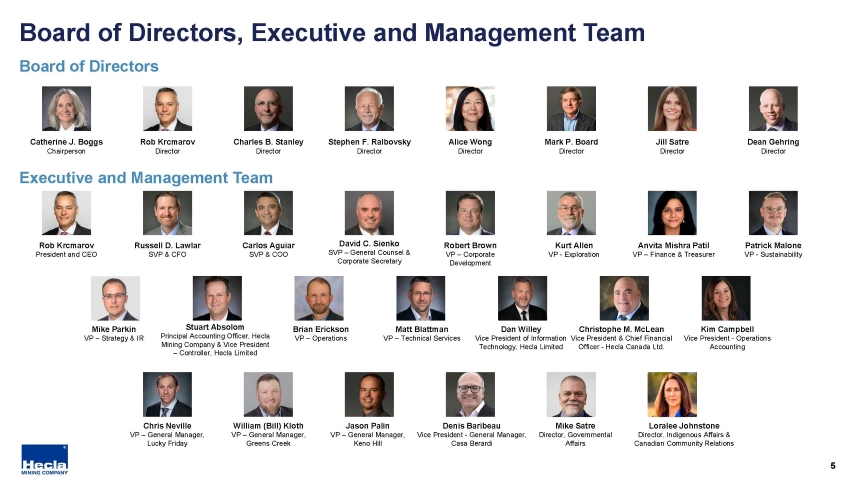
Thank you, Calvin. Good morning, and thank you all for joining us for HECLA's fourth quarter and full year 2025 results conference call. I'm Mike Parkin, Vice President, Strategy, Investor Relations. Our earnings release that was issued yesterday, along with today's presentation, are available on our website. On the call today with us is Rob Krichmaroff, President and Chief Executive Officer. Russell Lawler, Senior Vice President and Chief Financial Officer, Carlos Aguirre, Senior Vice President and Chief Operations Officer, Kurt Allen, Vice President Exploration, Matt Blattman, Vice President Technical Services, as well as other members of our management team. At the conclusion of our prepared remarks, we will all be available to answer questions. Turning to slide two, cautionary statements. Any forward-looking statements made today by the management team come under the Private Securities Litigation Reform Act and involve risks, as shown on slide two, in our earnings release and in our 10K filings with the SEC. These and other risks could cause results to differ from those projected. In the forward-looking statements, non-GAAP measures cited in this call and related slides are reconciled in the slides or the news release. I will now pass the call over to Rob.
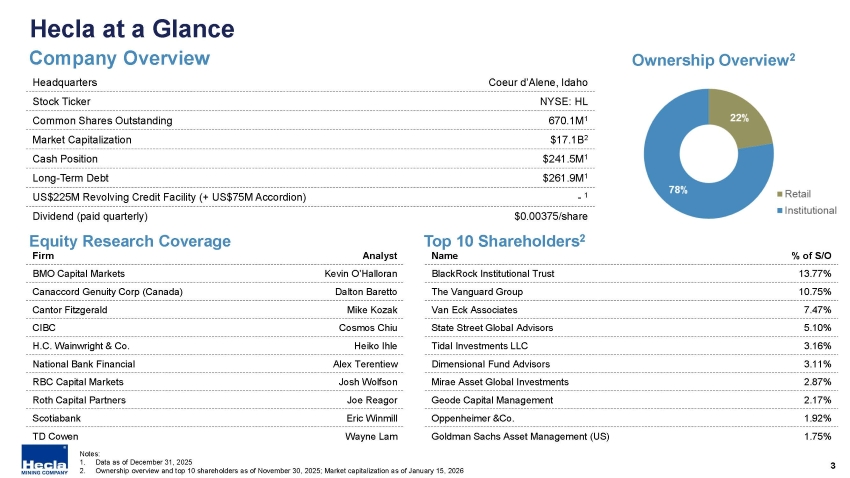
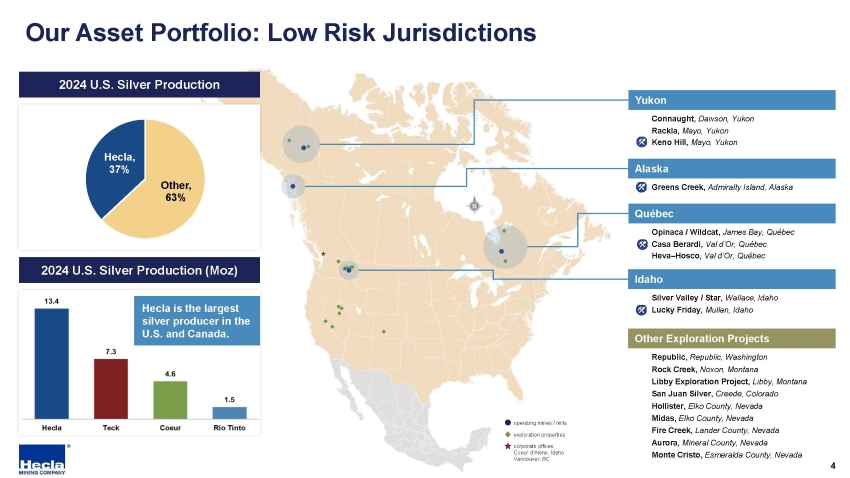
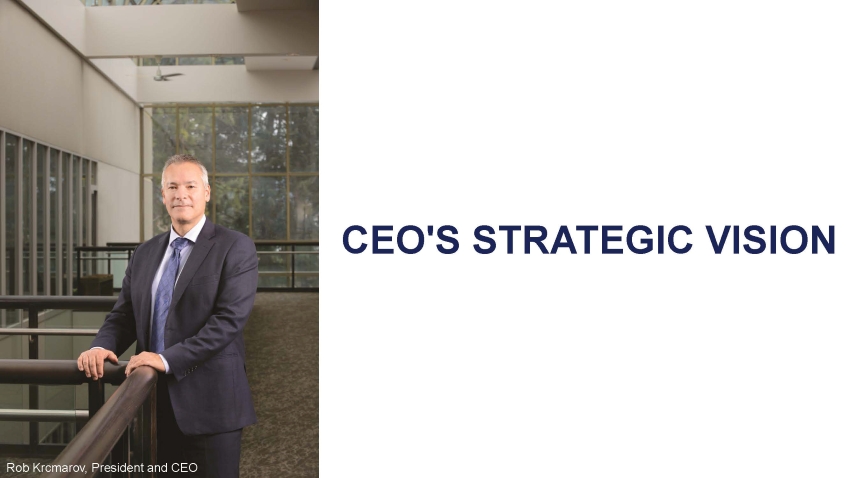
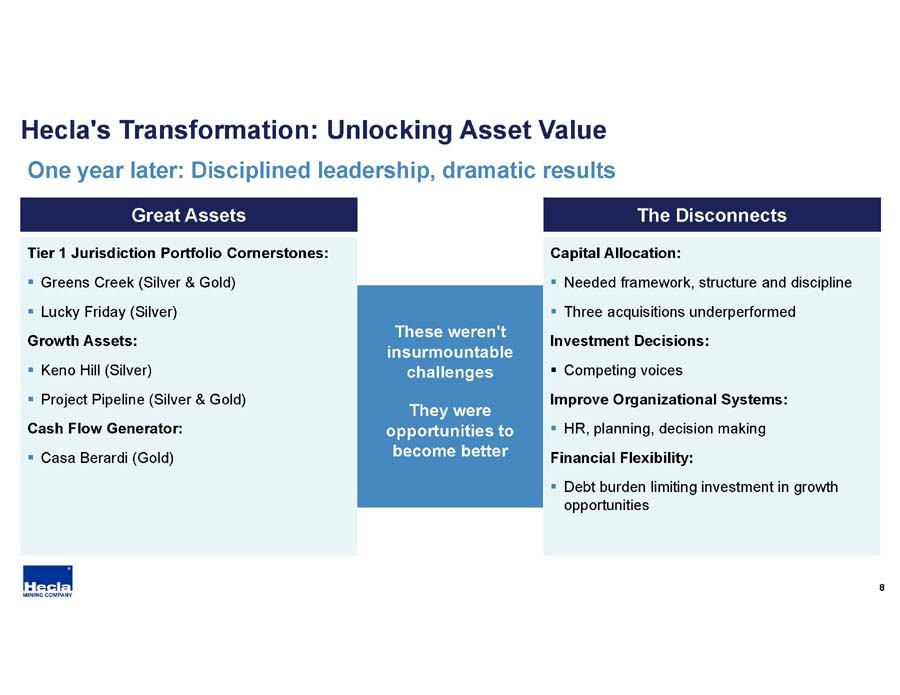
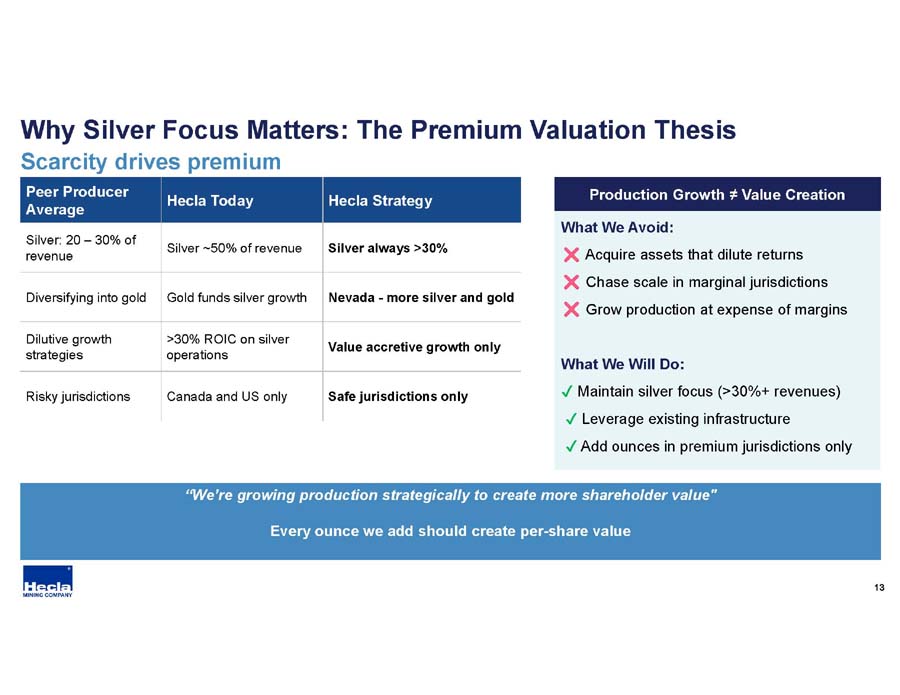
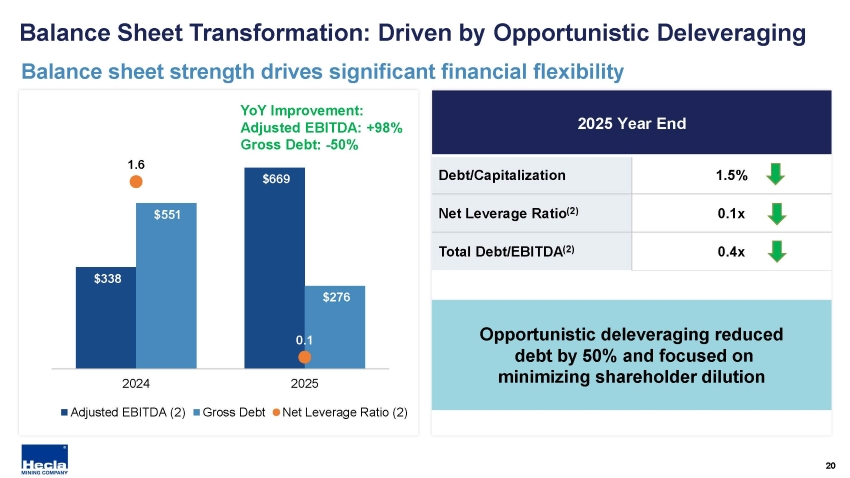
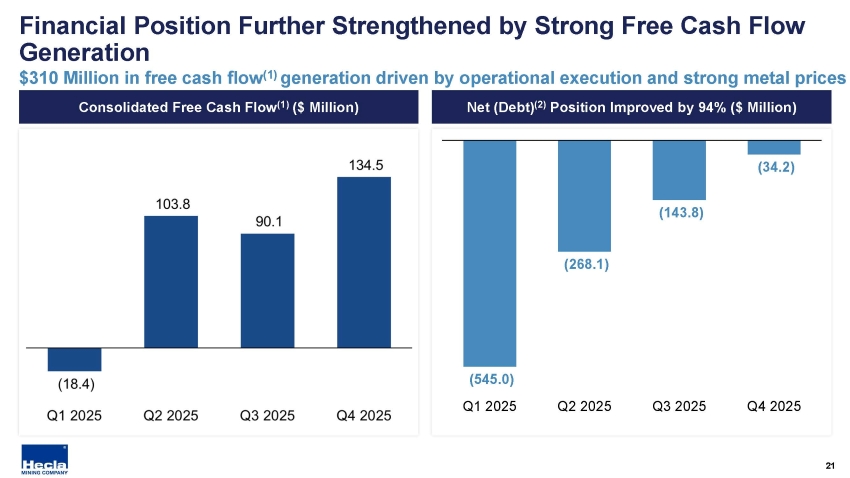
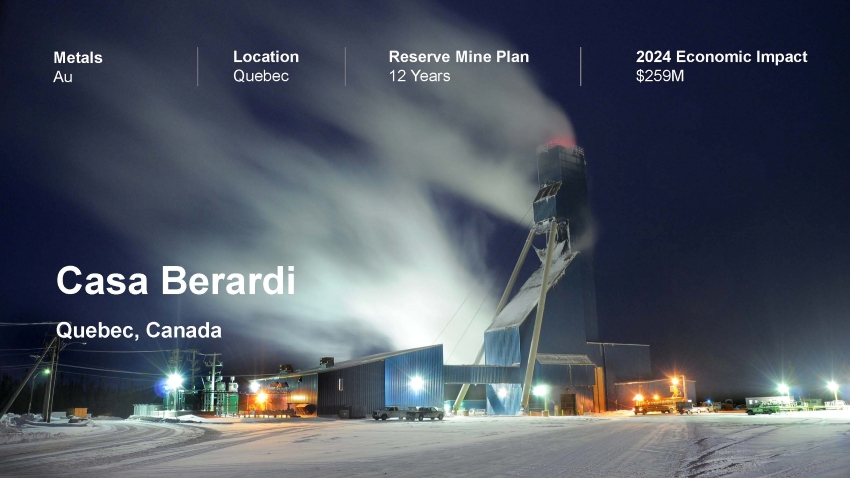
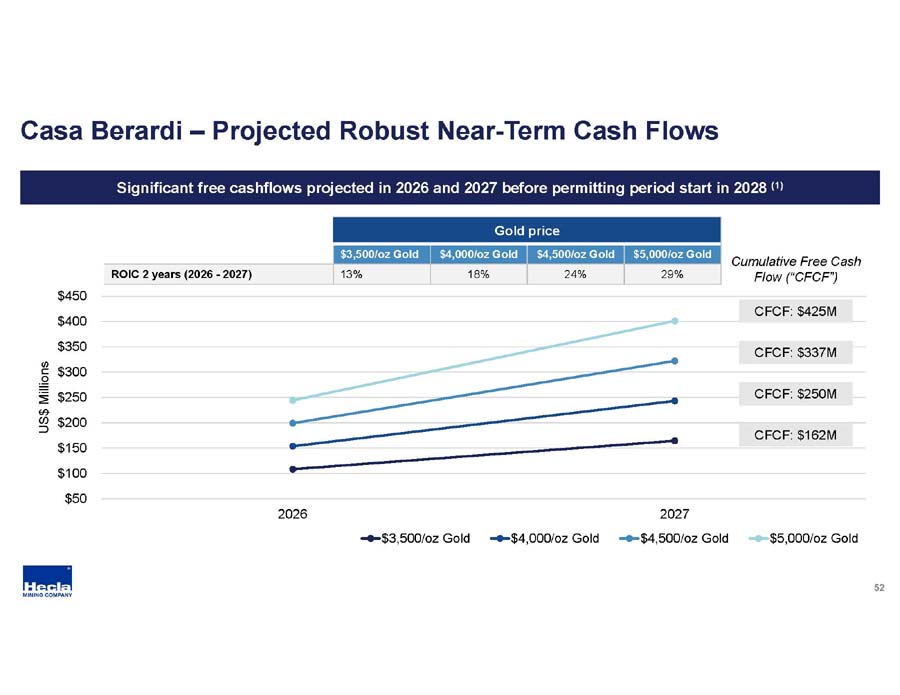
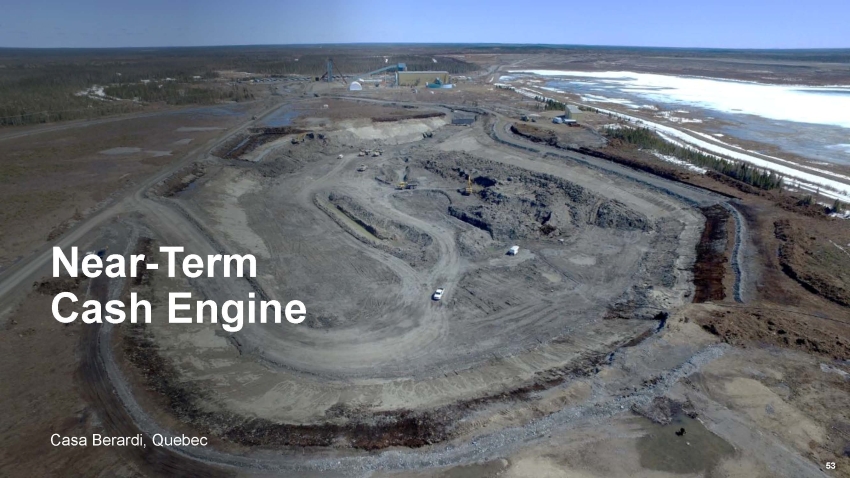
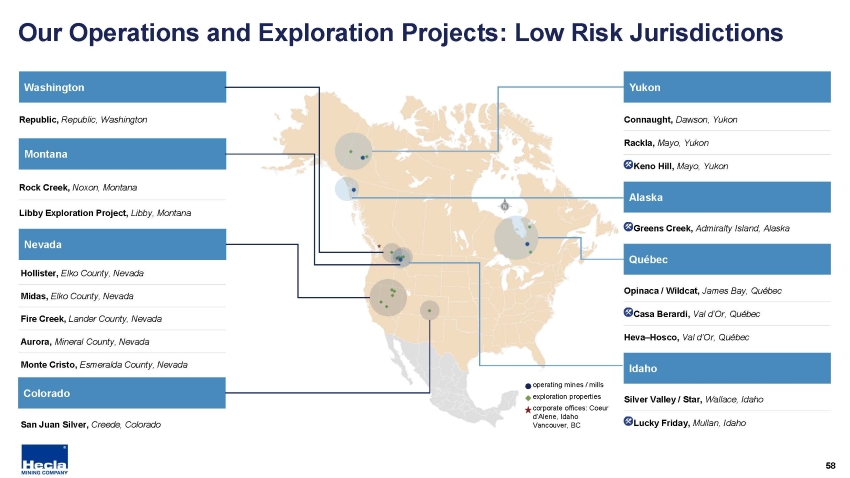
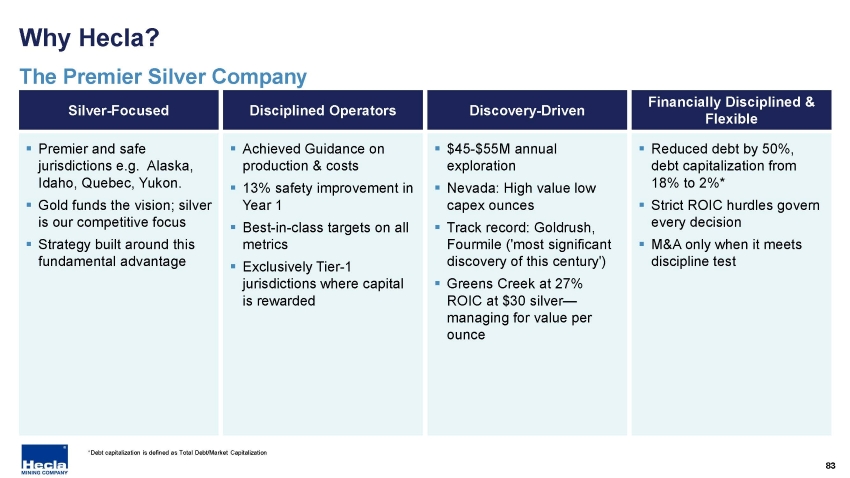
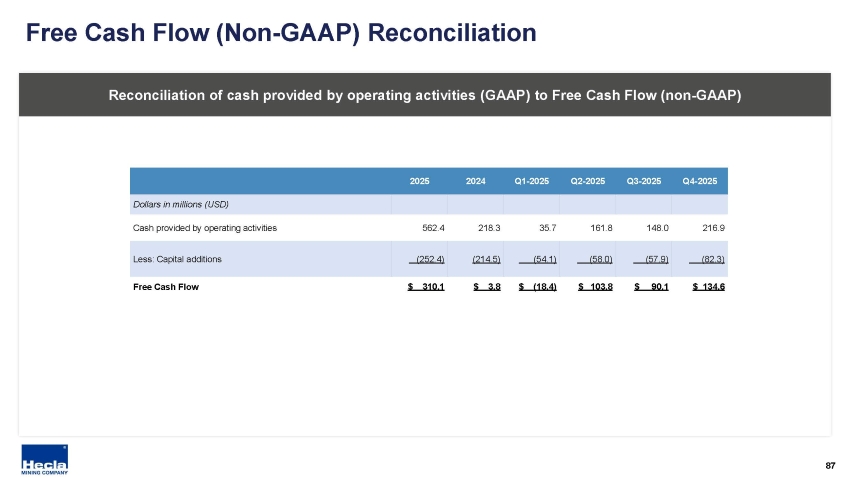
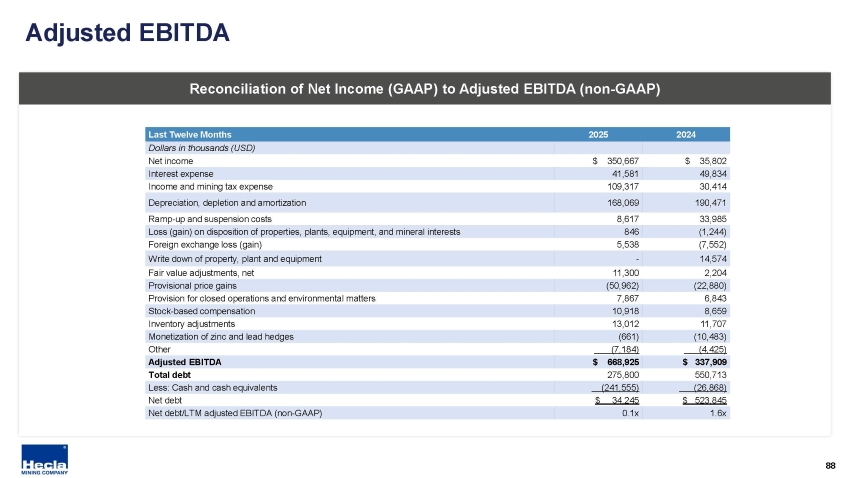
Thank you, Mike, and good morning, everyone. Turning to slide three. 2025 was a transformational year for Heckler, one marked by disciplined execution and strategic clarity. Heckler's 135-year legacy as the oldest company on the New York Stock Exchange is our foundation, but it's not our destination. What drives us forward is our clear, compelling strategy to become and be recognised as the premier silver company in North America. So let me walk you through how we're executing against this strategy. Our foundation rests on three critical pillars. First, legacy and longevity. 135 years old. We're the oldest mining company on the NYSE. We protect value through market cycles for over a century. Second, top jurisdictions. All of our mines and projects, from Greens Creek in Alaska to Lucky Friday in Idaho to Kino Hill in the Yukon to Midas in Nevada, they operate in the best and safest mining jurisdictions in North America. This jurisdictional advantage is a competitive advantage that protects our cash flows. Reduces our risk profile and safeguards our license to operate. Third, silver-focused. We've made a deliberate choice to build peer-leading silver exposure in both our revenue mix and our reserve base. While we produce gold, lead, zinc, and copper as important byproducts, silver is the strategic anchor of our business. Our strategy delivers four key outcomes. Portfolio value surfacing. So we're actively managing our portfolio, retaining and investing in our world-class silver assets, while strategically divesting non-core assets. The pending sale of Casa Barati, which we announced last month, is an example of this disciplined approach to capital allocation. It was a difficult decision, but one as fundamentally as a silver company we had to make. Operational excellence. Relentlessly focused on core asset optimization and execution, not at the expense of safety or sustainability, they are the foundation of everything that we do and key drivers of productivity, not a compliance exercise. Investment discipline. This is the new heckler. We utilize strict capital discipline with target ROIC thresholds to guide us in our path forward. Every dollar we deploy is intended to generate returns for our shareholders. And finally, organic growth. Through disciplined exploration programs, we are servicing value for shareholders. And I think our recent Nevada exploration demonstrates this approach. We're working to discover and build the next generation of production from assets that we already own. This strategy is not abstract. It's delivering tangible results, as you'll see on the next slide. So moving to slide four. 2025 was a transformational year for Heckler. On the financial front, we delivered records. Record revenue at $1.4 billion. Record profitability. Debt income applicable to shareholders of $321 million or $0.49 per share. Record adjusted EBITDA, $670 million. But the headline number that matters most is what these records enabled, which is substantial deleveraging and balance sheet transformation. Our total debt has declined to just $276 million. Our gross debt to adjusted EBITDA ratio, 0.4 times. We generated operating cash flow of 563 million, which translated to 310 million in free cash flow, with each mine generating positive free cash flow last year. On the operational front, we executed well. Hit our top end of silver production guidance at 17 million ounces. Exceeded our gold production guidance with 150,000 ounces produced. Lucky Friday delivered a record 5.3 million ounces of silver production, exceeding the top end of the guidance range. It was as recently as 2021 that Lucky Friday was producing 3.6 million ounces, nearly a 50% increase in just four years. Keno Hill achieved new record production of over 3 million ounces while achieving first-year profitability and positive free cash flow under Heckler ownership. Our Lucky Friday surface cooling project is 79% complete and on track for mid-2026 completion. That's a critical investment in the health and safety of our workforce and a key milestone as we work towards making Lucky Friday a zero-discharge facility. And we received our finding of no significant impact, or FONSI, at Aurora, which is a major permitting milestone, allowing us to kick off exploration activities this year at this historic, very high-grade gold-silver past producer in Western Nevada. Turning to slide five. Now, I want to talk about the pending sale of Casa Barati to Orzone Gold Corporation. This transaction represents portfolio optimisation in action. Casa Barati is a gold mine in a tier one jurisdiction. It has a nice future. It's had a nice run with us. Its mid-range mine plan is for a gold miner, someone with a different schedule than us. So we plan to redirect capital and management focus towards our silver assets. We still have upside exposure with a 10% stake in orezone. Why does this matter strategically? Well, there's four reasons. First is strategic portfolio optimisation. So we're sharpening our focus. Capital that was tied up in gold would now flow towards silver assets with superior economics and longer reserve lives. Second is the enhanced market position. Upon closing, Hefler should be recognised unambiguously as the premier North American silver mining company. So silver would represent about 73% of our consolidated revenues, the high silver revenue exposure among all our multi-asset mining peers, with all our operating mines in the best jurisdictions. Third, strengthened balance sheet. We plan to use cash proceeds towards debt reduction and enhanced financial flexibility. This positions us to a debt-free balance sheet with prices sustaining or better. Fourth is value maximisation. We maintain exposure to Casa Baratis' upside through our Ozone shares, with Ozone well positioned to extract additional value from the asset, given their focus and expertise in gold. You know, I think this is a sophisticated capital allocation. This is how we maximise shareholder returns. And so now I'll pass the call over to Russell.
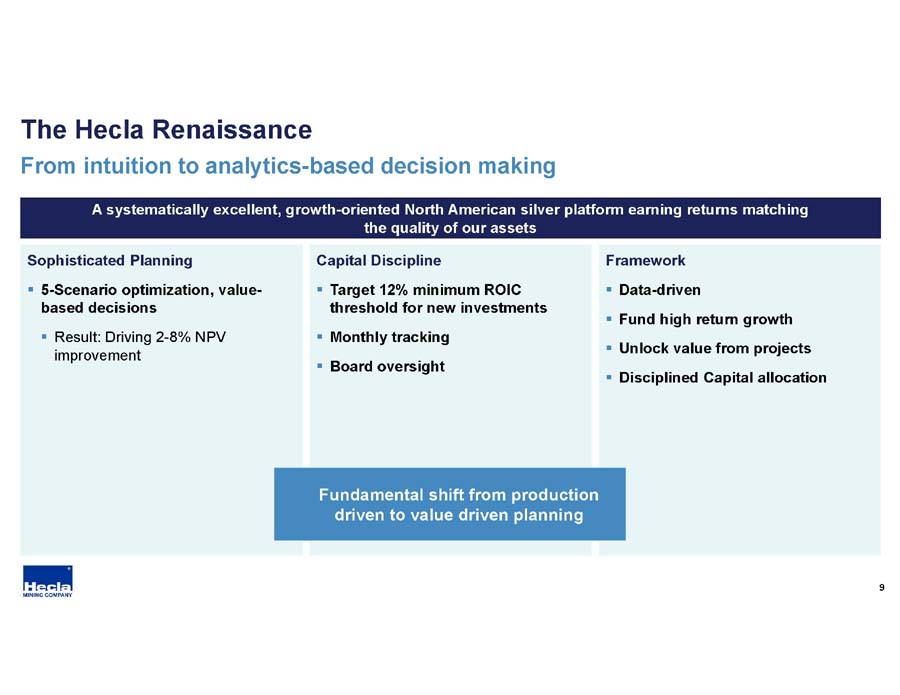
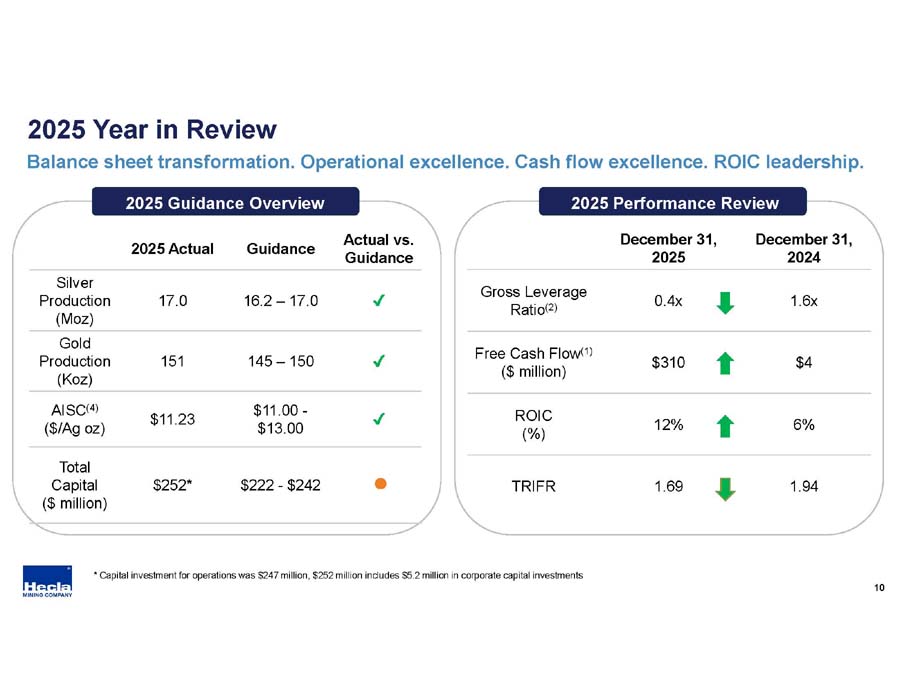
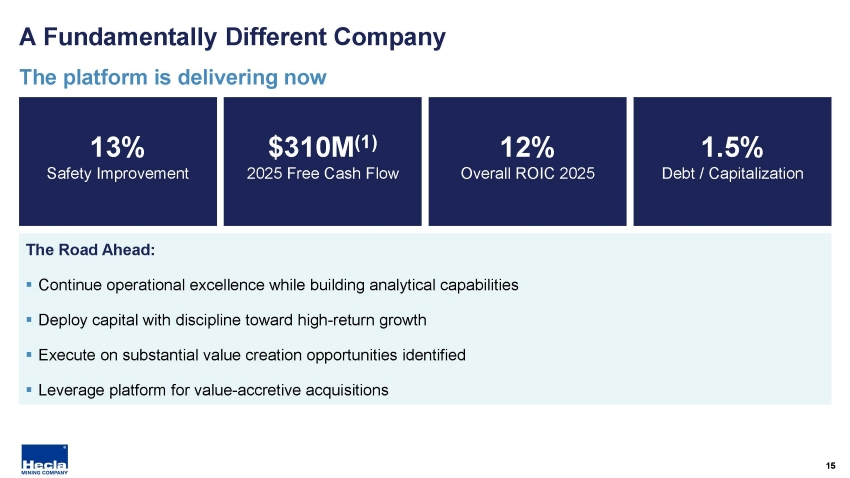
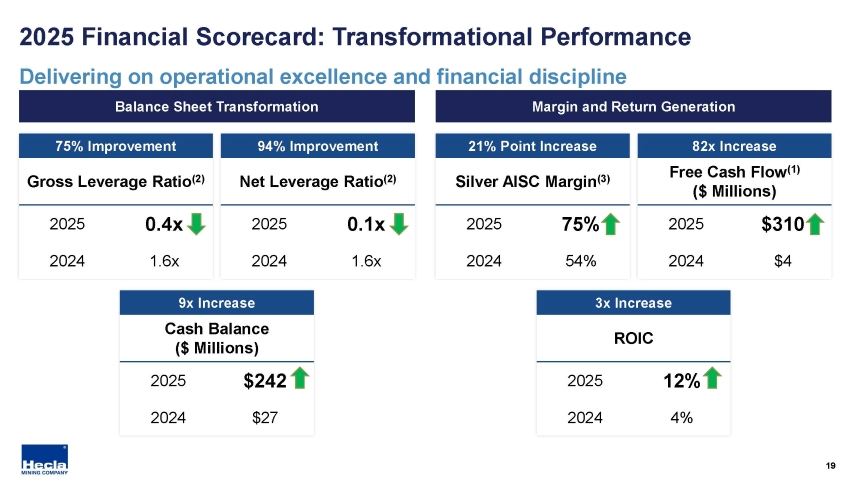
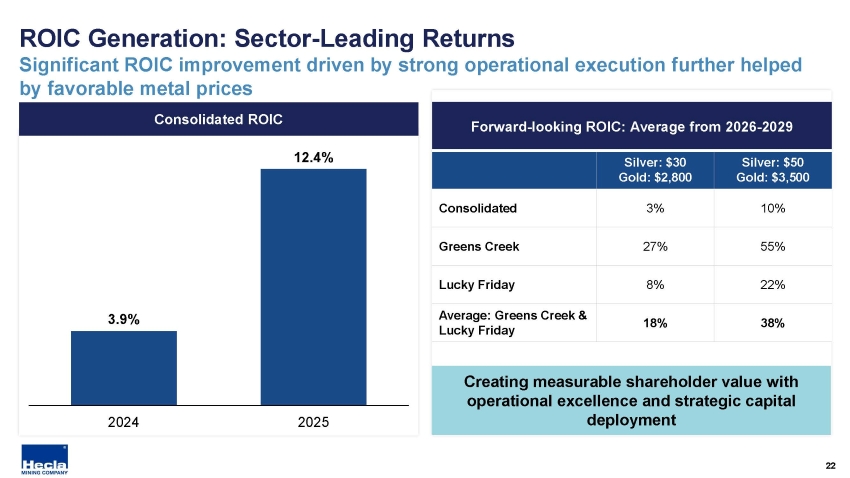
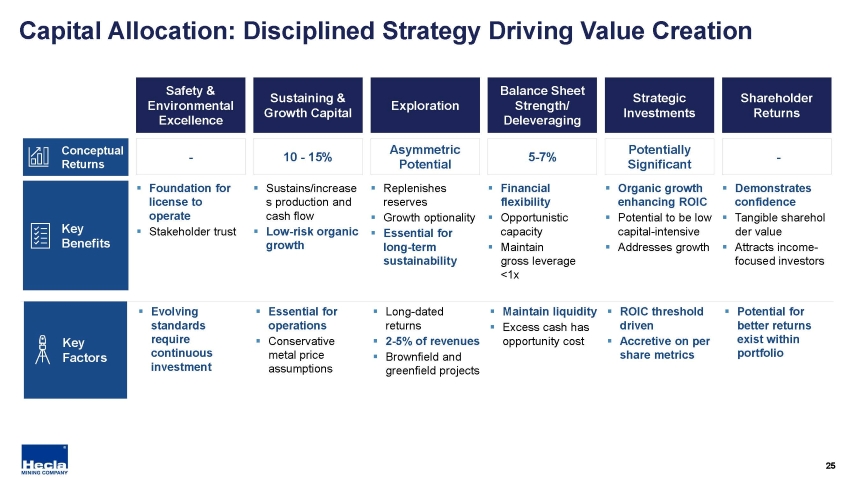
Thank you, Rob. As we turn to slide 11, let me take you through our financial scorecard because the numbers tell a compelling story of transformation. On balance sheet strength, our gross leverage ratio improved to 75% from 1.6 times in 2024 to 0.4 times in 2025, while our net leverage ratio improved 94% from 1.6 times to 0.1 times. And at current metal prices, we're positioned to achieve a debt-free balance sheet within 2026. This balance sheet transformation has set the company up for a future growth with a substantial reduction to risk. On margin and return generation, our silver all-in-sustaining cost per ounce margin improved from a very strong 54% in 2024 to 75% in 2025. This reflects both strong realized prices and disciplined cost management. And our free cash flow surged from $4 million last year to $310 million this year. While our return on invested capital improved three times from 4% to 12%, we're now generating returns well above our cost of capital. These changes all sum up to cash on our balance sheet increasing ninefold, from $27 million coming into the year to $242 million coming out of the year. This represents a complete transformation from a leveraged balance sheet to a position of financial strength in a single year. As we turn to slide 8, I'll walk through some of the details from the fourth quarter because they show a sustained momentum and operational consistency. During the fourth quarter, we generated $439 million in revenue. Silver accounted for 59% of that total, but notably, excluding Casa Berardi, our silver exposure is expected to increase to approximately 73%, which would provide the highest silver exposure among our peer group, not to mention jurisdictional profile or other unique attributes. Our realized silver price in the fourth quarter was nearly $70 per ounce, beating the quarterly average by over $14 per ounce. Our all-in-sustaining cost was $18.11 per ounce, putting our silver margin at $51 per ounce, or 74% of the realized price. This is exceptional profitability. Our adjusted EBITDA was $670 million in 2025, which, coupled with gross debt to leveraging, improved our net leverage ratio from 0.3 times last quarter to 0.1 times this quarter, demonstrating the momentum in our deleveraging trajectory. We generated almost $135 million in free cash flow on a consolidated basis during the quarter, and all our operations contributed positively. This excellent quarter and the resulting cash flow is due to better pricing, but also executing on a variety of strategic initiatives across all our assets. As we turn to slide 9, the bar chart here illustrates our projected cash flows across a range of silver and gold price scenarios. As we discussed during our investor day, Heckler has among the best leverage to silver prices compared to peers, which could improve upon closing of the Casperi sale. This analysis on the slide assumes the Casperi sale is completed, and at $75 silver and $4,500 gold, we forecast cash flows of about $600 million, but this goes to about $850 million at $100 silver and $5,500 gold. Based on our forecast, and at these metal price scenarios, we estimate nearly 70% of our revenue would be tied to silver sales, which is an industry best. Turning to slide 10, I want to continue to emphasize our capital allocation framework, because it's central to how we create shareholder value. We've shared this framework over the recent months, and it guides every decision we make at HECLA. We maintain an unwavering commitment to six key pillars in priority order. First, safety and environmental excellence, which is first and foremost. Second, sustaining and growth capital maintains our asset base, de-risking our assets, and providing a solid base to build from as we provide high-return organic growth. On exploration, it provides asymmetric potential returns and is critical in the long-term strategy of any mining company. As we think about the leveraging and strengthening of our balance sheet, this provides financial resilience and flexibility and ensures ability to invest when opportunities arise. If we think about strategic investments, whether internal or external, we'll be guided by our predetermined return on investment criteria. And lastly, as we think about shareholder returns, we'll look to return additional capital to shareholders when appropriate, with a focus on maintaining strict return on investment criteria. This framework ensures disciplined decision-making aligned with long-term value creation. I'll now turn the call to Carlos.
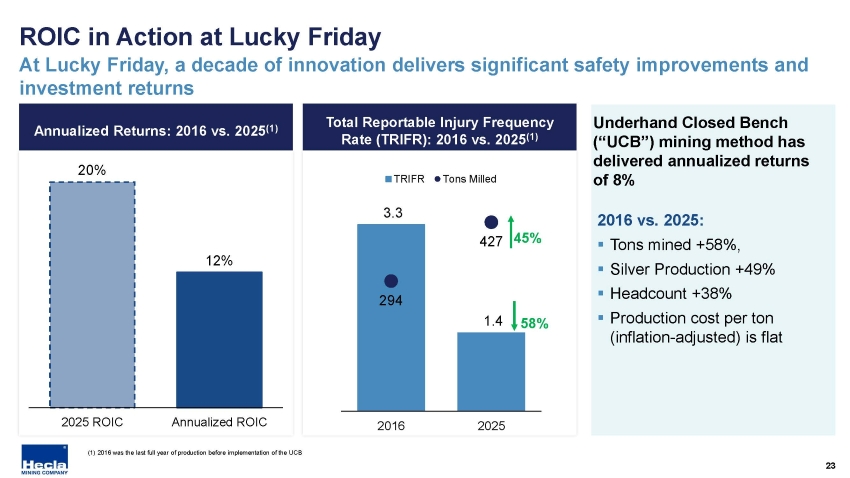
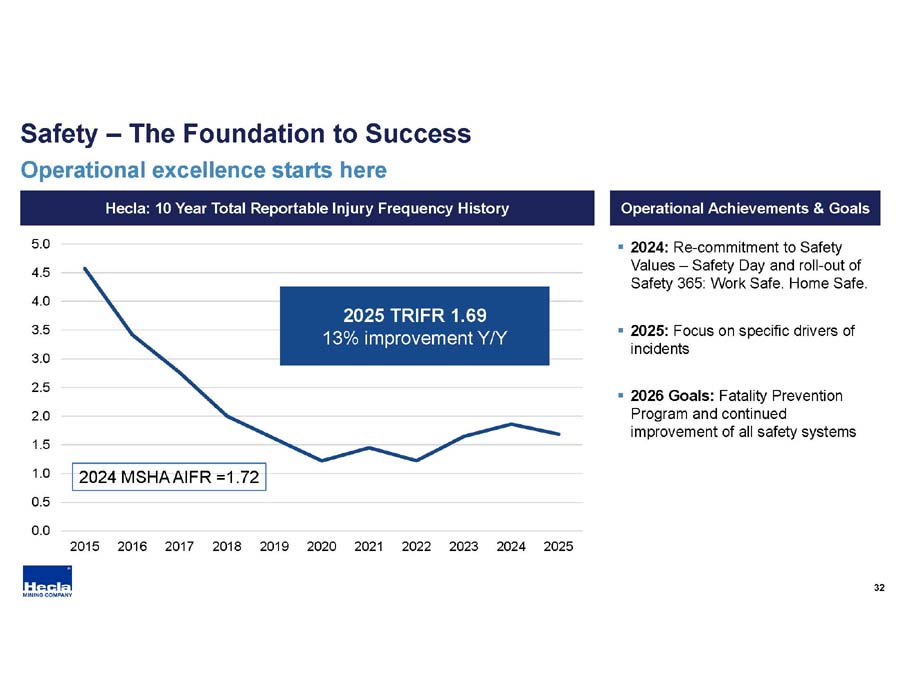
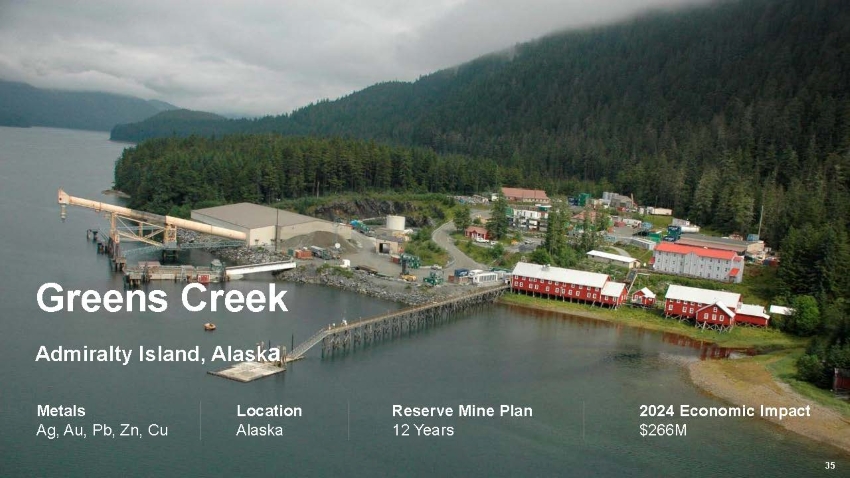
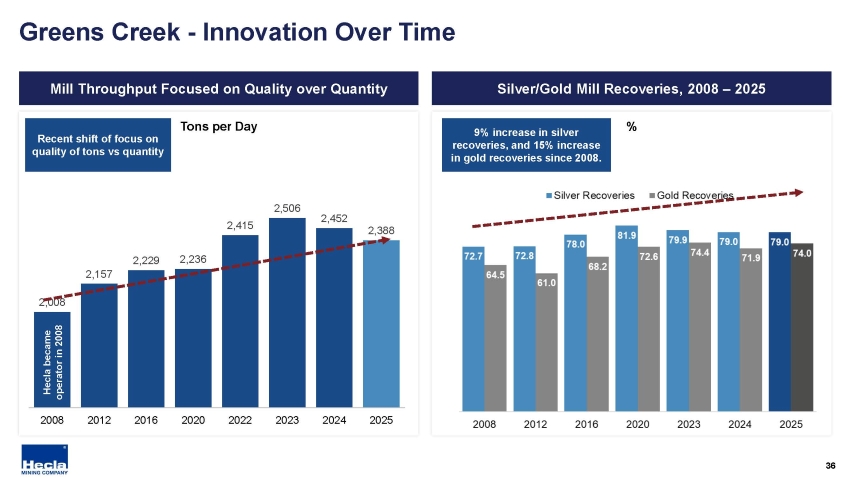
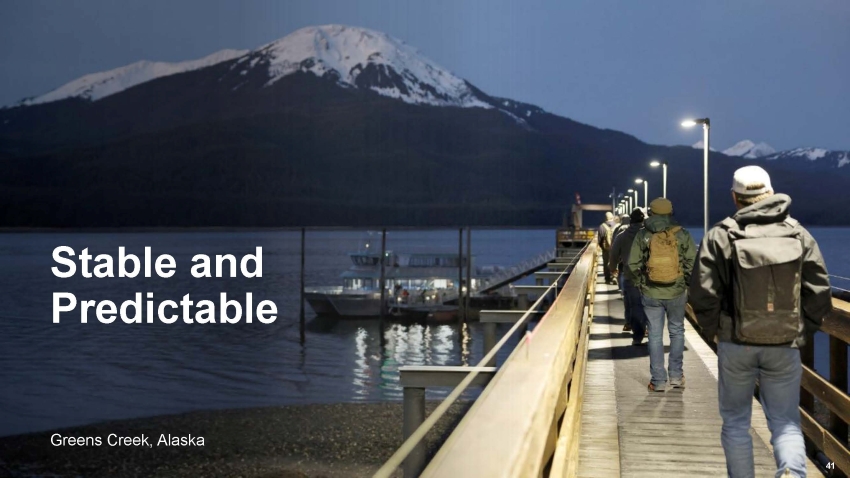
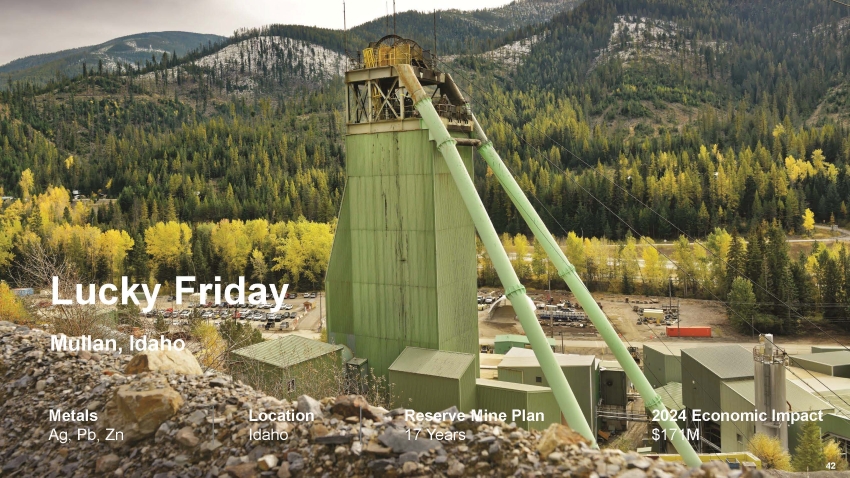
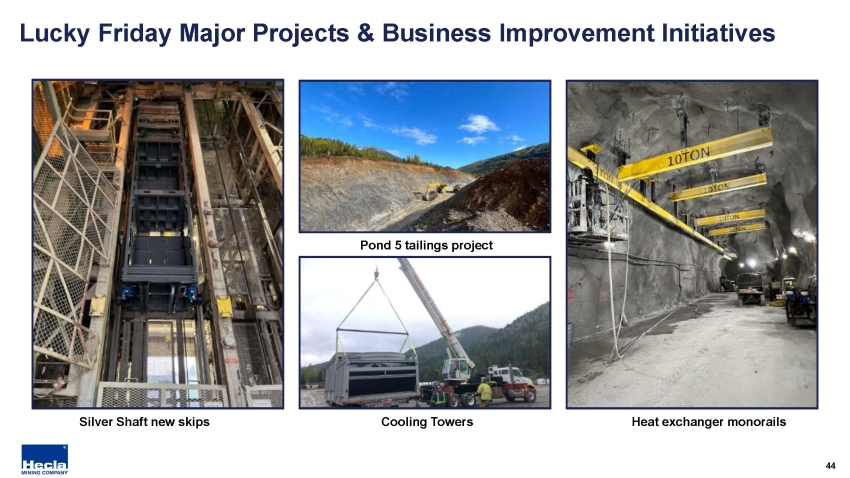
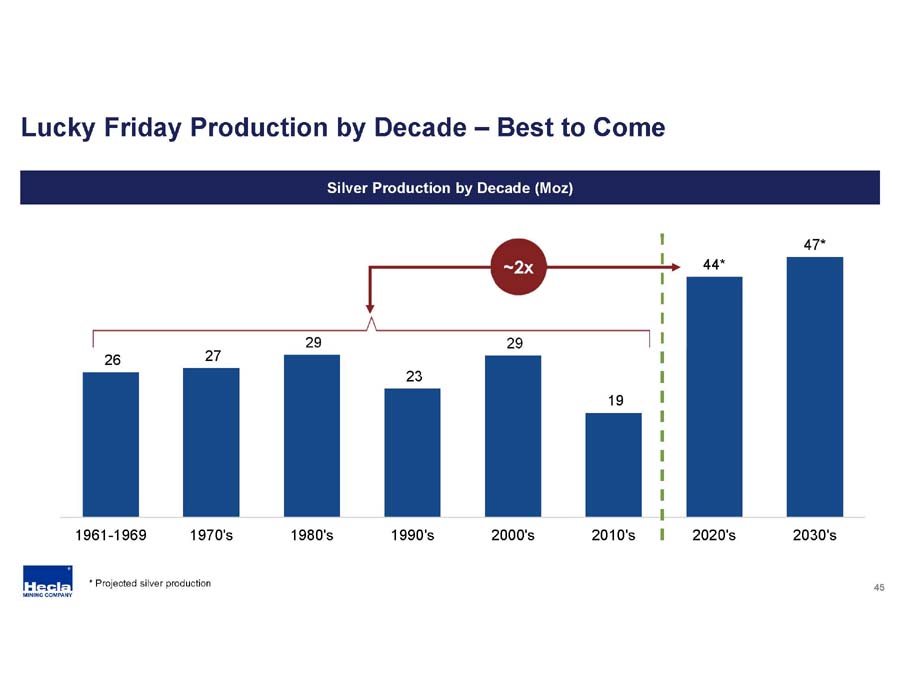
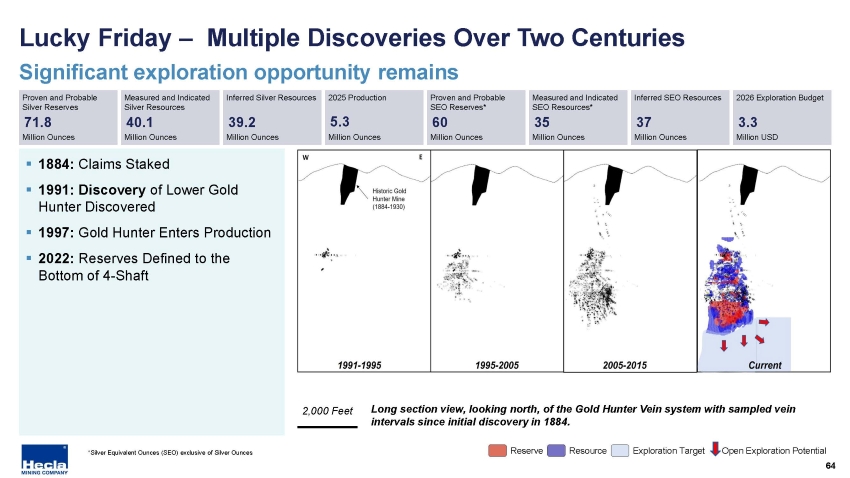
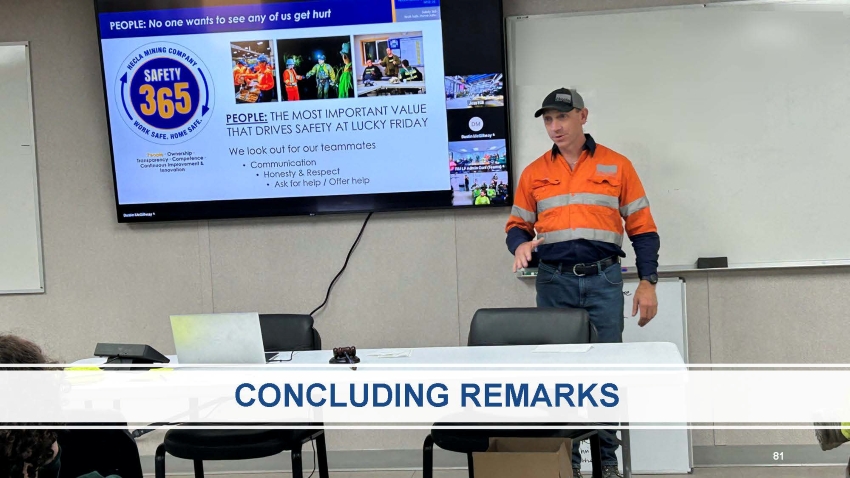
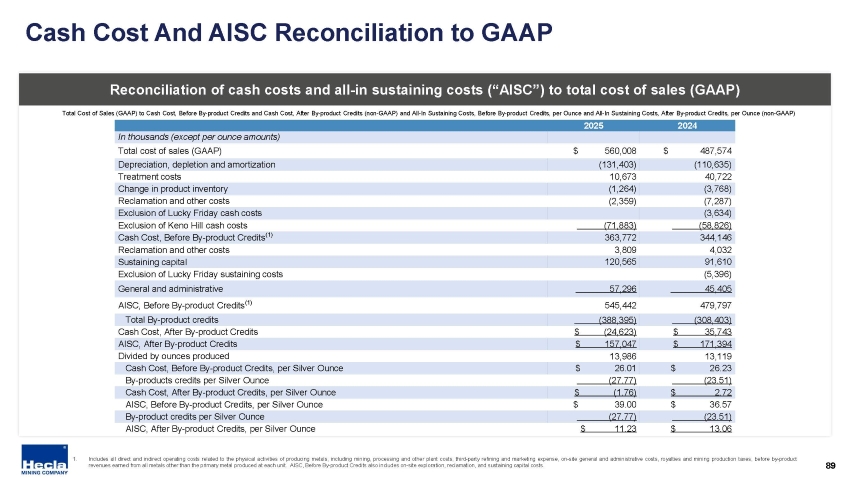
Thank you, Russell. Turning to slide 12, before we move to asset by asset operational results, I want to start with what matters most. Operational excellence begins with safety. Our 2025 total reportable injury frequency rate was 1.69, which is a 13% reduction year-over-year. This single-year improvement reflects a multi-year journey of systematically driving down our trigger through dedicated focus on keeping our employees and contractors safe. This is not luck. It's culture, systems, and commitment. And it matters because safe minds are productive minds. In 2024, we reaffirmed our commitment. The safety values to a company-wide safety date and the rollout of Safety 365 WorkSafe HomeSafe. In 2025, we focus intensively on the specific drivers of incidents. And in 2026, we are implementing a formal fatality prevention program alongside continued improvement of all safety systems. Moving to slide 13. Let me walk through our three operating silver mines, starting with Green's Creek, our flagship world-class, low-cost silver mine in Alaska that has been in production for over 35 years and is expected to continue delivering exceptional economics for many years to come. In Q4, Green's Creek produced 2 million ounces of silver with ASIC of under $3 per ounce after byproduct credit, generating $102 million in operating cash flow and nearly $80 million in free cash flow. For the full year 2025, Green's Creek delivered 8.7 million ounces of silver at the top end of guiding. with ASIC of under negative $2 per ounce after byproduct credits. For 2026, we are projecting 7.5 to 8.1 million ounces of silver and 51 to 55,000 ounces of gold with ASIC guided to nearly zero after byproduct credits. This is a testament to the extraordinary economics of this asset. What's remarkable about Grants Creek is the longevity of the resource base. We had a 12-year reserve mine plan, but through ongoing exploration success, we see a pathway of sustainable reserve replacement well beyond that time frame. That's why we are investing today in our tailings facility, building out capacity through 2045. When this mine started 35 years ago, it had a 10-year mine life. Today, 12 years of reserves ahead, plus significant reserves, we are actively working to convert to reserves. Green Creek is a mine in a Tier 1 jurisdiction with world-class economics. It is the cornerstone of our portfolio. Turning to slide 14, Lucky Friday is our primary silver mine in Idaho, a deep underground operation with a 15-year reserve mine plant, producing consistently high-grade silver ore. I'm extremely excited about this mine. I spent 10 years working in that place. In Q4, Lucky Friday produced 1.3 million ounces of silver with ASIC under $26 per ounce of the byproduct credit. Generating $57 million in operating cash flow and over $33 million in free cash flow. For the full year 2025, the mine delivered record production of 5.3 million ounces of silver, exceeding the top end of guidance, with ASIC of under $22 per ounce after byproduct credits. For 2026, We are guiding to 4.7 to 5.2 million ounces of silver production, with ASIC of $23.50 to $26 per ounce after byproduct credit. The expected yield-over-year increase in ASIC reflects higher profit-sharing payments to our workforce. This is a good thing. These payments are tied directly to profitability, which we expect to remain strong given the current metal prices. A key near-term project at Lucky Friday is a surface cooling project, which is 79% complete and on track for completion by year 2026, which will significantly improve underground health and safety. Turning to slide 15, you know, here is a transformation story. ECLA acquired Keno Hill in 2022, and last year, the mine has given its first full year of profitability and positive free cash flow generation. This is a significant milestone. In Q4, Keno Hill produced 597,000 ounces of silver, generating $33 million in operating cash flow and over $17 million in free cash flow. For the full year 2025, we exceeded 3 million ounces,
Operator
a new production record, and above the top end of guidance.
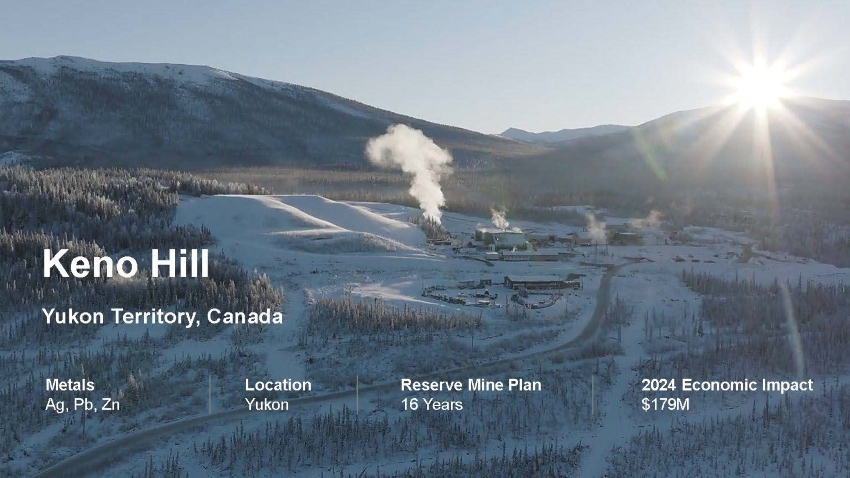
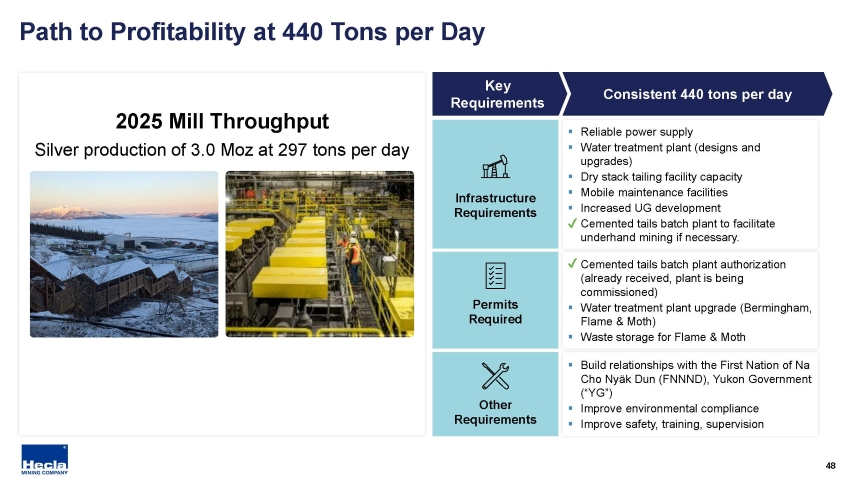
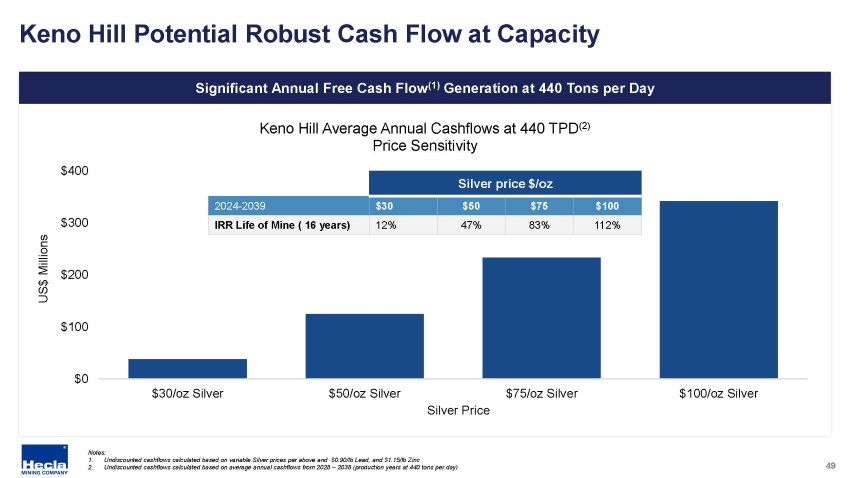
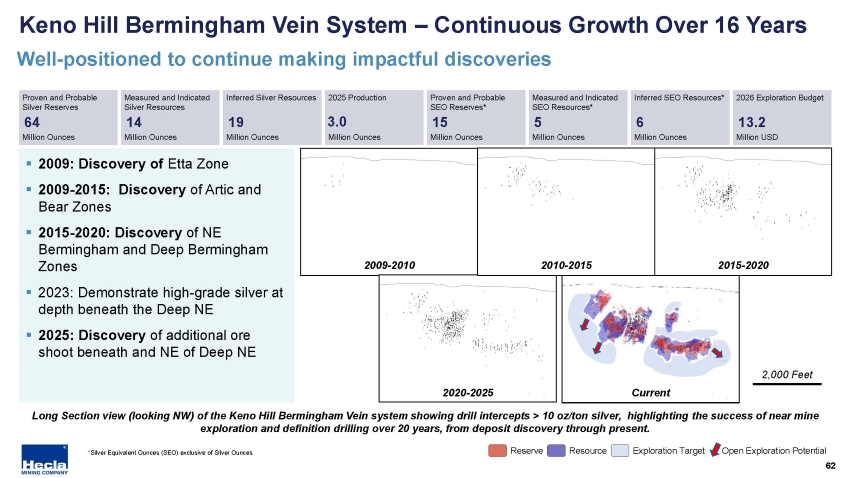
For 2026, we are guiding to 2.9 to 3.2 million ounces of silver production, with capital investment of $61 to $66 million as we continue to advance toward steady-state operations. What's exceptional about Kino Hill? It's the current profitability, while it's still on path to its main plane capacity, as we reach the planet throughput rate of 440 tons per day, we are modeling robust, positive free cash flow generation potential across a wide range of silver prices, as you can see in the bar chart on this slide. Hino Hill represents the optionality and upside within our portfolio. I will now hand it over to Kurt to discuss exploration.
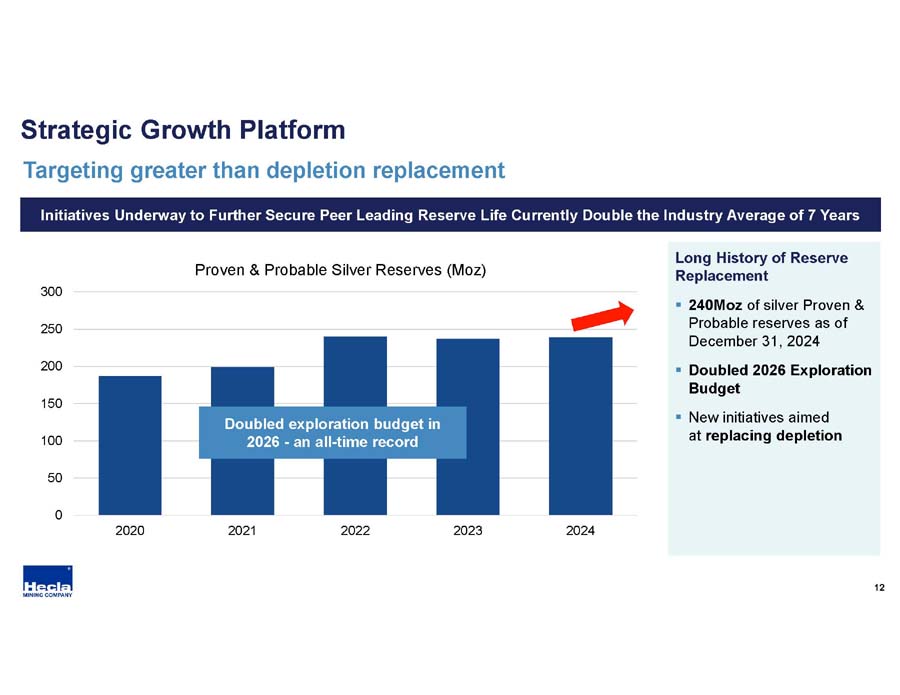
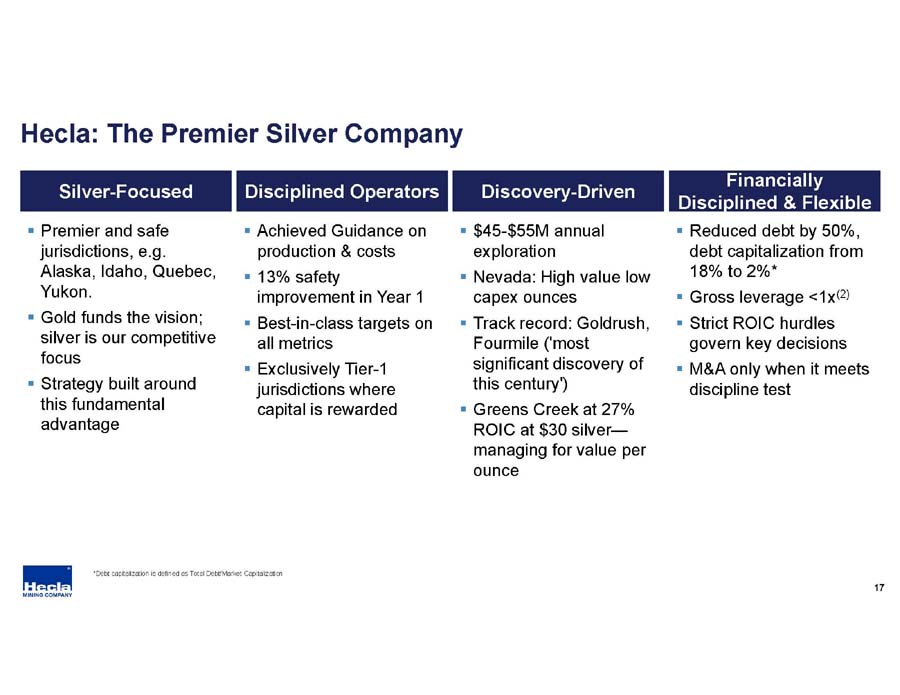
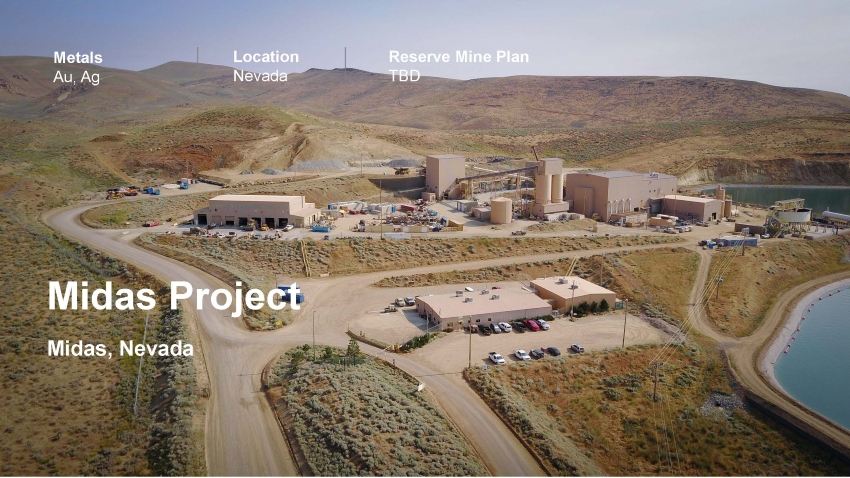
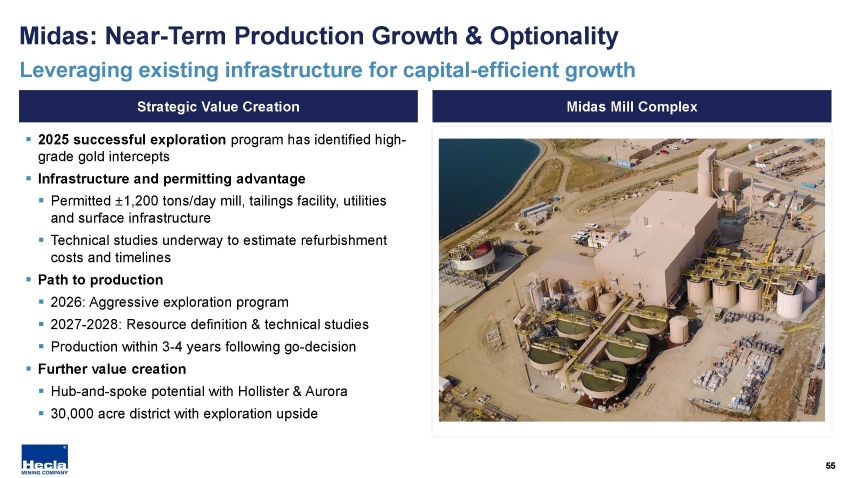
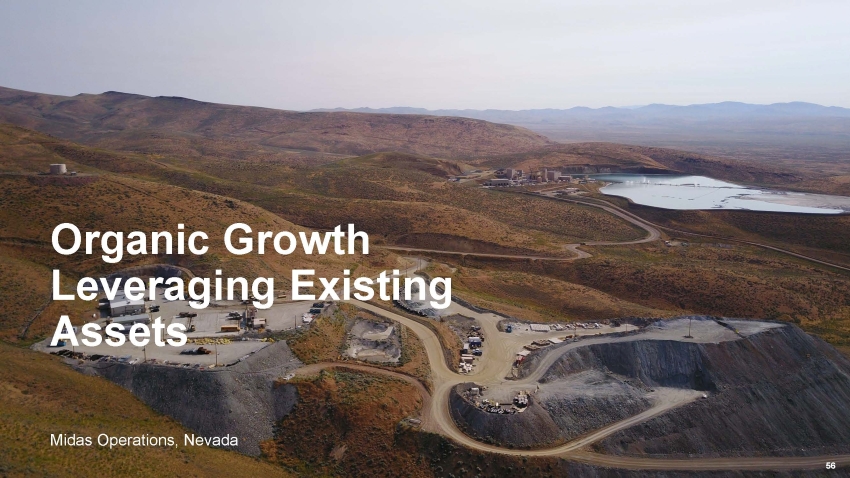
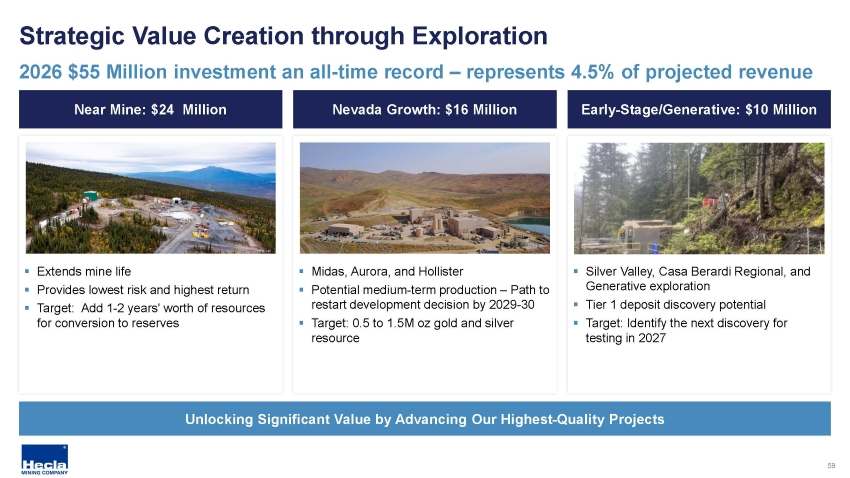
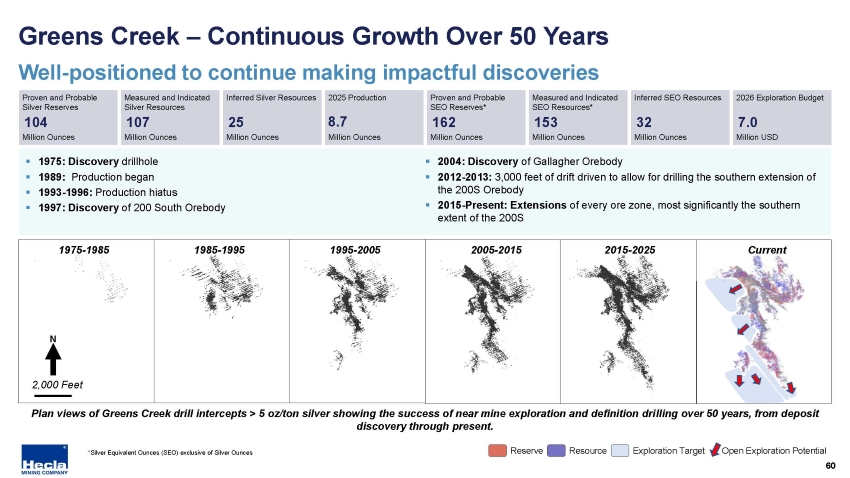
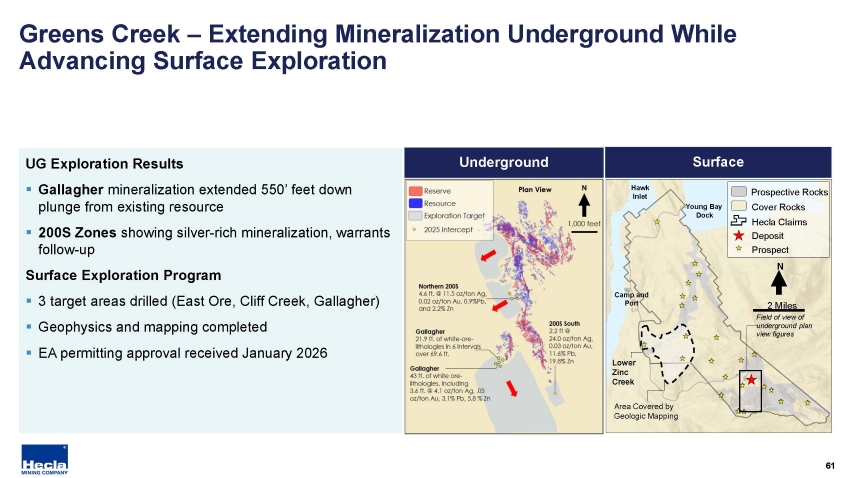
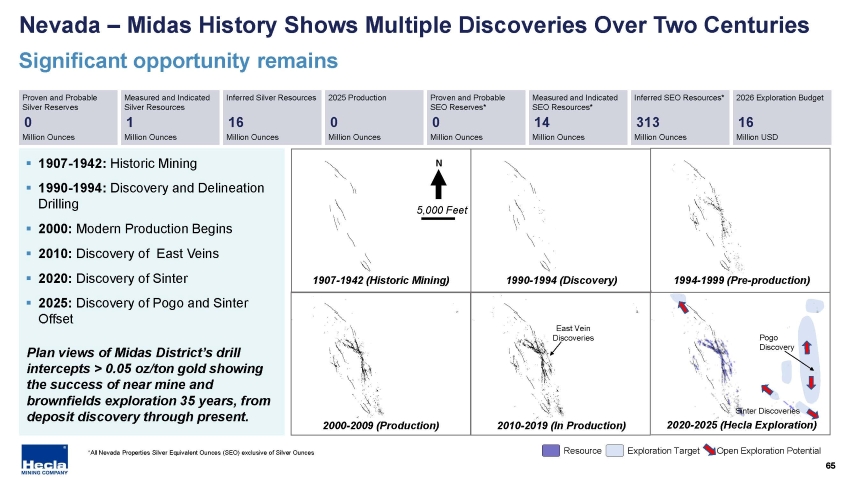
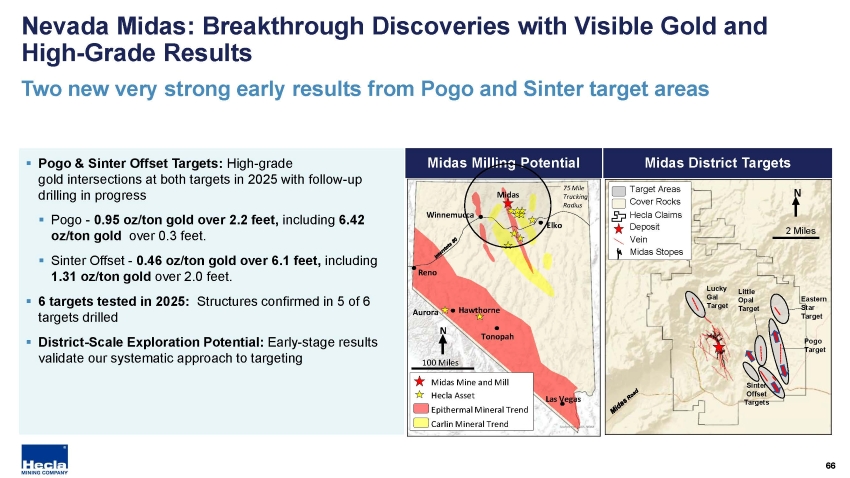
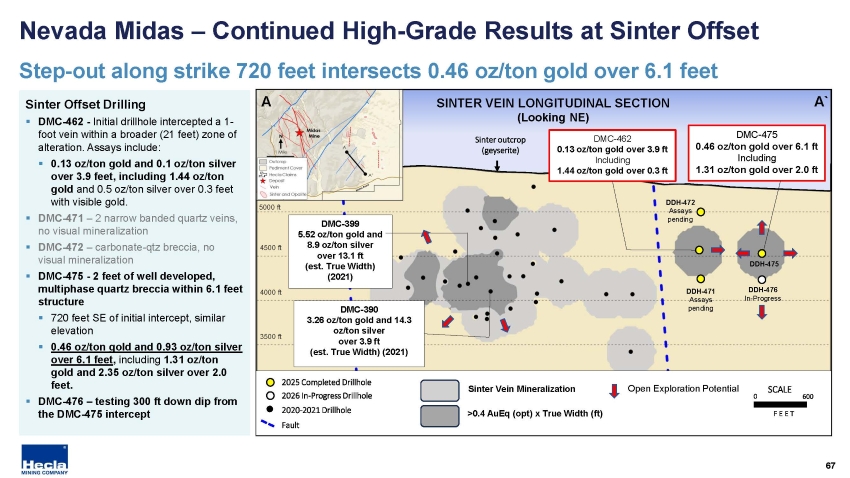
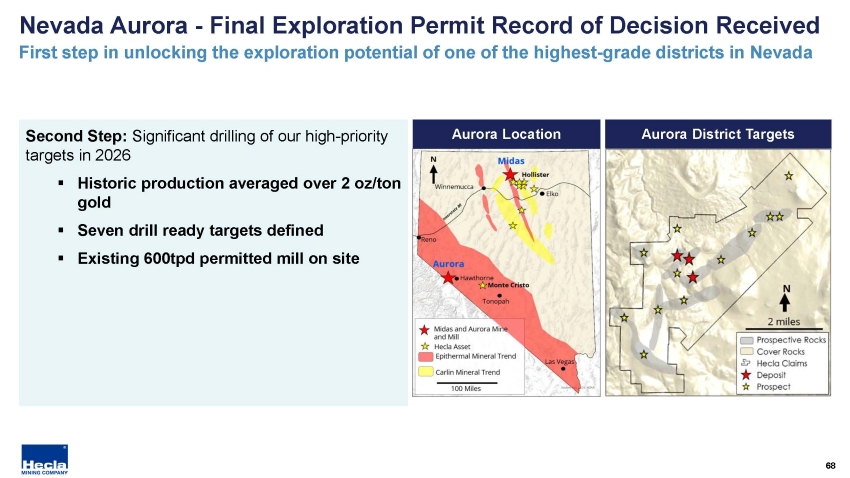
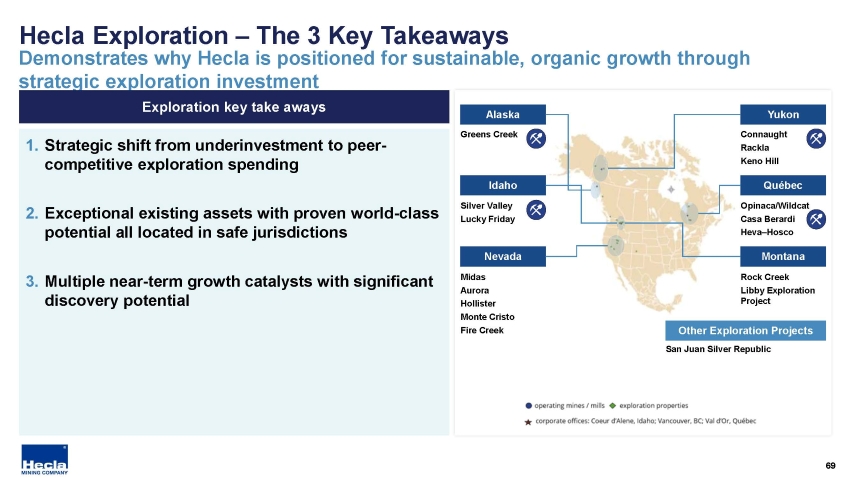
Thanks, Carlos. Moving to slide 17, our exploration strategy is straightforward. Discover and develop the next generation of production from within our existing portfolio of high-quality projects. Moving to slide 18, our primary growth engine is the Nevada Platform. At Midas, recent drilling returned outstanding results, including 6.1 feet at 0.46 ounces per ton gold and 0.93 ounces per ton silver at center offset, and 2.2 feet at 0.95 ounces per ton gold and 0.6 ounces per ton silver at Pogo. These confirm high-grade mineralization and support a potential near-term production restart with existing mill infrastructure on site. Aurora achieved a major milestone, receiving our Fonzie from the U.S. Forest Service, clearing a path for 2026 exploration at this historic, high-grade gold-silver producer. Regarding mine life extension, Greens Creek Definition Drilling delivered. We added 3.7 million silver ounces through model updates, replaced 9.5 million ounces depleted through mining, and grew the reserves by 2.4 million ounces net. With a 12-year reserve life and 88.7 million silver ounces in measured and indicated resources, Greens Creek continues to demonstrate longevity and potential. Lucky Friday nearly replaced reserves, reducing only 200,000 silver ounces during a record 5.3 million silver ounce production year, and with 40.5 million ounces of measured and indicated resources beyond reserves, providing a clear runway for continued reserve replacement. Now, we're investing $45 million to $55 million in 2026 exploration, heavily weighted towards Nevada and near mine opportunities. This directly supports achieving greater than 100% reserve replacement and building the pipeline to drive us toward 20 million ounces annually. We're discovering high-grade mineralization on lands we control, in jurisdictions we understand, with infrastructure often already in place, organic growth, with superior economics. I'll now turn the call back to Rob.
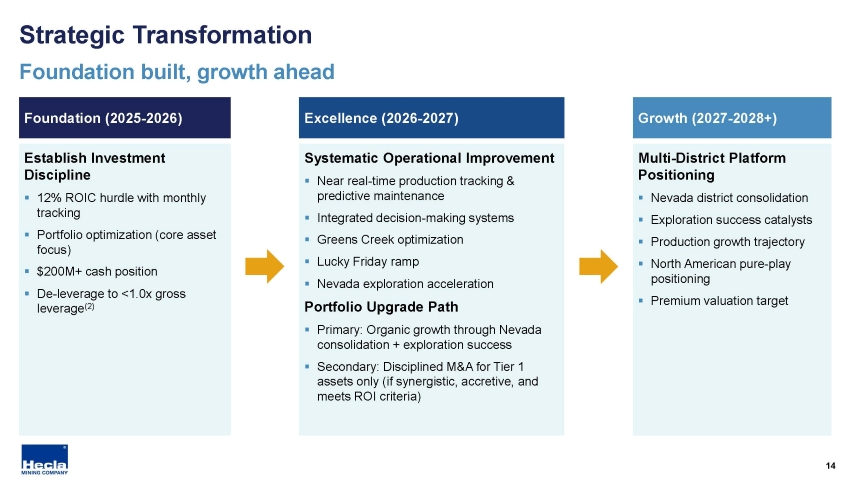
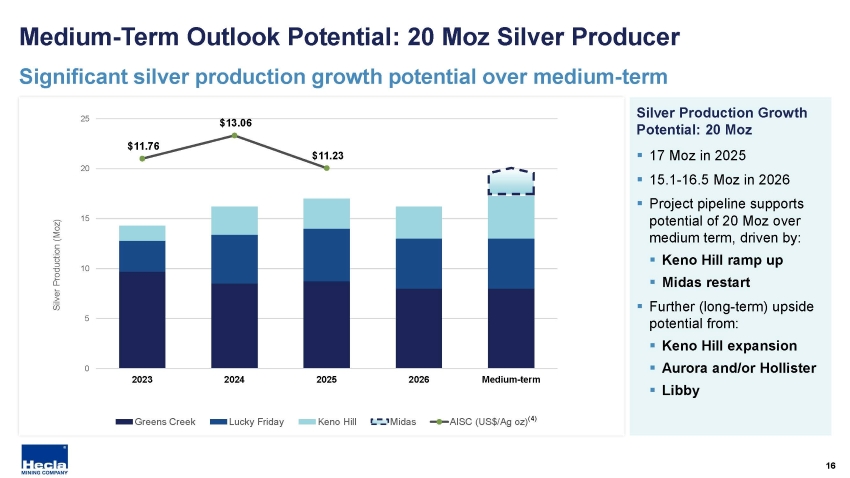
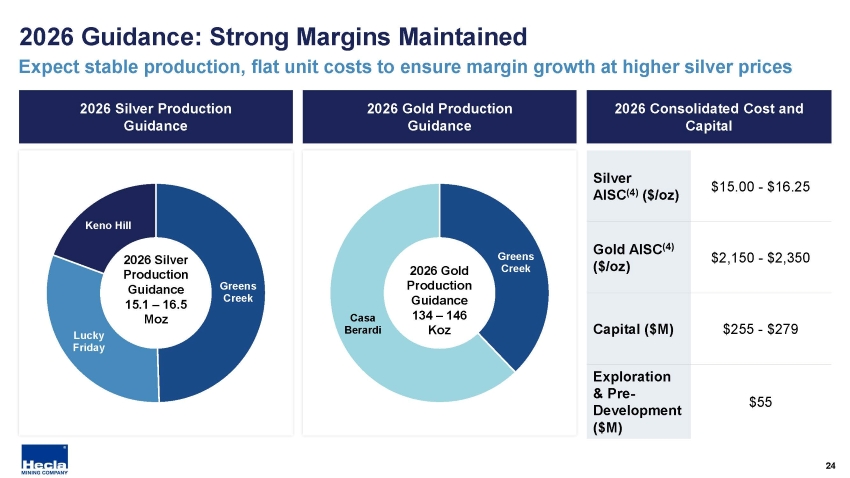
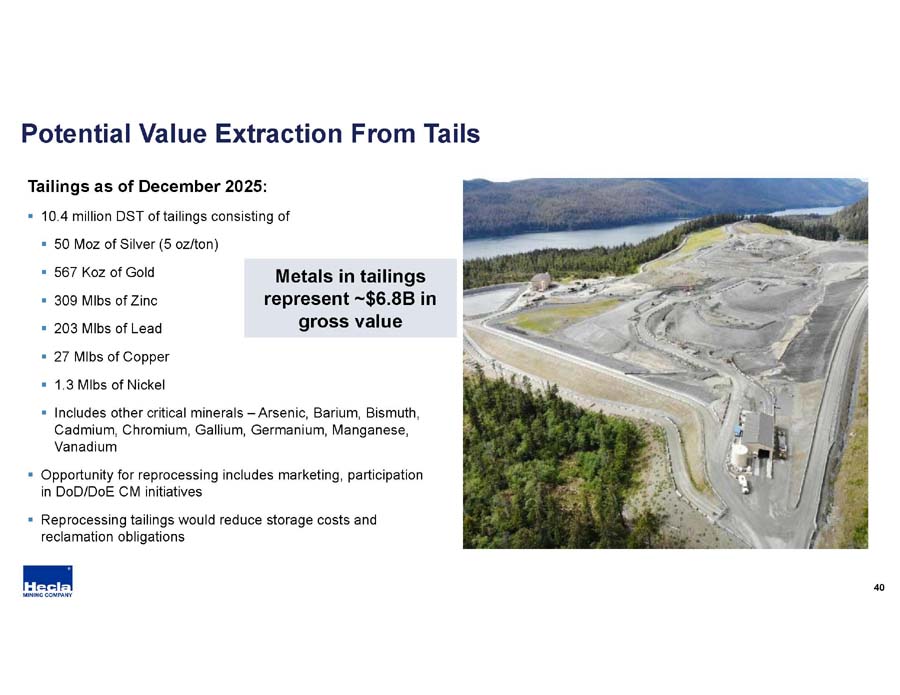
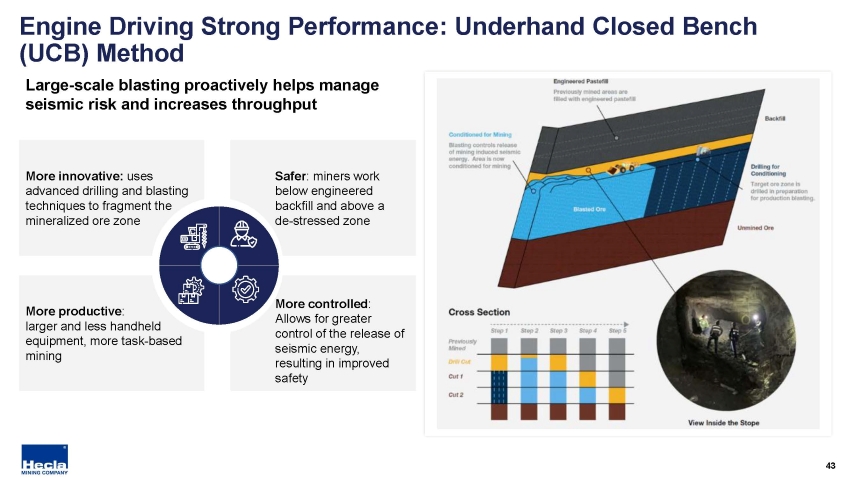
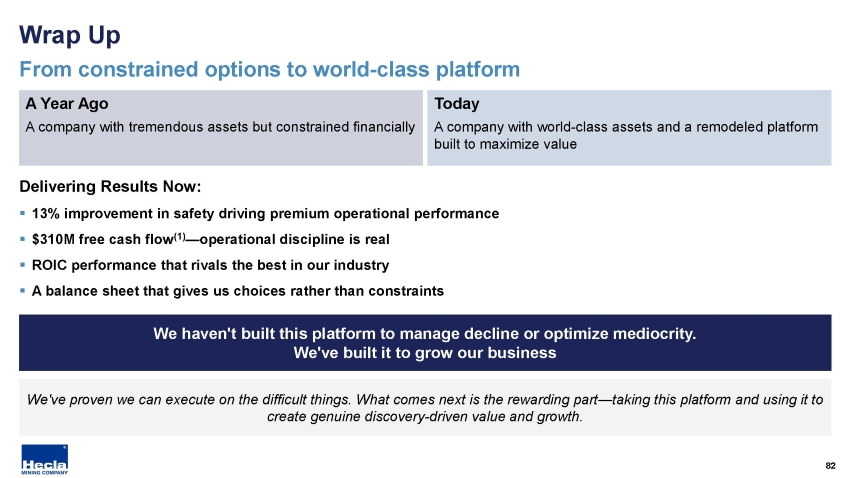
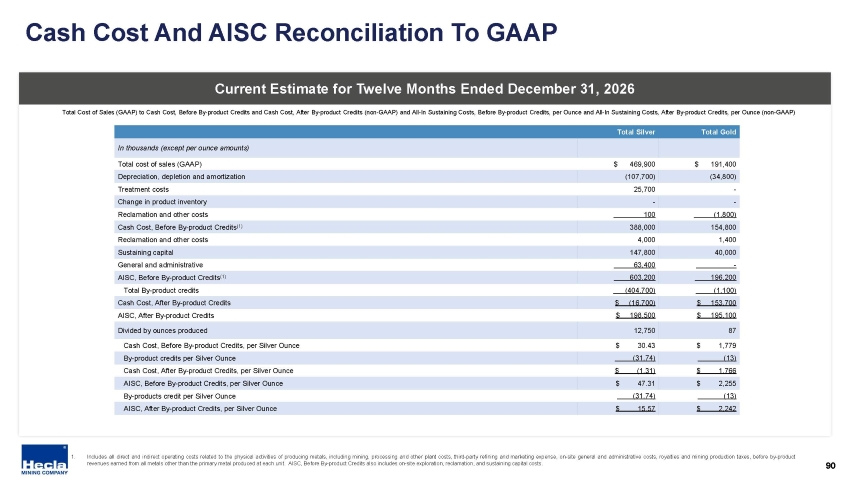
Thank you, Kurt. Let me now address our medium turn outlook because it shows some of the depth of optionality that's within our portfolio. Our 2026 silver production outlook calls for 15.1 to 16.5 million ounces. But as we've shown recently at our investor day, we've got a credible pathway to 20 million ounces over the medium turn. We've got multiple projects that could drive us towards that 20 million ounce target. So first, continued ramp up of Keno Hill to the permanent capacity of 440 tonnes per day. That could drive meaningful production growth from current levels. Second, the potential Midas production restart that Kurt just spoke about. Midas is an exceptional gold and silver project in Nevada that Heckler operated historically. As Kurt pointed out, we have the mill infrastructure in place. And we're currently advancing exploration at Midas with exceptional drill results that we just spoke about, and that supports greater exploration investment in the project this year. A development decision on Midas could add meaningful gold and silver production over the medium to the longer term at low capital intensity, representing a potential significant value-surfacing opportunity. But the upside doesn't end there. Touching on just a couple of our other projects, we see potential to optimise Lucky Friday even further from the current record production levels it's been achieving. At Greens Creek, we've identified the potential for reprocessing of historic dry stack tailings to extract value from the significant metals contained within. These are projects within our control, within our existing portfolio. Projects that offer the potential for significant value creation that we don't need to execute expensive M&A to own. That's why we believe 20 million ounces of silver production over the median term is achievable, with further upside potential over the long term. So what we've presented today is a company in transformation, a company that's moved from financially leveraged and free cash flow constrained into one with a robust balance sheet, strong cash generation, and the financial flexibility to invest in our project pipeline to surface value for shareholders over the long term. We're executing operationally at the highest level across our entire portfolio. We're maintaining strict capital allocation discipline across all six pillars of our framework. We're strategically focused on becoming the premier North American silver producer, and we have multiple near-term and medium-term growth projects within our existing asset base. 2025 was a year of multiple records. 2026 and beyond present exceptional opportunities. We're executing our strategy with precision, and we're confident in delivering sustainable shareholder value. Thank you, and with that, I'll turn it over to questions.
Ladies and gentlemen, we will now begin the question and answer session.
Operator
As a reminder, to ask a question, please press the star button followed by the number one on your telephone keypad. If you would like to withdraw your question, please press star one again. One moment, please, for your first question. Your first question comes from the line of Heiko Ila of H.C. Wainwright. Please go ahead.
Hey, Rob and team. Nice to see all you guys in New York City a couple of weeks ago. Likewise. Exploration at Keto Hill, anything you've seen there that was maybe a bit unexpected, better or worse than, you know, internal plans so far this year, and building on all of that, the costs, the ongoing costs of exploration, you know, per meter so far this year, how has pricing been, and what are you sort of modeling out for the remainder of the year, please?
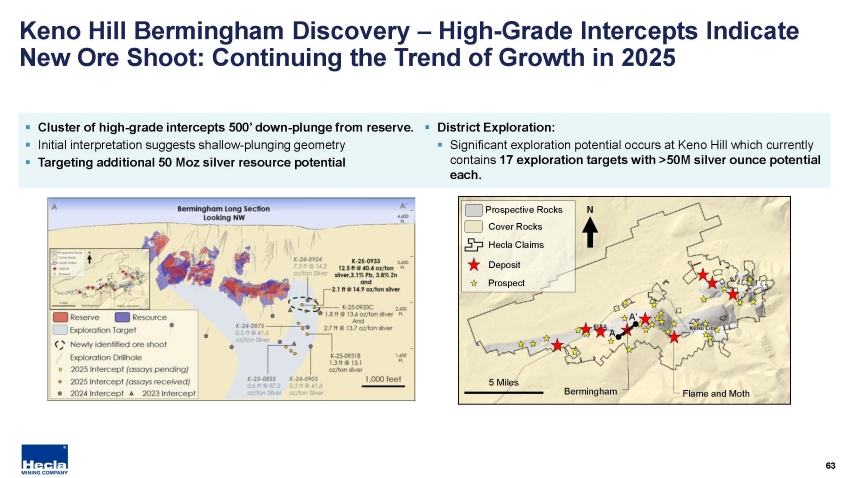
Yeah, our, our, our. I guess things that we've seen that in the expiration from 2025, I mean, we've intercepted what we think is a new high-grade ore shoot off the deep Birmingham, and it's open for expansion, and that's going to be one of our focuses this year, as well as drilling around the rest of the Birmingham and the flame and moth. Now, our budget for Keno Hill this year is $13 million. The direct drilling costs, I think, are on the order of $180 to $190 US. I'll have to check that number, though, Heiko, and get back to you. You know, the exploration potential there is quite spectacular.
Fair. And then just one quick clarification before I go back in the queue on CAFA. And I went through the press release that you guys issued earlier today again. Just to be clear, you're getting all cash flows from CAFA through the closing date, correct? There won't be any backdating or anything. I mean, with gold above 5,000 again as of today, obviously there's real money to be made every single hour.
Yeah, I echo that. That's right. We'll get cash flows through closing, and then, you know, obviously, then the structure of the deal will bring further cash flows.
Yep. Yep. Got it. Perfect. Thank you guys very much. I'll get back in queue. Thank you.
Operator
Your next question comes from the line of Cosmos 2 of CIBC. Please go ahead.
Hi, thanks, Rob and team. Maybe my first question is an accounting question, again, on Casa Verardi. I'm just wondering about the accounting sort of treatment, accounting impact that could come from Casa. I realized or I kind of looked at the cost for Q1, your guidance, gold cost guidance, and I saw that it's actually higher now. It's only one quarter's worth of Casa. So does that feed into your earnings? How does that impact earnings? And the second part is, will you be looking to book some type of gain on the transaction? I forget what the book value might be. And then overall, what's the timing of some of these accounting transactions?
So, yeah, so, Cosmos, a couple of things here. First, in terms of the guidance, we took an estimate through the first quarter, so we expect we'll close the deal sometime in the first quarter, so we just took a full first quarter versus Of production, estimated cost, that kind of thing. I will say in January, there was a significant weather in the Abitibi in eastern Canada. I think you probably saw some of that in Toronto. And as a result, January's production was a bit lower than estimated. But since we only have a quarter of a year, essentially, we just didn't have the time to recoup that production. So that's why you see the cost on a per ounce basis as a higher. And then as we think about the recording of the transaction, so that will float through our financials through closing. In Q1, we would anticipate Casa Berardi would be held for sale. So that essentially kind of comes out of the core part of our financial statements. But you will still see in the net income line the impact of Casa's operations through closing. Um, it just, it just separated, right? Um, yeah. And I'm trying to think, there's a few other things in there. You know, as we think about the, um, value of the transaction, we obviously, there's a portion of that which is deferred and contingent, so we have to go through a fair value process to book the, you know, kind of estimated fair value of that, and then we'll compare that to the carrying value. I would actually expect we'll see some type of a loss on the transaction versus a gain, just because the carrying value is likely going to be a bit higher than that. But we're working through that process now, so I won't speculate or try to tell you what that might be. And tell me if I've marked off all your questions. I may have missed one. Okay, great.
And so, likely, it's going to be a Q1 sort of – if it closes in Q1, it'll be a sort of Q1 accounting transaction, and I'm sure you'll give us some kind of guidance ahead of it.
Yeah, that's right. And, you know, obviously, we guided, you know, production and costs such that you all have the information needed to kind of see what the ongoing cash flows and that type of thing you'd expect to see from cash flow. Great.
And then maybe my second question is on strategy. And Rob, it's good to hear that you're going to be silver-focused, looking to be the premier silver company, and looking to redeploy some of those proceeds coming from Casa into growing your silver sort of portfolio. But again, I guess my question is, if I look at your exploration budget, a big chunk of it is heading to Nevada, which is more gold rich. You do have, you know, some longer term exploration assets. Including in the Silver Valley, also San Juan Silver. But that's, again, longer dated. So I guess my question is, if you can walk us through your thinking behind how you can continue to grow your silver production, your silver focus, and do you need to look externally? And I think you answered that question, but I'll ask you anyways. Do you need to look externally to really unlock the full silver potential of Hekla?
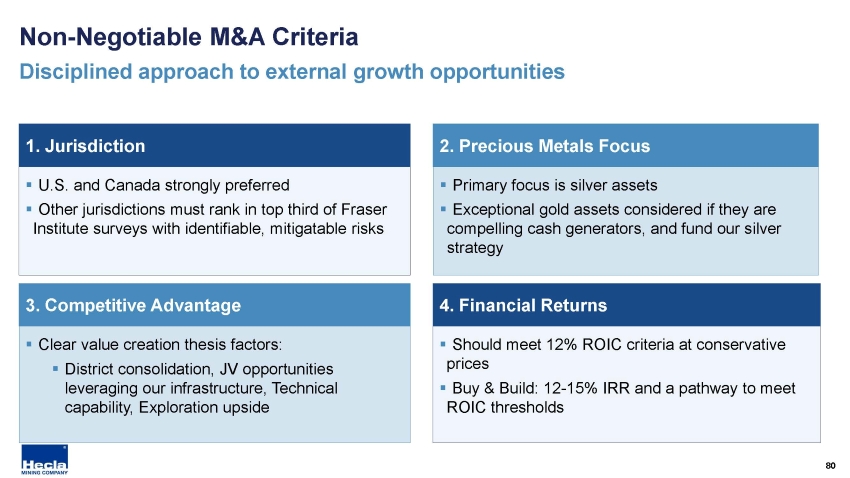
Yeah, thanks for the question, Cosmos. It's very much on my mind that we need to continue to grow our silver portfolio. Now, one of the things is, while we've been focused on divesting a few assets and potentially farming out some more to come, we need to bring new projects into the pipeline. And so I've tasked Kurt with establishing a project generation and a new business, let's call it a new business group, which is what I had when I was at my previous company, and their task is to get us into some new silver districts early on, monitor competitor intelligence, particularly in the junior space, where we can potentially spot some emerging new discoveries and try and partner up with those. On M&A, it's obviously something that we'll continue to consider going forward, but obviously there's a scarcity of silver-producing assets, and I've spoken about our criteria at our investor day, what's going to drive some of that. So yes, I'm very aware that we need to replenish the pipeline, and Kurt has recruited someone just recently, actually, with a lot of experience.
Yes, yes, we've got a recruit in. He's quite experienced, so it'll be good with the program going forward. Yep.
Great. Kurt, you've got a point to talk. But yeah, thanks, Rob, and Russell, and Kurt, and team. Those are all the questions I have. Thanks again.
Operator
Your next question comes from the line of Alex Taranchu of National Bank. Please go ahead.
Hi, guys. Just a couple questions for me. First, on Lucky Friday, your surface cooling project should be done, as you're seeing here, mid-year. I'm just wondering, kind of, longer term, with this project being completed, opportunities to, you know, reduce costs here. How does this kind of factor into the long-term plan? I mean, Rob, you made a comment about optimizing Lucky Friday as another venue of potential upside longer term. So, just kind of wondering how this project factors into the longer-term potential of the Yeah, thanks for the question, Alex.
So the surface cooling project should be done by about mid-year. It's primarily driven for, I guess, health and safety reasons or the well-being of our workers. We're obviously deep at Lucky Friday. It's a hot mine. And so as we go into successively deeper values, bearing in mind that we have a long, long mine life here, we still have many levels to develop ahead of us. So this is really setting the foundation for the future. But the other thing I'd ask you to consider is that, obviously, when workers are comfortable, they're generally more productive. And so, you know, that could have an impact. The other thing I spoke about on our investor day is that even though we broke successive records in throughput at Lucky Friday, our GM there, Chris Neville, he still believes that he might be able to wring some more out of that. Anything you want to add, Carlos, on that?
Yeah, and it's part of the optimization plan, right? We have different steps where we have continuous improvement and, you know, the hoisting capacity and, you know, securing the areas, the deep underground, this is the cooling system.
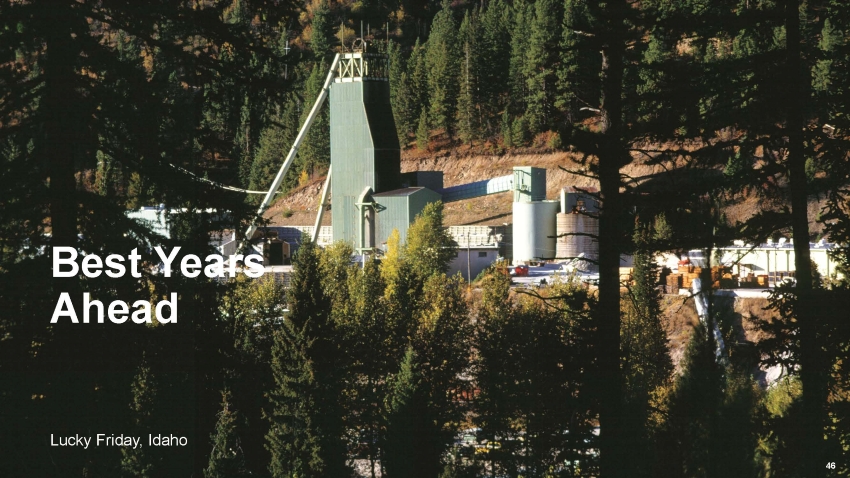
We say it in New York, right, the best decade of Lucky Friday is still ahead of us because we have plenty of opportunities going up, you know, another proportion of production.
Yeah, makes sense. Okay, thanks. Another question just on Midas. Obviously, the stuff you guys have going on there in Nevada is pretty exciting. I mean, you've got good infrastructure, some really high-grade intercepts. I know this is a, you know, I wouldn't call it long-term, but a longer-term plan anyways. Can you just kind of remind me, refresh me, over the next one to two years, what can we expect to see there in terms of your guys' plans to move that forward?
So, a lot of it hinges on building up a critical mass of high-grade resources to get it back into construction. Again, just to recap, we've got the mill, we've got the tailings dam. We have some new discoveries. Out where one of the new discoveries is, there's a resource that was discovered roughly four years ago, I guess. It's somewhere around 180,000 to 200,000 ounces at well above the historic Midas production grade, so that's the head start that we have. Now, four years ago, when that was discovered, the drilling came up against a fault across the other side of the fault. There was no mineralisation, and so the groundwork that was laid over the last couple of years has basically identified where that offset's gone, and now we've picked up the scent again and starting to drill mineralisation. Thank you. I guess the starting resource, we're not talking about a million ounces to get this thing going. We're talking about three, four hundred thousand ounces. So we're already a significant portion of the way there. And really the focus on this year is going to be on exploration. At the same time, we'll do some studies. Matt, maybe you can talk about that.
Yeah, I mean, this is out in the discoveries are out in an area that has no or very little historic mining. So we have, we've got to collect data on the geotechnical side, the metallurgical performance, and hydrogeologic, everything in mining is about water, ultimately. So we need to collect that information. So in order to fast track this, we're going to be collecting that data and doing studies in parallel with that exploration. So as soon as we have a resource model, we can start doing. more technical feasibility work.
And at some point, we'll appoint a dedicated project manager to that. We're planning on success, Ian.
Yeah. Okay. Sounds good. Thank you. Thanks, Alex.
Operator
The next question comes from the line of Johnson-Mazos of Johnson-Mazos, Very Independent Research. Please go ahead.
Thank you very much. Could you refresh us on the capacity of tons per day of the Midas mill? What you think the initial throughput would be, whether you can fill it up? And whether the grades would compare to, back in the heyday, something like 10 grams gold, 10 ounces silver per ton.
It was, I think it was 1,200 tons per day is the permitted capacity of the minus mill.
That's right. The permit is 450,000 tons a year, which works out to about 1,200 tons a day.
Yeah. And sorry, what was the second part of your question, John?
How many tons per day do you think you're going to put through it? And what might the grades be? In the old days, it was something like 10 grams gold, 10 ounces silver.
I think it's too early to say, John. I mean, we're in the early discovery stages. We need to pin down a more robust resource. The historic grades, you're right, it was 0.4 ounces per tonne, so roughly 12, 13 grams per tonne, and significant silver as well, actually.
Super. Nothing like catching up with an old friend. Good to hear from you, John.
Operator
There are no further questions at this time, and
with that, I will now turn the call over to Rob Krochmarov, CEO, for closing remarks.
Operator
Please go ahead.
Well, thank you all for your thoughtful questions and your continued interest and support of Heckler. 2025 was a genuine year of transformation, financially, operationally and strategically. And so we enter this year with a stronger balance sheet, a sharper focus and what we believe is the most compelling silver portfolio in North America. We've got a lot of work ahead of us. We know that and we're looking forward to it. And we'll talk again at Q1. So thank you, everyone. Have a great day.
Operator
Ladies and gentlemen, this concludes today's call. We thank you for participating. You may now disconnect your lines.