Operator
Good morning, ladies and gentlemen, and welcome to the Hamilton Lane Fiscal Third Quarter 2026 Earnings Call. At this time, all lines are in listen-only mode. Following the presentation, we will conduct a question and answer session. If at any time during this call you require immediate assistance, please press star zero for the operator. This call is being recorded on Tuesday, February 3rd, 2026. I would now like to turn the conference over to John Oh, Head of Shareholder Relations. Please go ahead.
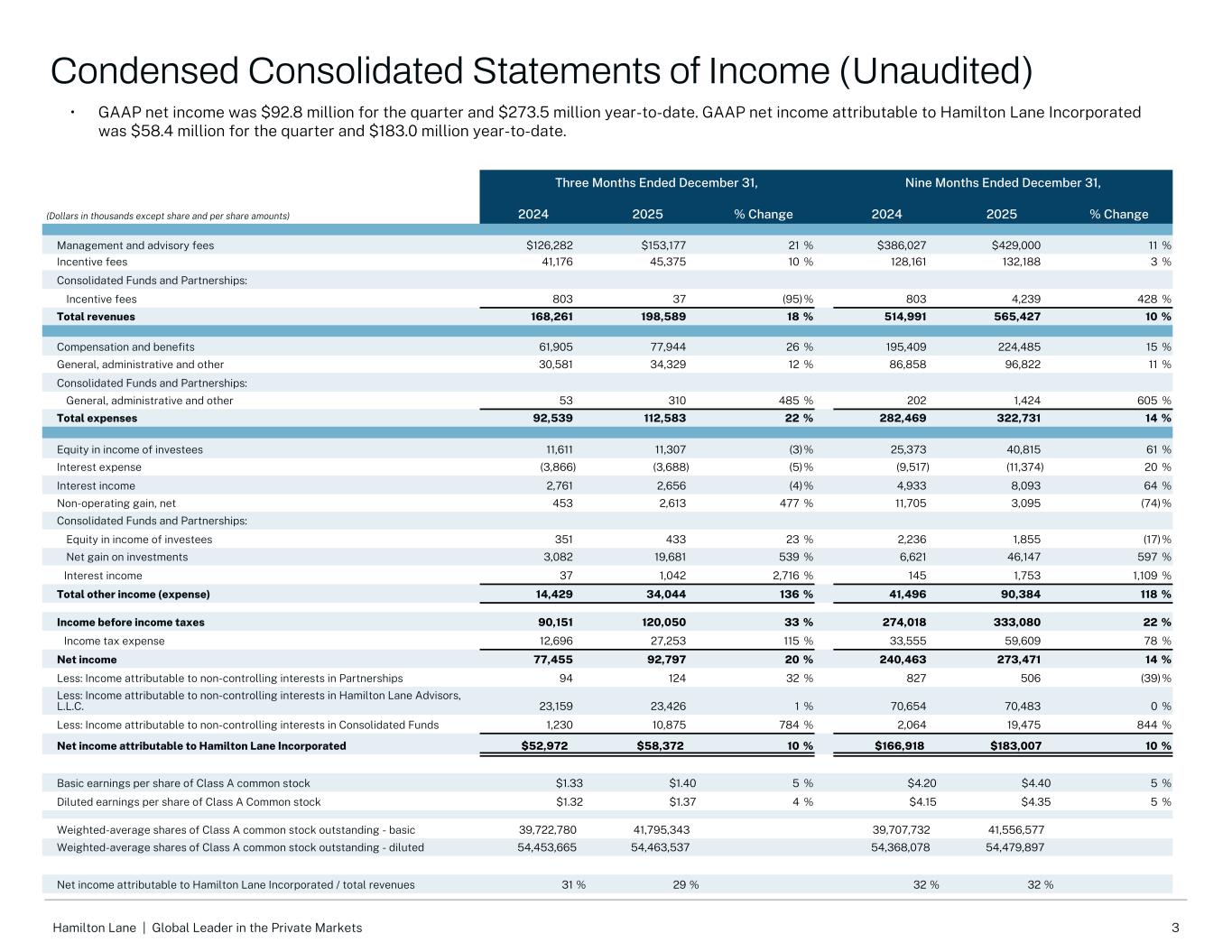
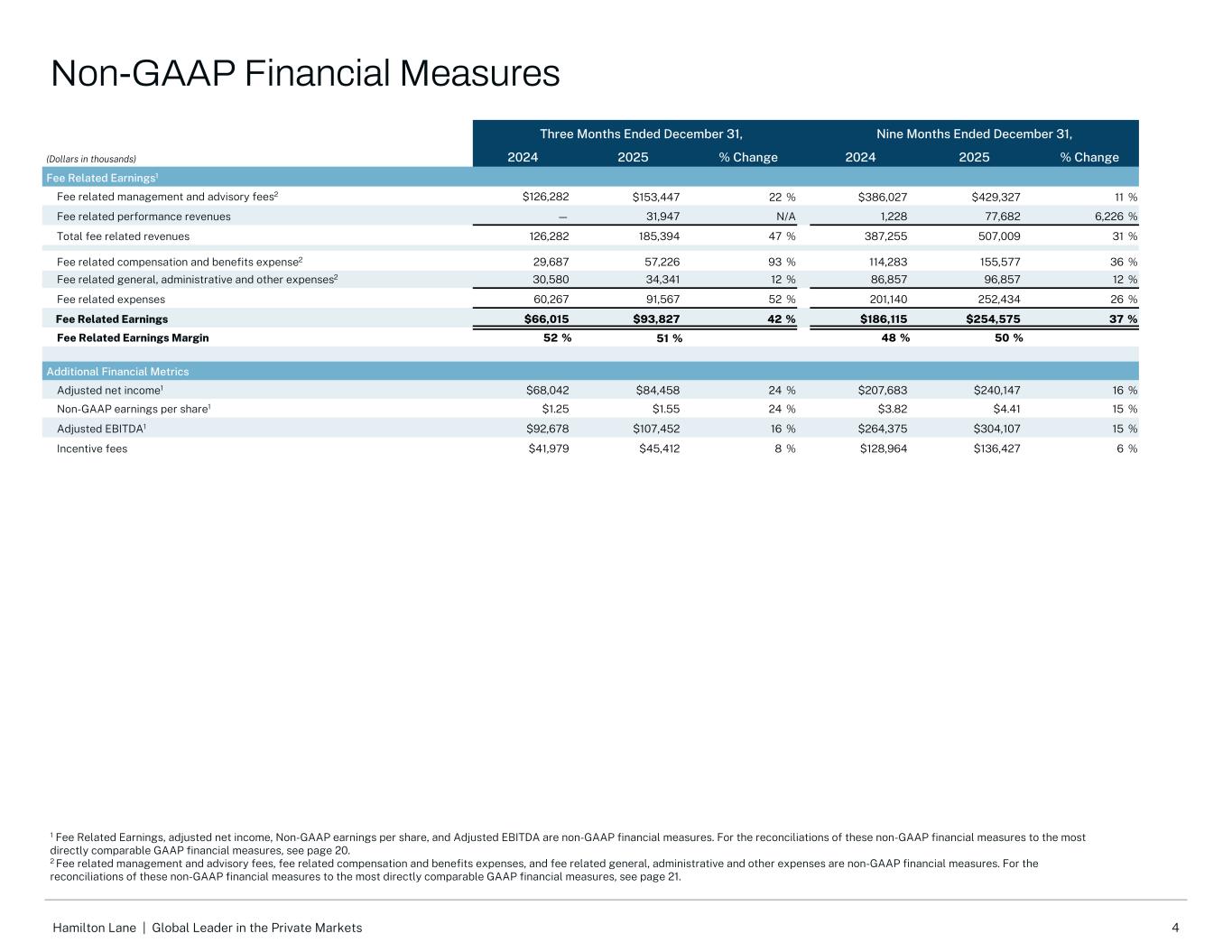
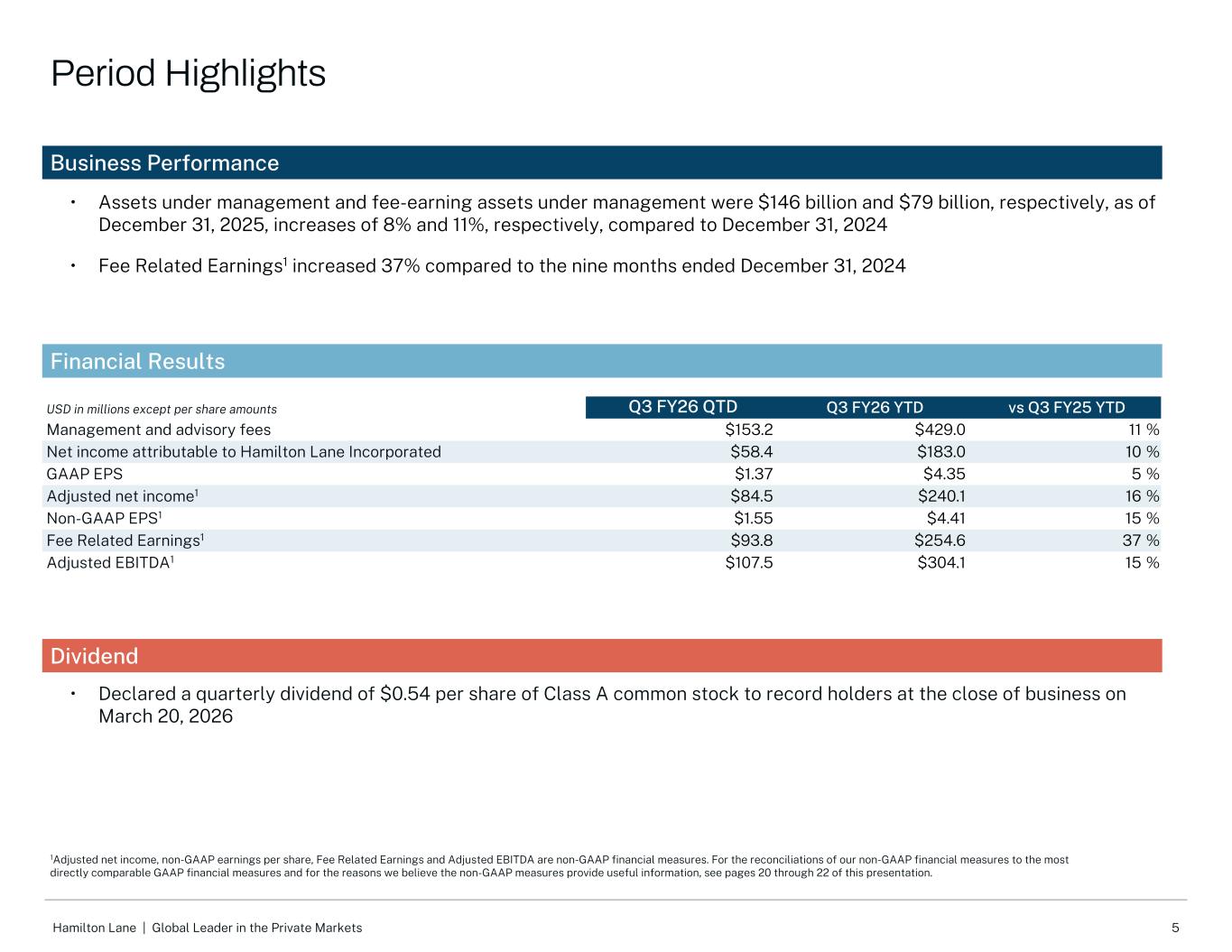
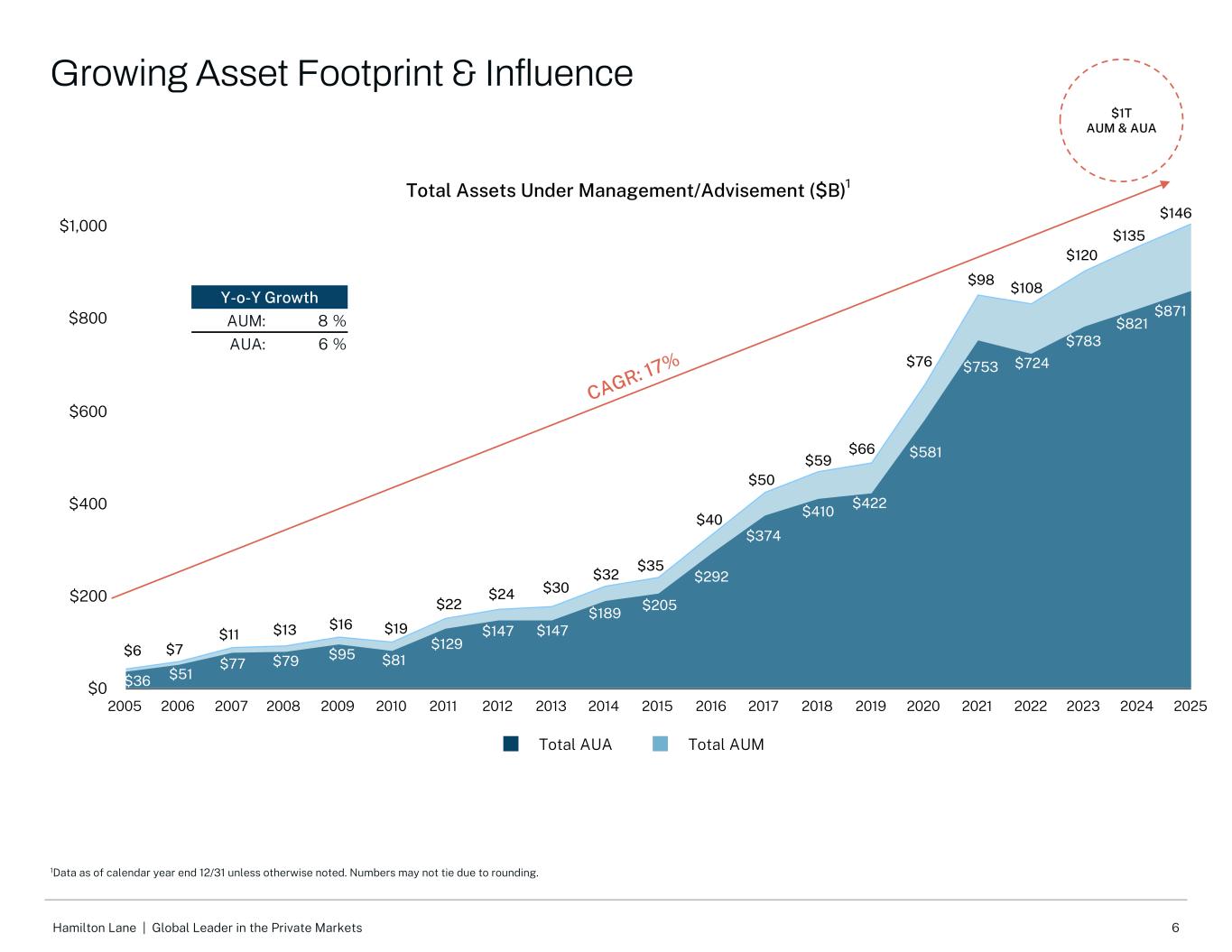
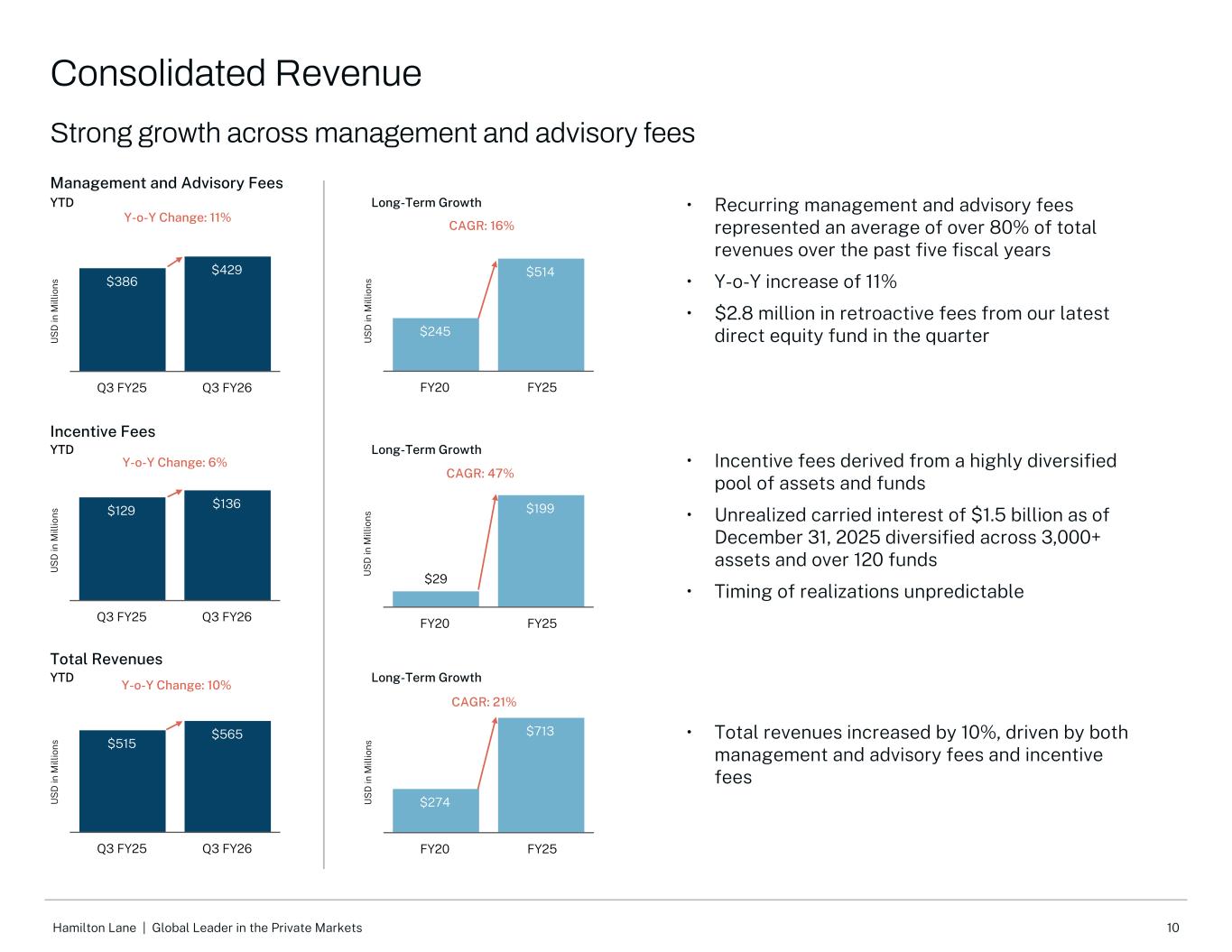
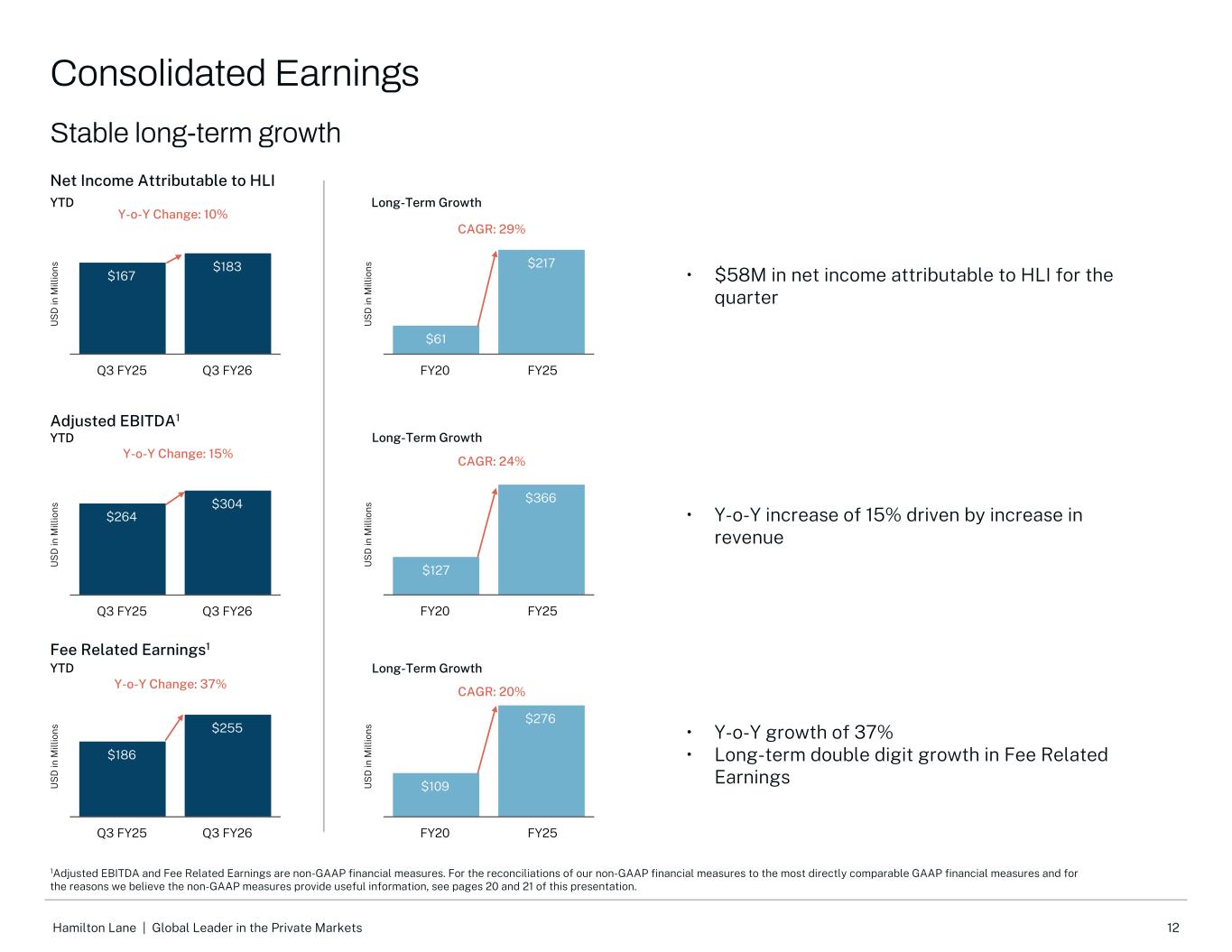
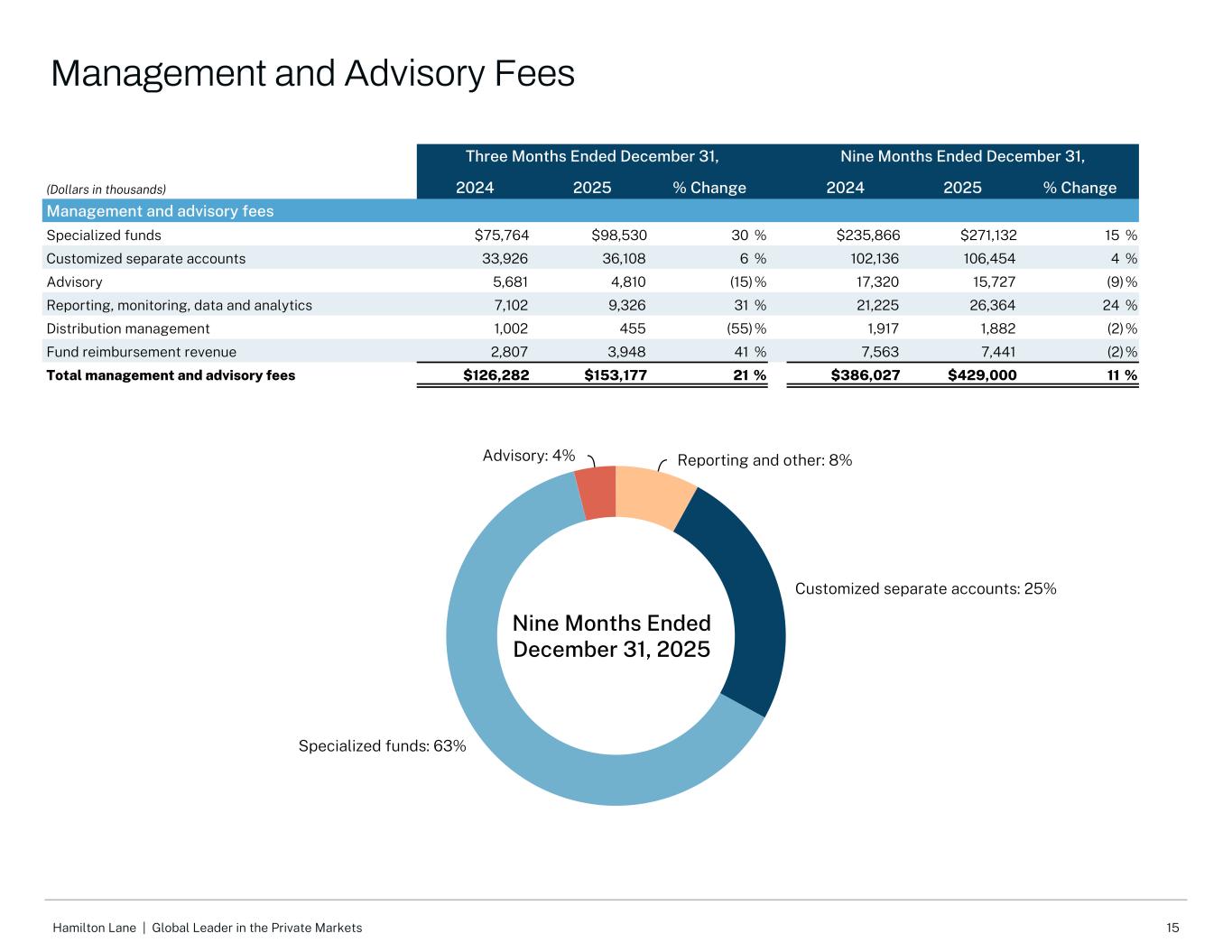
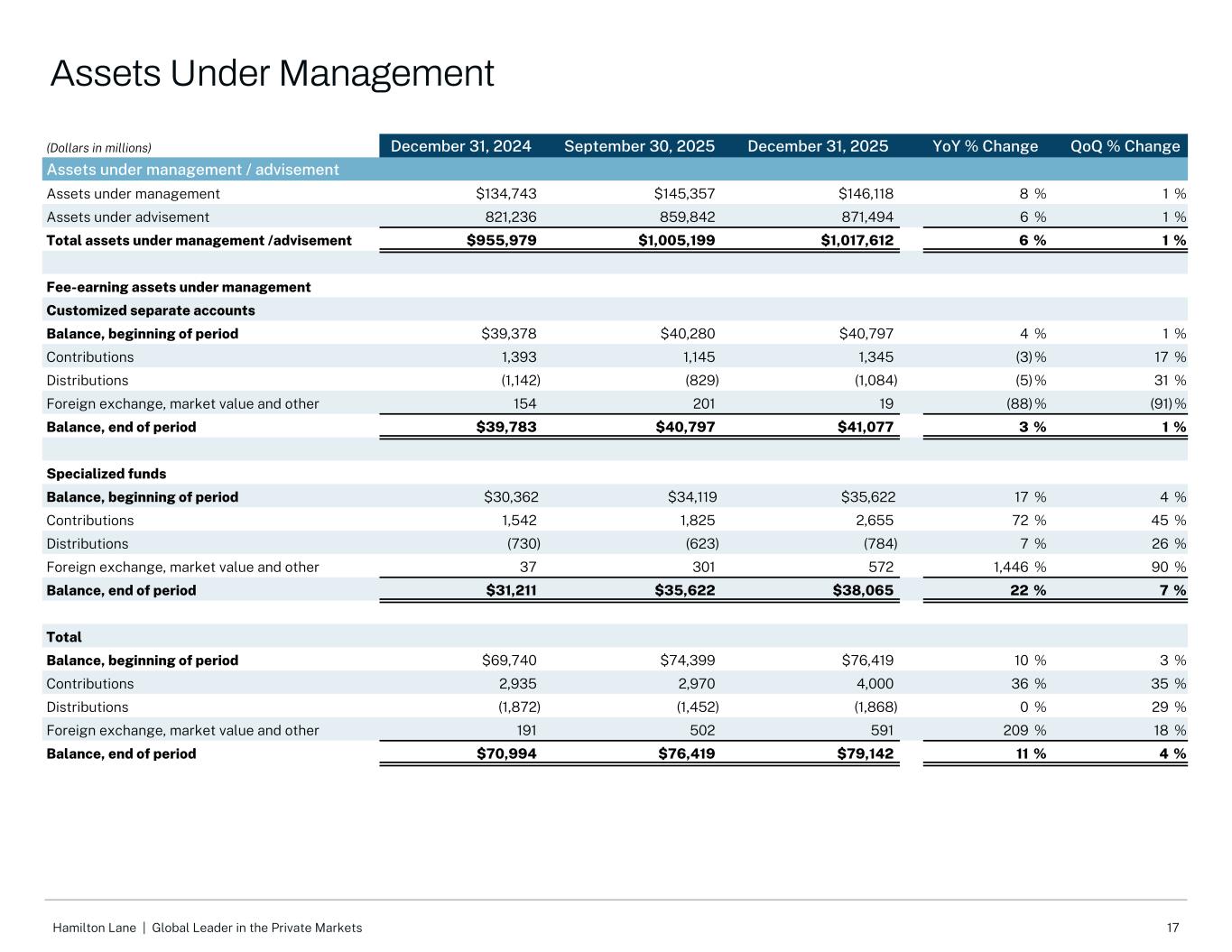
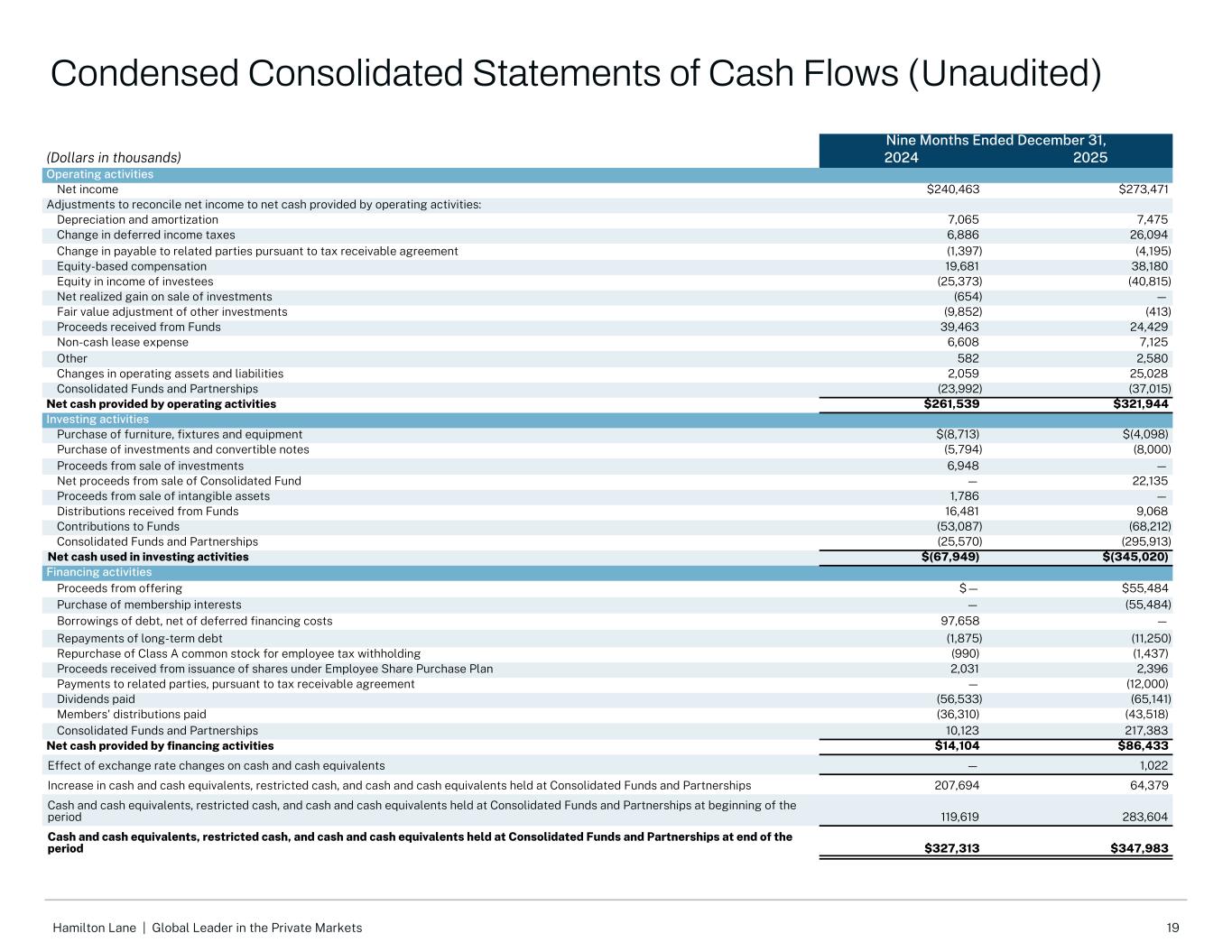
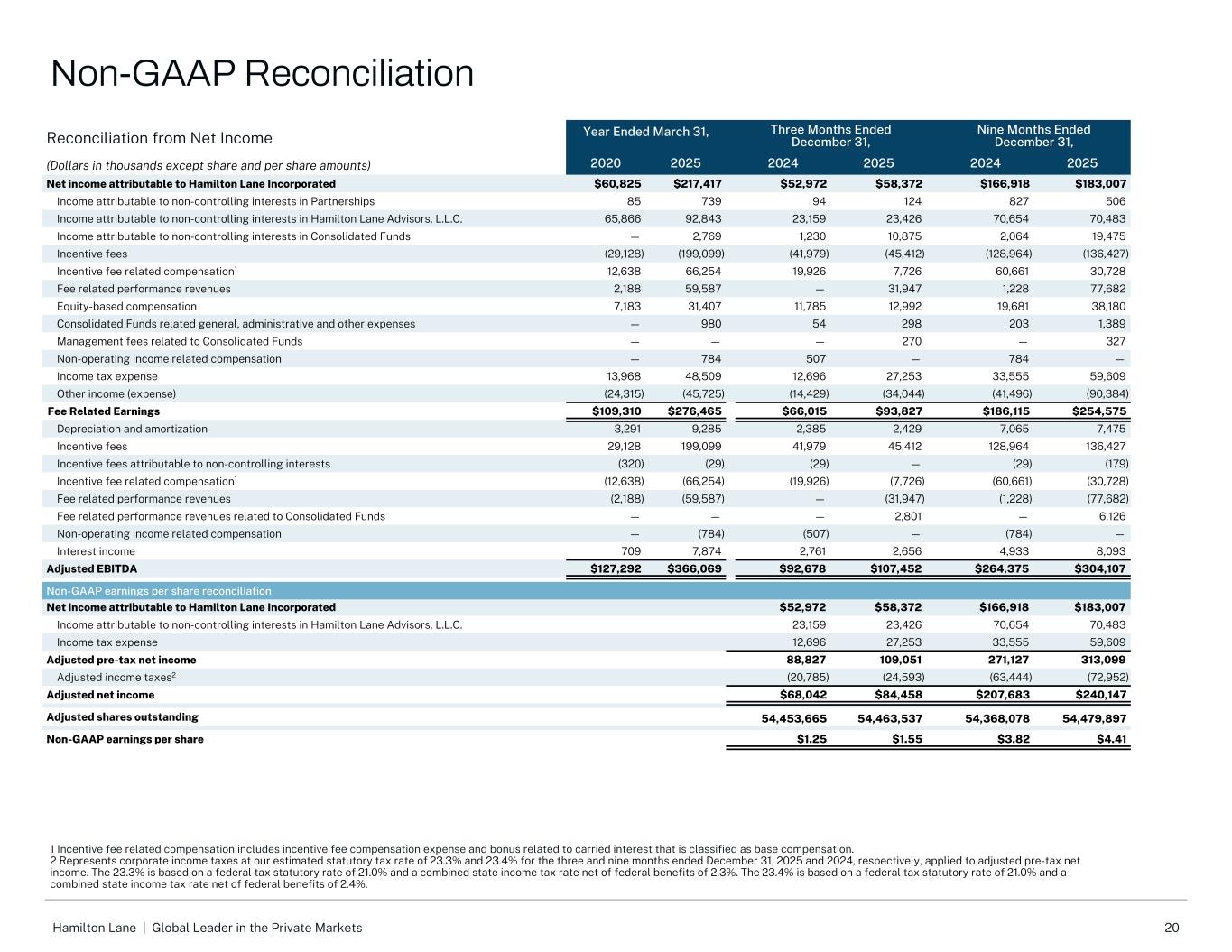
Good morning and welcome to the Hamilton Lane Q3 Fiscal 2026 Earnings Call presentation, which are available on our website. Before we discuss the quarter's results, we want to remind you that we will be making forward-looking statements. Forward-looking statements discuss our current expectations and projections relating to our financial position, results of operations, plans, objectives, future performance, and business. These forward-looking statements do not guarantee future events or performance and are subject to risks and uncertainties that may cause our actual results to differ materially from those projected. Please review the cautionary statements and risk factors included in the Hamilton Lane Fiscal 2025-10K and subsequent reports we filed with the SEC. These forward-looking statements are made only as of today and accept as required, we undertake no obligation to update or revise any of them. We will also be referring to non-GAAP measures that we view as important in assessing the performance of our business. Reconciliation of those non-GAAP measures to GAAP can be found in the earnings presentation materials made available on the shareholder section of the Hamilton Lane website. Our full financial statements will be made available when our 10-Q is filed. Please note that nothing on this call represents an offer to sell or a solicitation of an offer to purchase interest in any of Hamilton Lane's products. Let's begin with the highlights, and I'll start with our total asset footprint. At quarter end, our total asset footprint stood at over $1 trillion and represents a 6% increase to our footprint year over year. AUM stood at $146 billion and grew $11 billion, or 8%, compared to the prior year period. The growth came from both our specialized funds and our customized separate accounts. KUA came in at $871 billion and grew $50 billion, or 6%, relative to the prior year period. This stemmed primarily from market value growth of the portfolio and the addition of a variety of technology solutions and back office mandates. Total management and advisory fees for the year-to-date period were up 11% year-over-year. Total fee-related revenue for the period, which is the sum of management fees and fee-related performance revenues was $507 million and represents 31% growth year-over-year. Fee-related earnings were $254.6 million year-to-date and represent 37% growth year-over-year. We generated fiscal year-to-date GAAP EPS of $4.35 based on $183 million of GAAP net income and non-GAAP EPS of $4.41 based on $240.1 million of adjusted net income. We have also declared a dividend of $0.54 per share this quarter, which keeps us on track for the 10% increase over last fiscal year, equating to the targeted $2.16 per share for fiscal year 2026. With that, I will now turn the call over to Eric.
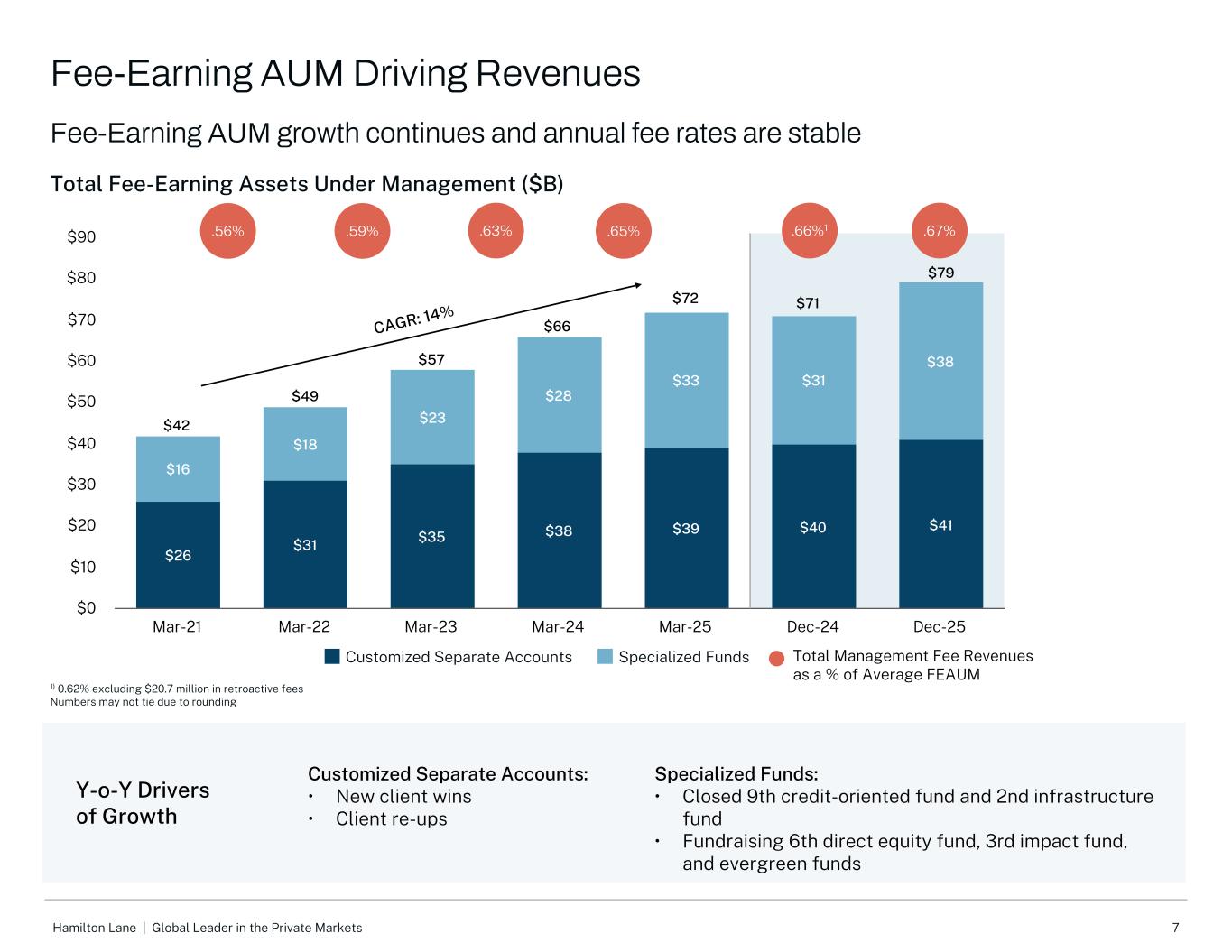
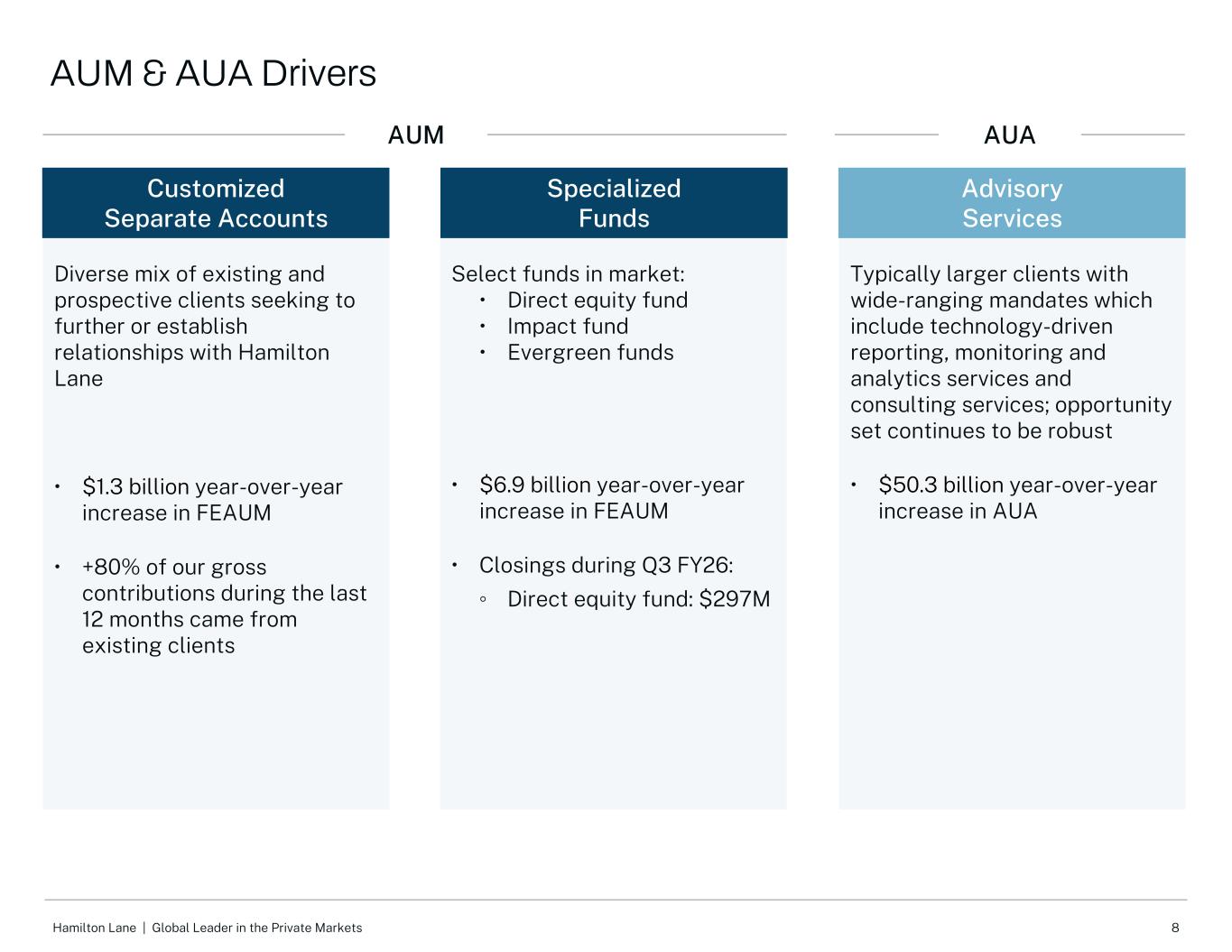
Thank you, John, and good morning, everyone. As we look back on calendar 2025, Juan and I are very proud of all that has been accomplished, and we are enthusiastic about the significant opportunity that lies ahead. Our team successfully navigated changing markets, industry evolution, and high client expectations. We delivered strong growth and outstanding results, and we exited calendar year 2025 with real momentum. More global reach and deeper client rents that are gaining traction, what this team does every Hamilton Lane was once again recognized by pension to work and money management. We have now earned this recognition for the 14th consecutive year and are one of only five companies that has been recognized every single year collaborative and growth oriented where we all focus on what matters. We move now to a quick update on the strategic partnership with Guardian that I highlighted on our last. I'm proud to announce that the partnership has officially closed and we are already part of it and these assets will be reflected in our total asset footprint beginning next quarter. Also, we expect to receive additional annual commitments of approximately $500 million for at least 10 years, opportunities to support for Hamilton Lane's global evergreen platform, where at least $250 million of capital will be invested in our union with HL&E equity warrants and other financial incentives driving alignment and opportunities for long-term value creation. The initial economic impacts of the partnership will be recognized in our fiscal fourth quarter of 2026, and we will provide additional details on our next call. With Guardian is a clear proof point of our ability to work alongside the world's most sophisticated institutional investors to design and execute comprehensive private market programs. In a very short period of time, we are already fully engaged. Capital has been allocated to our U.S. secondaries and venture evergreen funds, complemented by a sizable commitment to our latest closed-end direct equity fund and to the upcoming first close of our next secondary fund. Additionally, we have also successfully onboarded three of our U.S. Evergreen offerings onto their Park Avenue Securities platform, and we look forward to working closely with their extensive advisor network to deliver Evergreen solutions. We remain excited about this partnership and all the opportunities for mutual success, raising and fee-earning AUM, $1.1 billion and grew $8.1 billion dollars or over quarter growth was 2.7 billion dollars growth continues to be largely driven by our special semi-liquid evergreen products leading our strong momentum the combination of our net positive fundraising product additions and strong performance has driven the growth of total fund net asset value in our evergreen offering executed well in our closed end offerings as evidenced by recent closes and momentum for the more detail on that shortly Ended fee rate continues to benefit from the shift in the mix of fee-earning AUM towards higher fee-rate specialized funds, most notably our Evergreen. Fee-rate stands at 60-fund fee-earning AUM and 48%, 15% higher than when we went public in 2017, 57% customized separate accounts, and 33% specialized funds. We view this shift as a driver supporting the trajectory of our management fees over funds, where fee-earning AUM ended fiscal Q3 at $38.1 billion, $0.9 billion over $22.4 billion, with a strong combination of net new flows and positive net asset value appreciation, benefited from evergreen non-fee-earning AUM that turned to fee-earning AUM in the corner, as I had detailed on our prior. Most notably, our seventh raised $5.6 billion and extended our track record of raising larger successive funds in that franchise, managing increasingly larger pools of capital in both of these spaces, and in neither space are we anywhere close to the largest player. We have plenty of room to continue to grow. On the venture side, we're looking to build on the success of our inaugural Venture Access product, which closed in February 2025 with nearly $610 million of investor commitments. We currently expect to hold first closes for both the new secondary fund, and the second venture access fund sometime in the second calendar quarter. I'll move to the rest of the product suite, and I'll start with our sixth equity opportunities fund. As a quick reminder, this fund focuses on direct equity investments alongside leading general partners, and it offers two fee arrangements that either charge management fees on a committed capital basis and a 10% carry, or fees on a net invested basis with a 12.5%. InterDirect Equity Fund offered the same arrangement and raised $2.1 billion, $1 million of LP commitments. Then in January, we held another close of approximately $500 million. So taken together, the fund now stands at over $2.3 billion, and at that size, we have surpassed the prior fund by nearly 15%, and we have solid visibility on additional on committed capital and 65% on net invested. Jeff will provide additional detail on the retro fees associated with the capital that closed both in the quarter and post-quarter end. We expect to hold a reminder this strategy focuses on direct equity and secondaries across the infrastructure landscape and the fund earns management fees on a net invested basis. We used to report that just yesterday we announced the total capital raised in and alongside the fund to nearly two billion dollars with over 1.5 billion dollars coming into the fund and nearly 400 million dollars alongside the fund and related vehicles at this size we have now more than tripled the capital raised in our inaugural infrastructure fund this second vintage is off to a strong start with over 40 percent committed as of december 31st of our ability to launch and scale new strategies and we remain confident in our ability to further grow this franchise closed and direct credit as a reminder this fund charges management fees on a net invested basis. On December 31st, we held the final close for the ninth series and raised a total of $527 million of investor commitments. This will be our final series of our Strategic Opportunities franchise. Strategic Opportunities franchised more than a decade ago, private credit looked very different. Investors looking for a blended approach between senior and junior credit, and we build a product to match, segmented, shaping how we position and construct this closed-end franchise, so it's set up for the next leg of growth and better aligned with how clients are allocating across senior, junior, and opportunistic credit evergreen funds. Importantly, the management fee dynamics will be unchanged. Fees will continue to be charged on a net invested basis and will move into fee-earning AUM as capital is deployed. We launched our first credit vehicle 10 years ago, and then we managed a sum total of $70 million in credit product AUM. Closed in in Evergreen, we are managing nearly $4 billion in fee-earning AUM, reflecting a compounded growth rate of more than 45%. While we are proud of this success, we also recognize how modest this is in context of the credit markets, and we are excited to continue scaling this business in a very significant way, and we believe we have a delivered another strong quarter. For the quarter ended December 31st, 2025, we generated over $1.2 billion of net inflows across the suite, expanded product offerings, robust fundraising, and solid investment performance. At quarter end, total Evergreen AUM reached over $16 billion, representing over 70% year-over-year growth. Our core multi-strategy private markets offering continues to anchor the platform. It ended 2025 at over $11.7 billion of AUM and once again delivered sustained positive net inflows. We are making real progress broadening distribution for this flagship strategy in the U.S. and internationally, while also seeing healthy recurring flows from existing partners, many of whom are now adding allocations to our newer evergreen strategies. Turning to credit. Despite recent headlines and volatility in certain parts of the private credit market, our International Credit Evergreen Fund remains on extremely solid footing. It continued to generate positive net inflows in the quarter, with AUM surpassing the $2 billion mark at calendar year-end 2025. Performance remains strong with a since-inception net annualized return of over 9.5% and positive monthly performance throughout all of calendar year 2025. December net inflows were the fourth highest month since its launch in 2022, and for calendar year 2025, we averaged over $90 million of monthly net inflows. In addition to that, we remain on track to introduce its U.S.-registered counterpart in the coming months. Finally, we are encouraged by the trajectory of our newer Evergreen offerings. Both our Infrastructure Evergreen, which was launched in the second half of 2024, and our secondaries Evergreen, which was launched in early 2025, are both approaching the 1 billion AUM threshold respectively. That progress reinforces our conviction that the Evergreen platform can be, and is increasingly becoming, a multi-strategy, multi-asset growth engine for the firm over time. Let's wrap up here with customized separate accounts. At quarter end, customized separate account fee-earning AUM stood at $41.1 billion and grew $1.3 billion, or 3%, over the last 12 months. Net quarter-over-quarter growth was $280 million, or 1%, with the gross contributions stemming from a mix of new client wins, contributions for investment activity, set by fee basis step-downs, and returns of capital stemming from exit activity to deploy, supported by a strong pipeline of mandates that have been awarded and are currently moving through the contracting stage. On this platform, we have long-dated relationships with the majority of our separate account clients and have experienceability and depth of these parts are highly tailored rather than formulaic. The pace at which they move from sale to full deployment can vary, introducing timing variability in which assets and revenues come online. In fact, in December alone, we closed on more than $2 billion of new SMA capital coming from a mix of existing client re-ups, new service lines with current client of live opportunities to various stages of negotiation remain sizable and in the multi-billion dollar range. It's adopting and desiring product pace than SMAs. We believe that serves them and us latest addition to the Hamilton Lane Innovations portfolio, where we utilize our balance sheet capital to invest in differentiated technology solutions that broaden access to the asset class, enhance the investor experience and investment in Pluto financial technologies alongside Apollo private markets and the growing need for sophisticated technology-enabled infrastructure to support that growth. Specifically for private market investors and uses AI-driven technology to connect directly to underlying portfolios, providing access to credit without forcing the sale of positions or the need to work through multiple intermediaries. The objective is practical liquidity tool while allowing them to stay committed to their long-term private market allocations. Individual investors continue to allocate more capital to the private markets and in turn become incrementally larger and larger parts of investor portfolios. The importance of liquidity has only increased. Historically, many individual investors and their advisors view limited liquidity as a barrier to meaningful allocation even when they were convinced of the return and diversification benefits. Secondary solutions and product design have evolved to offer more frequent liquidity windows and better tools for managing flows, we are seeing that hesitancy begin to fade. We believe that continuing to improve the liquidity experience for individuals leads to deeper penetration of private markets in the wealth channel. Simply put, the more we can marry institutional quality exposure with a liquidity profile that works for individuals, the larger the opportunity set becomes. We believe that Pluto is helping to drive increased liquidity in our asset class and uniquely leveraging technology to make that happen. We are proud to join them on this important view with future updates. I call to Jeff to cover the financials.
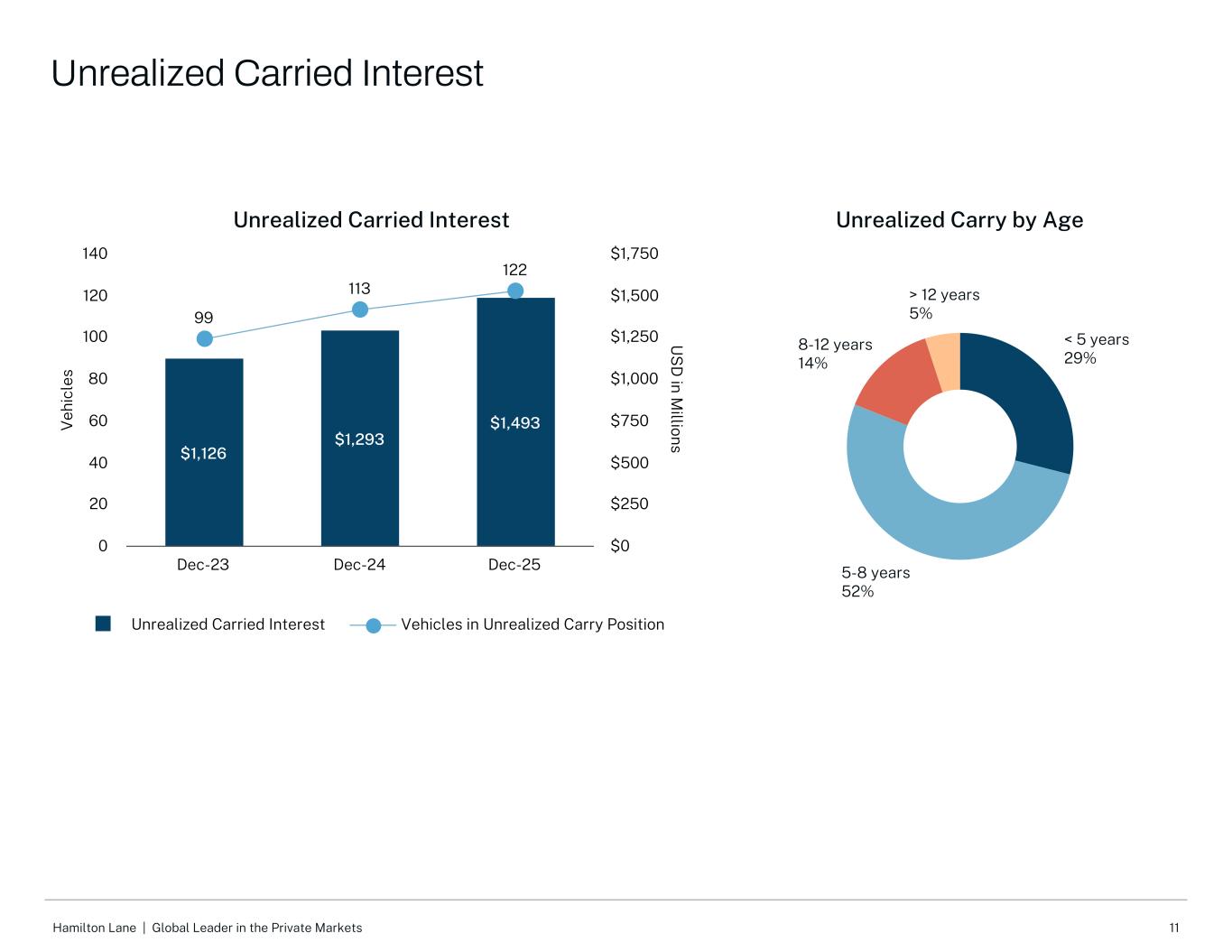
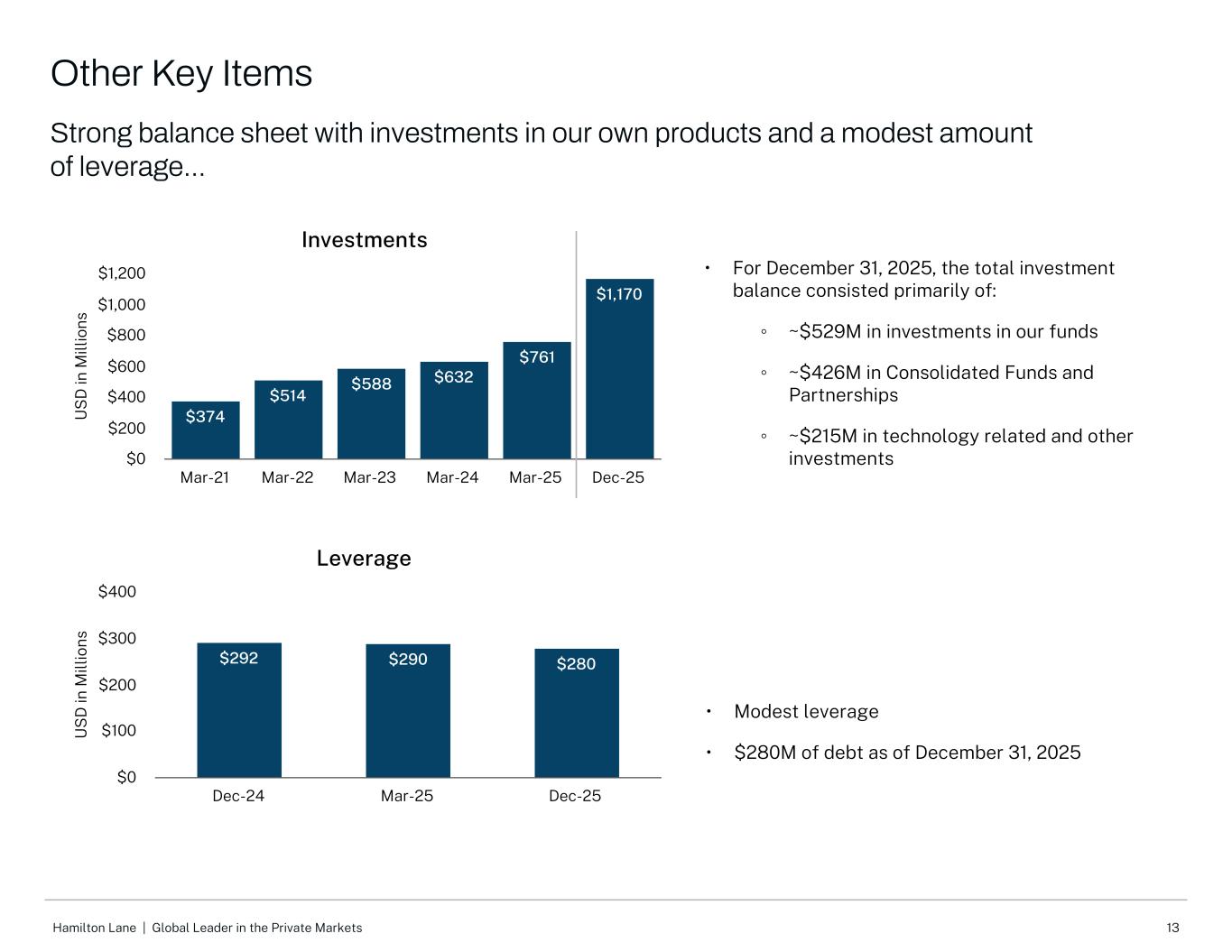
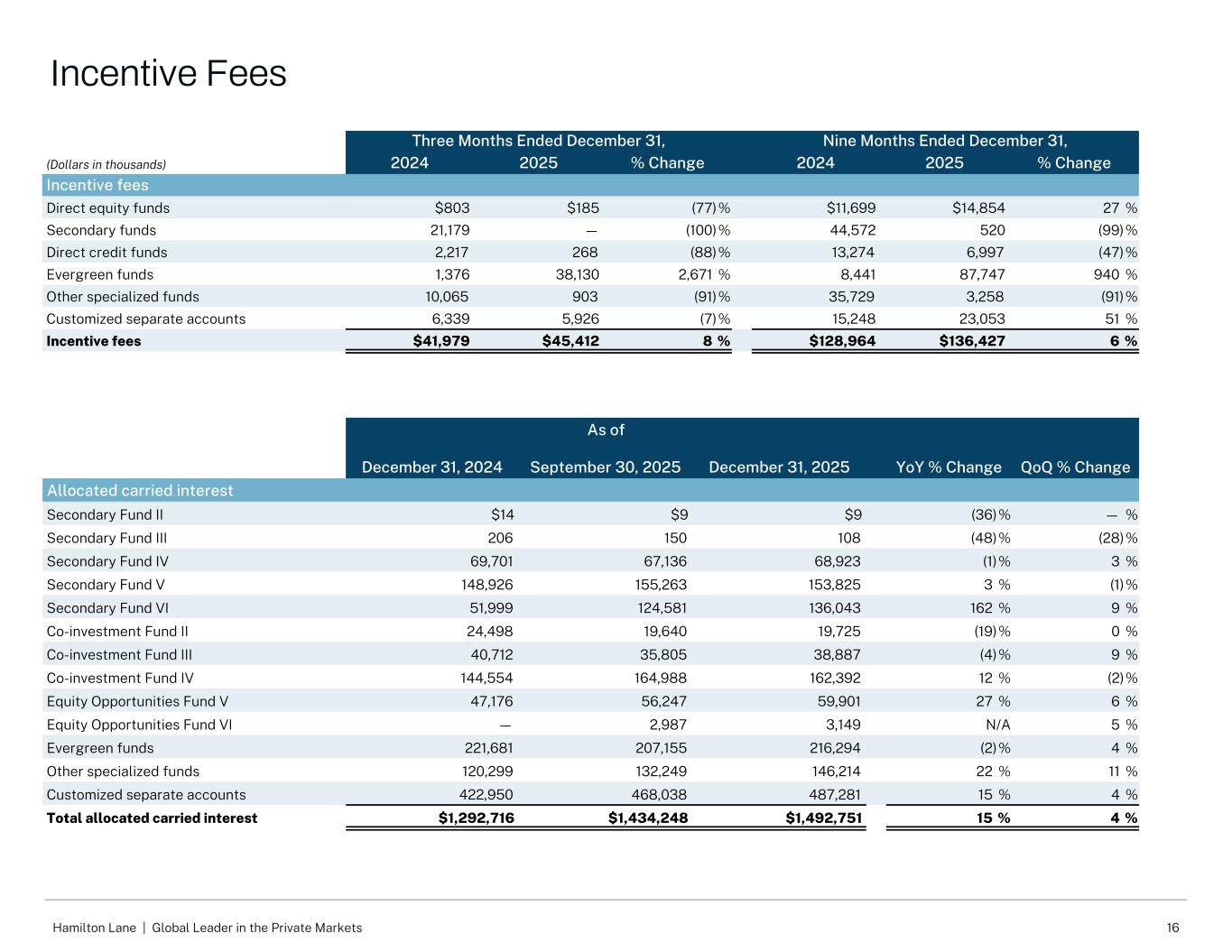
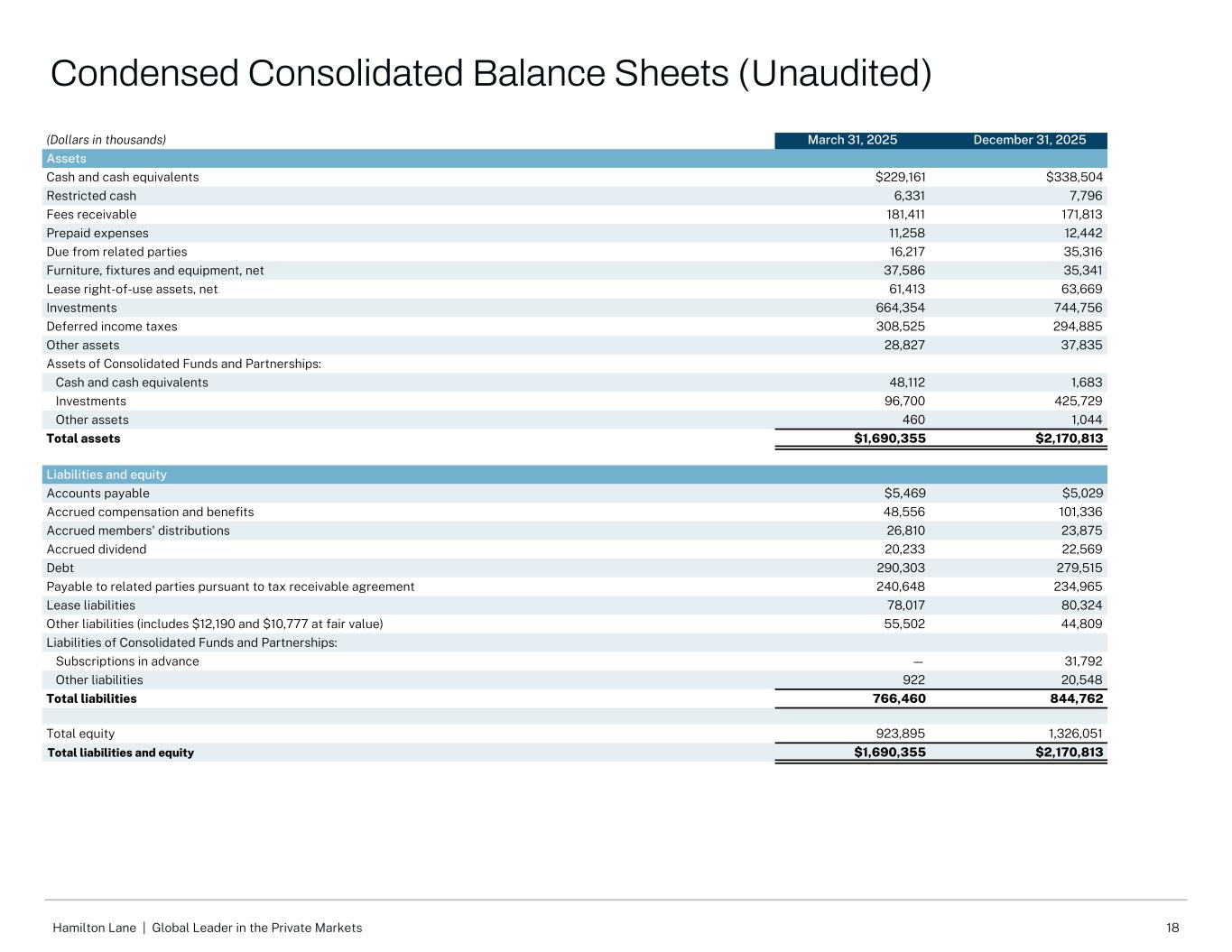
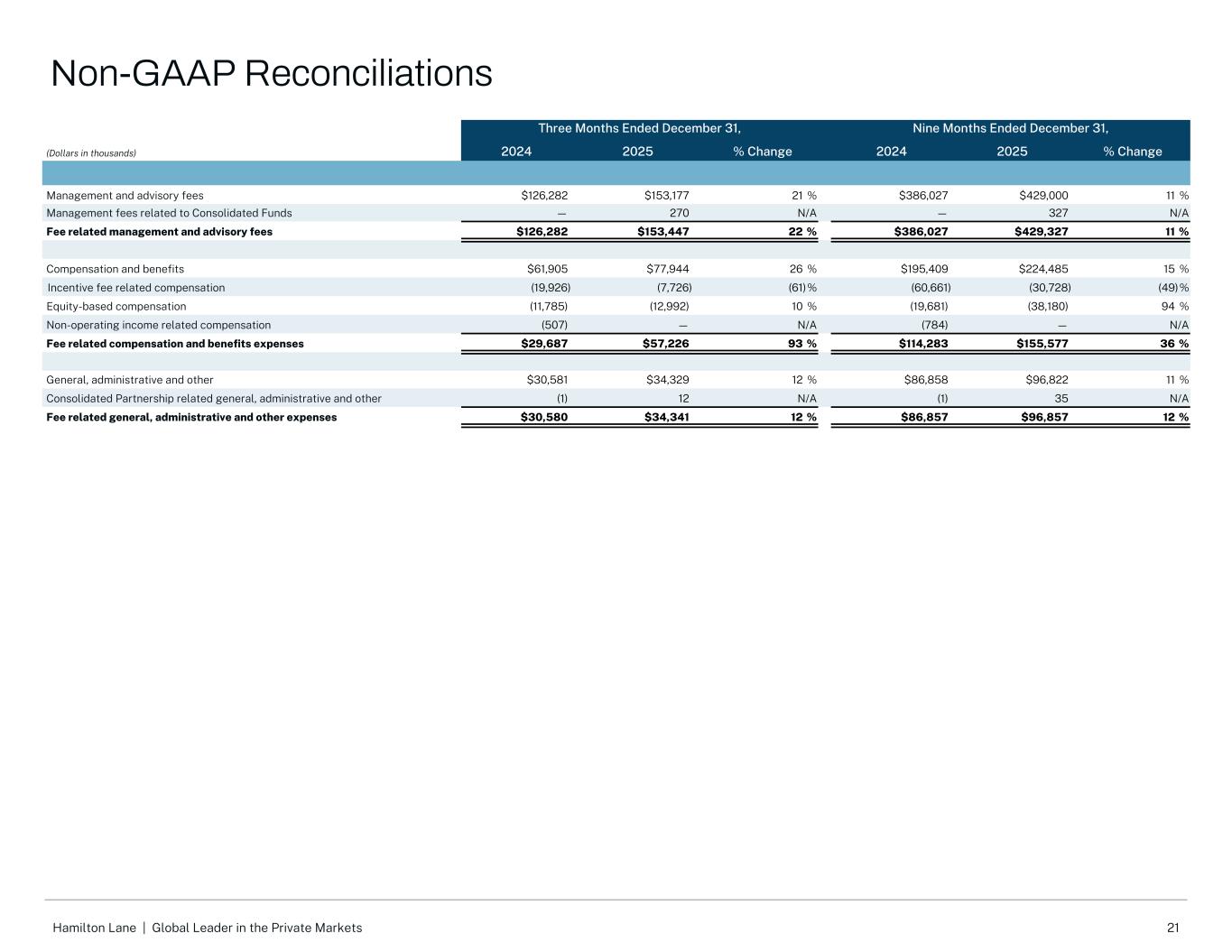
Good morning, everyone. Year-to-date for fiscal 2026, management and advisory fees were up 11% from the prior year period. However, this includes the impact of nearly $21 million of retro fees from specialized funds, namely the final close for our sixth secondary fund in the prior year period versus two million in the current year-to-date period stemming primarily from our latest direct equity total fee-related revenue was up 31 largely driven by fee-related performance revenues recognized year to date in fiscal 2026 versus a minimal amount during the same period in fiscal 2025 year to date, specialized funds revenue increased by $35 million or 15% compared to the prior year period. Growth in specialized fund revenue was driven by continued growth in our Evergreen platform, which continues to be a key driver of specialized fund fee earning AUM. Again, the year-over-year growth here was impacted by the retro fee element that I just alluded. Revenue increased $4 million or 4% compared to the prior year period due to the addition of new accounts re-ups from existing clients and continued investment activity from our reporting monitoring data and analytics offerings increased by over five million dollars or 24 compared to the prior year period as we continue to produce strong growth in our technology solutions offering lastly the final component of our revenue is incentive fees which totaled 136 million dollars for the period this amount includes fee related performance revenues stemming primarily from the quarterly crystallization of performance fees from our U.S. private assets Evergreen fund with additional contributions coming from our more recently launched Evergreen funds. Our unrealized carry balance. The balance is up 15% from the prior period even while having recognized 77 million dollars of incentive fees excluding fee related performance revenues during the last 12 months. The unrealized carry balance now stands at approximately 1.5 billion In the fiscal year to date, total expenses increased $40 million or 14% compared with the prior year period. Total compensation and benefits increased $29 million or 15% due primarily to increases in operating performance, ed count, and equity-based compensation. This was offset by lower incentive fee compensation due to a decrease in non-FRPR incentive fee revenue compared to the prior year period. G&A increased by $11 million. We continue to see growth in revenue-related expenses, including the third-party commissions related to our U.S. Evergreen product being offered on wire houses. We will continue to emphasize that while overall G&A expenses increased over time, the bulk of the increase stems from these revenue-related expenses, which is a good thing and can be an indicator of growth to successfully offset this with cost savings and expense discipline in other parts of the business where we have described. Let's move now to FRE. And just a quick reminder, FRE will now include the fee-related performance revenues and exclude the impact of equity-based compensation in the calculation of FRE. With that, fiscal year-to-date FRE came in at $255 million and was up 37% relative to the prior year period, while FRE margin year-to-date came in at 50 percent compared to 48 percent for the prior year period. Both FRE and FRE margin benefited from strong fee-related performance revenues in the period. Before I wrap up and end with some balance sheet commentary, I wanted to reiterate and summarize the financial impacts from the Guardian Partnership, and as Eric mentioned earlier, the initial financial impact will not be reflected until next quarter. We expect to earn management fees on capital invested into our Evergreen funds, which will be reflected in specialized funds revenue, as well as fees from a separate account that will resemble a typical institutional mandate in both portfolio construction and in both cases, there is also potential for performance fees aligned with the underlying strategies. The associated warrant package is expected to result in less than 1% dilution based on our fully diluted share count as of December 31, 2025, and be based on a vesting schedule. Additional details on the Warren package can be found in our prior Q2 10Q and our upcoming I'll wrap up now with some commentary on our balance sheet. Our largest asset continues to be our investments alongside our clients in our customized separate accounts and specialized funds. Over the long term, we view these investments as an important component of our continued growth, and we expect that we will continue to invest our balance sheet capital alongside our clients. In regard to our liabilities, we continue to be modestly levered, and we'll continue to evaluate utilizing our strong balance sheet in support of continued growth for the firm. With that, we will now open up the call.
Operator
Thank you. Ladies and gentlemen, we will now begin question and answer session. Should you have a question, please press the star followed by the one on your touch-tone You will hear a prompt that your hand has been raised. Should you wish to decline from the polling process, please press star followed by the two. If you are using a speakerphone, please lift the handset before pressing any keys. We ask that you please limit yourself to one question. If you have additional questions, you may press star one again. One moment, please, for your first question. Your first question comes from Ken Worthington with J.P. Morgan. Please go ahead.
Hi, good morning, and thanks for taking the question. Eric, can you talk about the product roadmap for wealth in calendar 2026? You opened a handful plus of new wealth-focused specialized fund products in 25, including the registration of existing funds into different regions. How should we see 2025 for new product launches really geared to this wealth customer?
Thanks, Ken. A couple of things. And I think we believe that as folks get more acclimated and more educated, that that number will continue to go up. So you mentioned that in calendar 2025, we launched a lot of product. I don't think 2026 will see nearly that volume coming from us. We've now built out strategies. So while we will add some additional products, it won't be nearly at the rate as we saw a year prior. And our focus right now is really getting the products that we have in market to scale.
Operator
Great. Thank you.
Operator
Thank you. Your next question comes from Alex Wolstein with Goldman Sachs. Please go ahead.
Anthony
Analyst — Goldman Sachs (on for Alex Wolstein)
Anthony, on for Alex. I wanted to ask about software exposure in the business, given recent events. There's been a growing number of concerns around software exposure for a lot of your peers. Could you expand on what that looks like at Hamilton Lane and how you see those businesses performing given potential AI risk? Thank you.
Sure, Anthony, it's Eric. I'll take that. Out of the other large publicly traded managers, our portfolios are much more diversified because we're not taking ownership directly of single assets. So that co-investment secondary and fund model for us results in our customer exposure being very, very diversified. It doesn't have any kind of constant in software. And so that's not a topic for us that right now we're, that we see as at all of an issue for us, nor for the customers.
Operator
Your next question comes from Michael Cypress with Morgan Stanley. Please go ahead, Michael.
Oh, hey, thanks for taking the question. Just wanted to ask about exit activity. Just curious how you're seeing exit pathways evolve across your platform and the broader industry, and what would you say is maybe the one or two gating items that you're watching that could make distributions accelerate sharply across the industry?
Sure, Michael, it's Eric. So this has been more of buyers and sellers reaching more of a kind of an equilibrium. That's not a huge exit activity for our business and not a huge exit activity for our portfolios. So generally, I think what moves the needle more, it's also driven by just the maturing of the assets and the fact that a lot of them are now reaching kind of their fourth or fifth or sixth year of ownership. the work has been done, the growth has been achieved, and now they're ready to go and harness the profit. So I see 2026 as a stronger exit environment than we saw certainly in calendar 2025.
Great, thanks. And if I could ask a follow-up question on the Evergreen platform that's quickly becoming multi-asset, multi-strategy, and with a number of scaled products over a billion in size, just how are you thinking about opportunities that can open up now as a result of that evolution, whether it's model portfolios, maybe even obtaining placement within and target date or other liquid fund strategies in partnership with others. Curious how you're thinking about that.
Yeah, I think we're thinking about all of those pieces, I think what you're seeing is wave number one was sort of the introduction of these products to the market. Wave number two has really been focused on education around some of the benefits of these products to both institutional and individual investors. To me, it becomes more around kind of the structuring and partnership where you start using these products as tools in a variety of different ways, a number of which you mentioned. So we're getting towards wave, you know, finishing up wave two on the education piece, which still continues. And now we're heading into wave three. And so we're involved in dialogue across.
Operator
Great. Thank you.
Operator
Your next question comes from Alex Bond with KBW. Please go ahead.
Hey, good morning, everyone. I actually have a follow up on the on the Evergreen side and specifically the increasing institutional base there. So you've highlighted previously that one of the reasons these products are attractive for institutional investors is they're more liquid nature relative to a traditional drawdown fund. But maybe it would be helpful if you can help us think about maybe what the dispersion has been in terms of redemption requests between institutional and retail clients within the Evergreen Suite to date, and maybe to what extent institutional clients have taken advantage of this feature to date. Thank you.
I actually don't think the liquidity provision is one. I think the top two are much more around ease of use, dealing with capital calls, distributions, and sort of severely lagging reporting schedules, not optimal. Benefit number two is the ability to actually tactically manage your portfolio in a more thoughtful way. If you're a CIO today of an institution and you want to apply some sort of a credit overweight or an infrastructure overweight or a venture overweight. You have to go have us find the funds for you. It takes years for those funds to get capital to put to work to see the net asset value grow. And so trying to do a tactical overweight using drawdown funds means that you need to sort of have a three to five plus year view outwards that that overweight and evergreen being them use this as a portfolio construction tool and ease of use third piece I mentioned is actually small institutional investors fund to funds customer and as you know Hamilton Lane hasn't even offered a fund to funds product in years that market segment altered that investor base in some cases left the asset class altogether or they got convinced that going into a secondaries or co-investment fund was an okay solution that small institutional investor is much more embraced into the private markets so we see all those as thoughtful good and those are going to be long-term sustaining trends got it that's helpful thanks eric your next question comes from brennan hawken with bmo please go ahead good morning
thanks for taking my question um was hoping you could speak a little bit uh to what you're seeing on the ground in the Wealth Channel. I hear about a little bit of a sitting on hands with the with the headlines around private credit that we saw on the year end. So curious what you're seeing there. And when we also have heard that there's the potential for a greater shift or a greater preference for model portfolios and sort of centralizing the allocations. Are you seeing any early signs of that, and what are your thoughts about how to deal with such a shift?
Eric, I'll take those. So, look, we kind of continue to be good. It was certainly a topic of conversation. You're seeing early moves there, but to say today that you're seeing some massive sort of sea change, I would say just the data is not bearing that portfolio exposure already, and I think this is going to come down to investor preference. I don't see a world where all investors are going to simply want the model portfolio. Investors generally, whether we're talking about buying private market assets or talking about buying food or clothing, investors want choice and they tend to want to control. And so for some, that model portfolio will be ease of use, and that will be the most attractive aspect to it, and that will be sort of the guarding item. And for others, they're going to want to make much more tailored, individualized selection. So I think it's a world where you're going to see both pieces exist, and we're all going to have to make sure that our products and our lineup is meeting the customer where the customer is, not trying to force the customer to kind of adhere to whatever game or structure that we want them to be playing.
Thanks for that, Colin, and thanks for taking my question.
Operator
As a reminder, if you wish to ask a question, please press star 1.
The next question comes from Mike Brown with UBS. please go ahead great thanks for taking my question um i wanted to ask on the secondary side so it's clearly a hot asset class maybe the hottest asset class in the space at the moment and uh the industry saw record capital raising for the industry last year one of the funds that closed was over 30 billion um not expecting a 30 billion dollar fund for hamilton lane yet but when you think about fund seven um we look at fund six that closed at 5.6 billion that was up over 40% versus the prior vintage. So when you, when we're thinking about fund seven and the tailwinds for the space, any view on, you know, relative size versus the prior vintage, and maybe just touch on how investor sentiment and interest is in secondaries currently.
Frankly, I think if you step back traditional secondaries or whether it's to our recent partnership with Pluto, we think all that's good. So one of the most under deals brought to market, huge capital mismatch. There's not nearly enough capital in the market to deal with sort of the demand and interest of transit. It's getting a lot bigger. Funds are getting bigger as a result of that. And so what it means to be a big secondary player today is very different than what it meant to be that sort of big player 10 years ago. I think for us, we've tended to be more of a mid-market oriented player. And so as you noted from fund, our goal is to continue to be one of those leading players. And so that means there's a whole lot of runway ahead of us. Very clear on the call, we are not one of the top handful of largest players in the space to continue to move up market. And we think we've got a lot of room based on investor sentiment, management meetings, feedback, et cetera, all that.
Operator
Right. Thanks. Thanks, Eric.
And as one more reminder, if you wish to ask a question, please press star followed by the one as there are no further questions oh sorry mike brown um has one more question please go ahead mike great thank you for taking the follow-up here um eric i just want to follow up on the software question earlier in the call just giving your unique visibility into funds and the underlying portfolio companies and i'm sure your active dialogues with the managers Can you just maybe expand on your view on how AI disruption could really kind of flow through this software landscape and, you know, how certain parts of the market could be more impacted than others and certain areas that perhaps have better insulation from these AI disruption related risks?
I think it's I think this is sort of the danger of painting. I think it's frankly not a lot different than what we're seeing in credit. You've got a handful of managers who have credit portfolio problems due to priced in, and there will be certainly some companies that are going for a business. Usually negative consequences due to AI, I think is not true. And frankly, we're sort of seeing that we've got a number of companies in the software space that are continuing to grow, continuing to rack up customers. I think there's another way to look at this, which is in some cases the AI solution is in need of the client. old-school software companies have the customer. I actually think you could see some mergers and acquisitions that are coming from kind of what we'll think of as new tech versus old tech, and that that might be a completely fine outcome. So I think what we're saying to our clients today, whether it's around software, whether it's around credit, or whether it's around any sub-strategy, we need to have a much more granular conversation about companies rather than having big macro strategies, and that's one of the macro discussions, and that's one of the benefits of where we sit. We get to go and do diligence on every fund manager looking through every asset that they hold, and if we're looking at a secondary deal, we're getting to price through every company in that underlying portfolio, and so we're not making big investment decisions kind of thematically, we're making them kind of a bottoms-up, asset-by-asset look-through to figure out whether there's high-quality assets and making sure we're getting those at the right price with the right partner.
Operator
And as this concludes the question and answer session for today, I will now turn the call over to Eric Hirsch, Co-Chief Executive Officer, for closing remarks. Please continue.
We're proud of the quarter. Juan and I are very proud of the team for the hard work. This doesn't happen by accident. It takes real effort, particularly in this kind of market environment. We appreciate your time, support, and the questions, and for those of you on the East Coast.
Operator
Ladies and gentlemen, this concludes today's conference call. Thank you for your participation. You may now disconnect.