Operator
Thank you for standing by. At this time, I would like to welcome everyone to Interdigital 2nd Quarter 2025 Earnings Call. All lines have been placed on you to prevent any background noise. After the speaker's remarks, there will be a question and answer session. If you would like to ask a question during this time, simply press star, followed by the number 1 on your telephone keypad. If you would like to withdraw your question, again, press the star 1. Thank you. I would now like to turn the conference over to Rayford Garibrand, Head of Investor Relations.
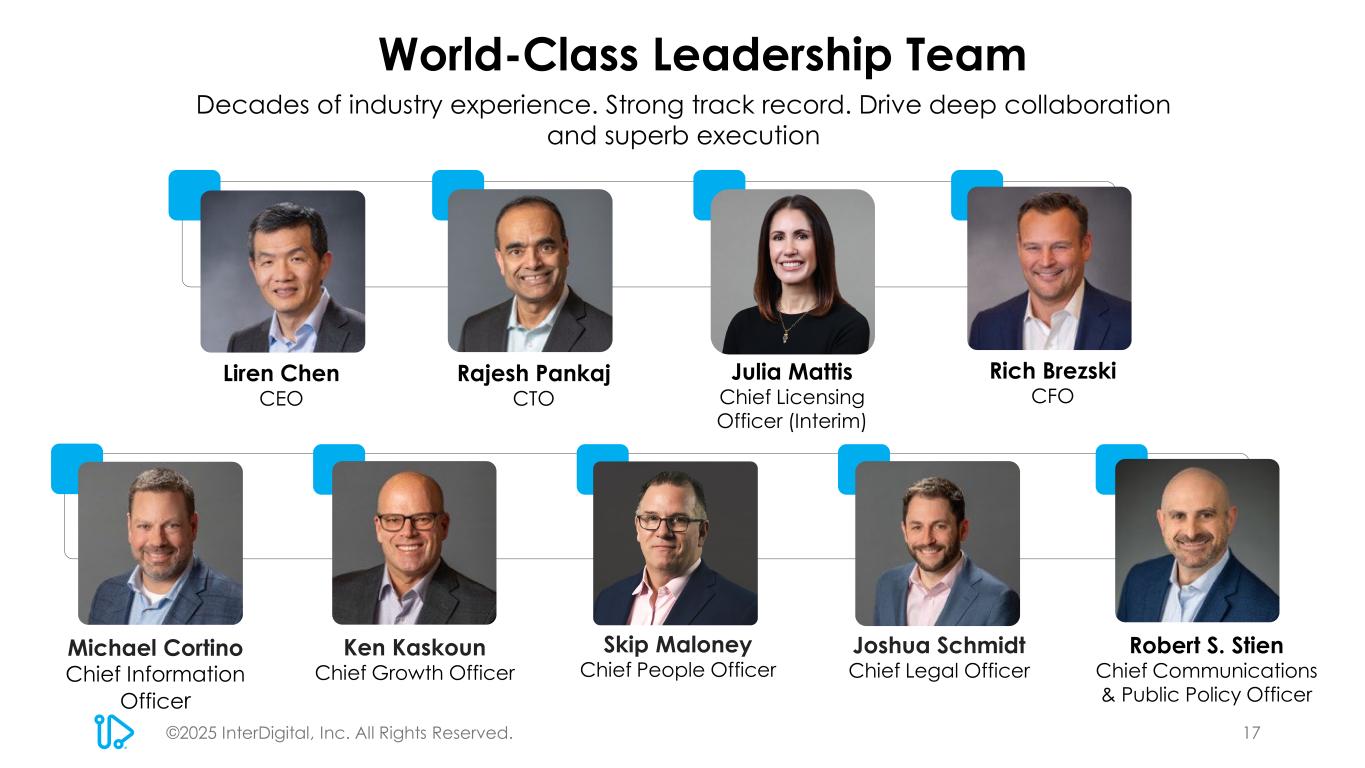
Thank you, Demi, and good morning, everyone. Welcome to InterDigital's second quarter 2025 earnings conference call. I am Rayford Garibrand, Head of Investor Relations for InterDigital. With me on today's call are Laren Chin, our President and CEO, and Rich Bresky, our CFO. Consistent with prior calls, we will offer some highlights about the quarter and the company, and then open the call up for questions. For additional details, you can access our earnings release and slide presentation that accompanied this call on our Investor Relations website. Before we begin our remarks, I need to remind you that in this call, we will make forward-looking statements regarding our current beliefs, plans, and expectations, which are not guarantees of future performance and are made only as of the date hereof. Forward-looking statements are subject to risks and uncertainties that could cause actual results and events to differ materially from results and events contemplated by such forward-looking statements. These risks and uncertainties include those described in the risk factors section of our 2024 annual report on Form 10-K and in our other SEC violence. In addition, today's presentation may contain references to non-GAAP financial measures. Reconciliations of these non-GAAP financial measures to the most directly comparable GAAP financial measures are included in the supplemental materials and the financial metrics tracker posted to the investor relations section of our website. With that taken care of, I will turn the call over to Liri.
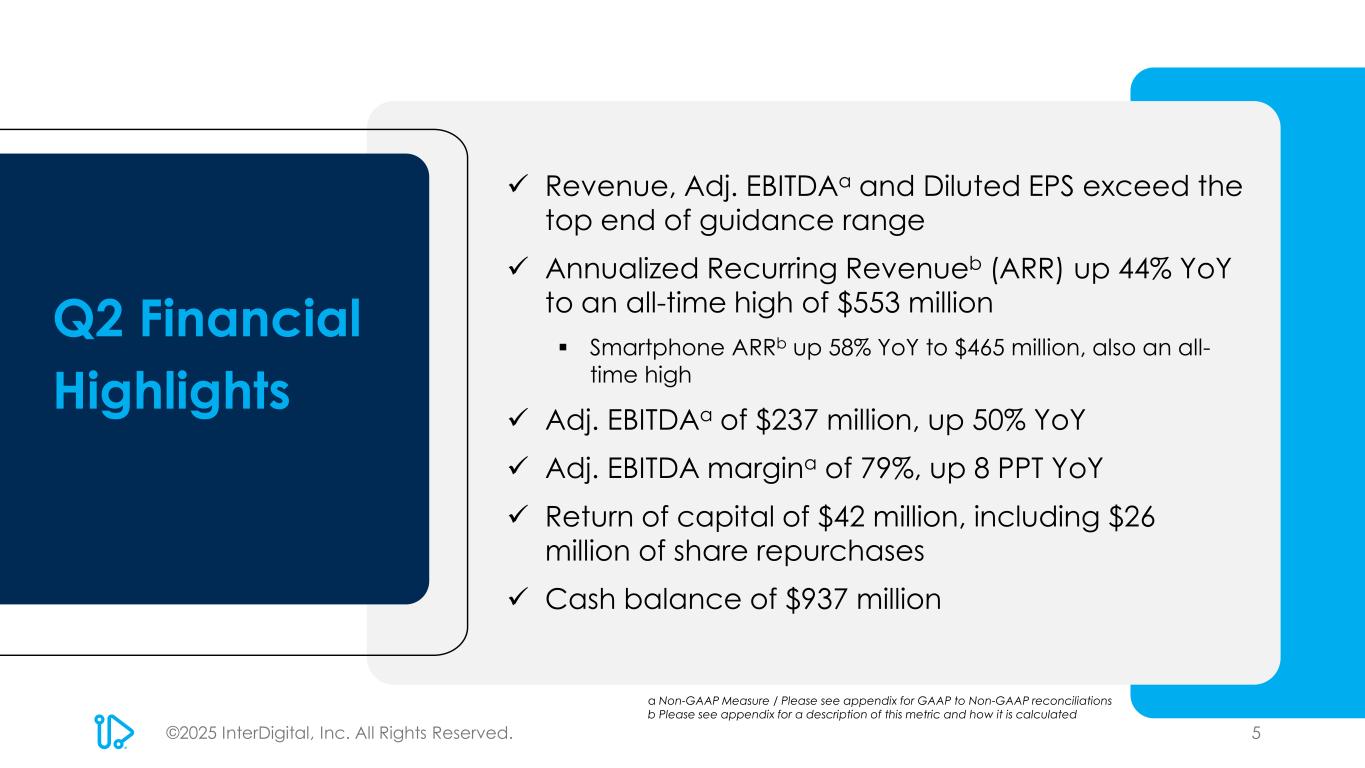
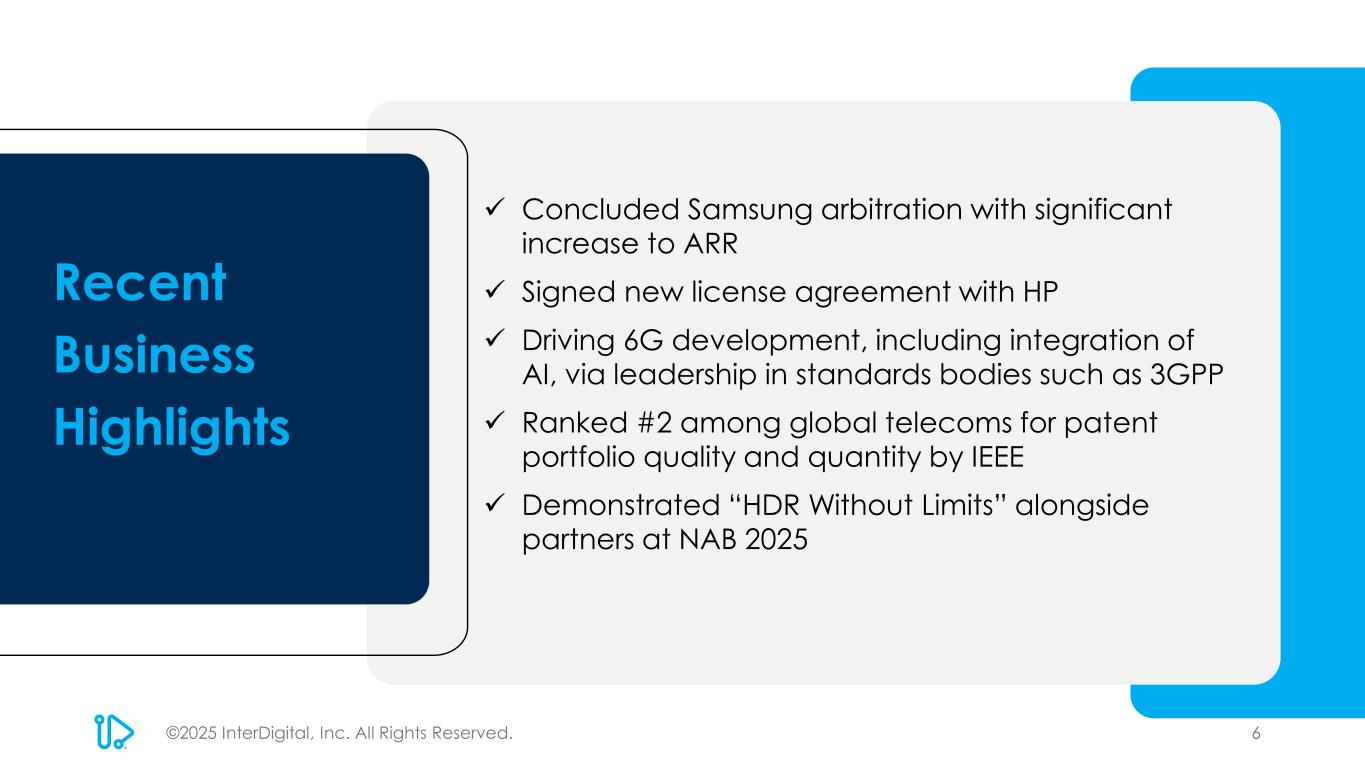
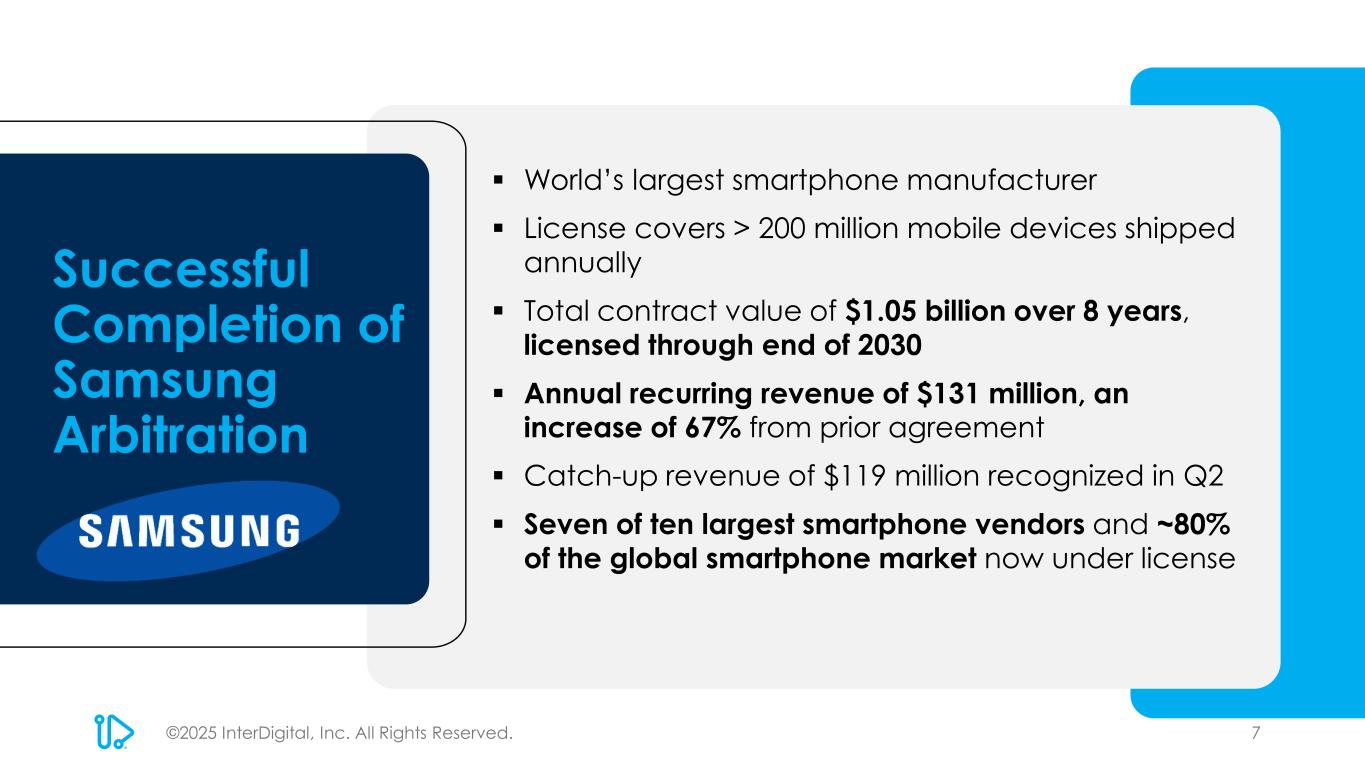
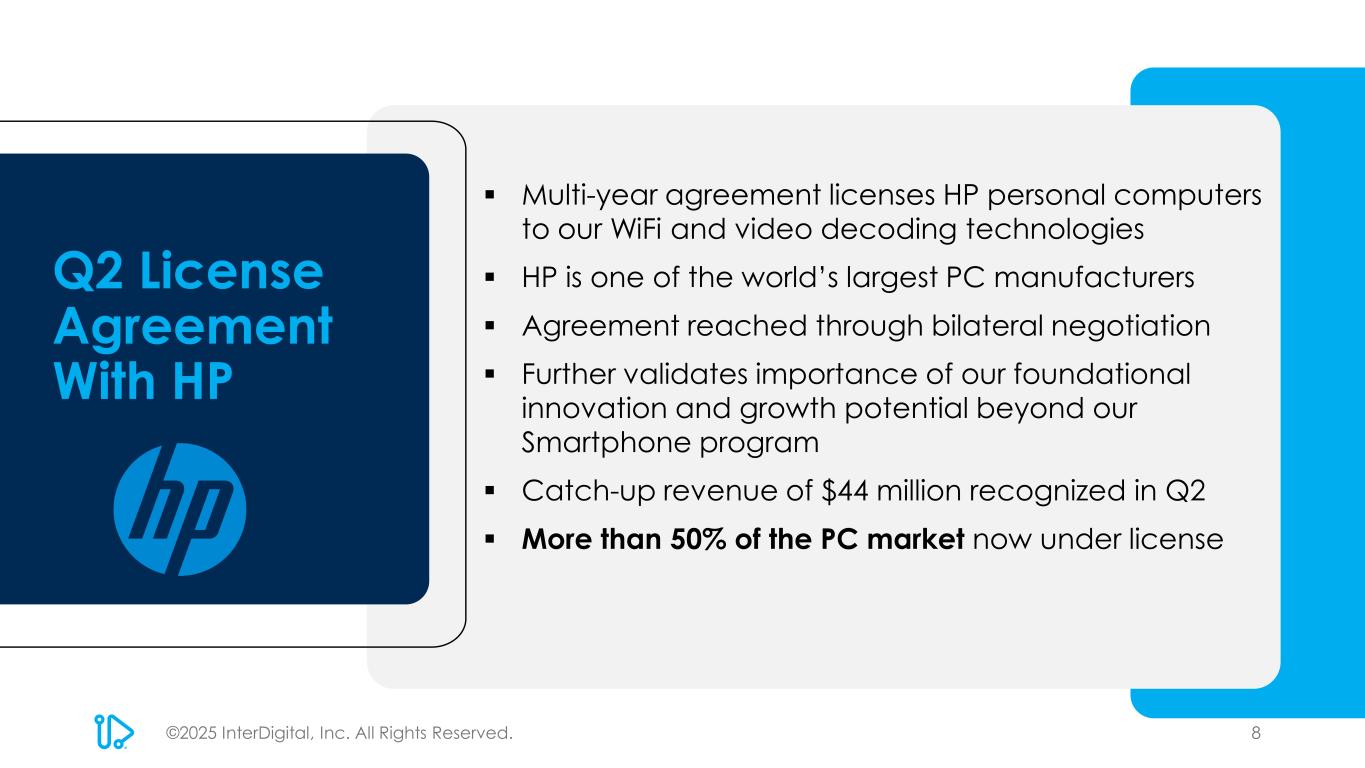
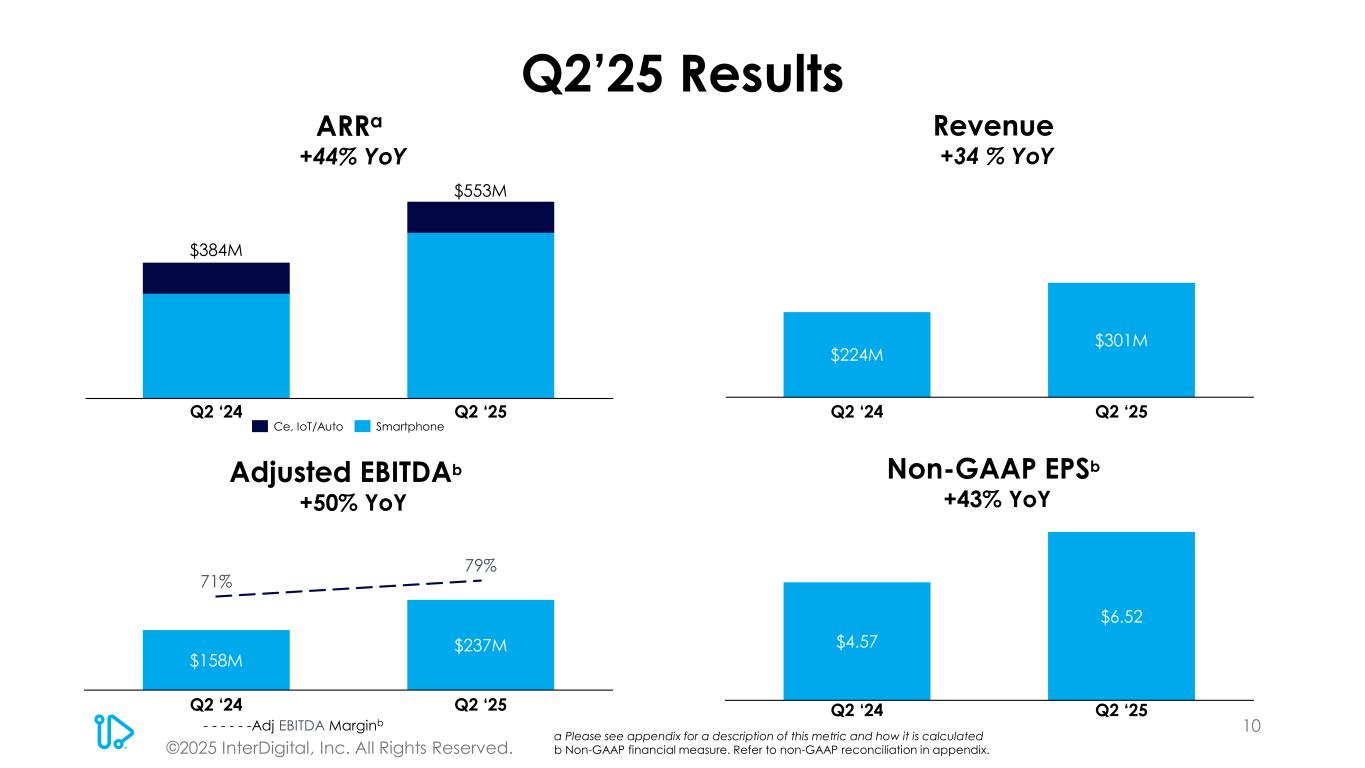
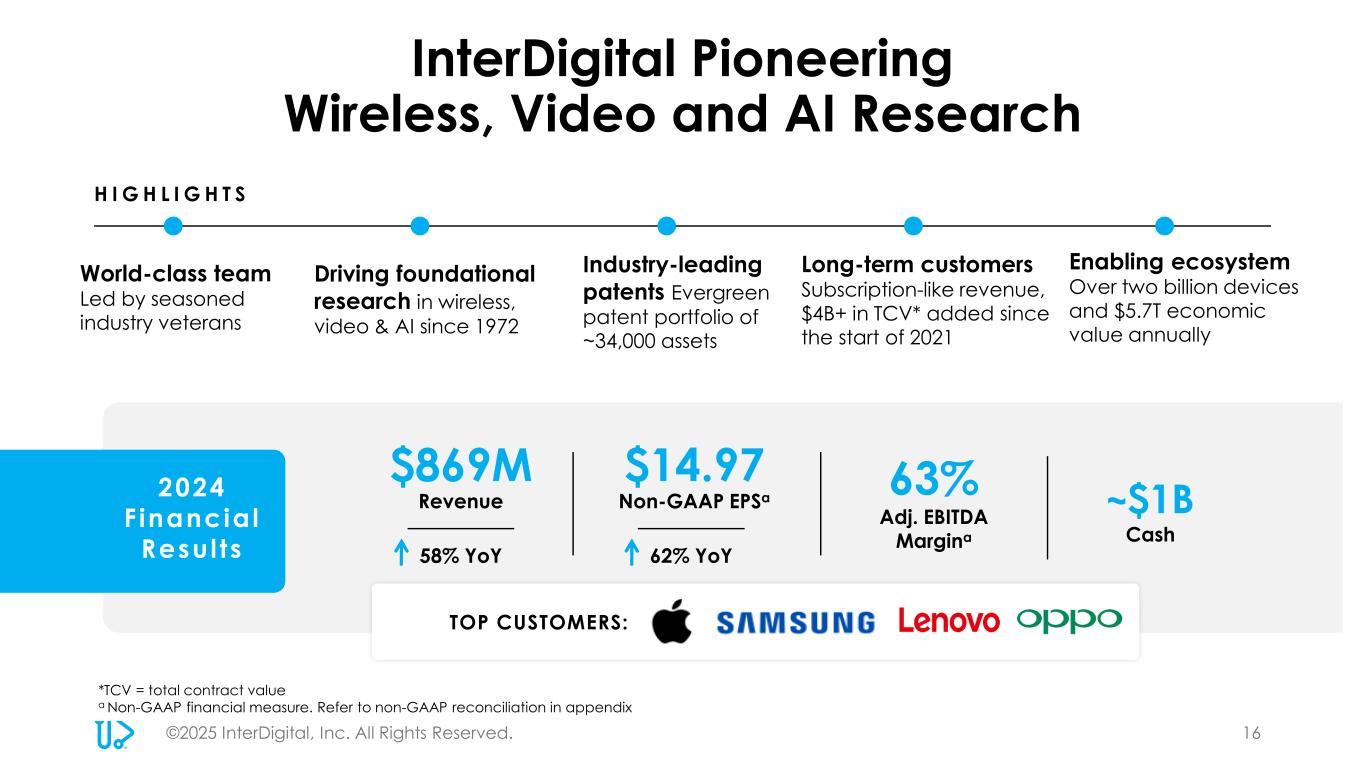
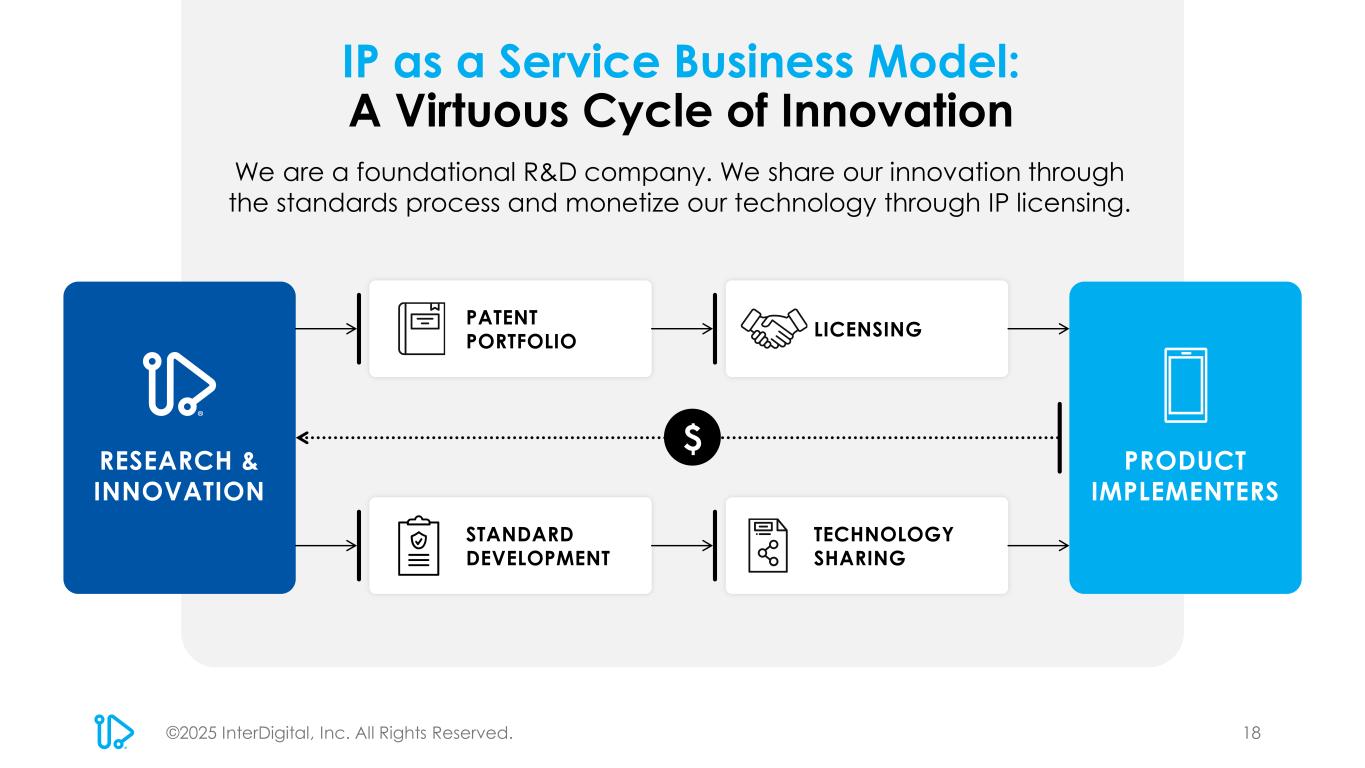
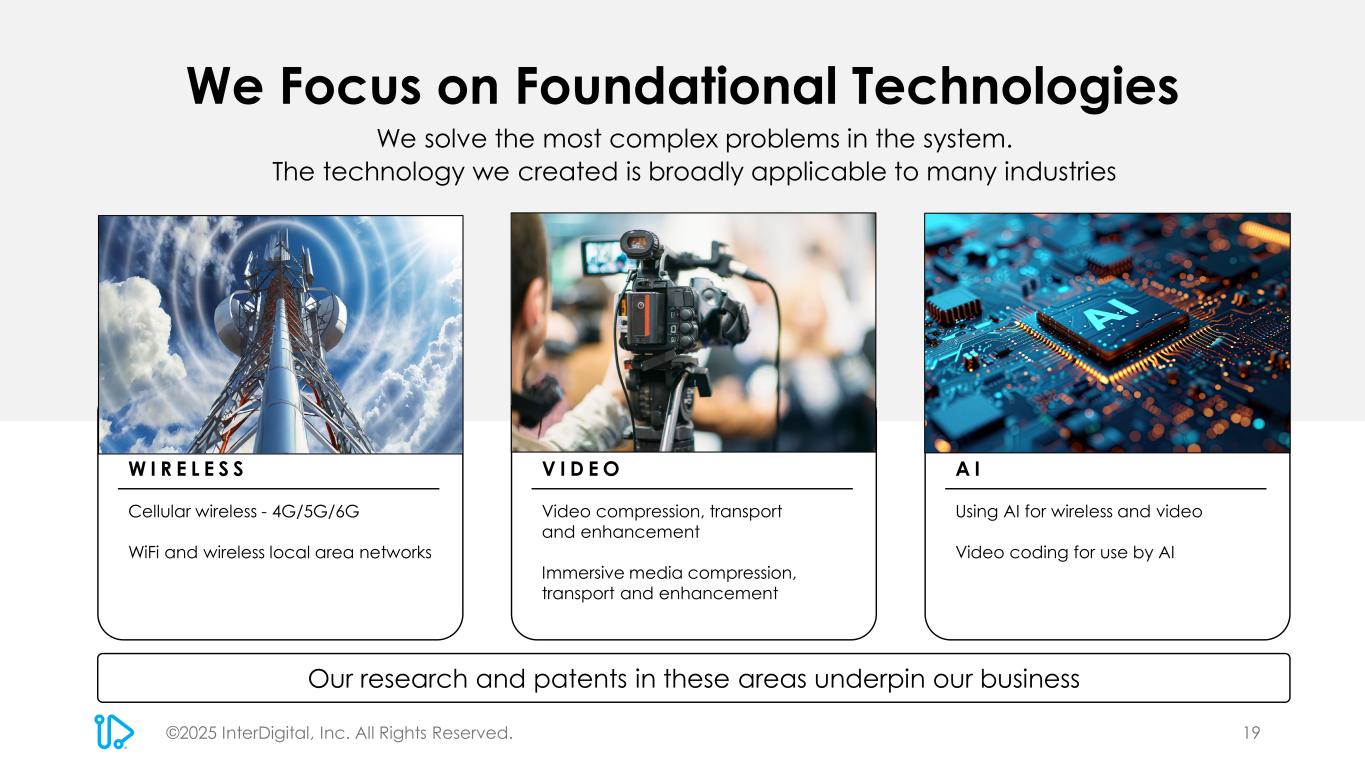
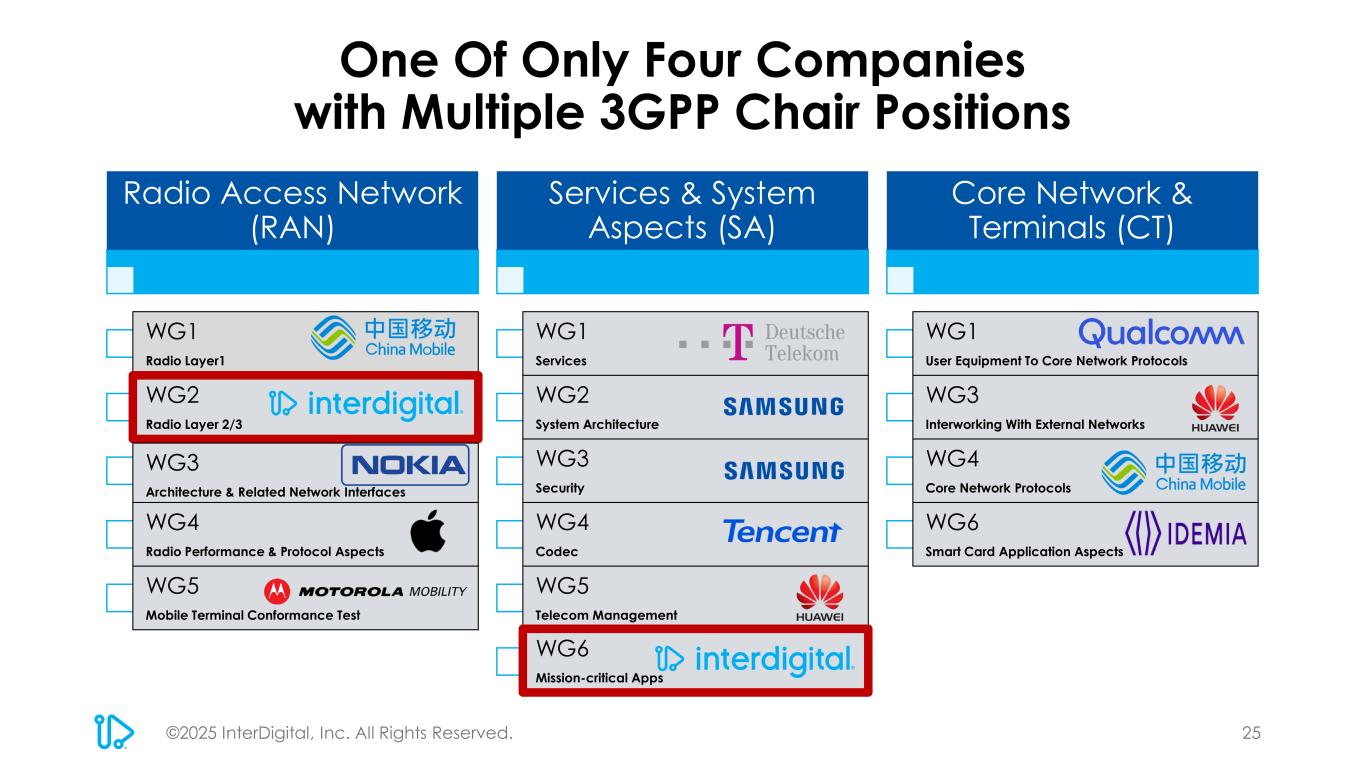
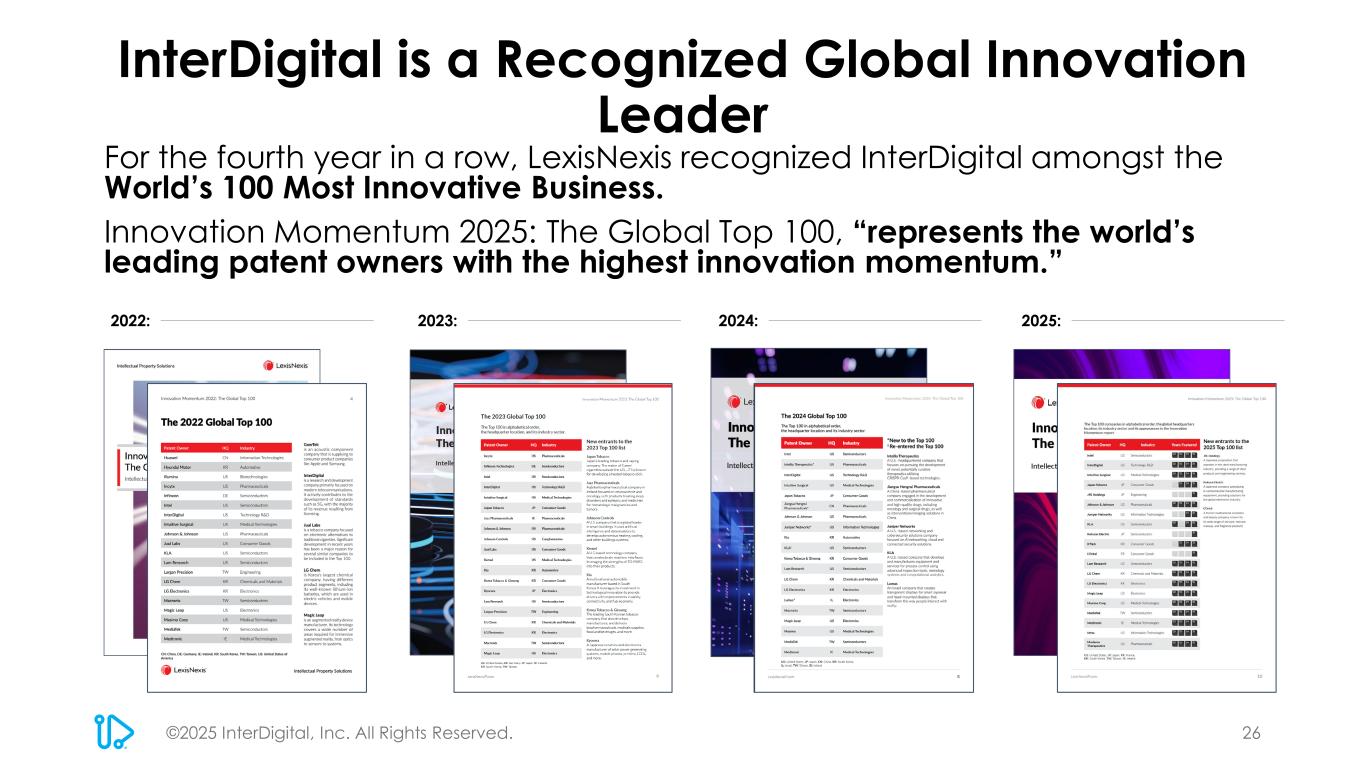
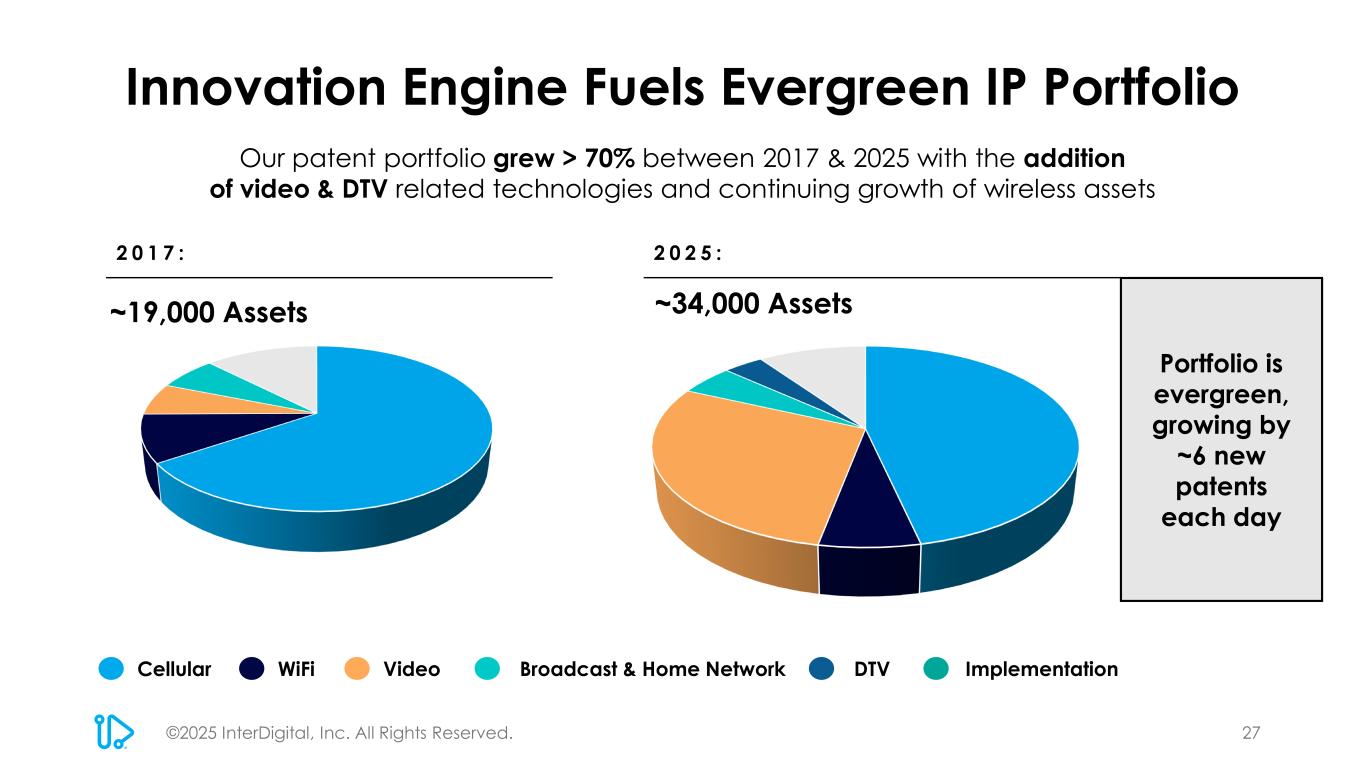
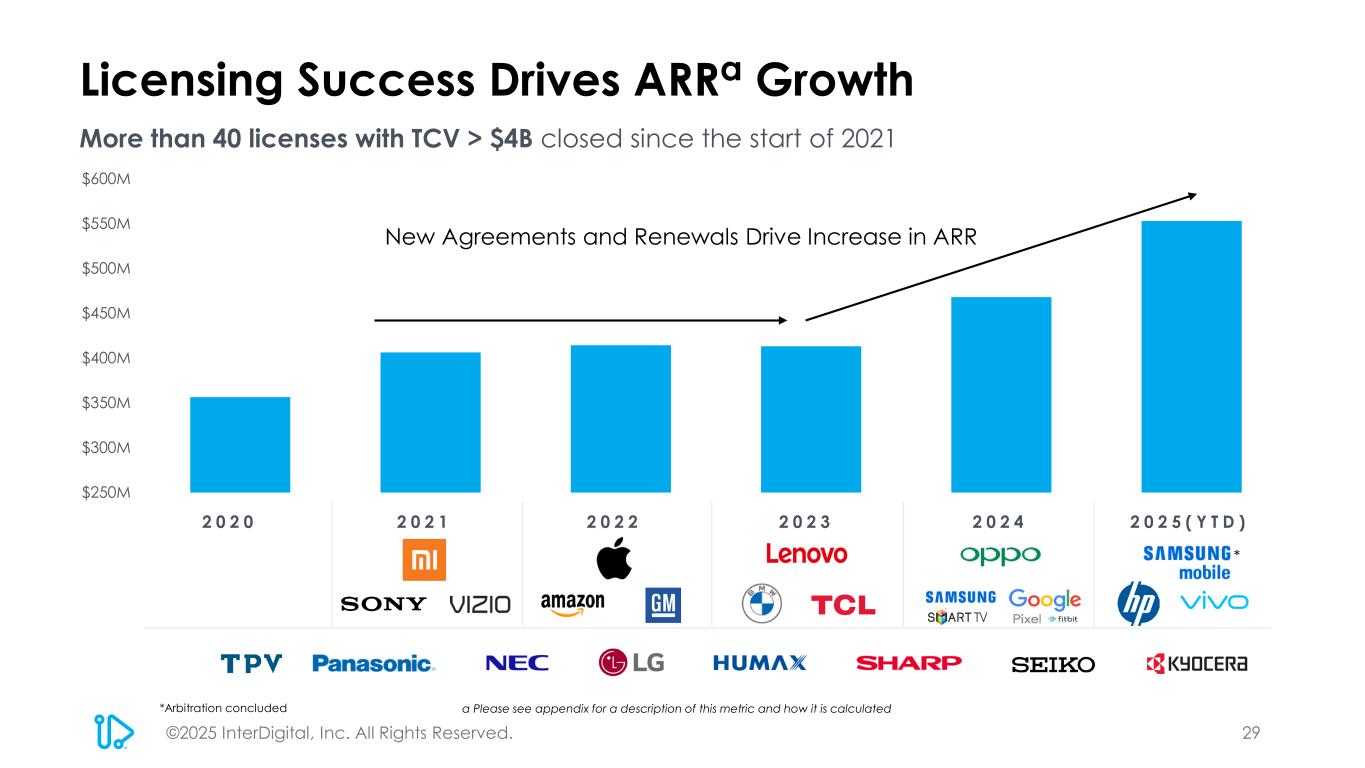
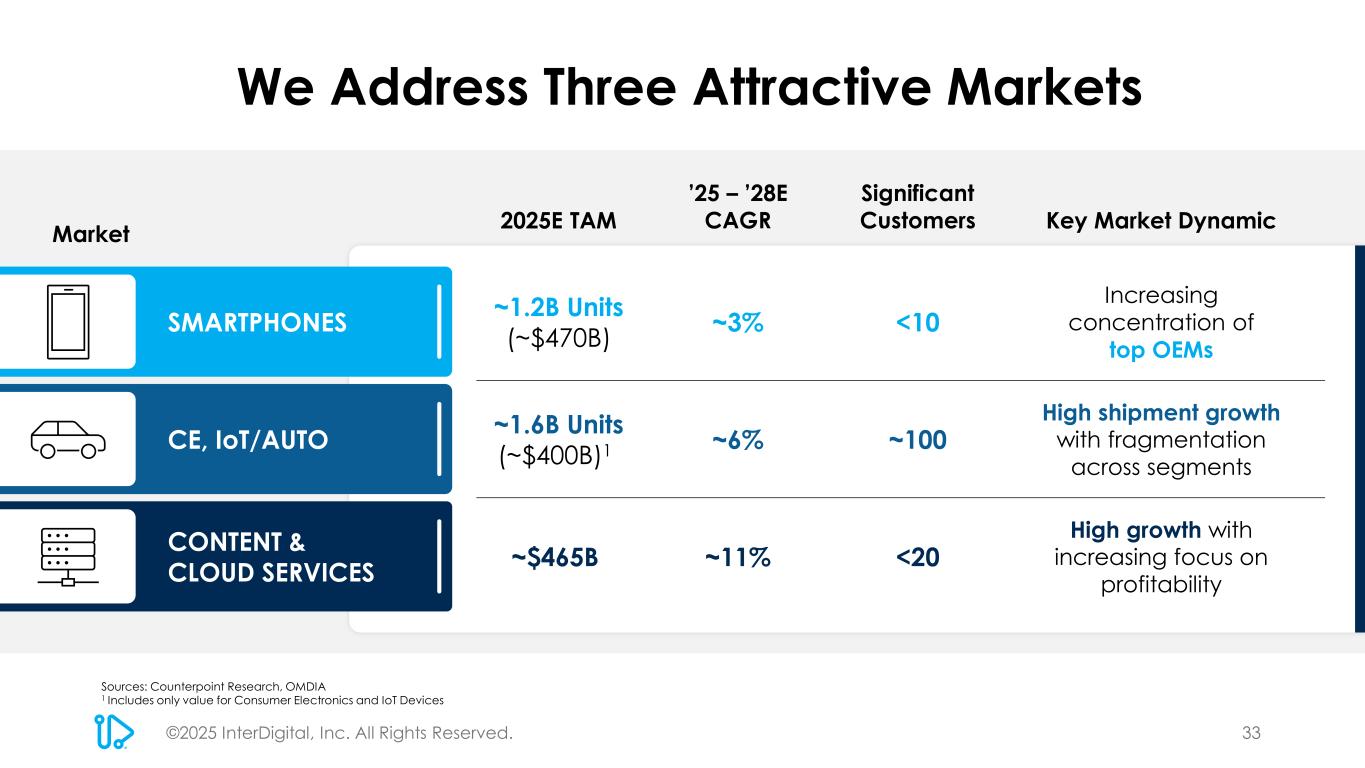
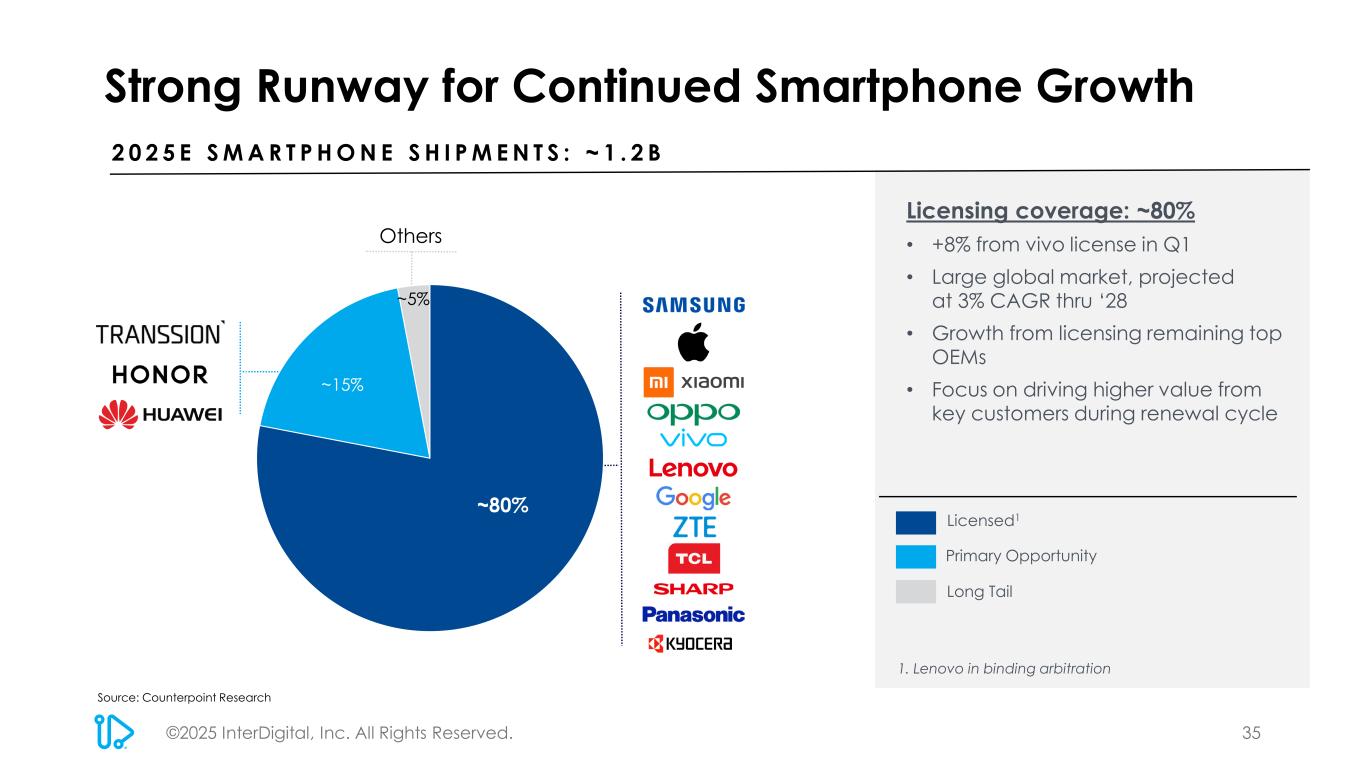
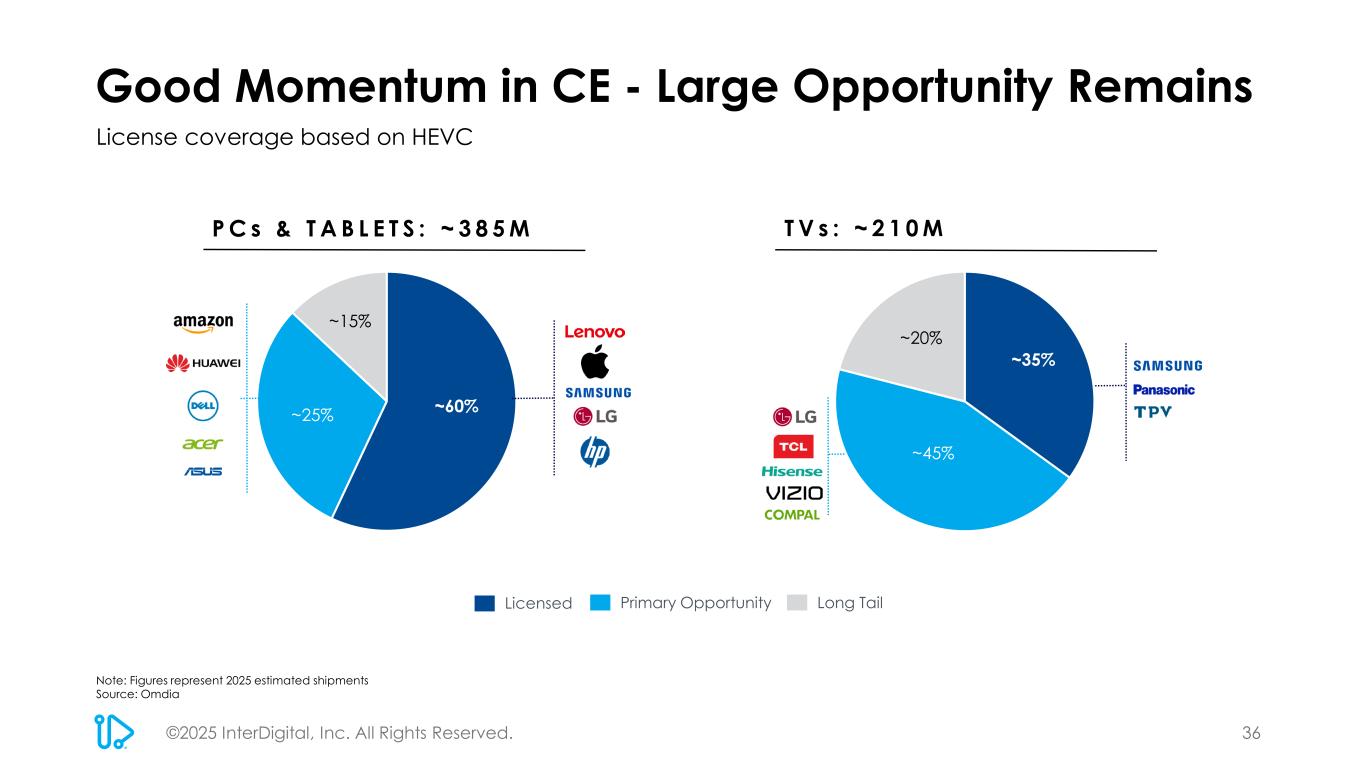
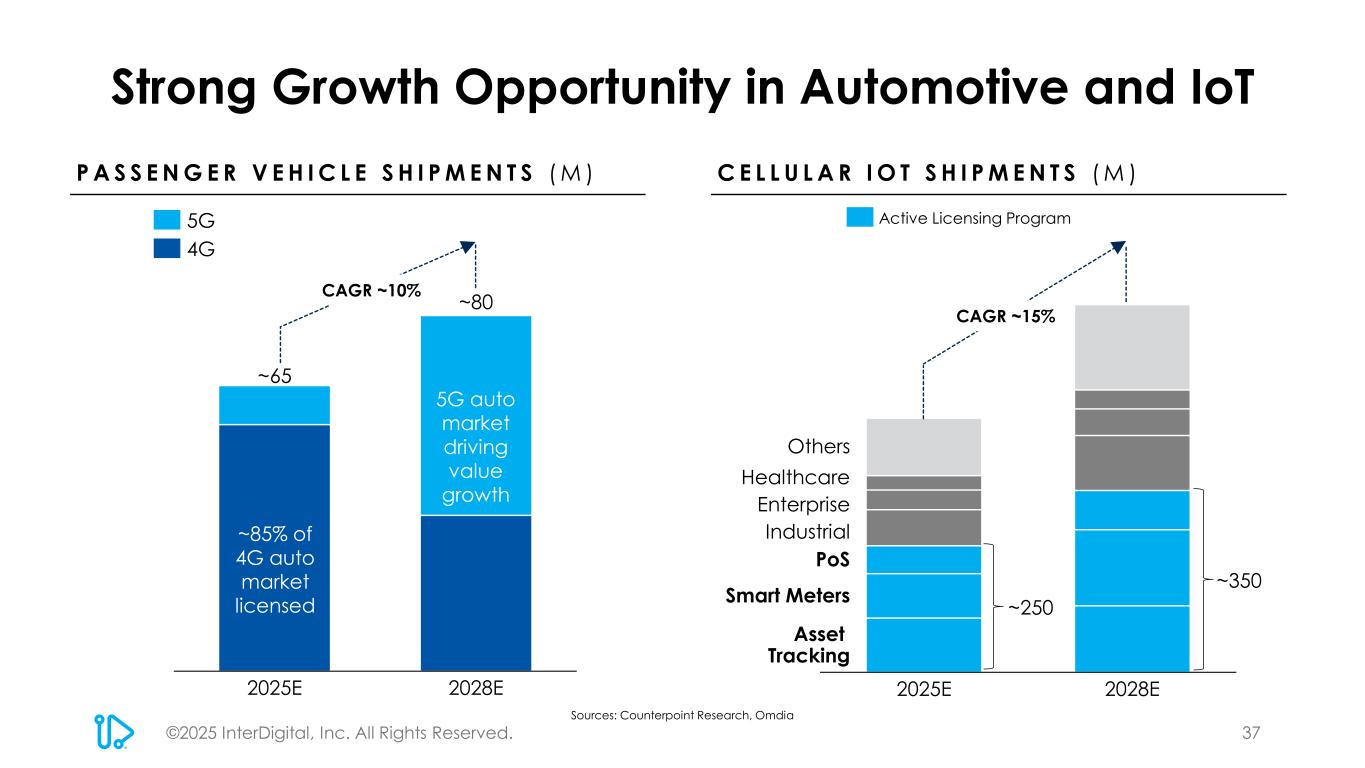
Thank you, Riefer. Good morning, everyone. Thanks for joining us today. This week, we announced the conclusion of our arbitration with Samsung, which finalized the largest agreement we have signed in our company history. Under the term of an eight-year license lasting through 2030, Samsung will pay us more than a billion dollars, which equals to $131 million per year, and it's an increase of 67% compared to our previous agreement. This excellent result demonstrates, once again, the value of foundational research, the strength of our IP portfolio, and the momentum we have built in our licensing programs. It also increased our annualized recurring revenue to an all-time record of $553 million, an increase of 44% year-over-year. Our new long-term sense-on agreement helped us deliver revenue, adjust the EBITDA, and non-GAAP EPS, far exceeding the top end of our guidance. Building on the strength of our second quarter result, the increased business momentum, and the opportunity to make more progress over the balance of this year, we have raised the full-year 2025 guidance to between $790 million and $850 million, up $110 million at midpoint. Rich will cover the numbers in more detail in his section. We are delighted with the result of this arbitration. It's another validation of how foundational our innovation is to our connected world. Samsung is the world's largest smartphone manufacturer and one of our longest licensees, dating back almost 30 years. We look forward to continuing our collaboration with Samsung, but we keep on driving innovation forward and sharing our technology through the standard process and through our licensing programs. It's worth noting that the new agreement does not cover Samsung's digital TV and display monitors, which are part of a separate license that we announced early last year. Our new license means that the world's two leading device manufacturers, Apple and Samsung, are now licensed to our portfolio through the end of this decade. Following the recent agreement with major Chinese OEMs, including OPPO and Vevo, we have clear momentum in our smartphone program, where we have almost 80% of the global market under license, and ARR from smartphone program of $465 million, which is another all-time record. Staying with our smartphone program, we continue to make progress in our arbitration with Lenovo, which is processing in a timely fashion and according to plan. Our consumer electronics and IoT program, the new license agreement with HP, which we signed at the start of the second quarter, is another good example of the programs we are making in growing revenue outside the smartphone program. The agreement licensed HP personal computers to our Wi-Fi and video decoding technology, and we now have more than 50% of the PC market under license. With the HP contract, revenue from our CE and IoT program increased 175% in the second quarter to about $65 million. Counting the HP and Samsung agreement, the total contract value of license that we have signed since 2021 is now more than $4 billion, demonstrating the accelerating momentum of our IP-as-a-service business model. On the research front, the development of 6G is picking up steam, and our engineers are at the forefront of developing the foundational technology for the next generation of mobile. Our engineers are also leading the development of 6G standards with multiple working group chair positions for 3GPP. The wider integration of AI into cellular networks and the development of new technology such as integrated sensing and communication offers what could be an exciting new monetization opportunity for service providers and device manufacturers and make our patent portfolio even more valuable. We believe 6G will also further the penetration of cellular wireless in new verticals such as industrial IoT, smart city, healthcare, and automobile, where connectivity is increasingly important and will create a new licensing opportunity for us. We excel not only in converting our innovation into a broad patent portfolio, but also into one of the highest quality portfolios in the world. Recently, we were ranked number two among all the global leaders in telecoms in terms of both quality and quantity of our IP portfolio by an IEEE report. With our research leadership and the breadth and depth of our portfolio reflects, We are in a strong position to deliver value for our customers well into the next decade. Our long-term success is also underpinned by our ability to acquire, retain, and enhance our people. We continue to advance our talent strategy, placing an emphasis on mentorship, ongoing training, and leadership development. We believe that the long-term stability of our business and the continuous success put us in an excellent position as a destination for premier talents in our industry. You can find more information in our 2025 Corporate Sustainability Report on our website. And with that, I hand you a word to Rich.
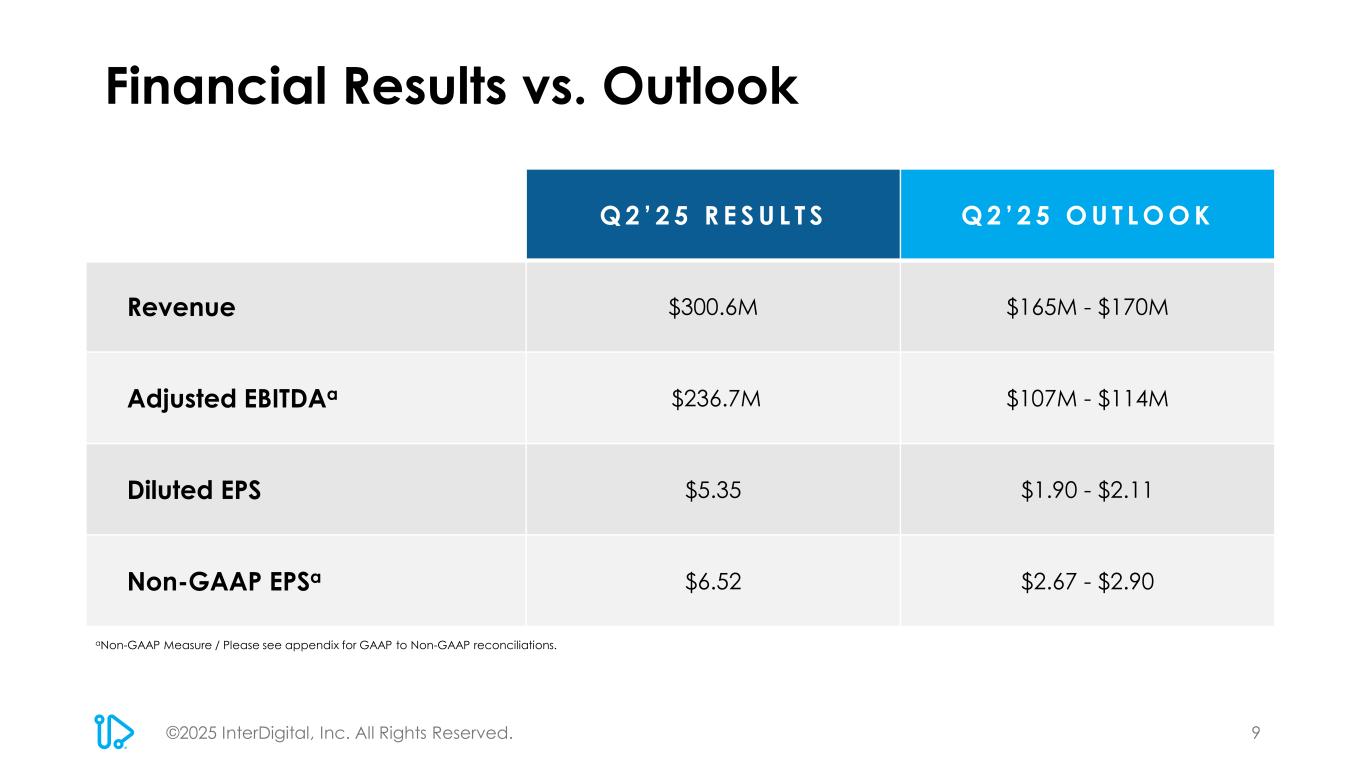
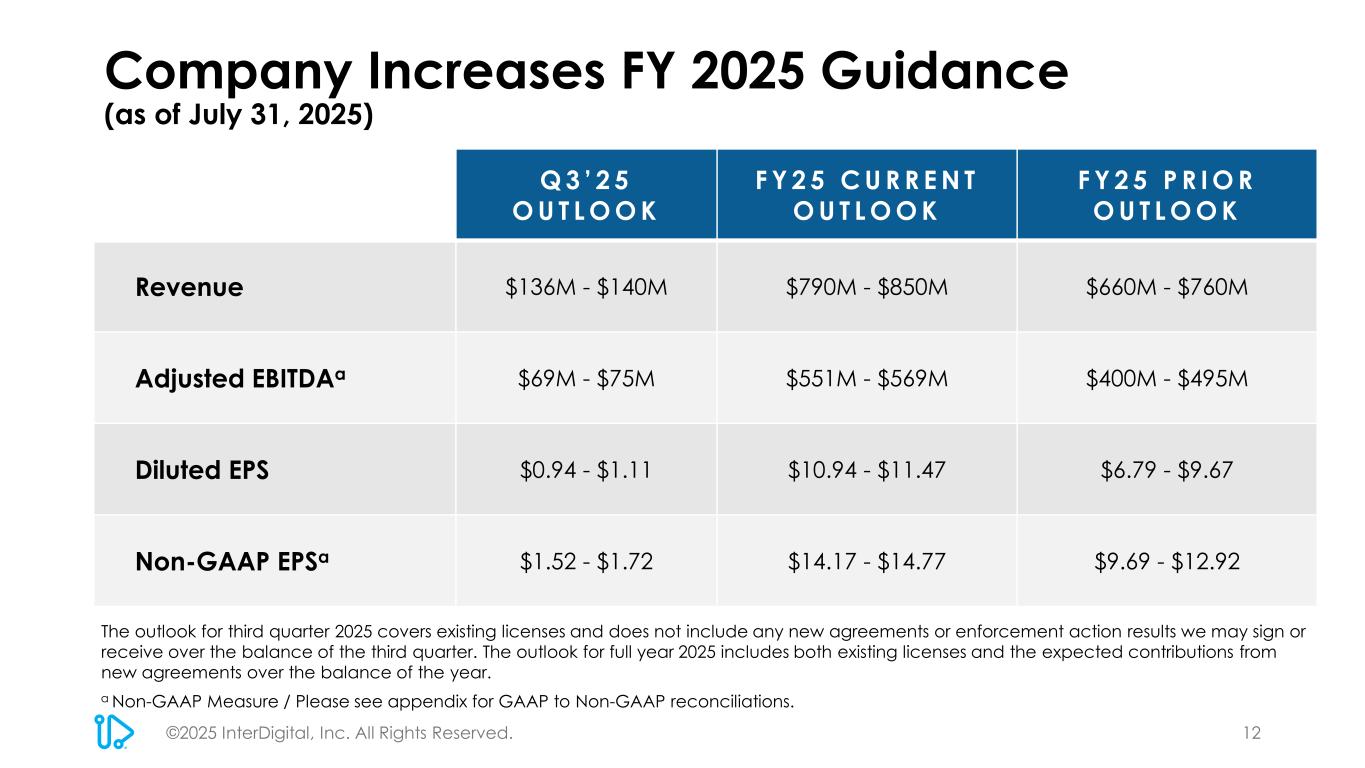
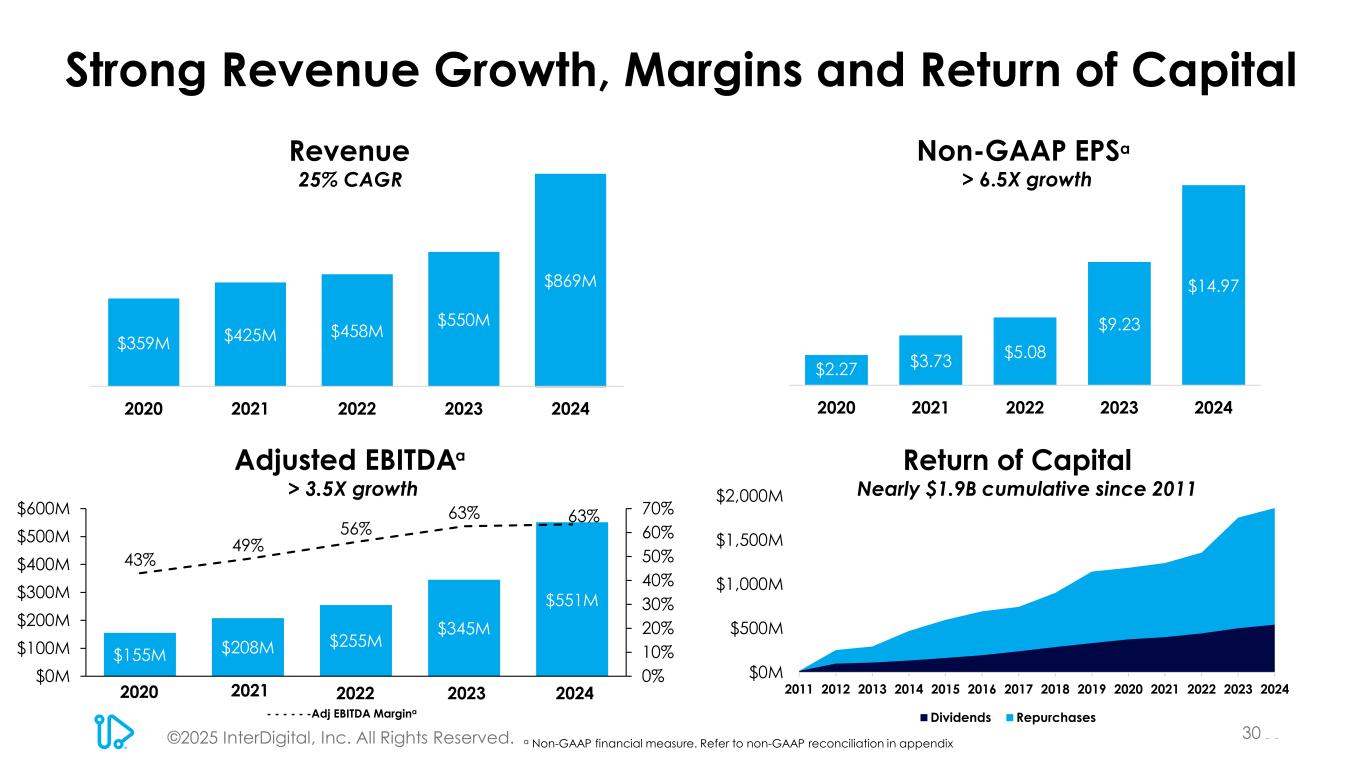
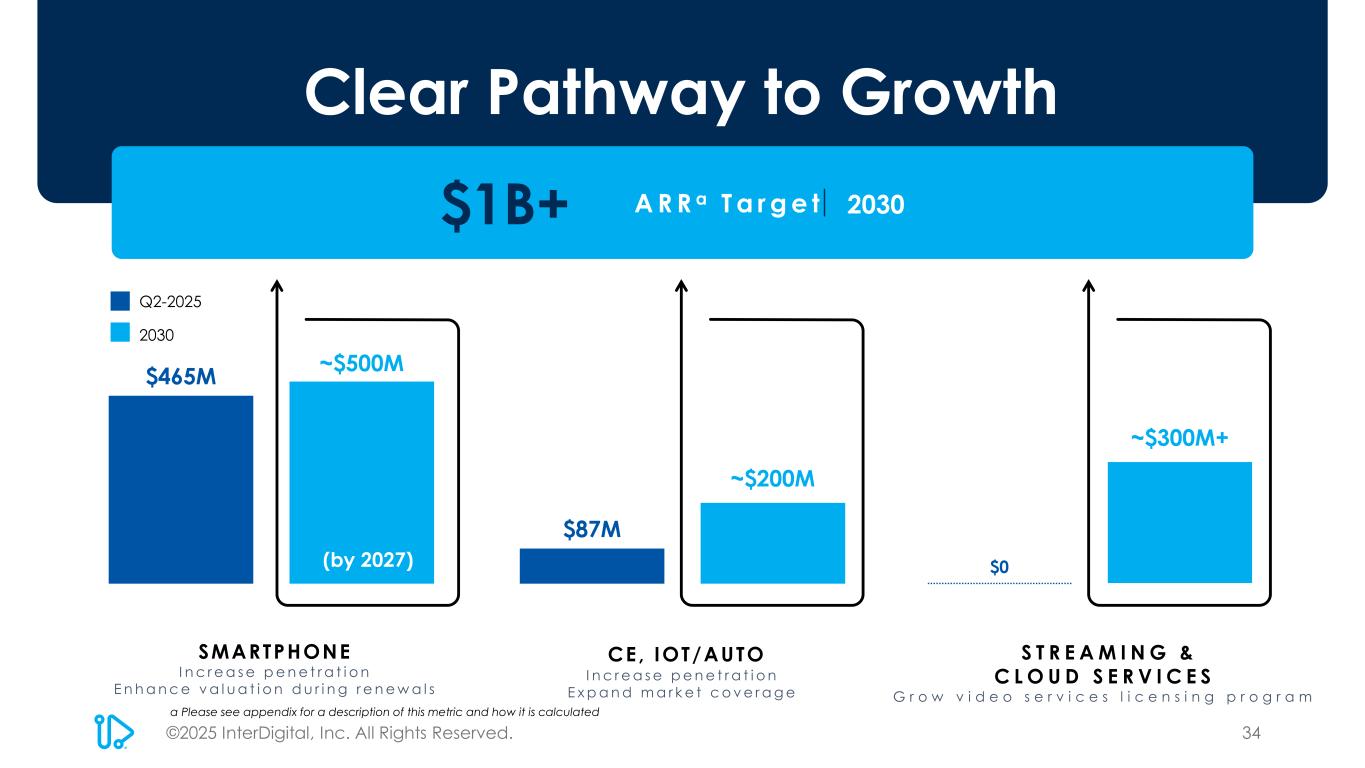
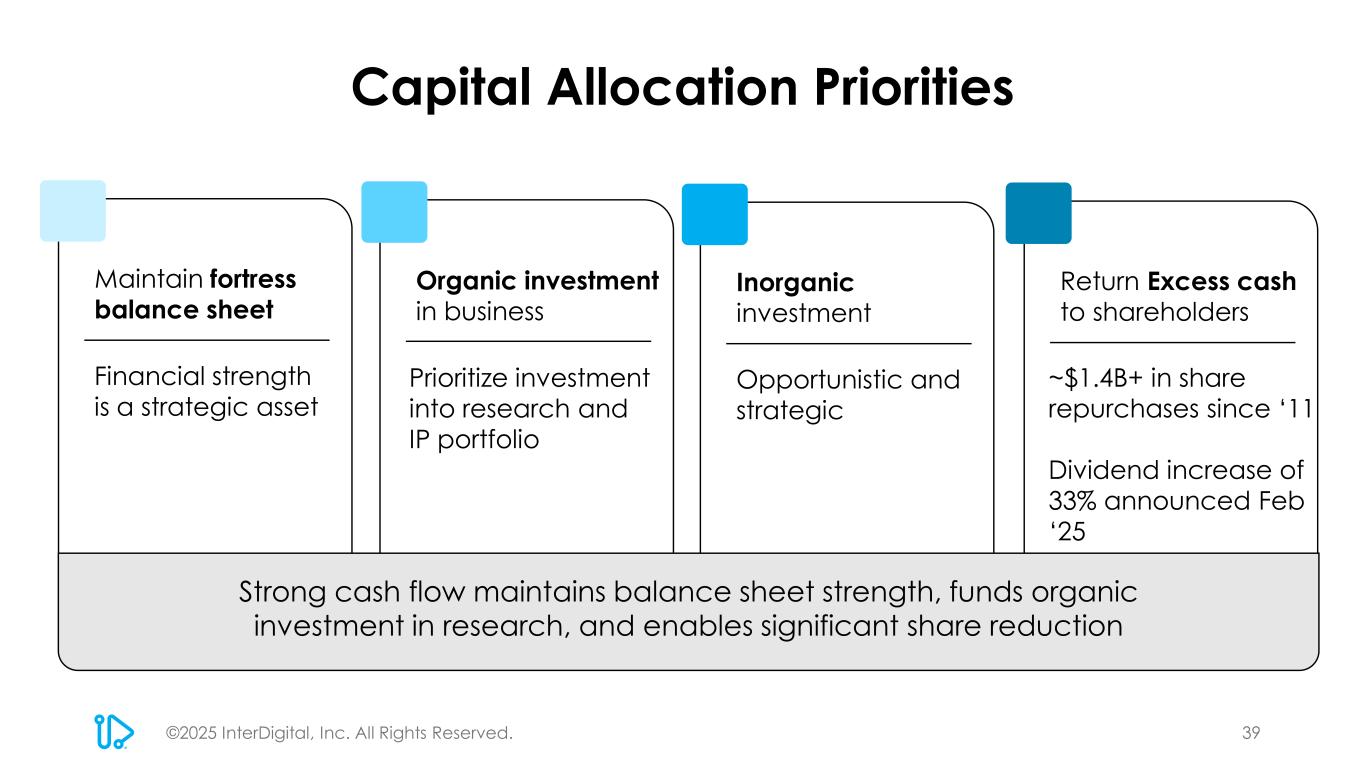
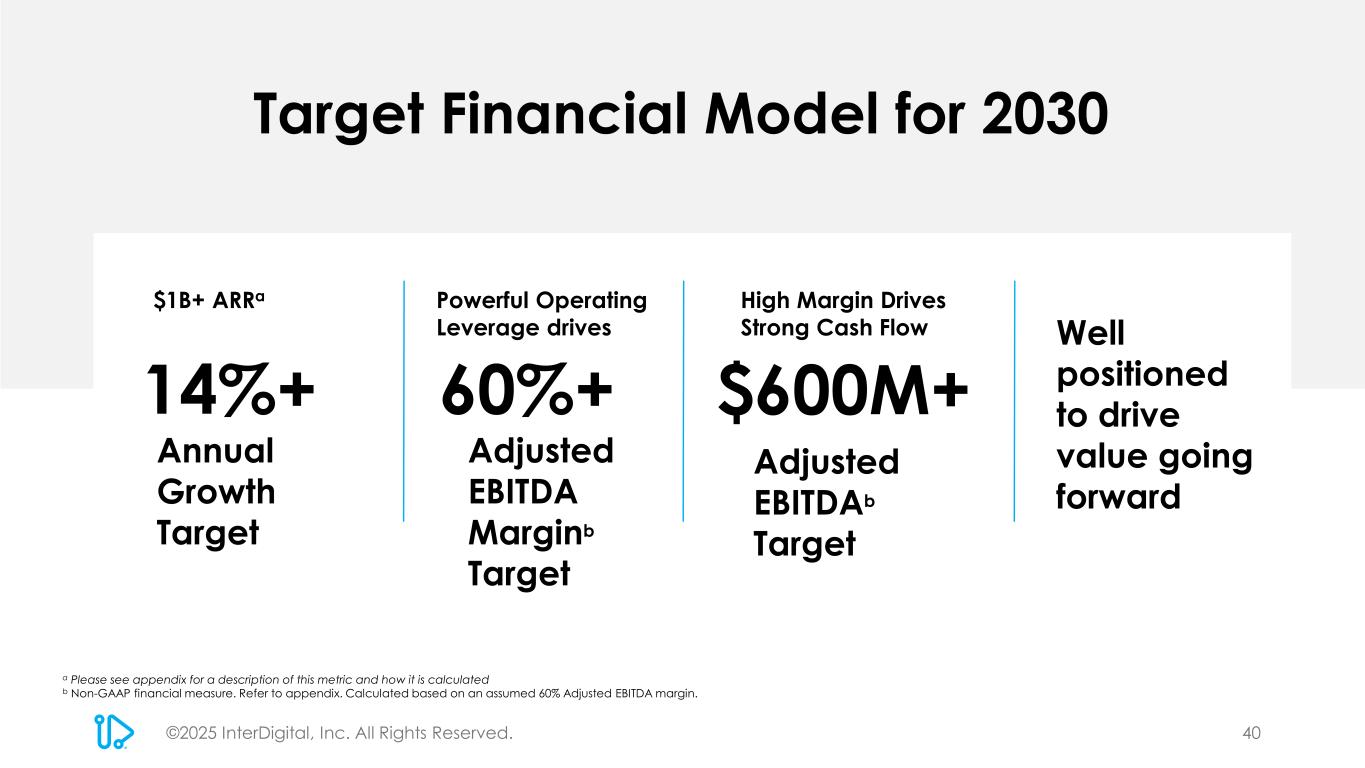
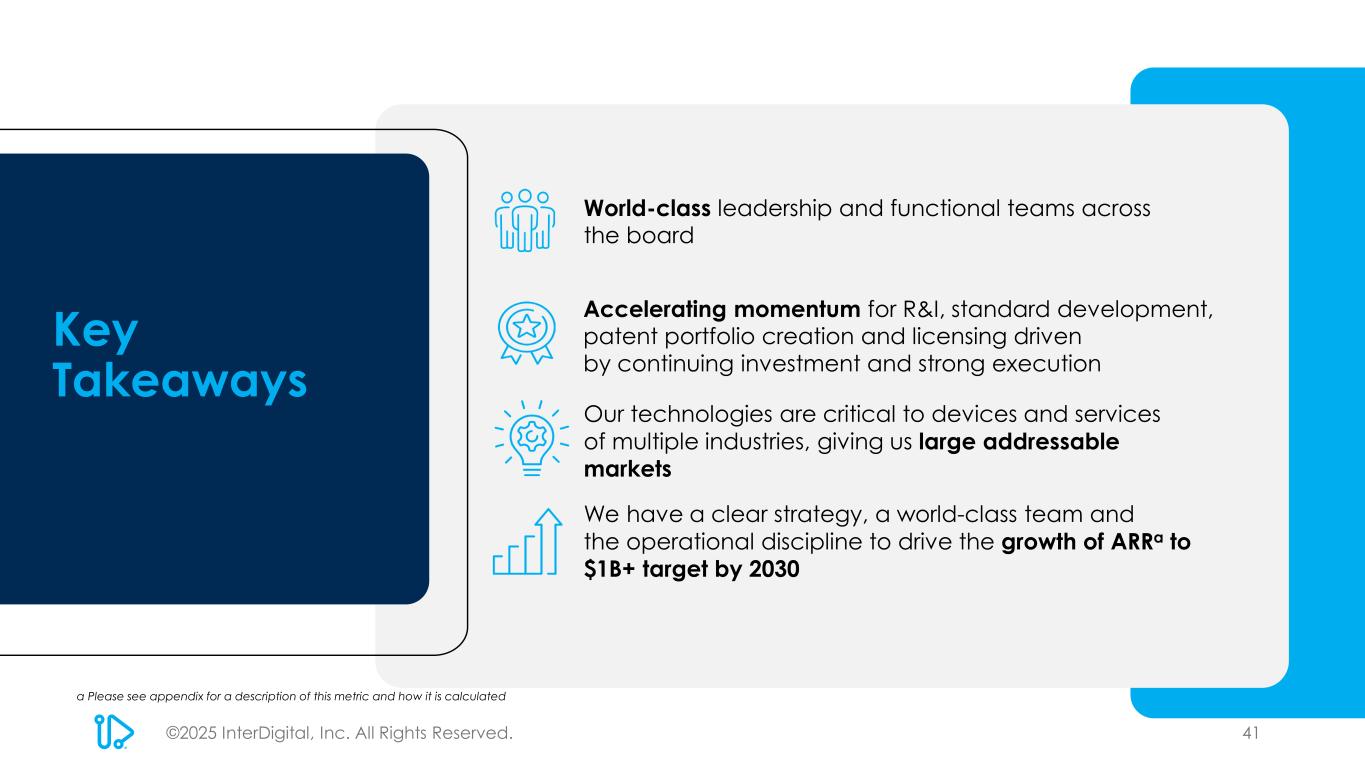
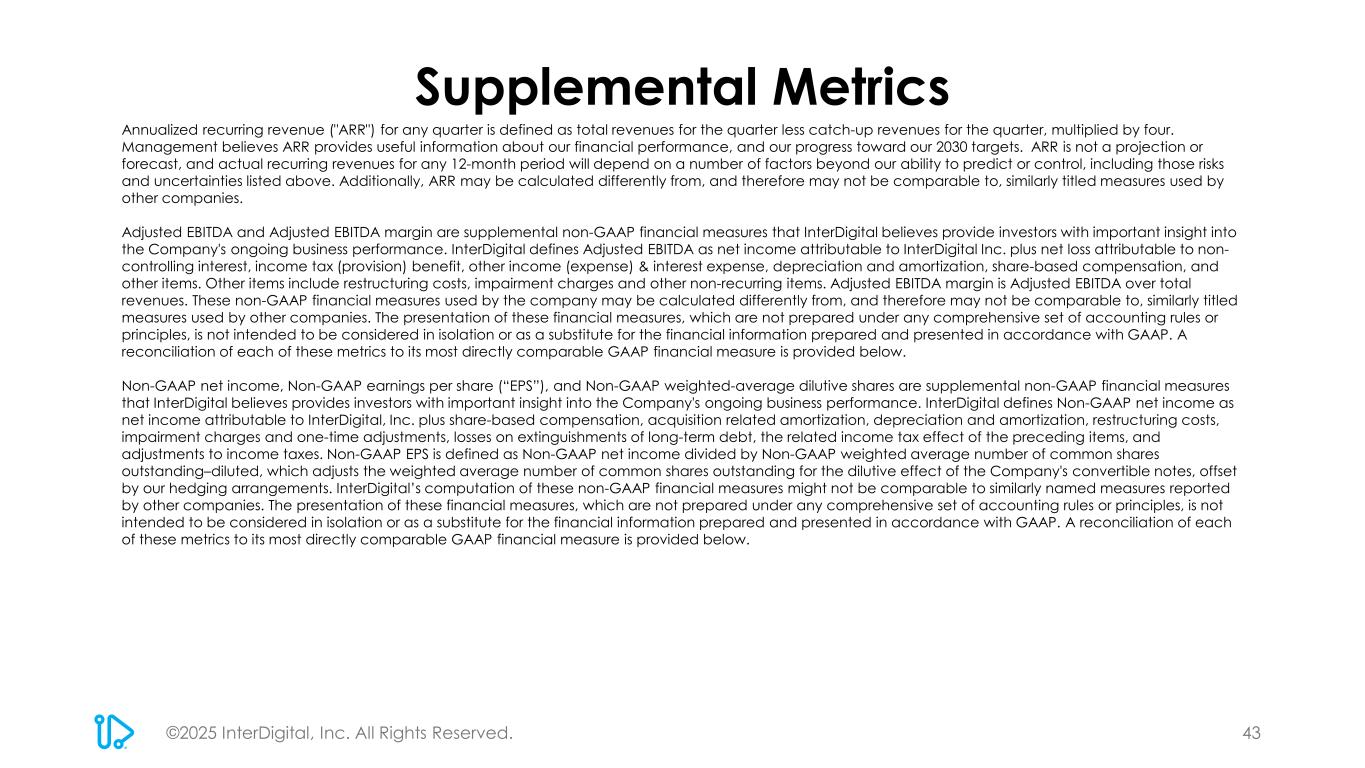
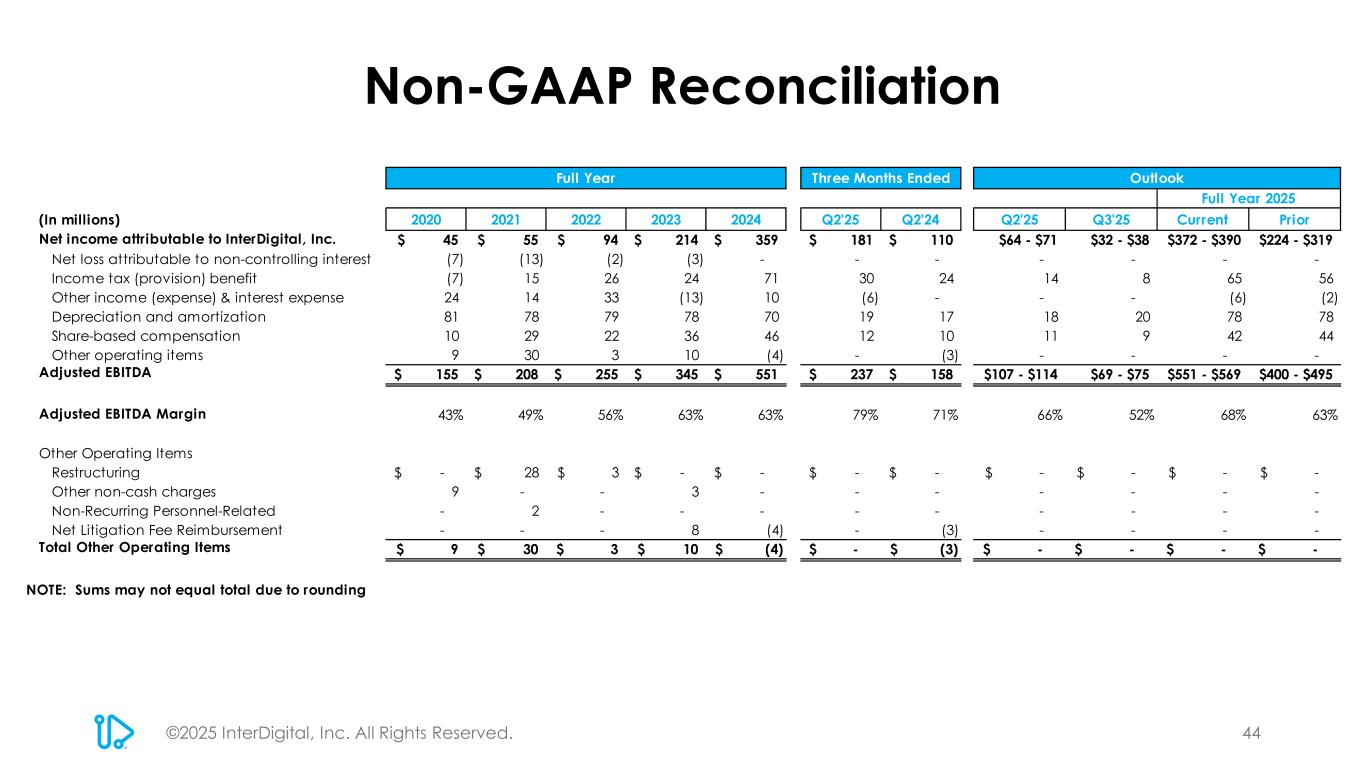
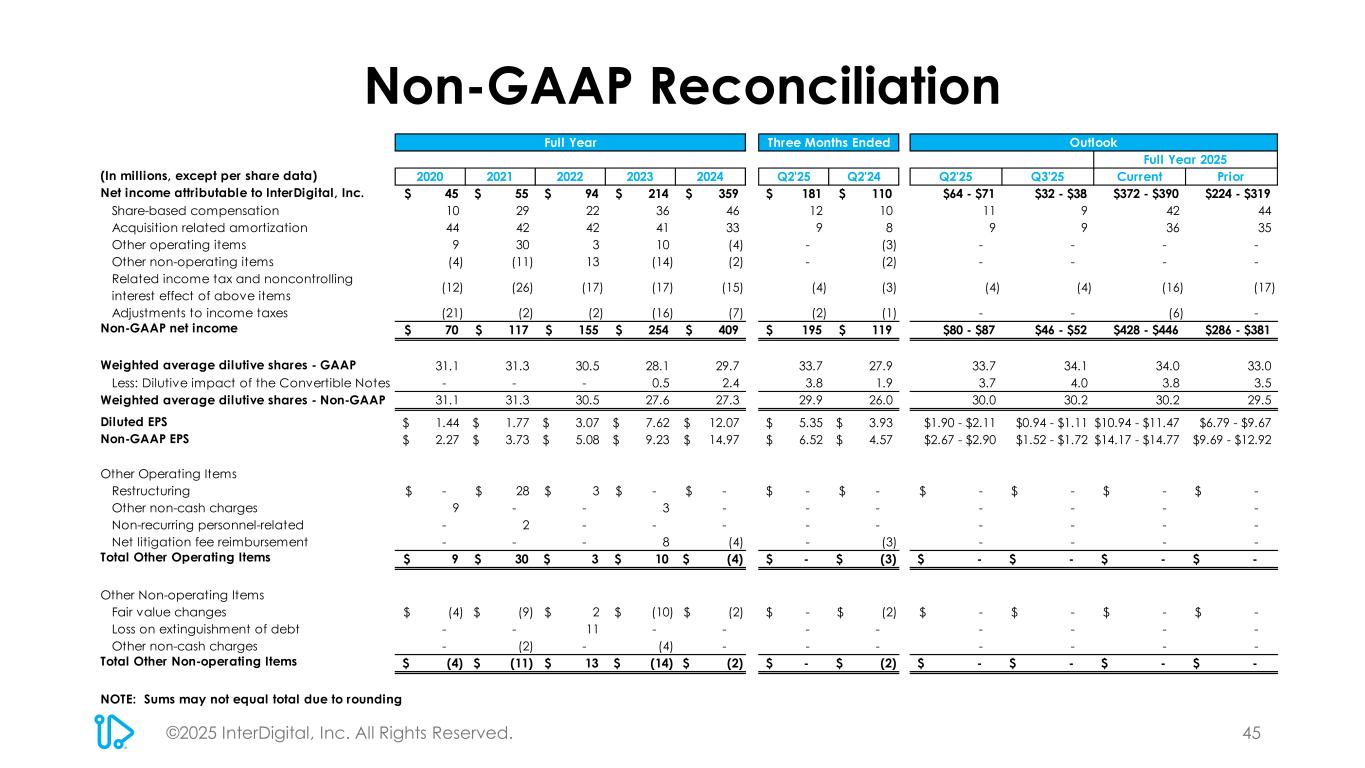
Thanks, Liren. Q2 was an exceptional quarter for Interdigital as we delivered all-time record levels of annualized recurring revenue and non-GAAP EPS. The results for the quarter far exceeded the top end of our guidance range, with the upside driven by the favorable conclusion of our arbitration with Samsung, which we just received this week. This conclusion also resulted in a significant step-up in ARR, catch-up revenue, and full-year guidance for 2025. I'll provide more detail on each of these items in a moment. Revenue for the quarter was $300 million, which far exceeded the top end of our guidance of $170 million and was driven by the Samsung Arbitration Award NHP License Agreement. This compares to revenue of $224 million in Q2 of last year when favorable court rulings and our enforcement against Lenovo helped generate $128 million in catch-up revenue. Let me take a second to discuss the impact of the Samsung Arbitration Award. Since entering into the agreement, we have been accruing revenue at the level of the prior agreement, which was $78 million per year. We received the arbitration decision just a few days ago in Q3, but since we had not yet closed the books on Q2, GAAP requires us to update our Q2 estimate based on the final decision. As a result, the award contributed $152 million of revenue to Q2. The $152 million of revenue was comprised of $33 million of recurring revenue and $119 million of catch-up revenue to true up the prior nine quarters from January 1, 2023 to March 31, 2025. Turning to annualized recurring revenue, our ARR increased 44% year-over-year to an all-time high of 553 million in Q2. This was driven primarily by momentum in our smartphone program, where recent patent license agreements with Oppo, Vivo, and Lenovo increased our share of the smartphone market under license from about 50 percent to roughly 80 percent. These agreements, together with our excellent Samsung arbitration result, increased our smartphone ARR 58% year-over-year, from $294 million in Q2 last year to $465 million in Q2 this year. With smartphone ARR at $465 million, we are now drawing near our smartphone ARR goal of $500 million by 2027. In CE and IoT, the HP agreement is just the latest example of the significant growth opportunities that exist beyond the smartphone market. And we believe we can more than double the ARR from CE and IoT by 2030. Through the growth in smartphone and CEIOT, together with our massive opportunity in video services, we are making good progress toward our goal of $1 billion plus in ARR across all programs by 2030. And it's important to remember that while ARR is a great metric to track the growth in our business, there is economic value above ARR alone. Over the last 10 years, we have recognized $1.5 billion of catch-up revenue. This has been tremendously valuable because we used the majority of that money to fund share repurchases over that time period. Today, we continue to have a lot of catch-up opportunity remaining, which tends to be 100% gross margin, as we pursue our goal of $1 billion of ARR by 2030. Our adjusted EBITDA for the quarter was $237 million and equates to an adjusted EBITDA margin of 79%, up from 71% in Q2 last year. Non-GAAP EPS also came in at an all-time high of $6.52 cents for Q2, well above the high end of our guidance range of $2.67 to $2.90, and powered by the strength of our financial model, where a high percentage of incremental revenue falls to the bottom line. Cash from operations was a robust $105 million in Q2, resulting in free cash flow of $92 dollars. Consistent with our capital allocation priorities, we continue to maintain a fortress balance sheet, invest for growth, and return excess capital to shareholders. In Q2, we returned 42 million dollars to shareholders through 26 million dollars in buybacks and 16 million through our recently increased dividend. In July, we bought back another 15 million dollars of stock and made another $16 million dividend payment, bringing total return of capital to almost $90 million year-to-date. In just the last three and a half years, we have repurchased more than half a billion dollars of stock, and we expect to continue to buy back shares over the remainder of this year. Looking forward to Q3, we expect recurring revenue will include $136 to $140 million of revenue from existing contracts, including the new run rate related to Samsung. Any revenue from any new agreements we may sign over the balance of the quarter would be additive to these amounts. Based only on existing contracts, we expect adjusted EBITDA margin of about 52% and non-GAAP diluted earnings per share of $1.52 to $1.72. As Liren noted, we are increasing our full-year 2025 guidance based not only on our excellent results, but also on the opportunity to continue our progress. We now expect revenue in the range of $790 million to $850 million, with adjusted EBITDA in a range of $551 million to $569 million, and non-GAAP earnings per share of $14.17 to $14.77. In addition, I'll note that we previously communicated that we expected double-digit growth in free cash flow for 2025 over the $212 million level we reported in 2024. Based on our updated expectations for strong free cash flow over the second half of the year, we now believe our free cash flow for full-year 2025 could exceed $400 million, dollars, close to double 2024 levels. With that, I'll turn it back to Rayford.
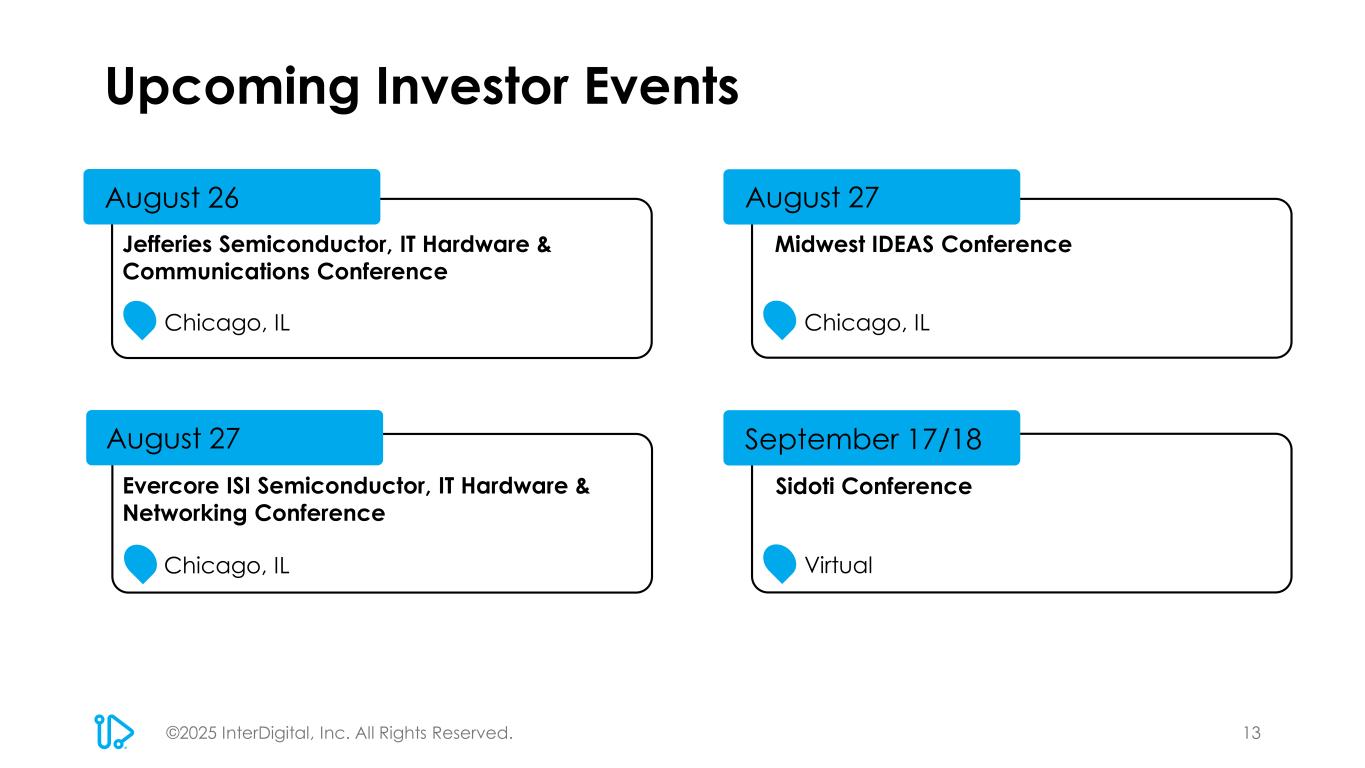
Thanks, Rich. Before we move to Q&A, I'd like to mention that we'll be attending a number of investor events in Q3, including the Jeffries Tech Conference, the Evercore Tech Conference, and the Midwest Ideas Conference, all in Chicago, as well as the Sidoti Conference, which is virtual. Please reach out to your representatives at those firms if you'd like schedule a meeting. At this point, Demi, we are ready to take questions.
Operator
If you have dialed in and would like to ask a question, please press star one on your telephone keypad to raise your hand and join the queue. Again, press star one to join the queue. Your first question comes from the line of Anja Soderstrom with Sidoti. Your line is open.
Hi, thank you for taking my question and congratulations on this front quarter here and outlook. And I'm just curious, the tax rate was a little bit lower. How should we think about that going forward, given this new revenue contributions? Yeah, thanks, Anya, for your
comment. Yeah, the tax rate was a little bit lower. We are still evaluating the impacts of the new tax legislation, but generally, you know, think that they're a net positive. We see our kind of long-term tax rate still in the mid to high teens, but maybe a tick below what we might have thought otherwise. But we continue to evaluate that.
Okay, thank you. And also, there was some noise earlier this week or last week about some potential legislation that there would be some sort of tariffs or something on the IP. Do you have any comments around that, or do you have anything built into your contract? where you can pass that on?
Yeah, Anya, hey, this is Lauren. I believe you're referring to a Wall Street Journal article regarding a potential proposal. We actually don't know any details. We are not exactly certain, you know, where it will go. So without any details for, you know, the proposal for IP, we don't think it's a property for us to comment, but we are watching the situation pretty carefully, and we have a very healthy open dialogue with key policymakers in Washington, D.C.
Okay, thank you. And then also your updated guidance for the full year, that assumes some more catch-up payments potentially, right?
Yeah, Anya. So when we look at our guidance, and the updated guidance is no different than what we've done in the past, we typically look at what we call a multi-path approach. So there's different combinations of different opportunities that we think we could bring across the line, and some of those opportunities would include catch-up.
Okay. That was all for me.
Operator
Next question comes from the line of Scottsdale with Ross Capital. Your line is open.
Good morning. Thanks for taking my questions, and congrats on getting Samsung across the finish line. Thanks, Scott. Larry, looking at the wireless market now, you've got 80% of the market under license. You're approaching your $500 million target. I'm wondering how you're thinking about the long-term opportunity now with wireless. You're starting to talk a little bit about 6G, about some AI related to that as well. Are there other avenues to monetize within the traditional wireless market and or in adjacencies, you know, whether it be Wi-Fi, Bluetooth, other connectivity protocols that you guys are thinking about to drive a figure higher than that $500 million ARR target?
Yeah. Hey, Scott. Good morning. Yeah. If you look at our smartphone program here, we are currently at about 80% market penetration. Our ARR, as we just reported, is about $465 million. And we still have three major accounts we are working on trying to get them signed regarding the top 10 customers. So we feel very good about where we are. As Rich commented here, we feel we are very close to reaching our target on the smartphone side. Regarding the future of wireless, we are very optimistic about the strength of our portfolio, but more important about the way we are leading 6G development. As I commented in my remark, we believe 6G will open up not just enabling more smartphone growth, but also open up a adjacent area for vertical screen, smart city, industrial IoT, healthcare, and a bunch of other industries where connectivity clearly will drive a lot of more vertical adoptions here. So we are optimistic this will open up new opportunities for us, but as of now, we don't put a number to them yet.
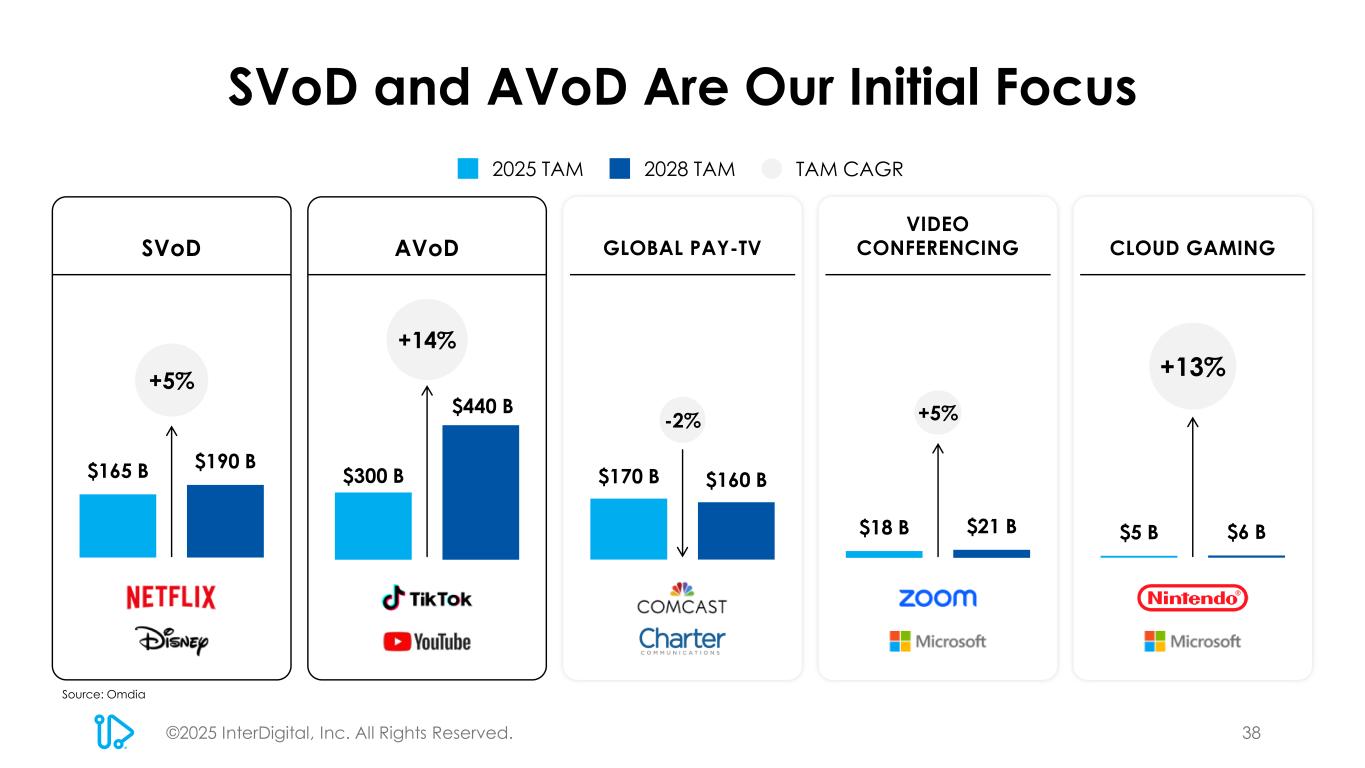
Laren, just to follow up on those comments, are you starting to invest pretty actively in some of those verticals and particularly smart city, industrial IoT, and healthcare, or should we be expecting some incremental dollars in R&D going in that direction? And then just the quick update on the streaming opportunity with the over-the-top players. Can you give us an update in terms of engagements that you're seeing at that level, level of ongoing dialogue, and maybe if there's any update as it relates to the Disney litigation. Thanks.
Yeah. Hey, Scott. The beauty for our business model is we invest in foundational technology, and then we build a very strong and one of the most valuable IP portfolio in the industry. So when we go license different verticals, we actually do not have to incur additional cost into these different verticals other than some licensing activity itself. So that's sort of the 6G development here. Regarding the streaming side here, we are in continuous dialogue with all the major players. And, you know, as of today, we don't have any, you know, real concrete progress to report yet. Regarding the Disney litigation, we have done a lot of work, as you are aware, it's a multi-jurisdictional enforcement activity. And we have done a lot of, you know, early stage progress and frankly have got multiple wins on the procedure side. And we have a substance file coming up in later this year and early next year. And you can actually see all the details that are 10Q fighting. That's on our website.
Hey, Leran, maybe just to quickly follow up on that and then I'll get back in the queue. But given the Disney litigation, is that slowing down dialogue with any of the other players out there? Are they waiting to see the outcome there before they more actively engage and continue in their process? And second, you know, the broad general timelines of when you would expect some sort of resolution. Is 2026 the time frame of when we could expect an initial deal? You know, anything from a timeline perspective would be helpful.
Hey, Scott, for the first half of your question here, we do not see Disney litigation as impacting our dialogue with other potential customers here. Regarding the timeline for Disney, it's hard to predict exactly, you know, when a settlement may happen. We are always open for open dialogues, even though sometimes we are in mail enforcement activity. But sometimes, you know, certain litigation takes longer time and sometimes takes shorter. We have seen that on the smartphone side. But as always, when we started our enforcement here, we are prepared to go all the way through, but we are always open for business dialogue in the meantime.
Great. Thanks so much. I'll get back in the queue. Thanks.
Operator
Next question comes from the line of Arjun Bhatia with William Veer. Your line is open.
Thank you. And I'll add my congrats on the Samsung outcome. Obviously, a big success there. Maybe if we can start there, Laren. I'm curious just if you reflect on the outcome, what it says about your tech, your patent portfolio, because the 67% uplift, I think, is well above kind of what we were expecting, a lot of investors were expecting, and obviously the implied kind of royalty rates in that agreement from an economic perspective are quite strong. So what does it say about, I guess, your technology, how you're investing, and then what might it mean for some of the other negotiations you're having with other smartphone OEMs or you might have in the future, like Xiaomi this year or, you know, even others that are not under contract yet.
Hey, Arjun, good morning. Yeah, regarding the sense of arbitration result, as we have stated in our press release as well as our earning, you know, remarks here, we are quite pleased with the result. We believe it properly reflects the value of foundational research as well as our IP portfolio. And I do think our team has done a very good job, you know, conveying all the value of portfolio with the arbitrator, who, in our opinion, properly reached a conclusion. And we also want to thank the Sanson team for their professionalism in this process. Regarding the 67% increase compared to the prior agreement, we think that's very appropriate. Consider the prior agreement was a 10-year agreement. At the time, it didn't really factor in the value of our 5G portfolio, as well as a lot of other innovations, you know, videos and AI research we continue to do. I do think this is a very valuable development for our program. And as you know, Arjun, in our program here, you know, a major license agreement tend to be used as a comparable license for other customers when it's time for renewal or sometime when it's time to sign up with the first customer for the first time. So we believe it will have a positive impact for our overall program, and we are really pleased about the outcome.
Perfect. That's great to hear. And then maybe, Rich, to follow up on that point a little bit, just as we're thinking about the changes to the model, I think the way you come up with guidance, obviously it's a bit unique, But I imagine there was some, whether directly or indirectly, some Samsung catch-up revenue based into your prior guidance. Is it possible at all to quantify what that was and how we should kind of just reflect on the change in Q3 and Q4, or sorry, Q3, the Q3 guidance that you provided relative to what was prior, what was previously implied in the back half numbers?
yeah i mean the way i discuss it uh or describe it arjun is under that multi-path approach uh you know we consider a range of potential outcomes for the samsung result uh and now that we've you know it's no longer a range it's a point estimate we have the result right and and that uh along with you know the other progress that we've made uh puts us in a position to update the guidance based on the new multi-path that we see going forward.
Okay. Understood. Very helpful. And then, sorry, one last one, if I can. Just when you have a big win like this and a kind of a step function change in outcome, can you just talk a little bit about what it means for your cost structure? Is there like a one-time fee that you kind of recognize and expenses that when you get an outcome like this, or are those costs relatively fixed?
Yeah, so, Arjun, the thing that I love about our business is that, you know, we've made the investment that made this agreement possible over the last years or decades, right? We've been investing, you know, for a long time in smartphone, in 4G, 5G, in the video acquisition and continued video research thereafter. So that's what made that legacy investment, as well as the ongoing investment we're already making and would be making anyway, is what makes this agreement possible. So there really isn't any incremental cost as a result of this agreement. We threw up some performance accruals and things like that, but it's very, very small relative to the size of the agreement. So it's, as I typically say, a lot of times new agreements or incremental value from renewals are 100% gross margin.
All right, perfect. Very helpful, and congrats again to you and the team. Take care. Great, thanks.
Operator
Next question comes from the line of Tal Liani with Bank of America. Your line is open.
Hi, guys. I'm trying to take the recurring revenue line and break it down just to understand. So this quarter is $138 million. What was the contribution of Samsung to this, and what was the expectation? So going in, did you have any expectations of Samsung to be in recurring revenue?
Yeah, so we had been booking Samsung based on the prior agreement of $78 million. So we've basically been booking just shy of $20 million a quarter. based on the new agreement, it's now $33 million of recurring revenue in the quarter.
Got it. As we go into the following quarter, assuming nothing else, or can you, just the recurring revenue line, what should we assume going forward in terms of the growth trajectory? And again, I know the way you guide is you don't add any other agreements. So based on the current agreements, what are the expected trends for recurring revenues?
Yeah, so that's, you know, based on the current agreements, that's really what our guide is limited to at 136 to 140. That's based on our existing recurring revenue. And then, you know, anything that we're able to sign or renew or whatever thereafter or above that would be additive.
right no sorry this is for the following quarter which is in line with the 138 this quarter so i understand it if i try to under if i try to forecast for next year and i and again based on the current agreements what should how should recurring revenue trend if that's my baseline so i'm trying to understand my baseline and then do some assumptions about anything else so how do how How is the recurring revenue line progresses if you don't get any other contracts?
Tao, let me take this question and see if that makes sense. So if you look at here we are, right? We are end of Q2. We are projecting, you know, new deals will be done for the rest of the year. But as Rich has commented here, we don't really know exactly which combination will be. So therefore, the year progress, and then we will hopefully by Q4, you know, having a very clear picture on where we are. But leading into next year, we also disclosed in our findings about, you know, a few contracts, you know, currently scheduled to expire. And you can see on our website. And so if you take out those expiration contracts, that would be the starting point for next year, assuming, you know, the current contract expires. But as you know, we always try to get them renewed. And very often we have to get them renewed before they expire. So that's sort of the stepping function for starting off next year.
And normally, again, historically, when contracts expire and you renew them, is there growth or is there contraction in the contract? Like this time with Samsung, there was like more than 40%, 60% growth or whatever with a quarterly recurring revenue at the renewal of Samsung. What happens normally with renewals?
Yeah, it actually depends on the situation of certain customer. I'll give you a couple of examples here. As you mentioned here, Samsung, the last contract was a very long-term contract, didn't factor in 5G. So this time, through arbitration, we are able to get a 67% increase compared to the prior one. The other example is the Apple contract. As we have discussed before, the previous Apple contract was a longer term, but not as long as Samsung. So when we renewed the Apple contract in September of 2022, and that contract on average was 15% higher than the prior contract. So it really depends on the situation, depends on where the vendor is, how stable is their business, have they increased volume, have they used more of our technology. It's a combination of different factors, Tal. But based on those two examples here, we do have success record in renewing and higher value if that's appropriate.
Got it. Perfect. Thank you so much.
Operator
And that concludes the question and answer session. I will now turn the call back over to Liren Chen, CEO, for closing remarks.
Thank you, Demi. Before we close, I'd like to thank our employees for their dedication and contribution to Interdigital, as well as our many partners and licensees for a strong quarter. Thank you all to everyone who joined today's call, and we look forward to updating you on our progress next quarter.
Operator
With today's conference call, you may now disconnect.