Operator
Good morning, and welcome to InterDigital's third quarter 2025 earnings conference call. At this time, all participants are in the listen-only mode. After the speaker's presentation, there will be a question and answer session. To ask a question during the session, you will need to press star 11 on your telephone. You will then hear an automated message advising that your hand is raised. To withdraw your question, please press star 11 again. Please be advised that today's conference is being recorded. I would now like to hand the conference over to Rayford Garibrandt, Head of Investor Relations. Please go ahead.
Thank you, Haley, and good morning. Welcome to InterDigital's third quarter 2025 earnings conference call. I am Rayford Garibrandt, Head of Investor Relations for InterDigital. With me on today's call are Liren Chent, our President and CEO, and Rich Bresky, our CFO. Consistent with prior calls, we will offer some highlights about the quarter and the company, and then open the call up for questions. For additional details, you can access the information that in this call, we will make forward-looking statements regarding our current beliefs, plans, and expectations, which are not guarantees of future performance and are made only as of the date hereof. Forward-looking statements are subject to risks and uncertainties that could cause actual results and events to differ materially from results and events contemplated by such forward-looking statements. These risks and uncertainties include those described in the Risk Factor sections of our 2024 Annual Report on Form 10-K, and other presentation may contain references to non-GAAP financial measures. Reconciliations of these non-GAAP financial measures to the most directly comparable GAAP financial measures are included in the supplemental materials posted to the investor relations section of our website. With that taken care of, I will turn the call over to Leroy.
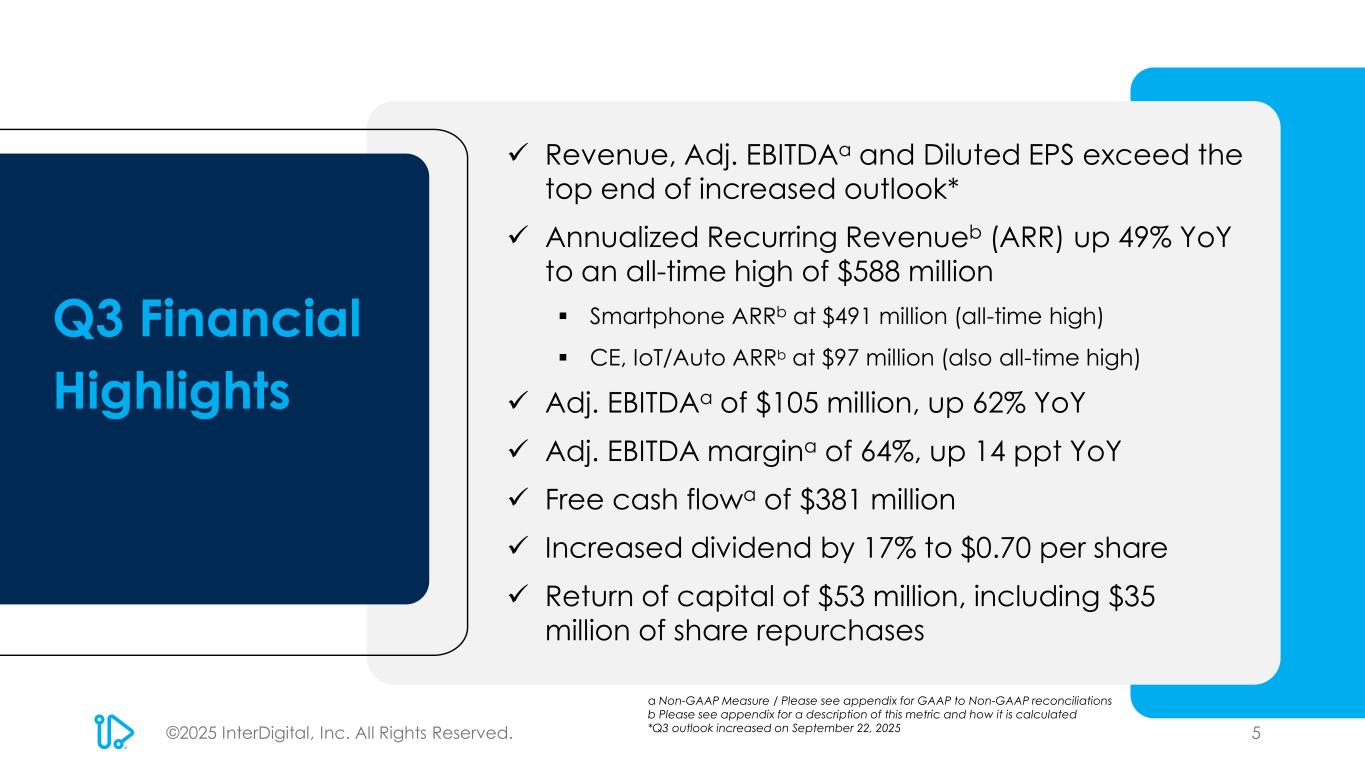
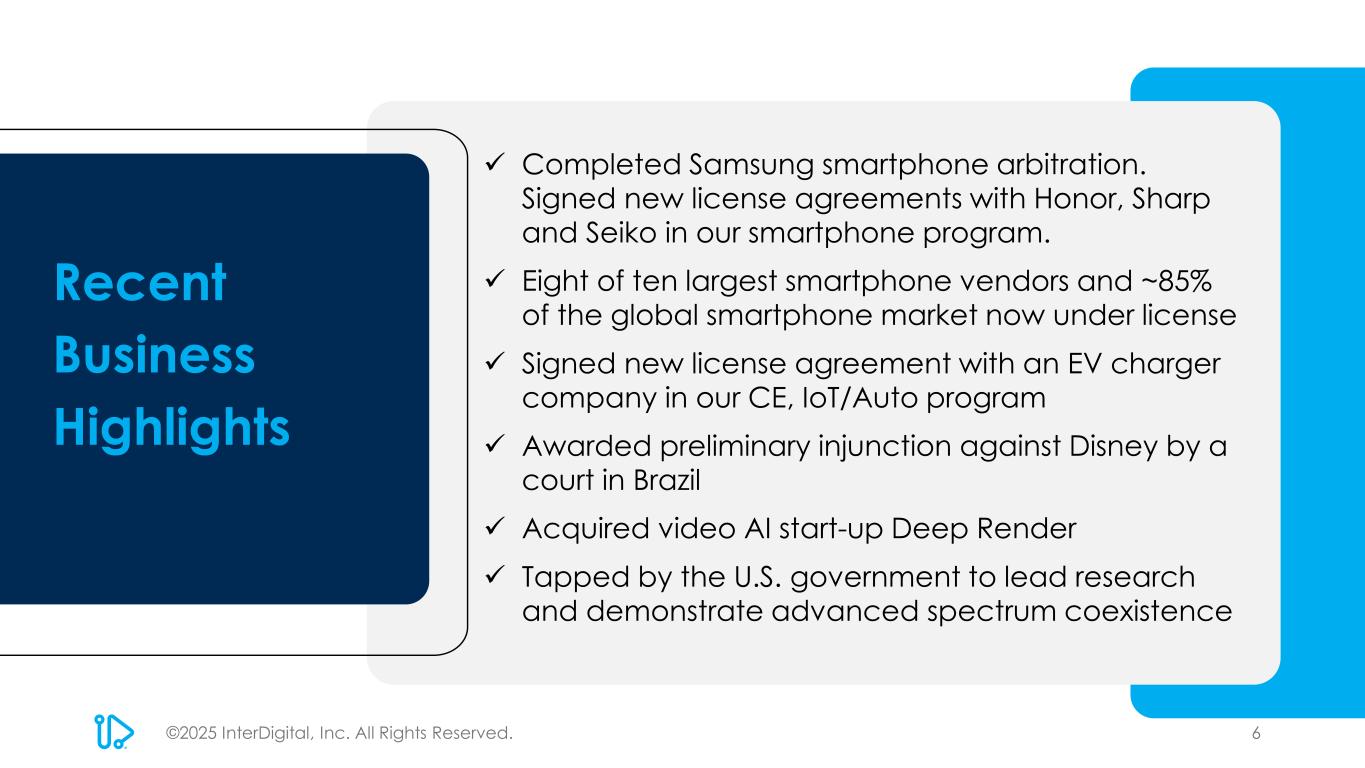
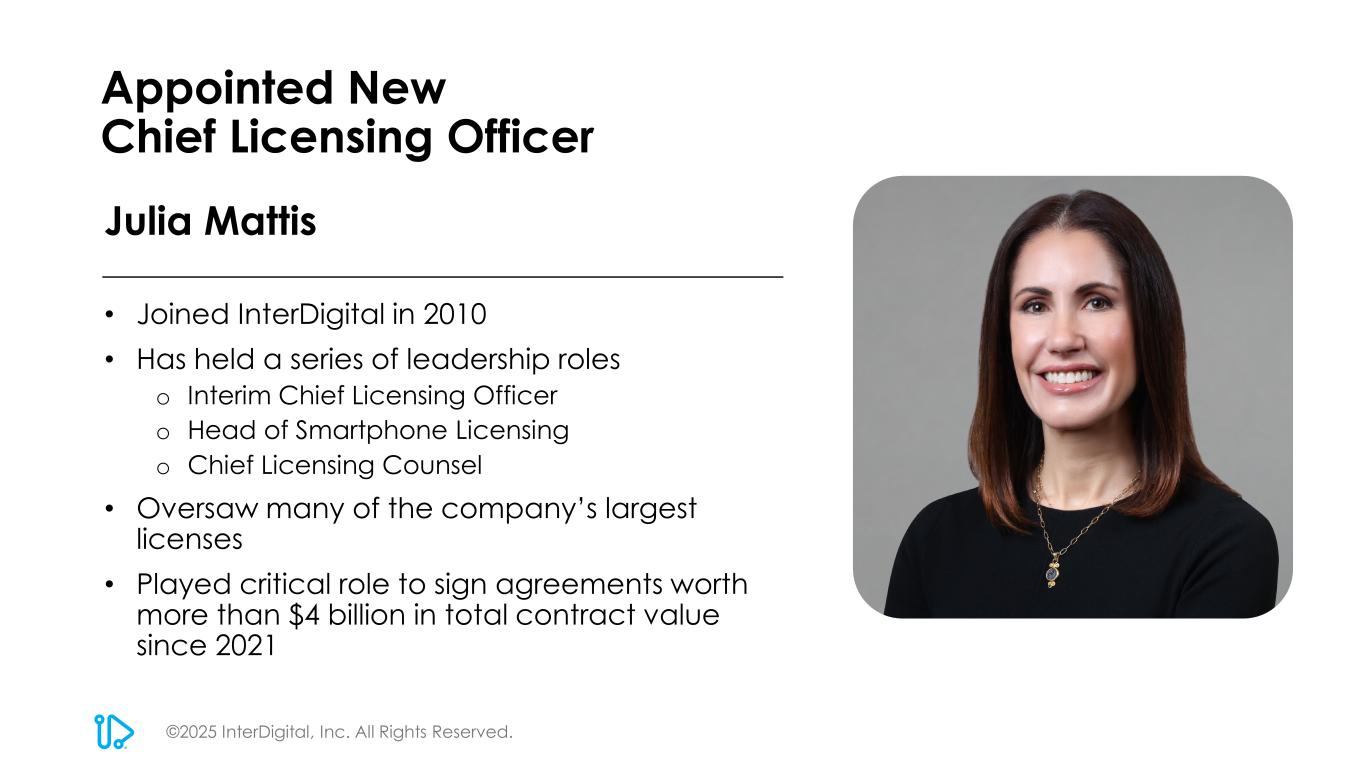
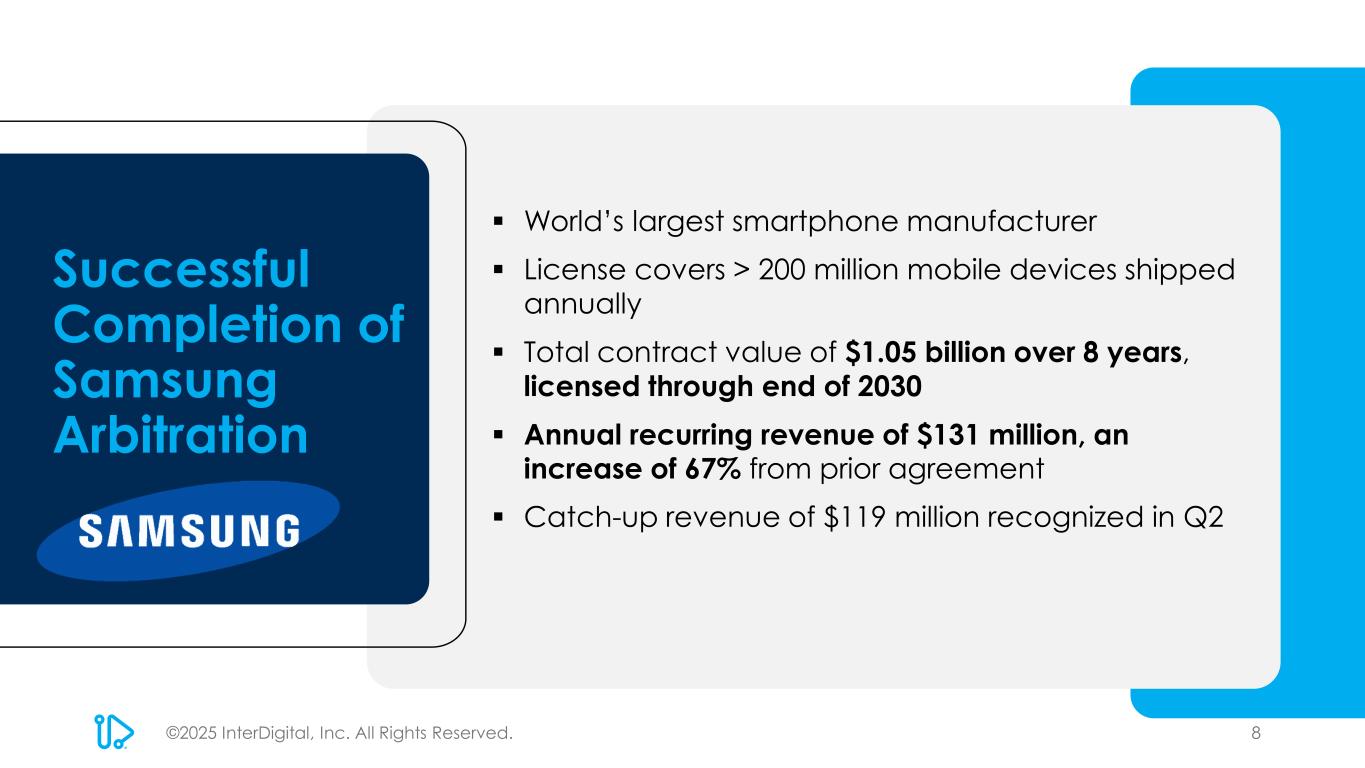
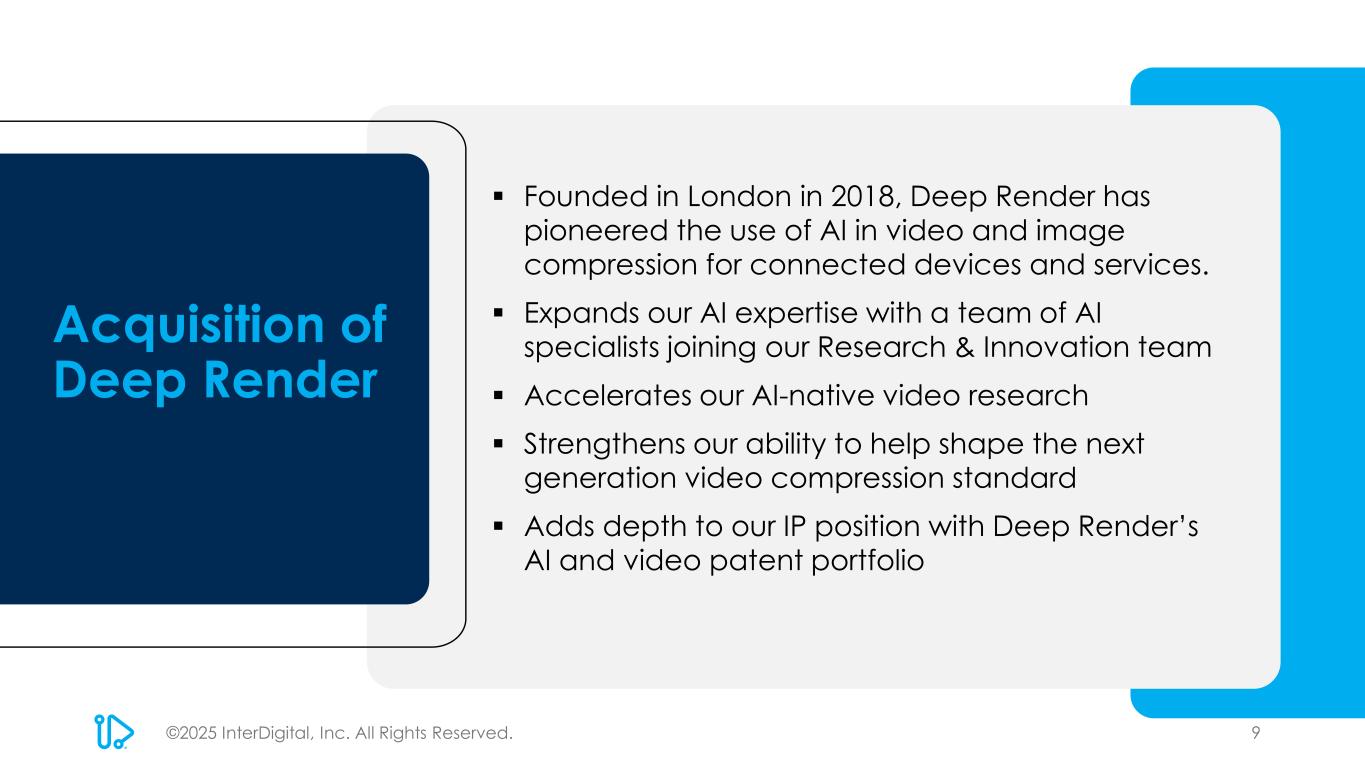
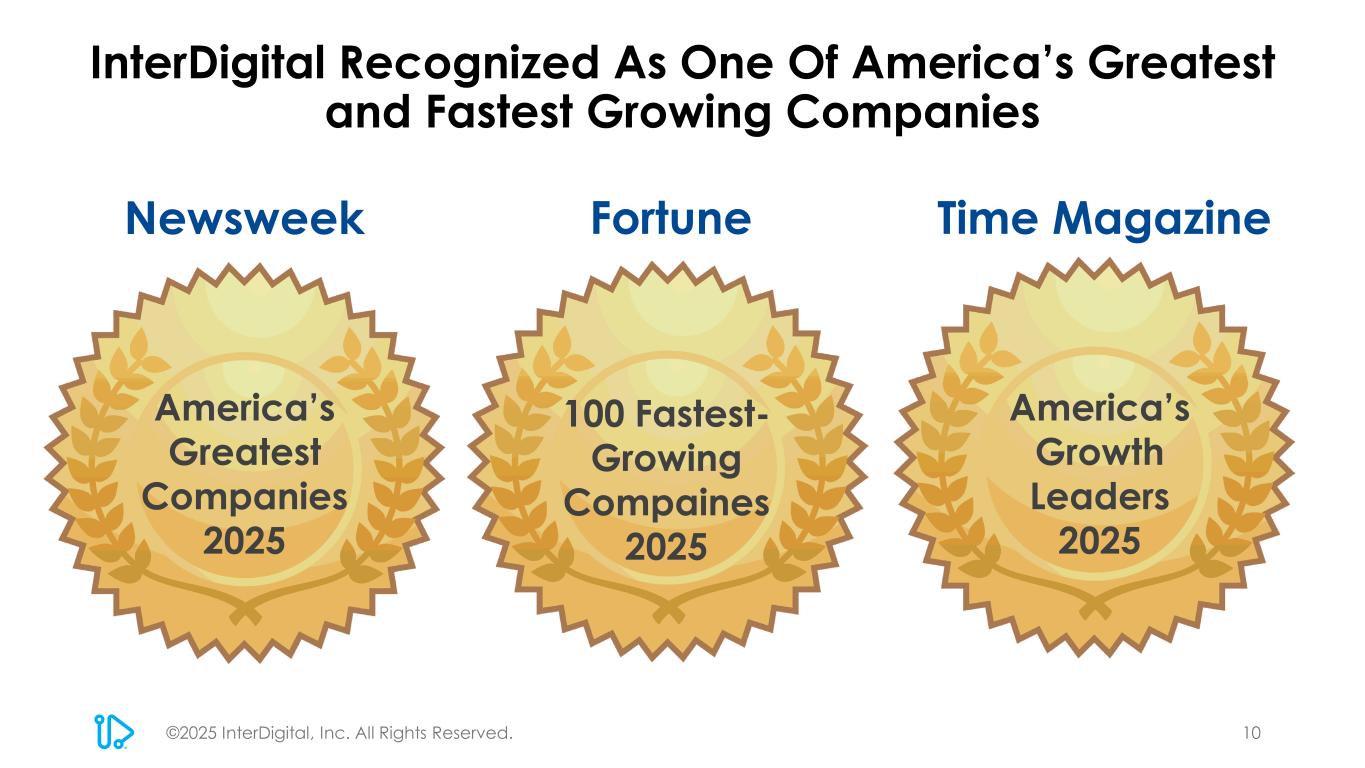
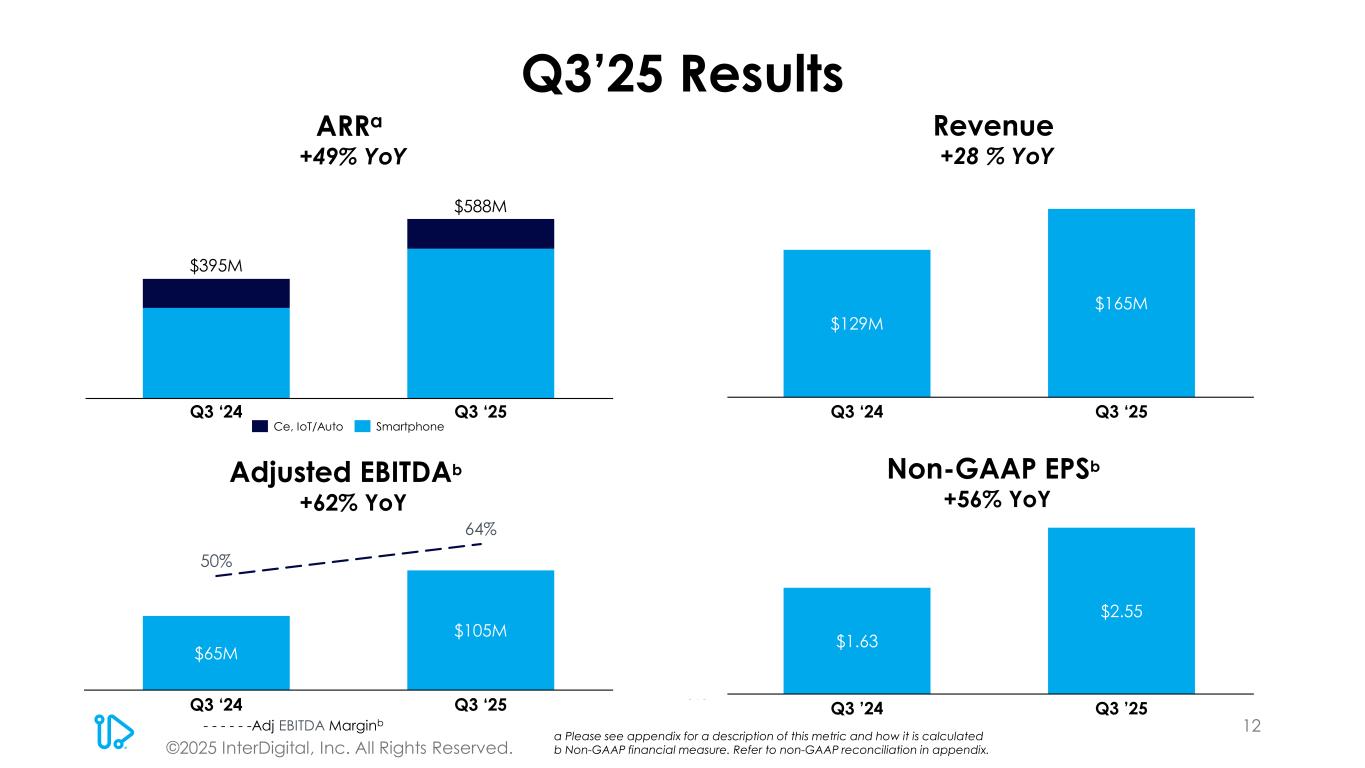
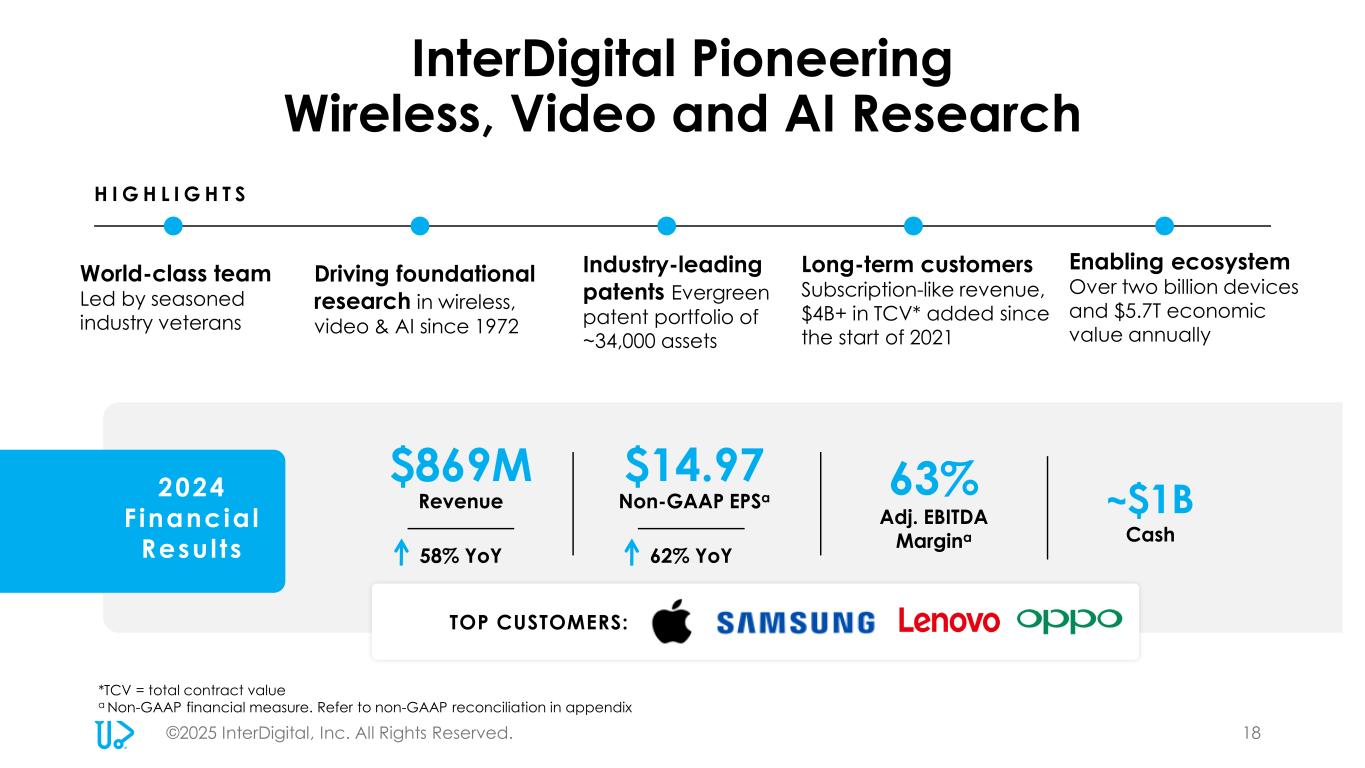
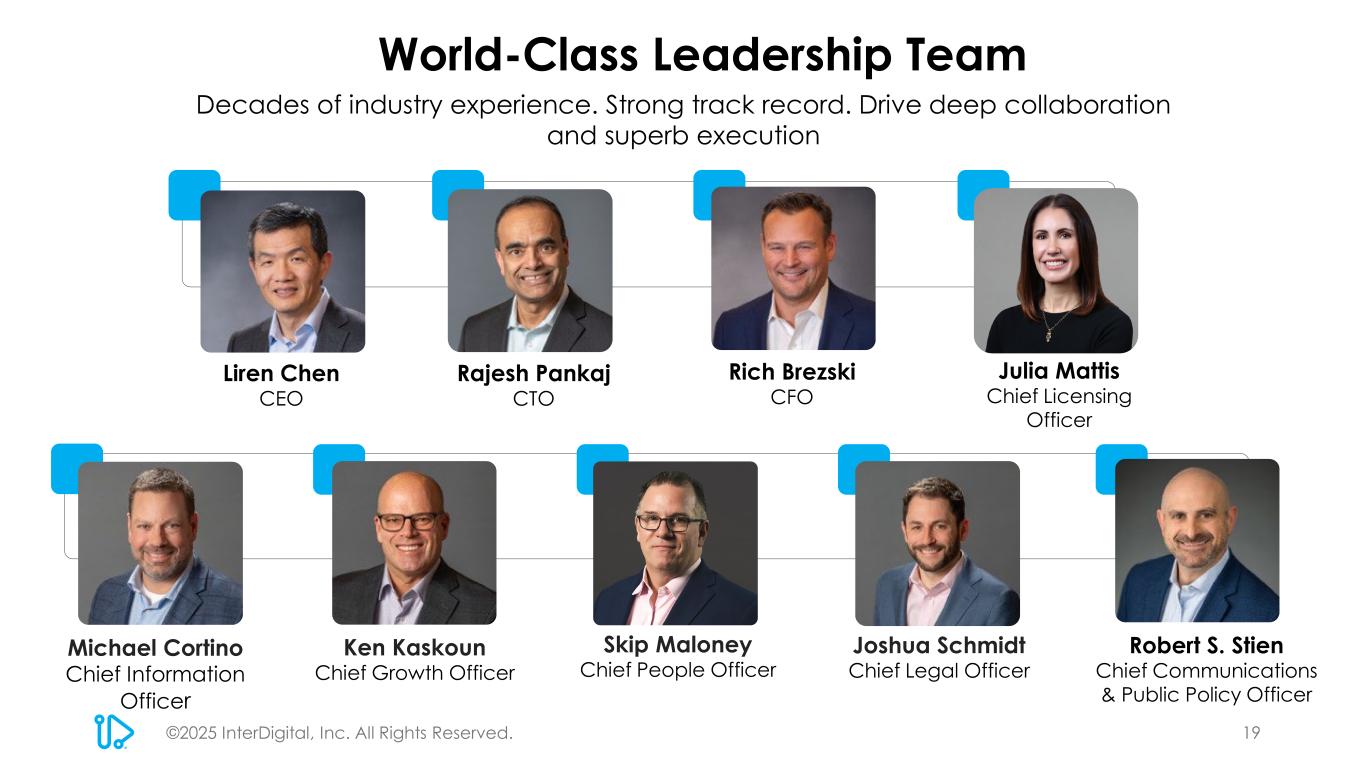
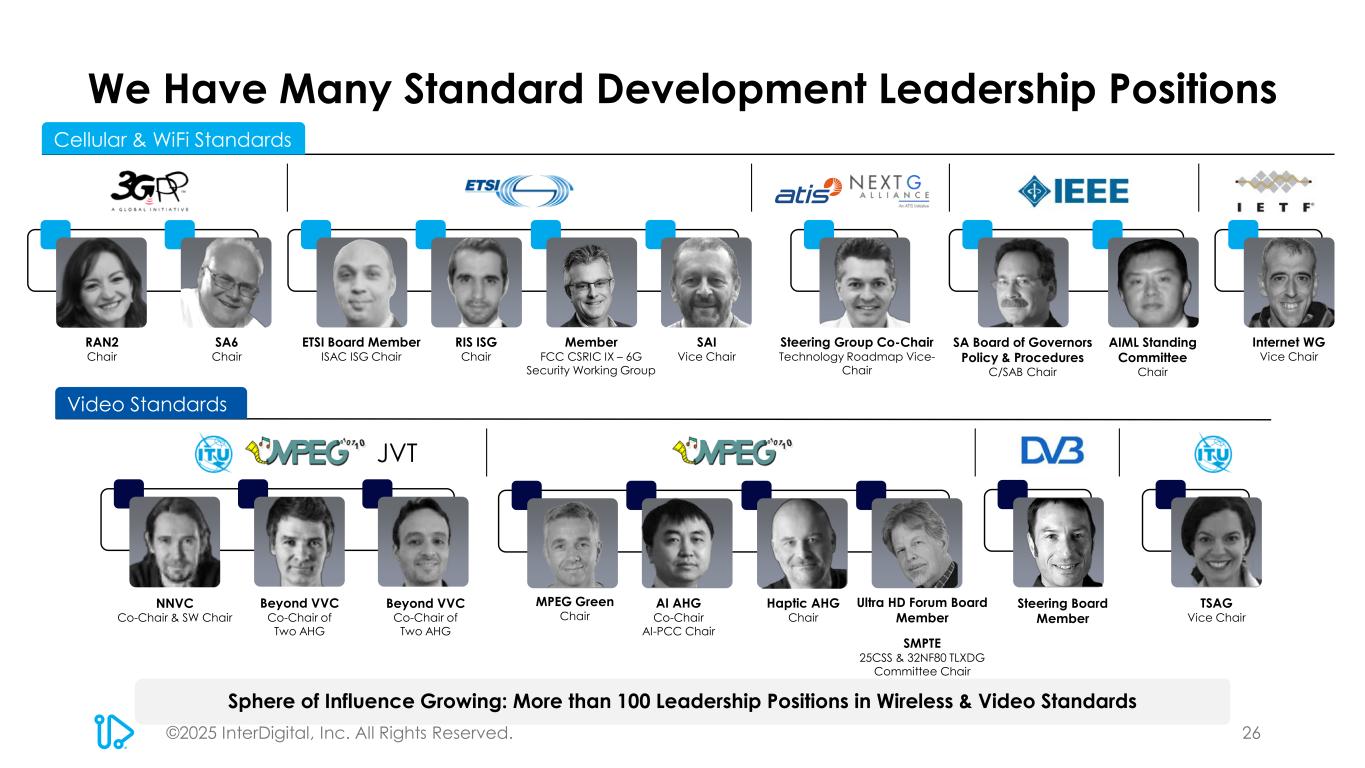
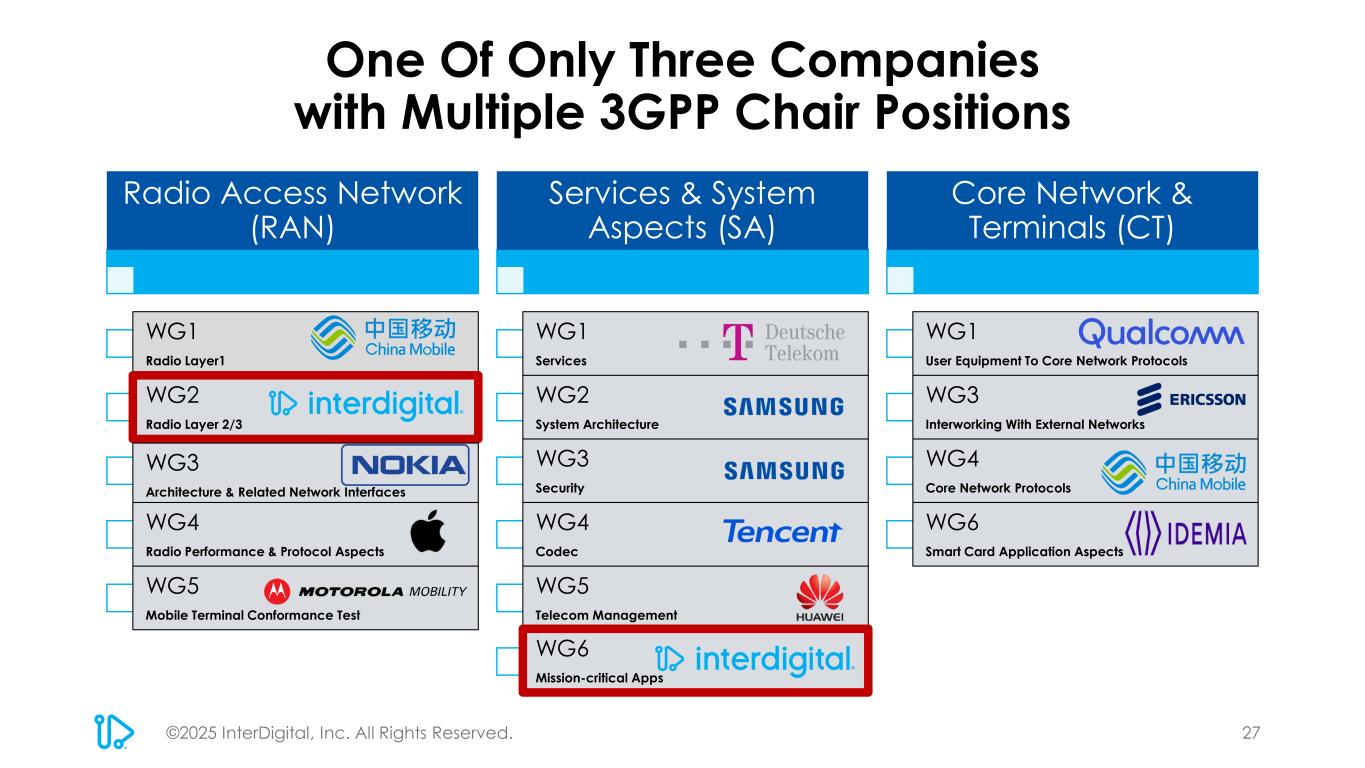
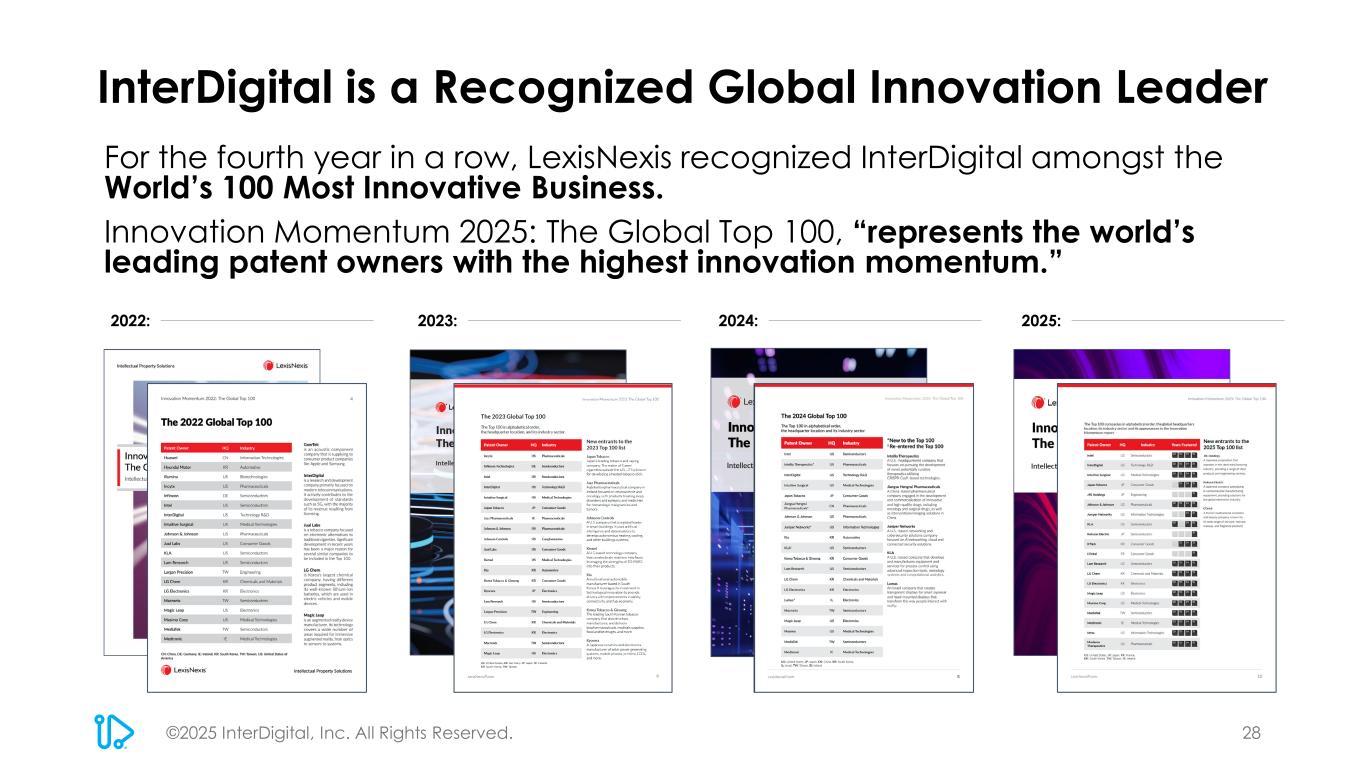
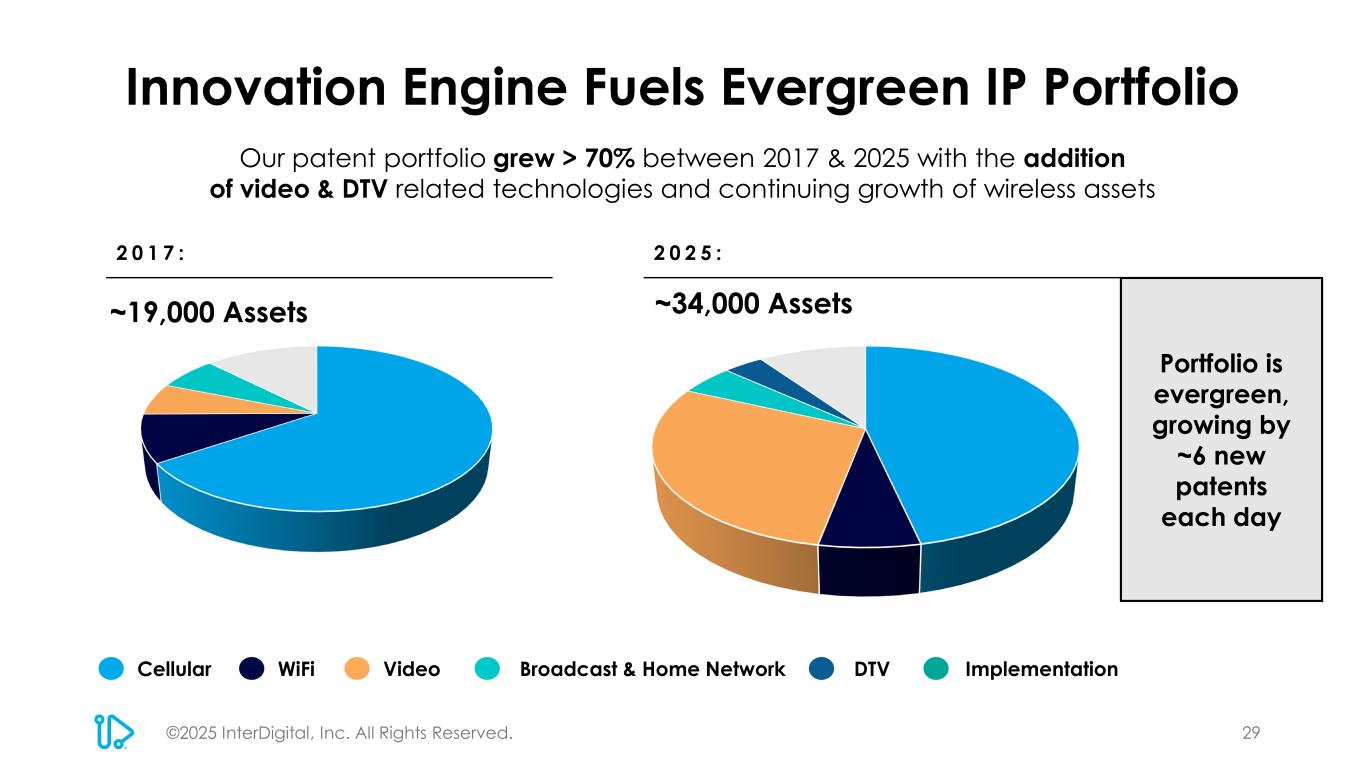
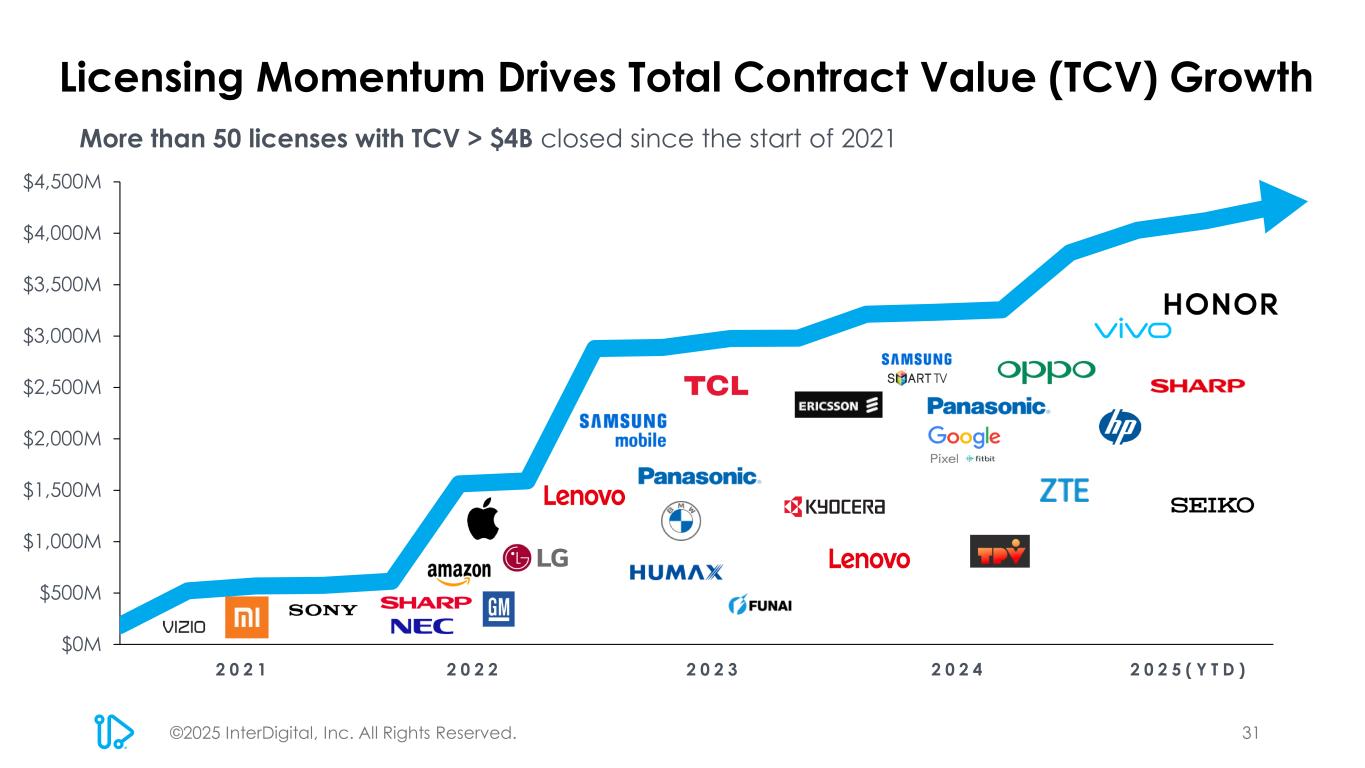
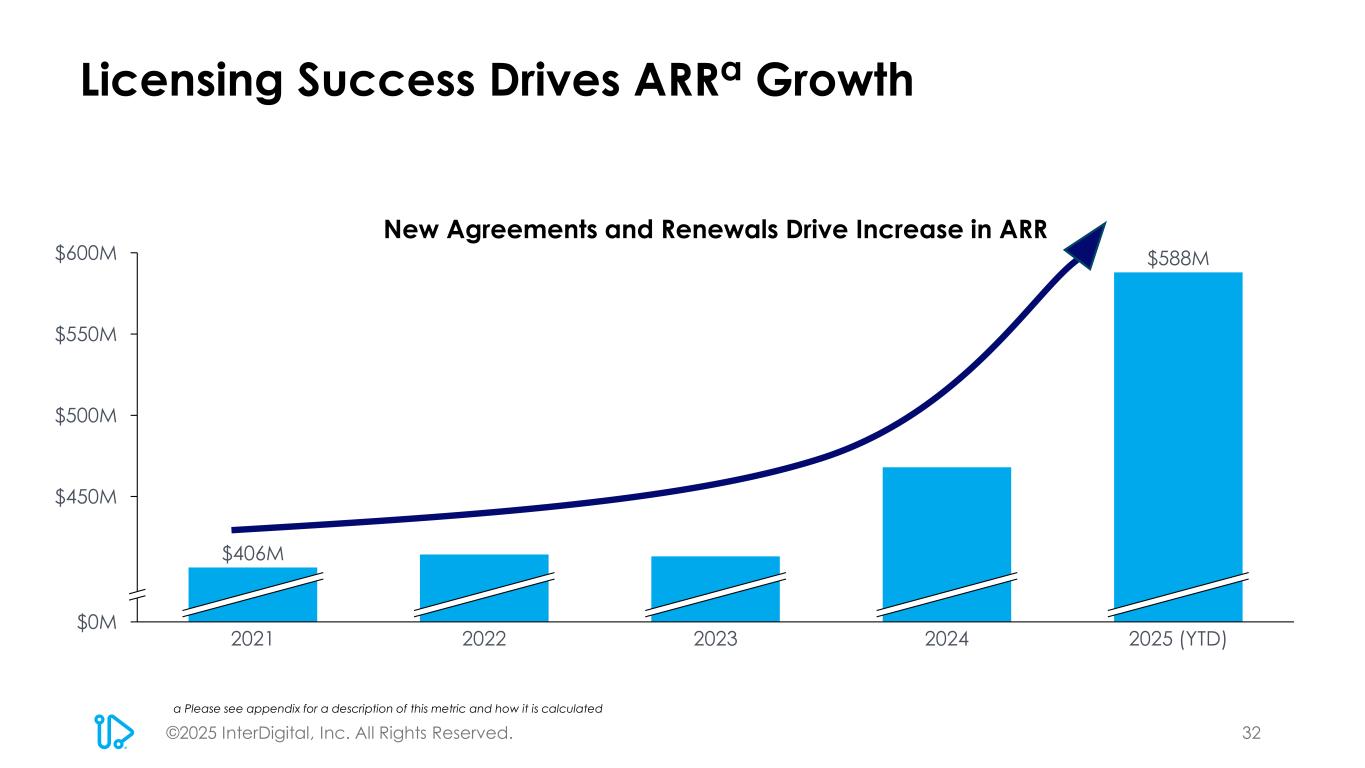
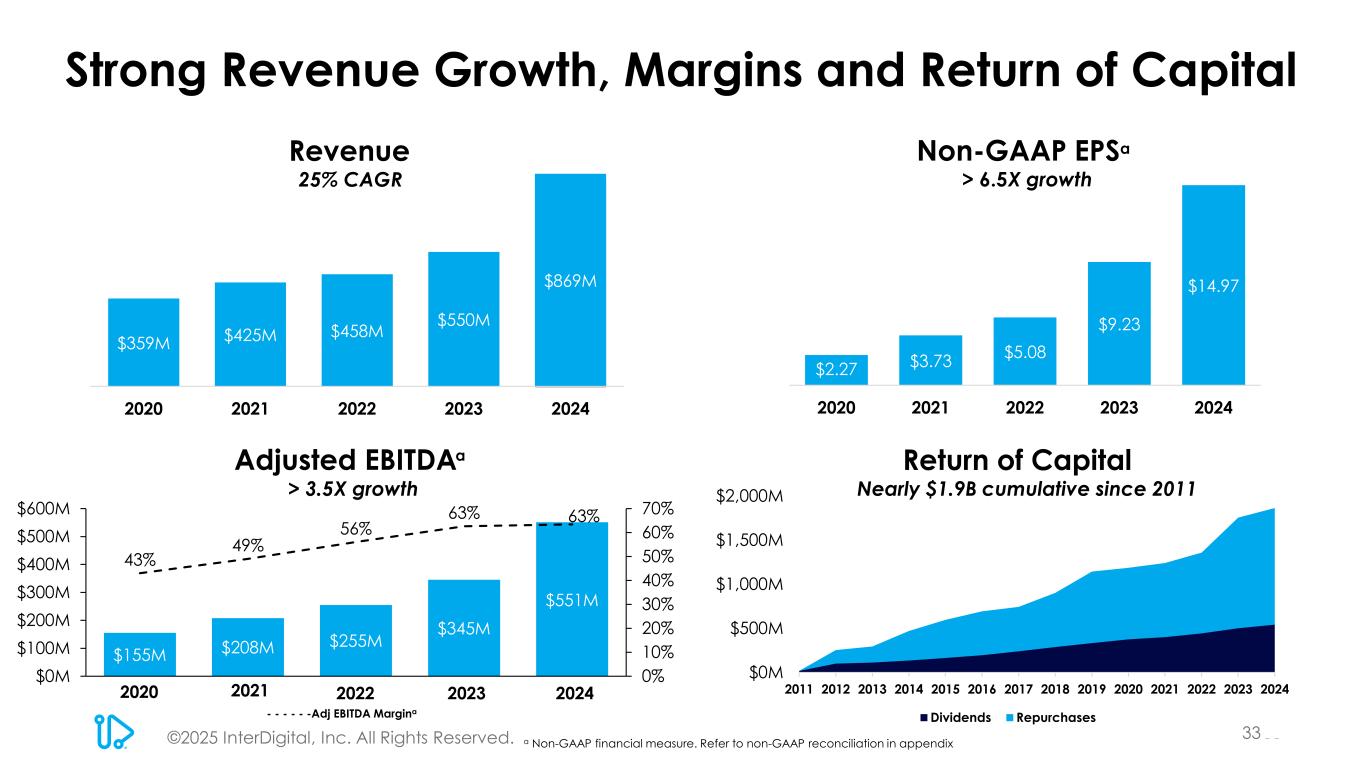
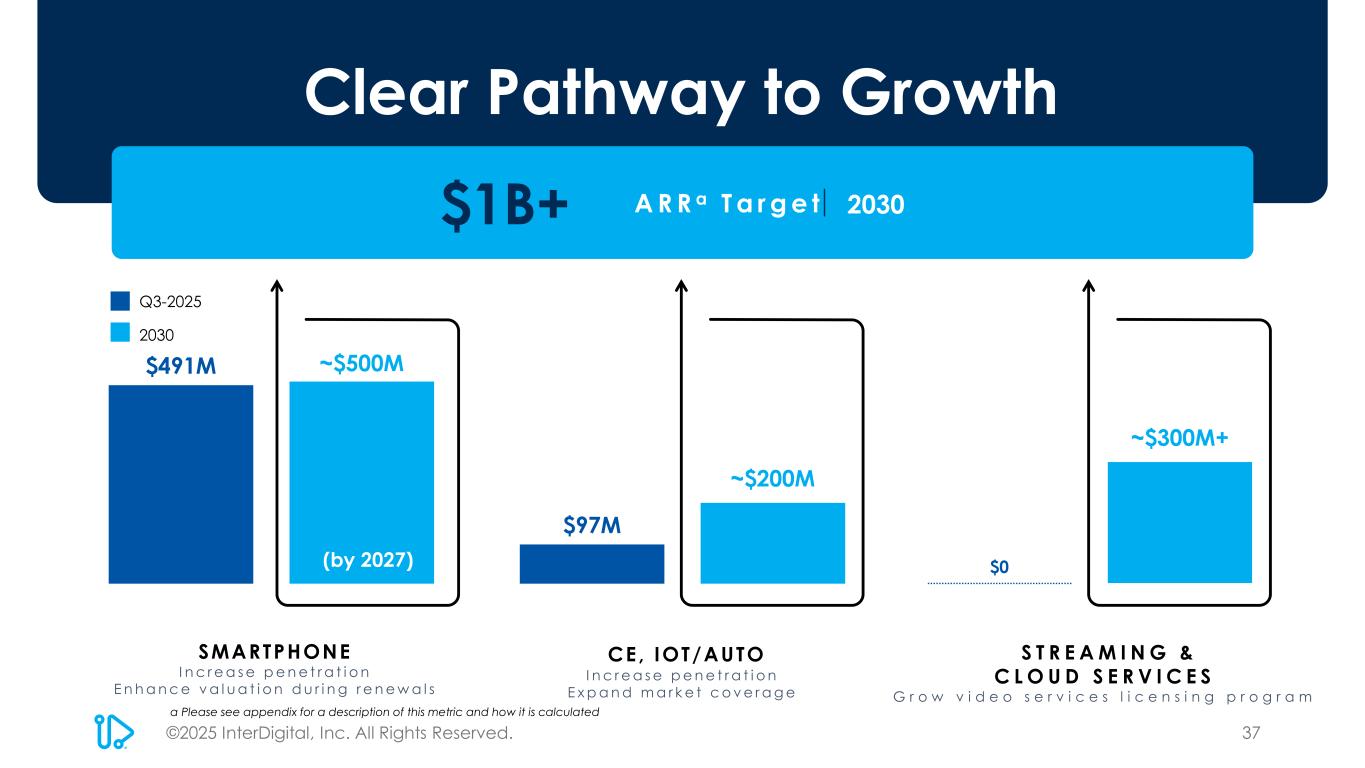
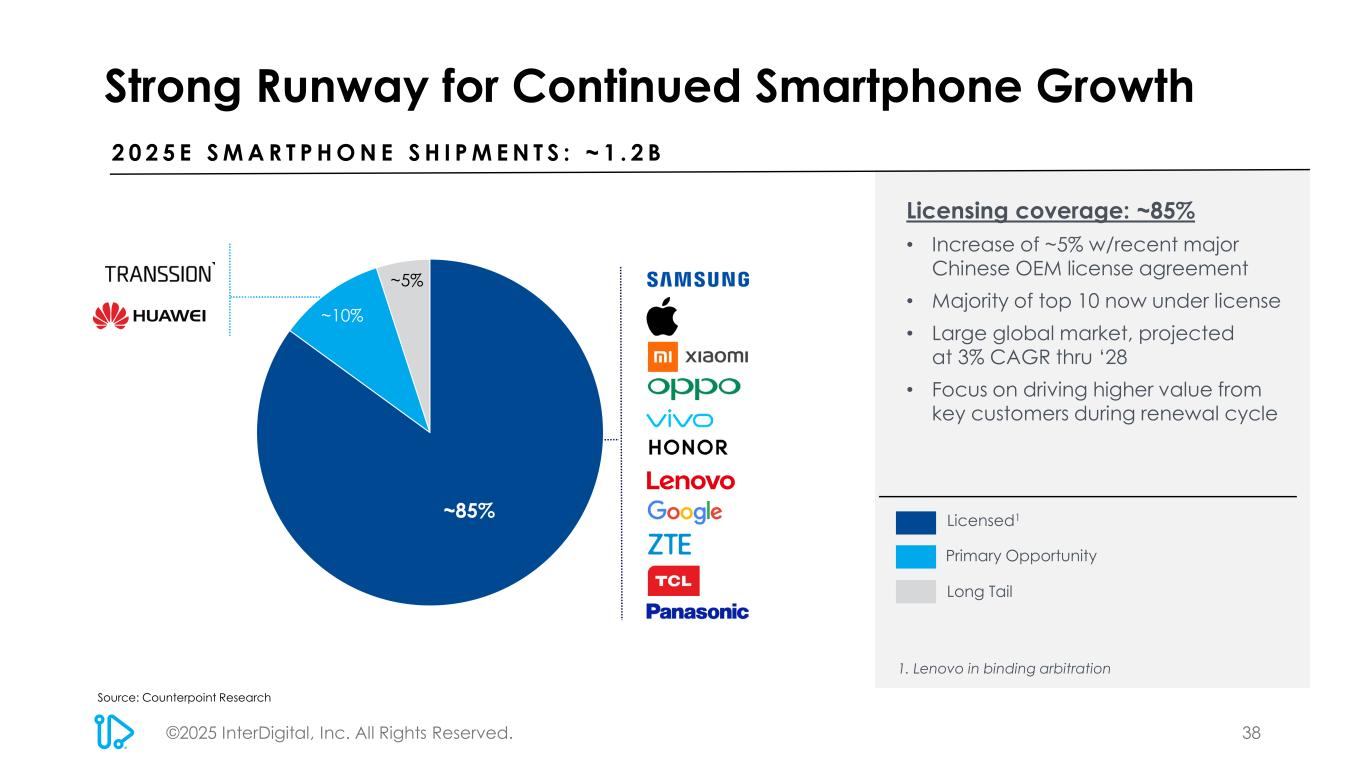
Thank you, Rifford. Good morning, everyone. Thanks for joining us today. This was another outstanding quarter for InterDigital. We completed Samsung smartphone arbitration and signed four new license agreements. We increased our annualized recurring revenue by 49% year-over-year to an all-time high of almost $590 million. We appointed a new chief licensing officer. One of our senior wireless engineers was re-elected to a chair position to lead the development of next-generation wireless standards, including 6G. And this morning, we announced that we completed the acquisition of an AI startup to add significant expertise to our research teams and accelerate our AI-native video research. Our business success was also recognized in recent high-profile rankings from Newsweek, Fortune, and Time magazine. revenue for the third quarter was up 28% year-over-year to $165 million. Adjusted EBDA and non-GAAP EPS were up 62% and 56% respectively year-over-year. In the quarter, we also increased our dividend by 17% to $0.70 per share, and over the course of the year, we have returned more than $130 million in capital to shareholders. As with previous calls, Rich will dig deeper into the numbers while I recap our recent business highlights and how we are executing our long-term growth strategy. Last month, we announced the appointment of Julia Mattis as our Chief Licensing Officer. Over the last 15 years at InterDigital, Julia has served in a series of leadership roles within the licensing team, including Chief Licensing Counsel, Head of Smartphone Licensing, and most recently as our Interim Chief Licensing Officer. She has played a critical role in negotiating many of our largest licenses, including Apple and Samsung. I'm thrilled about this appointment, and I'm confident she has the right skill set and experience to thrive in her new role. At the beginning of Q3, we announced that we have completed the Samsung smartphone arbitration valued at more than a billion dollars over eight years. Together with Apple, we have two largest smartphone manufacturer licensed through the end of this decade. As a reminder, after the announcement of the Samsung license, we raised our annual guidance by $110 million to $820 million at the midpoint. Also in the third quarter, we signed a new license with Honor, a top 10 smartphone vendor based in China. The agreement follows our recent agreement with OPPO and Vevo. We now have eight of the top 10 smartphone vendors and around 85% of the total market under license. The license also increased our annualized recurring revenue by $26 million to a record setting of $588 million. Of the $588 million in ARR, our smartphone program now accounts for over $490 million, putting us very close to our mid-term goal of $500 million in recurring revenue from smartphone by 2027. Following the conclusion on our agreement, we are taking active steps to license the two remaining top-ten smartphone vendors. These include initiating enforcement proceedings against trends in court in UPC, and UPC, India, and Brazil. As I have said before, while we always prefer to complete licensing deals through bilateral negotiation, we will take all necessary steps to ensure we receive fair value for our foundational innovation. In third quarter, we also closed renewal with Sharp and SQL in our smartphone program and with an EV charging company in our consumer electronics and IoT program. The agreement with the EV charging company is another example of how our horizontal technology has broad applicability across different industry verticals. Overall, the total contract value for license that we have signed since 2021 is now well over $4 billion. In our video service program, we are making more progress in enforcing efforts with Disney. Last month, a court in Brazil granted us a preliminary injunction against Disney after a court appointment, independent experts found that Disney infringed our two patent issues related to video encoding technology. The independent expert report contained a detailed analysis of our innovation and the role it plays in enabling Disney's various streaming platforms, validating our belief that our portfolio is a critical enabler for the video service sector. The preliminary injunction in Brazil is an important early step in a multi-judicial enforcement campaign with Disney. As I mentioned before, we always prefer bilateral negotiation to get deals done and only use enforcement as a last resource. High-value delegation like this can be lengthy, but when we choose to enforce our rights, We have a very strong track record of ultimately signing long-term agreement with the prospective licensee. So as we drive our growth strategy across devices and services on the video side, we continue to strengthen our research and innovation team. Earlier today, we announced our acquisition of AI startup DeepRinder, which specializes in the application of AI to make video compression more efficient. Let me explain why we believe the deal is such a great thing. This acquisition added our existing AI talent pool in our research and innovation team. It accelerates our AI native video research. It strengthens our position in foundational research as the next video compression standards started to take shape and build our current leadership in HEVC and VVC codec. And it adds depth in our IP position with DeepRinter's AI and video pattern portfolio. I will also add this is a great culture match. Much like InterDigital, DeepRinter is a company of researchers and inventors who are dedicated to solve some of the most complex technical challenges in video and AI. With the consumption of video booming across smartphones, consumer electronics, and video services, such as streaming, we believe that a video innovation will become an even more significant driver of our growth strategy. Staying with our research teams, in the third quarter, one of our senior wireless engineers were re-elected to lead a key engineering group within 3GPP, the organization which set cellular wireless standards. This shows not only how we lead 5G, but also means that we are ideally positioned to lead the development of 6G ahead of the expected rollout of NetGen mobile network devices and services in 2020-30. Shortly after the end of the quarter, we also announced that we have been awarded a contract by National Spectrum Consortium in partnership with the U.S. government to lead research and conduct demonstrations on how to better manage the use of spectrum in the United States by both civil and military applications. This project reflects one of the InterDigital's unique strengths in solving complex technical challenges to improve connectivity for consumers and enterprise, and enhancing national security across the communication ecosystem. There are very few companies worldwide that can take on this sort of challenge. And I'm delighted that the United States has turned to our engineering team for help. As we continue to execute our growth strategy, our progress are recognized by third parties. Newsweek recently named us as one of America's greatest companies. Fortune recognized as one of America's fastest growing companies. And Time Magazine listed us among American Groups Leaders of 2025. This award reflects the dedication and strong contributions from our employees and why VDR platform has never been stronger to deliver more groups and even more shareholder value. And with that, I'll hand you over to Rich.
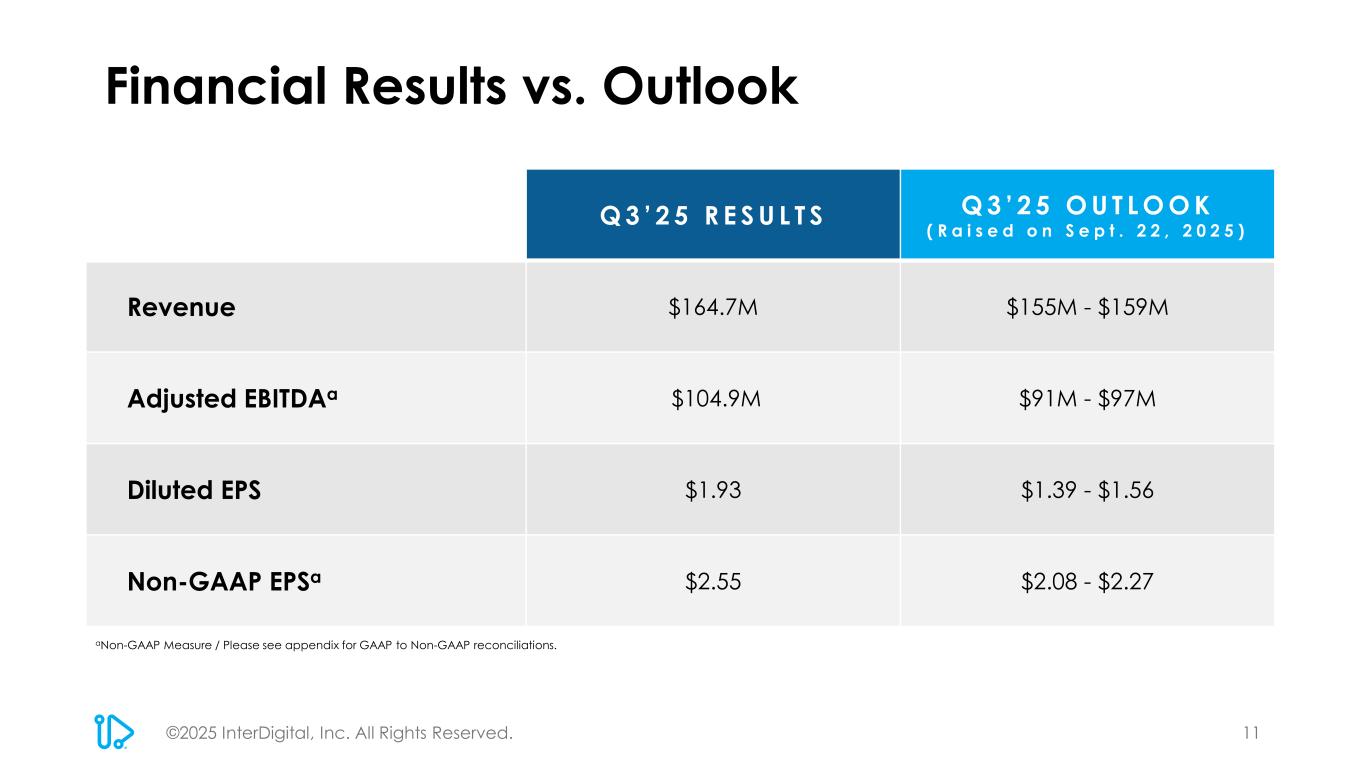
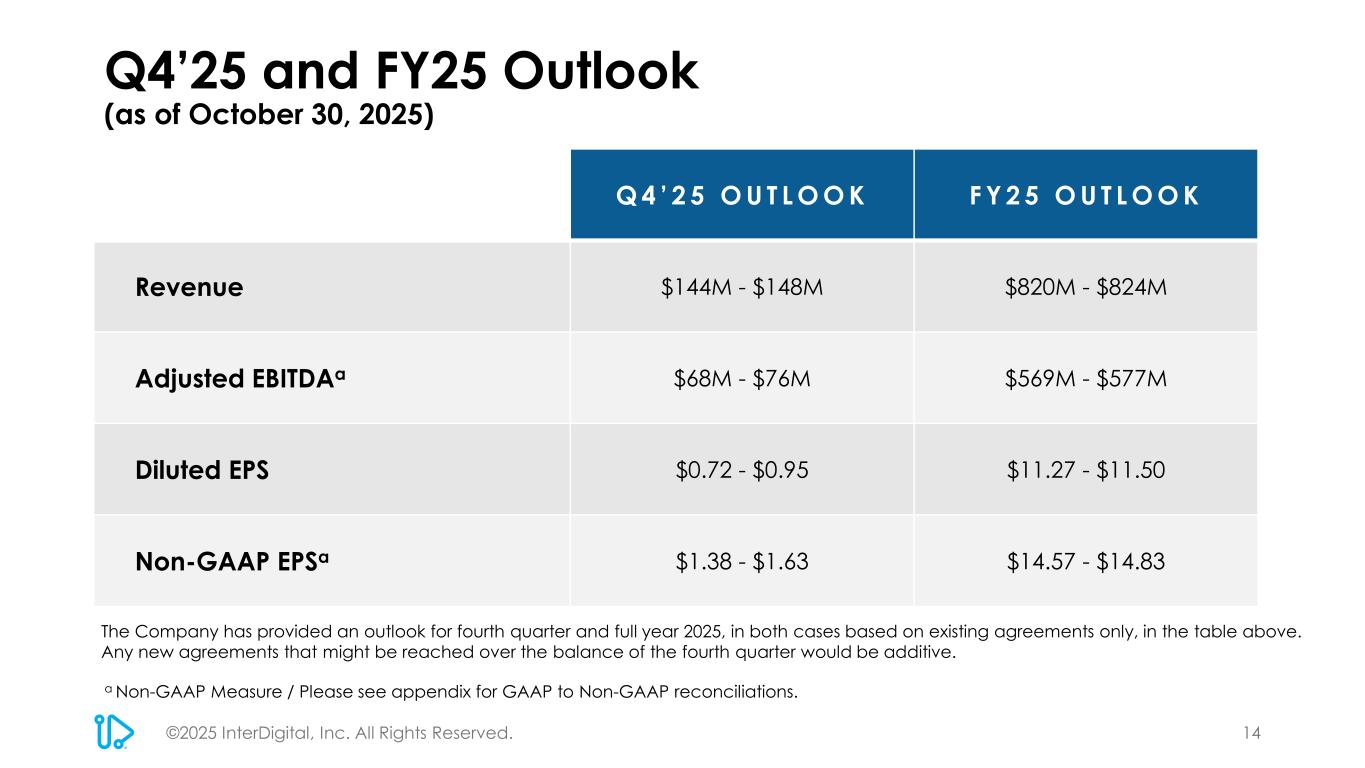
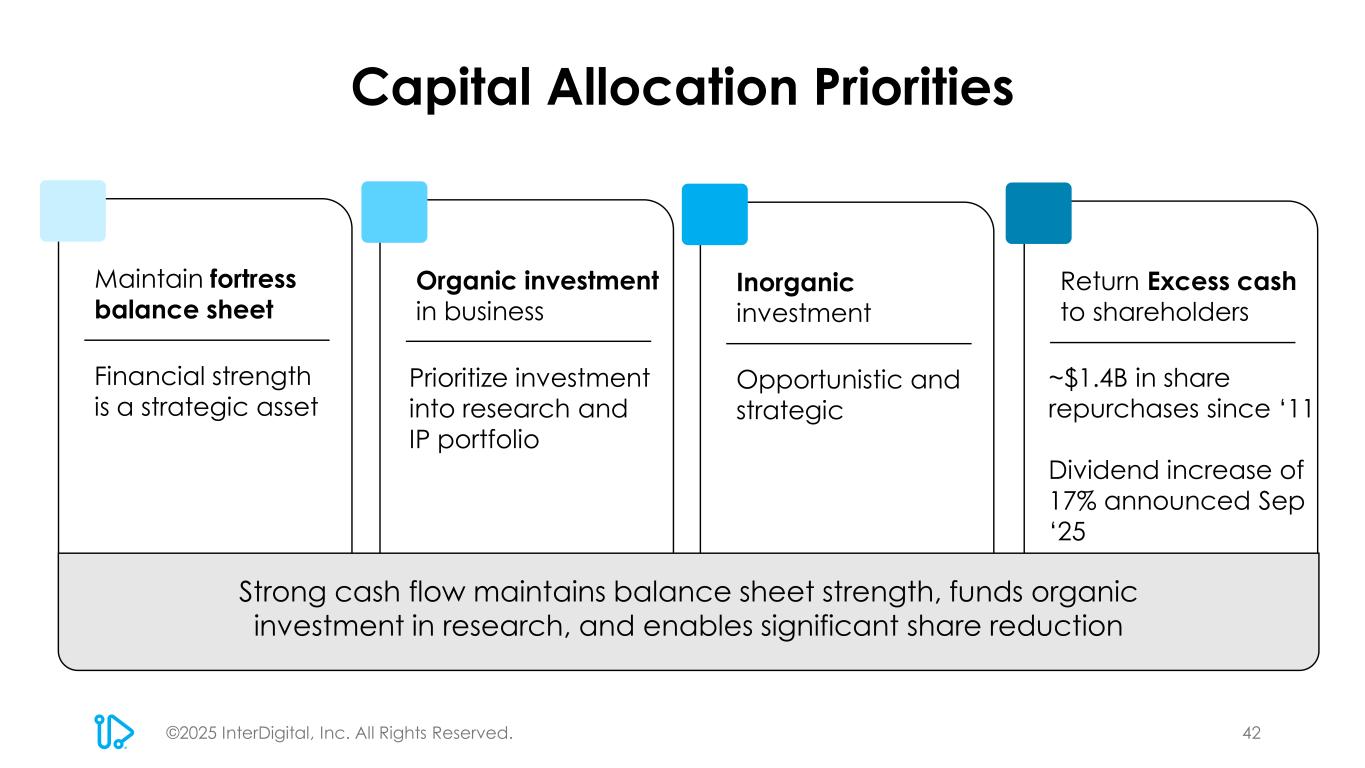
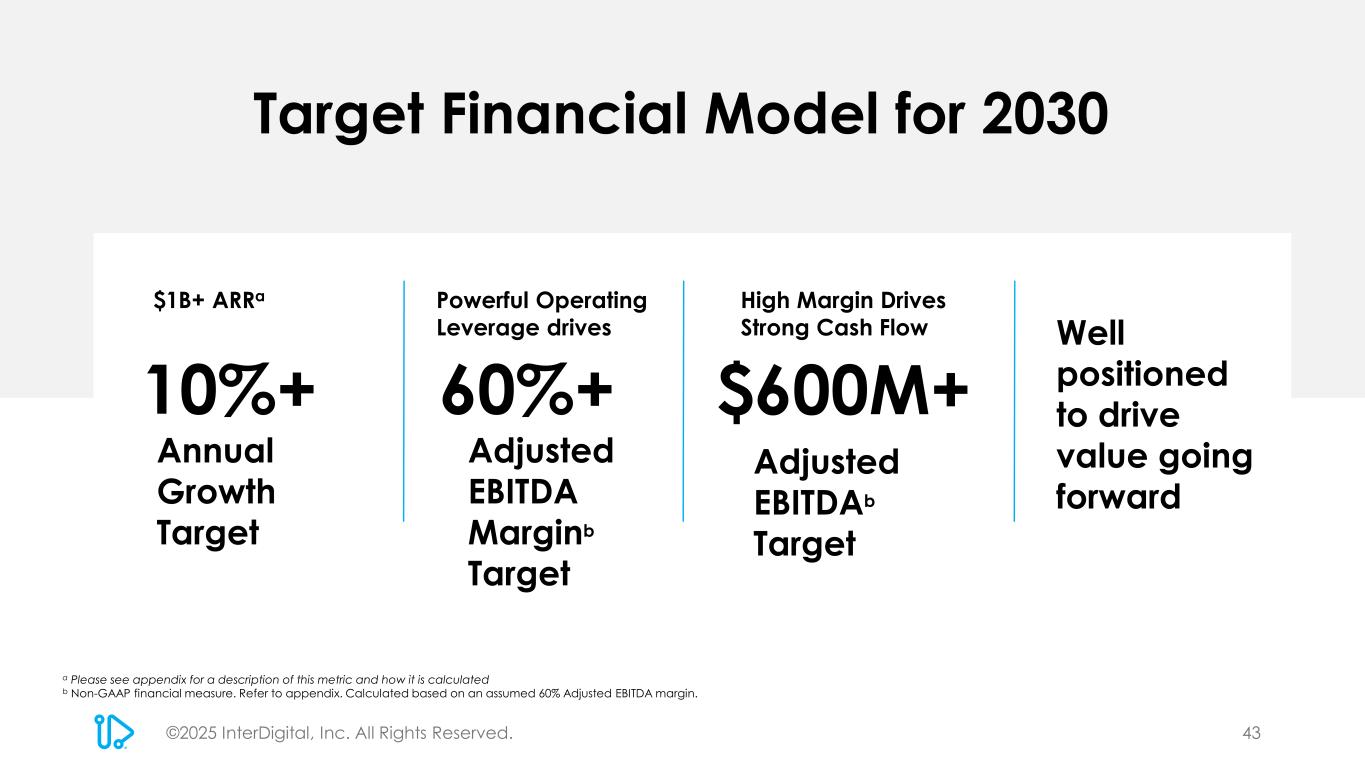
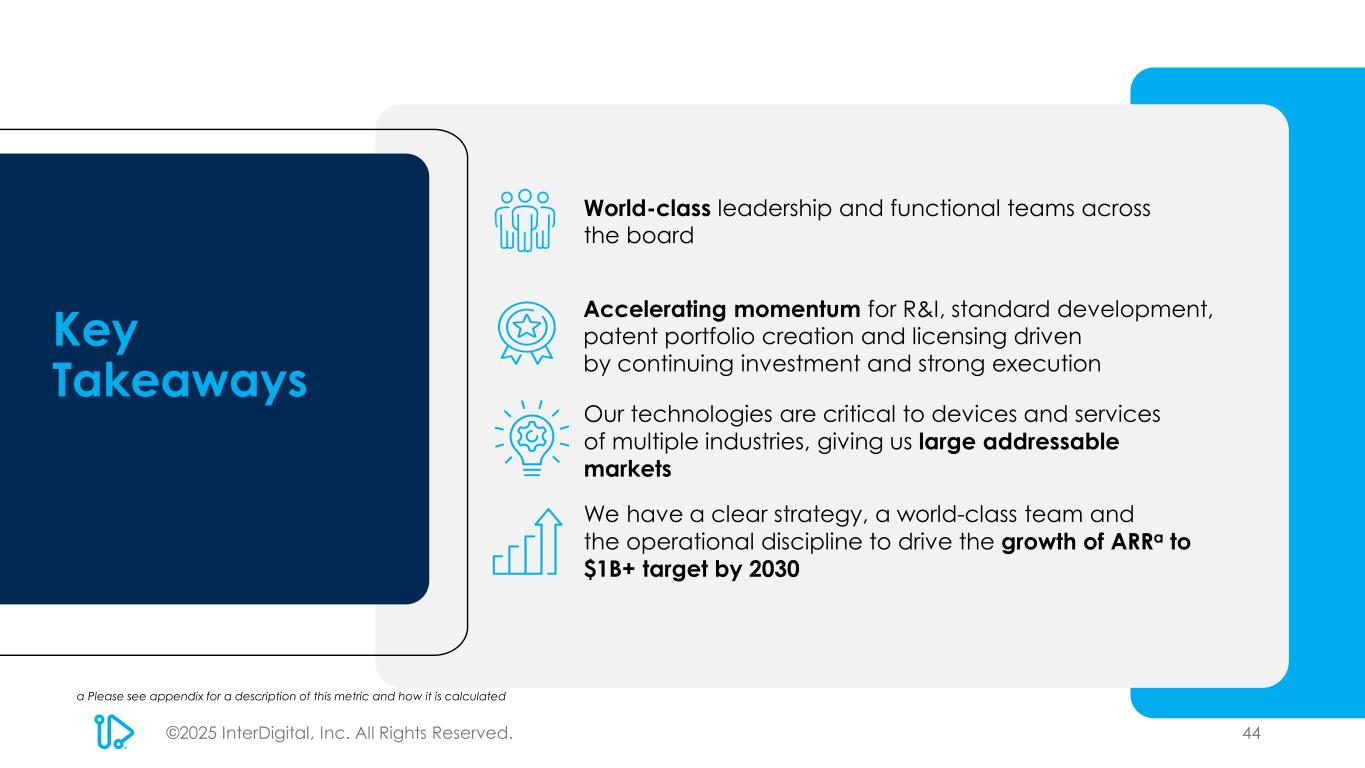
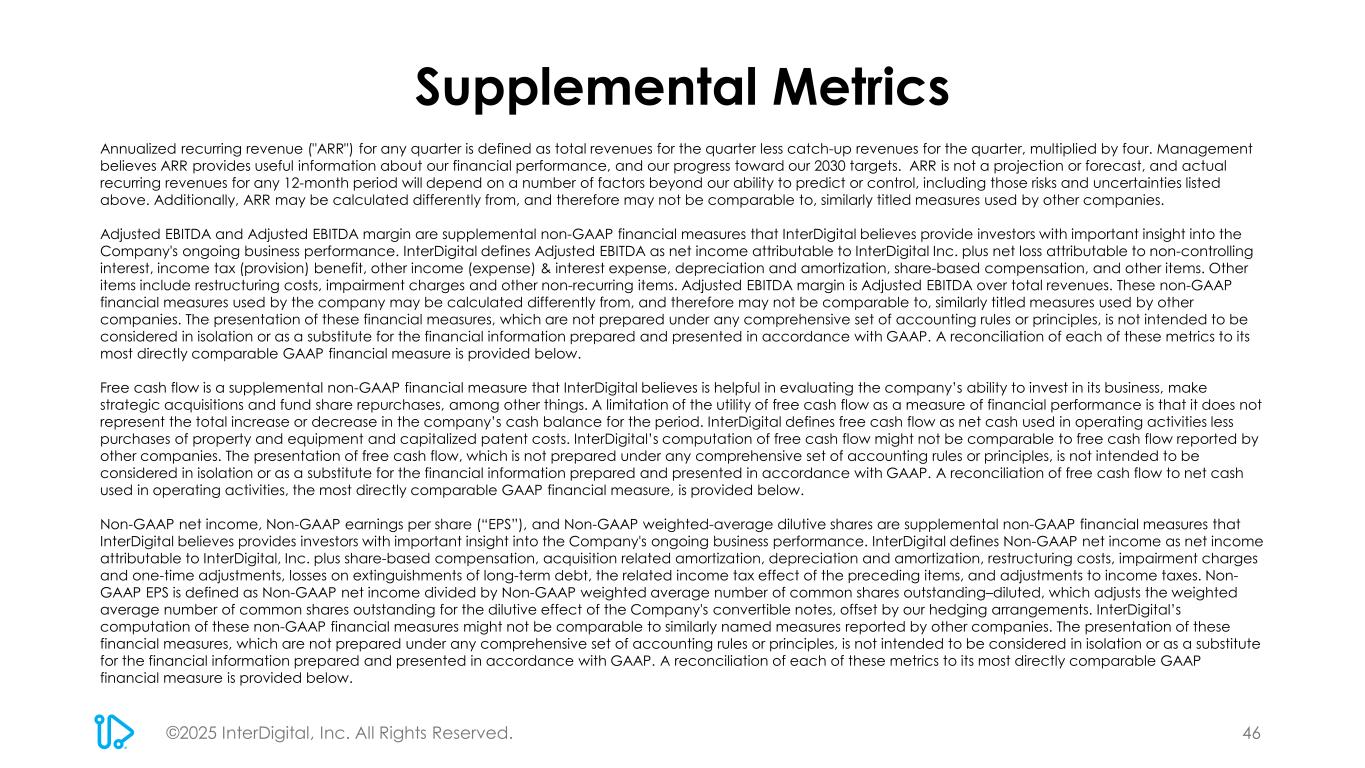
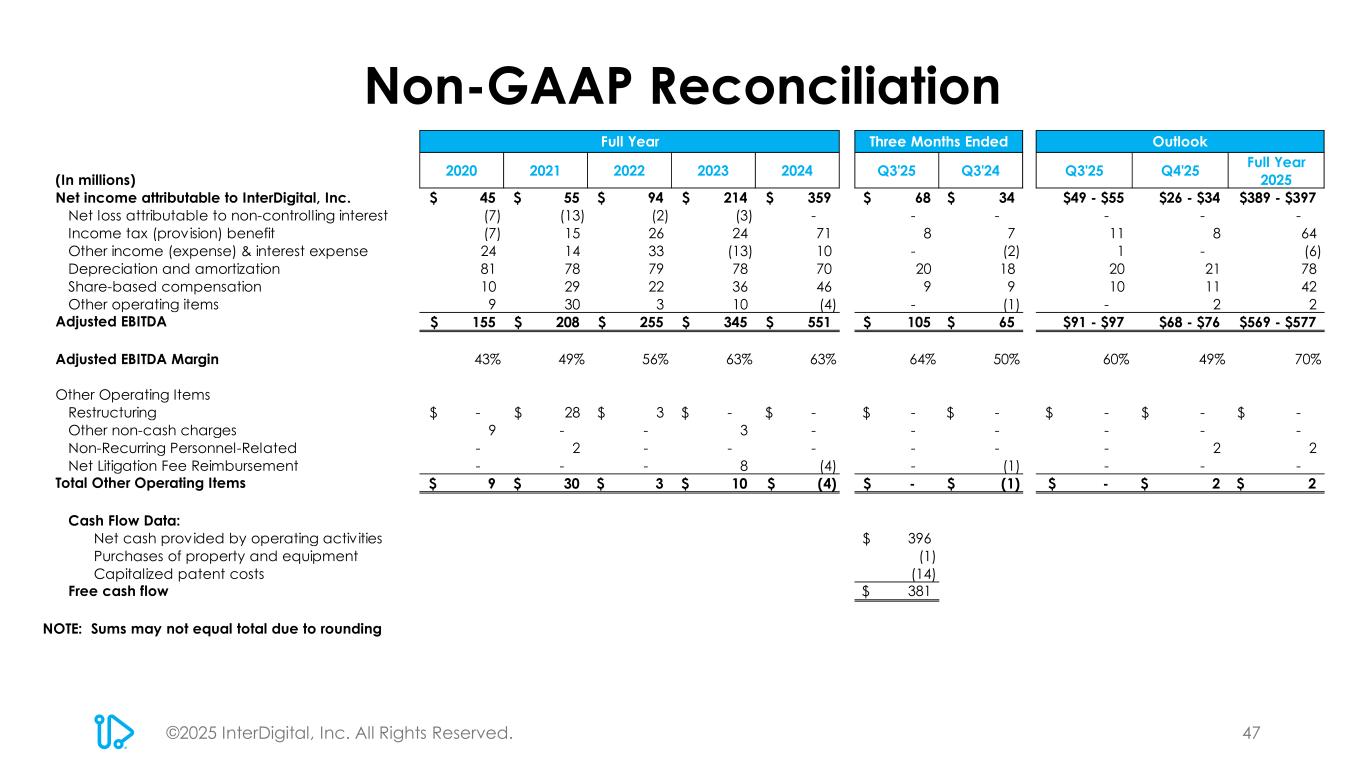
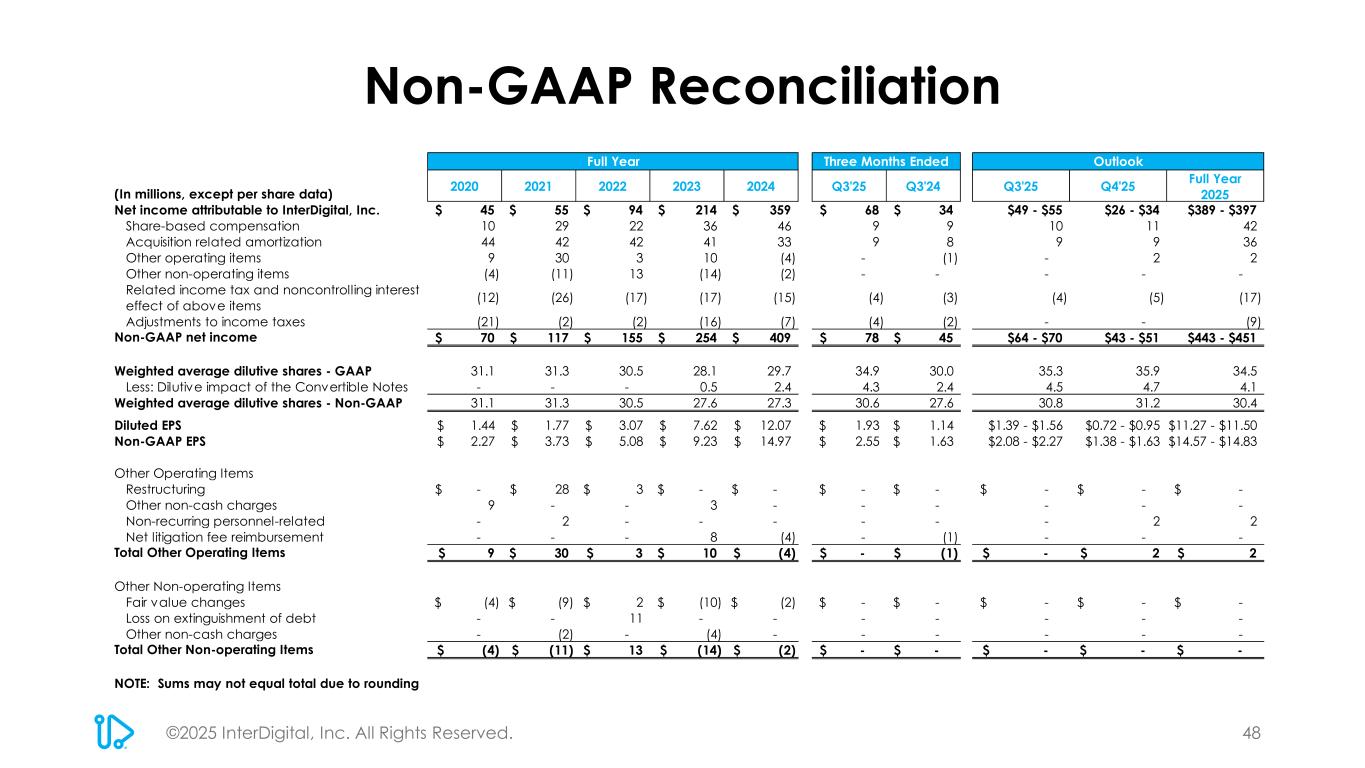
Thanks, Liren. I'm pleased to report that our strong momentum continued in Q3 with revenue, adjusted EBITDA, non-GAAP EPS, all exceeding the high end of our guidance range. Our Q3 performance was powered by our Samsung arbitration result and new license agreements, including a license with Honor, a top smartphone manufacturer based in China. These new agreements help drive total revenue of $165 million, an increase of 28 percent year-over-year. This exceeds both our initial top-end guidance for Q3 total revenue of $140 million and our updated increased top-end guidance of $159 million that we announced at the time we signed Honor. The upside we delivered compared to our increased guidance was driven by additional license agreements we signed since then. Our annualized recurring revenue, or ARR, increased 49% year-over-year to another all-time high of $588 million in Q3. This year-over-year growth was driven primarily by new agreements signed over the intervening year in our SmartFirm program, including license agreements with Oppo, Vivo, Lenovo, and most recently Honor. In this time, we increased our share of the smartphone market under license from about 50% to roughly 85%. These agreements, together with our excellent Samsung arbitration result, increased our smartphone ARR 65% year-over-year to $491 million in Q3, almost at the level of our smartphone midterm ARR goal of $500 million. In CE and IoT, ARR increased to $97 million in Q3, also an all-time high. Our new license with an EV charger company is another example of the growth opportunities that exist beyond the smartphone market. And we believe we can more than double ARR from CE and IoT by 2030. Our subscription-based IP as a service model offers a high level of visibility and provides a reliable source of cash flow, even in the face of an uncertain economic environment. This enables us to continue to fuel our innovation engine and drive future revenue growth. Based on the strength of our intellectual property and the huge markets built upon it, we believe we are on track to grow ARR at a double-digit kegger towards our 2030 target of $1 billion plus. And it's important to remember that while ARR is a great metric to track the growth of our business, there is economic value above ARR alone. Over the last 10 years, we have recognized $1.5 billion of catch-up revenue. This has been tremendously valuable because we have used the majority of that money to fund share repurchases over that time period. Today, we continue to have a lot of catch-up opportunity remaining, which tends to be 100% gross margin as we pursue our goal of $1 billion of ARR by 2030. Our adjusted EBITDA for the quarter of $105 million increased 62% year-over-year and equates to an adjusted EBITDA margin of 64%. percent, an increase of 14 points compared to 50 percent a year ago. The significant increase in adjusted EBITDA margin year-over-year demonstrates the leverage inherent in our model. You might remember that on our last earnings call, I said strong free cash flow over the second half of the year would drive free cash flow for the full year of 2025 above $400 million or close to double 2024 levels. I am happy to report we did, in fact, collect large payments during the quarter, driving free cash flow to $381 million for the quarter and $425 million year-to-date. Finally, non-GAAP EPS rose 56% year-over-year to $2.55 and exceeded our increased guidance of $2.08 to $2.27 per share. Consistent with our capital allocation priorities, we continue to maintain a fortress balance sheet, invest for growth, and return excess capital to shareholders. In Q3, we increased our dividend by 17% and returned $53 million to shareholders through $35 million in buybacks and $18 million through dividends. In October, we bought back another $15 million in stock, bringing total return of capital to more than $130 million year-to-date. In just the last three-plus years, we have repurchased more than half a billion dollars of stock, and we expect to continue to buy back shares over the remainder of this year. Looking forward to Q4, we expect recurring revenue will include $144 to $148 million of revenue from existing contracts. That means we expect full-year revenue from existing contracts will be $820 to $824 million. So before adding any potential contributions from new agreements we may sign over the next two months, we expect to meet or beat the midpoint of the increased full-year guidance we issued last quarter. Of course, revenue from any new agreements we may sign over the balance of the quarter would be additive to these amounts. Based, again, only on existing contracts, in Q4, we expect an adjusted EBITDA margin of about 50% and non-GAAP diluted earnings per share of $1.38 to $1.63. For the full year, again, based only on existing contracts, we expect an adjusted EBITDA margin of 70% and non-GAAP diluted earnings per share of $14.57 to $14.83 for the full year. With that, I'll turn it back to Rayford.
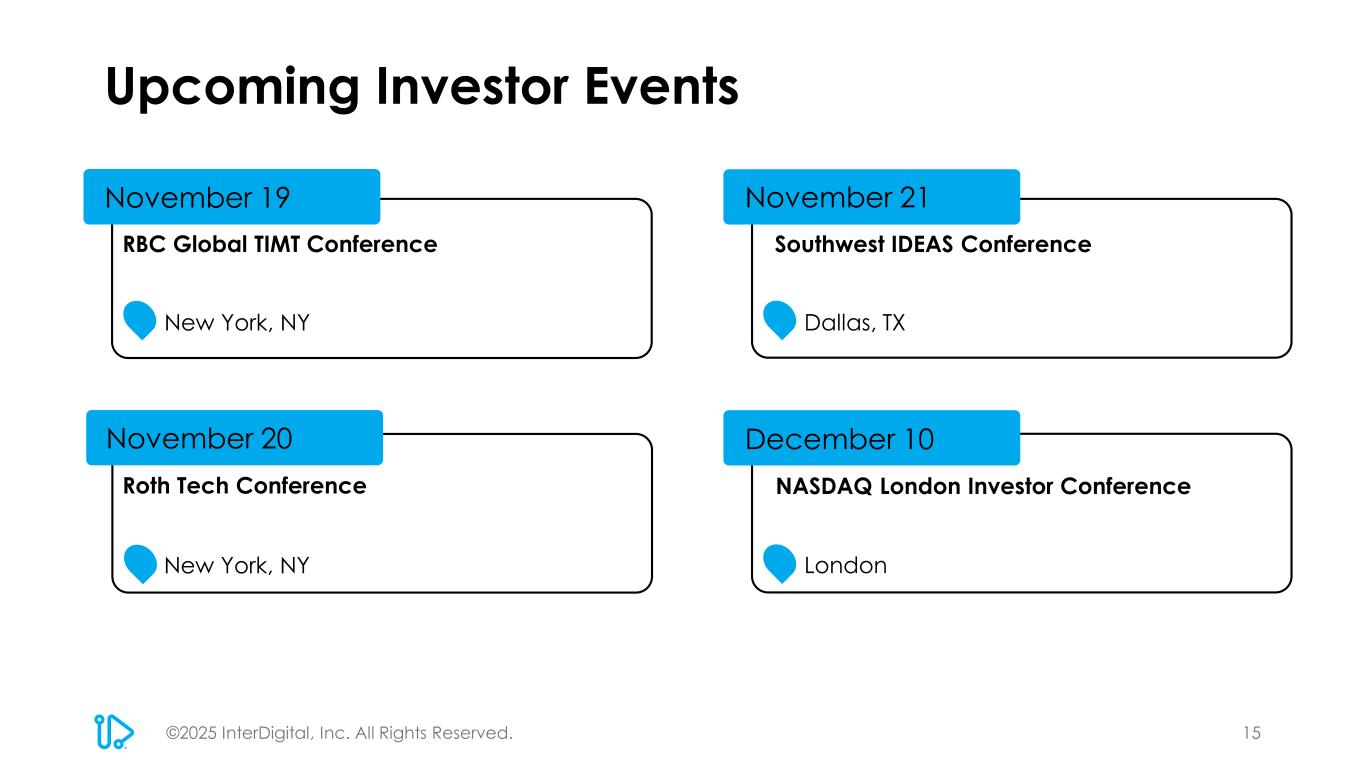
Thanks, Rich. Before we move to Q&A, I'd like to mention that we'll be attending a number of investor events in Q4, including the RBC Tech Conference and the Roth Tech Conference, both in New York City, the Southwest Ideas Conference in Dallas, and the NASDAQ Investor Conference in London. Please reach out to your representatives at those firms if you'd like to schedule a meeting. At this point, Haley, we are ready to take questions. Thank you. At this time,
Operator
we will conduct the question and answer session. As a reminder, to ask a question, you will need to press star 11 on your telephone and wait for your name to be announced. To withdraw your question, please press star 1-1 again. Please stand by while we compile the Q&A roster. First question comes from a line of Kevin Garrigan from Jefferies. Your line is now open.
Yeah. Hey, good morning, all. And congratulations on the strong results. Hey, I just want to drill in on the consumer IoT side. So just wondering if you can walk us through your biggest prospects as we look for the rest of the year and into 2026 and your first agreement with an EV charging manufacturer. Do you guys see that, see the EV charging space being a significant contributor to ARR growth?
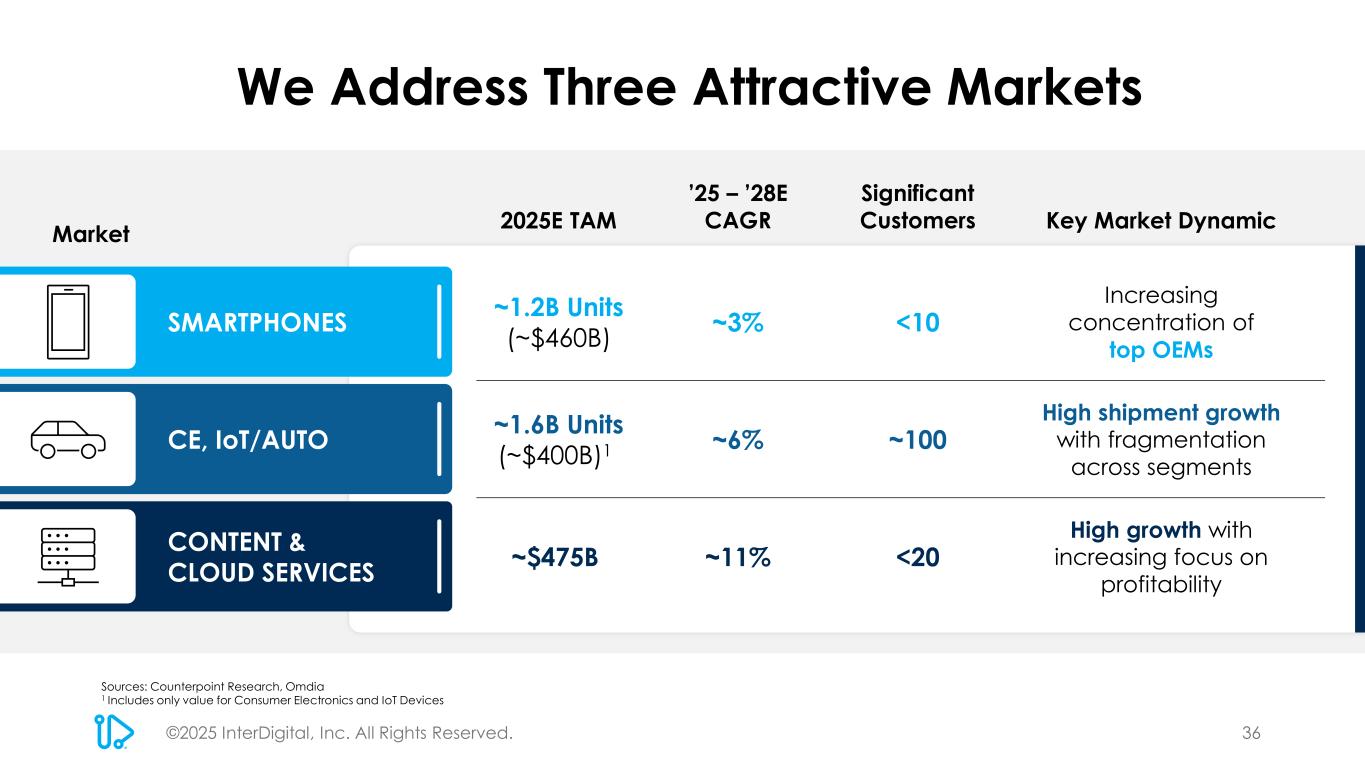
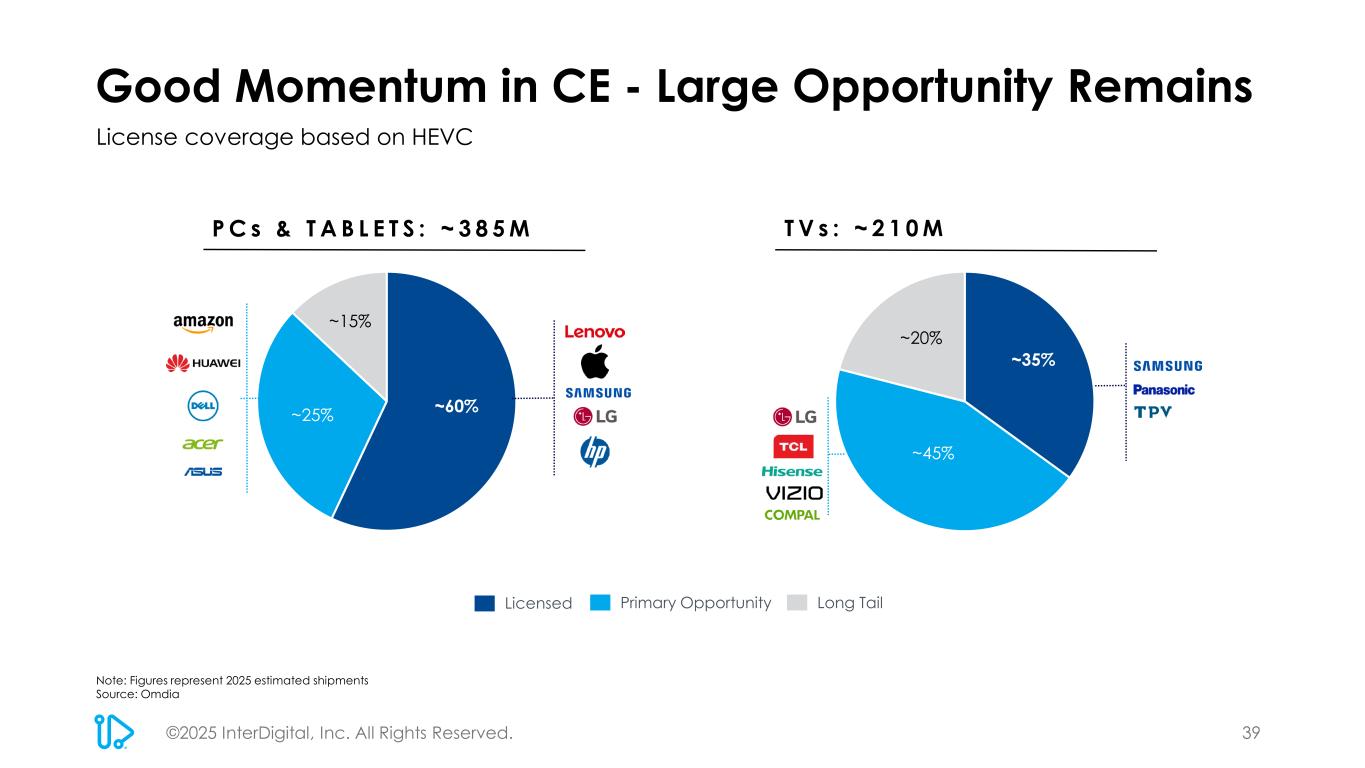
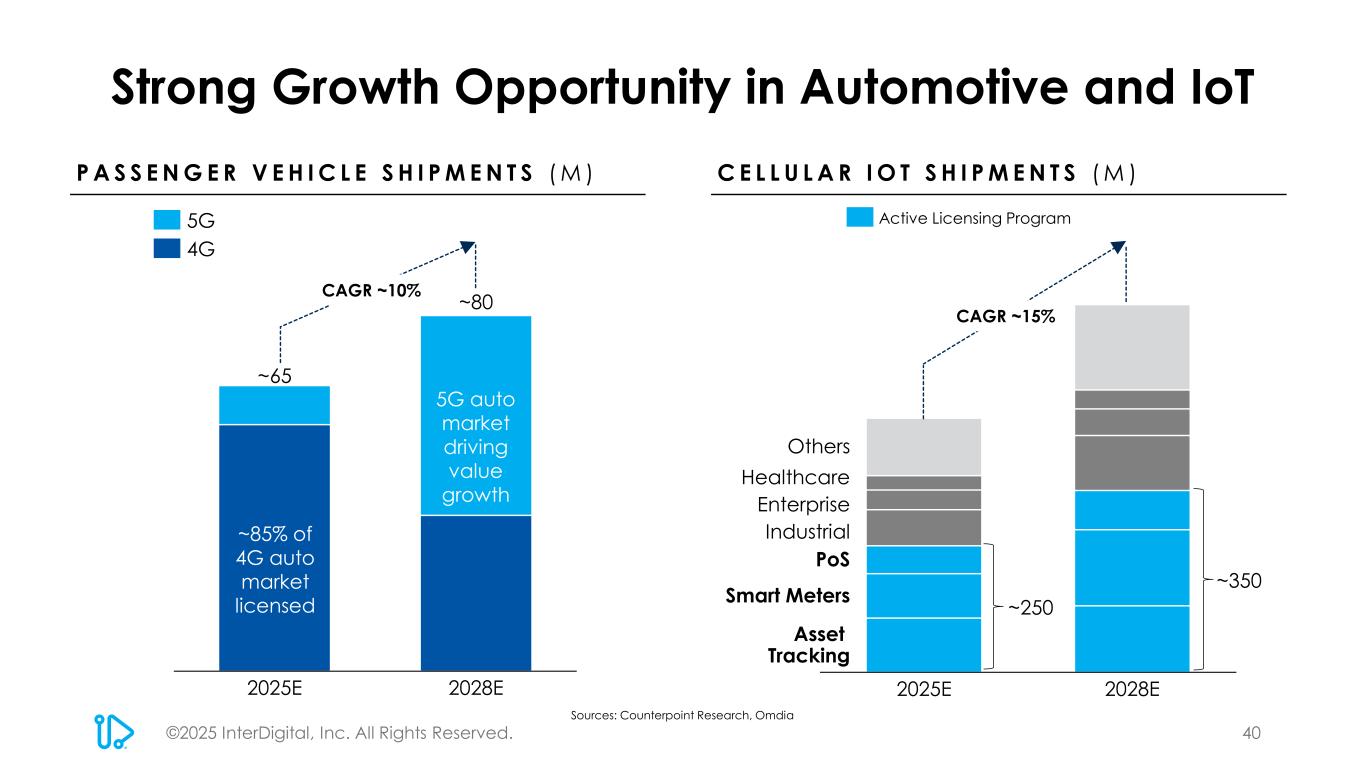
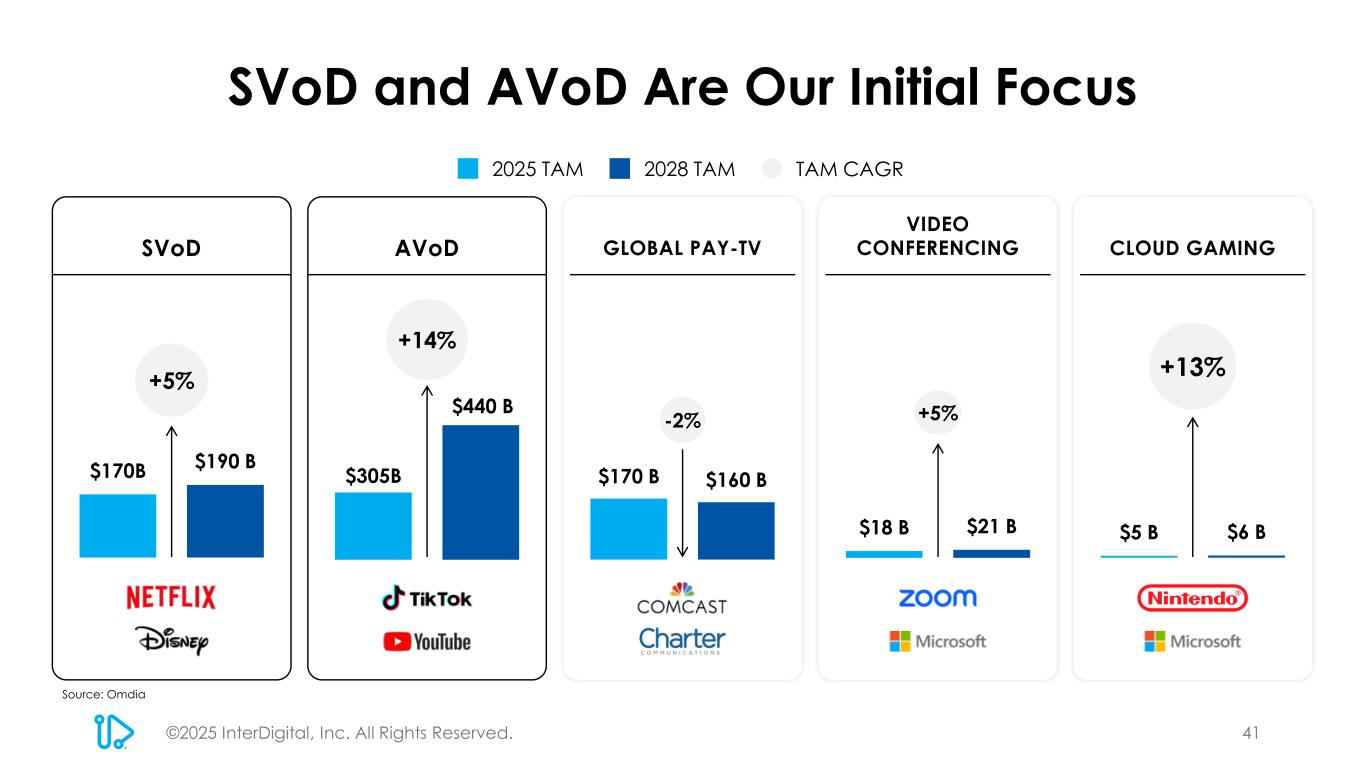
Kevin, hey, this is Lauren. Good morning. Regarding the consumer electronic IoT space, if you look at, this is really a collection of multiple opportunities. Our largest single opportunity under the consumer electronics is smart TVs, where we continue to make progress. We have licensed the largest TV maker, Samsung. are currently working on with multiple you know the next uh few players including lg hyacinth and tcl so that's our largest opportunity regarding our key opportunities here we also have you know quite different collections including automobile uh you know eb chargings as we announced today and a few other you know consumer driven iot platforms uh one more thing i also want to emphasize it in our consumer electronics also include PCs and desktops so if you go to our supplemental deck on our website we have to try to break it down what the size of market where we are in each segment regarding the question for eBay charging we do think that it's an interesting market for us it's a green because some of the charging market is consumer driven some of them it's commercial driven and they have different technology in there some of them is Wi-Fi enabled and some others have we have cellular connectivity and we try to get a value that's, you know, fair to what's the technology that's incorporating those devices, those stations.
Got it. That makes sense. And then as a follow-up, can you just explain a little bit more on how you plan to integrate DeepRender with your own video codec technology and, you know, not to give away any plans, but are there other companies out there that you're looking into to kind of complement your streaming business?
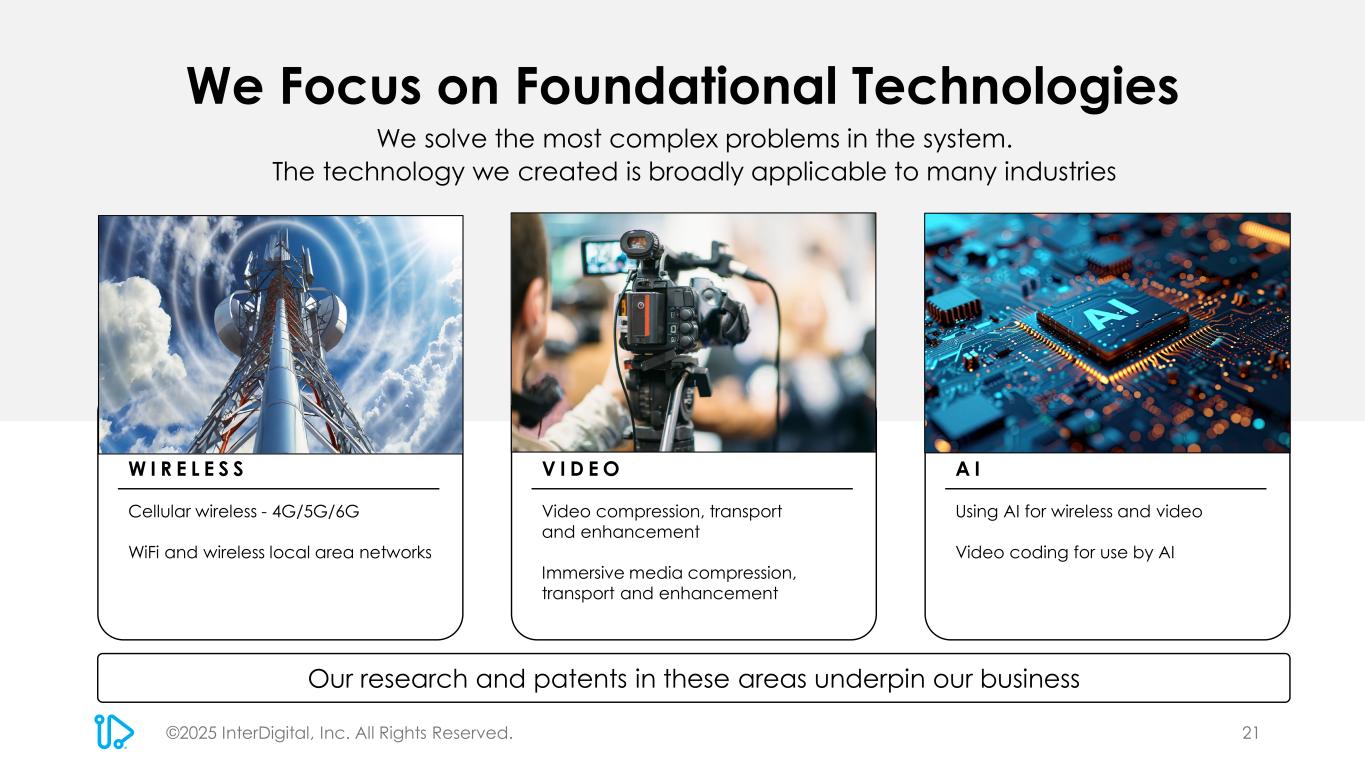
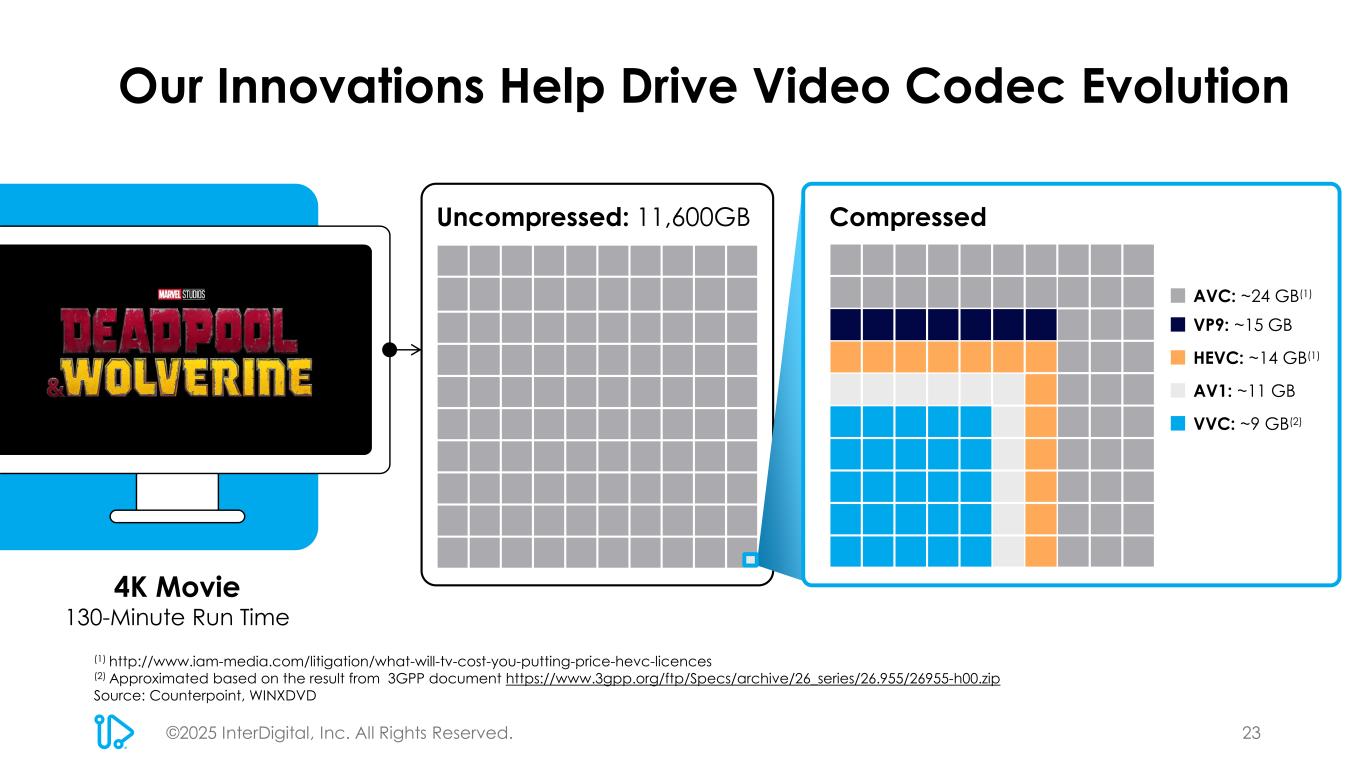
Yeah, hey, Kevin. Yeah, good question. This morning, we announced the closing of DeepRinder. DeepRinder is a startup company. They are headquartered in London. And what they have been focusing on is this thing called native AI for video codec end-to-end. So it's really a more different way of solving the problem end-to-end by incorporating the AI function from bottom up. So we have an AI team. We have been working on video space for, frankly, many, many years. And the native AI function is one of the areas we have been working on. But by acquiring this team, we added a lot of really strong expertise, speed up our AI capability for the native AI video research. And interesting enough, it's also a critical juncture of time for next generation of video standard that's coming under discussion. So we feel we have a strong chance of integrating some of the AI feature into the next video standard. And then lastly, part of the acquisitions, we bought the D-Printers IP patent portfolio team, and patent portfolio. So there's some AI patents and video patents, and we are in the process of integrating. So it's a strategic acquisition, and we feel very good about it. Regarding other opportunity, we frankly have a very robust pipeline. We are looking at all kinds of different opportunities. I have a dedicated team parsing through them, but I don't have anything else to report at this time.
Yep, got it. Okay, great. I appreciate the color, and congrats on the results.
Operator
Thank you. Our next question comes from the line of Scott Serrell from Roth Capital. Your line is now open.
Hey, good morning. Thanks for taking my questions. I apologize, Leran, if this was covered earlier, got on call a little bit late. But in terms of the Disney injunction, I'm wondering if you could give us an update in terms of what next steps there are that we should be looking for as you go forward and how this is impacting conversations and discussions with other streaming vendors.
Yeah, hey, good morning, Scott. So regarding this injunction, in my prepared remark, we received the injunction by the court in Brazil. The injunction was supported by third-party independent experts the court has appointed, which frankly scored our position on all the important issues. The third-party court issued the injunction, and this is now we appealed the injunction. and in the appeal court we stated the injunction so the injunction is currently in effect but the court has given disney until end of november to comply uh november 30th if i remember right so nearly to see we are watching you know monitor situation quite carefully and i don't want to speculate on what disney will do from there but it's also worth noting that the brazil pi injunction It's just one step of a multi-jurisitural enforcement we have been taking on. As we discussed in the 10Q filing with a lot of details, we have multiple cases coming up for trial in Germany, in UPC, and in the United States. I'll be starting this month, starting October. So there's over a dozen patent cases that are going to trial between now and middle of next year. So nearly to say we feel good about what position we are in. But in the meantime, we are always hoping for negotiations.
And just to follow up on that, has that actually improved the dialogue with Disney or impacted any other conversations you're having with other streaming vendors?
Yeah, Scott, I can't get into the discussions with specific vendors, mostly under NDA, but I can assure you that, you know, the industry is paying attention. and every progress we made, you know, with different enforcement, I do think it's giving us an even stronger position in a lot of negotiations.
Gotcha. Two more and then I'll get back in the queue. Just in terms of a deeper ender, to dive down a little bit more, do you see this as helping with the existing streaming customers in terms of enhancing your product portfolio there and really being able to, you know, get monetization across the goal line? Or is this going to predominantly open up some other opportunities? There's a lot of edge AI that goes on, which sounds like some of the deep rendering patent portfolio would seem to cover. So I'm wondering, is it for existing core opportunities, or does this really expand the product breadth that you've got now within the video codec and streaming market?
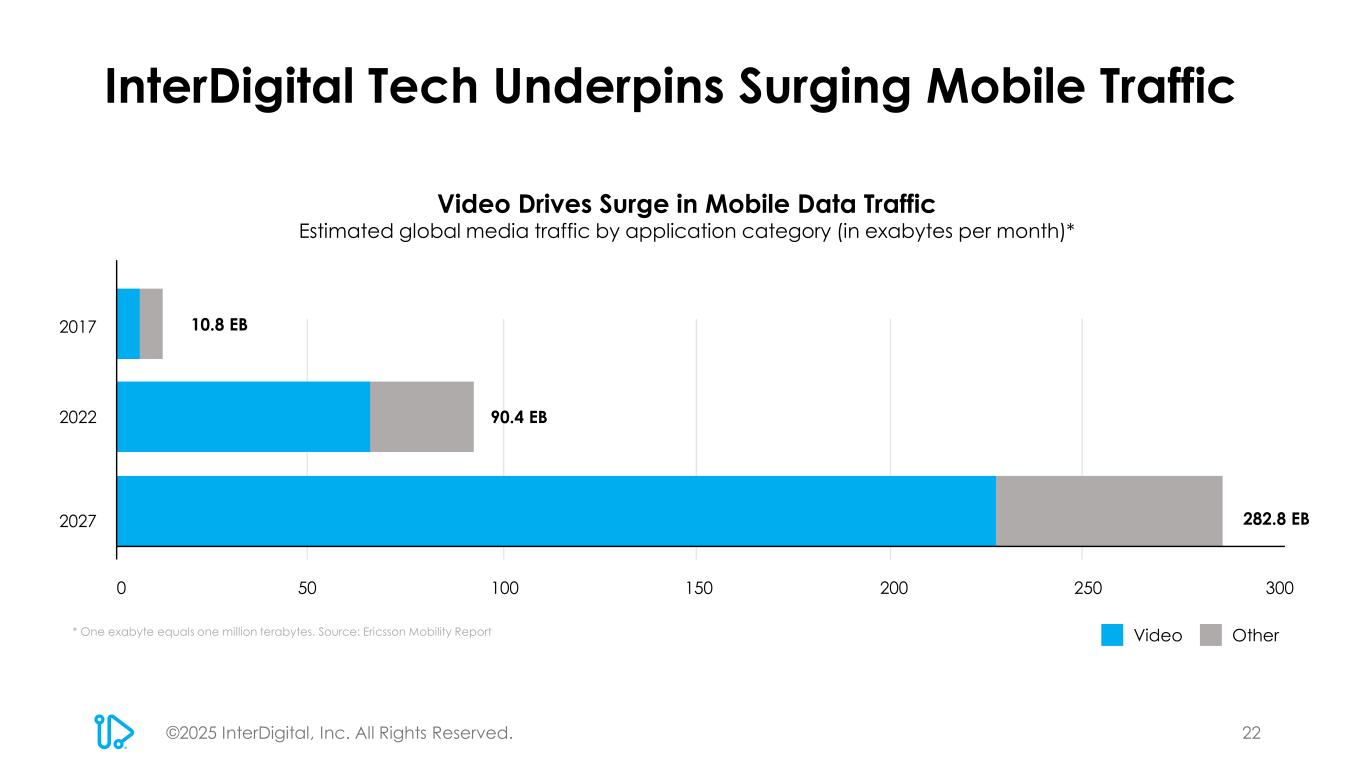
Yeah. For the deep rendering opportunity, they are currently in a stage of startup. So when we acquire them, they don't really have revenue of paying customers. However, we are super excited about the technology. The technology, as I explained earlier, was really based on this, you know, native AI end-to-end. We actually believe it's a new paradigm to solve the video delivering problem across Internet. As you are aware, video is super important for many use cases. About 80% of Internet traffic on every single day driven by video. So, to be able to come up with a brand new way of solving that problem is super exciting for us. So regarding how we plan to monetize it, frankly, we believe we have multiple options. But as of today, we are not really trying to determine exactly how we're going to make money other than solving the most difficult problems, making sure our technology is leading the industry, and obviously making sure we build a strong patent portfolio, build on what we already have, and the different patent portfolios, they are merging with our portfolio, as well as new IP, we continue to develop.
gotcha and and then maybe i'll just throw in too quickly at the end um ai in general uh you guys have been investing not just with deep rendering but organically within the organization um in terms of ai capabilities which have i think from a from a 5g and 6g standpoint kind of facilitated your core business there but is there an explicit opportunity to license ai as it is as a standalone And then second, from an M&A standpoint, you guys have not been particularly acquisitive in recent history outside of Technicolor. Now you've added deep rendering to that. How aggressive are you thinking about the opportunities as you go forward over the next several years? It sounds like there's a pipeline of opportunities there, but is it really a stated goal to close some things as we look out over the next two to three years?
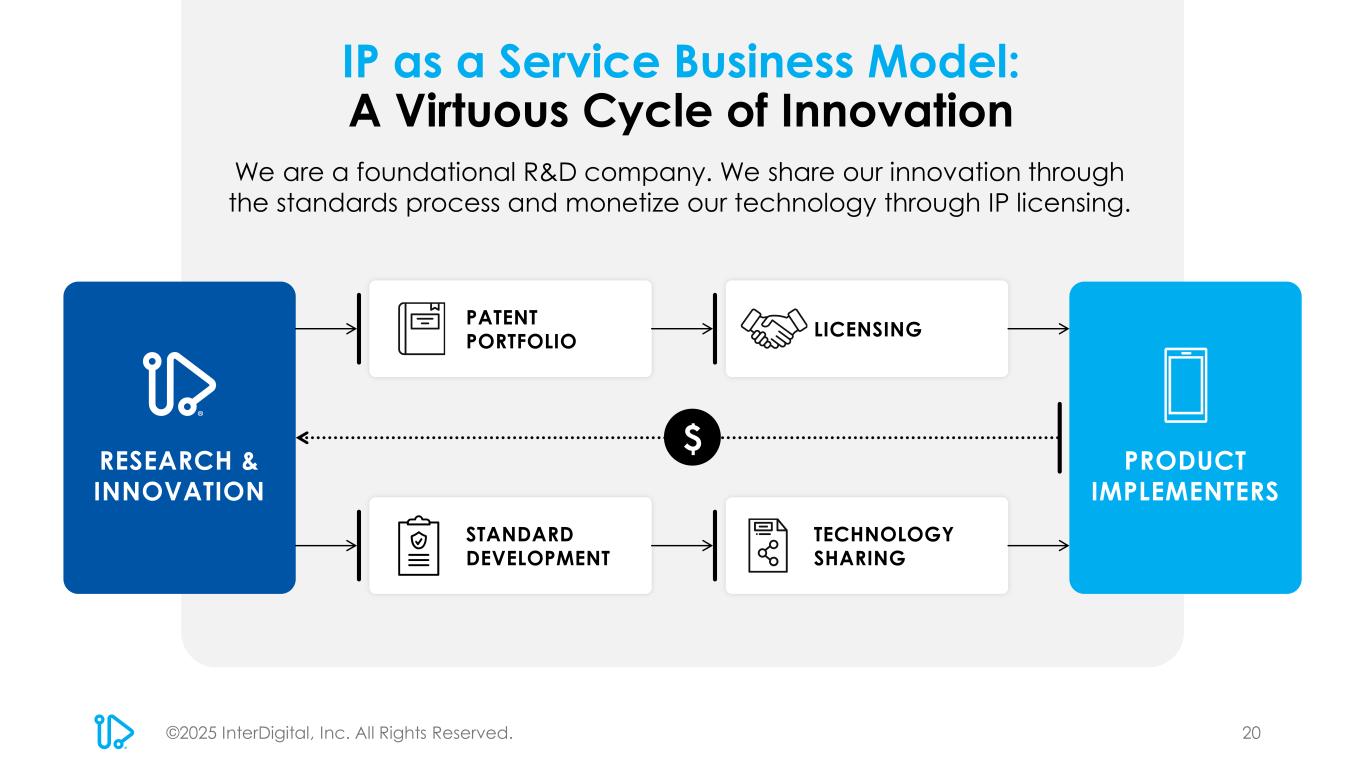
Hey, thanks, Scott. Yeah, as you acknowledge, we have very deep depth in AI expertise. We have dedicated team to be working in AI field for multiple decades. And our CTO, Rajesh Pankaj, is an industry-recognized AI leader, spans wireless AI and video space. So our current main sort of leverage of AI technology to apply AI to solve foundational problem in wireless and radio systems. As you are aware, upcoming 6G standard, the native AI built-in wireless is a key research area that we are needing. Regarding monetization strategy here, Scott, I really think there will be multiple opportunities for us to monetize AI technology, but we have a very robust existing technology-driven, standard-driven IP licensing model. But I believe AI could give us a new opportunity as we keep on driving the technology forward. Regarding the MIE pipeline here, as I referred a little bit earlier, we have a dedicated team internally, actually led by our chief cruise officer, Ken Kashkong. And we process a lot of opportunities. Some are bigger ones that may be driven by IP assets. Some others are driven by technology development, as we have done through the deep rendering. But our bar is very high, and with our recent business success, as Rich referred to here, we have a very strong balance sheet, and we believe it gives us a different opportunity if we can pursue them.
Operator
Thank you. Our next question comes from the line of Arjan Patia from William Blair. Your line is now open.
Thanks for taking the question. Linda Lee here on for Arjan. I wanted to ask, just to piggyback on the prior question regarding the acquisition, what other areas within the existing focus planes of technology IPs are you looking forward to in adding additional fields through M&A?
Yeah. Hi, Linda. Good morning. So, regarding the M&A space here, we are frankly testing fairly wide net. And as you are aware, our three pillars of research is wireless, radio, and artificial intelligence. And we continue to look at to see, do we have the industry-leading team? Do we have the key research in those areas that's driving things forward? But we frankly also look at the adjacent area. We are always sort of applying those opportunities with different criteria, right? We want to make sure we have critical mass that we can move the industry. We also like to see how we can build a competitive advantage over a long period of time. And then frankly, with our increasing balance sheet and financial capability, we also try to look for bigger opportunities over time.
That's helpful. And in terms of the transient litigation, you announced it today that you are officially going on a litigation. Can you just give us maybe any more color in terms of maybe timeline and additional kind of color
in terms of that in general yes so as I said in the prepare remark we have frankly there are a lot of momentum in the smartphone licensing program we currently licensed eight of the top ten smartphone window already that's essentially make up roughly 85% of the market so transcend is the largest on license window as of today they make roughly a hundred million devices per year and those devices tend to be lower end and set into emerging market so we have been negotiating with them for multiple years and we feel we have made them out for really fair offers but so far they have refused to take our offer so we feel it's necessary for us to defend our position for IP and frankly equally important to set a level in field with other customers who are paying not licensing fee, right? It's not fair that they got a free ride of our IP. So we have launched a multi-jurisitutional patent litigation against them. That's in UPC, that's in India and Brazil. Those are a significant market for them. It's hard to predict precisely timeline because some of the cases are frankly still being processed by a court. We don't have definitive dates yet. But it's always during negotiation, litigation, we always try to negotiate a patent licensing deal with the party involved. And even though the timing precisely is hard to predict, but given our history, we frankly have a very strong track record of, you know, if we have to enforce our rights, and we almost always end up with a bilateral agreement as far as to post-party.
Operator
Thank you. At this time, I'm showing no further questions in the queue. I would now like to turn it back to Liren Chen for closing remarks.
Thank you, Heidi. Before we close, I'd really like to thank all our employees for their dedication and contribution to InterDigital, as well as many partners and licensees for a very strong quarter. Thank you all for everyone who joined today's call, and we look forward to updating you on our progress next quarter.
Operator
Thank you for your participation in today's conference. This does conclude the program. You may now disconnect.