Operator
Good day, everyone, and welcome to the first Internet Bancorp earnings conference call for the third quarter of 2025. At this time, all lines are in a listen-only mode. Following the presentation, we will conduct a question-and-answer session. If at any time during this call you require immediate assistance, please press star zero for the operator. And please note that today's event is being recorded. I would now like to turn the conference over to Ben Brodkowitz from Financial Profiles, Inc. Ben, please go ahead.
Thank you, Operator. Hello, everyone, and thank you for joining us to discuss First Internet Bancorp's third quarter 2025 financial results. The company issued its earnings press release yesterday afternoon, and it is available on the company's website at www.firstinternetbancorp.com. In addition, the company has included a slide presentation that you can refer to during the call. You can also access these slides on the website. Joining us from the management team today are Chairman and CEO David Becker, President and COO Nicole Lorch, and Executive Vice President and CFO Ken Lubbock. David and Nicole will provide an overview, and Ken will discuss the financial results. Then we'll open up the call for your questions. Before we begin, I'd like to remind you that this conference call contains forward-looking statements with respect to the future performance and financial condition of First Internet Bancorp that involve risks and uncertainties. Various factors could cause actual results to be materially different from any future results expressed or implied by such forward-looking statements. These factors are discussed in the company's SEC filings, which are available on the company's website. The company disclaims any obligation to update any forward-looking statements made during the call. Additionally, management may refer to non-GAAP measures, which are intended to supplement but not substitute for the most directly comparable GAAP measures. The press release available on the website contains the financial and other quantitative information to be discussed today, as well as the reconciliation of the GAAP to non-GAAP measures. At this time, I'd like to turn the call over to David.
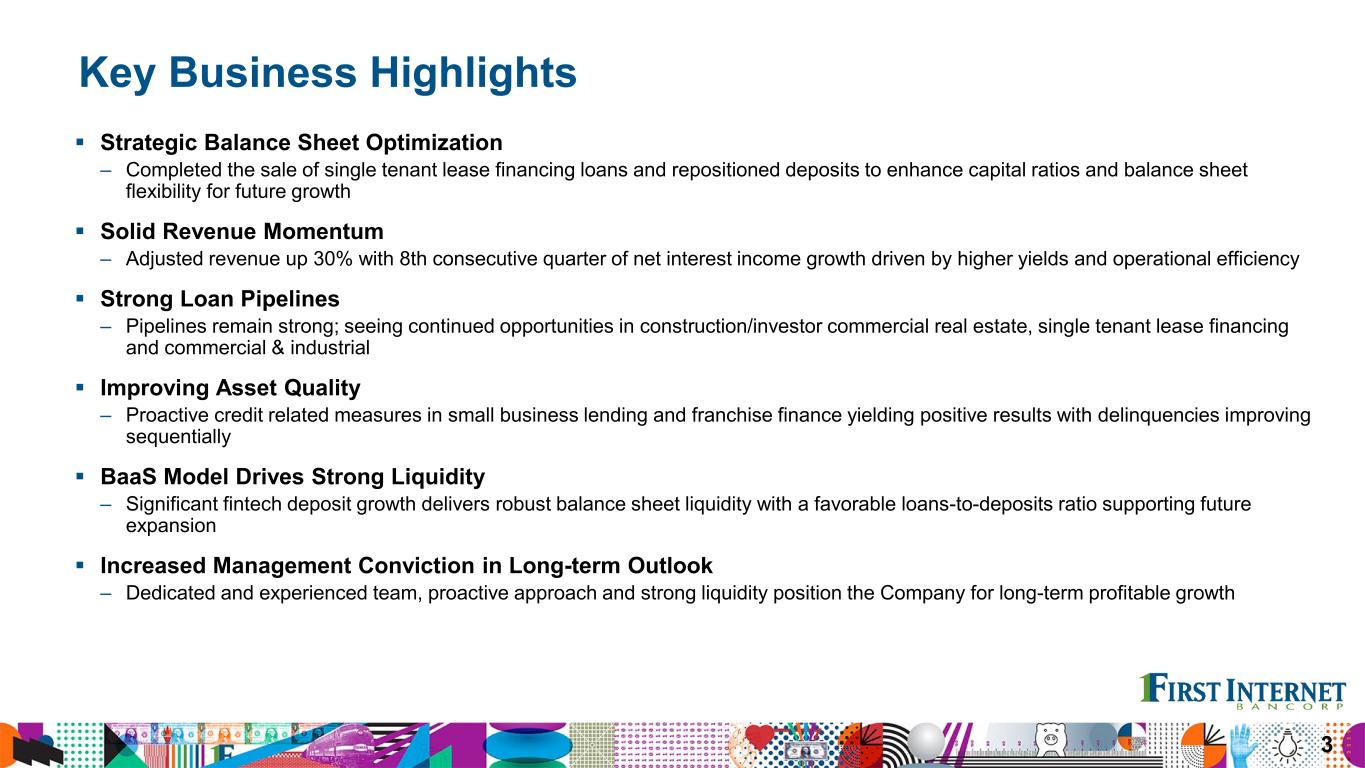
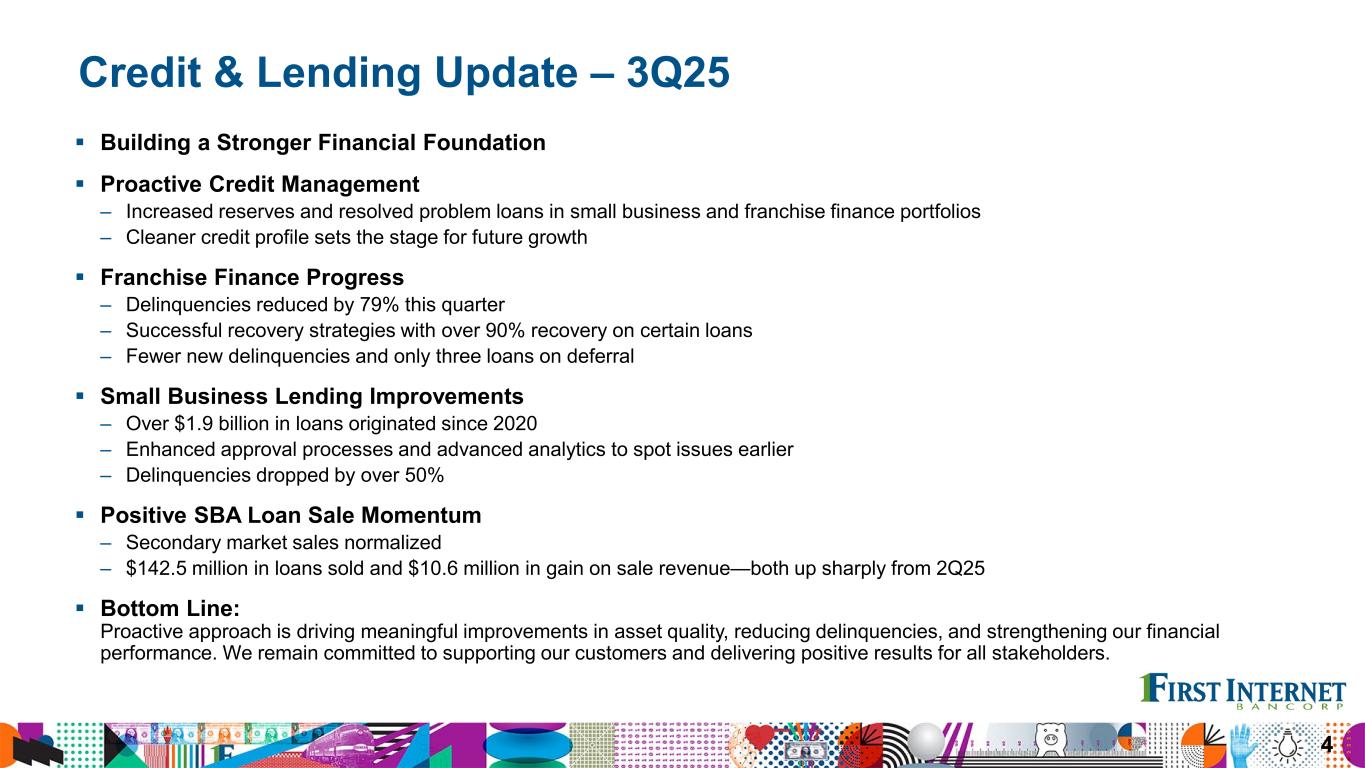
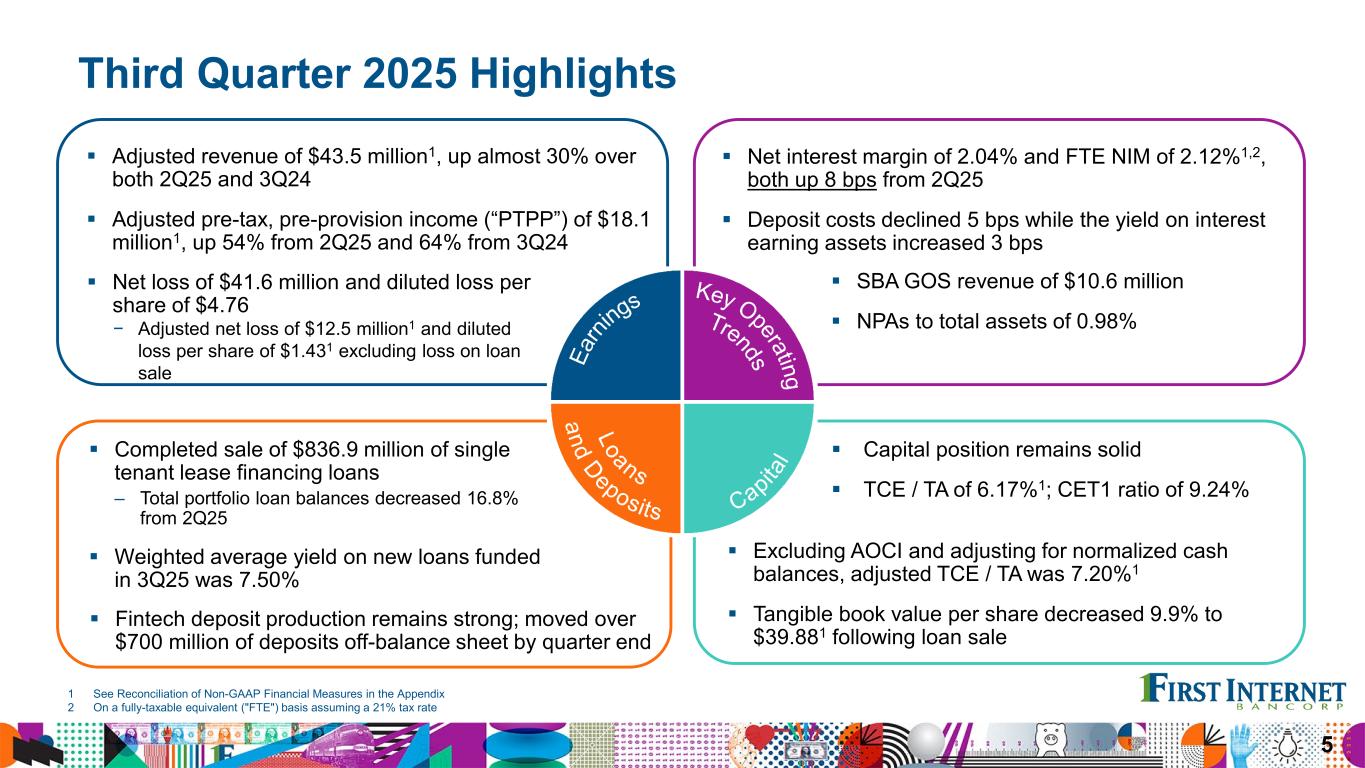
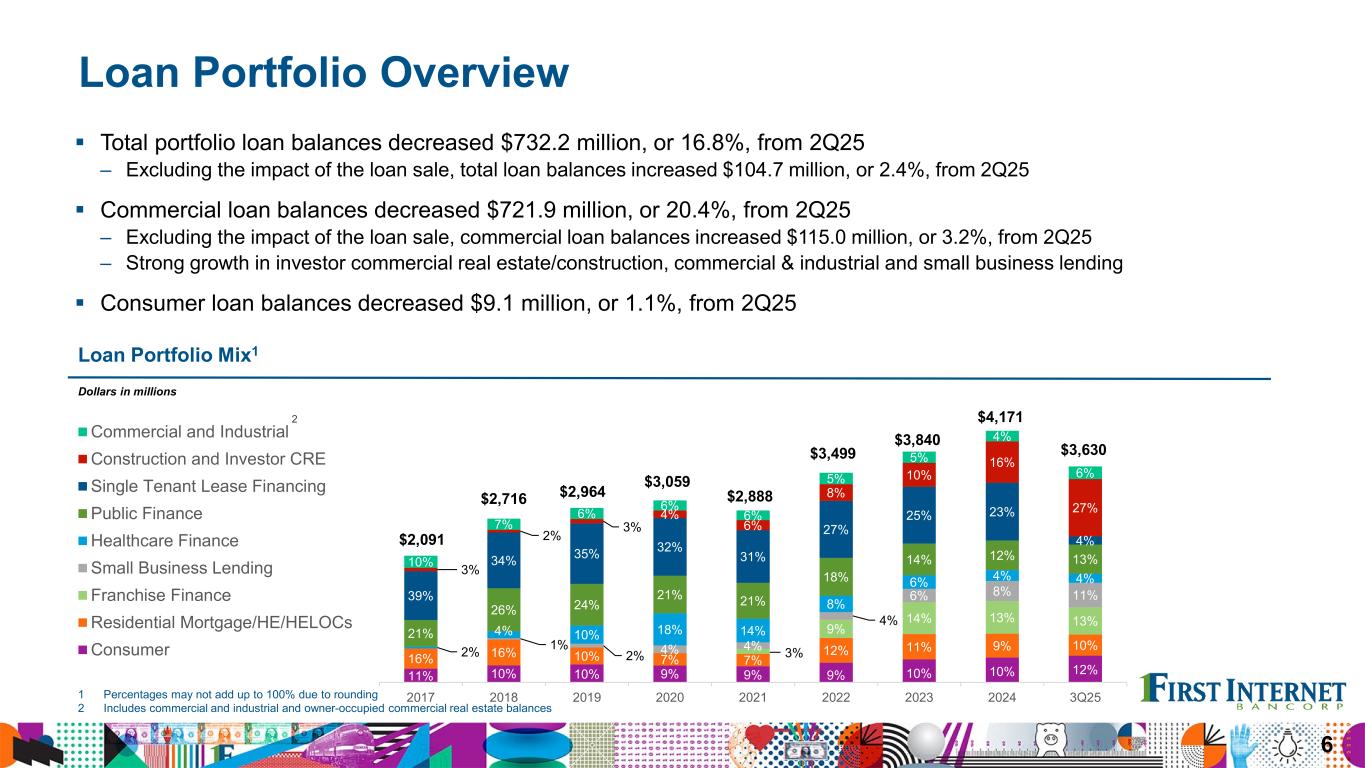
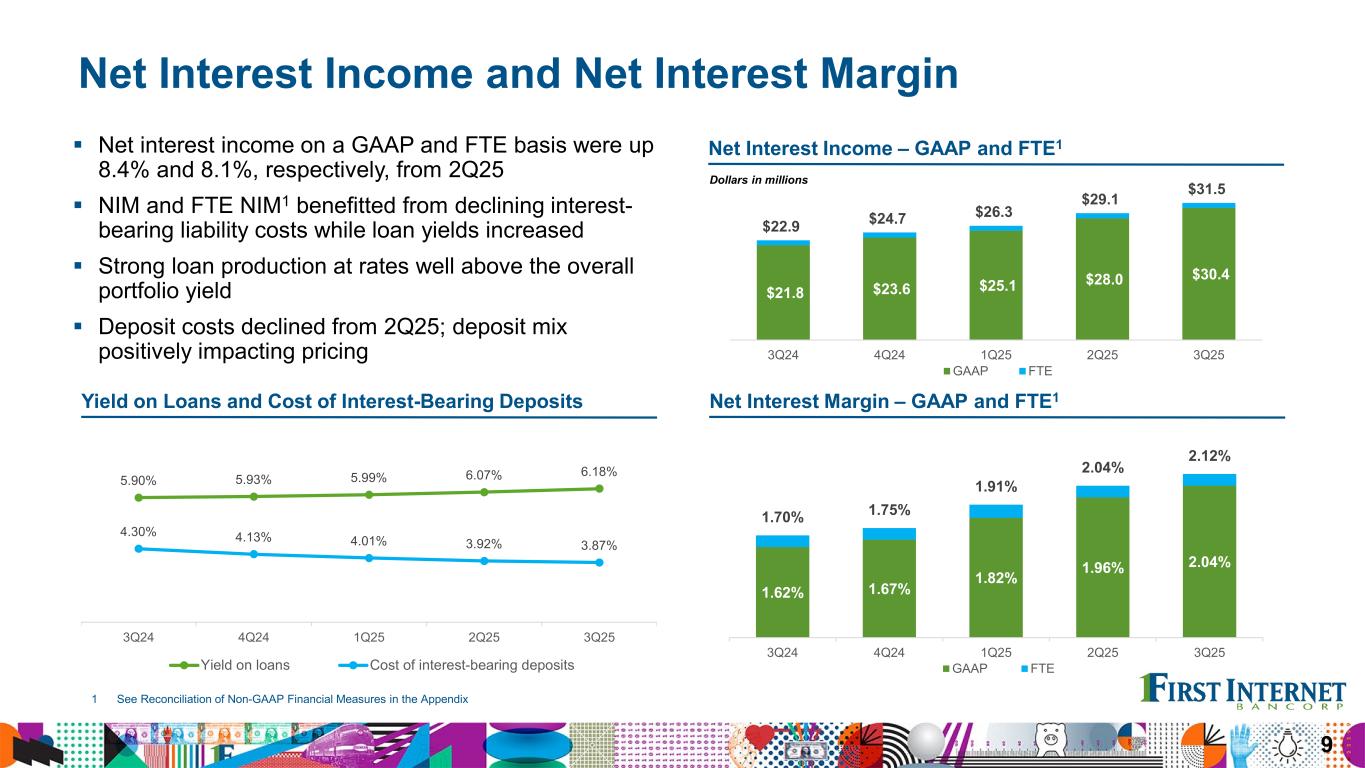
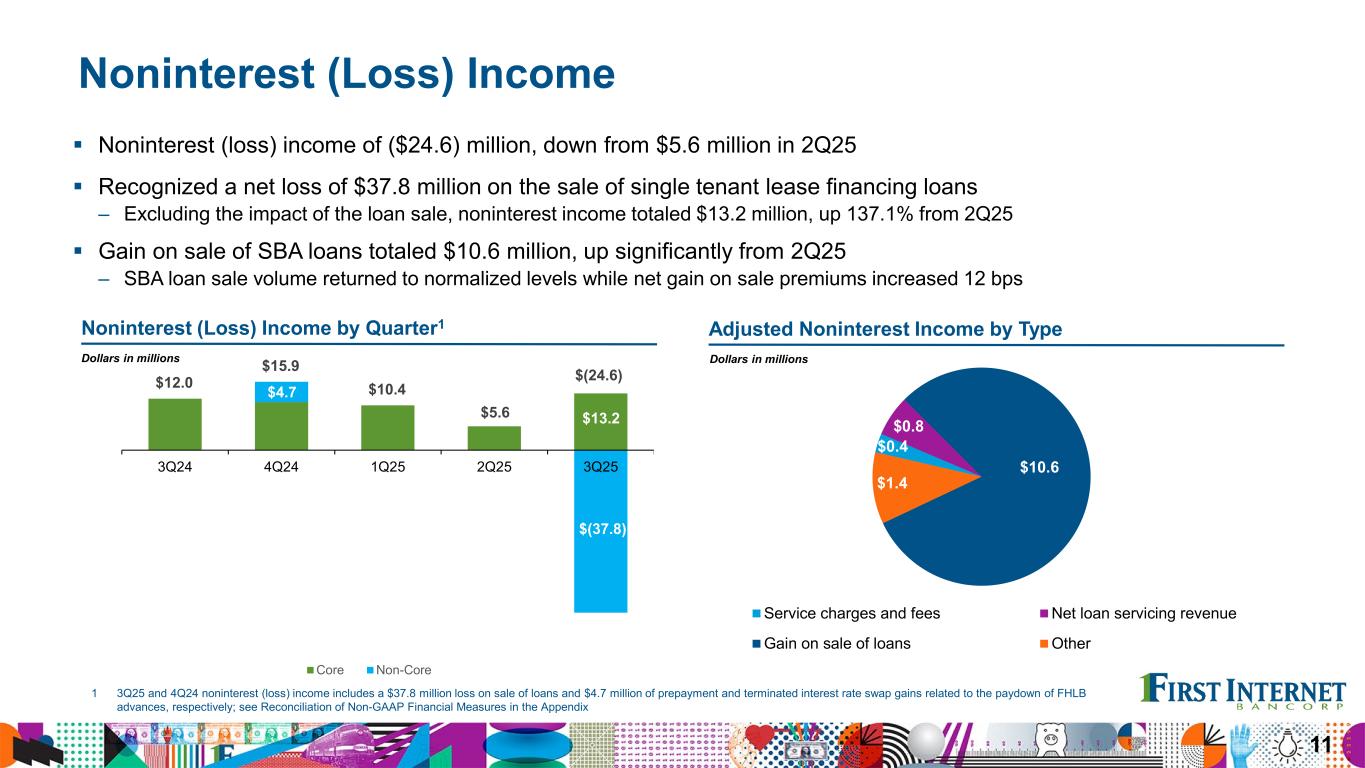
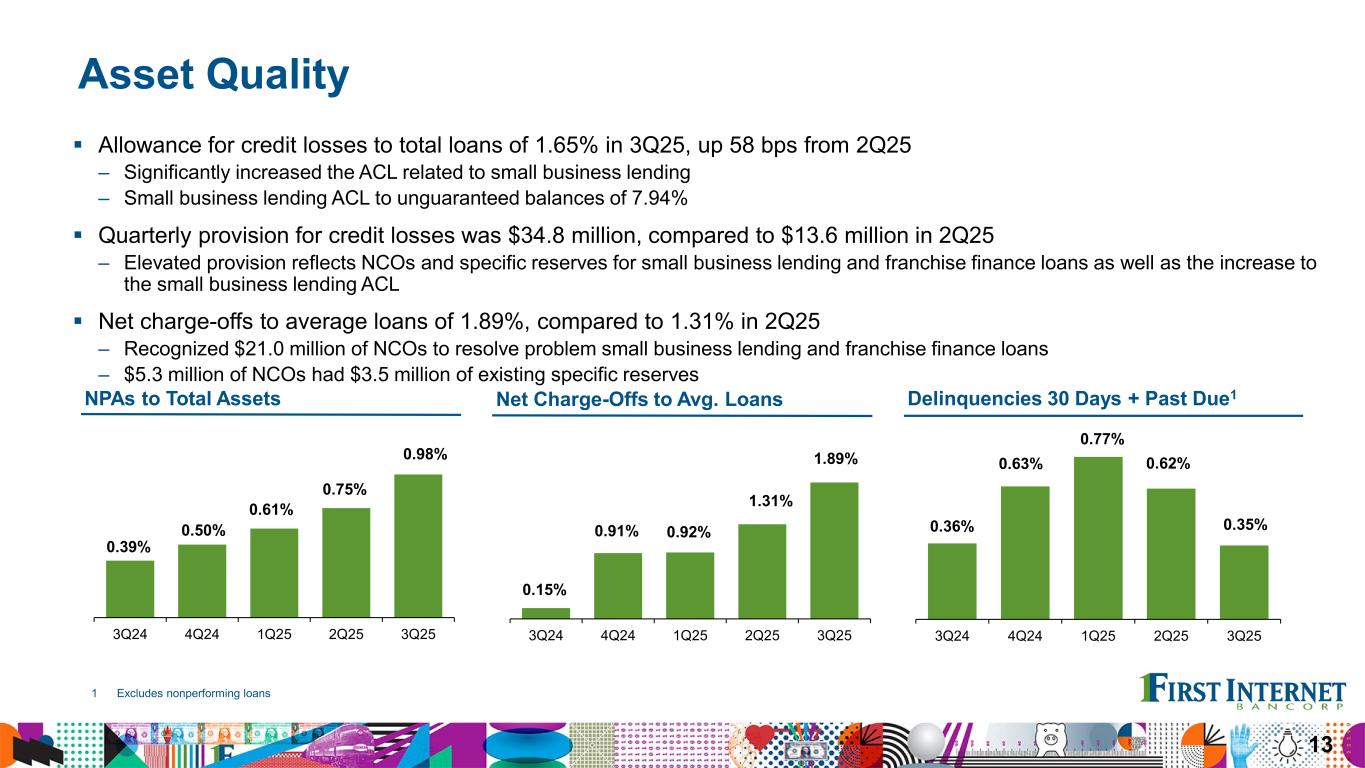
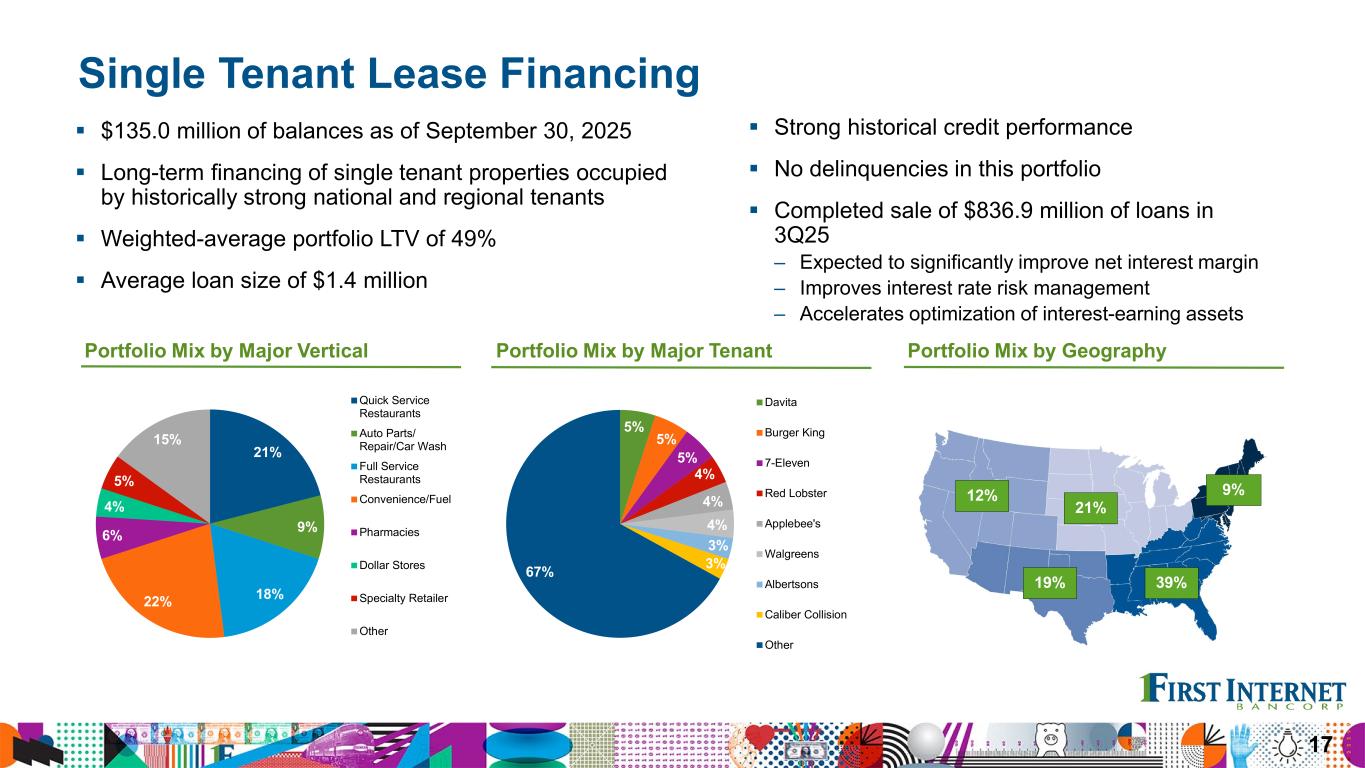
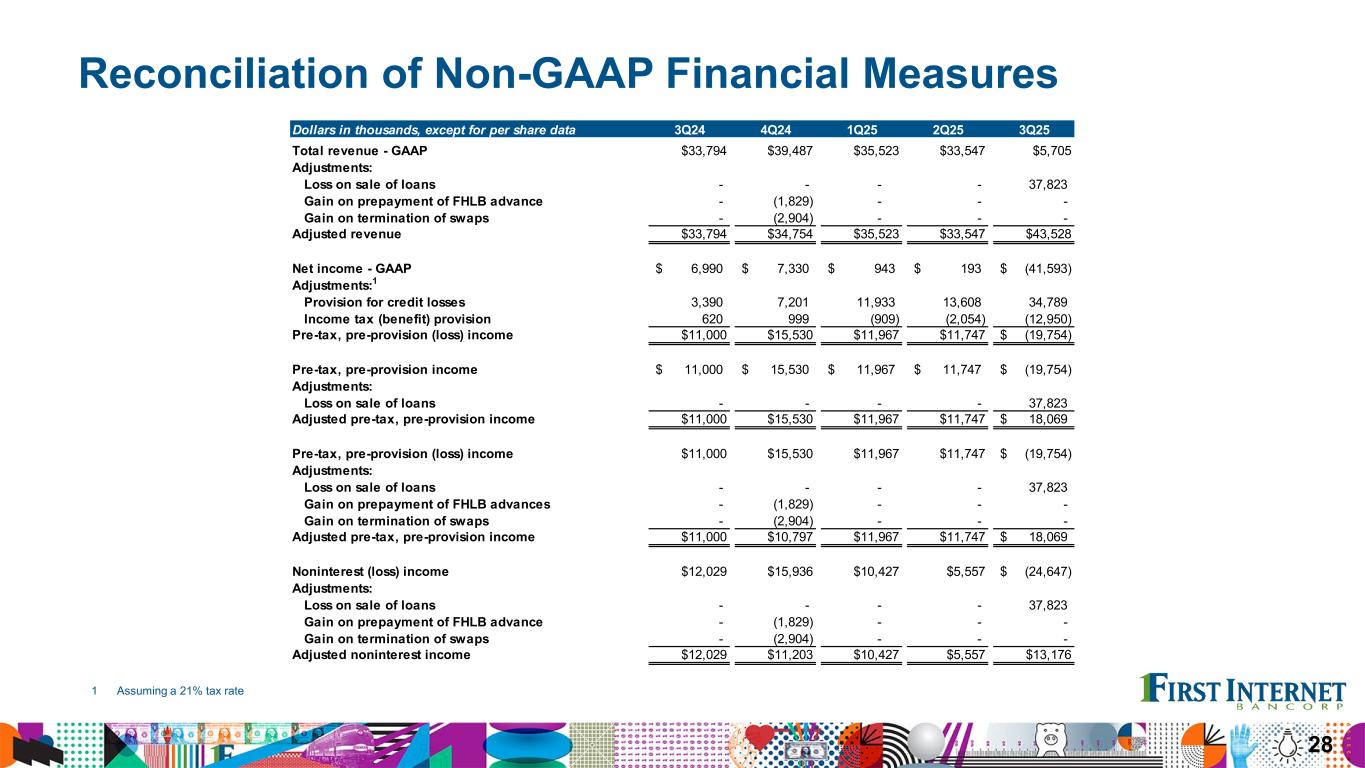
Thank you, Ben. Good afternoon, and thank you for joining us on the call today. I want to start by highlighting the continued strength of our core business fundamentals and the key strategic execution. Our revenue engine remains robust. We delivered our eighth consecutive quarter of net interest income growth, with net interest margin expansion continuing as planned. Additionally, our SBA and BATS businesses contributed meaningful growth to non-interest income. In the third quarter, we maintained our top-line growth momentum as adjusted total revenues reached $43.5 million, an increase of 30% over the second quarter. Revenue growth was driven by a significant increase in the gain on sale of SBA guaranteed loan balances. Net interest income was also up, marking the eighth consecutive quarter of growth. Net interest income increased over 8% compared to the late quarter, and was up 40% compared to the third quarter of 2024, driven by higher earning asset yields and lower deposit costs. Accordingly, net interest margin on a fully tax equivalent basis increased eight basis points on the second quarter to 2.12%. Further, our prudent operating expense management and strong top-line growth through a significant operating leverage for the quarter. During the quarter, we executed certain strategic actions that had a near-term negative impact on earnings but strengthened our financial position and set the stage for our future growth. First, we successfully completed the sale of $837 million of STL loans. This had several key benefits that advance our strategic priorities. The transaction enhances our interest rate risk profile, up, strengthens our capital ratios, and expedites the optimization of our interest-earning asset base. These improvements will significantly enhance net interest margin and accelerate our progress towards achieving our near-term goal of a 1% return on average assets. During the quarter, we also took decisive and aggressive action to address credit issues in the small business lending and franchise finance portfolios. We recognized a $34.8 million dollar provision for credit losses, which included 21 million of net charge-offs, additional specific reserves, and a significant increase to the allowance for credit losses related to the small business lending. These actions reflect our intentions to expedite the improvement of our portfolio's credit quality. As a result of these actions, total delinquencies were 35 basis points as of September 30th, down from 62 basis points in the second quarter and 77 basis points in the first quarter. From the standpoint that delinquencies are the best indicator of potential future credit losses, this puts the health of our portfolio right in line with our peers. Importantly, our credit issues are isolated to small business lending and franchise finance portfolios, credit quality across the remainder of our lending vertical is sterling, reflecting the strength and stability of our broader portfolio. Turning to lending activity for a minute, our commercial lending teams continue to deliver a strong level of originations throughout the quarter. Excluding the impact of the loan sale, commercial loan balances were up 115 million, or 3.2%, and total loan balances were up 105 million, or 2.4%. Heading into the fourth quarter, our loan pipelines remain strong as our teams continue to see excellent opportunities, especially in our commercial real estate, single-tenant lease financing, and commercial and industrial lines of business. Looking ahead, the fundamentals that drive our business, the differentiated model, experience and dedicated teams, diversified revenue streams, solid capital position, and disciplined risk management position us well to continue delivering sustainable growth and enhance long-term shareholder value. Now I'll turn it over to Nicole to talk about small business lending and BAS.
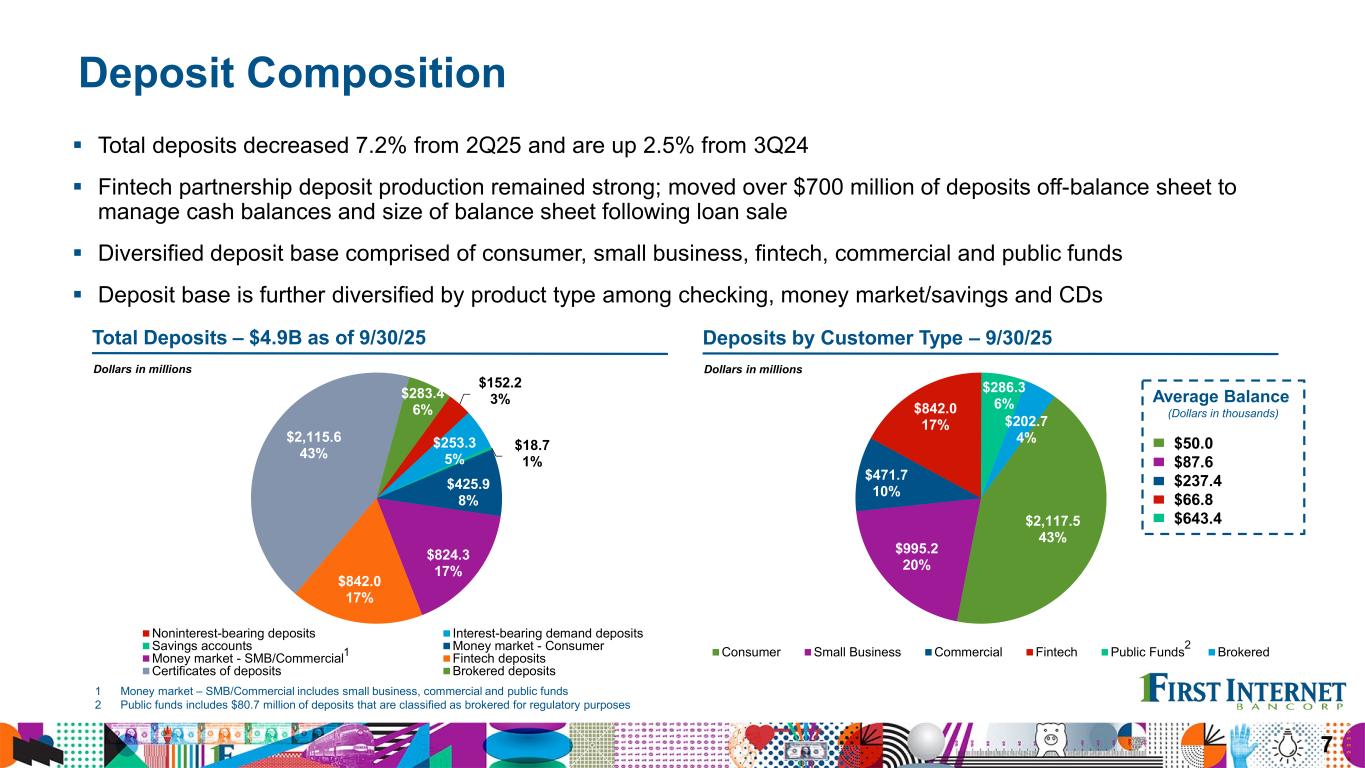
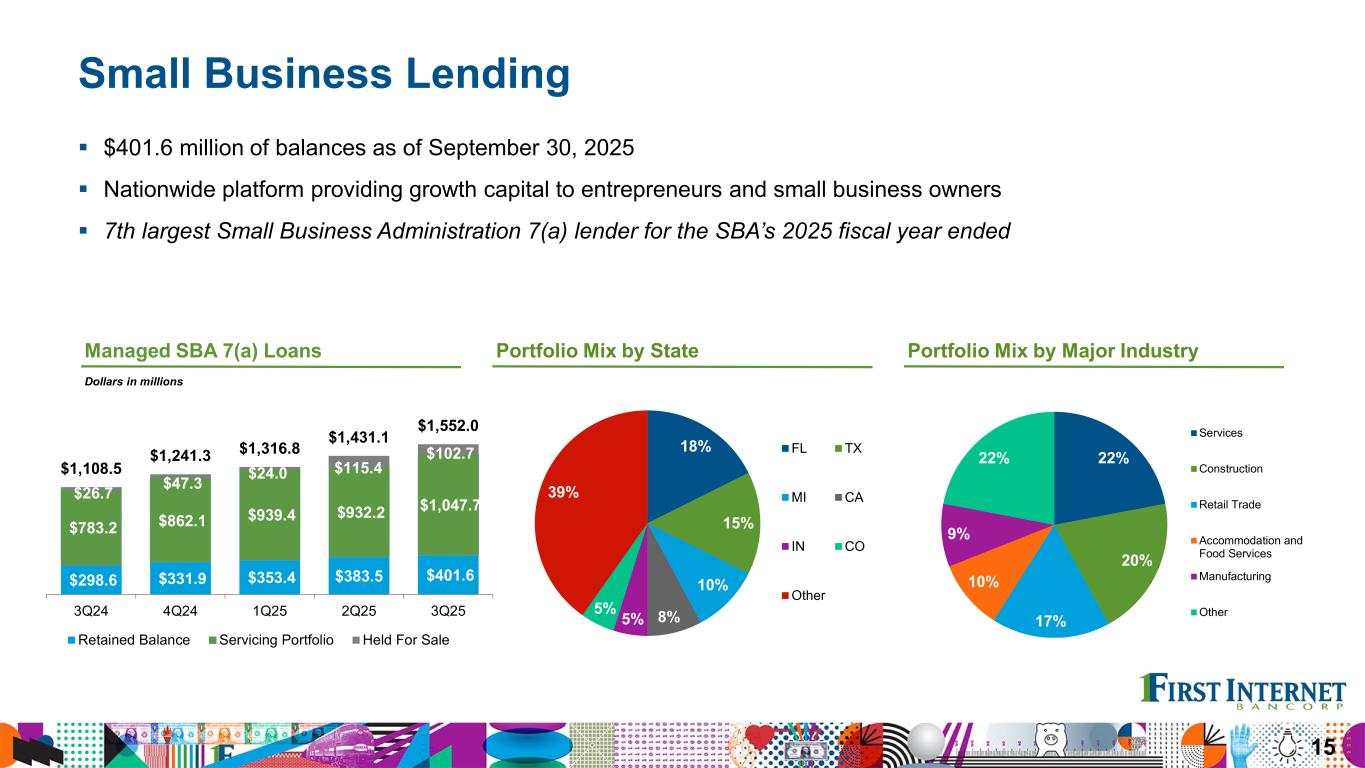
Thank you, David. Gain on sale of SBA loans rebounded strongly in the third quarter following our process improvements, generating $10.6 million in gain-on-sale revenue. We delivered another solid quarter for new loan originations and ended the quarter with $104 million in held-for-sale loans, but we looked to sell into the secondary market when the federal government reopens and loan sales resume. Anticipating the government shutdown, we proactively secured SBA authorizations for loans in our pipeline prior to September 30th. enabling us to continue to meet our borrower's desired transaction timelines without disruption. Our pipeline remains robust at $260 million, positioning us well for gain on sale in future periods and for interest income on retained balances. We continue our drive for process improvement throughout the SBA initiative. This quarter, we made strategic investments and technology platforms, including AI technology to our document collection and verification steps to create a streamlined experience for our borrowers, eliminate manual tasks for our employees, and to provide our credit teams better insights into new loan opportunities. We also introduced loan-level predictive analytics to bolster our portfolio management processes and problem loan identification practices. Additionally, the learnings from our analytics engine enabled us to further refine our credit standards for better credit outcomes in future periods. Our commitment to innovation and excellence extends to the continued success of our fintech partnerships, which is commonly referred to as banking as a service or simply BAS. Through strong relationships forged with quality programs, sustained growth in deposit balances has provided us robust balance sheet liquidity, as well as tremendous balance sheet flexibility. In the third quarter, we strategically moved over $700 million of fintech deposits off balance sheet to optimize our balance sheet size following the loan sale. We have continued to move additional deposits off the balance sheet here in the fourth quarter, but retain the flexibility to bring them back to fund growth opportunities or to meet liquidity needs as market conditions warrant. Total revenue from our fintech initiatives, consisting primarily of interest income and program and transaction fees, was up 14% compared to the second quarter and up 130% from the third quarter of 2024. These results highlight the strong performance across our diverse business lines. I will now turn it over to Ken for additional insight into our third quarter performance and our fourth quarter outlook.
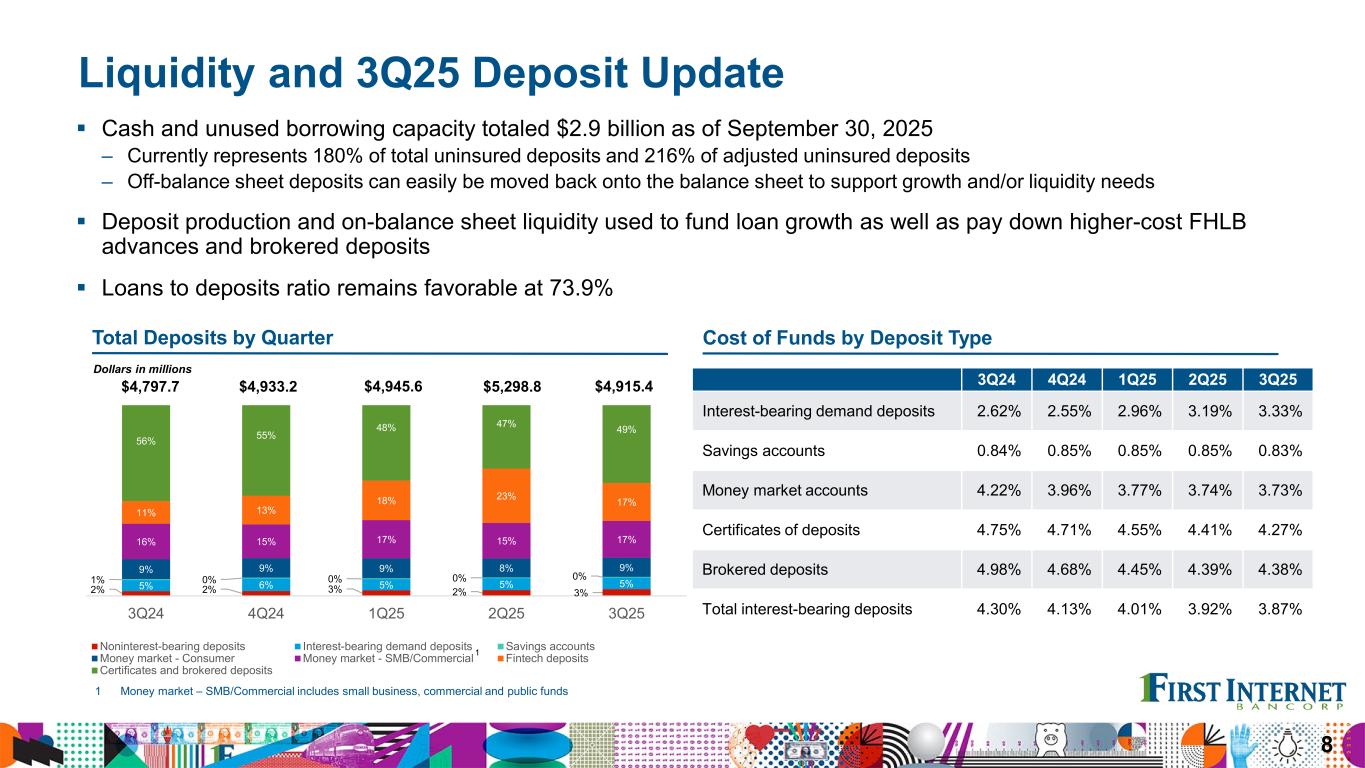
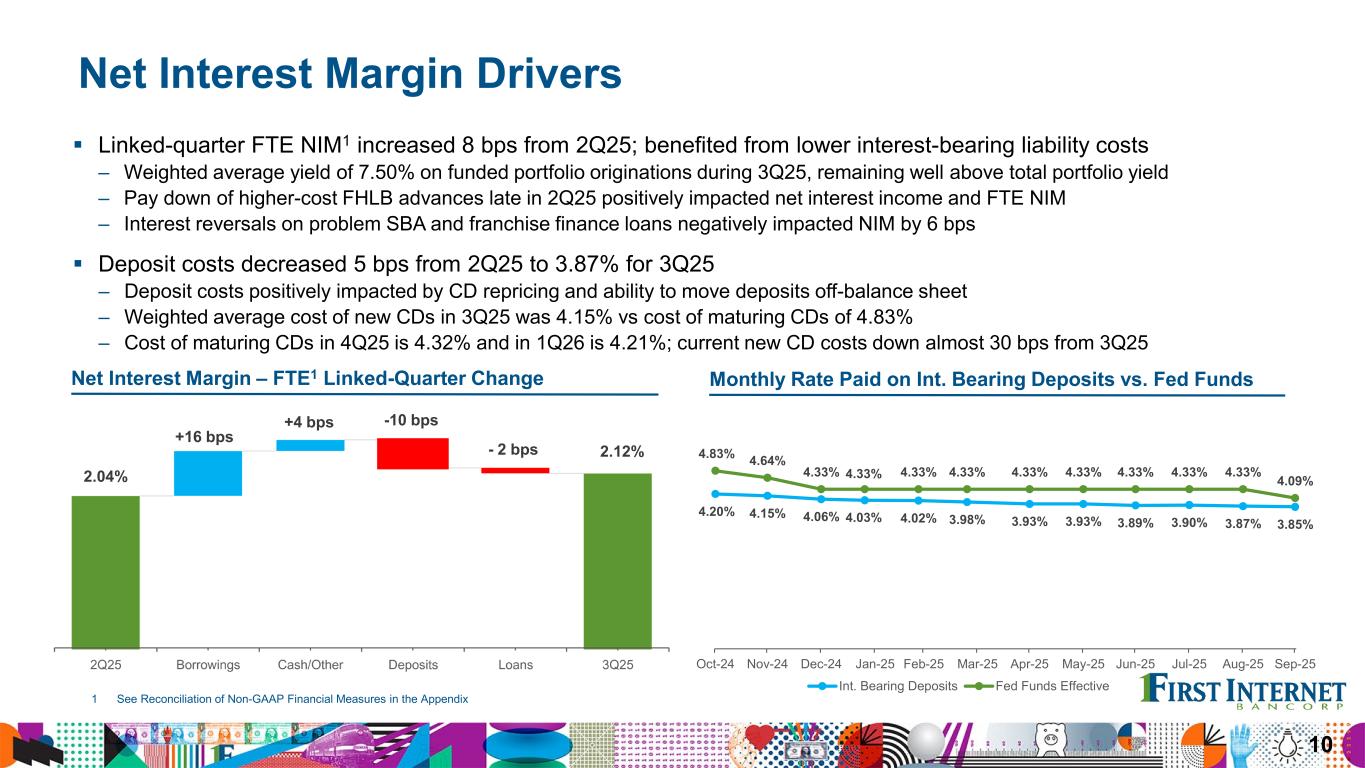
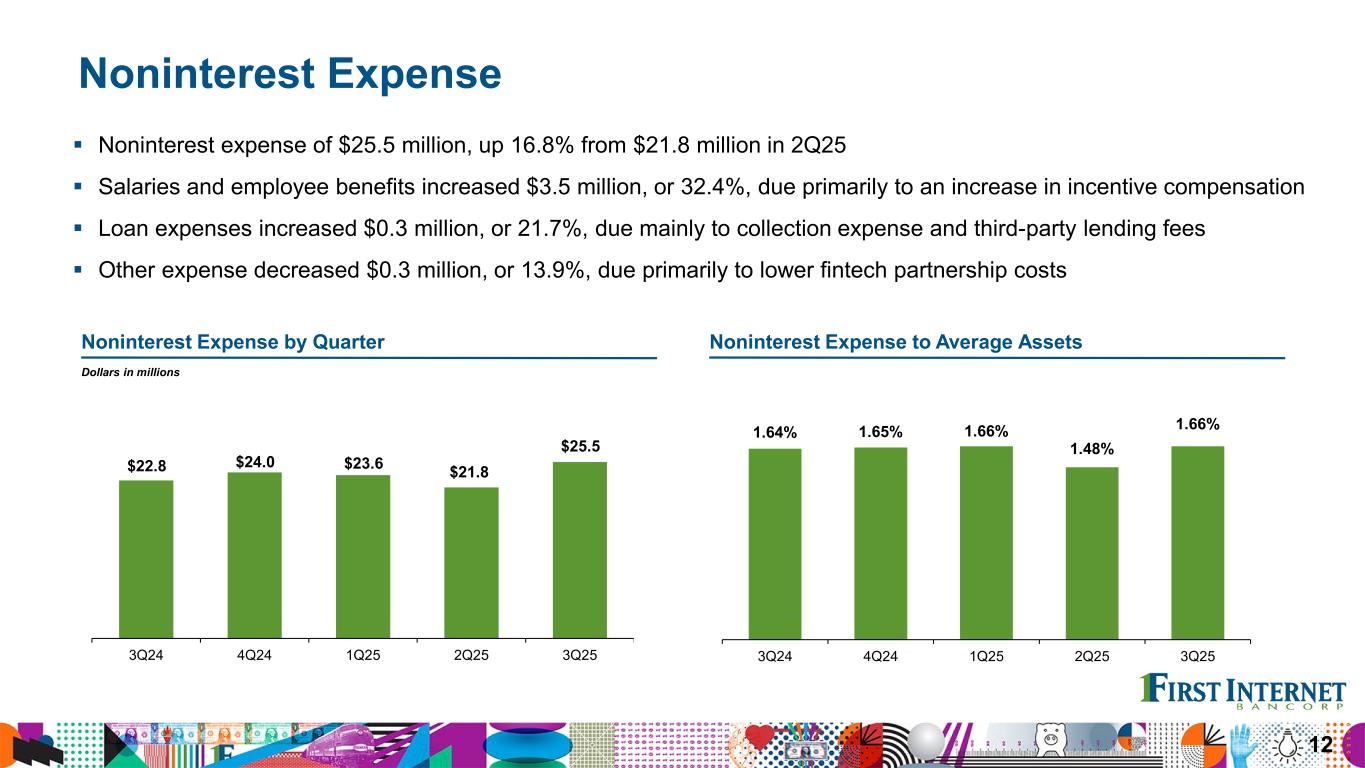
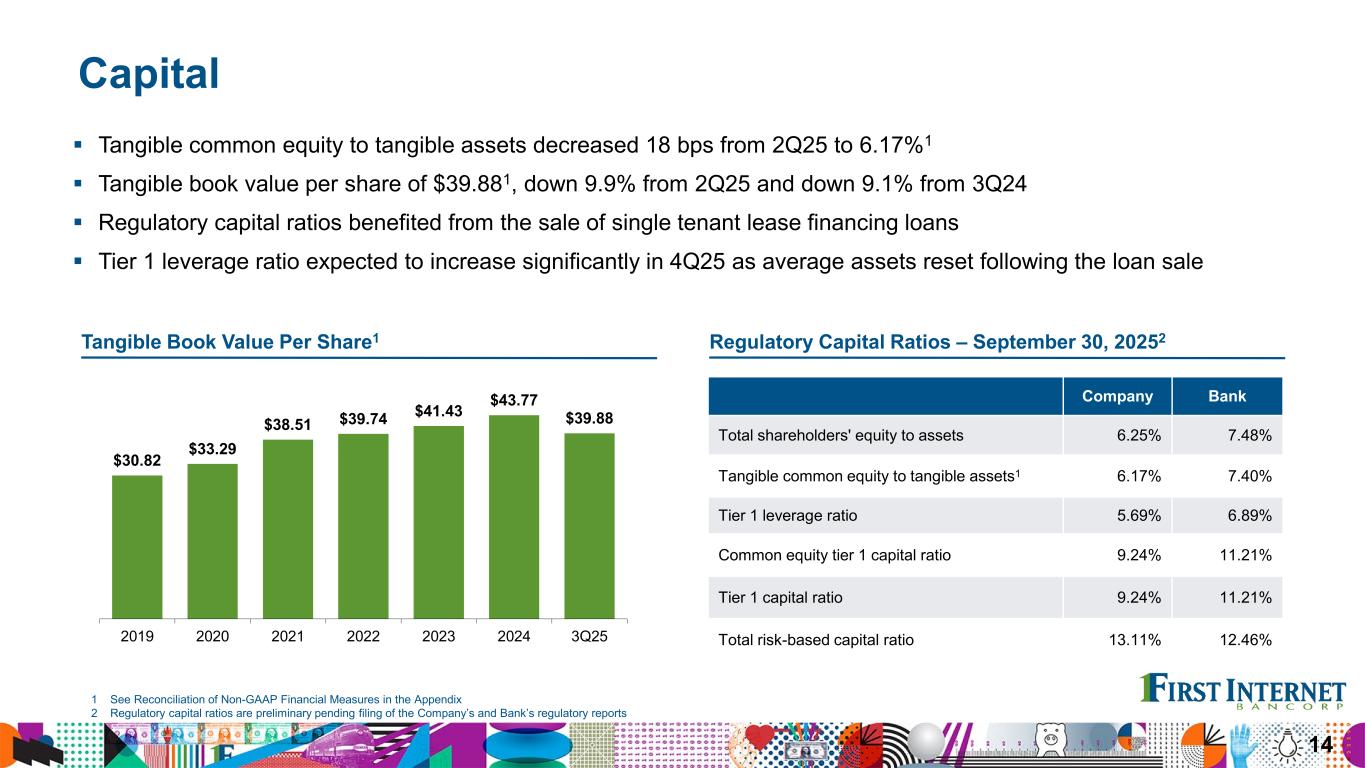
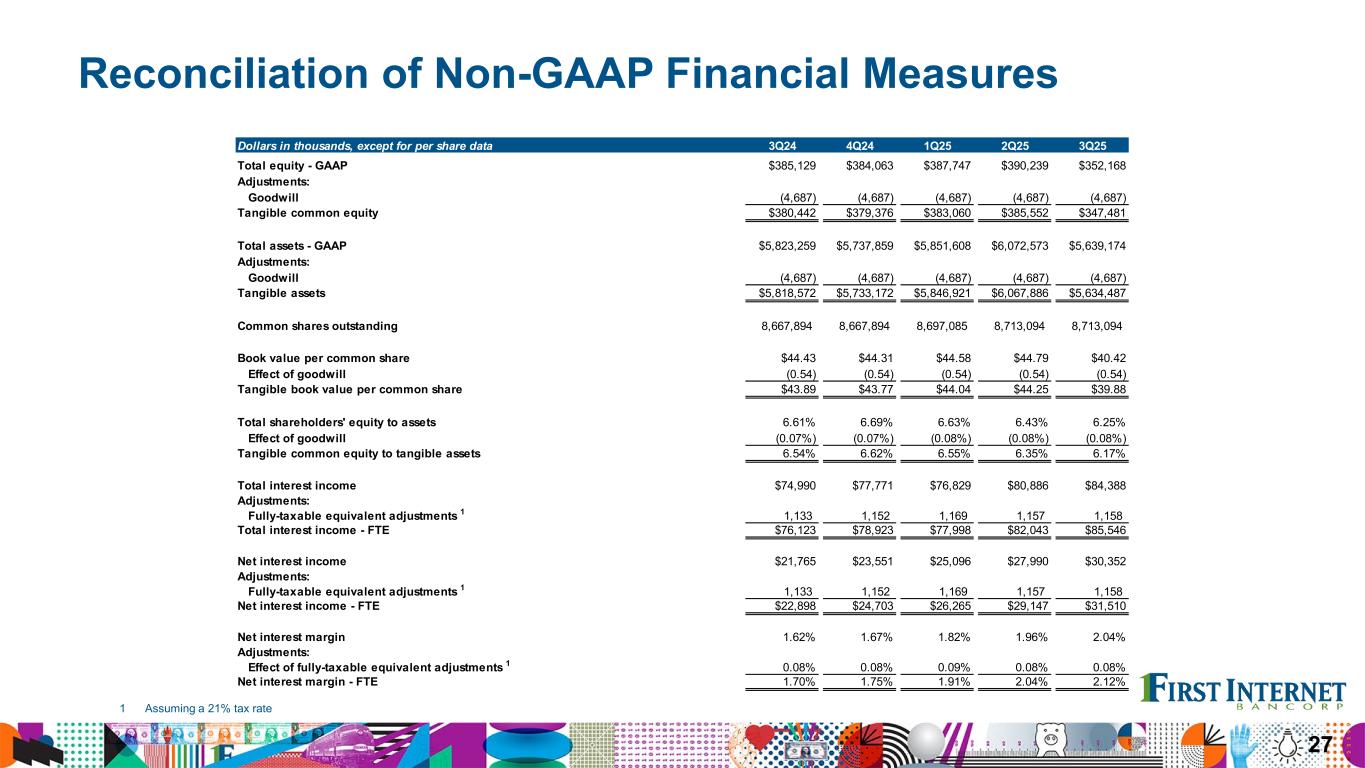
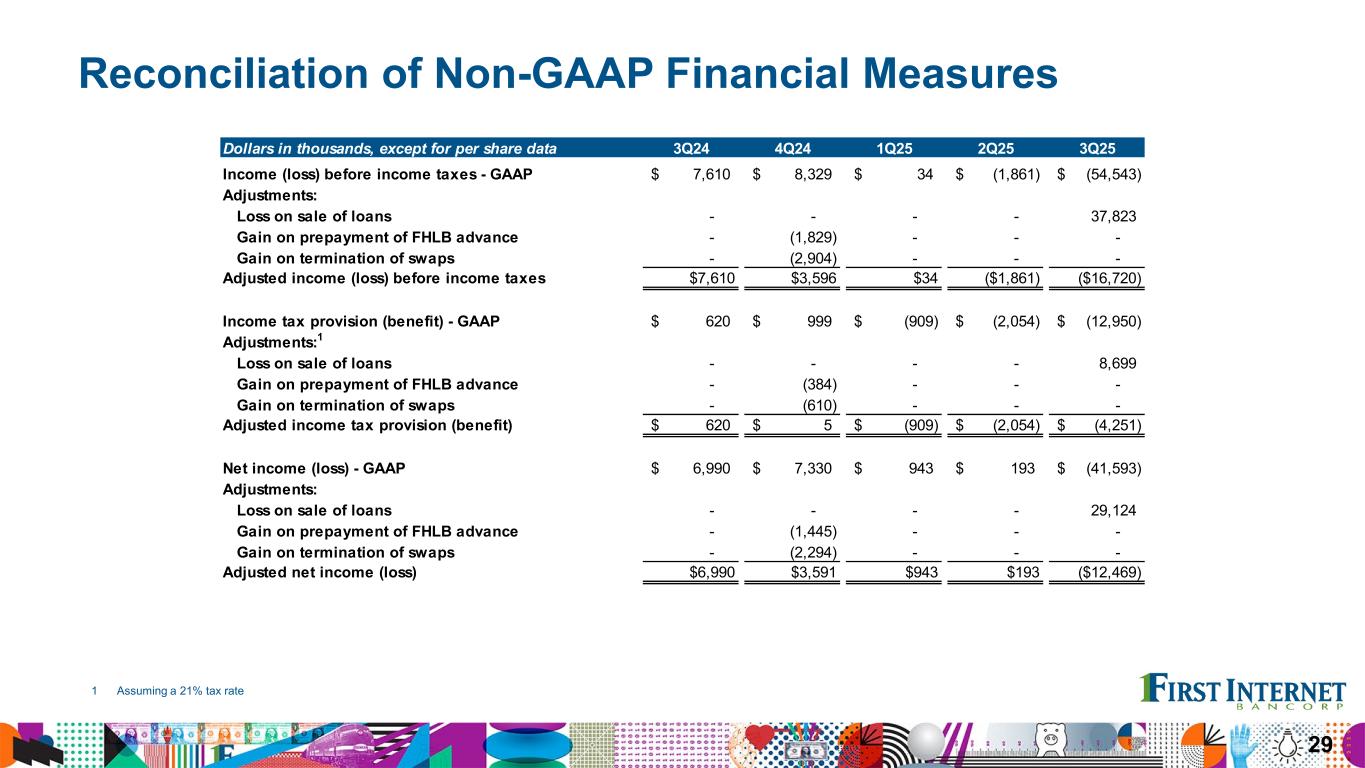
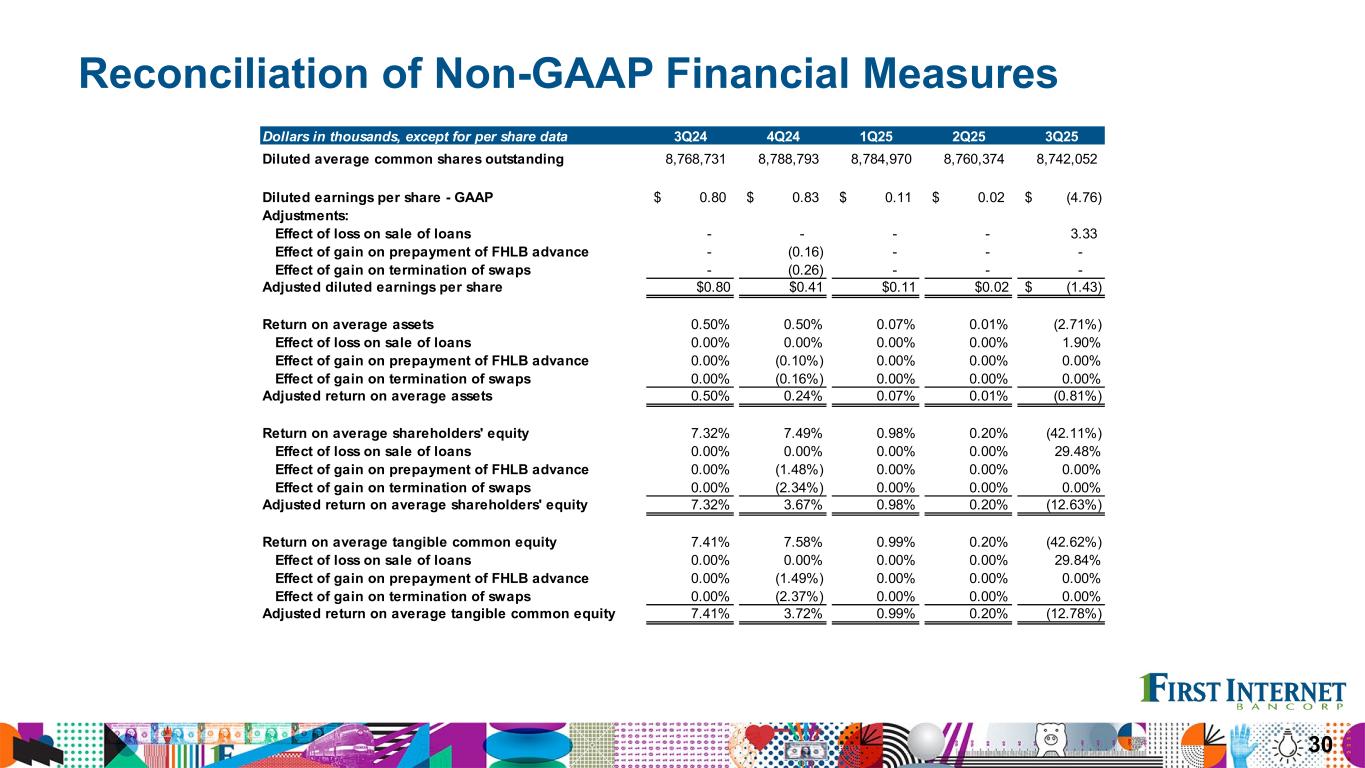
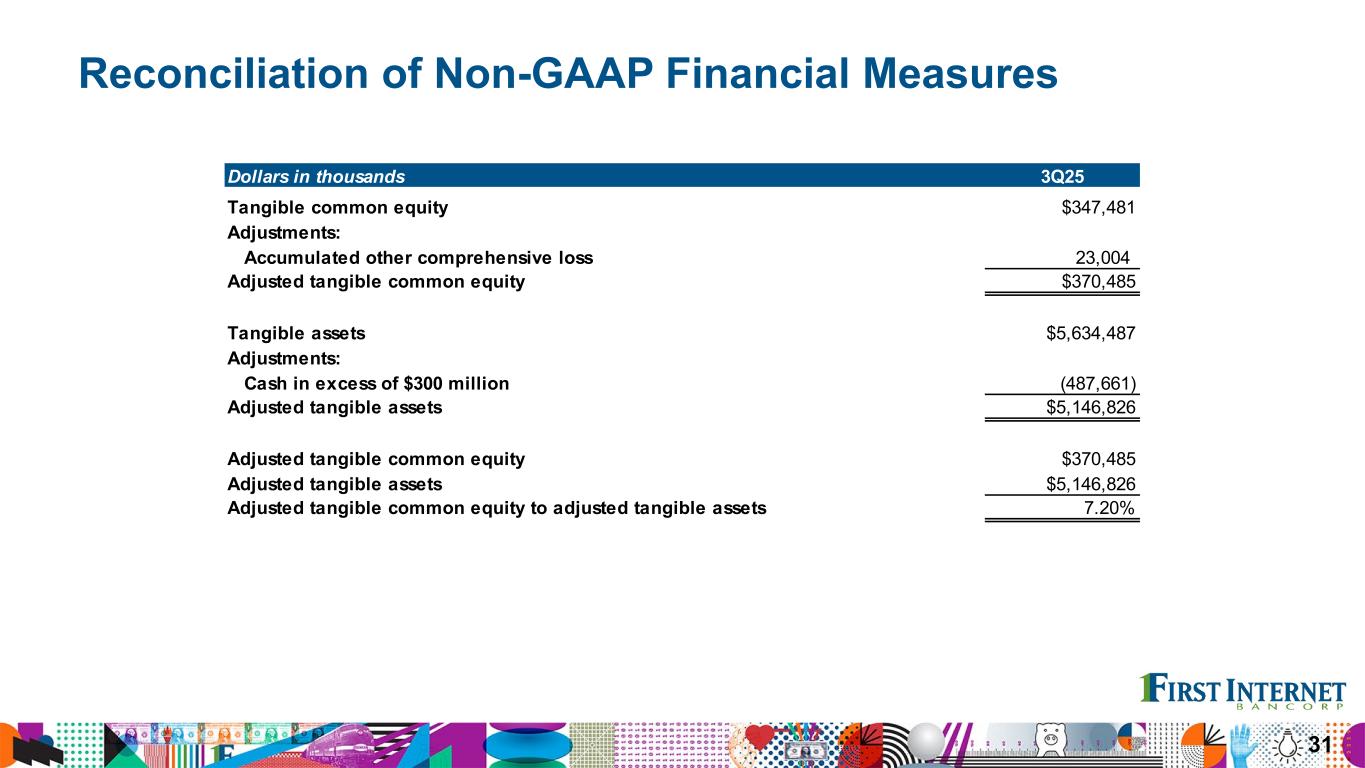
Great. Thank you, Nicole. As a result of the strategic actions taken during the quarter, we reported a net loss of $41.6 million, or $4.76 per diluted share. Excluding the pre-tax loss on the loan sale of $37.8 million, adjusted net loss for the quarter was $12.5 million, or $1.43 per diluted share. However, with the strong revenue growth and corresponding positive operating leverage mentioned earlier, adjusted pre-tax, pre-provision income totaled $18.1 million, an increase of over 50% from the second quarter and almost 65% from the third quarter of 2024. Now, turning to the primary drivers of net interest income and net interest expense during the quarter. Net interest income for the third quarter was $30.4 million or $31.5 million on a fully taxable equivalent basis, both up about 8% from the second quarter. Net interest margin improved to 2.04% or 2.12% on a fully taxable equivalent basis, both up 8 basis points. The yield on average interest-earning assets rose to 5.68 percent from 5.65 percent, driven primarily by an 11 basis point increase in loan yields as rates on new originations were 7.5 percent during the quarter. Looking forward, while the Federal Reserve lowered the Fed Fund's rate in September, we expect to see continued expansion in the portfolio yield as new origination yields should remain above the current portfolio yield of 6.18%. Additionally, the sale of lower-coupon single-tenant lease financing loans is expected to have a meaningful impact on the portfolio yield in future periods. Turning to our funding costs, the cost of interest-bearing liabilities declined to 3.90% from 3.96%, driven mainly by a 5-basis-point decrease in interest-bearing deposit costs and a seven basis point decrease in the cost of other borrowings as we saw the benefit of paying down a significant amount of higher cost short-term federal home loan bank advances near the end of the second quarter. Deposit costs declined as we continued to benefit from CD repricing and reduced brokered deposit balances. Furthermore, we began moving some of our higher cost fintech deposits off balance quarter, which had a positive impact on deposit costs, and this activity ramped up near quarter end following the loan sale. As noted on slide 10 of the presentation, we continue to see favorable trends in CD pricing across the curve. As higher-cost CDs mature, we expect them to be replaced by lower-cost fintech deposits or new CDs at more attractive rates or simply paid down with excess liquidity to assist in shrinking the balance sheet further. This shift in downward pricing, complemented by our ability to move deposits off balance sheet, positions us extremely well to capitalize on further declines in deposit costs in the fourth quarter and into 2026. And when combined with higher loan origination yields, these dynamics support sustained growth in both net interest income and net interest margin, even in the absence of further rate cuts from the Federal Reserve. At quarter end, $1.3 billion, or 27% of our deposits, were indexed to the Fed Fund's rate. So, should we see additional interest rate cuts, expansion of both net interest income and net interest margin would be further enhanced. Now I'm going to take a few minutes to speak to asset quality, as there were a number of moving parts during the quarter, some of which are summarized on slide 13 in the presentation. As David mentioned in his comments, we recognized a provision for credit losses of $34.8 million in the third quarter, which consisted primarily of $21 million of net charge-offs, as well as additional specific reserves and a significant increase to the CECL reserve related to small business lending. To provide a little bit more detail on the net interest charge-offs in the quarter, $15.2 million were related to the small business lending portfolio as we took an aggressive approach to cleaning up problem loans that evolved over the quarter. Following these charge-offs, delinquencies in the small business lending portfolio declined over 50% compared to the prior quarter. Additionally, $5.3 million of net charge-offs were related to the franchise finance portfolio. These charge-offs had $3.5 million of existing reserves in place that were removed. Non-performing loans totaled $53.3 million at the end of the third quarter, up $9.7 million from the linked quarter. The increase in non-performing loans was primarily driven by moving nine franchise finance loans with book balances of $14.2 million to nonaccrual with related specific reserves of $5.8 million. Delinquencies in our franchise finance portfolio decreased almost 80% from the second quarter, and the pace of new delinquencies has slowed meaningfully, signaling improved borrower performance. A portion of the increase in nonperforming loans, about $1.8 million, related to small business lending and represented the remaining balance based on estimated collateral values associated with the loans. At quarter end, the ratio of non-performing loans to total loans was 1.47%, up from 1% in the linked quarter. The increase was driven not only by the increase in non-performing loans, but also the decline in loan balances following the loan sale. The allowance for credit losses increased to $59.9 million in the third quarter, up $13.4 million, or almost 30% from the second quarter. The increase was primarily driven by a significant increase in the ACL as a result of updated inputs to the CECL model given recent industry trends in SBA loans, which show SBA loan default rates across the industry are approximately 2.3 times higher in 2025 than in 2022. As a result, we more than doubled the small business lending ACL. Following this activity, the ACL now represents 1.65% of total loans up from 1.07% in the second quarter. If you exclude the public finance portfolio, the ACL to total loans increases to 1.89%. As shown in one of the graphs on slide 13, to emphasize a point David made in his comments, following the credit actions taken during the quarter, total delinquencies 30 days or more past due, excluding non-performing loans, declined to 35 basis points at quarter end and are at their lowest point in a year. I will briefly touch on our capital position prior to moving on to our outlook for the fourth quarter. As announced in our press release and associated 8K in September, we closed on the sale of $837 million of single-tenant lease financing loans with a net loss of $37.8 million at the end of the quarter. While the loss from the loan sale reduced shareholders' equity and regulatory capital, the reduction in risk-weighted assets was even more pronounced, leading to growth in regulatory capital ratios from the linked quarter. Related to the Tier 1 leverage ratio, we expect this ratio to increase significantly in the fourth quarter of 2025 as the average assets calculation resets lower with a full quarter effect of a smaller balance sheet. Furthermore, we were able to mitigate the impact of the loan sale on the tangible equity to tangible assets ratio by moving a significant portion of fintech deposits off balance sheet during the quarter. Now, turning to the remainder of 2025, I would like to provide some commentary on our outlook for the fourth quarter of 2025. Note that these estimates assume a flat rate environment consistent with prior quarters. We are not going to attempt to predict the timing and magnitude of Fed rate cuts. We remain excited about our strategies to drive net interest income and net interest margin growth as loan yields continue to increase and deposit costs decline. During the fourth quarter, we expect loan balances to increase at an unannualized rate in the range of four to six percent. While this may seem like a high number, we expect origination levels to remain consistent with prior quarters while the starting point is lower following the sale of the single tenant lease financing loans. In addition to the continued benefit of higher loan yields and lower funding costs, we also expect a lift in the net interest margin resulting from the loan sale as the loan portfolio yield is further enhanced. For the fourth quarter, we expect the net interest margin on a fully taxable equivalent basis to increase to the range of 2.4 to 2.5 percent. In dollar terms, we expect fully taxable equivalent net interest income to come in the range of $32.75 million to $33.5 million for the quarter. With respect to non-interest income, we have about $104 million in loans currently held for sale, plus additional loans that have closed thus far in the quarter. However, we do expect loan sale volume to be down from the third quarter. As a result, we expect non-interest income to come in the range of $10.5 to $11.5 million for the quarter. The one caveat to this assumption is how long the United States government shutdown lasts. As a government program, sales of SBA loans into the secondary market have been halted during the shutdown. Assuming the shutdown ends sometime soon, we should be able to complete the loan sales during the quarter. However, if the shutdown continues for an extended amount of time, then the ability to execute the sale of all of these loans would be at risk. On the expense side, we continue to manage costs well and expect them to come in the range of $26 to $27 million for the quarter. Moving to an update for our expectations for 2026, with regard to fully taxable equivalent net interest income and the provision for credit losses, we feel comfortable with where the analyst estimates currently are at. Moving to our outlook for non-interest income, to Nicole's comments regarding heightened credit standards related to SBA lending, we expect origination volumes to decline from 2025 and have modeled non-interest income to be in the range of $41.5 to $44.5 million. The lower SBA origination volume will have a corresponding impact on our forecast of non-interest expense for the year which we now estimate to be in the range of 106 to 109 million dollars with that I will turn the call back to the operator so we can answer your questions thank you ladies and gentlemen we will now begin the question and answer session should you have a question please press star followed by the number one on your touchstone phone you will hear a prompt that your hand has been raised should you issue decline from the polling process, please press star followed by the number two.
Operator
If you are using a speakerphone, please lift the handset before pressing any keys. Your first question comes from the line of Tim Switzer from KBW. Your line is now open.
Hey, good afternoon. Thank you for taking my questions.
Hi, Tim. Hi, Tim. Hey there.
I guess the first one I have is on the credit outlook, And I understand it's tough to maybe put some numbers behind it or like a timeline, but is there any way for us to get a sense of, you know, I'm sure this is probably peak charge-offs, but when do we see, you know, peak delinquencies, peak non-performers and have confidence that those start to move down? And, you know, what is, like, embedded within the reserve in terms of credit losses? You know, like, what's the credit content of the portfolio as you guys see it today?
I'll handle the delinquency side. As we discussed, those numbers keep coming down. Like, at the current time on the franchise lending, we only have four delinquent accounts. It's at 35 basis points compared to two quarters ago when it was 77 basis points. So the leading indicators in our mind are going all in the right direction and getting more and more stable. Obviously, there's a lot of economic activity going on in D.C. and around the world that can have impact on companies. So as you state today, it's a tough one. But as we're looking at it and working, and it's right now impacting just two of the portfolios that we have, SBA and franchise. But it's all headed in the right direction currently from where we're at. I'll let Ken speak to how we've broken out. There's specific reserves. There's reserve reserves. There's some stuff that's in non-performing that we're waiting on resolution of sale of assets, et cetera. It could get some recovery back out of it, but he can give you a little more detail on how that lays out.
Yeah, maybe we'll talk about non-performing assets first, right? So the biggest, you know, the increase in non-performing loans this quarter was primarily driven by certain franchise finance loans that we took action on during the quarter. These were, you know, either delinquent loans or loans with identified issues that we moved to non-accrual and we put specific reserves on. I'll go to David's comment about delinquencies here. and with regard to franchise finance, the delinquency number is now down significantly. I believe we had four loans that were delinquent at quarter end. And I guess as a leading indicator there, I think we feel like in terms of the franchise portfolio, we've kind of seen the worst of the worst. Yes, we do have existing non-performing loans in there where we might have to adjust an existing specific reserve, or there may be a loan that pops up. But I think we feel like we've kind of been through what I'd call maybe the last big bucket of problem loans there. And the credit outlook there should look good going forward. And quite frankly, those are, if you break down our non-performing loan bucket, the franchise loans are by far the the largest single amount in there. So I think in terms of NPAs and NPA increases going forward, you know, there might be some more additions with regards to SBA and the residual balances of what we don't charge off. But I think the large increases going, I think we've kind of minimized the significant increases going forward. And I think we remain optimistic that we're getting close to being peak MPA level. And then to kind of address your question on the reserves and stuff, as we mentioned in the commentary, we made some significant adjustments to the ACL related to SBA. We essentially doubled it. We increased that number to about 27 and a half million dollars, and I think we kind of went to the high end on some of the assumptions in our CECL model there. And I think, you know, obviously a CESA model is a life of loan loss expectation, which is what our model is forecasting. So I think that's kind of a number that we feel comfortable with, you know, as we sit here today.
Okay, I appreciate all that color. So, does your reserve kind of embed the outlook you just talked about in terms of, you know, delinquencies remaining low? not too many new ones, and NPAs, you know, moving down from here?
Well, it does to a certain extent. I mean, the CECL model is, you know, there are, you know, delinquencies do impact the calculation of the reserve. You know, most of our delinquencies are, you know, 60 days or less. You certainly get penalized when delinquencies are higher than that. But, yeah, the CECL model does take into account the impact of delinquencies within the math of the CECL model. Now, non-performers, those are not in the – I mean, those are kind of taken out of the – those are taken out of the model, and those have specific reserves. Those are called individually evaluated loans. So when something does move to non-performer, we will do an individual analysis and put a specific reserve on that. So that's kind of the, you know, obviously the biggest piece of the reserve of the ACL is the CECL reserve, and then a secondary piece are the specific reserves, which are individually evaluated at the loan level.
Okay, I got it. That's all. Clear as mud.
I said clear as mud, right? The bottom line is playing for both, I think, SBA and we're really, really comfortable on the franchise loans is that we got our arms around the problem. We moved an awful lot of stuff, pulled things forward that we could justify pulling forward. Within the SBA world, there's a lot of guidelines as to when we can put loans to non-performing. We have to buy it back out of the secondary market. We have to jump through some hoops to get it. But we're as clean as clean can be today. And I think going forward, as we've spoken to in the past, we have been tightening down credit standards over time. We've got data through a group called Lumos of all the statistical stuff going on in the SBA world and vintages for 21-22 seem to have peaked, which is also the vintages of loan originations where most of our problem credits reside. We've tightened up credit significantly over the last two years and did another tightening up here within the last 60 days. So I think it's as good as we can get it right now. As I say, there are things happening around the world that could severely impact us, but if we stay kind of consistent and static quo on tariffs, etc., we think that we're kind of the worst is behind us on both sides.
Okay, got it. That's very helpful. Appreciate all the color there. I could get one more on the government shutdown. There's kind of two impacts here, right? If the government shut down, you can't sell your loans, but also at some point, I mean, the SBA isn't approving new SBA numbers either. So is there a timeline or like a deadline in terms of when this kind of slows down your ability to originate new loans? And, you know, let's just say we're shut down for another week or two. How quickly, historically, is the SBA able to kind of catch up on that backlog of new applications for approval?
That's an astute question, Tim. We anticipated the shutdown, so on the loans that were through credit approval in our pipeline, we went ahead and got authorization prior to September 30th. So we went into the shutdown with about $94 million in pipeline loans that we have authorization on. So month to date, we have funded $18 million of new originations. we can continue to close and fund loans where we have that authorization. So we have another $73, $75 million in loan closing right now, and as they work through that pipeline, we will be able to close them. So foreseeably, we can meet our borrower's desired timelines for several weeks if the government shutdown were to persist.
One of the big questions on their throughput, Tim, is going to be, there's a lot of firing and shuffling of the decks going on with personnel in D.C. right now because of the closure. SBA is kind of short-staffed to begin with. We're praying to God that the people didn't get cut loose or the people come back after it reopens. But part of that will be dependent upon what the staffing situation is when the SBA reopens. But we, as Nicole said, we've got a prime stood up, ready to go, and we hopefully will catch up before the end of the quarter. We did reduce. We were thinking we did a little over $10 million last quarter in our projection here for the fourth quarter that Ken was giving you numbers on. We backed that down from a little over $10 to $8 in anticipation. We might not be able to get everything through. But the rest of it, as Nicole said, we're primed ready to go as soon as they reopen and hopefully have the staff to process. Got you.
Yeah, it's definitely a flu situation, but it sounds like you guys were well-prepared ahead of time.
Operator
Your next question comes from the line of Brett Rabithin from Hodby Group. Your line is now open.
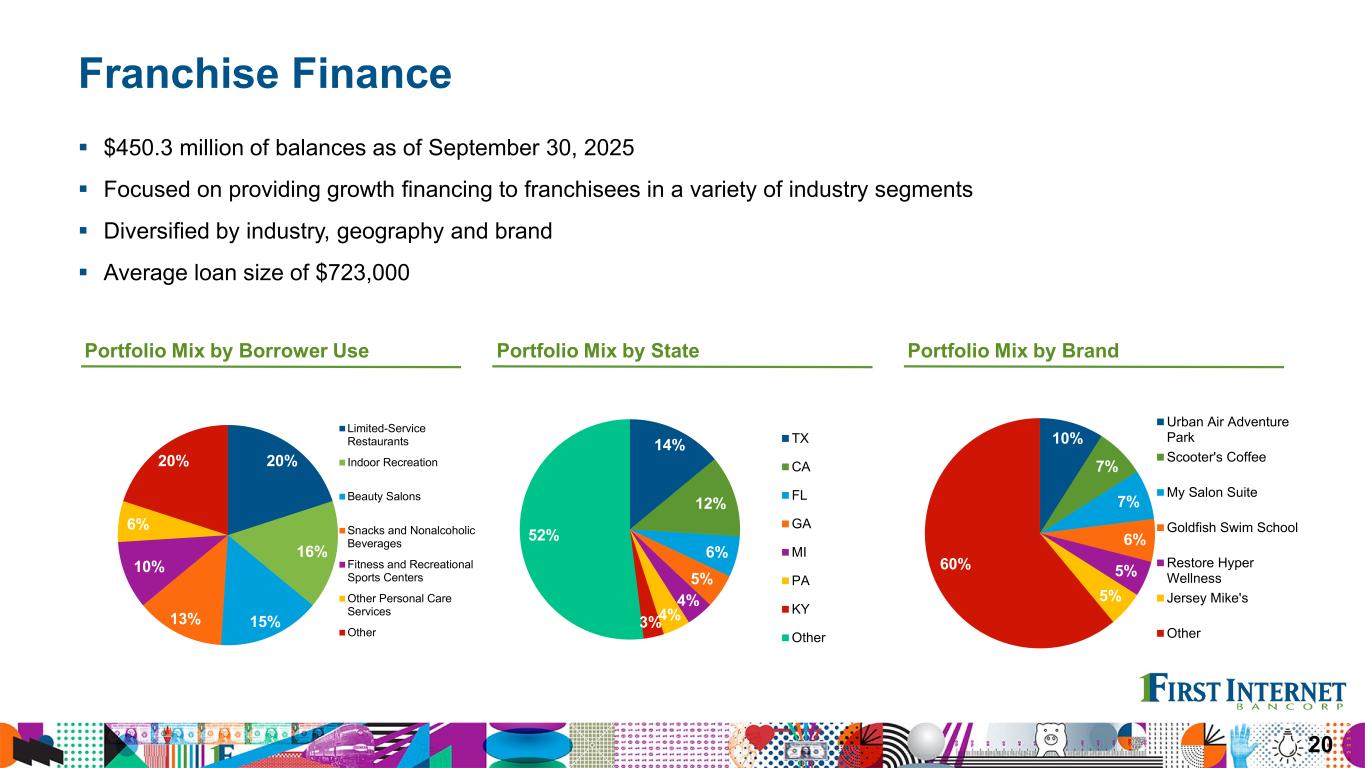
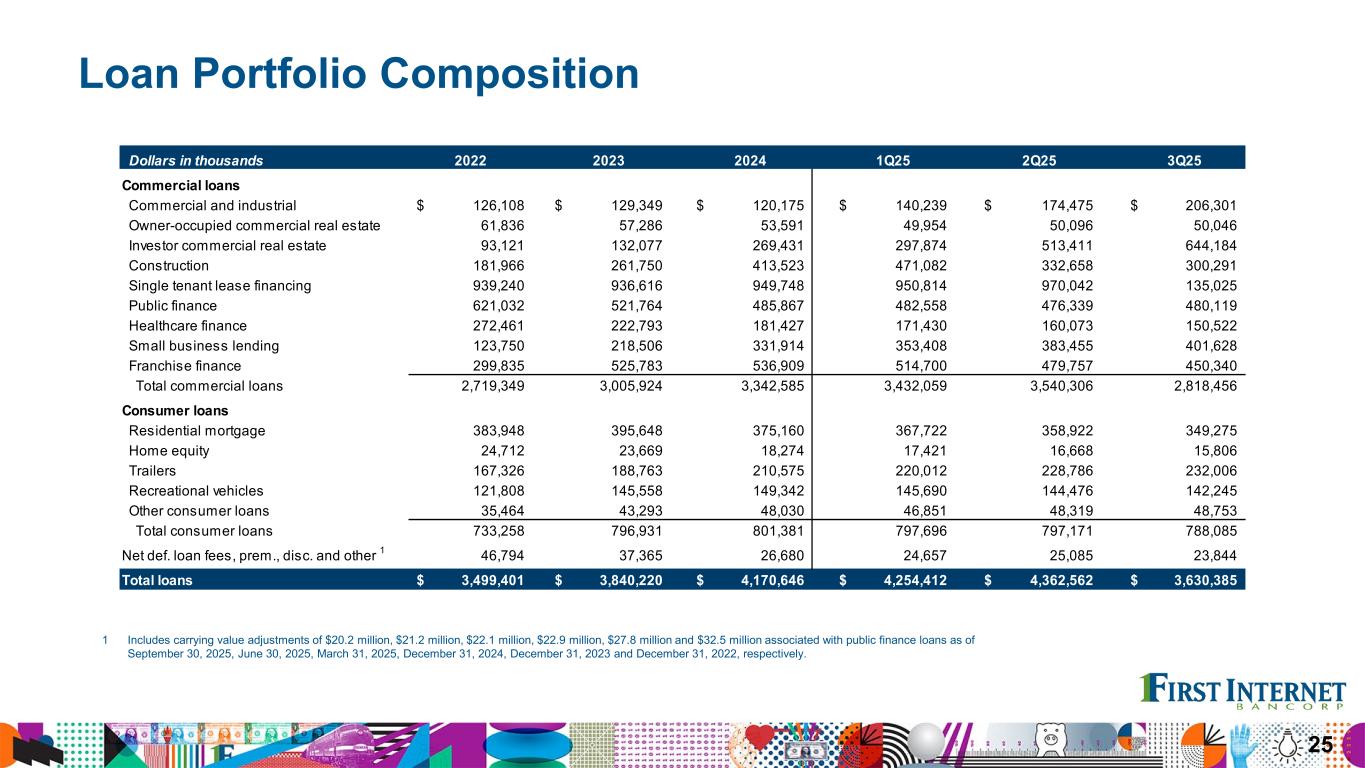
Hey, good afternoon. Wanted just to go back to the franchise finance portfolio for a second. And, you know, obviously, that portfolio was originated by, you know, a third-party Apple Pie. And so, you know, as we look at that portfolio, you're saying that delinquencies are down. But can you help us maybe get some confidence on just the remaining balances of $450 million of that portfolio?
The ultimate on that one is Crow is in doing an audit of that portfolio currently. And as yesterday afternoon at 5 o'clock, they've gone through over 90% of those loans as an external audit. They had no downgrades on the loans and had two upgrades. So we not only internally feel better about it, and you hit the nail on the head, Brett, the issue wasn't the remote origination, but it was the remote collection effort. And back probably almost six months ago now, five, six months ago, we jumped in and took control with the assistance of the folks at Apple Pie to do the collection efforts. And we now, the minute somebody goes past you or has an issue or they've got a problem or question or concern, we talk to them. We're not relying on the third-party servicer. So we have been through literally every loan file. Crow has now been through 90%. We'll finish it up this week, hopefully early next week. But we're very proud of the fact that right now they've had zero downgrades and two upgrades on what they've looked at. So our confidence level is high on franchise.
Okay. And then I don't know if you guys have it available, but Criticized went from 108 to 128 last quarter. I don't know if you'd have that balance or you have to wait for the filings, but I was hoping you might have that. figure well you'll have to wait till the filings because we don't have the the formal number calculated okay um and then just wanted to you know i we started earning season with with jamie talking about cockroaches and we've we've seen a few what you would probably call idiosyncratic issues um how would you describe what you guys have experienced would you say it's all idiosyncratic would you say some of the stuff that you've had to deal with has been somewhat related to either a weakening consumer or anything in particular?
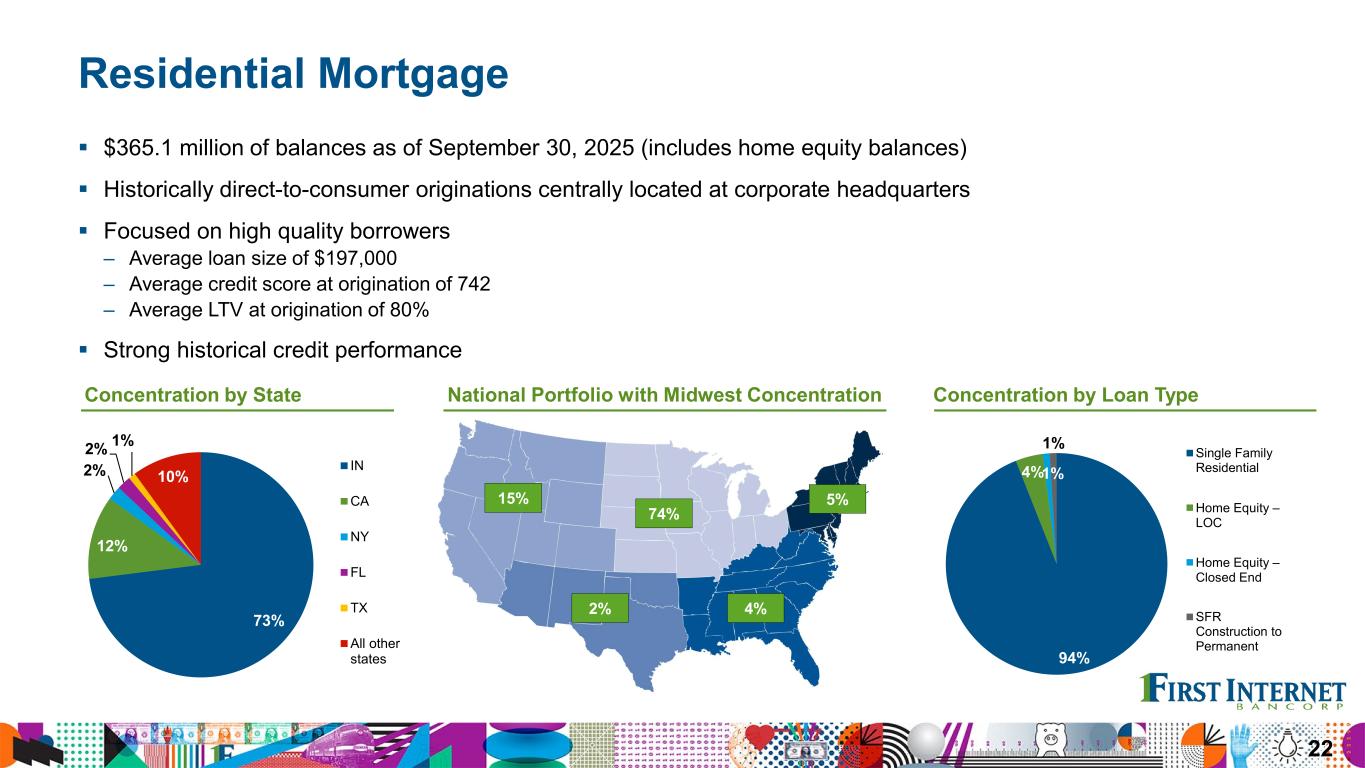
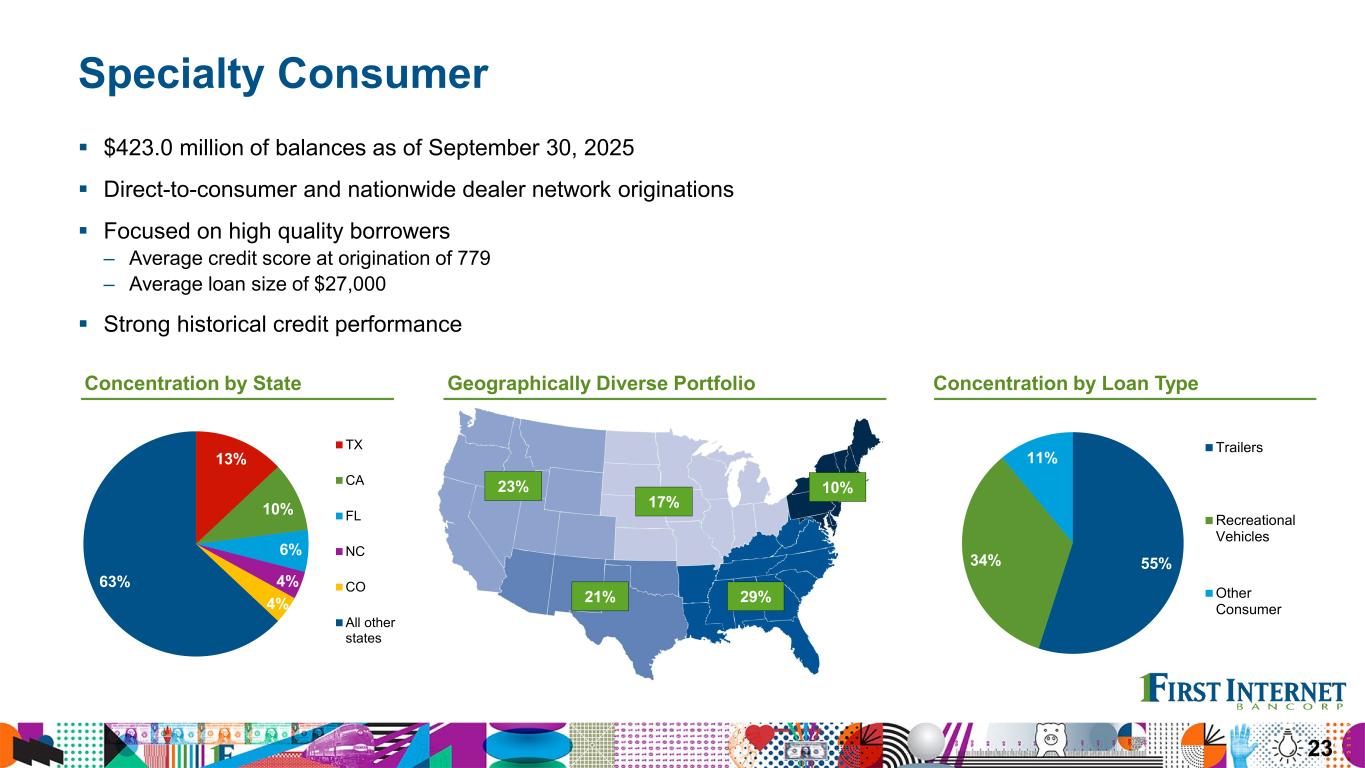
We have referred to our small business loans Brett in the past as snowflakes because they are all individual, unique, and each one has a story behind it. But I do think if you step back and you look at franchise finance as well as small business, there are probably some underlying commonalities to the loan. And so where the Lumos portfolio analysis has been really helpful to us is in identifying any trends that we might not have, such as specific geographies, and I don't mean states, but I mean down to zip codes, as well as we know that there are some industries certainly that have been tougher. We have been fairly insulated from any consumer stress that is out there because the portfolio that we have of consumer loans is to a very high credit quality borrower. What we might see in the future, if there were continued stress in the economy, for instance, is there might just be a slowdown in the acquisition of new recreational vehicles or horse trailers if those are not must-have items but nice-to-have items and people make a decision not to acquire a new one. So what we might see would be a slowdown in the origination of new loans. But we're seeing that the consumer borrower has stayed very strong for us and for our portfolio. With the small business, we are identifying where we can any commonalities and remediating those for future credit standards.
I think the issue, I'd grieve Nicole 100%, the consumer, I think, it's weathering the storm fairly well currently until unemployment starts to rear its ugly head. But I think the small business side is starting to feel some of the effects. We've got a lot of economists around the state of Indiana, all the major universities, et cetera, that are starting to say, hey, you know, it's going to get tougher before it gets better. We're just now starting to feel the impacts of tariffs on raw goods and stuff. We're still a manufacturing state here in Indiana, and it's really starting to ripple through small manufacturers, independent players, here in the state of Indiana that aren't able to absorb the costs. I have a son that's running a bicycle shop in Bloomington, Indiana. If the proposed new tariffs on China go through, a bicycle chain that six months ago cost $25 will now cost $100. And that's the thing. We don't know how much of this is going to be for real or not. But small independent retailers, small businesses are going to see some impact here over the next two or three months if things continue on the same path. So you have to be determined, but I do agree with Jamie if there's one cockroach there's more as we well know in the SBA. So we're on it as best we can be. And one of the things that Nicole pointed out that this Lumos technology and the AI product gets is It warns us of hotspots. So we can take a proactive position. And if we have a quick service restaurant in southern Florida in certain zip codes and areas, they're saying, you know, this is a hotspot. Take a look. We can talk to those owners before they hit a wall or run into problems. So the AI tech that we've implemented over the last three to four months has really given us huge insight to both the franchise portfolios as well as the SBA portfolio.
And if I could just sneak in one last one, you know, David, you said you buy back stock, you know, when it got down to these kind of levels and we're down here again. Are you guys going to buy back stock at these levels?
And how do you think about that versus maybe growing the capital further? uh it's a mixed bag it's a it's a tough decision to make but if we stay in the teens for any period of time here we do have authorization ability over the next two years to buy back 25 million obviously where our capital is today we can't go spend 25 million tomorrow but if it stays down here in the teens uh we come out of black up black out and all that good stuff first part of next week we will definitely get into the market and uh buy some shares if it stays in the teens And I think we have some directors, myself in particular, that will also get into the market next week.
Okay. Good to hear. And thanks for all the color, guys.
Operator
Your next question comes from the line of Nathan Rees from Piper Sandler. Your line is now open.
Hi, everyone. Good afternoon. Thanks for taking the questions. I'm a little confused. I was going back to my notes from last quarter and wrote down that you guys ceased originating franchise finance loans back in January and you didn't have any deferments within franchise finance coming out of last quarter. So I guess I'm just trying to understand what transpired with, you know, these handful of loans that moved to non-performing and that you also charged off in the quarter. Was it just the collection efforts that you undertook that you just described earlier, David, or would just appreciate any other color in terms of what transpired within the franchise portfolio for the last 90 days?
Well, these would be loans that we were either monitoring, where we were aware that the borrower was struggling, or perhaps the borrower went delinquent. And maybe last quarter, because keep in mind, delinquencies came down 11 million. So if you just think about the math, most of that 14 million that we charged off or, excuse me, moved to non-performing this quarter were delinquent last quarter, right? They maybe were 30 days or 40 days or something like that. And, you know, obviously when they're in delinquencies, David talked about the level of communication we have in speaking to the borrowers, you know, trying to work through a situation or work to resolution. And those were the loans, the delinquencies where it was most prudent to move them to non-performing and put a specific reserve on them. But to kind of go back the other way on it, we are seeing some success in some of our resolution strategies with that. So for example, there was about a million dollars of two loans totaling about a million dollars that were non-performing last quarter, that so obviously had been moved to non-accrual, had a reserve against them. But our credit administration team worked out a resolution where we were made whole 90 cents on the dollar on those deals, which was obviously much better than what we had reserved. So there are a lot of moving parts, but I guess the simplest piece is that these were just delinquencies that, you know, we moved to non-performing and put reserves on.
Okay. Got it. And, Nicole, I know you mentioned that, you know, on the SDA side, you know, these are snowflake situations in terms of where you're seeing charge-offs. But also just curious, you know, are there any commonalities in terms of vintage or when these loans are originated? You know, perhaps, you know, when rates were lower and now a lot of these small business borrowers are being rate shocked. Is there any line of thought into that scenario?
Yeah, that's a great question. Thanks for asking, Nate. We do vintage analysis, and so we are modeling future credit outlook based on the vintages. And I think David talked about some hot spots in the portfolio that we have identified. I would say more than an increase in rates that the borrower – Yes, an increase in their loan rate has impacted their monthly payment amount, but I think we've modeled on a million-dollar loan, a 25 basis point reduction is about $300 a month to them. So it's not just solely the movement of interest rates and the impact on the borrower, but inflation more generally and it driving up the price of their raw materials or inventory that they need to buy. the cost of labor has gone up for them. And in some pockets of the country, consumers are starting to slow down on buying. So what we do see is an impact of inflation more so than impact of interest rate directly. And again, that's data that we're getting from our predictive analytics engine. So it's been really helpful to us in identifying what those industries are that might be more inflation sensitive, and it allows us to better refine our credit standards.
Okay, understood. And then, Ken, I think you mentioned you're comfortable with where kind of the projections are for NII for next year at, I think it's around $150 million or so. Just curious, you know, if we do get, you know, four or five rate cuts as reflecting the forward curve over the next 12 to 18 months, you know, where do you see kind of the margin, you know, trending by the end of next year?
Well, okay, so as I said, we kind of model a flat rate scenario to try not to be in the business of guessing where rates are. So if we think about a full rate NIM for next year, we're probably talking somewhere kind of in the range of 270 to 280. That's a full year, and that kind of ramps up over the course of the year. So it's not maybe quite as pronounced a stair-step up as we would have had previously, but it does increase quarterly over the course of the year. Now, on a static balance sheet, given with the sale of single-tenant lease financing loans, that moved us a lot closer to being neutral, but we are still slightly liability sensitive. So, for every 25 basis point rate cut, we see an annualized increase of, call it, $1.4 million of net interest income.
Okay. That's really helpful. I appreciate all the color. Thank you, everyone.
Operator
Your next question comes from the line of George Sutton from Craig Hallam. Your line is now open.
Thank you. Can you just walk us through the moving off of the excess deposits, the mechanics of that? I believe you have a relationship with IntraFi and you get a fee on actually moving those deposits. And then structurally, how do you think about future deposits coming in when you have the ability to pull some of these deposits back in a scenario where loan growth is good?
Yeah. The mechanics for pushing them off through the IntraFi network are pretty easy. When we set up several of our fintech relationships, the depositor forms allow the deposits to be pushed into the IntraFi network, either for reciprocal deposits for deposit insurance or to move off the balance sheet. And, yes, we do make fee income, which is they pay us, you know, kind of a spread, call it Fed Funds Minus, and we collect the difference between what the rate we're paying on the deposit and what we're getting paid through pushing it into the deposit network. So it kind of depends. I think where it's really been beneficial for us is a lot of our what I'll call higher cost fintech deposits are kind of already approved to be into the Intrify network. So it does a couple of things, right? It allows us to move kind of the higher cost, call it Fed funds minus 20 basis points deposits off balance sheet. But we also see a lot of volatility and increasing volume in those, so it helps us to manage the size of the balance sheet. So if those deposits go up $200 million in a quarter and we don't need the $200 million, we can push that off the balance sheet. And then to your point earlier, we can bring those back onto the balance sheet very easily to help in the event that perhaps CD volumes are down or other deposit areas are down. We can bring those back onto the balance sheet very easily to fund loan growth or fund CD outflows. It just gives us a lot more flexibility to manage the balance sheet going forward.
The other side of that equation, George, as you pointed out, we have plenty of excess cash at the current time. We're still growing and anticipate growing the loan portfolio by 10% next year. We sold STL, but Morris is back in the marketplace pushing close to $100 million in originations in just this quarter. It gives us a little better pricing there. It also enables us, if the Fed does do another pop here at the end, we'll probably do a 100% drop on rates kind of across the board on our side to match it. Historically, if we dropped 25, we would drop rates 10 to 15 points. Because of the excess cash, we have a lot better flexibility. We're also in a position now, I think, on CDs, particularly in the commercial markets, only our long-term CDs in the four- or five-year category, we appear in the top 25 in the country. Nobody's buying those right now, so it's not impacting us. But we haven't been on the charts in the CD realm for the last two months. renewal on CDs. We have over $400 million rolling this quarter at a $434, $435 cost. If they were to renew, it's going to be in a $370 range. Or if they go away because we're down lower than they can get elsewhere, we're okay with that. It buys us a lot of flexibility we've not had in years. So you're right. Having that excess cash is a nice play. Plus, it's not costing us anything. As Ken said, we can get it off balance sheet, pick up a few points. It doesn't mess up our NIMS, doesn't mess up our ratios. So it's a nice position right now compared to where the world was post-Silicon Valley two and a half years ago.
So further on the flexibility perspective, you know, that was a pretty meaningful strategic move to sell the single tenant loans. And I'm just curious if we think forward, say, 18 months from now, how different do you see the business being? Are there contemplations of moving in different directions, or it obviously gives you flexibility. I'm curious what you're going to do with that flexibility.
We have a couple of fintech opportunities we're looking at that could grow significantly on the lending side. We have some leasing opportunities that are yielding us 7.5%, 8% versus the 5% we had on the single tenant. And the new single tenant that Mars is bringing back on board, we're on a five-year term versus what was traditionally a 10-year term at north of six, six and a half percent. And there's also forward flow opportunity there with Blackstone. So it gives us a lot of flexibility. We, on the fintech side, kind of shied away from some of the bigger lending opportunities because of lack of cash. We're now back in that market and talking to some folks. So I think you hit the nail head on. We're going to probably have a little different portfolio mix 18 months from now than we have today. But we got a couple opportunities we're looking at that could be very beneficial to us.
Operator
Your next question comes from the line of John Roses from Janney. Your line is now open.
Hey, good afternoon. Ken, just a follow-up question. For 2026, the NII guidance, the 149 to 150, is that on an FTE basis?
No. Well, that's GAAP. So, add about $4.4 million to get to FTE.
Okay. Everything else, I think, was asked and answered. So, thanks, everybody.
Okay. Thanks, John. Thank you, sir.
Operator
There are no further questions at this time. I will now turn the call over to Mr. David Becker. Please continue.
Thanks, everybody, for joining us today. We obviously covered a lot of ground here. We have really, as we've discussed many times already, consistently delivered strong net interest income improvements over the last 12 to 18 months. Macro environment remains uncertain out here as to what's going on in the world, but our customer activity is stabilizing. Lending teams continue to do very well. Pipelines are solid. We are also excited about growth potential from the FinTech partnerships, as I just discussed a minute ago, which will further diversify and strengthen our revenue base. So with improvements in the loan mix, anticipated reduction in deposit costs if the Fed is to do something else, we're confident in our ability to deliver stronger earnings in the coming quarters. As fellow shareholders, we remain committed to enhancing the profitability and long-term value, and we thank you for your continued support, and have a great afternoon.
Operator
Ladies and gentlemen, this concludes today's conference call. Thank you for your participation. You may now disconnect.