Operator
Good day, and thank you for standing by. Welcome to the I.O. Vance Biotherapeutics 4th Quarter and Full Year 2025 Financial Results and Corporate Updates Commerce Call. At this time, all participants are in a listen-only mode. After the speaker's presentation, there will be a question and answer session. To ask a question during this session, you will need to press star 1-1 on your telephone. You will then hear an automated message advising your hand is raised. To withdraw your question, please press star 1-1 again. Please be advised that today's conference is being recorded. I would now like to hand the conference over to your speaker today, Sarah Pellegrino, Senior Vice President, Investor Relations and Corporate Communications at Iovance. Please go ahead.
Thank you, operator. Good morning and welcome to the Iovance webcast to discuss our fourth quarter and full year 2025 financial results, business achievements, and corporate updates. This morning we issued a press release that is available on our corporate website at iovance.com. This conference call will include forward-looking statements regarding iovance's goals, business focus, business plans and transactions, revenue, commercial activities, clinical trials results, regulatory approvals and interactions, plans and strategies, research and preclinical activities, potential future applications of our technology, manufacturing capabilities, regulatory feedback and guidance, payer interactions, licenses and collaborations, cash position and expense guidance, and future updates. Forward-looking statements are subject to numerous risks and uncertainties, many of which are beyond our control, including the risks and uncertainties described from time to time in our SEC filing. Our results may differ materially from those projected during today's call. We undertake no obligation to publicly update any forward-looking statements. I will now turn the call over to Dr. Fred Boath, interim CEO and president of Iovance.
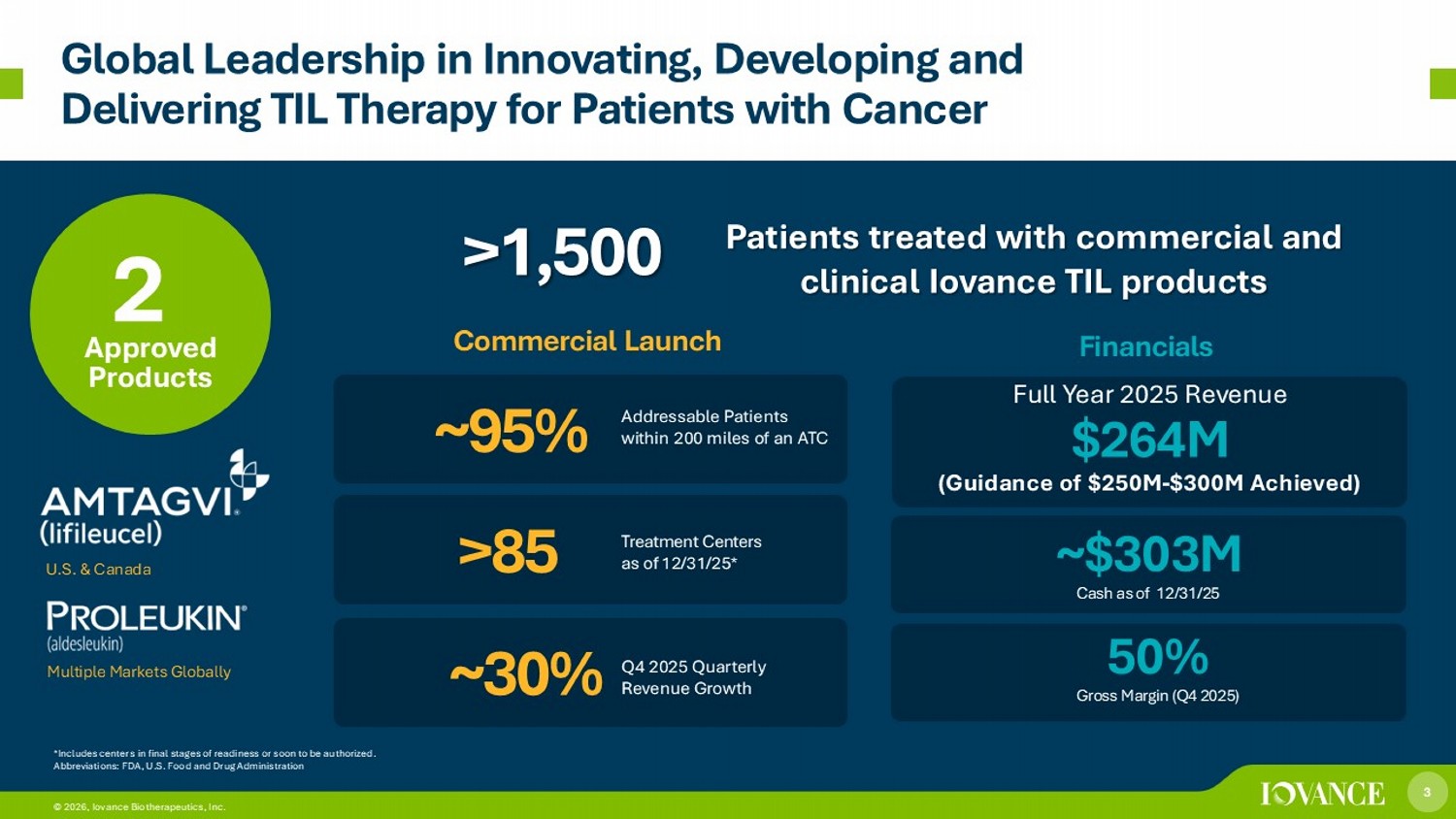
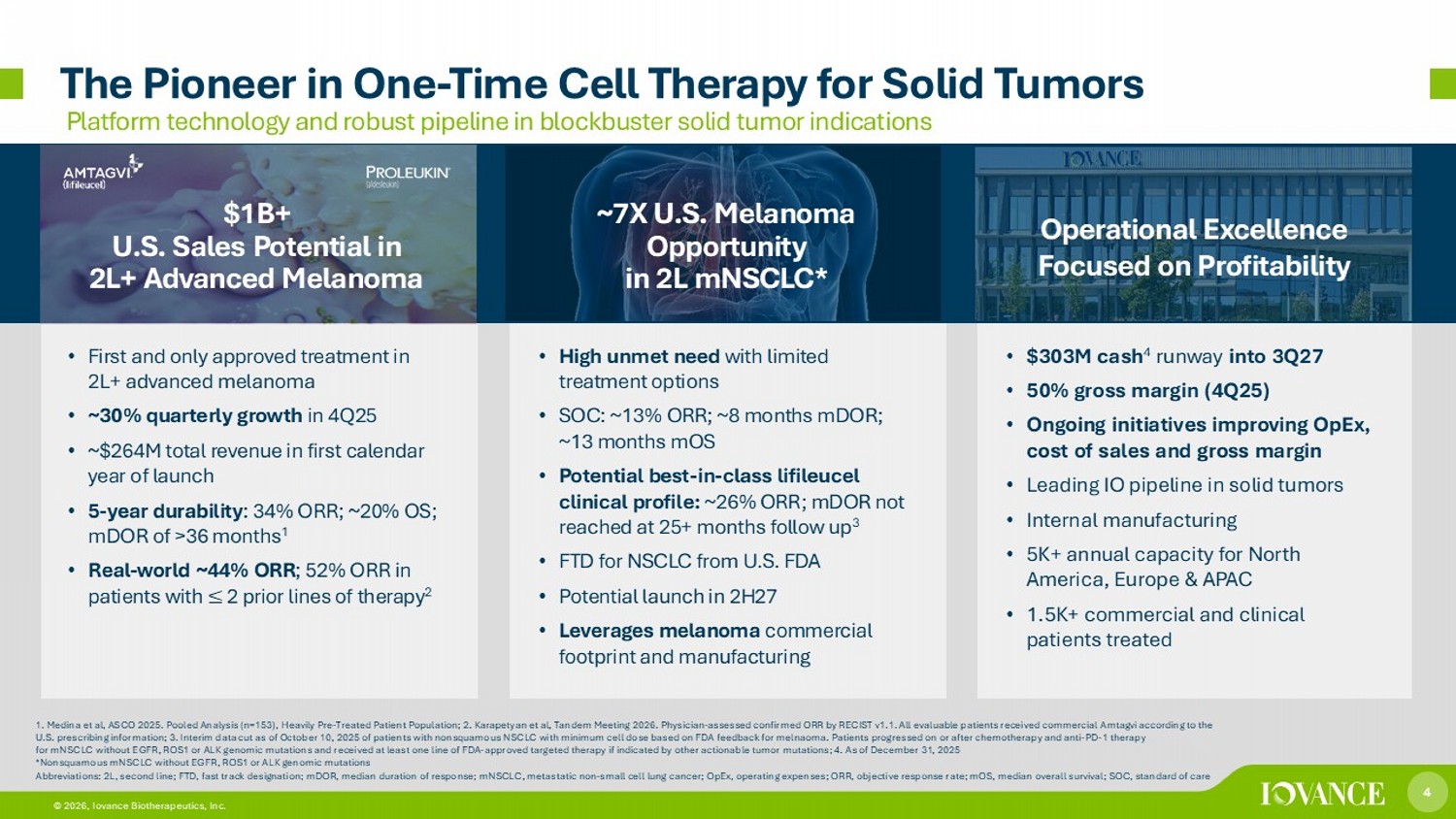
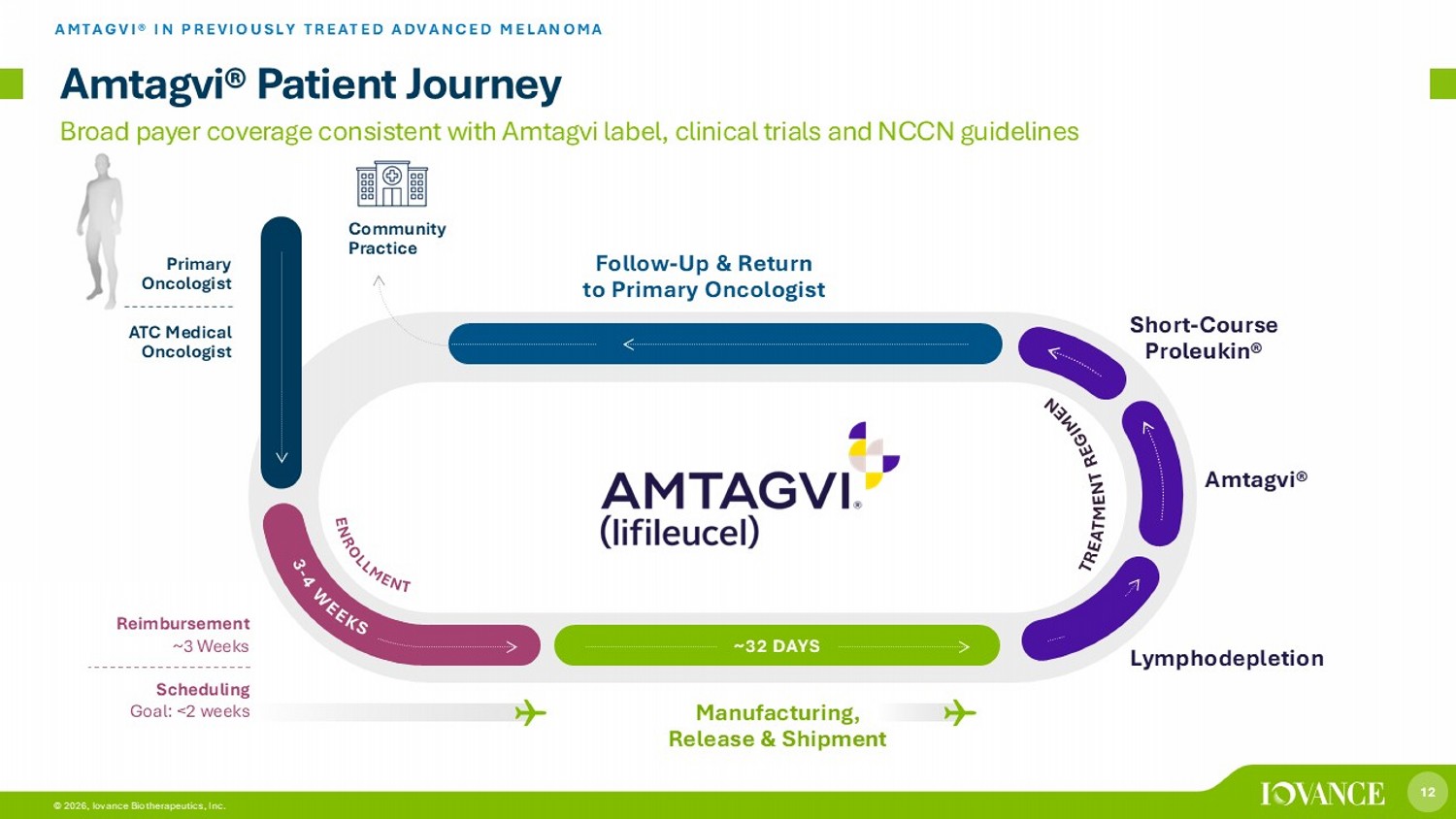
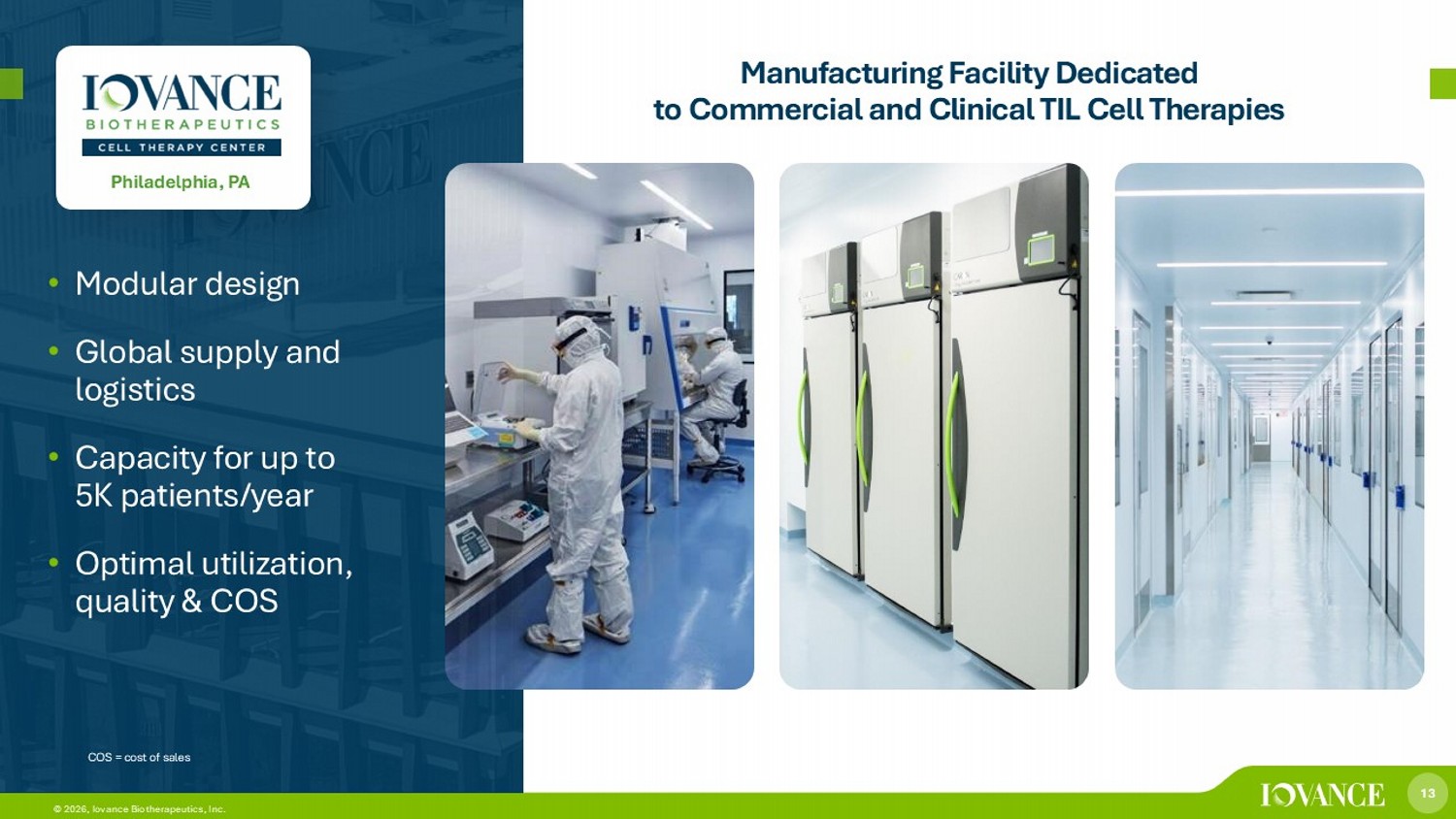
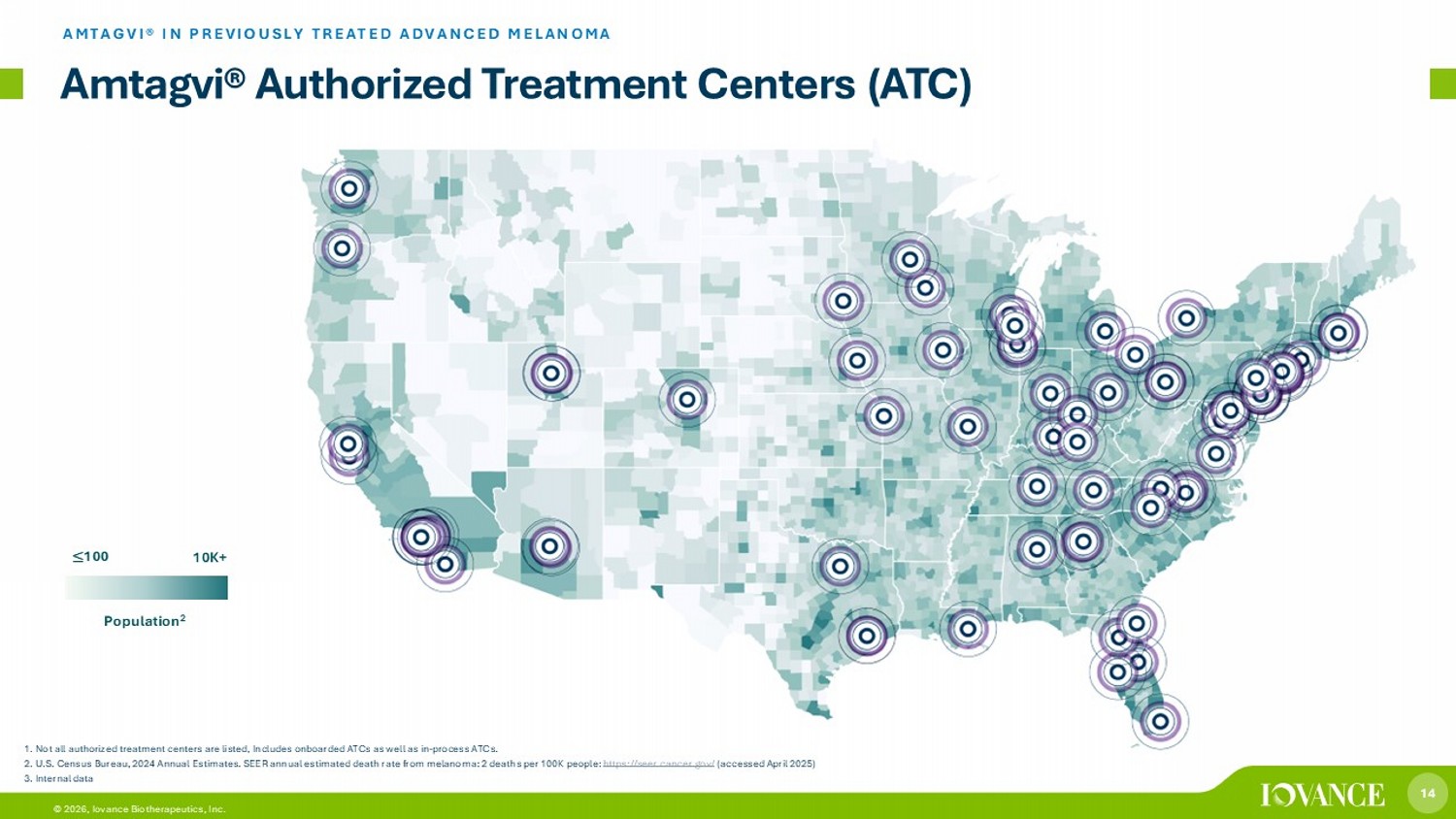
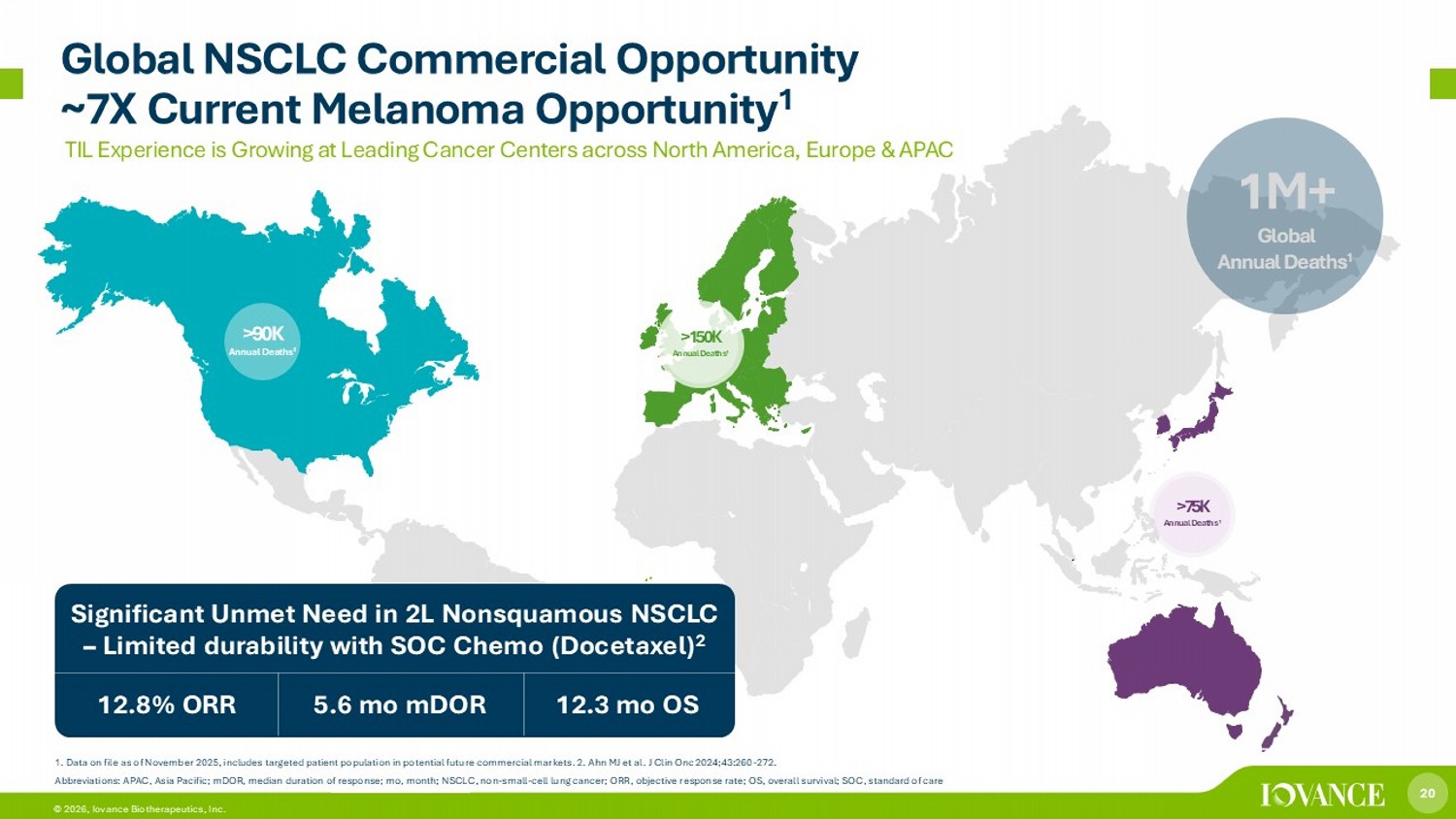
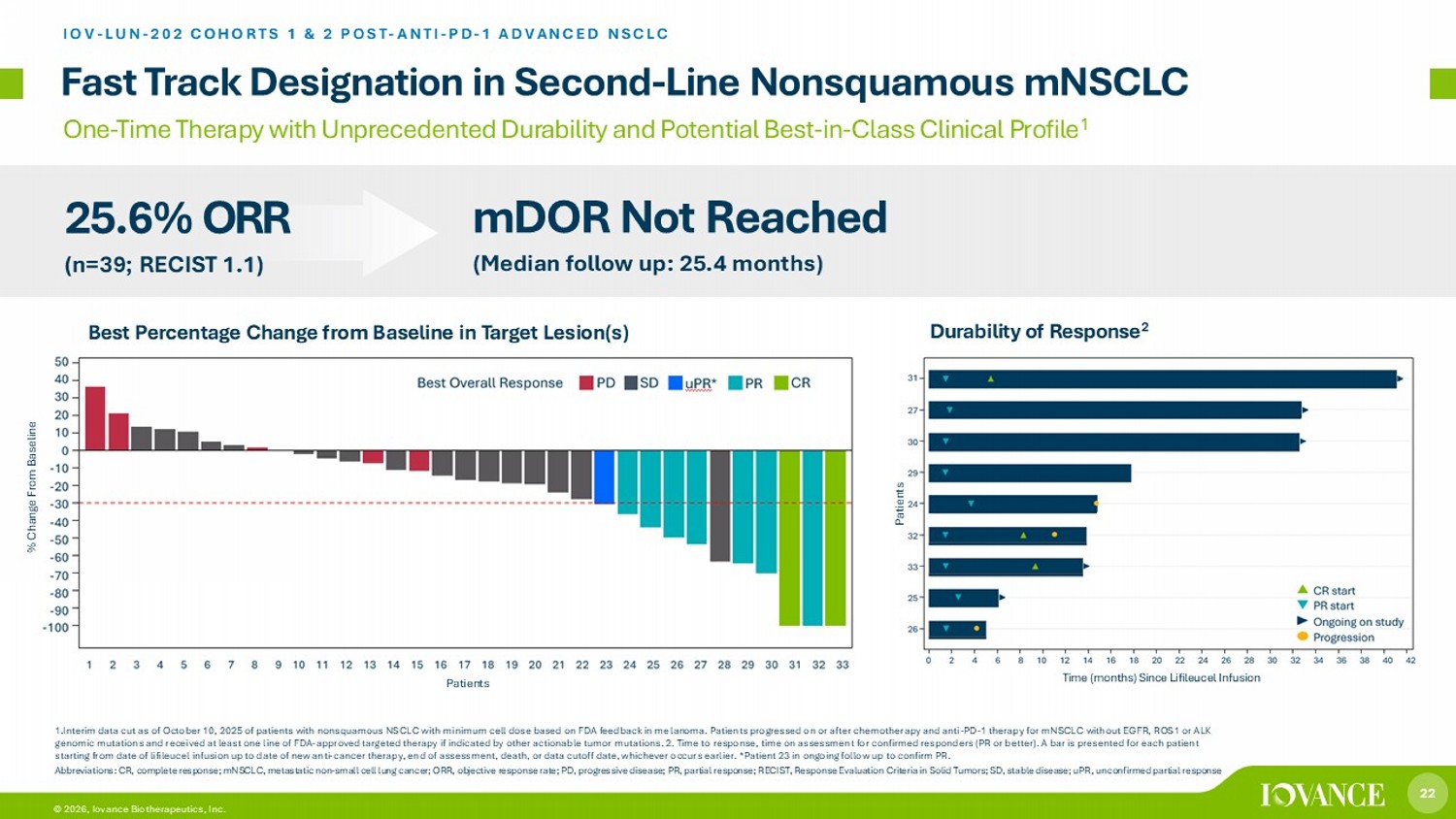
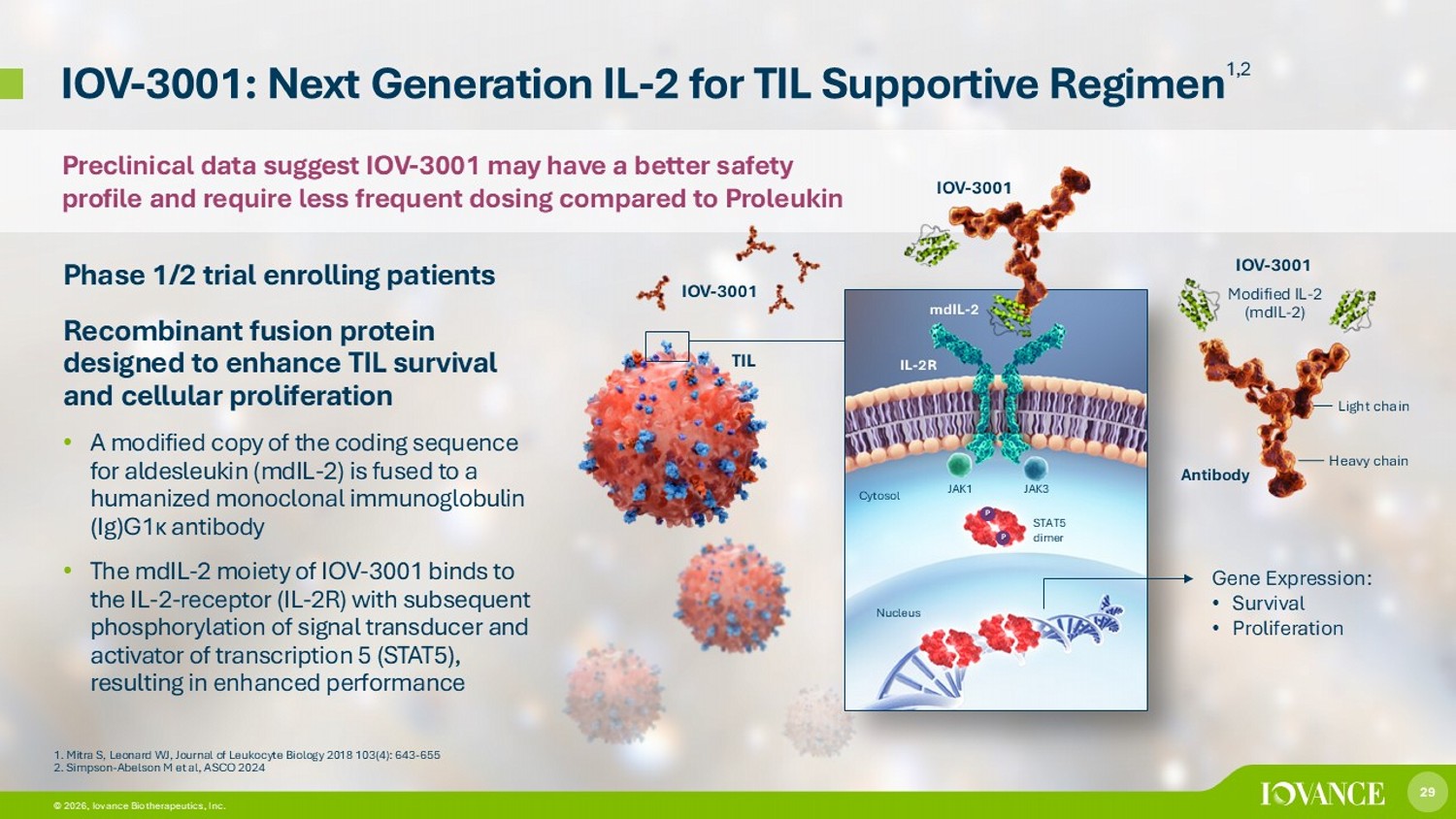
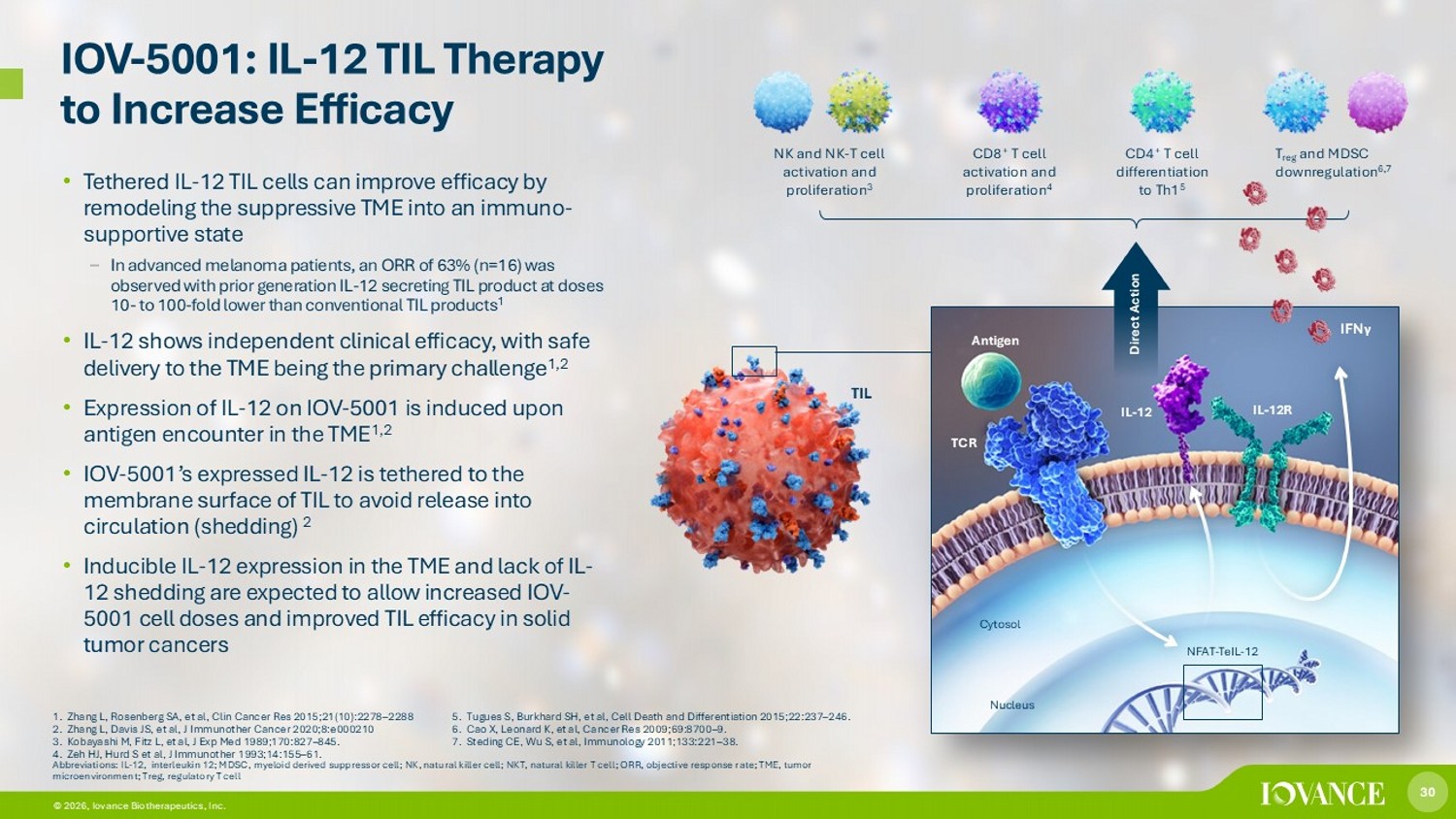
Thank you, Sarah. In 2025, IVANCE delivered substantial revenue growth, achieved groundbreaking data milestones, and strengthened our financial performance. Our fourth quarter and full year 2025 results underscore our focus on value creation for patients and shareholders. We drove an impagny adoption while streamlining costs and optimizing operations. Our operational strength resulted in a robust 30% revenue growth driven by Antagny and our best ever 50% margin from cost of sales in the fourth quarter for the full year well within our annual guidance range. Our cash runway, bolstered by our ongoing cost savings initiatives, now extends into the 3rd of 2025. We are well positioned in 2026 to surge toward a highly profitable and broad business in solid-fumor cancer immunotherapy. We plan to execute across three core pillars. First, continue accelerating our U.S. commercial launch of Amtagmi and Advanced Melanoma, the next generation products. And third, hope of our foundation for success. First and foremost, we are gaining positive update commercially with significant potential for Amtagmi and Perleucan to reach $1 billion plus U.S. sales at peak. After a considerable increase in fourth quarter demand for Amtagmi, enrollment volumes in 2026 are accelerating within our broad and continuously expanding network of both academic and community authorized treatment centers or ATC's. These ATC's are further reinforced by excitement surrounding the real-world experience and benefits of early treatment when they have TAGV. On top of increasing demand we are benefiting from operational improvements throughout the entire TAGV treatment journey from patient identification through manufacturing to infusion. On the heels of positive momentum in the fourth quarter, we expect remarkable revenue growth in 2026, driven by Amtagme. In the very near future, we will provide revenue guidance with our growth projections. Our second pillar is the massive expansion potential for our TIL platform to positively impact patients in the new indications. We are harnessing the overlap and scalability of our TIL platform, manufacturing leadership, and commercial capabilities across solid tumors. Our lead indication for lipolucil is in previously treated non-squamous, non-small cell lung cancer. This blockbuster US market is about seven times larger than our PQS sales opportunity in advanced melanoma. In our registrational patient population, lipolucil has demonstrated best-in-class clinical response rates and durability. This morning we announced the FDA has granted fast-track designation that validates our clinical trial data and reaffirms the substantial medical need for lefelucel in this indication. We are rapidly advancing toward a supplemental biologics license application with a potential accelerated approval and launch in the second half of 2027. I'm also excited to introduce entirely new indications for lefelucel announced in a press release alongside positive early data. In previously treated patients with two aggressive difficult to treat advanced soft tissue sarcomas, Lipelucil demonstrated an unprecedented 50% confirmed response rate. As Brian will highlight, Lipelucil may offer the first durable immunotherapy option in this treatment setting. Current outcomes with standard of care are abysmal, with response rates below 5% and short median overall survival of only 9 to 10 months. Together, these sarcomas impact more than 8,000 patients in the U.S. and Europe annually, significantly increasing our market opportunity for life hallucinol in the US and beyond we're working expeditiously to initiate complete a single-arm registrational trial to launch these sarcomas our robust pipeline is the backbone of immune oncology and multiple solid tumors today into the future as we build upon our established global leadership and define next-generation approaches for tilt cell therapy our two clinical stage genetically engineered tilt therapies have the potential to transform the treatment paradigm across a vast number of solitumor cancers where patients have few options. Our next generation IL-2 product may facilitate more accessible tilt therapies and we expect to provide many more updates on our pipeline in 2026 as we increase revenue, optimize costs, and drive efficiencies toward profitability. In the fourth quarter we've reported our best ever gross margin as Corleen will discuss. Additionally our ongoing execution, discipline, and focus on financial excellence will improve current and future gross margin and further extend their cash runway. Within our operational excellence pillar, as Igor will highlight, manufacturing success has improved across the board. By optimizing our processes we have infused more patients while reducing dropouts to be more efficient ahead of future launches. Importantly, we own and control all manufacturing for amtagany within our US-based IAVAN Cell Therapy Center or ICTC as well as the critical components of our supply chain. We have never been in a stronger position to execute while scaling to new heights. In 2026 we are laser focused on maximizing shareholder value, ending dilution, and supercharging future profitability. I'll now turn the call over to Coraline Roche, our Chief Financial Officer, who will provide further updates on our fourth quarter and full year financials.
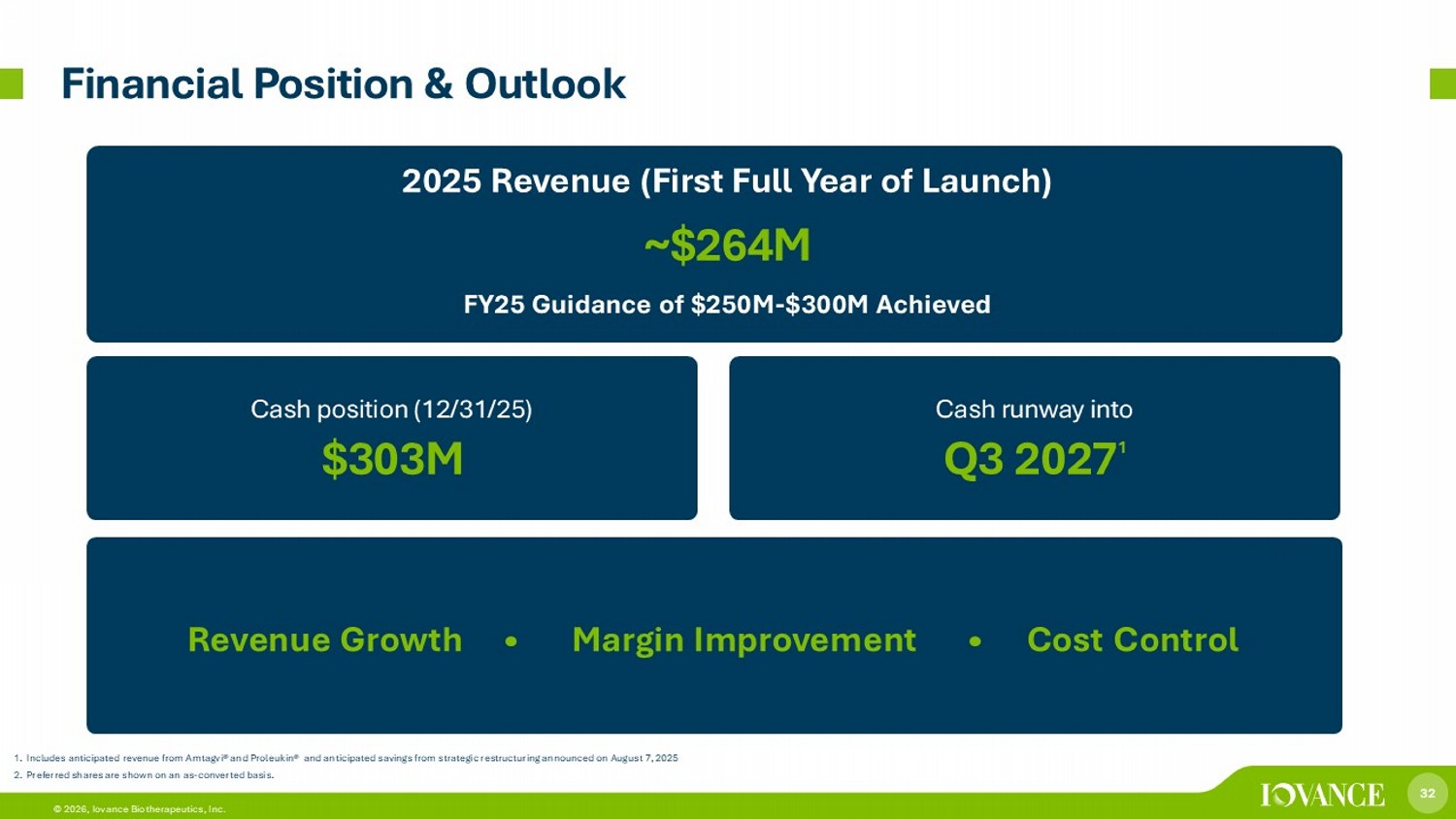
Thanks Fred and Good morning everyone. Iovance finished 2025 with positive momentum as we reported approximately 30% revenue growth with 50% margin from cost of sales in the fourth quarter. Fourth quarter product revenue of 87 million dollars demonstrated meaningful growth of approximately 30% from the prior quarter driven by Intagsy. In our first full year of launch total product revenue of $264 million, increased by 61% over the prior year, driven by AmtagVy revenue growth of 112% year-over-year. That was well within our annual guidance range. We drove this impressive revenue growth in 2025 through ongoing market penetration and earlier treatment with AmtagVy for more patients at an expanding number of treatment centers. The impact of gross to net adjustments remains minimal at less than 2% overall in 2025. Fourth quarter gross margin from cost of sales increased to 50% from 43% in the third quarter. This margin improvement resulted from ongoing operational optimization and disciplined use of capital. The full internalization of manufacturing operations at ICTC also provides uninterrupted supply with agility for further efficiency. Today, we are capable of scale-up and expansion into new indications globally to bolster revenue without the need for significant cash position with approximately $303 million at year end. Driven by our commitment to commercial and clinical execution, operational efficiency, and financial discipline, we successfully extended our cash position to fund operations into the third quarter of 2025. The 2025 financial results reflect our commitment to flawless execution and commercial utilization, improved margin, and extended cash runway that supports our path to profitability. I will now turn the call to Dan Kirby, our Chief Commercial Officer, to provide additional context.
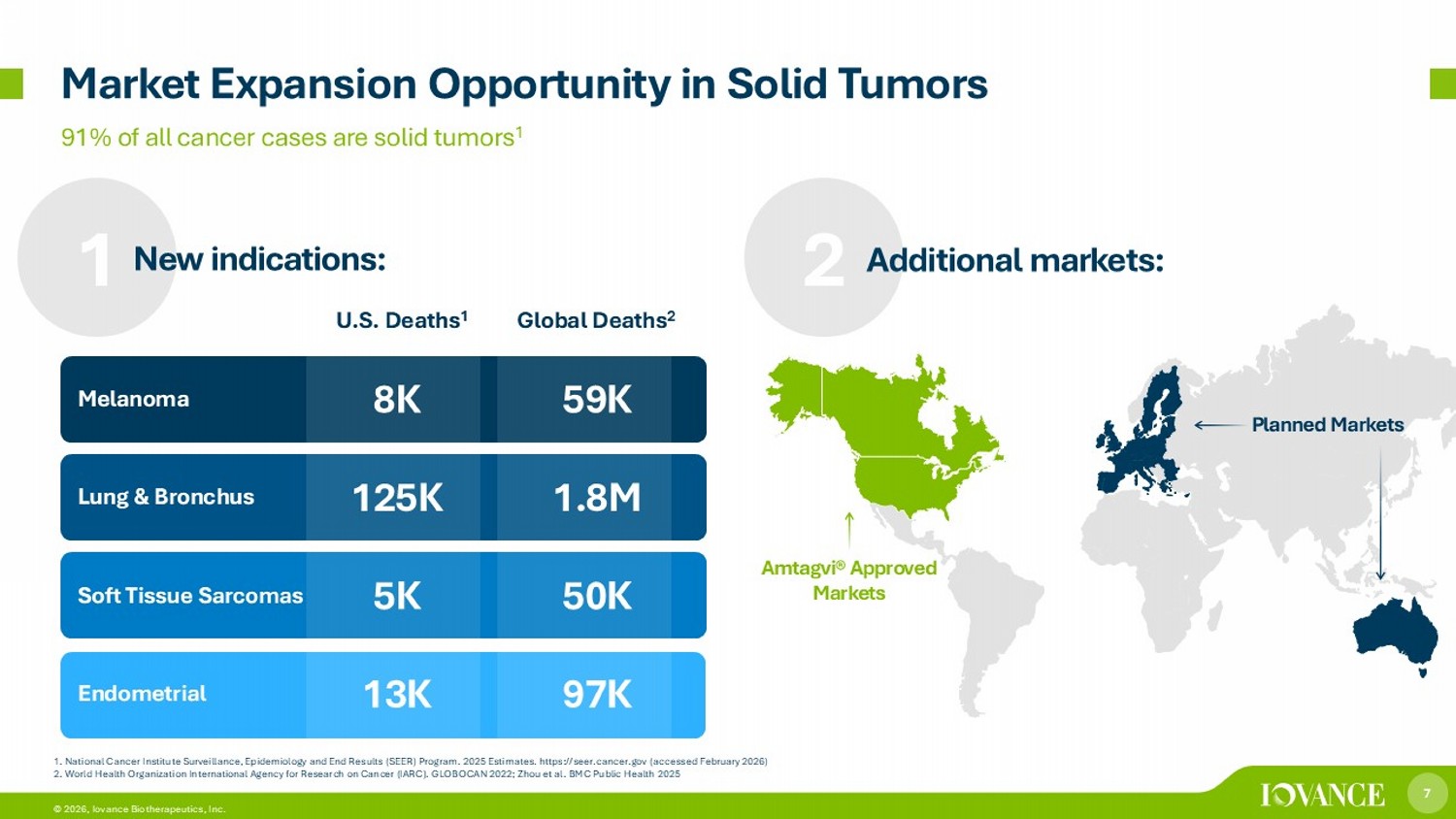
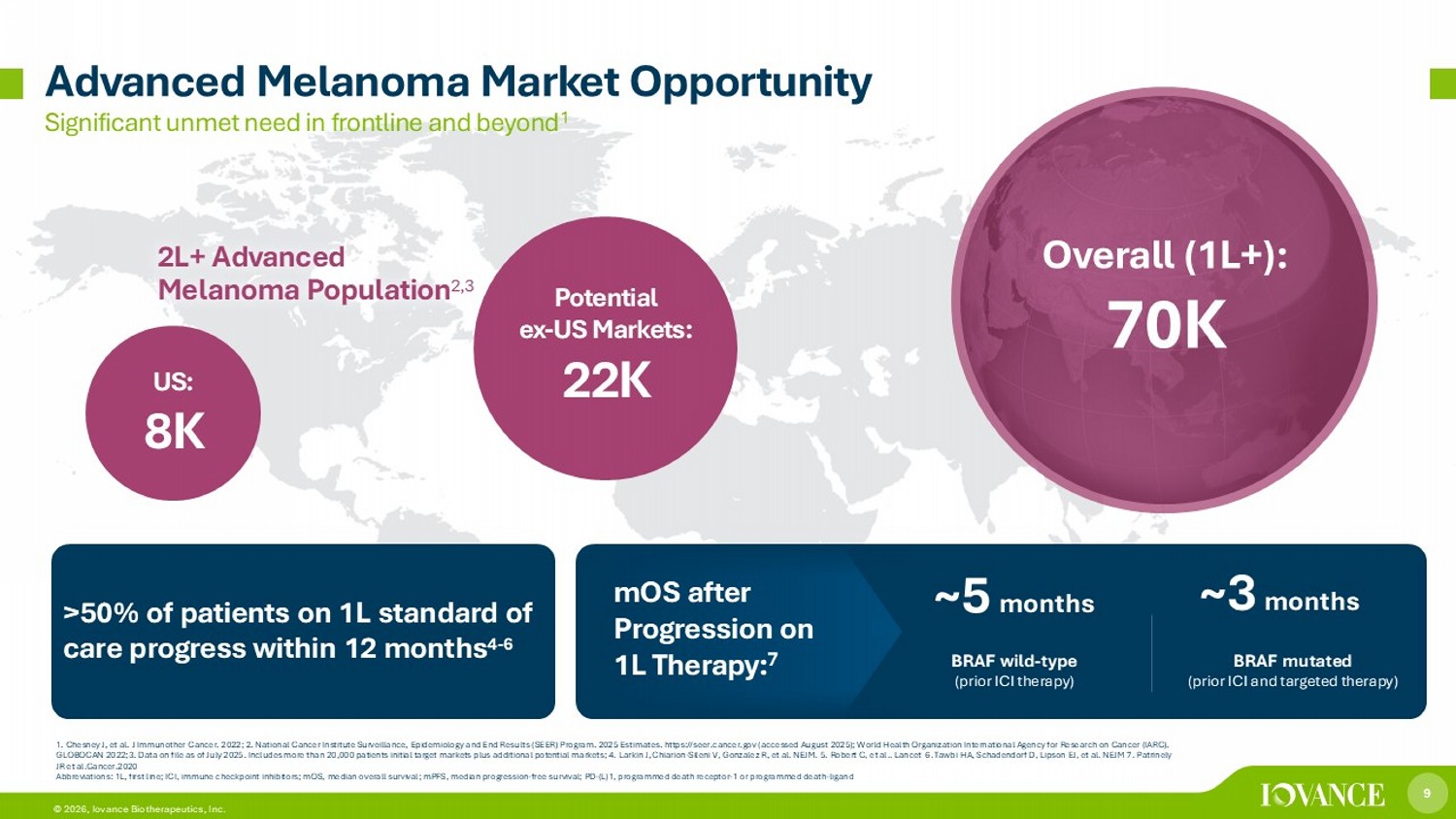
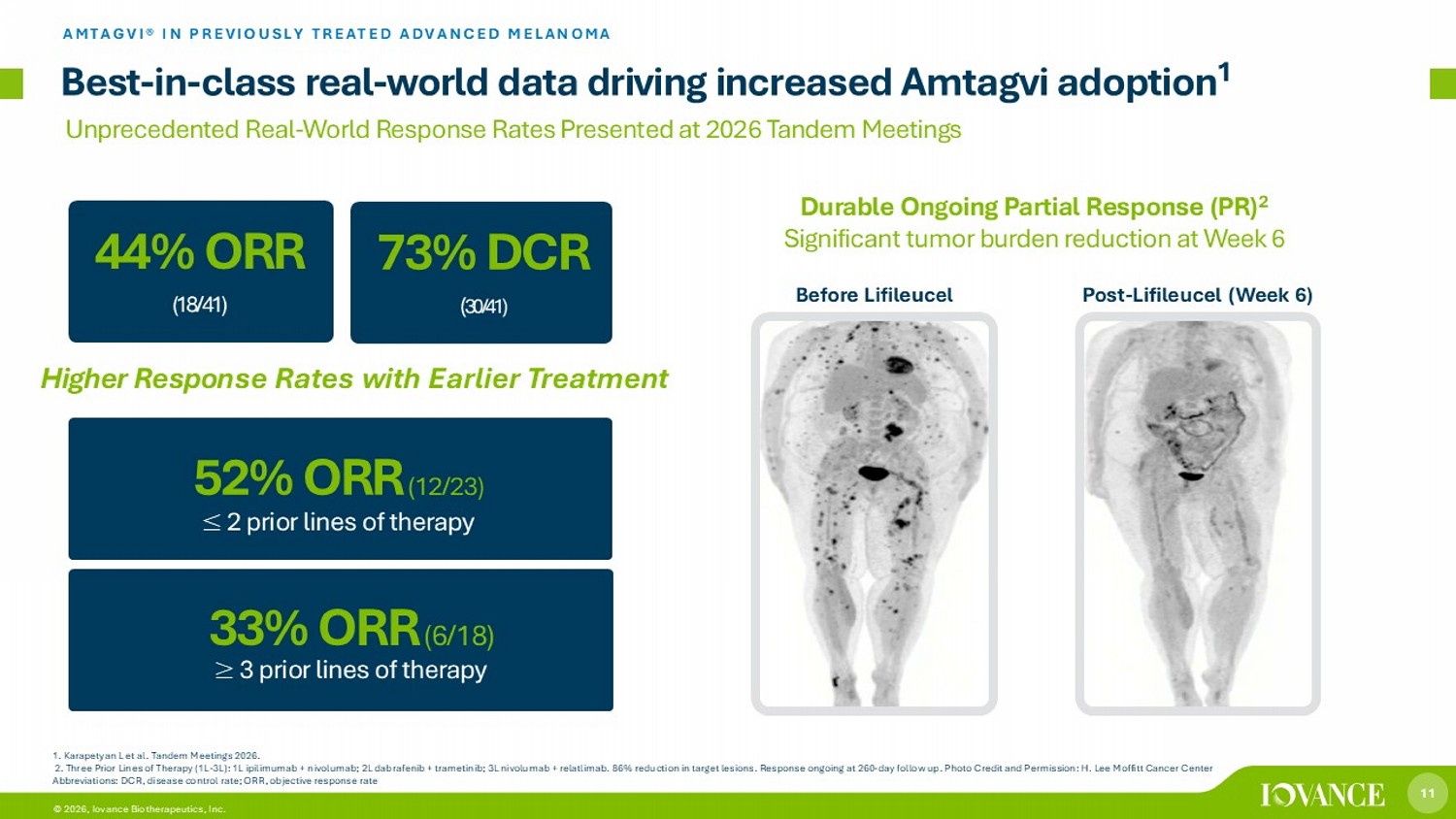
Thank you, Corleen. In 2025, we made tremendous progress in three key areas towards our ultimate goal to establish AmtagV as the preferred treatment option for all eligible patients who deserve a one-time cell therapy with curative intent. The CDC network is continuously expanding. In the fourth quarter, new community centers, as well as high-volume academic centers, quarterly demand for Amtagvi, which drove. Penetrating the community market will unlock Amtagvi's tremendous potential as we expedite higher quality referrals to ATCs and begin to treat patients in the community setting. Recently launched campaigns focused on healthcare professionals and patients. The community market will expand as we build awareness and it is to drive treatment and increase penetration earlier when patients may benefit most from antagonists. Real-world data resonating with medical oncologists has shown with more than one in two patients responding in the second line setting and one in three patients in patients in later lines of therapy. Initiatives within academic ATCs are also generating positive results from earlier tissue procurement and earlier treatment before health status decline in patients with a BRAF mutation who have no current or pending options beyond targeted therapy, on the heels of our substantial fourth-quarter performance into the first quarter, and support our confidence in remarkable growth for 2026. Globally, AntagV has the potential to reach more than 30,000 patients annually with previously treated advanced melanoma. We have made significant strides towards expansion in AntagV approval in Canada, pending approvals in the United Kingdom and additional progress towards resubmitting a marketing authorization application to European medicine. Beyond melanoma, we are preparing for 50,000 addressable patients for peak sales of $10 billion in the U.S. alone. The PC network of U.S. academic and community practices can leverage their existing TIL infrastructure for rapid adoption and non-small cell lung cancer upon approval, as well as future pipeline indication, one-year anniversary and the patient story.
Thank you, Dan. In the fourth quarter of 2025, we achieved both our largest manufacturing volume and highest commercial manufacturing success to date. Building upon this progress, all-life-alusol manufacturing has transitioned to the ICTC, which is a significant milestone to optimize internal capacity utilization, improve operational excellence, reduce cost of sales, and further improve gross margin. I'll also highlight that around year-end, we successfully completed routine annual maintenance at ICTC. During this time, we minimized the impact on manufacturing volume by leveraging our contract manufacturer and increasing internal capacity surrounding the maintenance window. Importantly, ICTC has transformed into a modular facility with capability to provide uninterrupted supply and fully support anticipated global demand today and scale up for the future even during future annual maintenance periods. I will now pass the call to Friedrich.
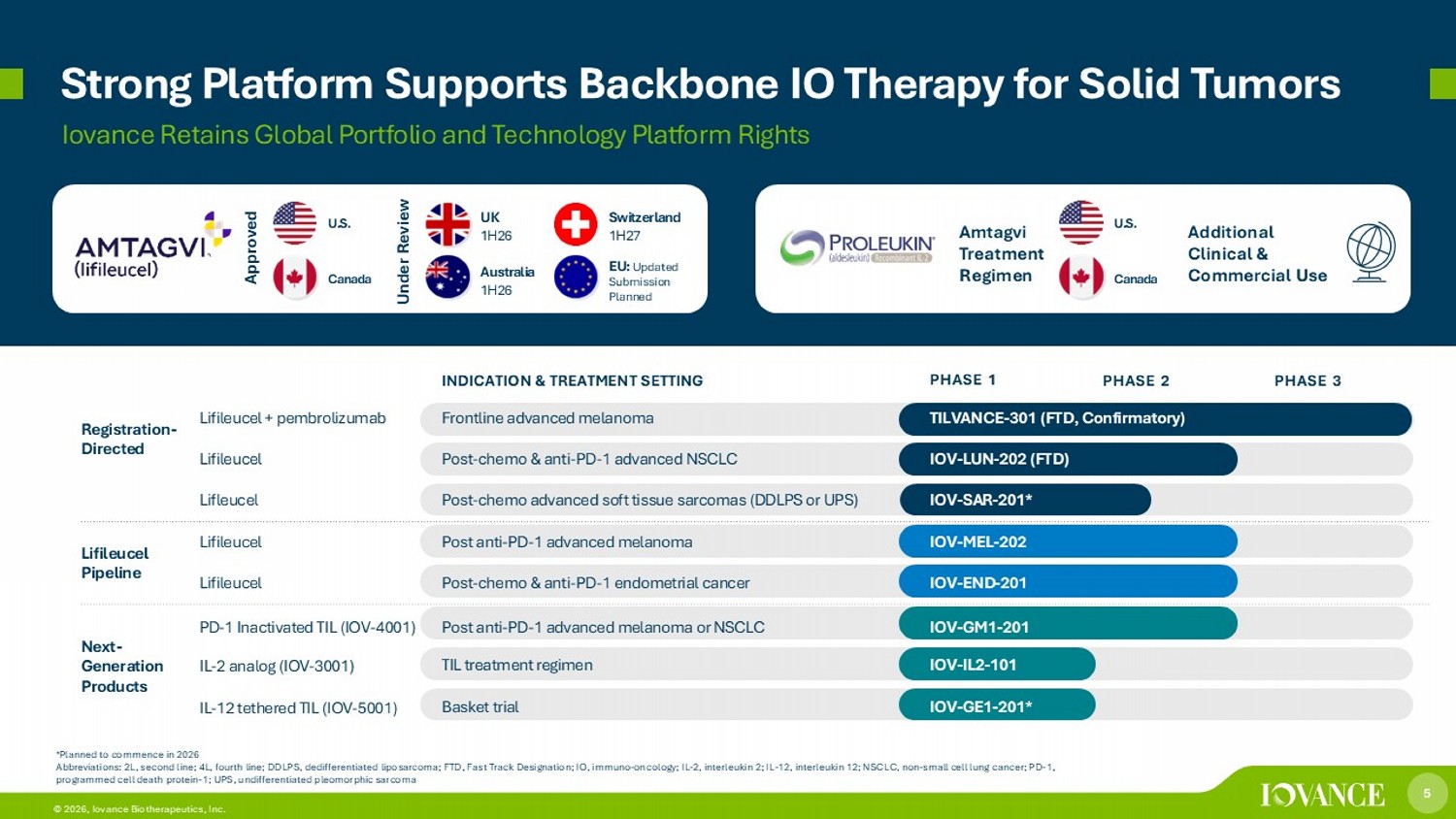
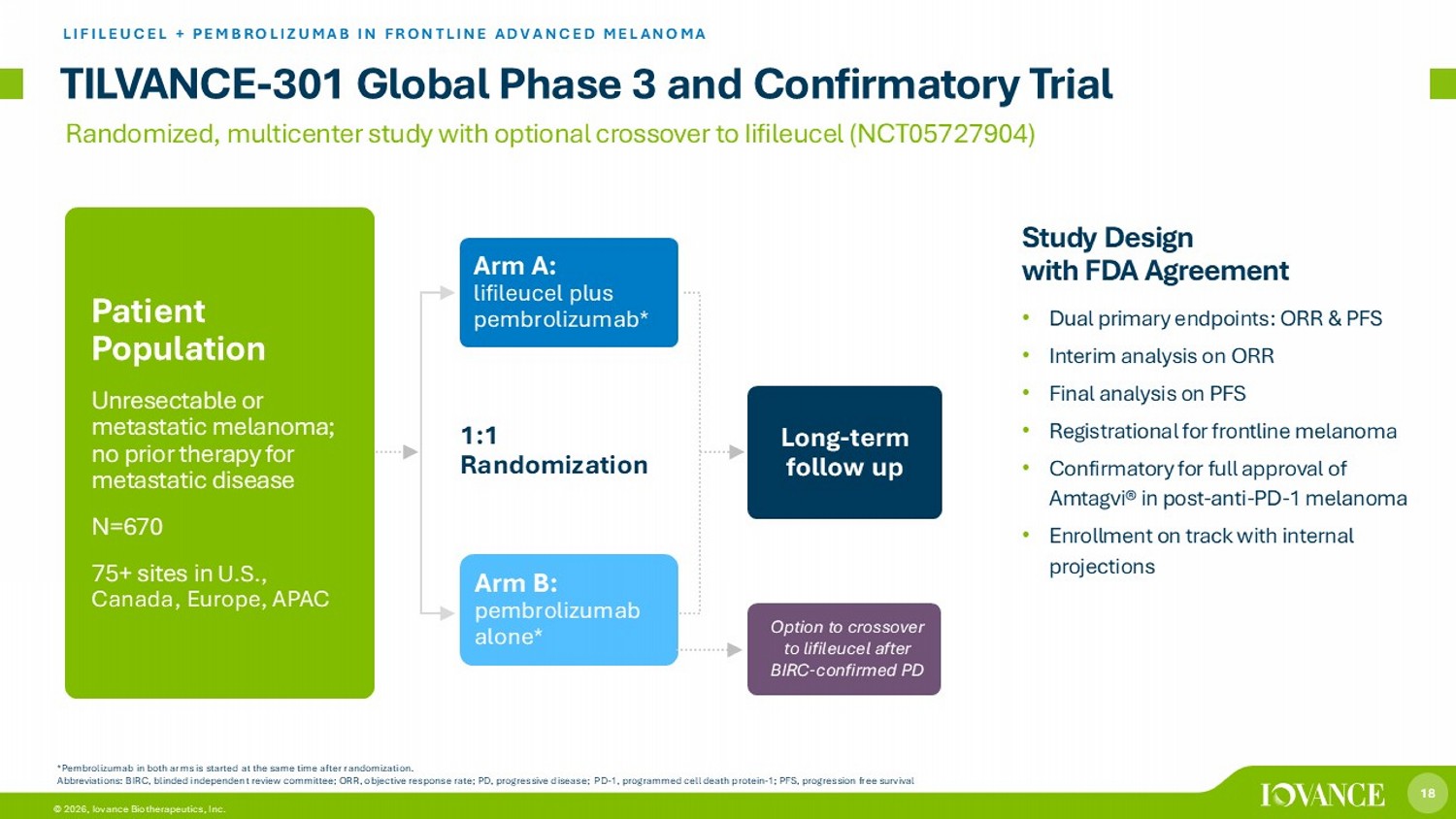
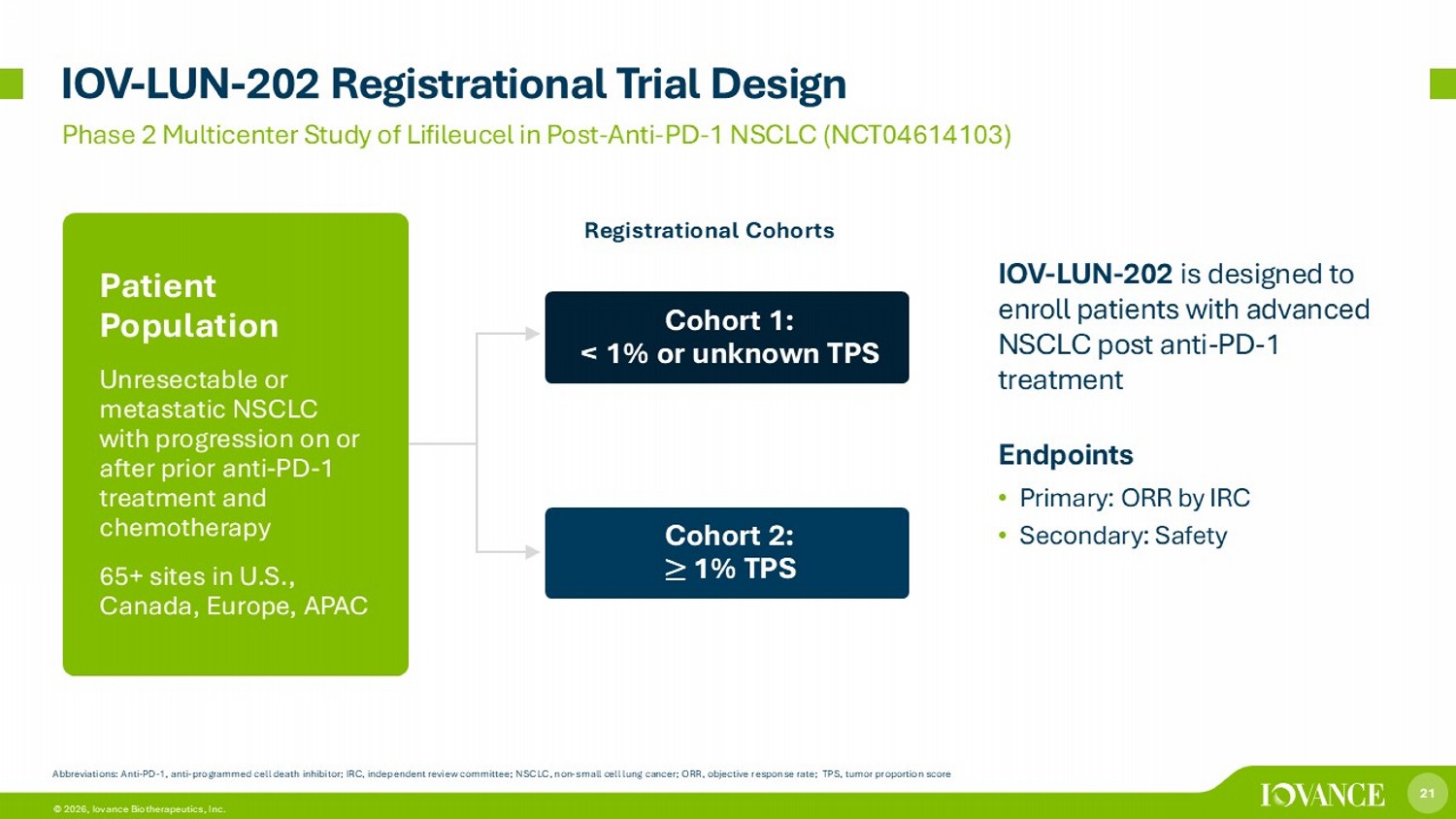
Thanks Igor. Today I'll focus on our two registrational programs first enrollment is accelerating across a broad and expanding global footprint on our phase 3 tilvance 301 trial we are investigating mtagvi to support a potential us full approval in the current labeled indication and accelerated and full approval in combination with pembrolizumab in frontline advanced melanoma shifting to our IOV-LUN-202 registrational trial, Life Elucil has demonstrated a best-in-class clinical profile and recently received fast-track designation from the US FDA. The objective response rate was 26%, disease control rate was 72%, and median duration of response was not yet reached after more than 25 months of follow-up. We plan to present updated data at a medical meeting this year key opinion leaders are enthusiastic about these data which resulted in a meaningful uptick in recent enrollments we are excited to be on track to complete enrollment this year in support of a supplemental biologics license application we are also pleased with the progress across the rest of our pipeline which i am happy to discuss during the q a session i now give the floor to Brian for the sarcoma update.
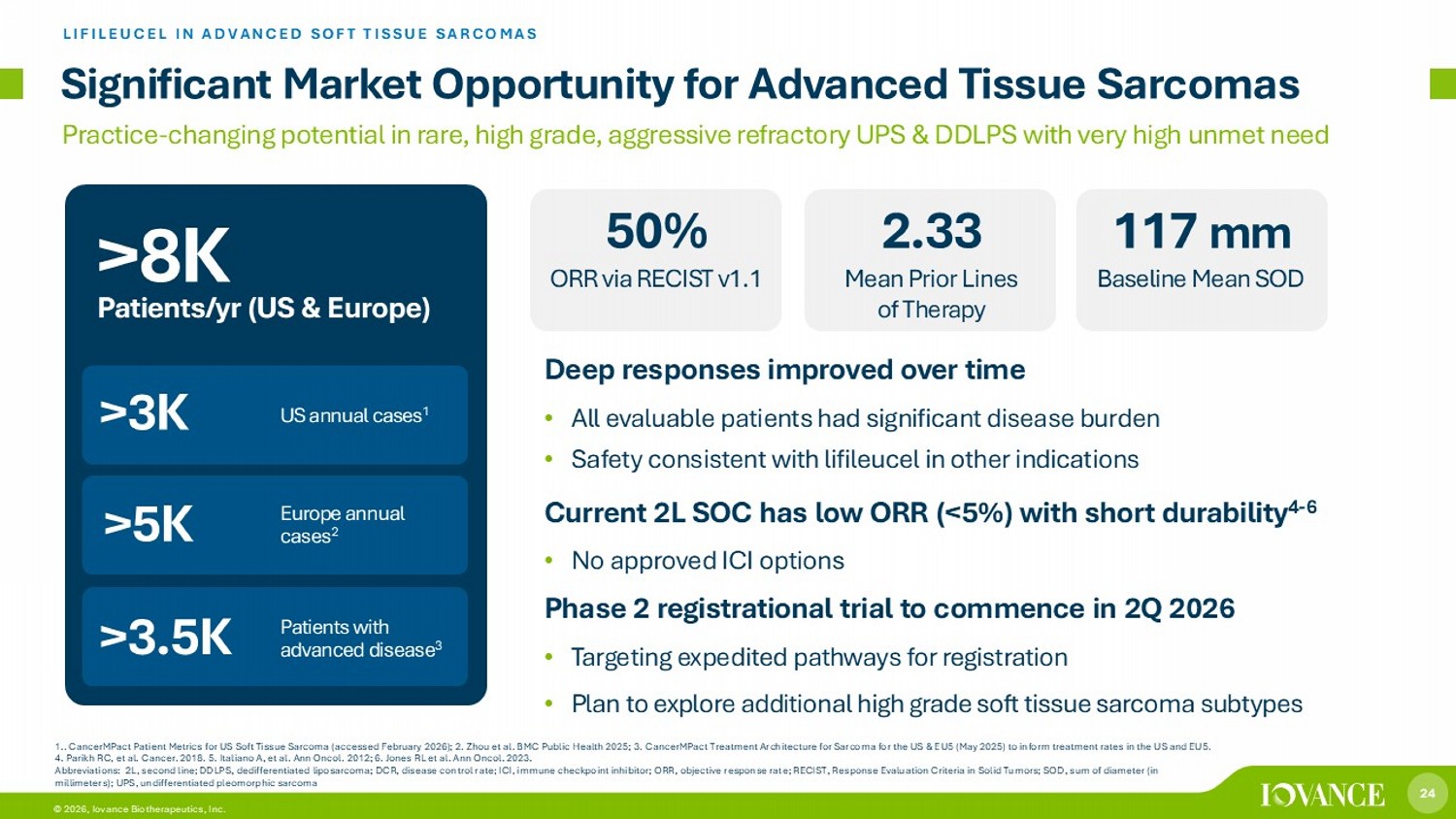
Thank you, Friedrich. I'm excited to share positive initial data from a pilot clinical trial in patients with previously treated advanced undifferentiated pleomorphic sarcoma or de-differentiated liposarcoma. They have no approved immunotherapy options. Among six valuable patients, the confirmed objective response rate was an unprecedented 50%. Responses were deep and improved over time, consistent with the durability for lipolucyl in melanoma and non-small cell lung cancer. These high-mortality aggressive soft tissue sarcomas affect more than 3,000 patients in the United States and more than 5,000 in Europe, including more than 3,500 cases of advanced disease. These patients have poor prognosis and a very high unmet medical need. Grim outcomes with second-line standard of care include response rates below 5% and median overall survival of less than one year. In summary, these extraordinary results are what I hoped and believed I would see TILT therapy due in solid tumor cancers when I chose to leave academic medicine to join Team IOBANs. I am heartened by this major opportunity for patients and the future of TILT therapy. We look forward to commencing and advancing a single-arm registrational trial as soon as possible. As part of this developmental program, we will also explore other subtypes of high-grade soft tissue sarcoma where patients have no approved effective therapies and urgently await better treatment options. I will now hand the call back to the operator to begin the question and answer session.
Operator
As a reminder to ask a question, please press star 11 on your telephone and wait for your name to be announced. To withdraw your question, please press star 1-1 again. In the interest of time, we ask that you please link yourself to one question, and you may rejoin the queue. Please stand by while we compile the Q&A roster. First question comes from Andrew Tsai with Jeffries. Your line is open.
Speaker 4
Hey, good morning. Thanks for the updates, and thanks for taking my question. Maybe for the Televance update that you provided, it sounds like enrollment is picking up nicely. So, is it possible that we could get first-line melanoma data with MTAGV PD-1 combo data later this year? And, but regardless of timing, what kind of ORR and PFS do we want to see compared to PD-1 alone?
Yeah, maybe I can take the first part of that, Andrew, and then Frederick can cover the rest of it. We do have an early interim read in this study, which is a benefit of some of the agreement we have with FDA on this. It's 2026 right now. It's such a large study, but we are very excited to be able to get that data read. And then, of course, if we read that data, it's a blinded study. We don't blind to do the analysis. And if we announce that, we're basically announcing that we're coming to a supplemental BLA at the same time. Frederick, do you want to talk about the ORR and PFS?
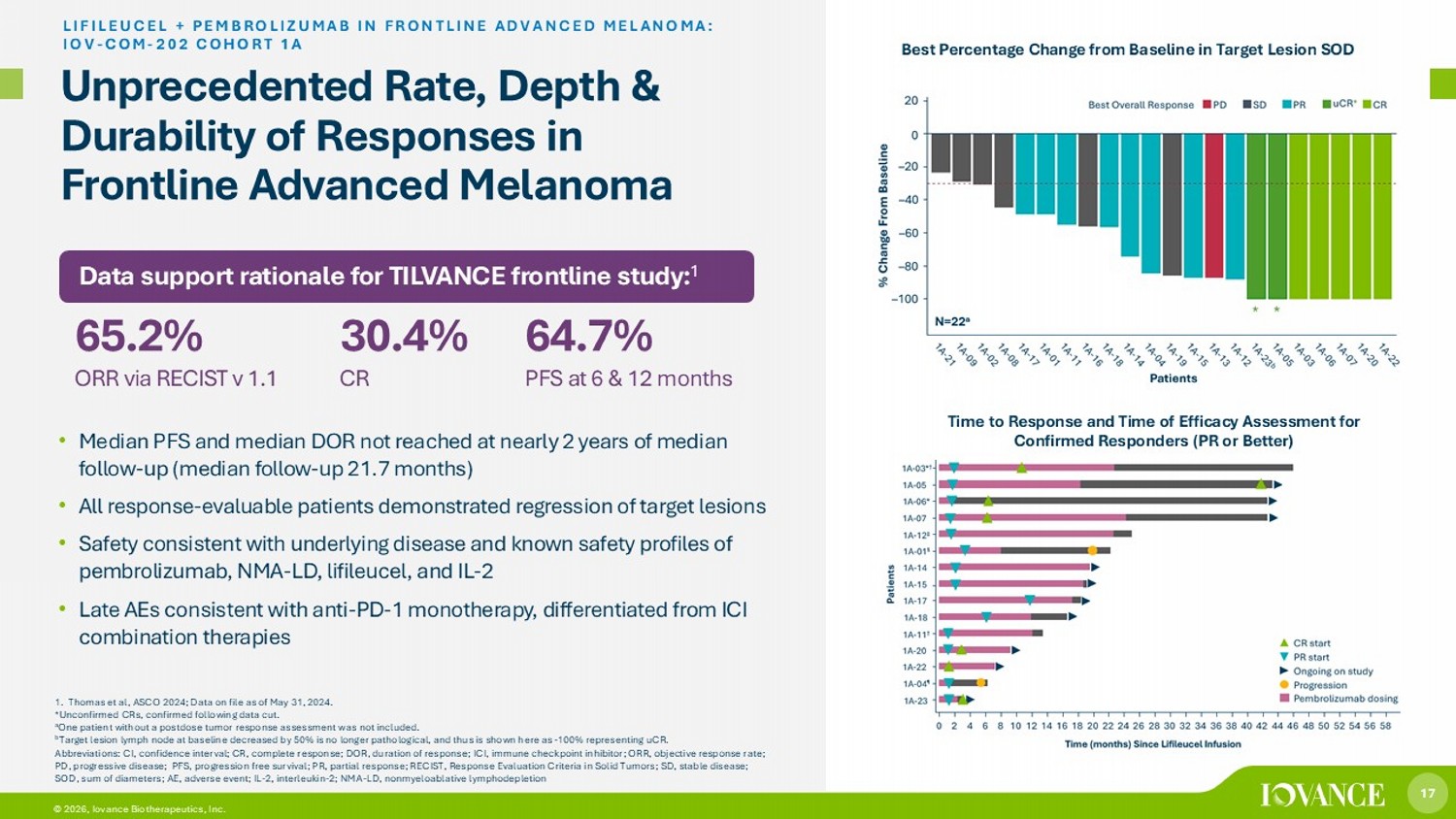
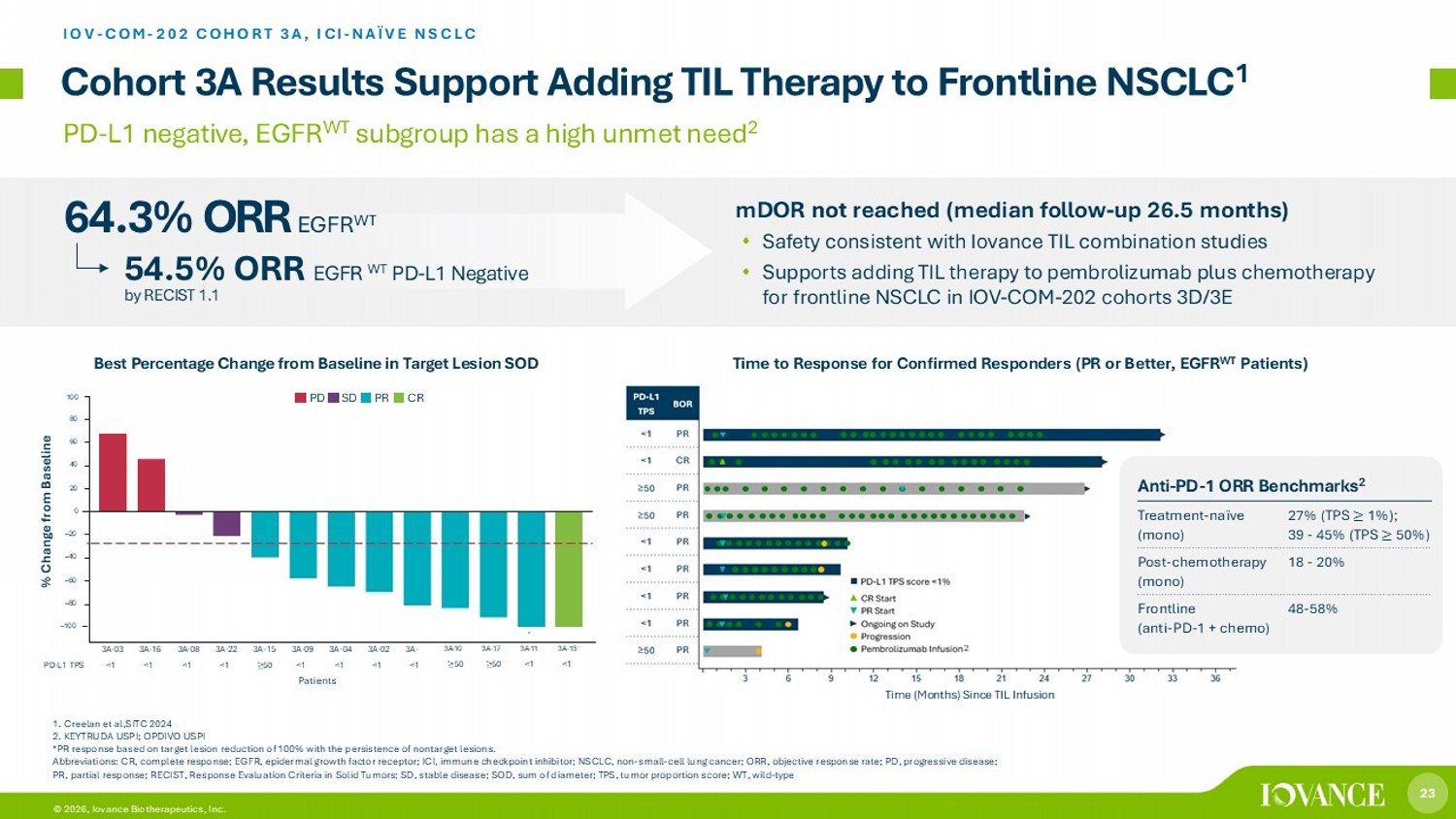
I'm here. I'm sorry about that. I needed to find my window here. Yeah, glad to do so. So I think the best idea around the benchmark for this is the pembrolizumab monotherapy monotherapy data from the Keynote O6 trial. Remember the trial design of TILVANS is a comparison of the combination of pembrol plus TIL versus pembrol monotherapy. The trial is designed with two dual primary endpoints, one of them being ORR, the other one being PSS, so ORR giving us an opportunity for an early read. The benchmark in the keynote O6 trial for ORR was about in the mid-30s, probably the true real life or are with the temporal monotherapy is probably more in the 30 and slightly below percent range. Remember we have very encouraging data on the efficacy of the combination from our COM2 to cohort 1A which showed response rates up into the 60 percent range so that's what's giving of the confidence around a successful readout for the ORR endpoint.
Speaker 4
Any questions about that? Thank you.
Operator
Our next question comes from Tyler Van Buren with TD Cowan. Your line is open.
Hey, guys. Good morning. Thanks for taking the question. Can you please elaborate on the big quarter-over-quarter jump in ProLukin revenue and the anticipated split of MTag B to ProLukin revenue moving forward? and if the gross margin can continue to improve quarter over quarter, despite ProLucan likely contributing to a smaller percentage of sales in subsequent quarters.
Hey, Tyler. It's Corleen. So first you talked about Q4 split. We did have all three distributors ordering in Q4, and we also took a look at the distributor. So there's a little bit of buy-in there. Not crazy. We haven't guided, so I don't have a split for you going forward. What I can tell you on the margins is, yes, we expect further improvement.
And I'll just add on to that, Tyler. We did see all three wholesalers, as Corey mentioned, ordered in Q4. We've already seen reordering happen in Q1. And moving forward, you should see, again, regular orders for a major line of business there. Other two channels will come on this year, as they did last year, but it mainly is driven by an antagonist demand.
Operator
Our next question comes from Yonan Zhu with Wells Fargo. Your line is open.
Thanks for taking our question. This is quite long for Yonan. Can you share with us how the manufacturing success rate change over time and what is the scrape cost for this quarter?
Could you clarify the last part of the question? Which cost?
Scrap costs will be in our 10K filing that will come out in 2015, but it's consistent with prior quarters. You can jump in and help. We don't release actual, it's improving, we're getting better at it, you can see the margins are growing. As Courtney mentioned, these margins are being driven, not just, they're really being driven by Antagmy, but manufacturing success is driving that improvement.
Yes, happy to. Thanks for the question, Janan. So there are really two avenues for improving success rates. One is internal, where we continue implementing improvements in manufacturing. And those are a lot that have been implemented and more are coming. And the other avenue is commercial and medical affairs teams working with ATCs and the physicians to improve tumor procurement that also results in better products. So both of those have their roots so far, and we continue working on both fronts.
Operator
Our next question comes from Soim Saeed with Mizuho. Your line is open.
Hey, guys. Thanks for the question. Maybe just one on guidance from us. So you didn't provide 26 guidance. Fred, you mentioned that you plan to provide it shortly.
Just curious, what was the logic not to provide it now?
And when we do get it, can you just give us some context? like is it going to be total revenue product is it more like a mean or conservative guy just help us framework I would should be thinking about that thank you yeah right now we're seeing remarkable remarkable growth in the MTagne business we do need to be sure that our projections are well supported so we're taking some time to do that it's very early in the year right now of course but as I mentioned during the prepared remarks we're going to be putting guidance out very very soon I think you'll see total product guidance guidance. We'll see some guidance potentially on quarters. We'll have to see how our, you know, how our data is supported. One thing I do want to mention is when, I know you asked about breaking out the product, Proleucan and the revenue from Amtagbee have now fallen right in the line with what we were saying a year ago in that Proleucan generates about 17% of our revenue. If you recall, many, many calls, we talked about the 16% number based on the ratio of the price. So we are seeing that long-term balance come into play. And as Dan mentioned, ordering patterns are stabilizing here. So you may not see us particularly put a number on proleukin for one quarter over another, but you can be confident in the long-term ratio of these things.
Operator
Our next question comes from Rennie Benjamin with Citizens. Your line is open.
Hey, good morning, guys. Thanks for taking the questions, and congrats on hitting the guidance. Maybe just a couple questions. One, can you talk a little bit about, you know, the fourth quarter kind of acceleration? How much of that came from new community ATCs versus existing academic centers? And as we think about going into 2026, do we hope that the new community ATCs, you know, that number will maybe doubled as a triple? Can you give us a sense as to how this is going to grow potentially this year? And then I have a follow-up on the sarcoma data.
Sure. Hey, Ronnie, it's Dan. Thank you very much for the question. So for Q4, our base book of business is the academic ATC, and we saw significant growth in that segment. We did see new community ATCs come online last year, they're coming online as well this We expect a learning curve as we saw with the initial academics coming online, so you'll see them slowly increase as the year goes forward. But for Q4, what we saw in the academic ATCs, which is carrying over to what we're seeing in Q1 is that there are certain patient types there that we're not making it to amtaggy treatment that I mentioned during the script we have earlier procurement strategies for patients such as BRAF mutated patients which make up a significant number of those patients inside of the academic ATCs that we were not previously able to access that our initiatives now are allowing us access so we expect growth to continue in the academic segment and then the community ATCs having their process patients out, and they'll be ramping up at the second quarter through the end of the year and into 27. Right now, our Facebook business is strong and growing with the outcome.
Okay, thanks for that. And then just to follow up, you know, regarding the sarcoma data, you know, this is quite new and, as you mentioned, unprecedented. Can you, it's in six of valuable patients. Can you, A, give us a sense as to when we might see the full data and at what medical conference? And then also, can you share with us maybe any details on the depth and durability of response, right, that you're seeing here for these patients? And I guess if you can just, if I can squeeze one more in regarding the registrational study, how big do you think this study could be given this rare disease?
All right, I'll take the first part of that, and then I'll ask Brian, and we're excited to present this at the Medical Congress this year. We haven't identified that Congress yet, but obviously we really like the big ones, Like, I'll have to see how the timing goes, but the data is available.
The second part? Yeah, so in terms of depth and durability, I think it's important to note that obviously the trial hasn't been running for years. You know, like our, in terms of, though, that you see them get, it happens right away, but we've actually watched.
Yeah, thank you for the question. And so, you know, based upon the prior approvals in various soft tissue sarcoma subtypes recently by FDA for the 30 patients and 60 patients, I think today we really expect very similar patient numbers for registration.
Perfect. Thanks for taking the questions.
Operator
Thank you. Our next question comes from Colleen Cousy with Baird. Your line is open.
Speaker 7
Hey, this is Nick on for Colleen. Thanks for taking our question. Just for a commentary on the recent enrollment trends for the non-small-cell lung cancer study, and can you talk about just ladies' thoughts on path to full approval in non-small-cell lung cancer? And then I have a follow-up question as well.
Yeah, the fast-track designation that we announced today, Nick, was obviously very helpful because that provides us with a lot of benefits in working with FDA. We already, as I mentioned in the prepared remarks today, we are planning on the same timings we mentioned before with this potentially launching in 2027 this is pretty confident that this product provides great benefit for non-sponsor lung patients thanks and then just a quick one on sarcoma just wondering if you're considering expanding any other into other subtypes of sarcoma outside of these initial two yes and we mentioned that in both the press release and in the prepared remarks we are looking at additional so we are looking at additional, besides UPS and DDLPS, there's a number of other sarcoma subtypes that are of interest, and now that we see strong activity for tilt in the space, including approved checkpoint options for these patients, nor are there anybody interested in it.
Speaker 7
Great, thank you.
Operator
Thank you. Our next question comes from David Dye with UBS. Your line is open.
Speaker 4
Hey, great. Thank you for taking my questions, and congrats on the progress. I just, you know, first on the proleukin sales, we see a little uptick in fourth quarter. I'm just curious how much is coming from restocking and how much is coming from real antagonist demand? And then moving forward with proleukin, is it fair to assume that it will stabilize around that level with maturity of contributing to real demand from antagonist demand? And then I have a follow-up question.
Sure, David. So this is Dan. I'll take the question on ProLucan. We saw in ProLucan, as you recall, all throughout last year, we had one first wholesaler came on in Q2, two were reordering in Q3, all three were ordered in Q4. We started to see regular demand come in. We did do a price increase back to February 1st, so there was a little bit of buy-in but not much going into the end of the year with it. The primary driver for proleukin in Q4 was Amtagne demand. As we look at Q1, we already have the wholesalers reordering. Two have already placed orders. We're expecting the third to order soon. And then they will continue to move forward with proleukin orders based on Amtagne demand. That is our number one source of revenue. You are going to see this level out. And as we look at having Q1 price increases in the future, this will even out as you look at yearly forecast.
Speaker 4
Got it. Thanks for that color. And then just a follow-up on Fred's earlier comment around antivirus being a women-deal and peak sales opportunity. Maybe just, you know, help us understand how you get there, especially how should we think about contribution of melanoma and non-sponsor lung cancer and also sub-titious sarcoma?
Yeah. I think when I talk about that, David, I'm talking about continued growth in the antivirus melanoma in U.S. franchise, and we're seeing that growth. So we're only in our first-year launch here, and we're at $264 million in revenue. And, again, I know this is all this discussion about proleukin versus antagony, but antagony is driving the whole thing. Yes, we do sell a small amount of proleukin for other things, but the vast majority of these numbers are coming from now. If we talk about $1 billion, we think that's the ultimate goal so long in 7X. So just bear that up.
Completely achievable. If you look at where we are right now, we're a quarter way through that. Loading up. If you look at cell therapy launches in the liquid tumor space, they did have the advantage of following an allotransplant treatment modality with the hematology oncology pathway. We're creating a pathway with the solid tumor medical oncologist. So we're standing that up now and in the initial phase we're doing over a quarter billion dollars with both products and we see that escalating in the US alone to over a billion dollars. We talk about layering lung and I mentioned in the script that is a ten billion dollar opportunity a much larger market to go into. And sarcoma, we do see as being equivalent to melanoma. So we do see tremendous potential to be well over $10 to $12 billion in the U.S. with...
Speaker 4
Scott, thank you so much.
Operator
Thank you. Our next question comes from Etzer Daru with Barclays. Your line is open.
Great. Thanks for taking the question, and congrats on the quarter. Just on gross margins, I wondered if you could comment at all on what may be the near-term impact on the ex-US commercial launches Canada and others could have on gross margins, given the improvement that you've seen to date.
Okay, sir. So, I think I just want to make sure I'm understanding. You're asking what will the ex-US launches, what impact will they have on margins? so all of our manufacturing operations today are in-house so we're going to have economies of scale I think that can only help origin right as we grow and add an additional volume from those launches so I can add on to that Courtney as we look at it manufacturing for XUS launches will be out of our Philadelphia facility so we do not plan on adding additional manufacturing facilities worldwide we're already servicing those regions in our clinical trial if you look
at what's going on that's negotiated yet we're in the process so we do not have a lower price outside the us we are going to see how this um situation evolves but we are in a good position not to have that great thanks for that color thank you and our final question comes from africa gunwarden with truth your line is open hey guys um morning and thanks for taking my question say um so uh when we start thinking about you playing trading into the community
um in in the u.s and so you have ATC's there um can what is there going to be a material difference uh in the timing it takes to get a community site up and running versus let's say what what on average it takes you to get a academic center up and running um and how should we think about that is there a lot of diversity in the different community settings maybe ones who have already have some sort of a cell therapy program versus those who don't. And then I have two more follow-up questions, I'll ask one of them now, can you comment on the tandem data and the better ORR that was seen earlier this year when that was presented. Can you use this real-world data when your MSLs are talking to physicians?
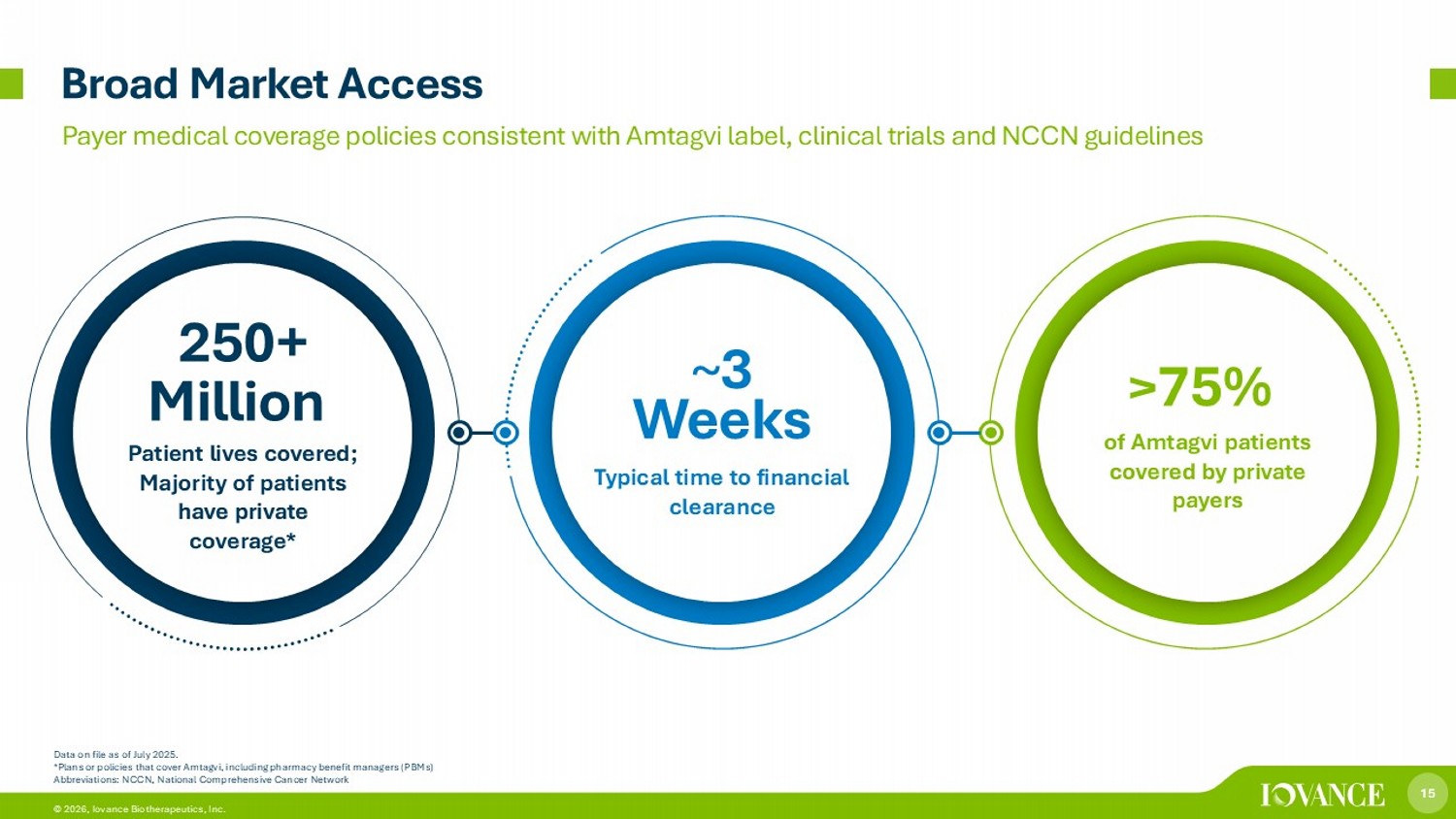
So great questions. I'll start with the first one regarding the community uptake. One of the things that we do see with the community will be similar to what we saw in the academics, and that is just the relationship with the surgeon, the medical oncologist, and the cell therapy lab to get up and running for it. That should be a similar learning curve. We did have some academic sites in the clinical trials, so that was the initial wave with the mTagD launch, but we are seeing them come online. This is also balanced with the fact that they are closer to where these patients are being treated with frontline melanoma, and so we can get them to treatment quicker. So the learning curve will go up. As you see with most ATCs, it is a financial reimbursement where they want to run one or two patients first, make sure the financial reimbursement is there with the payers. We have that established and tremendous coverage with mTagV and ProLucan throughout all the payers. So once they see the first two go through, they start to accelerate patients. To the academics, when we look at getting them up and running, you can see the first couple are in regards to the real-world evidence that was presented at the cell therapy meeting earlier this month actively and we are submitting that for our publication as well. Anything to add on to the real world data, it is tremendous news about the earlier line treatment.
Actually our intervention, I've heard personally people very excited but not just because the data was out but also it validated what many PIs, KOLs need this data and actually help get their message out to their local physicians because the right time to treat the patient is as soon as possible, and you can see what happens, how great the responses are. They're better than we saw in our trial. They're the best in class, and this is the kind of results that we've been looking for.
Great. Thanks, guys. And then lastly, just on the pro-looking reordering that happened in Q1, just curious, you mentioned you had a February 1st price increase. Did any of the reordering happen after the February 1st price increase?
So they typically order before the price increase. Wholesalers operate on very low margins. So we did a 9% price increase on both products affected February 1st of this year. So they would do the buy-in for ProLukin in advance of that price increase. We did announce it to allow for payer case rates to adjust, which happened because we were post-price increase right now. So they were aware of the price increase pending and would buy accordingly.
Got it. Thanks for taking my questions, guys.
This concludes the question and answer session I would now like to turn it back to Fred Vogt for closing remarks thank you again for joining the IVAN Biotherapeutics fourth quarter and full year 2025 conference call we plan to provide more detail on US launch growth when we introduce our full year revenue guidance in the near future please stay tuned to updates through 2026 on our commercial launch and pipeline as well as our cost optimization initiatives to drive towards profitability we are motivated by the frequent stories from more and more patients who are benefiting from our pill cell therapies. As always, we're thankful to our patients, healthcare professionals, and advocacy communities, as well as our partners. I would also like to thank our exceptional IVANCE team, and in addition to our dedicated shareholders and covering analysts for their commitment to the mission to remain the global leader in innovating, developing, and delivering current and future generations of pill cell therapies for patients.
Operator
This concludes today's conference call.
Thank you for participating.