Operator
Ladies and gentlemen, good morning. My name is Abby, and I would like to welcome everyone to the JetBlue Airways third quarter 2025 earnings conference call. As a reminder, today's call is being recorded. At this time, all participants are in a listen-only mode. I would now like to turn the call over to JetBlue's Director of Investor Relations, Koush Patel. Please go ahead, sir.
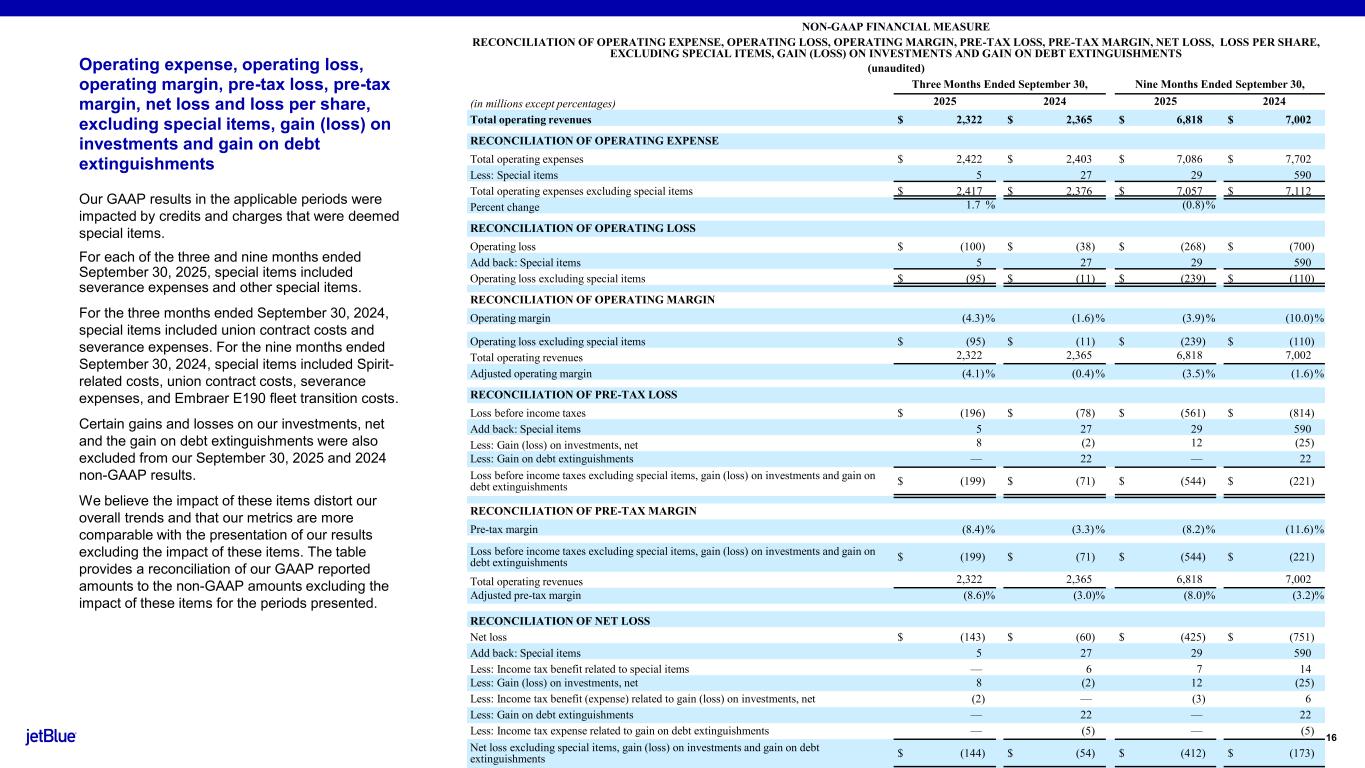
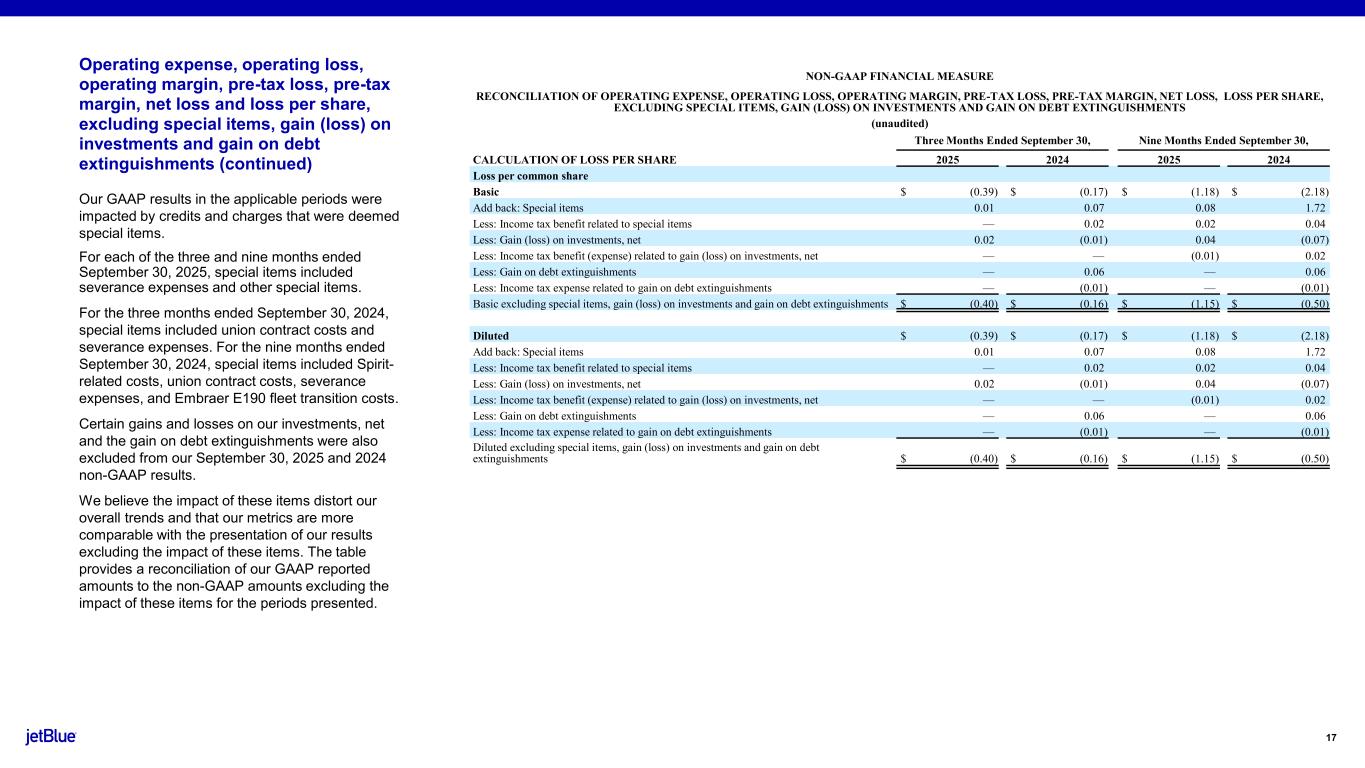
Thanks, Abby. Good morning, everyone, and thanks for joining us for our third quarter 2025 earnings call. This morning, we issued our earnings release and a presentation that we will reference during this call. All of those documents are available on our website at investor.chefblue.com and on the SEC's website at www.sec.gov. In New York, to discuss our results are Joanna Garrity, our Chief Executive Officer, Marty St. George, our President, and Ursula Hurley, our Chief Financial Officer. During today's call, we'll make forward-looking statements within the meeting of the Safe Harbor Provisions of the Private Securities Litigation Reform Act of 1995. Such forward-looking statements include without limitation statements regarding our fourth quarter and full year 2025 financial outlook and our future results of operations and financial position, including long-term financial targets, industry and market trends, expectations with requests with respect to tailwinds and headwinds, our ability to achieve operational and financial targets, our business strategy, and our plans for future operations, and the associated impacts on our business. All such forward-looking statements are subject to risks and uncertainties, and actual results may differ materially from those expressed or implied in these statements. Please refer to our most recent earnings release, as well as our fiscal year 2024, 10-K, and other filings for a more detailed discussion of the risks and uncertainties that could cause the actual results to differ materially from those contained in our forward-looking statements. The statements made during this call are made only as of the date of the call, and other than as may be required by law, we undertake no obligation to update this information. Investors should not place undue reliance on these forward-looking statements. Also, during the course of our call, we may discuss certain non-GAAP financial measures. For an explanation of these non-GAAP measures and a reconciliation to the corresponding GAAP measures, please refer to our earnings release, the copy of which is available on our website on www.sec.gov. And now I'd like to turn the call over to Joanna Garrity, JEPLU CEO.
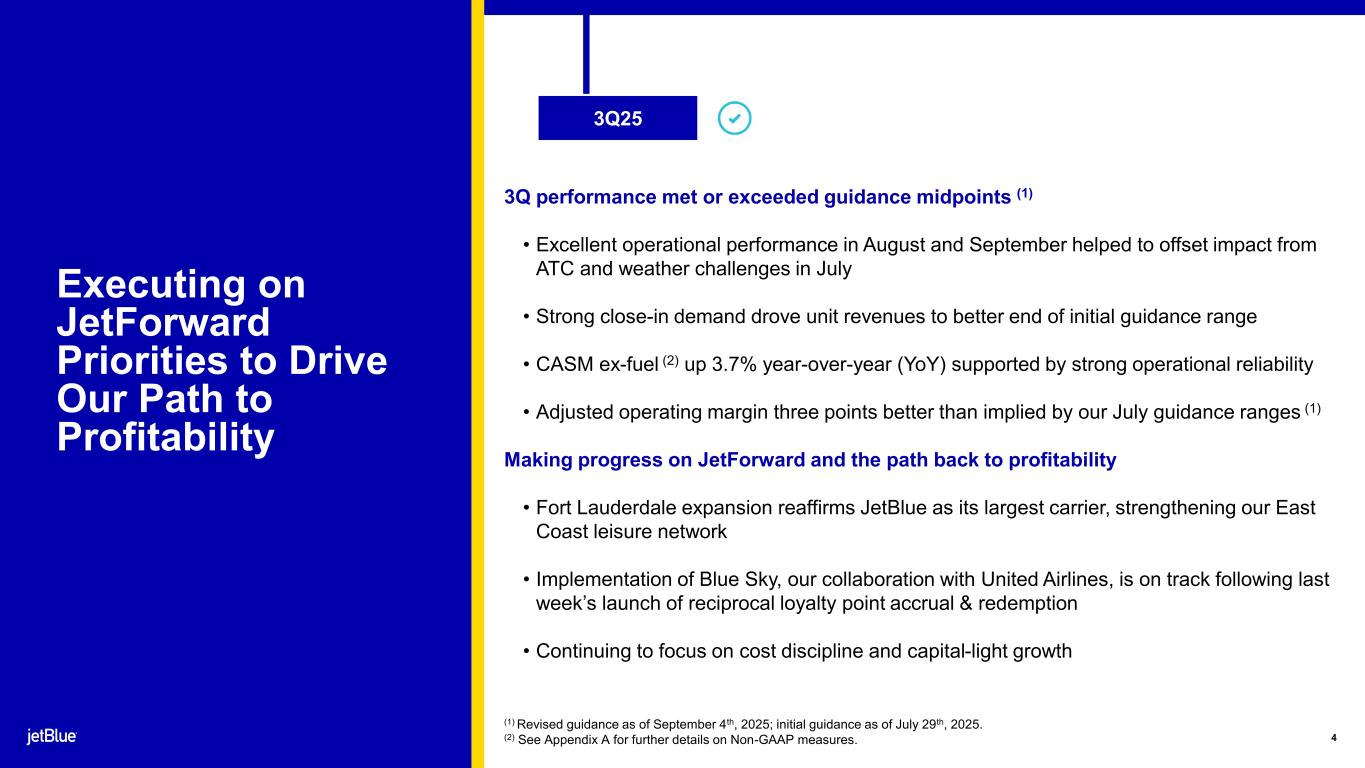
Thank you, Kush. Good morning, and thank you for joining JEPLU's third quarter 2025 earnings call. As Hurricane Melissa makes landfall today, I'd like to begin by extending my thoughts to our JEPLU crew members, their families, and the communities that we serve in Jamaica. As the largest airline in Jamaica, we are focused on caring for our crew members and resuming operations when we can safely do so. Our crew members are at the heart of providing the reliable and caring service that makes the JetBlue experience so special. And I'd like to thank them for their dedication throughout the challenging summer travel season. Thanks to your hard work, we are continuing to make meaningful progress on our Jet Forward plan while taking care of our customers and each other. Throughout the year, our team has worked with urgency to adapt to the evolving demand environment. adjustment, adjusting supply, implementing new revenue initiatives, and pursuing self-help measures to continue reducing costs. Our results this quarter are an outcome of these efforts. We ended the period at the better end of our guidance ranges across all metrics, including unit revenues and costs, realizing meaningful margin improvement compared to initial expectations. The whole industry took a step back this year, but despite these challenges, we are gaining momentum from jet forward and making progress on our plan operating a stronger airline every day and delivering on or beating our commitments building on the progress since we've announced jet forward five quarters ago our operational metrics and customer satisfaction scores continue to improve in the quarter we improved completion factor and on-time performance versus last year with a14 up two points successfully navigating a challenging july in which air traffic control programs impacted operations nearly every day as a result customers are more satisfied with their jet blue experience as demonstrated by improvements in our net promoter scores both in the quarter and throughout the year and i'm proud of the team for achieving double digit nps gains year to date even though our operation has consistently been challenged by external factors our results demonstrate that the investments we've made in reliability are working This fall, airfield construction at both Boston Logan and JFK is negatively impacting on-time performance, but we expect that to improve in November, when this phase of construction wraps up. Regarding the government shutdown, we have not yet seen any material impact to demand or our operation. From TSA and air traffic control to Customs and Border Protection, it's truly a team effort. We are grateful for their dedication in keeping us safely moving. and we also thank Secretary Duffy for being a strong partner as we navigate this situation. By delivering a reliable operation and improving customer satisfaction as part of Jet Forward, we are building a greater customer loyalty and generating more repeat customers. Last quarter, for example, our True Blue attachment rate was up 7 percentage points year over year, and our loyalty members are increasingly choosing Jet Blue for multiple trips per year. At the same time, we continue to modernize our fleet to drive efficiencies across our operation and enhance the customer experience on board. During the third quarter, we retired our remaining Embraer E-190 aircraft, marking nearly two decades of service. We want to thank Embraer and GE for their partnership over the years. This completes our transition to a more customer-friendly onboard product and cost-efficient all-Airbus fleet, allowing us to take full advantage of additional network opportunities from our East Coast-focused cities. Along those lines, in support of building the best East Coast leisure network, we are taking deliberate steps to deepen our presence in Fort Lauderdale. This expansion, which mostly launches in the fourth quarter, enables us to further strengthen our position in this highly valuable focused city, adding more leisure destinations for our South Florida customers and increasing connectivity to the Caribbean and Latin America. JetBlue has deep roots in Fort Lauderdale. It's where our first revenue flight landed from New York, New York's JFK on February 11, 2000. And now, 25 years later, the opportunity is ripe to reaffirm our leadership position there. With our far better customer experience and competitive low fares, and now more destinations, we are pleased to bring even more value and choice to customers in Fort Lauderdale and across South Florida. Looking ahead to the fourth quarter, we remain optimistic that the environment will continue to improve, and as Marty will discuss further, we are pleased by the overall health of bookings. Demand for peak period travel remains strong, led by the resilience of the premium leisure segment, which aligns well with our new premier card, our plans to open our first lounge this quarter, as well as domestic first class launching next year. We've built a strong foundation with Jet Forward, and we are on track to generate a cumulative $290 million of incremental EBIT this year. Our efforts to boost reliability, recalibrate our network, enhance our products and services, supercharge our loyalty program, and execute on cost have fueled transformational change, delivering double-digit NPS gains and industry-leading operational improvements. Blue Sky implementation is on track with last week's loyalty launch, marking the first major milestone of our collaboration and domestic first class is scheduled to launch next year, both expected to be meaningful drivers of incremental earnings in 2026 and beyond. We are encouraged by the progress so far and we are confident we are on the right path to restore profitability, building a stronger JetBlue for our customers, crew members, and our owners. Over to you, Marty.
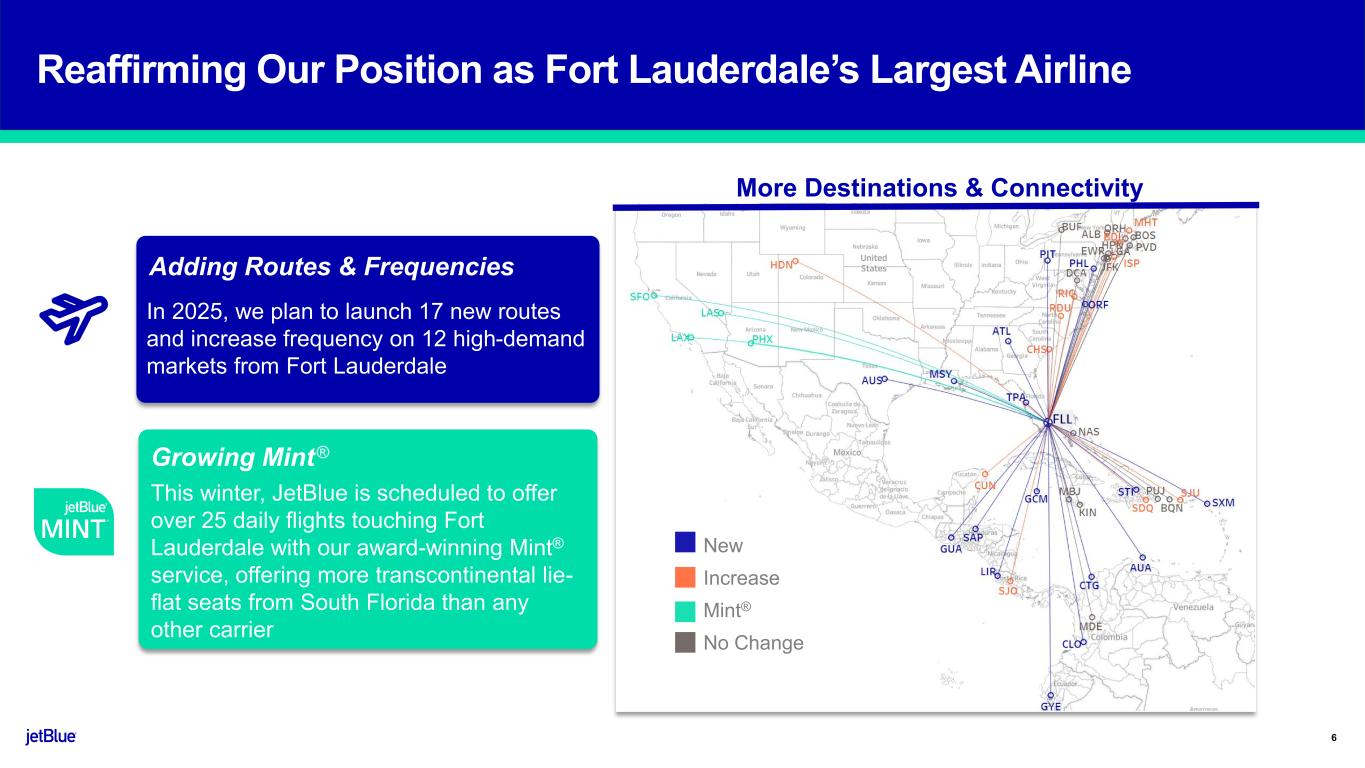
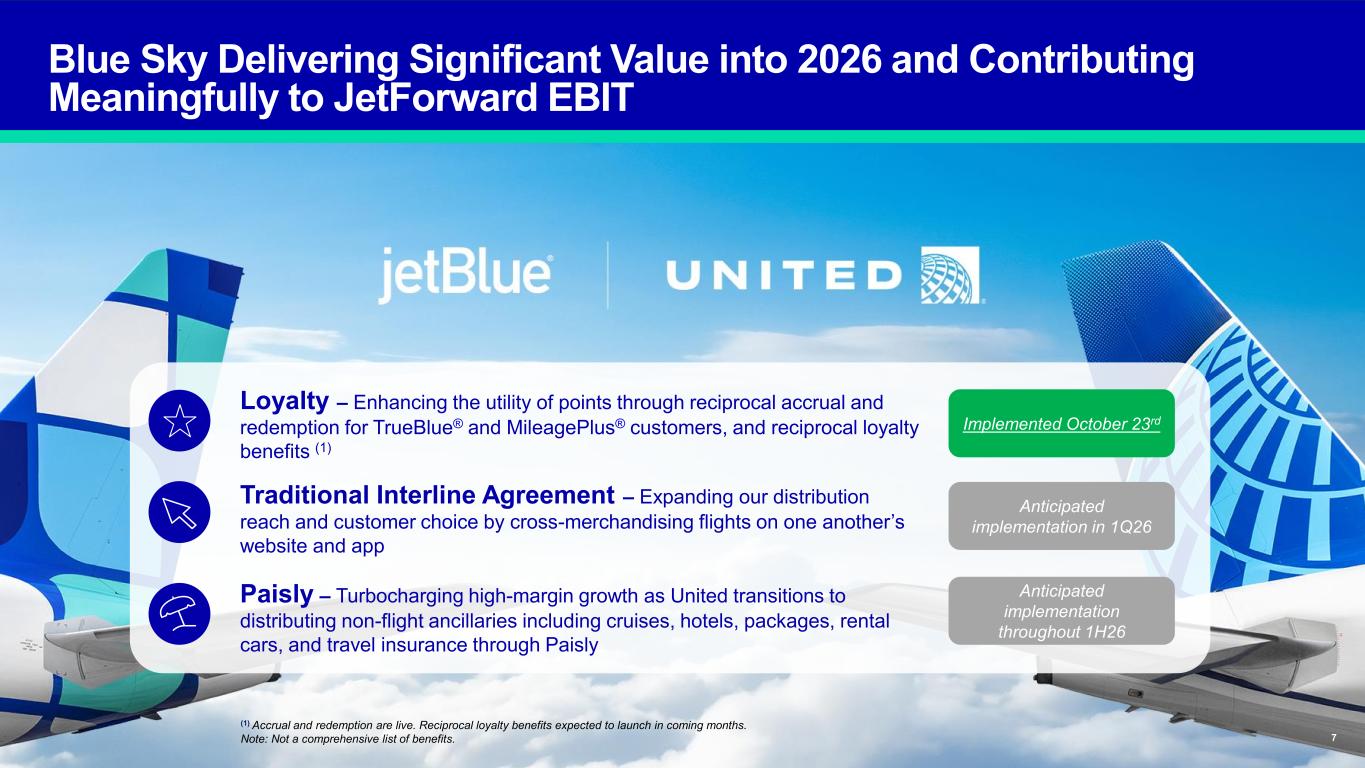
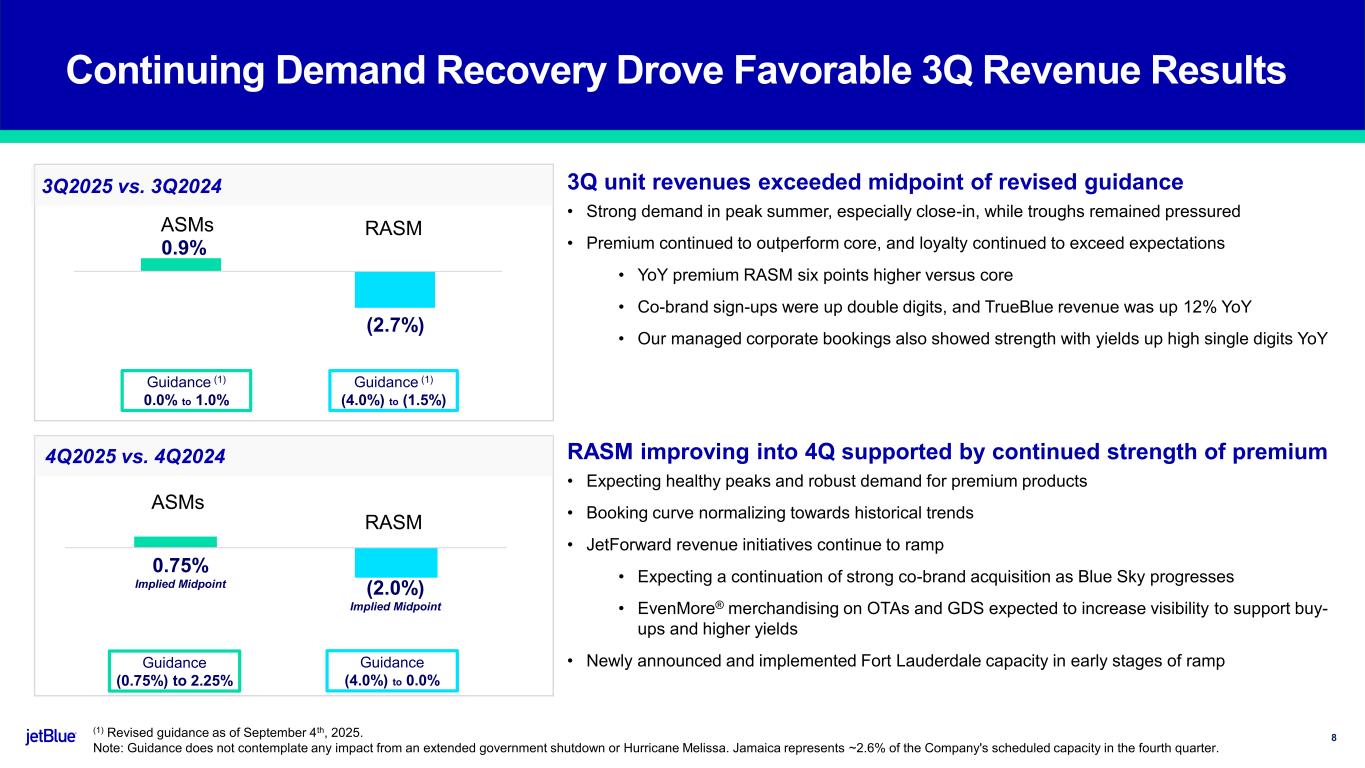
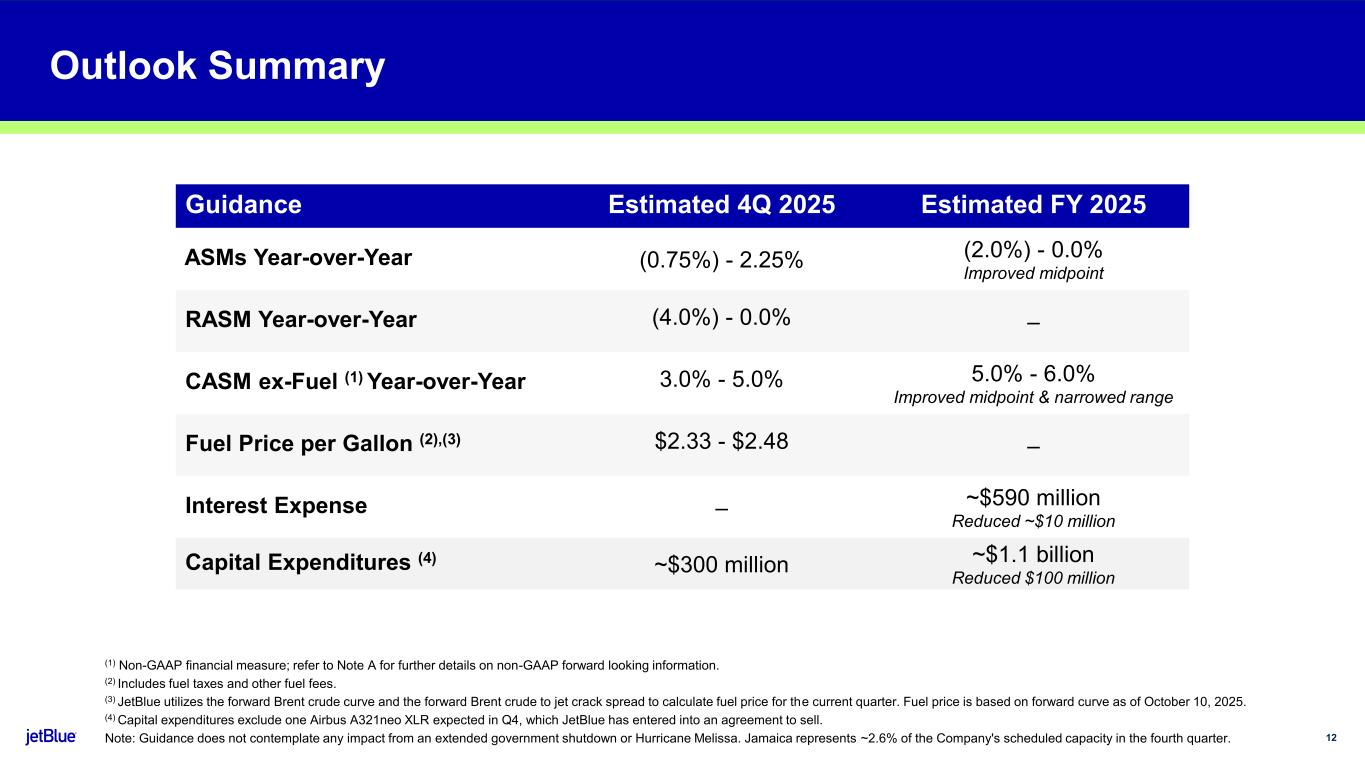
Thank you, Joanna, and thank you to our crew members for a strong summer. We continue to make meaningful strides on Jet Forward to refresh our commercial strategy and drive incremental revenue by refining our network, expanding our reach through partnerships, increasing the value and utility of our loyalty program, and enhancing our products and perks. Turning to slide 6 in the presentation. As Juana mentioned, we have reestablished our position as the largest carry in Fort Lauderdale, a market where our differentiated product and robust network resonate well with customers. As previously announced, we plan to launch 17 new routes and increase frequency on 12 high-demand markets, with our schedule now representing a 35% year-over-year increase for the IATA winter season. Our schedule also features over 25 daily flights touching Fort Lauderdale with our award-winning MIT service, offering more transcontinental live-flat seats from South Florida than any other carrier. To support continued growth in premium flying we also announced our intent to establish a mint base for in-flight crew members in fort lauderdale alongside growing the size of our overall crew base bringing more jobs to the region these investments reaffirm our leadership at fort lauderdale and leverage our caring service differentiated product premium experience and robust network turn to slide seven implementation of blue sky our collaboration with united airlines is progressing as planned and has already begun delivering value to our customers. Last week, we enabled point accrual and redemption across our loyalty ecosystems, enhancing the utility of each program. We are already seeing significant customer interest, and since announcing Blue Sky at the end of May, we've seen a sustained double-digit increase in average daily kind acquisition growth across geographies, particularly in non-focused city markets. We expect to continue the momentum into the first quarter as we begin cross-selling each other's flights on all-digital accounts. This industry-standard interline agreement is expected to expand distribution reach for both airlines and provide customers with more choices to travel across the globe on our complementary networks. Loyalty reciprocity and cross-selling are two of the largest drivers of value from Blue Sky, and we expect the successful implementation of both to generate significant earning momentum for jet forward later in 2026 we plan to launch reciprocal loyalty benefits and paisley integration driving high margin growth and additional value for the partnership as we improve our customers network options we're also enhancing the customer experience on board and at the airport in september we became the first airline to patent with amazon's project kuiper to provide faster and more reliable connectivity to our onboard wi-fi furthering our leadership in onboard connectivity. JetBlue launched Wi-Fi in 2013 to become the first and still only major U.S. airline to offer free high-speed Wi-Fi on every aircraft in its fleet. The rollout is expected to begin in 2027. We continue to build on our decade-long commitment to premiums and are progressing our plans to further capitalize on the demonstrated industry shift of the segment. This month, we enhanced merchandising for even more, and now customers can book on a single transaction through the GDS and online travel agencies. Previously, purchasing the product required two separate transactions on our third-party channels, and this simplicity and increased visibility is expected to support buy-ups and higher yields. In addition to even more, preferred seating continues to outperform expectations. Finally, we remain on track to launch Domestic First Class in 2026, with the first equipped aircraft expected to begin flying in the second half of the year. The Domestic First fleet modification is planned to include our entire non-MIT fleet. By the end of 2026, we anticipate having approximately 25% of the retrofit complete, with the vast majority of the fleet expected to be completed by the end of 2027, over which time we expect to see meaningful EBIT contributions. On the ground, we are on track to open our first airport lounge at JFK by the end of this year, while our Boston lounge is set to open in 2026. Lounges will offer complimentary access to Transatlantic Mint customers, premium credit card holders, where sign-ups have already exceeded 2025 targets, and two Blue Mosaic 4 members. Passes will also be available for purchase on days where space allows. Alongside our construction of the JFK Lounge, we are in the middle of a total refresh of Terminal 5, which is set to bring more than 40 new concessions and a redesigned center concourse. Moving to third quarter results. Over the summer, the demand environment continued to show signs of recovery, characterized by strong close-in bookings, healthy demand for peak travel, and the sustained strength of premium. As results, unit revenues ended the quarter at down 2.7% year-over-year, just above the midpoint of our revised guidance range, and more than a point better than our initial guidance midpoint. Premium continued to upperform core, and year-over-year, premium RASM growth was up six points relative to core. Our managed corporate yields also showed strength, with yields up high single digits. And while our domestic flying saw the most potential RASM improvement quarter-over-quarter, its relative managed performance still lagged International. We continued our string of double-digit loyalty growth in the quarter with Cobran remuneration up 16% and True Blue revenue up 12%. The Cod and True Blue trends are evidence of our improved customer satisfaction scores, recalibrated network and product, as well as a strong benefit we are already seeing from the Blue Sky collaboration announcement. For the fourth quarter, we expect unit revenues to be between flat and down 4% year-over-year on capacity of up to three-quarters of the midpoint. Third quarter demand trends are forecasted to largely continue into the fourth, with continued robust demand for premium products. Peaks are expected to remain healthy, while troughs continue to see challenges, which we have and will continue to actively manage through capacity adjustments. We are seeing the booking curve normalize. And we expect the same trend to continue throughout the fourth quarter. We expect continued macro-related tailwinds going forward, in addition to the ramp of our jet forward commercial initiatives. On the network side, our capacity investment in Fort Lauderdale will be in its early stages of ramp after launching in November-December. And, coupled with a step-up in domestic competitive capacity, are expected to be just over a point of headwind to rise into the quarter. Lastly, it's too early to size the impact of our Hurricane Melissa on our operations in Jamaica, so our guidance does not contemplate any impact. Jamaica represents about 2.6% of our capacity in the fourth quarter. As we look ahead, we know there's still more work to do, but Jet Forward is the right plan. The initiatives we've outlined today, from our Fort Lauderdale growth to blue sky and enhancing our premium products, will be key to getting us back to sustained profitability. I'll now turn it over to Ursula to provide more detail on our cost and financial performance.
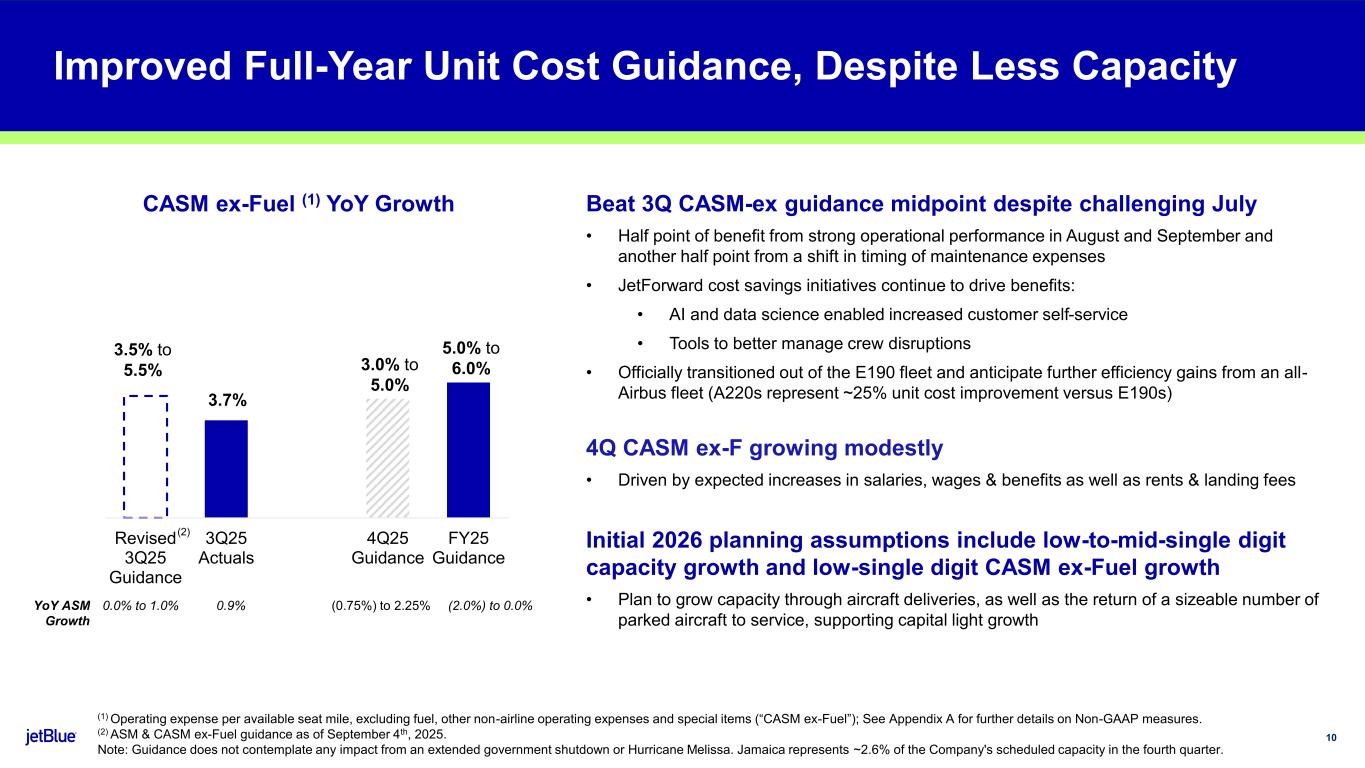
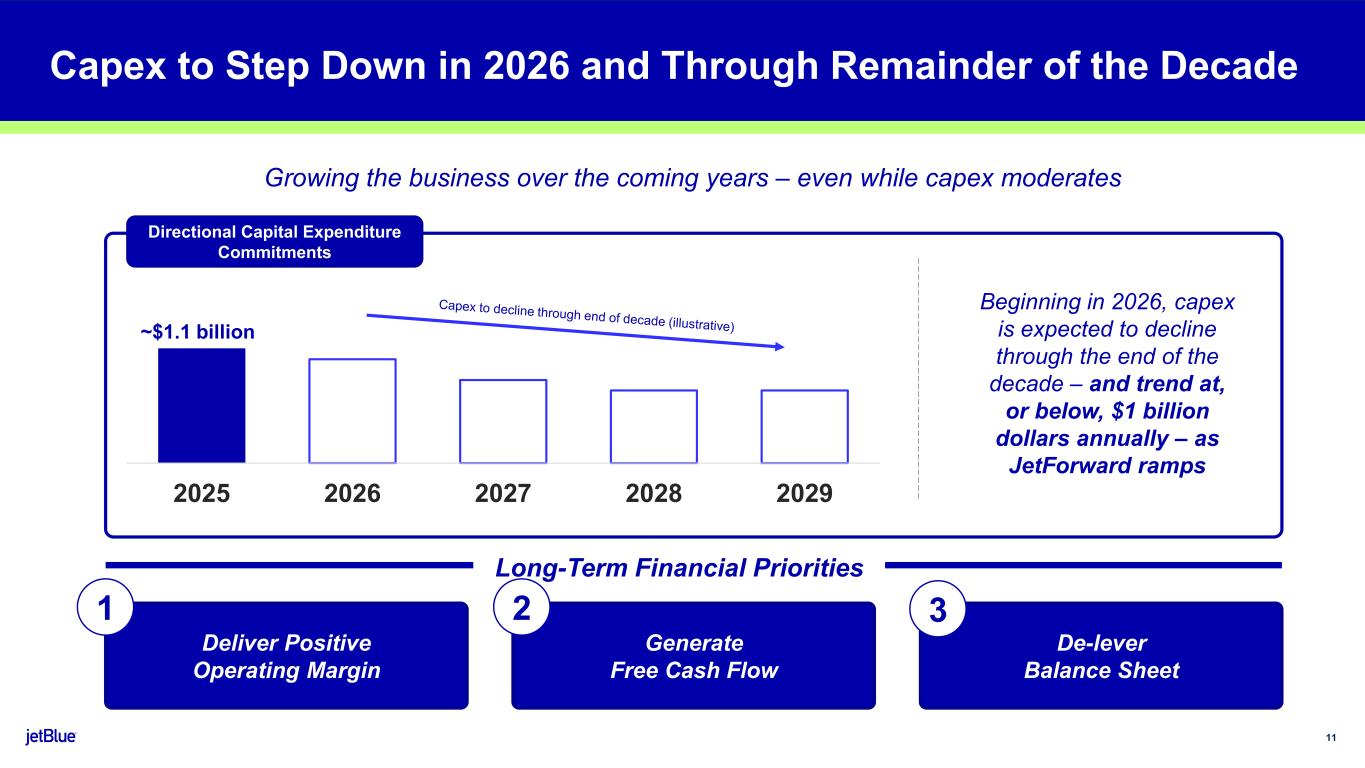
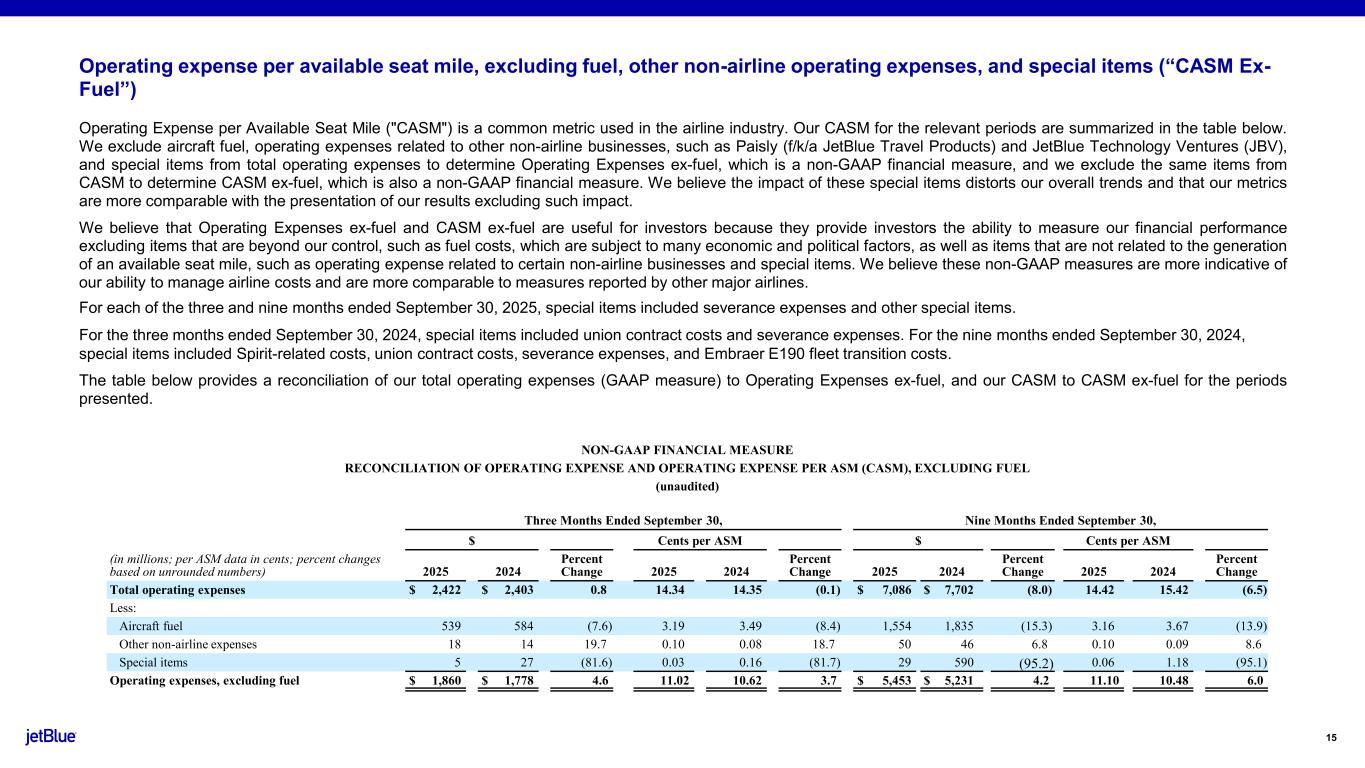
Thank you, Marty. We ended the quarter with an operating margin three points better than what was implied by our July guidance ranges, supported by a more reliable operation, greater close-in demand for our product, and our team effectively controlling costs. Despite a tough air traffic control and weather environment in July, completed capacity growth of 0.9 percent was above the midpoint of our revised guidance this coupled with strong execution helped to deliver excellent cost performance for the quarter we ended the quarter with chasm x fuel up 3.7 percent year over year beating the midpoint of our initial guidance by over one point marking yet another quarter of cost execution it is clear the investments we are making in our operation are increasing efficiencies across the business. Over the year, the team has demonstrated solid cost execution, and we are improving our full-year Chasm X fuel guidance from up 5% to 7% to up 5% to 6% year-over-year, lowering the midpoint by half a point, despite left to pass as even initially planned. For the fourth quarter, we expect Chasm X fuel growth of up 3 to 5 percent. For the third quarter, fuel price came in at $2.49 in the lower half of our revised guidance range. We expect fourth quarter fuel to be between $2.33 and $2.48. Our fuel guidance is based on the forward curve as of october 10th as we work through our budgeting process for 2026 we expect our unit costs next year to be low single digits underpinned by low to mid single digit capacity growth we plan to grow capacity through new aircraft deliveries as well as the return of a sizable number of parked aircraft to service. As we get back to growing once again, we're doing so with our balance sheet in mind, by adding capacity despite reducing CapEx. We expect our capital expenditures to be at or below $1 billion next year and each year through the end of the decade, supporting our balance sheet and our return to positive pre-cash flow over time. We ended the quarter with a healthy liquidity level of $2.9 billion in cash and marketable investments, excluding our $600 million revolver, representing 32% of trailing 12-months revenue. At the end of 2025, we expect to carry liquidity in excess of our 20% liquidity target. looking forward to 2026 we expect to raise a modest amount of capital to maintain our liquidity target driven by the maturity of 325 million of our 2021 convertible notes and new aircraft deliveries i believe our healthy unencumbered asset base of over 5 billion will provide us flexibility to meet our funding needs. Finally, JetForward remains on track to hit its target of $290 million of incremental EBIT by year-end, and I am confident we are also on the path to meet our $850 to $950 million 2027 commitment. The exciting commercial initiatives Marty detailed, including Blue Sky, Domestic Burst, and Lounges, are expected to drive significant earnings momentum for JetForward in 2026 and into 2027. And alongside these efforts, we plan to remain focused on cost discipline and managing our fleet to preserve liquidity and drive capital light growth. Taken together, we are confident we have the right initiatives in place to drive meaningful profitability improvement in 2026, and while we are still in the early innings of our budget process, it is our intention to build a plan that gets us to break even or better operating margin for 2026. We look forward to sharing more details during our January call. We will now open it up to your question. Back over to you, Abby.
Operator
Thank you. If you have dialed in and would like to ask a question, please press star 1 on your telephone keypad to raise your hand and join the queue. If you would like to withdraw your question, simply press star 1 a second time.
Operator
If you are called upon to ask your question and are listening via speakerphone on your device, please pick up your handset and ensure that your phone is not on mute when asking your question again it is star one if you would like to ask a question and our first question comes from the line of Dan McKenzie with seaport global your line is open oh hey good morning guys um thanks for the preliminary outlook for 2026 but you know backing up jet forward didn't factor in the chapter 11 filing of of one of your toughest competitors and so i wonder if you can talk about what that means to the fort lauderdale operation and you know what that means to
revenue upside to the jet forward plan uh hey dan it's marty thanks for the question um well i'm not going to go into detail about our competitors action but most important thing is our reaction. And frankly, we have been hamstrung in Fort Lauderdale because of our lack of access to international gates in the middle of the day. And it's a relatively constrained customs facility at the airport. And we have multiple carriers all trying to fly at the same time. What's worked out very well for us is that as our competitor has done some pretty significant pull-downs in Fort Lauderdale, we have seen a lot of opportunity to move flights into that custom facility at a time when it's actually good for our local customers and also very good for generating connections to markets to the north. So if we look at the growth that we have put into Fort Lauderdale, it is, you know, notwithstanding our reputation as being a northeast airline, the growth is very much focused to markets in the southeast and south of Fort Lauderdale. I'm actually very optimistic about the opportunity this creates. I mean, I use the word generational about this. I mean, our ability to get such significant growth for international services in such an important market for us is something we're absolutely going to take advantage of at the time. As I mentioned in the script, in the very short term, it's going to create a bit of a headwind in the fourth quarter. But we performed very well in Fort Lauderdale today, as is shown by the fact that we are such a big mint operation there. We can beat very well against our competitor, which is probably one of the reasons why they're going through the restructuring they're going through. And we're very bullish on a lot of that. So thanks for the question. And I think it's actually one of the good parts of the story. With respect to the impact on JetForward, there are an awful lot of puts and takes in there. There was a big chunk of network rebuild in there. You know, we have made the commitment to investors that we update every six months on JetForward. And I don't want to give an update now, but that's something we'll probably talk about at the end of the year.
Operator
Yeah, very good. And then, you know, if I can just kind of go back to the beginning of the year and kind of how we're closing out the year, it looks like the government shutdown probably cost JetBlue maybe $500 million in lost revenue. And please correct me on that, but, you know, is it right to think that this is lost revenue that comes back in 2026 and then on top of this, all of the JetForward initiatives that you've outlined? And I'm really just going back to the first quote in the release from Joanna, just about the momentum into 2026. If you could just help flesh that part out a little bit more.
Yeah, thanks for the question, Dan. You know, I think first I just want to emphasize we hit every guidance metric since April and improved three key margins versus internal expectations. expectations. And that was against an industry-wide setback due to volatility involving customer confidence in the airline space. And so really proud of the work the team has done to make up for some of that lost ground. Jet Forward, it's a multi-year plan. We remain on track to hit the $290 million of EBIT this year. We launched it five quarters ago. We are making excellent progress. You know, I think when you read through the numbers, what you see is a four-point impact to full-year operating margin relative to our initial full-year guidance, and our analysis shows that it's squarely tied to our premium mix versus other carriers' premium mix. We've done an analysis that shows those who have more premium exposure have actually been less impacted, and when you look at Jet Forward, it is all about leaning into premium, and we are well on the way. Whether it's the premier card this year, whether it's the lounges opening up, whether it's preferred seating, you pivot to next year and you look at more lounges. You've got our launch of the domestic first class. So, you know, we are squarely in the middle of execution and ramp. And I could not be more excited about the trajectory as we move into 2026. You know, our NPS score can't have a premium cost if you don't have strong NPS scores. We're back at the top of the industry. So as we look forward to 2026, we do need to continue to see an improving macro environment. But that coupled with Jet Forward and the momentum we have, that gives me a lot of confidence that we're going to build a plan, break even or better, get us back on track, and regain that which we lost this year.
Operator
Thanks so much, you guys.
Operator
And our next question comes from the line of Fabi Scythe with Raymond James.
Your line is open. hey good morning i wonder if i could ask dan's question in a slightly different manner just i was wondering if you could kind of give us an understanding of like the incremental contribution in 26 27 from jet forward and then what type of headwinds you talked about some of the tailwinds like macro that that will kind of uh come on top of that just trying to understand like how to think about an abit bridge as you kind of look out to kind of 27 and and kind of get to solidly profitable footing there yeah thanks for the question savvy so we've always said that in terms of the jet forward breakout of 850 to 950 um it's really coming through a third
a third a third um pretty equally and that just happens to be i mean there's 200 plus initiatives but the way that they um level up um it's a third per year um as joanna mentioned and what i said in prepared remarks is you know next year we have a goal of building a 2026 plan with off margin break even or better so we are going to make up um some ground that clearly we lost this year given the macro step back um you know the puts and takes i'm pleased with the progress that we're making in general across all jet forward initiatives obviously the the premium initiatives are performing well year to date, but we're also we have a lot more to come between lounges, the premium credit card, and also domestic first next year. I would say I'm also really excited about domestic first. I think this is going to allow us to better compete compared to where we are today. I would say at a macro level, we need the macro backdrop to continue to improve. So, we do have that assumption baked into our 2026 guide. But all in all, we feel like we have a lot of good momentum, and Jet Forward is tracking exactly where we thought it was, and we look forward on delivering, you know, further details on our 2026 plan next year.
That's helpful. Thanks, Ursula. And may I just – another question for you is just kind of how are you thinking about liquidity and leverage and kind of what type of financing needs you can anticipate over the next 12 to 18 months?
Yeah, listen, we did the strategic capital raise back in August of 2024. So that's really provided a strong liquidity runway for us through the end of 2025. We're projected to end the year above our 20% liquidity target. We are going to need a modest amount of capital next year just to support the new aircraft deliveries that we have coming as well as we do have a convertible debt maturity of $325 million in the April timeframe. By no means will the capital raise be anywhere near the size that we did in August of 2024. In terms of what assets will we use, I mean, we're in a pretty powerful position in terms and having over five billion dollars of unencumbered assets about 40 percent of that five billion is aircraft and engines um and then the remainder includes our slots gates and routes as well as our brand um i would say we'll look at all markets i mean we're clearly focused on the level of interest expense and obviously the the debt level that we have currently on the balance sheet. So, we're going to try to be super thoughtful and strategic, just given market availability with all the different types of unencumbered assets that we have.
Appreciate that call. Thank you.
Operator
And our next question comes from the line of Michael Linenberg with Deutsche Bank. Your line is open.
Hi, this is Shannon Doherty on for Mike. Thank you for taking my question. Just for starters, I apologize if I missed this, but can you quantify any impact that you're seeing today from the government shutdown since we're about a month And I wouldn't typically think of JetBlue as having much government exposure, but since you call it out on the release, it's probably worth asking.
Sorry, I missed a little bit at the tail end of your question, but we haven't seen any meaningful impact with regard to the government shutdown. We obviously are monitoring it closely, and the longer it goes on, obviously for the industry, I'd say there's more acute concerns, but we have not seen anything. and are just really appreciative of all of the government workers showing up, doing their job, and keeping the national airspace and our industry running safely.
That's great. Thanks. And maybe one for Marty. You know, with domestic seemingly improving, do you expect domestic browsing to outperform international this quarter? You know, maybe you can just give us an update on demand by region.
So we don't do a lot of color as far as demand by region. What we said in general is that, you know, international is better than domestic. And premium is better than the back of the airplane. And that continues to stand. I'd say if you look at our overall RAS performance and recognize that, I mean, this is a math issue about rated average, you know, if international is better and domestic is worse, you know, domestic has some ways to go. I would say in general, the thing that gets me most excited about improving our domestic RASM is the continued introduction of premium products. As we do a competitive look at our RASM, you know, sort of coach to coach, we actually do fine on RASM. The challenge is that we're missing that whole front of the airplane, which is a pretty good revenue kick to our competitors. So, you know, we do extremely well against the ULCCs of the world who, you know, have premium products that aren't really premium. But we see a lot of upside for the premium products that we're adding as far as getting us up to where the legacies are, close to where the legacies are. So it's not something I'm predicting in the fourth quarter. And, again, when we go into 26, we can probably talk in more detail about that.
Operator
And our next question comes from the line of Jamie Baker with J.P. Morgan. Your line is open.
Oh, hey, good morning. So, Ursula, building on Sabi's question earlier, you know, modest cash raises next year, where do you think the incremental cost of debt is today? And if we do accept that, you know, aircraft debt is typically the lowest, are you leaning more towards, say, leasebacks or just, you know, borrowing against aircraft?
Yeah, listen, I think the benefit of the assets that we have unencumbered is that we can look at all markets and hone in on what is, quite frankly, most cost effective. I think the other priority we look at is building in prepayment flexibility. I mean, our number one priority is getting the business back to consistent operating margin positive, then it's delivering free cash flow so that we can start to de-lever. You know, clearly the most cost-effective money you can raise right now is with aircraft. So, you know, given we are focused on the level of interest expense, that could be a likely path. So how do we do the aircraft? It will be what's the most attractive market. Is it bilateral bank loans? Is it capital markets? Is it sale east back? We'll look at everything.
Okay, fair enough. And following up on that, you know, if memory serves, it was this call last year that I remember first hearing you reference, you know, approaching break even, you know, from a forward year operating margin basis. And look, you know, 2025 kind of went off the rails. I'm not going to hold that against you. But, you know, here we are a year later and you're reintroducing that narrative. So I guess the question is for you or, you know, Marty's color would be appreciated as well. But compared to how you were thinking this time last year, do you think that industry fundamentals are more or less aligned with getting JetBlue back on track? After all, given what you shared on capacity and cost for next year, you know, it's a really high-rasm hurdle to get you to break even or better.
Hey, Jamie, let me take that. So we think industry fundamentals are more aligned with where we're headed. And I fully recognize that it feels a little bit like Groundhog Day and that we were sitting in this room last year around this time with the same commitment. Thanks for recognizing the industry took a step back and, you know, we're all now trying to recover out of that. But leaning into the premium customer is absolutely the right strategy. We've been doing this for 10 years with Mint. We see it in our Mint performance. And we're a year later, and we've actually launched a number of initiatives already that support that. And so the progress we've made since last year is actually execution on Jet Forward and continuing to make sure we remain laser-focused on delivering the initiatives we laid out so that as the economy recovers, we can take full advantage of those in a later stage of ramp, whether it's the preferred seating, whether it's the even more space changes, launching the JFK lounge this December. We've got Boston next year. We're that much closer to launching the domestic first class. And then, as I mentioned in the first question, our analysis this year showed that carriers who have greater exposure to premium had less of a margin impact from the step back. And so that reconfirms that jet forward is the right path. And we're excited about getting closer to profitability um and continuing this momentum um and you know so that's from my perspective the industry fundamentals actually support where we're going and uh and excited to see that come to fruition this year good answer great color thank you and our next question comes from the line of duane fennigworth with evercore isi your line is open hey thanks um just on the uh gtf impacts do you have any update on the grounded aircraft and the forecast for next year embedded in your preliminary 26 comments.
And can you remind us, is there any compensation that's actually baked into the results this Sure.
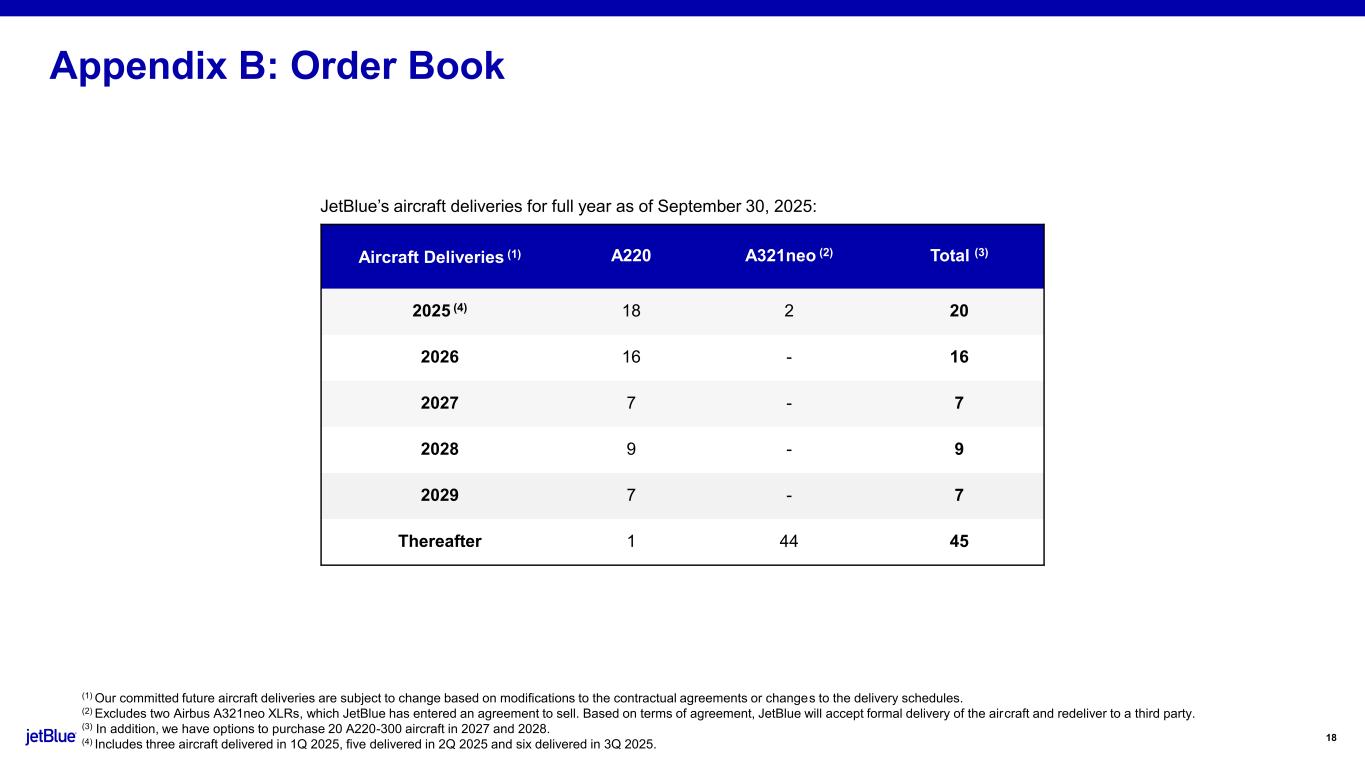
Thanks for the questions, Wayne. So the GTF challenges have improved. So if you recall, back in January, we thought we would have mid to high teens number of aircraft on the ground. The average for 2025 is going to be nine. We currently have six on the ground today. 2025 is the peak in terms of AOG. So that number will come down next year. So the projected AOG that we'll have on the ground in 2026 is low to mid single digits. So this is going to position us to actually be able to grow again um which we mentioned in our prepared remarks um in regards to our 2025 full year controllable cost guidance um it does not assume any pratt and whitney compensation um we continue to be in constructive conversations with prats and and just given the magnitude of impact it's had on our business. We will settle when we get to the right place. I would say the other last comment from me is, you know, this is putting us in a position where we're growing in a capital light way. So obviously we've previously paid for these aircraft with the GTF engines and having them return to service is great. This is definitely a tailwind for us and we're happy with where we're at in terms of getting these aircraft back up in the air.
Thanks. And then maybe just for the follow-up, can you remind us for your domestic business class or first class, or I forget what you're calling it, can you just remind us of the implementation timing of that? Like, where will you be from a kind of year-end, 26, and when you expect to complete that?
Sure. So just to give you some context, so we are outfitting all of the non-MINT aircraft that we have. So it's about 250 airplanes. Marty mentioned in his prepared remarks that by the end of 2026, we'll have about 25% of the fleet complete. And then by the end of 2027, we'll have the overwhelming majority complete. So very much looking forward to rolling out the first aircraft in the back half of next year.
Operator
And our next question comes from the line of Atul Mahaswari with UBS. Your line is open.
Good morning. Thanks a lot for taking my question. We are getting pushback that profit decline ex-jet forward is accelerating. It's just based on the fourth quarter guidance. So why do you think that is the case and what needs to happen for the portion of profits not touched by JetForward to start improving again such that JetForward can truly be all Yeah, listen, as we look at the fourth quarter, you know, we do see an improvement in fuel year over year.
But you have to remember, we're still operating from a much lower base in terms of the overarching demand environment. While it's improving, and we've seen that along with the rest of the industry, we're still operating way below where we had anticipated this year. We are showing RASM progression from Q3 to Q4. Our Jet Forward initiatives continue to ramp up, and you've heard us in our prepared remarks as well as in the Q&A highlight all of these premium initiatives that are coming to market. So, you know, we are seeing progress. I will remind you yet again, like if it were not for the macro step back earlier this year, which was four point impact to JetBlue, we would have hit our full year break even or better operating margin. So we believe we're on track and we've got solid momentum as we head into 2026.
Atul, if I can also mention, you know, we've announced very close-in capacity and launch for Fort Lauderdale in Q4, so that's pressuring RASM a bit, hence the one-point step forward in RASM, but that's a really great opportunity for JetBlue and absolutely the right long-term decision for this company because of the opportunity to really reclaim Fort Lauderdale as the third leg of our stool.
Right. That makes sense. And just as my quick follow-up on the fourth quarter guidance, can you share some color on booked yields quarter to date or some color on what portion of fourth quarter is booked and what's your yield assumption for the portion that is unbooked?
So as far as booking levels, we're about 90% booked for our forecast in October 55-ish or so for November and I think 35-38, something like that for December. Still very, very focused around peaks for November, December. We don't really guide specifically the difference between yield and load factor, but I think the guide as we laid out is based on what we're seeing right now. I think that to give you some more color, if you look at the demand environment as it exists right now, the booking curve is not fully back to sort of 2024 distribution as far as advanced purchase dates, but it's very, very close. And the trend of peaks versus troughs has really continued. You know, we have very good strength at the peaks and still challenges in the troughs. So to me, that is the last piece of the puzzle that I think when that comes back, will have been a much better spot to recover sort of the 2024 demand levels. But again, the line we use is, you know, people are still taking that one vacation that, you know, Thanksgiving or Christmas. They're not all taking the second vacation they may take. I think that's sort of what we're seeing in general.
Got it. That's great, Connor. Thanks for that. and good luck with the rest of the fourth quarter.
Operator
And our next question comes from the line of Catherine O'Brien with Goldman Sachs. Your line is open.
Hey, good morning, everyone. Thanks so much for the time. So I realize this is still early, but can you speak to how the impact of Fort Lauderdale ads is shaping up for 1Q? You know, guessing since you add that capacity so close into year-end, should be less of a drag in the first quarter? And then maybe bigger picture, a bit of a follow-up to Savi's question earlier. Could you just walk us through high level what the biggest tailwinds from JetForward to be in 26, you know, blue sky kicks in in a more meaningful way, domestic first on 25% of the fleet by year end. Just trying to get a sense of what the unique JetBlue revenue tailwinds are into next year, like, as you see them in the biggest bucket.
Okay, thanks, Katie. First of all, with respect to the Fort Lauderdale, if you look at a lot of the capacity we added, it is going to be good for Florida capacity. I mean, a lot of beach destinations. I think seasonality is our friend. Again, we'd like to have the full 300 days booking window, but we're going to be more at that point, more like 130, 140 booking day window for that period. So I don't think the sort of headwind will be gone, but I think we're certainly seasonality is our friend at this point. I will also say that, again, with the ability to add more international rivals in the peak in Fort Lauderdale, we are going to have a lot of opportunities for customers to connect from the north into the Caribbean and Latin America. And actually, we're really excited about that because I think, again, we're a low-cost airline. We don't really build hubs, you know, true hub and spoke networks, but we certainly carry international connections. And I think based on the sort of the local timing of when flights are good for Otterdale and then when they've been good for the beach markets, we're actually going to get a lot of good connecting opportunities. So we're actually very bullish about this. I know historically we talked about a three-year ramp. We are not in any way forecasting anything close to a three-year ramp.
And then maybe I'll take the second part of your question, Katie. So, you know, there are several key and big initiatives ramping into next year. I'd say Blue Sky is probably one of the biggest, all the significant drivers. So we just announced, obviously, earn and burn, so reciprocity, loyalty for JetBlue and United. Last week, we've got interline sales launching next year, easily launching next year, and then recognition of loyalty launching next year. So all of those will be implemented in delivering value in 2026. The network continues to ramp. I mean, we've moved 20% of the network around. Most of those changes went in about a year ago. And so given the ramp timeframe, those will continue to ramp into 2026. We're returning to growth next year. So that's going to be, I think, a nice tailwind for JetBlue, buttressing our cost control. And then when you think about operational reliability, lounges, domestic first, we're really trying to create this flywheel for that premium customer where they want to come back to JetBlue because we have the full product offering that they would like. And that's underpinned by this fantastic improvement in our operation, specifically around net promoter score and, you know, and winning the hearts and minds of customers again. Marty touched on Fort Lauderdale and that ramping into 26, but those are the big buckets.
That's really helpful. Maybe I just ask one quick follow-up on Mint. You know, you're adding the new Mint crew base in Fort Lauderdale and some new flights to the West Coast. Can you talk about where you think there are further opportunities to add more Mint flying, if any, just, you know, given the focus on adding premium products? And can you just remind us, you know, the margin uplift of a Mint versus non-Mint flight or RASM, however you want to talk about it?
Okay. Thanks. So, first of all, we are coming to the end of the line of Mint delivered airplanes with Mint on them. I think 26 and 27 are really focused on domestic first class. we have a few more mint airplanes coming but in general we're out of the airbus 321 business until 2030 or 2031 so we're going to reach a plateau for mint flying i think what's been the most exciting for us about fort lauderdale is how incredibly helpful it is as far as being counter seasonal uh you know we have very good results across the atlantic in the summer frankly we'll probably use some more lift in the summertime if we get it but obviously you to fly the airplane 12 months a year. And where Fort Lauderdale has really come into its own is with fantastic demand in the So having airplanes in markets like Dublin, Edinburgh, which are great summer markets, maybe not so great in the winter, and having those airplanes move to Fort Lauderdale is a major, major win for us. And frankly, I don't think any of us expected to see that good demand that strong in Mint out of Fort Lauderdale, but it's been a very happy surprise for us. And then obviously demand goes down in the summertime because it's hot down there, and And that's a very good time for planes to move across the Atlantic. So we love the ability to swing the jet planes back and forth. And frankly, we will get a nice little cost benefit by having a mint base down there as far as having not having to have, you know, Boston and New York crews fly the full on the West Coast services. So we're really bullish about that. With respect to mint overall, it continues to be extremely successful. And I think the combination of quality, fantastic service delivery by our crews and really good prices has been a very winning formula for us. The 321 has proven to be a very good, low-cost airplane platform for us. So I think it's worked out extremely well for us. We haven't really gotten into individual profitability numbers, but certainly the MIT network is the best of our drastic network right now. I think I'll leave it at that.
Operator
Thanks so much for that. And our next question comes from the line of Tom Fitzgerald with TD Cowan. Your line is open.
Operator
All right. Thanks so much.
I just wondered if you could speak to what you're seeing in terms of reliability and time on wing on your A220 fleet and how you're thinking about that as you go into 2026 planning.
Yeah, thanks for the question, Tom. So starting high level, we provided capacity indications for 2026 being in the low to mid single digits next year. I would say that's really driven by two things. Number one, the number of new deliveries that we have coming next year in terms of the 220. And then the second driver is really all these aircraft returning from AOG. So I mentioned going from an average of nine this year to low to mid single digits next year. You know, we do have some reliability challenges on the A220 that we're working collaboratively with Airbus Canada on, you know, but it is impacting us. It's just the materiality when you look at, you know, the capacity growth next year isn't as large. just really the new deliveries and the return from AOGs.
Okay, thanks so much. That's really helpful. And then, yeah, kind of curious how you're thinking about, I know technology was a big part of how you, you know, the operational and reliability improvements. I'm just wondering how are you thinking about that on the distribution side and any levers to drive more direct channel sales?
Thanks again for the time.
Thanks, Tom. And first, I'll start by saying, you know, we have three-quarters direct booked right now. So we've got very, very strong penetration and direct channels, and we have – we've taken a different strategy with OTAs and some of our competitors. We do not work with all the OTAs. We work with a very select number, and we've got very preferential distribution relationships with them. So I think the benefit of some of the technology solutions is not quite the same for us as it is for others. That being the case, we are in the process of adding NDC as a technology for JetBlue, and we expect to – I don't think we've given a date for it, but the team's working on that right now. And frankly, I think the thing that I'm most excited about is the potential it has for continuous pricing. It's very clear that airlines pricing 26 letters for 26 buckets and 26 booking codes there's a technology of the 70s and i think with what we have seen elsewhere in the world as far as the benefits of of continuous pricing i think is a great opportunity for us and you really need ndc to make that happen so uh not that i report yet but hopefully when we have some more firm dates we'll come back and talk about it a little bit uh and frankly i'm you know having having used continuous pricing in my previous place uh i think it's gonna be a great opportunity for our customers i think there's a stereotype that continuous pricing is a trick to have price increases. When I did this before, half the prices were price cuts and half the prices were price increases. All you're really doing is trying to benefit the demand curve. And it will absolutely include lower prices as much as it could include higher prices. So we're very bullish on it. No dates to report yet, but it's very much on our radar.
Operator
And our next question comes from the line of Scott Group with Wolf Research. Your line is open.
Hey, thanks. Good morning. So we've got Lower capex starting next year. Any other puts and takes to be thinking about with free cash flow? I guess if we're getting back to operating income breakeven, do you think we can get back to positive free cash flow in 27? Is that the right way to think about it?
Yes, it is. As you recall, we did a $3 billion aircraft deferral last year. And really, we did that in order to give us the runway to deliver free cash flow. You know, priority number one is positive margin. Priority number two is free cash flow. And I still believe that there is a path to achieve that at the culmination of this Jet Forward program in 2027. You know, we're making good progress. I'm pleased with the momentum across the initiatives. And once we hit pre-cash flow, priority number one is going to be improving the balance sheet and delivering where we can because we still want to get our metrics, quite frankly, back down to pre-COVID-like levels. Like, that is a priority of this leadership team. And so, I feel good about the path that we're on.
Okay. And then, Marty, maybe it's way too early to ask, but any – just getting launched with Blue Sky, but what are you seeing so far, if anything, anything different than you would have thought, just any kind of color?
Hey, Scott, thanks for the question. First of all, I'd say it's pretty much acting the way we expected it to. We've seen redemptions go both directions as far as JetBlue customers redeeming on United, United customers redeeming on us. If you look at the O's and D's where they're doing it, I'd say in general, it is more or less what we'd expected. I will say our first redemption on United was Denver and Las Vegas from Mosaic in Denver. So that was a bit of a surprise, but to me, that's actually a good thing. And I'm happy that, you know, that our customer in Denver, who's in Mosaic, is now getting utility of United. And to me, that is the fundamental goal for this, which is making sure that customers who align with True Blue have a full assortment of places where they can earn and burn. So as much as, you know, nobody had Denver Vegas on the bingo card, I think I was really happy that that's who it was because we have a customer who has raised his or her hand in Denver, has flown up to become a mosaic, who now is getting some great utility. So to me, it's a big win. And I actually love this. And this is exactly why we did this program.
Operator
Thank you. And our next question comes from the line of Brandon Oglensky with Barclays. Your line is open.
Hey, good morning, and thanks for taking the question. And I don't mean to be too critical here, Ursula, but when you said modest capital next year, and then in relation to the way you answered Scott's question there, maybe, you know, break even free cash flow by 27, I don't know. I mean, is modest like maybe a billion, billion and a half ballpark, like the incremental capital you need to get there?
No, the number is not going to be that large. I mean, I think I mentioned in one of the Q&A responses, you know, we're not anywhere in the realm of the raise that we did in 2024 in terms of quantum. I think what I highlighted in my prepared remarks is, you know, we do have 10 plus deliveries next year. And then we do have a convertible debt pay down of $325 million. So, So, you know, modest is, you know, much lower than what you foreshadowed. I will call out, you know, clearly we've seen fuel spike in the last five days. It's just something to be aware of. You know, we are watching that closely, as well as the more general, like, macro, like, demand environment. But, you know, I still believe that we have a path, and we're trying to be very thoughtful about when and how we raise any level of debt, just given where the balance sheet is today.
Okay. I appreciate that clarity. And then on the outlook for growth next year, I get it like you're getting AOGs back in the air, but is the cost structure already in place, meaning you've just been inefficient for the past 18 months and you're putting that back to good use? Or do you need to incrementally scale up crews and other infrastructure? Thank you.
No, I would say that the capacity growth next year is going to be efficient for us. We've done a great job managing the cost structure as we've navigated this year, but we're not going to find ourselves in a position where we need to hire excessively to support next year's growth trajectory. So I think this is, you know, from a unit cost perspective, the growth next year is definitely a tailwind for us.
And I'll just add maybe, I mean, our crew members have been great over the last year taking voluntary programs, agreeing to reduce hours. So we've really done a good job trying to reduce the costs we've had because of the grounded fleet as much as possible. and when we think about growth in general, you know, it's really about making sure we grow responsibly. We will continue to manage the peaks and the troughs. You know, as Ursula has mentioned, it's focused on, you know, capital preservation and capital-like growth. You know, we're managing for returns and then obviously ensuring our unit costs remain in check. And so, at the end of the day, you know, I think we've navigated a very challenging period with these aircrafts on the ground, and I think we've navigated it as well as, you know, 110, and our crew members have been a hugely important part of that. And, you know, we're looking forward to growing next year because that's ultimately going to get us back on the right path to sustain profitability.
Operator
And our next question comes from the line of Robby Schenker with Morgan Stanley. Your line is open.
Operator
Great. Thanks. Morning, everyone. Marty, you said that troughs continue to be challenging. Obviously, that's very understandable given the macro. But do you feel like that's cyclical or structural? And if it is more structural, how are you thinking about 2026 capacity planning, especially in 1Q, which tends to have more trough periods? And do you think you need to be more aggressive on taking out capacity there?
Robert, good question. I mean, here's what I would say. Troughs are always challenging as a leisure-focused airline. This is not new. I would say that we looked at previous uh economic slowdowns or much of what you want to call the 2025 situation but previous times where revenues have gone down this is a very very common um change and nothing that we were unprepared for when the time came i think that you know we'll we'll sort of be able to finally call this change in demand done when we see troughs get back to a little bit more normal level but they will always be a challenge for us and that's just uh that's just the status of being a leisure airline in general uh understood that's helpful color and maybe a quick follow-up uh can you just expand on your corporate comments i think you said that yield goes pretty strong uh what are you seeing in the east coast in particular i think there's some optimism about uh pickup and activity so to be clear delt corporate business is a very small part of our business uh i think very much given our network and year over year you know joanna talked about the the changes we made to the network in 2024 and very early 25, that really pretty significantly reduced our presence in corporate markets. I mean, there's a point in time we had 50-something flights at LaGuardia, we're now in the teens. So a lot of our corporate supply has actually gone away. And frankly, I've been very, very happy with what we've seen on yields. I mean, we've got yields up double digits in adult corporate markets. I think it's very clear to say just you know to scale this um you know our total sales team i can count on on two hands uh we don't have the incredible breadth of uh of corporate contracts and it's basically it's really based on our network you know in new york um you know the whites preferred airport uh we have some good corporate customers in um in boston and for a lot of now i'd say by far our biggest attractiveness for corporate has been mint and our pricing uh and i i think overall you know it will always be a part of our network but you know leisure will still be the bread and butter for us understood thank you and our final question comes from the line of connor cunningham with
millius research your line is open well everyone thanks for squeezing me in um just two if i may just on on the on the rasm outlook uh for 4q can you can you maybe parse out the the what you're seeing on the u.s domestic side versus latin and and transatlantic and then i'll just squeeze my second question and on maintenance next year it seems like you have your maintenance is up 30 something percent this year the un 90s are gone i think that there's a huge tail end in the 2026 just trying to understand how that all flows through thank you all right connor i'll take the first half on the resin uh in general what we're seeing in resin is uh from a regional perspective is more it's pretty consistent with what we're seeing overall which is uh you know
better numbers in international and domestic um so i don't think there's anything this is sort of no dramatic news there as far as any significant change in trend. And frankly, I think that what we're seeing as far as changes in capacity from the ULCCs will ultimately help that. It's very clear that as capacity has come out overall, that should put less pressure in the back of the airplane, but I think it's a little bit early to call that trend right now. And I'll let the maintenance comment go to her.
Yeah, just on maintenance, Connor, I would say when you look across all the P&L cost line items maintenance is still going to be a headwind next year um i mean about half of our fleet is the a320 and that fleet is aging it's not on a flight hour agreement it's on a time and material agreement um so it is still going to be a headwind obviously that's going to be offset by all of the jet forward cost initiatives um you know think technology think productivity So, maintenance will be the one headwind, but as I mentioned in my prepared remarks, we are targeting a low single-digit Casamex fuel next year, so I'm pleased with the overarching trajectory and the team's ability as we navigated through this year to execute the cost performance. You know, we improved the midpoint of our full year guide, and that's really attributable to the teams, and that's despite one-point polling capacity. So, super pleased with the execution, and that's going to continue as we navigate through 2026.
Operator
And ladies and gentlemen, that will conclude today's conference, and we thank you for your participation. You may now disconnect.