This call and presentation may contain forward-looking statements made by the company that involve risks, assumptions, and uncertainties that are difficult to predict. Investors are directed to the information contained in Item 1, A, Risk Factors, or Part 1, of the company's annual report on Form 10-K, filed with the United States SEC, for discussion of the risks that may affect the company's future operating results. Actual results may differ. Now, I'll hand the call over to Adam for some opening remarks.
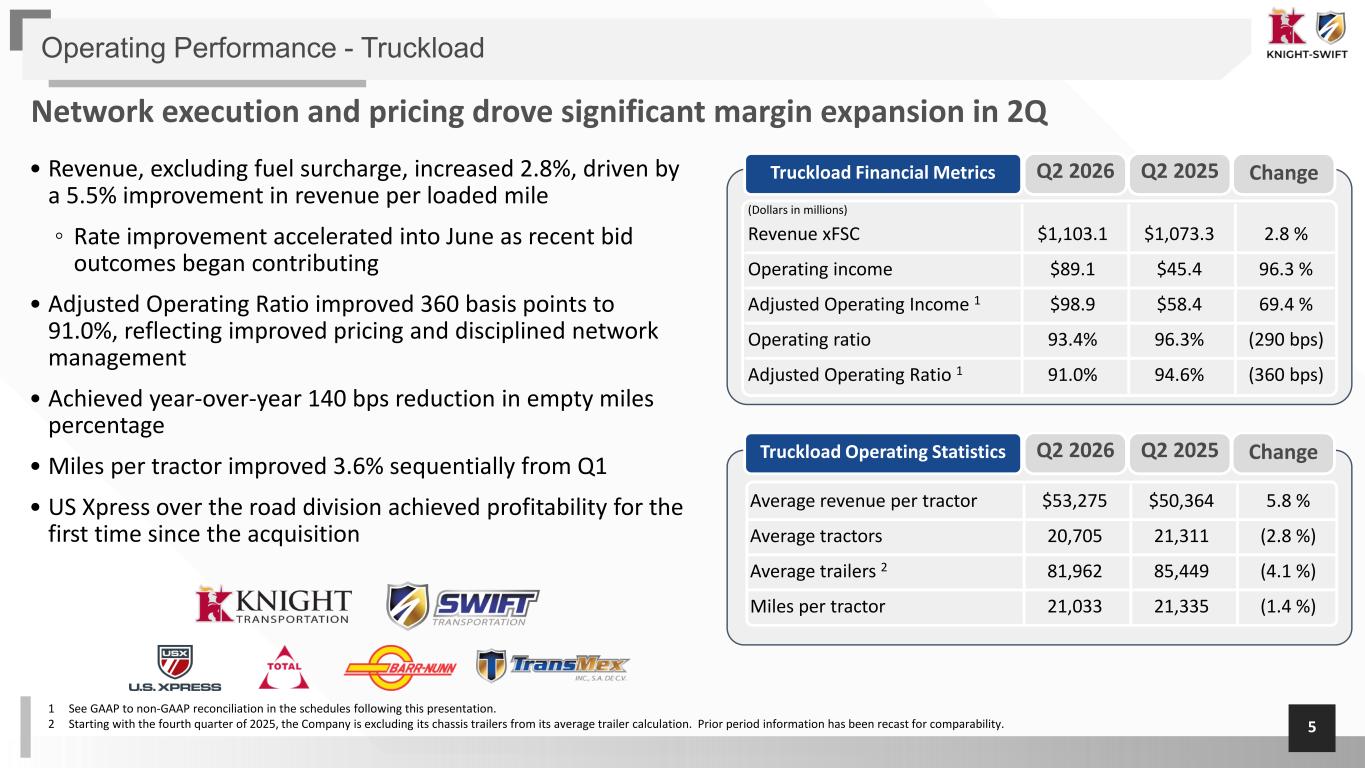
Thank you, Brad, and good afternoon, everyone. So the truckload freight market has rapidly progressed over the past few months, with spot rates training well ahead of normal seasonality, tender rejection rates reaching levels not seen since 2021, and contractual bid activity growing increasingly supportive. This has continued to be largely supply-driven, though signs of improving demand are starting to emerge. We believe our business is positioned particularly well for environments such as this, with our leading over-the-road scale, agility in the market to optimize yield, collaborative cross-brand solutions to meet shippers' needs, an industry-leading academy network and training infrastructure to source professional drivers, and an intense cultural focus on cost and excellence and execution to convert opportunities into earnings. Further, we believe demand for our truckload service offering is outpacing the market as evidenced by our tender rejection rates running roughly twice the level of public indications in the second quarter. Realized revenue per mile was just beginning to recover in the second quarter as contract rate improvement in the period was largely driven by bids priced early in the year. Revenue per mile accelerated in June as the more recent bids reflecting the tighter backdrop started taking effect. These bid outcomes largely brought double-digit percentage gains in pricing. In the third quarter, the planned annual bid events typically wind down, though mini-bid and turn-back bid activity is persisting, if not increasing, in recent weeks. Additionally, we continue working on rate reviews on existing business to address rates that are below market where the next scheduled bid is too far out to be sustainable. We believe the efforts of the FMCSA and DOT, including initiatives to prevent and revoke invalidly issued CDLs, prevent cabotage, shut down non-compliant CDL schools, and address hour of service abuses, are in the early stages and will continue for some time. This cleanup effort should, in our view, have an outsized impact on the one-way truckload market, particularly on the lowest price capacity. The service that was under the most pressure over the past few years is now benefiting the most from capacity exiting the system, a dynamic we expect will continue. Beyond the regulatory-driven pressure on supply, we believe the recent Montgomery ruling by the Supreme Court will add to the tightening in the truckload market as marginal carriers will likely be squeezed out through a combination of higher insurance costs and higher shipper and or broker selection standards.