Operator
Good morning and welcome to the KKR Real Estate Finance Trust Incorporated 4th Quarter 2025 Financial Results Conference Call. All participants will be in listen-only mode. Should you need assistance, please signal a conference specialist by pressing the star key followed by zero. After today's presentation, there will be an opportunity to ask questions. To ask a question, you may press star then 1 on your telephone keypad. To withdraw your question, please press star then 2. Please note, this event is being recorded. I would now like to turn the conference over to Jack Svitala. Please go ahead.
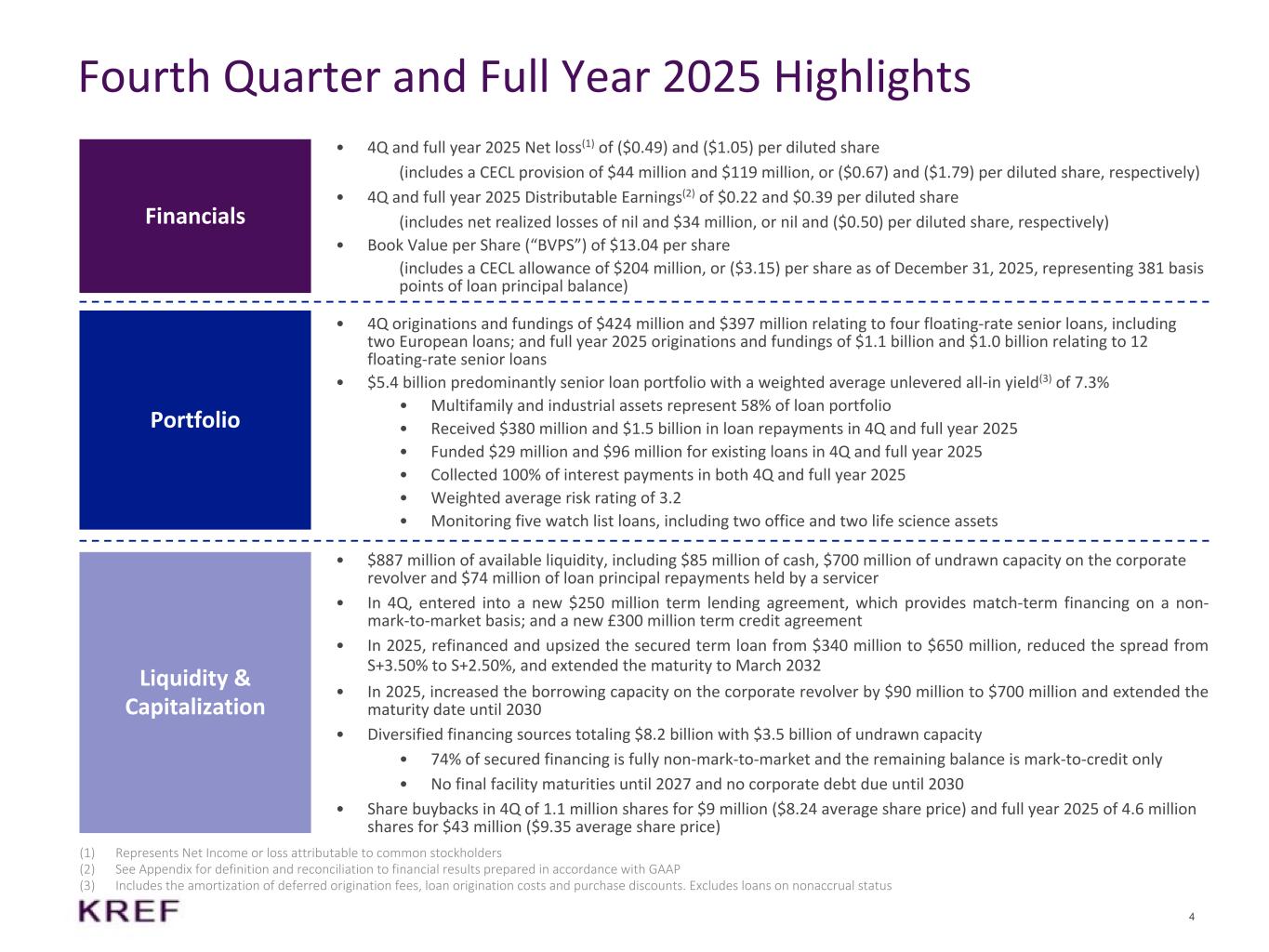
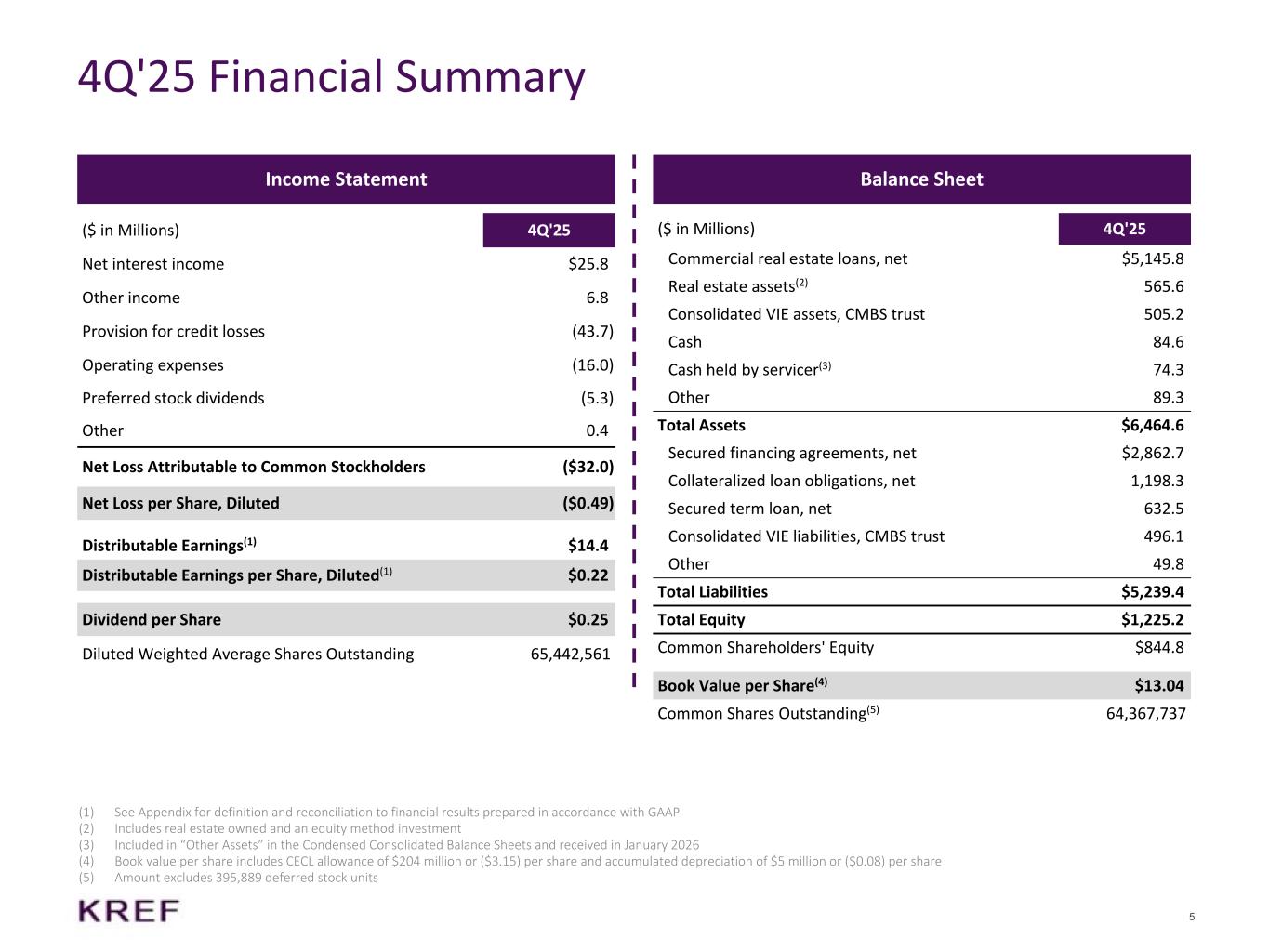
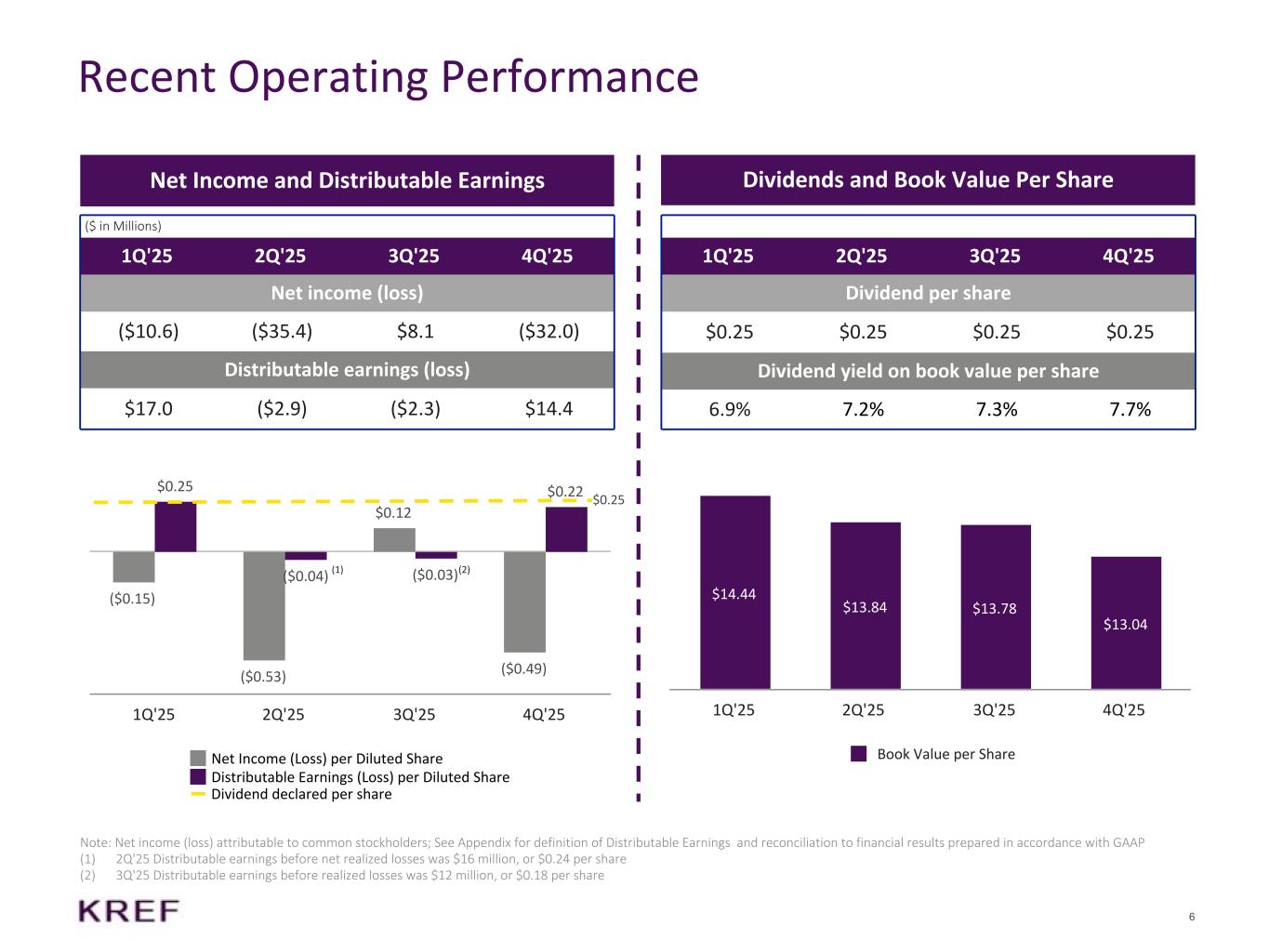
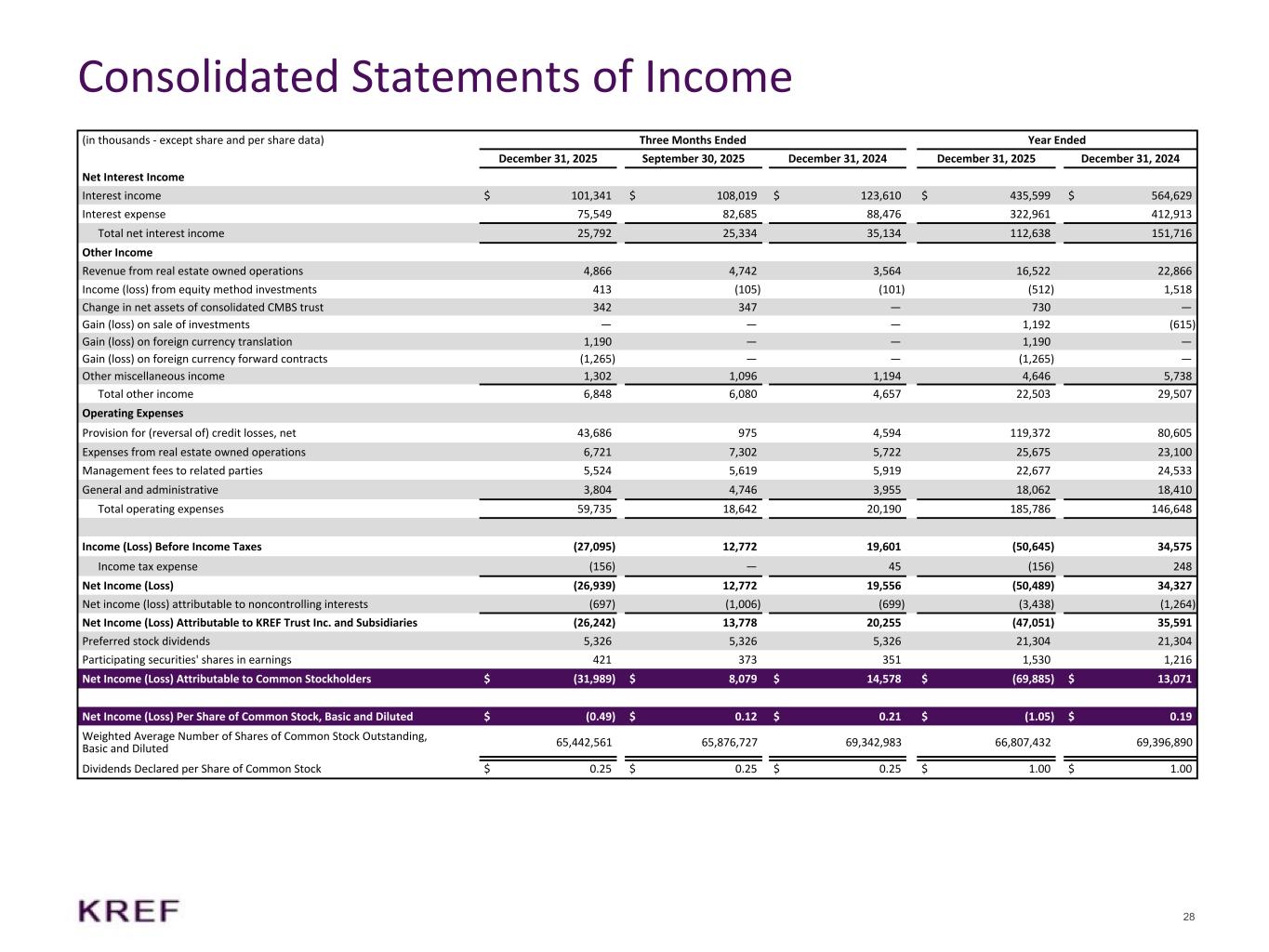
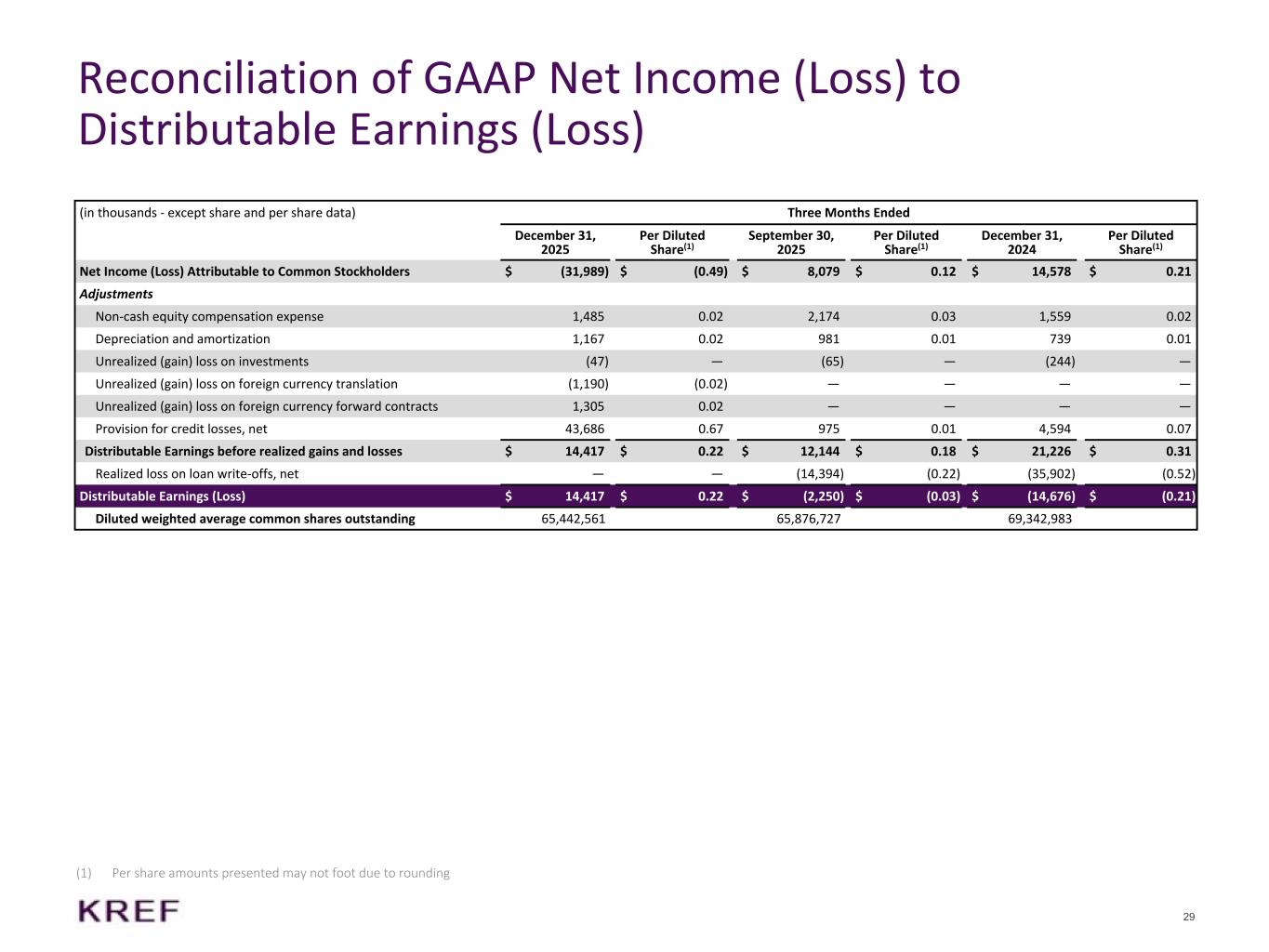
Thanks, Operator, and welcome to the KKR Real Estate Finance Trust earnings call for the fourth quarter of 2025. As the Operator mentioned, this is Jack Svitala. This morning, I'm joined on the call by our CEO, Matt Salem, our President and COO, Patrick Madsen, and our CFO, Kendra Decius. I'd like to remind everyone that we will refer to certain non-GAAP financial measures on the call, which are reconciled to GAAP figures in our earnings for release and in the supplementary presentation, both of which are available on the investor relations portion of our website. This call will also contain certain forward-looking statements, which do not guarantee future events or performance. Please refer to our most recently filed 10-K for cautionary factors related to these. Before I turn the call over to Matt, I'll quickly go through our results. For the fourth quarter of 2025, we reported a gap net loss of negative $32 million, or negative 49 cents per share. Book value as of December 31st is $13.04. We reported distributable earnings of $14 million, or 22 cents per share. And we paid a $0.25 cash dividend with respect to the fourth quarter. With that, I'd now like to turn the call over to Matt.
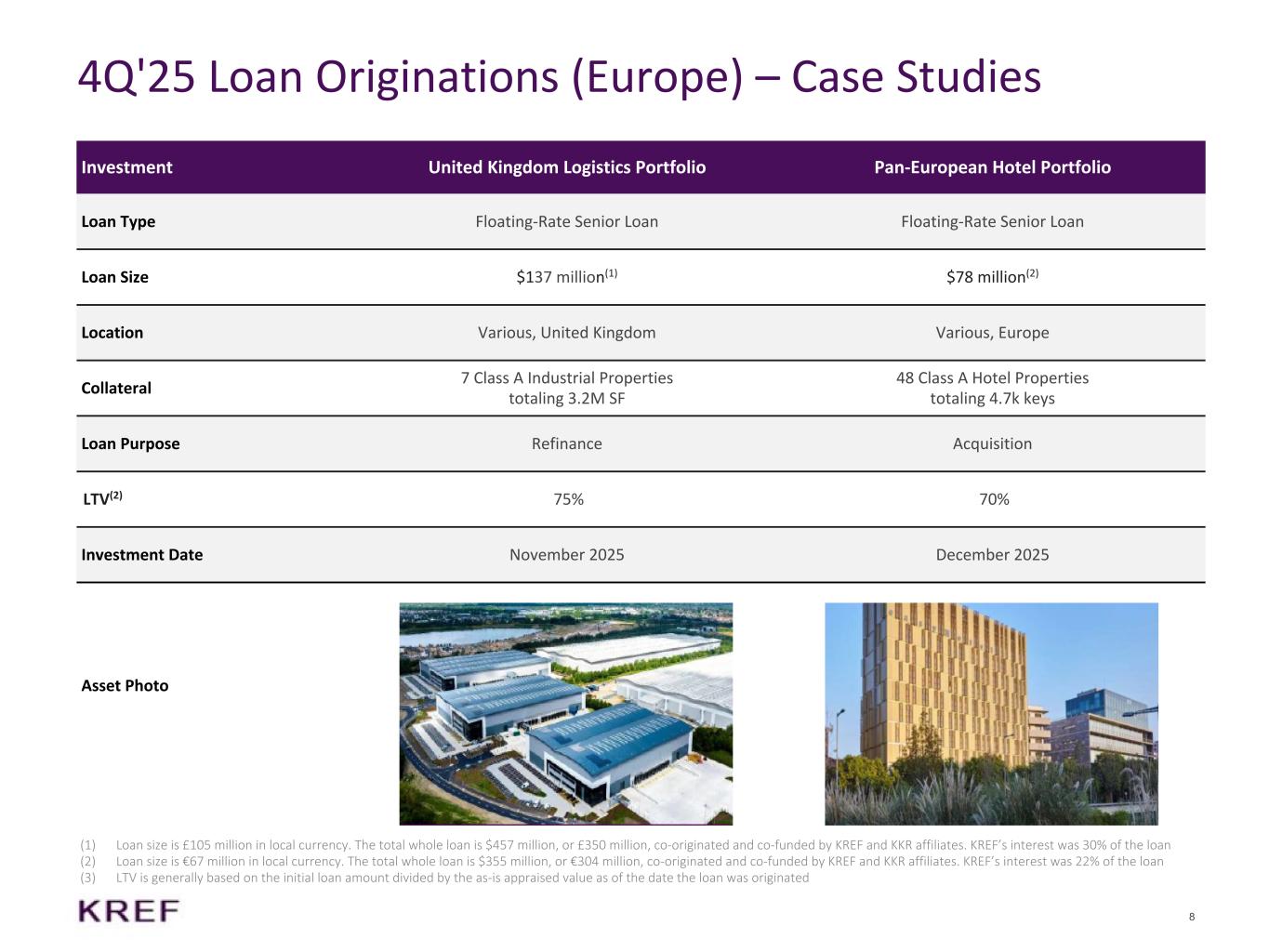
Thanks, Jack. Good morning, everyone, and thank you for joining us today. Before reviewing our company results in more detail, I would like to highlight several key achievements for KRF in 2025. First, we made significant progress, strengthening our liquidity position throughout 2025. In March, we closed a seven-year, $550 million term loan fee, which we later upsized and repriced in September, increasing the outstanding balance to $650 million and reducing the coupon to SOFR plus 250 basis points. During the year, we also upsized our corporate revolver to $700 million, up from $610 million. Second, we closed on our first loan in Europe for CAREF. We have been strategically building our real estate credit platform in the region over the last several years. This transaction, along with subsequent European investments in the fourth quarter, represents an important milestone in that effort. and positions us to capitalize on relative value across the U.S. and Europe. These transactions also serve as a foundation for continued geographic diversification. During 2025, we continued to experience healthy repayment activity, which totaled $1.5 billion, consistent with 2024 levels. We offset this with $1.1 billion of new originations, and today we are operating at the highest of our leverage ratio, and targeted portfolio size. More than 75% of our new originations during the year were concentrated in multifamily and industrial loans, sectors where we continue to receive resilient fundamentals and attractive risk-adjusted returns. Multifamily remains our largest property type exposure, and given our significant exposure a Class A product, we continue to observe strong underlying performance across the portfolio. We remain focused on maintaining and selectively growing the portfolio within on-theme asset classes and top tier MSAs. Looking ahead, 2026 will be a year of transition for the company. Through execution of our business plans, we have positioned much of our REO portfolio REO for liquidity this year. Additionally, we are going to implement an aggressive resolution strategy for a significant portion of our watch list assets and select office assets. The overall goal is to compress the discount of our stock price to book value and more quickly unlock approximately 13 cents per share embedded in our REO assets. However, this strategy will also put additional pressure on earnings until we are able to fully execute the plan. As it relates to this approach, we will need to be balanced on a few assets. To that end, I want to touch briefly on our Mountain View asset. The market continues to improve meaningfully and we remain engaged with tenants. If we are able to sign a lease in the near term, we believe the optimal strategy will be a monetization post-2026, given a number of factors including anticipated CapEx and tenant improvement work. Finally, I want to comment on our dividend. The dividend is something the Board is actively evaluating as part of a broader capital allocation discussion, particularly as we work through a transitional year for the portfolio. Our priority is to make disciplined decisions that balance near-term earnings visibility and long-term shareholder value. With that, I'll turn it over to Patrick.
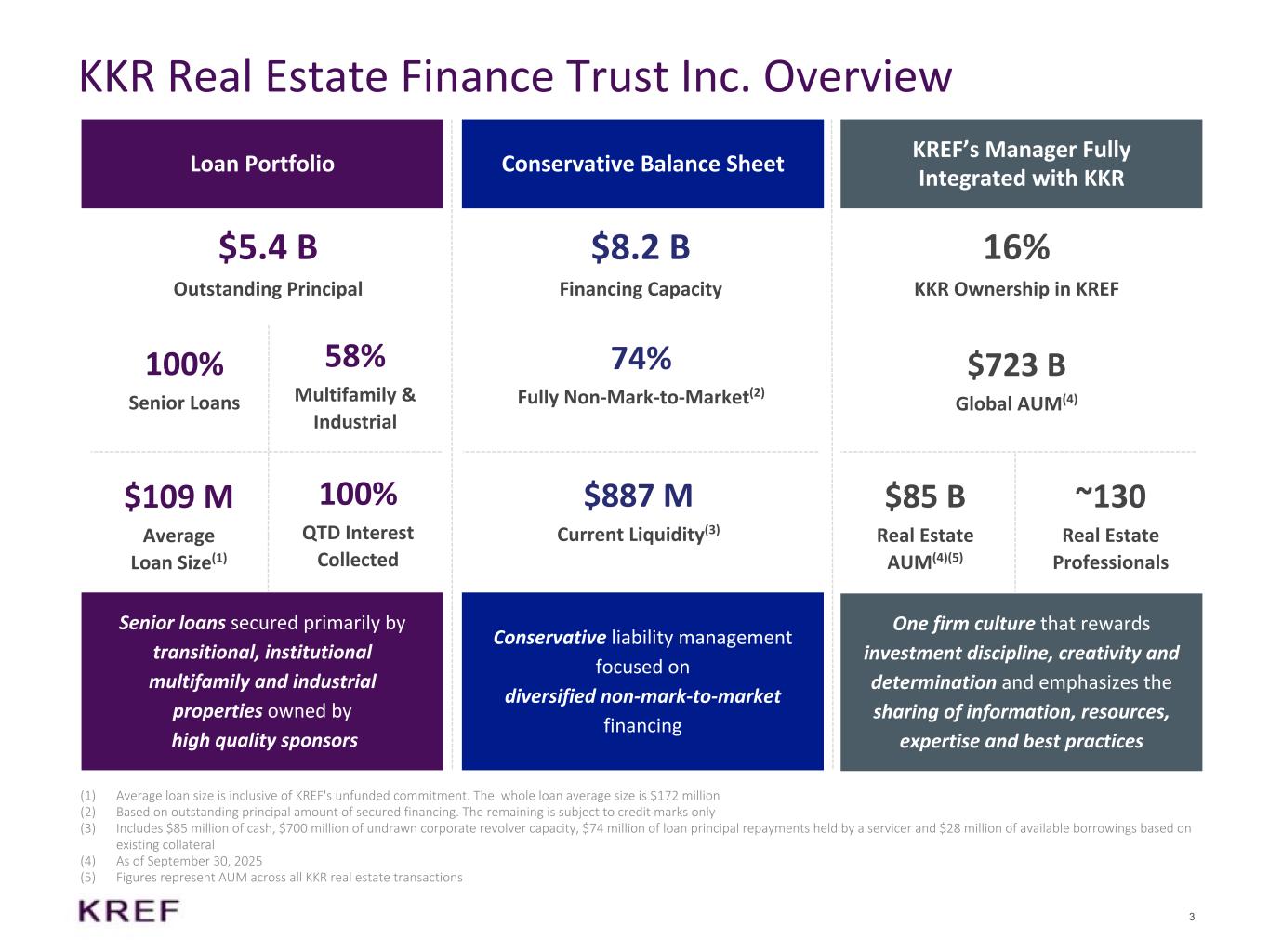
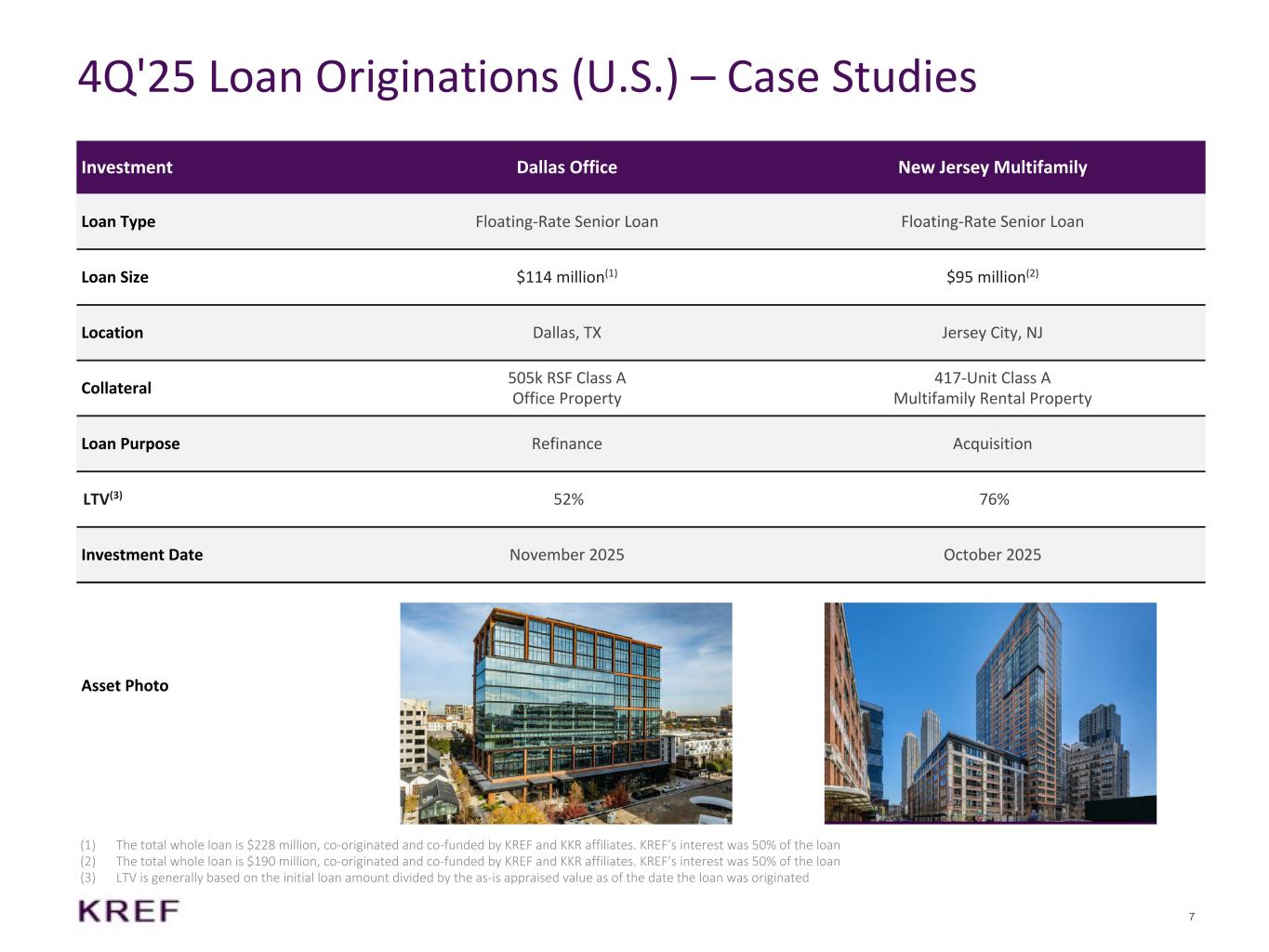
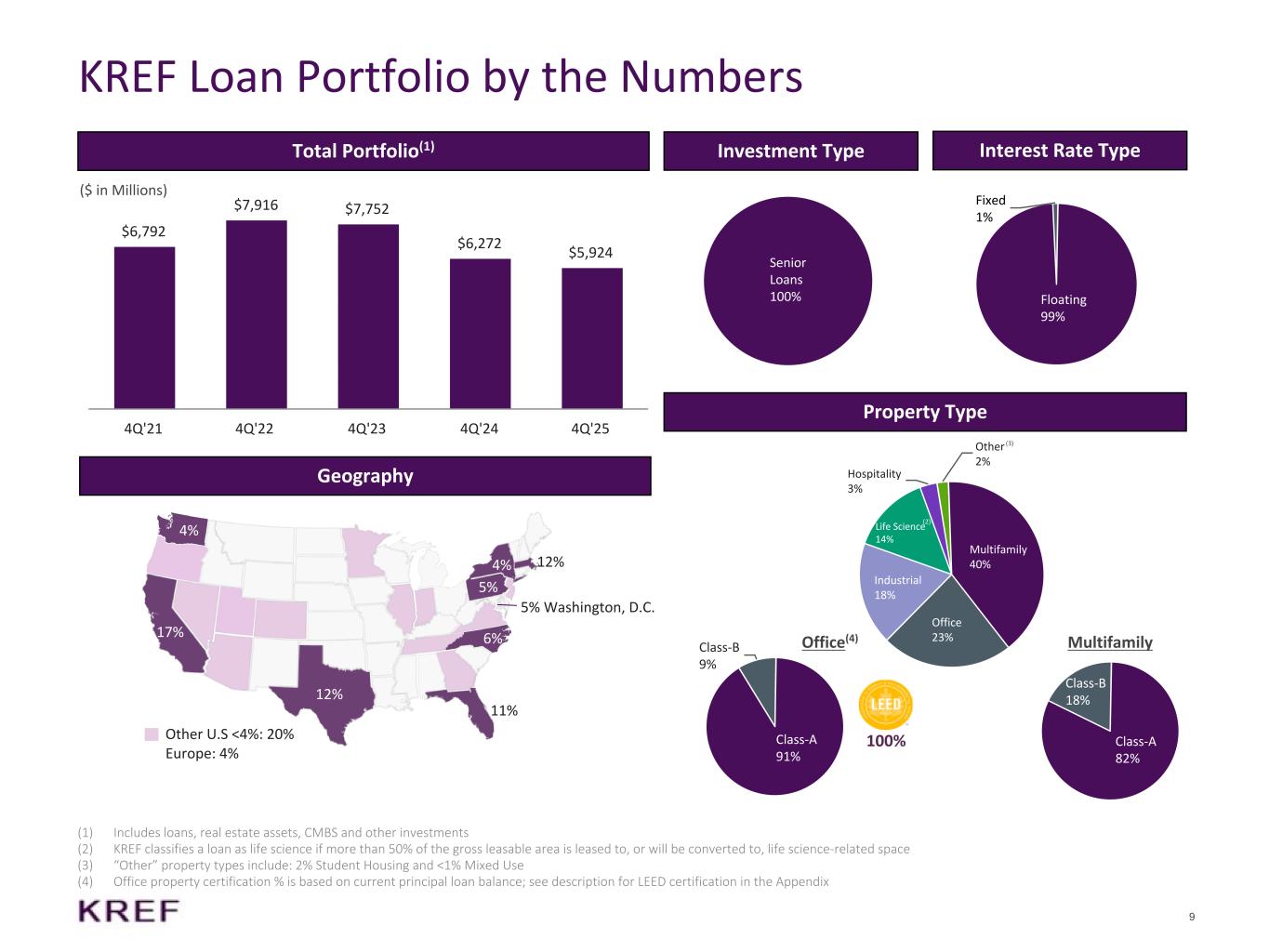
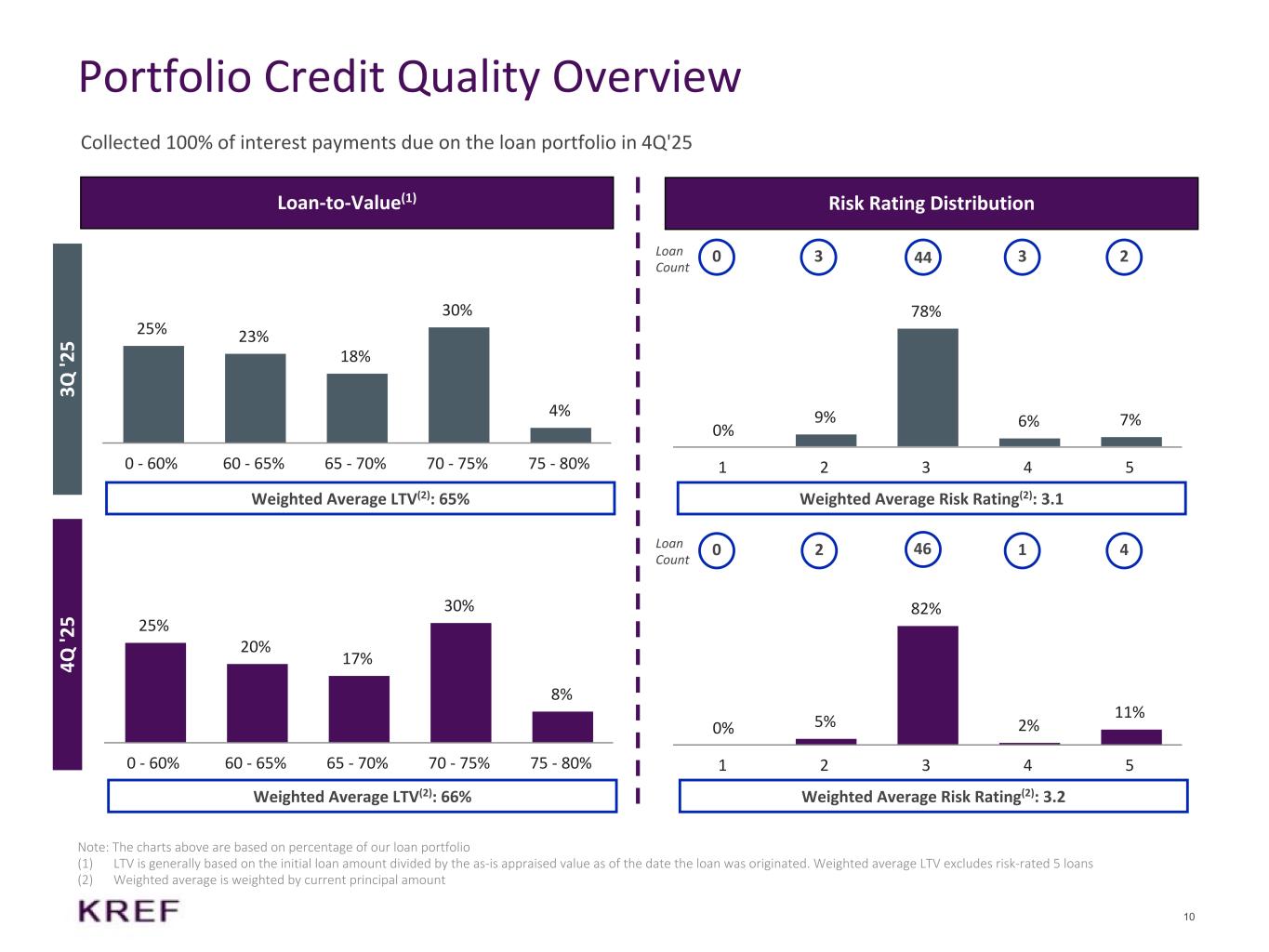
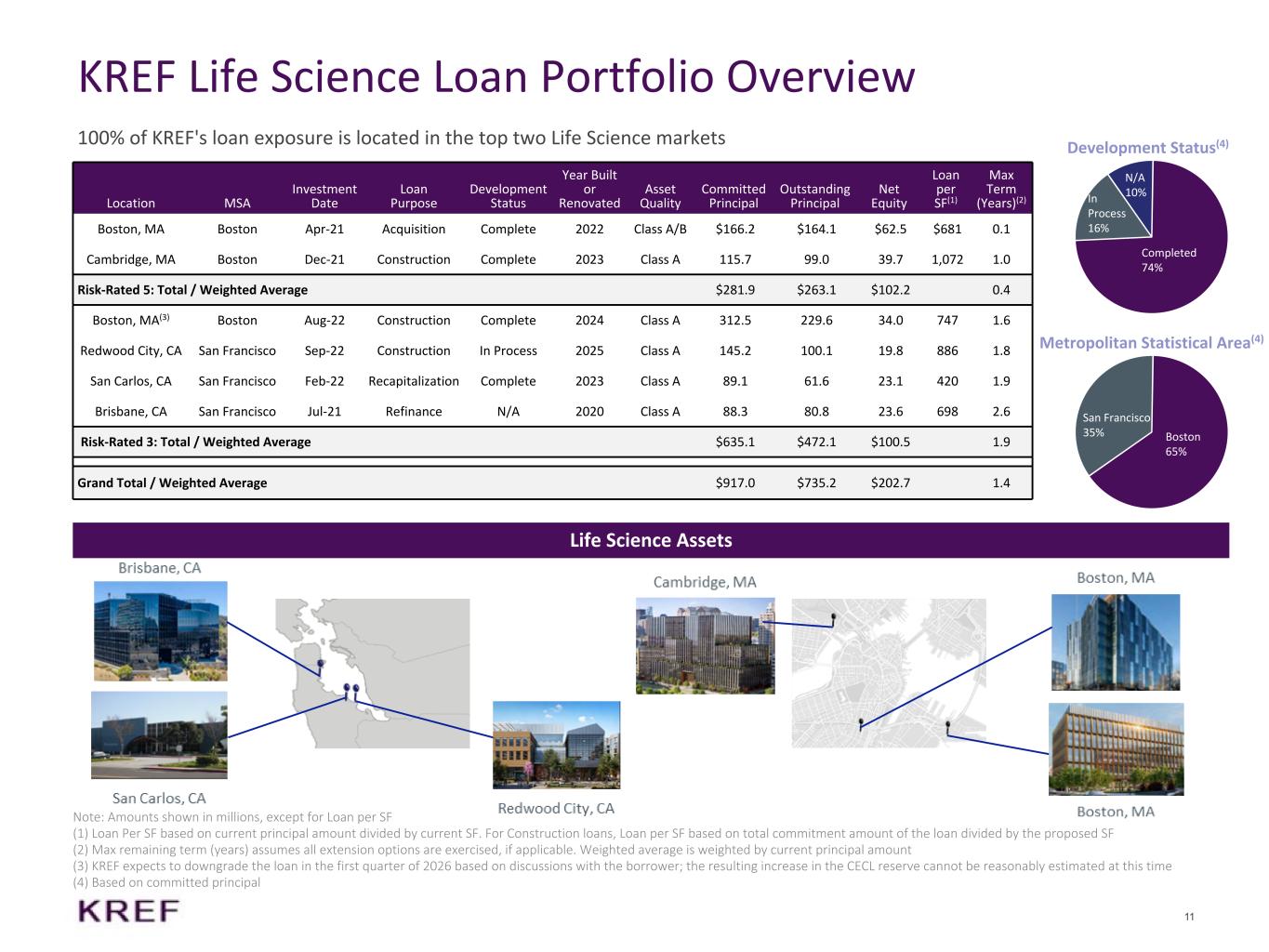
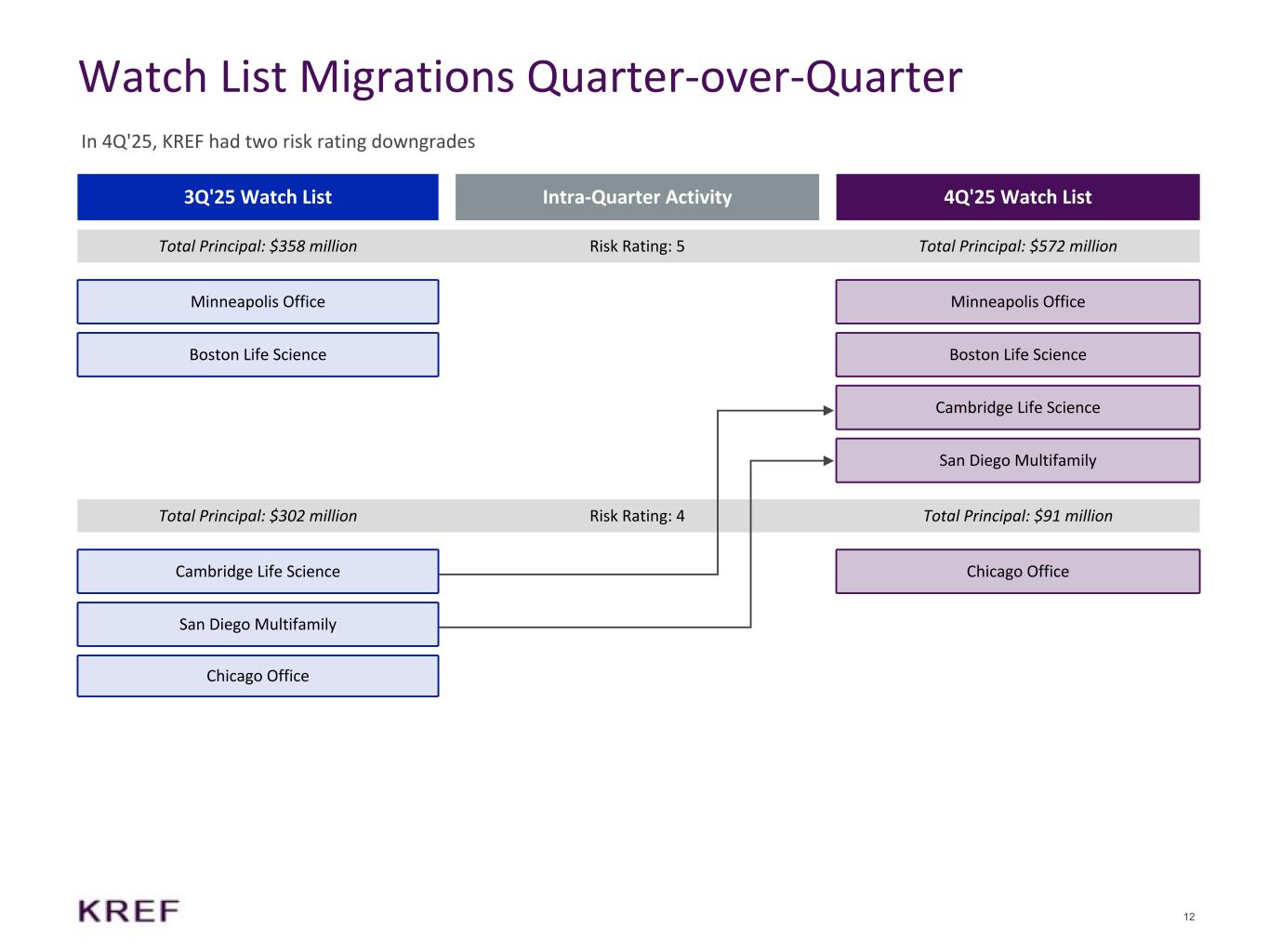
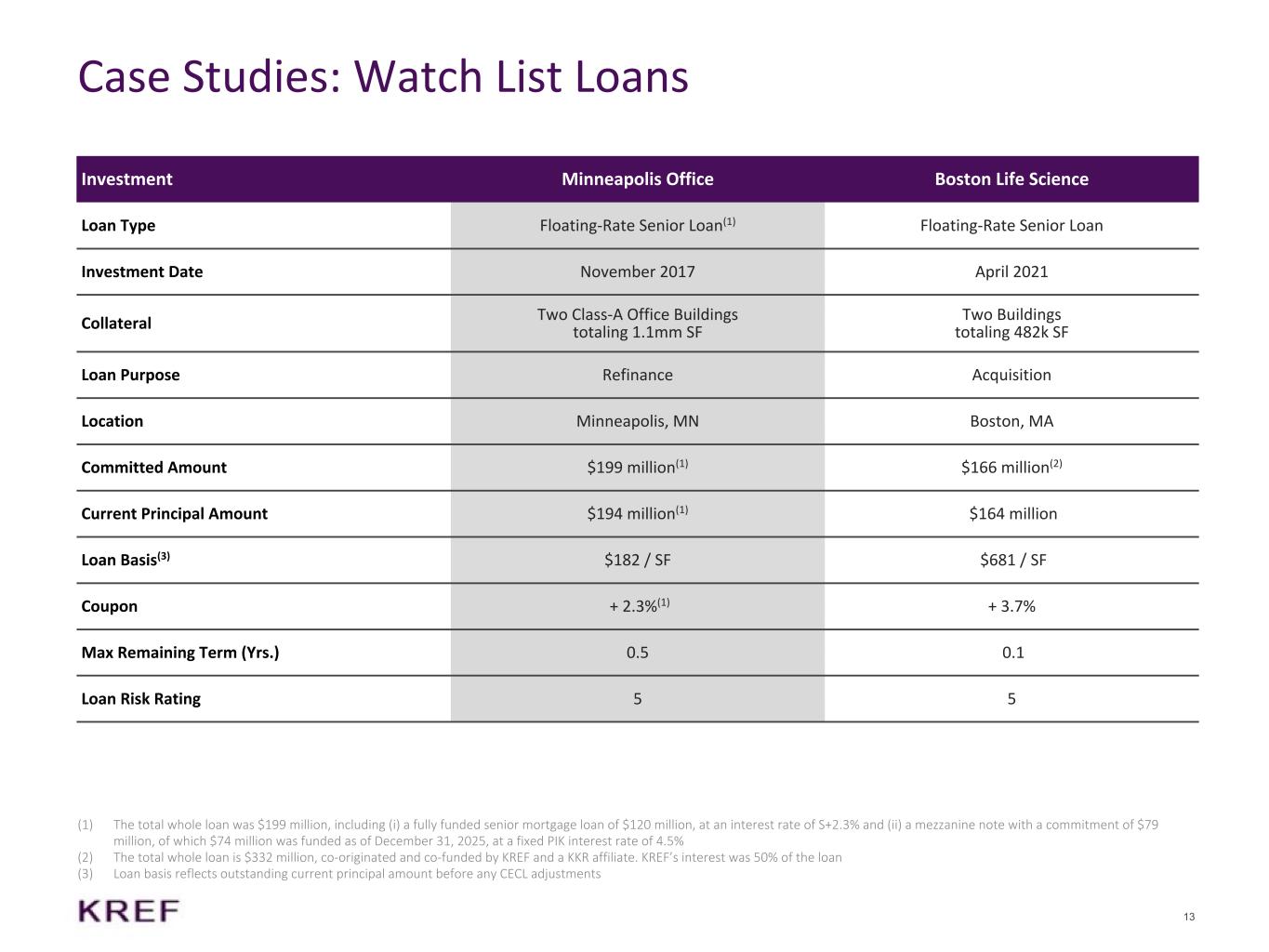
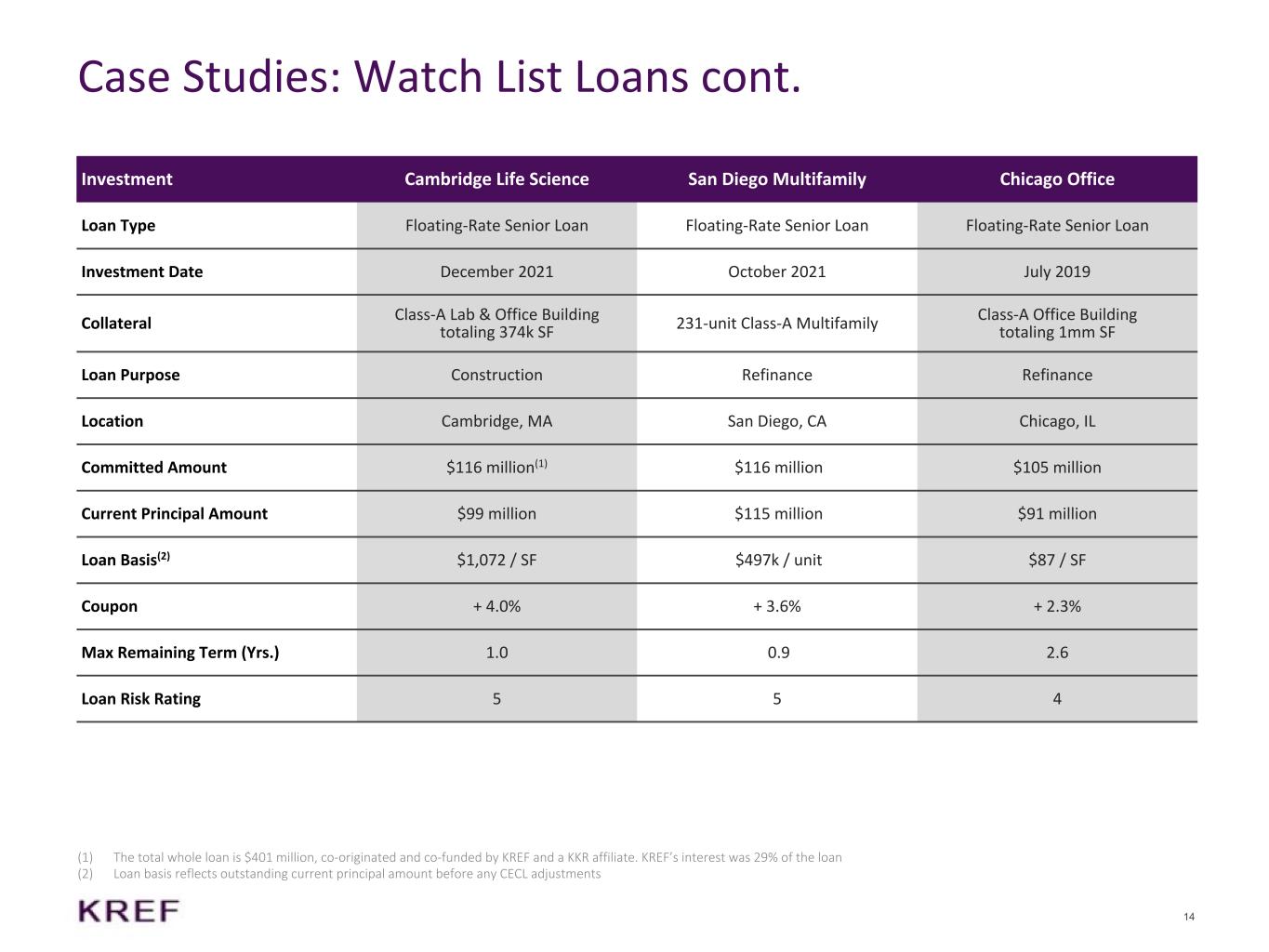
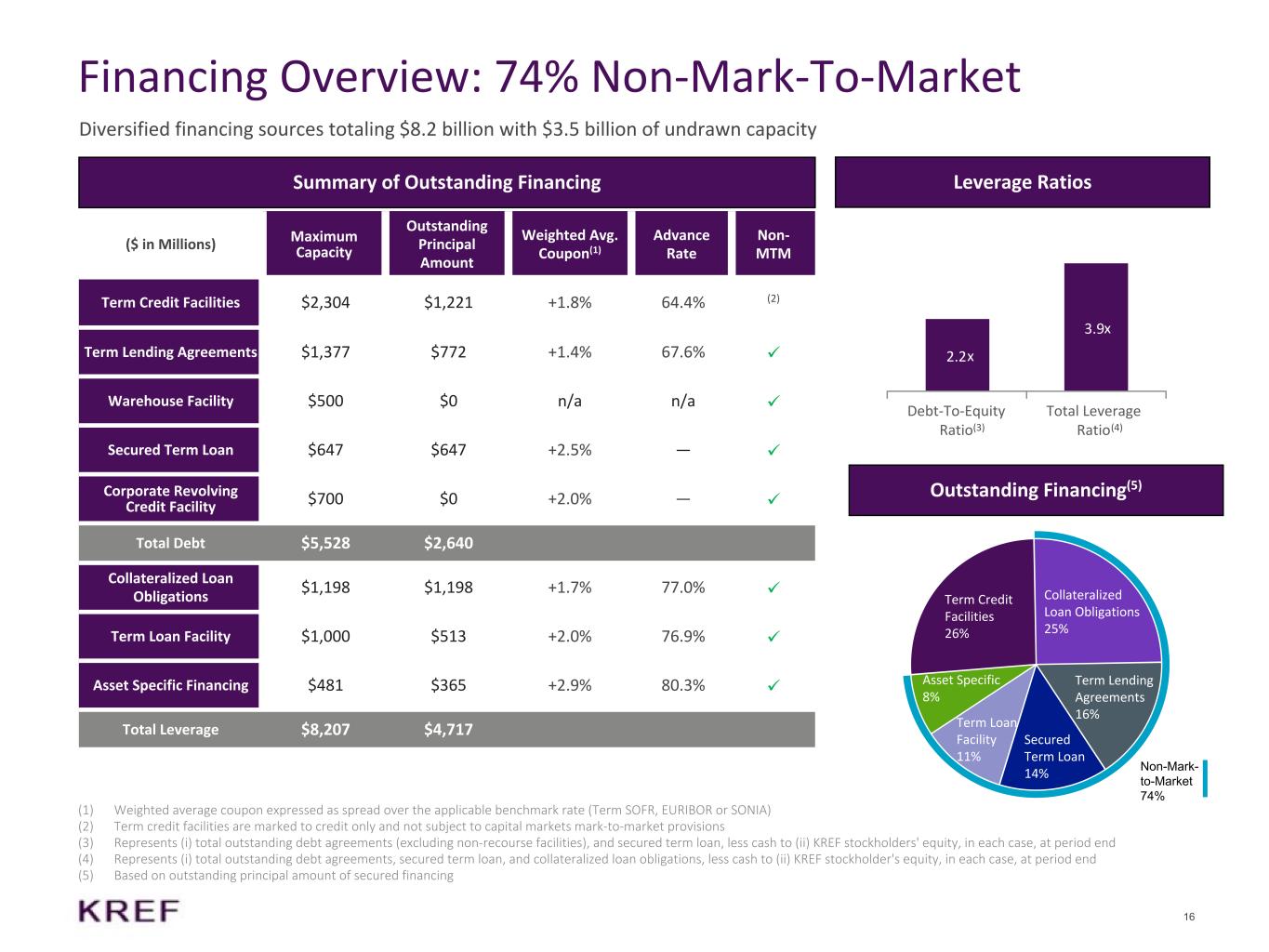
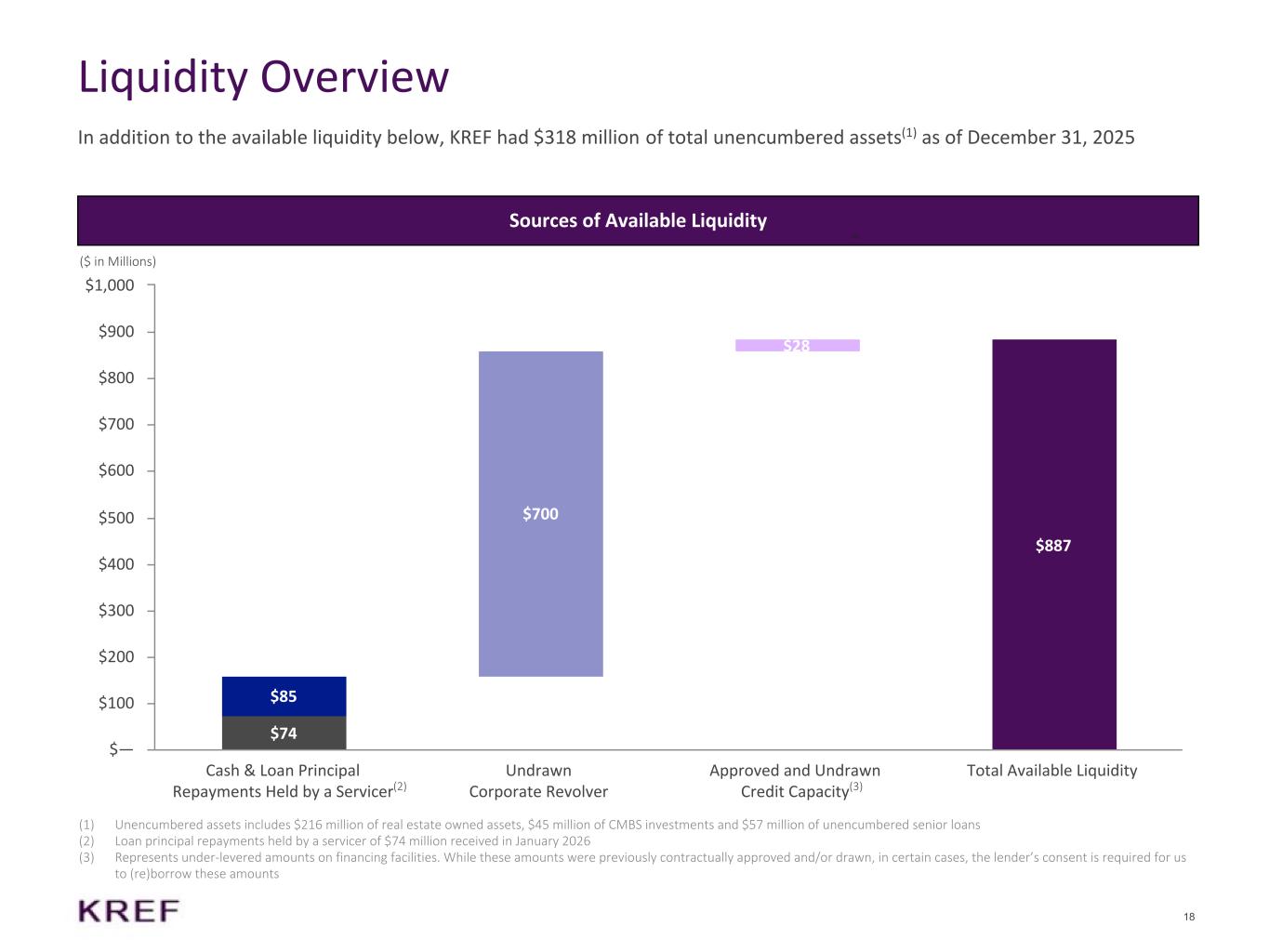
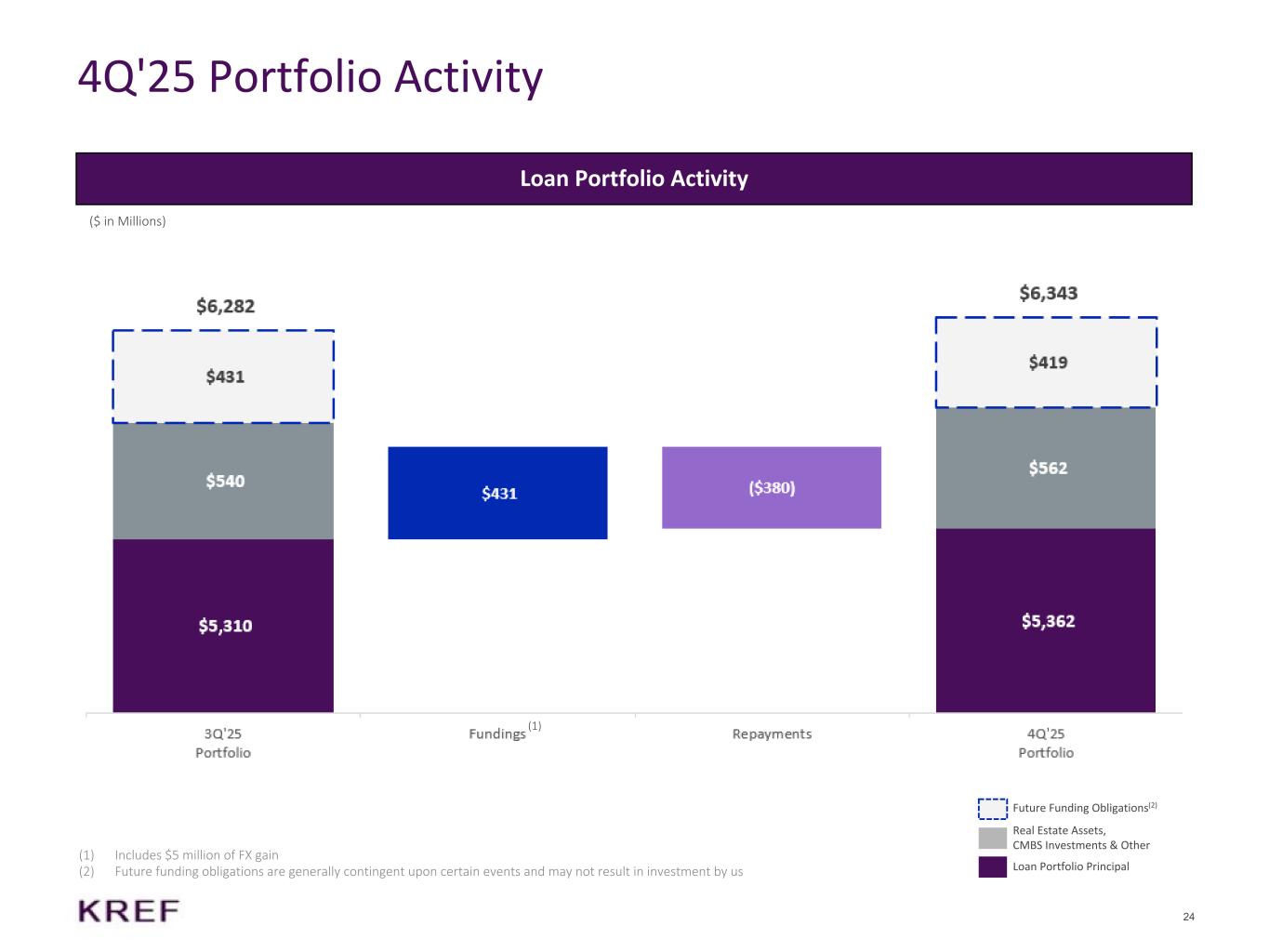
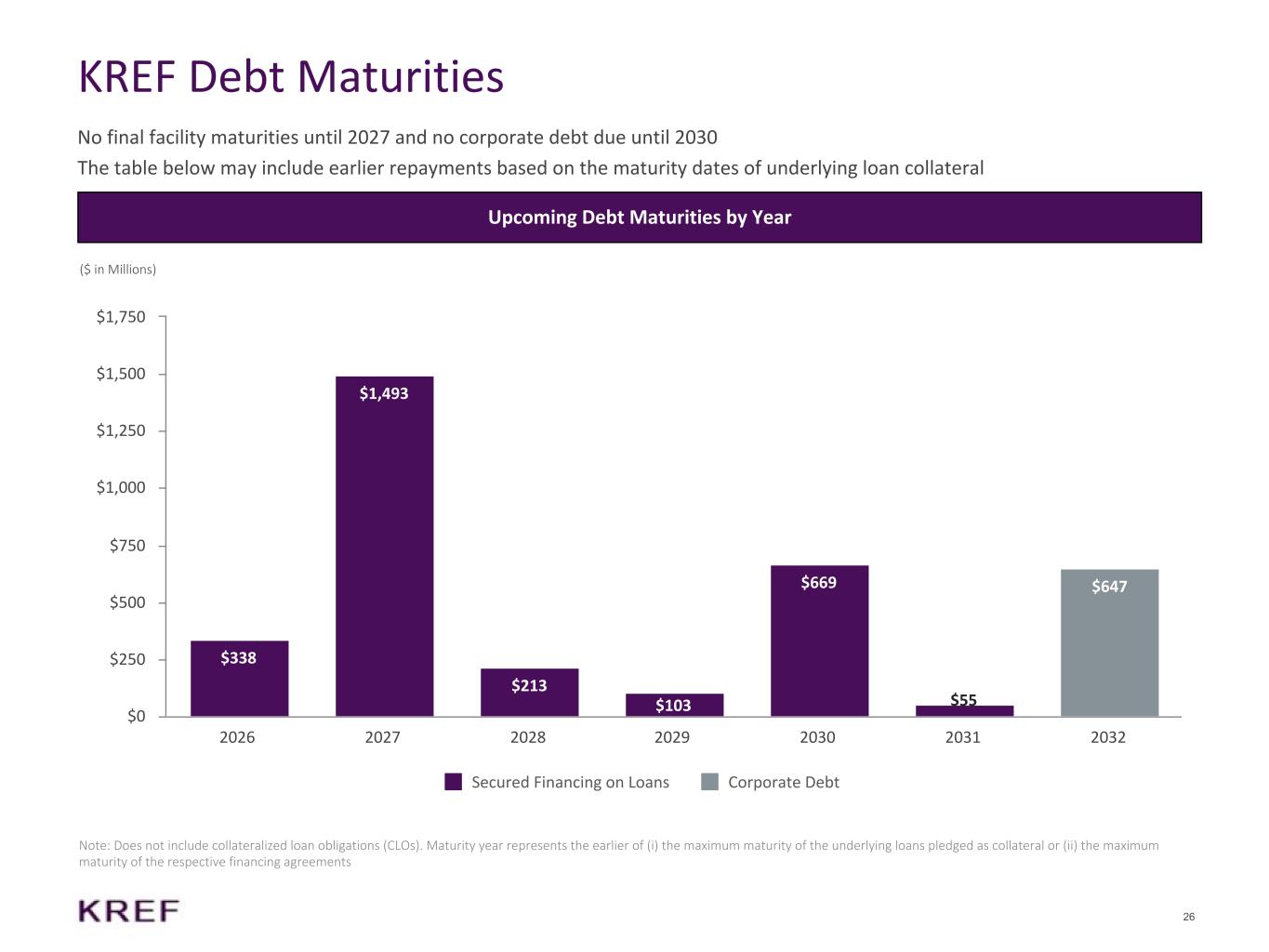
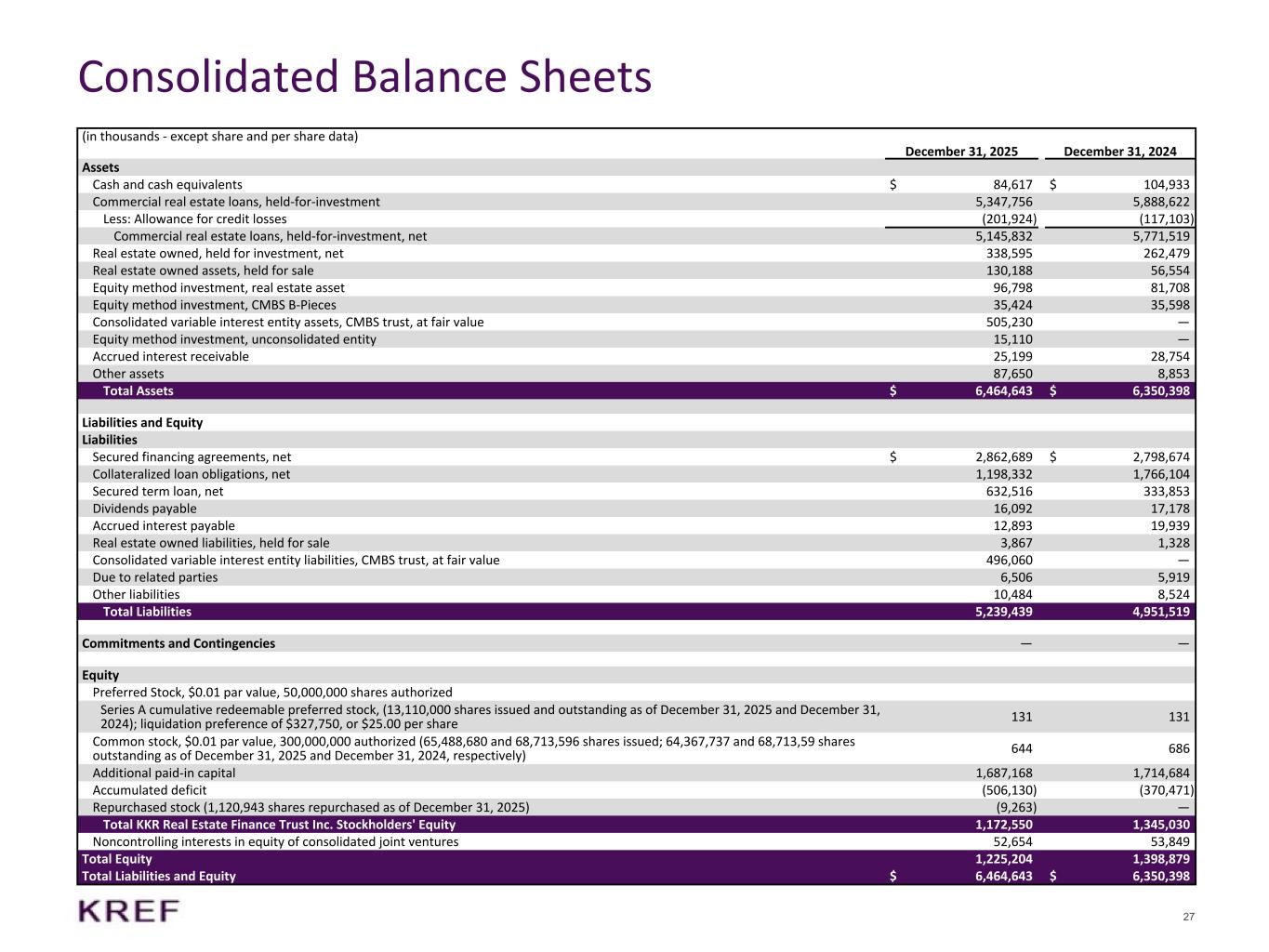
Thanks, Matt. Good morning, everyone. Looking at risk ratings during the quarter, we downgraded the Cambridge Life Science and San Diego multi-family loans to risk grading 5. As a result of these developments, we recorded total incremental CECL provisions of $44 million during the quarter. Subsequent to quarter end, we entered into new modification discussions on our Boston Life Science Loan, which is currently risk-graded 3, and while the loan continues to make contractual monthly interest payments, we anticipate a ratings downgrade and CECL increase in the first quarter. New originations in the fourth quarter totaled $424 million, which surpassed repayments of $380 million. In 2026, we expect full-year repayments of over $1.5 billion, million, exceeding repayment activity in each of the last two years. We'll continue to originate new loans while maintaining our target leverage range alongside other capital allocation strategies. Turning to financing and liquidity. We ended the year with near record levels of liquidity totaling over $880 million, including $85 million of cash on hand, another $74 million loan repayments held by the servicer, as well as $700 million of undrawn capacity on the corporate revolver. Total financing capacity was $8.2 billion, including $3.5 billion of undrawn capacity. Leveraging our internal KKR capital markets team, we add it to our non-market to market capacity during the quarter, and 74% of our financing remains non-mark-to-market. We remain well-positioned with no final facility maturities until 2027, and no corporate debt due until 2030. Our average risk rating on the portfolio is 3.2. Our debt-to-equity ratio is 2.2 times, and total leverage ratio is 3.9 times, consistent with our target range. We repurchased over $9 million of common stock at a weighted average share price of $8.24. For the full year of 2025, we repurchased $43 million of common stock at a weighted average share price of $9.35, which resulted in approximately $0.32 of accretion to of book value per share over the course of the year. As of the end of the fourth quarter, we have approximately $47 million remaining under our current share buyback authorization plan. Our strong liquidity position provides meaningful flexibility in managing the portfolio, allowing us to thoughtfully allocate capital across a range of opportunities, including share repurchases and new originations overall we remain well capitalized and focused on repositioning the loan portfolio for improved earnings with that we're happy to take your questions we will now begin the question and answer session you ask a question you may press star then one on your touch-tone phone.
Operator
If you're using a speakerphone, please pick up your handset before pressing the keys. To withdraw your question, please press star than two. At this time, we will pause momentarily to assemble our roster. The first question comes from Tom Ketherwood with VTIG. Please go ahead.
Thank you, and good morning, everybody. Matt, you talked in a period of remarks about accelerating resolutions on watch list and REO assets. If KREF executes on this plan and the stock doesn't materially pull to par, if there's just a structural discount for monoline commercial mortgage rates, are you willing to take an approach similar to what ARI announced last week and look to revamp your business totally?
Hey, Tom, good morning. Appreciate you joining us. and thank you for the question. I guess a couple things there before I have addressed the ARI transaction. I think first of all we made a lot of progress on the REO which is kind of why we're at this point today. You know we feel like we're in a good position on much of that portfolio to be able to liquidate that over the course of the of this year and then obviously start to think about our Mountain View asset, getting a lease done there, and being able to execute that business plan more fully, you know, post-2026. So, I think we've made the right decisions in terms of just being patient, taking good real estate back, and now we're at the point where we either advance the business plan, liquidity is returned, and we can get, obviously, some monetization activity there. The question you're asking, I think, is a good question, and it's kind of why I think we're putting a second phase of this plan in effect. which is let's just not deal with only the REO where we've had progress. Let's also deal with some of the watch list and maybe some other of our select office assets so that when we are through this portfolio strategy, we could show up with a relatively new origination portfolio. A lot of the REO has been cleaned out, and we don't have some of the exposures that the market is, I think, focused on right now. So that's really the goal here. And my expectation is if we show up with a clean portfolio, a newer portfolio, that the market will price it. I think the market's efficient and it will recognize the steps that we've taken and the new portfolio that we've been able to create at that moment. But we'll have to evaluate that, obviously, when we get to that moment in time and there's you know there's a good amount of distance between now and then so that's how I would say that I have optimism that you know that won't occur that we will get recognized for the portfolio we're going we're going to create here as it relates specifically to you know the ARI transaction so I think it's an interesting transaction for sure it definitely shows how the private markets value some of these portfolios compared to what the public markets do, but I don't want to draw any, you know, direct correlation to KREF. I think we've got our, you know, we've got our business plan, we've got our strategy, and, you know, we're really focused on implementing that.
I appreciate those thoughts, Matt, and maybe sticking with that, this kind of overhaul of the portfolio. When we get to the end of 26, what does success look like? I mean, you mentioned Mountain View likely carrying on into 27? Is it all the REO is, as of right now, is resolved? Is it the watch list is fully resolved? Is it office has been reduced by, you know, 50% some number out there? What does success look like internally? What are those targets by the end of 26?
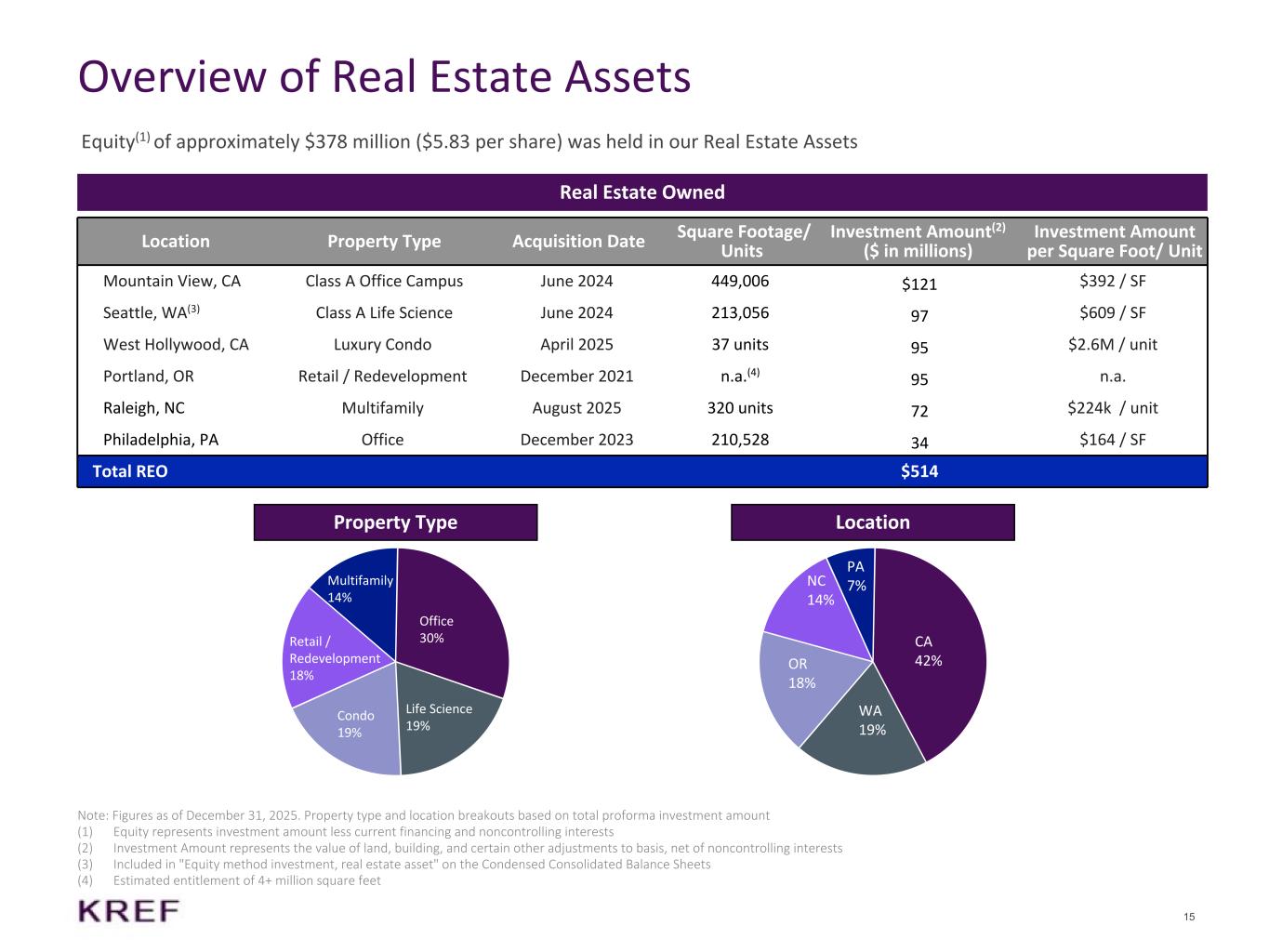
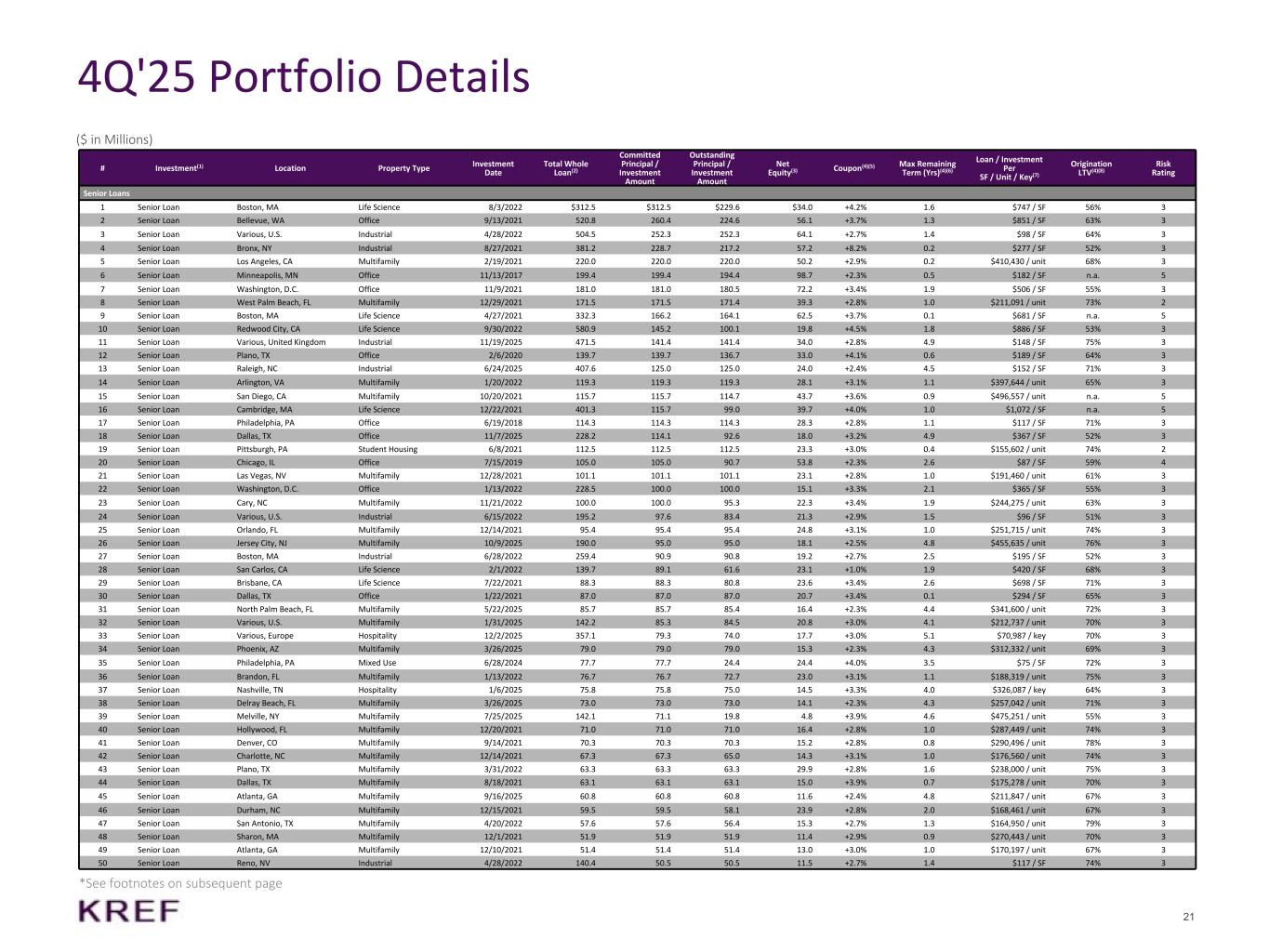
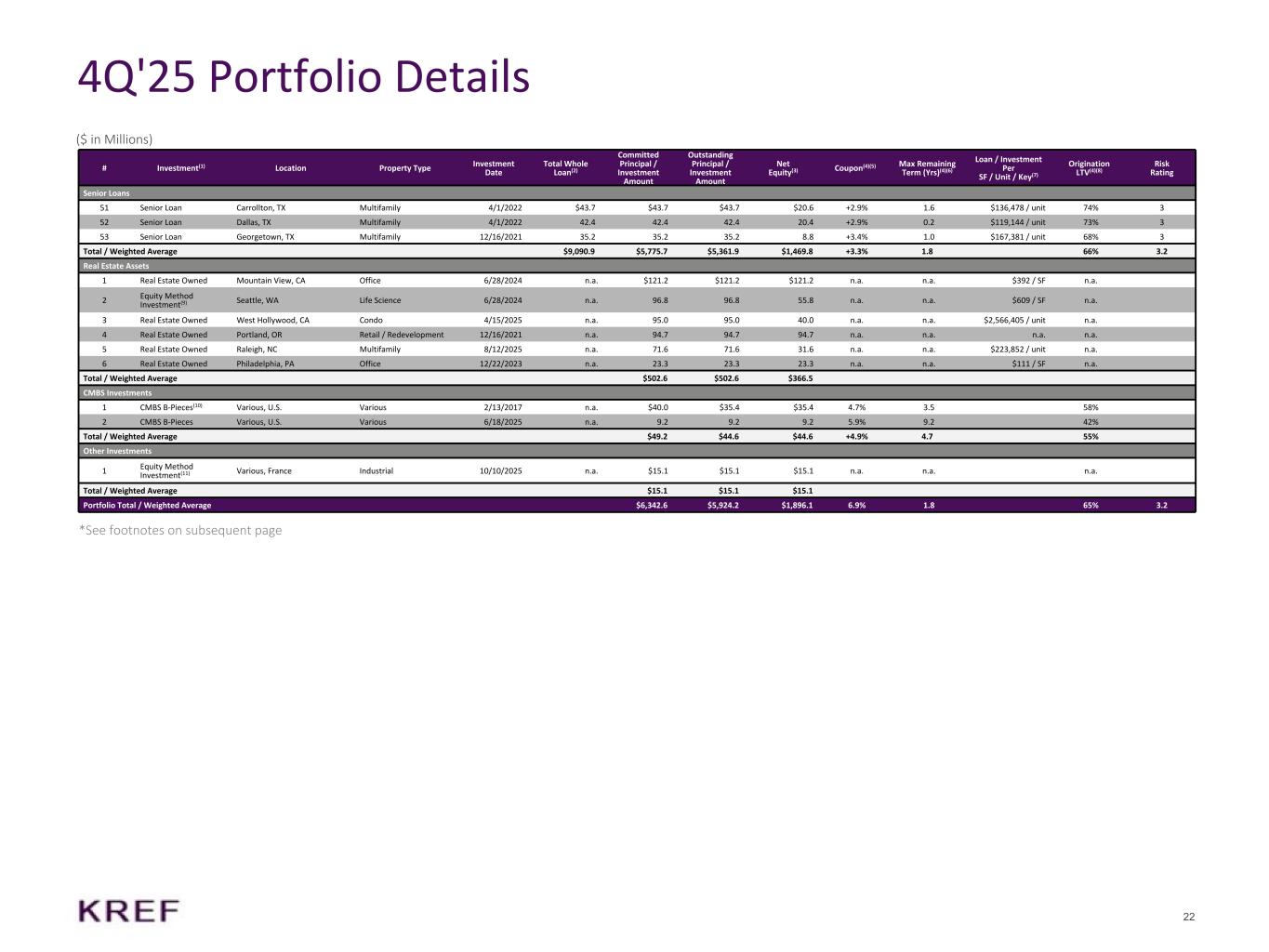
Yeah, and I appreciate the question. I would say a couple of things. One, I think in In our next call, I think we'll be able to really walk everyone through and articulate what the end goal is here. Certainly when we're looking at it today, if you think about our watch list, which we highlight I think on page 12 of our supplemental, I think the goal is to get through and monetize or liquidate the vast majority of that watch list. The reason I don't say all is because I think some of those life science assets, one, we're in the process of modifying, and so we should get to a basis where, you know, we're comfortable moving forward on those. Or two, you know, we just have to evaluate the liquidity in that particular sector. But certainly when we think about the office on our watch list, we have one multi-deal on there. The multi-deal on there, like, the goal is to move through those. And then I think to your point on office, I think we're going to have to start making a distinction on office because we are making new office loans that we think are really high quality, but there's certainly some of our legacy deals that, you know, we wouldn't put in that same, you know, that same bucket. And so I think the goal would be to, at the end of this year, be able to articulate, hey, we think, you know, from an office portfolio perspective, we've kind of liquidated everything that we see a problem on or be able to identify, you know, any future issues that we may see, so create a lot of clarity there. On the REO, I don't expect much to change there as it relates to what we've talked about on the last couple of earnings calls. When you think about the buckets that we've put our REO in, which is I think listed on page 25 of our supplemental, if you want to follow along, we have, you know, a number of assets, excuse me, page 15, we have a number of assets that we put in this short-term bucket. The goal for those would be to liquidate over the course of this, you know, over the course of this year, either partially or fully. Obviously, some of these are selling units or selling lots, so I'm not sure we'll get through 100%, but we'll at least be making good headway there. Those assets are the West Hollywood luxury condo, Portland, Oregon, redevelopment, the Raleigh, North Carolina multifamily, and the Philadelphia office. So those are all the short term and we'll be able to give progress updates over the course of the year on those. Medium term I put more in the Mountain View asset which we've talked about, right, get a lease done on that. Again that market is extremely healthy right now and we are engaged with tenants in the market there. And then I put in this last category, the longer term, more the life science, right? So we've got the Seattle asset and we'll likely go to title on our Boston moments on the watch list right now in the life science sector. So a little bit of background there, but same buckets, like vast majority coming out this year. And then if we can execute on Mountain View in the intermediate term, then we've largely cleaned it up with the exception of a couple of these life science deals which you know we'll see right we were pretty patient on some of our office and that's worked out very well I'd say just the market has come back it's healthy what we have in the portfolio from an REO perspective and life science is extremely high quality so to the extent that market comes back I understand it's under pressure today but you know forever is a long time and if those markets come back certainly we could benefit from that as well I appreciate those answers that's it for me.
Operator
Thanks, Matt. The next question comes from Rick Shane with J.P. Morgan. Please go ahead.
Hi, guys. Thanks for taking my questions. When we sort of run back of the envelope, we're looking at over $800 million of assets that are either REO or a non-accrual. We then, you know, there's the development in terms of migration, adding the new loan to the watch list this quarter, is that going to be a non-accrual as well? And are we going to be in a situation where, let's call it 20% of the portfolio is under-earning in 2026 or as a negative carry?
Rick, good morning. It's Patrick. I'll take that question. I think in terms of like specific numbers, I don't have, you know, sort of that bucket. I will say this, on things like the asset that we indicated will likely downgrade, that asset is paying its contractual interest. We expect in a new term that you will continue to pay contractual interest. And so, you know, from an earning standpoint, you know, we're not seeing any degradation, you know, from that. what's driving it in the near term are some of the REO assets we talked about and we'll give more color in terms of the timing of the resolution in the in the subsequent quarter when we can get some of that back and when we can actually convert that into you know earnings assets so clearly we're being dragged down by some of those assets but we do think there's a there's a near-term opportunity to pull that forward. On some of these other assets that, you know, on the watch list, and we can sort of, you can kind of go through, you know, each of these, but in general, we're seeing contractual payments, you know, being made here. So, it's certainly impacting us. We certainly think there's a lot of upside, as we've indicated before. We think there's around $0.13 from getting these REO assets back and converted into performing loan assets. But that's kind of what I would say on that.
Okay. And again, I assume – look, you guys talked about dividend policy, and I heard what I would describe as sort of rational financial analysis as opposed to focused on market sentiment and just maintaining a dividend for the sake of that. I'm assuming that that is an indication that as we go through the year, you guys are going to be looking at all of this and we should be thinking about our dividend very much in the empirical way as opposed to sort of some sort of gauge of sentiment.
Hey, Rick, it's Matt. I think that's a fair articulation of how we're thinking about it now, which, you know, as we kind of look through the course of the year, like I said, and we try to rebalance this portfolio, you know, trying to understand the near-term impact of earnings there.
Matt, I think fair was a good adjective. of a clear or straightforward, probably wasn't a good adjective to describe my commentary, but thank you for answering the question.
Operator
The next question comes from Jade Romani with KVW. Please go ahead.
Thank you. To touch on Tom's question and maybe, you know, the underlying issue is that the bid for assets or loans that KREF is originating seems to be stronger in the private credit market than the required yield that mortgage rate investors require. So there could be an arbitrage there. As a result, perhaps management should pivot its focus to value creation as the top priority, which could include loan sales, share repurchase, unlocking potential gains in the portfolio if there are some such as Mountain View REO. And perhaps that would buy time to reposition the company rather than go with the strategy you've been undertaking, which might still result in KRF trading at this very sharp discount to book value. Otherwise, accelerated dispositions could materialize the book value that the market ultimately is projecting, which clearly requires significant losses on the life science in particular but perhaps elsewhere in the portfolio. So just wanted to get your thoughts on that potential pivot and if you see that as something management might undertake.
Thank you Jade. Yeah it's Matt. Let me unpack that a little bit. I guess when I heard you go through the list of things that we could accomplish or strategies we could follow I think we are doing most of those certainly when we think about and I mentioned like watch list select office assets repositioning the portfolio I think we would would part of that will be loan sales 100% I think when we think about gains on the REO unlocking those gains completely agree we should try to accelerate those as much as possible in which we're doing and I think which our plan will incorporate a lot of it comes back to when's the optimal time to sell and we don't want to give money away the market has certain expectations when it buys an asset when I think about something like Mountain View well even if we sign a lease there's certain things that we'll have to do to get that tenant in and occupying, et cetera, for the lease to go effective. So there's certain moments where we're going to create more value and liquidity that we have to be mindful of. And so we'll do that. The last piece, share repurchase, we've been repurchasing shares. So I think that certainly has been part of our strategy as well. So I do think that we're evaluating, you know, everything possible. I think the last, the last point that, you know, you might ask as a follow-up question, well, what about performing, you know, performing loans? Why not go and sell those? And, you know, certainly we could add that and continue to evaluate, you know, a performing, a performing loan sale. But, you know, right now, I'd say we're focused on, on really getting the portfolio in a place where the public markets, you know, can trade us in the right way. Because all these portfolios whether it's ours or you know some of our peers we all have some like a legacy assets and that's not to say that they're all gonna become watch lists or they all become losses but you know perhaps they're just higher loan to value right than where we started of course values are down a lot in the real estate space so maybe that's what the market's telling us and as we reposition the portfolio and as the percent of newer loans on on adjusted basis comes into that portfolio then stock these stocks can compress so you know I'm not convinced that this is again forever like these stocks are always going to trade like this we've just gone through probably one of the
most challenging real estate environments certainly in my career and as we get through this I expect the market will be rational and reprice these portfolios thanks very much you know the eye of the storm seems to be life science when you listen to Alexandria's earnings call it's clear and they're best in class at this they expect a very long timeline to turn around this sector five years plus and AI is also going to wreak havoc on this sector so you talk about putting in place modifications to get basis to a point of comfort the weighted average basis today is $830 a foot do you have in mind the range or some benchmark that you could provide at which we should think would be a reasonable basis to take this outside risk you know beyond the investor horizon that people are contemplating yeah I think a couple of things on the life science sector we understand and certainly follow it you closely we understand it could be a very long a long road here at the same time I remember when we foreclosed on Mountain View everybody in the market including
the most sophisticated brokers told us it was going to be five years before we could do anything done there I'll take the under on that by a few years and I'll take the over on the value creation that we that we make there so things change and as it relates to technology in life in AI and in particularly in life as it applies to life science I'm not convinced that's a negative for look for the life science sector I think it could be actually quite quite a positive in terms of the development and need for you know need for development of new drugs and need for new new lab space so you know we'll see how that plays of the system as it relate I think we're eyes wide open though we need to get to a lower basis and you've seen us doing that I think we apply the same thing to our life science as we do to all the other modifications that we're doing which is unless the sponsor is wanting to make a significant capital commitment to deliver us to a point where we feel comfortable then you know usually we'll either go to REO and sell it. But in the case of some of the challenges that we're dealing with now and some of these downgrades recently, we do expect our sponsors to commit significant capital to pay us down. And in return, we'll likely have to do some type of hope note around that. But I don't want to talk specifics as we're in the middle of some of these negotiations right now. But in general, we've been bringing our bases down in a pretty significant way, again, not just through HOPE notes, but also through principal paydowns and borrowers coming out of pocket and recommitting to the assets.
Operator
The next question comes from Gabe Poggi with Raymond James. Please go ahead.
Hey, good morning, guys. Thanks for taking the question. I want to kind of piggyback on what's been asked already, but I'm going to go a different angle and have you guys comment through the KKR lens as it pertains to just Just broad demand for, one, commercial real estate credit, and then commercial real estate in general. Matt, to your point that you just made, right, timing is in the eye of the beholder and can change from five years to a shorter term. But just what's the bigger KKR machine seeing as it pertains to global demand for domestic real estate, both on the credit side and the equity side? So I think it will help us kind of get an angle as to the true value here or value creation probability if we take a little bit longer term to act. Thank you.
Thanks, Gabe. Appreciate the question. So, right, so let's put our kicker hat on for a minute here. I would say that we are seeing increased allocation to both real estate credit as well as real estate equity. I think the sentiment is clearly shifted from a relative value perspective. A lot of institutional allocators of capital, I think, are looking at their overall portfolio and thinking about where those values have gone over the course of the last five years and seeing that real estate's been relatively stagnant. And so you're starting to see a shift back into that sector. Now, I would say it's still predominantly in the opportunistic and value-add parts of the market within equity, so you haven't fully seen, you know, some of that core money come back in or that core plus money, although, you know, I could kind of see early signs of it, but I think most of it is in that opportunistic value-add sector. So people are allocating. Velocity is starting to come back a little bit in the market. I think we've all seen that, some sales starting to go through. When we think about our pipeline, still predominantly refinance on the lending side, but there's more acquisitions that we're seeing, which means lots of capital is increasing, funds are returning capital, and that money typically gets recycled back in the funds. So that reset, I believe, is beginning to happen. On the real estate credit side, same comment, true. We are seeing increased allocations to real estate credit. I think we've been in a little bit more favored piece of the market than equity for a while now as just allocations of private credit overall have been increasing over the course of the last handful of years. Now I think there is a very tangible relative value discussion happening around not just real estate credit but asset-backed as well and infrastructure also from a sense that how do people may be fully allocated to corporate credit, maybe corporate credit has other potential challenges in those portfolios. So, how do I diversify away from that but still be in a credit exposure, still take advantage of the yield and the safety that credit offers in today's market? So, we've seen certainly a pivot into real estate credit. The private funds are raising, not just us, but our peers as well, I think are raising a significant amount of capital in this space. And my expectation is that will continue going forward here.
Thanks, guys. Very helpful.
Operator
Again, if you have a question, please press star then one. The next question comes from Chris Muller with Citizens. Please go ahead.
Hey guys, thanks for taking the questions. So we have a couple more rate cuts behind us now and futures are suggesting another two cuts this year. I guess the question is, have those cuts increased interest in your guys' REO assets And I guess what I'm really trying to get at is, have those cuts narrowed the gap between buyers and sellers.
Thanks, Chris. It's Matt. I do think that these rate cuts are helping liquidity in the market. You know, I don't know if it specifically translates to the liquidity, you know, we're seeing, but, you know, it's certainly part of it, but I think overall the sentiment for real estate right now is, you know, is pretty positive. There hasn't really been a lack of buyers in the market I think there's a lack of sellers personally and sellers at a price right sellers at an opportunistic price which is why we're seeing a lot of our activity more in the refinance part of the market than the acquisition part because you have owners of real estate that own a really good property that property likely is performing fine from an occupancy and cash flow perspective outside of like small pockets where you have some oversupply you may have a sponsor that owns it at a higher basis than they'd like given just value decline since rate hikes in 2021 and so we're seeing our sponsors really play that forward refinance by time where supply really drops off and they can raise rents and grow their equity value back so that's that's the overall market so as we think about selling our assets assets, you know, particularly on our REO, I do expect there to be, you know, liquidity and, you know, unrelated to maybe the rate cuts, we're seeing more liquidity in the office sector, right? Some of those assets that we've taken back are on the watch list, like, didn't historically have a lot of liquidity, just given the uncertainty. I think the market there has found some stable ground, and you're starting to see real liquidity in that sector. Again, I'm not sure it's directly related to rate cuts. I think it's more about just time and seeing where leasing is shaking out and finding some stability in the overall occupancy and leasing market.
Got it. That's very helpful, and that's a good segue into my next question on office.
And you touched on this a little bit, Matt, but we haven't really seen many new office loans in recent years.
So can you guys just talk about your view on that sector and what makes an office loan attractive these days?
I'd say our bar is still high. I would, you know, Jade asked the AI question, like certainly we think there's potential volatility ahead as it relates to technology, you know, in real estate, so we need to continue to be mindful of that. The opportunity, I think, is on, if you can lend on newer, high-quality assets, and especially for someone like Hariff on stabilized cash flows, like leased or mostly leased assets with long-term leases in place, that's really where we're seeing an attractive opportunity today. So you're not really taking a lot of leasing risk or reposition risk. You're going to have this stable cash flow in place. You're in a good market. You can see a lot of leasing demand and velocity within that market, and you're in one of the top buildings within that market. I think that's really where we're focused. And there's a substantial amount of data, I think, that can prove not only is there liquidity for, you know, in the capital markets for owning real estate like that, but there's also a lot of, you know, leasing demand as well. So it's kind of an interesting opportunity for us where we don't have to take a lot of repositioning risk. We can just lend on really high-quality real estate that's already leased.
And if I could just squeeze one more quick one in. Should we expect originations to mostly be in line with repayments as you execute this more aggressive resolution strategy, or could we see some net portfolio growth in the coming quarters? Yeah, I would think about it as really need to look at it through two lens. One is repayments and recycling that capital. I think it's the right answer to your question. Yes, we'll try to recycle that capital into new loans. The second piece is just making sure we're staying within our targeted leverage ratio, right? Those are the two things that we're balancing.
Got it. So, REO sales may be the missing piece of that puzzle there.
Yeah, and as we liquidate REO, we'll be able to increase portfolio size. It would be the other piece of that as well.
Got it. Appreciate you guys taking the questions today.
Operator
And we have a follow-up from Jade Robbani with KBW. Please go ahead.
Thanks very much. On Mountain View, could you quantify how much dollars you expect to put in, and do you see potential gain there?
Hey, Jay, it's Matt. I don't think we – we don't have a lease yet. I don't think we'd want to comment on potential, you know, CapEx, TI, et cetera, until we have a – until we have a lease. At that point in time, when we have the final numbers, we can certainly go through that. The answer to your second part is everything we're seeing today, I'll comment again, we don't have a lease done, but everything we're seeing today would suggest that I think we've got, you know, significant value in that asset above where we're carrying it today.
Okay, that's good to know. And then office, there's a couple of 2021 and early 2022 vintage RISC-3 loans. I'm not sure if that's what you were referring to in your office comments, including Washington, D.C., Plano, and Dallas. So, just if you could comment on that.
Yeah, and I think we can take everybody through this, again, in more detail next quarter. We have, I guess, a couple things. One, not all of our, we're not worried about, you know, kind of like all of our office three rated loans, to be clear. Like you called out some of the Dallas assets. Like I'd expect those assets are perfectly fine. And, you know, we have D.C. assets that are totally fine. So I expect to get – we're going to get a fair amount of repayments in our office portfolio this year from that season piece, you know, from the 2021 or earlier. So, I wouldn't look at it as though we're looking at each particular asset. I think most of them are going to get repaid. To the extent we're not going to get repaid, we may just choose to, you know, note sale those or we kind of deal with the borrower, et cetera, you know, to make sure that, you know, we can get on a call and have that portfolio, that piece of portfolio reduced.
Operator
This concludes our question and answer session. I would like to turn the conference back over to Jack Sotella for any closing remarks.
Thanks, Operator, and thanks, everyone, for joining us this morning. You can reach out to me or the team here with any questions. Take care.
Operator
The conference has now concluded. Thank you for attending today's presentation. You may now...