Operator
Thank you for standing by and welcome to the Lineage 4th Quarter 2024 Earnings Conference call. All lines have been placed on mute to prevent any background noise. After the speaker's remarks, there will be a question and answer session. If you would like to ask a question during this time, simply press star followed by the number 1 on your telephone keypad. If you would like to withdraw your question, again, press the star 1. Thank you. I'd now like to turn the call over to Evan Barbosa, Vice President of Investor Relations. You may begin.
Thank you. Welcome to Lineage's discussion of its fourth quarter and full year 2024 financial results. Joining me today are Greg Lemkuhl, Lineage's President and Chief Executive Officer, and Rob Cresci, Lineage's Chief Financial Officer. Our earnings presentation, which includes supplemental financial information, can be found on our Investor Relations website at ir.onelineage.com. Following management's prepared remarks, we'll be happy to take your questions. Turning to slide two, before we start, I would like to remind everyone that our comments today will include forward-looking statements under federal securities laws. These statements are subject to numerous risks and uncertainties, as described in our filings with the SEC. These risks could cause our actual results to differ materially from those expressed in or implied by our comments. Forward-looking statements in the earnings release that we issued today, along with the comments on this call, are made only as of today and will not be updated as actual events unfold. In addition, reference will be made to certain non-GAAP financial measures. Information regarding our use of these measures and a reconciliation of non-GAAP-to-GAAP measures can be found in the press release that was issued this morning. Unless otherwise noted, reported figures are rounded. Comparisons of the fourth quarter of 2024 are to the fourth quarter of 2023, and comparisons of the full year 2024 are to the full year 2023. Now, I would like to turn the call over to Greg. Thanks, Evan, and thanks everyone for
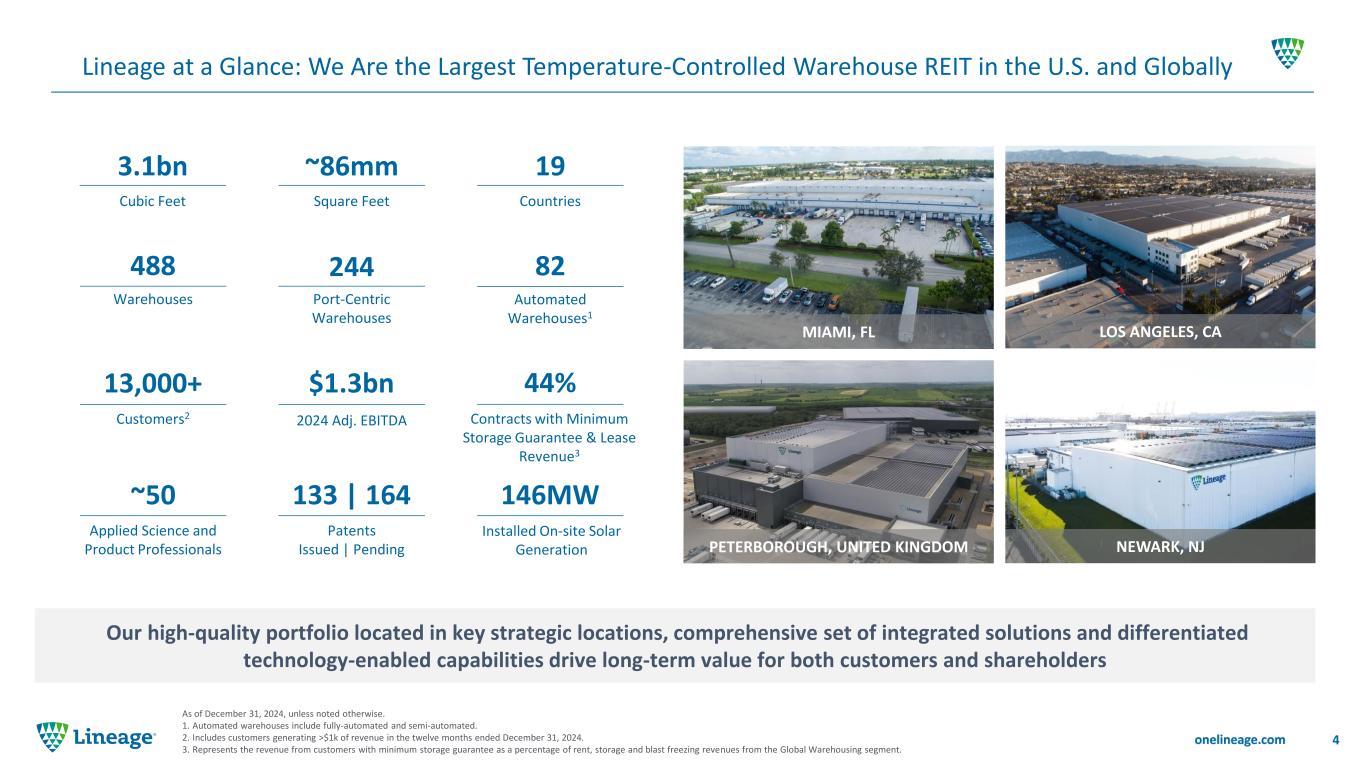
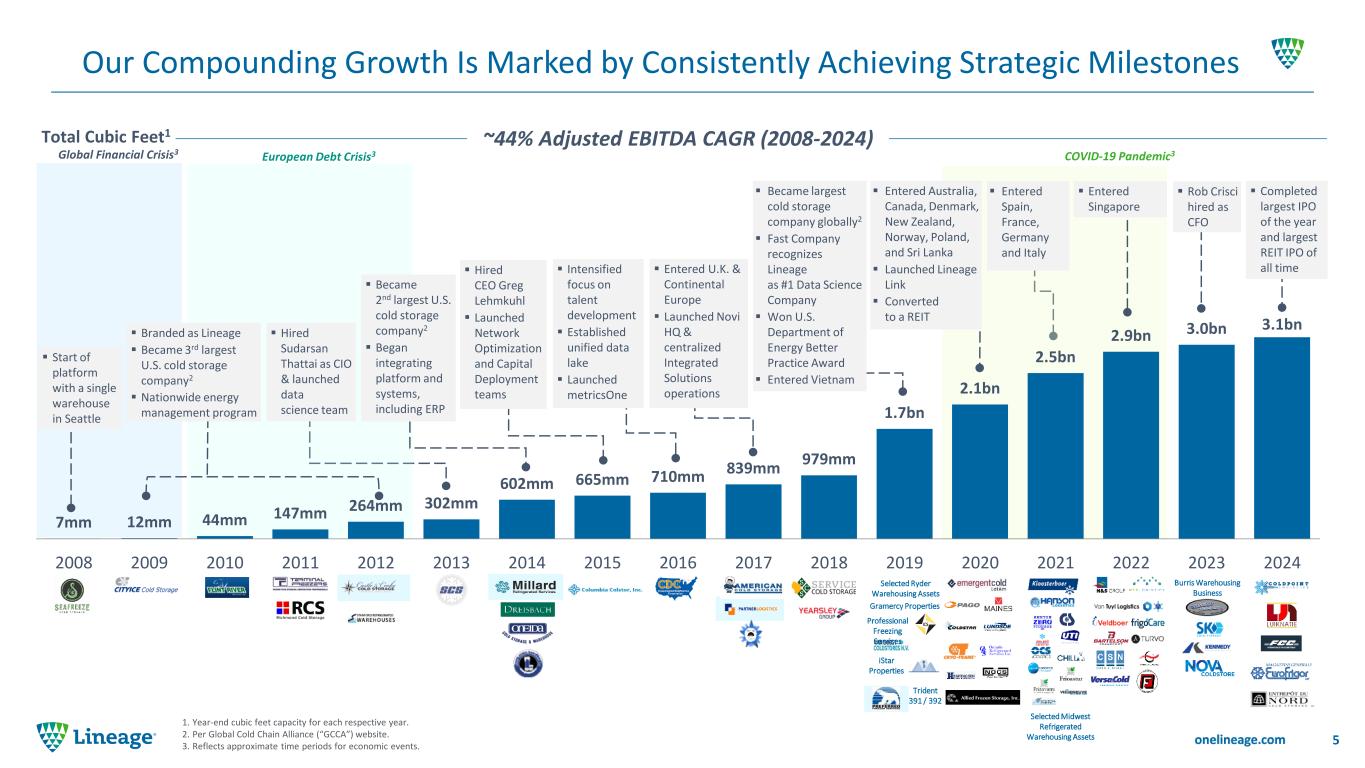
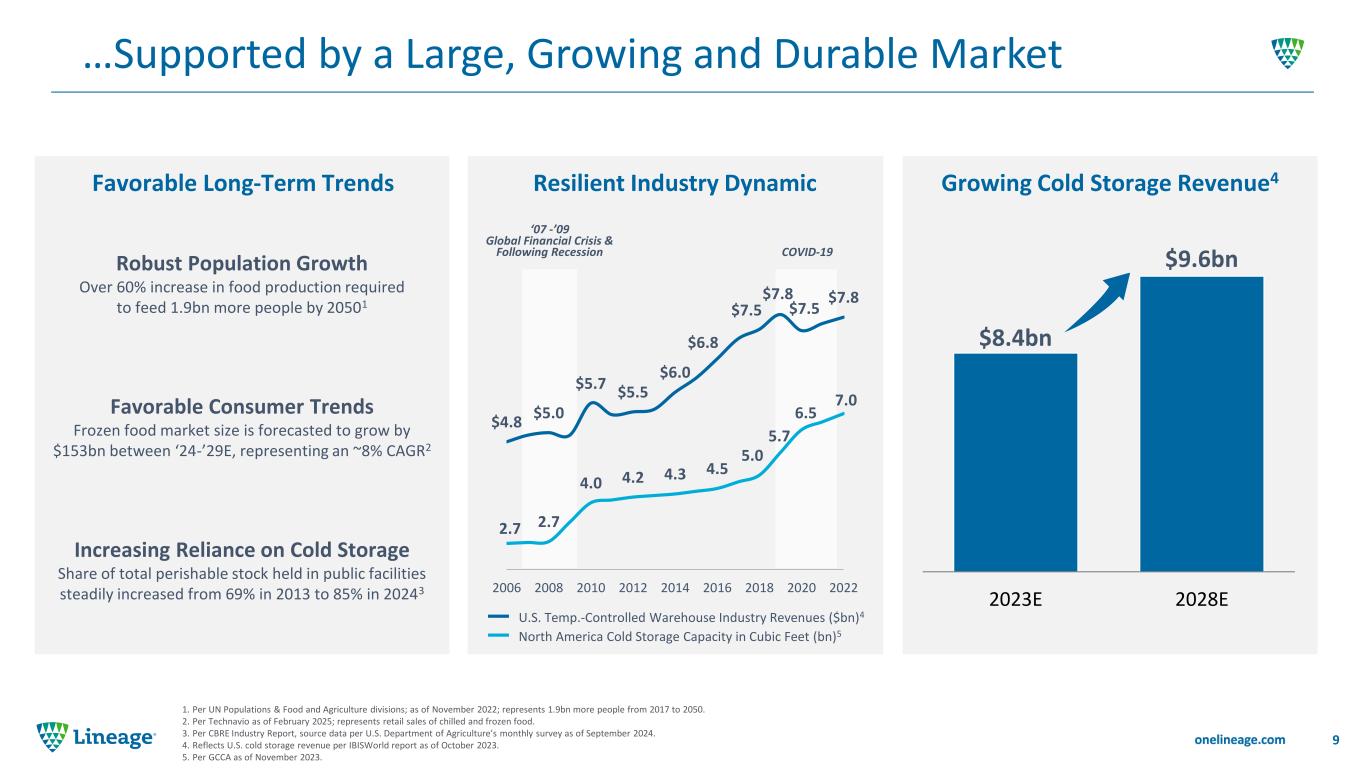
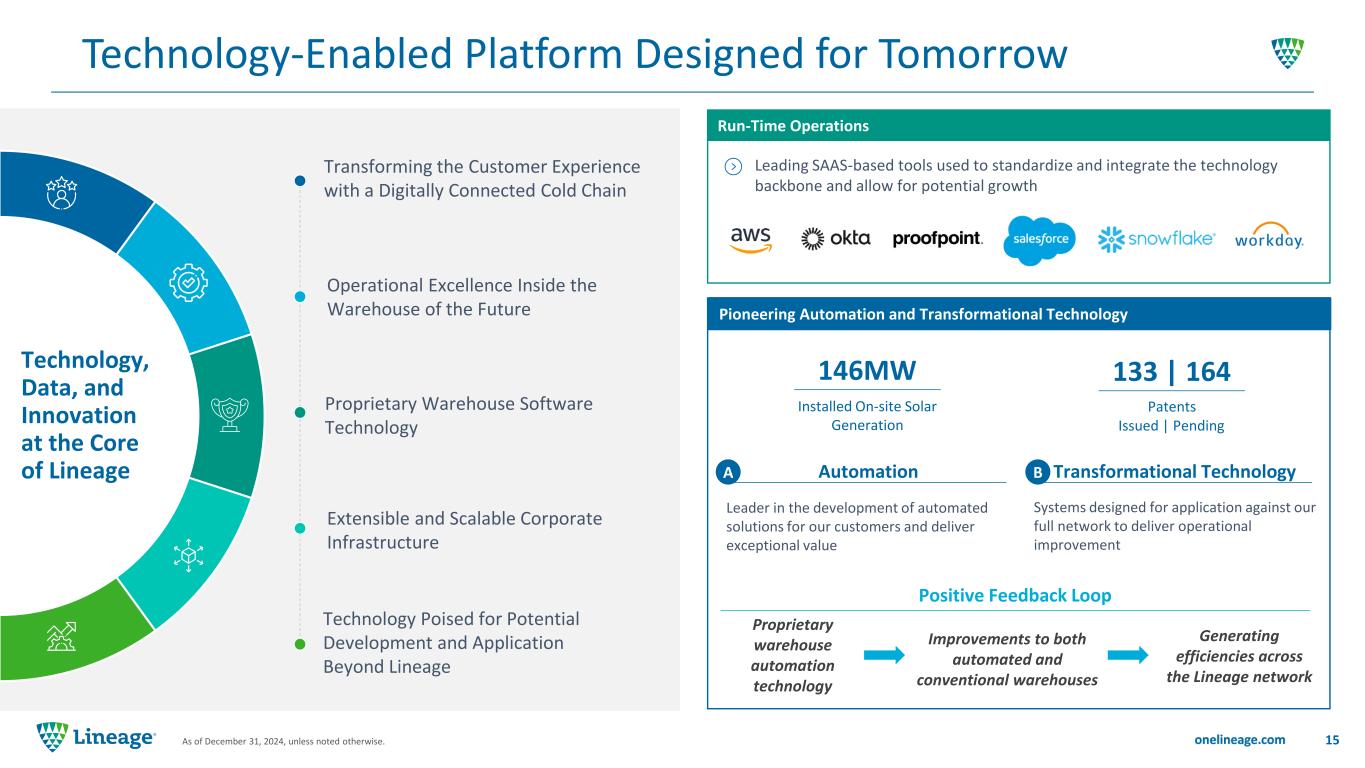
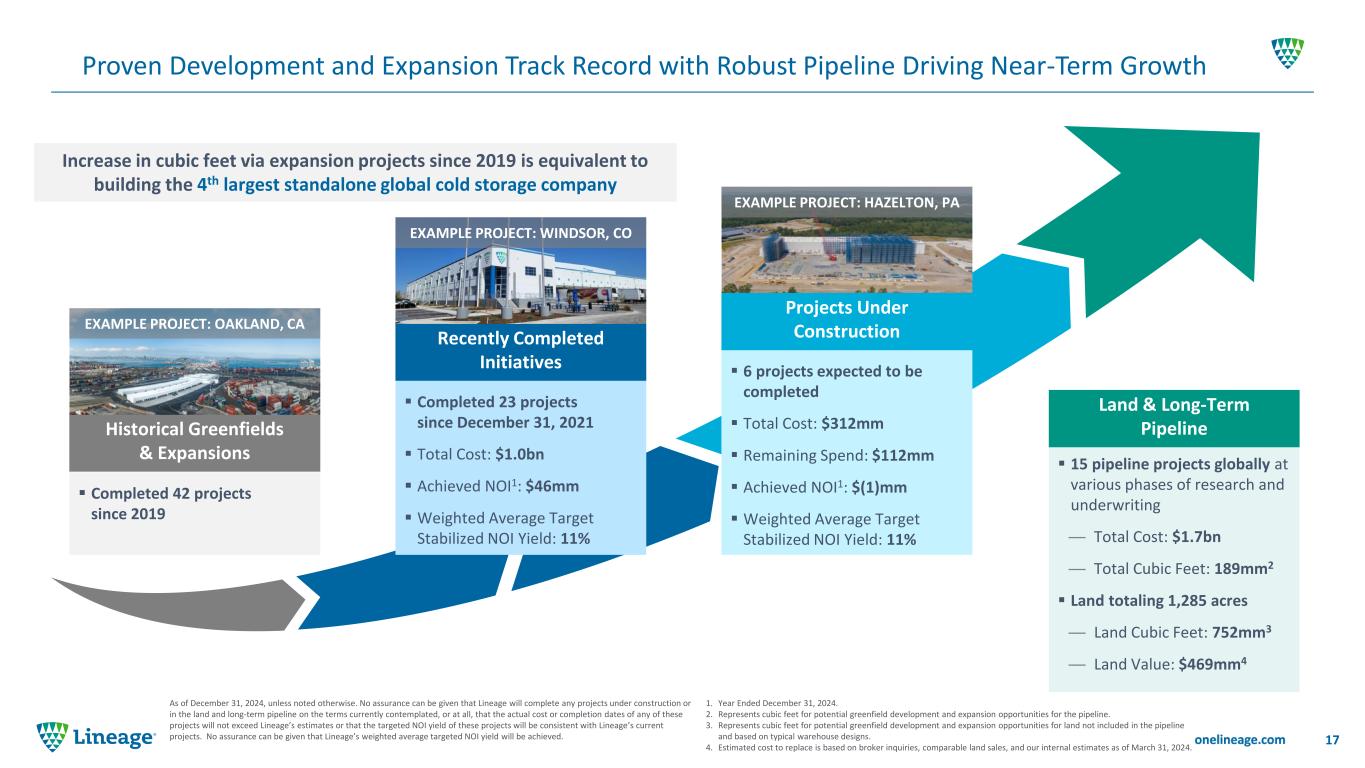
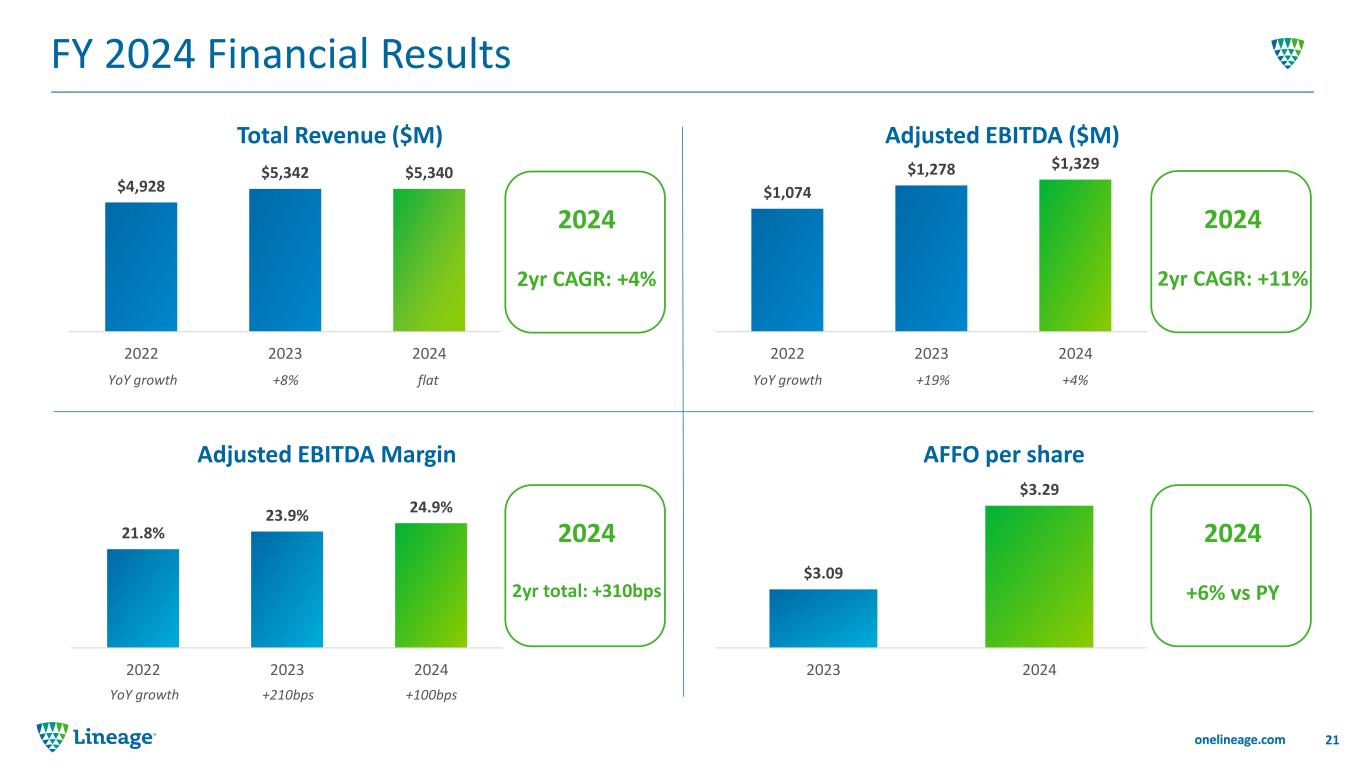
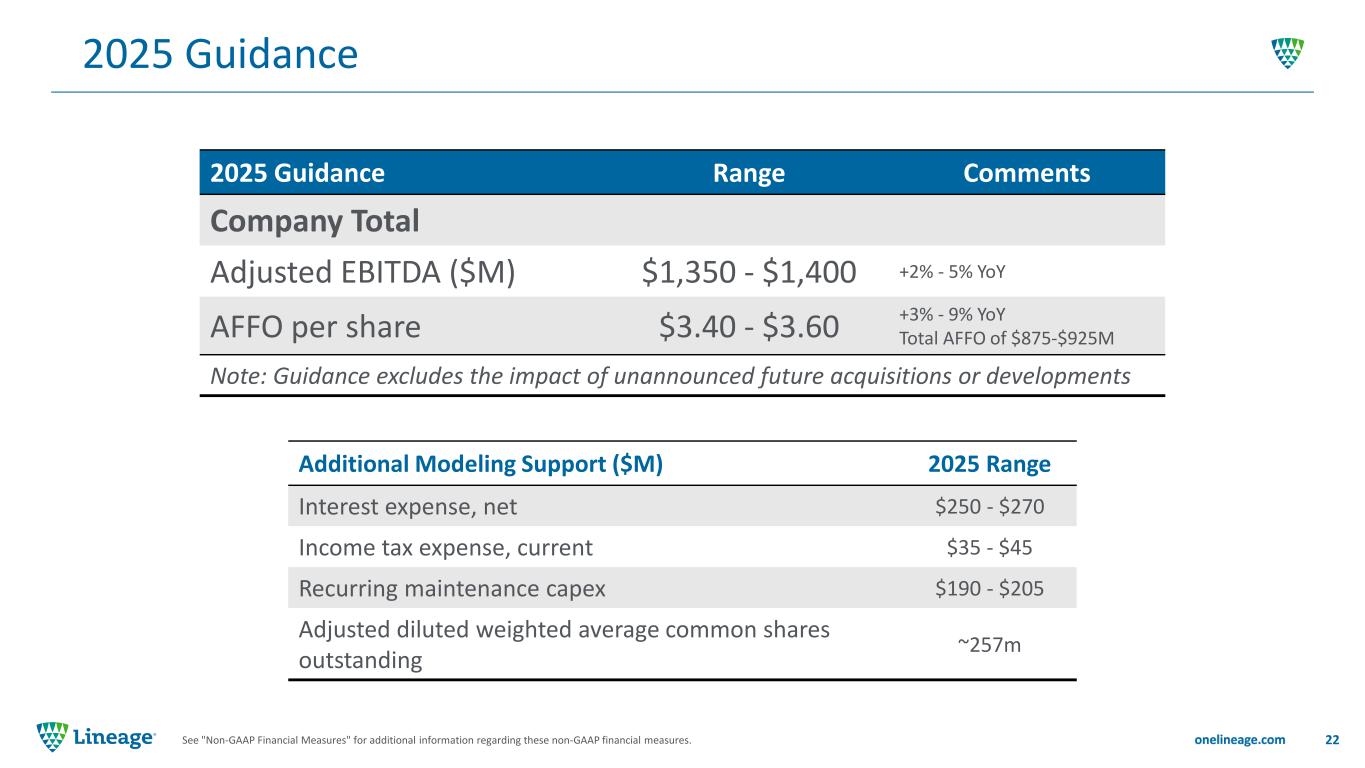
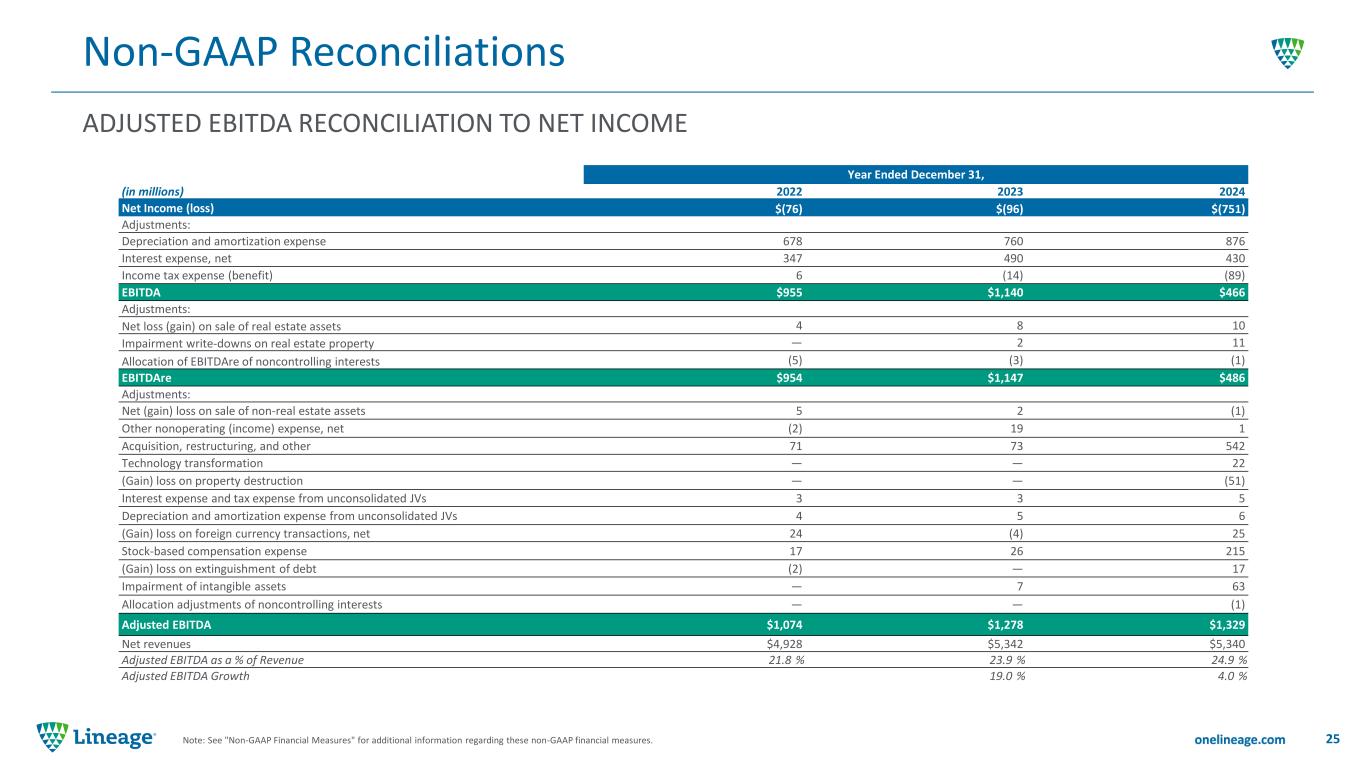
joining us today. Turning to the 2024 highlights on slide three, I'd like to start with a brief recap of our 2024 accomplishments. We executed the largest IPO of the year and the largest REIT IPO of all time. This enabled us to reduce our leverage to under five times, which earned us investment-grade ratings at both Moody's and Fitch and positions as well to continue to deploy capital across our attractive pipeline of development and M&A opportunities. Financially, we delivered 4% adjusted EBITDA growth and 6% AFFO per share growth and initiated our dividend at an annualized rate of $2.11 a share. Operationally, we delivered same warehouse physical occupancy of 78% despite a challenging external environment, driven by our high-quality assets in the locations most critical to our diversified customer base. As we reflect on 2024, we achieved the second year in a row of our all-time best safety performance, reinforcing our first corporate value of safety. Record new business wins helping to offset the industry headwinds. Best ever truck turn times for our customers, the service metrics they care about the most. Best warehouse labor productivity in our history, and this continued into the first quarter. The issuance of our 100th patent, demonstrating our unwavering commitment to innovation, automation, and data science. We received market recognition and awards like the CNBC Disruptor 50 list for the fourth consecutive year. The Fortune's 2024 Change the World list for the second time. The Inc.'s 2024 Best in Business Awards for the Innovation and Technology category. And the 2024 SmartWay Leader by the US EPA in recognition for our dedication to sustainability through innovative freight solutions finally we executed on our robust pipeline of development and m&a opportunities deploying 760 million of growth capital including the opening of what we believe to be the most state-of-the-art and innovative fully automated cold store in the world in hazelton pennsylvania which opened on time and is operating as expected the acquisition of cold point logistics in kansas city and several other creative acquisitions around the globe. I would like to sincerely thank all of our team members across the world for contributing to our success in 2024. Next slide. As we move into 2025, fresh and frozen food remains a growing segment driven by strong long-term demand. The vast majority of food consumed in developed markets requires temperature-controlled warehousing at some point in its journey from to fork. At Lineage, our strategically built network and cutting-edge technology gives us a significant competitive advantage and positions us as the global leader in the cold chain. Operationally, we're seeing continued benefits from our focus on labor productivity, lean process excellence, and energy management, driving efficiency across our business. And speaking of efficiencies, our Lin-OS initiative is on track and our early pilots are exceeding expectations. As a reminder, Lin-OS is our proprietary warehouse execution system that we've developed and already implemented in multiple automated facilities and have begun piloting in our conventional buildings. The software uses patented and proprietary algorithms that are a result of many years of development and collaboration between our data science, technology, and our belief is that LinOS will transform warehouse operations, resulting in significantly higher performance for customers while accelerating efficiency improvements. Our early pilots are both exceeding our efficiency expectations and being positively received by our hourly team members and warehouse leadership. Our teams are genuinely excited about how this technology can transform our operations. In fact, I've been getting requests from general managers asking to be next on the list as the enthusiasm around this. In short, it's still early, but we're more excited than ever about WinOS and we will provide more color moving forward as our pilots continue and we learn. Before introducing our 2025 guidance, allow me to provide some color on the path traveled over the last few years. As part of our long-term planning cycle, we recently had our data scientists refresh our analysis on the core holdings of our North American warehousing business to shed light on recent trends. Now, no study is perfect, but our data suggests that, first of all, food consumption has not changed. In fact, our studies show that since 2021 our outbound pallet volume remains stable fluctuating less than one percent annually the volume just shifted between channels for example from food service to retail and importantly due to our diversification has minimal impact on us because we store pretty much everything however inventory holdings have fluctuated over the past several years here is a brief timeline of what happened. Back in 2020-2021, we saw supply chain chaos, production shortages, port shutdowns, and the inventory was bled down. 2022 was the year where customers began to rebuild inventories quickly, leading to overbuilding. That overbuilding continued into the third quarter of 2023, when the excess inventory began to unwind. That unwinding continued through the second quarter of 2024. Said another way, inventory levels remained elevated for the first half of 2024. Since then, we've experienced a more normal seasonal pattern, which is what we expect to continue moving forward. For 2025, we expect full-year adjusted EBITDA of $1.35 billion to $1.4 billion and AFFO per share of $3.40 to $3.60. To reiterate, our 2025 guidance assumes normal seasonality from today's historically low inventory levels with no market improvement. As always, our guidance excludes the impact of unannounced future acquisitions or developments. Our solid financial position, bolstered by a strong balance sheet, available cash, and significant debt capacity, provides the opportunity to deploy over $1.5 billion in capital in 2025. Now, I'd like to turn the call over to our CFO, Rob Cresci.
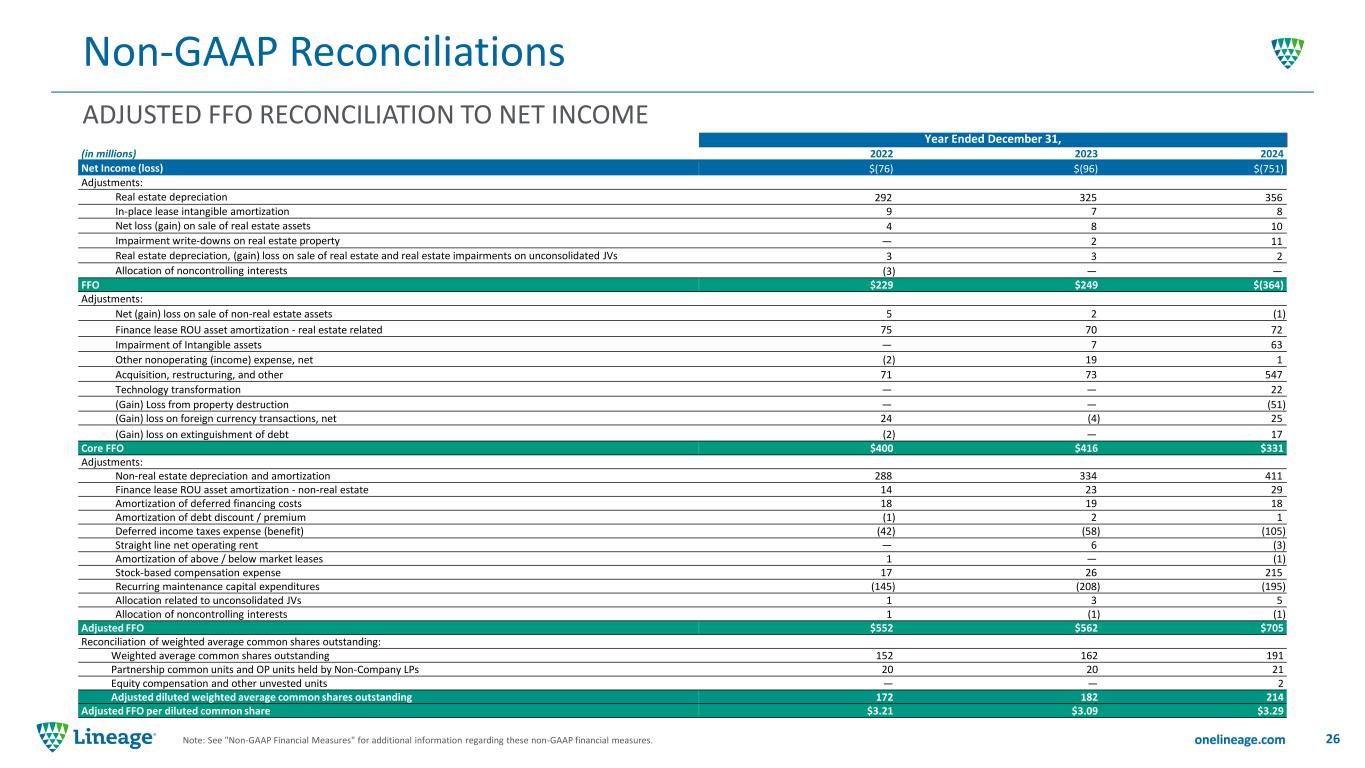
Thanks, Greg. Good morning, everyone, and thanks for your interest in lineage. Starting on slide five, I'm looking briefly at our financial results for the fourth quarter. Our total revenue was $1.34 billion, flat versus prior year. Our adjusted EBITDA increased 10% to $335 million, with adjusted EBITDA margin increasing 210 basis points to 25%. Our AFFO for the quarter was up over 145% to $213 million, and an AFFO per share was $0.83, a 73% increase versus prior year. We did benefit from a one-time tax item in the quarter of approximately $13 million, or $0.05, aiding our AFFO results. Also in the quarter, we deployed $329 million of growth capital, including the closing of our previously announced acquisition of Coldpoint Logistics. The integration is off to a great start, and we are proud to have the CallPoint team as part of the Lineage family. Turning to our full year 2024 results on slide six. Our total revenue for full year 2024 was $5.34 billion. Our adjusted EBITDA increased 4%. Importantly, our two-year adjusted EBITDA CAGR is a strong 11%, despite market headwinds, a testament to our ability to perform well in all market environments. Adjusted EBITDA margin increased 100 basis points to 24.9% in 2024 and is up 310 basis points over the past two years. AFFO was up 25% to $705 million, and AFFO per share was $3.29, a 6.5% increase. Turning to our global warehousing segment, which represented 87% of our total NOI in 2024. Full-year segment revenue grew 1%, and total segment NOI increased 2% to $1.5 billion, delivering warehouse NOI margin of 39.5%, a 40 basis point increase. Since 2022, we've grown our total warehouse NOI margin 390 basis points, driven by strong labor productivity improvements and continued operational execution. We operate highly efficient warehouses thanks to our committed team members, lean processes, and innovative technology. We believe we are on a long-term journey to reduce our cost structure, in particular our labor and energy expense, through operational excellence and the continued deployment of our proprietary technologies. We believe we're only getting started. Looking forward to 2025, we expect full-year segment NOI growth of 4% to 6% on a constant currency basis and 3% to 5% on an as-we-see-same-warehouse NOI growth of 2% to 5% on a constant currency basis and 1% to 4% as reported. As Greg outlined, we believe our market has stabilized after two years of unusual volatility driven by inventory rebalancing. Inventory levels remain elevated in the first half of 2024 and stabilized later in the year. Our guidance assumes normal seasonality for 2025, but no market improvement. We are well positioned for strong operating leverage on any incremental growth. In summary, we expect to drive continued growth and margin expansion in 2025, all before any benefit from our LIDOS project, meaningful market improvement, or incremental capital deployment. Shifting to slide 8 and covering our global integrated solution segment, we saw a slight decrease in total segment revenue, which came in at $1.5 billion, down 2% versus prior year. NOI was down 5%, and NOI margin decreased 50 basis points to 15.9%. As a reminder, our global integrated solution segment offers value-added solutions to our customers, which increases stickiness and supports our warehouse assistance. While we saw declines in 2024, driven by global transportation trends and specific weakness in some European markets, we are well positioned for a rebound in 2025. This is aided by new business wins as we benefit from our customers taking advantage of our unique network and full suite of services, allowing us to partner with our customers to optimize their supply chains. For 2025, we expect full-year segment NOI growth of 5-10%. Turning to slide 9, we ended the year with net debt of $6.5 billion. Total liquidity at the end of the year stood at $1.8 billion, including cash and revolving credit facility capacity. Our leverage ratio, defined as net debt to adjusted EBITDA, was 4.9 times at the end of the year. Our strong balance sheet, available cash, and debt capacity provides the opportunity to deploy more than $1.5 billion of growth capital in 2025. We are excited to enter the new year with a reloaded balance sheet and large pipeline of attractive acquisition and development opportunities that will allow us to continue to build on our position as the global industry leader. Turning to our 2025 guidance, which Greg already previewed, we expect full-year adjusted EBITDA of $1.35 billion to $1.4 billion and an AFO per share of $3.40 to $3.60. As a reminder, this guidance excludes the impact of unannounced future acquisitions or developments. We have also included some additional modeling support on this page. We are very excited to deliver a strong year
for our shareholders. With that, I'll turn it back over to Greg. Thanks, Rob. I'll conclude on slide 11. We capped this transformational year on a strong note, proving once again that our business is built to perform in any environment. Our focus on execution, cost efficiencies, and smart capital deployment has forged a solid path of growth for many years, and we're excited about the opportunities ahead. Looking forward, we're confident in the long-term demand drivers of the global food supply chain and our ability to lead the industry. With our unmatched platform, cutting-edge technology, broad customer reach, and over $100 million of incremental future NOI growth from previously completed or in-process development projects that have yet to stabilize, we're in a great position for compounding growth and long-term shareholder value creation. Our balance sheet remains strong, giving us the flexibility to invest in a robust pipeline of strategic opportunities. Like Rob said, we're just getting started. With that, let's open it up for questions.
Operator
Thank you. We will now begin the question and answer session. If you would like to ask a question, please press star one in your telephone keypad to raise your hand and join the queue. If you would like to withdraw your question, simply press star one again. We ask that you please limit yourself to one question only. Your first question comes from a line of Alexander Goldfarb from Piper Sandler. Your line is open.
Hey, morning out there. So a question on just the industry overall. You guys talked about inventory levels normalizing after the post-COVID recalibration. You talked about also being at low levels. At the same time, you know, there's tariff talk. There's still inflationary pressure, grocery prices, you know, restaurant prices. So what gives you confidence that the food market, the cold storage market truly has settled out? And it sounds like there's some optimism in your tone that things could improve. What are some anecdotes that give you that confidence versus nervousness that the consumer is still under pressure, whether it's eating out or eating at home?
Good morning, Alex. So as we talked about in our prepared remarks, even through the significant volatility in inventory levels we've seen for the last few years, our throughput in our core holdings really didn't change very much, less than 1%. And so inventory fluctuated quite a bit, as I outlined, and settled in our core holdings in the third quarter of last year, and we saw normal seasonal patterns since. And so if we look at the current inventory levels, they're low versus kind of pre-COVID history, and we're not being optimistic. We're assuming that things just resume a seasonal pattern from these historically low levels. I think the upside here that's not in our guidance is that what we're hearing from customers is they're acutely focused on increasing sales. They're doing promotional activity and all kinds of things and discounting in order to get volume moving. And that would be all upside versus our guidance as our incremental margins are great and we have strong operating levels. And so we're not being optimistic in our guidance. We're assuming the market stays the way it is today.
Operator
Okay. Your next question comes from a line of Keebin Kim from Truist. Your line is open.
Thanks. I appreciate your commentary and the color you provided on guidance, but I was just wondering if you can provide some more details. For example, on occupancy, it sounds like that should still mean negative occupancy next year, as the first half of this year might be a little bit challenging. I'm not sure if that's correct, but if you can provide some details on that and maybe pricing.
Yeah, for sure. So let me drill down a little bit on seasonality. So, you know, Greg covered a lot of this, right? It's been unusual the last several years, you know, given all the stuff Greg just talked about. So if we drill down just a little bit more, so if you look at our 2024 results by quarter for our new 2025 same-store pool, right, which is in the appendix, you actually see that last year that the NOI is almost exactly the same each of the four quarters, like within five million or so. That's highly unusual, and that's the result of what Greg just said, which was last year in the first half, we still had elevated inventory level, and then normal seasonality began to the second half. So that dynamic, therefore, creates challenging comps for us in the first half of this year. The good news, as Greg mentioned, right, is that we feel the industry is stabilized at these lower levels. And as Greg also said, we're not assuming any improvement. So, you know, drilling down again, you know, normal seasonality. So if we look at pre-pandemic data, you know, back when our industry was more normal, Q1 generally declines from Q4. Then Q2 generally declined a little bit from Q1. Q3 jumps up a fair amount. And then Q4 is typically the peak, aided by the holiday season, then it starts to come back down again to Q1, and we sort of start zero. So we see this year as a normal year and expect our results to follow that trend. So if you break that out into sort of first half, second half, generally in a normal year you'll get 47% to 48% of your NOI EBITDA in the first half and 52%, 53% in the second half, and that's what our guidance assumes.
Operator
Your next question comes from a line of Ronald Camden from Morgan Stanley. Your line is open.
Hey, just a quick two-parter. I love on the same story on why guidance for the warehouse segment, I'd love if you could drill in a little bit how much of that is top line versus expense saves, just high level, what's driving that. And then the second question is just $1.5 billion of capital deployment. Can you talk a little bit more about the pipeline,
the kind of opportunities that you're looking at? Thanks. So I'll start with pricing. In terms of pricing, we expect to get inflationary level pricing. We are most focused on being long-term partners with our customers, and we treat each customer and market uniquely. At times, we'll trade volume per price if it makes sense for us. And then we expect to continue to get productivity
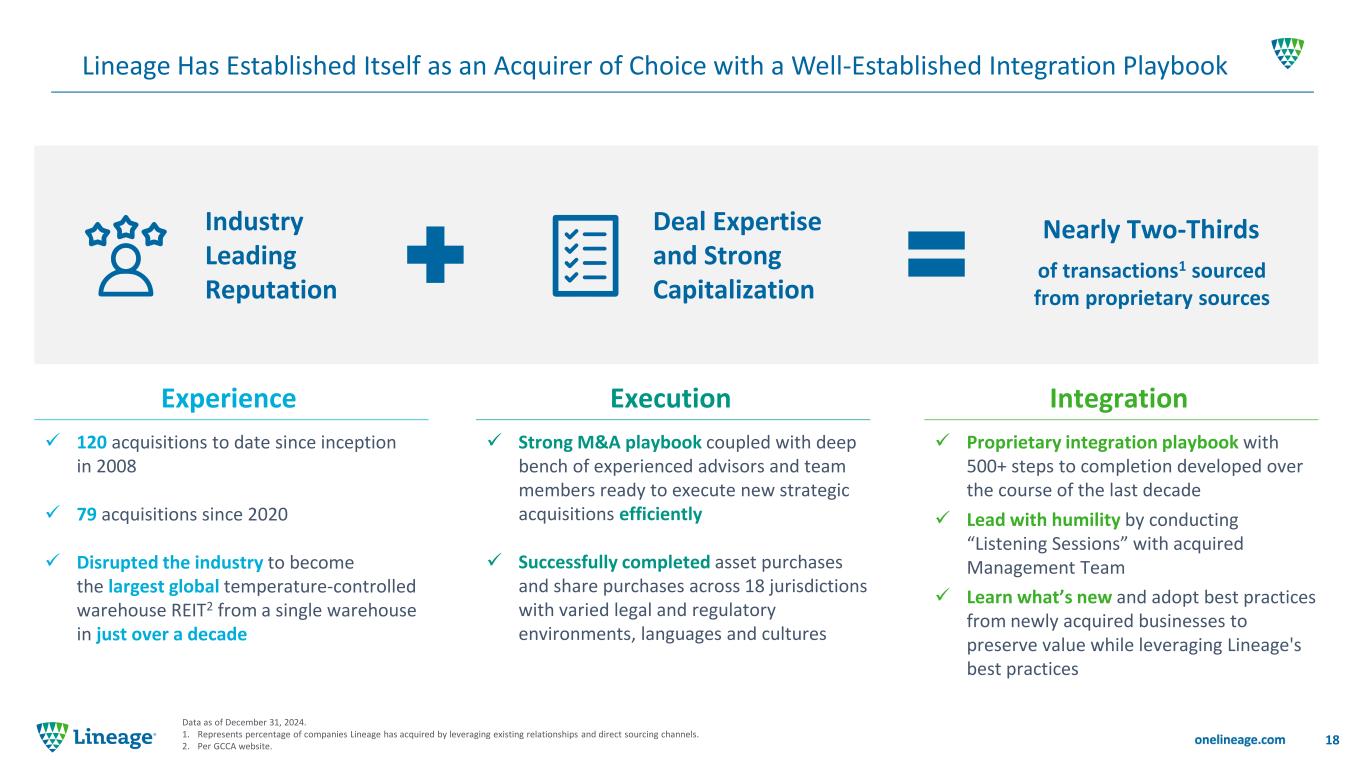
improvements, energy, and efficiencies that have been synergies. And then on the pipeline, yeah, I mean, the pipeline is exciting, right? None of this is in our guide. We have the capacity. We're not saying we're going to deploy $1.5 billion. We're saying we have the capacity as we laid out between our available debt and where our ratios are to do that. And there's a ton of development opportunities. There's a ton of M&A opportunities. If you look back over the past couple of years, we spent about $750 each year in terms of growth capital, right? As you know, we've been working hard to get our balance sheet in the right position, get the IPO done, so we can really accelerate the growth of this company, and we're there, and we're super excited about that. We're working on a lot of exciting things that we hope to tell people about here in the near future.
Operator
Your next question comes from the line of – go ahead, Nicholas Stillman from Baird. Your line is open.
Hey, good morning, guys. Just wanted to drill in a little bit on pricing within kind of just on a per-palate basis. This seems as though that's kind of, I know you guys aggressively priced it in 23. Now it's a little bit flat. I guess as you look at the 25, are you willing on the new customer acquisition to kind of give up price to prioritize occupancy? Or how should we be kind of thinking about that?
Yeah, I'll just, I'll, good morning, and I'll just reinforce what I, what I said. I mean, over time, we think we can get inflationary level price increases. And we're looking at each market, the supply demand dynamics in each market. And we're looking to partner with customers to make sure that we, you know, stay a valued partner for the long term here. That said, you know, we are getting inflationary level prices in nearly all of our markets and feel confident we can do that. It's very difficult to see in the external metrics because a little bit of mixed shift between commodities or anything else can mask that price improvement.
Operator
Your next question comes from the line of Todd Thomas from KeyBank. Your line is open.
Hi, thanks. I wanted to follow up on capital deployment. I realize guidance does not include anything incremental that has not been announced, but how should we think about the mix of equity and debt to fund future investments from here with leverage ending the year at just under five times on net debt to adjusted EBITDA basis? And then separately, I was just curious if you could talk about the yield pickup related to the $1.3 billion of completed and in-process projects, that $101 million of NOI, that opportunity. How should we think about the cadence of that incremental NOI coming online during 2025?
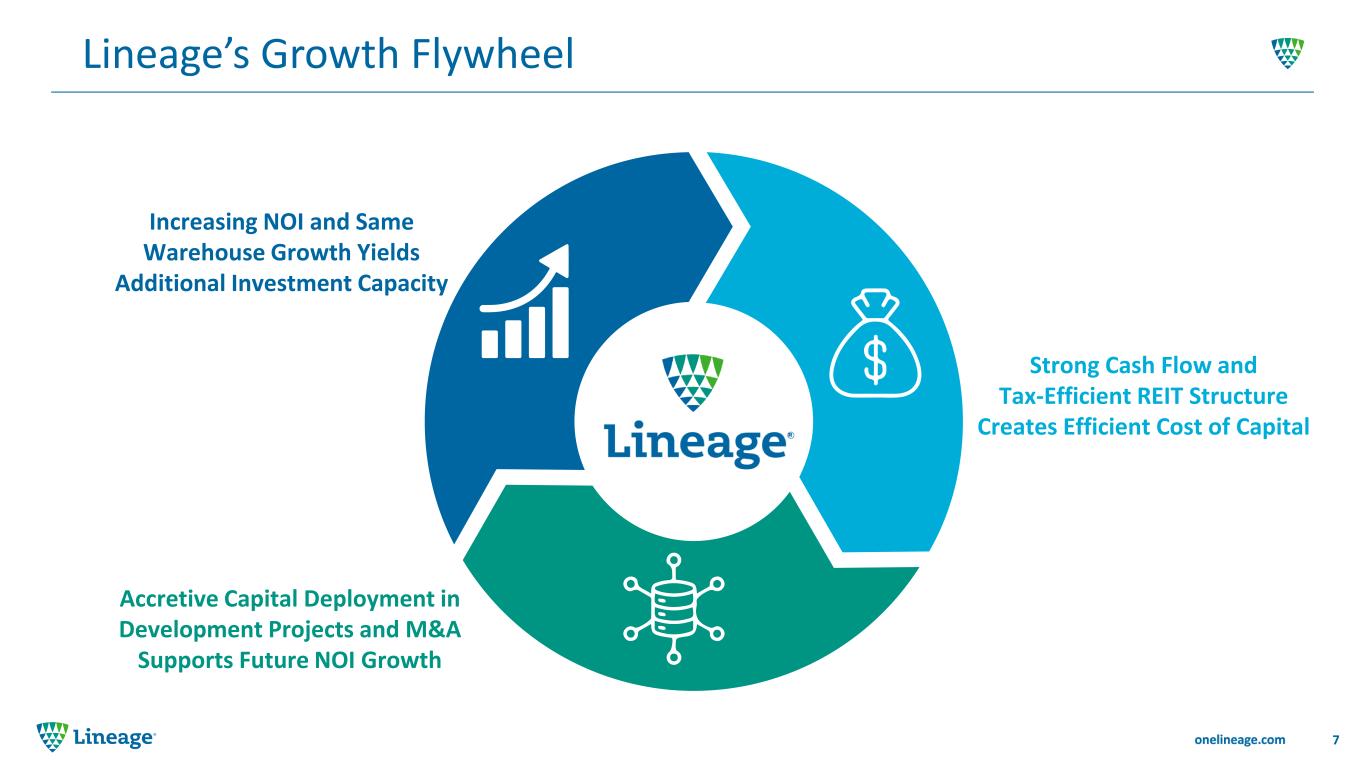
Yeah, so on the first one, so the $1.5 billion, that just assumes funding with cash and debt, so no equity. Certainly, we've got plenty of opportunities to accelerate that with equity. If the math worked out, we'd always be willing to do that. Obviously, that depends a lot on the share price and, you know, and where you want to issue shares. So, we're just assuming debt and cash. You know, on the second point, which I think is an important one, you know, we have a number of these great buildings that are either, you know, we had Hazleton open recently. We've got a lot of things in progress. We talk about that $100 billion plus, you know, I'd say about a quarter of that we're expecting to sort of flow through this year. And then, you know, and then the remainder and out years. And, you know, we have very consistent yield on these projects. It's a huge part of our, of our compounding. And, you know, we want to make sure that we people understand that, that this is a big part of what we do. And we've got a lot of stuff we've already done that just hasn't rolled through our financial shed.
Operator
Your next question comes from a line of Jeremy Cole from Goldman Sachs. Your line is open.
Hey there. Regarding occupancy, any concerns about the gap between economic and physical occupancy? How do you guys think about the spread between those two metrics?
Yeah, I mean, our spread is relatively tight between physical and economic, and we see that absolutely as a good thing. We think long-term customers do not want to pay for space that they're not using, and we feel that that's a great place to be.
Operator
Your next question comes from a line of Blaine Heck from Wells Fargo. Your line is open.
Can you guys talk about supply and whether you're seeing pressure on rates driven by new supply in any specific markets? And then looking forward to 2025 and beyond, what do deliveries or completions look like broadly? I guess, will we continue to have supply pressure this year?
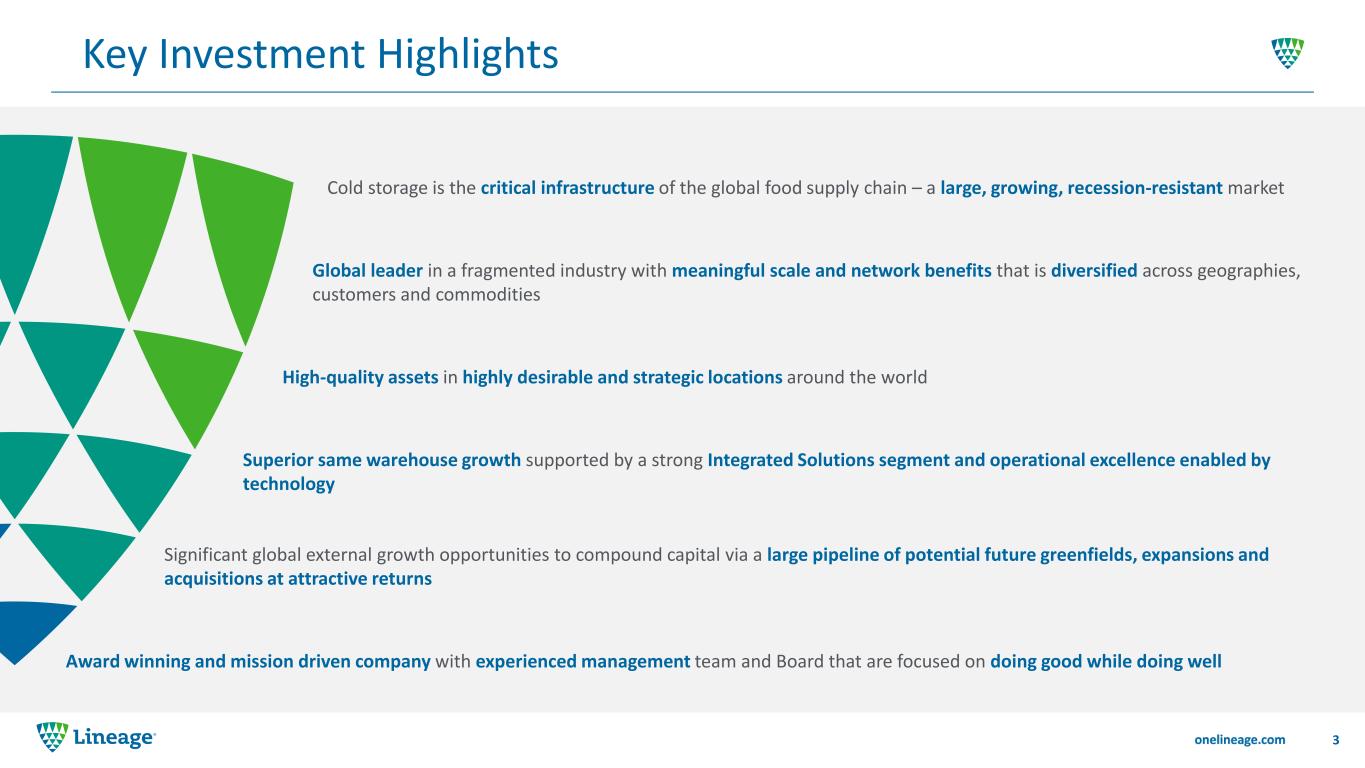
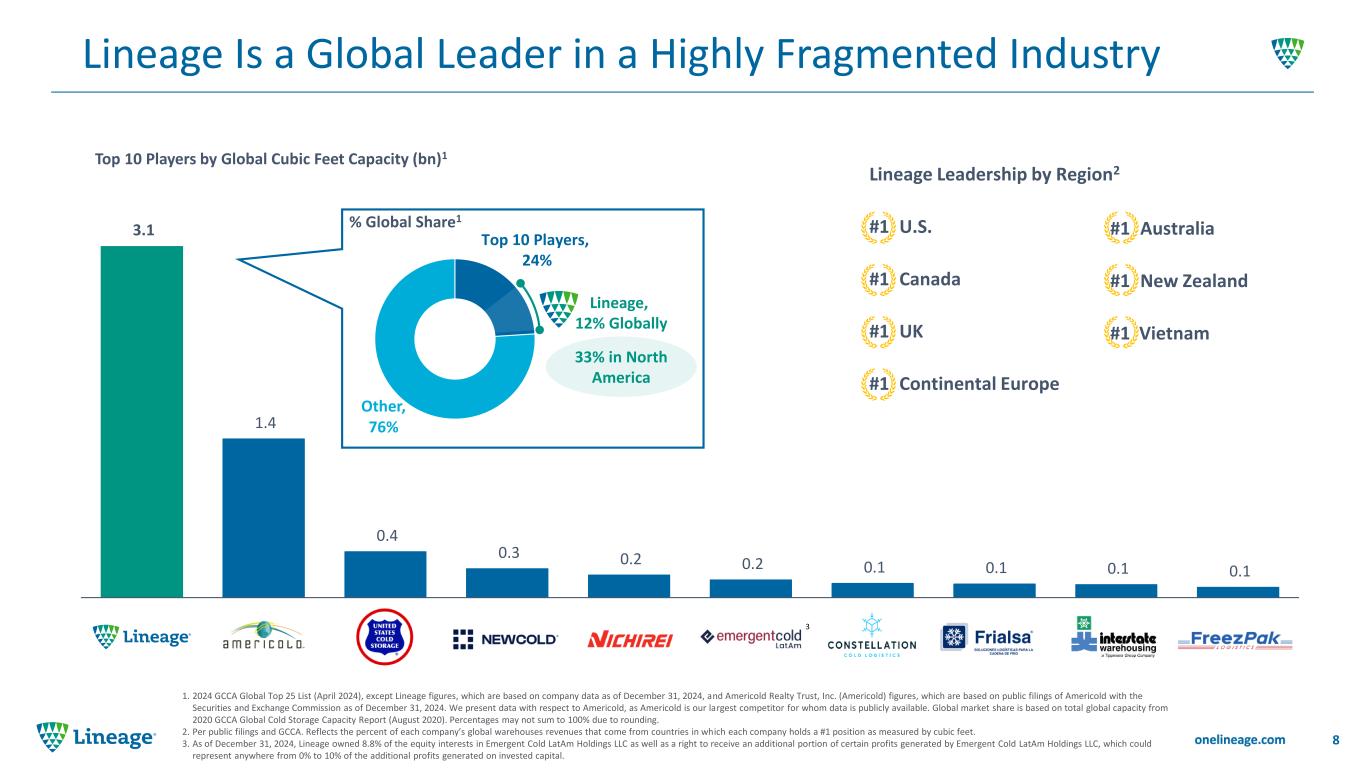
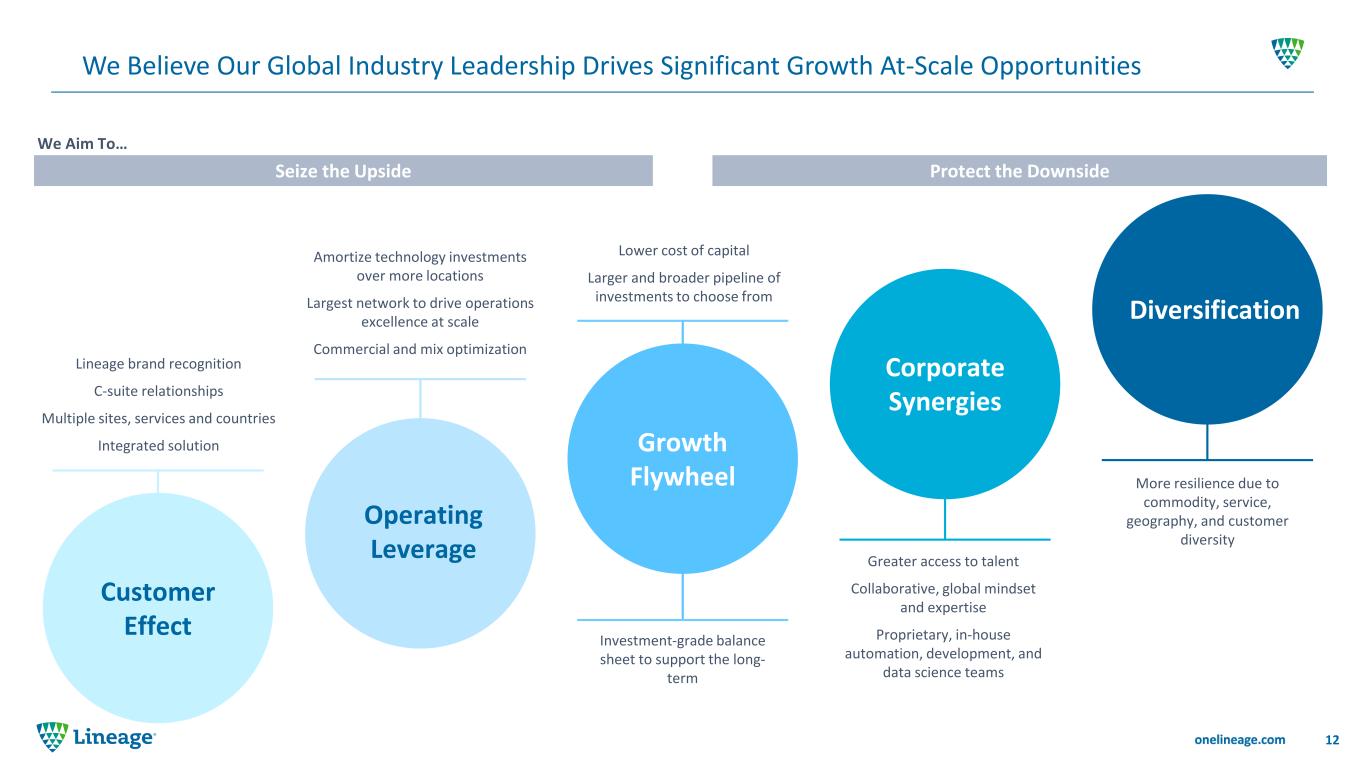
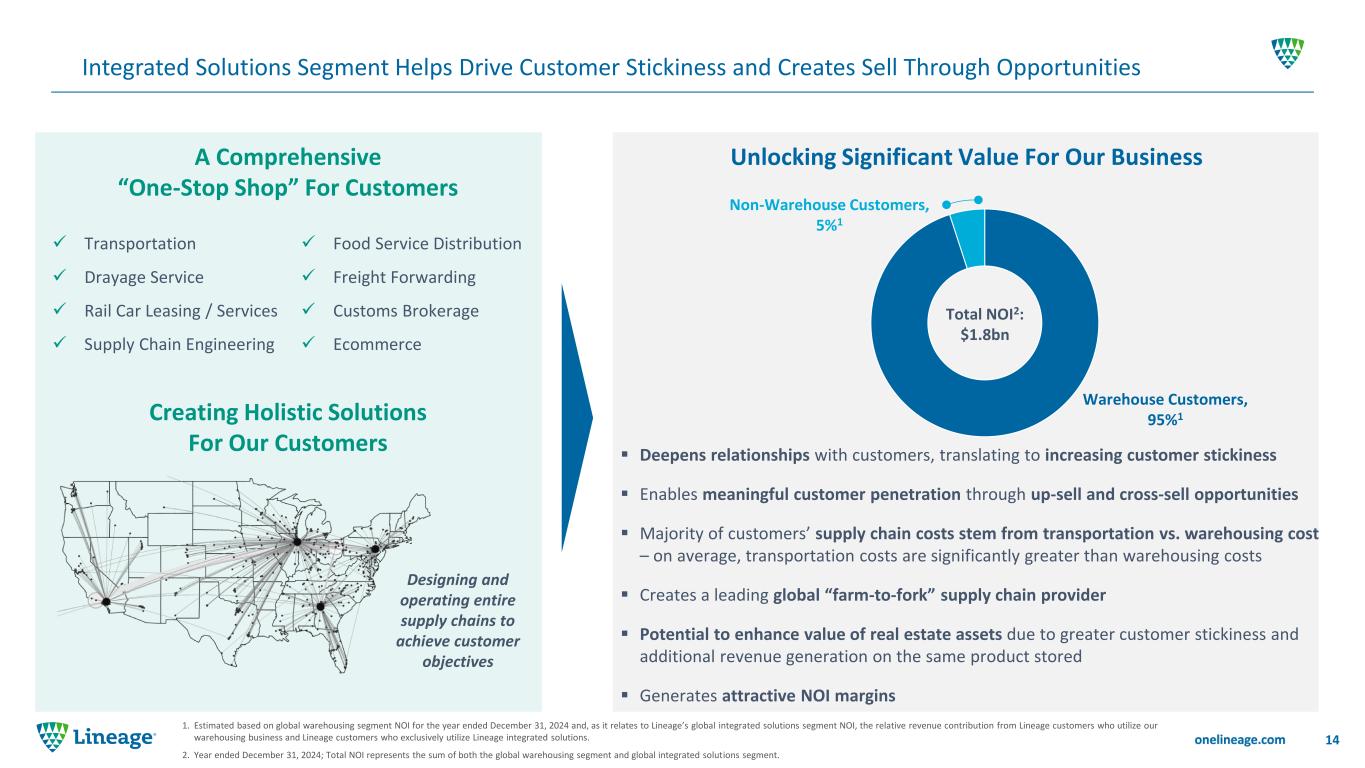
Good morning, and thanks for the question. And so, you know, I'll start just by saying, you know, we're in a market that grows long term globally, a very stable market. As I talked about, you know, our throughput balance on core holdings have not changed a lot. It is an attractive industry for that reason. And it's not surprising we've seen new investment over the last few years. So as we discussed last quarter, like you mentioned, there are some new competitors and even speculative developers that have entered our space. In the current construction cycle, that new capacity peaked in 2023. It came down by about 50% in both 2024 and 2025 levels versus 2023, and we expect those new deliveries to continue to decrease over time. It's also important to mention that the capacity that's been added over the last few years has been built at the highest cost to build in history. Absolutely, for sure. And we don't expect those build costs to decline from the current levels because of inflation, land costs, entitlement, and just the complexity of building, especially with automation. And so as such, it's very hard for these smaller, newer players to succeed at anything below market prices in a market with rising capital costs. And we actually expect some of these businesses to underperform and some to fail, and we're seeing evidence of that in the marketplace. And we expect some of these dislocations to create opportunities for us as we continue to position ourselves as a choir of choice in the industry. And when you compare us to these new entrants, I mean, we have very distinct advantages. We have huge scale advantages. We have the network effects that come with that. We are the world leader in cold storage automation. We have proprietary technology like LineageLink and LinOS. We have C-level customer relationships with over 13,000 customers around the world. And we have our GIS segment where we can support their cold chain from farm to fork, where none of these other competitors can do that. So long story short, you know, we feel great about our ability to compete.
Operator
Your next question comes from a line of Steve Sackwa from Evercore ISI. Your line is open.
Yeah, thanks. Could you maybe just talk a little bit about the pricing that you're seeing on the acquisitions that you're maybe looking at? Like, how has that changed? And, you know, with your cost of capital changing, you know, how are you thinking about pricing on new deals going forward?
Yeah. So, you know, obviously the market here has been challenged the last few years and that, you know, you sort of see a little bit of that in the public valuations and it also flows through the private valuations. You know, ultimately, we're going to make the best decisions to drive long term value for our shareholders with the highest risk adjusted returns. So, you know, there's always a good arbitrage opportunity for anything that we do. So, you know, in the near term, that accrues directly to our shareholders. And then as we improve the businesses over time, you know, that also will accelerate those returns. And so, really no changes, you know, versus how we've done this in the past. You know, we definitely benefit from having the balance sheet that we have today and that lower cost of capital. And that gives us an advantage. And being number one in the industry gives us a huge advantage. And so, like I said, we're excited about the opportunities here. And, you know, if we can take advantage of any market dislocations at the near term, we certainly will.
Operator
Your next question comes from a line of Michael Carroll from RBC. Your line is open.
Yeah, thanks. Greg, I wanted to circle back on your Lino-West comments. I know you indicated that the pilot tests are showing strong initial results. Can you help us understand what that means? I guess, what did these pilots prove? and are you seeing better revenue growth and better margins at those assets? I guess how can we clarify that comment that you're seeing stronger results than you expected?
Yeah, great question. So as I mentioned, the window estimates initiative is very, very much on track. The pilots are early, but they are absolutely exceeding our expectations. We're super excited about it. This year is about proving out the functionality of the technology and getting it rolled out to different types of facilities. So think Docs, think High Reach, think Case Pick, and getting all that technology rolled out in every aspect of the operation across different facility types to prepare for a broader rollout next year. And so, as I mentioned, we believe that this technology can fundamentally transform our operations, and we are seeing early indications of that. I actually have a great story, Michael, from our first pilot. In the first week of rolling out Lin-OS early this year in Chicagoland, our COO, Jeff Rivera, was just standing there observing the operation and kind of watched Lin-OS act as, you know, kind of controlling the orchestra of the operation, if you will. And one of our most senior team members, a 30-year reach truck driver who had been working with this technology for two days uh drove by jeff on on his forklift gave him a thumbs up and said this is freaking awesome and he actually used a little bit more uh different words but i'll be i'll be polite and so i think the you know the buzz and the excitement within the company and in our leadership team has never been higher we've never been more optimistic that said it's really early and we want to wait till we have more proof points before we come out with any sort of uh additional color, but we will definitely, we are extremely excited to share that as this year
Operator
progresses. Your next question comes from the line of Daniel Guglielmo from Capital One Securities.
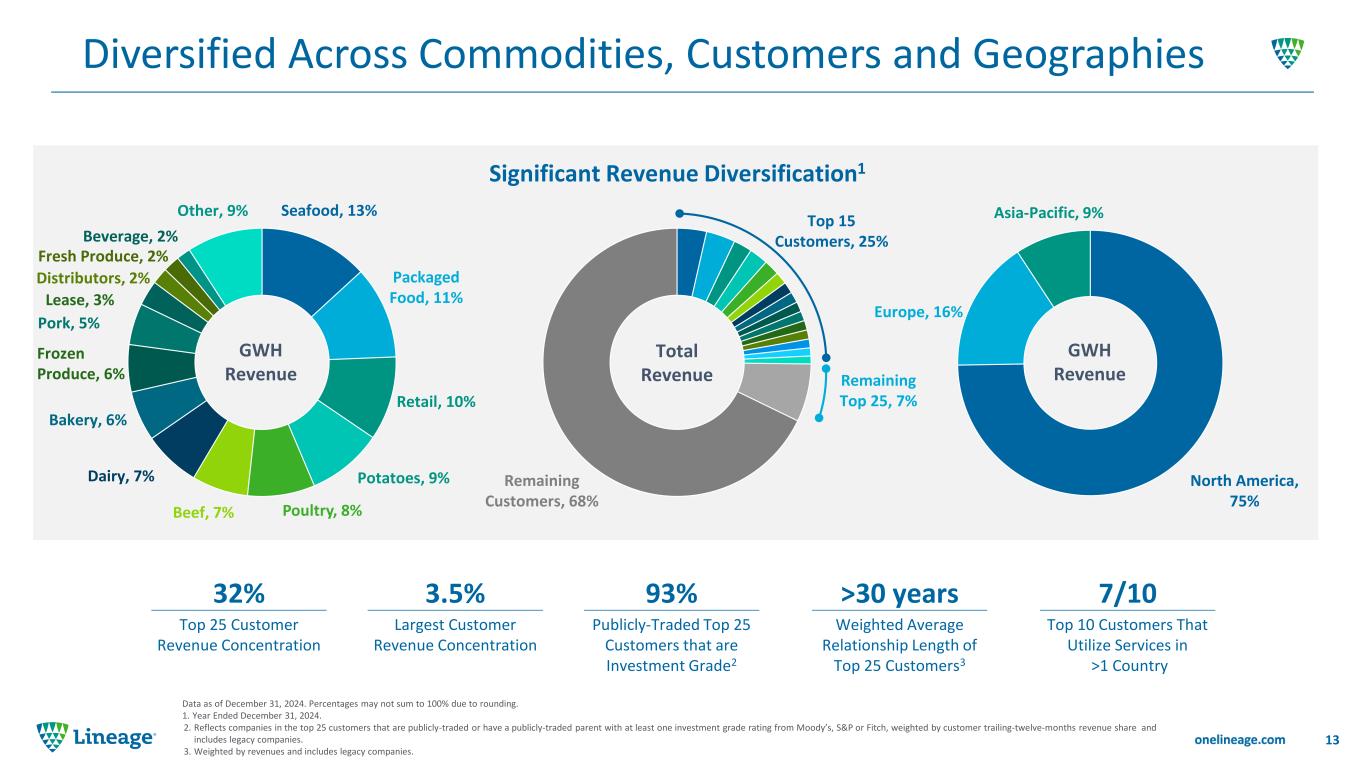
Your line is open. Hello, everyone. Thank you for taking my question. I know you all have a mix of large and small customers with the top 25 customers making up about a third of revenues. As we continue to come out of this customer demand kind of trough, are you seeing a divergence in the speed at which large customers are reoccupying space versus your smaller customers or are there
any trends of note between the two um so i would say no uh we are our customer base has been very stable uh as we look over the trailing 12 here and we wouldn't anticipate that to change moving forward you know importantly we're with our scale we're touching all commodities all customers and all in all the regions with in which we operate and you know that that diversification is part of a big part of our story. So any shift that would happen that we're not anticipating, one would benefit and another could be impacted, but we're super diversified and not a concern for
Operator
us. Great. Thank you. Your next question comes from a line of Michael Goldsmith from UBS.
Your line is open. Good morning. Thanks a lot for taking my question. I appreciate some of the background on the supply, but just to be asked a little bit more directly, you know, will competitive supply for 2025, will that be lower, higher, or the same than last year?
What do you mean in terms of new things coming online? It's lower.
Yeah, I guess, yeah, I mean, what we would expect it to be consistent with last year. Thank you very much. And new supply coming down moving forward.
Operator
Your next question comes from a line of Amateo Akrasanya from Deutsche Bank. Your line is open.
Yes. Good morning, everyone. A question around, I mean, you look at the USDA data, that's kind of suggesting that inventory pressures are still existing in the business. There's a lot of talk about continued inflationary pressure on food costs. and some of the more recent data around weaker consumer sentiment. I mean, as you kind of just look at a combination of those things, do you kind of look at that as a dynamic that continues to kind of put pressure on things for a while? I mean, some of your comments today seem like 2025 really is a year of market stabilization, but I just kind of compare it against some of that demand-related data, And I just kind of wonder if that kind of lingers for a little longer than maybe everyone's expecting.
So on the, I mean, yeah, I just, I'll just comment brief. So on, you know, I went through all that sort of normal seasonality information. We looked back at the USDA data for that as well. So, I mean, what you're seeing in the USDA data is that normal seasonality, at least over the past year, as we talked about starting in the back half of last year. Go ahead, Greg.
Yeah, I think it's just important to point out again that despite the inflationary pressures, our throughput in our core holdings has not changed. And so the pressure has really been more on inventory levels, and that peaked in the second quarter of last year. Since then, inventory levels in our core holdings have stabilized at a lower level, and that is what our guide does not assume, that there's any sort of rebound in throughput or inventory holdings. We assume things are where they are, they're not going to improve, and we feel we can perform in that environment. And just a little more on the USDA data, you know, I think everybody knows this, but, you know, USDA data is based on a voluntary survey conducted via telephone to facility managers, and only a portion of the total cold stores that the U.S. report, and many report inconsistently or only report for a portion of their warehouses. And so while it's an interesting data point, it's far from perfect for us, you know, 20% of our business is outside of the U.S. and only 40% of our commodity basket in the U.S. is reported through the USDA. So, you know, we don't believe that's a good predictor of our results in the short term, although it does certainly have correlation in the long term.
Operator
Your next question comes from a line of Michael Muller from J.P. Morgan. Your line is open.
Yeah. Hi. What do you see as more normalized, longer-term physical and economic occupancy
levels for your portfolio? We certainly strive to move up our physical and economic over time as we gain market share. And we think we are gaining market share. Our customers are always looking to optimize their supply chains, especially our larger customers. There's a number of large optimization initiatives going on at our big customers. One of them had just completed their seven-month study, and they'll be reconfiguring their North American supply chain. And we were just informed earlier this week, and it's a top 10 customer for us that will get a 50% increase in business from that customer as this year progresses. So, you know, we're looking to gain market share, we think, as we optimize our cost structure, as we implement LIN-OS, As we continue our lead initiatives, we think we can be, we think in the long term, we can be the lowest cost provider with the best service, with the best scale, with the broadest service offerings, and that will lead to ongoing gain of market share over time.
Yeah, I mean, I think another thing worth pointing out, right, is because occupancy levels have come down, there's space to sell, right? We have room in our building. Lots of upsides. You know, there's a ton of upsides. You don't have to go and build a bunch of new buildings in order to service your customers. You can take advantage of available space. So, I mean, that's, again, none of this is embedded in our guide. You know, we think we can drive, you know, mid-single-digit same-stroke NOI before any of these other great things we're talking about. And, you know, we'll be in a pretty exciting time, as we mentioned.
Operator
Your next question comes from the line of Victor Fedev from Scotiabank. Your line is open.
It's Victor Fedev on with Greg McGinnis. I'd like to ask, so at Nareed, you highlighted a new focus on managing your SG&A expenses. are able to provide more clarity on the expectations around that for 2025 and how you plan to address going forward?
Yeah, for sure. So, you know, if you look at operating leverage, both operationally and through admin, it's a huge part of what we're driving here at the company. You saw, you know, nice EBITDA growth in last year. So we're always looking to optimize. I mean, we're investing more in certain areas. We are making sure other areas have the right size, you know, and, you know, it's an important part of what we do. So, you know, there's a little bit of growth in admin for 25, of course, because we're a new public company and there's public company costs and things we didn't have before. But other than that, you know, we are – there's really just not much growth. And I think there's – again, you know, we built this company because we plan to grow this company to, you know, enormous scale over a long period of time, and we've made some of those investments in advance. And so, moving forward, we can grow without a ton of incremental investment in admin. And I can tell you our CEO and I are very focused on that.
Operator
Your next question comes from a line of Vikram Malhotra from Mizuho. Your line is open.
Morning. Thanks for the question. I just wanted to clarify on your kind of occupancy and maybe just NOI comments and assumptions. I think you mentioned, you know, having sort of NOI 47-ish percent first half in the balance and the second half. That's kind of normal seasonality. So if I just run that through, just to clarify, is that embedding basically occupancy falling in the first half and picking up a fair amount in the second and essentially the NOI growth negative in the first half just on the percentage you gave and a big pickup in the second? Could you clarify that? Thanks.
Yeah. I mean, I think if you run those numbers through your models, you're sort of flat, you know, flattish and slightly down the first half and up in the second half. I mean, that's, you know, I think that's normal seasonality because, you know, inventory levels were all right in the first half last year. So, yeah, that's very consistent with what we just laid out.
Operator
Your next question comes from a line of Keebin Kim from Truist. Your line is open. Thanks for taking me back.
Just two quick follow-ups. First, what is the stock-based comp assumed in your 25 guidance? And second, I'm looking at page 11, I'm sorry, page 15 on your slide deck. Just curious, why did the non-same store storage revenue fall? I mean, it looks like your economic occupancy fell 700 basis points, but your average occupied pallets were actually up 2.8%, so just a little confusing.
So, I mean, non-same store, right, there's a lot, you know, we had some buildings move out of same sort of non-same store because of the solar fire last year there's just a lot of stuff embedded in there um stock-based stock-based yeah i mean i think i think we're at a normal run right now at the end of the fourth quarter right a big part of the stock-based comp increase is our starting line right where we went to the entire company and offered equity to the majority of people and and i think that that's driven a huge benefit and it'll help us in a million different ways. And so that's kind of in the base now. Part of the reason why we have all time. Very good
productivity. Yep. So what is the normalized run rate? Yeah, I think we're there for the fourth
Operator
quarter. Okay, thank you. Your next question comes from a line of Alexander Goldfarm from Piper Sandler. Your line is open. Hey, thank you for the follow-up. Just a two-parter here,
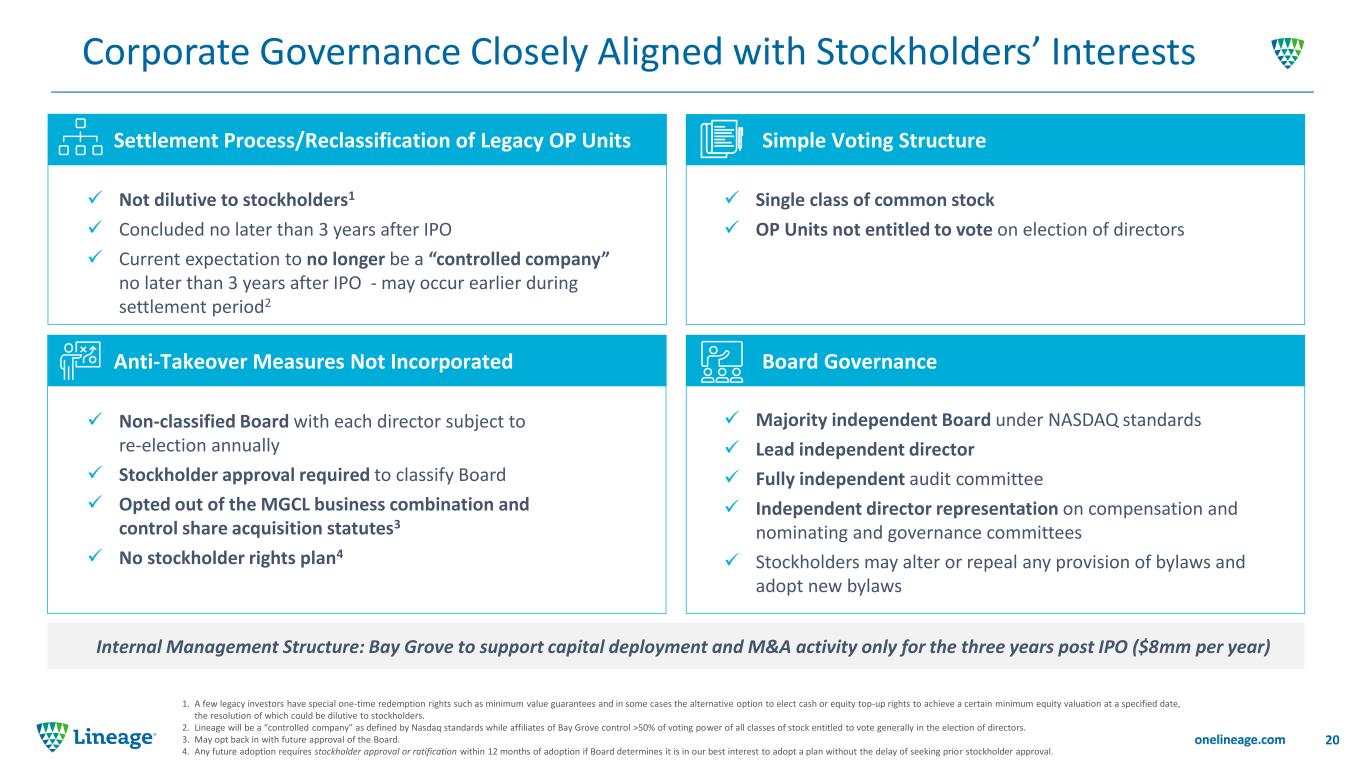
if you don't mind. One, if you could just give us an update on the lockup or I guess the expiration lockup of the pre-IPO investors, you know, where you guys stand, you know, and what's going on there. And then second part is slide five of the presentation really speaks to the outperformance of the platform versus flat year-over-year revenue. And just curious, is this more driven, that outperformance, is that more driven as you guys acquire assets and you're able to put them on your system or do you also see similar out performance at existing center at existing warehouses such that and then do you think that this will be able to continue so that you know the lineage that uh technology platform that you guys spoke about the ipo that that will continue to reflect in results and that we should see this continued out performance of the metrics versus
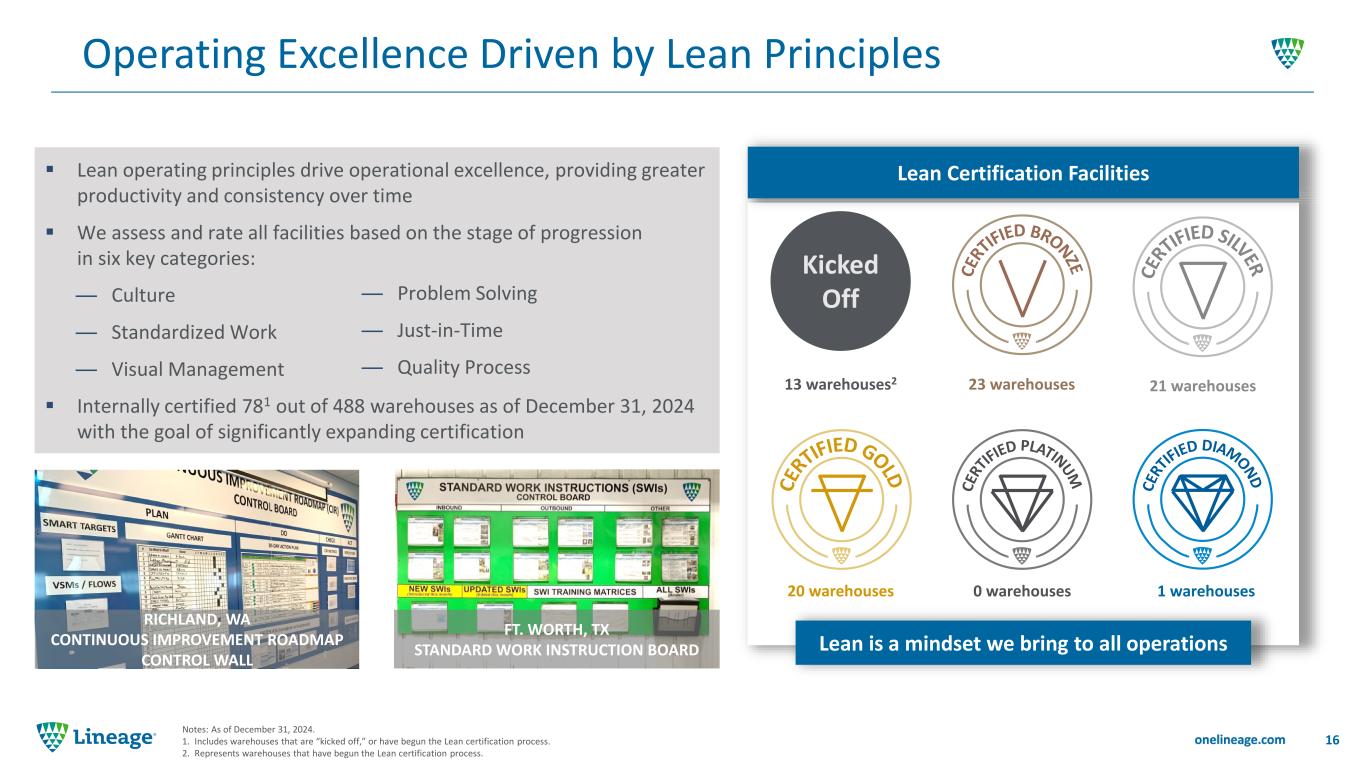
the top line revenue yeah i appreciate the question yeah i mean it and i appreciate you bring it back to the store like this is this is what we do we are world-class operators the lean process is the technology like yeah it's not just things we acquire we are consistently always getting better the whole point of lean is you're always getting better right and and we've rolled it out across some of our companies not everywhere and then lin os is all amazing upside on top of this right so yes we expect to outperform um we expect continue to drive margin improvement as we both said on the call we're just getting started and i think there's a ton of opportunity there And as we get better, everything we acquire just becomes more creative. Yeah, bigger network, you know, more places to, you know, to take advantage of that. And then I want to also appreciate the question on the sell-down. So just some comments around that. So we don't see the sell-down process at all as a meaningful headwind. And I'll sort of give you some color on why. So Kevin and Adam, you know, our founders, large individual, long-term shareholders, they're obviously very, very aligned with the public. market on making sure the settlement process aids our public investors and all of our investors. They control the settlement process. They plan to execute the organized sell-down over this three-year period, starting with the IPO. They're very focused on long-term share price appreciation as are we all. Increasing the public float and expanding our base of great long-term shareholders. We also have increased passive index ownership. We're around 30% index ownership now. And then, again, thinking about the sell-down over time, you know, only 30% of the company has publicly floated today, but of the remaining 70%, founders and management own a significant amount, and obviously we expect all of those people to be long-term owners. And so that leaves maybe two-thirds of the stock owned by pre-IPO investors. And, of course, we can't predict their investment decisions, but, you know, we view a significant number of them, and they've told us that they are also long-term owners of the stock. So, you know, this is a very organized process over the next two and a half years. There's no, like, clip dates and things that, you know, should worry people about this being a real headwind. Appreciate the question.
Operator
And your last question comes from a line of Jamie Feldman from Wells Fargo. Your line is open.
Great. Thanks for taking the question. And I think your response to Alex's may have answered some of it. But, you know, stocks underperformed since the IPO. So, you know, what do you, in your conversations with investors, you know, what do you think is most misunderstood? What do you think the key concerns are? And, you know, what would you tell people to get more comfortable, especially as we start a new year and you think business is stabilizing?
Yeah, I think what's been misunderstood is that we've been, we're growing this company, you know, 4%, totally bit up, 6% AFF overshare in a major inventory rebalancing. And so in the start, in the stiffest headwind the industry's seen in many years, we're still We're built to grow. Right now, we're delivering the best customer performance of our history, where we have record new business wins, our operational, our safety, our energy management performance was great. As Rob said, we'll get great G&A leverage going forward. We have technology and automation that no one else in the industry has. And we're built to grow. And we're going to prove that over the next several years. And I do not think we're getting credit for that on the street yet. And I understand that we have to show that, but we've shown it for a long time prior to going public. We were kind of in this strange rebalancing position since we've been public, and we expect to perform very well going forward.
Operator
And that concludes our question and answer session. I will now turn the call back over to Evan Barbosa for closing remarks.
Thanks. On behalf of the entire Lineage team, thank you for joining us today and for your interest in Lineage. We look forward to speaking with you again on our next quarterly earnings call. Thanks, everybody.
Operator
This concludes today's conference call. Thank you for your participation. You may now disconnect.