Operator
Good day and welcome to the Lineage First Quarter 2025 Earnings Conference Call. All lines have been placed on mute to prevent any background noise. After the speaker's remarks, there will be a question and answer session. If you would like to ask a question during this time, simply press star, followed by the number 1 on your telephone keypad. If you would like to withdraw your question, press the star one again. For operator assistance throughout the call, please press star zero. And finally, I would like to advise all participants that this call is being recorded. Thank you. I'd now like to welcome Evan Barbosa, VP Investor Relations, to begin the conference. Evan, over to you.
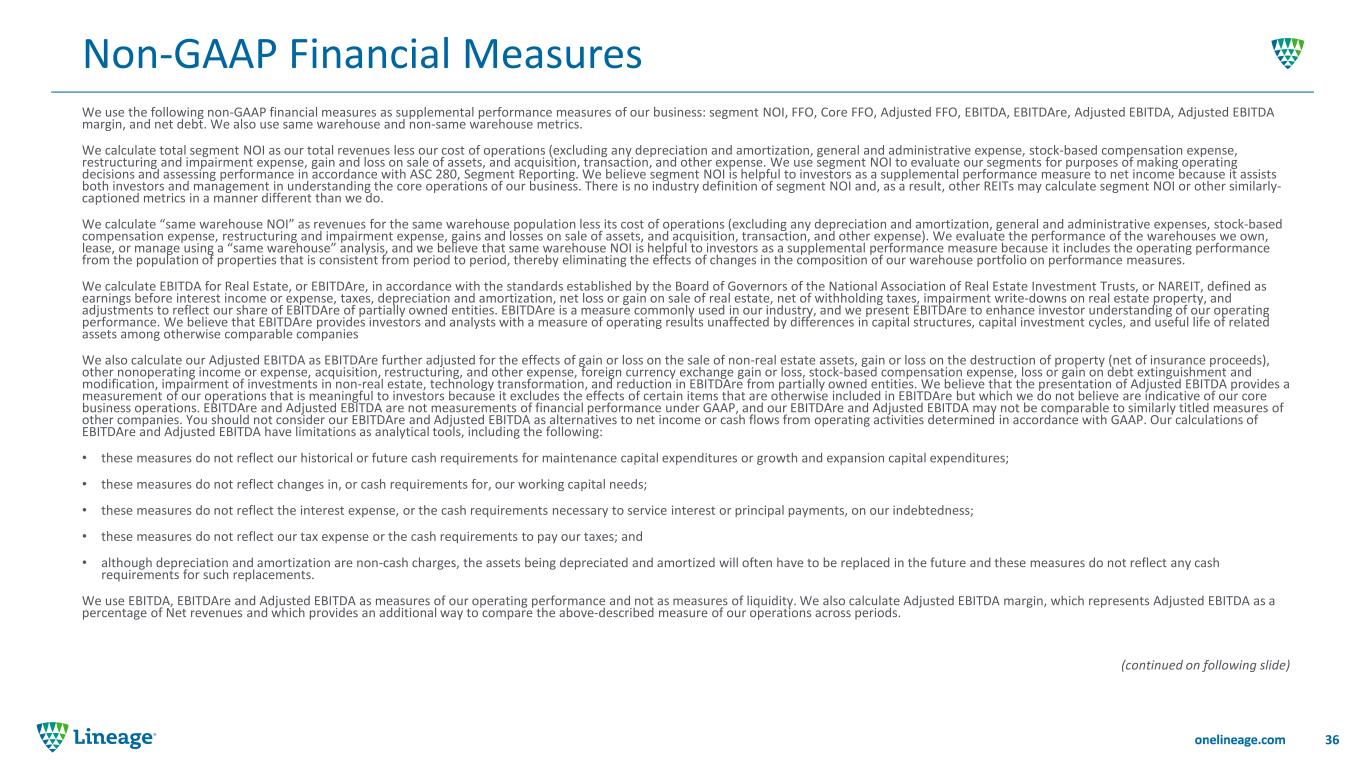
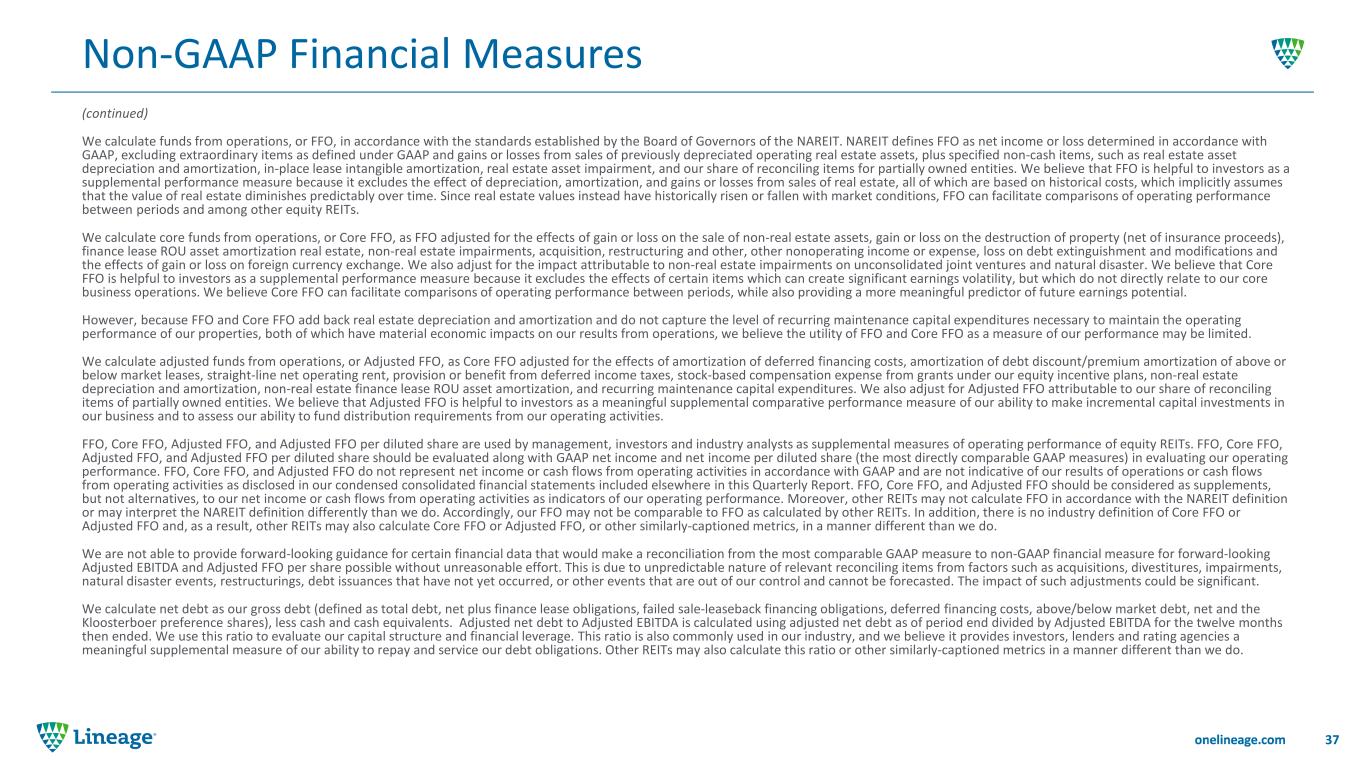
Welcome to Lineage's discussion of its first quarter 2025 financial results. Joining me today are Greg Lemko, Lineage's President and Chief Executive Officer, and Rob Cresci, Lineage's Chief Financial Officer. Our earnings presentation, which includes supplemental financial information, can be found on our investor relations website at ir.onelineage.com. Following management's prepared remarks, we'll be happy to take your questions. Turning to slide two, before we start, I would like to remind everyone that our comments today will include forward-looking statements under federal securities laws. These statements are subject to numerous risks and uncertainties as described in our filings with the SEC. These risks could cause our actual results to differ materially from those expressed in or implied by our comments. Forward-looking statements in the earnings release that we issued today, along with the comments on this call, are made only as of today and will not be updated as actual events unfold. In addition, reference will be made to certain non-GAAP financial measures. Information regarding our use of these measures and a reconciliation of non-GAAP to GAAP measures can be found in the press release that was issued this morning. Unless otherwise noted, reported figures are rounded, and comparisons of the first quarter of 2025 are to the first quarter of 2024. Now, I would like to turn the call over to Greg.
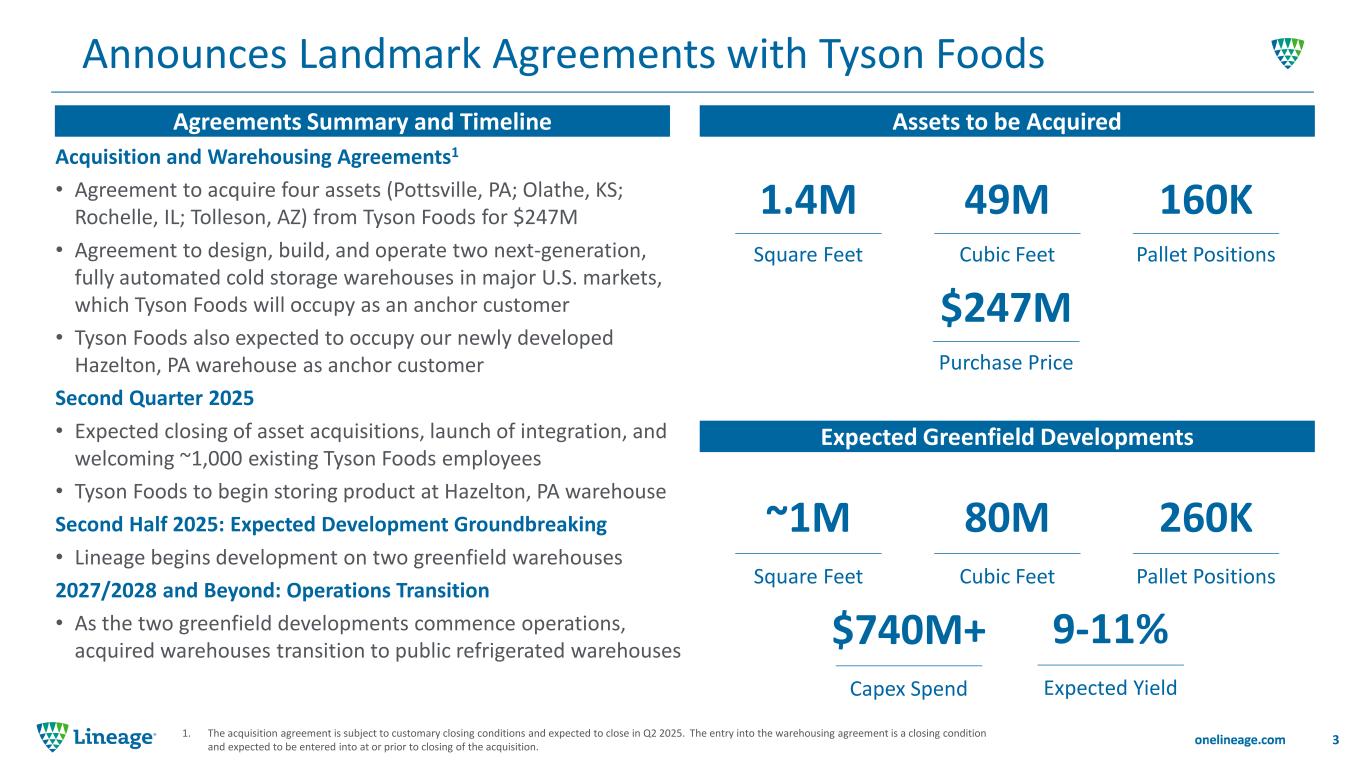
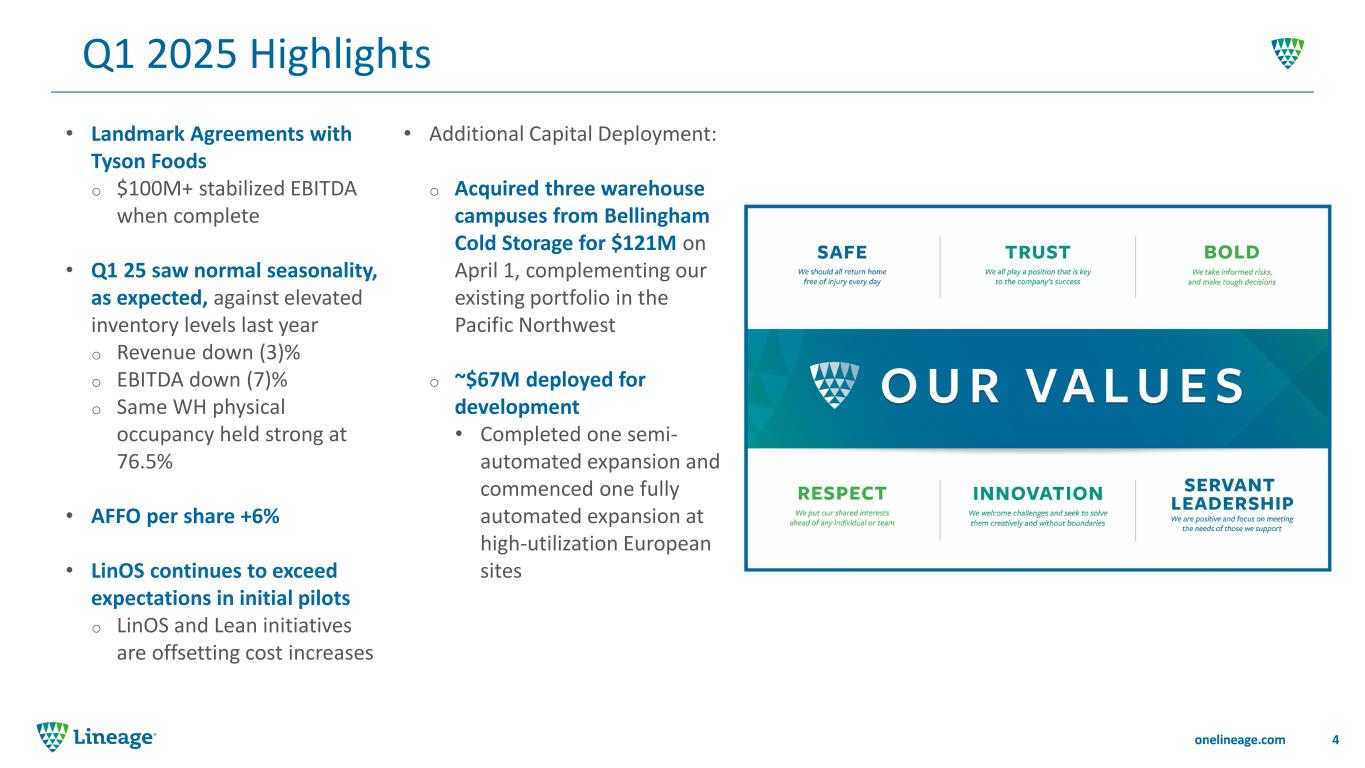
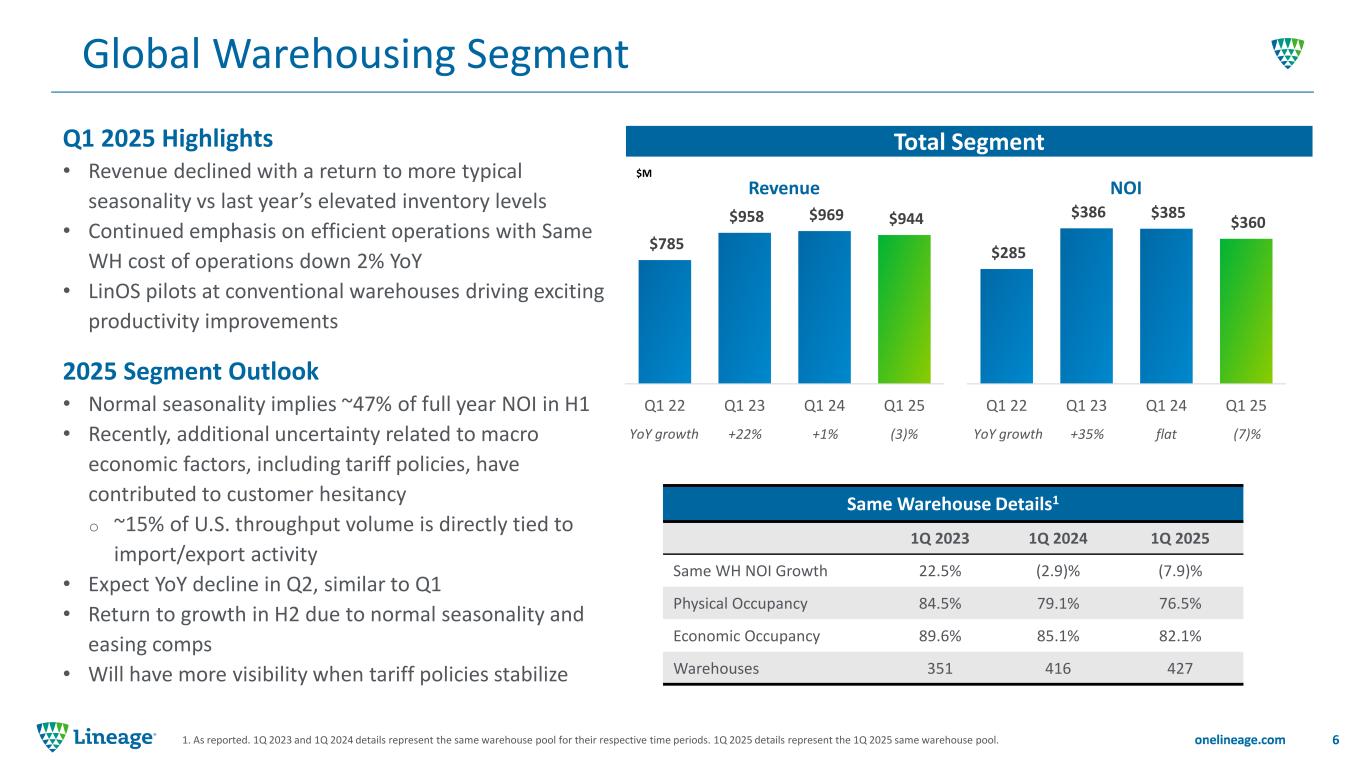
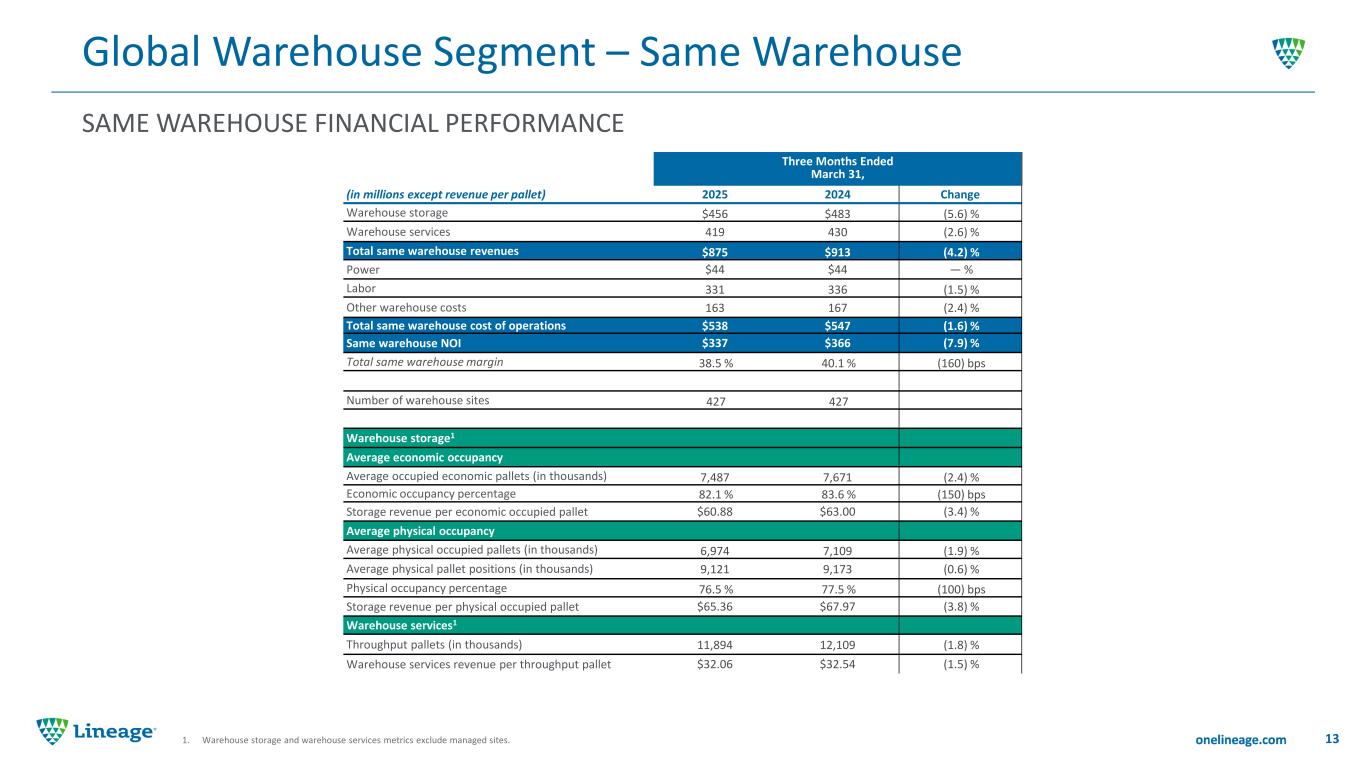
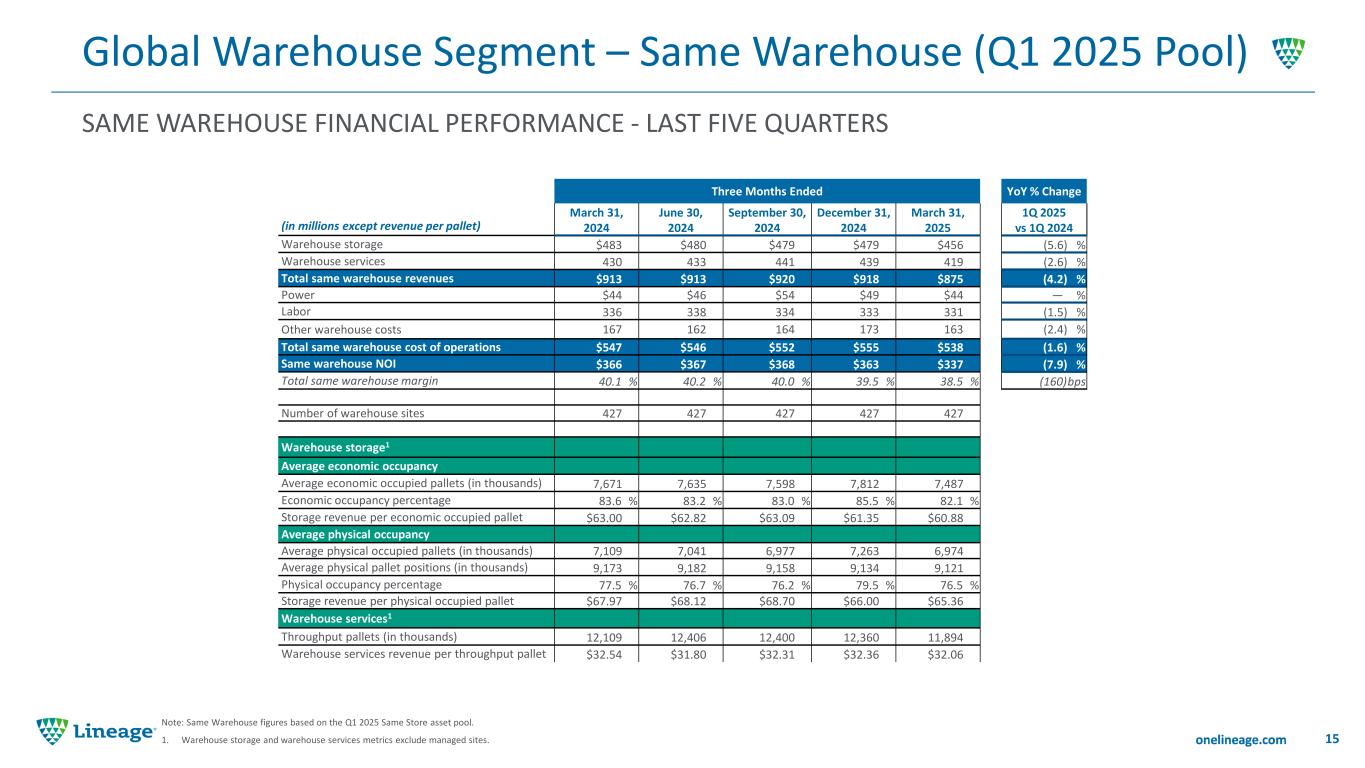
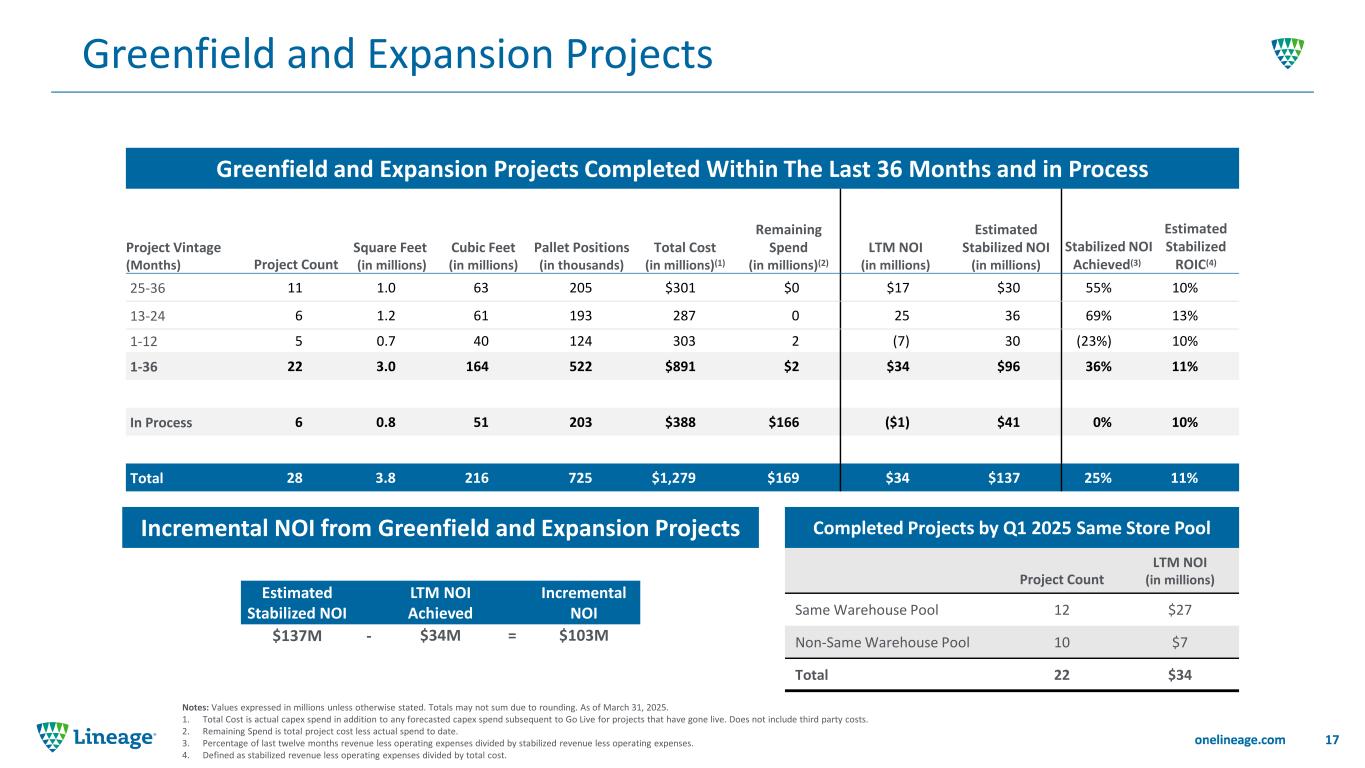
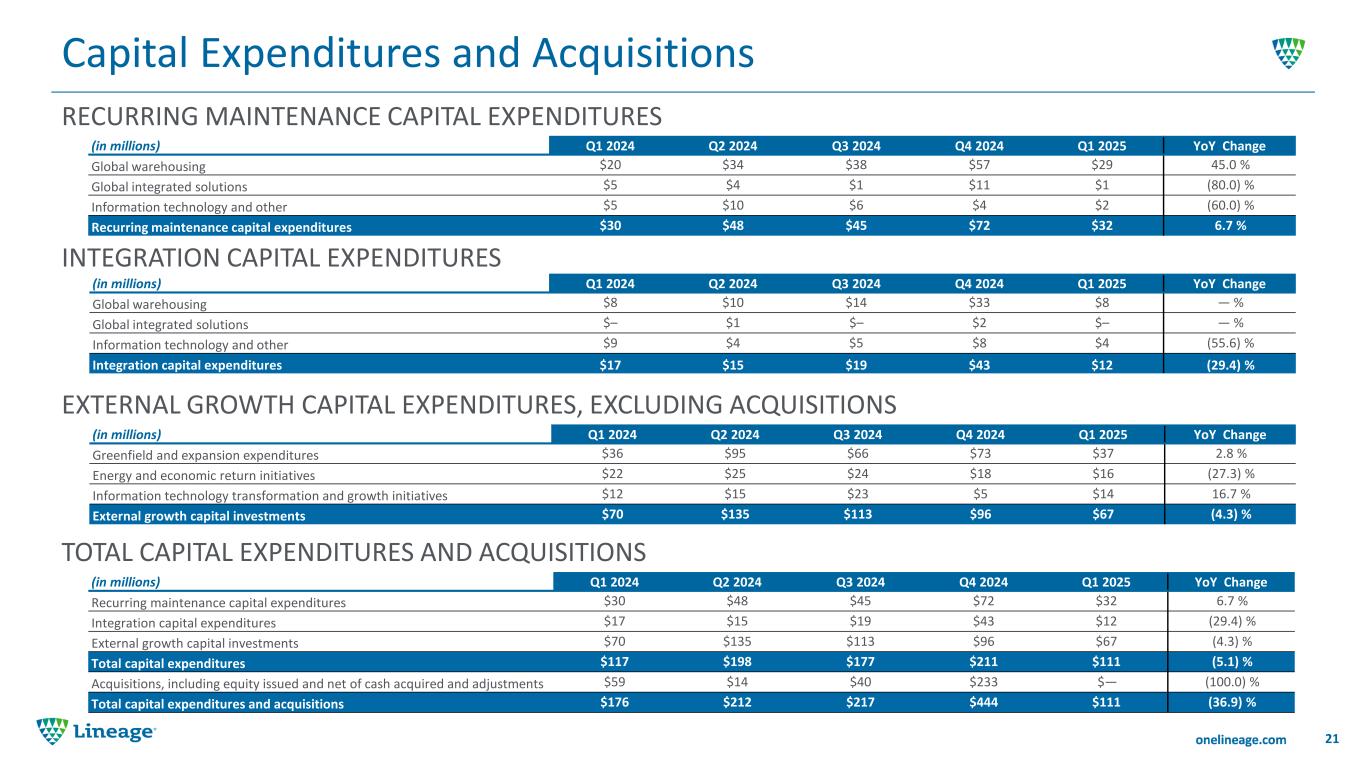
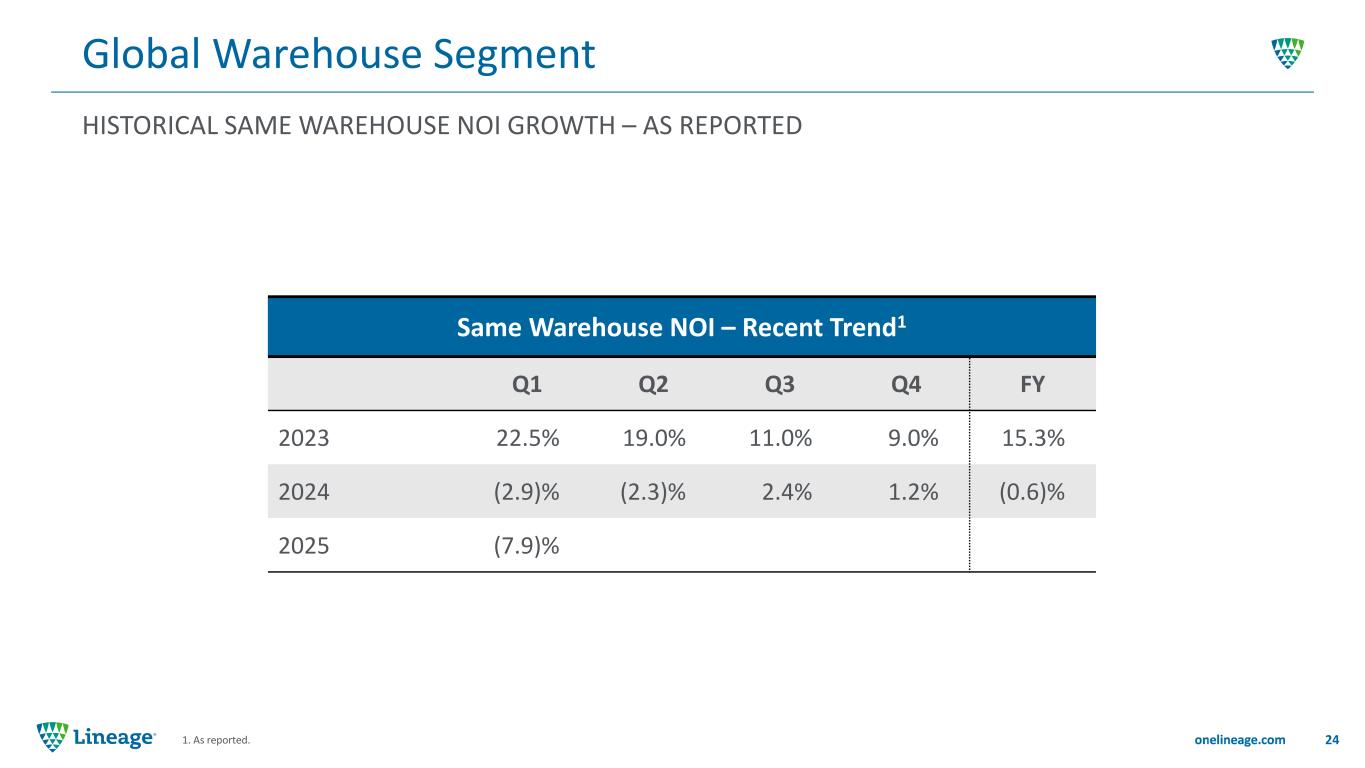
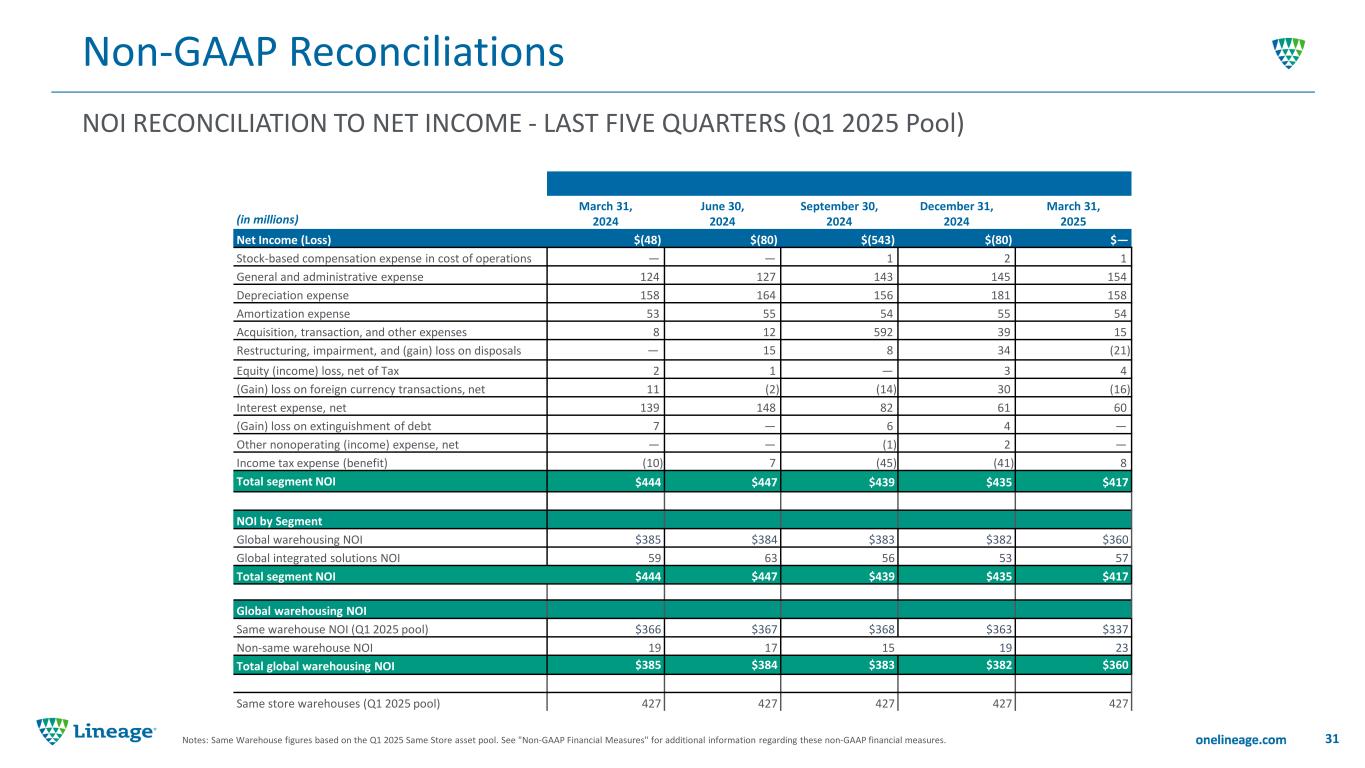
Thanks, Evan, and thanks, everyone, for joining us today. Today is a very exciting day for Lineage as we announce landmark agreements with our valued customer, Tyson Foods. In total, we expect to deploy approximately $1 million of capital in the coming years on the acquisition and new greenfield developments that once stabilized will generate over a hundred million dollars in annual ebitda the scale of these agreements on their own by cubic feet would be the size of a top 10 global cold storage company first we announced the definitive agreement to acquire and take over operations of four tyson foods cold storage warehouses for 247 million dollars these warehouses total approximately 49 million cubic feet with 160 000 power positions and are located in Crossville, Pennsylvania, Olathe, Kansas, Rochelle, Illinois, and Toleson, Arizona. Second, at or prior to closing the acquisition agreement, Lineage will enter into an additional multi-year warehousing agreement to design, build, and operate two next-generation, fully automated cold storage warehouses in major U.S. distribution markets, which Tyson Foods will have. They will add 80 million cubic feet and 260. We expect to deploy over 740 million on these two greenfield developments with an expected yield of 9 to 11 percent when stabilized under this warehouse agreement tyson foods will also begin storing product at our newly developed next generation fully automated hazelton facility as an anchor customer the acquisitions are expected to close in the second quarter subject to customary closing conditions we look forward to welcoming over 1 000 existing tyson foods employees into the lineage family but executing our proven integration process we expect to break ground on the greenfield developments in the second half of this year as the new build warehouse is open targeted for late 27 the four existing acquired warehouse our leading global facility network and world-class automation expertise combined with our proprietary data science capabilities aligns really well with tyson these landmark agreements showcase the multiple ways we look forward to future opportunities to help them build resilient turning to our first quarter highlights on flight four our first quarter results reflect normal seasonality against the elevated inventory. Total revenue is down. Same store, warehouse, NOI down 7.9%. And right now, within the marketplace, despite the inventory primarily driven by... I'm personally really excited about Lin-O-S. This tech innovated into our lean methodology. These methodologies are realizing some of those benefits now as our same warehouse cost development and M&A opportunities, including the Tyson Farr he talked about. Turn the call over to...
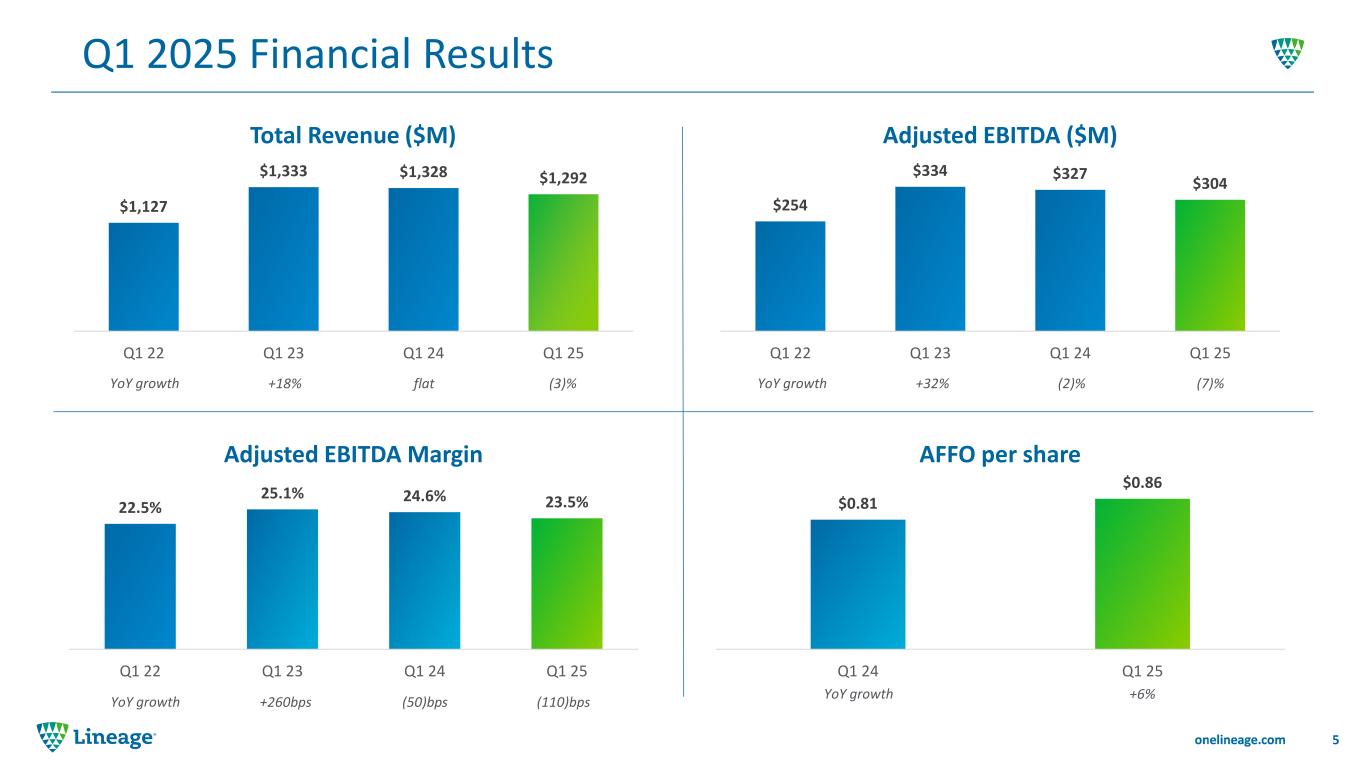
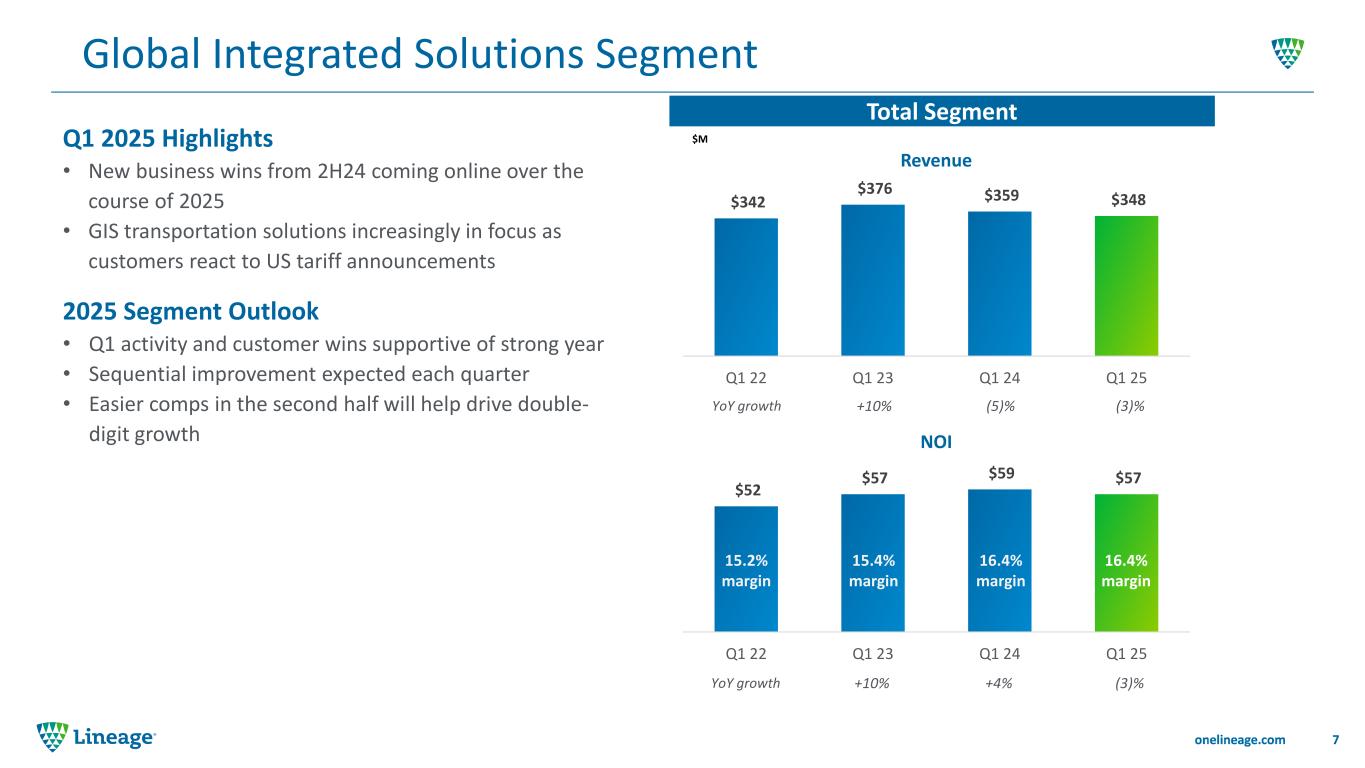
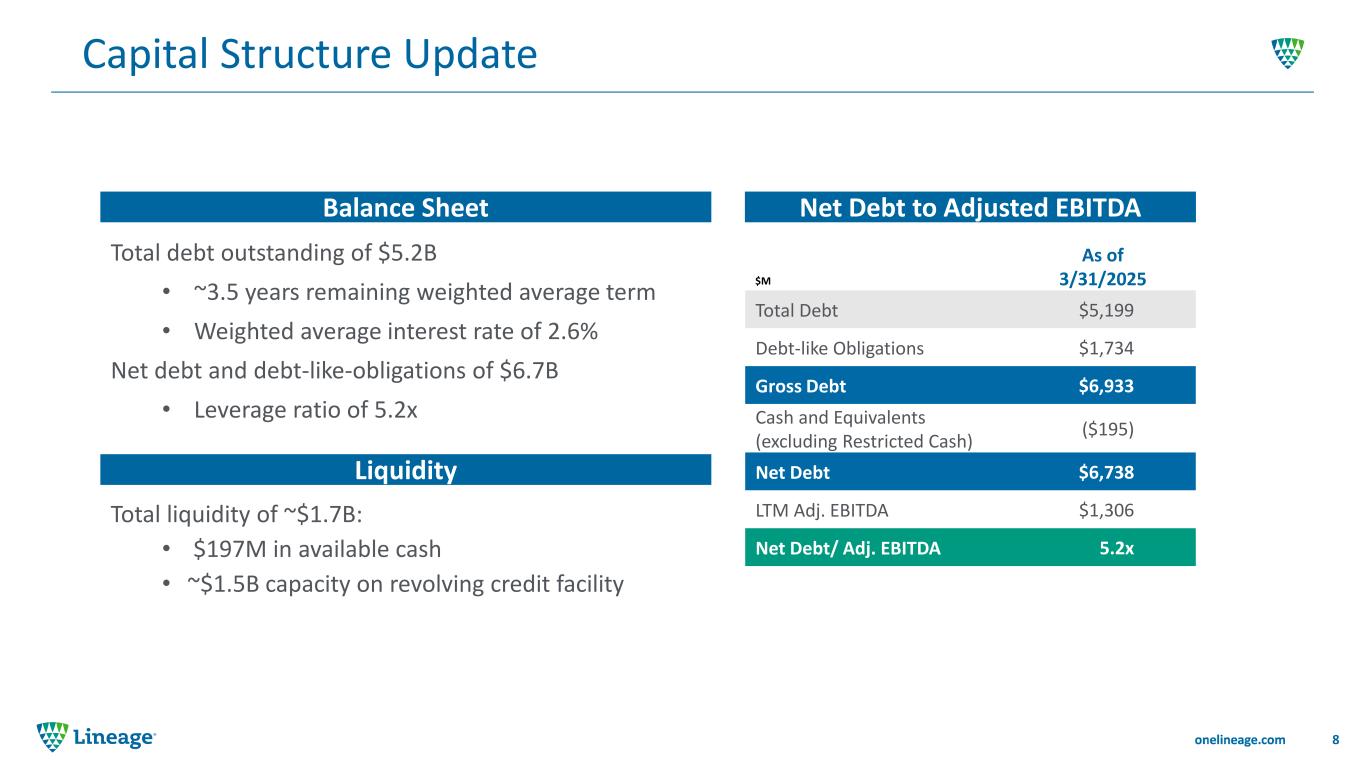
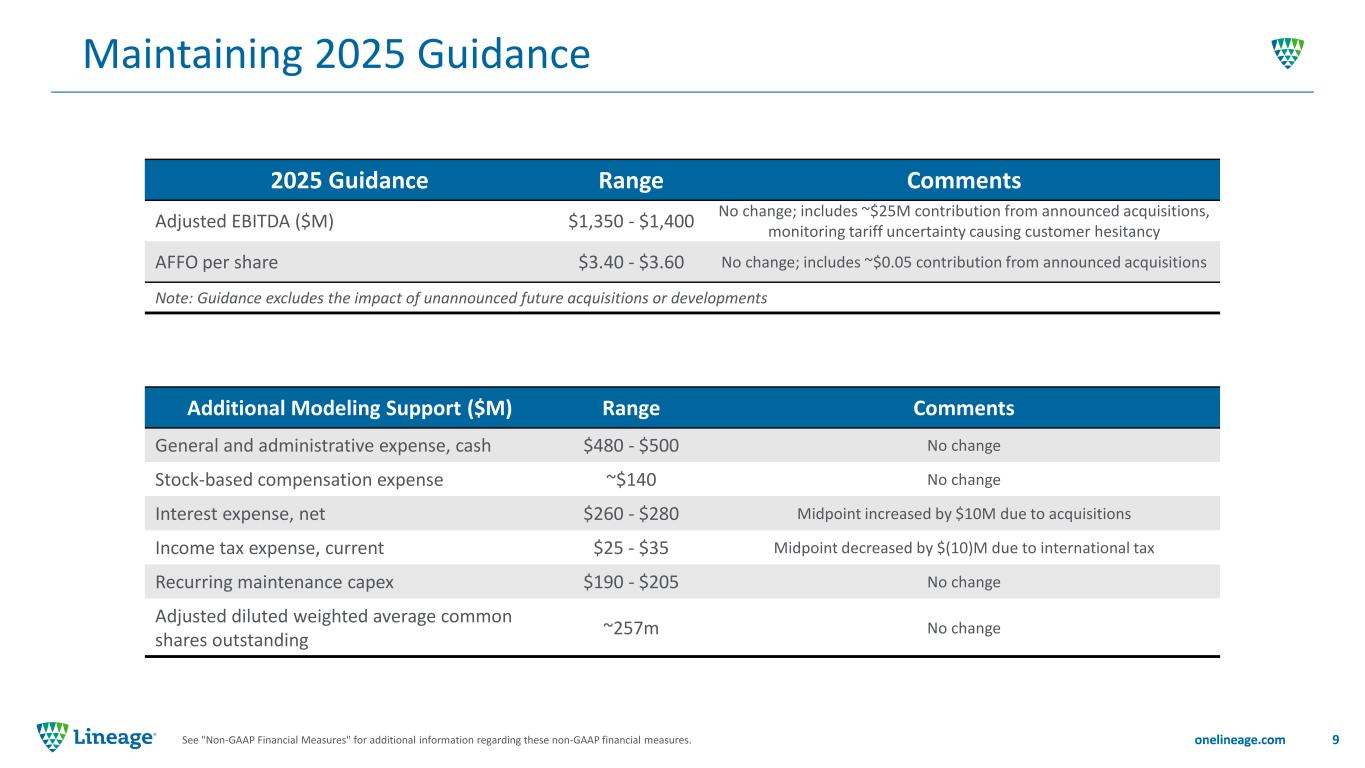
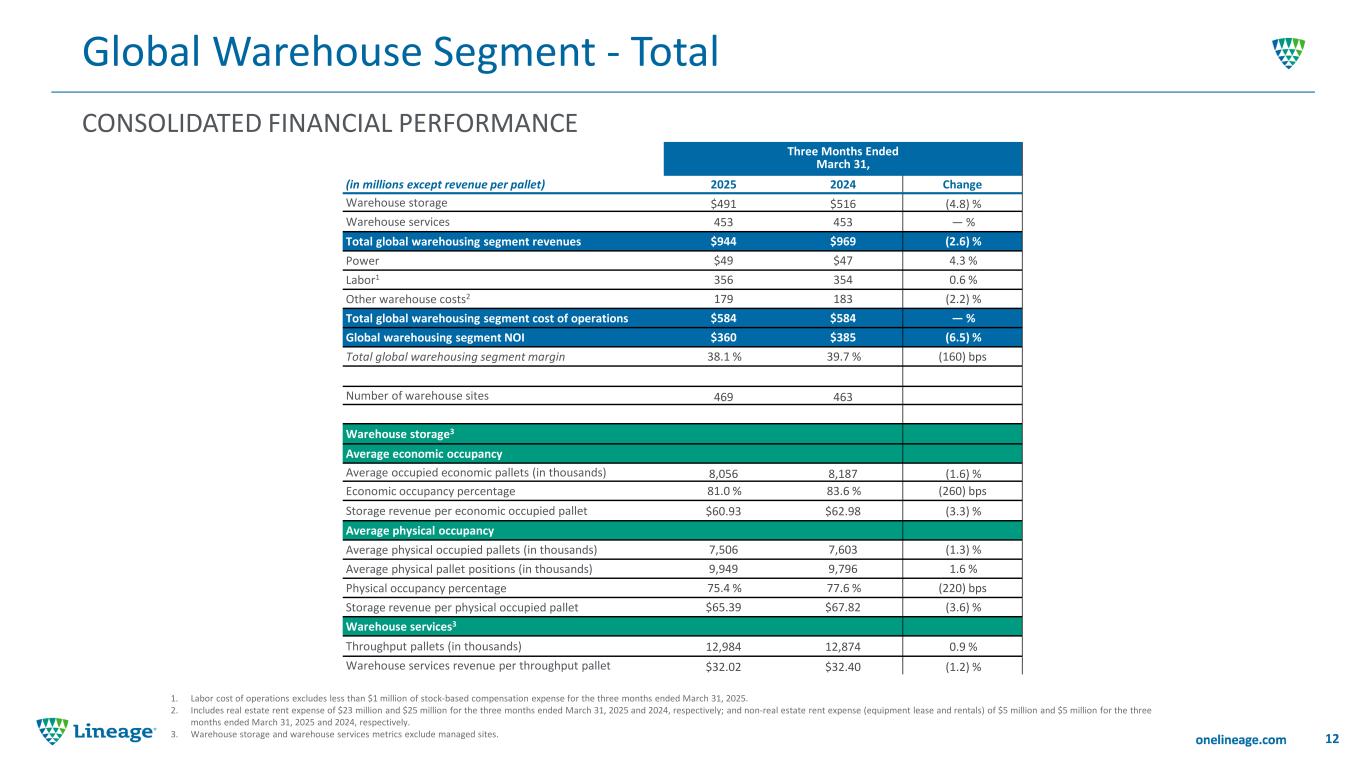
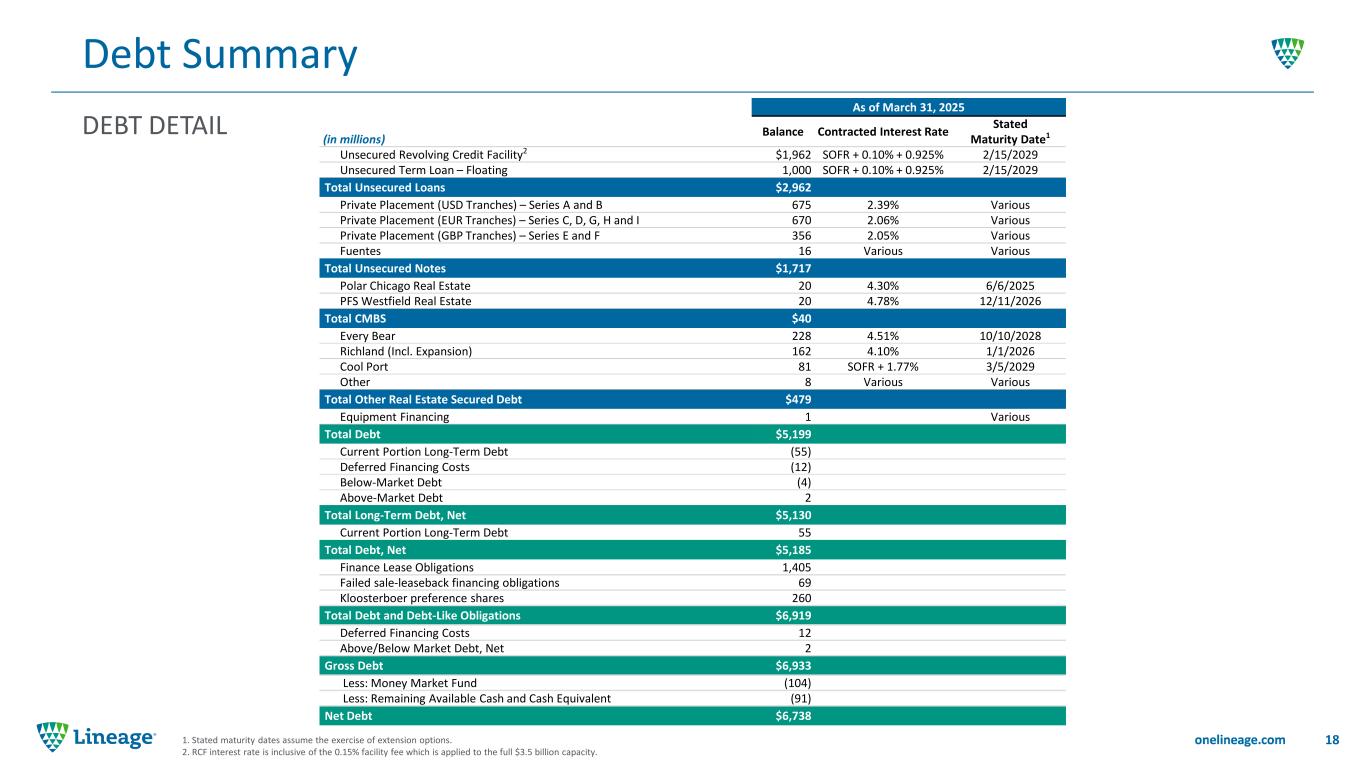
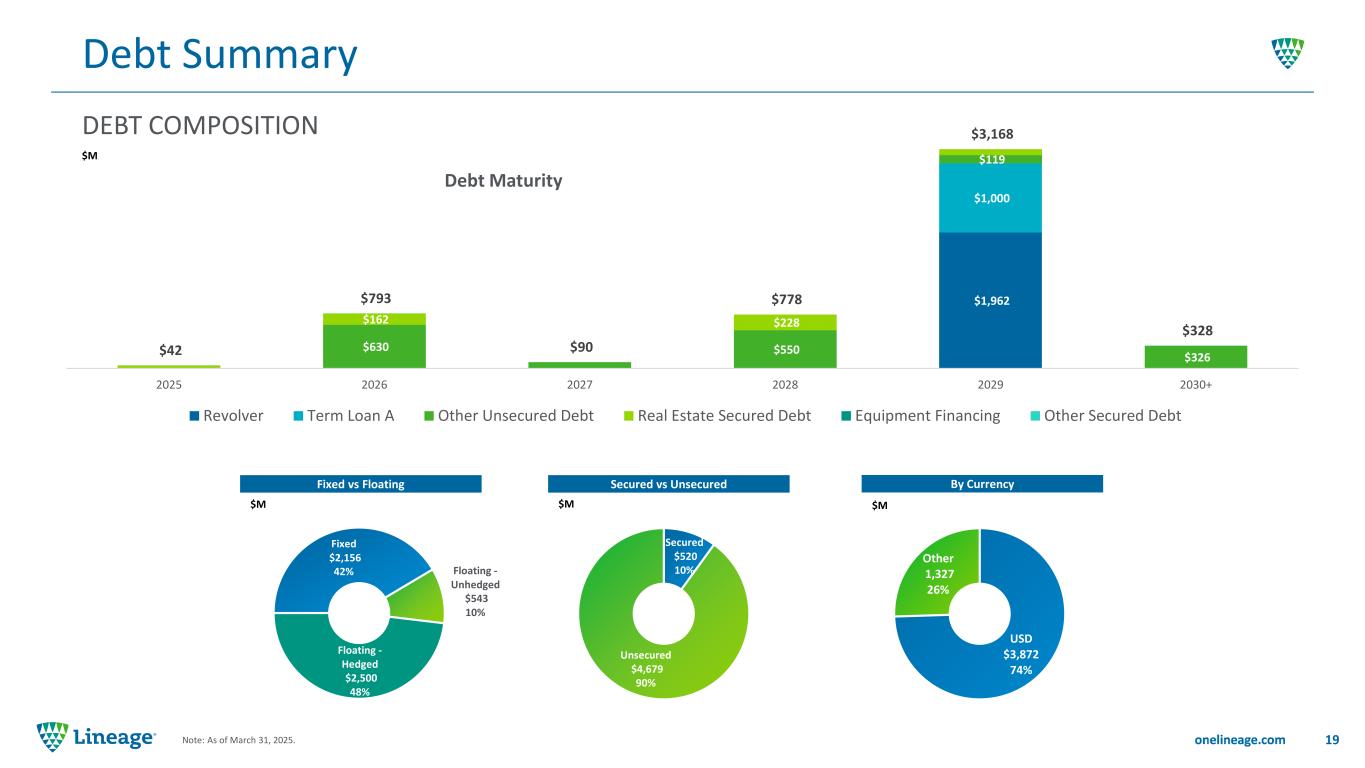
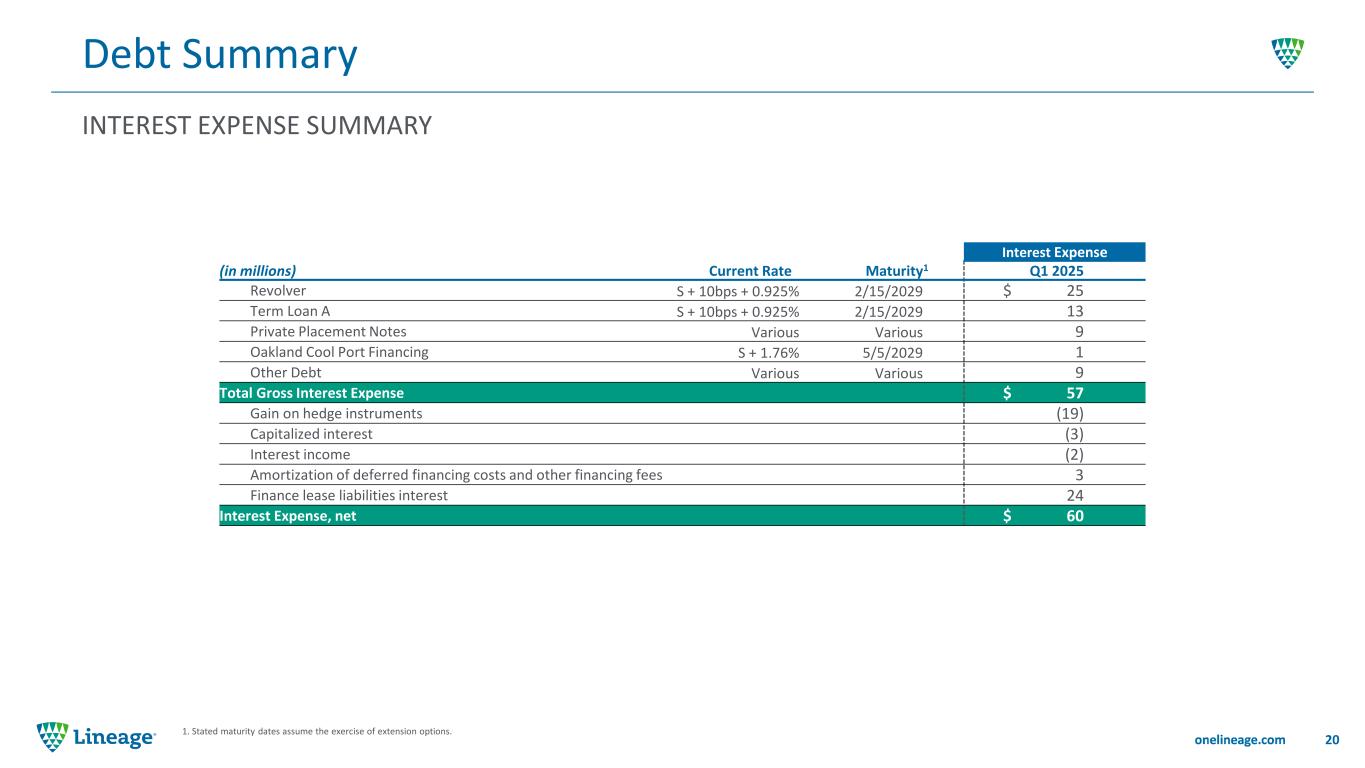
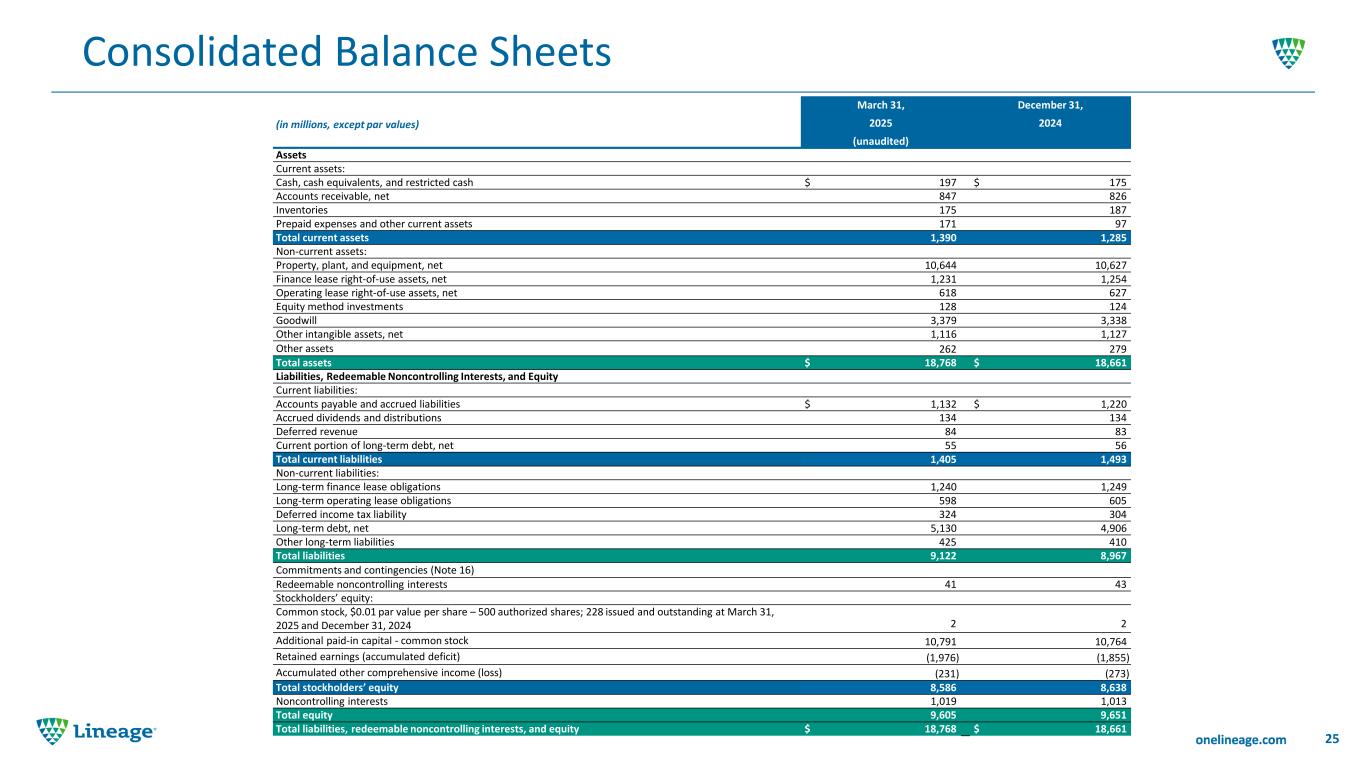
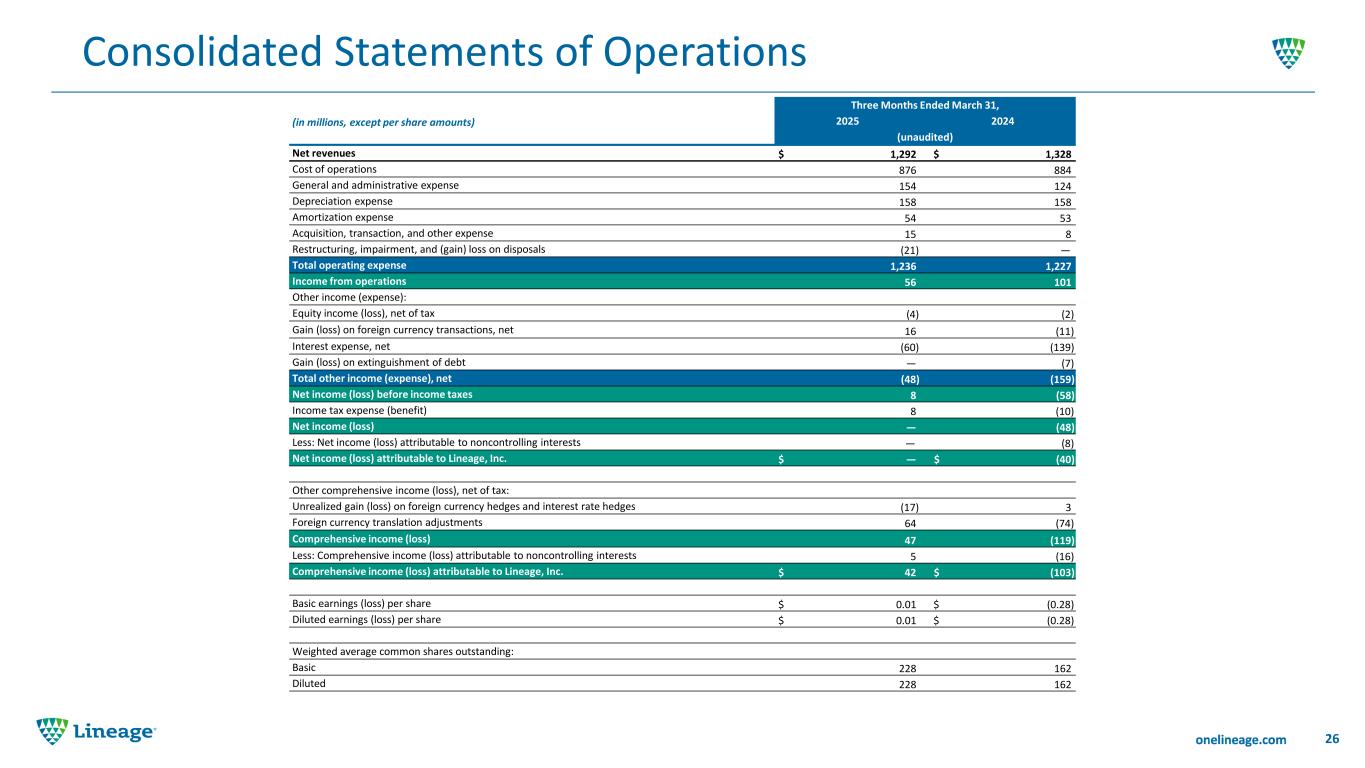
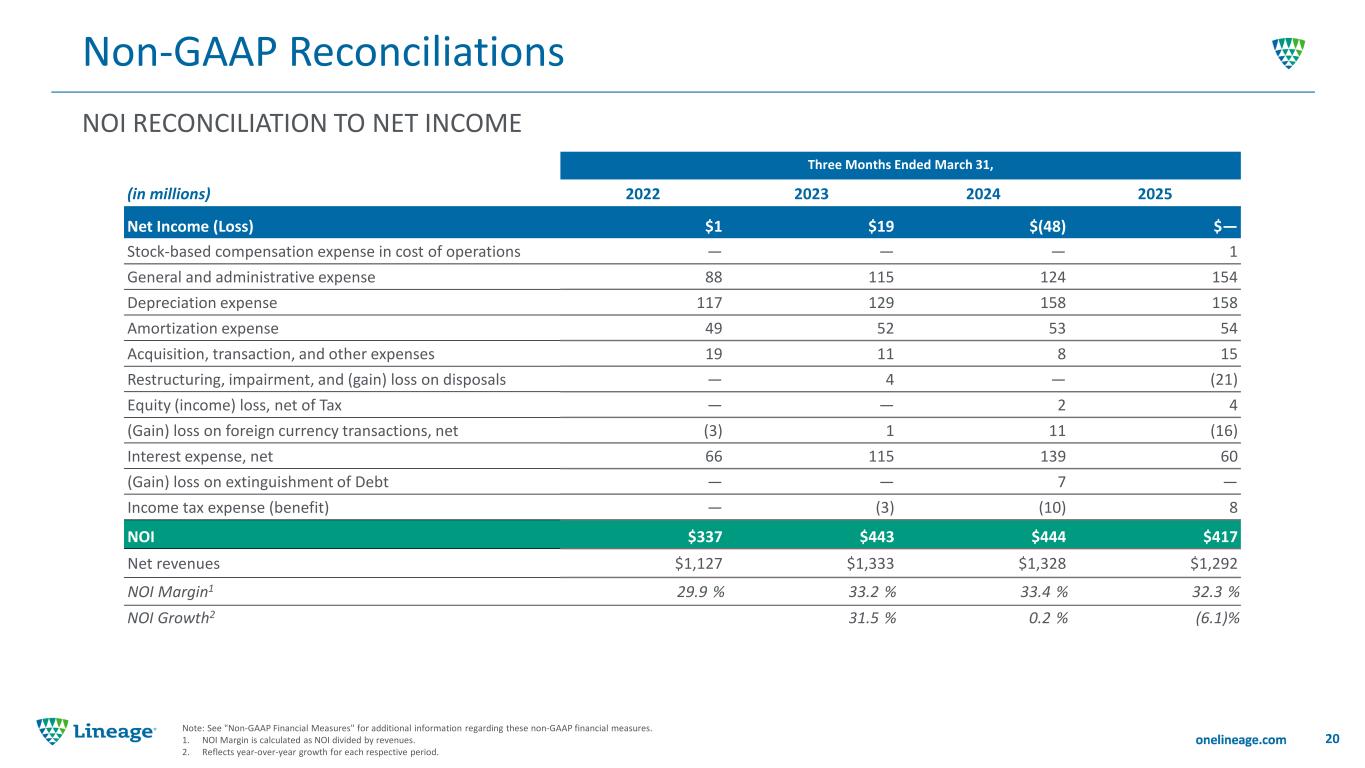
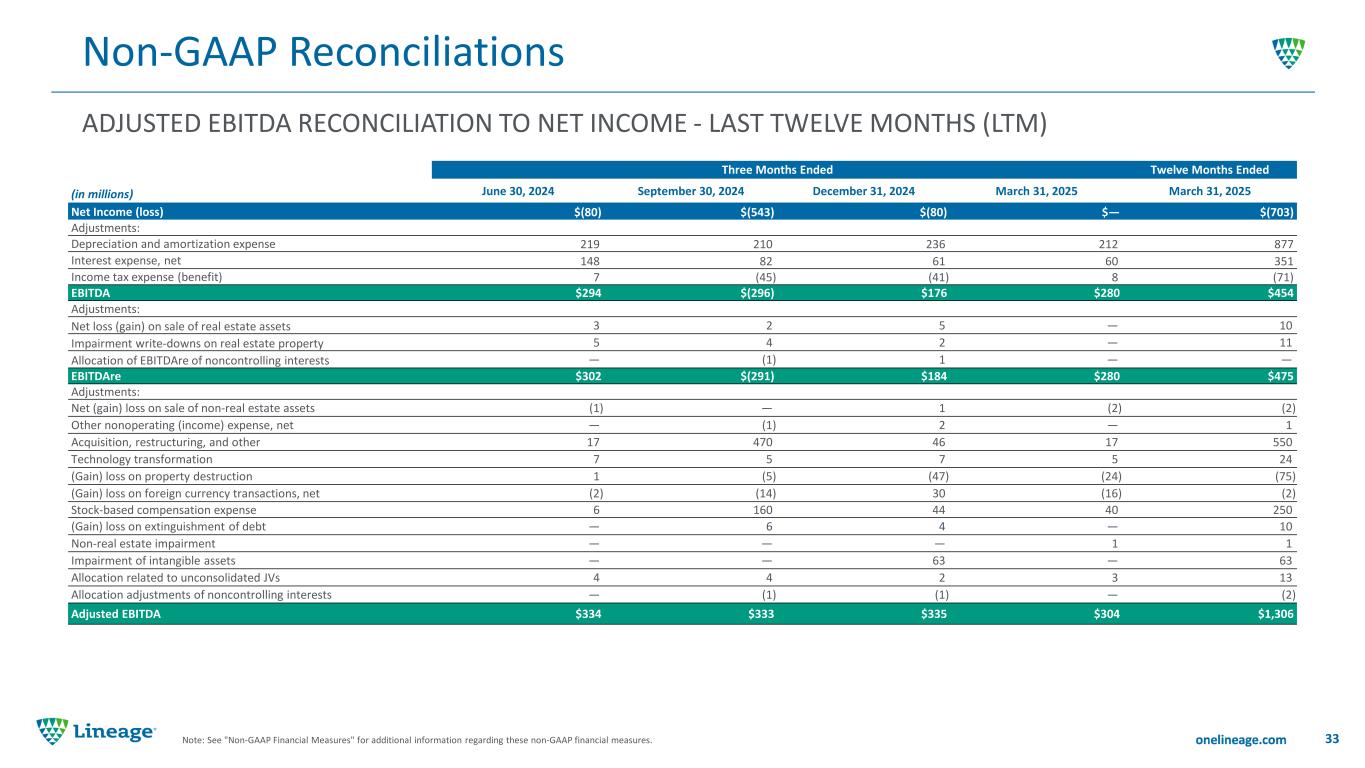
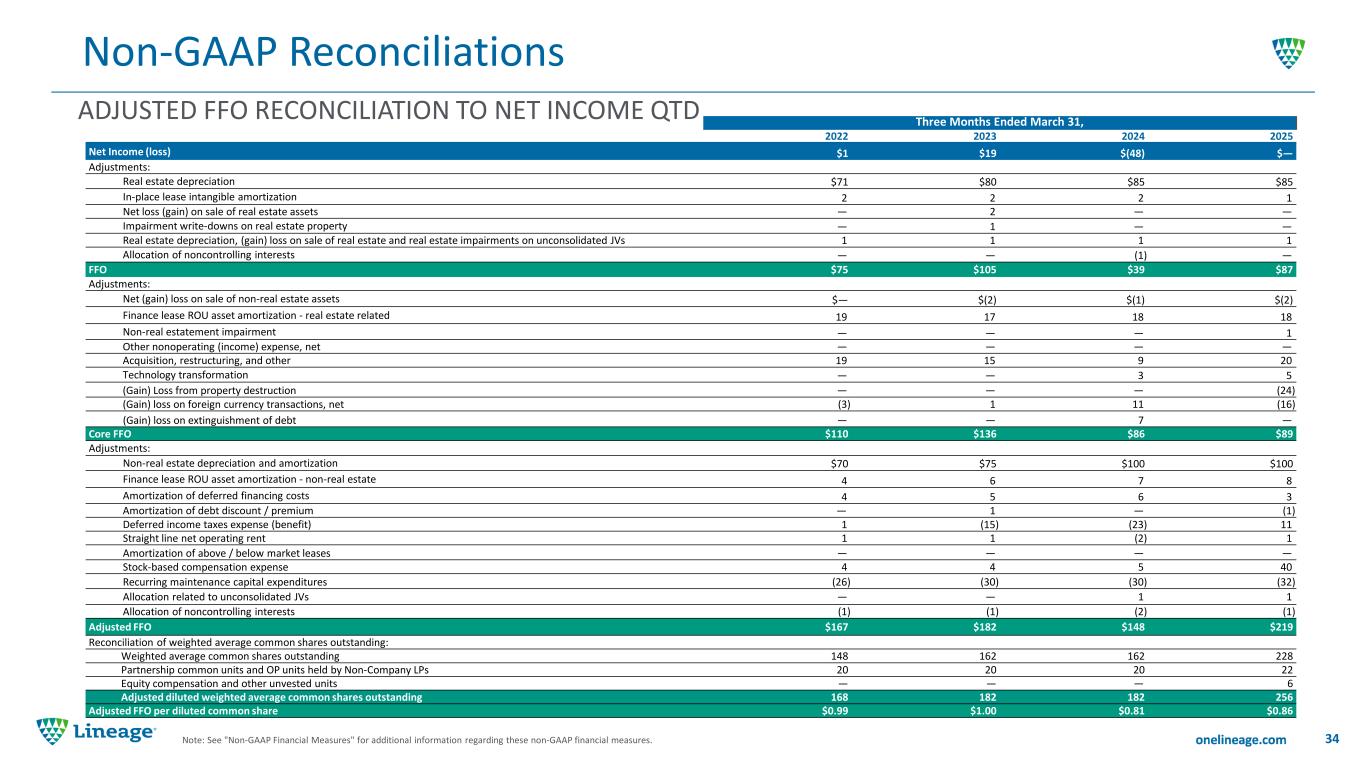
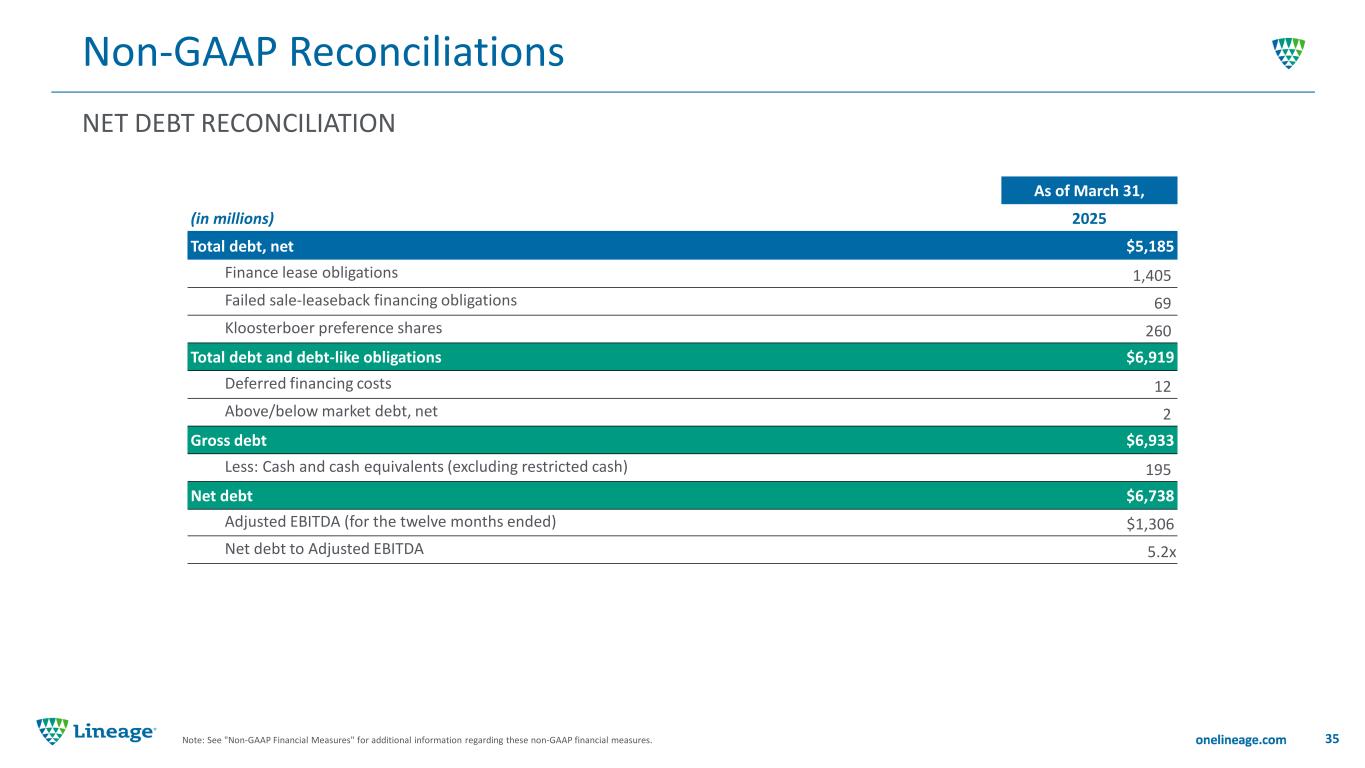
Thanks, Greg. Good morning, everyone. Starting on slide five and looking in our financial results. Our total revenue was $1.29 billion, down 3%. Our adjusted EBITDA decreased 7-10 basis points. Our AFFO for the quarter was up 40. Shifting to our global warehousing segment, we have the four-year view on the excess seasonality as revenue declined sequentially from the fourth quarter. Average revenue per pallet controlling costs well through sustainable labor productivity improvement. Turning to the outlooks through normal seasonality with the macroeconomic uncertainty, driven largely by the U.S. care of the super base, is that we expect year-over-year declines in Q2, similar to Q1, which remain challenging in Q2, which, by the way, anticipate growth to return in the second half, driven by normal seasonal increase by chain disruption to quantified growth. During the slide 7, as expected, we saw new business 724 starting to come online in the first quarter, transportation and other value-added services. In 2025, we expect strong momentum to continue with sequential growth throughout the year. Easier comps later with net debt of six at the end of the quarter. Our leverage ratio defined as net debt to adjusted EBITDA was 5.2 at the end of the quarter. Our strong balance sheet, available cash, and debt of capital employment opportunities moving forward. Our landmark agreements with Tyson Foods are attractive pipelines of accretive opportunities. During the slide not, we are maintaining our 2025 guidance with our adjusted EBITDA range in millions of $1,350 to $1,400, and AFFO per share of $3.40 to $3.40. Our guidance includes contributions from our recently announced acquisitions of approximately $25 million of adjusted EBITDA and $0.05 of AFFO per share for the balance of the year. However, we believe it's appropriate for the near-term uncertainty. we continue to be well positioned for growth in this as a compounder it's nice to have some strategic capital deployments to help our base from the acquisitions and lastly we've included some additional modeling support on this page most assumptions remain unchanged with the exception of higher interest due to the new capital deployment and lower tax expense related to some of our international operations with that i'll turn it back over to greg to wrap up before turning it over to your questions.
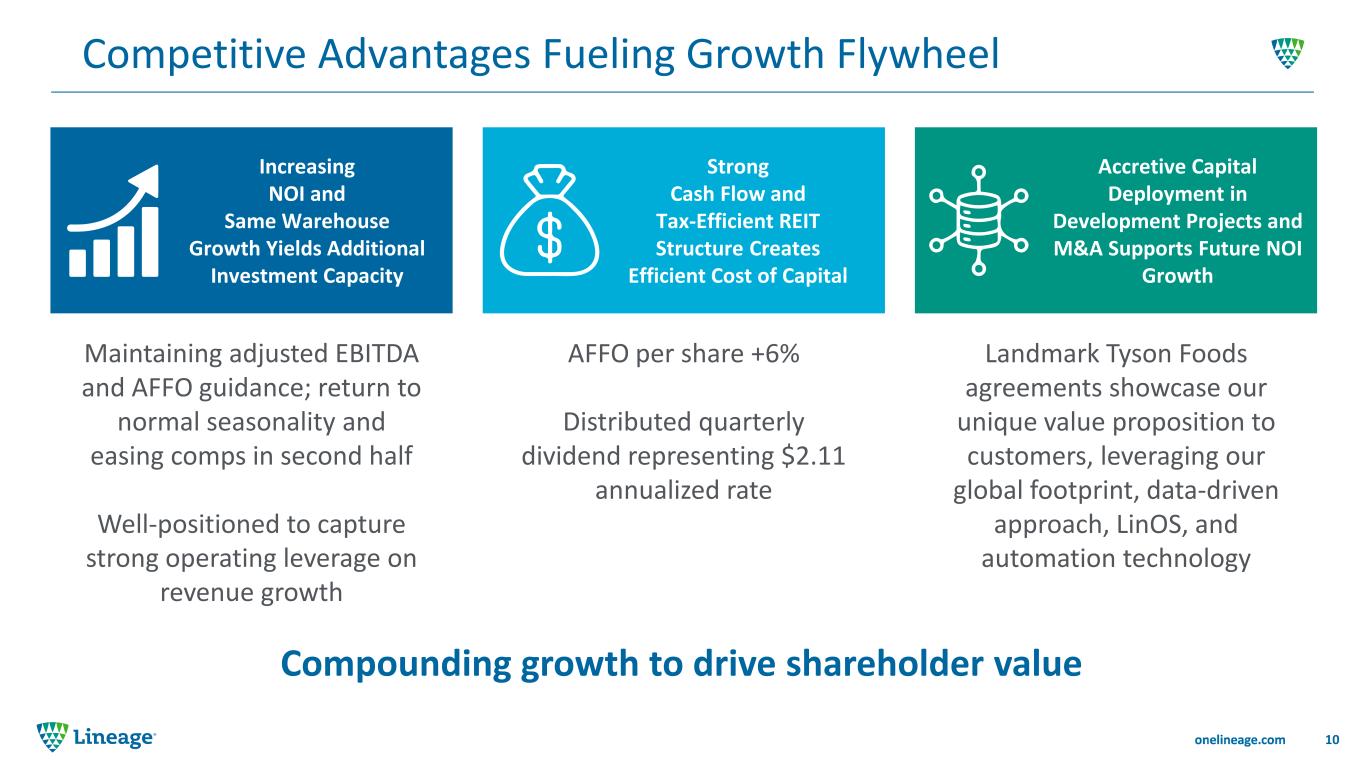
Thanks, Rob. I'll conclude on slide 10. Our achievements this quarter demonstrate our strength and ability to create value through strong customer relationships. The landmark agreements with Tyson Foods, representing approximately $1 billion in total capital deployment, will significantly enhance our platform and add to our global leadership position. Our acquisition of three warehouse campuses from Bellingham Cold Storage has strengthened our presence in a key market, while our ViLay and Bergenoff Zoom expansions showcase customer-led growth across our global markets. Lineage's competitive advantages continue to differentiate us in the market. We remain committed to growing these advantages through our technology-first approach, exemplified by our progress on LoonOS. Looking ahead, we see significant opportunities for growth with a robust pipeline of strategic acquisitions and greenfield development opportunities. As I reflect on the challenges in our environment today, I am heartened that at its core, many ages of business that is built to weather the storm. We have the largest platform driving significant network effects. The best assets are industry leaders in technology, automation, and data science, and are the most diversified geographically and across our more than 13,000 customers. We provide the most comprehensive set of services with our globally integrated solution segment. We are leaders in lean operational excellence, and we believe we remain the acquirer of choice in the industry, demonstrated again by today's announced landmark agreements with Tyson Foods. We have the balance sheet and attractive cost of capital to take advantage of market opportunities through strategic M&A and capital deployment. Because of these structural and distinct advantages as the industry leader, I'm confident that we are well positioned to win and to deliver long-term compounding growth to create shareholder value. Lastly, I want to thank our over 26,000 team members around the world for the great work they do to safely serve our customers. And with that, I'll open it up to questions. Operator?
Operator
Thank you. We will now begin the question and answer session. If you have dialed in and would like to ask a question, please press star one on your telephone keypad to raise your hand and join the queue. If you would like to withdraw your question, simply press star one again. If you were called upon to ask your question and are listening by a loudspeaker on your device, please pick up your handset and ensure that your phone is not on mute when asking your question. In the interest of time and to ensure we address as many questions as possible, today we will limit questions to one and one follow-up, and lines will be muted after this. Thank you for your understanding. And your first question comes from the line of Caitlin Burrows of Goldman Sachs. Please go ahead.
Hi, good morning, everyone. Maybe you mentioned in the prepared remarks that 50% of throughput is directly tied to the import-export business. So is the other 50% consumption, or can you go through that? And I think we've just been surprised on how volatile the food business can be. So can you give some more color on how that food imports, exports business is able to be so volatile and similar for consumption? Like how does economic uncertainty impact customer inventory and throughput? I guess that's a lot, but hopefully it all ties together well.
Sure. Hey, Caitlin, good morning. Just to clarify, so it's 15 percent, 1-5, directly tied to- Oh, okay.
I heard 50, so thank you.
Yeah, yeah. Nope, no worries. And now I'll turn it over to Greg.
Yeah, I think that while the tariffs have created significant uncertainty in the short term, the consumption really hasn't changed, and it really hasn't impacted overall occupancy too much at this point. There's certainly, again, short-term uncertainty given the tariffs that our customers are not making major supply chain decisions in large part because of the tariffs, but I don't think it's driving substantial volatility so far yet.
Got it. And then maybe just if you could realize 15 is a different scale than 50, but on that import-export business, is it just that certain foods then are being consumed less today than they would have been previously? Or how does that actually end up like happening and impacting you?
Yeah, so I've met with 20 customers literally just in the last few weeks. And I think the biggest single impact is customers are delaying major decisions and it's just creating hesitancy. Our customers are just waiting for more clarity before they make major decisions like where to expand operations, where to build plants, where to source long-term transportation, whether that be domestically to ports or internationally in the forwarding space, or where to shift position and build inventories. The kind of rapid changing of tariff policies has caused some, call it short-term disruption. For example, our customers have rerouted inventory that's been in flight on the way to destinations like China. For example, Alaskan seafood, which generally comes to the pack northwest after being processed in China, that was headed to China for processing, has either come back to the U.S. for processing or been rerouted to other Southeast Asian countries like India or Vietnam for processing. In the protein space, we've seen certain proteins, we've seen the export levels come down. But importantly, when you talk about volatility, even though some export levels have come down in specific proteins, the production and manufacturing levels have actually remained very steady. The end consumption has, I think, you know, out of 20 customers, literally only one of beef producer in Australia.
Operator
Yeah, the question from Brendan Lynch at Barclays. Your line is open.
Great. Thanks for taking my question. On the assets that you're acquiring from Tyson, can you talk about where they are in the supply chain and what their level of commitment to you is over the long term for those specific assets?
Yeah, I'll just say it's a long-term agreement, a multi-year agreement, we can't dispose specific attributes of the actual agreements themselves. The assets that we're acquiring are a mix between production and distribution.
More slanted toward the distribution side.
Operator
Great. Thanks. Your next question is from the line of Samir Kanao from Bank of America. Please go ahead.
Good morning, everybody. Greg, I guess just maybe talk around occupancy, right? I mean, occupancy was down, as we would have thought, maybe a little bit even more. But how to think about the cadence of occupancy as we go through the year? I know you talked about recovery in the second half. So any color on that would be helpful.
Yeah, certainly. So we talked at length last quarter about how, you know, there was a multi-year inventory stopping that concluded in the third quarter of last year. And since then, we reported last quarter that we'd seen more normal seasonality. And that holds true through this quarter. We are seeing normal seasonality despite the tariff uncertainty. And what that means is we were elevated in the first half of last year and the first half comp this year is very challenging. But we would expect to see normal seasonality in the second half, which would give us elevated levels from last year or versus right now.
I guess as a follow-up to that, I mean, what gives you the confidence of that sort of return back to seasonality? I know the comps get easier in the second half, but, you know, you kind of highlighted the delays in decision-making by customers. And I guess what are you seeing in changes to that customer behavior to kind of give you that confidence given the uncertainty?
Yeah, great question. So our data science team studied the last almost 10 years of our data for what we call core inventory holdings. These are customers where we neither won new business nor lost any business and built that up from the SKU level in the actual facilities. And from that, we derived what we consider normal seasonality across our global network. And that historical pattern of normal seasonality, kind of how inventories change month to month, resumed in the third quarter of last year. And that stayed consistent with that historical trend through the first quarter of this year. And so, of course, things could change. We're not trying to predict the future. We're just saying that that inventory de-stocking concluded in the third quarter of last year.
Operator
You have a question from Michael Carroll at RBC. Your line is open.
Yeah, thanks. Greg, can you provide some more color on your storage and service rental rates? I know both looks like they're down a decent amount year-over-year and sequentially. I guess what's driving this weakness? Is Lineage cutting rates to win market share, or is there a mix shift? I guess what's going on with those numbers?
Yeah, great question. So let me just kind of provide quite a bit of color on what we're seeing in the industry right now in response to your question. There's a few things going on at the same time here. First of all, inventory occupancy has declined because the destocking I just reviewed, again, normal seasonality has resumed, but we'll have tough comps in the first half of this year. In the first quarter of this year, so the inventory levels of core holdings are down. And so in the first quarter this year, our customers have reset volume guarantees at a lower level to match their inventory needs. And then certainly over the last couple of years, some new capacity has come online in select markets. And so in this challenging environment, we've been focused on keeping our physical inventory high. And I mentioned on the last earnings call that we are willing to trade volume for price strategically when it makes sense for the long-term health of the business and our sales team has actually done a great job managing this situation by winning a lot of new business which is largely offset the core holdings decline that we that we just talked about and i think that's illustrated by in a declining environment our physical inventory is only down only down one percent and as you as you suggest you know part of the trade-off to win some of that new business has been to work strategically with the customers on price. Now, all that said, and while there is pressure and uncertainty in the short term, and the marketplace definitely remains competitive, we believe that we've returned to, again, normal inventory holdings and seasonal patterns, even without some kind of inventory rebound, which we're not counting or guiding to, and the year-over-year pricing headwinds that you're seeing in our numbers will wane as the year progresses, as the year progresses as customers have largely reset their volume guarantees now. That happens majority in the first quarter and inventory levels have stabilized. And so, you know, when we look forward as Rob talked about in his prepared remarks, we see a similar environment in the second quarter of the first quarter and a return to same store growth in the second half.
And we're not providing, you know, an exact same store growth figure for the second half only because of the macro uncertainty there's there's a number of things in the short term that could impact us by a few points in either direction but we are we're confident in the midterm that we're going to be fine just because the the scale and diversification okay so with the the minimum resets stores numbers coming down um impacting that rent number does that is that all kind of already in the numbers in one queue i believe you kind of highlighted that so we should think about that kind of at a good level today not any incremental weakness and could build back up over time maybe
in line with inflation yeah i think of a general assumption i think that's very fair i mean i think that makes sense like you know we were just you know we think we'll have a really a really good year and a really nice second half and you know we're just we're challenged to quality yeah but i think i think in large part that kind of price or volume tier t reset has happened in the first quarter, that will cascade through the year.
But then, you know, we would expect to get, you know, normal price increases and not have, you know, guarantees drop a bunch again next year because we're at very lean inventory levels throughout the industry and the de-stocking is concluded. Okay, great. Thank you.
Operator
Of course. Your next question comes from the line of Michael Mueller. JP Morgan, please go ahead.
Yeah, I guess first, can you talk about some examples of where you're seeing customer pauses are you seeing it more with producers or is it more for retailers just some color on that would be great i i would say it's more for uh or for producers that that retailers as the the consumption in the u.s isn't changing uh and it's more about kind of you know outside of tyson making you know structural changes contracting with forwarders for just for certain international lanes for a year and locking down price when there's so much volatility because they, you know, the producers on the export side or import side don't know exactly, you know, where they'll be sourcing certain products or where they'll be shipping certain products. What we know is that food flows like water around the world and people are going to eat everywhere. And kind of no matter what happens, we think we'll be well positioned. to them.
Got it. Okay. And then I guess the second question, how do acquisition and development required returns change when you're dealing with kind of somewhat of an anchor customer or tenant as opposed to just, you know, normal course one-off activity?
I would say these are all the deals that we announced today are in line with our historical expectations. And we, you know, We love the customer. We think we're going to be able to help a ton with our technology and automation. We think we can really partner with them and streamline their supply chain even more. And the deals are agreed with us in line with past deals.
Yeah, you know, I mean, Tyson is very much a win-win for both parties. We work really closely over customer to do well, and we think we'll do well.
Operator
Okay, thanks. Your next question is from the line of Craig Malman from Citi. Please go ahead.
Hey, good morning, guys. Just wanted to follow up on kind of the changing assumptions here. I mean, if it hadn't been for the Tyson's deal, you essentially would have lowered guidance here by five cents. I mean, what's the biggest pressure point as you guys reevaluated kind of the risk of tariffs? Is it, you know, further erosion, innocency, rate, margins, kind of what's the, what worried you the most from a visibility perspective?
I think it's just the unknown and the uncertainty of the tariffs. I mean, again, we're all over the world. We can support consumption, you know, in all the major markets in which we operate. But our customers are telling us they're not sure what they're going to do. They don't know where they're going to build inventories. They don't know, you know, how they're going to direct trade flows. And that could have a short term disruption, even though we're very confident we'll support their needs in the medium and long term. So, given that uncertainty, given 19 of the 20 clients I met with said, we don't know what's going to happen with our supply chain. We think it's prudent to reinforce our overall guidance with the acquisition, you know, new cash flows, but not try to get specific when none of our customers know exactly what's going to happen.
You know, as I said in the prepared remarks, there's also an upside that's difficult to predict, but normally more inventory tends to get to the system anytime you have disruption. We've seen that many times over history. Brexit, COVID. Yeah, so Brexit, COVID, et cetera. So I just think, you know, again, it's just hard to predict. As Greg mentioned, I mean, we're going to be within a range, but it could go a few points one way or the other. And so we really want to see more, and we'll update everyone, you know, as we see things here, you know, into the next quarter, the second half of the year.
Yeah, I mean, there's been supply chain disruptions in the past, like port strikes, like COVID, like Brexit, but there's really, this is unprecedented. I mean, no one knows what's going to happen with global trade flow. And I think we just feel, you know, thankful that we're not in consumer electronics or auto parts that can be, you know, handicapped in the medium and long term from these changes. And we're in food and people are going to eat and we're all over the world and diversified. So we think we're super well positioned versus, you know, most companies in the long term. But in the short term, there could be a little volatility.
Okay. And then just on the volume kind of resets here with customers and sort of the lower price points, I mean, how much of that is happening with renewal agreements versus pricing pressure trying to poach clients from competitors to bring in kind of new deals?
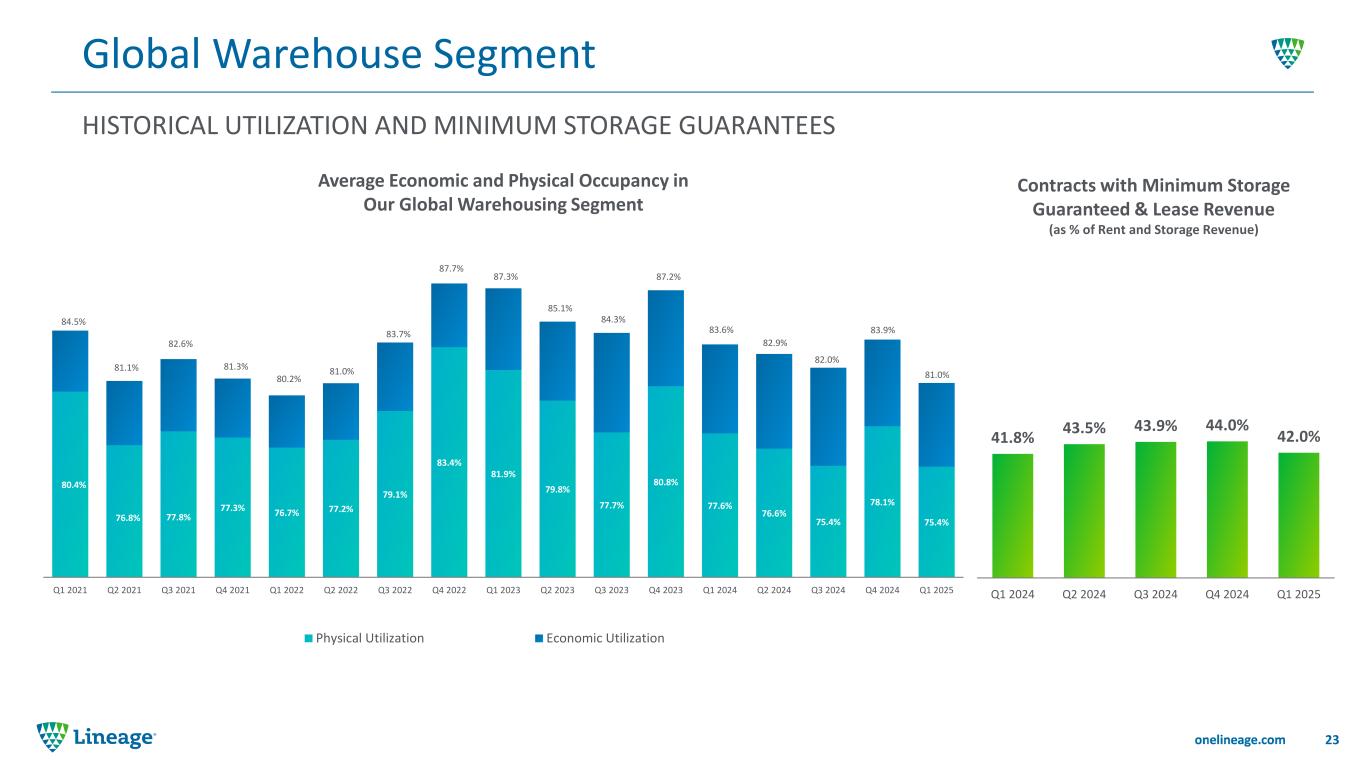
I would say on the volume guarantees, it's, you know, what's happening with the volume guarantees is we're actually, our sales team is doing a great job of getting new volume guarantees. We have a record new business despite the soft environment, and the new business has more than 42% volume guarantees. However, the existing customers, the kind of core holdings that we had volume guarantees with going into the first quarter, they've lowered those guarantees, and that puts pressure on our revenue per occupied and through Blit Pallant. And so while we love collecting revenue from customers, we actually don't think customers paying for significantly more space than they're using is beneficial in the long run. And we like a relatively low gap between physical and economic for that reason. We think too big a gap is kind of a ticking time bomb, frankly. So we've worked through that, and it'll be more stable going forward.
Operator
And your next question comes from the line of Alexander Goldfarb of Piper Sandler. Your line is open.
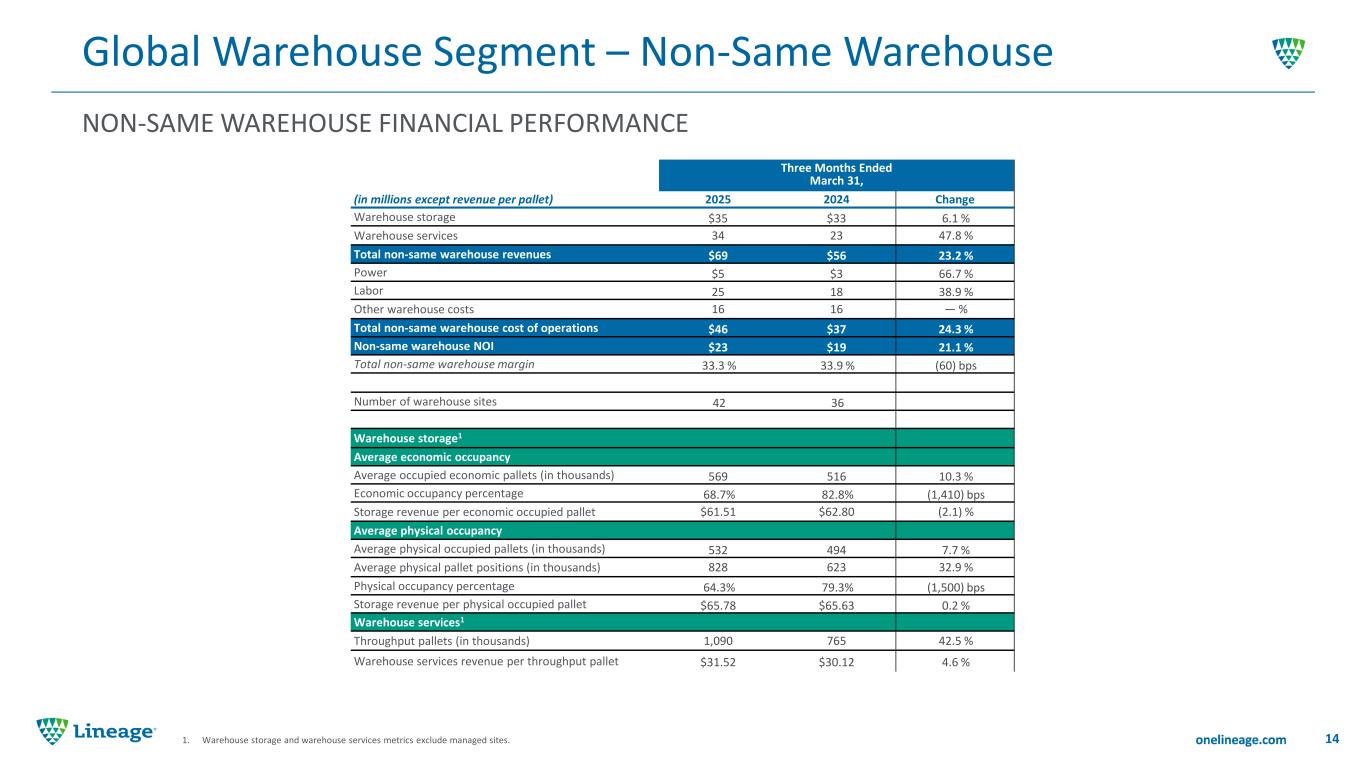
Hey, good morning out there. Two questions. Uh, first, if we look at the non same store pool, that seems to be where you guys are experiencing a much bigger occupancy drop. So just want to get a little bit more color. Uh, that's my first question.
Yeah. I mean, that's really related to the, the Kennewick fire from last year. It's, it's, it's, yeah, it's basically, that's the big part of it in the first quarter.
So 42 properties where that occupancy drop was just, 15% drop was all driven by one property?
Yeah, and there's also Big Bear. So there's a couple where we had, you know, incidents, right, with the fires. That's the biggest driver. I mean, that kind of, and that's a relatively small, not same store. It was totally full. Yeah, it was totally full. Yeah, so I think that's the big driver, Alex.
Okay, and then the second question is, we've been, you know, for the past few quarters, we've been talking about this normalization of inventory levels, and obviously you guys have a lot of experience in the business, but it does seem that each quarter, it seems to be the next quarter. So just curious, as you look at the normalization of inventory levels and the stable consumption that you guys see in the food business, is there something different about this cycle versus your 15 plus years in the business that seems to be taking longer for inventories to normalize? Because COVID was a few years ago, presumably. The de-stocking occurred a few years ago, and the tenant should have been back, especially pre-April 2nd. So just sort of curious why it seems to just be taking a little bit longer than what we initially spoke about. I think it was on your initial earnings call.
Yeah, yeah. So I'll start to turn it over to Greg. But we actually, from an occupancy level, were pretty much right what we expected for the first quarter. I mean, we saw normal seasonality, as we talked about. We saw the core holdings. Yeah. From the occupancy standpoint, our rate was a tiny bit worse, as Greg talked about. And that really was the driver consistent with what we had told people. And I'll turn it over to Greg.
I would just reiterate what you said we we said very clearly last quarter we thought normal normal occupancy and seasonal patterns resumed in the third quarter that remains true today and is reflected in our numbers and as rob uh said the occupancy was right where we frankly hoped it would be in the first quarter thank you your next question is from the line of blaine heck of wells fargo please go ahead uh just a few with respect to the agreement with tyson um can you talk about the age and condition of the four properties that you acquired, whether they might need any redevelopment or repositioning as Tyson moves from those properties into Hazleton and eventually the two new developments, and then also what the yield is on the assets that are being acquired, if you could share that.
Yeah, so I think we talked about 9% to 11% on the development. In terms of the EBITDA contributions on these acquisitions were low double-digit, even to a multiple on the acquisitions we announced this quarter.
And we did do, of course, complete due diligence, and Tyson was totally open book on the condition of the assets. They're generally in very good condition, and any CapEx that we would need to put in is certainly figured into the overall deal and returns.
Okay, great. That's helpful. And then second question, can you talk about how we should think about the sources of funding past the cash that you guys hold on the balance sheet for the total spend on the acquisition and development agreement, and maybe how you think about additional capacity or dry powder for investments, kind of incorporating this deal, the Bellingham acquisition with the additional spend on development underway and potentially any debt paydowns that you might be considering?
Yeah, sure. So I think this is all in line with our normal operating cadence where we spend money using our revolver. We have the opportunity to do public bonds here moving forward, which is something we'll certainly look at and then as we grow that we talked about. So we still have capacity now. You know, we're going to be very thoughtful in this market. Again, you know, we're always going to be patient and we'll manage this investment grade balance sheet and continue.
Operator
Great. Thanks, guys. Your next question is from the line of Nick Dillman of BED. Please go ahead.
Hey, good morning, guys. Maybe I wanted to touch some on the variable costs within the business and the labor in particular. I guess, what are you guys seeing on the labor front when it comes to wages or is wage pressures kind of have abated at this point? And then what are you guys kind of doing on the staffing levels with volume expected to be a little bit lower on the import export? I guess, how are you adjusting to this type of environment?
Yeah. So I'll start, you know, yes, labor productivity is still a great story for us that we talked about. You know, I think we showed our same story and it's all about labor productivity and lean and the things we're doing. And then I'm sure we'll talk about Lin-OS and the opportunity there. But, yeah, no, it's a good story. I think, you know, we continue to have.
Yeah, I would say certainly the labor front is stable and we're seeing, you know, wage increases, which is in line with it.
That's helpful. And then maybe just following up on an earlier question, of the $25 million of EBITDA, are you able to break that down between Tyson and the Bellingham acquisition?
No, I don't want to get into the details on that, but but as we know the the actions together like i said we're low double digit even great thanks your next question is from the line of motai akusanya from deutsche bank please go ahead uh yes good morning everyone i was hoping you could um dive a little deeper into guidance so again it's unchained uh you're gaining uh five cents from all the acquisition activity could you just talk a little bit about all the other moving parts, whether it is, you know, we're now expecting slightly worse by, you know, X amount on operations, but, you know, we're picking up this amount from better costs, just to kind of get the general sense of how guidance still kind of ends up being flat, but understanding some of the moving parts a little bit better.
Yeah, for sure. So it's really about all the uncertainty that we talked about earlier, you know, so that there are a lot of moving parts. We have a lot of levers to pull. We feel very confident in these guidance ranges that we gave you on a just-deep-done AFL per share. There's a lot of different ways to get there, you know, and we'll continue to execute throughout the year to make sure we deliver these results are better. But there's just a lot of moving pieces, right? I mean, it's tough to quantify everything because you can't predict the future. But we feel really good about these ranges, and we're aided by the acquisitions, and we'll execute well the rest of the year.
And, you know, we're certainly building in substantial productivity improvements, continuing through the year, actually accelerating through the year. And I think the price, the pressure that we saw in the first quarter will continue throughout the year. And that's all baked into our assumptions.
That's helpful. And then, in fact, I'll ask a quick second question. Could you talk about the business in terms of how domestic it's performing relative to your international operations? Is one generally feeling better than the other? Is there more risk in one or the other? just kind of curious how that's shaping up.
Yeah, I think that the price pressure that we saw with the volume guarantees resetting was kind of a U.S. phenomenon. And both our Asian Pacific business and our European business is actually performing very well and I believe has accelerating performance.
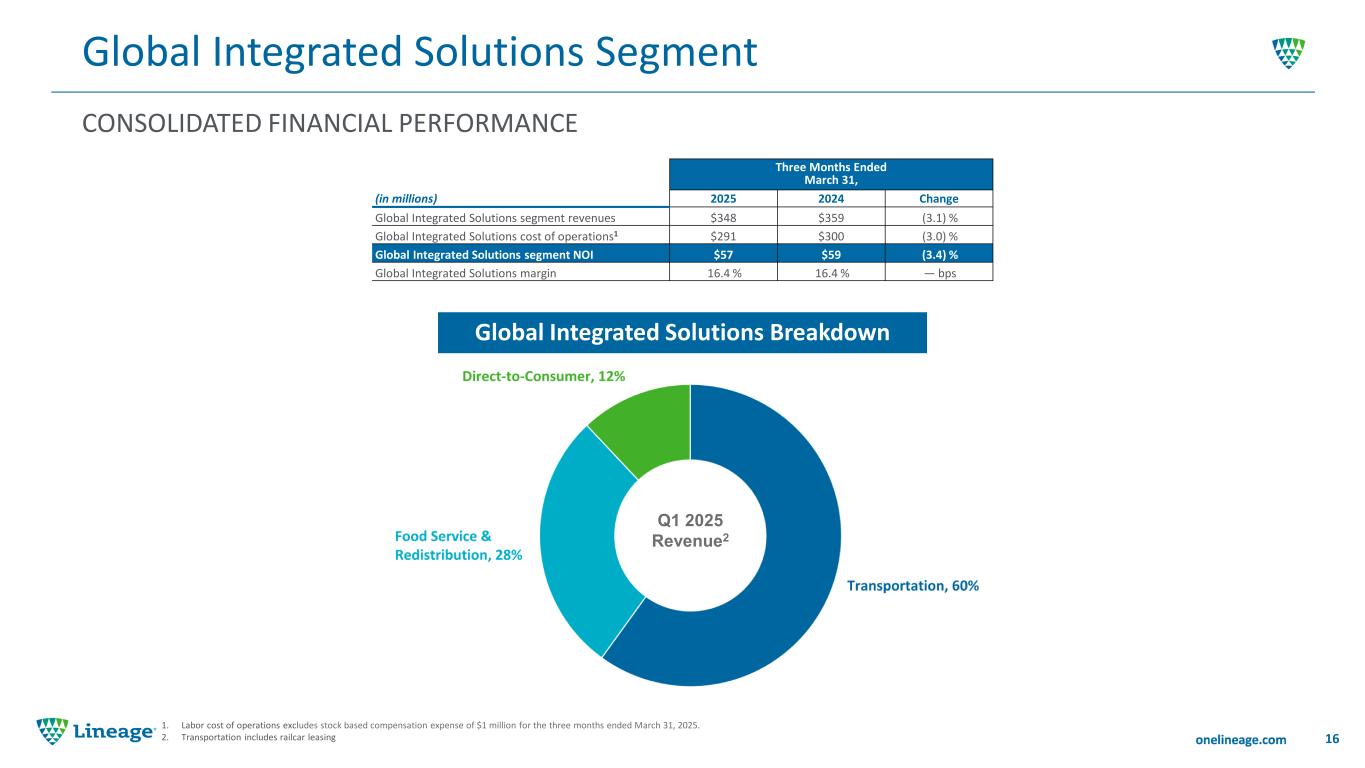
And while GIS year over year, we're still guiding to 5% to 10% even a growth of that segment and we feel we feel good about that thank you your next question is from the line of ronald camden of morgan stanley your line is open hey great just two quick ones um so starting with sort of same story why um you know i know the previous guidance obviously of two to five percent constant currency uh the presentation says two q should be sort of down as much as one q if i'm understanding that correctly. So just trying to think about the cadence of what's baked into the second half of the year, you know, obviously we'll have an exact number on it, but how are you guys thinking about that down and recovering the second half of the year?
Yeah, so I think, you know, as we said, we're confident in growth in the second half of the year for all the things we talked about, the easier comps, the seasonality. I think that, you know, we're not sure how much it's going to grow and that's why we're being careful on giving ranges um and that's where we'll continue to you know give you more information as as we see it um but but that's really the you know as greg mentioned that's kind of the the point yeah those those are the those are the key points great and then my second question is just uh just a little bit more color on what you're hearing uh from tenants and sort of their level of inventory um sort of post tariffs and so forth And are there any sort of sectors, whether it's, you know, food, seafood, protein?
Is there any one or other that's better or worse positioned than any other sort of post-tariff announcement? Thanks so much.
Yeah, I would say there's wait and see on whether to change any inventory positioning or level of holdings. You know, our seafood business, you know, we talked about that a lot last year. that's stabilized. And I think we're kind of at a normal consumption level in seafood. And so we're seeing that, you know, we're seeing those inventories down from the peak of COVID, but there's no longer, you know, downward pressure in that segment of our business.
Operator
Great. Thanks so much. Your next question is from the line of Steve Suckwa of Evercore ISI. Your line is open.
Yeah, thanks. Good morning. I don't know if you guys saw, there was a major article about the Chinese that had canceled a major, I guess, pork order from, you know, U.S., obviously, given the tariff situation. And I'm just curious, you know, how that sort of transaction ripples back through the system here in the U.S. And, you know, could things like that, in some cases, put upward pressure on occupancy? Or, you know, how do you sort of think about that, you know, in light of the comments, Greg, you sort of made about customer uncertainty with kind of the import-export business?
Yeah, it's a really great question. So, absolutely, that could happen. I mean, we're, you know, all the uncertainty that we have and the reason we're not giving a same-store exact number for the second half isn't all downside. There's a lot of things that could happen here that could buoy our occupancy and results, and that's one of them. I mean, China is a very large trading partner with the U.S. in the food space. We've spoken with our team, a number of commodity experts. And I think importantly, though, you know, while China is a large partner, they've been using non-tariff trade barriers for a number of years. So this really isn't a new issue. While it's pronounced and it could have a bigger impact than past issues, it's not a new thing for our customers to deal with. I mean, for example, China was not renewing export licenses for a number of U.S. protein locations that compete with their domestic producers all of last year. And our customers have been dealing with that. And so customers and producers are already working to redirect their exports to different countries. And that's exactly what they'll do if the tariffs remain, you know, if China's, you know, protectionist policies continue or the tariffs get larger. So, I mean, like we said, food flows like water around the world. If it's not exported to China, it'll be exported somewhere else or it'll be pointed to the domestic market here in the U.S. But, yes, there is upside, as you point out.
Okay, thanks. And then maybe just – sorry, did you want to say something else?
Okay. Just second question. Just, I guess, as you think about, you know, capital deployment and like this Tyson's deal, does the economic uncertainty maybe create more opportunities for you guys, you know, as customers look to kind of shed costs and streamline their business? and how are you thinking about those deals and maybe the return hurdles, you know, in light of kind of where your stock is traded since the IPO and uncertainty in the bond market? Are you raising your investment hurdles, and do you think this can create more opportunity?
So we think it could. We're always looking at risk-adjusted return, and our cost of capital is a key component of that calculation that we talk about every week in our capital deployment call. But certainly, if tariffs impact the global supply chain, customers will shift their either production or distribution channels. And we are in those rooms with those executive staffs, helping them decide and execute on any major supply chain changes. And so Tyson is one that was obviously born well before these tariff policy changes. But as things change, we tend to get even more valuable with our customers.
Operator
Great. Thank you. Your next question is from the line of K. Binkin from Chewist.
Please go ahead. Thank you. Good morning. Going back to that Tysons deal, I mean, ultimately, what was the value proposition for Tysons? Was it just cost savings or Lin-OS or, you know, just more sustainable operations? Just curious overall. Thank you.
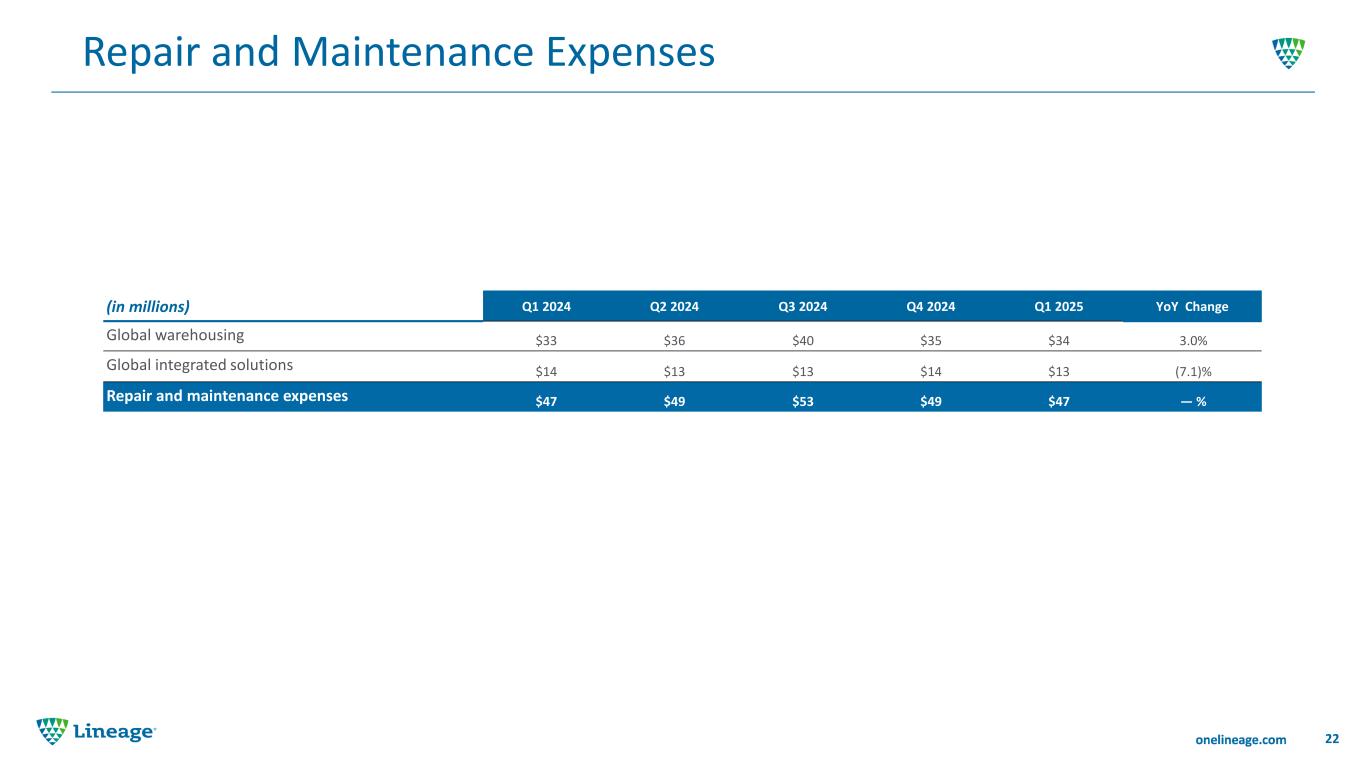
Yeah, all the above. I mean, lower cost, best technology, best automation, serving their, you know, dynamic customers better, positioning their inventory in the optimal locations. These guys are really smart about how they plan their future supply chain. And we were able to work with them for, you know, a full year on what that future supply chain should look like. We also provide them with a lot of flexibility, given that they're an anchor customer in these buildings and can flex inventory if needed to a certain extent, and that kind of future-proofs their supply chain. LinOS was certainly a piece of this and, you know, will be running in these automated buildings, and we will convert to LinOS in the buildings that we're purchasing from them. And I'll just give a quick LinOS update while we're on the topic. You know, our pilots continue to go extremely well. We're seeing double-digit productivity improvements in these buildings. And as we mentioned, this is a year of just proving it out, and then we'll roll it out more broadly over the next couple years. But we're increasingly excited about how this technology can transform our operations. And, you know, we're seeing very real benefit not only in direct labor, but also in indirect labor, in benefits, in energy, in safety, even in employee turnover and training expense. We even think this will lower our maintenance expense and CapEx as we'll be, you know, we'll use our facilities more efficiently. And over time, you know, we think this will meaningfully lower our cost structure and create an even deeper vote between us and our competition and improve the already outstanding service we provide to our customers. So we're highly encouraged, and this technology was a component of the deal with Tyson.
Great. Thank you. And on the trade uncertainties, you know, one of the things the administration has talked about is not just tariffs, but perhaps improving the balance of trade through exports, especially like agricultural exports. I'm not sure if you and the food producers have had much dialogue with the administration, but any kind of insights you can share what this potential could be and how real does it feel like? Or will it be like all soybeans and not touch the cold storage warehouse? Thank you.
Yeah, I think it could impact us, but to try to predict how and why and where and which commodities, yes, I've met with 20 customers in the last just several weeks, and there's so much uncertainty, I think it would be unwise for me to try to predict what's going to happen at this time, but more next quarter. Okay, thank you.
Operator
Your next question is from the line of Michael Goldsmith of UBS. Please go ahead.
Good morning. Thanks for taking my question. how much room do you think your current tenants have within their current commitments to utilize before they would need to take on more space?
It varies by customer, by region, by commodity.
I think, you know, where we are from an occupancy standpoint, there's a ton of room, you know, that we have to sell all the things that we've done from a productivity standpoint, you know, getting our costs or, you know, having this gives us a ton.
Yeah, and I think because the volume guarantees were just reset here in the first quarter, customers are – they have an appropriate amount of space reserved for what they see in their business. You know, if there's any inventory inflection, if there's any increase in consumer sentiment that leads to an uptick in sales and volumes, that's all upside for us, and incremental margins are extremely strong. And so, you know, we're kind of at a bottom in inventories right now in any stimulus to rebuild or, you know, reposition.
And then just to follow up on supply, how much supply delivered over the last year is yet to be absorbed? And then also how much supply is set to be delivered in 2025 that is unleashed within the industry?
Yeah, great question. So certainly there's been, you know, new supply into the market over the last several years. That new capacity peaked in 2023 with about 4% in the U.S. incremental power positions. That came down by about 50% in 24 and again, similarly this year. So about 2%, you know, new power positions added in the U.S. in 24 and 25. and that new supply is expected to be cut in half again based on what's been announced so far and what we know is happening in 2026. So in 2026, the new pallet positions added in the U.S. will kind of be back to historical pre-COVID levels. But I think it's important to mention that that capacity that's been added over the last several years has been built at the highest cost to build ever, and the cost of capital has obviously increased. So it's hard for these smaller players to succeed at anything below kind of market prices. And we expect some of these businesses to underperform and some to fail. And we're definitely seeing evidence of that in the marketplace. And we expect those dislocations to create opportunities for us to either grow organically or through acquisition. And I think, you know, compared to these new entrants, we have such distinct competitive advantages. We have scale that creates network effects we have world-class and leading automation we have proprietary technology even before uh the lino s launch we have 13 000 customer relationships and we have global farm-to-fork service offerings and so we have a we have a really deep mode i mean you know for example i'd argue that if you think about this new capacity or new companies that have entered our space you know i think we're the only one capable of success executing a deal like to the scale of thank you very much yeah next question is from the line of todd thomas of key bank capital markets your line is open hi thanks good morning first question i just wanted to follow up on the
minimum volume guarantees um which which decreased 200 basis points sequentially to to the 42 percent level um that decrease occurred before the tariff announcements and i realize there's uncertainty around how inventory levels will trend in the near term um with with the uncertainty around trade flows and inventory. But in terms of those changes, I just wanted to clarify if that was predominantly a first quarter reset of sorts or whether you do expect that process to be ongoing throughout the year and whether or not the fixed commits, the percent of fixed commits might fall further, perhaps below 40 percent.
It is largely a first quarter phenomenon. The majority of them get reset in the first quarter. And again, they're reset at lower levels. But while the existing customer volume guarantees came down a little bit, the new business we're selling has more than 42% average volume guarantees. And so we would expect, and I don't think tariffs would have an impact on this. If anything, to Steve's point earlier, if there is any stockpiling of inventory or things are having to be held or re-diverted or diverted back to the U.S. that are on the water, that could lead to people needing even more space and potentially come kind of how to cycle and ask for increase in volume guarantees so we'll see what happens again a lot of uncertainty but to directly to answer your question it is making a majority first quarter phenomenon okay and then um separate question on the tyson's transaction with regard to the existing facilities uh that will be transitioned to to public warehouses Will those warehouses experience a decrease in occupancy in 27 or 28 during that transition?
How will that handoff happen? And, you know, I'm just curious whether or not we should expect, you know, how those, you know, operations should sort of trend during that transition period if they need to sort of fill up and if they'll be, you know, sort of operating in a way like lease-up or development assets during that period.
Yeah, I mean, you know, we can't get to this, all the details of the agreement, but, you know, there's a very smooth transition. Like anything else, because of public warehouse, there could certainly be a bit of a J-curve as you're filling up the new warehouse in a couple of years.
But there's a – yeah, we certainly – yeah, the answer is yes. there'll be an occupancy decline when they depart, and we will build it back up into a public facility. But all of that was certainly built and, you know, contemplated as we entered the agreements with Tyson Foods.
Operator
And your next question comes from the line of Vikram Mahal from Mitsur.
Thanks for the question. So, just going back to the guide, I get it's very difficult to, you know, pinpoint where same-store warehouse or even the global solutions, NOI growth is going to go. But just trying to understand, you know, high level, to keep the guide intact, you must have baked something in. Or said another way, like if tariffs were to go away tomorrow, would you still be hitting your original guide? Or is there some other offset, like to maintain the guide? What are the other components that you're cutting, assuming kind of the same stroke comes in well below your original expectation?
Yeah, you know, it's real hard to predict what would happen if tariffs got, you know, went away tomorrow. Yeah, I think if you just do the simple math, right, and you look at our guide and you look at the $25 million that we're planning to get, you're losing $25 million somewhere else, you know, more to the low end of our initial same-store guide if you're going to go back to, you know, to that. But again, there's a ton of volatility. There's upside down everything else. And so, you know, we're committed here to deliver these ranges, you know, barring any sort of other economic thing that, you know.
Got it. And then I guess just, you know, you talked a lot about opportunities on the external growth side. Obviously, Tyson's a, you know, solid deal. Wondering just given kind of how the stocks performed and obviously the embedded value, what about considering a big buyback or even just other ways to kind of highlight value?
Yeah, I know. I think the board and the management team will always do whatever we think is the best interest of the shareholders. And so we'll always evaluate all things value over the long term. I mean, we're really focused here, as you know, on compounding growth and driving long returnal value. I think that's what we do.
And then just one, if I can clarify, like, how much of this, you know, the, I guess, the challenge, same story, you've got a, you know, big global portfolio, the scale, et Are you able to share any, like, industry stats to kind of show how maybe the lineage portfolio is outperforming, even in this environment? Like, you know, what's happened to economic occupancy changes across your peers or just the overall growth? Any stats you can share that would highlight Lineage still outperforming fundamentally?
There's not really publicly, you know, our industry is not transparent, even in the U.S., much less in the international markets. I think we're getting that from the intel of our 250 salespeople around the world that are acutely aware of the capacity or occupancy of their competitors in their markets. I personally visited with teams across 10 markets around the world, actually more like 12 this year, and met with our teams. And they are very in tune with what's going on in the market and what customers are going where and what the capacity is at our competitors' buildings. And based on that, you know, based on that intel, we think we're performing very well from a physical eye.
Operator
Ladies and gentlemen, due to the constraints of time, we do need to conclude our Q&A session for today. And I would like to turn the call back over to Evan Barbosa for closing remarks.
On behalf of the entire lineage team, thank you for joining us today and for your interest in lineage. We look forward to speaking with you again on our next quarterly call. Thanks, everybody.
Operator
This concludes today's conference call. Thank you for joining us. You may now disconnect.