Operator
Hello, and welcome, everyone to the Lemonade Q1 2025 Earnings Call. My name is Maxine, and I'll be coordinating the call today. I will now hand over to the Lemonade team to begin. Please go ahead.
Speaker 1
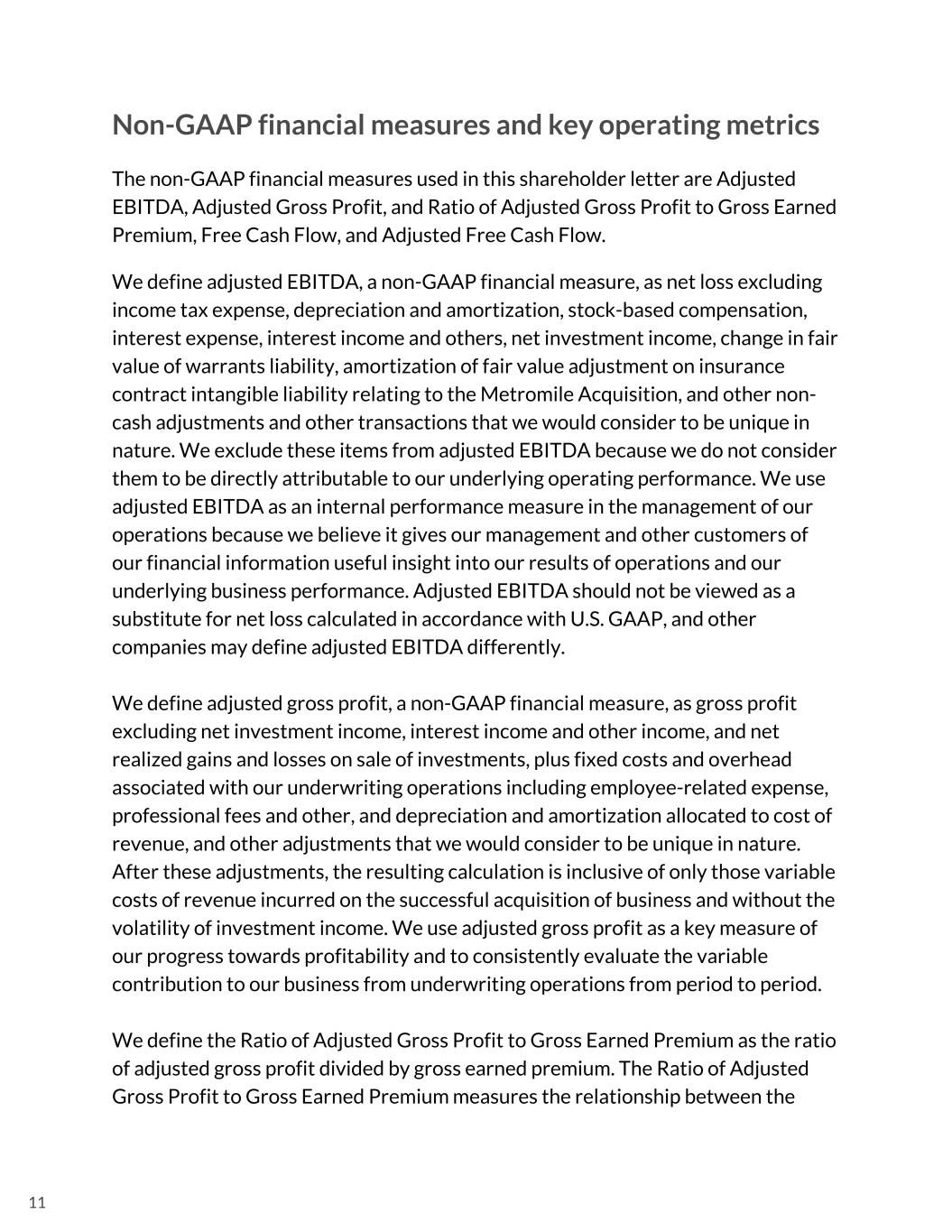
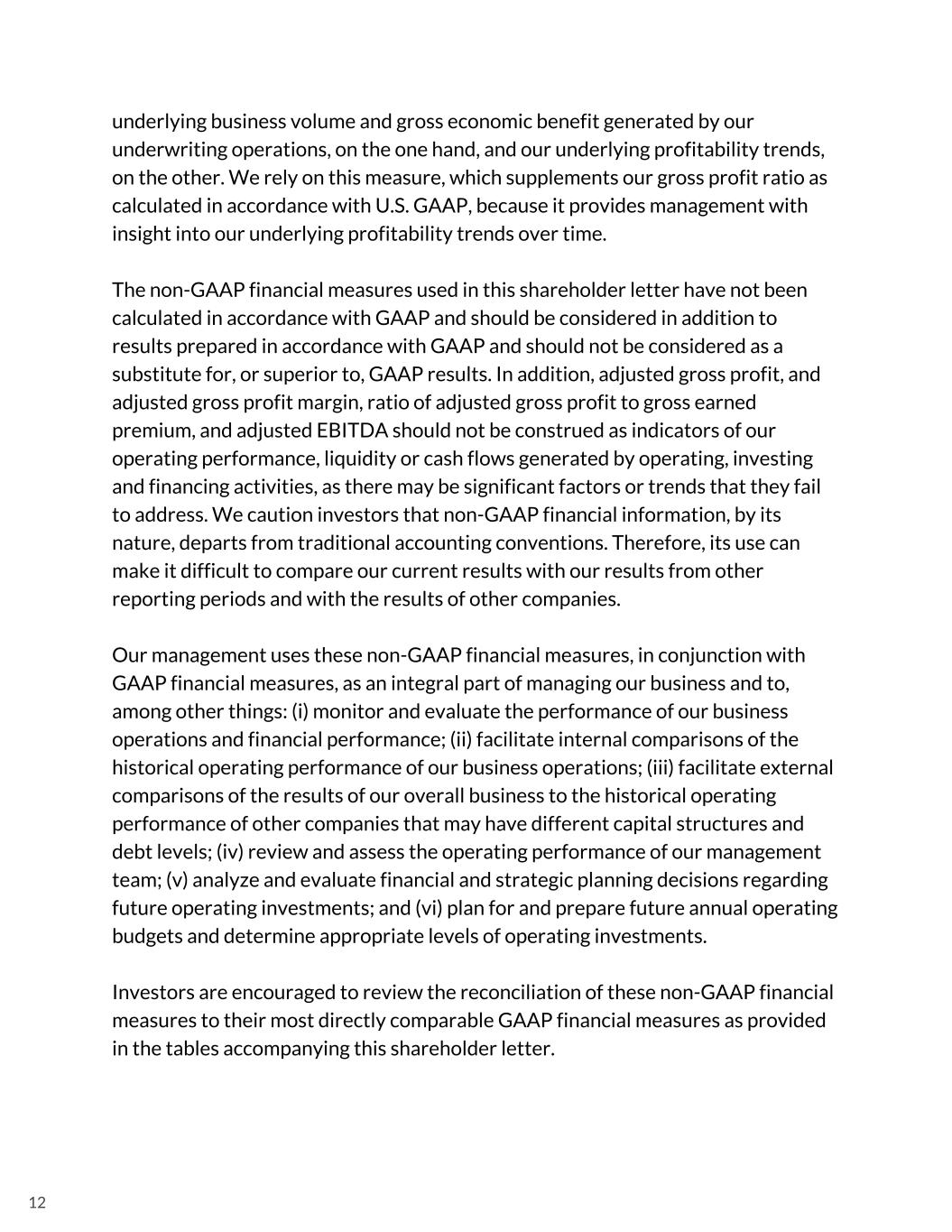
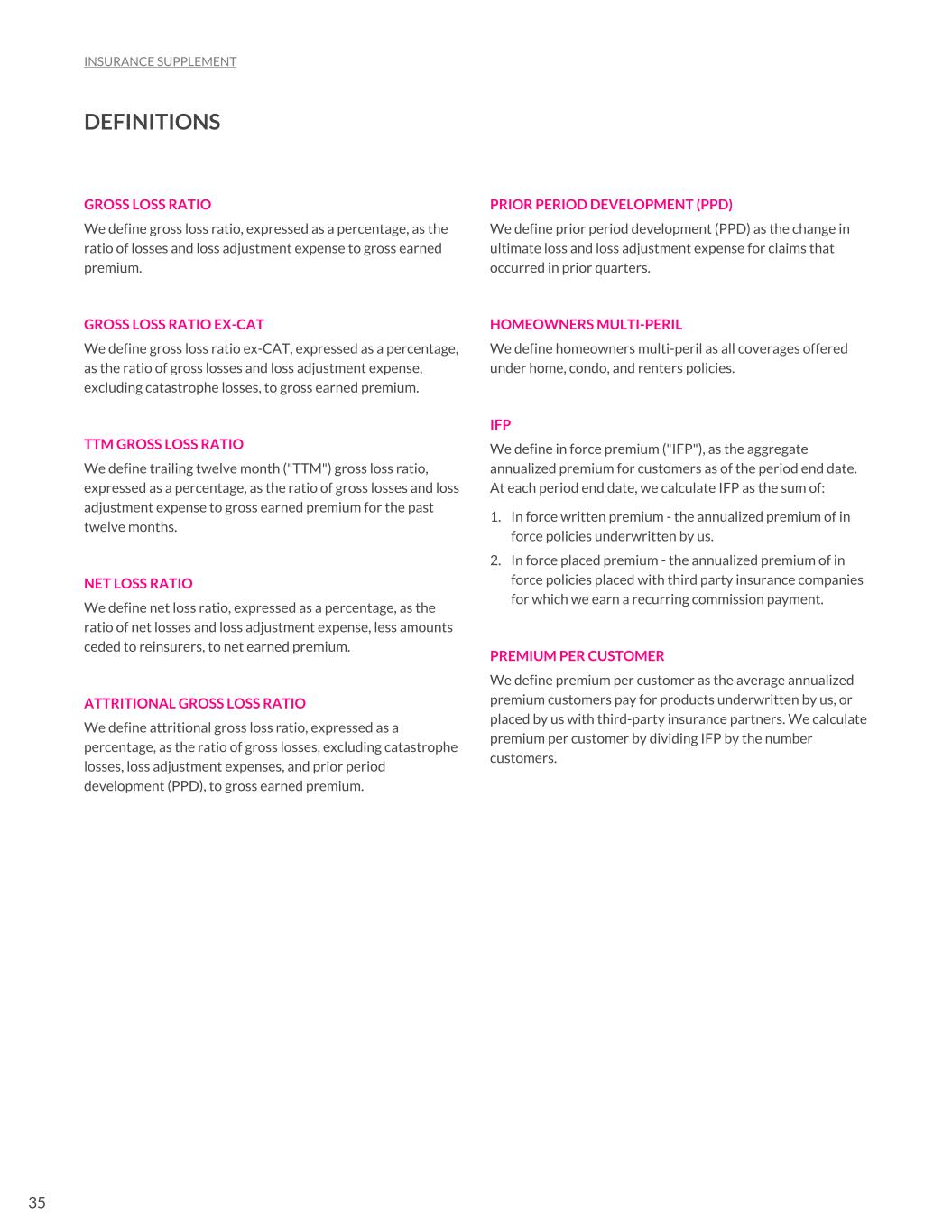
Good morning, and welcome to Lemonade's first quarter 2025 earnings call. Joining us on our call today, we have Daniel Schreiber, CEO and Co-Founder; Michal Langer, Chief Product Officer and Leader of our Car Business; and Tim Bixby, Chief Financial Officer. A letter to shareholders covering the company's first quarter 2025 financial results is available on our Investor Relations website at lemonade.com/investor. I would like to remind you that management's remarks on this call may contain forward-looking statements within the meaning of the Private Securities Litigation Reform Act of 1995. Actual results may differ materially from those indicated by these forward-looking statements as a result of various important factors, including those discussed in the risk factors section of our form 10-K filed with the SEC on February 26, 2025, and our other filings with the SEC. Any forward-looking statements made on this call represent our views only as of today, and we undertake no obligation to update them. We will be referring to certain non-GAAP financial measures on today's call, including adjusted EBITDA, adjusted free cash flow, and adjusted gross profit, which we believe may be important to investors to assess our operating performance. Reconciliations of our non-GAAP financial measures to the most directly comparable GAAP financial measures are included in our Letter to Shareholders. Letter to Shareholders also includes information about our key performance indicators, including customers, enforced premium, premium per customer, annual retention, gross earned premium, gross loss ratio, gross loss ratio, ex-CAT, trailing 12 months loss ratio, and net loss ratio, and a definition of each metric, why each is useful to investors, and how we use each to monitor and manage our business. With that, I'll turn the call over to Daniel for some opening remarks.
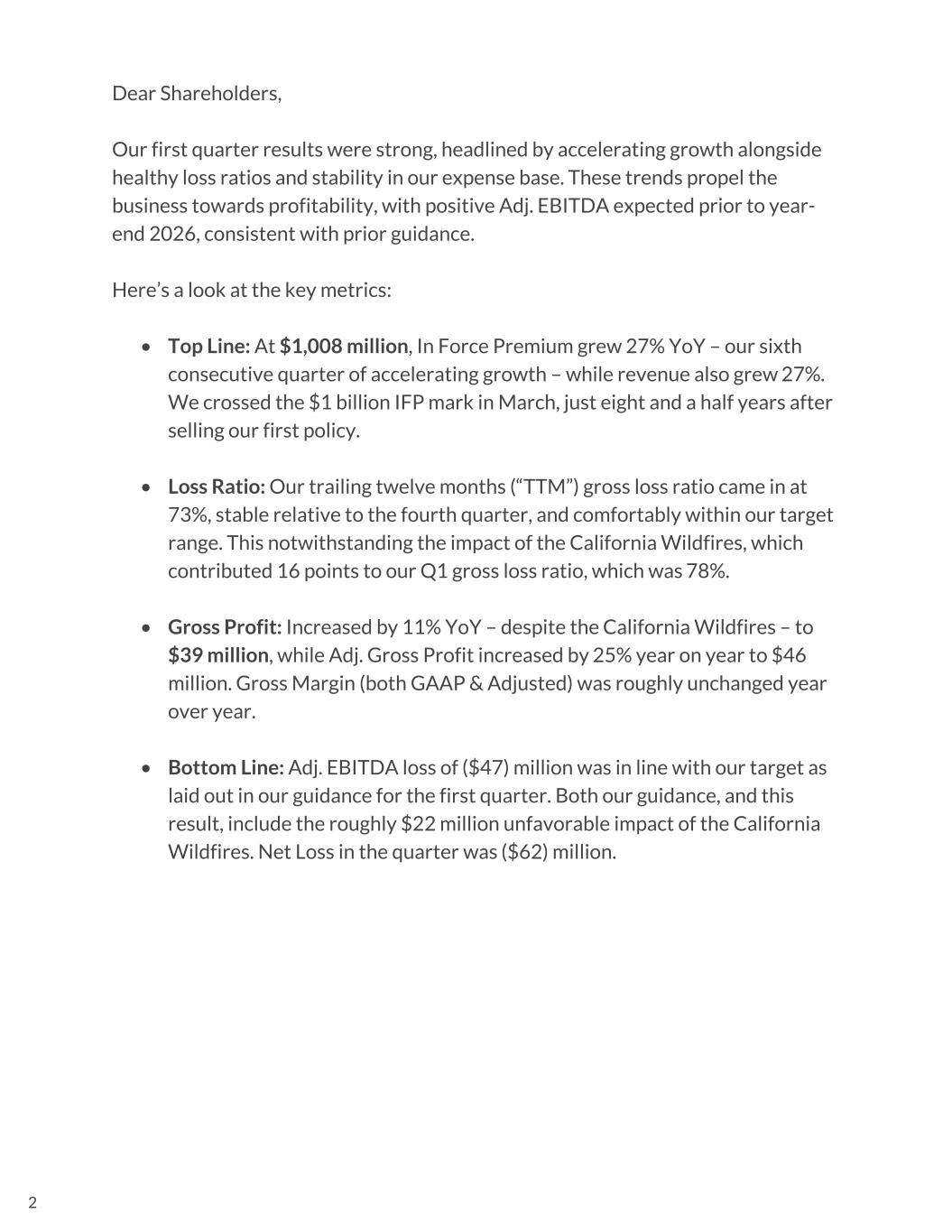
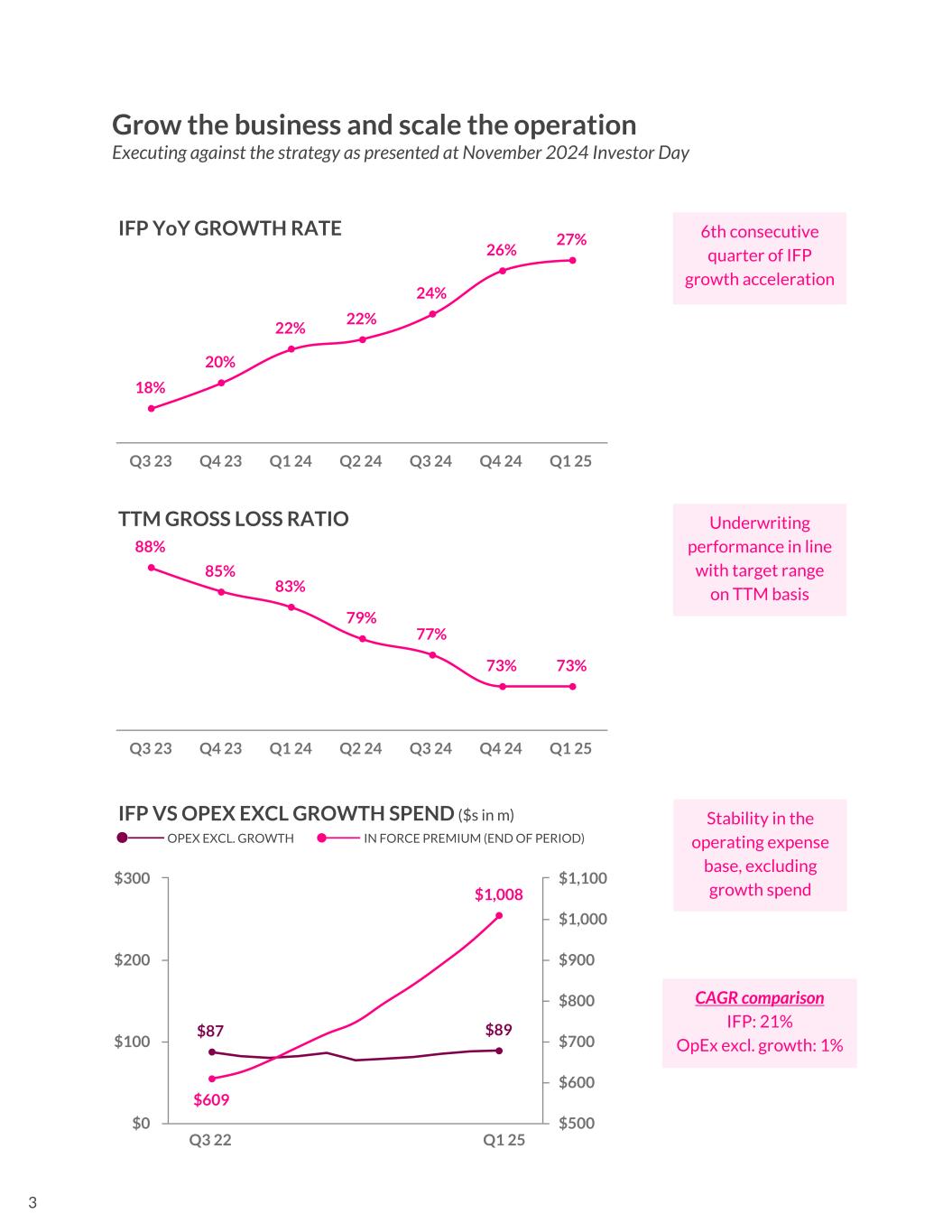
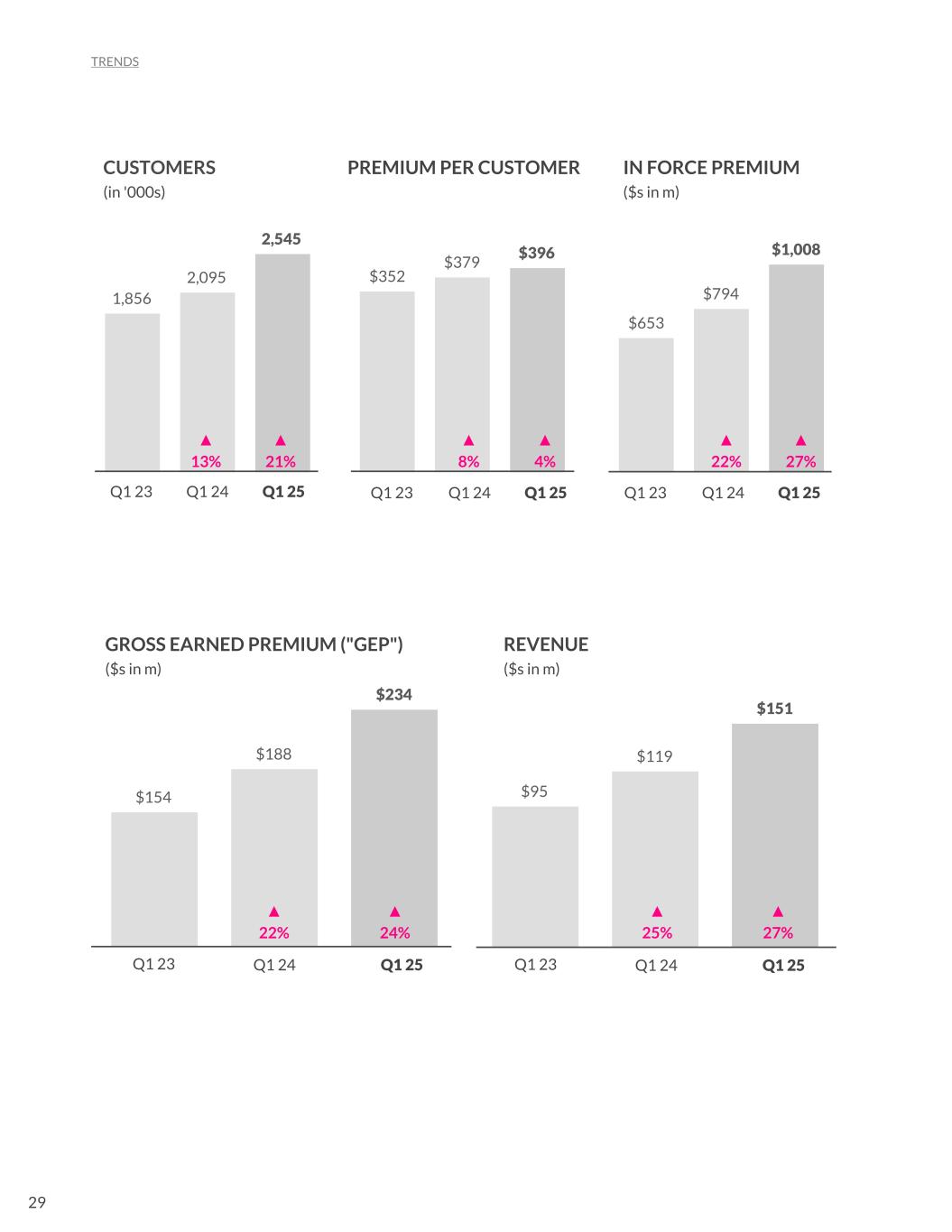
Good morning, and thank you for joining us to discuss Lemonade's results for Q1 2025. It's a pleasure to report that across all of our key metrics, our financial performance in the first quarter was strong, and that everything in the business is progressing very much to plan. At 27% year-on-year growth, Q1 was a sixth consecutive quarter of accelerating top-line growth. Perhaps more notably, with the exception of our growth spend, we've seen no material corresponding rise in our expense base. Quite the contrary, in real terms excluding growth spend in the past 10 quarters we have seen a decline in our expenses, while the book has increased by more than 65%. When you see a top line surging by two-thirds even as fixed costs stay flat or fall, what you're seeing is AI hard at work. For us, AI was never a fashionable acronym to roll out on earnings calls. It's always been core to our culture, to our differentiation, and to our strategy, and its power is increasingly apparent in our P&L. We expect this dynamic to persist, with the growth of our gross profit far outpacing the growth of our fixed costs. This is why we're comfortable reiterating our expectation of achieving EBITDA breakeven by the end of next year, now just a few quarters away. We are also reiterating our EBITDA guidance for this year and modestly raising our expectations for gross earned premium and revenue. We also reiterate our expectation of generating positive adjusted free cash flow in 2025 despite the unfavorable impact of the California wildfires in the first quarter. Speaking of the California wildfires, their impact on our Q1 results was notable, contributing 16 percentage points to our gross loss ratio. Even with that impact, our trailing 12-month gross loss ratio remains stable and in line with our target range at 73%, while adjusted gross profit actually improved 25% year-on-year. That, I think, speaks volumes to the quality of our book and the resilience of our business. We're closely monitoring the evolving tariff environment, particularly for imported auto parts. A headline 25% tariff on auto parts, should it endure, would likely increase loss trends in that category by single-digit percentage points, which we would endeavor to reflect in our rates as soon as possible in order to maintain stable loss ratios. Finally, you may have noticed that we changed the timing of our shareholder letter to align more closely with common practice. We've also refreshed our investor website, so pop over to investor.lemonade.com or lemonade.com/investor and check it out. In the same vein, we're also going to mix things up a little on the call and try to bring in a wider array of voices from the management team. And to kick this off, as Shai is taking a well-earned vacation with his family, he has asked Michal Langer to update you on our car business. Michal is both our Chief Product Officer and the Executive leading our Car Business. So her contribution and perspective is central to everything that we do at Lemonade. Michal?
Speaker 3
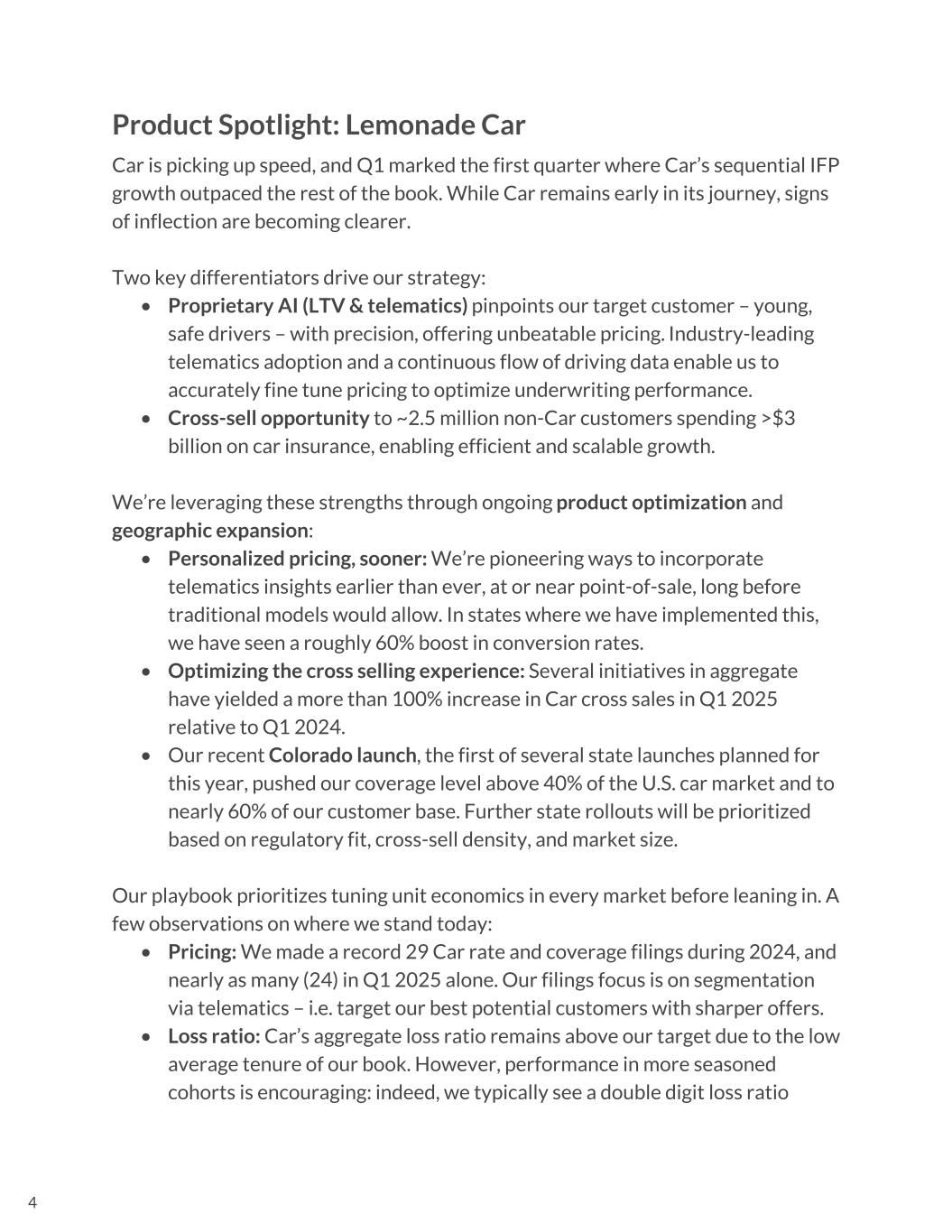
Thanks, Daniel. Lemonade Car continued to build momentum this quarter. For the first time, its quarter-over-quarter IFP growth outpaced the rest of the business. That's a key milestone and one that signals the engine is starting to rev. There are two elements that we consider unique differentiators. First, our LTV and telematics models, which give us a unique ability to find and price ideal customers. This is especially true for safe younger drivers, whom other insurance routinely overcharge, relying on blunt age-based risk buckets. With industry-leading telematics adoption and a continuous lifetime flow of driving data for each customer, we can fine-tune pricing and automate processes with unrivaled precision. Second, we've got a large untapped growth pool, nearly 2.5 million non-car customers who together spend over $3 billion annually on auto insurance. We're turning those advantages into impact through product development and geographic expansion. We've been running a series of experiments on what we're calling day zero telematics and have seen conversion rates jump by over 60% in the past few months. Cross-sell is improving too. We've optimized our bundling flows leading to more than doubling our cross-sales volume year-over-year. Geographically, we launched Colorado this quarter, pushing us past 40% coverage of the US auto market and to nearly 60% of our existing customer base. With more states coming, prioritized by profitability and fit. As always, growth comes with discipline. Cars' gross ratio is still elevated, not unexpected for a young book. But older cohorts are seasoning nicely, which gives us confidence in the model. We typically see a double-digit loss ratio improvement as new cohorts pass the renewal date. This dynamic is worth underlining. Short-lived spikes in loss ratios associated with the new business penalty, a well-understood phenomenon, can send a false signal about the lifetime profitability of new business. So we routinely look past these in preference of the predicted lifetime loss ratio. So while we still have a lot of work to do this year and plan significant rollouts and improvements in the coming quarters, Lemonade Car is already gaining speed and boosting our confidence that Car will increasingly drive our growth. I'll now hand the call over to Tim, who will speak to our financial performance and outlook. Tim?
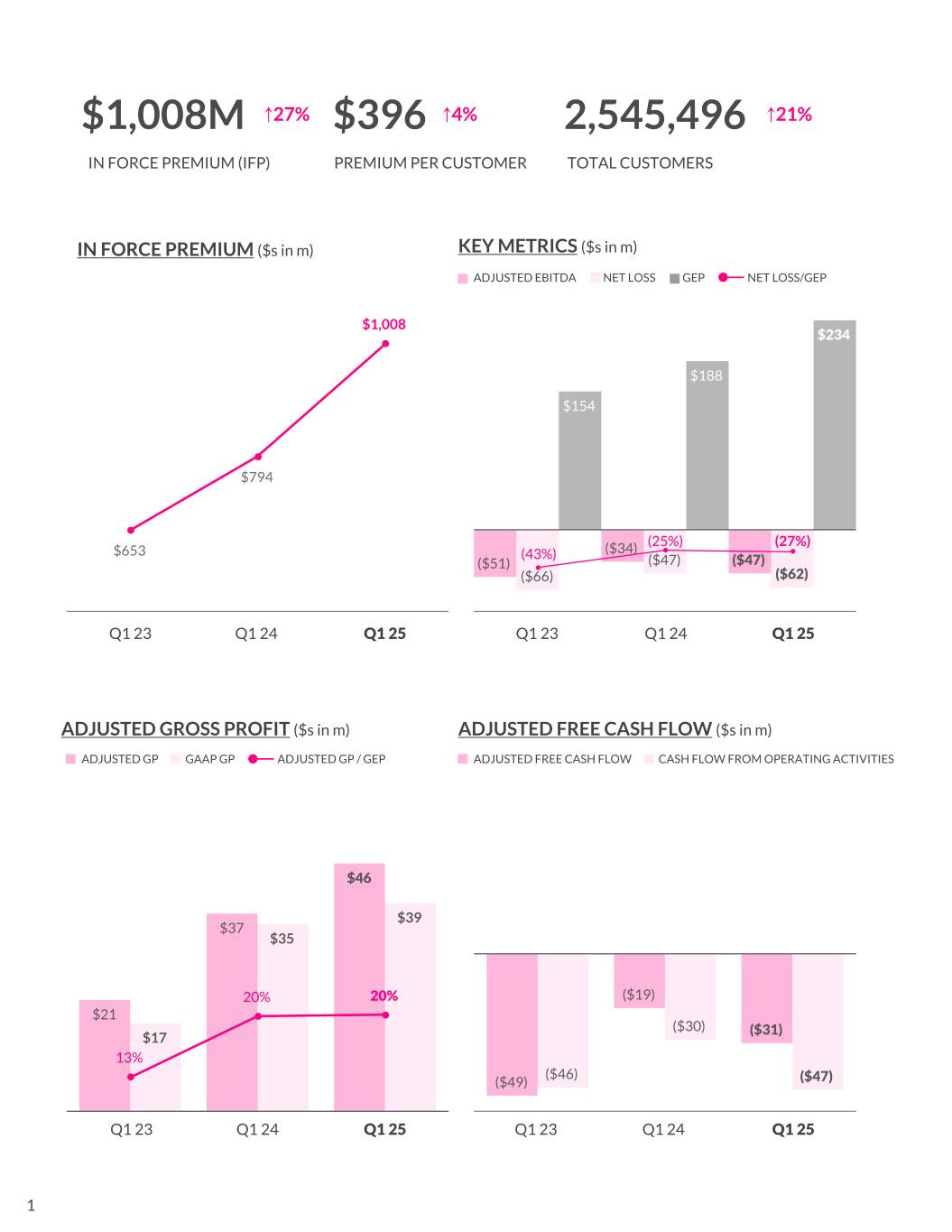
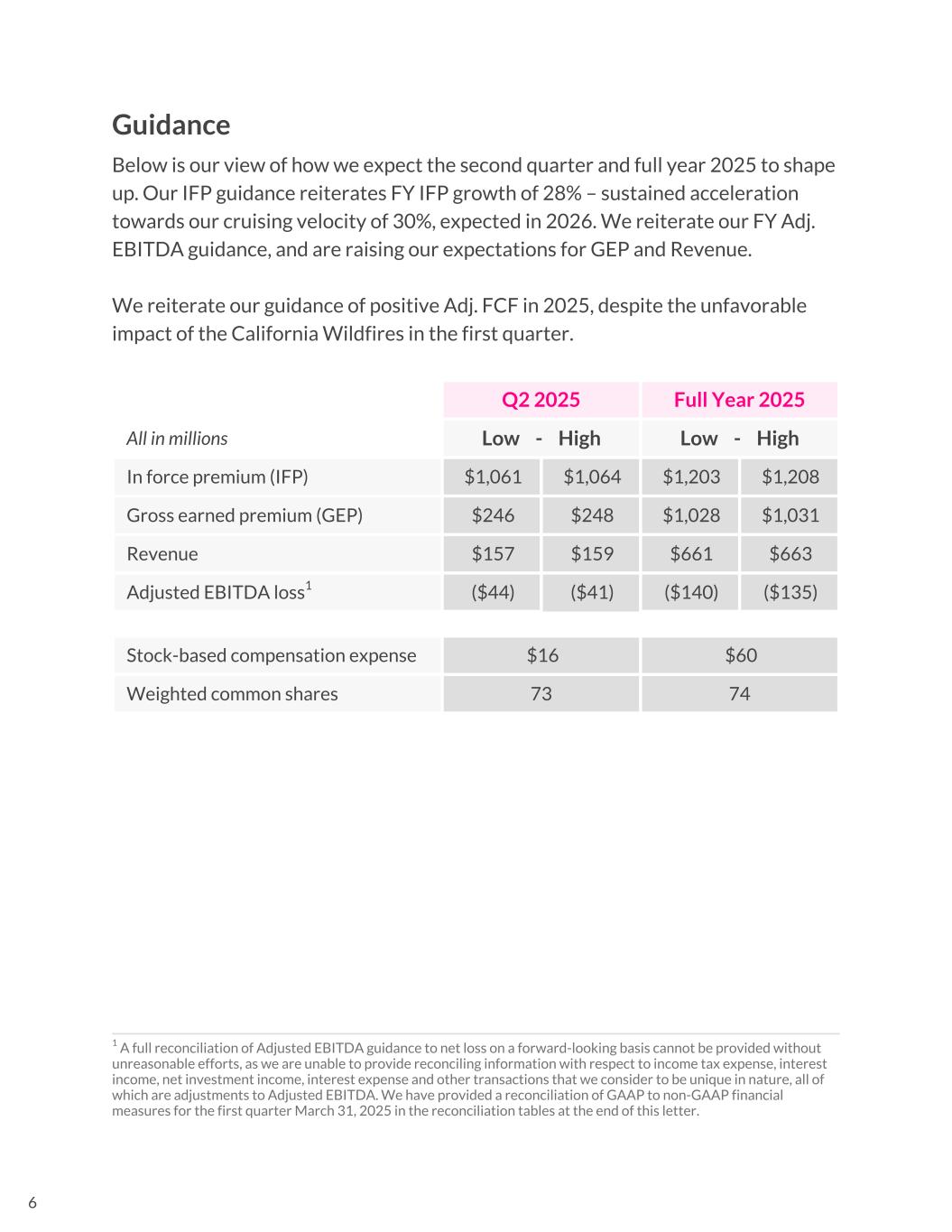
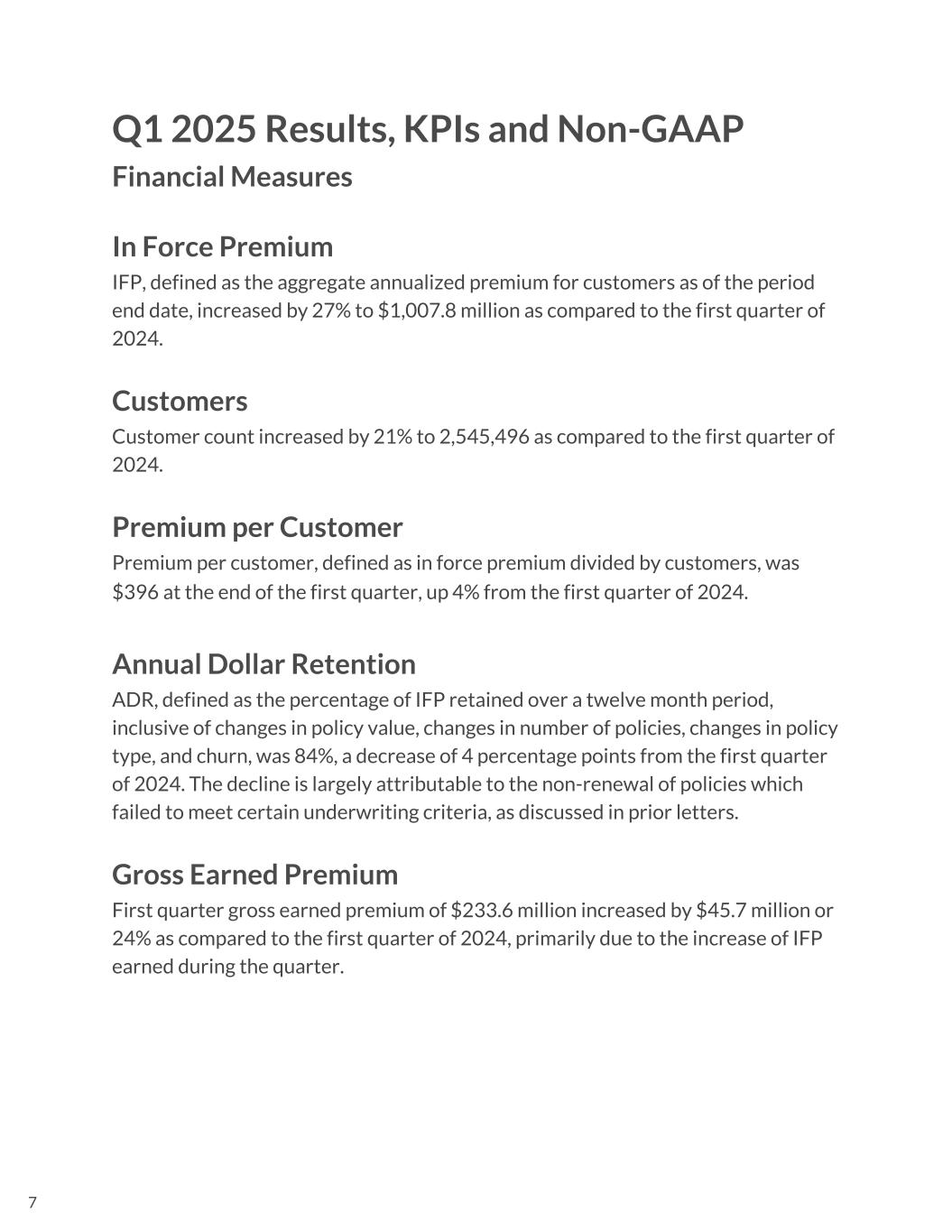
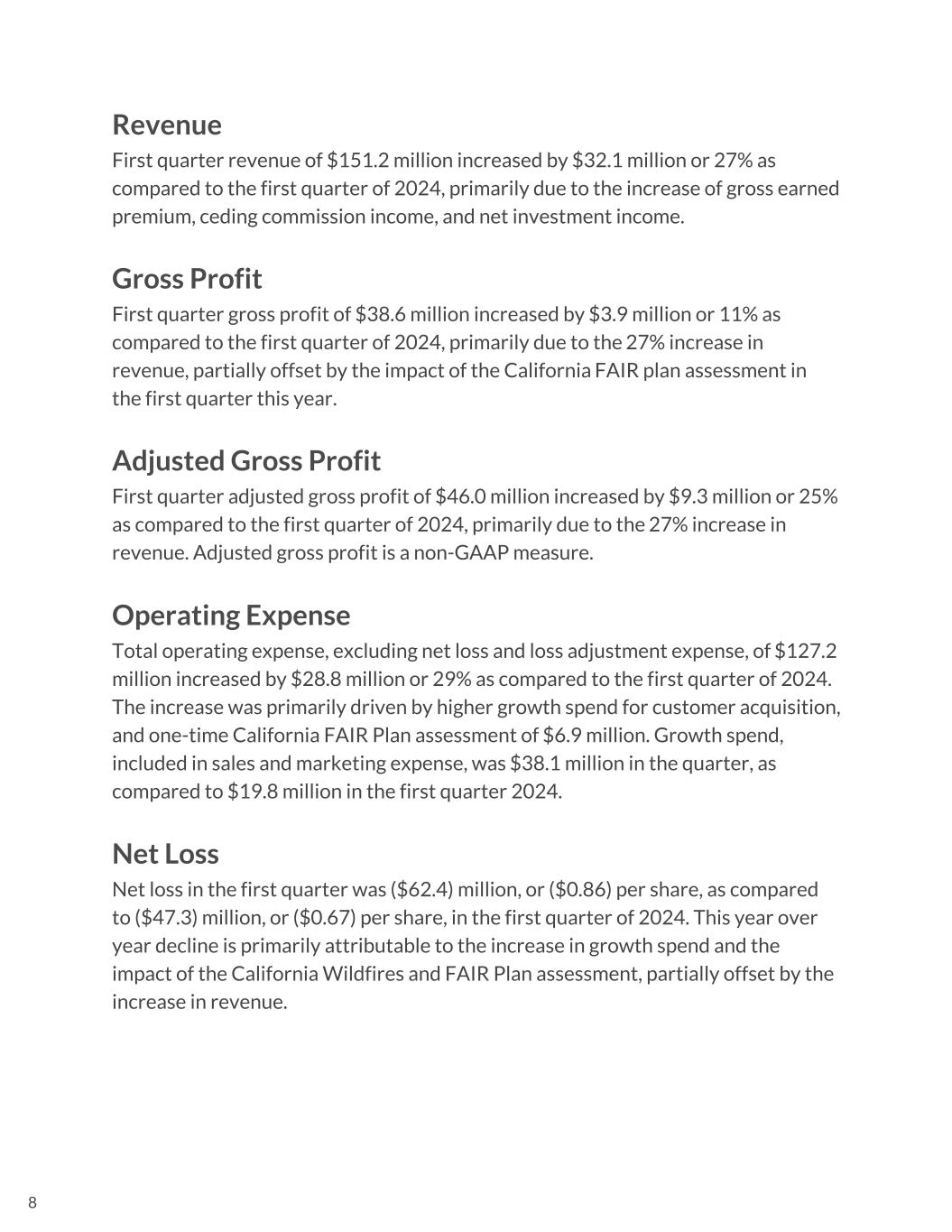
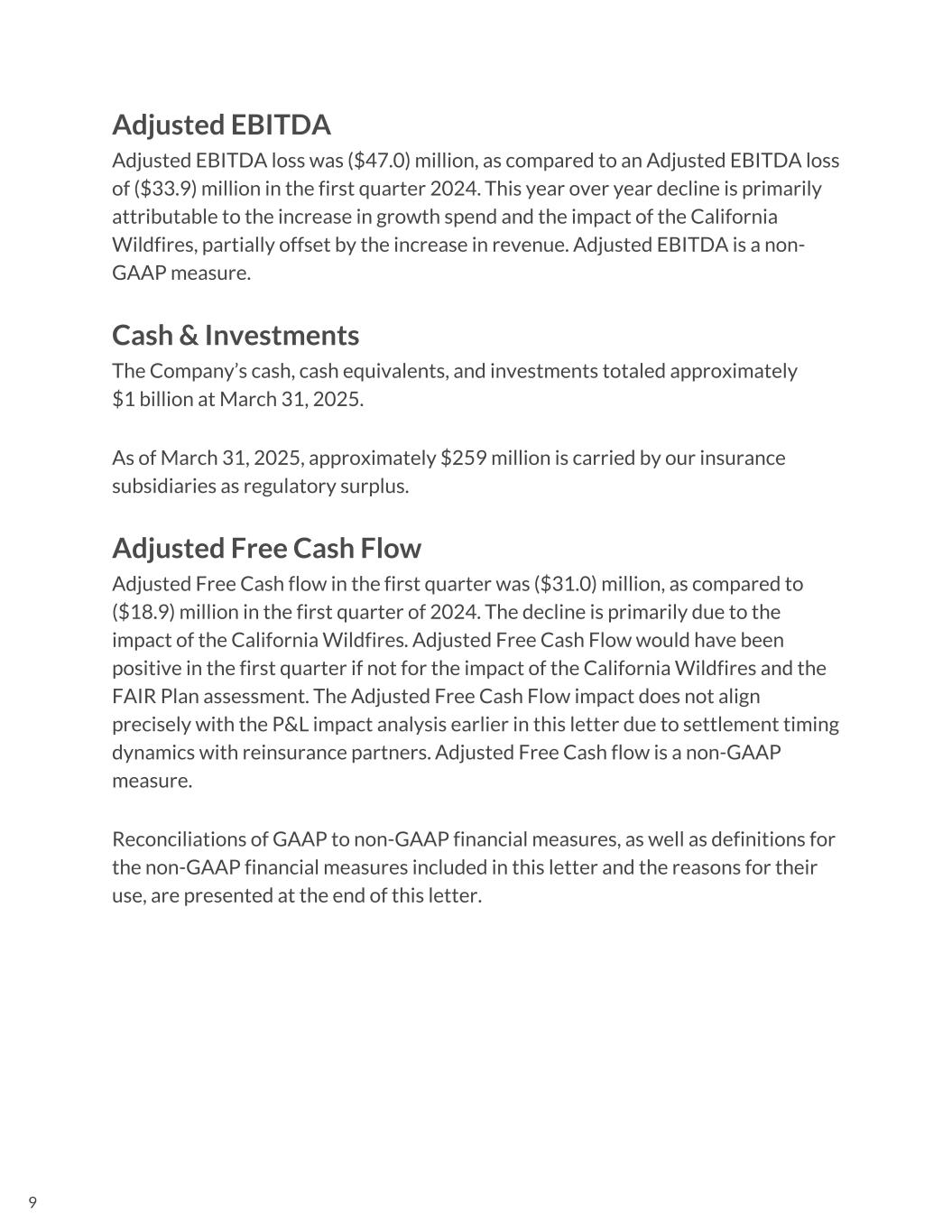
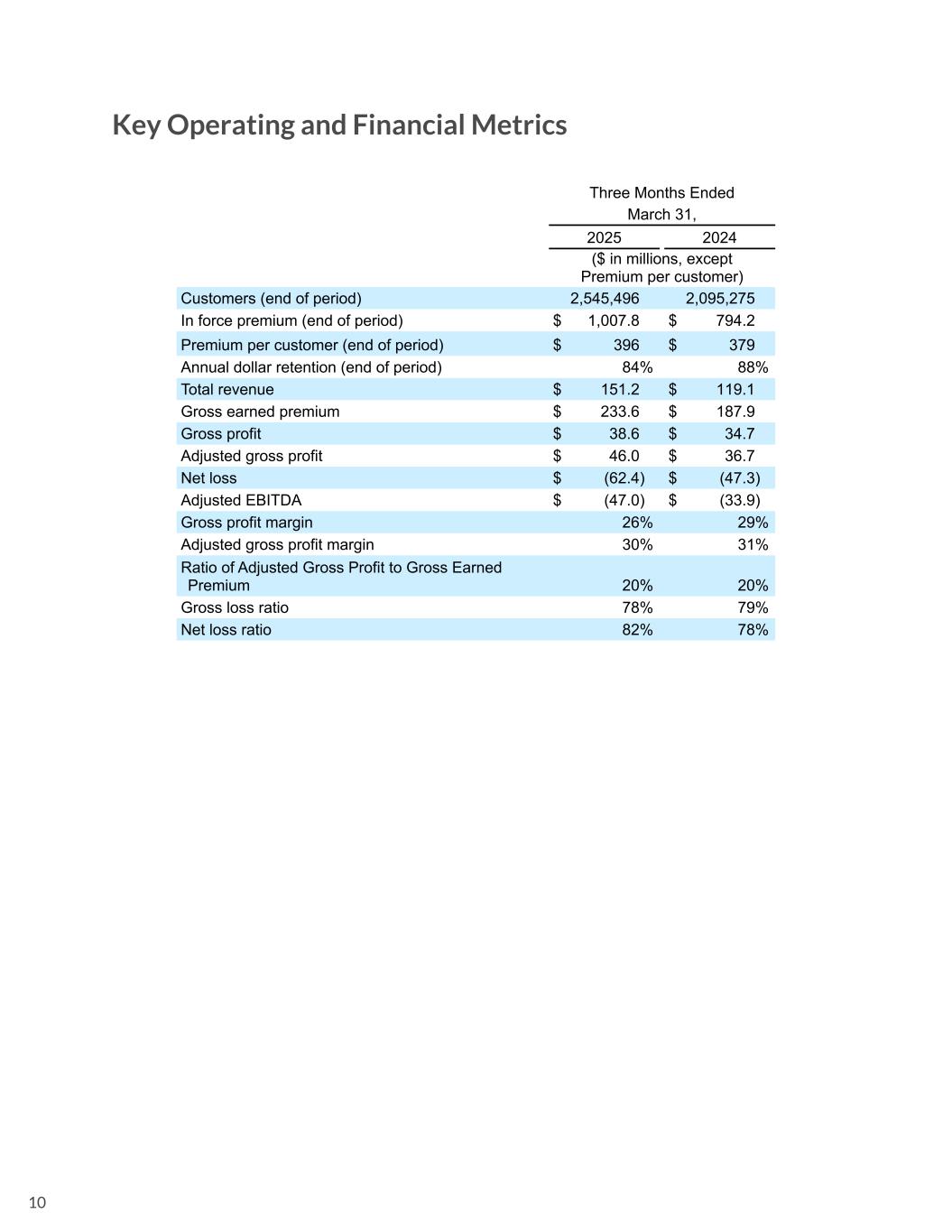
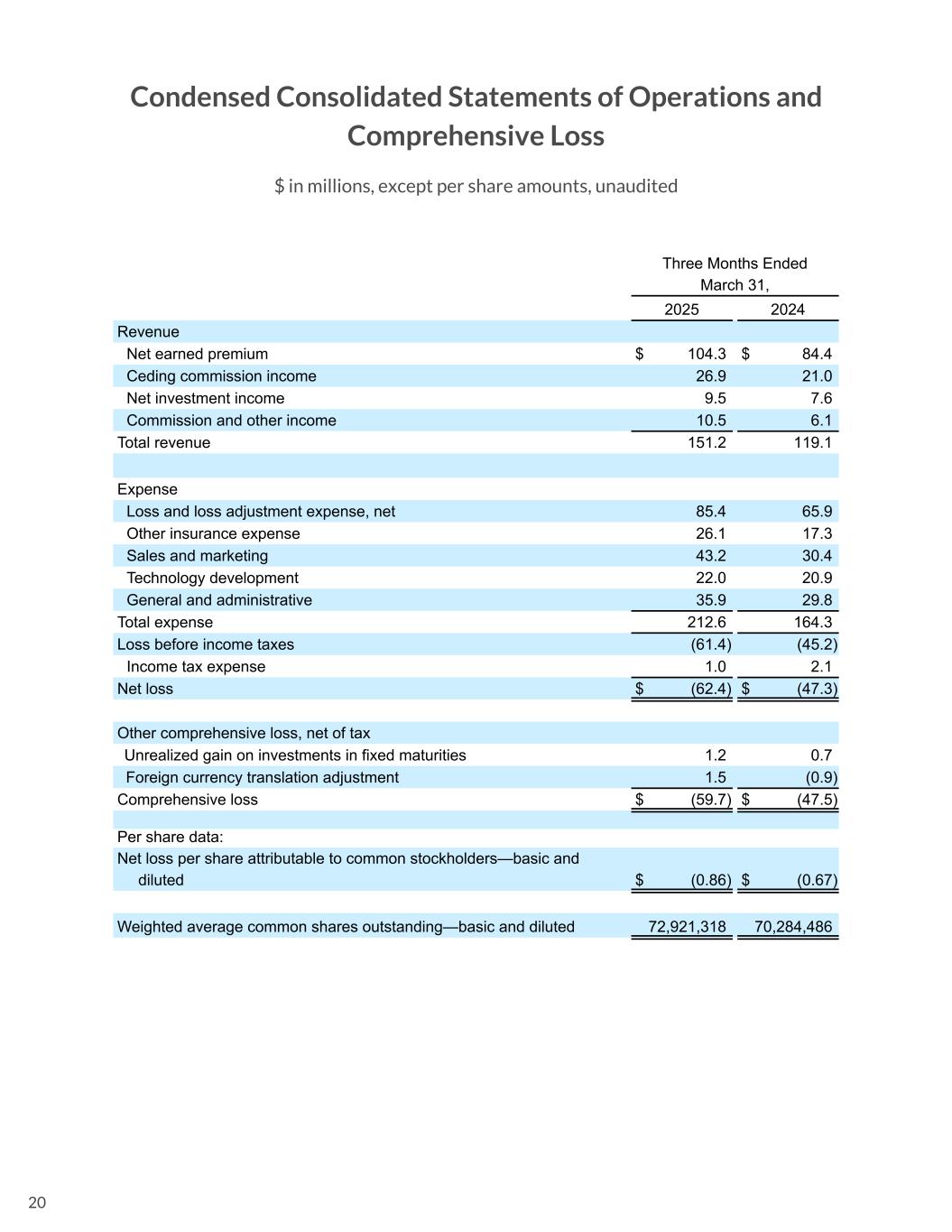
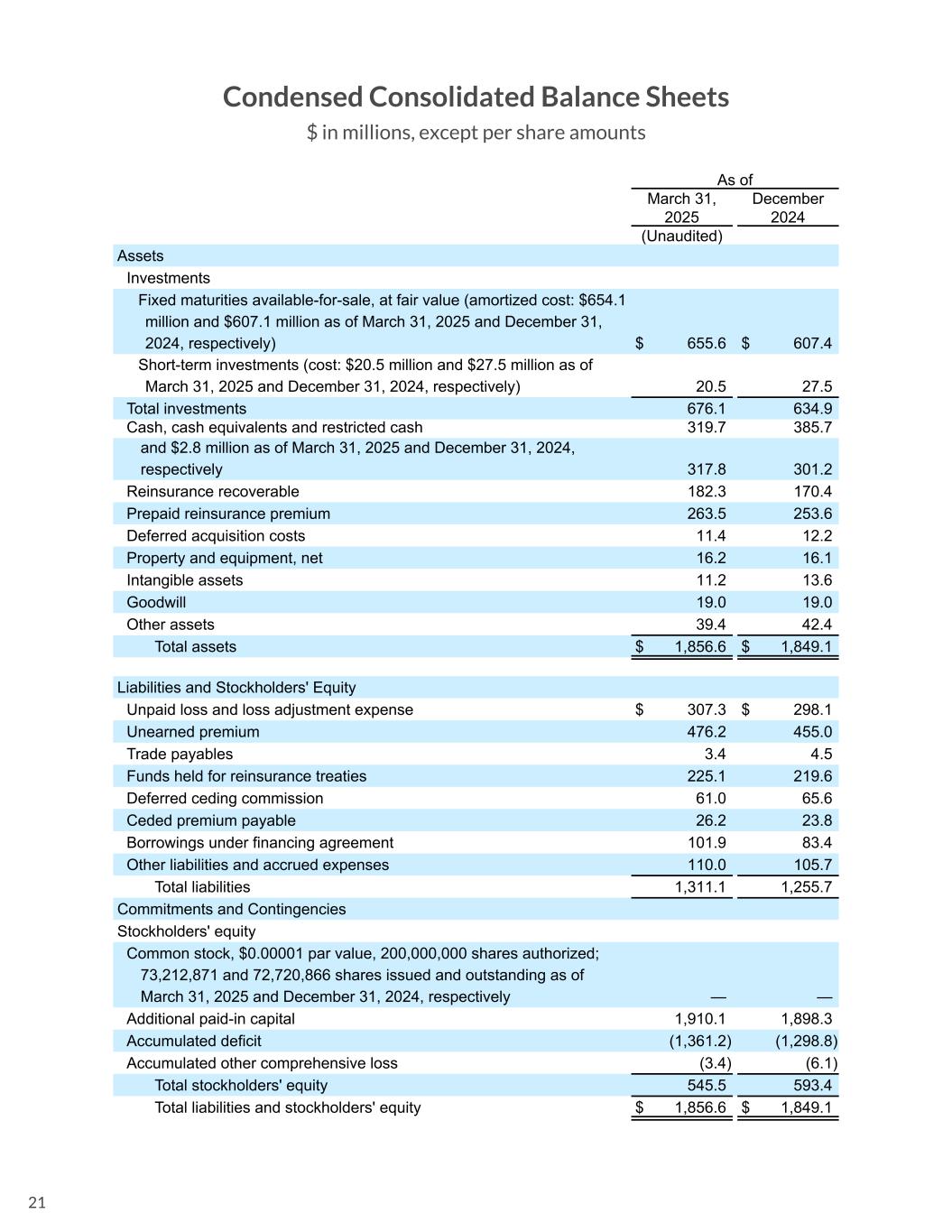
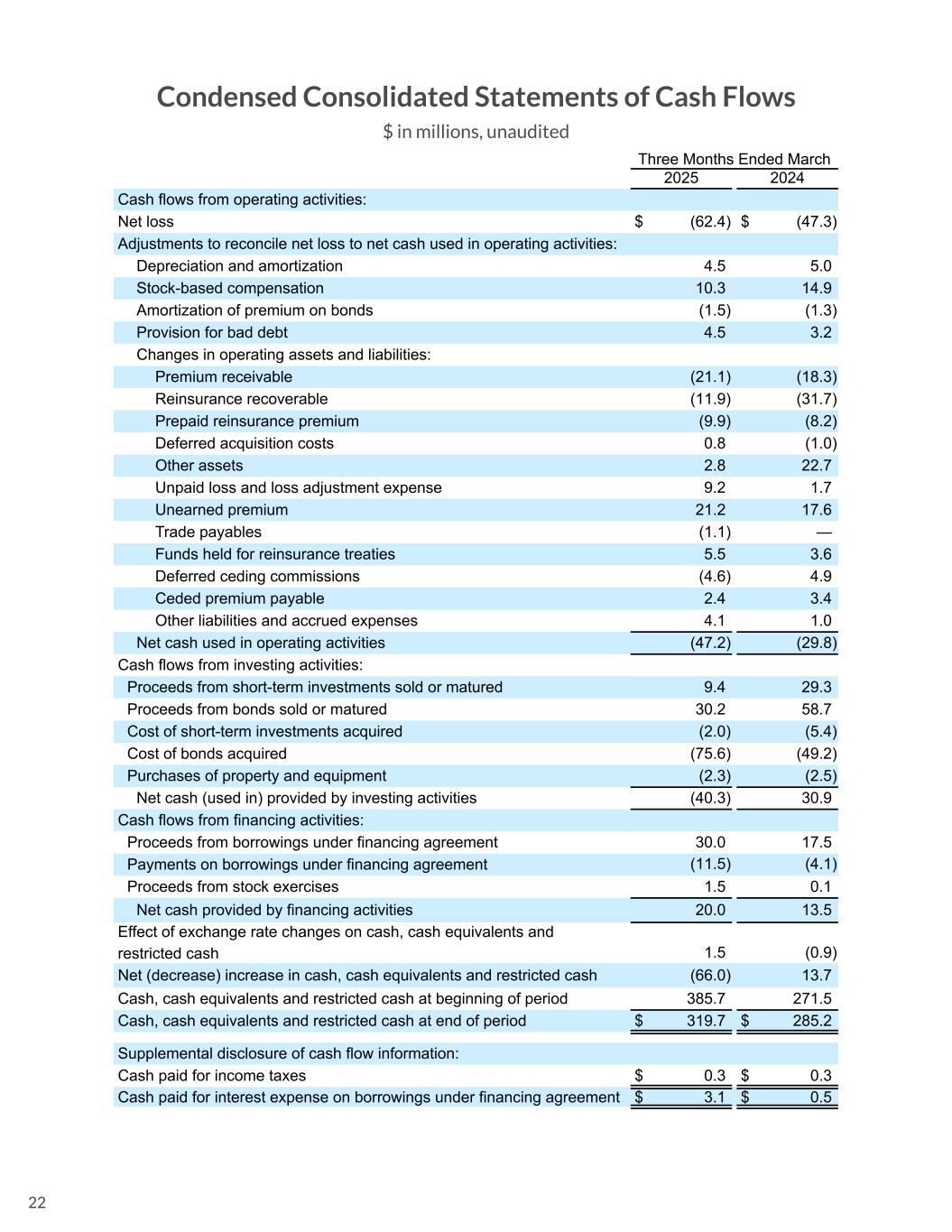
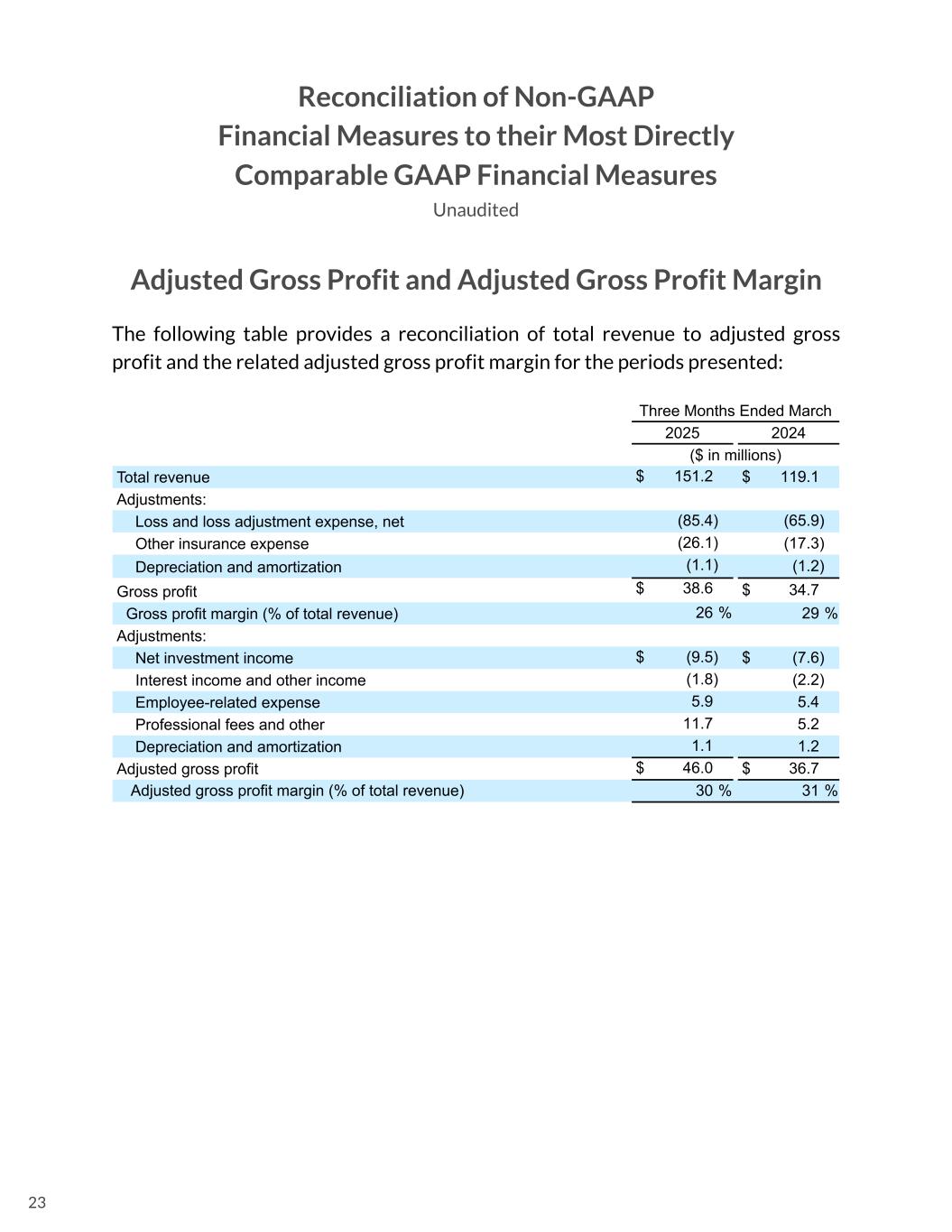
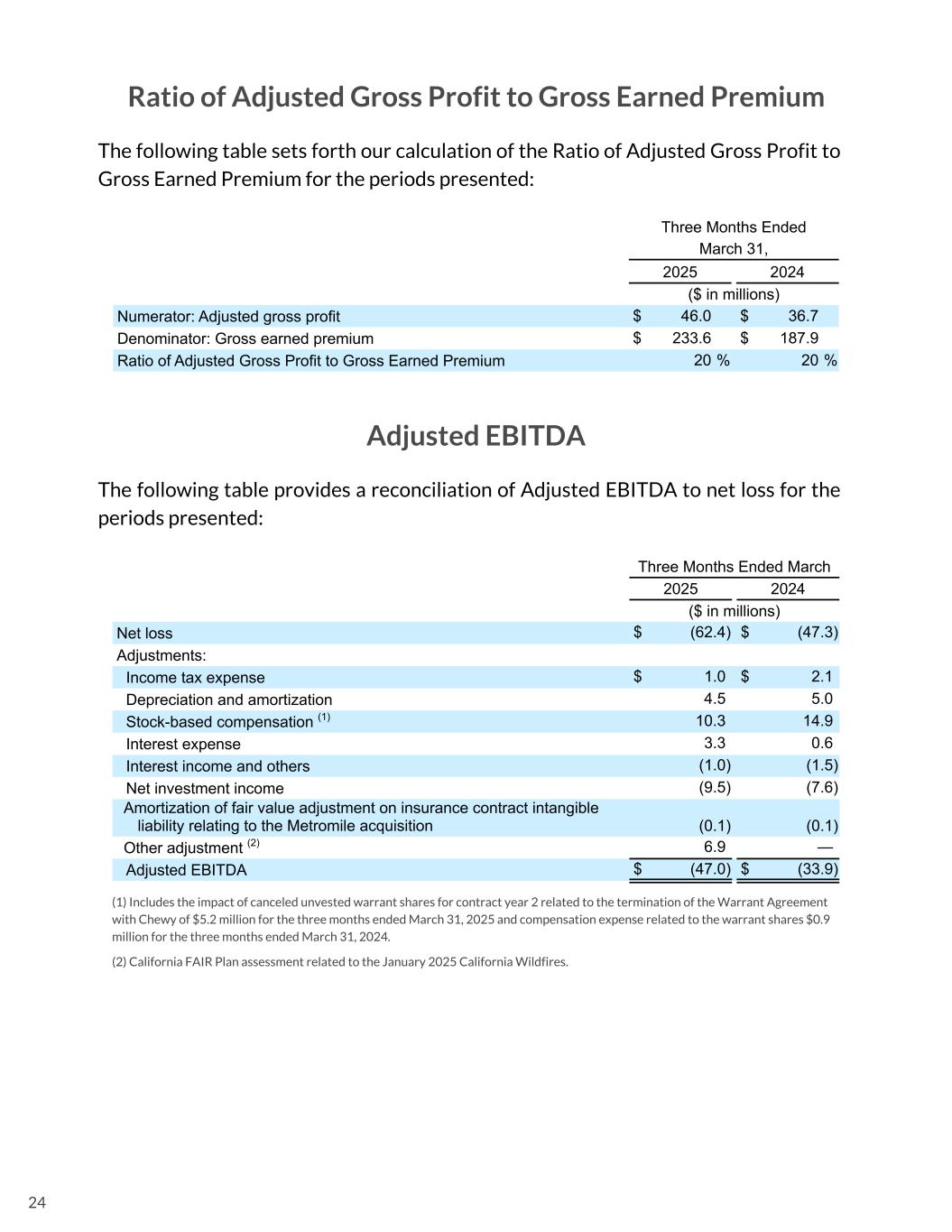
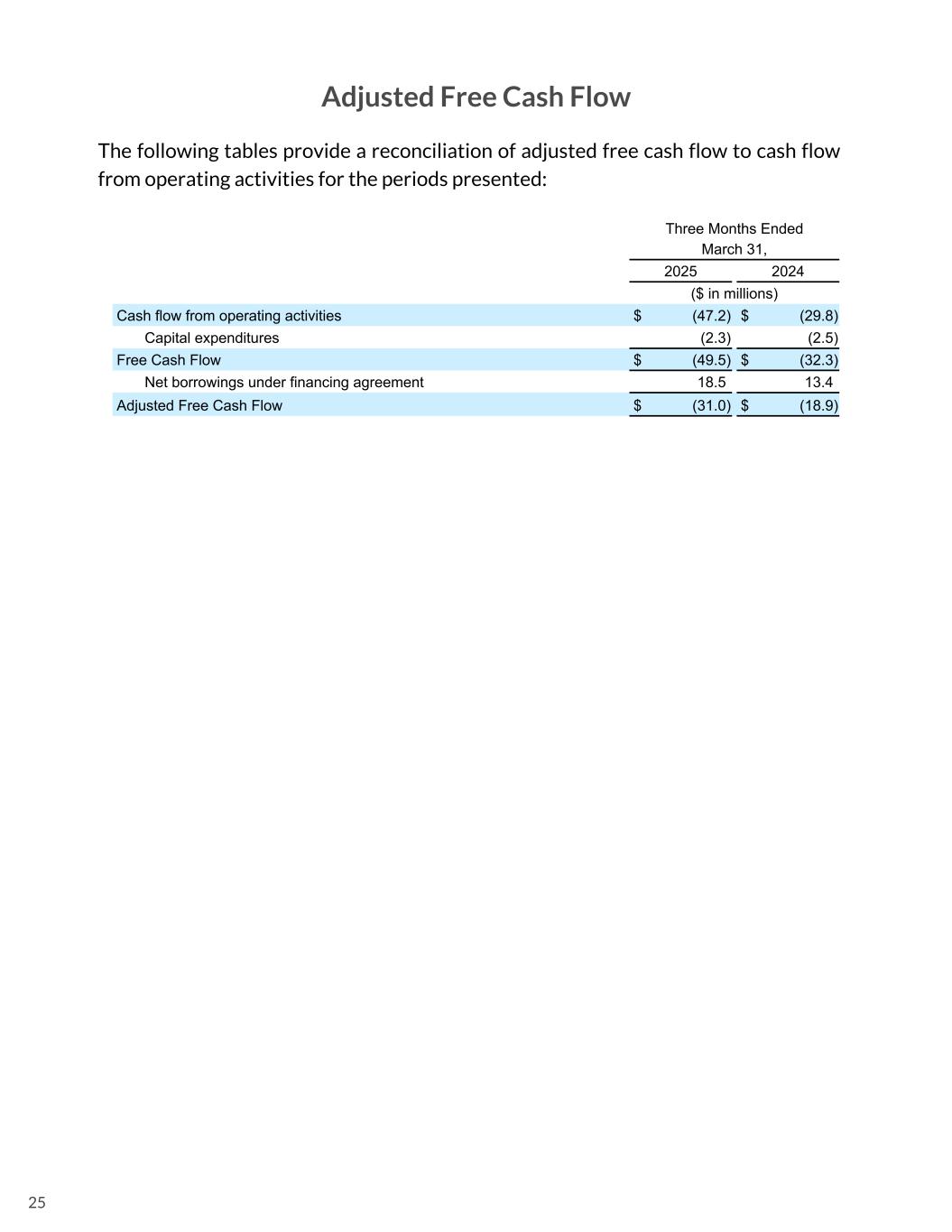
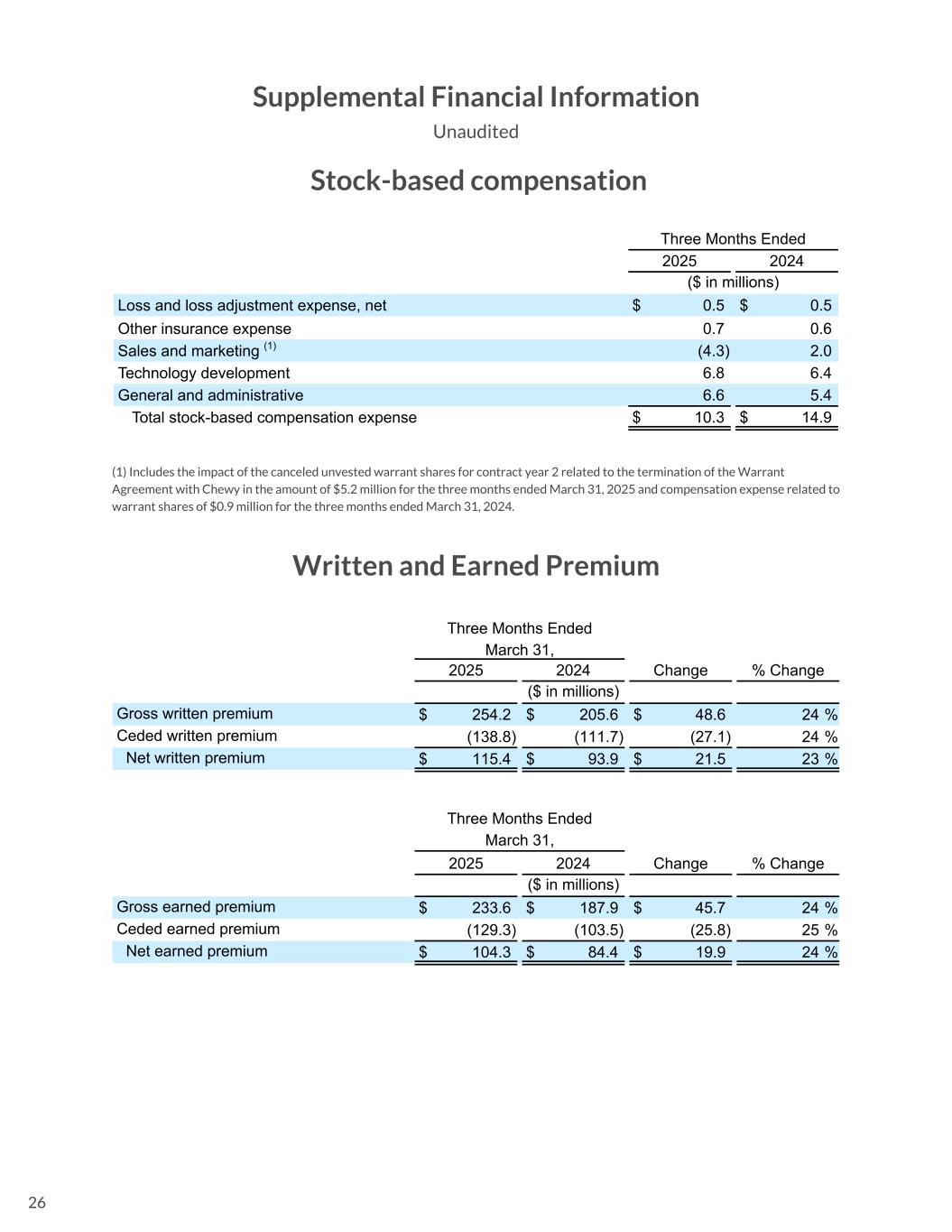
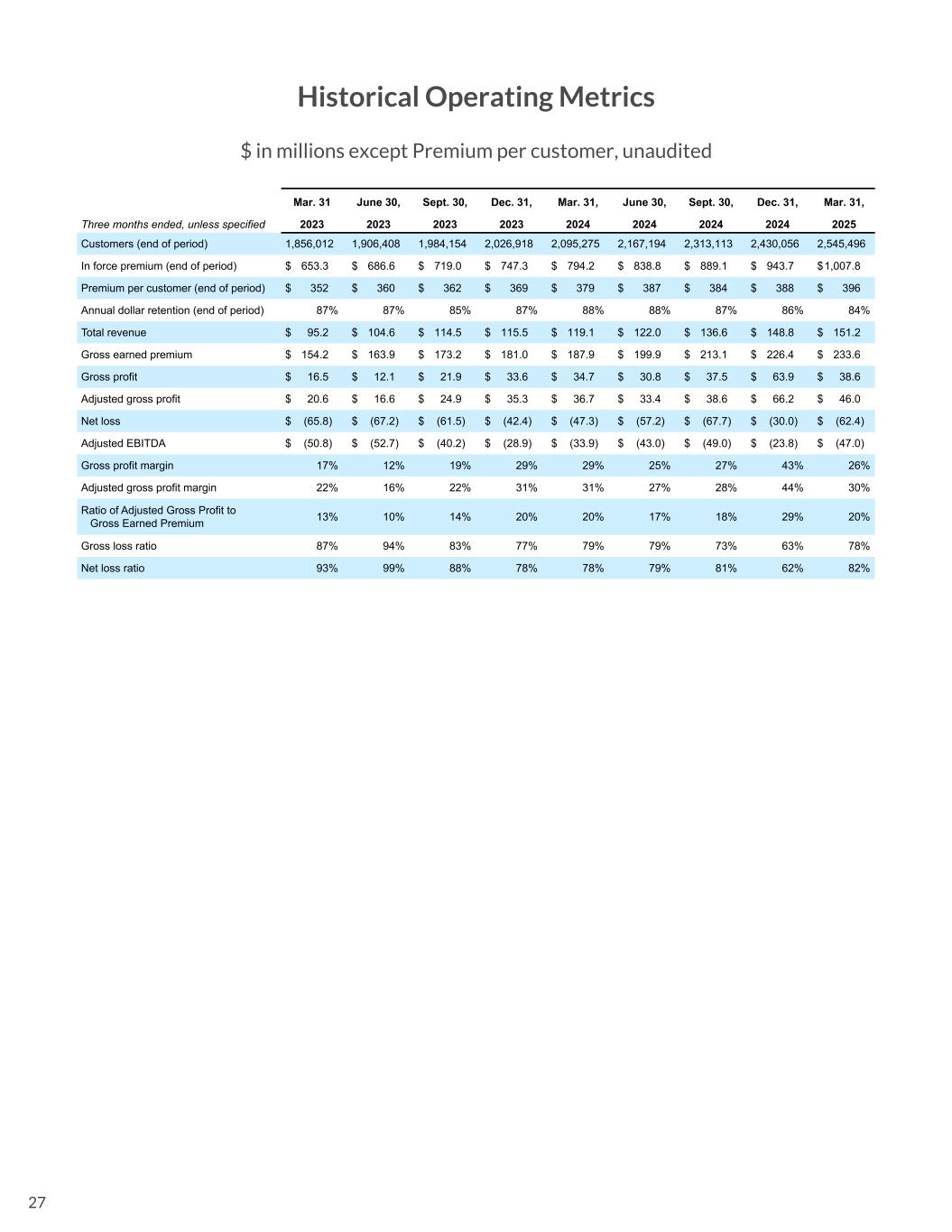
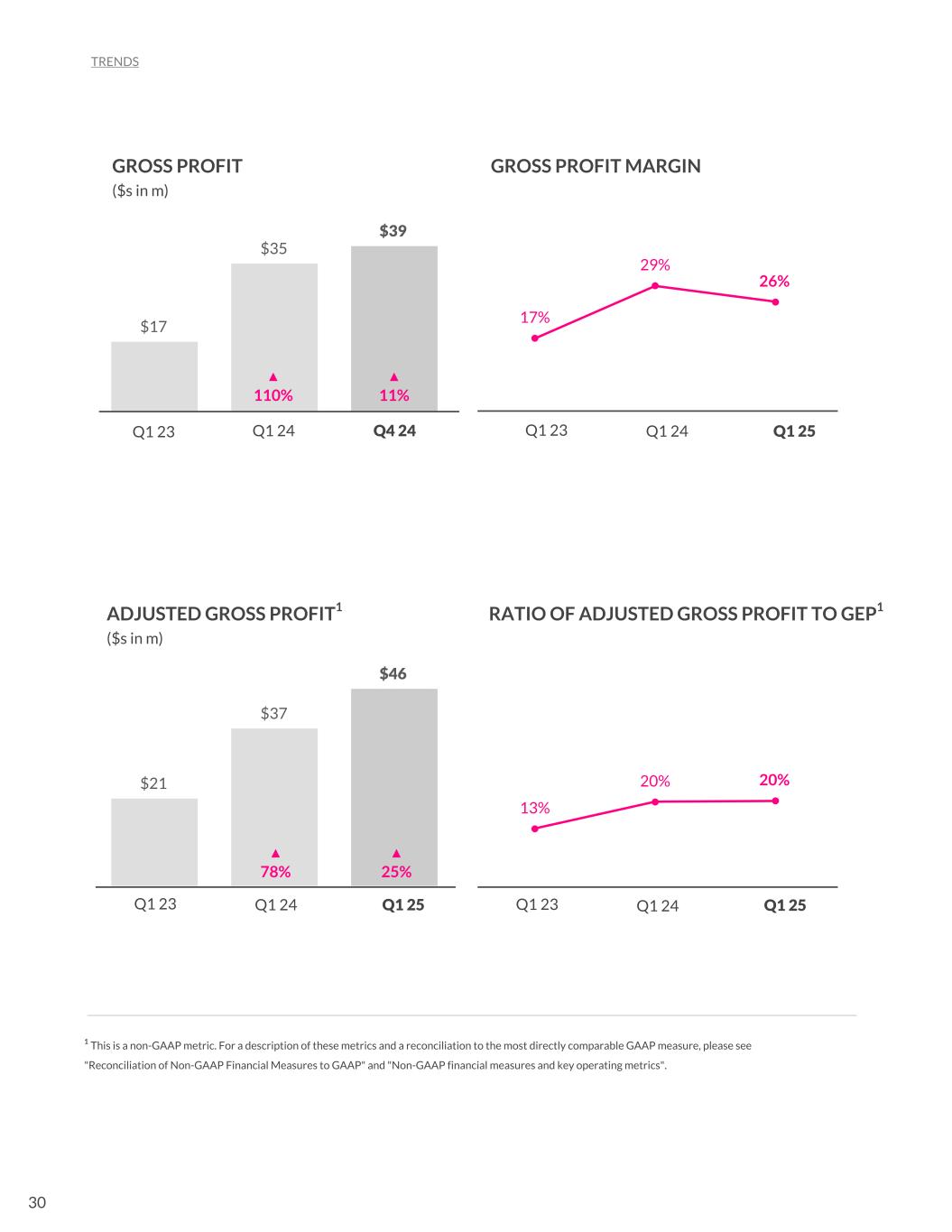
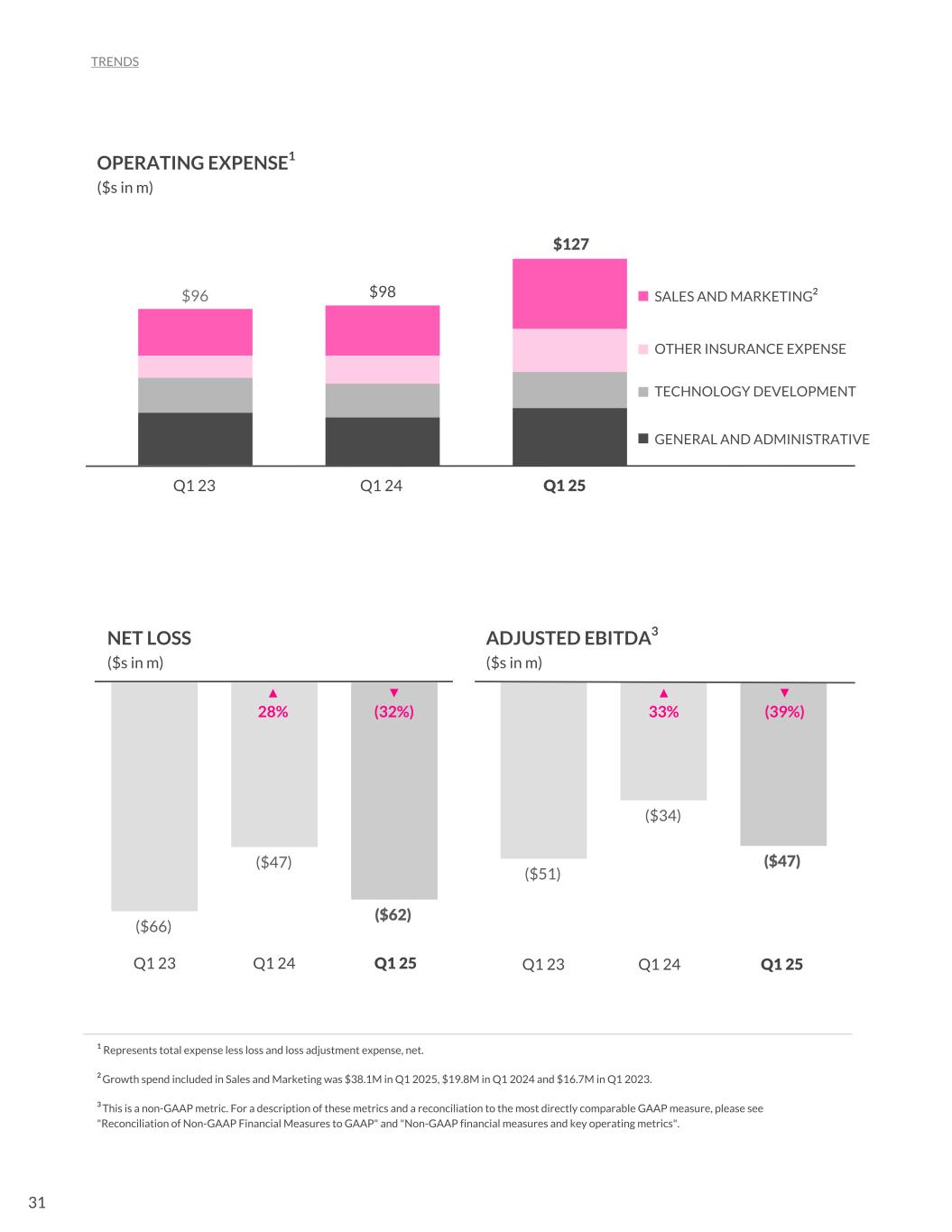
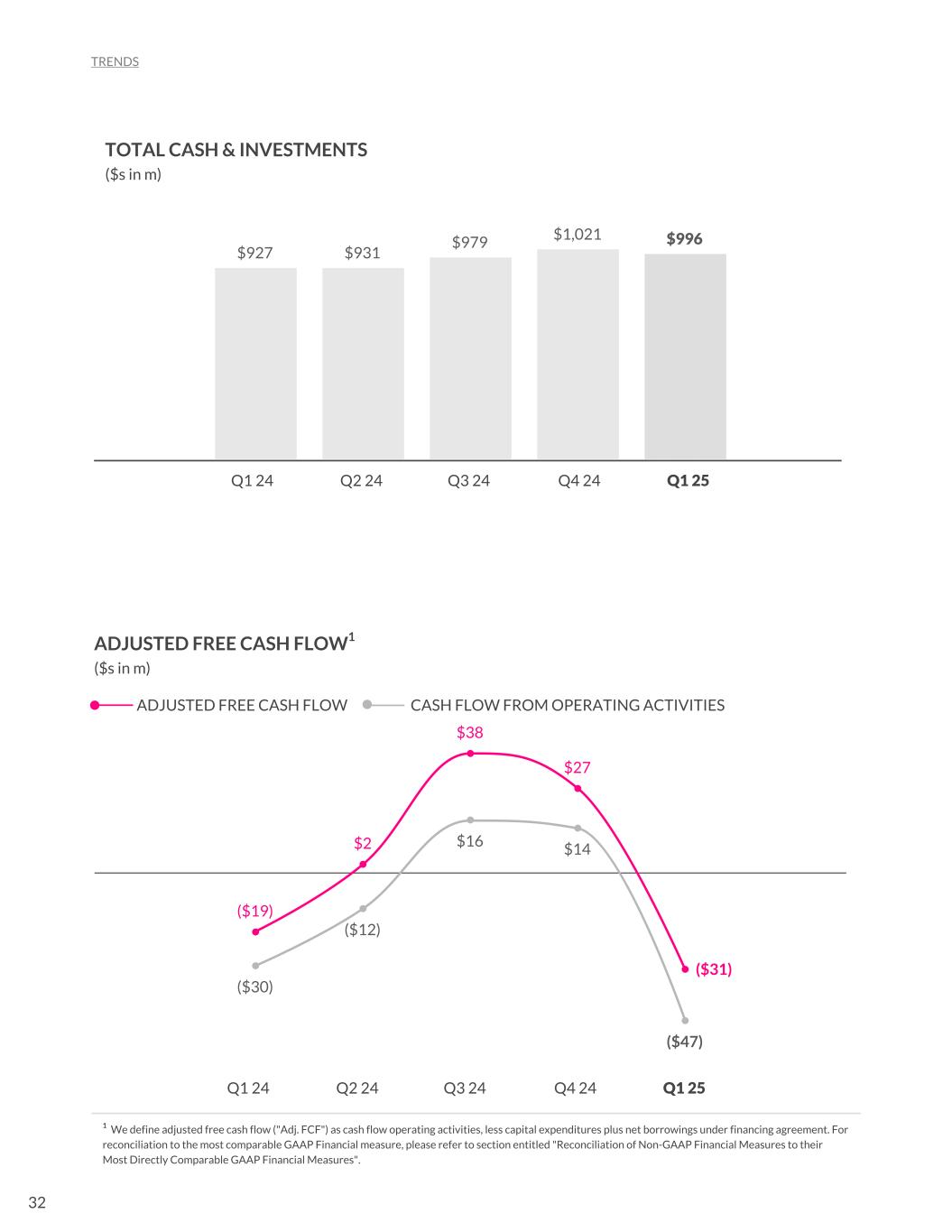
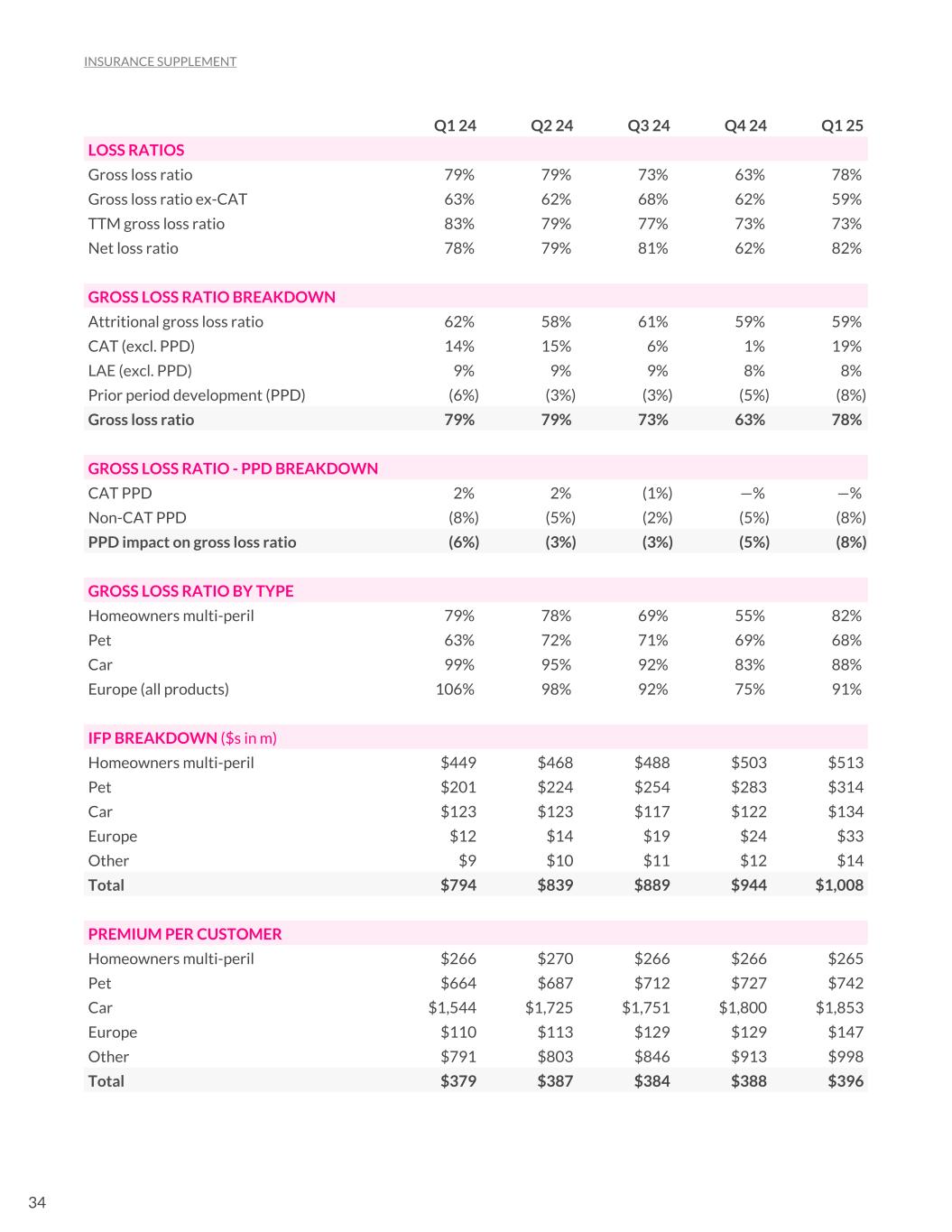
Great. Thanks, Michal. I'll review highlights of our Q1 results and provide our expectations for Q2 and the full year 2025, and then we'll take some questions. In short, our Q1 financial results were very solid, and our experience with regard to the California wildfires proved our conservative underwriting approach, a healthy product mix, and the protection afforded by a thoughtful reinsurance strategy. In-force premium grew 27% to just above $1 billion, while customer count increased by 21% to 2.5 million. Premium per customer increased 4% versus the prior year to $396, driven primarily by rate increases. Annual retention, or ADR, was 84%, a 4% decrease since this time last year, and down slightly versus 86% in the prior quarter. In broad strokes, we saw an unfavorable impact to ADR from our continuing effort to improve the profitability of our home book of about 4 points, about 2 points unfavorable from our pay-per-mile car product, and about 2 points favorable from the rest of the book. We expect ADR to normalize and resume improvement over the coming quarters. Gross earned premium in Q1 increased 24% as compared to the prior year to $234 million, in line with IFP growth. Revenue in Q1 increased 27% from the prior year to $151 million. The growth in revenue was driven by the increase in gross earned premium, a slightly higher effective seating commission rate under our quota share reinsurance, and a 26% increase in investment income. Our gross loss ratio was 78% for Q1, as compared to 79% in Q1 2024 and 63% in Q4 2024. Excluding the total impact of CATs in Q1, which was roughly 19 percentage points, our gross loss ratio ex-CAT was 59%. Total gross prior period development had a roughly 8% favorable impact, with a negligible portion of that driven by CAT. We saw this favorable prior period development across all products, with the exception of pet, with the largest impact in our homeowners' multi-apparel business. On a net basis, prior period development had a roughly 10% favorable impact, of which 1% was from CAT. Trailing 12 months or TTM loss ratio was about 73%, or 10 points better year-on-year and stable sequentially. All of these insurance metrics and more are included in our insurance supplement that you'll find at the end of our shareholder letter. Gross profit increased 11% as compared to the prior year, driven primarily by premium growth offset by the California FAIR Plan impact, while adjusted gross profit increased 25%, driven primarily by premium growth. Operating expenses, excluding loss and loss adjustment expense, increased 29% to $127 million in Q1 as compared to the prior year, driven primarily by an increase in growth spend and the impact of the FAIR plan Assessment. Other insurance expense grew 51% in Q1 versus the prior year, driven primarily by the impact of the FAIR plan assessment. Total sales and marketing expense increased by $13 million or 42% primarily due to increased growth spend of approximately $18 million, offset by a stock compensation benefit related to the Chewy warrant termination. Total growth spend in the quarter was $38 million, nearly double the $20 million in the prior year quarter. We continue to utilize our synthetic agents growth funding program and have continued to finance 80% of our growth spend. As a reminder you'll see 100% of our growth spend flow through the P&L as always while the impact of the growth mechanism is visible on the cash flow statement and the balance sheet. And the net financing to date is $102 million as of the end of the quarter. Technology development expense was up just 5% year-on-year to $22 million, while G&A expense increased 20% as compared to the prior year to $36 million, primarily due to the growth in interest expense from our financing agreement. Personnel expense and headcount control continue to be a high priority, and total headcount is up just slightly, about 2% as compared to the prior year at 1,260, while the top line IFP, as a reminder, grew fully 27%. Net loss was $62 million in Q1, or a loss of $0.86 per share as compared to a net loss of $47 million or a $0.67 per share loss in the prior year. Adjusted EBITDA loss was $47 million in Q1 versus a $34 million EBITDA loss in the prior year. Our total cash, cash equivalents, and investments ended the quarter at approximately $996 million, up $69 million versus Q1 of last year, and down $25 million versus the prior quarter, primarily driven by the impact of the wildfires. With these metrics in mind, I'll outline our specific financial expectations for the second quarter and for the full year 2025. From a growth spend perspective, we expect to invest roughly $45 million in Q2 to generate profitable customers with a healthy lifetime value. This amount will likely increase slightly in Q3 and then may decline somewhat in Q4 to a level similar to the Q1 growth spend rate, totaling roughly $170 million for the year. This expected quarterly spend pattern is fairly similar to prior years. For the second quarter of 2025, we expect in-force premium at June 30 of between $1.061 billion and $1.064 billion. Gross earned premium between $246 million and $248 million. Revenue between $157 million and $159 million. And an adjusted EBITDA loss of between $44 million and $41 million, stock-based compensation expense of approximately $16 million, and a weighted average share count of approximately 73 million shares. For the full year 2025, we expect in-force premium at December 31 of between $1.203 billion and $1.208 billion. Gross earned premium of between $1.028 billion and $1.031 billion. Revenue between $661 million and $663 million. And adjusted EBITDA loss of between $140 million and $135 million. Stock-based compensation expense of approximately $60 million, and a weighted average share count of approximately 74 million shares. And with that, I would like to hand things back over to Daniel to answer some questions from our retail investors. Daniel?
Thanks Tim and we'll start with questions from the SAY platform, retail investor questions. And a caller asks about our EBITDA losses, which have been narrowing and asks that we elaborate on the timeline for reaching EBITDA profitability and what levers will drive this. So thanks for that question, and happy to elaborate on this for a moment. We've been guiding to adjusted EBITDA breakeven by year's end 2026 since the very first Investor Day, back in 2022. We reiterated that guidance in our 2024 Investor Day and we continue to reiterate our expectation to be adjusted EBITDA positive by Q4 of next year, with 2027 being our first full year of positive adjusted EBITDA. The unchanging message across the years, I think, speaks to the grounded nature of our multi-year plan and to the execution that has consistently delivered a plan. The business is doing exactly what we expected it to do all along. In important ways you can set your watch to it, and that's because the clockwork here is pretty simple. As we continue to grow the business, we generate ever more gross profit. At the same time, thanks to AI, we're seeing no commensurate increase in our fixed costs. With every turn of the flywheel, gross profit comes closer and closer to eclipsing operating costs. And that means the business is getting closer and closer to profitability. This progression has proven reasonably predictable, and we have a fairly good handle on its levers, giving us confidence that we're only a few quarters from crossing that all-important line. Also remember that our underlying business is already profitable. Last quarter we disclosed that if we had opted not to spend on growth, the quarter would have been EBITDA profitable. As it is, 2024 was cash flow positive, a reliable precursor to EBITDA profitability, particularly given the dynamics, the cash flow dynamics in the insurance space. I encourage you to have a look at Page 4 in our Shareholder Letter, and I think you will see that highlight and give some visuals to the trajectories that I just touched on. The next question comes from another caller, who's asking about cross sales, particularly to Car, and what rates we can expect to see in the coming years. So thanks for that. Certainly a central area of focus over the coming months and quarters in years. If we zoom out to a multi-year view, our ambition is to drive to industry-leading, multi-line customer rates. Large incumbents typically see levels in the 30s and 40s, while some of the direct players are in the mid-20s. We see it as a major opportunity for us with our existing customer base spending over $3 billion on car insurance. We expect to be tapping into that and to continue to do so as our customer base grows. I think it's reasonable to assume that we can approach the multi-line customer levels in the teens on a five-year horizon and ultimately to reach parity with the rest of the industry. It's important to clarify that our model is not dependent on this acceleration, and in fact, in our modeling, we project to cross EBITDA and net income breakeven while multi-line customer rates are still expected to be in the single digits. The biggest driver of cross-sell acceleration is state coverage expansions, along with leveraging telematics insights to offer unbeatable prices to the best drivers. If we isolate specific states where we have a full suite of products available, we're seeing multi-line rates that are nearly double the 5% level currently seen across the book at the moment, so closer to 10%. This gives us confidence that in the coming years we'll be able to replicate that everywhere. Cross-sales have another impact that dovetails nicely into the previous question. Over time, as cross-sales ramp up, CAC-free growth is a powerful lever that benefits our profitability trajectory, allowing us to moderate the growth spend that would otherwise be required to sustain a target of 30-plus on CAGA. Thanks for that question. Another caller asks about the tariffs and geopolitical tension and whether that will impact our expectation of being in the 30s in terms of growth, and how much confidence we have notwithstanding that. I think I touched on this a bit already in my opening remarks, but our business has proven highly resilient over the past few years. So based on everything we know today about shifting microenvironments, I am pleased to reiterate our 30% plus growth rate in 2026 and beyond. Our sector is inherently resilient, fairly recession-proof, and not inherently exposed to global trade, certainly much less than many other sectors. The one thing we do need to monitor is inflation, and we're keeping a close eye on that because it has the potential to impact our business if it resurges. Our business is also quite diversified these days across products and geographies, not all of which are impacted by tariffs. So auto parts is the obvious place to look, but in pet insurance, renters insurance, home insurance, and certainly our European business, which is growing rapidly, those remain largely immune. Okay, and with that, I'll pass the mic back over to the moderator and we'll take some questions from the street.
Operator
Thank you. Our first question today comes from Jack Matten from BMO. Please go ahead, Jack. Your line is now open.
Speaker 5
Good morning. Just one on the subrogation benefit that you recorded from the California wildfires. Any other details you can provide on that? Did you sell your subrogation rights? Or is there the potential for additional recoveries in coming quarters?
Sure, good morning. So the subrogation was reasonably interesting. If you look at the general impact of the California fires, there were primarily two events, two major events, the Palisades fire and the Eaton fire. The subrogation market and opportunity for us was much more distinct for the Eaton fire than it was for many other fires. We did sell those rights at a pretty healthy ratio, and you'll see that in the detailed disclosures, something on the order of an $8 million impact there. There is an opportunity to recover more over time. If the losses exceed a certain percentage, for example, in the Palisades fire, there is some opportunity. But I would expect that a substantial amount of the subrogation is already represented in the numbers.
Speaker 5
Got it. Thank you. And then maybe just one on the FAIR plan assessment in California. It’s not made a plan to recoup any of that with rate increases or supplemental fees. I think insurers are able to request to recoup half of the initial assessment. So just wondering how you're thinking about that.
The plan is yes. We do expect to recoup over time. There are a number of rules and requirements around how you do go about that. And there's also potential customer impact that we're thoughtful about. But we are proceeding as if we'll be able to recover as much as is allowed, which is a 50% limit. Some will come in year one, but there's really a two-year period over which all of this will be fully resolved. So we will proceed full speed ahead and look to recover all of that.
Operator
Thank you. The next question comes from Jason Helfstein from Oppenheimer. Please go ahead. Your line is now open.
Speaker 6
Thanks, guys. A few questions. One, can you give us the impact of the wildfires on gross profit in the quarter? So it’s housekeeping. Then on the tariff question, obviously, I saw your commentary. So just, are you assuming any impact in the full year? Is there any conservatism or are you just kind of trending the business as is and will have to adjust as we go? And then maybe give us a little more detail on Car, which states will be you highlighted Colorado, but over the next 12 months, which states will be biggest for you and where should we pay attention? Thank you.
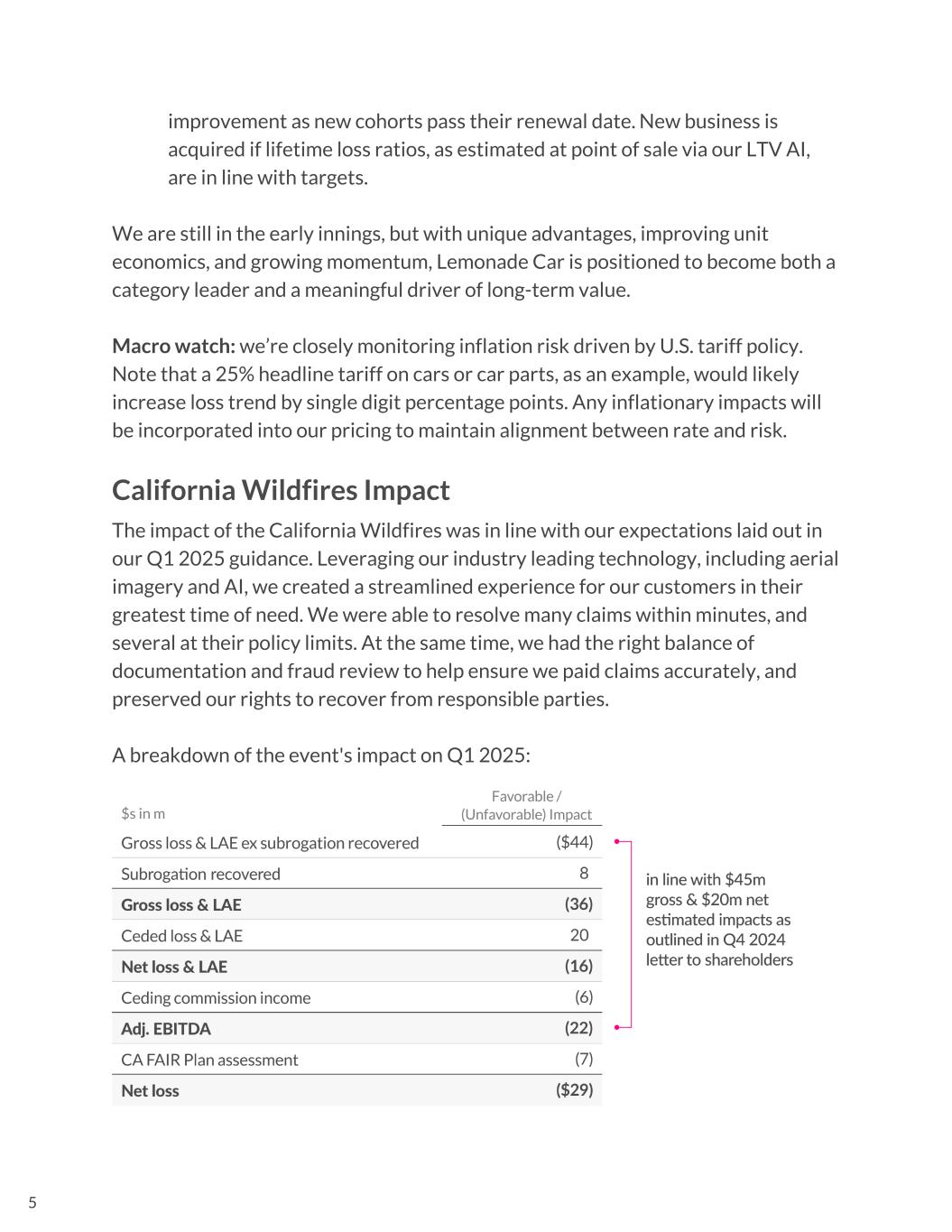
Sure, so maybe I'll take the first two California and on the tariff impact and I'll turn it to Daniel maybe on some of the Car thoughts. So there's a nice little table in the letter from today that I would point everyone to that breaks down the California wildfire impact as best we could within the disclosure restrictions. You'll see a line item there that goes from a top line to a bottom line impact essentially. It lines up quite nicely with what our estimate was when we gave our prior guidance. Our initial estimate was about a $45 million gross impact that turned out to be about $44 million. So right in line, we estimated the EBITDA impact, which was also at the time the net loss or net operating loss impact of about $20 million that came in at about $22 million negative impact. And then I've added to that to get to the true eventual net income impact is the California FAIR Plan assessment amount, which is also detailed in that table. We were not aware of that, of course, at the time, because it had not been issued yet. So I think from a gross profit impact, I would look at that. Total net income is probably the best proxy, but the detail is there in the letter. Regarding the tariff expectation or impact, we did reiterate our fuller guidance for growth. We actually upped a couple of our key metrics below the top line, partly to take account of the better-than-expected result in Q1. Tariffs are a bit tricky to understate what we're all kind of living through. Good reminder though is that, obviously, the tariff structure has been a little bit volatile and is likely to change or could potentially change. Nevertheless, a tariff, for example, on car parts or cars in general of say 25%, by the time it works its way through the math, the percent of claims affected, the percent of your business that's domestic versus foreign, and a number of other factors, you get from a headline number of 25% down to typically single-digit impacts, which is not zero. We are able to reiterate our growth metrics, assuming that there is a modest headwind, but that's an inflation impact that we have typically taken into account. We'll adjust that as we go, but we're quite comfortable with where we are now based on what we know for the full year and we'll come back in three months and update that. Daniel, do you have any maybe thoughts to add on the car front?
Yes, gladly. Hi Jason, good morning. You asked where to pay attention regarding Car and geographic expansion. We're certainly paying very close attention to car in preceding and coming quarters. We've spoken in the past about the kind of tinkering that we’re doing, but in today's letter, we put some numbers to what that tinkering is yielding—a 60% increase in conversion and a 100% increase in cross-sales over recent quarters. So we're certainly seeing a very strong ROI from all the experimentation that we're doing. We want to continue with that. We've still got quite a few irons in the fire, and we'll work through those in the coming months and quarters to further refine the proposition. The true growth in Car is already happening. It's accelerating, and we spoke about how it is now outpacing, for the first time, the rest of our business this quarter. We are putting full pedal to the metal on this and all other car-related aspects. We are still, after the Colorado launch, only available to 40% of the nation's customers so there's a lot of headroom there and we will focus on geographic expansion once we feel confident about the stability of our current models.
And just for clarity on my comments regarding gross profit, all points were related to GAAP gross profit. We also have an adjusted gross profit number that would differ slightly due to its definition, which would exclude the impact of the FAIR plan, resulting in a modest difference in the overall impact of the fires.
Operator
Thank you. The next question comes from Bob Huang from Morgan Stanley. Please go ahead, Bob, your line is now open.
Speaker 7
Good morning. So maybe the first one is on the Car business. I think one thing you mentioned is that lifetime loss ratio should be better than the current loss ratio, just given that once they start to renew, the LTV equation really should pick up. Can you maybe help us think about how we should assume a retention rate for your current cohort of business in the Car side? And also, what's kind of the driver for that retention rate?
So I would think of the retention rate generally as in line with the rest of our business, but adjusted for a couple of nuances. The Car business has gone from basically a flat or no growth suspended approach to flattening and now growing. By definition, when you grow at a more rapid pace, it typically results in what we would call a new business penalty, where the short-term retention aspects and the loss ratio experience are slightly worse than you would typically expect over the lifetime. As we increase and accelerate the investment there, you'll continue to see slightly lower short-term retention rates for Car than you would otherwise. On the other hand, you see a consistent uptick or improvement at renewal. Car policies renew at six months, as you know, versus 12 months, and at six months we typically see something on the order of a double-digit improvement in terms of the loss ratio, and also some improvement in retention rates. I think you'll see this normalized as growth acceleration continues into the later part of this year and into next year. We don't disclose exact retention rates by product, so I cannot go much further into it there, but that's generally how we think about the business.
Speaker 7
Okay, so that’s helpful. It does sound like once you bundle the product and cross-sell, that the retention rate should be relatively higher than industry.
I would not recommend isolating tariffs as the sole driver. It's just one of many factors with high confidence or uncertainty for our trajectory. One quarter into the year doesn’t give you too much information about Q3 and Q4. So, when you look back at the historical performance, we’ve been moderately cautious about what we see in the back half of the year. This becomes a different story when we report Q2; we’ll have majority of information for the year. If tariffs disappear, go to zero, it would certainly be a benefit, but it’s not the only risk in the business. Our guidance is very much what we expect, balanced with some conservativeness around areas of uncertainty. We’ve approached guidance similarly for several quarters.
Speaker 7
Okay, thanks. Really appreciate it.
Operator
Thank you. The next question comes from Andrew Kligerman from TD Securities. Please go ahead, Andrew. Your line is now open.
Speaker 8
Hey, thank you and good morning. So you talked a little bit on the call about higher growth spend for customer acquisitions. I'm curious about the components of that, specifically around the change in online ad spending. Has pricing gone up? Could you provide a little color around how pricing is in your ad spend? And then secondly, could you share where you advertise online? Where do you play most?
Sure. In broad strokes, we’ve seen no real change in overall costs. We're seeing a similar level of efficiency compared to prior quarters or the prior year. The channels tend to change in the long tail. If you rank distribution channels from high to low, you'd see names like TikTok, YouTube, and Podcasts, which are the usual suspects. However, the long tail changes quite a bit, and that's where our growth team earns their keep—by finding and leveraging channels that are less known but highly productive. That does tend to change a lot. We also utilize an AI LTV model that functions in real-time to manage and evaluate the expected lifetime value of each customer effectively.
We are all in on AI and digital systems. We believe that our ultimate competitive advantage is rooted in our ability to quantify risk, AI's ability to quantify risk, delight consumers, and reduce costs. This is only made possible through AI, and we can see clear evidence of this in our results. We’re seeing reductions in real underlying cost structures while our book has nearly doubled. I do not believe others can achieve that same operating leverage as we have.
Speaker 8
Thank you. I appreciate that.
We're not predominantly focused on rate adequacy. We've got the rates we need for the overall book level, and mature customers are achieving target loss ratios. The ongoing experiments are about refining pricing based on individual behaviors, improving conversion, retention, and profitability. We’ll be doing a lot more of that in coming months.
Operator
Thank you. The next question comes from Katie Sakys from Autonomous Research. Please go ahead. Your line is now open.
Speaker 9
Thank you. I want to circle back to the IFP guide, which for the full year looks like it hasn't changed despite significantly better-than-expected results this quarter. I was wondering if you could walk us through your thinking there and any time considerations to keep in mind as the year progresses. And sort of as an addendum, how much of the 28% growth that you guys are guiding to for the full year is expected to come from the Car product?
Sure. In terms of overall growth, IFP is the best direct measure of that. We grow at a pace of our own choosing, and the pace we spend drives that growth number. Our strategy balances what happened in Q1 with a long-term growth goal. There are uncertainties with external factors, and we are managing our bottom line in parallel to top-line growth. While we could grow faster, doing so would impact the dynamics of the P&L. In terms of Car, we haven’t provided a specific number for good reason. We're opportunistic, and our LTV models tell us where to focus and how fast. However, we expect Car to continue growing at a faster pace than the rest of the book for the remainder of the year.
Operator
Thank you. The next question comes from Matthew O'Neill from FT Partners. Please go ahead, Matthew. Your line is now open.
Speaker 10
Hey, this is Zach. Thanks for taking the question. I just wanted to ask about how widely rolled out the incorporation of telematics has been and what the limiting factors are for a broader rollout?
Hey Zach. Yes, it's not very broadly rolled out. We think with every experiment we’re learning more and building towards a stable point for broader rollout. It’s in a few states now, and we will progress once we feel we have reached that stability.
Operator
Thank you. The final question comes from Tommy McJoynt from KBW. Please go ahead, Tommy. Your line is now open.
Speaker 11
Hey, good morning, guys. It definitely sounds like the cross-sale opportunities are increasingly important for gaining some operating leverage around the growth spend. Perhaps you could share what percentage of the new car sales that you guys are generating are cross-sales from existing Lemonade customers versus new customers?
In terms of trends, more growth is coming from cross-sells, especially from Car. About half of our new sales in Car are now coming from existing customers, which is an increase compared to a third previously. There remains plenty of room to grow our efficiencies in this area.
Speaker 11
Got it. And then just to clarify on the Chewy partnership, was that just the expiration of the warrants? Was that separate from what's going on with the business relationship? Just to clarify what happened there?
Chewy is all good news. The Chewy folks are terrific. We love everything they're doing, and the partnership is thriving and generating many policies for us. The terminated contract was a warrant structure, initially we chose primarily equity for cash preservation reasons. We’ve decided to switch back to a cash structure, so we terminated the warrant agreement. Everything else from a commercial perspective is stable and strong.
Operator
Thank you. That concludes our Q&A session for today, and that does complete today's call. Thank you all for joining. You may now disconnect your lines.