Operator
Hello everyone, my name is Karen. I'll be your conference operator today. At this time, I would like to welcome everyone to the New Jersey Resources Fiscal 2025 Second Quarter and First Half Financial Results Conference Call. All lines have been placed on mute to prevent any background noise. After the speaker's remarks, there'll be a question and answer session. If you'd like to ask a question during this time, simply press star followed by the number one on your keypad. If you'd like to withdraw your question, just press star once again. Thank you. I would now like to turn the call over to Adam Pryor, Director of Investor Relations. Please go ahead.
Thank you. Welcome to New Jersey Resources fiscal 2025 second quarter conference call and webcast. I'm joined here today by Steve Westhoven, our President and CEO, Roberto Bell, our Senior Vice President and Chief Financial Officer, as well as other members of our senior management team. Certain statements in today's call contain estimates and other forward-looking statements within the meaning of the securities laws. We wish to caution listeners of this call that the current expectations, assumptions, and beliefs forming the basis of our forward-looking statements include many factors that are beyond our ability to control or estimate precisely. This could cause results to materially differ from our expectations as found in slide two. These items can also be found in the forward-looking statements section of yesterday's earnings release, furnished on Form 8K and in our most recent Forms 10K and 10Q as filed with the SEC. We do not, by including this statement, assume any obligation to review or revise any particular forward-looking statement referenced herein in light of future events. We will also be referring to certain non-GAAP financial measures, such as net financial earnings or NFE. We believe that NFE, net financial loss, utility gross margin, financial margin, adjusted funds from operation, and adjusted debt provide a more complete understanding of our financial performance. However, these non-GAAP measures are not intended to be a substitute for GAAP. Our non-GAAP financial measures are discussed more fully in Item 7 of our 10-K. The slides accompanying today's presentation are available on our website and were furnished on our Form 8-K filed yesterday. Steve will begin with this quarter's highlights, beginning on Slide 4, followed by Roberto, who will review our financial results. Then we will open the call for your questions. With that, I'll turn the call over to our President and CEO, Steve Westhoven. Please go ahead, Steve.
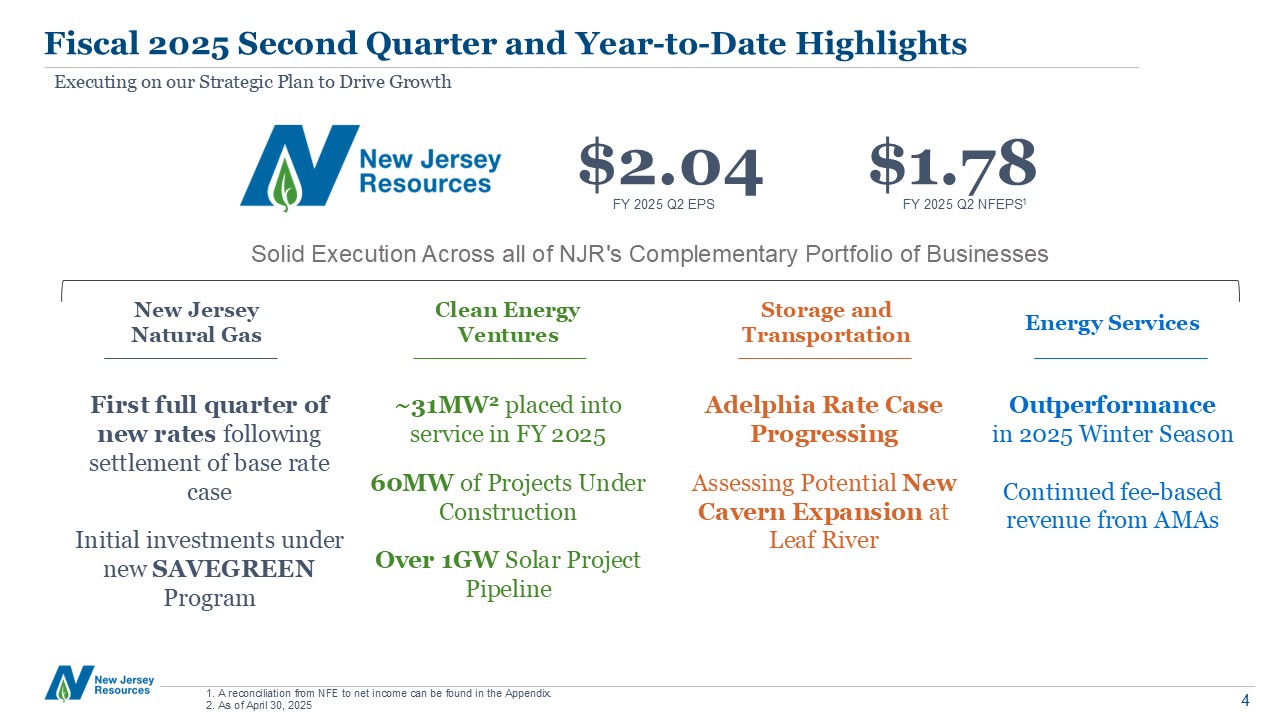
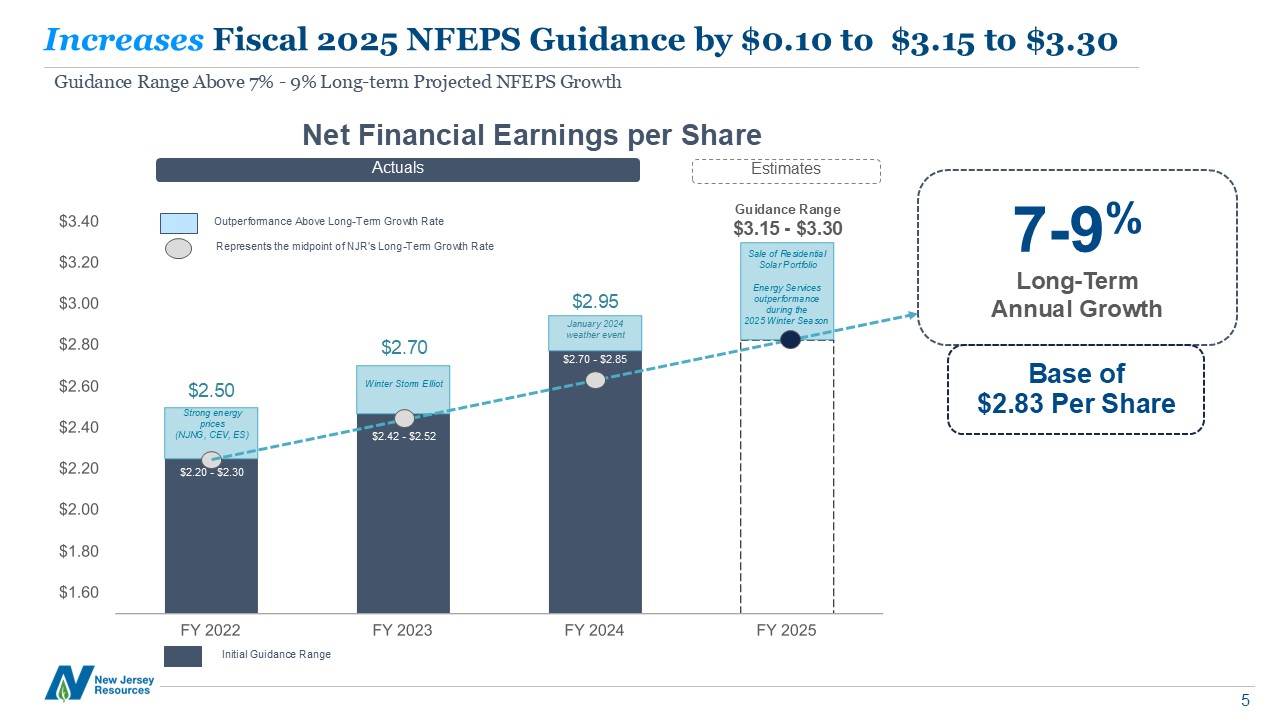
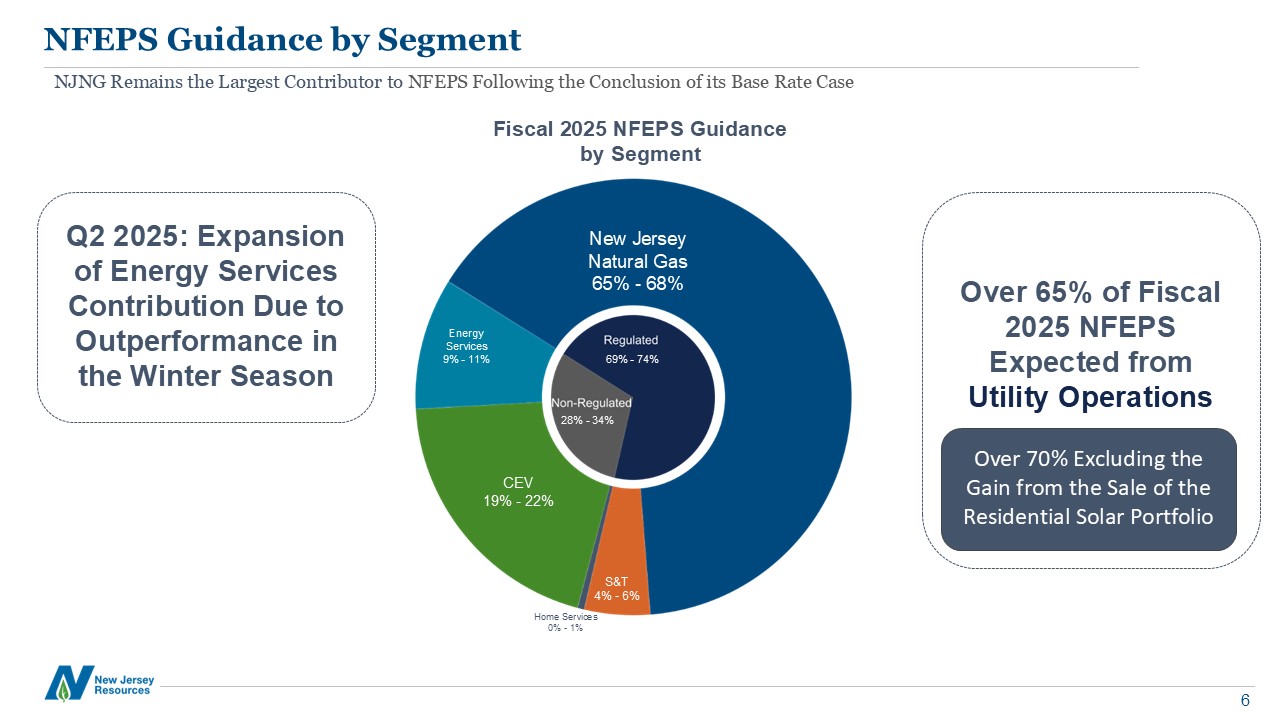
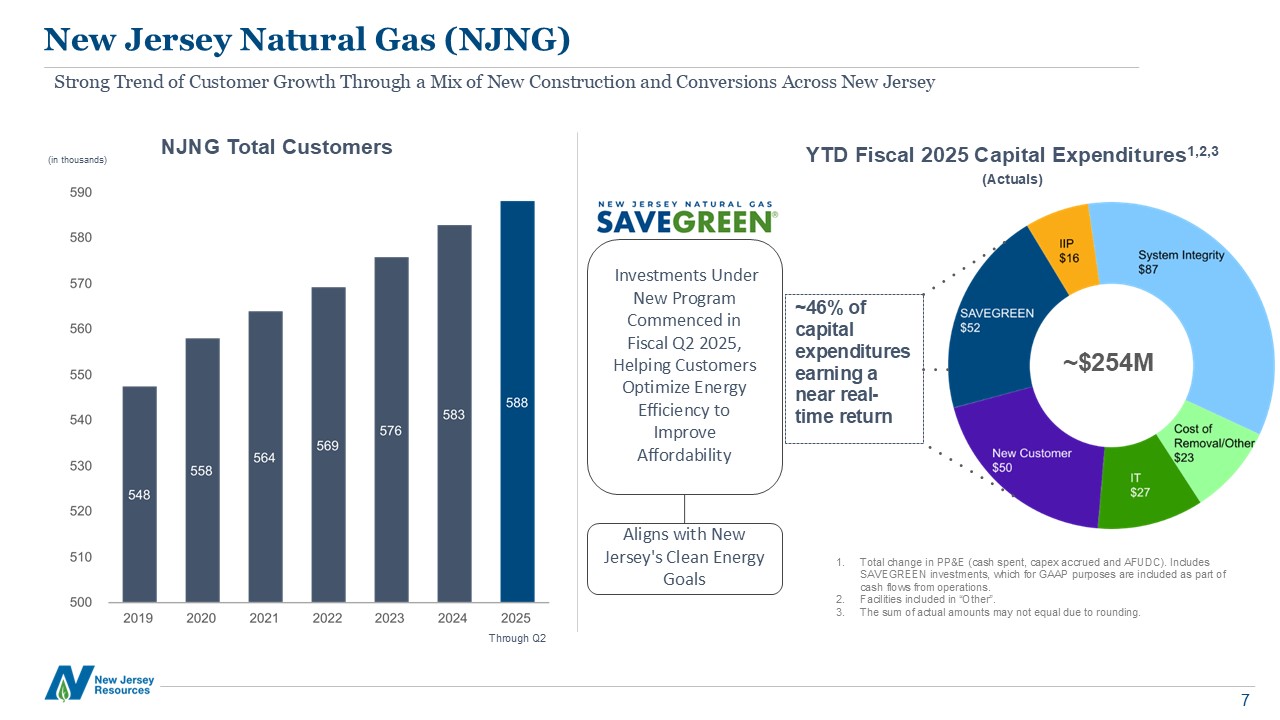
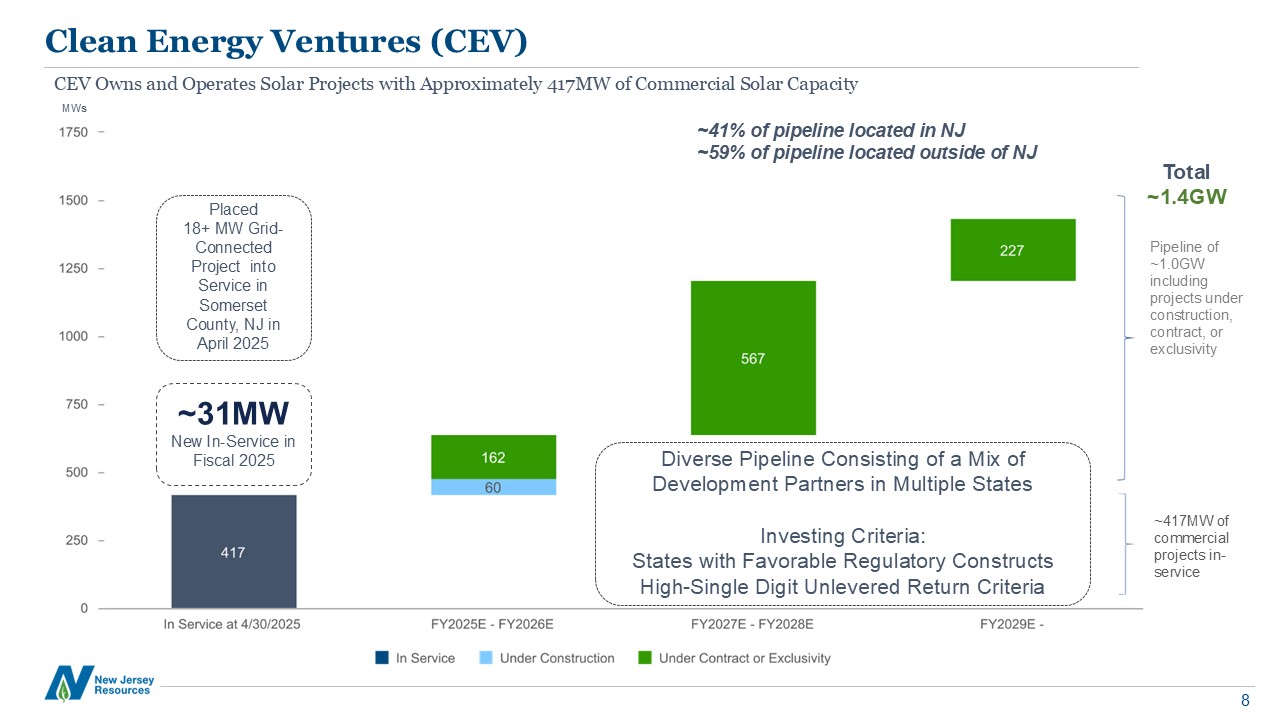
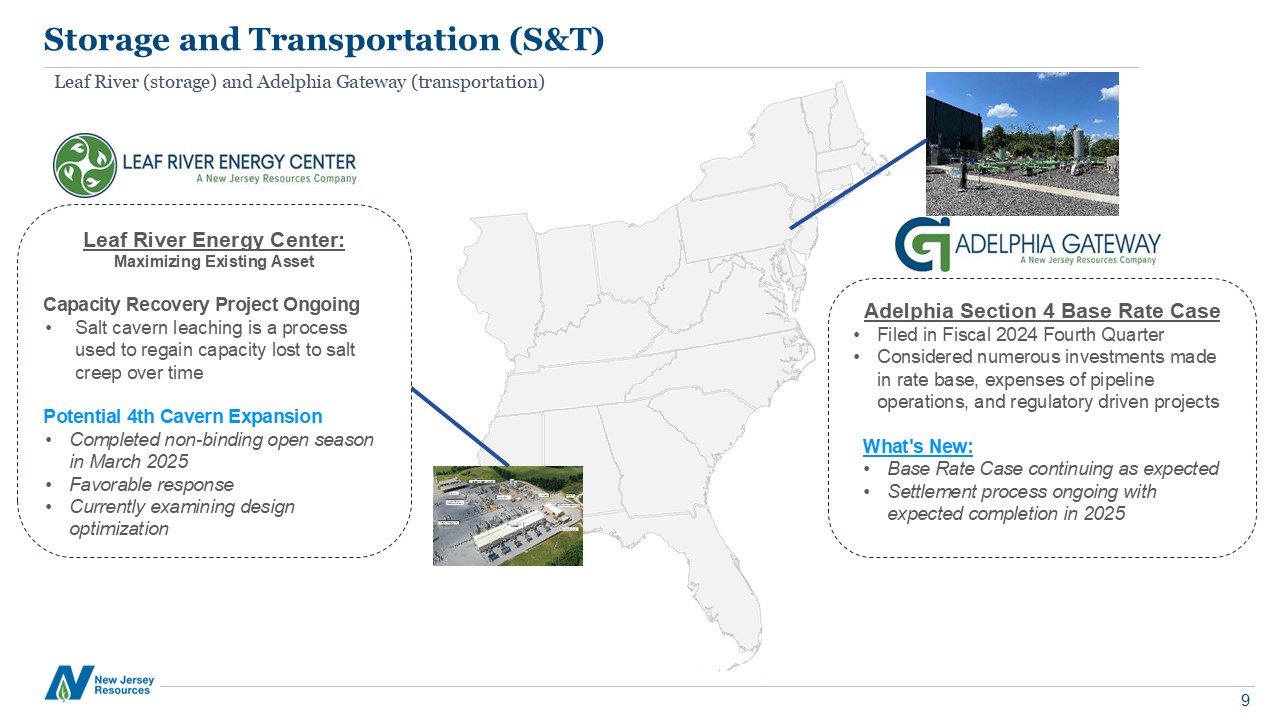
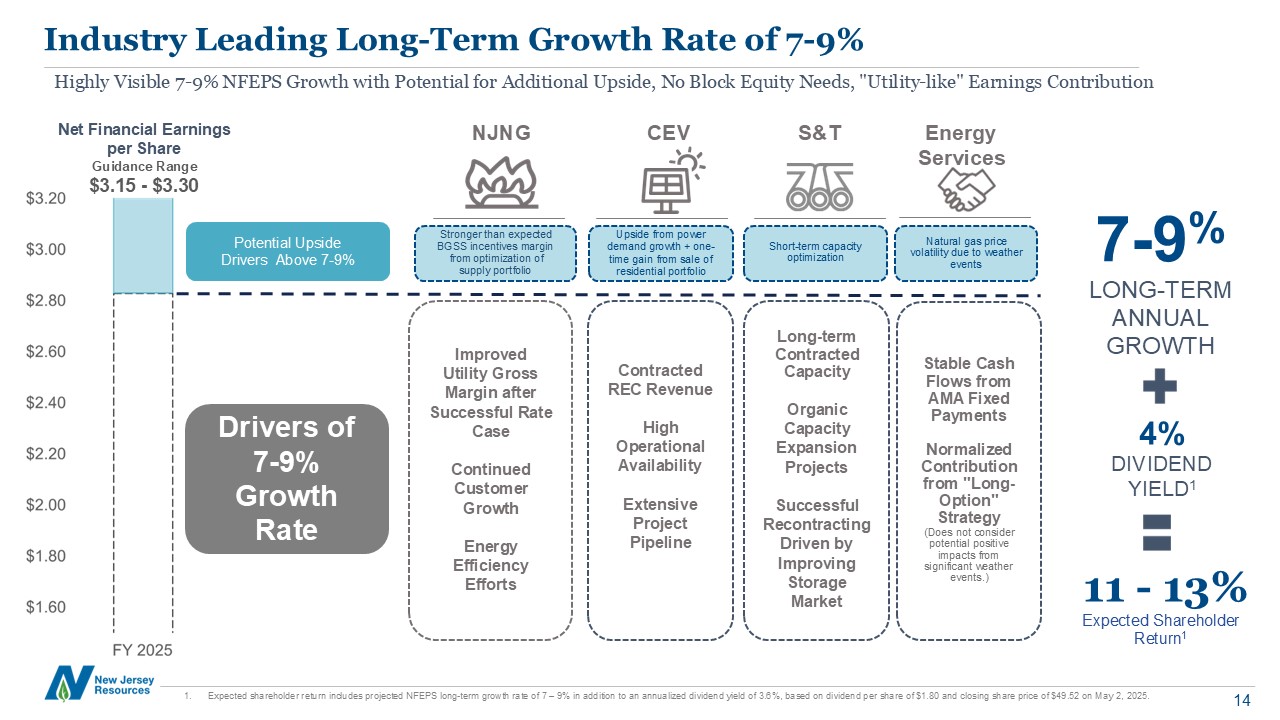
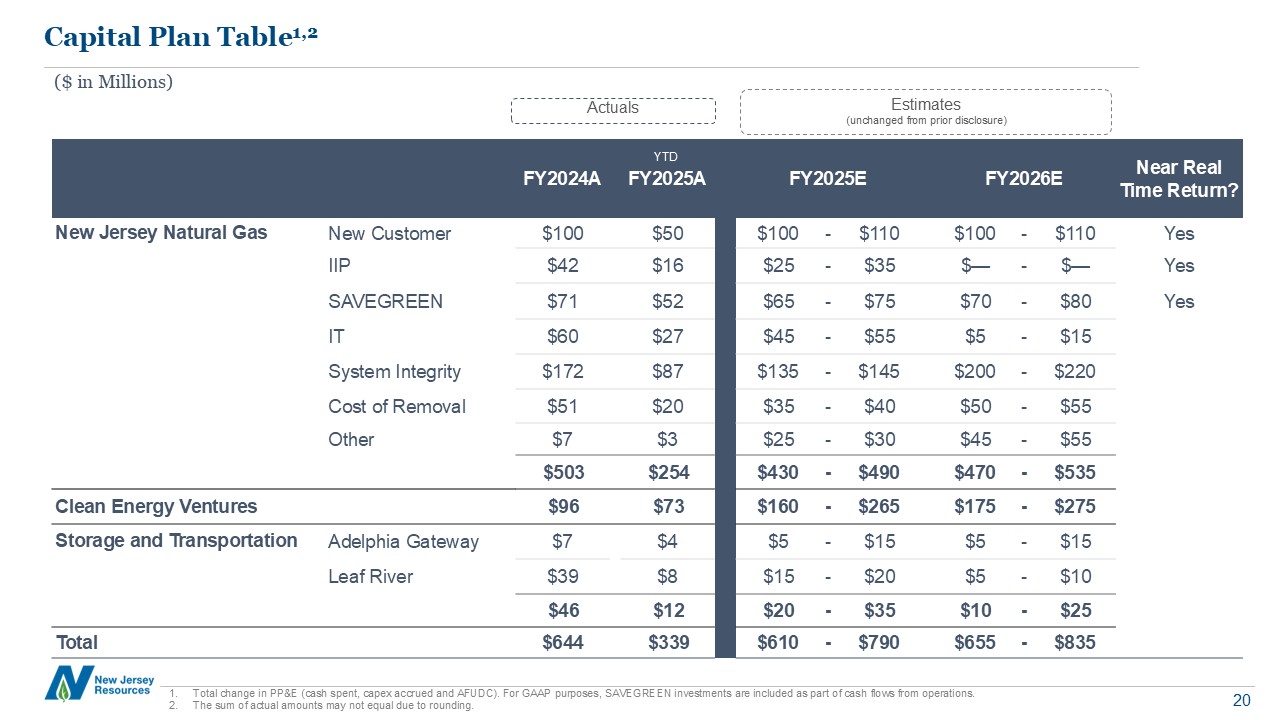
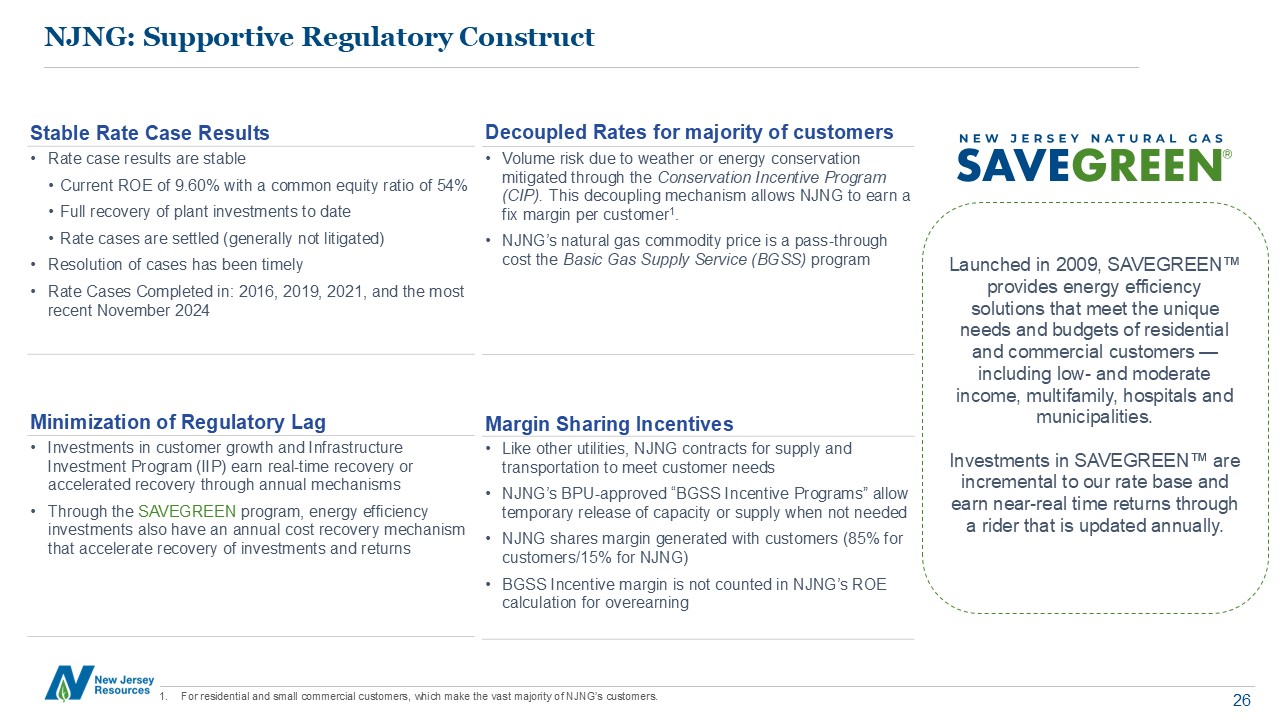
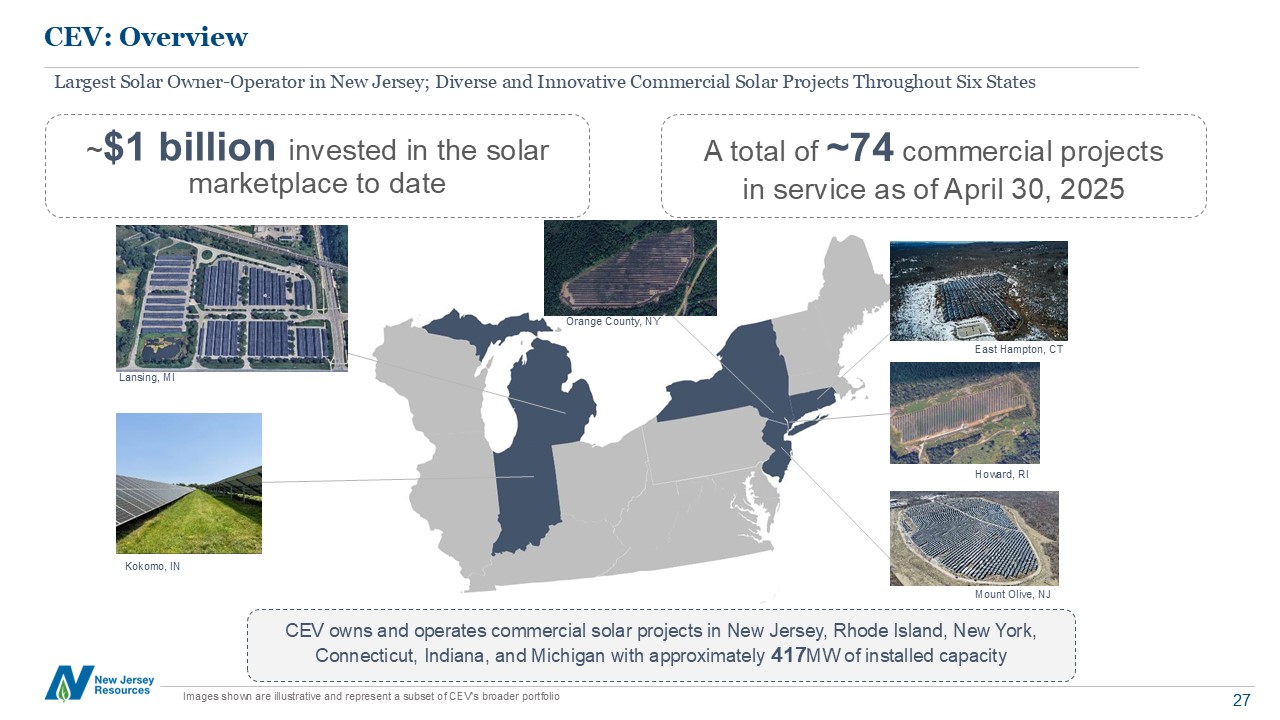
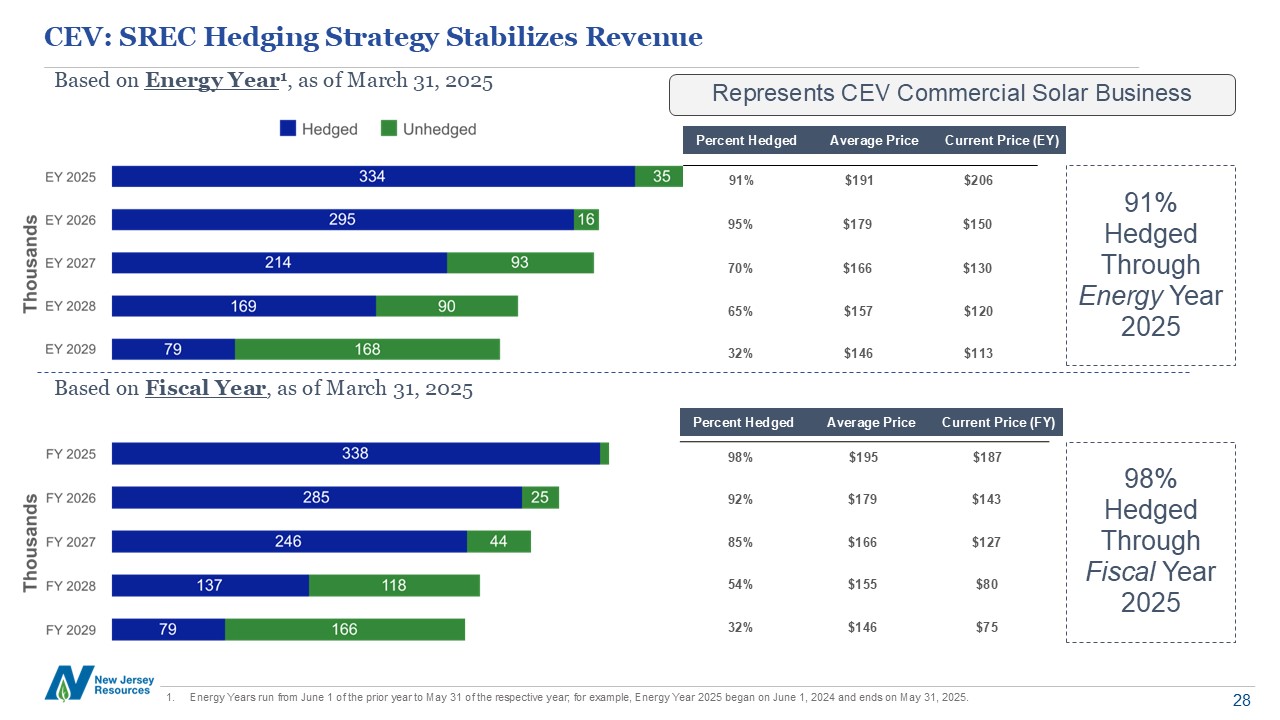
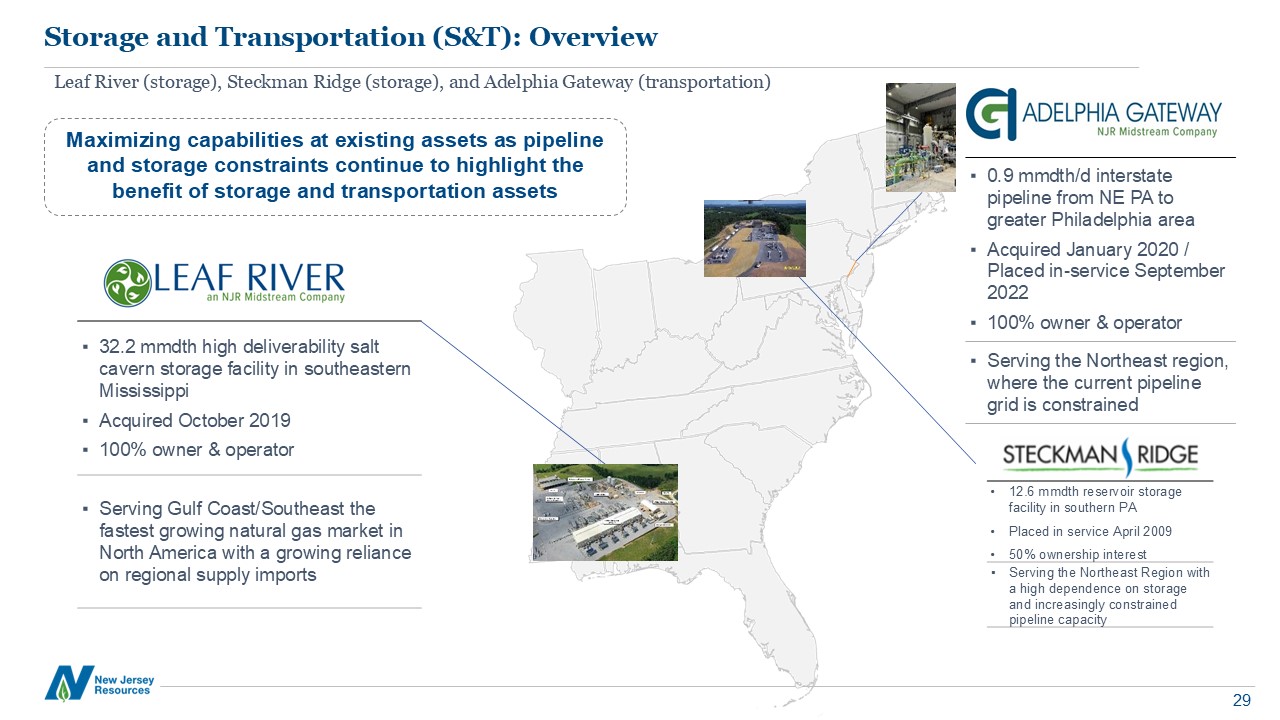
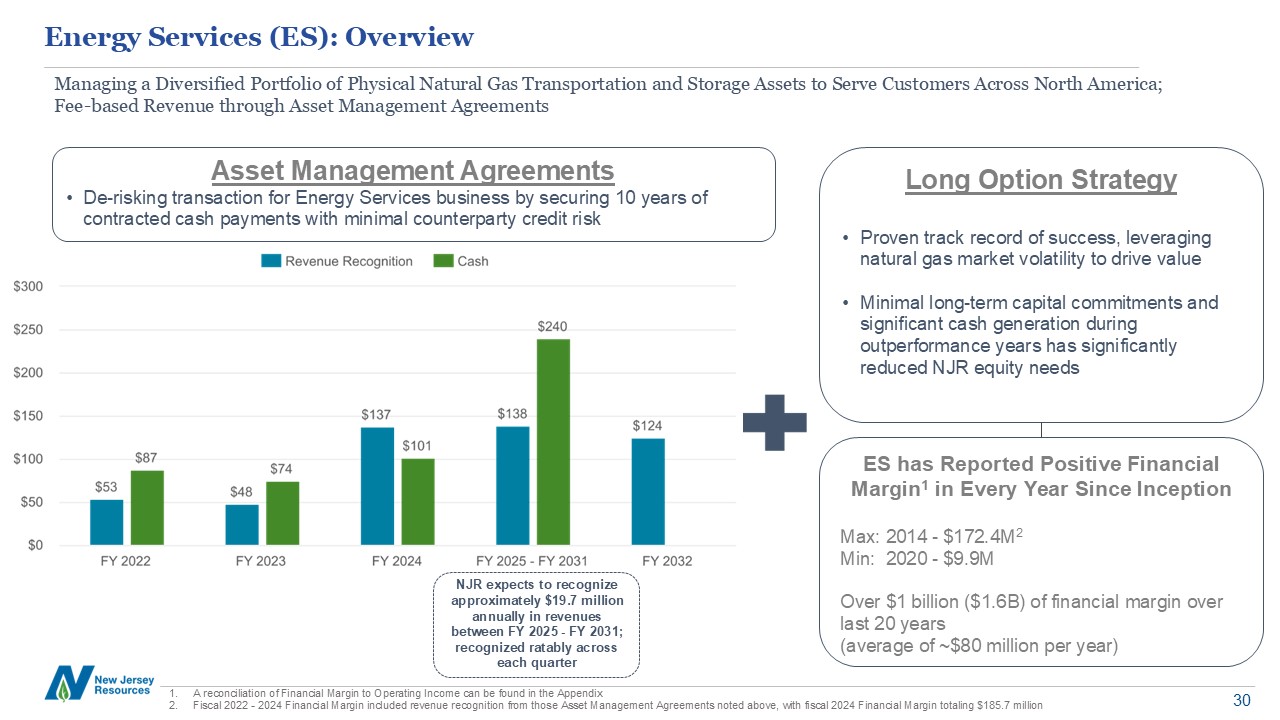
Thanks, Adam, and good morning, everyone. At NJR, we recognize that affordability and reliability remain the foundation of our value proposition to our customers, and our long-term strategy reflects that. In today's environment, delivering safe, affordable, and reliable energy is more critical than ever. That's why we are focused on disciplined capital deployment, operational excellence, and strategic innovation across all of our business segments. Our results this quarter once again demonstrate the strength of this approach. Fiscal 2025 continues to be a strong year for NJR. In the second quarter, we delivered solid results across all of our business segments. These results reflect the strength of our integrated portfolio and consistent execution by our team to drive long-term sustainable growth. In particular, our wholesale gas marketing business, NJR Energy Services, reported strong performance during the winter by capitalizing on periods of pricing volatility through its long options strategy. As a result of this outperformance, we are raising our Fiscal 2025 NFVPS guidance by $0.10 a share to a revised range of $3.15 to $3.30 per share. Looking at our other subsidiaries, we saw solid execution in the quarter from our entire portfolio of complementary businesses. At New Jersey Natural Gas, we completed the first full quarter of new rates following our base rate case settlement. We also initiated investments under the expanded Save Green program, our largest energy efficiency filing to date, which earns near real-time returns. At Clean Energy Ventures, we are advancing our solar portfolio with new projects coming online and building a growing, diversified project pipeline. We continue to prioritize disciplined capital deployment and strategic expansion across multiple states. Our storage and transportation business also continue to make progress. We continue the capacity recovery project at Leaf River and remain engaged in the settlement process for Adelphia Gateway's Section IV rate case, which is proceeding as expected. Turning to Slide 5 for more details on our guidance, we are raising our fiscal 2025 NFVPS guidance range to $315 to $330 per share, an increase of $0.10 from our prior range. This new outlook reflects our strong operating performance through the winter season for Energy Services and includes the gain from the sale of our residential solar portfolio at Clean Energy Ventures. Importantly, this revised guidance exceeds our long-term NFVPS growth target of 7 to 9 percent. On slide 6, we present our updated NFVPS guidance by segment. New Jersey Natural Gas remains the largest contributor, followed by Clean Energy Ventures and Energy Services. In the second quarter, we slightly narrowed the range of contributions across our business lines, consistent with our practice as the year progresses. These updates reflect outperformance in energy services and a modest change in the relative contributions from New Jersey Natural Gas and clean energy ventures. Now let's discuss our complementary business units, starting with New Jersey Natural Gas on slide seven. New Jersey Natural Gas continues to deliver consistent customer growth quarter after quarter, driven by a healthy mix of new construction activity, system expansions, and steady conversions across our service territory. This underscores the ongoing demand for reliable, affordable natural gas service and supports long-term investment in our utility infrastructure. We also remain proactive in strengthening the relationship with all of our customers. Throughout the winter season, we regularly shared information on utility assistance programs and focused on maintaining our reputation as a responsive and dependable service provider. we continue to leverage mechanisms that help manage energy affordability. Most notably are BGSS incentive programs, which allow us to temporarily release excess capacity or supply when it's not needed. The resulting margin benefits are largely credited to customers, helping to mitigate the impact of higher energy prices. In the last 10 years, New Jersey Natural Gas has saved customers nearly $800 million as a result of this program. Alongside these efforts, we remain focused on long-term investments that support system reliability, customer growth, and New Jersey's clean energy goals. We've invested $254 million at New Jersey Natural Gas this year, with 46% of that CapEx providing near real-time returns. And as I noted earlier, we began making investments under the latest iteration of our Save Green program. These investments assist our customers with affordability, helping them lower their energy usage, reduce emissions, and manage bills more effectively, all while delivering timely returns to NJR through a proven regulatory construct. Moving to slide eight, we are consistently placing new projects into service at Clean Energy Ventures, adding 31 megawatts of solar capacity into service this fiscal year. In addition, we are moving projects through our pipeline with 60 megawatts currently under construction. Our project pipeline stands at over one gigawatt, with the majority of those investment opportunities located outside of New Jersey. The CEV team was deliberate in their efforts to diversify the project pipeline, seeking to avoid an over-reliance on any one market or policy regime. This strategy is proving more valuable as the renewable energy industry continues to navigate interconnection and policy-related complexities. Our robust pipeline of capital deployment opportunities combined with the disciplined SREC hedging strategy positions us to continue generating stable, predictable cash flows from our solar investments. Moving to slide nine, storage and transportation continues to deliver steady fee-based revenues. At Leaf River, we continued our capacity recovery project, restoring capacity that had been impacted by salt creep over time separately we were exploring the potential development of a fourth cavern and recently completed a non-binding open season with encouraging interest as we evaluate the economics and design optimization at Adelphia Gateway we continue to advance through the FERC rate case process with settlement discussions ongoing as we move towards achieving resolution and recovering the significant investments we've made to the system These assets represent strong long-term value proposition, particularly as system constraints highlight the critical role of existing natural gas infrastructure. So with that, I'll turn the call over to Roberto for a review of our financial results.
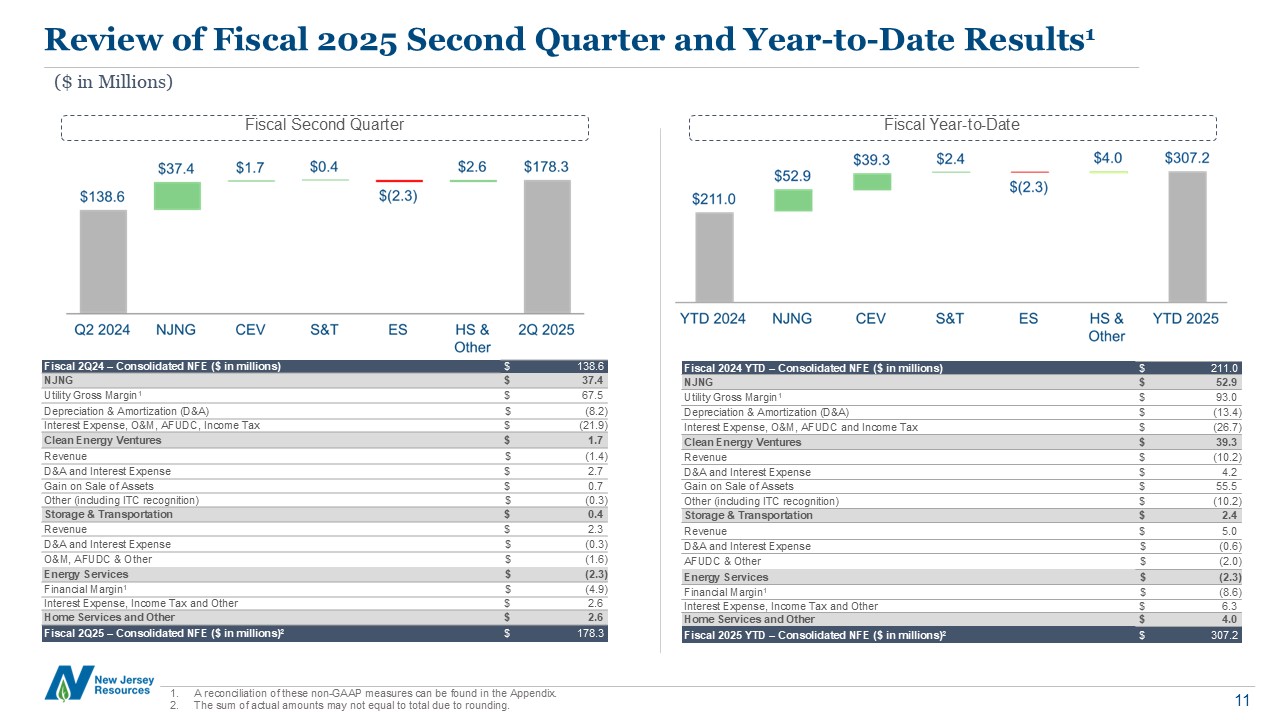
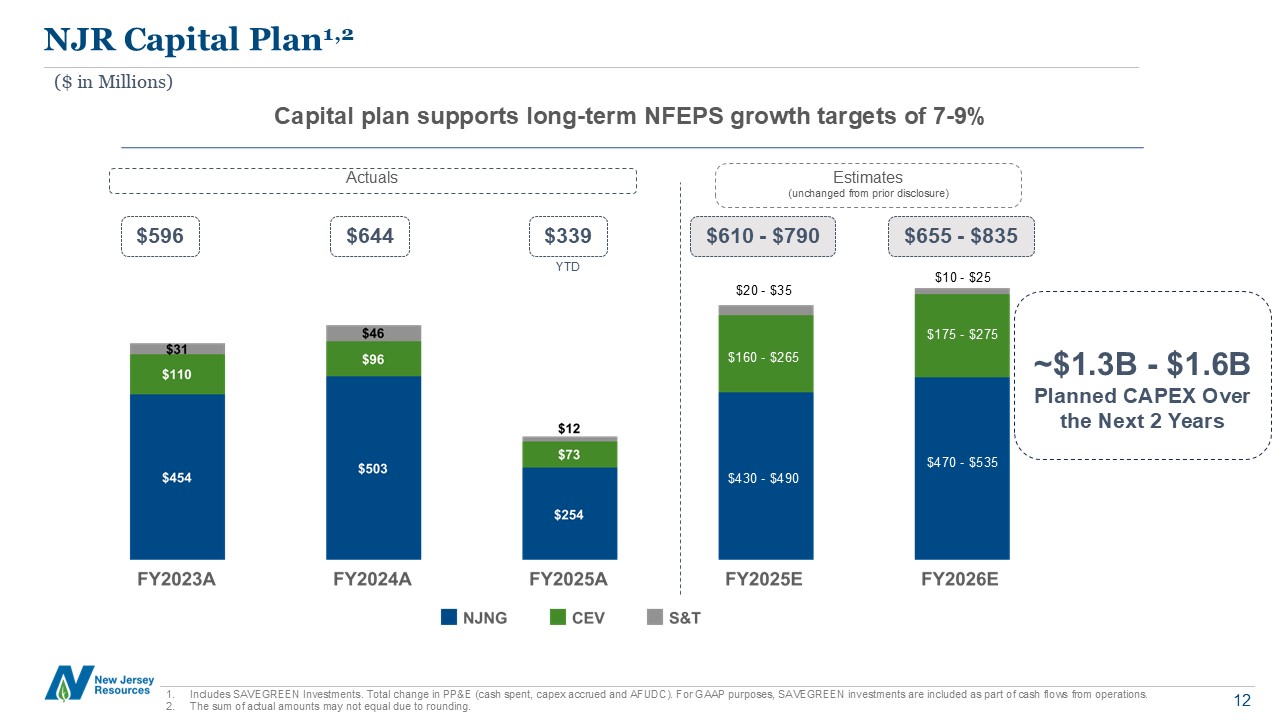
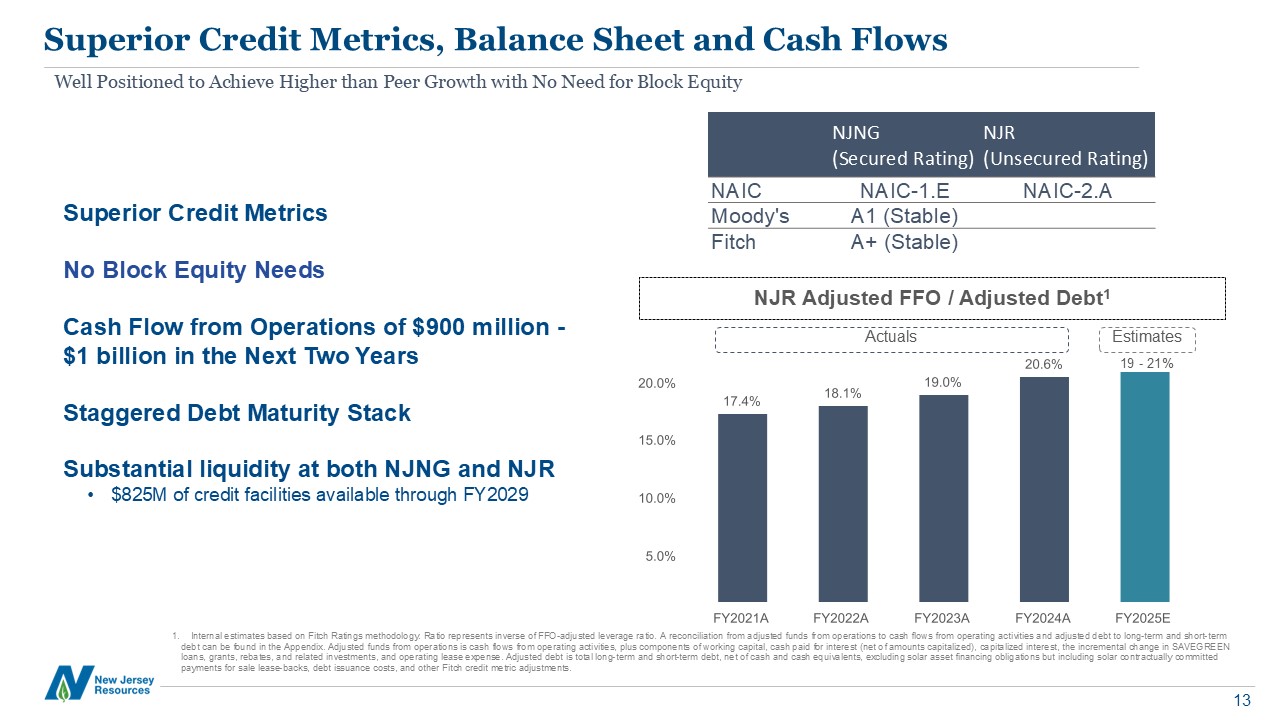
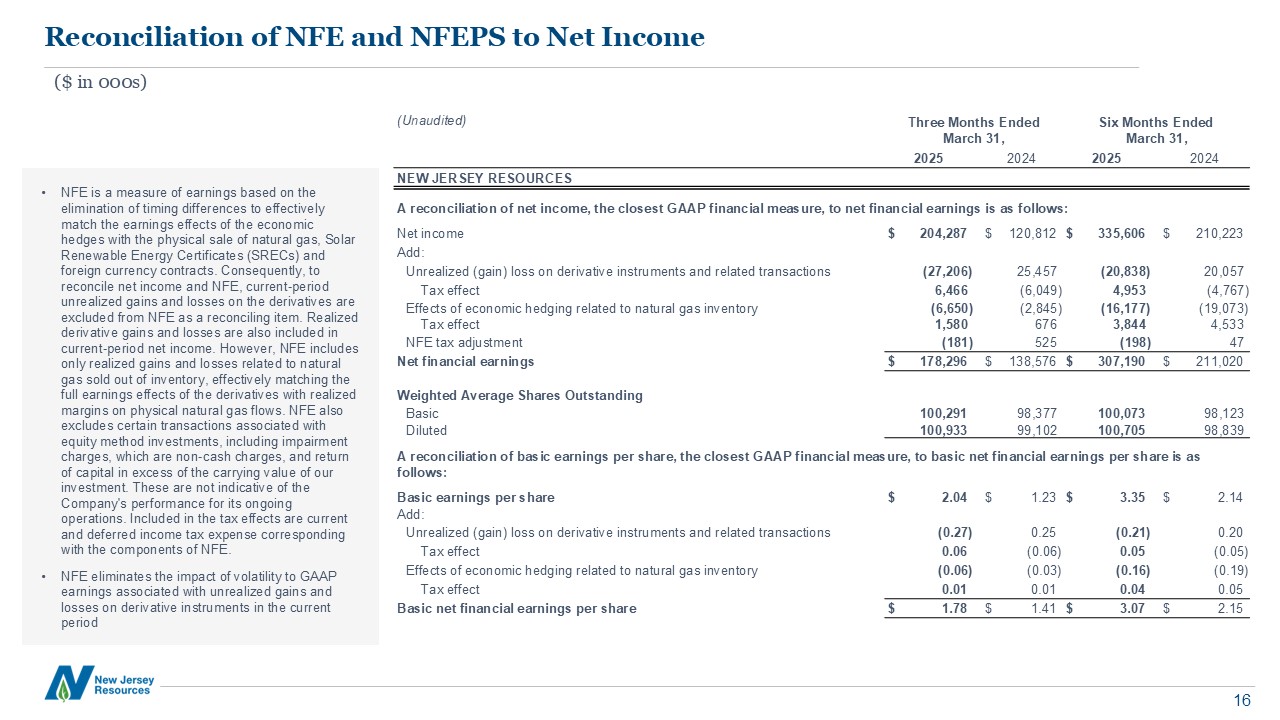
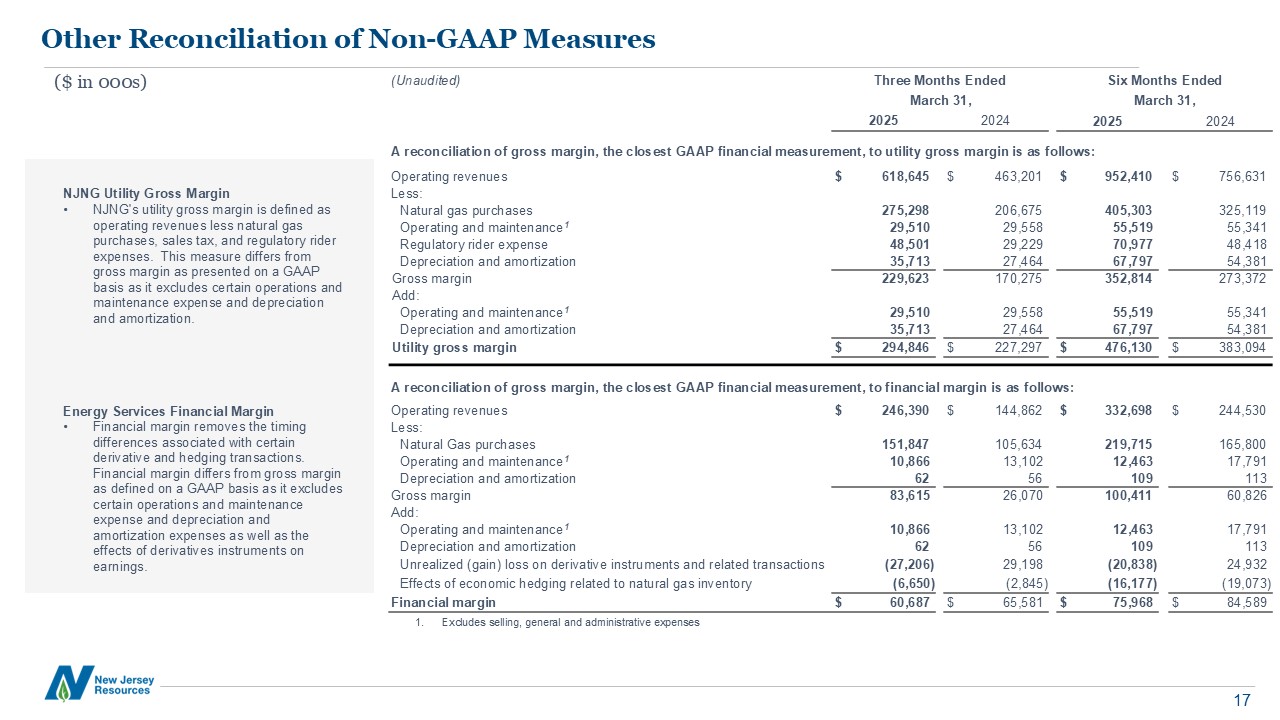
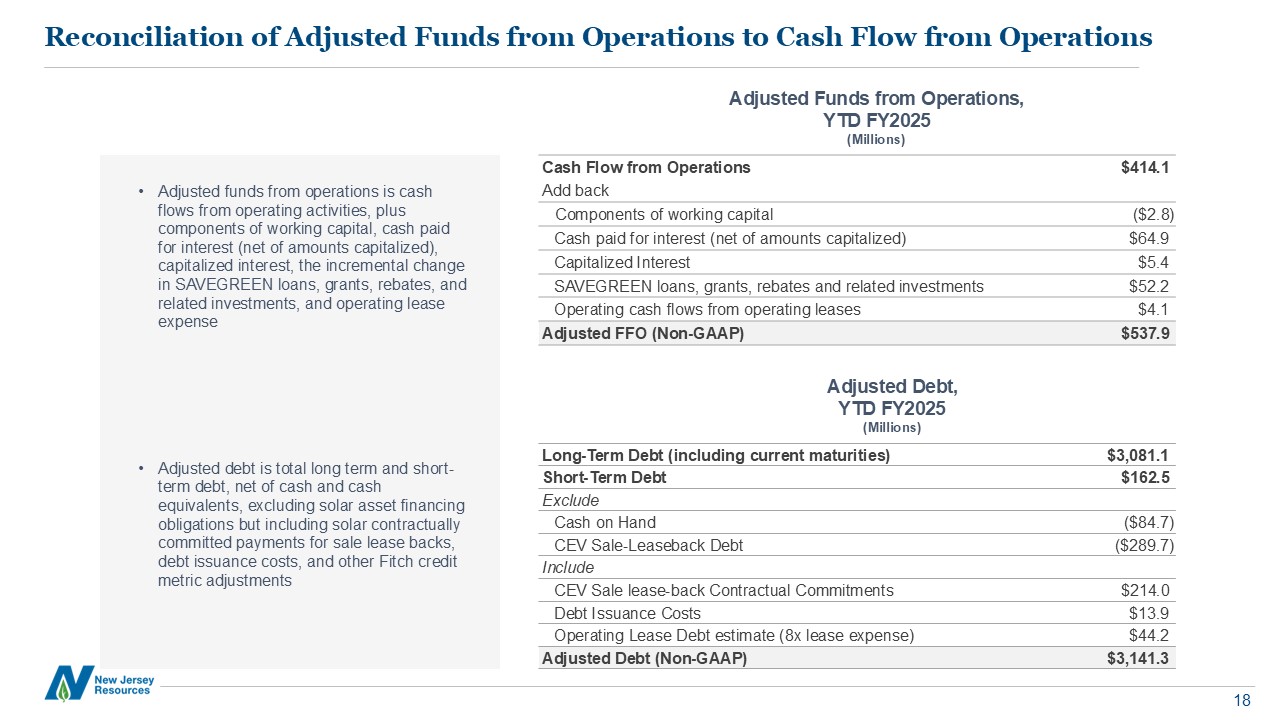
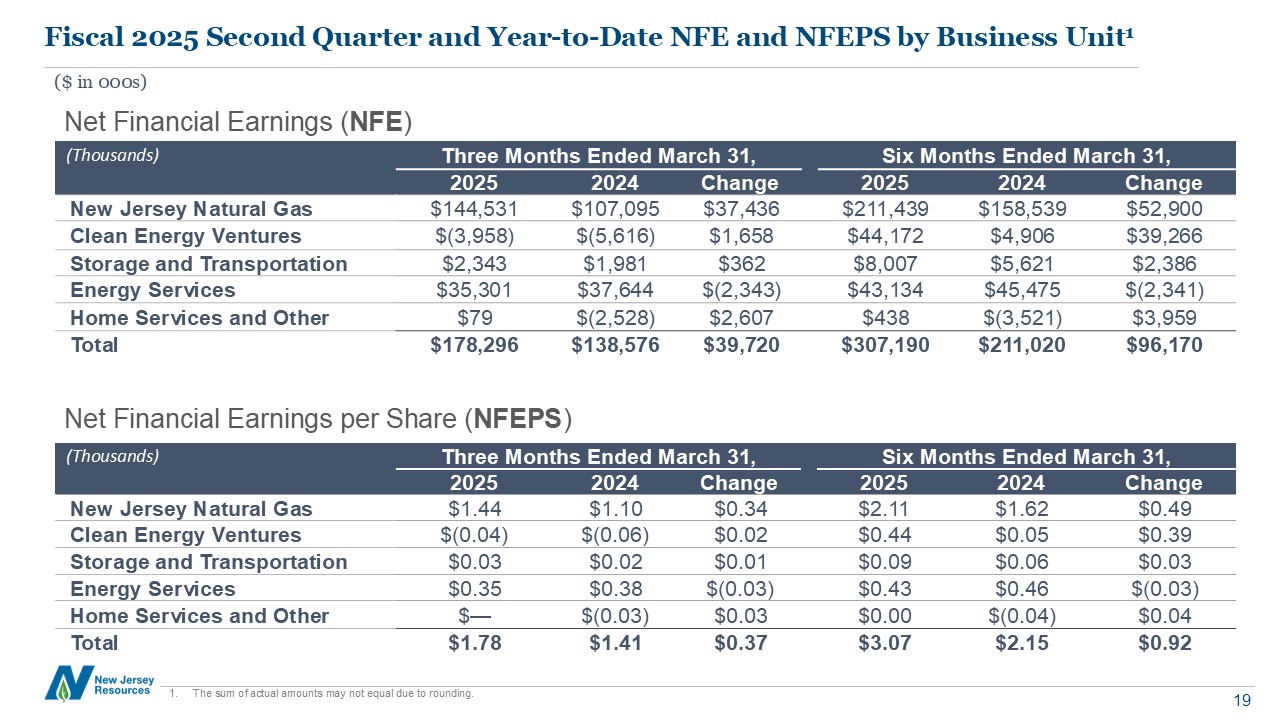
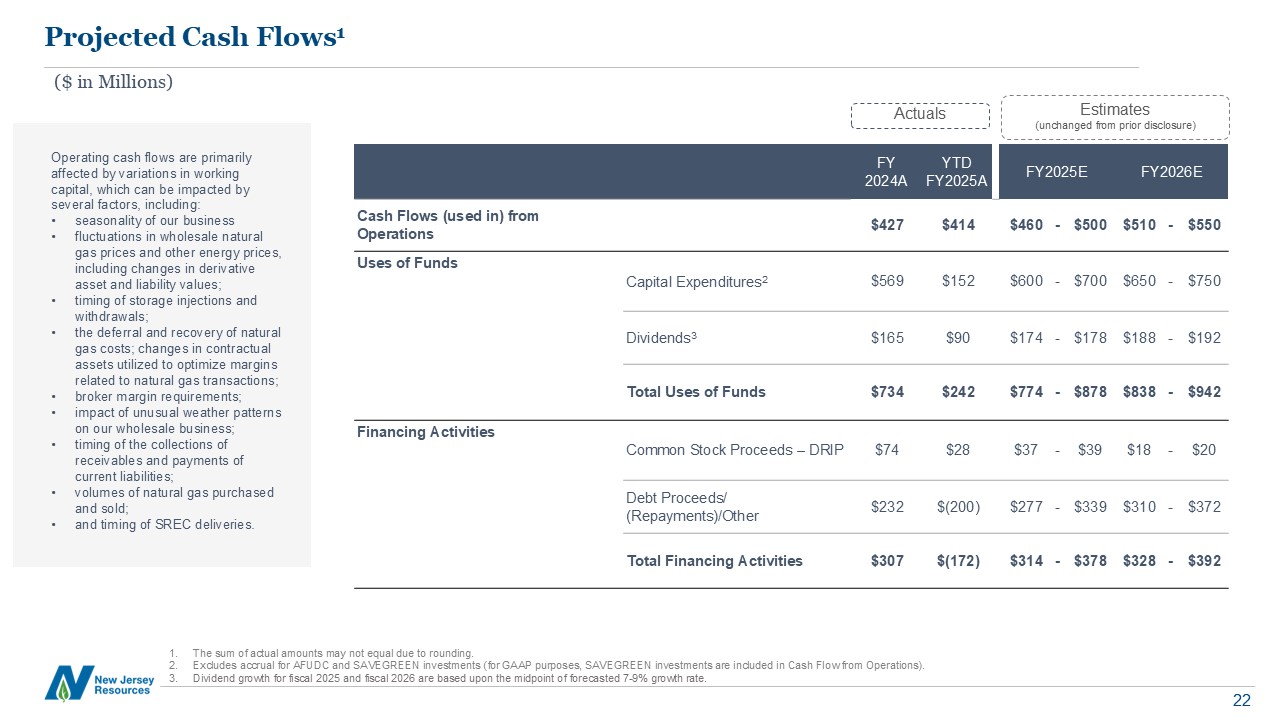
Thank you, Steve, and good morning, everyone. Slide 11 shows the main drivers of our NFE for the second quarter and your today period of fiscal 2025. In the second quarter, we reported NFEPS of $1.78 per share compared with NFEPS of $1.41 per share last year. We saw higher NFE at New Jersey Natural Gas, driven by higher utility gross margin as a result of our recent base rate case settlement, and storage and transportation reported improved performance versus a prior year, driven by higher revenues at Leaf River. At Clean Energy Ventures, we reported higher NFE for the year-to-date period, primarily written by the sale of our residential solar portfolio during our fiscal first quarter. For fiscal 2025, we expect that the sale of our residential solar assets will generate a net benefit of approximately 30 cents per share, reflecting both the gain on sale and the lack of earnings contribution from that business for the remainder of the year. Now let's move to slide 12, where we will discuss in your capital plan. For fiscal 2025 and fiscal 2026, we're planning capital expenditures ranging from $1.3 to $1.6 billion, which aligns with our long-term NFPS growth target of 7% to 9%. We did not make any changes to our capital plan compared to our prior disclosure and expect spending between $610 and $790 million and dollars in capital investments during fiscal 2025. These investments align with our long-term strategy to enhance utility infrastructure, expand clean energy investments, and optimize our storage and transportation capabilities. As highlighted on slide 13, our strong balance sheet and liquidity position enable us to execute on our strategic priorities while maintaining financial flexibility. Our adjusted funds from operations to adjusted debt ratio is projected to range between 19% and 21% for fiscal 2025, which reflects our ability to generate solid operating cash flows and manage debt effectively. These levels are consistent with maintaining our investment-grade credit rating at NG&G and a strong balance sheet at NGAR. We expect our cash flow from operations to be between $460 and $500 million in fiscal 2025, providing a solid foundation for our capital plan, dividends, and other corporate needs. With that, I'll turn the call back to Steve for concluding remarks on slide 14.
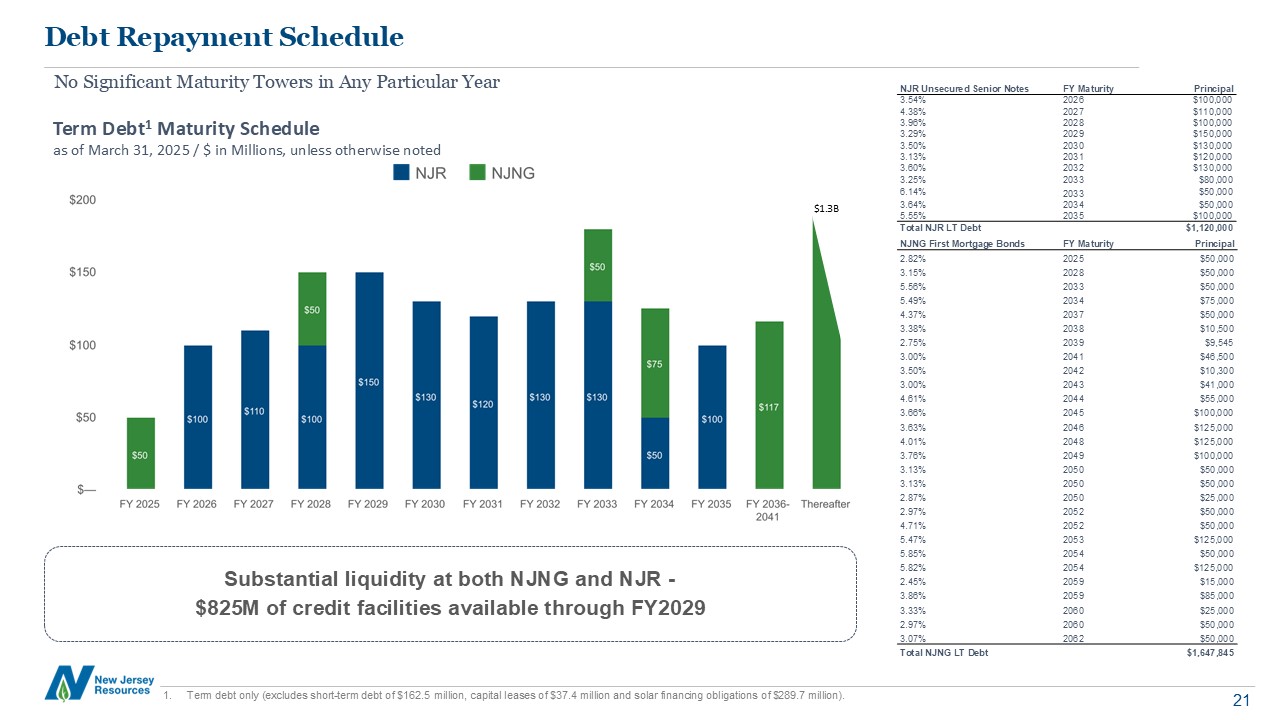
Thanks, Roberto. Before we move to Q&A, I'd like to briefly address NJR's positioning in light of the evolving macroeconomic environment, specifically in relation to tariffs. As many of you know, the situation remains fluid. New Jersey Natural Gas is our largest business unit, and because our business activities are domestic, we are largely insulated from the impact of imported goods and materials. Almost all of our gas supply comes from domestic suppliers, including many of the nation's largest interstate pipelines. Additionally, New Jersey Natural Gas's capital program uses domestically sourced materials, such as plastic pipe and infrastructure components, minimizing exposure to current tariffs. At Clean Energy Ventures, we are proactive when it comes to project cost containment. Most of our contracts incorporate structured provisions that preserve returns in the event of cost increases. As a result, we do not expect the uncertainty around tariffs will materially impact our near-term investments. Our solar investment pipeline remains broad and diverse, giving us meaningful flexibility in how and when we deploy capital. It's also important to emphasize that NJR's strong balance sheet continues to support our strategy and is well-possessioned in any short-term market dislocation. We are not relying on equity issuances to fund our capital plan. We have substantial liquidity and healthy cash flows. And our debt maturity profile is staggered, with no term debt due at the holdco level in fiscal 2025. To conclude, NJR is poised for sustained long-term growth across our diverse portfolio of businesses. Our balanced mix of regulated and non-regulated investments continues to support peer-leading performance. We raised our initial NFVPS guidance for the fifth consecutive year, and our revised range of $315 to $330 per share reflects the strength of our business model and our ability to navigate dynamic market conditions. So with that, let's open up the line for questions.
Operator
At this time, I'd like to remind everyone in order to ask a question, press star, then the number one on your telephone keypad. We'll pause for just a moment while we compile that Q&A roster. Your first question comes from the line of Richard Sunderland of J.P. Morgan. Please go ahead.
Hi, good morning, and thank you for the time today. Thank you, Richard. Starting with the Leaf River expansion, what is the timing of a potential decision to advance that project? Also curious, how much capital would that require and what sort of returns you're targeting?
So, you know, we just concluded the open season in evaluating, you know, those bids and doing that at the same exact time as, you know, the costs associated with expansion to really put together the entire transaction. We don't have a finite timeline set right now. You know, we don't have a determined point in which we actually go because you don't know whether you're going to complete the contracts or not. You know, as far as total capital costs, I'm going to estimate somewhere between $175 million to $200 billion, you know, total costs. Don't hold me to that. That would probably be somewhere, you know, in that area. And then, you know, as far as returns go, you know, they'd be in line with what you'd expect for, you know, a midstream, you know, invest. I think that's as far as we'll probably go with that.
Yeah, it's, you know, from the positive side, you know, it's great. you know markets very supportive you know down that region it's a great asset you know i think we're in a good position you know to move forward we just need to put all these pieces together to make that capital that's very helpful and then appreciate the tariff commentary i just wanted to dylan drill in a little bit more for cev so at the sort of project level do you see cost exposure to tariffs which is then covered by the contractual protections you reference. I guess I'm just trying to think, you know, how do you see development pace if costs do increase even if your returns are protected?
You know, it's really too early to say. I mean, it's such a fluid situation. You know, we put that commentary in place just to kind of give a view of how we're thinking about it and also, you know, that we've already thought about, you know, changes to this market. You know, if you remember, you know, we've had tariffs on solar panels. We've that changes in IPC, we've had a number of issues over the pattern of provisions.
Operator
Question comes from the line of Richard Sunderland, excuse me, Richard, do we have another, Richard Sunderland of JP Morgan? Did you have another question, Richard?
No, I'm all set, thank you.
Operator
Okay, I wasn't sure why that popped in. Thank you very much. Sorry about that, ladies and gentlemen. Your next question comes from the line of Jamison Ward of Jefferies. Please go ahead.
Good morning. Hey, it was great hosting you guys recently in Texas and nicely done on the beat and raise uh if uh if i could just expand on richard's leaf river question here um how should we think about the expected economics in terms of how they compare to your existing caverns and uh and also just given current storage market dynamics yeah i think either the way to think about that you know this is something that you know we're only going to build if we get the returns that are appropriate for the, you know, investments that we're making, right?
So what I'm trying to say there is that we've got to get the contracts in place, we've got to be able to lock in, you know, a significant portion of, you know, materials in that clear line of sight and what our construction costs are, and then, you know, have a little bit of an extra in order to, you know, have safety factor through, you know, probably a multiyear cycle of developing out that cavern. So hopefully that gives you a flavor for, you know, how we're thinking about this and the types of returns that we would have to have in order to make all that happen. I don't know if it's comparable to our initial investment because that investment was up and running. It was already contracted. It was already done. It was largely, largely de-risked. This is a little bit different from...
Gotcha. Okay. Thank you for the color there. I appreciated your comments in the prepared remarks around affordability. Just wanted to also expand on that with your core utility business now contributing about 65% to 68% of earnings and after successful November 2024 rate case settlement. Just given the affordability concerns and legislative initiatives highlighted recently in the state, how do you view the regulatory environment over the next 12 to 24 months and then maybe heading into your next rate case? And are there any specific regulatory mechanisms you're pursuing to further reduce lag between investment and recovery beyond Save Green and IIP? Thank you.
Yeah, Jason, we're at a good spot from a regulatory calendar perspective. Having completed our ready case and having completed our energy efficiency filing, having that done really gives us some clear air for the next 12, 20.
Operator
Your next question comes from the line of Travis Miller of Morningstar. Please go ahead.
Hi, everyone. Two more quick ones on Leaf River. One, is there any equipment or supplies that you need to order to complete that project if you decide to go forward?
Yeah, I mean, we certainly have to order, you know, compressors. There'll be piping associated with it. You know, a big chunk of the dollars is just the, you know, order in and out and that is Sorry.
Yeah, I mean, you broke up a little bit there, but anyway, so you do have to order this.
Is there risk then, you know, the implication there, is there risk in terms of supply chain or tariffs, anything else in terms of getting what you need to build that? on that right now um you know we're still working through kind of preliminary signs and things like that trying to line those up for contracts you know so for even an optimistic time frame you know those worries you know would be out you know multiple months or maybe even here i think it would take a while to uh to determine whether this is going to be impactful and because the environment is so fluid um you know it's a brownfield site so we don't have to order as much we don't have to put as much infrastructure in place as to somebody that's building a greenfield site, you know, so that's certainly, you know, positive to our point. And given the fact that we've already, you know, have the wells in place, you know, for water, and we've got the brining facilities in place, which...
Question to utility. You continue to see customer growth over and over and over. What's going on there, right? What are some of the fundamentals where we don't necessarily see that at some other utilities? Is there a business mix change in terms of residential to business or business to residential? What are some of the fundamental shifts you're seeing here in terms of still continuing to get customer growth?
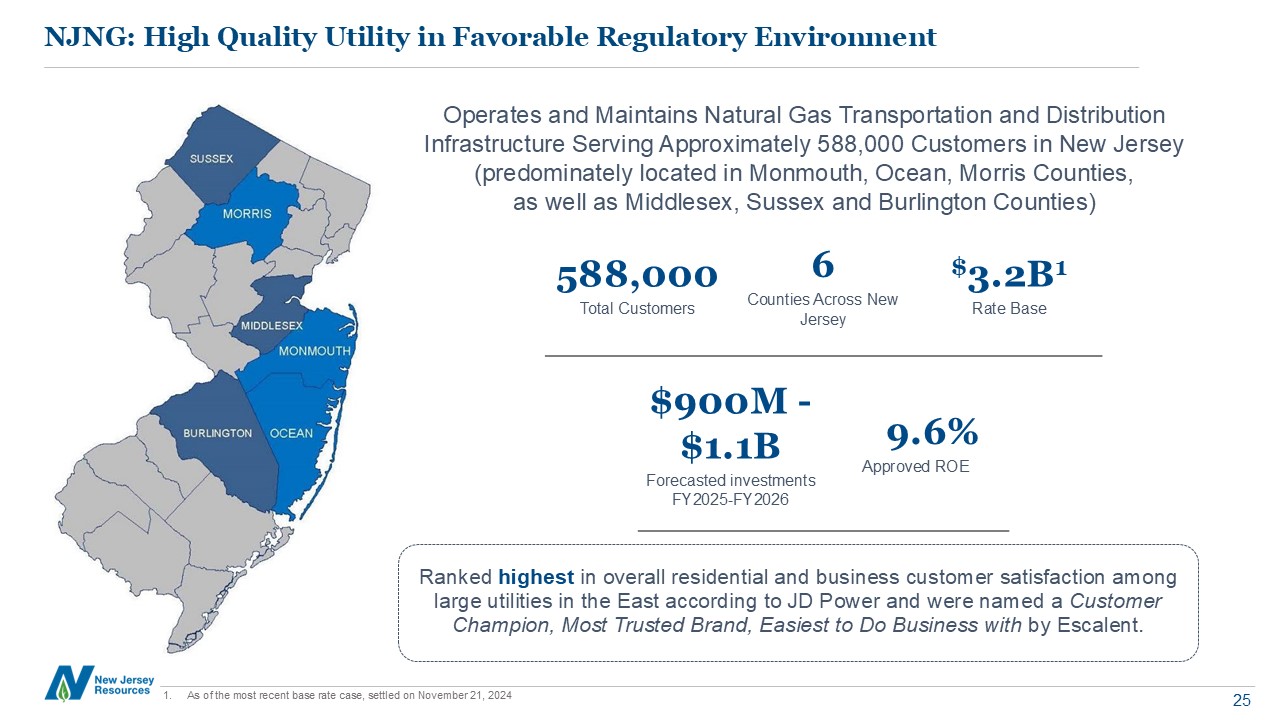
I'm Pat Migliaccio. So to answer your question, there's been no change in the mix. We are predominantly residential service generation, so 90% residential, 7% commercial. I would say that, you know, we have a really attractive service territory, principally Monmouth, Ocean, and Morris counties, ample room for development, great demographics in terms of some of the highest per capita income brackets in the state of New Jersey, and just a great place to live. We hit those well by the shore traps. So, and on the flip side, though, we are also constantly advocating for ways we can save of customers' money, and that's through our Save Green, our Energy Efficiency Program, largest ever in the state. But that really provides customers an opportunity to conduct their energy out of their home and figure out a way to make them more energy efficient for those homes that have already been constructed. So, I hope that answers your question, but we do believe that we continue to see fantastic customers.
Okay. Very good. We'll see all of you soon. Thanks.
Operator
As a reminder to ask a question, please press star, followed by the number one. Our next question comes from Robert Mosca of Mizuho Securities. Please go ahead.
Hi, morning, everyone. Just one from me. I think there was maybe an updated draft to the proposed energy master plan, your 1Q update. Just wondering if there's anything in particular you're focused on during the comment period and, you know, anything that might change just given some of the recent affordability legislation proposed in New Jersey kind of open-ended question but curious to get your thoughts there thanks Rob so there was a presentation that was put forth on the energy master plan but there was not a whole draft document of the energy master plan issued they did allow for a comment period which we did submit comments on I'm not sure what the follow-up will be on that just as a reminder, we are going to go through a gubernatorial election this November, so you're going to change the administration.
So I fully expect that a new administration, you know, this fall energy management plan. So I think as far as you're concerned, it's a stay-tuned moment to see, you know, how this place focuses.
Got it. Appreciate the time.
Operator
Concludes our Q&A section. I will now turn the call back over to Adam Pryor for closing remarks. Please go ahead.
Thank you all for joining us. I look forward to seeing many of you at ATA later this month, and as always, we appreciate your interest in investment in NJR. Great day.