Operator
Good morning, and welcome to OppFi's Second Quarter 2025 Earnings Conference Call. As a reminder, this conference call is being recorded. I am pleased to introduce your host, Mike Gallentine, Head of Investor Relations. You may begin.
Speaker 1
Thank you, operator. Good morning, and welcome to OppFi's Second Quarter 2025 Earnings Call. Today, our Executive Chairman and CEO, Todd Schwartz; and CFO, Pam Johnson, will present our financial results, followed by a question-and-answer session. You can access the earnings presentation on our website at investors.oppfi.com. During this call, OppFi may discuss certain forward-looking information. The company's filings with the SEC describe essential factors that could cause actual results, developments and business decisions to differ materially from forward-looking statements. Please refer to Slide 2 of the earnings presentation and press release for our disclaimer statements covering forward-looking statements and references to information about non-GAAP financial measures, which will be discussed throughout today's call. Reconciliations of those measures to GAAP measures can be found in the appendix to our earnings presentation and press release. With that, I'd like to turn the call over to Todd.
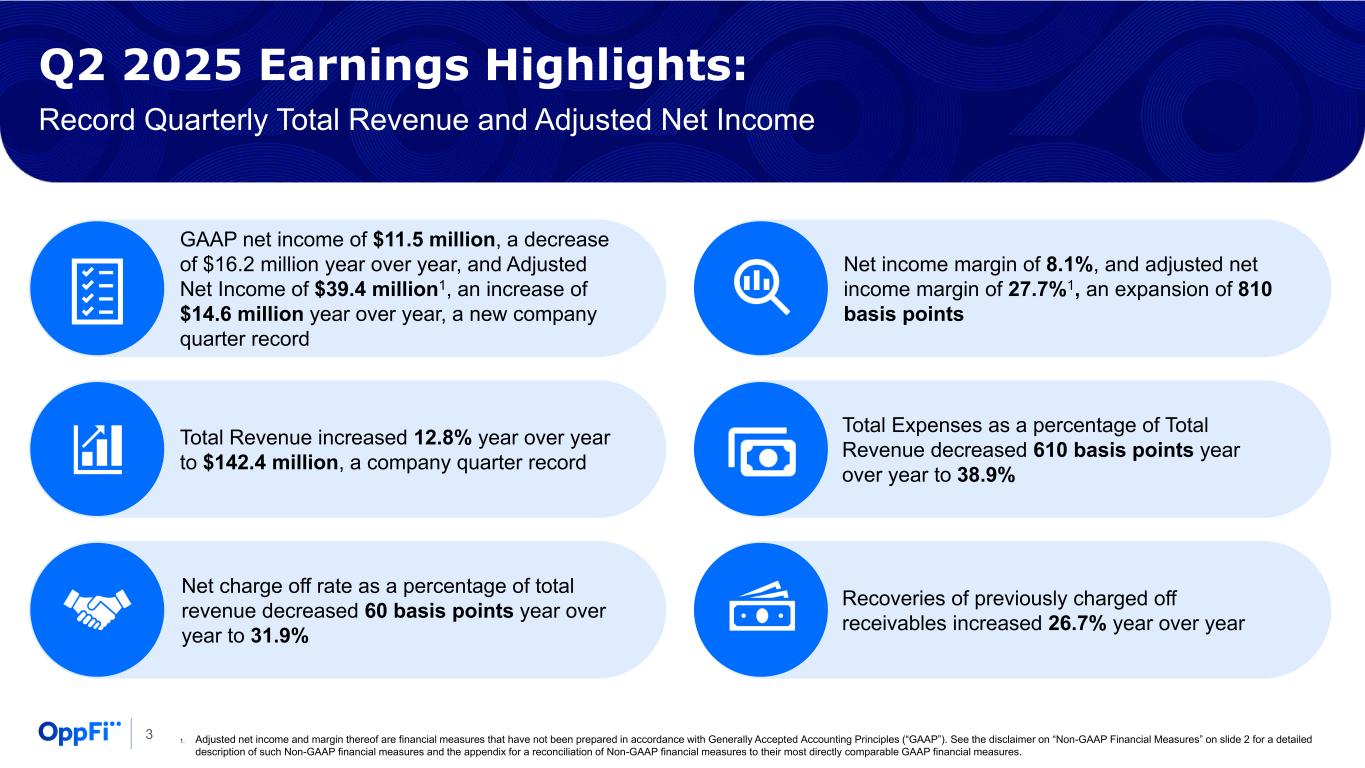
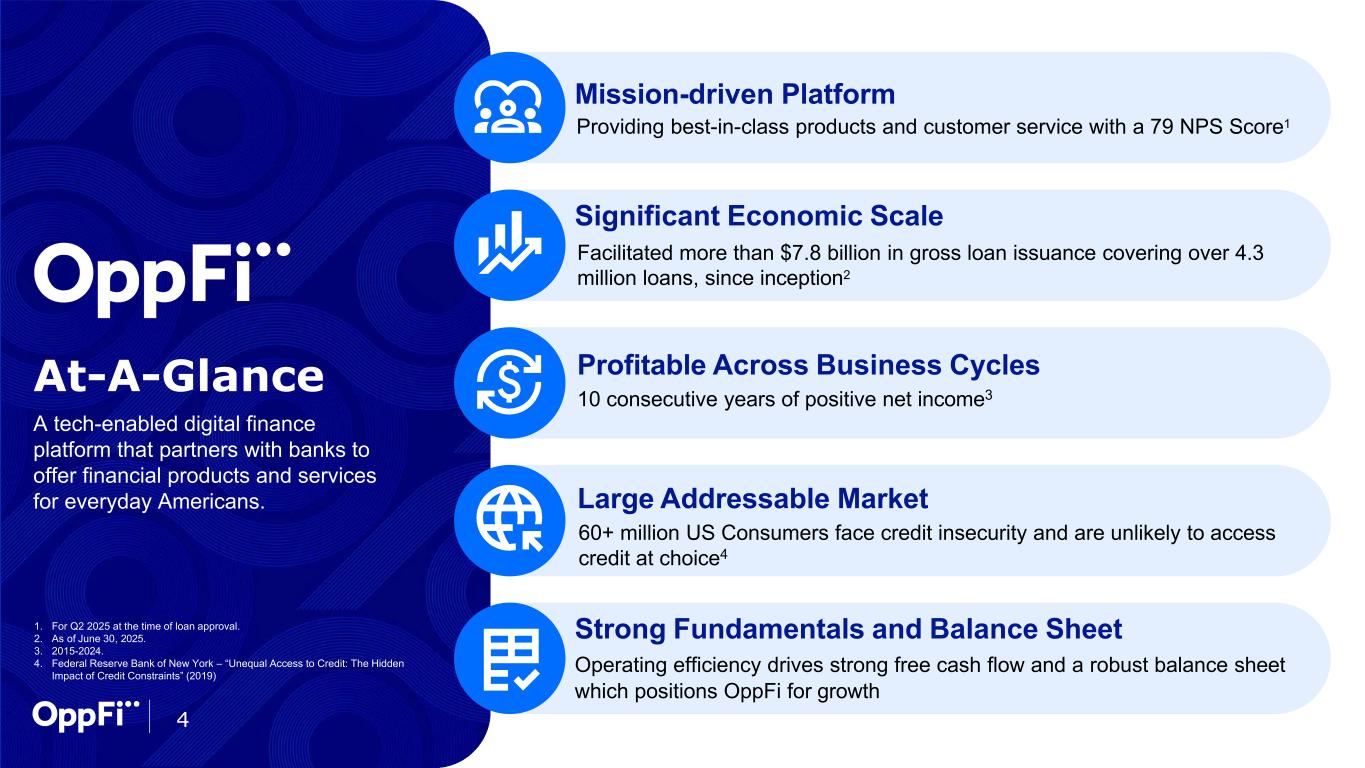
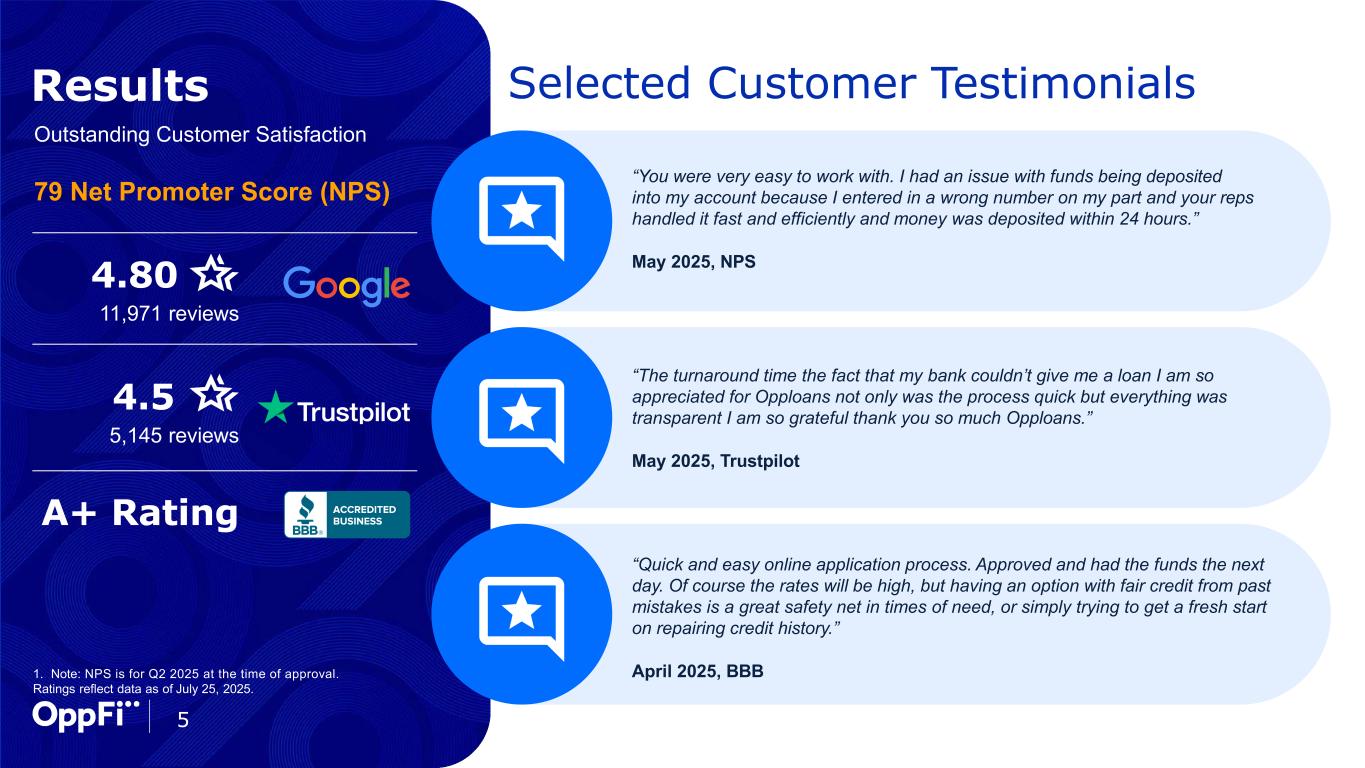
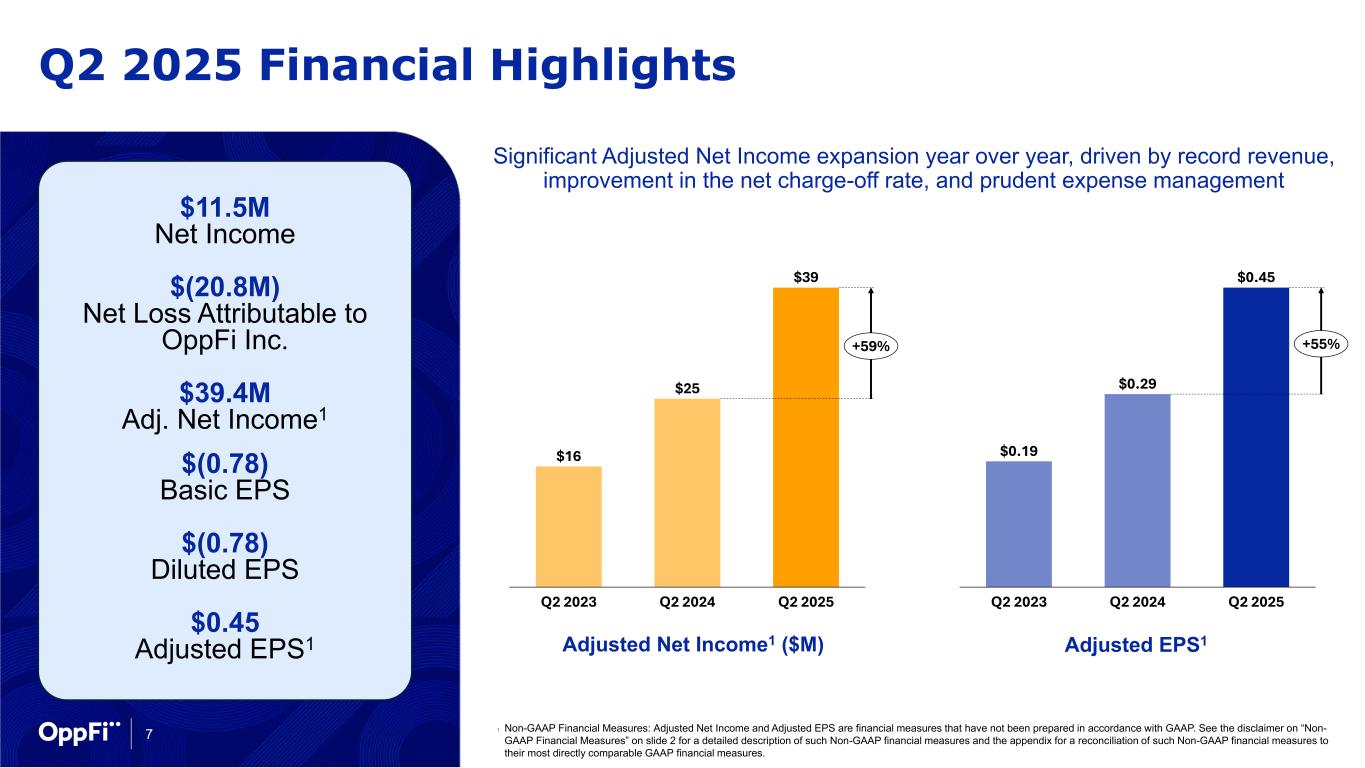
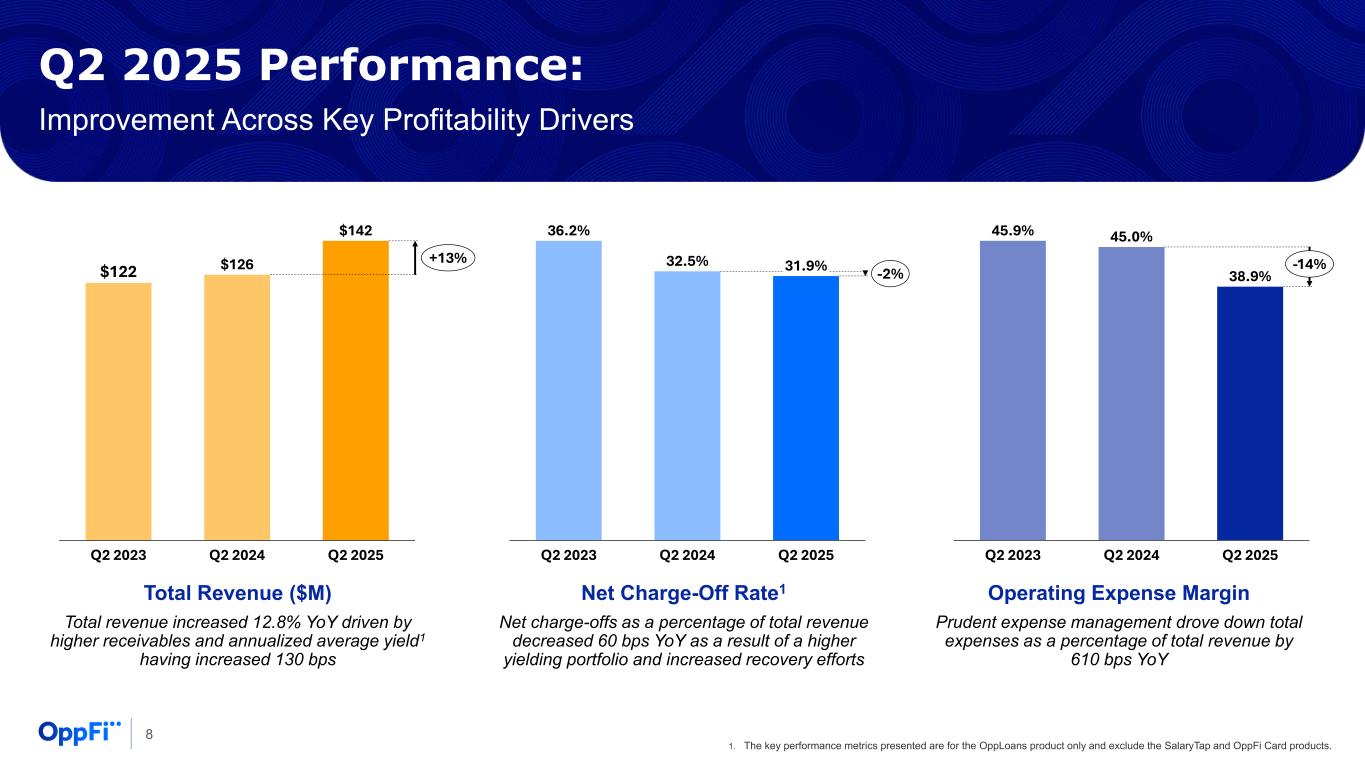
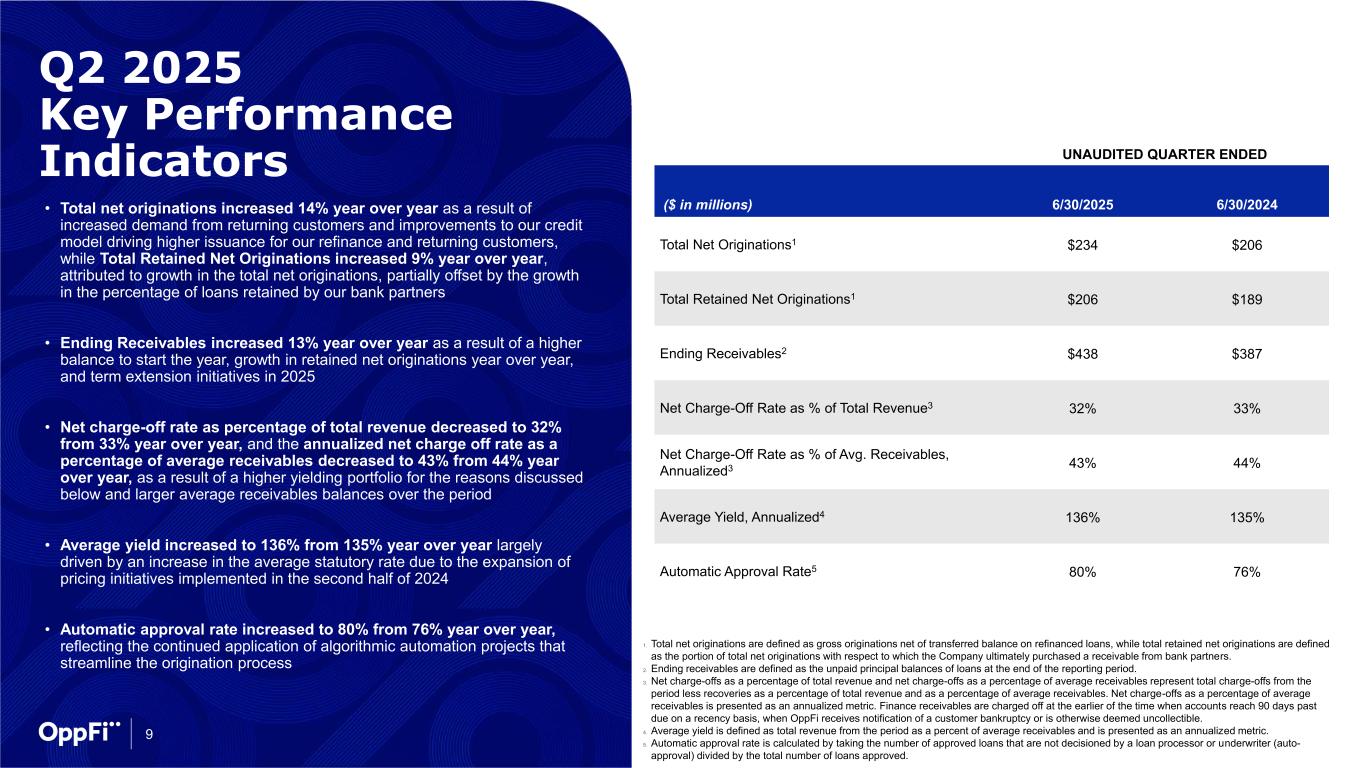
Thanks, Mike, and good morning, everyone. Thank you for joining us today. After a strong start to 2025, I'm proud to report that the second quarter was a record quarter for OppFi. The business achieved record quarterly revenue, adjusted net income and operating margin. Our Q2 results reinforce our belief that OppFi is unlocking its full growth potential and demonstrating that we are well positioned to continue increasing profitability and strengthening our balance sheet. Given our Q2 outperformance, we are increasing full year 2025 revenue, adjusted net income and adjusted EPS guidance. During the quarter, the company generated a 14% increase in total net originations, a 13% increase in revenue and a 59% increase in adjusted net income year-over-year. Our disciplined approach to growth and dynamic pricing led to this double-digit growth, and we anticipate that year-over-year growth will continue throughout 2025. Throughout the quarter, the underwriting model, Model 6 continued to perform well. In the second quarter of 2025, OppFi's net charge-off rate improved to 32% of revenue compared to 33% for the prior year. The model gives us the confidence that we will be able to continue to grow and weather different periods of economic volatility. OppFi continues to invest in product and technology initiatives to improve customer experience in originations and servicing. The auto approval rate improved to 80% in Q2 2025, up from 76% in Q2 2024, which in turn improved funnel metrics and propelled our net revenue up 16% year-over-year. OppLoans remains one of the highest-rated products in the industry, posting a 79 NPS score and a CSAT score of 89% throughout the quarter. We are proud to announce our new loan origination lending application named LOLA. Our product, tech and operation teams have been working diligently over the last year to build the loan origination system of the future. It's designed to significantly reduce loan application processing times and boost operational efficiencies. By integrating with AI tools, LOLA is expected to enhance customer experiences, improve satisfaction and increase automation, including auto approvals. Its modern architecture also allows for seamless integration with other major systems and tools, creating a cleaner data layer and providing deeper insights to fuel further innovation. Over the next 6 months, OppFi plans to migrate to LOLA. Our investment in Bitty continued to perform well in the second quarter of 2025. The business continued to add accretive profitability and cash flow to OppFi. Bitty is doing a great job utilizing technology to improve operations and the customer experience, identifying additional growth opportunities in new credit segments and capitalizing on the continued supply-demand imbalance in the small business lending space. Overall, OppFi had a strong quarter financially and operationally. We expect continued healthy revenue momentum and profitable growth throughout the remainder of 2025 and into 2026. We believe OppFi is well on its way to executing its vision of becoming the leading tech-enabled digital finance platform that collaborates with banks to offer financial products and services to everyday Americans. With that, I'll turn the call over to Pam.
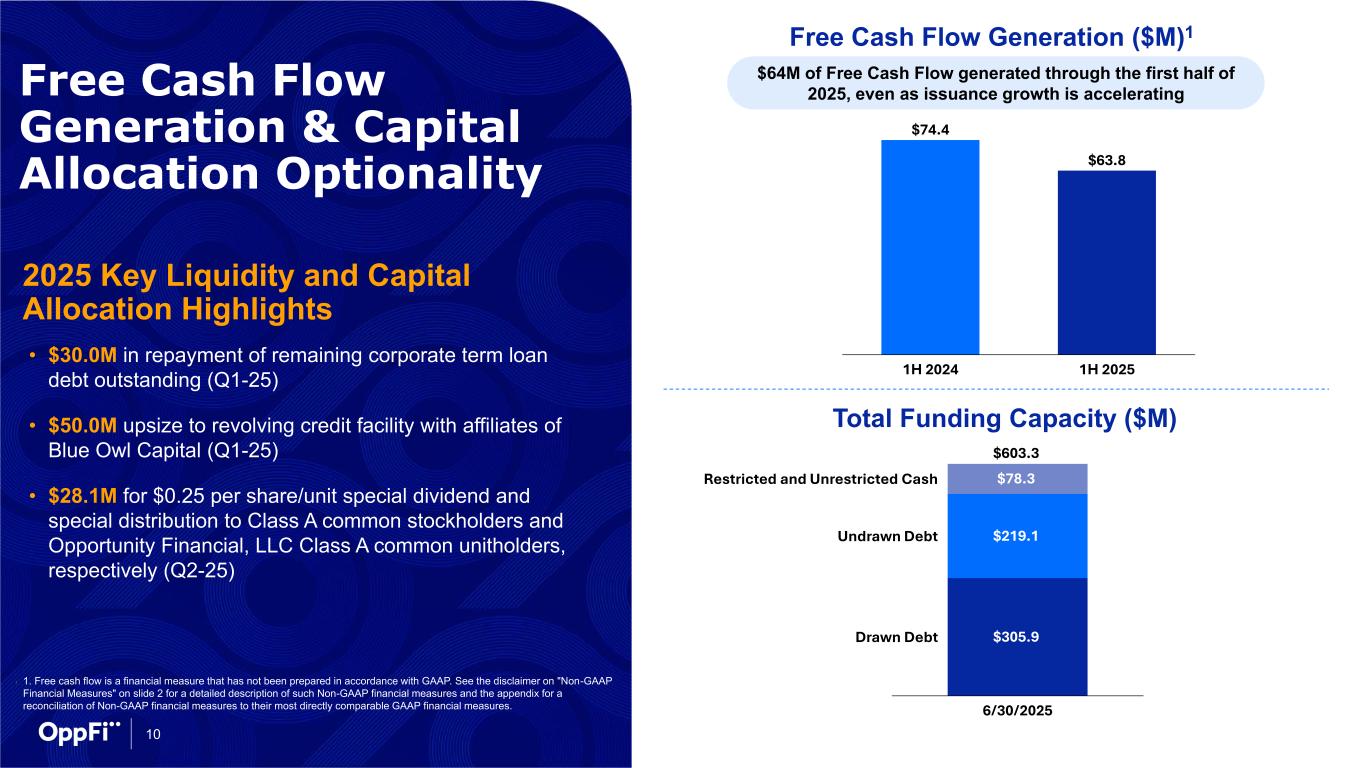
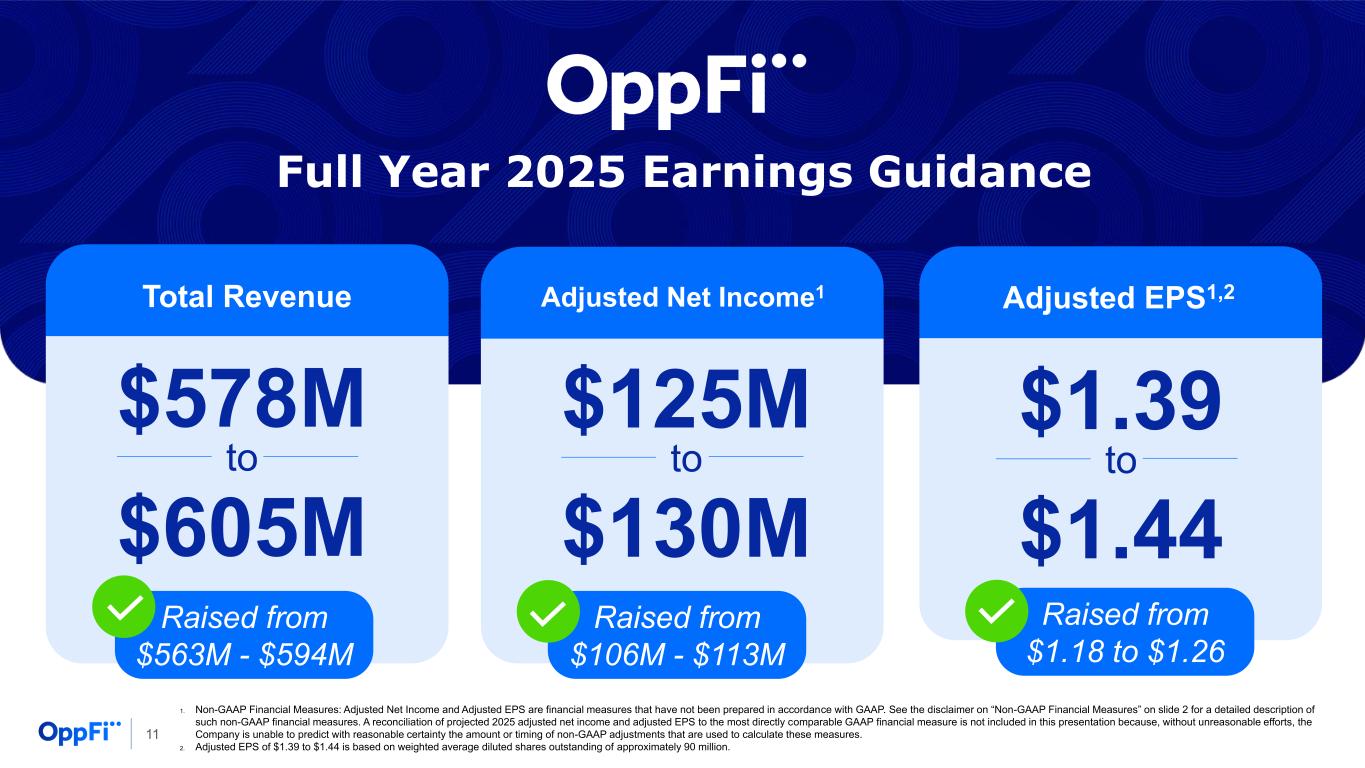
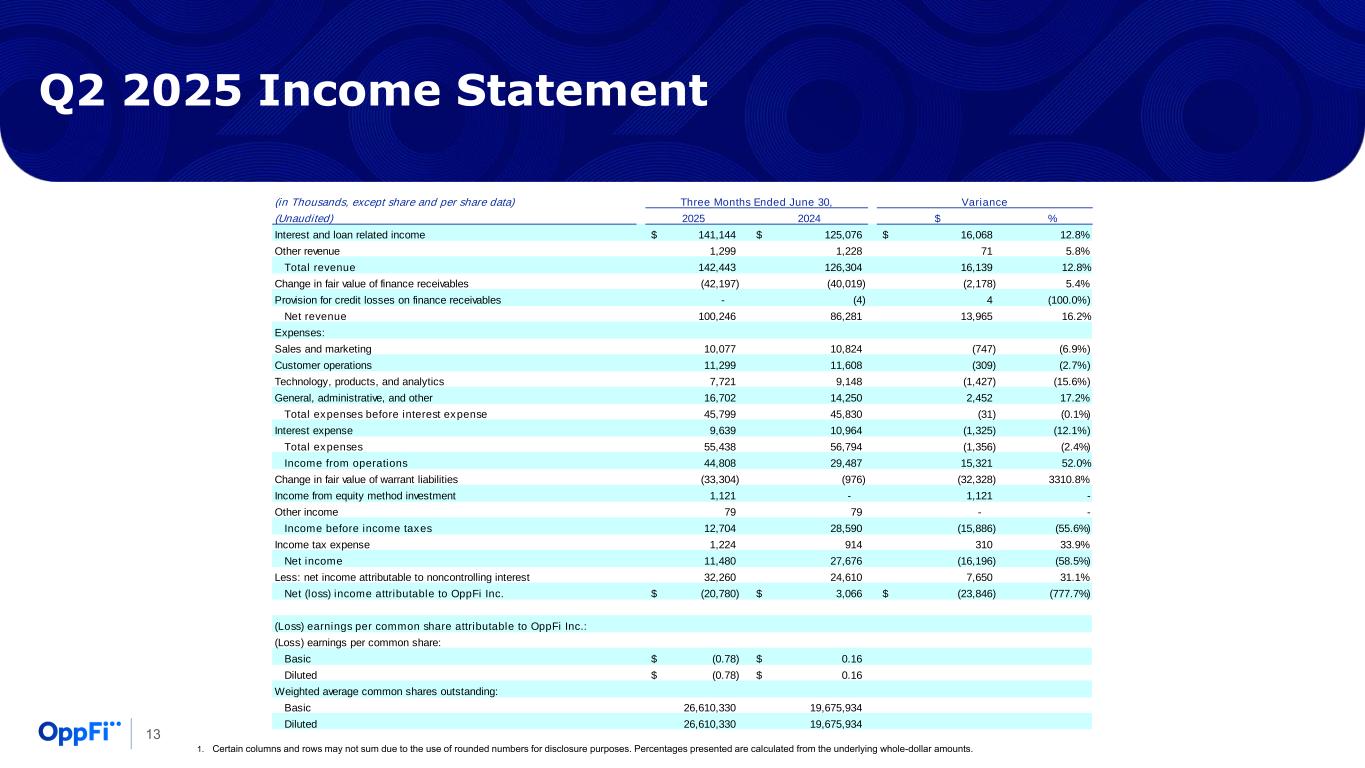
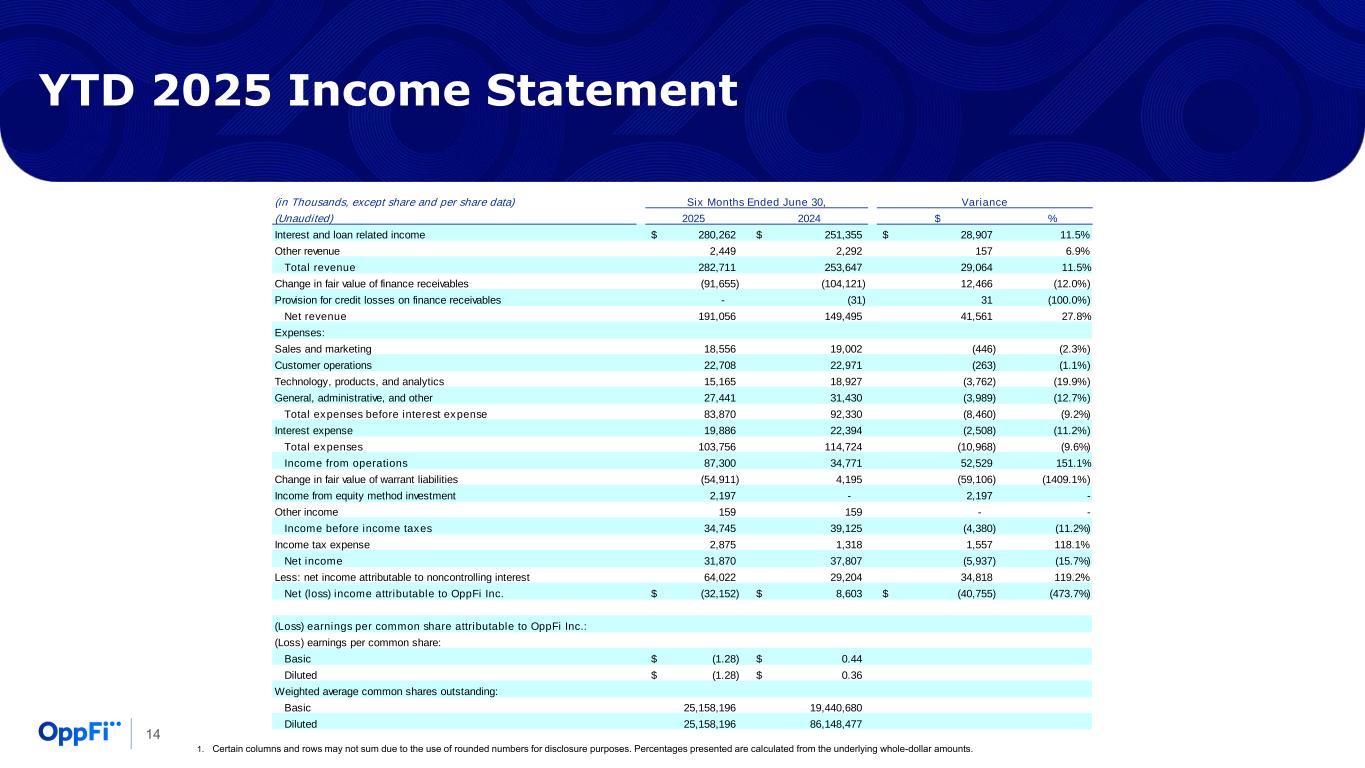
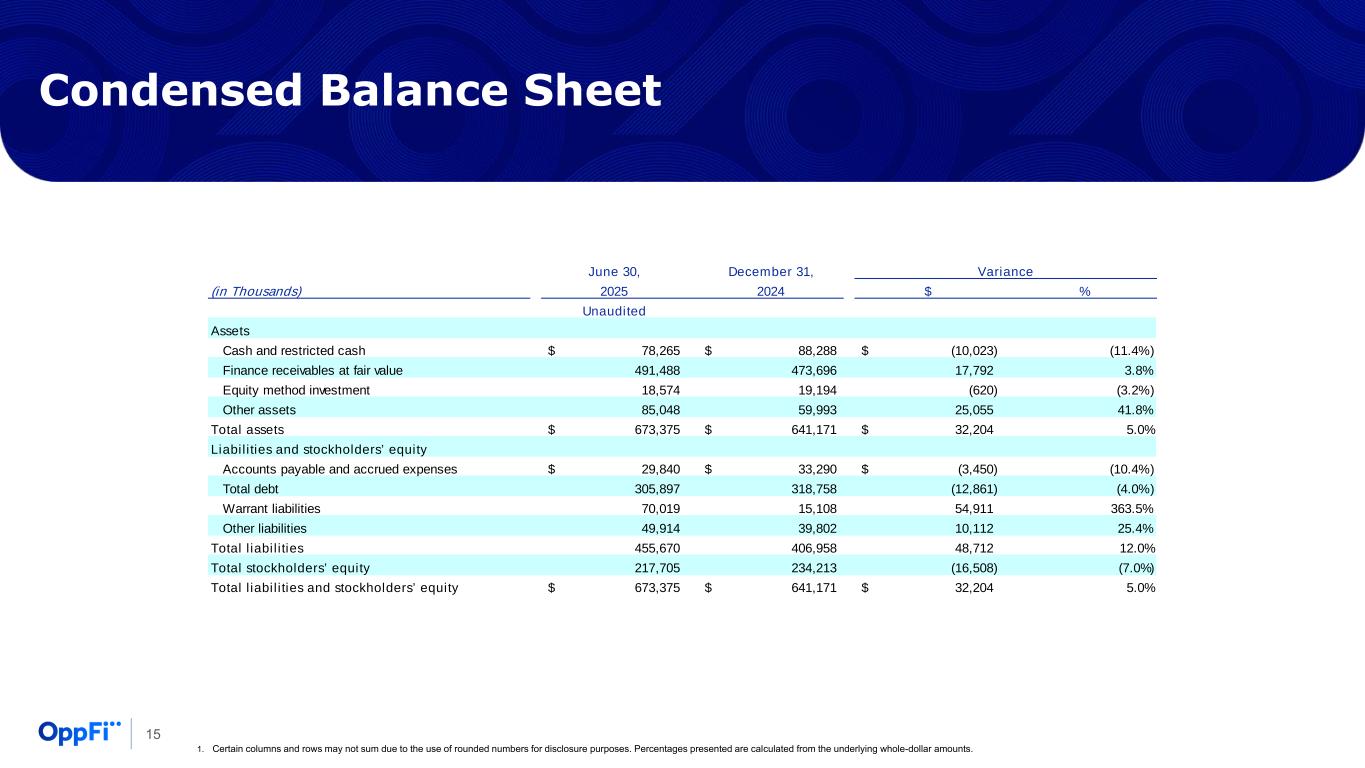
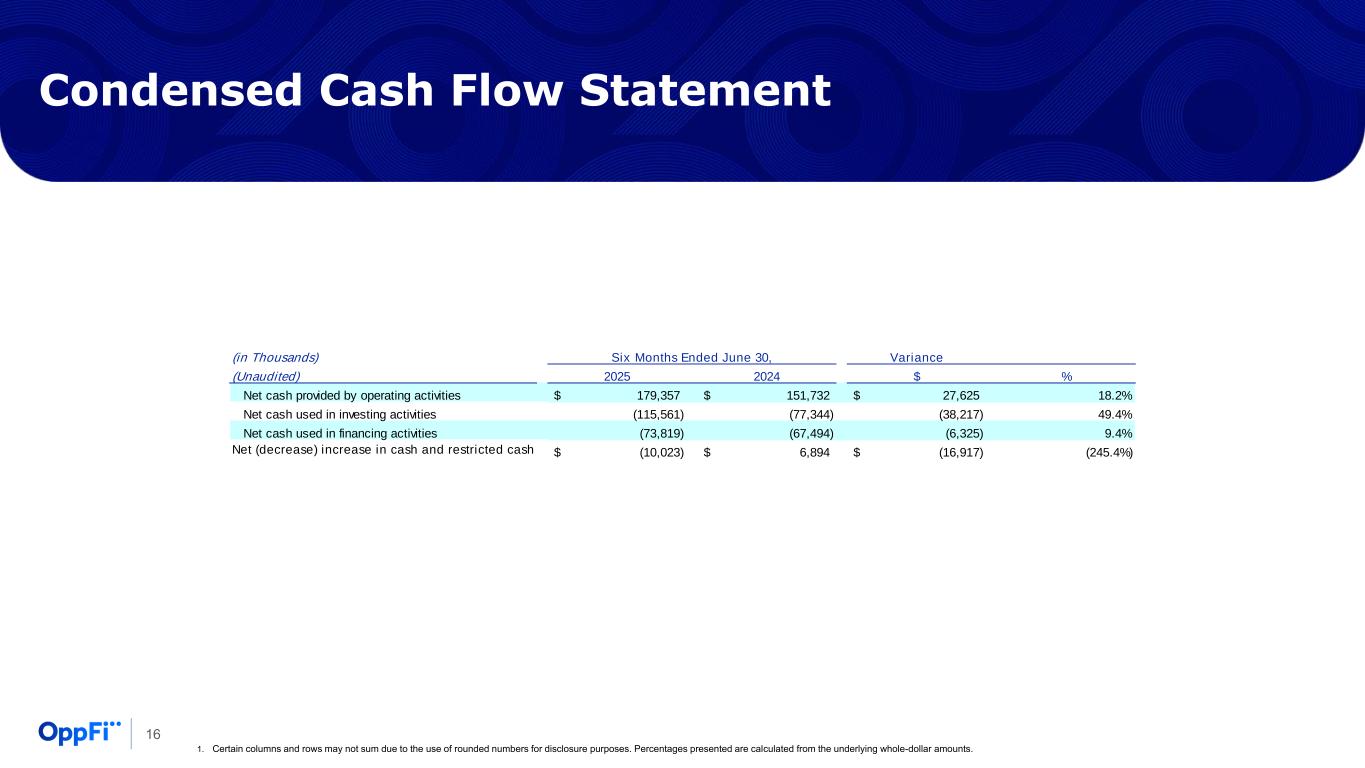
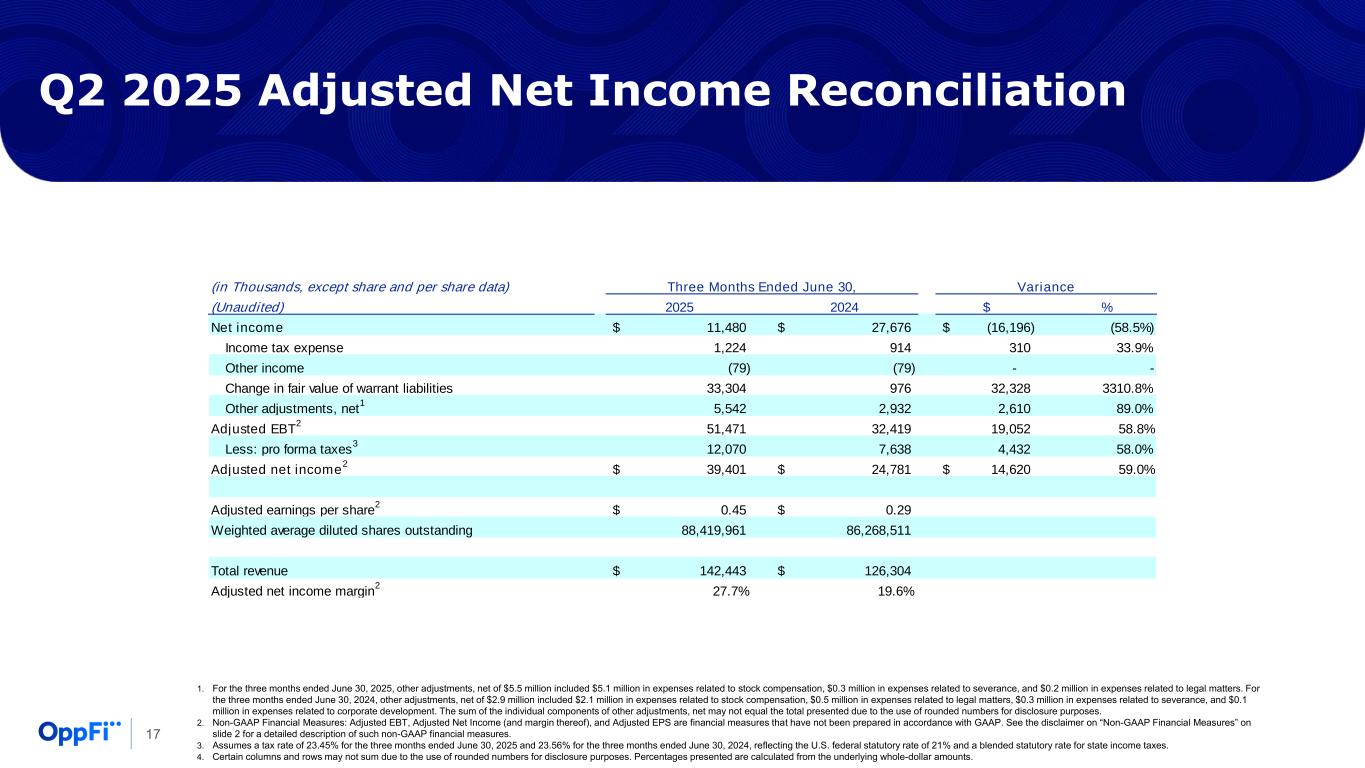
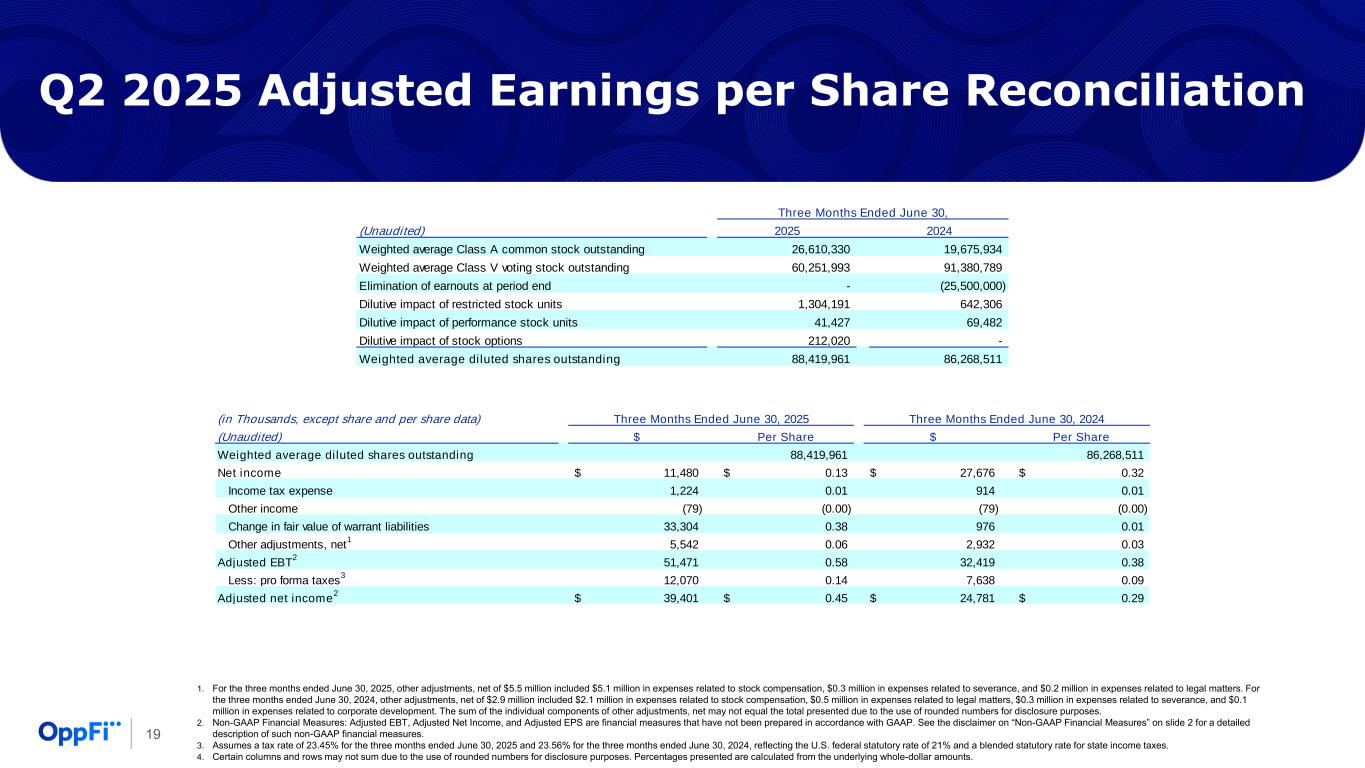
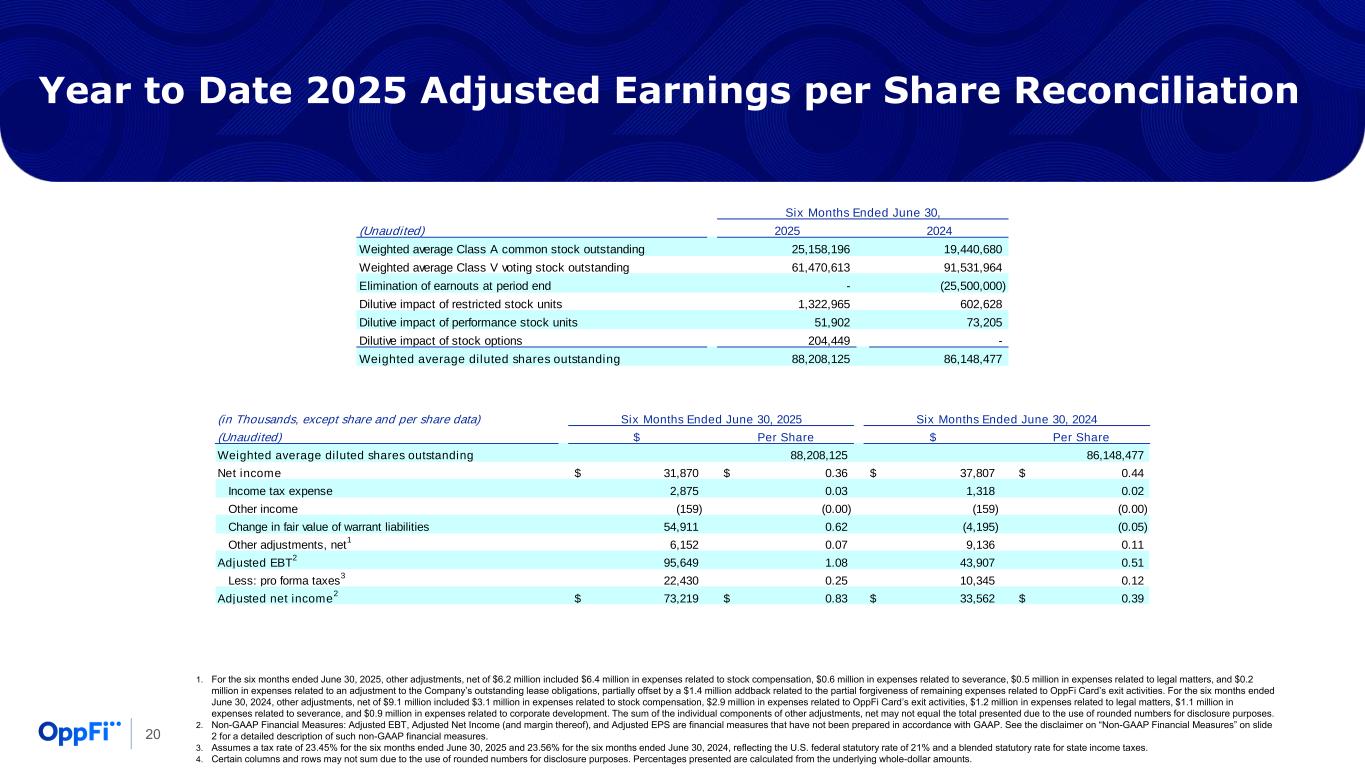
Thanks, Todd, and good morning, everyone. As Todd noted, we had another quarter with record results. These are due in large part to the proprietary Model 6 credit software. Model 6 has helped us expand our reach and grow our business in a highly capital-efficient and profitable manner. Its enhanced predictive power has enabled the ability to confidently underwrite larger loan amounts for creditworthy individuals. This ability to increase the average loan size while maintaining rigorous risk standards directly fueled the growth in originations, which Todd mentioned. The impact of Model 6 extends beyond just loan size. We have also seen an improvement in the auto approval rates. This enables deserving borrowers to more easily access credit, thereby enhancing the customer experience, increasing operational efficiency and improving customer satisfaction. The synergy between expanding originations driven by larger and more efficiently approved loans and disciplined credit performance is clearly reflected in the healthy growth of our finance receivables, which increased 13% to $438 million year-over-year. This growth is supported by the improved predictive accuracy of Model 6, which has properly aligned loan prices and terms with risk driving revenue. As a result of the machine learning improvements incorporated into Model 6, which helps underwrite better performing loans and increased finance receivables, total revenue reached a quarterly record of $142 million, representing a 13% increase year-over-year. The revenue growth, coupled with a lower net charge-off rate, drove a significant 16% increase in net revenue to $100 million. The net result of these positive effects was a 130 basis point improvement in the average yield to a quarterly record 136%. Our focus on cost discipline also played a key role in our strong performance. Continued operational improvements contributed to lower total expenses before interest expense, which declined to 39% of revenue in the second quarter compared to 45% in the same quarter last year. As we noted during the first quarter earnings call, we proactively paid down our corporate debt, which reduced interest expense to 7% of total revenue, down from 9% in the prior year. As a result of the increases in revenue and reductions in expenses, adjusted net income increased 59% to a quarterly record $39 million, up from $25 million. At the same time, adjusted earnings per share grew significantly to $0.45 from $0.29 last year. On a GAAP basis, our net income decreased by 59% to $11 million, primarily due to a $33 million noncash charge, reflecting the change in fair value of our outstanding warrants. Because our Class A common stock price increased during the quarter, the estimated value of the warrants issued when we went public also increased, driving this noncash expense. Moving to the balance sheet. We maintained a strong position, ending the quarter with $78 million in cash, cash equivalents and restricted cash, alongside $306 million in total debt and $218 million in total stockholders' equity. Our total funding capacity was $603 million at quarter end, including $219 million in unused debt capacity. We expect our healthy momentum to continue into the second half of 2025. Given our strong operating performance driven by growth in originations and a focus on operating efficiencies, we are providing the following updated full year guidance. For the full year 2025, we now expect total revenues to be between $578 million and $605 million, representing a 10% to 15% increase compared to 2024. We are again increasing our adjusted net income guidance to be between $125 million and $130 million, representing a 51% to 57% increase compared to 2024. Based on an anticipated diluted weighted average share count of 90 million shares, we are increasing our adjusted earnings per share guidance to be between $1.39 and $1.44. With that, I would now like to turn the call over to the operator for Q&A.
Operator
And our first question will come from David Scharf with Citizens Capital Markets.
Speaker 4
First one, a little more high level for both Todd and Pam. I mean, obviously, you've delivered on everything and more of kind of your restructuring over the last couple of years on both the expense and credit side as well as volume. And this is not a back-ended way of trying to force you into providing future guidance. But is there a long-term margin structure or operating model we ought to think about? Or maybe more specifically, is there a target ROE or net margin over the next 3, 5 years that you have in mind for the business based on all the changes you've made?
Thank you, David, for your question. When I returned as CEO in 2022, we outlined what we hoped to achieve. At that time, we were far from our goals, but we have reached them now, and we are very pleased with our current position. The business is performing exceptionally well, although there are some fluctuations due to macroeconomic factors. We are cautious about issues like tariffs and the impacts of consumer inflation and unemployment. However, achieving a 20% margin is very healthy and has exceeded our expectations, which makes us feel confident. This year, our priority was to return to growth, and the team has done an excellent job with that. We have focused on recruiting new customers through our excellent service and auto approvals, while also ensuring we have the right pricing and origination size for our customers. This balance has allowed us to combine growth with profitability, which we aim to maintain throughout 2025 and beyond.
Speaker 4
Got it. Understood. More specifically this quarter, you mentioned that the latest credit models have significantly increased the average origination size. Could you provide some context about how much the average loan size has risen? Additionally, how much of the originations this quarter can be attributed to the increase in the average loan amount compared to the total number of originations?
Yes. I mean, I think the way we're thinking about it is, you've had significant inflation. Obviously, inflation today is less than it was a couple of years back, but that inflation has stopped. Prices have not fallen down. And so what's really happened is our top end price of $4,000 was one of the largest originations we made. That had not been adjusted in almost 10 years where we had not really taken into account for inflation. And so we are now able to incrementally, I would say, increase that up to closer to $5,000, which allows for the updating of prices and inflation in today's economy. And then also incremental term. But these are all incremental things that we're doing. So it's probably a 10% increase in size. And so it's not like we're only relying on just raising the amount of the origination. It's a combination of doing that and then also making sure that our current customers are paying us and they're staying current. And then also there's a large population of customers that have been successful in our product and paid in full that are coming back to us at great rates as well. So it's a combination of things.
So David, our average loan size has increased by about $100 for the year-over-year. But again, these newer larger loans are just now infiltrating the portfolio, right? And so you're just starting to really get the initial impact of those. But an average loan size right now is about $100 more than it was during the 6 months last year.
Speaker 4
I have one more question about originations. I noticed in your slide deck that there's a mention of growth in the percentage of loans retained by bank partners. Was this something that was established contractually? Or is it predominantly with one partner? Is it simply that there's more demand for them to retain loans? Could you provide some additional context on this?
Depending on the state, we abide by all federal and state laws. Depending on some of the states, banks retain different percentages. And so that just means for the quarter, there were some growth, maybe more growth in those states. So that's how they retain more.
Operator
Our next question will come from Kyle Joseph with Stephens.
Speaker 5
Congrats on a nice quarter. Just want to dive into credit a little bit more. Obviously, your charge-offs are heading in the right direction, and you saw a good expansion in your net revenue margin. But I just want to get your thoughts on the macro, the health of the underlying consumer, kind of any trends you're seeing on the DQ or first payment default trends and then layer that in with kind of some of the commentary around larger originations and how you expect that to impact credit going forward?
Yes, that’s a great question. We experienced a strong start to the year, but as we move into the summer months, we remain cautious. We have always been slow to change our credit approach, and we are still operating in a fairly tight manner. The positive aspect is that we have managed to achieve growth while reducing charge-offs as a percentage of revenue. Much like the Federal Reserve's approach to interest rates, we are carefully observing the current economy to ensure we are tracking first payment defaults and long-term charge-off rates that align with our operational framework. Compared to previous years, specifically 2018 and 2019, we are maintaining a conservative stance amidst riskier segments available at current charge-off levels. We will continue to be cautious and responsive to changes. The benefit of our Model 6 is its ability to dynamically adapt to circumstances. As we've mentioned in previous calls, our focus is more on long-term charge-off rates rather than short-term fluctuations in first payment defaults.
Speaker 5
Got it. Really helpful. And then just shifting to expenses a bit. Obviously, the quarter really highlighted the operational leverage in the model. But you're seeing kind of accelerating origination growth that has far outpaced at least marketing expense growth. To me, that signals a relatively healthy market. But how you're thinking about the market overall, how you're thinking about marketing expenses given kind of competitive factors in the market?
Yes, if you look at 2024 and 2023, we averaged around $200 million in MCPF, and that has increased. I mentioned in the first quarter that we were going to implement some marketing initiatives this year related to direct response partnerships and invest in our organic search methods. We've started to roll those out. Our cost for the quarter was 220. We're definitely making those investments, but we're being smart about it. We believe there will be continued investment for the third and fourth quarters in MCPF. The good news is that so far, we are pleased with the results and are continuing to learn and discover new methods and channels that work for us in a scalable way.
Speaker 5
Got it. Helpful. Lastly, I would like to understand your expectations for yields considering some dynamics in the portfolio. Credit has been performing well, and there's been a shift towards larger loans, likely due to some consumers moving to higher loan balances. At the same time, we're observing good year-over-year yield expansion. Can you elaborate on this and share your perspective on how you see yields trending for the portfolio moving forward?
We believe yields will remain stable or increase slightly. One key change we made last year was adopting a risk-based pricing strategy tailored to different segments according to their credit risk. This approach was initiated last year and is beginning to show results in the portfolio. Overall, we feel yields are at a stable level with a slight upward trend.
Operator
Our next question will come from Mike Grondahl with Northland Securities.
Speaker 6
Another very nice quarter. Pam, maybe the first one for you. You guys had mentioned like roughly a 10% higher average loan size, maybe $100 year-over-year. Do you expect the average loan size to keep creeping up? Have you kind of fully absorbed that increase? Or how should we think about that the next couple of quarters?
I would say incrementally, it will creep up a bit. We, again, really haven't seen, I'd say, the full rollout of these larger loans yet at the level that we could be making them. So I think you'll see an incremental increase.
Speaker 6
It's not significant, but I understand. There hasn't been a substantial change in your average loan size, though it is slightly increasing. Todd mentioned that we are adjusting it for inflation, which makes sense. Regarding credit quality, there was a reset in government jobs data last week for June and July. Did that prompt you to reconsider your approach to growth? I'm curious about your thoughts on the current macroeconomic landscape.
Yes, the job numbers are revised every month and they may not reflect the true state of the economy. If they deteriorate, it’s something we keep an eye on, particularly unemployment and inflation, as those are our two primary macro indicators. We're not going to make significant changes to our models based on macro indicators that might not be entirely accurate, but we are monitoring the situation as we enter the growth months of the year. It's important to stay aware of economic developments since conditions can change rapidly. We can't react to everything, but it's certainly something that will guide our decisions. Additionally, we have access to very reliable early data that allows us to identify potential issues well ahead of economists, based on the repayment rates and default frequencies we observe, enabling us to respond as necessary.
Speaker 6
Got it. And does that data still look really good?
Yes. So far, coming off of a tax refund season, we expect to see higher losses in the second half. We have modeled for this and are prepared, but we are always keeping a close eye on it, especially regarding new loan originations. It's important to be cautious because if the situation changes, so can the outcomes.
Speaker 6
Perfect. And then can you guys call out what the collection amount was in 2Q? I know 2 years ago, give or take a little bit, you revamped collections, started being more active there. And I know you've had a lot of success. How was collections in 2Q?
Just to understand your question, Mike, are you talking about recoveries like post charge-offs?
I've got that handy, Mike. Last year, Q2, our recoveries were $8.4 million. And this year, they're $10.692 million. So again, major increase.
Speaker 6
Got it. Great. And finally, operating expenses were largely unchanged year-over-year, approximately $45 million. What are our thoughts on growth in that area moving forward? Should it align with revenue growth or be about half of it? What are your perspectives on this?
I don't think we should consider it as a strict formula. We plan to invest when we identify a significant need. For the first time, I want to highlight our LOLA system, which is our lending application. We believe this is an excellent investment that will drive us forward, as it allows for seamless integration with AI tools. It also enhances the integration of our major systems, setting us up well for the next 5 to 10 years and beyond. Regarding our corporate services, we are confident that with our current team, we can scale effectively without incurring significant additional costs. Our strategy for growth is focused on providing value to our customers, while addressing past technical debt and refining our software to establish a solid foundation as we embrace new AI tools that will improve both our operations and customer experience.
Speaker 6
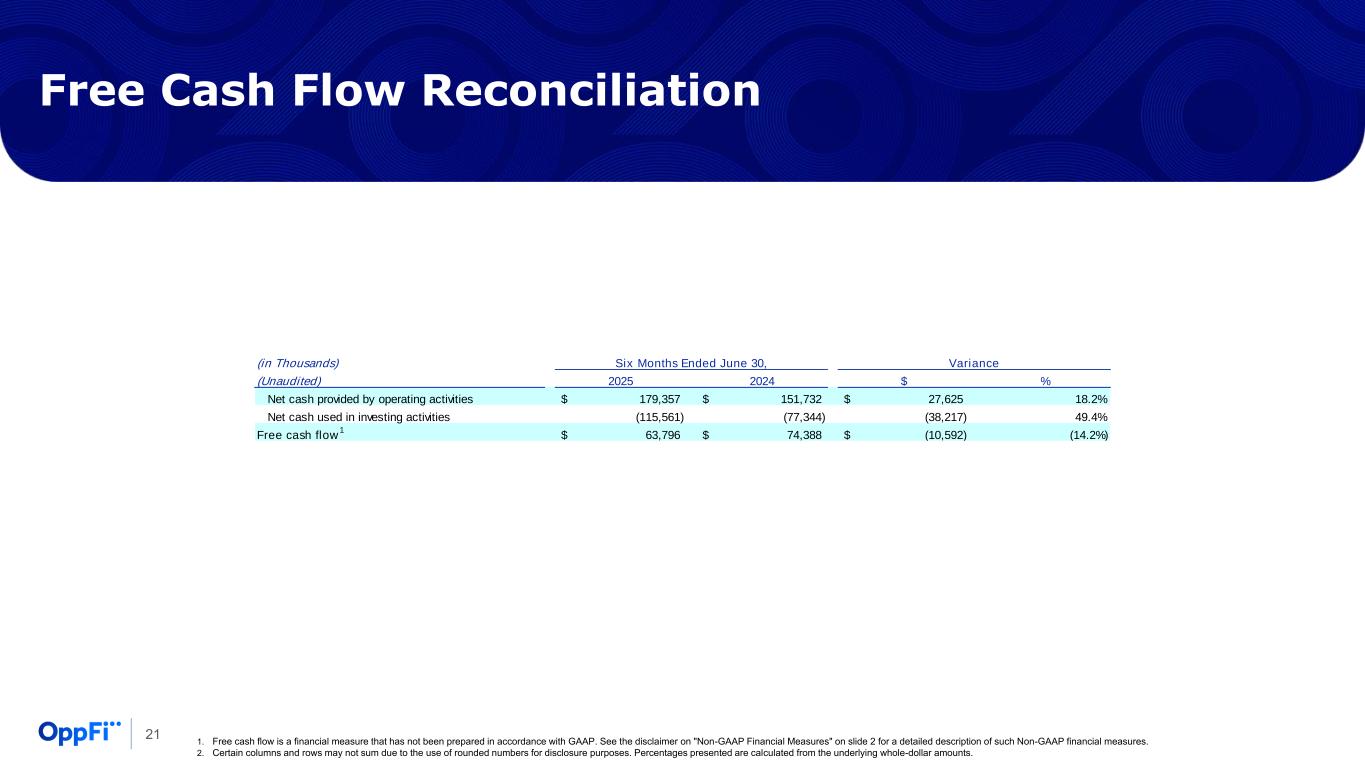
Got it. And I'm sorry, I'll squeeze one more in. Just with the robust free cash flow, any updated thoughts on capital allocation? I saw the dividend was what was incremental. How are you thinking about that?
Yes. We're continuing to explore opportunities and investment opportunities. And our goal, Mike, is to be a multiproduct platform for the alternative credit space to be the leader in that. And we're seeing some interesting stuff out there. Nothing to report, but we're really happy with the Bitty investment that's continuing to perform really well in the SMB space. We're continuing to look at adjacent spaces in point of sale continuing to look at the Earned Wage Access space is obviously a very hot space. The valuations are very full there, but they're getting a lot of credit. It seems like consumers really like the product, right? A lot of the product market fit there for consumers. So we're definitely active looking where it can make sense. It's going to be something that we make sure it really fits within our brand promise and our mission. We don't want to do anything just to say, hey, we did an acquisition. It really has to fit our footprint and our vision for being a multiproduct platform. But we're definitely looking at that closely.
Mike, I'd like to add that we would be considering stock repurchases if we feel like there's a mismatch between the value of the enterprise and the stock price.
Yes. Well, I would go ahead and say we do think it is disconnected. But yes, we think it's been very disconnected. That is another menu option for us as well to protect our share price when we think it's not valued correctly as well. So...
Operator
Our last question today will come from Dave Storms with Stonegate.
Speaker 7
Just wanted to circle back to the LOLA initiative. How should we be thinking about that rollout over the next 6 months? And I guess what does success look like for that? Is it measured in costs or auto approval rates, the number of clicks to originate a loan? Just any more there would be great.
Yes, I believe our success hinges on maintaining the strong results we are currently achieving with our existing system. The true benefit lies in our ability to harness emerging AI technologies and integrate them without disrupting our system, allowing for seamless connectivity. This greatly enhances our data analysis and aligns better with major systems. Our goal is to sustain the excellent results we have today while also making incremental improvements. Moreover, it provides us the flexibility to implement new tools across all areas of the business, including marketing, credit, operations, compliance, and finance, thereby improving data management. Essentially, it aids us in streamlining the technology infrastructure we have developed over the past decade and enhancing it further.
Speaker 7
That's perfect. And then just one more for me. Your guidance takes into account the second half being seasonally softer. Are you seeing anything in the macro that would throw off the seasonal distribution between 3Q and 4Q?
Can you be a little more specific just to make sure I answer your question correctly?
Speaker 7
Yes, of course. So your guidance takes into account the second half being seasonally softer as it normally is. Should we expect 3Q and 4Q to be seasonally in line with the typical seasonal trends? Or are you seeing anything in the macro picture that might throw that off?
Yes. I think as we continue to grow, there will be associated costs. Charge-offs will naturally build up until we reset them next year. Overall, it's a standard process we're observing, and there's nothing unusual to mention.
Operator
Thank you, ladies and gentlemen. This concludes today's event. You may now disconnect.