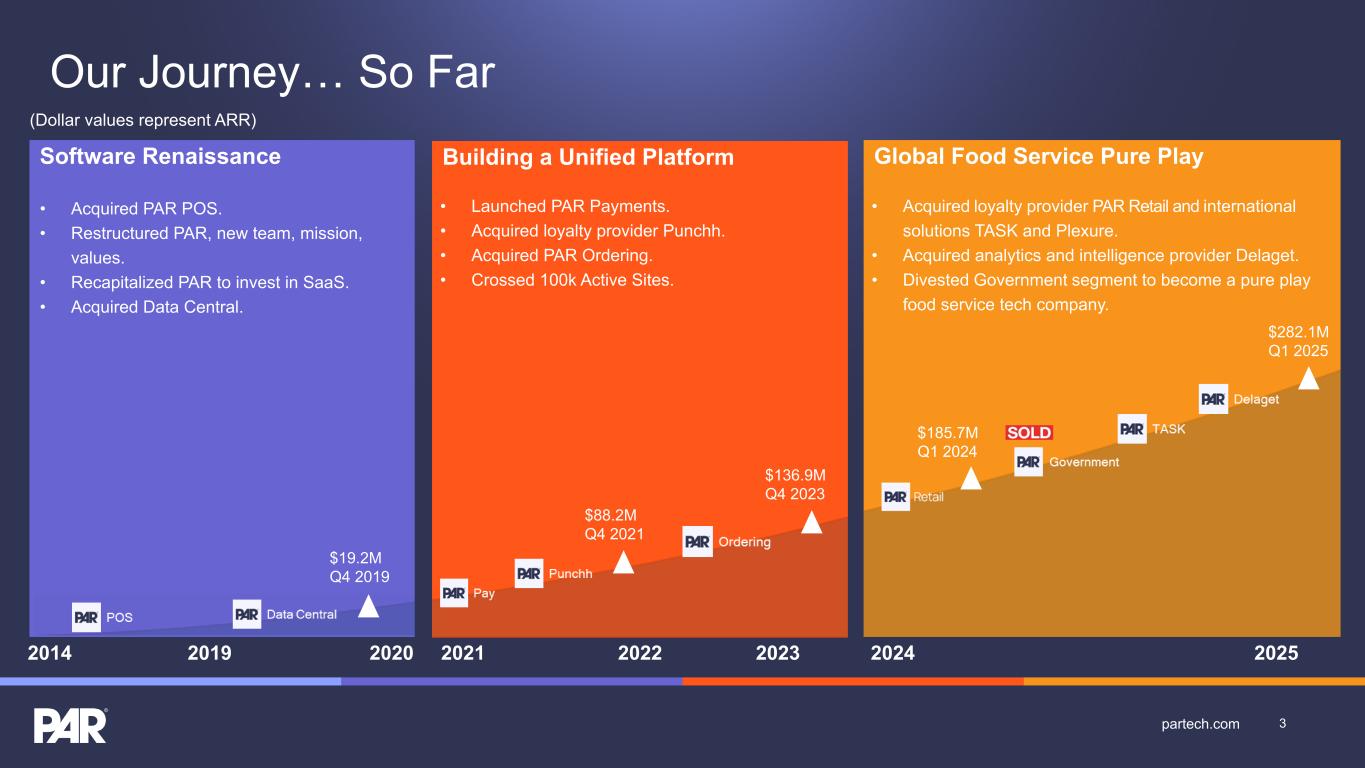
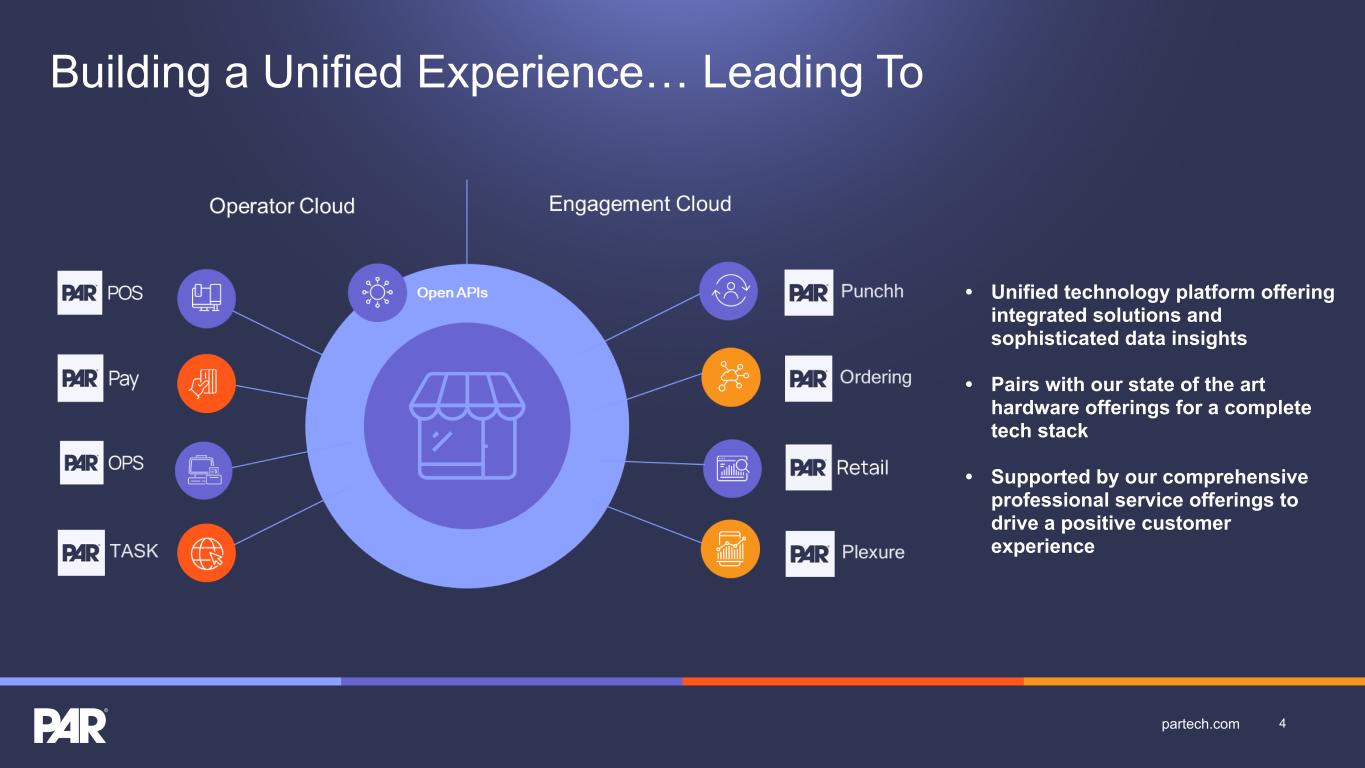
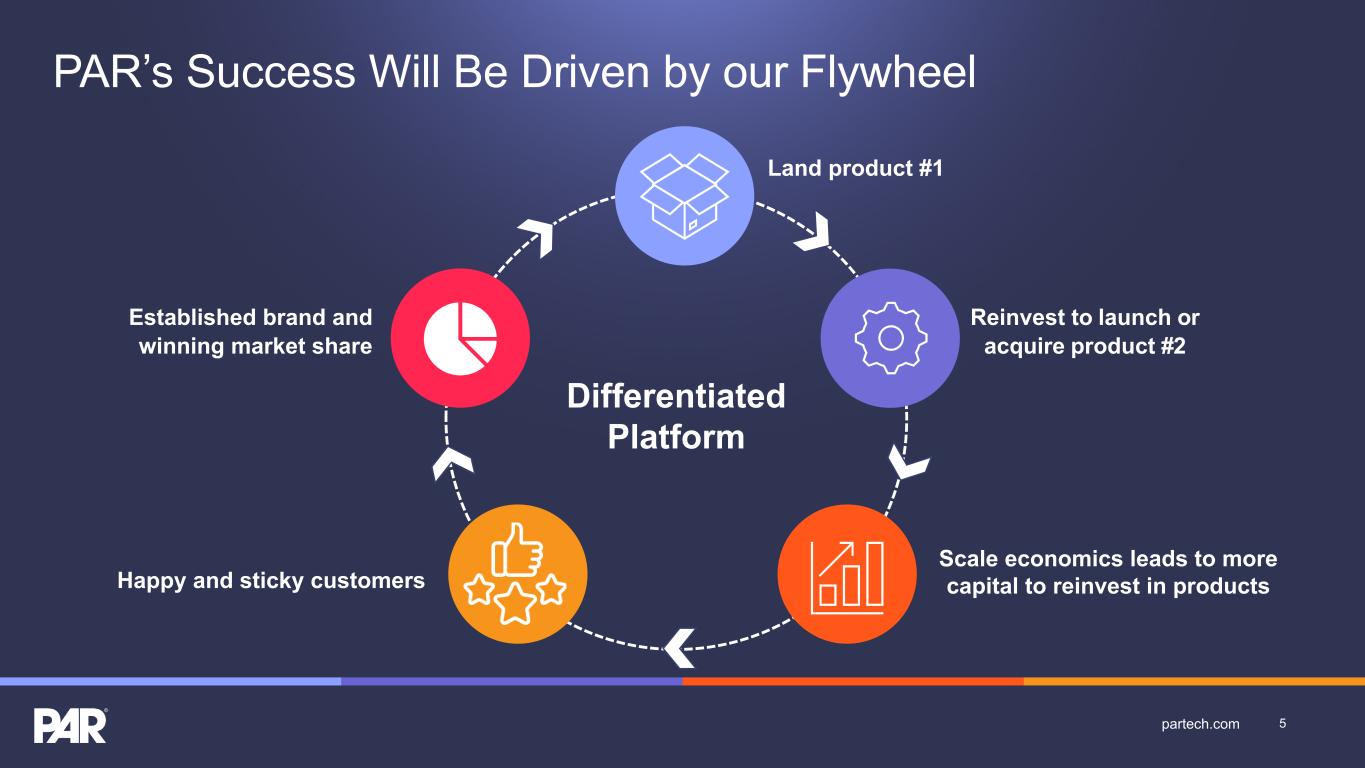
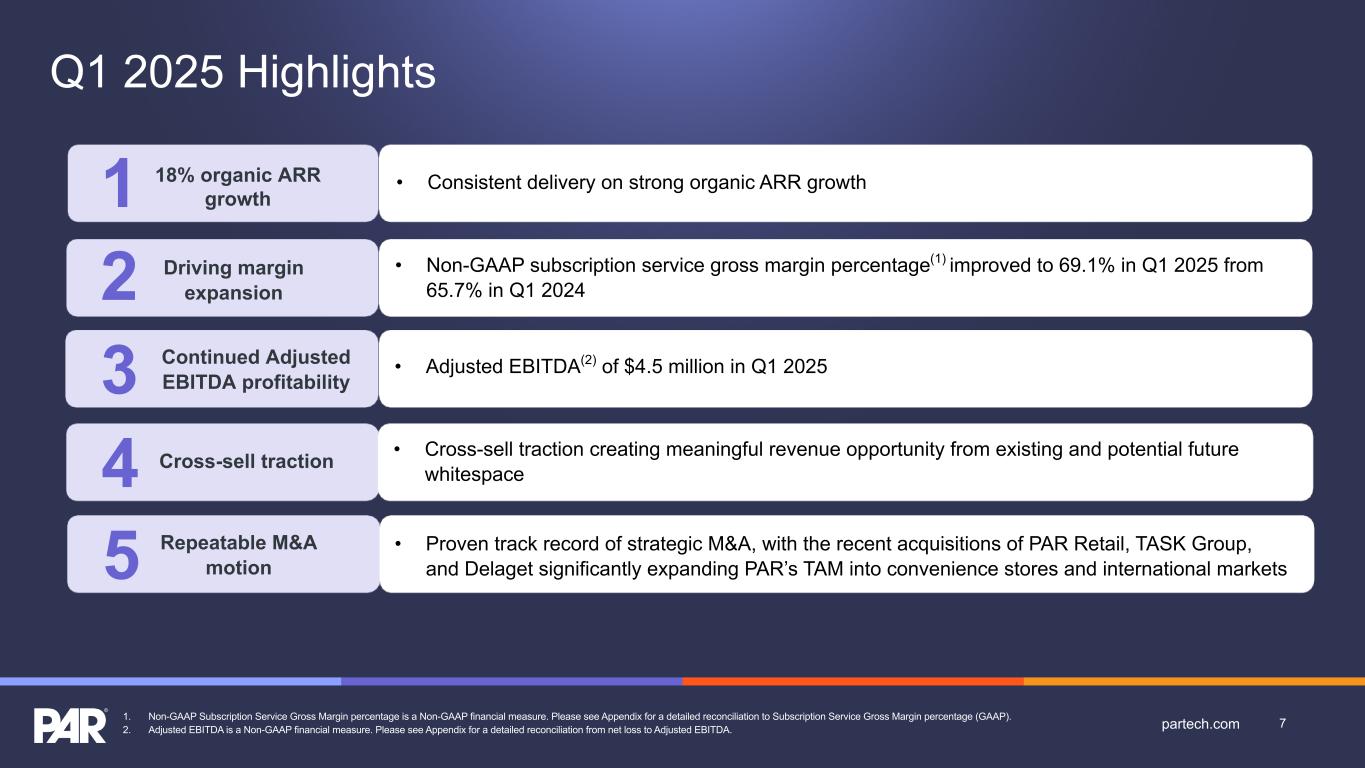
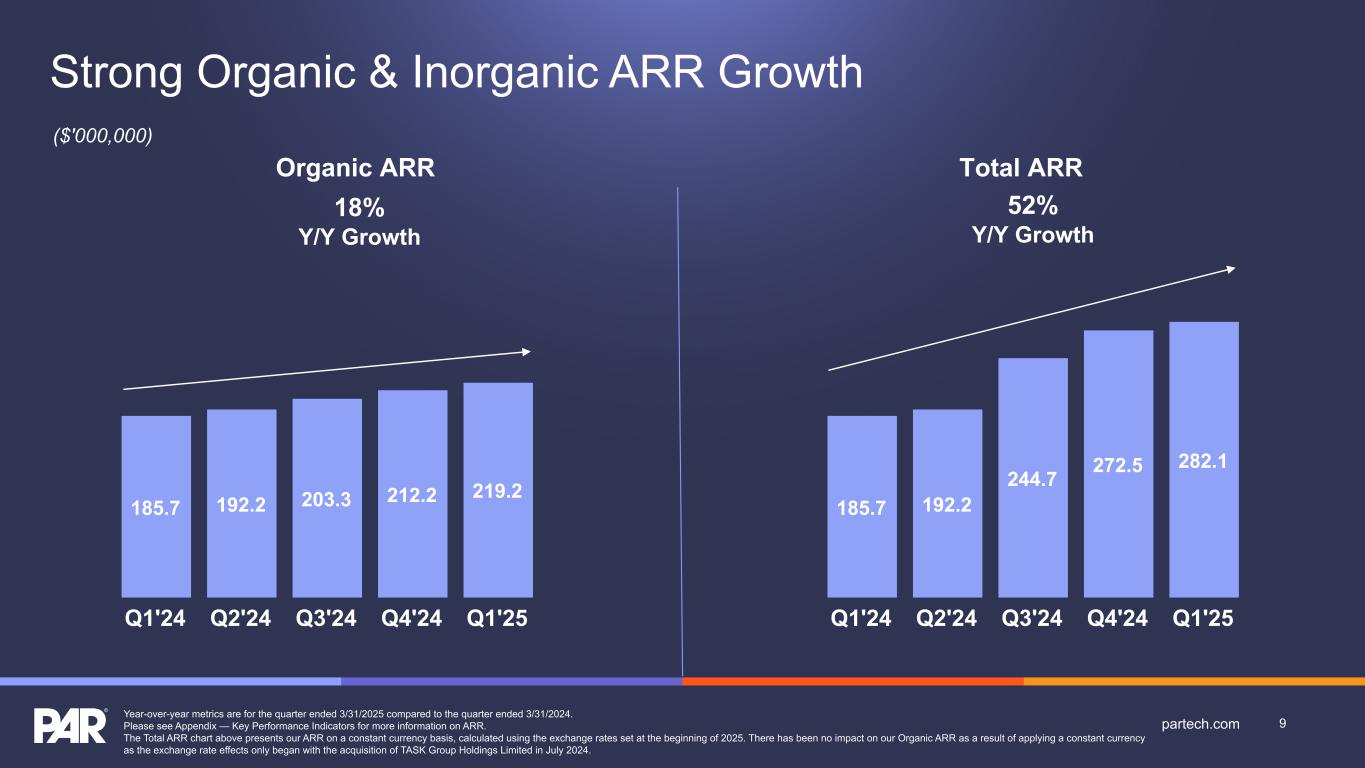
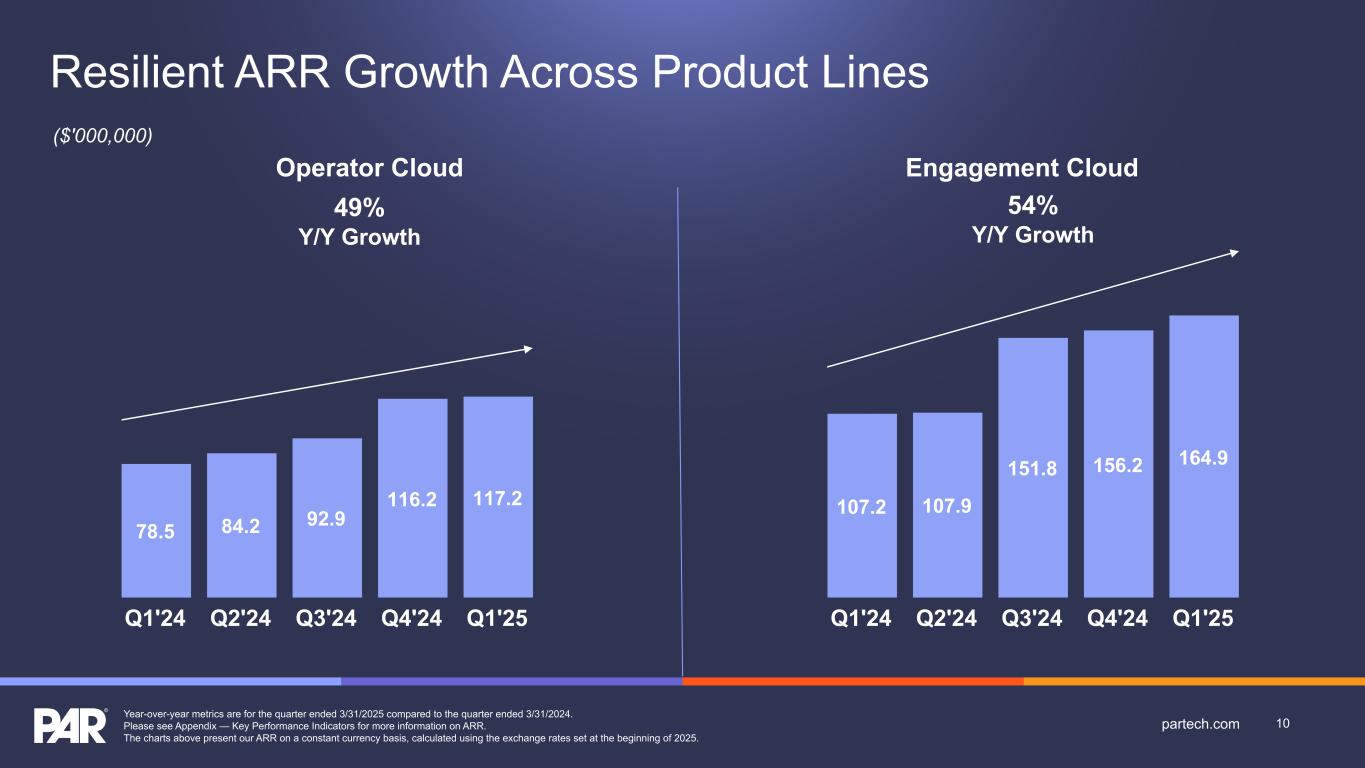
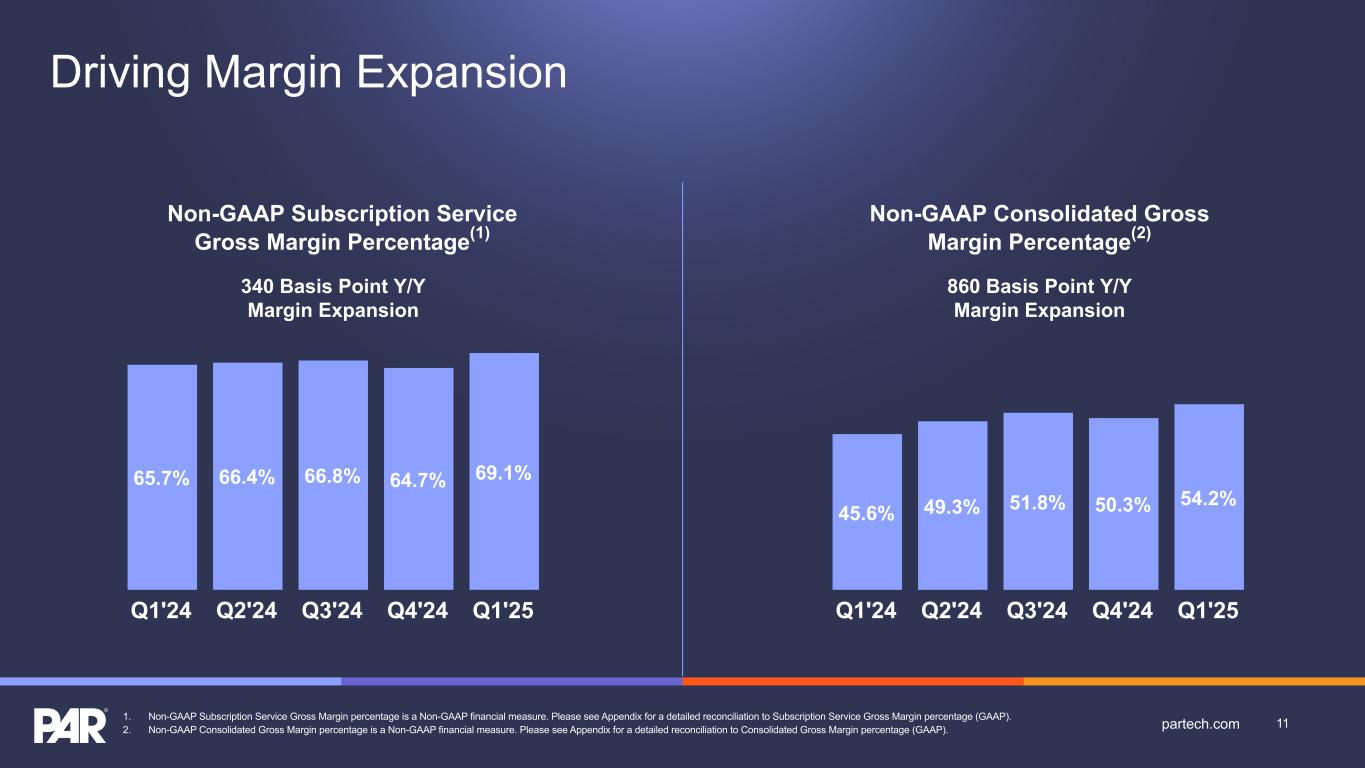
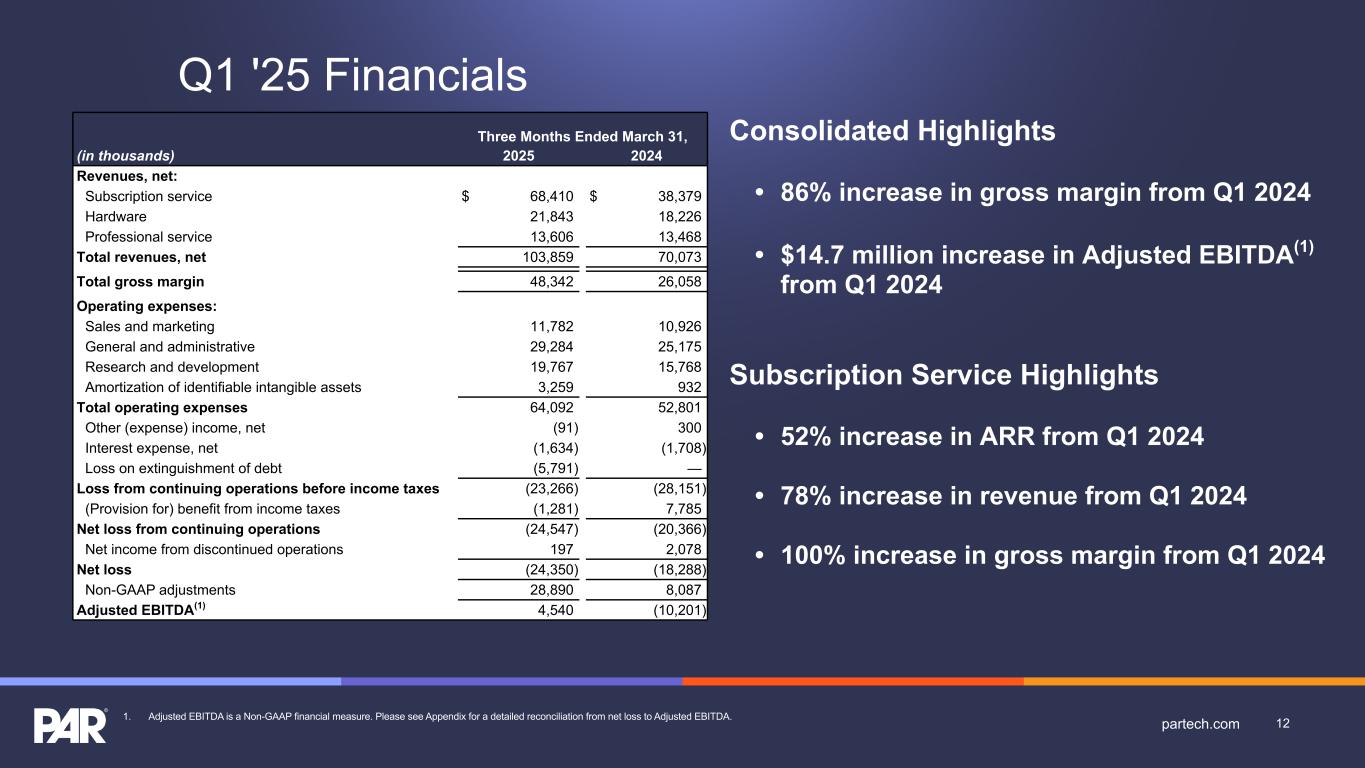
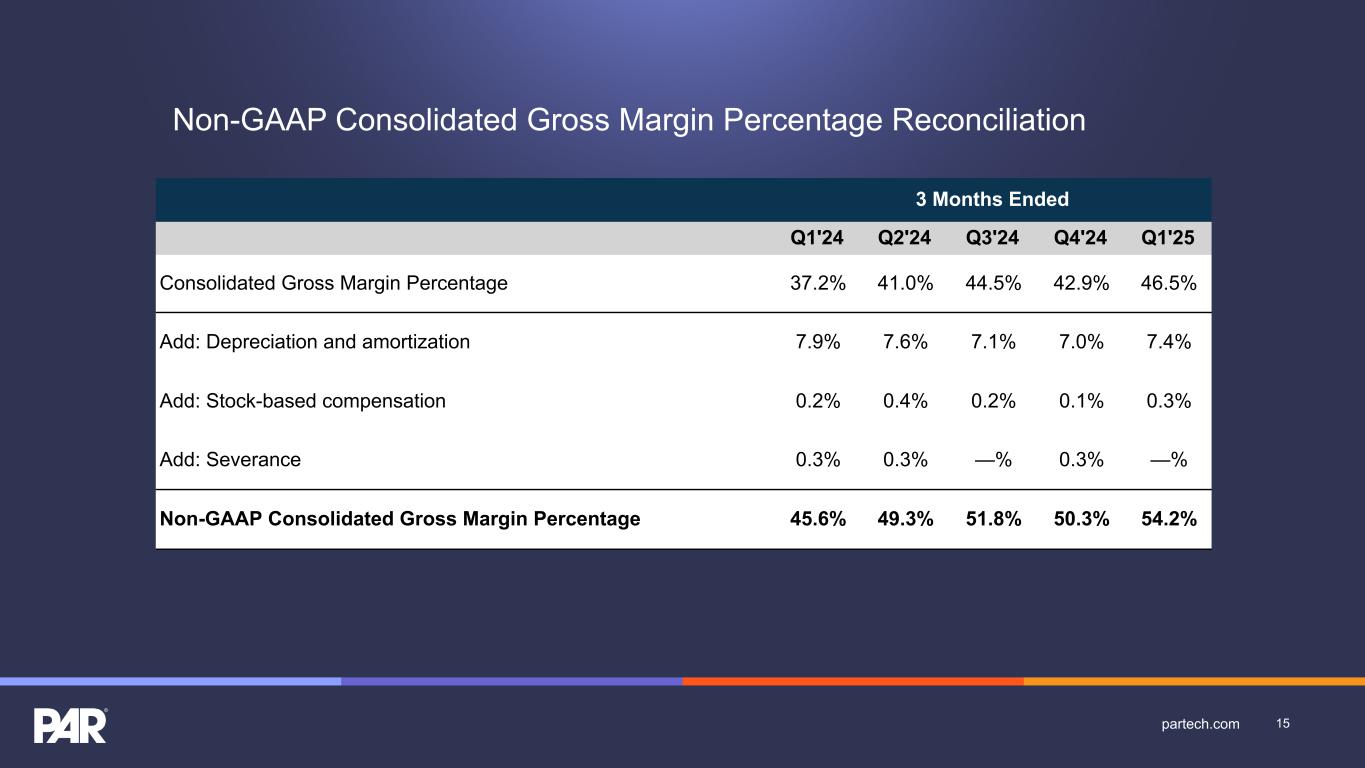
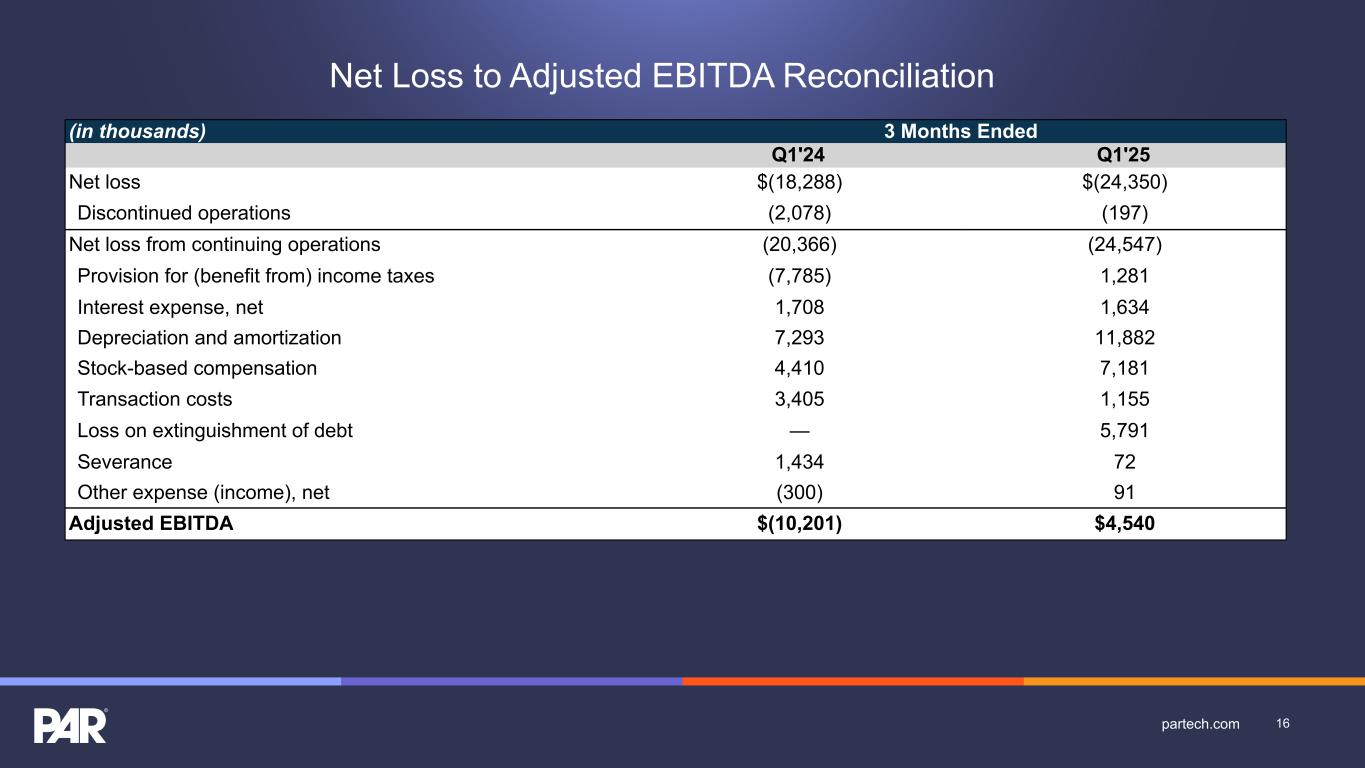
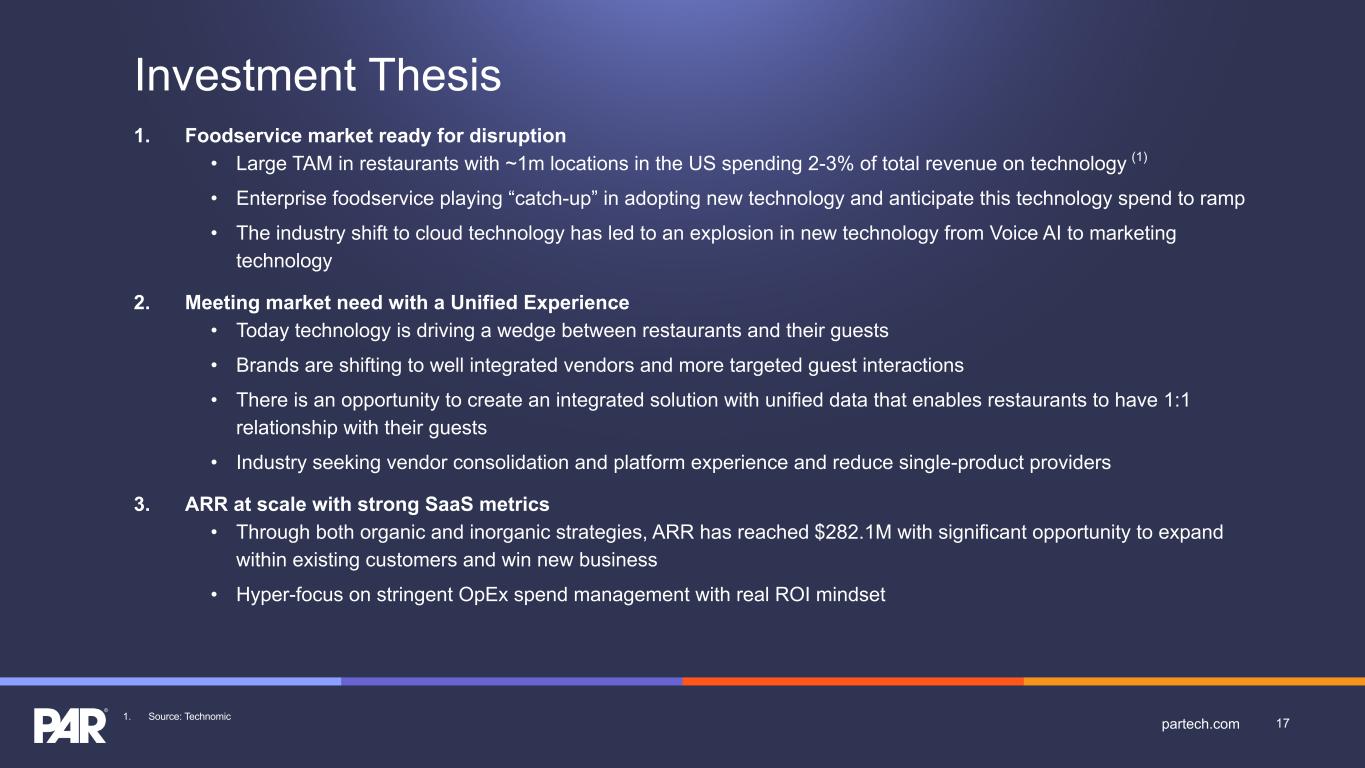
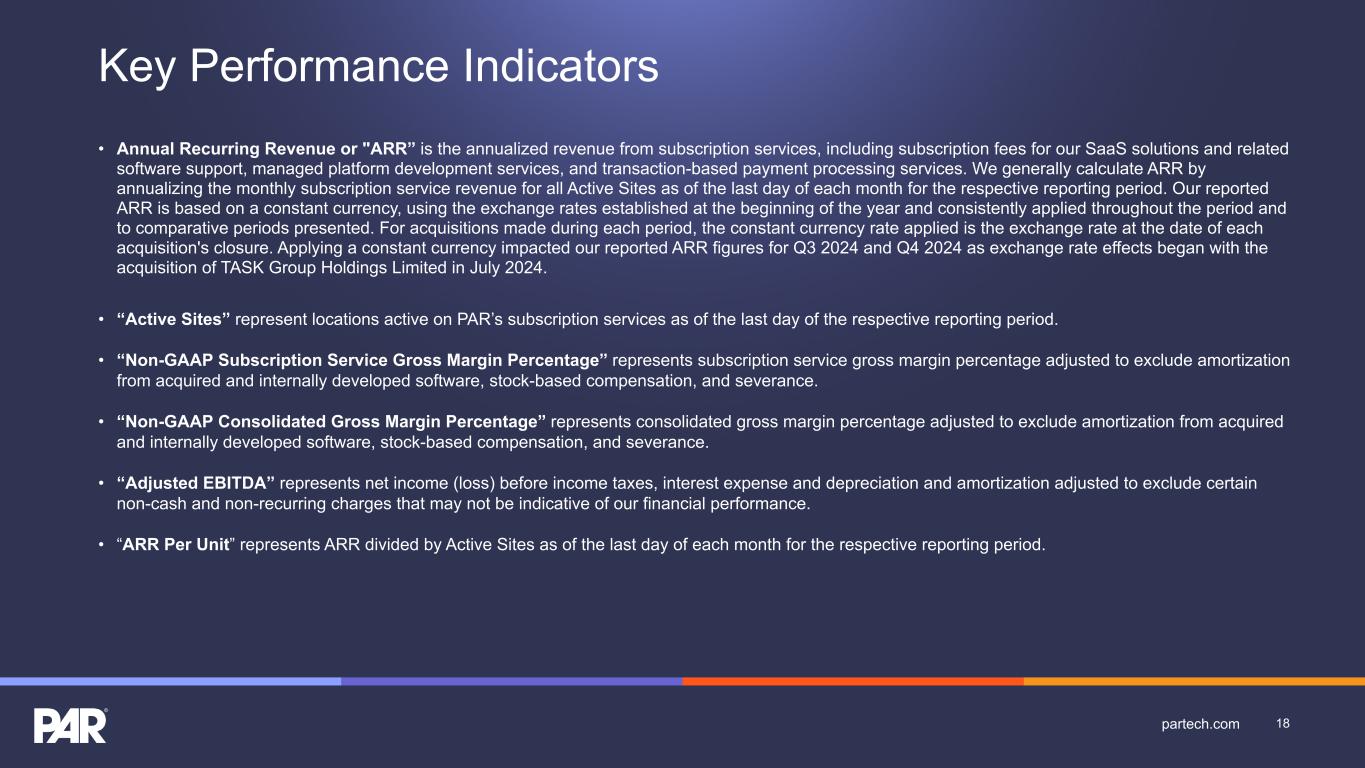
Thanks. All right. Maybe I'll step back for a second and tell you about PAR. So PAR has been on this endeavor to build this idea of a platform to run your enterprise restaurant. For a long time, restaurants looked at technology as a cost center, as really a way to speed up transactions. But with the advent of the cloud, the push from COVID, they really quickly realized they had to become digital businesses because their guests now expected them to be available everywhere, whether it was online, on TikTok, on mobile. And restaurants ran through this massive vendor sprawl where there were acquiring tools to fill point solutions, online ordering, mobile, loyalty, back of house. And all of a sudden, they woke up one day and said, holy cow, none of this stuff connects together. I'm not giving a unified guest experience. I'm not giving a unified employee experience. And so we went on this really aggressive route to build or acquire what we viewed as the core operating and engagement systems for a restaurant. A restaurant really looks at businesses on two sides. One is the engagement side. How do I engage my customers? And two, the operations. How do I run the most efficient operations with my team? And we've worked really hard to build the core process here on the screen back into one platform. And I think by luck or design, in a world of AI, this becomes even more valuable because now what we're seeing is the move to agentic everything, whether it be ordering, employee engagement, customer engagement, requires far more data, far more coordination between products and restaurants are desperate for those efficiencies. And you can't really do that when you've got three different agents fighting over who's the one you got to listen to. and so we think it sets us up for a really nice opportunity and as you'll hear about in a second we've moved aggressively to go not just into restaurants but now it's a C stores and hopefully down into broader retail over time so as Steven mentioned it's been a painful ride for us in the public markets but ironically been the best time for us in the actual operations of business we have worked aggressively to compound a compound error over time both organically and organically from you know call it 20 million to 330 million in seven years, and that's kind of half organic, half inorganic. Our technology today touches over 150,000 restaurants, two or 300 enterprise brands, billions and billions of transaction volume, and now I think we've really pushed forward the profitability of our business. We reported nine million deep out last quarter, we gave guidance for 44 to 47, and as Steven mentions, our first time given guidance, so hopefully you put guidance out the first time when you feel confident about it. We also sort of think that one of the unique parts of our business is that when you're selling to these enterprise brands, the opportunity for margin expansion as a software business actually grows over time. Because once you build that brand, every incremental product is highly, highly margin and creative. So I think one of the things we look forward to is constantly pressing on the margin side because we've seen just the velocity of how we can leverage our OpEx on a per customer basis to drive more margin to the bottom line. Fourth, I think with the AI title wave, we've tried to do our best to be objective. Is it a threat, is it an opportunity, and I think what you'll see here shortly is not only is AI making us stickier to our customers because we are becoming that source of truth for how they're going about AI, but we're also the first call, and that's I think going to be not only an opportunity for us to retain our base but actually create an incremental revenue stream, which I'll show you in a second, and we are super confident in becoming best of class in Rule of 40. So we're in this time of massive transformation, and one of the things at par is we're used to transformation. We were for 40 years a hardware company, and in 2018 we staved off running out of money, rebuilt the company the last few years as a unified platform. Now as a unified food service play, now we're again pushing this idea of part intelligence. But I think the key part of all of this is that as we've gone through this rapid transformation again we were a company that was in Q4 of 2018 had $3 million on our balance sheet and wasn't sure what the next day would look like. We've constantly been able to engage our customers, our employees, and build a really unified experience. And so we have a ton and ton of experience on living through dramatic transformation, but always with the mindset that we've got to deliver for our customers so we can deliver for our shareholders and employees. And so this move to AI is not something that we're sort of caught in our tracks, it's something that we've embraced and gone all the way on, and I'll show you some examples of that. So in our world, we truly believe, and I think any objective researcher at the market would see that there really isn't someone else that has the platform that we have. What I mean by that is, in the category we serve, which is highly, highly verticalized, there are a number of amazing vendors that do one thing super well. They do online ordering incredibly well. They do point of sale well. They do back office well. But nobody has worked to build a more connected platform. And the beauty of a connected platform is not that it's a bundle, not that it's a, you know, we're going to make it simple and easy. It's that you can create outcomes you couldn't do before if you didn't connect those systems. So I oftentimes try to give this example. example, but the idea that most restaurants have a point of sale system from one vendor and a back office system from another vendor. Back offices, things like inventory, accounting, labor, supply. It's kind of like having your email and calendar in two different systems. Imagine the pain of creating a calendar invite when your email isn't connected into that. And that's what restaurants have lived through. And so when you give them the opportunity to say, hey, this is now one platform, one system, one database, one taxation system, one order engine system, it's incredible unlock for their minds like, oh my gosh, now that I can do this, what else could I do? And so what we've observed over the last few years is that this thesis we had many years ago is now coming true where Every single one of our deals almost every single our deals now is a multi-product deal If you if you spoke to us a year or year and a half ago the average customer bought just one product today That's two and I suspect over time. It'll be three and so the thesis is really working whereas Literally 90% of our deals in our multi-product deals It's it's this unique idea that hey if you can connect two products not only is it simpler easier But we actually unlock functionality you couldn't get before and that is what's really powerful and as they've come to us and said hey How do I deal with this AI change? What do I tell you know off? Honestly, what I tell my board where I tell my CEO we don't we believe we can also be the partner there because we have this connected Intelligence across everything they do and I'll give you I'll give you an example that I think is easier to understand if you're not in the category But today for the most part online ordering loyalty are two different systems now that may seem simple, but it's actually really complicated because the average restaurant has thousands of menus per brand. You've got a menu for the drive-thru, you've got a menu for Uber Eats, for DoorDash, for your online ordering, for your loyalty. You've got a menu for in-store, you've got a menu for breakfast, for lunch, for dinner. And so those are, it's an incredibly complex thing when you think about constantly updating those menus every single day with promotions, with loyalty ideas. Oftentimes in a loyalty app, you'll have a menu for loyalty, a menu for non-loyalty. And so when you combine them with PAR, i.e. you have one online ordering system, one loyalty system, when you update a menu in one place, it updates it everywhere. And that is an incredible unlock when you're a restaurant because now you don't have data integrity issues. You have the same taxation system working across. You have the same schema working across. And so we can now go back to our customers and say, hey, we can give you a more unified experience. Now think of that as we go forward in a world of AI. If you want to use AI to unleash it on your digital orders, now you have digital orders from all in one place as opposed to saying, let me have AI pull it from here, pull it from here, and then give you some insights. And so these are examples that we're seeing and it's very validating that the idea that our customers have now kind of adopted to the same idea. Our footprint is large. We are the largest loyalty system across restaurants and convenience stores. We're one of the largest and fastest growing point of sale systems and we are global. And I think this context is hard to replicate. Today if one of our competitors said hey I want to get into loyalty or POS, there really isn't an acquisition or a product roadmap for them to get there quickly because they don't have the context of these years and years of data. And I think that the part that we are most excited about is that while the number of restaurants and convenience stores, those aren't growth categories, the products per store is an incredible secular trend. Whereas every single year, we work to add a new product, add a new module, and you can see that our TAM is expanding as we go. And today, as we go to our customers with our core five products, which is point of sale, loyalty, operations, ordering, and payments, now we've added this module of AI, which I think is the most exciting stage for us going forward. So let me tell you what we're talking about AI. And when I say this, we are not the people that are going to say, hey, we know how to disrupt the world. We know how to add value to our customers. And the thing that I think we've learned over time is that the idea of orchestration is an idea that anybody can say. If I had an e-commerce tool, I could say I can orchestrate the e-commerce world for you and now I'm an AI company. And the problem with that is if you were a single tool, I'd rather buy the startup AI vendor building that than the company that exists today. because i have none of the baggage none the technical debt none of the thesis however if you are a connected platform across multiple systems that is really hard for a startup to come in and disrupt the same time it's very hard for a customer to build itself so in our category we think we've got incredible value to add i'm often asked what is why do you think ai is less of a threat to you and i say well you know um you know chat gpt came out you know ostensibly public in 2022 and since that time in across our business not in a single rfp have we ever seen a new competitor come in in the last four or five years not not one single new competitor last four or five years at the same time we've not had one customer say hey i'm going to use ai to now do what you want to do and it's been the complete opposite every customer's come to say hey how do i go attack this what can i do from you how can i engage you and we think the reason why that is is one the category itself is not structurally set up to be a hyper investor in and building their own technology but two they also realize i can't really do this on my own i don't have the data i don't have the insights and you have the data across all of these brands and so we think that we have this really unique ability to unify their data in one place and then automate the actions on the other end. So it's kind of a fun thing to see what we can bring for them. And I think our vision for this is kind of unique. Today I think companies like ourselves can go to investors and say, hey, we're AI because we built a prompt interface for our product. So now you can query it as opposed to running a report. And we've given that to our customers. But the way we're thinking about monetizing AI is we're going to make all of our products prompt based and they already are today you can go prompt and say hey just tell me show me today's store show me if this promotion is profitable whatever it may be and our next layer of ai coming out at the end of this quarter beginning next quarter is predictive insight so it's instead of you prompting is prompting you and saying hey do you know there's a snowstorm next week do you want to buy up some hot chocolate and that's our second layer and that's coming out like i said in the next couple months here but the third level of ai that comes out the end of this year in which we intend to monetize is actually driving the outcome so instead of prompting it instead of it giving you a suggestion that instead when it goes to and says hey there's a snowstorm next week do you want to buy hot chocolate and send a message to labor to make sure that they got backup transportation press this button to go do that we can now effectuate an outcome they couldn't do before and so when we can pull up pull actions like that forward that's when we intend to monetize and what when this gets really exciting is when we can take an action across two different systems so as an example if you're you know if you're running if you've got if you've over ordered tomatoes in your back office and you get alert saying hey we got you know tomatoes expire in 10 days now you can say hey go run a promotion to go sell tomatoes to the guests that used to be loyal guests that used to love our tomato salad at heaven do it this time through SMS through text whatever you know email however you want to target those customers now you can do that all from one system so that's taking a flag of from the inventory system pushing it to the loyalty system and then executing back in and updating loyalty and labor all the same time and that's where we think that is a really neat thing that only we can do in our industry so in the And it matters what we can drive for our shareholders. And so we see a really unique mix. If you look at our financials, we've over time been able to hold our OPEX very tight. We haven't really grown our OPEX in two and a half years organically. But now what we've seen is the ability to actually bring costs down. And so we've guided the last quarter that we tend to bring our OPEX down every quarter this year, and leading to EBITDA of 44 to 47. And honestly, other than Steven, the sell side hasn't really moved their numbers up for us so it's an opportunity for us as we look into next year and so we're seeing incredible efficiencies here and I think what's unique is that while us like everybody else has done lots of restructuring in the cover of AI we've actually been able to find really really acute areas where AI can actually save us money where we're actually removing tools and bodies and so that's what's surprising us is that every single day or every single week we're able to figure out tools or bodies that we can move out so we see tremendous opportunity in GNA efficiency obviously everyone is getting R&D leverage and then on the gross margin line where our ability to sell multi-product is going to drive really really strong margin expansion on that top line which is something we haven't really talked about but as every customer buys two products you have to leverage that that that fixed cog space across a much more larger revenue base and so we really want to be one of those few companies that continues to double EBITDA we double EBITDA from 24 to 25 we got it to double again in 26 and i suspect we have the opportunity to add again in 27 all while hopefully being one of the very few companies that doesn't have decelerating growth and so i think the numbers really add up in a world where there are There's four or five companies, the entire SaaS index that are not decelerating. We want to be one of those companies at the same time doubling up alongside that. And so as Steven said, we think it's a really interesting inflection point. And we have this awesome tailwind and that we are actually believe that we can able, we'll be able to really monetize AI to our customers as opposed to just giving them a bunch of prompt interfaces. We can actually give them something they can buy. And then with our early testing across a few thousand customers, our engagement numbers are off the charts. It is, demand won't be the issue. It's about us getting more comfortable putting the product in the hands of our customers, removing hallucinations, figuring out what the UI, UX will be there. This is all the awesome stuff, and I think that the proof is really going to be an execution. 80 plus percent of our deals are multi-product. We are in 50% of top brands. We've already got 5,000 stores on our AI products. And I should mention, what's important about this number is, in an enterprise software, you can't actually just say, here's my AI product, go take it. We've got to get approvals for every single thing we do. We've got to get cyber approvals, you know, CFO approval. So even if it's free, we still need to get approval. And so why this is a really exciting proof point for us is that we've got 5,000 customers that have already looked at our AI, evaluated AI, brought in their consultants, they've done pretty thorough work on it. And that, to me, is an incredible proof point because now we have the ability to go monetize that. And so if we were in SMB software, we could go give our AI to free and say, great, everyone's using our product. But for us, we actually are getting these incredibly large, big brand approvals. And that gives us a huge moat over anybody coming in. I could go to any of our customers today, if I was a startup company, and say, hey, I can do a part of this for free. they will get zero adoption and so getting through that sort of institutional bureaucracy is something that we're really, really good at and I think that's exciting because as I said, that 5,000 number is completely upon us. If we wanted to open spigots, we would but we're being very, very careful about how we get out there because our intention in our conversations are we're going to give you these two levels. We're going to give you the prompt interface and the predictive insights for free but the moment that you can take an action in the system is when we're going to start monetizing it and they seem very much aligned to that. So it's a really exciting story, and as I said, I think the unique part of today is that at the same time we have the highest product velocity, we also have, I think, the sort of best, sort of that J-curve on the profitability line. So that's our quick story.
Yeah, I think we're there. I mean, I think, you know, I sort of joke with our sales team, but maybe it's not a joke, which is, you know, as you've sort of seen, 80 plus percent of our deals over the last year are multi-product. As amazing as our sales team is, as much as I love them, that is because products are If you have the ability to turn on a switch to add an incremental product, that's a lot easier to sell than, hey, you got two different logons, two different screens that look different, two different databases. And so that growth you see in multi-product, that growth you see in margin is because they're Ironically, in a world of AI, we didn't need to do a lot of that integration work. um you know the beauty of ai is i could run three different databases and unified one now there's some cost elements there that suck but it's it you know kind of i look back and like oh my gosh that was such a in my opinion a heroic work our rd team that we could have you know we probably didn't need to do but it helps anyways um so we are super super tight on that now and and and what's fun about the way we operate is that our layer what we call par intelligence it really is one one one product for everything and that is is super interesting for us so um we're super integrate that's just leading to the cross sell and the upsell um you know every single online ordering deal we win is is tied to our loyalty base like literally every single one and it's only because you get to use the same database the same login the same developer dashboard it really really helps the sales process and as we think about that intelligence layer i guess from a financial perspective you know how do you boost monetization how does it impact you know as you can as you get adoption with this with maybe maybe talk about how you expect that adoption curve to look and then tie that back to what that could mean for the financial profile yeah and maybe i'll start with a really cool insight which is you know i think that uh one of the unique things is that we we charge on a per site basis not a per employee basis and that is i think a huge um advantage we have versus traditional software and that you know there will probably be less white-collar workers or you know agency less licensed software licenses than human beings and so we we actually are we have the opportunity to grow our pie what i mean by that is i think we touch more restaurants than we could before um whereas i think it's hard to argue that you can touch more employees um and and that i think is a basis for um margin expansion and the reason why is you know we've started with this idea that every product needs to look like a chat gpt like interface and that's going to be table stakes you can't charge for that just even though it's really cool to prompt and pull all this amazing data and build all these dashboards and data we're not gonna be able to monetize that um and then we said we're probably not gonna be able to monetize you for these predictive insights like hey you've been over ordering this product or hey there's a snow storm or hey this product expiring even though we think that is insights that they were actually not able to get to figure out today we probably won't be able to charge for that but we will be able to charge for you is the ability to action those insights and that's where we think that you could actually go to the customer and say hey we're driving an outcome that didn't exist before we gave you this as a result you should pay for that and what's and how we're going about this actually telling the customer that now so we're going to hey this is free this is free but we're going to get to this point what's been amazing is that even that second layer we our customers would pay for it so on our earnings call i mentioned that i think we've got 1700 convenience stores on our on our on our platform now on par intelligence and what's been neat about that is one of them the quote that i put in earnings you know they they literally have uncovered millions of dollars of savings um already from those predictive insights um that that would pay for this thing for years for them and and so i think that the way we're going about it is we've kind of laid out that that that that a road map for our customers so they're not going to be surprised um and then And we've just collected an incredible amount of data to prove the ROI that we've already given back to them. And so we feel pretty confident we'll be able to do it. And at the same time, they're so desperate to go back to their customers, their board to say they've done something. And so, again, because these are not teams that are doing it themselves, it also gives them a nice, makes them feel like they've also action that AI. So that's how we're going about it. And our goal is to have 50,000 sites running at the end of this year with the path to start monetizing December and January next year, or this year, sorry.