Operator
Good day, and thank you for standing by. Welcome to the Platica Q4 2025 Earnings Conference Call. At this time, our participants are in listen-only mode. After the speaker's presentation, there will be a question and answer session. To ask a question during this session, you will need to press star 11 on your telephone. You will then hear an automated message advising your hand is raised. To withdraw your question, please press star 11 again. end. Please be advised that today's conference is being recorded. I would now like to hand the conference over to your first speaker today, Tay Lee, SVP, Corporate Finance and Investor Relations.
Please go ahead. Welcome, everyone, and thank you for joining us today for the fourth quarter 2025 earnings call for Plitica Holding Court. Joining me on the call today are Robert Anzacal, co-founder and CEO of Plitica, and Craig Abrams, Plitica's president and chief financial officer. I'd like to remind you that today's discussion may contain forward-looking statements, including but not limited to, the company's anticipated future revenue and operating performance. These statements and other comments are not a guarantee of future performance, but rather are subject to risks and uncertainties, some of which are beyond their control. These forward-looking statements apply as of today, and you should not rely on them as representing our views in the future. We undertake no obligations to update these statements after this call. We've posted an accompanying slide deck to our investor relations website, which contains information on forward-looking statements and non-GAAP measures, and we will also post our prepared remarks immediately following the call. For a more complete discussion of the risks and uncertainties, please see our filings with the SEC. With that, I'll now turn the call over to Robert.
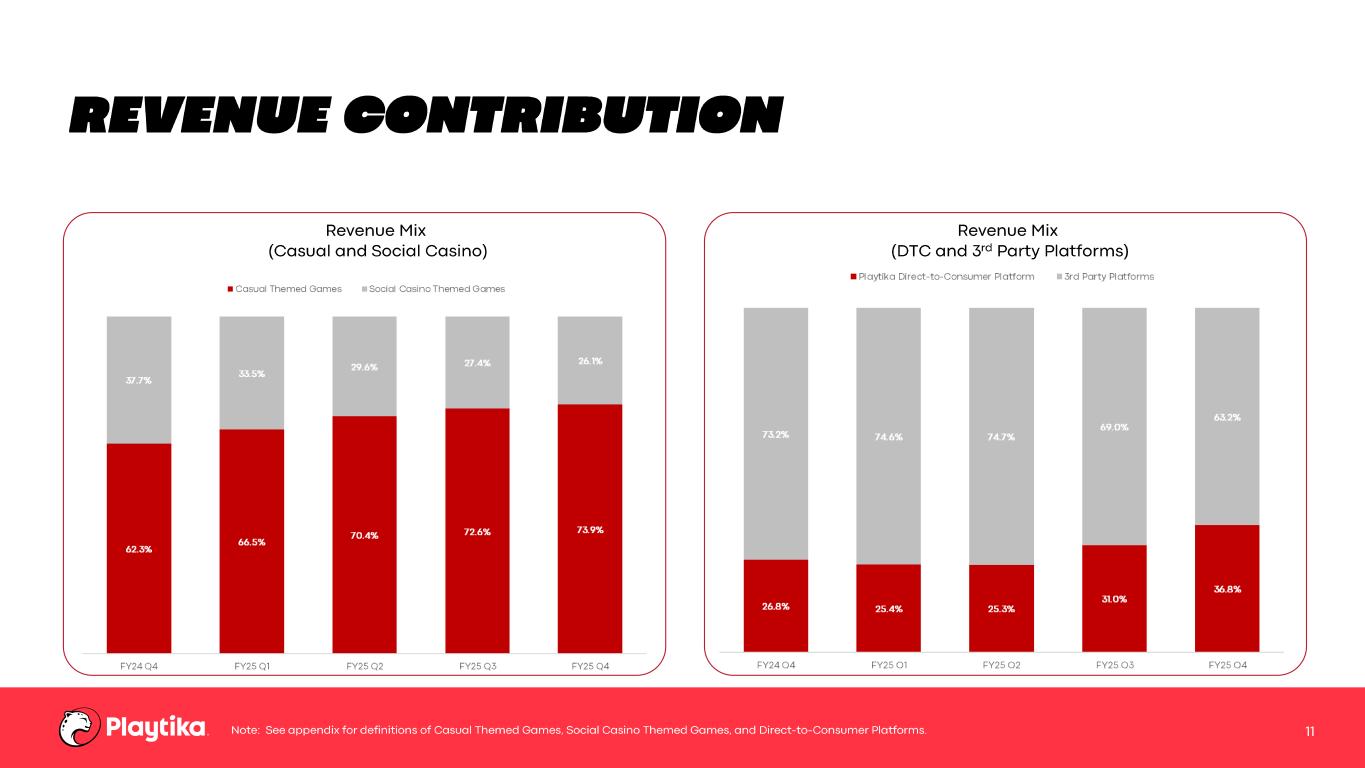
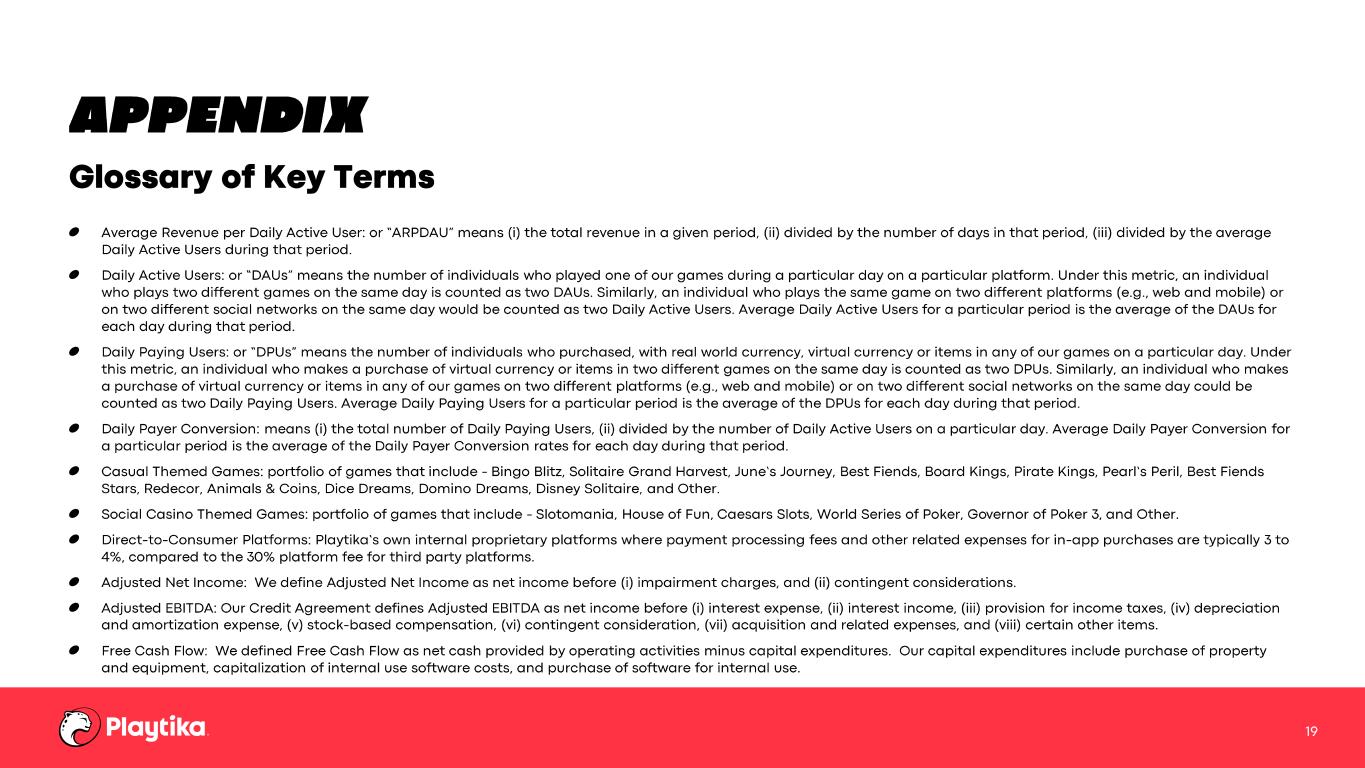
Good morning, and thank you for joining us. We finished 2025 with a strong fourth quarter that shows our plan is working and the business continues to show bright spots. In Q4, we delivered $678.8 million of revenue and $201.4 million of adjusted EBITDA, driven by D2C growth, our pivot to casual and super player results. Here is the main point. We are building a balanced set of assets. Every year, more revenues come from long-life casual games with board reach. And DTC is now core to how we run the business. At the same time, our legacy game still matters. There are still meaningful sources of cash flow, and we are managing them with a focus and care of a part of a portfolio, not as one game company. This mix is more balanced, less dependent on any single category, and better positioned to deliver durable free cash flow. First, D2C. D2C keeps growing and adds more value for Playtica. In Q4, D2C was 36.8% of our revenues, and we ended the year at about $1 billion in annual D2C revenue. This marks a clear shift in how we engage with players and process transactions. We are building a multi-channel D2C strategy, and we are consistently optimizing those channels to improve unit economics and straight our business over time. Second, our casual games. In Q4, casual revenues was about 74% of total revenue.
We have evolved our portfolio over the last five years.
This borders the business and supports a steadier path. Third, Superplay. Superplay delivered record revenues in Q4, with Disney Solitaire up 21.4% quarter over quarter, and now our second largest game in the portfolio. We see improvements in Dice Dreams and continuous growth in Domino Dreams. Superplay's growth this year is nothing short of amazing. It makes them one of the fastest-growing studios in the mobile gaming industry at their scale. We acquired Superplay to add top casual games, bring new growth engines, and widen our base with long-life assets. The performers support this decision and raises our confidence in Superplay. This acquisition highlights a cost threat at Playtica, recognizing amazing teams and backing them with a capital and operating discipline. With Superplay, we invested behind a talent team with a great potential and provide the financial flexibility to scale games. This reflects our disciplined approach to allocating capital when talent, product and returns align, and the same playbook guides how we run the entire company. We act from position of strength. We focus on returns, relocating, spend, and generating cash. With that, I will return the call over to Craig to review our financial outlook and capital allocation framework. Thank you, Robert, and good morning.
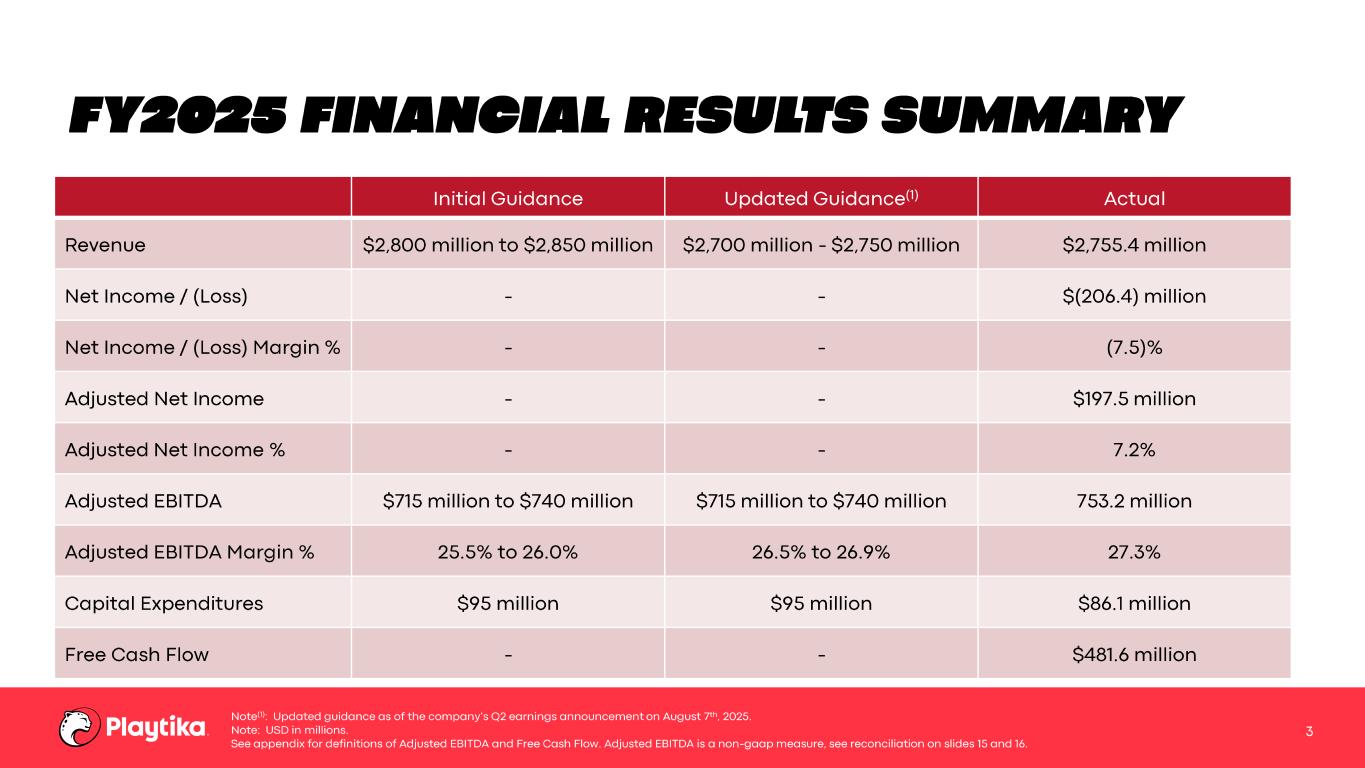
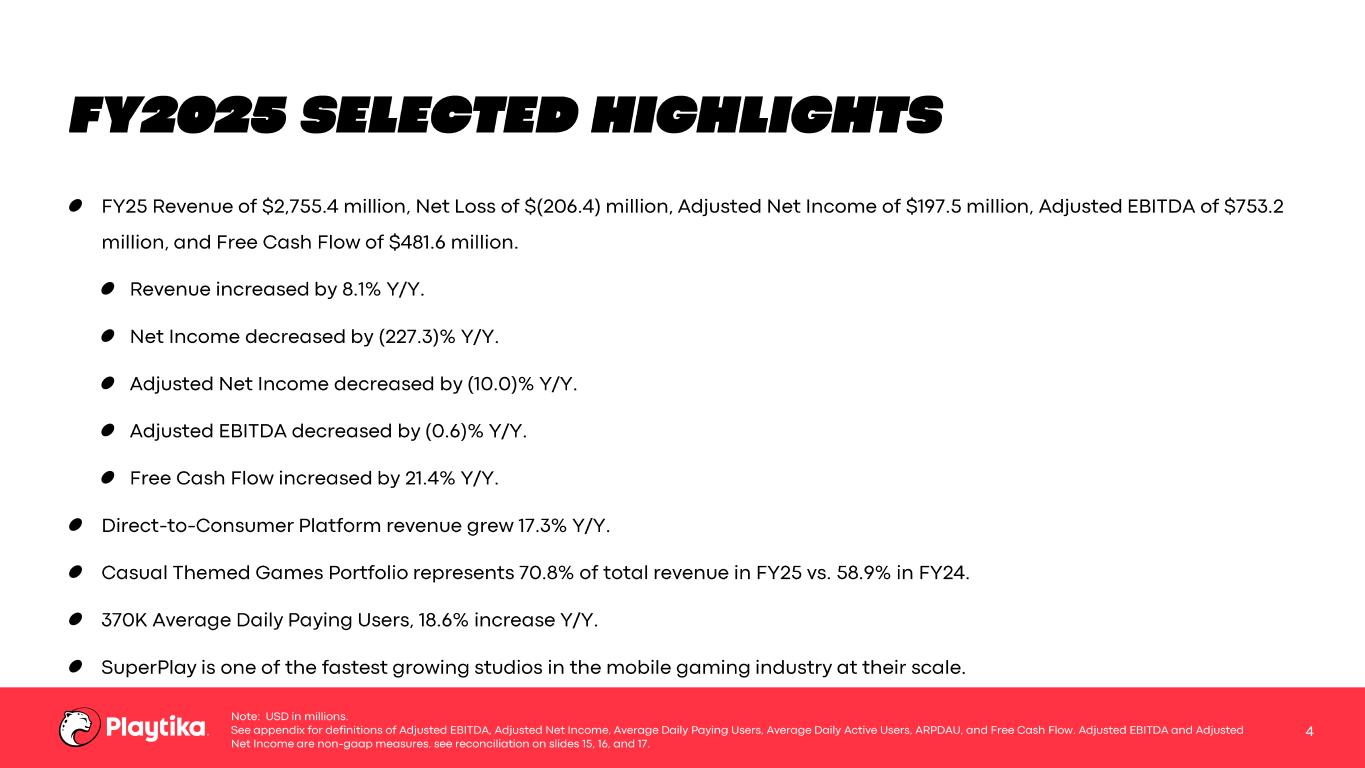
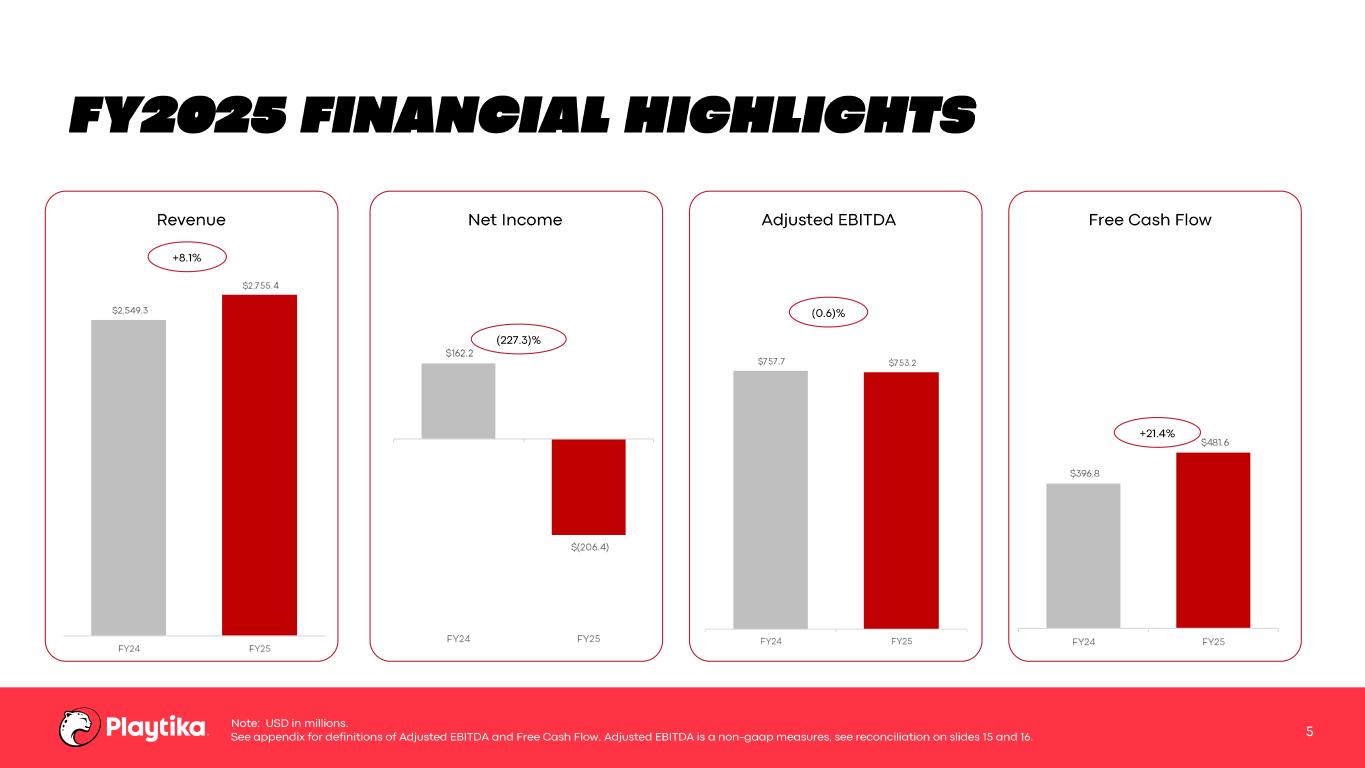
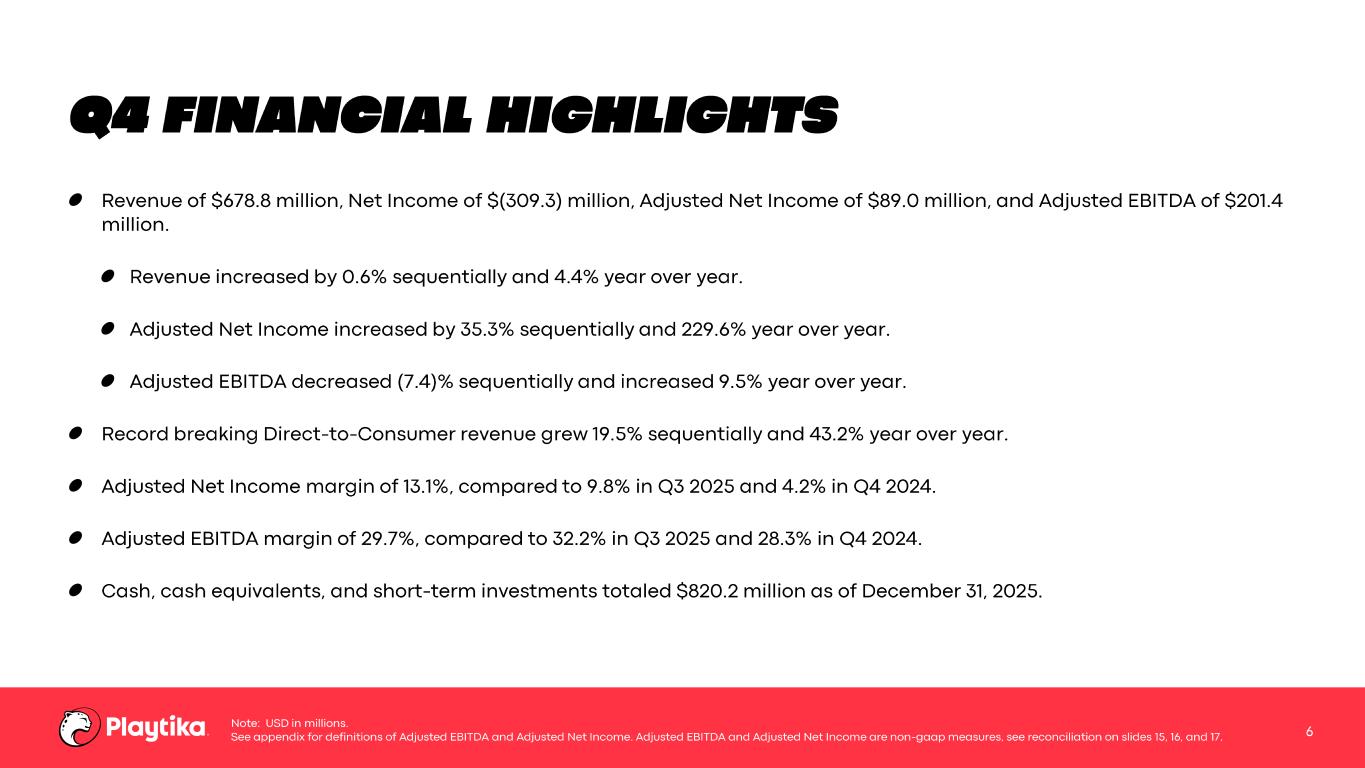
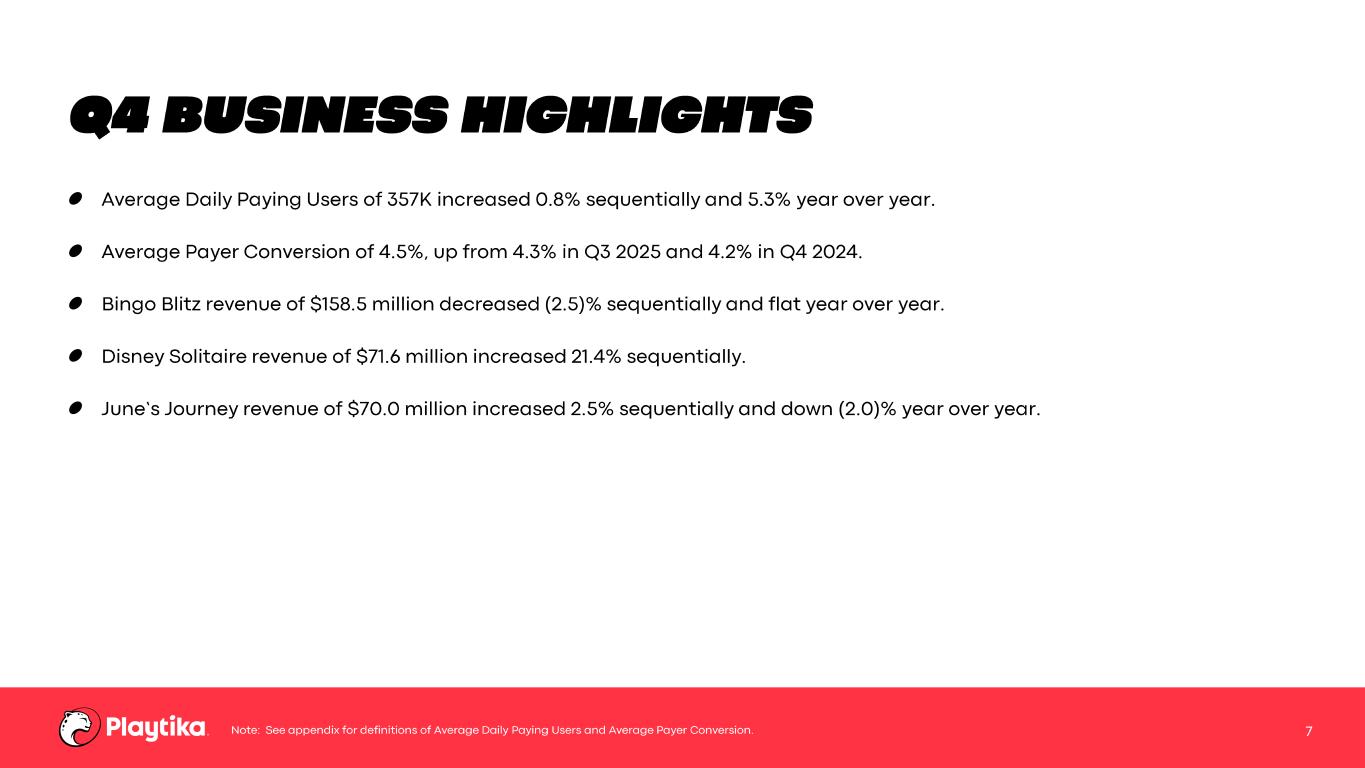
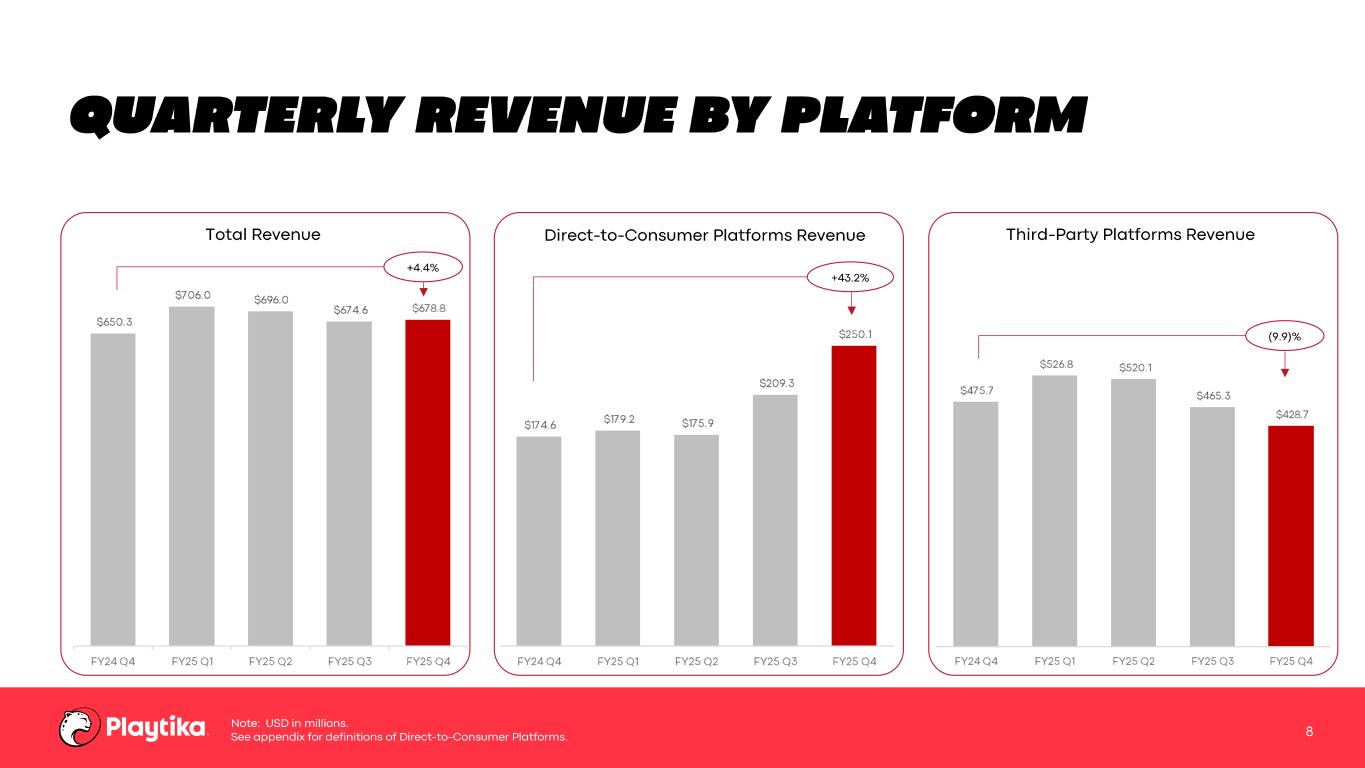
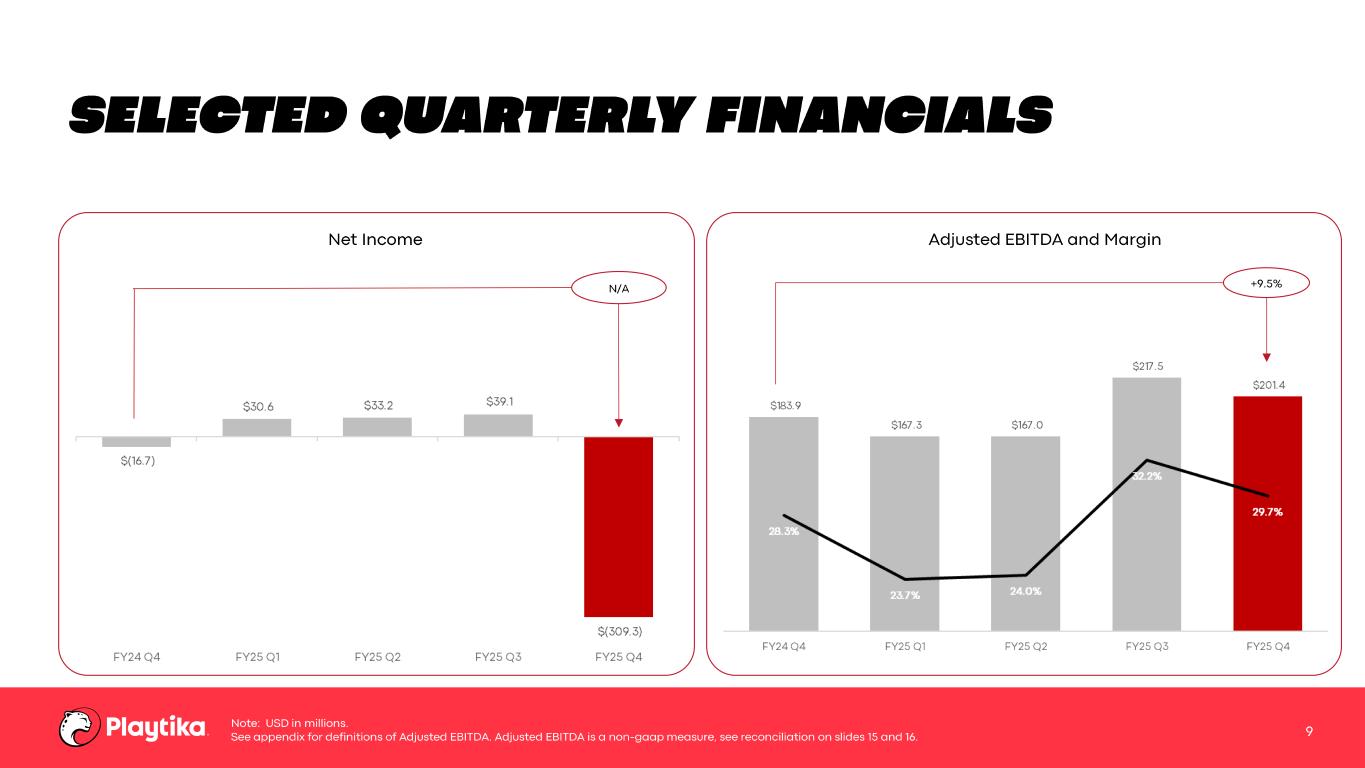
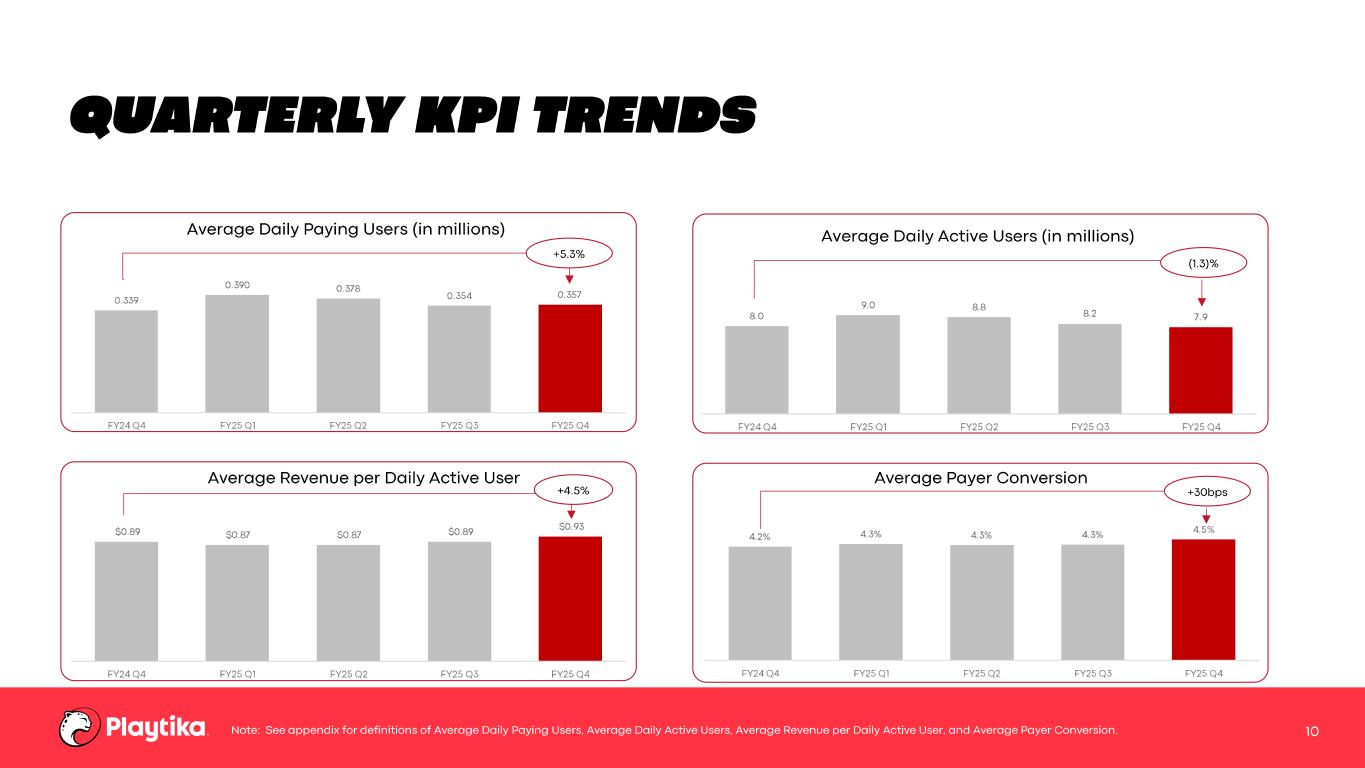
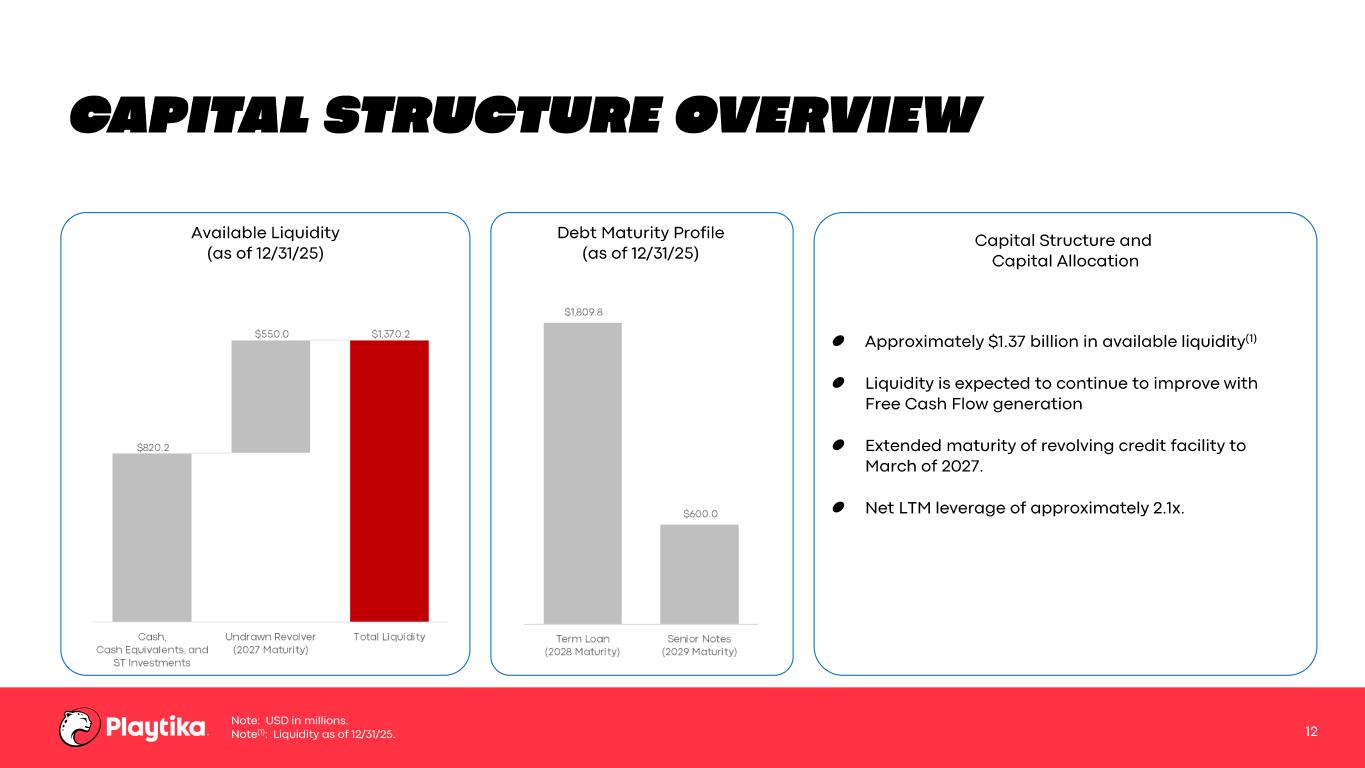
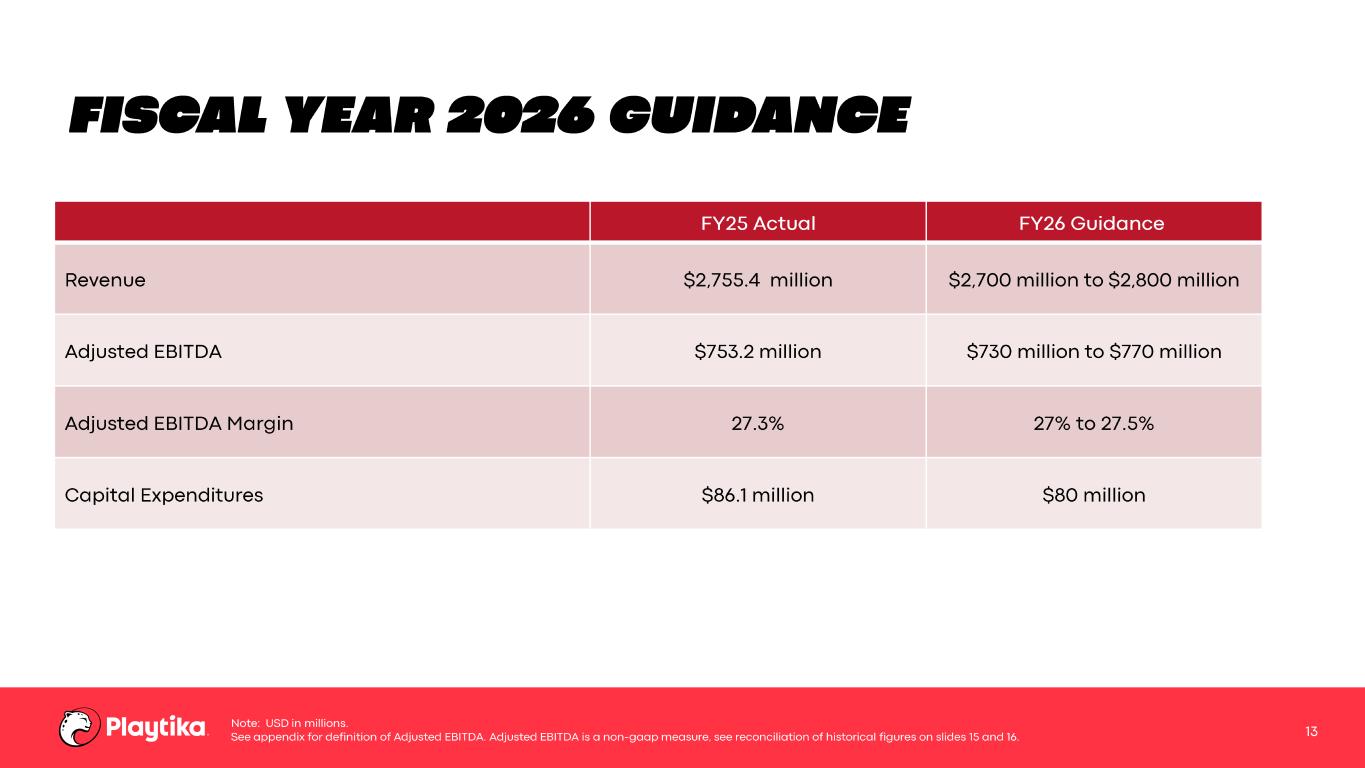
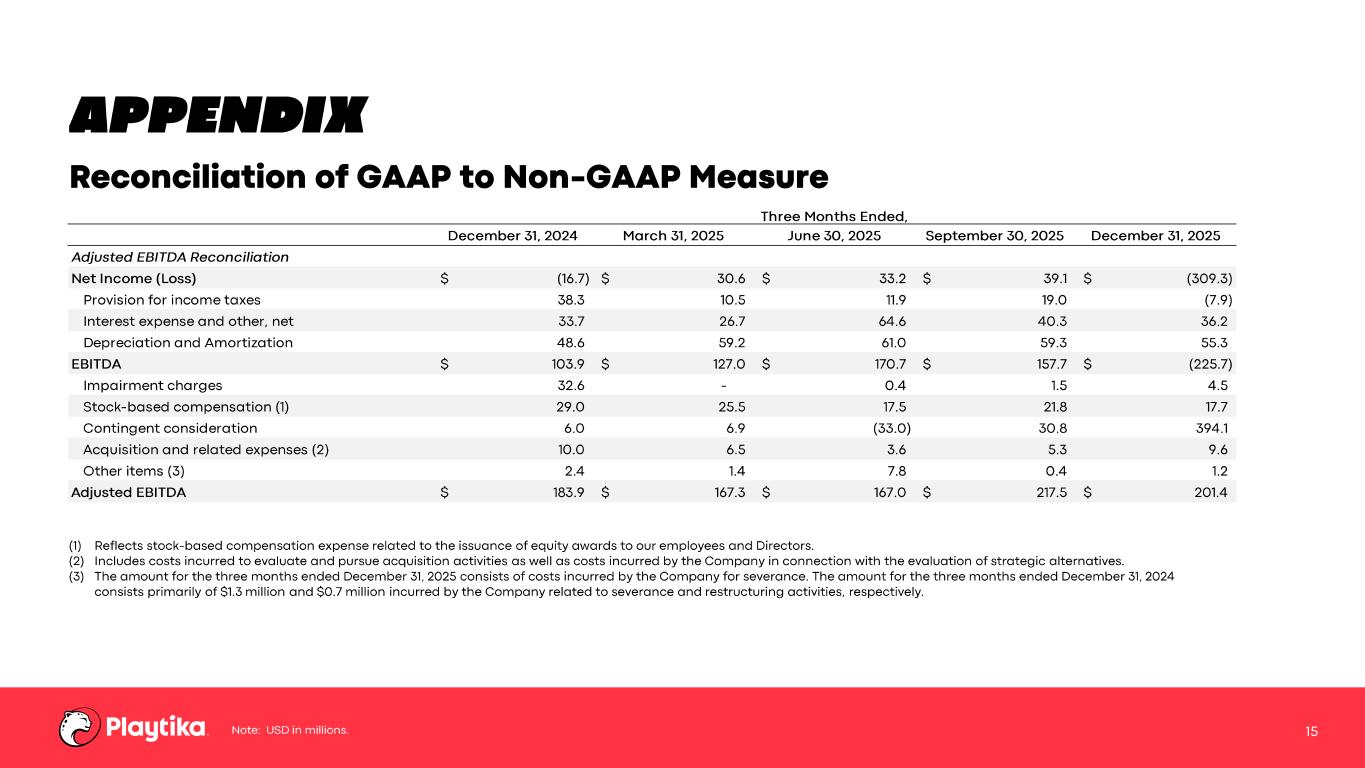
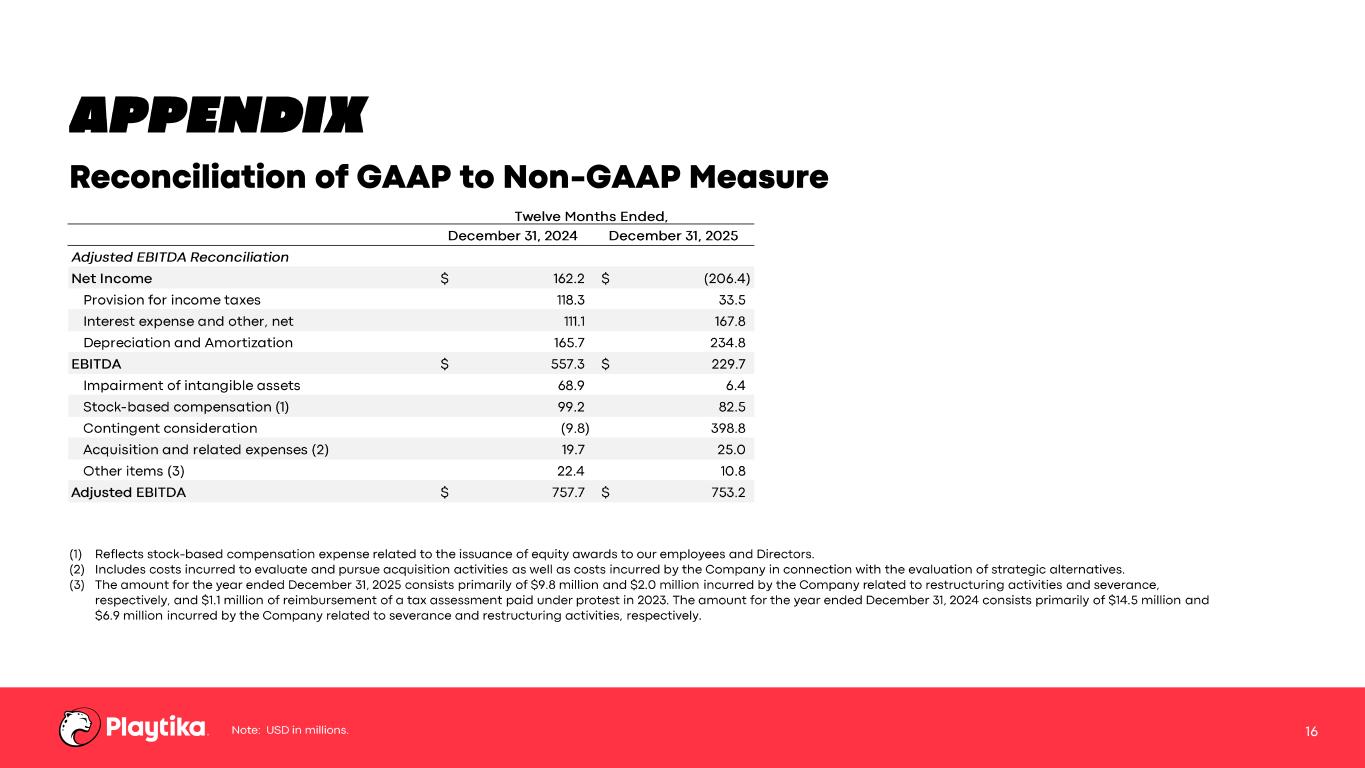
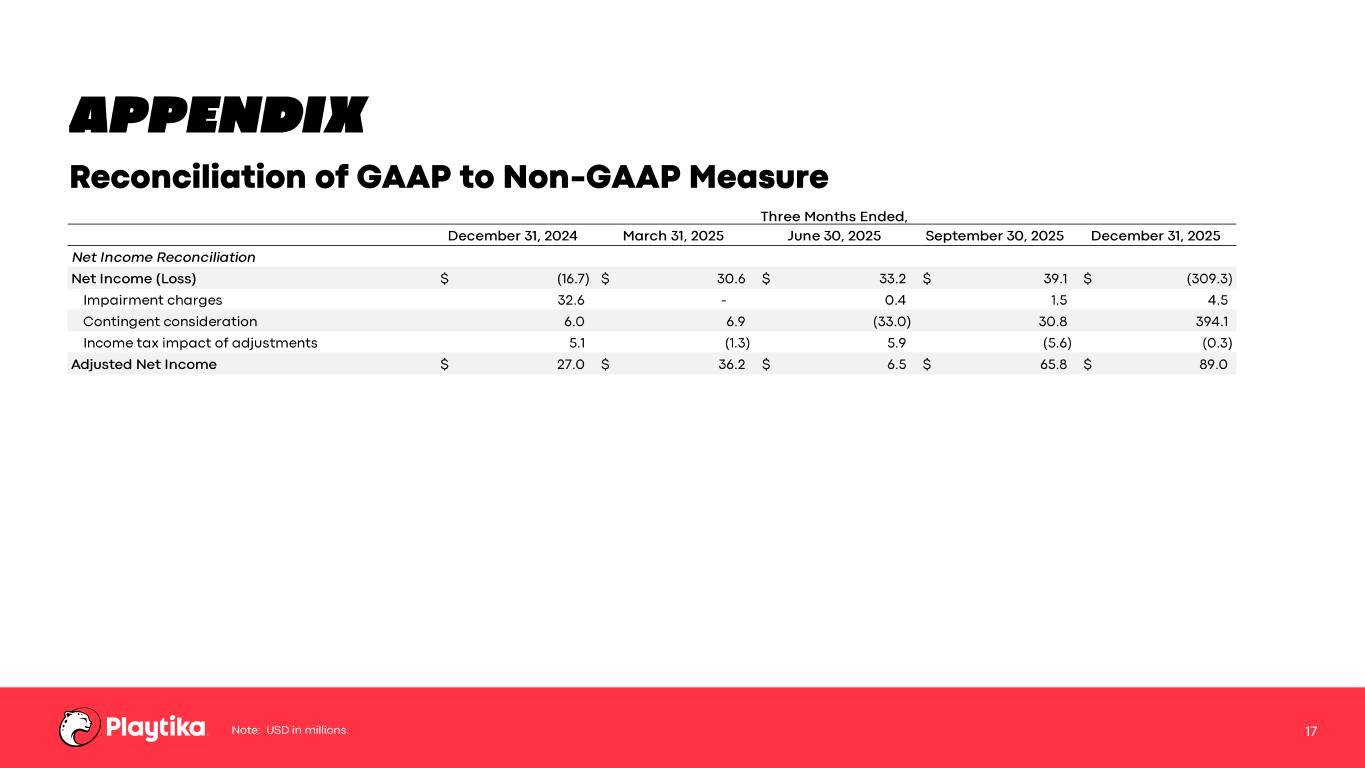
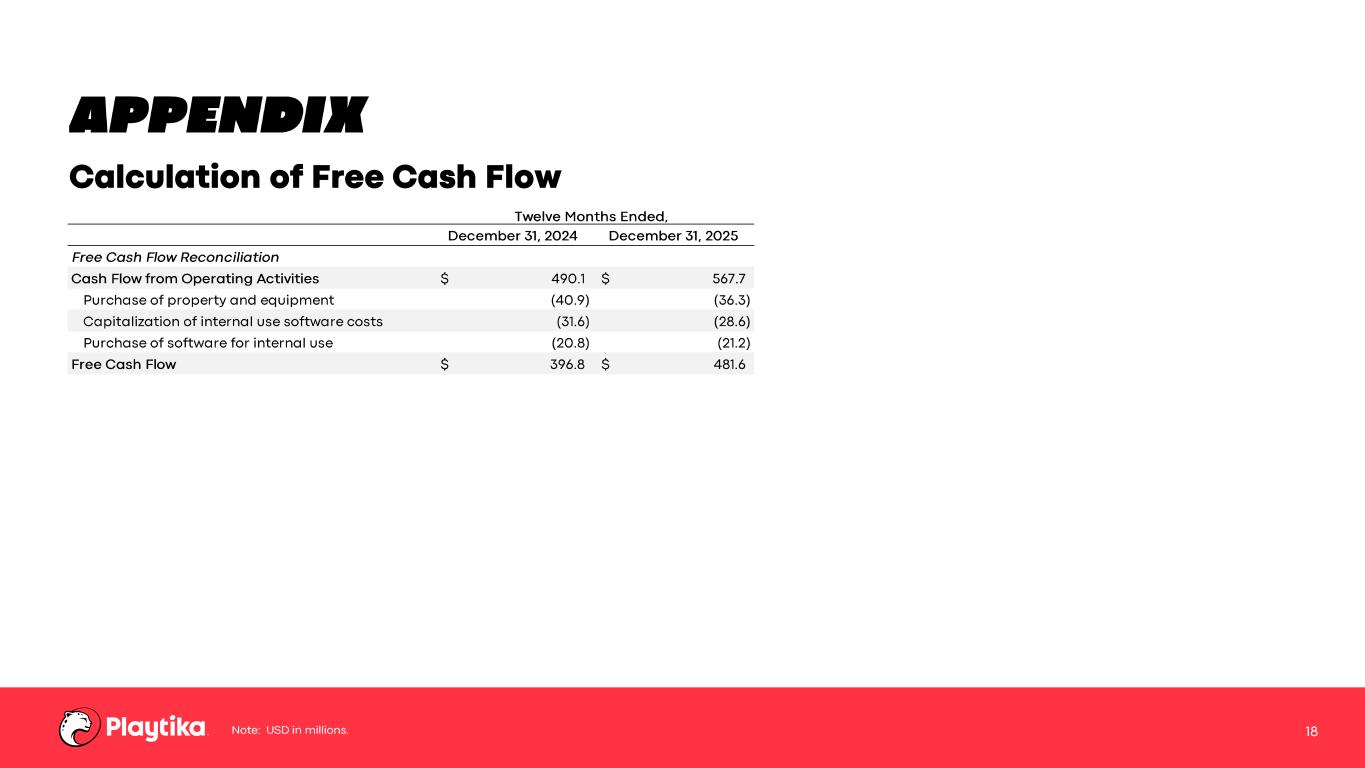
Q4 reflects the strength of our model and a mixed shift that is now clear on the results. We came in ahead of our revenue and adjusted EBITDA guidance, set another D2C record and saw outstanding momentum from SuperPlay. This is now the third straight year we have met or exceeded our adjusted EBITDA guidance, reflecting the strength and consistency of our operating model. I also want to reinforce how we run the company. We manage Playtica as a portfolio. We protect and strengthen leadership positions in our key casual franchises. We scale capabilities like D2C that improve our unit economics across the business. And we maximize the lifetime value of our social casino-themed titles while staying disciplined on returns and costs. On social casino-themed games specifically, these games operate in a tough, crowded market, and the mobile industry has evolved since our IPO. It's not a reason to be defensive. It's a reason to be decisive. Our goal is clear. Slow the decline and get full value from these assets. Refund where returns make sense, extend the life of older titles, and step back where the bar is not met. We were pleased to see early signs of stabilization and slot-a-mania in the quarter. To be clear, we remain focused on stability and value when we build the next phase. And to keep resources concentrated on our more attractive opportunities, we streamline parts of the organization and plan to redeploy investment behind the areas with the strongest returns. The mix is improving, our growth engines are working, and we are building a more resilient Platica. Turning to the financial results for the year, revenue was $2.755 billion, up 8.1% year-over-year. We generated net loss of $206.4 million, adjusted net income of $197.5 million, and adjusted EBITDA of $753.2 million, down 0.6% year-over-year. Our net loss margin was minus 7.5%, our adjusted net income margin was 7.2%, and our adjusted EBITDA margin was 27.3%. We generated record free cash flow of $481.6 million, an increase of 21.4% year-over-year. We are managing CapEx and working capital tightly, and we remain focused on delivering strong free cash flow generation over time. Now to the quarter. Revenue was $678.1 million, up 0.6% sequentially and up 4.4% year-over-year. Net loss was $309.3 million, compared to net income of $39.1 million in Q3, and a $16.7 million loss in Q4 of 2024. The net loss was primarily driven by the non-cash impact of remeasuring contingent consideration related to the super play earn out, which flows through gap results but is excluded from our adjusted net income and adjusted EBITDA. Adjusted net income was $89 million compared to adjusted net income of $65.8 million in Q3 and $27 million in Q4 of 2024. Adjusted EBITDA was $201.4 million, down 7.4% sequentially and up 9.5% year-over-year. Our adjusted EBITDA margin was 29.7% compared to 32.2% in Q3 and 28.3% in Q4 of 2024. Direct-to-Consumer was a key driver of both performance and mix. D2C revenue reached $250.1 million, growing 19.5% sequentially and 43.2% year-over-year, reflecting broad-based contributions across our games. turning out our business results for the quarter for our top three revenue games bingo blitz revenue was 158.5 million dollars down two and a half percent sequentially and essentially flat year over year we drove engagement with focused in-game and out of game campaign around bingo blitz and garfield collaboration including a new theme bingo room featuring a cooperative mini game where players work together to progress through garfield content we also introduced a new gameplay mechanic that has players find garfield within bingo cards and we closed the quarter with an innovative experience that offers eight bingo cards per session instead of the usual four disney solitaire revenue was 71.6 million dollars up 21.4 percent sequentially by q4 the title had scaled rapidly and was approaching a 300 million dollar annualized run rate, reflecting its strong momentum since its global launch in April 2025. Results have been driven by product execution and steady tuning, including new feature launches, game economy updates, and continued improvement in unit economics through direct-to-consumer. We've also seen traction internationally, including Japan, which further validates the global appeal of the franchise. For the full year, Superplay generated about $573 million of revenue, a 67.5% increase from the $342 million baseline tied to the earn-out. The studio is doing this while staying focused on long-term fundamentals, engagement, retention, and live operations. As we shared previously, we've expanded our collaboration with Disney and Pixar games and are developing a new title in the Superplay pipeline. June's Journey revenue was $70 million, up 2.5% sequentially, and down 2% year-over-year. June's Journey continues to maintain its position as the highest-grossing hidden object game worldwide. In Q4, engagement benefited from a strong content cadence and seasonal programming, including the Wicked IP collaboration. Direct-to-Consumer is relatively new for June's Journey, but we have scaled it quickly across both iOS and Android, and we continue to see it as a durable lever to deepen player relationships and improve unit economics over time. Turning now to specific line items in our P&L for the fourth quarter. Cost of revenue increased 4.5% year-over-year, driven by revenue growth, offset by platform mix. Operating expenses increased 100.3% year-over-year, driven primarily by the gap impact of contingent consideration related to the SuperPlay earnout. Excluding the change in contingent considerations, as well as expenses associated with our long-term cash compensation program that expired in 2024, operating expenses increased by 5.4%. R&D expenses increased 13.8% year-over-year, driven primarily by higher headcount following the SuperPlay acquisition and continued investment to support the growth of the Superplay studio. Sales and marketing increased 9.6% year-over-year, reflecting higher user acquisition spend due to the full-quarter impact of Superplay, as well as the sequential step-up in marketing investments that we previewed on last quarter's earnings call. G&A increased 383.5% year-over-year, driven primarily by the $394.1 million contingent consideration expense recorded in the quarter related to the Superplay year-and-out, Excluding the impact of contingent consideration and expenses associated with our long-term cash compensation program, G&A would have declined by 22% year-over-year. To provide more clarity, a brief word on the earn-out mechanics. The Superplay earn-out this year is tied to revenue growth versus a $342 million revenue baseline, with a step-up in multiple above certain thresholds. Changes in fair value of the contingent consideration run through GAAP G&A, but they are excluded from adjusted net income and adjusted EBITDA and do not change the underlying cash terms of the earn out. We ended the year with $820.2 million in cash, cash equivalents, and short-term bank deposits, and we expect to fund the SuperPlay earn out from cash on hand. Looking at our operational metrics, average DPU increased 0.8% sequentially and 5.3% year-over-year to $357,000. Average DAU decreased 3.7% sequentially and 1.3% year-over-year to $7.9 million. ARPDAO was 93 cents in the quarter, up 4.5% both sequentially and year-over-year. On to our outlook for 2026, our guidance reflects a business that has been undergoing a strategic shift. Growth titles led by Superplay are driving material revenue. Our industry-leading casual franchises, Bingo Blitz, June's Journey, and Salter Grand Harvest, continue to benefit from live ops and rising direct-to-consumer contribution. In Social Casino, revenue is declining and our focus is on protecting the economics of those franchises and maximizing cash flow through discipline management and operating efficiency. We also want to be clear that direct-to-consumer is a core and growing part of our business, and we are executing to expand it. At the same time, we are taking a measured view of any incremental benefit tied to the evolving platform policy landscape, and our guidance does not assume any single policy outcome. With that context, our guidance for full year 2026 is as follows. Revenue of $2.7 to $2.8 billion. Adjusted EBITDA of $730 to $770 million. Capital expenditures of $80 million. And an effective tax rate of 30%. We also expect our marketing spend to be weighted toward the first half of the year, particularly the first quarter, which we expect to result in lower adjusted EBITDA in the first quarter, and higher adjusted EBITDA in subsequent quarters. Finally, capital allocation. When we initiated our dividend, the intent was to provide an attractive return to shareholders while we executed on our strategic priorities, including restarting M&A and repositioning the portfolio. We've made real progress against those priorities. We have scaled D to C to record levels. We have successfully ramped up SuperPlay, and it is performing in line with and in certain areas ahead of the expectations we had at the time of the acquisition. We have also sharpened our operating model and reset our cost basis. At this stage, our capital allocation framework needs to reflect both the opportunities in front of us and the performance-based nature and potential size of the SuperPlay earn-out. To preserve flexibility and direct capital to the highest return uses, we are suspending our quarterly dividend. With respect to share repurchases, we intend to keep buybacks available within our capital allocation framework. We will continue to evaluate our capital structure over time, including opportunities to reduce debt where it makes sense while maintaining balance sheet capacity to fund potential obligations and invest behind growth. As we take these steps to focus capital on the highest return opportunities, we remain fully committed to enhancing long-term shareholder value. With that, we'd be happy to take your questions. Thank you. At this time,
Operator
we'll conduct the question and answer session. As a reminder, to ask a question, please press star 11 on your telephone and wait for your name to be announced. To withdraw your question, please press star 11 again. Please stand by while I compile the Q&A roster. Our first question comes from Aaron Lee from McCreary. Please go ahead.
Thanks for taking the question, and congrats on the quarter. I just wanted to talk on a general level about AI. I know you guys mentioned this in the letter around workforce reduction. Just curious if you could expand on how you view the role of AI within your business. You know, how are you using it today, and what have been the early learnings? And looking forward, where do you see the greatest opportunities?
please. Thanks. Thanks for the question. So as we spoke in the last few years, we started investing in AI, I think six, seven years ago. We opened a few labs in Playtica, and we always understood that this will be part of the future growth. Right now, what we see, we see revolution happening. And we are, for us, this is an amazing opportunity, because when you look at Playtica today, Our asset is the community and the content. This is our asset. We see the AI opportunity as a new platform. We see something that can grow our business. We are very excited. We are following every trend that's happening in the market. And I'm sure that for us, it's going to be one of our growth engines in the future.
Gotcha. And then on capital allocation, appreciate all the comments there. how should we be thinking about your appetite for M&A at this point you know does that fall into the category of you know investing behind high return high return growth thanks thanks for
the question Aaron M&A has always been a core part of our growth strategy super play has been a tremendous transaction for us and given the growth and strong growth that we've seen to the year, you know, we plan to continue to invest aggressively in growing that within the constraints of the earn out. As we look at overall kind of capital allocation, you know, we want to continue to invest in the best ROI opportunities possible. And investing in the Superplay earn out and the Superplay platform is definitely the highest priority capital use for us. As we look at other M&A opportunities, obviously, we're always going to try and be opportunistic, but obviously cognizant of the fact that we want to maximize liquidity and balance sheet flexibility as we
move forward. Got it. Appreciate the call there. Great job with Superplay. Thank you. Our next
Operator
question comes from Eric Handler from Roth Capital. Please go ahead. Good morning. Thanks
for the question. I'm curious, you know, as you look to transition more people to the DTC platform, what type of incentives are you giving people to to move off of iOS or the Google or Android platform you know in terms of I assume some percentage higher of incremental virtual currency or items so just trying to get a sense of how you're how that's working hey thanks for the
So, first, to say again, the D2C become one of our biggest part of growth, cash flow growth in the last few years. We are on a run rate of $1 billion, I think we are leading the industry, I don't think even somebody is close to us. At the end of the day, we're giving a better experience to the users. We are closer to him, we can provide more support to him. I think the advantage of having such a huge DTC platform is the connection, the right connection to the players. It will help with retention. It will help with long-time play game. So for us, this is one of the most important stuff. And as we started the DTC, we always knew that it's going to be one of Platica's trade, one of Platica's engine growth for cash. And this is what we're doing.
Operator
Thank you. Our next question comes from Chris Scholl from UBS. Please go ahead.
Just to follow up on the 2026 guidance, can you frame or quantify what this assumes for Slotomania and the social casino performance as you seek to ramp newer IP in that category? And as you think about performance coming in at the higher or lower end of those ranges, what are some of the biggest variables in your mind?
Thanks for the question. So, as you've seen, we've been undergoing a mix shift. I'm proud to say that our business is now 74% casual, and that continues to be the fastest growth part of the business, driven by Superplay. As we look and give forward guidance, obviously, you know, continued overperformance from the Superplay titles is definitely there on the upside case. And on the downside case, you'd see, you know, probably continued declines on the social casino portfolio. And so that's, you know, that mix shift obviously impacts margins. But I think as we look at the guidance and our consistency over the past three years, either meeting or beating expectations on the EBITDA side, we have confidence in our ability to execute there and continue to focus on that transition towards a more casual, healthier mix going forward.
Okay, great. And then if I can fit in one more, the D-to-C mix was clearly well ahead at 37% versus the 40% mix. I think you've previously talked about reaching in two years. Any updated thoughts on that longer-term target, and where is the natural limit as we try
to gauge how high this could ultimately reach?
Sure. Good question. Our previous long-term target was 40% of revenue. We'll continue to keep that just given all of the various policy changes in the background. our target does not assume one outcome or the other as it relates to things outside of our control it's really focused on what we can control in our own execution hey great thank you thank
Operator
you our next question comes from matt cost from morgan stanley please go ahead good morning thanks
taking the questions um just first on disney solitaire obviously that game's on a really great trajectory uh just looking at some of the third-party data out there it looks like it's kind of shifted upward again year-to-date in 2026. I guess, is that a function of live services in the game? Is it because you've kind of hit a seasonal bump in marketing, which you typically see in the first quarter, and you're kind of allocating a lot of it towards that game, I guess? How should we think about the trajectory as we move through 26 from here? That's question one. Question two for Craig, obviously, you know, a lot of shift towards DTC in the quarter. It seemed to impact gross margins a little bit less than I would have expected, just given the magnitude of impact, you know, to revenue mix on DTC. So, I guess, are there any cross currents in gross margins that we should be cognizant of that prevent, you know, like a sudden increase in gross margin as you see the dollars flowing through DTC?
Thanks, Matt. I'll take the first one on Disney Solitaire, and Tay will take the second piece on gross margins. So Disney Solitaire is off to a great start to 2026. As we referenced in the prepared materials, there's a meaningful investment in marketing dollars in the first quarter. And so I anticipate, you know, EBITDA will be impacted in Q1, but then moderate throughout the year. And so I think you're going to see that larger investment drive real growth. It's one of the best ROIs we have within the portfolio in terms of deploying marketing dollars.
And, Matt, on the gross margin point, you're right to call out some of the – you're seeing the benefit in lower platform fees in terms of revenue from an increased DTC mix, but that is offset by increased amortization coming from past acquisition that's flowing through our P&O.
Operator
Thank you. Our next question comes from Jason Bassinet from Citi. Please go ahead.
Thanks so much. I was just wondering, Craig, if you could just unpack that $400 million roughly change in the contingent consideration. Is that composed of like $225 on the $25 payout that hasn't gone out the door plus a $180 or so on the $2026 payout? And if that's true, what, if anything, can you share about the EBITDA margins at Superclay to sort of trigger that $180 on the $26 payout?
So if you look at the contingent consideration that we have payable due at the start of Q2, you'll see in short-term payables, you'll see an estimate of the earn-out amount. We have the year one earn-out payable at the start of Q2, and then obviously each year thereafter, years two and three, we'll have earn-out payable before. Given the strength and the performance there, you see a higher earn-out payment and, therefore, higher contingent consideration. The EBITDA is in line with in order to pay the earn-out, and year one was less than $10 million. And so while we can't say the specific amount, they obviously are eligible for the earn-out and had an EBITDA loss better than minus $10 million.
But there's nothing prospective. in those earnouts for 2026? Like, you're not positing what the earnout will be in 2026. These are all just earnouts backward-looking, if that makes sense.
No, so the contingent consideration amount in total takes into consideration future earnout payments as part of the Monte Carlo simulation and coming up with the present value of that payment. But in terms of what's actually payable, it's in our payables.
Okay. Is the trigger, am I right, that the trigger is greater than 5% EBITDA margins?
In year two, which is 2026, it's greater than 5% margin, and there's a 0.25x multiple premium on revenue if they get to a 10% margin.
And so is it fair to assume, based on the $400 million, that you're between that 5% and 10% margin on super play, or is that the wrong implication?
No, that's for 2026. For 2025, which is the first year of the performance earnout, it's just doing better than minus 10 in EBITDA. So you can assume that.
Operator
Thank you. Thank you. Our next question comes from Clark Lampin from VTIG. Please go ahead.
Thanks for taking the question, Craig. I have two on DTC, if I may. You mentioned that you're relatively earlier on with the transition for June's journey. Could you just remind us if there are titles across the portfolio that don't have a meaningful DTC presence or similar to June's, maybe a more nascent one at this stage? And then maybe a naive question on DTC. When we think about that sort of revenue stream for you guys right now, is that spend that's solely captured from your players in a browser environment? or have you also set up link outs for the App Store version or app version of your games for players that might prefer to engage with the titles in that format? Thank you.
Thanks, Clark. So at this point, we have broad penetration of D2C across the portfolio. So those casual titles that we had flagged previously years ago are now well penetrated in terms of their D2C base and growing. We had pretty good broad growth across the portfolio. Based on platform changes, we've seen increases across the platforms on mobile with link outs as a new means of growing D2C. And so there's a variety of channels there that we deploy, and each game has its own roadmap and is out there executing.
Okay. If I may, very quickly, just sort of a quick follow-up on marketing. Relative to the sort of $761 million that we saw called out in the K, can you give us – is it possible to give us a sense of sort of what's budgeted for 2026 or maybe even a more directional indicator? I guess sort of within this question, I'm curious if you see in Q1 that the returns are really healthy for Disney Solitaire. Do you have the flexibility over the balance of the year to invest behind that title or new ones if you believe that the returns justify it?
Yeah, unfortunately, we don't break out the guidance on marketing dollars for next year. What I can say is that there are constraints around SuperPlay and that they're under an earn out. And so, you know, given the previous question, you know, they're targeting between, you know, 5% or greater margin. So while, you know, the foot's on the gas from a marketing perspective there and driving growth, at some point that'll have to moderate to ensure that they're able to drive margins into that 5% or 10% or greater from an EBITDA perspective. And so that's really the only commentary there.
Operator
Thank you. Our next question comes from Doug Krutz. from T.D. Cowan. Please go ahead.
Thank you. Just wondering if you'd give an update on the status of Jackpot Tour.
Is that a game you intend to be putting significant marketing dollars behind in Q1 in the first half?
And how does that game factor into your guidance? Thank you.
Thanks for the question. So as we said, we launched the game. We are still checking the KPIs. I can say that we are not sure 100% we're going to open it strongly in the coming few weeks. We need still to see the numbers that we are used to. So it's in progress. And it's part of our strategy around the slots game. and we see I want to take this opportunity to see to say that Slotomania after many many quarters going to grow Q over Q this quarter, this is big news for us this is big news for the industry of the social casino and as I said in the beginning the Jackpot 2 is part of our strategy there, thanks
Operator
I am showing no further questions at this time. Thank you for your participation in today's conference. This does conclude the program. You may now disconnect.