Operator
Good morning, and welcome to the Pinnacle Financial Partners Second Quarter 2026 Earnings Call. All participants will be in a listen-only mode. Should you need assistance, please signal a conference specialist by pressing star zero. After today's presentation, there will be an opportunity to ask questions. To ask a question, you may press star, then one, on your touchtone phone. To withdraw your question, please press star, then two. Please note this event is being recorded. I will now turn the call over to Sam Tiagi, Senior Director, Investor Relations. Please go ahead.
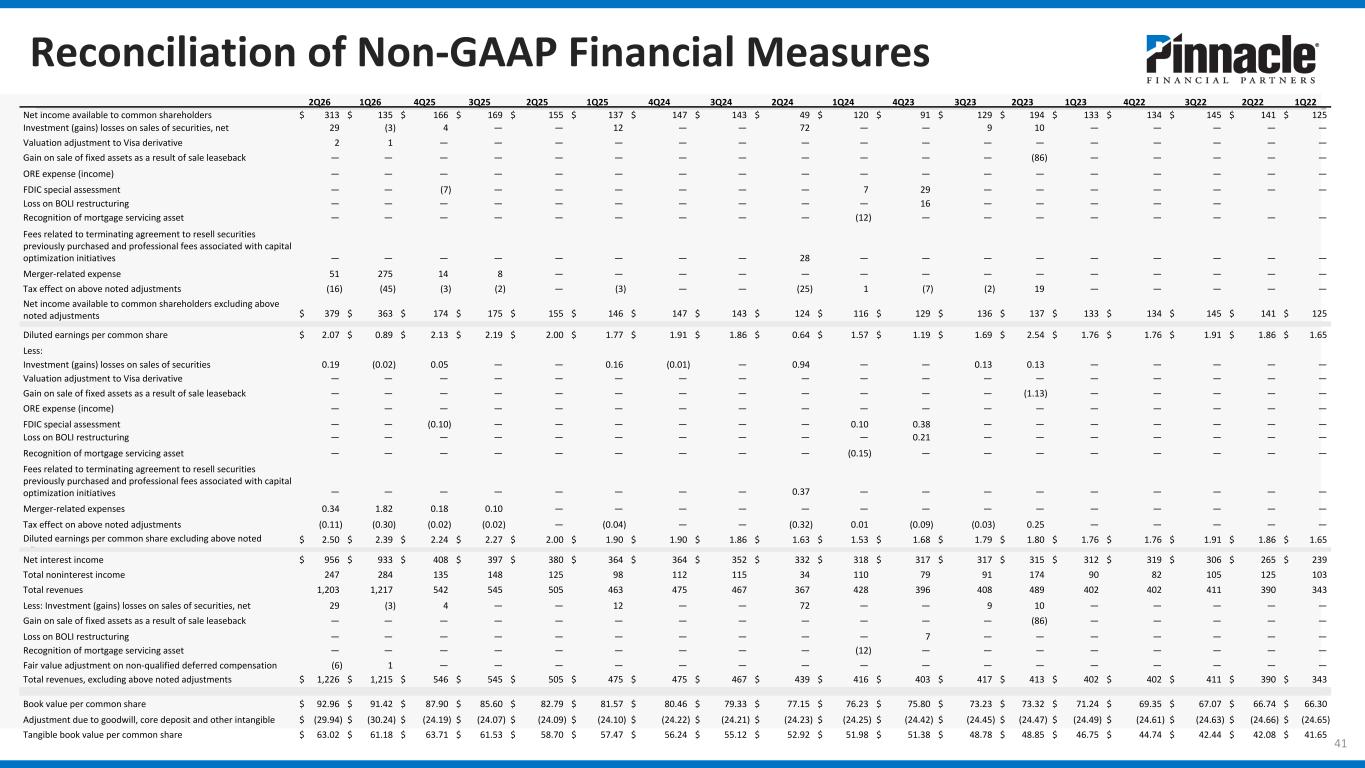
Thank you and good morning. During today's quarterly earnings call, we will reference the slides and press release that are available within the Investor Relations section of our website, pnfp.com. President and CEO Kevin Blair will begin the call. He will be followed by our Chief Financial Officer, Jamie Gregory, and they will be available to answer your questions at the end of the call. Our comments include forward-looking statements. These statements are subject to risks and uncertainties, and the actual results could vary materially. We will list these factors that might cause results to differ materially in our press release and in our SEC filings, which are available on our website. We do not assume any obligation to update any forward-looking statements because of new information, early developments, or otherwise, except as may be required by law. During the call, we will reference non-GAAP financial measures related to the company's performance. You may see the reconciliation of these measures in the appendix to our presentation. And now, Kevin Blair will provide an overview of the quarter.
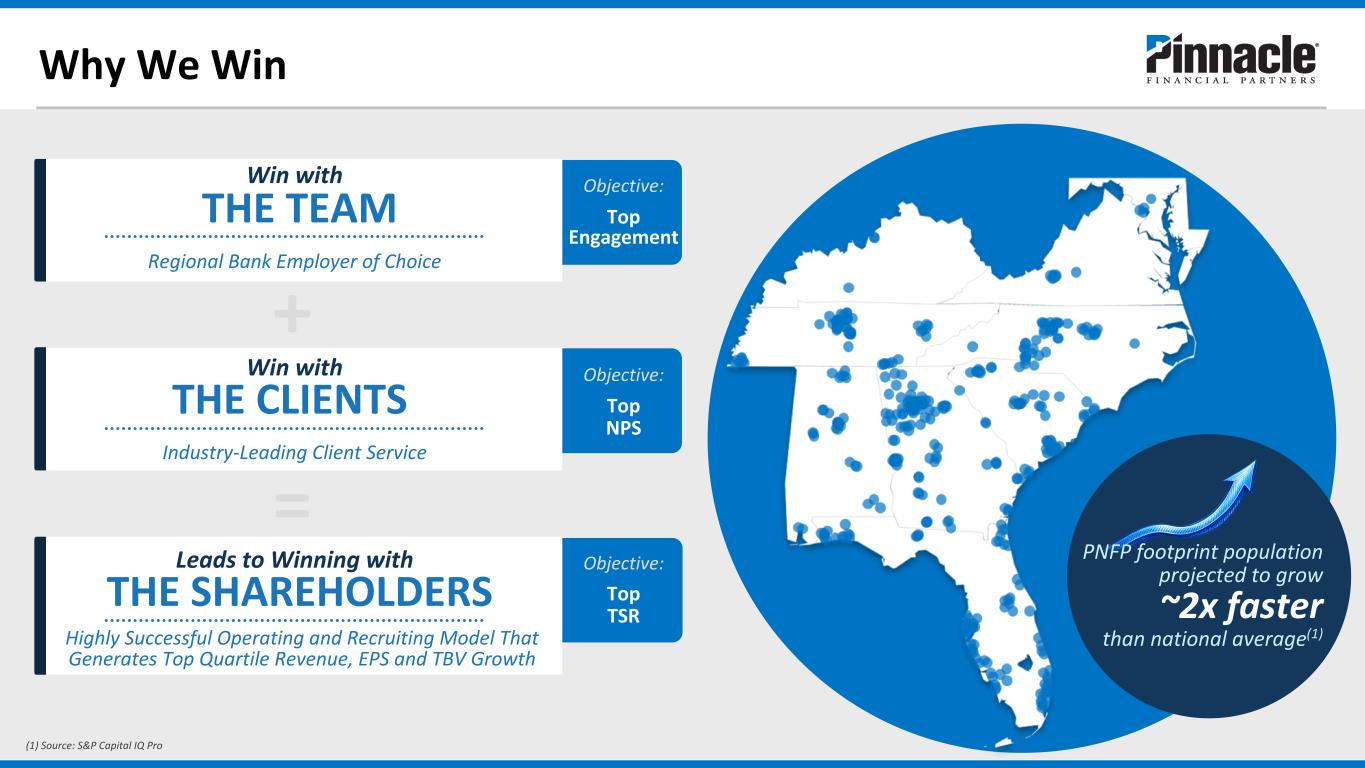
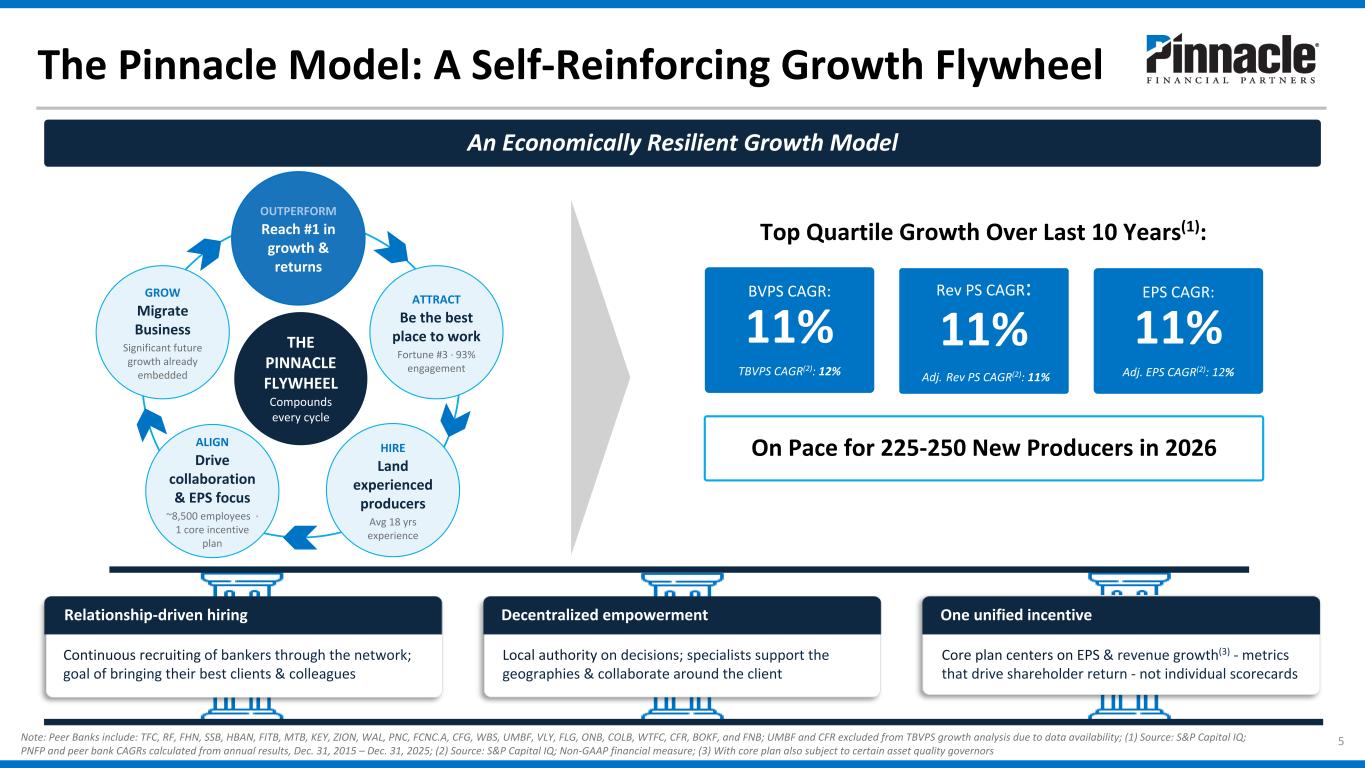
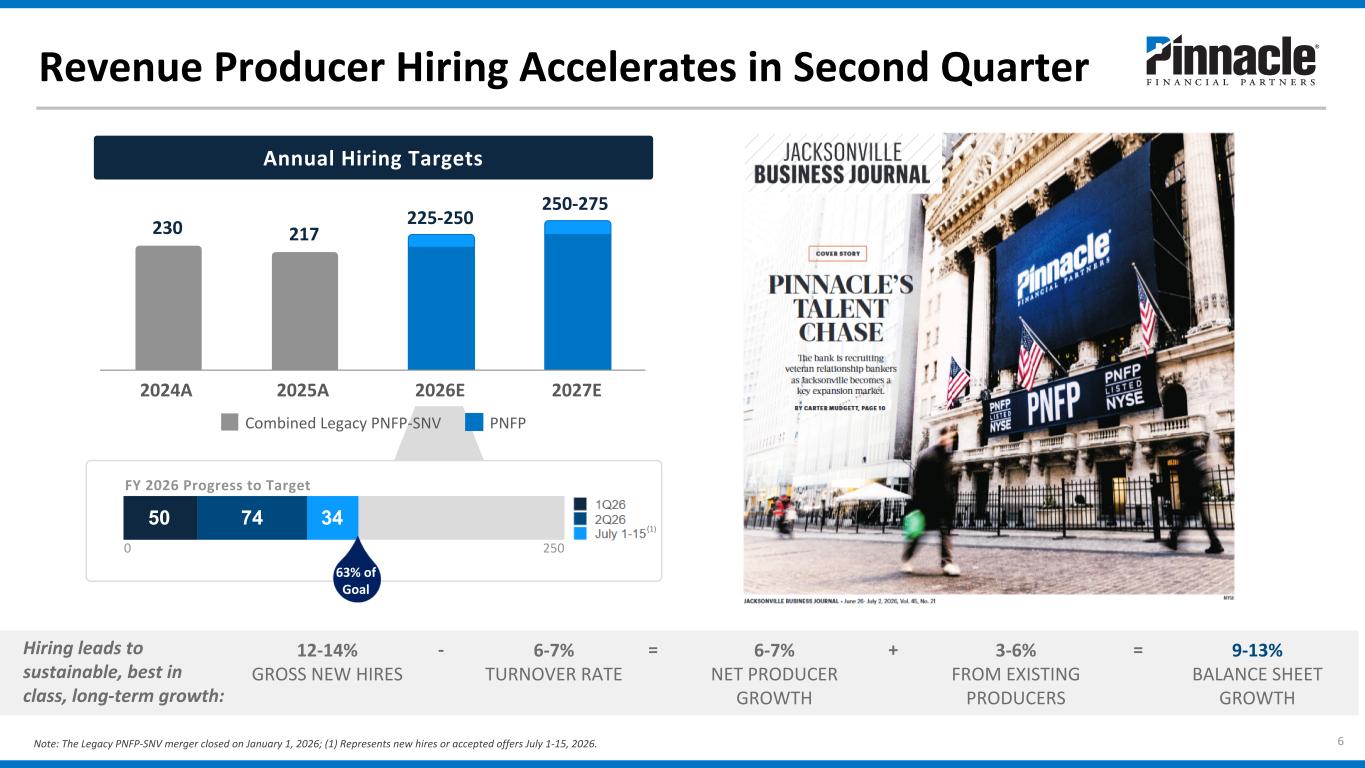
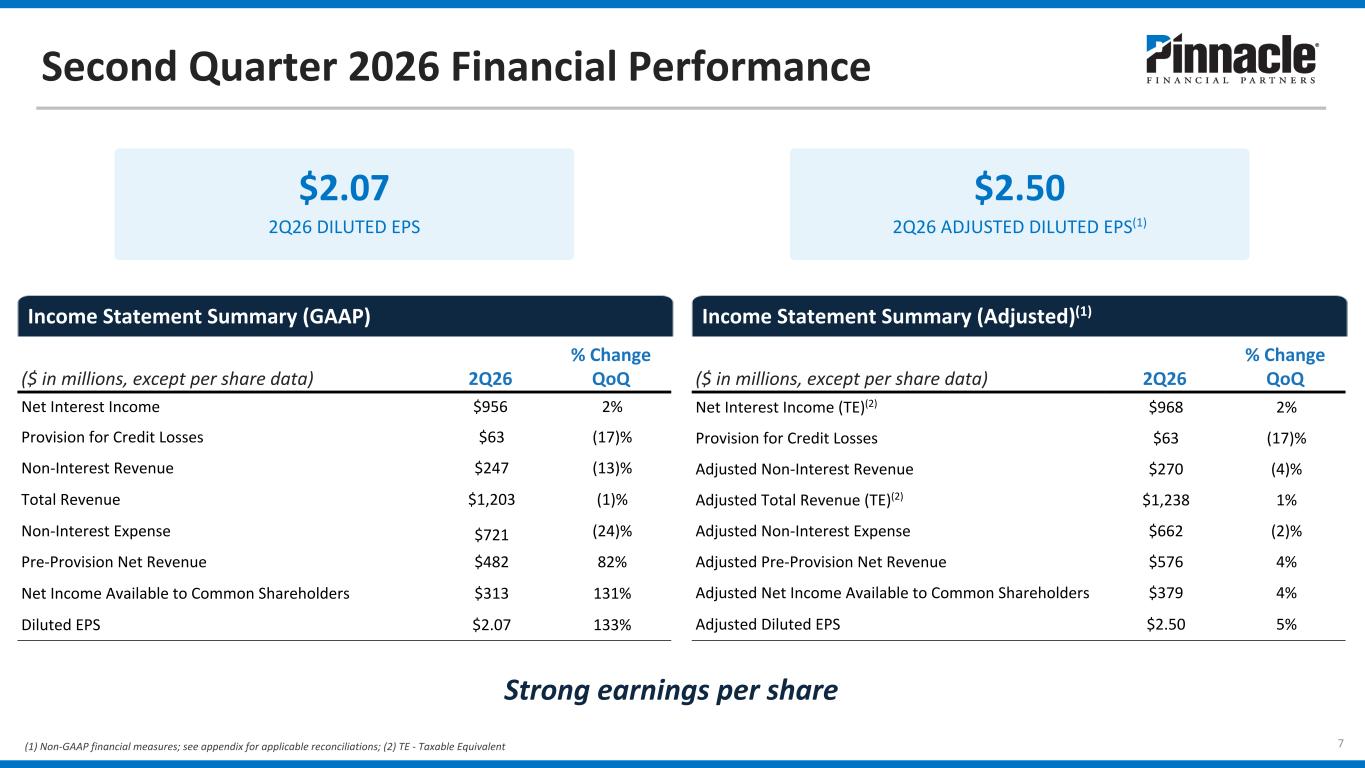
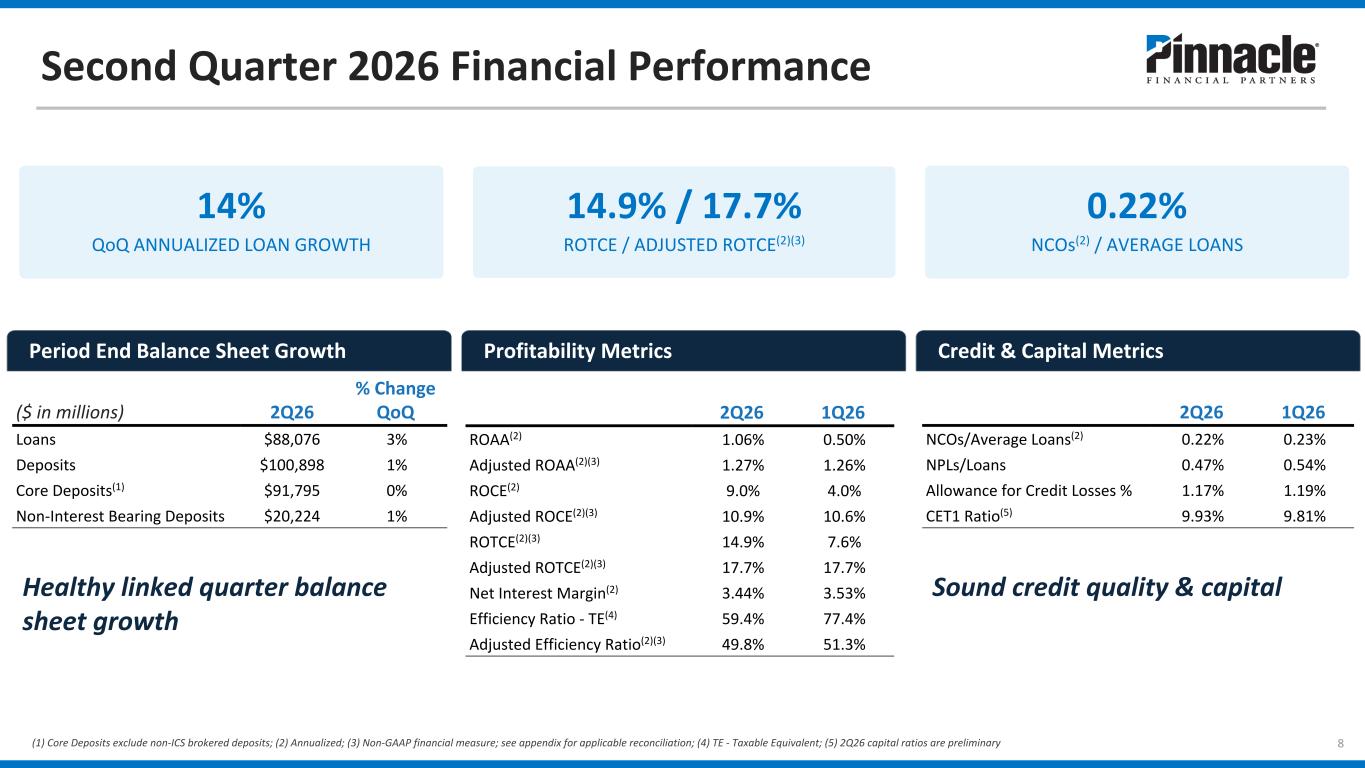
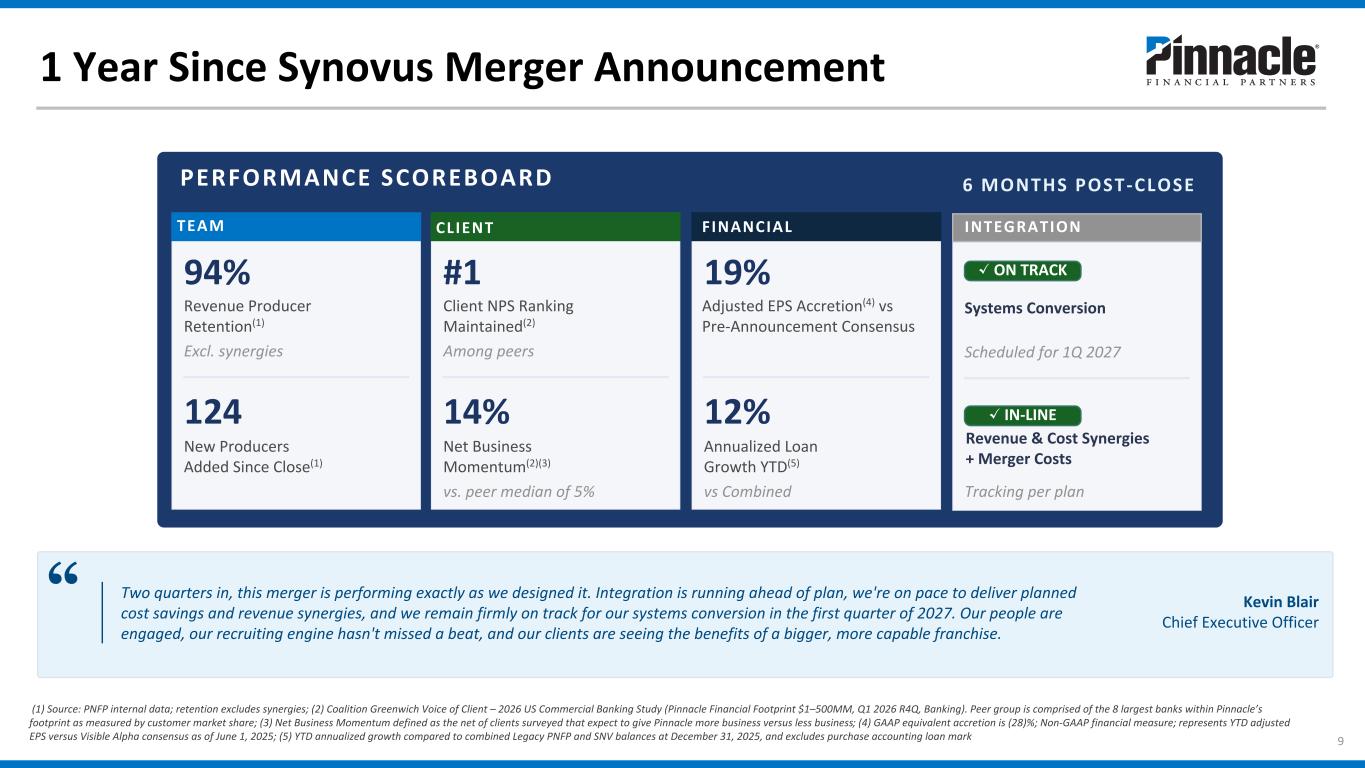
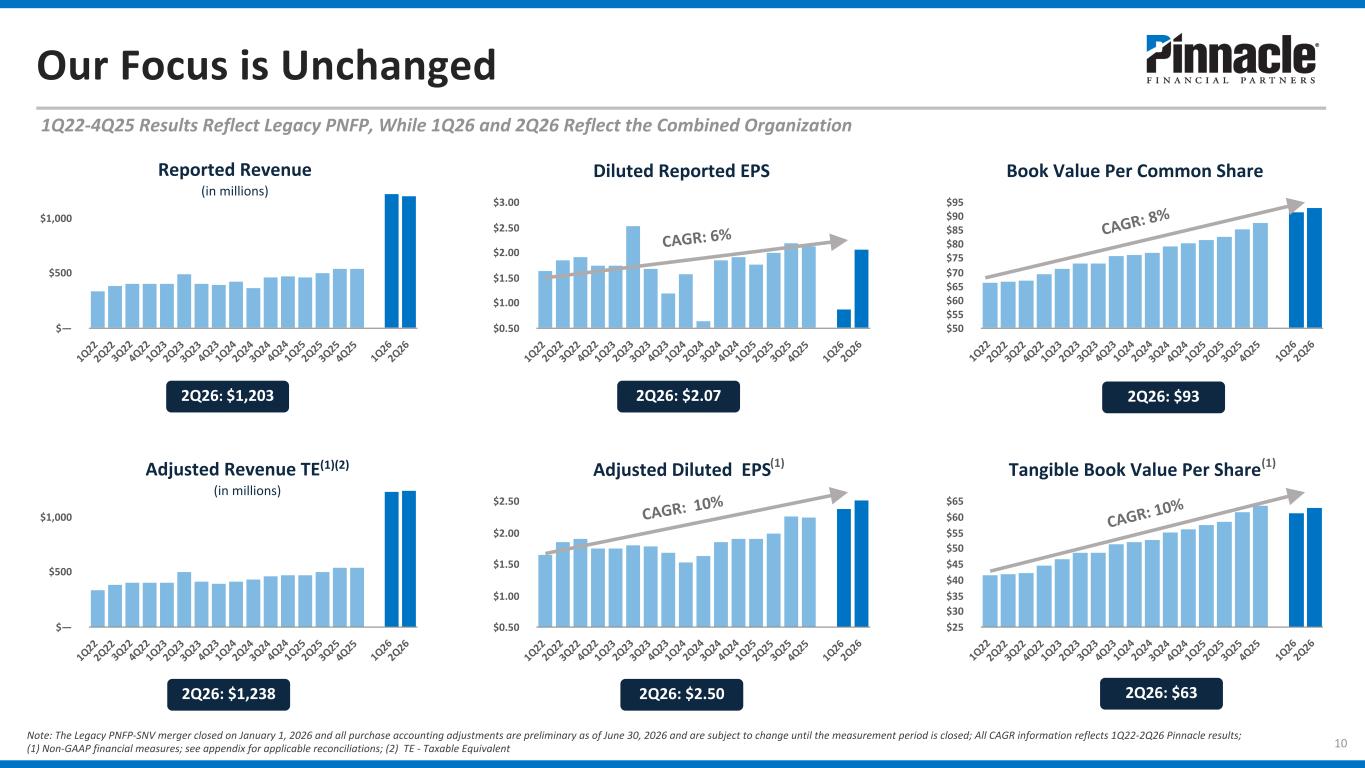
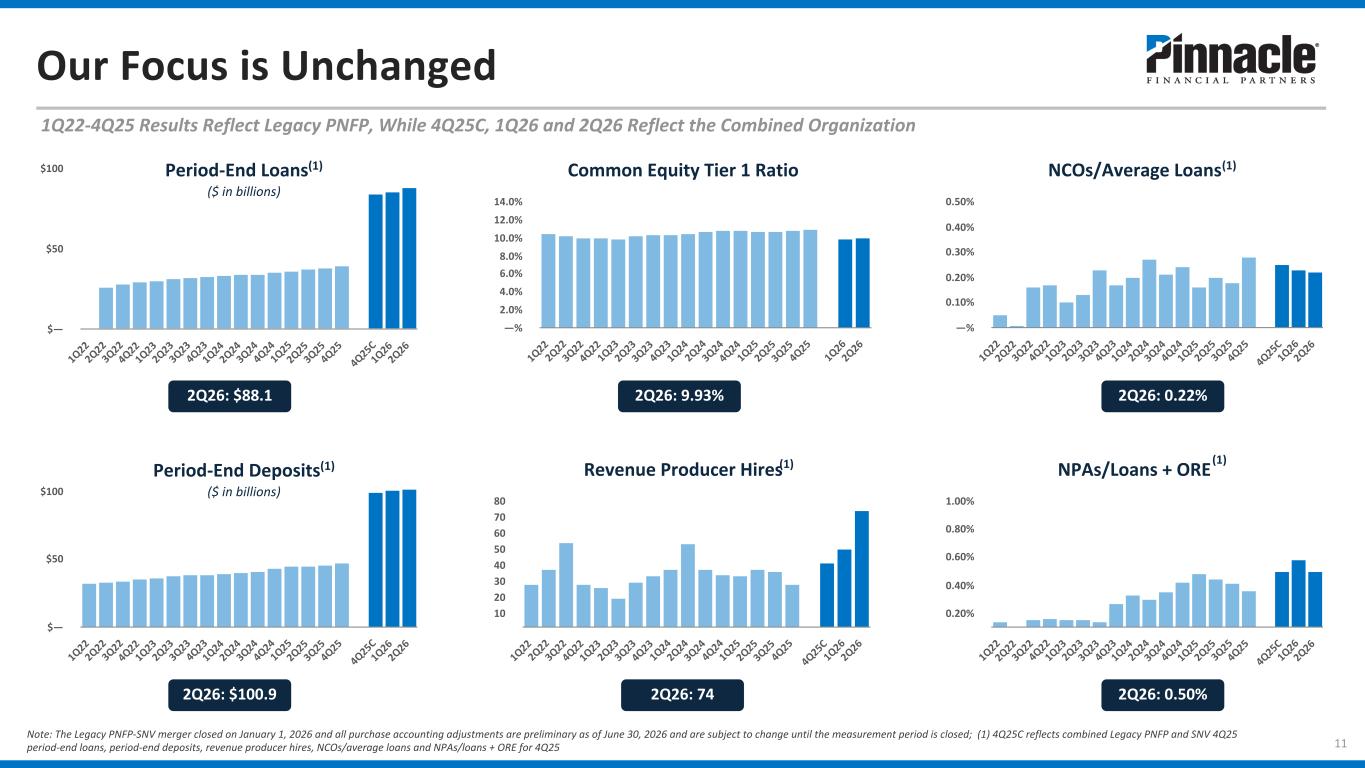
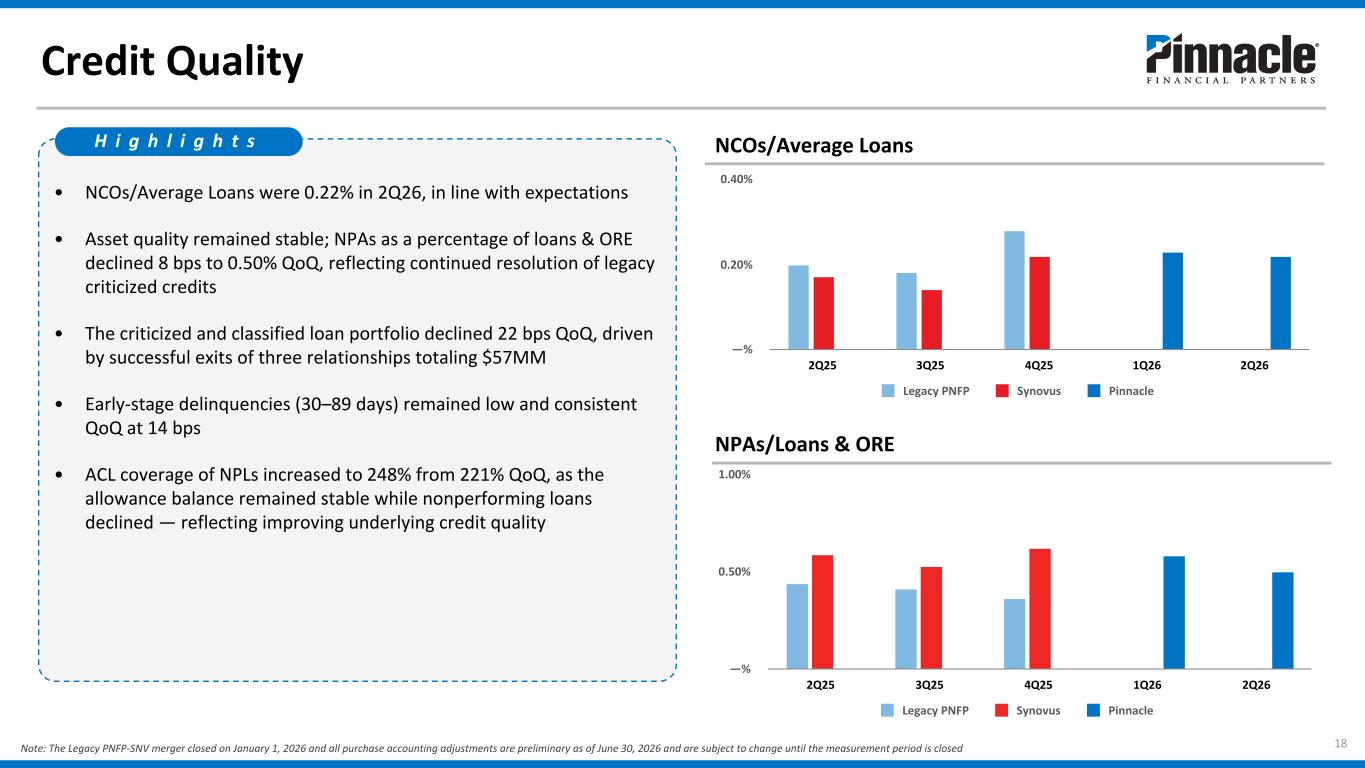
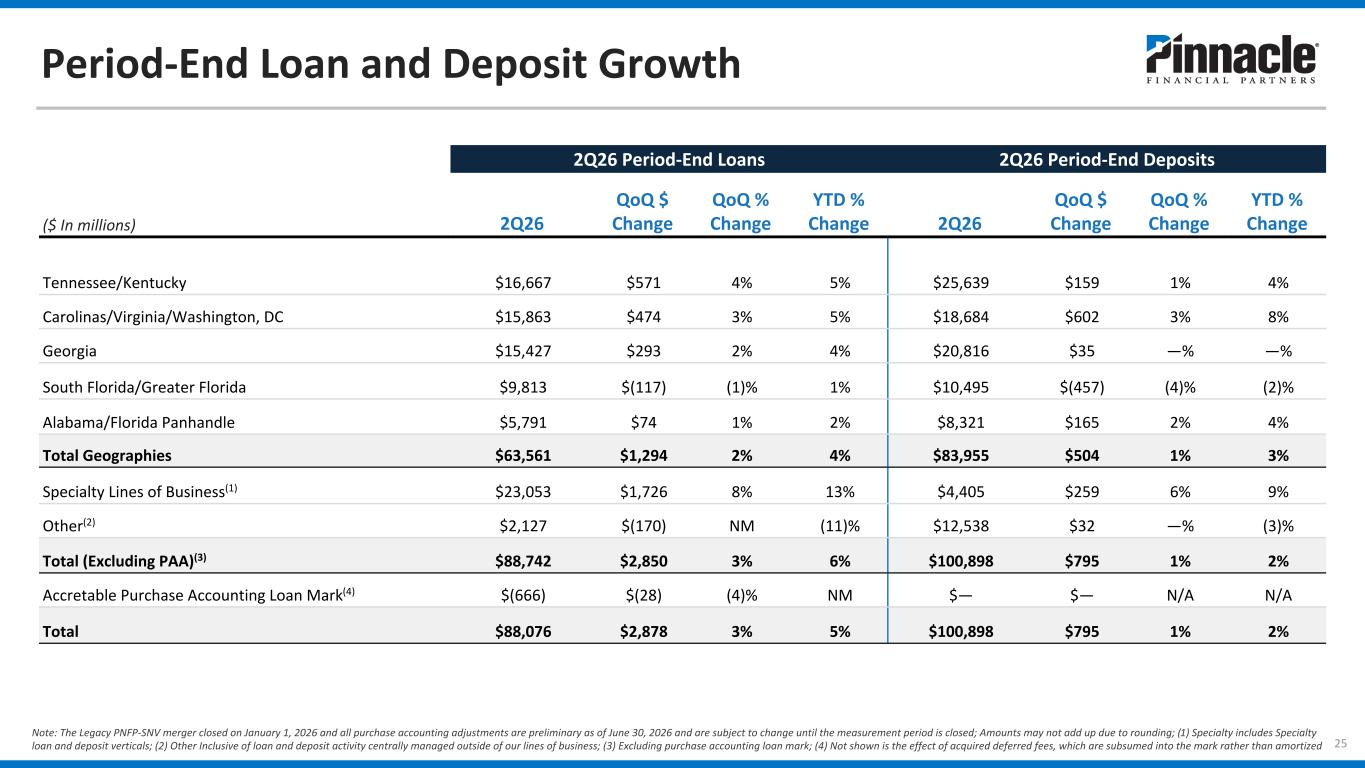
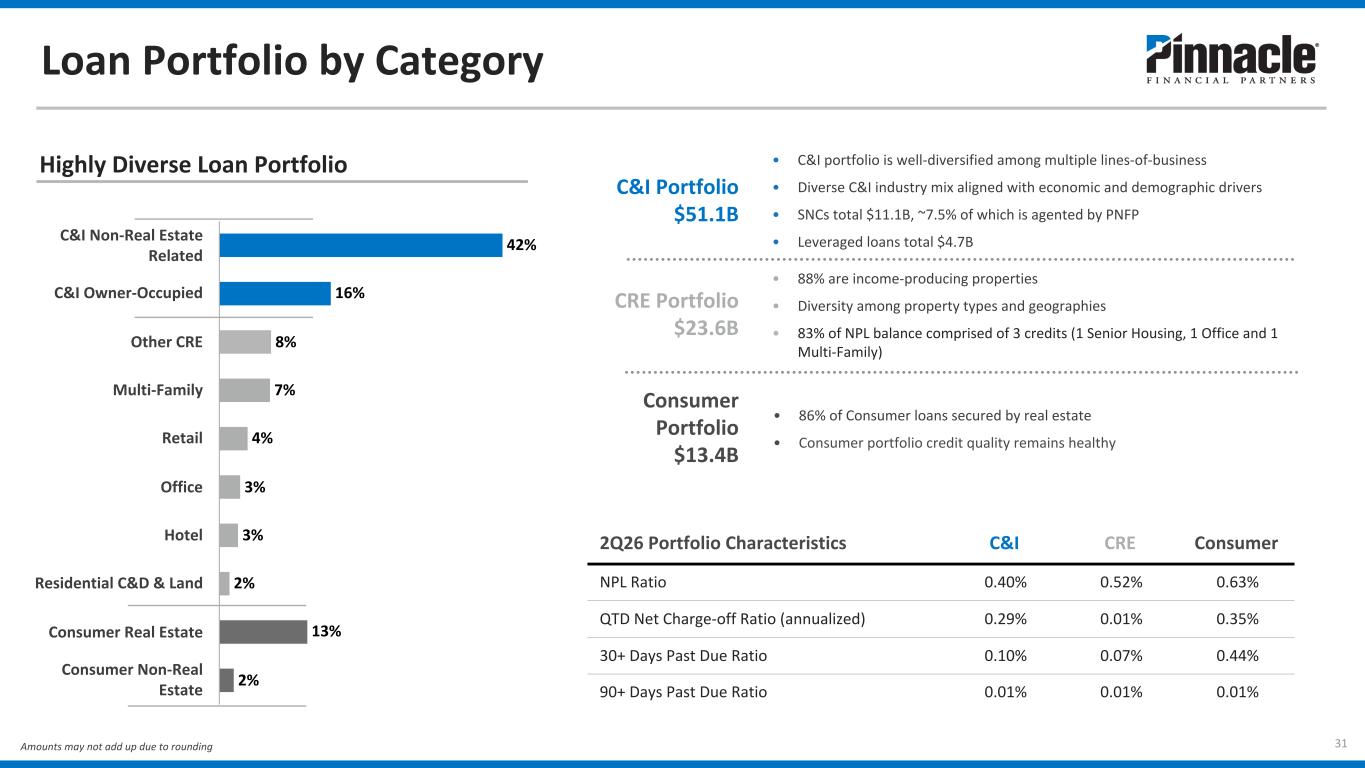
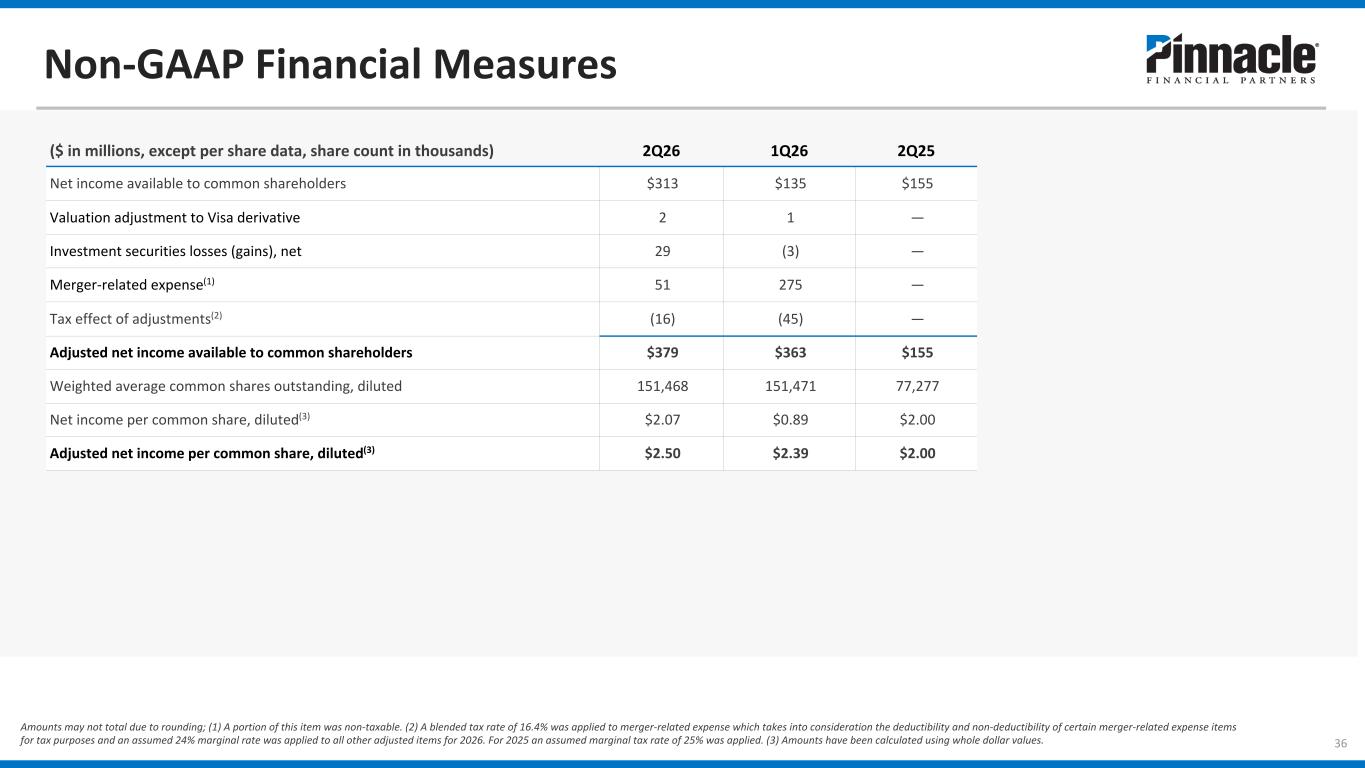
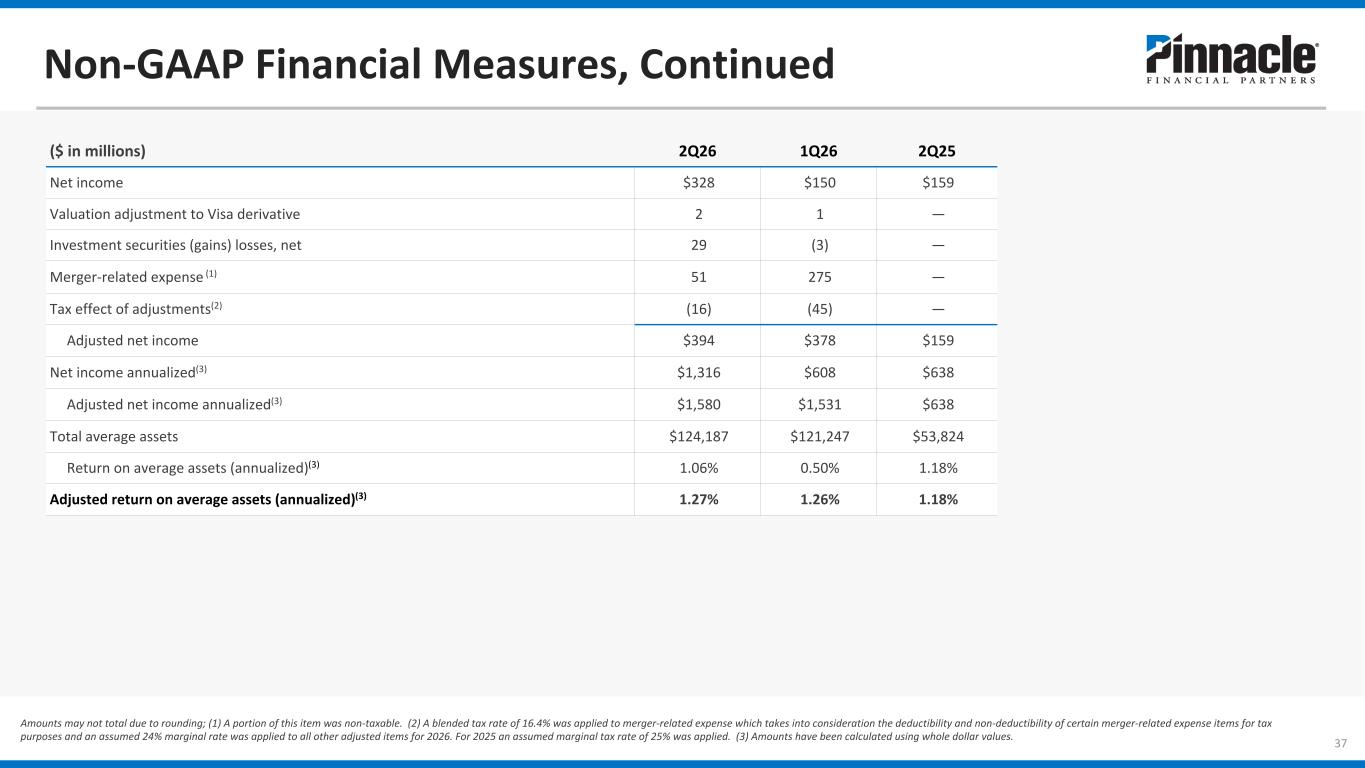
Thank you, Sam, and good morning, everyone. We have remained focused on the leverage points that help us deliver on our commitments and continue a long and proud heritage of growth and success. This quarter is another proof point of that focus. For the second quarter of 2026, we reported diluted EPS of $2.07 and adjusted diluted EPS of $2.50, excluding $82 million of pre-tax adjusted items. Year-to-date adjusted EPS is up 26% versus the same period last year. We are maintaining our 2026 guidance with our year-to-date performance giving us added conviction in the ranges we set. Starting with the balance sheet, loans grew $2.9 billion length quarter, ahead of our expectations. Deposits were up $795 million, stronger than the combined firm's historical second quarter performance, which is typically our seasonally lightest given municipal outflows and tax-related payments. This strong growth in earning assets, up 4% quarter-over-quarter, led to 2% growth in net interest income. This is the broad-based, high-quality growth that has long been the hallmark of this firm, and the combination is making it even more powerful. Fee income is another area where our differentiation shows up, with double-digit year-to-date growth on a combined firm basis. Core banking, wealth management, and capital markets all post its strong year-over-year growth. As we have seen, most firms lose a step during integration, yet we are gaining share and deepening client relationships in the middle of a merger. On the expenses, we stay disciplined while continuing to invest in the areas where we see the greatest opportunity to accelerate long-term growth. Those are not competing priorities at Pinnacle. They are the same priority. Credit performance continues to be a real strength. As expected, charge-offs remain low and NPAs decline this quarter to 50 basis points. The quality of what we are putting on the books stands out. The reserve on new production is coming in lower than the portfolio as a whole, which is one reason our ACL ratio moved down this quarter. Growth, credit discipline, and yields holding firm on new production. That is three things working at the same time. And none of it happens without two things that come first, top talent, and disciplined client selection. Moving to capital, preliminary CET1 increased 12 basis points this quarter, reflecting the strength of our core earnings profile and the ability to generate capital, inclusive of roughly 14% annualized loan growth we experienced in Q2. We added 74 experienced revenue producers this quarter, up 48% from first quarter, and up 14 percent versus the combined second quarter of 2025. Momentum has carried into the third quarter with another 34 producers who have already started or accepted offers in the first half of July. Of the 124 producers added year-to-date, approximately 50 percent are from what we consider core Synovus markets. That number matters as it says the model is working across the full franchise. Also, we have not lowered our standards to get there. Recruiting at Pinnacle is a consistent operating rhythm built through deep pipelines and clarity on our value proposition. That is what turns hiring into durable, compounding growth. We are also holding on to the bankers we already have. Retention, excluding merger-related synergies, is 94% year to date. Client satisfaction and loyalty scores remain best in class, and it goes without saying, when bankers stay, clients stay. Now let me tell you why the best is still in front of us. Three advantages compound from here. First, our markets. The southeast footprint continues to grow at roughly twice the national average. Combine that backdrop with the scale of this franchise and the power of the pinnacle model, and the long-term growth opportunity in front of us is as compelling as any in the industry. Second, the competitive environment is moving in our direction. Larger competitors are dealing with bureaucracy, disruption, and slower decision-making, and it shows in their net promoter scores. In fact, Coalition Greenwich's first quarter report placed Pinnacle first amongst peers in business momentum, the net percentage of clients who plan to do more with a bank versus those who plan to do less, and by a wide margin. That is exactly the backdrop that lets us keep taking care and growing. Third, talent dislocation is elevated and it is not slowing down. The best bankers want an environment where they are empowered, supported, and able to win. That is exactly what Pinnacle offers, and it is why we continue to be a destination of choice across every market and specialty we operate in. Strategy is a plan. Execution is a result. We are six months in, and the results are doing the talking. Balance sheet growing, core client fee income up significantly, credit strong, capital ratios increasing, bankers joining, retention of team members high, clients responding with loyalty. I am proud of what this team has delivered and even more excited about where we're headed from here. With that, I'll turn it over to Jamie to walk through the second quarter results in more detail. Jamie?
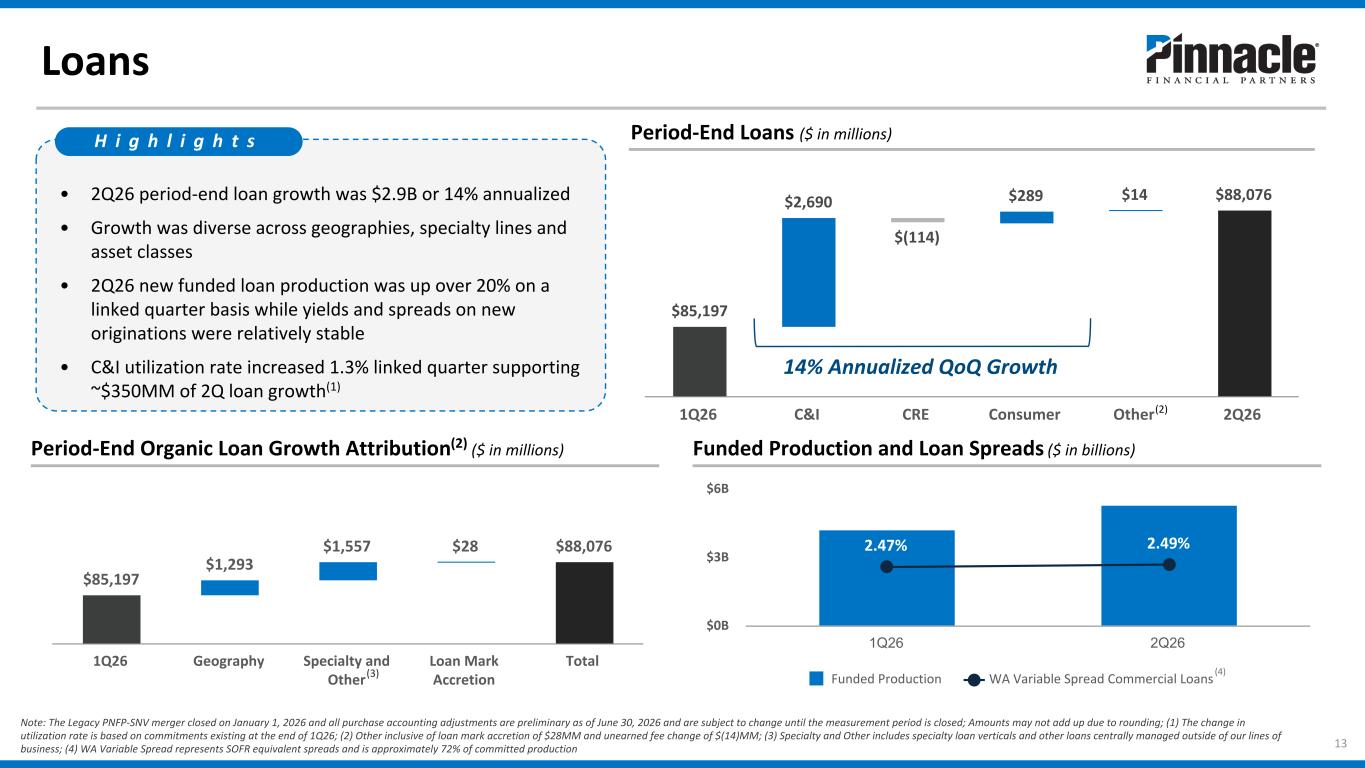
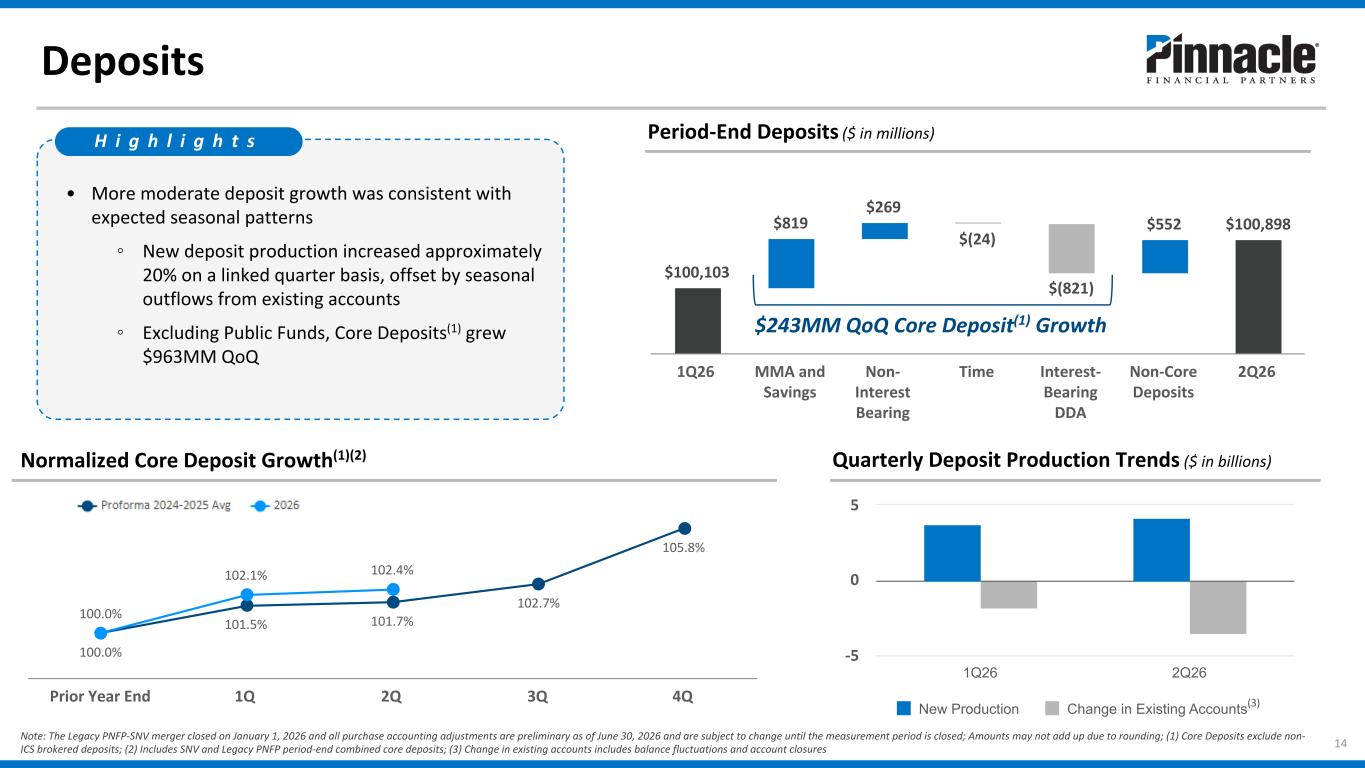
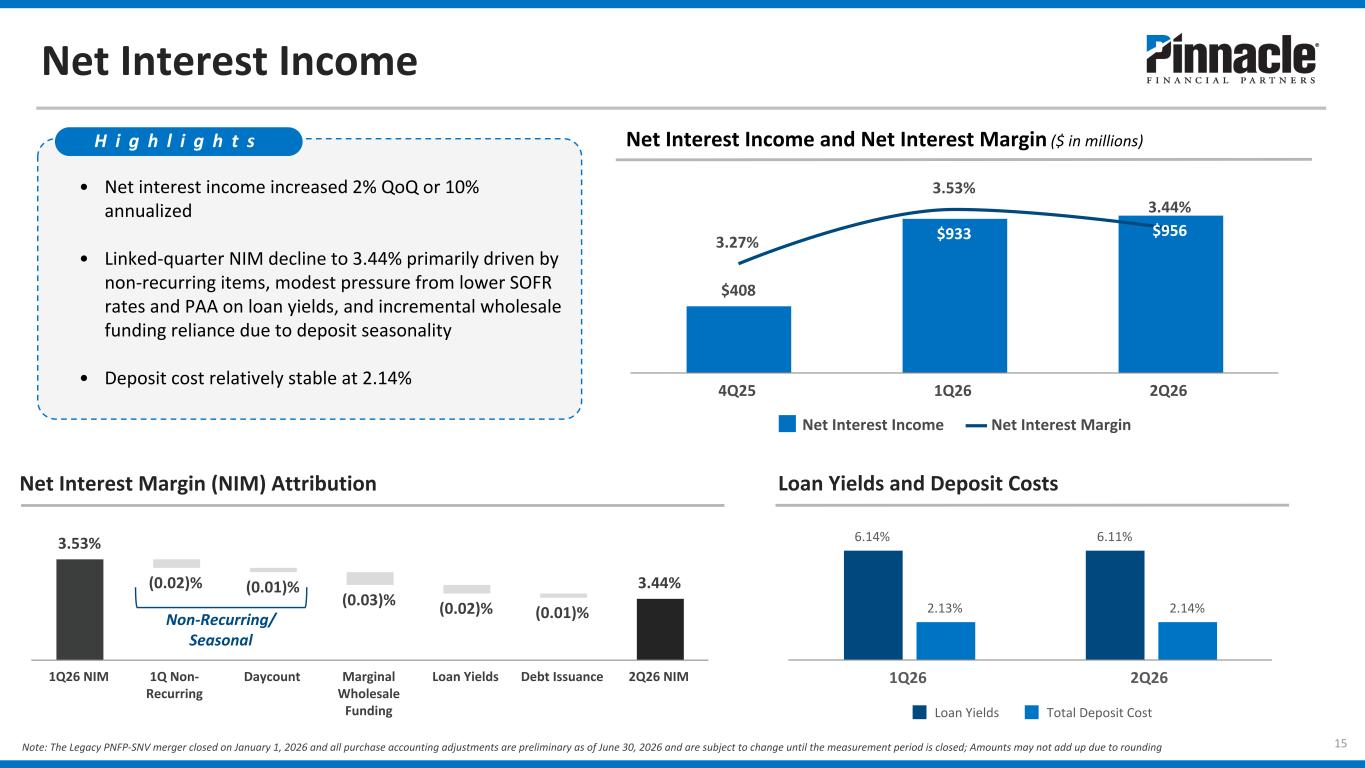
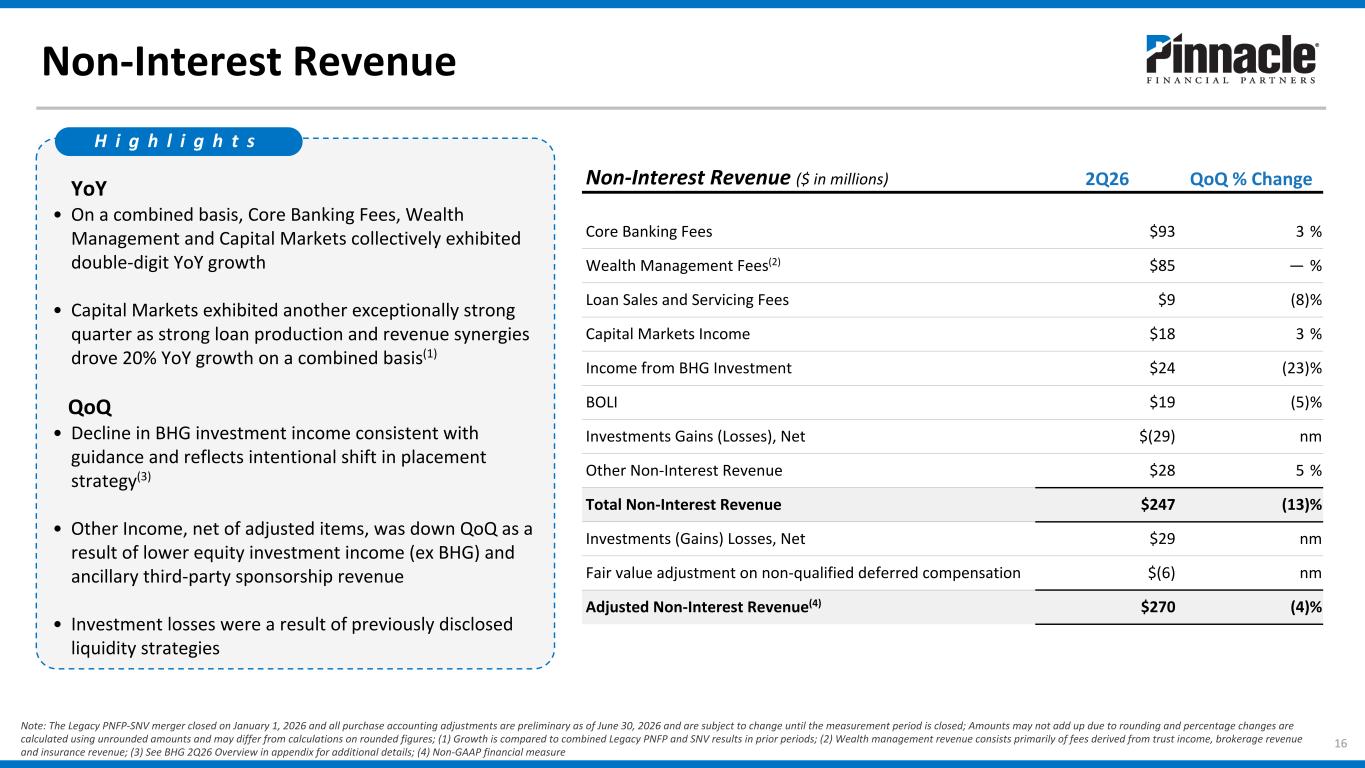
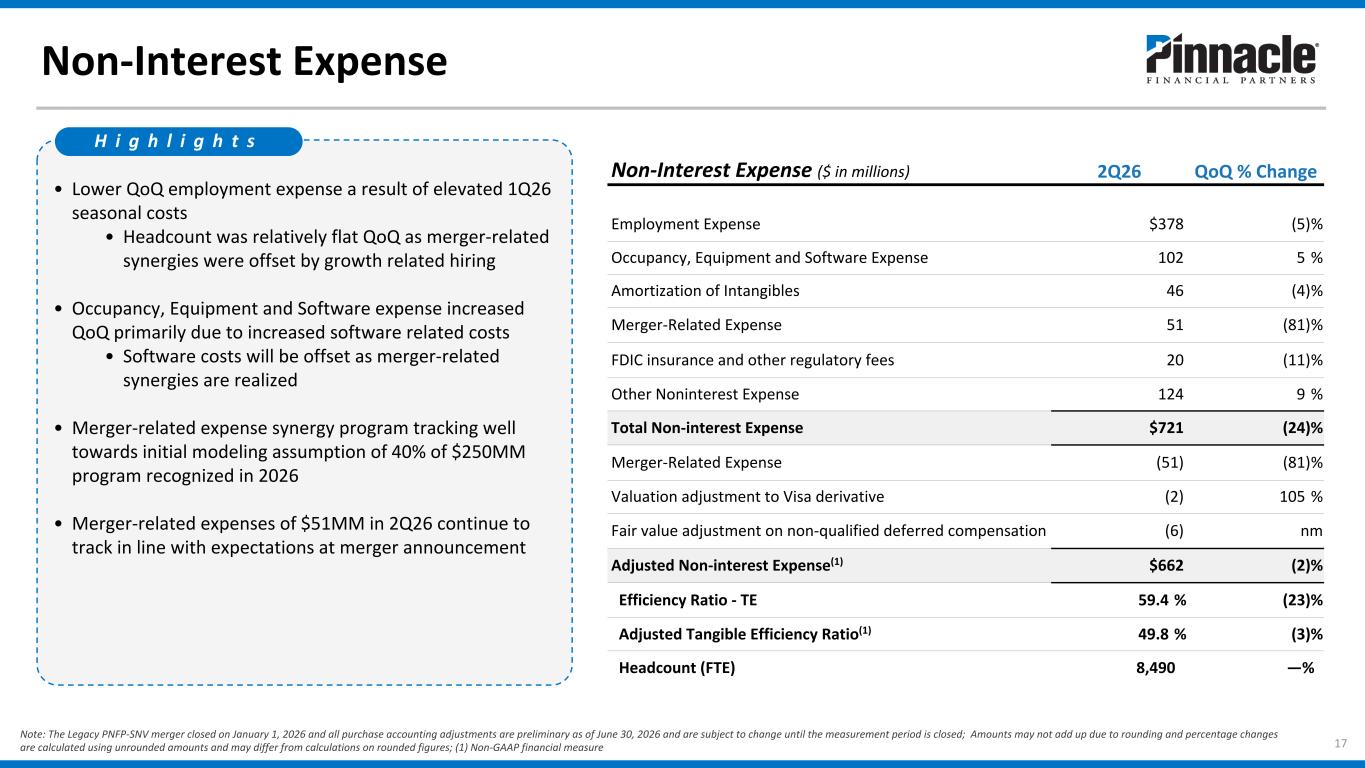
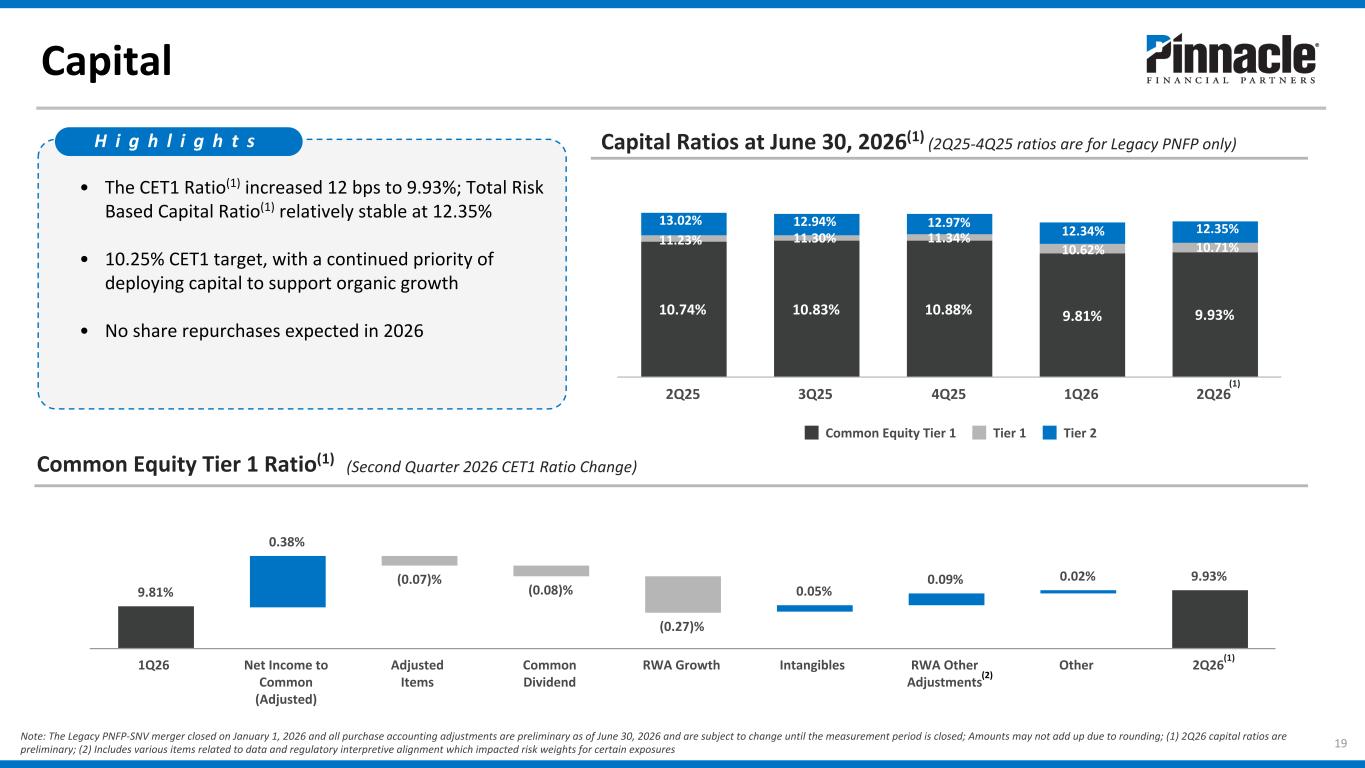
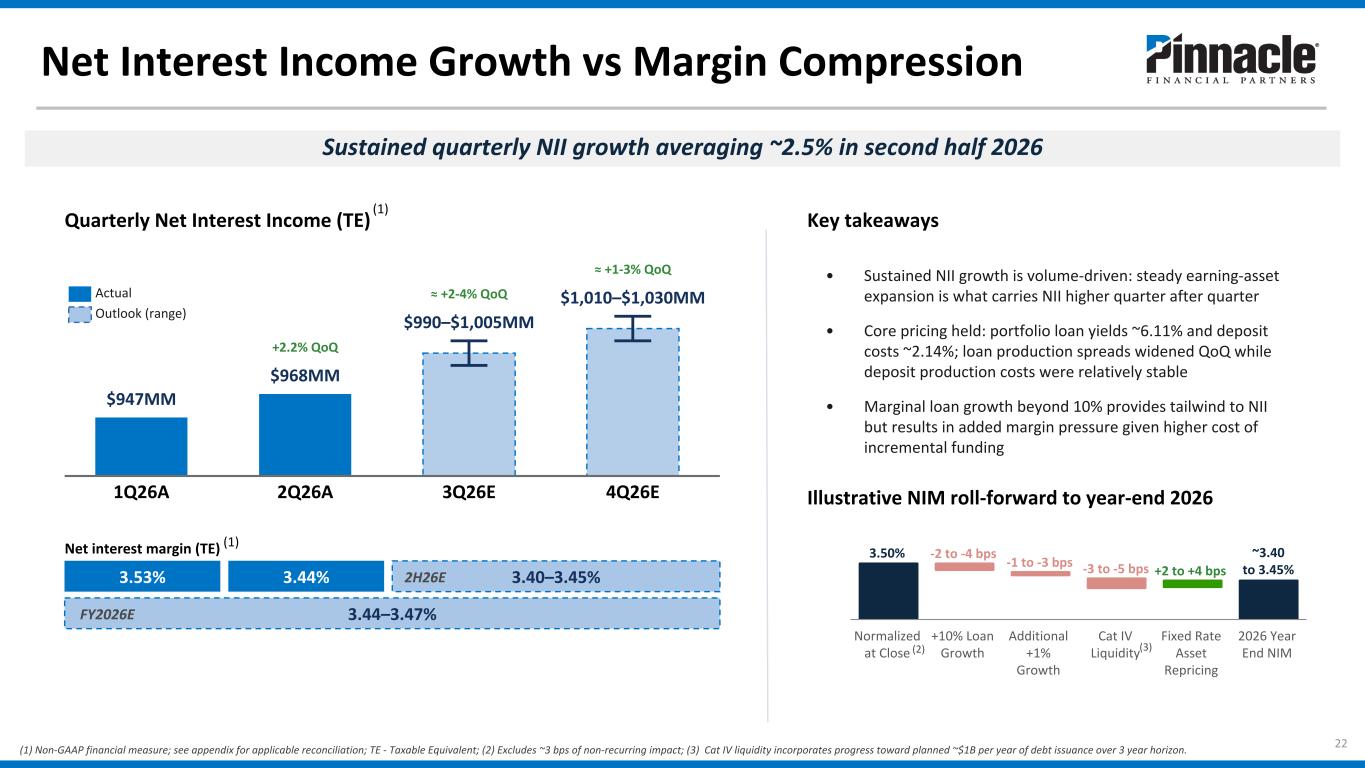
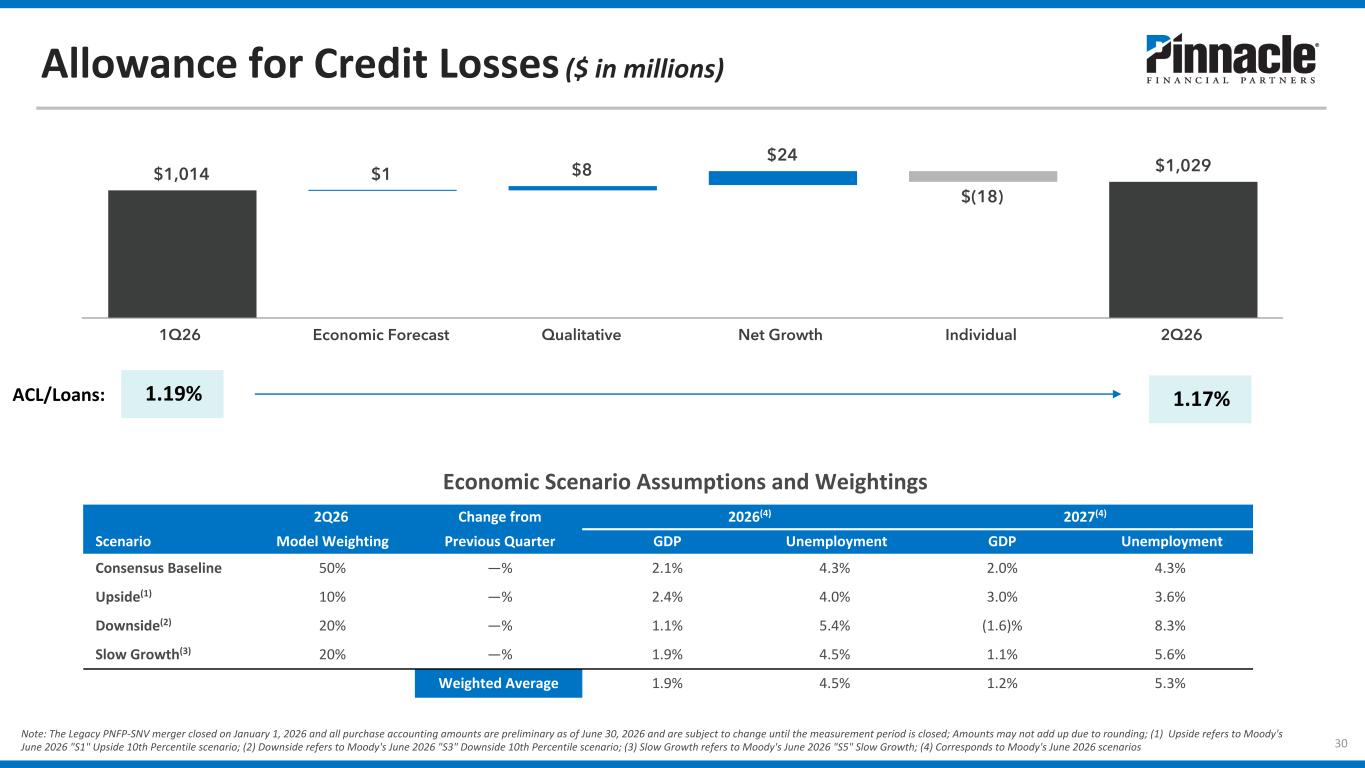
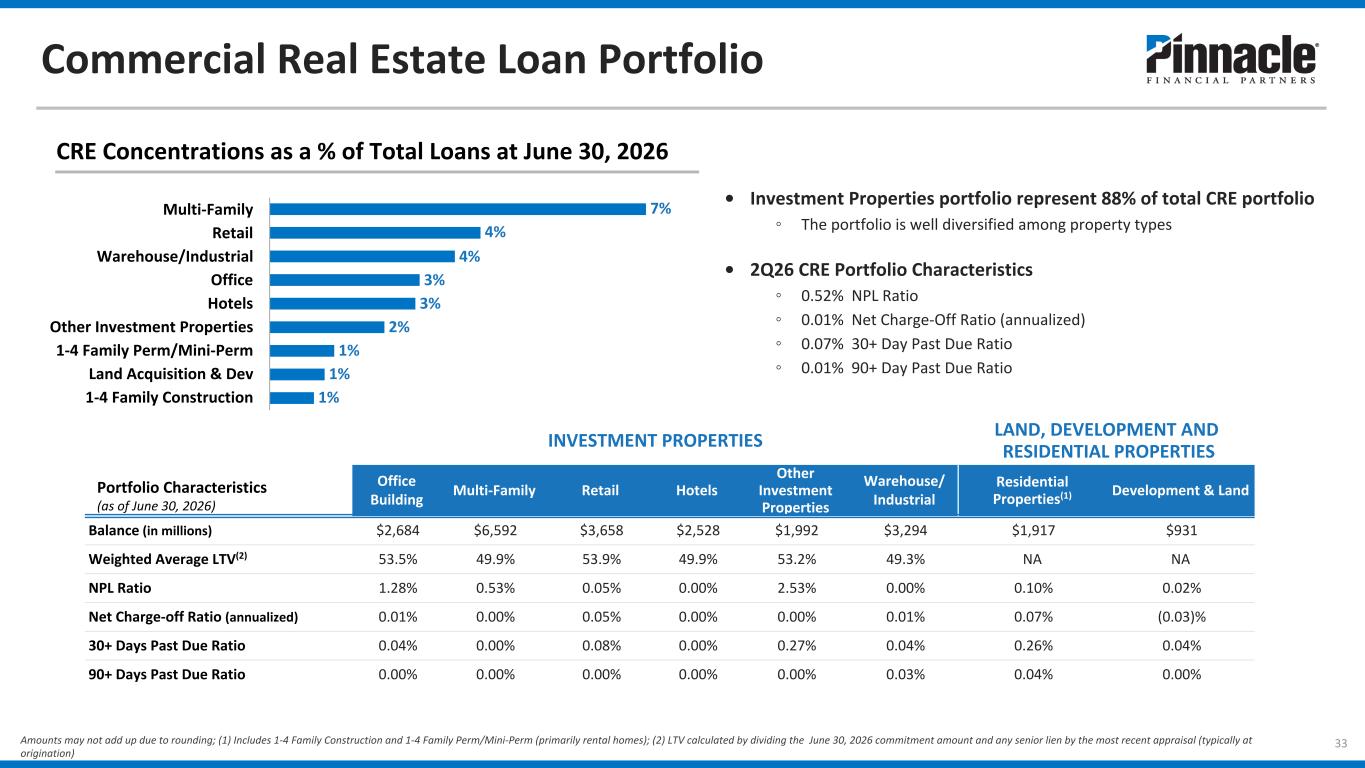
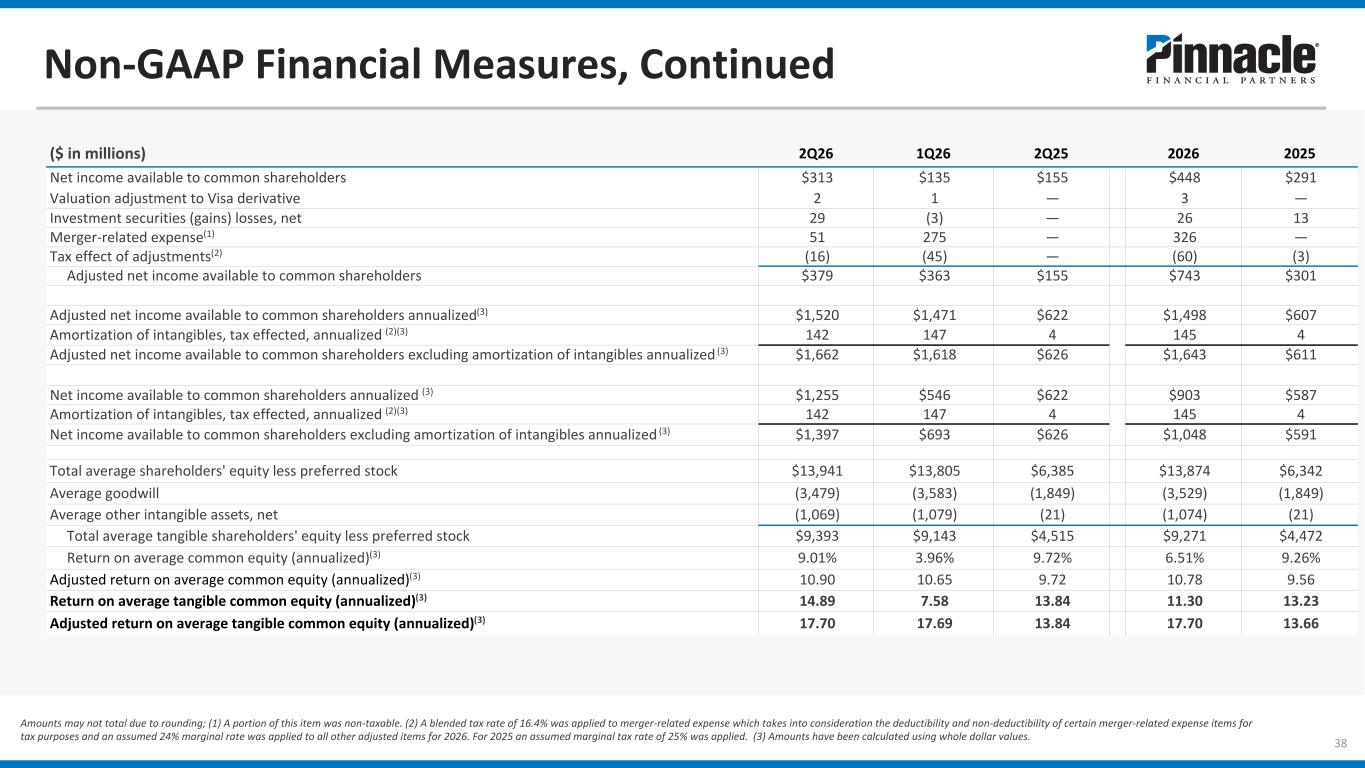
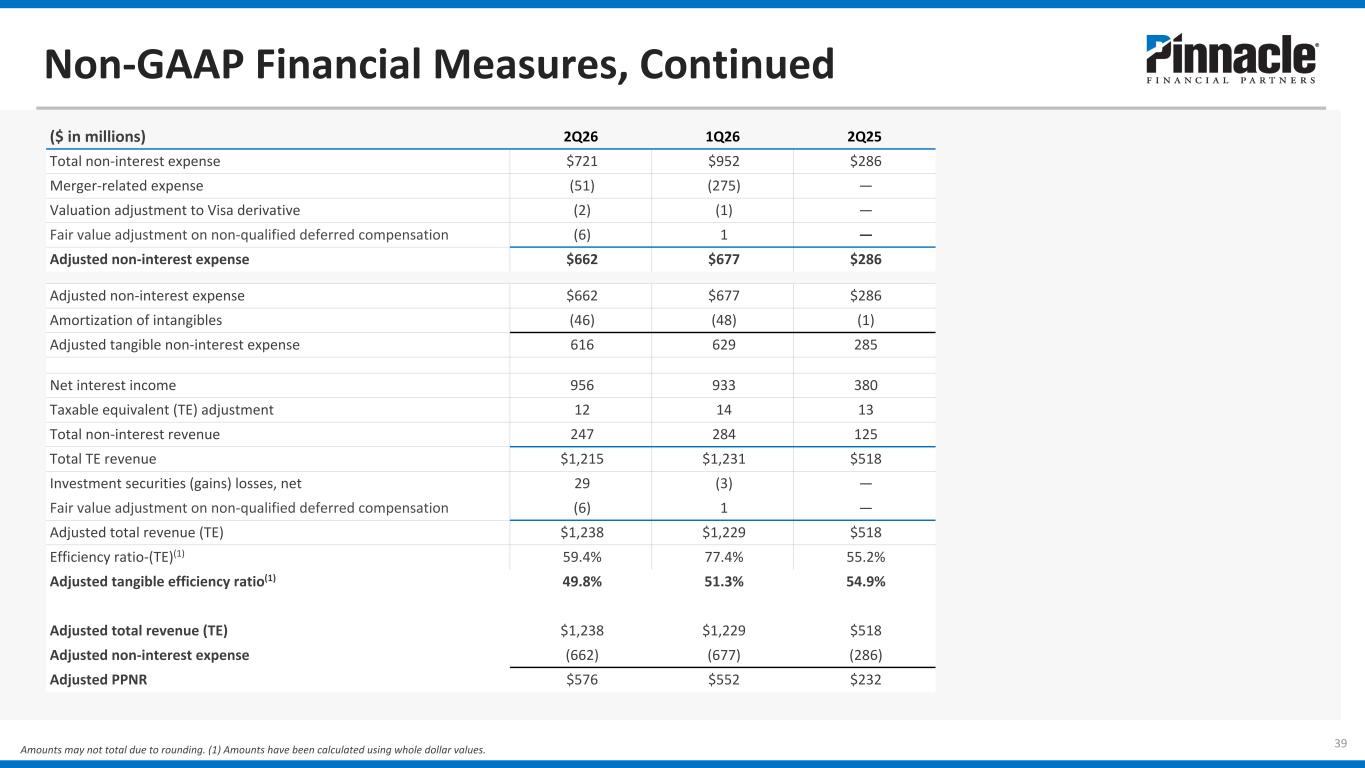
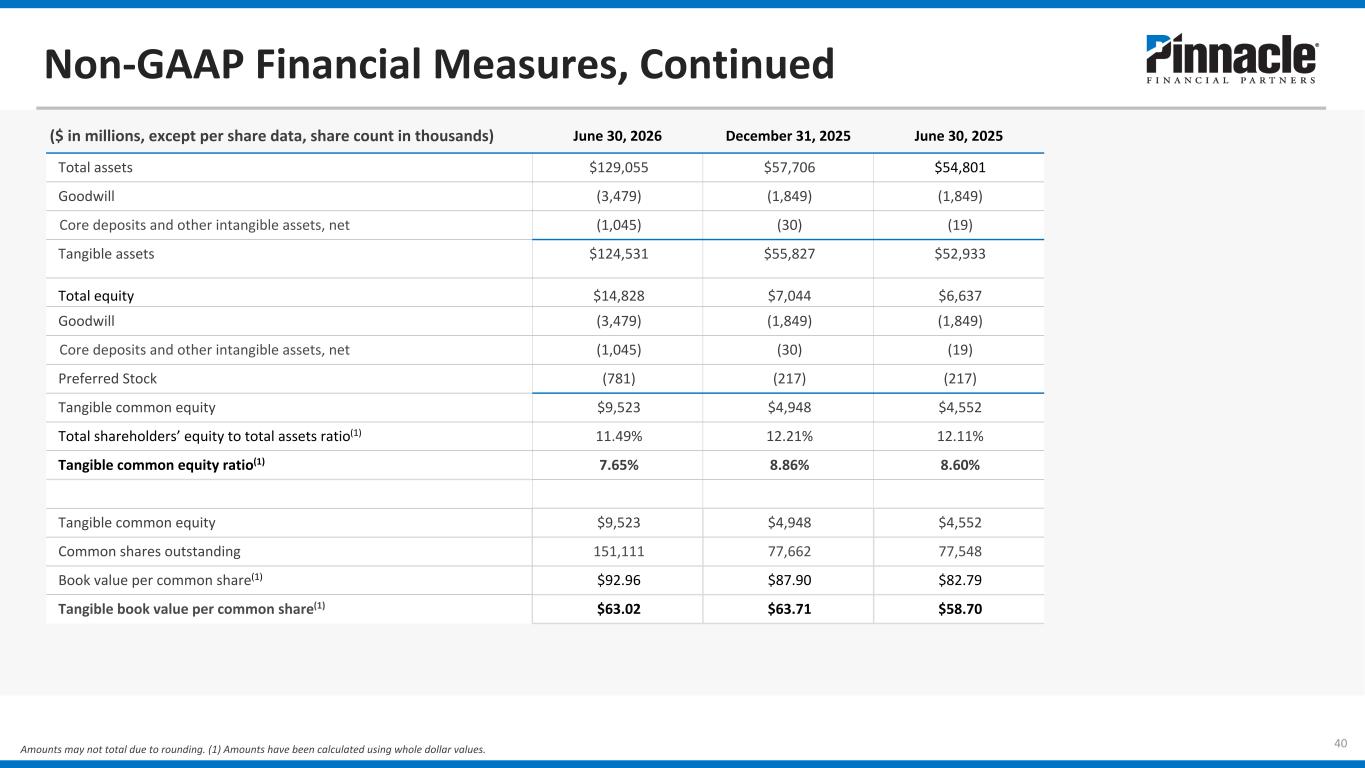
Thank you, Kevin. Before turning to the drivers, let me anchor to the bottom line. Adjusted diluted EPS increased 5% versus the prior quarter and 25% versus second quarter 2025 results. Included in this accretion is the revenue increase from the loan mark and first quarter securities restructuring, which was completely offset by increased intangible amortization, resulting in zero net impact from merger accounting. Relative to standalone consensus earnings estimates at the time of announcement, This represents approximately 19% of adjusted, diluted EPS accretion year-to-date, a clear proof point that the combination is delivering the earnings power we underwrote. That is also translating into strong profitability, with a year-to-date adjusted return on average tangible common equity of 17.7%. In the second quarter, earning assets were up 4%, or 15% annualized, due to the combination of strong loan and securities growth. Period-in loans increased $2.9 billion, or 14% annualized from the first quarter. The majority of growth came from C&I lending and was broad-based across our geographic markets and further supported by continued strength in our specialty lending platforms. On a year-to-date combined basis, period-in loans increased 6% or 12% annualized, excluding the purchase accounting loan mark, exceeding prior guidance. Period-end deposits grew $795 million on a linked quarter basis. This growth included normal headwinds such as tax season and seasonality in public funds, which generally reverse in the second half of the year and promote what is normally outsized growth in the fourth quarter. Excluding the decline in public funds, court deposits grew $963 million, or 1% in the second quarter. On a year-to-date combined basis, period-end deposits increased 2%, which, along with the more positive seasonal trends, should keep us on pace for full-year deposit growth of 8% to 10%. During the quarter, we executed transactions in line with the liquidity strategies we outlined at the merger announcement last year. We repositioned approximately $1 billion of municipal securities into more liquid investments, improving both portfolio duration and our level of high-quality liquid assets, while having no material impact on net interest income or CET1. In addition, we issued $750 million of senior debt, which served to strengthen and diversify our liquidity and funding profile and is consistent with the issuance path communicated last year. This balance sheet growth carried into net interest income, which was $956 million, up 2% or 10% annualized from the first quarter. Net interest margin came in at 3.44%, down 9 basis points versus the first quarter, or roughly 6 basis points, excluding the first quarter non-occurring items. Other factors that proved headwinds during the quarter included a modest decline in loan yields, which were impacted by a roughly 3-4 basis point average decline in SOFR rates and an increase in higher cost funding as seasonality and deposits pressed our loan-to-deposit ratio higher. We expect this dynamic to reverse as we go through the back half of the year. For further context, our loan yield was 6.11% in the second quarter versus 6.14% in the first quarter. Our cost of core deposits was stable quarter over quarter at approximately 1.95%. Total deposit costs increased one basis point, and our aggregate effective cost of funds increased two basis points. Adjusted non-interest revenue declined $12 million from the first quarter, driven largely by lower BHG income. Income from our equity method investment in BHG totaled $24 million in the second quarter, performing in line with our expectations as BHG shifts its loan placement strategy. Core client income streams, including core banking, wealth management, and capital markets, all delivered linked quarter and robust year-over-year growth. Core banking and capital markets fees both increased 3% from the first quarter. Strong loan production and revenue synergies drove another quarter of capital markets execution and is further evidence that integration of key products and services is accelerating. We maintained disciplined expense management while continuing to invest strategically for long-term growth. Our adjusted tangible efficiency ratio was 49.8%, as expected at this stage of the merger integration. We incurred $51 million of non-recurring merger expenses during the quarter, primarily related to personnel and technology-related integration costs. On a linked quarter basis, adjusted non-interest expense was down 2%, as realized merger synergies and seasonally lower personnel costs more than offset continued investments in revenue producers and technology. Headcount was relatively flat from the first quarter, reflecting ongoing integration and progress netted by growth-related hiring. Credit quality remains a clear point of strength. Net charge-offs were $48 million, or 22 basis points for the quarter, consistent with expectations. The non-performing asset ratio improved to 0.5%, down from 0.58% in the first quarter, demonstrating continued stability and disciplined underwriting. The allowance for credit losses ended the second quarter at 1.17%, compared to 1.19% at the end of March. Our preliminary common equity tier one ratio ended the quarter at 9.93%, up 12 basis points from the first quarter. Our priority is clear. We will deploy the capital we generate into high return, client-driven growth while steadily building CET1 towards our 10.25% target. With that, I'll turn it back to Kevin to review our 2026 financial outlook. Thanks, Jamie.
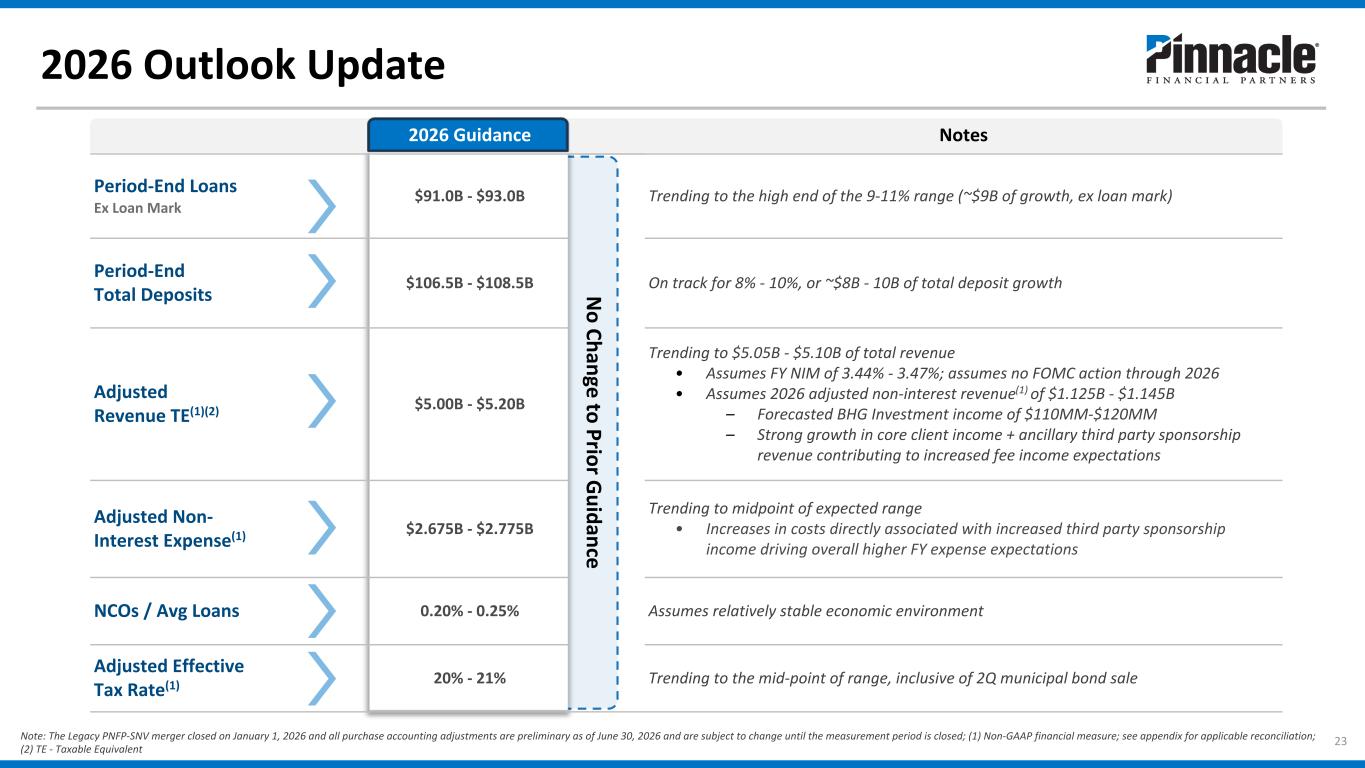
Our broad guidance ranges are unchanged for 2026, and importantly, our performance to date reinforces that view. Let me be specific about where we're landing inside those ranges. Loan growth is tracking at the top end of our 9% to 11% range and deposits in the middle of our 8% to 10% range. That earning asset growth is the engine of this outlook. It drives strong, continuous growth in NII as we progress through the second half of 2026, even as margin compresses modestly. We are now expecting full-year NIM in the $344 to $347 range. Importantly, when combining the robust NII growth with the continued strength in fee income across our core client businesses that we have seen to date, we continue to expect to be well within our revenue outlook and trending more specifically to $5.05 to $5.1 billion. On the balance of ranges, we expect adjusted expenses in the middle of our $2.675 to $2.775 billion guidance. We anticipate an increase versus the first half of the year driven by revenue producer hiring, market expansion, incremental expenses associated with third-party partnership revenue, and normal inflationary and growth-related costs. These are deliberate investments tied directly to future growth. Our adjusted effective tax rate is expected to land in the middle of the 20-21% range, inclusive of the second quarter municipal repositioning Jamie noted earlier. Credit remains within our 20-25 basis point charge-off range, and our profitability outlook remains strong as we continue to drive the EPS accretion we laid out last summer. Stepping back, the closing message is the same one I opened with. We are focused on the leverage points that have always driven this firm, and this quarter is another proof point that they are working. Growth, recruiting, credit, pricing, culture, synergy realization, every one of them is moving in the direction we said it would. We are not declaring victory. We are six months in and there is more to execute. The 26% adjusted EPS growth year to date is a real measure of success and a reflection of this team's hard work. But we're not done. We are going to keep on pushing and getting better from here. This is scale with a soul, the model, the culture, and the people. To the team members across the franchise, thank you. You are the reason this is working. And to those who have questioned what this combination could be, I understand the skepticism, and we intend to keep answering it the only way we know how, one quarter, one client, one banker at a time. That is the work, and you have my personal commitment that we will keep doing it. The future is bright, and the best of what we can do together is still ahead. With that operator, let's transition to the Q&A portion of today's call. Thank you.
Operator
We will now begin the question and answer session. To ask a question, you may press star, then 1 on your touchtone phone. If you're using a speakerphone, please pick up your handset before pressing the keys. To withdraw your question, please press star, then 2. In the interest of time, please limit yourself to one question and one follow-up. Your first question is coming from Stephen Skouten from Piper Sandler. Your line is live.
Yeah. Hey, good morning. Thank you. I wanted to ask, maybe first starting off, I thought the quarter was really good, of course, but curious what changed from the mid-quarter update that you gave around the margin versus, you know, the nine basis points of decline that we saw. And was it primarily this higher growth that led to more higher cost funds needed in the interim? And maybe how does that play into what you guys disclosed for every 1% higher growth? There may be some NIMH compression, but still NII upside. Just a little color around that would be great.
Yeah, Steve and Jamie, thanks for the question. And the change from our guide that we gave in early June is really on the asset side. And so you think about the decline in SOFA rates as well as PAA coming in a little lighter than expected. Those impacts are definitely different than what we said in early June. And you think about the PAA, that's really just due to slower prepayments in our C&I book largely. And then the SOFA rate is largely recovered here in the month of July. So we think that, you know, that's going to be a little tailwind to the third quarter. As you can tell, when you compare average balances to ending balances, you can also see that we grew the balance sheet a decent bit in the month of June with cash and securities to assets coming up higher as we approach quarter end. So I would attribute the change to those three things largely in the second quarter. And then when we speak to growth, you know, the growth impact of the margin, you know, we laid out the impact and how it is margin diluted. But what I want to say about that is if you look at our NII guide progressing through 2026, what you see there is a steady, you know, 2%-ish increase quarter on quarter as you go through the year. And that growth is built on, you know, banker hires that we made in prior years. And so it's a steady, sustainable growth in NII. And the beauty of that growth in NII is that there's not a lot of marginal expense associated with it. And so when you think about profitability and how that drops to the bottom line, what we're doing here is we're producing loans, you know, at the same rate. So we're not, you know, competing on price when you look at production rates. We're growing the balance. You've grown core deposits at a similar rate over time as loans. But even in that marginal growth where we're funding it with wholesale funding, basically, it's accretive to the shareholder because we're able to maintain return on tangible common equity because expense growth is happening at a much slower rate. And so that's why we believe in it. You know, we believe in the steady growth in NII, you know, having a lower than 50 percent adjusted tangible efficiency ratio. we believe that that'll, you know, drive sustained double-digit PPNR growth, double-digit EPS growth, and doing it the right way.
Yeah, that's great, Culler, and a lot of great new detail on the slide deck. Appreciate all of that. One other, my follow-up would be around maybe slide 13 where you guys disclosed this funding production and loan spreads. Just kind of curious how you're thinking about that within all of your forward expectations, if that's something that you would think would compress slightly given all the competition headwinds we're kind of hearing industry-wide. And, again, that dynamic would kind of be similar to this, you know, the spreads might compress as growth is higher, but NII still moves higher regardless.
You know, I think the second quarter is a great data point on that. And so if you look at our spreads on production, right, we were wider quarter on quarter. But it's not just, you know, a mixed story on that. Basically, six of our eight geographies had wider spreads in the second quarter than the first quarter. Nine of 11 of our specialty groups had wider spreads in the second quarter than the first quarter. And so the point I want you to know is that this is happening across our businesses. We're not out there driving in lower spreads to try to accelerate growth. This is our bankers out there delivering on the promises we've made in a steady, sustainable way. So our outlook does not have material spread tightening. We're assuming similar spreads, and we believe that that's justified given what we've seen. Obviously, the environment can change and competition can go even higher, but we're not seeing that spread tightening that we're hearing from some of the others.
Operator
Fantastic. Great detail. Thank you very much.
Operator
Thank you. Your next question is coming from John McDonald from Truist Securities. Your line is live.
Thanks. Good morning, guys. I was wondering if you could unpack the deposit outlook for the rest of the year, including kind of what you see in terms of mix, both the non-interest bearing and what you call the core deposits inside your outlook.
Yeah, John, great question. and we are forecasting strong growth in deposits in the second half of the year. Obviously, we're pleased with the core deposit growth when you back out public funds in the second quarter. We believe that that shows the momentum in what is typically a challenging quarter due to tax payments. But as we look forward into the second half of the year, we believe that seasonal impacts will contribute a billion and a half to two billion to growth in the second half of the year. You know, just like our loan forecast, prior year hires will also contribute to growth as they build their books of business, as they grow and bring in the deposits of their clients. And so we believe that that's why we'll continue to see strong production. Deposit production has been over a billion dollars every month this year. We expect that to continue. In the second half of the year, you will see growth in broker deposits. So broker deposits have been relatively stable year to date. We are expecting some growth in broker deposits in the second half of the year. And what gives us confidence in that growth? I would point you to the chart that compares core deposit growth in seasonals year to date and our earnings deck. if you were just to run that outperformance forward to the end of the year, it would point to four and a half to five billion of core deposit growth from here. But one thing that's underneath the covers of that is that that includes underperformance or less growth in public funds year to date. We have strategically allowed public funds to attract this year. We're about $700 million behind the seasonal average in growth on public funds year to date. And we expect, you know, getting back to that average growth and with the second half seasonals in public funds, that's more than a billion dollars in growth in that book of business. And so as you look forward through the rest of the year, I would just say, you know, we do expect to see that seasonal growth in core deposits. We do expect to see some growth in public funds. And then I would say that we expect broker deposits for the full year to grow at a similar rate as core deposits.
Thanks, Jamie. And just as a follow-up to that, obviously, we all hear a lot of talk about how competitive the pricing of deposits is in your markets. You did really enable the deposit pricing was very stable this quarter. What enabled that to be pretty stable amid all the competition?
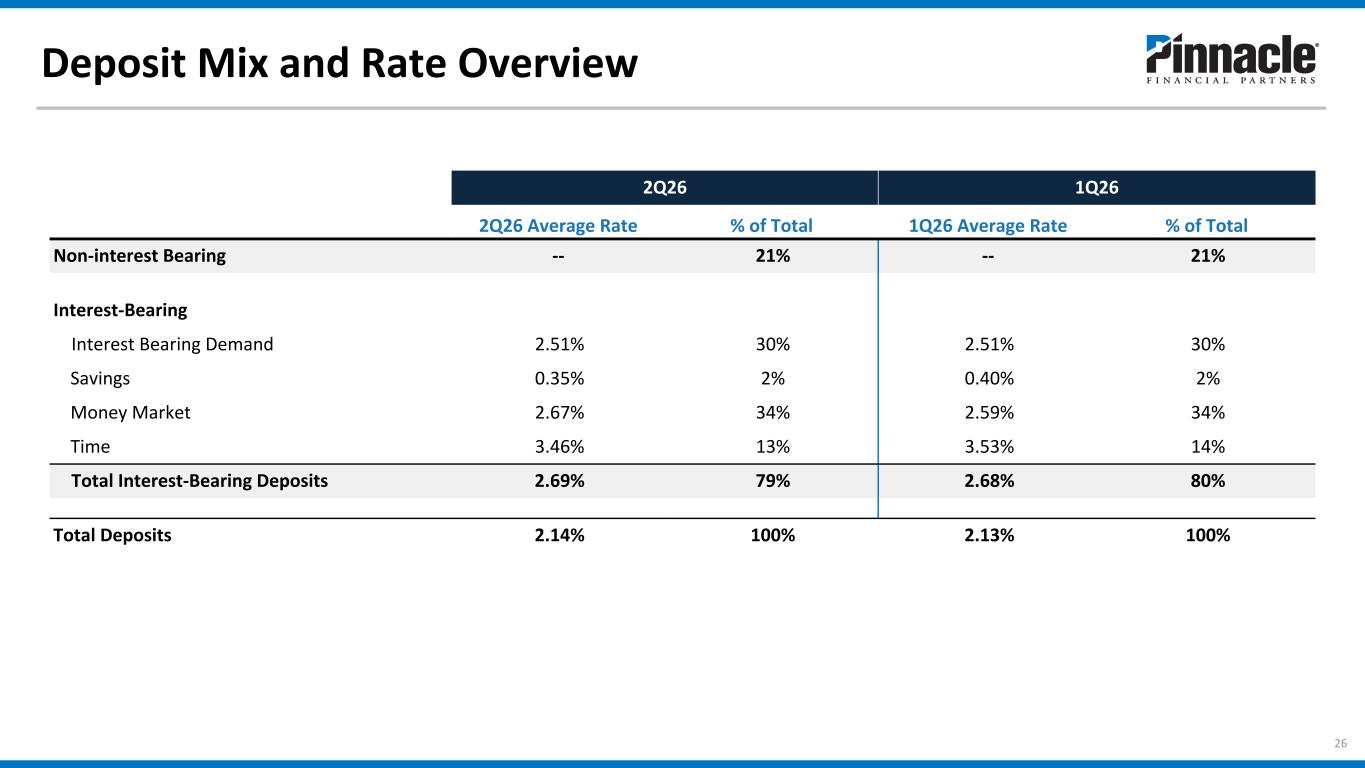
John, I'll take that. Look, we don't compete on price. I mean, look, we're a relationship bank, and clients value more than just the rate on deposits. Now, we pay a fair rate. As you know, the deposit marketplace is very efficient. And so when you're adding new deposits, you're having to pay a market rate. But as Jamie said earlier, the real core to our model is hiring new revenue producers. And those new revenue producers come over and bring their clients with them. Ultimately, that allows us to produce at a higher level and use a market rate to do it. So we're not having to go out and do promotional rates. And so, as Jamie mentioned earlier, our forecast for NIM would assume that that would continue. And so if you look at that going on rate for new loans minus the going on rate for new deposits, that was roughly stable at a 372 spread this quarter, which was very similar to last quarter. And that should continue. So it's our model. It's hiring talent. It's allowing us to compete on things other than just rate.
Operator
Thank you. Your next question is coming from Ibram Poonawalla from Bank of America. Your line is live.
So I guess maybe, Jamie, if you could go to like slide 22, so great detail there on the margin outlook. And I appreciate your point about all of this growth is as profitable or more profitable than the back book. But maybe just looking at the pieces that you lay out there as we incrementally think about and as all of us figure out where this margin lands over the next 12, 18, 24 months, my assumption is we are headed lower somewhere into the 330s by this time next year. For one, and I know you've not given 2027 guidance, but is there any reason why that assumption that we could be closer to 330 versus 340 this time next year, why that may not be the right assumption? And then in terms of the build out for the CAD for liquidity, should we expect additional impact on the margin as you continue through that process over the coming quarters? Thanks.
Yeah, Ibrahim, look, let's just talk. First, I'll talk about the rest of this year. You know, we have, I think, specifically about the margin. There are headwinds due to what you just mentioned about the cap for liquidity, you know, growing cash and securities to assets. There's the headwind due to debt issuance, and then a little bit of a nuance to the margin. There's a headwind, just one basis point due to day count. But there are also tailwinds. So, you know, we will continue to see a benefit through fixed-rate asset repricing. In the second half of the year, we are forecasting core deposit growth to outpace loan growth. That'll be a tailwind. As I mentioned earlier, SOFR is firming, and so that'll be a tailwind. And then we do, this will be very marginal, but we do expect PAA to normalize. And so those are the tailwinds that go along with, and that's really how we are thinking about the second half of the year. Obviously, it's early for us to give, you know, 2027 guidance, but you're right to think about the liquidity impacts in 2027 being a further headwind. And I guess the way I would characterize it is a billion dollars of long-term debt is about a one to one and a half basis points of margin, you know, per billion. On cash and securities to assets, increasing cash and securities to assets, about 1%, I would argue that we're 2% to 3% below where we expect to be over the next few years. So that'll be a slow process. That's about 2% to 3 basis points per 1%. And then the impact of growth as you get further along, actually the relative impact diminishes because when your starting point of the margin is closer to 330, which we say is the incremental margin of the growth, then that impact of the future growth is less on the margin. So I guess that's how I would think about the margin going forward. And that will point to a little bit of incremental pressure. But I do want to circle back to the first answer we gave in the Q&A is we still expect high single digit NII growth. And because of that, that should lead to, and I'm assuming the economy and rates and everything are consistent with what we see today, that should lead to double-digit PPNR growth, double-digit EPS growth, while maintaining return on tangible common equity. And so that's how we view it, and we think that it's very sustainable, and that's how, when we look further out, that's our current outlook.
Got it. And I guess maybe quickly, this keeps coming up as we think about BHG, just if you don't mind revisiting the outlook there. And also in terms of strategically, how do you think about the business? There's constant questions around whether you might think about taking some strategic actions there. So I would appreciate any color. Thanks.
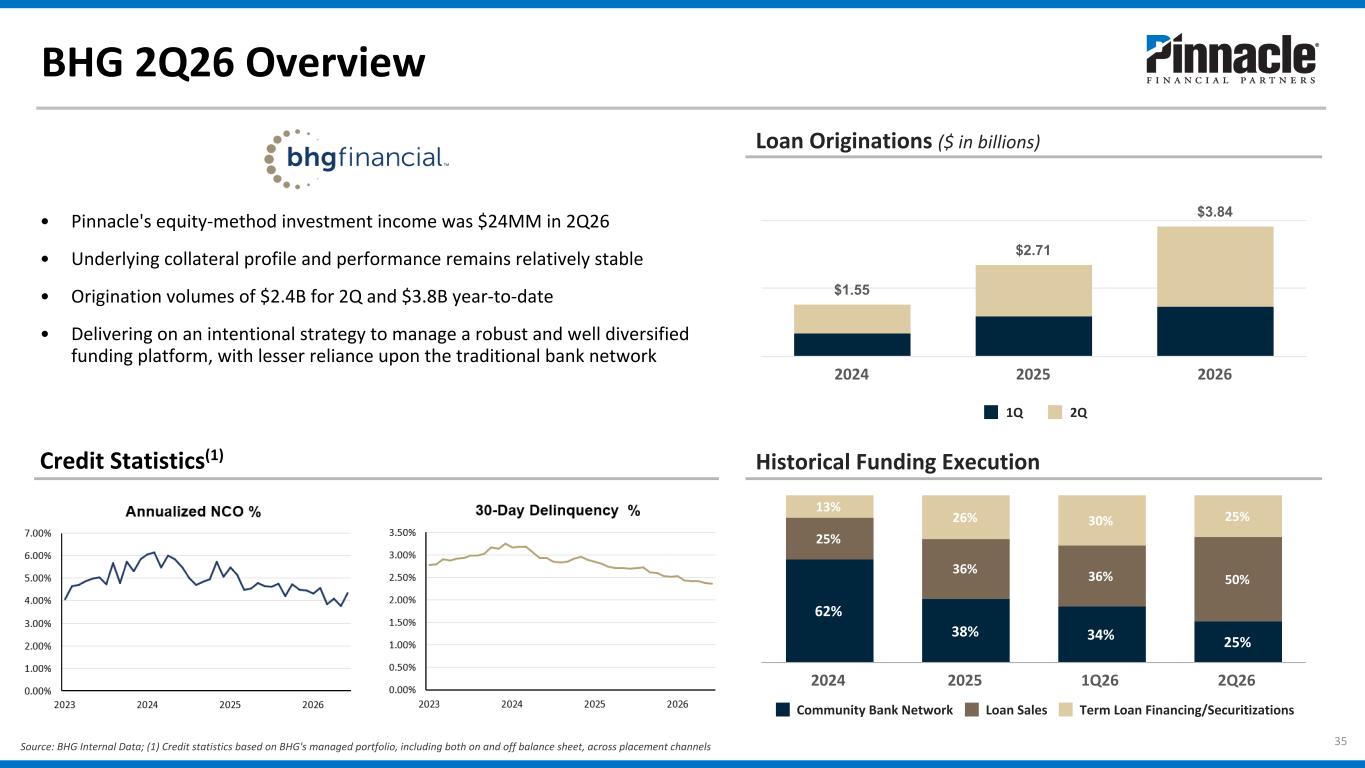
Yeah. Before I answer your question, I want to get into a little bit of the income statement impact because sometimes I think that it's a little bit misunderstood. But indicative of the depth of our relationship with BHG, we have multiple ways the partnership hits the income statement. We often speak to the impact of the equity investment because that is the largest driver of profitability. However, there is significant revenue and expense outside of the investment income. We expect to have approximately $40 million in revenue and $20 million in expense in 2026 due to these. That's outside of the investment income. In the second quarter, we paused one of the distribution channels as we repapered some of our operating agreements. These have since resumed and will result in a resumption of typical quarterly fees and revenues. The pause resulted in a couple things that impacted the second quarter. First, our fee revenue as well as the associated NIE were lower than the prior quarter. These flows have already resumed in the third quarter, and we expect they will result in just under $10 million in revenue, and a similar amount of expense in the third quarter. Second, it impacted the investment income. The production remained on balance sheet, which led to an increase in provision at BHG as they account for the life of loan loss estimate. This, along with the distribution change we've previously discussed, led to a $7 million decline in investment income. So I hit that to start just because there are a lot of moving parts on the Pinnacle Income Statement due to BHG this quarter. Just wanted to hit that. But the performance at BHG just could not be stronger. If you look at production this quarter, it's up almost a billion dollars from the prior quarter. It's up $900 million. And we are very pleased with the partnership. It's delivering on everything that we expect. The credit performance remain strong. And so the outlook is exactly what we've discussed in prior quarters, but stronger. And so as we look forward, we raised our revenue guide on the investment side for 2026. We believe that momentum there is very strong and positions us well for the rest of this year, as well as 2027. And so we're very pleased with the partnership. There's no update to give on their strategic options. We think that the best path is just continuing to execute, continuing to drive business growth, continuing with the distribution shift. We think that will deliver the most value over time. And so there's no real update there.
Operator
Thank you. Your next question is coming from Casey Hare from Autonomous. Your line is live.
Great. Thanks. Good morning, everyone. Wanted to touch on the loan growth. Very strong here in the second quarter. Wondering if there is upside. I know you guys are guiding to the higher end of the range. Wondering if there is upside to that guidance.
Casey, yeah. Look, we're pleased with the loan growth as well. And I think it's primarily because it's broad-based and it's diversified. When you look at the first half of the year, we've had roughly 50% of the growth coming from our geographic banking units and 50% coming from our specialty areas. And it's, as you can see, it's primarily being driven from C&I. What's interesting is CRE has not been a growth engine. You know that story, elevated payoffs. At current rates, we're not seeing a great deal of production, although that is picking up. And that's what allows us to show that quarter-over-quarter increase in production overall, 20% increase. Yeah, there's upside. Maybe some of the things that kept us at the 9% to 11%, the high end of the range. This quarter, we had 127 basis points of improvement in utilization. That was roughly a half a billion dollars of growth. As you know, we customarily do not include changes in utilization in our forecast, so we have not included any future changes in utilization. We do expect to see some ongoing churn in the CRE book just with payoff activity. And we did have some specialty areas that had some outsized growth in the first half of the year that we're not expecting to see in the second half. So we said the high end of the range, but look, this model is robust and our pipelines are strong. And I would expect to continue to see strong loan growth across both the specialties and the geographic areas. The one thing I do want to point out, because you hear lots conversation, our competitors are out there saying that we're giving it away on rate, and that's how we're winning. As Jamie talked about earlier, our spreads and our production rates actually went up quarter on quarter. So I'm optimistic that we'll continue to see strong loan growth. It's not rate-driven, and it's broad-based, so it gives me a lot of confidence that we could see some upsides here.
Got it. Thanks. And then as my follow-up, Wanted to touch on the loan to deposit ratio. The deposit outlook sounds very positive and upbeat, but the loan to deposit ratio is a little bit above where, you know, the Pinnacle, Legacy Pinnacle lived as well as Cat4 peers. Just wondering, is there a governor? Is there a ceiling on that ratio? And where would you like to see that land longer term?
You know, loan-to-deposit ratio is not a metric that we really manage to, but I'll speak to it since that's your question. We do expect it to decline as we progress through the second half of the year. As we previously discussed, we expect core deposits to growth outpace loan growth in the second half of the year. And so we expect it to decline. But what we look at the most when we think about liquidity and access to liquidity is more power on cash and securities to assets. And so, said another way, that's the metric that we look at to make sure that we have adequate liquidity. It's loan-to-deposit ratio we don't believe is a key driver of where we need to be on the liquidity side.
Operator
Your next question is coming from John Pencari from Evercore. Your line is live.
Operator
Good morning, John.
Just on the back to the loan spreads comment, it's encouraging to hear that you did the spreads increase across most of your verticals and most of your geographies. You know, we are seeing spread compression across many of your peers, even some of the larger banks. And curious, what do you think the different, you know, the driver of that difference is? Why are you not seeing that spread compression? It's a function of these relationships that are coming over and the hiring that's bringing it over and you're not competing as aggressively for it. Like, why do you see that that's not showing up in terms of these numbers?
Yeah, John, it's a great question. I said it earlier. I think we compete on a different value proposition. We're winning business based on providing distinctive service and effective advice, and that's built through trusted relationships. Our bankers aren't doing the same level of prospecting that you may see at other institutions because we have an opportunity to consolidate the portfolios of the bankers that they bring over when they join the firm. And so they've already built a relationship. So they're not having to go and win a new relationship based on leading with a low price. They're leading with that value that they've often provided in the historical relationship. So I think that's a big part of it and it can't be underestimated. Number two, I think our team has a good pricing rigor. We all are owners of this company. Everyone has equity. Everyone is on the same incentive plan and they understand how pricing loans and pricing deposits have an impact on the bottom line, and helping us to achieve our big, hairy, audacious goals. So, I think people are motivated to pricing loans fairly and not just relying on rate to win a new piece of business.
Okay. Thanks, Kevin. I appreciate it. And then, you know, part of, you know, in speaking with investors, part of your discount multiple versus the peers is mainly around concerns around how are you going to fund the loan growth to meet your – or how are you going to, you know, drive deposits to meet the funding of the loan growth and what it means for your net interest income. This quarter, you did temper your margin guide, your total revenue guide. It's unchanged despite bumping up the fee guide. So, you know, some could say that there's a modest downside, a bit of pressure on the NII growth expectation. Can you just discuss your confidence that in your outlook here on NII on and that this modest adjustment that we see this quarter is a de-risking or could there, you know, how do you dispel any of the concerns out there that there could be more revisions to come as you look at this outlook?
You know, John, I guess what I would say is just look at the performance. It's we are doing what we need to do for today by maintaining pricing discipline, both on loans and deposits. We're delivering on the growth. We're delivering on the hiring great bankers across the footprint that will deliver tomorrow's growth. And so it's just, you know, if you're whatever KPI you want to look at as far as, you know, is this sustainable? Is this repeatable? I believe we're delivering you proof points. Now, to be clear, we are two quarters in on this merger, and so there are not so many proof points we can deliver. But we intend to continue driving this performance. It's why we laid out more specifics this quarter than we have in the past, and we will continue to be as transparent as we can to give confidence in that outlook. We believe that this does de-risk external perceptions of our outlook going forward. We believe that the enhanced disclosures are useful and hopefully helps, you know, you all see what we see internally. But for us, you know, what we're going to do, we're going to leave here today and go back to the team and keep doing what we have been doing. We're going to grow the business by doing the same thing we did yesterday, the same thing we're going to do tomorrow, the right spread, the right deposit costs. And it is sustainable. Now, to be clear, that growth, that incremental growth, when you're growing where we are in 2026, the incremental growth does come with higher cost funding, but again, it comes with very little expense, and so, you know, in the one line of the income statement of NII, it is less incremental NII, but when you look at PPNR, you know, you get it back through lower expense. And so for the shareholder, you're getting these earnings back in PPNR. And so I think that's the message. We're going to keep delivering. We're going to keep each quarter coming to you and sharing that. But that's how we look at the world. We think that's where the shareholder value is. And so that's our plan is just to keep doing that.
And John, to Jamie's point, go back and look at the waterfall and what Jamie said earlier. What drove the NIMM compression this quarter was not the growth model. Deposits were up one basis point, and that's total cost of deposits. And so, as Jamie said, there's modest headwinds when you grow. That's not the main factor here. We are acclimating into being a cat four bank. So you see debt issuance, you see building cash and securities. That at some point is going to be done. I also would arc to what Jamie's been saying all year, which is there's a floor here of 330, because that's what the going-on rates would be over time. And so we're not talking about a NIM that's in free fall. We're talking about a NIM that's moderating. And as Jamie mentioned earlier, that's still contributing high single-digit NIIs. And I know everyone has to focus on different components, but I look at NII as a component of an outcome. And the outcome is growth and revenue and growth in NII. And that's what we're focused on.
Great. Thank you for all detail.
Operator
Thank you. Your next question is coming from Michael Rose from Raymond James. Your line is live.
Hey, good morning, guys. Thanks for taking my questions. Kevin, obviously, the hiring continues at a pretty rapid clip. I think one of the things that I hear, you know, from investors is, you know, is there that many good lenders, you know, to hire year in, year out? Obviously, Pinnacle has done that for a long period of time, but there is kind of the law of large numbers, and there's a lot more hiring activity in and around your markets than there has been in many years. So what would you say to some of the skeptics out there? Thanks.
You know, the same thing that Terry has said for years, and I'll reiterate, is it's a cycle that builds on itself, Michael. You know, when you hire a revenue producer, they bring a Rolodex with them, and they talk to our team about which team members need to join with them. And so what you see when we hire is it's not one individual. It generally comes with two and three and four. And the best marketing tool we can have is when they come over here and they're able to call the folks back at their previous employer and say that it is exactly what they were promised. It's a great environment. It offers them the autonomy and the ability and empowerment to serve their clients the way they want to do it. And so absolutely, there are enough bankers to continue to add. You just listen to our prepared remarks today. We had 34 individuals that have already signed on in July. So it's not slowing down. It's picking up.
And when you add more people, we're up about 13% year over year on a combined basis.
It just gives us a better pipeline of talent to be able to continue to hire.
Very helpful. Appreciate the color. And then maybe just one quick one on loan growth. Looks like the SNCC balances were up fairly meaningfully this quarter, about 12.5% of the book. What's the comfort level there? And it did look like the amount that the percentage of the agent went up as well. So I think that's important. But what's the comfort level in terms of size or percentage of the book as we think about the next couple of years? Thanks.
It's not an area of growth for us. There are a couple of things that happened there. To your point, we did have some lead arranger fees this quarter. As we go up market and we're playing in that space, you're going to see more deals there where we're leading.
Our lead arranger fees were up significantly over historical levels and quarter-on-quarter.
So that's what you're seeing there. We also have some large payoffs coming in the second half of the year, and we pre-funded some of those with some other SNICs. So just I would look at second quarter more as an anomaly, and we've always said that that portfolio would represent less than 10% of the total loans, and that's not something that you would see us change.
Operator
All right. I'll step back. Thanks for taking my questions.
Operator
Thank you. Your next question is coming from Bernard von Gazzicchi from Deutsche Bank. Your line is live. Hey, guys.
Good morning. On credit, it was stable. And Kevin, you mentioned the reserve on new production is coming in lower than the portfolio as a whole, which drove the ACL ratio lower. Are you targeting higher quality assets? What's driving the change and just thoughts on reserve growth through the rest of the year?
I don't know if we're targeting higher quality assets. I just think that where our production has been has resulted in production in asset classes that just are carrying a lower lifetime loss. But it's really just right down the middle of the fairway. As I mentioned earlier, some of our geography is just doing core C&I lending. It's our specialty areas. We had great growth in our structured lending division this quarter, which carries low risk weightings. So it's more of just doing what we do best. It's going down the middle and not having to stretch on either price or credit to generate growth.
And then maybe just a follow-up. On the $130 million of revenue synergies, can you just give some updates on how that's progressing and any update on how much is expected in 2026?
Yeah, so we've said in the past we felt like, given that we're on separate systems, this year we had targeted roughly $20 million of revenue recognition from those synergies. Through June, we're right at 50%. And most of the revenue synergies have come in through our capital markets platform. I mentioned earlier with Michael's question, we've expanded our syndication capabilities, and that's resulted in more joint lead arranger fees. We've also expanded on the FX side. We've seen expansions on hedging, which has driven some of the growth. We've used a little bit of our hold limits. I think that's generated almost a million dollars of incremental revenue and some of our new specialties, like equipment finance are generating synergy. So we're right around $10 million year to date. We're on track to deliver the 20. The real value will come once we're all on the same platform, and that will come in conversion in March of 27. But no, we're right on track, and there's nothing we're seeing there that makes us feel as if that original $130 million is not attainable.
Operator
Great. Thanks for taking my questions. Thank you. Your next question is coming from Jared Shaw from Barclays. Your line is live.
Hey, good morning. Hey, I guess just sticking on that prior topic, you know, after the systems conversion, which I know is the main focus now, has there been any thoughts of new tech initiatives or investments that you've started thinking about over the last quarter or so, just given some of the potential benefits from AI out there?
You know, Jared, number one, we're leveraging AI internally. We have almost 20 AI engineers that we employ. We've rolled out technology and capabilities to 40 power users across the franchise, and those individuals are using the tools to become more efficient, to add capacity, and to generate, I think, new sources of revenue down the road. I would also tell you that we're relying a lot on our strategic business partners, the people that provide our technology solutions. They are generating new sources of revenue for us from AI. We deployed something two years ago on our consumer platform where we have AI insights that go both to our clients and to our advisors where they're given insights on clients' behaviors, and that generally leads to opportunities for conversation, and in some situations, a sale. So if you ask me today, we've always talked about we've got to convert, then we'll innovate. The innovation lens that we'll have, you'll see us spend a lot on the commercial treasury side. I think there's a lot to do with payments, payment portals. We're working on things that will make our clients' life easier, including ERP integration. We're looking at things that will add to our client efficiency initiatives, whether that's back office efficiencies, receivables, payables, things like that. But, you know, to me, the key is continuing to focus on the things our clients want. So, we're asking what are the capabilities, what are the functionalities that you desire? That's what's going to show up on our roadmap. I don't think you're going to see us go out there and create new business units, but I think you'll see us focus on how do we deepen relationships with adding technology and capabilities, and AI is going to be a big component of that.
Okay, thanks. And maybe shifting back to the growth and the loan growth and the revenue producer growth, you all have hired so many people over the last few years. I mean, are you starting to see the donor banks change their behavior, doing anything to try to more actively retain those employees or those clients? I hear you're not competing on price, but are you seeing any other ways that other banks are trying to react to what you're doing?
I mean, I think it's always been competitive, and I think the banks are responding maybe in ways they always have. Maybe it's just the magnitude of how they do it, whether it's offering pay-to-stays or giving equity. I think with clients, I've always said that the challenge with moving clients over to the bank, especially on the commercial side, is how tied in people's cash management systems are to their ERPs, to their payroll system. And so the biggest impediment for moving clients isn't really, I think, the bank doing something differently. It's how tied in technology has made the relationship. So it just means we have to work harder to be able to convince someone that it's worth making that switch and converting their systems. But I mean, it's the traditional defensive mechanisms that are offering their bankers more money to stay. And, you know, the argument there is, you know, they didn't offer to you before. They only offer to you after you were leaving. So in many cases, the team member is going to go ahead and leave. But yes, we've had situations where people have accepted and then reneged on the offer just based on things like that. But, you know, again, look at the numbers. I mean, we're up 13% year-over-year, 124 revenue producers. We're on track to do 250, which will be a record level. So it hasn't slowed us down.
Operator
Great. Thanks. Thank you. Your next question is coming from Anthony Alien from JP Morgan. Your line is live.
Operator
Hi, everyone. Jamie, on fee income, you listed the outlook. Can you talk to us about where you expect the step-up in fees to occur in the second half outside of BHG?
Yeah, you know, great question, Tony. As we look at the second half, we do see continued growth across the board. You know, what I would point to as far as a step up, I would largely point to our wealth business. We expect to see that increase in revenue fairly strongly as we look into the second half of the year. Beyond that, you know, core banking fees should have steady, increases as we go quarter by quarter. Capital markets has very, very strong momentum. We expect to see that continue. So we have the inflection with BHG that I described earlier, but I would say the bigger quarter-on-quarter increases will largely come from core banking fees and wealth management.
Operator
Thank you. And then on capital, do you still expect to get to the 1025 CT1 target by the end of this year, or what's the timing on that? Thank you.
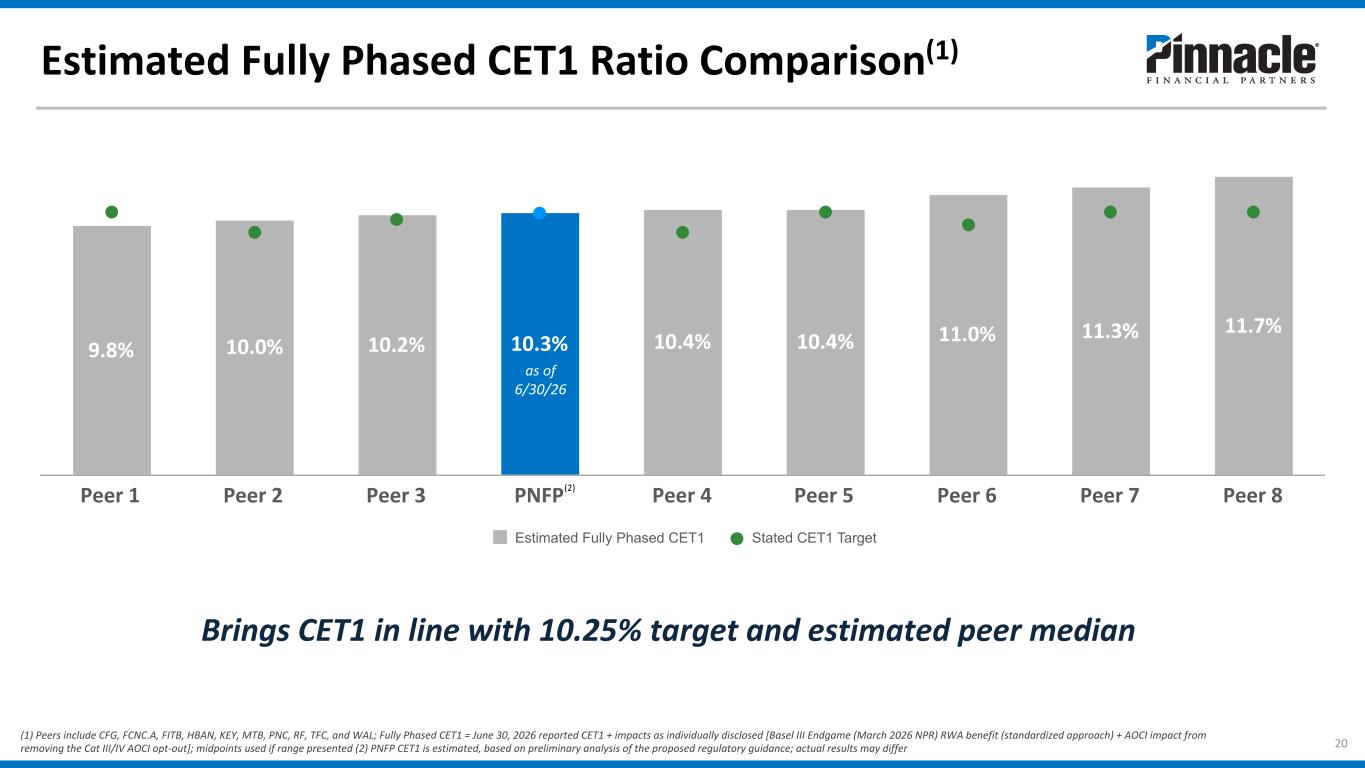
It's a great question. It's hard to know exactly where we will land on that, but here's how I would think about it. Each quarter, we generate about 30 basis points of capital before risk-weighted asset increases. And so, you know, it really depends on how our growth comes through in the second half of the year. If we grow a couple billion dollars in loans each quarter in the second half of the year, that's going to consume 15 to 20 basis points of that 30, and the rest will drop to capital accretion. So do we get to 1025 in the second half of the year? I don't know if we get there by 1231, but we should be trending the right direction. Now, that being said, if growth comes in faster, If the right growth is there, again, we're not competing on price or structure, then that will slow that accretion down. But we do expect to see material accretion in the second half of the year. And I'll remind you that the Fed NPR is out there as well, and that should give us another 40 basis points of capital on top of that. And we expect that in 2027. And when you think about capital targets in the world of the new Fed NPR, that changes how you can look at it. Because, you know, in our opinion, AOCI is counter-cyclical. So you have to revisit your targets and think about where you want capital ratios to be post-implementation of the Fed NPR. So there are a lot of moving parts, but I would say we expect continued strong capital accretion getting to our, you know, getting to our target. The Fed NPR will be a positive. We're looking forward to implementation of that. And then we'll be, you know, where we expect to be.
Operator
Thank you. Thank you.
Operator
Your next question is coming from David Chiaverini from Jefferies. Your line is live.
Hi, thanks for taking the questions. Wanted to ask about rate sensitivity. No Fed actions are assumed in your guide. What's the impact on NII or NIM in the quarters following a rate hike?
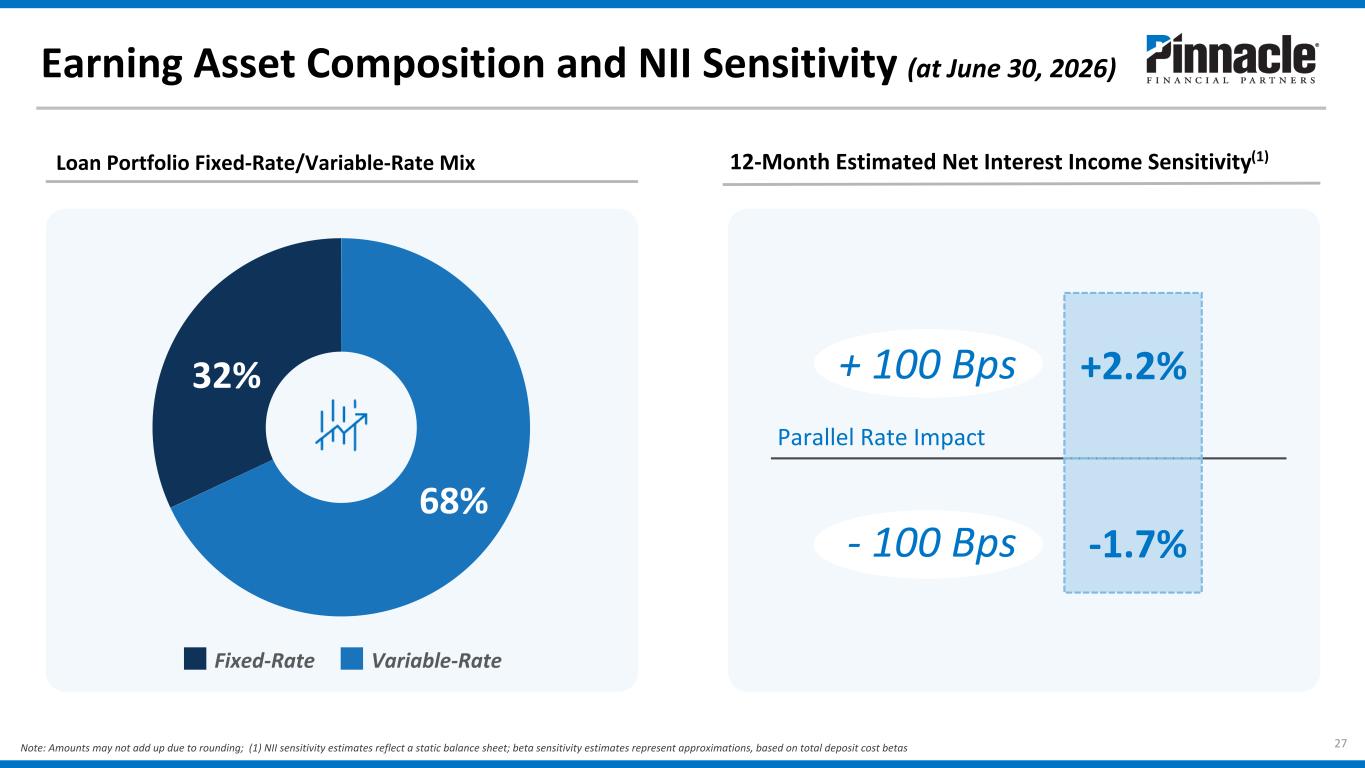
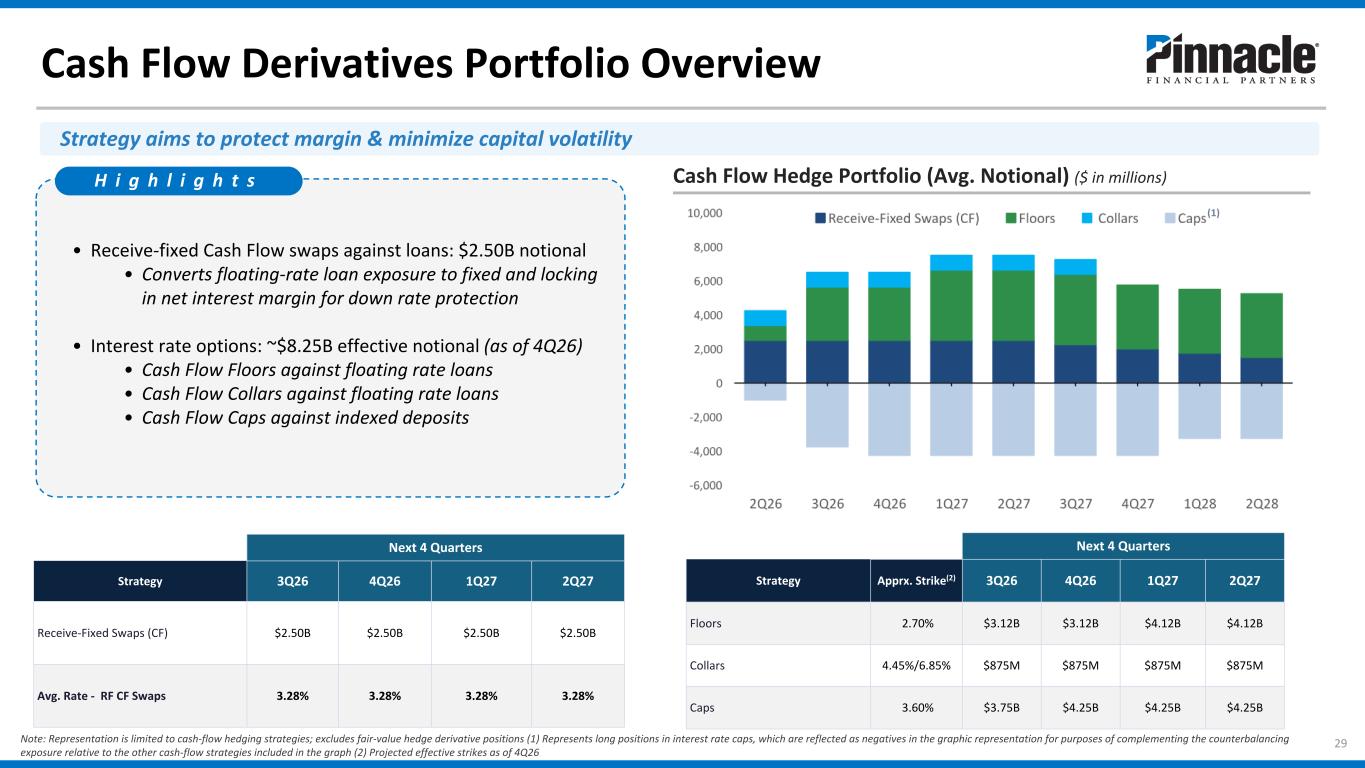
It's largely neutral. Now, to be clear, you know, our sensitivity, we've actually balanced more since last quarter. And I believe that we're really neutral to the front end of the curve. And so I would say it's immaterial to us. As you're aware, our balance sheet is naturally asset sensitive. So to get to a spot of neutrality at the front of the curve, we have hedges in place. And so if you go out and you look at year two and year three, that asset sensitivity just naturally comes back as hedges roll off. And so, you know, I would say to the front of the curve, we're neutral. In a multi-year period, you would see asset sensitivity. to the belly and long in the curve, we remain asset sensitive.
Thank you for that. And then on your ROTC target, 18% is what you guys are looking for out in 2027. You're nearly there at adjusted 17.7. Is this kind of a steady state level? Could there be upside as you progress through the merger?
So, as we look at Return on Tangible, as we discussed earlier, we believe that the growth impact of – the impact of growth on Return on Tangible is neutral. We are putting assets on the book that will drop to the bottom line, and we expect Return on Tangible to be stable. We're at 17.7% right now. Now, the only caveat I would give to that is as we accrete capital, as I just discussed over the next few quarters or a couple quarters to get to our target, that will be a slight headwind to return on tangible. So there's no impact to return on tangible for the growth. There's a slight headwind due to growing absolute levels of capital. And then going forward, once we achieve our objectives on capital target, that's when we'll be balanced on sherry purchases, things like that. And that's where, you know, you may, you know, you should expect to see maybe a little bit of a tailwind there.
Operator
Very helpful. Thank you.
Operator
Thank you. Your next question is coming from Janet Lee from TD Cowan. Your line is live.
For your deposit growth, somewhere in the $6.5 billion range in the second half of 2026, you talked about broker deposits are likely going to increase maybe $1.5 to $2 billion of seasonal. As you look at the composition of that expected growth in the second half, should we think about the mix is pretty much the same as what you have, like 20% NIB, or how should we think about the totality of the composition of the deposit growth?
You know, if you look at the mix of our deposits, and these comments are based on a combined basis for prior year, it is really stable. You know, 20% to 21% NIB, you know, you have approximately, you know, a third of the book is money market and a similar amount is now accounts. We expect that to continue. And so as we look into the second half of the year, we think that that core deposit growth will come in at pretty similar levels as where we are today.
And the only thing I'd say, Janice, is we've really leaned a little more into money market versus time deposit. Those don't have a significantly different rate paid there, but you'll see greater growth in money market this year than you would have seen in time. But to Jamie's point, all the other categories are growing roughly at a similar rate.
Got it. And sorry to be on that horse, but where do you currently stand in terms of deposit pricing? Are you around the middle of the pack in your markets? Or are you, and based on your comments, as you're obviously growing much faster than peers, should we, is it fair to say you may be a little bit, you will be willing to be a little bit above the market on pricing as long as it's going to be a little bit. secretive to NII. And maybe if you could give us a thought rate on interest-bearing deposit costs versus 269, that would be helpful. Thank you.
Yeah. You know, as we look at the competitive landscape, we all kind of use the similar pricing service. We believe that we are in line with others and not, you know, especially an outlier on deposit pricing. You know, from time to time, there are markets where you may have a special rate, but in large part, we're not an outlier on deposit calls. And it kind of circles back to the prior conversation where our deposit production coming in in the 250s is similar as our prior quarters. We've been very stable in those rates, and so we're not doing anything different than what we have done in the past. And so those have been very stable. We think we're kind of middle of the pack, but that's where we are. And then you asked a question on interest-bearing. On interest-bearing deposit costs, we were up one basis point, and it's right at 253.
And I should just say, when you look at, you ask, where do we stack up relative to our competition, Janet, Jamie was right on the production. You look at it relative to our peers, we would show a little higher. And part of that, just remember that about 70% of our mix is commercial. So we have less consumer deposits. And so that's why our rate paid is going to be a little higher than some of our peers, especially as we enter the category four comparisons where you have folks that have bigger branch networks. But I would argue that within each peer set amongst the liability classes, we're very competitive but kind of middle of the pack.
And, Janet, that interest-bearing number was interest-bearing CORE.
Oh, okay. So it's not apples to apples to 269?
Yeah, yeah. That's total interest-bearing is 269.
Oh, okay. So what was that in the second quarter for the CORE?
Operator
Thank you. Your next question is coming from Christopher Maranek from Breen Capital. Your line is live.
Hey, thanks for taking all of our questions this morning. Jamie, just want to go back to the capital discussion from a few minutes ago. Where do share repurchases in 27 land? Is that a possibility or is the growth really going to cover kind of how you manage that?
It's absolutely a possibility. You know, as we look to 2027 and the capital accretion we're seeing so far in 2026, and we expect to see for the rest of the year, is part of the plan. And so as we look forward, we believe that the earnings generation of this company will be strong enough to sustain both really strong best-in-class loan growth as well as, you know, capital actions to help balance capital ratios. And so, again, we feel we're very comfortable where we are. As we look forward, we think that, you know, longer-term capital planning will be balanced as far as core organic growth and then capital management actions led by Sherry Purchases.
Great. Thanks for reiterating that, and again, thanks for having us to call this morning.
Operator
Thank you. Your next question is coming from Catherine Mueller from KBW. Your line is live.
Operator
Good morning, Catherine.
I wanted to just circle back one thing on just the average earning assets and the cash build this quarter. You mentioned, Jamie, part of that happened really late in the quarter, late in June. And so if we look at that $7.6 billion in cash kind of exiting the quarter, how do we think about what that looks like over the next couple quarters? It feels like a lot of that build was in June. And so can you give us a little bit of color on what you expect for the pace of that build over the back half of the year?
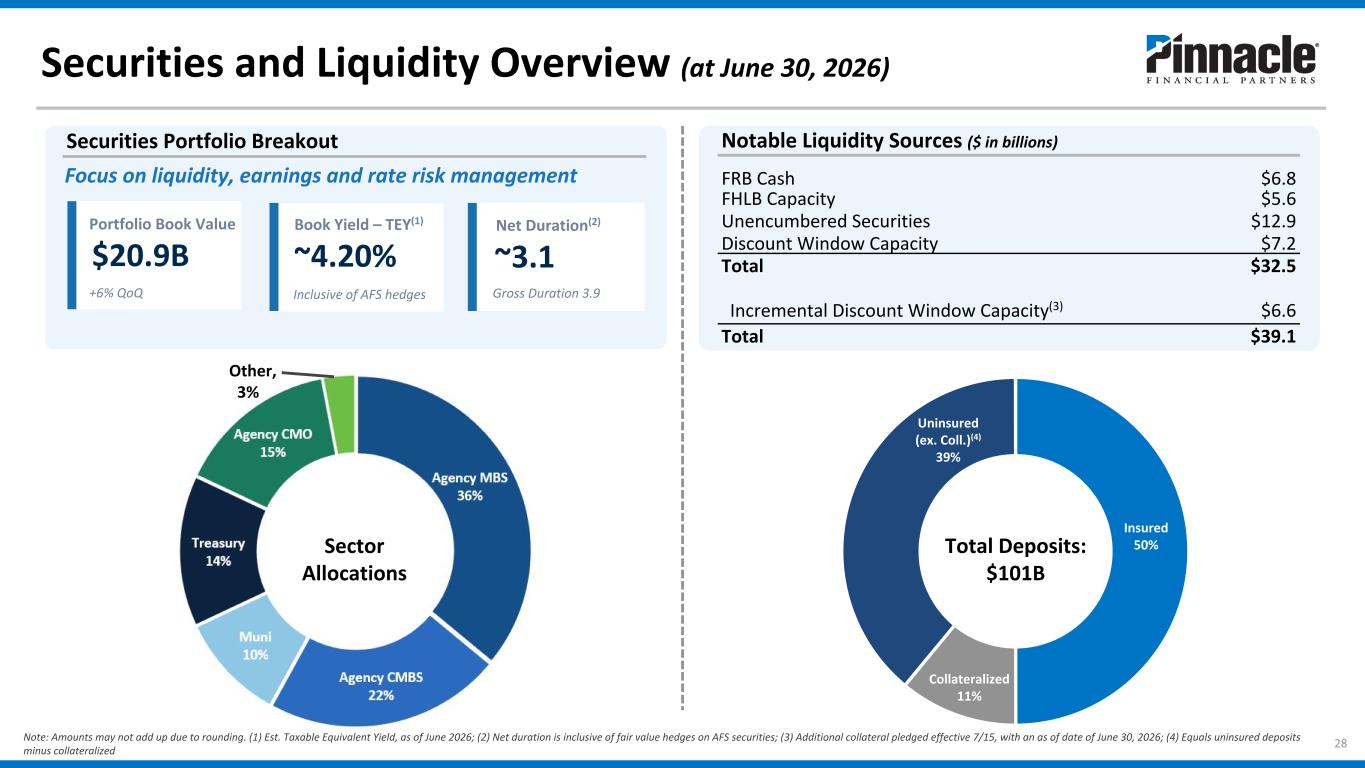
So in cash itself, I actually would not expect a bill in the second half of the year. You know, you should expect to see average cash balances be somewhat consistent to the second quarter, but I would probably give a range of $4 to $4.5 billion for cash balances in the second half of the year.
Oh, so that's $4 to $4 billion relative to the $6 billion that you have in the second quarter?
To the end of period, yeah, but relative to the $4.5 billion average for the second quarter.
Got it. Okay. So you're saying the average will not expand to where you were on an end-of-period basis. From an end-of-period basis, you're going to come back down.
Got it. Okay, that's helpful. And then maybe I'll turn into expenses. You know, I think the lower expenses this quarter was great, but I know from your guide that's going to be increasing over the back half of the year. Can you give us a sense, and I know we're not to 27 yet, but any kind of updates on how you're thinking about the expense growth into 27 and just what that means from both, you know, impact from recent hires and then the impact of cost savings? It feels like cost savings are coming in a little bit better than expected so far this year, and just curious what that means for next year.
DL synergies are coming in as planned. And we're going to achieve our 40% target for this year, and we're on track for 75% next year. So we feel really good about our prior commitments there. And what I would say is, you know, when you look to next year, just assume high single-digit expense growth, you know, driven by continued hiring, continued winning, and bringing over experienced team members, and then subtract out the incremental synergies, which is, you know, the 35% of the 250. And so that's how we look at 2027. For the rest of this year, you're right, you know, expenses will increase a little bit in the third quarter. We will see a slight increase. But a part of that's driven by BHG. Part of that's driven by personnel costs. The combination of those two is a $20 million quarter-on-quarter increase heading into the third quarter. And so we'll see expenses increase here in the second half of the year. But, again, we expect strong positive operating leverage in 2027, and we'll give more color on that as we get later in the year.
Okay, helpful. And actually, can I just do one more on the balance sheet? I'm just playing with this. So, if I'm not going to take my cash to where you were end of period, does that mean borrowings on an end of period basis will also come down from that level in the next quarter?
Operator
Thank you. This concludes our question and answer session. I'd now like to turn the conference back over to Kevin Blair for any closing remarks.
Thank you, Matthew. you. Tomorrow marks one year from the announcement of our combination and a little over six months since we've closed. On our original call, we said we were creating the Southeastern Growth Champion. What I'm most pleased about is pretty simple. We are executing and delivering on what we said we would. This is scale with a soul in practice. I want to make sure that doesn't get lost in the quarter-to-quarter noise. We are delivering strong results. EPS and revenue are growing at a significant pace driven by strong balance sheet and core client fee income momentum, credit is strong, capital is building, team member retention is high, and others are joining at an elevated pace. And best of all, the most recent industry surveys point to clients and prospects saying they want to do more business with Pinnacle, more so than any of our peers. The leverage points of this proven model are working, and it comes down to strong execution by 8,500 passionate team members, and so to each of you, again, thank you. We have real runway ahead, and it involves taking share, one quarter, one client, and one banker at a time. As our founder and chairman, Terry Turner, has said for 25 years, the energy in this firm is about advancing the ball and moving forward. We intend to keep doing exactly that. Thanks for listening in today and your continued interest, and with that, Matthew, we will conclude today's call.
Operator
Thank you for joining us today. That concludes the Pinnacle Financial Partners second quarter 2026 earnings call. Have a good day.