Operator
Welcome to the IAC First Quarter 2025 Earnings Conference Call. All participants will be in listen-only mode. After introductory remarks, there will be an opportunity to ask questions. Please note, this event is being recorded. I would now like to turn the conference over to Christopher Halpin, COO and CFO. Please go ahead.
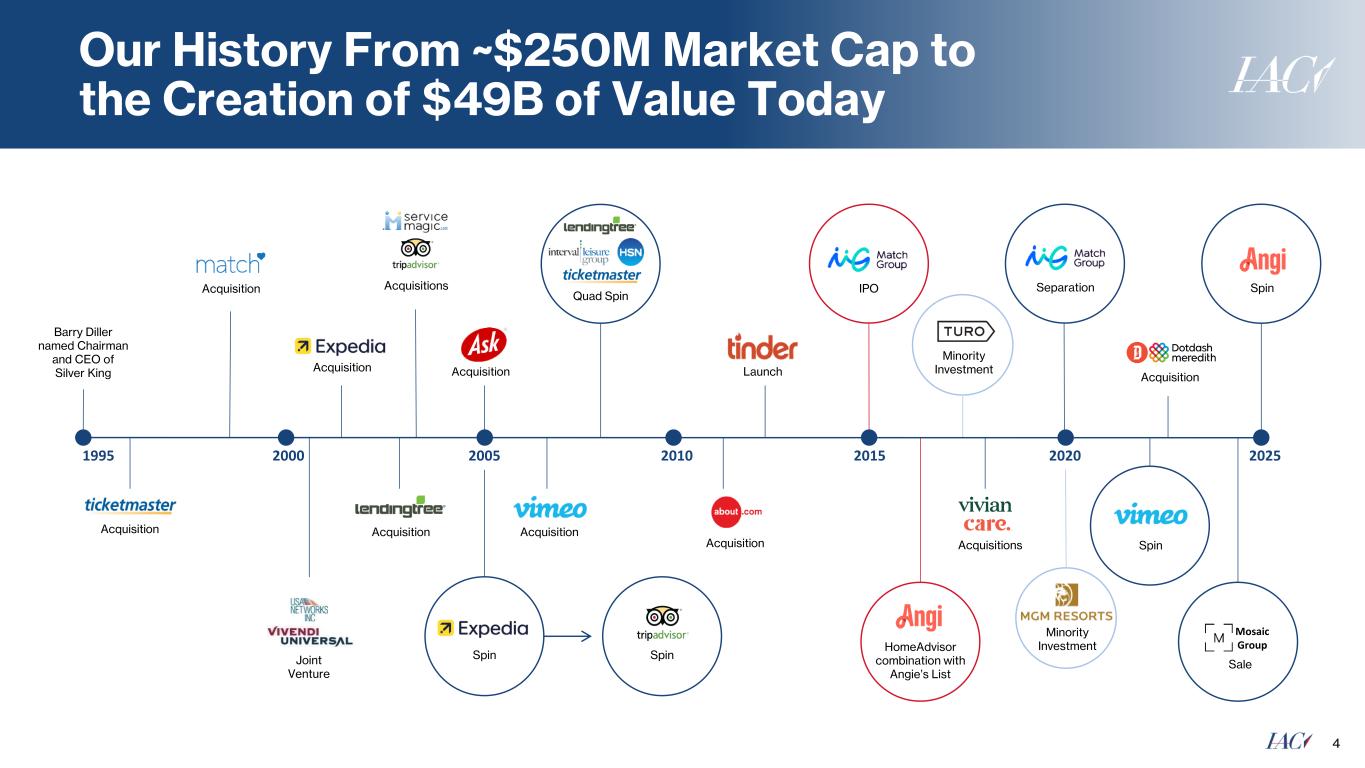
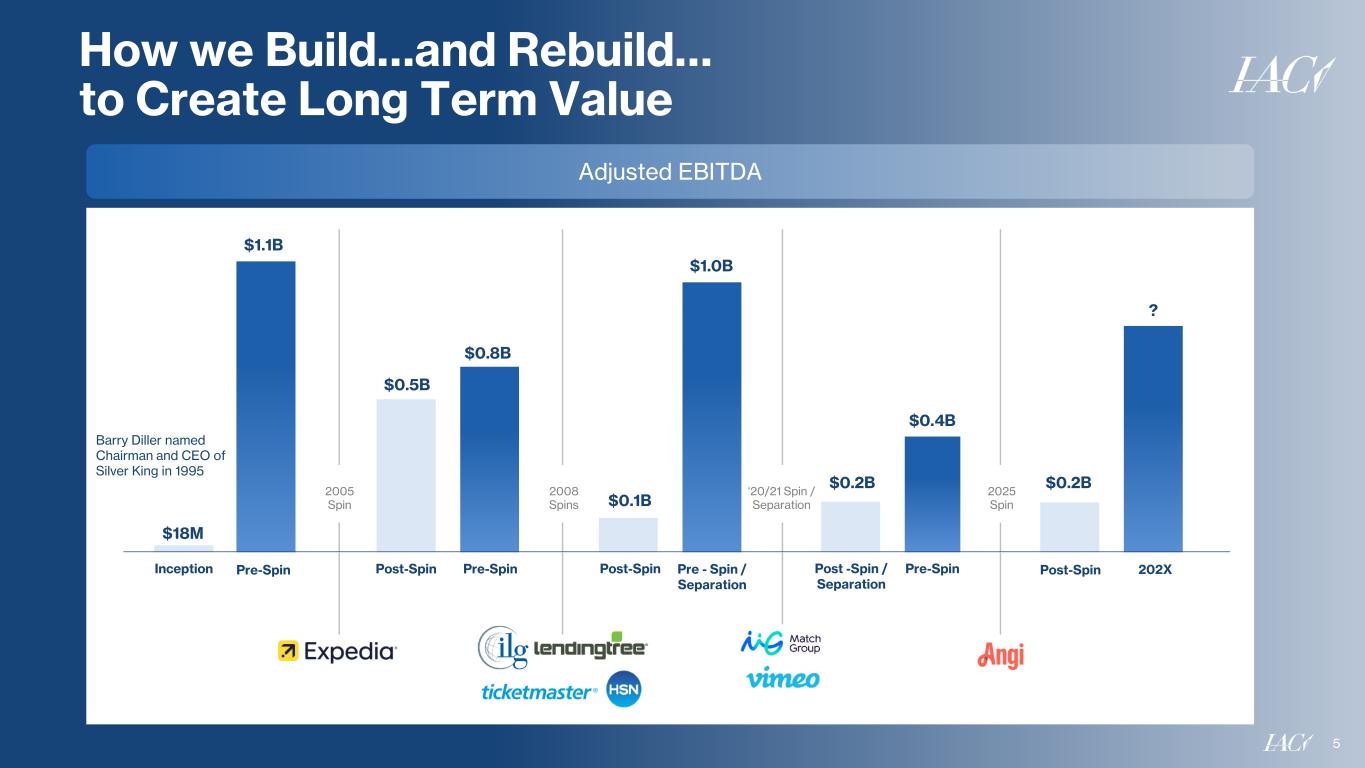
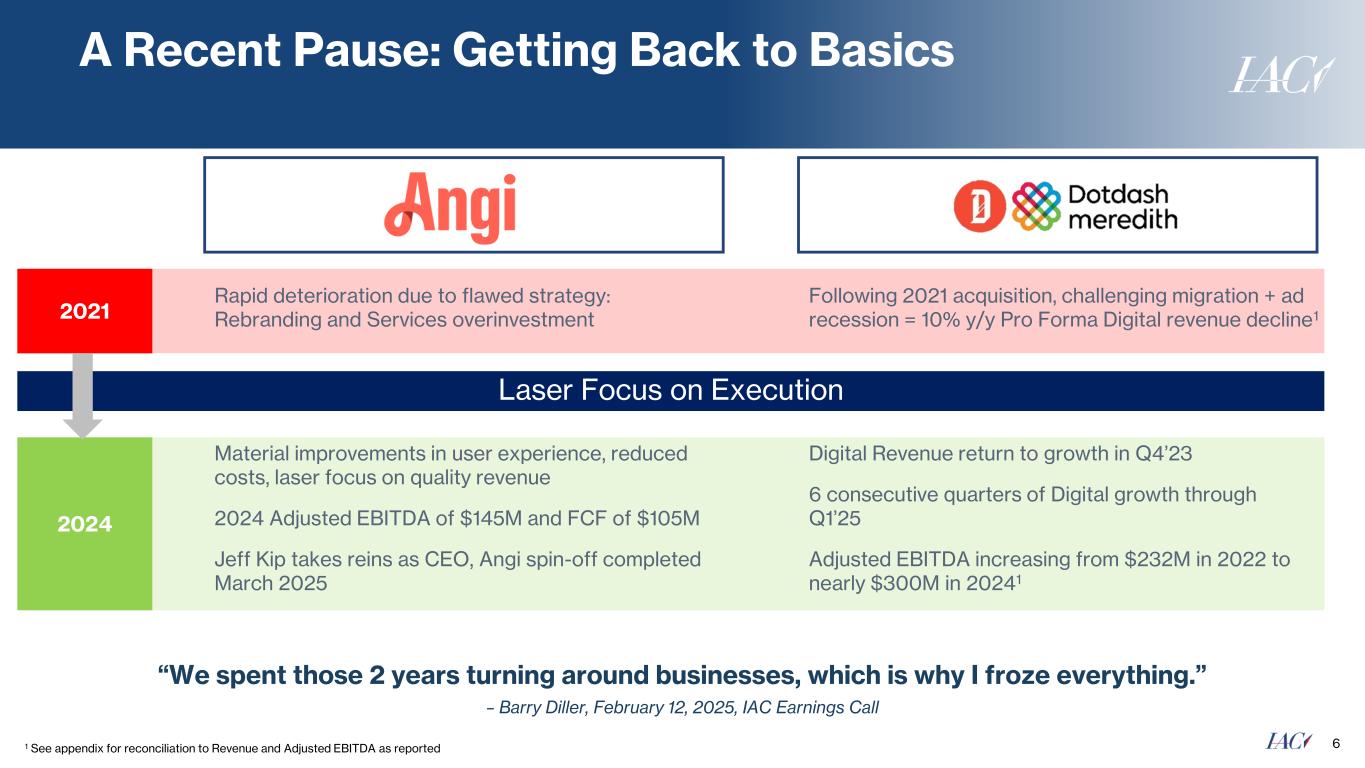
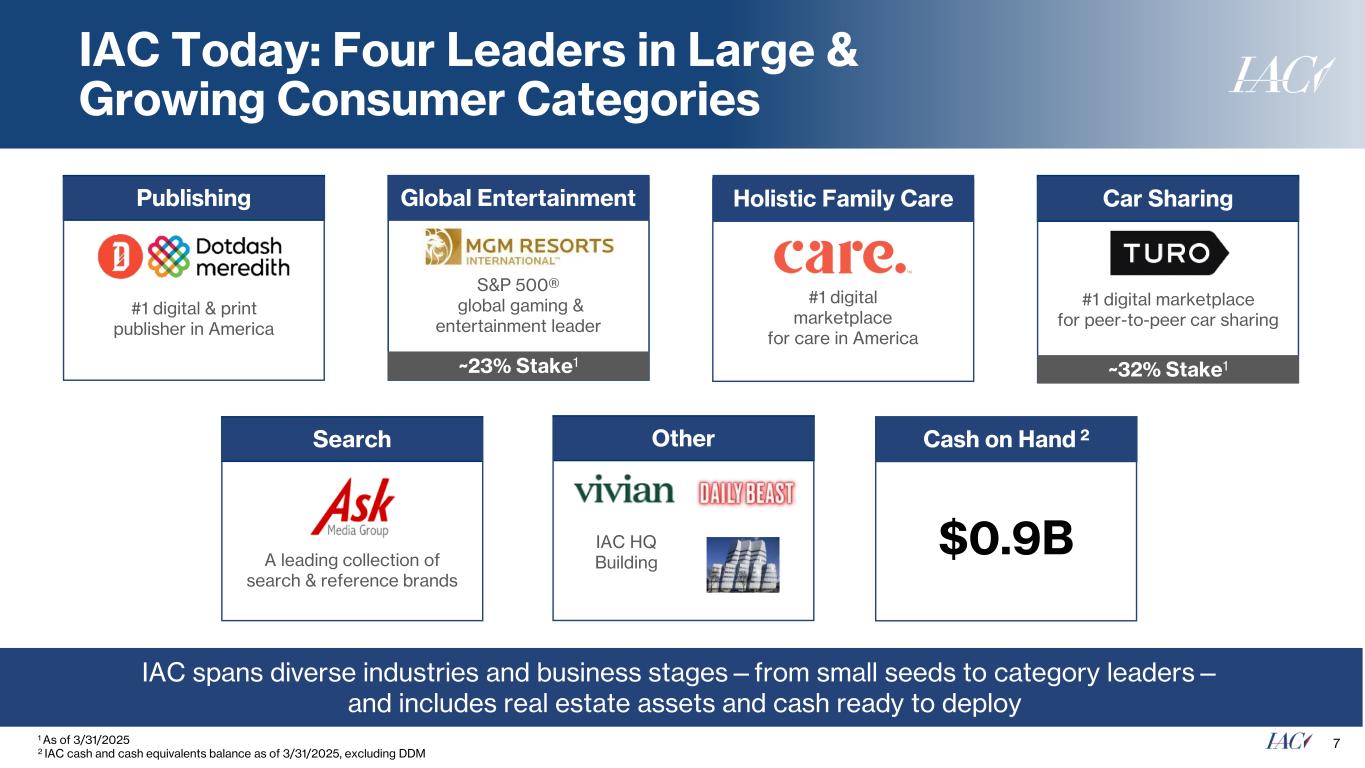
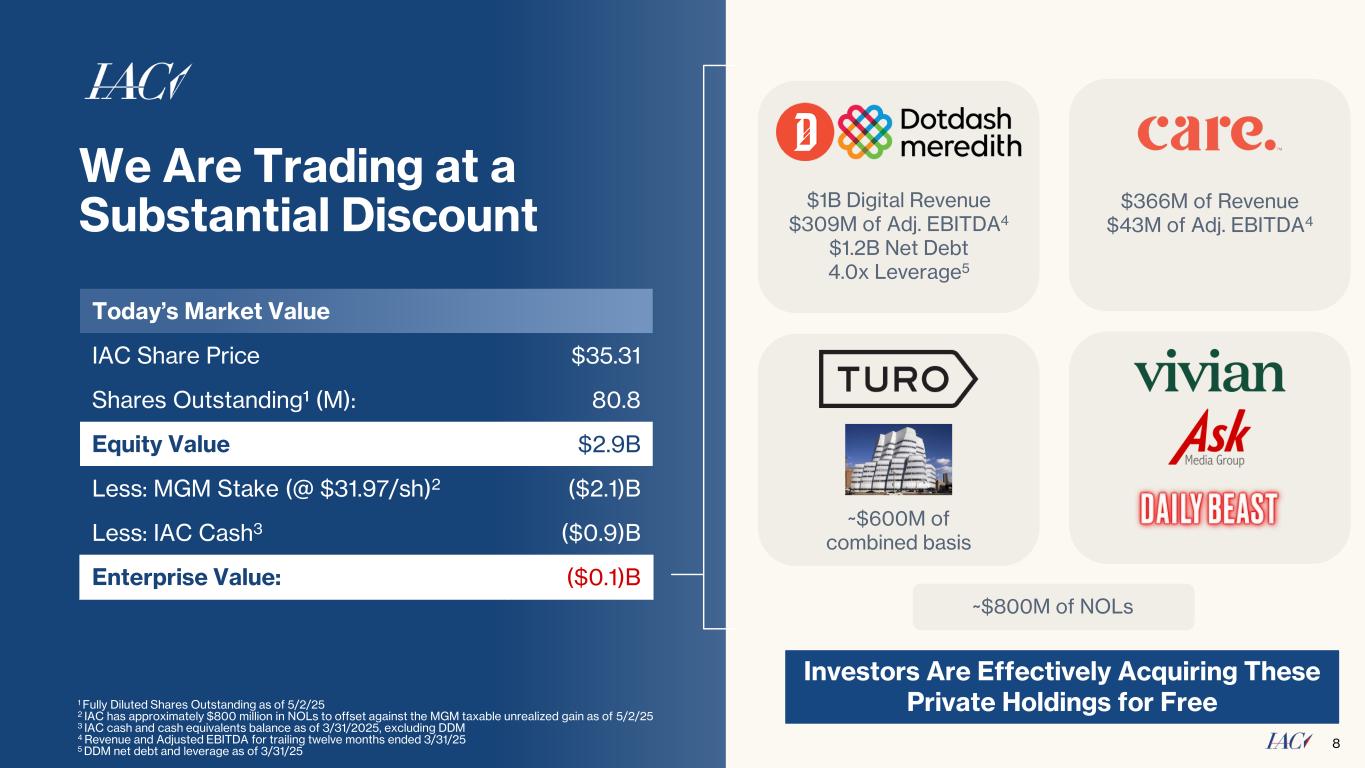
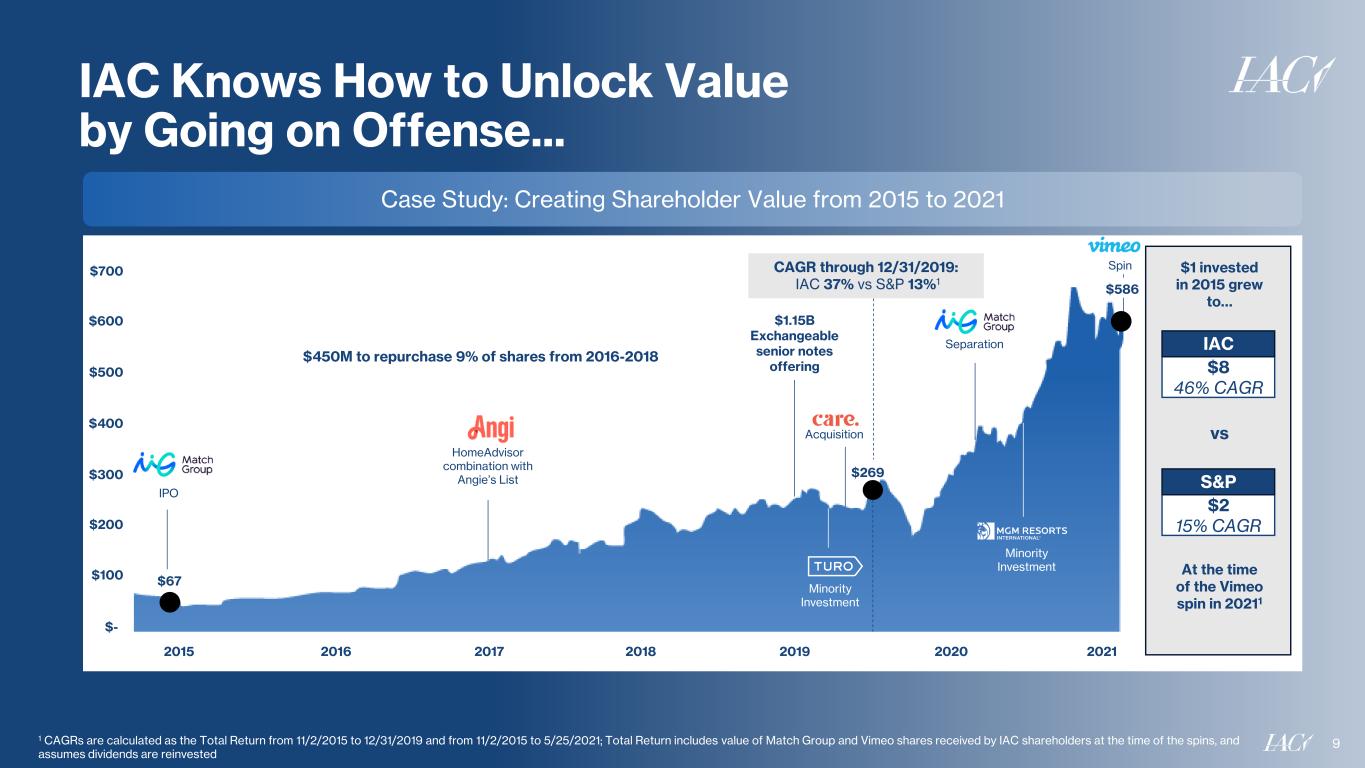
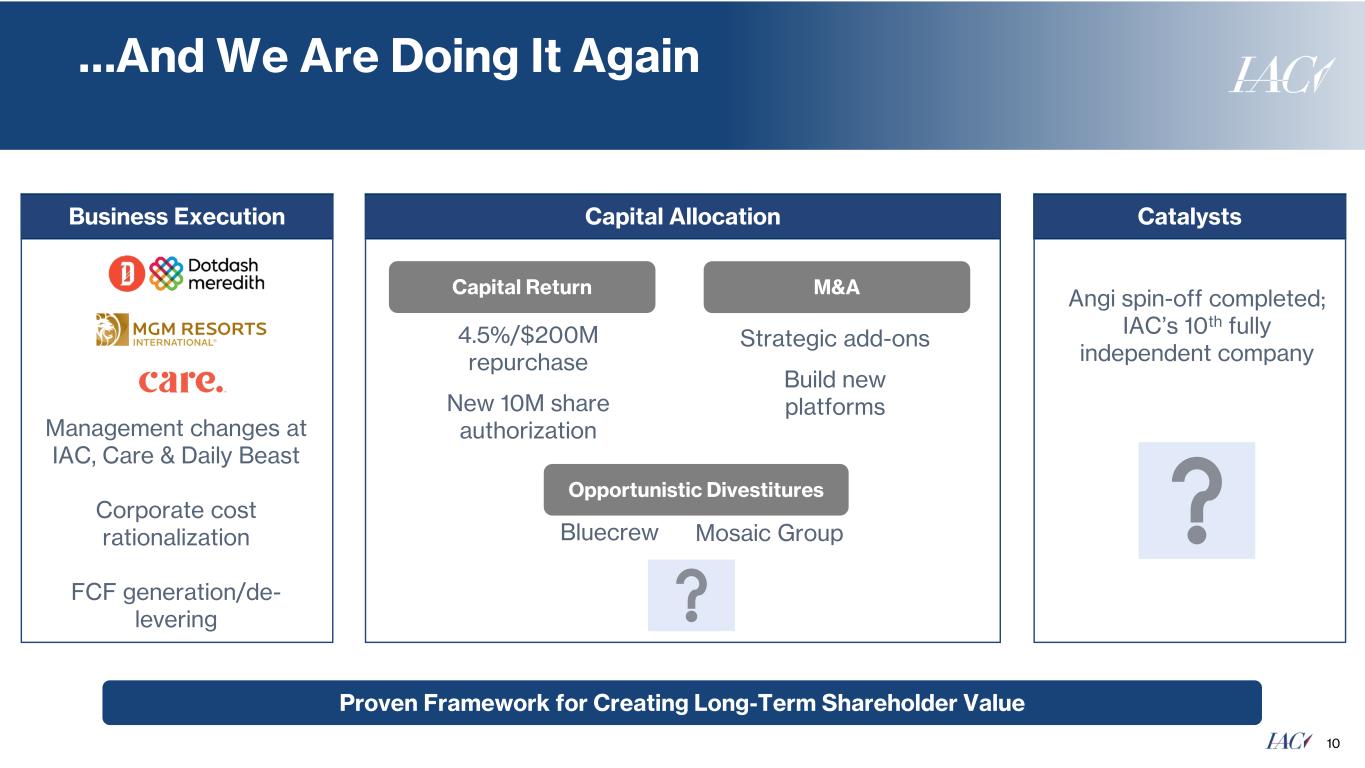
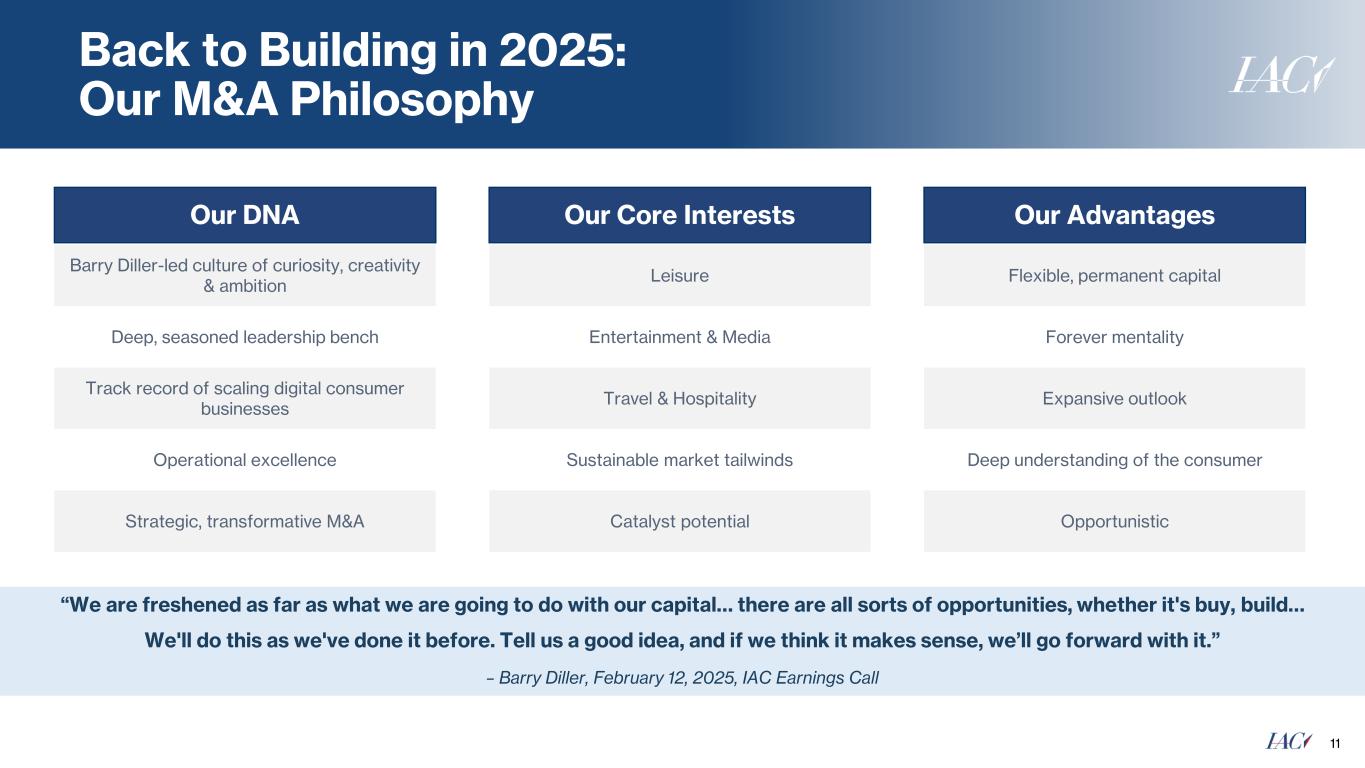
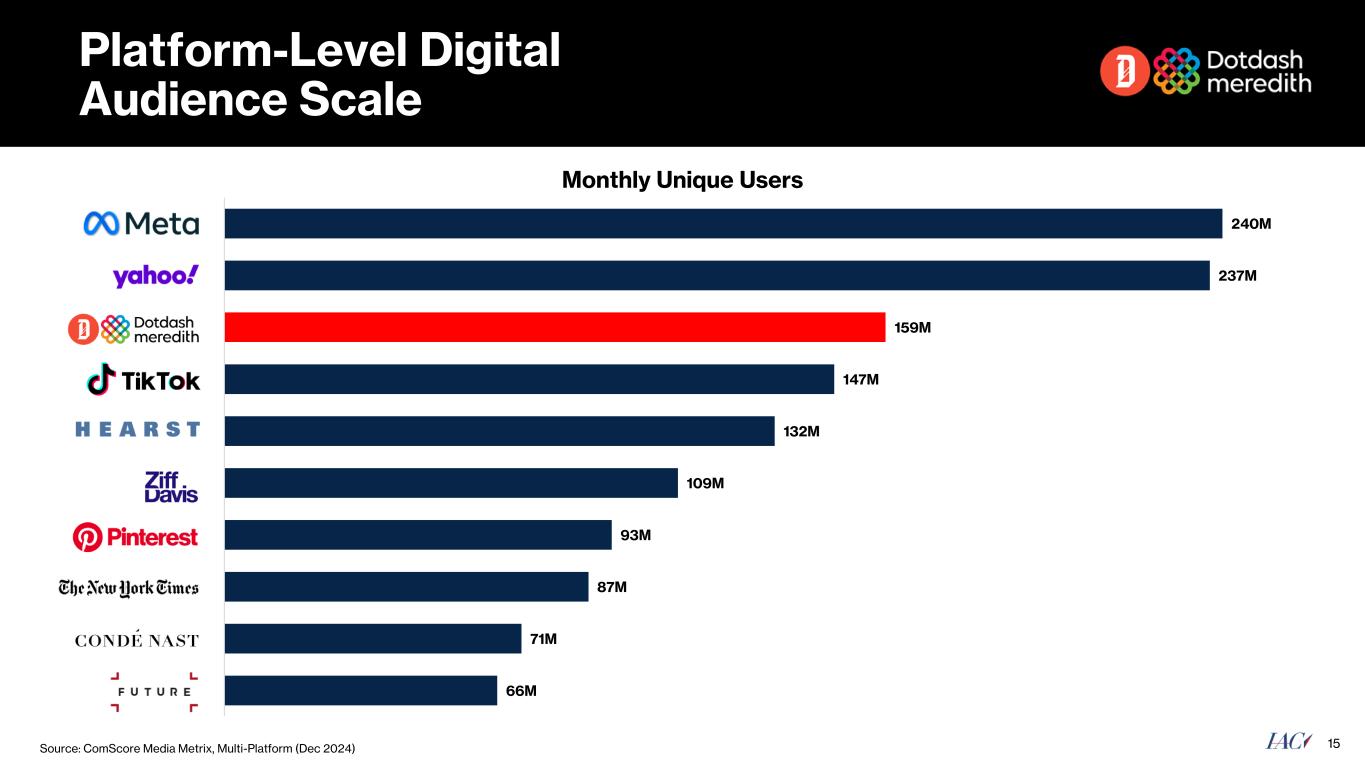
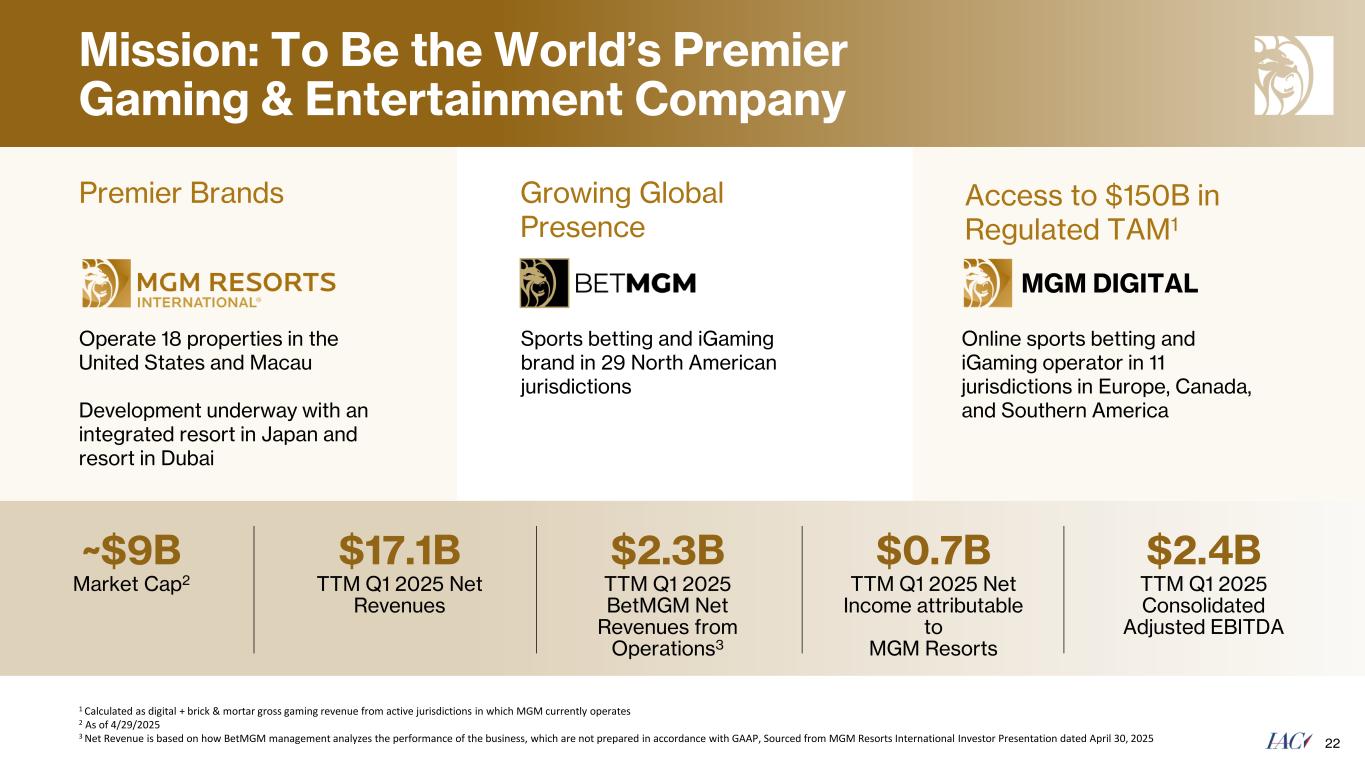
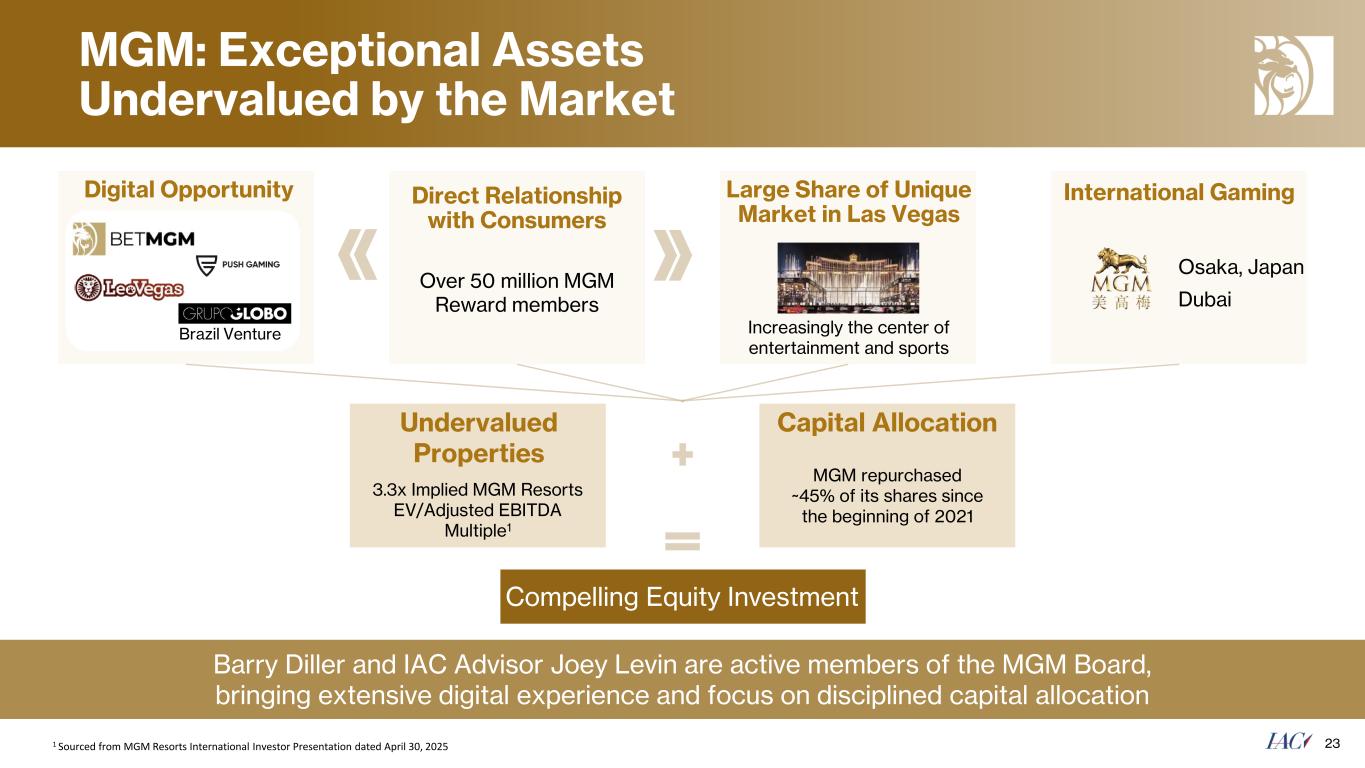
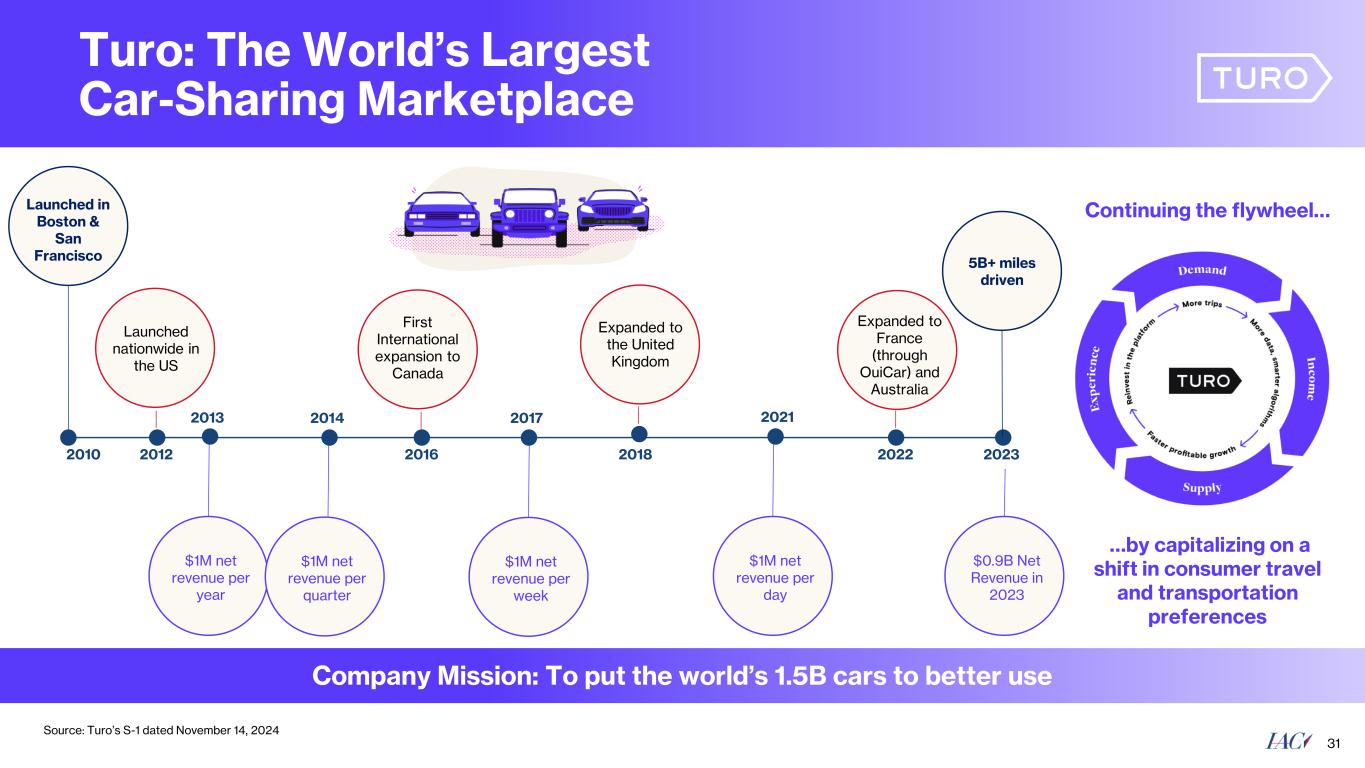
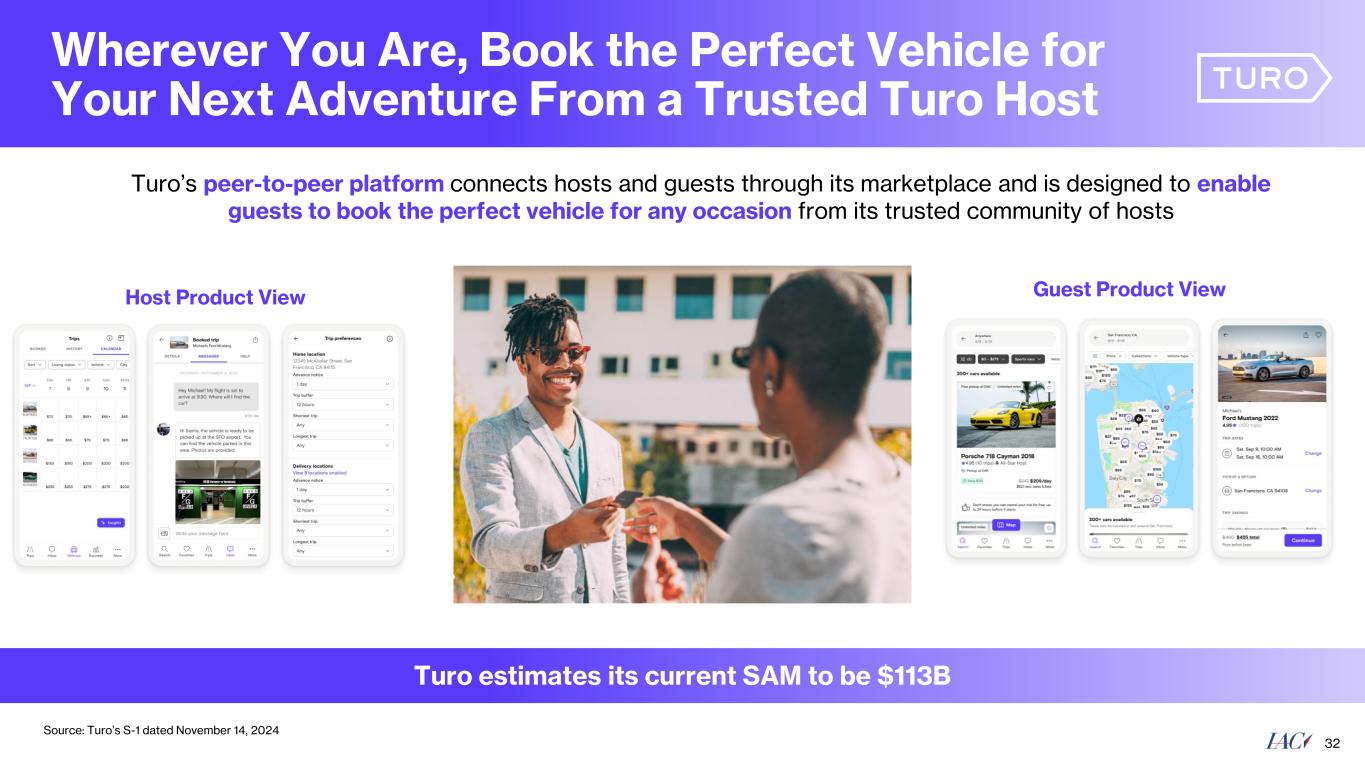
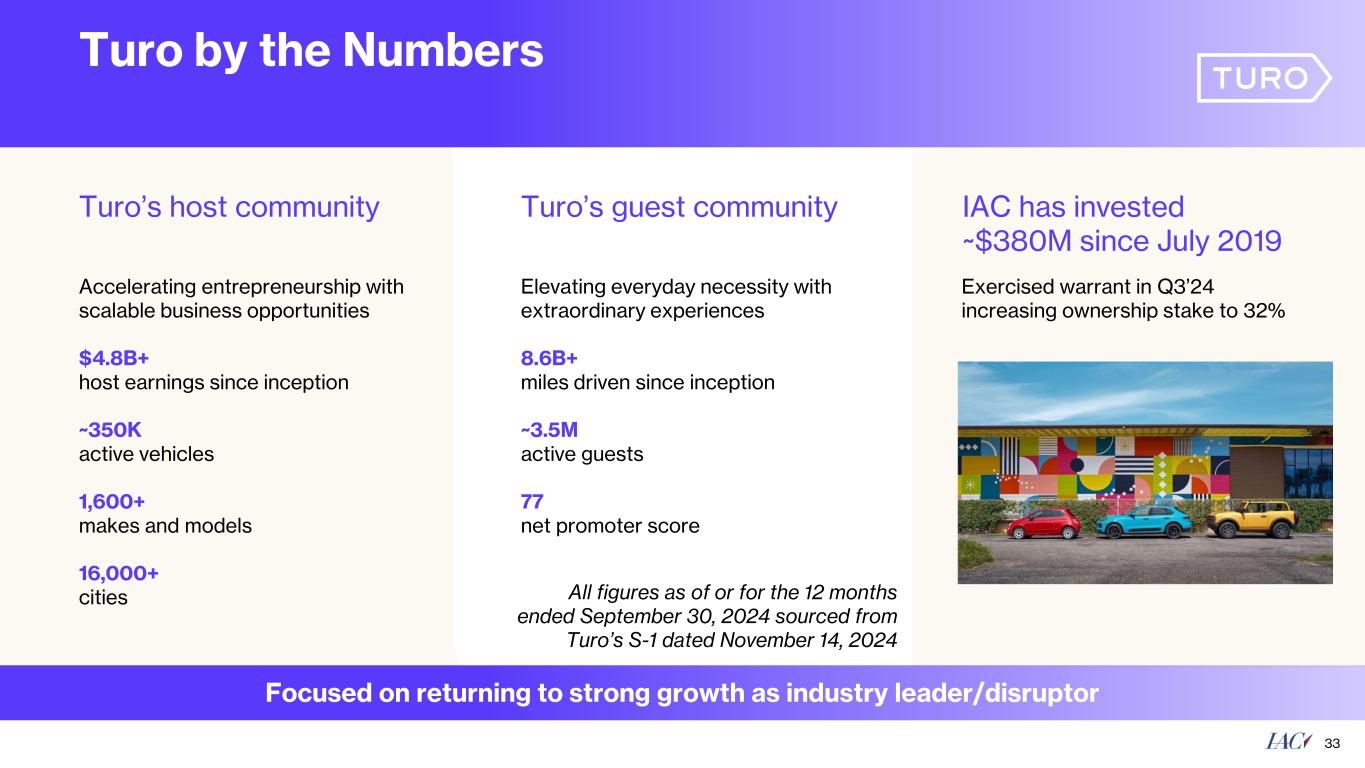
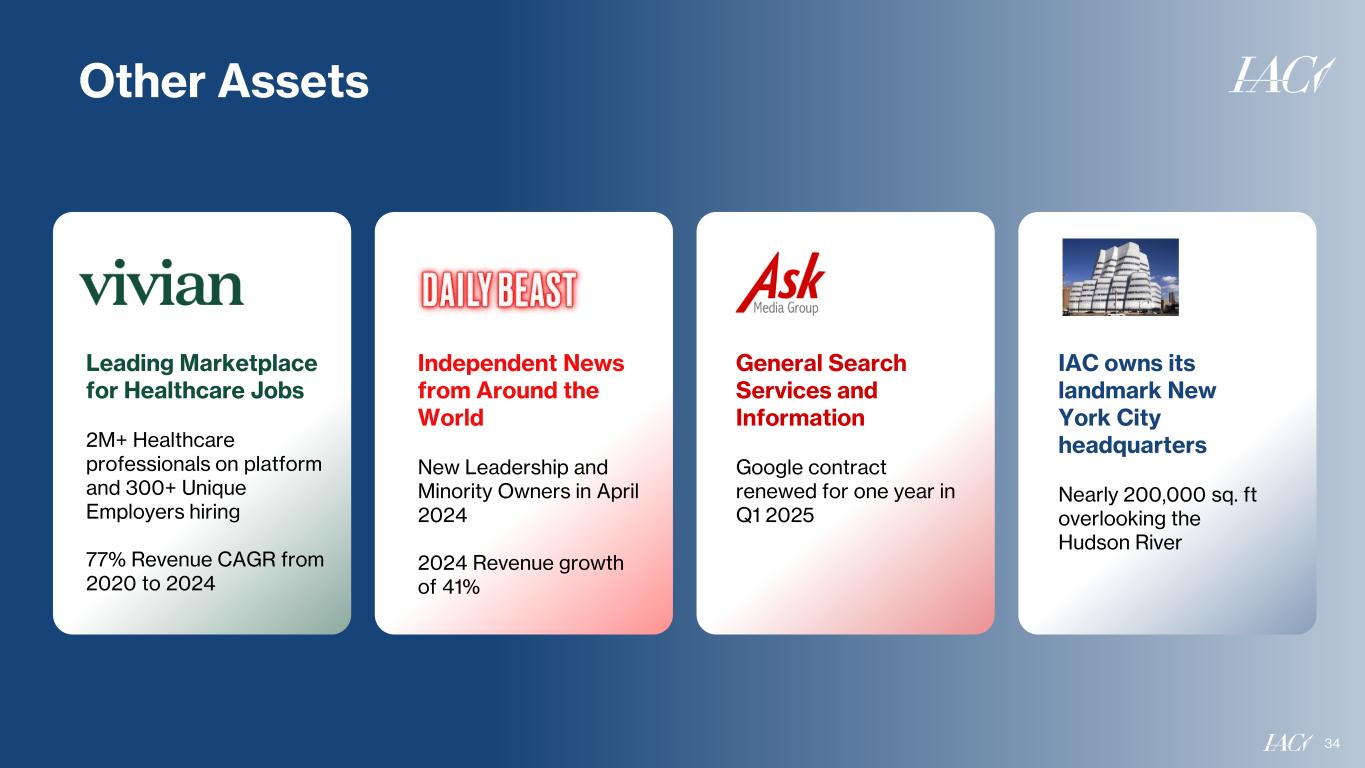
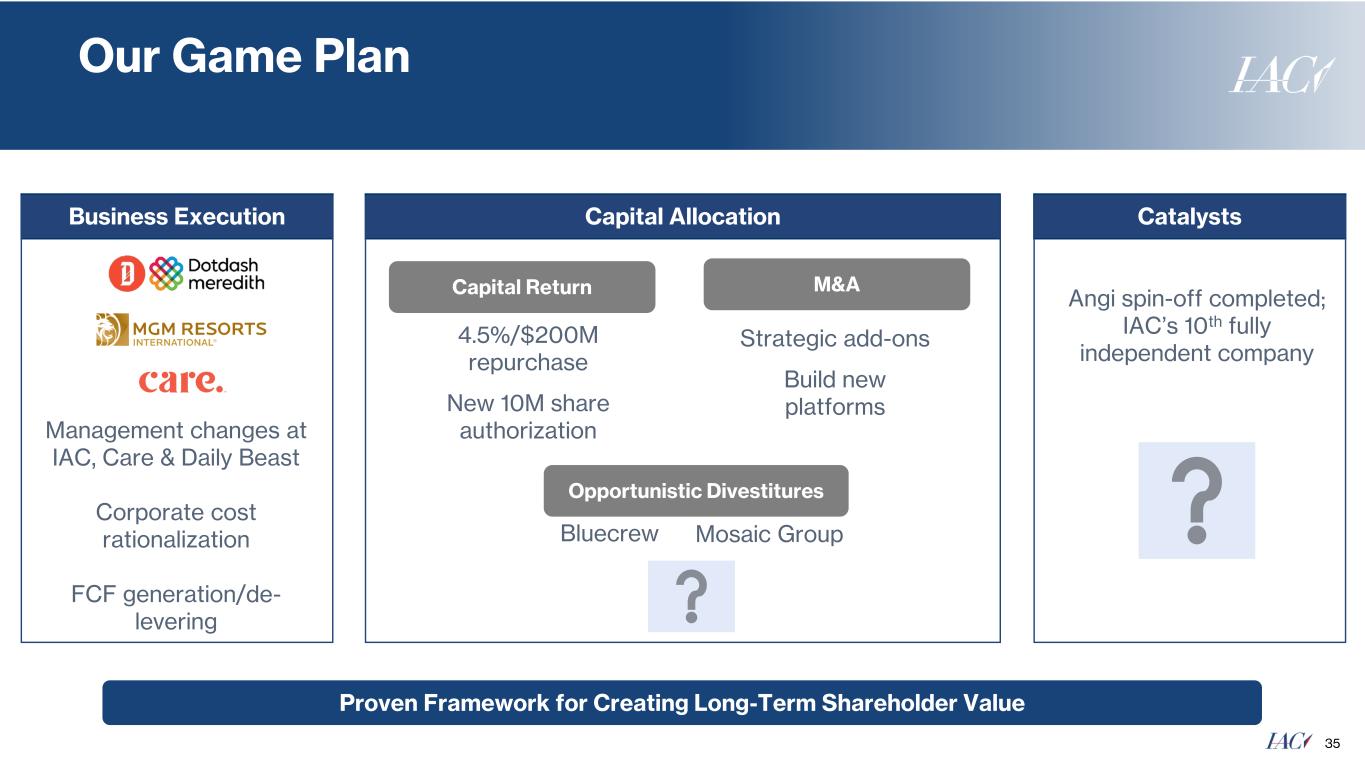
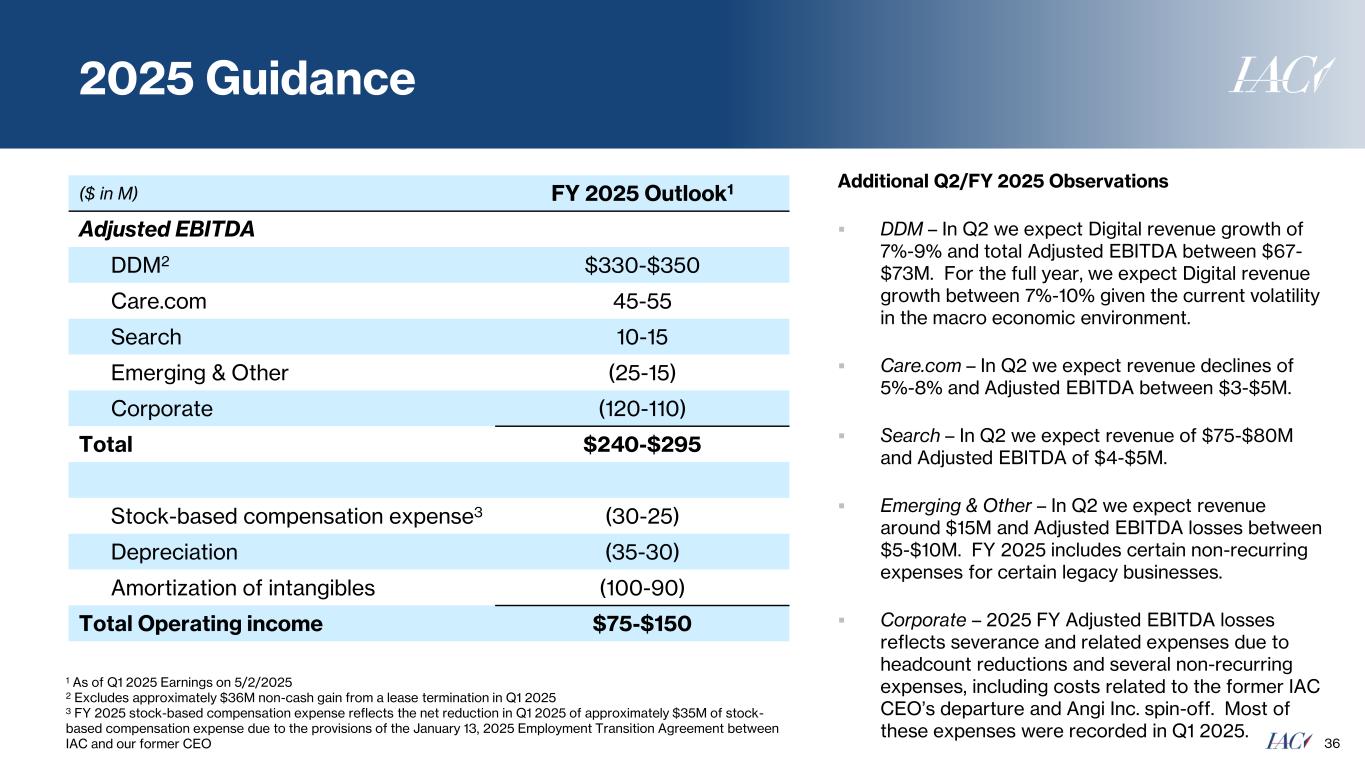
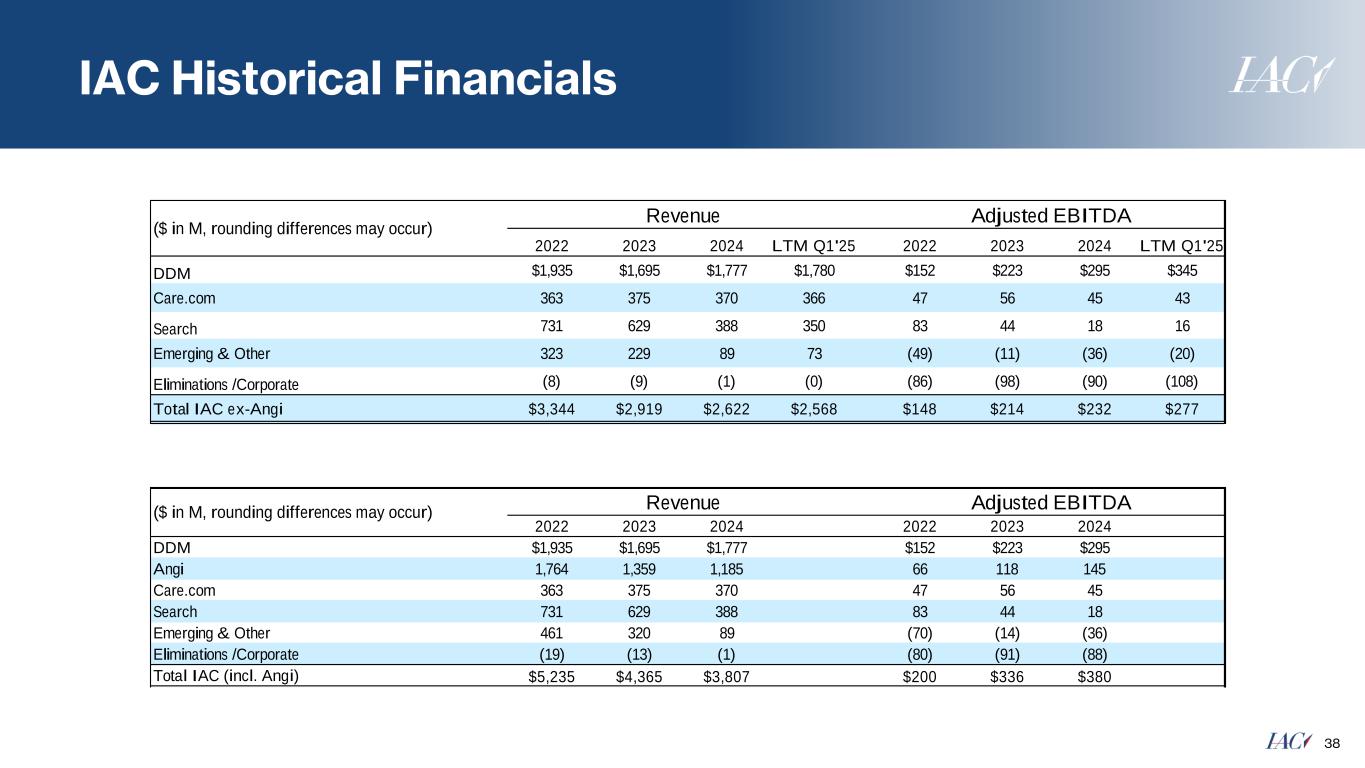
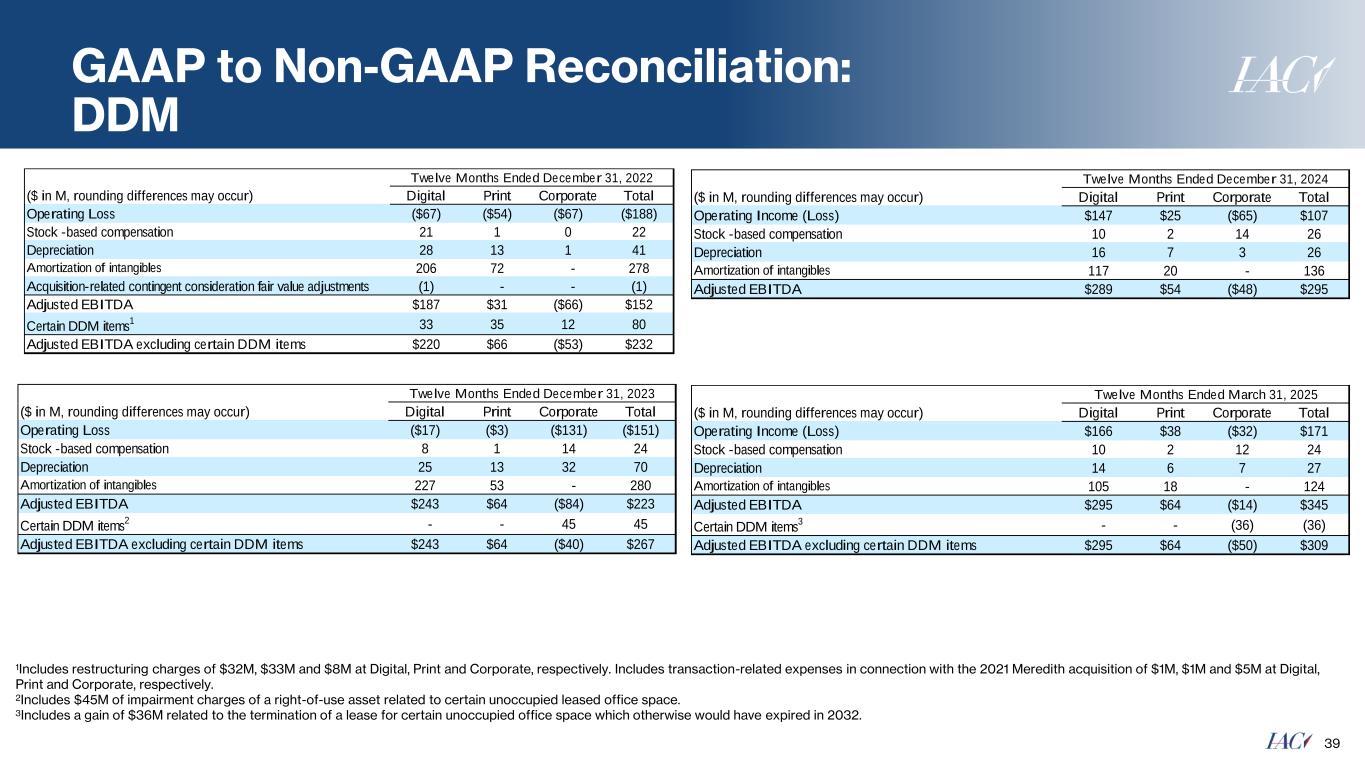
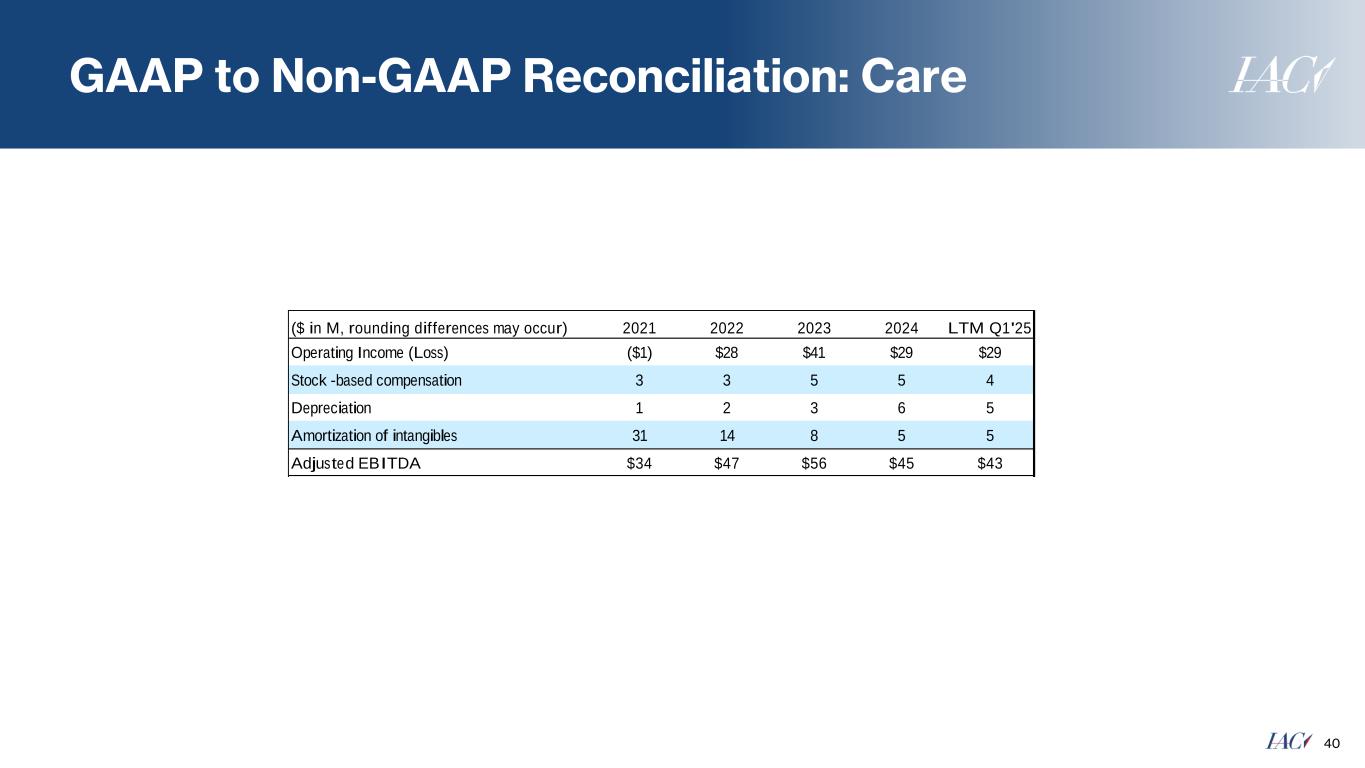
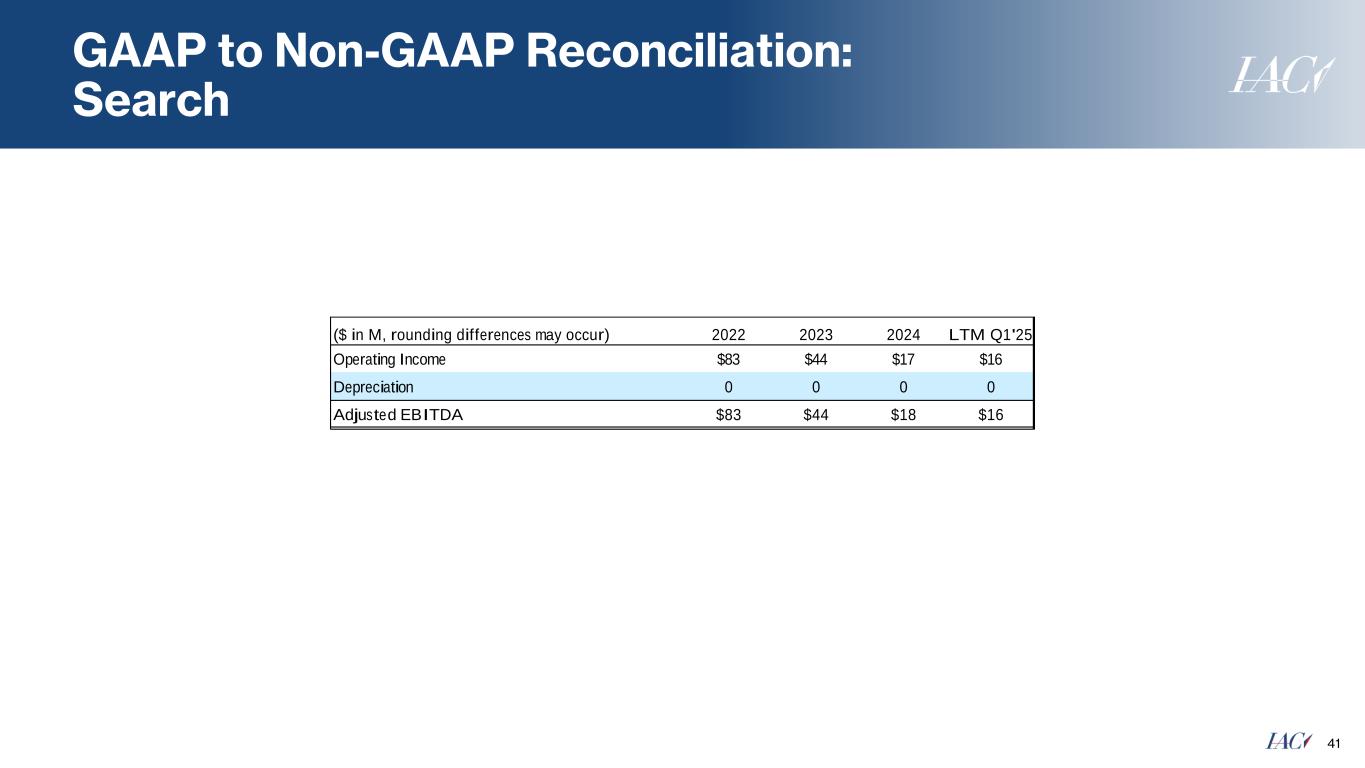
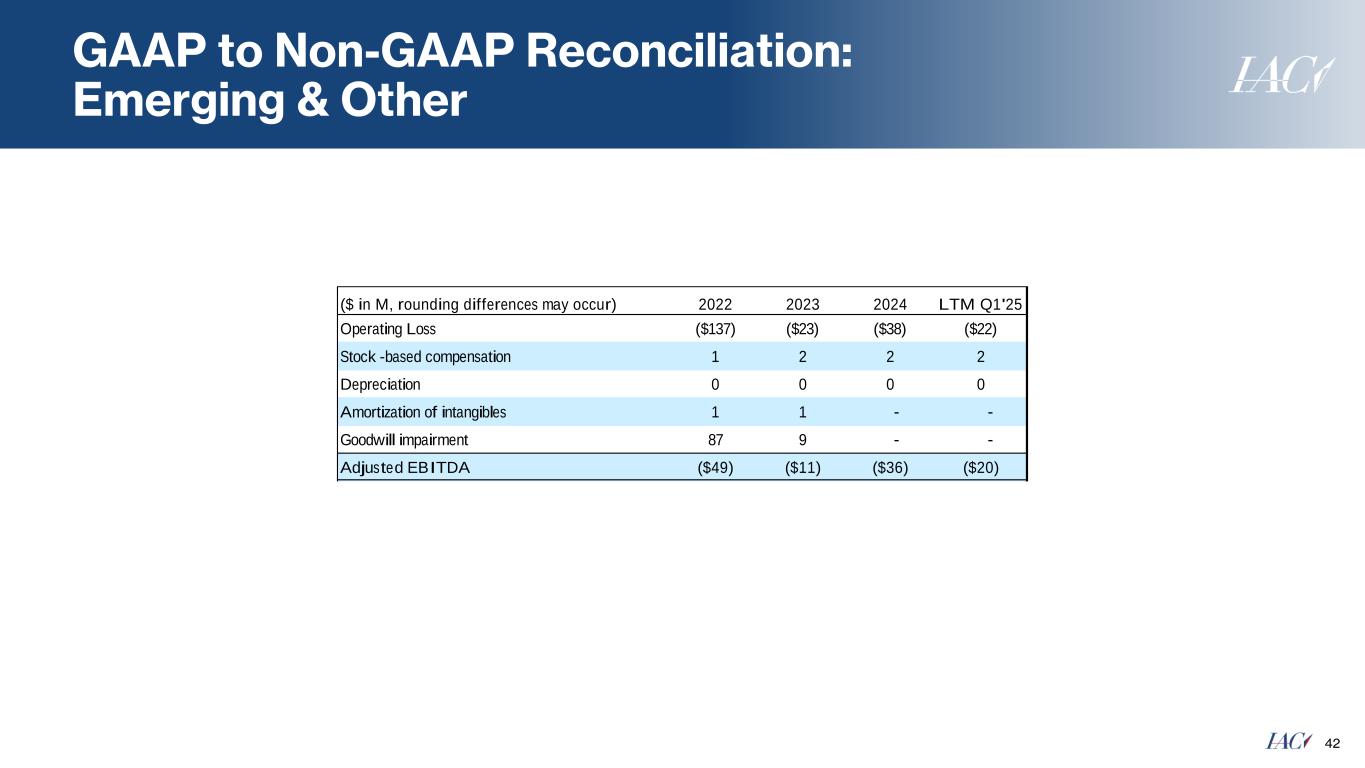
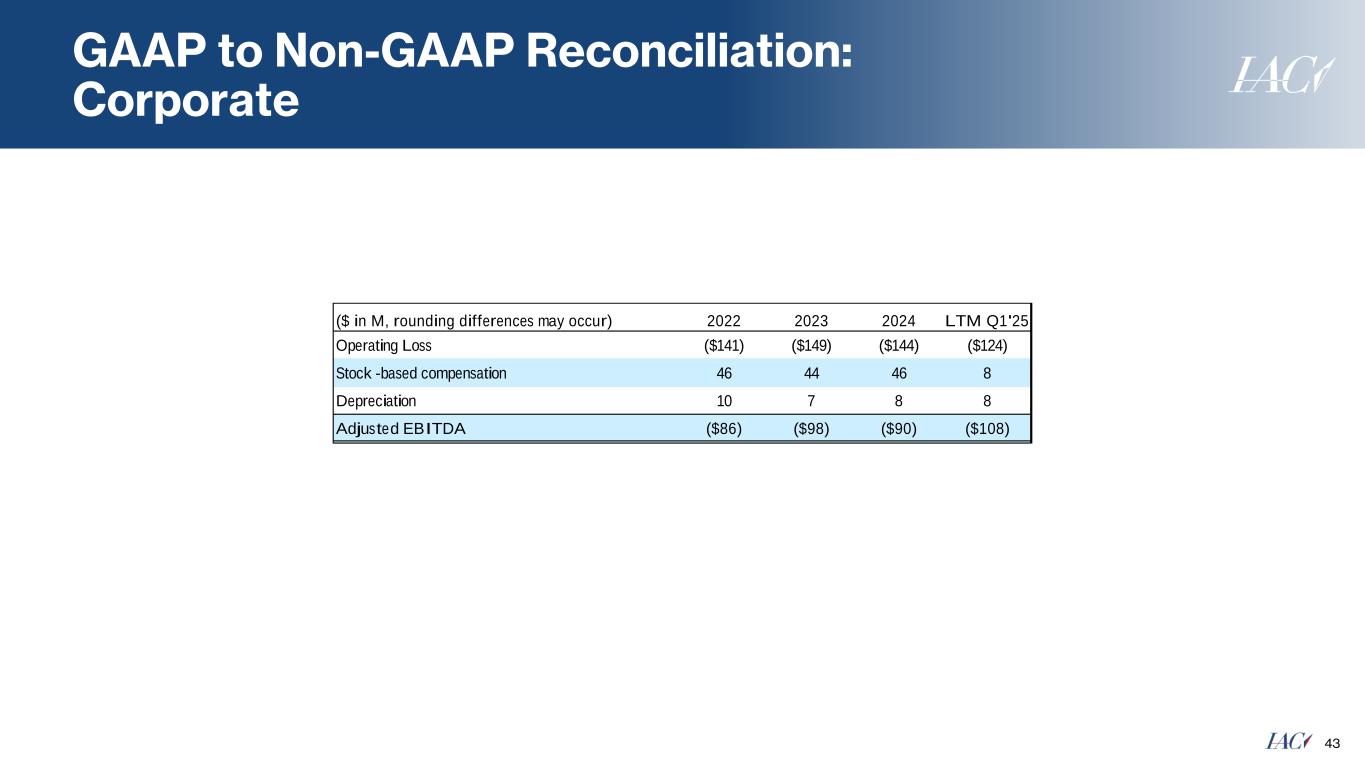
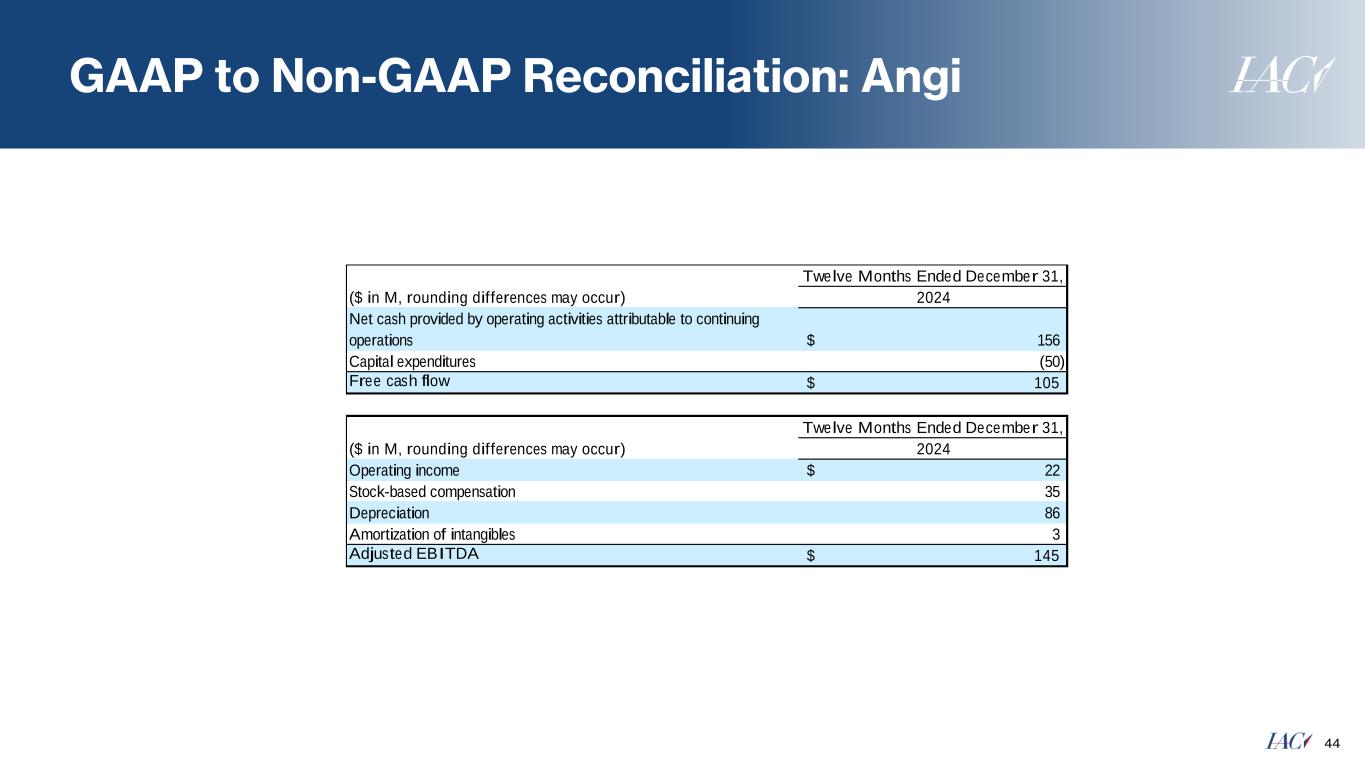
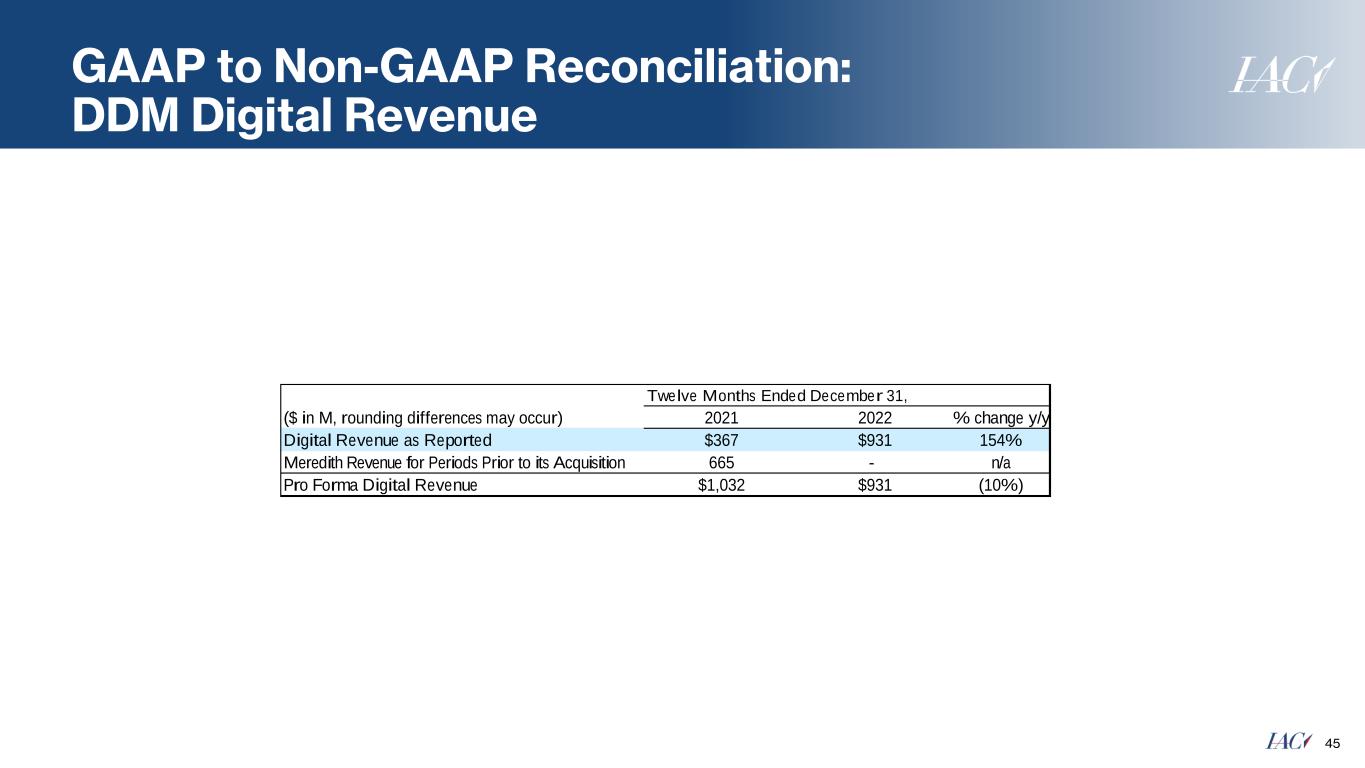
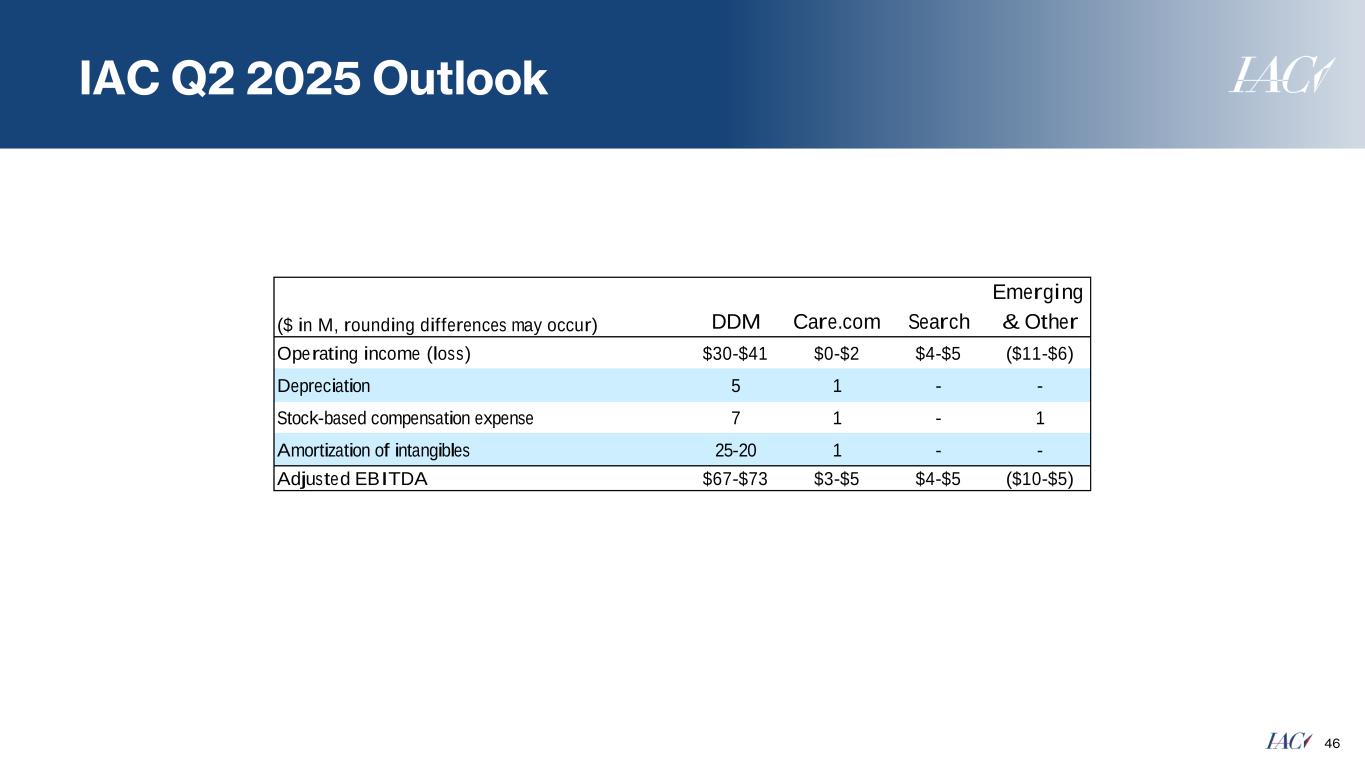
Thank you. Good morning everyone, Christopher Halpin here and welcome to the IAC first quarter earnings call. Joining me today is Neil Vogel, CEO of Dotdash Meredith or, as we will refer to it today on the call, DDM. IAC has published two presentations on the Investor Relations section of our website today, a new investor presentation and a Q1 earnings call presentation. On this call, we will be reviewing the latter which comprises a few key slides from the longer investor presentation. I'll begin with some introductory remarks that will reference that earnings call presentation and then open it up to Q&A. Before we get to that, I'd like to remind you that during this presentation, we may make certain statements that are considered forward-looking under the federal securities law. These federal forward-looking statements may include statements related to our outlook, strategy and future performance and are based on our current expectations and on information currently available to us. Actual outcomes and results may differ materially from the future results expressed or implied in these statements due to a number of risks and uncertainties, including those contained in our most recent annual report on Form 10-K and in the subsequent reports that we file with the SEC. The information provided on this conference call should be considered in light of such risks. We'll also discuss certain non-GAAP measures which, as a reminder, include adjusted EBITDA which we'll refer to today as EBITDA for simplicity during the call. I'll also refer you to our earnings release, investor presentations, our public filings with the SEC and again to the Investor Relations section of our website for all comparable GAAP measures and full reconciliations for all material non-GAAP measures. Now that we've covered that, I want to say thank you for joining us on this call as we commence this next chapter in IAC's history. As an overarching comment, I want to say Q1 was a solid start to the year. To echo our Chairman, Barry Diller's published comments, IAC is back to doing what we do best. Angi is officially on its own. Our businesses are executing with focus and effort and we are deploying capital, including into the company we know best ourselves through the repurchase of 4.5 million shares. We've also increased our share repurchase authorization by 10 million shares. The macroeconomic outlook is uncertain but we are reaffirming full year 2025 adjusted EBITDA guidance across all of IAC. Turning to the Q1 earnings call presentation. You'll see on Page 3, the businesses and assets that comprise IAC today. These include four leaders in large and growing categories. And in Q1, we had a truly productive quarter executing on a number of fronts. On March 31, we completed the full spin of Angi to shareholders, representing the 10th independent company IAC has created. With the spin, Joey Levin transitioned from IAC CEO to Angi Executive Chairman, where he's working with CEO, Jeff Kip, to drive Angi to be the industry leader in home services. Our company has executed strongly. DDM grew digital revenue 7% in the quarter and increased EBITDA 46%, that's excluding a one-time lease gain. That lease gain, however, represents a different type of win as we were able to terminate a long-term lease for two floors at DDM's New York headquarters for $43 million in cash payments, representing about 3x save cash flow and generating a $36 million book gain. Care keeps making progress through its single-minded focus on improving its product to drive better customer experience, conversion and retention. MGM reported solid earnings last week and in the words of CEO, Bill Hornbuckle, is well prepared for the rest of 2025. Turo, the leading car sharing service, has withdrawn its plans for an IPO and is fully focused on driving growth and seizing on the opportunities in front of it. Vivian is implementing AI into its products and processes in truly innovative ways which, combined with the 2 million clinicians on its platform has the opportunity to potentially fundamentally change health care staffing. At Search, we renewed our contract with Google and the business is showing signs of stability after a challenging couple of years. And The Daily Beast grew revenue 72%, while achieving profitability. At Corporate, we've taken steps to rationalize our cost structure. Additionally, during the quarter, we also reached an agreement in principle to settle the Match-separation litigation with IAC only needing to contribute $200,000 beyond our insurance coverage. But despite all this progress, turning to Page 4, our shares are still trading for less than the value of our 23% stake in MGM and the $900 million of cash at IAC report apparently. Importantly and as a reminder, we have $800 million in NOLs that essentially would offset the taxable gain presently on our MGM stake. So as you can see on the right, our collection of wholly owned businesses as well as our 32% preferred equity stake in Turo and our unencumbered headquarters building are trading at an implied value of negative $100 million. We obviously think this represents a massive value disconnect. And turning to the next page, we're working every day on a strategy to create equity value and shrink that discount. The first piece of the strategy is obvious: continue to execute and drive growth across the businesses. Neil will talk today about everything he and his team are doing to seize on DDM's opportunities as the largest digital publisher. Care, Vivian, Search and The Daily Beast management are similarly improving their product content and technology to accelerate their revenue and profitability. And in the case of Care and The Beast, we brought in new leaders who've reenergized those companies. And then we're also the largest shareholder with active Board members at MGM and Turo, helping those industry leaders seize on their market opportunities. The second prong is capital allocation. Our Chairman, Barry Diller said last quarter that after working through the challenges of the past few years, capital allocation is front of mind. As an initial step, we completed the buyback of 4.5 million shares of IAC and refreshed our authorization as mentioned earlier. We've demonstrated our conviction in our own stock, underscoring the deep value we see in our businesses. And we will continue to actively evaluate share buybacks going forward. To the right, M&A is a key element of IAC's DNA and success. In rush bars, our Head of M&A and strategy is driving an active effort to find investment opportunities, both through our existing companies and in new platforms. More on that in a second. And then finally, as we said two quarters ago, we will continue to pursue strategic divestitures of our smaller holdings should they arise, freeing up capital and simplifying IAC where attractive. The final area is major catalysts. Significant events to crystallize value have always been part of the IAC playbook. Spinning Angi was a key step in our strategy last quarter. Looking forward, we can't say what such catalyst may be, but we will be fearless in pursuing them if we believe they will benefit our shareholders. Regarding M&A, we included the next slide to present an overview of how we are approaching capital deployment, our foundation, our interest and our advantages. A number of us have been active in capital investment throughout our careers and fundamentally believe we have real advantages through our permanent forever capital and ability to invest at any stage of a company. We've always been unique in the marketplace for capital given our structure, deep industry experience, flexibility and operational know-how and these strengths continue to serve us well. We're actively pursuing acquisitions and investments, small and large and hope to be discussing new additions to IAC. The final slide summarizes our guidance, bringing us back to a discussion of the macro environment. We've been following trends actively across DDM and Care as well as garnering insights from our other companies and holdings. Consumer spending through DDM's performance marketing has been solid, clearly bucking the weak consumer confidence numbers we've all seen. That may represent consumers pulling forward spend ahead of tariff impacts or it may represent real solidity. It's too early to tell. At Care, we've seen early signs of consumer pressure around the edges through ebbing conversion but not yet any material moves. On the DDM advertising front, we've been closely watching the trends given the news flow. But premium demand has remained generally stable. Strength in pharma, tech and beauty has helped to offset weakness in areas like food and beverage. One element we are thankful for in our advertising base is that Temu, Shein or the de minimis exemption players have never been direct advertisers on our platforms. Programmatic pricing conversely has definitely softened, essentially running flat year-over-year after being up for much of the year. We're analyzing the disconnect between direct revenues on one hand and programmatic on the other to see which provides better insights on the forward trends in advertiser demand. But right now, it's too early to say. In sum, we'd say we are carefully monitoring the macroeconomic environment for signs of either stability or weakness among consumers and brands and we're thinking carefully about discretionary spend in that context. Against that backdrop, we're reaffirming our adjusted EBITDA guidance for the year for each of our companies with the core assumption of no significant recession. That assumption derives from what we are seeing in our businesses but we know we are living in unpredictable times. All we can control is our focus and execution. With that, let's go to Q&A. Operator, can we please have the first question?
Operator
Our first question comes from Jason Helfstein from Oppenheim.
Speaker 2
Can you talk about the key priorities? And I guess, it would be probably the key product priorities that could drive 2026 DDM revenue growth? And then secondly, how should we think about capital allocation going forward? Obviously, a lot of stock repurchased in the quarter first time in a while. But going forward, how should we think about allocation between repurchases and M&A? And is there a minimum gross cash level that you think about?
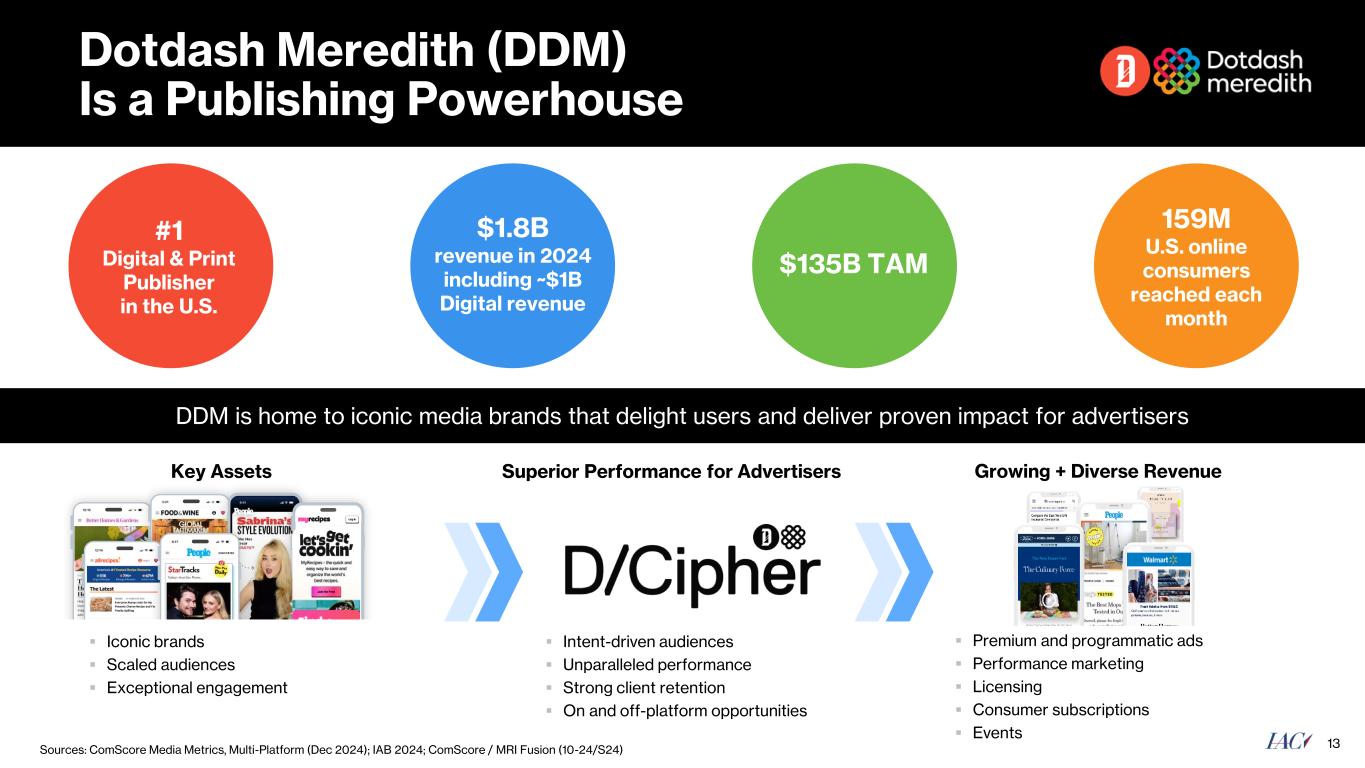
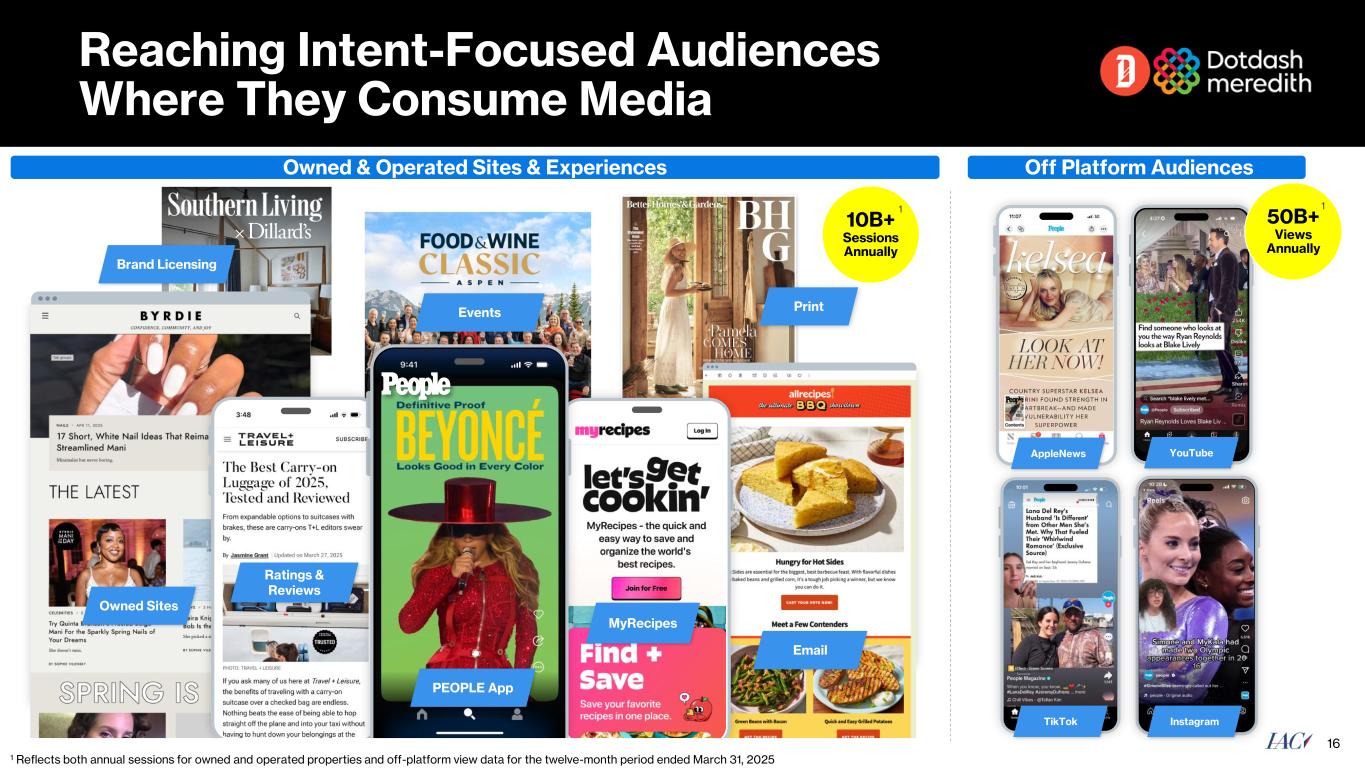
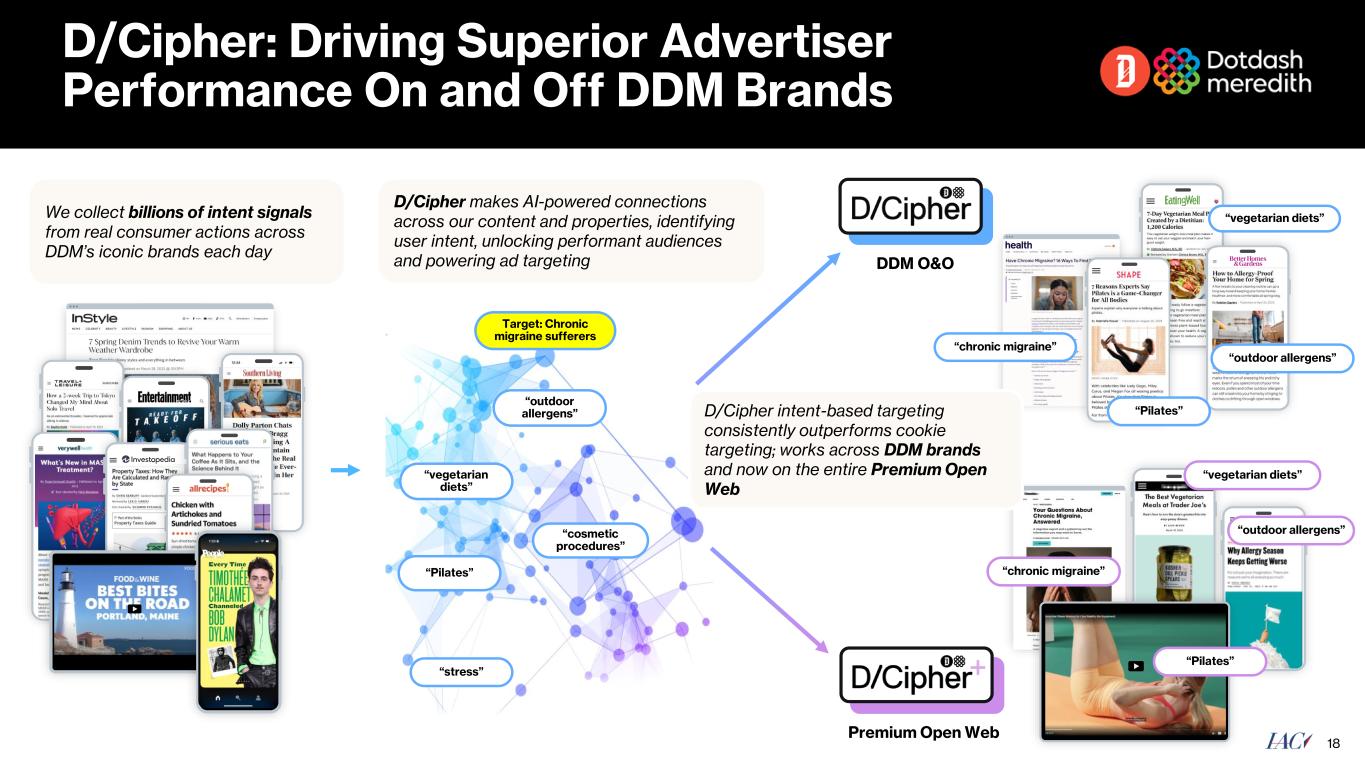
It's Neil. For those of you in New York, allergies are really affecting me, so I apologize for how I sound. To answer your question, let's have Chris take the second one while I address the first. We are actually quite excited about 2026. One key point we've discussed is our execution this year, which has been at a very high level. A significant part of that is our focus on future needs. We have several major projects underway, including the launch of the People app, which we are very proud of and believe will help us reach younger audiences. If you haven’t downloaded it yet, we highly recommend it. It's one of the best things we have ever created. Another important project is MyRecipes, which is a modern recipe locker that is especially beneficial for chefs and home cooks. According to Comscore, we may account for at least 40% of the web traffic for recipes and food content. We are also very excited about D/Cipher Plus, which enhances our D/Cipher approach. This utilizes our intent-driven contextual data for ad targeting that surpasses cookies and most alternatives in the market, allowing us to expand targeting beyond our own inventory to the entire web. We are enthusiastic about the potential of these initiatives. Additionally, we are continuing to invest in our event businesses, like the Food & Wine Classic, as part of our ongoing strategy. We have seen strong engagement with off-platform audiences on social media. Many of you might have seen my reality show on InStyle, called The Intern. We are building engaging audiences in various spaces that advertisers highly value. Overall, we are very optimistic about our business, our brands, our audiences, and the deep emotional connections we have with our users.
And then, Jason, regarding capital allocation, we bought back 4.5 million shares with the goal of repurchasing $200 million of our shares. We still have $900 million in corporate cash available. Additionally, we are generating cash at DDM. Our current focus is on exploring M&A opportunities as previously mentioned. While nothing rules out further share purchases, our Chairman, Barry Diller, is keen on M&A. We are examining both large and small opportunities, believing that the current market volatility may create new chances for us. Russ and others have discussed how private equity and VC-backed companies have been waiting for the market to improve significantly, which hasn’t happened. Their investors are also in greater need of liquidity, so we are cautiously optimistic about seeing more opportunities arise from the private market. We are looking into earlier-stage opportunities as well. Some have suggested that it’s difficult to manage capital allocation effectively while pursuing both stock buybacks and M&A, but we believe it is possible and we definitely see value in our share price. We will continue to assess our strategy as we move forward.
Operator
Next question comes from John Blackledge from TD Cowen.
Speaker 4
I have two questions. First, regarding DDM Digital, could you discuss the revenue trends in the first quarter? It appeared that advertising revenue was slightly lower than anticipated, but this was balanced by higher performance and licensing revenue. Any additional insights would be appreciated. Also, concerning the second quarter revenue guidance for DDM Digital, which is projected at 7% to 9%, could you explain the factors influencing this guidance across the three segments? Additionally, are current macro tariffs affecting brand spending by advertisers? My second question pertains to the cash flow from DDM to IAC. Can you elaborate on the situation where DDM reaches a specific leverage ratio that allows cash to be accessed by IAC? How does this arrangement benefit IAC and its shareholders?
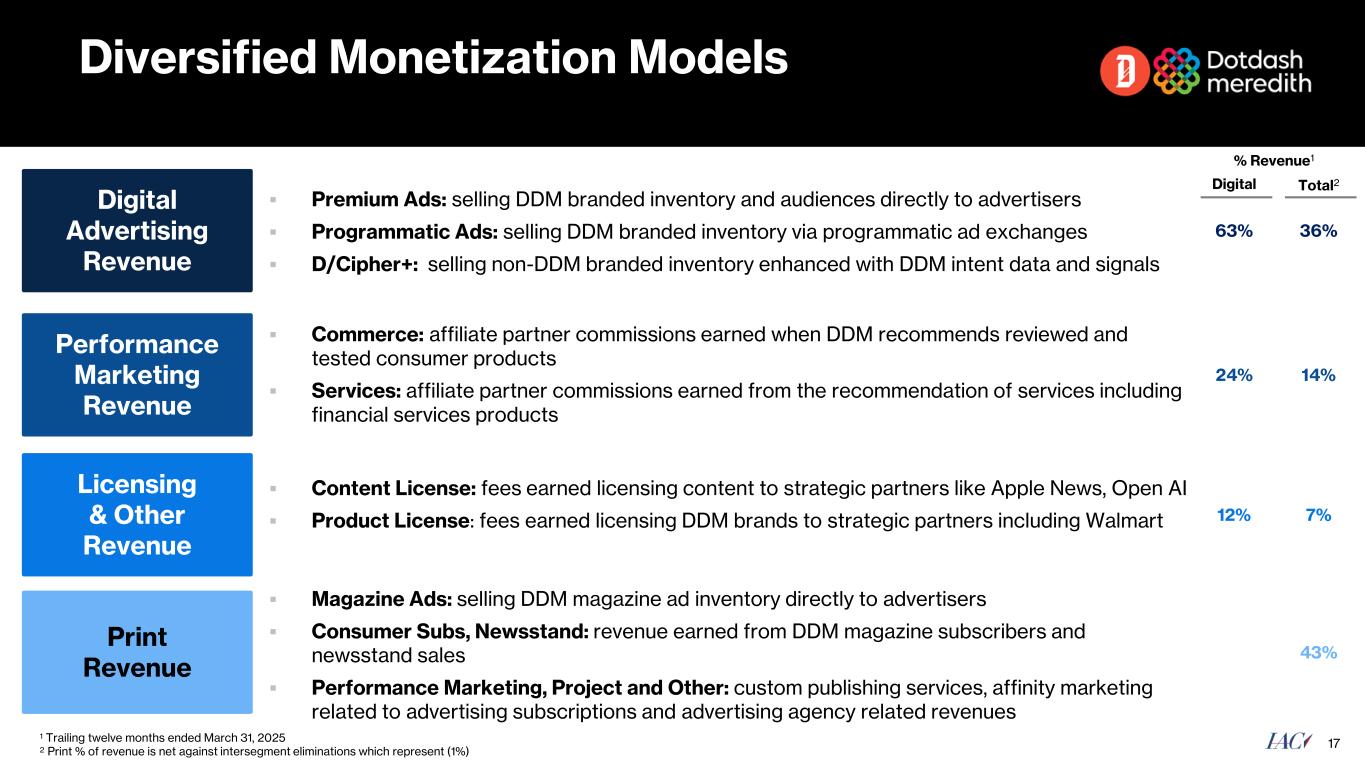
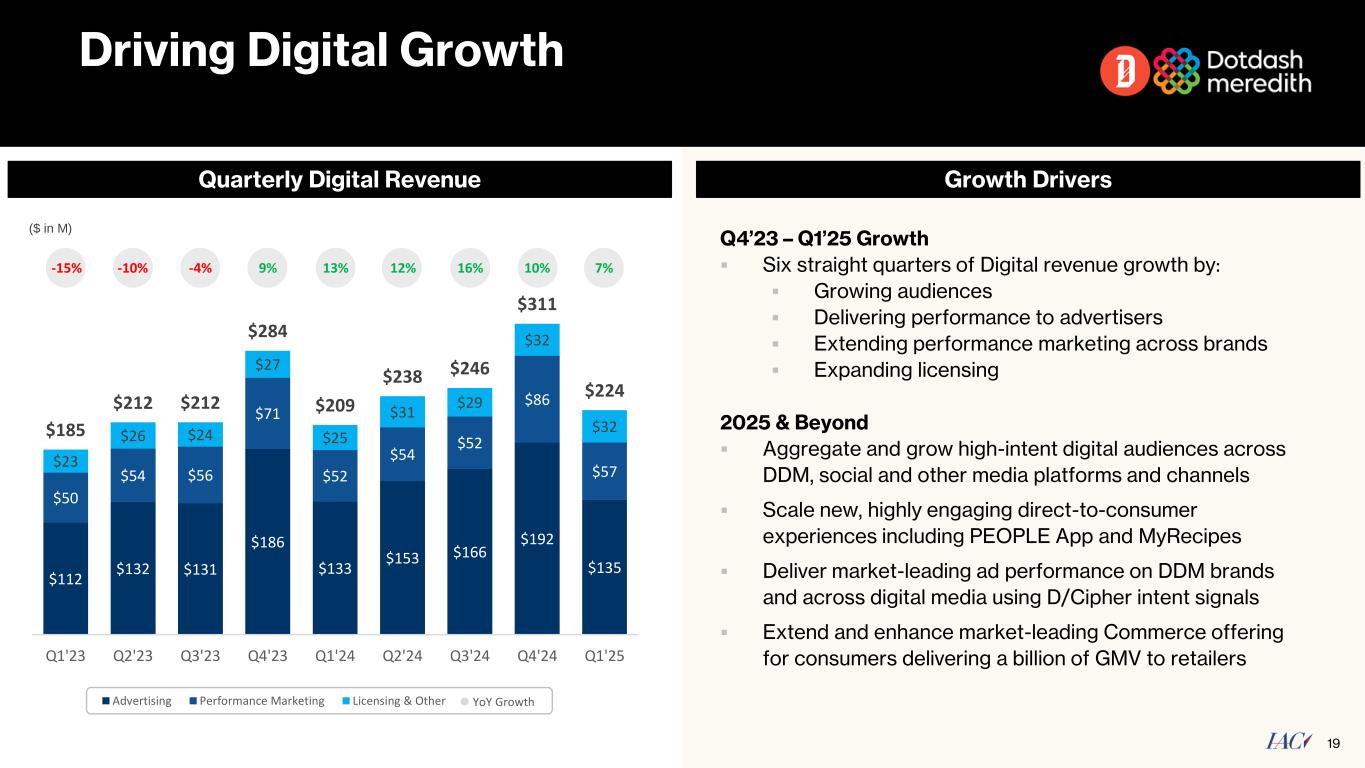
Yes, John. I'll begin, and then Neil will chime in. In the first quarter, we previously indicated that there were a few factors contributing to slower growth in traffic and revenue. We faced challenging comparisons in January and February of '24. The quarter also had one fewer day, resulting in approximately a 1% decline. Additionally, Easter, a key holiday for us, fell into the second quarter this year. The news cycle also wasn’t favorable, with coverage of the fires in L.A. and significant political news overshadowing other topics and capturing people's attention. These elements combined led to a core traffic decline of 3% in the quarter, while digital advertising increased by only 1%. Within that 1%, premium was quite strong, but fewer impressions meant we had less programmatic advertising to sell, which was a challenge. However, traffic and advertising conditions improved throughout the quarter, with March featuring a solid 8% growth in digital advertising, and similar trends were seen in April. For the first quarter, licensing experienced 30% growth, driven in part by the OpenAI license and robust performance at Apple News. Performance marketing also performed well, with an increase of 11%, alongside strong consumer spending in commerce, which contributed to the overall 7% growth for the quarter. This was not a surprising figure for us. Looking ahead to the second quarter, we project digital revenue growth of 7% to 9%. This is expected to result from stable traffic, which we've already observed, and some easier comparisons. So far, we've noticed stability in premium demand, particularly in strong categories that are balancing out those affected more by tariff uncertainties, along with continued good performance in marketing, despite experiencing some softening in programmatic. Licensing will face tougher comparisons as we compare with the OpenAI deal, but we expect continued growth. We've thoroughly analyzed advertiser demand and the effects of tariff uncertainty and continue to do so. The 7% to 9% growth forecast for Q2 reflects our current understanding of market trends. Neil, do you have anything to add?
Yes, I'll expand on the market perspective. We entered the year strong and have been executing effectively. Our premium revenue has held up remarkably well. However, it's clear that the mood of buyers is shifting, though we haven't seen any major issues yet. It remains to be seen how things will unfold. We are focused on managing what we can control and believe we are well-positioned due to our scale and performance focus. Our success with initiatives like D/Cipher and intent-driven traffic gives us a better chance to maintain performance. There is a disconnect in the advertising spot market, particularly in real-time programmatic, which has flattened year-over-year after a period of growth. This indicates some uncertainty among buyers, leading to slower decision-making. Regarding the future, we are observing changes just like everyone else, and while new developments emerge daily, we are adapting accordingly. In the long run, strong brands, engaged audiences, and effective execution will ensure our success. We just need to navigate any short-term challenges, which will likely affect others as well.
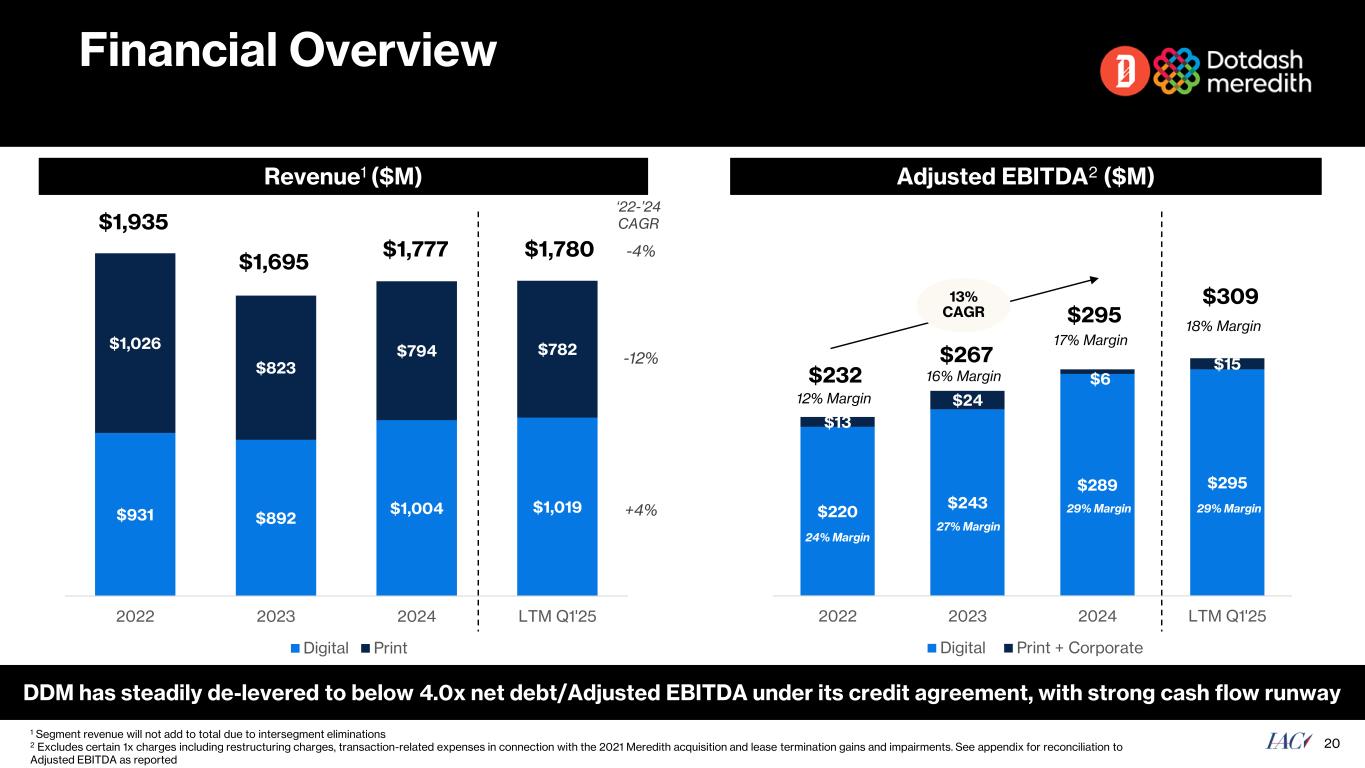
Regarding the cash flow question, it's important to clarify that Dotdash Meredith has entity-level debt, which includes an institutional term loan in two parts and an unfunded revolver. According to the credit agreement for this debt, IAC can distribute cash to itself from DDM as long as the total leverage ratio remains below 4 times total debt to EBITDA. This leverage ratio is based on a credit agreement definition of adjusted EBITDA, which is a bit more favorable and slightly different from our public reporting. Through debt repayments and increased EBITDA, Neil and his team have consistently reduced DDM's leverage, bringing it under the 4x ratio as of December 31, 2024. This allows IAC to access DDM's cash for any corporate purposes if needed. This enhances our financial flexibility and has been a key goal of ours since the acquisition was finalized, both to lower the leverage ratio and to access that cash. Looking ahead, we expect DDM's leverage ratio to improve, supported by rising EBITDA and strong cash flow generation.
Operator
Next question comes from James Heaney from Jefferies.
Speaker 5
Could you just talk about the appointment of Jim Lawson as the President of D/Cipher? I'd just be interested to hear about his strategic objectives for that particular product.
Sure. Jim is an exciting addition for us. I’ve known him for some time, and our team has been aware of him as well. If you're in the ad tech industry, you're familiar with Jim. He was the CEO of AdTheorent, a public company that was recently acquired. AdTheorent is especially attractive to us because they are now our partner, and they engage in many of the same activities that we do with D/Cipher to help advertisers connect with consumers. Jim is exceptional and had plenty of options, but we managed to persuade him to join us instead of pursuing other opportunities. We successfully communicated how significant and promising D/Cipher could be, and he's eager to start working and build a strong commercial team. We already recognized the strength of our business and our talented individuals like Lindsay Van Kirk and John Roberts, who have been instrumental in our progress. Bringing in a seasoned commercial CEO illustrates our focus on the business for the market, and we need the practical skills to create a team capable of fully utilizing our data, which is more comprehensive than any other publisher’s, to target the open web effectively. We believe our data and architectural targeting outperform cookies and other methods, and Jim shares that belief, so we are ready to move forward. While we expect minimal contributions this year, we are really looking toward 2026 as a crucial part of our future.
I'm sorry for the delay regarding D/Cipher Plus. It's worth mentioning that the core D/Cipher business is now part of more than half of our premium deals, and it's performing exceptionally well. These deals are significantly larger than those without D/Cipher, and clients using D/Cipher are experiencing faster growth compared to those who aren't. Additionally, it serves as our entry point in the market, representing one of the few truly innovative advancements in ad targeting. Jim excels in communicating our initiatives within the ad tech space, speaking in terms that resonate with us as publishers. We create outstanding content and innovative solutions, and he has a deep understanding of our data product and its potential for leverage. As you can tell from my enthusiasm, we are very excited about this.
Operator
Next question comes from Cory Carpenter from JPMorgan.
Speaker 6
Maybe sticking with D/Cipher, Neil, could you just talk about the impact or lack of impact kind of from Google no longer phasing out cookies which they announced a few weeks ago? And then maybe for you, Chris, just could you talk about the announcement you made a few weeks ago with Arkhouse and the addition of them as a Board member?
Sure. I'll start with cookies, and then Chris can follow. I believe cookies are not a significant issue at all. Nobody really thought cookies were disappearing over the past year. As you've mentioned, it's already integrated into our strategies. We have a neutral stance on this matter. In fact, it might benefit us by helping clarify how we can utilize contextual targeting alongside cookies and demonstrate the effectiveness of our D/Cipher and D/Cipher Plus offerings. Additionally, we have many clients interested in purchasing segments of their programs based on cookies, and we can cater to that as well. A positive outcome of this situation is that it will likely reduce the market disruption that was anticipated as we transition to a post-cookies environment. However, I don't believe this will ultimately affect us in the long run.
Yes. I want to connect this to some previous discussions we've had. If there was going to be a significant change, we traditionally believed it would disrupt everyone except for D/Cipher, which would benefit. Neil and his team have pointed out that the concern over a major change has actually brought attention to D/Cipher among several brands and agencies, which has been beneficial for encouraging trials. Now that we have stability in the market, it's the perfect opportunity for us to outperform other offerings.
Yes. To add another point, advertisers now recognize that cookies are used to profile individuals, and there are various levels of discomfort with that. We don't focus on individuals; we focus on behaviors. Cookies look at past actions to predict future behavior, while we operate in real time and know exactly what users are doing. This straightforward approach is why we believe we are better, and we have no issue with cookies still being present as a point of comparison.
Yes. And the last thing I'd say, PowerPoint is not the answer to anything but we tried in the investor presentation, spent a lot of time with DDM and team to really lay out what D/Cipher is and then how D/Cipher and D/Cipher Plus work off of what it is in a slide in the presentation. And we'd encourage investors to look at what we're doing with context, connecting it to data and predictive analytics and then going on O&O inventory and off.
I mean we've got the real-time first-party data of the biggest publisher in America across the biggest consumer categories in America. So we feel really good about where we are.
Thank you. And then, Cory, with respect to Tor Braham joining our Board and the announcement with Arkhouse, Arkhouse is an IAC investor, who is a really strong believer in the economic value embedded in our shares. They've highlighted that publicly. We've had constructive dialogue with Arkhouse. Our Nominating Committee believes Mr. Braham's background in technology and capital markets as well as his Board service experience in a number of public companies will be valuable as IAC continues to execute its strategy. We're excited to have him join the IAC Board and work with us. He's filling the seat that had been held by Joey Levin and we're excited to move forward with them on our strategy. Thank you, Cory.
Operator
Next question comes from Ross Sandler from Barclays.
Speaker 7
Great. Neil, the bigger slide deck discusses the new direct-to-consumer experiences. Can you elaborate on what you are doing there? How many other Meredith sites could adopt something like this? Also, what kind of impact do you expect this to have on growing your owned and operated inventory?
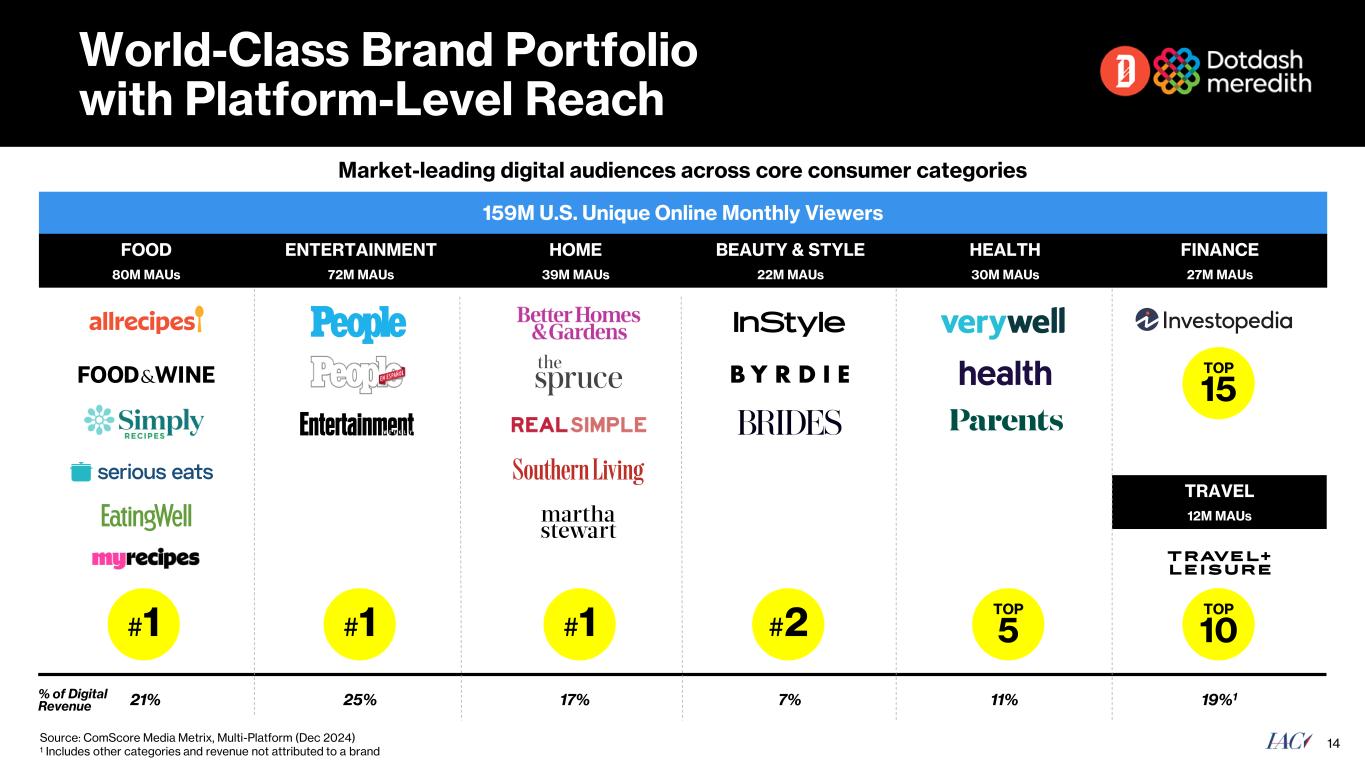
Yes, that's a great question. Our main goal as a business is to connect directly with our brands and audiences, leveraging the emotional connections we have. We've quietly been making strides in this area. For example, after merging Dotdash and Meredith, we saw that around 60% of our traffic originated from Google Search. Now, that figure has dropped to slightly over one-third, while our overall traffic has continued to grow. This change reflects our ability to engage more directly with users, not even counting our social media audiences. We've enhanced our major properties like People in entertainment, MyRecipes in food and recipes, and our advanced ad targeting tool, D/Cipher Plus, to strengthen our connections with both audiences and advertisers. The response to these efforts has been very positive, similar to the interest we've seen in our events and advertising on social platforms. This approach is part of a long-term strategy. It's important to note that we are very attentive to market changes, and the media landscape has evolved significantly in the nearly 12 years we've been active. Throughout this time, we have continued to grow and adapt, and we are optimistic about our future. As for your second question, you can expect to hear about new projects similar in scale to MyRecipes or the People app at a good frequency, though not necessarily every quarter. We've shifted our organization to prioritize innovation over merely maintaining our traditional business model. This shift has been challenging, but necessary as we navigate the decline of our old model. We are constantly working on new initiatives, and launching projects like the People app and MyRecipes demonstrates our commitment to innovation. We want to excite the ad market and our audiences with fresh ideas and energy. So, stay tuned for more developments ahead.
Operator
Next question comes from Justin Patterson from KeyBanc.
Speaker 8
Great. You're approaching one year of Dotdash working with OpenAI. Could you talk about your learnings from this partnership? And perhaps more broadly for Chris, how you're thinking about AI opportunities for the rest of the IAC portfolio? I know you called out Vivian as a potential beneficiary in the prepared remarks. And then, just a big picture one for Neil. Obviously, the other big ad industry news is just the Google DOJ trial. How might the world look differently for Dotdash if we see some divestitures and what opportunities that might create for you?
I'll provide a brief update on OpenAI. They have been an excellent partner for us. I should mention that our relationships with other players in their field have not been productive, but with OpenAI, our engineers are collaborating effectively. We are assisting each other in rolling out products. They were instrumental in helping us improve our decipher targeting with some of the AI applications we are developing for modeling. Overall, the experience has been very positive. Our decision to engage with leading innovators in this space has proven beneficial in the past year. It has been crucial for us as we integrate AI into our processes and influence the evolution of this technology. Regarding larger deals, I’ll pass it over to Chris.
Yes, there’s a lot of excitement around AI, but as more substantive applications emerge, people are becoming fatigued by the hype. We are currently in that phase. Across our portfolio, Neil's team is exploring its applications in various areas. Vivian has been particularly innovative in utilizing AI, especially in Care, Turo, and our Search business, where they've implemented AI through real-time bidding and other initiatives. It’s evident that having large datasets for optimization tasks, such as smart matching or fraud detection, offers significant advantages. We’ve observed this in Care with improvements in customer service. As some industry leaders have noted, basic customer service roles are likely to transition quickly to voice-driven AI, which can enhance user experience significantly. I view it similarly to the ATM experience—most people prefer it to interacting with a bank teller. Once we create an efficient, voice-activated customer service representative, there will be little desire to revert to the traditional method of using a drop-down screen to find information. The advancements we've achieved with D/Cipher are clear, and we’re also seeing promising developments in onboarding and marketing. Over time, through Agentic AI, we'll see substantial changes in how marketing content is developed, tested, optimized, and placed. While human involvement will still be necessary, the processes will be accelerated, providing considerable long-term benefits.
Yes. I'll address the DOJ and Google matter. There are two aspects to consider. First, regarding the legal case, which I assume relates to the recent settlement verdict. We are closely monitoring the situation and trying to determine our level of involvement. While I don’t have any new information at this time, we are attentive to developments. From a business standpoint, I often think of a line from my favorite TV show, The Wire: "This is Baltimore, gentlemen. The Gods will not save us." Essentially, we operate as if we are entirely self-reliant. It’s crucial that we maintain strong relationships with advertisers and our audience, while offering compelling services and brands. We will continue to operate this way, and if the landscape shifts, I am confident we will adapt promptly, though the final outcomes are still uncertain.
And also, I'd just say that to continue the wire analogy, we'll defend our turf...
Only in legal manners but we will do that. Justin, does that answer that question?
Speaker 8
That's perfect.
Operator
Next question comes from Tom Champion from Piper Sandler.
Speaker 9
Chris, maybe you could talk about Care for a little bit, particularly the consumer side of the business. How is leadership working on the challenges there? Neil, maybe just a quick one for you. I'd love to have you talk a little bit more about what you're seeing in the spot market and the growth there relative to what you've seen in the past. What do you think is driving that performance? Why would that not be, say, a leading indicator for the market?
The spot markets have been quite unpredictable. This aligns with the general sentiment, as advertising often reflects confidence. Some days people feel optimistic, while other days they do not. I wish I could provide more concrete insights, but I'm hesitant because there's a significant chance I could be wrong based on tomorrow's developments. It's true that spot markets offer a good snapshot of the current situation, but I'm not entirely convinced that improvements in the spot market tomorrow will indicate a trend. If you're looking for clear signs of improvement or decline, I prefer not to make a definitive statement either way.
Yes. And the only thing I'd add, keep me honest here, Neil, is we have no Temu, Shein, or de minimis exemption in our direct base. On the broader programmatic market, they were a player, I mean, especially on mobile apps and all those.
The situation with those companies leaving the market is due to their high spending, but they generally can't afford our sites because they are quite expensive. Our pricing reflects our performance relative to what they purchase. However, when a significant amount of demand exits the market, it tends to drive prices down. This could certainly be a contributing factor to the situation.
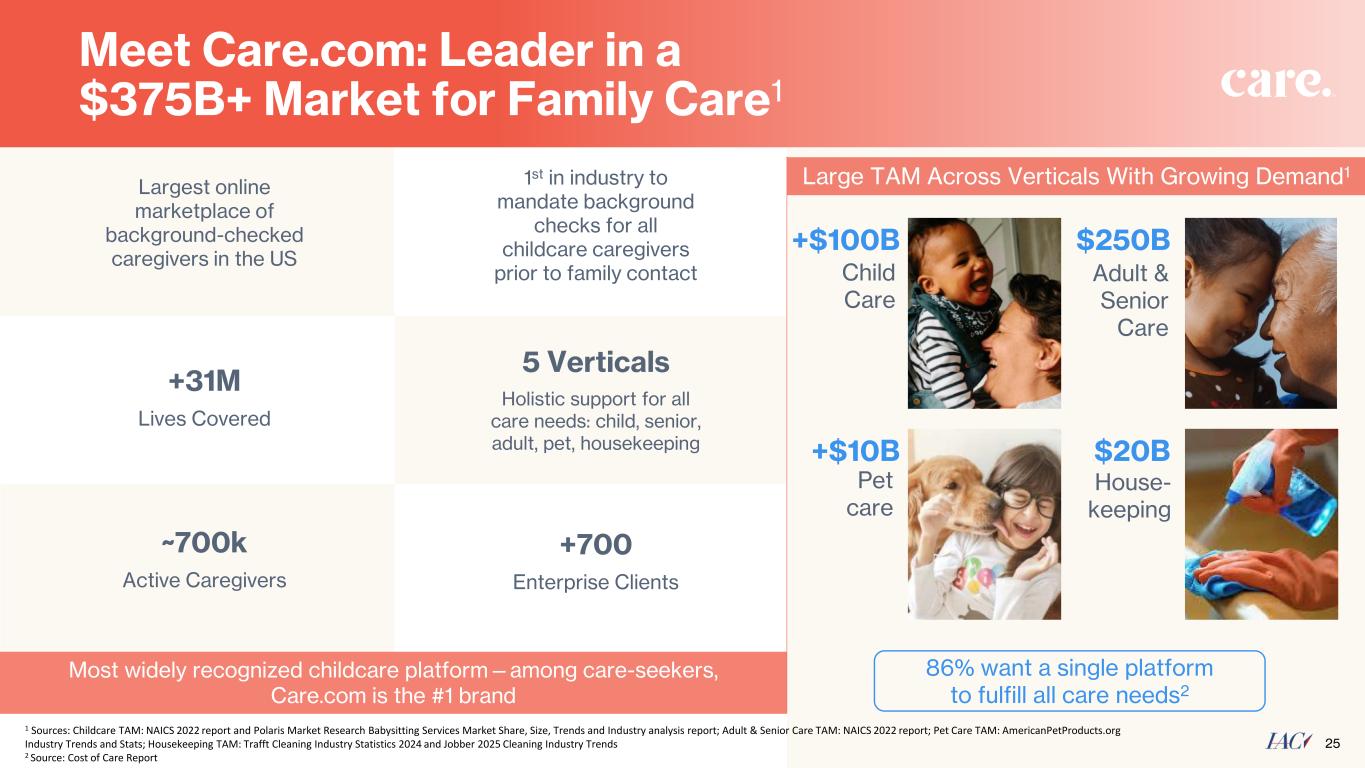
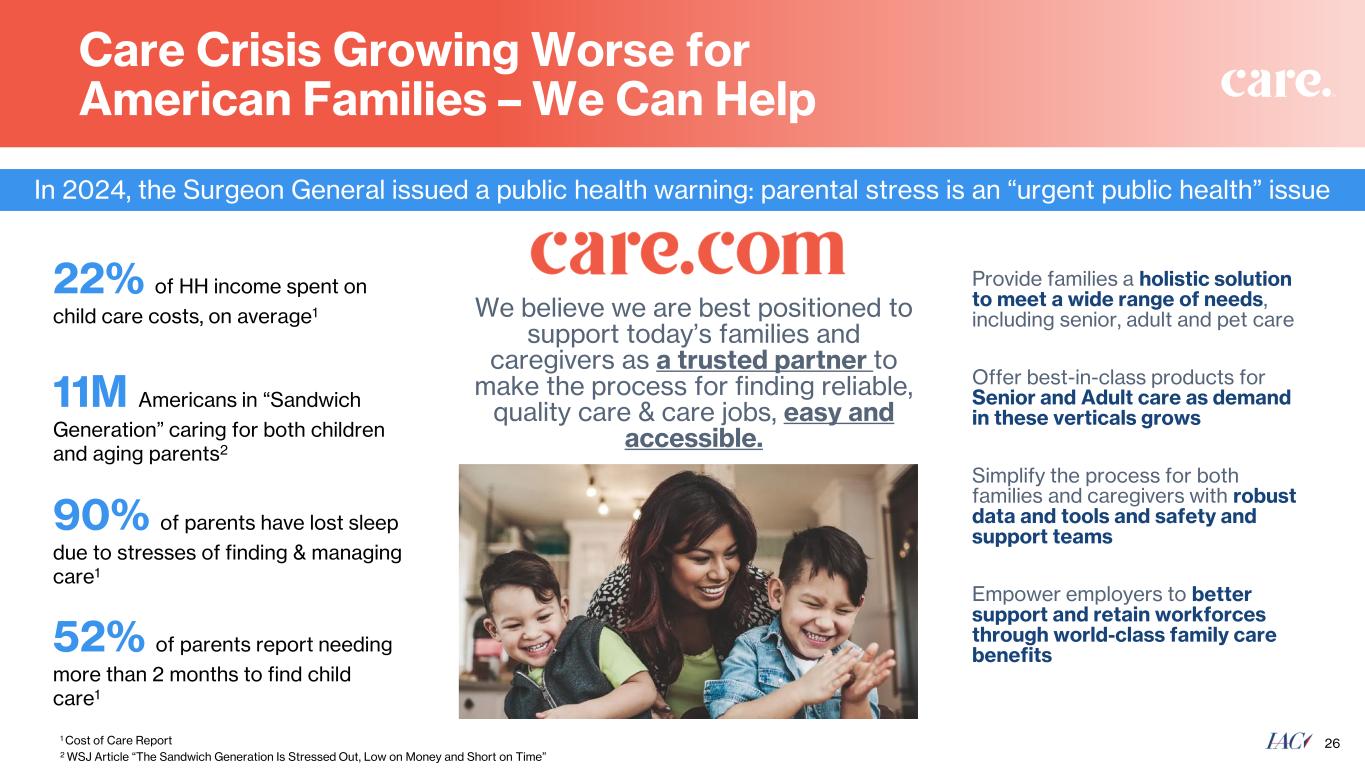
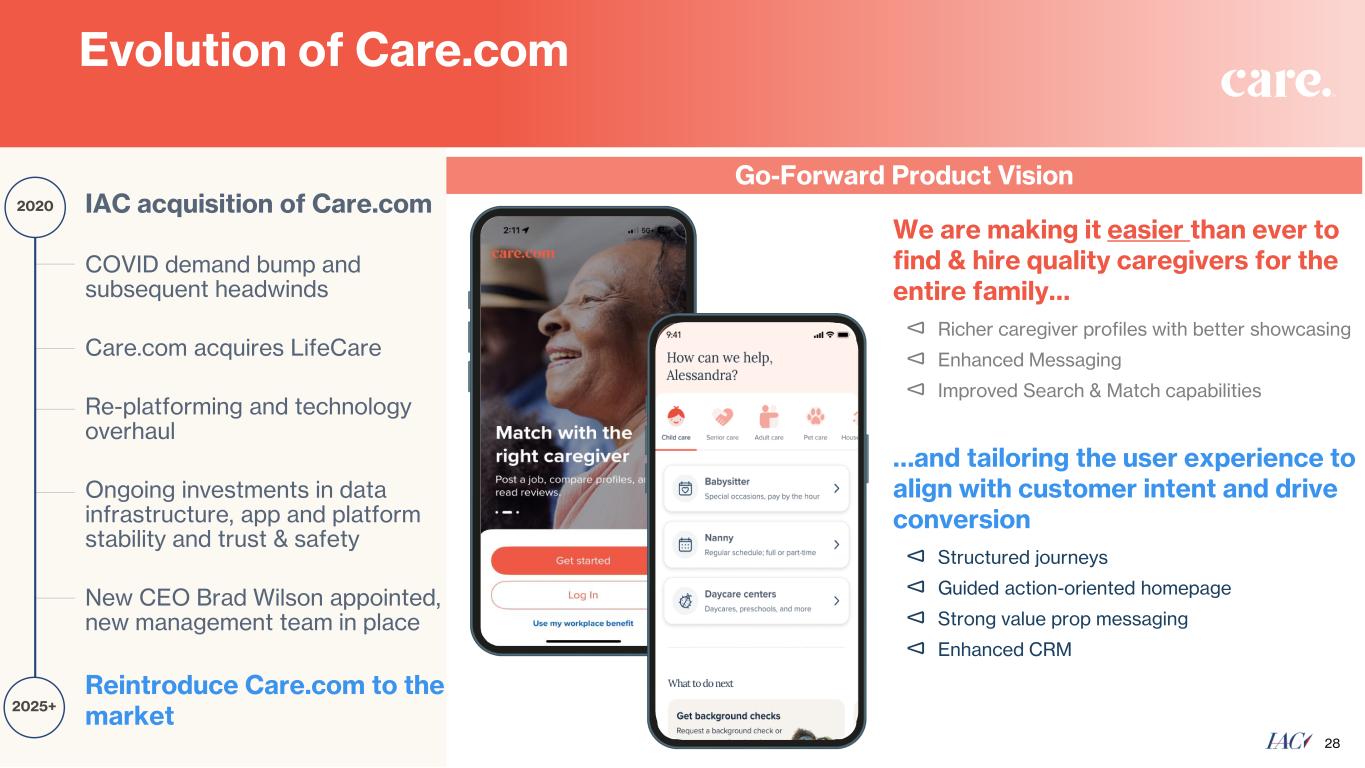
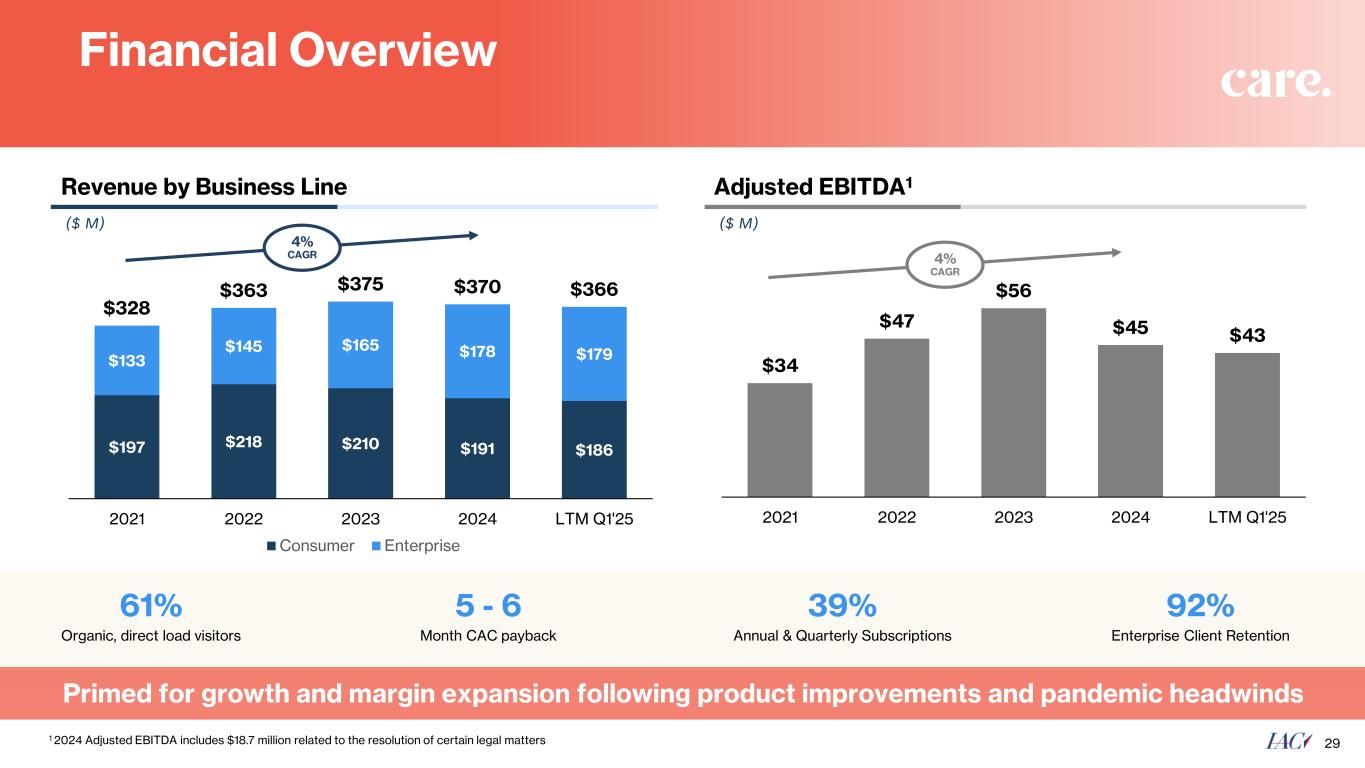
Yes, that would be specific to the programmatic market, but particularly due to our strong base of advertisers across our brands, we expect a different dynamic in terms of premium. We’re not implying anything absolute, Tom. These are the kinds of questions we’re currently addressing. Regarding Care, thank you for your question. We separated Care out as a segment earlier this year for the first time. To provide some context, it is the leading provider in consumer care, including access information, childcare, senior care, pet care, and housekeeping. We have the greatest liquidity on both sides of the platform, including demand and caregivers. It’s a solid brand; we acquired the company in 2020. At the time of the acquisition, IAC recognized there were underlying issues with the platform, product, and overall experience. A significant amount of time was spent initially enhancing the base platform for resilience, consistency, and eventually improving elements like product pricing, packaging, and payments. As a result, while the product wasn’t improving during that period, the pandemic created a substantial boost for the business due to increased demand for childcare and senior care as people returned to work. This boost somewhat concealed the deficiencies in the product during 2022 and 2023. As that supportive trend slowed, and considering some of the wage increases that have occurred, additional pressure emerged in the Care sector, revealing some realities about the product. Brad Wilson took over as CEO less than two years ago, and he and his upgraded team have been diligently working to enhance the product and experience, as well as pricing and packaging. Currently, on the consumer side, we have three main priorities for this year. First is the product, where they made improvements last year, but this year, they are implementing major advancements in matching, aiming for the most accurate caregiver matches based on care seeker specifications. The previous product was quite outdated regarding communication between seekers and caregivers. We are advancing in that area and fulfillment. Second, we are focusing on optimizing pricing and packaging, moving away from a one-size-fits-all subscription. With the improved platform, we can introduce various options to better meet care seekers' diverse needs. Finally, once we are satisfied with the product and packaging, the next step will be marketing, which involves both revitalizing the Care brand and enhancing spending efficiency. We learned that our previous always-on model was quite inefficient, particularly during peak times of year for household care acquisition. We are already seeing improvements in responsiveness and fulfillment compared to the past product. As they continue to make enhancements, we are optimistic about the progress. We expect to have significant improvements by Q3 or early Q4. We are confident in returning the consumer business to stability, and we anticipate growth in 2026 as Brad and his team take the necessary steps.
Operator
The next question comes from Youssef Squali from Truist.
Speaker 10
This is Robert Zeller on for Youssef Squali. On the Google partnership, I'm curious if there was any cloud hosting savings as well with that? And what impact you guys are seeing to traffic, if any, from Search algo changes as well as Google's transition to AIO? And then on programmatic, I just wanted to unpack the drivers behind the softness. I think you guys mentioned some impression commentary earlier and I just want to reconcile that with strong advertisers leaving the market and the pressure on CPMs as well.
Sorry, can you just explain that last question one more time? I've got the first part.
Speaker 10
Yes, sure. On the programmatic, I'm just curious, I just wanted to unpack the drivers behind the softness a little bit. I thought I heard you guys say that impressions were lower earlier in the call. So I just wanted to reconcile that with what you said about Temu and Shein exiting the market and driving CPMs down as well.
Yes, I understand that question. Regarding the first question, the Google contract pertains to search and does not include any cloud component. It is specifically the long-term AMG search partnership with Google, focusing on its business. While we utilize various cloud services across our companies, there was no bundling of vendor relationships in this case; it's purely a stand-alone search arrangement. Would you like to add anything?
Yes, I will discuss the impact of the AI features. These features, which display Google AI responses at the top of the search results, currently appear in about one-third of our searches. We have observed a slight performance decline on these pages, although it is challenging to pinpoint the exact extent due to the various factors at play on these pages, including numerous other features and the activity of platforms like Reddit. The search page seems quite cluttered at this moment. When we established the business, 60% of our traffic came from Google Search, and now it's slightly over one-third, yet we have continued to grow. We have consistently stated that we are very pleased to receive traffic and audiences from different algorithms and sources, but it is our responsibility to effectively manage these sources and ensure we are delivering content that meets user needs. We have successfully achieved that. Therefore, it's difficult to quantify the precise impact. Personally, I don’t believe it is significant for us at this stage. It seems more to be an aspect of the overall search page experience, so I am not particularly worried about it.
Yes. I mean I would think about it if Google Search is about one-third of our traffic and you're seeing an AI overview on 35% of that. And then you've got a small decline in click-through, it's not a significant part of our traffic, right?
Yes, exactly. That's a much clearer way of saying it than I said it.
Yes. Despite the clutter on search pages across IAC, with platforms like Reddit and e-commerce affecting visibility, top brands continue to perform well. We also observe this in our noncore titles at DDM, where we aren't investing, but weaker brands tend to fade away.
At least in the context of the search page.
There is still value for consumers and advertisers, but we have noticed a significant gap in Search. We remain optimistic about our top brands, and the importance of brand and consumer trust remains consistent across all areas of the business. Regarding programmatic, it's really splitting based on pricing and revenue for DDM. Programmatic prices have been rising strongly for some time, but recent concerns about tariffs have resulted in flat pricing year-over-year, which affects programmatic. Our approach to programmatic inventory involves maximizing sales through premium direct channels, which is strategic for us and helps our direct partners with their campaigns. If there are minor declines in traffic, as we experienced in core during Q1, it results in less traffic for programmatic. In Q1, the decline in programmatic traffic was partly due to overall traffic reduction, but also because premium channels absorbed more. In Q2, we expect traffic to stabilize and possibly grow slightly, but programmatic prices are no longer benefiting from the market disruptions we've encountered.
Operator
The next question comes from Nick Jones from Citizens JMP Securities.
Speaker 11
This is Luke on for Nick. I guess just double-clicking a bit more on Care.com. I know it's a tough macro environment but at a high level, what are the key strategic priorities there to kind of help accelerate growth in the coming quarters or in years?
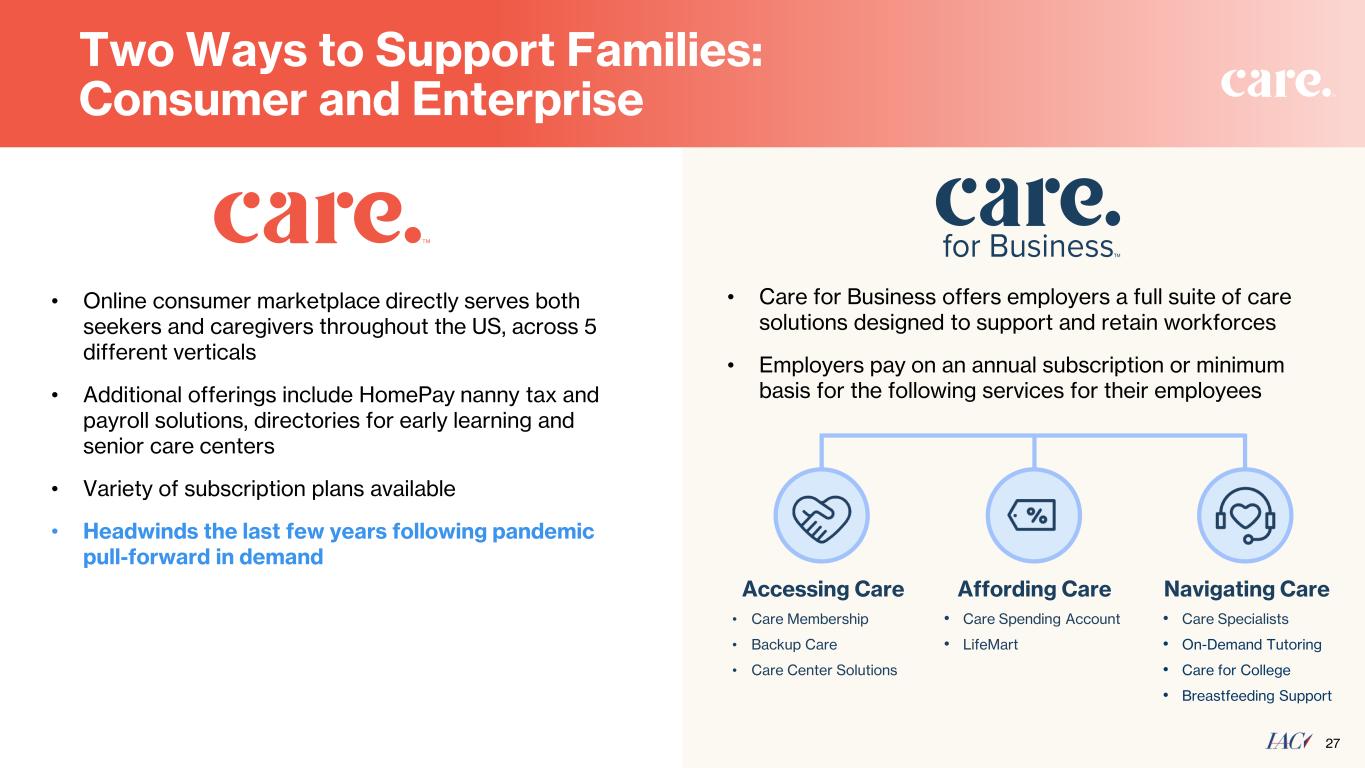
Thank you for the question. Ultimately, Care on the consumer side is the leader in the industry. On the enterprise side, we are among the top companies with clear advantages. We have liquidity on both sides of our marketplace, with care seekers, or consumers, on one end and caregivers—whether for children, seniors, pets, and so forth—on the other. It's really about execution and enhancing the product and experience to improve matching. This, in turn, drives initial conversions and recaptures, as we're currently operating with a subscription model. Users may lapse or cancel their subscriptions and return later to hire a senior caregiver or a new child caregiver. So, we have to focus on initial subscriptions as well as recapture and reengagement, ensuring that the product and experience are constantly improving. This is where we've faced challenges in recent years, but we feel positive about our current trajectory. Additionally, we are focusing on pricing and packaging, as well as marketing. We recognized inefficiencies in our marketing strategy and decided to hold off on a significant push until we were satisfied with our product. This has been part of our ongoing strategy. On the enterprise side, there is a cultural shift post-pandemic, where backup care is becoming a standard employee benefit, and we have seen advantages from this trend. Care for business offers backup care, customer support, access to our caregiver database, and our life service through LifeCare, which we believe is truly unique. For us, there are three main objectives on the enterprise side: first, help employees understand and utilize Care for Business; second, continuously improve the product to simplify booking backup care for employees; and third, acquire new clients, ranging from Fortune 500 companies to small businesses through our sales force. We are focused on execution, and the ongoing pressures on households for both senior care and childcare persist. As we’ve mentioned before, our goal is to excel in the full spectrum of care.
Operator
The last question comes from Ygal Arounian from Citigroup.
Speaker 12
We spent a lot of time discussing the programmatic side, and I thought it would be helpful to also talk about the premium side and the strength you're experiencing there. Are those commitments multi-quarter? What trends are you seeing there? As Neil mentioned, while premium is strong, advertisers are exploring their options in the current environment. What feedback are you getting from advertisers as we look ahead a couple of quarters? Additionally, if there's anything to add regarding the M&A environment as you progress to this stage, we would love to hear about any changes or areas of focus you might be considering moving forward.
Yes. I'll let Chris do the M&A thing. I'll do the premium side. Our premium business coming in this year was super strong. First quarter was very good, as Chris said. Second quarter, we're where we would hope to be. But again, I think a lot of it is relative to the market, we've got really good offerings. We've got really good brands. We've got a really good audience, our stuff performs. D/Cipher is really helping. Again, I would love to be able to answer your question more thoroughly and more eloquently but we just don't know. Again, if things hang on where they are, I think we feel pretty good about where we're going to be going. Before any of this macro disturbance at the end of last year, we felt fantastic. We're executing at a high level, having great conversations. And I guess, look, the advertisers are people, too. They look at markets, they look at it like in many ways, the way you guys look at it. They're analysts, right? CEOs and CMOs are analysts. So it's just the way of saying that we don't really know but as of right now, there's nothing to suggest that we won't do fine the rest of the year and potentially good the rest of the year but we'll see.
Yes, this reflects our approach to guidance and our thoughts regarding it. As Neil mentioned, we are examining the data for trends and patterns. We're grateful that Temu and Shein are not part of our comparisons. This is partly because, as Neil said, we priced them out of our inventory, which is beneficial. Additionally, across IAC, we're observing Care and others. Recently, we've noticed some softness in conversion, which can fluctuate from quarter to quarter, although not in any major way. Regarding enterprise for Care, we're monitoring if employers will lay off staff or significantly reduce their numbers. So far, we haven't seen that, but we're being cautious given the current climate. When we set our original guidance for the year in February, we took into account the potential for volatility due to unforeseen circumstances. It seems like there are always unknowns that arise each year. By the end of March, we observed our businesses performing toward the higher end of their guidance ranges. For instance, DDM saw digital revenue growth of 13% and 18% in March and April, respectively. We had been on track for low double-digit growth in the second quarter, but it's now adjusted to 7% to 9%. We're incorporating some expected economic slowdown into our guidance for Q2 and Q3, but we don't anticipate a significant recession. Our businesses are also considering cost-saving measures, which they would typically avoid if everything were going well. This is the strategy we're employing for our guidance based on current observations. Regarding the M&A environment, we’re enthusiastic and exploring various options. We’ve pointed out a few industries of interest. We constantly ask how we can transform a promising business or concept into something much larger, whether through early investments, roll-ups, consolidations, or acquiring undervalued larger companies with a different perspective. While the digital market is certainly more challenging than it was a decade or two ago, we still recognize opportunities. We are looking at enhancing experiences, including digital enablement, as demonstrated by MGM through in-person and digital gaming experiences. We can see trends pointing in directions ripe with potential as personalization and real-time interactions become more prevalent. Additionally, we are curious to see how AI will shape consumer interactions and gaming. While we can’t disclose too much at this point, we are diligently working on this front and believe there will be interesting opportunities ahead. I think that's all, operator.
Operator
Yes. That was the last question.
Okay. Thank you all for your time and engagement and onward and upward. Have a great day.
Operator
The conference has now concluded. Thank you for attending today's presentation. You may now disconnect.