Speaker 0
Good day, and welcome to the Chicago Atlantic Real Estate Finance, Inc. Third Quarter 2025 Earnings Call. Please note that today's event is being recorded. I would now like to turn the conference over to Tripp Sullivan of Investor Relations. Please go ahead.
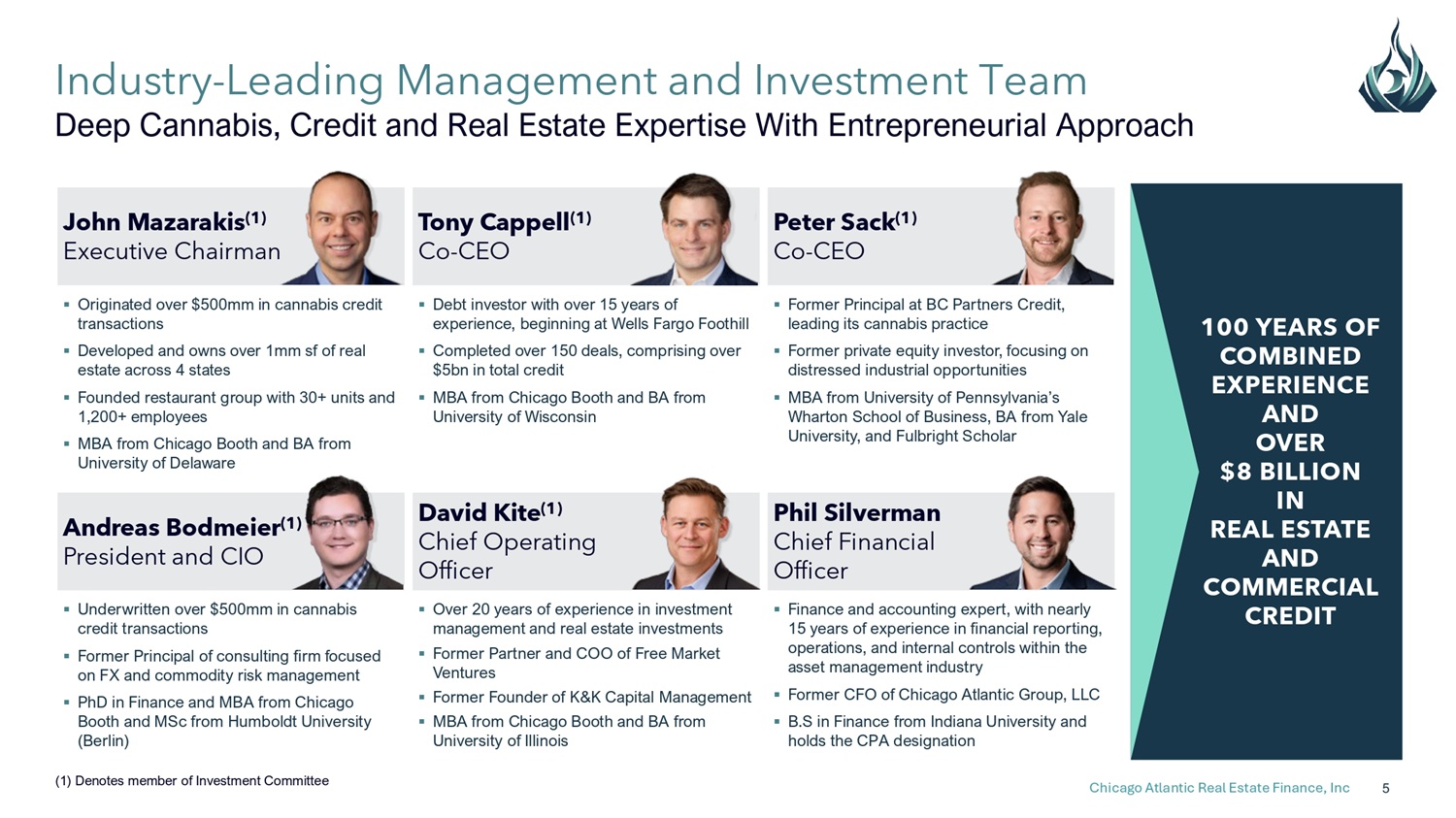
Thank you. Good morning. Welcome to the Chicago Atlantic Real Estate Finance Conference Call to review the company's results. On the call today will be Peter Sack, Co-Chief Executive Officer; David Kite, Chief Operating Officer; and Phillip Silverman, Chief Financial Officer. Our results were released this morning in our earnings press release, which can be found on the Investor Relations section of our website, along with our supplemental filed with the SEC. A live audio webcast of this call is being made available today. For those who listen to the replay of this webcast, we remind you that the remarks made herein are as of today and will not be updated subsequent to this call. During this call, certain comments and statements we make may be deemed forward-looking statements within the meaning prescribed by the securities laws, including statements related to the future performance of our portfolio, our pipeline of potential loans and other investments, future dividends and financing activities. All forward-looking statements represent Chicago Atlantic's judgment as of the date of this conference call and are subject to risks and uncertainties that can cause actual results to differ materially from our current expectations. Investors are urged to carefully review various disclosures made by the company, including the risk and other information disclosed in the company's filings with the SEC. We also will discuss certain non-GAAP measures, including, but not limited to, distributable earnings. Definitions of these non-GAAP measures and reconciliations to the most comparable GAAP measures are included in our filings with the SEC. I'll now turn the call over to Peter Sack. Please go ahead.
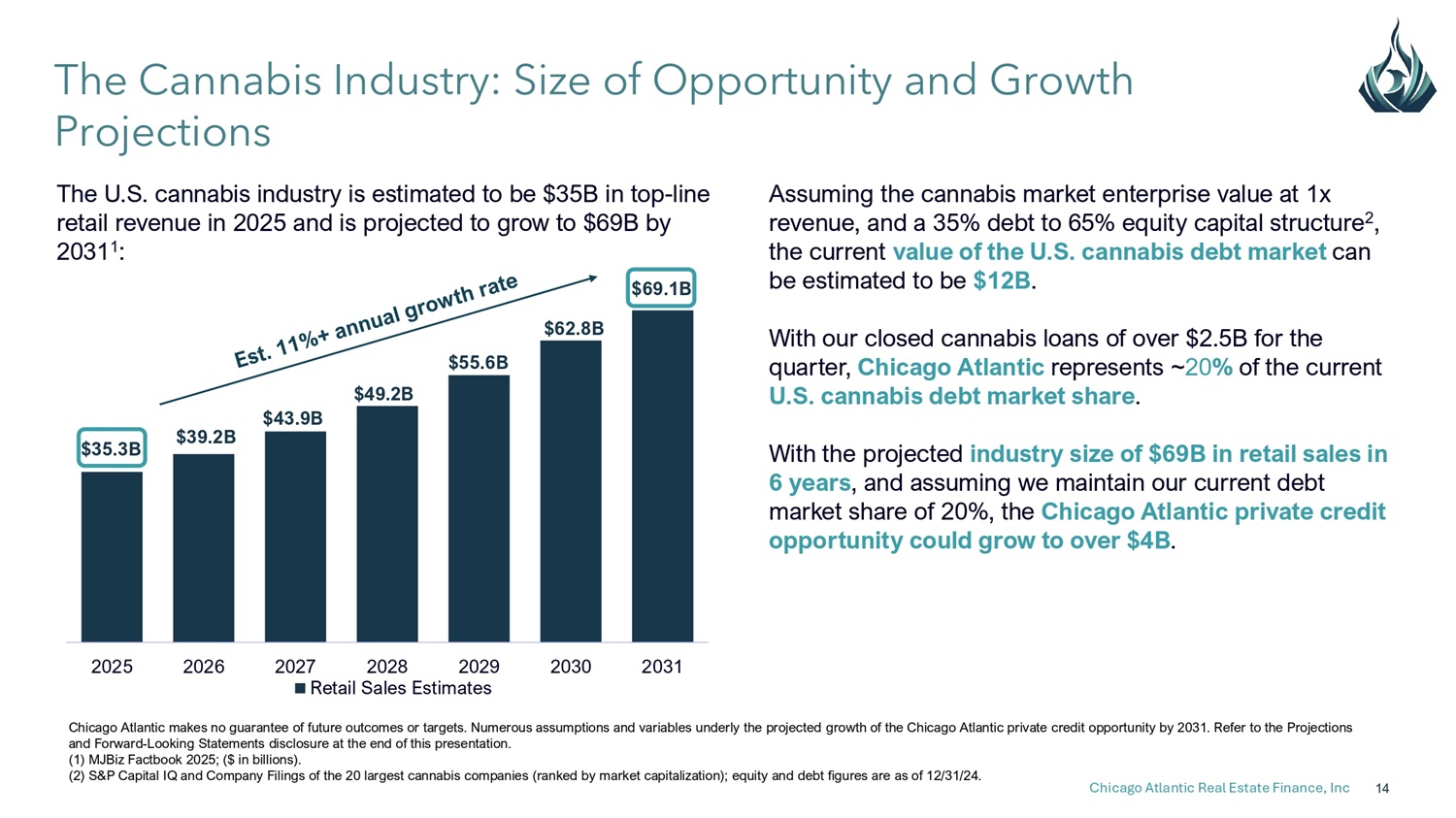
Thank you, Tripp. Good morning, everyone. This quarter, against the backdrop of a volatile private credit environment, we demonstrated another consistent period of execution and performance. The benefits of our consistent approach and disciplined focus on principal protection yielded a strong quarter, and this quarter's gross originations have us on pace to hit our goal of net growth in the loan portfolio. Challenges in private credit markets have created newfound concern in the investor community. Declining interest rates impacted lenders with floating rate portfolios. The syndicated loan market experienced high-profile fears of fraud, and excess capital in the market underlies perceived lack of underwriting standards. I suspect that these broader concerns have caused us to trade at a sizable discount to our book value rather than the premium we long enjoyed since our IPO nearly four years ago. Noting this disconnect from the reality of our portfolio, our management team and Board of Directors recently purchased shares on the open market, bringing our collective ownership of the common stock to nearly 1.8 million shares on a fully diluted basis. There are several reasons why we're so confident with what we've created at Chicago Atlantic. The first is that we have a cannabis pipeline that currently stands at approximately $441 million. We believe that this pipeline of opportunities is unrivaled in the industry and is diversified across growth investments, maturities in the market, M&A activity related to operational and balance sheet restructurings, and potential ESOP sale transactions. Secondly, we have the most robust platform and capital to meet the growth of the industry. We deploy capital with consumer and product-focused operators in limited license jurisdictions at low leverage profiles to support fundamentally sound growth initiatives. I can't think of a better example of our commitment to the industry than Chicago Atlantic's funding this quarter of what we believe to be the largest real estate-backed revolving credit facility among U.S. operators in the history of the industry, a $75 million three-year secured revolver with Verano. Lastly, we've constructed a portfolio with differentiated and low-levered risk-return profile that is insulated from both Cannabis Equity and interest rate volatility. As David will break down for you in a moment, because we have structured our floating loans with interest rate floors, only approximately 14% of our total loan portfolio is exposed to any further rate declines based on today's 7% prime rate. That discipline provides a meaningful measure of protection to the portfolio. We are focused on outperforming and delivering the kind of returns that we all expect to shareholders. Confidence in the strategy is important. And hopefully, I've provided some insight into why we are enthusiastic and why we, as a management team, executed share repurchases in recent weeks. But execution on our plan matters even more, and I look forward to reporting on our continued progress over the balance of the year. David, why don't you take it from here?
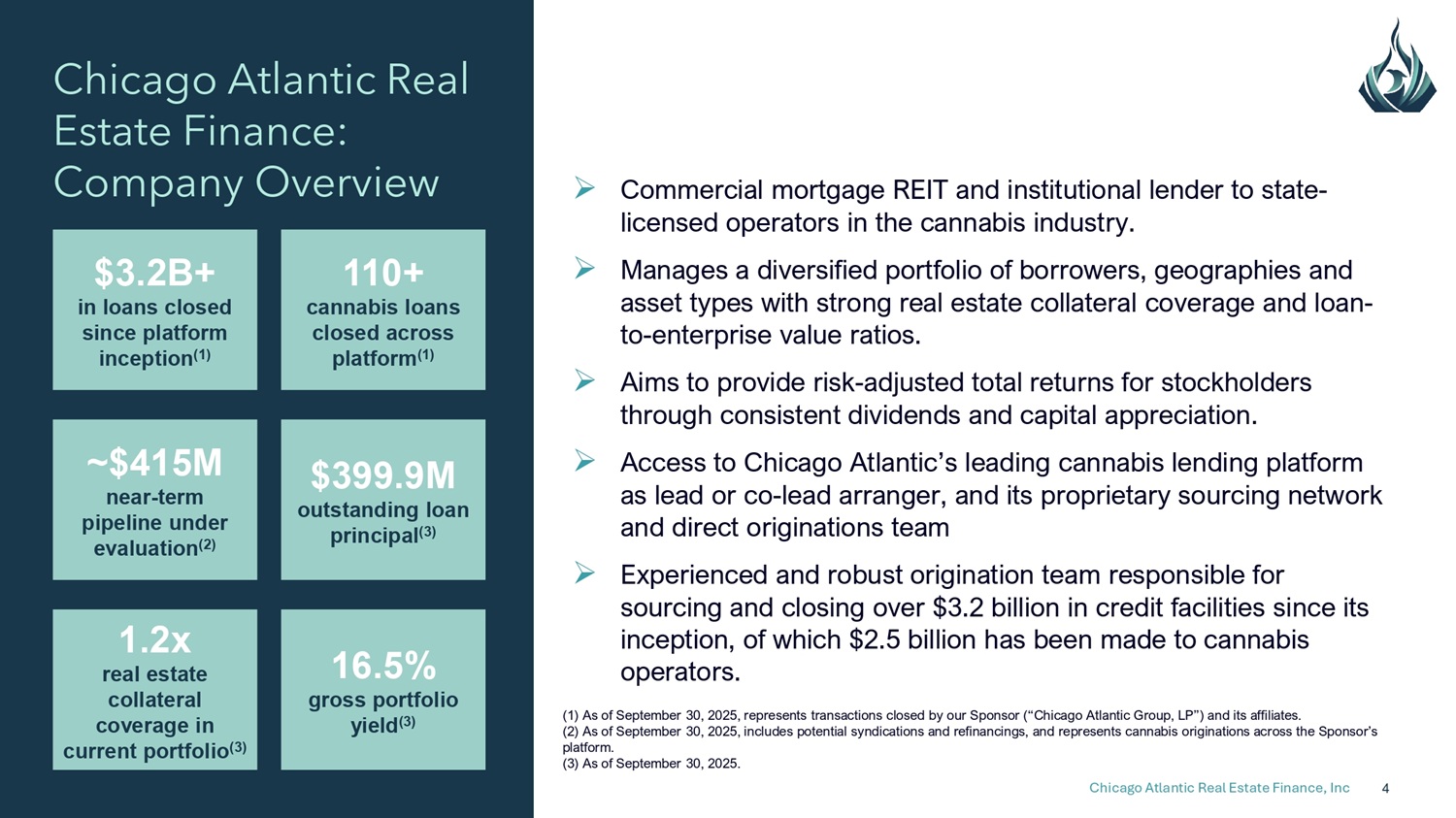
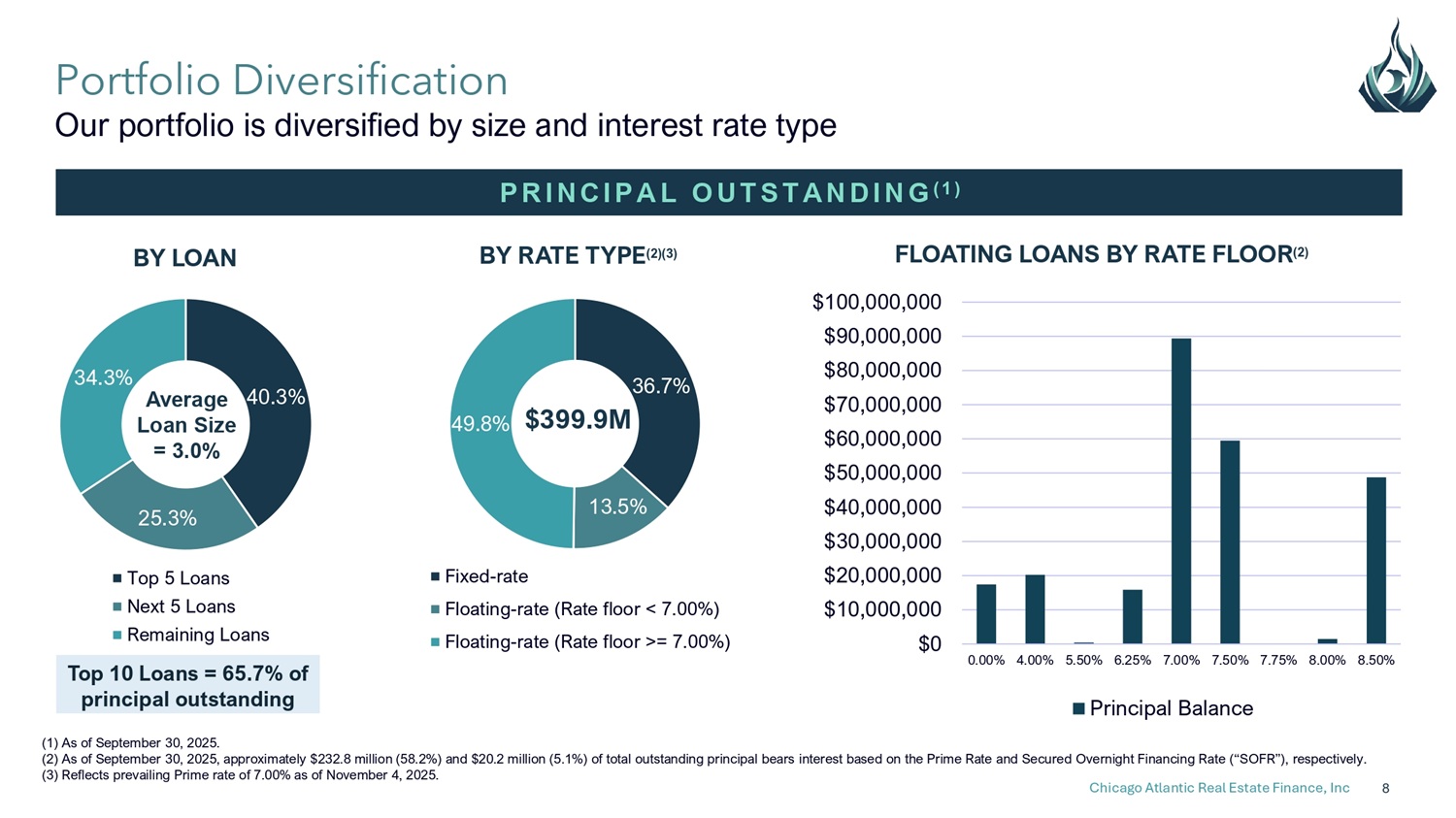
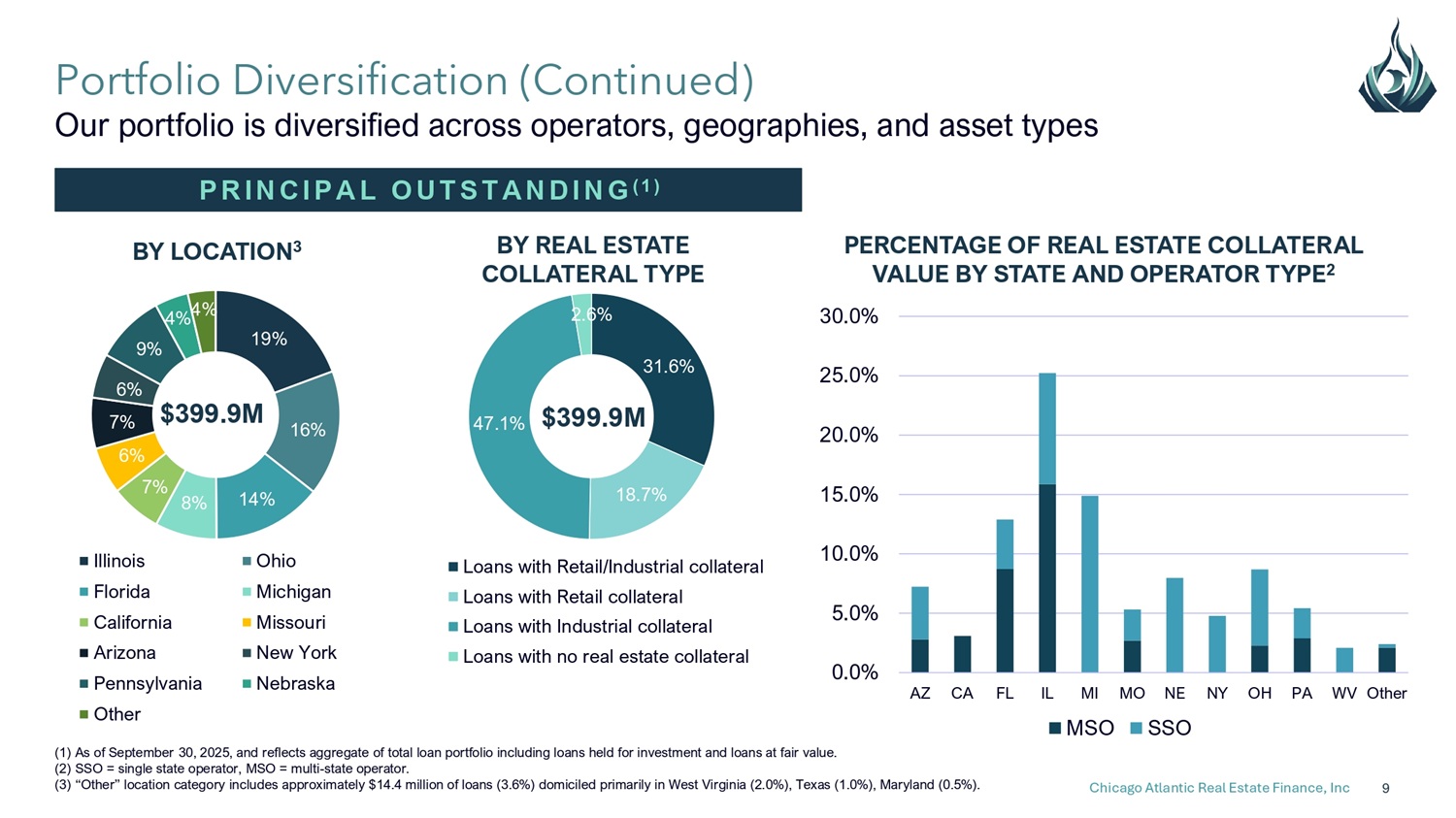
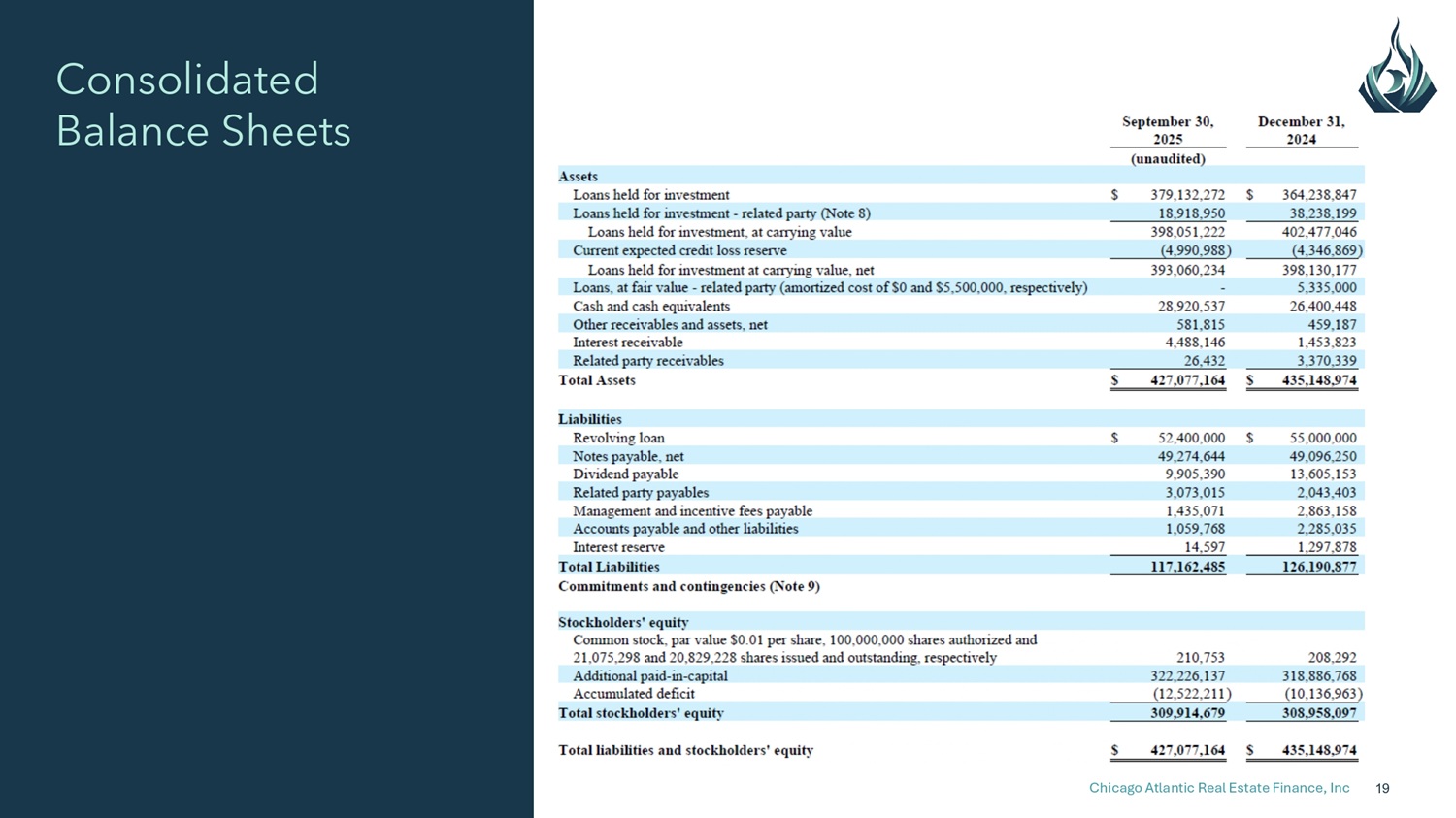
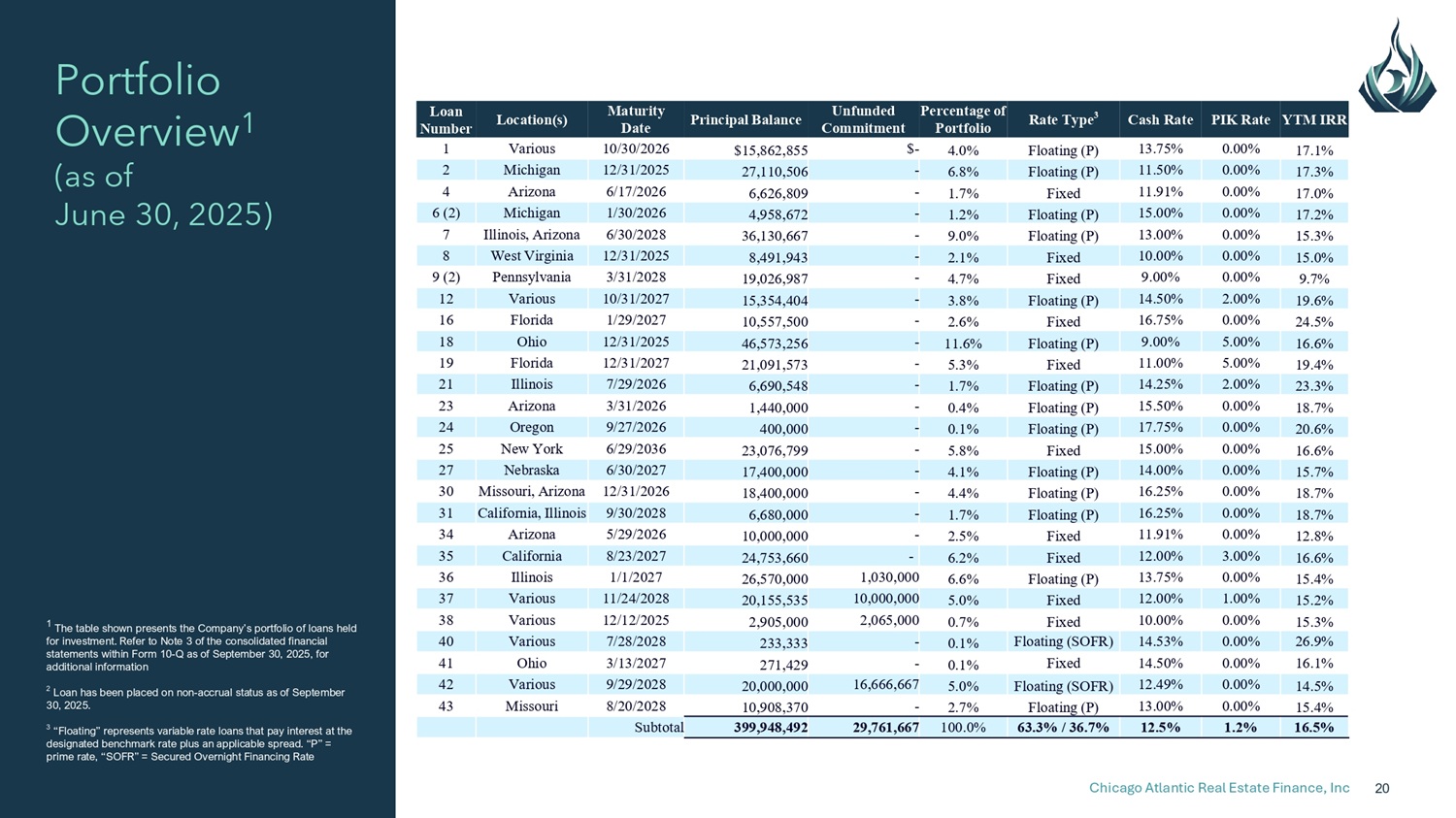
Thank you, Peter. As of September 30, our loan portfolio principal totaled approximately $400 million across 26 portfolio companies with a weighted average yield to maturity of 16.5% compared with 16.8% for the second quarter. Gross originations during the quarter were $39.5 million of principal fundings, of which $11 million was advanced to a new borrower, and $20 million was related to the new Verano credit facility that Peter mentioned earlier. These were offset by unscheduled principal repayments of $62.7 million that we disclosed last quarter. As of September 30, 2025, our portfolio consisted of 36.7% fixed-rate loans and 63.3% floating-rate loans. The floating-rate portion is primarily benchmarked to the prime rate. Following last week's 25 basis point rate reduction, bringing the prime rate to 7%, only 14% of our portfolio remains exposed to further rate decline. The remaining 86% is either fixed rate or protected by primary floors of 7% or higher. Importantly, our floating-rate loans are not exposed to interest rate caps. This structural advantage, combined with our rate floor protections, positions our portfolio favorably compared to most mortgage REITs. Should the Federal Reserve implement another adjustment to the Fed funds target in December, we are well insulated against the adverse effects of declining interest rates. Total leverage equaled 33% of book equity at September 30 compared with 39% as of June 30. As of September 30, we had $52.4 million outstanding on our senior secured revolving credit facility and $49.3 million outstanding on our unsecured term loan. As of today, we have approximately $69.1 million available on the senior credit facility and total liquidity, net of estimated liabilities of approximately $63 million. I'll now turn it over to Phillip.
Speaker 4
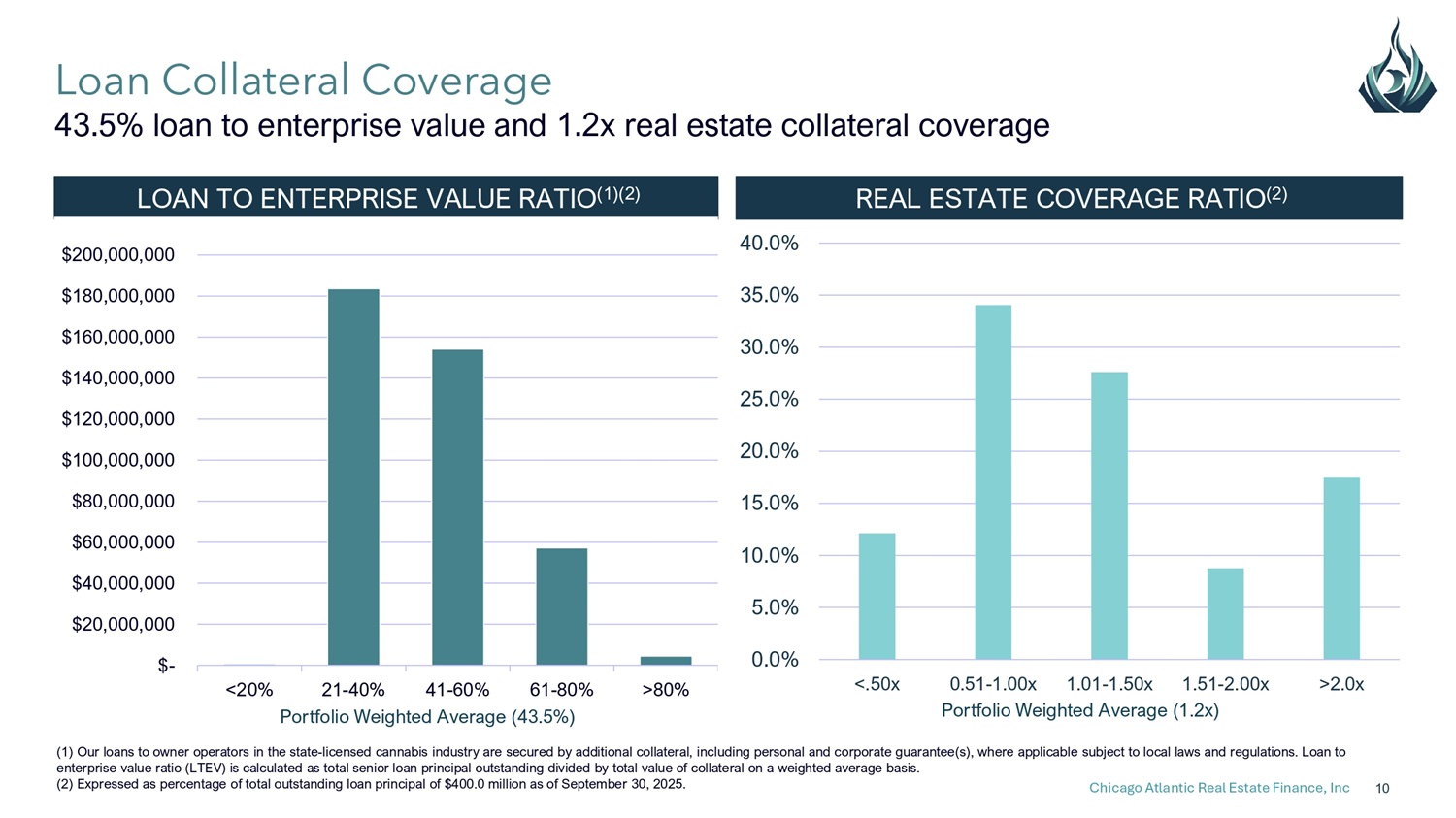
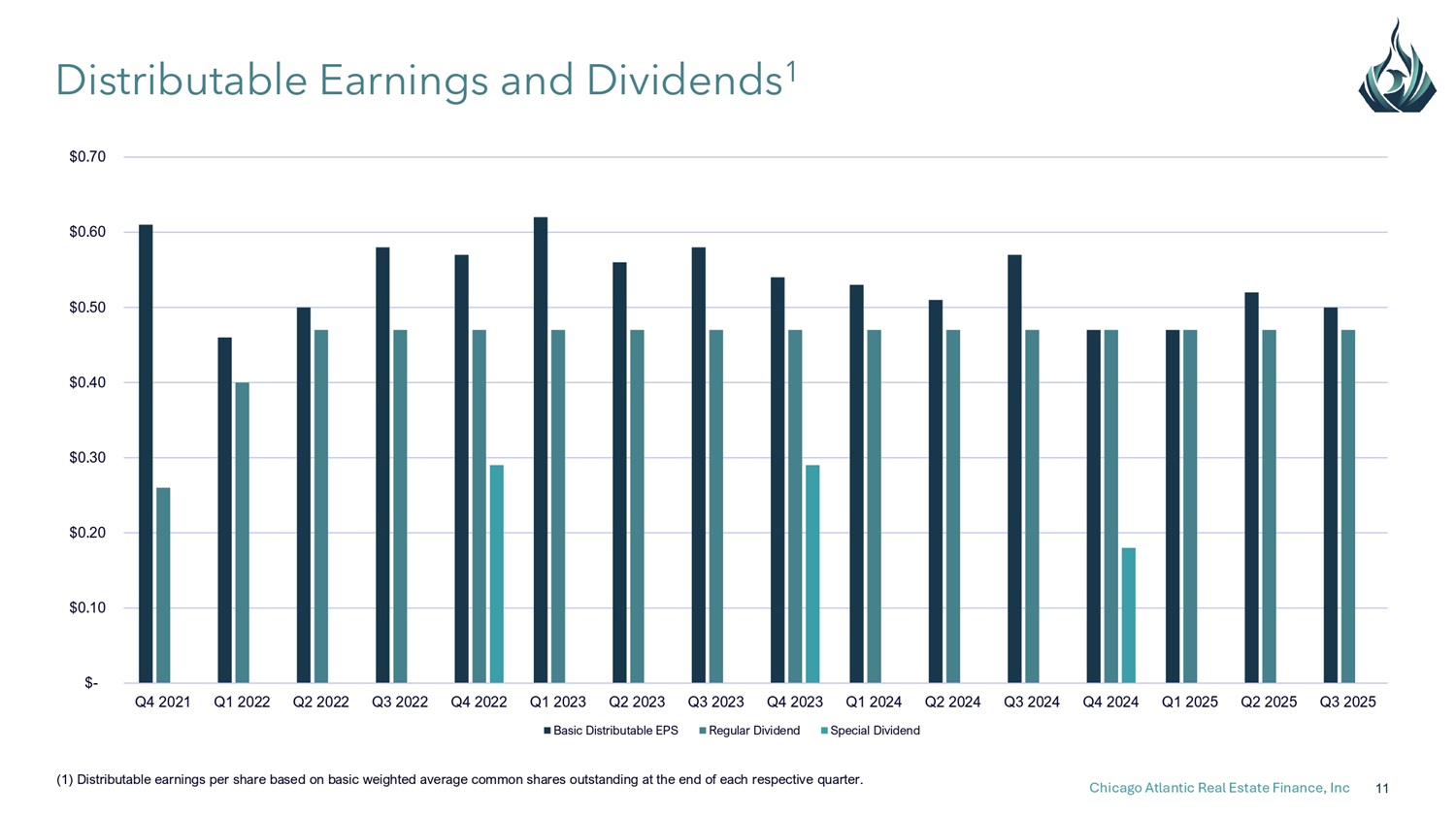
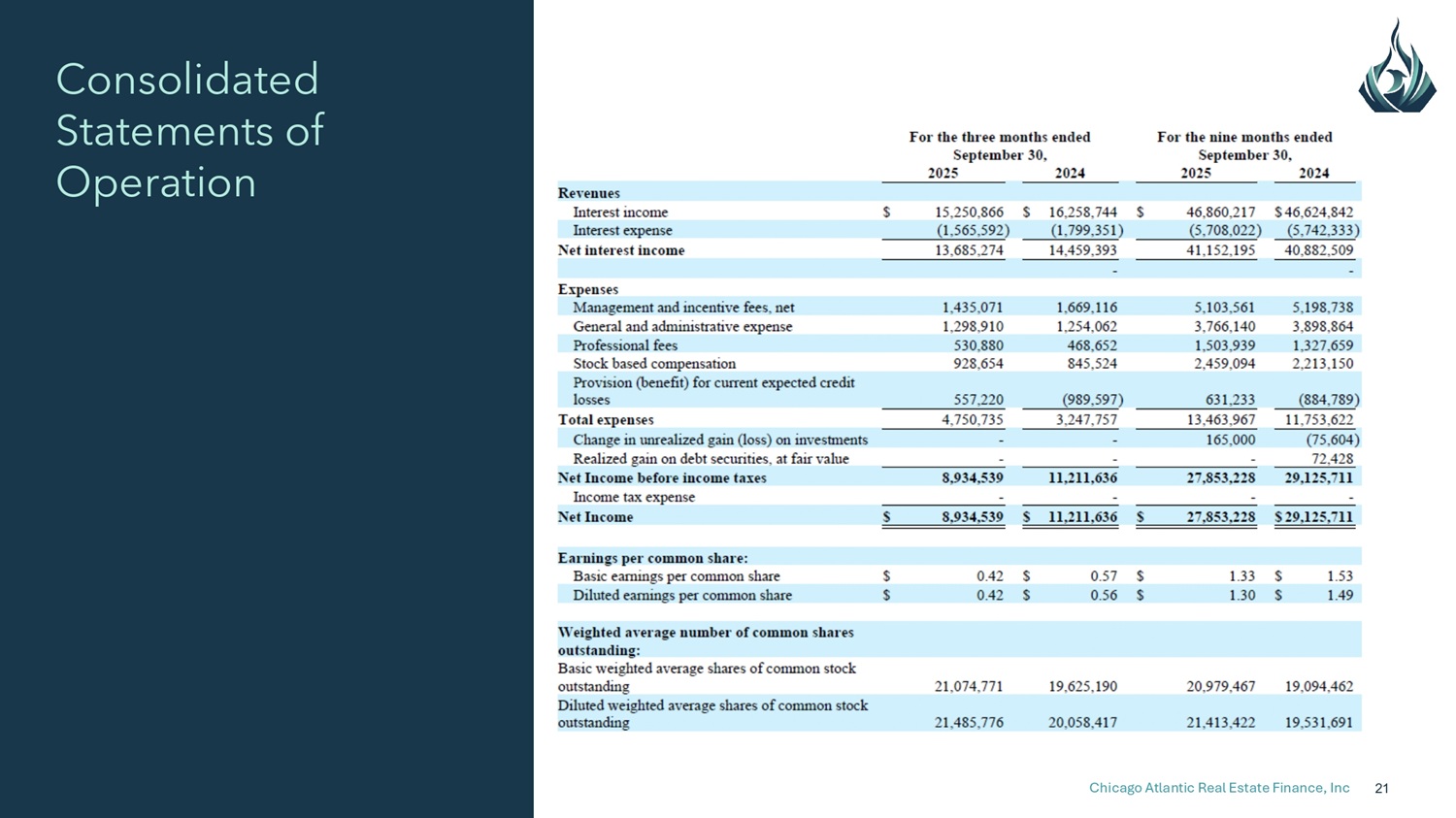
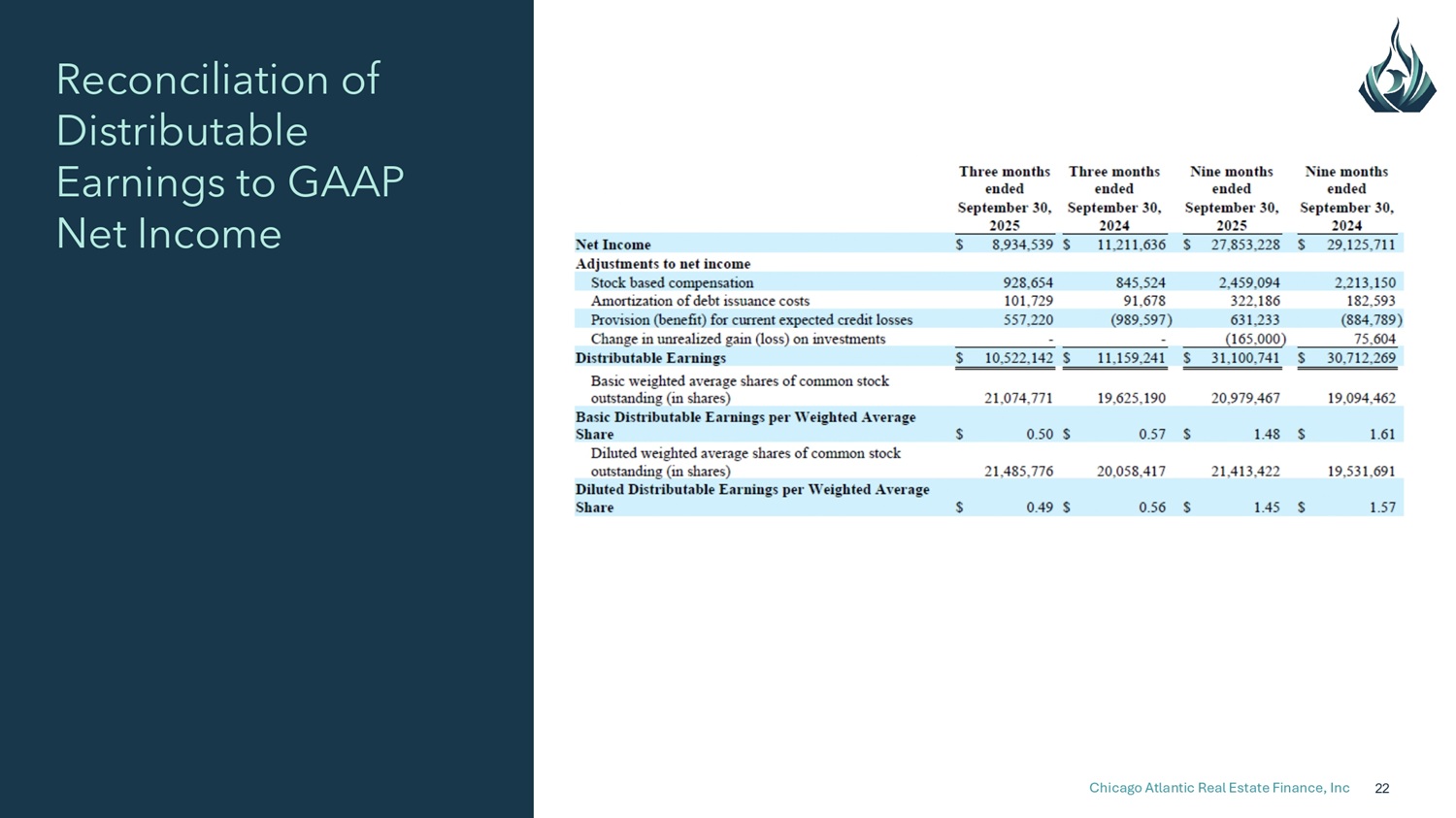
Thanks, David. Our net interest income of $13.7 million for the third quarter represented a 5.1% decrease from $14.4 million during the second quarter of 2025. The decrease was primarily attributable to nonrecurring prepayment make-whole exit and structuring fees, which amounted to $1.1 million for Q3 2025 compared with $1.5 million in Q2 2025. Additionally, approximately $0.1 million of the decrease in net interest income was attributed to the impact of the 25 basis point rate cut late in September on our floating rate portfolio and interest expense on our revolving credit facility. Total interest expense, including noncash amortization of financing costs for the third quarter was approximately $1.6 million, down from $2.1 million in the second quarter. The weighted average borrowings on our revolving loan decreased by $14 million compared to $42.3 million during the second quarter. Our CECL reserve on our loans held for investment as of September 30, 2025, was approximately $5 million compared with $4.4 million as of June 30. On a relative size basis, our reserve for expected credit losses represents approximately 1.25% of our outstanding principal of our loans held for investment. On a weighted average basis, our portfolio maintained strong real estate coverage of 1.2x. Our loans are secured by various forms of other collateral in addition to real estate, including UCC-1, all asset liens on our borrower credit parties. These other collateral types contribute to overall credit quality and lower loan-to-value ratios. Our portfolio has a loan-to-enterprise value ratio on a weighted average basis of 43.5% as of September 30, calculated as senior indebtedness of the borrower divided by the fair value of total collateral to refinance. Distributable earnings per weighted average share on a basic and fully diluted basis were approximately $0.50 and $0.49 for the third quarter, a modest decrease from $0.52 and $0.51, respectively, during the second quarter. And in October, we distributed the third quarter dividend of $0.47 per common share declared by our Board in September. Our book value per common share outstanding was $14.71 as of September 30, 2025, and there are approximately 21.5 million common shares outstanding on a fully diluted basis as of such date. We continue to expect to maintain a dividend payout ratio based on our basic distributable earnings per share of 90% to 100% for the 2025 tax year. If our taxable income requires additional distributions more than the regular quarter dividend to meet our taxable income requirements, we expect to meet that requirement with a special dividend in the fourth quarter. Operator, we're now ready to take questions.
Operator
At this time we will take today's first question from Aaron Grey with Alliance Global Partners.
Speaker 6
First question for me. I just wanted to talk about the pipeline a bit. So $415 million, I know that's down a little bit from prior quarters. So I just wanted to talk about where there are some large potential originations that exited the pipeline. And I know prior quarter, you had talked about ESOPs and potential opportunity there. So I want to see if you still see those as appealing and within the pipeline opportunities.
Yes. ESOPs continue to form a large part of the pipeline. There was no significant exits other than ordinary turnover of our pipeline quarter-over-quarter. Our pipeline tends to refresh every quarter or so as deals either disappear, get turned down by us, or get funded. So changes quarter-over-quarter were ordinary churn.
Speaker 6
Okay. Great. Glad to hear ESOPs are still a good opportunity for you guys. Second question for me, just in terms of some of the loans that are maturing before year-end. Any color you can talk about in terms of how those conversations are panning out? I know you're still targeting net portfolio growth for the year. So any color on those would be greatly appreciated.
We are in the midst of negotiating the terms under which we may extend to maintain the business and maintain the position. I expect that the vast majority of those loans that are maturing before the end of the year, we will retain in some form or another.
Speaker 6
Okay. That's great to hear. Last question for me. No direct implications for new cannabis legalization in the election today but some indirect, particularly for Virginia, if there is a new government that comes in that's more pro-cannabis. Particularly looking at that state, I know new states coming online could be a good opportunity for you guys. So how would you guys potentially look at a state like Virginia in terms of the opportunities there and how the regulatory landscape exists today and could exist tomorrow based on passed legislation for retail setup?
We think Virginia is a very attractive medical market due to its very controlled licensure structure and the way in which the regulator has set up the geographic orientation of license holders. We think it will be an extremely attractive recreational market as well. As those discussions progress, we'll be looking to expand our relationships in the state and deploy capital.
Operator
And today's next question comes from Chris Muller with Citizens Capital Markets.
Speaker 7
Congrats on another solid quarter here. So you guys have done a really great job underwriting a pretty challenging part of the market here. So you can you guys talk about your approach to underwriting and what's driving that success? Is it more the type of borrowers you focus on or the geographies or maybe a combination of those?
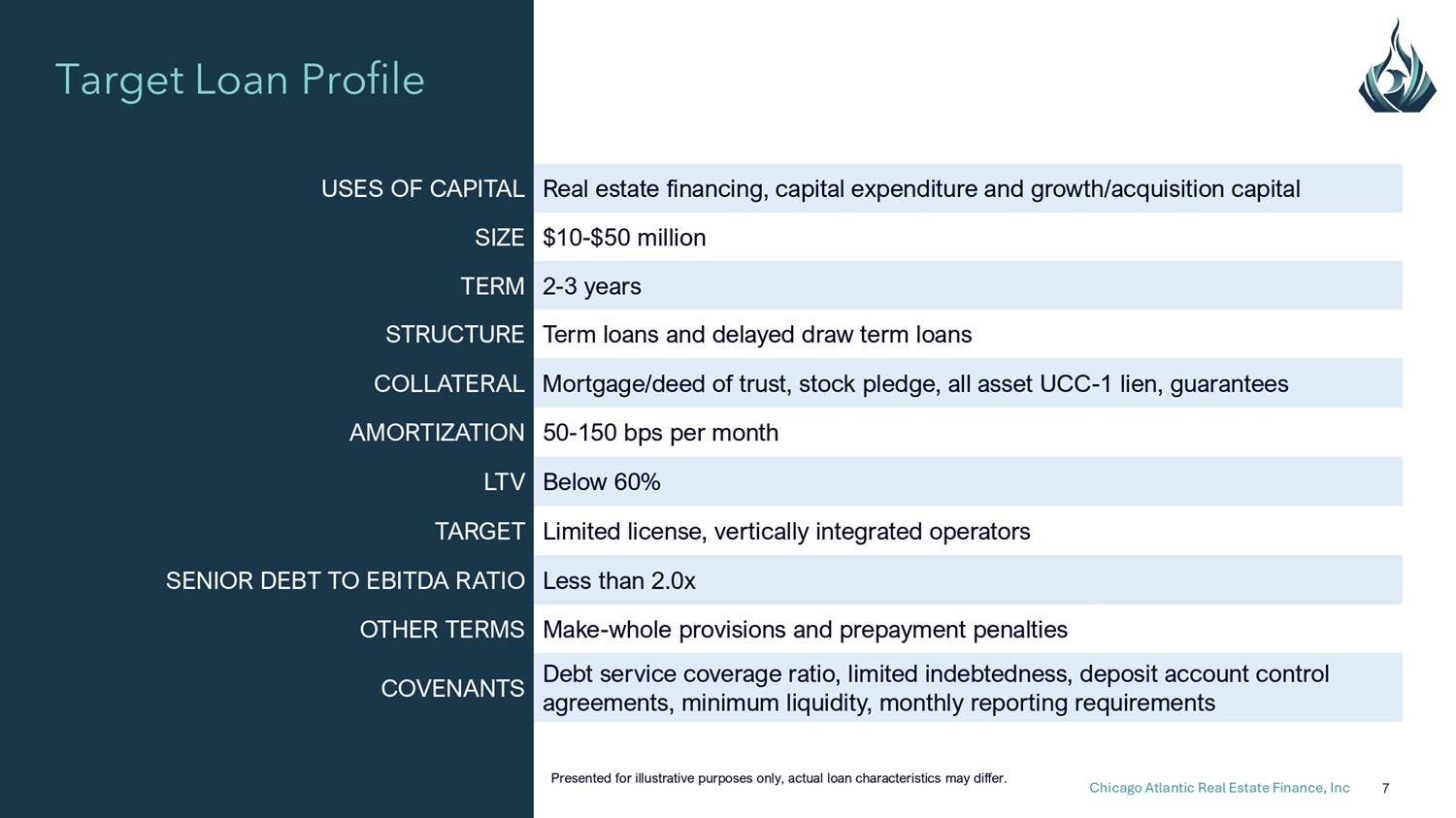
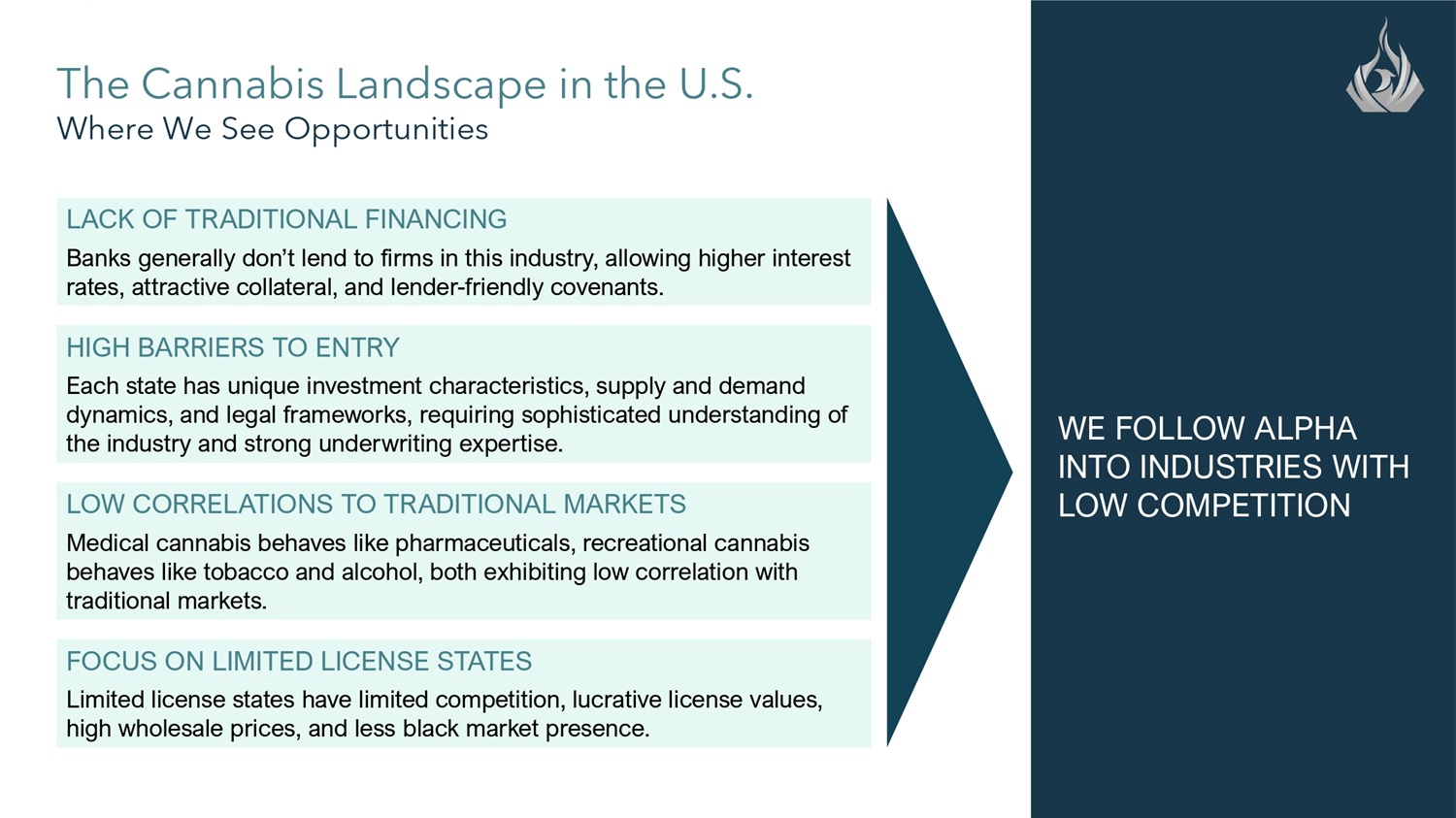
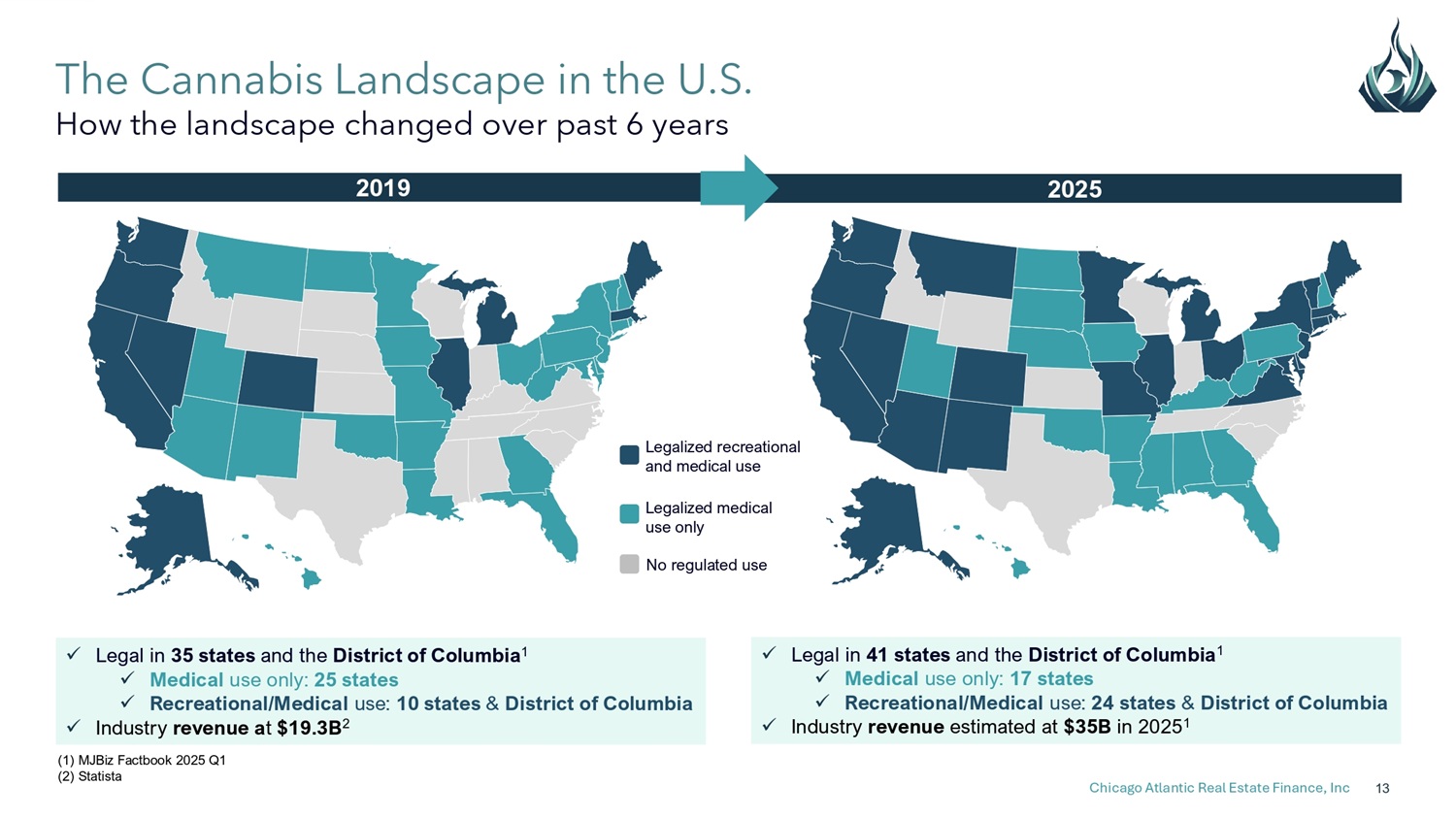
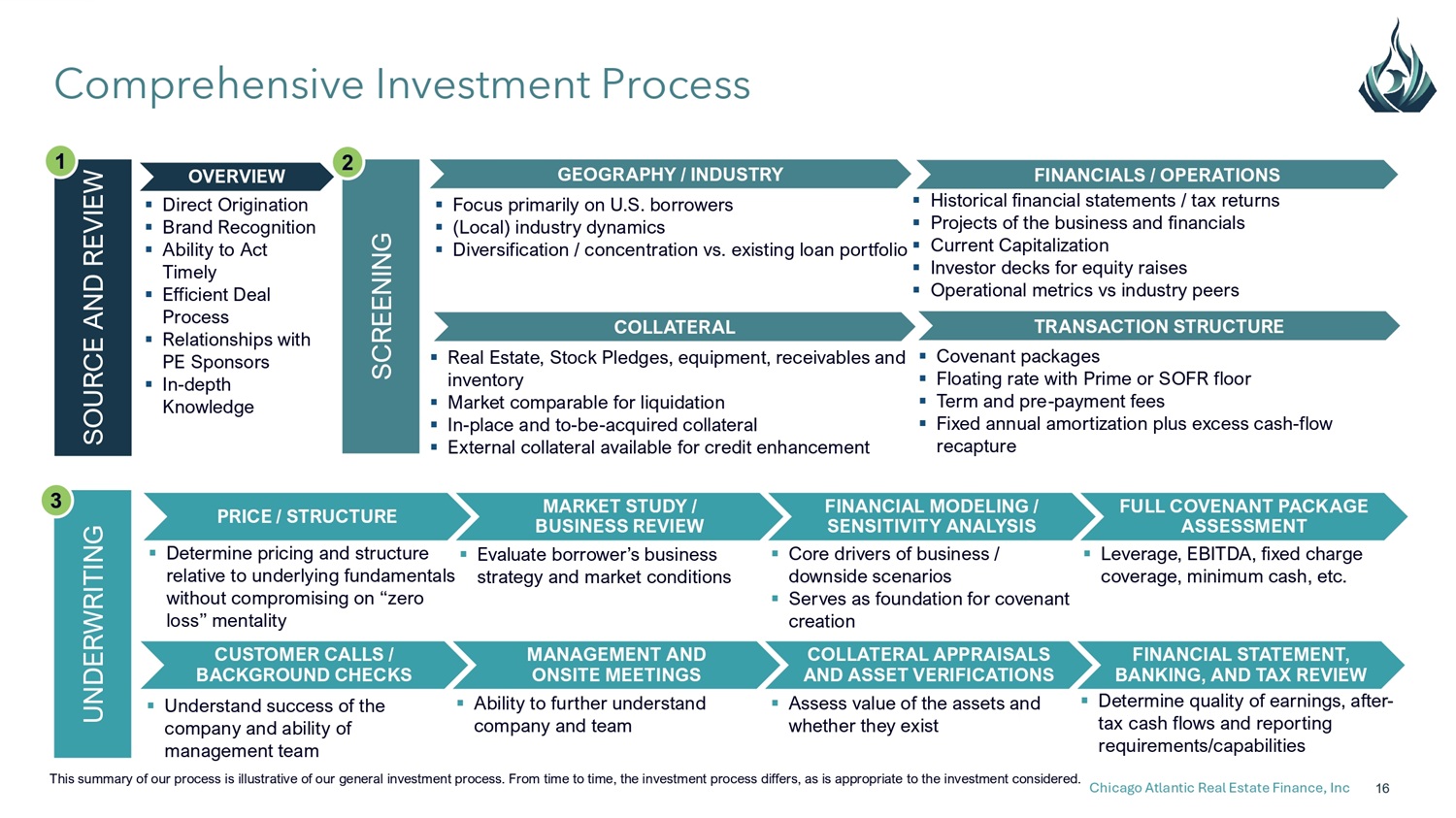
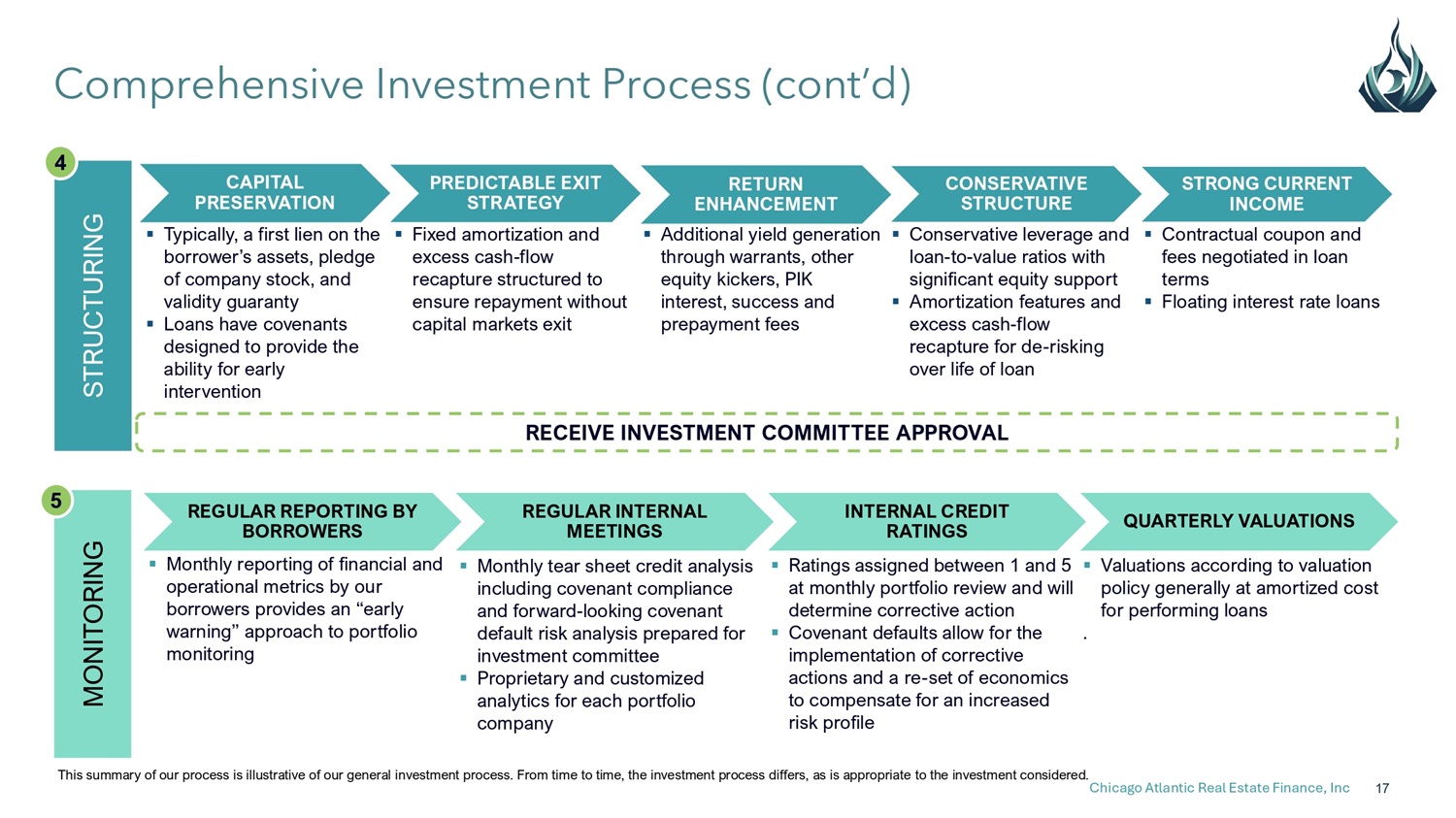
Yes, I think you've highlighted some important aspects. The foundation of our underwriting involves analyzing each market in the 40 states where medical or recreational cannabis is legalized, and this analysis begins before we invest any funds in that market. Our focus extends beyond just the state level; we also examine each part of the supply chain. We concentrate on limited license jurisdictions because the regulatory structure in these areas leads to more predictable wholesale prices, margins, and competitive dynamics. Within this context, we seek operators with diverse income streams, whether from a mix of retail operations or from vertically integrated retail across several limited license states. Additionally, we prioritize lending to operators at conservative leverage levels, typically under 2x EBITDA, along with emphasizing real estate collateral. Together, these factors provide diversity in repayment and potential growth opportunities. Importantly, as we structure loans, we ensure that the majority of our financing is directed towards growth initiatives that enhance EBITDA, and most of our loans also incorporate amortization.
Speaker 7
Got it. That's all very helpful, and I guess...
And so the aim is that our loans will be less risky by their maturity date by virtue of EBITDA growth and loan paydown than they were at the outset, and that we can then continue to support those clients in the next phase of their growth, whether that's acquisitions, expansion of cultivation, expansion of retail. It's really just consistency with what we think are pretty simple fundamental approaches to this industry, a focus on credit quality and a focus on principal protection that's allowed us to maintain the track record through a lot of volatility in equity valuations and in the marketplaces, the operating marketplaces in each of these states.
Speaker 7
Got it. That's very, very helpful. And I guess maybe looking forward a little bit. So looking at the LTVs of your portfolio, they're well below what we see for a typical commercial mortgage REIT. So if we do end up getting some type of reform, whether it's this year or next year, whenever that timing is, what type of normalized LTV would you expect to see in the portfolio?
Well, it's a difficult question to answer because there are a few variables. I would expect that in the case if the reform that we're discussing about is rescheduling, I haven't seen examples of a significant amount of new lenders entering the market in the event of rescheduling. I think there's opportunity to increase our loan sizes in many cases with many of our borrowers by virtue of the improved cash flow dynamics of operators in a rescheduling environment because of the lack of the impact of 280E taxes. So that's one reason why you might see loan balances go up in a post-rescheduling world because the fundamental cash flow profile of the industry and individual operators has improved significantly. But also, on the other hand, I would expect there to be a lot more equity interest in the sector as a result of rescheduling. So I would expect to see the denominator, the V in that ratio increase significantly starting with public operators and public cannabis valuations. And so the combination of those two makes it difficult to parse exactly what would be the change in LTV.
Speaker 7
Got it. There's a lot of unknowns out there still. So that's very fair.
Yes. However, I would like to emphasize that our underwriting primarily considers a cannabis operator's ability to manage its debt and repay it. This was our focus when cannabis companies had high valuations, and it remains our focus today with lower valuations. Therefore, understanding cash flow, the diversity of cash flows, and the collateral is crucial for us and is more important than a potentially fleeting market capitalization or license value.
Speaker 7
Got it. That's all very, very helpful. And I guess just one clarifying one real quick, if I could. Did I hear you guys correctly say that 86% of the portfolio has active floors in place as we sit today?
That's a combination of floors and fixed rate.
Operator
And the next question comes from Pablo Zuanic with Zuanic & Associates.
Speaker 8
Peter, I realize that every company is different. But for example, IIPR this morning announced an investment outside cannabis, AFC Gamma transforming to a BDC investing outside cannabis. Chicago Atlantic BDC also is investing outside cannabis. Is that something that Chicago Atlantic Real Estate Finance would also consider given the environment in cannabis?
We have, on occasion, invested outside of cannabis, but we find that the risk-reward profile for real estate-backed loans in the cannabis space is simply much more attractive than the risk-reward profile of real estate-backed loans in non-cannabis real estate opportunities. That's what's driving our focus and the overwhelming allocation of the portfolio to cannabis opportunities in refinancing. To the extent that changes, to the extent that we find attractive real estate-backed opportunities, we will certainly offer them to refinance and may deploy them in refinancing. However, Chicago Atlantic was founded with a focus on idiosyncratic and niche areas of the private credit market and with a focus on cannabis. That's part of our DNA, and that focus on cannabis and our fidelity to the sector is not going to change. I think it's one of the reasons why we've persisted in this industry and continue to deploy in this industry as the equity markets have experienced significant volatility as other lenders have exited the space. We think that focus and specialization can drive outsized returns and really differentiated returns for our investors and that we can provide a better product, better support, and better relationships with our clients and borrowers. We find that consistent presence in the market, consistent support to our borrowers leads to better relationships, which leads to more longevity, and greater ability for us to build relationships with the next top operator that emerges from the ecosystem.
Speaker 8
That's a good point. Moving on to 280E, you mentioned earlier that your primary focus is on the company's ability to manage debt. How do you approach the uncertain tax provision that most MSOs face? Most MSOs, except for one, are treating their taxes like a regular corporation and assuming 280E doesn't apply based on the advice from their lawyers and auditors. They list uncertain tax provisions or benefits as a long-term liability, which doesn't have a set maturity date. How does this impact your ability to manage debt?
We consider it as another form of leverage. We aim to create covenants that limit the ability of our borrowers to incur uncertain tax liabilities above a certain amount. That amount is set by our comfort of the total leverage profile of the company.
Speaker 8
That's good. I understand we usually don't discuss specific borrowers, but since you mentioned Verano in your remarks, I'm trying to grasp the dynamics. Chicago Atlantic, as a group in relation to Verano, has a facility of about $300 million, with a $292 million loan due next year, correct? Now, you've issued these revolvers for $75 million, a three-year term. I'm curious about the reasoning behind not restructuring the entire $300 million loan due next year. Given the uncertainty surrounding potential reforms, why opt for this three-year short-term revolver instead of restructuring the whole amount?
We have a lot of respect for the Verano team and what they have accomplished, their current execution, and their growth potential. We find their footprint, asset base, and approach to the industry to be unique, and we truly value our partnership with them. We are prepared to support them in any way possible to help them with their next growth initiatives, and this applies to our entire portfolio as well. I don’t want to comment on the specific goals of their team or how they plan to manage their balance sheet, but we appreciate our relationship and are eager to offer any assistance we can. We are very enthusiastic about what they are doing with their portfolio.
Speaker 8
Okay. And one last one, if I may. I know that we discussed the competition from other sectors before. I was recently at the Blank Rome conference. Bank Needham there said that they had issued about $500 million in loans to the cannabis sector, including Curaleaf most recently. They said they would never go to $2 billion, but they implied that they could double the current amount. So my read is that the competition from the regional banks under the current regulatory status quo is increasing, whether it's Valley Bank, Needham or other people. Am I wrong about that read, Peter?
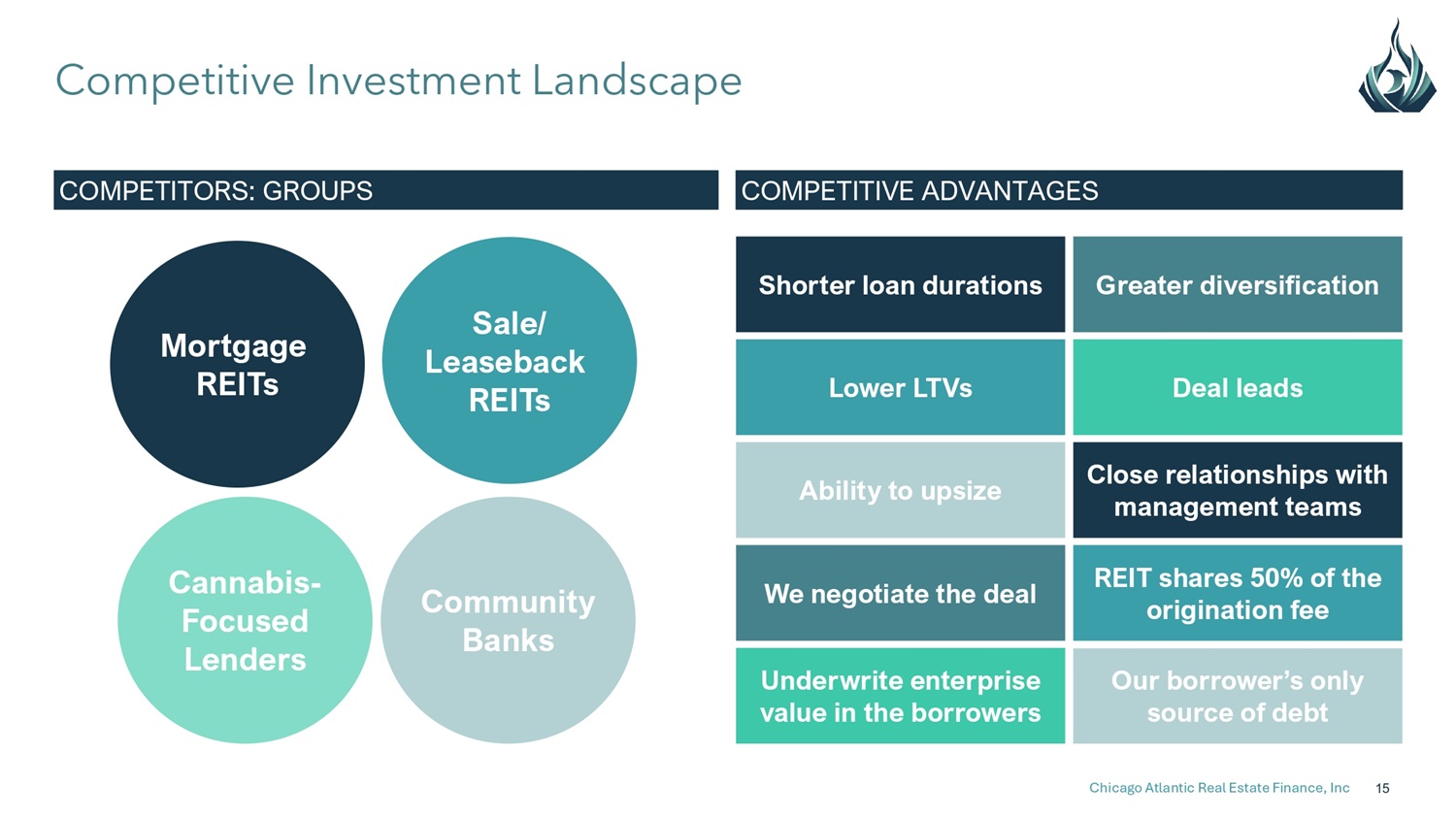
I think those banks that have developed an expertise that have invested in the infrastructure and invested in the relationships of the cannabis space, in general, have done well because they've deployed capital with discipline and conservatism, and built relationships with some of the strongest operators in the space. In many cases, those banks are now opting to go deeper because they've seen success. We've seen that among some of the largest banks that have consistently deployed capital in the space that they're seeking to do more, and that's great. We view banks as partners in our deployment strategy. They are leverage providers in both our public and private funds. There are co-lenders in many transactions, including unitranche transactions. We think they're an integral part of the lending ecosystem, and they're part of this process of building mature capital markets for the cannabis industry. To compare just to compare where the banking industry sits within the broader private credit ecosystem today, banks are not outside of the cannabis industry. Banks are operators alongside the private credit space. And the private credit space, whether that's mortgage REITs and/or BDCs, operates alongside the banking ecosystem, benefiting one another significantly and working together as part of this ecosystem. Long story short, we welcome and have worked to help banking institutions enter the cannabis space and hope more will do so.
Speaker 8
Look, I'm sorry. I want to add one more question, if you don't mind, and apologies if there's someone else on the queue here. Can you give an update in terms of your lending program to New York? I think your loan is to the regulator, right? It's not necessarily or to a fund there, not necessarily to the stores. I think we're up to 251 stores. Obviously, the state continues to expand in terms of retail stores, but I haven't seen necessarily that reflected in your loan book or maybe I'm missing something. But if you can provide an update on that.
I'm sorry, Pablo, I lost you at the beginning of your question. Could you repeat it?
Speaker 8
Okay. I'm going to repeat that. I'm talking about New York state in terms of the number of stores and dispensaries in New York continues to grow. I think that given the agreement that you have with the regulator there, in terms of the funding, the fund, that as the number of stores increases, your lending to the program will have increased. But I don't see that reflected in your loan book, or maybe I'm missing something.
The New York Social Equity Fund has opted not to draw additional capital from our funds. They've supported the construction of close to 23 stores across the state, and they've taken a pause on deployments. That being said, we are ready and willing to support them if they decide to continue deployments and grow the portfolio of stores that they're supporting.
Operator
This concludes our question-and-answer session for today. I would now like to turn the conference back over to Peter Sack for any closing remarks.
Thank you all for the support and the questions. Glad to follow up offline with any questions, and please reach out at any time. Thank you again.
Operator
The conference has now concluded. Thank you for attending today's presentation. You may now disconnect.