Operator
Good afternoon, and welcome to the Realmata Therapeutics 4th Quarter and Full Year 2025 Earnings Conference Call. At this time, all participants are in a listen-only mode. After the prepared remarks, we will conduct a question-and-answer session. To ask a question, please press star 1. As a reminder, this conference call is being recorded and will be available for replay on the Realmata website. I would now like to turn the call over to Brian Ritchie from LifeSci Advisors. Please go ahead, Mr. Ritchie.
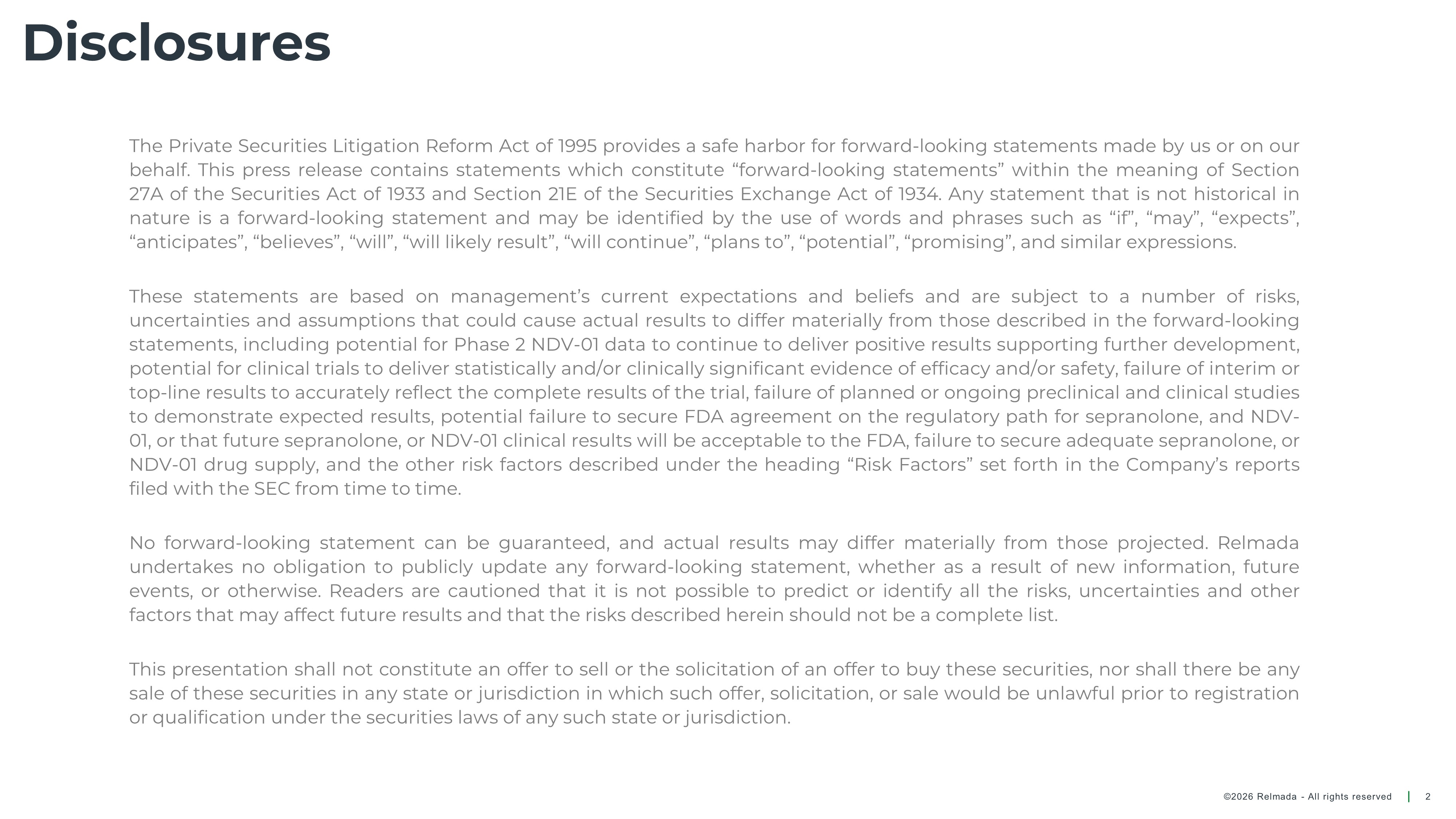
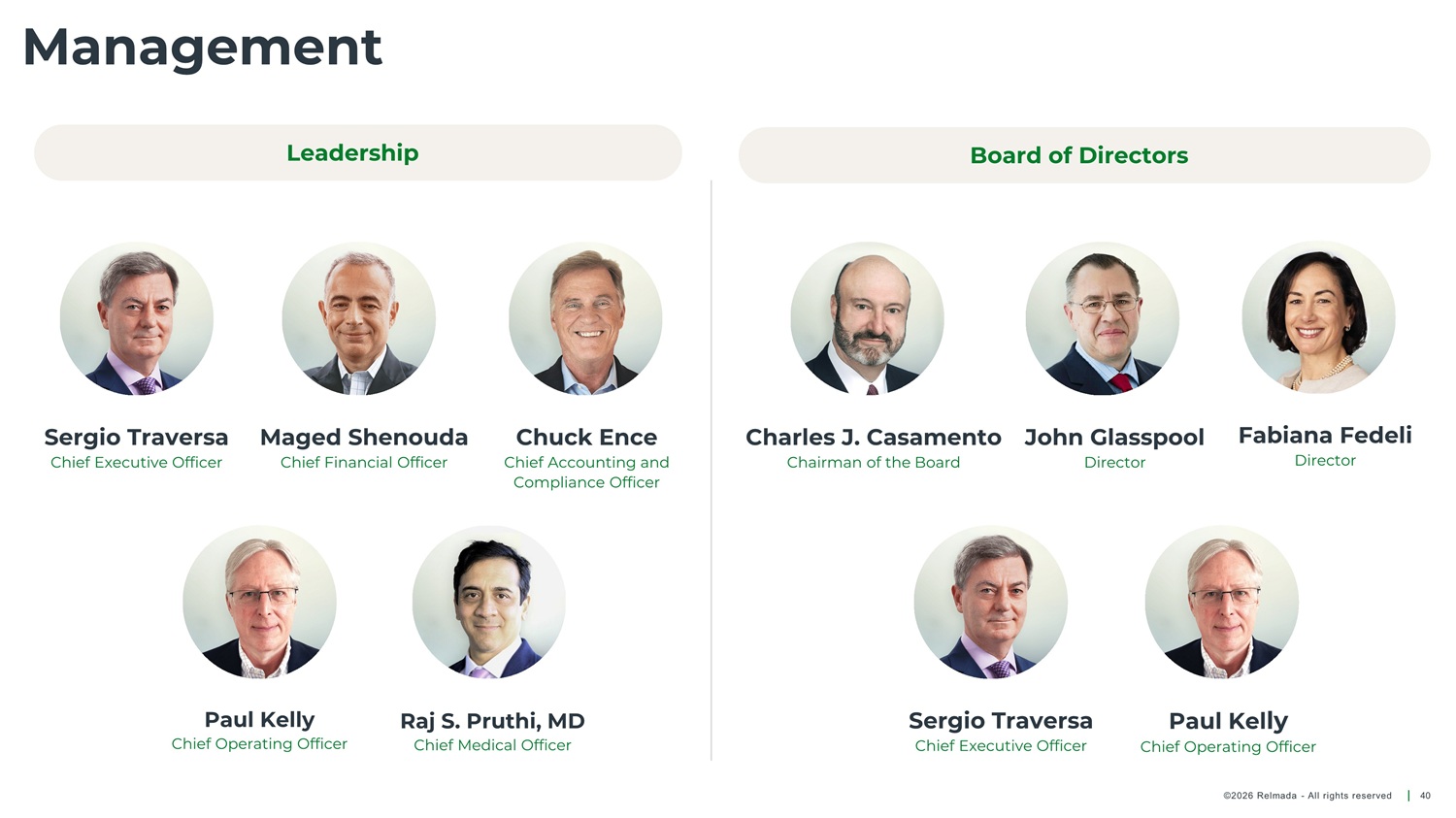
Good day, everyone, and thank you for joining us today. This afternoon, Ramada issued a press release providing a business update and outlining its financial results for the three months and year-ended December 31st, 2025. Please note that certain information discussed on the call today is covered under the Safe Harbor provision of the Private Securities Litigation Reform Act. We caution listeners that during this call, Armada's management team will be making forward-looking statements. Actual results could differ materially from those stated or implied by these forward-looking statements due to risks and uncertainties associated with the company's business. These forward-looking statements are qualified by the cautionary statements contained in Ramada's press release issued today and the company's SEC filings, including in the annual report on Form 10-K for the year ended December 31, 2025, filed after the close today. This conference call also contains time-sensitive information that is accurate only as of the date of this live broadcast on March 19, 2026. Realmata undertakes no obligation to revise or update any forward-looking statements to reflect events or circumstances after the date of this conference call. With me on today's call are Realmata's CEO, Dr. Sergio Traversa, who will briefly provide a summary of recent business highlights. Dr. Raj Pruthi, RealMata's CMO, Oncology, who will provide an NDB01 program update, and RealMata's CFO, Maga Chenauda, who will provide an update on Sopranolone and a review of the company's Q4 financial results. After that, we will open the line for a brief Q&A session. Now, I would like to hand the call over to Sergio Traversa.
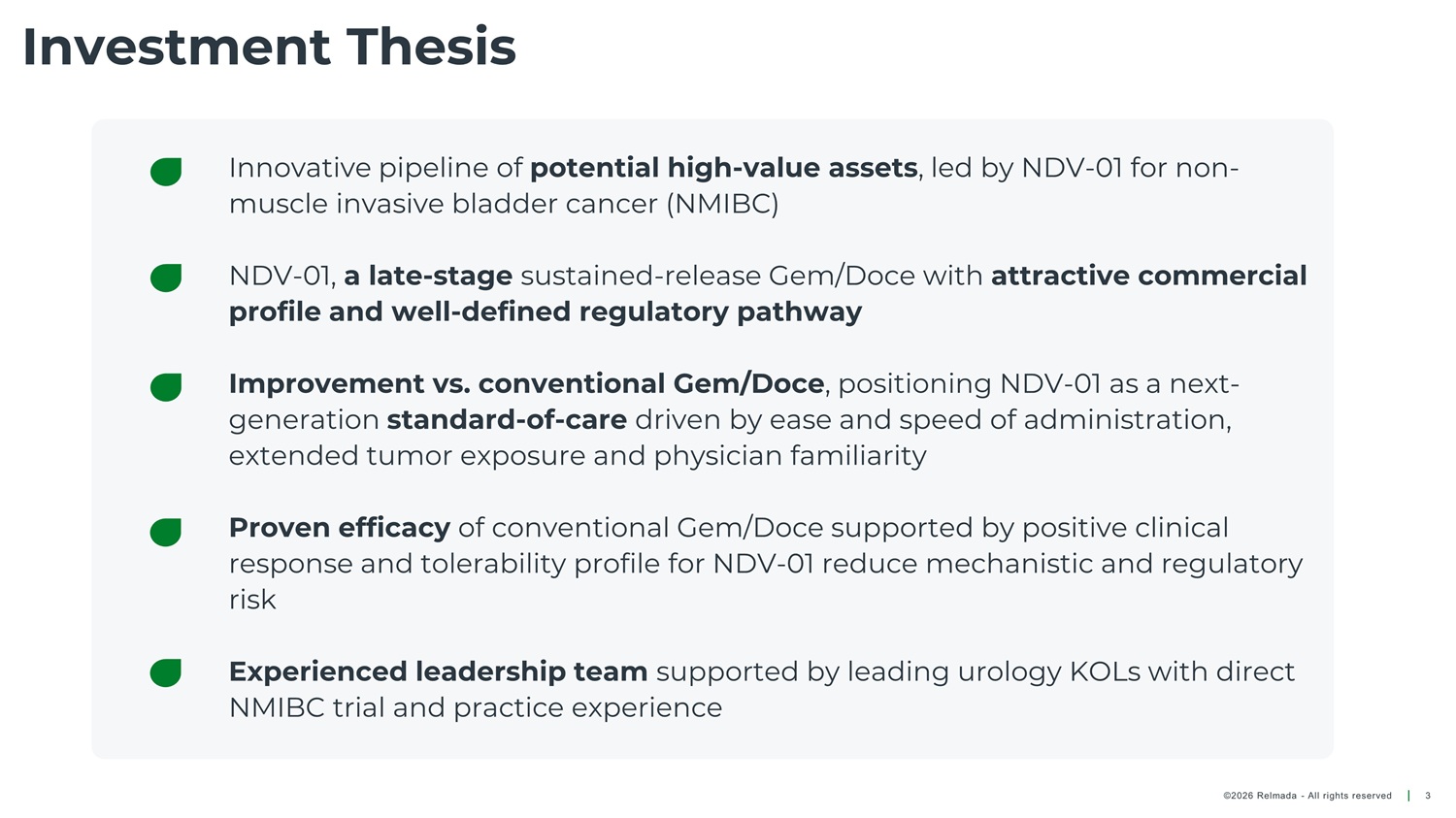
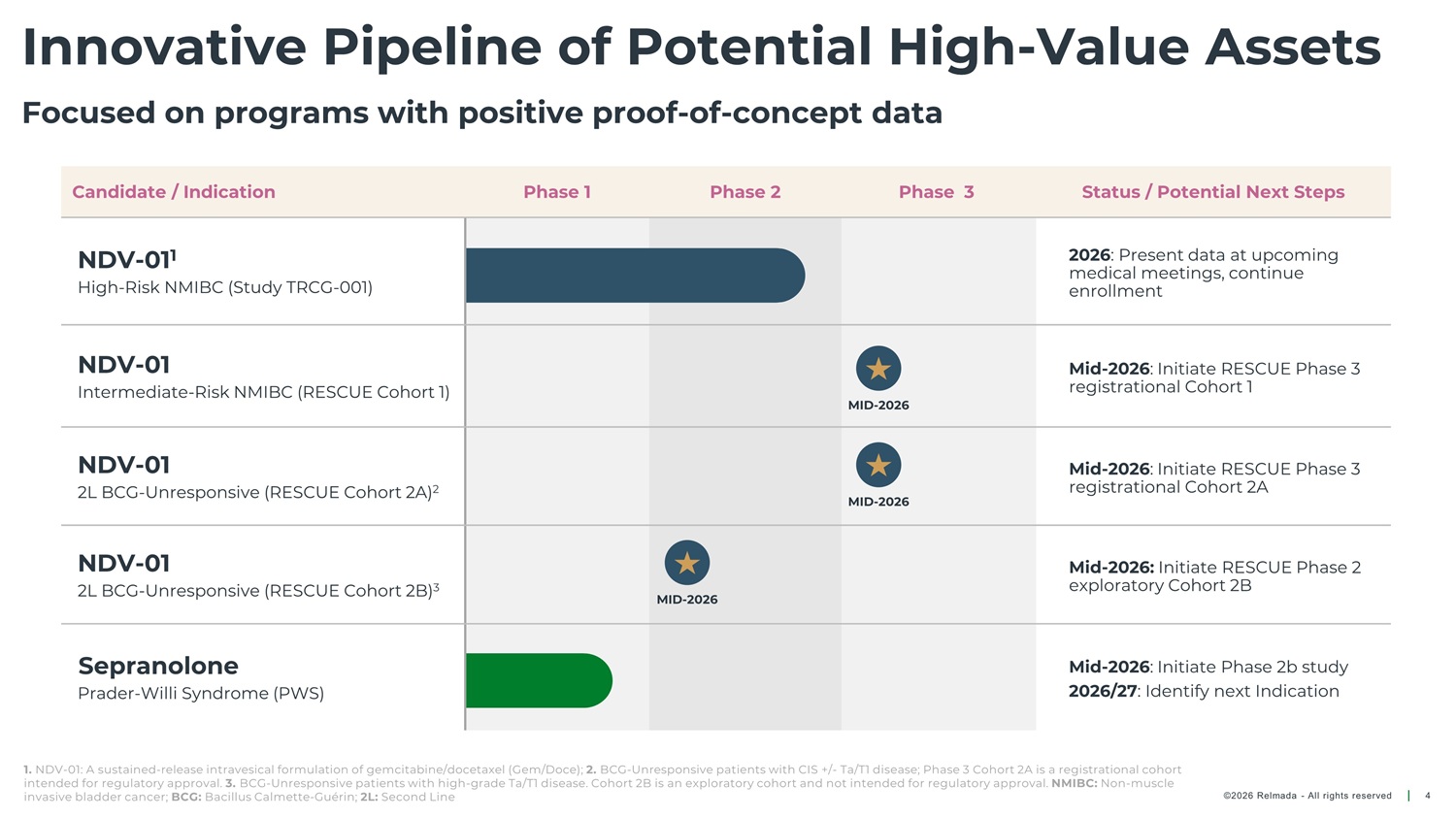
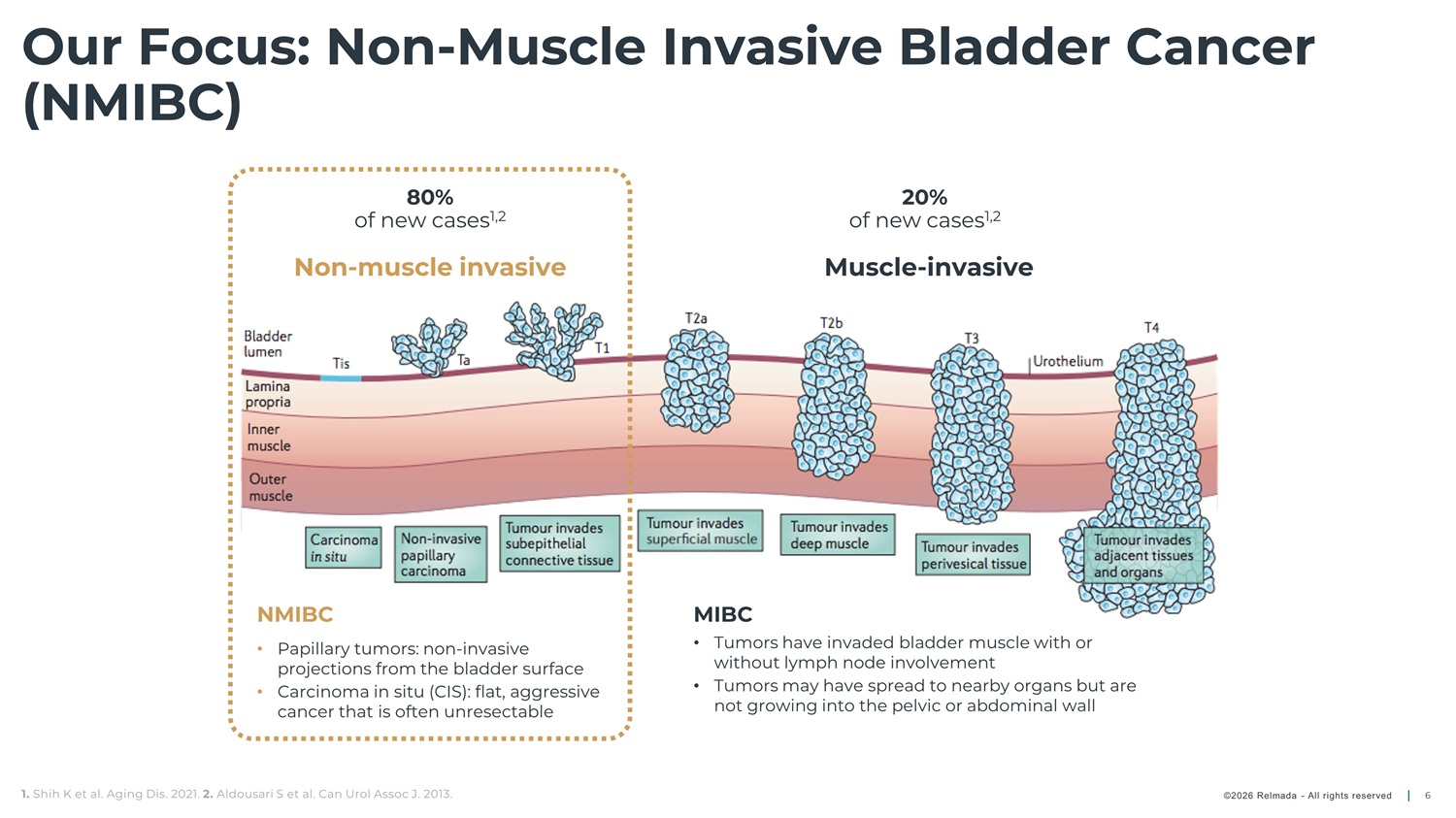
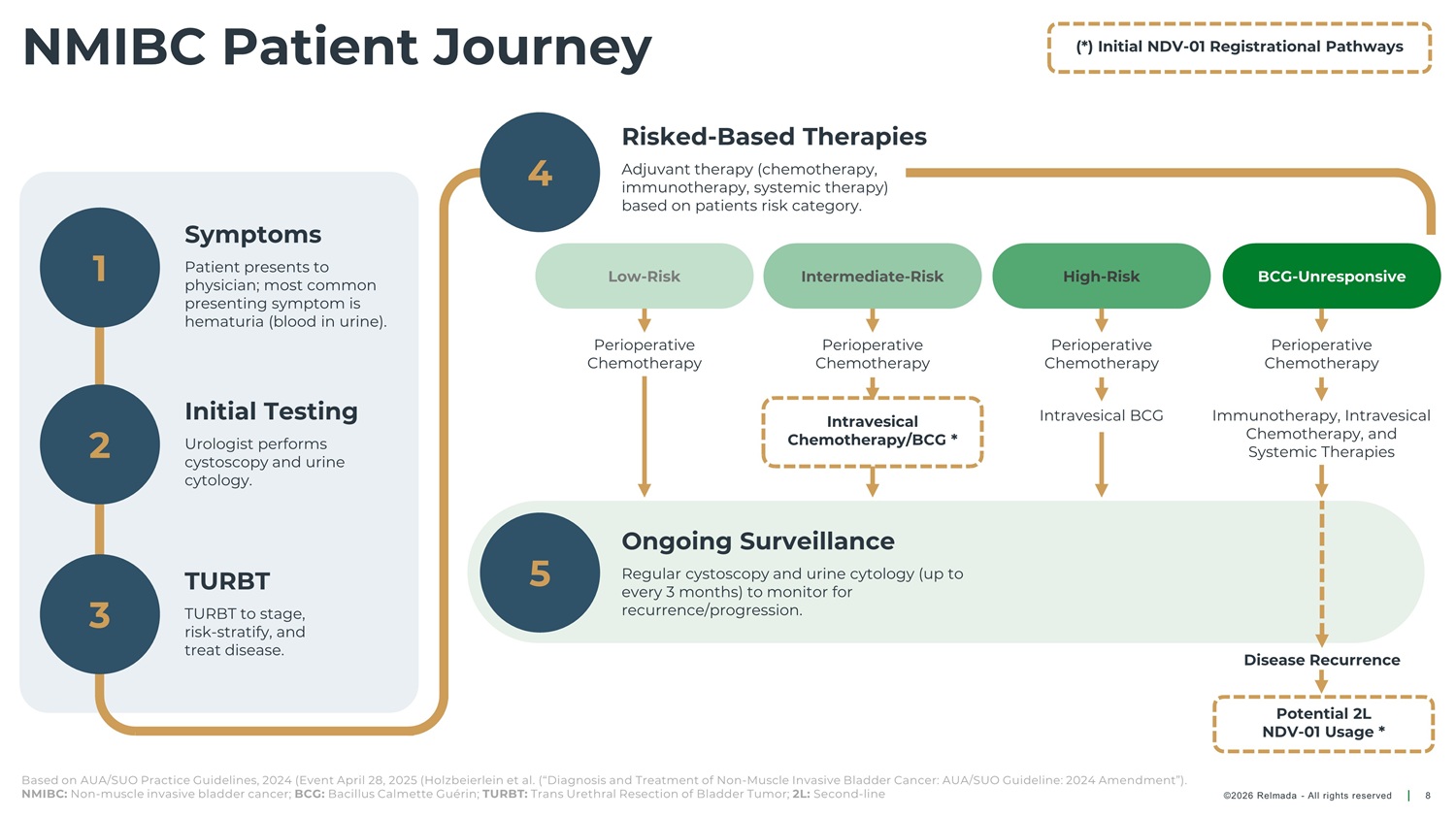
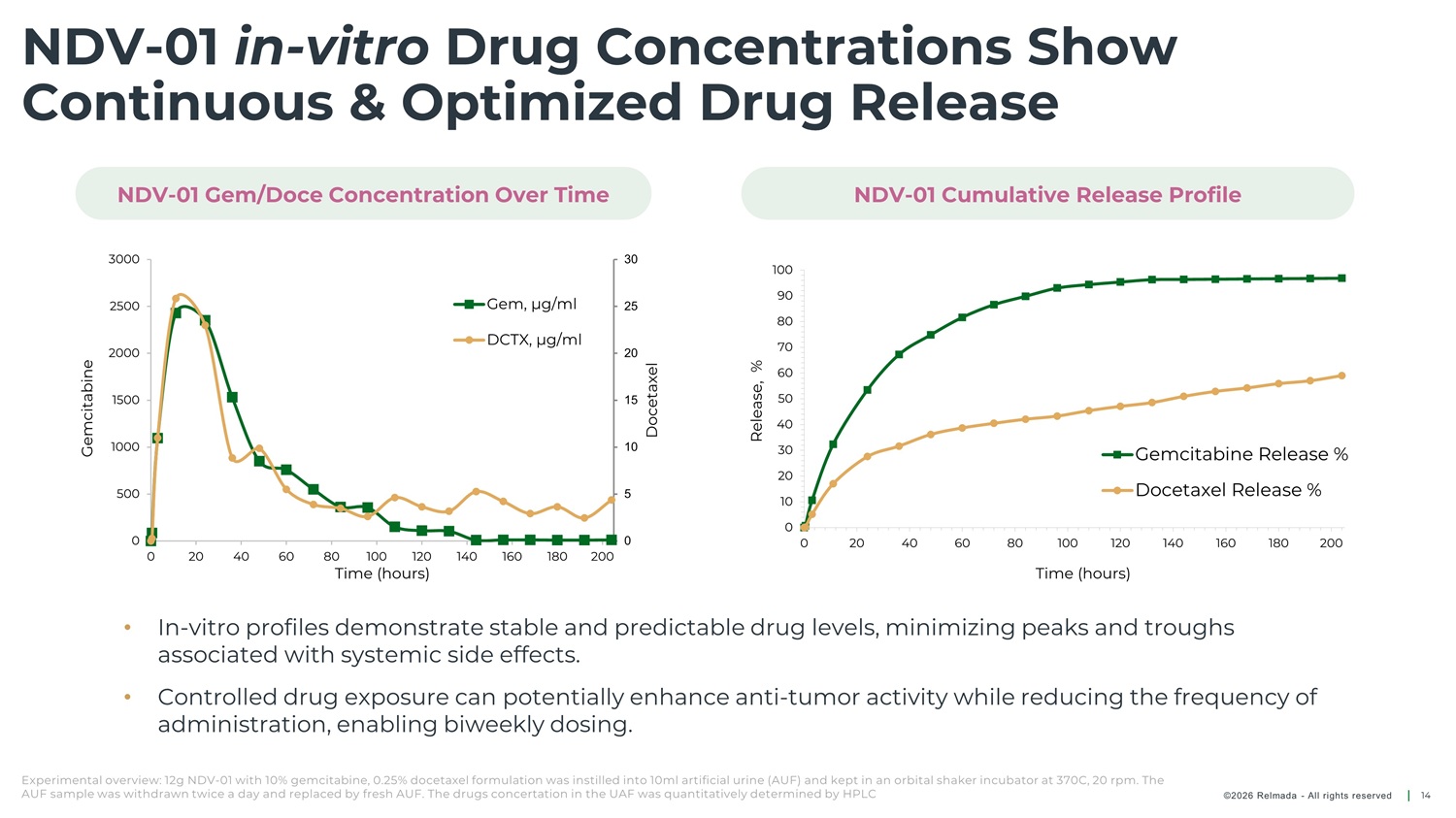
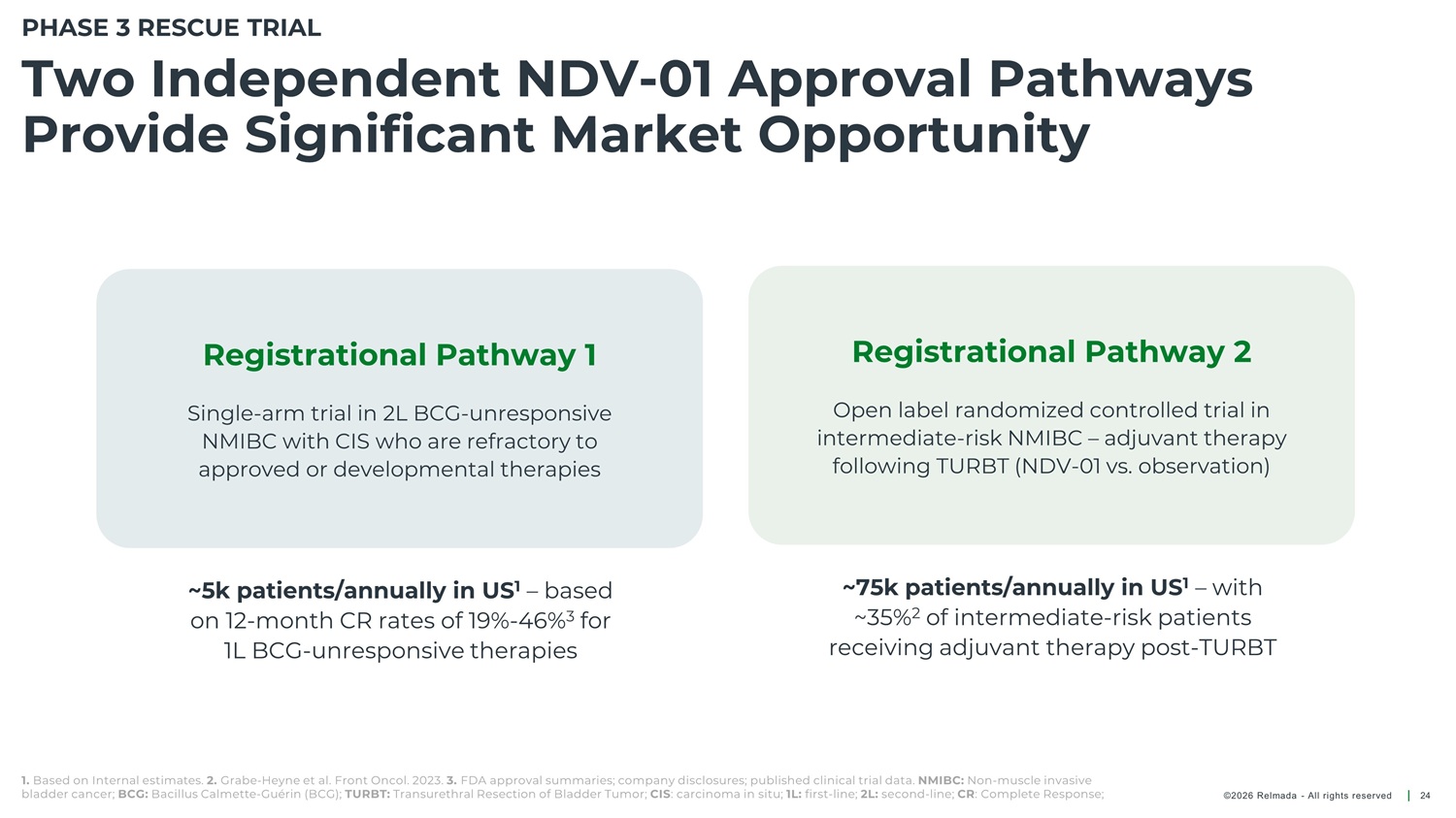
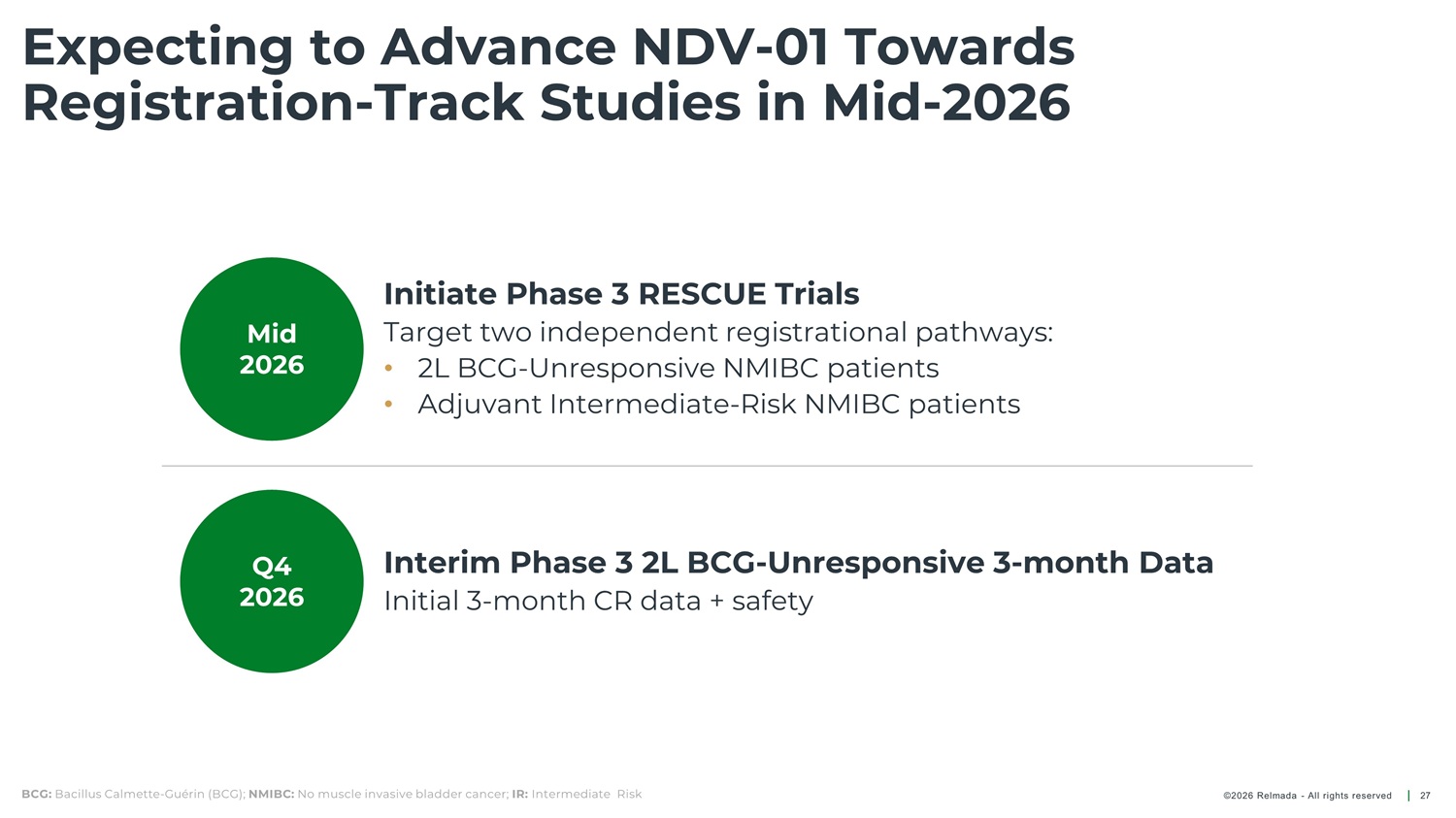
Thank you, Brian. Good afternoon, and welcome, everyone, to the RELMADA fourth quarter and year-end 2025 conference call. 2025 has been a transformational year for RELMADA, marked by significant progress for our lead program, NDVO-1. As a reminder, NDVO-1 is a sustained release formulation of gencitabine and docetaxel. We are developing this investigational product candidate for the treatment of non-muscle-invasive bladder cancer, or NMI-BC. Most recently, we reported compelling responses and durable 12-month efficacy data for our ongoing Phase II study of NDV01. We achieved FDA alignment for our planned registration of Phase III rescue programs. We fortified our team, and we substantially strengthened our balance sheet. As we reflect on our recent accomplishments and planned next steps, I would like to highlight four key areas. First, NDBO1. We believe that the strength of the recently reported 12-month follow-up data could position NDVO-1 as a potential best-in-class therapy for the treatment of NMI-BC. Furthermore, the strength of the clinical data and the unique, easy-to-administer sustained release formulation gives us confidence that NDVO-1 It has the potential to provide what urologists and patients with an MIBC need, a simple, durable, effective treatment that readily fits into real-world practice setting. We plan to initiate the Phase 3 rescue program in the middle of this year. Our Phase 3 regulatory strategy, agreed upon with the FDA, includes two independent registrational pathways. Pathway 1 is focused on adjuvant therapy following TURBT in patients with intermediate risk bladder cancer, which affect about 75,000 patients in the United States. Pathway 2 is focused on second-line treatment BCG unresponsive patients, which represent about 5,000 patients in the United States. Second, Sopranolone. Sopranolone has previously demonstrated proof of concept in Tourette's syndrome. This is a disorder characterized by compulsive behavior. We are getting ready to begin a proof of concept study in Prader-Williams syndrome in the middle of this year. And third, Our team. We substantially strengthened our development team with the appointment of Dr. Raj Pruthi, a highly regarded physician, scientist, and urologic oncologist as Chief Medical Officer, Oncology. In addition, we established a scientific advisory board comprised of similarly distinct peers to further support the NDVO-1 program. Dr. Yair Loughton from the University of Texas Southwestern Medical Center, and Dr. Max Cates from John Hopkins University School of Medicine. Fourth and last, financial strength. We just completed a successful $160 million private financing. Based on existing forecasts, these funds, plus our existing cash balance, Provide REL MADA with capital through 2029, and importantly, through the completion of the planned NDVO-1 program. Looking ahead, 2026 is poised to be another important year of value creation for REL MADA, with the initiation of our Phase 3 rescue program for NDVO-1 in blood cancer and the Phase 2 proof-of-concept trial for Sopranolone in Prader-Williams syndrome. With that, I also would like to express my appreciation for the trust and support of our investors, employees, collaborators, and the patients who participate in our studies. Next, I will turn the call over Dr. Raj Prouty, who will provide a review of the NDB01 program, including 12-month follow-up data from the ongoing Phase II study and the summary of our Phase III plans. Reg?
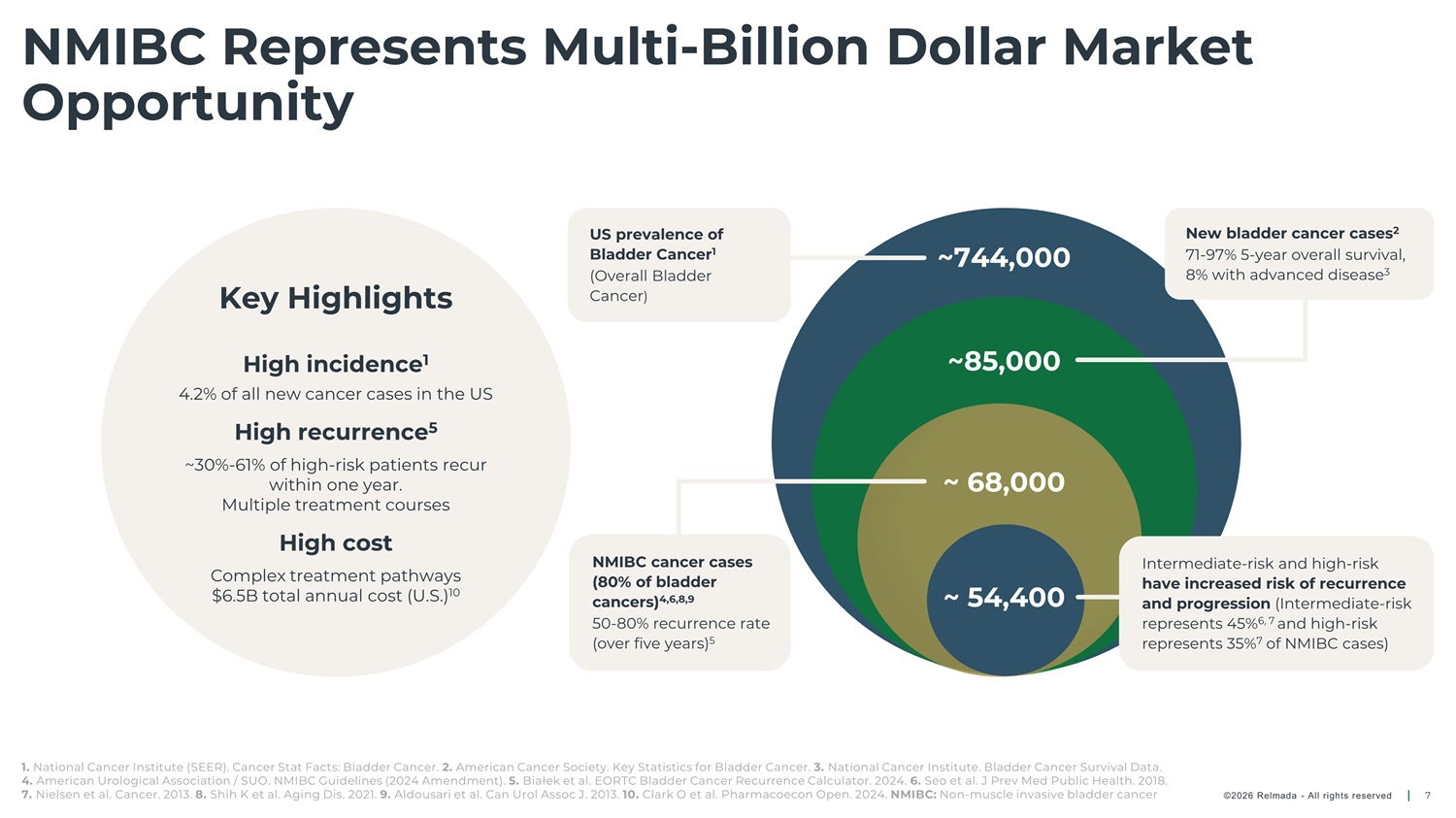
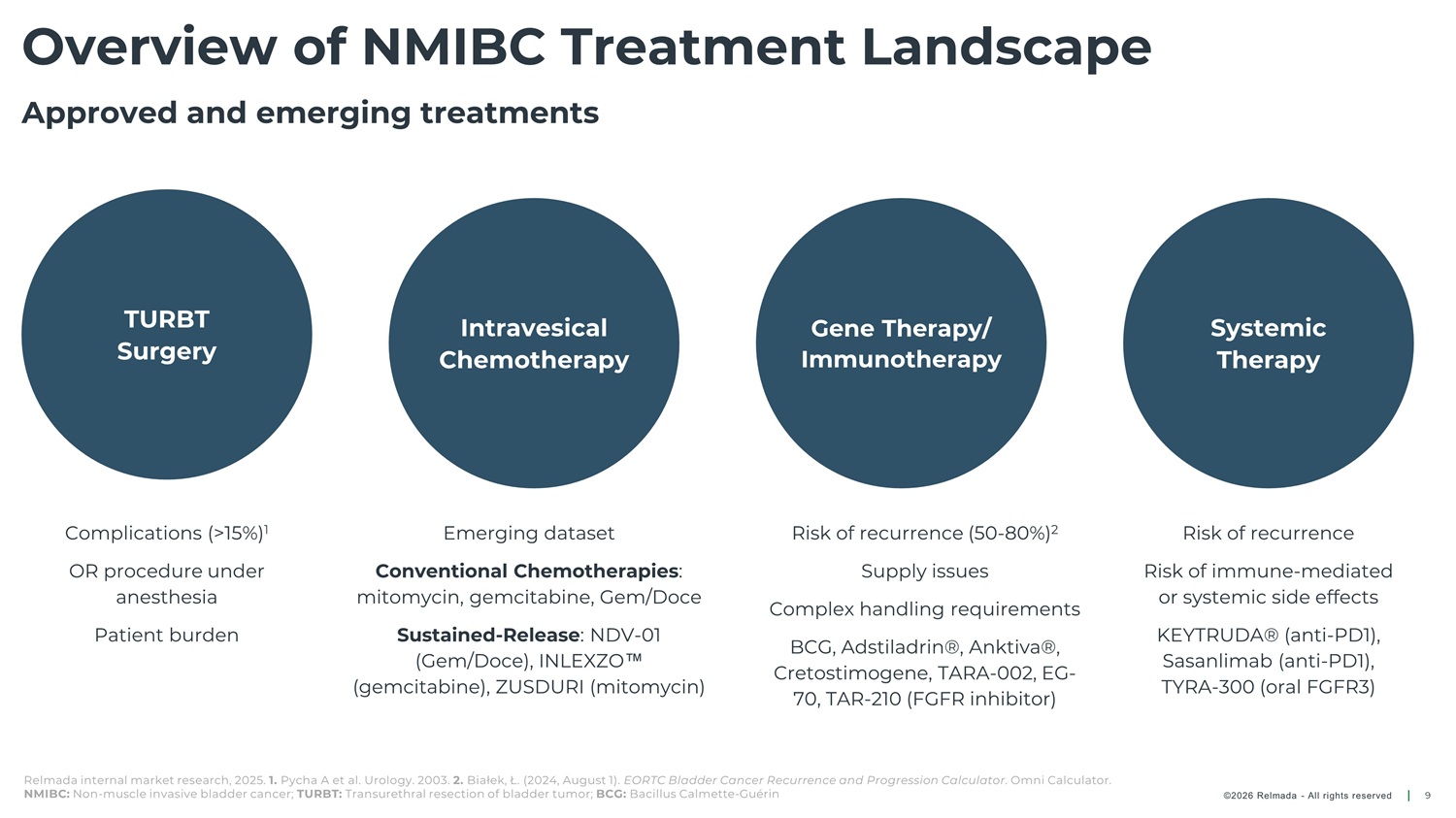
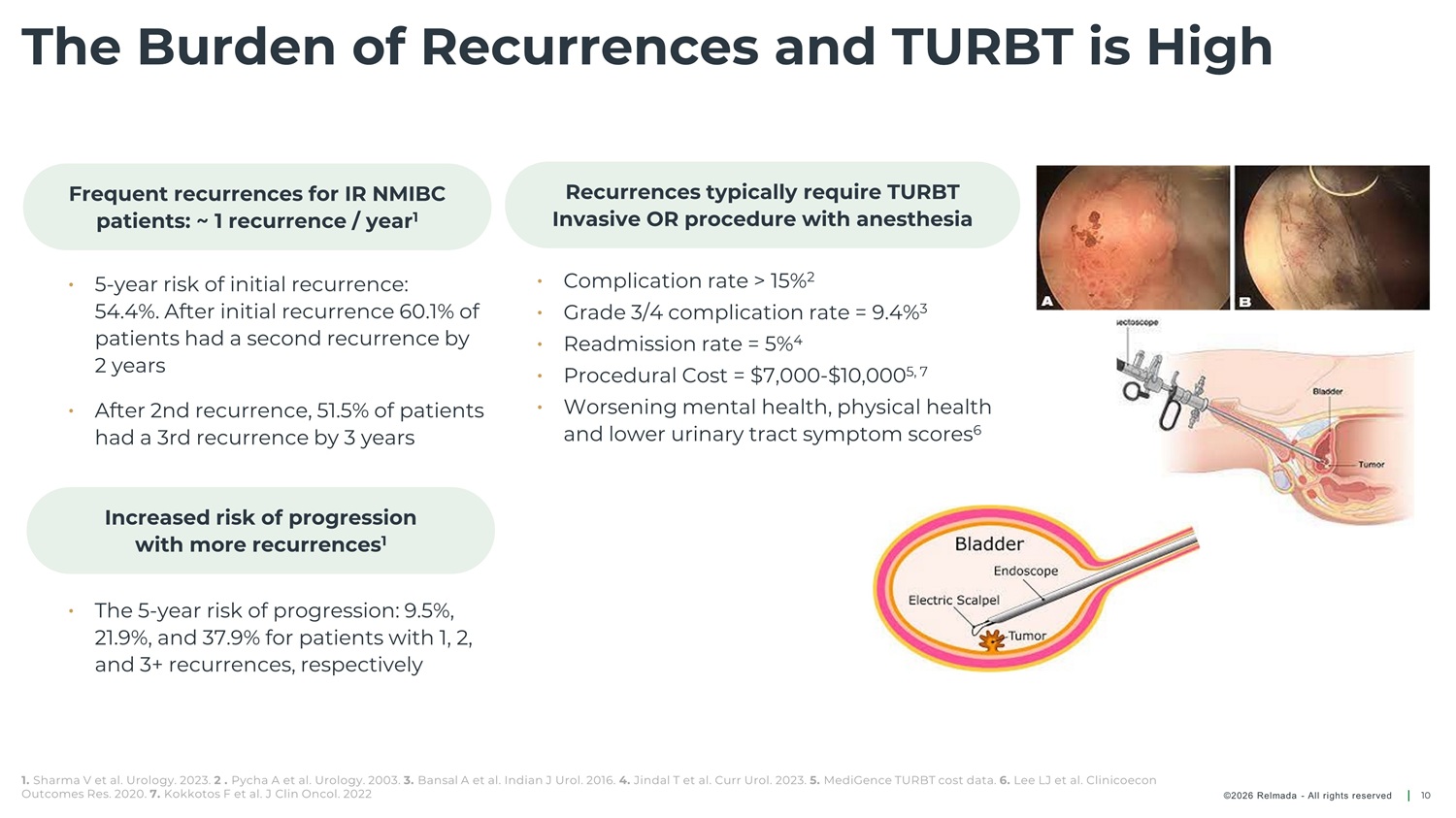
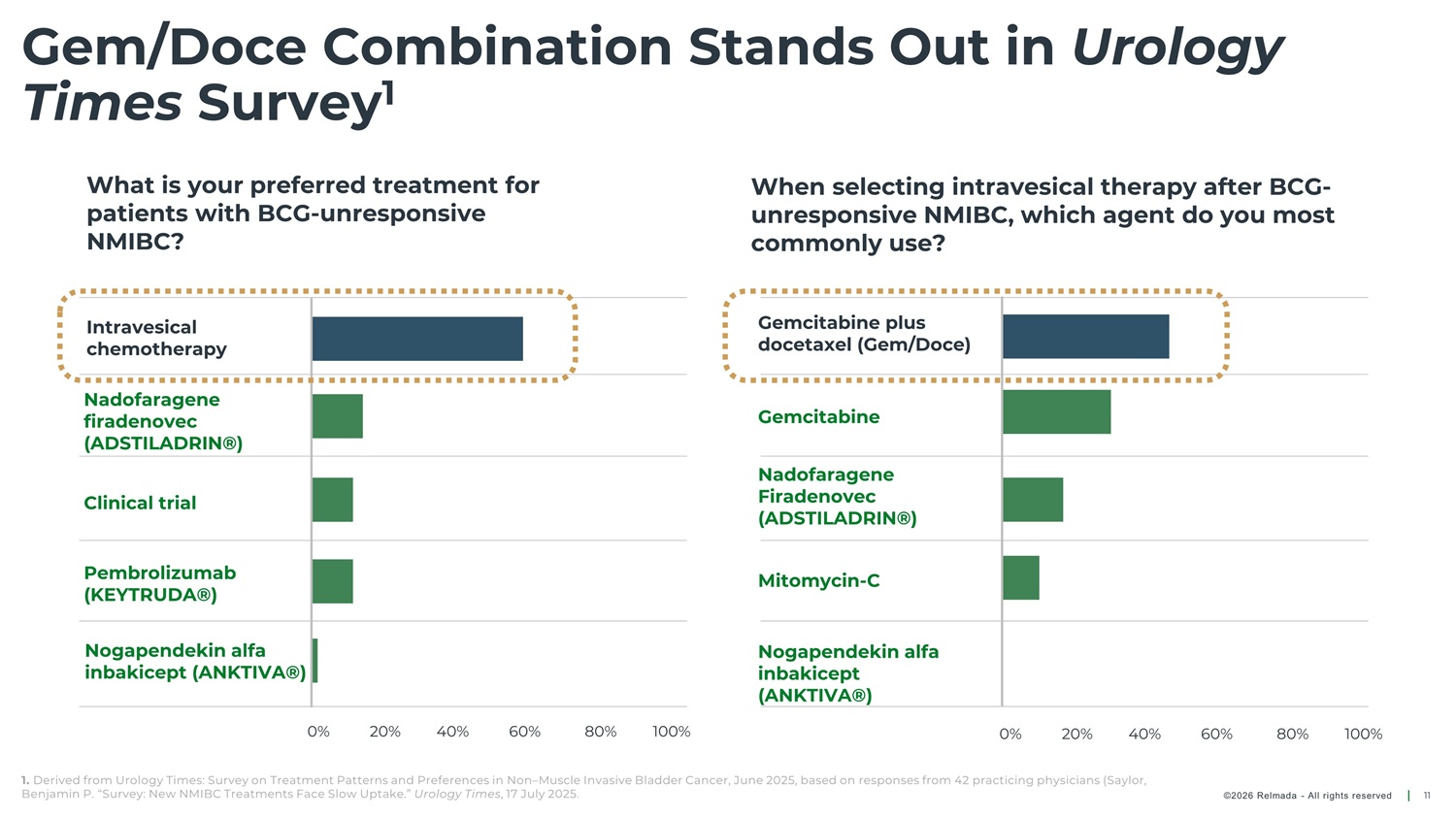
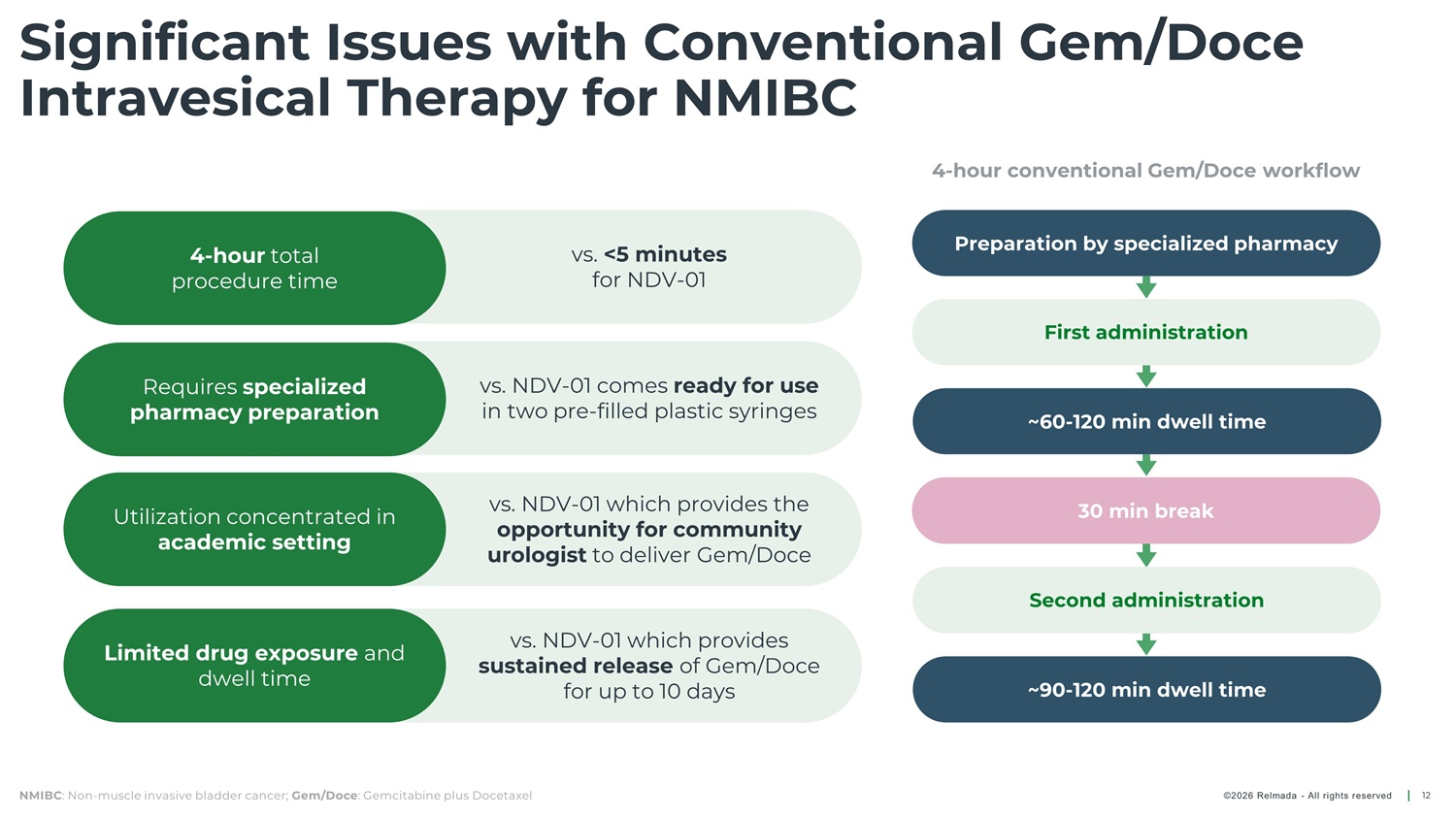
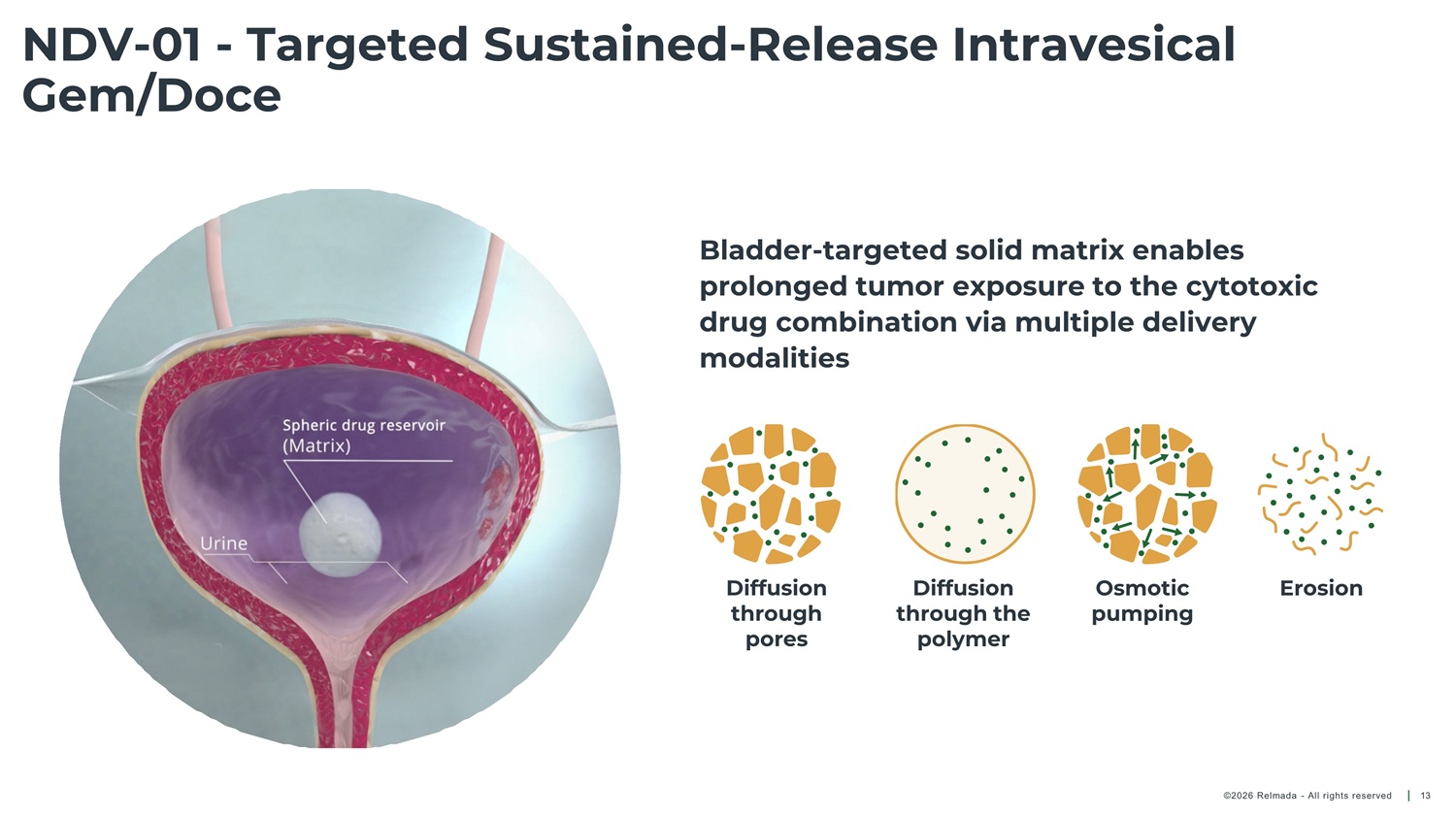
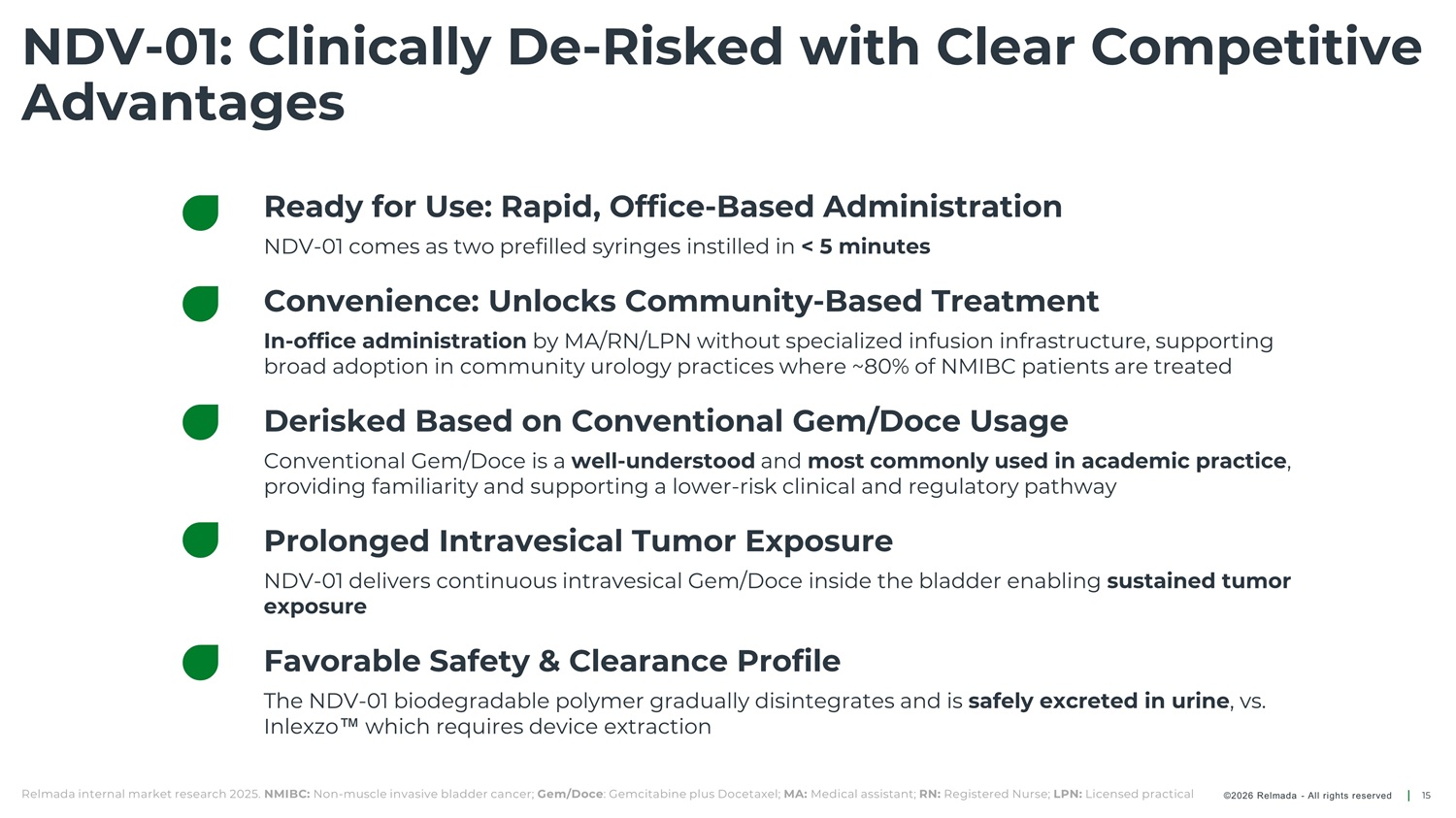
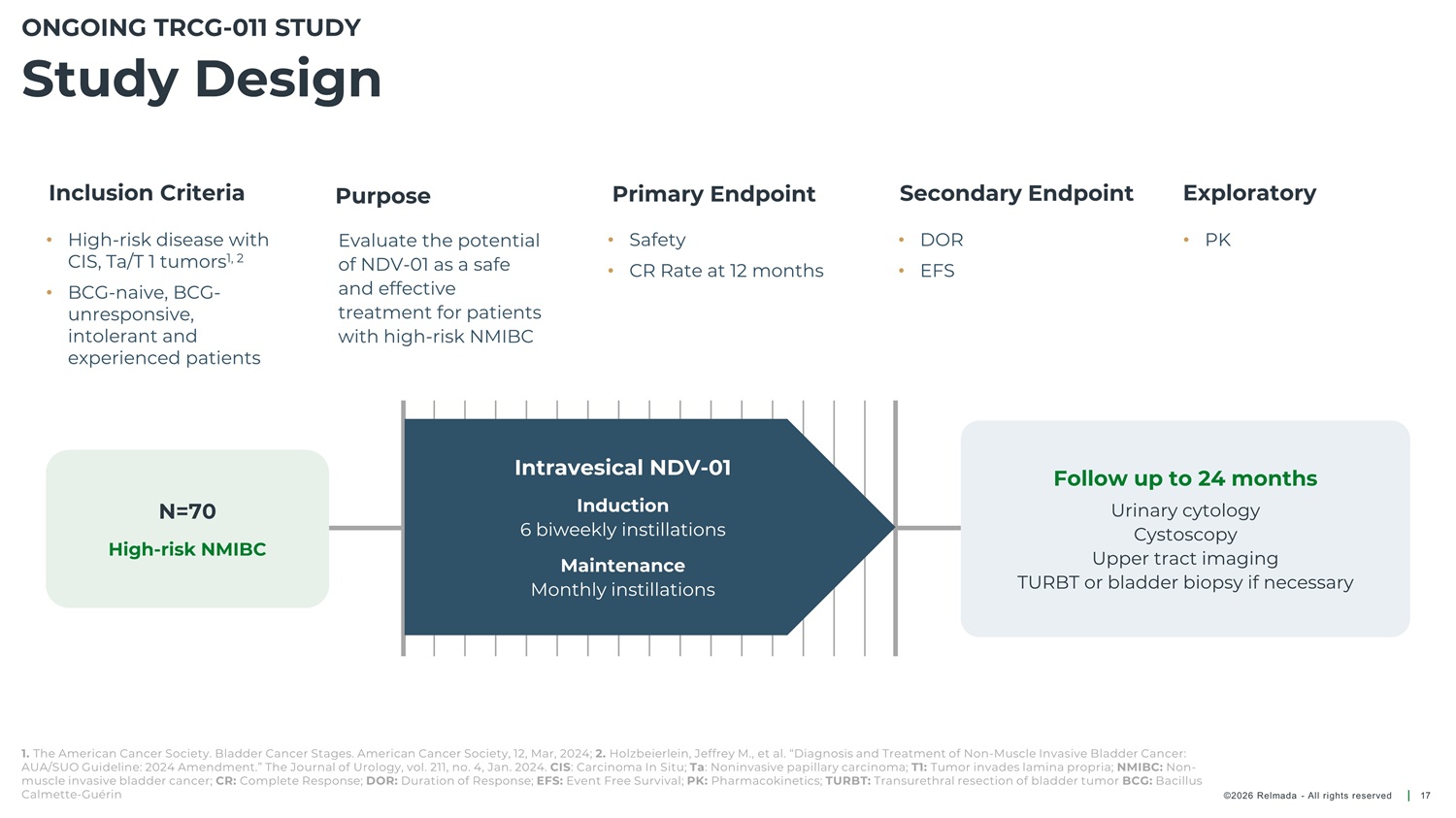
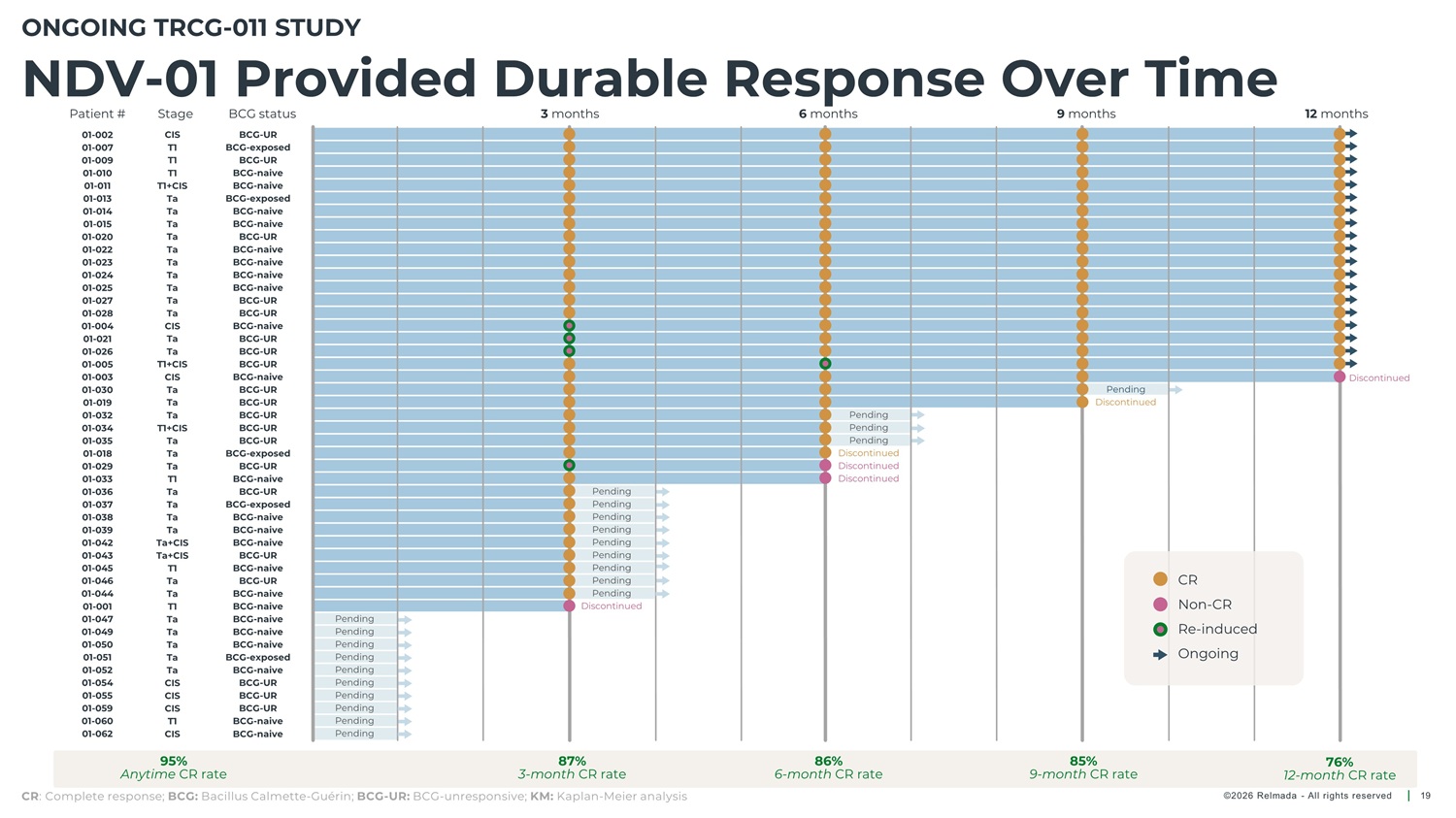
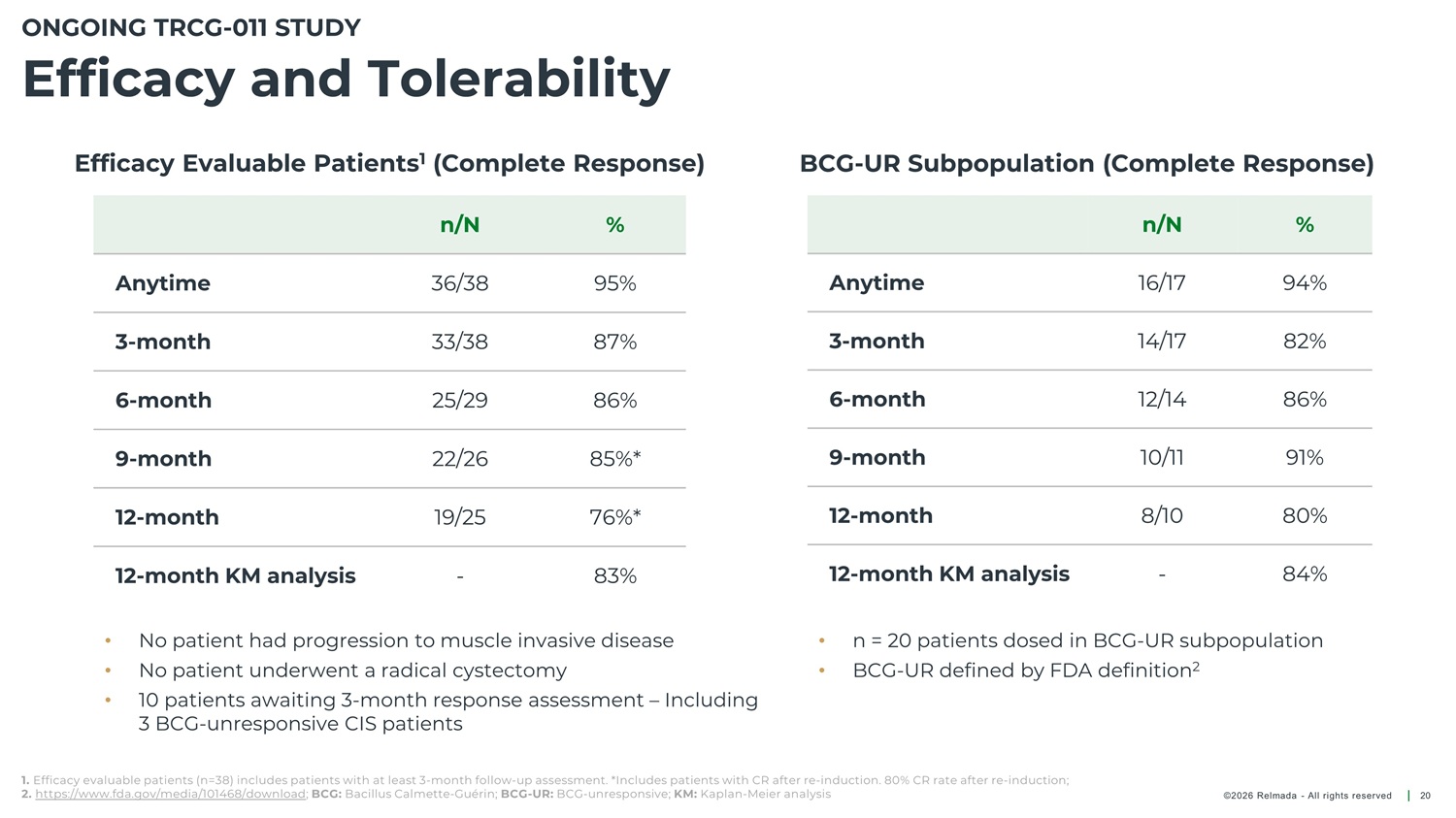
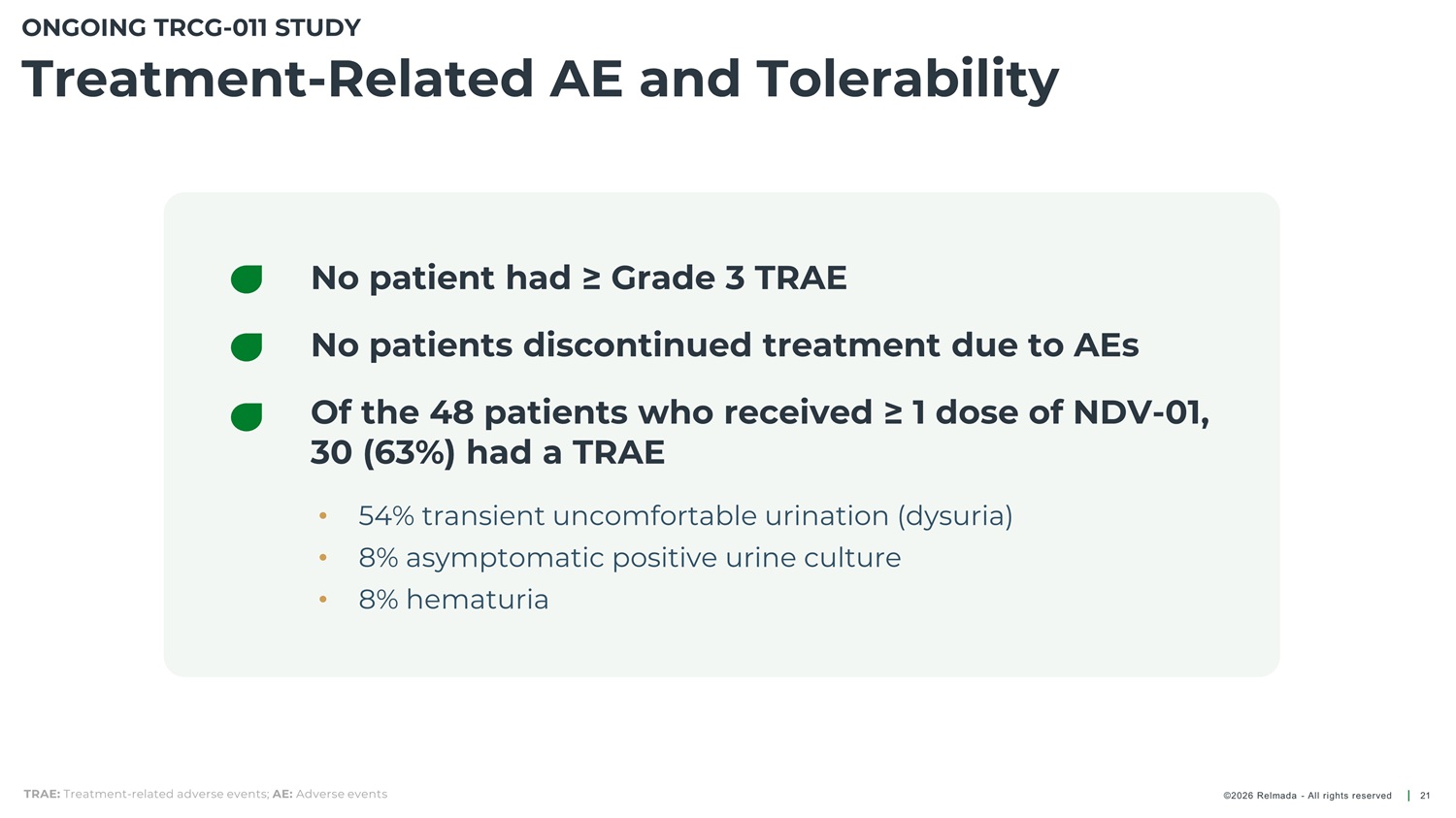
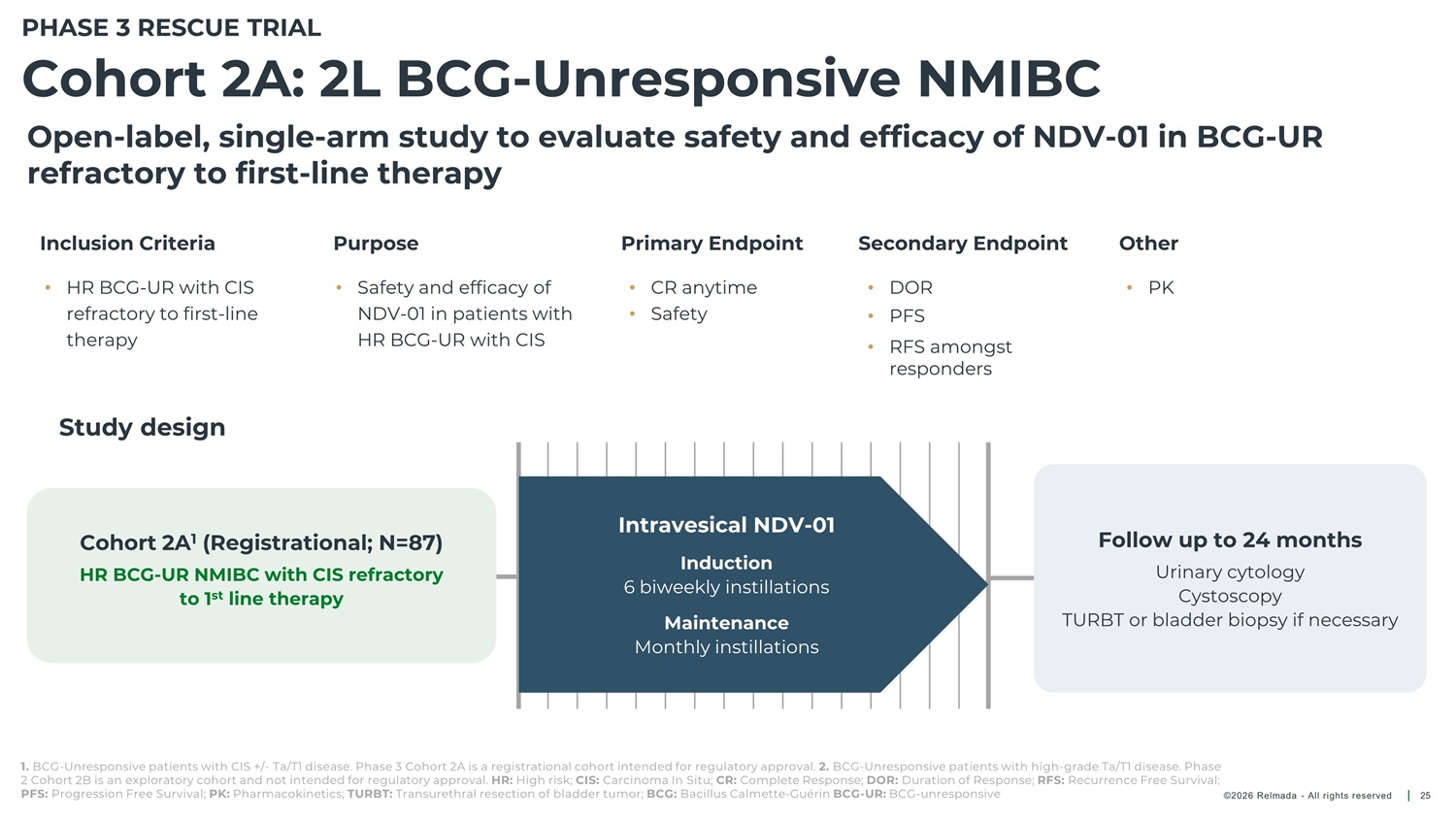
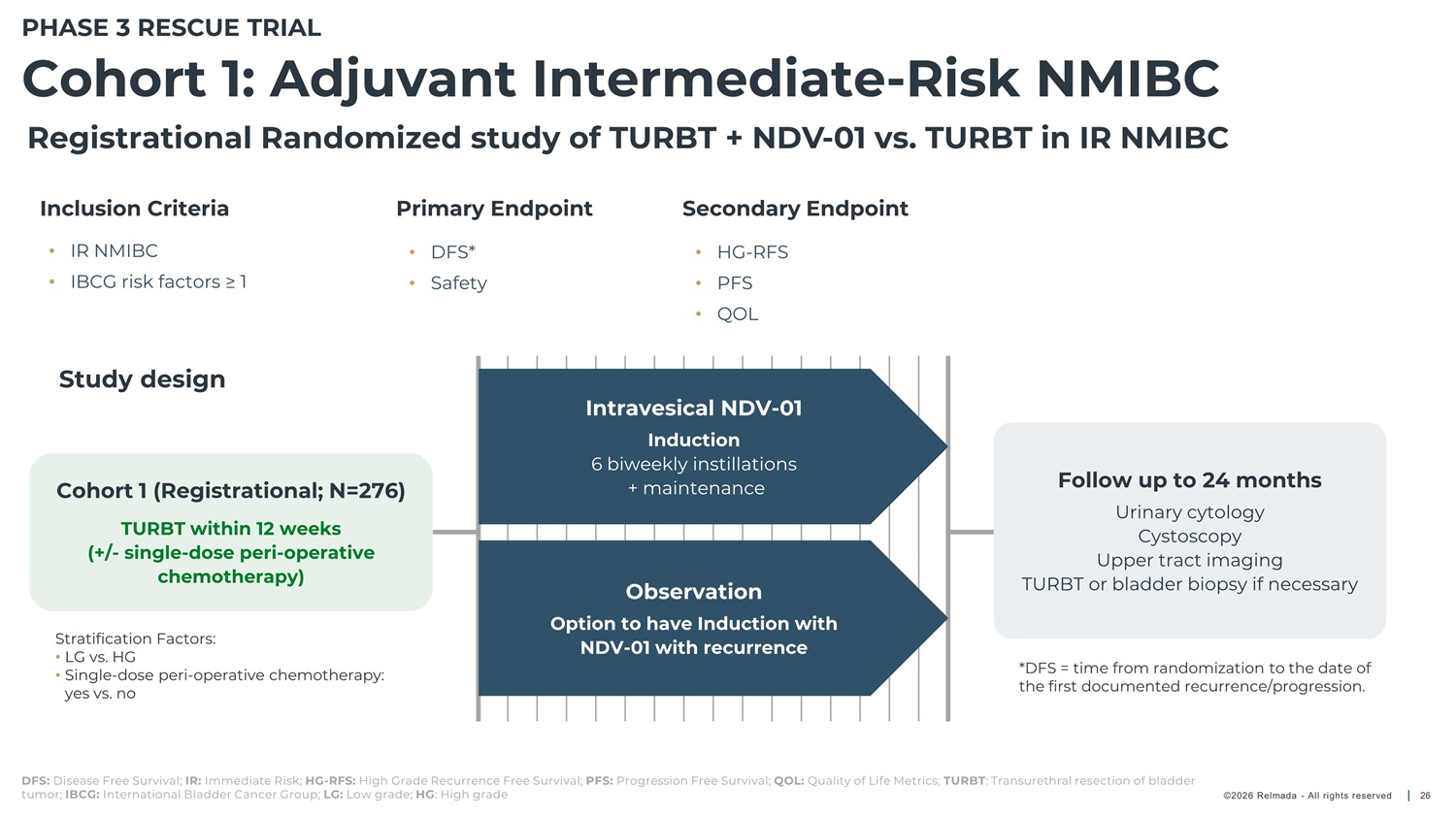
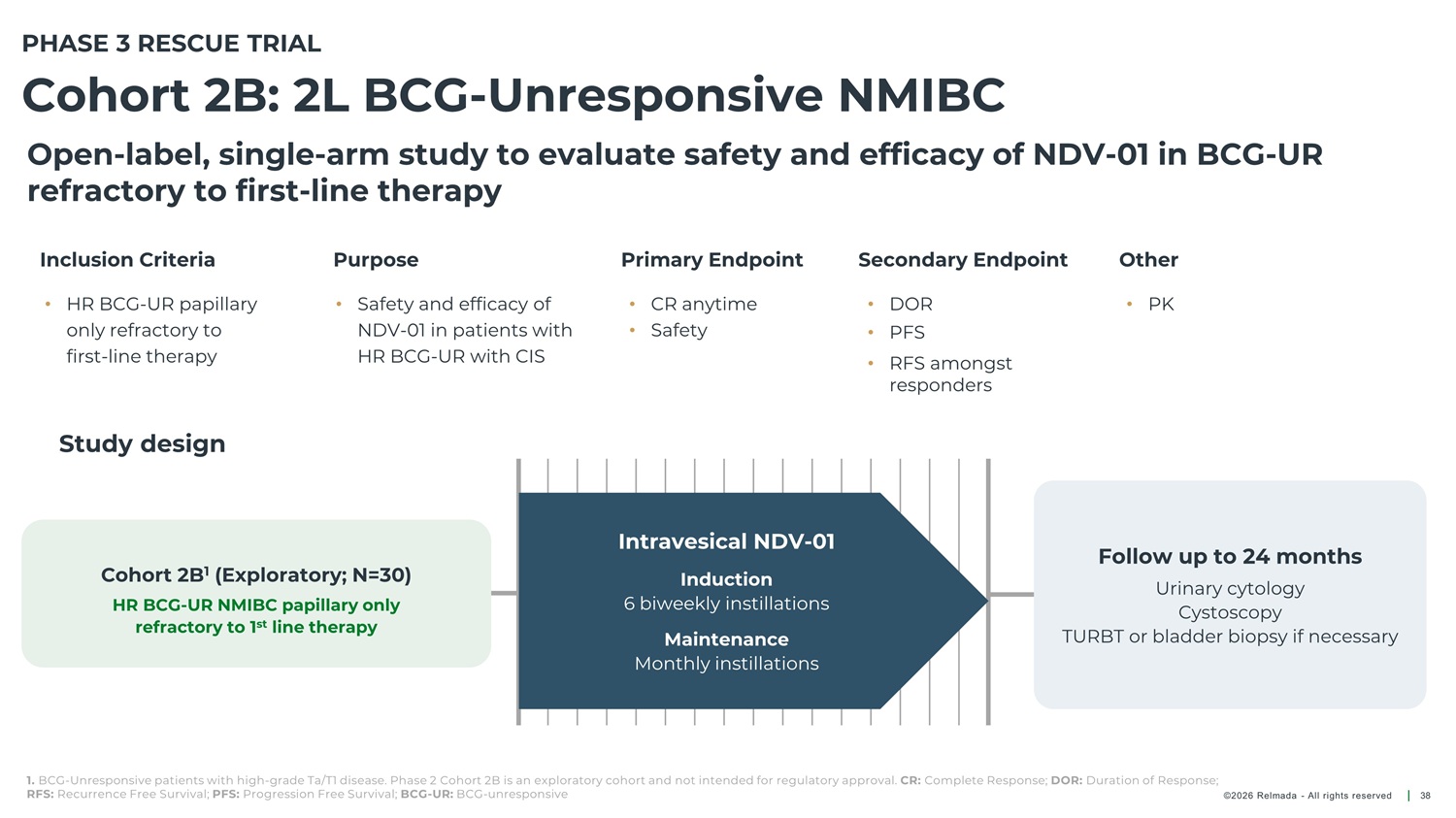
Thank you, Sergio. Good afternoon, everyone. It's a privilege to share an update on the clinical progress we've made this year, headlined by the truly compelling and best-in-class results for NDV01 and MIBC. Bladder cancer is a high-frequency cancer that has a major impact on the lives of patients, generally diagnosed in their early to mid-70s. High recurrence rates and burdensome treatments disrupt quality of life at a time when patients are eager to enjoy life. I want to touch on three topics during today's call. One, an overview of the NDVO-1 12-month data. Two, a summary of our planned Phase 3 program. And three, a discussion of how NDVO-1 might fit into the practice of a urologic oncology. Sergio noted that NDVO1 is a novel, sustained-release intravascular formulation of two chemotherapy agents, gemcitabine and docetaxel, or gemdose, as we say. Our program builds on physicians' established familiarity with the efficacy and safety profile of conventional gemdose, more specifically in patients who are unresponsive to BCG. This combination offers a salivant, a bladder sparing option that may help avoid a radical cystectomy. Moving on to the 12-month data, we are pleased to report that NDBO1 has demonstrated a high response rate and durable 12-month efficacy from the ongoing Phase II study. We believe these data stand out in comparison to the other benchmark programs that could position NDV-01 as a best-in-class treatment option for patients with bladder cancer, if approved. The study is an open-label, single-arm trial in patients with high-risk NMI-VC. Patients receive biweekly doses every other week times six, followed by monthly maintenance for up to one year. Patients undergo regular assessments with cystoscopy, cytology, and, if needed, biopsy. The study was designed to enroll up to 70 patients with high-risk NMIBC. The primary endpoints are safety and complete response rate at 12 months. Secondary endpoints are duration of response and event-free survival. The data demonstrated a 12-month complete response rate of 76% with a favorable safety profile. Notably, the study also showed a 12-month complete response rate of 80% in the BCG unresponsive population, one of the most difficult-to-treat segments of NMI-BC. These findings support the advancement into the Phase III Registrational Program, which we are calling RESCUE. The program will evaluate NDVO-1 in both second-line BCG-unresponsive disease and in intermediate-risk cancer as an adjuvant therapy following TORBT. When we look at the complete responses, or CR, at any time, in the overall population, we see a CR anytime of 95%, based on 38 patients. Among those with BQGI response disease, We see a CR rate at any time of 94%. Given the burdenless nature of recurrent bladder cancer treatment, safety is a critical element of a product profile. We continue to be encouraged by the favorable safety profile observed for NDV01 across our clinical program. In the 12-month data set for NDV01, no patients had progression to muscle-invasive disease. No patients underwent a radical cystectomy. No patients had a grade 3 or higher treatment-related adverse events. No interruptions or discontinuations of treatment due to adverse events occurred. And most treatment-related adverse events were at the grade 1 level. Moving on to the planned Phase 3 Rescue Program, we believe our 12-month response and durability data Compare quite favorably to the current commercial and development stage. We have constructed our phase three registrational pathways to maximize our probability of success and create the most efficient path to FDA approval. The after rescue registration program was designed in alignment with the FDA to provide two separate approval pathways. We set to secure US IND clearance and initiate the Phase III Rescue Program in the middle of this year. Let's review the two studies that formed the rescue program. Registrational Pathway 1 focuses on the evaluation of NDVO-1 in patients with intermediate-risk bladder cancer as an adjuvant therapy following TRBT surgery. We estimate there are about 75,000 patients each year in the U.S. in this setting. This study is planned to be an open-label, randomized controlled trial. Since there are no approved treatments for adjuvant intermediate risk NMIBC, the study will evaluate NDVO-1 versus observation. The primary endpoint is disease-free survival, or DFS. Secondary endpoints include high-grade recurrence-free survival, progression-free survival, and quality-of-life metrics. We feel that the opportunity to incorporate NDV01 into patient care post-QRBT is very attractive, and it could pave the way for important clinical indication and broader adoption. Registration pathway number two is focused on the evaluation of MDV01 in the second-line setting in patients who are BCG-unresponsive with carcinoma in situ, or CIS, who are fracturing to first-line therapies approved or in development. We estimate that there are about 5,000 patients per year in the U.S. in the Senate. Since these patients have few, if any, effective treatment alternatives to radical susceptivity, the study is designed as a single-arm, open-label trial. The primary endpoint is CR anytime. Secondary endpoints will include the duration of response, or DOHAR, progression-free survival, and recurrence-free survival amongst responders. We expect to report the initial three-month response data from this study. By the end of 2020, we're excited about this pathway because it could offer a rapid route to approval. Before I hand the call over to Megan, I'd like to make a note about how we feel NDVO1 might fit into clinical practice. NDVO1 is formulated to create a soft matrix in the bladder to enhance local bladder urethelial exposure and minimize systemic toxicity. It is delivered in the office in less than five minutes. This simple formulation and administration model has the potential to optimize the delivery experience for patients and providers, offering a level of simplicity and time savings that stands out amongst the others. I hand the call over to our CFO, Megan Chanuta. Our Phase II data gives us high confidence in our registrational program. By addressing a clear, unmet need with a unique, sustained delivery profile, we believe NDV01 is uniquely positioned to redefine the standard of care in bladder cancer. We look forward to initiating the rescue registration program at an estimated 80 sites in North America in the middle of this year, and we work to bring NDV01 to bladder cancer patients as soon as possible.
Speaker 6
Thanks, Raj, and good afternoon, everyone.
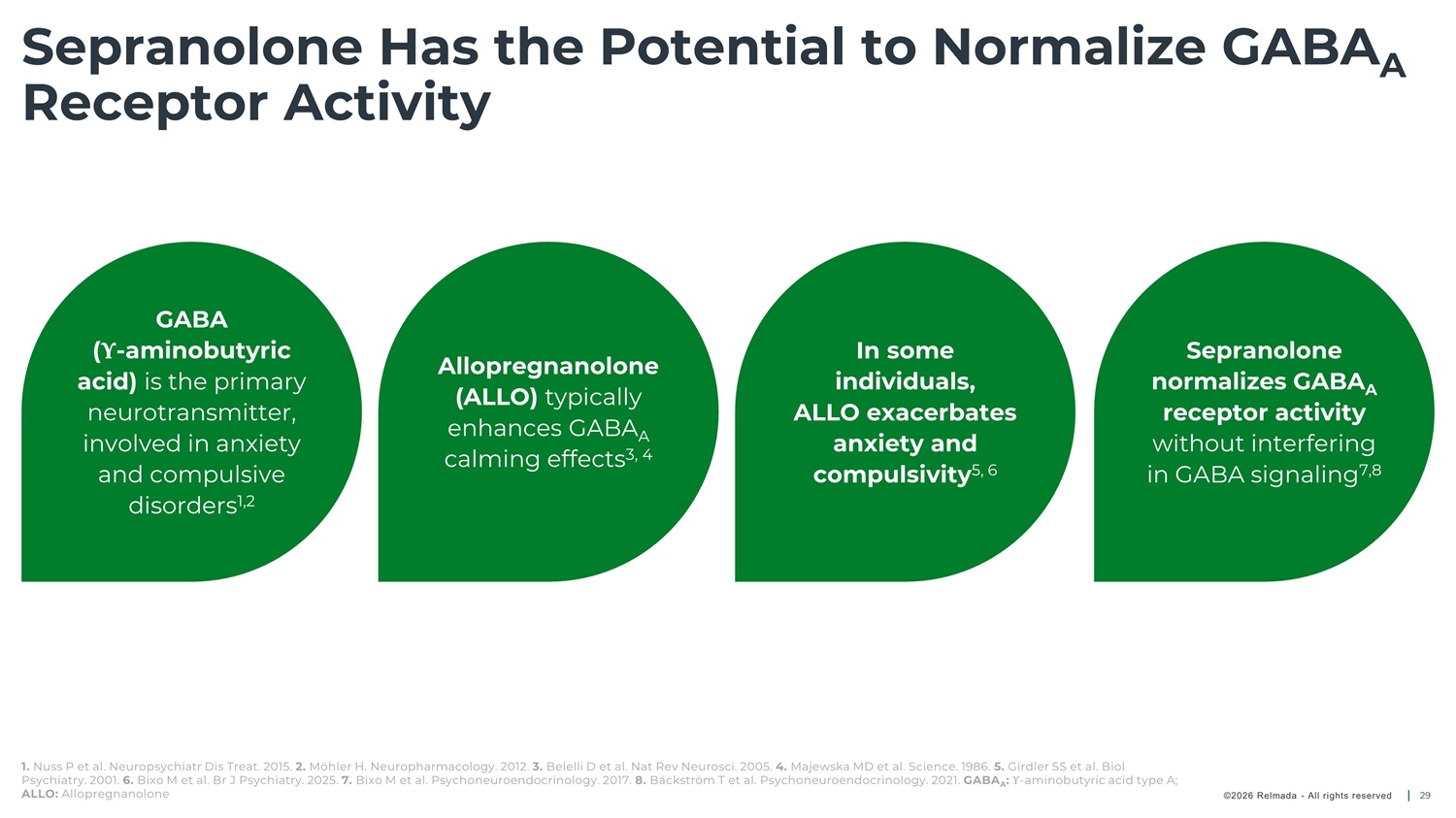
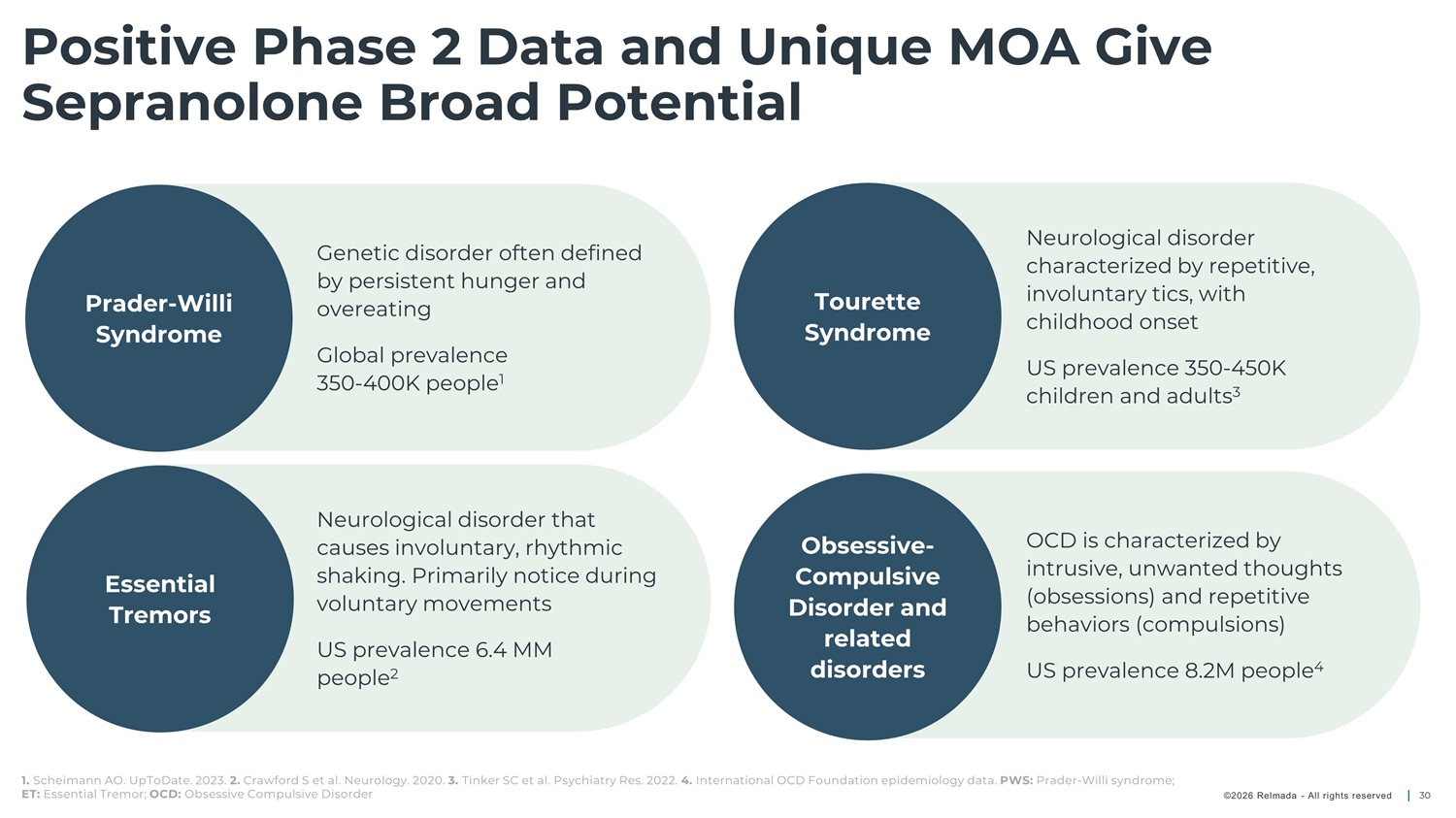
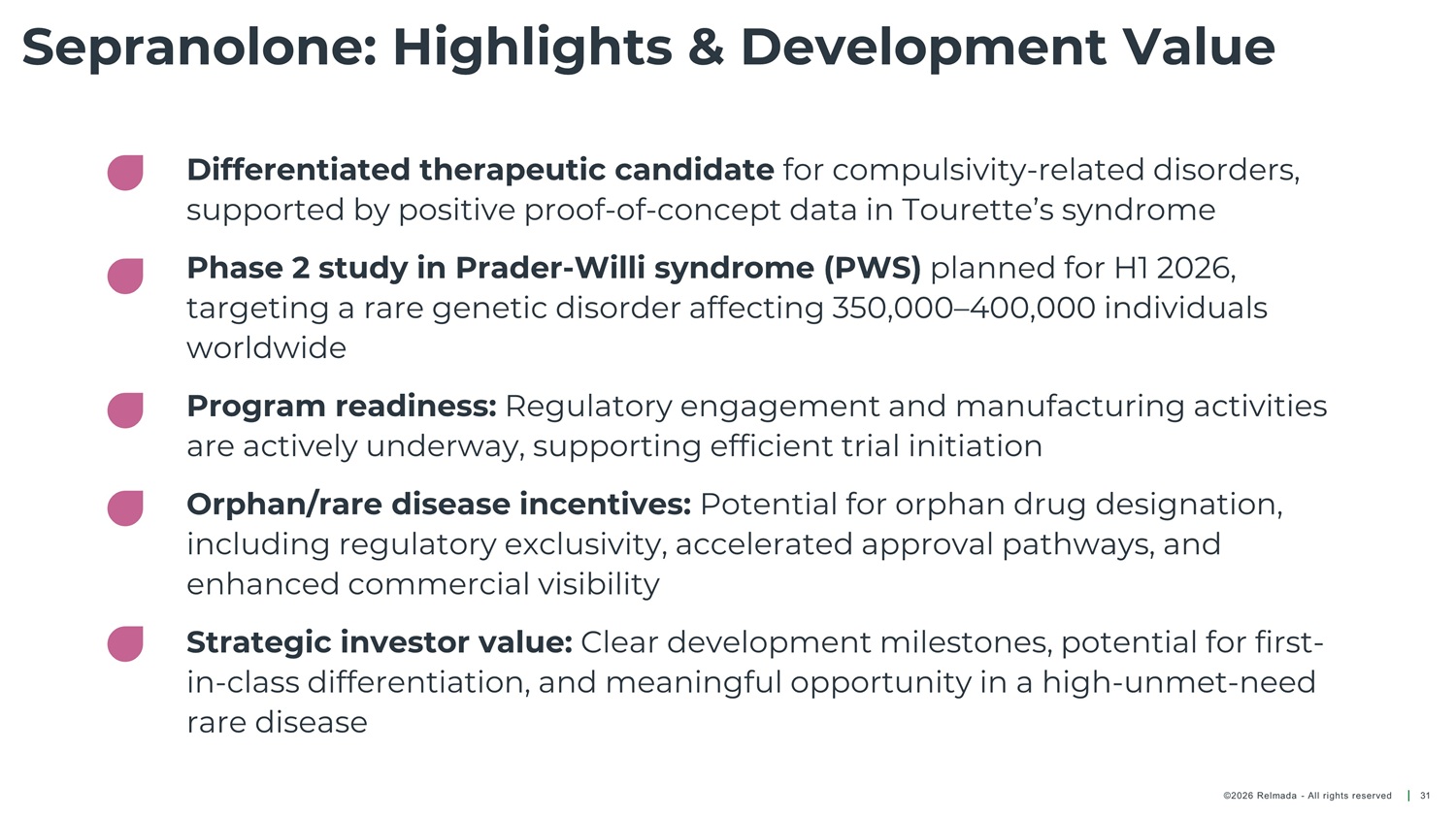
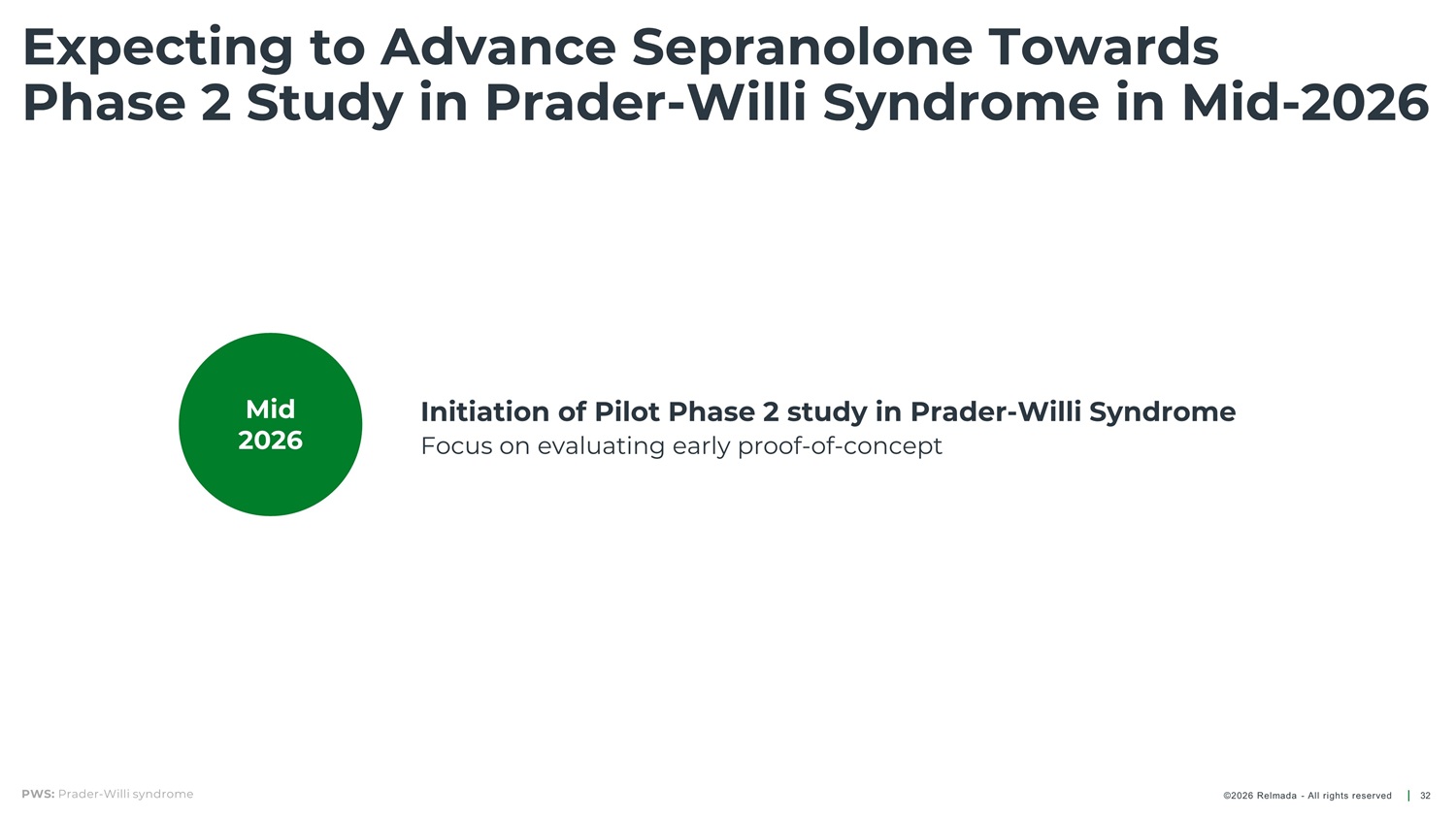
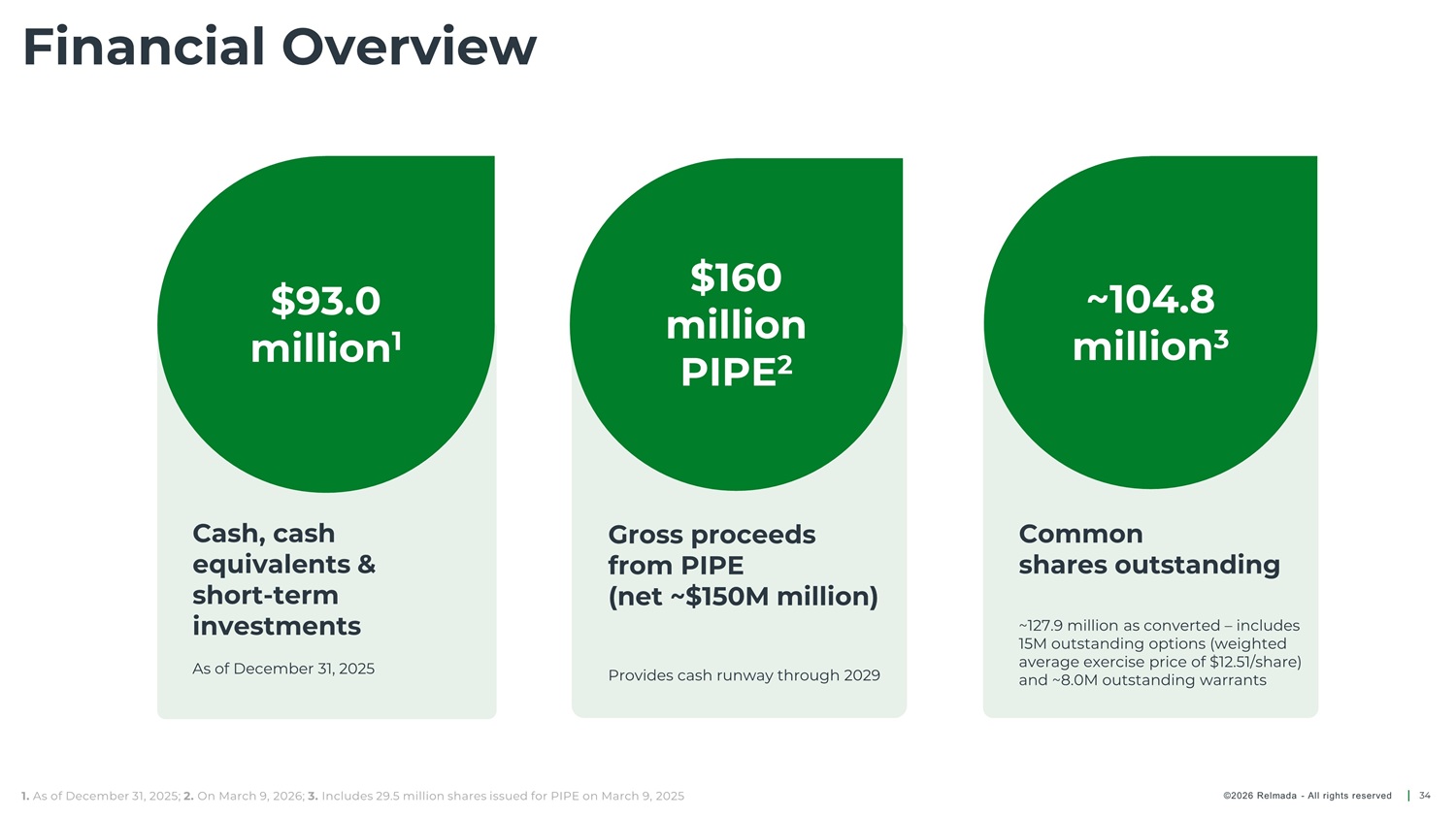
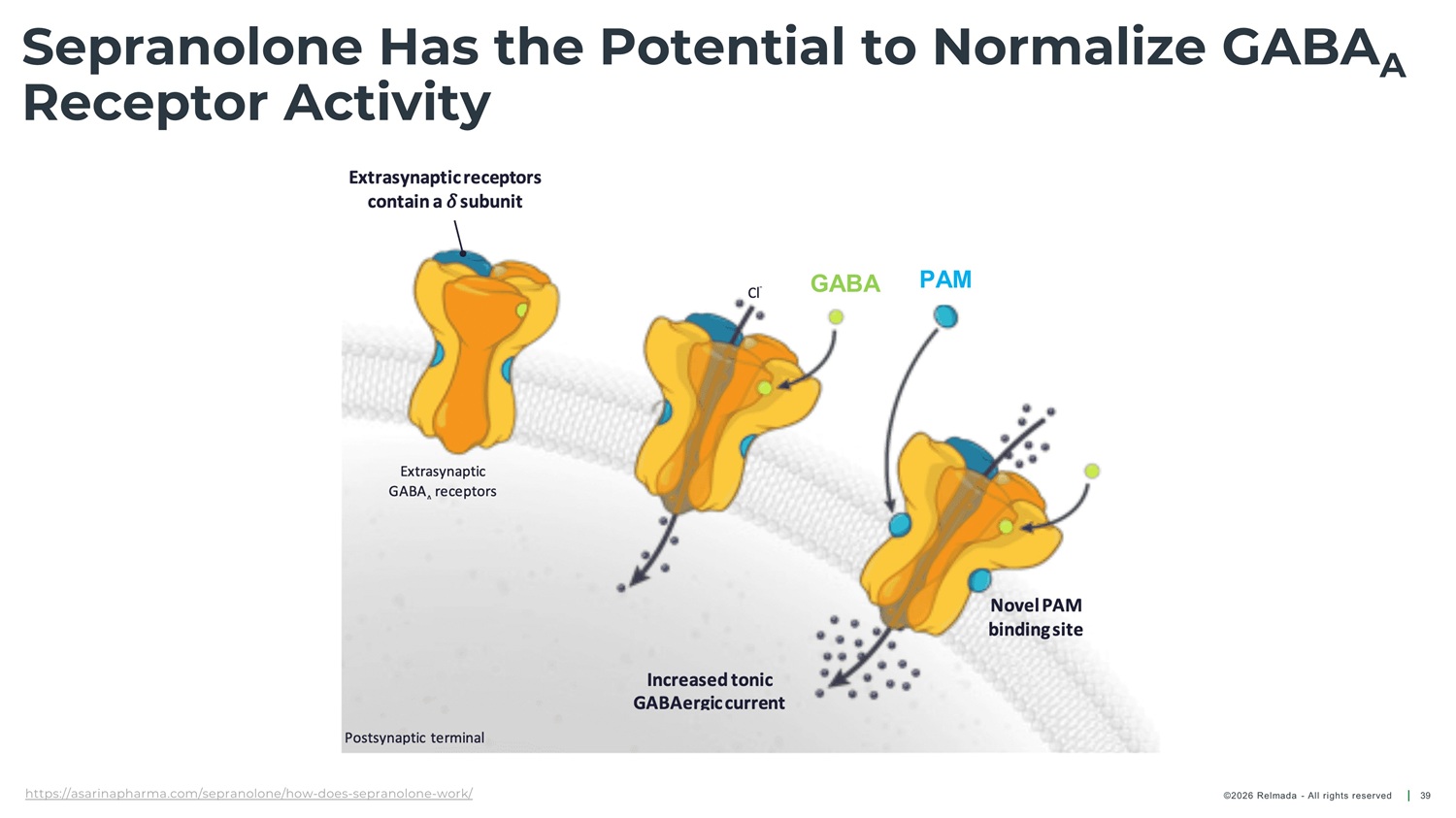
Today, I'll spend a few minutes on sopranalone and then provide you with an overview of our fourth quarter 2025 financial results. Because sopranalone modulates GABA, one of the most important neurotransmitters, it is defined as a GAMSA, or GABA-modulating steroid antagonist. Sopranolone's novel action on the GABA neurotransmitter pathway gives it the potential to normalize the activity of the GABA-A receptor and alleviate the repetitive symptoms of compulsivity disorders. These disorders affect millions of people around the world and include indications such as obsessive-compulsive disorder, Tourette syndrome, and Prader-Willi syndrome. We are preparing to initiate a proof of concept study in Prader-Willi syndrome in mid-2026. Our immediate efforts are dedicated to completing study preparations, including engaging with the FDA on our proposed trial design and establishing a robust supply chain. Moving now to our financial results. As noted earlier by Brian, this afternoon, RealMata issued a press release announcing our business and financial results for the fourth quarter and 12 months ended December 31, 2025. During this call, I'll review our fourth quarter 2025 financial results and refer you to our press release and 10-K filing issued this afternoon for financial information for the last 12 months. Starting with our cash balance, RealMata closed 2025 with a cash balance of $93 million. This includes net proceeds of approximately $94 million from an underwritten stock offering announced on November 5, 2025. This compares to cash, cash equivalents, and short-term investments of approximately $45 million at December 31, 2024. On March 9, 2025, the company announced a $160 million private financing with net proceeds of approximately $150 million. This financing, along with our cash balance as of December 31, 2025, is expected to provide sufficient resources to fund company operations through 2029, including completion of the Phase III Rescue Program for NDV01. Moving through our fourth quarter financial results. Research and development expense for the three months ended December 31, 2025, totaled $8.1 million, compared to $11 million for the three months ended December 31, 2024, a decrease of $2.9 million. The decrease is primarily driven by a decrease in study costs associated with the completion of two Phase III trials for REL 1017. Partially offset by increased costs related to the startup of the Phase III NDVO-1 trials and Phase IIB soprano-1 study and additional R&D personnel. General and administrative expense for the three months ended December 31, 2025, totaled $12.3 million, compared to $8.1 million for the three months ended December 31, 2024, an increase of approximately $4.2 million. The increase was primarily driven by an increase in compensation costs, partially offset by a decrease in stock compensation costs. Net cash, used in operating activities for the three months ended December 31, 2025, totaled $14.6 million, compared to $8.8 million for the three months ended December 31, 2024. The net loss for the three months ended December 31, 2025, with $19.9 million, or $0.27 per basic and diluted share, compared to a net loss of $18.7 million, or $0.62 per basic and diluted share, for the three months ended December 31, 2024. Before we open the call for questions, I'll turn back to Sergio for some closing comments. Sergio?
Speaker 6
Thank you, Megan.
In closing of our prepared remarks, I would like to share that I'm very confident and optimistic about our clinical programs and the long-term prospects for RALMADA. As we are getting ready to initiate the rescue registrational program for NDVO1, we are focused on execution and looking forward to updating you on our progress in the coming quarters. Operator. I would now like to open the call for questions.
Operator
Thank you. We'll now be conducting a question and answer session. If you'd like to ask a question, please press star 1 on your telephone keypad. A confirmation tone will indicate your line is in the question queue. You may press star 2 to remove your question from the queue. For participants using speaker equipment, it may be necessary to pick up your handset before pressing the star keys.
One moment, please, while we poll for questions. Thank you. Our first question is from Weeer with Mizuho Securities.
Weeer
Analyst — Mizuho Securities
Hey, guys. Congrats on the great data and the pipe. Yeah, seems like you guys did a lot of work this quarter. So maybe we've been getting some questions on whether you will present additional data from your Phase II study. Should we kind of expect going forward maybe updates every three months? And will you also have data, I guess, at AUA by any chance? So that's the first question. And the second question that we've been kind of getting is, There's been, I guess, some investors are a little bit concerned that the second-line patients may not be necessarily second-line, but maybe by the time they get to your regimen, it could be their third-line. Maybe just help us understand what you're doing exactly to ensure that those patients are truly second-line patients. And the third question is, you indicated that you have three-month data from your Phase III BCG unresponsive, second-line unresponsive patients. Will this be from the entire patient population, or would this be sort of interim and as partial or portion of?
Thank you, Oy, for the questions. I think Raj is the – you can answer these questions. I pass it to Raj.
Thank you, Sergio. Good to hear from you, Oy. Regarding the data, we will be presenting an updated data, this 12-month data at the AUA. It has been accepted for that. We'll also We'll be presenting a file in progress. As we get rescue going. Our plan is to focus on introducing data, and I think this is your last question, in the BCG and response to the second line group. Starting at the end of the year, so as we start the trial in the mid-year, we should have some three-month data to be able to share externally by the end of the year as it's a single-arm open label. And our thought is to then actually at a cadence of about every three months share the data as we get six, nine, and 12 months follow-up on that data set. I think you provide an excellent question on second line, third line, fourth line, and we are indeed. Look, limiting the number of prior therapy lines to two. So you can have had one line therapy, Edstilagrin, for example, and we're allowing a second of those, say Edstilagrin, followed by Antiva. We're also allowed a maximum of two. We're also going to look at 15 patients at three months of those who receive one first-line therapy versus two, just to make sure they're, you know, it's an open-label study that there's nothing concerning that we want there, that those should be excluded. And this is reflective of the conversations we've had with the FDA. I think it's a good question, limiting the number of kind of third or fourth lines.
Speaker 6
Our next question is from Farzin Haq with Jeffries.
Hi. Congrats on the progress, and thank you for taking my question. So I have one on the operational standpoint. The NMI-BC space is becoming congested with active trials and drugs approved, too. So what is your expectation for enrollment cadence across your two studies, and can the drug's in-office profile potentially serve as a recruitment advantage?
Thank you, Farzeem. Raj, you want to take that?
Yeah, yeah. Thank you. Yeah, Farzeem, good to hear from you. I think you're right. I think the high-risk BCGN response has been a crowded space, but I think ours coming in. As a second-line therapy provides a unique advantage, and there's no drugs that have been approved in that setting and none that I'm aware of that are even being investigated, you know, as a pivotal study in that setting. So I think we have a competitive advantage in that we can go to sites that, even in development, you know, drugs in development, can follow them in this unique path. And same for intermediate risk. I think right now, it's becoming a bigger, expansive interest, but what I've seen in, for example, CG Oncology has an intermediate risk trial that looks like it's ahead of schedule and accrued very rapidly. I think there's a lot of interest from investigators in looking at intermediate risk patients. I expect us to. Enroll that pretty rapidly ahead of schedule, like Steve did. Thanks for the question, Parchim.
And then for the second line, high-grade settings, beyond the primary endpoint of CR rate at any time, has the FDA stipulated a minimum duration of follow-up required for all patients by submitting the NDA?
Another great question. They haven't required a minimum of follow-up. They said they want to see CRNE, as you said, and durability of response or duration of response. I think the wording they use, which I think is important, is they want to see the totality of the data. So they want to see, do you have a response, and is there some level of durability?
Speaker 6
I mean, they haven't specified what that number is. Got it.
Speaker 6
Thank you. Thank you, Valzin.
The chat is from Christopher with Lucid.
Hey, guys. Thanks for the question. I was just wondering, given the population differences between, you know, your phase two and phase three rescue, what are you expecting to see in terms of the CR rate at the three-month mark as well as, you know, what we should be benchmarking against with the status set?
Thank you, Grace. Raj, do you want to take this one as well?
Yes, sure. Yeah, thanks, Chris. Thanks for the question. So, in the intermediate risk, we are looking at what we've structured the trial to look at the statistics around it. Two-year RFS of 75%, and that actually is reflected in the literature with Gen-Dose, and I think with what we've seen in this population and with sustained release, we should exceed that, but that's our target number that drives the statistics. It's an event-driven study, but that's kind of the drive, and with 128 events, it's the target. Regarding the BCG on responses, second line, you have... We have looked at that, but what is the, you know, it's interesting that in first line, the first drug approved was Valrubicin in 1998 at 8% to what month PR, followed by Keytrudin at 19%, it's still within 24%. So I think, you know, I'm glad that there's not, the FDA wasn't fixated on a certain number, but I think that number should be. At those levels are lower than what we've seen in
Speaker 6
first-line therapy, just as a precedent, if that makes sense.
Scott, thanks for the question.
Speaker 6
As a reminder, if you'd like to ask a question, please press star 1 on your telephone keypad.
Operator
Our next question is from Kelty Goodwin with Piper Sandler.
Oh, hey. Thanks so much for taking my question, and congrats on the recent clinical update. Regarding, I guess specifically to that update, regarding the patient baseline characteristics and the CIS versus papillary split, I guess how should we be comparing this data set to that of competitors, you know, with primarily CIS patients there? And I guess any data to support that GEM-DOSI looks similar in CIS and papillary patients?
Speaker 6
Hi, Kelsey. Sergio here.
Raj, it seems that this one also is for you.
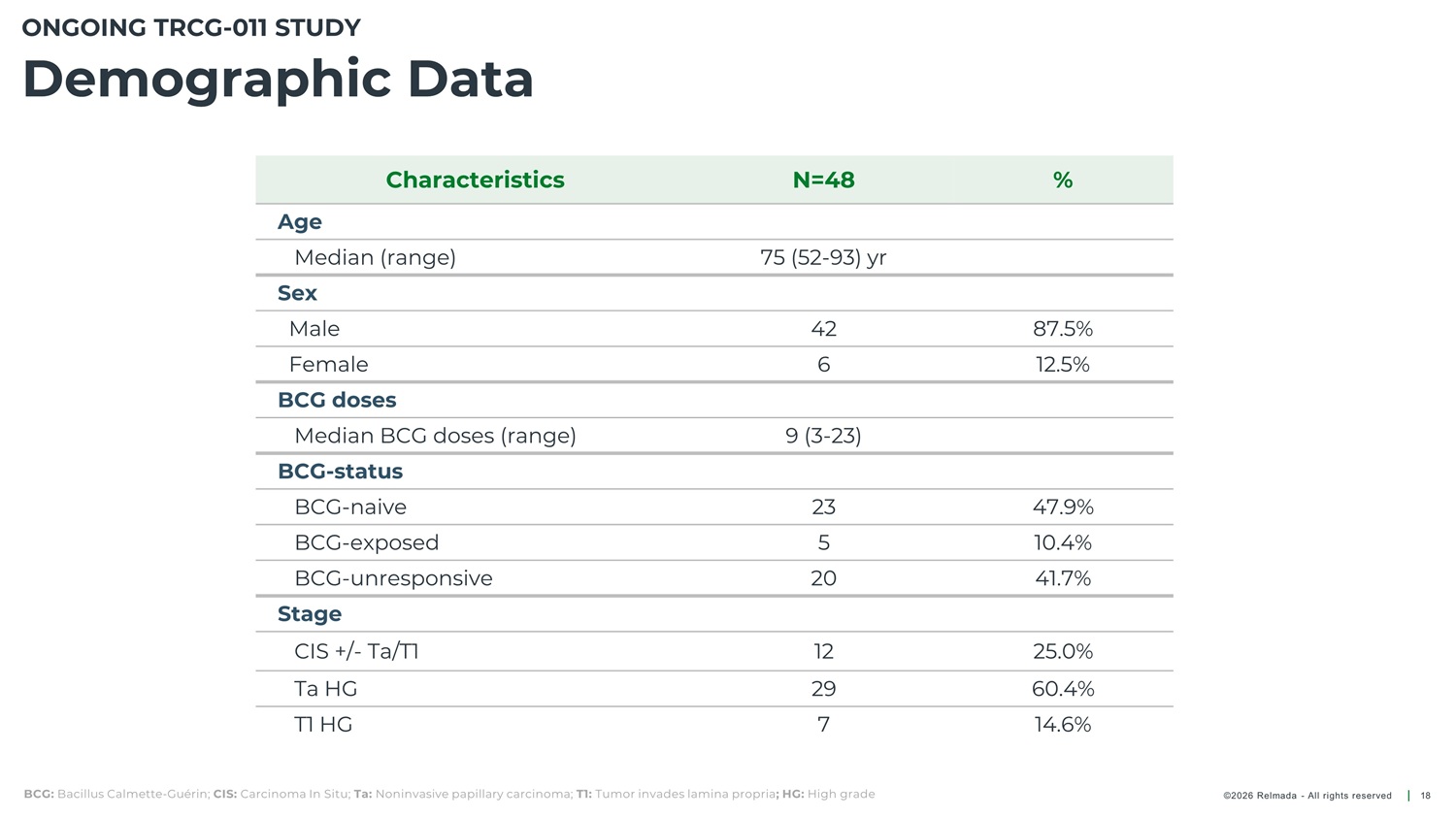
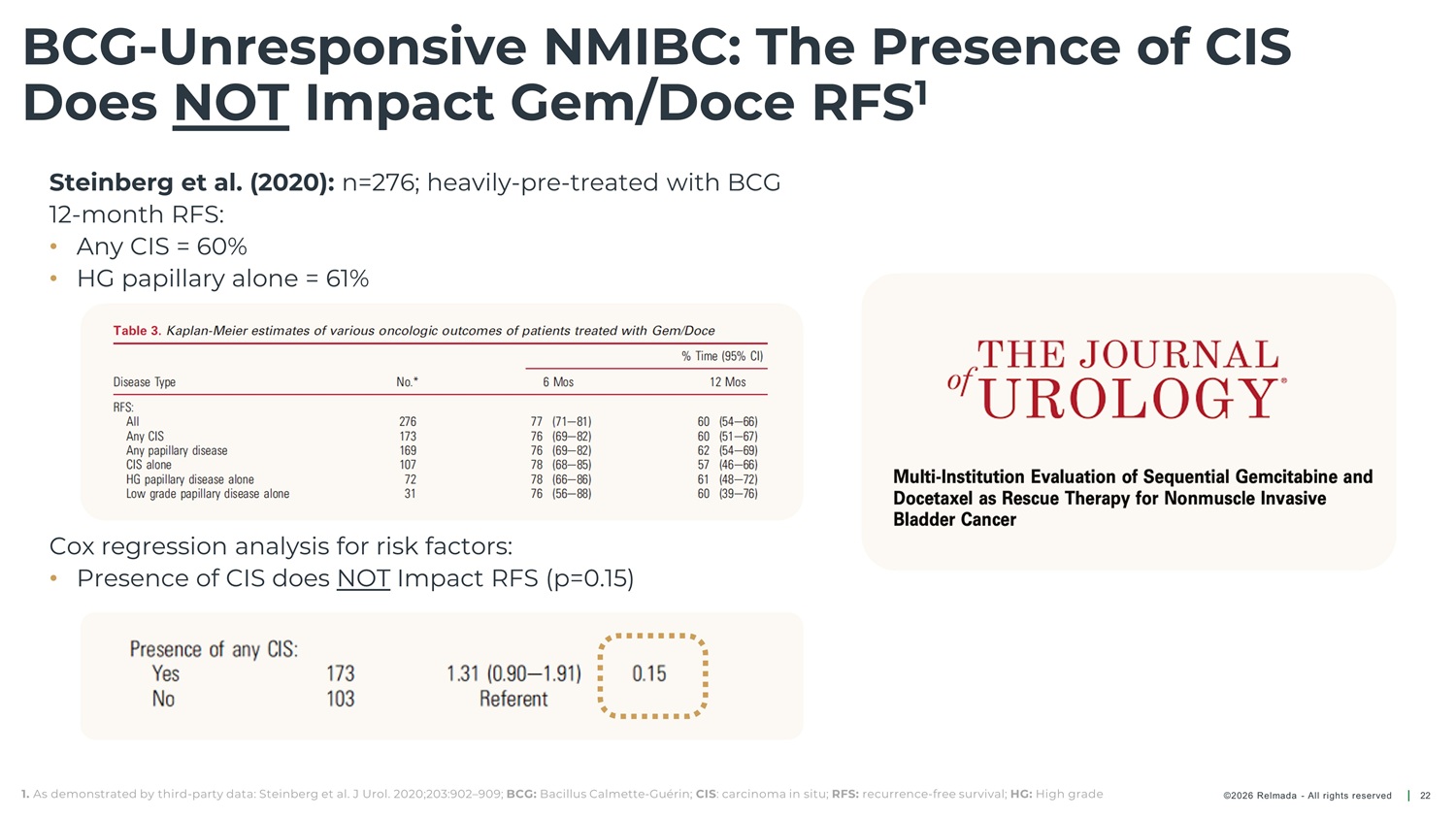
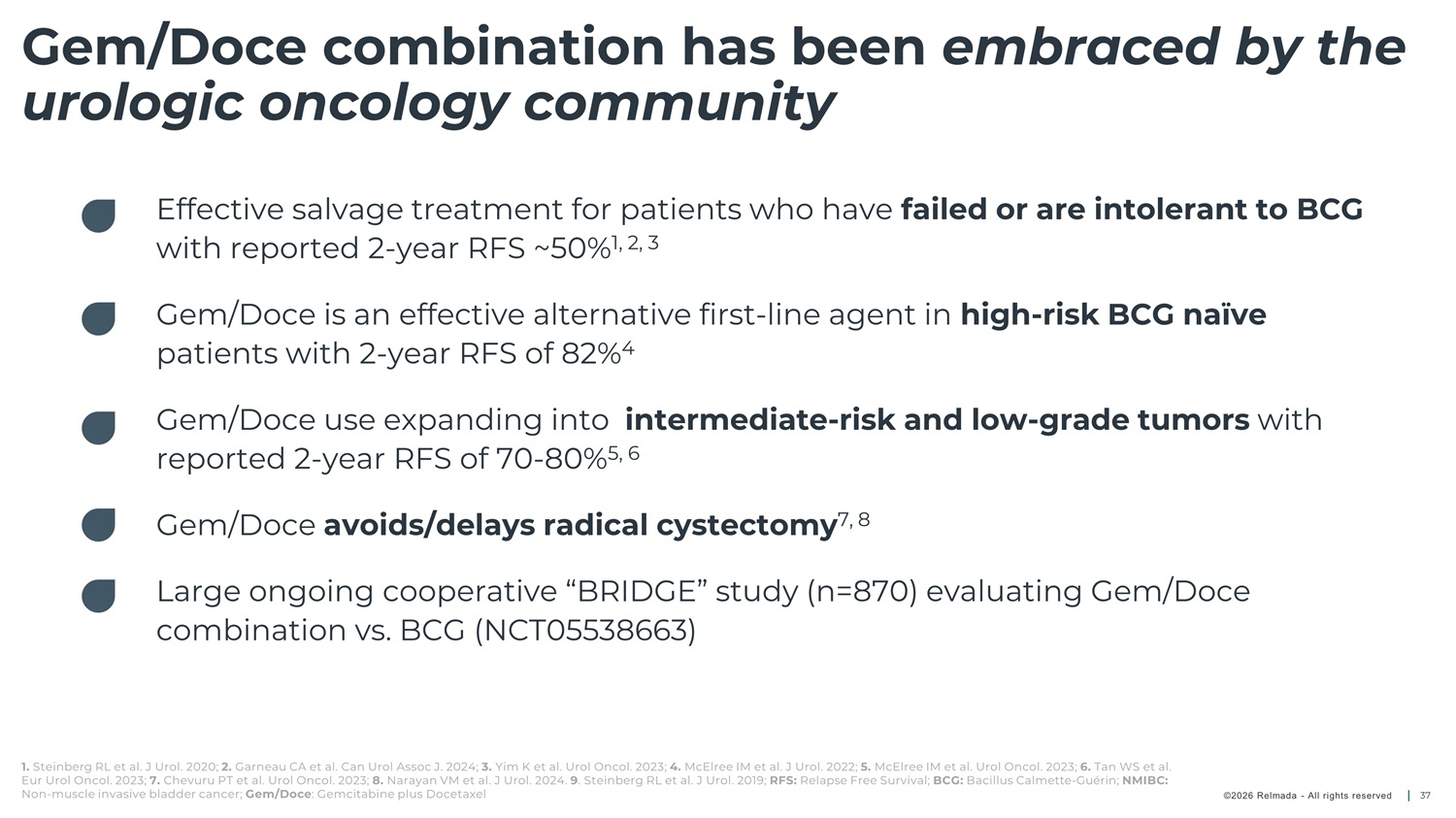
Yeah, great question, Kelsey. So, we're going to start at the last part of your question first. There is, in fact, it's interesting as a clinician. You know, you often think, okay, if the patient is B2G unresponsive, this might be more virulent. But we don't often, I think, think of CIS versus papillaries. Some people show pure CIS behaves better, but T1 papillary works. So it's a mixed bag. It's actually interesting for Jim Doste. There's an article by Steinberg in 2020 in the Journal of Urology that looked at heavily pretreated, basically B2G or papillaries. And at 12 months, the RFS in those patients, or CRs, was 60% in the CIS population and 61% in papillaries. So there isn't a marked difference typically in between that. But even if you go back and look at our data of what we showed, ours at the 12-month is 80%, 12-month KM, 84%. That does include four patients with... At 12 months, for patients with PIS, we had four out of four with complete response at any time, two out of two at 12 months. Completely understood these are small numbers, but I think it still compares quite favorably. Even if you take a DV01 and the BCT-unresponsive papillary for our entire population, including CF, and compare it to the best-in-class papillaries, which is J&J's in Lexo, I think their 12-month CAM was 74%. So even taking our entire cohort, we're significantly higher. So I think still best-in-class. I hope I answered your question.
Yeah, no, that's super helpful. Thank you so much for that. And then maybe just one follow-up, if I can. With respect to the intermediate risk setting and in that kind of market overall, I guess, how much do you think that market might need to be built out by these early launches, just given we haven't had an approved agent until last year? Thanks so much.
Oh, you bet, Kelsey. And another great question, if you don't mind me jumping in, Sergio. No, no, go ahead. Right now, I mean, we mentioned it's about 75 to 80,000 patients with intermediate risk disease, and if you look at the data now, only about 35% of those patients will receive adjuvant therapy. What's important in our studies and in CZ's study is that in our intermediate risk population, we do include small, less than three centimeter TA hybrid patients. I think that's very important because 20% of the intermediate risk is the end. In these high-grade TA patients, and those are the ones that probably more than anybody needs adjuvant therapy to prevent recurrence. So we go back to what 45% receive in adjuvant therapy. I think it's exactly what you're alluding to. Right now, there isn't an approved therapy. There isn't a lot of data. There isn't a lot of agents that can be reimbursed to the urologist in a buy-and-bill model, for example. So I think that 35% number. It is going to only grow as you see data from Moonrise or from PIVIT-006 or from RESCU, our intermediate study, as we get data that gives patients confidence that, hey, here's an agent that might reduce my risk of having another TRBT and give urologist confidence that I have an agent that I can deliver in my office that will reduce TRBT risk for my patients.
Speaker 6
That's great. Thank you so much.
Operator
Thank you. This concludes our question and answer session. I would now like to hand the floor back over to Sergio Traversa for any closing remarks.
Well, a closing remark is a big thank you to everybody that has allowed Renata to get where we are now. We create data with a drug that can really help patients with bladder cancer. So we're looking forward to update everybody on our progresses. Thank you, and enjoy the rest of the day.
Speaker 6
This concludes today's conference. You may disconnect your lines at this time. Thank you again for your participation.