Operator
Good day, and welcome to the Renasant Corporation 2025 First Quarter Earnings Conference Call and Webcast. Please note this event is being recorded. I would now like to turn the conference over to Kelly Hutcheson, Chief Accounting Officer. Please go ahead.
Good morning, and thank you for joining us for Renasant Corporation's Quarterly Webcast and Conference Call. Participating in the call today are members of Renasant's executive management team. Before we begin, please note that many of our comments during this call will be forward-looking statements, which involve risk and uncertainty. There are many factors that could cause actual results to differ materially from the anticipated results or other expectations expressed in the forward-looking statements. Such factors include, but are not limited to, changes in the mix and cost of our funding sources, interest rate fluctuations, regulatory changes, portfolio performance, and other factors discussed in our recent filings with the Securities and Exchange Commission, including our recently filed earnings release, which has been posted to our corporate site, www.renasant.com, at the Press Releases link under the News & Market Data tab. We undertake no obligation, and we specifically disclaim any obligation to update or revise forward-looking statements to reflect changed assumptions, the occurrence of unanticipated events, or changes to future operating results over time. In addition, some of the financial measures that we may discuss this morning are non-GAAP financial measures. A reconciliation of the non-GAAP measures to the most comparable GAAP measures can be found in our earnings release. And now I will turn the call over to our Executive Vice Chairman and Chief Executive Officer, Mitch Waycaster.
Speaker 2
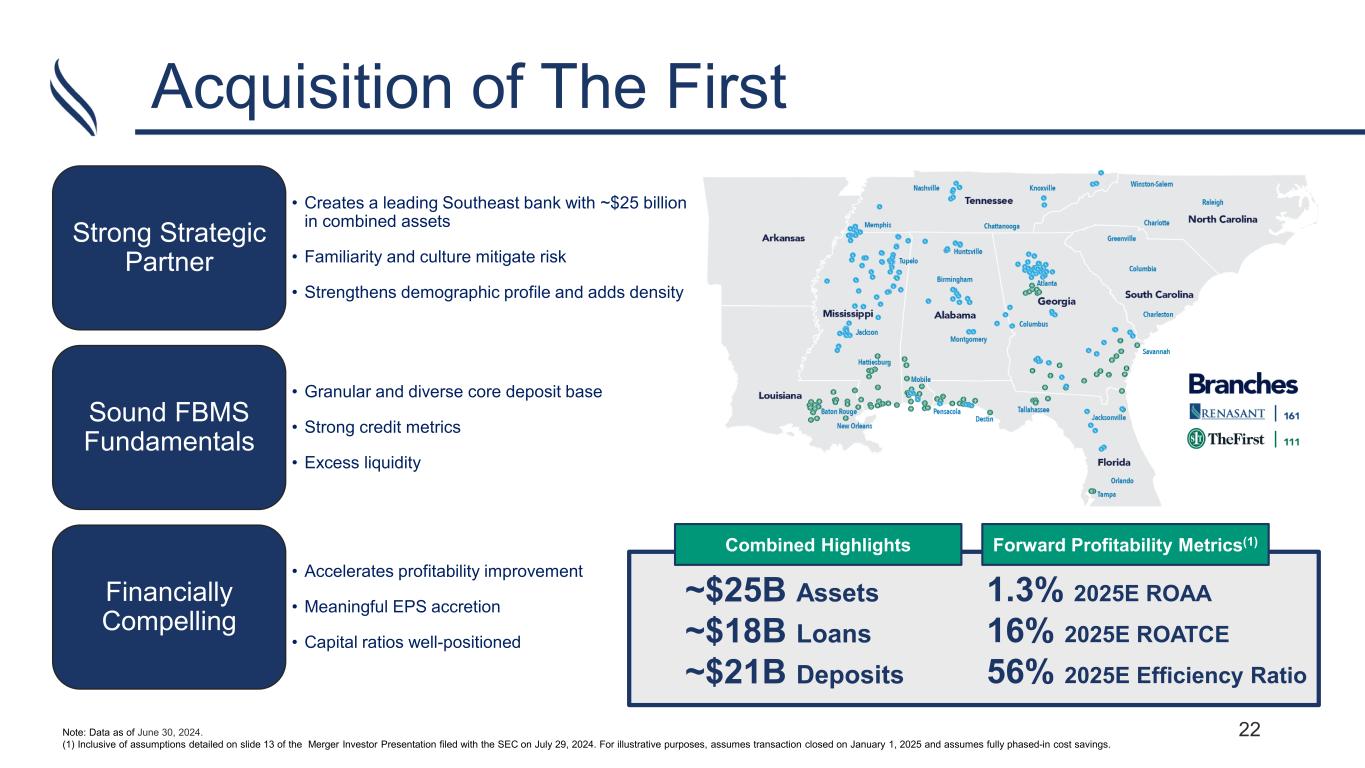
Thank you, Kelly. Good morning. We appreciate you joining the call. The first quarter results reflect a good start to the year with solid profitability and growth in loans and deposits. As you know, on April 1, we completed the merger with First Bancshares, and we welcome their team to Renasant. Our focus remains steadfast on successfully bringing two strong companies together and achieving higher profitability with solid organic growth. While the economic outlook contains uncertainty, we are excited about the prospects for Renasant to perform well in the periods ahead. I will now turn the call over to Kevin.
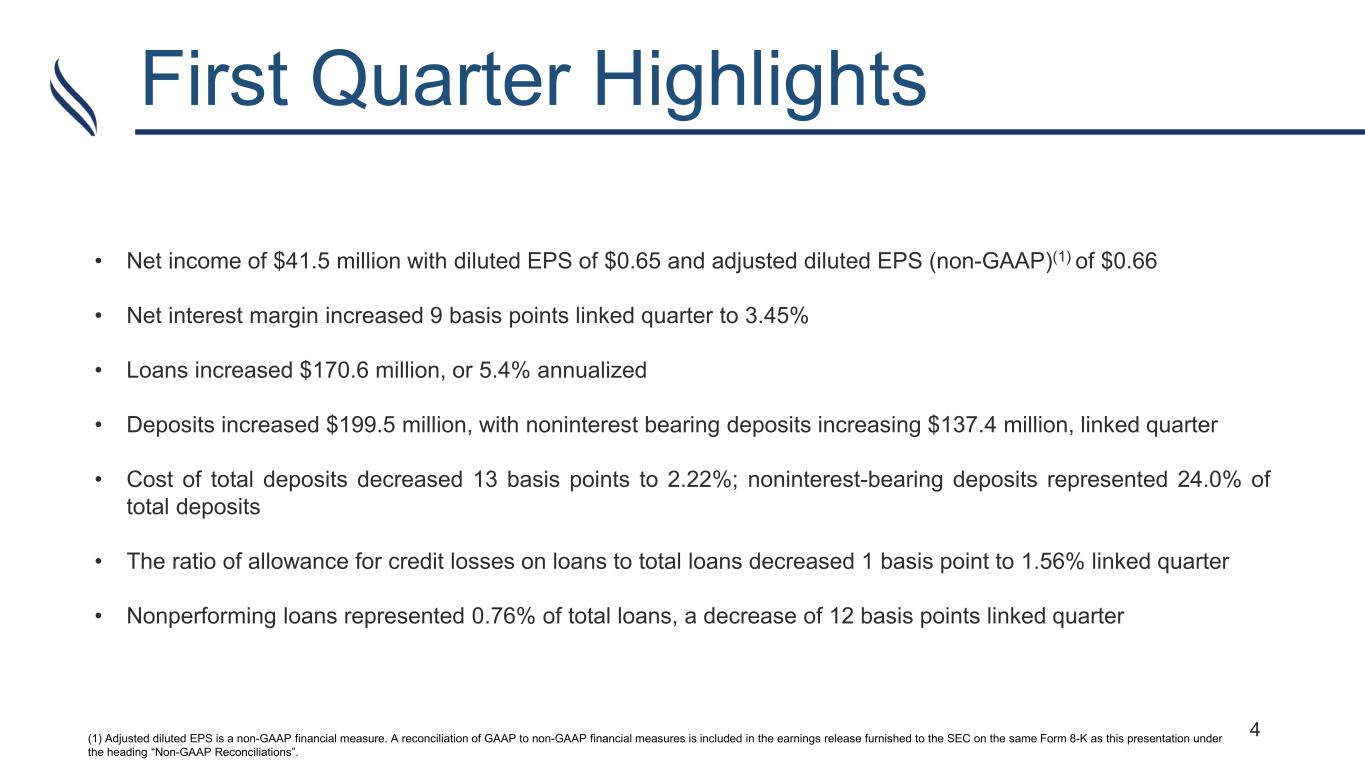
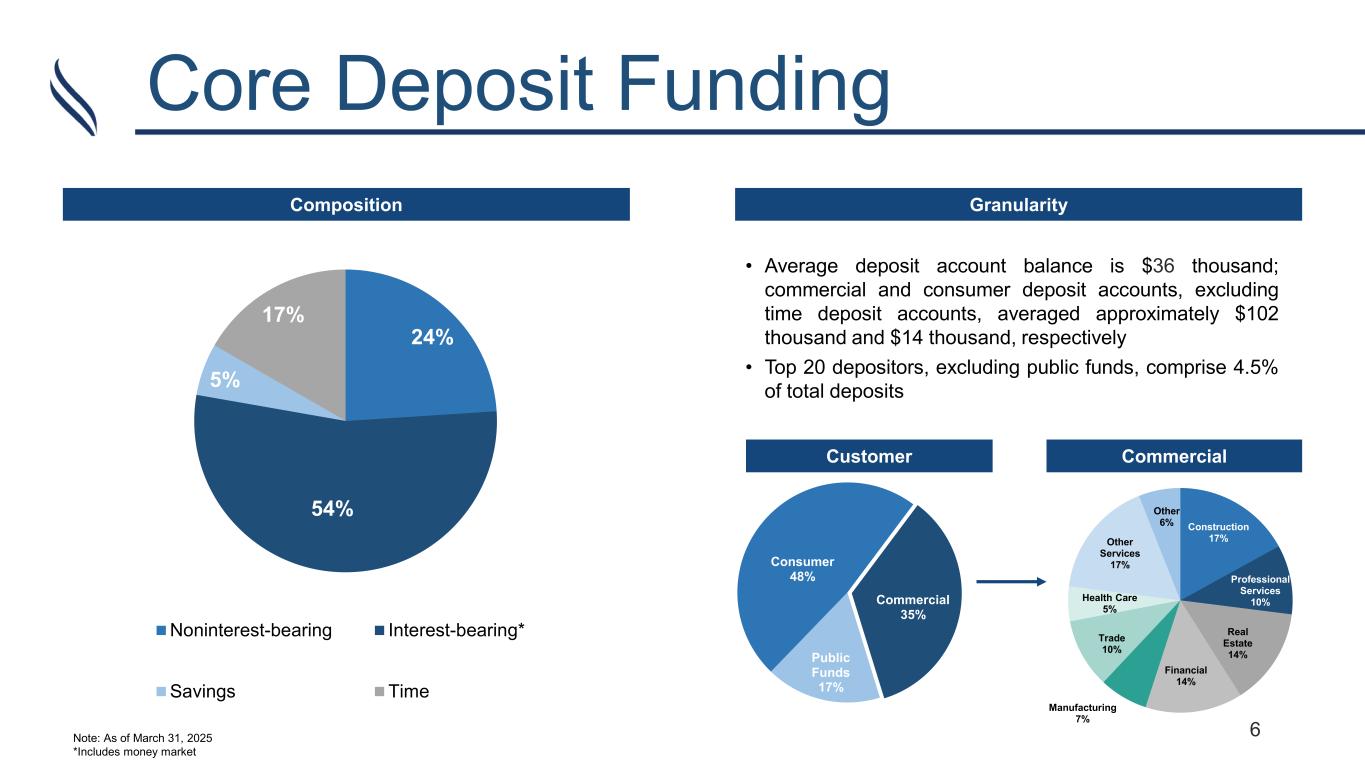
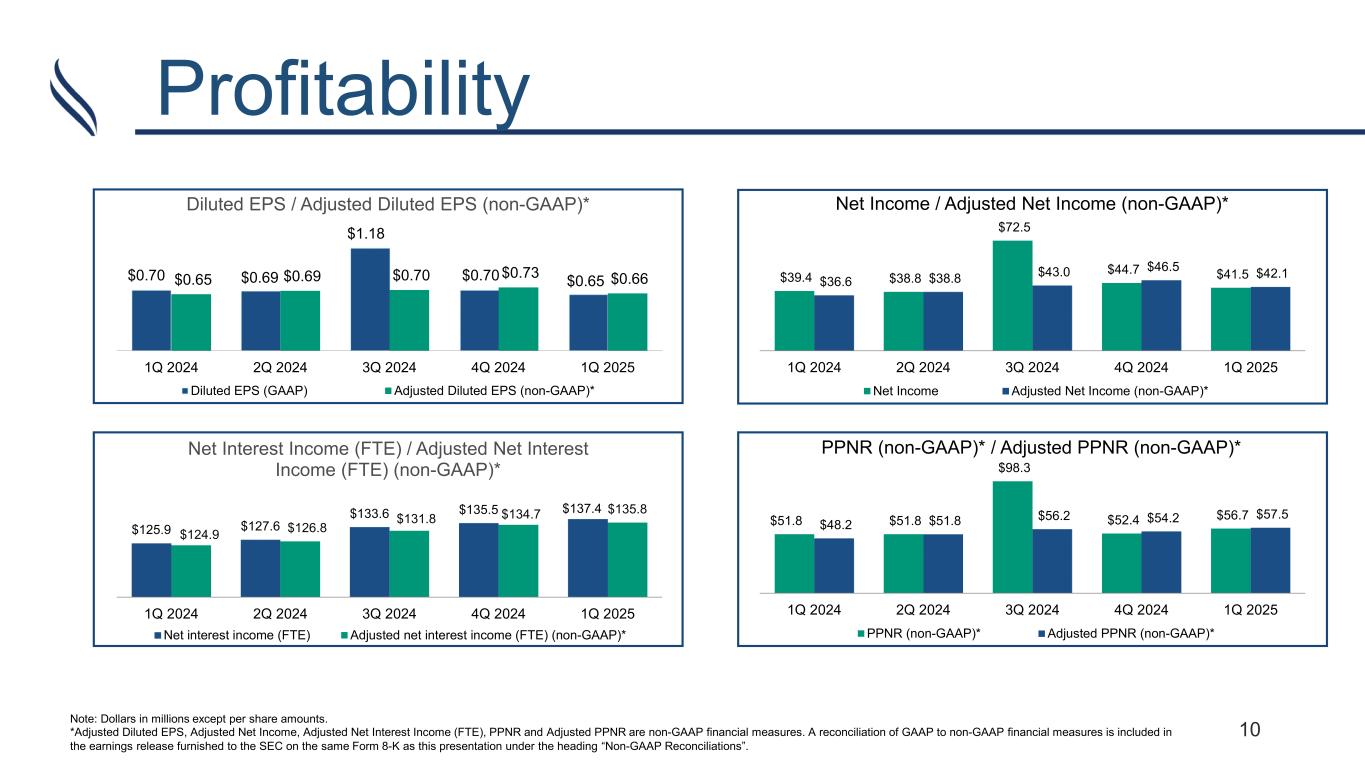
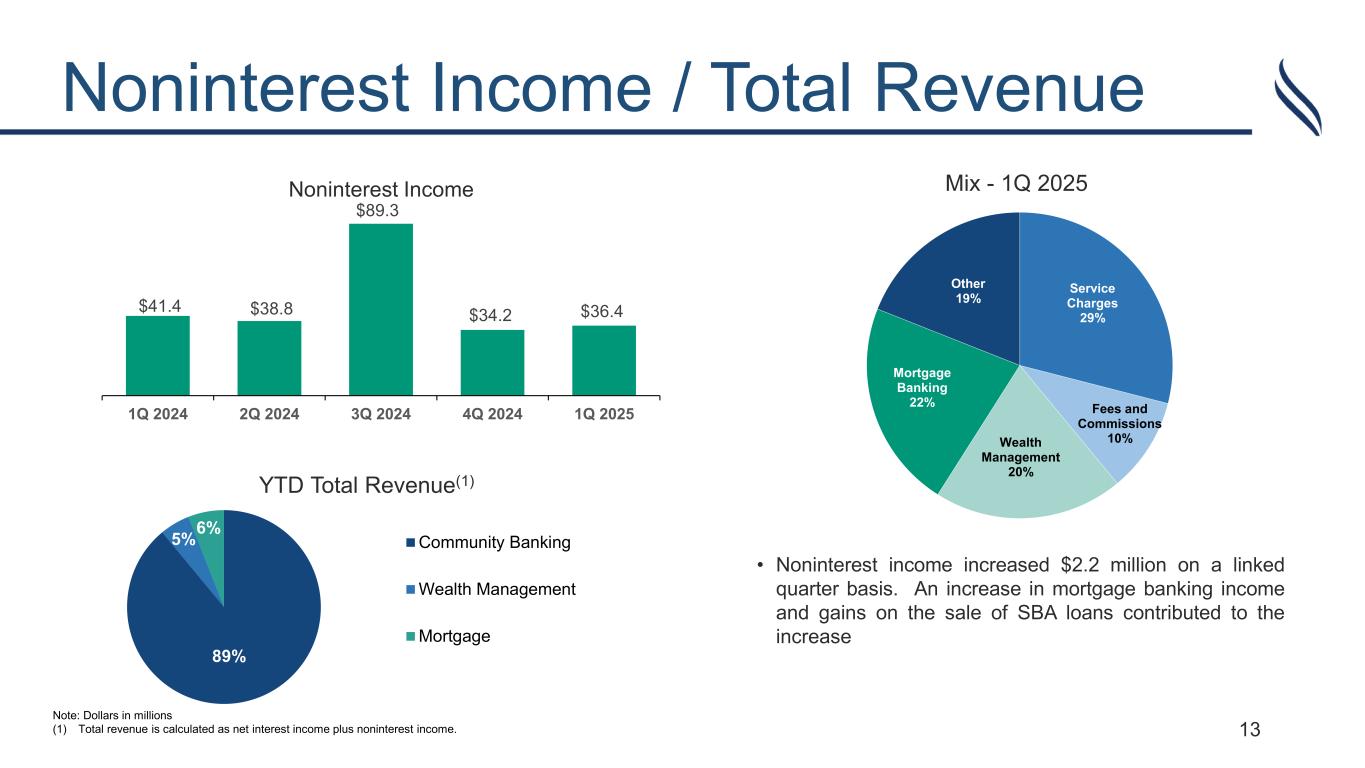
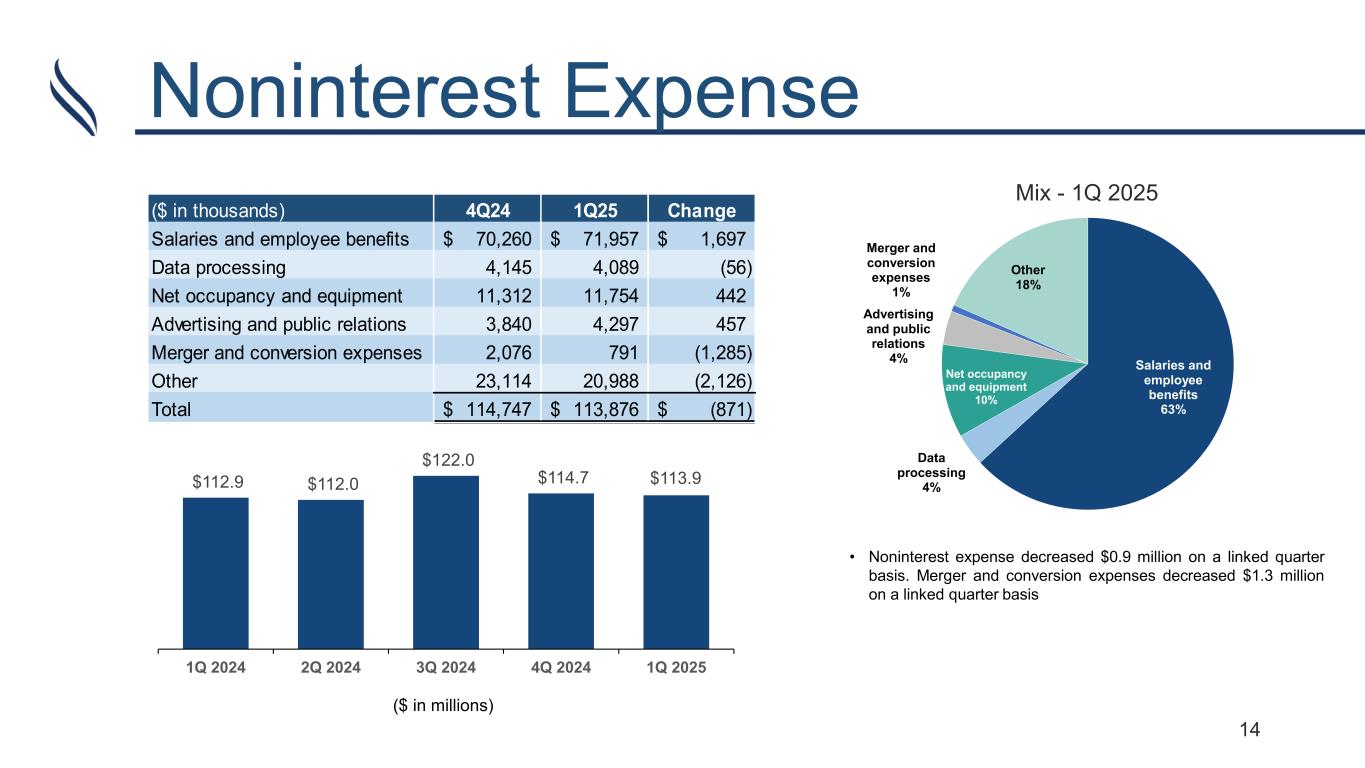
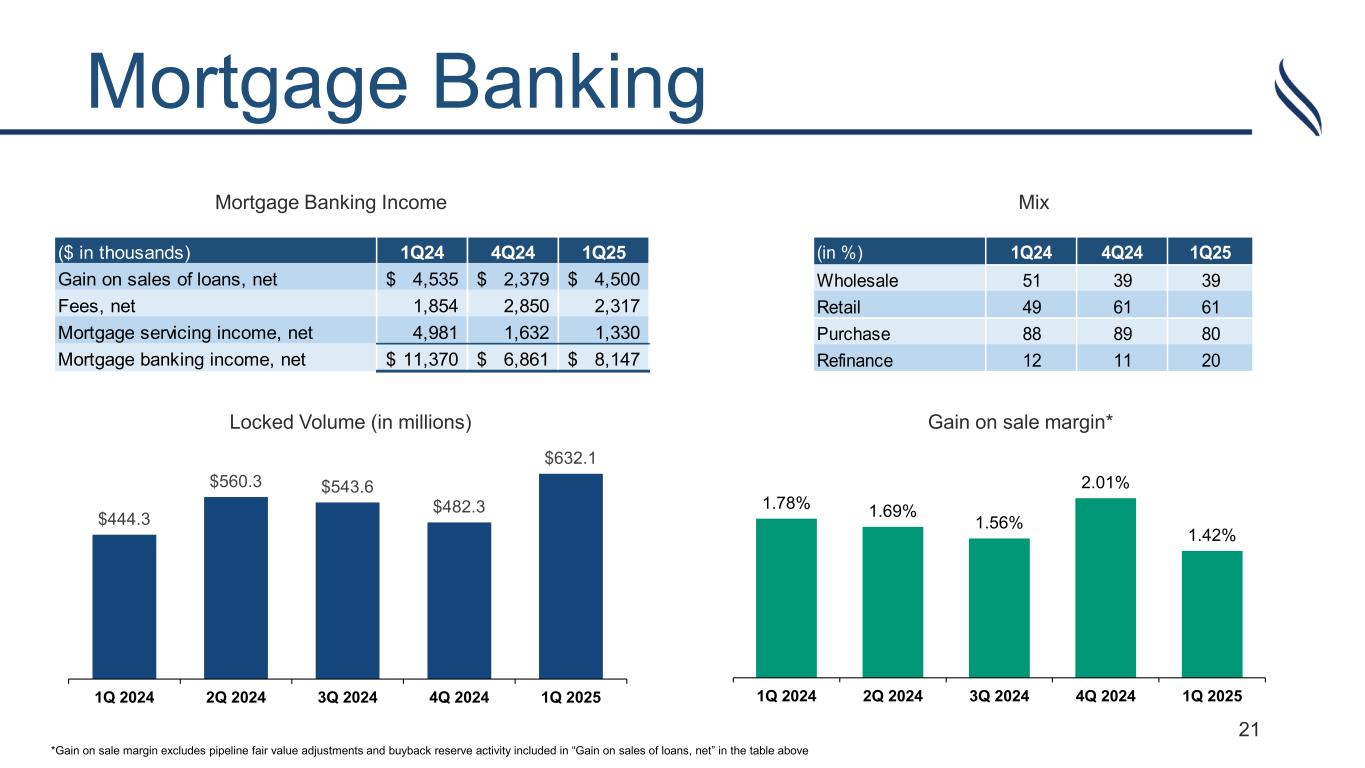
Thank you, Mitch. Before we dive into the quarter's results, I too want to welcome the team from First to Renasant. We successfully closed the merger less than a month ago, and the conversion and integration teams have been hard at work to orient our new team members, align our management teams, and continue to meet the needs of our customers. I want to commend all employees of the combined company for their diligence, patience, and flexibility throughout these past several weeks. With the early success we're experiencing, I’m excited about the future opportunities for Renasant. I will now turn our attention to our first quarter financial results. Our earnings were $41.5 million or $0.65 per diluted share. Net interest income was $134.2 million, an increase of $1.3 million on a linked quarter basis. Similar to last quarter, solid loan growth of $170.6 million linked quarter, coupled with a sizable decline in our cost of deposits, was the driver behind the increase in net interest income. The liability side of the balance sheet presents another positive growth story. Total deposits increased approximately $200 million linked quarter, with growth in noninterest-bearing deposits accounting for $137 million of growth. The improvement in deposit mix, along with disciplined pricing, as rates have fallen, resulted in a decrease in total cost of deposits of 13 basis points from the prior quarter. Non-interest income increased $2.2 million from the fourth quarter of last year. Seasonality in our mortgage division drove an increase in mortgage banking income of $1.3 million, accounting for the majority of the overall increase in non-interest income. Non-interest expense was $113.9 million for the first quarter. Excluding merger and conversion expenses, non-interest expense was $113.1 million for the quarter, representing an increase of $415,000 linked quarter. We will continue to work diligently to manage our expenses as we work to efficiently integrate First this year. Overall, we had a strong quarter marked by solid balance sheet growth, disciplined pricing, and expense management. Before turning the call over to Jim to discuss financials, I would like to thank Mitch for his service and outstanding leadership as CEO of Renasant during the past 7 years. During Mitch's leadership, Renasant Bank grew to become a $26 billion financial services company with more than 300 locations and over 3,100 employees throughout the Southeast. Additionally, Mitch's steady hand and calming approach helped us navigate several significant events during his tenure, such as the pandemic and the bank failures of 2023. On behalf of our employees, customers, communities, and shareholders, Mitch, we congratulate you on your success during your tenure as CEO, and are excited that you will remain a part of the team as Executive Vice Chair. I will now turn the call over to Jim.
Speaker 4
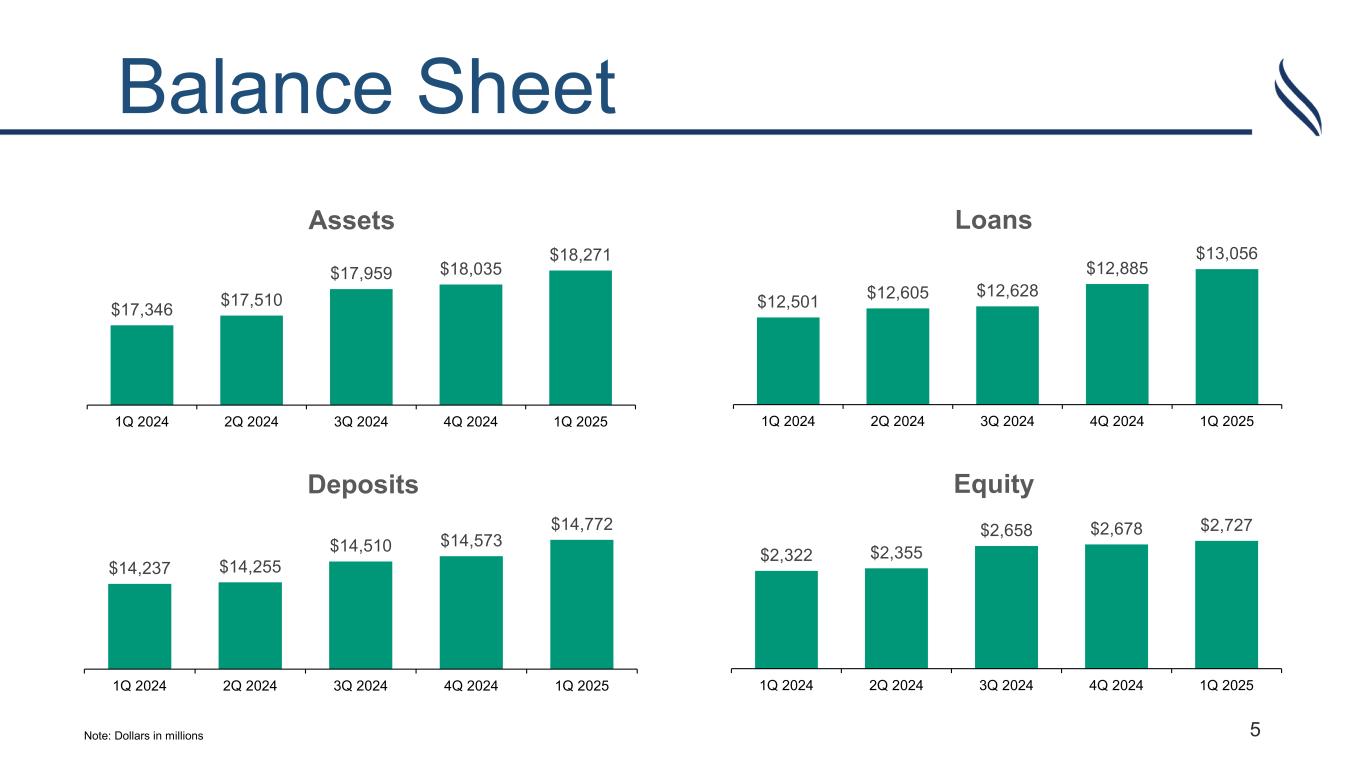
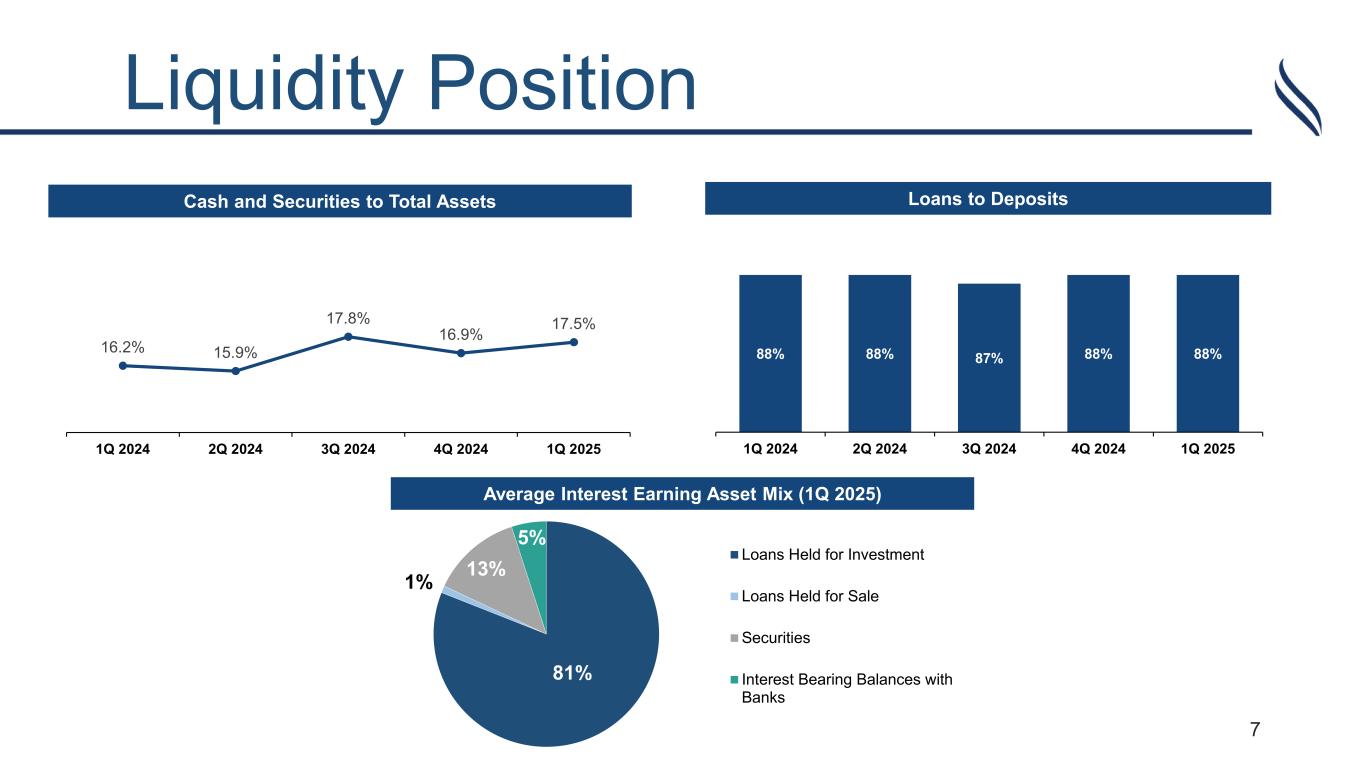
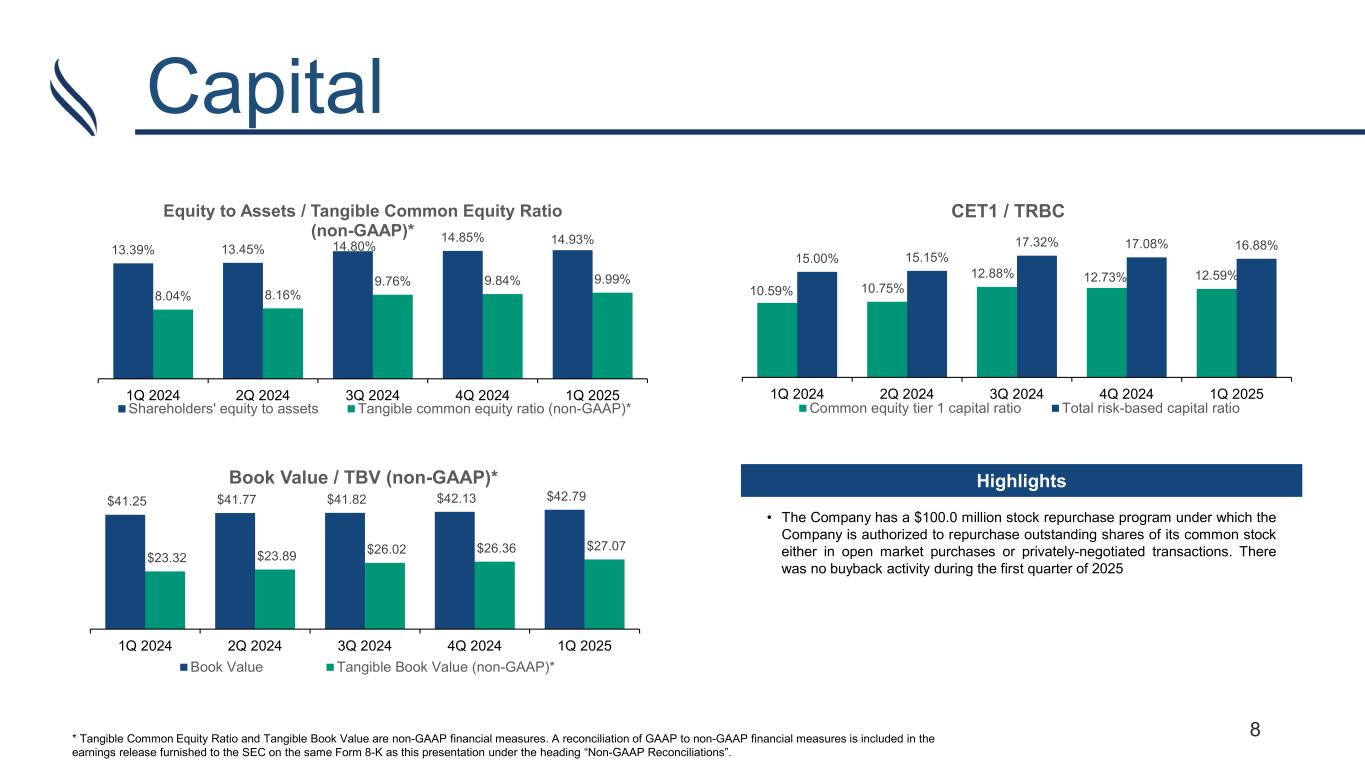
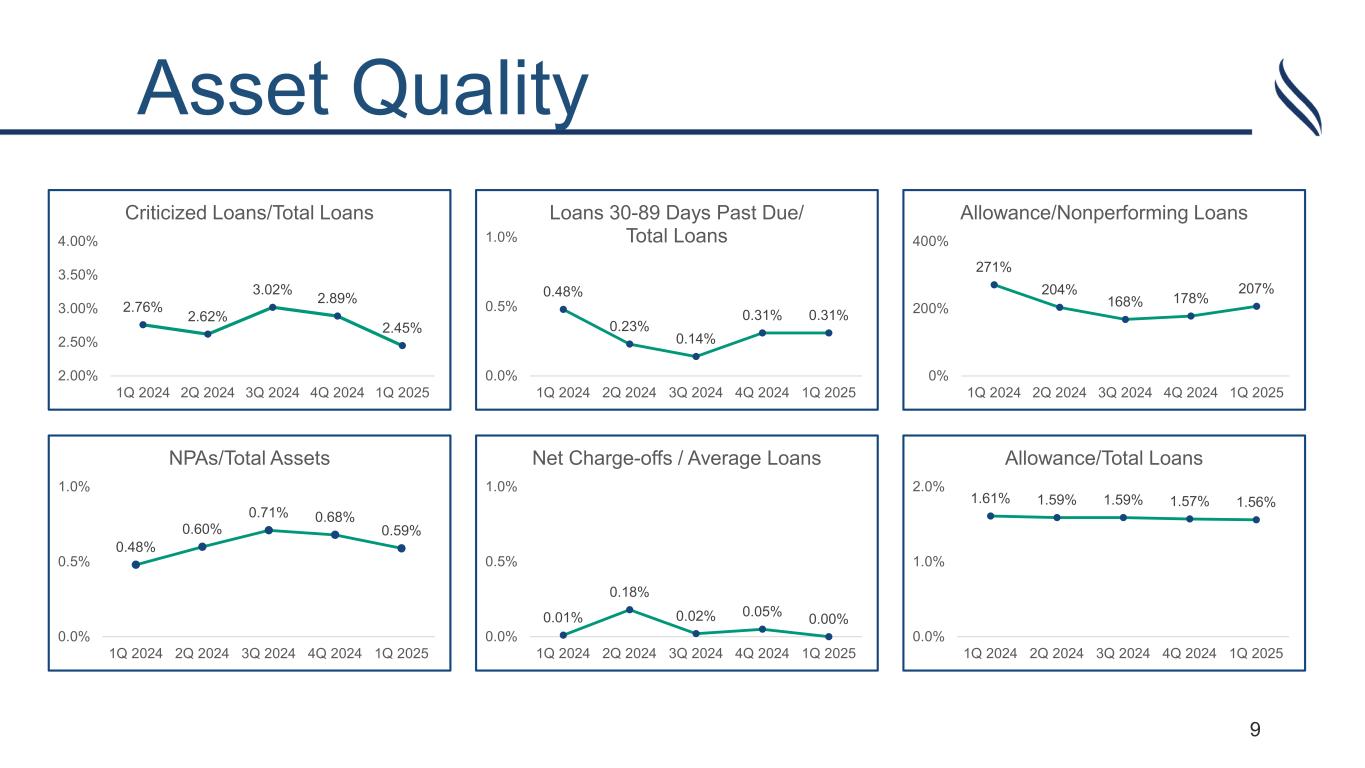
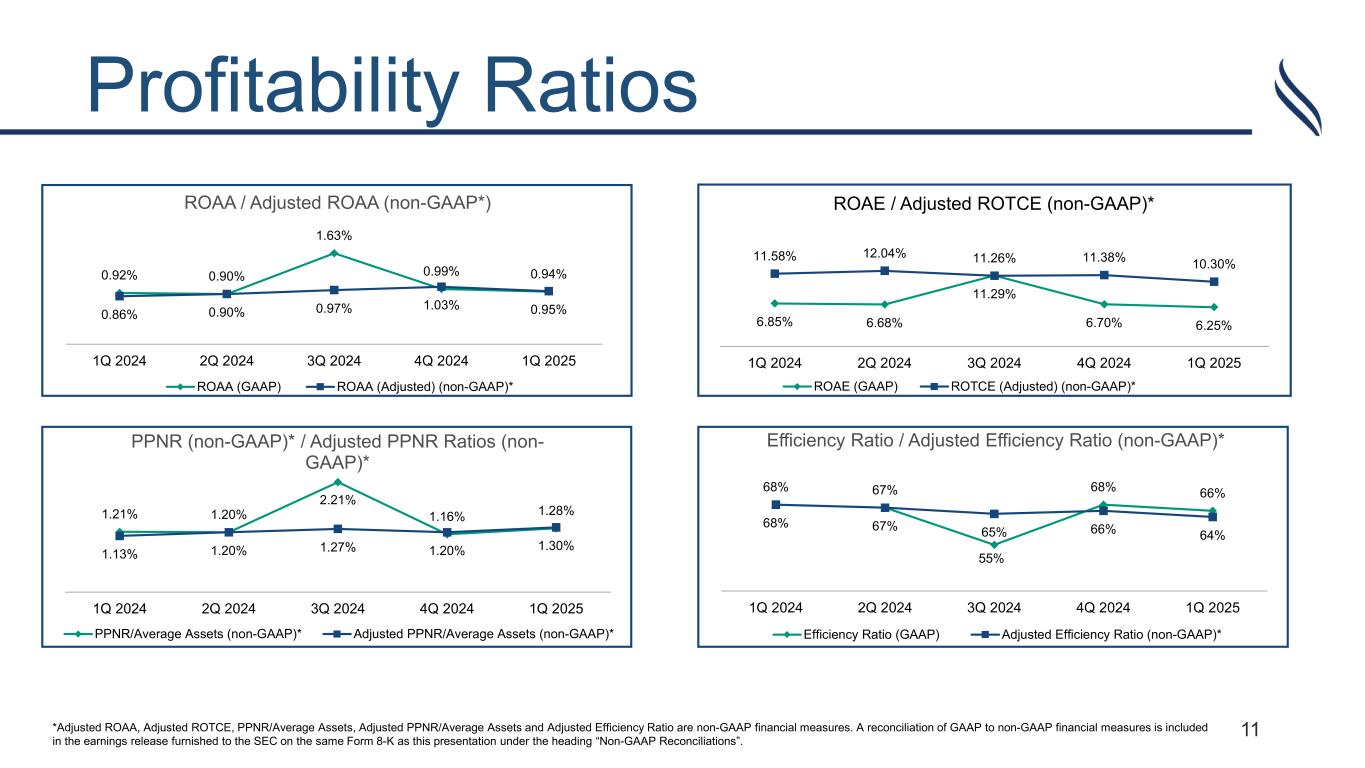
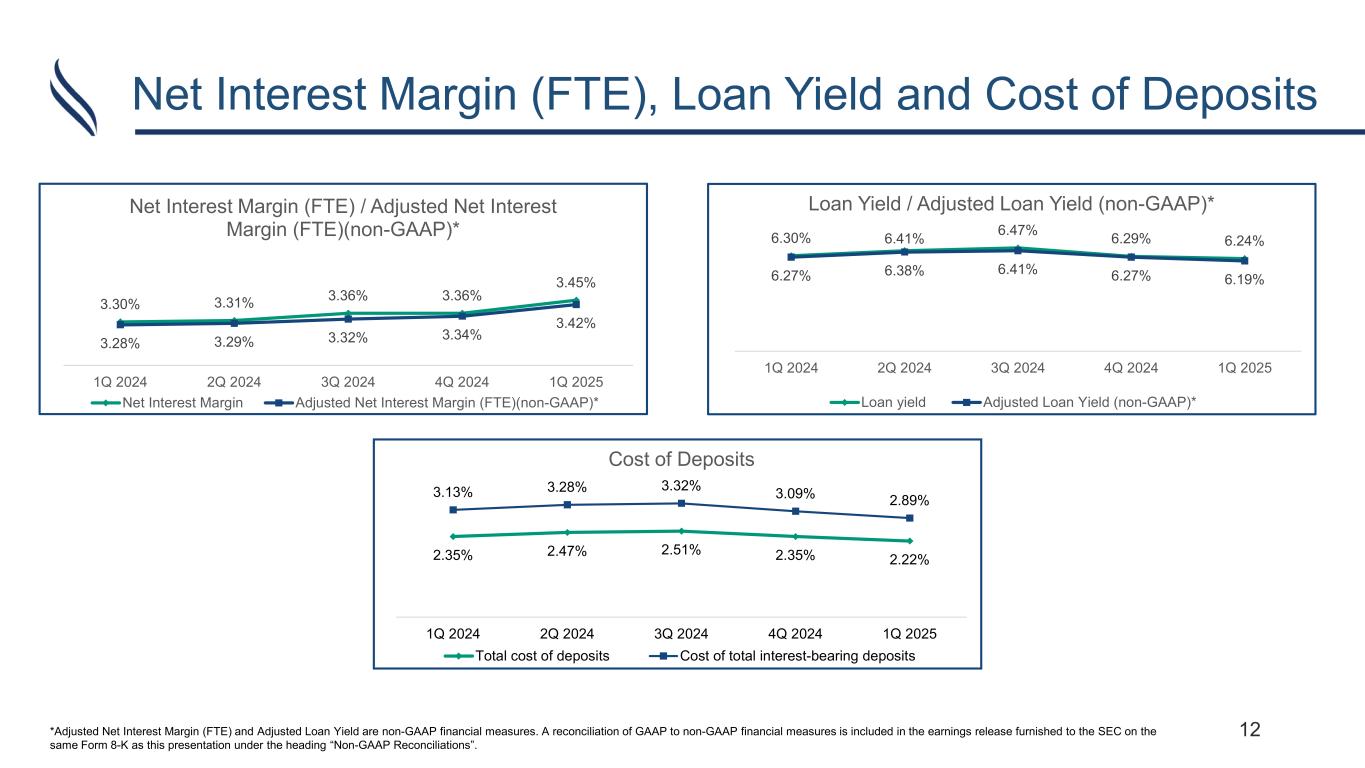
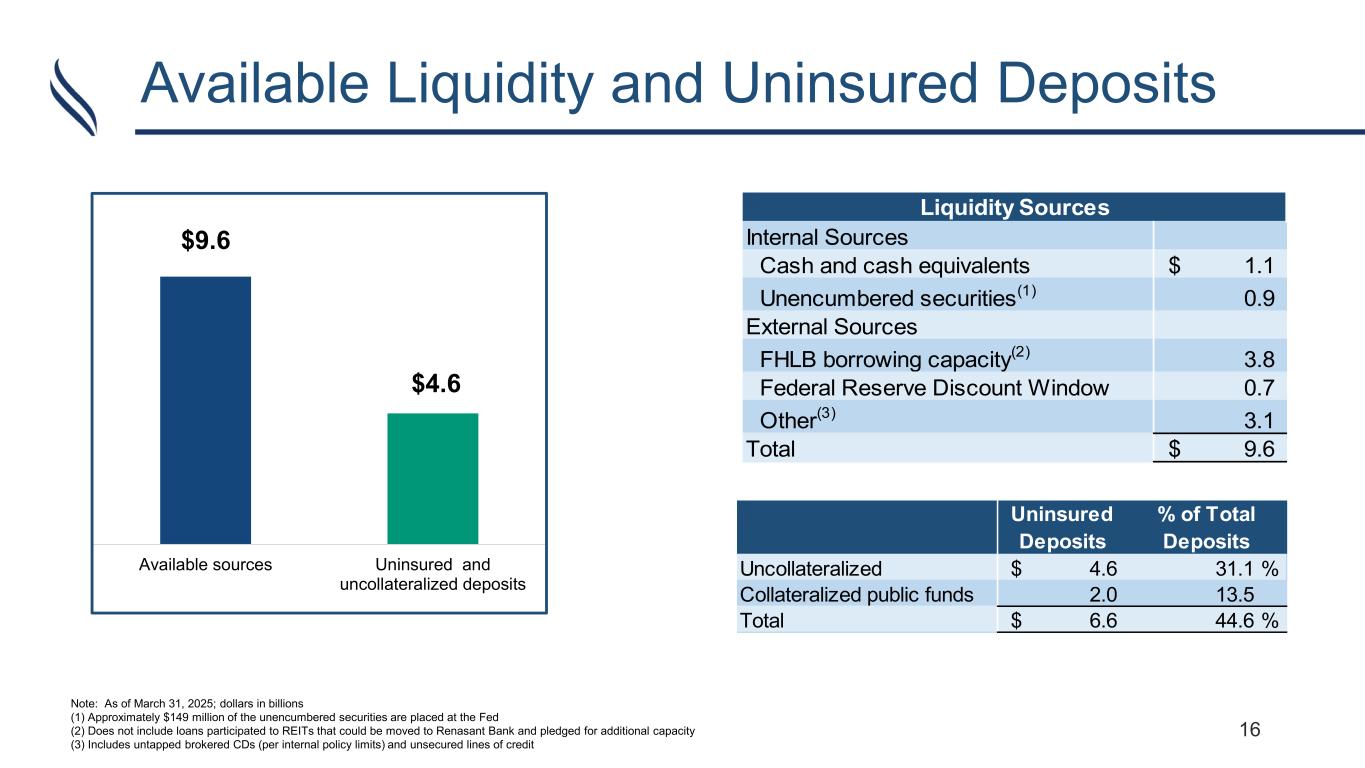
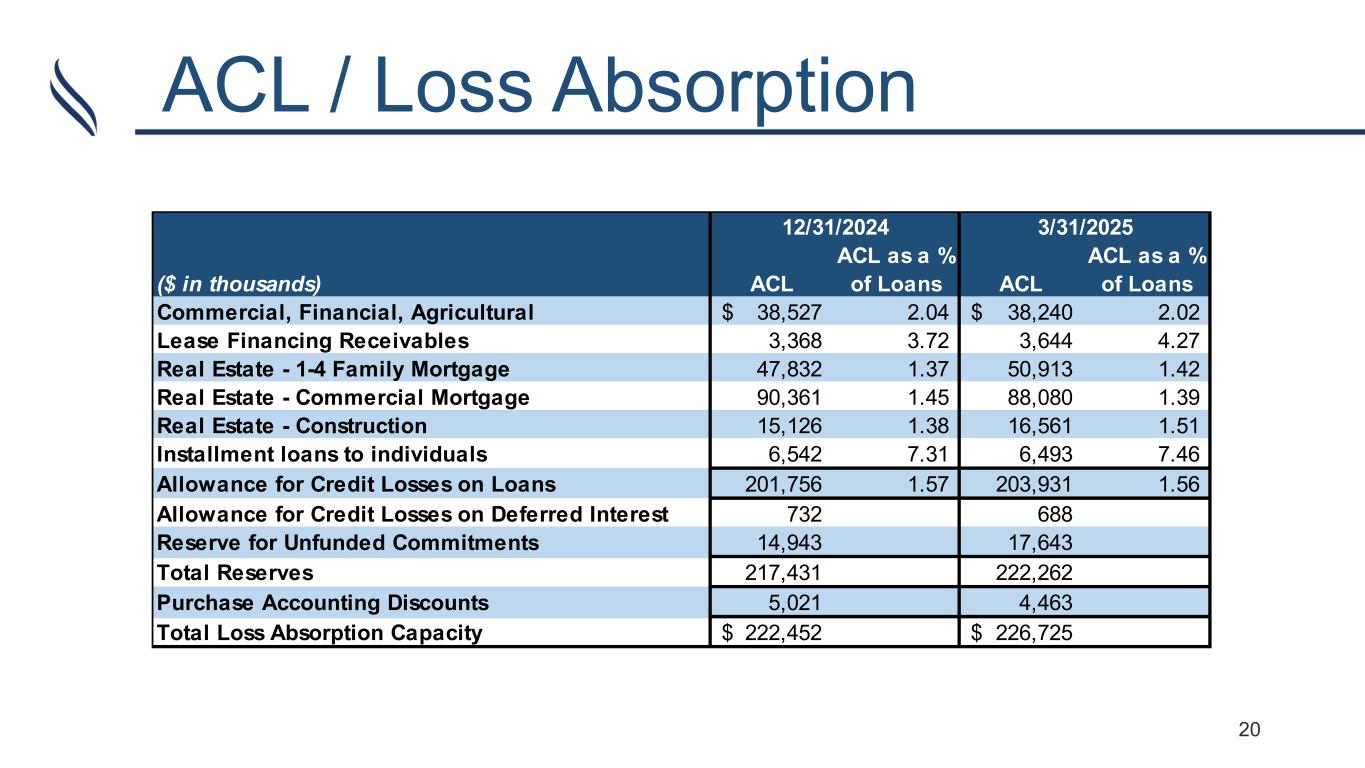
Thank you, Kevin, and I echo your comments about Mitch and his leadership. I have really enjoyed and benefited from serving under Mitch these past five years. I'll begin with highlights on the balance sheet. Total footings grew $237 million on a linked-quarter basis. We experienced another quarter of strong loan growth, driving an increase to our loan portfolio of $171 million, which represents a 5.4% annualized growth rate. We also purchased securities during the quarter, which contributed to an increase of $147 million quarter-over-quarter. This asset growth was primarily funded by growth in deposits, which increased $200 million on a linked-quarter basis. This growth came in the form of either noninterest-bearing or otherwise lower-costing deposits as we reduced higher-costing time deposits from year-end. From a capital standpoint, all regulatory capital ratios are in excess of required minimums to be considered well-capitalized, and our book value per share and tangible book value per share increased 1.6% and 2.7%, respectively, quarter-over-quarter. Turning to asset quality, we experienced improvement in all of our credit quality metrics. A cornerstone of our credit risk management strategy is to proactively identify underperforming loans early and work quickly towards resolution in order to mitigate loss, and our team executed this strategy well during the quarter. We recorded a credit loss provision on loans of $4.8 million, comprised of $2.1 million attributable to funded loans and $2.7 million attributable to unfunded commitments. We experienced growth in our commitments to finance construction projects, which we expect to fund over the next 12 months to 24 months, driving the need for provision for unfunded commitments in the first quarter. Net recoveries were $125,000, and the ACL as a percentage of total loans decreased 1 basis point quarter-over-quarter to 1.56%. Turning to the income statement, our adjusted pre-provision net revenue increased $3.3 million, driven by growth in both net interest income and non-interest income and effective management of non-interest expense. Our adjusted net interest margin, which excludes purchase accounting accretion and interest recoveries, increased 8 basis points to 3.42% for the quarter. Adjusted loan yields decreased 8 basis points to 6.19%, and the total cost of deposits decreased by 13 basis points to 2.22%. Kevin commented on the highlights within non-interest income and expense. The improvement in net revenue, coupled with stable expenses, resulted in an improvement in our adjusted efficiency ratio of 1.4 percentage points. We are encouraged by the results of the first quarter and the momentum building for the remainder of 2025. We look forward to bringing you results over the combination with First at the end of the second quarter. I will now turn the call back over to Mitch.
Speaker 2
Thank you, Jim. As Kevin noted, we have made good progress on merger integration. Renasant not only operates in some of the best banking markets in the country but is also positioned to accelerate profitability improvement in upcoming quarters. On a personal note, I appreciate the kind words from Kevin and Jim. It's been a blessing serving with this outstanding team for 46 years, and I look forward to continuing my service as Executive Vice Chair in semi-retirement. I will now turn the call over to the operator for questions.
Operator
Our first question comes from Stephen Scouten with Piper Sandler. Please go ahead.
Speaker 5
Hey guys, good morning, appreciate it.
Speaker 5
So I'm curious, one, first, in speeds, it looked like another really strong quarter in wealth management. Have there been any larger-scale changes to that business or anything change the run rate or the potential of revenues overall? Or anything kind of notable there based on the last couple of quarters?
Speaker 2
Stephen, I think it's more a story of consistency in that space. We find ourselves today just over $6 billion in assets under management. And as you look across those various business lines, our ability to integrate that delivery, particularly in the small business commercial space, has continued to produce well for us. We see a lot of upside going forward as we continue to grow that business.
Speaker 5
Okay. Great. And then maybe as we think about the deal having closed, curious if it's probably still very early, but as you've gotten into it, anything you look at within the loan book of the combined company and you think maybe you want to work part of the loan book down or deemphasize anything throughout the footprint.
Speaker 6
Stephen, good morning. This is David Meredith. We realized through our due diligence just a comfort level in their loan book. It's very similar to our loan book from a geographic standpoint, asset concentration standpoint, the type of transactions they chase, the metrics they use in underwriting performance, everything lined up very well with what we do. So we don't see any changes, and hopefully just as a springboard to continue to grow further.
Speaker 5
Okay. Great. And then just last thing for me. Any updates on kind of were there any major changes to mark with the deal that you guys have disclosed and then timing of cost saves and integration? Have there been any changes? Or has any of that been able to be pulled forward with the closing of the deal?
Speaker 4
Stephen, good morning. It's Jim Mabry. No, no changes in terms of timing. And as you know, we've got conversion slated for early August. And so we'll start to see efficiencies show up in the income statement after that. But I would say, generally, the purchase accounting assumptions that we laid out last July are relatively unchanged, except for the rate mark. Rates are a little different. And so that mark is not likely to be as large as it was in July but otherwise pretty much tracking to what we laid out last summer.
Speaker 5
Okay. That's helpful. And so it's a little lower and then a little less dilution, but maybe a little less forward accretion as well, but not a major change. Is that right, Jim?
Speaker 4
That's correct.
Speaker 5
Perfect. Thanks for the time this morning, guys. Congrats on a great quarter.
Speaker 2
Thank you, Stephen.
Operator
And the next question comes from Michael Rose with Raymond James. Please go ahead.
Speaker 7
Hey good morning guys. Thanks for taking my questions. I'd be remiss if I didn't ask Mitch, one more time to give an update on the loan pipelines as you normally do.
Speaker 2
Well, thank you, Michael, and happy to do that this morning. I'll start with the pipeline and maybe reflect on production this past quarter and just some thoughts going forward. We started this quarter with a 30-day pipeline of $189 million. That's a modest increase from $174 million the prior quarter. I would also add, Kevin reflected earlier in opening remarks about the integration and the success at First early on in legacy markets of the First. They're starting with a pipeline of $83 million. That's up from $53 million at the beginning of the year, the prior quarter. Of course, and as you see, we're starting the quarter with a strong pipeline, just reflecting on the first quarter on production. We saw a nice increase in production $645 million compared to $572 million the prior quarter. As we usually do, just looking forward, we always comment on payoffs and likely that being the kind of the governor on what net could be in any given quarter, we did see an increase in payoffs this quarter, not unexpected. That was up about $86 million. So it resulted in a net of $171 million, as Kevin mentioned earlier, about 5.5%. As we think about pipeline and production in the company, we continue to see meaningful contribution from across our markets, our various business lines as well as the type and the size credits. We saw that again this past quarter with one to four family contributing about 18%, small business, business banking about 24%. Commercial credits that in this category would be roughly $3.5 million or greater, about 33%, and then our corporate banking group, larger C&I, commercial real estate, ABL, and equipment finance another 25%. So again, we're certainly not looking just thinking about the pipeline and looking forward, we're not looking past the potential economic uncertainties in the coming days. Certainly, we're here to understand and meet the customer financial service needs. And as we've done in the past, we'll certainly remain disciplined in our underwriting and our pricing. And I would mention again just looking forward with the economic uncertainty and the timing of payoffs and that was reflected in this quarter's net. Given those considerations, just expanding on your question, Q2 could be more in the net growth somewhere in that low single-digit range, most likely.
Speaker 7
That's very helpful, Mitch. Maybe just another one on expenses, obviously, with the deal closed. Jim, can you give us any sense of a good starting point before cost saves as we think about kind of the Q2 base just with the two companies combined as a starting point? And then just given a pretty good expense control this quarter and whatever is going on at the first would just be helpful for a starting point. Thanks.
Speaker 4
Sure, Michael. As you mentioned, it's early and we don't have complete clarity yet, but if you compare their quarter with ours, we were satisfied with their performance in both the income statement and balance sheet. Nothing about their quarter affected our views on the model or our expectations moving forward. As for expenses, in Q2, it might not be straightforward, but I would suggest you could use the recent quarterly expense figures from both companies, adding a bit for merit increases. That should give you a general idea of Q2 expenses. Moving forward, you’ll begin to see the benefits of the efficiencies we aim to achieve. Our internal goal is to have a very clean Q1 of 2026, and by Q4 of 2025, we'll offer investors a clear view of the progress we've made on efficiency. We'll provide more clarity and transparency on our progress with each passing quarter, but I wouldn't expect much in Q2.
Speaker 7
Helpful. And what was their Q1 expenses, if you have it handy?
Speaker 4
I don't have them handy. I don't know what the expense number was, but around $45 million, $46 million is what they've been running at.
Speaker 7
Okay. Perfect. And maybe just one final one for me. I know you guys are tied up with the deal, but any thoughts on share repurchases as we kind of move through the year? I know you guys have the authorization, but just didn't know your willingness or ability to buy just in light of the deal. Thanks.
Speaker 4
Sure. You're correct. We do have the authorization. We did not have any activity under the authorization in Q1. And it's a topic like other uses of capital that we discuss regularly. In fact, yesterday in our Board meeting, we went through sort of a look at our capital. And I think as you appreciate, the thing that's different for us here in future periods as opposed to our recent history is that we're going to have more capital flexibility. We're going to start off with some good ratios, strong ratios, and we're going to accrete capital rather nicely in the coming periods, roughly 60 to 80 basis points a year. And that's going to provide more optionality for us. And buybacks would be one of those possible levers. What we do and what we'll be doing in the quarters ahead is evaluating the returns, the merits of a buyback versus other possible uses. So I don't know how that's going to play out. But I would say this, we clearly have the capital wherewithal. We want to be good stewards of that capital and make sure it's providing returns for shareholders. So whether that's buybacks or other uses. And of course, the number one goal is to support the organic growth of the companies.
Speaker 7
Perfect. I appreciate taking all my questions, and Mitch, thank you for all you've done over the past many years. It's been a pleasure working with you, and congrats as you move forward.
Speaker 2
Thank you, Michael.
Operator
The next question comes from Catherine Mealor with KBW. Please go ahead.
Speaker 8
Thanks, good morning.
Speaker 2
Good morning, Catherine.
Speaker 8
One question just on the margin. I was curious, Jim, if you could give us just an updated view on where the margin should come together pro forma. I know there's a little bit of change in rates, but not too much, but just kind of curious what you're thinking there, especially given the greater margin performance that you had on a base this quarter. And then maybe as a kind of side note to that question on just the bond book that you're buying from the First. I know you've talked about kind of selling or remixing that by about, I think, 60% or so of their bonds. You've talked about selling and then reinvesting. I know the yield or the market has been all over the place. So just kind of curious if you already knocked some of that out earlier in the month and kind of how you're thinking about that with the volatility in rates? Thanks.
Speaker 4
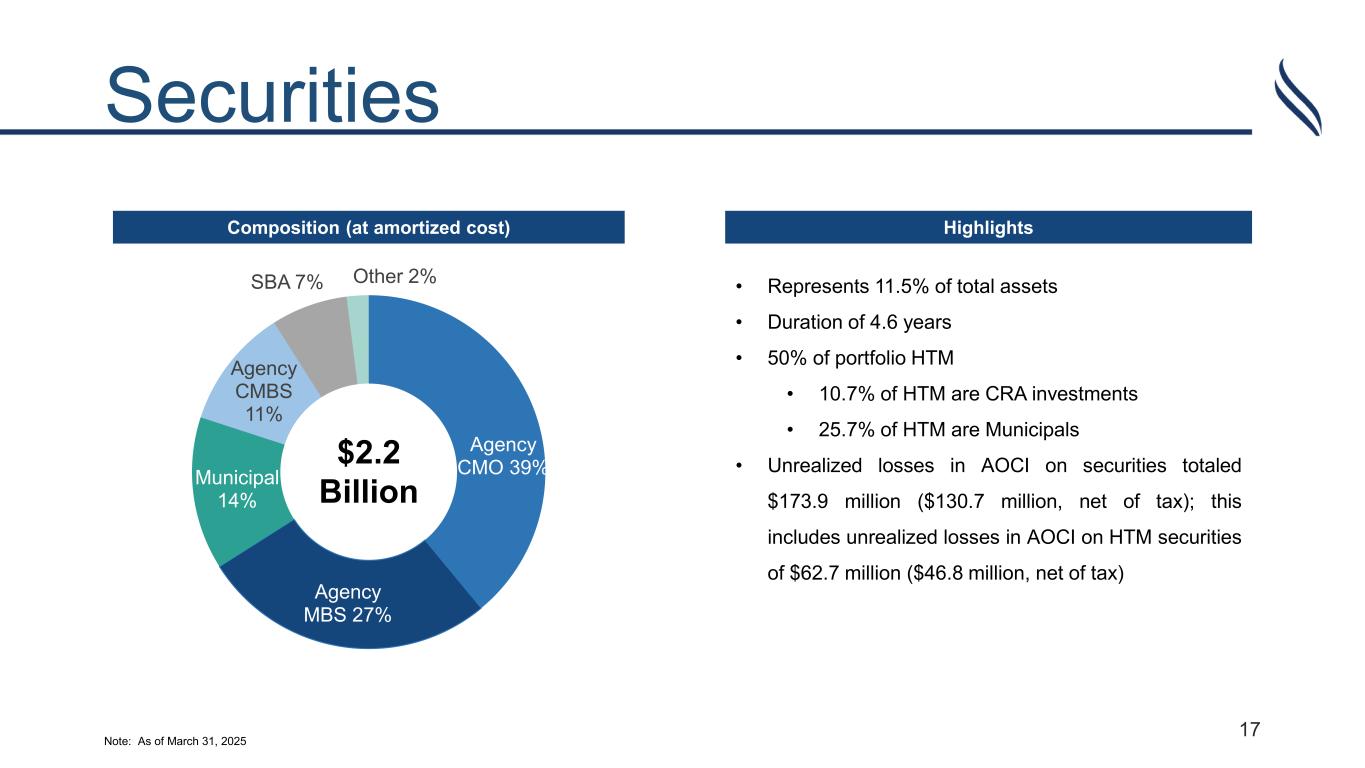
Good morning, Catherine. As you mentioned, we are still in the early stages of this. However, there doesn't appear to be any significant issues in either their numbers or ours, nor in the overall environment. While there have been some changes, our margin guidance from last July remains consistent with our current outlook. I’d like to provide some ranges that should be helpful. For core net interest margin (NIM), I estimate it could expand by 10 to 15 basis points in Q2 compared to Q1. Additionally, the all-in NIM is expected to benefit by another 10 to 15 basis points from Q1. There will likely be some fluctuations in the future due to prepayment behavior, but I would summarize it as an overall increase of about 20 to 30 basis points for all-in NIM. Regarding the bond book, we started working on it shortly after the acquisition and are nearing completion. We’ve sold just over 50% of their bond book and reinvested it, while the remaining 50% consists of securities that align with our policies and offer good yields and CRA benefits. Even though the equity markets experienced significant turbulence, the bond markets also faced some volatility, but we executed well, which was a positive first step in reshaping the balance sheet.
Speaker 8
Hey, very helpful. Thank you.
Speaker 4
Thank you, Catherine.
Operator
The next question comes from Dave Bishop with Hovde Group. Please go ahead.
Speaker 9
Yes, good morning gentlemen.
Speaker 2
Good morning, Dave.
Speaker 9
Just curious, guys, as you sort of scrubbed the loan book for exposure to any segments or any industries that have exposure to the tariffs or the economic costs coming out of D.C. Just curious how far along you are that and maybe what you're seeing in terms of the deeper dive within your commercial portfolio? Thanks.
Speaker 6
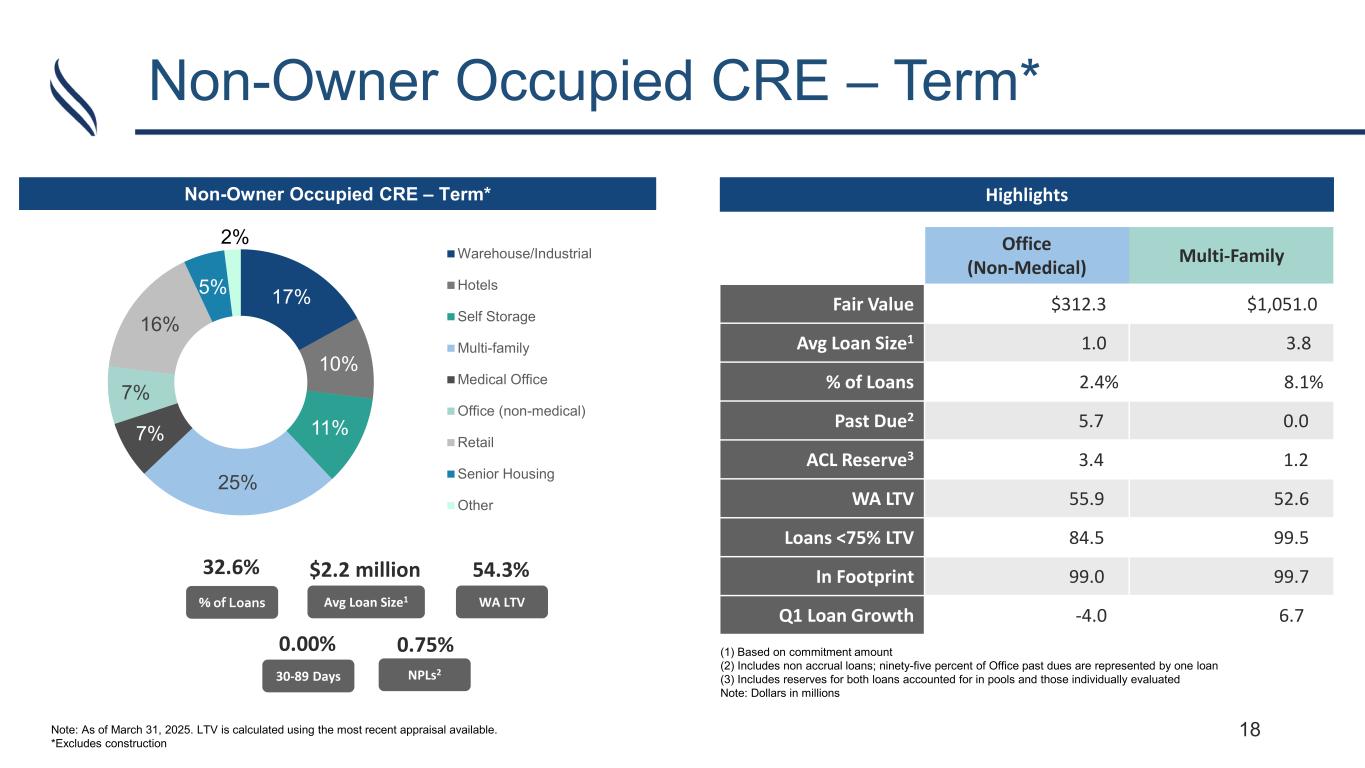
Hey, Dave, this is David. We pay close attention to our loan portfolio, and one advantage we have is our focus on community banking and local businesses. Of course, various factors like tariffs and cuts in government spending have some impact. We have minimal exposure in the main government markets, such as Washington D.C. and Northern Virginia, with only a few transactions in that area, so it doesn't significantly affect us. However, tariffs and immigration issues have broader implications that influence everything. We're continually talking with our clients to understand their individual impacts, as the effects vary. We need to assess if they can absorb costs in their financial statements or evaluate the breakeven points and reserves in their construction projects. We're actively engaging in detailed discussions to identify the risks involved in each transaction. More specifically, we're analyzing our foreign wire transfers and ACH transactions to target customers with more foreign exposure. As you know, circumstances can change quickly, so we're conducting a comprehensive review of all our clients to understand the impacts and developing plans if these challenges persist. If economic volatility and uncertainty continue, we might need to adjust our underwriting practices and guarantee requirements. We're implementing contingency plans to evaluate the long-term effects of these economic changes.
Speaker 9
Got it. And then maybe just solve the resilience in the mortgage banking group. Just curious, early read into the second quarter, maybe in the summer, do you expect sort of a rebound? I know there's been a lot of more uncertainty in terms of activity. Just curious what you're seeing in overall activity in your footprint? Thanks.
Dave, it's Kevin. Yes, mortgage is affected by the volatility of the rates that you're observing in the 10-year and 30-year periods. We noticed an increase as we approached the end of the quarter, and the pipeline grew, which we attribute to the typical seasonality. Despite the ongoing rate volatility, we are still experiencing activity in the mortgage sector, especially during the first week of April when rates hit their lowest, leading to a noticeable rise in the pipeline. Although there has been a slight pullback since then, we are still seeing positive activity in mortgages. As we look ahead to Q2, we feel optimistic about our position in the mortgage market due to the hiring we did last year and the range of products and delivery we can offer. However, our performance will largely depend on rate movements, which we anticipate will remain volatile throughout Q2.
Speaker 9
Got it. Appreciate the color, thanks.
Operator
And the next question comes from Matt Olney with Stephens. Please go ahead.
Speaker 10
Hey, thanks. Good morning. I just want to go back to the capital discussion and the potential for the loan mark to be a little bit less at closing. Just any color on what this could mean for capital at closing. I think we talked around the CET1 being just below 11% at closing. Is this still the thinking? Or could this be a little bit higher given those comments about the loan mark?
Speaker 4
Good morning Matt, this is Jim. And you're correct. You're spot on. I mean, if we take a look at the variances between what we announced last July and what the balance sheet looks like now, of course, we're still going through some of those entries. But generally, higher capital, and I would say that the Q2 CET1 would be probably a touch above 11%. And of course, we're closing the quarter earlier than what we had modeled back last July. So capital will be a bit higher. The EPS accretion will be a touch lower and of course, lower, slightly lower TBV dilution. And the earn back, just to give you that as well, is really unchanged. I think it's up one point in terms of earn-back, but hopefully, that gives you a sense of capital and the movement between announcement and when we closed.
Speaker 10
Yes, that's helpful, Jim. It seems like you'll have more capital options than we initially predicted for the deal. You've mentioned the buyback interest, and there are also some subordinated debt tranches that will be callable later this year and into next year. I'm curious about the plans to call or refinance those debts during this timeframe.
Speaker 4
So you're correct. We do have those opportunities, and that's part of what we had in discussion yesterday with the Board was looking at the various opportunities we've got for deployment of capital. And so that's on the list as well. It's nice to be in a position where we've got capital flexibility, and Renasant has that today. The other thing I'd add to that, which helps consider, is that we carry a considerable amount of cash at the parent. We've got about three years' worth of cash at the parent. And that just provides even more flexibility in terms of how we think about that debt and what pieces we want to keep and what pieces we want to go ahead and redeem. So all that's in the mix. And I think as Renasant goes forward in the coming quarters and year or so, particularly with the debt, you'll see some changes, and I think those things will be additive to the earnings of the company.
Speaker 10
Okay. And then also I got on the call a few minutes late, so you may have already hit on this. Just any broader comments on deposit competition and loan pricing competition in your core markets just compared to when we talked back in January?
Speaker 4
No, I think, like others, it's certainly very competitive still. However, our funding pricing has performed better than we expected, and that trend continues. The real pressure is more on the asset side of the balance sheet. I will also add that First had an excellent quarter for deposits, showing strong growth, partly due to public funds. It's encouraging that both companies performed well leading up to the deal closure. Overall, we're very pleased with what we're observing on the funding side from both companies.
Speaker 10
Okay, thank you guys.
Operator
This concludes our question-and-answer session. I would like to turn the conference back over to Mitch Waycaster for any closing remarks.
Speaker 2
Thank you, Dave, and thank each of you for joining today's call, and we appreciate your interest in Renasant.
Operator
The conference has now concluded. Thank you for attending today's presentation. You may now disconnect.