Operator
Good day, and welcome to the Renasant Corporation 2025 Third Quarter Earnings Conference Call and Webcast. Please note this event is being recorded. I'd now like to turn the conference over to Kelly Hutcheson. Please go ahead.
Speaker 1
Good morning, and thank you for joining us for Renasant Corporation's quarterly webcast and conference call. Participating in the call today are members of Renasant's executive management team. Before we begin, please note that many of our comments during this call will be forward-looking statements, which involve risk and uncertainty. There are many factors that could cause actual results to differ materially from the anticipated results or other expectations expressed in the forward-looking statements. Such factors include, but are not limited to, changes in the mix and cost of our funding sources, interest rate fluctuations, regulatory changes, portfolio performance, and other factors discussed in our recent filings with the Securities and Exchange Commission, including our recently filed earnings release, which has been posted to our corporate site, www.renasant.com at the Press Releases link under the News and Market Data tab. We undertake no obligation and we specifically disclaim any obligation to update or revise forward-looking statements to reflect changed assumptions, the occurrence of unanticipated events, or changes to future operating results over time. In addition, some of the financial measures that we may discuss this morning are non-GAAP financial measures. A reconciliation of the non-GAAP measures to the most comparable GAAP measures can be found in our earnings release. And now I will turn the call over to our President and Chief Executive Officer, Kevin Chapman.
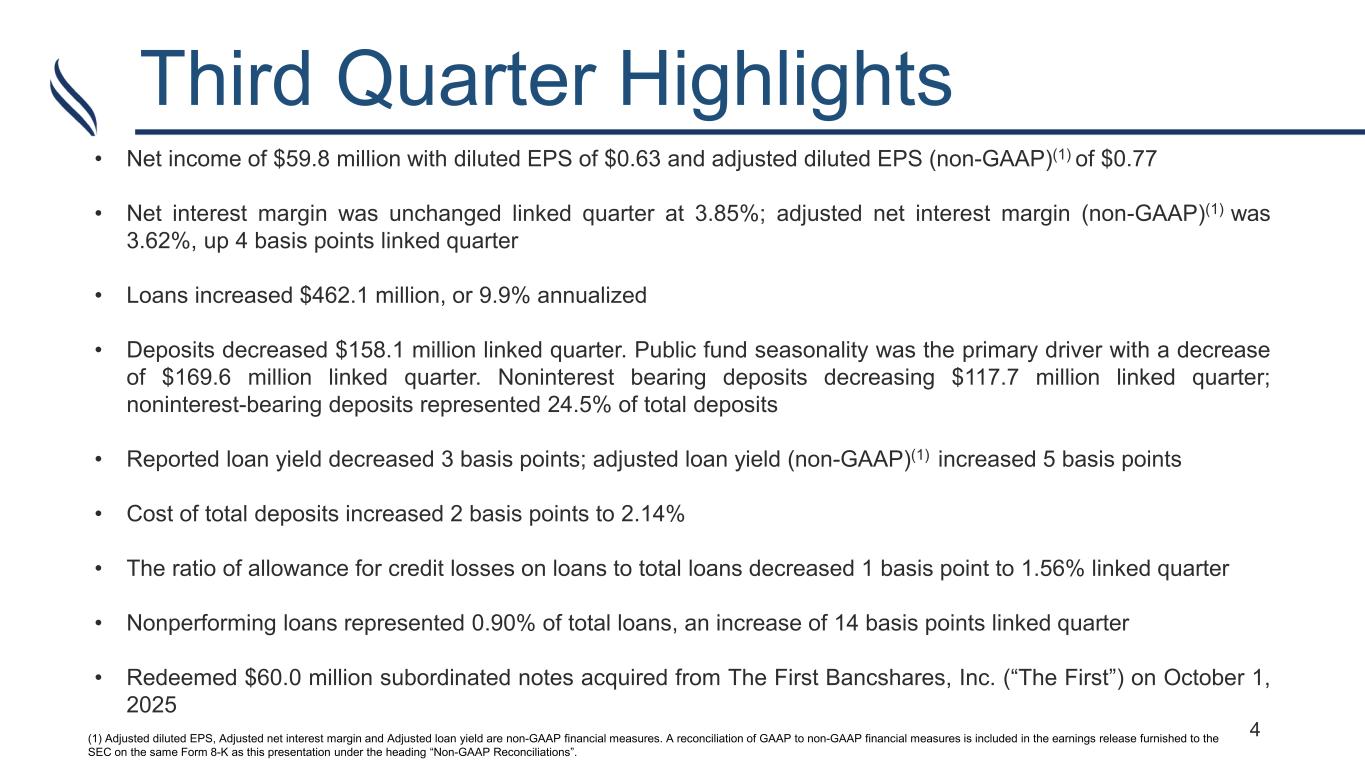
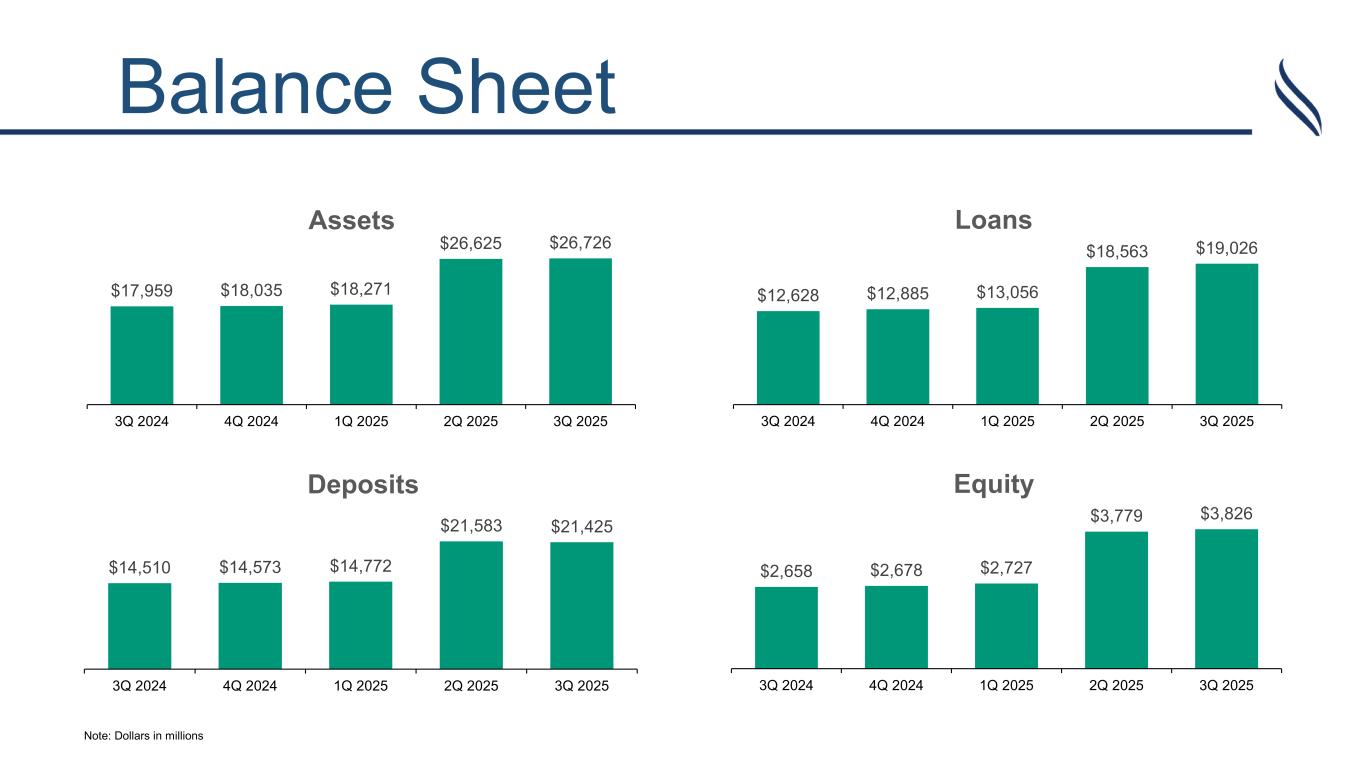
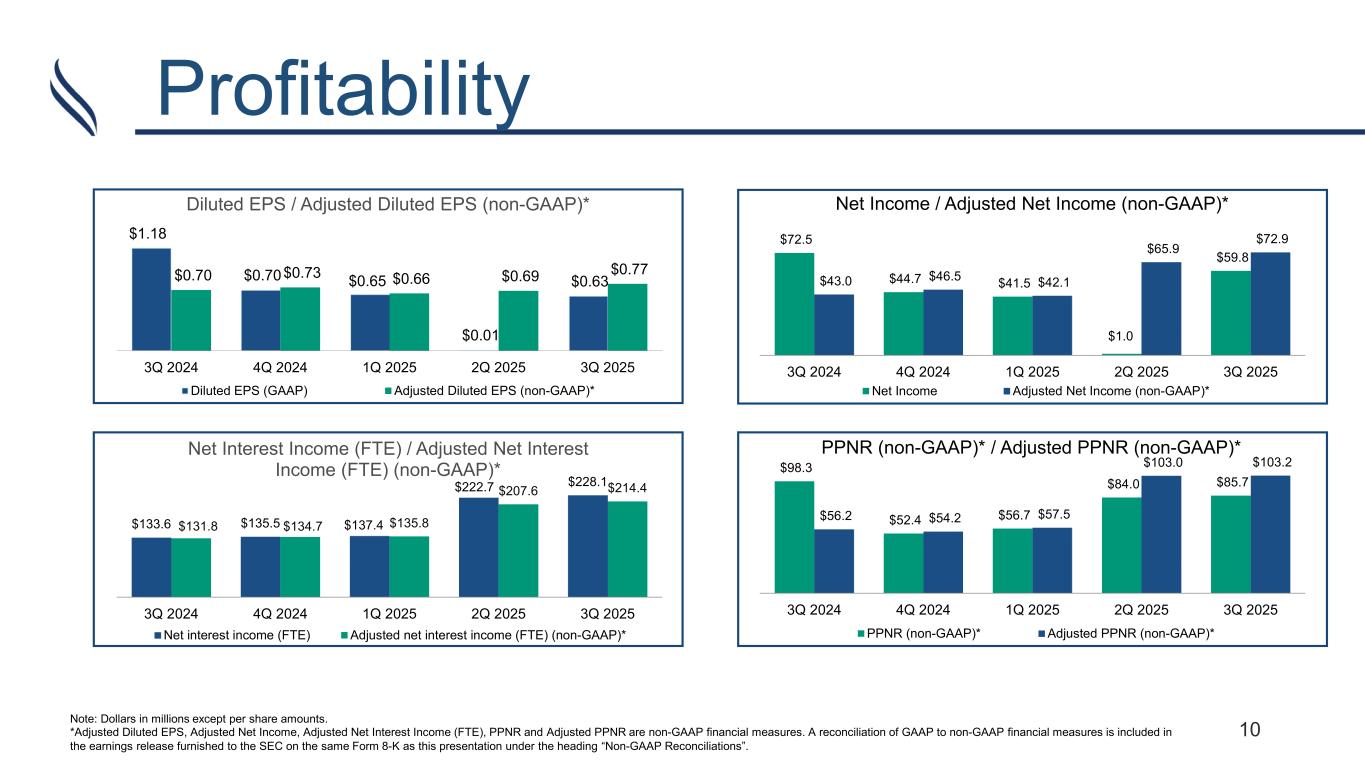
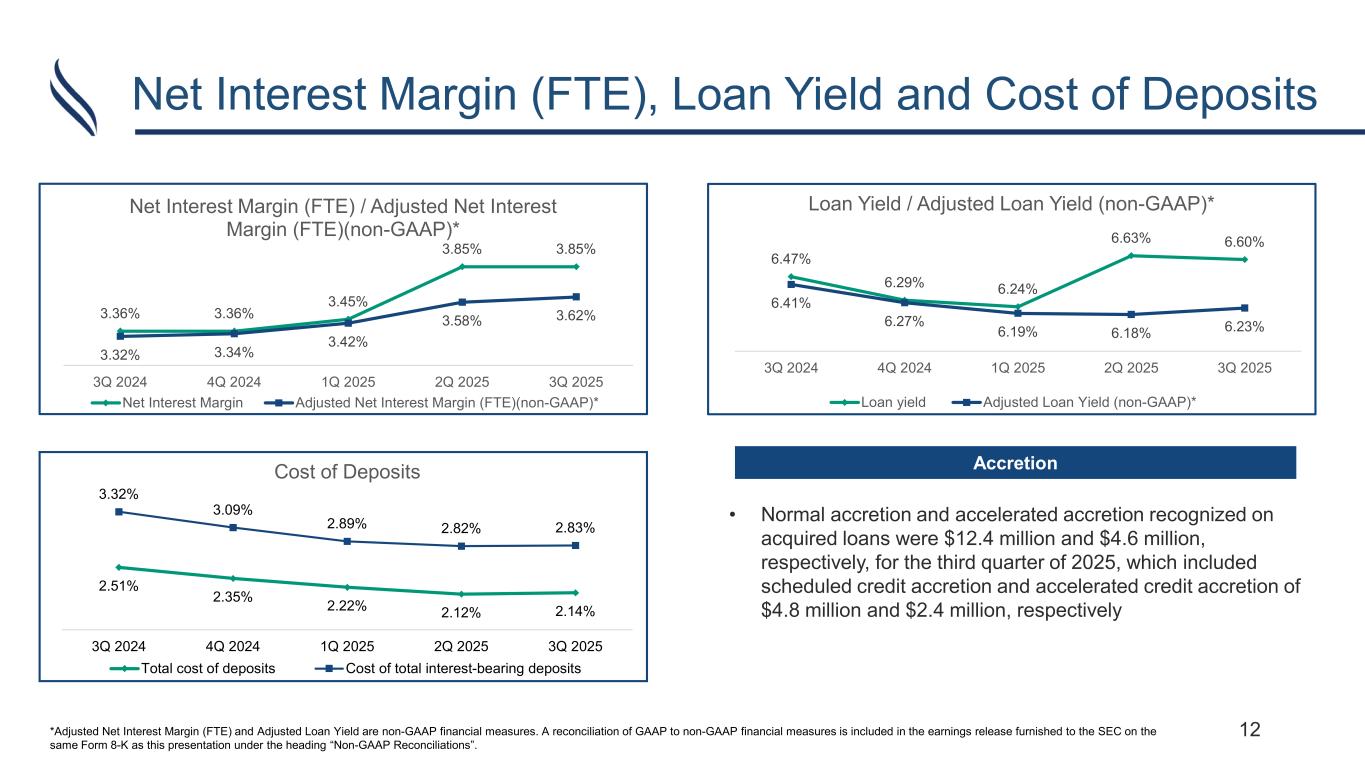
Thank you, Kelly, and good morning. We appreciate you joining the call and look forward to sharing results for the quarter. Renasant's financial performance in the third quarter reflects good loan growth and profit improvement that keeps us on the path to meet the financial goals of the merger. The integration with The First continues to go well. Systems conversion took place in early August, and I believe we have made great strides in operating as one team. As you know, in July 2024, Renasant and The First announced a partnership that would maximize our strengths and create a high-performing Southeast bank. At that time, we established profitability goals related to return on assets, return on tangible common equity, and our efficiency ratio. We knew that the third quarter of 2025 would be an important measuring stick for our progress against these expectations. Q3 results position us to achieve our goals. Additionally, it is very gratifying to see our team, despite going through the largest conversion either company has gone through, produce loan growth of almost 10% during the quarter. I want to thank all of our employees for their tremendous effort this quarter in completing systems conversion while continuing to understand and meet the needs of our customers. I will now highlight financial results for the quarter. The company's net income was $59.8 million or $0.63 per diluted share. Adjusted earnings, excluding merger charges, were $72.9 million or $0.77 per diluted share. Loans were up $462 million on a linked quarter basis or 9.9% annualized. Deposits were down $158 million from the second quarter, which was driven by a seasonal decrease in public funds of $169 million on a linked quarter basis. Reported net interest margin was flat at 3.85%, while adjusted margin was up 4 basis points to 3.62% on a linked-quarter basis. Our adjusted total cost of deposits increased by 4 basis points to 2.08%, while our adjusted loan yields increased 5 basis points to 6.23%. We look forward to seeing additional profitability improvements in upcoming quarters as efficiency savings are realized. I will now turn the call over to Jim.
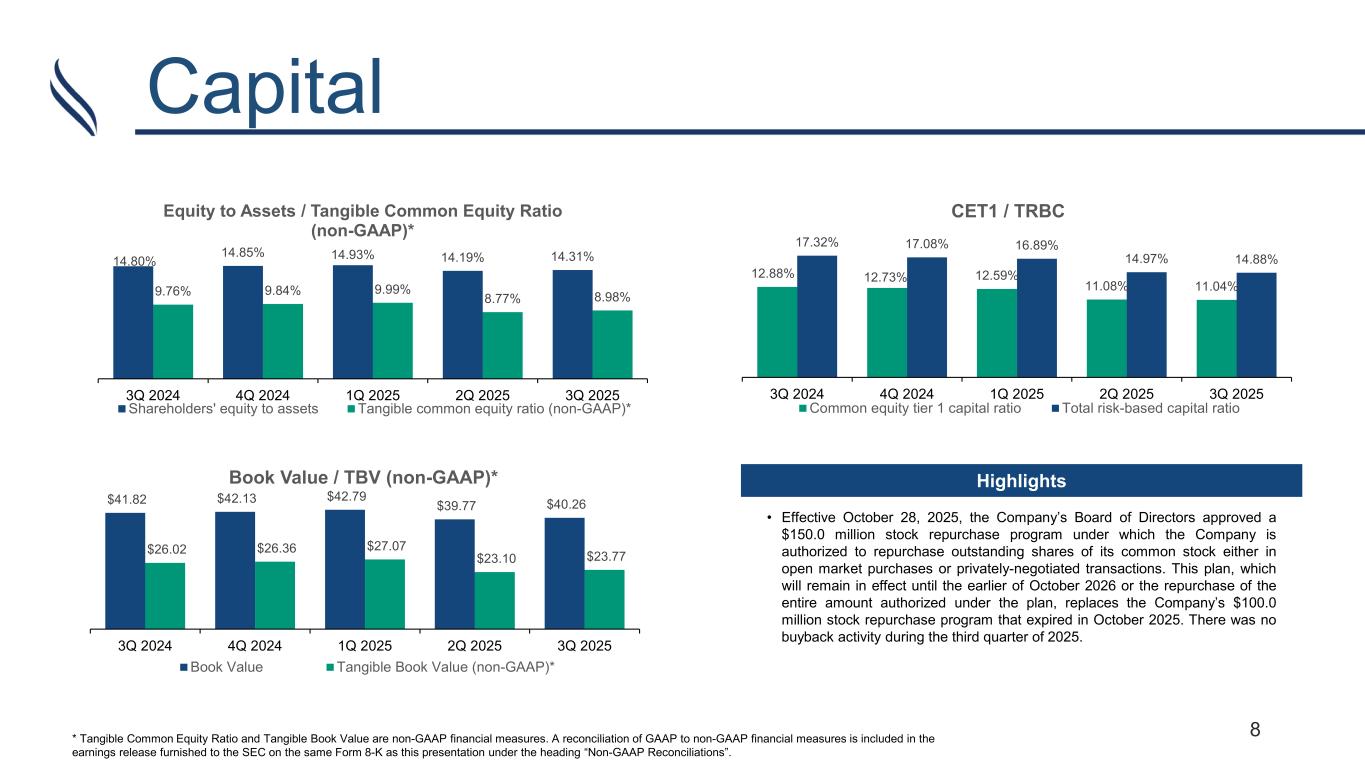
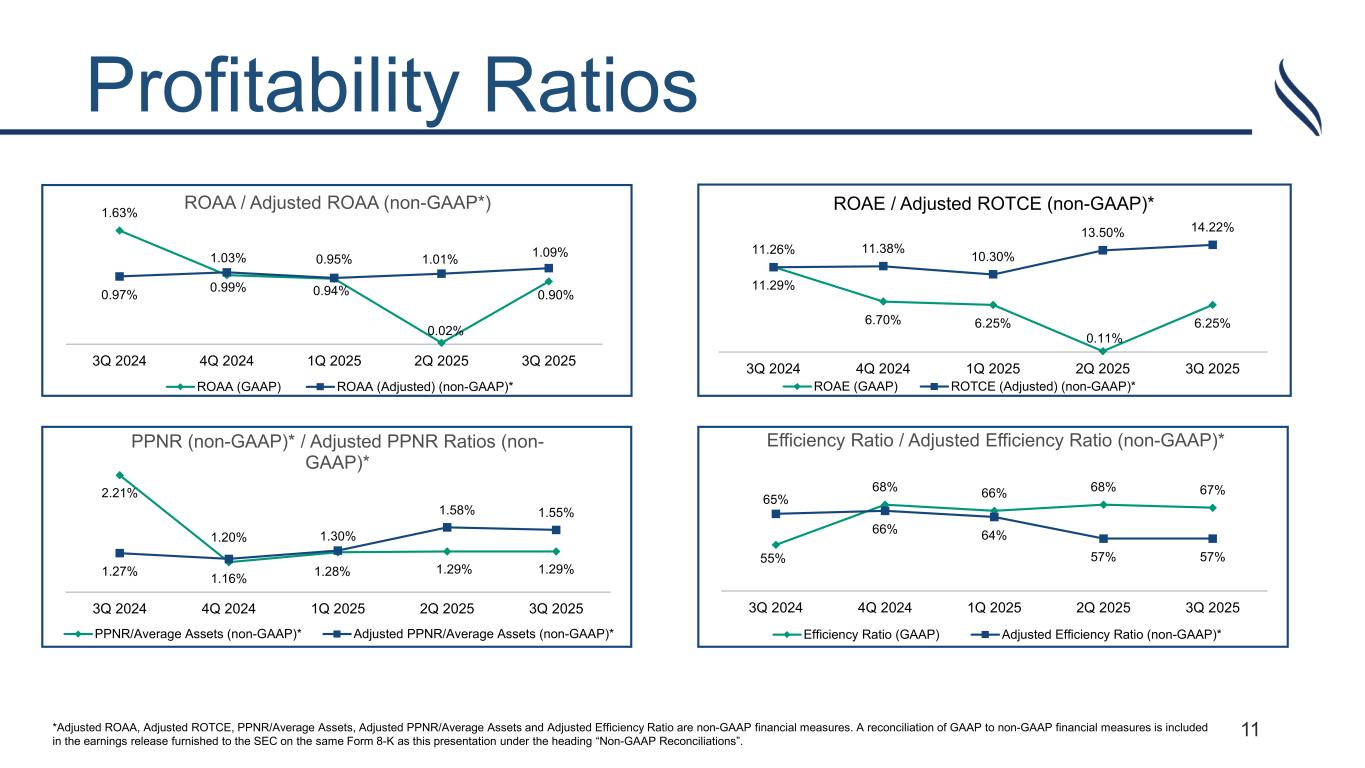
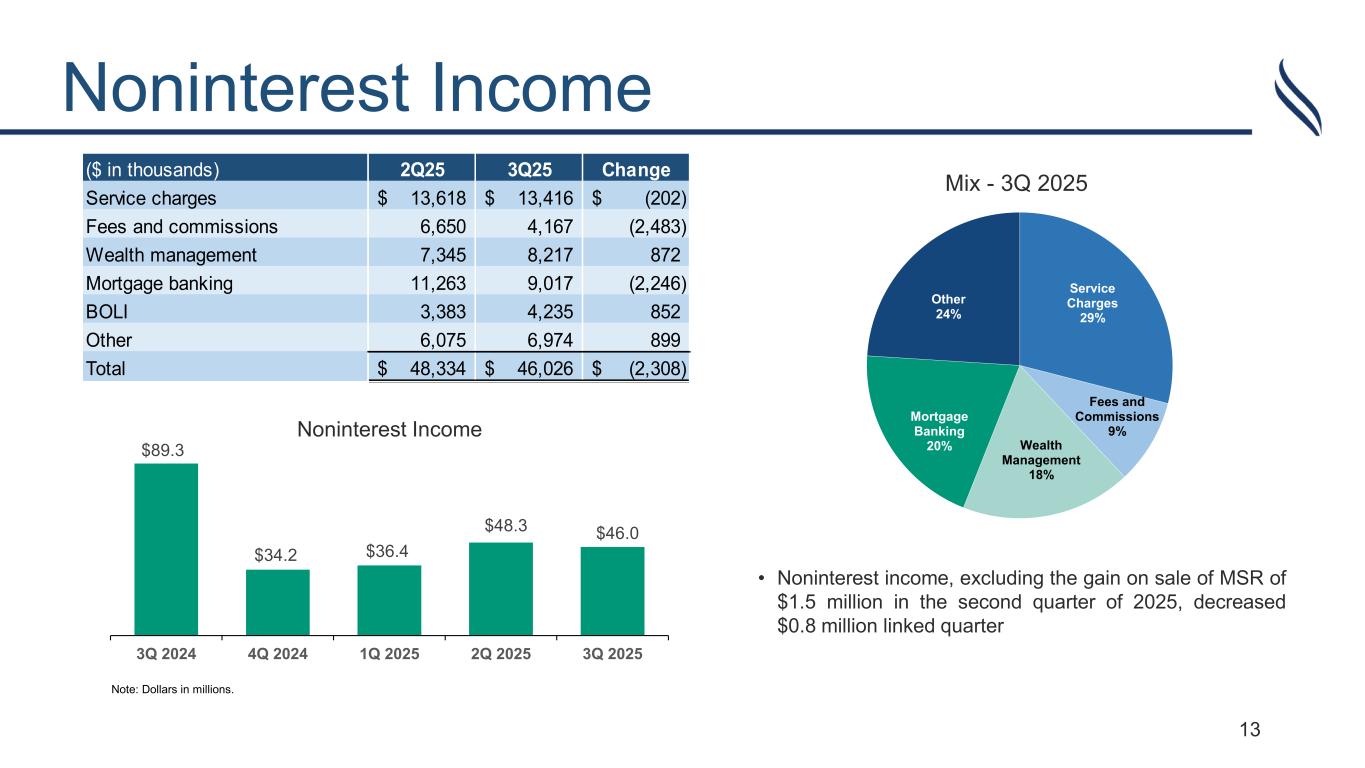
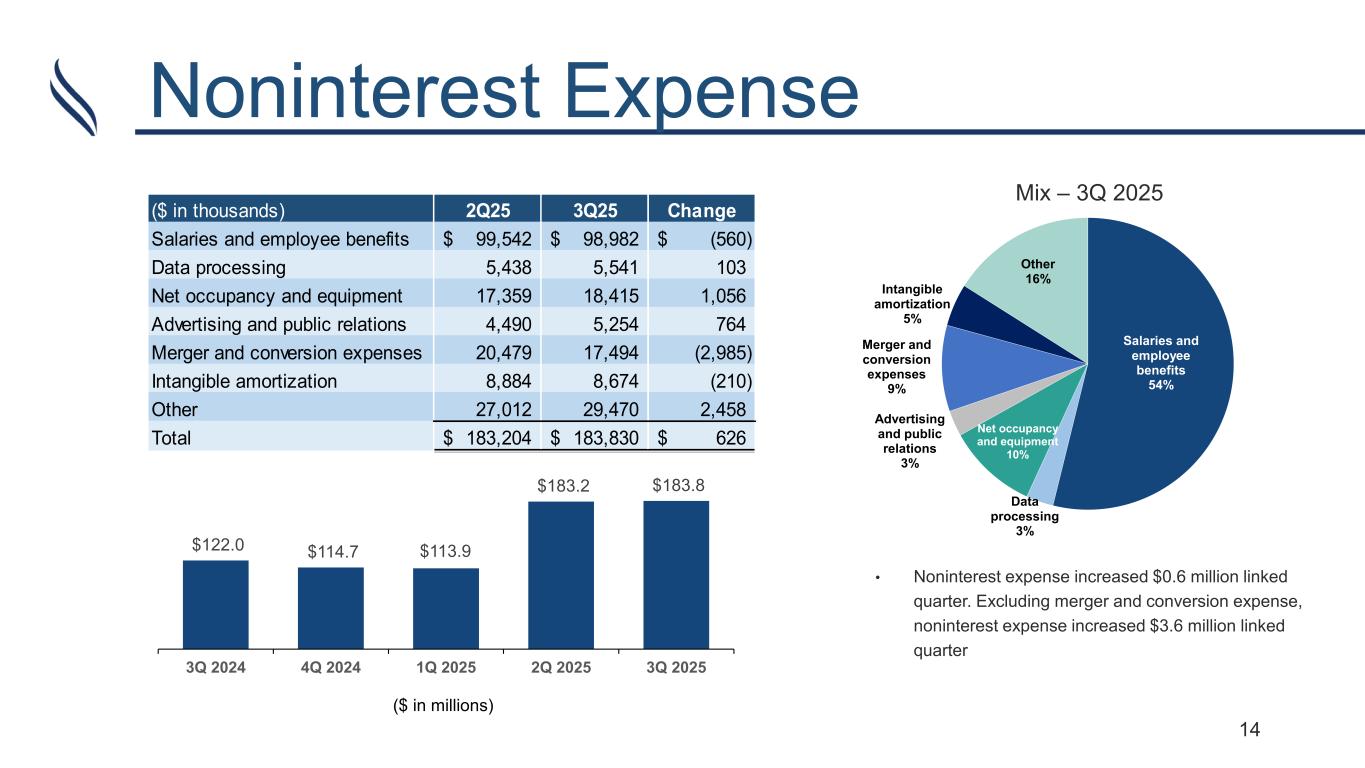
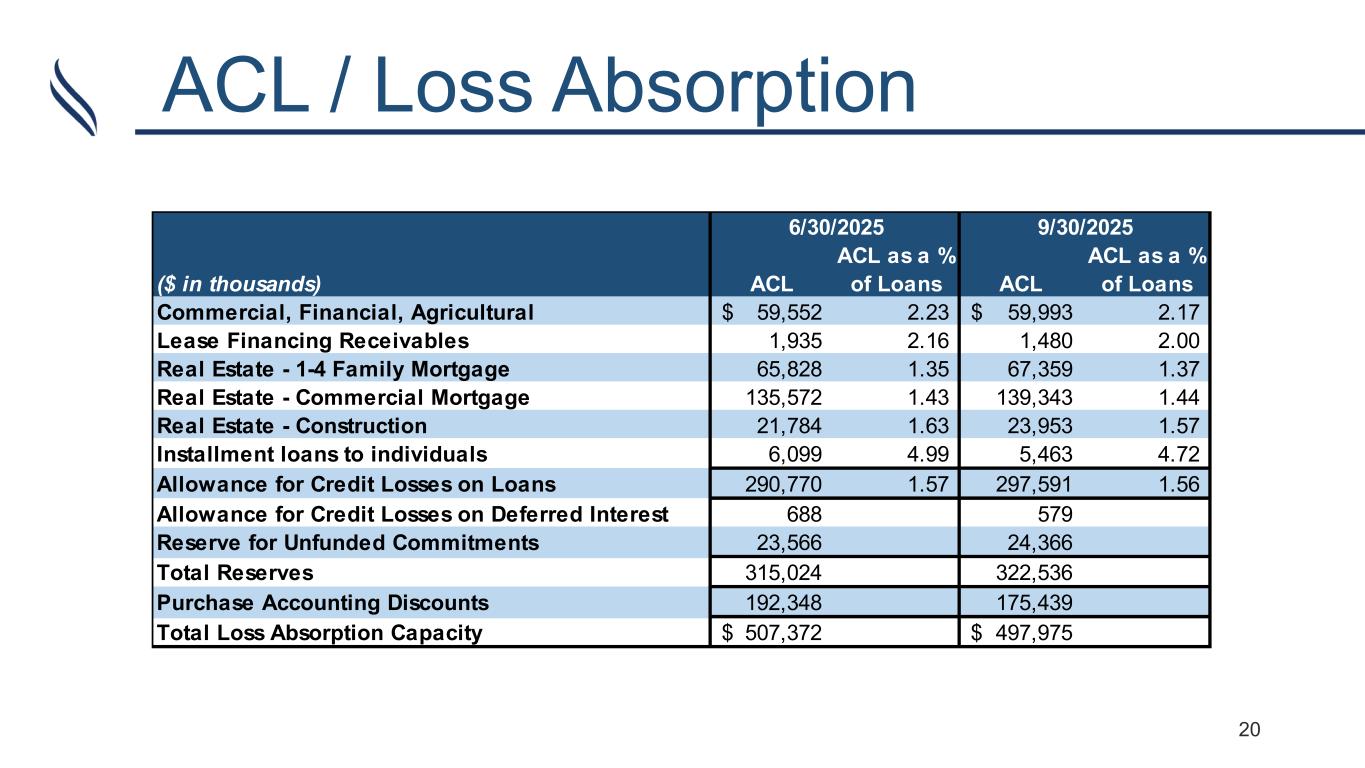
Thank you, Kevin, and good morning. As Kevin mentioned, we are encouraged by the integration efforts of our employees and the positive impact on results this quarter. Our adjusted return on average assets of 1.09% for the quarter is an improvement of 12 basis points from a year ago, and our adjusted return on tangible common equity of 14.22% for the quarter is an improvement of 296 basis points. From a capital standpoint, all regulatory capital ratios remain in excess of required minimums to be considered well capitalized. We recorded a credit loss provision on loans of $10.5 million, comprised of $9.7 million for funded loans and $800,000 for unfunded commitments. Net charge-offs were $4.3 million and the ACL as a percentage of total loans declined 1 basis point quarter-over-quarter to 1.56%. Turning to the income statement. Our adjusted pre-provision net revenue was $103.2 million. Net interest income growth was driven by the improvement in the net interest margin and loan growth. Noninterest income was $46 million in the third quarter, a linked quarter decrease of $841,000, excluding the gain on sale of MSR assets in Q2. Noninterest expense was $183.8 million for the third quarter. Excluding merger and conversion expenses of $17.5 million, noninterest expense was $166.3 million for the quarter, a linked quarter increase of $3.6 million. With systems conversion now complete, we expect modeled synergies to be more evident in our results going forward. Regarding conversion-related expenses, we believe the majority have been recorded through the third quarter with a modest amount expected to come in the fourth quarter. There was a decline in our adjusted efficiency ratio of about 0.4 percentage points, and we expect to see additional improvements in the coming quarters. We are encouraged by the results of the third quarter and the positive momentum going into the fourth quarter. I will now turn the call back over to Kevin.
Thank you, Jim. We look forward to closing out a successful year for Renasant. We have come a long way on our goal of improving profitability. The combination of a strong balance sheet plus added profitability puts us in a position to capitalize on opportunities in our vibrant banking footprint. I will now turn the call over to the operator for questions.
Operator
And the first question comes from Stephen Scouten with Piper Sandler.
Speaker 4
Everyone. Really nice quarter here. Loan growth was particularly encouraging. Can you give any color around what you're seeing from a pipeline perspective? And maybe also around specifically the legacy SBMS markets, maybe in and around the Gulf Coast potential strength you're seeing there that's helping fuel the strong growth?
It's Kevin. So yes, looking at loan growth for the quarter, I know we've been guiding more towards mid-single digits. We've been expecting payoffs to increase. Our production has been all year long. I think for Q1 and Q2, we've been more in the 7% range if you look at the net loan growth. Again, this looming potential of payoffs continues to be out there. But getting to the current quarter, what I'd tell you is that we are excited about is the growth that happened throughout our footprint, whether you look at it from a geographical breakdown or our credit channels, whether it’s our small business lending units, our business banking lending units, or some of our larger units like corporate or commercial lending units. All categories have shown good distributed growth. If we go back to July of '24, when we contemplated merging with The First, we thought we could unlock some potential in both companies. I think Q3 indicates our position to continue this growth. Specific to The First in the Gulf Coast, we’ve seen good growth there as well. Opportunities that Renasant can provide to The First lenders have expanded relationships now that they have a larger balance sheet and increased lending capabilities. That team has immediately taken advantage and made referrals, and we've seen immediate successes as a result of that combination. We remain excited about what Q3 indicates and believe we have the opportunity to continue growth in Q4 and beyond.
Speaker 4
Great. Appreciate that color, Kevin. Maybe just curious about the pace of expense savings from here, kind of how much you've been able to extract so far, and what we can think about in terms of further expense savings from the deal and the path as we look at a good 1Q '26 run rate, that sort of thing?
Stephen, it's Jim. I want to briefly discuss Q3. We observed an increase of about $3 million in core noninterest expense, excluding merger expenses. The increase can be attributed to three key factors, which were fairly balanced: rising health and life costs, higher occupancy expenses, and an uptick in FAS 91 expenses. Two of these factors are beyond our control, so it will be interesting to see how they affect us in future quarters. Specifically regarding your question, we anticipate a decrease of around $2 million to $3 million in core noninterest expense for Q4 and another $2 million to $3 million reduction in Q1.
Speaker 4
Okay. Fantastic. That's really helpful, Jim. And then just lastly for me, I really appreciate how you guys broke out kind of accretion in your slide deck. What's kind of a good baseline assumption of the normal accretion expected? Is it around that, I guess, it was $12.4 million? Is that right? Or maybe the interest rate component of that was about $9.8 million, if I'm doing the math right. Is that a good way to think about forward accretion?
Well, obviously, it's going to vary. The accelerated part is going to vary given loan prepayments, so it's hard to predict. But I think that scheduled accretion is going to track pretty closely to what you saw in Q3.
Operator
And the next question comes from Matt Olney with Stephens.
Speaker 5
I would like to get more information about the core margin in the third quarter, as it showed some significant growth. Could you elaborate on the factors contributing to that growth? Additionally, I remember you mentioned in a prior call that you expected the core margin might stabilize as we approach the fourth quarter. Is that still your perspective for the fourth quarter core margin?
Matt, this is Jim. So yes, we were pleased to see a little expansion in Q3. Looking forward, I would say, in Q4, probably some modest contraction in the margin in Q4. And then for '26, I would say, modest expansion. So not a lot of change, but that would be a general outlook and that assumes four rate cuts between now and year-end of '26.
Speaker 5
Just to clarify, you mentioned that this assumes four rate cuts, including today, between now and the end of next year. Is that correct?
Speaker 5
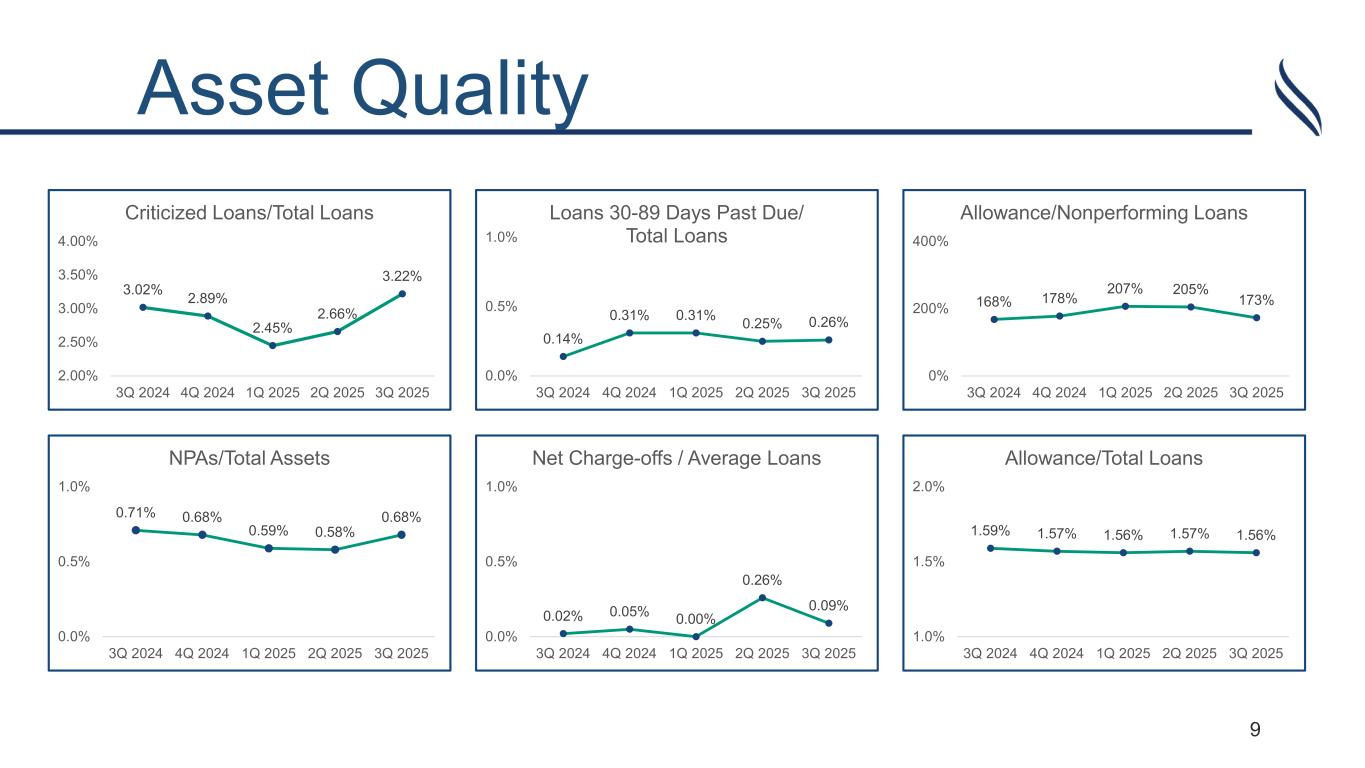
Okay. That's helpful. And then I guess switching over to credit quality. We did see criticized loans jump up in the third quarter. Any color on the driver of that jump up of criticized loans?
Speaker 6
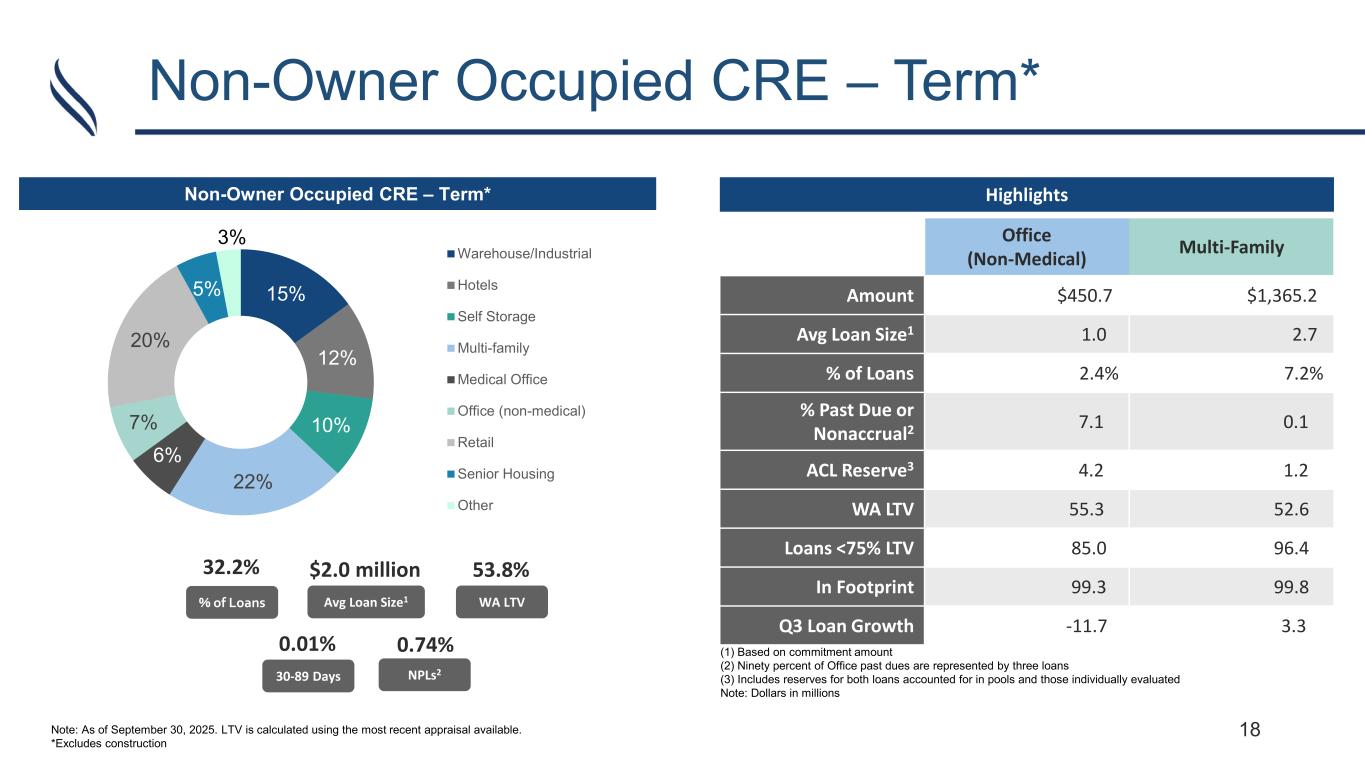
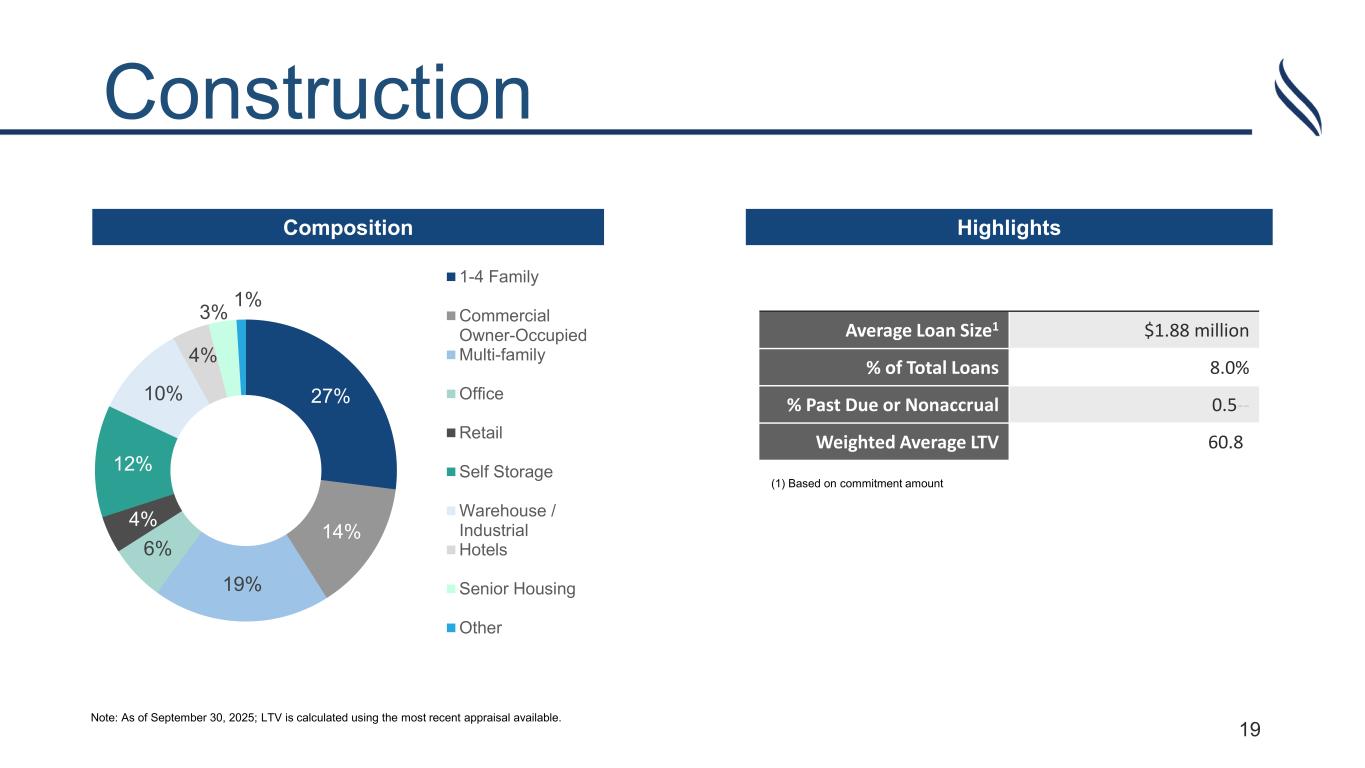
This is David. So it was a broad-based increase for the quarter. There was a little bit of commercial real estate, a little bit of C&I. If we get into the weeds a little bit, we had a single multifamily transaction that makes up about a quarter of it that we feel very strongly about. This is a good asset that was just underperforming relative to our original budget. We expect that loan to pay off in the ordinary course probably early '26. We had two C&I transactions that made up roughly a third of that number. One of them is the Tricolor credit that we've talked about that made up a large percentage of that asset type. There was a little bit of migration in our self-storage portfolio and in one asset in our senior housing. So it was broad-based within our downgrades to criticized. We don't feel that we have any loss exposure in that increase, but it's broad-based. And Matt, I know you know we do a fairly aggressive job of looking at our loan portfolio from a health portfolio perspective, risk-rating loans proactively to make sure we're identifying risk so we can manage those loans proactively.
Operator
And the next question comes from Michael Rose with Raymond James.
Speaker 7
Just on the new buyback that you guys announced; good to see you guys are going to be building capital, but you haven't bought back really any stock since 2021. Just wanted to see where that currently plays in your thought process, particularly given the fact that you've just completed a deal; there are probably other deals out there. It seems like the environment is good. Just wanted to kind of run down the thought process on capital as we move forward.
Michael, it's Jim. So the third quarter was an important quarter for us because we obviously got the deal closed, and that was reflected in Q2. And then to go through systems conversion and just see Q3 come out as it did, and of course, Kevin's comments, I felt were spot on. It was just really nice to see all that momentum that we've got and the fact that our teams remain focused. I'd say that backdrop is important as we think about capital because we feel we have good visibility into Q4 and into '26 in terms of the prospects for us to continue to grow that capital. Our sense is that we could grow those capital ratios anywhere between 60 and 70 basis points between now and year-end '26. The capital levers, including buyback, are much more in focus for us. We are putting a lot of thought into that. We are mindful of the fact that we're going to have a growing capital base. We've taken a couple of steps recently. One, notably, right after the quarter, we redeemed $60 million of subordinated debt. You saw the common dividend announcement. So we wanted to think about that authorization. One of the reasons we increased it is just proportionate because we're 50% larger in terms of market cap and capital. It's a lever that we're increasingly inclined to think about. Whether it's the buyback supporting organic growth, which has been strong, remains the number one goal. We'll bear down on uses of capital. Buyback is certainly high on that list in terms of levers we might pull in the coming quarters.
Speaker 7
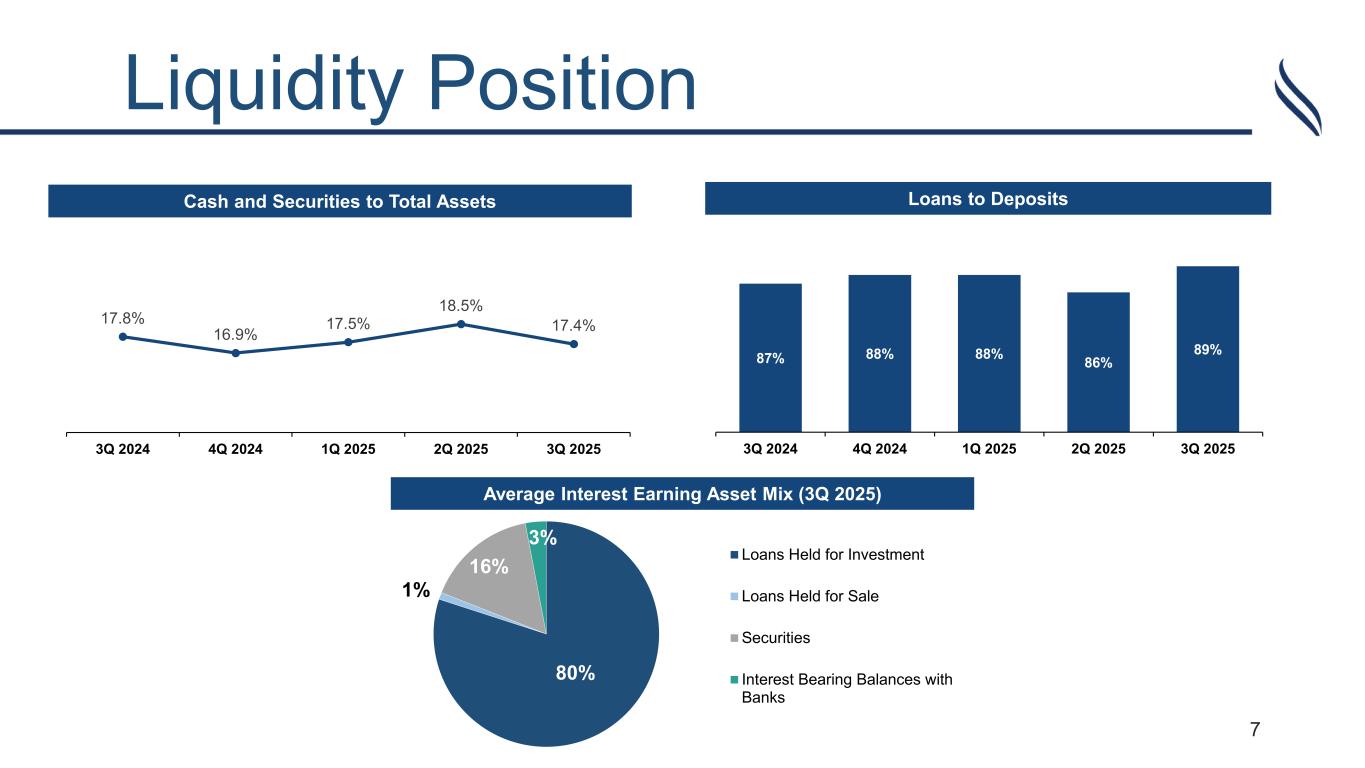
Very helpful. And then maybe if I can just ask a question on deposits. Your loan-to-deposit ratio is now approaching 90%. It's the highest it's been since basically the beginning of COVID. Can you just talk about some of the deposit growth strategy? I know there's always some seasonality with municipal deposits, but the general trend has been upward over the past few years. I just wanted to get a better sense of your plans for deposit growth juxtaposed with the rate environment?
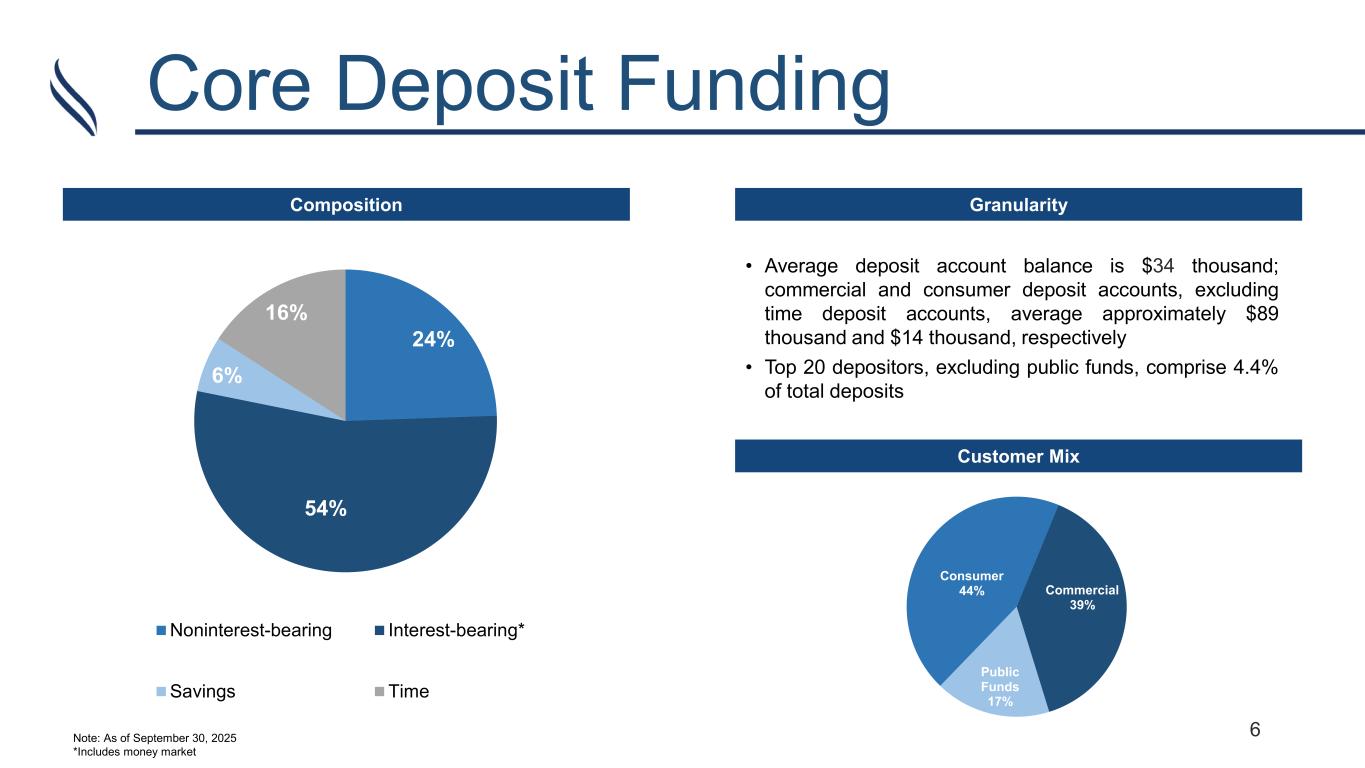
I think we've been spoiled because I think out of the last 10 quarters, we've had deposit growth that's equal to or better than loan growth. To not have that in a quarter is something that caught our attention. As you pointed out, a lot of that was seasonal, related to public funds. Our goal is to grow deposits, particularly core deposits, in line with loan growth. That remains a focus of ours and is a way we incentivize our teams and motivate them. As we go forward in '26, we want core deposit growth to match whatever loan growth we produce. As we look to Q4, some of the public outflows we saw in Q3 might come back in the latter part of Q4, given the seasonality of how some municipalities behave. Funding loan growth remains a top priority here, and we know we can generate deposits. We've had a record of doing that, and that is a focus for the company going forward.
Speaker 7
Really appreciate the color. Maybe if I could just sneak one last one in. I appreciate the near-term color on expenses. I know it's something we all struggle with in modeling as we go through a deal, especially at this size. But just as we think about the combined franchise now that systems conversion has happened, are there other areas and levers that you guys can pull to generate the positive operating leverage as we move forward? I'm just trying to better appreciate some of the opportunities, maybe at legacy Renasant now that you have the cost savings from the deal and the accretion from the deal?
Yes, Michael, Kevin. So the short answer is yes. If we go back 16 to 18 months ago, Renasant on a stand-alone basis and The First on a stand-alone basis were both looking at either adding expenses for the assets where we were at or we needed scale for the expenses and infrastructure we had built. Combining both companies unlocked potential. When we laid out our goals of an ROA in the 120s, mid-teens ROE, and a mid-50s efficiency ratio, I think you saw it in Q2, and you see it in Q3; we are on track to meet those goals. We are not stopping, and there is real momentum in the company around expenses and driving higher levels of profitability. That operating leverage will come from managing expenses and from gaining the right return on the expenses we have. We’ve had probably above-average loan growth for a couple of quarters. We want to maintain above-average loan growth. It doesn’t have to be 20% loan growth; it just needs to be a couple of multiples above the average to gain the revenue generated from those expenses. The expectations for the company internally have been raised beyond what external estimates are, and I believe the excitement around our financial performance and our focus on profitability has been embraced throughout the company. The operating leverage will come from expense management as well as revenue growth, and our provision was elevated this quarter due to twice the loan growth we anticipated. The revenue from that above-average loan growth excites us about the past couple of quarters and that the balance sheet growth aligns with our plan and reemphasizes what we anticipated happening through the merger.
Operator
And the next question comes from Dave Bishop of the Hovde Group.
Speaker 8
Kevin, quick question in the preamble. It sounded like maybe you were surprised in terms of the lack of payoffs this quarter? And maybe last, just curious if you have line of sight into potential payoffs into the next quarter? And if they didn't occur, maybe what's delaying or are there borrowers sort of waiting for lower rates? Just curious if there's any way to ring-fence potential headwinds into the coming quarter or next, if that's possible.
Yes, no, it is. To be honest with you, I am, and I think we are a little bit surprised that payoffs have been a little quieter than expected. But we've been looking at the 10-year. If the 10-year approaches 4% or drops below 4%, we think the risk of prepayments increases. In Q3, the 10-year was probably in the 4% range, and it didn't really approach that until we got into October. In Q4, we are focused on ensuring that we have good visibility into customers. Our lenders are getting updates as to where potential payoffs or prepayments could occur because we had set a benchmark for the 4% 10-year as important for us; if we approach that or drop below, it could elevate prepayments in our commercial real estate book.
Speaker 8
Got it. And then you're clearly cognizant of the significant amount of M&A activity in your area. Just curious how aggressive you think you're going to be in terms of recruiting some of that talent and commercial clients that could dislodge from those acquisitions. Is the opportunity set big enough to replace whole bank M&A with lift out of talent?
Yes, David. I'm not sure it replaces it, but it provides an interesting opportunity for us. In some cases, we may be able to hire without needing to add additional staff because we may have the chance to gain customers without added hires. We find ourselves in a unique position and we like where we are with all the disruption happening in the Southeast. I think we stand to benefit from that. It may come with hiring; in Q3, I think we hired 10 new market presidents or prominent lenders throughout our footprint, and we've continued that in Q4. We believe we can also pick up business without needing to hire, which is advantageous. We're excited that we have completed systems conversions and are focused on gaining market share.
Operator
And the next question comes from Catherine Mealor with KBW.
Speaker 9
I want to circle back on expenses, looking at the expense trajectory into '26. If I lower expenses per what you're talking about, Jim, kind of somewhere around $2 million to $3 million each of the next two quarters, starting next year at a $161 million base. If I annualize that number, it's basically where consensus is for '26 in expenses, which is $645 million. Do you feel like we're in a position where you're lowering expenses in the next two quarters and then were flat? Or should we actually grow a little bit off of that base in the first quarter of '26, just given better revenue growth and opportunities in your markets?
Catherine, I would guide you towards that consensus number or slightly better for '26. I believe that's a reasonable outlook for us. We have the advantages from the deal, and we are in a good position both geographically and organizationally after completing the conversion. Although it is still ongoing, it has gone well. The Q1 run rate will likely be quite stable in terms of expenses, with some potential fluctuations, but generally stable. Merit may influence our numbers a bit towards the middle of the year. I believe the consensus number is a decent estimate, perhaps slightly better.
Speaker 9
Okay. That's awesome. Very helpful. And then on the deposit side, it was interesting to see deposits up a little bit this quarter. I know that's a mix change, and now we'll benefit from two cuts. But we're hearing from a lot of other banks this quarter that deposit costs are getting more and more competitive. Just curious how you're thinking about deposit costs and betas over the next few cuts relative to what we've seen over the past 100 basis points of cuts?
Certainly, on the deposit pricing side, we've faced the most pressure. The loan side is always competitive, but improvements in deposit sides have been tough to achieve. I believe our betas for interest-bearing deposits and loans are roughly the same in the mid-30s for '26, between now and year-end '26. The key variable will be the competition for funding. In Q4, we saw slight increases in costs. I believe our CD special pricing has remained stable for around 4 to 5 quarters. We hope to see changes, but right now, I wouldn’t expect a near-term prospect for that. We’ll have to see how the market and competition develop.
Operator
And the next question comes from Janet Lee with TD Cowen.
Speaker 10
Clearly, driving improved returns and increasing profitability looks like one of your key goals, Kevin. In terms of expectations being raised further internally for Renasant, leading with that increased profitability, aside from the expense side on the revenue side, can you give us examples? Are employees, like bankers, bringing in more low-cost deposits or driving more fee income products? What does that mean?
Yes. Great question. Let’s break that down. One issue that weighed on profitability has been a lack of scale. We’ve made investments but didn't achieve the needed scale. We are focusing on performance at the individual or market level to enhance that. When we see growth throughout our footprint, that is encouraging because we are achieving that growth with fewer staff. Since the merger announcement, we've reduced over 300 employees. We are doing more with less while maintaining above-average growth. While some reductions have been cost savings, we have also instilled accountability which has contributed to profits. When we discuss revenue improvements, it’s focused on scaling where we can. This applies at individual lender or market levels, holding them accountable for their cost support. We emphasize improving performance to achieve results, and our teams are responding positively. Yes, so regarding loan and deposit growth, you mentioned mid-single-digit growth normalized. Given payoffs are expected to increase in Q4, we are maintaining a mid-single-digit target while monitoring the impacts of the interest rate environment. We’ll evaluate the situation to see how we perform before committing to changes, though we anticipate further opportunities in both loan and deposit growth.
Operator
And this does conclude the question-and-answer session. I would like to turn the floor to Kevin Chapman for any closing comments.
Thank you. We appreciate your interest in Renasant this morning, and we look forward to continuing our conversations with you throughout the quarter. Thank you.
Operator
Thank you. The conference has now concluded. Thank you for attending today's presentation. You may now disconnect your lines.