Operator
Good afternoon and welcome to Summit Therapeutics Q2 2026 earnings call. All participants will be in listen-only mode until the question and answer portion of this call. We do not expect any technical difficulties today. However, in the event that we lose the webcast connection and are unable to provide any updates, please wait up to 10 minutes for resolution. please refer to the company's website for updates please note that today's call is being recorded after today's prepared remarks we will host a question and answer session if you would like to ask a question please press star one to raise your hand to withdraw your question press star one again at this time i would like to turn the call over to dave gian cars summit therapeutics chief business, and strategy officer. You may proceed.
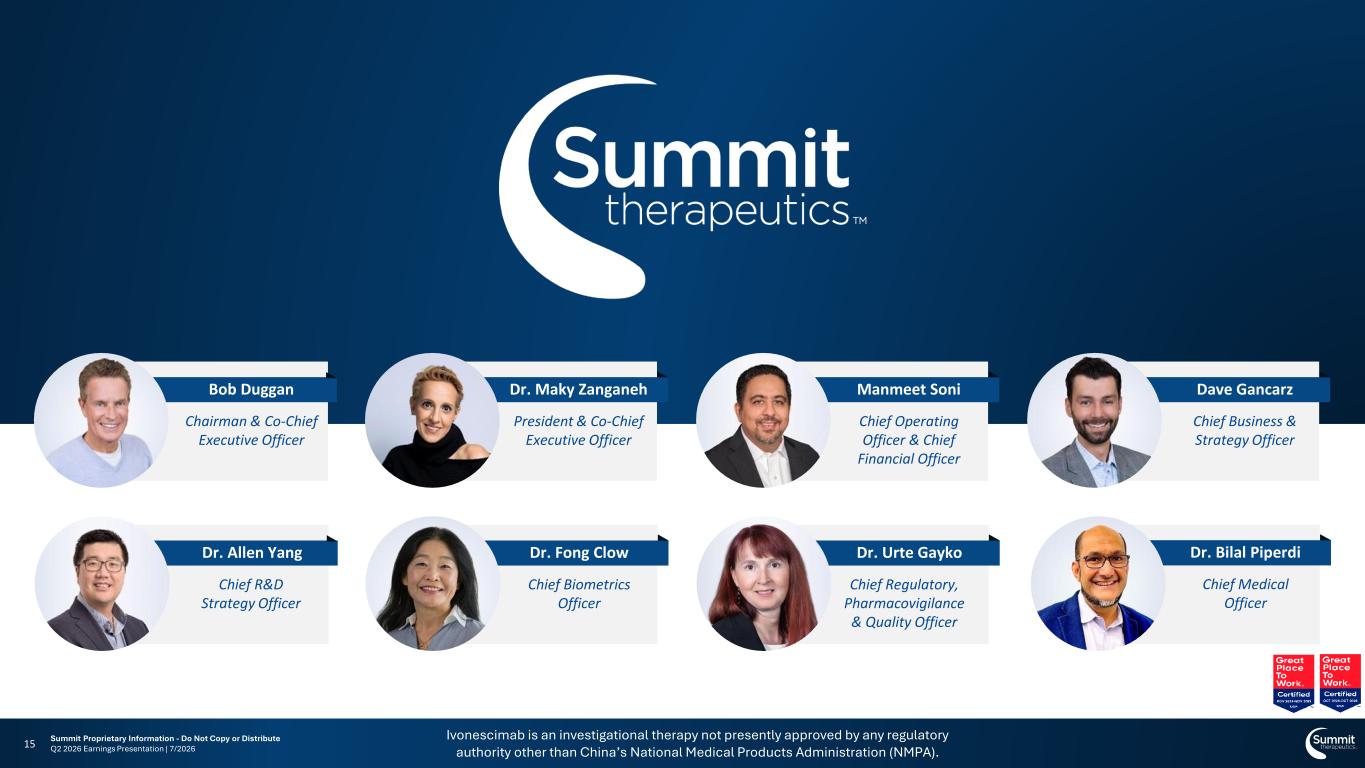
Good afternoon, and thank you for joining us. On today's call, we will provide an update on our second quarter 2026 financial results and operational progress. This afternoon's press release is available on our website, www.smmttx.com. Our form 10Q was also filed today and is available on our website and via the SEC's website. Today's call is being simultaneously webcast, and an archived replay will also be made available later today on our website. Joining me on the call today is Bob Duggan, our Chairman of the Board and Co-Chief Executive Officer, Dr. Marquis Zanganeh, our President and Co-Chief Executive Officer, Manmeet Soni, our Chief Operating Officer and Chief Financial Officer, and Dr. Alan Yang, Chief of R&D Strategy. I'm Dave Yankars, the Chief Business and Strategy Officer here at Summit. before we get started with the rest of the call i would like to note that some statements made by our management team and some responses to questions that we make today may be considered forward-looking statements based on our current expectations summit cautions these forward-looking statements are subject to risks and uncertainties that may cause actual results to differ materially from those indicated in the forward-looking statements please refer to our sec filings for information, including the Form 10Q issued today, about these risks and uncertainties. Summit undertakes no obligation to update these forward-looking statements, except as required by law. One item of note, this presentation is being webcast with slides, so we'll be referring to the slides being displayed in the web link. I'd encourage you to use the webcast link to see the slides being presented this afternoon that will accompany our comments. Following comments from our team, we will take questions. And with that, I'll hand it over to Bob.
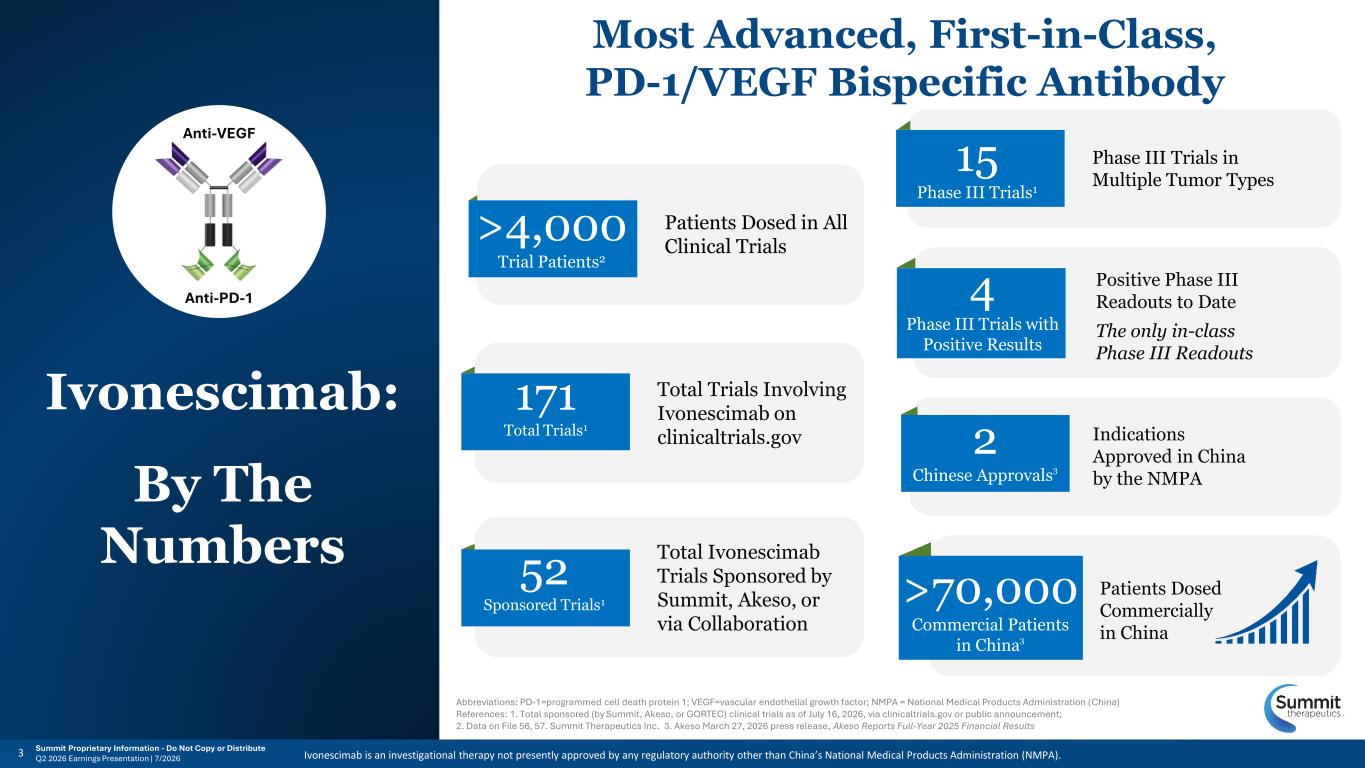
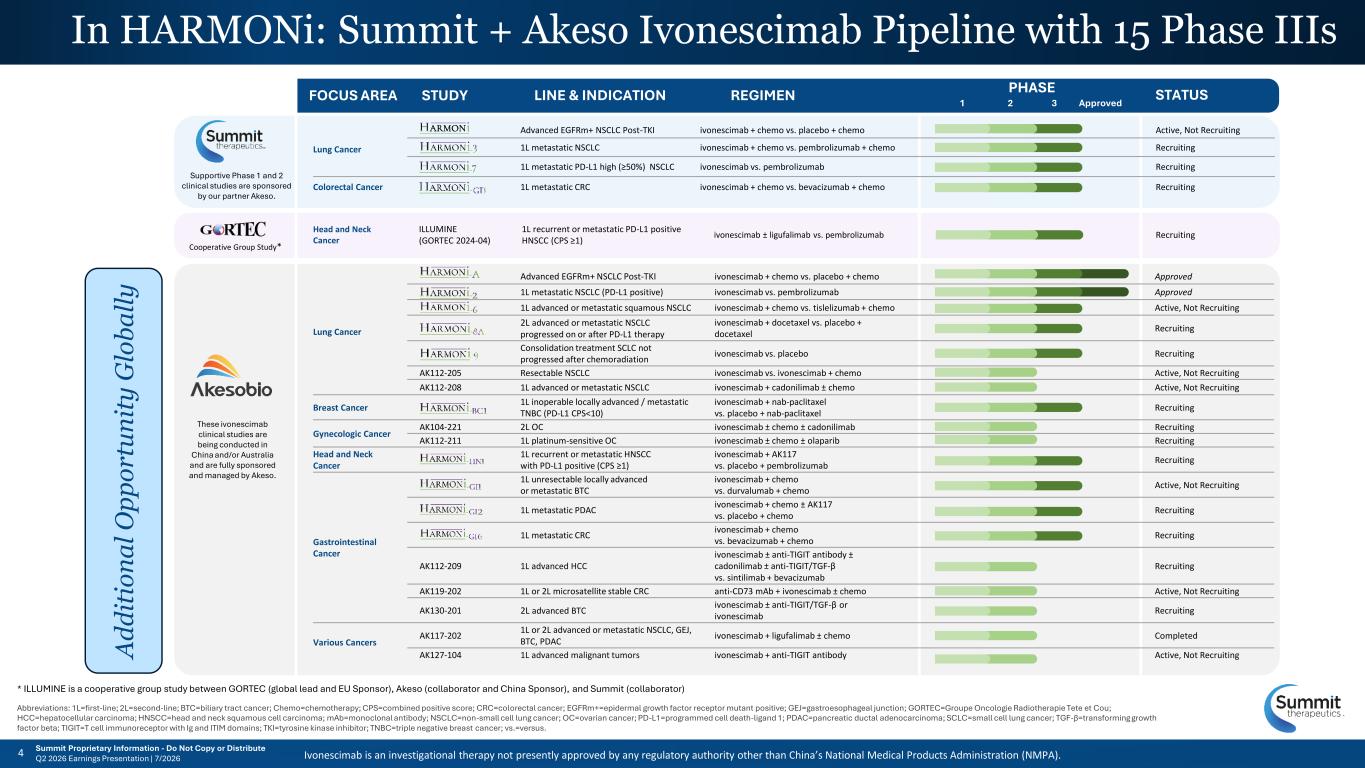
Thank you, Dave. Good afternoon, everyone. Thank you for joining us today. I'm very proud of the highly focused, mission-driven, patient-first team at Summit and their growing physician support around Ivinicumab, our PD-1, VEGF, Bispecific, and LEED investigational asset. In addition, we continue to appreciate Big Pharma's high interest in Ivinicumab as the backbone of combination therapy in many different solid tumor settings, as we look to successfully combine Ivinicumab with their innovative new targets. Our team continues to grow in number and ability as we expand our clinical development plan and prepare for commercialization and anticipation of a decision from the FDA on our VLA toward the end of this year. Before we start with key updates from the past couple of months, I'd like to take a moment to remind those of you who have been with us from the beginning and introduce to those of you who may be new to the story of what Ivinisumab has accomplished today. You can see this on slide three. Ivinisumab has read out four phase three clinical studies to date, all four with positive data. This has led to two approvals in China so far with one currently under review, in addition to the pending BLA with the U.S. FDA. A total of 15 phase three trials are currently ongoing or have read out in multiple tumor types. Between Summit and our partners at Akeso, 52 clinical trials have been initiated evaluating ibanizumab in a variety of solid tumors. When including investigator-initiated and collaborative studies, a total of 171 clinical trials are now listed on clinicaltrials.gov. The enthusiasm demonstrated by investigators around the world to generate data and sync positive signals for patients facing high-end medical need really speaks to the opportunity and ever-present optimism surrounding ibanizumab. Together with Akeso, over 4,000 patients in either Summit-sponsored or Akeso-sponsored clinical trials across the world have been dosed with ibanizumab. Commercially, in China, over 70,000 patients have been administered ibanizumab. On slide four, we see a snapshot of the current ibanizumab development plans across Summit antiqueso, as well as a phase three clinical trial sponsored by prominent European cooperative group GORTEC. Our collective pipelines cover not only multiple settings in lung and colorectal cancers, but also head and neck, breast, biliary, pancreatic, gynecological, gastric, and hepicocellular cancer, including non-metastatic settings. Summit's announced phase three studies focused on non-small cell lung cancer and colorectal cancer, and these studies represent only a subset of ibanesimab's potential future indications, as you can see here. Through our wonderful partnership with IKESO, data generated in our studies, as well as data generated through investigator-sponsored trials, we continuously consider evolving ibanesimab to drive more informed as well as faster decisions, all of which support efficient and timely expansion of our global ibanissimab development plan. I'll now turn it over to McKee to discuss some of the recent developments. McKee?
Speaker 1
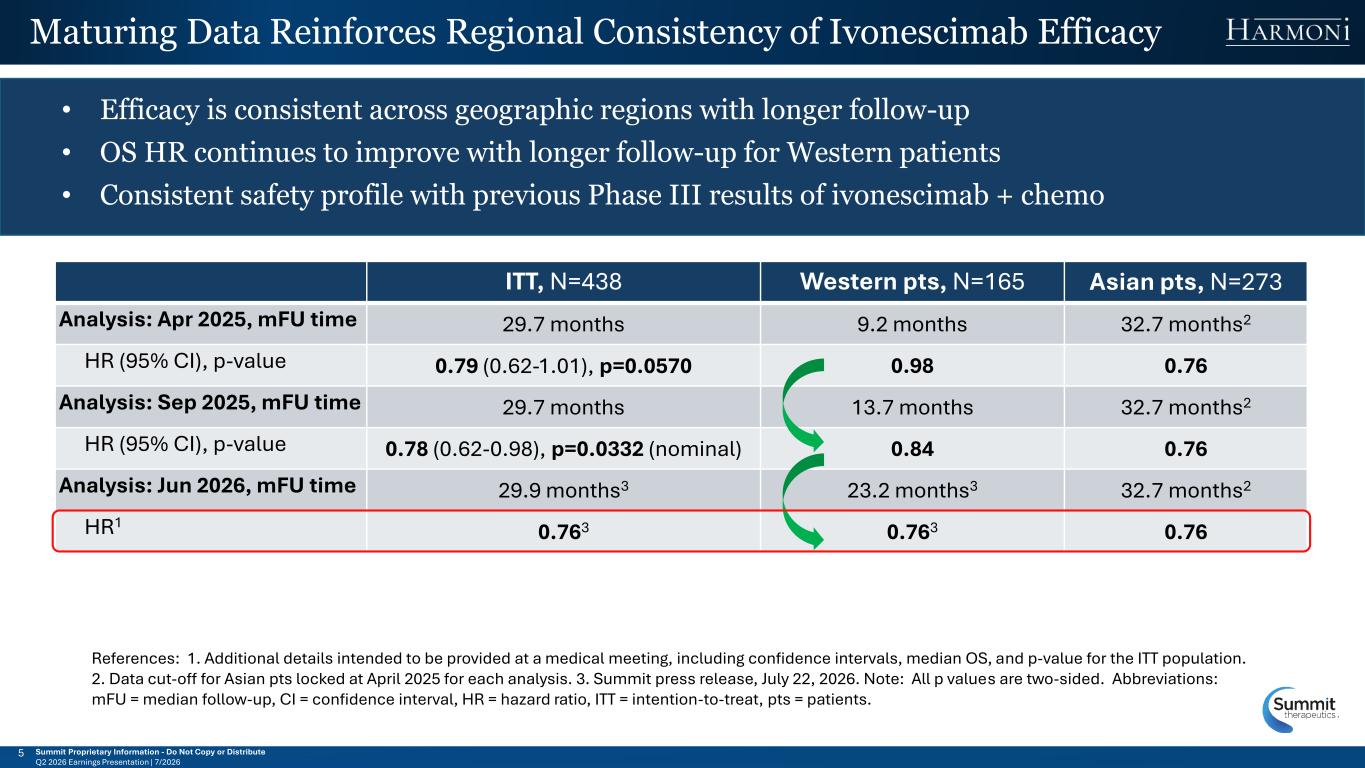
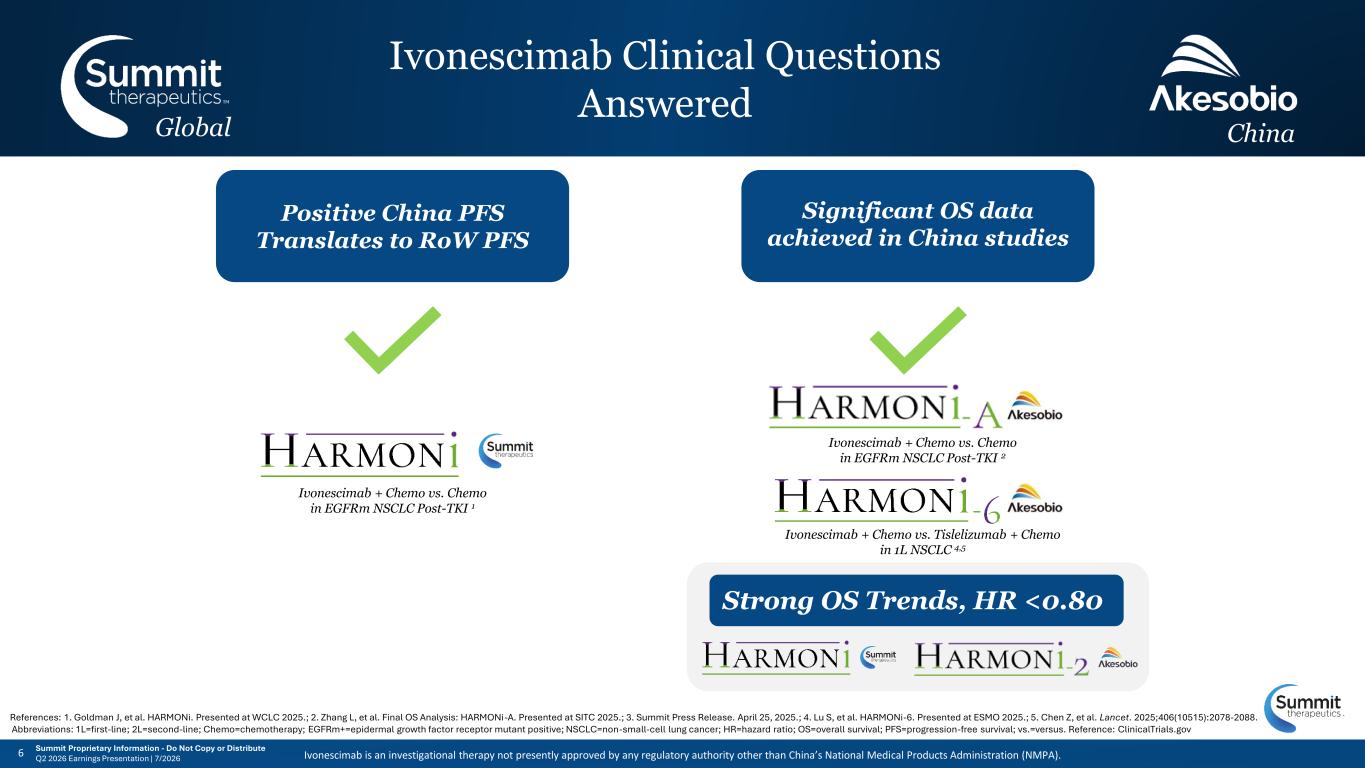
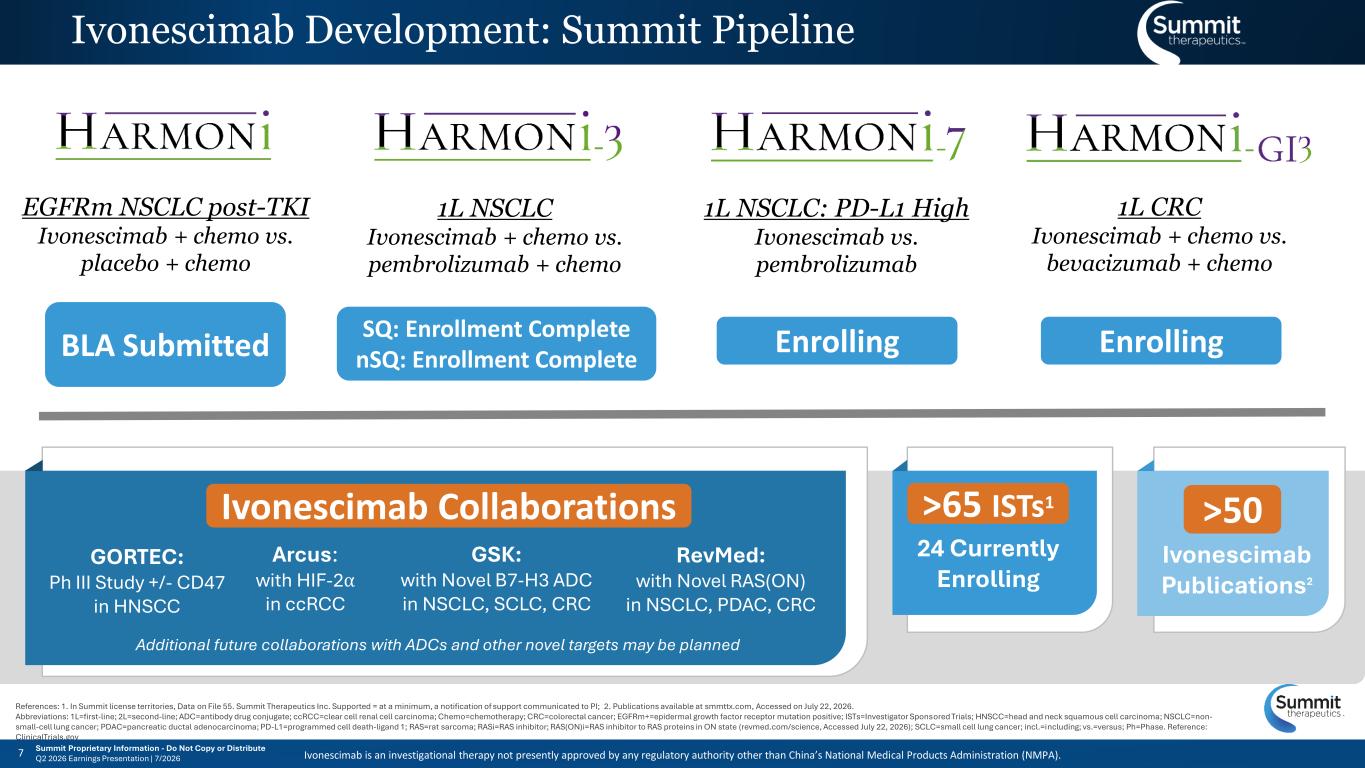
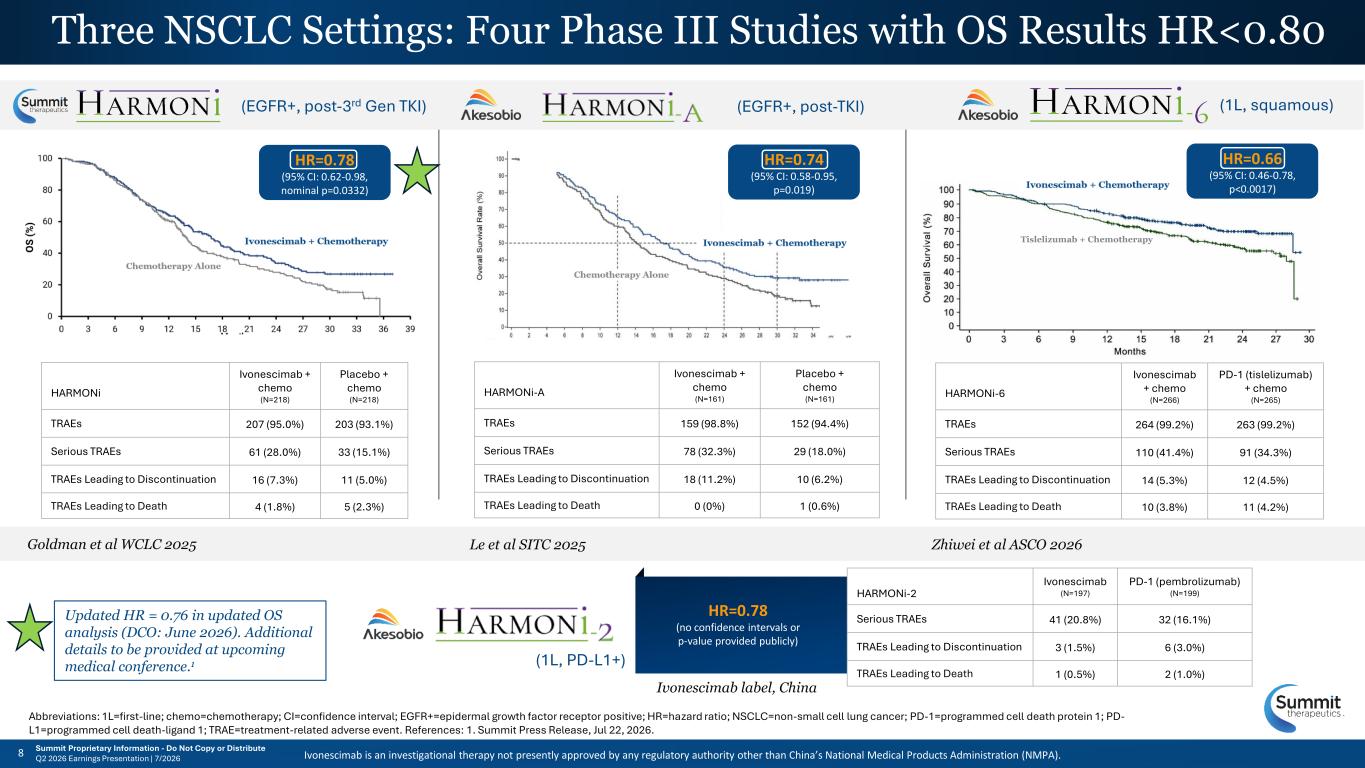
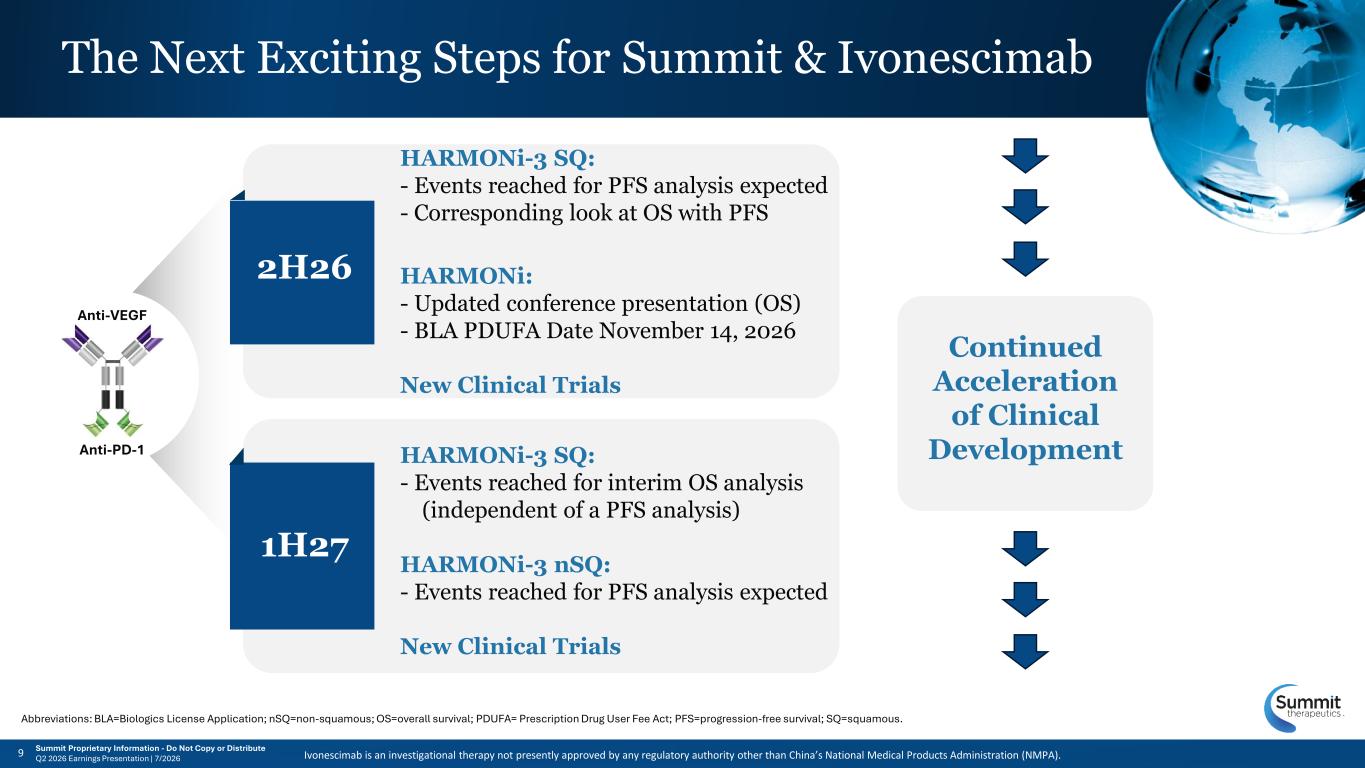
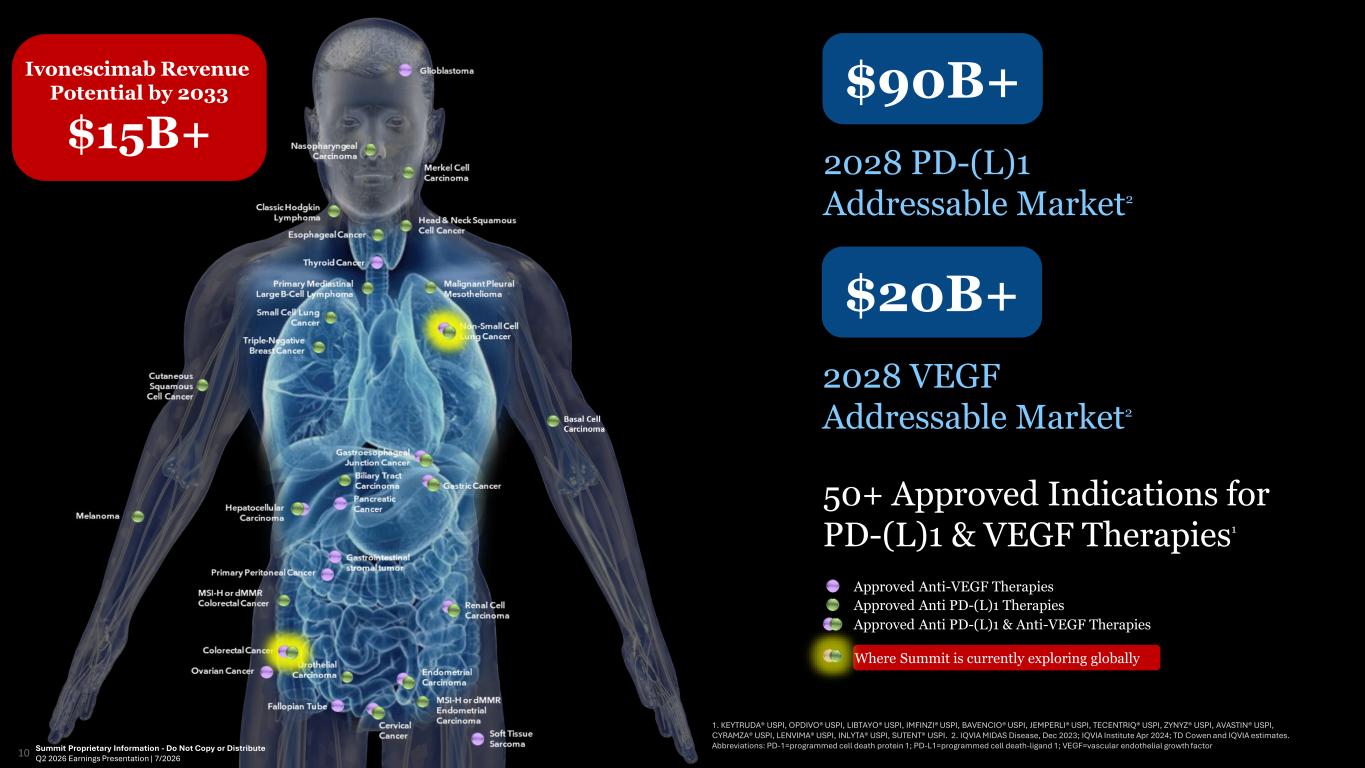
Thank you, Bob. Yesterday, we announced an updated OS analysis conducted for our global phase 3 HARMONY trial. The HARMONY study evaluated ibanissimab plus chemo against chemo alone as a treatment for EGFR-mutated non-small cell lung cancer after TKI therapy, a patient population of significant unmet need with few available treatment options. In this most recent analysis, with a data cutoff in June 2026, Western patients increased their time on study, reaching a median follow-up of over 23 months. Asian patients remained locked with a median follow-up time of 33 months. A hazard ratio of 0.76 was observed in both the total population as well as the regional Western data. The hazard ratio for Western patients has improved with more follow-up time. With longer follow-up, results of Western patients are now consistent in terms of the magnitude of OS benefit with those patients enrolled in Asia who had a longer follow-up at the time of the primary OS analysis. Avanissimab continued to demonstrate an acceptable and manageable safety profile that was consistent with previous phase three results of Avanissimab plus chemo. No additional safety signals were observed in this current Harmony data card compared to the previous data cards. As a reminder, this setting is one in which multiple PD-1 inhibitors have failed previously to show a benefit in either PFS or OS. Prior phase 3 studies were conducted in this setting individually with PEMRO or NEVO, each in combination with chemo, and were not successful. In addition, there are currently no approved agents in this setting which have demonstrated an overall survival benefit compared to chemo alone. The encouraging result from this long-term overall survival analysis continue to support the ability to translate the therapeutic profile of ibanesimab across the globe, including the efficacy potential of ibanesimab in Western patients from North America and Europe. This data shows a consistent, favorable OS trend across geographic as Western patients were followed for additional time on study. With meaningful follow-up time in both regions, the magnitude of the OS benefit is consistent between patients enrolled in China and enrolled in Western countries, including the United States, in the HARMONY study. We intend to provide exciting additional details from this new long-term analysis at a future medical meeting. We have also made these results available to the FDA. As previously disclosed, the FDA noted that a statistically significant overall survival benefit is necessary to support marketing authorization in this setting. Considering the safety and efficacy profile of the current FDA, approved options for patients in this setting, none of which have demonstrated a statistically significant OS benefit, as well as the continuing positive regionally consistent data of this phase three multi-regional study and discussions with key opinion leaders and physicians who have administered ibanesimab to patients, we believe that ibanesimab is a potential treatment option with favorable benefit-risk profile. Turning specifically to Summit's global Ibanezimab pipeline, which is noted on slide 7, we have four phase 3 trials, completed or ongoing. Harmony, which we just covered, Harmony 3, Harmony 7, and Harmony GI 3. Harmony 3 is evaluating Ibanezimab plus chemo against Pembrol plus chemo in frontline metastasic non-small cell lung cancer in both patients with squamous and non-squamous histologies, each of which will be analyzed separately. These patient populations represent a significant unmet medical need with the nearly 100,000 patients in the United States alone as this trial covers frontline non-small cell lung cancer patients without genomic alterations. In line with prior guidance, we have completed enrollment in both the squamous and non-squamous cohorts. We expect to reach the number of events needed to conduct the PFS analysis for the squamous cohort in the second half of this year, which would also come with a corresponding early interim look at overall survival. We would expect to reach the number of events for the first look at OS that is independent of the PFS analysis in the first half of 2027. For the non-squamous cohort, we expect to reach the number of events needed to conduct a progression-free survival analysis in the first half of 2027. Harmony 7 is evaluating abanissima monotherapy against PEMBRO monotherapy as frontline treatment for patients with non-small cell lung cancer that has high PD-L1 expression levels. Enrollment continues to be strong and we look forward to providing additional updates on this trial in the near future. Harmony GI 3 evaluates Ivanissima plus chemo compared to Beva plus chemo as frontline therapy in patients with unresectable colorectal cancer. Our decision to initiate this study was driven by encouraging phase 2 data published at ESMO 2024 and supported by global phase 2 data presented in Q2 of this year at ASCO 2026. We look forward to providing further updates as this global phase 3 colorectal cancer trial progresses. In addition to our sponsored studies, the phase 3 study, Illumine, is currently enrolling in head and neck cancer through a European cooperative group, Cortex. This is another multiregional phase 3 study that tests ibanesimab with and without an anti-CD47 agent head-to-head against pembro in an additional tumor setting from our historical work. The trial is enrolling in Europe, is intended to start in China later this year, and we will evaluate opening sites in the United States based on continued progress. Additionally, we have over 65 ISTs that we intend to support in various stages of development. Of days, 24 are currently enrolling and more publication on being featured at each major Medical Conference, often in prominent session at ASCO, ESMO, and World Conference on Lung Cancer. Through this combined research, Ibonicimab has now been featured in over 50 publications, presentations, and posters. Now, I would like to take a minute to focus on some of the clinical trial collaboration in which we have entered to evaluate Ibonicimab with novel combinations. Clinical development of ibanesimab in additional tumor settings also continues to progress as planned via our collaborations with RevMed, GSK, and now with ARCUS. With respect to novel-novel combinations, our collaboration with Revolution Medicine began enrolling in the first quarter of this year. This collaboration evaluates ibanesimab in combination with three novel RAS inhibitors across multiple solid tumor settings, including pancreatic, colorectal, and non-small cell lung cancers. We are enthusiastic about the opportunity of ibanesimab with multiple existing RAS inhibitors and what the combination has the potential to do for patients facing difficult-to-treat cancers. Our GSK collaboration evaluating ibanesimab multiple solid tumor settings in combination with their B7H3ADC is expected to enroll its first patient later this quarter. This is another example of promising targets seeking to significantly advance outcomes in settings, such as multiple types of lung cancer and colorectal cancer, where both ibanesimab and B7H3ADCs have shown promise. We are also pleased to announce yesterday that we have established a collaboration with Arcus Biosciences to evaluate abanesimab in combination with Arcus HIF2-alpha inhibitor castatifan in first-line metastasis clear cell renal cell carcinoma, the most common form of kidney cancer. This combination presents a compelling opportunity for a potentially well tolerated TKI sparing option to prolong survival in this setting. We expect initial data from this collaboration to be generated by MEET next year. Collectively, these trials enhance and inform our own clinical development activities as we learn more about new settings where neither we nor ECESO have yet had the opportunity to explore. Additionally, the continued enthusiastic interest in ISDs is a testament for the optimists. We have heard from many investigators as they consider the potential opportunity that ibanesimab presents across multiple tumor types and in multiple novel combinations regimens. Now, let's take a closer look at the clinical data we have seen from ibanesimab today, focusing on O.S. results. Of the four phase three studies that have read out to date, all four studies had positive, statistically significant, clinically meaningful, progression-free survival results. In each of these studies, Ivanicimab has achieved overall survival hazard ratios less than the generally accepted clinical meaningfulness threshold of 0.80. We discussed the updated data from the Global Harmony study earlier. We look forward to presenting additional details such as Kaplan-Meier curves, medians, and other important components of the analysis at an upcoming medical conference. While not achieving statistically significant at the primary OS analysis, the nominal p-value implies significance of the OS benefit for the global study, and this is further supported by the updated OS data announced yesterday. The Harmony A study in China in a similar setting to Harmony produced consistent results and demonstrated a statistically significant benefit in OS. Harmony 2, conducted in China, which was the first time a phase 3 clinical trial has shown a statistically significant improvement in progression-free survival, directly replaced a PD-1 inhibitor in a head-to-head setting, reported an overall survival hazard ratio of 0.78 at just 39% data maturity. The study evaluated ibanissimab monotherapy against pembrol monotherapy as frontline treatment for patients with non-muscle lung cancer whose tumors have positive PD-L1 expression, a similar patient population to summit global phase 3 Harmony 7 study, which focuses on tumors with high PD-L1 expression. Finally, the HARMONY-6 study conducted in China achieved an overall survival hazard ratio of 0.66 as announced at the plenary session of ASCO-2026. The magnitude of benefit measured by the hazard ratio for OS was consistent with the benefit for PFS, both with hazard ratios in the 0.6. Again, this study compared ibanesimab with chemo again against an anti-PD-1 plus chemo as frontline treatment for patients with non-smile cell lung cancer of squamous histology. This is the first time a phase 3 clinical trial in any tumor time, not just in non-smile cell lung cancer, has shown a statistically significant improvement in overall survival compared to a PD-1 inhibitor in combination with chemo in head-to-head setting. Four phase 3 studies have been conducted in three different non-smile cell lung cancer settings, all producing clinically meaningful overall survival hazard ratios under 0.80. Two of the four studies were conducted head-to-head against a PD-1 inhibitor, with or without chemotherapy, and two were conducted in settings where PD-1 inhibitors are not approved because they failed in a past phase three clinical studies. These results speak to the opportunity to replace current immunotherapy options with IVO, the potential next generation of cancer therapy. As we have said before, We feel the data speaks for themselves and support immense potential for ibanesimab to help patients with lung cancer, and we believe in additional tumor settings as well, as more data is generated and accumulates across summit and AKSO trials, ISTs, and collaborations. Turning to slide nine and looking to the existing next steps for ibanesimab, our global phase 3, Harmony 3, all-commerce trial evaluating abanissima with chemo in frontline non-small cell lung cancer has completed enrollment in both the squamous and non-squamous cohorts. We expect to reach the number of even for the primary PFS analysis for the squamous cohort in the second half of this year, which would come with a corresponding interim look at overall survival. Importantly, we expect to have another interim look at OS in first half of 2027, which will have additional follow-up times, something we continue to note as an important factor in showing the value of ibanesimab in these clinical studies. For the non-squamous cohort, we expect to reach the number of events for the PFS analysis in the first half of 2027. Turning to our BLA filing based on our phase 3 harmony study seeking approval for ibanesimab plus chemo in the EGFR mutated non-small cell lung cancer setting post-TKR therapy, the submission is currently under review with the U.S. FDA. The agency has provided the target PDUFA date of November 14 of this year. We continue to grow our commercial capabilities as we prepare in anticipation of Ibonicimab's potential first U.S. approval and potential launch later this year. We will continue to provide further details on additional new global studies throughout the year as they are ready to share. To date, we have initiated global phase 3 studies in non-small cell lung cancer, colorectal cancer, to our partnership with Gore-Tex, HET, and Nexquema cell carcinoma. We look forward to continuing to grow our global pipeline, explore ibanesimab's potential to help additional patients in new tumor types and settings in the near future. On today's call, we have covered ibanesimab's recent accomplishments in the clinic, but as a reminder, this is only the beginning of a vast potential market opportunity for ibanesimab across solid tumors. We have discussed this previously, but with each successful data set, it becomes closer to reality. Ibanesimab has the potential to be a platform blockbuster drug. Ibanesimab is well positioned to make a significant impact across the solid tumor treatment landscape between checkpoint inhibitors and anti-VEGF therapies, the estimated total addressable market is in excess of $100 billion globally. Looking only at the checkpoint inhibitor market for non-small cell lung cancer, in which our first set of registrational phase 3 studies are conducted, market estimates for immunotherapy itself are expected to exceed $20 billion per year by 2028. On slide 10, we identified the more than 50 solid tumor settings where anti-PD-1, anti-VEGF therapies are approved. Establish PD-1 and PD-L1 indications in green and anti-VEGF indication in purple. The settings highlighted in yellow represent the indications we are currently running global phase 3 trials for ibanesimab, lung, and colorectal cancers. Clearly, there are several additional opportunities for ibanesimab beyond today PD-1 or BGF landscape, including novel settings such as EGFR mutant lung cancer. We intend to provide details regarding additional studies, including phase 3 studies in the near term. Ibanesimab differentiated profile, as we saw with Harmony 6, achieving a statistically significant, highly clinically meaningful progression-free survival and overall survival benefit alongside the updated global Harmony data support its platform potential across multiple indication, many of which could be blockbuster opportunities on their own. We have only just begun to see the potential of ibanesimab to help patients with solid tumors. These are exciting times at Summit, and we encourage you to follow our journey closely as we continue to expand the ibanesimab clinical development plan in a new tumor setting. Now, I will turn the call over to Manmeet to provide a financial update. Manmeet.
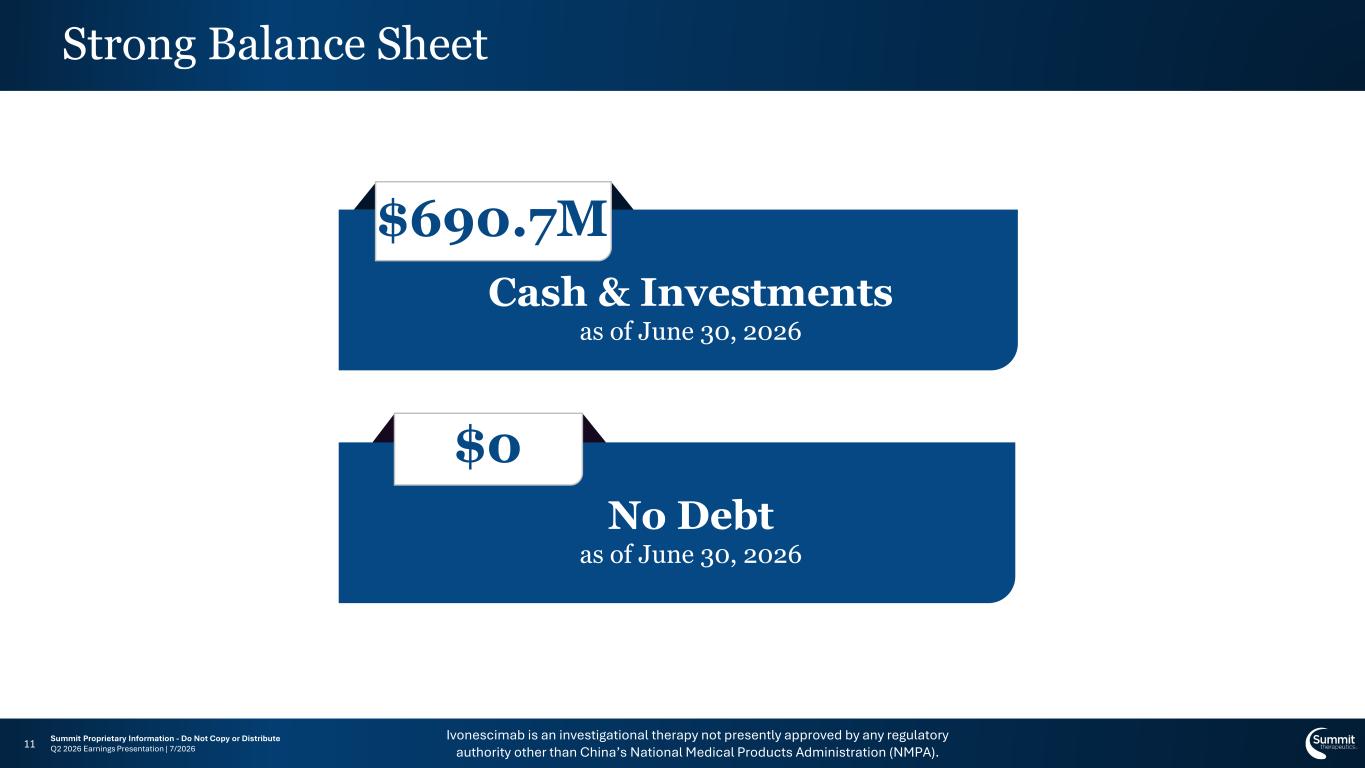
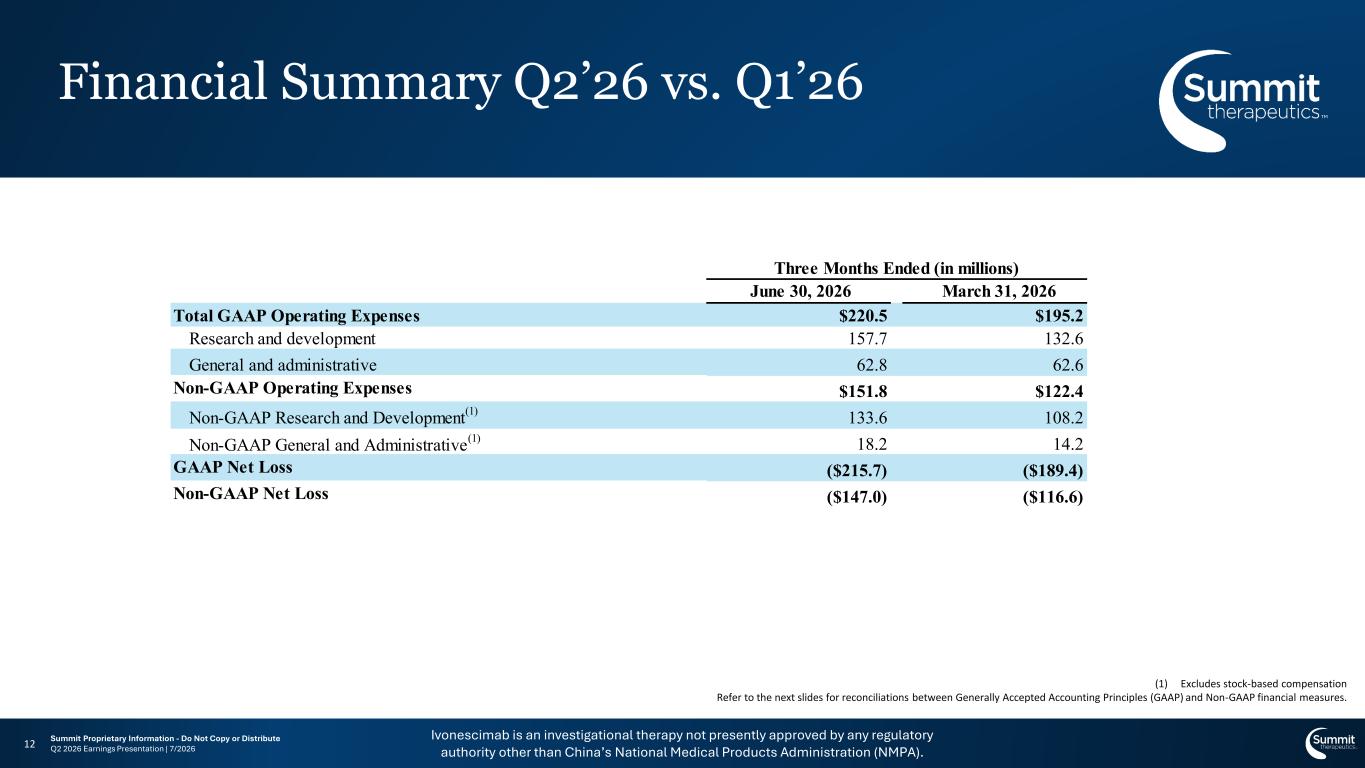
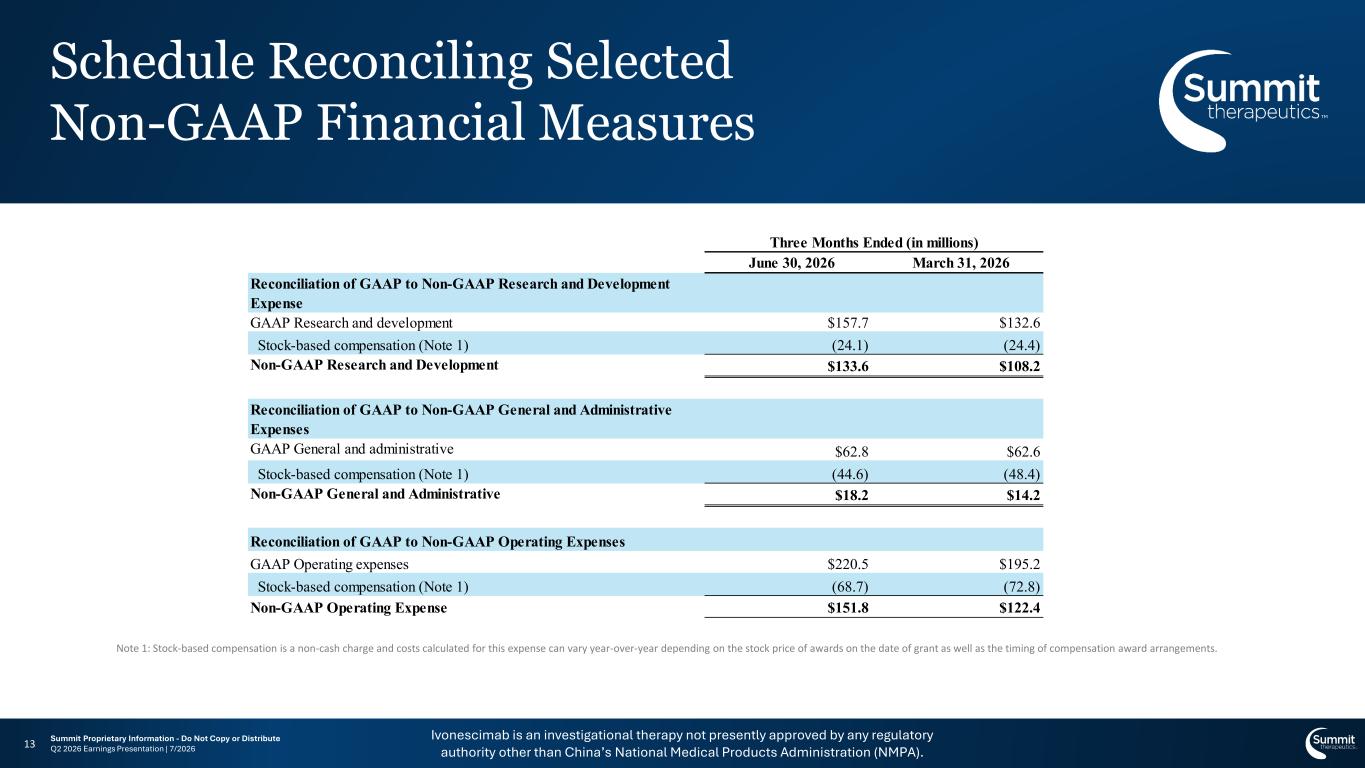
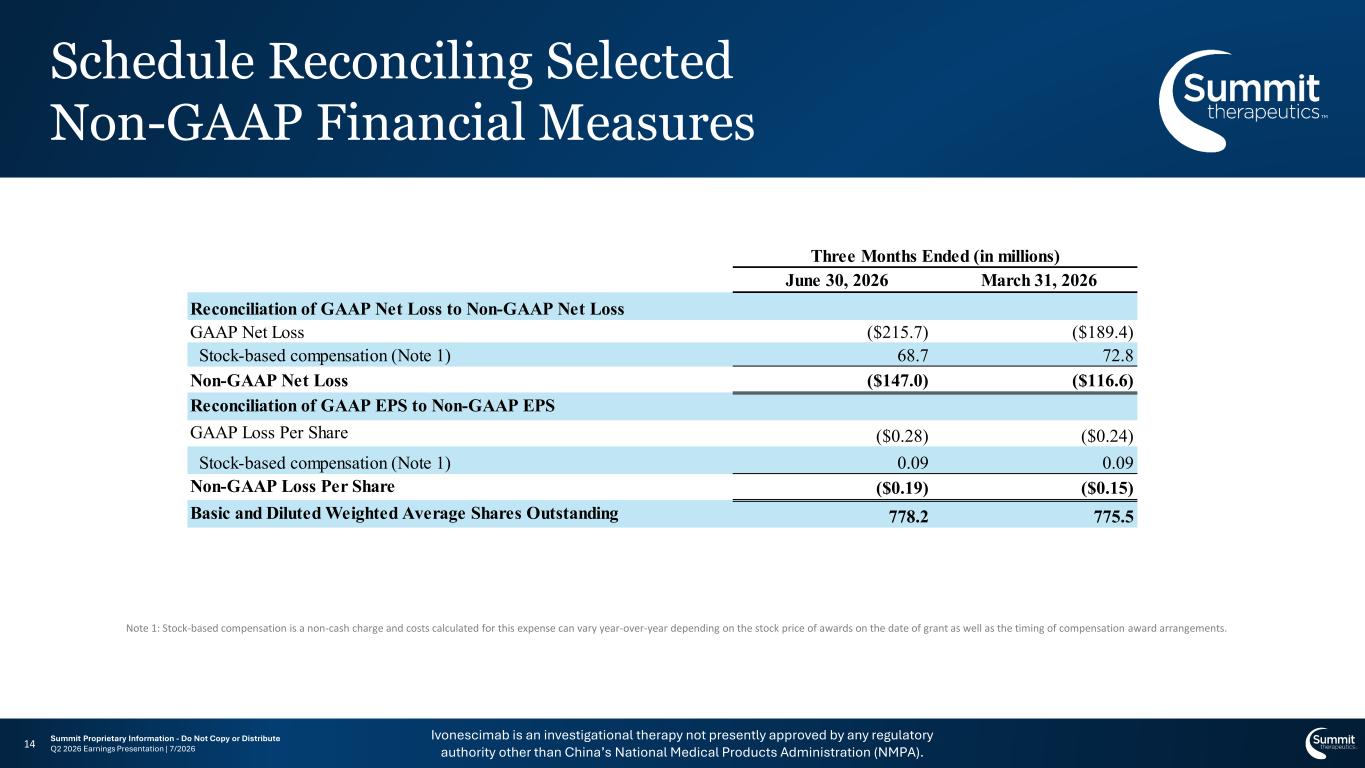
Thank you, Miki, and good afternoon, everyone. On the financial front, let me start with our cash position. We ended the second quarter of 2026 with a strong cash position of approximately $690.7 million as compared to $598.7 million at the end of first quarter of 2026. This increase of $92 million in cash position for the quarter is primarily due to to the $231 million cash raised from our ATM facility, offset by the cash used in our operating activities of approximately $140 million for the second quarter of 2026. Consistent with our financing strategy in the past, earlier today, we also filed a prospective supplement for a new ATM facility up to $380 million to provide us with additional flexibility for financing, both with respect to mechanism and timing. And finally, to remind everyone, currently we have no debt on our balance sheet. Turning to operating expenses, I will provide details on both GAAP and non-GAAP numbers. You can refer to our press release issued earlier today for a reconciliation of GAAP to non-GAAP financial measures. As a reminder, non-GAAP expenses exclude stock-based compensation expense. Total GAAP operating expenses for the second quarter of 2026 were $220.5 million compared to $195.2 million for the first quarter of 2026. The increase in GAAP operating expense was primarily due to an increase in our R&D expenses related to clinical trial expenses for Harmony GI-3, Harmony-3, and Harmony-7. Overall, our non-GAAP operating expenses during the second quarter of 2026 were $151.8 million compared to $122.4 million for the first quarter of 2026. This increase in non-GAAP operating expenses was primarily related to an increase in R&D expenses as previously mentioned. And with that, I will turn the call back over to Dave.
Dave? Thank you, Manmeet. We will now see if there are any questions. Operator, if you could please open the line for those questions.
Operator
We will now begin the question and answer session. Please limit yourself to one question and one follow-up. If you would like to ask a question, please press star one to raise your hand. To withdraw your question, press star one again. We ask that you pick up your handset when asking a question to allow for optimum sound quality. If you are muted locally, please remember to unmute your device. Please stand by while we compile the Q&A roster. Your first question is from Igal Luchamivitz with Citigroup. Go ahead.
Hi, great. Thank you very much for taking the questions. So very interesting, recent updated overall survival cut from the second line EGFR study. I'm wondering if you could speak to the translatability of that conclusion in terms of equivalents on OS across geographies when thinking about some of the other larger markets, specifically, of course, frontline non-small cell lung cancer. Could you talk about how you think those OS results could translate to those other settings, please? Thank you.
Sure. Thanks, Igal. I appreciate the question. This is Dave. So, I mean, I think in terms of takeaways and learnings, right, maturity in follow-up time is critical, in particular for ibanesimab is the next generation immunotherapy. And so as we think about the translatability, what we saw is with meaningful follow-up time, there was consistent magnitude of benefit of overall survival. And that's particularly important when we think about the difference between what we saw at the primary analysis in Harmony versus what we saw published yesterday. But then when we take that to the other frontline studies, we have an opportunity now to show a magnitude of benefit that is clinically meaningful in those studies as well with the appropriate follow-up time specifically for overall survival. And so if you recall, Harmony 6 had an overall survival median follow-up time of 21 months in its overall survival analysis. And then the recent data that we published yesterday for Harmony, the Western patients now have 23 months approximately of median follow-up time. And so as we look at what that means overall, it's important globally to have consistent follow-up time that's meaningful across both, so that not necessarily equal to each other, but meaningful for all regions.
And so we expect the ability to translate clinically meaningful results in China to clinically meaningful results across the globe with with meaningful follow-up time okay thanks and just one quick follow-up if i may on harmony three so can you provide any more granularity on the timing within the second half of this year for the final pfs and then with the early interim os look um is this going to be like a qualitative comment or are you going to be able to perhaps give a very early hazard ratio. If you could speak to that, please.
Yeah, absolutely. And so I think with respect to timing, as we enter the second half of 2017, we have a little bit of a clearer view on event rates and are providing more precise language with respect to expectations here for disclosures. So in general, event rates have slowed down a little bit. And so we still expect to reach the number of events needed for the PFS analysis in the second half of this year. But that timing is not next month, and it is going to be likely towards the middle to back end of 2026. And that's why we're a little bit more precise within the press release itself. With respect to the actual disclosure itself, I don't know that we have a specific disclosure plan set, But I think what we would expect is a directional trend from that data, but again, not necessarily a determined disclosure plan. But what we do expect is an ability to meaningfully take away the opportunity of what overall survival will show in this study. Again, recall the fact that with 22, 23 months of overall survival or follow-up time in an overall survival analysis, we've shown meaningful data in Harmony 6 in China, and then the global Harmony data, the Western patients with meaningful follow-up time showed that benefit. And so the follow-up time will be important there to get a full, clear picture. But we do expect to see an overall survival trend that is meaningful to us when we look at it later on. Great.
Thank you the next question comes from the line of tyler van buren with td cowan tyler your line is open please go ahead great thanks very much this is nick on for tyler um with the harmony 3 survival analysis the interim survival analysis in the first half of next year will we get an overall survival hazard ratio potentially at this point and if so what will be the median follow-up as we think about what the bar should be and how it could progress over time just like we saw with the western population in the harmony trial thanks yeah that's that's a fair question uh
nick and appreciate it i think with respect to uh the overall survival the additional overall survival uh interim analysis looked at in the first half of 2027 that gets closer to the median follow-up times that we saw with with the harmony 6 os analysis as well as the western patients that we disclosed yesterday. And so I think that piece in particular, when we look at, you know, the first half 2027, that's really the first analysis that is independent of any pre-planned PFS analysis. And so that's, you know, that's why it was important, we felt, to call that out specifically. And in McKee's prepared remarks, as well as our press release, that additional OS analysis. We use that first analysis that's not directly linked to a PFS analysis. But from a follow-up time perspective, we would expect that to be in the first half of 2027, the median follow-up to be consistent with what we saw for Harmony 6, as well as for the Harmony Western data that we talked about yesterday.
Operator
Your next question is from the line of Salvine Richter with Goldman Sachs. Your line is open. Please go ahead.
Thank you. Good afternoon. Just following up with the last questions, but as you, you know, just given the split of the study into separate squamous and non-squamous cohorts, and that enrollment was overall back-end loaded, how do we think about the level of follow-up in the context of the interim OS readout?
If statistical significance is not seen at the interim, in your view what level of of os benefit would support or trend here would support a statistically significant final os result yeah thanks alveen for the question i think so i want to just clarify a couple of points so when we look at so we'll hit the number of events or we expect to hit the number of events for pfs analysis uh sometime in the second half of this year that will be accompanied by a supporting os analysis um and that would be an interim and then in the first half of 2027 that would also be an interim os analysis so the final os as would be consistent with frontline studies would be a ways out but what i would expect that we see when we look at the analysis in the second half of this year would be one that supports the curve splitting for survival so a beginning look at overall survival that we would expect if we look and we compare when the curve split for Harmony 6, that's a good indication in terms of what we would be looking to see. But that'll be early, and that's really supportive of PFS. As we look at, you know, many trials when they run a primary PFS analysis have a supporting OS look. When we look in the first half of 2027, that now has median follow-up time consistent with what we saw, again, in the Harmony analysis for Western patients that we talked about yesterday. And so when we look at Harmony 3 Squamous in the first half of 2027, that's really a powered look at OS from an interim analysis perspective. So we're not going to give specific thresholds per se, because I think that it's a totality of what the curve looks like, number of events, maturity, so on and so forth. But that Q1, or first half, rather, 2027 look, that really would be that independent of PFS, that powered interim look at OS.
Operator
The next question is from the line of Brad Canino with Guggenheim. Your line is open. Please go ahead.
Thanks for the updates. The question for me is around the regional enrollment in H3. I'm wondering if that was done in parallel or if that was staggered because I'm thinking about this from the perspective of making sure the subgroups at an early interim OS analysis aren't skewed by, say, the North American patients coming in later than the China patients and not having time to see the effect like actually happen in the Harmony study. Thanks.
Thanks for the question, Brad. I think so. We've talked a little bit about the fact that the enrollment started together, generally speaking. But obviously, enrollment in China is more rapid than it is in Western countries. So there's certainly a little bit of data that you see that involves Chinese enrollment a little bit faster, which is typical of what you would see in many studies. I think when we look at the timing of the events, part of what we take away from the learnings from Harmony and whatnot is to make sure we have uh sufficient events that have taken place uh across the globe and so it's not sequential timing uh to the extent that that harmony is by any stretch but of course it becomes important to have sufficient events across uh the study with respect to those events and so that that's contemplated within our our approach plan and i'll let alan add some comments yeah i'm gonna Brad, this is our question, just commenting on some of the previous questions.
I just want to remind everyone that HARMI-III was our global study, so it was started globally at the same time. There are some differences. Certain regions open very quickly and enroll very quickly. Other areas, there's more administrative burden, like Europe, to get the ethics committee reviewed to open. So in the squamous study population, that is more prevalent in China. So you'll see more aggressive enrollment. However, I think people are asking about the non squamous cohorts. And remember, we added that cohort after the study was ongoing. So the sites were mostly open across the globe. And in addition, that disease is more prevalent in the West. It's probably two thirds of non-small cell lung cancer outside of China, whereas in China, it's the other way around with the squamous. And so, therefore, in Rome, it was actually very brisk in the West, and so we don't expect to see those differences.
Operator
Our next question is from the line of Mohit Bansal with Wells Fargo. Your line is open. Please go ahead.
Hi, this is Will Zeng on from Mohit Bansal. Thanks for taking our question. So just kind of following up on Harmony 3, I know you guys previously expanded the enrollment for the trial to include both squame and non-squame, but also the totality, the total size of the trial to push up some of these like PFS and OS analysis timelines. Just want to understand, how are you guys thinking about, one, kind of the risk of a higher proportion of these PFS and OS events coming from early progressors or early OS event patients? And then two, just how you're thinking about what the medium follow-up time will look like at the first half interim OS for Squain.
Yeah. So the last question, I think, is probably the easier of the two in the sense of when we get to the first half of 2027, we would expect median follow-up time, generally speaking, in the low 20s months, right? And so, as I was saying before, consistent generally with what we saw in the Harmony six OS analysis, as well as what we saw in terms of the Western follow-up for patients in the Harmony study. And so with respect to the first question on not being dominated by early progressives, part of that also includes the larger sample size takes that effect away. And so with a smaller sample size, you run more variability. And so you could be, you know, more dominated with, you know, unexpected answers, if you will, with respect to, you know, if you have a few more patients who progress early or pass away early, with a smaller sample size, you have a little bit more variability in what you see there. With a larger sample size, with what we see in squamous, unfortunately, those patients pass on a little bit earlier, so that doesn't require quite as large of a sample size. But for the squamous and non-squamous, we have what we believe is a sufficient sample size in order to be able to avoid any of that statistical noise and variability that you can see.
Yeah, and I would just add, unlike the keynote 024-042 studies, which were monotherapy I.O., this includes chemotherapy, so it should prevent early progression. The chemo will control the disease early in both cohorts and allow the I.O. to take it back.
Operator
Your next question is from the line of David Dye with UBS. Your line is open. Please go ahead.
Great. Thanks for taking my questions. So for the updated Harmony data that you presented yesterday, could you help us understand the maturity of the updated OS dataset relative to September 2005 analysis and whether the incremental fall meaningfully increased the number of OS events observed? We just want to get a sense of whether the investors really focus on the incremental improvement for HR from 0.78 to 0.76, or the fact the OS benefit remains stable despite a substantially longer rest-term follow-up?
Yeah. So, David, I think part of the... So, the main takeaway from the analysis yesterday, right, is that with meaningful follow-up in both regions, Asian and Western, you have a similar magnitude of benefit, right? And I think, you know, as everybody is well aware, the Harmony study was effectively enrolled first in China, a pause, and then enrolled in the West. And that was based on the timing of when we did the transaction to in-license Ivanesimab with our partners at Aqueso, right? And so that's a little bit driven based on the circumstances of timing of the transaction and what was already enrolled at the time. When we look at the study as a whole, EGFR mutation positive lung cancer is something, is a disease that is more prevalent in Asian patients. And so we would expect a higher proportion of patients to be enrolled in Asia, as is typical and has been run with the osimertinib studies, some of the amivantumab studies, so on and so forth. And so it's because of that, it's about 60% Asian and about 40% Western. And again, typical split with respect to that for EGFR mutation positive. So when we look at the global survival analysis overall, we saw pretty consistent results with the Harmony A study that was China only and the Harmony study, which was important because there was no, you know, clear detriment that was being seen from Western patients with very early, you know, follow-up time at the beginning. But as that follow-up time matured, what we saw is the Western patients really kind of merged in, you know, and saw the same magnitude of benefit with the Asian patients. So we saw across the whole study, we saw a consistent magnitude of benefit irrespective of when we looked at the data. And so we saw the 0.79, 0.78 in the, you know, follow up shortly thereafter the primary and then the 0.76 that was announced yesterday. So we're seeing that consistent magnitude of benefit. And what we see is when the Western subgroup has additional maturity and those patients progress along the Kaplan-Meier curve, if you will, they have the same magnitude of benefit. So I think our real takeaway is the importance of follow-up time, the importance of the maturity of the data, and that ultimately the consistency by which we saw the Western patients perform when they had meaningful time on study. And I think that was important.
Got it. Thanks. And then just want to follow up. So you stated yesterday that the the updated Harmony data was provided to the FDA. Can you just discuss whether the agency specifically requested this data and whether you have received any feedback regarding how the FDA used the more mature survival data so far?
Yeah, so the data itself is a recently performed analysis. So even though the data cutoff is in June, it still takes a little bit of time to clean the data and finalize before performing. So we've recently performed this analysis, and so we have not received, you know, meaningful feedback in the short time since we made this data available to the FDA. Ultimately, we believe this data is important in the context of the full story regarding the HARMONY trial and the potential benefit of ibanesimab in the EGFR mutation positive setting, and in particular, including those patients in the U.S., given the specific health authority in which we're seeking approval in the U.S.
Operator
Your next question is from the line of Rani Benjamin with Citizens. Your line is open. Please go ahead.
Hey, thanks, guys, for taking the questions, and congratulations on the progress. Maybe just starting off with the upcoming PDUFA date, do you think this filing with the updated OS could result in a major amendment and a potential pushing back of the PDUFA date? Or do you think likely this is going to progress as scheduled? And do you think that an ODAC panel could potentially be convened for this application? And then just as a follow-up, if we take a step back and just look at the landscape, I'm kind of curious as to how you guys are thinking about the competitive positioning given the amivantimab data, some emerging Trope 2 ADC data. Do you guys kind of feel that Ivan SMAB will be in this sandbox and kind of playing with everyone else? Is there certain competitive edges that could squeeze other players out? How are you thinking about it?
Yeah, thanks for the question, Ren. I think with respect to the PDUFA date, so this is a new analysis. And again, we recently submitted this analysis to the agency. So we don't have an expectation of the PDUFA date moving, but that's really a determination to be made by the agency. And so we fully defer, you know, that's ultimately their call should they decide that. But in the same holds true for any sort of advisory committee or ODAC as well. That's really exclusively an agency decision. With respect to where does Does ivanessimab fit in in terms of competitive landscape and whatnot? So I think as we look at the, you know, there's two agents right now that currently are, you know, have some level of approval with the FDA. So there's a full approval for amivantimab in combination with chemotherapy. And then there's as well as the datapodamab accelerated approval with respect to post TKI and post chemo, which is a little bit different than the indication that we're seeking as well as the indication that amivantamab in combination with chemo has. But look, I think from an efficacy perspective, as McKee had mentioned, no compound at this point has shown a statistically significant overall survival benefit. If we look at the efficacy profile overall with respect to what we saw from the Mariposa 2 trial from the amivantamab plus chemotherapy. We see, you know, their cross-trial comparisons, which is important, but, you know, generally consistent, you know, efficacy profile. I think we have what we've shown with over 4,000 patients dosed across, you know, several different settings of clinical studies. We've shown a manageable safety profile that's consistent, you know, generally speaking, irrespective of tumor type, irrespective of line of therapy, irrespective of histology. And we've received a lot of KOL feedback with respect to the manageability and the tolerability of ibanesimab. And I think that's really important here. Obviously, datapodumab comes with a chemotherapy component, if you will, with a payload. And so both all regimens, all three regimens have a cytotoxic component. And so I think the, you know, overall it becomes, you know, there's also, the other thing that's really important, there's also patients who will respond to different mechanisms. And all three of these agents, the two that are, you know, approved, either accelerated or fully, and then the potential for the approval for ibanesimab would be three different components. And I think that provides physicians and patients with opportunities to mechanistically work differently from each other. So a patient may respond to one and not the other. And that's, that choice is a good thing for physicians treating patients and for patients themselves. And I think that's something that really differentiates this as opposed to maybe coming in with the same mechanism of action that we see in other spaces sometimes. Great. Thanks for taking the questions.
Operator
Our next question is from Schmidt. Eric Schmidt from Candle. Your line is open. Please go ahead.
Thank you for taking my question.
Just coming back to Harmony 3, I think this is the first time we're hearing about two interim analyses just want to confirm that that's always been the game plan even if you haven't talked about it and that you're spending alpha on all three of these looks so eric what i'd say is we've talked about you know inter we've talked about os analyses plural um you know multiple times i don't know if we've given the timing of the the first half 2027 before And so I think part of, you know, as we look, we want to make sure, you know, we're transparent with respect to, you know, when the opportunities exist for, you know, results of different periods of time. And obviously, we look at the OS analysis coming up. We look at follow-up time, what we've learned from Harmony, Harmony 6, and so on and so forth. And so with that follow-up time being important, we wanted to make sure that was highlighted for everyone.
There's alpha spent on all three days? yeah they're they're formal analyses that's right and one thing we didn't hear much about was your pre-commercial preparation in advance of the um november 14th and due for date for harmony is that is that tracking as expected are you hiring uh field force or uh medical science liaisons how's that how's that going thank you yeah hey eric this is about me and as mickey mentioned in her prepared remarks right we are extensively right preparing for commercial launch with the anticipated Purdue parade of November 14th.
We have already hired all the leadership team with extensive experience with both Biotechs and Pharma who have multiple launch experiences. We have MarketX's team in place. We have marketing folks in place. Obviously, that's what you're talking about, the field force. That generally comes a few weeks before the Purdue parade.
But yes, we have all the planning and all the work under play. and I would just add on to thank you with me yeah I'd agree with everything my need said and then I also you asked specifically about MSLs as well which we have ramped up in support of each of the things that we highlighted thank you David yeah you already ramped up themselves thanks guys your next question is from the line of Dara Azar from Stiefel your line is open please Hi, congrats on all the progress.
You have a question on alpha spending and its potential impact on Harmony 3, Squamous, OS. I'm curious, what gives you confidence that you can afford the alpha for another look at OS in Harmony 3, Squamous next year as well? And would the also be passed to the next analysis if the first look is positive? And a quick follow-up, is there any connection between tracking death events and the decision to add another look at the Alaska Squamous next year? Thanks so much.
Yeah, so a couple of points there, Dara. I think on the last point, we've had this look in the first half of 27. I mean, the timing, you don't necessarily always know the timing. It's event driven, but the analysis has been there. And so the alpha spend with respect to the primary PFS look is pretty minimal specifically because it's really intended to be supportive of the PFS analysis. So in the events reached in the second half of this year is really intended to, you know, be the primary PFS look. And then there's a supportive look at OS, but that alpha spend is minimal. And so there's not a lot of concern with respect to, you know, if you will, quote unquote, the amount spent just based on maturity of OS at that time, it becomes pretty minimal. And so that gives an opportunity for, you know, two full looks, if you will, thereafter. And so no real change in plan from that perspective. um and so it's not like you know tracking death events i think was the example that you gave that that's really been the plan uh throughout but um you know as we look at the maturity timelines you know the first half of 2027 is a key focal point with respect to reaching that you know median follow-up is is a proxy uh that we've seen in both the harmony western patients where we showed that you know, positive, you know, trending data yesterday and being more converged with the ITT in the Asian population, as well as the timing of the Harmony 6 OS analysis as well.
Operator
Your next question is from the line of Faisal Kersid with Jeffries. Your line is now open. Please go ahead.
Hey, guys. Thank you for getting the question. I wanted to actually go back to the Harmony 3 interim PFS analysis that passed, could you contextualize for us what was the alpha spend in that interim? And many investors have kind of interpreted missing that interim as suggesting that Harmony 3 is tracking worse than Harmony 6. Is that a correct take and why or why not?
Thanks, Faisal. I think I'd probably say a couple of things to effectively answer the questions that you're asking, which is the threshold to achieve statistical significance at the interim was meaningfully higher than that of what is needed for the final analysis. As well, as we continue to see, follow-up time is very important with Ivan SMF. And so that is certainly, you know, I think as we talked about last time, the timing of that analysis was shortly after, you know, as we looked at the completion of enrollment. So, we effectively announced completion of enrollment to then, you know, right into that interim analysis. And so, not a lot of follow-up time for many patients on that study. And so, those are two reasons why I don't think it's necessarily the right way to look at it with respect to different from Harmony 6 one way or the other. But it's important also that was that analysis was performed by the independent data monitoring committee. And so we remain fully blinded to that data. So that's not something that we have hazard ratios and additional data for. And so but we, you know, we're confidently going into the second half of this year, and we've continued to learn more each time we have conducted analyses with respect to Ivan Esmab and continue to, you know, increase that confidence. And I think that, yeah, the only thing I'd add on top of that, Faisal, obviously, as you look at the Western subgroup that we published yesterday, you see, you know, with additional follow-up time, you know, you see a pretty meaningful movement of the Western subgroups is a proxy here for follow-up time.
Speaker 13
I'm not, let's talk about western patients and more of a proxy for follow-up time but with that additional follow-up time you do see movement there which is important understood thank you your next question is from the line of kristen carter with piper sadler your line is now open please go ahead hi this is kristen on for kelsey um i believe you mentioned a little bit about what you've heard from kols could you expand on what they're saying uh post asco for harmony six please Thank you.
Yeah, I think the KOLs for Harmony 6 were very positive on the data, and I think some of the feedback I heard is that, you know, it's very encouraging. A 34% reduction in the risk of death is amazing over a PD-1. I mean, this is really phenomenal data. I think some of the feedback we got was, you know, that the discussant who wasn't very positive on the data sort of missed the point of the study, right? We understood fully, the ASCO committee understood fully that it was a regional study, but very exciting and intriguing data. There wasn't any discussion, the fact that we would have confirmatory or global data within the end of the year, less than six months away. And then the other thing is that there were other studies, three other studies supporting the observation that was seen there. And in addition, there was some discussion about age effect. In any of those other three studies, there was no difference by age group. In addition, the previous presentation of the Harmony 6 data, which only had the TFS, there was an explanation of the age based on covariance. And finally, the most exciting thing about this agent is that it seems to be active in diseases that weren't traditionally active for PD-1s, like microsatellite-stable colorectal cancer. None of these things were highlighted in this, but this was brought up a lot by a lot of the KOLs after them.
Speaker 13
Great. Thank you so much. Congratulations again.
Operator
We have reached the end of the question and answer session. I will now turn the call back to Dave for closing remarks. Please go ahead.
Thanks very much. And I think I will hand it over directly to Bob.
Hi. Thanks, Dave. It's good to hear from our shareholders and fellow stakeholders. You know, over the years, from nothing, I've raised over a billion dollars of after-tax money in support of healthcare companies, whether they be drugs or medical devices. And it's been fun coming up with a vision and putting a team together for execution and watching the companies proceed. We know that Avanesimab works. So the question I'll leave you with is, what if Avanesimab works really well? have a good day.
Operator
This concludes today's call. Thank you for attending. You may now disconnect.