Operator
Good day, everyone, and welcome to the CYNDEC Second Quarter 2026 Earnings Conference Call. Today's call is being recorded. If you'd like to ask a question following the company's prepared remarks, please press star 5 on the call. At this time, I would like to turn the call over to Sherry Clary, Head of Investor Relations at CYNDEC Pharmaceuticals.
Great. Thank you, Operator. Welcome, and thank you all for joining us today for a review of CYNDEC's Second Quarter 2026 Financial and Operating Results. I'm Sharon Clary, and with me this afternoon to provide an update on the company's progress and discuss financial results are Michael Metzger, Chief Executive Officer, Steve Kloster, Chief Commercial Officer, Dr. Nick Botwood, Head of R&D and Chief Medical Officer, and Keith Goldant, Chief Financial Officer. This call is accompanied by a slide deck that has been posted on the Investor page of the company's website. You can now turn to our forward-looking statements on slide two. before we begin i'd like to remind you that any statements made during this call that are not historical are considered to be forward-looking statements within the meaning of the private securities litigation reform act of 1995. actual results may differ materially from those indicated by these statements as a result of various important factors including those discussed in the risk factor section in the company's most recent quarterly report on form 10q as well as other reports filed with the SEC. Any forward-looking statements made represent our views as of today, August 4, 2026, only. A replay of this call will be available on the company's website, www.syndax.com, following its completion. And with that, I'm pleased to turn the call over to Michael Mesker, Chief Executive Officer of Syndax.
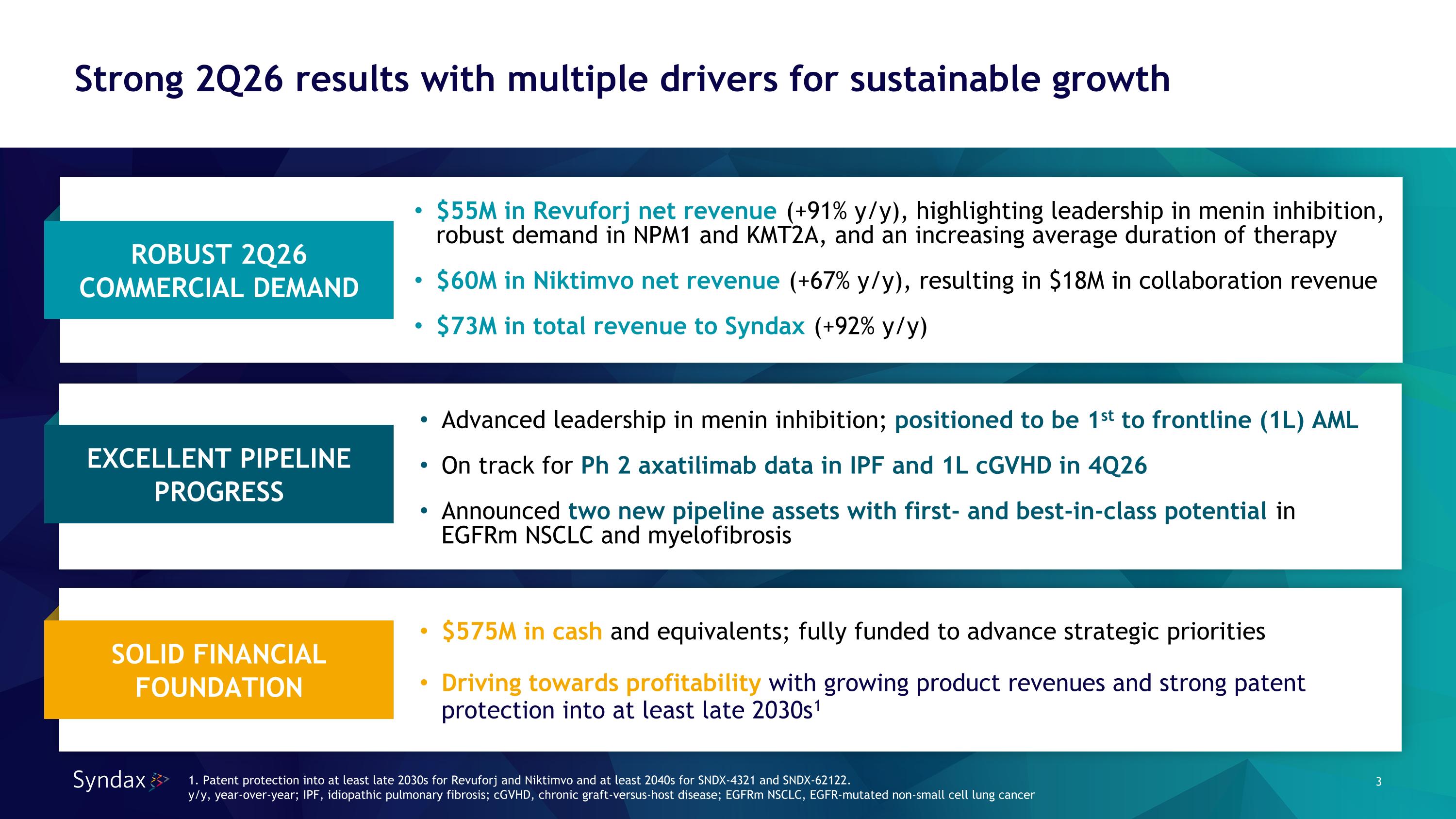
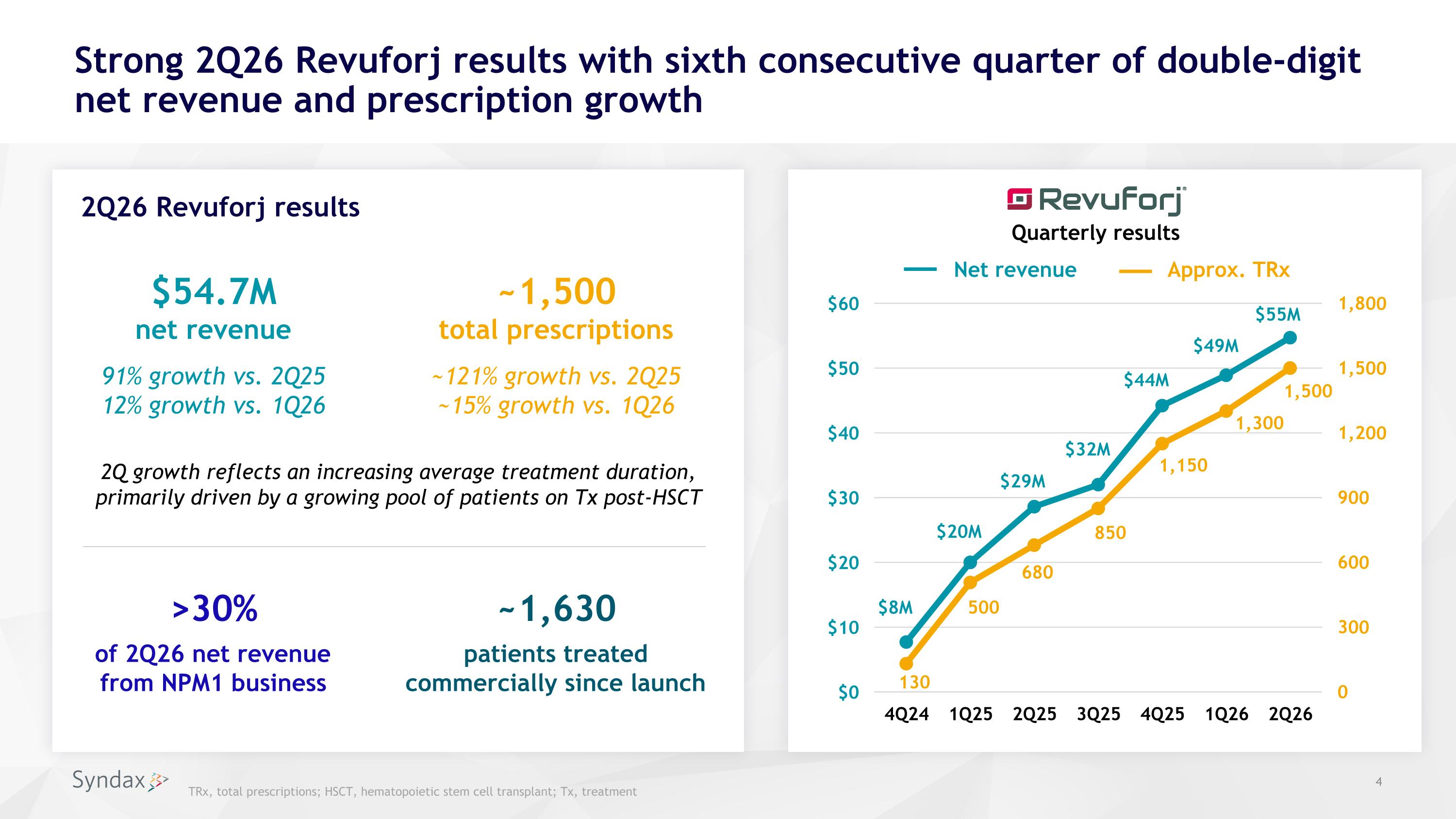
Thank you, Sharon. Good afternoon, everyone, and thank you for joining us, starting with slide three. The Syndax team delivered another quarter of solid commercial results and progress across our growing pipeline of programs, targeting areas of high unmet need and substantial commercial opportunity. The business fundamentals are strong. Sales of Revue Forge and Nictimbo grew to a combined total of $115 million in the second quarter. Both medicines are now annualizing at well over $200 million each, and we have just started to unlock their multi-billion dollar potential. Revenue Forge continued to grow by double digits, with net revenue totaling $55 million in the second quarter, up 91% year-over-year and 12% quarter-over-quarter. These results highlight our continued leadership in men in inhibition, robust demand in both NPM1 and KMT2A, and the positive impact of an increasing average treatment duration driven by multiple factors, including a growing number of patients on therapy for an extended period after receiving a stem cell transplant. As the number of patients on therapy post-transplant continues to stack, this reoccurring base will be an important driver of long-term compounding growth. Encouragingly, the average duration of treatment is also increasing among patients who are not proceeding to a transplant. As Stiebel described shortly, the positive impact of an extending average treatment duration, which was partially offset this quarter by fluctuation in the number of new patients initiating therapy, one of several drivers of our business. Today, we are even more confident in the forward trajectory and substantial commercial opportunity with Revy Forge. Our conviction is underpinned by the multiple drivers for continued growth, including a best-in-class profile valued by physicians, an increasing average duration of therapy, a broad and expanding prescriber base, and ample opportunity in NPM1, KMP2A, and other MENIN-dependent acute leukemias. We are well positioned to extend our leadership in MENIN inhibition into the future and continue driving innovation for patients. Building on a long history of landmark firsts, we are positioned to be first to frontline AML, driven by strong global site initiation and patient enrollment in our pivotal trials. With future anticipated indications in frontline AML, we expect that RevuForge could reach in excess of $2 billion in peak annual net revenue in the U.S. alone. We have another data-rich period ahead for RevuMenit. In the second half of the year, we will report additional practice-informing evidence for multiple trials at major medical meetings, expanding on the prominent presence we had at ASCO and EHA in June. We also expect to publish data in relapse refractory NUC-98 rearranged acute leukemia in the fourth quarter. These results could inform clinical practice and guidelines in a patient population similarly sized to KMT2A. Patients with NUC-98 urgently need new treatment options, including therapies that may reduce the risk of relapse after transplant, as is the case with KMT2A. Physician feedback indicates that NUC-98 rearrangements are more common than once thought, occurring in perhaps 5% or more of AML cases, translating into potentially 1,000 to 2,000 pediatric and adult patients with NUC-98 annually. As the first and only company to report clinical data showing activity with a menin inhibitor in this subtype, we have a unique opportunity to pursue a guideline listing that could meaningfully expand the patient population treated with ReviMene. Switching gears to NICTIMBO and chronic GVHD, NICTIMBO net revenue grew to $60 million in the second quarter, up 67% year over year. This performance reflects robust demand in NICTIMBO's unique ability to address inflammation and fibrosis. McTempo is positioned for further growth with strong adoption in the fourth line and increasing uptake in the third line, driven by a broad base of prescribers who are enthusiastic about the results they've seen in their patients. We also have multiple expansion opportunities and important upcoming catalysts for axitilumab with phase two data in IPF and frontline chronic GVHD expected in the fourth quarter, poised to unlock new multi-billion dollar opportunities. Turning to our pipeline assets, at our R&D event last month, we unveiled two innovative assets we are advancing into the clinic, leveraging our world-class R&D capabilities and experience taking Revumetib and Axetilumab from IND to FDA approval in about five years. SNDX-4321 is a novel mutant-selective CNS-penetrant allosteric EGFR inhibitor for non-small cell lung cancer that offers a new approach to addressing patient populations with high unmet medical needs, such as those with L858R mutations and CNS metastases. SNDX-62122 is a next-generation MEN inhibitor we are developing for myelofibrosis, or MF, building on our extensive experience pioneering menin inhibition and hematology. It is the first molecule from our internally developed and wholly-owned library of next-generation menin inhibitors, which we intend to advance into promising new areas. We are entering into another exciting chapter for the company as we build Reviforge and Nicktimbo into major commercial franchises and leverage our proven R&D engine to bring new treatment options to even more patients. We are fully funded to execute on our commercial and R&D priorities and continue to advance towards profitability with growing revenue from the first two medicines from our pipeline. I'll now turn the call over to Steve to discuss our commercial results in more detail.
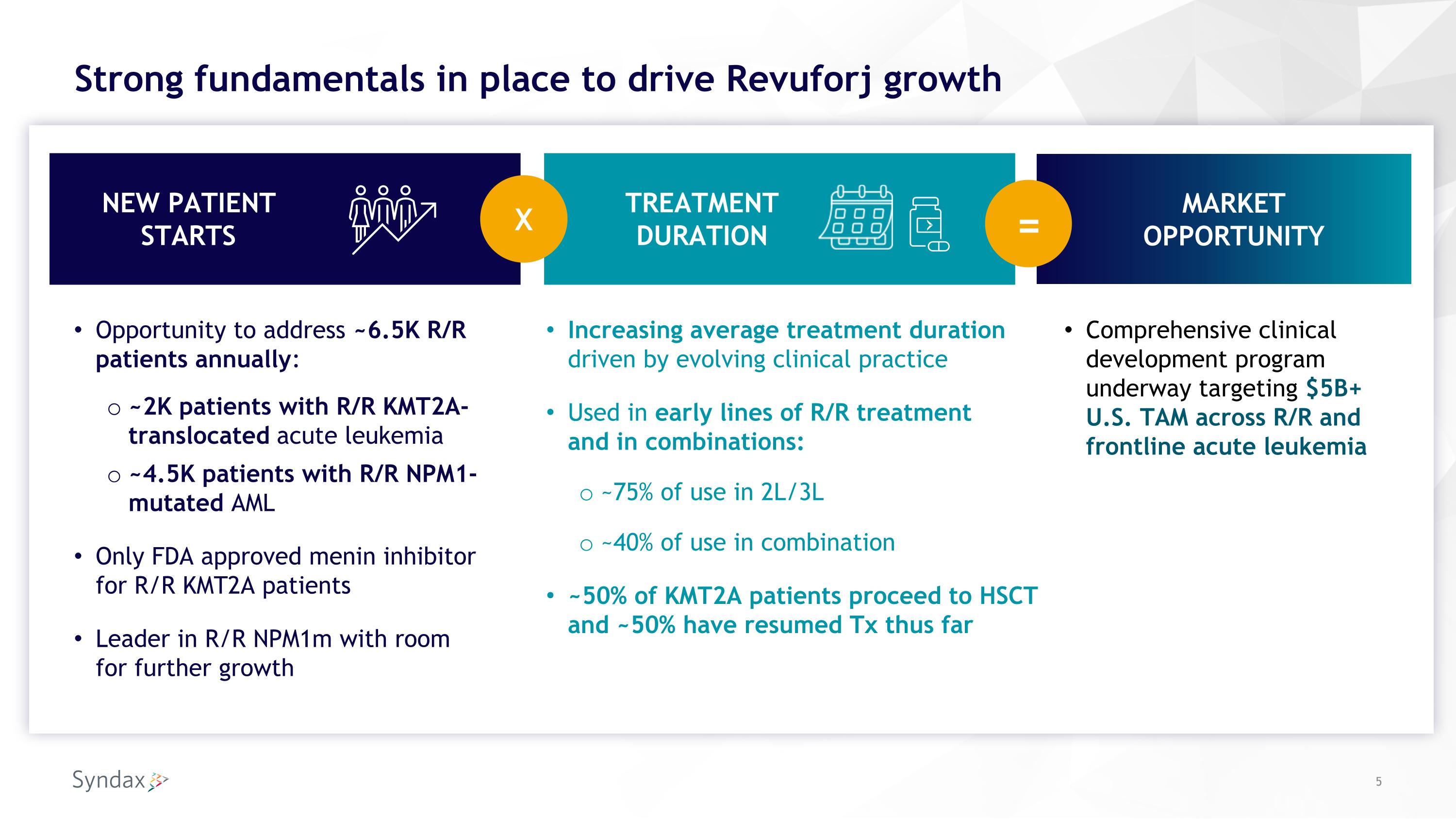
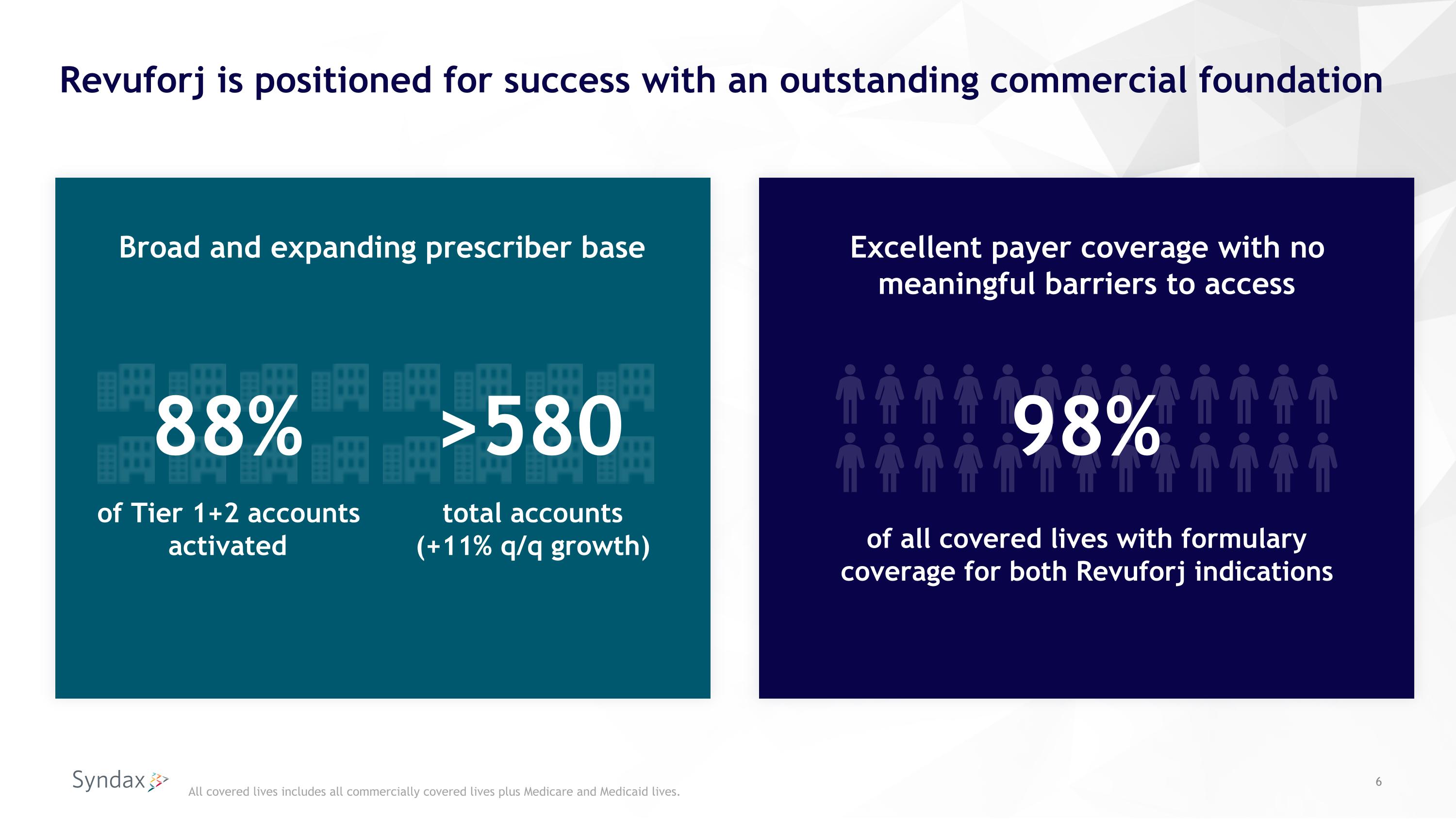
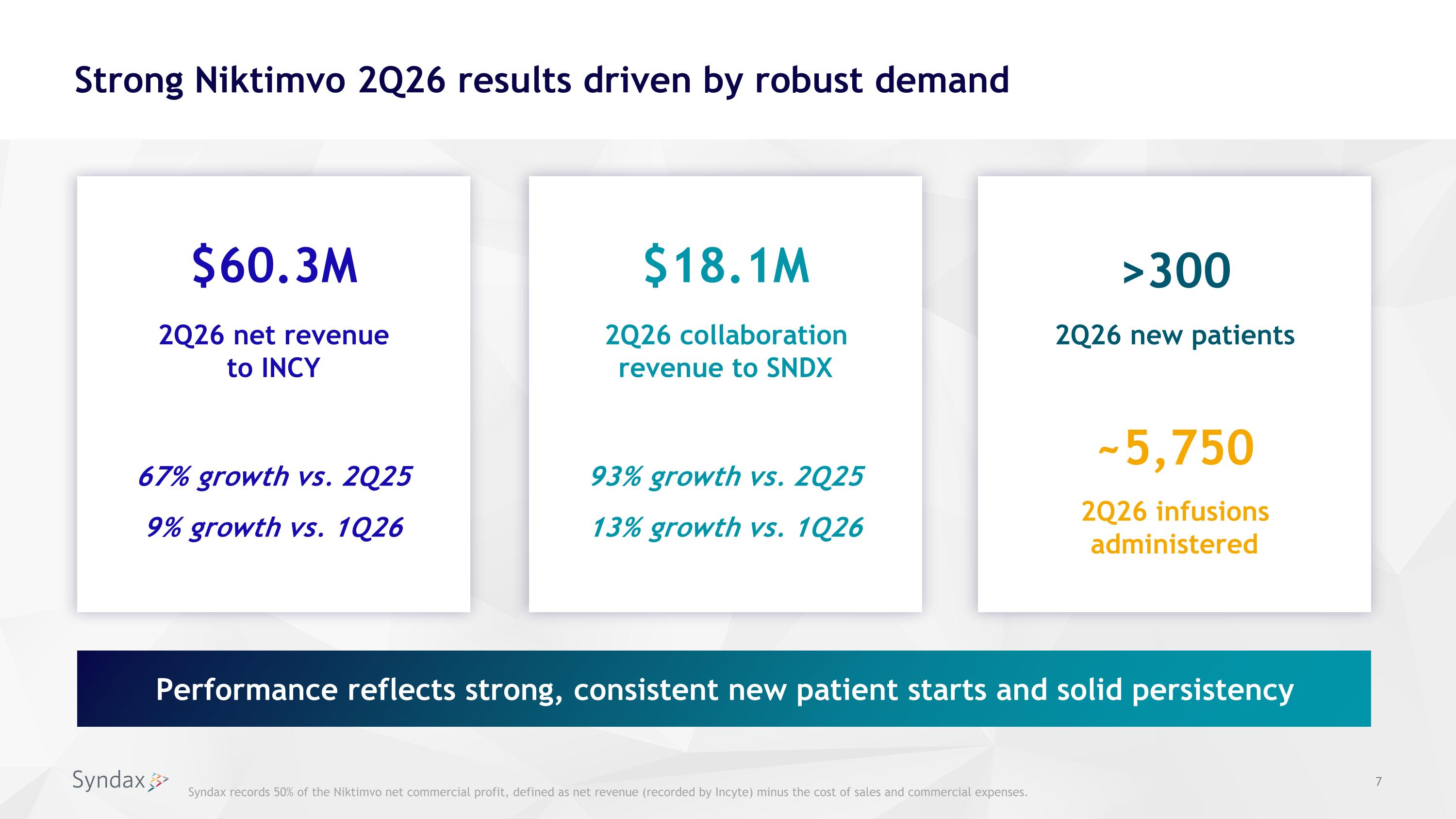
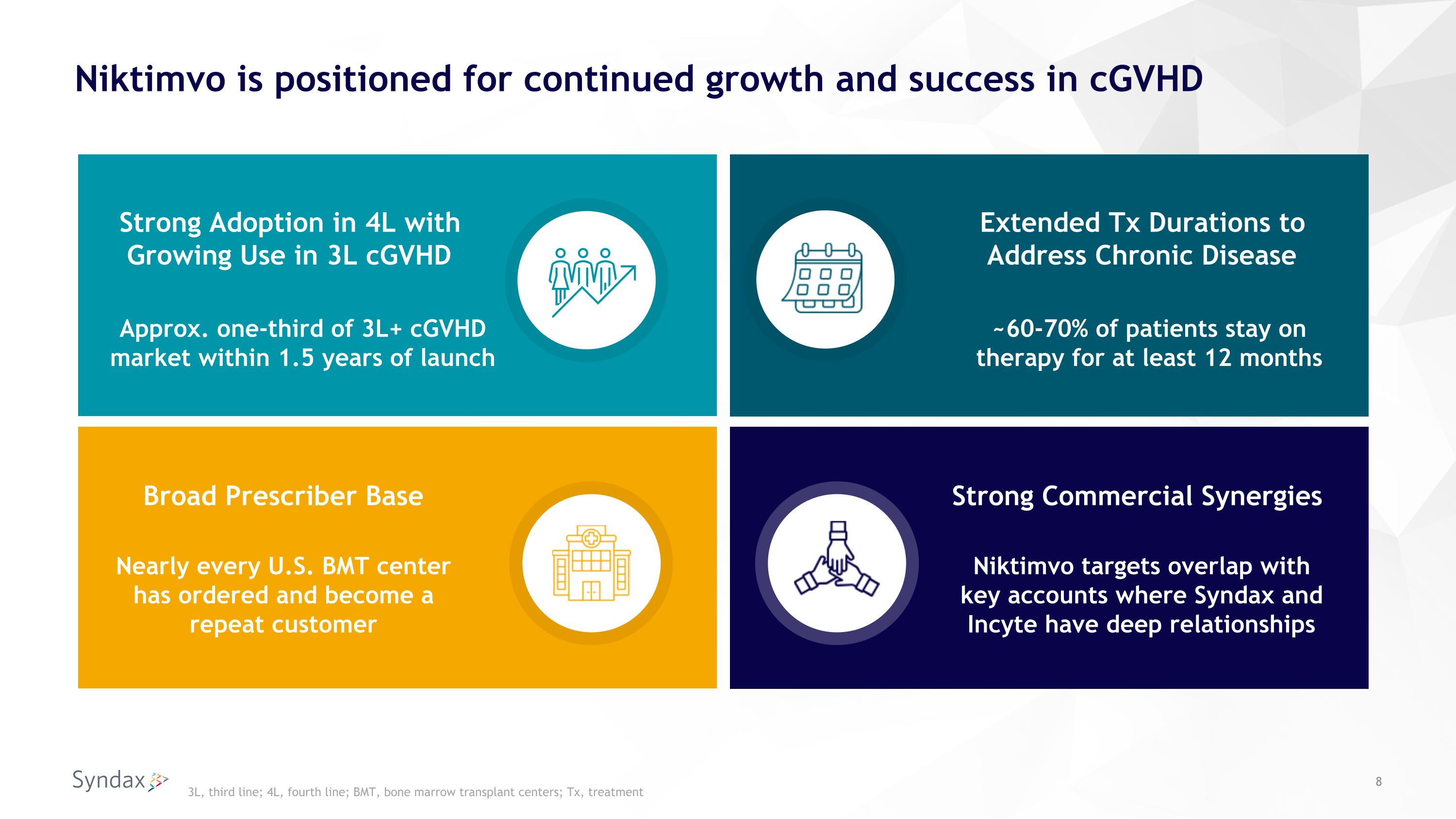
Thank you, Michael. Starting with ReviForge on slide four. We delivered our sixth consecutive quarter of double-digit RebuForge net revenue and prescription growth and continue to track well-above launch benchmarks set by other mutation-directed AML therapies. Net revenue totaled $55 million, up 12% from the prior quarter. Total prescriptions were approximately 1,500, up 15% from the prior quarter. These results reflect robust demand and an increasing average duration of therapy, one of several important drivers of our business. We have dominant share of the overall men in business today, having treated over 1,600 patients commercially since launch, including 250 new patients added in the second quarter. We saw some fluctuation in new patient starts in Q2 relative to prior quarters, reflecting typical variation quarter to quarter in the number of available patients with a rare disease and market dynamics when physicians have more than one drug and class they can consider using depending on the patient's mutational profile. To ensure we leave no appropriate patient behind, we have optimized our established customer footprint and targeting, expanded our ability to leverage lab data to engage physicians when they have a suitable patient in their care, and increased our promotional efforts and educational activities. We remain confident we will continue to lead this market with the strongest efficacy profile in an efficacy-driven market, and multiple drivers supporting long-term growth. Our business in KMT2A and NPM1 is strong, and it is growing. Revy Forge is the standard of care for relapsed refractory KMT2A, translocated acute leukemia, and remains the only targeted therapy for an aggressive cancer with no other effective treatment options. We continue to expand into our second indication with NPM1, accounting for at least 40% of new patients in the second quarter and more than 30% of the $55 million in net revenue. All indicators suggest Revuforge will continue to be the Menin inhibitor of choice for all Menin-dependent acute leukemias. Physicians value having one efficacious and well-tolerated drug they can use across multiple acute leukemia subtypes in both adults as well as children. They appreciate that the efficacy they see with RebuForge in the real world is consistent with, or in fact, even better than the clinical trial results. They value individualized dosing, not having to worry about reduced efficacy when their patients are taking commonly prescribed gastric acid-reducing agents like PPIs and H2 blockers, and the lack of any clinically meaningful puritis, an adverse event that can be impactful for patients and very difficult for clinicians to manage. this combination of efficacy tolerability and dosing flexibility is why reviforge is and will remain the drug of choice for physicians turning to slide five there are two fundamental drivers of our business new patients and average treatment duration and both are built unique breadth of our indication provides us with the opportunity to target approximately 2 000 patients diagnosed dose annually with the relapse refractory KNT2A translocated acute leukemia, plus 4,500 with relapse refractory MPM1 mutated AML. And we've made excellent progress reaching this population with more than 600 patients treated with commercial drug since launching in KNT2A in the fourth quarter of 2024 and MPM1 in the fourth quarter of last year. Importantly, there's still plenty of room to reach more patients each quarter. For instance, of the annual 4,500 relapse refractory MPM-1 patients, we estimate that less than 15% have received a menin inhibitor, highlighting the substantial opportunity for further growth. Compared to KMT2A, where we saw a steep uptake curve due to the lack of other approved or impactful therapies, we expect our MPM-1 business will build over time due to other options that physicians may consider for this population, depending on their commutations or other factors. The second fundamental driver is average treatment duration, which is increasing due to evolving clinical practice and a product profile that is conducive to patients staying on therapy for extended periods of time. Physicians are reaching for RevuForge early in the relapse refractory treatment paradigm and are often choosing to use it in combination with other therapies with the goal of driving responses and extending the duration of effect. Claims data shows 75% of use in the second and third line, and approximately 40% of use in combination. Encouragingly, a significant proportion of patients are proceeding to stem cell transplant after receiving Revuforge, which is the goal in the relapsed refractory setting for both KMT2A and MPM1 patients who are fit enough to receive a transplant. We continue to observe approximately 50% of KMT2A patients proceeding to transplant. About 50% of those patients have resumed therapy thus far after pausing for three to six months, up from an estimated 45% last quarter. We expect this percentage will continue to increase as our colleagues in medical affairs report additional evidence from the post-transplant setting in collaboration with leading treatment centers, building on the encouraging data MD Anderson presented at ASCO and EHA this past June. Over time, we expect that up to 70% to 80% of transplant patients will ultimately return to therapy for one to two years based on these back from physicians and clinical trial and real-world experience. These evolving treatment patterns are increasing the average treatment duration, especially the growing number of patients on therapy post-transplant. This group is already averaging at least nine months of therapy, with this duration expected to steadily increase as we continue to follow patients over time. Among patients who do not receive a transplant, over half are still staying on therapy for a significant period, with an average treatment duration that is already over seven months and building. With a significant addressable patient population and an increasing average treatment duration, we are confident in our ability to build a sustainable business with our first two indications for ready-forged. Moving to slide six. We have a solid commercial foundation in place to support the success of RevuForge, including a highly accomplished team with deep and strong customer relationships. Our already robust prescriber base has continued to expand quarter over quarter, including our activation of Tier 1 and Tier 2 accounts, the highest volume centers in the U.S., which treat two-thirds of our target population. Nearly 90% of these accounts have ordered, up from 70% prior to the approval of RevuForge in NPM1. Overall, more than 580 accounts have ordered RevuForge, up 11% from the prior quarter, reflecting growing adoption from centers of all sizes, including community practices. Our growing prescriber base reflects physicians' enthusiasm for RevuForge and positions us to drive further penetration for both indications. We have excellent payer coverage, and physicians can access the men and inhibitor they prefer. As of the end of Q2, Revy Forge's formulary coverage was 98% of all covered lives for both indications, a coverage position that leads the class. In addition to having nearly 100% formulary coverage, Revy Forge has preferential coverage on plans representing 17% of all covered lives versus less than 2% of lives for the other Vennon inhibitor. Turning to Nictimbo on slide 7. Nictimbo net revenue totaled $60 million in the second quarter, up 67% year-over-year, and 9% quarter-over-quarter. This result reflects strong and consistent new patient starts and solid persistency. More than 300 new patients were added, and about 5,750 infusions were administered in the second quarter. Nictimbo is annualizing at $240 million and continues to track with the launch of Reserock, a drug that reached $500 million in annual U.S. net sales within the first four years of launch in the same indication. Moving to slide eight. The fundamentals of our Nictimbo business are strong with multiple drivers for continued growth. The first is continued adoption in the fourth line and steadily increasing uptake in the third line as clinicians gain experience with Nictimbo. Within one and a half years of launch, NICTEMVO has captured approximately one-third of the third-line-plus chronic GVHD market. As the patient mix shifts more towards patients with less advanced disease, we expect this will extend the average treatment duration. This is a chronic disease with the potential for patients to stay on therapy for long periods. We've observed solid persistency in a commercial setting, with 60 to 70 percent of patients staying on NICTEMVO for at least 12 months. Our clinical trial experience suggests the duration of therapy could be measured in years for a meaningful proportion of patients. Our Nictimbo business benefits from a broad and productive prescriber base and commercial synergies for both Symbax and Insight. Nearly every bone marrow transplant center in the U.S. has prescribed Nictimbo and become a repeat customer. Physicians continue to report impressive activity in multiple organs with particularly notable responses in the lungs and skin, some of the most difficult to treat organs. All these drivers position us to expand our impact in third-line-plus chronic GVHD, a $2 billion U.S. market opportunity. Looking ahead, the ongoing trials in frontline chronic GVHD and IPF could unlock additional multi-billion-dollar opportunities. With that, I'll hand the call over to Nick to talk about our development programs. Thank you, Steve.
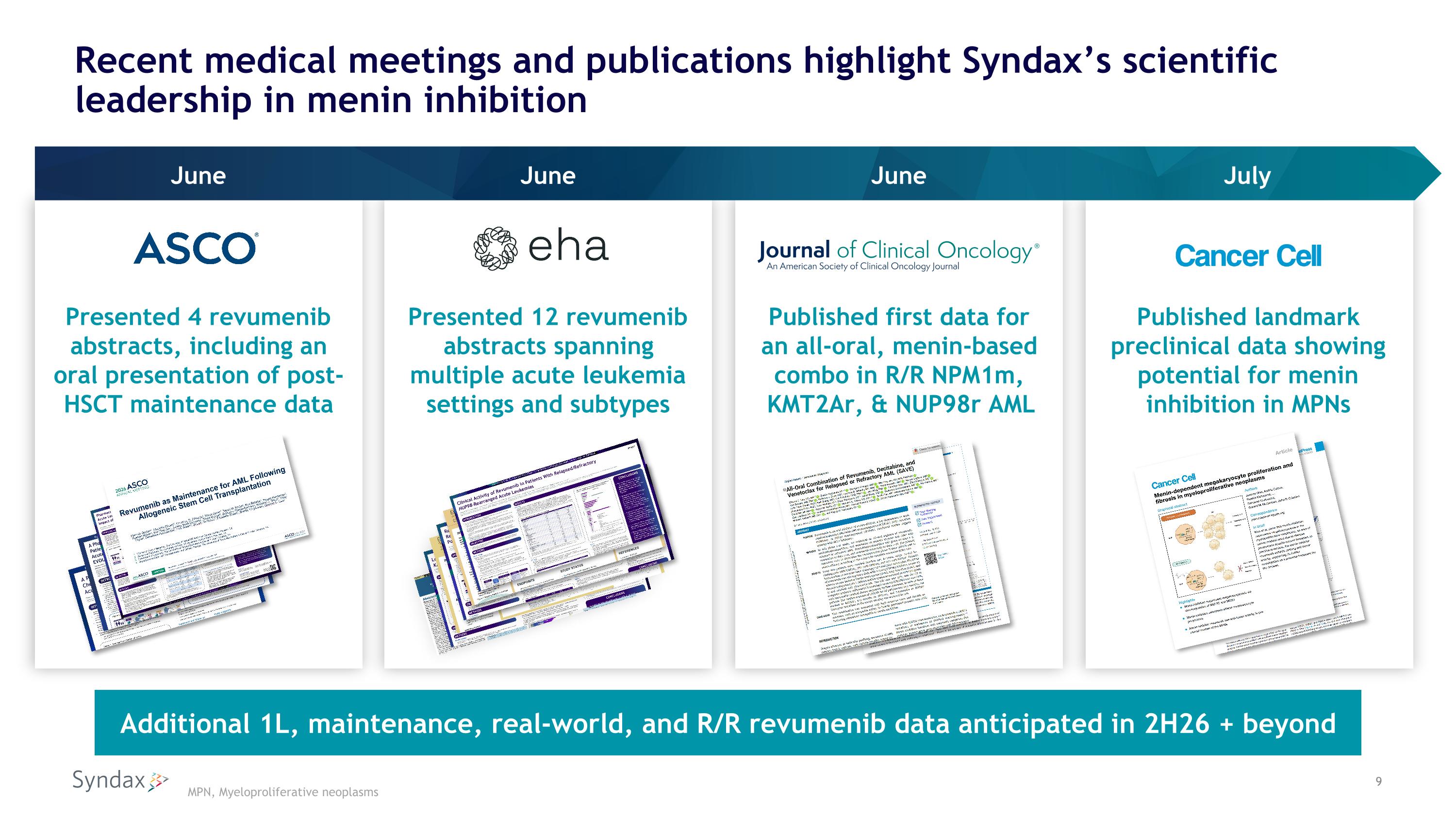
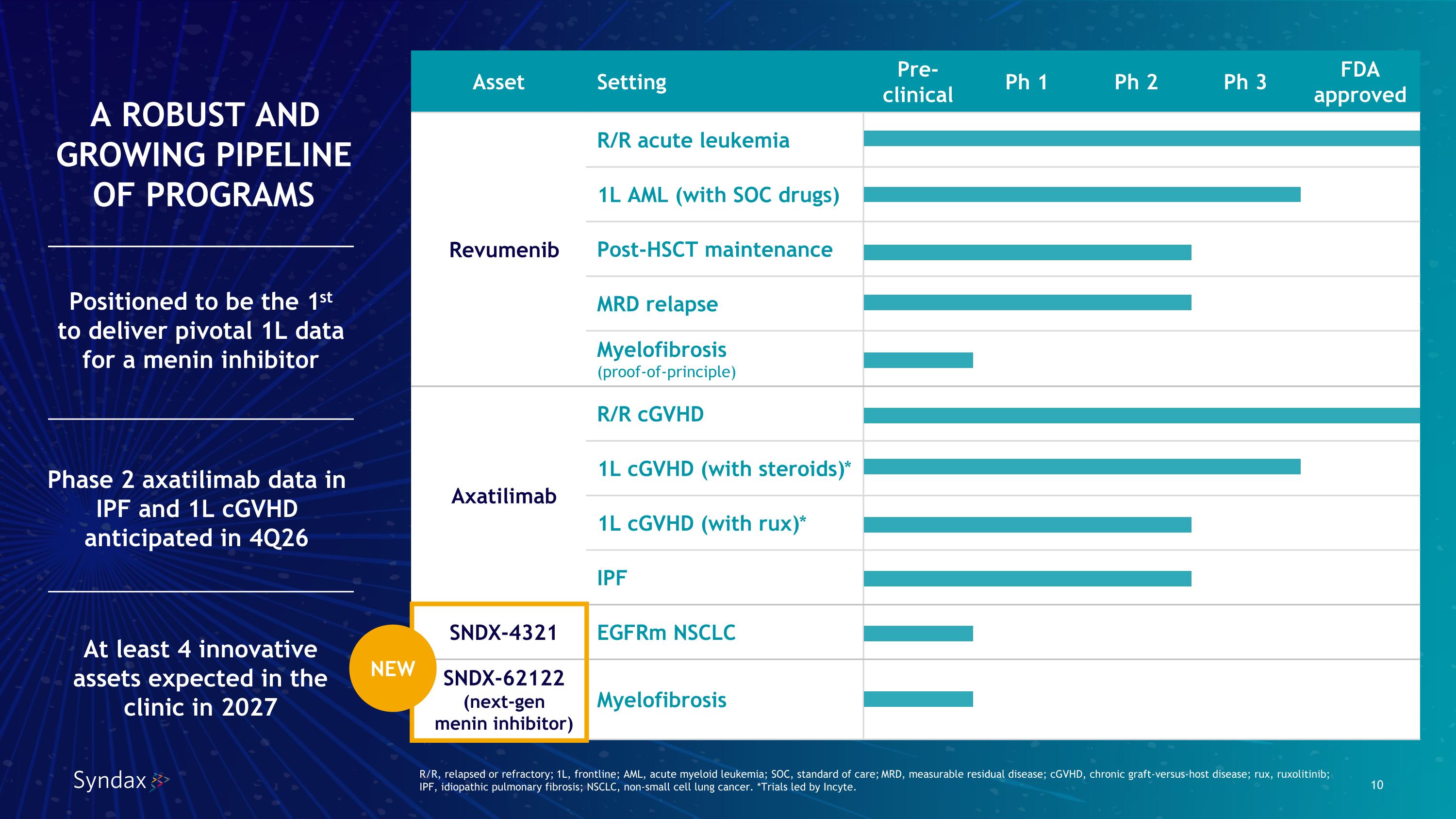
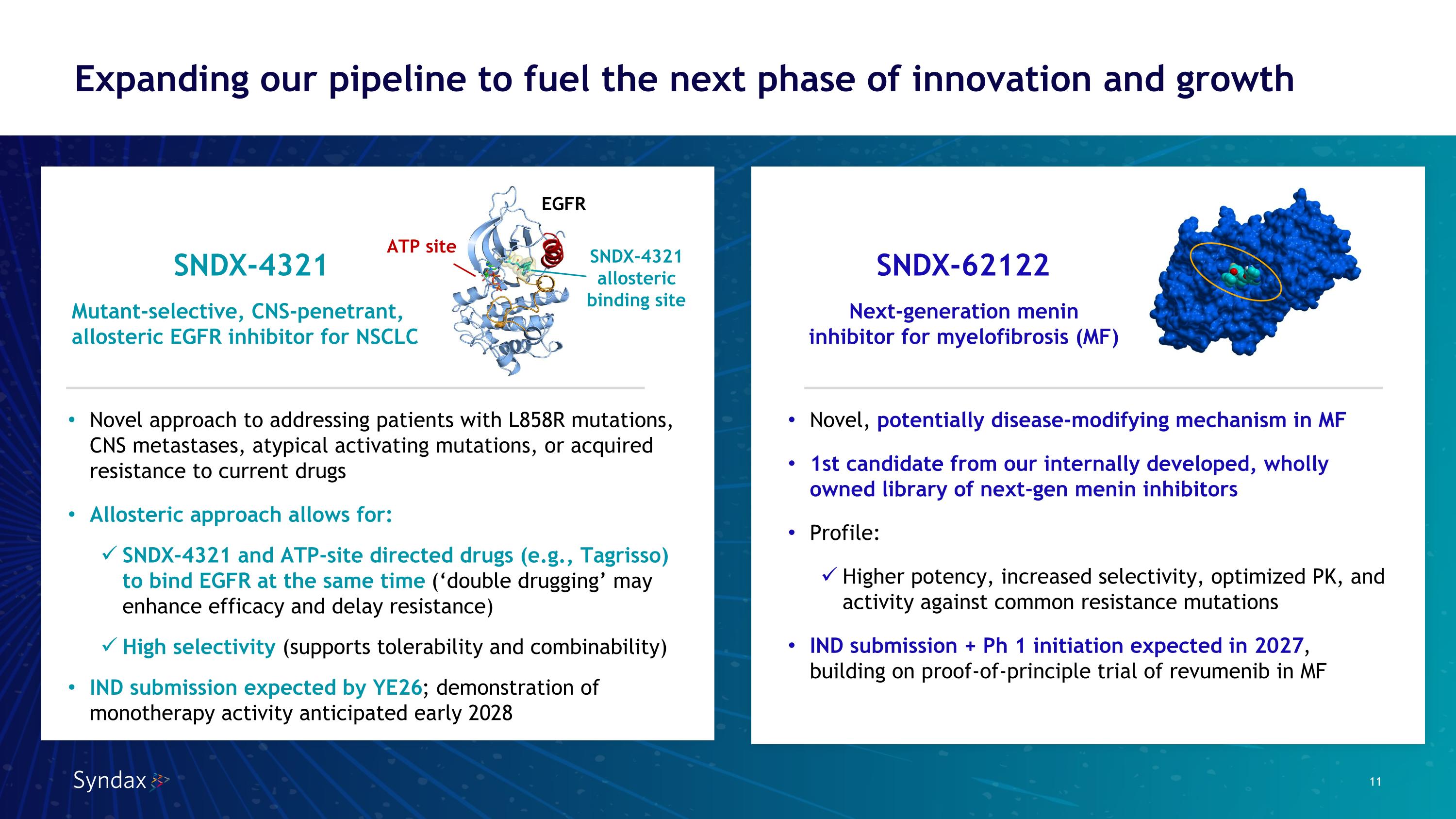
Turning to slide nine, I'd like to highlight the progress we've made advancing our scientific leadership in men and inhibition with a strong presence in medical meetings and two landmark publications. At ASCO, we have four Revumenev abstracts, including an oral presentation of post-transplant maintenance data from a cohort of heavily pre-treated patients with KMT2A, MPM-1 on UP98 alterations who resumed Revumenev post-transplant. This analysis showed a two-year overall survival rate of 90%, which is nearly double the historical rate observed prior to the introduction of Rebumenib. Moving on to EHAR, we had 12 Rebumenib abstracts highlighting the clinical activity with Rebumenib in multiple acute leukemia subtypes and settings, including in combination with standard-of-care therapies in the frontline and relaxed refractory setting. In June, data from the relapsed refractory cohort in the Phase 1-2 SAVE trial were published in the Journal of Clinical Oncology. The results observed with the all-oral combination of Revumannib, Venatoclaxin, Decitapine, Sedazuridine, and a heavily pretreated population of patients with MPM1, KMT2A, or NUT98AML are impressive. 88% achieved an overall response. 80% of evaluable CRC responders achieved MRD negativity, and 45% of patients proceeded to transplant, with 63% resuming Revi-Menib post-transplant. These results are similar to outcomes observed in real-world cohorts treated with Revi-Menib-based combinations, underscoring the potential to reproduce these results in clinical practice. In July, we and our collaborators published the results of groundbreaking preclinical studies with Revi-Menib which showed menin is a novel dependency in a proliferative megakaryocytes, major drivers of myelofibrosis. These data provide the basis for our innovative clinical development program in myelofibrosis. Looking ahead to the second half of the year, we will deepen our scientific leadership with new review-mend data from across the acute leukemia treatment continuum, including from the maintenance and real-world setting. We also look forward to presenting more mature frontline data in the fourth quarter with updates expected from SAVE and BEAT-AML trials of Revimenib with low-intensity chemotherapy and from the 708 trial with intensive chemotherapy. We expect these data will be impactful for the clinical community and provide strong support for our ongoing pivotal frontline combination trials. We also expect to publish data in relateral refractory NUC-98 rearranged acute leukemia in the fourth quarter, followed by submission of this important publication to the clinical guidelines for consideration. Patients with NUC-98 rearrangements have poor outcomes and there is an urgent need for new treatment options, with many parallels to the unmet needs in KMT2A prior to the introduction of RevuManib. Physicians are positive about the potential for RevuManib to provide a new treatment option for this disease subtype, based on the data reported. At EHAR, we presented data from 25 heavily pre-treated relapsed refractory NUT98 patients showing a 28% overall response rate, with 43% of responders proceeding to a transplant and all resuming regimen of post-transplant. Turning to our pipeline on slide 10, I'd like to highlight just a few key points. First, we are rapidly advancing an integrated evidence generation plan designed to establish Rebumenib as the menin inhibitor of choice across the acute leukemia treatment continuum. Importantly, we maintain good momentum to be the first to deliver pivotal frontline data for a menin inhibitor. Global site activations and patient enrollment is well established in our pivotal trials informed by an extensive body of clinical evidence, allowing for optimization of endpoint point assumptions and other aspects of the study design. Second, we are nearing two important axotilomab readouts. We are on track to report top-line data from the Phase II Max-Pierre IPF trial in the fourth quarter. Positive data would open a transformative opportunity for axotilomab and provide a strong biological rationale for its mechanism in several other diseases where the pathology is underpinned by fibrosis and inflammation. We also anticipate top-line results from the Phase II trial of axotilumab in combination with ruxolitinib in frontline chronic GVHD in the fourth quarter. Positive outcomes with the novel combination could begin to unlock the potential for a steroid-sparing regimen in newly diagnosed chronic GVHD. Third, as highlighted at our recent R&D event, we announced two new pipeline assets, SNDX 4-3-2-1 and 6-2-1-2-2. In line with our focused R&D strategy, these are targeted molecules both with first and best-in-class potentials supported by compelling preclinical data, mechanistic insights, and advocacy of leading researchers and clinicians. With both regimenid and axotilumab, we have demonstrated our ability to efficiently generate clinical data that validates new therapeutic targets leading to new approvals, a strength we will leverage again as we advance the next chapter of our R&D strategy. Turning to slide 11, 4321 is a novel mutant selective CNS penetrant allosteric EGFR inhibitor. We're developing it for non-sortical lung cancer patients with high unmet needs, such as those with the L858R mutations, CNS metastases, and atypical activated mutations or resistance to current therapies. In contrast to ATP site-directed third- and fourth-generation EGFR inhibitors, 4321 binds in a pocket adjacent to the ATP site that is only accessible in the presence of L858R and certain other EGFR mutations. The allosteric approach allows for high selectivity and a double-lock approach to inactivating the receptor. 4321 and ATP site-directed therapies can bind EGFR at the same time at different sites on the receptor, potentially enhancing efficacy and delaying resistance. We expect to submit an IMD for 4-2-1 by the end of 2026 with an assessment of monotherapy activity expected in early 2028. 6-2-1-2-2 is our next generation menin inhibitor in development for myelofibrosis that could offer a novel and potentially disease-modifying approach. It is the first candidate from our library that internally develops and wholly owned next-generation menin inhibitors that we plan to advance into new areas. We expect to submit 90 and initiate Phase I trial of 621c2 in 2027. This program will be informed by a proof-of-principle trial of Rebumenib in myelofibrosis that will be conducted in partnership with world-leading experts in myelofibrosis. We expect this trial to initiate in the fourth quarter with initial data anticipated in the second half of next year. In summary, we've made enormous progress advancing our late-stage trials and expanding our pipeline of differentiated assets. We are nearing several important data readouts and have multiple opportunities to transform the standard of care for some of the most difficult-to-treat diseases. With that, I'll turn the call to Keith to discuss our financials.
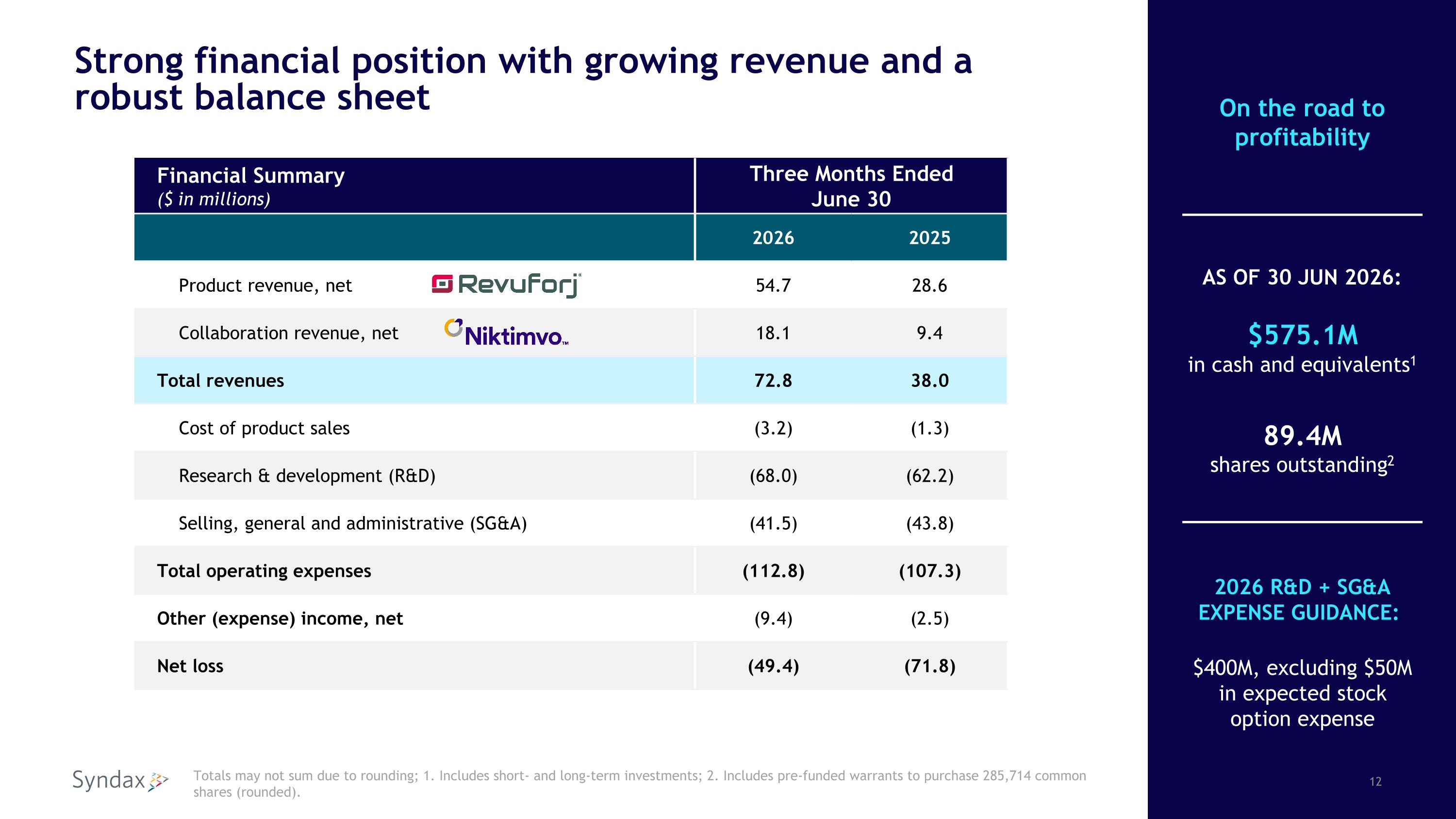
Thank you, Nick. Earlier this afternoon, we reported detailed second quarter 2026 financial results, and I'll highlight a few key points on slide 12. Total revenue for the second quarter of 2026 was $72.8 million, up 92% over the same period last year. This consisted of $54.7 million of revenue-forged net revenue and $18.1 million in NICTNVO collaboration revenue, which equated to 30% of the NICTNVO net revenue reported by our partner insight in the quote. We expect NICTEMBO margin contribution, defined as a collaboration revenue recorded by Syndax as a percentage of NICTEMBO net sales, to continue to be in the 25% to 30% range in the near term and increase longer term as sales grow. We expect revenue from both Revenue Forge and NICTEMBO to continue growing and advancing the company towards profitability. Our guidance for R&D plus SG&A expenses in 2026 remains approximately $400 million, excluding the impact of $50 million in estimated non-cash stock compensation expenses. We ended the second quarter with $575 million in cash, equivalents, and investments. This includes $244 million in net proceeds from the issuance in June of $250 million of 2.25% convertible notes. That deal provided the lowest cost of capital that SYNDAX has ever accessed and positions us well to build shareholder value over the long term. We're fully funded to execute our commercial and R&D priorities, including our late-stage trials of ReviMedib and Exotilumab and the development of our pipeline assets. With relatively modest investments in proof-of-principle trials of SNDX 4321 and 62122, we believe we can quickly generate early clinical data that creates significant value for the company and its shareholders. With that, I'll hand the call to Michael for closing remarks.
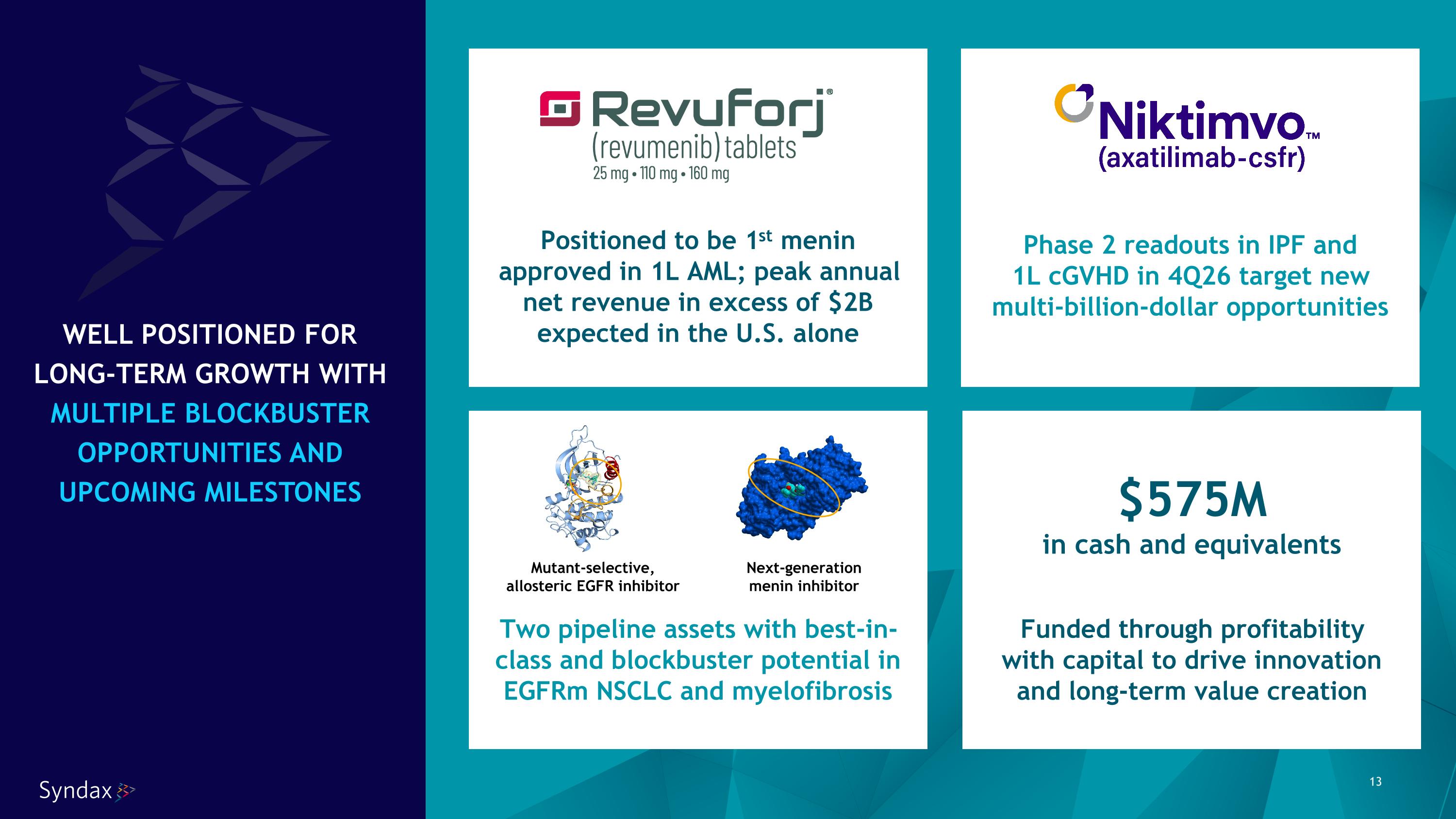
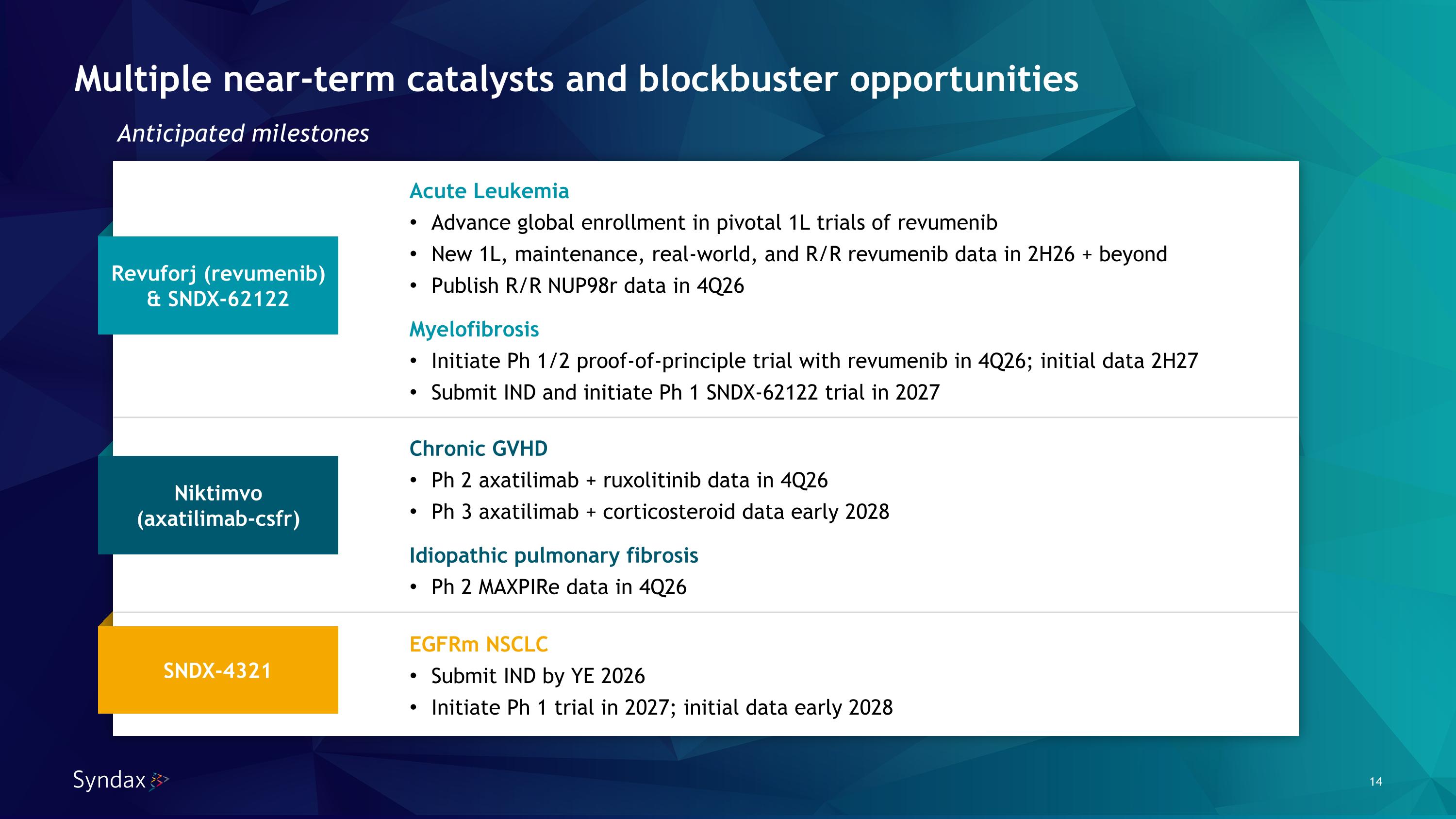
Thank you, Keith. SYNDEX is well-positioned for long-term growth and success, with multiple blockbuster opportunities and upcoming milestones as highlighted on slides 13 and 14. We have a best-in-class MENON inhibitor that is positioned to be the first to frontline AML and deliver peak annual net revenue in excess of $2 billion in the U.S. alone. We are nearing data readouts in the fourth quarter that could unlock multibillion-dollar upside for NICTEMVO in IPF and frontline chronic GVHD. We have a proven track record of successfully developing and commercializing novel medicines and are bringing forward two new pipeline assets with best-in-class and blockbuster potential in EGFR-mutated lung cancer and myelofibrosis. With $575 million on the balance sheet and growing revenue from two products, we are funded through profitability and have the capital to realize our pipeline opportunities and drive significant long-term value. I will close by thanking our dedicated employees and the many patients, clinicians, and scientists who support our work and inspire us to pioneer bold new approaches to some of the most devastating diseases. And with that, I would like to open the call for questions.
Operator
At this time, I would like to remind everyone in order to ask a question, press star, then the number 5 on your telephone keypad. If you'd like to withdraw your question, press star and the number 5 once again. We'll fall for just a moment to compile the Q&A roster. And the first question is from Anupam Rama with J.P. Morgan. The line is now open.
Joyce
Analyst — J.P. Morgan
Hey, guys. This is Joyce on for Anupam. Thanks for taking our question. Could you discuss the physician feedback you received at ASCO and EHA on the Revu4 data that you guys presented there, especially the post-transplant maintenance data? And how soon could those data have positive pull through to the launch in terms of what you're seeing with the proportion of patients going on maintenance therapy.
Joyce, thanks so much for the question. So I'll direct the first question to Nick.
Thank you for the question. I think the data was very well received. I think it's a remarkable outcome when you look at the proportion of patients alive at two years, 90%. It's obviously not randomized, but MD Anderson did a very nice job comparing it to, you know, the current standard of care, which is considerably less than that. So I think they're very encouraged by that. We have significant research efforts ongoing to further elucidate the benefits of giving Rebiumenib in the post-cranial response setting. It's really important, I think, to optimize the dose. We're learning a lot about that, and we have a dedicated phase one study ongoing to optimize those, and we hope to report on that later this year. We also actually have the first prospectively randomized study called the MAINTAIN study that was recently announced on CT.gov in collaboration with Dana-Farber and other collaborators, which will hopefully further elucidate the benefits of maintenance, which will be extremely helpful, and it's an important study to do. Generally, however, we are seeing the uptake of maintenance very much in clinical practice, and that will be evidenced by the real-world series we've already reported upon, where you see high rates of post-transplant and then patients going back onto transplant, back onto therapy after transplant. And we'll be updating on those further in the year with more data, which I think support and perhaps even exceed what we've seen to date.
Operator
Next question is from Brad Canino with Guggenheim. Brad, you may unmute yourself and ask your question.
Hey, afternoon. Thanks for the questions. Maybe two for me. One, just any quantification you can provide on the duration of treatment increasing, either numerical or some estimation of a relative increase the DOT saw. I'm just trying to judge the magnitude of increase. And then, two, have you seen any indication of an inflection in the maintenance rate? Sounds like it was 50% is what you're up to for this past 2Q. But any inflection in July after showing the maintenance data at ASCO and EHA as you've been going out and talking with physicians?
Brad, thanks so much for the question. So, first of all, in terms of the duration of treatment, we're very much encouraged by what we're seeing. I think for patients who are actually going on to maintenance, we know that cohort of patients is out beyond nine months. And so that's an increase from what we've seen previously, and we feel quite encouraged by that. And what's also, you might have picked up in my remarks, But it's also encouraging our patients who don't go to transplant who remain on therapy for an extended period of time or well beyond seven months at this point and building. So that's sort of new news and very encouraging for what we think will continue to build the recurring revenue within the franchise. And then in terms of inflection and maintenance rates in July, that was a pretty specific question. And I'll just say that we, you know, we are seeing continued buildup in maintenance. I don't think we've quantified it quite for July, but we feel very encouraged by what we've seen coming out of the last quarter and into this quarter. And so we believe that will continue to build. We've talked about reaching 70%, 80% of patients getting on maintenance. We believe that that assumption will hold as we build beyond the 50% that we saw this quarter. When exactly that will get to the 70, 80 percentile, it will take a little bit of time. But we do feel quite encouraged by the momentum we're seeing coming out of the last quarter.
Operator
The next question is from Plessy Kershid with Jeffries. The line is now open.
Hey, guys. How are you doing? This is Seth from Jeffries. I just wanted to ask, this looks like the first quarter that you actually took a step down in new starts. Can you give any more specificity on the reasons for this? And also, in terms of modeling this going forward, what are the forward trends that we should expect on new starts, each in KMT2A and NPM1? Thank you.
Thanks so much for the question. So, maybe I'll turn it over to Steve to make some comments on new starts for this quarter.
Yeah, thanks for the question. I appreciate you pitching it to me, Michael. Overall, I mean, good performance. I mean, it's the sixth consecutive quarter of double-digit revenue and demand growth. And I think, interestingly, we grew 15% on TREX demand, and that was in the face of what you notice is the falling number of patient starts from Q1 into Q2. And the reasons for that, that there are just multiple drivers to the business. You know, a lot of our prepared comments around the KT2A business, how it's advancing, heading exactly in the direction that we predicted it would, higher transplant rates, higher restart rates relative to the clinical trials, which is really driving the DOT. And I'd say for MPM1, it's still early days, but we know that the business is growing. It's growing nicely. Our revenue and our patients on drug from Q1 to Q2 advanced as well. So new patient starts are simply just a part of the growth story, but not the only part. A couple things I hit out in the prepared comments, so I'll maybe add a different flavor to it as well. But this is normal. You're going to see, at least in the larger target AML therapy class, new starts do jump around. There's typical variability. We see it month to month. You're going to see it quarter to quarter. We've been largely immune to that, right? Bureb has existed in the space, and we've either had the same number of new starts and grown them quarter after quarter, but this is a, you know, a fundamental aspect of the market that is typically there. It's other things that we've mentioned. Physicians have more than one drug class to consider, right, and there is a big focus on the MPM1 patient. Based on that, patient's mutational profile, physicians are going to make a choice. I think they're still figuring out how to, you know, where do men and fit. So is it before a FLT3, is it during a FLT3, or perhaps after? So that will play its way out, but ultimately patients will relapse and REV will play a role. And the last piece are just clinical trials. So when you sign up to be in this business, oncology, hematology, you know, you're advancing drugs through the clinic and you're also, you know, commercializing them. And we've done that successfully since the launch of REV, so this isn't something that's entirely new. But there are new trials that pop up from time to time. As they get established, you know, patient flow will ultimately work its way through, and opportunities, you know, for commercial patients are going to stabilize. Many of these are, you know, placebo-controlled trials. So we expect, you know, to spill through many of these patients either when they relapse. Not all patients are obviously eligible for clinical trials. And, you know, we made a conscious decision about a year ago to go to a much broader audience. So as we updated in this call, we're approaching 600 accounts that I've prescribed. Many of those are medium-sized to smaller accounts. less impacted by clinical trials and we find meaningful patient build there as well so these factors can cause some lumpiness and fluctuation quarter to quarter but we were able to flex and change our business as needed so we're confident in the forward so i think one of the questions was what is the trend moving forward you know we look at this quarter as an anomaly we feel confident about finding patients and getting back to levels that we've seen historically Got it, and Steve, if you don't mind just a quick follow-up, so am I going to take your comments to mean that new starts on commercial drug in relapsed AML as a whole were down quarter
over quarter, and if so are you able to quantify that at all?
Well, I don't have the full data set to look across all of AML. We're limited in what we can see on our drug, but perhaps that is the case. I would bet that it is, and again, it'll jump around from quarter to quarter.
Operator
Great. The next question is from Phil Nadeau with TD Cohen. Your line is now open.
Good afternoon. Congrats on progress, and thanks for taking our questions. A few commercial questions from us. So, first, in NPM1, I apologize if I missed this. Did you say where you estimate your share of NPM new patient starts was this quarter and how that compared to last quarter? That's first. Then second, I think you said 15% of NPM1 patients have been on amenin. and that's after approximately three quarters of your launch. Is that a trend that we should continue into the future? So, in another three quarters, should we expect maybe 30% of NPM1 patients will be on a minute, or is there any reason to think that would either accelerate or decelerate? Then finally, on maintenance, can you tell us where maintenance is being used today in terms of what centers and where's the growth going to come from? What new centers could come online over the next several quarters to drive increased use and maintenance across the market?
Great, Phil. Thanks for the question. So, the first question I took is what's our NPM1 share? And I think we, as we stated in our prepared remarks, we're about two-thirds of the business right now. I mean, if you think about where we were last quarter, it was roughly about the same, two-thirds or more of the overall business. And so we expect that to continue to build over time, but we do have a dominant position. I would also, you know, say in terms of relapsed refractory business, we're probably, you know, assuming our competitor gets close to their numbers, we're probably 85-plus percent of relapsed refractory. So we are, you know, quite dominant in the space and expect to continue to build that. We did make the comment about 15 percent of the patients, this is your second question, 15% of the NPM1 patients have seen a MEN inhibitor, and that's not only our drug, but our understanding of how our competitor contributes as well. So that's 15% total. We do expect that to expand meaningfully, and, you know, from quarter to quarter, we expect that to grow, accelerate. In a year from now, it will be at 30%, where we would hope that it would be even greater than that. And it's supported by all the data that we're generating. Nick mentioned the presence at our Congresses and what we've provided in terms of monotherapy and combinations, and that has shown ReviForge to be a very useful drug in a number of ways. So we expect that we'll be treating NPM1 patients and continuing to penetrate that market very meaningfully, hopefully well beyond 30 percent in a year.
And then maintenance, maybe I'll turn to Nick on this one. maintenance where where is it being done what are those centers I mean we won't list them all academic centers for sure maybe Nick can make a comment there and where is the growth going to come from in terms of in terms of maintenance I think the growth become for a number of drivers and number one is patients getting treated earlier on they're getting treated increasing combination that's just driving response rates higher we know that if a patient gets to respond they're eligible for transplant having had a transplant the likelihood of them going on to post-transplant maintenance as we gather more data and present more data there. I think physicians are feeling more confident. They understand how to manage the dose better. These patients after transplant are particularly prone to cytopenias generally. So you really do need to manage the dose and that's something we'll be presenting update to data on later this year and I think they're getting confidence to do that. And really just the real-world experience from academic centers, you know, we've seen extremely high rates. They're feeling more confident doing it. Their intent is to treat out to one to two years. most of our clinical trials include therapy out to two years. And given the high rates of relapse after transplant without any active therapy, they really want to just do their best for the patients and think that ready men have given them the best chance of a durable remission, and so we're seeing uptake increase. From a research perspective, it's our efforts to further confirm that benefit, who's most likely to benefit, and how we can make sure that the drug is well tolerated. But I think we're very encouraged by what we're seeing in the uptake, and we'll be presenting more data on that again later this year. with a big focus on this whole post-transplant maintenance area.
That's very helpful. Thanks, Bill.
Operator
The next question is from Stephen Willey with STIFO. The line is now open.
Yeah, good afternoon. Thanks for taking the questions, and congrats for progress. So I guess Nick Pinbo's sequential growth has kind of flattened out here over the past couple of quarters. So just curious how you're thinking about the near-term growth opportunity for this franchise prior to potential legal expansion and then was also just wondering if you can confirm whether the definition of event-free survival which is being used in the phase two frontline trial that reads out later this year plus rocks is the same as the phase three frontline trial that's looking at Nick Timbo combination with steroids thanks Steven thanks for the question maybe I'll take the first with any comment on the second from from Nick so Nick Timbo look I I don't agree with the characterization that it's flat, first of all.
Nick Timbo is not flat. It's growing, and we, you know, see it tracking very nicely to what Reserock has done. And so we expect it to continue to grow meaningfully. And what I'm talking about is third and fourth line. So we've penetrated well into the fourth line. Third line, you know, we've had a third of the third line population at this point, which is very meaningful about a year post, you know, post-launch. So, I think we will continue to build that and be meaningful in third and fourth line. So, you should expect continued growth there. And then, of course, we have expansion opportunity with the new data coming at the end of the year with combination with Russell Litnev. And so, we feel like that's an expansion opportunity as we're on our way to the front line. And we'll also have steroid combination in early 28. So, a lot of data to come. I think physicians are eager to see the combinations and how our drug combines with Jackify. And in the meantime, we'll have considerable growth, we believe, over the near term with third and fourth line. And then maybe I'll turn to Nick on definition for event-free survival.
Steve, the event-free survival endpoint is in the front-line steroid combination phase three. So that does have an entry survival primary endpoint. For the Phase II three-arm study, we're actually going to look at overall response rate at six months. So as you recall, this is steroids versus RUCs versus a combination of Axon and RUCs. We expect a benchmark from that based on our publication in 2022 to be about 40% response rate for steroids alone at six months. We're looking for, you know, a meaningful improvement over that. I think for the combination, it could be considerably higher than that. It's not a formally a comparative study. It's randomized one-to-one-to-one, about 120 patients, you recall. So, yeah, we'll look at overall response rate, but I think also the duration of response will be very important to look at in that study to see whether the combination and rugs alone can offer a meaningful alternative to steroids. So, that's what we will report on, and, you know, looking forward to seeing that readout. So, I think it could be very informative and potentially practice and guideline-informing readout if either or both of those combinations beat steroids alone.
Thanks for taking the questions.
Operator
The next question is from Edsard DeRoot with Barclays, your line is now open.
Great. Thanks for taking the question. A quick one for me, just wondering, for the proof of principle trial of REMU-MENIB in multiple fibrosis, what is the primary analysis, what will that entail, and what endpoints will you be evaluating there, just as a, you know, potential, obviously, read through to the next-gen MENIN inhibitor?
Great answer. Thanks for the question. Maybe I'll turn to Nick on the proof-of-concept trial.
Yeah, this is a study we're doing with the NPM Research Consortium with John Mascarenas and collaborators. It's not under our sponsorship. It was recently posted on clinicaltrials.gov. It's quite a full posting if you want to look at some of the details of the study there, but I'll just summarize it for you. Cohort 1, which is primarily the safety assessment, will look at just those limiting toxicities. That's going to be relatively few patients treated, around 6. In cohort two, where we will look for the combination of REV in combination with Jackify, we'll be looking at standard response criteria, so we'll be using the ELN response criteria, looking at anemia, spleen response, and symptom benefit, we'll be looking at SVRS and 35%. So in patients that have a suboptimal response on Jackify alone and are stable on Jackify for 12 weeks, we'll add in REVUMENIB, and then we will be looking for using standard ELN response criteria. to generate proof of principle data, which will be incredibly informative to our development program and really catalyze, I think, when we go into phase one in 2027 with our next-gen menin inhibitor in monofibrosis.
Operator
Our next question is from Ego Notomovitz with CityGroove. The line is now open.
This is Gwon Kim on for years old. Thanks for taking our questions. I was wondering, I was wondering with regards to your extended use of lab data, I believe that you had mentioned, to engage physicians when they have a suitable patient. I was wondering, but to what extent can that help smooth new start variability, particularly in NPM1, where the population is larger, but commutations can help influence the treatment And then also with regards to the max prior trial, just wondering if the patients can beyond profenadone or no background anti-fibrotic. If the study is positive, how should we think about the extent to which the background therapy could help define acetalina's role, whether it's add-on or potentially the patient's not getting much benefit from current treatments? Thanks.
Great. Thanks for the question. So, first, with the use of lab data, maybe Steve, you want to make some comments on how we identify patients?
Yeah, sure. So we do use lab data, as pointed out in the question. It enables us to find diagnosed patients. We buy lab data. We can identify patients that may be suitable. It's obviously de-identified. We can target accounts that we know patients exist. It's largely worked since launch. I think that really speaks to why we've been so successful, particularly at the KMT2A launch. We've modified our approach over time. We've been able to bring in new lab data sets. We've been able to apply some applied, you know, artificial intelligence and machine learning principles. So it still holds. I think specifically the question was, can you use that to smooth out new starts? You know, the market's the market. Patients are going to come in at often a random pace. So over a year, you kind of know what it is, but month to month, it's going to be different. We will find every possible patient that we can, right? And we've shown we've been able to do that, and we're going to get better simply over time. So that's something we remain committed to.
Maybe, Nick, do you want to talk about MaxPyre and the background therapy impact?
MaxPyre has three strata. So we stratified by an intended impofenadone and then no antifibrotic, as you would expect, consistent with previous studies that looked at ITF. By far, the majority of the patients were on a background antifibrotic. We will obviously look at subtypes for most strata in to ensure there isn't an imbalance between the arms. The study is really not powered. Recall it's two-to-one randomized. It's not powered to detect differences between the different types of antifibrotic, which is something we will look at. In terms of phase 3 planning, we would plan to include axotilumab on a background of standard of care antifibrotics and potentially other standards of care. One of the attractive things, I think, about the mechanism of action of axotilumab is that it really does treat what we think is the underpinning pathology by targeting specific these monocyte-derived macrophages, inflammatory and fibrotic components of the disease. And we really think that that could be a very important differentiator and particularly suitable for combination with the current standards of care.
Operator
Our next question is from David Dine with UBS. Your line is now open.
Great. Thanks for taking my questions. So just thinking about the ReguForge new patient starts and, you know, KMT2A penetration. Last quarter you mentioned that you were 50% penetrated into the KMT2A market. How did the number look like this quarter, and how do you envision the P-penetration would look like, and how long do you think that's going to take? And the same question will apply to MPM-1, a percentage of MPM-1 market we've penetrated so far, and what would the P-penetration look like?
David, thanks for the question. So, maybe I'll address KMT2A first. So, first of all, you know, we own the KMT2A market. So, this is a part of a business that where we are, you know, firmly established, the standard of care. NPM1 is building. We firmly acknowledge that we have best-in-class profile for both broadest set of opportunities there. For TAMC2A, we have said that we were about 50 percent penetrated, and that continues to build. And so, peak penetration is likely to get to roughly 80 percent or maybe even more. We've seen examples in the market of companies, you know, launching products into targeted areas where they have dominant position and they get to those levels So KMP2A should reach a very, very deep penetration over the, you know, reasonably near term. MTM1, I would say, is a slower build, mainly because of some of the things that Steve said. It is a bigger patient population for sure. More patients are able to be treated. More patients are being treated. They just happen to be on other therapies. And so our job is to introduce ReviForge to those patients. It's monotherapy and perhaps combination as physicians want to use the product, and we'll continue to penetrate there. Again, I think Revu4 is going to have a very high penetration. We already own today about two-thirds or more of the business in NPM1, and that should continue to build. But our penetration will get to a high percentage over time, maybe not quite as high as KMT2A, but we do think that we'll have a dominant position in both with best offering as we've talked about. So I think this is – there are different kinetics of build between KMT2 and NPM1 as described, but high penetration is the name of the game here.
That's helpful. And then just a question on inventory stocking. What does the inventory stock look like this quarter? Any dynamics there?
I'll give this one to Keith. Inventory.
Yeah, thanks, David. The guidance that we've been pretty consistent with, very consistent with since launch, still holds. And, again, not just for Syndax, but, you know, really for any rare disease, target oncology products, we're about two to three weeks. It's been remarkably consistent since we've launched the product. So, we'll let you know if there's any changes, but you can assume that we have about two to three weeks of web report in the channel. Thank you so much.
Operator
Thanks, Davis. Our next question comes from Salim Saeed with Muzujo. Your line is now open.
Congrats on the progress, guys. Thanks for the question. Just one from us on the $2 billion revenue expected in the U.S. alone. Mike or Keith, could you maybe, I think this is the first time we're formally seeing it in a slide written like that, and I noticed also that I think this is the first time that the bar slot, the bar chart for the TAM has been taken out of the deck. Just wondering if you guys are starting to think here that the $5 billion TAM is a conservative number, you're sort of reworking your numbers internally, or what your assumptions were exactly going into the $2 billion, how much first line? you know, is in there versus second line, et cetera. And then just one clarification, I think you guys mentioned, I think it was Mike, 85% of relapse is what you guys are getting. I presume that's also inclusive of KMT2A rearrangement. What percentage of NPM1 starts are you guys seeing? I think Cora on their side, they said 40% is their shares, which would imply you guys are at 60. Is that ballpark issue correct in line? Thank you.
Yes, I mean, lots of parts of your question. So let me see if I can tackle them. So first of all, just because I see it on the page here, 85% of what I had mentioned, 85% of the relapsed refractory businesses, KMT2A and NPM1 combined. So that's our calculation. If you look at the numbers for the quarter relative to our competitor, we're at least 85% of the business. So that's one. When we talk about the estimate of $2 billion-plus in revenue, peak potential when we include the front line, you're right. That is the first time we're talking about this in this way, and I think it's important. And why now? We're more confident than ever, and this is clear to us, that this is a very large market opportunity. When you look at the data that we've published over the last quarter or two, All things point to, you know, growing relapse, I would say, overall survival, days of therapy. The response rates are higher than we've seen previously. So the data is all very positive and points and gives us confidence that we will, once we get to the front line, have a very supportable market position and dominant position in front line. We will be the first to get there, and with the profiler we have today, we feel quite confident that we will have, you know, a very meaningful share, a dominant share of frontline. But thinking that probably the most important driver here is days of therapy or time on therapy, and what we've said today is that we see that elongating. We're quite encouraged by that, which gives us a lot of confidence because it's a very important indicator or a very important component of the calculation for the market, how long patients stay on therapy, And so far, even relapse refractory patients, we're seeing this exceed our expectations. So we are quite confident, again, that we can reach that level of sales. And when you talk about the breakdown between frontline and relapse refractory, as we've said in our bar chart, nothing's really changed in terms of our evaluation of the overall total addressable market. $5 billion does assume the $2 billion is part of that. So, we've always kind of been clear about it that $5 billion is the overall market when you assume that you get to the front line. $2 billion is really our assessment of the relapse refractory opportunity. You're welcome.
Operator
The next question is from Andres Maldonado with HC Wainwright. The line is now open.
Hi, guys. Thanks for taking the questions and congrats on the progress. First question is the question on slide five. you talk about 40% of ReviForge uses and combinations. So, curious if, you know, are physicians mainly adding ReviForge to a failing, you know, vanilloclax-based regimen, or are they beginning a new combination at relapse? And how should we be thinking of the potential kind of those variants and approaches, their potential to produce different treatment durations or transplant rates is the first question and I have a follow-up.
Great, thank you for the question. So maybe I'll turn it to Nick to talk a little bit about accommodation regimens.
Yeah, what we're observing in the real world is multiple combinations. I think you're right that VEN is a common desire, either VEN or VEN-A is a combination. Sometimes patients have been exposed to prior VEN. I mean, there's some interesting data that may actually synergize with BCL2 and it may even be an opportunity to rechallenge. So that's one of the more common combinations. but we do also see other combinations in use. We have, for example, ongoing studies, which I think is important, with flip-through inhibitors. It's not something we hear that it's a high priority amongst the physician community, but we do want to generate data to confirm both tolerability and efficacy with a flip-through inhibitor. And then potentially other single-agent therapies as well, but certainly that is one of the more common ones. And what we have observed in our real-world data today is that it does drive response rates up significantly. from what you observe with Repu-Menabalone. And so if a patient's able to tolerate it and they want to treat, we're obviously not promoting that indication. It's not within our labels of treating combination. But we do see, you know, in some cases 50 up to 80% of patients actually treated in combination because we know it drives a 60 to 80% response rate, which gives a patient a much better chance for durable response from potentially a transplant.
And then a quick one on Max. Yeah, go ahead. Sure, a quick one on Max Eyer. I think you guys have highlighted in the past kind of some of the expectations of the scenarios, whether you expect, you know, the FVC curves to separate earlier or maybe potentially later. But in the simulation that – in the scenarios that the, you know, curve maybe gives a modest 26-week, you know, FVC result, you know, with a longer later slope or biomarker effect, how should we interpret that influence on the potential market there?
Yeah, nice question. Yeah, we're pretty confident in a 26-week endpoint.
It's been a very good predictor in other studies of IPS. I mean, we model that out to 52 weeks because that's the endpoint we would use in a typical phase three and is the FDA's preferred endpoint. But for a proof-of-concept study like MAXPIRE, 26 weeks is pretty robust. Some other studies have used 12. We're not anticipating any delayed separation of those curves. We saw in our experience in GDH, the very early onset, Certainly symptoms are responding within a month, and we're observing responses within the first month or two. So we are expecting by week 26, you know, the evidence of activity will be very much in evidence. And that's what we'll be using. We'll be using the model. We're using a mixed linear regression model after 52 weeks. That's what we will be using if it's positive to inform and power the phase 3 study. And obviously the phase 3 study size and dimensions will be influenced by what we observe in the phase 2. But we're feeling very confident, I have to say, and everything we've observed today that would, you know, that would suggest that study will read out well. Obviously, that's a, it remains a double-blind procedure, but ongoing study. We don't know what the study will show, but given all of the pre-clanical and clinical data we've generated and the mechanism of action, we're feeling quite positive, and we're looking forward to that study reading out in the fourth quarter, and we think it will be a very robust proof of concept given its design.
Operator
Thank you very much.
Operator
The next question is from Jason Zemansky with Bank of America. So, the line is out open.
Jackie
Analyst — Bank of America
Hi, this is Jackie on for Jason. Thanks so much for taking your question. So, you previously characterized the decline in new revenue towards starts as an anomaly. But can you quantify how starts change sequentially within MPM1M and KMT2R? Clarify whether the decline primarily reflected clinical trial enrollment, competition, or underlying patient availability. And also, could you maybe tell us whether July starts have returned to prior quarter levels?
Jackie, thanks for your question. So, first, maybe I'll turn it to Steve to talk a little bit about what the decline in new patient starts, what it reflected.
Yeah, I think we talked about the potential reasons why. It's difficult to piece out each one and determine the contribution factor from each, and I'd say it was an overall drop in all new patient starts. I think there's an earlier question on AML in general, so we didn't see a different change in NPM1 relative to KNT2A. So we do believe it's a temporary effect, and we're going to return back to where we were previously. I think there was a, you know, a good question also just on July. We're not going to comment on July, at least in the quarter forward, but we feel good. We feel confident in the business plan and in everything that we have going against the brands as shared on this call.
Yeah, absolutely. I think we expect to return to growth, as Steve mentioned. And look, in terms of the dynamics for, you know, NPM1 and some of these other, I mean, I think this is a – these are – there's different things that impact from quarter to quarter, but I think we feel confident we have a plan to make sure that we get back to that positive growth there. Thank you.
Speaker 9
Thank you so much.
Operator
The final question today is from Mayank Matami with B-Raleigh Securities. The line is now open.
Yes, good afternoon. Thanks for squeezing me in. I appreciate it. I will keep it tight. Did you say the NPM1 relapse segment, how is the duration of therapy tracking, sorry if I missed that, relative to what you had in the trials given, you know, the context of earlier line use for mutation patients? And I'm also curious if there's an year-end exit rate you expect to have in terms of how, you know, between MPM-1 and KNC-2 patients, you know, you expect to have at the end of the year?
Thanks for the question. So, I don't think we gave a specific number for MPM-1 tracking, but I just said the duration, most of these patients don't go to transplant. As we commented, that very encouraging that the duration for patients who haven't gone to transplant is averaging well over seven months at this point early on. And a lot of those patients, of course, are NPM1, I would say the disproportionate amount of NPM1 patients don't go to transplant. So, I think that's a potential indicator of how things are going. We're quite encouraged by the overall, and without breaking it out, that's perhaps an And then in terms of the number of NPM1 patients at the end of the year, I don't think we've said or guided to that, all I'd say is that we do have a dominant position in the market. We expect that to build over time. And we'll continue to use all of our resources to identify patients and build that business, and we feel encouraged by what we see both as monotherapy and in combination, and that's been what the themes have been at our medical congresses. So, we're quite a good position to continue to build and feel good about the forward.
Understood. And maybe just lastly, you know, you're coming off a busy conference season, but you obviously have your biggest conference at the end of the year. So, if you could just quickly comment on what to expect there during from the three front line setting trials, we have ongoing and there's any enrollment update we can expect to have on Evolve 200 VLND would be good to know. Thanks for getting my question.
Yeah, thanks for the pause. So, end of the year, Nick?
Yeah, very data-rich end of the year. Looking forward to the second half of the year. I mean, we hope to carry the momentum. I outlined briefly what we saw at ASCO and EHAR. The teams have been working very hard. We're going to see multiple data sets. I would expect to see updates to all of our frontline studies of several, two studies in combination with BAN and HMA combinations, and then obviously our combination study with intensive chemotherapy as well. That will be very informative to our ongoing physical phase threes, which remains a focus for us. But expect to also see, as we've talked a lot about, further data on the maintenance after transplant, informing practice there, combination, and of course, real-world evidence, that will be very important. I think it will be also important that I know there will be a lot of interest in looking at how some of the time to event things are coming from our front-line studies, like event-free survival and particularly overall survival, and I think we should have sufficient maturity to update on those as well. So, as I say, a very data-rich period coming up in the second half of the year, we're looking forward to.
Operator
This concludes our question-and-answer session. I will now turn the floor over to Michael Metzger for any additional comments or closing remarks.
Thank you all. We really appreciate everyone tuning in today to discuss our recent progress and the exciting milestones that we have ahead. We look forward to seeing many of you at the upcoming investor conferences in the third quarter. Have a great evening, everyone.