Speaker 0
Thank you, and good morning. Welcome to Unum Group's Fourth Quarter 2024 Earnings Call. Today, we will be discussing full year 2024 results along with highlights from the fourth quarter. We will also use the time to discuss our outlook for 2025. Please note today's call may include forward-looking statements and actual results may differ. We are not obligated to update any of these statements. And as always, you can refer to our earnings release and our filings with the SEC for a description of the factors that could cause actual results to differ from expected results. Yesterday afternoon, Unum released our earnings, including the financial supplement and presentation materials for today's call. Copies of those materials can be found on the Investors section of our website. Finally, references made today to core operation sales and premium including Unum International are presented on a constant currency basis. Participating in this morning's conference call are Unum's President and CEO, Rick McKenney; and Chief Financial Officer, Steve Zabel. Following remarks from Rick and Steve, additional members of management will participate in Q&A, including Mark Till, who heads our Unum International business; Tim Arnold, who heads our Colonial Life and Voluntary Benefits lines and Chris Pyne for Group Benefits. Thank you again for your time this morning. And with that, let me turn the call over to our CEO, Rick McKenney.
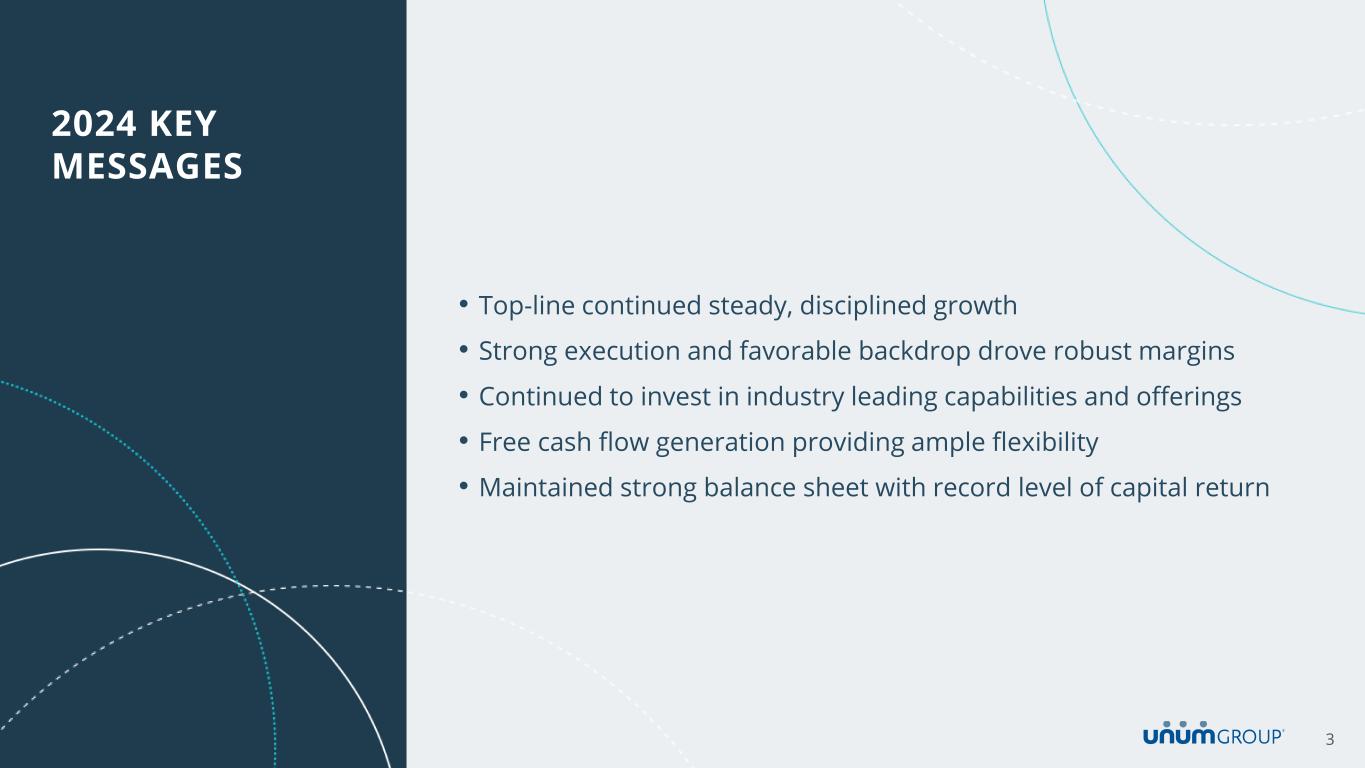
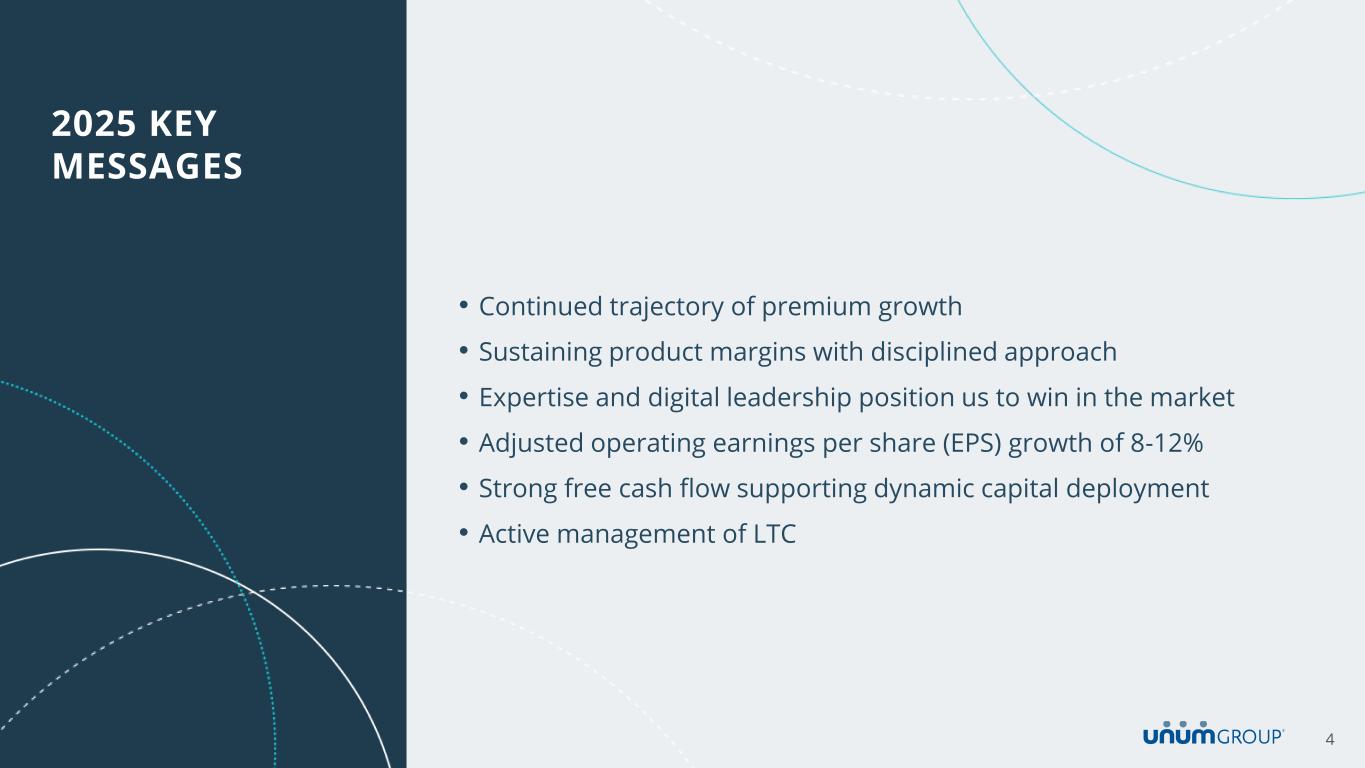
Thank you, Matt, good morning, everyone. It's a pleasure to be here with you all today. We appreciate the opportunity to share not only the strong results we delivered throughout 2024, but also the excitement as we look to the future. Our leadership position is hard-earned and embedded in our DNA is the desire to find new ways to develop and grow in the employee benefit space. In fact, we are motivated by the privilege we have to serve 47 million customers and are well positioned to serve many more. Our focus on taking care of our customers at the time of need, supporting our employees to provide excellent service and engaging in our communities has the profound effect of building a durable franchise that delivers significant value for our shareholders. Our steadfast commitment to the working world is core to who we are and brings delivery and creativity to those we are connected with. These connections are strong and built to last. The capabilities we are bringing to the market such as HR Connect, Total Leave, Gather, and Help@Hand are our connection points with employers and employees to bring greater customer satisfaction and ease with the benefits experience. When considering the expertise and empathy our team adds to every interaction in every touchpoint and connection, these advancements have been instrumental in attracting customers and maintaining our competitive advantage. These advantages are not only as good as the ability to deliver them year in and year out, it takes consistency and a disciplined approach to run a leading business in our market. Our commitment remains unwavering and has continued to deliver top-line growth, earnings growth, and high returns on equity. Overall, in 2024, we grew earnings per share by 10%, which is above our initial expectations of 7% to 9% growth going into the year. We saw most of our product lines meeting or exceeding our expectations throughout the year, and our core operations delivered over 20% ROE in 2024. From a capital standpoint, we've again executed our plans in line with how we described them coming into the year, and with good overall results exceeding expectations on value delivered to our shareholders. 2024 was the first year in many years that LTC did not consume any capital. The actions we took in 2023 to fund this block and our expectation of not needing to put more capital here are playing out. Further, we raised our dividend by 15% and repurchased approximately $1 billion of shares throughout 2024, including just over $700 million of repurchases when excluding one-time additional repurchases following the PCAP Trust transaction. With these actions, we still ended the year with stronger-than-expected financial metrics, including holding company cash of $2 billion and an RBC ratio of 430%. This is in addition to the significant capital buffer within the Closed Block, which Steve will talk about more in a minute. Looking forward, we expect our key metrics to enhance further and provide even greater strategic optionality as our core businesses continue to deliver between $1.3 billion and $1.6 billion of free cash flow in 2025. As we transition to think about 2025, we continue to witness a market backdrop and an economic environment that are highly supportive of our business; a competitive labor market, wage inflation, and sustained interest rates provide us with ample opportunities to grow and thrive. Our action plan is to continue building on our solid foundation and maintain our leading foothold with digital capabilities. We are dedicated to continually upgrading our core operations while maintaining our disciplined approach and innovating in ways that resonate with our customers and the market. When we look across the company, we are hitting the ground running in 2025, and our teams are looking to build on some very strong growth rates with consolidated sales growth of high single digits coupled with good persistency; premium growth is expected to deliver in the 4% to 7% range. With continued disciplined underwriting, we expect to maintain good margins that will flow through to earnings, and after we've used some of our capital generation to purchase shares, we will deliver 8% to 12% earnings per share growth on top of the 10% adjusted EPS growth we delivered in 2024. All of this is predicated on our customer-centric approach remaining at the heart of our strategy. We're constantly adapting our services to meet changing market needs and ensuring we remain the preferred choice for our clients. When we met last February, we outlined our strategy and plans to build on our market-leading position. We can report that we're advancing on this and seeing the results. For Unum in the U.S., we are leveraging our go-to-market expertise to connect benefit solutions to HR platforms effectively while also ensuring our leave management is best in class. Leave management has been a challenge for the industry, and with our history, knowledge, and focus, we can continue to give a differentiated experience to our customers.
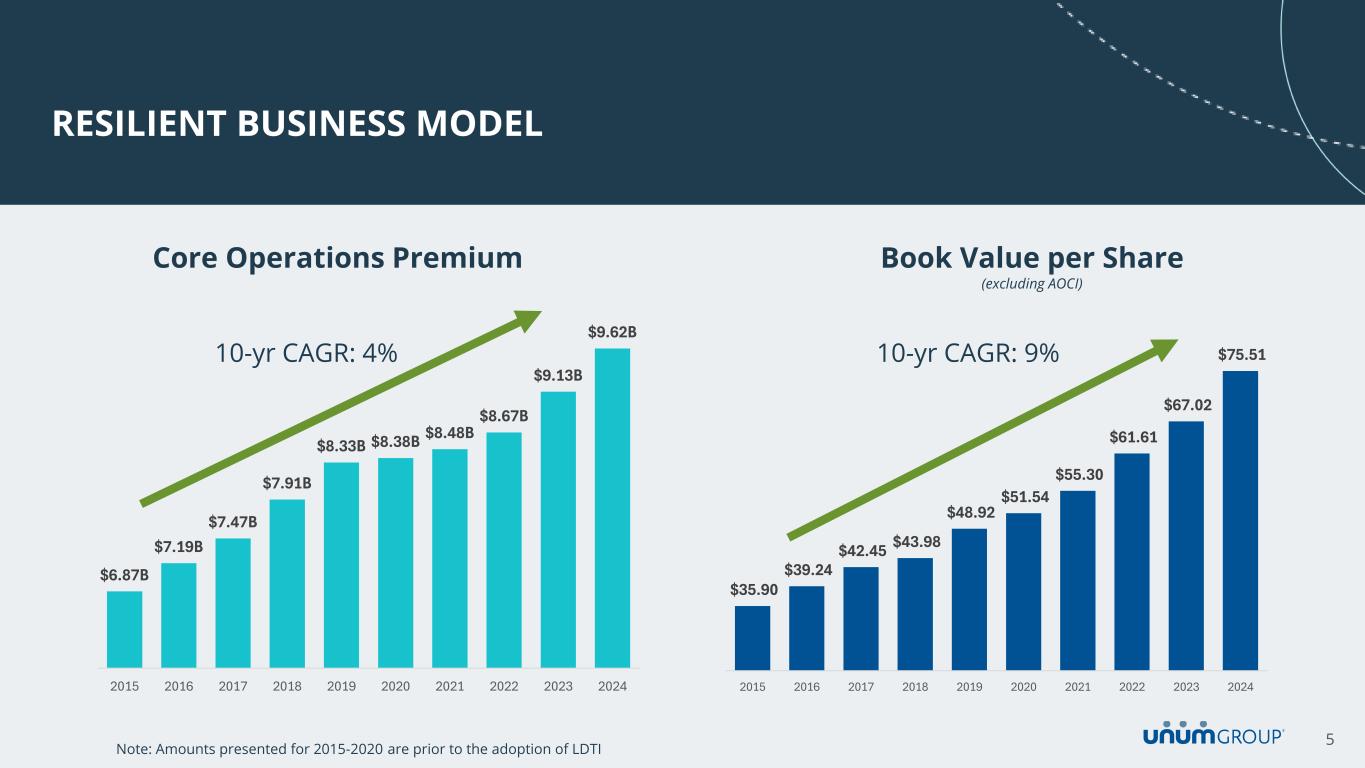
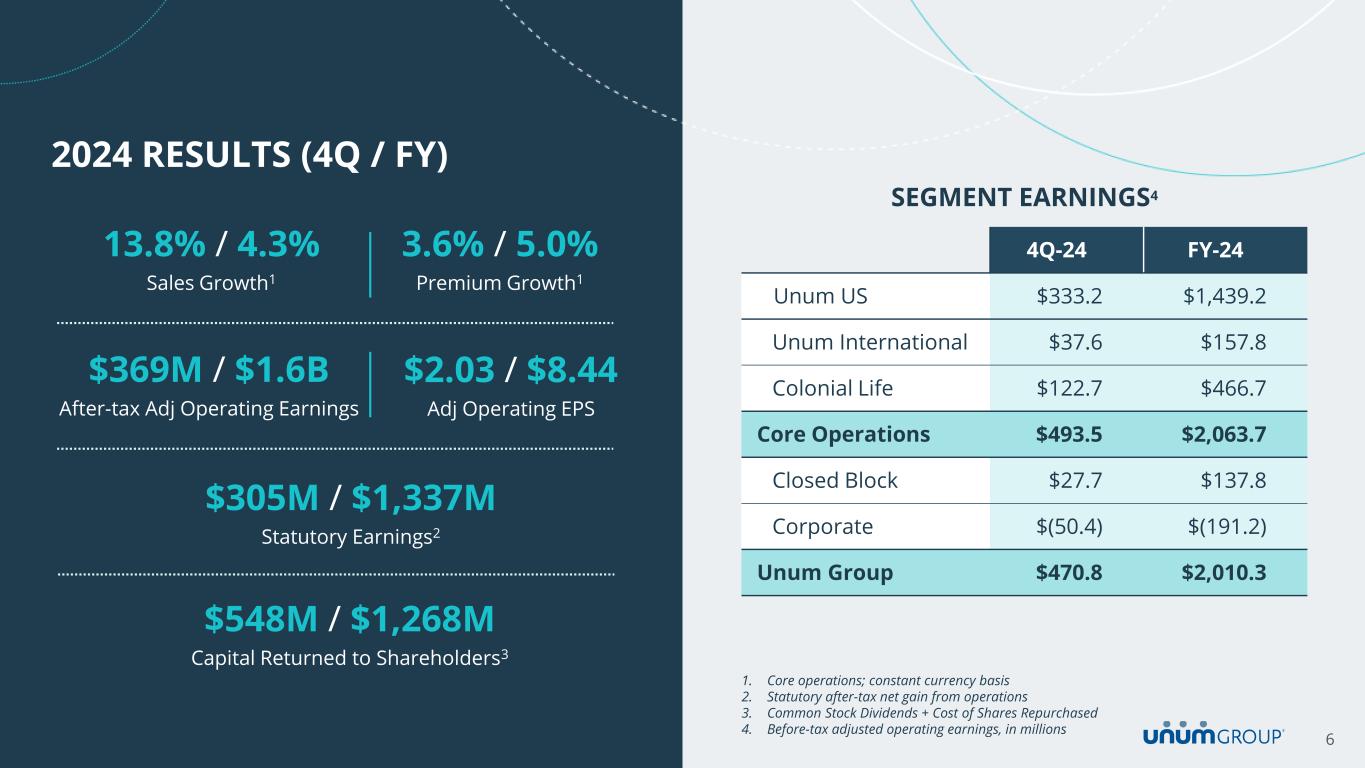
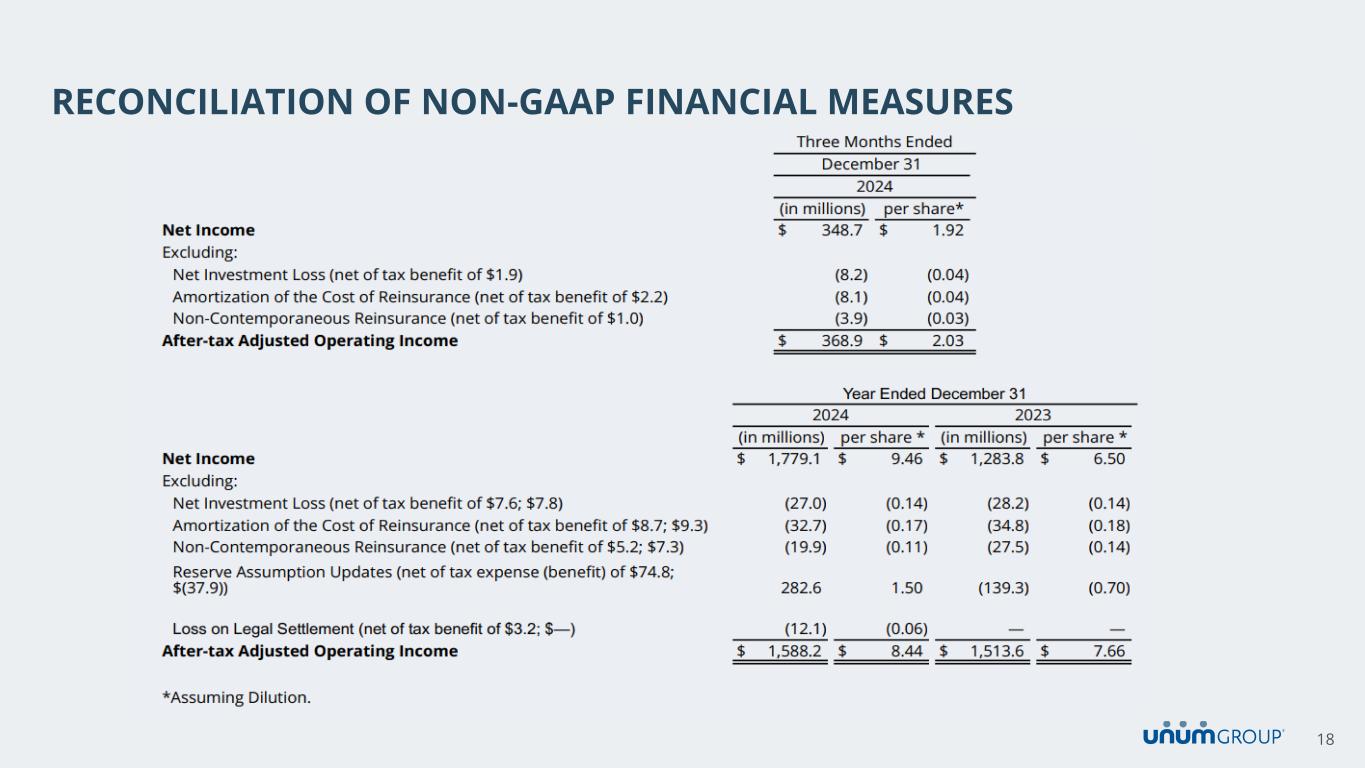
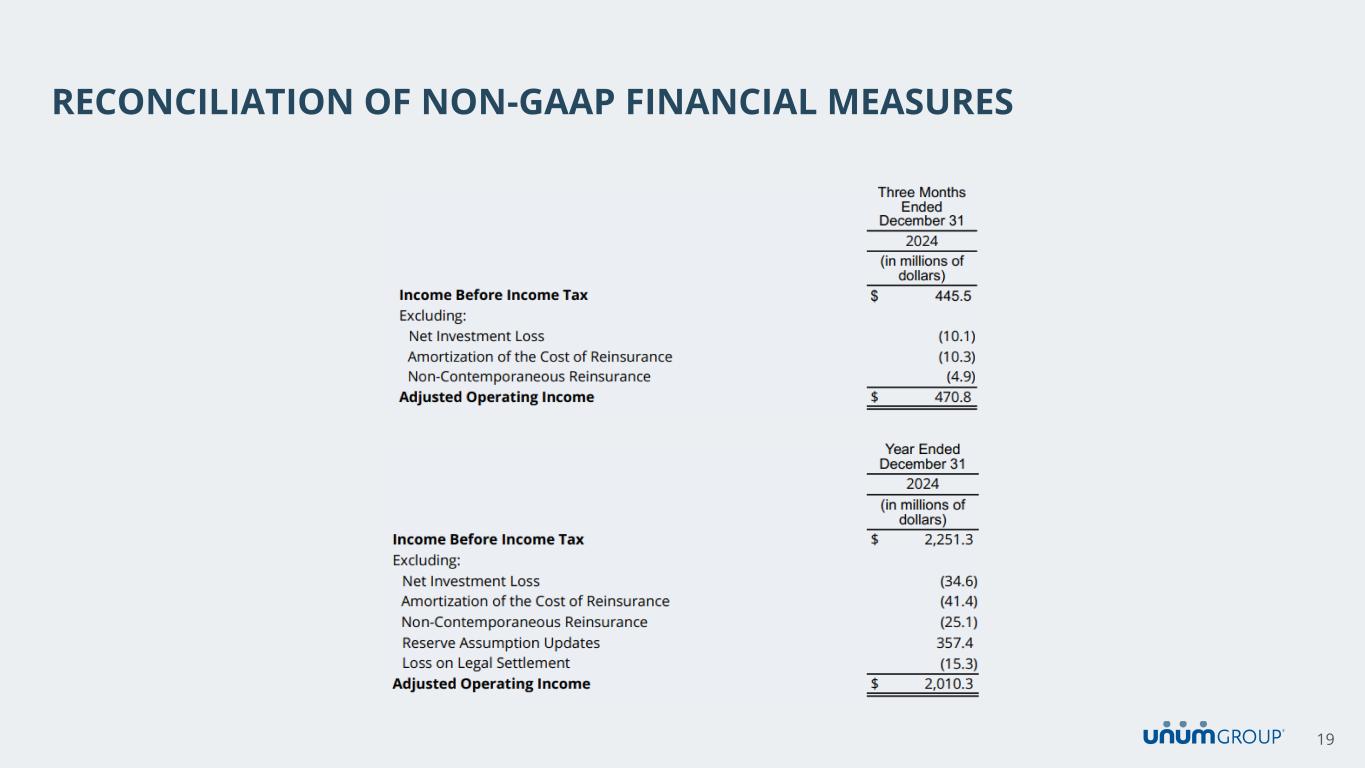
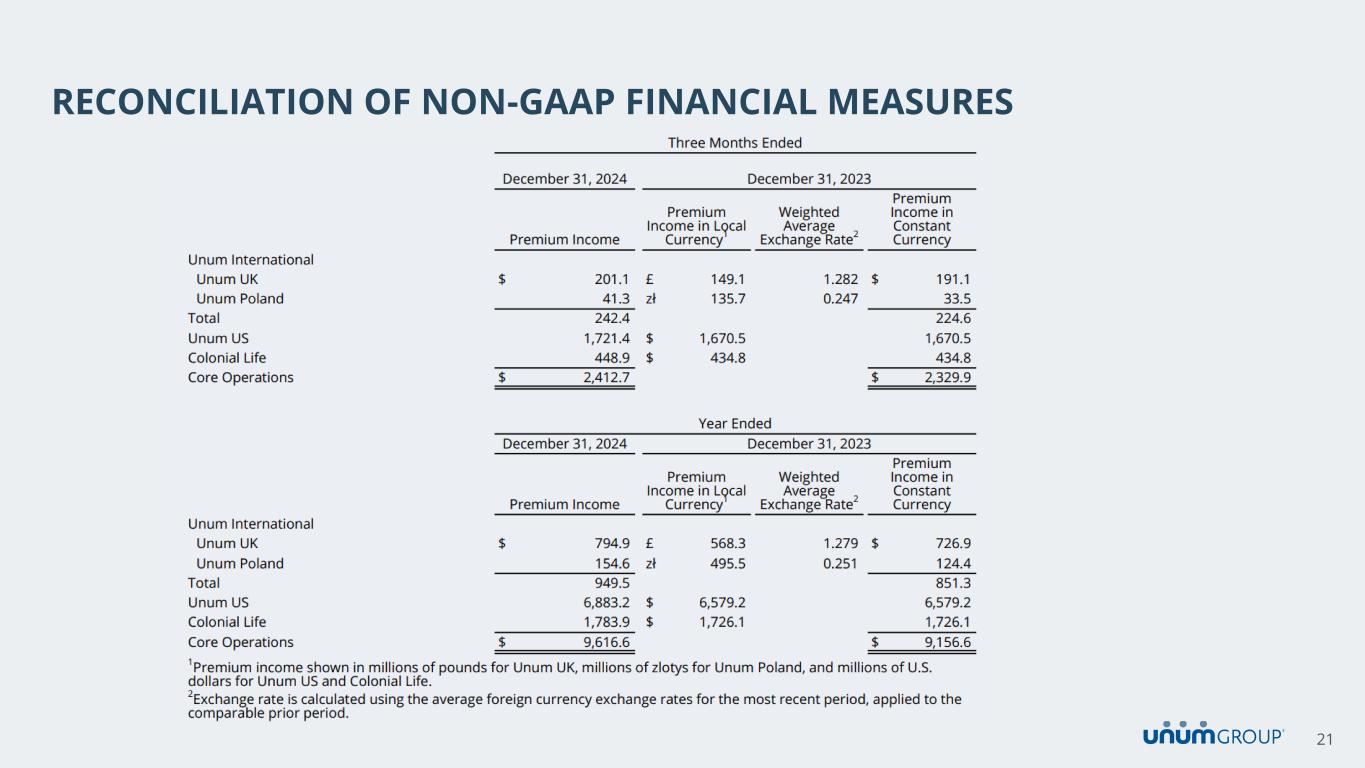
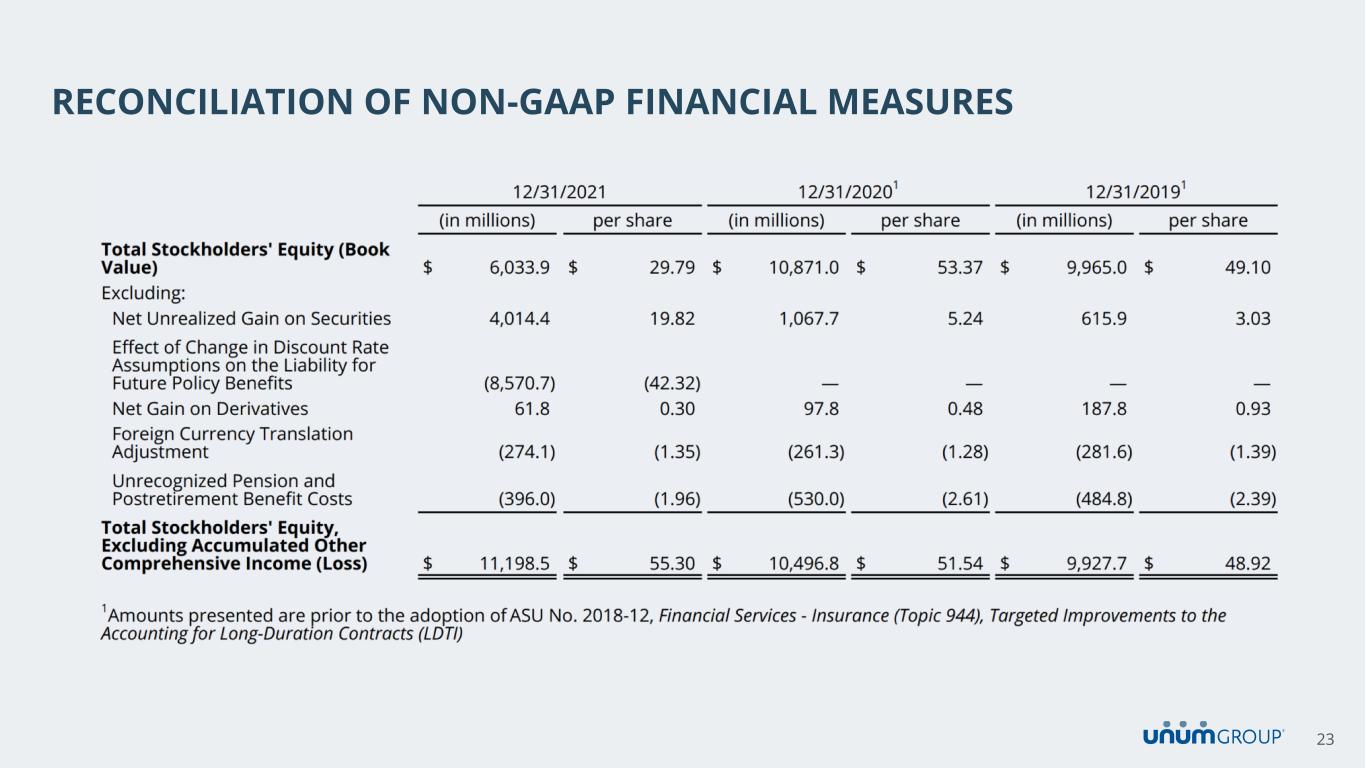
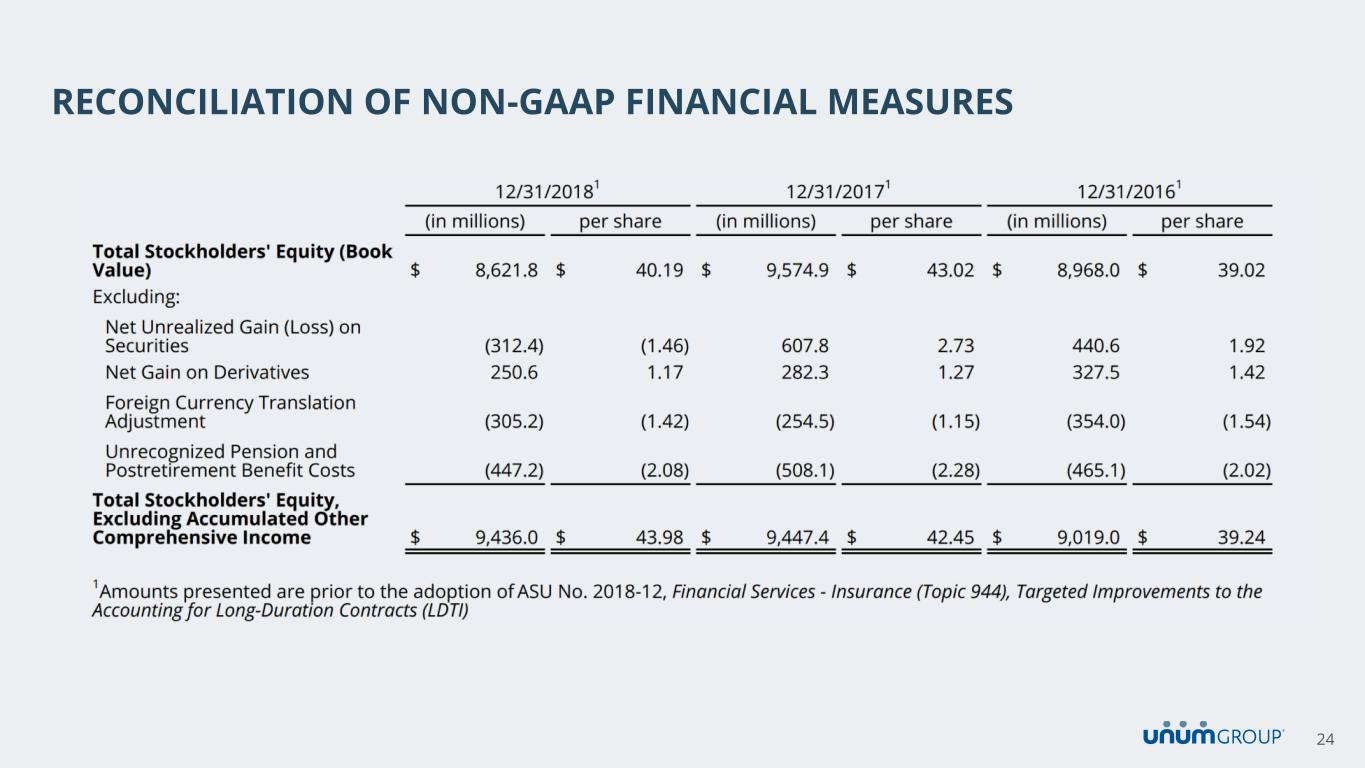
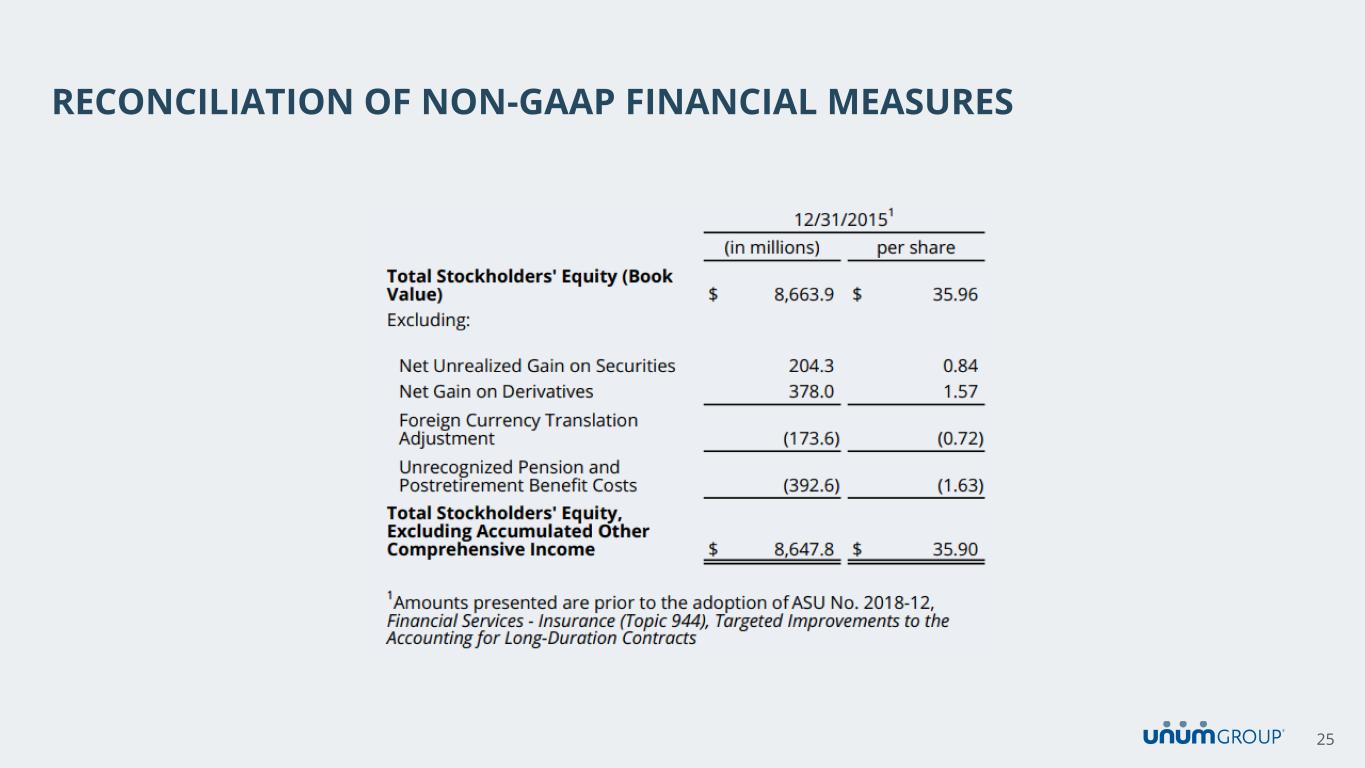
Great. Thanks, Rick, and good morning to everyone. As Rick mentioned, we were extremely pleased with the strong finish to the year across the board. The fourth quarter capped another year of solid growth as evidenced by our results. For the full year, sales were up 6.1% in Unum International, down 1.4% in Colonial Life, and up 6.5% in Unum U.S. where we saw record absolute sales and growth of nearly 20% in the fourth quarter, which is our largest sales quarter of the year. Premium for our core operations increased 3.6% in the quarter compared to a year ago and finished up 5% for the full year. This is within the expectation laid out last February and consistent with our long-term expectation of 4% to 7% annual premium growth. Margins across the business continue to be robust. Unum U.S. results saw continued sustainability in both disability and life results, highlighted by a disability benefit ratio of 59% for the full year and 60.4% in the fourth quarter. Meanwhile, Group Life and AD&D finished with a benefit ratio of 66.3% for the year and 66.7% for the quarter. Looking ahead, we expect performance for both of these lines to continue and are maintaining our outlook for both benefit ratios. Specifically for disability, we firmly believe that the results we are seeing are durable for the near to midterm as we continue to see support for these levels in our operations and in the market. Therefore, we reiterate our outlook for a benefit ratio in the low 60s. For Group Life and AD&D, we think current trends will continue for the near-term and therefore believe the benefit ratio outlook will be around 70% with potential period-to-period favorability as we have recently experienced. We also saw strong margin performance beyond Unum US. Colonial Life delivered one of its highest quarters of earnings on record, and International continues to produce earnings in line with its earnings outlook, which we did raise earlier this year to the mid- to upper GBP 20 million range per quarter. Both franchises are well positioned to continue these strong operating trends as we enter 2025. All of these factors enabled us to end the year with after-tax adjusted operating income of $1.6 billion and after-tax adjusted operating earnings per share of $8.44, representing growth of 10.2% over the full year 2023. The strong earnings power for GAAP was also apparent in our statutory results with full-year after-tax operating earnings of over $1.3 billion, which was within our outlook of $1.2 billion and $1.4 billion. Earlier, Rick mentioned our capital priorities and detailed our aspirations to grow the business while also returning capital to shareholders. Our consistent and powerful cash flow generation model provides us with significant capital flexibility, which was further enhanced in 2024 without the need to fund LTC. As a result, we returned $1.3 billion to shareholders in the form of share repurchases and dividends. This was an increase of 2.5 times from our deployment of just over $500 million in 2023. Our top capital priority is to reinvest organically into the business. The strength of our persistency and new account sales metrics are a testament to the value of our offering in the market and the success we are seeing with the key strategic initiatives that Rick discussed. Investing in these capabilities to grow our core business and increase efficiency is a key priority. As a result, the full-year 2024 adjusted operating expense ratio of 21.7% was consistent with 2023. In 2025, we expect the expense ratio to increase slightly as we balance continued investment to maintain our differentiation in markets with realizing further productivity gains. So then focusing in on the fourth quarter, results represented a continuation of some of the strong trends we've seen throughout the year mainly around margin sustainability and group disability and life. We did see some pressure in our supplemental and voluntary lines that I will discuss in a moment. However, we don't expect that to persist in 2025. All in all, this produced after-tax adjusted operating earnings per share of $2.03 for the quarter and $8.44 for the full year, representing 10.2% growth over 2023. Notably, this growth level follows multiple years of double-digit EPS growth.
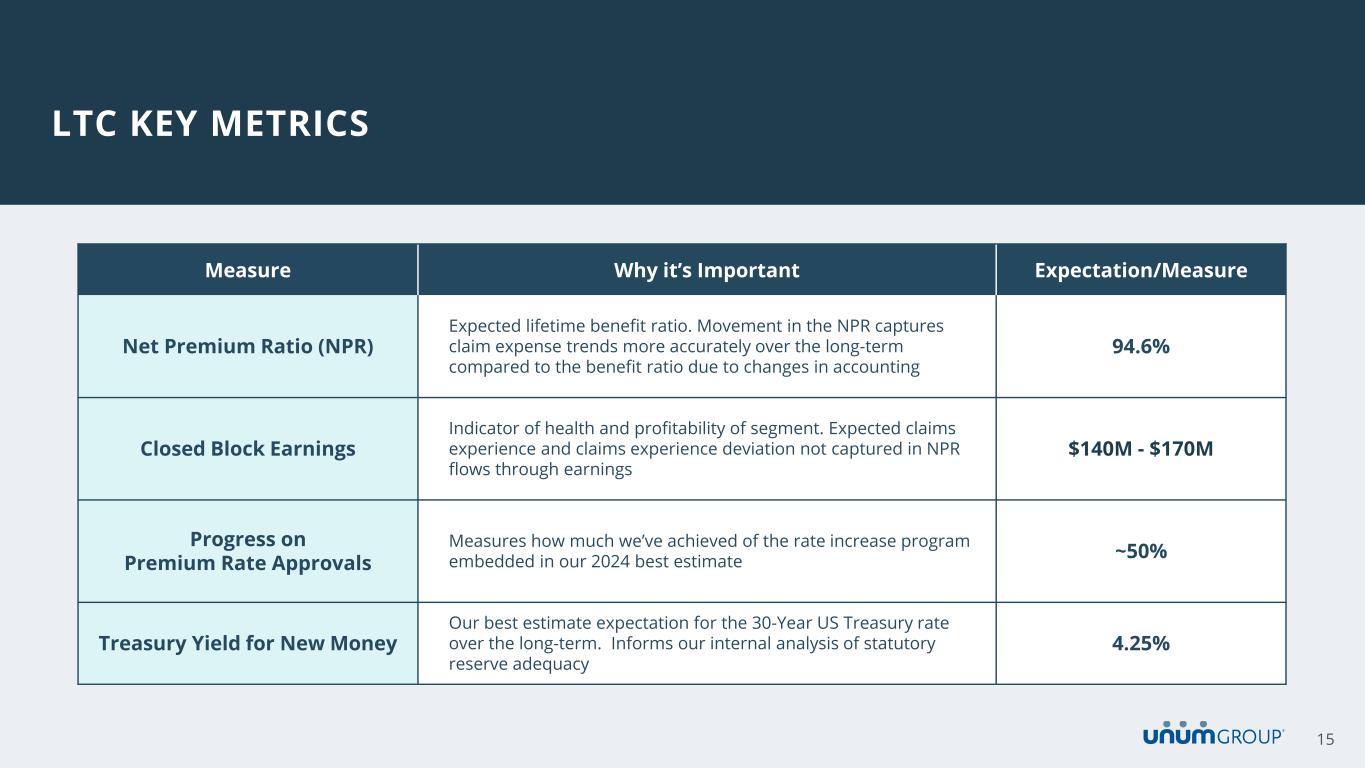
So then I'll now briefly review our 2024 results by segment, provide updates on the Closed Block, and then shift to our 2025 outlook. In Unum US, full-year adjusted operating income of $1.4 billion increased 6.2% over 2023. As mentioned earlier, these results were bolstered by sustained group disability margins but also group life performance with the Group Life and AD&D product line experiencing full-year adjusted operating earnings growth of 62.8%. While this quarter saw pressure from our supplemental and voluntary lines, specifically voluntary benefits, we view these impacts as transitory and believe results in 2025 should return to more normal levels specifically quarterly earnings around $121 million compared to the $104 million in the fourth quarter. Then from a growth perspective, Unum U.S. earned premium grew 4.6% to $6.9 billion due to natural growth, higher sales, and solid persistency, which is near our 5.7% expectation. Moving to Unum International, the segment continued to show strong trends in its underlying earnings power and top-line growth. Adjusted operating income of $157.8 million for the full year 2024 was relatively flat compared to the prior year but didn't have the benefit of high levels of U.K. inflation seen in 2023. As such, the underlying earnings power of the business grew in 2024, and when adjusting for the impact of inflation, U.K. earnings grew approximately 15% over 2023. Fourth quarter U.K. results of GBP 27.6 million were in line with our outlook for adjusted operating earnings levels in the mid- to upper GBP 20 million range. As we enter 2025, we expect to grow off of this range and believe the upper GBP 20 million range remains an appropriate outlook. We are pleased with the growth levels in the U.K., highlighted by full-year premium growth of 9.4% and sales growth of 6.6%. While the U.K. business is the major driver of this segment, Poland saw another year of significant growth, increasing premiums by 24.2%, while sales grew 4.2%. Then turning to Colonial. While sales were down for the full year, premiums did grow steadily at 3.3%; despite slower levels of growth, margins remained outstanding, and fourth quarter adjusted operating earnings were some of Colonial's best ever at $122.7 million. Full-year results of $466.7 million were up 16.6% over 2023 and equated to a return on equity of 19.7% compared to 18.1% in the prior year. So before covering the Closed Block results, the Corporate segment, which consists predominantly of corporate debt-related expenses produced a loss of $50.4 million in the quarter, and we expect this level of loss to continue into 2025. Switching gears to the Closed Block of business and focusing on this quarter, adjusted operating earnings were $27.7 million. This brings full-year earnings to $137.8 million, which is in line with our outlook of $130 million to $160 million. The LTC net premium ratio, which is indicative of a lifetime benefit ratio expectation, increased slightly to 94.6% from 94.5% in the third quarter of 2024. Further, LTC incidents remained above long-term expected levels and were generally consistent with our experience in the third quarter. We continue to believe the elevated incidence rates have been a function of inventory levels normalizing in the environment following the pandemic, and we may continue to see some of this volatility going forward.
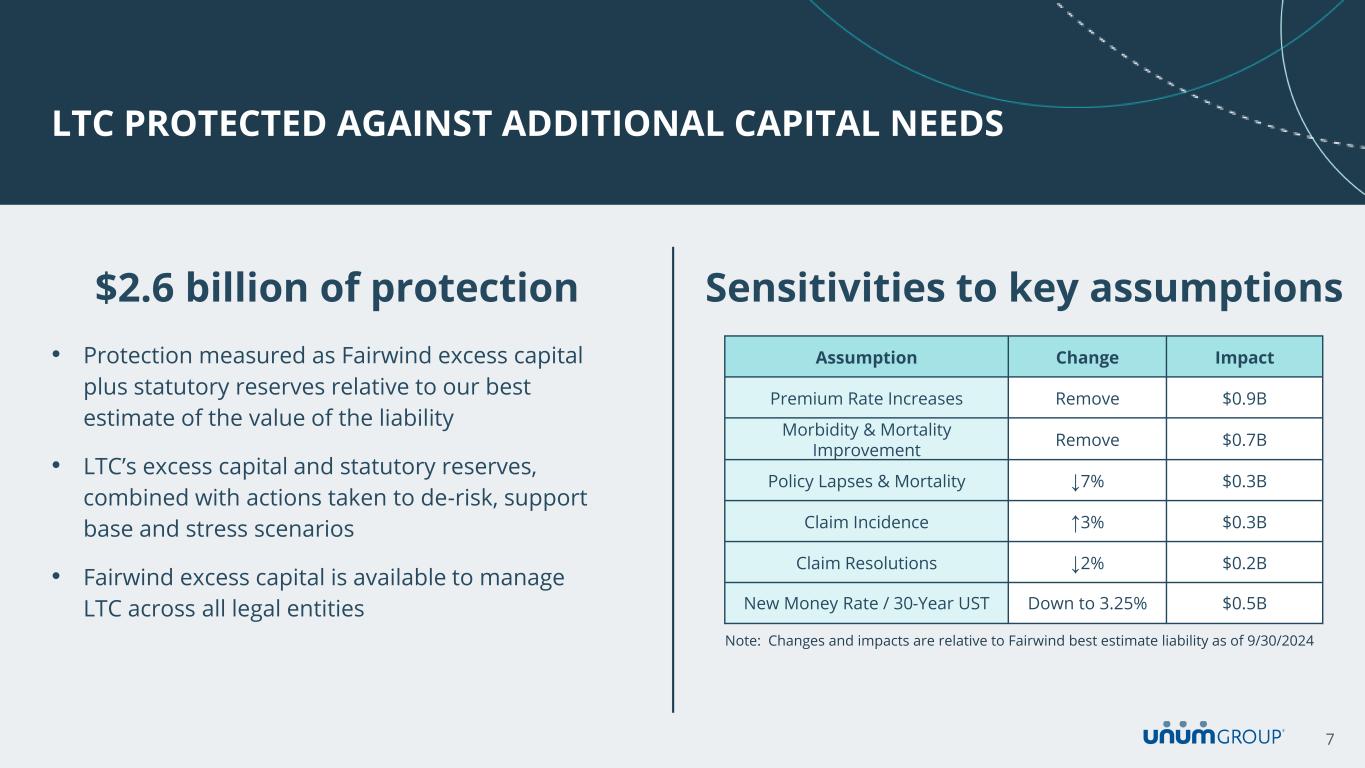
Lastly, for the Closed Block, our alternative investment portfolio, which largely backs LTC, produced income of $30.5 million in the quarter, or a yield of 9.1% on an annualized basis. Since the inception of this portfolio, our diversified alternative portfolio has produced returns that are in line with our long-term expectation of 8% to 10%. And moving on from quarterly results. I'll now take a look at the overall position of our LTC Block. 2024 saw a handful of positive trends, including the higher-for-longer rate environment and our success regarding our premium rate increase program. Both of these factors drove pronounced impacts to our block that I'll describe. First, through the end of 2024, we achieved over 50% of our current premium rate increase program expectation. We are pleased with both the pace and the receptiveness from regulators for these requests. A key element of this success has been offering policyholders flexibility. We regularly present choices for coverage adjustments and other methods that we made better suit their present financial and insurance needs. Second, the higher rate environment has had major benefits to LTC over the last few years, and this was no different in 2024. Our hedge program remained active, and with $2.6 billion of outstanding notional at year-end, average hedge rates of 4.3% exceeded our best estimate ultimate assumption for the 30-year treasury of 4.25%. In addition, as we discussed earlier in the year, we took the opportunity to extend the horizon of investable cash flows hedged from 5 years up to 10 years in some cases. Overall, we are very pleased with the impacts of our hedge program and the prudent risk management it provides. As Rick mentioned in his opening, we no longer anticipate the need for further capital contributions for LTC. Our 2024 capital deployment demonstrated this, allowing us to concentrate further on expanding our core operations and returning value to our shareholders. Our confidence is reinforced by the $2.6 billion of protection which consists of the difference between our best estimate reserves and our reported statutory reserves plus excess capital at Fairwind. With the sustained levels of interest rates, we were able to release a large portion of our premium deficiency reserve in Fairwind. Due to tax impacts on reserve releases in the Fairwind excess capital, the level of protection decreased as expected from $2.8 billion reported last year to $2.6 billion this year. On an economic basis, we are in a similar position of strength to last year as this capital will stay in Fairwind. We've provided updated sensitivities to show the relative size that changes in assumptions have against our protection level. I'd like to take a pause here and describe a little bit the sensitivities that we show in the materials that are on the screen. As I'm looking at the table on the right side of the page, what we've done is looked at the major assumptions that we have within our best estimate assumption set for economic reserve for this line of business. And what we have done for both the premium rate increase as well as the morbidity and mortality improvement is just give an indication of what the impact of removing the benefit of those assumptions from our best estimate assumptions would impact our best estimate reserve.
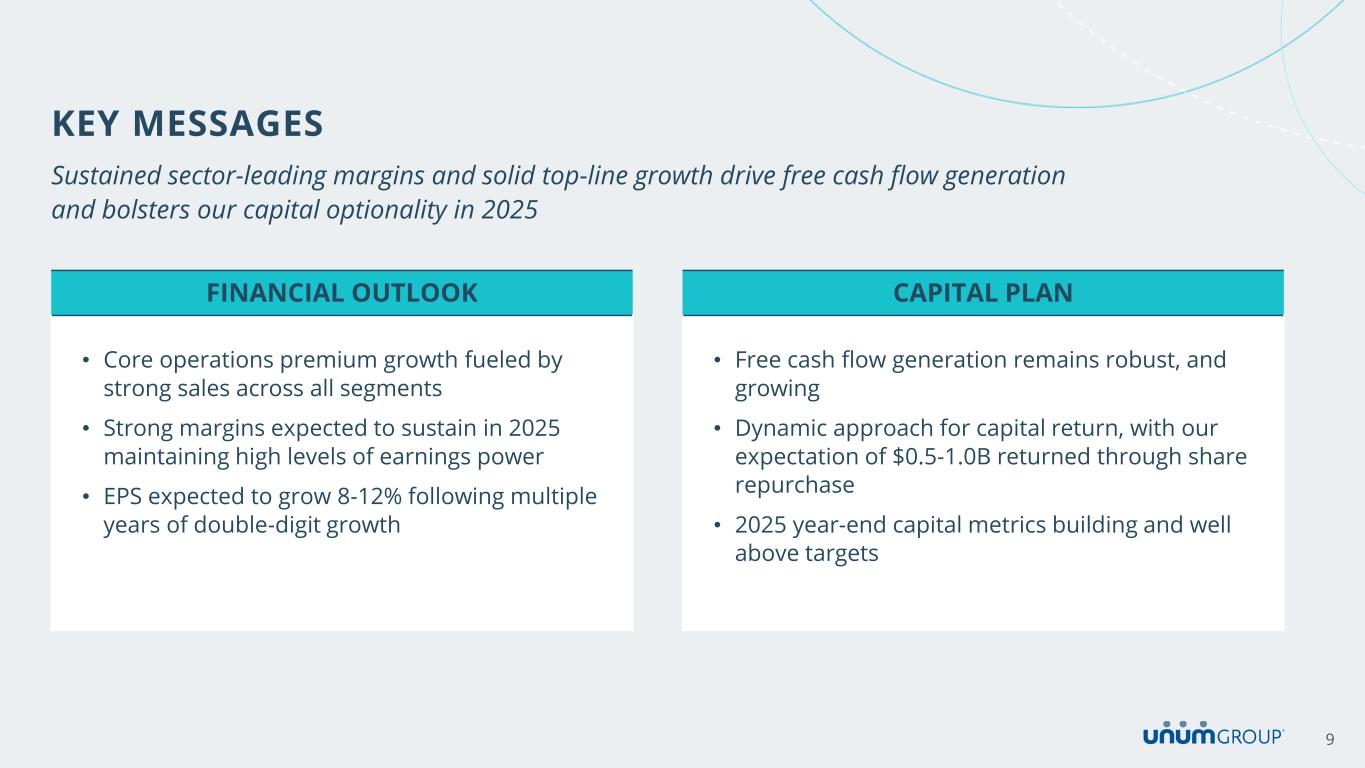
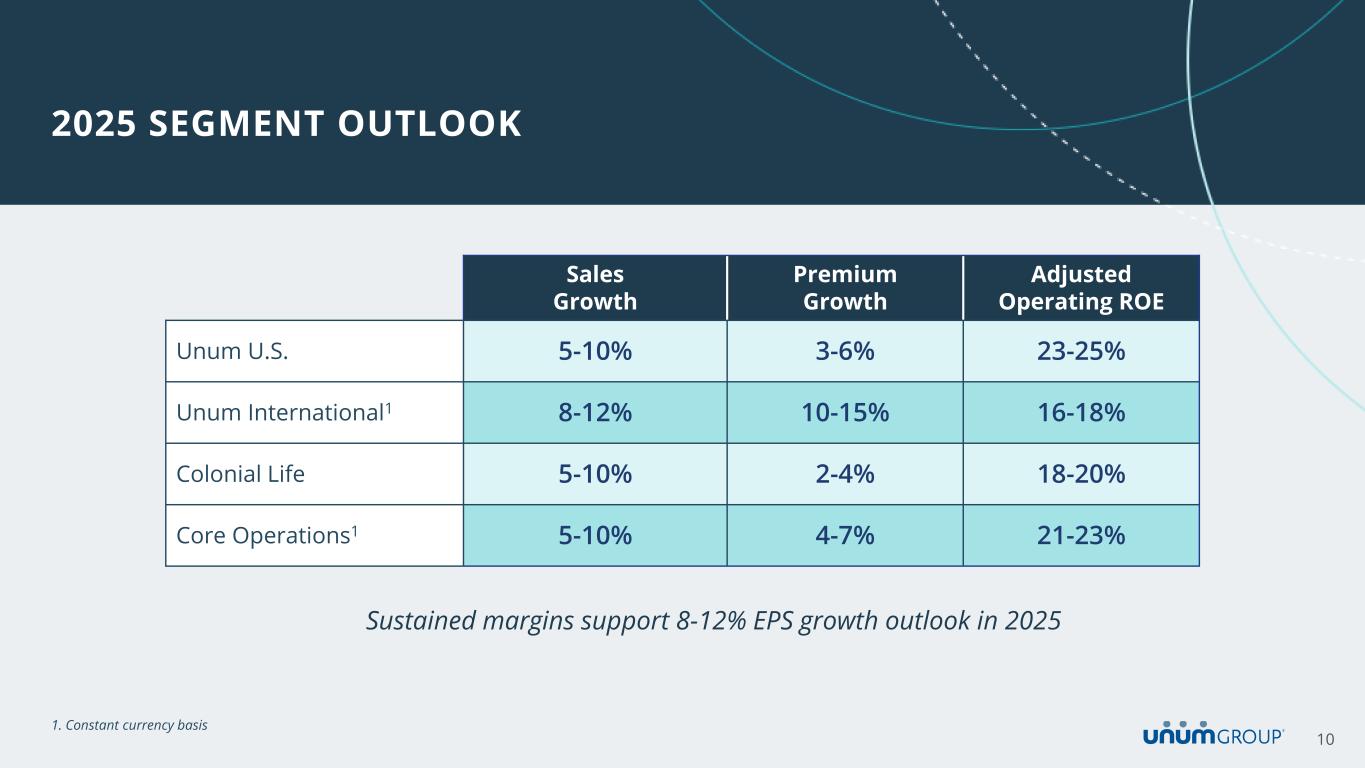
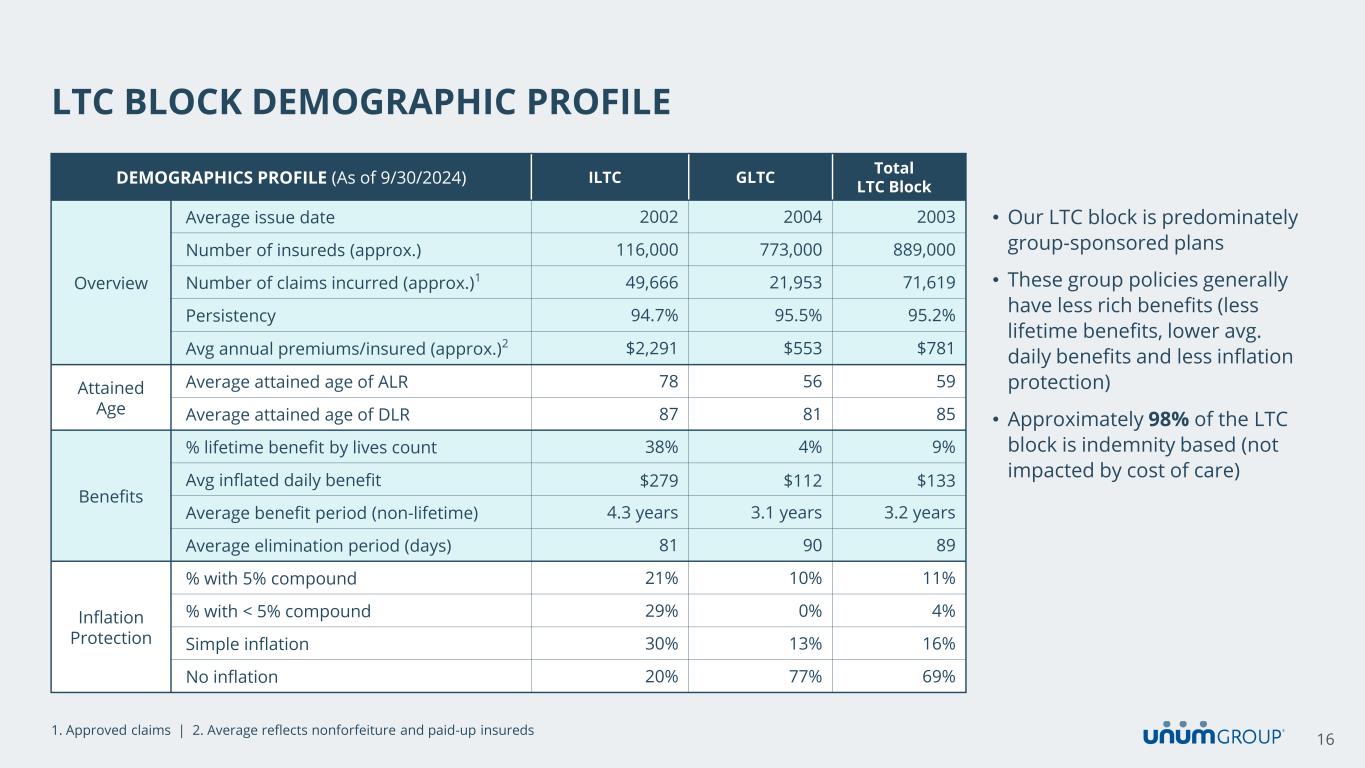
And then the last sensitivity that we gave was to take the new money rate for the 30-year treasury and take that down to 3.25% for an ultimate rate and the impact that would have on our best estimate. We obviously do not think that these will all occur together but wanted to give the market some indication of the sensitivities for these various key assumptions within our best estimate reserve and be able to relate that back to the level of protection that we believe we have between our recorded regulatory reserves and our best estimate reserve. So this further validates our view that we will no longer need to contribute capital to the block. Considering all of this, we are pleased with the position of our block, and we will continue to pursue all of our options both internally and externally to best actively manage it. Internally, we will focus on continued risk management actions such as implementing hedging strategies and advancing our premium rate increase program. Externally, we will continue to seek opportunities for economic risk transfer. These actions remain a top priority as we move into 2025. For your reference, we have updated the LTC key metrics and block demographics, and they can be found in the appendix of today's presentation. So stepping back, 2024 was an incredible year for the company. And as we turn to 2025, we see many of the same tailwinds and opportunities to win. So with all that considered, it's time to talk about our outlook for this year. I'll start with our view of business growth and earnings power and then discuss how that plays into capital generation. The key theme of our 2025 outlook is consistency with the strong results that we saw in 2024. The major trends that drove those 2024 results are expected to continue into 2025, specifically our group disability and life product margins. The durability of these trends drive high levels of earnings power and lead to robust free cash flow generation and capital optionality. These sustained margins paired with top-line growth and a thoughtful share repurchase strategy drive expected earnings per share growth of 8% to 12% in 2025. I will now turn to our expectations for top-line growth and returns of our core businesses. Following our core operations sales growth of 4.3% in 2024, we expect sales to build momentum in 2025, including continued success in Unum U.S. and International with Colonial resurging to the 5% to 10% growth range.
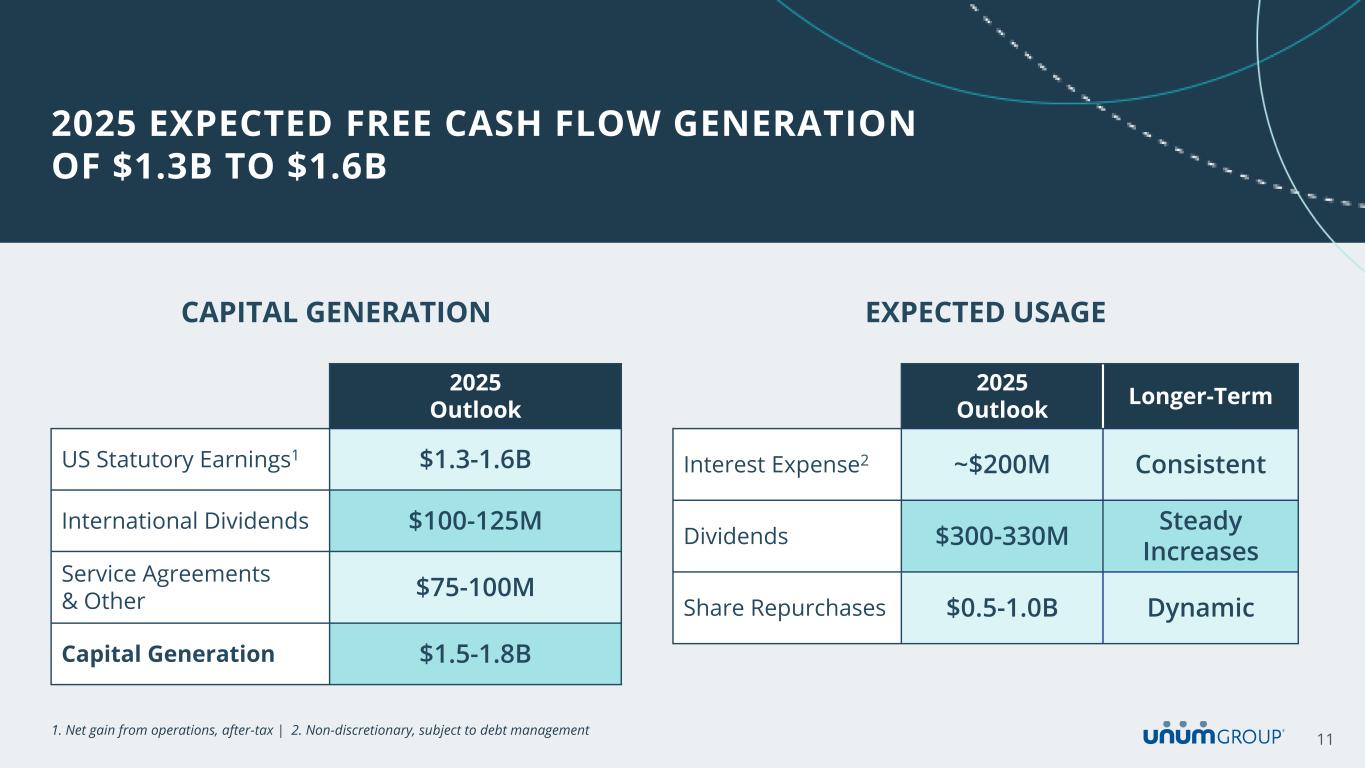
There are different stories across the lines of premium growth, but importantly, we believe core operations growth will continue to produce results in line with our long-term expectation of 4% to 7%. It's also noteworthy that our International segment continues to produce very strong growth results while maintaining its solid level of margins seen post-pandemic. Returns on equity across the board are robust and sector-leading, driven by the sustained product margins I referenced earlier. I'll now pivot from GAAP metrics to our capital expectations in 2025. Our capital generation model continues to grow after a fantastic 2024 with our sources of expected capital totaling $1.5 billion to $1.8 billion. This compares to our outlook last year of $1.4 billion to $1.6 billion. As a reminder, our cash generation is driven by earnings in our U.S. insurance subsidiaries, which will convert to dividends to our holding company, dividends from our U.K. operations, and other fees charged to our operating companies, specifically asset management fees. This is all fueled by our strong earnings across our businesses. We do not expect major changes in our capital usage in 2025. Specifically, we will continue to service our debt at leverage consistent to current levels, steadily increase our dividend and return capital through a sizable share repurchase program. For 2025, we expect to buy back between $500 million and $1 billion of shares as we assess our capital deployment priorities throughout the year. For context, in 2024, we repurchased approximately $700 million of shares after removing those shares repurchased in conjunction with our PCAPs transaction in the fourth quarter.
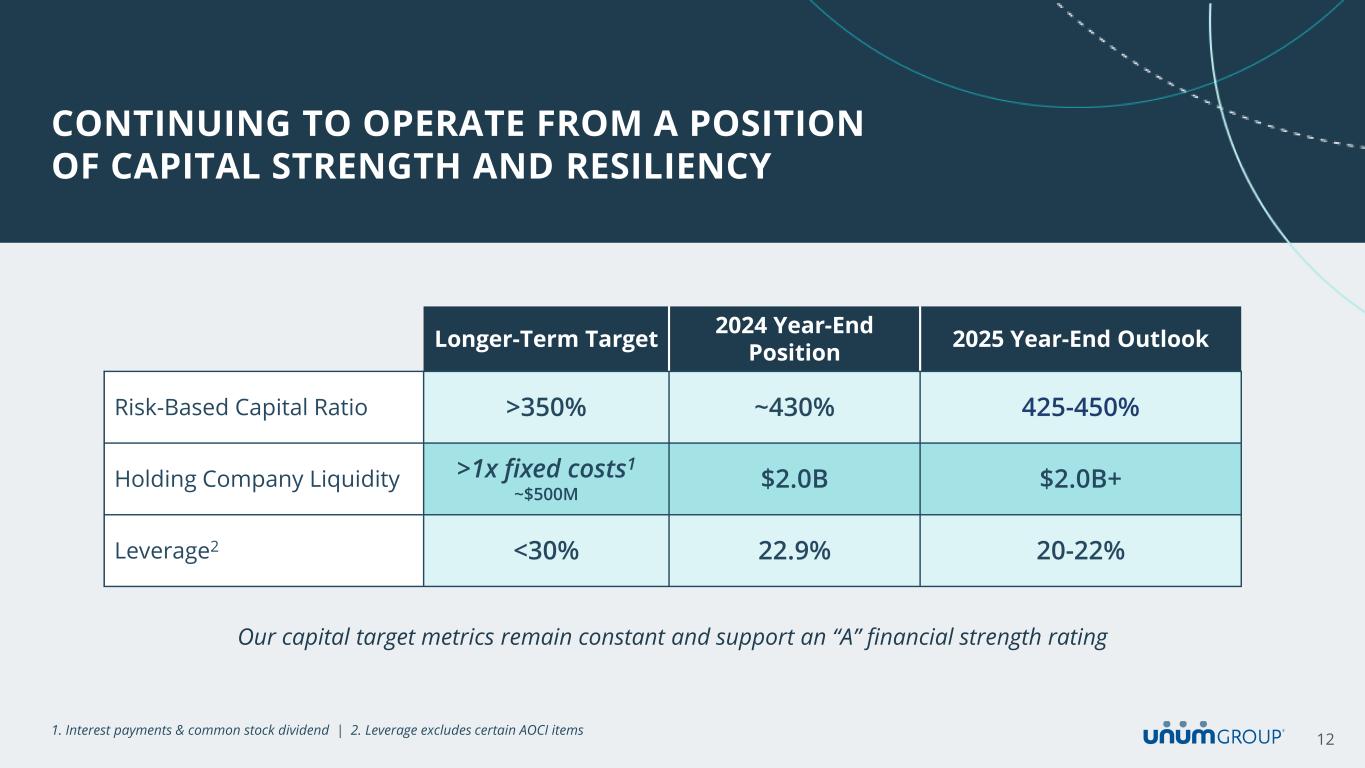
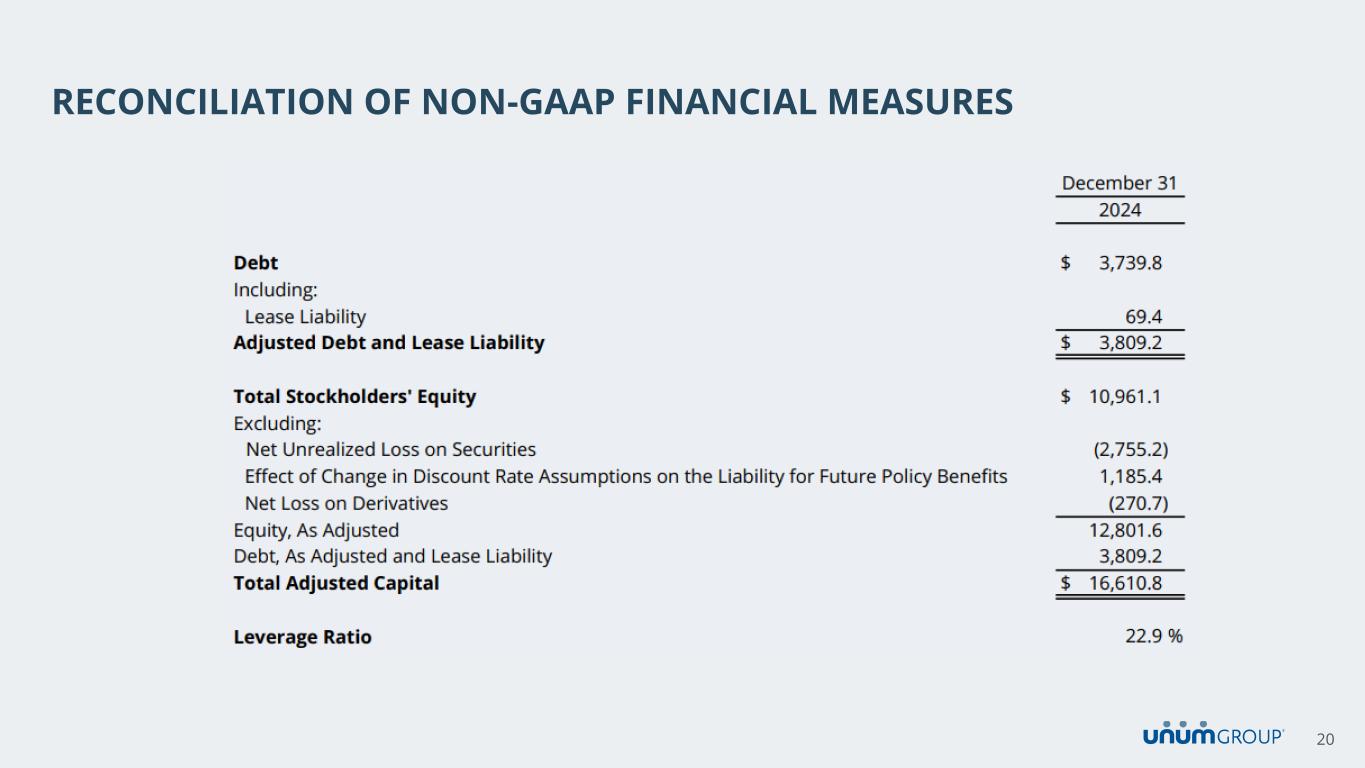
So now turning to Page 12 in the presentation. I will finish with our expectations for capital levels at the end of 2025. We expect capital levels to continue to be strong and well above our targets, which are calibrated to maintain our current ratings. This includes risk-based capital in our traditional subsidiaries to be between 425% and 450%, holding company liquidity to be greater than $2 billion, and ample leverage capacity between 21% and 22%. As we always do, we will ensure a prudent approach to capital management and do not plan for sudden changes to our capital structure. That considered over time, we do plan to manage these metrics back down closer to targets. However, in the near-term, this position grants us immense capital flexibility and allows us many options to further advance our business strategy and return more capital to shareholders. So to wrap up our prepared remarks, we are extremely pleased with how the company performed in 2024 and excited for the opportunities for our businesses in 2025. We will continue to deliver on our promises to more and more customers, create a desired workplace for our employees and deliver industry-leading margins for our shareholders. I will now turn it over to Rick for his closing comments before going to your questions. Great. Thank you, Steve. As you can see, with 2024 in the books, 2025 is shaping up to be another great year for Unum and with continued momentum in our core business and our capital generation. Plenty of topics to cover this morning. So with that, we will move to your questions.
Operator
Your first question comes from Tom Gallagher from EVR.
Speaker 4
So, Steve, I have a question regarding group disability. You mentioned that you expect it to remain favorable in the midterm. Can you explain why that is? There's a general concern that it might revert to the mean and drop back to the 70s. What underlying factors are truly driving this? It seems like there might be a structural change. Is it mainly due to claim recovery, incidents, or a combination of factors? Also, why do you believe that price competition won't affect the margins if the situation is as favorable as you suggest? Or do you think your margins are better than many competitors, making it less of a concern? Any insights on this?
Tom, and I'll cover really just from a claims performance perspective, what we've been seeing and why that gives us confidence in the near to midterm. And then maybe Chris can talk a little bit more about the competitive market. We've gone through kind of the fourth quarter selling season, and so we have kind of an updated read on pricing and the competition out there, and I'll let him cover that. So just to zoom out a little bit, group disability for the year had an actual benefit ratio that was right around 59%. And so although in the fourth quarter, it ticked up a little bit to 60.4%, it is well within any kind of range of volatility that you might see quarter-to-quarter. So we continue to feel very comfortable about giving an outlook going into 2025 that would be in that low 60% benefit ratio range. And then what I would say is just the dynamics of the experience we're seeing. Incidence bounces around a little bit quarter-to-quarter, but I'd say, generally speaking, incidence is pretty much at levels that we would expect longer-term and is consistent with what maybe we would have experienced pre-pandemic. So I would say we feel really good about that, and that's been relatively stable. From a recoveries perspective, that's really where we've seen the improvement. And that's been kind of a decade-long improvement that we've seen there. It was clouded a little bit by some volatility during the pandemic. But as we came out of that in the '22, '23, '24 kind of period, we really saw continued improvement. And that gets down to just our team, them working with our customers, with employers, with physicians to figure out ways to get people back to work at a higher rate. We've been able to apply data to better understand outcomes and to implement accommodations for those people to get to better outcomes. And we're all aligned. People want to get back to work. We want them to get back to work. And we've been very successful with our people and our technology to be able to do that at a higher rate. And for those reasons, we do think that performance is sustainable going forward because we've embedded that into our claims management process.
Speaker 5
Yes. Thanks, Steve. And Tom, thanks for the question. It absolutely remains a competitive environment we expect to operate in that type of world. But building on what Steve was saying around you've got an excellent operational performance. You do have a favorable kind of attract and retain reality that employers are dealing with. They want a quality benefits package. They want it to work really well for their employees and them as a customer. And when you kind of combine high-quality coverage with connectivity into the human capital management platforms or other kind of technologies that are important to them, when you're solving challenges that are as important as leave and that's the reason maybe a customer came to you or they're considering staying. These are modestly different conversations than in the past or where price was more central to the conversation. Price is a part of the equation, though, there's no question. We want to charge a fair price. We want it to be stable over time. Customers appreciate that. And we just have a nice history of delivering both the value and price combination as it relates to our investments.
Speaker 4
That's helpful, guys. For my follow-up on long-term care, Manulife, a peer of yours, announced another risk transfer deal in late '24 regarding a younger vintage block. What is your perspective on the current market? Is it improving for risk transfer? Is the bid-ask spread still too wide? What do you foresee for '25?
Sure, sure. Let me touch on that and be fairly consistent with how we've talked about in the past. One thing that did change in the quarter, we did see another transaction. So as we talked about, the first transaction we saw just over a year ago, we think that's good. We think that actually shows that the market is coming together and where you can actually have the right attributes of an LTC company, meeting somebody that we're willing to take on that risk. Remember, the new development there is we're also bringing in other parties that are taking on some of the asset risk, which can enhance the overall proposition. So I think that those are both good transactions to see. But as we talk about it, these transactions are hard, and we have to make sure that we're able to find the right partner to take on specific attributes of our block. The team has done a really good job of parsing the block so we can really structure the block in something that we'd want to transfer from a risk perspective to see what the buyer is looking for and structure around that. So all those are, I think, very positive dynamics that are happening out there. But these are difficult transactions. And so we don't want to talk about anything of a particular timeframe, but we will be active in the market. We will talk to a number of players out there. And the deal has to make sense for us as well for the longer-term for our shareholders. But this is something we do think strategically is very important for our company to be off of the LTC risk. It's very unlike everything that we do. This is a legacy block of business. And so we want to make sure that we're focusing on the core, which you've seen the results are very strong. And so we want to do both those things, continue to run a great core business and then work to transfer the risk of LTC to another party.
Speaker 6
My first question is about the capital aspect. Your holdco cash is expected to grow throughout the year, and your RBC is also projected to increase. However, your approach to the buyback seems somewhat conservative. I understand there's a wide range involved, but are you maintaining a buffer in case of any developments on the M&A front? If so, could you share any thoughts on potential transactions you might be considering for M&A?
Sure, Elyse. This is Rick. Let me take you through and first, I guess, this conversation with what Steve was taking through is the very, very strong capital generation. So you have to start with that. The businesses are generating a tremendous amount of capital. I think importantly too, as we talked about 2023 was where we actually made a different move on long-term care to have that fully funded. So when you have that strong generation you don't have those needs across long-term care. You've got a lot of choices to make. And we've been very consistent to say first and foremost, priority, grow the core business. We've got a great franchise. You've heard about that today. How can we enhance that? How can we grow that? That's true organically, also true from an M&A perspective. And so you asked about the types of things we look at M&A, really, it's about how do we continue to use those transactions to grow the premium line. Think about that as capabilities. Think about that as potentially distribution. And then certainly, our international businesses are places we'd like to continue to look to grow as well. So that's the acquisition front and that use. But then you get to the things we're going to do from a shareholder perspective, increasing our dividend rate is something we've done consistently over a longer period of time. We'll continue to look at that. And then from a share repurchase perspective, when you get through all of that, we've said we're going to be dynamic. So it is a wide range, $500 million to $1 billion. A lot will transpire over the course of this year, and we want to actually be responsive to whatever that environment brings forward to us. Last year was a good example of where we were more dynamic. We exceeded the amount that we had going into the year with our kind of underlying $700 million and then a PCAP transaction, which brought that up close to $1 billion. So this is going to be an area we're going to be very active from a capital deployment perspective. I think in 2024, we showed that we will be dynamic, and we expect 2025 will shape up similarly.
And then on the voluntary side, right, the results were a little weaker in Q4, but it sounds like you guys don't expect that to continue given the earnings guide for '25. Can you just kind of provide a little bit more color on what went on there both in Q4 and just the outlook for this year? Yes, this is Steve. I'll address that. Looking back over several quarters, we've noticed some volatility in this line of business, primarily around the voluntary benefits product line within supplemental and voluntary. This volatility has been due to various products showing unfavorable performance from quarter to quarter. If we refer back to the beginning of last year, the earnings potential for that segment was above our expectations at $120 million per quarter. Although it fluctuates, we don’t consider this to be a systemic issue that would persist in the future. Currently, we believe that the earnings potential of that business at $120 million per quarter is a reasonable expectation for 2025. We’ll monitor how this develops as we approach 2025. All lines within supplemental and voluntary continue to perform well and are strong growth drivers for our organization. We have confidence in these businesses as they effectively meet market demands and are growing at a quicker rate than our group benefits sector.
Speaker 7
I wanted to ask again on pricing trends for Unum U.S. for 2025 renewals. Can you maybe just give us a little bit of color, particularly in group disability and group life? And if you could maybe just touch on how long that renewal pricing is being locked in just at a high level.
Speaker 5
Yes, thanks, Wes, it's Chris. So a good topic to talk about just in general how the block performed. If you step back and you look at really what was incredible persistency in '24. We talked about that a little bit around our capability making a real difference, but also just strong performance over time stable pricing, et cetera, et cetera. There was some element of kind of projects bid projects that have been put off for a while. We saw more of those in '24, where cases came to market that hadn't come out. For us, that's a little bit of a double-edged sword because obviously, on the sales side, we really enjoyed a strong 1/1. So as some of those projects were coming out we won some. On the flip side, some of our cases also went to market just for overdue market checks or the like. Where we can tie things to investments and longer-term strategies, we feel really good about it being a driver of persistency. On the flip, as I said to the earlier question from Tom, it's a competitive market, and we are looking to continue to get a fair price that's stable over time and feel very good that we can do that. We are really thrilled with the sales in fourth quarter. We think that that's a nice combination of a really coordinated strategy across the company that shows up well for our customers, and we think that's something we can build on.
Speaker 7
Got it. Regarding long-term care and premium rate increases, it seems you are about 50% through your current program. I'm curious about how that pace compares to your original expectations and what is reflected in your reserves. Additionally, considering your capital needs in the business and your level of protection, do you anticipate that you are mostly finished with rate increases, or do you expect to continue those over time if they are actuarially justified?
Right. Yes, and you're right. We're very happy with the progress that we've seen so far since last fall. And yes, I reiterate the progress that we've made. We're a little over 50% through the current best estimate assumption that is incorporated into our reserve right now. I will say, between then and now, we have had some very large state approvals we were expecting those, but those did come through in the fourth quarter and have been reflected in our statistics there. And as such, I wouldn't expect the pace going forward over the next few years to be at that level. We tend to get these approvals and get them implemented over kind of a 3- to 5-year period when we launch a program. And I think that still feels like a reasonable timeline. With that said, we are very happy that we're able to get some pretty large ones over the finish line and very happy with the progress that we have made. Your question just about not launching kind of future programs, that's always really just dependent on what we see emerge from the product. And also we're continually looking at opportunities to maximize that program. So I would never say never on that because we're consistently challenging where we might be able to go back to states and get fair returns on this product line.
Speaker 8
I want to go back to the voluntary benefits business. So we've heard other key players call out expectations for higher loss ratios moving forward. I think it was 2 years ago, you guys put out a benefit ratio target of 40% to 43% for the VB business. Is that still the correct way to think about this business? Or has something fundamentally changed to drive benefits higher, maybe the competitive environment or something?
Yes, I would say probably we would peg that somewhere closer to the mid-40s right now from a benefit ratio going forward. So modestly higher, but we still feel very good about the returns that we're getting on that line of business. And I feel very good about just the earnings power going forward. So that's probably a good planning assumption.
Speaker 8
Okay. And then just shifting gears to U.S. group sales. I guess how much of the strong sales at 1/1 were associated with customers utilizing capabilities like HR Connect or Total Leave.
Speaker 5
Yes, sales to the upmarket were very strong, providing us with great opportunities to discuss important topics like the human capital management platform and our integration capabilities. The same goes for leave management, where we have more access to customers to discuss the long-term solutions we've been investing in, especially since leave management issues attract significant attention. To emphasize your question's point, strategically aligned sales are crucial for our success in winning new business, and we are increasingly enthusiastic to address these as they evolve positively from our ongoing investments. We've been focused on these topics for quite some time. In the mid-market, these areas remain essential, but we also need to consider broker distribution platforms, as smaller customers often depend on their distributors. We've targeted broker platforms that enhance execution for these customers, and we are witnessing remarkable progress. We are very pleased with the outcomes in both the smaller and mid-market segments. Additionally, we've made good strides with our Colonial partners, where their strength with the Gather platform, which integrates employer-funded group products from Unum, is beginning to gain traction in the market, which is encouraging.
Speaker 9
Your next question comes from John Barnidge from Piper Sandler. Other market participants have begun more meaningfully talking about investing in leave management capabilities? Can you talk about the continual investment that's going on to support HR Connect, Gather, and the whole suite into the capabilities? And what proprietary moats there are that third-party products off the shelf fail to replicate?
Yes, John, leave management is a top priority for employers, right alongside the cost of healthcare. We've been involved in the leave management sector for many years, starting with FMLA initiatives when employers first sought assistance in navigating new regulations. Over time, the complexity of leave management has grown, influenced by factors such as the number of states where employers operate and their specific motivations for corporate leaves. Our long-standing experience in both leave management and disability services gives us a strong competitive edge. This advantage stems from our history and the significant investments we've made over the years, coupled with a focus on the ecosystems employers prefer for managing their workforce. We've invested in effective platforms that facilitate interaction and information exchange, reaching out to frontline managers so they can better understand employee situations, return dates, and necessary staffing protocols. These tools are essential for employers. Moreover, it’s rewarding to sell these solutions because we provide expert consulting that truly benefits our broker consultant partners and their clients. To conclude, we've dedicated substantial effort to an end-to-end strategy across our company, ensuring that our sales and client management teams are the best equipped in the industry to implement these solutions for brokers, consultants, and customers.
John, it's Steve. The only thing that I'd add, just there's a question in there just about the financial commitment to investing in these types of technologies. And I'll take Total Leave, for an example, we've been investing in that for 5, 6 years. We brought it to market a few years ago, and that's really incorporated into the earnings power of our statutory companies, and that's been embedded in that. And so when I think about the outlook going into next year of $1.3 billion to $1.6 billion of statutory earnings, we're funding that within that capital generation, and we have been for some time. So we're basically utilizing our current scale to make those investments and then still generate very, very healthy returns and capital redeployment.
Speaker 9
And my follow-up question, can you talk about the market dynamics in the core market versus the large case market? It feels like there's been a bit of a bifurcation in sales growth between those two that has emerged over the last year?
Thank you, John. We are very pleased with the growth in core sales, particularly in the under 2,000 Life business for Unum and the over 2,000 Life National Client Group. The sales in the National Client Group over 2,000 life were particularly notable, reflecting our success in winning upper mid and National Client Group level customers, which is linked to our capabilities. The start of the year is crucial for this, and we experienced a significant increase in new business this year. From a core perspective, we are happy with what is effectively double-digit sales growth for the group in the quarter. It's important to exclude the prior year's stop-loss sales to accurately see that growth. In the mid-market, when we examine the Workforce Now platform of ADP and consider Workday's efforts to expand its capabilities into the mid and smaller end of the market, we see these dynamics standing out. We are making substantial investments in the bundled offerings down market, particularly in broker-distributed platforms and our own My Unum. We recognize that there is further opportunity for growth in this area. Overall, sales growth has been strong, the bundle is effective, and we are confident in our product portfolio. This quarter, NCG performed exceptionally well, but we are optimistic about achieving a balance between both segments.
Speaker 10
Unum US premium growth decelerated during the course of 2024, including in the fourth quarter. It looks like you expect a reversion back higher in 2025. Is that just a function of the timing of how sales has come through over the last year? Or is there something else going on that depressed premium growth in the last quarter or two?
Yes, Ryan, it's Steve. There's nothing specific in the fourth quarter. There's some kind of seasonal recognition things that occur. But I just kind of zoom back 5% growth for the full year, and we feel really good about growth going into 2025. It may vary a little bit quarter-to-quarter, but feel really good that we can continue to grow those businesses.
Speaker 11
Yes, Ryan, it's Tim. Thanks for the question. So let me start with '24 first. Clearly, '24 was not the year we expected from a sales growth perspective. In the fourth quarter, we were up against an extremely strong fourth quarter in 2023 with higher than 11% growth in that quarter. That was driven by the large and jumbo market. So we had some really good success in '23 with a couple of extraordinarily large clients. Maybe just building on Chris' point from the question from John, on the Colonial Life brand, we view the large case market as being an opportunistic market, and we've been pretty consistent about saying that through the years. We want to grow in large case, but only where it makes sense from a profitability perspective for us. So premium growth last year, as Steve pointed out, but it's worth reiterating 3.3% in the range that we gave you guys earlier last year. That was driven by strong persistency and pretty good results in '23. And then that led to extremely strong earnings, as Steve pointed out, from high levels of premium benefits were favorable and expense management was really good as well. As we flip the page to 2025, focus specifically on the Colonial brand, we are excited about the progress we're seeing with the strategic investments that Rick mentioned and Chris and Steve had touched on as well. Gather platform product sales are growing very, very rapidly. We're seeing good growth in sales from Colonial Life agents on the unit product portfolio, which is really important to us going forward that we are able to offer an integrated solution to our clients. And what's really neat is when our agents sell Colonial Life voluntary, Unum ancillary and put it on Gather, our client gets a single bill rather than numerous bills. So we're excited about the opportunities there. We are seeing very strong adoption of our agent productivity tool. We call it Agent Assist. And when that is coupled with the fact that new agent recruiting was up 12% in the fourth quarter, in fact, the highest quarter of recruiting that we've had in recent memory. We like our chances in 2025. Perhaps most importantly, though, in the fourth quarter of last year, we did name a new SVP of Sales. She has a very long history of success in our Colonial Life sales organizations in virtually every role she's been in. She started at an entry level and worked her way up and was most recently the Vice President of Sales for one of our regions. She's a transformative, execution-focused leader, and we're confident that she will be able to help us in 2025. We did only name her in the fourth quarter, so it may take a quarter or two to get to the place that we want to be, but we're confident we can be in the range that Steve shared.
Speaker 12
First my question is on the Unum U.S. premium growth. I was actually interested if you could talk about persistency a bit. I mean, just in light of sales being as strong as they were this quarter, and persistency looked like it was a pretty good outcome too, probably on the back of some of the capability advantages that you have. And so I just wanted to understand how that's translating into premium growth. It's always a little hard from the outside to do that conversion. And what's sort of assumed in the premium growth guidance you've given us for 2025 in terms of persistency.
Speaker 5
Yes, Alex, Chris, I may not have been clear enough in my previous response regarding the dual nature of the pent-up demand for market checks or RFPs related to solutions that were not available in 2022 and 2023, which contributed positively to our persistency in 2024. While we secured several wins, the drawback is that some of our existing contracts were also in consideration, which carries the risk of losing clients. Therefore, while I anticipate strong persistency in 2024, I expect it to normalize in 2025 as part of the broader picture. We remain optimistic about our capabilities and solutions when addressing significant customer challenges, as that tends to encourage customer loyalty, but this represents only a part of our overall portfolio, and it will take time to enhance its significance within our business.
And Alex, just to make it clear. So 1/1 renewals, kind of the results of that will be reflected in our first-quarter persistency. And so as we go into next year, we'll report kind of the results of that as we go forward.
Speaker 10
Got it. And then can you give a little bit more color on what is driving the expected Colonial Life sales turnaround in 2025?
Speaker 11
Yes, Ryan, it's Tim. Thanks for the question. So let me start with '24 first. Clearly, '24 was not the year we expected from a sales growth perspective. In the fourth quarter, we were up against an extremely strong fourth quarter in 2023 with higher than 11% growth in that quarter. That was driven by the large and jumbo market. So we had some really good success in '23 with a couple of extraordinarily large clients. Maybe just building on Chris' point from the question from John, on the Colonial Life brand, we view the large case market as being an opportunistic market, and we've been pretty consistent about saying that through the years. We want to grow in large case, but only where it makes sense from a profitability perspective for us. So premium growth last year, as Steve pointed out, but it's worth reiterating 3.3% in the range that we gave you guys earlier last year. That was driven by strong persistency and pretty good results in '23. And then that led to extremely strong earnings, as Steve pointed out, from high levels of premium benefits were favorable and expense management was really good as well. As we flip the page to 2025, focus specifically on the Colonial brand, we are excited about the progress we're seeing with the strategic investments that Rick mentioned and Chris and Steve had touched on as well. Gather platform product sales are growing very, very rapidly. We're seeing good growth in sales from Colonial Life agents on the unit product portfolio, which is really important to us going forward that we are able to offer an integrated solution to our clients. And what's really neat is when our agents sell Colonial Life voluntary, Unum ancillary and put it on Gather, our client gets a single bill rather than numerous bills. So we're excited about the opportunities there. We are seeing very strong adoption of our agent productivity tool. We call it Agent Assist. And when that is coupled with the fact that new agent recruiting was up 12% in the fourth quarter, in fact, the highest quarter of recruiting that we've had in recent memory. We like our chances in 2025. Perhaps most importantly, though, in the fourth quarter of last year, we did name a new SVP of Sales. She has a very long history of success in our Colonial Life sales organizations in virtually every role she's been in. She started at an entry level and worked her way up and was most recently the Vice President of Sales for one of our regions. She's a transformative execution-focused leader, and we're confident that she will be able to help us in 2025. We did only name her in the fourth quarter, so it may take a quarter or two to get to the place that we want to be, but we're confident we can be in the range that Steve shared.
Speaker 12
If I could just sneak 1 more in, just relatedly, M&A-wise, what sort of size transaction would you guys be thinking about? I think in the past, you talked about a couple of hundred million dollars, but I just want to get an update there.
Yes. I think that, that would probably be consistent. And we really haven't talked about the size so much as the type of transaction we look at, and these are capability-driven type transactions. It could be a technology, it could be something on the distribution side, which would denote a little bit smaller transaction. Would we move up from that? I don't think materially, it's all going to be all about growing that premium line. So we try to stay away from the exact size, but I think the types of transactions that we talk about type of companies we'd like to buy are probably in that smaller range.
Speaker 13
I want to talk a little bit at the beginning of the Q&A. We talked about the competitive environment and how you're thinking about pricing. I want to understand, are you thinking that you're pricing current disability in the low 60s type benefit ratio range, but you expect that the favorability trends will continue and they might be better than that? Or are you pricing right now for a sub-60 type experience?
Yes. Josh, thanks for the question. Again, stepping back, we have the power through the bundle of both solutions and products that we can put together to be flexible with our customers to set that long-term pricing plan at a place that they're comfortable and that we can expect to have. Sometimes you've got to make rate adjustments up and down, but to make them in the more modest sense. And again, when you're talking about when you're talking about bundling of things like leave management or HCM capabilities, it does take a little bit of the kind of bottom line nature of the conversation away, which is a good thing. So we're counting on our claims organization to continue to perform at the level that they are. They've shown a great history of that. We feel like we can put that together with reasonable pricing. So that we can continue on this very good trajectory that we've been on for some time. And as you can see, we've guided the loss ratios to be kind of low 60s, but keeping where we are for the period of time on both disability and life insurance creeping up towards 70s. But again, I feel like we're in a really good spot there as well.
Speaker 5
And I guess how much is price a factor in your ability to win business? If you were to say we're willing to price 300, 400 basis points less margin than we have currently been earning. Would it stimulate much growth? Yes.
Speaker 13
And I guess how much is price a factor in your ability to win business? If you were to say we're willing to price 300, 400 basis points less margin than we have currently been earning. Would it stimulate much growth?
Speaker 14
Just 1 quick one. You talked about a lot of optionality in the potential risk transfer for the long-term care block. How much do you prioritize just getting a full solution, so it's entirely off your books or maybe a partial solution that just has components of the block?
Yes, Mark, it's Rick. When considering a full solution, we have learned over the past five years that, given the size of the block, it's more practical to think of it in segments. Our goal is to ultimately reduce our risk completely, but approaching it incrementally seems more reasonable. That's why we are capable of removing any part of the block from a structuring standpoint, and our focus will be on that approach. While we do aim to eliminate the block in the long run, we anticipate that it will happen in several stages.
Speaker 15
Just a quick question on the Closed Block segment outlook and the LTC net premium ratio, which ticked up slightly from last quarter. I know you called out that incidents continue to run a little bit above your longer-term expectation. Just wondering if you can unpack that at all on what's driving that and why you're confident that can moderate going into 2025?
Yes, this is Steve. I will address that. First, I'll discuss the quarter and then share our perspective on the outlook for 2025 and its foundations. For the quarter, we observed that incidents remained at a level higher than our long-term expectations, which aligns with what we saw in the third quarter. However, we remain optimistic that incidents will trend down towards more typical levels as we move into next year. Our inventory of claims suggests this is likely to happen as we enter next year. This situation is factored into our projections for claims performance in 2025 and contributes to the slight adjustment in our range from previous expectations and actuals for 2024.
Speaker 15
That's helpful. And then just a follow-up on capital generation. There's a nice step-up in the outlook for U.S. stat earnings and international dividends. I guess is there anything notable driving the improved outlook? It seems like the capital consumption from organic growth isn't expected to really change meaningfully. But just wondering if there's anything notable driving your 2025 expectation?
No, just growth. We continue to have very solid margins across both the international businesses as well as our U.S. insurance subsidiaries. And so all you're seeing is kind of the growth that we anticipate in top line kind of flowing through to statutory earnings generation.
Speaker 16
Most of my questions were answered, but I have a query regarding the long-term care block related to disability. You've shown confidence in your reserves, but what can we monitor from the outside, whether it be overall earnings or the net premium ratio, that would indicate if you might need to adjust your reserves again?
Yes. I think we've been pretty consistent. The metrics that we're going to be talking about would relate to just absolute earnings of the block, and we will talk about that as we go quarter-to-quarter just the claims dynamics that we're seeing within the block. Two would be the net premium ratio, which we continue to disclose that on a quarterly basis. And then just how we think about the hedging program and what we're able to achieve there and the protection that gives. And then I would just add to that, the success that we've had on our premium rate program, and we'll continue to disclose just the progress we made there. So that's kind of what we were able to put out there in the market in 2024, and that's what we'll continue to do. And then obviously, update on just the broader protections that we feel we have against block. Ultimately, there's going to be GAAP dynamics as far as having best estimate reserves. But for us, the key thing there relates to capital needs of that business. And I think looking at the protections that we think we have with our statutory or regulatory reserves is probably one of the best indicators to just think about capital requirements of that business.
Speaker 16
Okay. Regarding your share buyback guidance, there's quite a broad range. What factors, apart from earnings, would lead you to be closer to the higher end of $1 billion instead of around $0.5 billion?
Yes. I think about the flexibility that we have and the dynamic repurchase we have for the course of the year. I mentioned M&A. So certainly, that would be a use of capital. But even with the types of transactions we talked about, we'll have significant capital as we end the year. So it's going to be more a judgment in terms of as we look at the pace at which we go at buying back our shares over the course of the year. And so I'm sure we'll talk about it on a quarterly basis, but we start the year in a really strong spot and expect that we'll be in the market right away, buying back shares, and we'll just have to see the pace at which we do that.
Speaker 17
Back to just voluntary benefits. I know there's been a lot of focus there, and you're comfortable with the earnings power, but I don't think we've actually discussed kind of the underlying claim activity or product lines in voluntary. Is it simply just a random incidence tick up, hospitalizations and indemnity payouts? Or is it severity or anything else?
Yes, and it's been kind of a different story quarter-to-quarter. In some quarters, hospital indemnity, we've had higher levels of claims and some disability. We've had a higher incidence of claims. I would say for each of those product lines, we haven't seen a consistent unfavorable trend that we kind of predict out into the future will continue. So it's one of those things that we have a lot of different product lines kind of embedded in voluntary benefits. And over the last couple of quarters, we've just had some unfavorable claims experience that has hit multiple product lines. And again, we just think that's some volatility that should play out over time. Yes. There's kind of a lot of moving parts to that. I mean, obviously, the benefit ratio within group disability is an indicator if I go all the way back to kind of pre-pandemic that probably ran in the low 70s. Since that period of time, we've been on a bit of a ride for incidence trends, but those are back to more, I'd say, historic levels and probably are pretty consistent. There's obviously been different pricing that's occurred over that period of time. But I would say one of the main drivers of that change in the benefit ratio would be the improvement that we've seen in recovery trends.
Operator
We are now closing the Q&A session. I'd now like to hand it back to Rick McKenney for final remarks.
Great. Thank you all for joining us, and thank you for all the questions. If you do have further questions, please do reach out to the team, and we will also be active over the next few weeks as soon as Monday out there talking about what we're doing at different events and look forward to seeing a number of you from this call at AIFA at the beginning of March. And with that, operator, that concludes our call. Thanks, everyone.
Operator
Thank you for attending today's call. You may now disconnect. Have a wonderful day.