Operator
Greetings, and welcome to the Viemed Healthcare Second Quarter 2025 Earnings Call. As a reminder, this conference is being recorded. It is now my pleasure to introduce your host, Trae Fitzgerald. Thank you. You may begin.
Speaker 1
Thank you, and good morning, everyone. We appreciate you joining us today. Please note that our remarks in this conference call may include forward-looking statements under the U.S. federal securities laws or forward-looking information under applicable Canadian securities legislation, which we collectively refer to as forward-looking statements. Such statements reflect the company's current views and intentions with respect to future results or events and are subject to certain risks and uncertainties, which could cause actual results or events to vary from those indicated in forward-looking statements. Examples of such risks and uncertainties are discussed in our disclosure documents filed with the SEC or the security regulatory authorities in certain provinces of Canada. Because of these risks and uncertainties, investors should not place undue reliance on forward-looking statements. The forward-looking statements made in this conference call are made as of today, and the company undertakes no obligations to update or revise any forward-looking statements, except as required by law. The second quarter financial supplement and financial news release as well as the related financial statements are available on the SEC's website. I'll now turn it over to our CEO, Casey Hoyt, to get things started.
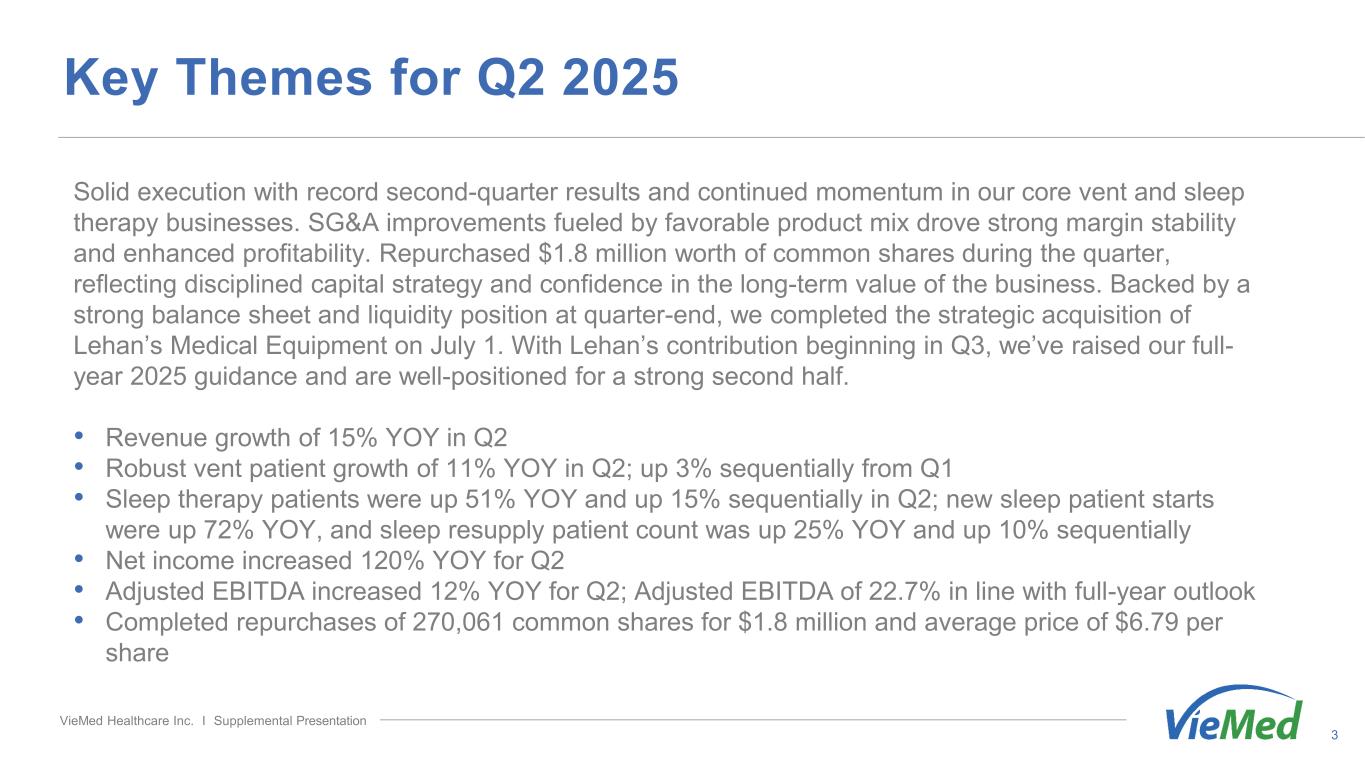
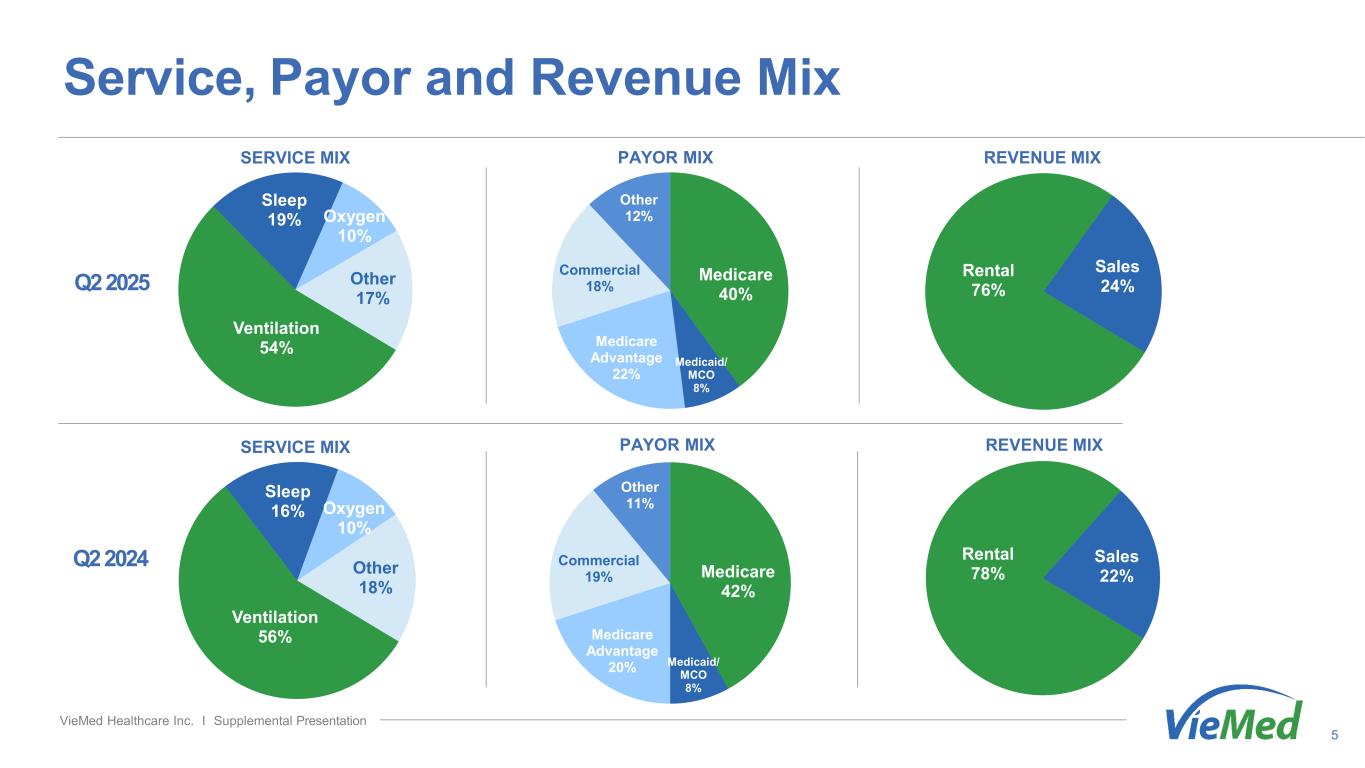
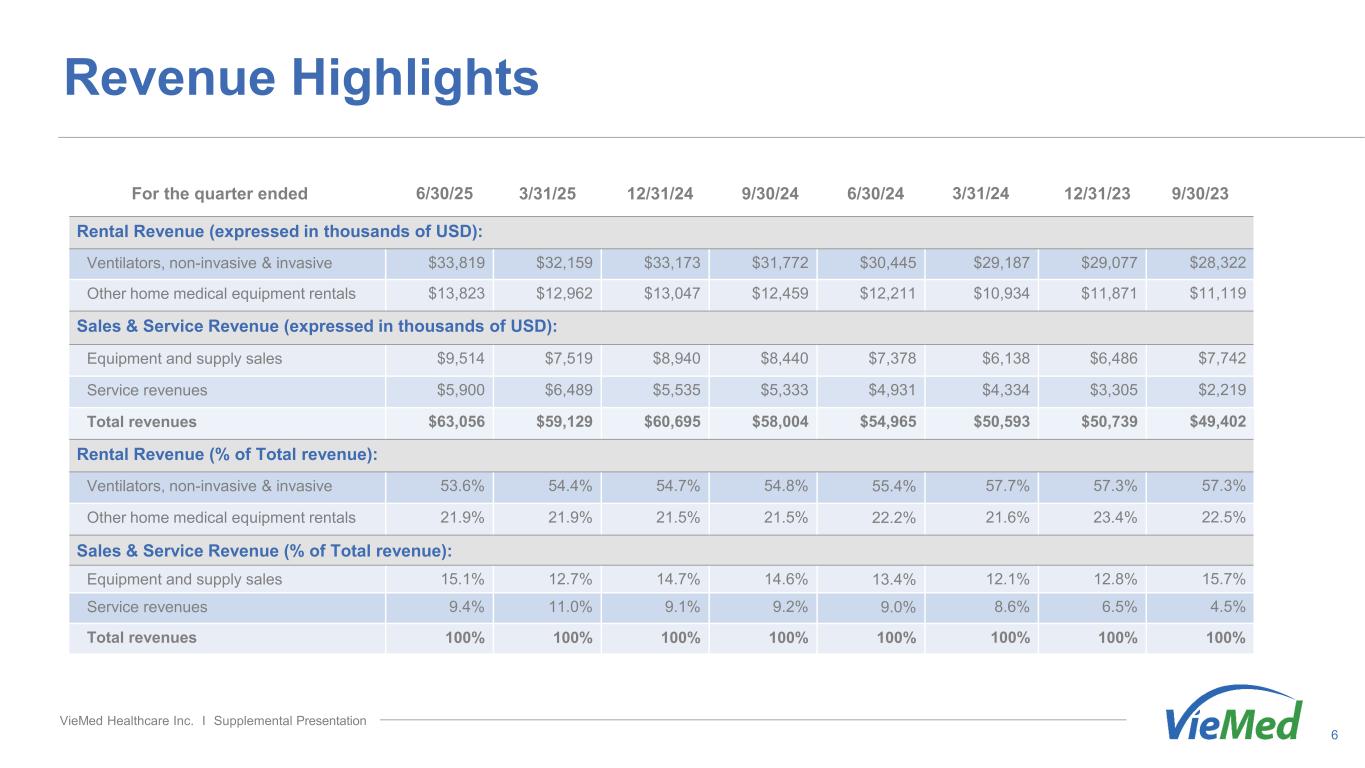
Okay. Thank you, Trae. Good morning, everyone, and thank you for joining us today. First and foremost, I want to give a big shout out to our more than 1,200 employees and publicly welcome our newest family members from Lehan's Medical Equipment. Thank you for all that you do to care for our patients, providers, partners and each other as we continue to grow Viemed's trusted place in the home. We have an incredible team, and each of you are making a difference in the lives of our patients. This quarter underscores a clear theme. Our disciplined execution of the long-term strategy is driving tangible, measurable results. We sustained impressive growth in our core in-home ventilation business, where we've established ourselves as a national leader and innovator. For the 17th consecutive quarter, we've increased our active ventilator patient count at a strong and steady pace. That kind of consistency and scale doesn't happen by chance. It happens because we built a best-in-class clinical and operational model that addresses the deeply underserved population, and we continue to expand our leadership in this critical area of care. At the same time, we're seeing even faster growth in our complementary product offerings, especially sleep and resupply, which have been long strategic priorities. These offerings were developed intentionally to meet the evolving needs of our patient base. Results are clear. Both sleep therapy and resupply have shown strong sequential and year-over-year growth, accelerating the diversification of our revenue mix and strengthening our margin profiles. Building on this momentum, we are successfully advancing another layer of the strategy, expanding our addressable at-home market. The recent acquisition of Lehan Medical Equipment marks a critical step forward in this initiative. With Lehan's, we're entering the maternal health space, further diversifying our patient base and leveraging Viemed's national infrastructure and payer relationships to reach new patient populations earlier in their healthcare journey. At the same time, we're using Lehan's footprint to expand our existing complex respiratory and sleep offerings in Illinois and Wisconsin, just as we've done organically in other markets. Lehan's brings a scalable platform focused on maternal health, introducing a new population for us. This fulfillment technology aligns with our resupply model and with our payer relationships that extend nationally, we are well positioned to grow this service beyond Illinois and Wisconsin. This represents a natural and strategic extension reaching patients earlier in their care continuum with the same operational discipline and compassion that define our respiratory services. Ultimately, our goal is to serve patients from the beginning of life through to the end and every stage in between. Our organization continues to become more efficient every quarter, supported by the fact that we've been able to enhance our growth while leveraging our cost structure. We are proud of our progress to date and it has clearly become a story of diversification and execution. Now let's focus on the performance within our business in more detail in the second quarter of 2025. Vents accounted for 54% of our revenues and remained a strong performing product sector once again this quarter. Vent revenue was up 5% sequentially and up 11% year-over-year. This steady, reliable growth reinforces the strength of our core business. Right now, we're seeing our fastest growth in the sleep business. During the quarter, sleep therapy patients were up 15% sequentially and 51% year-over-year. New patient setups were up an incredible 72% year-over-year. We're focused on aggressively maintaining this growth trend with 8 new sleep areas launched since the beginning of the year. We're seeing a similar growth trajectory with our patients in our resupply program, which was up 10% sequentially and 25% year- over-year. With the rapid growth of new patient starts and patients under therapy, we're expecting to see strong growth in resupply in the back half of this year and beyond as these patients get forward into our program. We are also pleased to see an influx of patients transferring their sleep resupply needs to our program from our competitors. This is a signal that our care continuum is working efficiently and solves a real problem for sleep patients and referral sources. While our staffing business was up year-over-year, for the first time, we did experience a sequential slowdown during the second quarter, resulting from softened labor demand. This business has seen significant growth over the past 2 years, and we believe we will be on a more normalized pace going forward as we close on contracts that will be fulfilled throughout the back half of the year. Last quarter, we discussed some of the new regulatory announcements that have been recently introduced. Now that the final rule or what we anticipate is close to final is in place on the NCD, I want to provide some color around what we're thinking. Overall, we're pleased with the NCD final rule. It's a major opportunity in terms of what we've been fighting for as a collective industry and as an individual company. The big win is that tried and failed approach on BiPAP and step therapy is over. That's a huge victory for patients because the MA plans have been leaning on the step therapy as a means to divert and defer using non-invasive ventilation on patients. Now all the MA plans will have to follow the NCD, making this less burdensome for the patient and reducing our operational lift of swapping out equipment. The new NCD does require us to document and report usage metrics on the patient. However, we've been preparing for this requirement for a while and are ready with our Engage Care Manager technology platform, which has been designed to help us document usage and compliance. The last point I'll make here on the NCD is that not everyone in the industry is ready for this. We believe the mom-and-pop operators who don't have the scale may struggle with this NCD. We expect this could lead to some asset opportunities down the road of possibly industry consolidation. This is where our business model, which emphasizes improving quality of life across the full patient journey, not only benefits patients, but also positions us to operate effectively in an increasingly complex environment. We're pleased that CMS heard us on the patient struggles and connected with just how effective non-invasive ventilation is for this high-touch COPD population. The industry is still working through a handful of specifics and open questions with CMS, but their responses have been very encouraging. AAHomecare noted it's never seen such an abrupt shift from what was originally proposed to what we ended up with as they acknowledge the patient concerns. The other recent news of the potential return of competitive bidding for DME is now being discussed by this administration. As before, we remain well positioned to navigate any future iteration of the program. Our view is that the more sophisticated providers tend to succeed in the competitive bidding environment. Although CMS has not indicated when the program might resume, typical 12- to 18-month implementation periods following rule finalization suggest that the earliest it could take effect is 2027 with the possibility of delays taking it into 2028 or 2029. The good news is, thanks to the recent NCD resolution, our industry has never been more aligned and well positioned to educate regulators and present solutions nationwide. Overall, we're proud to be so well positioned in the current environment. This quarter's results reaffirm the resilience of our model and the discipline of our execution. We said we would lead in complex respiratory care, and we've delivered 17 quarters of consecutive growth in our core ventilation business. We said we'd scale complementary services and sleep and resupply are now our fastest-growing segments. We said that staffing would enhance our ability to meet clinical demand across the organization while adding a new layer of diversification. And today, it accounts for approximately 10% of our total revenue with 75% of the offering supported by behavioral and social service needs. We said we'd expand through disciplined M&A. Our successful integration of HMP and HomeMed proved that we have the team to do so. And now our transaction of Lehan Medical stands to prove we are headed towards another frontier of delivering on diversification to a new batch of patients in maternal health. This isn't just progress. It's execution at the highest level. It's proof that our long-term diversification was deliberate, and our vision is coming to fruition. We are more confident than ever in our ability to keep delivering further value for our stakeholders. For more on our operational and financial results for the quarter, I'll now turn it over to Todd Zehnder, our Chief Operating Officer.
Speaker 3
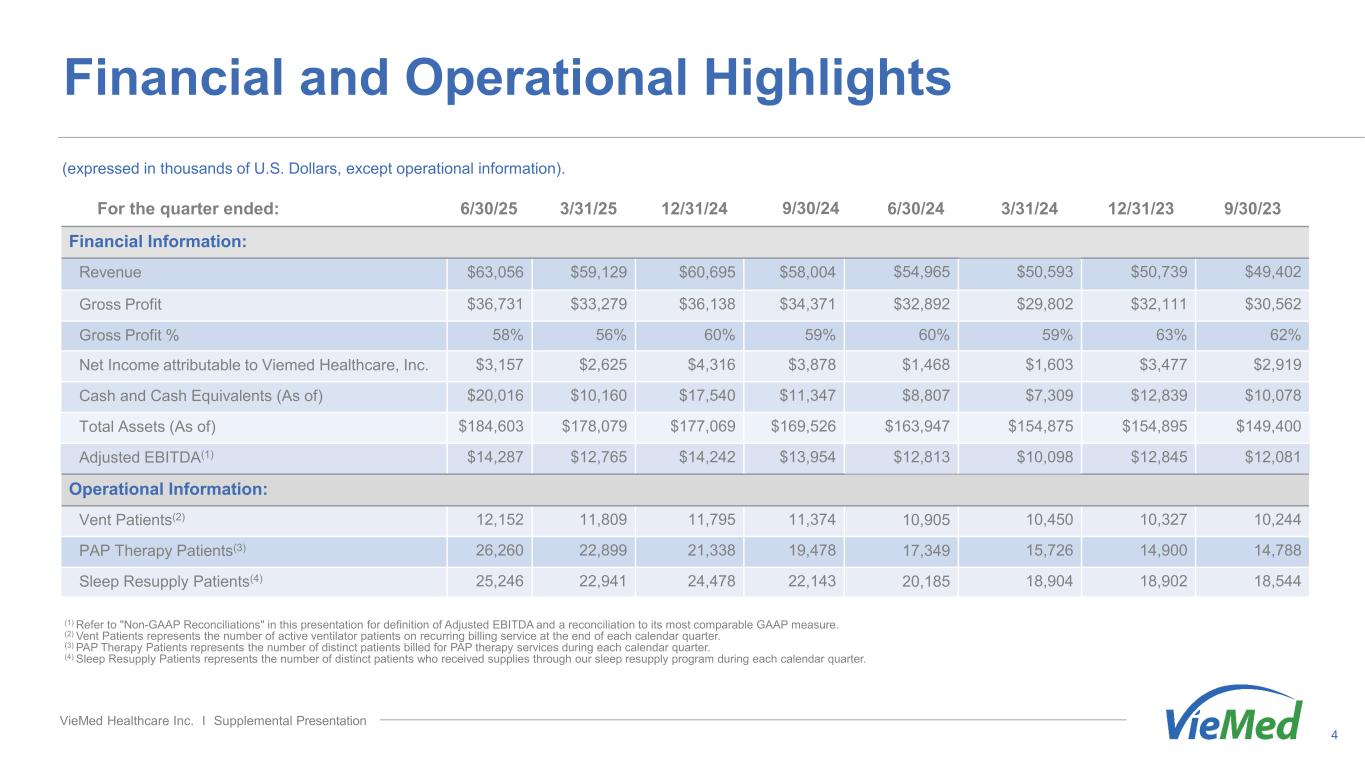
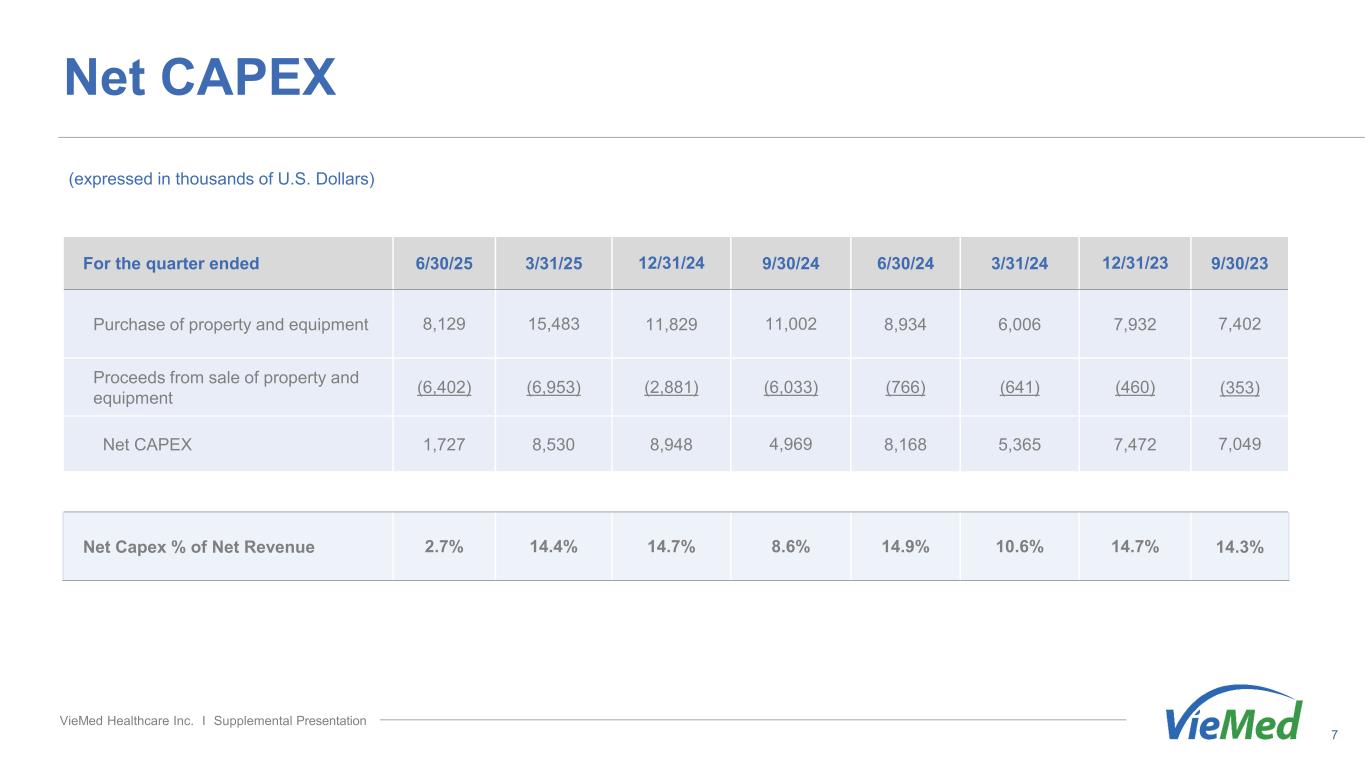
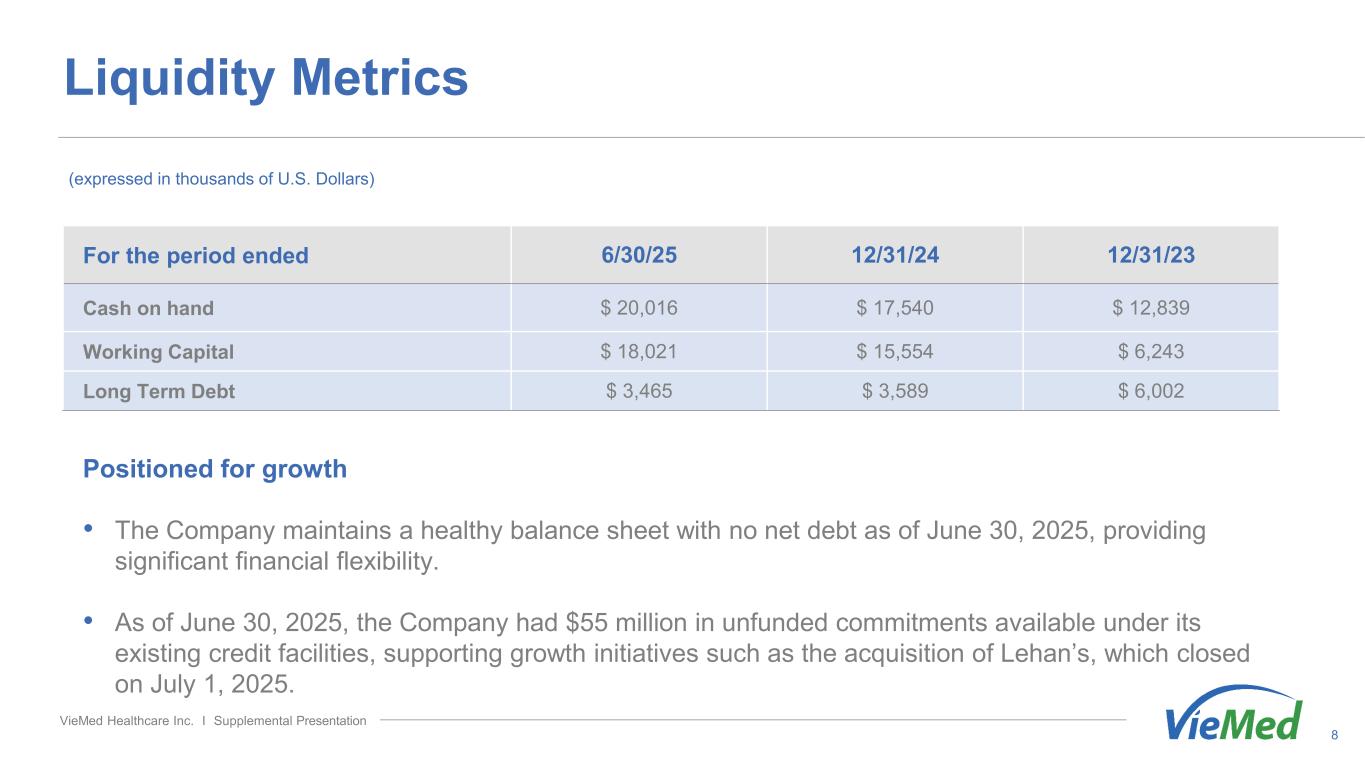
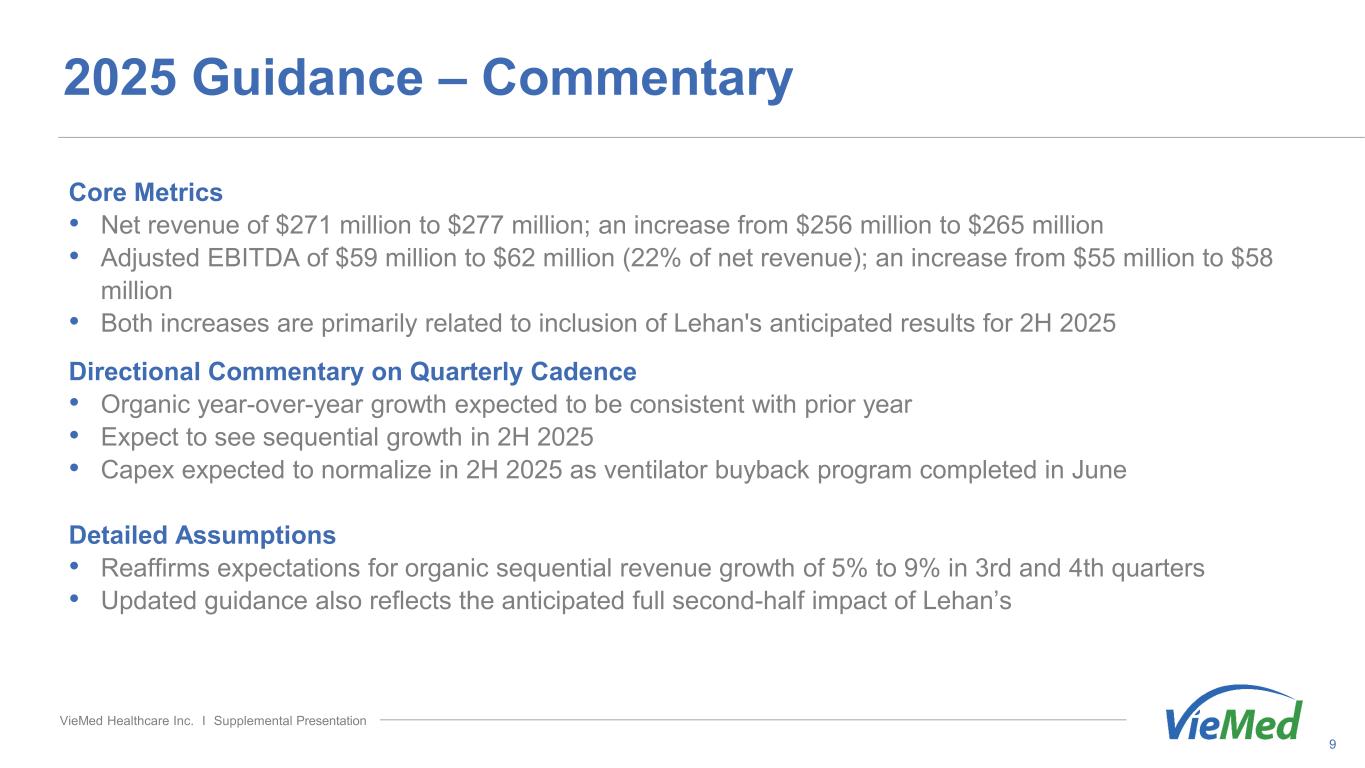
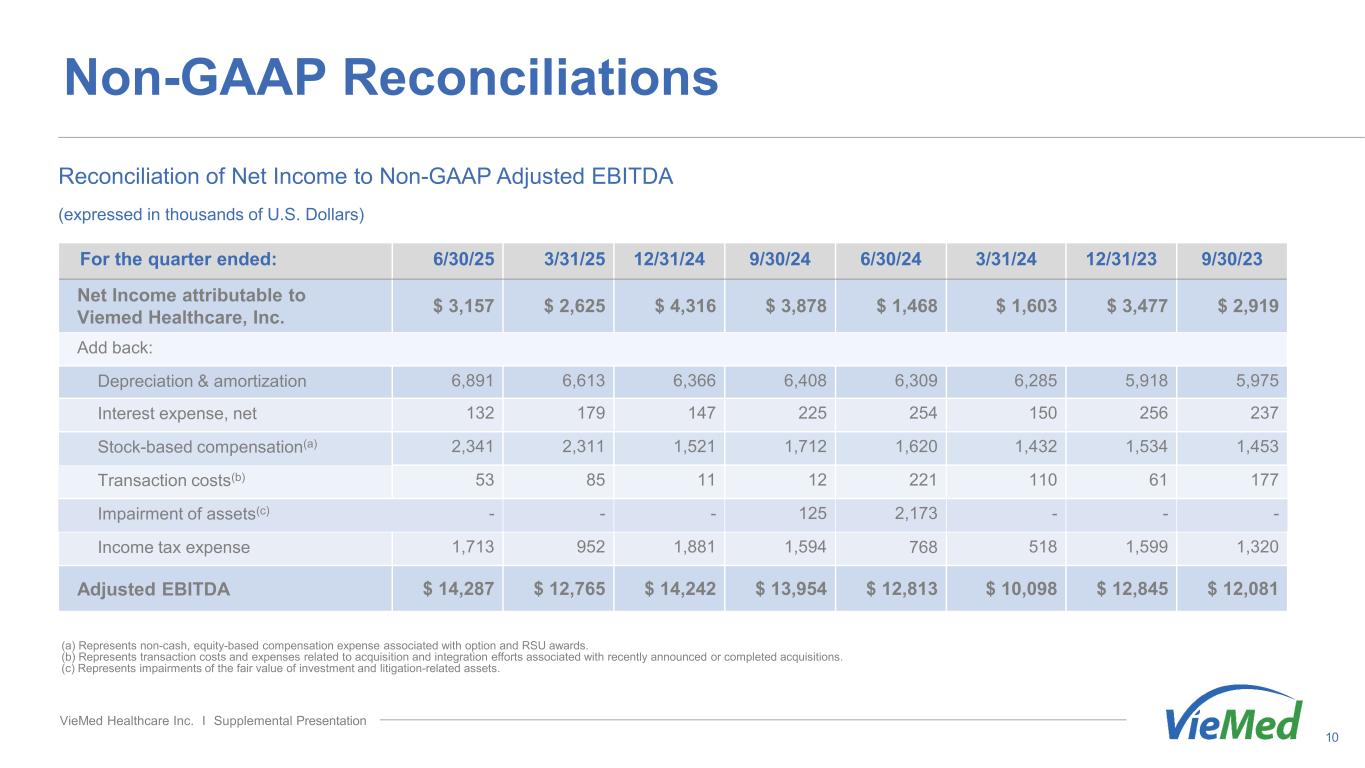
Thank you, Casey. In reviewing the financial results, all figures are in U.S. dollars, and the full results are available on the SEC website. I will reference disclosures we have made available in our quarterly financial supplement found on our IR website. Our year-over-year revenue increased by 14.7%, driven entirely by organic growth this quarter, consistent with our anticipated range for organic growth for the year. The core Vent business contributed 54% of the revenue, while the sleep business accounted for 19%. The staffing business made up 8%, and oxygen represented 10% of revenue. Gross margin for the quarter was 58.3%, compared to 59.8% for the second quarter of 2024 and 56.3% in the first quarter of '25. The year-over-year decline aligns with what we have indicated over the last several quarters; margins remain strong and steady in our core vent business, but its revenue percentage has declined year-over-year on a larger base. As we shift our focus to CapEx-light businesses like sleep resupply and staffing, the year-over-year comparisons on gross margin are becoming less relevant as they allow us to leverage SG&A and drive net income, adjusted EBITDA, and cash flow growth. That said, we did see sequential improvement from Q1, primarily due to the growth in the sleep business outpacing our other businesses. With the inclusion of Lehan's in the second half of the year, we will observe further evolution of gross margin as a less relevant measure. Adjusted EBITDA for the quarter grew by 12% year-over-year to $14.3 million, driven by robust organic growth across all our businesses. The adjusted EBITDA margin was 22.7% for the quarter, aligning with our full-year projection compared to 23.3% a year prior. We continue leveraging our investments in new sales talent and technology, with SG&A at 45.7% of revenue for the quarter, an improvement of 250 basis points year-over-year. This places us ahead of our original full-year projections and sets the stage for ongoing SG&A leverage as we benefit from a favorable product mix and sustained operational efficiencies. Regarding CapEx, last quarter we provided additional disclosure in our supplemental report concerning net CapEx over the past 8 quarters, highlighting the impact of our vent exchange program with Philips. This program was a unique opportunity to upgrade our vent fleet and significantly extend its life. We believe it has positioned us to support continued growth from net vent additions. With the exchanges complete, we expect our CapEx to normalize moving forward and anticipate that this, along with lower cash taxes from recent legislation, will improve our adjusted free cash flow during the rest of the year. We continue funding our CapEx from discretionary cash flow while managing the business to enhance our free cash flow. Tariffs have been a topic of discussion, but as with others in our industry, we have not yet seen a significant impact. For 2025, our supplier contracts are secured, and we maintain ongoing communication with our suppliers regarding any potential tariff impacts. We also believe the Nairobi Protocol will continue to exempt most medical equipment from tariffs. Our balance sheet offers us flexibility for growth. As of June 30, we had $55 million available on our credit facilities, a $30 million accordion if needed, $20 million in cash, and a working capital balance of $18 million with no net debt. This liquidity enabled us to initiate our third share repurchase program since going public. In early June, the Board authorized us to buy back up to 5% of our outstanding common stock. We moved quickly during the quarter, acquiring and subsequently canceling approximately 270,000 shares for a total cost of $1.8 million. The share repurchases are a beneficial use of capital, and we have sufficient liquidity to support the program and pursue inorganic growth. Our strong balance sheet also gave us the confidence to go after the Lehan's acquisition, which closed on July 1, funded through $9 million in cash and $18 million in borrowings on our credit facility. With strong cash flow, we expect to pay down this debt opportunistically while executing the share buyback. Based on our second-quarter results and the inclusion of Lehan's from July 1, we have raised our guidance for the full year 2025. Our net revenue range is now $271 million to $277 million, suggesting 22% growth over 2024 at the midpoint. We have also increased the adjusted EBITDA range to $59 million to $62 million, reflecting 18% growth over 2024 at the midpoint, primarily due to Lehan's inclusion for the second half. In our quarterly supplement, we provided additional commentary and assumptions about our guidance, which I will briefly outline. We still expect organic growth each quarter to remain consistent with the increases seen in 2024. With Lehan's included, we will experience slightly more total revenue growth than initially forecasted. We expect organic sequential revenue growth in Q3 through Q4 to be between 5% and 9%. The adjusted EBITDA ranges for the full year assume a margin of approximately 22%. With the ventilator exchange program completed in June, we expect CapEx normalization for the rest of the year. With two quarters of record revenue on strong execution and organic growth, we are entering the second half of 2025 with an even more promising outlook. We have strategically invested capital in the significant growth opportunity presented by Lehan's, preparing us well for this year and beyond, while utilizing our liquidity to repurchase over $1.8 million worth of shares in the second quarter and continuing share buybacks in the third quarter.
Operator
Our first question comes from Ryan Langston with TD Cowen.
Speaker 4
On the vent program upgrade and exchanges, can you maybe go into a little bit more detail on sort of the benefits of that move, I guess, both from a financial and a clinical perspective?
Speaker 3
Yes, Ryan. The financial aspect is clear. Philips repurchased the vents, and the price they paid depended on the vent's age. We received cash back for the vents, which was generally higher than our net book value, as reflected in the gains shown in the P&L. Clinically, we obtained a vent that was manufactured this year instead of one that could be 5 to 10 years old. This means we acquired a new asset with lower repair and maintenance requirements and reduced preventive maintenance needs, which we depreciate over a 10-year life. The vents have become technologically advanced with features like Bluetooth connectivity. Overall, it has been a beneficial program, and while it's unfortunate for Philips, we made the most of the opportunity.
Speaker 4
Got it. And I guess, Dr. Oz now has been kind of in his seat for a few months. I think CMS has been fairly aggressive to some places like MA, home health, the OPPS rule in particular. I guess, do you have a view or do we know maybe what he sort of thinks about DME in general?
I wish I knew what Dr. Oz was thinking. The administration has made it clear that they are aiming to reduce costs across all areas of government. There is certainly competitive bidding pressure coming from the White House down to the top levels. They were the ones who started this initiative during the first Trump administration, taking that strategy and refreshing it for resubmission. We will just have to wait and see how it unfolds. As an industry, we are providing the necessary feedback to help implement a successful competitive bidding program, as competitive bidding can be beneficial if structured appropriately. Our current focus is on educating and communicating effectively with Dr. Oz and his team.
Operator
Our next question comes from the line of Ilya Zubkov with Freedom Broker.
Speaker 5
So I have a couple of questions on the revenue side. I see that there's been a notable uptick in sleep therapy patient count. I'm just curious whether there are any unusual factors that contributed to this growth.
Speaker 3
Nothing that we can point out, Ilya. I mean, obviously, we have grown our sleep sales staff some, but we've also just opened it up over the last few years of letting our entire sales force sell sleep. And as we become more operationally sound and savvy, maybe more of those referral sources are sending more orders into us. We read everything like most of the investors do, and it does not appear that GLP-1s is doing anything negative to us, it may be coincidental, but maybe not that our sleep business has been growing rapidly since GLP-1s have come about. So that might play into some of the manufacturer studies that show that people are taking sleep health a little bit more seriously as they lose some weight. So it could be a combination of all of that. We're very happy with the growth and the scalability of sleep around the country. As you can see, it makes up 19% of our revenues now. And we're just going to keep growing it as fast as we possibly can.
Speaker 1
Yes. And I'd add to that, Ilya, that just a reminder, when we're thinking about the sleep therapy patients, we will see a lag between our PAP therapy patients that then become 3, 6 months later roll into our sleep program, and Casey alluded to that in his prepared remarks. And so when we talk about new PAP therapy setups being up 72% year-over-year, you're not going to see that type of growth in the resupply. It's going to be delayed a little bit longer tail for another 3 to 6 months, which is really why we're excited about the back half of the year and then looking into next year as we have a more maturing sleep program.
Speaker 5
Okay. Got it. And could you also elaborate on the quarterly revenue dynamics in the staffing business? So what drove the decline in service revenue in Q2?
Seventy-six percent of our business comes from behavioral health and social service needs, which we are addressing nationwide through various state agencies. We are receiving appropriations to conduct our operations, and it's up to the states to determine how many individuals they require our services for. We're satisfied with this shift in our business model. When we first began staffing, we were facing a significant clinical labor shortage, struggling to find our own respiratory therapists and nursing staff for our referral sources. This situation has evolved over the years. Although there was a slight slowdown in performance this quarter, we remain optimistic about the appropriations we secured for the latter half of the year. Ultimately, it will depend on how many needs the states we collaborate with wish to fulfill. Overall, we're positioned well for a more normalized operation.
Operator
And it looks like we have reached the end of the question-and-answer session. I will turn the call back over to management for closing remarks.
Speaker 3
We want to thank everybody for participating. We're obviously very excited about the back half of the year. And if anybody has follow-up questions, just reach out to us. Have a great day.
Operator
Thank you. This concludes today's teleconference. You may disconnect your line at this time. Thank you for your participation.