Operator
Welcome to Wave Life Sciences' first quarter 2026 earnings call. We ask that you please hold all questions until the completion of the formal remarks, at which time you'll be given instructions for the question and answer session. Also, as a reminder, this conference call is being recorded today. I will now turn the call over to Kate Roush, Vice President of Corporate Affairs and Investor Relations.
Thank you, Operator, and good morning to everyone on the call. Earlier this morning, we issued a press release outlining our first quarter 2026 earnings update. Joining me today with prepared remarks are Dr. Paul Bono, President and Chief Executive Officer, Dr. Eric Engelson, Chief Scientific Officer, Dr. Chris Wright, Chief Medical Officer, and Kyle Moran, Chief Financial Officer. The press release issued this morning is available on the Investor section of our website, www.wavelifesciences.com. Before we begin, I would like to remind you that discussions during this conference call will include forward-looking statements. These statements are subject to several risks and uncertainties that could cause our actual results to differ materially from those described in these forward-looking statements. The factors that could cause actual results to differ are discussed in the press release issued today and in our SEC filings. We undertake no obligation to update or revise any forward-looking statement for any reason. I'd now like to turn the call over to Paul.
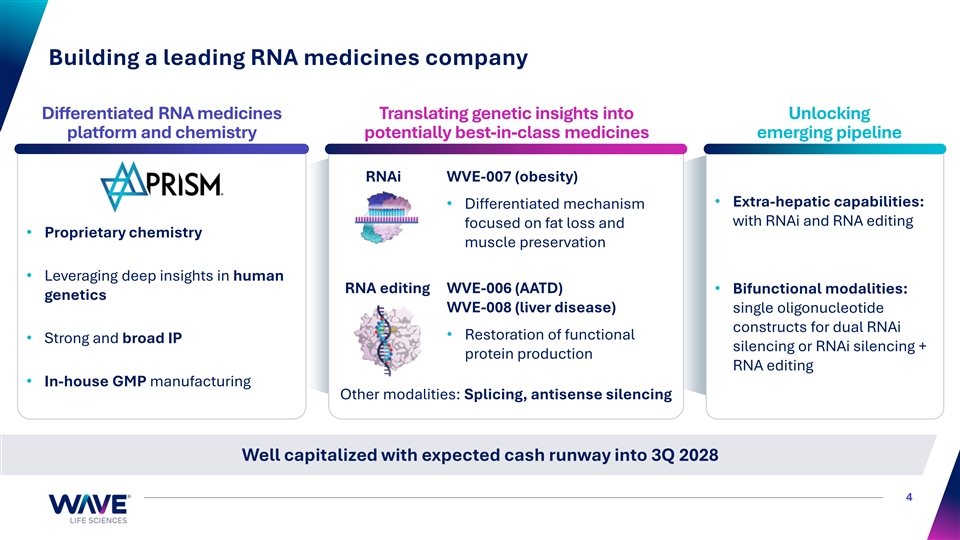
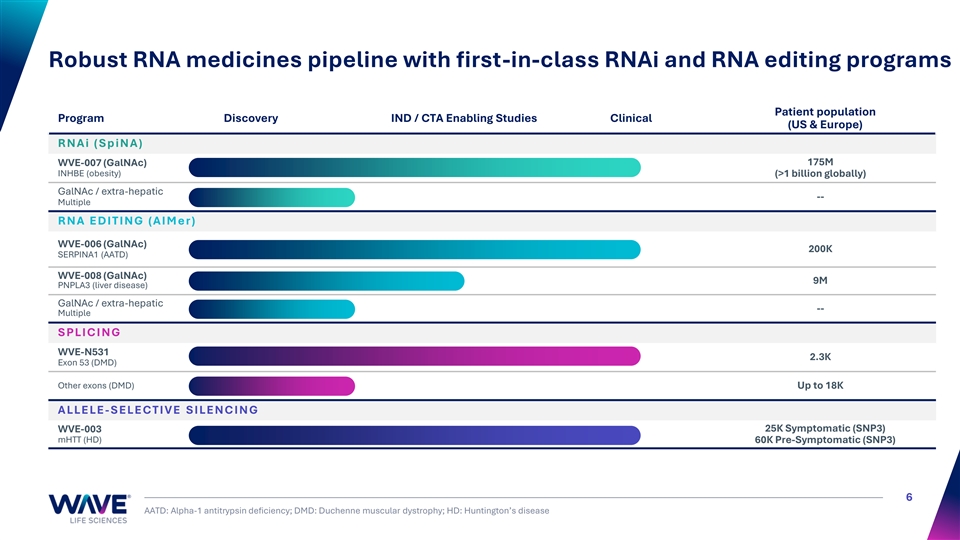
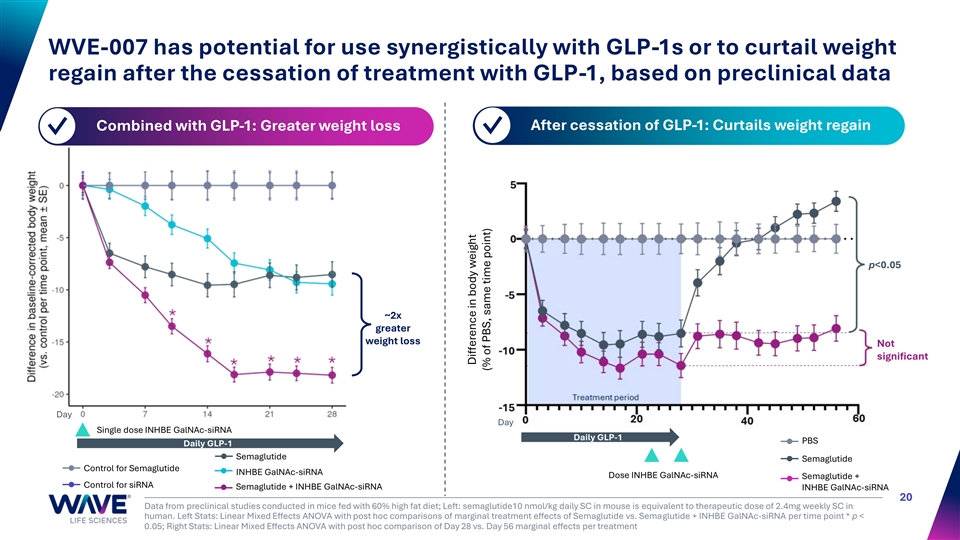
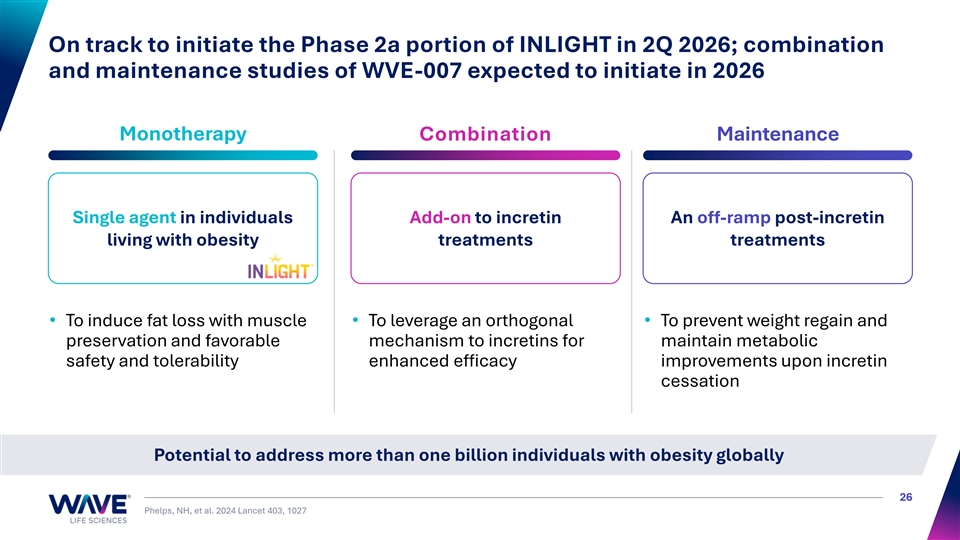
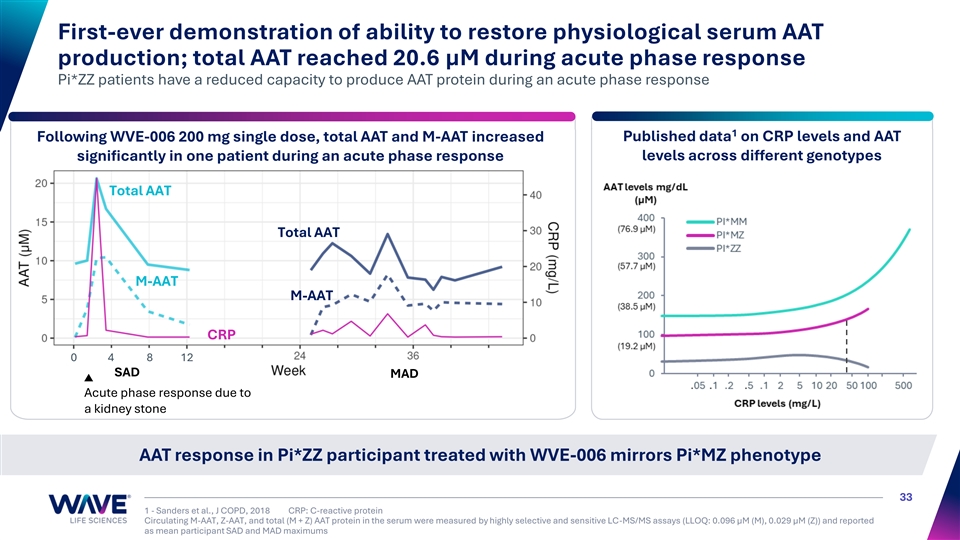
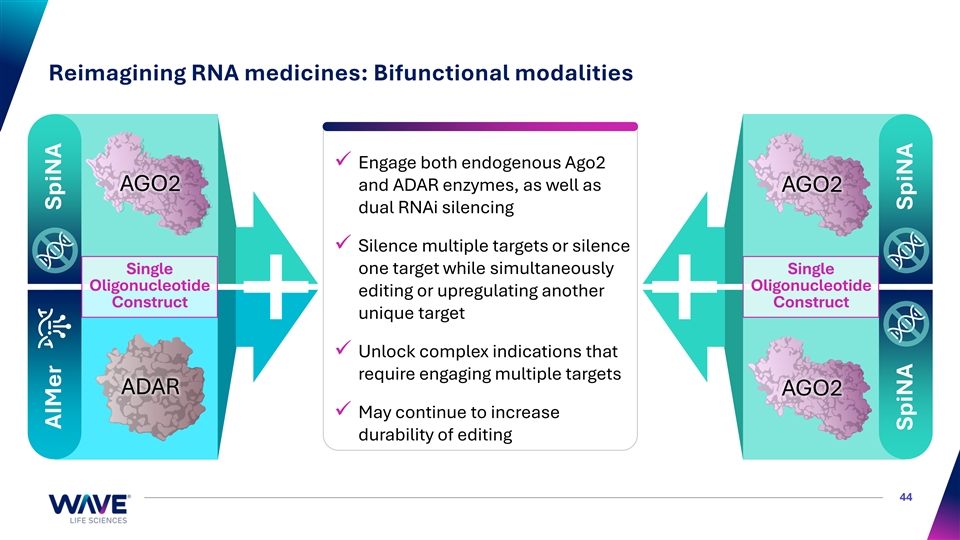
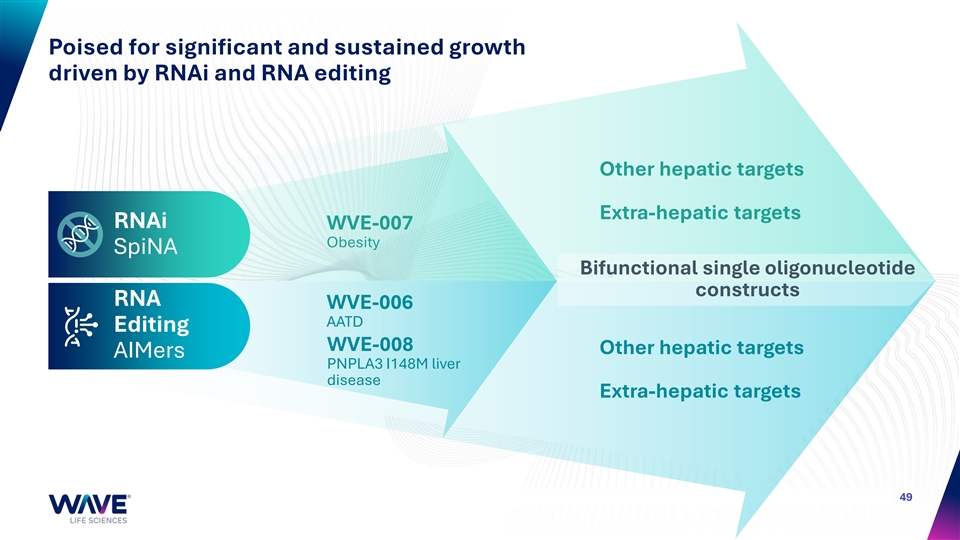
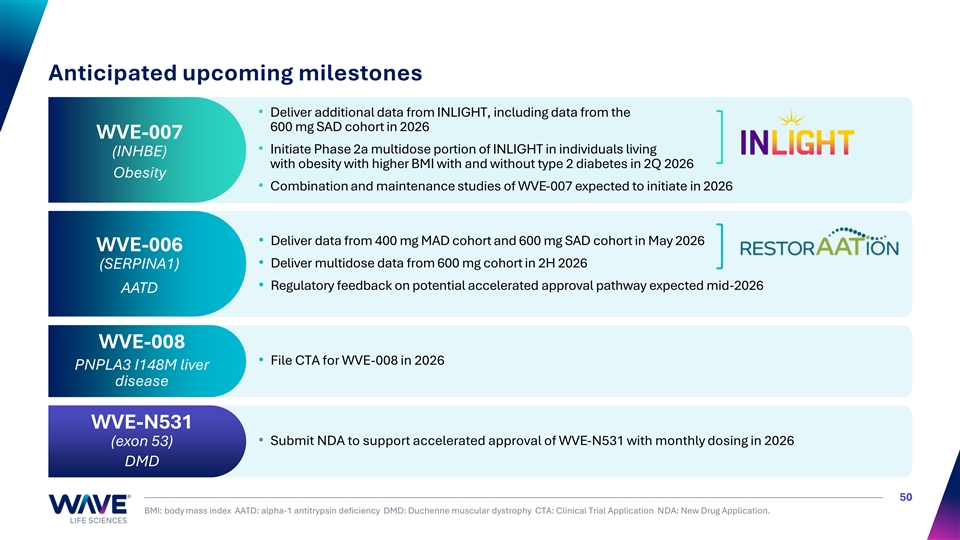
Thanks, Kate, and good morning to everyone joining us on today's call. Coming into the year, we outlined our key priorities for 2026. Accelerating development of WVE-007, our inhibiting-E-Galnec-SIRNA program for obesity, and rapidly advancing our RNA editing portfolio led by WVE-006 for AATD and followed by WVE-008 for PMPLA-3 liver disease. Today, I'm pleased to share an update on the significant progress we've made towards these goals. We are rapidly advancing 007, which has the potential to be transformational in the treatment of cardiometabolic diseases, including obesity. Using our best-in-class chemistry, O7 continues to demonstrate a highly differentiated profile. Clinical data, even in a phase one population, continues to demonstrate improvement in body composition with fat loss, importantly, visceral fat loss and muscle preservation, impressive durability with potential for once or twice a year dosing, and a clean safety profile. We're accelerating 007 to the next stages of development, where we have the opportunity to unlock its full potential across multiple treatment settings, beginning with our Phase 2A trial in participants with higher BMI and with and without diabetes. We are preparing to initiate our Phase 2A trial this quarter, as the FDA has recently accepted the multi-dose portion of InLight. Closely following the initiation of our Phase 2A trial in higher BMI participants, we plan to initiate studies evaluating 007 in combination with incretins and maintenance post-cessation of incretin treatment. In RNA editing, we continue to lead the field with 006. Clinical data from our ongoing Restoration II trial has already demonstrated the potential for 006 to provide a much-needed novel therapeutic option to individuals living with AATD, including generating over 20 micromolar of AAT protein during an acute phase response. It's important to note that these acute phase responses are the drivers of lung damage in AATD. We look forward to highlighting these data during the AATS conference and hosting an investor webcast to share our monthly 400 milligram multiple dose, as well as single dose 600 milligram data. Having already achieved therapeutically relevant AAT restoration with our interim data, we are on track to receive regulatory feedback on a potential accelerated approval pathway in mid-2026. We're also building on our success in RNA editing to advance our next candidate, WVE008, towards the clinic this year, which has the potential to address the 9 million individuals living with PNPLA3 liver disease. Beyond our lead RNAi and RNA editing programs, we are continuing to push the boundaries of innovation through our bi-functional modality that allows us to both silence and or edit to treat diseases with a single construct in a single dose. We're also advancing a growing pipeline of new hepatic and extra hepatic candidates. With the substantial progress we've made, we believe we are well-positioned and well-capitalized to advance our pipeline of transformational therapies for patients. Now, I'd like to turn the call over to Eric, who will discuss how we are leveraging our proprietary chemistry and human genetic insights to advance WVE-006 for ATD and WVE-007 for obesity.
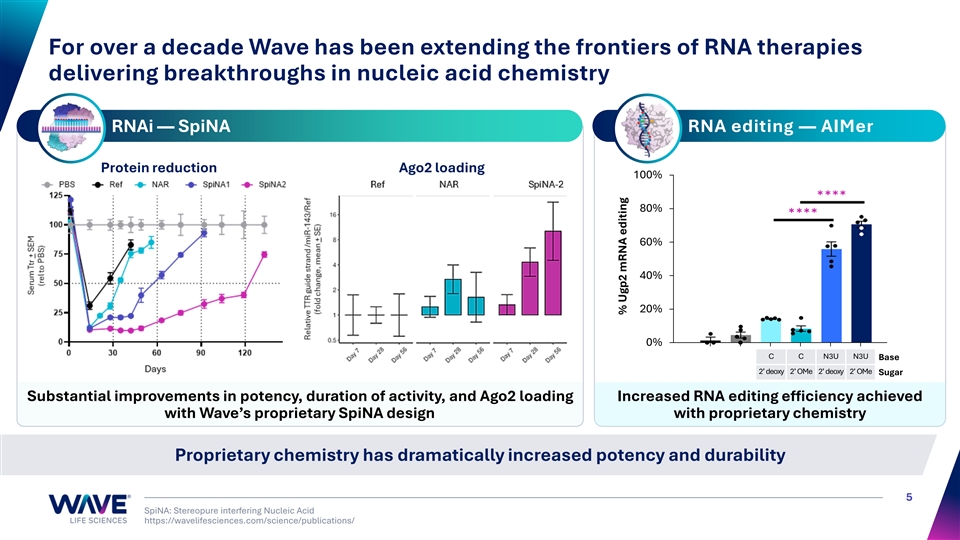
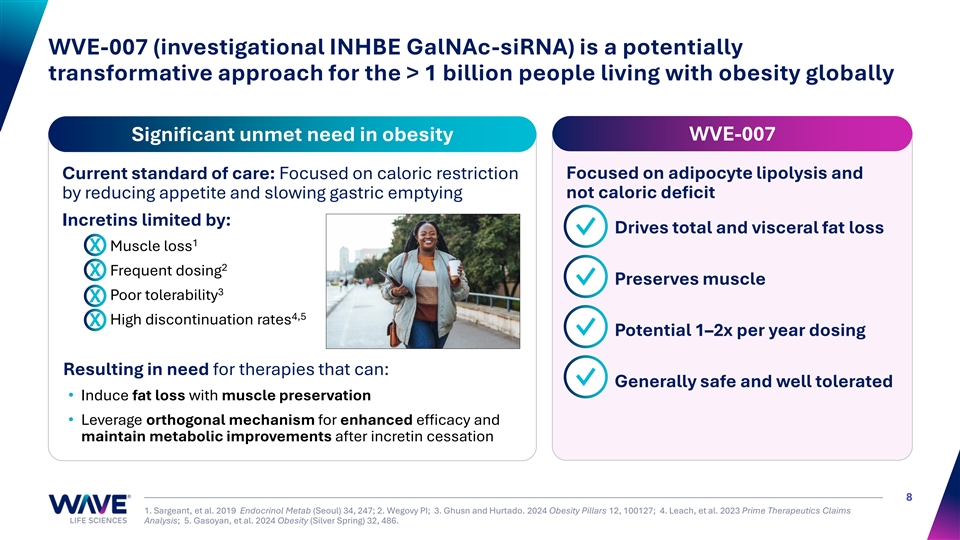
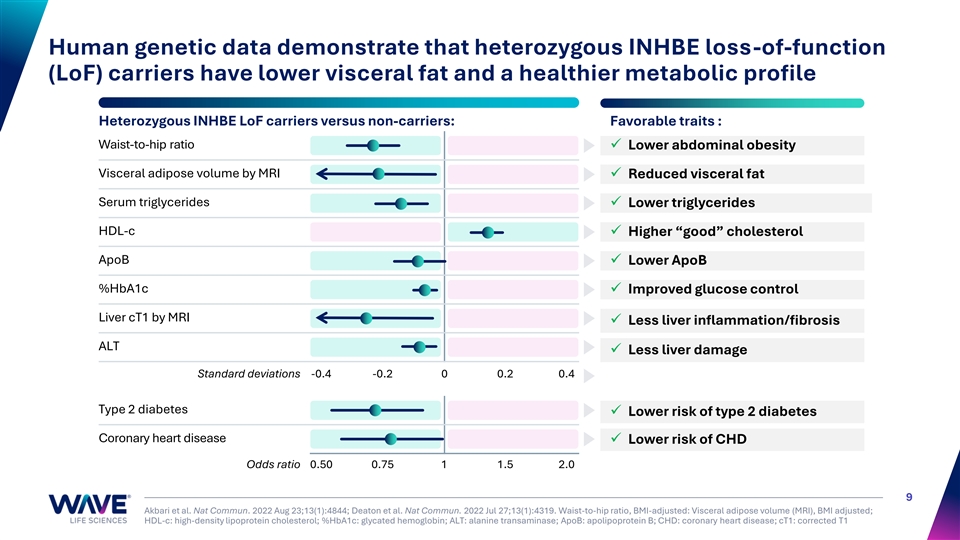
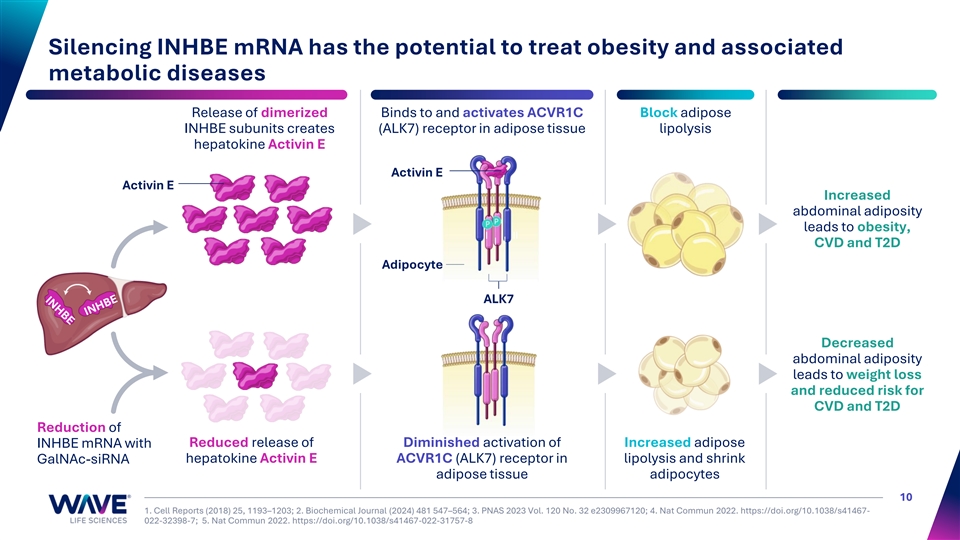
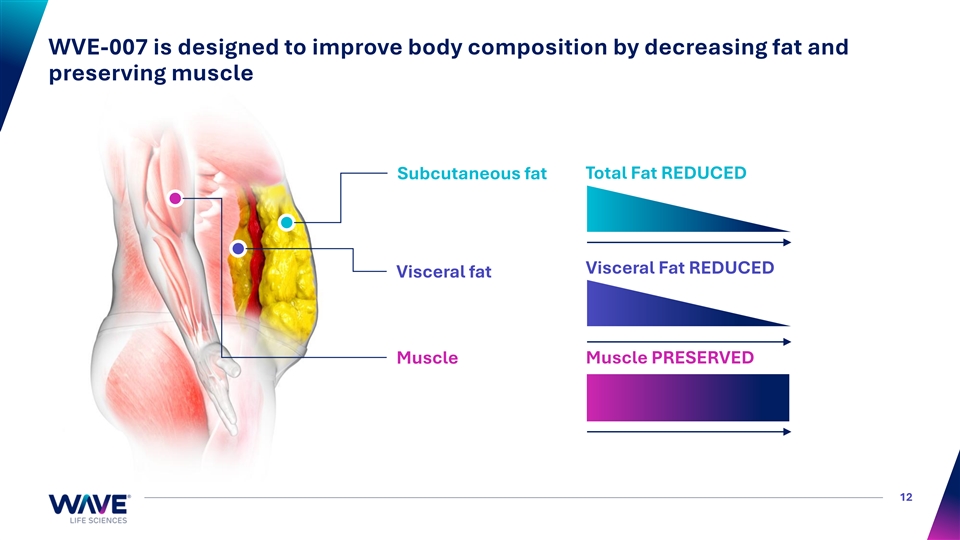
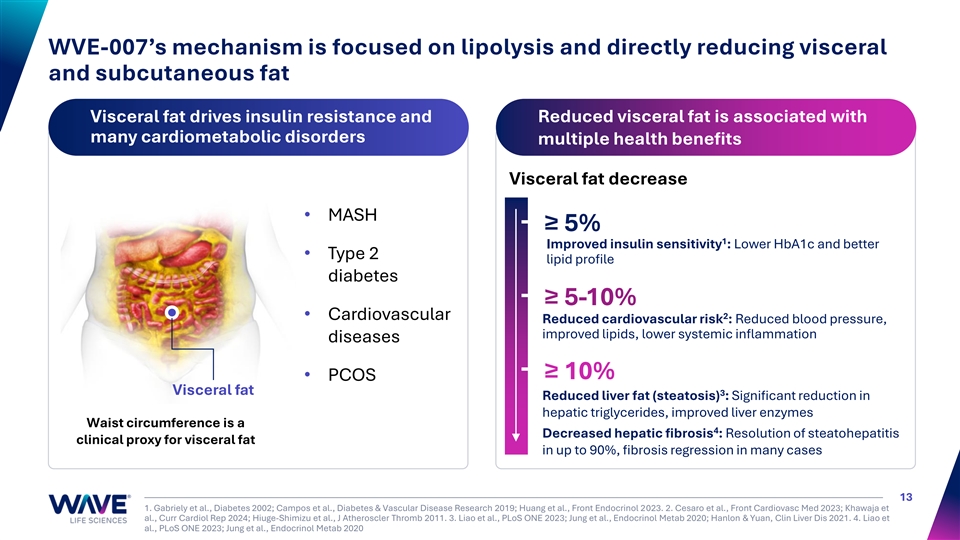
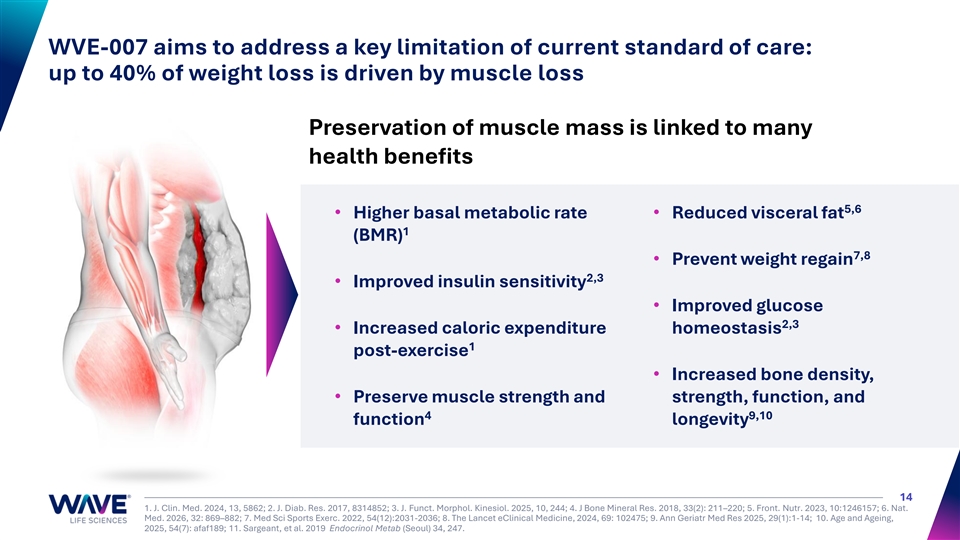
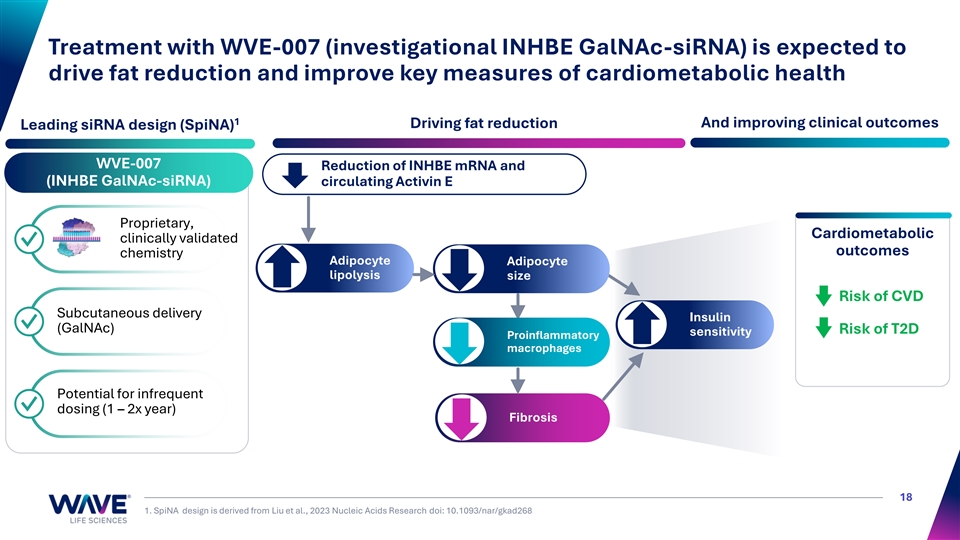
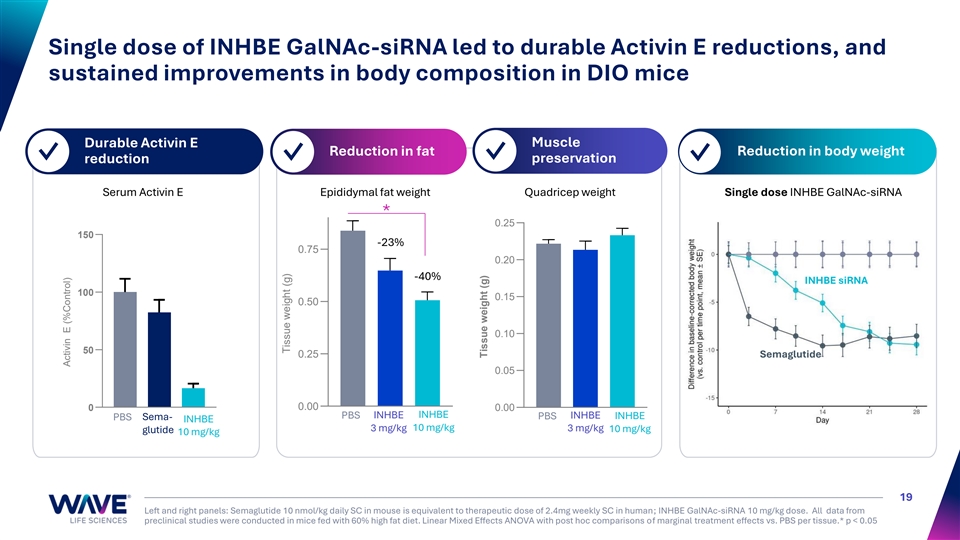
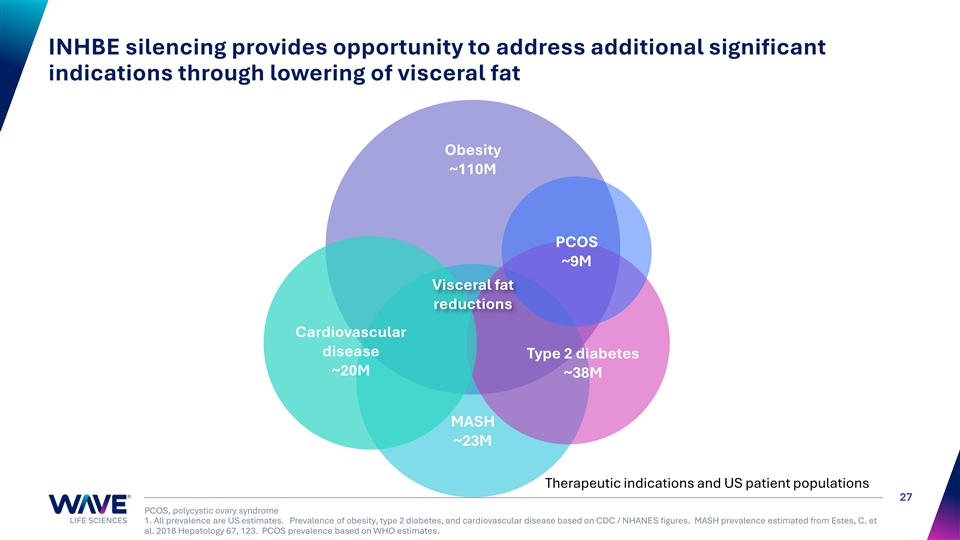
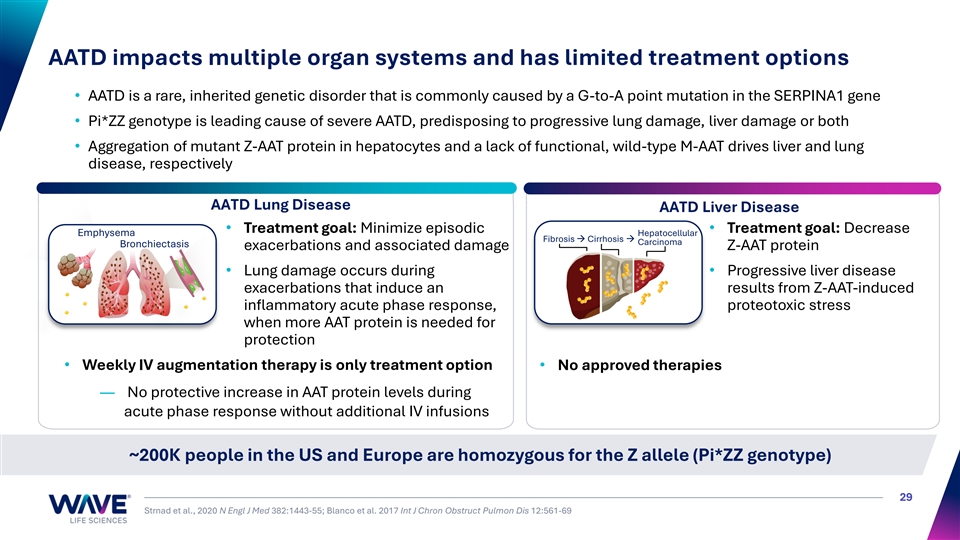
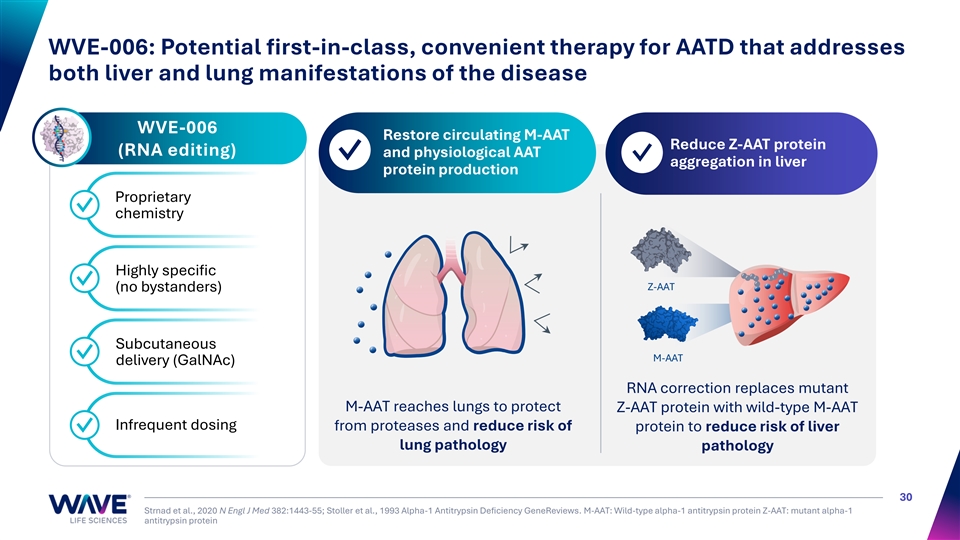
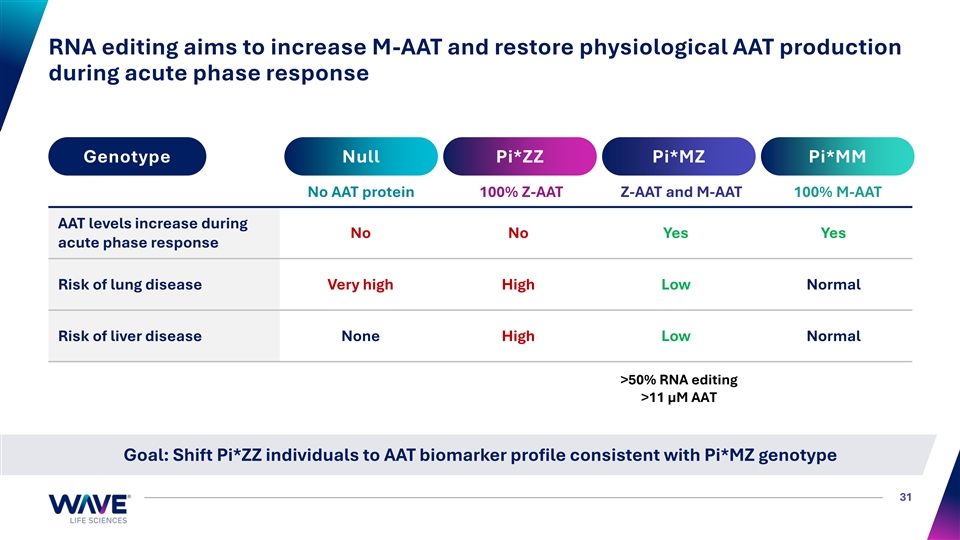
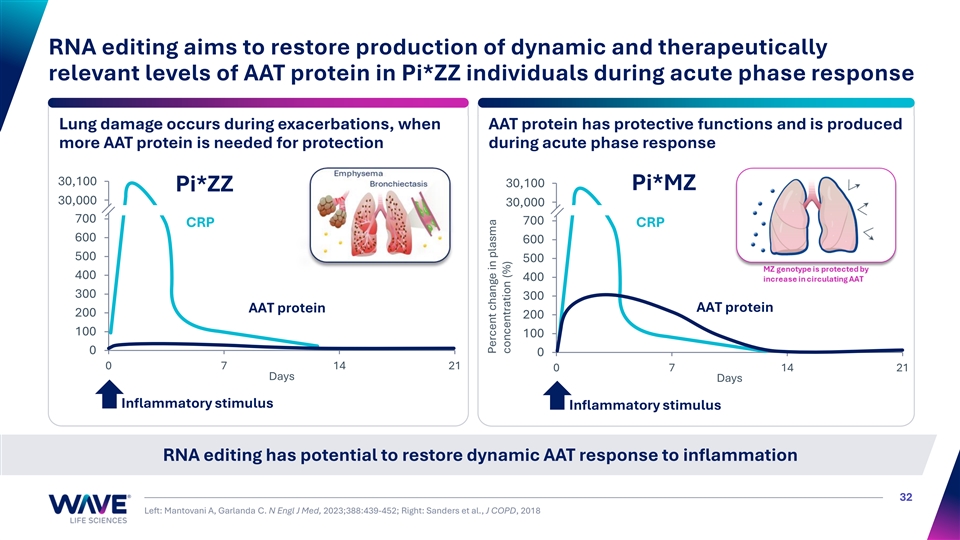
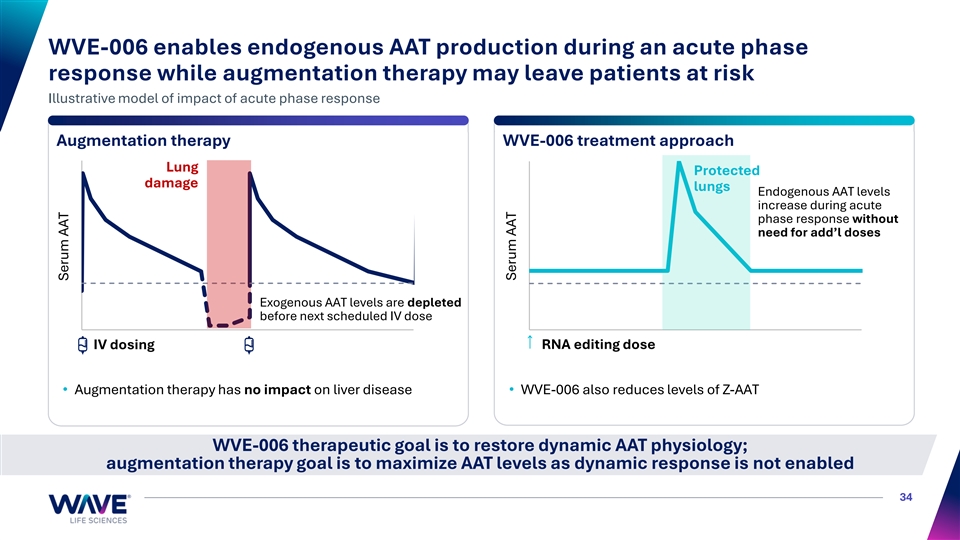
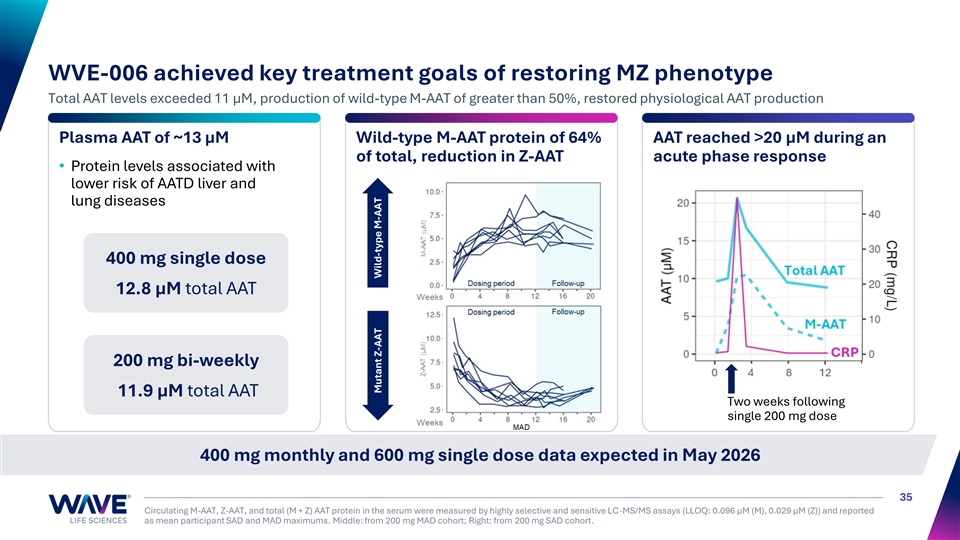
Thank you, Paul. And thank you to everyone joining us on the call today. I'll start with WVE-006, our gamma-RNA-editing oligonucleotide, or AMER, for alpha-1-anthotrypsin ATD is a uniquely compelling disease for RNA editing. It's a monogenic disorder caused by a single, well-characterized genetic variant in the Serpina 1 gene, which leads to misfolded alpha-1-antitrypsin, or AAT protein termed Z-AAT. Healthy circulating AAT, termed MAAT, protects the lungs during inflammatory or infectious events. ATD is sometimes referred to as genetic COPD for a reason. Without dynamic production of functional AAT, patients are at risk of lung damage and ultimately developing emphysema and bronchioexces, which is characterized by chronic cough, recurrent infections, and shortness of breath. In parallel, ZAAT accumulates in hepatocytes and causes progressive liver injury and risk of liver disease. By correcting the mutant transcript in the liver, RNA editing addresses the root cause of both the lung and liver manifestations of the disease. Approximately 200,000 individuals in the US and Europe live with homozygous PIZZAATD. It's a devastating disease, impacting the ability of patients to work, play with their children, or even walk to the mailbox. Currently, the only approved treatment for AATD is weekly IV plasma-derived augmentation therapy, which carries several limitations. With a fixed scheduled dose, there is no restoration of dynamic response, leaving patients at risk if AT protein falls too low during an acute phase reaction as a result of infectious or inflammatory events. IV therapy is time-consuming and often requires inpatient visits, and IV therapy does nothing to lower ZAT to address development of liver disease in these patients. RNA editing is designed to restore a heterozygous MC-like phenotype, including AT production, that rises to meet the demand during acute phase responses. This is a particularly important distinction between RNA editing and the current augmentation standard of care that we continue to hear echoed in our conversations with physicians and patients, as there is uncertainty that there is adequate lung protection when patients experience infections between infusions. Such acute exacerbations, the sudden worsening of a patient's respiratory symptoms that often require urgent treatment, occurs roughly twice per year on average, even on weekly augmentation therapy. 006 is a highly specific and efficient GALNIC aimer. Unlike DNA editing therapies in development, RNA editing does not modify DNA, and 006 does not require delivery with lipid nanoparticles, or LNPs, that may be associated with systemic and liver inflammation, potentially inducing hepatocellular stress and activating a hepatic acute phase response. 006 also avoids the reversible collateral bystander edits and indels which are associated with DNA editing. With 006, our goal is to recaptulate the MC-like phenotype as it's well-established that heterosegous PIMC individuals have significantly lower risk of both lung and liver disease. MC individuals maintain basal AAT levels above the protective threshold of 11 micromolar, wild-type MAAT above 50% of total AAT, and most importantly, they retain the ability to mount a dynamic AAT response during an acute infection. That combination, protective basal levels, a meaningful proportion of authentic MAAT, and a preserved acute phase response is the bar we set for 006 and that we cleared in the interim readout of our Restoration 2 trial in the fall. We demonstrated that 200 mg by weekly dosing of 006 can restore endogenous MAAT protein to therapeutically meaningful levels and reduce mutant Z-AAT correspondence. This will lead to improved liver health and potentially even higher AAT production over time, in line with what we have observed preclinically, and ultimately lead to improved lung and liver outcomes in AAT. Traditionally, we have shown that 006 re-establishes the body's physiological response to inflammatory stress, something that is not possible with IV augmentation. Now, with upcoming data from our 400 milligram multidose cohort, we look to look to continue to recapitulate the MC-like phenotype, but at a more convenient monthly dosing interval. Moving on to our Inabini gamma-SRNA program for obesity WVE-007. Individuals living with obesity face markedly high risk of a range of diseases, such as MASH, type 2 diabetes, and cardiovascular disease. Excess body fat, in particular visceral fat, is a key driver behind this elevated risk of disease. Current standard of care therapies reduce body weight through both fat and muscle loss and carry high discontinuation rates, limiting potential for long-term health benefits. An ideal obesity therapy would instead selectively reduce harmful visceral fat, the fat surrounding one's organ that is most strongly linked to matched tachytofetus and cardiovascular disease, while also lowering subcutaneous fat and liver steatosis. And critically, preserving skeletal muscle. Muscle preservation matters. Because muscle sustains basal metabolic rate, glucose disposal, and insulin sensitivity. Also, it prevents weight regain, mostly from fat, which occurs in a majority of individuals that discontinue increase in therapies. And remember, as much as up to 70% of individuals discontinue increase within a year. Preserving muscle while decreasing total and in particular visceral fat is the ideal profile for obesity medicine and it's well established at already a 5-10% reduction in visceral fat mass associated with direct health outcomes by reducing risk of multiple preventable metabolic diseases and preserving patient function and quality of life. All these benefits can be delivered by 007's mechanism of action. Rather than acting on appetite, it silences inibini and lowers serum activity, a liver-derived hepatokine that signals adversities to put the brakes on lipolysis. Removing those brakes drives fat loss without calorie restriction and without the muscle loss seen with incretin-based therapies. This approach is also strongly grounded in human genetics, as carriers of heterozygous inibini loss-of-function variants, nature's own knockdown experiment exhibit a healthier overall metabolic profile driven by lower visceral fat as evidenced by lower waist to hip ratio and lower visceral adipose volume as well as downstream effects with lower triglycerides, A4B and HbA1c and higher HDL cholesterol. These carriers also have favorable associations with liver traits such as ALT, a measure of liver damage, and CT1, a measure of liver inflammation and fibrosis. and importantly, lower risk of developing type 2 diabetes and coronary heart disease. And as we've said on prior calls, targets supported by human genetics carry a two to four times higher probability of success in drug development. Inibini is a textbook example of this opportunity. We chose to target the active Inibini ligand through Inibini silencing over its receptor app 7 for several reasons. Turning off protein production in hepatocytes, the upstream source, with a GAN-like SRNA is the most efficient and durable way to impact this pathway. Also, suppressing active N-E rather than disabling a receptor that induces signals via multiple ligands across different tissues is a more selective approach with lower risk of unintended consequences. This selectivity is especially important for long-term safety and for clinical translation. 007's unique ability to durably suppress N-E is driven by our proprietary chemistry and Spina as RNA design. While RNAi is a well-established therapeutic modality and there are extensive human genetic data supporting Inabini as a target, we believe our proprietary chemistry distinguishes us from others attending a similar approach. CR07 is highly differentiated by Wade's proprietary Spina design, including backbone sterile chemistry and PN chemistry, which enhances interactions with AGO2, stabilizes the loaded risk complex, and improves liver exposure. This contributes to dramatically improved potency and durability when compared with industry-standard SRNA science. Our interim phase one in light data sets from lower BMI, otherwise healthy individuals, confirm that this proprietary chemistry and the underlying human genetics are already translated, with preservation of lean mass and clinically meaningful reductions in total fat, visceral fat, and waist circumference after just a single dose. As Chris will discuss further in a moment, we're rapidly advancing 007 into patients with higher BMI and comorbidities in the phase 2a portion of in-light, where a scientific rationale predicts a larger effect. Active in-E binds out 7 on all adhesives, and visceral fat, being the more metabolically active and better perfused, mobilizes first, exactly what we have observed in phase 1. Together, this means that we expect both visceral and total fat loss with 007 to be substantially more pronounced in higher BMI participants with more excess fat tubes. To review our clinical progress with 007 and our RNA editing programs in further detail, I'd now like to turn the call over to Chris.
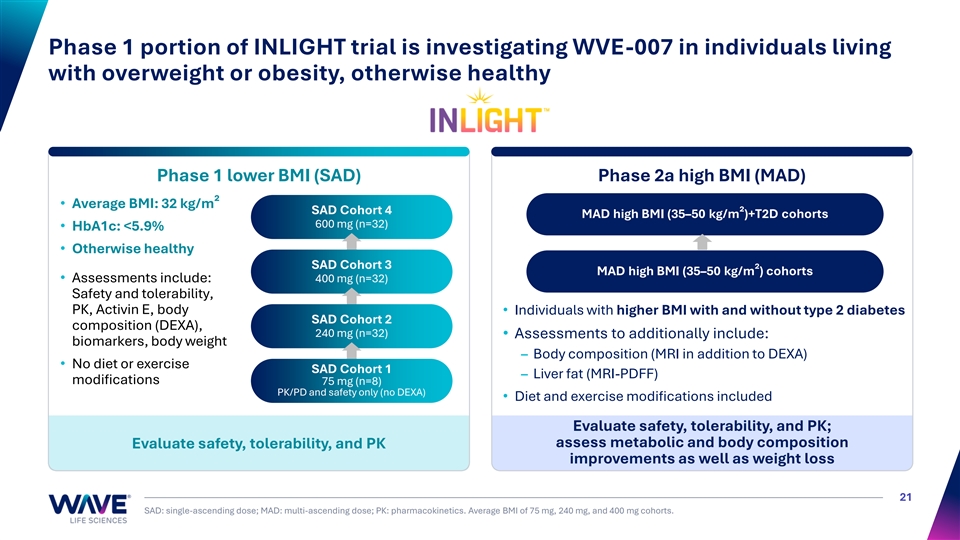
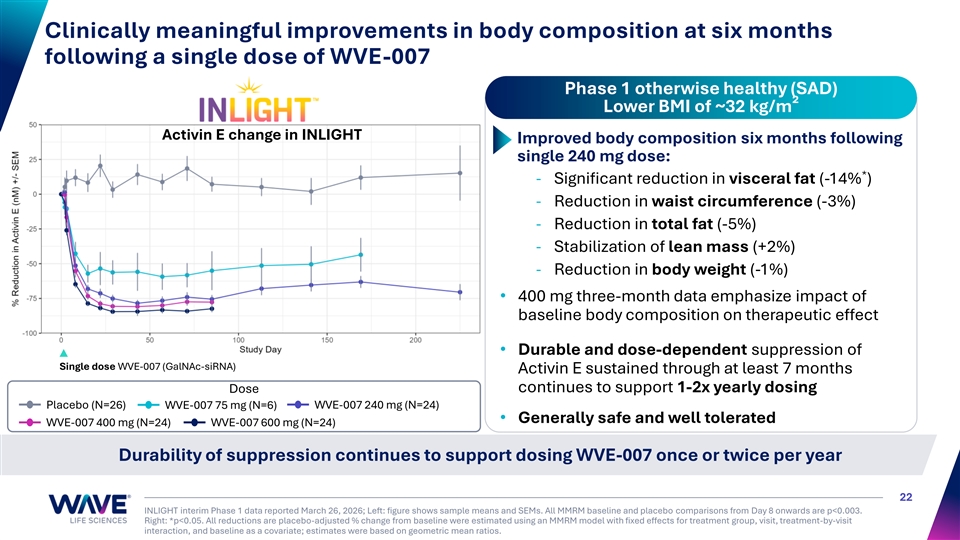
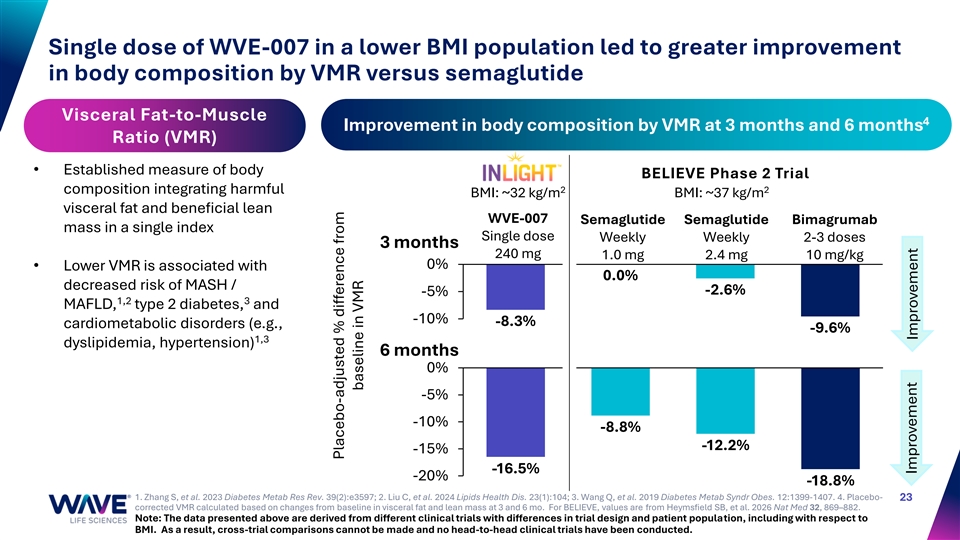
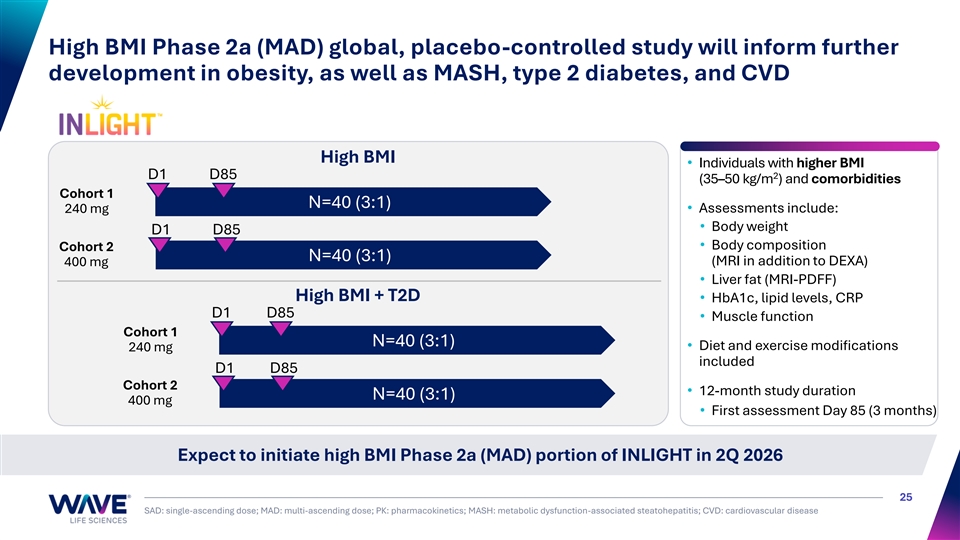
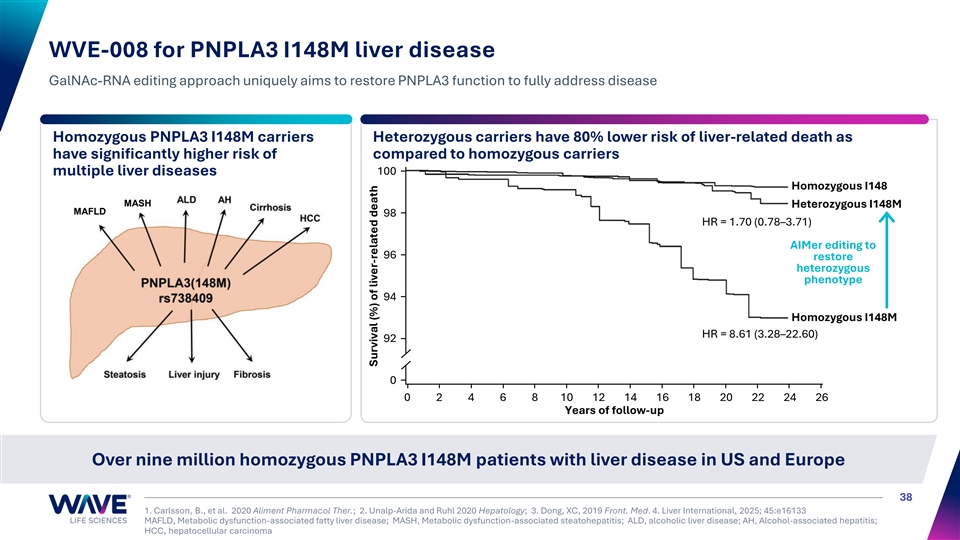
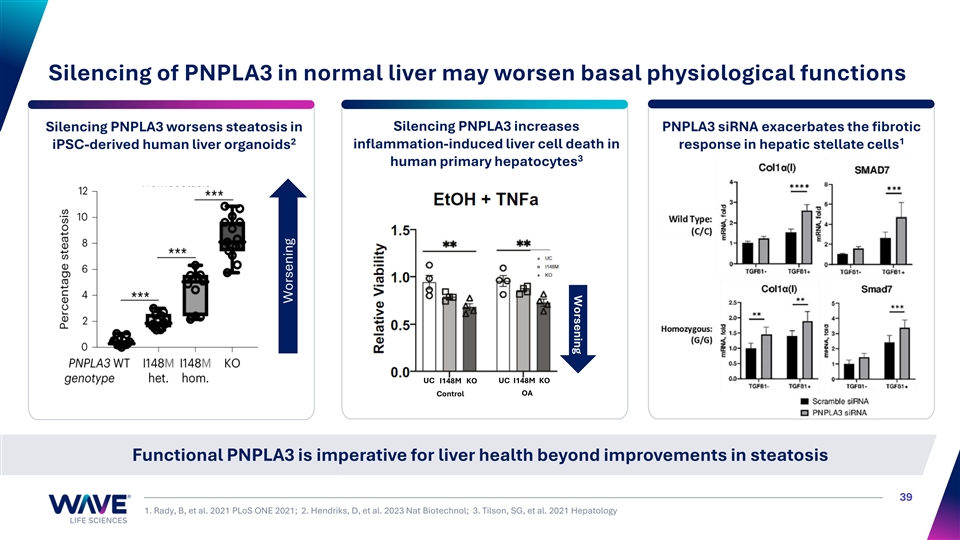
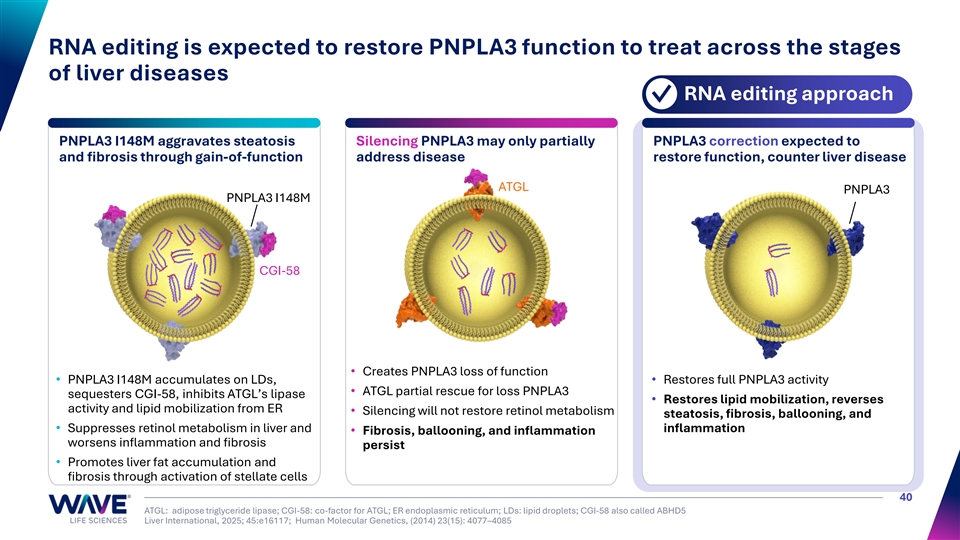
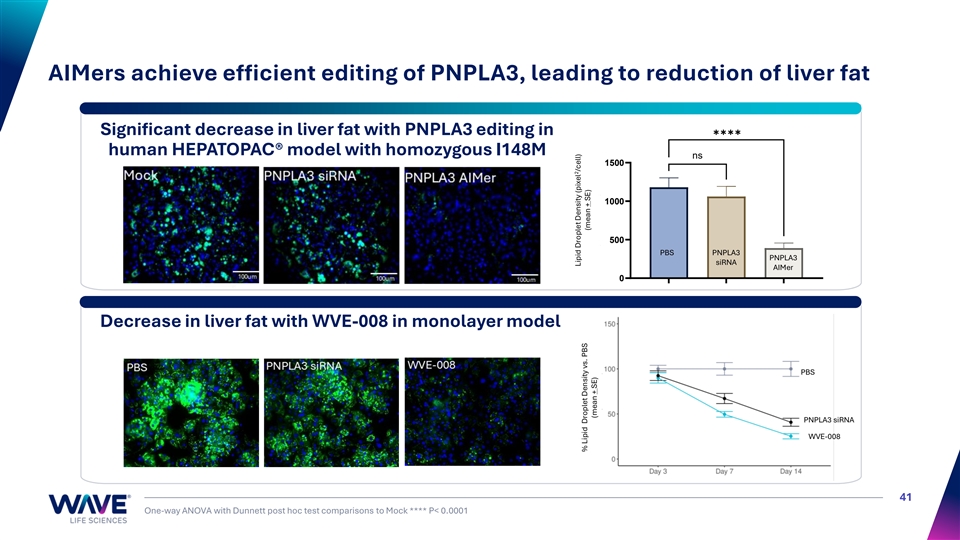
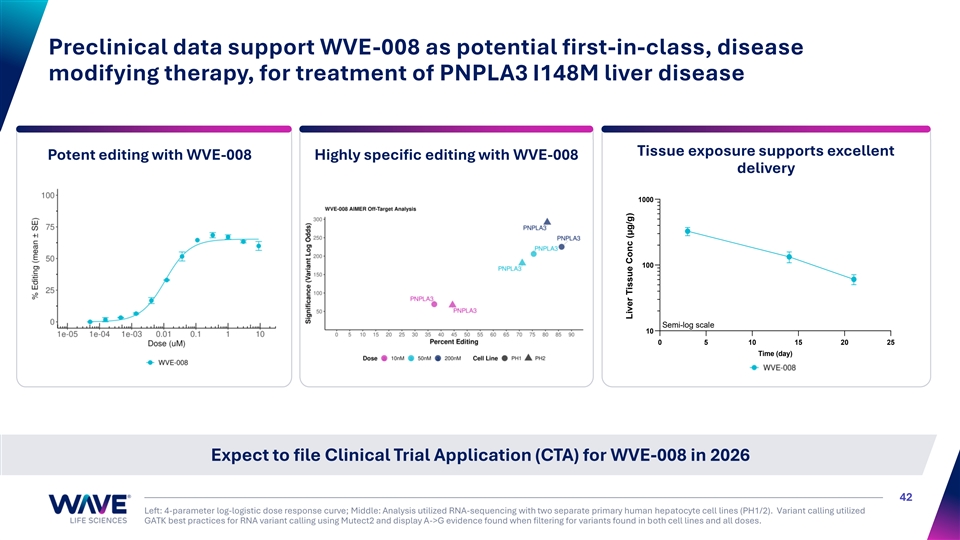
Thanks, Eric. I'll begin by discussing our recent data and plans to accelerate development of WVE-007. In March, we shared interim data from the Phase I portion of our ongoing in-light clinical program. Placebo-controlled, single-ascending-dose study designed to measure safety, tolerability, and PKPD. Participants were healthy individuals living with overweight or Class I obesity with an average BMI of 32, a population with less fat and lower BMI than those included in Phase II and Phase III obesity studies. The safety and tolerability profile of WVE-007 remains encouraging, and we continue to observe robust, highly statistically significant, dose-dependent, and durable active and e-reductions through at least seven months. This combination of tolerability and durability supports a convenient dosing interval of once or twice a year that may allow for enhanced patient adherence, more persistent fat loss, and better health outcomes. Having reached six months of follow-up in our 240 milligram cohort, we observed further improvements in body composition following a single subcutaneous dose. This included placebo-adjusted visceral fat reductions of 14.3%, well above the established threshold to deliver improved cardiovascular outcomes. Total fat reductions were 5.3%, and lean mass was stable. There were also improvements across clinical measures, including a clinically meaningful 3.3% reduction in waist circumference. These results are particularly encouraging, given this is a phase one study of otherwise healthy participants with an average BMI of 32, and no dietary or exercise restrictions. As Eric just spoke to, reducing fat, particularly harmful visceral fat, while also preserving muscle is critically important for the treatment of obesity, including overall functional improvement and cardiometabolic health benefits. The current standard of care pushes the limits on high percentage weight reductions, but it comes at a cost of substantial muscle loss. To provide context for our results at this early development stage, we calculated the visceral fat to muscle ratio, or VMR, which is a measure of body composition that integrates harmful visceral fat and beneficial lean mass into a single index. Lower VMR is associated with decreased risk of MASH, type 2 diabetes, and cardiometabolic disorders. We believe VMR has the potential to serve as a novel composite biomarker as compared to BMI alone, that more holistically captures the body composition improvements driven by inhibiting knockdown, and that may better predict long-term clinical benefits. With a single dose of O07 in our phase I population, we've already observed a 16.5% improvement or greater reduction in BMR, which was more than the 12.2% achieved with weekly semaglutide in BELIEVE and approached the 18.8% observed with Vinagromab. What makes this comparison particularly exciting is that or in-light participants had substantially lower BMI, visceral fat, and total fat compared to phase two or phase three obesity studies. Clinical experience highlights the importance of baseline adiposity. Early phase one studies in leaner subjects show modest fat reductions, while studies of individuals with higher baseline obesity demonstrate large clinically meaningful losses in total and visceral fat mass. Early follow-up from our 400 milligram cohort which included a substantially higher proportion of individuals with lower levels of visceral fat, also confirmed that higher baseline visceral fat leads to greater visceral fat reductions overall. Collectively, these data emphasize the impact of baseline body composition on therapeutic effect and support the potential to deliver even more pronounced improvements in body composition than the phase 2a portion of InLight, given participants higher excess fat at baseline and O7's mechanism of targeted lipolysis. Following the FDA's recent acceptance of our protocol amendment, we remain on track to initiate the Phase 2a multiple-dose portion of NLITE this quarter. This global placebo-controlled trial will enroll individuals with higher BMIs in the range of 35 to 50 and comorbidities across two dose levels, 240 milligrams at 400 milligrams, and two study populations with and without type 2 diabetes. for a total of four cohorts of 40 patients each. Assessments in this multi-dose portion are similar to those in the SAD portion, with additional inclusion of body composition measures by MRI, liver fat content measured by MRI-PDFF, HbA1c, lipid levels, CRP, and muscle function. The design and study population enables enhanced evaluation not only of improved body composition and weight loss, but also informs additional opportunities for 007 in MASH, type 2 diabetes, and cardiovascular disease. Participants will be given two doses of 007 at day 1 and day 85 and followed for 12 months, with the first main assessment occurring at day 85. As Paul discussed earlier, we are also planning to initiate trials evaluating 007 in combination with incretins and as maintenance post-incretins this year. We believe that O07's orthogonal mechanism, ability to drive reductions in fat while preserving muscle, and favorable safety profile, are aptly suited to combination and maintenance approaches. Our preclinical data provides compelling support for both use cases. Planning is well underway for studies addressing incretin combination and post-incretin maintenance, and these will initiate this year. We also expect to share additional data from the Phase 1 portion of InLight this year, including data from our 600mg cohort, which will further inform the durability of 007. Turning to our ongoing Restoration II clinical trial of WVE-006 for AETB, we continue to advance this study while engaging with key opinion leaders and patient organizations who are eager to be involved. As we speak to key opinion leaders, there are several aspects of our data that excite them. One, restoring a dynamic AAT response to address acute lung infections. Two, decreasing harmful Z protein to address liver disease. And three, offering a safe, well-tolerated, infrequent non-intravenous treatment for patients that avoids permanent genetic modifications. We look forward to presenting an expanded data set during ATS on May 18th, which includes data from the 400-milligram monthly cohort as well as the 600-milligram single-dose cohort. Continuing to recapitulate our prior interim results with a less frequent dose would strengthen the overall profile of OO6 as a differentiated, patient-friendly therapy for ATD. In addition, we plan to share from the 600-milligram multi-dose cohort in the second half of this year. Now turning to our second RNA editing clinical candidate, WVE008, for homozygous PNPLA3 I148M liver disease. This PNPLA3 variant is a well-established driver of MASH pathology, yet there are no approved medicines that directly address this biology. There are an estimated 9 million homozygous PNPLA3-I148M carriers across the U.S. and Europe who are at a nine-fold higher risk of dying from their liver disease compared to non-carriers. With 008, we aim to correct the I148M variant using our leading RNA editing capability, which is expected to restore PNPLA3 activity and lipid metabolism, reversing steatosis and fibrosis, and improving liver health. In our upcoming first-in-human study of 008, we plan to leverage previously genotyped populations to efficiently identify homozygous I-148M carriers, evaluate target engagement with circulating biomarkers, and assess early signs of efficacy using non-invasive imaging. We remain on track for a CTA submission in 2026. With that, I'll turn the call over to Kyle to provide an update on our financials. Kyle?
Thanks, Chris. Our revenue for the first quarter of 2026 was $38.2 million, compared to $9.2 million in prior year quarter. The year-over-year increase primarily relates to recognizing the full amount of revenue associated with WVE-006 as a result of regaining full rights to that program, along with the progression of work in our ongoing GSK collaboration. Research and development expenses were $47.4 million in the first quarter of 2026 as compared to $40.6 million in the same period of 2025. The increase primarily reflects continued investment in advancing our clinical programs, including preparation for the Phase 2A portion of InLite and continued progress across our RNA editing pipeline. Our G&A expenses were $22.1 million in the first quarter of 2026, as compared to $18.4 million in the prior year quarter. This increase primarily reflects costs associated with supporting our expanding pipeline and preparing for the next stages of development. As a result, our net loss was $26.1 million for the first quarter of 2026, as compared to a net loss of $46.9 million in the prior year quarter. We ended the first quarter with $544.6 million in cash-to-cash equivalents, which we expect will be sufficient to fund operations into the third quarter of 2028. I'll now turn the call back over to Paul for closing remarks.
Thank you, Kyle. As we look ahead, we believe we are well-positioned and well-capitalized to continue delivering on our clinical development plans. We are rapidly advancing multiple study of 007 across treatment settings, which are strategically designed to unlock its full potential in obesity and other cardiometabolic diseases. We're delivering new OO6 data in May that will continue to inform its potential to provide a differentiated treatment option to individuals living with AATD. And we're progressing 008 towards the clinic for the 9 million individuals living with liver disease. With our proprietary chemistry translating in the clinic and an emerging pipeline of next generation candidates, we are committed to translating powerful human genetic insights into potentially transformational RNA medicines for people who need them. We look forward to keeping you updated on our progress. And with that, I will turn it over to the operator for Q&A. Operator.
Operator
We will now move into our Q&A session. For those of you who are joining us via the Q&A webcast, if you'd like to ask a question at this time, please raise your hand by clicking the raised hand at the bottom of your window. We would like to ask all analysts to please limit yourself to one question per person. Once called upon, please unmute your audio to ask your question. We'll take our first question from Joe Schwartz from Leerink Partners.
Hi team, congrats on all the progress. It seems like a treatment approach targeting inhibitor biology could be somewhat sensitive to baseline patient characteristics. So I was wondering, how are you thinking about optimizing for that in future trial design? Are there any screening or enrichment strategies you could implement to enhance signal detection?
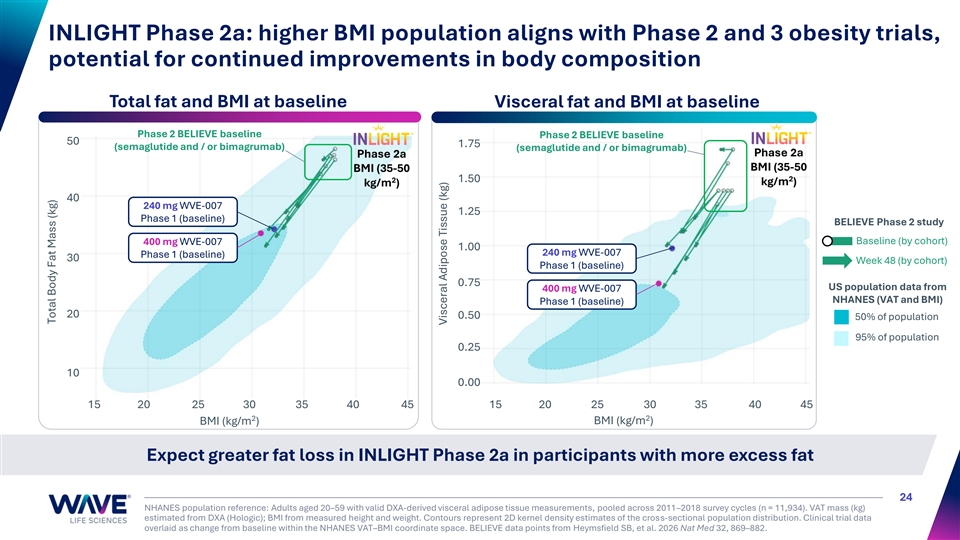
Yeah, Joe, and we appreciate the question. I think first and foremost in any obesity study, as you point out, is particularly, as Chris mentioned on the study, a mechanism that's driven on hypnosis is excess fat, the requirement to have not just large BMI, but have fat to lose in order to have a reduction in fat, which is typical in most phase one to phase two transitions. So if we look at the BELIEVE study, we actually have an update of those who look at the 8K today on the corporate deck on slide 24. The realization that as you shift patients from a low BMI, low fat setting to a higher BMI, high fat setting, meaning the shift that you see from where our study started, which is where the BELIEVE patients ended, to where the BELIEVE patients started, both on semaglutide and bimagromat, there's an elevation not just in visceral fat, but on the left panel that slide, an increase in total fat. And so when we see those changes, we do expect, as you said, to see that reduction. Now, what can we do to actually assure that as we enroll patients in that study, that the patients exhibit the phenotype, meaning in an obese study are not just large in BMI, but large in visceral fat and in total fat. And I think there we've seen pretty consistently that if you use other metrics like waist circumference allowing comorbidities, those patients do tend to fall into that range. One other opportunity we have to assure this is the studies enrolling is we are, as Chris mentioned, doing baseline MRI imaging on these patients as we start. So we will have the opportunity to look at baseline images to ensure that patients are collecting in that region.
Very helpful. Thanks for the insight.
Operator
We will take our next question from Steve Seed House with Cantor. Please unmute your line and ask your question.
Great, good morning. Thanks so much. I wanted to ask about the regulatory interactions in AATD and just get your thoughts on if the FDA, or really just the discussions you've had, if the FDA is looking for specific MAT levels, if that's part of their thinking here, or if like the degree of MAT increase that would support approval or accelerated approval is going to be more of a review issue. And then I'm also curious if you know yet if the primary analysis in a pivotal study here is going to be more of like a responder analysis on a certain threshold or if it's more of like a mean change in MAT or total AAT in the entire population.
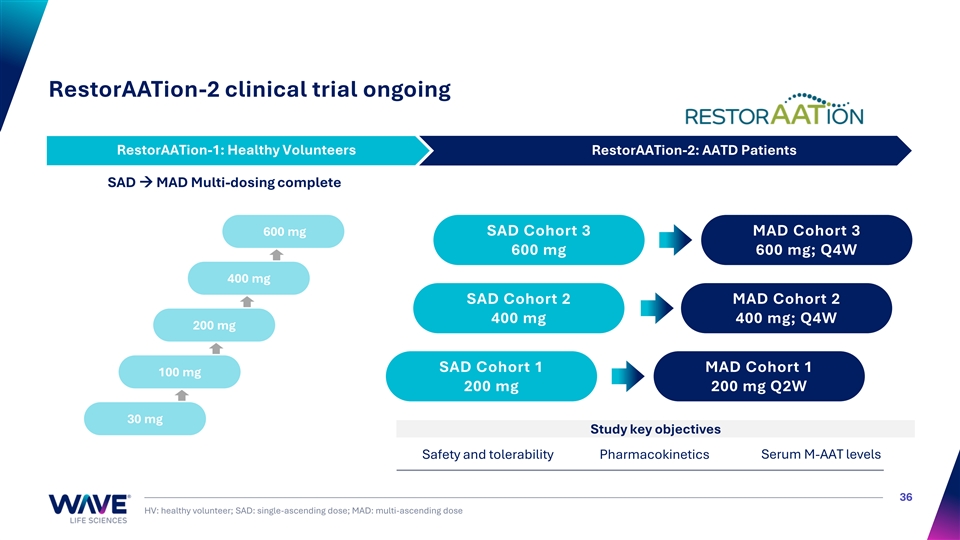
Yeah, no, thanks, Stephen. I'll start and then turn it over to Chris for further comments. But, you know, I think one is obviously we don't comment on individual interactions, but we will have feedback as we get to mid-year. So it's safe to assume we're preparing and engaging in those conversations. I think in general, it's about the dynamic response, right? So it is this kind of shift from, and based actually on comments that the FDA has made actually publicly, specifically as it relates to AATD at patient meetings, they did refer to AATD as an ideal example of the plausible mechanism pathway, meaning that there's the opportunity that we can see that editing translates these patients from a ZZ phenotype to an MZ phenotype. So I think that we, as we move past this kind of just threshold concept of, you know, what does it take to be an MZ patient? Well, greater than 11, but we need to step back and remember that actually the 11 micromolar, as people discussed, that threshold level increasing is one of protein replacement therapy, this idea with a consumptive protein that you need to put more in in order to have that when it gets depleted during an acute event be there. I think the context of not just WAVE, but as we've seen BEAM as well, seeing that when you do edit, you see this restoring of this dynamic response. And what is the ability of that dynamic response to actually protect patients? I think those are the best examples of the plausible mechanism meaning if you're at that greater than 11 micromolar and over 50% of that being M protein, then you're in the position that when you have a proportionate CRP or inflammatory response, you can mount that proportionate response in both total protein and in M protein. And that's exactly what we saw. We saw, actually, if you model the CRP exposure that we saw, we saw an MZ-level response both in total protein exceeding 20 micromolar and over 10 micromolar of M protein in that individual. So that dynamic response is what's required, demonstrating the total both on threshold and percent M we think is important. Those will be the nature of the conversations that we'll be having with the agents.
And I'm sorry, the last, excuse me, I think responders versus men and the like. I think those are exactly the types of questions that we'll be engaging with the FDA on, you know, the pivotal studies. So more on that as we have those discussions.
Yeah. It's important to note, remember, that these patients are coming in with zero M protein. So the idea that this is all de novo functional from editing to mount those responses, you know, is crucial. And I think the agency has been receptive.
Operator
We'll take our next question from Chengli with Opco. Please unmute your line and ask a question.
Hi, thanks for taking the questions and congrats on the updates. I'm just curious about the 07, like future clinical paths, recognizing the body composition is an important feature for this mechanism. And also you mentioned several measures, including BMR. I'm just curious about which one you think can be incorporated into the clinical trial to support registration that you think has the best chance. Thank you so much.
Yeah. I mean, I think as Chris mentioned, we're going to have a number of endpoints in this study that independently help us build the cardiometabolic profile. So obviously we'll have body composition measures on DEXA, looking at total fat, visceral fat. We'll have MRI imaging as well. And importantly, MRI PDFF to look at liver fat. I mean, I think that's going to be interesting as these patients would be expected to have increases. In addition to that, as we think about just why when you have, and I think about phase one studies where you exclude comorbidities of why you end up seeing this lower level of total fat, but importantly, visceral fat is visceral fat is harmful fat. And it's responsible for a number of these other cardiometabolic risk factors, including diabetes and cardiovascular disease. So one of the opportunities we have in removing the cardiometabolic, sorry, the comorbidities, in addition to allowing patients with and without diabetes, is we're going to have the ability to see what's played out in human genetics with reduction in HIV and E, which is reductions in hemoglobin A1C. Well, that's a registrational endpoint in the treatment of diabetes. We'll be able to look at ratios of triglycerides and HDL in terms of insulin sensitivity, and we'll be able to look at other measures like CRP from an inflammatory standpoint. So it really is important as we think about this study as being able to open up one, how do we think about the treatment of obesity and what's really important? And we are seeing a big shift, particularly in last quarter on finally discussions about body composition being what's target and what should be targeted for these patients with an ability to tie that to an impactful measurements that'll be in the appropriate phase 2A. And as Chris said, I mean, we'll have 160 patients study across doses, across disease states that really will let us fully exploit the mechanism. And shortly thereafter, so again, accreting the data to where I do think there's a substantial opportunity for inhibiting, which is in the maintenance setting. This idea that 70% of people can't stay on incretins. And if we think about the therapy for obesity with incretins being like the treatment of hypertension, we're seeing patients who need a lifelong treatment to stay in this range of body composition that they achieve. I think we're also going to have the opportunities. We think about the phase two studies, plural, that we will be initiating the concept of being able to have and lock in in a maintenance setting, an infrequent way of treating patients and preserving and locking in the benefits from a cardiometabolic outcome physician that's been achieved with other weight loss therapies. So I think the totality of data that we'll be generating to unlock the full mechanism of inhibiting is both in this phase 2A study and the multi-dose, but also in the subsequent studies that will be initiated.
Thank you so much. Thank you.
Operator
We'll take our next question from Samantha Semenko from City. Please go ahead and ask your question.
Hi, good morning. Thanks very much for taking the question. Just one for me on AATD. I think your explanation around the dynamic, you know, nature of the mechanism makes a lot of sense. I just wonder from a competitive landscape, we're seeing the DNA base editors get up to a mean of about 16 micromolar total in MAAT. We've seen at least one patient from another competitor go up to 20. Do you think optically you need to achieve some sort of threshold in order to entice both patients and physicians to use an RNA editing approach? Or have you done any market research around this? Just curious your thoughts there on what the actual profile could end up being and how competitive that would be. Thank you.
No, thank you. And I mean, this is where we've spent a lot of time with clinicians as, again, in preparation as we think about ATS coming. And I think there's a lot of enthusiasm from this community on RNA editing. And I say that for a couple of reasons. I mean, one, the idea of being able to, we'll talk about kind of this thresholds and numbers in a minute, but I think the most important thing is that if we think about the ability to be able to infrequently redose patients, it's important because over time, the liver does regenerate. And the idea that as these cells that are on a pathway to dying and becoming fibrotic are actually now rescued and saved because you're able to, through editing, deplete Z-protein, take those toxic aggregates out of the liver, restore liver health. Those cells are now ripe to be able to be dosed and have actually correction and actually become productive in their responses in producing healthy M-protein. And so as we talk to clinicians, that notion of infrequent repeat dosing is actually viewed as actually favorable as opposed to the risks and potential outcomes from permanent DNA mutations. I think the other thing that as we think about patients who have liver disease and ZZ patients, where they are on the spectrum, will have liver disease, is the notion of not using LMPs. We have to remember that LMPs activate IL-6 in the CRP immune response, and in and of themselves are immunogenic. And if we think about that as being a causing and inducing an acute phase response could also elevate alpha-1 antitrypsin and a protective response to that. And so the notion that in patients with liver disease, we want to avoid things that are going to irritate the liver is also important as we think about the totality of the therapeutic modality that clinicians are thinking about in terms of their treatment of patients. Now, while all of that is wonderful, at the same time, what we want to see is the ability to actually drive the correction. And so as we think about the production of M-protein and what RNA editing is designed to do, it's highly specific. So when we talk about protein, and oftentimes these things get conflated with numbers, when we say M-protein numbers or M-protein percentage, we are talking about purely the actual isoform of AATD. So this is the native MAAT protein. And as the prior question suggested, that's something we're discussing as part of our regulatory interactions, which is that we make only the native MAAT protein. We don't create bystanders, we don't create indels, but importantly, those bystander additive proteins have different ranges of function. So we can be assured that the protein we're creating behaves like the native natural protein. So as we kind of shift back to you at the beginning of your question, which is what's going to be important as we think about this? I think where we've also seen clinicians is not being able to make that switch to thinking about, and actually at ATS, it's going to be interesting because it will be wave on presenting on editing, and then there will be the updates on protein replacement therapy. It's really this shift from having to say, well, more is more at a baseline because that is a protein replacement narrative. You have to put more protein in because the patient can't actually produce more, and so therefore it's a race to put more protein in that gets depleted. we'll have the opportunity to continue to say, with editing, you can now create that dynamic response. And as we said, we can create a dynamic response that's proportionate to a CRP response up to 20 when the patient needed 20 and could have easily generated more if the patients needed more. So I think if we think about the range of both total and protein, we are very much convinced that we can create the baseline levels that serve as the biomarker to demonstrate that these patients are able to go out, live a healthy, functional, normal life, and have the appropriate responses to these acute phase events as they happen. And I think one of the most interesting things when we went back and kind of looked at that initial patient wasn't just the spike the patient had that got up to 20, but it was the realization, and, you know, everyone went back to those slides that are there on this dynamic response, that over the multidose, these patients had small, you know, elevations in CRP. And what was really compelling is every time they had those adjustments, they were generating an increased response to total protein that met that. So I think by restoring this dynamic response, that's ultimately how you prevent the chronic injury that happens for the one to three times a year that these patients need it.
Operator
Our next question comes from Alex Ronahan from Bank of America. Please unmute your line and ask a question.
Hey guys, thanks for taking our questions. Just a couple of quick ones on the Phase 2A portion of InLight. Could you walk us through how you're thinking about the dose selection, given the Phase 1 portion is still ongoing? And will GLP-1 use be allowed in this population for enrollment, or is this maybe a population you'll reserve for future studies? And in terms of cadence of data from the Phase 2A, is your plan to share regular interim updates like the Phase 1, maybe say at the first three-month assessment following the first dose. Thanks.
Thanks. I'll take the last question and hand it over to Chris. But in terms of the cadence of data at this point, yes, it's possible that we could deliver the initial, as you pointed out, three-month time point. We'll give a more concrete update on milestone cadence when the study initiates and as that study launches. But yes, there's the possibility of data as we think about this year. Chris, I want to take the first question.
Sure. So in terms of the doses chosen. So this is really based on, I mean, it is ongoing, but we clearly have interesting data on 240 as well as 400. And so based on the data that we've seen in terms of the level of knockdown, PKPD modeling, and the degree of efficacy that we saw even at 240, we felt that we could move forward in the multi-dose with the 240 and 400. And these should be the range of doses that are expected to be efficacious, also based on the modeling. So it kind of all falls together, modeling from preclinical. So it all kind of falls together from that perspective, and that's how those two initial doses were chosen. In terms of, you know, incretin, in this particular study amendment, it's a monotherapy amendment. So we're not allowing incretins.
However, you know, we're in the throes of combination study design, which would include ingredients and we'll provide more you know information on that shortly as well just to follow up on the last point i mean as chris mentioned i mean we do see substantial reductions in the two dose courts that we're taking forward um with very tight ranges between patients and so i think a lot of what we're going to learn is not just getting more efficacy from that but the impact of time durability and you know which which dose is going to allow for the most less frequent interval while not losing any c-signal.
Operator
Our next question comes from Youngjong with Wai Gush. Please unmute your line and ask your question.
Hi. Good morning. Thank you very much for taking the questions. And so the question is on the phase 2a portion of the BCD study. On the second dose, do you have or do you have any expectation on the potential impact on gene and protein expression. And in terms of a clinical outcome, would you expect the benefit to be on durability or the magnitude of fat reduction or both? Because you're changing the patient based on characteristics. So I just wonder, will you be able to tell whether that's in any potential better outcome will be from repeat dosing or from the more higher BMI or both? Will you be able to tell the difference, please?
Yeah. I can just say, you know, the way that it's designed and what we know about the pharmacokinetics and pharmacodynamics, we expect, you know, a very substantial knockdown with the two doses that would be very persistent over time. So we think that that's a great approach to identify, you know, the right doses and understand the duration better and to optimize our, you know, likelihood of efficacy. And then to that point, and you also mentioned it, you know, the patient characteristics are different. And so, you know, the dose response could also be slightly different in people that have higher levels of obesity or higher BMIs. And so it's important to look at a number of doses in that context as well. But we would expect that we should see, you know, stronger results there, as we outlined earlier, in the sense that, you know, this is a drug that increases fat metabolism. And so the more you have to metabolize, the bigger the effect should be.
To just add one more thing as well, the design here, the zero and three months dosing is really to accelerate the phase 2A trial. It's not because we do think we need to give the doses that frequent. So all of our PK modeling indicates that it's, you know, once a year or at most twice a year. So it's a way to kind of accelerate and facilitate data readouts fast.
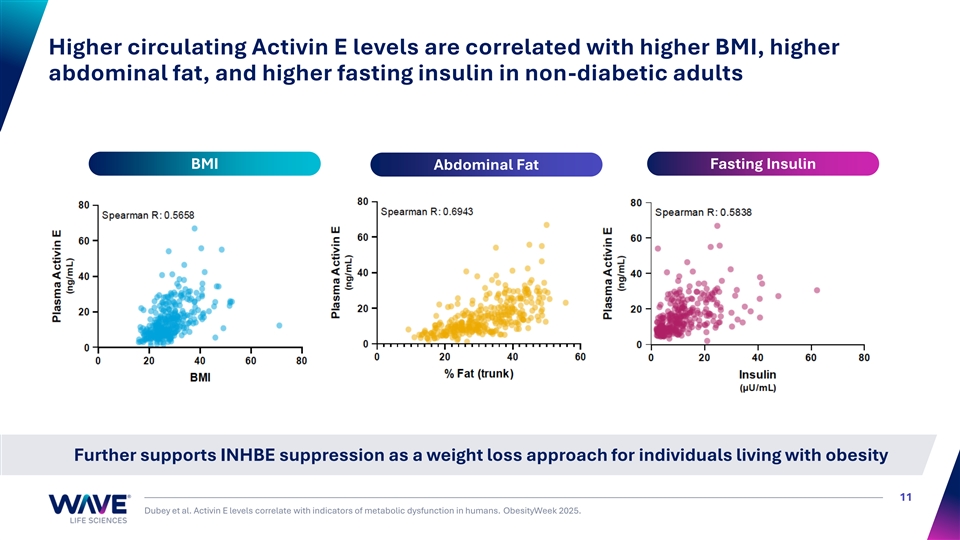
And to that point, I mean, if you look at our 240, I mean, out past seven months, we're still seeing suppression of active NE. So again, with 400, we expect that to be larger. But you also bring up an interesting question on just, and I heard you mention genetics. I mean, I think we have to go back to the genetics and realize that, you know, active NE is the biomarker. Hence, we're able to look at the impact of the reduction on the actual protein biomarker over time. And when one looks at that interaction, you know, there were the discussions that had come up a while ago about, you know, diabetes, non-diabetes. And I think the data that had been shared to date doesn't demonstrate that these patients should be different in disposition, whether they had diabetes or not. Actually, the data that was run in a, God, I think it was an over 300 patient observational study from Alnylam clearly showed that, you know, actively correlated with high BMI, insulin sensitivity, and truncal fat in non-diabetic patients. So I think the implication here is really that if you can dial back a protein that drives lipolysis, then you're going to see that impact. Now, we're going to be able to be in a position where we're going to look at that in different settings. So we'll have it in the non-diabetic setting, the diabetic setting, to look at how that plays a role, particularly on endpoints like hemoglobin A1c. So if we think about the implications for broader cardiometabolic disease beyond obesity, we'll be able to look at what happens with insulin sensitivity, what happens with hemoglobin A1C for diabetes and other measurements in lipids and inflammatory markers as we think about cardiovascular. So I think the study is really stepping back and letting us look at the broad range of cardiometabolic diseases in those different patient settings.
Operator
Our next question comes from Salim Saeed with Mazuho. Please unmute your line and ask your question.
Hey, congrats on the progress guys um paul uh chris maybe one for us on um the data coming out on o6 and ats um so it's possible to just kind of give us high level kind of what people should expect here you know or look out for i mean obviously the data that was presented you know in september of last year the 200 single and 200 multi there wasn't much of a dose response or even going to the 400 milligram single um but you know you guys continue progress here with you know the 400 multi and then we'll be getting 600 single and then i guess in the second half of this year 600 multi so is there is there any reason here people should be expecting some sort of threshold effect as you
break through to the higher doses that we get more more efficacy yeah i mean i think no it's a great question i think if we went back to september there's actually a dose response if we think about M protein, it went from zero to like 44% to 65% M. So, I mean, I think if we think about the context of, you know, where patients start and how that builds over time, I think editing can continue to grow. I think with a question of, is more going to drive more in the absence of an acute phase response, that's really the distinction that we're separating, which is once you've hit a point where you can catalytically edit the transcripts that are necessary. It's really a function of time. You deplete Z protein, the Z protein continues to come down and clear from the liver, the cells get better. And you should over time, as we've seen with MZ patients who actually don't have liver disease over their lifespan, they can actually generate more protein. And so I think that notion of correction over time is important. But I think our guidance is, you know, we were able to mount a response that could generate a lot of protein, 20 micromolar if you had the right event. So it's not substrate limited to the effect that people will say, you know, is the enzyme exhausted? Or there is substrate limitation in the context that if you're not having an acute phase response and the body's not producing or needing to produce protein, that it won't produce more. And so I think that's been the example we've seen and others have seen. I think what we're able to do is look at this without the conflation of LMP irritation, which can also create a kind of a conflationary signal of inflammation in a signal where we have Galnex so you can go directly to the target site. We do see that when you have these elevations of acute phase responses that you can meet those dynamics. So I think stepping back, if we could see that we could produce the same levels, meaning you could create stable levels of greater than a lot of micromolar, you know, we were 13. So edited protein, that's M, that's above, again, the MZ threshold, so again, above 50% M protein, and be in a position where you can protect patients from a dynamic response, but now no longer have to deliver biweekly injections to get there, but demonstrate we could do it monthly or less frequently. I think that puts us in a very good position in terms of the regulatory context, and ultimately, most importantly, to treat patients with alpha-1 antitrusive deficiencies.
Operator
Our next question comes from Roger Song with Jeffries. Please go ahead and ask your question.
Thanks for taking the question. Also on the NHAE, so understanding you will have a poster at the ADA, so just curious what kind of incremental data we should expect to see. And then regarding the FDA interaction, Have you had any discussion around the 5% is coming to the total body weight reduction versus we can look at a total fat or even visceral fat reduction threshold, you know, moving away from the overall body weight given the novel mechanism? Thank you.
No, thank you, Roger. And I mean, to your first question, yes, we will have a poster in ADA. as it relates to new data cadence, we haven't provided any updates other than 2026 will be providing continued updates on 07. To your second question, as it relates to kind of regulatory thresholds and 07, I think it is important that there is a broader range of discussions beyond a flat 5% change in total body weight. Nonetheless, it's why I think slide 24 in the new corporate deck is important because i think the notion of and i know people were kind of trying to think about with visceral fat you know it's a kilogram and a half and if you lose that and then everybody trying to figure out where body weight you know reduction comes from but if you look at the parallel side of what happens to total fat in that population you've got about 48 kilos of total subcutaneous body fat that gets produced that ultimately delivers weight loss so i don't think we're needing to necessarily have a different conversation around how in a phase two, three obesity study in patients with excess fat, how you can deliver on that 5% threshold. Nonetheless, I think there's a very robust conversation that we're preparing for with the agency where I think there's a lot of alignment, particularly in this administration, thinking about the impact of harmful visceral fat. I mean, there's two decades of literature on elevations of visceral fat driving MASH, driving cardiovascular disease driving diabetes. Quantitatively, meaning a 10% change in visceral fat changes outcomes that are clinically. And what do payers pay for? They pay for outcomes. And so as we think about the endpoints of visceral fat reduction as actually being the driver of what makes patients unhealthy, that focus on being able to reduce visceral fat is important. As Chris pointed out, you know it doesn't there's not a lot of complicated mathematics to to take bmr and look at the impact of visceral fat and lean mass preservation there's literature around that so this is not a new metric of identifying how you can change body composition in a positive way and very much we do plan to have a conversation with the agency that specifically focuses on looking at other metrics like bmr and visceral fat as an endpoint not just to the exclusion of the 5%. But even in addition to that, being able to build in the real impact of improving body composition, which is what's required for the treatment of obesity is important. And I think we just all need to remember that obesity is a cardiometabolic disease. And so ultimately, a lot of the endpoints that we're measuring, chemoglobin A1C, insulin sensitivity, driven off of visceral fat reduction are going to be important. So yes, it will be very much a topic of conversation this year as we think about the platform.
Operator
Our next question comes from Bill Mohan with Clear Street. Please unmute your line and ask a question.
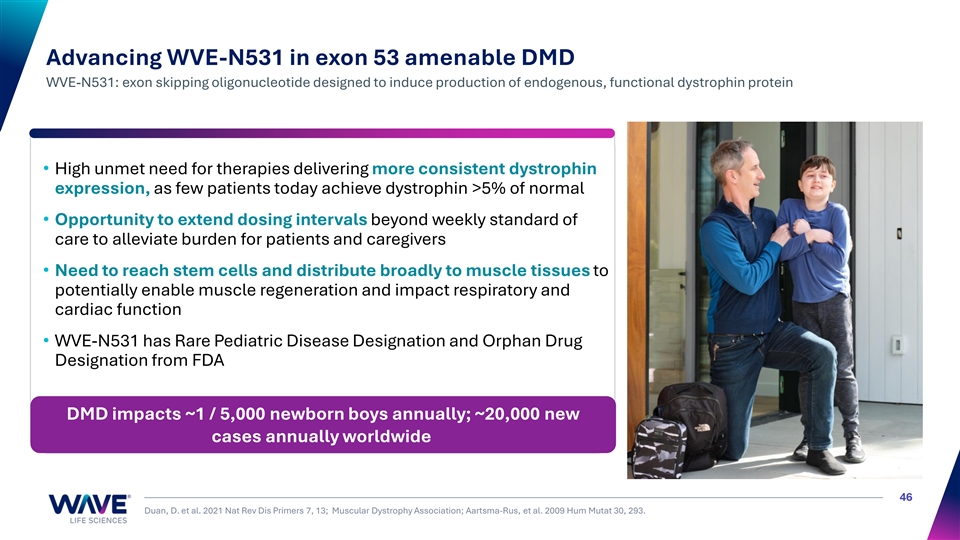
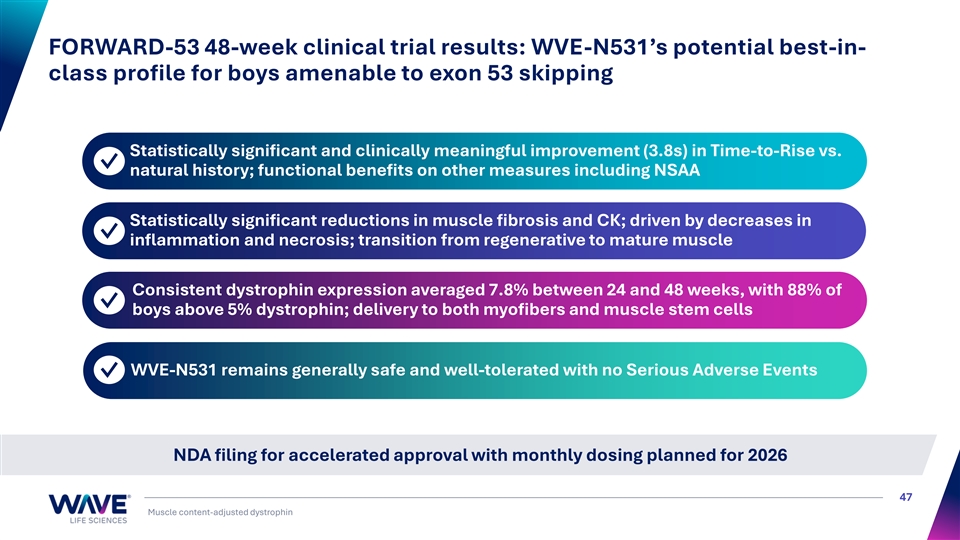
Good morning, thanks. So I wanted to just mix things up and actually ask about your Exxon Skipper program. While obviously not as massive a market as obesity, it is a fairly near-term opportunity and a potential significant revenue driver, yet there seems to be a bit of a lack of, I guess, emphasis just around discussions around wave on the Exxon skipper. So I just wanted to get your most recent kind of thoughts on how big that could be commercially and whether or not there's potential for that to surprise a bit and get a little more credit than it's being given currently. Thanks.
Yeah, no, thank you for the question. You know, as we think about DMD, I mean, had delivered a differentiated approach with the clinical data update we gave. As we said, we were in the process of delivering and putting together in that studies, continuing to get to the monthly dosing regimen, which we believe would be, again, differentiated and required for an NDA filing. So, you know, that work continues to remain on track. I think, as you also point out, as we think about the opportunities of allocation of capital in terms of building out to commercialization, we have said that we do plan to engage in strategic partnering discussions as it relates to that transitioning and commercialization. And we continue to look for several things evolving. One, the evolution of the commercial landscape as we look at the product dispositions that are out there and two, the regulatory environment. So I think over the course of this year, there's going to be a lot of opportunities for us to make those assessments and commercial landscape, the regulatory landscape, as we can continue to deliver on that pathway.
Operator
Our next question comes from Ben Burnett with Wells Fargo. Please unmute your line and ask your question. Ben Burnett, please unmute your line and ask your question.
Operator
I think we can go to the next question.
Operator
Our next question comes from Danielle Brill with Truist Securities. Please unmute your line and ask your question. Danielle, please unmute your line and ask your question. We'll move on to Cassie Ewan from RBC. Please unmute your line and ask your question.
Thanks so much for taking our question. Good morning, team, and this is Cassie on for Luca. Congrats on all the progress and a quick one on competitive landscape for obesity. Your competitor is moving into combination approaches relatively earlier on in development. Could you maybe, could we take that as maybe signaling that monotherapy alone has inherent limitations in obesity treatment for inhibi? And Paul, you already gave some Carter on this, but do you believe there's a ceiling to what inhibition and the lung can achieve? And are you concerned that waiting until phase two or later to explore combinations may put you in a competitive disadvantage versus competitors already testing combo strategies? Sorry for the long question, but any kind of appreciated.
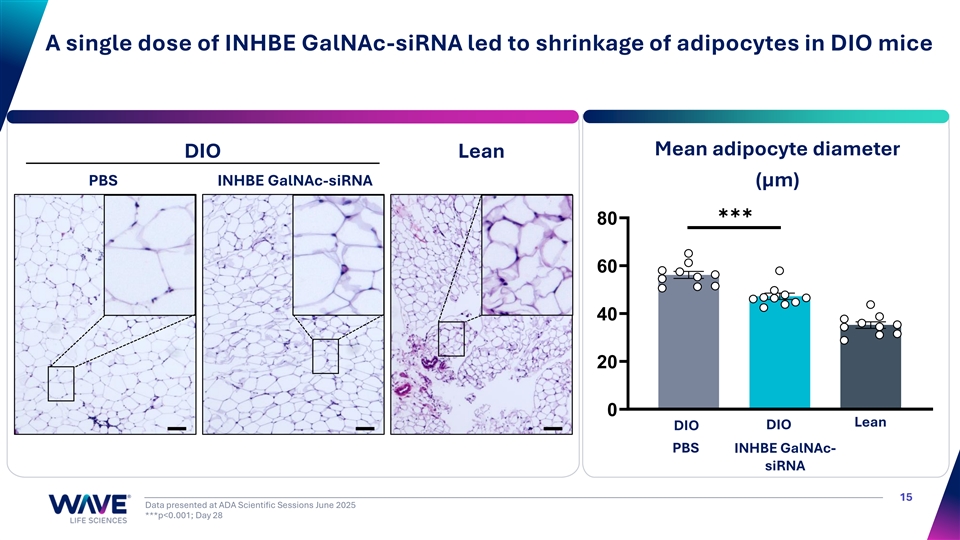
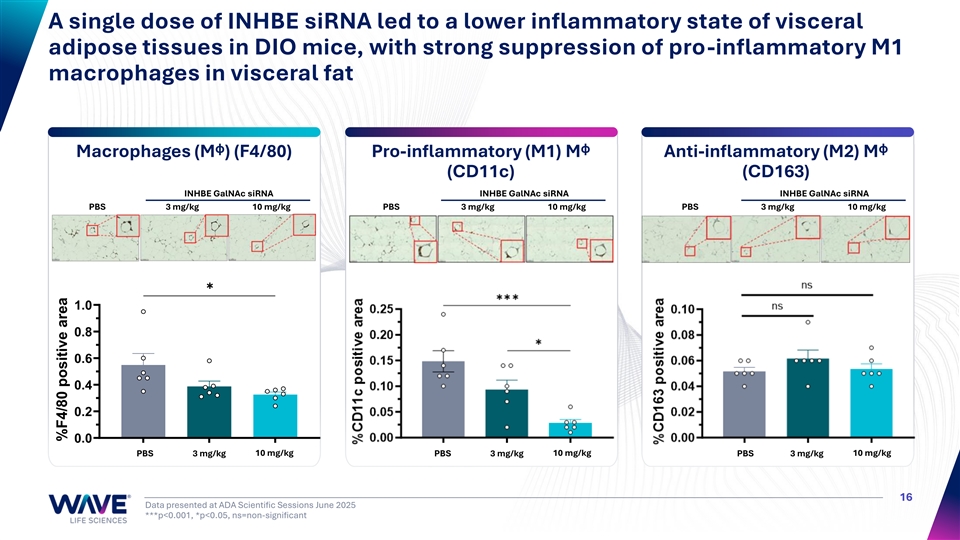
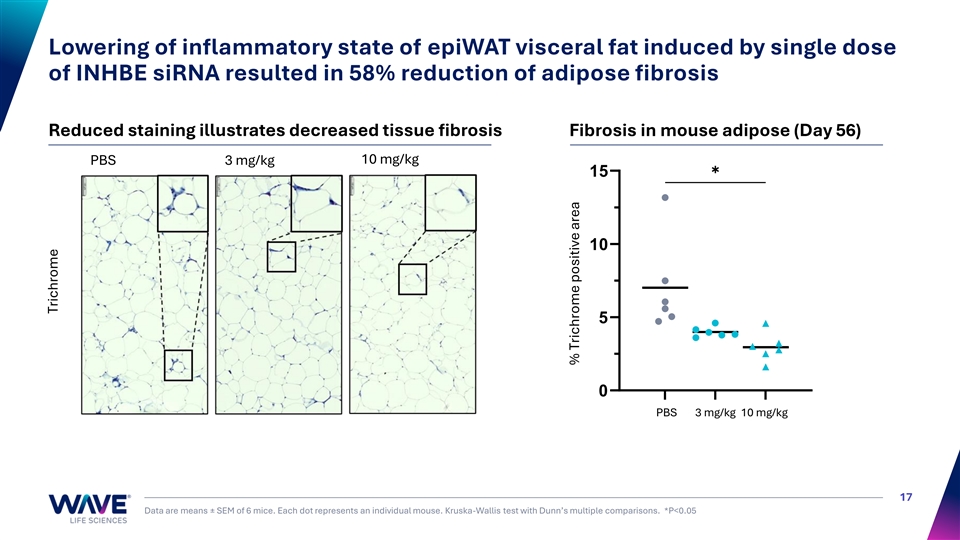
I think it's a wonderful question, because I do think already, if we look at where we were relative to just our phase one population with our single dose data, we were competing with visceral fat reductions that were in multi-dose of others, right? And as we think, including combinations. So I think if we think about what we have that's differentiated, and I think, you know, Eric shared that during his update on the call, our chemistry is giving us a high degree of potency and durability. And if we think about the inhibiting target itself, it requires not just potent reduction, but requires stable suppression. And so this notion of being able to keep that target low, despite any desire of the body to upregulate it, is a key differentiator. We saw that in preclinical data that differentiated us from our competitors, where they had to do repeat dosing of a Galnick siRNA to drive weight loss. And remember, these were obese mice. So the mice that we're all talking about in these studies were mice that would be much more representative of your phase 2-3 high BMI mice. And what do we see? We saw that if we could give a single dose and suppress active N-E, we could see weight loss in that model, driven off of fat reduction, visceral fat reduction, subcutaneous fat reduction. So I think we're seeing strong clinical translation on potency and durability distinction from our competitors, such that absolutely, I think we will see continued fat loss substantially with muscle preservation in this high BMI setting. So I don't think that there's necessarily this ceiling effect as much as it is the treatment effect in the appropriate population. As we said a number of times last year, it was always going to be about treating the patients with the right disease setting, meaning the phase 2, 3 population in obesity, high fat, with the right dose over the right amount of time. So I think we're set up to see that. Nonetheless, I think the power, as you point out, in combinations is very real. So if we say in the monotherapy, We do believe that that's going to be a segmented marketplace. We think about the opportunity for there's nearly 30 million people in the U.S. who are at risk of lean mass reduction who need weight loss. And so as we think about segmentation, I think there is a substantial population monotherapy that's going to need fat reduction without the risk of lean mass loss. Combination, nonetheless, is a very interesting place to be. I don't think we're losing our lead there, as Chris alluded to. We're actually accelerating the combination studies. And so already at a monotherapy piece, we have a distinction from our competitors. And again, we believe that in combination, we should see a more robust effect by being able to add inhibiting onto existing and creating therapies. And so the opportunities there are twofold. I know on one hand, we tend to think about giving more and trying to drive even more weight loss, or importantly, fat loss, which comes from inhibiting. I think we've got another distinction, which is the ability, frankly, not to have to kind of push incretins to the edge of tolerability, but being able to think about actually in this environment, particularly as we've watched that space evolve, being able to actually have to give less incretin therapy in combination to exert a maximal effect. And so I think there's a big piece on titration where inhibiting can add to that combination strategy to ultimately drive profound visceral fat loss, subcutaneous fat loss, along and coincidentally with increments. And then, you know, ultimately, where we have generated data uniquely, I think for WAVE with inhibiting, I think this maintenance setting is actually a wonderful place to be. We were just on calls recently where there's a lot of thought going into what does the evolving treatment landscape look like in a world where, like antihypertensives, obesity treatment is now going into a place where you have patients who have BMI reduction. And frankly, now you have payers saying, now that you're no longer me to BMI criteria, you might need to come off therapy. And so there's actually now discussions on the payer side of saying, actually, you're going to lose those benefits and actually build a maintenance setting. So as that maintenance concept evolves to what does a lifelong therapy look like that preserves outcomes, I think this maintenance opportunity is pretty substantial for us. That if people invest, payers invest in getting to that healthy, stable outcome, how do you sustain that in a way that's going to be tolerable, is not going to help drive additional complications, side effects, tolerability effects, and the potential for now a once to twice a year maintenance therapy is consequential. So I think all three settings are set up for us to be uniquely differentiated. And as we said, all three studies are pulled into this year and being accelerated. So we'll be generating human data in the right population in all three of the settings.
Maybe just add one more thing. So since this is new biology as well, I think it's important to really try to understand the potential across a lot of ways. And we have so many ways of winning this year. Like we're going to look at the 5% threshold for weight loss. We're looking at body composition with a focus on fat loss. We're looking at potential cardiometabolic protection across lipids, HbA1c with diabetes and fats in liver for MASH. And then in addition, the combo and maintenance. There are a lot of opportunities and we're accelerating. So we're going to get all of that data and starting everything this year.
Operator
Our next question comes from Catherine Novak with Jones. Please unmute your line and ask your question.
Hi, morning. Thanks for taking my question. I just have one on the OO6 multidose regimen. And I guess when knowing that successive dosing can push mean max AAT higher, how should we be thinking about mean max AAT achievable with monthly versus biweekly dosing that was used for multi-dose regimen in the prior readout?
And how should we think about the delta between the single dose and the multi-dose when we're switching to monthly? yeah i mean i think one on you know take the second part first i think that'll be interesting right as we look about that what's the difference in terms of the on rate if we think about it between the 200 to 400 and the six so we'll have the opportunity to look at you know what what do those kinetics look like as you point out and then the difference between bi-weekly dosing versus again monthly and then the impact on those rates and i think again our framing today is that if we assume that we are getting at biweekly 200 to near steady state in the sense that it's not substrate limited, but in the absence of an acute phase response where you're producing more transcripts, that you're not going to necessarily get more without the benefit of time, right? The ability of cells to clear out C, cells to get healthier in producing M. That's going to be the chief driver of seeing those increases. And so, you know, we'll be able to look at what happens on the repeat dosing of monthly versus biweekly, but I think that's the big shift in the dosing regimen. I think 600, as Chris alluded to later this year, 600 monthly would give a better sense of keeping the kinetics and the timing of those dosing intervals coupled with dose to get better. But this is really to see, can we see that we get to that same steady state, the ability to mount acute phase responses of as much protein as patients need they can produce, but do that in a monthly bread. I think that's going to be the driver for this next update.
Operator
Our next question comes from Whitney Egem with Canaccord Genuity. Please unmute your line and ask your question.
Excuse me. Excuse me. I think just to quickly follow up on the last question, I think you answered it, but just to put a finer point on it, is what you're saying that given the time frame of the next update, we shouldn't necessarily expect to see a dose response on either total or M protein at steady state, at ATS in particular, but that dose response could come over time or maybe in the setting of an acute phase response later? Is that the right way to think about it?
I think the way to see it is when we should, it's going to be that. We'll see what the driver is of more. But again, I think our demonstration to date, even looking at the early data is we got to more, right? We got to 20 micromolar in the setting of an acute phase response where you actually generate more substrate, more transcript to be edited. So I think at a certain point, there's going to be this concept of steady state editing, where as much transcript there is being edited, you can clear Z. I think that's going to be what we clearly want to see is Z protein continuing to come down. And then there's a function of time. And so I think it's more than thinking about doses, time of what, how much duration is there for the body over time to clear Z, get healthier hepatocytes that can produce more protein. I don't know if there's that.
Operator
Our next question comes from Madison Alsadi with B Riley. Please unmute your line and ask your question.
Hi, good morning, and thanks for taking your question. Just looking at the Phase 2a MAD design. I mean, it's certainly looking like a CV-MET versus a, say, pure obesity study. I'm curious if the FDA acceptance include any commentary on body comp as a kind of co-primary uh or was it more of a kind of protocol discussion and then relatedly um what's the the magnitude of mri pdff reduction of phase 2a in light that management would view as supporting a standalone mass development versus say a sub-segment of the obesity program thanks yeah i mean i think to your to your first point in general um i do think it's just important we can't say this enough that
obesity is a cardiometabolic disease so running a study that fully interrogates the cardiometabolic implications of a a target that comes out of human genetics that is a cardiometabolic target so you know i think being able to fully extrapolate all of the value of what does that mean for a patient beyond you know just as you said a classic obesity which is you know the classic studies are looking at weight loss at the expense really of muscle. Muscle drives the predominant early reduction in that body weight. So being able to shift the narrative to not just reduction of fat, that will be important in the treatment of obesity, but all of the other advantages that come to patients and frankly are recognized by, again, what payers pay for, which is the cardiometabolic improvements, is what this study is designed to elucidate. So yes, we'll be able to look at body composition and that's part of the endpoints, as we said, as part of an obesity study in addition to body weight. But all the other important metrics, as you point out, are critical for us because they are all part of the development paradigm here. The last piece is, I mean, and we've seen this with others and competitors who've done monotherapy reduction of liver fat, and they saw consequential reductions in liver fat that pretty much surpassed other MASH programs and reduction of, again, fat in the liver. So given our potency, durability, given that we wouldn't expect this mechanism to be differentiated. We should see in terms of like reduction in liver fat because of what we're doing, we would expect to see substantial reductions. And that target engagement there, reduction of fat on imaging, would guide us to say that, you know, MASH would be a target to pursue independence.
Maybe add one more thing, and that is that, you know, these cardiometabolic risk factors and liver fat, they're very strongly correlated with obesity and visual fat so it's not so much that we're we're not requiring it's not an inclusion criteria it's more that we're removing the exclusion criteria from the phase one which hampered us in terms of looking at those things so again we just based on the on the normal distribution of liver fat and in this obesity class we expect that there is liver fat that we can look at our next question comes from michael king with rodman and renshaw please unmute your line and ask your question Hey, guys.
Ney
Analyst — Rodman and Renshaw LLC
This is Ney on for my congrats on the updates, and thank you for taking our questions. Just a quick question on the DMD program. So Novartis was just talking about the drugs they got from avidity that are using antibodies to deliver oligos to the muscle. Do you think you have the best tissue penetration you can get with N531, and how are you thinking about the competitive dynamic as you head toward the NDA filing?
Yeah, I mean, I think in general, it's a wonderful question because, again, And in the absence of conjugates, if you look at the muscle exposure, our muscle exposure was pretty extraordinary, even in comparison to muscle-targeted ligands. So when we think about distribution to the tissue without having to add that, that was consequential, non-limiting. And we saw for the first time actually real measurements of muscle regeneration. So when we think about getting into stem cells and regenerating muscle and think about more broadly the platform implications for being able to treat disease in the muscle, both with splicing oligonucleotides, siRNA, and others, we talk about extra hepatic. I think, you know, there was not a requirement as we think to have to create the complexity of that to get exposure. So the landscape is something we continue to look at as it evolves, but in terms of being able to access the tissue and what would be required to do that, I think, you know, our platform delivers exquisitely to muscle.
Operator
Our last question comes from Ananda Gosh with HC Wayne Rattenco. Please unmute your line and ask your question.
Hey guys, good morning. You know, when you look at the genetics of the activity and when you talk to the academic community, one aspect of the biology which they all stress about is that, you know, it even probably works best in the negative energy balance, which, you know, which you see when you add activity knockdown approach with GLP-1s, which also Arued has already shown. The question is, what happens when you take off the GLP-1s during the maintenance phase, when probably the patient energy balance either neutralizes or probably goes to a positive energy balance? Then what happens to those liberated free fatty acids? Do you actually think that you will see a stability in the weight gain. And if you do see where does those free fatty acids go, which are liberated, when you don't have GLP-1s, in which tissues do they accumulate?
Probably in the same, well, we'll go to the lab, as they did in the first point, right, when we saw it go to muscle. And if you actually, I mean, a beautiful experiment that we had run in this was the preclinical data, where, you know, when you stabilize these obese mice on GLP-1, exactly to your point. Their caloric consumption declines dramatically, they lose weight, they hit their steady state. And interestingly enough, and I think it does speak to the mechanism of action, when you pre-dose, and the timing of that was critical, not after, you dose before the cessation to get the on-ramp of active knee suppression before turning off the GLP-1. When you stop the GLP-1, you actually saw caloric consumption increase in both arms of the study, the placebo bow arm and the inhibiting treatment arm. So again, the energy balance while going up wasn't changed. Now, what you did do in advance of putting those excess calories on is actually turn off exactly what the body wants to do and actually what's really damaging in weight cycling with GLP-1s. And it's a real problem in patients who chronically come on and off of them is that when the weight's regained, it's regained as fat, fat disposition in a variety of tissues, And that's unhealthy. And so what we did see is when you actually take the brakes off lipolysis, the body's now not able to store new fat. So you don't see that reaccumulation of fat. What you do see is, and we kind of see the slight like is much like probably what we saw in the slight increase in the monotherapy arm, which is it goes to muscle. So you end up with a free fatty acids that feeds muscle. Muscle can then actually build. And so we don't expect, you know, that'll be interesting to see whether or not that plays out that people who have actually been losing muscle over time might gain some muscle back when at the same time, but not restore that as fat and hence stay in steady state. So again, as we said on the call, that study is going to initiate this year. We're going to be generating that human data to recapitulate what we saw in the animal But I do think if we think about what the best human genetic evidence is for inhibiting, it's maintenance. These are people who go live a lifetime without thinking about their caloric consumption and have low abdominal visceral fat, have an improved metabolic profile in terms of risks of diabetes and cardiovascular disease and lipid profile. And so it's actually the setting where there's the most human genetic data for. And we're excited to run that human clinical trial.
Operator
Thank you. There are no further questions at this time. I'll now turn the call back over to Paul Bolno for closing remarks.
Thank you for joining our call this morning. We look forward to speaking of many of you later today and during the ATS conference next month. Have a great day.