Operator
Good morning, and welcome to Bread Financial's Second Quarter 2025 Earnings Conference Call. It is now my pleasure to introduce Mr. Brian Vereb, Head of Investor Relations at Bread Financial. The floor is yours.
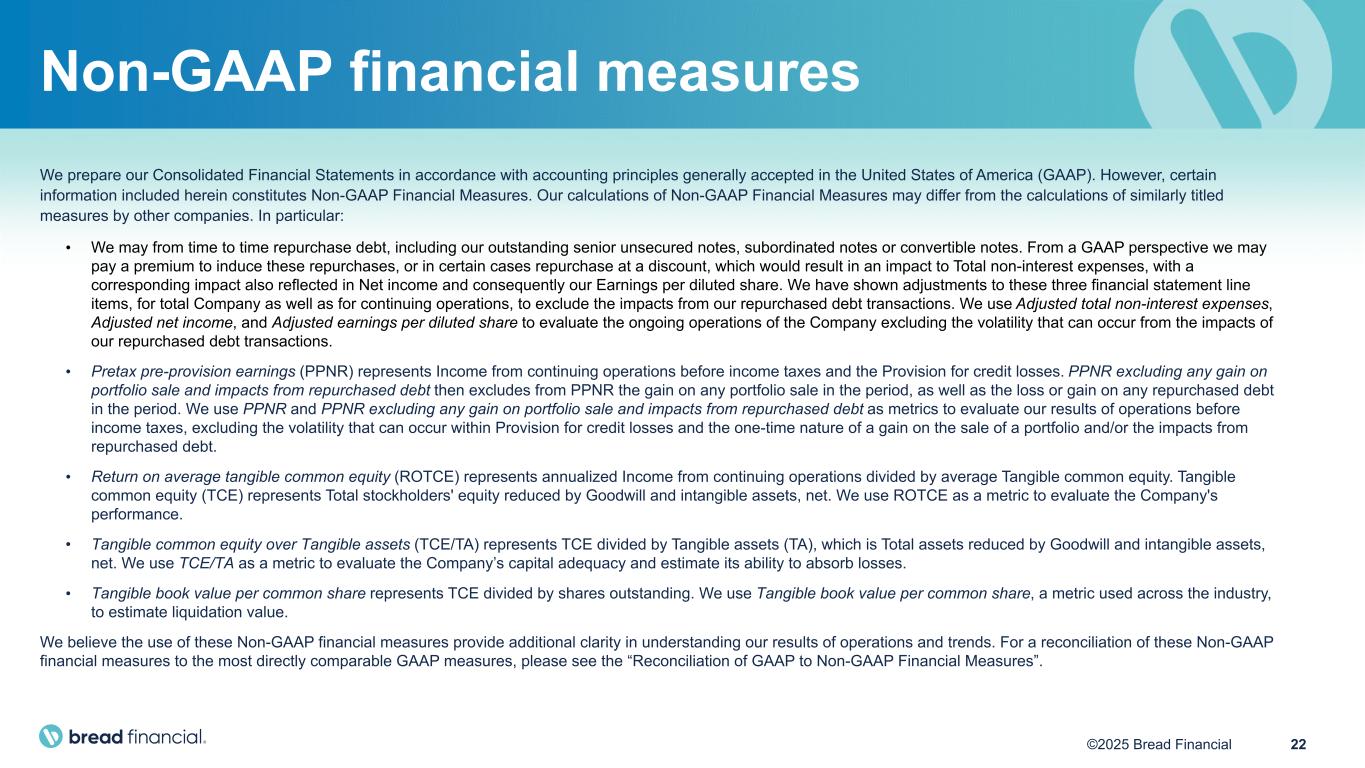
Thank you. Copies of the slides we will be reviewing and the earnings release can be found on our Investor Relations section of our website at breadfinancial.com. On the call today, we have Ralph Andretta, President and Chief Executive Officer; and Perry Beberman, Executive Vice President and Chief Financial Officer. Before we begin, I would like to remind you that some of the comments made on today's call and some of the responses to your questions may contain forward-looking statements. These statements are based on management's current expectations and assumptions and are subject to the risks and uncertainties described in the company's earnings release and other filings with the SEC. Also on today's call, our speakers will reference certain non-GAAP financial measures, which we believe will provide useful information for investors. Reconciliation of those measures to GAAP are included in our quarterly earnings materials posted on our Investor Relations website. With that, I would like to turn the call over to Ralph Andretta.
Speaker 2
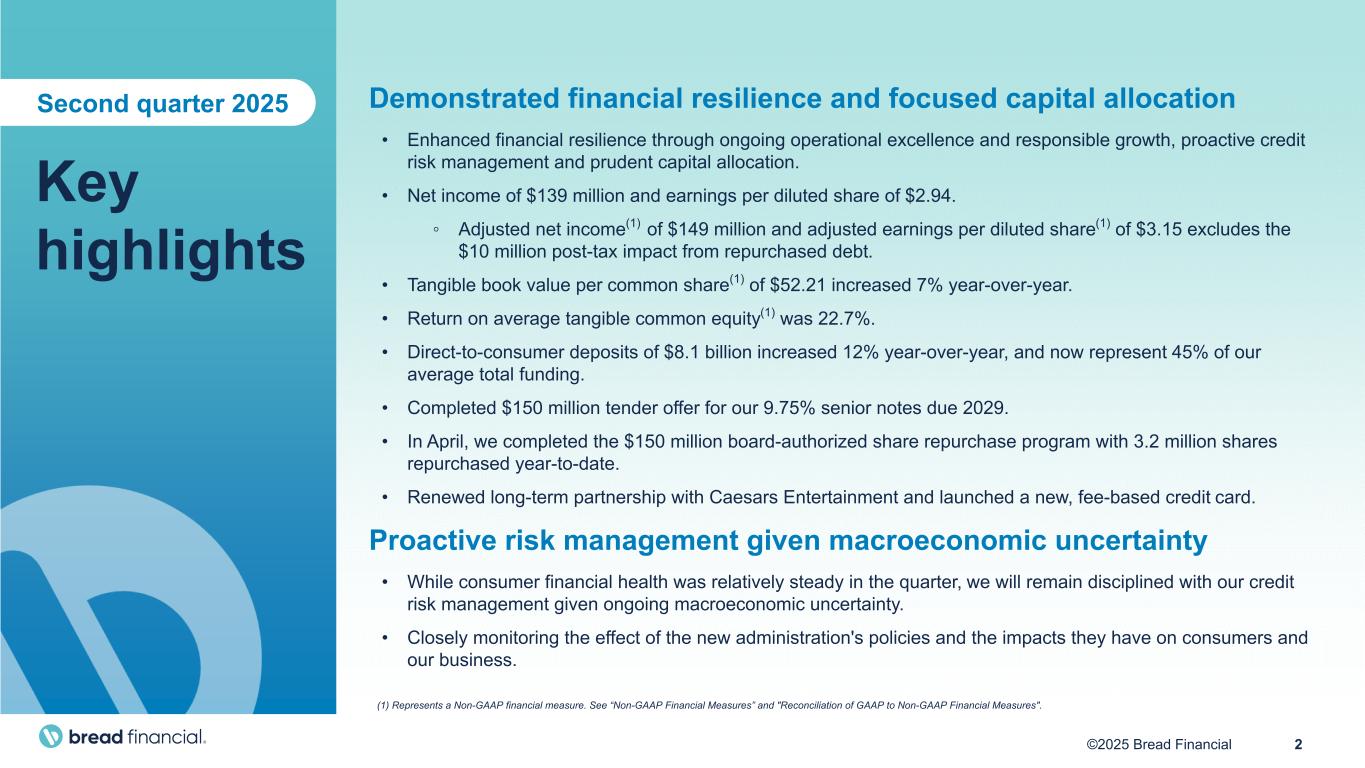
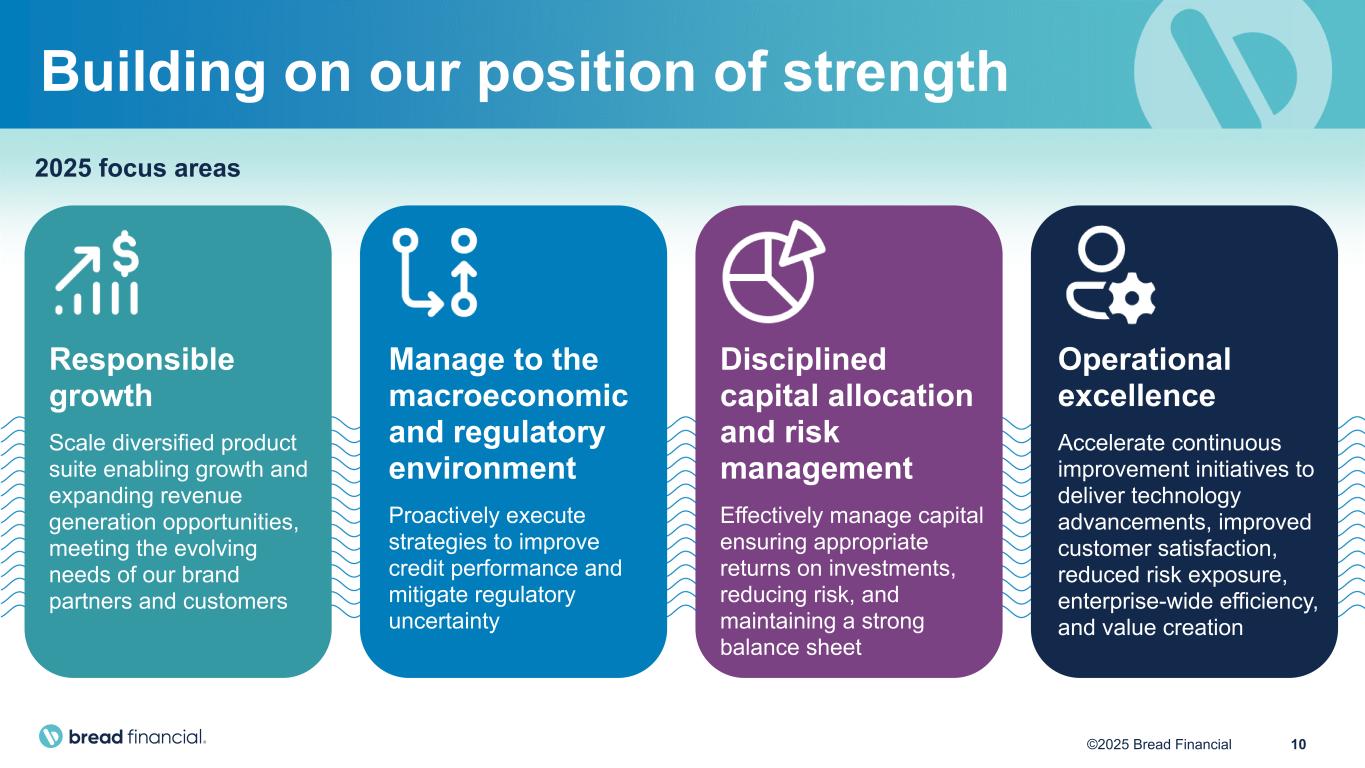
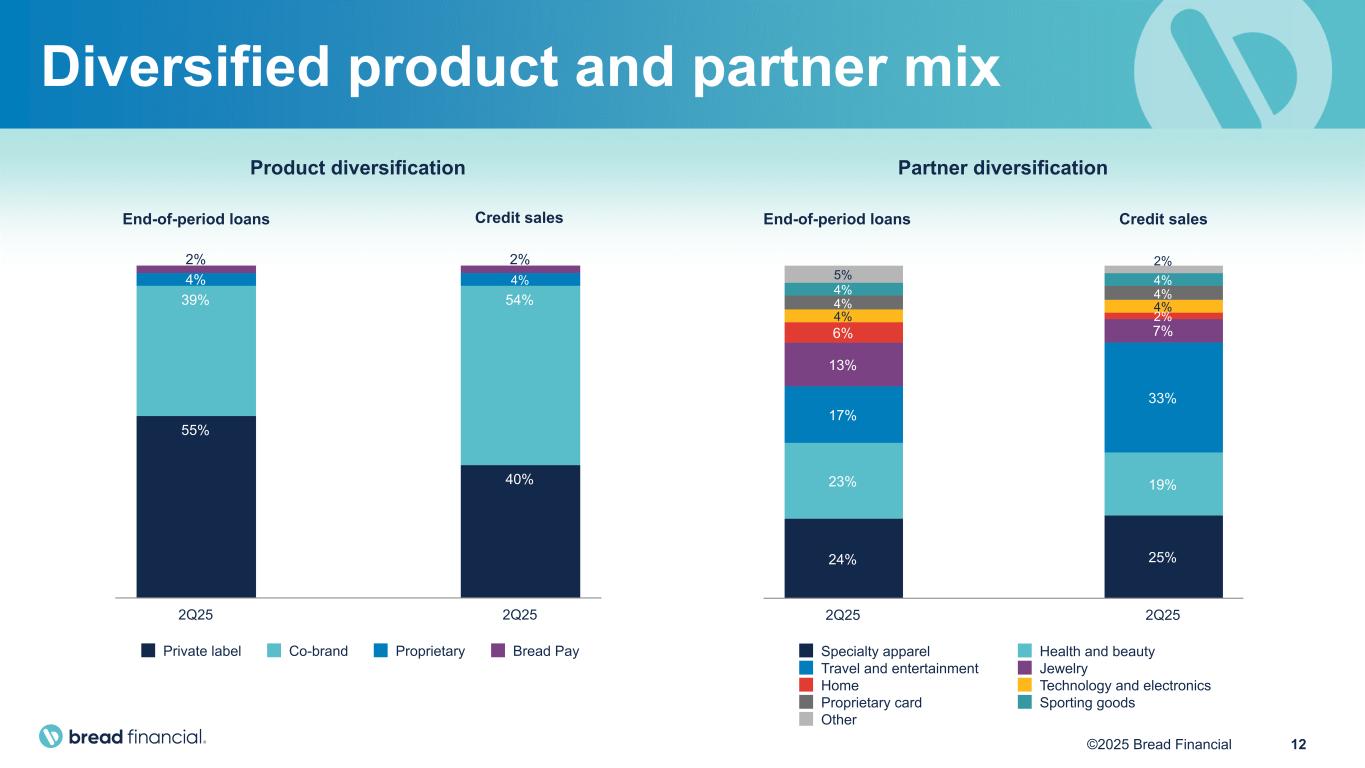
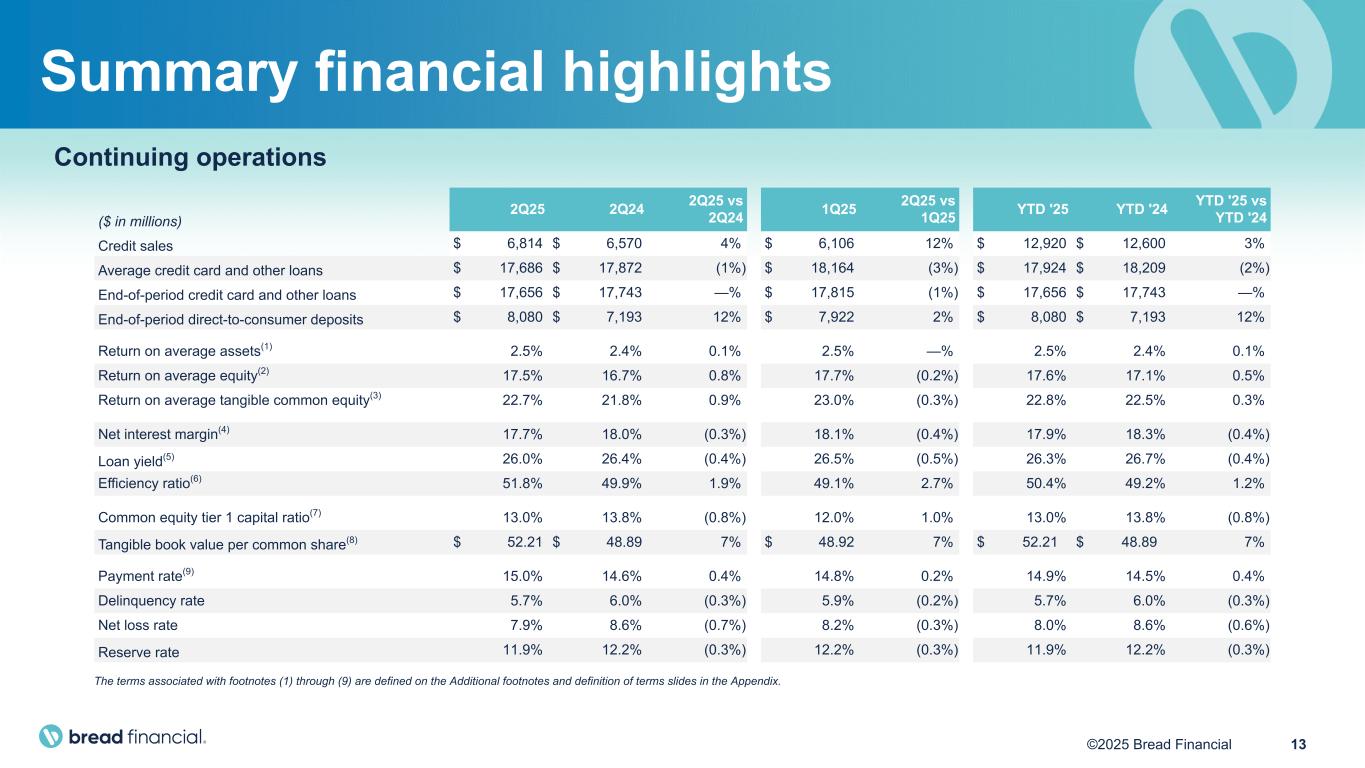
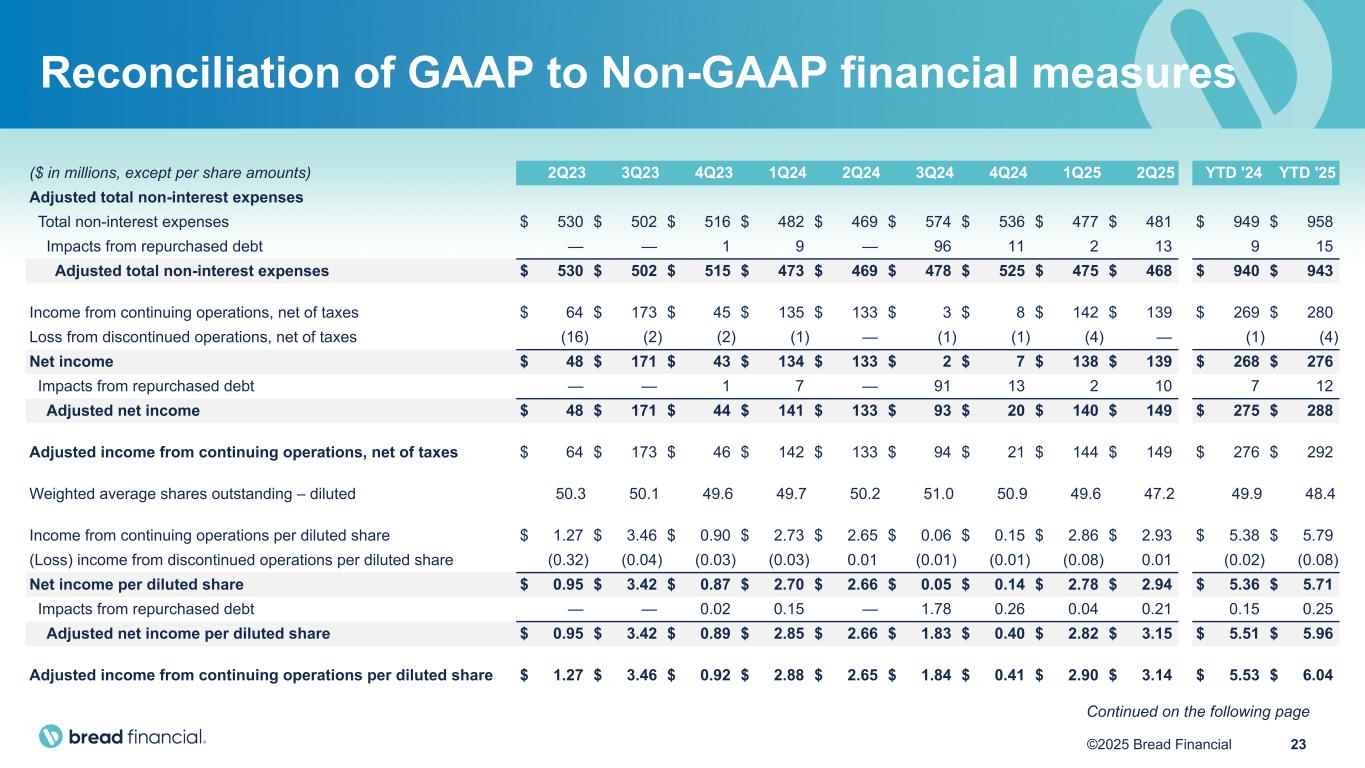
Thank you, Brian, and good morning to everyone joining the call. Today, Bread Financial reported strong second quarter 2025 results. We delivered adjusted net income of $149 million and adjusted earnings per diluted share of $3.15, which excludes the $10 million post-tax impact from expenses related to the debt we repurchased in the quarter. Return on average tangible common equity was 22.7% for the quarter. Our results reflect notable progress in advancing operational excellence while at the same time achieving responsible growth and practicing disciplined capital allocation, which enabled us to deliver strong returns. Credit sales grew 4% year-over-year for the second quarter. Spending continues to be more heavily weighted towards nondiscretionary purchases enabled by our expanded co-brand and proprietary products. These product offerings represent more than 50% of our credit sales. Additionally, lower gas prices have positively influenced retail spending, particularly for prime and near-prime customers. We are encouraged by these spending trends as well as a gradual improvement in our credit metrics as a result of prudent risk management. Given the outperformance of our net loss rate in the first half of the year, we updated our full year outlook to an improved range of 7.8% to 7.9%. While the net loss rate remains elevated compared to historic levels, the improving trend is encouraging. We will continue to closely monitor consumer health, purchasing, and payment patterns and adjust our credit strategies accordingly to achieve industry-leading risk-adjusted returns. Our focus on expense discipline and operational excellence is producing the desired result. As adjusted total noninterest expense were essentially flat year-over-year despite continued technology-related investments, inflation, and wage pressures. We will continue to invest in technology modernization, digital advancement, artificial intelligence solutions, and product innovation that will drive future growth and efficiencies. We continue to make progress on our ongoing initiatives to optimize our balance sheet with the completion of our $150 million share repurchase program in April and a successful $150 million tender offer for our senior notes in the second quarter. These actions and the strong capital and cash flow generation of our business offered enhanced opportunities to deliver additional value to our shareholders. Additionally, our direct-to-consumer deposits continue to grow steadily, increasing to $8.1 billion at quarter end, up 12% year-over-year. We are pleased to announce the multiyear extension of our long-term relationship with Caesars Entertainment, a leading travel and entertainment partner. With this renewal, our top 10 programs are secured into at least 2028. Furthermore, we recently launched an additional new fee-based Caesars Rewards Prestige Visa Signature credit card that gives members more ways to earn rewards and enjoy unique experiences. Also during the quarter, we launched the Crypto.com co-brand credit card program, offering up to 5% in crypto rewards delivered through a frictionless user experience that is natively integrated into the Crypto.com app. This new program is another example of Bread Financial's leadership in loyalty innovation and flexible tech-forward payment solutions. We are proud of the progress we have made in strengthening our balance sheet while providing increased value to our brand partners. Our strong results reflect the continued commitment and hard work of our dedicated associates. We remain confident in our ability to successfully execute our strategic objectives and operational excellence initiatives. In summary, we are well positioned to deliver strong returns, which we expect to translate into sustainable long-term value for our shareholders. Now I'll pass it over to Perry to review the financials in more detail.
Speaker 3
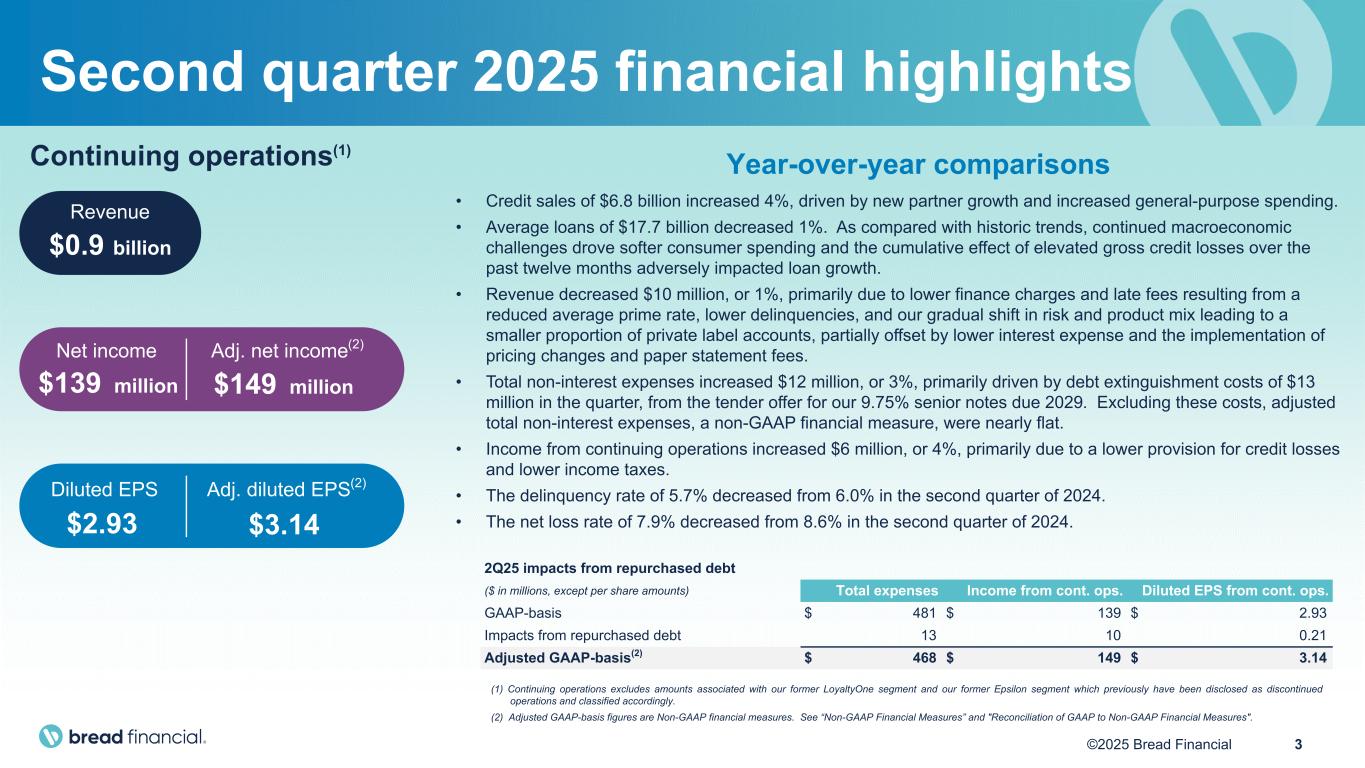
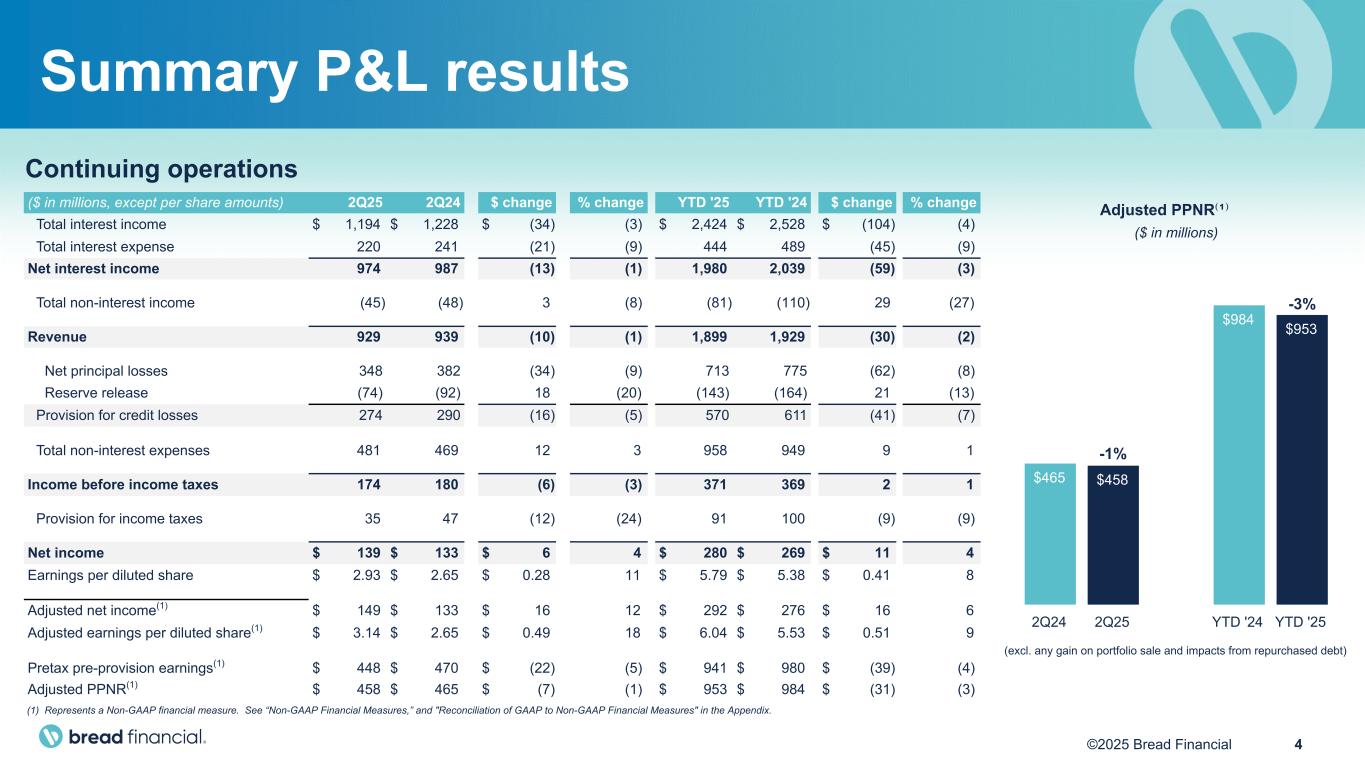
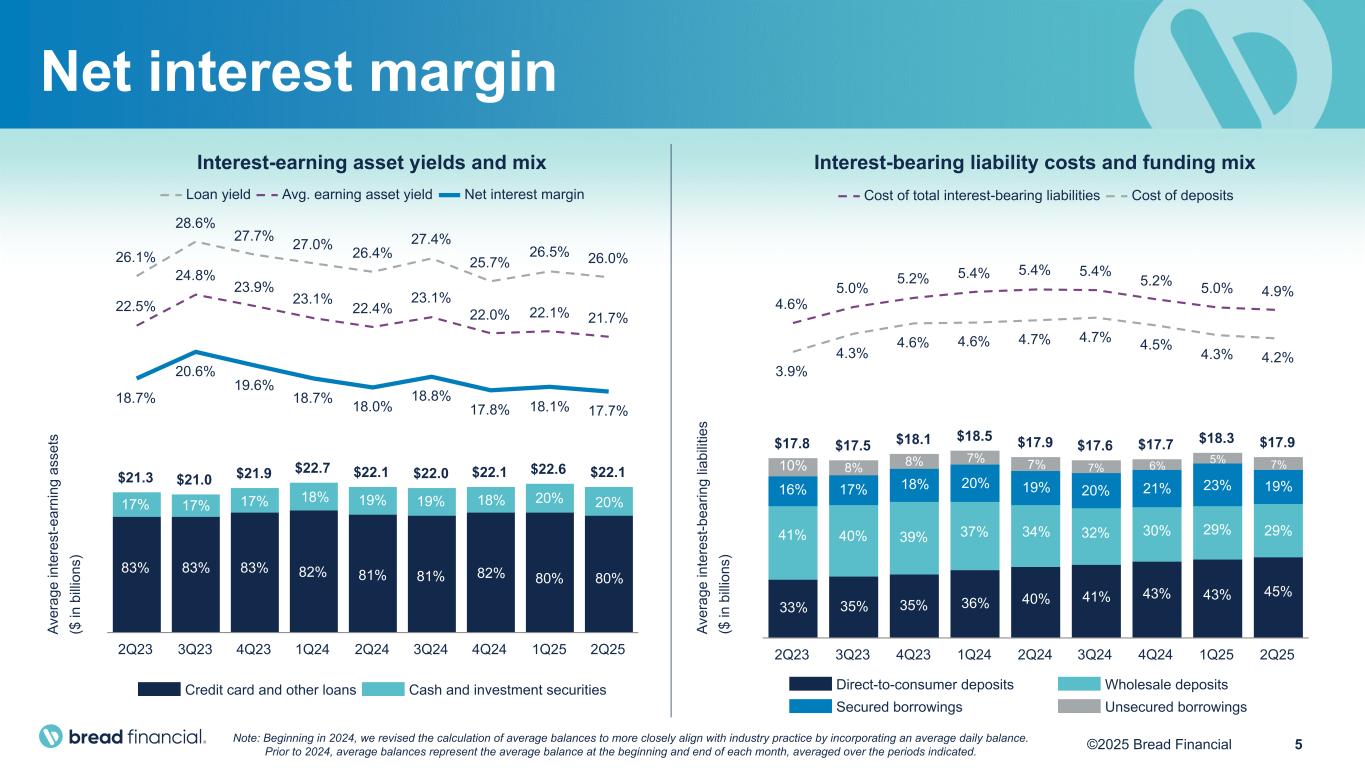
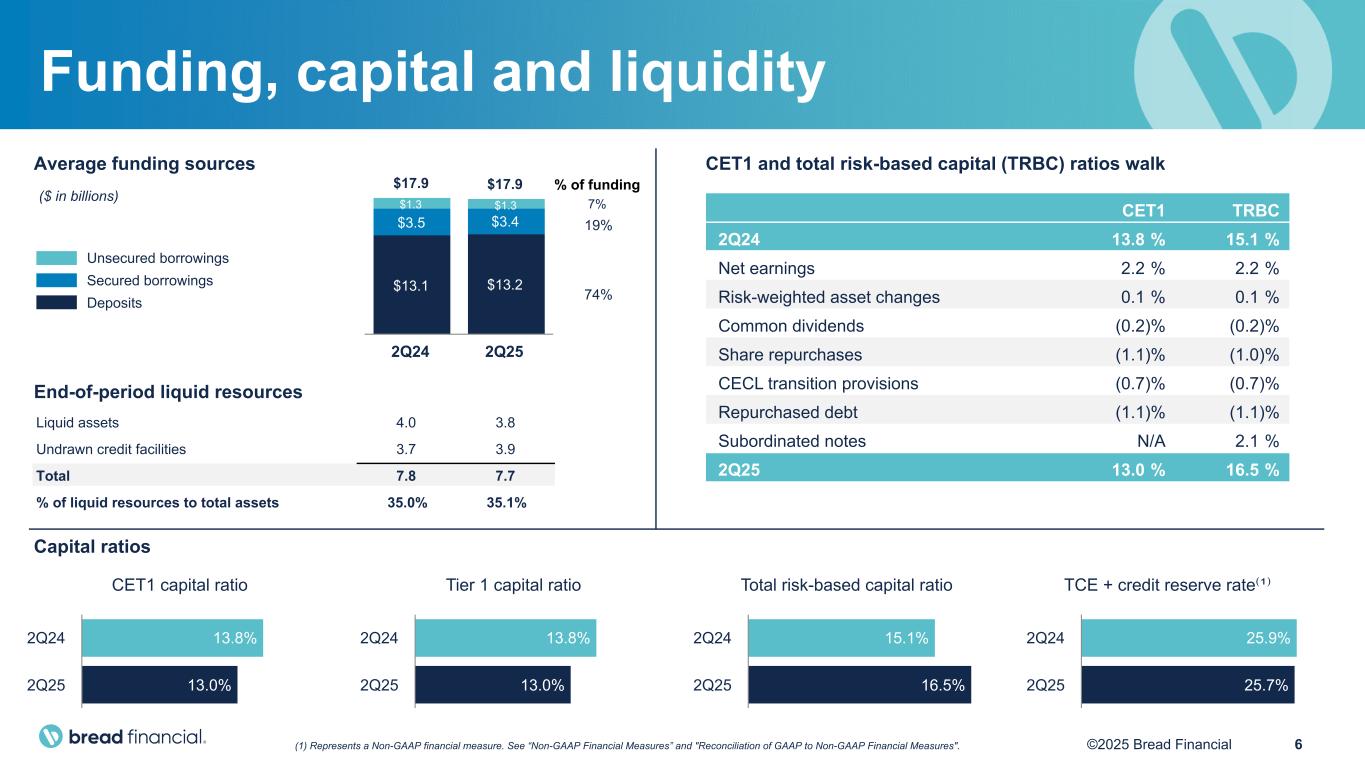
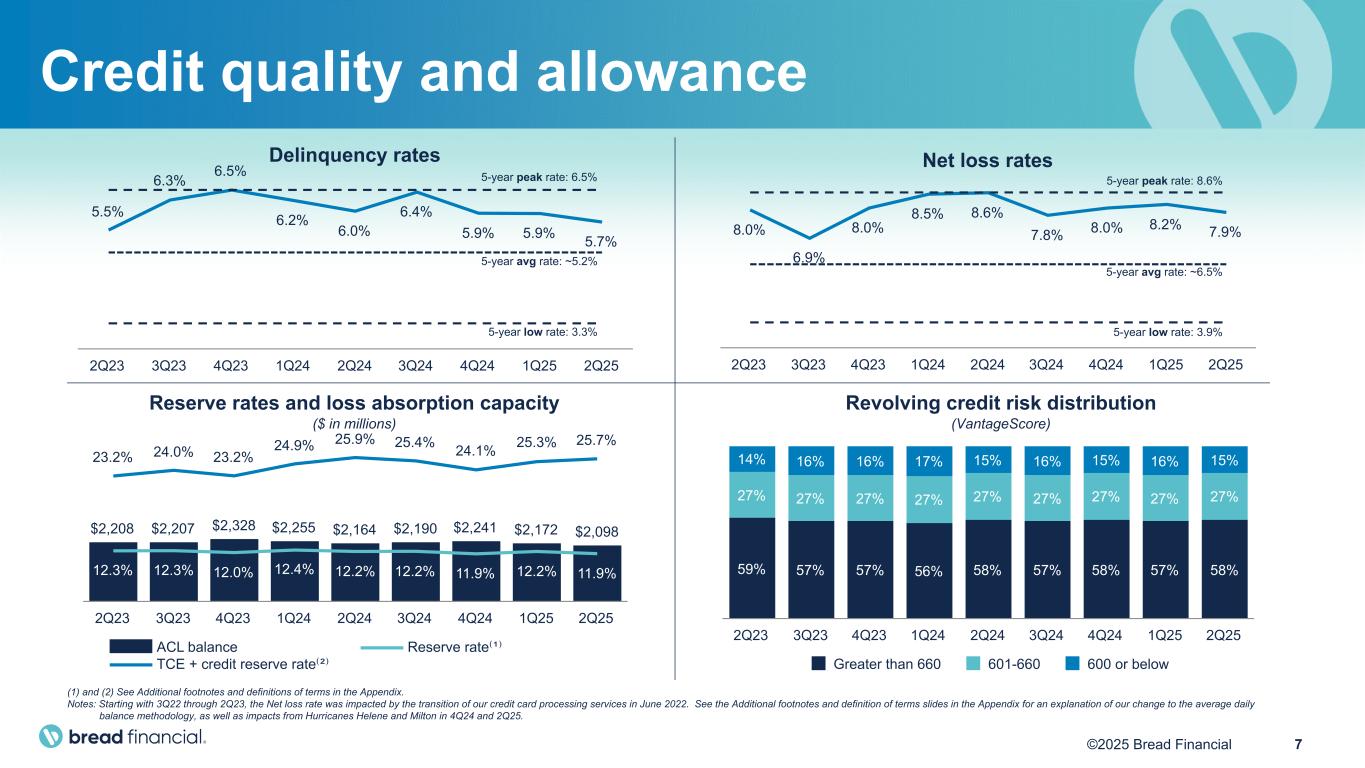
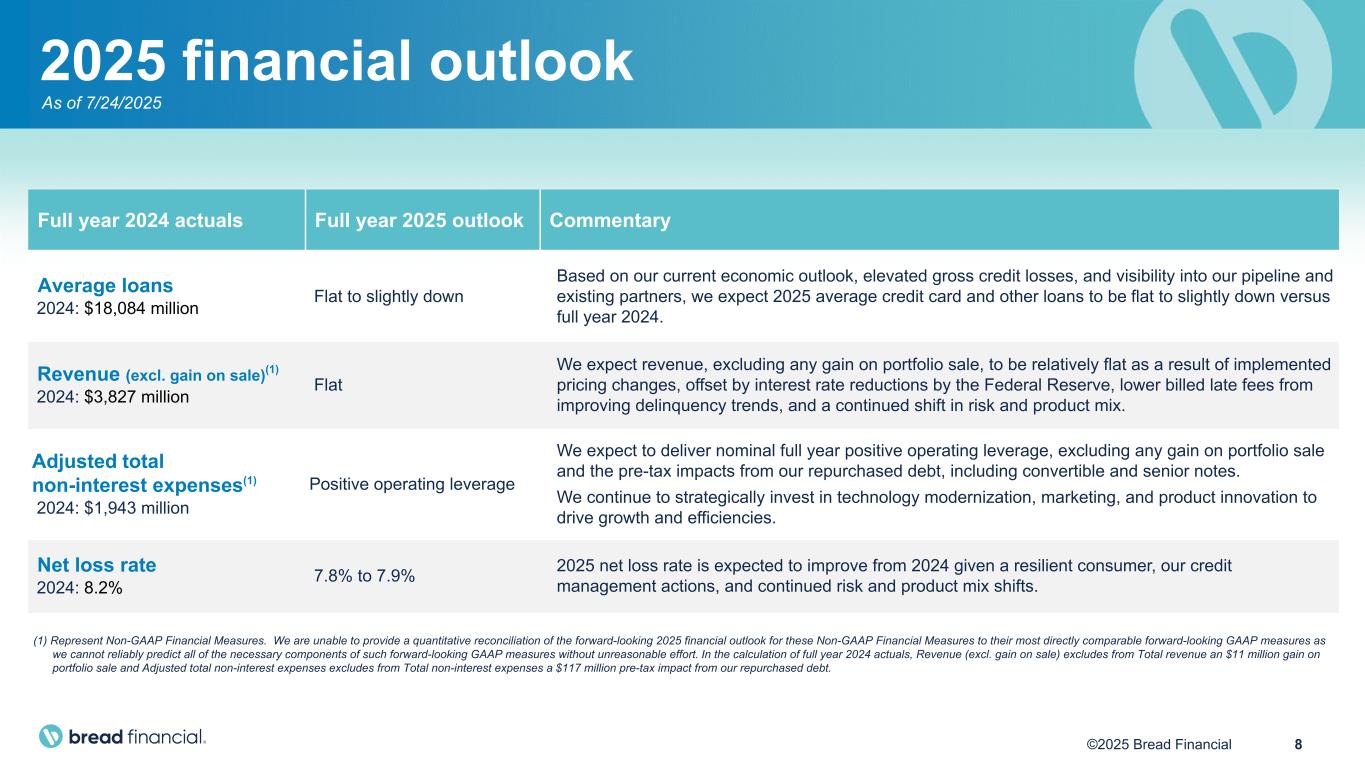
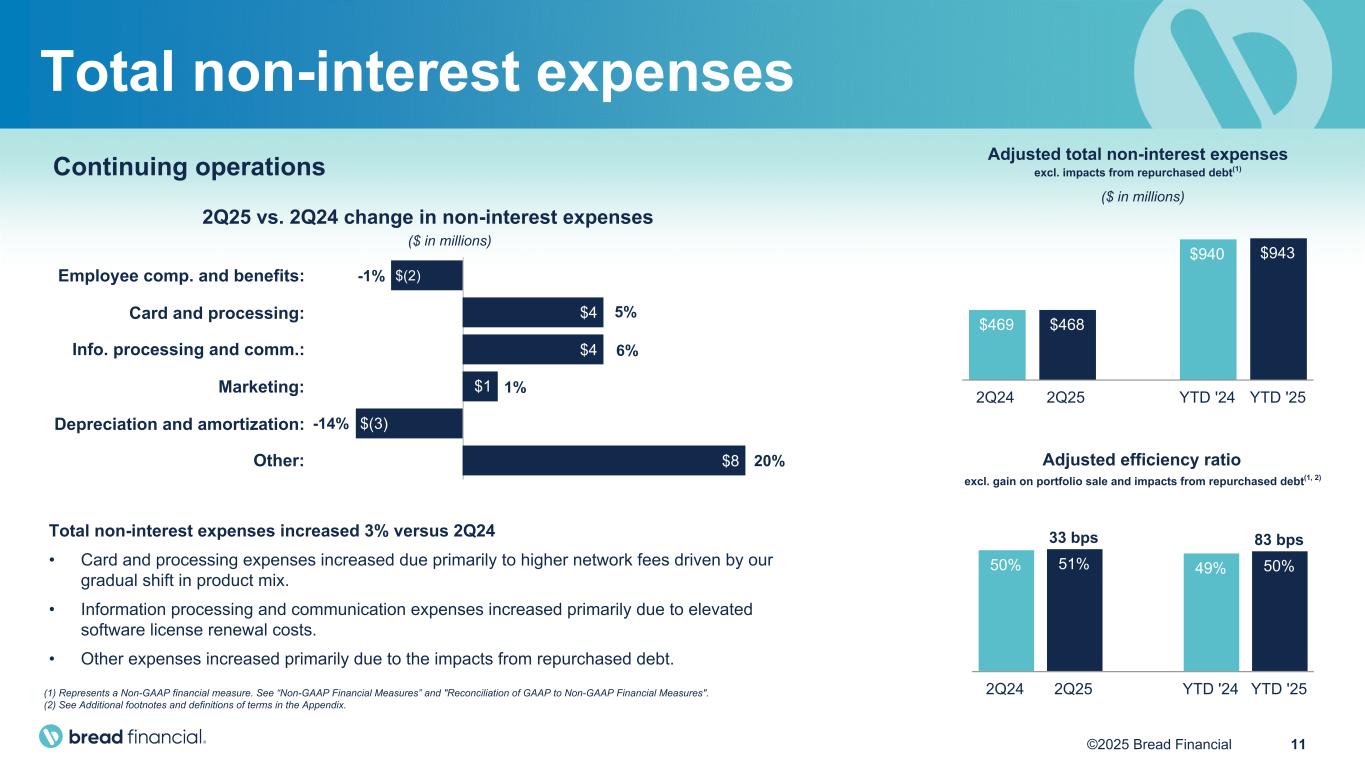
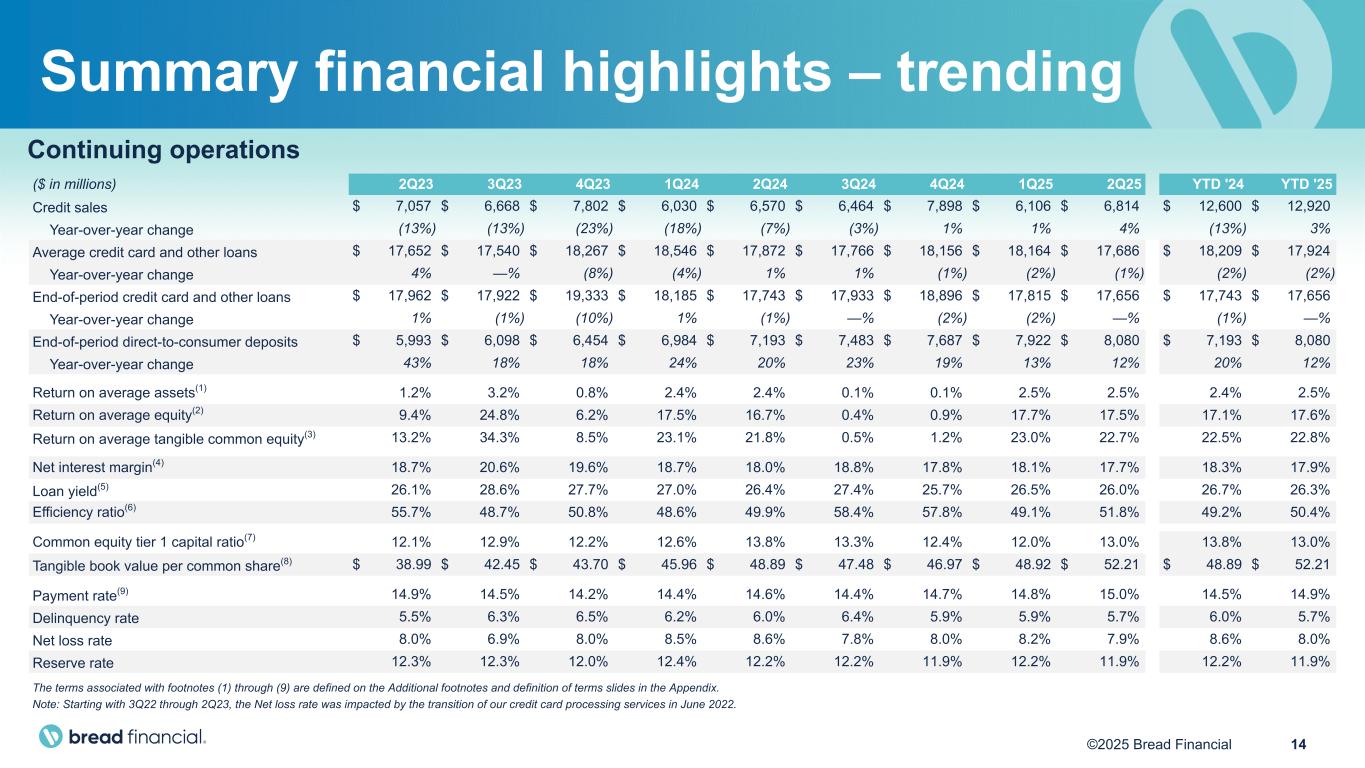
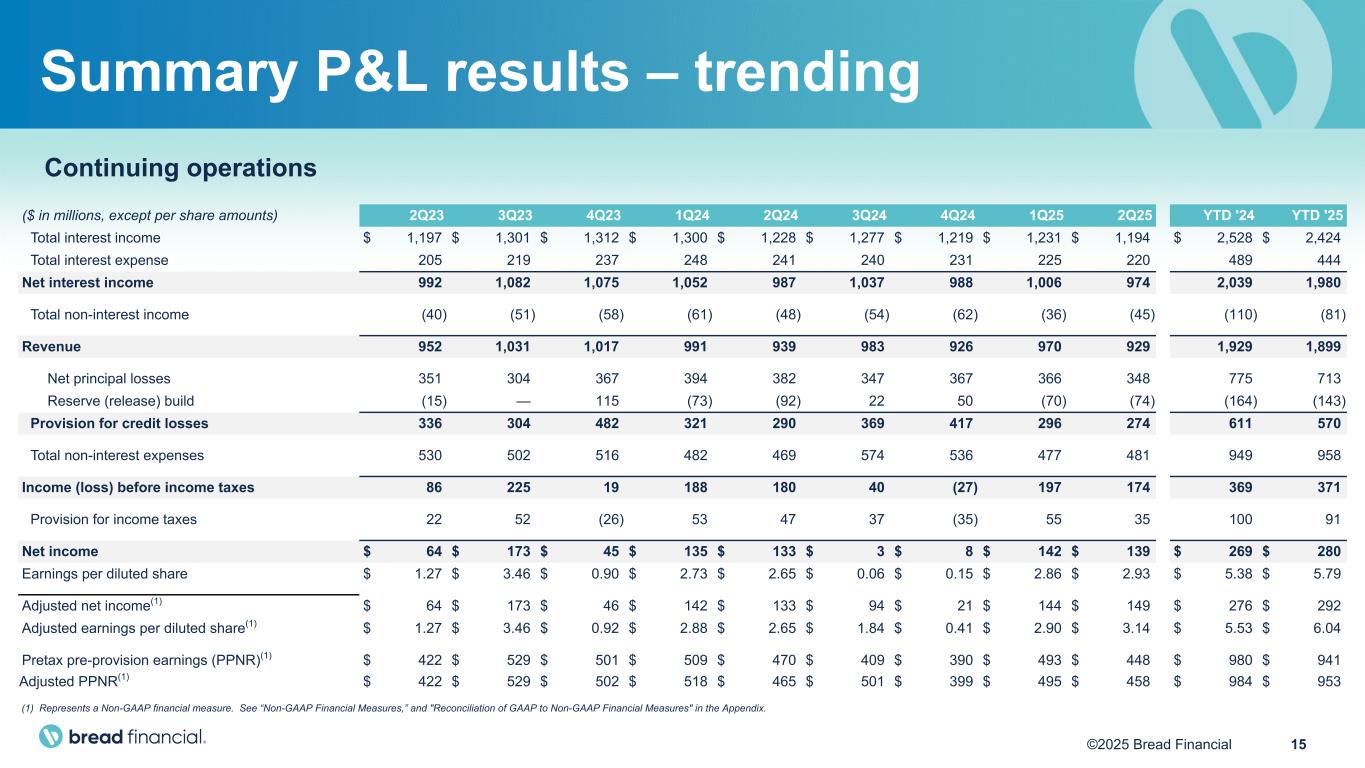
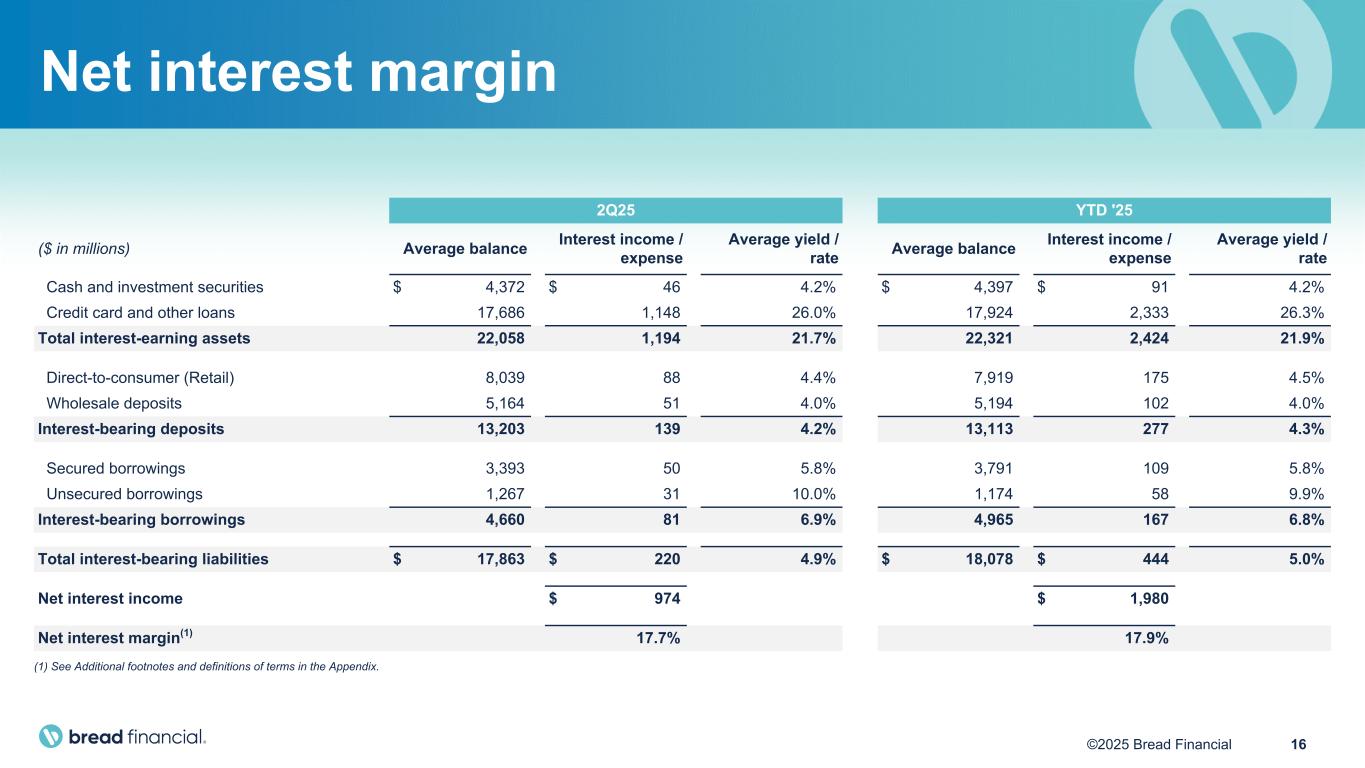
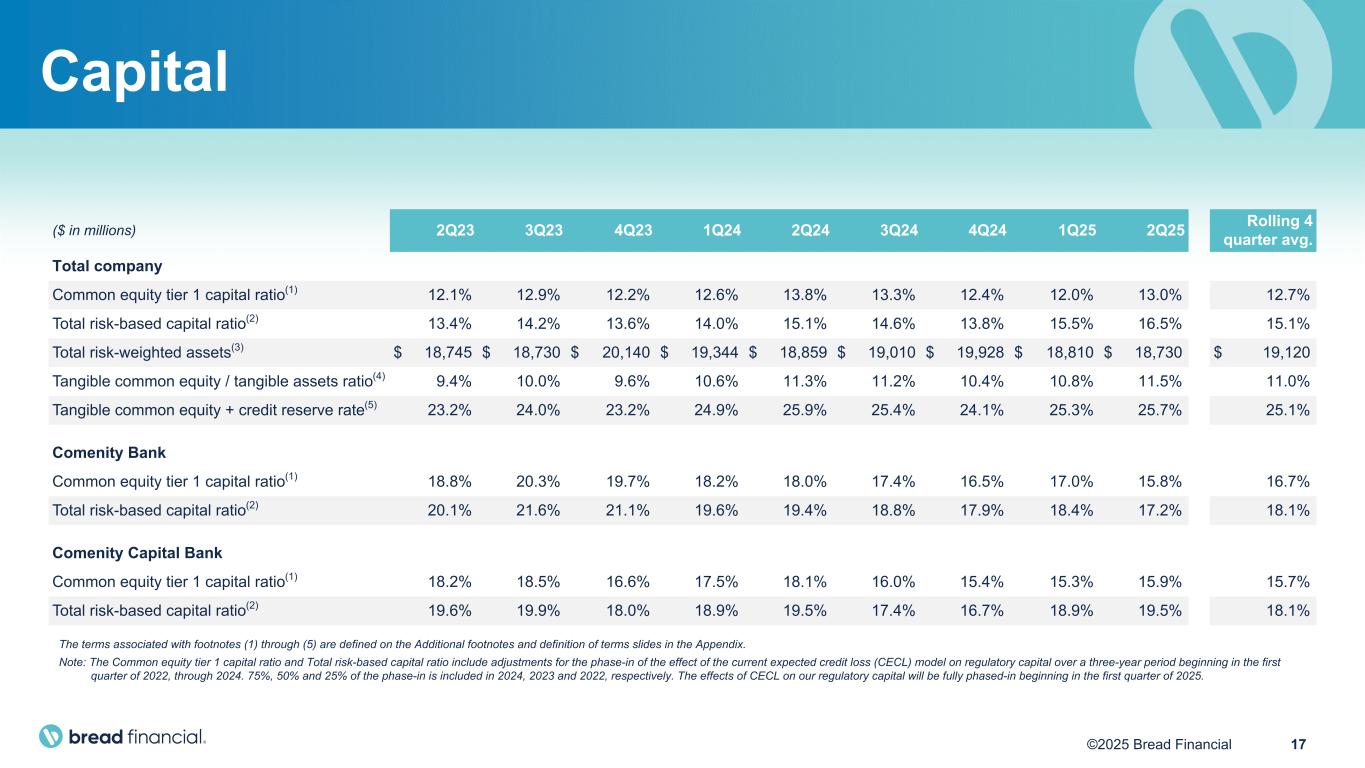
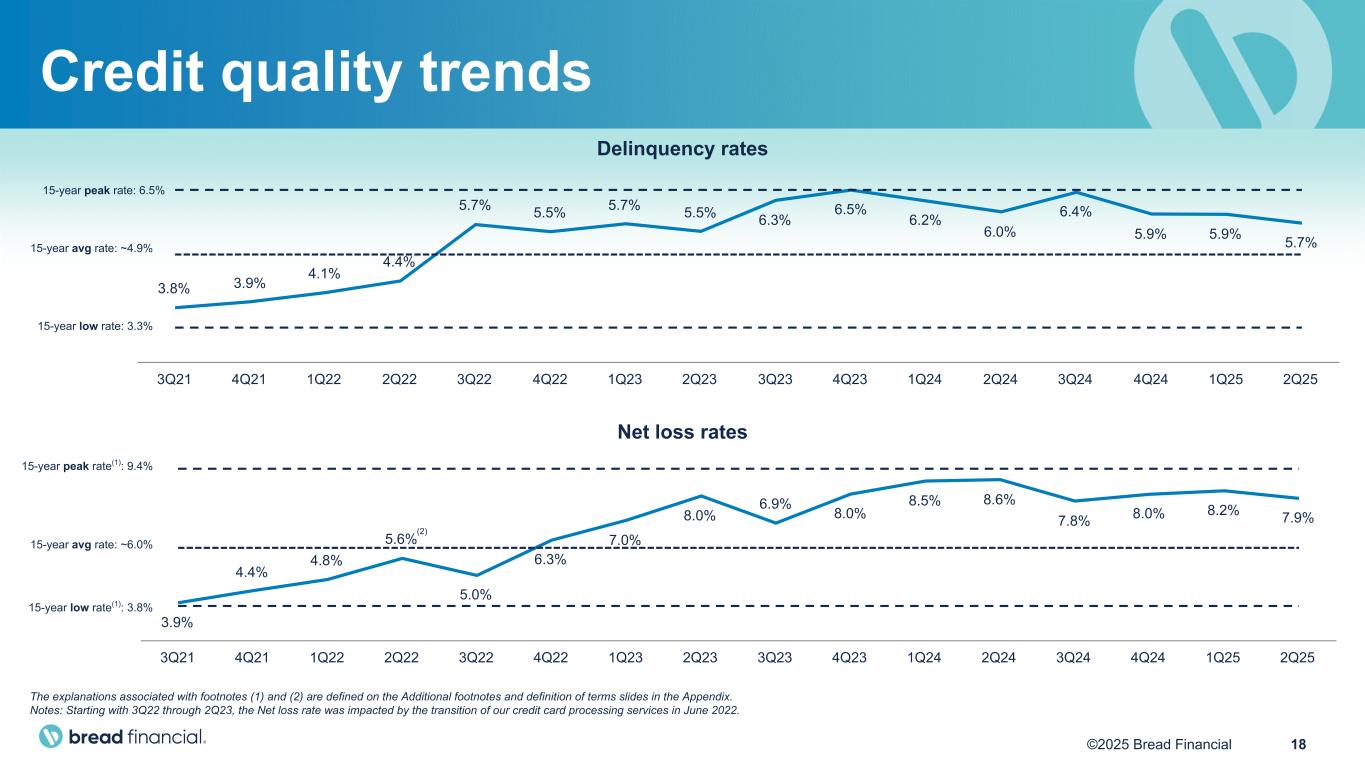
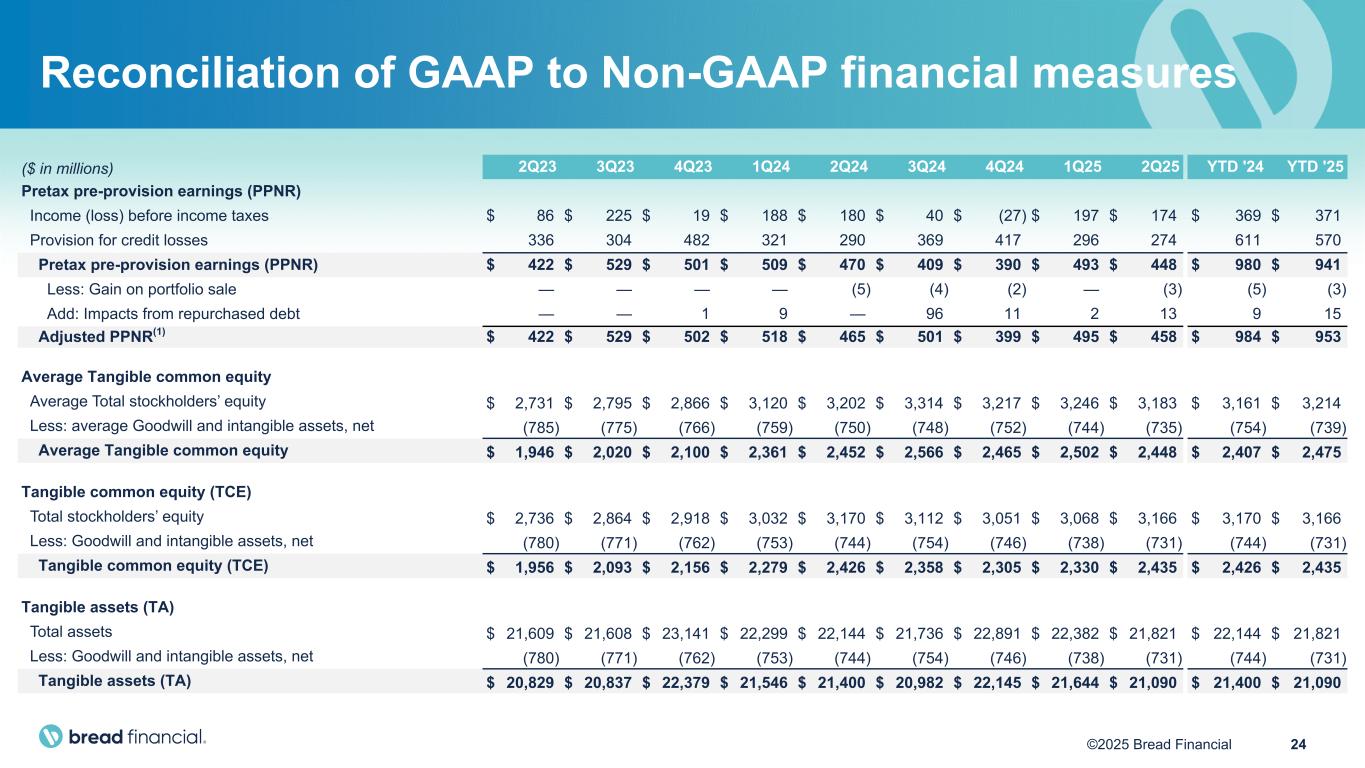
Thanks, Ralph. Slide 3 highlights our second quarter performance. During the quarter, credit sales of $6.8 billion increased 4% year-over-year, driven by new partner growth and higher general purpose spending. Average loans of $17.7 billion decreased 1% as compared with historical trends; continued macroeconomic challenges drove softer consumer spending, and the cumulative effect of elevated gross credit losses over the past 12 months adversely impacted loan growth. More recent improved payment behaviors as evidenced by higher payments also pressured loan growth. Revenue was $929 million in the quarter, down 1% year-over-year, primarily due to lower finance charges and late fees, partially offset by lower interest expense. As Ralph mentioned in June, we completed a $150 million tender offer for our 9.75% senior notes due 2029 using excess cash on hand to reduce higher cost debt. The repurchase increased our total noninterest expenses by $13 million, which is the primary driver of the $12 million or 3% year-over-year increase in total noninterest expenses in the quarter. On an adjusted basis, expenses were nearly flat year-over-year. Income from continuing operations increased $6 million, primarily due to a lower provision for credit losses and lower income taxes. Looking at the financials in more detail on Slide 4. Total net interest income for the quarter decreased 1% year-over-year, resulting from a combination of a decrease in billed late fees resulting from lower delinquencies and a gradual shift in risk and product mix, leading to a smaller proportion of private label accounts, which generally have higher interest rates and more frequent late fee assessments. These headwinds were partially offset by lower interest expense, the gradual build of pricing changes, and an improvement in reversal of interest and fees related to improving gross credit losses. Noninterest income was up $3 million, primarily as a result of the recent paper statement pricing changes, partially offset by lower net interchange revenue driven by higher profit share. Looking at the total noninterest expense variances, which can be seen on Slide 11 in the appendix, employee compensation and benefits decreased $2 million despite merit increases and other inflationary pressures as a result of our increased focus on operational excellence. Card and processing expenses increased $4 million, primarily due to higher network fees driven by a gradual shift in product mix and information processing. And communication expenses increased $4 million, driven by elevated software license renewal pricing. Other expenses increased $8 million, primarily due to the $13 million of debt extinguishment costs. Looking ahead, we anticipate higher marketing and employee-related costs in the second half of 2025 versus the first half following typical seasonality. Adjusted pretax pre-provision earnings, or adjusted PPNR, which excludes gains on portfolio sales and impacts from repurchased debt, decreased $7 million or 1%, primarily due to lower net interest income. Turning to Slide 5. Both loan yield of 26.0% and net interest margin of 17.7% were lower sequentially following seasonal trends. Net interest margin, which decreased 30 basis points year-over-year, was impacted by the net interest income drivers I noted earlier as well as an elevated cash mix position in the quarter. On the funding side, we are seeing funding costs decrease as savings accounts and new term CD rates decline. Additionally, our cost of funds should continue to improve as we opportunistically repurchased $150 million of our highest cost 9.75% senior notes during the quarter. We are pleased with our ongoing direct-to-consumer deposit growth represented in the chart on the bottom right of the slide, which increased to $8.1 billion at quarter end, further improving our funding mix. Direct-to-consumer deposits accounted for 45% of our average total funding, up from 40% a year ago. Conversely, wholesale deposits decreased from 34% to 29% year-over-year. Moving to Slide 6. We continue to optimize our funding, capital, and liquidity levels, which is a key strategic initiative. Our liquidity position remains strong. Total liquid assets and undrawn credit facilities were $7.7 billion at the end of the second quarter of 2025, representing 35% of total assets. At quarter end, deposits made up 74% of our total funding, with the majority resulting from direct-to-consumer deposits. Given the success of our oversubscribed second quarter senior note tender offer, we announced an additional tender offer this morning, which is expected to be completed in the third quarter. Shifting to capital. We ended the quarter with CET1 and Tier 1 ratios at 13.0% and total risk-based capital at 16.5%. Over the past 12 months, in addition to the more than 200 basis point positive impact on our total risk-based capital ratio from our subordinated debt issuance in March, our capital ratios were impacted by the repurchase of $194 million in common shares as well as the repurchase of 99% of our original $316 million convertible notes outstanding. As a reminder, the last CECL phase-in adjustment occurred in the first quarter of 2025, resulting in a 74 basis point reduction to our ratios. The impact from the last CECL phase-in adjustment, along with the repurchase of convertible and senior notes, accounted for more than 180 basis points of adjustment to CET1 since the second quarter of 2024. Our CET1 ratio increased 100 basis points sequentially from the first quarter. Looking ahead, we expect to build capital further in the third quarter, placing us within our medium-term CET1 ratio target of 13% to 14%. As a result, we are well positioned to strategically focus our capital and sustainable cash flow generation on supporting responsible, profitable growth and generating additional value for our shareholders. Finally, our total loss absorption capacity comprising total company tangible common equity plus credit reserves ended the quarter at 25.7% of total loans, a 40 basis point increase compared to last quarter, demonstrating a strong margin of safety should more adverse economic conditions arise. We have a proven track record of accreting capital and generating strong cash flow through challenging economic environments. We are well positioned from a capital, liquidity, and reserve perspective, providing stability and flexibility to successfully navigate an ever-changing economic environment while delivering value to our shareholders. Moving to credit on Slide 7. Our delinquency rate for the second quarter was 5.7%, down 30 basis points from last year and 20 basis points sequentially. Our net loss rate was 7.9%, down 70 basis points from last year and down 30 basis points sequentially despite the approximately $13 million or 30 basis point negative impact from the customer-friendly hurricane actions taken in the fourth quarter of 2024. There will be no further impact to our credit metrics as a result of those actions. Credit metrics continue to benefit from our multiyear credit tightening actions, product mix shift, and general stability in the macroeconomic environment. We anticipate the July net loss rate will be in line to slightly better than the reported June net loss rate of 7.8%, with the third quarter in the 7.4% to 7.5% range and then increasing sequentially in the fourth quarter following typical seasonality. The second quarter reserve rate of 11.9% at quarter end, a 30 basis point improvement year-over-year and sequentially, was a result of our improving credit metrics and higher-quality new vintages. We continue to maintain prudent weightings on the economic scenarios in our credit reserve model. Given the wide range of potential macroeconomic outcomes, we expect the reserve rate to remain relatively steady in the third quarter before dropping at year-end following normal seasonality. On the bottom right chart, our percentage of cardholders with a 660-plus prime score improved by 100 basis points sequentially to 58%, in line with our expectations. Our credit risk strategy remains unchanged, managing risk while delivering industry-leading risk-adjusted returns. Our segmented underwriting models incorporate recent performance data, baseline macroeconomic variables, and various stress scenarios, ensuring appropriate returns for us and value for our partners. At this time, we remain balanced in our consumer outlook and related credit actions given uncertainty regarding the potential downstream impacts on consumer spending and employment from recent monetary and fiscal policies, particularly tariffs and trade policies. Turning to Slide 8 and our full year 2025 financial outlook. We continue to expect average loans to be flat to slightly down. Our outlook for total revenue, excluding gains on portfolio sales, is anticipated to be flat versus 2024 as a result of our implemented pricing changes, offset by interest rate reductions by the Federal Reserve, flat to lower average loan balances and continued shift in risk and product mix. Given improving delinquency trends and payment behaviors, we are projecting lower billed late fees for the remainder of the year, modestly pressuring our full year revenue outlook. We continue to expect to generate nominal full year positive operating leverage in 2025, excluding portfolio sales and the pretax impact from our repurchase debt, which includes both convertible and senior note repurchases. We are confident in our ability to deliver on our operational excellence initiatives by investing in the business while maintaining expense discipline. Given the better-than-expected improvements in our credit metrics in the first half of the year, we adjusted our 2025 net loss rate guidance to a range of 7.8% to 7.9% from the previous range of 8.0% to 8.2%. Current consumer resilience, despite concerns on how the macroeconomic environment may evolve in the future, provided us with confidence in our revised net loss rate guidance for this year. Finally, our full year normalized effective tax rate is expected to be in the range of 25% to 26%, with quarter-over-quarter variability due to the timing of certain discrete items. In closing, our second quarter results and capital actions underscore our confidence in our ability to achieve solid financial results in 2025 and deliver strong long-term returns.
Operator
Our first question comes from Mihir Bhatia from Bank of America.
Speaker 4
I wanted to start by discussing the health of the customer, especially in relation to credit sales and loan growth. It seems that consumer health remains quite stable, and there has been a 4% increase in credit sales. Could you provide some insights into the monthly trends you are observing? Was the growth consistent throughout the quarter? Do you have any updates for July? Additionally, how does the 4% growth in credit sales correlate with loan growth?
Speaker 3
Yes, I'll begin by discussing the economy as it significantly influences credit sales and our outlook for the rest of the year. Overall, consumers appear to be in a stable and resilient position, which is quite encouraging. However, the economic environment presents mixed signals; while some hard data indicates resilience, sentiment and confidence metrics have fluctuated. There remains considerable uncertainty regarding the potential impacts of trade, immigration, and tax policy, especially until the tax situation is clarified. Despite these uncertainties, we feel optimistic about the hard data, as unemployment remains steady at 4.1%, indicating no imminent job pressure. Wages are rising at above 3%, surpassing inflation for seven of the last nine quarters, which is crucial for our consumers. This growth is essential for our expected turnaround. As we look toward the second half of the year, the continued improvement in sales is significant. Trade policy developments will play a crucial role; if inflation arises from these changes, it could hinder the spending progress we've observed from consumers. While I don't anticipate a reversal in trends, we are monitoring the situation closely. The outcomes of ongoing trade deals are uncertain—positive results could lead to job creation and increased investment in the U.S., while adverse results could deter investment. Our expectation is for ongoing gradual improvement in consumer behavior, which we believe will take time. Regarding July, we have seen a positive trend with momentum from the last quarter carrying into this month. We are feeling optimistic, though it’s unclear if this is a result of consumers rushing to purchase in anticipation of inflation. We are also experiencing strong performance from our co-brand and higher-quality customers. Overall, we remain optimistic but vigilant about the evolving macroeconomic landscape.
Speaker 4
Got it. Just to be clear, are you seeing an acceleration from the 4% in July? I want to understand exactly what you said there.
Speaker 3
Yes. We continue to see a positive trend.
Speaker 4
Okay. Maybe just turning then to capital plans and buybacks. Look, you have a healthy ROE. It doesn't sound like you're anticipating much loan growth, at least for the next couple of quarters. CET is in a good place. I understand you're doing stuff on the debt side, but maybe just talk a little bit about buybacks, how you're thinking about those? Any thoughts to go get authorization and do stuff there?
Speaker 3
Yes, that's a great question, and it's something we've anticipated. We have established targets for our capital ratios, especially for CET1, which is currently our most pressing constraint. Our medium-term target is set in the range of 13% to 14%. As mentioned, reaching 13.0% means we've just met the lower end of that range. I expect that in the third quarter, we will continue to build our capital. We will stick to our capital plan and engage with our Board to determine what actions are suitable, considering our pipeline and stress scenarios. We will maintain our discipline in decision-making and prioritize capital utilization to support responsible and profitable growth that meets our return thresholds, as that will create more capital going forward. We will keep investing in our business, largely funded through our operational excellence initiatives aimed at managing expenses and reinvesting those savings. This strategy allows us to meet the capital targets we've outlined and return capital when it is appropriate. We will proceed with our capital plan while optimizing our balance sheet and capital structure into next year. We may begin to introduce preferred shares sometime next year, as we see further opportunities. We are very excited about our current position.
Operator
Our next question comes from the line of Sanjay Sakhrani from KBW.
Speaker 5
Perry, maybe you could talk a little bit more about that slightly tempered top line view. I know you've got some cross wins here with better credit and that affects late fees, but you also have some of the mitigation impacts that would be rolling through over time. Could you just help us think about the progression of the top line, specifically NII over the next, whatever, 6 to 12 months?
Speaker 3
Thank you for your question. You're correct. The tightening of our revenue guidance is primarily due to the improvements we’re observing in delinquency and a decrease in billed late fees, which is happening faster than we anticipated and is impacting our top-line net interest income. While there are other positive factors at play, we still face headwinds, such as the ongoing effects of prime rate reductions that are being absorbed this year. If the Federal Reserve acts sooner on additional prime rate cuts, we could see more pressure, as we are slightly asset sensitive. The reduction in billed late fees is also linked to delinquency, and I welcome that change as it suggests we are moving towards a more normalized environment. Our current product mix shows a higher proportion of co-brand and proprietary cards, which carry lower risk and therefore a lower annual percentage rate at underwriting, along with reduced late fees. Currently, we're also operating with a higher mix of cash due to somewhat lower loan growth, prompting us to manage this cash more prudently, which is why we announced another tender today. On the positive side, pricing changes we implemented are gradually having an impact, and while there are limits due to the delayed implementation of the late fee rule change, we are seeing improvements in gross losses leading to fewer reversals of interest and fees. The current decrease in billed fees suggests that in about six months, we should anticipate fewer reversals related to those accounts. As we consider the dynamics of each quarter, variability in seasonality and timing complicates our ability to provide a clear quarterly outlook, as evidenced by the recent trends in billed late fees.
Speaker 5
Okay. Maybe this is a question for both you and Ralph. It seems like credits are moving in the right direction and you have some control over this aspect. Despite the macro tariffs, the situation appears stable or even improving. With those previous challenges no longer being a factor, how do you plan to take advantage of this situation? You've mentioned your strong capital position; could you elaborate on your growth prospects and how you intend to advance from here?
Speaker 2
Sanjay, it's Ralph. I think a couple of things. When you talk about capital, our priorities haven't changed. We're going to continue to invest in the business, strengthen the balance sheet and return value to shareholders. And now we have the ability to do all 3. So it's a nice balance. That's a nice position to be in. In terms of growth, I am pleased with the progress we've made on credit. We're not there yet entirely. We need to make more progress, and we'll continue to do that, continue to manage it. I'm pleased with the sales growth in the second quarter and what July is looking like. That's a real positive green shoot for us as we move forward. If you take a step back and think about our 10 largest partners, they are secured to the end of the decade. So we have our 10 largest partners where we could continue to drive value for them and for our customers. That's our focus to invest in that. We have an extremely robust pipeline, and we win more than our fair share, and there's a lot of de novo opportunities in that pipeline that we can grow opportunities and move forward. So if you look at all of that, I remain optimistic about our growth opportunities as we move forward.
Operator
Our next question comes from the line of Moshe Orenbuch from TD Cowen.
Speaker 6
Perry, maybe you could put a little finer point on kind of the mix shift that you've been seeing with respect to kind of higher-end consumers and more general purpose spend. Has that had an impact on balance growth in addition to yield? Like what should we think about in terms of that? And are those consumers revolving on their balances?
Speaker 3
Thanks for the question. When we discuss mix shift, it happens slowly and gradually. You can observe it in our Vantage risk scores. Regarding co-brand mix, many focus on the super prime customers, like those involved with airline programs and hotels, but our co-brands differ. We underwrite these more thoroughly than others and adhere to our principle of underwriting for profitability. We seek programs that exhibit good revolving behaviors. In terms of retail partner co-brands, they function similarly to high-end private labels. Conversely, other top of wallet co-brands, such as AAA and Caesars, perform somewhere between traditional large co-brands and high-end ones. This change isn't a massive shift in the portfolio; it's a gradual alteration that offers different behavioral patterns over time. While it may slightly influence loan yield, it won’t lead to drastic changes, as we maintain discipline in our value propositions, ensuring they benefit both the partner and us while delivering the appropriate capital returns. We do see increased sales from this, and these sales typically have a higher payment rate. However, many of these often transition to revolving status and result in loans.
Speaker 6
Got you. Maybe you could elaborate more on the effects of the late fee mitigants and the pricing. Where do you see yourselves in that situation? How is that going to impact the margins over the coming quarters? Are there any discussions with retail partners about either reducing them or reinvesting them elsewhere?
Speaker 3
Yes, it's exactly as you mentioned. We are collaborating with all our partners, which is part of our standard operations. Our commercial team and client partnership team are actively engaging with them almost daily to ensure our mutual interests are aligned and that we are focused on growing the program and creating the best value propositions for our customers, which in turn enables us to underwrite as effectively as we do. The current pricing structures are crucial for us to maintain the same level of support for the program. I expect the industry pricing to remain stable as everyone navigates the shifting macro environment and regulatory changes. Our goal is to continue underwriting and providing access to credit while maintaining a competitive value. I anticipate a gradual increase in yield over the next year, although it may be slow. Other factors could offset this growth, such as improvements in delinquency rates, which might put pressure on yields. Therefore, the impact may not be as straightforward as simply seeing a steady increase in revenue.
Operator
Our next question comes from Terry Ma of Barclays.
Speaker 7
Can you maybe just extend a little bit more in terms of what you need to see before you kind of unwind some of those tightening actions? Is it kind of more on the performance side or just more kind of macro driven?
Speaker 3
Yes. If I heard your question right, you're asking what would it take for us to consider unwinding more credit?
Speaker 3
It's a very dynamic situation. I want to clarify that we have been providing credit line increases to deserving customers. Our approach has been cautious due to the current environment. Our team is disciplined in managing our credit strategies while balancing our long-term loss targets and profitability goals. We are making targeted adjustments in our new and existing accounts, loosening credit in areas that show better performance, which allows us to assign higher lines to those customers. Conversely, in other areas, we've tightened our criteria. We've started to gradually reintroduce some flexibility, but it's a slow process. There's a common misconception that loosening credit leads to a higher volume of approved accounts. In reality, we are approving accounts that have greater loss rates than our current average. This means that while we have lower-performing customers, we also have pockets of customers with very low loss rates. To increase our credit offerings significantly would require careful consideration. We are focusing on ensuring that the new accounts we bring on align with our long-term target of around 6% loss rates. If necessary, we could opt for even smaller new account vintages to target a 4% loss rate, as others might do. We are being very disciplined about our approach. However, I believe our team will continue to make appropriate credit line increases and approvals to support growth. The key is to attract better consumers at the beginning of the process, and as their performance improves, the corresponding credit actions will follow.
Speaker 7
Got it. That's helpful. And then maybe just a follow-up on credit. You called out last quarter improving roll rates. I think you mentioned it was kind of broad-based across FICO cohorts. Has that continued? And then can you maybe just quantify how elevated those roll rates are relative to what you expect to be normalized?
Speaker 3
Our roll rates have been improving, which is a crucial factor for us as we look to enhance our loss guidance. We're currently seeing benefits from two key areas. Firstly, the mid- to late-stage roll rates have improved but are still above pre-pandemic levels. Secondly, the entry rate into collections is significantly lower than pre-pandemic levels, thanks to our strategic actions and the evolving mix of our portfolio. We are hopeful for further improvements in the mid- to back-end roll rates, although much will depend on macroeconomic factors. Moreover, there's been a noticeable change in how customers utilize their tax refunds. Before the pandemic, around 20% of tax refunds were typically spent on everyday purchases, which helped in reducing debt. Currently, that figure has jumped to about 35% to 37%, meaning less is being allocated to pay down debt and altering the payment dynamics compared to previous years. This shift will likely impact seasonality and month-to-month trends as comparisons are made with prior years.
Operator
Our next question comes from Reginald Smith from JPMorgan.
Speaker 8
It's interesting that we're all focused on growth, and my question is related to that. I'm curious about the trends you're observing, specifically regarding the volume of gross applications for both the co-brand and the private label. If you could break that down, that would be helpful. One of you mentioned your approval rate. While I'm not looking for a precise number, could you provide some context about where you stand today and what that approval rate might have looked like in a more optimistic scenario? I'm trying to understand the potential for improvement there. Finally, as you consider new accounts, what insights can you share about engagement? How are new users utilizing the card compared to earlier cohorts? Any metrics or details you could provide would be appreciated. I have one follow-up as well.
Speaker 2
There were many questions in that inquiry. It clearly varies by partner. When we assess it by individual partners, we notice a strong flow of application opportunities at the top of the funnel, including both in-store and online applications as we progress. Our approval rate seems reasonable considering the current economic and macro conditions, which we continue to monitor. Once we approve an application, we prioritize the early engagement of that new customer, ensuring they are aware of the spending opportunities and benefits associated with their card, and how to use it properly. For co-branded cards, it’s crucial that they understand the benefits of spending outside the partner's offerings as well. This remains part of our usual business operations. We recently formed a partnership with Crypto.com, which allows their customers to apply for the card through a user-friendly app. This technology is cutting-edge and functions very effectively. After customers apply, they have a chance to use the card properly and redeem currencies of their choice. We are also experiencing a positive impact from this partnership due to the advanced technology, which helps us meet the needs of their customers and our partners. Overall, we feel optimistic about these developments, but it ultimately varies. We observe a solid flow of applications and our approval rates are well-suited to the economic landscape. Once we issue a card, we focus on ensuring customer engagement so they fully understand the spending opportunities available.
Speaker 8
Got it. I appreciate it, and it seems there isn't much you can share about those trends, which is understandable. My next question relates to your top 10 partners that you mentioned earlier in response to Sanjay's question. Can you provide some context on your current wallet share with those partners and what your longer-term goals might be? This would help us understand your market penetration and your future ambitions in that area.
Speaker 2
Yes, I discussed our top 10 partners, which are determined by loans and receivables. We consider these partnerships secure through at least 2028, although there may be some fluctuations. Our opportunity lies in strengthening our relationships with their customers rather than pursuing new deals, which is in the past. Our focus is on executing our partnerships effectively, introducing new incentives and technologies to facilitate interactions between the partner, their customers, and us. The advantage of having these substantial relationships secured until the end of the decade is that we can concentrate on growing the business rather than just renewing it.
Operator
Our next question comes from Jeff Adelson from Morgan Stanley.
Speaker 9
I wanted to just circle back on credit a bit. I know you'd called out the hurricane impacts for the quarter, about 30 basis points, I believe. And I think previously, you had mentioned that June would be seeing the bulk of the impact. So if I kind of think about stripping that out, it seems like your charge-off trend for June was actually down quite a bit, maybe 100 basis points nearly year-over-year. So I guess why shouldn't that trend continue as we think about the back half of the year? It seems like maybe you're guiding to a little bit more of a moderate decline. Is that just conservatism on the macro? Or maybe what are you seeing that would change versus the third quarter or the second quarter here?
Speaker 3
Thank you for your question. We expect the July net loss rate to be similar to or slightly better than the June net loss rate of 7.8%. Our guidance for the third quarter is between 7.4% and 7.5%. Typically, the fourth quarter tends to be higher seasonally. We want to emphasize our cautious stance regarding the consumer situation. Although we've noticed some recent short-term improvements in back-end roll rates, there's potential for that to change. Our outlook is based on the assumption that conditions remain stable for the second half of the year. While there are factors that could hinder our progress, there are also positive trends that could work in our favor. We're optimistic about these trends, and this is our current perspective for the second half of the year. While I wouldn't label it as overly cautious, our assessment is more on the conservative side rather than aggressive.
Speaker 9
Yes, that makes sense. And if I could ask you a question, Ralph, you mentioned partners focused on growth, not renewing, technologies, customer engagement. I'm curious, as BNPL come up more in the conversations lately? I know one of your peers has been introducing more of their pay-later product. You've obviously had that acquisition several years ago. Is that coming up more? Or are there any sort of key features and focal points your partners are looking at? And then as a follow-up to that, I know you just highlighted the Crypto win you had last quarter. Any other areas of focus you're having in new prospective client conversations by industry vertical?
Speaker 2
Yes, the advantage of Bread is that BNPL is just one of the many products we offer. We can support BNPL, installment loans, co-branding, private label, direct-to-consumer deposits, and credit cards. We have a diverse range of products, and BNPL is included. We can adapt to whatever is trending in the market and collaborate with our partners to meet the needs of both customers and partners. We feel confident about this. Our pipeline is strong, and as mentioned earlier, we are securing more than our fair share of opportunities. This success stems from having the right technology, attractive offers, and a capable team, which is a valuable combination. Many of our wins are new initiatives, allowing us to grow alongside our partners. We've seen excellent examples of this growth, particularly in the beauty sector, which has become a leading vertical for us from the ground up. There are still untapped sectors we are eager to explore, and they are in our pipeline. You'll likely hear about these developments soon, as timing and contracts permit, but we are enthusiastic about our future pipeline and its potential to drive our growth.
Operator
Next question comes from Bill Carcache from Wolfe Research Securities.
Speaker 10
Following up on the Caesars renewal and I guess, any perspective that could offer on future renewals. Can you give some color on whether it was a competitive process? How did the pricing actions that you've taken impact the renewal discussions? Are there any changes to your risk-adjusted returns that you anticipate under the new terms?
Speaker 2
Yes, the market is always competitive. Our team takes a proactive approach with our partners, and whenever possible, we aim to engage early to finalize renewals, which helps us avoid going through a request for proposal (RFP) process. We tend to do this frequently. If we do end up in an RFP situation, we believe our position as the incumbent gives us a strong chance of success. We stay rational, concentrating on what truly matters: growing the business and fulfilling our partners' needs. Our renewal rate is excellent, reflecting our proactive engagement and early resignations, as well as our thoughtful approach to RFPs. While there's always some level of market pressure due to competition, we remain committed to investing in our partners as long as they meet our hurdle rates, helping to advance both their business and ours for the benefit of our customers.
Speaker 10
And then separately, can you discuss what you're seeing when it comes to penetration of retail partner sales? Any trends you're seeing across different categories that stand out and sort of any notable efforts to drive that higher? Particularly to the extent that we see you guys maybe expand your credit box if macro conditions sort of support that, how does that look in terms of that penetration?
Speaker 2
If you consider our current position compared to where we started, we now operate across multiple verticals. We have segments in beauty, sports, travel, and entertainment, with products that cater to all these areas, including private label, co-brand products, and buy now, pay later options. For instance, Academy Sports utilizes private label, co-brand products, and BNPL, providing a comprehensive range of offerings in the sports sector. Our approach is fairly consistent among our top ten partners regarding the products and their delivery. Data and analytics are crucial for us; we leverage them with our partners to discover opportunities for deeper market penetration. This applies across all channels—whether in-store or online. Ultimately, our goal is to provide products that align with our customers' desires, offering a strong value proposition while simplifying the application and acquisition process. These partnerships typically evolve into long-term collaborations because we have products that fulfill their needs, regardless of their position in the credit cycle.
Operator
Our next question comes from Ryan Shelley with Bank of America Securities.
Speaker 11
Mine is around the capital structure in today's debt tender. So you offer out there for both the unsecured and the subnotes. The subnotes are relatively new issuance. I guess, could you give any color for the reasoning on going after the subnotes? And just general thoughts around the capital structure as we move forward here would be much appreciated. I know you mentioned potentially doing some preferreds before. So just how should the debt investors specifically be thinking about this capital structure going forward?
Speaker 3
Yes. Thanks for the question. Yes. So right now, as we talked about, as I mentioned earlier, we're in an excess cash position, well above a buffer that we want to maintain. So we were opportunistically looking at our debt structure. And to your point, the subordinated notes are a newer issue. When we initially issued that, we issued what we call more of a benchmark size deal. For our balance sheet optimization, it was well above what it needed to be. But we have optionality on this particular tender, right? If you think about the senior notes, the ones that are 9.75%, we have an option to call those in February at a defined price. So right now, we're in a live offering, and we are going to be appropriate with how we end up balancing the outcome.
Speaker 11
Got it. Is it likely that you will wait until the February call prices to see how this tender goes, or is it just uncertain?
Speaker 3
Yes. Look, we have optionality, right? I think that's the point of when you have a call option, there's optionality. There's no decision definitively. A lot is going to happen between now and then.
Operator
Our next question comes from Vincent Caintic from BTIG.
Speaker 12
I have a few follow-up questions regarding credit. I would like to gain a deeper understanding of the factors contributing to the loss expectations for the second half of the year and what is included in your credit reserve rate. You've already shared a lot of useful information for the third and fourth quarters. However, when I examine the second quarter, excluding the 30 basis points impact from the hurricane, there was a 60 basis points improvement quarter-over-quarter to about 7.6%. It appears that the second half of the year assumes that this 7.6% will remain stable. I’m curious about what is factored into that projection, as it seems somewhat conservative. Furthermore, if we experience an environment similar to what we had in the second quarter, could your net charge-offs potentially be better than your current guidance?
Speaker 3
Thank you for the question. Currently, we have a good understanding of the third quarter and have shared our best outlook. We've provided a range and hope it comes in toward the lower end, but we'll see how things develop. Typically, we expect an increase in the fourth quarter due to seasonal trends, and we're offering our best insights. If we continue to see positive momentum in the roll rates towards the end, it could be slightly better. However, some of this will depend on the seasonal loan growth we experience in the fourth quarter. Additionally, as I mentioned earlier, we've observed a somewhat softer tax refund season, which is affecting our seasonal outlook for the third quarter. This is a critical factor concerning potential losses. Regarding your question about CECL, it's interesting that this is the first inquiry I've received on it, which is positive. I'm pleased to report that we managed to reduce the CECL rate by 30 basis points from the linked quarter and year-over-year, and this improvement was entirely due to credit quality. In this current environment, I would have preferred to ease back on some of the weightings concerning adverse scenarios, but given the ongoing uncertainties around tariffs and their effects on inflation, we need to wait another quarter or two to assess the situation more clearly. If momentum continues, I expect reserves to remain stable in the third quarter and decrease seasonally in the fourth. We will have to see if credit continues to improve. It could turn out a bit better, but we’ll know more as we complete the quarter and evaluate the models based on current data. I am certainly more encouraged at this moment and hope for a swift resolution on the macroeconomic front, as the consumer and portfolio are performing well, and we need the macro situation to stabilize.
Speaker 12
Okay. Great. That's helpful. And then a follow-up kind of on the merchant discussions we had earlier. I mean, if you could talk about from the merchant engagement perspective, the environment, the pipeline? And also, how are the economics of new business you're putting on doing versus prior business?
Speaker 2
Yes. I'll go back to what I said previously. The pipeline is robust. We have a lot of terrific opportunity. We always win more than our fair share. We look at it on a partner-by-partner basis and the economics have to be right for us and the partner, and we remain very disciplined in our economics and our returns and our pricing, and we'll continue to do that.
Operator
That concludes the question-and-answer session. I will now pass it back to Ralph Andretta for closing remarks.
Speaker 2
Thank you, and thank you all for joining our call today and your continued interest in Bread Financial. We look forward to speaking to you again in the next quarter. And everyone, have a terrific day. Thank you all.
Operator
Thank you for your participation in today's conference. This does conclude the program. You may now disconnect.