Operator
Hello, and welcome to Broadstone Net Leases' second quarter 2026 earnings conference call. My name is Matthew, and I will be your operator today. Please note that today's call is being recorded. I will now turn the call over to Brent Madel, Director of Corporate Finance and Investor Relations at Broadstone. Please go ahead.
Thank you, everyone, for joining us today for Broadstone Net Leases' second quarter 2026 earnings call. On today's call, you will hear prepared remarks from Chief Executive Officer John Marano, President and Chief Operating Officer Ryan Albano, and Chief Financial Officer Kevin Fennell. All three will be available for the Q&A portion of this call. As a reminder, the following discussion and answers to your questions contain forward-looking statements which are subject to risk and uncertainties that can cause actual results to differ materially due to a variety of factors. We caution you not to place undue reliance on these forward-looking statements. For a more detailed discussion of risk factors that may cause such differences, please refer to our SEC filings, including our Form 10-K for the year ended December 31st, 2025, and note that such risk factors may be updated in our quarterly SEC filings. Any forward-looking statements provided during this conference call are only made as of the date of this call. With that, I'll turn the call over to John.
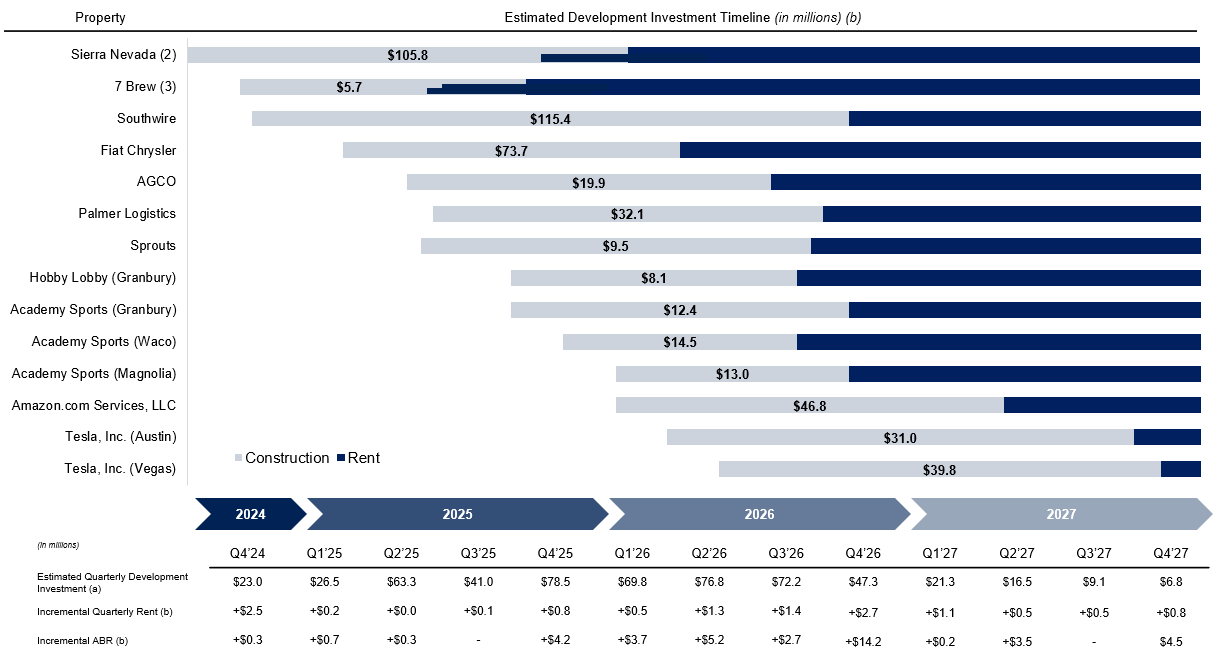
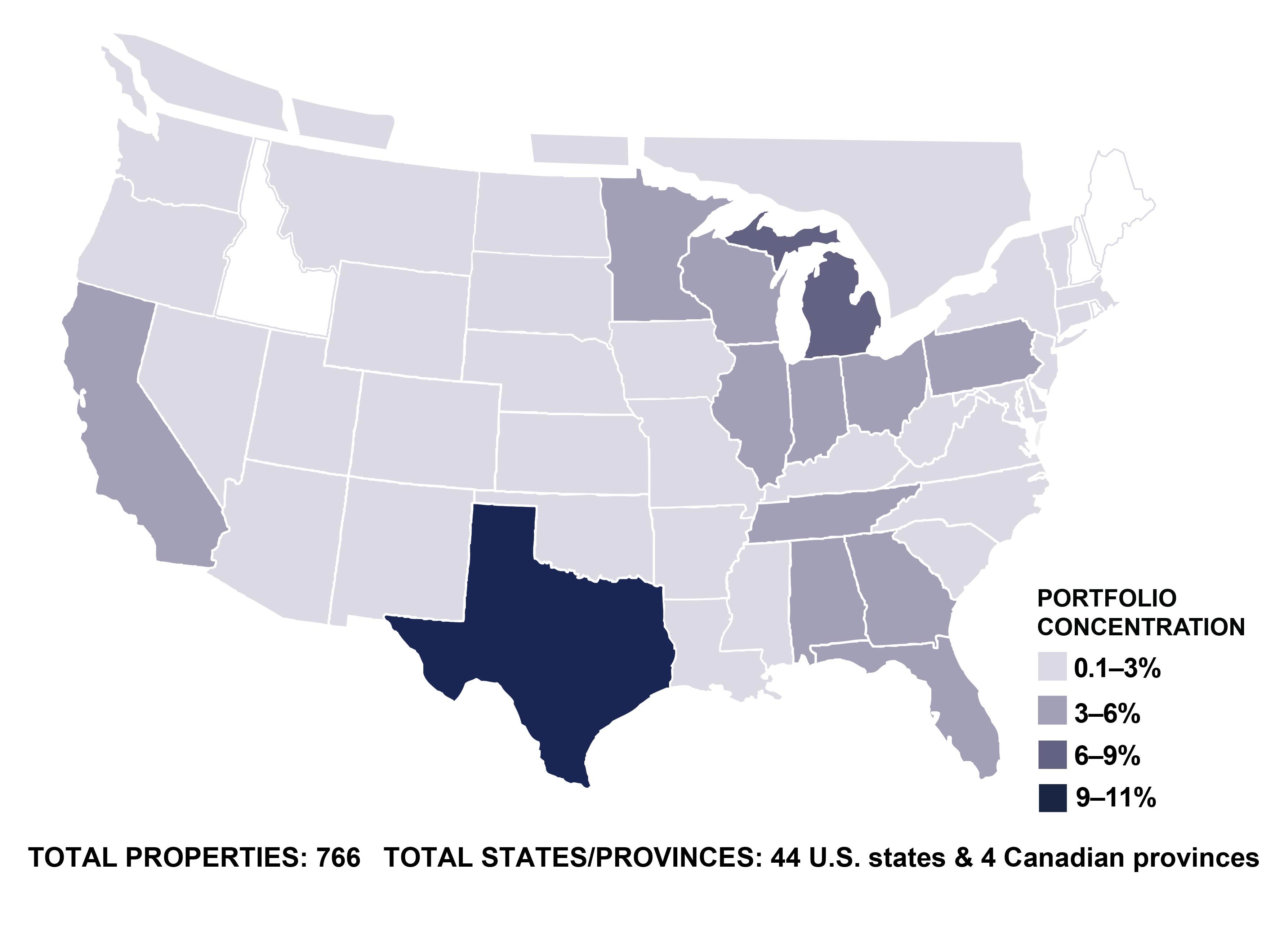
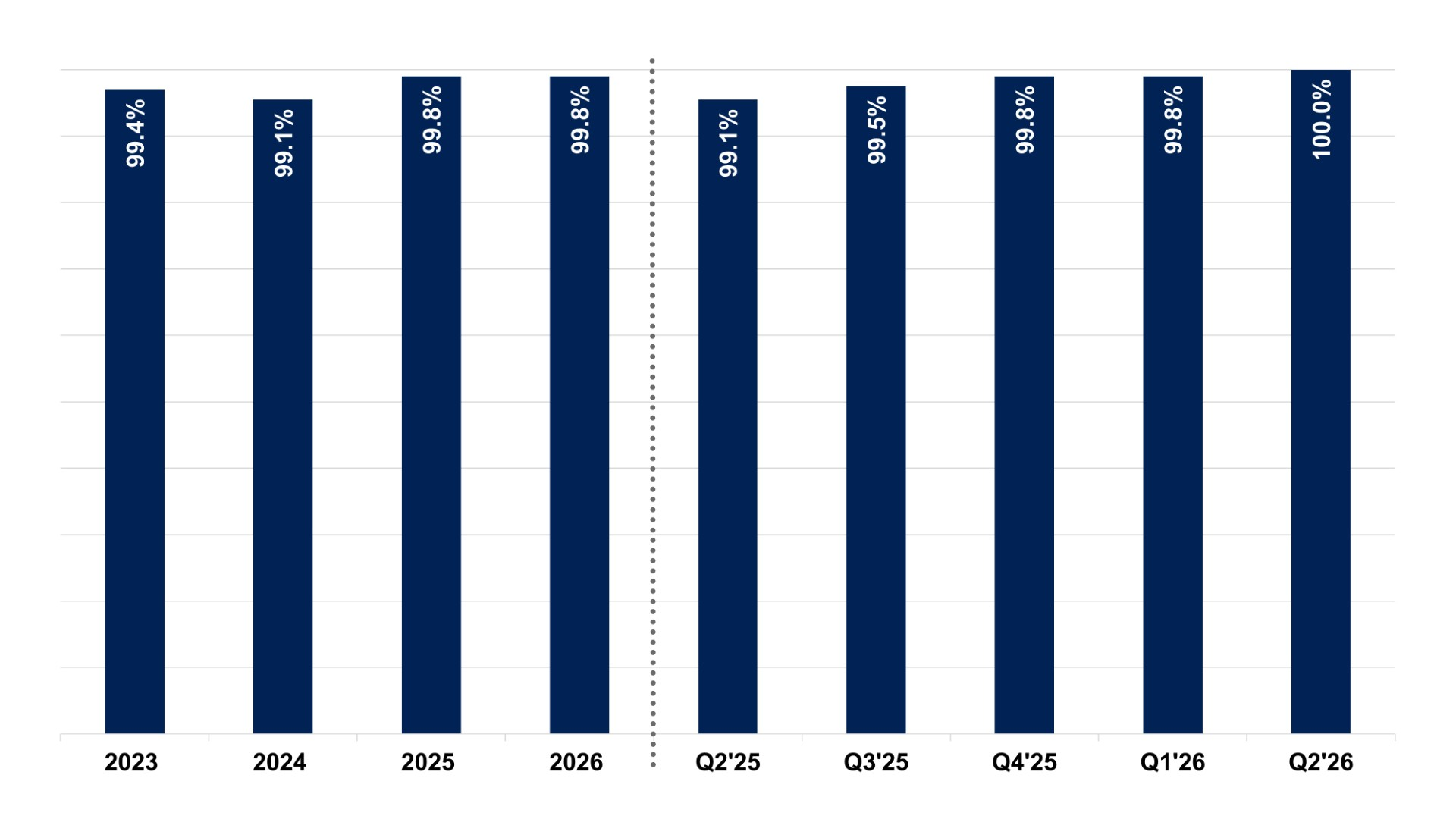
Thank you, Brent. Good morning, everyone. Second quarter was, in many respects, the quarter we have been building toward for the last few years, one that underscores the earnings power of our differentiated growth strategy and the strength of our portfolio. We advanced our committed Build-A-Suit platform through both existing and new relationships, raised our full-year investment guidance by more than $100 million at the midpoint, lowered our bad debt assumption, which is a direct reflection of the sustained improvement in our portfolio performance, and are raising the midpoint of our full-year AFFO per share guidance range to $1.56, representing nearly 5% earnings growth over 2025. And subsequent to quarter end, we announced the largest transaction in our history as a public company. Collectively, these results give us a lot of conviction as we enter the back half of the year and into 2027. Before I walk through the quarter, I want to spend a moment on the news we announced on July 8th because it is emblematic of everything we have been working toward over the last few years. Subsequent to quarter end, we entered into a joint venture to develop an advanced technology facility in Colorado for a Fortune 20 investment grade company, adding an estimated $303 million to our committed build-to-suit pipeline. This is a landmark development with one of the most creditworthy tenants in the world, and upon rent commencement, this tenant is expected to become Broadstone's largest by ABR, and the investment is expected to be meaningfully accretive to both our 2027 and 2028 earnings. It is a powerful validation of the strategy we have built and the caliber of opportunities our team and our long-standing developer relationships continue to source. The facility will be delivered as a powered shell with 100 megawatts of capacity, all of which is already committed to the site today, under a 15-year triple net lease with two five-year extension options and 3% annual rent increases. The transaction generates a straight line yield of approximately 11.6% with initial cash yields that step up as power is delivered approximately 8.5% in year one rising to approximately 9.7% in year two. Substantial completion and rent commencement are anticipated by March 2027. The joint venture owns and controls the land for the full campus with a site designed to accommodate a second 100 megawatt powered shell building in which the tenant holds a right of first refusal. I would frame that second building as future optionality and not committed pipeline that we are including in our stated numbers today. But it is a real potential opportunity and is exactly the kind of embedded optionality that makes our Build-A-Suit strategy uniquely valuable. We are funding the project through our Build-A-Suit pipeline over the construction period with approximately 233 million of estimated remaining investment turning to our broader investment activity during the second quarter we invested 91.5 million comprised primarily of 77.3 million in build-a-suit developments and 13.5 million in transitional capital with the addition of the colorado development our in-process build-a-suit pipeline now stands at approximately 645 million providing a laddered de-risked runway of high quality developments scheduled to reach stabilization through 2027. In total, from our build-to-suit pipeline alone, we expect approximately $17 million of incremental annualized base rent to come online during the third and fourth quarters of this year, with an additional $29 million coming online in the first half of 2027 as the Colorado development and other projects reach rent commencement. That is approximately $46 million of incremental abr from committed in-process developments reaching stabilization between the third quarter of 2026 and the first half of 2027 equating to over 10 growth on our current in-place portfolio abr that is a degree of forward visibility into growth that is rare in our space turning to our in-place portfolio it continues to perform exactly as designed with no significant concerns. We ended the quarter nearly fully occupied with all but one of our 766 properties subject to a lease and 99.9% of base rents collected. We also remained active with dispositions, continuing to opportunistically recycle capital out of mature and non-core assets into the accretive growth-oriented opportunities our pipeline provides. We sold nine properties during the quarter for gross proceeds of $62 million at a 6.4% capitalization rate on tenanted properties. And subsequent to quarter end, we sold two additional properties for gross proceeds of $4.2 million, bringing our year-to-date total to 12 properties sold for gross proceeds of $78.3 million at a weighted average capitalization rate of 6.2% on tenanted properties. I also want to briefly note that we continue to be incredibly excited about Project Triborough. We made meaningful progress this quarter on each of our three key work streams, including power, zoning, and leasing, and our conviction in the value this asset can create for shareholders continues to grow. Ryan will provide a more detailed update in a few moments. Based on the strength of our year-to-date performance, the accretive investment activity we have layered in, and the visibility that our Build-to-Suit pipeline provides into the back half of this year and into 2027, we are raising our full year 2026 guidance. We now expect AFFO per share of $1.55 to $1.57, revised up from $1.53 to $1.57, with a midpoint of our guidance range moving to $1.56, representing nearly 5% earnings growth over 2025. This raise reflects both the durability of our in-place portfolio and our conviction in the pipeline we have assembled, which gives us a clearer line of sight into earnings growth than we have had in our history. On the capital side, the environment is more constructive for us than it has been at any point in the last few years. Our shares are trading at 52-week highs, our cost of equity has improved materially, our balance sheet is well-structured, and our pipeline of accreted investment opportunities is the deepest it has been since we became a public company. That combination of a strong cost of capital alongside a high-quality, visible opportunity set is exactly the setup in which disciplined capital deployment can create the most value for shareholders. That said, our approach has not changed, and we will remain disciplined and opportunistic across all of our capital sources. During the quarter, we raised approximately $45.5 million of equity under our ATM program on a forward basis at a weighted average price of $20.77 per share. And as I noted earlier, we continue to recycle capital through accretive dispositions with year-to-day gross proceeds of $78.3 million at a weighted average capitalization rate of 6.2%. Together, this balance of constructive equity capital and accretive dispositions has kept us well-funded for the pipeline ahead, while maintaining the financial discipline that has defined our approach over the last few years. Kevin will take you through the details of our balance sheet and funding plan in a moment. The momentum we are carrying into the back half of this year is not accidental. It is the product of our differentiated growth strategy and years of disciplined execution, deliberate portfolio construction, and a unique build-a-suit platform that is now delivering at scale with meaningful contributions still ahead in 2027 and 2028.
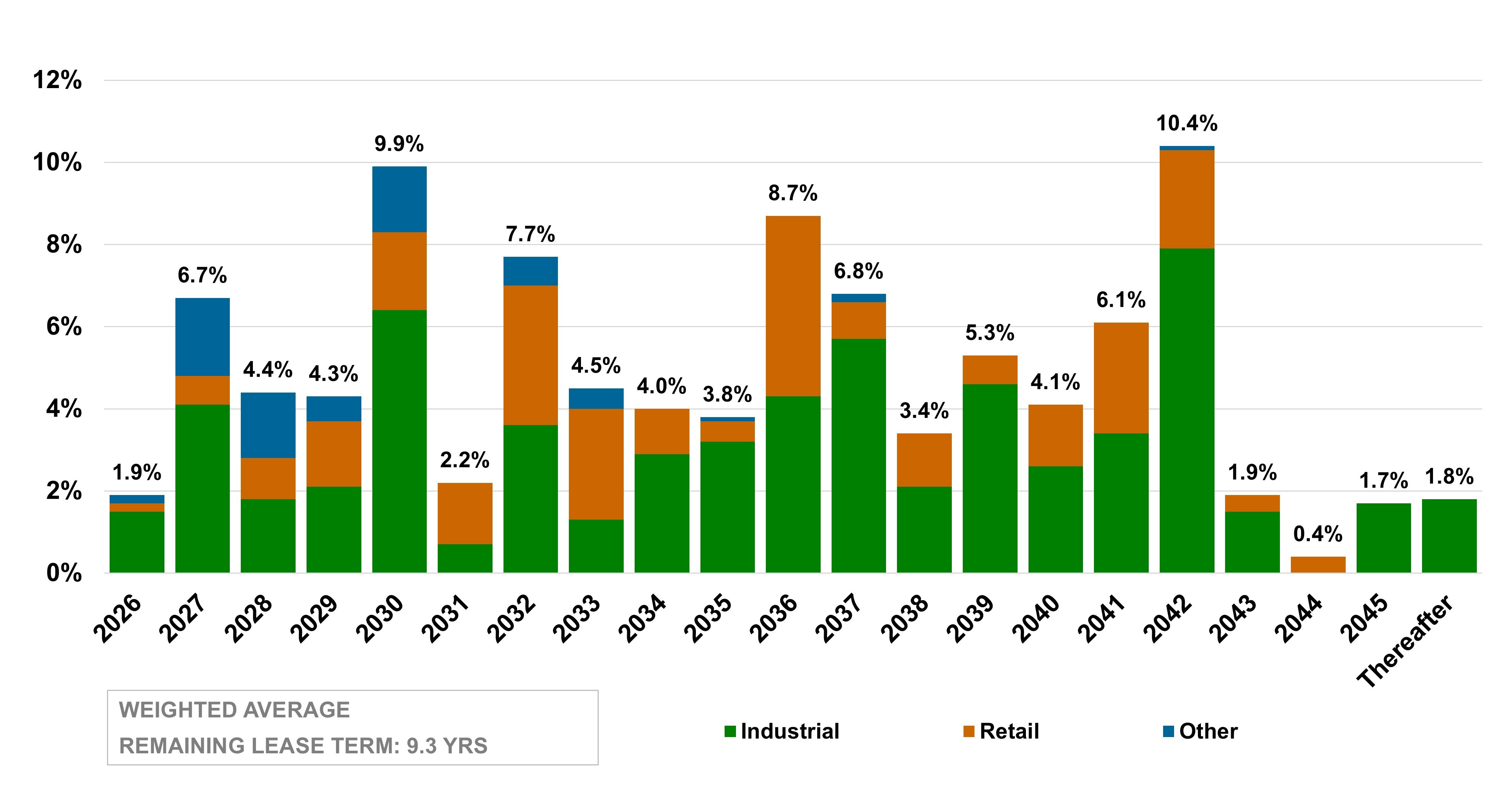
I am excited about what we have in front of us and happy to hand the call over to ryan and kevin who will each walk you through more of what is driving our confidence thank you john and good morning everyone the colorado transaction speaks for itself in terms of scale but i want to spend a moment on what it says about our platform more broadly because the same discipline is showing up across the entire pipeline let me walk you through where that pipeline stands today how our in-place portfolio is performing and then turn to Project Triborough, where we made real progress this quarter. Starting with the pipeline, Inclusive of Colorado, our committed and in-process built-to-suit investments now total approximately $645 million with a weighted average estimated initial cash yield of approximately 7.9% and a weighted average straight-line yield of approximately 9.9% supported by weighted average lease term of approximately 13.7 years and annual rent escalations of approximately 2.7%. These are tenant-driven, mission-critical developments structured from the outset to mitigate the risks that typically come with ground-up development, and they are the engine behind the growth John just walked you through. Turning to our in-place portfolio, occupancy remains strong at nearly 100% on a square footage basis during the quarter. With all but one property subject to a lease, same store rental revenue grew 2.2% year-over-year, led by 3.3% growth across our industrial portfolio, and our remaining 2026 lease expirations are modest at approximately 1.9% of ABR. I also want to spend a moment on our redevelopment activity because it's a good example of value creation that's only possible because of the platform we've built. Having in-house development capability, trusted external advisors, and a deep network of developers means that when he leaves roles, we're not limited to selling the asset or holding it vacant. Redevelopment is a real option. One, we evaluate asset by asset. This quarter, we began redeveloping a functionally obsolete office asset in the Chicago MSA previously leased to C.H. Robinson into industrial space. The site sits in a dense infill industrial submarket with limited supply and robust tenant demand given its proximity to O'Hare. We have commenced demolition of the existing building and plan to construct a new approximately 156,000 square foot building on site. Total estimated project investment is approximately $17.9 million. The asset carried original annualized base rent of approximately $1.4 million. We expect stabilized ABR of approximately $2.7 million upon completion, nearly double what rent was expiring, with stabilization targeted for the second quarter of 2027. We're already seeing interest from tenants in the market and are responding to several RFPs. We added a second redevelopment project at the start of the third quarter, our former Claire's asset in Hoffman Estates, Illinois, along Interstate 90. We evaluated several options for the property, including re-leasing, a vacant sale, and redevelopment. We believe the market backdrop supports a redevelopment project, and we currently are sharpening our evaluation between a full scrape and rebuild and a renovation of the existing structure to make it more functional and desirable for future tenants. Separately, we'll continue to market the property for lease or sale while we advance that work as we do with all of our assets. Now, turning to Project Triborough. As a reminder, this is a large site in northeastern Pennsylvania more than 550 acres of land with a committed one gigawatt power supply. We made meaningful progress this quarter and I want to be clear about why we continue to view this as such a unique asset. We didn't underwrite Triborough as a single outcome investment and today we see three distinct paths forward each of which creates real value for shareholders. First we could monetize the land in the near term either by selling some or all of the individual parcels to industrial developers or given the site and power work we've advanced today as a powered land sale to a data center developer we've received unsolicited interest at valuations that are potentially multiples of our approximately 120 million dollars of invested capital and we would participate in any upside from a sale under the terms of our joint venture second as originally underwritten, the site can support four large box industrial buildings totaling approximately 4.5 million square feet, representing an estimated $520 million of total development with a mid to high 7% yield on cost range at current market rent levels. Our view is that stabilized valuations would reflect approximately 150 basis points or more of spread relative to that yield on cost. that view is supported by the leasing environment on the ground where large box product in northeastern pennsylvania remains scarce with well under 2 million square feet of existing 700,000 plus square feet space in the sub market and the two large box leases signed in the market over the past year closed at rents consistent with our underwriting our first building could be delivered as early as mid-2028. And third, currently our highest and best use, a hyperscale data center campus with a multi-phase buildout with power beginning to deliver as early as mid-2028 and total project costs in excess of $2.5 billion. The economics here would likely look similar to the transaction we just announced in Colorado, turning to the work underway to advance all three paths. On site work, we continue to progress earth work that is common to both an industrial and the data center outcome, meaning this work supports our optionality across paths rather than committing us to one. The first of four building pads remains on track to be pad ready during the fourth quarter with the remaining three following during 2027. On power, PPL has completed its required public town hall meetings and has selected both the site for its new substation and the transmission line path to our property. We currently are reviewing a draft of the electric service agreement and design and engineering work on our on-site substation continues. The timeline remains consistent with our previous expectations. On zoning, we continue to engage constructively with the borough regarding our position that a data center is permitted by right under the property's existing zoning at the same time the borough has adopted a zoning ordinance amendment that allows data centers as a conditional use providing an alternative path to development if needed we remain focused on working collaboratively with the borough to advance the project while preserving the flexibility afforded by both the by right and conditional use paths alongside this work we've seen increased interest from potential hyperscale tenants, and we're currently engaging with several on the project. Overall, we continue to expect clarity on zoning, power, and tenant demand this year, which supports our target of deciding among our three paths, near-term land monetization, industrial development, or hyperscale data center campus, still our view of the site's highest and best use by year end. Taken together, Colorado and Triborough represent the clearest demonstration yet of what this platform can do. Our pipeline has never been deeper. Our external advisor and developer relationships have never been stronger, and the growth visibility we're building into 2027 and 2028 is something very few companies in our space can offer. With that, I'll turn the call over to Kevin.
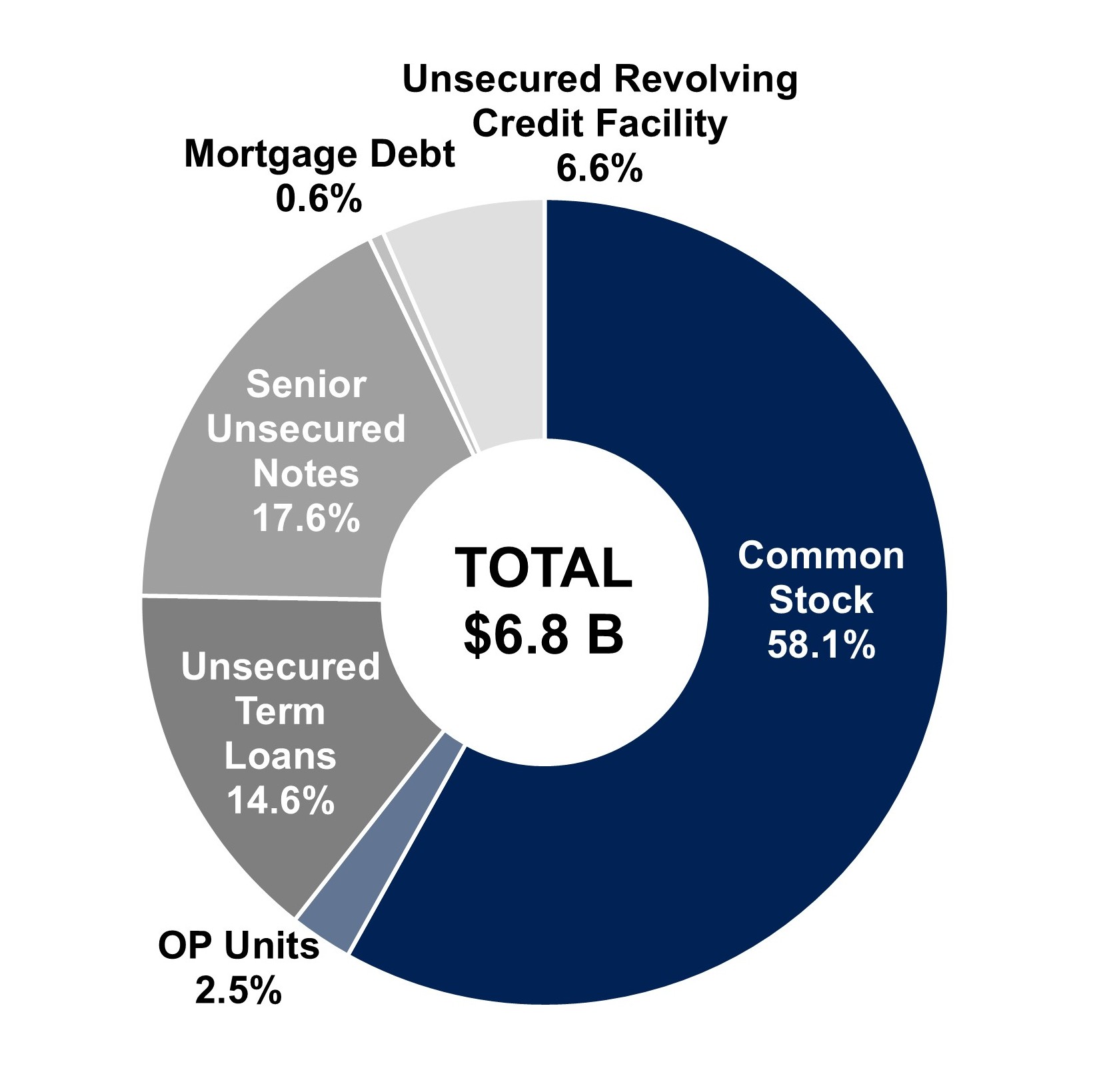
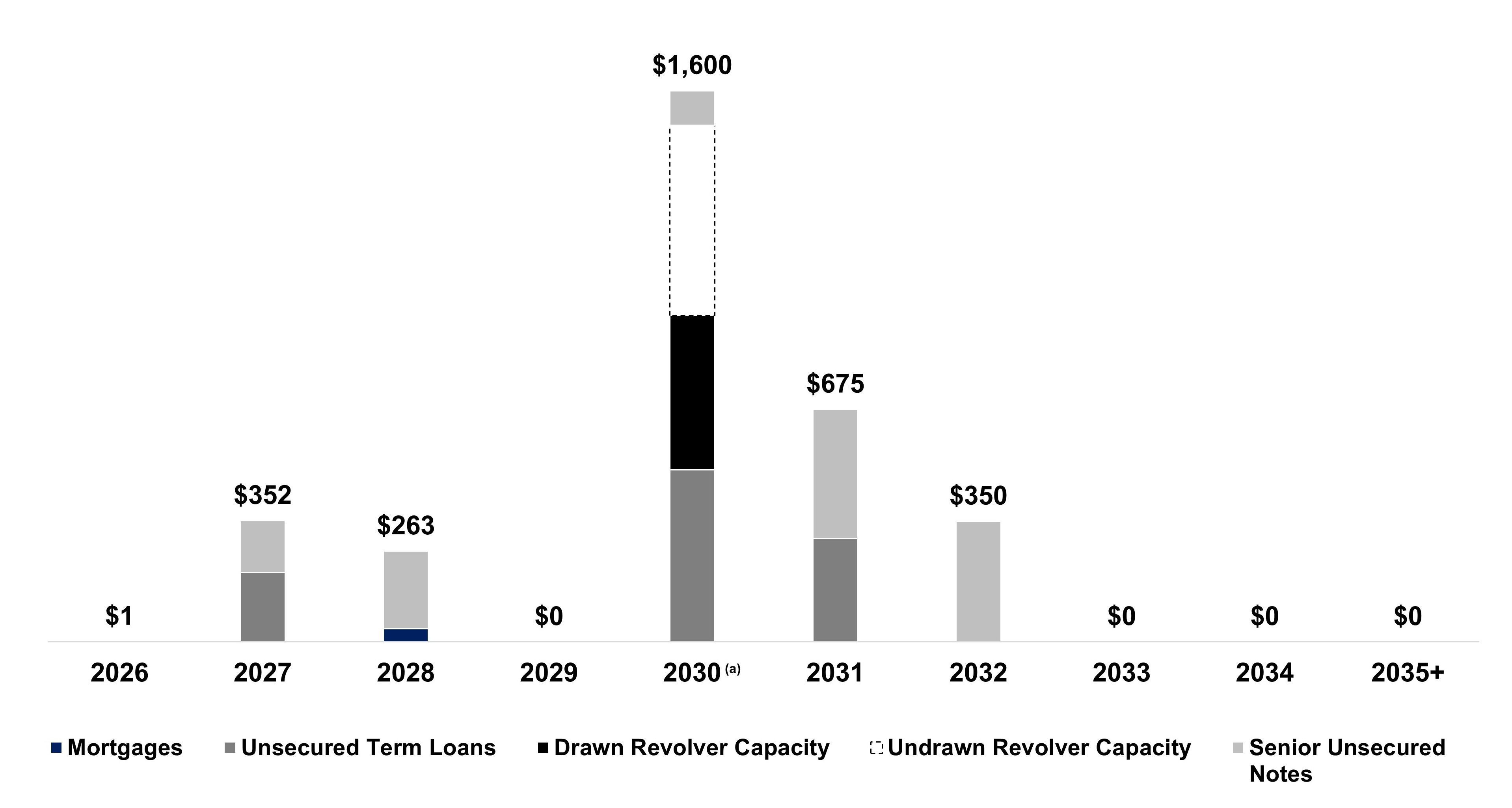
Thank you, Ryan. During the quarter we generated adjusted funds from operations of 78.2 million dollars or 39 cents per share representing a 2.6 percent increase over the second quarter of 2025. Results benefited from same-store rent growth and from recent investment activity and built the suits reaching stabilization. General and administrative expenses were in line with expectations with core G&A of 7.3 million dollars pacing nicely to achieve our full year gna guidance of 30 to 31 million dollars with respect to the balance sheet we ended the quarter with total debt of 2.7 billion dollars in pro forma leverage of 5.9 times we took two steps subsequent to quarter end to strengthen our financial flexibility and lower our cost of capital first we entered into a new 300 million dollar delay draw term loan with our banks the facility has a 12-month delay draw period a January 30th, 2030 initial maturity and comes with two 12-month extension options, providing us incremental optionality in future years. A delayed draw structure aligns well with our funding needs into 2027, including the Colorado development. Second, in connection with this financing, we amended the pricing grids on our existing bank loans to reduce the applicable margin by five basis points. We appreciate the continued commitments from our highly supportive bank group as we evaluate and navigate this highly volatile medium and long-term rate backdrop. On the equity side, during the second quarter, we sold 2.2 million shares of common stock on a forward basis at a weighted average gross price of $20.77 per share. Subsequent to quarter end, we sold an additional 1.6 million shares at a weighted average gross price of $21.45 per share, bringing our total unsettled equity sales to approximately $163 million at a weighted average price of $19.97. We have approximately $197 million of capacity remaining under our existing ATM program, and we continue to evaluate forward sales to more closely match fund our capital with rent commencements from our build-to-suit pipeline. The combination of our new term loan, existing revolver capacity, and unsettled equity provide us with approximately $1 billion of in-place liquidity. Looking ahead, we will continue to assess all potential sources of funding, managing around a pro-forma leverage target of six times, and optimally finding ourselves in a position to opportunistically reduce pro-forma leverage inside of that level, creating additional capacity to pursue incremental investments as opportunities arise. Last week, our board of directors declared a quarterly dividend of 29.25 cents per share payable to holders of record as of September 30th, 2026 on or before October 15th. Now turning to guidance updates that John alluded to, given our strong year-to-date performance and accretive investment activity, we are raising our full year 2026 AFFO guidance to a range of $1.55 to $1.57 per diluted share. This guidance is based on investments in real estate of between 600 and 800 million dollars revised up from 500 to 625 million dollars dispositions of between 100 and 150 million dollars revised up from 75 to 100 million dollars and finally total core general and administrative expenses of between 30 and 31 million dollars additionally we are lowering our full year bad debt assumption to 50 basis points from 75 basis points. This reduction is a direct reflection of the work we have done across the business over the last three years, which has improved our tenant base and strengthened our proactive asset management. As always, it is worth reminding everyone that our per share results for the year are sensitive to the timing, amount, and mix of investment and disposition activity, as well as any capital markets activities that may occur during the year. Please reference last night's earnings release for additional details, and we will now open the call up for questions.
Operator
We will now begin the question and answer session. Please limit yourself to one question and one follow-up. If you would like to ask a question, please press star one to raise your hand. To withdraw your question, press star one again. We ask that you pick up your handset closer to your mouth when asking a question to allow for optimum sound quality. If you are muted locally, please remember to unmute your device. Please stand by while we compile the Q&A roster. Your first question comes from the line of Anthony Pallone from JPMorgan. Anthony, your line is open. Please go ahead.
Great, thank you. I guess my first question is on the Colorado data center deal? I mean, with the yield that high and just, you know, given, you know, what seems like a really strong transaction, like how do you think about keeping something like that long term? Or is this something that this becomes a very attractive, you know, source of capital in the future?
I think that's a great question. It's something that we talk about with every asset in our portfolio. Every asset that we look at in our PRC, in terms of our whole sell strategy, we evaluate what's the right decision to make here. Should we be holding this for the long term? And as you said, I mean, the yield on this is really attractive. The tenant is very attractive. This is a fantastic opportunity for us to have a Fortune 20 tenant as our number one tenant, which we'll be very proud to have. But at the same time, you know, every asset is for sale at some price. And so if it makes the most sense for us to recycle that capital at some point in the future. We're certainly open to it, but we will take that day by day, asset by asset.
Okay. And, you know, you have a partner on the deal, and I'm not sure if there's any sort of a promote structure for them or how that would work, but can you maybe describe that at all, whether they stay in or out, or if you own this 100%, or if any sort of promote changes that yield as we look ahead?
Yeah, promote structure wouldn't change the yield in terms of what we're getting on current cash and rent basis, it is what it is, which is why we've got those upfront yields for the first year and second year in there. But there is a promote structure built in. Our partner on this deal does have the ability to get some additional upside if we were to sell this in the future. But just like with the other JVs that we have, we do participate in the upside as well. So everyone's got incentives aligned in terms of whether we're staying in or potentially sell this in the future.
Operator
Okay, thank you. Your next question comes from the line of Jay Kornreich from the office of Cantor Fitzgerald.
Hey, thanks. Good morning. I guess, you know, broader level, the previous goalpost for the annual announced build-to-suit developments was the $350 million to $500 million number. And as the platform, you know, has really gotten bigger relationships with developers and tenants has expanded, you know, really highlighted by the recent Colorado $303 million PowerShell deal. How do you think about the next phase of growth for B&L? What are the new goalposts for volume of annually announced deals just as the overall platform is running on full cylinders at this point?
Yeah, 350 to 500 is the goal that we had for the year. We certainly exceeded that with the Colorado deal. But that being said, the Colorado deal is unique in terms of its size and scope. So we're not expecting to sort of continually land $300 million build the suits every single quarter, quarter and out. So we do want it to grow over time as the denominator grows. We're not looking to be here five years from now, still talking about $350 to $500 million in a committed build the suit pipeline. So we want it to grow. We expect it to grow. That is the goal for us to sort of take $350 to $500, incrementally higher in 27 and 28 and so forth. But we're not planning on taking a huge leap forward where all of a sudden that's going to go to 600 to a billion or something like that. It will be more incremental from there.
Okay. Appreciate that. And then I guess just moving to Triborough, appreciate all the call you gave at the beginning of the call. I guess, you know, as things stand now, I guess, what is the current level of conviction of being able to get approval for the data center? And is there any thoughts around timeline to getting that?
Yeah, we're cautiously optimistic. As you heard Ryan's comments, we're doing everything we can in terms of working with productively with the borough council to sort of work this to a place where it can move forward. We feel very strong in our by-right conviction around our opportunity there for data center development. We do have multiple paths to extract value from that opportunity, but we feel cautiously optimistic right now, and we're hopeful that, you know, we are closer than we've been this year to getting some resolution, but, you know, the next couple of months and quarters will determine that. Okay.
Appreciate it. I'll hold it there. Thank you.
Operator
Your next question comes from the line of Caitlin Burroughs from the office of Goldman Sachs. Caitlin, your line is open. Please go ahead.
Hi, everyone. Congrats on the quarter and all that you've done this year. I guess maybe just looking at the amount of dispositions you've done, it's in line with guidance. I wouldn't say it's surprising. But when you're considering funding with dispositions versus your option of equity now, I guess what's made dispositions attractive? Is it just the pricing and the market was there, managing risk? So yeah, what drove that disposition activity? And then also what will drive the timing of the equity settlement?
I'll take the first part, let Kevin take the second. From dispositions, Caitlin, everything that you said, opportunity to sell these at prices that we think are really attractive relative to how we think about the value. Risk mitigation continues to play a role in it. You know, we're not necessarily selling things that we're super excited to continue to hold. It's often going to be that clinical non-core or, you know, short remaining lease term or you name it. You know, our asset management team has done a fantastic job of combing through the portfolio, really thinking about where are the opportunities to sell and to do so accretively. And if you look at what we've done this year, you know, 74 million at a 6.2% cap rate, that's a fantastic place for us to be recycling capital. And it continues to trend from the last four years in terms of our ability to control our own destiny, sell assets, recycle those proceeds accretively. And now, thankfully, we're in a place where, you know, our equity is far more constructive than it's been at any time in the last four years. And so we've been raising incrementally on the ATM. And I'll let Kevin take the second part.
Yeah, sure. I think the punchline on settlement is just look at the build-to-suit delivery schedule. We will look to match fund as best as we're able in those quarters where those properties deliver. And I think more macro-based the granular level focus on how we're funding our investments is probably a little bit extra intense over here, whether that's a DISPO dollar or a dollar from the ATM. We're really thinking about it by project. So future settlement alongside rent commencement is the short answer.
Got it. Thanks. And then maybe, so it sounds like you guys have two redevelopments going on now. I guess I'd say those are different from your build-to-suits in that you don't have the tenant in hand yet. So first, wondering if you can talk about what gives you comfort in those two pursuits. And then second, as you look into next year, you do have some additional office expirations. Do you think there's further opportunity to redevelop office into industrial, or do you think this is more of like a one-off opportunity?
Sure. I'll take that one. This is Ryan. I'd say, you know, when we comb the portfolio, we're looking at all assets inclusive of the office bucket for redevelopment opportunities. I'd consider these probably more one-off. There are a few others that we're evaluating right now, but I'd consider these more of a one-off situation. More to your first question, you know, we have high conviction in the CH Robinson redevelopment. The O'Hare market is very strong, like I mentioned earlier in the presentation. we are already fielding tenant interest and rfps on the property and that was even before we started to take the building down so we feel very comfortable with that i'd say the second one that we have added as consideration at this point and are pursuing we feel good about the market we feel good about where our exiting or expiring rent level is versus where market rent levels are we're still kind of evaluating whether it's a scrape and rebuild or kind of retool the existing building itself we think that there are options under both but as we sort of hone our focus there sharpen the pencil and the numbers you know we'll have further thoughts and detail to share that said as with all of our properties we'll continue to keep this listed for lease or sale we continue to entertain offers on the property and we'll weigh these two against each other like we do for you know all of our properties under management one more follow-up on the ch robinson location you guys listed as a target stabilization of may 2027 does that mean that you expect you'll have somebody rent paying by may 2027 or just that it will be completed and available
by then uh that we'll have rent paying by then thanks thanks your next question comes from the line of ryan caviola from the office of green street ryan your line is now open go ahead thank you and good morning everyone uh the growth in the development pipeline has been very impressive um but just coming to kind of how we were looking when you're going into 2036 If I remember correctly, there's sort of a soft target to get a larger portion or maybe a closer to half of the investment volume through just regular property acquisitions. But where we stand today, obviously, with the large build suit pipeline and just the $60 million of acquisitions halfway through the year, could you just walk us through what shifted throughout 2026 that made developing so much more attractive than buying assets Yeah, actually, we started the year with the expectation that the majority of our investment activity this year was going to come from the build-a-suit.
The opposite was last year. Last year, we did the majority of our investment activity through regular way acquisitions, sale leasebacks, lease assumptions. But we knew coming into the year in terms of the way that we were thinking about our original guidance range for investment activity that the majority of it starting on January 1 was going to be in build-a-suit. So the year has played out really exactly as we would expect it. We weren't planning on having a huge amount of regular way deal flow. We continue to pursue it. There are a handful of things that we're pretty excited about that should hopefully come in in the second half of this year. But in terms of the waiting, you know, our expectation for this year and going forward is that the majority of our investment activity will be in our bill to suit, which we think is uniquely valuable in the net lease space.
Got it. Appreciate that. And then just on the Colorado deal, it sort of seems like the language around labeling it as an advanced technology facility was purposeful.
Could you just walk us through uh you know any reasoning behind that um differences between you know the baton just being a traditional data center or if it just is that with a different label uh anything that could be could be helpful thanks yeah the the nomenclature that we use is very intentional relative to what the tenant is using it for um this will look and feel like a data center for others in the sense of you know if it was going to have a different tenant that was using it but for this particular tenant and for what they are planning on, this is the way that they think about it. And so that's the way that we think about it. Got it. That's all for me. Thank you.
Operator
Your next question comes from the line of Ronald Camdem from the office of Morgan Stanley. Ronald, your line is now open. Please go ahead.
Jenny
Analyst — Morgan Stanley
Hey, good morning. This is Jenny on for Ron. Congrats on a strong quarter. I think on the Colorado deal, I think the yield came in really attractive.
I'm just curious, do you see more computations or more capital chasing this kind of deals or do you think this is reputable like that's that's my question yeah so this came out of the strength of our developer relationships you know i don't think this is one that's going to be out there sort of on a heavily marketed basis in terms of the yield that people are able to get but of course anything that is data center related or data center adjacent right now has just ungodly amounts of money chasing it. And so we feel, you know, very lucky to have those types of relationships in our Rolodex that allow us to, you know, secure opportunities like this one.
Jenny
Analyst — Morgan Stanley
Cool. I guess my second is, I'm curious, do you guys have a rofer for the other campuses of this tenant or just this two?
Just this dirt. So not with respect to the tenant more generally, but with respect to the potential opportunity for this tenant on, you know, for another facility on this site and it's not a rofer we already own the dirt so if they're gonna if they are going to execute on their rover uh it will be you know on the other side of an access road from us i got it okay cool thank you your next question comes from the line of upal rana from the office of key bank capital markets paul your line is now open go ahead great thank you uh a question for for john or Ryan, you know, you've completed only one regular way acquisition so far this year.
Is that a function of you just seeing better opportunities in the build-to-suit pipeline or something else? And maybe you can talk about what we are seeing in the build-to-suit opportunities today as well as the regular way acquisitions and any color on those types of deals, size, pricing, quality would be helpful.
Yeah, I think a lot of people have heard us talk about this throughout the year. We continue to think the best place to be allocating capital, generally speaking, is in the build-to-suit pipeline. You're getting brand new buildings, fantastic tenant credits, better overall economics. When you look at our build-a-suit pipeline and you're talking about $645 million of estimated project investment at a 7.9 upfront cap rate and a 9.9 straight line yield, those are not the types of returns that you're going to be getting in the regular rate market right now. The regular rate market continues to be heavily competitive. There's a lot of buyers out there for a not sort of parabolically increasing amount of deal flow. So the supply-demand characteristics continue to put pressure on pricing in those areas. And then you're also going to be looking at potentially dated real estate, maybe subpar credit in terms of what we can get in our build-a-suit pipeline. So we continue to be very open to regularly deal flow. We've got some deals that we did early in the year, some deals that we're looking at right now, but we're very selective. We want to pursue them. We think they're fantastic opportunities to sort of add to the return and the investment that we're going to be doing in a year, serving our clients as they come to us with opportunities that we never want to have to say no to if the deal makes sense. But, you know, if you're giving me a new dollar today to allocate and I can only put in one spot, it's going to be in Build-to-Suit.
Great. Thank you. And then, John, you incurred a $1.6 million cost this quarter on a Build-to-Suit opportunity that you ultimately didn't pursue. You know, what caused you to walk away? And maybe should we expect some more of these kind of pursuit costs like this as the development platform scales further?
Yeah, I'll take the first part of what the number is. It is just a deposit and some legal costs associated with a deal we walked away from. It was really an embedded option, another deal we did complete. And so in terms of our underwriting, we thought about that as a portion of our first opportunity. So we still like the economics in total. And then, you know, in terms of anticipating these in the future, will there be some? I'm sure. Do we know when or what they will be? No, I think it's as facts play out. um you know but you know john's been saying this for better part of two years now that this is what gets us to the table on some of these more interesting opportunities and so you know to the extent that we're able we will absolutely pursue and finish them off and if it makes sense for us to opt out of them we'll do that you know from time to time as well okay great thank you your next question comes from the line of john kim of the office of bemo capital market John, your line is now open.
Operator
Please go ahead.
I mean, it sounds like you are doing more spec development and redevelopment, which is consistent with the value creation that you've been doing on BTS and not just spread investing. But I just wanted to know about how you think about IRR thresholds or yields on non-built to development versus redevelopment. and if there's any additional cost that we should think about as far as hiring more people in-house?
Yeah, I'd say when we're looking at opportunities that may be a slightly earlier entry point or have a little less decision around the tenant, which by and large is not what we are doing or what we're pursuing, but to the extent that we do, I'd say we're looking for typical LP-style returns associated with that for any institutional limited partner investor. You know, I'd call that, you know, levered IRRs in the 20% plus mark and MOICs somewhere in that two times range. And we're looking for the yield on cost versus stabilized value spread delta in that kind of 150-ish basis point range. Okay.
And all the Colorado developments, I know that there's been a lot of discussion on this. the yield is very attractive, the tenant is attractive, and it just leads us to ask if there's any associated risk when you have a return that's attractive. So, I was wondering if there was any CapEx requirements that you foresee in the future? Is this an advanced manufacturing type of facility where you'll have to, again, put in CapEx or maybe it'd be difficult to release down the road.
Yeah, no material CapEx for us. You know, our yields are baked into the 300 million that we've already disclosed, and we're not anticipating any changes there. Not a manufacturing facility. You know, this continues to be, as we said, an advanced tech facility that'll be used, and for most others, it would be in that sort of data center or data center adjacency area. You know, this is also, it's a nice little barbell where it's not only just some of the best yields and economics that we're getting from our investment activity, but this will be easily by far the best credit in our portfolio so we've got no long-term concerns about you know the 15-year lease and receiving the benefit of the bargain that we struck up front thank you your next question comes from the line of michael goldsmith with the office of ubs michael your line is now open please go ahead good morning thanks a lot for taking my questions uh just on these data center leases, if you don't meet the development deadlines, how do the economics
change? Just trying to understand the risk here.
Yeah, I'd say there are certain cushions to those deadlines built into the lease agreement to the extent that there's time delay on delivery beyond some of those cushions, there are rent credits or rent abatements to it until rent actually starts. So it doesn't really change the yield profile. It doesn't really change the overall lease itself. It's more a matter of when does rent start and is it, along with some operating expenses, abated for a period of time during that time delay? Obviously, that excludes things like force majeure and the like of it. So I'd call it not all that dissimilar to what we see in a regular way, kind of industrial build the suit, just with, in this case, slightly larger numbers on a monthly rent basis.
Got it. Thanks for that. And as a follow-up, you sold a bunch of vacant assets in the quarter, and then I think you still have some near-term lease expirations coming up i just want to uh just try to understand you know what the negotiations are like for some of these near-term uh maturities or or leases expiring and and have they been productive or could these be potential uh you know additional vacant dispose things yeah very productive uh for the 1.9 that we have remaining for the year i want to say almost all that or all of it has already been taken care of, but you just got to get through the final ink into the docs to the point
where we're already having conversations about 2027 and 2028 lease roles and focusing on, you know, farther out in the future than where we are today. So the team's done a fantastic job of working through, you know, the first year we've had a little bit more elevated lease roles than we've had in the past. And it's a good prep going into next year and in 2028 as well. So they've done a fantastic job and we're in a great position for the remainder of 26 and the next couple of years as well.
Thanks. And if I can ask one more, I do apologize. He had same store rental revenue growth of 2.2% with positive growth in industrial and retail, but there was negative down 1.6%. What was that?
Yeah, that's just that C.H. Robinson asset Ryan was talking about flipping into the redevelopment bucket. Would have been formerly an office asset now under redevelopment. So that's that rent rolling off as it turns into that new property for us. Perfect.
Yeah. Thank you very much. Good luck in the back half.
Operator
Your next question comes from the line of Michael Gorman from the office of BTIG. Michael, your line is now open. Please go ahead.
Good morning. This is Zach Leighton from Mike Gorman. Thanks for taking my question. Building on one of the earlier questions, with the delayed draw term loan in place, what is the thought process regarding the financing structure for larger assets like the Colorado project and the portfolio? And then longer term, as you continue to get additional large opportunities like this, what is the framework for approaching those financing components?
Yeah, look, I think we manage the business in totality, and obviously large projects have an impact on how we think through that. In this case, and frankly, in all the cases, the nice thing about what we're doing is we've got, on average, 12 to 14 months of forward visibility to think about our sources of capital. And so in this case, that term loan certainly helps out on the backside of Colorado, given it's sort of back-end weighted. But I think the principle is the same. I mentioned this earlier. There's very granular thinking going on in terms of the mix of debt and equity and the types of debt specifically as we roll forward. And so as has been the case for us for many years, financial flexibility and opportunity decision-making carries a day. And so what we did with these term loans continues to keep that window open about thinking about longer-term financing decisions.
Thank you. That's all from my side.
Operator
Your next question comes from the office of Eric Borden of BMO Capital Markets. Eric, your line is now open. Please go ahead.
Great. Thanks for taking my question. And, John, in your earlier remarks, you talked about taking the incremental development, build the pipeline, you know, adding additional $300 to $500 million incrementally. But just curious, you know, if your announcement in Colorado and Project Triborough has kind of opened the door and you've seen more inbounds for more powered land or data center type-esque developments come to your door. it's something that we look at but I'd say it's not pervasive in any way similar to what we're seeing for industrial and retail you know these are certainly more you know unique one-off type opportunities that we're seeing with respect to Triborough in Colorado and if those opportunities were to you know come knocking on your door would you you know contemplate potentially adding them to the pipeline in an effort to kind of keep that 10 percent growth that you alluded to in your prepared remarks just keep that 10 percent growth consistent going forward
yeah i mean we're certainly open to it uh in terms of seeing good opportunities but you know we got to be mindful about you know does it work for us you know going back to the last question how kevin would be thinking about financing it where are we from an equity cost and capital standpoint you know do we need to bring in a joint venture partner you know those projects are always much much larger than the traditional build-to-suit opportunities so it just requires a more nuanced more thoughtful approach to sort of the longer term financing and return structure so we're very pleased with what we have today. Very happy to see some good movement in the pipeline for regular way, excuse me, for build-to-suit industrial deals and retail deals that should be filling in around some of these bigger opportunities like Colorado. And if we see more of those, we'll certainly evaluate them and see if it's something that makes sense for us to invest or allocate to. Thank you very much. I appreciate the time.
Your final question comes from Caitlin Burroughs of Goldman Sachs. caitlin your line is open go ahead hi again i feel like the answer could be no since it hasn't come up yet but anyways i was wondering if you had any updates to give on the charles river project and um the uh i guess seemingly industrial development that you're planning on that site and leasing discussions sure on the charles river site you know we have progressed uh we are in the process of just about to begin sort of landlord work of separating the two parcels and putting in the individualized sort of infrastructure associated with the long-term parcel. On the short-term parcel, you know, we continue to manage it, and we will be – we are receiving sort of inbound interest on it. We have also started exploring externally leasing activities. So dialogue is occurring. We are still working through site plans and redevelopment efforts and consideration around all of that. So kind of early innings there, but at least from the initial work and the things that we plan to accomplish by this point in the year, we are well on track.
I think that's all. Thanks.
Operator
There are no further questions at this time.
I will now turn the call back to John Marana for closing remarks thanks all for joining us today if we don't see you or have a one-on-one with you over the next couple of weeks hope you have a great rest of the summer we'll look forward to seeing everyone when conference season kicks back up again in the fall thanks all this concludes today's call thank you for attending you may now disconnect