Operator
Good day and thank you for standing by. Welcome to the Central Bank Company fourth quarter 2025 earnings conference call. At this time all participants are in a listen-only mode. After the speaker's presentation there will be a question and answer session. To ask a question during the session you will need to press star one one on your telephone. You will then hear an automated message advising your hand is raised.
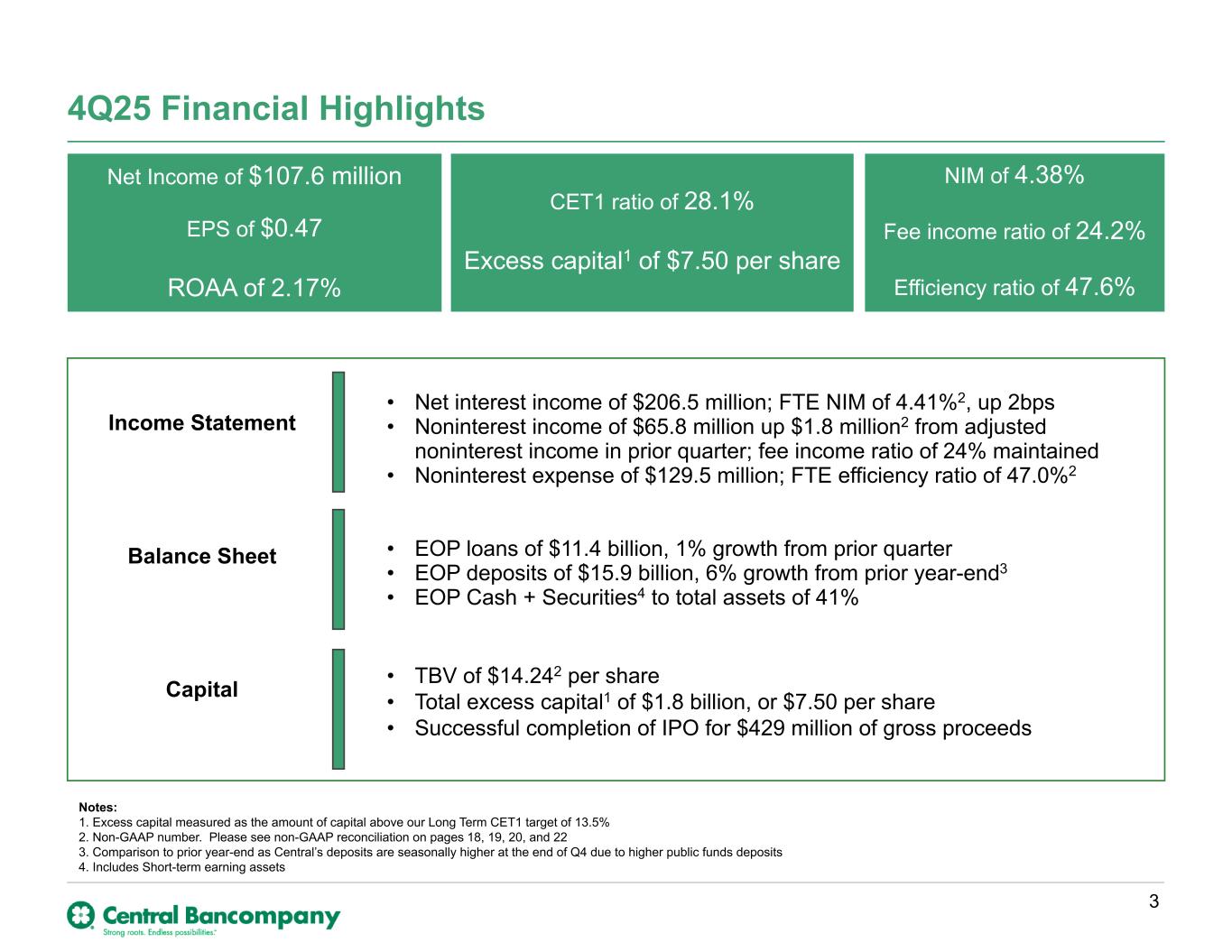
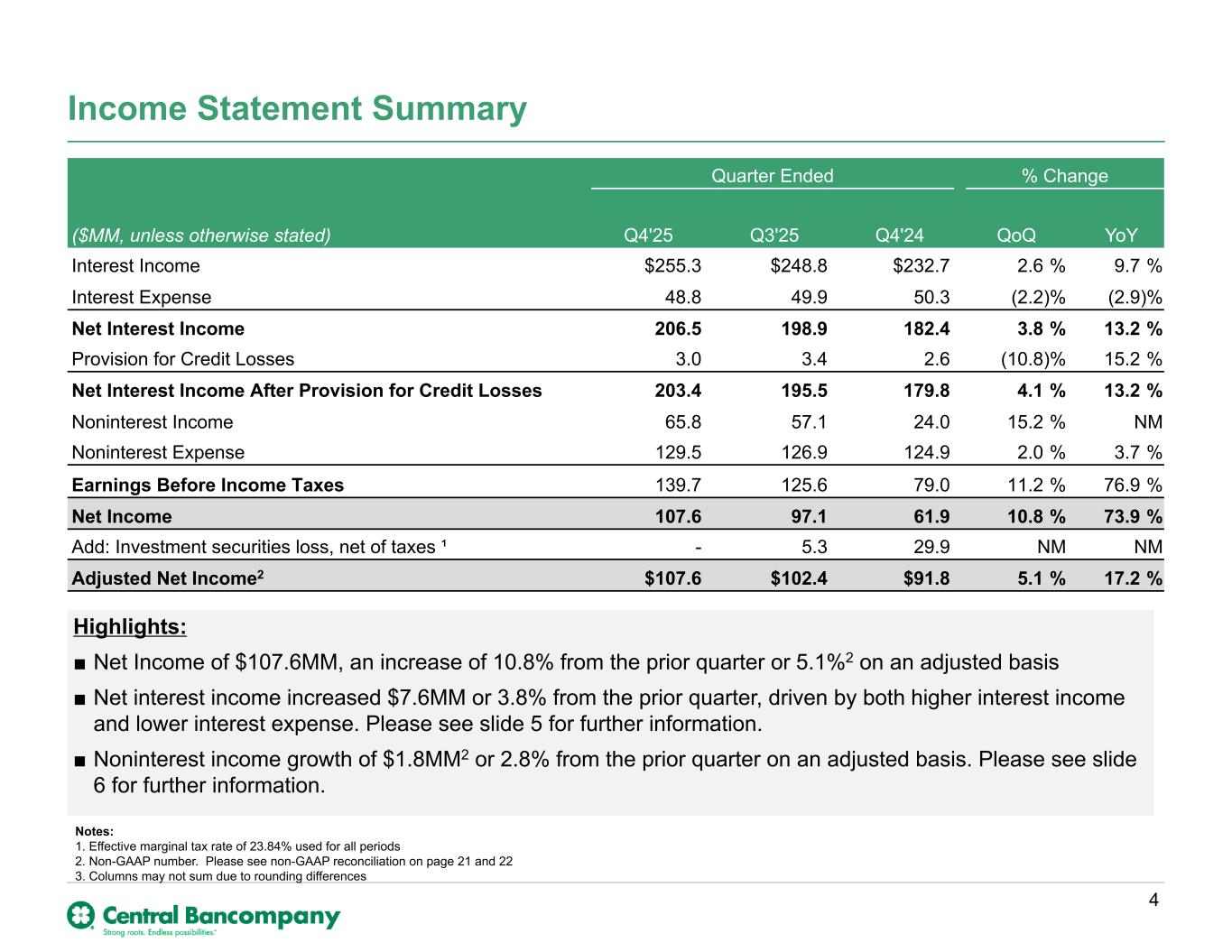
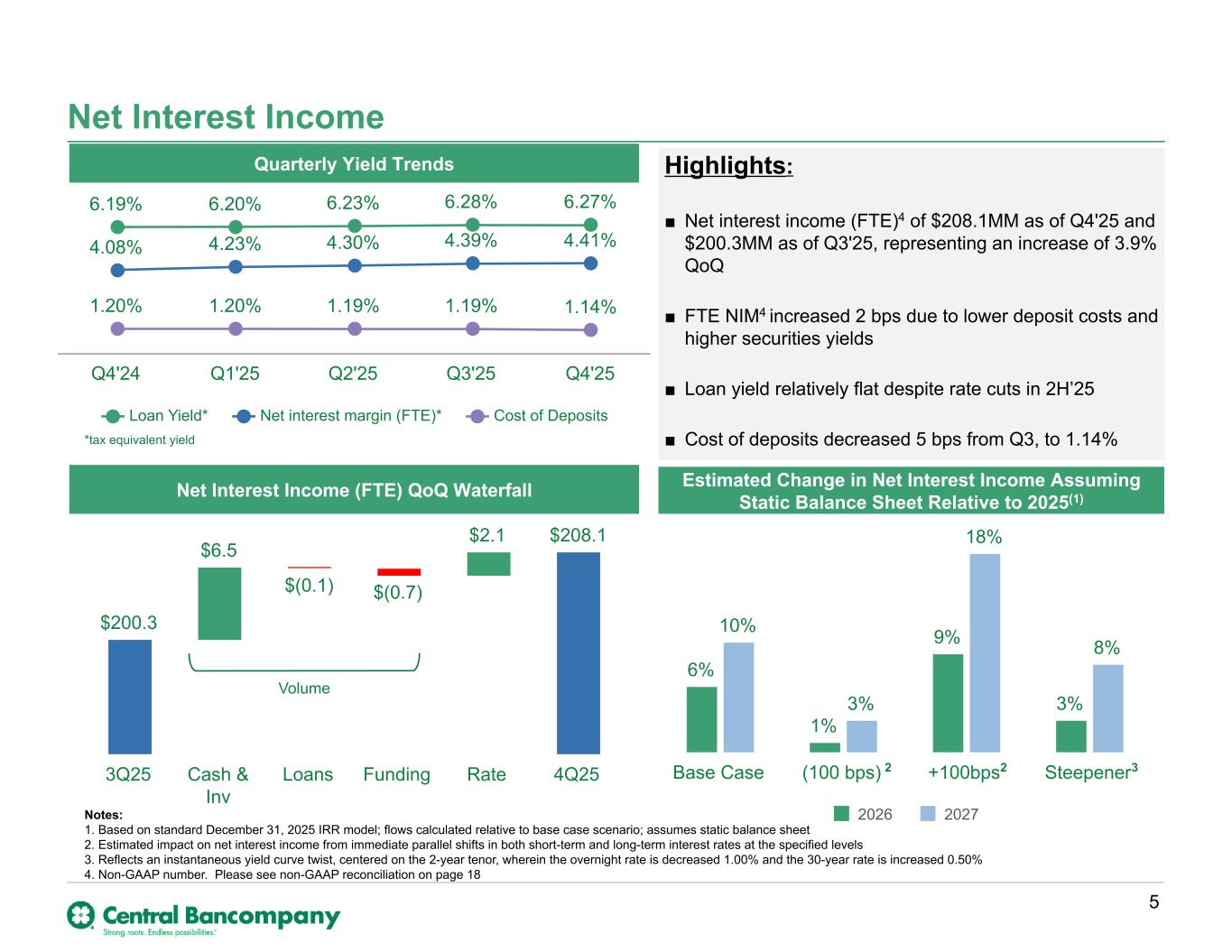
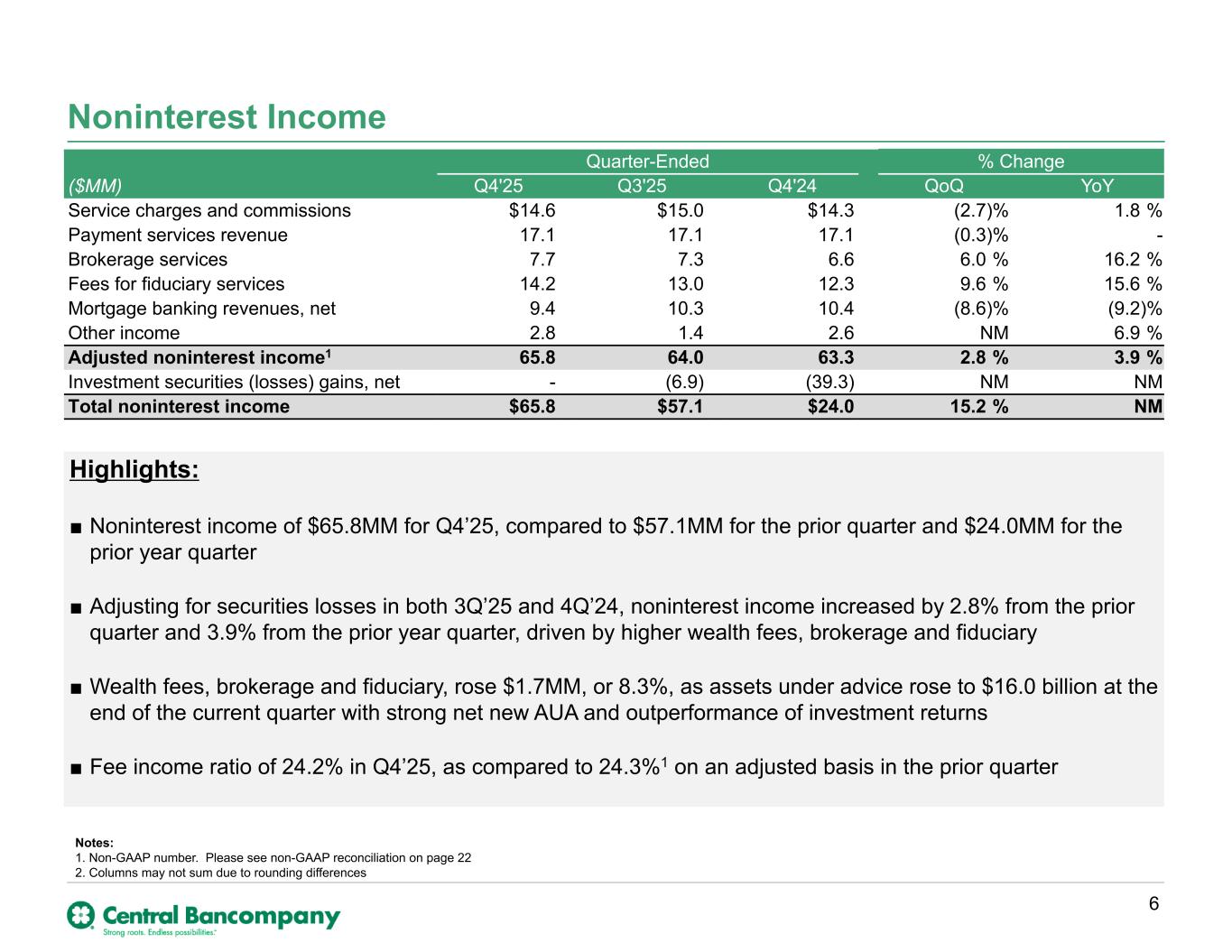
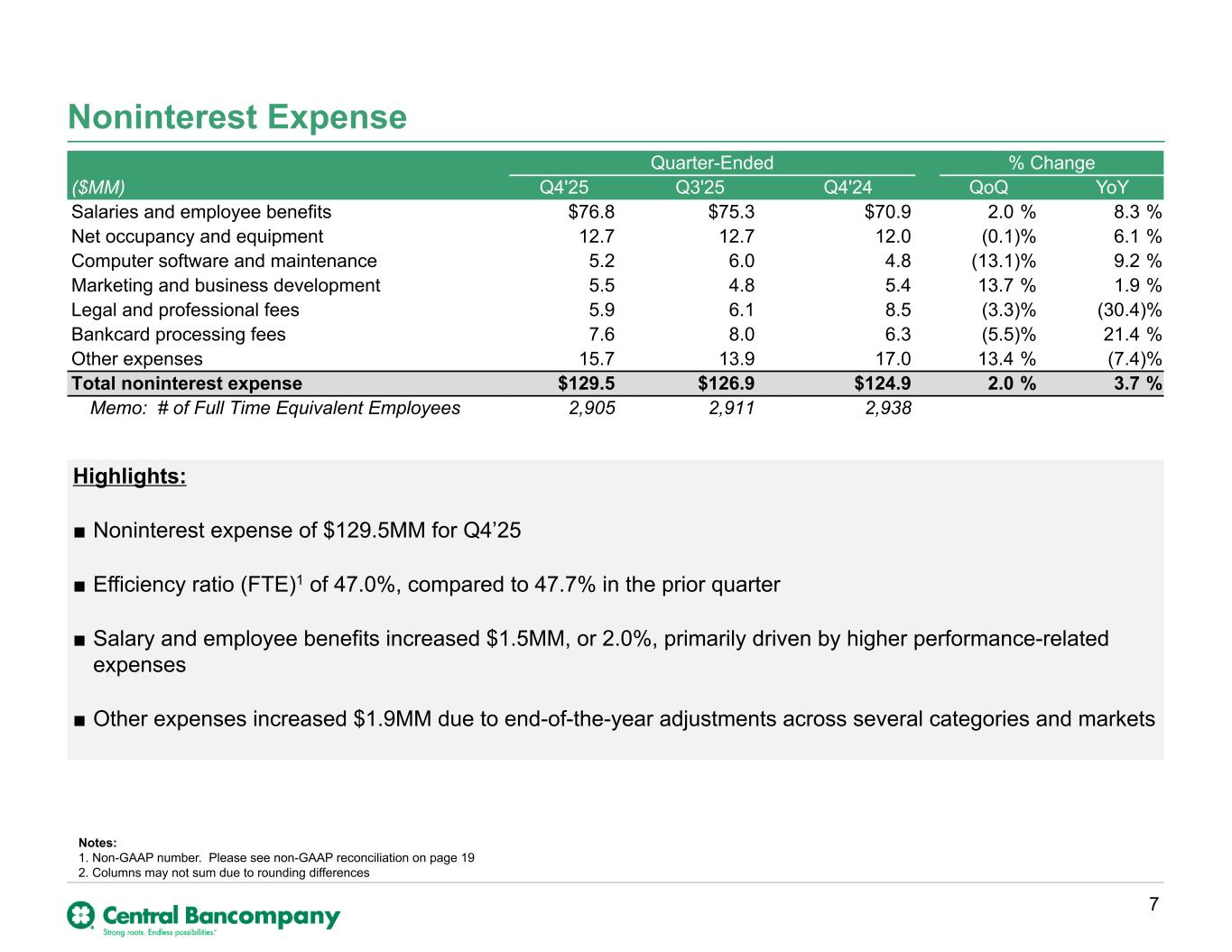
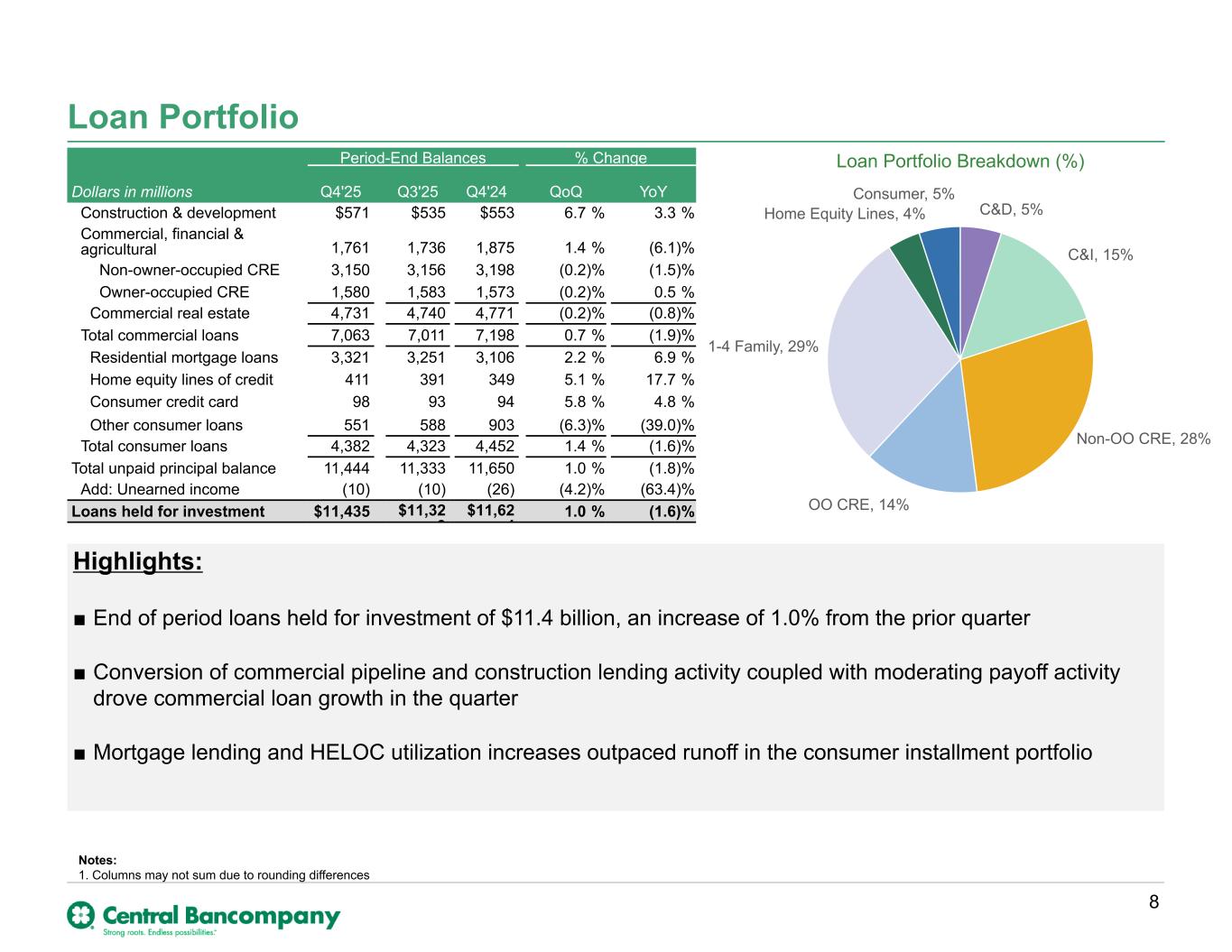
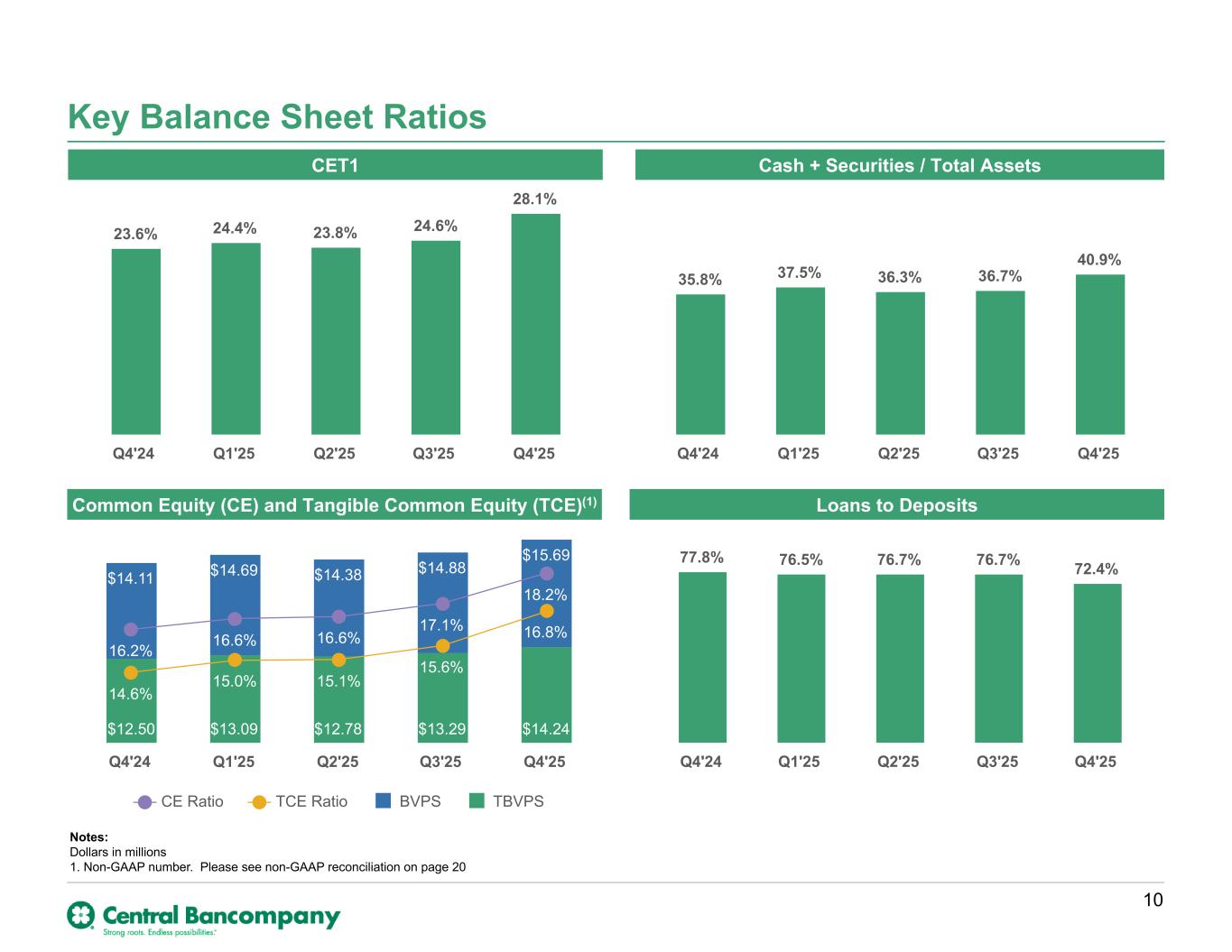
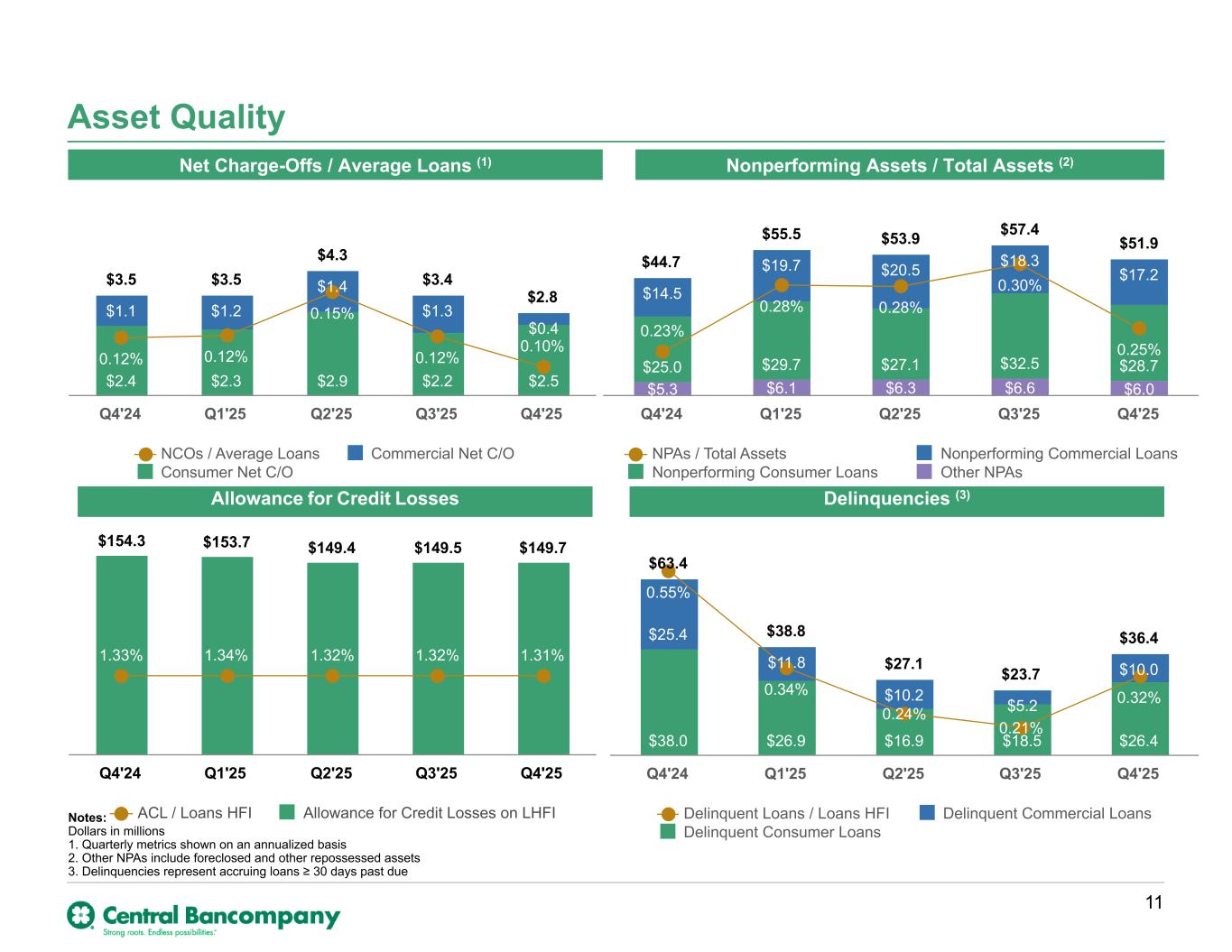
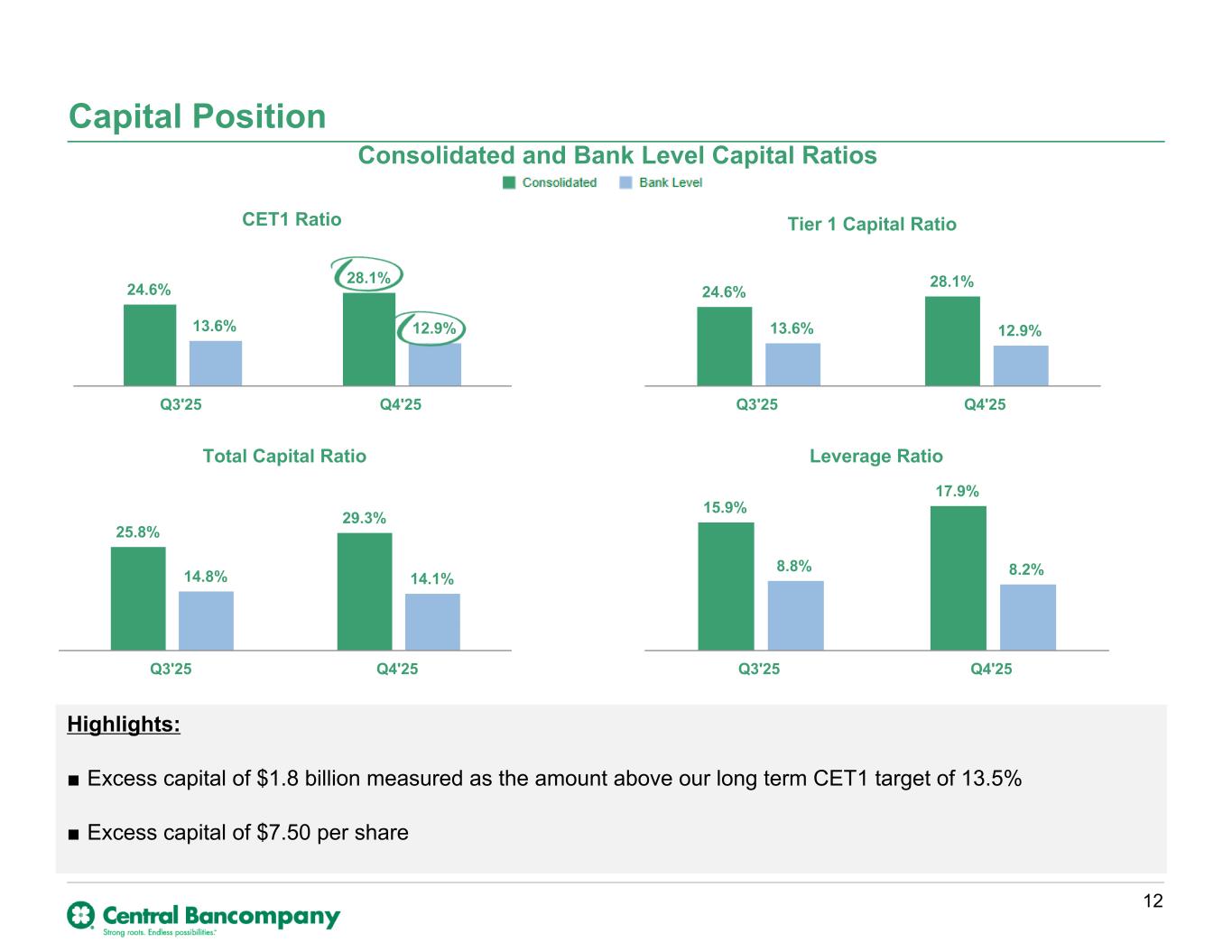
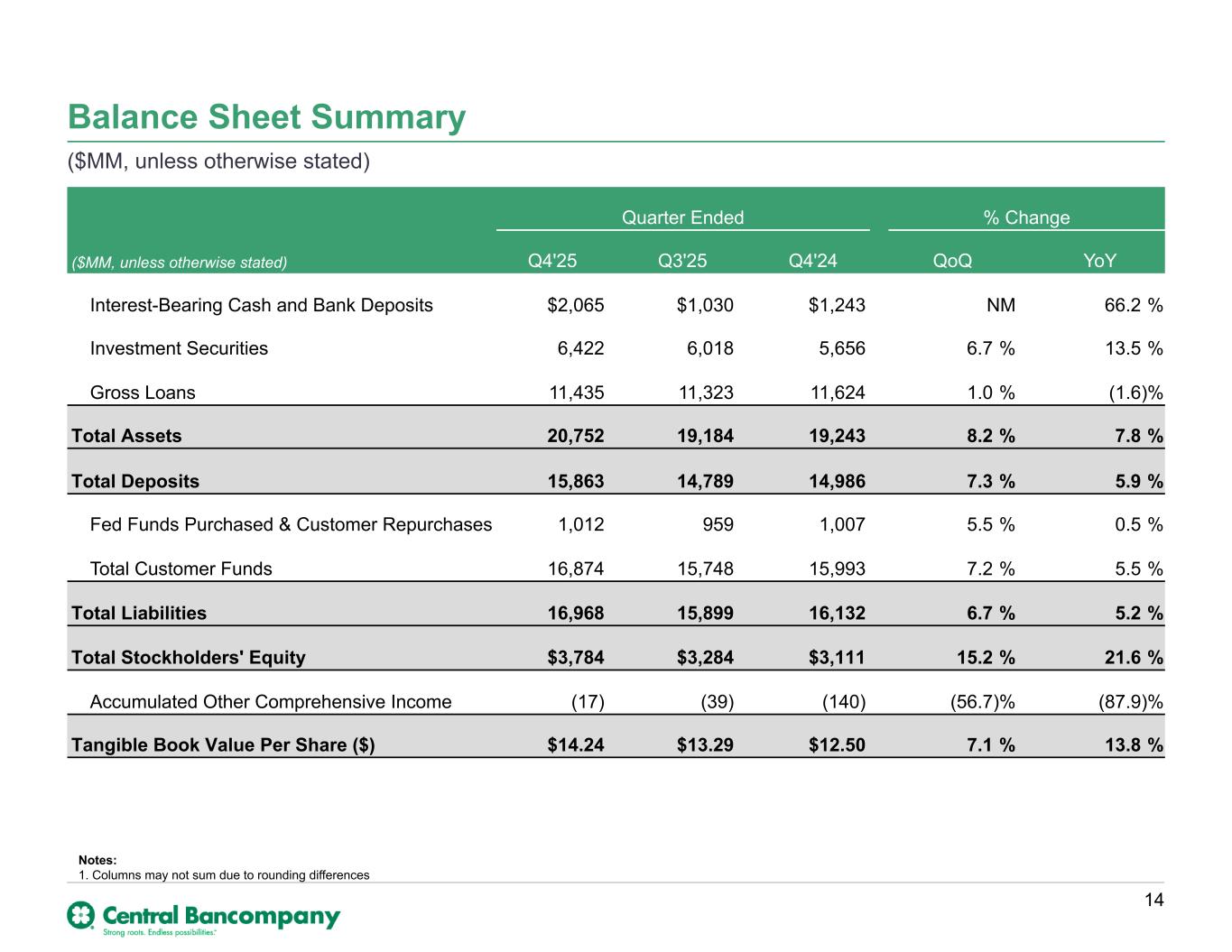
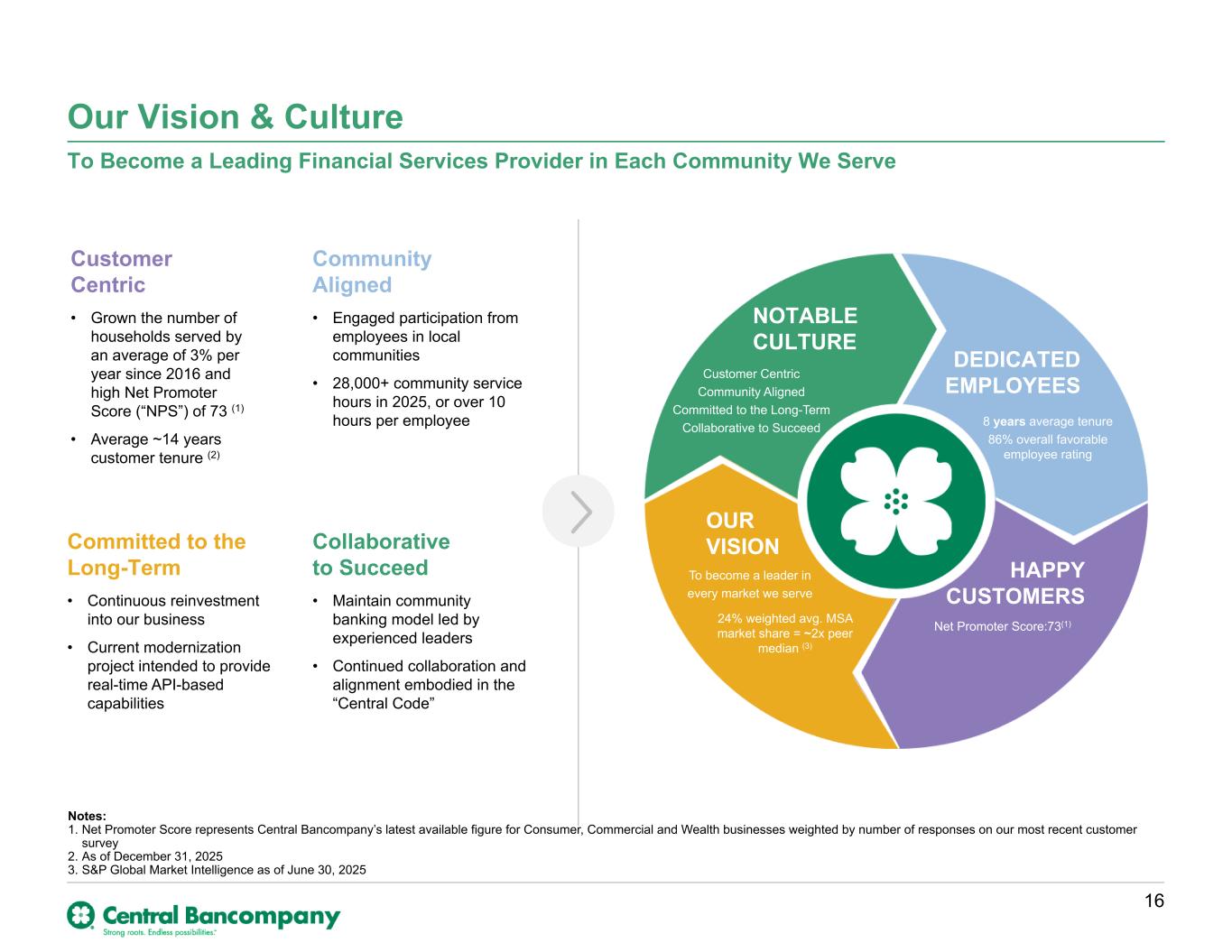
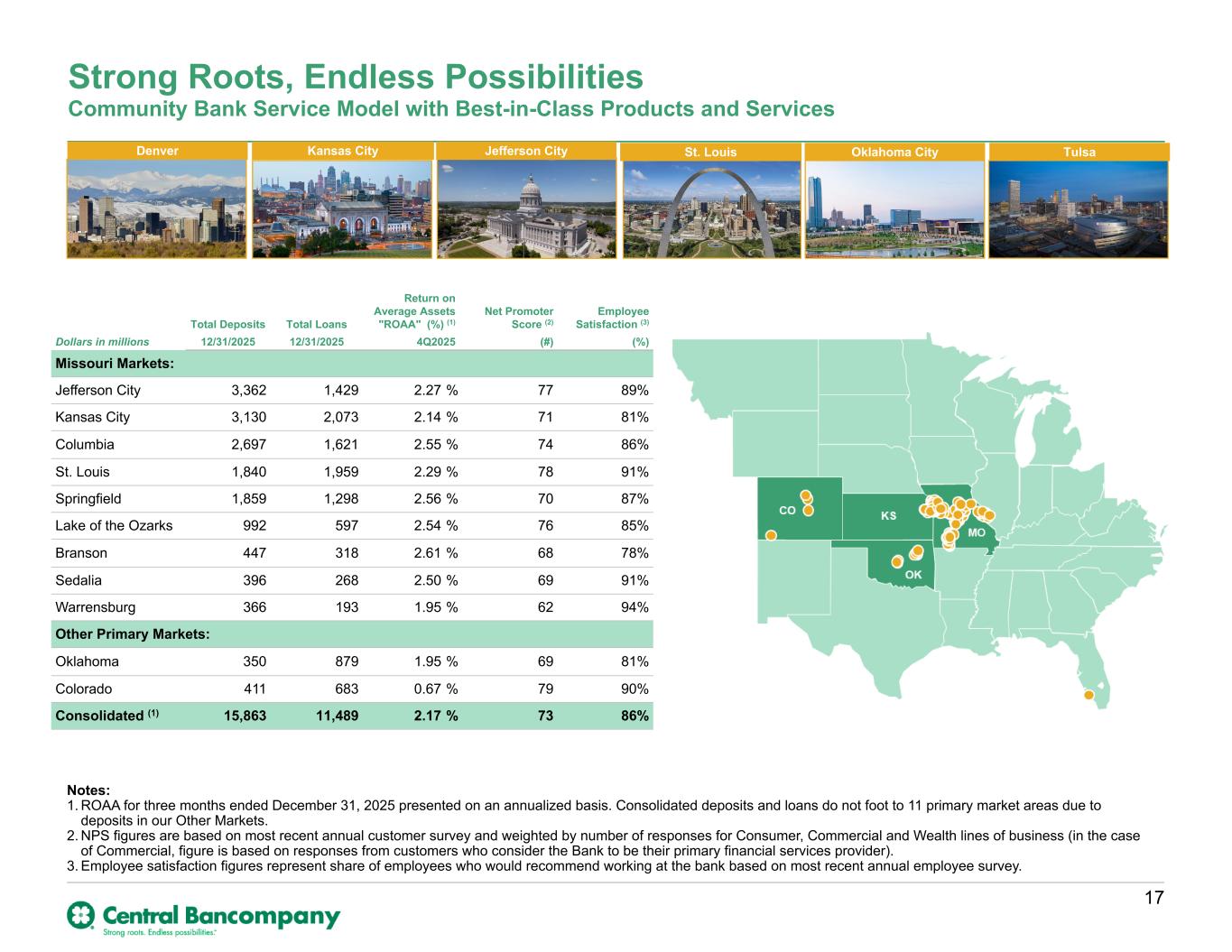
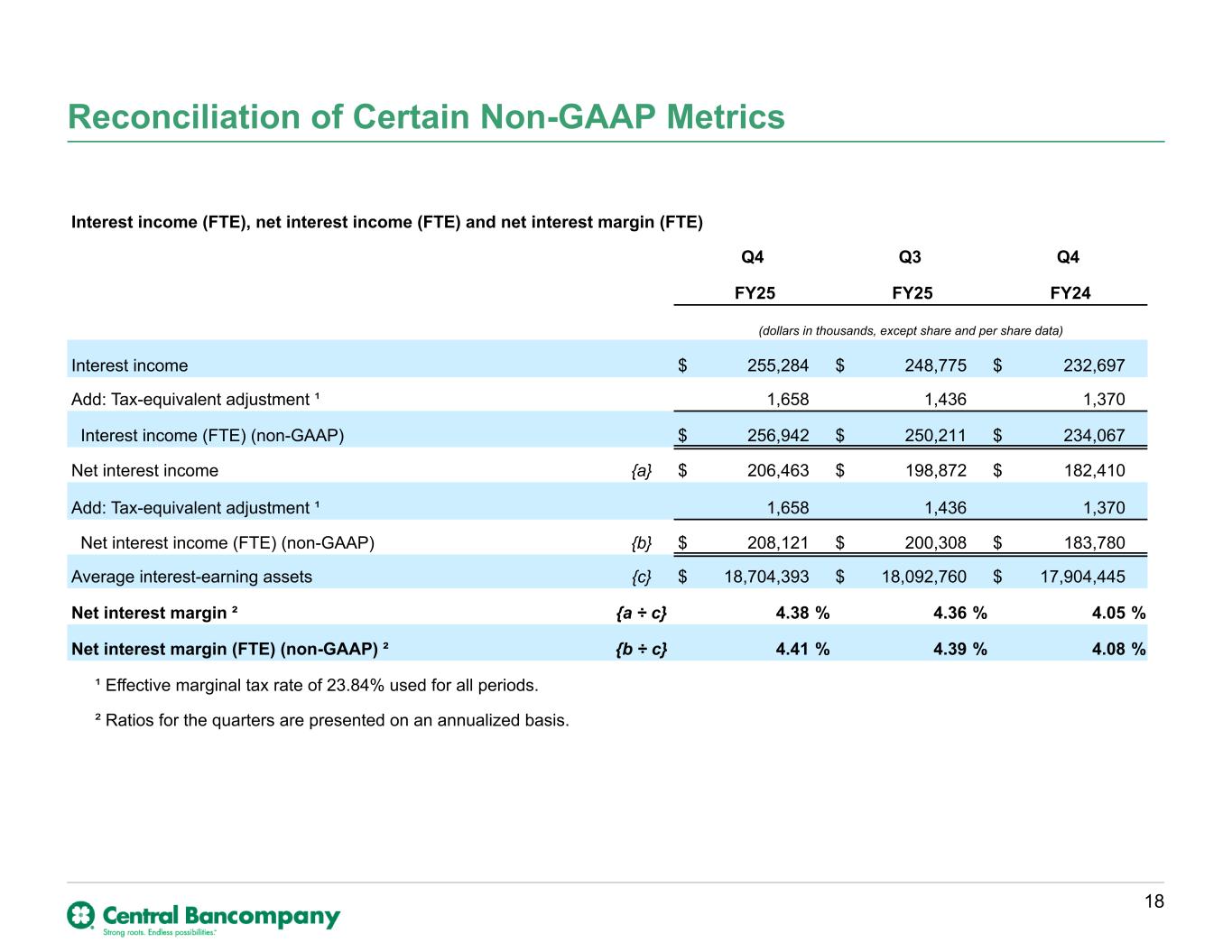
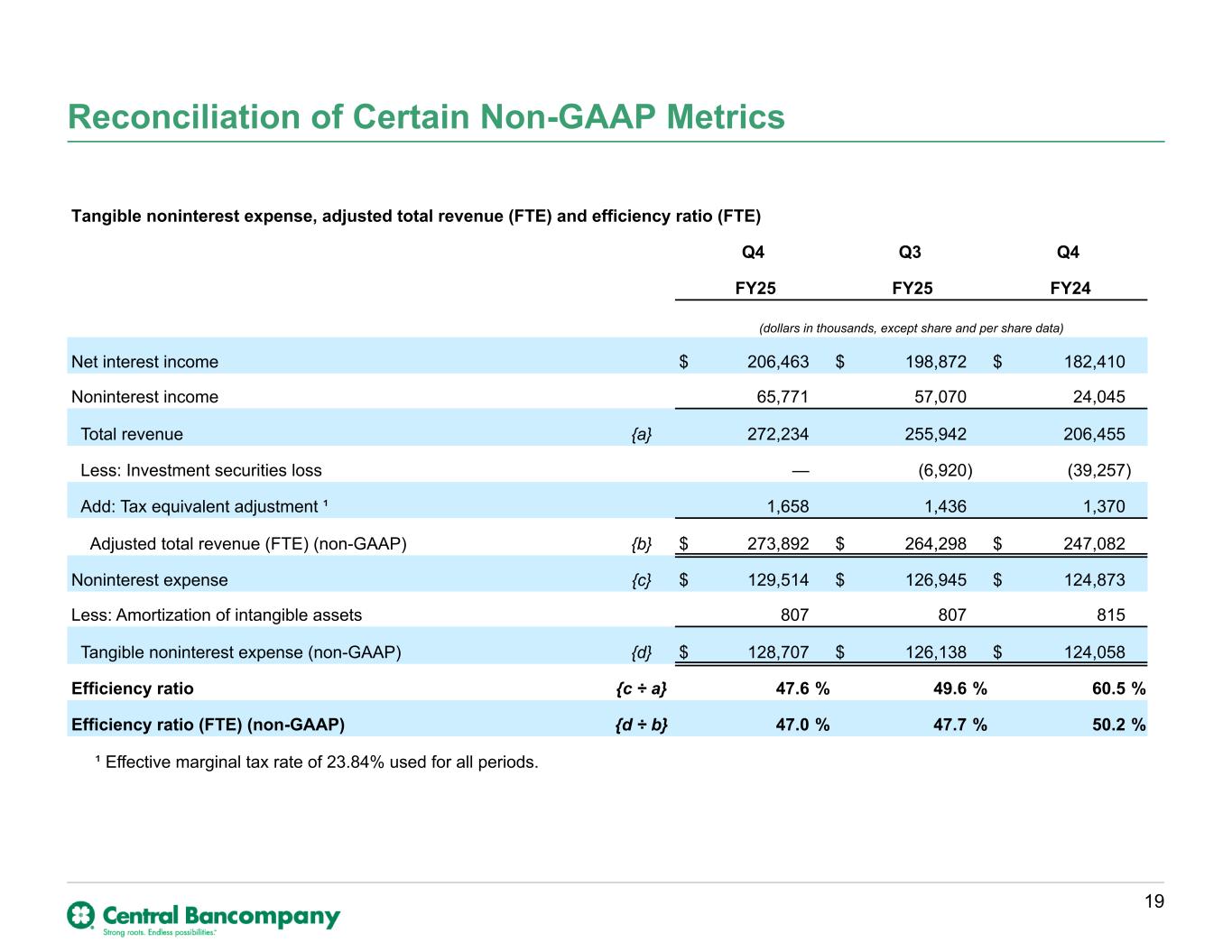
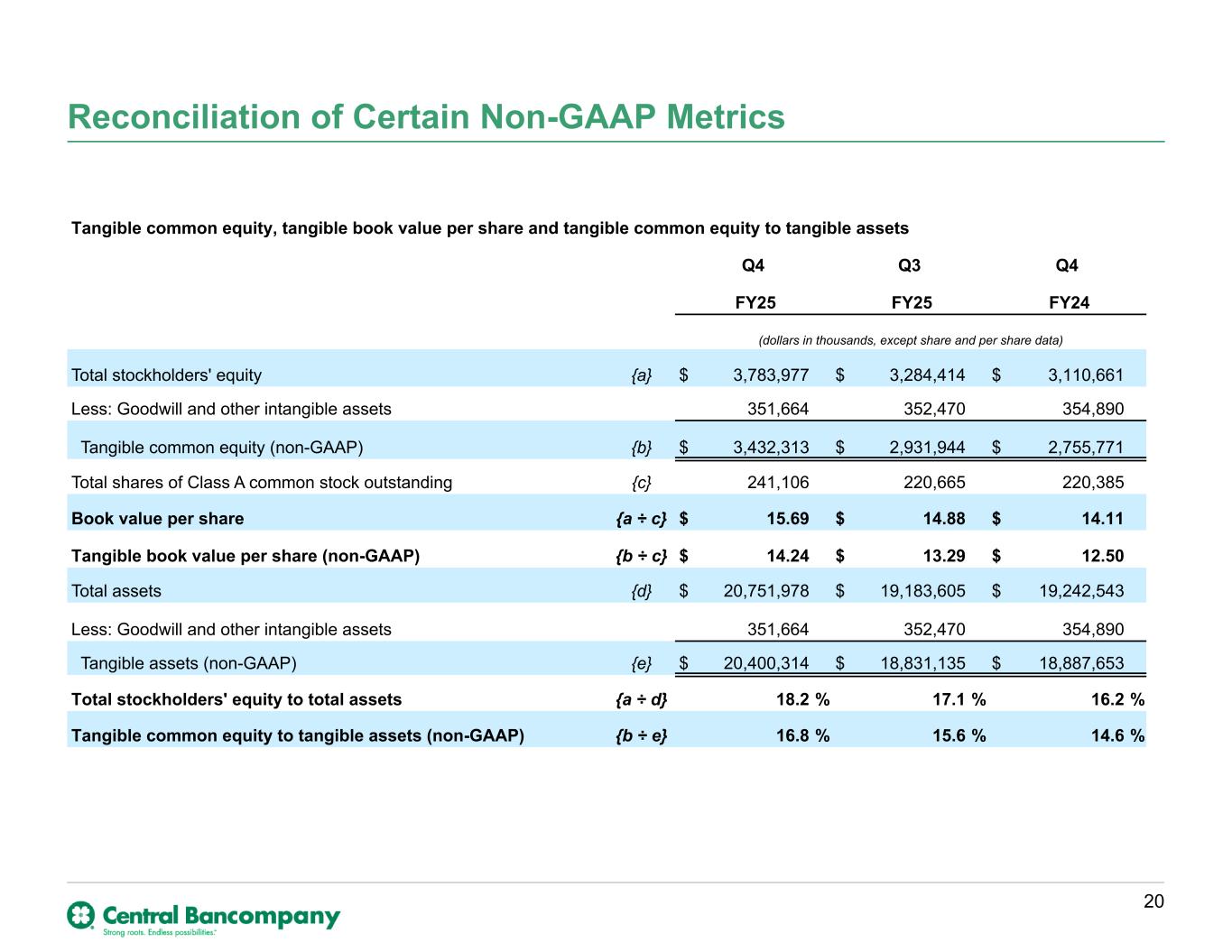
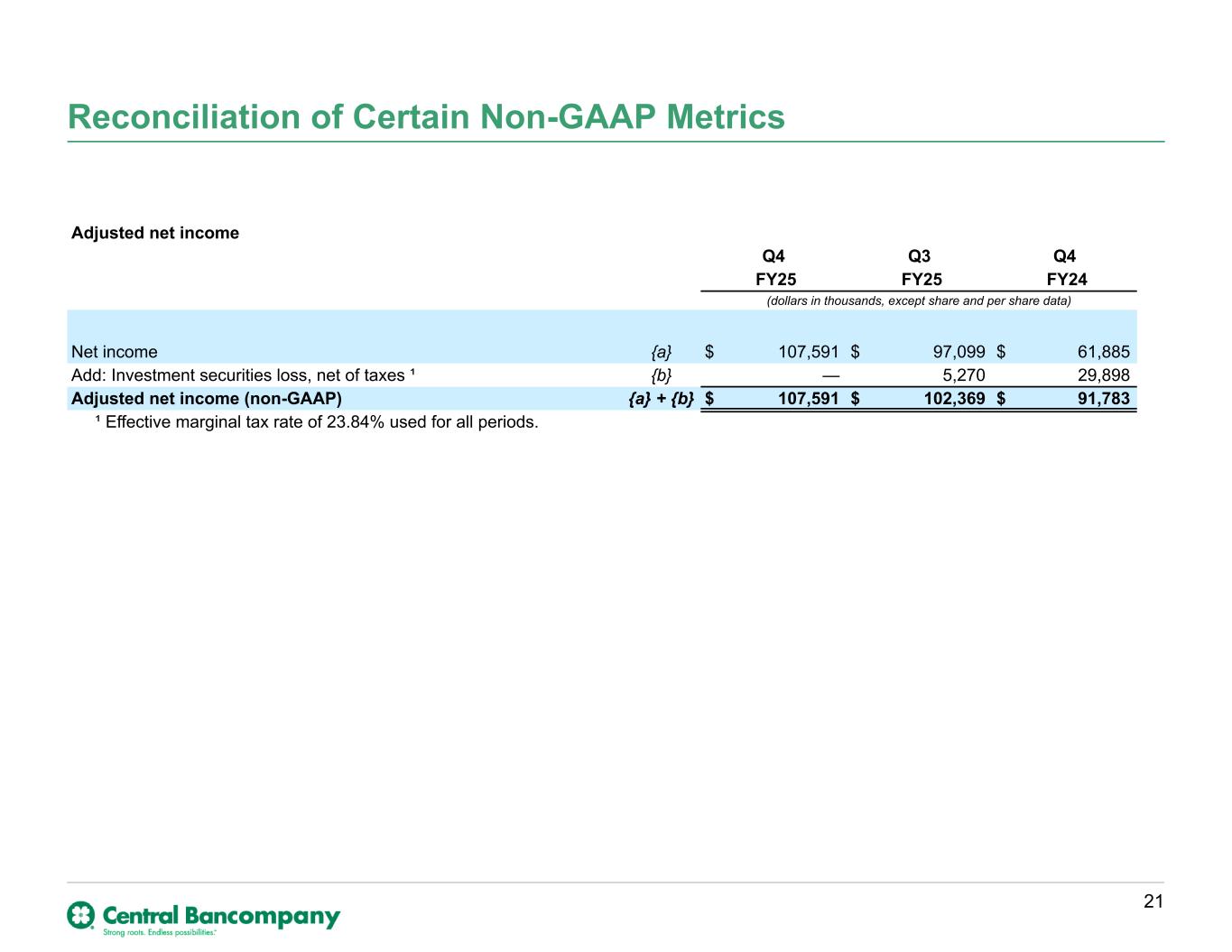
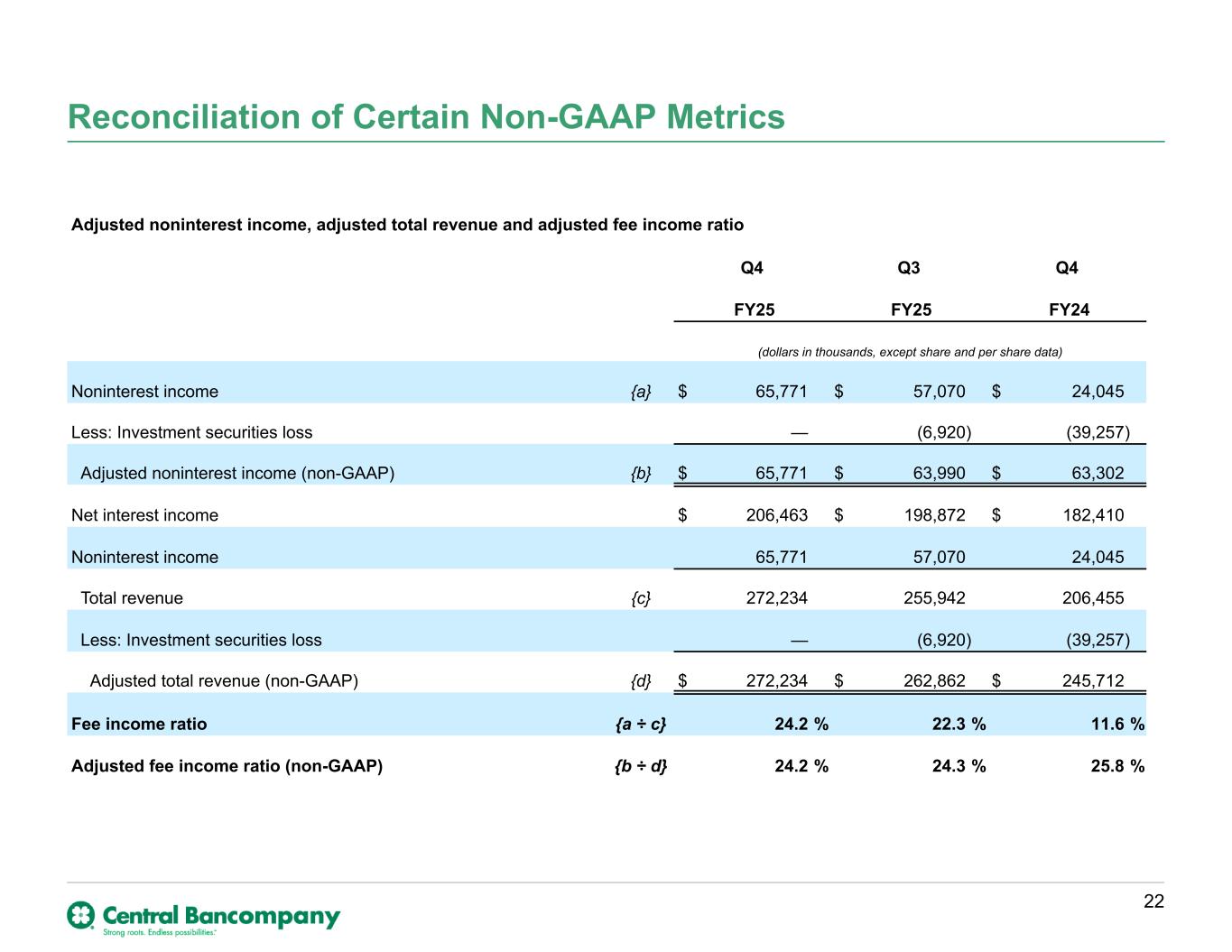
To withdraw your question please press star one one again please be advised that today's conference is being recorded I would now like to hand the conference over to your speaker today John Ross president and CEO please go ahead good morning and thank you for joining our inaugural earnings call with me in the room today is our chief financial officer Jim Cerulli chief customer officer Dan West use and chief Credit Officer, Eric Holgren. Before we begin, I'd like to point out that today's discussion is subject to the same forward-looking considerations outlined on page four of our press release. While the format of our calls may vary over time, today we plan to be very brief in our discussion of fourth quarter highlights before opening the line for Q&A. Before doing that, however, please allow me to thank our team for their tireless contributions. In 2025, they delivered for their communities, with over 28,000 hours of community service. They also delivered for their customers, with our net promoter score improving 2 points to 73 on a consolidated basis across our business line. And finally, to our shareholders, with significant progress made in our technology modernization program and our financial results, which I will turn to now. For the fourth quarter, Central Bank posted a net income of $107.6 million, or 47 cents per fully diluted share, return on average assets of 2.17%, net interest margin on an FTE basis of 4.41%, and an efficiency ratio on an FTE basis of 47%. Our asset quality remained in line with 10 basis points of net charges and our allowance covered 131 basis points of total loans. While too early to call it a trend, we are also encouraged by the resumption of balance sheet growth with ending loans up 1% quarter over quarter and non-public deposits up 1.7% quarter over quarter. Lastly, capital levels at the holding company remain well above target with approximately 1.8 billion dollars of excess or $7.50 sense to share. We look forward to the challenge of repeating our historical earnings growth in 2026, including the critical objective of prudently deploying our ample excess capital. With that, I'd like to open the line for questions. Operator?
Operator
As a reminder to ask a question, please press star one one on your telephone and wait for your name to be announced. To withdraw your question, please press star one one again. Please stand by while we compile the Q&A roster.
Operator
And our first question comes from Manan Ghassalia with Morgan Stanley.
Operator
Your line is open.
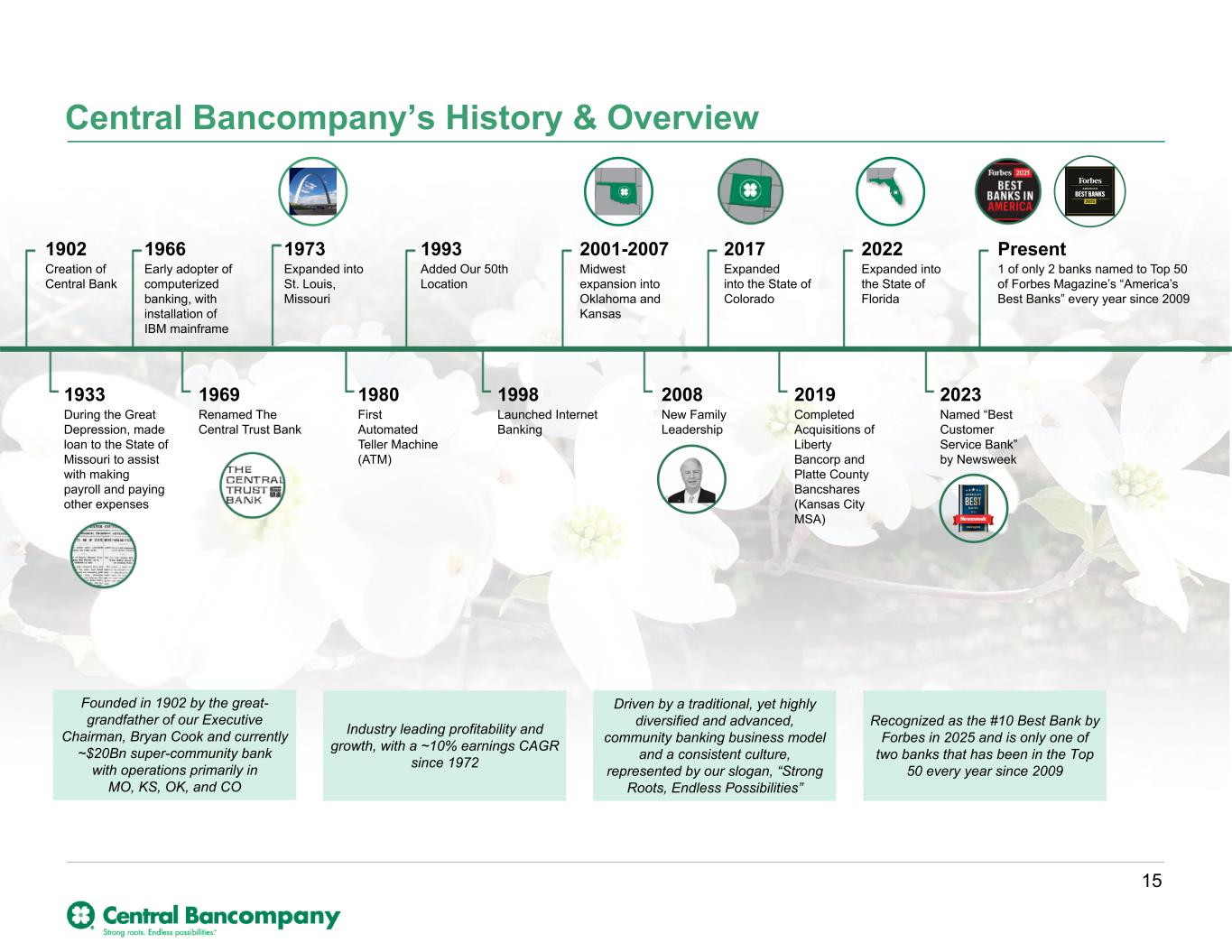
Hi, good morning all. First off, congratulations on your inaugural earnings release as a public company. Thank you Manan. And JR, maybe to start with M&A has always been in the DNA of Central and you guys have been pretty clear that M&A is a core part of your strategy here as you look to deploy some of this excess capital I guess my question is can you give us an update on the opportunities that that you're seeing as it relates to M&A right now yeah I'll try to answer your question in a second but for the broader group let me just kind of level set for a few things that I know that you know but over the last 50 years we've done 47 acquisitions so we do consider this the competency of the company we have laid out in the context
of our IPO very clearly what we're hoping to do and we're looking to both grow in our existing markets but also potentially expand into Texas as well. We're hoping to do that with deals of size which we've roughly equated to two billion in assets and we're looking for high quality targets both in terms of their deposit franchise and their credit franchise with cultures is compatible to ours and we outlined a list of about 30 names on that list that we think meet our criteria and we are in a process and have been for a few years now making introductions and having good conversations with at least half of the folks on that list. We do, we are broadly encouraged by the environment, there is a lot of activity and conversations going on, which does on the margin help boards think about their opportunity set more than they do, generally speaking, and we do have a currency now, which makes those conversations a lot more interesting to those who are more inclined to participate in the upside of the company that we've enjoyed for so long. Having said that, we're not going to go into this call or any other call on a lot of detail other than tell you we continue to diligently prosecute against that opportunity set and we will likely have no specific update or detail for you until we're actually announcing a deal which we look forward to do and hopefully the not-too-distant future but as we said before we're much more focused on doing the right deal than doing a timely deal so no no real estimate or guidance on when that might be yeah and we're just gonna we're gonna be that way Manon And, you know, I think you guys can appreciate where we just don't want to leave any breadcrumbs or any signals when something might be or might not be happening.
So, we prefer to just continue to talk about what our target set is but not really make any other comments.
Fair enough. Thank you for that. And maybe as it relates to fourth quarter earnings, you spoke about the resumption of balance sheet growth and you know I think in the slide deck you noted less payoff activity as a tailwind to low growth in the fourth quarter. How should we think about the pace of balance sheet growth from here and where do you see the most opportunity?
So we're also not going to provide forward-looking guidance. What I will say is when you look at the detail of where our loan growth came from, it was pretty broad based. And one of the things I'll point out to you that wasn't growing was our installment loan portfolio and if you take out installment loans and you look at loan growth when you annualize those numbers for just the third quarter you see a number that's kind of maybe even a bit over mid single digits growth but we look we serve our markets and our customers are really going to dictate where that is the one thing I would point out that is when when we're in a risk-on environment I think we're gonna probably grow a little bit slower than average when we're on a risk-off environment because we don't really change our our credit underwriting standards through the cycle we try to be as consistent as possible in a risk-off environment you know we'll we'll see more opportunities come to us and we like that we like sticking to our knitting and doing our things so we're happy to see the loan growth we think I think it's going to continue, but we're not going to provide any guidance as to how much and where it comes from is as much up to our customers as it is up to us.
Got it. I guess just without providing forward guidance, if you can just talk about the environment in the fourth quarter, and was that any different from the environment that you saw in the second and third quarter of 2025?
I would not say so. Yeah, so what we saw was there was just a abatement of some of the higher refi activity. We were pretty clear when we did the IPO Roadshow that we thought that, you know, origination volume kind of year to date in 2025 was pretty robust and pretty strong, but it was muted by higher level of payoffs that we saw earlier in the year. We think the pipelines continue to be strong and the payoffs have muted and that's what's translated, especially when you look at the commercial numbers, that's what's translated into like the commercial and C&D growth that you're seeing at the period in balance sheet. Eric, is there anything that I'm leaving out there? No, I don't have, I don't think so, thank you. I appreciate the question.
Yeah, that's perfect. Thanks very much.
Operator
Thank you. Our next question comes from Nathan Rinks with Piper Sandler. Your line is open.
Thanks for taking the questions, and congrats. Another nice quarter out of the gates here.
You know, curious if you can just provide some color just in terms of how you're seeing spreads, hold up on new loan production in the quarter, and just maybe what kind of the weight average rate on new loan production was in the quarter relative to, you know, the 630 portfolio yield, give or take. yeah so keep track of how much I answer here so we're not seeing spread compression we you know keep in mind that in general make two comments about our portfolio in general it's more granular so ie you know in you know the median ticket size is probably lower than comparable 20 billion oversized banks and we probably over index on the fixed side but we continue to see if you're comparing with the Treasury curve we're seeing spreads of around 300 basis points and we've seen that for a long long time and we don't especially in our markets expect that really to change much so whether that's a variable or whether that's the fixed rate product typically in with a two to five year tenor we're seeing about 300 ish dips and spread over comparable Treasuries Okay.
That's helpful. And then just maybe turn to the right side of the balance sheet. You know, your deposit growth in the quarter was quite strong. I'm curious if you can just remind us how much of that may be somewhat seasonal in nature versus just kind of blocking and tackling and taking market share or just, you know, growing balances across the existing client base.
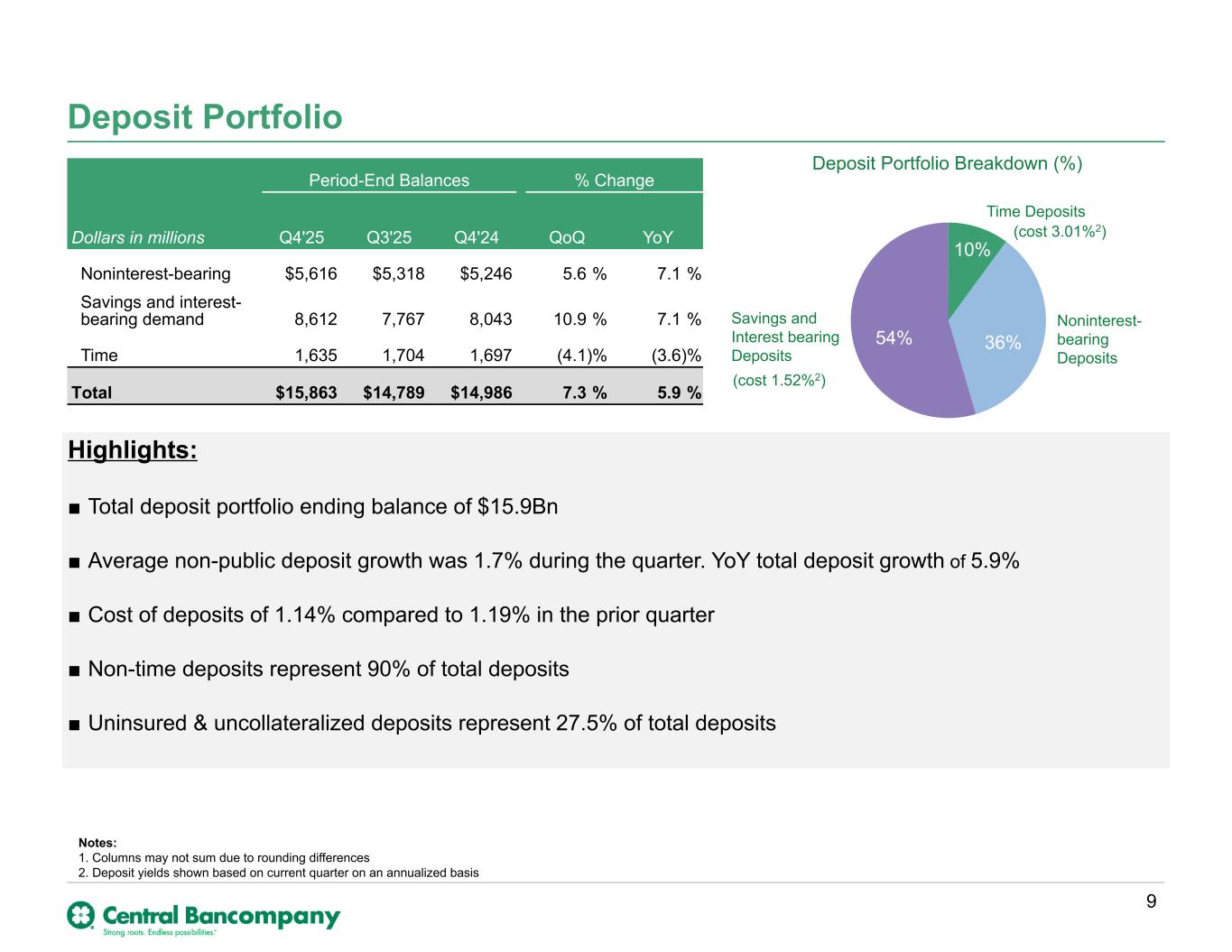
Very good, Nate. I appreciate you remembering it. seasonality we've got a very large public funds oriented deposit gathering business it's about 17% of our deposit portfolio and in the state of Missouri property taxes are collected at the end of the year so really I'd say focused in in a December timeframe and I'm learning this myself being somewhat new to the company deposit balances grow so if we try to normalize for that we'd say you know non-public deposits grew about 1.7% in the quarter when you look at a year over year basis we also saw you know some pretty nice growth we saw about you know 6% growth on a you know comparison to prior year end that does include some of the seasonality but it also shows you that even with that seasonality we're we're growing deposits in the mid to upper single digits once I want to go back one comment I forgot to give you on loan yields when you look at the loan yield came down like a bit so amazingly stable in light of the 75 basis points of rate cuts that we had at the end of the year there and you know that you know kind of underscores what we continue to say in terms of our sensitivity to the front end of the curve is relatively neutral okay that's very helpful Jim if I could just sneak one more in for you just any update in terms of how you contemplated or redeployed some of the capital or liquidity raised in the IPO it's early days right so we just raised that less than less than a quarter ago I will still say our primary focus is is looking at M&A opportunities we think that's probably our greatest opportunity to add shareholder wealth Jara mentioned you know seven and a half dollars a share represents excess capital and we think we can deploy that in M&A transactions and earn something significantly above that seven and a half but look everything remains on the table that you know in terms of deploying that capital and our board is very, you know, very aware of its obligation as being good stewards of capital as to how best to deploy that. So, we would look at every tool on the table from dividends and buybacks. When the time comes and when it's appropriate, you know, we'll continue to evaluate what the best way to deploy that capital is.
I was actually asking in terms of how you're managing the liquidity that you raise in terms of you know just keep it in cash or you know maybe investing in some short-term treasuries I'm sorry I'm just I'm mishevered that's my bad Nate yeah so you know we look at some of the seasonality and the deposits and we've well we would expect that the seasonality we see picking up in December kind of runs out you know kind of it stays on the balance sheet through the second maybe a little bit into the third quarter and we'll keep the appropriate powder dry from a from a cash perspective and look to invest the rest now down down to a certain level given the shape of the curve right now that with and with that cash current earning whatever the feds willing to pass there's not a real imperative to putting that a little bit longer but you know in terms of where the curve is to be believed and that's what we look at we're not expecting to see a rate cut in the overnight rate until the second half of the year so we're going to deploy that excess cash patiently in a disciplined way the way we always have into safe risk relatively risk-free opportunities got it that's again very
helpful. I appreciate all the color guys and congrats on all the accomplishments over the last 90 days or so.
Operator
Our next question comes from Terry McAvoy with Stevens. Your line is open.
Hi, good morning and thank you for hosting the call this morning. Maybe first question, could you just provide an update on the wealth and treasury management initiatives? And I'm not sure you'll answer this question, but when you think about growth in those two business lines And in 26, do you see similar growth within the brokerage and fiduciary services and payment services has been a little flat? When would you expect some of those initiatives to translate into organic growth?
Great questions, Terry. I appreciate that. From a wealth perspective, I would point out to you that, you know, at the end of the quarter, our assets under advice grew to 16 billion, which was a nice pickup. that was the product of both investment performance and I'd say investment outperformance because our our guys are beating their relative benchmarks as well as we saw strong net new money coming into AUM all throughout the year especially in the in the fourth quarter and you know I continue to say our wealth business can compete with anyone out there and I truly mean anyone and so So some of the other providers that are simply doing something that's simpler, but maybe even charging more, I think we win against every day. So wealth continues to be a great opportunity for us. From a treasury management side, I'm going to point out there's a couple of things that you're probably looking at. So from a payments perspective as well as a service charge perspective, we generally see a little bit of fall off going from Q3 to Q4. so there's some seasonality in those those numbers not as much on the commercial side from a from a service charge perspective but certainly payments volume falls off in the fourth quarter we continue to make investments in that business that we think are going to lead to us continuing the growth rate you've historically seen our company thanks Jim and maybe just a follow-up stepping out of the model could you discuss branch expansion plans in 2026 we think there's tremendous opportunities and we've got a number of
things in the pipeline I'm gonna I'm gonna give Dan West who's a chance to speak because he's eager to and talk about where we're looking at putting those branches yeah thank you for 2026 we have two major locations where we know we are having branches come online at st. Louis in Colorado or Denver Colorado the first branch comes online here in the next couple months and St. Louis with at least two more for sure in 2026 in St. Louis and then we're negotiating some other spaces but it's still looking so branch expansion to St. Louis we are finally trying to kind of right-size that footprint up there we have one coming on in Colorado and that should be on and by the second quarter
of this year as well so two for sure two more coming after that and thanks Dan and congrats on your first company as a public company first quarter thanks Gary Thank you.
Operator
As a reminder to ask a question, please press star one one on your telephone. Again, that is star one one to ask a question. Our next question comes from Chris McGrady with KBW. Your line is open.
Oh, great. Good morning. Jim, maybe the question on slide five, if you could, the lower right part of slide five gives you kind of the net interest income outlook with the static balance sheet and also kind of alternative rate scenarios I'm interested in how we should interpret this given given the conversation this morning obviously loan growth a little bit better forward curve maybe having a cut or two the base case would seem kind of where you'd want us to kind of land but but any kind of inside baseball on the nuances would be great thanks yeah I don't know that there's much in the way of nuances there we show the steepener curve because look rates never we show the parallel moves right but rates never move in
parallel when we look at the forward curve we think we're looking at more of a steepener scenario with two rate cuts this is what's in the modeling two rate cuts later in this year and it's not a steeper model it's more of an instantaneous shock but we see the forward curve having two rate cuts later this year so we are looking at the steepener where you know we dropped the front end of the curve and from about the two-year point on out we gradually increase that so that we've got a full 50 basis points baked in on the longer part of that curve but 45 of that 50 is already baked in by the five-year mark in the steepener scenario so as we look at that what we wanted to show is really that we're not really we don't think there's much impact to us we go from a we go six percent up in net interest income next year with that steepener scenario to a three percent up which is very similar to what we're showing at the time of the IPO and again we don't have much sensitivity to the front end of the curve our exposure is really more in the intermediate part of the curve and to the extent that rates are up they're up this morning they continue to rise a little bit in that part of the curve we're going to see a an interest income benefit okay so it feels like the base case is a is a fair
place to start and then you make my assumptions on on the balance sheet growth okay um balance sheet doesn't include growth that's right yes and on I guess credit anything on the margin incrementally that you're hearing from customers you're keeping your eye on I mean you guys are a good barometer of So I'm interested in your thoughts, if anything's changed in the last 90 days.
Yeah, I think those are fairly pristine numbers, Chris, you know, especially with our net charge up rate coming down. But I'll turn to Eric and see if there's any additional color you can add.
Yeah, thanks, Jim. So we haven't really seen anything specific, pockets of weakness in the portfolio. On the watch list side, we've seen some evolution or composition shift from criticized into classified categories but again as we think about lost content we don't see anything significant or moving in the portfolio we are traditionally patient with our relationships and our loan relationships but we're not holding or harvesting delaying any any essential resolutions markets are really diligent and focused on managing outcomes to the best the bank as well as the client I I think that's all I've got. Jim, did I just say anything that you want to add?
Okay. And then why have you, Jim? Just tax rate this quarter, Sarah, for going forward?
You said the tax rate? So, you did call out that there was about 40 bps of unusual items in the effective tax rate. So, of that, I guess that 30 of that 40 is out of period and 10 of that is native to the periods. That should be helpful to you.
Operator
Okay. Thank you. Thank you. I'm showing no further questions at this time. I would now like to turn it back to John Ross for closing remarks.
John Ross Ross Thank you, operator. Just over 20 minutes, that might be a record short earnings call and I'm going to attribute that to solid numbers and a really good job that Jim did on his first call for us, having been here less than a year. So well done, Jim. I'd also like to thank the participants on the call for their time and interest and our investors more broadly for their support. We look forward to any opportunity to serve you better as we mature as a public company. Thank you again.
Operator
This concludes today's conference call. Thank you for participating. You may now disconnect.